
State report
Stray dogs in Lakshadweep, 2026: none counted in the 2019 census, no dog bite and no rabies death in any year of the national table, a dog ban that two surveys describe and no published order could be found for, about 5,000 cats and ten cat brains tested for rabies, a rabies-free status that is historical rather than declared, 12 of 13 vet posts empty, and nine mobile vet units sanctioned and never run
Lakshadweep is the one part of India where the stray dog question has a different answer: there are no dogs. This report puts what the record actually says on one page: the zero in the 2019 Livestock Census, the four zeros for dog bites and rabies deaths in the national surveillance table, the two research surveys of 2003 and 2017 that found no dogs and a ban on bringing them in enforced at the port, the absence of any published order behind that ban, the roughly 5,000 cats that are the islands' only possible rabies carrier, the ten cat brains that tested negative in 2017, the difference between 'historically rabies-free' and a declared status, the 35 registered vets and the 12 of 13 government posts empty, the Kerala High Court case that found nine of ten inhabited islands without a vet in 2022, and the nine mobile veterinary units the territory promised the court and then returned the money for.
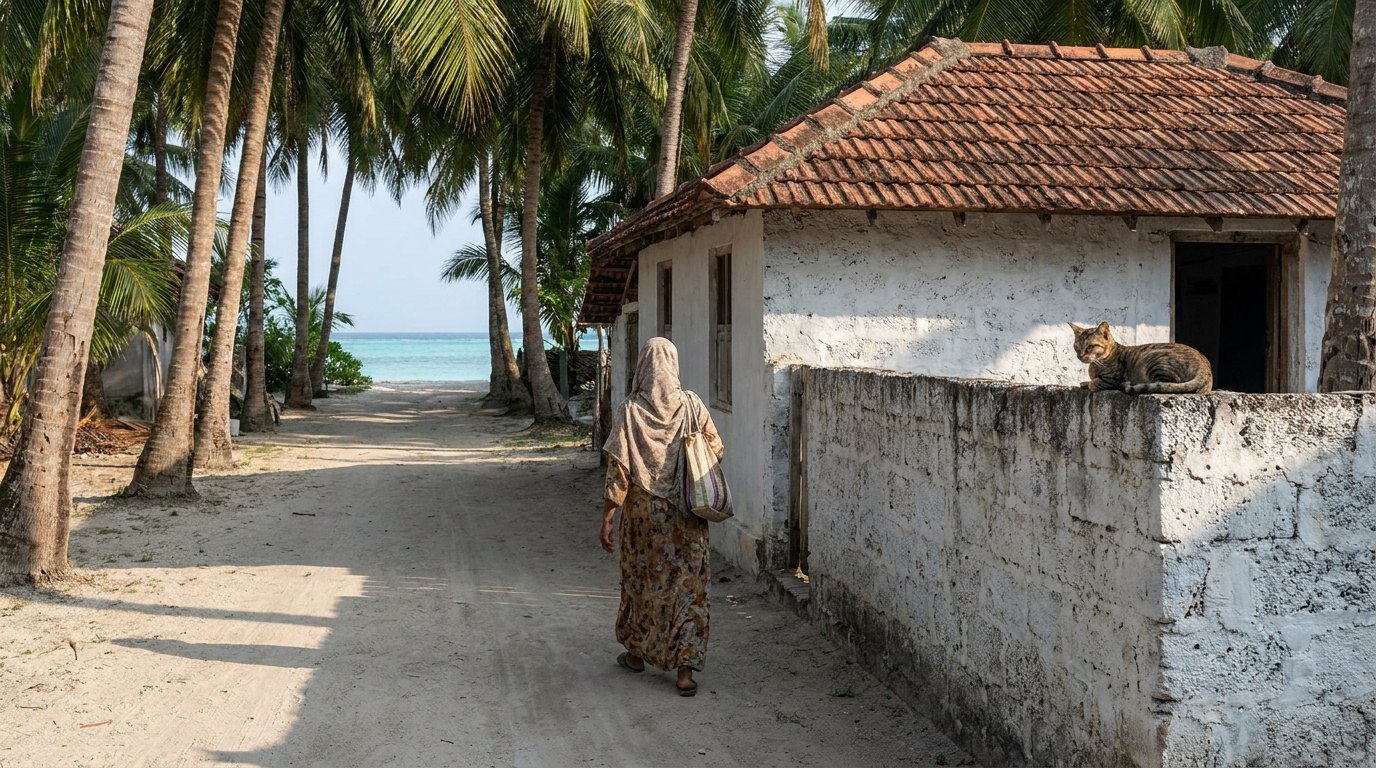
Quick answer
Stray dogs in Lakshadweep numbered zero in the 2019 Livestock Census, and the national surveillance table records no dog bite and no human rabies death there from 2022 to January 2025. Survey teams in 2003 and 2017 found no dogs, a ban on bringing them in enforced at the port, and about 5,000 cats; ten cat brains tested negative for rabies. No published order behind the ban could be found.
The data behind this report
One row per period and source. The survey rows are from the WHO-APCRI rabies surveys published in the Indian Journal of Public Health in 2006 (visit of 4 to 7 August 2003, records for 1992 to 2002) and 2019 (visit of November 2017, records for 2007 to 2017); they report no dogs, no rabies and, in 2003, only occasional cat bites, the last in 1999-2000, and give no bite count, so the dog bite cell is blank. The census row is Lakshadweep's line in the Rajya Sabha statement of 6 August 2025. The IDSP rows are Lakshadweep's lines in Annexure I and II to the Lok Sabha reply of 1 April 2025. The surveys, the census and the surveillance table are different instruments; the dataset prints each as its source gives it and computes nothing across them. A zero in a surveillance table records that nothing was reported, which is not the same thing as a verified absence.
Compiled from Sudarshan M K, Mahendra B J, Isloor S, Mani R S and Jayakrishnappa M B, Rajya Sabha, Starred Question 190, Press Information Bureau, Stray dogs.
Download the dataset (CSV, 7 rows, 6 columns)Free to reuse under CC BY 4.0 with attribution to Bonbeno. Data as of 11 November 2026.Stray dogs in Lakshadweep: the territory's numbers on one page
Lakshadweep is the place in India where most rows of a stray dog table read zero. Sixteen rows, each from the document named, including what each zero does and does not prove.
| What | Figure | As of | Source |
|---|---|---|---|
| Stray dogs, Livestock Census | 0 (2019); stray cattle 0; Andaman and Nicobar 5,300, Puducherry 19,687 | 2019 | Rajya Sabha reply |
| Dogs found by survey teams | None in 2003 and none in 2017, on Kavaratti and Agatti | 2003 and 2017 | Indian Journal of Public Health |
| The dog ban | Import of dogs 'strictly banned by port authorities' (2003); 'restrictions for bringing dogs' at entry points (2017); no published order found | 2003 to 2026 | IJPH surveys; searched November 2026 |
| Dog bites, IDSP table | 0 in 2022, 2023, 2024 and January 2025; India 37,15,713 in 2024 | 2022 to 2025 | Lok Sabha reply via PIB |
| Human rabies deaths, IDSP table | 0 in every period; India 54 in 2024 | 2022 to 2025 | Lok Sabha reply via PIB |
| Rabies status | Endemic everywhere 'except' the Andaman and Nicobar and Lakshadweep Islands; no declaration found | 2021 to 2026 | NRCP; National Action Plan |
| Laboratory tests | 10 cat brains from 7 islands, all negative | 2017 | IJPH 2019 |
| Cats | About 5,000: 4,500 community or stray, 500 pets; not in the livestock census | 2017 | IJPH 2019 |
| Animal bites | Only occasional cat bites, the last reported in 1999-2000; monthly nil rabies reports since 1991 | 2003 | IJPH 2006 |
| Rabies vaccine on the islands | None in pharmacies or government hospitals, for people or animals | 2017 | IJPH 2019 |
| Registered vets | 35 (India 87,914); 1,306 livestock per vet, India 6,106 | 31 March 2024 | Lok Sabha replies |
| Government vet posts | 13 sanctioned, 12 vacant (92.3 percent; India 25.8) | December 2025 | Lok Sabha reply |
| Mobile veterinary units | 9 sanctioned, 0 operational, funds returned | 31 January 2025 | Lok Sabha reply |
| Livestock and poultry | 45,697 livestock; 2,26,025 poultry | 2019 | Lok Sabha reply |
| Kerala High Court | No vet in 9 of 10 inhabited islands (2022); contempt warning (2023); 'no substantial progress' (December 2025) | 2022 to 2025 | Judgment; LiveLaw; SCC Online |
| Pet licence, shops, crematorium | None found published | November 2026 | Searched |
Two rows carry the weight. The 2019 Livestock Census counted no stray dog in Lakshadweep and the national surveillance table records no dog bite and no rabies death there in any year from 2022 to January 2025. The rest of this report is about what keeps those zeros at zero, how much of that rests on a written rule, and what the islands have in place for the animals they do have.
How many stray dogs Lakshadweep has: none, counted twice and seen by two survey teams
The zero in the census is backed by people who went to look, which is rarer than a census figure.
Lakshadweep had no stray dogs in the 20th Livestock Census of 2019, and no stray cattle either. The same statement gives the Andaman and Nicobar Islands 5,300 stray dogs, Daman and Diu 3,164 and Puducherry 19,687, against 20,59,261 in Uttar Pradesh, 12,76,399 in Maharashtra, 11,41,173 in Karnataka and 4,41,208 in Tamil Nadu. A census zero on its own can mean an enumerator who never asked, as Bonbeno's street dog report shows for a few states whose counts fell to nothing between censuses. Lakshadweep's is different, because two teams went and looked.
A survey team of the WHO-sponsored national multicentric rabies survey visited the islands from 4 to 7 August 2003 and reported that 'there are no dogs in the islands of Lakshadweep', a territory it described as 11 inhabited islands with about 32 sq km of inhabited land, 62,000 people, about 12 medical and 17 veterinary institutions, and a terrestrial fauna 'mostly domestic animals like the goat, cow and cat'. A second team, in November 2017, found that 'the Islands were free from dogs' from interviews with 6 medical and 17 veterinary professionals, administrators and 72 members of the public, and from 'the physical survey by the team in Kavaratti and Agatti Islands'. The same team recorded no pigs, foxes, jackals or mongooses, so the islands have none of the wild animals that keep rabies alive elsewhere in India.
What keeps dogs out: a port rule that two surveys describe and nobody has published
The 2003 team recorded that 'import of dogs was strictly banned by port authorities', and the 2017 team attributed the absence of dogs to 'restrictions for bringing dogs in the Islands at the limited entry points' Isloor S, Mani R S and Jayakrishnappa M B. Neither paper names the rule, the authority that issued it or its date. No notification, regulation or order of the Lakshadweep Administration that bans dogs could be found, and the Animal Husbandry Department's own page lists poultry, goat and cattle programmes and 'vaccination campaigns against contagious and zoonotic diseases' but says nothing about dogs, cats or bringing animals in. The popular claim that the islands keep out dogs is therefore true on the evidence of two research teams, and unproven as a matter of written law. A reader planning to bring a dog should treat the restriction as real and ask the Administration for it in writing before travelling.
Dog bites and rabies in Lakshadweep: zeros in every table, and a status that is historical, not declared
Every official document says the islands have no rabies. None of them says anyone has certified it.
The IDSP table laid before the Lok Sabha on 1 April 2025 records 0 dog bites and 0 suspected human rabies deaths for Lakshadweep in 2022, 2023, 2024 and January 2025, the only state or territory with a zero in every bite cell. The Andaman and Nicobar Islands, also rabies-free on the programme's account but with dogs, recorded 345, 528 and 455 bites in the same three years. Maharashtra recorded 4,85,345 bites and 14 deaths in 2024, Tamil Nadu 4,80,427 and 2, and Karnataka 3,61,494 and 5; India recorded 37,15,713 and 54. Bonbeno's dog bite report prints the full series. The 2003 survey found 'occasional and rare instances of cat bites, the last case purported to have occurred in 1999-2000', and records of monthly nil reports of human rabies sent to the Government of India since 1991.
'Historically rabies-free': what the record supports and what it does not
The National Rabies Control Programme states that 'Except for Andaman & Nicobar and Lakshadweep Islands, human cases of rabies are reported from all over the country', and the National Action Plan for Dog Mediated Rabies Elimination by 2030 says rabies 'is endemic in all States/UTs except Andaman and Nicobar, and Lakshadweep Islands'. That is a statement that no cases are reported, not a certification. The same plan sets out the World Health Organization's sequence, in which an area must first verify the absence of cases under 'high-quality surveillance' and then 'Be declared Rabies-free', and it lists 'Confirmation/Monitoring of disease-free status (e.g., Andaman/ Nicobar & Lakshadweep Islands, Nilgiris, Goa, Sikkim etc)' among the jobs laboratory diagnosis still has to do. No declaration of Lakshadweep as rabies-free by the WHO, the World Organisation for Animal Health or the Government of India could be found; the scientific papers call the status 'historical'. Goa's 2021 'Rabies Controlled Area' notice, covered in Bonbeno's Goa report, is a different kind of claim made on the mainland.
The first laboratory evidence came in 2017: 'Ten cat brain samples received from seven Islands of Lakshadweep, namely Agatti, Kavaratti, Amini, Chetlat, Kalpeni, Minicoy, and Androth were tested negative for rabies' at two laboratories in Bengaluru, the Veterinary College and the WHO collaborating centre at NIMHANS; the authors called it 'the first laboratory-based evidence supporting the earlier rabies-free status' while noting 'the number of animal brain samples tested is small', and said surveillance would continue for at least two years. No later test result could be found published. The paper also recorded that 'No anti-rabies vaccines or immunoglobulins were available either in the pharmacy shops in the market or government medical and veterinary hospitals'; in 1998, the 2003 team was told, five doses had been brought from the mainland for a resident bitten by a dog there. The neighbouring precedent is a warning: the Andaman and Nicobar Islands, 'historically rabies-free', recorded their 'first non-indigenous case of human rabies' in a report published in November 2024.
Wash the wound under running water with soap for fifteen minutes and go the same day to the nearest government hospital or primary health centre. The 2017 survey found no rabies vaccine or immunoglobulin stocked anywhere on the islands, so ask at once whether it is available or must be brought from the mainland, and do not wait. A resident bitten by a dog in Kochi, Mangaluru or anywhere else on the mainland should start treatment there before sailing home. Bonbeno's page on rabies in dogs explains the disease.
The cats: about 5,000, counted by no census, and the one animal that could carry rabies in
Both surveys reached the same conclusion: in Lakshadweep the rabies question is a cat question.
The 2003 team found cats 'both pet and stray, whose numbers were not known', no laboratory surveillance for rabies in them, 'no programme for control of cat population of the islands' and 'no practice of rabies vaccination of animals'; vaccinated cats arrived as pets with no monitoring 'other than registration at the port of embarkation viz. Cochin', and there was no quarantine. Its conclusion was that the islands 'continue to remain rabies free despite the new threat being posed by an emerging cat population'. By 2017 the Directorate of Animal Husbandry put the islands' cats at 'about 5000 cats, (About 4500 community/stray cats and 500 domesticated cats)', and the survey noted that 'cats were not included in the livestock census'. That makes the census zero for dogs and the absence of any cat figure the two halves of the same gap: the one species that matters for rabies on these islands is the one no official count includes.
No cat sterilisation or vaccination programme run by the Administration could be found, and the Animal Husbandry Department's page names none. Bonbeno's guides to community cats in India, cat sterilisation and the cat vaccination schedule cover what an owner or a feeder can do, and its guide to monsoon care for cats covers the wet months.
The courts in Lakshadweep: no dog case, and a four-year fight in the Kerala High Court over vets
The Supreme Court's stray dog orders have nothing to act on here. The litigation that matters is about whether there is a vet at all.
Lakshadweep falls under the Kerala High Court, and no petition about stray dogs, dog bites or compensation for a bite in the territory could be found. The Supreme Court's orders of 2025 and 2026 on catching, sterilising, sheltering and releasing street dogs, and the Animal Birth Control Rules, 2023, which require a healthy dog to be released where it was caught, have no dog population here to act on. The case that has run since 2022 is about vets.
On 31 March 2022 a bench of Chief Justice S. Manikumar and Justice Shaji P. Chaly decided WP(C) No. 1582 of 2022, brought by Dr C.P. Abdul Kabeer of Kalpeni Island, who pleaded that 'there are no Veterinary doctors engaged by the Administration in nine out of ten inhabited islands of Union Territory of Lakshadweep ( i.e. except Kavaratti Island)' after contract veterinary assistant surgeons in Kavaratti, Androt, Minicoy, Kadmat, Kiltan, Kalpeni and Amini were disengaged by orders of 23 September, 6 October and 30 December 2021. The Administration told the court that '9 Veterinary Assistant Surgeons, Para Veterinary Staff and Driver-cum-Attenders will be engaged on contract basis' and that 'Mobile Veterinary units (9 in Nos.) shall be established in all the inhabited Islands'; the court found that 'as on today there is no treatment to the birds and animals' and ordered the appointments 'within three weeks', and told the Administration to consider deputing Kavaratti's two vets or permitting NGOs meanwhile Bar and Bench, 'Kerala High Court orders….
On 27 June 2023 a bench of Justice A. Muhamed Mustaque and Justice Sophy Thomas gave the Administration three weeks to appoint vets on contract or permanently, failing which the Secretary of its Fisheries, Agriculture and Animal Husbandry department would have to appear in person. On 11 December 2025, in a fresh public interest petition, WP(PIL) 64 of 2025, Chief Justice Nitin Jamdar and Justice Ziyad Rahman A.A. recorded that 'no substantial progress has been made even after these observations recorded in March 2022', noted the petitioner's claim, 'not specifically denied', of twelve veterinary assistant surgeon posts and one technical assistant sanctioned before 1980, and asked why the Administration's commitment to nine contract vets had become five 'without seeking leave of this Court'; it ordered the sanctioned strength and reasons on record and, meanwhile, a call for expressions of interest from local NGOs, with the next hearing on 7 January 2026 LiveLaw, 'Kerala High Court Flags Lack…. What happened at that hearing could not be found published.
Nine vans promised, nine sanctioned, none running
The Lok Sabha was told on 11 February 2025 that Lakshadweep had been sanctioned 9 mobile veterinary units under the Centre's Livestock Health and Disease Control scheme, that 0 were operational, that the fund sanctioned and released stood at 0, and, in a footnote, that the territory 'returned the fund released after sanctioned'. Those are the nine units the Administration had promised the Kerala High Court in March 2022 for 'all the inhabited Islands'. Odisha, Punjab and Telangana also returned their funds; Ladakh, sanctioned the same nine, runs all nine; the Andaman and Nicobar Islands had not yet asked for the money for their five. Across India 4,016 of 4,340 sanctioned units were running, on Rs 997.59 crore released.
No street dog population means the Animal Birth Control Rules and the Supreme Court's 2025 and 2026 orders on catching, sterilising, sheltering and releasing dogs have nothing to act on in the islands. A dog that arrived would fall under those Rules and whatever port restriction the Administration enforces, which two surveys describe but no published order sets out. Cats are covered by no programme found. Questions about veterinary care belong to the Animal Husbandry unit on each island and, while the Kerala High Court case runs, to the court's record.
Veterinary care in Lakshadweep: 35 registered vets and 12 of 13 posts empty
On paper the islands are well supplied with vets for their herd. In government service almost every post is vacant.
Lakshadweep had 35 registered veterinary practitioners on 31 March 2024, and 12 of its 13 sanctioned government veterinary doctor posts were vacant in December 2025, 92.3 percent against 25.8 percent for India, the highest vacancy rate of any state or territory. Puducherry, at 28 of 33, was next; the Andaman and Nicobar Islands had 14 of 45 vacant and Kerala, whose ports serve the islands, 46 of 1,637. Against 45,697 livestock and 2,26,025 poultry in the 2019 census, the register works out to 1,306 livestock per registered vet against India's 6,106, a ratio better than Haryana's or Maharashtra's. The register counts people enrolled, not people working on the islands; the 13 posts and the court record are the better guide to who is actually there. Bonbeno's Vet Access Index explains that arithmetic.
The Animal Husbandry Department, 'established in the late 1960s', lists an officer-in-charge for an animal husbandry unit on nine islands, Agatti, Amini, Andrott, Chetlat, Kadmat, Kalpeni, Kavaratti, Kiltan and Minicoy, and none for Bangaram or Bitra. The territory has no veterinary college. Bonbeno's vet directories cover eight cities, Mumbai, Delhi, Bengaluru, Chennai, Hyderabad, Pune, Kolkata and Ahmedabad, none of them near the islands; Kochi, about 400 km away, is the mainland port, and the Kerala report covers it. What a consultation costs on the mainland is in Bonbeno's guide to what a vet visit costs in India.
Pets and the rules in Lakshadweep: no licence, no shop register, and a dog rule nobody has published
The islands have pets, mostly cats, and almost no written rules about them.
| Item | What the source says | Source and date |
|---|---|---|
| Bringing a dog | Import 'strictly banned by port authorities' (2003); 'restrictions for bringing dogs' at entry points (2017); no order found | IJPH 2006 and 2019; searched November 2026 |
| Bringing a cat | Vaccinated pet cats arrived occasionally, registered only at the port of embarkation, Cochin, with no follow-up or quarantine | IJPH 2006 |
| Pet licence | None found for any island | Searched November 2026 |
| Pet shops and breeders | None found; the Pet Shop Rules, 2018 require a State Board certificate | Gazette |
| Cat population control | No programme found | IJPH 2006; Animal Husbandry Department page |
| A resort's pet offer | A Bangaram resort's booking page offers stays for guests 'and your pets' without naming species or rules | Resort page, read November 2026 |
| End of life | No pet crematorium or burial ground found | Searched November 2026 |
No pet licence, fee or register for any island could be found, against Rs 500 in Delhi and Rs 150 in Puducherry; Bonbeno's guide to dog registration in India covers the cities that have one. No count of pet shops or breeders could be found either; the Pet Shop Rules, 2018 require every shop to hold a State Board certificate, and Bonbeno's pet shops report carries them clause by clause.
Travelling with a pet, native breeds and end of life
The written record on bringing a pet to the islands is two research papers and a hotel page. The surveys describe a ban on dogs and loosely registered cats; a resort on Bangaram advertises a package to 'treat yourself and your pets to a pawsome vacation' with 'Pet Friendly In-Room Amenities', naming no species and no rule. The two cannot both be right for a dog, and nothing published settles it, so an owner should ask the Administration in writing before booking. Bonbeno's guides to pets on flights in India and interstate pet travel rules cover the paperwork that applies on the mainland leg.
Ask the Lakshadweep Administration in writing whether the animal may land, and keep the reply. Carry the pet's rabies vaccination record, because the 2003 survey found the only check on arriving cats was registration at the port of embarkation in Kochi. A cat is the animal the record says has been allowed in; for a dog, two research surveys describe a ban and no published rule says otherwise.
No dog or cat breed is named for Lakshadweep, and none is on the Kennel Club of India's list of Indian breeds or ICAR's register; Bonbeno's report on the register carries the six registered dogs. No pet crematorium could be found on any island; Bonbeno's guide to when your pet dies in India covers the steps.
What a Lakshadweep pet owner can do with these numbers
Six things that follow from the record, in the order an owner meets them.
- Do not bring a dog without written permission. Two surveys describe a ban enforced at the port.
- Vaccinate a pet cat against rabies and keep its card. Cats are the islands' only possible rabies carrier.
- Treat any bite as urgent and ask where the vaccine is. None was stocked on the islands in 2017.
- Start treatment on the mainland if a dog bites you there. The islands have recorded no dog bite since 2022.
- Call your island's animal husbandry unit for a sick animal. Nine islands have one.
- Follow the Kerala High Court case for vets. It asked for local NGOs to fill the gap in December 2025.
What this data does not measure
Lakshadweep's record is short, and most of its gaps are gaps in what was ever written down.
- The dog ban has no published text. It rests on two research teams' descriptions in 2003 and 2017; no notification, regulation or order was found.
- The rabies-free status is historical, not declared. Official documents say only that rabies is endemic everywhere except the islands; no WHO, WOAH or Government of India declaration was found, and the only laboratory evidence is ten cat brains from 2017.
- A surveillance zero is a report of nothing, not a measurement of nothing. The IDSP table's zeros match the census and both surveys, which is why they are printed here without qualification of the islands' status, but they do not count animal bites by cats.
- No cat is counted by any census; the 5,000 is the Directorate's estimate as quoted in 2017, and no later figure exists.
- Current availability of rabies vaccine on the islands is unknown; the latest finding is 2017's none.
- The Kerala High Court's January 2026 hearing and any appointments after it are not in print, and the 21st Livestock Census had published no state table by 11 November 2026.
- No pet licence, shop register, crematorium, private clinic count or household pet spending figure exists here, and the 2003 paper's island figures (62,000 people, 17 veterinary institutions) are its own and are not set against later counts.
How this report was built
Every figure was read from the document cited, and the territory's rows are the same rows Bonbeno's national reports computed from the parliamentary annexes.
- The census figures are from the Rajya Sabha statement of 6 August 2025, and the bite and death figures from Annexure I and II to the Lok Sabha reply of 1 April 2025.
- The survey findings are from the two Indian Journal of Public Health papers, read with pypdf from the copies the Association for Prevention and Control of Rabies in India hosts Isloor S, Mani R S and Jayakrishnappa M B, and the Andaman case from its abstract on Europe PMC. The programme's statements are from the National Rabies Control Programme's site and its National Action Plan Ministry of Health and Family Welfare….
- The veterinary figures are from the Lok Sabha replies of 2 December 2025, 11 February 2025 and 28 March 2023 Lok Sabha, Unstarred Question 1287 Lok Sabha, Unstarred Question 4449 and the Animal Husbandry Department's page; the court record is from the judgment of 31 March 2022, Bar and Bench, LiveLaw LiveLaw, 'Kerala High Court Flags Lack… and SCC Online.
- The rules are from the ABC Rules and the Pet Shop Rules, and the resort offer from its booking page. The People Also Ask questions were captured on 11 November 2026 through Apify runs of Google's India results; the runs for the focus keyword returned no box. Prices are in Indian rupees.
Common questions about stray dogs in Lakshadweep
Does Lakshadweep have dogs?
No dogs were counted in the 2019 Livestock Census, and survey teams that visited in 2003 and 2017 found none; the 2017 team checked Kavaratti and Agatti in person. Both papers say bringing dogs in is restricted at the port, though no published order behind the ban could be found.
Is Lakshadweep rabies free?
It has no recorded rabies. The national programme says human rabies is reported everywhere except the Andaman and Nicobar and Lakshadweep Islands, the IDSP table shows no death from 2022 to January 2025, and ten cat brains from seven islands tested negative in 2017. No formal rabies-free declaration has been made.
Is Andaman rabies free?
Historically, yes: the national programme lists it with Lakshadweep as the two exceptions, and eight dog brains tested negative in 2017. But a report published in November 2024 documented the islands' first human rabies case acquired elsewhere, and unlike Lakshadweep, the Andaman and Nicobar Islands have dogs, 5,300 in the 2019 census.
Which state in India has the most stray dogs?
Uttar Pradesh, with 20,59,261 stray dogs in the 2019 Livestock Census, then Odisha at 17,34,399, Maharashtra at 12,76,399 and Karnataka at 11,41,173. Lakshadweep counted none, and with Dadra and Nagar Haveli is one of two units that recorded zero for both stray dogs and stray cattle.
Which state in India has the highest rabies?
By the national surveillance table, Maharashtra, with 14 suspected human rabies deaths in 2024 and 14 in 2023, the most of any state; Madhya Pradesh and Uttar Pradesh recorded 6 each in 2024, and India 54. Lakshadweep recorded none in any year from 2022 to January 2025.
Can I take my dog to Lakshadweep?
Assume not without written permission. Research surveys in 2003 and 2017 describe a ban on bringing dogs enforced at the port, though no published order could be found, and a resort's pet package names no rule. Ask the Lakshadweep Administration in writing before you book.
Are there cats in Lakshadweep?
Yes, about 5,000 by the Directorate of Animal Husbandry's 2017 estimate, about 4,500 community or stray cats and 500 pets. Cats are not counted in the livestock census, no cat control programme was found, and they are the only animal on the islands that could carry rabies.
Are there vets in Lakshadweep?
Few in government service. 12 of the 13 sanctioned veterinary doctor posts were vacant in December 2025, and the territory returned the funds for nine mobile veterinary units. The Kerala High Court has heard a petition since 2022, when nine of ten inhabited islands had no government vet.