
Research report
Stray dogs in India by state, 2012 to 2019: 1.53 crore counted, 10.7 percent fewer than in 2012, and what the city surveys that followed actually found
Two livestock censuses have asked every village and ward in India to estimate its stray dogs. Set beside the sight-resight surveys that Mumbai, Bengaluru, Chennai and five other cities have run since, the Parliament replies on who pays for sterilisation, and the Supreme Court orders of 2025 and 2026, the official count turns out to be the least certain number in the whole debate.
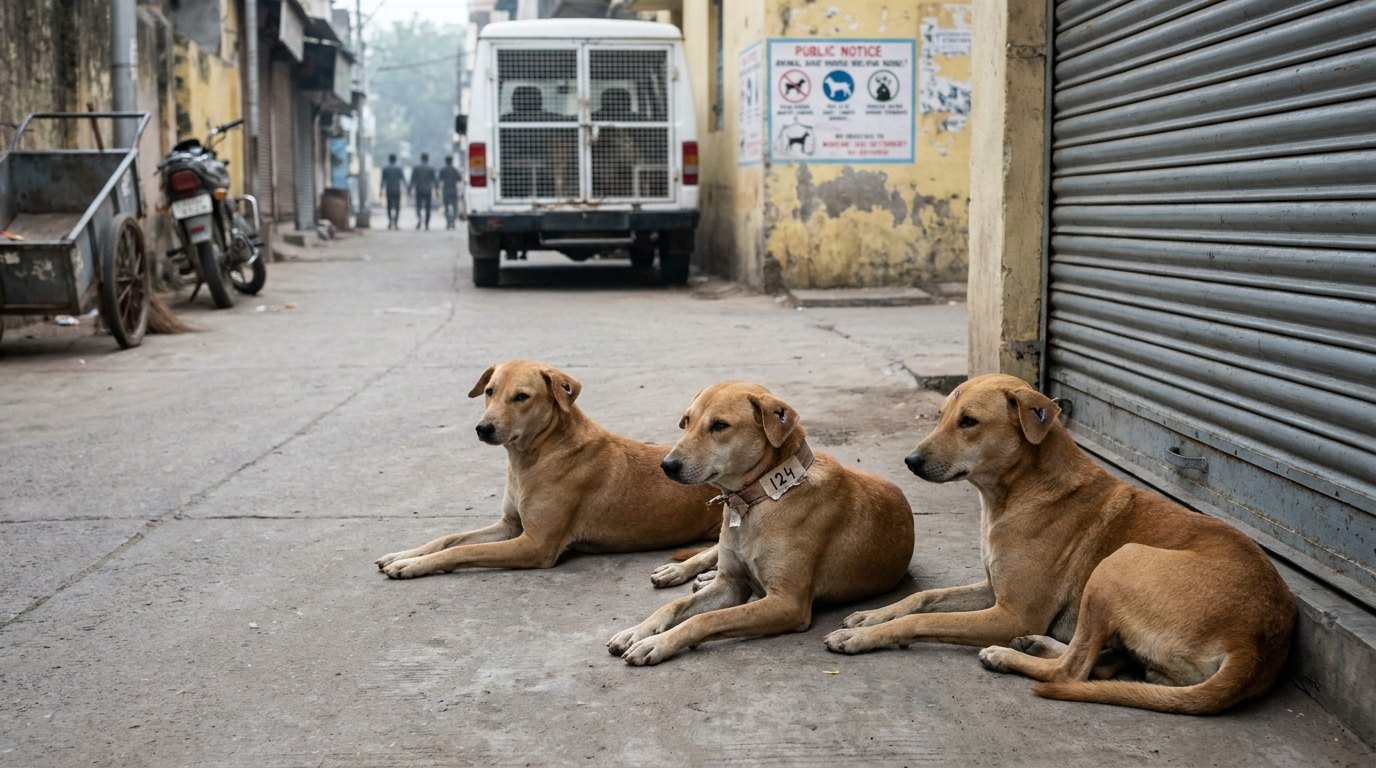
Quick answer
Stray dogs in India numbered 1,53,09,355 in the 2019 Livestock Census, 10.67 percent fewer than the 1,71,38,349 of 2012 and 11.5 for every 1,000 people. Uttar Pradesh, with 20.6 lakh, and Odisha, with 17.3 lakh, hold the largest counts; Odisha's doubled between censuses while Uttar Pradesh's halved. The census records one informant's estimate per village or ward, so the city sight-resight surveys since found different numbers: Bengaluru 2,79,335 dogs, 71.8 percent sterilised; Mumbai 90,757, 62.9 percent; Chennai 1.81 lakh, 27 percent. The official count is a starting point, not a measurement.
The data behind this report
One row per state or union territory plus an all-India row. The 2012 count is Table 79 of the 19th Livestock Census All India Report (stray dogs, rural plus urban). The 2019 count and the 2019 stray cattle count are the 20th Livestock Census figures laid before the Rajya Sabha on 6 August 2025. Population is the National Commission on Population's projection for 1 March 2019 in thousands; for Goa, Telangana and the small union territories, which the annual table omits, it is interpolated between the Commission's 2016 and 2021 figures, and Jammu and Kashmir includes Ladakh because the 2019 census counted the undivided state. Change, dogs per 1,000 people and the 2012 urban share were computed by Bonbeno from those columns; a blank means the 2012 base is zero or, for Telangana, did not exist as a state.
Compiled from Department of Animal Husbandry, Rajya Sabha, Starred Question 190, National Commission on Population.
Download the dataset (CSV, 37 rows, 8 columns)Free to reuse under CC BY 4.0 with attribution to Bonbeno. Data as of 31 October 2026.Stray dogs in India: 1.53 crore counted in 2019, 1.71 crore in 2012
India has counted its stray dogs twice, and both counts come from the same place: the Livestock Census that the Department of Animal Husbandry and Dairying runs every five to seven years.
The 20th Livestock Census counted 1,53,09,355 stray dogs across India in 2019, against 1,71,38,349 in the 19th Census of 2012, a fall of 10.67 percent that the Department of Animal Husbandry and Dairying itself stated to the Rajya Sabha on 6 August 2025. The department had summarised the same census to the Lok Sabha in April 2022 as 50 lakh stray cattle and 153 lakh stray dogs. Stray cattle fell 3.2 percent over the same seven years, to 50,21,587.
Set against the National Commission on Population's projection of 133.29 crore people on 1 March 2019, the census count works out to 11.5 stray dogs for every 1,000 people in India. That ratio is the single most useful number in this report, because it lets a reader compare Odisha with Kerala, or a city survey with the state census it sits inside, without being misled by population size.
The 2012 census is also the only one that split the stray dog count into rural and urban. Of the 1,71,38,349 dogs counted that year, 1,46,28,180 were in rural areas and 25,10,169 in urban areas, an urban share of 14.6 percent. Every city survey, every Supreme Court hearing and nearly every news report is about the urban 15 percent. The rural 85 percent is counted once in seven years and otherwise not discussed.
The 19th Census report says the stray dog figures were, for the first time, collected as an approximate number from a single source in each village or ward, such as the sarpanch, a panchayat member, the patwari, a teacher or another knowledgeable person. No enumerator walked a transect or marked a dog. Every state figure in this report is therefore a sum of local estimates, and the section on city surveys shows how far those estimates can sit from a measured count.
The state-wise table: every state's count, change and dogs per 1,000 people
Uttar Pradesh holds the most stray dogs in absolute terms, Odisha by far the most relative to its people, and Delhi reports exactly the same number in both censuses.
Uttar Pradesh counted 20,59,261 stray dogs in 2019, 13.5 percent of the national total, followed by Odisha with 17,34,399, Maharashtra with 12,76,399, Rajasthan with 12,75,596, Karnataka with 11,41,173 and West Bengal with 11,40,165. Per 1,000 people the order changes completely. Odisha has 39.7 stray dogs per 1,000 people, more than three times the national figure and far ahead of Jammu and Kashmir at 22.9, Goa at 18.1, Karnataka at 17.3 and Rajasthan at 16.5. Uttar Pradesh, the largest count, is below the national average at 9.2, and Tamil Nadu and Bihar, two states with very different dog bite records, both sit at 5.8.
| State or UT | Stray dogs 2012 | Stray dogs 2019 | Change (percent) | Dogs per 1,000 people, 2019 | Urban share 2012 (percent) |
|---|---|---|---|---|---|
| Uttar Pradesh | 41,79,245 | 20,59,261 | -50.7 | 9.2 | 7.1 |
| Odisha | 8,62,520 | 17,34,399 | +101.1 | 39.7 | 20.6 |
| Maharashtra | 12,16,093 | 12,76,399 | +5.0 | 10.4 | 28.7 |
| Rajasthan | 11,51,015 | 12,75,596 | +10.8 | 16.5 | 9.5 |
| Karnataka | 8,76,081 | 11,41,173 | +30.3 | 17.3 | 24.5 |
| West Bengal | 11,57,170 | 11,40,165 | -1.5 | 11.8 | 21.5 |
| Madhya Pradesh | 12,08,539 | 10,09,076 | -16.5 | 12.3 | 10.4 |
| Gujarat | 8,46,093 | 9,31,170 | +10.1 | 13.7 | 23.1 |
| Bihar | 10,37,720 | 6,96,142 | -32.9 | 5.8 | 4.8 |
| Andhra Pradesh | 12,37,988 (undivided) | 4,71,884 | -61.9 | 9.0 | 15.2 |
| Haryana | 4,22,474 | 4,64,578 | +10.0 | 16.2 | 14.0 |
| Tamil Nadu | 6,47,798 | 4,41,208 | -31.9 | 5.8 | 29.7 |
| Jharkhand | 3,38,617 | 4,36,260 | +28.8 | 11.7 | 8.4 |
| Chhattisgarh | 3,43,622 | 3,94,686 | +14.9 | 13.7 | 14.5 |
| Telangana | part of Andhra Pradesh | 3,92,932 | 10.6 | ||
| Jammu & Kashmir | 2,70,577 | 3,08,897 | +14.2 | 22.9 | 20.9 |
| Punjab | 3,05,482 | 2,90,624 | -4.9 | 9.7 | 16.1 |
| Kerala | 2,68,994 | 2,89,986 | +7.8 | 8.3 | 13.2 |
| Assam | 5,16,499 | 2,13,898 | -58.6 | 6.2 | 2.1 |
| Uttarakhand | 47,985 | 84,459 | +76.0 | 7.6 | 27.6 |
| Himachal Pradesh | 65,220 | 76,933 | +18.0 | 10.5 | 4.0 |
| Delhi | 60,472 | 60,472 | 0.0 | 3.1 | 49.9 |
| Goa | 16,325 | 27,864 | +70.7 | 18.1 | 16.7 |
| Puducherry | 17,676 | 19,687 | +11.4 | 13.1 | 55.5 |
| Tripura | 10,195 | 17,078 | +67.5 | 4.3 | 15.5 |
| Chandigarh | 7,928 | 12,922 | +63.0 | 11.0 | 84.5 |
| Arunachal Pradesh | 464 | 11,383 | +2,353 | 7.6 | 0.0 |
| Sikkim | 8,703 | 10,695 | +22.9 | 16.1 | 16.8 |
| Meghalaya | 5,350 | 10,653 | +99.1 | 3.3 | 5.4 |
| Andaman & Nicobar Islands | 8,167 | 5,300 | -35.1 | 13.4 | 13.3 |
| Daman & Diu | 1,134 | 3,164 | +179.0 | 7.6 | 23.1 |
| Nagaland | 7 | 342 | +4,786 | 0.2 | 0.0 |
| Mizoram | 0 | 69 | 0.1 | ||
| Dadra & Nagar Haveli | 2,173 | 0 | -100.0 | 0.0 | 65.7 |
| Lakshadweep | 0 | 0 | 0.0 | ||
| Manipur | 23 | 0 | -100.0 | 0.0 | 0.0 |
| India | 1,71,38,349 | 1,53,09,355 | -10.67 | 11.5 | 14.6 |
Two rows in that table deserve a second look before anyone builds a policy on them. Delhi reported 60,472 stray dogs to the 2019 census, the identical figure to the last digit that it reported in 2012, and its stray cattle figure of 12,163 is identical too. The capital's last municipal dog census, in 2009, recorded about 5.6 lakh dogs, and officials quoted estimates of around 10 lakh to the press in August 2025. The census figure for Delhi is therefore not an estimate of Delhi's dogs; it is a number that was carried forward. Arunachal Pradesh went from 464 dogs to 11,383, Nagaland from 7 to 342, and Dadra and Nagar Haveli from 2,173 to zero, which says more about who was asked in each census than about dogs.
Where the count fell and where it rose between 2012 and 2019
The national fall of 10.67 percent is the net of two very different stories: a halving in Uttar Pradesh and a doubling in Odisha.
Among the 18 states that counted at least one lakh stray dogs in 2012, eight reported fewer in 2019 and ten reported more. The fall was concentrated in the north and east: Uttar Pradesh fell 50.7 percent, from 41,79,245 to 20,59,261; Assam fell 58.6 percent; Bihar fell 32.9 percent; Tamil Nadu fell 31.9 percent, from 6,47,798 to 4,41,208; Madhya Pradesh fell 16.5 percent; and the undivided Andhra Pradesh of 2012, at 12,37,988, became an Andhra Pradesh plus Telangana of 8,64,816, a fall of 30.1 percent. Uttar Pradesh's drop alone, 21,19,984 dogs, is bigger than the entire national decline of 18,28,994, which means the rest of India, taken together, counted more stray dogs in 2019 than in 2012.
The rises were in the west, the south-west and the east coast. Odisha doubled, from 8,62,520 to 17,34,399, a rise of 101.1 percent that lifted it from eighth to second place; Karnataka rose 30.3 percent to 11,41,173; Jharkhand rose 28.8 percent; Chhattisgarh 14.9 percent; Rajasthan 10.8 percent; Gujarat 10.1 percent; Haryana 10.0 percent; Kerala 7.8 percent to 2,89,986; and Maharashtra 5.0 percent to 12,76,399. West Bengal was flat at minus 1.5 percent.
Whether any of this is a change in dogs rather than a change in estimating is impossible to settle from the census alone. Kerala is the clearest case. Its census count rose by 20,992 dogs between 2012 and 2019, yet the state's own Animal Husbandry Department put the number at around seven lakh in a 2019-20 department census and estimated nine lakh by November 2025, more than three times the livestock census figure for the same year. The next section shows the same gap, in the other direction, in the cities that have measured their dogs properly.
What the city surveys found: Mumbai, Bengaluru, Chennai, Delhi, Pune, Hyderabad, Ahmedabad and Kerala
Since 2014 at least seven Indian cities have counted their free-roaming dogs with a sight-resight or transect method, and each city survey tells a story the state census cannot.
| City or state | Who counted, and how | Latest count (year) | Earlier count (year) | Share sterilised | The state's 2019 census count |
|---|---|---|---|---|---|
| Mumbai | BMC with Humane Society International/India; 24 wards, about 930 km of road | 90,757 (2024) | 95,172 (2014) | 62.9 percent | Maharashtra 12,76,399 |
| Bengaluru | BBMP; sight-resight on the NAPRE method, every ward, July to August 2023 | 2,79,335 (2023) | 3,09,975 (2019) | 71.81 percent | Karnataka 11,41,173 |
| Chennai | Greater Chennai Corporation with Worldwide Veterinary Service; three passes per area, July 2024 | 1.81 lakh (2024) | about 58,000 (2018) | 27 percent | Tamil Nadu 4,41,208 |
| Delhi | No municipal count since 2009; officials' estimate about 10 lakh (2025) | 60,472 in the census (2019) | 5.6 lakh (2009) | not published | Delhi 60,472 |
| Pune | PMC census (2023); officials' estimate with merged villages (2026) | about 1.8 lakh (2023); over 2.5 lakh estimated (2026) | 3.15 lakh (2018) | not published | Maharashtra 12,76,399 |
| Hyderabad | GHMC estimate (2024); no published census method | 3,70,000 (2024) | over 8,00,000 (2007) | over 80 percent (GHMC claim) | Telangana 3,92,932 |
| Ahmedabad | AMC estimate (2019); app-based 48-ward census under way, reporting by March 2027 | about 2 lakh (2026 estimate) | 2.10 lakh (2019) | 89 percent (AMC claim) | Gujarat 9,31,170 |
| Kerala (state) | Animal Husbandry Department census (2019-20) and extrapolation (2025) | 9 lakh (2025 estimate) | about 7 lakh (2019-20) | not published | Kerala 2,89,986 |
Mumbai: fewer dogs, and sterilisation that has slipped
The Brihanmumbai Municipal Corporation's 2024 survey, run with Humane Society International/India across all 24 wards and about 930 km of the city's 2,354 km of roads, estimated 90,757 free-roaming dogs, down from 95,172 in 2014, with density on streets falling 21.8 percent to 8.01 dogs per km and density in slums falling 27.4 percent. The corporation reports 4,03,374 sterilisations between 1994 and December 2023, and the NGOs working with it sterilised 1,48,084 dogs between 2014 and 2023, an average of 14,808 a year. The survey's less welcome finding is that the sterilised share across the city stood at 62.9 percent in 2024 and had fallen in 18 of the 24 wards since 2014.
The BMC report also models what different sterilisation rates would do. At 10,000 or 13,000 surgeries a year the model calls the programme ineffective; at the 2014 to 2024 average of about 14,000 a year, the population is brought under control by 2035 after 1,59,939 surgeries; at 15,000 a year by 2031; and at 20,000 a year by 2027, after 74,641 surgeries. That table is the clearest statement any Indian city has published of how much sterilisation is enough, and it says the current pace is roughly half of it.
Bengaluru: a measured 10 percent fall and the one city past the 70 percent line
Bruhat Bengaluru Mahanagara Palike counted its dogs by the sight-resight method the national rabies plan recommends, in every ward between 11 July and 2 August 2023, and estimated 2,79,335 street dogs, with a 95 percent confidence interval of 2,77,450 to 2,81,220, against 3,09,975 in its 2019 survey, a fall of 9.88 percent. It found 71.81 percent of dogs neutered, up from 51.16 percent in 2019, and a city-wide density of 392 dogs per square kilometre. The spread between zones is the useful part: Mahadevapura held 58,341 dogs, 21 percent of the city, with only 59.34 percent neutered, while Dasarahalli had the highest density at 762.5 dogs per square kilometre and 77.46 percent neutered, and West zone reached 79.48 percent. Bengaluru's 2.79 lakh is a quarter of the 11.41 lakh the livestock census attributes to all of Karnataka.
Chennai: the count tripled and three dogs in four were unsterilised
The Greater Chennai Corporation's survey, carried out from July 2024 with Worldwide Veterinary Service and released by the Mayor on 20 September 2024, put the city's stray dogs at 1.81 lakh, up from about 58,000 in 2018, and found only 27 percent sterilised. Ambattur zone had the most dogs, 23,980, with 18 percent sterilised; Madhavaram had 17,096 and Sholinganallur 16,195; Alandur had the fewest, 4,875, and the highest sterilised share at 57 percent. Chennai's municipal count alone is 41 percent of the 4,41,208 dogs the livestock census gives the whole of Tamil Nadu, a state whose dog bite rate per lakh people is the highest among large states in Bonbeno's dog bite report.
Delhi, Pune, Hyderabad and Ahmedabad: estimates in place of counts
Delhi has had no municipal dog census since 2009, when about 5.6 lakh were recorded; in August 2025 the Municipal Corporation of Delhi was planning a phased response to the Supreme Court's order with ten sterilisation centres and 20 shelter homes, against estimates of around 10 lakh dogs. Pune's 2023 census estimated about 1.8 lakh dogs, down from 3.15 lakh in 2018, but by May 2026 officials believed the real number had crossed 2.5 lakh once the newly merged villages were included, and a fresh census was being planned. Hyderabad's civic body told the press in May 2024 that the city's dog population had fallen from over 8,00,000 when the Greater Hyderabad Municipal Corporation was formed in 2007 to 3,70,000, that more than 80 percent were sterilised, and that it had performed 73,601 sterilisations in 2021-22, 47,874 in 2022-23 and 51,887 in 2023-24. Note that Hyderabad's municipal figure of 3.7 lakh is 94 percent of the 3,92,932 dogs the livestock census counted in the whole of Telangana.
Ahmedabad's corporation puts its stray population at about two lakh, against a 2019 estimate of 2.10 lakh, claims 89 percent sterilisation coverage after 1,88,828 surgeries costing Rs 18.11 crore over seven years, and has begun an app-based census of all 48 wards with full results expected by March 2027; the first ward completed, Behrampura, recorded 4,906 dogs including 3,019 sterilised males and 1,467 sterilised females. Kolkata has published no municipal count that we could find, so West Bengal's 11,40,165 stands without a city check.
Kerala and Goa: when a state counts for itself
Kerala's Animal Husbandry Department estimated nine lakh stray dogs in November 2025, extrapolating from its own 2019-20 census of about seven lakh, and reported 52,995 sterilisations between 1 November 2024 and 30 September 2025 alongside Rs 28 crore of anti-rabies vaccine purchases. The livestock census count for Kerala in the same year was 2,89,986, so the two official counts for one state differ by a factor of 2.4. Goa, whose census count rose 70.7 percent to 27,864, ran a stray dog enumeration as an extended part of the 21st Livestock Census from November 2024 with about 110 enumerators, and had counted around 55,000 by mid-January 2025 with the total expected to pass 56,000, which is twice the 2019 figure before the count was even finished.
Sterilisation coverage against the 70 percent line
The Animal Birth Control programme works only above a coverage threshold, and the city surveys are the only place that threshold has ever been measured.
The Animal Birth Control Rules 2023 require ABC infrastructure to be designed for area-wise sterilisation of at least 70 percent of dogs in a targeted area before a new area is taken up, and the Animal Welfare Board of India's revised module tells implementing agencies to sterilise at least 70 percent of the dog population in a time-bound, area-based manner, to repeat each area after three months, and to aim for 70 percent female to 30 percent male surgeries. On 16 July 2025 the secretaries of three Union ministries jointly advised every urban local body to run large-scale sterilisation covering at least 70 percent of stray dogs.
- Bengaluru is the only surveyed city above the line, at 71.81 percent neutered in 2023, and its count fell 9.88 percent in four years.
- Mumbai sits below it at 62.9 percent in 2024, slipping in 18 of 24 wards, and its own model says the current sterilisation pace reaches population control only in 2035.
- Chennai is far below it at 27 percent, and its count tripled between the 2018 and 2024 surveys.
- Hyderabad and Ahmedabad claim to be above it, at over 80 percent and 89 percent, but neither claim rests on a published sight-resight survey; Ahmedabad's census is the first that will test it.
The direction of each city's count follows its coverage. Where the sterilised share was measured above 70 percent, the dog population fell; where it was measured far below, the population rose. That is exactly what the programme's design predicts, and it is why the single most useful number a municipality can publish is not how many dogs it sterilised last year but what share of the dogs on its streets carry the V-shaped notch on the right ear that the Rules require as the mark of a sterilised and immunised dog.
Who pays: the central ABC grant went to zero, then a new scheme offered Rs 800 a dog
Parliament has been asked three times since 2024 what the Centre spends on sterilising stray dogs, and the answers are consistent: almost nothing, until the 2025-26 revision.
The Animal Welfare Board of India released Rs 96,83,929 under its Scheme for Birth Control and Immunisation of Stray Dogs in 2014-15, Rs 44,32,708 in 2015-16, Rs 29,54,600 in 2016-17, Rs 53,40,470 in 2017-18, Rs 29,23,348 in 2018-19, Rs 2,93,255 in 2019-20 and Rs 2,12,265 in 2020-21. Its reply of 2 December 2025 shows that single 2020-21 release to one organisation and zero in each of 2021-22, 2022-23, 2023-24 and 2024-25, and states plainly that the requisite funds are provided by the state and union territory governments. Over ten years the Board's grant funded 78,803 sterilisations across twelve states, led by Andhra Pradesh with 26,857, Uttarakhand with 11,549 and Goa with 8,678, with Uttar Pradesh, the state with the most stray dogs, at 364. A separate Rs 6,79,35,912 of National Rabies Control Programme money was routed through the Board to three organisations working in Haryana between 2014-15 and 2019-20, paying for 21,679 surgeries in 2015-16 and 45,341 in 2016-17.
| Financial year | AWBI ABC grant (Rs) | NRCP funds routed via AWBI (Rs) | ABC surgeries under the NRCP project |
|---|---|---|---|
| 2014-15 | 96,83,929 | 10,00,000 | not given |
| 2015-16 | 44,32,708 | 1,75,00,000 | 21,679 |
| 2016-17 | 29,54,600 | 2,10,32,012 | 45,341 |
| 2017-18 | 53,40,470 | 1,56,60,700 | not given |
| 2018-19 | 29,23,348 | nil | nil |
| 2019-20 | 2,93,255 | 1,27,43,200 | not given |
| 2020-21 | 2,12,265 | not given | not given |
| 2021-22 to 2024-25 | 0 | not given | not given |
In rupee terms, 78,803 funded surgeries over ten years is half of one percent of the 1.53 crore dogs the census counted, so for a decade the sterilisation of India's stray dogs has been paid for almost entirely by municipal budgets, which is why Chennai fixed Rs 4.17 crore for three new ABC centres and Ahmedabad spent Rs 18.11 crore on 1,88,828 surgeries, about Rs 959 a dog. The revised central scheme, implemented through the Board from 2025-26, provides up to Rs 800 per dog and Rs 600 per cat to societies for the prevention of cruelty to animals and local bodies that follow the Rules, a one-time grant of Rs 2 crore to state-run veterinary hospitals for surgical theatres, kennels and recovery units, and Rs 15 lakh or Rs 27 lakh towards small and large animal shelters. At Rs 800 a dog, sterilising 70 percent of the census count would cost the Centre about Rs 857 crore, a figure no reply to Parliament has yet put beside the scheme.
What the Animal Birth Control Rules 2023 require of a local body
The Rules were notified as G.S.R. 193(E) on 10 March 2023 and published in the Gazette of India on 16 March 2023, superseding the Animal Birth Control (Dogs) Rules of 2001.
The Animal Birth Control Rules 2023 were made under the Prevention of Cruelty to Animals Act 1960, and the Department of Animal Husbandry and Dairying circulated them to every chief secretary on 27 March 2023 and to every municipal commissioner on 31 March 2023. The Gazette text sets out the obligations that matter to a resident.
- Who runs the programme. Under Rule 3 the local authority conducts animal birth control through its own veterinary officers or through an animal welfare organisation recognised by the Board for the purpose, and in either case a Certificate of Project Recognition from the Board is mandatory, applied for with a non-refundable fee of five thousand rupees and valid for three years under Rule 6. The Board's circular of 1 October 2024 reminded recognised organisations that they, not unrecognised contractors, must bid for municipal ABC tenders.
- Capture and return. Rule 11 requires a public announcement that dogs will be captured from an area for sterilisation and immunisation and released in the same area; each dog is given a numbered collar on arrival so that it is released where it was caught; dogs under six months and nursing females are not captured; catching is by net or hand, and tongs or wires are strictly prohibited.
- The mark. A V-shaped notch is made on the right ear of each dog during surgery, so that a sterilised and immunised dog can be identified once it is back on the street.
- Euthanasia. Rule 15 limits euthanasia to incurably ill and mortally wounded dogs as diagnosed by a team appointed by the local monitoring committee; a dog may not be declared rabid without a confirmatory test after death, and suspected rabid dogs go to the ABC facility's quarantine ward.
- Feeding. Rule 20 makes the resident welfare association, apartment owner association or the local body's representative responsible for arranging the feeding of community animals, at mutually agreed feeding spots, and for forming an animal welfare committee to resolve disputes with caregivers.
- Committees and penalties. Rule 9 requires central, state and local monitoring committees, and under Rule 18 the Board can issue show-cause notices, suspend or cancel an organisation's recognition and direct the district magistrate to act.
The Rules say nothing about counting. No rule requires a local body to survey its dogs before or after a programme, which is why the sterilised shares in this report come from seven cities that chose to measure and from none that were made to. The department's advisory of 11 November 2024 asked municipalities to count their street dogs annually; as of 31 October 2026 we found no state or city that has published a second annual count under it.
The Supreme Court's stray dog orders, August 2025 to May 2026
A suo motu case registered after a newspaper report about a child's death became, within four months, a set of directions binding every state and union territory.
| Date | Order | What it directed |
|---|---|---|
| 11 August 2025 | Two-judge bench | Authorities in Delhi, Ghaziabad, Noida, Faridabad and Gurugram to pick up every stray dog and move it to shelters, create shelters and report within eight weeks, and never release the dogs back; obstruction to be treated as contempt. |
| 22 August 2025 | Three-judge bench | Kept the shelter-building directions, suspended the no-release direction: dogs to be sterilised, dewormed, vaccinated and released to the same area, except rabid, suspected rabid or aggressive dogs, which stay in a separate pound; feeding only at designated spaces in each ward; a helpline in each municipality; every state and union territory impleaded; pending High Court matters transferred. |
| 27 October 2025 | Three-judge bench | Chief secretaries of states that had not filed compliance affidavits called to court; by 7 November every state and union territory except Dadra and Nagar Haveli and Daman and Diu had filed, and the amicus curiae's summary of their deficiencies was annexed to the order. |
| 7 November 2025 | Three-judge bench | Every local body to identify schools, colleges, hospitals, sports complexes, bus stands and railway stations within two weeks and fence them within eight; dogs found on those premises to be removed, sterilised, vaccinated and kept in shelters, not released back; hospitals to stock anti-rabies vaccine and immunoglobulin; the Board to issue an SOP within four weeks; stray cattle to be cleared from highways. |
| 19 May 2026 | Judgment | Dismissed every application to recall or modify the November order; upheld the Board's SOP; directed each state to set up at least one ABC centre in every district, to stock vaccine and immunoglobulin, and to take legally permissible measures including euthanasia of rabid or dangerous dogs; High Courts to monitor compliance through suo motu cases. |
The 11 August 2025 order, from a two-judge bench, directed the authorities of Delhi and four National Capital Region cities to start picking up and rounding up stray dogs from all localities and relocate them to shelters, to report on the shelters within eight weeks, and ruled that in no circumstances should these dogs be released back onto the streets. Eleven days later a three-judge bench found that direction too harsh, noted that a blanket order to impound the entire stray dog population without looking at existing infrastructure might be impossible to comply with, and ordered instead that dogs picked up shall be sterilised, dewormed, vaccinated and released back to the same area, except those infected with or suspected of rabies and those that display aggressive behaviour, which are not to be released and should be kept in a separate pound. The same order required municipalities to create dedicated feeding spaces in each ward and prohibited feeding on the streets, required a helpline in every municipality, allowed any animal lover to apply to the municipal body to adopt a street dog, which is then tagged and handed over, and impleaded every state and union territory because the issue was pan-India. The court also recorded counsel's reference to about 37,15,713 dog bites in India in 2024, the figure analysed in Bonbeno's dog bite report, and the submission that Dehradun and Lucknow had seen steady declines after aggressive sterilisation under the Rules.
The 7 November 2025 order turned to institutions. It gave local bodies two weeks to identify every educational institution, hospital including primary health centres, sports complex, bus stand and railway station in their area, eight weeks to secure them with fencing, boundary walls and gates, and required each institution to name a nodal officer and each municipality to inspect every three months; dogs found on such premises are to be removed, sterilised and vaccinated under the Rules and shifted to a shelter, and shall not be released back to the same location. The order recorded that scientific assessments by the WHO and the National Centre for Disease Control attribute over 90 percent of human rabies cases to bites by domestic or stray dogs, a figure the WHO's own fact sheet puts at up to 99 percent.
On 19 May 2026 the court dismissed every application to recall or modify those directions, upheld the Board's standard operating procedure, and directed states and union territories to set up at least one animal birth control centre in every district and to ensure adequate stocks of anti-rabies vaccine and immunoglobulin. It permitted legally permissible measures including euthanasia of rabid or dangerous dogs, asked the High Courts to monitor compliance through suo motu cases, and warned that officials who fail to implement the directions could face contempt and disciplinary action. The effect is that two regimes now run side by side: the Rules' catch, sterilise, vaccinate and return to the same area for ordinary streets, and removal to shelters without return for the institutional premises the court listed.
None of the three orders cites a census of the dogs they concern. The 22 August order speaks of lakhs of stray dogs on the streets of Delhi and the NCR without a figure, and the only Delhi figure in any official table is the 60,472 that the livestock census has carried since 2012. One ABC centre per district, the May 2026 direction, is also the first national target expressed in centres rather than in dogs, which no official count yet allows.
What a resident or a pet owner can do with these numbers
The Rules and the court orders give an ordinary resident six specific levers, and a few of them are rarely used.
- Ask your local body for its Certificate of Project Recognition. Rule 3 makes the certificate mandatory for any ABC programme, whether the municipality runs it itself or through an organisation, and the Board's list of recognised organisations is public. A municipality sterilising dogs without one is operating outside the Rules, and a right-to-information request will tell you in 30 days.
- Look for the ear notch. A V-shaped notch on the right ear means the dog has been sterilised and vaccinated under the Rules. A pack of unnotched adult dogs in your lane is a specific, reportable fact for the ABC centre, far more useful than a complaint about dogs in general.
- Use the municipal helpline the court ordered. Since 22 August 2025 every municipal authority must run a dedicated helpline for reporting violations, and since 7 November 2025 every school, hospital, bus stand and railway station must display the name of a nodal officer responsible for keeping dogs out.
- Feed only at the designated spot. The court has prohibited feeding on the streets and required feeding spaces in every ward, and Rule 20 puts the duty to designate those spots on the resident welfare association or the local body's representative. Bonbeno's guide to feeding community dogs in India covers the practical side.
- Adopt through the municipality. The 22 August 2025 order lets any animal lover apply to the municipal body to adopt an identified street dog, which is tagged and handed over, with the adopter responsible for it thereafter. The guide to adopting a dog in India explains what a first month looks like.
- Vaccinate and licence your own dog, and treat a bite the same day. The national survey behind the dog bite report found 39 percent of dog bites came from pet dogs, and a bite needs washing for 15 minutes and anti-rabies vaccine the same day; Bonbeno's page on rabies in dogs in India has the schedule.
Wash the wound with soap under running water for 15 minutes and go the same day to a facility that stocks anti-rabies vaccine, which every government district hospital does. Dog bites and rabies deaths by state, and the vaccine gap the surveys found, are in Bonbeno's dog bite and rabies report. Find a registered veterinarian for the dog in the vet directory.
What this data does not measure
Every number above has a method behind it, and the methods do not agree with each other.
- The census is an estimate by one informant per village or ward, not a count, and the 19th Census report says so in its own introduction. Delhi's identical figure in both censuses, Arunachal Pradesh's rise from 464 to 11,383 and Dadra and Nagar Haveli's fall to zero are artefacts of that method, and the state totals inherit it.
- The city surveys are not comparable with each other or with the census. Mumbai counted along about 930 km of selected road, Bengaluru used sight-resight across every ward, Chennai made three passes per area, and Hyderabad and Ahmedabad have published estimates rather than survey methods. A city's figure is reliable only against that city's earlier survey by the same method.
- Sterilisation claims and sterilisation measurements are different things. Bengaluru's 71.81 percent and Mumbai's 62.9 percent were observed on dogs in the field; Hyderabad's over 80 percent and Ahmedabad's 89 percent are derived from surgery records against an estimated population, and an over-estimated denominator inflates the share.
- Dogs per 1,000 people uses projected, not enumerated, population. The 2021 Census of India has not been held, so every denominator is the National Commission on Population's projection, and the figures for Goa, Telangana and the small union territories are interpolated between its 2016 and 2021 values, as the method section describes.
- The 21st Livestock Census has not published national results. Fieldwork ran from October 2024, and Goa's extended enumeration shows the new round counting about twice the 2019 figure; as of 31 October 2026 we could not find published state-wise stray dog results, so 2019 remains the latest official count and this report will be updated when the new one appears.
- Nothing here measures owned dogs that roam. The census counts stray dogs and the city surveys count free-roaming dogs, and the Chennai and Ahmedabad surveys note that owned dogs left on the street are counted among them. The national bite survey's finding that 39 percent of dog bites come from pet dogs is the reminder that the stray count is not the whole dog population.
How this report was built
Every figure was read from the primary document, and every derived number was computed from the columns published here.
- The 2012 state counts were read from Table 79, Number of Stray Cattle and Stray Dogs, of the 19th Livestock Census All India Report, which gives rural, urban and total figures for every state and union territory. The report is cited from a copy hosted by the Indian Dairy Association because the department's own site did not serve the file on the day we checked.
- The 2019 state counts for stray dogs and stray cattle were read from the statement laid before the Rajya Sabha on 6 August 2025 in reply to Starred Question 190. The national total of 1,53,09,355 matches the sum of the state rows and the 153 lakh the department reported to the Lok Sabha in April 2022, and the 10.67 percent fall matches the department's own figure.
- Population for 1 March 2019 was read from Table 8 of the National Commission on Population's projections, in thousands. The annual table omits Goa, Telangana, Ladakh and the small union territories, so for those the figure is interpolated as the 2016 value plus three-fifths of the 2016 to 2021 difference from the Commission's consolidated Table 21; Chandigarh, which appears in both tables, gives 1,179 either way. Jammu and Kashmir includes Ladakh because the 2019 census counted the undivided state.
- Change is the 2019 count less the 2012 count as a percentage of 2012. Dogs per 1,000 people is the 2019 count divided by the population in thousands. The urban share is the 2012 urban figure as a percentage of the 2012 total. Andhra Pradesh and Telangana are compared with the undivided 2012 figure only when combined.
- City figures were read from each corporation's survey document where one is published online, the BMC and HSI report for Mumbai and the BBMP report and zone table for Bengaluru, and otherwise from the newspaper report of the corporation's release, which is named in each citation. Figures described as claims are the civic body's statements to the press, not survey results.
- Central funding was read from the Lok Sabha replies of 6 February 2024 and 2 December 2025, the scheme terms from the Lok Sabha reply of 19 August 2025 as published by the Press Information Bureau, and the Rules from the Gazette of India notification. The Supreme Court orders of 22 August and 7 November 2025 were read in full from the order texts; the 19 May 2026 judgment is reported from Prasar Bharati's and the Free Press Journal's accounts of the pronouncement pending the published text.
- The dataset beside this report carries every row used, and the charts are drawn from it at render time, so a corrected source changes the chart and the table together.
Common questions about stray dogs in India
How many stray dogs are there in India?
The 20th Livestock Census counted 1,53,09,355 stray dogs in 2019, about 1.53 crore, down 10.67 percent from the 1,71,38,349 counted in 2012. That works out to about 11.5 stray dogs for every 1,000 people. The census figure is an estimate given by one informant per village or ward, and the 21st Census, whose fieldwork began in October 2024, had not published national results by 31 October 2026.
Which state has the most stray dogs in India?
Uttar Pradesh, with 20,59,261 stray dogs in the 2019 census, followed by Odisha with 17,34,399, Maharashtra with 12,76,399, Rajasthan with 12,75,596 and Karnataka with 11,41,173. Relative to population the order is different: Odisha has 39.7 stray dogs per 1,000 people, Jammu and Kashmir 22.9, Goa 18.1 and Karnataka 17.3, while Uttar Pradesh has 9.2 and Delhi 3.1.
Is the stray dog population in India increasing or decreasing?
The census count decreased by 10.67 percent between 2012 and 2019, but almost the whole fall is Uttar Pradesh, whose count halved; the rest of India counted more dogs in 2019 than in 2012, and Odisha's count doubled. The city surveys split the same way: Mumbai and Bengaluru, with sterilisation coverage near or above 70 percent, measured falls of 4.6 and 9.9 percent, while Chennai, with 27 percent coverage, measured a threefold rise.
Which Indian city has the most stray dogs?
No two cities have been counted the same way, so there is no clean ranking. The largest measured counts are Bengaluru's 2,79,335 in 2023 and Chennai's 1.81 lakh in 2024, with Pune at about 1.8 lakh in its 2023 census and officials estimating over 2.5 lakh by 2026, Ahmedabad at about 2 lakh and Mumbai at 90,757 in 2024. Delhi has had no census since 2009, when 5.6 lakh were recorded, and officials now estimate around 10 lakh.
What did the Supreme Court say about stray dogs in 2025?
On 11 August 2025 it ordered Delhi and four NCR cities to move every stray dog to shelters and never release them; on 22 August a three-judge bench replaced that with sterilise, deworm, vaccinate and release to the same area, except rabid or aggressive dogs, banned street feeding in favour of designated feeding spots and impleaded every state. On 7 November 2025 it ordered dogs removed from schools, hospitals, bus stands and railway stations and kept in shelters, and the premises fenced within eight weeks. On 19 May 2026 it refused to recall those orders and directed one ABC centre in every district.
What are the Animal Birth Control Rules 2023?
Rules made under the Prevention of Cruelty to Animals Act 1960, notified on 10 March 2023, under which a local body must sterilise and vaccinate street dogs itself or through a Board-recognised organisation holding a Certificate of Project Recognition, capture humanely without tongs, release each dog in the same area it was caught, mark it with a V notch on the right ear, euthanise only incurably ill or mortally wounded dogs, and arrange designated feeding spots through resident welfare associations.
What percentage of stray dogs in India are sterilised?
There is no national figure, because no one has measured it nationally. The surveyed cities range from 71.81 percent in Bengaluru in 2023 and 62.9 percent in Mumbai in 2024 to 27 percent in Chennai in 2024; Hyderabad and Ahmedabad claim over 80 and 89 percent from surgery records. The Rules and the Board's module set 70 percent of the dogs in an area as the working target.