
Breed profile
Plummer Terrier: Price in India, Standard and Health
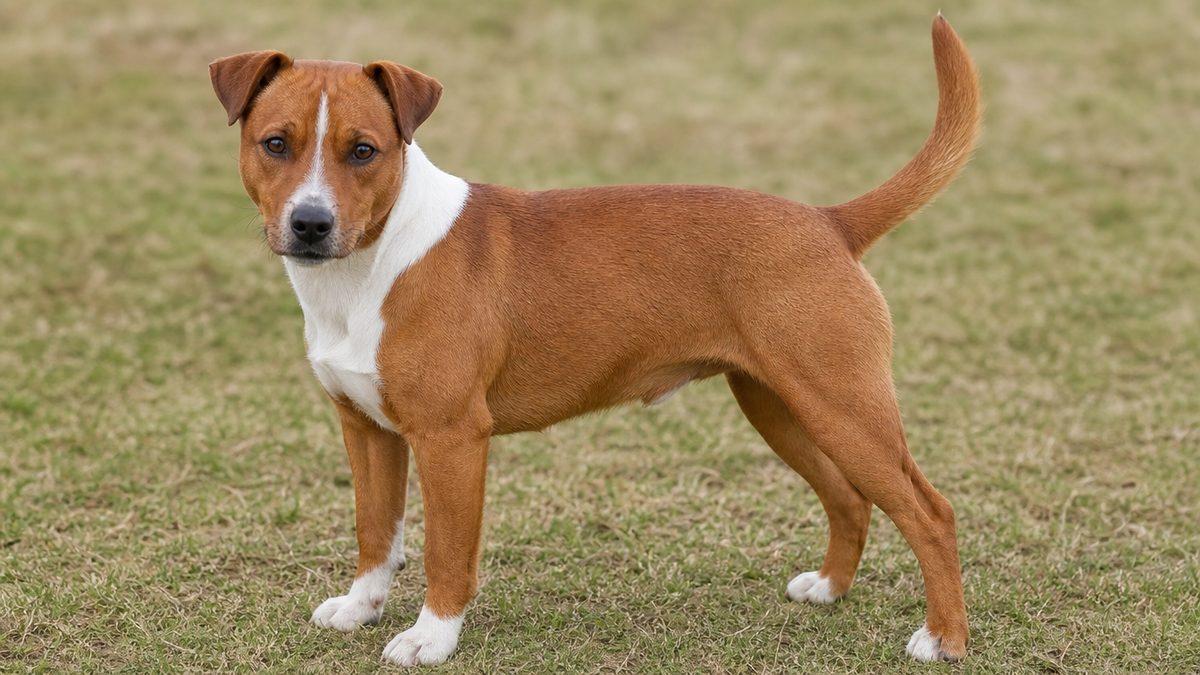
A red and white English working terrier recognised by no kennel club anywhere, whose own club nonetheless publishes a breed standard and keeps a register running back to 1952.
Quick answer
No Plummer Terrier price in India exists. The breed is recognised by no kennel club anywhere, no Indian listing for it could be found against a passing control, and the only rupee figures Amazon India attaches to the name are books about the breed and a Plummer Terrier cooking apron.
This page reports published registry documents, breed club records and Indian price data. It is not a diagnosis and it is not a treatment plan. Sudden loss of coordination in a young dog, a painful cloudy eye, a hind leg that drags, and any suspected deafness in a puppy all need veterinary examination. Consult your nearby vet before acting on anything here, and before starting or stopping any medicine.
Plummer Terrier at a glance
What a Plummer Terrier is, and why non-recognition is the wrong headline
The Plummer Terrier is an English working terrier bred by David Brian Plummer as a ratter and vermin dog, recognised by no kennel club anywhere, and nonetheless the subject of both a published breed standard and a maintained register kept by its own club.
The breed's history is short and unusually well documented for a dog nobody officially recognises: it was assembled in the 1960s from working stock, given a written standard in 2000, and registered by its own club from 1998. Every page that ranks for this breed nonetheless leads with what it is not. Wikipedia's infobox reads Not recognized as a breed by any major kennel club, and its text repeats that the breed is unrecognized by any kennel club. That is accurate, and this page verified it independently rather than repeating it. It is also the least interesting true thing about the dog.
The absence, established properly
An absence is a claim about the world and needs a passing control, so here are the checks and what each of them found.
| Register | Result | In-document control that passed |
|---|---|---|
| FCI, letter P index | Absent from 27 entries | Parson Russell Terrier, Prazsky Krysarik, Petit Basset Griffon Vendeen |
| United Kennel Club, all nine groups | Absent from every group | 45 terriers listed, including Patterdale, Jagdterrier and Sporting Lucas |
| UKC Bloodlines Listing Service Group | Absent from its 10 members | Phu Quoc Ridgeback, Armenian Gampr, Yakutian Laika |
| Dogs Australia complete listing, March 2026 | Zero occurrences of Plummer | Tenterfield Terrier, Prague Ratter, Russian Toy, Schipperke |
| OFA breed-code list, 481 rows | Fragment PLUM returns zero | Lucas, Tenterfield, Prague, Schipperke all present |
| McMillan 2024 Table S5, 344 breeds | Absent | 37 other terrier-named breeds present |
Two of those checks deserve naming individually. The FCI's letter P index returns 27 entries filed under their original-language names and no Plummer Terrier among them. The Dogs Australia Breed Listing of 18 March 2026, a single document covering all seven of its groups, contains the string Plummer zero times. The UKC line matters most, and it is the one no ranking page makes. The United Kennel Club operates a Bloodlines Listing Service Group, which exists precisely for breeds it will register while stating that no breed standard exists for them. If the Plummer Terrier were merely standardless, that is where it would sit. It is not there either. This breed is outside the kennel club system entirely, not partway into it.
What the breed does have
A breed is documentable when two things exist: a written standard describing what the animals should be, and a register recording which animals were bred to it. The Plummer Terrier has both, from one organisation, with no kennel club involved at any point.
The standard is published by the Plummer Terrier Club of Great Britain, headed BREED STANDARD FOR THE PLUMMER TERRIER, and organised under the conventional clause headings: General Character, Head, Ears, Eyes, Muzzle, Neck, Shoulders and Forelegs, Back, Hindquarters and Hind Legs, Body, Tail, Coat, Colour and Markings, Height, Movement and Faults. It opens A Plummer Terrier should be strong, hardy, active and adaptable, with terrier characteristics and as much substance as possible, and its height clause reads Maximum height to the shoulder, dog or bitch, 14 inches. A downloadable PDF is offered alongside it. Wikipedia dates the standard to 2000.
The register is described on the club's own registration page. Verbatim: the club was set up by Brian Plummer in 1998 to enable the registration of all Plummer Terriers, known as the PTCGB Register, with no restrictions other than the dogs be produced by two legitimate Plummer Terriers with proven pedigree with a pedigree from one of four named registers. The club adds that the database is taken from the original foundation register and information dating back to 1952, and that a parallel outcross register exists for dogs that pass its DNA health tests and can prove Plummer Terrier lineage. Registration costs 5 pounds per pup or adult dog.
A breed club that publishes its own standard and keeps its own studbook satisfies both conditions without a national kennel club anywhere in the picture. That is what this breed is. It is not a breed in formation, not a type, and not a name without content. It is a documented working breed maintained outside the show system, which is exactly where its creator wanted it.
Two disagreements in the sources, published rather than resolved
The first is a date. The club's own site says 1998 twice, once on its homepage and once on the registration page. Pets4Homes dates the club's formation to 1994. The club is the better authority on its own founding, but the disagreement is recorded here rather than quietly resolved.
The second is the founder's name, and it turns out both sides are right. Wikipedia and the club call him Brian Plummer. 101DogBreeds calls him Dr. David Plummer. Amazon India's author page for the breed's own foundational book settles it: the author of The Plummer Bible, published 1 July 2005, is David Brian Plummer. He used the middle name.
One caution about the club's site. Its footer reads copyright PTCGB 2018, so parts of it may not have been updated recently. The standard and the register pages both returned HTTP 200 and full content on 9 September 2026.
Plummer Terrier price in India, and what Amazon India actually sells
No Plummer Terrier price in India exists, and the one Indian domain that ranks for the breed sells books about the breed and a cooking apron.
Start with the control, because an absence is only meaningful if the search works. A Google India search for labrador retriever puppy price in india, run in the same session, returned ten genuine Indian commercial listings with real rupee figures, from Supertails at Rs 8,000 to Rs 70,000 to a marketplace quoting INR 30,000 to INR 1,20,000 with a city-by-city table. Indian dog listings are richly indexed. No Indian listing for a live Plummer Terrier appeared at all.
What did appear is instructive. Google India's results page for this breed carries exactly one rupee figure, Rs 1,283.00, attached to an amazon.in result. Following that domain to its own search results shows what it is selling.
| Listing | What it is |
|---|---|
| Plummer Terrier Activities, Tricks, Games & Agility | A book |
| The Plummer Bible: The Plummer Terrier Breed Notes, by David Brian Plummer, 1 July 2005 | A book, currently unavailable |
| Plummer Terrier Dog: Things You Need to Know | A Kindle book at 0.00 rupees |
| Plummer Terrier Dog Bib Apron, Animal Puppy Pet Cooking Kitchen Apron with adjustable straps and 2 pockets | An apron |
An automated summary reading this query would find a rupee figure on a page about the Plummer Terrier and report it as a price. It is the price of a paperback book. Before quoting any rupee figure as a breed price, confirm the listing is for a live animal. Here, none of them is.
There is a genuine artefact in that list worth separating from the noise. The Plummer Bible: The Plummer Terrier Breed Notes is by the breed's own creator, published 1 July 2005, and rated 4.7 out of 5. That is a real primary document about the breed, sold in India, and it is a better reason to visit that page than any price.
The foreign prices, and why this page does not convert them
The breed does have a market, in Britain. Pets4Homes states an average price of 500 to 1,500 pounds, and carried a live classified at 450 pounds in Bradford, West Yorkshire, when this page was researched. Those are sterling figures for a British market and this page converts none of them into rupees, because a conversion produces a number no Indian seller has ever quoted.
The Pets4Homes price prose is character-corrupted, rendering pound signs as stray letter sequences so that its figures there read as things like A5500 and A31,500. Those are not real numbers and must not be quoted. The header price and the live classified above are readable and are what this page uses.
Why no Indian price can form
India's import policy for pet dogs is restricted and permitted only with a DGFT authorisation. The guidance states that dogs for commercial purposes like breeding, as a gift or other purposes are not allowed to be imported, and that new born puppies of less than 7 months are not to be allowed. For a breed with no Indian population, no kennel club recognition anywhere and therefore no pedigree an importing authority would recognise, the practical position is that a lawful supply chain cannot form.
The word Terriers, and this breed
CBIC Instruction 05/2024-Customs of 14 March 2024 reproduces a Department of Animal Husbandry and Dairying letter listing breeds prohibited for import. Four of its entries are bare category words the instrument never defines: Mastiffs (boerbulls), Terriers, Wolf dogs and Canario. There is no interpretive difficulty here at all. The Plummer Terrier is a terrier by name, by function and by every description of it, so the word reaches it squarely on its face.
Reasoning from the absence of a proper name would have cleared this breed, because Plummer Terrier is not on the list. That reasoning is wrong, and the category word is the reason. The wider legal position is separate and settled: the Karnataka High Court quashed the circular on 10 April 2024 and the Delhi High Court set it aside that month, and the Centre told the Bombay High Court in January 2025 that it is not acting on it. No Indian law in force today bans owning, breeding or selling any of the breeds that list named.
Cost of ownership in India for a working terrier
The cost of ownership for a dog of this size in India is modest on paper and dominated by two things the paper does not show: parasite prevention and the consequences of an unmet prey drive.
No Indian breed page carries a cost table for this dog, so there is no template constant to inherit. What follows is Indian retail and municipal pricing that names its supplier, sized to a terrier of roughly 8 to 12 kg.
- Core vaccination, per shot. Anti-rabies Rs 699, puppy DP Rs 849, 9-in-1 DHPPiL Rs 899, canine corona Rs 899 and kennel cough Rs 1,349 at one national clinic chain. These are promotional starting prices, and the same chain quotes different course totals on different city pages, so note which city quoted you.
- Deworming. Drontal Plus is Rs 754 for six tablets against an MRP of Rs 838, which is Rs 125.67 a tablet dosed at one per 10 kg. A 10 kg terrier takes one tablet, so about Rs 126 per deworming. A dog that hunts and eats what it catches needs worming more often than a house dog, on your vet's advice.
- Tick and flea prevention. The 15 to 30 kg NexGard Spectra pack is Rs 3,308 for three months, which is Rs 1,103 a month; a terrier needs the smaller weight band, so budget proportionally less and check the pack weight against your dog.
- Municipal registration. Rs 500 in Delhi for a new registration and Rs 500 to renew, with a Rs 100 monthly late fee. Rs 50 in Chennai, where the corporation issued 9,115 licences in 2024 and runs six pet clinics giving treatment and anti-rabies vaccination free of cost.
- Grooming. Effectively nothing. A smooth, close working coat needs a rubber mitt once a week.
The costs the list does not show
The first is damage. A working terrier with nothing to hunt digs, chews and dismantles, and in a rented Indian flat that is a deposit rather than a vet bill. The honest way to budget for this breed is to budget for the exercise and occupation that prevent the damage, not for repairing it.
The second is the consequence of the prey drive. A dog that will pursue a cat, a squirrel or a rat across a road is a dog that will eventually meet traffic, and secure fencing plus a reliable long line are the real cost of ownership here. One ranking guide answers the small-pet question with a flat no, calling the breed a significant danger to cats and other small pets.
Greater Chennai Corporation's six municipal pet clinics provide all treatment and anti-rabies vaccination free of cost, and the corporation issued 9,115 pet licences in 2024. For a Chennai household that removes the largest scheduled veterinary line above entirely, and it is more useful to an Indian reader than any imported breed price.
Heat tolerance: the English Midlands against three Indian cities
The Plummer Terrier has poor heat tolerance despite its short coat, because it was built to work hard in the coolest homeland on any page in this batch.
The homeland point is Nottingham, in the English Midlands where the breed was developed. NASA POWER returned a cell elevation of 112.05 m against a real city elevation near 61 m, an error of about 51 m, which is within the range where the cell describes the place rather than a different landscape.
| Place | Annual mean C | Annual RH % | Hottest month | Peak wet bulb C |
|---|---|---|---|---|
| Nottingham, England | 9.30 | 87.28 | Jul 16.13 | 13.94 (Jul) |
| Bengaluru | 23.74 | 67.94 | Apr 28.37 | 21.86 (May) |
| Delhi | 25.60 | 45.56 | Jun 35.88 | 26.50 (Jul) |
| Chennai | 27.95 | 72.39 | May 31.51 | 26.11 (May) |
Nottingham's hottest month averages 16.13 C. That is the lowest summer peak of any homeland on this batch of seven pages, lower than Brussels, Prague, Moscow, Assen and Tenterfield. Chennai's coolest month averages 24.09 C, eight degrees above the warmest month an English Midlands terrier evolved to work in. Delhi's June averages 35.88 C, more than nineteen degrees above it.
Humidity is not the problem
Nottingham runs 87.28 percent annual relative humidity, higher than every Indian city in the table and fifteen points above Chennai. The frequent warning that a British breed will struggle with Indian dampness is measurably backwards. What this dog has never met is dampness at thirty degrees, which is why the wet bulb column is the one that matters: Nottingham peaks at 13.94 C, Delhi at 26.50 C. That is a twelve and a half degree reduction in how hard panting can work.
Why the short coat does not save it
A smooth coat helps a dog lose heat, and it is the reason this breed's heat rating is not the worst on this site. It also matters that this is a compact, keen, muscular dog rather than a heavy one, since a compact animal sheds heat more readily than a bulky one of the same fitness. What none of that offsets is workload, or air that is both hot and humid at once. This is a dog bred to hunt at speed underground and in cover, and its problem in India is not lying in the sun, it is that the activity it needs is the activity it cannot safely do for four months of the year. A Plummer Terrier that is not worked becomes destructive, and a Plummer Terrier that is worked in an Indian May becomes a heat casualty.
- Work the dog before sunrise, and treat the afternoon as unavailable from March to June across most of India.
- Bengaluru or Pune if you have a choice. At 23.74 C and 23.86 C annual mean they are the least hostile Indian metros for a working breed.
- Carry water on every outing and offer it before the dog looks like it needs it.
- Watch for panting that does not settle within five minutes of stopping in shade, which is the line between exercise and a heat event.
- Substitute scentwork for pursuit in hot months. A terrier's nose works indoors, and its legs do not have to.
India's Dog Breeding and Marketing Rules 2017, Second Schedule Part IV paragraph 21(1), bar keeping dogs in outdoor facilities without the attending veterinary practitioner's written approval where they are not accustomed to local temperatures or where the breed cannot tolerate the temperatures prevalent in the area. A working terrier kennelled outdoors in an Indian summer is precisely the arrangement the clause addresses.
Temperament and who should not buy one
The Plummer Terrier is a strong, hardy, active and adaptable working dog with an intense prey drive, and the honest position is that it is unsuitable for most households.
The club's own standard opens with the temperament, and its phrasing is worth taking literally: a Plummer Terrier should be strong, hardy, active and adaptable, with terrier characteristics and as much substance as possible. Terrier characteristics is not a euphemism. It means a dog selected over decades to go forward at quarry in a confined space, alone, and to keep going.
VioVet's own description, which survives in search even though its breed page no longer exists, describes a dog rarely seen in the domestic setting and commonly used as a pack dog hunting vermin and rabbits as part of a sporting group. That is the context this breed was made for and the one it is still mostly kept in.
Who this breed suits
- Experienced working-terrier owners with a legitimate outlet for the dog, whether that is legal quarry work, ratting on a farm, or serious dog sport.
- Rural or semi-rural households with secure ground and no small pets.
- People who want a genuinely hardy dog that is neither fragile nor high-maintenance in any physical sense.
- Owners who enjoy training a thinking dog that was bred to work out of sight of its handler.
Who should look elsewhere
- Anyone with cats, rabbits, hamsters or birds. One ranking guide's direct answer on this is simply no, describing a significant danger to small pets.
- Apartment households. This is not a size question. It is an occupation question.
- First-time dog owners. The ranking set is unanimous, and it is right.
- Anyone in an Indian metro without a way to exercise the dog before dawn for four months of the year.
Nothing above is about aggression towards humans. Every account of the breed, including the club's, describes a dog that is affectionate, loyal and playful with its family and good with children in an active household. The prey drive is directed at quarry, not at people, and confusing the two does the breed a disservice.
Training a dog bred to work alone
To train a Plummer Terrier, work with the prey drive rather than against it, because a dog selected to make its own decisions underground will not be argued out of chasing by repetition.
The training problem with working terriers is specific and it is not stubbornness. A dog bred to work at quarry beyond its handler's reach had to be selected for persistence and for acting on its own judgement. That same selection produces a dog that hears a recall, evaluates it against a moving squirrel, and reaches the wrong answer.
Four priorities
- Build a recall against real prey, on a long line, for a year. A recall trained in a quiet room does not transfer to a rat in a drain. Assume the long line stays on until the dog has proved otherwise a hundred times.
- Give the prey drive a legal outlet. Flirt poles, scentwork, retrieve games with rules, and terrier racing where it exists. A drive with an outlet is trainable. A drive with no outlet finds its own.
- Socialise hard and early with dogs. Working terriers can be sharp with other dogs, and the window before four months is when that is cheapest to influence. Socialise deliberately, in short positive sessions.
- Teach a settle and reward stillness. A high-drive dog that has never been rewarded for doing nothing does not learn how.
Digging deserves its own plan rather than a prohibition. This dog will dig. Give it a permitted place to dig, bury things in it, and reward it for going there. Attempting to eliminate the behaviour outright generally moves it somewhere less convenient.
A terrier bred to go to ground will test the bottom of a fence, not the top. Check the fence line at ground level, block gaps under gates, and remember that a dog which can get its head through a gap can usually get the rest of itself through too. In an Indian context, balcony railings and building gate bottoms are the two failure points.
How much exercise a Plummer Terrier needs
A Plummer Terrier needs 90 minutes or more of real activity a day plus substantial mental work, and in India that has to be delivered before sunrise for four months of the year.
This is a working breed and the exercise requirement is the reason most pet homes fail with it. The dog was built for sustained hard work in cover, and a walk on a lead does not touch either the physical or the mental side of that. What settles a Plummer Terrier is having hunted something, in whatever legal form is available.
- Scentwork, daily. The cheapest and most transferable substitute for quarry work, and it can be done indoors in the hot months.
- A flirt pole or chase-and-release game with a clear start and stop, which channels the drive into something you control.
- Long off-lead running in genuinely secure ground only, which in most Indian cities means a fenced space rather than a park.
- Digging box, so the digging happens where you chose.
- Training sessions of five to ten minutes, several times a day, which do more for settling than an extra half hour of walking.
From March to June across most of India the only safe windows for hard exercise are before sunrise and well after dark. Delhi averages 35.88 C in June. A dog that needs 90 minutes of hard work a day and can only have it in the dark is a real logistical commitment, and it is the single most honest reason to think twice about this breed in an Indian city.
Grooming, which takes ten minutes a week
Groom a Plummer Terrier with a rubber mitt once a week, and spend the rest of the time on the things that actually matter for a working dog in India: skin, feet, ears and parasites.
The coat is the easiest part of this breed. It is smooth, close and dense, with nothing to strip, nothing to clip and nothing that mats. A weekly rubber mitt lifts the dead hair and that is the whole coat routine.
What replaces grooming is inspection, and for a working dog in an Indian climate it is not optional.
- Check the feet after every outing. Thorns, glass and grass seeds between the pads are the commonest working-dog injury, and they are cheap to catch early.
- Check the ears. A dog that puts its head into holes and undergrowth collects debris, and Indian humidity turns debris into infection quickly.
- Look at the skin weekly in daylight. A red and white dog shows parasites and lesions more readily than a dark one, which is a genuine advantage.
- Dry the dog properly after rain. Air drying is standard British advice and transfers poorly to an Indian monsoon; a smooth coat dries fast but the skin underneath still needs to be dry.
- Check for ticks by hand after every outing in cover, which given the Indian burden set out in the health section is the most valuable ten minutes in this list.
Nothing about this coat was ever selected for appearance, which means nothing about it needs professional maintenance. In a country where a groomer visit for a coated breed runs into four figures, a dog whose entire coat routine is a rubber mitt is a genuine and permanent saving.
Health, and an evidence base that does not exist
No prevalence data of any kind exists for the Plummer Terrier: no OFA breed code, no PubMed records, no inclusion in the largest longevity study, and no published screening scheme results.
That is the accurate summary and it needs establishing rather than asserting, because an unproven absence is worth nothing. Here is what was searched and what proved each search worked.
The literature
The quoted phrase Plummer Terrier in title or abstract returns zero PubMed records, and so does the plural Plummer Terriers, both with PubMed's own quotedphrasesnotfound warning. Running both forms matters, because on other breeds the plural has recovered an entire literature the singular missed. Here it recovers nothing. Searching both words unquoted returns a single record, a uveodermatologic syndrome case report in a rat terrier whose co-author is surnamed Plummer, which is author-name noise rather than breed literature. Controls run in the same session returned 126 for Labrador retriever hip dysplasia and 31 for a comparably rare European breed, so the instrument was demonstrably working.
The registers
OFA does not hold a breed code for this dog at all. The fragment PLUM returns zero hits across all 481 rows of OFA's breed selector, while LUCAS, TENTERFIELD, PRAGUE, RUSSIAN TOY, SCHIPPERKE and SCHAPENDOES all return hits in the same read. That is a stronger absence than the one this site usually reports for rare breeds, which is a code held with no published statistics. Here there is no code.
McMillan 2024 does not include the breed either. It is absent from the 344-breed frame of the study's supplementary Table S5, even though that table carries 37 other terrier-named breeds including the Jack Russell Terrier, the Parson Russell Terrier and the German Hunting Terrier. Terriers as a class were in the study's consideration set. This one was not. There is consequently no life expectancy figure for this breed from any study.
None of this says the Plummer Terrier is unhealthy, and none of it says it is healthy. It says nobody has measured. Working breeds kept outside the show system are systematically under-represented in screening registers, because those registers are populated by owners who show and breed under a kennel club. A breed can be genuinely robust and still invisible to every dataset.
What the breed's own community screens for
The most useful health information available comes from the club and from the ranking set, and it should be read as the tests offered for terriers of this family rather than as prevalence findings in this breed.
- Primary lens luxation. A painful inherited condition in which the lens slips from its position, common across several terrier breeds and testable by DNA.
- Late onset ataxia. A progressive neurological condition documented in the Russell group of terriers, also DNA-testable.
- Degenerative myelopathy. A progressive spinal cord disease of older dogs, with a widely available DNA test.
- BAER testing for deafness. Relevant to any breed carrying substantial white in its coat pattern, and this is a red and white breed with white collars and capes.
The club itself operates DNA health testing as a gatekeeping mechanism, which is unusually rigorous for an unrecognised breed. Its registration page states that outcross dogs may be registered if they pass our DNA health tests and can prove Plummer Terrier lineage, with approved dogs going onto a parallel outcross register. That is a health screening requirement built into the register itself, which is more than several kennel club breeds manage.
What an Indian owner would actually face
For any dog in India, tick-borne disease is the health issue with real numbers behind it, and it applies to a working terrier more than to most dogs because a working terrier spends its time in exactly the cover where ticks live. A West Bengal study of 584 dogs screened at veterinary clinics detected Babesia gibsoni in 76.54 percent, with 72.9 percent of those 584 carrying two or more pathogens. A Kerala study of 120 dogs found Babesia in 80 of them, peaking before the monsoon between March and May.
Both studies sampled clinic caseloads and clinically suspected animals rather than random populations, so they are not general prevalence figures for Indian dogs. What they establish is that year-round prevention is not optional, and that a dog which works in undergrowth needs it more than a dog which walks on pavements.
Because no register holds this breed, the health information you get will come from the breeder and nowhere else. Ask for DNA test certificates for primary lens luxation, late onset ataxia and degenerative myelopathy, ask for a BAER result, and ask to see the results rather than being told about them. A club that runs DNA testing as a condition of its own outcross register should be able to produce paperwork.
Feeding a working terrier in India
Feed a Plummer Terrier to body condition and to workload, because a dog that is worked hard three days a week and rests four has a genuinely variable requirement that no chart captures.
The club's standard gives a maximum height of 14 inches and no weight figure at all, which is consistent with a working standard: what matters is that the dog is fit and narrow enough to do its job, not that it hits a number. Google's own knowledge panel gives a height range of 32 to 36 cm for males and 28 to 34 cm for females, which sits comfortably under the standard's ceiling.
Assess by hand. You should feel the ribs easily under a thin layer, see a waist from above and a clear tuck from the side. For a working terrier, err towards lean: a dog carrying extra weight cannot get into the places its job requires, and in Indian heat every extra kilogram is extra heat to shed.
Indian practicalities
- Two meals a day for an adult, three for a growing dog, and never a large meal immediately before or after hard work.
- Increase the ration on working days and cut it on rest days, rather than feeding an average that is wrong on both.
- Do not free-feed in monsoon humidity. Food spoils faster than owners expect, and free-feeding hides the appetite change that is often the first sign of illness.
- Feed after the dog has cooled, not while it is still panting hard.
- Use part of the ration as training currency, which for a high-drive dog is more valuable than any treat bought separately.
A terrier that actually hunts will eat things you did not give it, and that changes the worming schedule. Discuss frequency with your nearby vet rather than following a house-dog interval, and mention to them what the dog is catching, because the parasite risk differs between rodents, rabbits and carrion.
The first year, month by month
A Plummer Terrier puppy's first year is about three things: socialising a sharp dog before four months, building containment habits before the drive matures, and getting the DNA testing paperwork in order.
- Months 0 to 2. With the breeder. Indian law sets the floor at eight weeks: Rule 8(1)(a) of the 2017 Rules provides that pups less than eight weeks in age are not sold. Ask now for the parents' DNA certificates rather than at collection.
- Month 2. Home. Vaccination begins, with anti-rabies around Rs 699 and multivalent shots in the Rs 849 to Rs 899 band at one national chain. Start the recall on a line from day one, indoors.
- Months 2 to 4. The socialisation window and the most valuable eight weeks of the year for a terrier. Other dogs, traffic, livestock if you can arrange it, children, lifts and watchmen, all in short positive doses. A sharp breed socialised late stays sharp.
- Month 3 to 4. Deworming on your vet's schedule, about Rs 126 per dose at adult weight. Register with your municipality: Rs 500 in Delhi, Rs 50 in Chennai. Greater Chennai Corporation veterinary…
- Months 4 to 6. Teething, and the point at which chewing becomes structural rather than exploratory. Provide legal outlets before the illegal ones are discovered.
- Months 6 to 10. The prey drive matures, and the recall that worked at four months stops working. This is normal and it is the single most common point at which owners lose a terrier. Keep the long line on.
- Months 8 to 12. Digging and boundary-testing intensify. Fix the fence line at ground level now.
- Month 12 onwards. Physical maturity, and the point at which hard sustained work becomes reasonable. If your dog is registered, this is when to confirm the PTCGB Register entry and file the paperwork properly.
- Throughout. If you are in an Indian metro, build the pre-dawn exercise habit in the cool season so it is already established when the hot months arrive.
A smooth-coated working breed needs almost no puppy grooming, which frees the whole of the first year's handling budget for the things that matter: feet, ears, mouth and being examined by a vet. Teach those, and skip the brushing lessons other breeds need.
Plummer Terrier against the terriers it sits beside
Google's own People also search for row places this breed beside the Fell Terrier, the Sporting Lucas Terrier, the Patterdale Terrier and the Lucas Terrier, which is an accurate map of the British working-terrier neighbourhood.
| Plummer Terrier | Patterdale Terrier | Sporting Lucas Terrier | Jack Russell Terrier | |
|---|---|---|---|---|
| Kennel club recognition | None anywhere | UKC Terrier Group | UKC Terrier Group since March 2002 | FCI, UKC and Kennel Club |
| Standard published by | The PTCGB, since 2000 | UKC | UKC and the SLT Association | Multiple kennel clubs |
| Register kept by | The PTCGB, back to 1952 | UKC | UKC | Kennel clubs worldwide |
| Typical colour | Fiery red and white, collar or cape | Solid black or liver | Predominantly white bodied | Predominantly white with patches |
| Height ceiling | 14 inches | Not directly comparable | 11 to 13 inches for dogs | Varies by registry |
| Prey drive | Intense | Intense | Intense | High |
The two things that genuinely distinguish this breed from its neighbours are colour and recognition. The fiery red and white with a white collar or cape is the Plummer's signature and nothing else in the group looks like it, which is why a black or tricolour dog offered as a Plummer Terrier is almost certainly something else. And it is the only breed in that table recognised by nobody.
The comparison that matters in India
None of the four is realistically obtainable in India. What an Indian buyer looking for a small, hardy, active dog will actually meet is an Indian pariah-descended dog, and that comparison is worth making honestly rather than avoiding. A pariah-type dog is hardy, alert, active, healthy and adapted to the climate. It will not have the specific underground working drive the Plummer was built for, which for a pet home is an advantage rather than a loss.
The Plummer Terrier is a genuinely interesting case study in how a breed can exist rigorously without a kennel club, and a poor practical choice for almost any Indian household. If you already have one, the climate and health sections above are written for you. If you are choosing, start at the adoption section.
Mistakes people make about this breed
Most errors about the Plummer Terrier are errors about what non-recognition means, and most errors with the dog are errors about what an unmet prey drive does.
- Treating non-recognition as proof the breed is not real. It has a published standard and a maintained register with foundation data back to 1952. Both conditions are met without a kennel club.
- Treating non-recognition as proof there are no rules. The club's register is closed to dogs without a proven pedigree from one of four named registers, and its outcross register requires passing DNA health tests. That is stricter gatekeeping than several recognised breeds apply.
- Buying one for an apartment. Size is not the issue. A working terrier with no outlet becomes a destructive one, reliably.
- Keeping one with cats or small pets. The ranking set's direct answer is no, and it is right.
- Assuming a smooth coat means heat tolerance. The breed's homeland has a hottest month averaging 16.13 C.
Three errors that come from the search results
The first is quoting the Rs 1,283 figure that appears on the Indian search page for this breed, which is the price of a paperback book. The second is trusting the VioVet breed page, whose URL returns HTTP 200 but redirects to a noindex shop-search shell listing horse tack and aquarium parts, with no breed content at that address at all. The third is quoting the corrupted price prose from the Pets4Homes page, whose pound signs render as stray letter sequences.
The 2017 Rules, Second Schedule Part II paragraph 6(3), prohibit in-breeding within four generations and incest breeding, naming uncle to niece, nephew to aunt, cousin to cousin and grandparent to grandchild. Paragraph 6(8) forbids tail docking, which working-terrier practice in Britain historically included and which is prohibited here. Paragraph 6(9) prohibits breeding to create new breeds of dogs or unusual looks, which reaches any programme whose stated purpose is to make a new breed.
Adopt, verify and source responsibly
There is no route to a Plummer Terrier in India that this page can recommend, and the honest advice is to say so and then explain what to do instead.
India's import policy for pet dogs is restricted and permitted only with a DGFT authorisation. Dogs for commercial purposes like breeding, as a gift or other purposes are not allowed to be imported, and new born puppies of less than 7 months are not to be allowed. The only route without an authorisation is the customs baggage route, for up to two pets, for a person transferring residence permanently to India after two years of continuous stay abroad.
There is an additional practical difficulty specific to this breed. Import documentation assumes a pedigree from a recognised registry, and this breed's pedigree comes from a private club that no kennel club recognises. That is not an insurmountable obstacle for a personal pet moving with its owner, but it is a real one, and anyone planning it should raise the pedigree question with the Animal Quarantine and Certification Station early rather than at the airport.
If you are bringing your own dog to India
- Confirm the two-year rule applies to you, otherwise a DGFT authorisation is required.
- Start at least two months before travel, since the application goes to the Department of Animal Husbandry, Dairying and Fisheries for an NOC and then to the Exim Facilitation Committee, which meets monthly.
- Get the advance NOC from the AQCS at your port of entry seven days before travel, relaxable to three days.
- Plan on one of seven ports: Delhi, Mumbai, Chennai, Hyderabad, Bengaluru, Kolkata or, since October 2024, Kochi. The full route is set out in how to import a dog to India.
- Carry the PTCGB registration document alongside the pet book, vaccination certificate and official veterinarian's health certificate, and be prepared to explain what the register is.
- Bring the DNA test certificates. For a breed with no published health data anywhere, your dog's own paperwork is the only health record an Indian vet will have.
If you are choosing rather than importing
There is no Indian population of this breed to adopt from, and there is no honest way to dress that up. What is worth saying instead is what the breed's appeal actually consists of. Strip away the pedigree question and the Plummer Terrier is a strong, hardy, active, adaptable small dog with a short easy coat, a working brain and no interest in being ornamental.
Indian shelters are full of dogs answering to every one of those adjectives, adapted to the climate that would be this breed's main problem, and free to adopt. A pariah-descended dog with a job to do and an owner who trains it is a great deal closer to what makes a Plummer Terrier appealing than any imported dog would be.
- Verify any claimed Plummer Terrier pedigree against the PTCGB Register itself, not against a certificate photograph. The club names four registers whose pedigrees it accepts, so ask which one issued yours.
- Ask for DNA results, not assurances, for primary lens luxation, late onset ataxia and degenerative myelopathy, plus a BAER hearing result.
- Check the colour against the standard. A black or tricolour dog offered as a Plummer Terrier is very likely a Patterdale or a crossbred.
- Register the dog with your municipality. Rs 500 in Delhi, Rs 50 in Chennai. Greater Chennai Corporation veterinary…
- Use free municipal veterinary services where they exist, such as Greater Chennai Corporation's six pet clinics.
We report published prices and registry documents as editorial content. We do not recommend breeders, link puppy listings or quote a live price as an offer. For this breed we publish no Indian price at all, because the only rupee figures in existence are for books and an apron, and converting a sterling asking price would be arithmetic rather than reporting.
Plummer Terrier questions people actually ask
Are plummer terriers good pets?
For an experienced working-terrier owner with space and a job for the dog, yes. For most households, no. The ranking set is consistent that this is a high-energy dog with an intense prey drive, and one guide answers the small-pet question with a direct no, calling them a significant danger to cats and other small pets.
What breeds make a Plummer Terrier?
The breed was assembled by David Brian Plummer from working terrier stock, with Jack Russell and fell terrier blood at its foundation and further outcrossing during its development. The club's own register describes a database taken from an original foundation register with information dating back to 1952, which is the documentary trail behind the composition rather than a formula.
Is a Patterdale terrier a good family dog?
Google returned this question on a Plummer Terrier search, and the two breeds sit in the same working-terrier neighbourhood. The honest answer for both is the same: they are affectionate with their own people and unsuitable for homes with small pets, and both were bred to work independently at quarry rather than to be biddable companions.
What is the lifespan of a Plummer Terrier?
No study-grade figure exists. The breed is absent from the entire 344-breed frame of McMillan 2024, the largest recent analysis of dog longevity, even though that study covers 37 other terrier-named breeds. Any life expectancy figure you read for this breed comes from club and aggregator estimates with no stated cohort behind them.
What is the Plummer Terrier price in India?
There is none. No Indian listing for a live Plummer Terrier could be found against a control search that returned ten genuine Indian Labrador listings in the same session. The only rupee figures Amazon India attaches to the name are books about the breed and a Plummer Terrier cooking apron.
Is the Plummer Terrier recognised by any kennel club?
No, and this page checked rather than assuming. The breed is absent from the FCI's letter P index, from all nine United Kennel Club groups including the Bloodlines Listing Service Group that exists for breeds registered without a standard, from the complete Dogs Australia breed listing, and from OFA's 481-row breed-code list.
Does the Plummer Terrier have a real breed standard?
Yes. The Plummer Terrier Club of Great Britain publishes one, organised under headings for General Character, Head, Ears, Eyes, Muzzle, Neck, Shoulders and Forelegs, Body, Tail, Coat, Colour and Markings, Height, Movement and Faults, and offers it as a downloadable PDF. Its height clause reads maximum height to the shoulder, dog or bitch, 14 inches.
Is there a Plummer Terrier studbook?
Yes. The club keeps the PTCGB Register, open to dogs produced by two legitimate Plummer Terriers with a proven pedigree from one of four named registers, plus a parallel outcross register for dogs that pass the club's DNA health tests and can prove Plummer Terrier lineage. Registration costs 5 pounds per dog.
What health tests should a Plummer Terrier have?
The ranking set names four: late onset ataxia, primary lens luxation, degenerative myelopathy and BAER testing for deafness. Those are the tests offered for terriers of this family generally rather than prevalence findings in this breed specifically, because no prevalence data for this breed exists anywhere. Ask a breeder for results rather than assurances.
Is there any veterinary research on the Plummer Terrier?
None. The quoted phrases Plummer Terrier and Plummer Terriers each return zero PubMed records with the database's own phrase-not-found warning, and the search with both words unquoted returns a single record about a rat terrier whose co-author happens to be surnamed Plummer. Controls in the same session returned 126 and 31.
Does India's 2024 dog circular apply to the Plummer Terrier?
The bare word Terriers appears in that list and the instrument defines it nowhere, so on its face it reaches every terrier including this one. That said, the Karnataka High Court quashed the circular on 10 April 2024 and the Delhi High Court set it aside that month, so no Indian law in force today bans owning, breeding or selling any breed it named.
Can a Plummer Terrier cope with Indian heat?
Poorly, and the smooth coat is misleading. Nottingham, in the English Midlands where the breed was developed, has a hottest month averaging 16.13 C, the coolest summer peak of any homeland on this batch of pages, against Delhi's June at 35.88 C. This is a dog bred to work hard in cold wet country.
Compare with similar breeds
Plummer Terrier sits in 1 Bonbeno group. Each one compares it directly against the breeds it is genuinely an alternative to, on the same figures.