
Dog breed profile
Jack Russell Terrier in India: Price, Which Dog You Are Actually Buying, and Full Breed Guide
What a Jack Russell Terrier costs in India, which of three Russell breeds you are actually being sold, why primary lens luxation is the one test that matters, and what the longest measured life expectancy of any dog breed does to your budget.
Quick answer
The Jack Russell Terrier price in India runs Rs 20,000 to Rs 1,20,000 in 2026, with published sources disagreeing by more than Rs 1,00,000 for the same breed name. Part of that gap is that three separate registry breeds share the Russell name at different heights. The breed also holds the longest measured life expectancy of any dog in the UK life tables, at 12.72 years, and carries a 34.7 percent primary lens luxation carrier rate among tested dogs.
This guide is general information for Indian pet owners and is not a diagnosis. Always consult a registered veterinarian near you before acting on anything you read here, and treat any sudden change in your dog's condition as urgent.
Jack Russell Terrier at a glance
What a Jack Russell Terrier actually is, and which one India sells
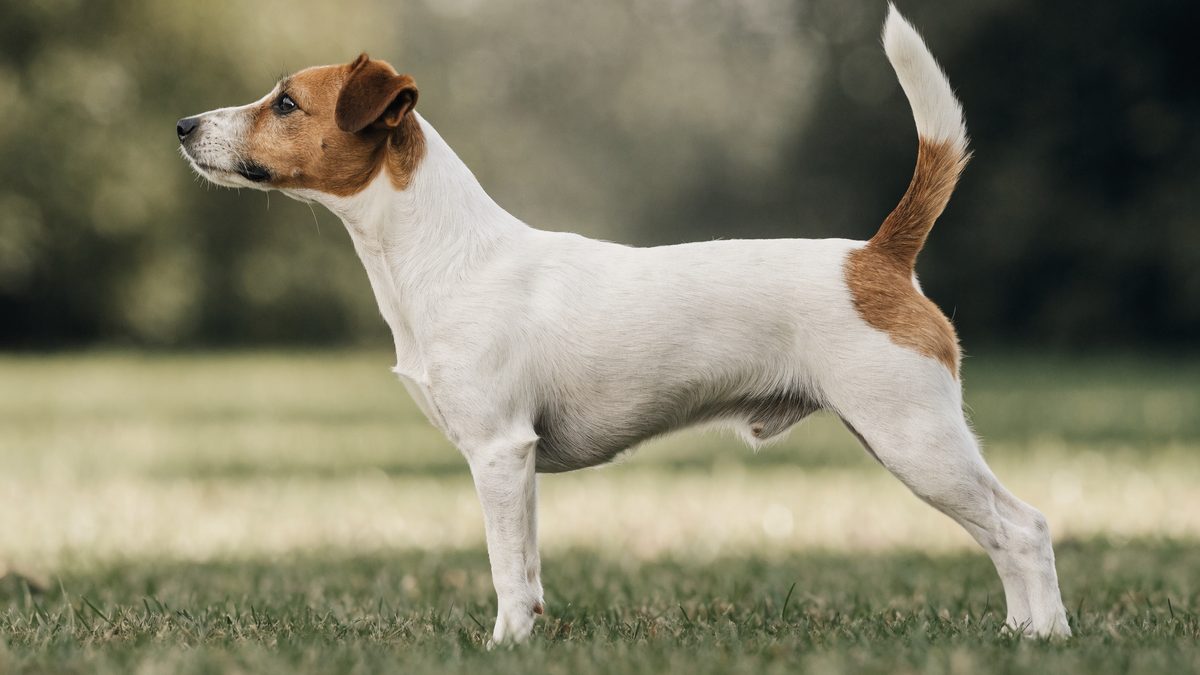
The Jack Russell Terrier is a small white-bodied working terrier bred to go to ground after fox, standing 25 to 30 cm at the withers under the FCI standard that a KCI pedigree answers to. Three different registry breeds share the Russell name, they have different height bands, and Indian sellers use the names interchangeably. Sort that out before you look at a single price.
Start with the split, because everything else follows from it. The Reverend John Russell developed a strain of Fox Terriers in England in the 1800s to run with his foxhounds and bolt fox and other quarry from their dens. Two varieties evolved from that stock with near-identical standards except in height and proportion. The taller, more squarely built dog is now the Parson Russell Terrier. The shorter, slightly longer-proportioned dog is the Jack Russell Terrier.
The Royal Kennel Club dates the formal split precisely. The Parson Russell Terrier, an over-12-inch terrier of old fox terrier type, was registered in the UK in 1991, and at the same time the Jack Russell Terrier, under 12 inches, was registered in Australia. The Jack Russell Terrier Club of Australia had been founded in 1972, the FCI recognised the Australian type in 1991, and The Kennel Club in Britain only gave the Jack Russell Terrier official recognition in 2016. That is why the breed is absent from older British pedigree health surveys: it was not on the register when they were run.
Three standards, three dogs, one name in Indian listings
| Breed and registry | Height | Proportion | Status for an Indian buyer |
|---|---|---|---|
| Jack Russell Terrier, FCI Standard 345 | Ideal 25 to 30 cm, roughly 1 kg per 5 cm of height | Longer than high, rectangular | The standard a KCI pedigree answers to, because the Kennel Club of India is India's FCI member body |
| Jack Russell Terrier, Royal Kennel Club | 25 to 30 cm, 10 to 12 in | Slightly longer than high, rectangular | British standard compiled from the British breed club, Australian and FCI standards |
| Russell Terrier, AKC | 10 to 12 in, under 10 or over 12 is a disqualification | Marginally longer than tall | The AKC name for the same short dog, recognised in 2012 |
| Parson Russell Terrier, FCI Standard 339 | Ideal 36 cm males, 33 cm females | Overall length slightly longer than height | A visibly taller, longer-legged dog in FCI Group 3 Section 1, not Section 2 |
| Parson Russell Terrier, AKC | Ideal 14 in dogs, 13 in bitches, 13 to 17 lb; under 12 or over 15 in disqualifies | Approximately square | The squarer, leggier dog people mistake for a large Jack Russell |
| Jack Russell Terrier, United Kennel Club | 10 to 12 in, 11 to 13 lb; over 12 in is a serious fault | Slightly longer than tall | The same short dog the AKC calls a Russell Terrier, under the Jack Russell name |
| Jack Russell Terrier, JRTCA working registry | 10 to 15 in at the withers | Body length in proportion to height | A deliberately broad working range that covers both of the show breeds above |
One more twist makes the naming genuinely circular. The United Kennel Club recognised the short-legged dogs as Russell Terriers on 1 January 2001, then revised the breed name to Jack Russell Terrier on 1 January 2009. The AKC did the opposite, recognising the same short dog as the Russell Terrier in 2012. So two American registries apply opposite names to the same animal, and the UKC records that breeders historically called these dogs puddin' dogs, puds, or simply shorties. When an Indian seller says Russell Terrier, they may mean the short dog, the tall dog, or nothing in particular.
Now look at what the Indian market prints. Mr n Mrs Pet lists the height of every Jack Russell Terrier it sells, across all three of its quality tiers, as 23 to 38 cm. Puppiezo lists 10 to 15 inches, which is 25 to 38 cm. Both ranges swallow the Jack Russell Terrier, the Russell Terrier and the Parson Russell Terrier whole. A 38 cm dog is taller than the FCI's ideal Parson Russell male and 8 cm above the top of the Jack Russell Terrier standard Federation Cynologique Internationale. Neither seller is necessarily lying. They are describing a category, not a breed.
Measure the adult dog at the withers, the highest point of the shoulder blade. Between 25 and 30 cm you have a Jack Russell Terrier as the FCI defines it. At 33 to 36 cm you have a Parson Russell Terrier. In between you have a dog that no show registry will place cleanly, which matters not at all for a pet and matters enormously if you were quoted a champion-bloodline premium. A puppy cannot be measured for this. Ask to see and measure both parents.
What the standard says the dog looks like
White must predominate, with black and tan markings ranging from the lightest tan to rich chestnut. The Royal Kennel Club is blunt that any other colour or combination is unacceptable, and the AKC Russell Terrier standard puts a number on it, disqualifying any dog less than 51 percent white and disqualifying brindle outright. The eyes are small, dark and almond-shaped with black rims. The ears are button or dropped, never pricked; prick or semi-prick ears are an AKC disqualification.
The coat comes in three textures and none of them is a fault. Smooth is short, dense and coarse. Broken sits between smooth and rough, usually with facial furnishings. Rough is harsh and dense, never thin, woolly, curly or silky. All three carry an undercoat and all three must be weatherproof. The FCI adds a rule Indian buyers should know, that coats must not be altered by stripping out to fake a smooth or broken texture.
The single most important structural feature is the chest. This is a working terrier built to follow a fox underground, so the ribcage is oval and compressible and the girth behind the elbows must be spannable by two hands, about 40 to 43 cm The Royal Kennel Club. The AKC calls the small oval compressible chest the hallmark of the breed and the single most important attribute it must have. A barrel-chested, heavy-fronted dog sold to you as a Jack Russell is a fearless looking pet and a failed working terrier.
Why the breed suddenly has an Indian market
Demand in India is celebrity-led rather than working-led. In August 2023 the Congress leader Rahul Gandhi took a Jack Russell Terrier puppy home from a kennel in Mapusa, North Goa, and the breeders told the Economic Times they had previously supplied dogs to Azim Premji and to Kareena Kapoor. The same report repeated the Ukrainian mine-detection dog story that has followed the breed since 2022. Nothing in that coverage described a small rectangular earth dog with a working chest and a job. It described a fashionable compact pet, and that is the gap this page exists to close.
This page uses Jack Russell Terrier for the FCI 345 and Royal Kennel Club breed at 25 to 30 cm, and says Parson Russell Terrier or Russell Terrier explicitly when the source means one of those. Where a figure comes from a study or registry that pooled the Russell group, it says so. Indian sellers and most owners shorten all of it to Jack Russell, and that is the term you will hear in a Bangalore park, so both forms appear here.
Jack Russell Terrier price in India, and why sources disagree by a factor of six
The Jack Russell Terrier price in India runs from Rs 20,000 to Rs 1,20,000 and above in 2026, depending entirely on which published source you read. That is a gap of more than Rs 1,00,000 for a dog of the same name. Bonbeno prints both ends and explains what actually drives the difference rather than averaging them into a number nobody quoted.
| Source | Published band | What the source is |
|---|---|---|
| Supertails | Rs 20,000 to Rs 35,000, rising to Rs 40,000 or Rs 50,000 for champion bloodlines | Retail pet platform, editorial guide, does not sell dogs |
| Happy Pet | Rs 20,000 to Rs 35,000 | Breed database page, same band, no sourcing given |
| Mr n Mrs Pet | Rs 65,000 to Rs 1,20,000 and above | Puppy broker that also publishes breed content |
| Puppiezo | No price published on the breed page, quoted by phone or WhatsApp only | Online puppy seller, Delhi NCR, ships pan-India |
| Justdial listings | No consolidated figure, dealer-by-dealer | Business directory whose category is literally Jack Russell Terrier Dog Wholesalers |
Do not split the difference. The two bands are measuring different transactions. Supertails and Happy Pet describe what a pet-quality puppy from an unregistered local litter changes hands for, which is the affordable end most Indian buyers actually meet. Mr n Mrs Pet is quoting its own delivered, papered, vaccinated product with a tier structure attached, and it is a broker with a phone number on every line of the page. Both numbers are real. Neither is the market.
The tier structure, and what each tier is really selling
| Tier | Published price | What the seller says you get |
|---|---|---|
| Basic quality | Rs 65,000 to Rs 80,000 | Purebred pet, no show or breeding rights |
| KCI registered | Rs 80,000 to Rs 1,00,000 | Kennel Club of India certification, verified lineage, complete vaccinations, vet health check |
| Champion bloodline | Rs 1,00,000 to Rs 1,20,000 | Imported or award-winning parents |
The jump from basic to KCI registered is roughly Rs 20,000, and KCI registration is the one premium on the list you can independently check. Verify it against the register rather than the receipt. The Kennel Club of India is India's FCI member body, and the FCI's own statistics show KCI registered 32,219 puppies and 7,412 litters in 2025, with 1,425,001 pure-bred dogs recorded in the studbook since its creation. Set that against the FCI's approximate figure of 17,111,342 dogs in India in the same year. Registered pedigree dogs are a rounding error in the Indian dog population, so a kennel club of india paper is genuinely uncommon and genuinely checkable.
A champion-bloodline premium of Rs 40,000 over basic quality only means something if you know which breed's ring the champion won in. A Parson Russell Terrier champion, a Russell Terrier champion and a Jack Russell Terrier champion are three separate titles under three separate standards with three different height bands Federation Cynologique Internationale American Kennel Club. Ask which registry issued the title and in which breed. If the seller cannot answer that in one sentence, the premium is for a word, not a pedigree.
City-wise prices, where the two sources also disagree
| City | Supertails | Mr n Mrs Pet |
|---|---|---|
| Bangalore | Rs 25,000 to Rs 80,000 | Rs 65,000 to Rs 1,20,000 |
| Mumbai | Rs 30,000 to Rs 70,000 | Rs 65,000 to Rs 1,20,000 |
| Delhi | Rs 28,000 to Rs 65,000 | Rs 65,000 to Rs 1,20,000 |
| Chennai | Rs 25,000 to Rs 60,000 | Rs 65,000 to Rs 1,20,000 |
| Kolkata | Rs 25,000 to Rs 60,000 | Not listed separately |
| Hyderabad | Not listed separately | Rs 65,000 to Rs 1,20,000 |
Notice what the second column does. Mr n Mrs Pet publishes an identical band for Hyderabad, Bangalore, Delhi, Chennai, Lucknow, Mumbai and Jaipur. That is a national price list with city pages attached for search, not evidence that a puppy costs the same in Jaipur as in Mumbai. Supertails at least varies its figures by city and notes that champion and KCI dogs sit at the upper end in Bangalore. Treat any city table on any Indian breed page as a marketing artefact until someone shows you two dated invoices.
What the purchase price does not cover
Three things, and the first two are the ones that decide whether your dog goes blind at six. The purchase price of an Indian Jack Russell Terrier almost never includes a primary lens luxation DNA test on the parents, an eye examination, or a health certificate naming a veterinarian who examined the litter. UC Davis prices the PLL test at USD 58 as a single test and USD 27 when added to another health test on the same animal, with puppies testable from three weeks old. The Royal Kennel Club sells a Jack Russell Terrier package covering late onset ataxia, spinocerebellar ataxia, PLL and a DNA profile, valued at GBP 235, for GBP 150. Converted into rupees, testing an entire litter's parents costs less than the gap between a basic and a KCI-registered puppy in the table above.
Puppiezo's Jack Russell Terrier page states it has 45-day-old male and female puppies available. Forty-five days is six and a half weeks. Rule 8(1)(a) of the Prevention of Cruelty to Animals (Dog Breeding and Marketing) Rules, 2017 requires that pups less than eight weeks in age are not sold. You do not need to argue about breeding ethics to act on this one. A seller advertising stock below the statutory age has told you, in writing, on its own product page, how it treats the rules. Walk away and say why.
Bonbeno reports these ranges as published editorial figures. They are not offers, we do not broker puppy sales, and we do not recommend or link any breeder. If a seller quotes you a number outside every band on this page, that is not proof of fraud. It is a prompt to ask which of the three Russell breeds you are being sold and to ask for the parents' test results in writing.
Monthly cost of keeping a Jack Russell in India, and the lifetime number nobody prints
Budget Rs 2,200 to Rs 7,000 a month to keep a Jack Russell Terrier in an Indian city, across the three Indian sources that publish a figure Supertails, Jack Russell Terrier Price…. The monthly cost is genuinely low because the dog weighs 5 to 6 kg. The lifetime cost is not low, because this breed outlives almost every other breed on the market.
| Line item | Happy Pet | Supertails |
|---|---|---|
| Food | Rs 1,200 to Rs 1,800 | Rs 1,200 to Rs 1,800 |
| Veterinary, averaged | Rs 300 to Rs 750 | Rs 300 to Rs 750 |
| Grooming | Rs 700 to Rs 1,200 | Not itemised |
| Toys and enrichment | Not itemised | Rs 500 to Rs 1,500 |
| Stated monthly total | Rs 2,200 basic, Rs 3,750 premium | Not totalled |
Mr n Mrs Pet gives a wider figure, Rs 3,000 to Rs 7,000 a month covering quality food, grooming, vet visits and routine care. The two ends of the published range therefore sit at Rs 2,200 and Rs 7,000. The food line is small for an honest reason. Happy Pet puts the daily requirement at about 600 kcal for a puppy and 400 kcal for an adult, which is what a 6 kg dog needs, and 6 kg is what the FCI standard specifies for a 30 cm dog. You are feeding a dog one-sixth the size of a Labrador.
Now multiply by the lifespan, which is the longest on record
The Jack Russell Terrier had the greatest life expectancy at age 0 of any breed in the UK companion dog life tables, at 12.72 years with a 95 percent confidence interval of 12.53 to 12.90. That study covered UK companion dogs and reported an all-breed life expectancy of 11.23 years. No Indian dataset exists, so treat the figure as the best available estimate rather than a promise. It still changes the arithmetic completely.
| Monthly rate | Over 12.72 years | Against the purchase price |
|---|---|---|
| Rs 2,200, Happy Pet basic | About Rs 3.36 lakh | Nearly 17 times the Rs 20,000 low purchase price |
| Rs 3,750, Happy Pet premium | About Rs 5.72 lakh | About 16 times a Rs 35,000 purchase |
| Rs 7,000, Mr n Mrs Pet upper | About Rs 10.68 lakh | Nearly 9 times the Rs 1,20,000 top price |
Read that table before you argue about a Rs 20,000 price difference between two sellers. The purchase price is 6 to 11 percent of what this dog costs you, and the reason is longevity, not luxury. A breed that dies at seven costs you five fewer years of food, vaccination and veterinary care. The Jack Russell Terrier bills you for all of them, and a 13-year-old dog is a dog with senior bloodwork, dental care and arthritis management on the invoice.
Costs no Indian breed page lists
- Screening the parents before you buy. A PLL DNA test costs USD 58 at UC Davis, or USD 27 as an add-on test on the same animal. The Royal Kennel Club's Jack Russell Terrier package covering PLL, late onset ataxia, spinocerebellar ataxia and a DNA profile is GBP 150 against a GBP 235 list value.
- Emergency ophthalmology. A luxated lens that drops into the anterior chamber causes glaucoma and vision loss quickly, and surgical removal is beneficial only if detected early. No Indian source publishes a price for that surgery, and Bonbeno will not invent one. Ask two veterinary ophthalmologists in your city what they charge, and do it before you need the answer.
- Containment. The Royal Kennel Club's own breed data asks for a small to medium garden and lists this as a country rather than town dog. In an Indian flat that budget goes into a secured balcony, a self-closing gate and a fitted harness rather than a lawn.
- Tick and flea prevention through the monsoon. Neither Indian cost table itemises it, and in most Indian cities it is a year-round line rather than a seasonal one.
- Training. No Indian breed page for this breed budgets for a trainer, which is the single most predictable omission on all of them given what the temperament section below covers.
Grooming. The Royal Kennel Club puts coat care at once a week, and the coat is short, weatherproof and shown in its natural state with minimal grooming, with sculpted furnishings severely penalised. A smooth-coated Jack Russell in Chennai needs a rubber brush and ten minutes, not a salon appointment. Happy Pet's Rs 700 to Rs 1,200 grooming line is the easiest number on this page to cut to near zero if you brush the dog yourself.
Heat tolerance, humidity and the Indian monsoon
The Jack Russell Terrier handles Indian heat better than any double-coated import and worse than its owners assume, because its heat risk is exertional rather than environmental. In the largest study of the question, 74.2 percent of heat-related illness events in dogs were triggered by exercise, against 12.9 percent by hot weather alone and 5.2 percent by confinement in a vehicle, and young male dogs carried the greatest odds of the exertional type. A young, energetic terrier being run at 4 pm in Nagpur is the exact profile that study describes.
Bonbeno rates heat tolerance 3 of 5, and here is why it is not higher
Start with the coat, because most Indian pages get it wrong. A smooth Jack Russell looks bare, but the AKC standard requires the coat to be weatherproof and states plainly that all coat types have an undercoat and a harsh outer coat. The FCI says the same in one line, that the hair may be smooth, broken or rough and must be weatherproof. This is a hardy working coat built for a wet British winter above ground and a cool earth below it, not for 38 C at 80 percent humidity. It gives real sun protection to the skin and real insulation you cannot remove.
Now look at what one ranking page tells Indian buyers. Happy Pet's own breed panel lists the ideal weather for this breed as 10 to 25 C, then answers the question of whether the Jack Russell suits India's climate with a flat yes, on the basis that short coats and a hardy build adapt well. Both statements are on the same page. Delhi, Chennai, Mumbai, Hyderabad, Ahmedabad and Nagpur all spend several months a year outside the top of that stated ideal band. Bonbeno's position is that the breed copes, with management, and that the honest rating is a 3 rather than a 5.
This dog will not stop. The AKC standard describes a spirited and game hunter whose intensity for life is one of its most endearing traits, and the FCI standard describes a lively, alert, bold and fearless terrier. Self-limiting is not in the description. Exertional heat-related illness was the predominant trigger in 74.2 percent of events across 905,543 dogs under primary veterinary care, and the study's authors make the point explicitly that dogs do not die just in hot cars. You are the thermostat. The dog is not.
City by city, what actually changes
| Where you are | The real constraint | What to change |
|---|---|---|
| Delhi, Jaipur, Lucknow, Ahmedabad | Dry summer extremes plus genuinely cold January nights for a 6 kg short-coated dog | Walk before 7 am and after 8 pm from April to July. Add a fitted coat for the dog in January, which is advice nobody gives for a breed people assume is delicate only in heat |
| Mumbai, Chennai, Kochi, Kolkata | Humidity, which blocks evaporative cooling and keeps a broken or rough coat damp for hours | Shorten sessions, split them, dry the coat and the ear canals properly after every wet walk, and treat any post-walk collapse or bright red gums as an emergency |
| Bangalore, Pune, Hyderabad plateau | The best fit in India. Mild most of the year with a hot April and May | Normal routine for nine months, morning and evening only for the other three |
| Shimla, Darjeeling, Ooty, Gangtok | Effectively the breed's native climate range of 10 to 25 C | Almost no heat management needed. Fence the garden properly, because a bored terrier in cool weather digs and hunts more, not less |
Monsoon, which is the season that actually costs you money
Rough and broken coats hold water, and a coat described in the standard as harsh and dense with a good undercoat takes hours to dry in Kochi in July. Three things follow. Towel the dog down to the skin rather than the surface. Dry inside the ear leather, because these are dropped or button ears carried close to the skull and a folded warm ear is where a monsoon ear infection starts. And keep tick prevention running through the wet months rather than pausing it, because neither Indian cost table on this page budgets for a tick-borne disease workup Supertails, Jack Russell Terrier Price….
One more instruction, and it applies to every double-textured coat in India. Do not shave a rough or broken-coated Jack Russell for summer. The standard treats coat alteration as a fault in the show ring, describing coats that must not be stripped out to appear smooth or broken, and the functional reason behind that rule is the same reason the shave is a bad idea at home. The coat is the dog's protection from sun on pale, thinly pigmented skin. Losing it raises the risk rather than the comfort.
Temperament, prey drive and the flat-in-a-metro problem
The Jack Russell Terrier is a working earth dog, and every recognising body says so in the first line of its standard rather than in a footnote. The FCI records its utilisation as a good working terrier with the ability to go to ground, and an excellent companion dog, in that order. India is buying the second half of that sentence and inheriting the first half.
Read the standards as job descriptions and the temperament stops being a surprise. The FCI describes a lively, alert and active terrier, bold and fearless, friendly but quietly confident. The AKC Parson Russell Terrier standard is more explicit about the two modes. At work he is a game hunter, tenacious, courageous and single minded. At home he is playful, exuberant and overwhelmingly affectionate, an independent and energetic terrier who requires his due portion of attention. Nothing in there is negative. All of it is demanding.
Four features of the standard that predict your week
- The neck is built for biting at the end of a tunnel. The AKC requires a neck of sufficient length to allow the terrier's mouth to extend beyond its forepaws when working, and the Royal Kennel Club adds that the neck must protect the feet when working below ground. This is a dog engineered to go into a hole after something and deal with it.
- The voice is selected for, not against. The JRTCA working standard lists a shrill or weak voice as a fault. A terrier below ground has to be heard through several feet of earth, so a carrying bark is a working virtue. If a seller tells you the breed is quiet, they have not read a standard. Expect a vocal dog and train an off switch rather than hoping for silence.
- Stamina is a judged trait. Lack of stamina or lung reserve is also a listed fault in the JRTCA standard. You are not buying a small dog that happens to be busy. You are buying a small dog bred, for a century and a half, on the explicit criterion that it does not run out.
- Dog-to-dog friction is a standard-level concern. Sparring is not acceptable under the AKC Russell Terrier standard, and overt aggression toward another dog is a flat disqualification in the Parson Russell Terrier ring. Registries do not write disqualifications for problems that never occur.
Prey drive, stated plainly
The prey drive is the single trait most likely to end badly in an Indian city, and both informational competitors say so while burying it under reassurance. Supertails notes a strong instinct to chase smaller creatures and advises supervision around cats and hamsters. Happy Pet says the breed may not always be compatible with smaller animals like cats or rodents, and that careful introductions and supervision are key. Both are correct. Neither connects it to the environment this dog is actually going into.
In an Indian metro, the small fast-moving animals are not hamsters. They are squirrels on a compound wall, cats on a parapet, pigeons, monkeys in Shimla or parts of Delhi, and free-roaming community dogs on every street you walk. A terrier that has locked on will cross a road to get there, and the Royal Kennel Club's own breed data classes this as a country dog wanting a small to medium garden rather than a town dog. Two practical rules follow. Walk this breed on a fitted harness and a fixed-length lead in traffic, never a retractable one. Treat off-lead freedom in an unfenced Indian park as a decision with a real failure rate, not a default.
Happy Pet lists the ideal space as an apartment. The Royal Kennel Club's breed panel lists the size of home as flat or apartment, then in the next two lines classes the breed as a country dog needing a small to medium garden. Mr n Mrs Pet, which sells the puppies, is the most honest of the three, recording apartment living as possible but not ideal and requiring daily exercise and mental stimulation. Bonbeno's reading is that the flat is not the constraint. The 40 minutes a day you spend outside it is.
Who this breed genuinely suits
- People who already run, cycle or hike and want a dog along, in a city where that is possible before 7 am.
- Households that will train, not just walk. This breed rewards work and punishes idleness.
- Owners who want a long-lived dog and understand that 12.72 years is a commitment measured in schools finished and jobs changed.
- Homes with older children who can be taught not to grab a dog that is engineered to be tough.
- Anyone who finds a busy, opinionated, funny dog entertaining rather than exhausting.
Who should buy something else
- First-time owners with long office hours. Supertails puts it carefully, that the breed is energetic and can be a bit stubborn and might be a handful for brand-new owners. Happy Pet is blunter, listing digging, barking and headstrongness as characteristic behavioural issues.
- Households with a resident cat, rabbit, hamster or bird, unless you are prepared to manage separation permanently rather than hopefully.
- Buyers who want a lap dog in a small package. The AKC calls the Russell Terrier a dog that looks like a plush toy come to life but is an eager, tireless working terrier.
- Anyone in a society with a strict noise complaint culture who cannot commit to training a settle and a quiet cue, given that the working standard faults a weak voice.
- Families choosing on appearance. If the reason is that a public figure was photographed with one, that is a reason to read the exercise section below, not a reason to buy.
Training a Jack Russell Terrier, what works and what it will refuse
To train a Jack Russell Terrier, pay it for the behaviours that compete directly with hunting, and start recall training in the first fortnight the puppy is home. This is a bright dog. The FCI and AKC standards both single out the keen, intelligent expression. Intelligence is not compliance, and the same standards call it independent and single minded.
The three behaviours that decide everything else
- Recall against a moving target. Teach the recall on a long line for months before you test it off one. Pay it with something better than the chase, which in practice means meat, not kibble. The prey drive that both Indian competitors warn about is not a training failure you can extinguish. It is the breed's job description, and you are competing with it every time.
- A settle and a quiet cue. Excitement barking is selected for in the working standard, which faults a shrill or weak voice. Train the dog to switch off on a mat rather than trying to make it silent. In an Indian apartment block this is the behaviour that keeps you on good terms with the floor below.
- A legal place to dig. Digging is listed among the breed's characteristic behavioural issues by Happy Pet, alongside barking and headstrongness. A dog built to go to ground will dig. Give it a sand tray or a designated corner and bury things in it, or it will pick your balcony planters.
Realistic timelines for an Indian household
| Age | What is achievable | What is not yet |
|---|---|---|
| 8 to 12 weeks | Name response, crate acceptance, handling tolerance, the start of house training, first exposures to lifts, autos, horns and rain | Reliable toileting. Bladder control is physiological, not moral |
| 3 to 6 months | Sit, down, a mat settle, walking on a harness, a recall inside the flat and on a long line | Any off-lead recall in an open Indian park |
| 6 to 12 months | Recall under mild distraction, impulse-control games, first structured scent work, a real settle while you work | Recall past a cat or a squirrel. Assume the dog will fail this until proven otherwise |
| 12 to 24 months | Genuine reliability in trained contexts, a dog you can take places | Maturity. Adolescence in this breed is loud, opinionated and long |
One rule beats all of the above. Train in short sessions and finish while the dog still wants more. A terrier that has been drilled for 30 minutes has learned that training is boring. A terrier given four sharp three-minute sessions a day has learned that you are the most interesting thing in the flat.
The Indian socialisation squeeze, and how to beat it
India creates a specific conflict for this breed. The Prevention of Cruelty to Animals (Dog Breeding and Marketing) Rules, 2017 set the floor for sale at eight weeks, so your puppy arrives at eight weeks at the earliest. The published Indian vaccination schedules then run core vaccines from 6 to 8 weeks with boosters through 16 to 18 weeks and rabies at 16 to 20 weeks, or in Happy Pet's version distemper and parvovirus at 6 to 8, 12 to 14 and 16 to 18 weeks, with rabies, parvovirus and leptospirosis at 20 to 22 weeks. Parvovirus pressure in Indian cities is real, and most owners respond by keeping the puppy indoors until the course finishes.
Carry the puppy. A 3 kg terrier can be carried down to the gate, held while autos and bikes go past, taken up and down in the lift, and sat with on a friend's balcony, none of which requires paw contact with a shared pavement. Invite fully vaccinated adult dogs you know into your home rather than taking the puppy to them. Play recordings of pressure cookers, doorbells, firecrackers and thunder at low volume with food. Every one of those exposures counts, and none of them costs you the vaccine schedule your veterinarian set Happy Pet, Jack Russell Terrier in India.
If your puppy turns out to be deaf
Train it, do not return it, and change the channel rather than the plan. Congenital deafness is documented in this breed and covered in the health section below, and the Jack Russell Terrier Club of America publishes a specific protocol for it. Condition the terrier to react calmly to being startled, teach hand signals as if they were verbal commands, build a habit of the dog watching you, reward attention heavily, and emphasise the come signal above everything else. Two of its rules are non-negotiable in an Indian city, that you always know where the deaf terrier is and that it always walks on a lead. The club also notes that a deaf dog does well in a multi-dog household because it takes cues from the other animals.
A unilaterally deaf dog, hearing in one ear, will pass every household test you can invent and will still struggle to locate a sound. That is why the breed's own club states that a BAER test is the only 100 percent reliable method for determining that a dog is deaf or measuring the extent of its hearing loss. Clapping behind a puppy proves nothing.
Exercise, the real daily requirement and what happens without it
Give an adult Jack Russell Terrier one hour a day, split into two or three sessions, and make at least twenty minutes of it mental rather than physical. The published figures cluster tightly. The Royal Kennel Club says up to one hour per day, Puppiezo says one hour daily, and Happy Pet and Supertails both say 30 to 60 minutes with a high energy level Supertails, Jack Russell Terrier Price….
The number is not the problem. The composition is. An hour of lead walking around a Bangalore layout satisfies a Shih Tzu and does almost nothing for a dog whose own working standard faults lack of stamina or lung reserve. This animal was selected to run with foxhounds and then work underground. Sixty minutes of ambling is a warm-up.
In the AKC's own words on the Russell Terrier, if they do not get the exercise and stimulation they need, they will create their own projects to keep their minds busy, and they probably will not be the kind of projects you would like. Happy Pet names those projects for the Indian market. Digging, barking and headstrongness. A destroyed sofa is not a behavioural disorder in this breed. It is an unpaid invoice.
A week that actually works in an Indian city
| Slot | Duration | What goes in it |
|---|---|---|
| Before 7 am | 25 to 30 minutes | The real walk. Brisk, on a harness, with sniffing time built in rather than dragged past |
| Midday, indoors | 10 to 15 minutes | Scent work. Hide food in a rolled towel, a muffin tray, a cardboard box. This is the closest indoor substitute for going to ground |
| After 8 pm | 20 to 25 minutes | Second walk plus five minutes of training. Never the day's hardest session in a humid city |
| Weekend, twice a month | 60 to 90 minutes | A fenced ground, a hill trail, or a beach outside peak sun. This is where the stamina actually gets used |
Two hard constraints sit on top of that plan. First, the heat. Exertional heat-related illness was the trigger in 74.2 percent of heat-related illness events across 905,543 dogs, and young males carried the highest odds, which describes a two-year-old male terrier in an Indian April precisely. If you can only get out at 4 pm, that day's session is a short lead walk and an indoor scent game, not a run. Second, the traffic. A dog that will chase across a road does not get a retractable lead in an Indian street.
Sports the breed is actually built for
The Jack Russell Terrier Club of America runs conformation, racing, go-to-ground, agility, obedience, trailing and locating, and a super earth class at its trials. India has no go-to-ground circuit, but three of those translate directly. Agility clubs exist in Bangalore, Pune, Mumbai and Delhi and suit a compact, athletic dog with a low centre of gravity. Scent and tracking games need nothing but food and a corridor. Flirt-pole work in a fenced yard gives a controlled outlet for the chase that a park cannot.
Exercising a puppy, and the mistake that costs a joint
Do not run a growing Jack Russell Terrier on hard surfaces. Legg-Calve-Perthes disease, which the Orthopedic Foundation for Animals lists this breed among the breeds at risk for, most often appears in miniature and toy breeds between four months and a year of age. That window is exactly when an enthusiastic owner starts jogging with a puppy that seems tireless. Keep formal exercise low-impact until the growth plates close, use short frequent sessions rather than long ones, and let free play on grass do the work. Any persistent hind-limb lameness in a puppy of this breed between four and twelve months is a same-week veterinary appointment, not a wait-and-see.
Grooming a Jack Russell Terrier in Indian humidity
Groom a Jack Russell Terrier once a week and the job is done, which makes this one of the lowest-maintenance coats you can own in India. The Royal Kennel Club puts coat care at once a week and records the coat as short and the dog as a shedder. What changes the routine is which of the three coat textures you actually bought.
| Coat | What the standard says | Indian routine |
|---|---|---|
| Smooth | Dense, short, coarse hair with an undercoat. Low grooming needs and high energy | Rubber curry brush twice a week, five minutes. Sheds short bristly hair that works into upholstery |
| Broken | Intermediate length between smooth and rough, usually with facial furnishings and possibly a slight ridge down the back. Medium grooming needs | Slicker brush twice a week plus beard and leg drying after every wet walk |
| Rough | Harsh and dense with an undercoat, never thin, woolly, curly or silky. Needs more grooming | Brush three times a week, hand-strip two to three times a year, expect the longest drying time in the monsoon |
The FCI standard states that coats should not be altered by stripping out to appear smooth or broken, and the Parson Russell Terrier standard adds that a prepared or trimmed coat should appear natural and never clipped. The AKC severely penalises sculpted furnishings and shows the terrier in its natural coat with minimal grooming. Indian salons default to clippers because clippers are fast. Clipping a harsh double coat removes the harsh guard hair and leaves the soft undercoat, and the texture that grows back is softer, duller and holds monsoon water for longer. Say hand-strip, or say no.
Shedding, and what it actually looks like in a flat
Happy Pet rates the breed a moderate shedder and the Royal Kennel Club simply records that it sheds. Neither figure prepares a first-time owner for what a smooth-coated Jack Russell does to a sofa. The hairs are short, straight and stiff, so they weave into fabric rather than lying on it. Two habits fix most of it. Brush outside or on a balcony rather than on the bed, and run a rubber glove over upholstery weekly instead of vacuuming fortnightly. A grooming mitt costs less than one salon visit and replaces most of Happy Pet's Rs 700 to Rs 1,200 monthly grooming line.
The four Indian-specific jobs
- Ears, weekly and after every wet walk. These are button or dropped ears carried close to the skull, which means a warm covered canal. Wipe the visible leather dry, never push anything into the canal, and get a head shake or a smell checked rather than treated at home.
- Skin under white hair. White must predominate under every version of the standard, and the AKC requires at least 51 percent white. Pale thinly pigmented skin over the muzzle, ear tips and belly burns in Indian sun. Keep midday exposure short rather than reaching for sunscreen as a first move.
- Nails, every three weeks. A 6 kg dog walking on smooth Indian tile and paver blocks does not wear its nails down. Long nails change the foot, and the standard wants round, hard, well-padded feet with moderately arched toes.
- A tick check that goes to the skin. Run your fingers against the lie of the coat over the neck, ears, armpits and between the toes after any grass walk. Neither published Indian cost table itemises parasite prevention, which does not mean it is optional.
Bathe as little as the dog's life allows, roughly once every four to six weeks in a dusty city and only when genuinely dirty otherwise. The coat has to stay weatherproof under every standard on this page American Kennel Club, and frequent detergent bathing is the fastest way to lose that. Dry to the skin afterwards, particularly in Mumbai and Kochi, because a rough coat that stays damp under the elbows and in the groin through a July week is where an Indian hot spot starts.
Health issues, screening and life expectancy
The Jack Russell Terrier is one of the healthiest and longest-lived dogs you can buy, and it carries one inherited disease worth reorganising your purchase around. It recorded the greatest life expectancy at age 0 of any breed in the UK companion dog life tables, at 12.72 years against an all-breed 11.23 years. It is also strongly over-represented for primary lens luxation, which is painful, sight-threatening, and preventable with a DNA test on the parents UC Davis Veterinary Genetics Laboratory.
Life expectancy, where the sources sit
| Source | Figure | What it is measuring |
|---|---|---|
| Teng et al, UK life tables | 12.72 years at age 0, 95% CI 12.53 to 12.90 | Life expectancy calculated from veterinary records, the longest of the 18 breeds analysed |
| The Royal Kennel Club | Over 10 years | Breed-club expectation, deliberately conservative |
| American Kennel Club, Russell Terrier | 12 to 14 years | Breed-club expectation |
| Mr n Mrs Pet, India | 13 to 16 years | Seller specification table, unsourced |
| Puppiezo, India | 13 to 16 years | Seller specification table, unsourced |
| Happy Pet, India | 12 to 15 in its panel, 13 to 16 in its body text, 12 to 14 in its FAQ | Three different figures on one page |
Take the first row and treat the rest as expectations. Only Teng and colleagues calculated their figure from recorded veterinary data rather than breed-club opinion, and their study covered UK companion dogs, not Indian ones. No Indian longevity dataset for any breed exists. There is also a gap in the British record worth naming, because The Kennel Club's 2014 owner survey of longevity and mortality covered Kennel Club registered breeds and the Jack Russell Terrier was only given Kennel Club recognition in 2016. The breed's absence from older pedigree health surveys reflects its registration history, not its health.
1. Primary lens luxation, the most actionable fact on this page
Primary lens luxation is the one condition that should change how you buy this breed. The lens sits behind the iris held by zonular ligaments, and in an affected dog those fibres break down so the lens partially or fully dislocates. If it drops forward into the anterior chamber, glaucoma and loss of vision follow quickly. Both the resulting uveitis and the resulting glaucoma are painful and potentially blinding diseases if they are not identified and treated early.
A red eye, a watery or teary eye, an eye that looks hazy or cloudy, squinting, or a dog suddenly reluctant to be touched near the head. UC Davis puts it in one line, that watery, red, teary eyes may indicate lens luxation has occurred and veterinary intervention is required. Surgical removal of the lens is beneficial if detected early. Detected late, you are treating glaucoma in an eye that has already lost sight. In an Indian city, find out today which clinic near you has a veterinary ophthalmologist, and write the number somewhere you will find it at 10 pm.
This is the clinical detail no Indian page carries and it changes what you do next. OMIA's curated summary states that primary lens luxation typically goes undetected until the lens displaces in one eye, that dogs typically present with concurrent partial lens displacement of the other eye, and that the second eye progresses into full displacement weeks to months later. So a diagnosis in one eye is not one problem. It is a scheduled second emergency with a warning attached. Ask your veterinary ophthalmologist about the fellow eye at the first appointment, not the second.
The genetics are settled and the test is cheap, and the Jack Russell Terrier is the breed the discovery was made in. Farias and colleagues ran a genome-wide association study on 28 affected and 20 control Jack Russell Terriers, confirming a region on canine chromosome 3 and fine-mapping it to a 664-kb segment containing ADAMTS17. Sequencing that gene revealed a GT to AT splice-donor-site mutation at the 5 prime end of intron 10, causing exon 10 skipping and a frameshift, significantly associated with clinical PLL in three different breeds. The variant is written ADAMTS17 c.1473+1G>A, it is a single-gene autosomal recessive trait, and OMIA gives it the species symbol PPL UC Davis Veterinary Genetics Laboratory. Gould and colleagues then screened 121 dogs of 30 different breeds clinically affected with PLL and identified at least one homozygous affected dog in each of 14 further breeds, including the Parson Russell Terrier, Jagdterrier, Rat Terrier, Sealyham Terrier, Tibetan Terrier and Yorkshire Terrier Nicholas FW, Tammen I.
| Breed | Evaluations | Normal | Carrier | Affected |
|---|---|---|---|---|
| Miniature Bull Terrier, ranked 1st | 2,748 | 44.9% | 48.0% | 7.1% |
| Parson Russell Terrier, ranked 5th | 844 | 74.1% | 24.6% | 1.3% |
| Jack Russell Terrier, ranked 6th | 1,972 | 64.1% | 34.7% | 1.2% |
| Russell Terrier, ranked 11th | 522 | 79.9% | 19.5% | 0.6% |
| All breeds tested | 17,606 | 70.1% | 27.9% | 1.9% |
Read the carrier column, not the affected column. More than one in three tested Jack Russell Terriers carries the PLL mutation, at 34.7 percent of 1,972 evaluations, which is above the all-breed carrier rate of 27.9 percent and above both of its sibling breeds. Two carriers bred together produce 25 percent affected puppies. That is what an untested Indian litter is rolling dice on.
For most autosomal recessive diseases a carrier is clinically normal for life. Not quite here. OFA states that a carrier has a slight, 5 to 10 percent, risk of developing primary lens luxation, and UC Davis says dogs with one copy most frequently show no sign of the disease but can, on occasion, develop PLL. Gould and colleagues found heterozygosity at ADAMTS17 correlated with increased risk. So a carrier result on a parent is not a disaster, but a carrier-to-carrier mating is.
Two honest limits on those OFA numbers. First, they are a self-selected sample. Dogs appear in that table because an owner or breeder chose to screen them and submit the result, which skews towards serious breeding programmes and away from the pet population. Second, the ADAMTS17 variant is not the only cause. In the original study, 196 dogs from three breeds were clinically diagnosed with PLL, 161 carried two copies, and 12 diagnosed dogs did not carry the variant at all. A clear DNA result lowers your risk sharply. It does not abolish it.
Onset timing also differs between authorities, and the range matters because it tells you when to start looking. UC Davis and the Royal Kennel Club both say complete luxation typically occurs between 3 and 8 years The Royal Kennel Club. OFA's disease page says most commonly 3 to 6 years, while its result definitions say an affected dog is usually at risk between 4 and 8 years. The Kennel Club adds the earliest useful marker, that loss of vision can be detectable at 20 months. Bonbeno does not average these. Assume the window opens near two years and stays open through eight.
The test costs less than a week of boarding. UC Davis charges USD 58 as a single test, or USD 27 as an additional health test on the same animal, results can be submitted to OFA, and puppies can be tested from three weeks old. The Royal Kennel Club lists the PLL DNA test as its single Good Practice test for the breed, the tier it reserves for conditions where evidence indicates a significant concern.
2. The two ataxias, and a naming mess you need to see through
Two separate neurological diseases affect the Russell group, they are caused by different genes, and the names used for them contradict each other across authorities. Buy the tests by gene, not by label.
| Condition | Gene | Onset | Course |
|---|---|---|---|
| Late onset ataxia (LOA), a Royal Kennel Club Best Practice test | CAPN1 | Signs from 6 to 12 months, often weaving of the hind limbs and difficulty balancing | No treatment. Affected dogs are often put to sleep around two years after onset |
| Spinocerebellar ataxia (SCA), a Royal Kennel Club Best Practice test | KCNJ10 in the primary literature, CAPN1 on The Kennel Club's own page | Signs as early as 2 to 6 months, pelvic limb swaying, difficulty jumping and climbing stairs, frequent falling | Progressive and irreversible. Most affected dogs are put to sleep at a young age |
The discrepancy is real and Bonbeno publishes it rather than picking a side. Forman and colleagues identified a missense mutation in CAPN1, substituting tyrosine for cysteine at residue 115, associated with what their paper titles spinocerebellar ataxia in the Parson Russell Terrier, with clinical signs usually notable between 6 and 12 months. Gilliam and colleagues separately identified a homozygous KCNJ10 mutation in Jack Russell Terriers and related Russell group terriers with spinocerebellar ataxia with myokymia, seizures, or both, a juvenile-onset disease recognised in these breeds for over 40 years. The Kennel Club's SCA page names CAPN1, which does not match the KCNJ10 attribution in the Gilliam paper. Ask your laboratory which variant each test detects, in writing.
The OFA numbers for these two are instructive in opposite ways. For spinocerebellar ataxia, 1,045 Jack Russell Terriers have been tested, with 79.0 percent normal, 19.7 percent carriers and 1.2 percent affected, against an all-breed figure across 2,496 tests of 83.9 percent normal and 15.1 percent carriers. For late onset ataxia, the entire OFA database holds 103 results, all but a handful of them Parson Russell Terriers, at 81.0 percent normal and 19.0 percent carriers across 79 dogs of that breed. In other words, almost nobody submits LOA results to OFA, so an Indian buyer will realistically only ever see one through the Royal Kennel Club's own scheme.
3. Patellar luxation, real but routinely overstated
Patellar luxation is the first health problem Supertails lists for the breed, and the epidemiology says it belongs on the list but not at the top of it. In the largest primary-care study of the condition, covering 210,824 dogs in England, overall prevalence was 1.30 percent, while prevalence in 13,520 Jack Russell Terriers was 1.7 percent with a 95 percent confidence interval of 1.3 to 2.1. In the final multivariable model the breed carried odds of 1.5 against crossbred dogs, statistically significant at p equals 0.008.
| Breed | Odds ratio | 95% confidence interval |
|---|---|---|
| Pomeranian | 6.5 | 4.0 to 10.7 |
| Yorkshire Terrier | 5.5 | 4.3 to 7.1 |
| Pug | 3.7 | 2.3 to 5.8 |
| West Highland White Terrier | 2.0 | 1.4 to 2.8 |
| Jack Russell Terrier | 1.5 | 1.1 to 2.0 |
| Staffordshire Bull Terrier | 0.5 | 0.3 to 0.7 |
The Jack Russell Terrier was the joint second most commonly diagnosed breed in that study with 70 cases, 8.2 percent of all cases, but it was also the third most common breed in the non-case population at 13,097 dogs. Common breed, many cases, modest per-dog risk. OFA's phenotype data agrees. Across 106 evaluated Jack Russell Terriers, 95.3 percent were normal and 4.7 percent abnormal, split 3.8 percent grade 1, 0.9 percent grade 2 and no grade 3, against an all-breed figure of 96.5 percent normal across 225,062 evaluations.
Happy Pet's common health issues list for the Jack Russell Terrier includes hip dysplasia. No registry lists this breed among its hip dysplasia priorities, the Royal Kennel Club's screening guidance for the breed asks for PLL, LOA, SCA and an eye examination and does not ask for a hip score, and OFA lists the breed at risk for Legg-Calve-Perthes rather than hip dysplasia. Bonbeno prints what the screening schemes ask for instead of repeating the claim.
4. Legg-Calve-Perthes disease, the puppy limp that is not a sprain
Legg-Calve-Perthes disease is a disorder of hip joint conformation seen most often in miniature and toy breeds between four months and a year of age, and OFA lists the Jack Russell Terrier among the breeds at risk. The blood supply to the femoral head is interrupted, the bone cells die, and the femoral head then remodels or collapses into an irregular fit in the socket, producing stiffness and pain. It is believed to be inherited, although the mode of inheritance is not known, and OFA recommends that affected dogs are not used in breeding programmes.
Screening is radiographic rather than genetic. A dog must be at least 12 months old on the date of the radiograph to receive an OFA Legg-Calve-Perthes number, and a dog over 12 months with a normal OFA hip result is automatically eligible for one, because the same image shows both. Mild cases may need only restricted activity and anti-inflammatories, while severe cases usually end in excision of the femoral head and neck or a micro total hip replacement. No breed-level prevalence figure appears in OFA's Legg-Calve-Perthes statistics table, which is empty of breed rows, so anyone quoting you a percentage for this breed is quoting something they did not read.
5. Congenital deafness, handled the way Bonbeno handles it for the Dalmatian
The Jack Russell Terrier appears in the deafness literature, and the honest summary is that the risk is real, modest and poorly quantified. Louisiana State University lists Jack and Parson Russell Terrier among 106 dog breeds with reported congenital deafness, on a page that notes breeds with white pigmentation are the most affected. That matters here because every standard on this page requires white to predominate, and the AKC sets a floor of 51 percent white.
| Dataset | Population | Result |
|---|---|---|
| Famula, Cargill and Strain, BMC Veterinary Research | 201 Jack Russell Terriers with known auditory status | 87.6% normal hearing, 7.9% unilaterally deaf, 4.5% bilaterally deaf |
| Earlier review quoted in the same paper | 56 Jack Russell Terriers | 47 normal, 4 unilaterally deaf, 5 bilaterally deaf |
| OFA cumulative BAER results | 87 Jack Russell Terriers | 97.7% normal, 2.3% abnormal |
| OFA cumulative BAER results | 1,087 Parson Russell Terriers | 98.4% normal, 0.1% equivocal, 1.5% abnormal |
| OFA cumulative BAER results | 383 Russell Terriers | 99.7% normal, 0.3% abnormal |
| OFA all-breed reference | 46,779 dogs of all breeds | 95.9% normal, 4.0% abnormal |
| OFA, Dalmatian, ranked 1st for comparison | 13,852 Dalmatians | 89.6% normal, 10.1% abnormal |
Those two datasets disagree by a factor of five and Bonbeno does not reconcile them, because each is measuring something different. The Famula pedigree was deliberately assembled starting from a deaf proband and then extended to available relatives, and the authors themselves warn that their evaluation may be influenced by ascertainment bias. Their 12.4 percent combined figure is therefore not a population prevalence. The OFA figures are the opposite bias, a voluntary sample of dogs whose breeders chose to test, and only 87 Jack Russell Terriers have ever been submitted. The one safe statement is that this breed's rate sits well below the Dalmatian's 10.1 percent abnormal and is not zero.
What the Famula study does establish is direction. Heritability of deafness in the Jack Russell Terrier was estimated at 0.22 treating deafness as normal or deaf, and 0.31 treating it as normal, unilateral or bilateral. Coat colour had a statistically significant influence, with dogs carrying more white more likely to be deaf, while sex and coat texture did not. A single locus with a large effect was not supported, so there is no carrier DNA test and there is unlikely to be one soon.
BAER is the only 100 percent reliable method of determining that a dog is deaf or measuring the extent of its hearing loss, in the breed club's own words. In the Famula study, testing was typically done in puppies at five weeks of age. Ethical breeders elsewhere test every puppy before it leaves. In India, BAER testing is confined to a small number of referral and veterinary-college centres, no Indian breed-wise BAER data has been published, and no Indian seller on the page-one results for this query mentions hearing at all Mr n Mrs Pet, Jack Russell Terrier Puppies… Happy Pet, Jack Russell Terrier in India Puppiezo, Jack Russell Terrier Rough Coat…. If you cannot get a BAER test, at minimum watch a whole litter respond to a sound made out of sight, and treat a puppy that never orients as a puppy to have tested, not a puppy to reject.
The screening list to hand a breeder
- A PLL DNA result on both parents, showing at most one carrier between them.
- A late onset ataxia (CAPN1) result on both parents, which The Kennel Club places in Best Practice for the breed.
- A spinocerebellar ataxia result on both parents, with the laboratory's statement of which gene it tested.
- An eye examination on both parents, which The Kennel Club lists under the BVA, Kennel Club and ISDS Eye Scheme.
- A BAER result on the puppy where any testing centre is reachable.
- Written confirmation of age at sale, since pups under eight weeks may not lawfully be sold in India.
A seller who has none of these is not necessarily selling you a sick dog. This breed's baseline is genuinely good, which is what a 12.72-year life expectancy reflects. A seller who cannot produce any of them is telling you that the 34.7 percent carrier rate for PLL in tested dogs is a number they have never looked at.
Feeding, body condition and what is available in India
Feed an adult Jack Russell Terrier around 400 kcal a day and a growing puppy around 600 kcal, split across two meals. That is a small amount of food, which is why Indian food budgets for this breed land at Rs 1,200 to Rs 1,800 a month Supertails, Jack Russell Terrier Price…. The harder question is not what to feed. It is what weight to feed towards.
Target weight, where the sources disagree by 2 kg
| Source | Adult weight | Basis |
|---|---|---|
| FCI Standard 345 | Roughly 1 kg per 5 cm of height, so about 5 kg at 25 cm and 6 kg at 30 cm | Written into the breed standard as a formula |
| Puppiezo, India | 5 to 6 kg | Matches the FCI formula |
| Mr n Mrs Pet, India | 6 to 8 kg | Up to 2 kg above the standard for a 30 cm dog |
| AKC Parson Russell Terrier | 13 to 17 lb, about 5.9 to 7.7 kg, in hard working condition | A taller breed, so a heavier dog at the same body condition |
That 2 kg spread is a third of the dog. Part of it is the taxonomy problem again, because a 36 cm Parson Russell Terrier legitimately weighs more than a 27 cm Jack Russell Terrier Federation Cynologique Internationale. Part of it is that Indian sellers describe the dogs they have rather than the standard they cite. Either way, do not feed to a number off a website. Feed to the dog in front of you.
Both the FCI and Royal Kennel Club standards require that the girth behind the elbows can be spanned by two hands, at about 40 to 43 cm The Royal Kennel Club, and the AKC calls the small, oval, compressible chest the single most important attribute the breed must have. Put both hands around your dog's chest just behind the elbows, thumbs meeting on the spine and fingers meeting underneath, and compress gently, which is exactly the spanning procedure a judge uses. If your hands no longer meet, or the chest no longer compresses, your dog is overweight. No other breed hands you a checkable, standard-derived fat test you can run in ten seconds in your own kitchen.
Life stages
- 8 weeks to 12 months. A small-breed puppy growth formula, three meals a day to about six months, then two. Roughly 600 kcal a day at the peak of growth. Do not free-feed a terrier and do not add calcium supplements to a complete food.
- 1 to 8 years. Adult small-breed maintenance at roughly 400 kcal a day, adjusted for what the dog actually does. A dog getting the full hour of exercise from the section above eats more than one getting twenty minutes.
- 8 years and older. Happy Pet puts the start of the senior stage at around age 8. With a life expectancy of 12.72 years, that is close to five years of senior feeding, which is longer than many breeds live in total. Expect a lower calorie requirement, a joint and dental focus, and a vet who wants annual bloodwork.
What to buy in India
Happy Pet names small-breed formulas from Royal Canin, Farmina N and D and Orijen as options in the Indian market and stresses protein and joint support, while Supertails simply asks for a high-quality food rich in protein and essential nutrients, with a growth formula for puppies and different caloric requirements for adults. All three of those brands are widely stocked in Indian metros and patchily stocked elsewhere, so choose a food you can reliably buy in your own city rather than the one a foreign forum recommends. Sudden diet changes because a brand went out of stock cause more Indian veterinary visits for this breed than any exotic ingredient does.
Happy Pet's list for the breed names alcohol, avocados, cherries, cinnamon, coffee and tea, fruit seeds, dairy, garlic, grapes, mushrooms, salt and sugar. Puppiezo's list for the same breed names almonds, avocados, cherries, grapes, lemon, onions, salt and sugar. Onions appear on one list and not the other. Garlic appears on the other and not the first. Neither list is a toxicology reference and neither cites one. Treat grapes, raisins, onions, garlic, chocolate, xylitol and alcohol as the non-negotiable ones and ask your veterinarian about anything else rather than a breed page.
Use the food, do not just serve it
This is the highest-value feeding change you can make for this specific breed. Weigh the daily ration in the morning and spend most of it on work rather than a bowl. Scatter a third in a rolled towel or a snuffle mat, use a third for training sessions, and serve the rest. A terrier bred to hunt is a dog whose brain is set up to solve for food, and a bowl finished in ninety seconds wastes the most powerful behavioural tool you own. It also slows a fast eater, which matters in a deep-chested small dog, and it costs nothing on top of the Rs 1,200 to Rs 1,800 you were already spending.
The first year, month by month
Your Jack Russell Terrier puppy may not lawfully be sold to you before eight weeks of age in India, under Rule 8(1)(a) of the Prevention of Cruelty to Animals (Dog Breeding and Marketing) Rules, 2017. The first twelve months after that decide three things: how well socialised the dog is, whether either inherited ataxia declares itself, and whether a hind-leg limp gets investigated in time.
| Age | Health and body | What you do |
|---|---|---|
| Before you collect, 5 to 8 weeks | BAER hearing testing is typically done at five weeks where it is available. Puppies are testable for PLL DNA from three weeks | Ask for both. Confirm the puppy is at least eight weeks on the day it leaves. See both parents and measure their height at the withers |
| 8 to 12 weeks | First core vaccines will already have started at 6 to 8 weeks, with distemper and parvovirus repeated at 12 to 14 weeks | Carry the puppy out for sound and traffic exposure rather than walking it. Start crate work, name response and handling |
| 3 to 4 months | Boosters at 16 to 18 weeks, rabies from 16 to 20 weeks depending on the schedule your vet uses. Spinocerebellar ataxia can show from 2 to 6 months as pelvic limb swaying and difficulty on stairs | Begin long-line recall. Get any wobble, sway or repeated falling assessed rather than dismissed as clumsiness |
| 4 to 6 months | The Legg-Calve-Perthes window opens. It appears most often between four months and a year in small breeds | No jogging on hard surfaces. Any hind-limb lameness lasting more than a few days gets radiographed |
| 6 to 9 months | Late onset ataxia begins to show from 6 to 12 months, typically as weaving of the hind limbs and difficulty balancing. Adult weight of roughly 5 to 6 kg is approaching | Switch to two meals. Discuss neutering timing with your vet. Note that Indian sellers may not lawfully sell a dog over six months without first sterilising it |
| 9 to 12 months | Growth plates closing. Adult coat texture settles, and a rough coat is ready for its first hand-strip | Introduce real distance work, agility foundations and scent games. Recall past live distractions is still not reliable |
| 12 to 24 months | Adolescence. From 20 months, loss of vision from primary lens luxation becomes detectable | Add an annual eye check to the routine visit, and keep it for life |
A young Jack Russell Terrier that sways at the back end, falls over on turns, struggles with stairs or cannot get back up cleanly is not a clumsy puppy. Spinocerebellar ataxia presents from as early as 2 to 6 months with exactly that picture and is progressive and irreversible. Late onset ataxia presents from 6 to 12 months with hind-limb weaving and balance difficulty, has no treatment, and affected dogs are often put to sleep around two years after onset. Both have DNA tests that should have been run on the parents. If yours were not, take a phone video of the gait to the appointment, because these signs are intermittent and a two-minute consult can miss them.
What good behaviour looks like at each stage
- At 12 weeks, a puppy that settles in a crate, tolerates ear and paw handling, and does not panic at a pressure cooker.
- At 6 months, a dog that comes back on a long line inside your building compound, walks on a loose harness lead, and can lie on a mat while you eat.
- At 9 months, a dog that will disengage from a food bowl on cue and can be recalled away from a mild distraction. This is the age most Indian owners quietly stop training, and it is the exact age this breed starts testing whether you meant it.
- At 12 months, a dog with a genuine settle, a reliable indoor recall, and a legal digging outlet.
- At 24 months, an adult you can take to a cafe, a friend's house and a vet's table. Not a dog you can trust off-lead in an unfenced Indian park, which for most individuals of this breed never arrives.
One structural note about the first year in India. The eight-week floor in the 2017 Rules exists partly because puppies removed earlier miss the litter learning that produces bite inhibition and dog-to-dog manners, and this is a breed whose own registries write disqualifications for dog aggression and rule out sparring. A 45-day-old puppy of any breed is a bad idea. A 45-day-old terrier is a bad idea with a specific, predictable name attached to it.
Jack Russell Terrier compared, inside and outside its own group
Two comparisons matter for an Indian buyer. The first is against the Parson Russell Terrier, because that is the dog you may be handed by mistake. The second is against the small breeds Indian buyers actually cross-shop, which Happy Pet's own compare widget lists as the French Bulldog, Indian Spitz, Shih Tzu and Pug.
Jack Russell Terrier against Parson Russell Terrier, from the standards
| Feature | Jack Russell Terrier, FCI 345 | Parson Russell Terrier, FCI 339 |
|---|---|---|
| FCI classification | Group 3 Terriers, Section 2 Small Terriers | Group 3 Terriers, Section 1 Large and medium sized Terriers |
| Height | Ideal 25 to 30 cm | Ideal 36 cm males, 33 cm females |
| Silhouette | Longer than high, distinctly rectangular | Length slightly greater than height, close to square |
| Origin and development | Origin England, country of development Australia | Origin Great Britain |
| Ears | Button or dropped, of good texture and great mobility | V-shaped, dropping forward, tip level with the outer corner of the eye |
| Skin | Not specified | Thick and loose, which is a working requirement against bites underground |
| Standard published | 8 October 2012 | 22 August 2017 |
| OFA PLL carrier rate in tested dogs | 34.7% of 1,972 dogs | 24.6% of 844 dogs |
| OFA BAER abnormal rate in tested dogs | 2.3% of 87 dogs | 1.5% of 1,087 dogs |
Two things fall out of the bottom rows. The Parson Russell Terrier has a far better-established screening culture, with 1,087 BAER hearing results on file against the Jack Russell Terrier's 87, and it is the only breed with its own published row in OFA's late onset ataxia table, holding 79 of the 103 results in that database. And the Jack Russell Terrier carries the higher PLL carrier rate of the two. If a seller in India offers you a choice between the two names at the same price, the Parson is the taller dog with more published health data behind the breed, and the Jack Russell is the one that fits a smaller Indian home. Neither is the better dog. They are different sizes with different evidence bases.
Against what Indian buyers actually cross-shop
| Breed | Life expectancy at age 0 | Against the all-breed 11.23 years |
|---|---|---|
| Jack Russell Terrier | 12.72 years, 95% CI 12.53 to 12.90 | Longest of the 18 breeds analysed |
| Yorkshire Terrier | 12.54 years, 95% CI 12.30 to 12.77 | Second |
| Border Collie | 12.10 years, 95% CI 11.85 to 12.33 | Third |
| Springer Spaniel | 11.92 years, 95% CI 11.69 to 12.13 | Fourth |
| French Bulldog | 4.53 years, 95% CI 4.14 to 5.01 | Shortest of the 18 breeds analysed |
That table is the strongest single argument for this breed and no Indian page ranking for this query prints it. A French Bulldog and a Jack Russell Terrier can cost a similar amount in an Indian city, and the measured difference in expected years is more than eight. If you are choosing a small dog for a household with young children who will grow up alongside it, that is the number to weigh.
| If you are comparing with | The Jack Russell Terrier wins on | The other breed wins on |
|---|---|---|
| French Bulldog | Measured life expectancy by more than eight years, heat coping, and no brachycephalic airway constraint, given that brachycephalic dogs had greater odds of all three types of heat-related illness | Exercise demand. A Frenchie does not need an hour a day and will not dig your planters |
| Shih Tzu | Exercise capacity, athleticism and a coat that needs a weekly brush rather than daily work | Noise, prey drive and the ability to live happily on a short lead walk |
| Pug | Longevity, heat tolerance and joint soundness, with a patellar luxation odds ratio of 1.5 against the Pug's 3.7 | Placidity, and suiting a household that is out at work all day |
| Indian Spitz | A published breed standard, published DNA tests and an international screening scheme | Price, availability, heat adaptation and a century of being bred in Indian conditions |
| An adopted Indian street dog | Predictability of adult size and coat, and a documented health screening list | Cost, since adoption is free, plus heat adaptation and hybrid vigour |
No published dataset gives life expectancy, disease prevalence or heat tolerance for the Indian Spitz or for Indian free-ranging dogs on terms comparable to the UK life tables. Anyone printing a side-by-side lifespan number for an indie against a Jack Russell Terrier is estimating. The rows above compare what is measurable and say plainly where the measurement stops.
Ten mistakes Indian owners make with this breed
Most Jack Russell Terrier problems in India trace to four decisions made before the dog is a year old: which breed you actually bought, whether the parents were tested, whether the puppy's tail was cut, and whether you paid the exercise bill. Everything below follows from those.
- Buying a name instead of a height. Indian listings put the Jack Russell Terrier at 23 to 38 cm and 10 to 15 inches, ranges that include the Parson Russell Terrier's ideal 36 cm male. Measure both parents at the withers before you pay a deposit, and know that under the FCI a Jack Russell Terrier is a 25 to 30 cm dog.
- Accepting a docked tail. The JRTCA working standard describes a tail set rather high, carried gaily and usually about four inches long, providing a good hand-hold, which is why docked tails dominate the stock photography for this breed. Tail docking is expressly forbidden in India. Second Schedule Part II para 6(8) of the Prevention of Cruelty to Animals (Dog Breeding and Marketing) Rules, 2017 states that there shall be no tail docking, ear cropping, de-barking, de-clawing, branding, dyeing or any other kind of mutilation of any body part of the pup, and that any change of appearance by artificial means is strictly forbidden. The legal history is settled too. The Veterinary Council of India banned the procedures in 2011 following an Animal Welfare Board of India advisory that non-therapeutic docking and cropping amount to cruelty under the Prevention of Cruelty to Animals Act, 1960, the Madras High Court overturned that ban in 2013, and in 2019 the same court confirmed the ban as settled in view of the 2017 and 2018 Rules. A docked Indian puppy is evidence of an offence, not a style choice. The FCI itself now treats docking as optional, the Parson standard writes the undocked tail into the breed description, and the UKC states that no dog in any of its events shall be penalised for a full tail or natural ears precisely because these practices are forbidden in some countries Federation Cynologique Internationale United Kennel Club.
- Skipping the eye test because the puppy looks fine. It will look fine. Primary lens luxation typically appears between 3 and 8 years, and 34.7 percent of tested Jack Russell Terriers carry the mutation. The window in which a DNA test on the parents is useful closes the day you take the puppy home.
- Treating a red, watery eye as conjunctivitis. In this breed it is a luxated lens until an eye examination proves otherwise. Uveitis and glaucoma that follow a luxation are painful and potentially blinding if not identified and treated early, and early surgical removal of the lens can be beneficial.
- Assuming a KCI paper means the dog is healthy. A Kennel Club of India certificate documents lineage. Mr n Mrs Pet's own tier description bundles it with vaccinations and a vet health check, and none of that is a PLL, LOA or SCA DNA result. Registration and screening are different products.
- Buying a puppy at 45 days. One page-two seller advertises exactly that, and the 2017 Rules put the floor at eight weeks. Early separation costs the litter learning that a breed with dog-aggression disqualifications in its own standards can least afford to lose.
- Testing hearing by clapping. A unilaterally deaf dog passes household tests almost every time. The breed club states that a BAER test is the only 100 percent reliable method of determining that a dog is deaf or measuring the extent of hearing loss, and heritability of deafness in this breed has been estimated at 0.22 to 0.31 with more white coat associated with more deafness.
- Paying the exercise bill in furniture instead of time. The AKC's own line is that without the exercise and stimulation they need, they will create their own projects, and you will not like them. Happy Pet names the projects for the Indian market as digging, barking and headstrongness. One hour a day, split, with mental work in it.
- Letting a puppy jog on Indian concrete. Legg-Calve-Perthes disease shows most often between four months and a year in small breeds, and this breed is on OFA's at-risk list. Persistent hind-limb lameness in that window is a radiograph, not rest and hope.
- Shaving the coat in May. Every standard requires a weatherproof coat, all three coat types carry an undercoat, and the FCI explicitly bars altering the coat by stripping it out to change its apparent texture. On a breed that must be more than half white, the coat is sun protection for pale skin.
India's market structure works against a careful buyer of this breed. Justdial's own category name for the trade is Jack Russell Terrier Dog Wholesalers. Seven of the top ten results for this query are sales listings, social posts, video adverts or a directory, and only two are informational pages, both of which also broker or sell Mr n Mrs Pet, Jack Russell Terrier Puppies…. Meanwhile the Kennel Club of India registered 32,219 puppies in the whole of 2025 against an estimated 17.1 million dogs in the country. If it feels hard to find a verified, tested, eight-week-old, undocked puppy in India, that is because the supply chain is not built to produce one. Adopting is the alternative, and it is covered below.
Three things owners get right that they should keep doing
- Walking early and late rather than in the afternoon, which directly addresses the exertional heat risk that accounted for 74.2 percent of heat-related illness events in the largest study of the question.
- Keeping grooming simple. Once a week is what the breed's own registry asks for, and a natural, unaltered coat is what the standard wants.
- Feeding lean. The chest span test from the feeding section gives you an objective check against a standard-defined 40 to 43 cm girth rather than a guess.
Adoption, and how to verify a breeder against Indian law
To adopt a Jack Russell Terrier in India, put your name on shelter adoption lists and wait rather than searching for the breed, because no breed-specific Russell rescue operates in India. Purebred dogs do reach Indian shelters. CUPA's Second Chance Adoption Centre in Bangalore exists specifically to rescue and rehabilitate pets abandoned or abused by their owners or discarded by breeders, and has rehomed 4,861 dogs.
Why purebred dogs end up in Indian shelters
CUPA publishes the reasons, and they are not dramatic. Dogs are given up for relocation of the family, promotions and job changes, changes in family structure such as an expected baby, a marriage or senior parents moving in, and allergies. Read that list against a life expectancy of 12.72 years. Over thirteen years most Indian families will experience at least two of those events. The question is not whether your circumstances will change. It is whether the dog stays when they do.
For this breed specifically, add two more triggers. A dog that barks in a flat, on a breed whose working standard treats a weak voice as a fault, generates neighbour complaints. And a dog whose destructive projects arrive on schedule when the exercise does not Happy Pet, Jack Russell Terrier in India becomes the family's problem rather than the schedule's. Both are solvable in the first year and very hard to solve in the fourth.
With this breed you are buying a temperament, and an adult shows you the temperament instead of asking you to guess at it. You can watch how a five-year-old rescue reacts to a cat, how vocal it is, how it settles after a walk and whether it can be handled. None of those is visible in an eight-week-old puppy. You also skip the entire Legg-Calve-Perthes window, which runs from four months to a year, and you may be adopting a dog already past the early-onset ataxia ages of 2 to 6 months and 6 to 12 months The Royal Kennel Club. Ask for an eye examination regardless, because the primary lens luxation window stays open to eight years.
How to visit and apply
- Email the shelter a day before you visit, stating the time and purpose, which is what CUPA's Second Chance Adoption Centre asks for, and go between 11 am and 3 pm, seven days a week.
- Download, print, fill, sign and scan the adoption form before you arrive rather than during the visit.
- Say plainly that you want a small, high-energy dog and that you can give it an hour a day. A good shelter will match you rather than sell you.
- Discuss the whole household first. CUPA asks adopters to ensure the family has extensively talked through and agreed on the decision before making it.
- Register with two or three shelters in your city, not one. Terrier-type dogs come in irregularly.
If you buy, verify against the 2017 Rules rather than against a website
India regulates dog breeding, and almost nobody buying a puppy uses the regulation as a checklist. The Prevention of Cruelty to Animals (Dog Breeding and Marketing) Rules, 2017 give you a set of questions with legal answers behind them.
| The Rule | What it says | What you ask to see |
|---|---|---|
| Registration | No breeder may carry on breeding or house dogs for breeding and sale without a certificate of registration from the State Board, and the certificate must be prominently displayed in the establishment | The physical certificate on the wall. It is valid for two years and renewed on a fee of five thousand rupees |
| Age of the dam | Only normal, healthy, mature female dogs that have reached their eighteenth month may be bred, certified healthy by a veterinary practitioner at least ten days before mating | The dam, in person, and her age proof certified by a veterinary practitioner |
| Breeding frequency | One litter a year, no litters in two consecutive breeding seasons, and no more than five litters in a lifetime | The litter records the breeder is required by the Rules to keep |
| Relatedness | In breeding and incest breeding are prohibited, covering relatives of the second to fourth grade within four generations and first-grade matings outright | The pedigree, read for repeated names rather than admired for titles |
| Mutilation | No tail docking, ear cropping, de-barking, de-clawing, branding, dyeing or any other mutilation, and no change of appearance by artificial means | An intact, natural, undocked tail on every puppy in the litter |
| Age at sale | Pups less than eight weeks in age are not sold, and dogs over six months are not sold without first being sterilised | A dated vaccination card that puts the puppy at eight weeks or more on collection day |
Add the health documents from the health section on top of that legal floor, because the Rules say nothing about DNA testing. A breeder who satisfies the 2017 Rules and has PLL, late onset ataxia and spinocerebellar ataxia results on both parents is doing something genuinely uncommon in India Orthopedic Foundation for Animals. A breeder who satisfies neither is selling a dog that will probably still live twelve years and is asking you to fund a supply chain that advertises 45-day-old puppies.
Bonbeno does not broker sales, does not link puppy listings and does not recommend breeders. The ranges, standards and screening data on this page are published so that you can walk into a kennel or a shelter and ask better questions than the person selling to you expects.
Jack Russell Terrier questions Indian buyers actually ask
What's the typical price range for a Jack Russell Terrier in India?
Published Indian figures run from Rs 20,000 to Rs 1,20,000 and above, and the sources disagree by more than Rs 1,00,000 for the same breed name. Supertails and Happy Pet both quote Rs 20,000 to Rs 35,000, while the broker Mr n Mrs Pet quotes Rs 65,000 to Rs 1,20,000 across three quality tiers.
What is the average price of a Jack Russell Terrier in India?
There is no reliable average, because the two ends of the published range are measuring different transactions. Supertails describes local pet-quality litters at Rs 20,000 to Rs 35,000, rising to Rs 40,000 or Rs 50,000 for champion bloodlines. Averaging that against a broker's Rs 1,20,000 delivered price produces a number nobody has ever quoted.
Are Jack Russell Terriers good for first-time dog owners?
Usually not, unless the first-time owner is already active and willing to train daily. Supertails says the breed is energetic and can be a bit stubborn, which might make it a handful for brand-new owners, and that it does best with people who have some experience and can provide consistent training and plenty of activity.
Are Russell Terriers good dogs for beginners?
Treat all three Russell breeds the same way on this question. The AKC describes the Russell Terrier as a dog that looks like a plush toy come to life but is an eager, tireless working terrier, and warns that without enough exercise and stimulation it will invent its own projects. A committed beginner can succeed. A busy one will not.
Do Jack Russell Terriers get along with other pets?
With other dogs, often yes, given early socialisation. With cats, rabbits, hamsters and birds, plan for permanent management rather than a hopeful introduction. Happy Pet states the breed has a strong prey drive and may not always be compatible with smaller animals, and that careful introductions and supervision are key.
How much exercise does a Jack Russell Terrier need daily?
One hour a day, split into two or three sessions, with at least twenty minutes of it mental rather than physical. The Royal Kennel Club puts the requirement at up to one hour per day and classes this as a country dog wanting a small to medium garden, while Indian sources quote 30 to 60 minutes.
How much does it cost to feed a Jack Russell Terrier each month?
Budget Rs 1,200 to Rs 1,800 a month for food, which is what both Happy Pet and Supertails publish. The figure is low because an adult of this breed weighs 5 to 6 kg and needs roughly 400 kcal a day, with a growing puppy nearer 600 kcal.
How much does it cost to maintain a Jack Russell Terrier in India monthly?
Between Rs 2,200 and Rs 7,000 a month across the three Indian sources that publish a figure. Mr n Mrs Pet quotes Rs 3,000 to Rs 7,000 covering food, grooming, vet visits and routine care, while Happy Pet totals a basic month at Rs 2,200 and a premium month at Rs 3,750.
What are the common health problems for Jack Russell Terriers?
Primary lens luxation first, then two inherited ataxias, patellar luxation and Legg-Calve-Perthes disease. OFA's cumulative testing table shows 34.7 percent of 1,972 tested Jack Russell Terriers are PLL carriers and 1.2 percent are affected, which is why a DNA test on both parents matters more than any other question you ask a breeder.
How long do Jack Russell Terriers live?
The Jack Russell Terrier recorded the greatest life expectancy at age 0 of any breed in the UK companion dog life tables, at 12.72 years with a 95 percent confidence interval of 12.53 to 12.90, against an all-breed figure of 11.23 years. No Indian longevity dataset exists, so treat that as the best available estimate.
Is the Jack Russell suitable for India's climate?
It copes better than any double-coated import and worse than sellers imply, because its heat risk is exertional rather than environmental. Exercise triggered 74.2 percent of heat-related illness events in a study of 905,543 dogs, with young males at the highest odds, which is exactly a young terrier being run at 4 pm in an Indian summer.
What are the typical Russell Terrier behavioral issues?
Digging, barking and headstrongness, in Happy Pet's own words, and all three are the breed doing its job in the wrong place. The working standard actively faults a weak voice and a lack of stamina, so noise and energy are selected for rather than accidental. Consistent training and mental stimulation are the fix.
Do Jack Russell Terrier require professional grooming?
No, for smooth and broken coats. The Royal Kennel Club puts coat care at once a week and records the coat as short, and the AKC shows the breed in its natural coat with minimal grooming and severely penalises sculpted furnishings. A rough coat benefits from hand-stripping two or three times a year, which is not the same as clipping.
Should I buy or adopt a Jack Russell Terrier?
Adopt if you can wait, because an adult shows you the prey drive, noise level and settling behaviour that an eight-week-old puppy hides. CUPA's Second Chance Adoption Centre in Bangalore alone has rehomed 4,861 dogs and exists for pets abandoned by owners or discarded by breeders. No breed-specific Russell rescue operates in India.
Is a Jack Russell Terrier the same as a Parson Russell Terrier?
No. They are separate FCI breeds in separate sections of the terrier group. The Jack Russell Terrier is ideally 25 to 30 cm and rectangular, while the Parson Russell Terrier is ideally 36 cm for males and 33 cm for females and close to square. Indian listings quote height ranges that cover both.
Is it legal to buy a Jack Russell Terrier puppy with a docked tail in India?
The docking itself is prohibited. Second Schedule Part II para 6(8) of the Prevention of Cruelty to Animals (Dog Breeding and Marketing) Rules, 2017 states there shall be no tail docking, ear cropping, de-barking, de-clawing, branding, dyeing or any other mutilation of any body part of the pup. A docked Indian puppy is evidence that the breeder broke that rule.
Is a Jack Russell a good house dog?
Yes, if the hour outside the house is non-negotiable. The Royal Kennel Club lists the size of home as flat or apartment, then classes the breed as a country dog needing a small to medium garden, and Mr n Mrs Pet records apartment living as possible but not ideal, with daily exercise and mental stimulation required. Give an adult one hour a day split into two or three sessions, with twenty minutes of it mental, and the flat itself stops being the constraint.
Is Jack Russell Terrier available in India?
Yes. Puppiezo, an online seller in Delhi NCR that ships pan-India, advertises Jack Russell Terrier puppies on its breed page, Justdial runs a business category literally named Jack Russell Terrier Dog Wholesalers, and Mr n Mrs Pet publishes the same Rs 65,000 to Rs 1,20,000 band for Hyderabad, Bangalore, Delhi, Chennai, Lucknow, Mumbai and Jaipur. Demand is celebrity-led: in August 2023 Rahul Gandhi took a puppy home from a kennel in Mapusa, North Goa. Ask which of the three Russell breeds you are being sold, because Indian listings use the names interchangeably.
Is Jack Russell a family dog?
Yes for an active family with older children, and the FCI's own wording gives the order: a good working terrier with the ability to go to ground first, an excellent companion dog second. At home the AKC standard describes a playful, exuberant and overwhelmingly affectionate terrier that requires its due portion of attention. Bonbeno's reading is that it suits homes with older children who can be taught not to grab a dog engineered to be tough, and households that will train rather than just walk. With a resident cat, rabbit or hamster, plan for permanent separation.
Is a Jack Russell Terrier a good breed?
Good for the right owner, and one of the longest-lived breeds on record: the Jack Russell Terrier recorded the greatest life expectancy at age 0 of any breed in the UK companion dog life tables, at 12.72 years. The cost is that it is a working earth dog, bold and fearless under the FCI standard, vocal by design because the working standard faults a weak voice, with a strong prey drive and a one-hour-a-day exercise need. A 34.7 percent primary lens luxation carrier rate among tested dogs means you buy only from parents with a PLL DNA result.
Compare with similar breeds
Jack Russell Terrier sits in 1 Bonbeno group. Each one compares it directly against the breeds it is genuinely an alternative to, on the same figures.