
Dog breed profile
Shih Tzu Price in India, Care and Full Breed Guide
What a Shih Tzu really costs in India, why eight published price guides disagree by more than Rs 1,00,000, and what a one-inch muzzle under a floor-length coat means in 45 C heat.
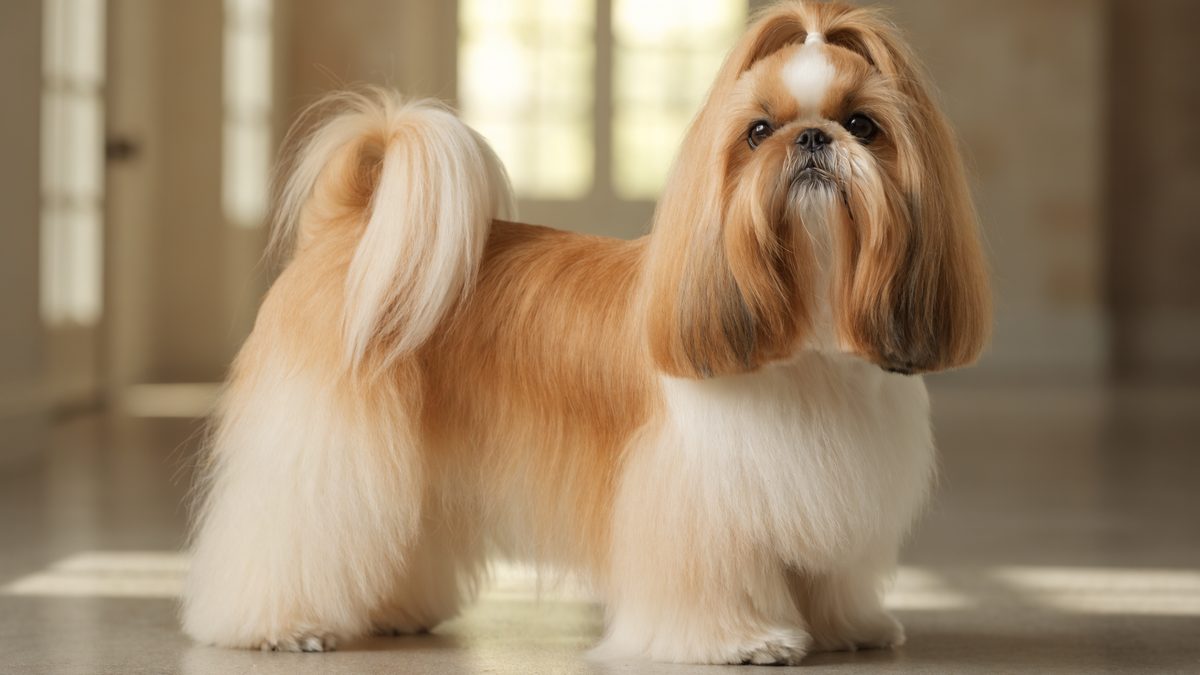
Quick answer
The Shih Tzu price in India runs Rs 15,000 to Rs 1,20,000 in 2026, and the sources ranking for this query disagree with each other by more than Rs 1,00,000. Pet-quality puppies are quoted from Rs 15,000 to Rs 40,000 and KCI-registered puppies from Rs 35,000 to Rs 90,000, with no agreement between publishers on what either tier costs. Grooming and heat management, not the purchase price, decide what this breed actually costs an Indian household.
This guide is general information for Indian pet owners and is not a diagnosis. Always consult a registered veterinarian near you before acting on anything you read here, and treat any sudden change in your dog's condition as urgent.
Shih Tzu at a glance
What a Shih Tzu is
The Shih Tzu is a small Tibetan toy breed with a flat face and a long double coat, developed from the Pekingese and the Lhasa Apso more than 1,000 years ago. Two details in that sentence drive everything else on this page. A one-inch muzzle limits how well the dog cools itself, and a floor-length coat is a recurring monthly bill in an Indian city.
Under the American Kennel Club standard, ideal height at withers is 9 to 10.5 inches, with a permitted range of not less than 8 inches and not more than 11 inches, and ideal mature weight is 9 to 16 pounds. Indian breed guides restate this in metric as 20 to 28 cm and 4 to 7 kg AsiaPets, Shih Tzu Breed Information. The standard also asks for a compact, solid dog carrying good weight and substance, and openly acknowledges that there has always been considerable size variation in the breed.
The muzzle is where the health story starts
The standard calls for a square, short, unwrinkled muzzle, set no lower than the bottom eye rim, never downturned, and ideally no longer than 1 inch from the tip of the nose to the stop. One inch of muzzle is a flat face by any measure. It is the reason this guide spends as much space on breathing, eyes and heat as it does on the purchase price, and it is the single fact most Indian buyer guides leave out.
The standard asks for eyes that are large, round, placed well apart and not prominent. The words *not prominent* are carrying weight in that sentence, because prominence is exactly what makes a shallow-orbited small dog vulnerable to the eye injuries described in the health section.
The coat the standard actually describes
The coat is luxurious, double-coated, dense, long, and flowing, with a slight wave permissible and the hair on top of the head tied up. Trimming is permitted only on the feet, the bottom of the coat and around the anus, for neatness and to help the dog move. On colour the standard is unusually blunt. All colours are permissible and are to be considered equally.
Indian sellers routinely price a Shih Tzu higher for coat colour, and ranking price guides list uncommon coat colour as a legitimate price driver. The breed standard treats every colour as equally correct. You are paying a premium for something the registry considers ordinary.
| Attribute | Standard |
|---|---|
| Group | Toy |
| Height at withers | Ideally 9 to 10.5 in, never under 8 or over 11 |
| Mature weight | Ideally 9 to 16 lb |
| Muzzle length | Ideally no longer than 1 in, nose tip to stop |
| Coat | Luxurious, double-coated, dense, long and flowing |
| Eyes | Large, round, very dark, not prominent |
| Colours | All permissible, all considered equally |
| Origin | Tibet, from Pekingese and Lhasa Apso stock |
A 14-dog founder population
The breed nearly went extinct during China's Communist Revolution between 1927 and 1949, and the modern population was rebuilt in the 1930s from 14 dogs. It reached Britain in the 1930s, the United States across the 1940s and 1950s, and formal AKC recognition in 1969. Fourteen founders is a narrow genetic base, and it is worth holding in mind when you reach the inherited-disease section rather than reading it as a piece of history trivia.
In India the breed is sold as an apartment dog, and that part of the marketing is accurate. The AKC places it in the Toy Group, describes it as playful, affectionate and outgoing, and notes that it needs minimal exercise as a house companion. A small, gentle, low-energy dog genuinely does suit an Indian flat. The question this page answers is what it costs to keep one comfortable once the temperature climbs.
Shih Tzu price in India
A Shih Tzu puppy costs Rs 15,000 to Rs 1,20,000 in India in 2026, and the most useful thing to understand about that figure is that the published sources disagree by more than Rs 1,00,000. Bonbeno pulled the first page of Google India for this query on 14 August 2026 and compared every price band published by the ranking pages. No two agree, and one publisher does not agree with itself.
Eight published Indian sources currently rank for this term. Their headline ranges are set out below exactly as each states them.
| Source | Overall range | Pet or basic quality | KCI registered | Show or champion |
|---|---|---|---|---|
| Supertails | Rs 15,000 to Rs 90,000+ | Rs 15,000 to Rs 35,000 | Rs 35,000 to Rs 60,000 | Rs 60,000 to Rs 90,000+ |
| Mr n Mrs Pet | Rs 35,000 to Rs 90,000 | Rs 35,000 to Rs 50,000 | Rs 50,000 to Rs 75,000 | Rs 75,000 to Rs 90,000+ |
| PawSpace | Rs 20,000 to Rs 1,00,000+ | Rs 20,000 to Rs 40,000 | Rs 35,000 to Rs 60,000 | Rs 60,000 to Rs 1,00,000+ |
| IThinkPets | Rs 20,000 to Rs 75,000 | Rs 20,000 to Rs 35,000 | Not stated separately | Rs 50,000 to Rs 75,000 |
| Wrapinfur | Rs 25,000 to Rs 80,000 | Not stated | Not stated | Not stated |
| PetHouse | Rs 18,000 to Rs 50,000 | Rs 18,000 to Rs 28,000 | Not stated separately | Rs 50,000+ |
| Happy Pet | Rs 15,000 to Rs 50,000 | Not stated | Not stated | Not stated |
| AsiaPets | Rs 15,000 to Rs 40,000 | Not stated | Not stated | Not stated |
The tiers do not survive comparison
Look down the KCI-registered column. Supertails puts a Kennel Club of India registered puppy at Rs 35,000 to Rs 60,000. PawSpace agrees at Rs 35,000 to Rs 60,000. Mr n Mrs Pet puts the identical certification at Rs 50,000 to Rs 75,000. Same paperwork, same year, a Rs 15,000 gap at the floor and a Rs 15,000 gap at the ceiling.
It gets worse. Bonbeno's own SERP pull found the same publisher running two different KCI bands on two of its own pages, quoting Rs 50,000 to Rs 75,000 on its editorial price guide and a higher band again on its sales listing for the same breed. A price tier that moves depending on which page of one website you land on is a sales position, not a market rate.
Three things drive the spread, and only one of them is about the dog.
- Who is publishing. Sites that also sell puppies quote the highest floors. Three sources put the floor at Rs 15,000, and none of them sells dogs Happy Pet, Shih Tzu Price and Breed Guide… AsiaPets, Shih Tzu Breed Information. The highest floor on the table, Rs 35,000, comes from a seller.
- What is being counted. A quote that includes vaccination, deworming and a veterinary health certificate is not comparable to one that does not, and most published bands never say which they are.
- Registration status. KCI registration documents pedigree and is the one tier boundary every source agrees exists, even while disagreeing about what it costs.
City-wise price in India
City-wise price is quoted by several sources and it is much weaker evidence than it looks. IThinkPets is the only ranking source publishing genuinely different figures per city, and even its bands overlap almost completely.
| City | Published band |
|---|---|
| Mumbai | Rs 30,000 to Rs 75,000 |
| Delhi NCR | Rs 25,000 to Rs 70,000 |
| Bangalore | Rs 26,000 to Rs 55,000 |
| Chennai | Rs 33,000 to Rs 55,000 |
| Kolkata | Rs 25,000 to Rs 55,000 |
| Hyderabad | Rs 25,000 to Rs 52,000 |
Mumbai sits highest and Hyderabad lowest, but every band overlaps every other band across at least Rs 25,000 of its width. PawSpace separately quotes Bangalore at Rs 25,000 to Rs 70,000+, which is wider than the whole six-city spread above. The honest reading is that your city moves the price far less than which seller you walk into.
Our SERP pull on 14 August 2026 found a wholesale business-to-business listing ranking in the top five organic results for this query, offering Shih Tzu puppies at Rs 1,500 per unit under a minimum order quantity of 50 units, filed under the Livestock category. That is not a pet price and it is not a bargain. It is a bulk trade listing, and it is the clearest available illustration of why the low end of any published Indian price range should be treated as a warning rather than an option. Bonbeno does not link puppy sale listings.
Ask what the number includes before you compare it to anything. A puppy quoted at Rs 20,000 without vaccination, deworming or a veterinary health certificate is more expensive within six months than one quoted at Rs 40,000 with all three. The purchase price is the only cost in Shih Tzu ownership that you pay once, and as the next section shows, it is not the biggest one.
Bonbeno does not broker puppy sales and does not publish breeder listings. The figures above are reported from third-party sources so buyers can see the disagreement for themselves.
Monthly cost of owning a Shih Tzu in India
Published Indian monthly costs for a Shih Tzu range from Rs 3,300 to Rs 16,000, a spread of nearly five times for the same 4 to 7 kg dog IThinkPets, Shih Tzu Price in India. That gap is not measurement error. It is almost entirely the difference between brushing the coat yourself and paying a salon to do it.
Six of the ranking sources publish a monthly figure or a line-item breakdown. Set side by side, they diverge on exactly one item.
| Source | Food | Grooming | Veterinary | Stated monthly total |
|---|---|---|---|---|
| Happy Pet | Rs 1,200 to Rs 1,800 | Rs 1,200 to Rs 1,800 | Rs 900 to Rs 1,800 | Rs 3,300 to Rs 5,400 |
| Mr n Mrs Pet | Rs 1,500 to Rs 3,000 | Rs 1,000 to Rs 2,500 | Rs 1,000 to Rs 3,000 | Rs 4,000 to Rs 8,500 |
| PetHouse | Rs 2,000 to Rs 3,000 | Rs 2,000 to Rs 4,000 | Rs 1,000 to Rs 2,000 | Rs 6,000 to Rs 9,000 |
| Supertails | Rs 1,500 to Rs 3,500 | Rs 800 to Rs 2,000 per session | Rs 500 to Rs 1,500 per visit | Not stated as a total |
| PawSpace | Rs 2,000 to Rs 5,000 | Rs 1,500 to Rs 4,000 | Rs 1,000 to Rs 3,000 | Not stated as a total |
| IThinkPets | Rs 3,000 to Rs 5,000 | Rs 2,000 to Rs 4,000 | Rs 1,000 to Rs 2,500 | Rs 9,000 to Rs 16,000 |
The food column varies by roughly three times and the veterinary column by roughly three times, which is normal variation between a supermarket kibble and a breed-specific premium diet. The totals vary by five times because IThinkPets also budgets Rs 2,000 to Rs 3,500 a month for professional training and Rs 1,000 to Rs 2,000 for accessories, which the cheaper estimates simply do not count.
Grooming is the line that decides your number
Every Indian source agrees the Shih Tzu needs professional grooming every 4 to 6 weeks PawSpace, Shih Tzu Price in India Supertails, Shih Tzu Dog Price in India…. At a stated Rs 800 to Rs 2,000 per session, a 4 to 6 week interval works out at roughly 9 to 13 sessions a year, or Rs 7,200 to Rs 26,000 annually before anything else. That single arithmetic step is missing from every ranking page, and it is the number that separates the Rs 3,300 estimate from the Rs 16,000 one.
First-year cost
PetHouse is the only ranking source that publishes a first-year total, at Rs 70,000 to Rs 1,10,000 including the puppy. Read against the purchase bands in the section above, that means the first twelve months of ownership roughly double whatever you paid for the dog. Nobody selling a puppy leads with that figure.
- Food. A 4 to 7 kg toy dog eats little by volume. Breed-specific formulations are sold in India and priced accordingly.
- Professional grooming. The largest recurring line for this breed, and the one you cannot skip without consequences described in the grooming section.
- Preventive veterinary care. Core vaccination, annual boosters, deworming and year-round tick and flea control.
- Dental care. Periodontal disease is the single most recorded disorder in the breed, so budget for scaling rather than treating it as optional.
- Cooling. Air conditioning or reliable ventilation through the Indian summer is a genuine running cost for a flat-faced dog, not a luxury.
When we publish cost figures we state the sample size, the cities covered and the collection date. Our verified owner cost survey across eight metros is in progress. Until it completes, we publish the published estimates side by side with their disagreements visible rather than averaging six numbers into one that nobody can check.
Heat tolerance and the Indian climate
Bonbeno rates the Shih Tzu 2 out of 5 for heat tolerance in India, and the reason is anatomical rather than atmospheric. The American Kennel Club states plainly that Shih Tzu do not tolerate heat well and are not good swimmers. The breed standard permits a muzzle no longer than one inch from nose to stop, sitting under a coat it describes as luxurious, double-coated, dense, long and flowing. A dog cools itself mainly by moving air across wet nasal and airway surfaces, and this breed is built with less of both than almost any other.
The gap between what the breed wants and what India delivers is the largest of any figure on this page. One Indian breed guide states an ideal ambient temperature of 18 C to 24 C for the Shih Tzu. Indian summer temperatures cross 45 C in large parts of the country. That is a comfort band roughly 20 degrees below the peak, sustained for weeks.
Indian breed publishers say the same thing in their own words. Wrapinfur writes that because of their flat face, Shih Tzus do not tolerate extreme heat well, so a cool and clean environment is important in Indian weather. AsiaPets lists the breed as heat sensitive. PetHouse lists breathing issues under heat sensitivity as a common health concern for the breed in India.
The evidence that complicates this, published in full
One large study cuts against the anatomical argument, and no Indian page reports it. A VetCompass analysis of 905,543 UK dogs found brachycephalic dogs had 2.10 times the odds of heat-related illness compared with mesocephalic dogs, with a 95 percent confidence interval of 1.68 to 2.64. That is the expected result. What is not expected is the sentence that follows it. The authors state that of the breeds analysed, the Lhasa Apso, Shih Tzu and Chihuahua had the *lowest* odds of heat-related illness, despite all being brachycephalic breeds.
| Evidence | What it says | What it does not settle |
|---|---|---|
| Breed standard and registry American Kennel Club | Muzzle ideally under 1 inch; coat dense, long and flowing; the breed does not tolerate heat well | How often affected dogs actually present clinically |
| BOAS research | Nostril stenosis and a lower craniofacial ratio are significantly correlated with airway disease across 14 brachycephalic breeds | The Shih Tzu's own BOAS prevalence, which the study grades as moderate rather than extreme |
| UK incidence study | Brachycephalic dogs carry 2.10 times the odds of heat illness, but the Shih Tzu was among the lowest-odds breeds analysed | Whether that holds anywhere the ambient ceiling is 45 C rather than a UK summer |
| Indian breed publishers AsiaPets, Shih Tzu Breed Information PetHouse, Shih Tzu Puppy Price in India… | Consistently describe the breed as heat sensitive and recommend a cooled environment | None cites a study or an Indian clinical dataset |
Bonbeno's reading is that the UK study is strong evidence about a different environment, not evidence that a flat-faced long-coated dog copes with 45 C. Three things support that. The UK exposure ceiling is far below Indian peak temperature. A Shih Tzu is typically an indoor lap dog walked lightly, which suppresses exposure in any climate. And the same study names higher bodyweight relative to the breed mean, and being over two years of age, as independent risk factors that an Indian household controls entirely.
No published Indian study reports heat-related illness incidence by breed. Every Indian figure on this page about heat comes from general press or from breed publishers rather than from a peer-reviewed Indian dataset. Treat the 2 out of 5 rating as a conformation-based judgement supported by registry guidance, not as an Indian clinical measurement, because that measurement does not currently exist.
What actually reduces the risk in an Indian summer
- Walk before 8 am and after 7 pm. Indian veterinary advice is to walk dogs between 5 am and 8 am and again between 7 pm and 9 pm, and to avoid taking animals outdoors between 11 am and 4 pm.
- Keep the dog in a cool, well-ventilated space with fresh clean water available throughout the day. For this breed in an Indian metro, an air-conditioned room through peak summer is the single most effective intervention available.
- Manage weight deliberately. Bodyweight above the breed mean independently raises heat-illness odds, and higher body condition score is one of only three factors significantly correlated with airway disease across brachycephalic breeds. Obesity is recorded in 3.5 percent of Shih Tzus annually.
- Do not shave the coat off completely. Indian veterinary advice is against complete shaving, especially for double-coated breeds. A shorter pet clip is a different question, covered honestly in the grooming section.
- Check the pavement with your palm before a summer walk. If you cannot hold your hand on it for five seconds, it will burn paw pads, and a dog this close to the ground takes the radiated heat as well.
Purina India lists the signs of heat stroke as severe panting, difficulty breathing, severe salivating, vomiting, diarrhoea, a raised temperature of 40.5 C or above, blood in the urine, nose bleeds, and collapse or coma. Short-faced breeds, dogs with heavy coats, obese dogs and old dogs are named as the highest-risk groups, and a Shih Tzu is in two of those four categories by definition. Move the dog into shade or air conditioning, spray or sponge it with cool but not cold water, use a fan, never plunge it into an ice bath, gently massage the legs and body, stop cooling once the temperature returns to 39.4 C, and seek veterinary attention as soon as possible.
Temperament and household fit
The Shih Tzu suits an Indian apartment household that is home for part of the day and will commit to daily coat work. The AKC describes the breed as playful, affectionate and outgoing, bred as a highly valued companion and palace pet rather than for any working job American Kennel Club.
That breeding history explains the temperament precisely. A dog developed for centuries to sit with people wants to sit with people. Indian breed guides consistently rate it friendly, alert enough to make a reasonable watchdog, and capable of shyness or reactivity if early socialisation is skipped.
Shih Tzus thrive on human companionship and may develop separation anxiety if left alone for extended periods, which makes them best suited to households where someone is around most of the time. In a two-income metro household with a ten-hour empty flat, this is the mismatch that ends in rehoming, and it is not trainable away entirely.
Who this breed suits
- Good fit. Apartment households, families with school-age children, older owners, first-time owners willing to learn coat care, anyone home for part of the working day.
- Poor fit. Homes empty ten hours a day, households unwilling to brush daily or pay for professional grooming, homes with no cooling through an Indian summer.
- Manageable with work. Toddlers. A 4 to 7 kg dog with shallow eye sockets is genuinely fragile, and grabbing or dropping is an eye emergency rather than a scrape.
The apartment case, honestly
This is one of the few imported breeds where the Indian apartment marketing holds up. Exercise needs are low, the dog is small, and it adapts to indoor living given daily walks and playtime. Compared with the double-coated large breeds Indian buyers also cross-shop, a Shih Tzu asks for a fraction of the floor space and a fraction of the daily outlet. What it asks for instead is your time on the coat and your electricity bill in May.
Set against India's own small breeds, the trade is different again. The Indian Spitz is cheaper, hardier in heat and far easier to groom, but it barks at everything, which in a building with strict noise rules is its own problem. The Shih Tzu is the quieter neighbour and the more expensive dog.
Training a Shih Tzu
Train a Shih Tzu with short, frequent, reward-based sessions from the first week home, because this breed learns readily but loses interest in long drills. Indian breed guides are consistent that Shih Tzus are intelligent and respond to positive reinforcement, and that sessions should be kept brief, engaging and rewarding to hold their attention.
The socialisation window closes early
The American Veterinary Society of Animal Behavior states that the first three months is the most important socialisation period in a puppy's life, and that it should be the standard of care for puppies to receive socialisation before they are fully vaccinated. That window overlaps the vaccination course almost exactly, since core vaccines are typically given at 6 to 8 weeks, 10 to 12 weeks and 14 to 16 weeks with annual boosters afterwards.
AVSAB recommends enrolling puppies in classes prior to three months of age as an excellent means of improving training, strengthening the human-animal bond and socialising puppies in an environment where risk of illness can be minimised, with each puppy up to date on vaccinations and free of disease and parasites before entering. Talk to your veterinarian about managed low-risk exposure rather than isolating the puppy in a flat until 16 weeks.
The three things to train first
- Handling for grooming. A dog groomed daily for 14 years either accepts being brushed or fights it 5,000 times. Start with seconds of face, ear and foot handling on day one, paired with food. This is the highest-value training investment in the breed and almost nobody treats it as training.
- Being alone. AVSAB advises scheduling time for puppies to play alone with favourite toys or nap in safe places such as crates or pens, which teaches puppies to amuse themselves and may help prevent problems of over-attachment to owners. For a breed prone to separation anxiety, this is a curriculum, not an afterthought.
- Toilet training. Expect this to be the slow one. A toy breed in a high-rise flat with no quick outdoor access needs a consistent indoor routine set up before the puppy arrives, not improvised in week three.
| Skill | Start | Reliable by |
|---|---|---|
| Name response | Week 1 home | 2 to 4 weeks |
| Sit, down, settle | Week 1 home | 4 to 6 weeks |
| Accepts full-body grooming handling | Week 1 home | 3 to 6 months |
| Toilet routine | Week 1 home | 4 to 8 months |
| Settles alone for an hour | Week 2 home | 3 to 6 months |
| Loose-lead walking | Month 2 | 4 to 8 months |
Two constraints are specific to this breed. Never train by pulling or scruffing the neck, because pressure around the eyelids or neck can be enough to displace the globe of the eye in a dog with shallow orbits. And keep training sessions out of the midday heat entirely from March to June, since a flat-faced dog working hard in a warm room is doing the exact thing the climate section warns against.
How much exercise a Shih Tzu actually needs
An adult Shih Tzu needs 15 to 20 minutes of exercise twice daily, which Indian sources also express as 20 to 40 minutes a day in total Happy Pet, Shih Tzu Price and Breed Guide…. The AKC describes the breed as a house companion requiring minimal exercise, met by short daily walks and indoor playtime.
This is genuinely one of the lowest daily exercise requirements of any breed Indian buyers consider, and it is the strongest practical argument for the breed in a small flat. Wrapinfur describes the requirement as short daily walks and indoor play, and Indian guides rate the energy level as medium with a 20 to 40 minute routine Happy Pet, Shih Tzu Price and Breed Guide….
Low is not zero
Under-exercising a Shih Tzu produces the same result as under-exercising anything else, with an extra cost. Bodyweight above the breed mean independently raises the odds of heat-related illness, and higher body condition score is one of only three factors significantly correlated with brachycephalic airway disease across 14 flat-faced breeds. A fat Shih Tzu in a Chennai May is carrying two separate multiplied risks.
- Split the daily walk across the two cool windows, before 8 am and after 7 pm through the hot months.
- Substitute indoor play on the worst days. Twenty minutes of indoor games meets this breed's requirement without stepping outside at all, which is a real option that larger breeds do not have.
- Stop at the first sign of laboured breathing. Difficulty breathing and severe panting are listed heat stroke signs, not fitness signs.
- Weigh the dog monthly and manage to body condition rather than to a food chart, because a 5 kg dog gaining 500 g has gained ten percent of itself.
Skip swimming as an exercise substitute. The AKC states directly that Shih Tzu are not good swimmers, which removes the cooling option that works for water breeds in Indian summers.
Grooming a long coat in Indian humidity
Grooming a Shih Tzu means daily brushing at home plus professional grooming every 4 to 6 weeks, and in India that combination is the single largest recurring cost of the breed. There is no version of owning this dog that skips it, because the coat the standard describes is luxurious, double-coated, dense, long and flowing.
The published Indian schedules agree on the daily work and disagree on the salon interval, which matters because that interval sets your annual bill.
| Source | Brushing | Bathing | Professional grooming |
|---|---|---|---|
| American Kennel Club | Daily | Every 3 to 4 weeks | Not specified |
| Happy Pet | Daily | Every 3 to 4 weeks | Haircut every 6 to 8 weeks |
| IThinkPets | Daily | Not specified | Every 4 to 6 weeks |
| PawSpace | Several times a week, daily if kept long | Not specified | Every 4 to 6 weeks |
| Supertails | Not specified | Not specified | Every 4 to 6 weeks |
| Wrapinfur | Daily | Every 3 to 4 weeks | Not specified |
| PetHouse | Daily | Not specified | Monthly |
Run the arithmetic the ranking pages never run. A 4 to 6 week interval is 9 to 13 salon visits a year. At Rs 800 to Rs 2,000 per session, that is Rs 7,200 to Rs 26,000 a year in grooming alone, before shampoo, brushes or a single vet visit. Over a 12 to 16 year lifespan, grooming will cost you more than the puppy did several times over.
The pet clip question, answered honestly
Most Indian Shih Tzus are kept in a short pet clip rather than the full show coat, and buyers reasonably ask whether that helps in the heat. Here is the honest position. Indian veterinary advice is against shaving fur off completely, particularly for double-coated breeds, and the breed standard permits trimming only on the feet, the bottom of the coat and around the anus for a show dog. No study establishes whether a short pet clip improves or worsens heat tolerance in this breed specifically. Anyone telling you either way with confidence is guessing. What is well supported is that a clipped coat still needs brushing, still needs sun protection on exposed skin, and does not substitute for a cool room.
The face is a daily job, not a monthly one
Face care is where Indian owners most often fall behind, and it is the part with clinical consequences. Regular face cleaning is listed alongside daily brushing and nail trimming as essential to maintaining the coat, comfort and overall health of the breed. Eye and ear cleaning weekly is a stated minimum.
- Keep hair out of the eyes. The standard has the head hair tied up for a reason. Hair sweeping across the cornea in a breed with 10.04 times the odds of corneal ulcer is an avoidable irritant.
- Clean the tear staining daily. Wipe the folds under the eyes and dry them, because a permanently damp fold in Indian humidity is where skin problems start. Skin disorders are the most prevalent grouped-level condition in the breed at 16.6 percent a year.
- Dry the coat completely after every bath. Ear disorders affect 5.5 percent of Shih Tzus annually and otitis externa 4.7 percent, and a damp ear canal through a Mumbai monsoon is the classic trigger.
- Brush to the skin, not the surface. Surface brushing on a dense double coat leaves matting underneath, and a mat pulls on skin every time the dog moves.
- Check the muzzle folds and the feet at every brushing session, since these are the areas the dog cannot clean itself and the ones a groomer sees only once a month.
The most common financial surprise in Indian Shih Tzu ownership is discovering the grooming schedule after the dog is home. If reliable professional grooming is not available and affordable where you live, this is the wrong breed for you, and no amount of enthusiasm substitutes. A matted, unbathed Shih Tzu in Indian humidity is a welfare problem within months, not years.
Health risks and lifespan
The Shih Tzu is one of the healthier flat-faced breeds and it is still a flat-faced breed, and both halves of that sentence are supported by the same dataset. A VetCompass study of 11,082 Shih Tzus drawn from 336,865 dogs under UK primary veterinary care recorded a median age at death of 12.7 years. That is the most useful health figure published on this breed anywhere, and no Indian page cites it.
Lifespan, in context
Median age at death was 12.7 years, with an interquartile range of 8.7 to 14.3 years and a full range of 2.0 to 19.9 years. The Royal Veterinary College put that number in the only comparison that matters for a buyer choosing between flat-faced breeds. Its researchers noted that the 12.7 year longevity of the Shih Tzu suggests the overall health of the breed is much less severely compromised than other flat-faced breeds such as French Bulldogs, English Bulldogs and Pugs, which live less than eight years on average.
Indian sources quote 10 to 16 years, 12 to 16 years and 10 to 18 years for the same breed Happy Pet, Shih Tzu Price and Breed Guide… AsiaPets, Shih Tzu Breed Information. All three ranges are compatible with the primary-care figure. Treat 12.7 years as the evidence-backed central expectation and the wider ranges as the tails.
What Shih Tzus actually get treated for
| Disorder | Annual prevalence |
|---|---|
| Skin disorder (grouped) | 16.6% |
| Dental disorder (grouped) | 13.3% |
| Ophthalmological disorder (grouped) | 11.9% |
| Periodontal disease | 9.5% |
| Anal sac impaction | 7.4% |
| Ear disorder | 5.5% |
| Otitis externa | 4.7% |
| Vomiting | 4.4% |
| Umbilical hernia | 3.9% |
| Corneal ulceration | 3.5% |
| Obesity | 3.5% |
| Diarrhoea | 2.9% |
| Retained deciduous tooth | 2.6% |
| Keratoconjunctivitis sicca | 1.2% |
The study's own conclusion is that Shih Tzus had a higher prevalence of anal sac impaction, umbilical hernias and eye problems than previously reported in dogs overall, suggesting genuine predispositions, and it named oral hygiene as a healthcare priority for the breed.
Eyes, the predisposition that matters most
Eye disease is the clearest documented risk in this breed. A VetCompass study of 104,233 dogs found corneal ulcerative disease in 3.45 percent of Shih Tzus annually, with a 95 percent confidence interval of 2.70 to 4.33 percent, placing the breed third highest behind the Pug at 5.42 percent and the Boxer at 4.98 percent. Shih Tzus carried 10.04 times the odds of corneal ulcer compared with crossbred dogs, with a confidence interval of 7.30 to 13.80. Brachycephalic types as a group carried 11.18 times the odds, and purebred dogs 2.23 times the odds, of the same condition.
This is a painful condition, not a cosmetic one. Pain was recorded in 46.2 percent of the 834 confirmed cases in that study, and corneal ulcerative disease contributed to the euthanasia decision for 10 dogs.
In brachycephalic dogs, excessive pressure around the eyelids or neck, including scruffing, may be enough to displace the globe of the eye entirely, because of their shallow orbits and wide eyelid opening. Prognosis for vision after proptosis is generally guarded to poor, with vision retained in 28 percent or fewer of patients at follow-up. If it happens, apply generous lubrication such as artificial tears gel or ointment to protect the corneal surface from drying out, and get to a veterinarian immediately. Never grab this breed by the scruff, and never let a child lift it that way.
Breathing, graded honestly
Brachycephalic obstructive airway syndrome is real in the breed and it is not extreme in the breed. A cross-sectional study of 898 dogs across 14 brachycephalic breeds classified the Shih Tzu as a moderate-risk breed rather than one of the worst affected, with the Pekingese and Japanese Chin recording the highest rates at only 10.9 percent and 17.4 percent of dogs unaffected. Across the whole study population three factors were significantly correlated with brachycephalic obstructive airway syndrome, which are higher body condition score, nostril stenosis and a lower craniofacial ratio meaning more extreme facial hypoplasia, together accounting for 20 percent of the variation. In the Shih Tzu specifically, body condition score showed a significant association with airway disease.
The practical translation is short. You cannot change your dog's craniofacial ratio or its nostrils after purchase. You can change its body condition, and in this breed that is the one lever you hold.
Teeth
Periodontal disease is the single most recorded fine-level disorder in the breed at 9.5 percent a year, sitting inside a grouped dental disorder prevalence of 13.3 percent, and retained deciduous teeth affect a further 2.6 percent. A short jaw with a full complement of teeth is a crowded jaw. Indian breed guides list dental problems among the common health issues for the breed, and dental disease is the item most likely to be quietly skipped in an Indian preventive-care budget.
How Shih Tzus die
The three most commonly recorded causes of death in the study were enteropathy, heart disease and poor quality of life, each recorded in 7.9 percent of deaths. No single cause dominates the way cancer dominates some breeds, which is consistent with a comparatively long-lived small dog.
Ask any seller for a veterinary health certificate dated close to handover, and ask specifically about the parents' eyes. The RVC's own advice on this breed is that owners should be vigilant for eye problems to allow earlier diagnosis and treatment. Use our veterinary directory to find a clinic, and book an annual eye and dental check rather than waiting for a visible problem, since both of the breed's top predispositions are cheaper to manage early.
Feeding a Shih Tzu in India
Feed a Shih Tzu a complete small-breed diet measured to body condition, because in this breed excess weight multiplies two separate risks at once. Indian guidance puts daily requirements at roughly 600 kcal for puppies and 400 kcal for adults, on a diet built around high-quality proteins such as chicken, lamb or fish.
Weight is not a cosmetic issue here. Higher body condition score is significantly associated with brachycephalic airway disease in this breed, and bodyweight above the breed mean independently raises the odds of heat-related illness. Obesity is already recorded in 3.5 percent of Shih Tzus annually. A fat Shih Tzu in an Indian summer has a harder time breathing and a harder time cooling, from the same cause.
- Measure every meal rather than free-feeding. A 400 kcal daily requirement is small enough that a few biscuits are a meaningful percentage of it.
- Use a small-breed formulation. Premium dry food designed for small breeds with chicken, lamb or fish as the first ingredient is the standard recommendation.
- Monitor body condition monthly, not annually. You should feel ribs easily under a thin fat layer.
- Adjust in peak summer, when appetite commonly drops. Persistent inappetence is a veterinary matter rather than a preference.
- Avoid the named toxic foods including chocolate, onions, garlic, grapes, alcohol, avocado, cherries, mushrooms and artificial sweeteners.
What breed-specific food actually costs in India
Breed-specific Shih Tzu formulations are sold in India and are priced at a genuine premium. A 1.5 kg pack of Royal Canin Shih Tzu Puppy is listed at around Rs 1,830, and Royal Canin Shih Tzu Adult ranges from about Rs 1,778 for 1.5 kg to Rs 3,137 for 3 kg. Published monthly food budgets for the breed span Rs 1,200 to Rs 5,000 depending on which tier of food you buy.
Feeding quantities depend on the individual dog's age, weight, body condition and activity level. Set them with a registered veterinarian who has examined your dog. Bonbeno reviews Indian pet food brands separately and tests products first-hand before publishing a verdict. See our testing method for what a Bonbeno food review does and does not claim.
Shih Tzu puppy: the first year
A Shih Tzu puppy's first year has three decisive windows, and two of them close before four months. The socialisation window, the grooming-handling habituation window, and the first Indian summer decide most of what the adult dog is like to live with.
- 8 to 12 weeks. Core vaccination begins, typically at 6 to 8 weeks with the next series at 10 to 12 weeks. Managed socialisation starts now, since the first three months is the most important socialisation period in a puppy's life. Begin daily handling of face, ears, feet and tail paired with food, because this is the coat you will brush every day for over a decade.
- 3 to 4 months. The vaccination course completes at 14 to 16 weeks. Teething runs through this period, and retained deciduous teeth affect 2.6 percent of the breed, so a puppy still holding baby teeth after the adults erupt needs a veterinary opinion rather than patience. Alone-time training starts in seconds and builds to minutes.
- 4 to 6 months. First professional grooming appointment, ideally before the coat needs serious work, so the puppy's first salon experience is easy. Toilet routine consolidates. If this window falls between March and June, heat routines start here and become permanent.
- 6 to 9 months. Adult coat begins coming through and matting risk rises sharply. Brushing frequency that was optional at four months is not optional now. Watch weight, since growth slowing while food stays constant is how obesity starts.
- 9 to 12 months. Approaching adult size at 4 to 7 kg. Settle the 4 to 6 week grooming rhythm. Book the first annual eye and dental check rather than waiting for symptoms.
A puppy bought in December meets its first Indian summer at around six months old, usually just as owners have relaxed the routines set in the first weeks. Reset them deliberately. Walks move to before 8 am and after 7 pm, outdoor time between 11 am and 4 pm stops entirely, and fresh clean water stays available all day. Learn the heat stroke signs before you need them.
Bonbeno does not publish a Shih Tzu growth chart, because no reliable breed-specific weight-by-age dataset for Indian conditions exists and copying an American chart into rupee-denominated content adds nothing. What the standard gives you is the endpoint, at 9 to 16 pounds mature weight and 9 to 10.5 inches at the withers. Track your own puppy's curve against your vet's assessment rather than against a chart from a different population.
Shih Tzu vs Indian Spitz
Choose an Indian Spitz over a Shih Tzu if heat, budget or grooming time is your binding constraint, and choose a Shih Tzu if noise is. These are the two small dogs Indian apartment buyers cross-shop most often, and unlike most breed comparisons the honest answer here is lopsided on four of five dimensions.
The Indian Spitz costs Rs 3,000 to Rs 15,000 in India, varying by size, coat, colour and physical type. The Shih Tzu starts at Rs 15,000 at the most optimistic published floor and reaches Rs 1,00,000 or more at the top PawSpace, Shih Tzu Price in India. The cheapest Shih Tzu on any credible Indian list costs roughly what the most expensive Indian Spitz does.
| Factor | Shih Tzu | Indian Spitz |
|---|---|---|
| Published price band | Rs 15,000 to Rs 1,20,000 Mr n Mrs Pet, Shih Tzu Puppy Price in India… | Rs 3,000 to Rs 15,000 |
| Bonbeno heat tolerance rating | 2 out of 5 | 4 out of 5 |
| Muzzle | Ideally under 1 inch, nose to stop | Normal spitz muzzle, no brachycephaly |
| Grooming load | Daily brushing plus salon every 4 to 6 weeks | Brushing at home, no salon requirement |
| Documented eye risk | 10.04 times crossbred odds of corneal ulcer | No comparable breed-level dataset published |
| Noise | Alert but quiet enough for shared walls | Alert barking is the breed's default setting |
| Apartment suitability | Excellent, given cooling | Excellent |
| Lifespan | Median age at death 12.7 years, from 11,082 dogs | No equivalent cohort study exists. See our Indian Spitz guide |
| Availability in Indian cities | Widely sold, heavily marketed | Widely available, often locally bred |
On climate the comparison is not close. The Indian Spitz was developed and bred in India across generations for these conditions, and HubPages notes that in Indian cities where the temperature is high, people prefer the shorter-haired Spitz types over medium or long haired dogs. The Shih Tzu is a Tibetan mountain-origin breed with a one-inch muzzle and a floor-length coat, which the AKC states does not tolerate heat well American Kennel Club.
For a first-time Indian owner on a budget, in a home without reliable air conditioning, or in a city where good professional grooming is not easy to reach, the Indian Spitz is the better dog and it is not a close call. The Shih Tzu earns its place where the household is quiet-sensitive, climate-controlled, and willing to pay Rs 7,200 to Rs 26,000 a year in grooming for a genuinely gentle, affectionate lap companion. That is a real trade, and it is the one the ranking pages never put in front of you.
One thing the Shih Tzu does clearly better is silence. The Indian Spitz alerts to lifts, corridors, couriers and pigeons, which in a building with strict noise rules becomes a standing complaint. If your constraint is a neighbour rather than a thermostat, the calculus flips. Buyers also cross-shop the Pug, which shares the flat face without the coat, and carries a higher corneal ulcer prevalence at 5.42 percent and a substantially shorter average lifespan.
Mistakes Indian Shih Tzu owners actually make
The failure modes for this breed in India are predictable, and almost all of them come from treating a flat-faced, long-coated dog as if it were an ordinary small dog. They are ranked below by how much damage they do.
- Buying before checking the grooming maths. Professional grooming every 4 to 6 weeks at Rs 800 to Rs 2,000 a session is Rs 7,200 to Rs 26,000 a year, indefinitely Supertails, Shih Tzu Dog Price in India…. Owners who did not budget for it stretch the interval, and the dog mats.
- Letting the dog get fat. Higher body condition score is significantly associated with airway disease in this breed, and bodyweight above the breed mean raises heat-illness odds independently. It is the one risk factor entirely under your control.
- Treating eye discharge as cosmetic. Corneal ulcer prevalence is 3.45 percent a year at 10.04 times crossbred odds, pain was recorded in 46.2 percent of cases, and it contributed to euthanasia in 10 dogs in one study. A squinting Shih Tzu is a same-day veterinary visit.
- Scruffing or lifting by the neck. Pressure around the eyelids or neck can displace the globe entirely in a shallow-orbited brachycephalic dog, and vision is retained in 28 percent or fewer of proptosis cases.
- Midday walks in summer. Indian veterinary advice is to avoid taking animals outdoors between 11 am and 4 pm and to walk between 5 am and 8 am or 7 pm and 9 pm. A flat-faced dog cannot pant its way out of a mistake here.
- Skipping dental care. Periodontal disease is the most recorded disorder in the breed at 9.5 percent annually, and the study named oral hygiene as a healthcare priority.
- Isolating the puppy until vaccinations finish. The first three months is the most important socialisation period, and AVSAB considers socialising before full vaccination the standard of care.
- Paying a premium for a rare colour. All colours are permissible and to be considered equally under the breed standard, whatever the seller says.
- Buying the cheapest quote on page one. The lowest Shih Tzu prices visible in Indian search results include bulk trade listings that are not pet sales at all, as Bonbeno's own SERP pull found.
Buying this breed into a home with no cooling and no grooming budget. Every other mistake here is correctable. Those two are structural, they compound daily for 12 to 13 years, and they are the reason Shih Tzus turn up in Indian rescue matted and overheated rather than neglected in any obvious way.
Buying responsibly, and the adoption route
Verify the paperwork and see the parents before you transfer money, and check shelters first, because Indian rescue takes in matted, surrendered Shih Tzus regularly from households that underestimated the coat. India's breeding trade is largely unregulated, and price alone tells you nothing about how a litter was raised.
What Kennel Club of India registration does and does not prove
The Kennel Club of India is headquartered in Chennai and exists to maintain breed standards, organise dog shows and support the scientific breeding of dogs. A KCI registration certificate includes the pedigree of the puppy's parents and grandparents, going back five generations. Registration is a prerequisite to exhibit a dog in shows.
The fees are public and they are small. Registration costs Rs 337 per puppy if filed within 60 days of birth and Rs 562 in the 61 to 120 day window, with transferring ownership into your name costing a separate Rs 100. Hold that against the price tables above. Sellers quote a Rs 15,000 to Rs 25,000 premium for a KCI-registered puppy over a basic one, on paperwork that cost the breeder Rs 337.
KCI registration documents pedigree, not health. Indian registration guidance states plainly that KCI papers are not a health guarantee, and advises buyers to also check how many times the female has been bred. Always request a separate veterinary health certificate alongside registration papers. A buyer who treats KCI papers as proof of health has misunderstood what they bought.
Breeder checklist for this breed specifically
- See the dam with the litter, in the place the puppies were raised, and look at her coat condition as a proxy for how the kennel actually grooms.
- Look at both parents' eyes in person. Ask whether either has had a corneal ulcer, given the breed's 10.04 times crossbred odds, and check that eyes are large and round but not prominent as the standard requires.
- Listen to the parents breathe at rest and after mild movement. Nostril stenosis is one of three factors significantly correlated with airway disease across brachycephalic breeds.
- Verify any KCI claim directly with the Kennel Club of India rather than trusting a photocopy.
- Get a veterinary health certificate dated close to handover, plus written vaccination and deworming records.
- Decline any seller who will not let you visit, who meets in a car park, or who offers immediate delivery of any breed you name.
Consider adoption first
Shih Tzus and Shih Tzu crosses appear in Indian shelters and in breed rescue, most often surrendered by households that underestimated the daily grooming or could not manage the summer. Adopting an adult removes the two largest unknowns in any puppy purchase, which are adult temperament and early health history, and in this breed it adds a third. You can see the adult coat, the adult eyes and the adult breathing before you commit, which no eight-week-old puppy lets you do.
Adoption is also the honest answer to the budget questions Indian searchers actually ask. No responsibly raised Shih Tzu exists under Rs 15,000 anywhere on the published Indian price tables. If your budget is genuinely below that, the choice is between adopting and buying from someone who cut the corners you cannot see. The Indian Spitz at Rs 3,000 to Rs 15,000 is the honest purchase alternative, and shelter adoption is usually free or a nominal fee that already covers initial vaccination and sterilisation.
Shih Tzu questions Indians actually search
Which dog is under RS 5000?
The Indian Spitz is the realistic purchase answer under Rs 5,000, sitting at Rs 3,000 to Rs 15,000 across its full range, and adoption from an Indian shelter is usually free or a nominal fee. No Shih Tzu falls in this band. The lowest Shih Tzu figures visible in Indian search results are bulk trade listings rather than pet sales.
Which dog under 2000?
Under Rs 2,000 the honest answer is adoption rather than purchase. Shelters and rescue groups across Indian metros rehome healthy dogs for a nominal fee or free, usually including initial vaccination and sterilisation. Any purebred puppy advertised under Rs 2,000 indicates an undocumented, unscreened litter, and published Shih Tzu bands start at Rs 15,000 at the very lowest.
Which dog will come in 1000?
No responsibly bred purebred puppy in India costs Rs 1,000, and no Shih Tzu does. Adoption is the only route at this budget, and it is a genuinely good one. Remember that the purchase price is the smallest cost in dog ownership, since published Shih Tzu first-year costs in India run Rs 70,000 to Rs 1,10,000 including the puppy.
What is the Shih Tzu price in India?
Published Indian sources put the Shih Tzu price between Rs 15,000 and Rs 1,20,000 in 2026, and they disagree with each other by more than Rs 1,00,000. Supertails states Rs 15,000 to Rs 90,000 plus, Mr n Mrs Pet states Rs 35,000 to Rs 90,000, and AsiaPets states Rs 15,000 to Rs 40,000. Treat any single figure with caution.
Can I get a Shih Tzu under Rs 10,000 in India?
No, not from any responsible source. The lowest floor on any published Indian price table is Rs 15,000, and most sellers start at Rs 20,000 to Rs 35,000. A Shih Tzu offered under Rs 10,000 signals no health certificate, no verifiable pedigree and no veterinary care done, and in this breed that lands later as eye and dental treatment.
What is the price of a male Shih Tzu in India?
No reliable published figure separates male from female Shih Tzu prices in India. Sellers commonly price the sexes differently for breeding reasons, but none of the eight ranking sources Bonbeno compared publishes a male-specific band. Where no reliable data exists we say so rather than repeating an unsourced number.
Can Shih Tzus sleep in an air-conditioned room?
Yes, and in most Indian metros through summer it is the single most useful thing you can do for a Shih Tzu. One Indian breed guide states an ideal ambient temperature of 18 C to 24 C for the breed, against Indian summer temperatures that cross 45 C. The AKC states directly that Shih Tzu do not tolerate heat well.
How often grooming is needed for a Shih Tzu?
Shih Tzus need daily brushing, baths every 3 to 4 weeks, and professional grooming every 4 to 6 weeks, plus regular face cleaning and nail trimming. At Rs 800 to Rs 2,000 per salon session that works out to roughly Rs 7,200 to Rs 26,000 a year, which is the largest recurring cost of owning this breed in India.
What is the lifespan of a Shih Tzu?
Median age at death was 12.7 years across 11,082 Shih Tzus under UK primary veterinary care, with an interquartile range of 8.7 to 14.3 years. That is notably long for a flat-faced breed, since French Bulldogs, English Bulldogs and Pugs live less than eight years on average. Indian sources quote wider ranges of 10 to 18 years.
Are Shih Tzus prone to health issues?
Yes, mainly eyes and teeth. Corneal ulceration affects 3.45 percent of Shih Tzus a year at 10.04 times crossbred odds, and periodontal disease is the single most recorded disorder at 9.5 percent annually. Skin disorders are the most prevalent grouped category at 16.6 percent. The breed is still healthier overall than most other flat-faced breeds.
Do Shih Tzus require a lot of exercise?
No. A Shih Tzu needs 15 to 20 minutes twice daily, or 20 to 40 minutes in total, met by short walks and indoor play. The AKC describes the breed as a house companion requiring minimal exercise. In an Indian summer, split that requirement across the cool windows before 8 am and after 7 pm.
Can Shih Tzus be left alone for long periods?
No. Shih Tzus thrive on human companionship and may develop separation anxiety if left alone for extended periods, so they suit households where someone is around most of the day. Teach alone time deliberately from the first week, since AVSAB advises scheduling solo play and nap time to help prevent over-attachment to owners.
Do Shih Tzus make good apartment pets?
Yes, given cooling. They are small, low-energy and adapt readily to indoor living with daily walks and playtime, which makes them one of the better-suited imported breeds for an Indian flat. The constraint is not floor space but temperature and grooming access, both of which are harder to solve than square footage.
Compare with similar breeds
Shih Tzu sits in 5 Bonbeno groups. Each one compares it directly against the breeds it is genuinely an alternative to, on the same figures.