
Breed profile
Bichon Frise in India: Price, Grooming Reality and Full Breed Guide
What a Bichon Frise costs in India, why the published prices do not overlap, and the two health risks every seller leaves out.
Quick answer
Bichon Frise price in India runs Rs 25,000 to Rs 1,60,000 in 2026, and the published sources do not overlap, because one page's ceiling is another page's floor. Budget Rs 3,900 to Rs 9,500 a month after that, most of it grooming, since this curly double coat needs a professional clip every four to six weeks for twelve years.
This guide is general information for Indian pet owners and is not a diagnosis. Always consult a registered veterinarian near you before acting on anything you read here, and treat any sudden change in your dog's condition as urgent.
Bichon Frise at a glance
What a Bichon Frise actually is
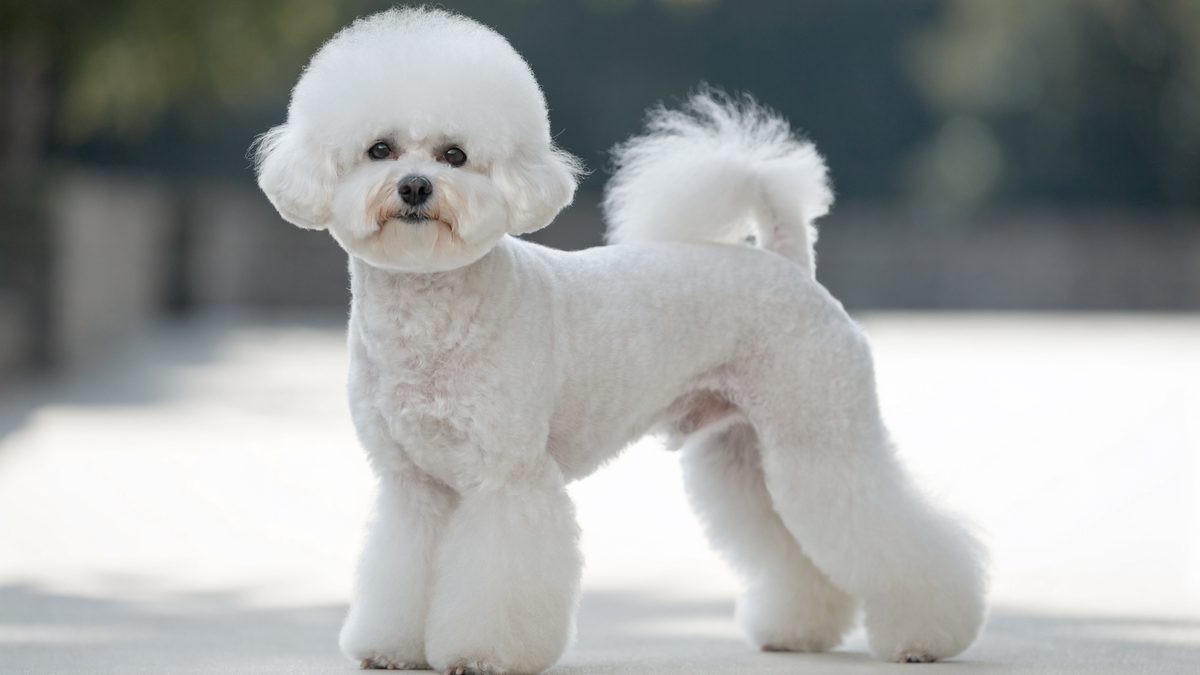
A Bichon Frise is a small white companion dog of Franco-Belgian origin, 23 to 29 cm at the withers and about 5 kg, carrying a curly outer coat over a soft dense undercoat that is trimmed into a rounded powder-puff outline rather than left to hang. It is a purebred with a published standard, not a designer cross, and the standard is stricter than most Indian sellers admit.
Three registries recognise the breed and they file it in three different places. The American Kennel Club puts the Bichon Frise in the Non-Sporting Group. The Royal Kennel Club puts it in the Toy Group. The Federation Cynologique Internationale files it as Group 9, Companion and Toy Dogs, Section 1.1 Bichons, alongside the Maltese and the Bolognese. Where a seller quotes you a group, check which registry they mean before you read anything into it.
Size, weight and the numbers that disagree
The three standards give three overlapping size ranges, and the Indian listing pages give a fourth that fits none of them. Read the table before you accept a seller's weight claim.
| Source | Height at withers | Weight | What it is |
|---|---|---|---|
| FCI Standard No 215 | 25 to 29 cm, plus 1 cm tolerance for males and minus 2 cm for females | Approximately 5 kg | The breed standard of the country of origin |
| AKC official standard | 9.5 to 11.5 inches preferred, never over 12 or under 9 | Not specified in the standard | The US conformation standard |
| AKC breed page | 9.5 to 11.5 inches | 12 to 18 pounds, about 5.4 to 8.2 kg | AKC's own summary, heavier than the FCI figure |
| Royal Kennel Club | Ideal 23 to 28 cm, 9 to 11 inches | Not specified | The UK standard |
| Puppiezo, India | 9 to 12 inches | 5 to 10 kg | Seller listing |
| Petsworld, India | Not stated | 5 to 12 kg | Seller listing |
| Dav Pet Lovers, India | 9.5 to 11.5 inches | 5 to 8 kg | Seller listing |
The spread at the top end matters. A 12 kg adult is more than twice the FCI weight and is either not a purebred Bichon Frise or is seriously overweight, and both possibilities change what you should pay and what you should budget for. Ask for the weights of both parents at adulthood, in kilograms, before you look at a single photograph.
The coat, and the one thing the registries do not agree on
The coat is a double coat in two of the three standards and is described without an undercoat in the third. The AKC is explicit, stating that the undercoat is soft and dense, the outercoat coarser and curlier, and that a lack of undercoat is a very serious fault. The FCI is equally direct, requiring that the soft and dense undercoat must be present and that the outer coat forms loose spiral curls. The Royal Kennel Club instead describes the coat as fine and silky with soft corkscrew curls measuring 7 to 10 cm, neither flat nor corded, and makes no mention of an undercoat at all.
That disagreement is not academic in India. A dog with a genuine dense undercoat mats from the base outward in humidity, and it is the undercoat that decides whether your groomer can comb a coat or has to shave it. Bonbeno treats this breed as double-coated and curly, because the country of origin standard and the AKC both say so and because Indian groomers report exactly the base-level matting a dense undercoat produces.
Colour, and why a black Bichon Frise does not exist
The Bichon Frise is white. The FCI states the colour as pure white, tolerates a slight beige or champagne tinge over no more than 10 percent of a dog under 12 months, and lists any colour other than white in the coat of a dog over 12 months as a disqualifying fault. The AKC permits shadings of buff, cream or apricot around the ears or on the body, and faults any colour covering more than 10 percent of a mature dog's coat. The Royal Kennel Club allows cream or apricot markings up to 18 months and states plainly that any other colour or combination of colours is unacceptable.
The Google India results for this query carry a related-search strip including 'Black bichon frise price in india' and 'Teacup bichon frise price in india'. Neither describes a dog the standard recognises. A coloured coat after 12 months is a disqualifying fault under the FCI standard, and any evidence of dwarfism is also a disqualifying fault. The Royal Kennel Club does not recognise any teacup breeds and will not record a dog as teacup on its register. In India, breeding to create new breeds or unusual looks is prohibited outright under the Prevention of Cruelty to Animals (Dog Breeding and Marketing) Rules, 2017. Bonbeno covers the teacup category in full on the Maltese page.
Where the breed came from
The Bichon Frise reached France from Italy during the Renaissance and was named for its resemblance to a very small Barbet, which produced barbichon and then bichon. It returned to fashion under Napoleon III as the Tenerife, nearly disappeared after the two world wars, and survives because a small group of French and Belgian breeders rebuilt the population. The first registered dog was Pitou, born 23 March 1924 and entered in the Belgian studbook in 1932, and the first French registration went to a female named Ida on 18 October 1934. The current French name, Bichon a poil frise, dates only from 1978. The AKC standard now in force was approved on 11 October 1988, and the Bichon Frise Club of America, the breed's parent club, was founded in 1964.
The temperament in the standards is consistent across all three. The FCI describes a true companion dog that can be taken anywhere, is neither nervous nor a frequent barker, and is very sociable towards people and dogs it does not know. The AKC calls the temperament gentle mannered, sensitive, playful and affectionate, and says a cheerful attitude is the hallmark of the breed. That is the dog you are buying, and it is the reason the breed suits Indian apartments better than most imports.
Bichon Frise price in India
A Bichon Frise puppy costs Rs 25,000 to Rs 1,60,000 and above in India in 2026, and the most useful fact about that range is that the published sources do not overlap. The cheapest published average tops out at exactly the point where the most expensive published tier begins, which means at least one of them is wrong about the market.
Bonbeno compared every Indian page currently ranking for this query. Put the headline figures side by side and the disagreement is not a rounding difference, it is a factor of six.
| Source | Headline range | What the page also is |
|---|---|---|
| Patmypets | Rs 25,000 to Rs 70,000 | Editorial breed page that also books groomers |
| Supertails | Rs 30,000 to Rs 80,000 | All-breed price list, one row for the Bichon |
| AsiaPets | Rs 30,000 to Rs 65,000 | Breed guide attached to a puppy marketplace |
| Mr n Mrs Pet | Rs 70,000 to Rs 1,60,000+ | Puppy broker with 54 live Bichon listings |
| Petsworld | $500 to $1,000 | Indian sales page quoting the price in US dollars |
| Puppiezo | Not published on the page | Sales listing, price released after you submit a phone number |
| Dav Pet Lovers | Not published on the page | Sales listing ranking for a price query with no price on it |
Read the first column carefully. Mr n Mrs Pet's cheapest tier starts at Rs 70,000, which is the ceiling of Patmypets' entire range Patmypets, Bichon Frise Dog Price. The two pages describe the same breed in the same country in the same year and share exactly one rupee value between them. Nobody audits either figure, and both publishers earn money downstream of the number they print.
The three tiers, and what separates them
Only one Indian source publishes a tiered breakdown, so treat it as one broker's price list rather than a market survey.
| Tier | Published range | What the seller says you get |
|---|---|---|
| Basic quality | Rs 70,000 to Rs 1,00,000 | Family pet, no show or breeding rights |
| KCI registered | Rs 1,00,000 to Rs 1,30,000 | Kennel Club of India certificate, verified lineage, vaccinations, vet health check |
| Champion bloodline | Rs 1,30,000 to Rs 1,60,000+ | Imported or award-winning parents |
The middle row is where the money leaks. The premium for KCI registration is Rs 30,000 on that price list. The Kennel Club of India's own published tariff, effective 1 April 2024, charges Rs 750 to register a puppy from a litter within 60 days of birth, and Rs 500 to transfer ownership of a registered dog within 12 months. The paperwork therefore costs about Rs 1,250 and is being sold at roughly 24 times that.
Registration is worth having, because a KCI certificate documents parentage and lets you trace a pedigree. It is not a health certificate, it says nothing about whether the parents were screened for patellar luxation, hips or eyes, and it does not make a dog healthier. Pay for it knowingly, and ask separately for the screening results described in the health section below.
City-wise price, and what it is worth
One source gives a city breakdown, and it cannot be cross-checked against a second set of Indian figures.
| City | Published range |
|---|---|
| Mumbai | Rs 60,000 to Rs 70,000 |
| Delhi | Rs 58,000 to Rs 68,000 |
| Kolkata | Rs 40,000 to Rs 60,000 |
| Chennai | Rs 45,000 to Rs 55,000 |
| Bengaluru | Rs 35,500 to Rs 55,000 |
| Hyderabad | Rs 30,000 to Rs 40,000 |
| Pune | Rs 25,500 to Rs 35,000 |
| Ahmedabad | Rs 25,000 to Rs 30,000 |
Treat that table as one publisher's estimate. It shows a 2.8 times spread between Ahmedabad and Mumbai for the same breed, which is larger than the 15 to 30 percent city variation another Indian price guide reports across breeds generally. Bonbeno prints it because it is the only city-level data that exists, and says plainly that it is unverified rather than presenting a single-source table as settled fact.
How much of the price is real information
Four things move a published Bichon price in India, and only two of them are about the dog.
- Registration status. A KCI-registered puppy is quoted Rs 30,000 above a basic-quality puppy, against Rs 1,250 of actual registry fees Kennel Club of India.
- Coat shading. Sellers list pure white, white and apricot, white and cream and white and buff as separate varieties and describe buff as commanding a premium. All four are the same colour under the standard, which permits shadings of buff, cream or apricot and faults nothing among them.
- Import claims. The champion bloodline tier rests on imported or award-winning parents. Registering an imported dog with the KCI costs Rs 2,500, and an export pedigree costs Rs 2,000, so ask to see both documents rather than the claim.
- Who is publishing. Every page quoting a specific Indian number either sells puppies or sells services to puppy buyers. That is a commercial interest in the figure, disclosed here because none of those pages discloses it itself.
The most detailed Indian price page opens its list of Bichon Frise varieties with the line '13-Inch Beagles are best for families and apartment living', a Beagle sentence left inside a Bichon template. Another ranking page quotes the price in US dollars on an India-targeted URL. Two more rank for a price query and publish no price at all Dav Pet Lovers, Bichon Frise Puppies…. Check whether a page names any figure specific to this breed before you weight its price band.
One cost is missing from every price page on this SERP. A Bichon Frise needs professional grooming every four to six weeks for its whole life, and in Indian metros a long-coat full groom runs Rs 1,200 to Rs 3,500 a session. Over 12 years that is a larger number than the puppy. The cost-of-ownership section below prices it properly.
Bonbeno does not broker puppy sales and does not publish breeder listings. Every figure above is reported from a third party so you can see the disagreement yourself and price it into your own decision.
Monthly cost of a Bichon Frise in India, with the clip priced in
Budget Rs 3,900 to Rs 9,500 a month for a Bichon Frise in an Indian metro, and expect grooming to be the single largest line for most of the year. Published Indian small-breed budgets put the whole monthly total at Rs 4,000 to Rs 8,000, which is realistic only if you never take the dog to a salon.
The monthly cost of this breed is not a food problem. A 5 kg dog eats very little. It is a coat problem, and the coat does not take a month off.
| Line | Monthly range | Source basis |
|---|---|---|
| Food, small breed | Rs 1,500 to Rs 2,500 | Indian small-breed food budget |
| Professional grooming, amortised | Rs 900 to Rs 3,800 | Long-coat full groom Rs 1,200 to Rs 3,500 every 4 to 6 weeks American Kennel Club |
| Routine vet visits | Rs 500 to Rs 1,000 | Indian small-breed budget |
| Vaccination, spread over the year | About Rs 100 | Rs 1,200 a year |
| Flea, tick and deworming | Rs 300 to Rs 600 | Indian small-breed budget |
| Treats and toys | Rs 300 to Rs 800 | Indian small-breed budget |
| Home grooming consumables | Rs 300 to Rs 700 | pH-balanced shampoo, conditioner, ear cleaner, slicker brush and steel comb replacement |
| Realistic monthly total | Rs 3,900 to Rs 9,500 | Sum of the rows above, before dematting or medical events |
Why the grooming line is bigger than sellers imply
The AKC states the interval without hedging. Most pet owners take a Bichon to the groomer every four to six weeks, and the dog needs a bath and a clipping at least once a month. Indian salon pricing for a long-coat full groom runs Rs 1,400 to Rs 2,500 in Pune, Rs 1,800 to Rs 3,500 in Mumbai, Rs 1,500 to Rs 3,000 in Bengaluru and Rs 1,200 to Rs 2,500 in Hyderabad, at a recommended frequency of every four to six weeks. Nine to thirteen sessions a year at those rates is Rs 10,800 to Rs 45,500 a year before anything goes wrong.
Three surcharges are routine rather than exceptional for this coat.
- Dematting is billed separately at Rs 500 to Rs 1,500 when the coat arrives matted. A curly double coat that is not combed to the skin mats near the roots and then has to be shaved off to start again with new growth.
- Monsoon frequency rises. Indian grooming guidance says to shift from an eight-week cycle to every five to six weeks from June to September, an increase of 25 to 30 percent across the board.
- Mobile grooming adds Rs 200 to Rs 500 a visit, which is often worth it for a nervous small dog but is a real line.
First year, and the twelve-year picture
Indian guidance puts the first year of any dog at Rs 80,000 to Rs 2,00,000 including purchase, vaccinations, food, training and supplies. For a Bichon Frise, take the top half of that range, because the first year adds three to four puppy grooming sessions at Rs 550 to Rs 1,100 each on top of a purchase price that starts at Rs 25,000 and reaches Rs 1,60,000 Mr n Mrs Pet, Bichon Frise Puppies For Sale….
Across a median life expectancy of 12.5 years, grooming alone plausibly totals Rs 1,35,000 to Rs 5,70,000 at current Indian rates. That is between one and four times the purchase price, and it is the number no ranking page publishes.
Calcium oxalate bladder stones cannot be dissolved by diet or medication and have to be removed surgically or retrieved by a non-surgical procedure. This is the most likely large veterinary bill this breed will hand you. No Indian source publishes a reliable cost for cystotomy or for voiding urohydropropulsion in a small dog, so Bonbeno does not print a figure. Ask two veterinary hospitals in your city for their current quote before you buy the puppy, and treat that answer as part of the purchase decision.
Pet health insurance now exists in India for dogs and is worth pricing for this breed specifically, because the recurring risk is a repeat surgical event rather than a single accident. Check whether the policy you are quoted excludes urolithiasis or breed-predisposed conditions before you pay, since that exclusion is the one that matters here.
Bichon Frise in the Indian climate, heat, humidity and monsoon
A Bichon Frise lives in Indian heat more comfortably than most imported double-coated breeds, and the largest primary-care study of canine heat-related illness puts it below the Labrador Retriever baseline rather than above it. The climate risk that actually matters for this breed is not collapse in the sun. It is dehydration, because dehydration concentrates urine and concentrated urine is a named risk factor for the stones this breed forms more than almost any other.
Start with what the evidence says about heat tolerance, and with what it does not say.
| Breed | Odds ratio | 95% confidence interval | P value |
|---|---|---|---|
| Chow Chow, Bulldog and French Bulldog | Named as significant risk breeds | See paper | Significant |
| Siberian Husky | 1.18 | 0.28 to 5.06 | 0.822 |
| Yorkshire Terrier | 1.05 | 0.49 to 2.25 | 0.898 |
| West Highland White Terrier | 0.76 | 0.28 to 2.02 | 0.581 |
| Bichon Frise | 0.68 | 0.20 to 2.27 | 0.525 |
| Shih Tzu | 0.47 | 0.18 to 1.24 | 0.127 |
| Lhasa Apso | 0.24 | 0.03 to 1.76 | 0.159 |
Read that table honestly. The Bichon Frise estimate of 0.68 sits below the baseline, but the confidence interval runs from 0.20 to 2.27 and the p value is 0.525, so the study cannot distinguish this breed from a Labrador. The dataset covered 905,543 dogs under UK primary veterinary care in 2016, found 395 confirmed heat-related illness events, and reported an event fatality rate of 14.18 percent. It was run in Britain, not in Chennai. Nobody has run the equivalent study in India, and Bonbeno will not pretend otherwise.
Indian veterinary guidance adds what the UK study cannot. Purina India names dense-coated breeds among those at particular risk of heat stroke, lists excessive humidity, obesity, intense exercise and lack of acclimatisation as risk factors, and warns that a dog can develop heat stroke in as little as 30 minutes of vigorous exercise in hot weather. A raised body temperature of 40.5 C or above is a warning sign, and cooling should stop once the temperature falls back to 39.4 C.
The Indian risk nobody writes about, water
The Bichon-specific climate problem is a plumbing problem. The Minnesota Urolith Center's published risk-factor list for calcium oxalate stones includes water restriction, concentrated urine, dry diets and restricted opportunity to urinate, all of which decrease urine volume and raise the concentration of stone-forming minerals. An Indian summer supplies every one of those conditions at once: higher insensible water loss, a dog left alone in a flat between walks, and a dry kibble diet.
The breed club's own guidance is unusually specific about the fix. It recommends feeding a canned diet and providing ready access to fresh water at all times to increase water consumption and urine voiding, and adds an observation from owners that Bichons want their water genuinely fresh and will refuse a shared bowl other dogs have used, so it should be changed several times a day. In an Indian household that means changing the bowl morning, afternoon and night rather than topping it up.
Increase water throughput and give the dog frequent chances to empty its bladder. Add water to the food or feed wet food, change the drinking water three times a day, keep a second bowl in the room the dog sleeps in, and get the dog outside or onto a pad often enough that urine is not held for hours. Prolonged crystal retention in the urinary tract facilitates crystal growth, which is why holding urine is on the risk list at all.
City by city
Indian conditions differ enough that the same breed needs different management in different cities.
- Chennai, Mumbai, Kochi and Kolkata. Coastal humid heat for most of the year. The coat is the limiting factor, not the temperature. Keep it short, dry it completely every time, and expect the monsoon grooming cycle to run all year rather than for four months.
- Delhi NCR, Jaipur and Ahmedabad. Dry extreme heat from April to June. Water intake is the priority, walks move to before 7 am and after 8 pm, and the winter swing brings its own problem because a dry indoor winter needs a conditioning coat treatment rather than more bathing.
- Bengaluru and Pune. The mildest large-city climates for this breed, with a manageable monsoon. Bengaluru also has the deepest bench of groomers trained on double coats, which matters here.
- Hyderabad. Hot dry summers with the cheapest professional grooming of the four metros priced in Indian salon data, at Rs 1,200 to Rs 2,500 for a long-coat full groom.
Monsoon, the season that actually costs you
Monsoon is the hard season for a curly double coat. Indian veterinary dermatology practice reports a 40 percent spike in skin consultations during monsoon, and the stated cause is owners treating a mostly dry coat as dry. A half-dry coat can develop fungal infection within hours in monsoon humidity. Indoor humidity above 70 percent recreates the same warm damp environment on the coat that exists outdoors, which is why a dehumidifier set to 50 to 55 percent relative humidity is a genuine intervention for a flat in Mumbai or Chennai rather than a luxury.
Four monsoon habits carry most of the benefit. Dry the coat completely after every bath and every wet walk. Wipe and dry the paws at the door. Clean and dry the visible part of the ear after wet walks, since that alone prevents a large share of monsoon ear infections. Shorten the clip in June, because a shorter coat dries roughly three times faster.
Bichon Frise temperament and who should not buy one
A Bichon Frise is a cheerful, sociable companion bred for nothing except human company, and all three breed standards describe the same dog. The FCI calls it a true companion that can be taken anywhere, neither nervous nor a frequent barker, very sociable towards both people and dogs even when it does not know them. That last clause is the reason it is a poor guard dog and a good flat dog.
The AKC standard names the temperament as gentle mannered, sensitive, playful and affectionate, and states that a cheerful attitude is the hallmark of the breed and one should settle for nothing less. The AKC's breed description puts it more bluntly, calling Bichons lovers rather than fighters who operate on the assumption that there are no strangers, just friends they have not met yet, and adds that their confidence and small size make them ideal city dogs.
Both the FCI and the AKC treat deviations from that temperament as serious. The FCI lists aggressive or overly shy dogs as a disqualifying fault and a dog lacking self-assurance as a severe fault. A fearful or snappy Bichon puppy is not a personality quirk, it is a breeding failure, and it is a reason to walk away from a litter.
The one requirement that disqualifies most Indian buyers
This breed cannot be left alone all day. The AKC states it directly, that a Bichon needs to be with his family and that undesirable behaviours are likely to result if he is regularly left alone for long periods. Indian breed pages agree without exception, listing separation anxiety among the standing considerations of ownership and warning that Bichons left alone can become destructive.
In practical Indian terms, a household where every adult leaves at 9 am and returns at 8 pm is the wrong home for this dog. A household with someone working from home, a joint family, elderly parents at home, or reliable day help who actually likes the dog is the right one. Decide that before you decide the budget.
Noise, and what building societies will notice
The Bichon is not a heavy barker by standard, and the FCI says so explicitly. It is, however, alert and curious, and the AKC describes it as a nice little watchdog that will tell you when the neighbours are home or the post has arrived. That is a manageable amount of noise in a flat, which is more than can be said for several breeds Indian buyers cross-shop.
The barking risk in this breed is anxiety-driven rather than temperament-driven. A Bichon that barks continuously is usually a Bichon that has been alone too long, which brings the problem back to the household schedule.
Children, other dogs, and cats
Bichons are adaptable companions who get on well with other dogs and children, and the FCI's very sociable temperament clause covers unfamiliar dogs too. The practical caution is about size, not temper. An adult of about 5 kg is easy for a child to injure by dropping or falling on, so the supervision rule runs in the opposite direction from a large breed.
Skip this breed if the flat is empty for ten hours a day, if you want a dog that deters intruders, if nobody in the household will fund a salon visit every four to six weeks for twelve years, or if you are buying on the promise that the dog will not trigger a family member's allergy. The last of those is covered in full in the grooming section, and the honest answer is not the one sellers give.
The Bichon blitz
Expect short explosive bursts of activity. The AKC classifies the breed as somewhat active on average, with long stretches of calm interspersed with brief bursts of high activity, often just running through the house. Indian breed pages call this the Bichon blitz and describe a 30-second to few-minute sprint around the room followed by the dog lying down again. It is normal, it is not hyperactivity, and it is one of the few ways this breed burns energy indoors during an Indian summer afternoon.
How to train a Bichon Frise, and the one thing it resists
To train a Bichon Frise, use positive rewards and expect everything to come easily except house-training. The AKC states the split without softening it, that Bichons have a reputation for being difficult to housebreak but in every other respect are very easy to train, learn tricks quickly, and respond very well to reward-based training rather than harsh methods.
House-training is not a minor inconvenience in this breed. It is the point where a training problem becomes a medical problem, and no page on the Indian SERP connects the two.
Restricted availability of urine elimination is a published risk factor for calcium oxalate stones, because prolonged crystal retention in the urinary tract facilitates crystal growth. A Bichon that will not toilet during a Mumbai downpour, or that is left in a crate for six hours because it cannot be trusted on the floor, is holding urine. This breed carries odds of 12.03 for calcium oxalate uroliths against a breed-survey population. House-training is therefore the highest-value training work you will do, and it is worth paying a trainer for.
A house-training plan that survives an Indian monsoon
Build a route the dog can use in any weather, and build it before the rains arrive.
- Establish two locations from week one, an outdoor spot and a covered indoor pad or balcony tray. A 5 kg dog will refuse a downpour, and a dog with one option will simply hold on.
- Take the puppy out on a fixed clock, first thing in the morning, roughly every two hours through the day, after every meal, and last thing at night.
- Reward within two seconds of the dog finishing, in the spot you want reused. Reward-based training is what this breed responds to.
- Crate for management rather than punishment, and fit a hook-on water bowl in the crate for any dog left in it for long periods. Restricting water to make house-training easier is the exact wrong trade in this breed.
- Record the first morning urination for the first fortnight. Straining, frequent small volumes, blood, or excessive licking of the genital area are the early signs of stones or infection and are worth a vet visit rather than a training correction.
Realistic timelines
Expect reliable indoor cleanliness between four and eight months with consistent work, and expect regression during the first monsoon. Expect a solid sit, down and recall inside a fortnight, because this is a genuinely biddable breed that learns tricks quickly and enjoys performing. Expect obedience, agility and rally to be realistic goals rather than aspirations, since many Bichons compete in all three.
Socialisation, and the Indian version of it
Early socialisation and puppy training classes are the AKC's standing recommendation for the breed, and the FCI's temperament clause about being sociable towards unfamiliar people and dogs is the trait you are protecting. Socialise deliberately against Indian conditions rather than generic ones. Lift traffic, building watchmen, delivery riders, temple bells, firecrackers around Diwali, street dogs behind a gate, and the family cook all belong on the list before 16 weeks.
The training task nobody schedules, the grooming table
Teach this dog to be groomed as a formal training goal. A Bichon Frise will spend twelve years being handled on a table, blown dry, combed to the skin and clipped every four to six weeks. A dog that fights the process gets a shorter, rougher clip and costs more, because Indian groomers add a handling surcharge of Rs 200 to Rs 400 for reactive dogs.
Two practical moves reduce that risk. Book a ten-minute familiarisation visit with no grooming at all before the first real session, which is what experienced Indian groomers ask for. And ask whether the salon uses low-noise clippers, since conventional clippers run at 70 to 80 dB against under 50 dB for the quieter models, and the difference matters for a noise-sensitive small dog.
Feeding canine treats was associated with calcium oxalate urolithiasis in a published epidemiological study, and so was feeding human food. For a Bichon with any history of stones, the breed club's advice is to train using only prescribed diet kibble or an approved substitute, or to drop food rewards entirely and use praise or a clicker, since Bichons respond well to positive reinforcement without food. For a dog with no stone history, keep treats to a small share of daily calories, because obesity is itself an independent risk factor for stone formation.
How much exercise a Bichon Frise actually needs
A Bichon Frise needs about 30 to 45 minutes of exercise a day, split across two short walks plus indoor play. Indian seller listings quote 30 minutes daily, and the AKC classifies the breed as somewhat active and states that daily play sessions are required in addition to walks. Neither figure is large, which is precisely why owners under-deliver it.
The AKC description is worth reading in full because it explains the pattern rather than the total. Long stretches of calm are interspersed with brief bursts of high activity, often just running through the house or around the yard, and another dog can be a fine exercise companion, but the Bichon will still need quality playtime with its owner.
The Indian schedule
Move both walks outside the heat. From March to October in most Indian cities that means before 7 am and after 8 pm, because vigorous exercise in hot weather can produce heat stroke in as little as 30 minutes. On a 42 C afternoon in Delhi or Ahmedabad, replace the walk entirely with indoor work rather than shortening it, since pavement heat is a burn risk to paw pads regardless of the dog's size.
- Walk 15 to 20 minutes before 7 am, on lead, at the dog's pace rather than yours.
- Play 10 to 15 minutes indoors during the afternoon, using a flirt pole, a scatter-feed hunt or a short trick session.
- Walk 15 to 20 minutes after 8 pm, and use it as a toilet break rather than only as exercise.
- Add one longer weekend outing in cool weather, since the breed enjoys obedience, agility and rally and will happily do more than the daily minimum.
Off-lead, and the escape problem
Do not assume a small dog is a safe off-lead dog. The AKC recommends a fenced area and warns that Bichons are surprisingly fast, and that a dog making a dash for freedom may be difficult to catch or to call back. In an Indian city that means a lead in every unfenced space, without exception, and a securely latched gate at home. Traffic, not stamina, is what kills small dogs here.
What happens without it
Two things go wrong, and one of them is medical. A Bichon that is under-exercised and left alone develops the destructive behaviour the AKC warns about and that Indian pages describe as chewing and tearing when the dog is left alone too long. Separately, the dog gains weight, and overweight dogs had increased risk for developing calcium oxalate uroliths in the 1,074-case study that established the breed risk list.
That makes body weight a stone-prevention measure in this breed rather than a cosmetic one. You should be able to feel the ribs under the coat without pressing. Because the coat hides the outline completely, weigh the dog monthly on the same scale instead of judging by eye, and take the coat off the equation by putting your hands on the dog at every grooming session.
Bichon Frise grooming in Indian humidity, and the honest answer on hypoallergenic
To groom a Bichon Frise, brush it to the skin two or three times a week at minimum and daily if the coat is long, bathe and clip it at least once a month, and book a professional grooming appointment every four to six weeks. In India most owners end up keeping the dog in a short clip year-round, and that is the correct decision rather than a compromise.
The curly coat is the whole breed and the whole cost. The AKC standard says the texture of the coat is of utmost importance, that the undercoat is soft and dense and the outercoat coarser and curlier, and that the two together stand off the body to create the powder puff appearance. The FCI requires loose spiral curls over a soft dense undercoat that is neither flat nor corded, neither woolly nor matted.
Show coat, pet clip, and the Indian summer clip
Three different coat lengths are in play and sellers blur them. Learn the difference before you agree a clip with a groomer.
| Version | Length | Source |
|---|---|---|
| Royal Kennel Club show coat | 7 to 10 cm, 3 to 4 inches, of soft corkscrew curls | The Royal Kennel Club |
| FCI clipped show presentation | Body hair shortened but not less than 3 cm on loins and flanks, tail never clipped | Federation Cynologique Internationale |
| AKC trimmed outline | Rounded off from any direction, never cut so short as to look overly trimmed or squared off, head and tail furnishings left longer | American Kennel Club |
| Indian pet summer clip | Shorter than all of the above, because a shorter coat dries roughly three times faster in monsoon | ThePetNest, Ultimate Guide to Pet Grooming… |
The FCI floor of 3 cm applies to a dog being shown, not to a pet in Chennai in August. Bonbeno's position is that a short all-over clip is the right call for an Indian pet Bichon, and that the trade-off is honest rather than hidden: you lose the powder-puff silhouette the breed is famous for, and you gain a coat that dries, does not mat at the roots, and does not cost Rs 1,500 in dematting every visit.
Matting, and the sentence sellers never quote
The AKC states the consequence of skipping brushing without hedging. Shed hair is caught up in the undercoat and has to be brushed out to prevent mats from forming. Miss that and the hair mats near the roots, and the only remedy is to shave it off and start again with new growth.
That is the mechanism behind the near-universal Indian short clip. A coat that traps every shed hair inside a dense undercoat, in 80 percent humidity, on a dog that walks through monsoon puddles, is a matting machine. Indian grooming guidance is blunt about the sequence: never bathe a matted dog, because water tightens knots into concrete.
A working Indian routine
- Brush with a slicker first, then go through with a stainless steel comb to find the knots the slicker missed. If the comb will not pass to the skin, the dog is not brushed.
- Bathe only after the coat is fully brushed out, in warm rather than hot water, using a pH-balanced dog shampoo, because dog skin sits at pH 6.5 to 7.5 against human skin at 4.5 to 5.5.
- Rinse until the water runs completely clear, since residual shampoo irritates skin that is already the breed's weakest point.
- Dry completely every single time. A half-dry coat can develop fungal infection within hours during monsoon.
- Clean the visible ear after every bath and every wet walk, and never insert anything into the canal. The AKC recommends regular ear cleaning specifically to avoid ear infections in this breed, whose ears are drop and covered with long flowing hair American Kennel Club.
- Wipe the eye area daily. The FCI treats traces of lacrimal secretion in the coat under the eyes as a severe fault, and tear staining is listed as a standing consideration of the breed on Indian pages.
- Clip professionally every four to six weeks, which is the AKC's own interval and matches the Indian long-coat salon cycle.
Indian salons offer whitening treatments and name light-coated breeds including the Bichon Frise as the customers for them. A cosmetic whitening shampoo on your own pet is a grooming choice. Altering a dog's appearance before sale is a different thing: under the Dog Breeding and Marketing Rules, 2017, dyeing, injecting substances to enhance visual appeal, and any change of appearance by artificial means are strictly forbidden for a breeder. If a puppy looks whiter in the seller's photographs than it does in front of you, ask why.
The hypoallergenic claim, and what the research actually supports
Every commercial page on this SERP asserts the claim as settled. AsiaPets answers its own FAQ 'Are Bichon Frises hypoallergenic?' with 'Yes, Bichons are hypoallergenic with a coat that sheds minimally and produces less dander'. A second names low shedding as making the breed great for people with allergies. Even the AKC's own page is internally inconsistent, calling the coat hypoallergenic in its opening description and then, three screens later, describing the breed as relatively hypoallergenic because it sheds very little.
The published research does not support the claim in the form sellers make it. A 2012 study in the Journal of Allergy and Clinical Immunology measured Can f 1, the major dog allergen, in hair and coat samples and in the home environment of 196 dogs of breeds marketed as hypoallergenic and 160 dogs of non-hypoallergenic breeds.
| Sample | So-called hypoallergenic breeds, n=196 | Control breeds, n=160 |
|---|---|---|
| Hair | 2.26 micrograms per gram | 0.77 micrograms per gram |
| Coat | 27.04 micrograms per gram | 12.98 micrograms per gram |
| Airborne levels in the home | No difference between breeds | No difference between breeds |
The direction of that result is the opposite of what buyers are told. The so-called hypoallergenic dogs carried roughly three times the Can f 1 in hair and roughly twice the Can f 1 in coat, those differences did not translate into higher environmental exposure, and the authors' conclusion is one sentence: there is no evidence for the classification of certain dog breeds as being hypoallergenic.
Three things are true at once. First, the study measured Labradoodles, Poodles, Spanish Water Dogs, Airedale Terriers, Labrador Retrievers and a control group, and the Bichon Frise was not among the breeds tested, so what it refutes is the category claim rather than this breed specifically. Second, the low-shedding part is real and verifiable: shed hair is caught in the undercoat rather than dropped on your sofa, which genuinely reduces visible hair and the dander riding on it. Third, airborne allergen did not differ by breed in the home, and the between-breed differences that did exist were small next to the variation between individual dogs, which means the only reliable test is the specific animal. Bonbeno applies the same method on the Poodle page, where the breed was actually measured. If someone in your household is dog-allergic, spend several hours across two visits with the specific puppy and its parents before you buy, and treat any breed-level guarantee as a sales claim rather than a fact.
Bichon Frise health issues, screening and life expectancy
The Bichon Frise's two dominant health issues are skin and allergy problems and bladder stones, in that order, and its own parent club has published that ranking from owner and breeder surveys running from 1982 to 2006. Those two problems also collide with each other in treatment, which is the single most useful thing an Indian owner of this breed can know and is not stated on any page currently ranking for this query.
Start with the breed club's own list rather than a seller's.
| Rank | Issue |
|---|---|
| 1 | Skin problems and allergies |
| 2 | Bladder stones |
| 3 | Patellar luxation |
| 4 | Dental disease |
| 5 | Juvenile cataracts |
| 6 | Cancers, most commonly lung, haemangiosarcoma and liver |
| 7 | Heart disease, most commonly mitral valve disease |
| 8 | Liver disease, most commonly liver shunt |
| 9 | Stomach problems, vomiting and gastritis |
| 10 | Diabetes |
Life expectancy, and the number Indian pages get wrong
The life expectancy of a Bichon Frise is a median of 12.5 years, from the largest published breed life-expectancy dataset, which followed 5,902 Bichons and recorded 2,900 deaths for a 95 percent confidence interval of 12.3 to 12.7 years McMillan KM, Bielby J, Williams CL. Every Indian page on this SERP publishes a higher figure, and so does the AKC.
| Source | Figure | Basis |
|---|---|---|
| McMillan et al, via the Dogs Trust breed table McMillan KM, Bielby J, Williams CL | 12.5 years median | 5,902 dogs, 2,900 deceased, UK companion-dog records |
| AKC breed page | 14 to 15 years | Breed summary, basis not stated |
| AsiaPets, India | 14 to 15 years | Breed guide, basis not stated |
| Puppiezo, India | 12 to 15 years | Sales listing |
| Petsworld, India | 12 to 15 years | Sales listing |
| Patmypets, India | 12 to 15 years in its table, 14 to 16 years in its body text | Same page, two different numbers |
Put 12.5 years in context and it is less flattering than it looks. The crossbreed median in the same dataset is 12.0 years, so a Bichon buys you roughly six months over a mixed-breed dog. Several of its close relatives do considerably better: the Havanese reaches 14.5 years, the Bolognese 14.9, the Coton de Tulear 14.2, the Poodle 14.0 and the Maltese 13.1. Within the bichon family, this is the short-lived one.
Bladder and kidney stones, the risk that defines this breed in India
The Bichon Frise carries among the highest published calcium oxalate stone risk of any dog breed. The 2019 Minnesota Urolith Center analysis of United States cases from 2010 to 2015 compared stone-forming dogs against three different reference populations, and the Bichon's odds against a general breed survey were 12.03, with a 95 percent confidence interval of 10.24 to 16.26.
| Breed | Versus hospital admissions | Versus breed survey |
|---|---|---|
| Bichon Frise | 4.82 (4.42 to 5.27) | 12.03 (10.24 to 16.26) |
| Miniature Schnauzer | 8.20 (7.56 to 8.89) | 12.00 (11.76 to 16.36) |
| Lhasa Apso | 5.29 (4.60 to 6.10) | 8.83 (6.69 to 12.31) |
| Maltese | 3.29 (2.96 to 3.65) | 5.34 (4.42 to 6.85) |
| Yorkshire Terrier | 3.60 (3.36 to 3.86) | 4.46 (4.23 to 5.46) |
| Pomeranian | 4.56 (4.10 to 5.08) | 4.27 (3.60 to 5.07) |
| Shih Tzu and other low-risk comparators | Not in the high-risk list | Labrador Retriever 0.067, Siberian Husky 0.12 |
Twelve breeds were classed as high risk and all twelve were small. The Bichon and the Miniature Schnauzer sit at the top together. The dataset also gives the age you should start watching: mean age at a first calcium oxalate episode was 8.9 years in 3,852 male Bichons and 9.0 years in 1,451 female Bichons. That is a middle-aged and senior problem, not a puppy problem, which is exactly why it never appears on a puppy sales page.
The earlier case-control study that established the breed list agrees and adds the modifiable factors. Middle-aged castrated male dogs aged eight to twelve had increased risk, risk rose with age, and overweight dogs also had increased risk, across 1,074 stone-forming dogs and 1,724 controls.
The mechanism, and what it is not
The route to stones in this breed is hypercalciuria, meaning too much calcium in the urine. A 2015 study measured fasting urinary calcium-to-creatinine ratios in stone-forming dogs against breed-matched controls and found that hypercalciuria is associated with calcium oxalate stone status in the Miniature Schnauzer, Bichon Frise and Shih Tzu.
The Bichon Frise is not the breed over-represented for primary hyperparathyroidism. That is the Keeshond, in which the disease is inherited as an autosomal dominant trait strongly associated with a missense variant in sirtuin-6. Primary hyperparathyroidism does not appear on the Bichon Frise Club of America's top ten health issues, and no parathyroid or ionised calcium test appears in the club's own screening schedule. The Bichon's documented route to stone formation is urinary calcium loss rather than a parathyroid tumour. If a seller or a website tells you otherwise, they have copied the wrong breed.
Struvite or calcium oxalate, and why the difference decides the bill
Two mineral types dominate in this breed and they are treated completely differently. Of Bichon Frise uroliths submitted to the Minnesota Urolith Center for analysis in 1998, the club reports 51 percent struvite and 37 percent calcium oxalate, with the remainder composed of other minerals, and the sex split is stark: 80 percent of male Bichons formed calcium oxalate against 10 percent struvite, while 50 percent of females formed struvite against 36 percent calcium oxalate.
Struvite stones are usually driven by urease-producing bacterial infection and can be dissolved medically with a prescription diet plus the correct antibiotic, taking a few weeks to two months or more. Calcium oxalate stones cannot be dissolved by any dietary or medical treatment currently available and have to be removed surgically or retrieved by a non-surgical procedure. A male Bichon in India is therefore, on those proportions, most likely to present with the type that requires a procedure.
The breed's number one health issue is allergy, and the standard veterinary tool for allergy is a corticosteroid. Glucocorticoids promote skeletal reabsorption and increased urinary calcium excretion, and they sit on the published risk-factor list for calcium oxalate stones. The breed club states it plainly, that steroid medications are contra-indicated in a dog with calcium oxalate stones. So the two commonest problems in this breed pull in opposite directions. Tell every vet who treats your Bichon's skin that the dog is a stone-risk breed, and ask about non-steroid options before a long steroid course begins. The same list also flags furosemide, vitamin C supplements, vitamin D supplements, urinary acidifiers, calcium supplements given away from meals, dry diets and sodium chloride.
A second, quieter collision runs the same way. The stone advice is to add water to dry food or feed a canned diet to raise water intake, and the club warns in the same document that doing so increases the likelihood of gum disease in a breed with a history of early tooth loss and heavy tartar build-up. Dental disease is the club's number four issue, and the AKC repeats the warning about early tooth loss and gum infection. Wet feeding therefore has to come with daily tooth brushing rather than instead of it.
Patellar luxation
Patellar luxation is the breed's number three issue and the English primary-care data quantifies it. Among 2,839 Bichons attending primary-care practices, prevalence was 3.8 percent with a 95 percent confidence interval of 2.5 to 5.0, against 1.2 percent in crossbreds and 1.30 percent across the whole 210,824-dog study population. In the final multivariable model the Bichon carried 3.0 times the odds of a crossbred, with a confidence interval of 2.0 to 4.4.
Two other findings from that study matter for Indian owners. Neutered dogs had 2.4 times the odds of patellar luxation compared with entire dogs, and females had 1.3 times the odds of males. Discuss neutering timing with your vet rather than defaulting to the earliest available date.
Cataract and eyes
The Bichon Frise has one of the highest published cataract prevalences of any breed in North America, at 11.45 percent, behind only the Smooth Fox Terrier at 11.70 percent and the Havanese at 11.57 percent. Put that against the overall figure in the same study, where the prevalence of dogs presented with cataract ranged from 0.95 percent in 1964 to 1973 up to 3.5 percent in 1984 to 1993 and 2.42 percent in 1994 to 2003. Juvenile cataracts sit fifth on the breed club's own list, and an ophthalmologist evaluation is one of the three tests the national breed club requires for a health certification number Bichon Frise Club of America.
Skin and atopic disease, where the evidence splits
Skin allergies are the breed's number one problem by its own club's count, and the AKC lists allergies first among the conditions a responsible breeder screens for. The research on how strong that predisposition is does not agree across populations, and the disagreement is directly relevant to India.
| Study | Population | Finding for the Bichon Frise |
|---|---|---|
| Mazrier et al, Australia | 23,000 university teaching hospital records including 722 atopic dermatitis cases | Eleven breeds showed a significantly increased odds ratio. A sex difference was detected in only two breeds, the pug at P = 0.007 and the bichon frise showing a similar trend at P = 0.05 |
| Ryu et al, Korea | 331 dogs of 42 breeds at Seoul National University and three private clinics, 2023, compared against the nationally registered dog population | The Bichon Frise showed no significant difference in atopic dermatitis prevalence. The Shih Tzu at odds 1.78, the Cocker Spaniel at 5.22 and the French Bulldog at 4.07 did |
The Korean authors flag the contradiction themselves, noting that the Bichon Frise showed no significant difference in their data while an Australian study reported an increased risk in this breed. They also record that no study has yet analysed where atopic lesions appear on a Bichon Frise. Bonbeno reports both results rather than averaging them. For an Indian owner the practical reading is that skin disease is common in this breed by owner report, that the size of the breed effect is unsettled in Asian populations, and that Indian monsoon humidity supplies its own fungal and hot-spot pressure independent of atopy.
What to ask a seller to show you
Three tests earn a Bichon a health certification number with the national breed club, and they are eyes, hips and patellas American Kennel Club. The club's higher five-star award, introduced in 2010, additionally requires a passed eye and patella evaluation within the past year, a hip result that rules out dysplasia, and at least two more tests from a list that includes cardiac, thyroid, dentition, Legg-Calve-Perthes disease, a bile acid blood test for liver shunt, and a urinalysis assessing for infection, diabetes, bladder stone crystals and urate crystals.
Note what is not on that list. One Indian ranking page states that Bichon breeders require OFA certifications for hip dysplasia, elbow dysplasia, hypothyroidism and von Willebrand's disease. Elbows, thyroid and von Willebrand's are not among the three required tests American Kennel Club. Ask for eyes, hips and patellas by name, with dates and certificate numbers, and treat a seller who cannot produce them as a seller who did not do them.
For liver shunt specifically, Bonbeno covers portosystemic shunt and the serum bile acid test in full on the Maltese page, since it is a shared toy-breed risk rather than a Bichon-specific one. Liver disease, most commonly liver shunt, is eighth on this breed's own list.
The Bichon Frise Club of America's guidance on urinary stones ends with a single sentence: Bichons with stone formation are not candidates for breeding. If a litter's sire or dam has a stone history, that litter should not exist. Ask the question directly, in writing.
Feeding a Bichon Frise in India, by life stage
Feed a Bichon Frise a complete diet matched to its life stage, keep it lean, and raise the water content of every meal you can. The AKC's guidance is that the food should suit the dog's age as a puppy, adult or senior, that some dogs in this breed get overweight easily, and that clean fresh water should be available at all times. The water clause matters more here than in almost any other breed.
A 5 kg adult eats very little in absolute terms, which is why owners consistently over-feed this breed by eye. Set the portion with your veterinarian using the food's own feeding guide as a starting point and the dog's body condition as the correction, and re-weigh monthly on the same scale rather than judging through a coat that hides the outline completely.
Life stage in practice
- Puppy, 8 weeks to about 10 months. A complete small-breed puppy food, divided into three or four meals a day at first and dropping to two by about six months. Small-breed puppy formats are widely stocked in India and Indian breed guides name them by brand.
- Adult, from about 10 to 12 months. Two meals a day on an adult formula. Expect full adult height between nine and twelve months in this breed.
- Senior, from about eight years. Move to a senior formula and add a urinalysis to the annual check, because the mean age at a first calcium oxalate episode in this breed is 8.9 years in males and 9.0 years in females.
- Any age with a stone history. Follow the prescription diet your vet sets and change nothing about it without asking, since compliance with the diet is what prevents recurrence once a stone has been removed.
Water content, the one dietary lever with real evidence behind it
Dry diets are on the published risk-factor list for calcium oxalate stones because they are associated with more concentrated urine and higher concentrations of stone-forming minerals. The Minnesota Urolith Center's recommendation is direct: feed a canned diet and provide ready access to fresh water at all times, to increase both water consumption and urine voiding. Water source itself was not a risk factor in a case-controlled study, but the volume ingested was, so filtered against boiled against RO is not the question. Volume is.
In an Indian household the cheapest version of that is to add warm water to kibble at both meals and let it soak for ten minutes, and to change the drinking bowl three times a day rather than topping it up.
The oxalate table, translated to an Indian kitchen
The breed club publishes a food list from the Minnesota Urolith Center for dogs that already form calcium oxalate stones. It is not a list for every Bichon, and Bonbeno prints it with that caveat attached rather than as a general diet.
| Category | On the avoid list | On the permissible list |
|---|---|---|
| Vegetables | Spinach, tomatoes, carrots, sweet potatoes, green beans, brinjal, corn, celery, cucumber, capsicum, lettuce, asparagus, broccoli, tofu, baked beans | Cabbage, cauliflower, mushrooms, green peas, radishes, white potatoes |
| Fruit | Apples, oranges, pineapple, most berries, cherries, apricots, lemon and lime peel, tangerines | Bananas, mangoes, melons including watermelon, grapefruit, green or yellow plums |
| Dairy | Milk, curd and yoghurt, cheese, ice cream | Not listed |
| Grains and nuts | Peanuts, pecans, soybeans, wheat germ, cornbread, grits | Rice, macaroni and spaghetti |
| Meat and eggs | Sardines, herring, salmon, oysters | Eggs and poultry |
| Other | Chocolate, cocoa, tea, beer | Jellies and preserves |
Read the left column against a normal Indian kitchen and the point lands. Spinach, tomato, carrot, curd, milk and tea are the staples most likely to reach a dog under the table in an Indian home, and every one of them is on the avoid list for a stone-forming dog. Feeding human food and feeding canine treats were both independently associated with calcium oxalate urolithiasis in the epidemiological work behind that list.
The Minnesota Urolith Center list, as reproduced by the breed club, places avocado in the permissible column. Indian pet pages place avocado on the never-feed list Patmypets, Bichon Frise Dog Price. Bonbeno is not going to resolve a conflict between an oxalate-content list and a general toxicity list by picking the convenient side. The list above is about oxalate load, not about toxicity, and the two questions are different. Do not feed avocado on the strength of an oxalate table. Ask your veterinarian.
Three things not to do
- Avoid a high-fat diet without discussing it first. Diets high in fat are a risk factor for pancreatitis, which the breed club records as occurring in Bichons, and a dog with a previous episode needs monitoring on any such diet.
- Skip the vitamin C and vitamin D supplements. Vitamin C serves as a substrate for oxalic acid and vitamin D promotes intestinal calcium absorption and hypercalciuria, and both are on the stone risk list.
- Ignore the raw-meat advice on one of the ranking pages, which states that dogs are completely safe to feed raw meat because they have a natural tolerance to infections found in raw meat such as salmonella. That is not a claim any veterinary body makes, and it is a poor gamble in an Indian climate with an Indian cold chain.
Diabetes sits tenth on the breed club's list, and the club has recorded a concern that it may be rising in Bichons. Keeping this dog lean is the same intervention for diabetes risk, for stone risk and for the patellae, which makes body condition the highest-leverage number you control.
Bichon Frise puppy timeline, month by month
A Bichon Frise puppy must be at least eight weeks old before it is legally sold in India, and it reaches full adult height between nine and twelve months Patmypets, Bichon Frise Dog Price. The first year has four decision points that owners routinely miss, and three of them fall before sixteen weeks.
| Age | What is happening | What you do |
|---|---|---|
| Under 8 weeks | The puppy belongs with its litter. Selling a pup under eight weeks is prohibited under the Dog Breeding and Marketing Rules, 2017 | Do not take delivery. Visit instead, and meet the dam |
| 8 to 10 weeks | Homecoming. Core vaccinated cover starts at seven to eight weeks under Indian rules | Set the toilet route indoors and outdoors on day one. Start handling paws, ears and muzzle daily |
| 10 to 12 weeks | Socialisation window at its most productive. Early socialisation and puppy classes are the AKC's standing advice | Book a ten-minute familiarisation visit at the salon with no grooming at all |
| 12 to 16 weeks | Vaccination course continues and is usually completed by eighteen weeks | First real puppy groom, at Rs 550 to Rs 1,100 in Indian metros. Ask for a bath, dry, face and paw tidy rather than a full clip |
| 4 months | About 1.8 to 2.7 kg, quoted as four to six pounds | Two meals a day. Introduce the steel comb so the dog learns the sensation before the coat needs it |
| 5 to 7 months | Coat begins changing from puppy fluff towards the adult curly texture. Matting risk rises sharply here | Move to a four to six week salon cycle. Brush to the skin every second day at minimum |
| 6 months | Indian rules require a dog over six months to be sterilised before sale unless it goes to another licensed breeder | Discuss neutering timing with your vet. Neutered dogs carried 2.4 times the odds of patellar luxation in English primary-care data |
| 8 months | About 3.2 to 5.4 kg, quoted as seven to twelve pounds | Weigh monthly. A dog trending above the FCI's approximate 5 kg needs the portion reviewed |
| 9 to 12 months | Full adult height reached. Coat colour settles | Book the first adult eye and patella evaluations if you intend to show or breed |
| 12 months | Any colour other than white in the coat is now a disqualifying fault under the FCI standard | Establish the annual health routine, including a urinalysis as a baseline |
What to check in the first fortnight
Four checks separate a well-bred puppy from a problem you paid for.
- Verify the eye rims are fully black. The AKC standard requires black eye rims and treats broken pigment or total absence of pigment as a definite fault, and the FCI lists total depigmentation of the nose, lip edges and eyelid rims as a disqualifying fault.
- Check the bite. Scissors bite is required by the AKC and preferred by the FCI, and prognathism, meaning an overshot or undershot jaw, is a disqualifying fault under the FCI standard.
- Watch the puppy move for a skip or a hop in the hind leg, which is how patellar luxation presents. It is the third commonest problem in the breed.
- Record the first morning urine colour and volume for two weeks, so you know this dog's normal before anything changes.
Coat colour changes, and what you may be paying for
Colour is not final at eight weeks in this breed, and the direction of travel runs towards white. The FCI notes that a coat can have a slight beige or champagne tendency before twelve months of age, tolerated over no more than 10 percent of the dog, and the Royal Kennel Club accepts cream or apricot markings up to eighteen months. Indian sellers list white and apricot, white and cream and white and buff as separate premium varieties. Pay extra for a shade at eight weeks and there is a real chance you are paying for a colour the adult dog will not keep.
The first Indian summer and the first monsoon
Time the coat work to the calendar rather than to the dog's age. If the puppy arrives between October and February, its first coat change will land in the heat, so shorten the clip in March. If it arrives in April or May, its first monsoon arrives before the adult coat does, and the June rule applies immediately: shorten the coat, because a shorter coat dries roughly three times faster and a half-dry coat can develop fungal infection within hours.
Spend five minutes a day from week one with a slicker brush and a steel comb, on a table, with the puppy calm and rewarded. A Bichon that accepts handling costs you a standard groom every four to six weeks. A Bichon that fights it costs you a handling surcharge of Rs 200 to Rs 400 plus dematting at Rs 500 to Rs 1,500 a visit, for life.
Bichon Frise compared with the small white dogs Indian buyers cross-shop
Indian buyers cross-shop the Bichon Frise against the Maltese, the Shih Tzu, the toy Poodle, the Lhasa Apso and the Pomeranian, and the honest comparison is not flattering to the Bichon on two of the four published measures. It lives shorter than most of the group and it forms more stones than any of them.
Here is the same set of breeds scored on the four datasets that actually cover all of them, rather than on adjectives.
| Breed | Median life expectancy | Calcium oxalate odds vs breed survey | Patellar luxation prevalence | Heat illness odds vs Labrador |
|---|---|---|---|---|
| Bichon Frise | 12.5 years | 12.03, joint highest | 3.8 percent | 0.68 |
| Maltese | 13.1 years | 5.34 | Not in the table | Not in the table |
| Shih Tzu | 12.8 years | Not among that study's 12 high-risk breeds | 1.4 percent | 0.47 |
| Poodle | 14.0 years | Not among that study's 12 high-risk breeds | Not in the table | Not in the table |
| Lhasa Apso | 14.0 years | 8.83 | 3.8 percent | 0.24 |
| Pomeranian | 12.2 years | 4.27 | 6.5 percent, the highest | Not in the table |
| Havanese | 14.5 years | Not among that study's 12 high-risk breeds | Not in the table | Not in the table |
| Crossbreed | 12.0 years | Not listed | 1.2 percent | Not applicable |
Read across the top row and the picture is honest rather than promotional. The Bichon Frise is the shortest-lived of that group apart from the Pomeranian, sits only six months above a crossbred dog on median life expectancy, and carries the highest calcium oxalate odds in the set. It does better than several of them on heat, with an estimate below the Labrador baseline, although that estimate is imprecise.
Cataract, where the Bichon and the Havanese swap places
The Havanese wins on longevity and loses on eyes. North American cataract prevalence puts the Havanese at 11.57 percent and the Bichon Frise at 11.45 percent, the second and third highest of any breed behind the Smooth Fox Terrier at 11.70 percent. The Miniature Poodle at 10.79 percent and the Toy Poodle at 10.21 percent are close behind. If eyes are your deciding factor, none of the curly white group is a safe pick and an ophthalmologist evaluation on both parents stops being optional.
How to tell a Bichon Frise from the dogs it gets confused with
Coat is the reliable separator in a photograph, and it takes ten seconds once you know what you are looking at.
- A Bichon Frise has a curly coat over a soft dense undercoat, scissored into a rounded powder-puff outline, and the AKC calls a limp silky coat, a coat that lies down, or a lack of undercoat very serious faults. If the silhouette is a ball and the coat springs back when patted, it is a Bichon.
- A Maltese carries a long straight single coat that hangs rather than curls, and Bonbeno covers it fully on the Maltese page. A dog with straight hair parting down the spine and reaching the floor is not a Bichon.
- A Poodle carries a continuously growing single coat that does not moult and comes in colours other than white, covered on the Poodle page. A curly dog in apricot, black or silver is a Poodle, because any colour other than white is unacceptable in a Bichon over twelve to eighteen months Federation Cynologique Internationale.
- A Shih Tzu has a short square muzzle and an undercoat under a long straight outer coat, in any colour, covered on the Shih Tzu page. A white dog with a flat pushed-in face is not a Bichon, whose muzzle is three parts to five parts of the head and never pointed or heavy.
- A Lhasa Apso carries a long straight heavy coat and a different outline entirely, covered on the Lhasa Apso page.
Price context inside India
One Indian all-breed price list covers several of these breeds in the same table, which makes it the only like-for-like comparison available. It puts the Bichon Frise at Rs 30,000 to Rs 80,000, the Shih Tzu at Rs 20,000 to Rs 80,000, the Miniature Schnauzer at Rs 30,000 to Rs 80,000 and the Pomeranian at Rs 8,000 to Rs 80,000. On that list the Bichon is not a premium breed at all, which sits awkwardly against the Rs 70,000 floor a specialist broker publishes for the same dog.
If you want a small, cheerful, low-shedding companion for an Indian flat and you can fund a salon visit every four to six weeks for twelve years, the Bichon Frise is a genuinely good choice and its temperament is the best argument for it. If longevity is what you are buying, the Havanese and the Poodle both outlive it by 18 months on published data. If you want to skip the stone risk entirely, an Indian Pariah Dog is free to adopt, heat-adapted, and does not appear anywhere on the high-risk urolith list.
Ten mistakes Indian Bichon Frise owners actually make
The ten mistakes below cost Indian Bichon owners real money and real years, and eight of them are avoidable in the first month. They are ordered by how expensive they are, not by how common they are.
- Restricting water to make house-training easier. This is the single worst thing you can do to this breed. Water restriction and concentrated urine are both on the published risk-factor list for calcium oxalate stones, and the Bichon Frise carries odds of 12.03 for those stones against a breed-survey population. Fix the house-training instead, and fit a hook-on bowl in the crate.
- Letting the dog hold urine for eight hours. Restricted availability of urine elimination is on the same risk list, because prolonged crystal retention in the urinary tract lets crystals grow. A flat empty from 9 am to 7 pm is a stone risk factor in this breed, not just a welfare one.
- Accepting a long steroid course for skin without flagging the breed. Allergy is the number one problem in Bichons and steroids are the standard answer, but glucocorticoids increase urinary calcium excretion and the breed club states that steroid medications are contra-indicated in a dog with calcium oxalate stones. Say the words 'stone-risk breed' at the consultation.
- Skipping brushing between salon visits. If a full-coated dog is not brushed and combed completely to the skin, the hair mats near the roots and has to be shaved off to start again with new growth. In India that adds Rs 500 to Rs 1,500 of dematting to a visit and can force a full shave-down.
- Bathing a matted dog. Water tightens knots into concrete. Brush the coat out fully first, every time, without exception.
- Calling the coat dry when it is mostly dry. A half-dry coat can develop fungal infection within hours during Indian monsoon, and Indian veterinary practice reports a 40 percent spike in skin consultations in that season attributed to exactly this habit. Dry to the skin, with a dryer, every time.
- Paying Rs 30,000 for Rs 1,250 of paperwork and calling it a health guarantee. A KCI-registered puppy is quoted Rs 30,000 above a basic puppy while the registry's own tariff is Rs 750 for litter registration within 60 days plus Rs 500 for transfer of ownership. Registration documents pedigree. The health tests are eyes, hips and patellas, and they are separate.
- Paying a premium for a rare colour, a black Bichon or a teacup Bichon. Sellers list white and apricot, white and cream and white and buff as premium varieties, but all three are ordinary permitted shadings under the AKC standard and any colour other than white is a disqualifying fault after twelve months under the FCI standard. Evidence of dwarfism is also a disqualifying fault, no registry recognises teacup breeds, and breeding for unusual looks is prohibited in India.
- Taking delivery of a puppy under eight weeks old. Selling a pup under eight weeks is prohibited under the Dog Breeding and Marketing Rules, 2017. One page ranking for this query advertises male and female puppies from 45 days of age, which is under that floor. Ask for the date of birth and check the arithmetic yourself.
- Buying on a hypoallergenic promise. Published measurement found no evidence for classifying any dog breed as hypoallergenic, found no difference in airborne allergen between breeds in the home, and found between-breed differences smaller than the variation between individual dogs. Spend hours with the specific dog before you commit, and treat the promise as a sales claim.
Two more that show up later
Letting the dog get fat under the coat. Overweight dogs had increased risk of forming calcium oxalate uroliths in the 1,074-case study behind the breed risk list, and the coat hides the outline completely. Weigh monthly rather than looking.
Planning for fourteen years and getting twelve and a half. Every Indian page on this query publishes a life expectancy of twelve to sixteen years Patmypets, Bichon Frise Dog Price. The largest published dataset gives a median of 12.5 years across 5,902 dogs. Start senior monitoring at eight, not at twelve, because that is when the first stone episode typically arrives in this breed.
One Indian seller ranking for this query publishes a tiered comparison chart offering a one-week or two-week 'replacement guarantee', under which a puppy that dies of a covered health concern within the guarantee period is replaced. Whatever you think of that commercially, it tells you how the transaction is being framed. A breeder who is confident about the litter offers you the health testing on the parents instead. Ask for the eye, hip and patella results by name.
Adoption, and how to verify a Bichon Frise seller in India
Adopt before you buy, and if you buy, verify the seller against Indian law rather than against their own website. India publishes no breed-wise shelter or rehoming statistics, so nobody can tell you how many Bichons Frises come up for adoption here in a year. Bonbeno says that plainly rather than estimating it.
Rehoming does happen with this breed, and the reasons are predictable from everything above. A dog that needs a salon visit every four to six weeks for twelve years, that cannot be left alone all day, and whose commonest large veterinary bill is a stone removal that cannot be avoided by diet once the stone exists is a dog some households give up on. That is an opportunity for a household that has read this page.
Where to look in India
- Ask your city's registered animal welfare organisations and municipal shelters directly, by breed, and ask them to call you when one arrives rather than checking their listings.
- Watch the toy-breed rehoming groups that operate on social media in Delhi NCR, Mumbai, Bengaluru, Pune, Hyderabad and Chennai, and treat any that asks for a fee framed as a price rather than as a recovery of costs as a reseller.
- Contact veterinary hospitals and grooming salons in your city. A groomer usually knows which Bichon in the neighbourhood is about to be rehomed before any listing appears.
- Consider an Indian Pariah Dog if what you want is a companion rather than this specific coat. Indies are free to adopt, heat-adapted, and absent from every high-risk urolith list in the published data.
Adopting an adult Bichon, and the three tests to ask for
An adult Bichon is a better-known quantity than a puppy. You can see the temperament, you can see the coat texture and whether it mats, and you are past house-training. Ask for three things before you commit, at your cost if necessary.
- Request a urinalysis, which the breed club's own optional test list describes as assessing for infection, diabetes, bladder stone crystals and urate crystals. In a dog over eight this is the test that matters most.
- Ask for a patella check on both stifles, since patellar luxation runs at 3.8 percent prevalence in this breed against 1.2 percent in crossbreds.
- Book a dental assessment, because early tooth loss and gum infection are a documented pattern in Bichons and dental disease is the club's number four issue.
If you buy, here is the legal checklist
Dog breeding in India is regulated. The Prevention of Cruelty to Animals (Dog Breeding and Marketing) Rules, 2017, notified on 23 May 2017, sets requirements that a buyer can check in one visit.
| The rule | What you ask to see |
|---|---|
| Every breeder must hold a Certificate of Registration from the State Board, which is non-transferable and must be displayed prominently in the shop | The certificate on the wall, with a valid-until date and the breeds it covers listed |
| Pups less than eight weeks in age are not sold | The date of birth in writing, then do the arithmetic in front of them |
| Every dog is recorded by micro-chip number, including the sire's and dam's micro-chip numbers, the date of whelping and the litter details | The chip number of your puppy and of both parents, read off a scanner in front of you |
| Individual health records are maintained for every animal above eight weeks, and health records must accompany the animal on transfer of ownership | The health record file, handed over with the dog |
| A consultant veterinary practitioner attends, and each dog is medically examined at least once a month with a record kept | The visit log, and the vet's name and registration |
| Vaccination starts at seven to eight weeks and is usually completed at eighteen weeks | The vaccination card with dates and batch numbers |
| Dogs are tested for genetic defects including hip dysplasia, progressive retinal atrophy, night blindness, hypothyroidism, entropion, ectropion, overshot or undershot jaw, wry mouth, two or more missing teeth and cryptorchidism | The test results for the sire and dam, dated |
| No dyeing, no injecting substances to enhance visual appeal, and no change of appearance by artificial means | The puppy in daylight, compared with the seller's photographs |
| Breeding to create new breeds or unusual looks is strictly prohibited | Walk away from anything sold as teacup, micro or miniature Bichon |
| Dogs over six months are not sold without first being sterilised, unless sold to another licensed breeder | The sterilisation record for any older dog offered to you |
| A pup not sold within six months must be rehabilitated through an Animal Welfare Organisation | Ask what happens to the pups that do not sell, and listen to the answer |
Three breed-specific questions on top of the law
Screen the parents, not the puppy. Ask for the three tests the national breed club requires for a health certification number, which are an ophthalmologist evaluation, a hip evaluation and a patella evaluation, with dates and certificate numbers. Ask whether either parent has ever formed a urinary stone, because the breed club's position is that Bichons with stone formation are not candidates for breeding. And ask to meet the dam in the place the puppies live, which is the Royal Kennel Club's standing advice for any puppy purchase.
Four patterns on this SERP are worth recognising anywhere. A page that ranks for a price query and publishes no price, releasing it only after you hand over a phone number Dav Pet Lovers, Bichon Frise Puppies…. A page that quotes an Indian price in US dollars. A page whose Bichon Frise variety list opens with a sentence about 13-inch Beagles, which means the copy is a template rather than research. And pan-India doorstep delivery of an eight-week-old puppy as a headline feature, which is a transport decision made for the seller's convenience rather than the dog's.
Bonbeno does not sell dogs, does not broker puppy sales, does not accept payment from breeders and does not publish breeder listings. Every price on this page is reported from a published third-party source so that you can see the disagreement for yourself. If you take one thing from this section, take the eight-week rule and the microchip check, because those two questions alone remove most of the sellers you should not be buying from.
Bichon Frise questions Indian buyers actually ask
Which dog is under RS 5000?
The Indian Pariah Dog and other indie dogs are the honest answer under Rs 5,000, and adoption from most Indian shelters is free or a nominal fee. No Bichon Frise falls in that band. The lowest published Indian Bichon price starts at Rs 25,000 and the highest published band reaches Rs 1,60,000 and above.
Can Bichon Frise live in India?
Yes. A Bichon Frise lives comfortably in an Indian flat, and the largest UK primary-care study of heat-related illness puts the breed below the Labrador Retriever baseline rather than above it. The conditions are a short summer clip, walks before 7 am and after 8 pm, water changed three times a day, and a groomer every four to six weeks.
Which dog is 20 crore price in India?
No Bichon Frise sells anywhere near that figure. Published Indian Bichon prices top out at Rs 1,60,000 and above for champion bloodline puppies. Crore-level numbers reported in Indian media concern individual status purchases of rare imported mastiff-type dogs and are single transactions rather than a market rate for any breed.
Is Bichon Frise expensive?
Yes, and the purchase price is the smaller half. Published Indian bands run Rs 25,000 to Rs 1,60,000 and above, then a long-coat full groom costs Rs 1,200 to Rs 3,500 every four to six weeks for the dog's whole life. Across 12.5 years that grooming alone plausibly totals Rs 1,35,000 to Rs 5,70,000.
Is a Bichon Frise hypoallergenic?
Not in the way sellers mean. Published measurement of the major dog allergen found no evidence for classifying any breed as hypoallergenic and no difference in airborne allergen between breeds in the home, although the Bichon Frise itself was not among the breeds tested. The low-shedding part is real, because shed hair is caught in the undercoat rather than dropped.
Do Bichon Frises get bladder stones?
More than almost any other breed. In United States data from 2010 to 2015 the Bichon Frise carried odds of 12.03 for calcium oxalate uroliths against a breed-survey population, the joint highest of twelve high-risk breeds, with a mean age of 8.9 years at the first episode in males. Bladder stones are the breed club's own number two health issue.
How long do Bichon Frises live?
A median of 12.5 years, from a dataset of 5,902 Bichons with a 95 percent confidence interval of 12.3 to 12.7 years. That is six months above the crossbreed median and roughly two years below the Havanese. Indian pages and the AKC both quote 14 to 16 years, which the published data does not support.
Is a black Bichon Frise real?
No. The Bichon Frise is white. The FCI standard lists any colour other than white in the coat of a dog over twelve months as a disqualifying fault, and the Royal Kennel Club states that any other colour or combination of colours is unacceptable. Shadings of buff, cream or apricot are permitted, but a black dog is not a Bichon Frise.
How much does it cost to groom a Bichon Frise in India?
A long-coat full groom costs Rs 1,400 to Rs 2,500 in Pune, Rs 1,800 to Rs 3,500 in Mumbai, Rs 1,500 to Rs 3,000 in Bengaluru and Rs 1,200 to Rs 2,500 in Hyderabad, at the recommended interval of every four to six weeks. Dematting is billed separately at Rs 500 to Rs 1,500 when the coat arrives knotted.
Are Bichon Frises hard to house-train?
Yes, and this is the one thing the breed genuinely resists. The AKC says Bichons have a reputation for being difficult to housebreak while being very easy to train in every other respect. In India it matters more than usual, because holding urine is a published risk factor for the calcium oxalate stones this breed forms.
Is a Bichon Frise good for a first-time owner in India?
Yes, if two conditions hold. Somebody has to be home for most of the day, because the AKC warns that undesirable behaviours follow when a Bichon is regularly left alone for long periods. And the household has to fund a professional groom every four to six weeks for twelve years. Meet both and this is one of the easier imported breeds to own here.
What health tests should a Bichon Frise breeder show me?
Three, by name. An ophthalmologist evaluation, a hip evaluation and a patella evaluation are what the national breed club requires for a health certification number. Ask for dates and certificate numbers on both parents, and ask separately whether either parent has ever formed a urinary stone, because the club says Bichons with stone formation are not candidates for breeding.
Compare with similar breeds
Bichon Frise sits in 2 Bonbeno groups. Each one compares it directly against the breeds it is genuinely an alternative to, on the same figures.