
Breed profile
Poodle Price in India 2026, and the Size Varieties Sellers Blur
What a Poodle costs in India, what the registries actually recognise as a size variety, why teacup is a marketing invention rather than a breed, and what the published evidence says about the hypoallergenic claim that sells this dog.
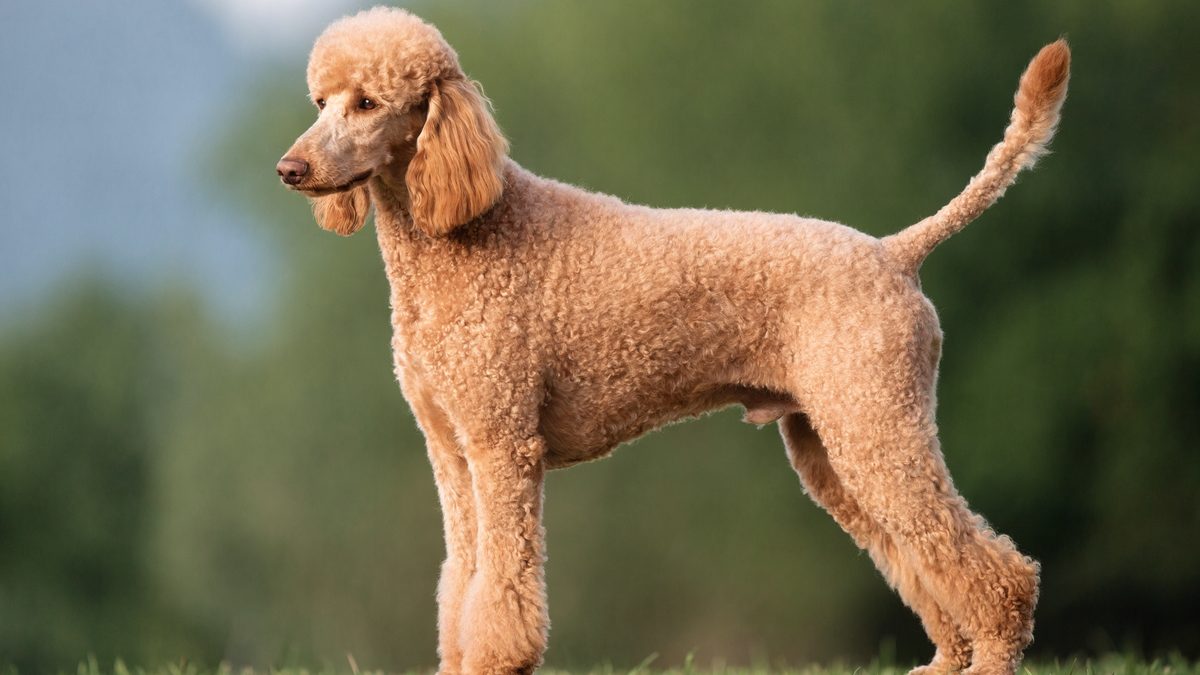
Quick answer
The poodle price in India runs Rs 20,000 to Rs 6,00,000 in 2026, and published Indian sources disagree by twenty-four times on the same Standard Poodle. Registries recognise four sizes at most, Standard, Medium, Miniature and Toy, and none recognises a teacup. Budget Rs 4,500 to Rs 15,500 a month, because the coat has to be clipped every four to six weeks for life.
This guide is general information for Indian pet owners and is not a diagnosis. Always consult a registered veterinarian near you before acting on anything you read here, and treat any sudden change in your dog's condition as urgent.
Poodle at a glance
What a Poodle actually is, and how many sizes exist
The Poodle is a single breed kept in several registered size varieties, and the number of varieties depends on which registry you ask. The FCI recognises four. The American Kennel Club and the Royal Kennel Club recognise three. No registry anywhere recognises a fifth, smaller one called teacup.
Start here, because almost every Indian listing you will read gets this wrong. The FCI standard for the breed is Standard N° 172, filed under the French name Caniche, with France as the country of origin and the breed classed in Group 9, Companion and Toy dogs, Section 2, Poodle. The current text was published on 5 April 2024 and became valid on 1 August 2024, which makes it the newest of the three standards this page uses.
The name is not decorative. The French word caniche comes from cane, the French for a female duck, and the dog was originally used for wildfowling. It descends from the Barbet, and the two were gradually separated after 1743, when the word caniche was first applied. The AKC adds that the Poodle is the national dog of France and that there is no such breed as a French Poodle. A curly coat and a topknot are the visible end of a working water dog.
The size varieties, registry by registry
Four size bands exist in the FCI standard and three in the AKC and Royal Kennel Club standards. The table below prints all three registries side by side rather than averaging them, because the bands do not line up and an Indian buyer comparing a seller's claim against a standard needs to know which standard the seller means.
| Variety | FCI Standard N° 172 (2024) | AKC (approved 1984) | Royal Kennel Club (2025) |
|---|---|---|---|
| Standard | Over 45 cm up to 60 cm, tolerance +2 cm | Over 15 inches, about 38.1 cm | Over 38 cm, 15 inches |
| Medium | Over 35 cm up to 45 cm | Not recognised | Not recognised |
| Miniature | Over 28 cm up to 35 cm | Over 10 inches up to 15 inches | Under 38 cm but not under 28 cm |
| Toy | Over 24 cm up to 28 cm, ideal 25 cm, tolerance -1 cm | 10 inches or under, about 25.4 cm | Under 28 cm, 11 inches |
| Teacup | Not recognised. Under 23 cm disqualifies a Toy | Not recognised | Not recognised |
Read the table across and two things fall out. First, the FCI Medium Poodle at 35 cm to 45 cm has no AKC equivalent at all, so a dog that is a perfectly correct Medium in Europe is either an oversized Miniature or an undersized Standard under AKC rules. Second, the boundaries genuinely differ. The AKC Miniature band runs from about 25.4 cm to about 38.1 cm, which swallows the whole FCI Miniature band and most of the FCI Medium band. A seller who says a puppy is a Miniature has told you very little until you ask which registry and what the dog measures at the withers.
No registry recognises a teacup poodle. The FCI goes further and treats extreme smallness as a fault to be excluded: a height of less than 23 cm disqualifies a Toy, very light bone in Toys is a disqualifying fault, and any dog displaying signs of dwarfism, meaning a globular skull, absent occipital protuberance, very pronounced stop, prominent eyes and a short turned-up muzzle, is disqualified outright. The Miniature description is explicit that the variety must be a reduced Medium 'without presenting any sign of dwarfism';. A dog sold as smaller than a Toy is being sold on the exact trait the standard rejects.
What the standards say about the coat
The Poodle carries a single curly coat that keeps growing rather than a double coat that sheds seasonally. The FCI describes the hair as profuse, of fine woolly texture, very frizzy, elastic and resistant to the pressure of the hand, and forming even curls, with a corded variant whose cords should measure at least 20 cm. The AKC standard describes the same two qualities, curly of naturally harsh texture and dense throughout, or corded. The Royal Kennel Club lists the breed characteristic in one line, 'a type of coat which does not moult';.
Not moulting is not the same as producing no allergen, and the difference is worth more to an Indian buyer than any other single fact on this page. The grooming section and the hypoallergenic discussion below both hang off it. A coat that does not shed out has to be cut off instead, on a schedule, for the dog's whole life.
Colour, and a real disagreement between registries
Registries disagree on colour, and the disagreement is not small. The FCI admits solid black, white, brown, grey and fawn, and since the 2024 revision also admits parti-coloured dogs in two colours, dogs with mantle or tuxedo markings, black and brown with fawn markings, tricolour, brindle and brindle with white. The AKC standard states the opposite in a single sentence: 'Parti-colored dogs shall be disqualified';. The Royal Kennel Club is equally firm, allowing all solid colours and adding that 'any other colour or combination of colours' is unacceptable.
So a parti-coloured Poodle is a correct show dog under FCI rules and a disqualified one under AKC and RKC rules. If an Indian seller charges a premium for a rare two-tone curly coat, ask which registry treats it as correct, because in two of the three it is a disqualification rather than a rarity.
The Poodle clip is functional, not fashion
The traditional clip was designed for cold water, not for a show ring. The AKC records that the pattern of shaved and unshaved areas protects the joints and vital organs while the dog works in cold water, and that the coat will cord if it is left to grow naturally. The AKC standard permits four clips in the ring, Puppy, English Saddle, Continental and Sporting, and disqualifies any dog shown in another. The FCI authorises Lion, Modern, English, Puppy and Scandinavian clips.
The FCI standard then adds a line that no Indian seller quotes. 'Judging a Poodle in a show does not mean it is judged in a grooming contest. It is not encouraged to stimulate over-grooming one's dog';. Tail docking is also no longer authorised under the FCI standard, and the Royal Kennel Club now describes the tail as 'previously customarily docked' with an undocked description given first. In India, docking and cropping are separately forbidden by the breeding rules, which ban tail docking, ear cropping, de-barking, de-clawing, branding, dyeing and any change of appearance by artificial means.
What the ranking Indian pages publish instead
Every Indian page currently ranking for this query prints one simplified size list, and several print figures that do not match any registry. One breeder site labels the largest variety 'Standard (Giant) Poodle' and gives it 45 to 60 cm and 18 to 32 kg, alongside a Toy at 24 to 28 cm and 3 to 5 kg and a Miniature at 28 to 38 cm and 6 to 8 kg. Giant is not a variety in any standard. Another gives Toy at 8 to 10 inches, Miniature at 10 to 15 inches and Standard at 18 to 24 inches, which puts its Standard floor three inches above the AKC minimum. A third publishes a single height and weight row for the whole breed, 23 to 27 inches and 60 to 70 pounds for a male, and names Germany as the country of origin, where the FCI names France.
Bonbeno prints the standards instead and shows you where they disagree. That is the entire difference between a verified figure and a repeated one.
Poodle price in India, and why the published numbers disagree by 24 times
Poodle price in India runs from about Rs 20,000 to about Rs 6,00,000 across published sources in 2026. The single most useful fact about that range is that the sources disagree with each other by a factor of twenty-four on the Standard Poodle, and by a factor of five on the toy poodle, for what each of them describes as the same dog.
Bonbeno read the price bands published by five Indian pages that currently rank or are surfaced for this query and put them in one table. Nobody else has done this, and the reason is obvious once you see the result.
| Source | Headline range | Toy | Miniature | Standard |
|---|---|---|---|---|
| Shubh Kennel | Rs 20,000 to Rs 60,000 | Rs 30,000 to Rs 50,000 | Rs 20,000 to Rs 50,000 | Rs 25,000 to Rs 60,000 |
| The Dog Farm | Rs 45,000 to Rs 1,20,000 | Rs 45,000 to Rs 70,000 | Rs 60,000 to Rs 90,000 | Rs 80,000 to Rs 1,20,000 |
| Premium Pet Palace | Rs 67,230 to Rs 1,57,947 | Not stated | Not stated | Not stated |
| Supertails | Rs 20,000 to Rs 80,000 in its FAQ | Not stated | Not stated | Not stated |
| Mr n Mrs Pet | Rs 70,000 to Rs 6,00,000 and above | Rs 90,000 to Rs 2,50,000 | Rs 80,000 to Rs 2,00,000 | Rs 1,20,000 to Rs 6,00,000 |
Three numbers are worth staring at. The toy poodle floor is Rs 30,000 at one source and Rs 90,000 at another, a three times gap. The Toy ceiling is Rs 50,000 against Rs 2,50,000, a five times gap Mr n Mrs Pet, Poodle Price in India. And the standard poodle runs from Rs 25,000 at the bottom of one table to Rs 6,00,000 at the top of another, a spread of twenty-four times for a dog both pages call a purebred Standard Poodle. Nobody is auditing any of it.
The size premium points in opposite directions
Sources cannot even agree which variety costs most. One breeder site prices the Standard highest and the Miniature lowest, then writes in its own body copy that 'Miniature and toy Poodles are generally more expensive as they are smaller in size and in higher demand', contradicting its own table on the same page. A second site runs Toy cheapest, then Miniature, then Standard. A third runs Miniature cheapest, Toy above it, then Standard highest, and explains that 'Toy Poodles are usually priced higher than Miniatures because of their popularity and adaptability to Indian homes';.
Two of those three cannot be right. Treat a quoted size premium as a seller's positioning rather than a market fact, and price the dog on what you can verify instead.
Self-contradiction inside a single page
The clearest signal that these numbers are not researched is that individual pages disagree with themselves. The main informational competitor publishes a purchase-or-adoption figure of Rs 50,000 to Rs 1,50,000 in a cost table, then answers its own FAQ 'What is the average cost to buy a Poodle in India?' with Rs 20,000 to Rs 80,000, and carries a page description quoting a range of Rs 40,000 to Rs 3,00,000. Three ranges, one URL, no reconciliation.
A breeder site prints a city table whose lowest entry is Rs 43,000, and body copy on the same page saying the average is Rs 20,000 to Rs 60,000. Another quotes Rs 67,230 to Rs 1,57,947 in its body, figures precise to the rupee that read like a currency conversion, while its own page description says prices start from Rs 40,000 onwards.
City-wise prices, and how little they are worth
Two sources publish city tables, and they disagree with each other by roughly Rs 35,000 on the same city. Read them as two publishers' asking prices rather than as a survey.
| City | Shubh Kennel | Premium Pet Palace |
|---|---|---|
| Mumbai | Rs 50,000 to Rs 85,000 | Rs 84,000 to Rs 1,01,000 |
| Bangalore | Rs 45,000 to Rs 80,000 | Rs 85,000 to Rs 1,02,000 |
| Hyderabad | Rs 45,000 to Rs 80,000 | Rs 81,000 to Rs 1,03,000 |
| Chennai | Rs 48,000 to Rs 80,000 | Rs 83,000 to Rs 99,000 |
| Kolkata | Rs 45,000 to Rs 75,000 | Rs 83,000 to Rs 1,00,000 |
| Ahmedabad | Rs 48,000 to Rs 80,000 | Rs 82,000 to Rs 1,03,000 |
| Jaipur | Rs 48,000 to Rs 90,000 | Rs 84,000 to Rs 98,000 |
| Goa | Rs 50,000 to Rs 90,000 | Rs 83,000 to Rs 1,00,000 |
| Vizag | Rs 43,000 to Rs 95,000 | Rs 85,000 to Rs 1,00,000 |
| Pune | Rs 50,000 to Rs 85,000 | Rs 81,000 to Rs 95,000 |
One source is systematically about Rs 30,000 to Rs 40,000 higher than the other in every city. That is not a regional effect, it is two different businesses picking two different price points. Both sell puppies.
A third city table exists on the page Google ranks first for this query, and it is for the toy poodle alone. It gives Delhi NCR at Rs 60,000 to Rs 1,10,000, Mumbai at Rs 70,000 to Rs 1,20,000, Bangalore at Rs 65,000 to Rs 1,00,000, Pune at Rs 55,000 to Rs 95,000, Chennai at Rs 50,000 to Rs 90,000 and tier-2 cities at Rs 40,000 to Rs 75,000. Its Chennai floor of Rs 50,000 is the exact figure a different source gives as its Toy Poodle ceiling. Three city tables, three price worlds.
The top-ranked page for this query lists the factors that raise a Toy Poodle's price and includes 'Puppy age (45-60 days are the most expensive)';. Forty-five days is six and a half weeks. Indian law is unambiguous that pups less than eight weeks, meaning 56 days, must not be sold. The most visible Poodle pricing page on the Indian internet is therefore telling buyers that the premium tier begins below the legal minimum age. Bonbeno flags it rather than repeating it, and no buyer should pay a premium for a puppy that cannot lawfully be sold yet.
What the KCI premium actually costs the breeder
The largest single price step Indian sellers charge is for kci registration, and the paperwork behind it costs the breeder between Rs 750 and Rs 2,000. Those are the Kennel Club of India's own published tariffs, effective 1 April 2024: litter registration is Rs 750 per puppy if filed within 60 days, Rs 1,200 within 61 to 120 days and Rs 2,000 within 121 to 180 days. A certified four-generation pedigree is Rs 1,000 and a five-generation pedigree Rs 1,500. Transfer of ownership within twelve months of the puppy's date of birth costs Rs 500.
Compare that with the premium. One seller prices a basic Poodle at Rs 70,000 to Rs 1,20,000 and a KCI-registered one at Rs 1,20,000 to Rs 2,50,000. The top of the registered band sits Rs 1,30,000 above the top of the unregistered one, for a piece of paper that cost the breeder Rs 750 to Rs 2,000 to obtain.
A KCI registration documents pedigree. It records that a puppy's parents were registered dogs and it lets you see the lineage on a certified pedigree. It is not a health certificate, it does not mean the parents were screened for progressive retinal atrophy or hip dysplasia, and it says nothing about how the litter was raised. Ask for the screening results separately, by name, and read the grooming and health sections below for the list.
What the law says a legal sale looks like
Indian law sets a floor under any Poodle purchase, and most buyers have never been told it exists. Under the Prevention of Cruelty to Animals (Dog Breeding and Marketing) Rules, 2017, no breeder may carry on breeding without a certificate of registration from the State Animal Welfare Board, and that certificate must be displayed at the establishment. Registration costs the breeder a non-refundable fee of Rs 5,000 and is valid for two years.
- Age. Pups less than eight weeks in age must not be sold.
- Microchip. Each pup sold must be micro-chipped, with a complete record of treatment and vaccination maintained.
- Receipt. The breeder must give a sale receipt and keep a copy carrying the microchip number and the purchaser's name, address and phone number.
- Written handover. The breeder must furnish in writing the feeding details, the dates of inoculations and de-worming, and the name and address of the attending veterinary practitioner.
- No public display. Pups must not be displayed in public places for the purpose of immediate sale.
- Screening the buyer. The breeder must screen prospective purchasers for their ability to attend to the dog's grooming, socialising, spatial and veterinary needs.
Read the last item again. Indian law names grooming explicitly as something a Poodle buyer is supposed to be assessed on before the sale. If nobody asked you how you plan to pay for clipping every four to six weeks, the seller skipped a legal step, and that tells you what else they may have skipped.
A Poodle advertised well under the published bands is usually a dog bred outside the rules. The same rules that require registration also prohibit inbreeding and incest breeding, cap a female at five litters in her lifetime and one litter a year, bar mating before eighteen months and after eight years of age, and require the parents to be certified healthy by a veterinary practitioner at least ten days before breeding. None of that is free, and a price far below market usually means none of it happened.
Bonbeno does not broker puppy sales and does not publish breeder listings. Every figure above is reported from a third party so you can see the disagreement and price it into your own decision.
Monthly cost of a Poodle in India, with the clip priced in
Budget Rs 4,500 to Rs 9,000 a month for a Toy or Miniature Poodle in an Indian metro, and Rs 7,000 to Rs 14,500 for a Standard. The number that separates a Poodle from most other breeds is the professional clip, and it is the number the ranking Indian pages either understate or leave out.
Every other breed page on this site has a food line as its largest recurring cost. On a Poodle the grooming cost competes with it. The coat does not moult, so it has to be cut, and Indian salon rates for a long-coat full groom are published and checkable.
| Service | Pune | Mumbai | Bangalore | Hyderabad | Recommended frequency |
|---|---|---|---|---|---|
| Basic bath and dry | Rs 400-650 | Rs 500-800 | Rs 450-700 | Rs 350-600 | Every 4-6 weeks |
| Full groom, long coat | Rs 1,400-2,500 | Rs 1,800-3,500 | Rs 1,500-3,000 | Rs 1,200-2,500 | Every 4-6 weeks |
| Puppy first groom | Rs 600-900 | Rs 700-1,100 | Rs 650-1,000 | Rs 550-850 | 3-4 sessions in year one |
| Mobile groomer add-on | +Rs 200-400 | +Rs 300-500 | +Rs 250-450 | +Rs 200-400 | Per visit |
A matted coat is billed on top. Heavily matted coats need dematting, charged separately at Rs 500 to Rs 1,500 extra. That surcharge is not a penalty for bad luck, it is what happens when a Poodle owner skips home brushing for a few weeks.
The clip line most Indian pages get wrong
One ranking page budgets 'grooming and supplies' at Rs 500 to Rs 1,500 a month and itemises that as weekly brushing, ear cleaning and toys. Weekly brushing is home labour and costs nothing. Ear cleaning solution and toys are supplies. The professional clip that the same page recommends every four to six weeks in its own care list is simply absent from its budget. At Mumbai long-coat rates that clip alone is Rs 1,800 to Rs 3,500 a session, which is more than the entire line item.
The other Indian pages are closer but still spread. One quotes Rs 2,000 to Rs 5,000 per grooming session. Another gives Rs 500 to Rs 1,200 for a bath and brush and Rs 1,000 to Rs 2,500 for a full haircut every six to eight weeks in its body, then Rs 1,000 to Rs 3,000 a month with professional trims every four to six weeks in its FAQ. The AKC's own care guidance says four to six weeks, and the Poodle Club of America's grooming reality is stricter still, because a full-coated Poodle that is not combed to the skin will mat at the roots and have to be shaved off.
Bonbeno's monthly cost estimate
The table below is Bonbeno's own build, assembled from the published Indian figures cited beside it rather than from a single source. It is bounded honestly and it assumes a metro. Small-city costs run lower, mostly on grooming and boarding.
| Line | Toy or Miniature | Standard | Basis |
|---|---|---|---|
| Food | Rs 1,200-2,500 | Rs 3,000-6,000 | Indian published food ranges of Rs 1,500-4,000 and Rs 3,000-8,000, scaled by variety Shubh Kennel, Poodle Dog Price In India |
| Professional clip, amortised monthly | Rs 1,000-2,600 | Rs 1,300-3,500 | Long-coat full groom at city rates, every 4-6 weeks American Kennel Club |
| Routine veterinary and preventives | Rs 800-2,000 | Rs 1,000-2,500 | Published Indian monthly vet and parasite-control ranges Mr n Mrs Pet, Poodle Price in India |
| Home grooming consumables | Rs 300-600 | Rs 400-800 | Brushes, combs, ear cleaner, shampoo, replaced through the year |
| Training, enrichment, treats | Rs 700-1,500 | Rs 800-1,700 | Published training and miscellaneous ranges |
| Monsoon surcharge, June to September | Rs 400-800 | Rs 500-1,000 | Grooming frequency rises 25-30 percent in monsoon |
| Estimated total | Rs 4,400-10,000 | Rs 7,000-15,500 | Sum of the rows above |
One-time setup runs on top. Published Indian figures put a crate at Rs 1,000 to Rs 6,000, bedding at Rs 500 to Rs 3,000, bowls at Rs 200 to Rs 1,500, a collar or harness at Rs 300 to Rs 1,500, a leash at Rs 300 to Rs 1,500 and an ID tag at Rs 100 to Rs 300. First-year veterinary work adds an initial check at Rs 1,000 to Rs 4,000, core vaccinations at Rs 500 to Rs 1,500 a shot across several shots, and initial deworming and parasite treatment at Rs 500 to Rs 2,000. Spaying or neutering is quoted at Rs 3,000 to Rs 15,000 depending on the vet and the dog's size.
Clippers, a slicker brush, a stainless steel comb, scissors and a dryer are a one-time spend that removes the largest recurring line on this page. The AKC notes plainly that some owners learn to clip and trim themselves while others take the dog to a professional every four to six weeks. Learn it on a Sporting-style trim rather than a show clip, get a groomer to teach you the first face, feet and sanitary trim in person, and keep the professional for the twice-yearly reset. Indian groomers themselves recommend that a first nail trim be taught in person rather than attempted cold.
Insurance, and whether it is worth it here
Indian pet insurance is quoted at Rs 800 to Rs 1,500 a month for accident-only cover, Rs 1,200 to Rs 2,500 for accident and illness, and Rs 1,800 to Rs 3,500 for comprehensive. Pre-existing conditions are generally excluded, so a policy taken after a diagnosis of sebaceous adenitis or Addison's disease is unlikely to cover it. Buy early or do not buy at all. The Standard Poodle's two most expensive conditions both tend to present in adulthood, which is exactly when a new policy will not help.
One Indian source quotes dog training at Rs 5,000 to Rs 20,000 'per session';. Read that as a package price rather than a per-hour rate. No published Indian source Bonbeno could find supports Rs 20,000 for one training session, and the figure is reproduced here only to show how loosely these budgets are assembled.
One Indian page does get this right, and it is worth crediting. The page ranking first for this query puts the total monthly cost of a healthy Toy Poodle at Rs 4,000 to Rs 8,000, itemises grooming at Rs 1,500 to Rs 3,000 a month against food at the same figure, and states the point plainly: 'Grooming is not optional for this breed, it is a monthly fixed expense';. That total overlaps Bonbeno's own Toy and Miniature estimate above across most of its range, which is the closest thing to corroboration this market offers.
Heat, humidity and monsoon, and what actually goes wrong in India
The Poodle's Indian climate problem is not heatstroke, it is the coat, the skin and the ears. Bonbeno rates the breed 3 of 5 for heat tolerance, a middling score, because the published heat-illness research does not flag the Poodle as a high-risk breed while the published ear research flags it clearly.
Take the heatstroke evidence first, because it is the claim buyers ask about. The largest study of heat-related illness in dogs examined 905,543 dogs under UK primary veterinary care in 2016 and identified 395 confirmed events, giving an incidence of 0.04 percent and an event fatality rate of 14.18 percent. The breeds it named as higher risk were the Chow Chow, the Bulldog and the French Bulldog, and the other significant risk factors were a bodyweight above the breed and sex mean, an age over two years, a brachycephalic skull shape, and a bodyweight over 50 kg.
The Poodle is not named in that list, and three of those four risk factors do not describe a correctly built Poodle. It has a long muzzle rather than a flat face, the FCI describes the muzzle as strong with an upper profile perfectly straight and about nine tenths the length of the skull, and even a Standard at 45 to 60 cm and a published 18 to 32 kg is nowhere near 50 kg The Dog Farm, Poodle Pure Breed Puppies…. Bonbeno states that plainly rather than repeating a heat warning the evidence does not support.
Absence from a risk list is not proof of safety. The study was conducted in the UK, where ambient temperatures are far below an Indian April, and it counted veterinary-diagnosed events rather than every episode of overheating. The Royal Veterinary College separately lists pets with thick coats among the animals more susceptible to heatstroke, and a Poodle in full coat is a thick-coated dog. Read the rating as 'not a high-risk breed on the published data, and still a dog that needs shade, water and early walks in an Indian summer'.
The real Indian problem is the ear canal
Poodle types carry 1.91 times the odds of otitis externa compared with non-poodle types. That figure comes from a VetCompass study of a random sample of 22,333 dogs drawn from 905,554 under UK primary veterinary care, in which the one-year period prevalence of otitis externa across all dogs was 7.30 percent. The 95 percent confidence interval on the poodle figure runs 1.57 to 2.32, and the result was significant at P below 0.001.
Put that 7.30 percent in context before you dismiss it. In the same VetCompass sample, otitis externa was the second most prevalent specific diagnosis recorded across all UK dogs, behind periodontal disease at 12.52 percent and ahead of obesity at 7.07 percent. Skin disorders as a group ran at 12.58 percent. Ear and skin disease are not exotic risks, they are the everyday clinical workload, and this breed sits above the average on both.
The same study explains why. Poodles have pendulous ear carriage, which on its own carries 1.76 times the odds of otitis externa against erect-eared breeds, and they also have excessive curly hairs inside the external ear canal, an aural microclimate that traps heat and moisture, a predisposition to Malassezia overgrowth in the ear canal, a tendency to allergic skin disease that acts as a primary cause of ear infection, and the water-dog behaviour of swimming. The FCI standard confirms the conformation, describing ears that are rather long, falling along the cheeks, flat, widening after the attachment and covered with very long wavy hair.
Now put that ear into an Indian monsoon. Nine cities out of ten in this country run above 70 percent relative humidity for months, and Indian grooming guidance is blunt that a warm damp coat that is not dried completely becomes a breeding ground for Malassezia yeast and ringworm, and that a quick wipe of the ears with a cotton ball after a wet walk prevents most monsoon ear infection cases.
A monsoon protocol that works in a humid flat
- Cut the coat shorter in the first week of June. A shorter coat dries roughly three times faster, and Indian groomers name this as the single change that prevents most monsoon skin problems.
- Raise the clip frequency by 25 to 30 percent from June to September, so a six-week cycle becomes a four-to-five-week cycle.
- Dry the dog completely after every bath and every wet walk, not mostly dry. A half-dry coat can develop fungal infection within hours in an Indian monsoon.
- Wipe the visible part of the ear with a cotton ball and ear solution immediately after drying, and never push anything into the canal.
- Check the ears for smell and discharge weekly, because owners of predisposed breeds who look early catch otitis before it becomes chronic.
- Run a dehumidifier at 50 to 55 percent relative humidity in a poorly ventilated flat, which Indian guidance recommends specifically for Mumbai and Chennai households.
Summer, city by city
Summer handling is straightforward and the rules are the same everywhere. Walk before roughly 7 am and after roughly 8 pm, keep the dog in shade indoors and out, carry water on walks, and test the pavement with the back of your hand, because if it is too hot to hold your hand on it is too hot for paws. Never leave a dog in a parked car or a closed conservatory.
Walk timing is the part of that list with the strongest evidence behind it, and it is the part Indian owners take least seriously. Reviewing the same UK population of 905,543 dogs, a companion study identified 1,259 heat-related illness events and found that exercise was the predominant trigger at 74.2 percent of the 879 events where a cause was recorded, well ahead of environmental heat at 12.9 percent and confinement in a vehicle at 5.2 percent. Heatstroke caused by exercise was just as likely to kill as heatstroke from a hot car, and male and younger dogs were the ones most likely to develop the exercise-triggered form. An adolescent Poodle taken for a long walk at 11 am in May is the exact profile that study describes.
Delhi, Jaipur and Ahmedabad give you dry heat and a short brutal peak in May and June. Mumbai, Chennai, Kochi and Kolkata give you lower peak temperatures and far worse humid loading, which is harder on a curly single coat and much harder on ears. Bengaluru and Pune are the easiest Indian cities for this breed on both counts. Hill stations and the north-east are easiest of all, and are the only places in India where a full show coat is a reasonable idea.
Heatstroke first aid is 'cool first, transport second';. Move the dog somewhere cool and ventilated, offer small sips of water without forcing, and pour water cooler than the dog over it while a fan or breeze moves air across, which is the evaporative method recommended for older dogs or dogs with underlying problems. Cold-water immersion is effective for young healthy dogs. Never use ice-cold water, because it reduces blood flow to the skin and can cause shivering that generates more heat. Then call the vet, and go even if the dog seems fine, because the serious signs may not be immediately apparent.
One Indian ranking page answers the climate question with 'Poodles handle Indian climates fairly well, especially Toy and Miniature Poodles in apartments. Just keep them cool during summers, hydrated, and well-groomed';. That is not wrong, it is just unearned. Nothing on that page tells the reader what 'well-groomed' costs, how often, or why the ears are the part that fails first.
Temperament, household fit, and who should not buy one
The Poodle is an active, people-oriented working breed that behaves like a companion dog and thinks like a retriever. Buy one if you want an intelligent dog that is deeply involved in your day. Do not buy one if the dog will be alone for ten hours or if nobody in the house wants a daily grooming habit.
All three breed standards describe the same animal in slightly different words. The FCI calls it a dog renowned for its loyalty, capable of learning and being trained, which makes it a particularly pleasant companion dog, and describes the general appearance as that of an intelligent dog, constantly alert and active. The AKC standard says 'very active, intelligent' and makes shyness or sharpness a major fault. The Royal Kennel Club puts it in three words, 'gay-spirited and good-tempered';.
The AKC's own breed guidance goes further and is worth quoting to anyone who thinks of this as a lapdog. 'Forget any preconceived notions about Poodles you may have: Poodles are eager, athletic, and wickedly smart dogs of remarkable versatility';. The Standard, with greater size and strength, is described as the best all-around athlete of the family, and all three varieties are described as very people-oriented.
Who this breed suits
- Households with someone home most of the day. Separation anxiety is a recognised risk in this breed if it is left alone too long.
- Owners who want to train. The AKC records Poodles excelling in agility, obedience, tracking, dock diving and retriever hunt tests, and a dog with that much capacity gets destructive when it is unused.
- Families with older children. Indian breeder pages describe the breed as affectionate and gentle with children of all ages, and a Standard at a published 18 to 32 kg is strong enough to knock a toddler over during play.
- Apartment dwellers, for the Toy and Miniature only. Small size makes apartment living workable, but the exercise requirement below does not shrink as much as the dog does.
Who should walk away
- Anyone who will not pay for clipping. This is the single most common reason Poodles end up shaved to the skin in an Indian salon, and it is entirely predictable at the point of sale.
- Anyone buying a guard dog. One ranking page answers 'Are Poodles good at guarding?' with 'Yes! ... They will aggressively warn off strangers'. No breed standard supports that. The AKC standard makes sharpness a major fault, and the Royal Kennel Club describes the temperament as good-tempered. Buy the breed for company, not for security.
- Anyone who wants a low-input dog. Between daily brushing, four-to-six-weekly clipping and daily exercise, a Poodle is a high-input animal for its whole life.
- Anyone buying because they read the word hypoallergenic. Read the grooming section before you commit on that basis.
Noise, and what the neighbours will hear
Poodles are alert and they will announce visitors. That alertness is in the standard, which describes a dog constantly alert and active. It is manageable with training but it is a real consideration in an Indian housing society where flats share walls. Socialise the puppy to lift doors, delivery bells, watchmen and passing dogs during the first four months, and the barking usually settles into a short alert rather than a sustained one.
A Poodle that gets no mental work becomes an inventive nuisance. One Indian guide puts it well, 'Poodles thrive on interaction and mental challenges. Simply having a Poodle isn't enough';. The training and exercise sections below set out what enough actually looks like.
Training a Poodle in India, and the one lesson nobody teaches
To train a Poodle, keep sessions short, positive and consistent, and start grooming handling on day one. The breed is among the easiest to teach obedience to and among the hardest to keep satisfied, and the skill Indian owners most often skip is teaching the dog to stand still for a clipper.
Poodles learn fast. The AKC describes them as extremely intelligent and easily trained, agile and graceful, and records the breed excelling in agility, obedience and tracking, competing in dock diving and retriever hunt tests, and working as excellent water-retrievers. The FCI standard says the same thing in one clause, a dog capable of learning and being trained. The practical caution the AKC adds matters more than the praise, 'Just be sure that you are being consistent with what you ask';. A dog this quick learns your accidental rules as fast as your deliberate ones.
The grooming-handling lesson, taught first
Teach the dog to be handled before you teach it to sit. A Poodle will spend several hours a year restrained on a grooming table, with a clipper against its face, feet and sanitary area, for its entire life. A dog that has not been conditioned to that is a dog that gets sedated for grooming, or gets shaved because the groomer cannot work safely.
- Handle the feet, ears, muzzle and tail daily from week eight, a few seconds each, paired with food.
- Brush for thirty seconds a day at first, on a raised surface, ending before the puppy objects rather than after.
- Run a switched-off clipper near the puppy, then a switched-on one at a distance, before it ever touches the coat.
- Book a familiarisation visit to the salon with no grooming at all, which Indian groomers themselves recommend as a ten-minute treats-and-exploration trip.
- Ask the groomer to use low-noise clippers. Conventional clippers run at 70 to 80 dB and low-frequency cordless models operate under 50 dB, and Indian groomers name Poodles among the noise-sensitive breeds this matters for.
- Split the first full session across two visits if the puppy struggles, which is a standard low-stress protocol Indian studios now offer.
Socialisation, on the Indian vaccination timeline
Indian law sets the vaccination window and it shapes the socialisation window. Under the breeding rules, puppies are vaccinated starting at seven to eight weeks and the course is usually completed at eighteen weeks. The same rules require breeders to provide socialisation opportunities as part of the dog's mental and physical well-being, and require them to screen buyers on their ability to attend to the dog's socialising needs.
That leaves a gap between the sensitive period for socialisation and full immunity, and Indian streets carry real disease pressure. Socialise in controlled settings during those weeks. Carry the puppy through a market, sit on a friend's balcony above traffic, invite vaccinated adult dogs to your home, run the mixer and the pressure cooker while the puppy eats, and introduce the lift, the watchman and the delivery bell deliberately. Avoid unvaccinated dogs and public parks until the course is finished.
What this breed resists
Poodles do not resist obedience, they resist boredom and they resist harshness. Repeating a known cue for the tenth time produces a dog that offers a different behaviour instead, which owners read as stubbornness and is actually the dog trying to solve a puzzle it has already solved. Three short sessions of five minutes beat one session of fifteen.
Harsh handling backfires visibly in a breed the AKC standard already protects against shyness, listing shyness or sharpness as a major fault. Positive reinforcement is not a preference here, it is what the standard's temperament depends on.
A realistic Indian timeline
| Age | Realistic expectation |
|---|---|
| 8-12 weeks | Name response, food-lure sit and down, crate comfort, daily handling of feet and ears, house-training accidents still frequent |
| 3-4 months | Reliable indoor recall, loose-lead walking in a quiet lane, first salon familiarisation visit, vaccination course completed by about 18 weeks |
| 4-6 months | First full professional clip, stay of 30 seconds, settled alone for short periods, adolescent testing begins |
| 6-12 months | Outdoor recall in a fenced space, ten-minute settle, tolerates a full groom without sedation, trick and scent work start paying off |
| 12-24 months | Adult attention span, agility or obedience class becomes genuinely useful, mental workload matters more than distance walked |
One Indian ranking page sums the breed up as 'mini Einsteins' and leaves it there. Intelligence is the easy half. The hard half is that an intelligent dog with nothing to do invents work, and in a flat that work is usually destructive.
Daily exercise, and what happens without it
Give a Toy or Miniature Poodle 45 to 60 minutes a day and a Standard Poodle 60 to 90 minutes, split across two outings, plus deliberate mental work. The AKC is explicit that Poodles of any size are very active dogs who require good exercise every day to suit their high energy level.
The size of the dog does not shrink the requirement as much as buyers expect. The AKC states the rule for all three varieties in one sentence and adds that Poodles are eager for all kinds of activity and enjoy keeping busy. The FCI standard describes the gait as light and bouncy, which is a working retriever's movement rather than a lapdog's.
Indian sources under-state this. One quotes 30 to 60 minutes daily. A breeder page describes the breed as easy to maintain while also saying it needs a lot of exercise, in consecutive sentences. Bonbeno's figures sit at the upper end of the Indian range for the small varieties and above it for the Standard, because the AKC guidance treats energy level as high across all three.
| Variety | Daily physical | Daily mental | Indian scheduling note |
|---|---|---|---|
| Toy | 45-60 minutes | 15-20 minutes | Both walks inside the cool window, indoor play in peak summer |
| Miniature | 45-60 minutes | 20 minutes | Handles a longer single walk better than a Toy |
| Medium and Standard | 60-90 minutes | 20-30 minutes | Needs a safe off-lead or long-line space at least weekly |
Use the retrieve, it is already there
Retrieving is the cheapest enrichment available to an Indian Poodle owner. The AKC notes that the breed was bred as a hunting dog, that its impulse is to retrieve, and that tossing toys, sticks or balls exercises both mind and body. A corridor, a terrace or a stairwell landing is enough for a Toy. Twenty minutes of fetch with a sit before each throw does more for a Poodle's head than an hour of lead walking.
Swimming is the other native option, and the AKC records that swimming is great exercise for the breed and that most Poodles love to get in the water. In India that means a supervised pool or a clean tank rather than a lake, and it comes with a cost. Water in a pendulous, hair-filled ear canal is one of the mechanisms the VetCompass study names behind the poodle predisposition to otitis externa. Swim if you can, then dry the ears properly every time.
What under-exercise looks like
- Barking at every corridor noise, because the dog has nothing else to attend to.
- Chewing furniture legs, skirting and slippers between 6 pm and 9 pm.
- Pacing and inability to settle when the family sits down.
- Escalating demand behaviour, paw, bark, nudge, repeat, which owners accidentally reinforce.
- Weight gain, which matters twice over because a bodyweight above the breed and sex mean is an independent risk factor both for heat-related illness and for otitis externa.
Split the day. One outing before roughly 7 am and one after roughly 8 pm keeps the dog off hot pavement, which the Royal Veterinary College names as a burn risk and a reason to restrict exercise on warm days. Fill the middle of the day with scent games, a food puzzle, a five-minute trick session and a chew. An Indian summer removes most of the outdoor day, so the indoor plan is not optional.
Grooming in Indian humidity, and the honest answer on hypoallergenic
A Poodle needs brushing to the skin most days and a professional clip every four to six weeks for its entire life, and skipping either produces a matted coat that has to be shaved off. The hypoallergenic claim that sells this breed in India is not supported by the published allergen research, and the truthful version is more useful than either the marketing or a flat denial.
The coat is the breed. It is a single-coated, continuously growing curly coat rather than a double coat that sheds seasonally, which the Royal Kennel Club records as the breed characteristic in one line, 'a type of coat which does not moult'. The FCI describes the hair as profuse, of fine woolly texture, very frizzy, elastic and resistant to the pressure of the hand. That texture is exactly what makes it hold a clip beautifully and mat catastrophically.
The AKC states the consequence without softening it. 'Unless you plan to keep your Poodle clipped in a short trim, you will need to learn how to brush them daily to keep their coat from matting. If you do not brush and comb a full-coated Poodle completely to the skin, the hair will mat near the roots and will have to be shaved off to start all over with new growth'. Most pet owners therefore keep the dog in a shorter trim and visit a professional groomer every four to six weeks for a bath, grooming and nail trim.
The hypoallergenic claim, and what the research found
Four of the Indian pages ranking or surfaced for this query assert the claim as fact. One calls Poodles 'hypoallergenic and non-shedding' and answers its own FAQ 'Are Poodles hypoallergenic?' with 'Yes, they are one of the most allergy-friendly breeds';. A second describes the breed as 'highly trainable, affectionate, and hypoallergenic'. A third says the curly coat traps hair and is 'especially beneficial for people with allergies';. The page ranking first calls the coat 'curly, non-shedding' and 'allergy-friendly' in the same sentence, which fuses a true claim and an unsupported one so tightly that a reader cannot separate them.
The published research does not support the claim in that form. A 2012 study in the Journal of Allergy and Clinical Immunology measured Can f 1, the major dog allergen, in hair and coat samples from 196 dogs of breeds marketed as hypoallergenic, including Poodles, Labradoodles, Spanish Water Dogs and Airedale Terriers, and compared them with 160 dogs of non-hypoallergenic breeds including Labrador Retrievers and a control group.
| Sample | Hypoallergenic breeds, n=196 | Non-hypoallergenic breeds, n=160 |
|---|---|---|
| Hair | 2.26 micrograms per gram | 0.77 micrograms per gram |
| Coat | 27.04 micrograms per gram | 12.98 micrograms per gram |
| Settled floor dust in the home | Lower for Labradoodles only, no difference for the other groups | Reference |
| Airborne allergen in the home | No difference between breeds | No difference between breeds |
Read the direction of that result carefully, because it is the opposite of what buyers are told. The so-called hypoallergenic dogs carried roughly three times the Can f 1 in hair and roughly twice the Can f 1 in coat compared with the control breeds. The authors' conclusion is one sentence, 'There is no evidence for the classification of certain dog breeds as being hypoallergenic';.
A separate US study reached the same place from a different direction. It identified the breeds cited online as hypoallergenic, built four classification schemes using purebred and mixed-breed dogs, and compared dog allergen in settled dust from homes in an established birth cohort. No classification scheme showed that allergen levels in homes with hypoallergenic dogs differed from other homes. The authors' closing line is a plea for honesty in exactly this market, that dog-allergic individuals should have access to scientifically valid information on allergen shedding by breed.
Three things are true at once. The coat does not moult, so a Poodle leaves far less hair on your sofa than a Labrador, and that is a real, verifiable difference in the standard. Environmental allergen exposure in the home did not differ by breed in either published study, and airborne levels did not differ at all Nicholas CE, Wegienka GR, Havstad SL. And the between-breed differences that did exist were small relative to the variation between individual dogs of the same breed, which means the only reliable test is the dog in front of you. If someone in the household is dog-allergic, spend several hours with the specific puppy and its parents before you buy, and treat any breed-level guarantee as a sales claim. Even the AKC hedges, describing the coat as 'relatively non-shedding' and 'low-allergen' rather than hypoallergenic.
A working Indian grooming routine
- Brush to the skin, not over the surface. Use a slicker brush first, then a stainless steel comb to find the knots the slicker missed. Indian breeder guidance ranges from three to four times a week to daily Mr n Mrs Pet, Poodle Price in India. Daily is correct if the coat is long, and every second day is workable on a short trim.
- Never bathe a matted dog. Water tightens knots into concrete.
- Use a pH-balanced dog shampoo, because dog skin sits at pH 6.5 to 7.5 against human skin at 4.5 to 5.5. Human shampoo strips the coat and irritates the skin.
- Dry completely, every time. In Indian humidity a half-dry coat can develop fungal infection within hours during monsoon.
- Clean the visible ear after every bath and every wet walk, and never insert anything into the canal.
- Clip professionally every four to six weeks, which is the AKC's own interval and matches the Indian long-coat salon cycle.
- Wipe the eye area, since Poodles are named among the breeds prone to tear staining in Indian grooming guidance.
The ear-plucking question
Do not assume the hair must come out of the ear canal. Plucking hair from the poodle ear canal is described in the veterinary literature as a practice 'under heavy controversy', listed alongside pendulous ear carriage and aural microclimate as one of the possible contributors to the breed's raised otitis risk rather than as an established fix. Ask your veterinarian to decide for your individual dog rather than letting a groomer default to it.
Ear care that is well supported is simpler. The VetCompass authors recommend cautious, low-harm approaches, cleaning with a dry paper cloth, judicious use of ear cleaners with antimicrobial properties, and avoidance of overzealous ear-cleaning, and they ask owners of predisposed breeds to check regularly for malodour and exudate. Poodles are a predisposed breed, at 1.91 times the odds of otitis externa against non-poodle types.
Coat colour and the fading question
Colour is not fixed at eight weeks in several Poodle colours. The Royal Kennel Club standard notes that creams, apricots, reds, browns, silvers and blues may show varying shades of the same colour up to eighteen months, and the AKC standard says the coat may show varying shades of the same colour in blues, grays, silvers, browns, cafe-au-laits, apricots and creams, with natural variation in shading not to be considered a fault. A silver puppy is often born black. Pay a premium for a rare coat colour at eight weeks and you may be paying for a shade the dog will not keep.
Health problems, lifespan, and why the three sizes are three different dogs
The Poodle's inherited disease risk splits by size variety, and this is the fact that most changes what you should ask a seller. The Standard Poodle carries the autoimmune and bloat risk. The toy poodle and Miniature carry the eye and kneecap risk. The national breed club prescribes different screening for each, and Bonbeno prints all three lists.
Start with the screening, because it is the part you can act on. The Poodle Club of America publishes distinct health-testing requirements for each variety, and the differences are not cosmetic.
| Variety | Required screening |
|---|---|
| Toy | DNA test for prcd progressive retinal atrophy from an OFA-approved laboratory; yearly eye exam by a board-certified ACVO veterinary ophthalmologist; patellar luxation evaluation by OFA or PennHIP |
| Miniature | The same three as the Toy, plus a hip dysplasia evaluation by OFA or PennHIP |
| Standard | Hip dysplasia evaluation by OFA or PennHIP; yearly eye exam by a board-certified ACVO ophthalmologist; and at least one health elective from an OFA thyroid evaluation, an OFA sebaceous adenitis evaluation by an approved dermatopathologist, or a heart evaluation by an ACVIM board-certified cardiologist |
Notice what is absent from each list. The Standard's requirements do not include the prcd DNA test, and the Toy's do not include a sebaceous adenitis biopsy. That is the breed club telling you, in the plainest possible way, that these are three different health propositions sold under one breed name. The AKC states the same split directly: Legg-Calve-Perthes and luxating patellas are more likely in Toy and Miniature Poodles than in Standards, while the Standard variety is more at risk for gastric dilatation with volvulus and sebaceous adenitis.
Standard Poodle: Addison's disease
Addison's disease is the headline risk in the Standard Poodle and it is heavily inherited. A study of 778 Standard Poodles with known Addisonian status, confirmed clinically by ACTH challenge, classified 8.6 percent of the enrolled dogs as Addisonian. Heritability was estimated at 0.75, and complex segregation analysis suggested the disease is influenced by an autosomal recessive locus. Both sexes were affected with equal probability, and the common coat colours had a negligible effect.
Population data confirms the breed effect at a lower base rate. In a retrospective cohort of 525,028 client-owned dogs insured in Sweden, representing 2,364,652 dog-years at risk between 1995 and 2006, 534 dogs were identified with naturally occurring adrenocortical insufficiency, an overall incidence of 2.3 cases per 10,000 dog-years at risk. The Standard Poodle was one of five breeds with a significantly higher relative risk than other breeds combined, alongside the Portuguese Water Dog, Bearded Collie, Cairn Terrier and Cocker Spaniel. Female dogs overall were at 1.85 times the risk of males, and the relative risk of death was 1.9 times higher in affected dogs than in dogs overall.
Most dogs with Addison's disease initially show gastrointestinal signs such as vomiting, along with lethargy and poor appetite, and the breed club describes these as vague signs that are extremely easy to miss. More severe signs appear when the dog is stressed or when potassium rises enough to interfere with heart function, and a stressed dog can go into severe shock leading to rapid death. Diagnosis is confirmed by an ACTH response test, and in cases where electrolytes look normal that test is the only way to find it. If you own a Standard Poodle in India and it presents with repeated unexplained vomiting and lethargy, ask your vet about Addison's by name.
Standard Poodle: sebaceous adenitis
Sebaceous adenitis is an immune-mediated disease that destroys the sebaceous glands lubricating the skin and hair follicles. The breed club calls it a common disorder in Standard Poodles, notes that heredity plays a role although the mode of inheritance is not yet understood, and records that while Standards represent the vast majority of Poodle cases it has also been reported in Miniature and Toy Poodles. It has been identified in more than thirty breeds and in mixed-breed dogs.
The signs are scaling, flaking and thickening of the skin, hair loss that often has a moth-eaten appearance, and sometimes odour and sores caused by secondary infection. It is frequently mistaken for hypothyroidism, allergies or other skin conditions, which is exactly the confusion an Indian owner is most likely to run into during monsoon. There is no cure, though oil baths and other treatments often keep symptoms under control.
Swedish case data gives a sense of the course. Across 104 clinically and histologically verified cases contributed by 34 veterinarians, the Standard Poodle was the second most represented breed with 21 cases, behind the English Springer Spaniel with 25. Mean age at diagnosis was 4.8 years and 61 percent of cases were male. Estimated median survival after diagnosis was 42 months, and among the 44 dogs with survival data available the disease was the reported reason for euthanasia in 14, with 7 of those inside 24 months of diagnosis. In the same comparison, Springer Spaniels showed significantly more severe signs at diagnosis than the Poodles did.
The only diagnostic test currently available for sebaceous adenitis is a skin biopsy read by a dermatopathologist, and breeding Standard Poodles should have that biopsy yearly. Because the age of onset varies and some affected dogs are subclinical with no outward signs, a clean-looking parent is not evidence. Ask a Standard Poodle breeder in India for a dated biopsy report on both parents. If they do not know what you are asking for, you have your answer.
Why the Standard carries this load: the midcentury bottleneck
Both of the Standard's signature diseases trace to the same event. A genetic study of 761 Standard, Miniature and Miniature-Standard cross Poodles from the USA, Canada and Europe, coupled with pedigree analysis of thousands more dogs, found that sebaceous adenitis and Addison's disease increased rapidly in the Standard Poodle after the mid-twentieth century. The cause the authors identify is not a single gene but intense linebreeding on a small group of show-winning founders, an event now known in the breed as the midcentury bottleneck.
The genetic markers followed the inbreeding rather than the disease. No single strong association was found between the DLA class I or II haplotypes and either disease across the breed as a whole, and no specific genetic markers other than those reflecting the degree of inbreeding were consistently associated with either condition. Both diseases were concentrated among the most inbred dogs, with the dogs suffering sebaceous adenitis being the most inbred group in the sample, and genetic outliers were relatively disease free. Dogs carrying minor DLA class I haplotypes were half as likely to develop either disease as dogs with the common ones.
The same study lists the wider autoimmune burden the Standard Poodle carries, naming immune-mediated haemolytic anaemia, immune-mediated thrombocytopenia, Evan's syndrome, immune pancytopenia, chronic thyroiditis, temporal-mandibular myositis and chronic active hepatitis alongside the two headline diseases. Its practical recommendation is that the breed remains genetically diverse overall but that diversity should be rebalanced using genetic outliers, and if necessary by outcrossing to phenotypically similar but genetically distinct breeds.
Standard Poodle: bloat
Gastric dilatation-volvulus is the acute emergency in the Standard variety. The breed club describes it plainly, a stomach distended by gas or food that then tends to rotate, twisting off its own blood supply and the exits for the gas, and a dog with a bloated twisted stomach will die in pain within hours unless drastic steps are taken.
The Standard Poodle is one of only five breeds for which a published decision analysis estimated the lifetime probability of death from bloat, alongside the Great Dane, Irish Setter, Rottweiler and Weimaraner. Lifetime risk of the condition across those five breeds ranged from 3.9 percent in the Rottweiler to 36.7 percent in the Great Dane. Prophylactic gastropexy reduced modelled mortality in all five breeds, by between 2.2-fold and 29.6-fold, but was cost-effective only where lifetime risk reached about 34 percent, which in that analysis meant the Great Dane. Bonbeno does not publish a Standard Poodle-specific percentage, because the paper's per-breed table is not openly readable and inventing a figure would be worse than saying so.
Toy and Miniature: eyes and kneecaps
Progressive retinal atrophy is the reason the Toy and Miniature carry a mandatory DNA test that the Standard does not. Some form of PRA has been recognised in over 100 dog breeds, and in Toy and Miniature Poodles one specific type predominates, the progressive rod-cone degeneration or prcd form. Rod cells lose function first, giving reduced vision in dim light and a narrowing field of view, then cone cells fail, producing reduced daylight vision and eventual total blindness.
Diagnosis on an eye exam is generally made around three years of age in Toys and Miniatures. That timing is the whole problem for a buyer, because a puppy sold at eight weeks is roughly three years away from showing anything. The disorder is inherited as a simple recessive, so affected dogs carry two copies of the abnormal gene, and a DNA test identifies any Toy or Miniature Poodle as clear, carrier or affected. There is no treatment and no cure.
The test is unusually solid, which is why the breed club can require it. The causal mutation was identified in 2006 in a novel retinal gene named PRCD, as a single homozygous change in the second codon that showed complete concordance with the disorder across 18 different dog breeds and breed varieties tested. The identical mutation was found in a human patient with autosomal recessive retinitis pigmentosa. This is not a probabilistic risk score, it is a yes-or-no reading of a known mutation, and it costs a fraction of what an Indian seller charges as a KCI premium.
The Prevention of Cruelty to Animals (Dog Breeding and Marketing) Rules, 2017 state that breeding dogs 'shall have been tested for genetic defects, including hip dysplasia, progressive retinal atrophy, night blindness, hypothyroidism, entropion, ectropion' and several dental and reproductive faults. Progressive retinal atrophy is named in Indian law. Not one of the Indian pages ranking for this query mentions the prcd DNA test at all, and none of them tells a buyer to ask for the parents' results. Ask anyway, and ask for the laboratory report rather than a verbal assurance.
One caution the breed club adds is worth carrying into that conversation. Not all retinal disease is PRA, and not all PRA is the form the DNA test detects, so a dog can test prcd-normal or prcd-carrier and still be affected by a different type of PRA. Yearly eye examinations by an ophthalmologist are recommended for breeding dogs even after prcd testing, which is why the club requires both.
Patellar luxation is the other small-variety risk. The kneecap slips out of its groove in the femur, most commonly to the inside of the leg, and the breed club records that the most common presentation is the medial one in small or miniature dog breeds. It is graded from 1 to 4, where grade 1 is intermittent and reduces on its own, grade 2 is frequent and sometimes near-permanent, grade 3 is permanent with the dog walking semi-flexed, and grade 4 is permanent with the limb carried or the animal walking in a crouch. Legg-Calve-Perthes disease, in which the blood supply to the femoral head is interrupted and the bone dies, is the related orthopaedic risk in the small varieties American Kennel Club.
The rest of the list, honestly bounded
- Neonatal encephalopathy with seizures. A fatal brain disease of newborn Standard Poodles. Affected pups are weak, uncoordinated and mentally dull from birth, seizures develop in most at four to five weeks, and the puppies die or are euthanised before weaning. A DNA test now lets breeders avoid mating two carriers.
- Von Willebrand's disease. An inherited bleeding disorder with a DNA test available for the form found in Poodles. Two faulty genes are needed to produce disease, so the test lets breeders avoid pairing two carriers.
- Idiopathic epilepsy. A common cause of seizures in all varieties of Poodle as well as 25 or 30 other breeds, generally inherited, with a long-term prognosis the breed club describes as generally very good.
- Hypothyroidism. Detected on a blood panel and treated with an inexpensive daily drug. Signs include skin conditions, weight gain, coarse coat texture and lethargy, and it is one of the conditions sebaceous adenitis is commonly mistaken for.
- Atrial septal defect. A relatively rare congenital hole between the upper heart chambers, recently recognised among Standard Poodles and apparently familial.
- Otitis externa. Poodle types carry 1.91 times the odds against non-poodle types, which in Indian humidity is the condition you will actually deal with most often.
Lifespan, and the one place the Poodle wins outright
Lifespan is where this breed earns its reputation. In a study of 102,609 dogs attending 86 first-opinion veterinary practices in central and south-east England, of which 5,095 deaths were analysed, the overall median longevity was 12.0 years with an interquartile range of 8.9 to 14.2 years, and the four longest-lived breeds were the Miniature Poodle, the Bearded Collie, the Border Collie and the Miniature Dachshund. The Miniature Poodle's median in that dataset was 14.2 years, interquartile range 11.1 to 15.6, from a sample of 20 dogs.
State the caveat with the number. Twenty dogs is a small sample and Bonbeno will not present a single-breed figure from it as settled. For scale, the same UK life-table work put overall life expectancy at age 0 for companion dogs at 11.23 years, and an owner survey of 5,663 deceased Kennel Club-registered dogs found an overall median age at death of 10.33 years, with old age at 13.8 percent, unspecified cancer at 8.7 percent and heart failure at 4.9 percent as the commonest reported causes.
Indian seller pages give per-variety figures that are plausible and unsourced. One publishes Toy at 14 to 15 years, Miniature at 13 to 14 and its 'Giant' at 12 to 13. Another gives 10 to 14 years in its breed table and 12 to 15 years in its FAQ, on the same page. Take the shape of the claim, that smaller Poodles outlive larger ones, which matches the general size-longevity pattern across 584,734 UK dogs, and treat the exact numbers as estimates.
What a teacup poodle is actually buying you
A teacup poodle is a Toy Poodle bred below the standard, and the health consequences are documented. A Toy Poodle's ideal weight is about 4 to 6 pounds, roughly 1.8 to 2.7 kg, and adult dogs sold as teacups commonly weigh well under 4 pounds, with no official weight defining the category at all. Breeders of these dogs focus on one thing, size, by mating the smallest females to the smallest males, which makes it easy for significant health problems to pass from parent to puppy.
- Hypoglycaemia. Dangerously low blood sugar leading to mental dullness, weakness, muscle tremors, seizures and death. Owners may need to feed every two hours, overnight included, until the dog is a year old.
- Hydrocephalus. The domed head marketed as cute can reflect fluid on the brain, with pressure damage causing blindness, behavioural change and other neurological problems.
- Liver shunts. Abnormal vessels bypassing the liver, causing seizures that worsen after eating, poor growth, vomiting and abdominal fluid. Most in these dogs are numerous tiny vessels that cannot be closed surgically.
- Dental disease. A tiny mouth crowds the teeth and retains baby teeth, driving plaque, gingivitis and periodontal disease.
- Collapsing trachea and heart disease. Higher than average risk of a weakening windpipe, and degenerative mitral valve disease is very common.
- Dosing problems. Most common dog medications, including heartworm, flea and tick preventives, are labelled for dogs weighing 5 pounds or more, so these dogs need compounded or off-label medication.
- Fragility. Relatively fragile bones mean normal activity such as jumping off a bed can fracture a limb, and these dogs get sicker faster than bigger dogs.
Set that against Indian law. The breeding rules prohibit inbreeding and incest breeding outright, and then state in a single line that 'breeding to create new breeds of dogs or unusual looks shall be strictly prohibited';. Breeding a Poodle below the Toy standard for the sake of extreme smallness is breeding for an unusual look. It is not a premium product in India, it is a prohibited practice, and the registries that define the breed already treat the result as disqualified.
The veterinary advice, if you want a very small dog, is to talk to a breeder of regular-size dogs who performs all the breed-specific tests recommended by the Canine Health Information Center, because smaller-than-normal puppies are born from time to time and reputable breeders place them on the condition that they are never bred.
Feeding a Poodle in India, by life stage and variety
Feed a Poodle puppy three to four small meals a day and an adult two, on a food matched to its variety's adult size, and keep the dog lean. Body condition matters more on this breed than on most, because carrying weight above the breed average independently raises the risk of both ear disease and heat illness.
The feeding schedule Indian breeder pages publish is broadly right. Puppies take three to four small meals a day and adults two, with fresh water always available and oily or spicy human food avoided. Indian law sets the same floor for breeding establishments, requiring wholesome food at intervals of not more than eight hours and clean drinking water available at all times. The AKC's guidance is to match the food to age, activity level and size, to watch calorie intake because some dogs are prone to getting overweight, to give treats in moderation, and never to feed cooked bones or fatty table scraps.
Why leanness is a health intervention on this breed
Two published findings make body condition unusually consequential for a Poodle. In the VetCompass otitis externa study, individual dogs with an adult bodyweight equal to or higher than their breed and sex mean had 1.45 times the odds of otitis externa compared with dogs below their breed mean. In the heat-related illness study, a bodyweight above the breed and sex mean was likewise a significant risk factor.
Put those together with the breed's baseline ear risk of 1.91 times the odds against non-poodle types, and keeping an Indian Poodle lean is not a vanity project. It is the cheapest health intervention available to you, and it costs nothing.
Portions and monthly food cost by variety
| Variety | Typical adult weight | Adult meals per day | Published Indian monthly food cost |
|---|---|---|---|
| Toy | 3-5 kg | 2 | Rs 1,200-2,500, scaled from the Rs 1,500-4,000 published band |
| Miniature | 6-8 kg | 2 | Rs 1,500-3,000, matching one published Indian estimate |
| Medium and Standard | 18-32 kg | 2 | Rs 3,000-6,000, within the Rs 3,000-8,000 published band |
Published Indian monthly food figures for this breed range from Rs 800 to Rs 8,000, and the spread is mostly the spread between varieties plus the spread between kibble tiers Mr n Mrs Pet, Poodle Price in India. A single 'Poodle food cost' number is meaningless when the breed spans 3 kg to 32 kg.
Feeding a Standard, with bloat in mind
Bloat changes how you feed a Standard Poodle. The stomach distends with gas or food and then tends to rotate, and the dog dies within hours without intervention. Split the daily ration into two meals rather than one large one, feed in a calm place, and leave a rest period around the meal rather than exercising hard immediately before or after. None of that is proven to prevent a first episode, and the published analysis is explicit that the effectiveness of even prophylactic surgery in preventing a first episode has not been evaluated in controlled trials. Feed sensibly and know the emergency signs, which is what the evidence actually supports.
Feeding a very small Poodle
A correctly sized Toy Poodle weighing 4 to 6 pounds does not need special feeding beyond age-appropriate portions. A dog bred below that does. Puppies at extreme small sizes are prone to dangerously low blood sugar, and owners may need to feed every two hours, including overnight, until the dog is a year old. If you already own such a dog, ask your vet for a written hypoglycaemia protocol and keep glucose gel in the house.
Indian breeder pages routinely recommend omega 3, calcium and multivitamins for coat and joint health. Omega 3 has a defensible place in skin and coat support on a breed with this much dermatological load. Calcium supplementation on top of a complete commercial puppy food is a different matter and can cause harm in a growing large-variety dog. Ask your veterinarian before adding calcium to a Standard Poodle puppy's diet, and treat 'the breeder said to' as a reason to check rather than a reason to proceed.
One last Indian-specific point. Vaccination, deworming and parasite prevention run alongside feeding as the routine spend, and published Indian figures put core vaccinations at Rs 500 to Rs 1,500 a shot across several shots in the first year, with initial deworming and parasite treatment at Rs 500 to Rs 2,000. Budget them as part of the food-and-basics line rather than as surprises.
The first year, month by month
A Poodle puppy's first year has three tracks running at once, health, behaviour and coat, and the coat track is the one Indian owners discover late. The table below sets out what should happen and when, with the legal minimums marked.
Take the legal floor first. A puppy may not lawfully be sold in India before eight weeks of age, must be micro-chipped before sale, and must come with a written record of feeding, inoculation dates, de-worming and the attending veterinary practitioner's name and address. Vaccination starts at seven to eight weeks and the course is usually completed at about eighteen weeks. If any of those is missing at handover, the sale did not follow the rules.
| Age | Health and legal | Behaviour | Coat |
|---|---|---|---|
| 8-9 weeks | Earliest lawful sale age. Microchip, written vaccination and de-worming record, first vet visit within days | Name, crate, house-training routine, no isolation for long stretches | Daily 30-second handling of feet, ears, muzzle and tail, paired with food |
| 10-12 weeks | Vaccination course continuing | Controlled socialisation to lifts, traffic sound, kitchen noise and visitors | Two-minute brush sessions on a raised surface, switched-off clipper introduced |
| 3-4 months | Vaccination course completes around 18 weeks | Loose-lead walking in quiet lanes, first friendly adult dogs | Ten-minute salon familiarisation visit with no grooming |
| 4-5 months | Teething. Parasite prevention continues month by month | Recall games indoors, settle on a mat, alone-time built in short blocks | First real puppy groom. Published Indian puppy-groom rates run Rs 550 to Rs 1,100 |
| 5-7 months | Discuss neutering timing with your vet. Indian rules require dogs over six months to be sterilised before sale by a breeder | Adolescent testing starts. Keep sessions short and rewarding | Adult coat begins coming through and matting risk rises sharply. Brush to the skin daily |
| 7-9 months | Ear check weekly through monsoon | First formal class if one is available locally | Settle into the four-to-six-week professional clip cycle |
| 9-12 months | Adult body condition assessment. Keep the dog at or below breed mean weight | Ten-minute settle, reliable outdoor recall in a fenced space | Tolerates a full groom without sedation. Owner clipping skills worth learning now |
| Around 3 years | Toy and Miniature: prcd-PRA is generally diagnosed at about this age on an eye exam | Adult attention span. Mental workload matters more than distance | Coat colour may still be settling in creams, apricots, silvers and blues up to 18 months |
The coat crisis at five to seven months
Most Indian Poodle owners who end up with a shaved dog get there in the same way. The puppy coat is soft and forgiving, brushing feels optional, and then the adult coat comes through underneath it between roughly five and seven months. The two layers tangle at the roots, the owner brushes the surface without combing to the skin, and by the next salon visit the mats are too tight to save.
The AKC states the endpoint without softening it: a full-coated Poodle that is not brushed and combed completely to the skin will mat near the roots and have to be shaved off to start again with new growth. Indian salons then bill dematting at Rs 500 to Rs 1,500 on top of the groom, or shave. Put a reminder in your phone for month five and increase the brushing, not the salon interval.
What to ask for at handover
- Verify the microchip number against the sale receipt, which the breeder must retain with your name, address and phone number.
- Collect the written feeding, inoculation and de-worming record and the attending vet's name and address.
- Ask for the parents' screening reports by name. For a Toy or Miniature, the prcd-PRA DNA result and the patellar luxation evaluation. For a Standard, the hip evaluation and the sebaceous adenitis biopsy.
- See the establishment's certificate of registration from the State Animal Welfare Board, which must be prominently displayed.
- Confirm the KCI paperwork if you are paying a registration premium, and note that litter registration costs the breeder Rs 750 to Rs 2,000 per puppy.
Poodle compared with the breeds Indian buyers cross-shop
Indian buyers weighing a Poodle are usually also looking at a Shih Tzu, a Pomeranian or a Labrador, and increasingly at a doodle cross. The comparison that matters is not size or looks, it is total lifetime grooming labour against ear and skin risk in a humid climate.
Take the small end first. A toy poodle or Miniature competes for the same Indian household as a Shih Tzu, a Lhasa Apso, a Pomeranian or an adopted indie dog.
| Factor | Toy or Miniature Poodle | Shih Tzu or Lhasa Apso | Pomeranian | Indian Pariah Dog |
|---|---|---|---|---|
| Published Indian purchase price | Rs 20,000 to Rs 2,50,000 across sources Mr n Mrs Pet, Poodle Price in India | Lower and far more consistent across Indian listings | Lower and far more consistent across Indian listings | Free or a nominal adoption fee |
| Coat type | Single-coated, does not moult, grows continuously | Long coat, needs comparable clipping | Double coat, sheds | Short coat, sheds, no clipping |
| Professional clip needed | Every 4-6 weeks for life | Every 4-6 weeks for life | Not required, brushing only | Not required |
| Ear disease risk | Poodle types at 1.91 times the odds of otitis externa | Not separately reported in the same study | Not separately reported in the same study | Not separately reported in the same study |
| Bonbeno heat tolerance rating | 3 of 5 | 2 of 5 in full coat | 2 of 5 | 5 of 5 |
| Signature inherited risk | prcd-PRA and patellar luxation | Ocular and respiratory, breed-specific | Patellar luxation, breed-specific | No concentrated breed-specific load |
Read the price row again. The Toy Poodle is among the most expensive small dogs sold in India and it also carries the highest recurring grooming bill of the group. It is the only one of the four where you are paying a premium at purchase and then a premium every month for the coat. If the appeal is a small, smart, apartment-sized dog rather than the curls specifically, the Indian Spitz does most of the same job at a fraction of the lifetime cost and with no clipping at all.
Standard Poodle against the large-breed alternatives
| Factor | Standard Poodle | Labrador Retriever | American Cocker Spaniel |
|---|---|---|---|
| Shedding | Coat does not moult | Sheds heavily year-round | Sheds, plus a long feathered coat |
| Professional clip needed | Every 4-6 weeks for life | Not required | Regularly, for the feathering |
| Ear disease risk | Poodle types at 1.91 times the odds | Named among breeds prone to primary skin disease contributing to ear problems | Spaniel types at 1.24 times the odds |
| Bloat risk | One of five breeds with published lifetime GDV risk estimates | Large deep-chested breed, lower published risk than giant breeds | Not a recognised high-risk breed for GDV |
| Signature inherited risk | Addison's disease at 8.6 percent in one study population, and sebaceous adenitis The Poodle Club of America | Hip and elbow dysplasia, obesity | Ear and eye disease |
| Exercise | 60-90 minutes daily | Comparable or higher | Moderate |
The Standard Poodle's honest pitch against a Labrador Retriever is that you trade hair on the sofa for a salon appointment and a specific autoimmune risk. That is a real trade and some households will take it. Nobody should take it without knowing what is on both sides.
Poodle against the doodle crosses, with actual data
Doodle crosses are sold in India on the promise of poodle coat plus another breed's temperament, and there is published evidence on one part of that promise. In the VetCompass otitis externa analysis, designer breed types overall carried 1.63 times the odds of ear disease compared with crossbred dogs, and the specific crosses came out higher still, the Labradoodle at 2.95, the Cockapoo at 2.22 and the Cavapoo at 1.92.
The authors' reading is direct. The raised risk in designer types is likely less about being designer and more about the poodle or spaniel component common to the popular crosses, and breeders of designer types 'need to be wary to avoid selecting towards a phenotype that combines differing risk factors from parental breeds';. Crossing a pendulous-eared poodle with a pendulous-eared spaniel, or with a Labrador prone to primary skin disease, stacks the risks rather than diluting them. The same logic applies to the goldendoodle now appearing in Indian listings, since the Golden Retriever parent is itself at 2.23 times the odds of ear disease against crossbred dogs.
The general expectation that crossbred dogs are healthier than pedigrees was not supported for this condition. The study states plainly that a hybrid vigour effect 'is not supported by the current study for a polygenic disorder such as otitis externa where some common designer types even showed predispositions to increased disorder risk';. If an Indian seller offers you a doodle as the low-maintenance version of a Poodle, the coat still needs clipping and the ears are, on this evidence, worse rather than better.
For anyone reading this page and quietly concluding that the coat is the problem, the Indian Pariah Dog is the honest counter-proposal. It is heat-adapted, short-coated, needs no clipping, has no concentrated inherited disease load and is free to adopt. It is also, for most Indian households, a better dog for the climate than anything in the tables above.
Ten mistakes Indian Poodle owners actually make
Most Poodle problems in India are budget and coat problems that were predictable at the point of sale. These ten come up repeatedly, and every one of them is avoidable with a decision made before the puppy arrives.
- Budgeting for the puppy and not the clip. The purchase is one payment. The professional groom is Rs 1,200 to Rs 3,500 every four to six weeks for twelve to fifteen years. Over a Poodle's life that recurring bill will exceed the purchase price several times over. Work it out before you buy, not after.
- Buying on the word hypoallergenic. The coat does not moult, which is real. The allergen research found so-called hypoallergenic breeds carried higher Can f 1 in hair and coat than control breeds and no difference in home environmental exposure Nicholas CE, Wegienka GR, Havstad SL. Test the specific dog against the specific allergic person, over hours, before committing.
- Paying a premium for teacup. No registry recognises the size, the FCI disqualifies a Toy under 23 cm, and Indian rules prohibit breeding for unusual looks. The documented health list runs from hypoglycaemia to liver shunts to fractures from jumping off a bed.
- Paying the KCI premium and not asking for health screening. Registration documents pedigree and costs the breeder Rs 750 to Rs 2,000 per puppy. It is not a health certificate. Screen the parents instead, by asking for the specific reports the breed club requires for that variety.
- Brushing the surface instead of combing to the skin. Surface brushing on a full-coated Poodle leaves mats forming at the roots, and the outcome is a shave-down. Use a slicker first and then a steel comb to find what the slicker missed.
- Bathing a matted dog. Water tightens knots into concrete. Brush out first, always, and if the mats will not come out, book the groomer rather than the bathroom.
- Leaving the coat half dry in monsoon. A warm damp coat that is not dried completely is a breeding ground for Malassezia yeast and ringworm, and an Indian veterinary dermatologist quoted in the grooming literature attributes a 40 percent monsoon spike in skin consultations largely to owners assuming mostly dry is good enough.
- Ignoring the ears. Poodle types carry 1.91 times the odds of otitis externa, driven by pendulous ears, curly hair inside the canal, a warm humid aural microclimate and Malassezia overgrowth. Check weekly for smell and discharge, and wipe the visible ear dry after every wet walk.
- Treating a Poodle as a lapdog. The AKC describes Poodles of any size as very active dogs requiring good exercise every day to suit a high energy level. Under-exercised Poodles bark, chew and cannot settle, and weight gain then raises both ear and heat risk Hall EJ, Carter AJ.
- Not knowing which variety you bought. A Standard needs an Addison's and sebaceous adenitis conversation with your vet. A Toy or Miniature needs an eye and kneecap conversation. Owners who never learn which variety their dog is get the wrong monitoring for a decade.
The seller-claim mistakes
Two claims Indian Poodle sellers make are contradicted by the breed's own standards, and buyers act on both. The first is that the Poodle makes a good guard dog. One ranking page answers that question with 'Yes!' and describes the dog aggressively warning off strangers, while the AKC standard lists sharpness as a major fault and the Royal Kennel Club describes the temperament as good-tempered.
The second is that a rare colour is worth a premium. Parti-colours are admitted by the FCI since 2024 and expressly disqualified by the AKC and unacceptable under Royal Kennel Club rules. Meanwhile several dilute colours are still changing shade at eighteen months. Paying extra for either is paying for a claim the standards do not back.
Buying a puppy under eight weeks old, buying without a microchip, or buying a pup displayed in a public place for immediate sale all breach the Prevention of Cruelty to Animals (Dog Breeding and Marketing) Rules, 2017. So does buying from a breeder with no certificate of registration from the State Animal Welfare Board. Walking away from those sales is the single highest-leverage thing an Indian buyer can do, because the market only changes when the demand does.
Adoption, and how to verify a Poodle seller in India
Adopt if you can, and verify hard if you cannot. India publishes no breed-wise shelter data, so nobody can tell you how many Poodles are in Indian rescue at any moment, and Bonbeno will not pretend otherwise. What does exist is a documented legal route by which unsold puppies reach adoption, and a checklist that separates a lawful seller from an unlawful one.
Take the honest limitation first. There is no national register of dogs in Indian shelters by breed, no published count of Poodles rehomed in any Indian city, and no Indian equivalent of a breed-specific rescue network with public numbers. Any page that tells you how many Poodles are waiting in Indian shelters has invented the figure. Bonbeno reports the absence rather than filling it.
The legal adoption route that already exists
Indian law routes unsold puppies into adoption, and almost nobody knows it. Under the breeding rules, every breeder must rehabilitate a pup not sold within a period of six months through an Animal Welfare Organisation. If a breeder's registration is refused on appeal, all dogs over six months in the establishment must be neutered at an Animal Birth Control facility and all pups under six months must be given to an Animal Welfare Organisation for adoption, with records supplied to the State Board.
That means recognised Indian animal welfare organisations are a legitimate and legally mandated source of pedigree puppies, including Poodles, at no purchase price. Call the SPCA and the recognised welfare organisations in your city, tell them the breed and the size variety you can care for, and ask to be put on a list. It costs nothing and it is a real channel rather than a gesture.
Where an adopted Poodle usually comes from
Poodles surrendered in India generally arrive for one of four reasons, and all four are visible in this page. The coat became unmanageable and the household could not sustain the grooming cost. The family relocated. The dog developed a skin or ear condition that needed ongoing money. Or the dog was bought as a low-maintenance hypoallergenic apartment pet and turned out to be an active working breed that needs an hour a day.
An adult Poodle from any of those routes is often an excellent dog. It is past the destructive adolescent stage, its adult coat is known rather than guessed, and if it is over three years old the prcd-PRA question has largely answered itself on clinical examination. Have a vet examine the ears, the skin and the eyes before you commit, and budget for the first professional clip immediately.
If you buy, verify this list
- Certificate of registration from the State Animal Welfare Board, displayed prominently at the establishment.
- Age at sale of eight weeks or more, with the microchip already fitted.
- Written record of feeding, inoculation dates, de-worming and the attending veterinary practitioner's name and address.
- A sale receipt carrying the microchip number.
- Parent screening reports matching the variety. prcd-PRA DNA and patella evaluation for a Toy, plus hips for a Miniature, and hips plus eye exam plus one of thyroid, sebaceous adenitis biopsy or cardiology for a Standard.
- A visit to the premises, which the rules require breeders to keep open for inspection and which any legitimate breeder will allow.
- Evidence the parents were bred lawfully, meaning the dam was at least eighteen months old, has had no more than five litters in her life and no more than one in the past year, and was not mated after the age of eight.
Ask a Toy or Miniature Poodle breeder in India for the prcd-PRA test results on both parents, and ask a Standard Poodle breeder for a dated sebaceous adenitis biopsy report on both parents. These are the exact tests the national breed club requires for those varieties, and progressive retinal atrophy is named in Indian breeding law as a genetic defect breeding dogs must be tested for. A breeder who has the reports will hand them over. A breeder who has never heard of them is selling on price alone.
Bonbeno does not recommend breeders, does not link puppy listings and does not broker sales. The checklists above exist so you can verify a seller yourself. If you would rather skip the market entirely, start with the Indian Pariah Dog, which is free to adopt, built for this climate, and needs none of the coat work this page has spent three thousand words describing.
Poodle questions Indians actually search
What is the price of a Poodle puppy in India?
Published Indian sources put a Poodle puppy between Rs 20,000 and Rs 6,00,000 in 2026, and they disagree with each other severely. One breeder site prices the Standard Poodle at Rs 25,000 to Rs 60,000 while another prices the same variety at Rs 1,20,000 to Rs 6,00,000, a twenty-four times spread. Treat any single quoted figure as one seller's asking price rather than a market rate.
Which dog comes under RS 5000?
Adoption is the honest answer under Rs 5,000, and Indian indie dogs are the realistic option. No responsibly bred Poodle of any size variety falls in this band, since the lowest published Indian Poodle price is Rs 20,000. Indian law also routes unsold pedigree puppies into adoption, because every breeder must rehabilitate a pup not sold within six months through a recognised Animal Welfare Organisation.
Why is a Poodle so expensive?
Three things drive the price, and only one of them is real cost. Import and champion bloodlines genuinely cost more to produce. Kennel Club of India registration is charged as a premium of up to Rs 1,30,000 by some sellers while the paperwork costs the breeder only Rs 750 to Rs 2,000 per puppy. And rarity claims about coat colour are worth checking, since two of the three major registries disqualify parti-colours outright.
Is a 7 year old Poodle old?
No, seven is middle-aged rather than old for a Poodle. In a study of dogs under primary veterinary care in England the overall median longevity was 12.0 years and the Miniature Poodle was among the four longest-lived breeds recorded. A seven year old Poodle is roughly at the midpoint of its expected life, though a Standard Poodle should be monitored for Addison's disease and sebaceous adenitis from adulthood onward.
Are Poodles hypoallergenic?
No breed is hypoallergenic on the published evidence. A study measuring Can f 1, the major dog allergen, found so-called hypoallergenic breeds including the Poodle carried higher levels in hair and coat than control breeds, with no difference in airborne allergen in the home. The coat genuinely does not moult, which reduces hair around the house, but that is a shedding claim rather than an allergy claim. Test the individual dog against the allergic person before buying.
What is a teacup poodle?
A teacup poodle is a Toy Poodle bred below the breed standard, and no registry recognises the category. The FCI disqualifies a Toy Poodle measuring less than 23 cm and also disqualifies any dog showing signs of dwarfism or very light bone. Indian breeding rules go further and prohibit breeding to create unusual looks, so a dog marketed as a teacup in India is a prohibited practice rather than a premium product.
How much does it cost to groom a Poodle in India every month?
Budget Rs 1,000 to Rs 3,500 a month for the professional clip alone, depending on your city and the dog's size. Published Indian salon rates put a full groom for a long-coated dog at Rs 1,200 to Rs 2,500 in Hyderabad and Rs 1,800 to Rs 3,500 in Mumbai, on a four to six week cycle. A matted coat adds Rs 500 to Rs 1,500 for dematting on top.
Can a Poodle survive Indian summer?
Yes, with the usual summer management, and the evidence is reassuring rather than alarming. The largest published study of heat-related illness in dogs did not name the Poodle among the high-risk breeds, and its main risk factors of a flat face and a bodyweight over 50 kg do not describe a Poodle. Keep the coat trimmed short, walk before 7 am and after 8 pm, and provide shade and water.
Which Poodle size is best for an Indian apartment?
The Miniature is usually the best apartment compromise in India. It is small enough for a flat at 28 to 35 cm under FCI rules, sturdier than a Toy, and it still fits in a lift and a car. A Toy Poodle also suits apartment living but is more fragile around small children, and a Standard at 45 to 60 cm needs more space and more exercise than most Indian flats can offer.
How often does a Poodle need a haircut?
Every four to six weeks, for the dog's entire life. That interval comes from the AKC's own care guidance and it matches the cycle Indian salons use for long-coated dogs. Between clips the coat must be brushed and combed completely to the skin, because a full-coated Poodle that is only brushed on the surface mats at the roots and then has to be shaved off entirely.
What health tests should I ask a Poodle breeder for in India?
Ask for tests matched to the size variety, because they differ. For a Toy, ask for the prcd progressive retinal atrophy DNA result and a patellar luxation evaluation on both parents. For a Miniature, add a hip evaluation. For a Standard, ask for hips, a yearly ophthalmologist eye exam, and at least one of a thyroid panel, a sebaceous adenitis skin biopsy or a cardiology evaluation.
Do Poodles shed?
Poodles barely shed, and that part of the marketing is accurate. The Royal Kennel Club breed standard records the characteristic as a type of coat which does not moult. The catch is that hair which does not shed out keeps growing instead, so it has to be cut off on a schedule and combed out at home, which is why this is a low-shedding breed with the highest grooming burden on this site.
Are Poodles good for first-time dog owners in India?
Yes on temperament and training, no on grooming, so it depends entirely on the household. Poodles are extremely intelligent, easily trained and people-oriented, which makes them forgiving of a beginner's mistakes. The coat is unforgiving. A first-time owner who commits to daily brushing and a four to six week clip will do well, and one who does not will end up with a shaved dog inside a year.
Compare with similar breeds
Poodle sits in 3 Bonbeno groups. Each one compares it directly against the breeds it is genuinely an alternative to, on the same figures.