
Dog breed profile
Barbet in India: Price, the Rebuilt Founder Base and Heat
No Barbet market exists in India, and the one rupee figure that does exist is attached to a breed that no registry recognises. This page reads FCI-Standard N 105 in full, counts the founder base in published numbers, and tests the low-shedding claim against the evidence.
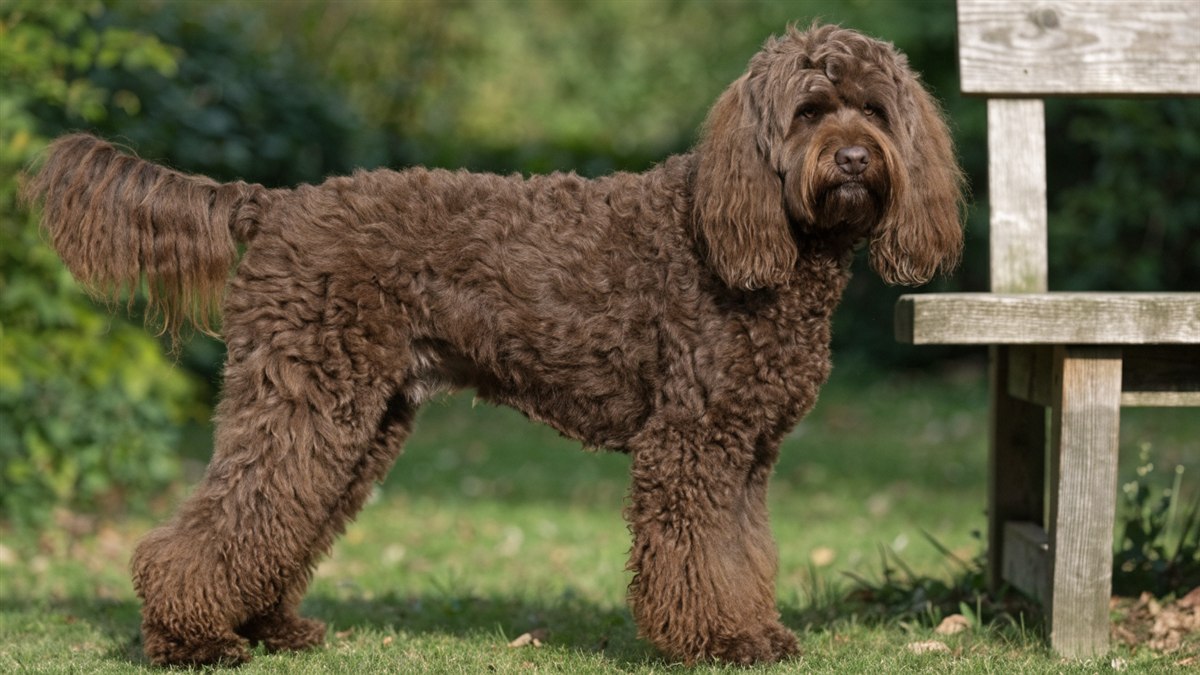
Quick answer
No verified Barbet price in India exists. One Indian listing carries a rupee figure, Rs 1,50,000 on Asia Pets, and it is filed under American Barbet, a breed name no registry recognises, on a 45-day-old unvaccinated puppy. Published Indian breed pages disagree by a factor of seven and print heights no standard contains.
This guide is general information for Indian pet owners and is not a diagnosis. Consult your nearby vet, a registered veterinarian, before acting on anything you read here, and treat heatstroke, a sudden ear problem or any rapid change in your dog's condition as an emergency.
Barbet at a glance
What the Barbet actually is, in the words of its own breed standard
The Barbet is a medium-sized French water dog defined by a long, woolly and curly coat, standing 58 to 65 cm at the withers in dogs and 53 to 61 cm in bitches, with a tolerance of one centimetre either way. That is FCI-Standard N 105, the English text dated 29 March 2006, and it is the document every other page about this breed is downstream of.
The FCI files the breed in Group 8, Retrievers, Flushing Dogs and Water Dogs, Section 3 Water Dogs, with working trial, and states its job in one sentence that explains almost everything else about it. The Barbet is a "Water dog used for hunting wildfowl" which "must search for, locate and flush out the game hiding in the water vegetation", and then "Very resistant to cold, he shall go to water in all weather". Hold on to that last clause. A dog selected for going into cold water in all weather is the opposite specification from a dog selected for standing in a Chennai afternoon.
The coat is not decoration, it is the working equipment. The standard's General Appearance paragraph says the breed is "characterized by a thick, woolly coat which guarantees efficient protection against cold and damp", and the Coat clause calls for hair that is "Long, woolly and curly; can form strands", furnished and covering the whole body in a natural state, which the standard then names "an essential characteristic of the breed";. The skin underneath is described as "Relatively thick";. Insulation on top, insulation underneath.
The beard, the ears and the parts Indian sellers get wrong
The name comes from the beard. French *barbe* means beard, and the standard requires that the coat on the skull "must fall onto the bridge of the nose", with a beard that is "long and furnished" and a moustache that "entirely covers the bridge of the nose";. The Barbet Club of America renders the pronunciation as "Bar-Bay";. A clean-faced curly dog in a listing photograph is not a Barbet.
The ears are the second signature and they matter clinically in India. FCI-Standard N 105 puts them "Set on low (at eye level or slightly lower), long, flat, wide, covered by long hair hanging in strands", and long enough that when brought together in front of the nose "the ears (including the hair) reach at least 5cms beyond it";. A long, wide, low-set, hair-filled ear flap over a canal is a lid on a warm wet box, which is the whole of the ear-health argument later on this page.
Colour is broader than most buyers expect. The standard permits "Solid black, grey, brown, fawn, pale fawn, white or more or less pied", with all shades of red-fawn and pale fawn allowed. The AKC standard, approved 9 December 2015 and effective 1 January 2017, phrases the same ground as "All shades of black, gray, brown, fawn; with or without white markings" plus pied. Neither registry recognises brindle, merle or tan points in this breed.
Four published size figures, and not one of them is a weight from a standard
Neither breed standard gives a weight. FCI-Standard N 105 prints heights and stops there, and the AKC standard says only "Weight in proportion to height";. Barbet Club of America Every kilogram figure you will read for this breed therefore comes from somewhere other than a standard, which is worth knowing before you use one to size a feeding plan.
| Source | Height | Weight | Life expectancy |
|---|---|---|---|
| FCI-Standard N 105, 29.03.2006 | Dogs 58-65 cm, bitches 53-61 cm, tolerance 1 cm | Not given | Not given |
| AKC breed standard, effective 2017 | Dogs 21-24.5 in (53-62 cm), bitches 19-22.5 in (48-57 cm) | "In proportion to height" | Not given |
| AKC breed page | 19-24.5 in (48-62 cm) | 35-65 lb (16-29 kg) | 12-14 years |
| Barbet Club of America FAQ | 19-24 in (48-61 cm) | 35-60 lb (16-27 kg) | Not given in the size answer |
| Wikipedia | Males 58-65 cm, females 53-61 cm | Males 18-27 kg, females 14-23 kg | 13-15 years |
| Puppiezo, India | 17-19 in (43-48 cm) | 16-25 kg | 12-14 years |
Read the last row against the first. The Indian page selling this breed publishes a maximum height of 19 inches, which is below the minimum height for a male in FCI-Standard N 105 and below the minimum for a bitch in the AKC standard. Federation Cynologique Internationale Barbet Club of America A page cannot be describing a Barbet and publish that number. That single mismatch is the cheapest test any Indian buyer can run, and it takes ten seconds.
There is also a real, unresolved disagreement between the two registries at the top of the range. The FCI allows a dog to 65 cm, roughly 25.6 inches; the AKC standard caps dogs at 24.5 inches, roughly 62 cm. Barbet Club of America Bonbeno does not average them. A European-bred male can legitimately stand taller than the American standard's ceiling, and if you are comparing two dogs from two registries you are not comparing to the same ruler.
The AKC standard states plainly that "The tail is never docked", and the FCI standard treats a naturally absent or too-short tail as a fault. Federation Cynologique Internationale In India the point is not aesthetic, it is legal. Second Schedule Part II paragraph 6(8) of the Prevention of Cruelty to Animals (Dog Breeding and Marketing) Rules, 2017 states that "There shall be no tail docking, ear cropping de-barking, de-clawing, branding, dyeing, injecting substances to enhance visual appeal" or any other mutilation, and that any change of appearance by artificial means "is strictly forbidden";.
One quiet trap sits inside that rule. The AKC standard says "Front dewclaws may be removed" and asks for hindquarters "without dewclaws", while the FCI standard lists "presence of dewclaws" among the hindquarter faults. Federation Cynologique Internationale Removing a dewclaw to satisfy a standard is a change of appearance by artificial means, and the 2017 Rules forbid it in the same breath as docking. An Indian breeder following the show standard on this point would be breaking Indian law. Show the dog as the law allows it to be kept.
For the reader deciding quickly, the honest one-line summary is that this is a rustic, medium, curly-coated gundog built for cold water, recognised as a rare breed everywhere it exists, and currently ranked 142nd of 210 breeds by AKC registrations. It is not a Poodle, it is not a Labradoodle, and it is not, on the evidence below, actually available in India.
How narrow the founding population really was, in published numbers
The modern Barbet was rebuilt from a founder base so small that the published pedigree studies rank it at the extreme of every French breed measured. Dogs born between 1997 and 2001 had an effective number of ancestors of 6.7, against 13.1 to 40.2 for the eight other French breeds analysed in the same paper.
That figure comes from Leroy and colleagues, writing in the Journal of Animal Breeding and Genetics in 2006, who analysed French studbook pedigrees for nine breeds. Their effective numbers of ancestors were 6.7 for the Barbet, 40.2 for the Basset Fauve de Bretagne, 36.5 for the Beauceron, 16.0 for the Berger des Pyrenees, 37.0 for the Bouledogue Francais, 13.1 for the Braque Saint-Germain, 28.9 for the Dogue de Bordeaux, 33.3 for the Epagneul Breton and 34.0 for the Montagne des Pyrenees. The Barbet is not merely lowest, it is roughly half the next-lowest.
The same paper reports the mean coefficient of inbreeding for dogs born 1997 to 2001 with both parents known as 12.4 percent in the Barbet, against 3.3 to 7.2 percent in the other eight. For scale, mating two full siblings produces an expected coefficient of 25 percent. The average Barbet of that cohort sat halfway there.
The detail everyone drops, and it is the one that clears the breeders
Leroy's paper adds a sentence almost nobody quotes. The inbreeding coefficients were "found to be significantly higher than the average coefficient of kinship between the male and the female parents of these animals, except in the BAR and BQG", which the authors read as revealing a usual practice of mating between related animals in the other breeds. The Barbet is one of the two exceptions. Its inbreeding is not evidence that Barbet breeders were choosing relatives; it is what happens automatically when the whole population descends from a handful of dogs, whoever you pick.
A second paper by the same lead author, in Genetics Selection Evolution in 2013, put the breed against 140 breeds across four species. Reference population sizes in that study "ranged from 110 (Barbet dog breed) to 2 122 041 (Holstein cattle breed)", and average identity-by-descent coefficients "ranged from 0.2% (C and F in Comtois horse breed) to 9.1% (C in the Barbet dog breed)". The Barbet held both extremes: the smallest reference population and the highest average coancestry of every dog, sheep, cattle and horse breed in the study.
Wikipedia reports the 2013 figure as an inbreeding coefficient of 9.1 percent. The paper says something different and more precise: 9.1 percent is the average coancestry coefficient C in the Barbet, not the average inbreeding coefficient F. Coancestry measures how related two randomly chosen members of the population are to each other, which is the quantity that predicts how bad the next generation can get. It is the more alarming of the two numbers, not a softer version of the 2006 one.
Where the recovery story is documented, and where it is not
Read FCI-Standard N 105 looking for the near-extinction and you will not find it. Its entire Brief Historical Summary reads: "A very ancient breed, common throughout France, used for hunting waterfowl and described or mentioned in several works as early as the 16th century."; The standard does not mention the World Wars, the collapse, the 1970s rebuild or any outcrossing. The reconstruction is documented by the breed clubs, not by the standard, and any page that presents the rebuild as an official registry account is overstating its source.
The Barbet Club of GB gives the fullest club account. It records that the World Wars "brought almost all canine activity to a halt", and that during the 1970s "devotee's of the barbet began to make individual efforts to resurrect the breed including Mme Bisconte and Mme Petre whose father Dr Vincenti had bred barbets between the World Wars";. It adds that a Mr Hermans of Paris answered a small ad Mme Petre had placed in a canine magazine and "set about tracking down barbets still existing in France", work the club credits with leading over time to the current FCI standard. Individual efforts, a newspaper advertisement, and a search for survivors. That is the founder base.
The Barbet Club of America's own history page is thinner and says so by omission. It records that the World Wars "caused great damage to the breed population, and it nearly became extinct" and that recovery came through "a few people over recent decades", and it publishes no survivor count, no founder count and no registration figures. The club's FAQ is franker about the consequence, noting that some Barbet fall outside the average size range and that "this is to be expected in a breed that is rebuilding its numbers";.
One study disagrees, and the disagreement is the interesting part
A 2021 genomic paper reaches the opposite verdict from Leroy's pedigree work. Bannasch and colleagues, measuring genome-wide inbreeding across breeds, found a mean of 0.24 and wrote that "The breeds with low inbreeding included recent cross breeds (Tamaskan Dog, Barbet and Australian Labradoodle) and landrace breeds";. The Barbet appears there as a low-inbreeding, recently crossed breed.
Bonbeno publishes both rather than picking. The two studies measure different things and both readings can be true at once. Pedigree inbreeding counts relatedness only back to the dogs a studbook records, so a population rebuilt from six or seven effective ancestors scores catastrophically. Genome-wide homozygosity counts actual shared DNA, and it falls fast when a rebuilt breed brings in unrelated dogs, which is exactly what Bannasch's phrase "recent cross breeds" is describing. Wikipedia notes that modern Barbets are taller than historical ones and attributes this to crossing with Standard Poodles. What a buyer should take from the pair is that the recorded pedigree of this breed is narrow, that outcrossing is part of its recent history, and that anyone quoting one number without the other is telling you half of it.
Scale is worth stating plainly. The Barbet Club of America says there are "approximately 1000+ Barbet registered with the American Kennel Club";. The Barbet Club of GB records that two females were imported into the UK in early 2007, that two applications for Kennel Club recognition were rejected before the breed entered the imported breeds register in 2018, and that the breed standard was agreed with the Royal Kennel Club in 2019, allowing Barbets at Crufts for the first time in March 2020. The AKC granted full recognition in 2020 and ranks the breed 142nd of 210. This is a genuinely rare breed everywhere, including in the countries that have it.
Barbet price in India: one rupee figure, attached to a breed that does not exist
There is no verified Barbet price in India. Exactly one Indian listing in the ranking set carries a rupee figure, Rs 1,50,000 on Asia Pets, and it is filed under "American Barbet", a breed name that appears in no FCI, AKC or Royal Kennel Club nomenclature.
That figure is not a headline claim, it is machine-readable. The listing carries a schema.org Offer block reading `"priceCurrency":"INR","price":150000`, alongside the meta description "Health-checked. Price: Rs 150,000. Verified seller on Asia Pets";. The page's own visible fields say the pet is "45 days old male and female in India, Delhi" and "Vaccinated: No";.
Rule 8 of the Prevention of Cruelty to Animals (Dog Breeding and Marketing) Rules, 2017, headed "Conditions for sale", requires at sub-rule (1)(a) that "pups less than eight weeks in age are not sold";. Forty-five days is six weeks and three days. The single Indian listing with a price on it is advertising a puppy roughly eleven days below the statutory floor, and saying so in its own H2 heading. Bonbeno is quoting the Rule 8 conditions-for-sale clause here, not the separately numbered paragraph 8 of the Second Schedule, because the document numbers clauses twice.
Running the conversion test on the one number that exists
Indian breed pages routinely publish a US dollar figure run through one exchange rate and present it as an Indian price, so every suspicious rupee figure on this site gets divided by 84.38 before it is trusted. Rs 1,50,000 divided by 84.38 is 1,777.67 dollars, which is not a round dollar amount and not a price any US source quotes. On this occasion the number survives the test: it looks like a domestically set asking price rather than a conversion. That does not make it a Barbet price. It makes it a price for whatever is actually in the kennel.
Run the same arithmetic the other way and the problem becomes obvious. Published US prices for a Barbet puppy from a reputable breeder sit around 2,500 to 4,000 dollars, which at 84.38 is roughly Rs 2,10,950 to Rs 3,37,520. A breed with one or two litters a year in an entire country does not get cheaper by being shipped to a market with no breeders in it.
| Source | Figure published | What the page actually says |
|---|---|---|
| Asia Pets listing | Rs 1,50,000 | "American Barbet", 45 days old, "Vaccinated: No", schema Offer of INR 150000 |
| Asia Pets breed page | No price | "No detailed description available for this breed yet" under the heading American Barbet |
| Puppiezo product page | No price in the HTML | Titled "Barbet Dog Price in India"; height 17-19 in, below every published standard |
| HappyPet Care | Rs 20,000 to Rs 60,000 | Cost of buying band, alongside "Ideal Weather 10 to 30 degrees C" |
| Tegha Kennel | No price | "10 year Breed Guarantee", "Champion sire/dam YES", describes "a nice long hair" dog |
| Flipkart, India-region shopping result | Book price | "Betascript Publishing Barbet (Dog) (English, Paperback, unknown)" |
The page titled Barbet Dog Price in India has no price in it
Bonbeno pulled the raw HTML of Puppiezo's Barbet page, which is titled "Barbet Dog Price in India, Buy Curly Water Dog Puppies Online" and was published on 22 April 2025 and modified on 17 June 2025. Across roughly 495,000 characters of source, there is no rupee amount anywhere on the page. Its structured data promises "KCI registered, responsible breeders with full health assurance" and carries no KCI registration number for any dog. The price sits behind a button, and the button has nothing behind it.
The comparison that makes this concrete is on the same site. Puppiezo's own listing pages for breeds it genuinely stocks do publish prices, in the same template, for Maltipoo, Poodle, Cane Corso and Goldendoodle. The Barbet page is the one that does not.
American Barbet is not a breed
Two of the top ten Indian results, on two unrelated sites, sell an "American Barbet";. Tegha Kennel Live Stock No such breed exists. The FCI recognises the Barbet, French Water Dog, as Standard N 105; the AKC recognises the Barbet in the Sporting Group; and neither, nor the Royal Kennel Club, lists any American variant. Barbet Club of America American Kennel Club, Barbet breed page The Asia Pets breed page invents an etymology for it, stating that "The American Barbet name draws its inspiration from the place where it was developed", directly above the line "No detailed description available for this breed yet";. That is a template filling itself in.
The Tegha Kennel listing describes its American Barbet puppy as having "Chubby and a nice long hair";. Long hair is not the Barbet coat. FCI-Standard N 105 requires hair that is long, woolly and curly, lists "Coat short, harsh, not woolly, not curly" among the faults, and the AKC standard says "The hair is to retain curl";. A seller describing a long-haired puppy is describing a different dog.
The fourth organic result for the query in the India region is a paperback book, "Betascript Publishing Barbet (Dog) (English, Paperback, unknown)", on Flipkart. When a book outranks every breeder for a breed-plus-price query in a market of 1.4 billion people, the market it is competing against is empty.
If you want a curly-coated water dog in India, the Poodle is genuinely available, genuinely registrable and genuinely priced, and OFA's hip figures for the two breeds are almost identical. If you want a Barbet specifically, the lawful route is the pet-import route described in the next section, not a listing. And if you want a dog that is heat-adapted, free and in your city today, read the adoption section at the end.
The import route, and why no lawful Barbet supply chain can form in India
Importing a Barbet into India for sale or breeding is not permitted. DGFT Trade Notice No. 22/2022-23, dated 19 December 2022, classifies mammals under ITC (HS) 01061900 as Restricted, and permits dog imports for only three purposes.
The three purposes are set out at Policy Condition (7) as "Pet dog with valid pet book and relevant records/documents in the name of importer", dogs imported by R&D organisations for research "with the recommendation of CPCSEA", and dogs "For the internal security by the Defence and Police Force";. Policy Condition (8) closes the gap in one line: "Import of commercial dogs for breeding or any other commercial activities other than the purposes mentioned above is not permitted.";
The notice then repeats the point procedurally at paragraph 6, which states that "any applications for trading/breeding purposes, or applications made on behalf of some another person/entity shall be duly rejected";. Applications made on behalf of another person are refused too, which is precisely the shape a broker would need.
- Restricted, not prohibited. A private owner can bring their own dog, so the breed is not banned in India.
- Seven entry points only. Import is allowed solely through the airports and seaports of Delhi, Mumbai, Chennai, Hyderabad, Bengaluru and Kolkata and, since October 2024, Kochi airport, with quarantine at those ports where required. Department of Animal Husbandry…
- Two years abroad for the baggage route. Permanent import as passenger baggage without DGFT authorisation is open only to persons transferring residence to India after two years of continuous stay abroad.
- Two months of lead time. DGFT advises owners to begin the import authorisation process at least two months before travel.
- An advance NOC seven days out. The applicant must obtain an advance No Objection Certificate from the Quarantine Officer at the port of entry, seven days before travel, relaxable to three.
Indian law also forbids the mating technique the rebuild depended on
This is the finding that matters most for anyone imagining a future Indian Barbet line. The Prevention of Cruelty to Animals (Dog Breeding and Marketing) Rules, 2017 list four common breeding techniques and then split them. Paragraph 6(2) of the Second Schedule permits only two, out breeding, "the mating of dogs, which are not at all related to one another", and line breeding, "mating between dogs that are marginally related to each other";. Paragraph 6(3) states that two "are not permitted and are prohibited under these rules": in breeding, defined as breeding between relatives of the second to fourth grade in straight or side line within the first four generations, giving uncle to niece, cousin to cousin and grandparent to grandchild as examples, and incest breeding, meaning parent to child or brother to sister.
Now put that against the arithmetic. A population with an effective number of ancestors of 6.7 and a mean inbreeding coefficient of 12.4 percent cannot be propagated without repeatedly mating dogs who are related within four generations. The French rebuild of this breed used matings that paragraph 6(3) prohibits in India. An Indian breeder who tried to establish the breed from a small imported nucleus would either break the Rules or run out of unrelated dogs, and there is no third option while the national population is measured in single figures.
The Rules also mandate exactly the screening this breed needs, which is a rare case of Indian regulation landing on the right target. Second Schedule Part III paragraph 8(10) requires that dogs "shall have been tested for genetic defects, including hip dysplasia, progressive retinal atrophy, night blindness, hypothyroidism, entropion, ectropion" and several dental and cryptorchid faults. Hip dysplasia, progressive retinal atrophy and entropion are three of the four conditions the Barbet Club of America names as the breed's main concerns. An Indian breeder complying with the 2017 Rules would be running most of the Barbet CHIC panel by accident.
Two more sale conditions are worth memorising before you look at any listing. Rule 8(1)(a) forbids selling pups under eight weeks, and Rule 8(1)(b) forbids selling dogs over six months without first sterilising them, unless the buyer is another licensed breeder. Ask a seller which of those two applies to the dog in front of you and watch what happens. Indian import law and Indian breeding law point the same way here, and neither of them leaves room for a commercial Barbet trade.
Monthly cost of ownership, with the grooming bill actually multiplied out
Grooming, not food, is the defining recurring cost of ownership for a Barbet in India. A continuously growing curly coat needs a full long-coat groom every four to six weeks, and at Mumbai rates of Rs 1,800 to Rs 3,500 a session that is Rs 16,200 to Rs 45,500 a year before a single bag of food.
ThePetNest's 2026 city-wise table prices a full groom on a long coat at Rs 1,400 to Rs 2,500 in Pune, Rs 1,800 to Rs 3,500 in Mumbai, Rs 1,500 to Rs 3,000 in Bangalore and Rs 1,200 to Rs 2,500 in Hyderabad, and gives the recommended frequency for a long coat as every four to six weeks. Four to six weeks works out at roughly nine to thirteen sessions a year. Multiply the two and the annual grooming cost for this breed lands between about Rs 10,800 in Hyderabad at the cheap end of a six-weekly schedule and about Rs 45,500 in Mumbai on a four-weekly schedule at the top of the band.
wagNbush's July 2026 breakdown prices by size instead, at Rs 1,200 to Rs 2,000 for a medium dog and Rs 1,500 to Rs 3,000 for a large one, and adds the caveat that matters here: "A double-coated dog, a badly matted coat, or a nervous dog that needs extra handling time will push the price higher";. ThePetNest prices that explicitly, billing de-matting separately at Rs 500 to Rs 1,500 on top. A Barbet that misses two grooms in a Mumbai monsoon arrives matted, and the de-matting charge is the penalty for the miss.
| City | Per session, long coat | Six-weekly (about 9 sessions) | Four-weekly (about 13 sessions) |
|---|---|---|---|
| Mumbai | Rs 1,800-3,500 | Rs 16,200-31,500 | Rs 23,400-45,500 |
| Bangalore | Rs 1,500-3,000 | Rs 13,500-27,000 | Rs 19,500-39,000 |
| Pune | Rs 1,400-2,500 | Rs 12,600-22,500 | Rs 18,200-32,500 |
| Hyderabad | Rs 1,200-2,500 | Rs 10,800-22,500 | Rs 15,600-32,500 |
No ranking page does that multiplication, and it is the single most useful number on this page for a buyer. It also explains why the Indian monthly-expense figures published for this breed are not credible. HappyPet Care puts average monthly expenses at Rs 4,650 on a basic lifestyle and Rs 6,600 on a premium one, of which Rs 2,250 to Rs 3,000 is food. Take the food out and the remaining Rs 1,650 to Rs 3,600 a month has to cover vaccination, deworming, parasite control, consultations and grooming. In Mumbai a single long-coat groom eats the entire non-food allowance for the month, and the coat needs another one in four weeks.
What the real recurring line items look like
- Grooming at Rs 10,800 to Rs 45,500 a year depending on city and schedule, the largest single line.
- De-matting surcharges at Rs 500 to Rs 1,500 per incident, which are avoidable and entirely a function of how often you comb.
- Food at Rs 2,250 to Rs 3,000 a month for a dog of this size on the published Indian band, so Rs 27,000 to Rs 36,000 a year.
- Ear care, which on this breed is a health cost rather than a cosmetic one, and which the parent club describes as continuous because "The ears need to be kept plucked and clean".
- Screening for hips, elbows, eyes and prcd-PRA if you ever intend to breed, which the Barbet CHIC panel requires and Indian law separately mandates.
The purchase price is the part nobody can bound honestly, because no verified Indian price exists. Published Indian figures run from Rs 20,000 to Rs 1,50,000, a spread of 7.5 times for the same named breed, and the low end is not a Barbet price at all. Treat any quoted purchase figure as the least reliable number in your budget and the grooming line as the most reliable.
The Barbet Club of America notes that "Some owners prefer to keep their Barbet is a shorter all-over trim to facilitate maintenance" and that a pet Barbet "can be kept in any kind of trim";. A shorter working clip genuinely reduces both matting and salon time, and in India it is the sensible default. It does not reduce the number of visits much, because the hair grows continuously and the club is explicit that "With constant hair growth, there is no rest period";. You are buying a haircut for the animal roughly as often as you buy one for yourself, for its entire life.
Suitability for the Indian climate: a cold-water insulation system in a hot country
The Barbet scores 2 of 5 for heat tolerance in India, and the reason is written into its breed standard rather than inferred. FCI-Standard N 105 describes a "thick, woolly coat which guarantees efficient protection against cold and damp" over "relatively thick" skin, on a dog that is "Very resistant to cold" and "shall go to water in all weather";.
Read that as an engineering specification and the Indian problem is immediate. A dog loses heat through evaporation from the respiratory tract and, secondarily, by radiating from the skin. A long, dense, woolly, curly coat that traps a boundary layer of air is exactly what you want in a Loire marsh in February and exactly what you do not want in Chennai in May. The parent club states the design goal without hedging, saying that "their thick skin and woolly coats protect them from even the coldest water";. Nothing in that sentence helps at 38 degrees C.
An Indian breed page puts a number on the same point, listing the Barbet's "Ideal Weather" as 10 to 30 degrees C. Bonbeno treats that as an editorial estimate rather than a measurement, and it is worth noting who is publishing it. An Indian site that sells the idea of the breed still concedes a ceiling of 30 degrees C, which is below the daily maximum in Chennai, Mumbai, Hyderabad, Delhi and Kolkata for a large part of the year.
What the heatstroke literature says, and what it does not
No study measures heat-related illness in Barbets. The largest primary-care study of the problem, covering 905,543 dogs in the UK VetCompass database, identified 395 heat-related illness events in 2016 from 390 individual dogs, an incidence risk of 0.04 percent (95% CI 0.04-0.05%), with an event fatality rate of 14.18 percent (95% CI 11.08-17.96%). The breed odds ratios it publishes are for Chow Chow at 16.61 (95% CI 6.21-44.44), Bulldog at 13.95 (8.01-24.29) and French Bulldog at 6.49 (3.62-11.63), all against the Labrador Retriever. The Barbet is not in that table and Bonbeno will not borrow a number from a breed that is.
Two findings from that study do transfer, because they are about body properties rather than breed labels. The authors report that "Dogs weighing over 50 kg in absolute bodyweight had the highest odds of HRI, and all bodyweight groups over 10 kg had significantly higher odds", which places a 16 to 29 kg Barbet firmly inside the elevated band. American Kennel Club, Barbet breed page And on coat specifically, they observe of a near-identical pair of retrievers that "The Golden Retriever does, however, have a thicker coat than the Labrador which may be the tipping factor";. A Barbet's coat is thicker than a Golden's.
The mechanism matters more than the breed list. The companion paper by the same team found that of heat-related illness events with an identifiable trigger, exertional cases accounted for 652 of them, 74.2 percent, against environmental heat at 113 events (12.9 percent) and vehicular confinement at 46 events (5.2 percent). Dogs in India are not mostly dying in parked cars. They are collapsing on walks and at play, which is the failure mode an energetic gundog in a hot city is set up for.
Exercise this breed before sunrise and after full dark, and on the worst days not at all. Exertion caused 652 of the triggered heat events in the largest published series, 74.2 percent of them. In the companion primary-care study, the event fatality rate for heat-related illness was 14.18 percent (95% CI 11.08-17.96%). A skipped walk costs you a bored dog for one evening. Getting this wrong once can cost the dog.
Humidity is the second problem, and it is the one people miss
Heat is survivable with management. Sustained humid heat is harder, because it degrades evaporative cooling at exactly the moment the dog needs it most, and because it turns a dense coat into a permanently damp one. In coastal Mumbai, Chennai, Kochi and Kolkata a Barbet's undercoat can go weeks without fully drying, and the consequences are dermatological and aural rather than heat-related.
This is where overseas club advice needs translating rather than copying. Water-dog grooming guidance written for temperate countries treats swimming and air-drying as routine, and the Barbet Club of America notes only that "Frequent swimming will accelerate matting";. In an Indian monsoon the accelerant is not just matting. A dog that regularly gets wet and is not dried to the skin, with the ear canals actively dried, is being set up for otitis externa in a country where the published canine prevalence is already high.
City by city, honestly
| City type | Verdict | What actually drives it |
|---|---|---|
| Bengaluru, Pune, Shimla, Dehradun, Ooty | The realistic band | Mild maxima for much of the year; grooming stays a schedule rather than an emergency |
| Delhi NCR, Jaipur, Nagpur | Hard summer, workable winter | Dry heat is more survivable than humid heat, but April to June needs the dog indoors and cooled |
| Mumbai, Chennai, Kochi, Kolkata, Goa | The worst fit in the country | Humid heat plus a coat that never fully dries; ear and skin problems become the year-round issue |
| Any city, any flat with no reliable cooling | Do not | The insulation is permanent and cannot be switched off |
Shaving a double or woolly coat to cool the dog removes the air layer that also slows solar gain and exposes skin that has never seen direct sun. The coat is described in the standard as an essential characteristic and as protection against cold and damp, and it does some work in both directions. Clip it down to a short even working trim by all means, which is what the parent club describes owners doing. Do not take it to the skin, and understand that a clipped Barbet is still heat-sensitive, because the body mass and the respiratory system have not changed.
Shedding and the hypoallergenic claim: what the standard says and what the evidence shows
No breed standard for the Barbet contains the word hypoallergenic, and the best available evidence says no dog breed qualifies. FCI-Standard N 105 and the AKC standard both describe the curly coat at length and neither mentions shedding, allergy or allergen levels at all. Barbet Club of America
This matters in India specifically because the low-shedding claim is a price premium. Indian sellers file this breed beside "Hypoallergenic Dog" as a shop category and market the curly coat as the reason. If you are paying more for that property, you are entitled to know what supports it.
One Indian seller has already conceded the point without noticing. Puppiezo's Barbet spec card lists, in order, "Height 17-19 inches, Weight 16-25 kg, Life Expectancy 12-14 years, Shedding YES". The page selling the breed in India records that it sheds, in its own structured spec block, while the surrounding market sells the opposite.
What the standards actually specify
FCI-Standard N 105 asks for hair that is "Long, woolly and curly; can form strands", furnished, covering the whole body in a natural state, and names that an essential characteristic of the breed. The AKC standard says "The coat of the Barbet is his defining characteristic. Profuse hair covers the whole body evenly with thick, natural curls that range from large and loose to tight, smaller curls", adds that "The hair is to retain curl", and requires the coat be shown "in as natural a state as possible; clean and free from mats", with excessive sculpting to be penalised. That is a complete description of a curly coat with no claim attached about what it does to a person with allergies.
What the parent club says, read carefully
The Barbet Club of America answers the shedding question directly. "Barbet have hair, not fur, so they do not shed in the same way as other breeds such as the Golden Retriever. Their hair needs to be thoroughly combed through frequently to prevent matting and maintain healthy skin. You will sometimes see little tufts of hair on the carpet from your dog. You will never have the problem of cuddling with your dog and getting covered in dog hair."; That is a claim about visible hair on furniture, and it is probably accurate.
The club's answer on allergies is a different and much more careful sentence, and it is the one that should be quoted whenever this breed is sold on the allergy angle. "There is no such thing as a non-allergenic dog but Barbet are considered to be good with those who have dog allergies. Many Barbet owners who are normally allergic to dogs find that they can live quite comfortably with their Barbet. If you or someone in your family is allergic it is advisable to spend some time with the breed to see how you" react. The AKC parent club opens by denying the category exists and closes by recommending you test it on yourself. What sits between those two sentences is owner anecdote, and the club presents it as owner anecdote.
What the allergen evidence shows
The controlled evidence goes further than the club does. Vredegoor and colleagues measured Can f 1, the major dog allergen, in hair and coat samples and in home dust, comparing breeds marketed as hypoallergenic, namely the Labradoodle, Poodle, Spanish Water Dog and Airedale Terrier, against Labrador Retrievers and a control group. The result ran the opposite way from the marketing.
| Group | Dogs sampled | Hair, geometric mean | Coat, geometric mean |
|---|---|---|---|
| Marketed as hypoallergenic | 196 | 2.26 micrograms per gram | 27.04 micrograms per gram |
| Not marketed as hypoallergenic | 160 | 0.77 micrograms per gram | 12.98 micrograms per gram |
The authors' conclusion is a single sentence and it is unusually blunt for a journal. "So-called hypoallergenic dogs had higher Can f 1 levels in hair and coat samples than did control breeds. These differences did not lead to higher levels of environmental exposure to dog allergens. There is no evidence for the classification of certain dog breeds as being 'hypoallergenic.'"; Settled floor dust was lower only for Labradoodles, and airborne levels showed no difference between any of the breeds.
The relevance to this breed is direct rather than analogical. The Spanish Water Dog was one of the four breeds in the hypoallergenic arm of that study. It is a curly-coated water dog with a coat built on the same principle as the Barbet's, and it did not deliver lower allergen exposure.
The claim that a Barbet is hypoallergenic is not supported by evidence. The breed standards do not make it, the AKC parent club explicitly denies that non-allergenic dogs exist, and the controlled measurement of the closest comparable coats found no reduction in environmental allergen exposure and higher allergen concentrations in the hair itself. Barbet Club of America Vredegoor DW, Willemse T, Chapman MD An Indian buyer paying a premium on the allergy claim is paying for something no source can demonstrate.
What the coat does deliver is real and worth stating separately, because dismissing the allergy claim is not the same as dismissing the coat. Hair that grows continuously and is shed into the coat rather than onto the floor genuinely means less hair on your sofa, which is what most Indian households actually mean when they say low-shedding. It also means every hair the dog loses stays in the coat until you comb it out, which is why the same club sentence pairs the claim with the instruction to comb through to the skin at least weekly. The hair does not disappear. It moves from your floor to your grooming bill.
If a household member has a confirmed dog allergy, the honest advice is the club's own, spend real time with adult dogs of the breed before committing, and do it in the season and the home you will actually live in. In India that means testing in a closed, air-conditioned flat rather than an open garden, because the closed flat is where the exposure happens.
Temperament and household fit: who this dog suits and who it does not
The Barbet is described in FCI-Standard N 105 as having an "Even disposition, very attached to his master, very sociable, loving water even when very cold", and that attachment is the trait that decides household fit. A dog bred to work in close partnership with one handler does badly alone.
The AKC standard uses warmer language for the same animal, calling the breed "a responsive, loving member of the family" that is "Joyful, bright, and kindly natured" and "a versatile sporting dog and willing participant in many activities", and adds the line that matters for training, that "The sensitive Barbet responds to positive interaction";. Sensitive is a specific claim, not a compliment.
The Barbet Club of America is direct about the cost of the attachment. Barbet "are friendly, joyful and fun loving dogs that get along well with others and love to be with their owners", have "a goofy and clownish side", are "calm indoors as long as they are given appropriate regular exercise", and "Because they are very devoted to their owners, they do not do well when left alone for long periods of time";. Read that against a typical Indian two-income household with a nine-hour office day and a commute.
Children, other dogs and cats
On children the club says "most Barbet have a natural affinity towards children and are inherently gentle with them", with the standard supervision caveat. On other dogs it calls them "good mixers" who "get along well with other dogs" given proper puppy socialisation, and says that Barbet puppies introduced to cats young "do very well with them";. It then adds the gundog qualifier that Indian pages leave out, that "As a Sporting breed, the Barbet may chase small animals and pets";. In an Indian neighbourhood that means street cats, chickens and, on a balcony, pigeons.
On guarding, the club is deflationary and this is worth knowing before anyone buys one for security. Barbet "will often bark if someone comes to the door but will take their cue from you and will soon settle", and "By nature the Barbet is not a noisy dog";. A quiet, friendly, handler-focused gundog is a poor watchdog and an excellent flat dog, in that order.
Who should not buy this breed in India
- Households out ten hours a day. The parent club names separation as a known weakness in this breed, not a training problem to be solved later.
- Buyers who want a low-maintenance coat. There is no rest period in the hair growth and no schedule under which this coat is low effort.
- Buyers in humid coastal cities without reliable cooling and drying. The coat is a cold-water insulation system and it does not switch off.
- Anyone buying for guarding. The breed is not naturally noisy and settles on the owner's cue.
- Anyone buying on the allergy claim. The evidence does not support it.
- Anyone who wants the dog now. No lawful Indian supply exists, and even in the US and UK waiting lists for a genuinely rare breed run long.
Who it does suit is a narrower group than the marketing suggests and a real one. A household in Bengaluru or Pune with someone home most of the day, a tolerance for a monthly salon appointment, an interest in dog sport or swimming, and a preference for a soft-tempered dog that wants to be in the room with you rather than patrolling the gate. That household will get an excellent dog. Everyone else is better served by a breed that is actually available here.
One caution about temperament sources. The Indian pages ranking for this breed publish trait scores with no stated method, including a Puppiezo card rating the breed on barking, playfulness, friendliness and "Need for attention", on a page whose height figure is demonstrably wrong. Where a page gets a checkable fact wrong, treat its uncheckable facts as unsupported too.
Training approach, and the one method that reliably fails with this breed
To train a Barbet, keep sessions short, varied and reward-based, and never correct harshly. The AKC standard calls for a dog that "responds to positive interaction and training", and the parent club states the failure mode outright: "Harsh training techniques will not work with this breed as many are sensitive to their owner's moods and will shut down and refuse to work."; Barbet Club of America
The club's fuller answer to whether Barbet are easy to train is "Yes and no", and the qualification is useful. They are "very intelligent and learn new things quickly", make "excellent obedience partners" and are "in general quite willing to please", but "Some can be stubborn and some can bore quickly, repetitive drills don't go over well with these dogs";. The prescription that follows is specific: "If you are gentle with your Barbet while still being firm and consistent you will make much more progress", and "Keep your training fun, interesting and positive";.
This collides with common Indian practice more than most breeds. Prong collars, choke chains, alpha-rolls and shouting are still routinely recommended by neighbourhood trainers, and on a sensitive gundog they do not produce a slower result, they produce a dog that stops offering behaviour at all. If your trainer's first purchase list includes a correction collar, change trainer before you change dog.
A realistic Indian timeline
- Weeks 8 to 16, socialise everything. Traffic noise, lifts, marble floors, autos, doorbells, the building watchman, hand-held sprayers, hair dryers and the sound of a clipper. On this breed the grooming stimuli are not optional extras, they are core socialisation, because the dog will meet them monthly for fifteen years.
- Weeks 8 to 16, teach handling. Feet held, ears lifted and wiped, muzzle touched, body brushed on a raised surface. Ten seconds at a time, paid every time.
- Months 4 to 6, name and recall. Build recall on a long line in a quiet park at 6 am, never off-lead near a road, and never call the dog to do something it dislikes.
- Months 6 to 12, impulse control and settle. A mat settle is the single highest-value behaviour for an Indian flat, because it converts a bored gundog into a dog that switches off indoors.
- Months 9 to 18, water and retrieve if you want it. The drive is there and the standard describes it, but the introduction should be gradual and the dog should never be thrown in.
Two Indian additions do not appear in any overseas guide. First, train the summer schedule into the dog early, so that walks at 5.30 am and 9 pm feel normal rather than punitive when the heat arrives. Second, teach a reliable stationary stand for the groomer, because a dog that will not stand still for de-matting gets a handling surcharge of Rs 200 to Rs 400 in most Indian salons and a worse haircut.
Sport is the honest outlet for the brain. The Barbet Club of GB runs its members in gundog work, showing, scent work, mantrailing, agility, rally, obedience and dog parkour. Scent work travels best to India, because it can be done indoors, in air conditioning, at any hour, and it tires an intelligent dog far faster than a walk in the same time.
FCI-Standard N 105 lists among its eliminating faults any dog that is "Aggressive or overly shy";. Overly shy sits beside aggressive because in a sensitive breed under-socialisation produces the same disqualification as bad temperament. In an Indian city, where a puppy meets more noise before four months than a French farm dog meets in a year, the socialisation window is the whole ball game.
Daily exercise requirement, and what happens in an Indian summer without it
A Barbet needs a moderate but genuine daily workload, and the parent club defines it as "Long on-leash walks as well as the opportunity to run free", with the condition that the dog stays "calm indoors as long as they are given appropriate regular exercise";. No registry publishes a minute figure, so Bonbeno gives none.
One Indian page does publish a figure, putting the requirement at 45 to 60 minutes per day. Treat it as an editorial estimate from a page that also publishes a height no standard contains. The useful framing is not minutes but structure: this is a working water dog with a job description that involves searching, flushing and retrieving, and a dog selected for that needs its brain used, not just its legs.
The club's own emphasis is on water. "When introduced to water, many Barbet become avid swimmers; their thick skin and woolly coats protect them from even the coldest water."; In India that protection is irrelevant and the opportunity is scarce. Very few Indian cities offer a dog-safe place to swim, and the ones that do are often stormwater channels, lakes with heavy human use, or the sea, none of which is a clean substitute for a European lake.
The heat constraint rewrites the whole plan
Exertional heat-related illness accounted for 652 of the triggered events in the largest UK case series, 74.2 percent of the total, against 12.9 percent environmental and 5.2 percent vehicular. That is the reason an Indian exercise plan for this breed cannot simply be a translated European one. The activity itself is the hazard.
| Slot | Summer (Apr-Jun) | Monsoon (Jul-Sep) | Winter (Nov-Feb) |
|---|---|---|---|
| Pre-dawn, 5.15-6.30 am | The main walk, on grass or shaded road | Main walk, watch footing | Main walk, extend freely |
| Midday | Indoors only, cooled room | Indoors, dry the coat fully | Short garden time is fine |
| Evening, after full dark | Second short walk if surfaces have cooled | Second walk, towel and dry ears after | Second walk plus training |
| Brain work, any time | Scent games indoors, 15-20 min | Scent games indoors | Scent games or retrieve outdoors |
| Water | Only if genuinely clean and cool | Avoid; drying is the problem | Best season for it |
Surface temperature is the check people skip. Press the back of your hand to the tarmac or paving and hold it for five seconds. If you cannot, neither can the dog's pads, and that is true well after sunset in a north Indian summer.
What under-exercise actually looks like
An under-worked Barbet does not usually become destructive in the terrier sense. It becomes clingy, restless, vocal in a breed the club describes as "not a noisy dog" by nature, and difficult to settle indoors, all of which compound the separation problem the club already names. The practical Indian consequence is that the dog is unhappy in exactly the season when you can do least about it outdoors, which is why the indoor brain work in the table above is a requirement rather than an enrichment.
For an Indian flat the arithmetic is manageable. Two temperature-safe walks and twenty minutes of nose work will hold this breed. What will not hold it is one 20-minute lift-and-lawn circuit at 7 pm in May, which is the actual routine most apartment dogs in Indian metros get.
Grooming and coat care in Indian humidity, week by week
To groom a Barbet in India, comb the whole coat to the skin at least weekly, dry the dog and its ear canals completely every time it gets wet, and book a full clip every four to six weeks. The parent club states the underlying constraint in one sentence: "With constant hair growth, there is no rest period.";
The club's full instruction is worth quoting because it is the load-bearing care advice for this breed anywhere in the world. "Grooming is necessary for the dog's entire life... Regular brushing and combing is required to keep the dog free of mats. At least every week, the dog will need a thorough comb-through. Frequent swimming will accelerate matting. Since the hair grows continuously, trimming is required... The ears need to be kept plucked and clean. The hair on the bottom of the dogs paws needs to be trimmed to be flush with the pads of their feet as well.";
Note the word comb, not brush. A slicker brush works the outer coat and leaves mats forming against the skin, which is exactly where a curly coat felts. A metal greyhound comb that reaches the skin is the tool that decides whether you pay a de-matting surcharge, and ThePetNest prices that surcharge at Rs 500 to Rs 1,500 per visit.
Where overseas advice does not survive the Indian monsoon
Water-dog grooming guidance written for temperate countries treats getting wet and drying off as trivial. In India it is the whole risk. Two Indian case series make the point with denominators. Roy and colleagues screened 281 dogs in and around Durg district, Chhattisgarh, and found 51 positive for otitis externa, a prevalence of 18.14 percent. Parmar and colleagues at Anand Agricultural University in Gujarat saw 116 dogs presenting with ear complaints, of which 67, or 57.76 percent, had otitis; 35 cases were bilateral (52.23 percent), 21 right-sided (31.34 percent) and 11 left-sided (16.41 percent).
Other Bonbeno gundog pages report an Indian otitis externa series peaking in the monsoon. The Durg series does not. Of its 51 cases, 21 presented in summer, March to June, 17 in the rains, July to October, and 13 in winter, which the paper reports as 41.18, 33.33 and 25.49 percent. The arithmetic checks out (21 of 51 is 41.18 percent), but read the label carefully: those are shares of the case load, not prevalence within each season, despite the paper's column heading. The honest summary is that Indian ear disease in dogs is a hot-and-wet problem across summer and monsoon together, that the two seasons account for 38 of 51 cases in Durg, and that which of the two peaks is not settled.
For a Barbet the relevance is anatomical rather than statistical. FCI-Standard N 105 specifies ears that are low set, long, flat, wide and covered in long hair hanging in strands, long enough to pass 5 cm beyond the nose when brought forward. That is a hair-filled cover over a canal, on a dog that is supposed to swim. Add Indian humidity and the microclimate inside is warm, dark and wet for weeks at a time.
The Indian routine that actually works
- Every day in the monsoon, lift each ear, look and smell. A yeasty smell or head shaking is a vet visit, not a home remedy.
- After every wetting, towel hard, then dry with a cool blaster or a fan until the undercoat is dry to the skin, and dry the ear canal opening with dry cotton. Never plug the canal with cotton wool and never pour water into the ear at bath time.
- Weekly, comb the entire dog to the skin in sections, working armpits, behind the ears, the britches and the beard first, because those four sites mat first.
- Monthly, trim the hair flush with the pads and check the hair between the toes, which traps moisture and grass seed in Indian parks.
- Every four to six weeks, a professional full groom on the long-coat schedule, or a shorter all-over trim if you want a lower-maintenance dog.
On the beard, which no page discusses and every owner discovers. The standard requires a beard that is long and furnished with a moustache covering the bridge of the nose, and that beard goes into every water bowl the dog drinks from. In a hot climate a permanently damp beard develops odour and skin irritation quickly. A raised, narrow-mouthed or stainless bowl and a daily beard wipe solve it in ten seconds a day.
The grooming cost of this breed is the honest headline of ownership, and it was multiplied out in the cost section above rather than left as a per-visit figure. What the money buys is not appearance. wagNbush describes a proper groom as including "a full-body health check" in which "A trained groomer often spots ticks, hot spots, ear infections, or a strange lump before you ever notice them at home";. On a dog whose skin you cannot see through its own coat, that inspection is the point.
The AKC standard asks that the coat be shown "in as natural a state as possible" and states that "While scissoring is necessary to keep him neat, excessive sculpting and shaping is to be penalized";. Indian salons default to a Poodle silhouette on any curly dog because that is what they know. Ask for an even working trim of one length, beard and ears left, and a clean foot.
Health risks, screening and lifespan, with every denominator printed
The Barbet has real published screening data, and it is better than its founder history predicts. Of 415 hip evaluations in the Orthopedic Foundation for Animals database, 88.0 percent were normal and 11.6 percent dysplastic, which is close to the Poodle's 87.0 percent normal across 40,845 evaluations.
Both ofa.org's live statistics widget and api.ofa.org refuse connections from this environment. Bonbeno ran a control before concluding anything: the Labrador Retriever, a breed with tens of thousands of OFA hip evaluations, returned zero occurrences of its own name through every reachable ofa.org route, which proves the route was broken rather than the breed absent. The figures below were therefore read from the Internet Archive's capture of api.ofa.org/api/ds.php dated 8 August 2025, re-fetched independently for this page and confirmed to match. Every row below was matched to its own column header and to the printed breed label BARBET, not to a guessed breed code. OFA counts rise as evaluations are submitted, so treat these as a snapshot on that date rather than fixed values.
| Database | Evaluations | Normal | Abnormal | Breakdown |
|---|---|---|---|---|
| Hips | 415 | 88.0% | 11.6% dysplastic | Excellent 19.3, Good 58.1, Fair 10.6; Mild 8.4, Moderate 2.9, Severe 0.2 |
| Hips, birth years 2021-23 | 69 | 27.5% | 7.2% dysplastic | A much smaller and much more recent sub-sample |
| Elbows | 386 | 93.8% | 6.0% | Grade 1 5.4, Grade 2 0.5, Grade 3 0.0 |
| Eyes (CAER) | 533 | 97.7% | 2.3% | Breeder option 0.0 |
| prcd-PRA (DNA) | 135 | 79.3% | 0.0% affected | 20.7% carriers |
| Patella | 64 | 98.4% | 1.6% | Grade 1 1.6, Grades 2 and 3 nil |
| Thyroid | 142 | 94.4% | 2.8% compensative autoimmune thyroiditis | Autoimmune thyroiditis 0.0, idiopathic hypothyroidism 0.0, equivocal 2.8 |
| Basic cardiac | 61 | 100.0% | 0.0% | Equivocal 0.0 |
Read the denominators before the percentages. A hip figure resting on 415 evaluations and an elbow figure resting on 386 are population rates worth quoting. A cardiac figure resting on 61 evaluations and a patella figure resting on 64 are not; 100 percent normal across 61 dogs tells you the breed has no obvious cardiac epidemic and nothing more precise than that. Any page that prints "100 percent normal cardiac" without the 61 is misleading you by omission.
The eye picture is more complicated than the headline
OFA's summary eye table records 97.7 percent of 533 Barbet examinations as normal. Its own condition-level tables tell a different story about the same 533 exams, recording NORMAL (OTHER .000) in 426 of them, which is 79.9 percent. Bonbeno does not reconcile those two numbers, because OFA publishes them side by side and they measure different things. The likeliest reading is that the summary figure reports the certification outcome, where only conditions considered disqualifying count as abnormal, while the condition tables count any finding an examiner recorded. On that reading, roughly one Barbet eye exam in five records something.
| Finding | Affected | Of 533 exams |
|---|---|---|
| Cataract, significance unknown (LENS 100.210) | 40 | 7.5% |
| Distichiasis (EYELIDS 25.110) | 26 | 4.9% |
| Other, suspected as not inherited | 18 | 3.4% |
| Y-suture tip opacities (LENS 100.328) | 17 | 3.2% |
| Punctate cataract, anterior cortex (LENS 100.301) | 15 | 2.8% |
| Persistent pupillary membranes, iris to iris (UVEA 93.710) | 13 | 2.4% |
| Retinal atrophy, generalized (FUNDUS 120.310) | 2 | 0.4% |
Two of those rows deserve a sentence each. Distichiasis at 26 of 533 is an extra row of eyelashes growing into the eye, and on a breed with heavy facial furnishings it is easy to miss until the dog is squinting. Cataract of unknown significance at 40 of 533 is not a diagnosis of blindness; it is an examiner recording an opacity whose future is unknown, which is exactly why the parent club requires repeat examinations rather than one clearance.
Progressive retinal atrophy, and a genuine conflict between two sources
This is the breed's flagship genetic issue and its two published carrier figures do not agree. The Barbet Club of America states that "In the summer of 2017, the prcd form of Progressive Retinal Atrophy was discovered to be carried by about 40% of genetically tested Barbet";. OFA's public database, on the 8 August 2025 capture, records 135 Barbet prcd-PRA tests at 79.3 percent normal, 20.7 percent carrier and 0.0 percent affected.
Bonbeno publishes both rather than averaging them, and the direction is informative. A carrier rate falling from roughly 40 percent to 20.7 percent over eight years is what a breed club doing its job looks like: carriers identified, carriers mated only to clears, affected puppies not produced. The zero in the affected column across 135 tested dogs is the number that should reassure a buyer, and it is the number to ask any breeder to show you. The two figures also rest on different populations, the 2017 statement on whoever had tested by then and the OFA figure on whoever chose to publish results, so neither is a random sample of the breed.
What else has been measured, and it is not much
One large multi-breed genetic screen includes the Barbet with a real denominator. Donner and colleagues, screening nearly 100 disease variants across breeds, found 2 of 39 Barbet (5.1 percent) carrying the von Willebrand's disease type I VWF variant and 1 of 39 (2.6 percent) carrying the type II variant. Thirty-nine dogs is a small panel and should be read as a signal that these variants exist in the breed, not as a prevalence.
Beyond that, the clinical literature on this dog is empty. A Europe PMC title search for "Barbet" returns seven records, every one of them about birds of the genus *Psilopogon* and related barbets rather than the dog. A control run in the same session in the same tool returned 245 records for "Labrador Retriever" and 13 for "Lagotto Romagnolo", a rare breed of comparable obscurity, which proves the search works. There is no peer-reviewed veterinary study of the Barbet as a breed. Every figure on this page comes from a registry database, a multi-breed study, a pedigree analysis or a breed club.
The Barbet Club of GB ran a breed health survey in 2024 and published the responses. Bonbeno downloaded the 33-page PDF and ran its own extraction: zero extractable characters, zero font resources across all 33 pages, and 100 embedded images. It is an image scan with no text layer, which means no figure can be quoted from it by anyone who has not opened it visually, and any page that quotes numbers from it is quoting something it did not read. Bonbeno publishes no figure from that survey.
The named concerns, and who names them
The Barbet Club of America's health statement lists hip dysplasia, eye conditions and, to a lesser extent, elbow dysplasia as "diseases which are known to affect the breed", and adds that "Epilepsy, immune system problems, and tick related illnesses have also occurred and should be noted";. Its FAQ expands the list to "hip dysplasia, eye disease (such as entropion and cataract) and immunity issues, epilepsy, and allergies", while conceding that "because numbers are still low there is not too much information available concerning the health of the breed";. Note that no percentage attaches to epilepsy anywhere. It is a named concern without a measured rate, and this page will not invent one.
The tick-borne line is the one that matters most in India and it is the one overseas pages under-weight. India carries a heavier and more varied tick-borne disease burden than the countries where this breed is kept, and a dog whose skin is invisible under a dense woolly coat is a dog whose ticks you will find late. Build the tick check into the weekly comb-through rather than treating it as a separate task.
The screening panel to demand, and the law that already requires most of it
The Barbet CHIC requirements are hip evaluation by OFA or PennHIP, elbow evaluation, a prcd-PRA DNA test from an approved laboratory, and an eye examination by a board-certified ACVO ophthalmologist at a minimum age of 12 months, repeated periodically; permanent identification by microchip or tattoo is required across all CHIC breeds. The club adds that cardiac and thyroid testing, knee radiographs and the D-locus dilution test are also carried out on some Barbet.
Indian law overlaps that panel almost exactly. Second Schedule Part III paragraph 8(10) of the 2017 Rules requires that breeding dogs have been "tested for genetic defects, including hip dysplasia, progressive retinal atrophy, night blindness, hypothyroidism, entropion, ectropion" and several dental and cryptorchid faults. Three of the Barbet's four named concerns are on that statutory list. An Indian seller who cannot produce hip and PRA results is not merely below the club standard, they are below the legal one.
Lifespan, and why this page gives a range rather than a figure
No study measures Barbet longevity. The AKC breed page gives a life expectancy of 12 to 14 years, and Wikipedia gives 13 to 15. Wikipedia, Barbet (dog breed) Neither traces to a mortality dataset, and the two-year gap between them is the honest measure of how much is known. Bonbeno reports 12 to 15 years as the published range and attaches no confidence to either endpoint.
One structural caution belongs here rather than in the genetics section. A breed rebuilt from an effective ancestor count of 6.7 with a mean coancestry of 9.1 percent has a small effective population size, and small effective population size is what allows a rare recessive to become common before anyone notices. The prcd-PRA carrier rate is the visible example. The correct inference is not that the breed is unhealthy, because the OFA hip and elbow numbers are genuinely good, but that its health depends unusually heavily on breeders continuing to test and publish.
Feeding and nutrition in India, by life stage
Feed a Barbet to body condition rather than to a chart, because no breed standard publishes a weight for it and every kilogram figure in circulation comes from a secondary source. FCI-Standard N 105 gives heights only, and the AKC standard says weight should simply be "in proportion to height";. Barbet Club of America
The working range you will find quoted is 35 to 65 lb, roughly 16 to 29 kg, on the AKC breed page, 35 to 60 lb on the parent club's FAQ, and 18 to 27 kg for males and 14 to 23 kg for females on Wikipedia. Barbet Club of America Wikipedia, Barbet (dog breed) Those overlap enough to plan with and disagree enough that you should not feed to a target number. Feed so that you can feel ribs under a thin fat cover without pressing, see a waist from above and a tuck from the side, and adjust monthly.
Body condition matters more in this breed than in most, for one reason nobody writes down: you cannot see the dog. A dense curly coat hides a two-kilogram gain completely. Weigh the dog on the salon scale at every groom and write the number down, because the monthly grooming visit is the only reliable body-condition checkpoint a Barbet owner gets.
Life stages
- 8 weeks to 4 months. Four meals a day of a large-breed or all-life-stages puppy food, fed to a lean condition. Do not push growth. A joint-screened breed with an 11.6 percent dysplastic rate on 415 hip evaluations has nothing to gain from a fast-growing puppy.
- 4 to 8 months. Three meals. This is the window where Indian owners over-supplement calcium in the belief it protects joints; on a growing large-ish dog it does the opposite, and a complete puppy food already balances it.
- 8 to 14 months. Two meals. Transition to adult food towards the end of this window, guided by your vet rather than by the bag.
- Adult, 14 months to 7 years. Two meals a day, portioned to condition and adjusted for the season. Most Indian dogs need less food in summer than in winter because they are moving less.
- Senior, 7 years and up. Two meals, protein kept up rather than cut, and a joint discussion with your vet given the breed's hip and elbow profile.
What is actually available in India, and what it costs
Published Indian monthly food spend for a dog of this size runs Rs 2,250 to Rs 3,000, or roughly Rs 27,000 to Rs 36,000 a year. That band is realistic for a mid-tier imported or Indian-made complete dry food at 16 to 29 kg bodyweight. There is no Barbet-specific formulation and there does not need to be; a complete food formulated for a medium to large active dog covers this breed.
Two India-specific adjustments are worth making. Store dry food in an airtight container away from humidity, because kibble in an open bag in a coastal Indian kitchen goes rancid and mouldy faster than owners expect, and fat oxidation is a real cause of food refusal in the monsoon. And keep water intake up in summer with the coat in mind, since a dog carrying that much insulation loses more water panting than a short-coated dog of the same weight.
A long furnished beard is required by the standard and it goes into the food bowl at every meal. Wet food and gravy turn the beard into a permanently damp mat that smells within days in Indian humidity. Feed dry food, use a narrow or raised bowl, and wipe the beard after meals. This is not fussiness; it is the difference between a clean dog and a monthly de-matting charge.
On what not to feed, the general Indian rules apply without modification. No chocolate, grapes, raisins, onion, garlic, xylitol, cooked bones or heavily spiced human food. Indian breed pages publish their own never-feed lists for this breed, and where those lists agree with veterinary consensus they are fine to follow. Chewy, Barbet Breed, Characteristics
Month by month through the first year in an Indian home
The first year of a Barbet in India is organised around three things the breed's own sources dictate, the socialisation window, the coat change, and the heat. Everything else is ordinary puppy raising.
One legal marker sets the start. Rule 8(1)(a) of the 2017 Rules requires that pups under eight weeks are not sold, so a lawfully acquired puppy arrives at 56 days or later, never at the 45 days advertised in the one priced Indian listing for this breed.
| Age | Development and health | Coat and grooming | Heat and activity |
|---|---|---|---|
| 8-10 weeks | Home, vaccination course begun, deworming on vet schedule | Daily 60-second handling: feet, ears, muzzle, a soft brush on a table | Indoors, cooled. Short garden exposure only in the cool hours |
| 10-16 weeks | Peak socialisation window. Lifts, autos, watchmen, marble floors, monsoon rain | Introduce clipper noise and dryer noise with food. Weekly full comb-through, even though there is little to comb | Multiple tiny outings, never in midday sun |
| 4-6 months | Second vaccination milestones, teething, chewing peaks | First professional visit. Ask for a bath, dry, nails and a face tidy only | Free play in short bursts; no forced running on hard surfaces |
| 6-9 months | Growth plates still open. Adolescence and selective hearing | The coat begins to thicken; matting starts behind the ears and in the armpits | Build the pre-dawn walking habit before the first summer |
| 9-12 months | Transition toward adult food with your vet | Full adult grooming schedule begins, every 4-6 weeks | First full Indian summer. Reset expectations downward |
| 12 months | Eye examination becomes possible; CHIC requires a minimum age of 12 months | Decide between a natural coat and a short working trim | Adult routine, temperature-led |
The coat change is the milestone owners are not warned about
Somewhere between six and twelve months a Barbet's puppy coat gives way to the adult woolly coat, and matting goes from theoretical to daily. This is the point at which most owners of any curly-coated breed give up combing and hand the problem to a groomer as a shave-down. The parent club's framing is the correct one: the hair grows continuously, there is no rest period, and a weekly comb to the skin is the maintenance dose. Learn the routine in month three when there is nothing to comb, so that it is a habit by month eight when there is.
Screening milestones to put in the calendar
Hip and elbow radiographs for OFA are taken in adulthood rather than puppyhood, the prcd-PRA DNA test can be run at any age from a saliva swab, and CHIC sets a minimum age of 12 months for the ophthalmologist examination with periodic repeats thereafter. If you have imported a dog and intend to breed it in India, the 2017 Rules separately require testing for hip dysplasia, progressive retinal atrophy, hypothyroidism and entropion before it is bred.
Hip dysplasia is the breed's most-screened orthopaedic condition, running at 11.6 percent dysplastic across 415 OFA evaluations. Growth-plate loading is the part of that outcome an owner controls. No forced running, no stairs as exercise, no jumping from height and no long lead-walks on hot tarmac until the dog is past a year.
Head to head against the breeds Indian buyers actually cross-shop
Against every breed an Indian buyer would realistically consider instead, the Barbet loses on availability and wins on hips. Its 88.0 percent normal hip rate across 415 OFA evaluations beats the Golden Retriever's 78.2 percent across 188,668 and matches the Labrador's 87.5 percent across 319,018.
The comparison that matters most is against the other curly water dogs, because those are the breeds the Barbet is genuinely similar to and the ones Indian sellers substitute for it. On hips, the Barbet is not merely acceptable; it is the best of that group by a wide margin.
| Breed | Hip evaluations | Normal % | Dysplastic % |
|---|---|---|---|
| American Water Spaniel | 972 | 91.3 | 7.9 |
| Barbet | 415 | 88.0 | 11.6 |
| Labrador Retriever | 319,018 | 87.5 | 11.4 |
| Irish Water Spaniel | 1,748 | 87.5 | 11.5 |
| Poodle | 40,845 | 87.0 | 11.7 |
| Portuguese Water Dog | 11,828 | 86.6 | 12.2 |
| Curly-Coated Retriever | 1,482 | 83.6 | 15.2 |
| Golden Retriever | 188,668 | 78.2 | 19.4 |
| Spanish Water Dog | 425 | 76.5 | 22.1 |
| Lagotto Romagnolo | 1,002 | 76.3 | 22.1 |
Two readings follow. First, the Barbet's hips sit in the same band as the Labrador and the Poodle, and comfortably ahead of the Lagotto Romagnolo and the Spanish Water Dog, the two curly water dogs at 22.1 percent dysplastic. Second, 415 evaluations is a real sample but a fiftieth of the Poodle's and an eight-hundredth of the Labrador's, so the Barbet figure will move more than theirs as data accumulates.
The decision table, for an Indian buyer
| Breed | Available in India | Grooming load | Heat | Honest verdict |
|---|---|---|---|---|
| Barbet | No lawful supply chain; import for personal use only | Highest. Weekly comb, 4-6 weekly salon | 2 of 5 | A good dog you almost certainly cannot legitimately buy here |
| Poodle, standard | Yes, widely, with published prices | Comparable to the Barbet | 2 of 5 | The realistic substitute if the curly coat is the point |
| Labrador Retriever | Yes, the most common pedigree dog in India | Low. Weekly brush | 3 of 5 | Easier in every practical dimension except shedding |
| Lagotto Romagnolo | Very rare in India | High, similar coat | 2 of 5 | Worse hips at 22.1 percent dysplastic on 1,002 evaluations |
| Portuguese Water Dog | Rare in India | High | 2 of 5 | Closest working analogue; hips almost identical to the Barbet |
| Indian Pariah Dog | Free, in every Indian city | Minimal | 5 of 5 | Heat-adapted, healthy, and available today |
Bonbeno rates heat tolerance rather than importing an overseas temperament score, because heat is the variable that actually decides outcomes in India and no global breed site rates it. The Barbet, the Poodle, the Lagotto and the Portuguese Water Dog all carry dense working coats and all sit at the bottom of that scale.
On price the comparison is not close, and it is not in the Barbet's favour. A Poodle is listed on the same Indian sites that fail to price the Barbet, with figures actually shown. Published Barbet figures in India run from Rs 20,000 to Rs 1,50,000 for the same named breed, a spread of 7.5 times, with the top figure attached to a breed name no registry recognises. Asia Pets, american barbet puppy for sale Buying the expensive option is defensible when you know what you are getting. Here you do not.
The standard Poodle gives you the same continuously growing curly coat, the same grooming schedule, the same heat profile, hip figures within one percentage point of the Barbet's across a hundred times more evaluations, and a genuine Indian market with real prices and real KCI paperwork. Puppiezo, Barbet Dog Price in India There is no Indian scenario in which importing a Barbet is the better answer to that particular want.
Mistakes Indian owners and buyers actually make with this breed
The first mistake is buying an American Barbet. It is not a breed, it appears in no registry nomenclature, and two of the top ten Indian search results sell one. Tegha Kennel Live Stock
- Trusting a page whose height is wrong. Puppiezo publishes 17 to 19 inches for a breed whose FCI minimum for a male is 58 cm, or 22.8 inches. Federation Cynologique Internationale It takes ten seconds to check and it invalidates everything else on the page.
- Accepting a 45-day-old puppy. Rule 8(1)(a) requires that pups under eight weeks are not sold, and the single priced Indian listing for this breed advertises 45 days in its own heading. Asia Pets, american barbet puppy for sale
- Paying a premium for the allergy claim. No standard makes it, the parent club denies that non-allergenic dogs exist, and the controlled study of the closest coats found no reduction in environmental allergen exposure.
- Brushing instead of combing. A slicker brush glides over a curly coat and leaves the mat forming against the skin. The club's instruction is a thorough comb-through to the skin at least weekly.
- Letting the dog air-dry. Overseas water-dog advice assumes a temperate climate. In an Indian monsoon a coat that never dries and an ear canal that stays damp is the setup for ear disease in a country where one series found 18.14 percent of 281 screened dogs positive for otitis externa.
- Shaving the dog to the skin in summer. The coat is an essential characteristic of the breed and works in both directions; clip it short, do not remove it.
- Walking at 7 pm in May. Exertion triggered 74.2 percent of heat-related illness events with an identifiable cause in the largest published series. Move the walk before dawn.
- Using correction-based training. The parent club states that harsh techniques make this breed shut down and refuse to work.
- Buying one for a ten-hour-empty flat. The club names separation as a known weakness rather than a training gap.
- Believing a 100 percent normal screening claim. The Barbet's cardiac figure is 100 percent normal across 61 evaluations, which is reassuring and is not a population rate. Always ask for the denominator.
The mistakes sellers make, which are your problem too
Indian listings for this breed carry claims that cannot be simultaneously true. One promises a "10 year Breed Guarantee", "Champion sire/dam YES" and a "Pedigree Record YES" while describing a puppy with "a nice long hair", which is not the coat the standard requires. Federation Cynologique Internationale Another advertises "KCI registered, responsible breeders" in its structured data and shows no registration number for any dog. A third publishes an invented etymology directly above the sentence "No detailed description available for this breed yet";.
The general rule generalises past this breed. Where a seller gets a checkable fact wrong, treat every uncheckable claim on the same page as unsupported. Height, coat description, minimum sale age and registration number are all checkable in under a minute, and on the Indian pages selling this breed at least one of them fails every time.
The mistake this page is most likely to be accused of
Bonbeno is not saying the Barbet is a bad dog. The OFA hip and elbow numbers are genuinely good, better than the Golden Retriever's on a far smaller sample, and the temperament described by both standards is a pleasant one. Barbet Club of America Federation Cynologique Internationale What this page says is narrower and firmer. There is no verified Barbet market in India, the one priced listing is for a breed that does not exist and a puppy below the legal sale age, the low-shedding premium rests on a claim the evidence does not support, and Indian import law and Indian breeding law between them make a domestic supply chain unlawful to build. Ministry of Environment Every one of those statements is checkable, and none of them is about the dog's character.
Adoption and responsible sourcing, including what to do instead
To source a Barbet responsibly from India, adopt or import rather than buy from a listing. The lawful import route is the personal pet route under DGFT Trade Notice 22/2022-23, and no commercial route exists at all.
Breed rescue exists overseas and is worth knowing about. The Barbet Club of America runs a Barbet Rescue and Rehoming programme, and the Barbet Club of GB lists Rescue and Welfare among its standing activities. Barbet Club of GB, Health Neither operates in India, and a rescue Barbet crossing a border still passes through the same DGFT authorisation, seven-port entry list and quarantine as any other imported dog. Department of Animal Husbandry…
If you are importing your own dog into India
- Confirm you qualify. Import as passenger baggage without DGFT authorisation is open only to people transferring residence after two years of continuous stay abroad. Everyone else needs an authorisation.
- Start two months early. DGFT advises beginning the application at least two months before travel.
- Apply against the right code. Applications go in as per ANF-2M, against your own Importer Exporter Code or the standing personal-use IEC published in the notice.
- Route through one of seven ports. Delhi, Mumbai, Chennai, Hyderabad, Bengaluru, Kolkata or, since October 2024, Kochi, with quarantine at the port where required. Department of Animal Husbandry…
- Get the advance NOC. Obtain it from the port Quarantine Officer seven days before travel, with the DGFT licence and the exporting country's veterinary health certificate.
- Do not apply on someone else's behalf. Applications made for another person or entity are rejected outright, as are any for trading or breeding.
How to verify a breeder anywhere in the world
The Barbet CHIC panel is your checklist and it is short. Ask to see, on the OFA public database rather than on paper, hip results by OFA or PennHIP, elbow results, a prcd-PRA DNA result from an approved laboratory, and an ophthalmologist eye examination taken at 12 months or later. The parent club's whole position is that results should be public and searchable, and that "dogs do not need passing scores for a CHIC number" because "The goal is an open database where all results are known";. A breeder who will not publish results is telling you something.
Two questions separate a real breeder from a listing in one exchange. Ask what the sire and dam's prcd-PRA status is, and whether the mating was clear-to-clear or clear-to-carrier; a breeder who has read their own club's health statement will answer instantly, because the carrier rate has been the breed's headline issue since 2017. Then ask for the OFA numbers and look them up yourself.
The Indian answer, said plainly
For most Indian households the honest recommendation is to adopt a local dog rather than chase this breed. The Indian Pariah Dog is heat-adapted by several thousand years of selection rather than by management, needs no salon appointment, carries no imported recessive, and is available free in every Indian city today. On the two axes this page has spent most of its length on, heat and coat, it beats the Barbet outright. Read the Indian Pariah Dog guide before you spend anything.
If the curly coat is genuinely the point, the standard Poodle is the substitute that survives scrutiny. It has the same coat type, the same grooming schedule, hip results within one percentage point of the Barbet's across 40,845 evaluations against 415, a real Indian market with published prices and a real KCI registration path.
This page names no Indian breeder, links no listing and quotes no price as an offer. The rupee figures reported here are editorial observations about what published sources claim, and two of the three are attached to a breed name that does not exist. If you find a genuine, documented, KCI-registered Barbet in India with FCI-traceable parentage and published OFA results, that would be news, and it would be the first one this research found.
Barbet questions Indian buyers and the ranking pages actually ask
What is the Barbet price in India?
No verified Barbet price in India exists. One Indian listing publishes Rs 1,50,000 in a schema.org Offer, but it is filed under American Barbet, a name no registry recognises, on a puppy advertised at 45 days old and unvaccinated. Another Indian breed page quotes Rs 20,000 to Rs 60,000, a spread of 7.5 times for the same named breed, and the page titled Barbet Dog Price in India contains no price at all.
Are Barbets rare or extinct?
The Barbet is rare, not extinct. It nearly died out around the World Wars and was rebuilt from the 1970s by a handful of French breeders. Roughly 1,000 or more are registered with the American Kennel Club, the AKC ranks it 142nd of 210 breeds, and the Barbet Club of GB records that recognition in Britain came only in 2018 after two earlier applications were rejected.
Are they hypoallergenic?
No. The Barbet Club of America itself answers that there is no such thing as a non-allergenic dog, and offers only owner anecdote beyond that. A controlled study measuring the major dog allergen Can f 1 across breeds marketed as hypoallergenic, including the curly-coated Spanish Water Dog, concluded there is no evidence for classifying any dog breed as hypoallergenic, and found higher allergen levels in the hair of those breeds.
Do Barbets shed?
Barbets shed less visibly than a double-coated breed, not less in total. The parent club says they have hair rather than fur, that you will sometimes see small tufts on the carpet, and that you will never be covered in dog hair after a cuddle. The hair the dog loses stays in the coat until you comb it out, which is why a weekly comb-through to the skin is required rather than optional.
How do you pronounce Barbet?
Bar-Bay. The Barbet Club of America gives that pronunciation and explains the origin, that the name comes from the French word barbe, meaning beard, after the long furnished beard the breed standard requires on the chin with a moustache covering the bridge of the nose.
How big do they get?
Published figures disagree by registry. FCI-Standard N 105 gives dogs 58 to 65 cm and bitches 53 to 61 cm at the withers with a one centimetre tolerance, and no weight at all. The AKC standard gives dogs 21 to 24.5 inches and bitches 19 to 22.5 inches. The AKC breed page gives 19 to 24.5 inches and 35 to 65 pounds. No breed standard anywhere publishes a weight for this breed.
How long do they live?
Between 12 and 15 years on published figures, with no study behind either endpoint. The American Kennel Club gives a life expectancy of 12 to 14 years and Wikipedia gives 13 to 15. Neither traces to a mortality dataset, and Bonbeno found no peer-reviewed veterinary study of this breed at all, so the two-year gap between the sources is the honest measure of what is known.
What are common Barbet health issues?
Hip dysplasia, eye disease including entropion and cataract, elbow dysplasia to a lesser extent, epilepsy, immune problems and allergies, per the Barbet Club of America. With denominators, OFA records 11.6 percent dysplastic hips across 415 evaluations, 6.0 percent abnormal elbows across 386, and 20.7 percent prcd-PRA carriers across 135 DNA tests with zero affected dogs. No percentage exists for epilepsy anywhere.
Do Barbets bark a lot?
No. The Barbet Club of America says the breed will often bark when someone comes to the door but will take its cue from the owner and settle quickly, and states that by nature the Barbet is not a noisy dog. That makes it a reasonable apartment dog by noise standards and a poor choice for anyone buying a dog to guard a gate.
Are Barbets good family dogs?
Yes, with one condition that matters in India. The parent club describes most Barbet as having a natural affinity for children and being inherently gentle with them, and calls them good mixers with other dogs. The condition is company: the club states plainly that because they are very devoted to their owners they do not do well when left alone for long periods.
How Many barbet are there?
Approximately 1,000 or more are registered with the American Kennel Club, according to the Barbet Club of America. For context on how narrow the base is, a pedigree study of 140 breeds across four species found the Barbet had the smallest reference population of them all at 110 animals, and the highest average coancestry coefficient at 9.1 percent.
Can you import a Barbet into India?
Only as your own pet. DGFT Trade Notice 22/2022-23 classifies dogs as a Restricted import and permits entry only for a pet dog with a valid pet book in the importer's name, for research with CPCSEA recommendation, or for Defence and Police use. Applications for trading or breeding purposes, or made on behalf of another person, shall be duly rejected, and entry is limited to seven ports. The full route is set out in how to import a dog to India.
Can a Barbet handle Indian heat?
Poorly. Bonbeno rates its heat tolerance 2 of 5. The breed standard describes a thick woolly coat guaranteeing protection against cold and damp, over relatively thick skin, on a dog very resistant to cold that should enter water in all weather. That is a cold-water insulation system, and it does not switch off. Exercise before dawn and after dark, and never shave the dog to the skin.
Is a Barbet a poodle?
No, though the confusion has a real basis. The Barbet is a separate FCI breed, Standard N 105 in Group 8 Section 3, and Wikipedia notes that modern Barbets are taller than historical ones after crossing with Standard Poodles. A 2021 genomic study grouped the Barbet with recent cross breeds including the Australian Labradoodle when ranking breeds by low genome-wide inbreeding.
Are Barbet dogs aggressive?
No. The Barbet Club of America describes the breed as friendly, joyful and fun loving dogs that get along well with others, good mixers with other dogs given puppy socialisation, and inherently gentle with children, and says that by nature the Barbet is not a noisy dog: it will often bark if someone comes to the door but takes its cue from you and soon settles. The one qualifier is that, as a sporting breed, it may chase small animals and pets.
Are Barbet dogs expensive?
Yes, where the breed is actually sold. Published US prices for a Barbet puppy from a reputable breeder sit around 2,500 to 4,000 dollars, roughly Rs 2,10,950 to Rs 3,37,520 at 84.38 rupees to the dollar. In India the only listing with a figure asks Rs 1,50,000 for a 45-day-old American Barbet, which is not a breed and is below the eight-week statutory sale floor, so no verified Barbet price in India exists.
Compare with similar breeds
Barbet sits in 2 Bonbeno groups. Each one compares it directly against the breeds it is genuinely an alternative to, on the same figures.