
Rare breed profile
American Water Spaniel: The Rare Curly Gundog, Assessed for India
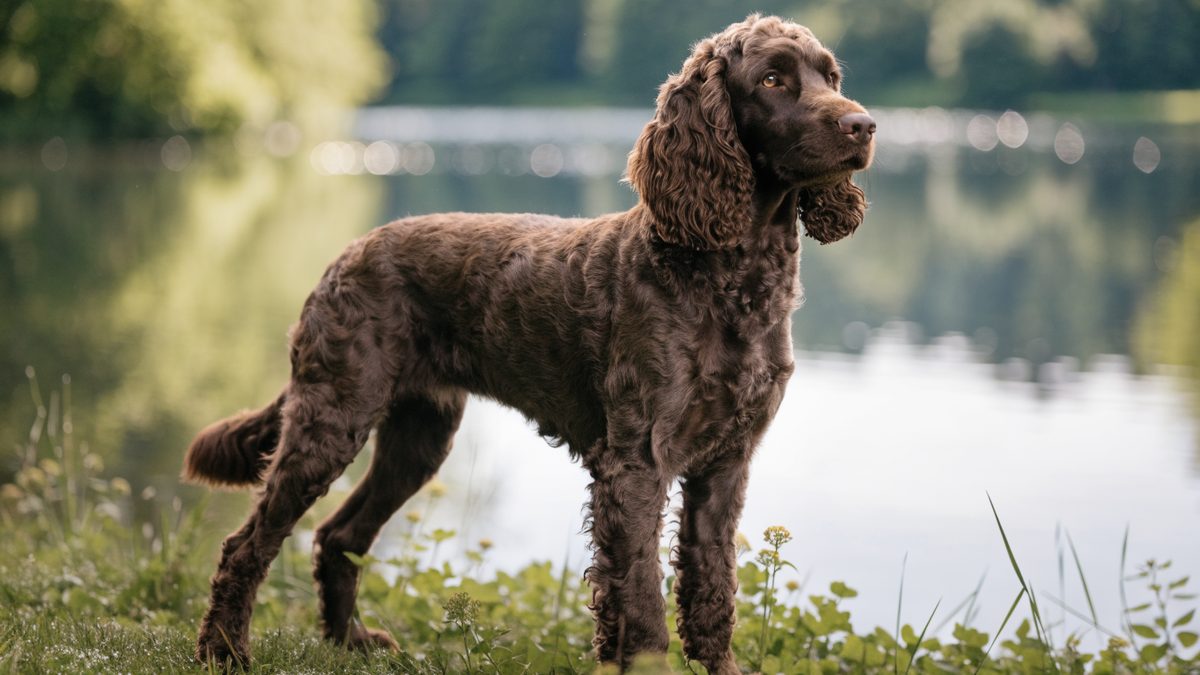
A rare American gundog with a marcel to curly water-repellent coat over long lobular ears. It is the state dog of Wisconsin, there are roughly 3,000 of them alive anywhere, and there is no Indian market for it at all.
Quick answer
The American Water Spaniel is a rare American gundog, 15 to 18 inches tall and solid liver to dark chocolate, whose standard allows a coat from marcel waves to close curls over a dense undercoat. It is the state dog of Wisconsin, its own club estimates only about 3,000 exist, and no verified Indian source of the breed was found.
This guide is general information for Indian pet owners and is not a diagnosis. Consult your nearby vet, a registered veterinarian, before acting on anything you read here, and treat any sudden change in a dog's condition as urgent.
American Water Spaniel at a glance, rated for Indian conditions
What the American Water Spaniel actually is
The American Water Spaniel is a medium-sized American gundog bred in Wisconsin to retrieve waterfowl from a small boat, standing 15 to 18 inches at the shoulder, weighing 30 to 45 pounds in males and 25 to 40 in females, and carrying a solid liver to dark chocolate coat that the breed standard permits anywhere in the range from marcel waves to close curls.
Five facts define this breed, and four of them are usually reported wrongly. It is a gundog, not a companion spaniel. It is genuinely rare rather than merely uncommon. Its coat is defined by a range, not by a single texture. It is the state dog of one American state. And in India it does not exist as a market at all.
The size and shape come straight from the standard. The American Water Spaniel is described as an active muscular dog, medium in size, slightly longer than tall, with as much substance and bone as necessary to carry the muscular structure but not so much as to appear clumsy. The toes are closely grouped, webbed and well-padded, which is the working feature that separates it from every land spaniel. The tail is moderate in length and curved in a rocker fashion, tapered, lively and covered with hair to the tip. Yellow eyes are the only disqualification in the AKC standard, and the standard goes out of its way to define what it means by yellow, calling it a bright colour like that of lemon and warning that it is not to be confused with the light yellowish brown that is permitted.
Marcel and curly are not the same thing, and the standard says so
The coat clause is the single most misreported thing about this breed, so here it is verbatim. Both the AKC standard and FCI-Standard No. 301 use identical wording: "Coat can range from marcel (uniform waves) to closely curled. The amount of waves or curls can vary from one area to another on the dog"; Federation Cynologique Internationale. Marcel is a wave, named after the Marcel wave in human hairdressing, and it is one end of a permitted range. Close curl is the other end. Neither is preferred over the other, and one dog may legitimately show both on different parts of its body. Secondary breed sites collapse this into "curly or wavy", which sounds like the same statement and is not, because it implies two separate coat varieties rather than one continuous permitted range.
The undercoat clause matters more for India than the curl does. The standard states that it is important to have undercoat to provide sufficient density to be of protection against weather, water or punishing cover, yet not too coarse or too soft. So this is a mandated double coat, not a single-coated curly dog. That distinction is the whole of the heat and grooming argument later on this page, and it is also what separates the breed from the Poodle, whose curl sits on a very different coat structure.
The United Kennel Club words the same clause slightly differently, asking that the coat "should be closely curled or have marcel effect and should be of sufficient density (and texture) to be protection against the elements", and then listing coat too straight, soft, coarse, fine or tightly kinked as faults. The UKC also asks that the ear leather be "well-covered with close curls", which the AKC standard does not specify. Read together, the three standards agree that the ear carries hair on both sides and that the coat must be dense enough to be weatherproof.
The registry record, in order
Recognition came from the smaller American registry first and the FCI last. Dr F. J. Pfeifer of New London, Wisconsin, was the first person to argue that the little brown spaniels of the Fox and Wolf River valleys were a distinguishable breed rather than a local type, and he petitioned the registries accordingly. The United Kennel Club registered the first American Water Spaniel, a dog named Curly Pfeifer, on 8 February 1920. The Field Dog Stud Book followed in 1938 and the American Kennel Club in 1940. The current AKC standard was approved on 13 March 1990 and took effect on 1 May 1990. The current UKC standard was revised on 1 June 2012.
The FCI does list the breed, which is the fact that determines whether any Indian registry route exists at all. FCI-Standard No. 301 classifies the American Water Spaniel in Group 8, Retrievers, Flushing Dogs and Water Dogs, Section 3 Water Dogs, with working trial. The valid standard is dated 14 February 1995 and the English text was published on 22 January 1999. Because the Kennel Club of India is the FCI member body for India, an FCI-recognised breed is in principle registrable here. In principle is doing a great deal of work in that sentence, and the price section explains why.
| Point | AKC (1990) | UKC (2012) | FCI No. 301 (1995/1999) |
|---|---|---|---|
| Coat | Marcel (uniform waves) to closely curled | Closely curled or marcel effect; too straight, soft, coarse, fine or tightly kinked is a fault | Marcel (uniform waves) to closely curled |
| Undercoat | Important, for protection against weather, water or punishing cover | Sufficient density and texture to protect against the elements | Important, for protection against weather, water or punishing cover |
| Ears | Lobular, long and wide, leather extending to nose, well covered with hair both sides | Long, wide and lobular, leather to end of nose, well covered with close curls | Lobular, long and wide, leather extending to nose |
| Height | 15 to 18 in, either sex | 15 to 18 in, either sex | 15 to 18 in, either sex |
| Male weight | 30 to 45 lb | 28 to 45 lb | 30 to 45 lb |
| Colour | Solid liver, brown or dark chocolate; a little white on toes and chest | Solid liver or dark chocolate; a little white on toes or chest | Solid liver, brown or dark chocolate; a little white on toes and chest |
| Disqualifications | Yellow eyes | Cryptorchid, viciousness or extreme shyness, albinism, yellow (lemon) eyes | Aggressive or overly shy, physical or behavioural abnormality, yellow eyes |
| Shaving the ears | Permitted, not required | Not addressed; rat or shaved tail is a fault | Permitted, not required |
Two small disagreements are worth noticing. The UKC allows males down to 28 pounds where the AKC and FCI both start at 30, and the UKC adds cryptorchidism, viciousness, extreme shyness and albinism to the disqualification list where the AKC has only yellow eyes. Neither difference changes what the dog is. Both are useful if you are ever handed paperwork and asked to check it against a standard.
How rare is rare, with the actual numbers
The breed's own club puts the world population at roughly 3,000 dogs. The American Water Spaniel Club states on its history page that the breed is rare with only an estimated 3,000 in existence on any given date, and that while it is one of five hunting breeds recognised as having been developed in the United States, it has never been a popular breed. That figure is a club estimate rather than a registry count, and it should be read as one, but it comes from the body with the best view of the studbook.
The registration ranking supports it. In the American Kennel Club's ranking of the most popular dog breeds of 2024, published by AKC from its own registration data, the American Water Spaniel sits 167th out of 201 breeds ranked. For scale, that places it below the Curly-Coated Retriever at 163 and above the Sealyham Terrier at 168, in a band of breeds that most Americans have never met. Note the direction of travel is not dramatic: an older figure widely repeated online puts the breed at 143rd of 167 breeds in 2010, which on a shorter list is a broadly similar position rather than a collapse.
The absence shows up in research datasets too, and this is a more telling measure than any ranking. The largest published study of canine otitis externa in primary care reviewed a random sample of 22,333 dogs drawn from 905,554 UK dogs under veterinary care, and the American Water Spaniel does not appear anywhere in it. A breed has to be genuinely scarce to be invisible in a sample of that size.
Wisconsin's state dog, and why that is in a statute
The American Water Spaniel is written into Wisconsin law. Wisconsin Statutes section 1.10(3)(k) reads, in full, "The American water spaniel is the state dog", sitting in the same list as the badger as state animal and the muskellunge as state fish. The statute as published and certified on 5 August 2026 still carries the clause. It is one of a small number of dog breeds anywhere with a statutory designation, and it is the clearest available proof that this dog is a regional American creation rather than an import type.
The history behind that statute is a market hunter's history. The breed was developed in the mid 1800s in the Fox and Wolf River valleys, where commercial hunters paddled punts and skiffs across Lake Poygan, Lake Butte des Morts and Lake Winnebago and shot ducks in volume. They needed a dog small enough to ride in the punt and hardy enough to work marsh cover in cold water, and the American Water Spaniel is what they bred United Kennel Club. Everything about the modern dog, the size ceiling, the webbed feet, the dense weatherproof coat and the rocker tail, is a solution to that job.
The old working nickname captures the design brief better than any standard clause. Gun Dog Magazine records that the breed was known as the Vest-Pocket Retriever, and describes why the size ceiling exists in practical terms, since the dog's diminutive size lets it exit a kayak without swamping the hunter and lets the hunter lift it back in when the retrieve is done. The same account notes an unusual working detail, that the dog will use its tail like a rudder to make sharp turns in fast water such as a river, which puts the standard's rocker tail in a functional light rather than a cosmetic one.
If someone in India shows you a curly brown dog and calls it an American Water Spaniel, check the head and the tail before anything else. The standard requires the forehead to be covered with short smooth hair and without topknot, and the tail to be tapered and curved in a rocker fashion with moderate feathering. A curly-headed dog with a topknot is far more likely to be a brown Poodle or a Poodle cross. A dog with a docked tail is not this breed as the standard describes it, and tail docking is in any case prohibited in India.
American Water Spaniel price in India, and why there isn't one
There is no American Water Spaniel price in India, because there are no American Water Spaniels in India to price. Two Indian websites rank for the breed's name, both promise KCI-registered puppies, and on the day this page was researched neither listed a single dog of the breed. Everything below is the evidence for that statement, because a reader deserves the audit rather than the assertion.
Start with what the two ranking Indian pages actually contain. Mr n Mrs Pet publishes a page titled "American Water Spaniel Puppies for sale in India At Best Prices", which tells the reader it provides "healthy, purebred KCI-certified American Water Spaniel Puppies in India" from "verified American Water Spaniel dog breeders" near them. The page reports 3 results. Those three results, audited on 19 August 2026, were an Australian Shepherd in Delhi, a Bernese Mountain Dog in Coimbatore and a Weimaraner in Jaipur. Not one American Water Spaniel. The same page carries a Most Popular Breeds sidebar listing live counts for ten breeds, from Shih Tzu at 650 down to Cane Corso at 134, and the American Water Spaniel does not appear on it at all.
Puppiezo's page is titled "American Water Spaniel Price, Buy Purebred Puppies in India with Health Guarantee" and promises purebred puppies from KCI registered breeders. Under its own heading "Available American Water Spaniel Puppies For Sale", the pets actually listed on 19 August 2026 were two Poodles at Rs 92,599 each, two Maltipoos at Rs 98,999 each, a Cane Corso at Rs 94,999, a Goldendoodle at Rs 120,000, a Rottweiler at Rs 76,499 and a Doxiepoo at Rs 98,999. Again, not one American Water Spaniel. What a buyer clicking that page is being offered is a curly brown-ish dog of a different breed at roughly a lakh.
| Site | What the page claims | What was actually listed | American Water Spaniels listed |
|---|---|---|---|
| Mr n Mrs Pet | KCI-certified American Water Spaniel puppies from verified breeders | Australian Shepherd (Delhi), Bernese Mountain Dog (Coimbatore), Weimaraner (Jaipur) | 0 of 3 |
| Puppiezo | Purebred American Water Spaniel puppies from KCI registered breeders, health guarantee | Poodle x2 (Rs 92,599), Maltipoo x2 (Rs 98,999), Cane Corso (Rs 94,999), Goldendoodle (Rs 120,000), Rottweiler (Rs 76,499), Doxiepoo (Rs 98,999) | 0 of 8 |
The shell pages get the breed's own numbers wrong too
A page that has never handled the breed tends to show it in the data. Puppiezo's own breed panel gives the American Water Spaniel a weight of 16 to 27 kg. The AKC standard gives males 30 to 45 pounds and females 25 to 40 pounds, which is 13.6 to 20.4 kg and 11.3 to 18.1 kg. The top of Puppiezo's range is roughly 15 pounds above the maximum the standard allows for a male. The same panel gives height as 16 to 18 inches against the standard's 15 to 18, and life expectancy as 10 to 12 years against PetMD's 10 to 14 and the parent club's 12 to 15 American Water Spaniel Club. A buyer using that panel to check a dog against the standard would accept an animal well outside it.
Why no lawful supply chain can form
Indian import law closes the commercial route, and it does so in plain language. Under DGFT Trade Notice No. 22/2022-23, dated 19 December 2022, live mammals under ITC (HS) 01061900 are Restricted, subject to Policy Condition 6 of the chapter. Policy Condition 7 then limits dog imports to three purposes, which are a pet dog with a valid pet book and relevant records in the name of the importer, dogs imported by R&D organisations for research with the recommendation of the CPCSEA, and dogs for internal security by the Defence and Police Force. Policy Condition 8 states that import of commercial dogs for breeding or any other commercial activity other than those purposes is not permitted.
Paragraph 6 of the same notice removes any ambiguity by naming the administrative outcome. It states that any applications for trading or breeding purposes, or applications made on behalf of some other person or entity, "shall be duly rejected";. Paragraph 7 confines pet imports to the airports and seaports of Delhi, Mumbai, Chennai, Hyderabad, Bangalore and Kolkata, with quarantine at the government station of those ports where required. DAHD added a seventh port, Cochin International Airport at Kochi, for pets arriving under the baggage rules in October 2024. The full route is set out in how to import a dog to India.
Read that together with the population figure and the arithmetic settles the matter. A breeding population cannot be legally imported. A private owner can bring in a pet dog, but only their own, only up to two as passenger baggage, and only when transferring residence to India after two years of continuous stay abroad, otherwise an import authorisation from DGFT is required. Since the whole breed numbers roughly 3,000 dogs worldwide, and the only lawful pathway moves individual pets rather than breeding stock, no Indian breeding population can form, and therefore no Indian price exists.
What the Kennel Club of India route is worth here
The KCI route exists on paper and is empty in practice. Because the FCI recognises the breed as Standard No. 301, an FCI member body such as the Kennel Club of India could in principle register an American Water Spaniel. What the FCI's own India statistics show is how little room that leaves. The Kennel Club of India registered 33,880 pure-bred dogs with its studbook in 2025, across every breed it recognises, down from a peak of 89,571 in 2021, in a country the same table puts at roughly 17.1 million dogs. Every American Water Spaniel alive anywhere in the world would amount to under 9 percent of a single year's KCI registrations. The claim that a breed of 3,000 dogs has KCI-registered breeders in India is not credible on its face.
Treat the quote itself as the warning sign. Ask for the KCI registration number of the sire and the dam, the microchip numbers of both, and a photograph of the parents. Under the Prevention of Cruelty to Animals (Dog Breeding and Marketing) Rules, 2017, every registered breeder must maintain exactly those records, must micro-chip each pup sold, and must give the purchaser a sale receipt carrying the micro-chip number. A seller with a real dog can produce that paperwork in a day. A seller with a shell page cannot produce it at all.
The prices we did not publish, and why
Several US price figures circulate on page one of this query, quoted by aggregator blogs rather than by the breed club or by any registry. Bonbeno did not verify them and so does not repeat them. The American Water Spaniel Club publishes a breeder directory and a code of ethics but no price guidance, and quoting a live figure from an individual kennel would turn editorial reporting into a sales listing, which this site does not do.
For an Indian reader, the honest cost framing is not a purchase price at all. It is a relocation cost. If you are already an American Water Spaniel owner moving to India, your costs are the DGFT import authorisation process, which the notice advises starting at least two months before travel, the veterinary health certificate from the exporting country with the prescribed disease testing done there, the advance No Objection Certificate from the Regional or Quarantine Officer obtained seven days before travel, and any quarantine at one of the seven permitted ports Department of Animal Husbandry…. Bonbeno could not find a reliable published rupee total for that process for a dog of this size and does not intend to invent one.
The comparison that is genuinely useful sits elsewhere on this site. If what appealed to you was a mid-sized, biddable, water-loving spaniel, the English Cocker Spaniel and the American Cocker Spaniel both have real Indian markets, real Indian price ranges and the same drop-eared ear problem discussed further down this page. If it was the curly water-repellent coat, the Poodle is available here and is the closest coat analogue. If it was the retrieving drive, the Labrador Retriever is the most available dog in India.
Monthly cost of ownership, using real Indian grooming rates
The recurring cost of an American Water Spaniel in India is dominated by one line item, professional grooming, and published Indian rate cards put that between roughly Rs 12,000 and Rs 35,000 a year depending on your city and which pricing logic your groomer uses. Everything else is ordinary medium-dog expenditure.
Two Indian grooming price guides published in 2026 disagree about how to bracket this dog, and the disagreement is worth showing rather than averaging away. wagNbush prices by size, putting a medium dog such as a Beagle, Cocker Spaniel or Boxer at Rs 1,200 to Rs 2,000 for a full groom nationally, with Bengaluru medium breeds starting at Rs 2,000. ThePetNest prices by coat, splitting full grooms into short coat and long coat, and putting a long-coat full groom at Rs 1,400 to 2,500 in Pune, Rs 1,800 to 3,500 in Mumbai, Rs 1,500 to 3,000 in Bangalore and Rs 1,200 to 2,500 in Hyderabad.
For a marcel-to-curly coat, the coat-based bracket is the honest one. A curly coat needs scissor and thinning-shear work rather than a clipper pass, and wagNbush says as much, noting that a proper breed cut in the Poodle or Doodle style costs more because it is skilled work. So budget as a long-coat dog, not as a medium dog.
| City | Long-coat full groom, per session | Ten sessions a year | Mobile add-on, per visit |
|---|---|---|---|
| Mumbai | Rs 1,800 to 3,500 | Rs 18,000 to 35,000 | Rs 300 to 500 |
| Bangalore | Rs 1,500 to 3,000 | Rs 15,000 to 30,000 | Rs 250 to 450 |
| Pune | Rs 1,400 to 2,500 | Rs 14,000 to 25,000 | Rs 200 to 400 |
| Hyderabad | Rs 1,200 to 2,500 | Rs 12,000 to 25,000 | Rs 200 to 400 |
| National, size-priced instead | Rs 1,200 to 2,000 | Rs 12,000 to 20,000 | Rs 200 to 500 |
Ten sessions a year is not a guess pulled from nowhere. ThePetNest puts long-coat full grooms on a four to six week cycle, which is nine to thirteen sessions annually, and then adds that Indian owners should increase grooming frequency by 25 to 30 percent during monsoon, shifting an eight-week schedule to five or six weeks from June to September. Ten sits in the middle of that band. A conscientious owner in Mumbai working a four-week cycle through the monsoon will land nearer thirteen.
The three surcharges a curly coat invites
Matting is the expensive one. ThePetNest bills heavy de-matting separately at Rs 500 to Rs 1,500 on top of the groom, and wagNbush names matting as the single biggest driver of a higher bill, since the groomer has to detangle or partially shave. On a coat that is closely curled by design, in a climate where the coat is wet several times a week for four months, that surcharge stops being occasional.
Ear cleaning is the second. A salon in India charges Rs 250 to Rs 400 for ear cleaning as a standalone service. The parent club's own guide asks for routine monthly ear cleaning and says dogs that spend time in the water may need more frequent cleaning. Paying salon rates for that twelve or more times a year is Rs 3,000 to Rs 4,800 you do not need to spend, because the procedure is a solution, a minute of massage, a head shake and a cotton ball, and it is the single highest-value thing an Indian owner of this breed can learn to do at home.
Medicated bathing is the third. wagNbush prices a medicated or anti-tick bath at Rs 1,000 to Rs 1,500, and ThePetNest recommends an anti-fungal shampoo containing chlorhexidine or ketoconazole through the monsoon months on veterinary or groomer advice. For a dense double coat that stays damp, some of those months this is a real line item rather than an upsell.
What we could not price, stated plainly
Three costs are missing from this section because Bonbeno could not verify Indian figures it trusts. There is no reliable published rupee figure for a routine veterinary consultation for this breed, because consultation fees vary by clinic rather than by breed and no national dataset exists. There is no verified Indian monthly food cost, because the amount depends on the individual dog's body condition rather than on a breed average. And there is no Indian pet insurance premium quoted here, because premiums for a breed with no Indian population would be quoted case by case rather than from a rate table. Ask your nearby vet for local figures rather than trusting a number invented for a page.
One cost is worth planning for even though it cannot be priced in advance. India carries a heavy tick-borne disease load. In a survey of canine tick-borne disease across four Indian cities, 261 of 525 dogs, or 49.7 percent, tested PCR-positive for at least one tick-borne pathogen, with Hepatozoon canis at 30 percent and Ehrlichia canis at 20.6 percent, and potential tick vectors were found on 278 of the dogs examined, which is 53 percent. Year-round parasite prevention is not optional here, and on a dense curly coat you will not spot the tick by looking, which shifts the burden onto the preventive rather than onto the check.
Brushing at home is the lever that moves every other number. wagNbush calls regular brushing the single biggest money-saver, because matting is what makes grooms expensive and slow, and ThePetNest's rule is blunter still, that you never bathe a matted dog because water tightens knots into concrete ThePetNest, Ultimate Guide to Pet Grooming…. Twenty minutes with a slicker brush and a metal comb, two or three times a week, is what keeps a curly coat out of the de-matting surcharge.
Suitability for the Indian climate, rated 2 out of 5
Bonbeno rates the American Water Spaniel 2 out of 5 for heat tolerance in Indian conditions, and the reasoning comes from three lines of its own breed standard rather than from an impression. The standard mandates an undercoat, fixes the colour at solid liver to dark chocolate, and asks for great energy and eagerness for the hunt. Dense insulation, a dark surface and high drive is the worst combination a dog can bring to an Indian April.
Take the coat clause first. The standard does not merely permit an undercoat, it requires one, stating that it is important to have undercoat to provide sufficient density to be of protection against weather, water or punishing cover, yet not too coarse or too soft. The FCI text is identical. The UKC asks for sufficient density and texture to be protection against the elements. Three registries independently define the coat by its insulating function. This dog is not a curly single-coated breed that happens to look warm. It is a double coat designed to keep a swimming dog warm in the Great Lakes in autumn.
Then the colour clause. The standard allows solid liver, brown or dark chocolate, with at most a little white on toes and chest. There is no light-coloured American Water Spaniel. Every dog of this breed presents a dark surface to the sun by definition.
Then the temperament clause. The standard asks for great energy and eagerness for the hunt yet controllable in the field. The breed's own club adds the crucial caveat about warm weather: due to their thick coat, the AWS tends to do well in colder climates, but has been known to enjoy the warmer regions if not asked to exert themselves in the heat. Read that sentence carefully. The club is not saying the breed tolerates heat. It is saying the breed tolerates heat if it is not worked in it, which is a conditional an owner of a high-drive gundog is very likely to break.
Why exertion is the risk, not the thermometer
The largest primary-care study of heat-related illness in dogs found that exercise, not a hot car, is the commonest trigger. Reviewing the records of 905,543 dogs, Hall, Carter and O'Neill identified 1,259 heat-related illness events and found exertional heat-related illness was the predominant trigger at 74.2 percent of the 879 events where a cause was recorded, followed by environmental at 12.9 percent and vehicular confinement at 5.2 percent. The same team's incidence paper put the annual incidence risk at 0.04 percent, with 40 percent of the 2016 events falling in July alone and an event fatality rate of 14.18 percent. Young male dogs had the greatest odds of the exertional form.
Those figures come from the United Kingdom, and they are quoted here for the mechanism rather than for the rate. India does not have a comparable published dataset. What transfers is the finding that a dog most often overheats while doing something it enjoys, driven by its own enthusiasm, and that the exercise-triggered form kills at a similar rate to the hot-car form. A breed the standard describes as full of great energy and eagerness for the hunt is precisely the breed that will keep working past the point where it should have stopped.
India-localised veterinary guidance names the risk factors, and this breed collects an unusual number of them. Purina India lists lack of water, enclosed space, excessive humidity, obesity, intense exercise, old age, cardiovascular or respiratory disease, and lack of acclimatisation as the factors that raise heat stroke risk, and names dogs with heavy coats alongside short-faced breeds as being at particular risk. An American Water Spaniel newly arrived in India ticks three of those at once, a heavy coat, intense exercise and no acclimatisation. The same guidance warns that vigorous exercise in hot weather can produce heat stroke in as little as 30 minutes.
Watch for severe panting, difficulty breathing, heavy salivating, vomiting, diarrhoea, a temperature of 40.5 degrees Celsius or above, blood in the urine, nose bleeds and eventually collapse. If you suspect heat stroke, move the dog into shade or air conditioning, spray or sponge cool but not cold water so it reaches the skin rather than running off the coat, wetting the belly and inside the legs thoroughly, and use a fan. Do not plunge the dog into an ice bath, because that prevents core temperature falling. Stop cooling at 39.4 degrees to avoid overshooting into hypothermia, and get to your nearest vet as fast as you can. On a dense water-repellent double coat, the instruction about getting water to the skin rather than letting it run off is the part that most often goes wrong.
| Condition | The problem for this specific breed | What it forces on the owner |
|---|---|---|
| Dry pre-monsoon heat, Delhi or Nagpur in May | Dark dense double coat over a dog with high work drive | Walks confined to before sunrise and after dark; no fetch, no retrieving drills, no midday anything |
| Coastal humidity, Mumbai or Chennai | Evaporative cooling from panting works poorly when the air is already saturated, and the coat holds moisture against the skin | Air conditioning or a strong fan indoors; complete towel and blow drying after every wetting |
| Monsoon, June to September | A coat built to shed cold water sits damp for hours in warm air | Grooming frequency up 25 to 30 percent, ear cleaning after every wet walk, dehumidified indoor space |
| Bengaluru or Pune winter | Genuinely comfortable, this is the closest India gets to the breed's design brief | Normal exercise, the one window where a working routine is realistic |
| Hill stations, Shimla or Ooty | Well within tolerance | Normal management; the coat is an asset rather than a liability |
The monsoon is the harder half of the problem
Indian veterinary data points at the rainy season rather than at summer. In a cross-sectional study at Palampur, Himachal Pradesh, screening 2,476 dogs presented over thirteen months, 81 were diagnosed with otitis externa, and 59.25 percent of those cases presented during the rainy season of July and August. Summer accounted for 18.51 percent, winter 12.34 percent and autumn 9.87 percent. The authors attribute the peak to increased humidity favouring microbial growth. In the same series, 69.13 percent of cases were in breeds with pendulous ears.
So for this breed the Indian climate question is not really about heatstroke, though that risk is real. It is that India runs a four-month season in which warm, saturated air meets a dog whose coat and ears are engineered to hold water. Indian grooming guidance is blunt about the consequence, warning that in India's humidity a half-dry coat can develop fungal infection within hours during monsoon, and recommending an indoor dehumidifier set to 50 to 55 percent relative humidity for flat dwellers in Mumbai and Chennai where ventilation is limited.
The usual Indian answer to a hot dog, clip it right down, is closed off here by the breed's own guidance. The parent club's clipper guide specifies a 3 blade on the neck and a 4 blade on the body, and states that anything lower than a 4 blade is not recommended for the entire body because it could damage the coat. A damaged double coat regrows unevenly and loses the very density that protects the skin from sun. Manage the heat with timing, shade, water and air conditioning, and manage the coat with brushing and drying, not with clippers.
One practical consequence follows from all of this. If you are an American Water Spaniel owner relocating to India, the workable postings are the ones with a real cool season. Bengaluru, Pune, Shimla, Dehradun and the hill stations give the dog several months a year in which normal gundog exercise is possible. Chennai, coastal Kerala, Mumbai and the Gangetic plain in May give it almost none. That is not a reason to refuse the move. It is a reason to plan the dog's year around two or three usable months rather than assuming twelve.
Temperament and household fit
The American Water Spaniel suits an active household that is home most of the day and wants a dog involved in what it is doing. It is friendly, eager to please and intelligent by the standard's own definition, reserved with strangers, prone to bonding hard with one person, and poor at being left alone. It does not suit a flat that empties at nine and refills at eight.
The standard's temperament clause is short and worth quoting whole. "Demeanor indicates intelligence, eagerness to please and friendly. Great energy and eagerness for the hunt yet controllable in the field";. The FCI carries the same sentence. The UKC frames it from the working end, calling the breed a sturdy little dog with a good nose and a fondness for water, a busy worker, both eager to please and easily trained. Note the word that appears in all three: eager. This is a dog that wants a job and wants your approval for doing it.
The parent club fills in the household detail the standards leave out. American Water Spaniels are friendly in nature but usually more reserved towards strangers, they show love to all family members but have a tendency to form close bonds with usually one individual, and with proper socialisation and supervision the breed is good with children and good with other animals including cats if introduced to them early in life. PetMD adds that the breed can be susceptible to separation anxiety, will bark if ignored or under-exercised, and has a strong prey drive that can prompt digging after a wild animal.
What the owner survey says, and how much weight to put on it
The OFA runs an owner health survey for this breed, and it includes a temperament block. Of 316 respondents, 26 reported a temperament disorder, which is 8 percent. Within those 26, aggression was reported by 11, separation anxiety by 7, timidity by 5, fear of noise by 2, fear of storms by 2, and rage syndrome by 3.
Now the caveat, which matters more than the numbers. The OFA states plainly on the same page that respondents are self-selected and that there is no verification of the responses or duplicate checking. These are owner-reported labels, not clinical diagnoses, on a sample of a few hundred dogs from a breed of roughly three thousand. A count of three for anything is not a prevalence estimate. Treat the block as a list of what owners of this breed sometimes deal with, ranked roughly, and nothing more. There is no peer-reviewed behavioural study of the American Water Spaniel to check it against, and Bonbeno will not borrow one from a related spaniel to fill the gap.
The five household questions that actually decide it
- Count the hours the flat is empty. This breed forms a close bond with usually one person and shows separation anxiety in its own club's survey data. Eight empty hours a day is the wrong home for it.
- Check who else lives here. Good with children and good with cats, both conditional on early introduction and supervision. Retrofitting that at three years old is much harder.
- Plan the stranger management. A dog that is reserved with strangers, in a home with domestic help, delivery riders and a building watchman, needs a deliberate introduction routine rather than an assumption that it will settle.
- Budget the daily exercise honestly against the climate section above. An under-exercised dog of this breed barks, digs and chews, which PetMD names directly.
- Assess the prey drive against your street. A strong prey drive on an Indian road with free-ranging dogs, cats and cattle is a lead-management problem every single walk, not an occasional one.
Two Indian pressure points nobody writes about
Noise is the first. Two respondents in the OFA survey reported fear of noise and two reported fear of storms, which on that sample proves nothing, but the underlying trait is well recognised in gundogs generally and India delivers two annual stress tests that Wisconsin does not. Diwali firecrackers and the arrival of the monsoon both produce sustained loud noise over days. A dog that bonds to one person and is already inclined to anxiety when left will not manage either alone. Plan a quiet interior room, plan for the person it is bonded to being present, and speak to your nearby vet well in advance if the dog has previously reacted badly.
Water is the second, and it cuts the other way. This is a breed that will spend countless hours retrieving from a riverbank without complaint, and an Indian owner will be tempted to let it swim wherever there is water. Urban Indian water bodies frequently are not clean, and every swim is also an ear-infection exposure for reasons the health section sets out. Swimming is the best exercise this breed can get in Indian heat and it carries the highest ear cost. Both things are true and they have to be managed together, not traded off.
Anyone who wants a low-input companion dog should look elsewhere, and so should anyone whose household is empty through the working day. If the appeal was a friendly mid-sized family spaniel that is available here and lives happily in a flat, read the English Cocker Spaniel page instead. If it was a calm curly dog, read the Poodle page. If it was an easy-going dog for Indian conditions with far lower health and grooming demands, read the Indian Pariah Dog page, which is the breed most Indian households should be considering first.
Training approach, and what this breed resists
To train an American Water Spaniel, use short, varied, reward-based sessions and give the dog a job it can see the point of. The breed is described by its registries as eager to please and easily trained, and by veterinary writers as easy to train but strong-willed. It resists repetition, it resists correction-heavy handling, and in India it resists the clock, because the hours in which it can safely work are narrow for much of the year.
The registries and the parent club agree on the raw material. The UKC calls the breed a busy worker, both eager to please and easily trained. The AKC standard asks for great energy and eagerness for the hunt yet controllable in the field, which is a description of biddability under arousal. PetMD's assessment adds the friction: because of their affection and keen intellect American Water Spaniels are generally considered easy to train, however they can also be strong-willed, and positive reinforcement with engaging sessions is the method that works.
Take strong-willed seriously as a technical description rather than as a compliment. It means the dog forms its own opinion about whether an instruction is worth following and will act on that opinion. The lever is motivation, not authority. Reward-based work builds a dog that offers behaviour. Correction-based work builds a dog of this breed that stops offering anything, which in a gundog is the failure mode you cannot undo.
A lifelong owner writing in Gun Dog Magazine puts the mechanism more usefully than any registry does. The breed is called stubborn by some, he writes, because they do not take to a lot of training, and getting his own bitch to bring in over ten thrown dummies would be a miracle, because she is too smart and gets easily bored with repetition. That is the single most actionable sentence written about training this breed. The dog is not refusing the task, it is refusing the tenth identical repetition of a task it solved on the second. Run five varied reps instead of twenty identical ones, and stop while the dog still wants more.
The same account describes what the breed will do willingly when the work is real, including crawling alongside the handler in the field without ever being taught to, and holding position rather than bolting. Biddability and boredom-intolerance are two faces of the same intelligence, and a training plan that respects the second gets the first for free.
What the club says about the working temperament
The parent club's field description is unusually candid, and it is useful even to an owner who will never shoot over the dog. The AWS is described as a fast-working dog with a high prey drive in the upland. Many American Water Spaniels have a hard flush yet will hesitate just before putting the bird in flight, and some will have a softer flush due to specific training programmes. In water they will spend countless hours retrieving from a skiff or from a riverbank without complaint, and although the entry may not be the splashiest, once in the water they swim with absolute determination.
The same page lists where the breed has actually succeeded outside the field, naming agility, barn hunt, scent work, trick competitions, dock diving and skijoring. That list is the practical answer for an Indian owner, because it describes activities that need no game, no gun and no marsh.
A realistic first-year training plan for Indian conditions
| Age | Priority | The Indian complication |
|---|---|---|
| 8 to 16 weeks | Socialise deliberately with people, traffic, surfaces and other animals; begin handling for grooming and ears | The socialisation window may fall in peak summer or peak monsoon, so plan indoor and early-morning exposures rather than skipping the window |
| 3 to 6 months | Recall, lead manners, settle on a mat, name game, tolerance of ear cleaning and towel drying | Free-ranging dogs on Indian streets make lead work harder and make off-lead recall practice unsafe in most cities |
| 6 to 12 months | Retrieving games, scent work, impulse control around prey, crate or quiet-room independence | The original job, upland flushing and waterfowl retrieving, is not an available outlet for an Indian pet owner, so the substitute has to be structured rather than improvised |
| 12 to 24 months | Formal obedience, agility or barn hunt if a club exists locally, water work where clean water is available | Dog sport infrastructure exists in a handful of Indian metros and nowhere else, so most owners will be building their own programme |
| Ongoing | Ten minutes of thinking work most days, and a job on every walk | Heat caps the useful outdoor window at dawn and after dark for much of the year |
Three things that go wrong in India specifically
The board-and-train shortcut is the first. Sending a strong-willed, one-person-bonded, reward-motivated dog away to a residential trainer for six weeks is a poor match for this temperament on two counts, because the bond is the training currency and because the methods used in unregulated residential programmes are not visible to you. If you use a trainer, use one who works with you and the dog together, and watch a session before you commit.
Under-exercising and over-correcting is the second, and they are the same mistake in sequence. A dog of this breed that has not worked will bark, dig and chew, which PetMD names directly. Owners then treat the barking as a discipline problem and escalate. The barking is a symptom of the exercise deficit and the correction makes the dog less willing to work with you, which deepens the deficit.
Skipping grooming conditioning is the third and it is specific to this coat. An American Water Spaniel in India will need its ears handled, cleaned and dried more often than the same dog in Wisconsin, and its coat brushed several times a week. The parent club's guidance is to keep grooming sessions short at first, maintain a positive attitude, and never call the dog to you for grooming but instead go to the dog, then reward it afterwards for its patience. That is training advice, not grooming advice, and getting it right at twelve weeks is what makes twelve years of ear care possible.
Scent work is the one activity on the club's list that needs no space, no water, no equipment and no cool weather. Hide a scented article in one room, send the dog, pay it well. Ten minutes of nose work tires this breed more reliably than thirty minutes of walking, and it can be done at two in the afternoon in May with the air conditioning on, which nothing else on the list can.
Daily exercise requirement, and what happens without it
No registry publishes a daily exercise figure for the American Water Spaniel, so treat any single number you see as an estimate rather than a standard. What the sources do agree on is the shape of the requirement, which is daily physical work plus daily mental work, split rather than delivered in one block, and in India delivered inside a narrow safe window.
The parent club describes the requirement functionally rather than in minutes. American Water Spaniels are active dogs that will do best when given the opportunity to work off some of their energy, and the activities named are field or obedience training, runs in the park, swimming, or a good play session in the backyard. PetMD says the breed has a lot of energy and needs a way to unleash it daily, such as swimming, hiking or running, and that a dog left alone for an extended time can be destructive.
The only specific number found on page one of this query is 45 to 60 minutes per day, published by the Puppiezo listing page. That page also lists a weight range 15 pounds above the breed standard and a life expectancy shorter than either the club's or PetMD's, so it is not a source Bonbeno would build a plan on. Quoted here because it is what an Indian reader will find, and because the honest answer is that no authoritative figure exists.
The Indian window problem
The constraint in India is not how much exercise the dog needs but when it can safely take it. Exertional heat-related illness accounted for 74.2 percent of heat events in the largest study of the subject, ahead of environmental at 12.9 percent and hot cars at 5.2 percent. The dog most at risk is the one enjoying itself. For a breed the standard describes as having great energy and eagerness for the hunt, and whose club warns it should not be asked to exert itself in the heat, the safe outdoor window through an Indian summer is roughly dawn to an hour after sunrise and from full dark onwards.
| Slot | What goes in it | Why |
|---|---|---|
| Pre-dawn, 30 to 45 minutes | Brisk walk with lead work, or a run in a park if one is safely accessible | The only reliably cool outdoor window from March to October in most of India |
| Mid-morning, 10 minutes indoors | Scent work, a puzzle feeder, or a short obedience set | Mental work tires this breed disproportionately and needs no cool weather |
| Afternoon | Sleep, in air conditioning or under a fan | Not a training slot. Not a walk slot. This is the slot in which the exertional risk lives |
| After dark, 30 to 45 minutes | Retrieving games on grass, more lead work, a second thinking session | Ground temperature has dropped enough for paws, and the dog has a second outlet before the night |
| Weekend, where clean water exists | Swimming, which is the best exercise this breed can get in Indian conditions | Water removes the thermal load almost entirely, which nothing else on this list does |
| After every swim or wet walk | Towel dry to the skin, then clean and dry the ears | The ear cost of swimming is the price of the thermal benefit, and it is payable every time |
Swimming is the answer and also the problem
Water solves the heat problem for this breed better than any other management. The dog was built for it, the standard gives it webbed toes and a weatherproof coat, and the club says it will swim with absolute determination and retrieve for hours without complaint American Water Spaniel Club. If you have access to clean, safe water in India, use it, because it is the only way this breed gets real exercise in a hot month.
The cost is the ear, and the evidence is explicit. The VetCompass otitis externa study states that there is good evidence that exposure to moisture, for example in dogs that regularly swim or hunt, or breeds with anagen hair coats that are frequently bathed and groomed, acts as a predisposing factor to water-induced, humidity-related or foreign-body-related ear problems. The Indian series at Anand Agricultural University concluded that the most common cause of otitis in its 67 affected dogs was bathing without ear plugging, and advised owners on routine ear cleaning and plugging the ears while bathing to prevent moisture retention. Swim the dog, then dry and clean the ears. Both, every time, not one or the other.
It barks when ignored, digs after prey, and becomes destructive when left alone too long. In a flat, that reads as a behaviour problem and gets treated as one. It is an exercise deficit wearing a behaviour problem's clothes, and no amount of correction will fix it while the deficit remains. If your circumstances cannot supply the two outdoor slots above plus daily thinking work, this is not the breed for your household.
Grooming and coat care in Indian humidity
To groom an American Water Spaniel in India, brush the curly coat two or three times a week with a slicker and a metal comb, trim the hair around and inside the ear opening so air can reach the canal, and dry the dog completely to the skin after every wetting. That last instruction contradicts the breed club's own guide, and the contradiction is the most useful thing on this page.
Start with what the parent club actually publishes, because it is a genuinely good guide and Indian owners should read it. The American Water Spaniel Club's grooming guide specifies a slicker brush to remove dead hair from the undercoat, a rubber-tipped pin brush described as great for sparser coated dogs and the summer months, a metal comb with rounded teeth to loosen snarls, a dematting comb with blades for difficult burrs, sharp scissors or thinning shears, and sharp nail clippers or a dremel. Nails go every two weeks or so, because long, hooked or jagged toenails affect gait and can cause splayed feet.
The one instruction Indian owners must not follow
The club's basic tips include this line: prior to grooming, bathe using dog shampoo and towel off your dog, removing most of the moisture, then let him air dry. In Wisconsin that is sound. In an Indian monsoon it is the wrong instruction, and Indian grooming guidance says so directly, warning that in India's humidity a half-dry coat can develop fungal infection within hours in monsoon season, and instructing owners to dry completely, every session.
The mechanism is not mysterious. Air drying works when the surrounding air is drier than the coat. Through an Indian monsoon it frequently is not, and the same guidance recommends running an indoor dehumidifier at 50 to 55 percent relative humidity for flat dwellers in Mumbai and Chennai where ventilation is limited. On a dense double coat that the standard requires to be water-repellent enough to work cold marsh water, a towel gets the outer curls dry and leaves the undercoat wet against the skin. Use a low-heat dryer, work against the lie of the coat, and check the skin at the throat, behind the elbows and along the belly, which are the last places to dry and the first places to go sour.
The ear, which is the whole argument
Bonbeno has now covered several drop-eared gundogs, and the same finding keeps returning. A hanging ear over a coat that holds water, in monsoon humidity, is the combination behind the commonest disorder recorded in the breed. The American Water Spaniel is that combination intensified, and the intensification is written into the standard rather than being an accident of breeding.
- Ear shape. Lobular, long and wide, with leather extending to the nose. That is a flap long enough to cover the canal completely and seal it.
- Ear hair. The ear is to be well covered with hair on both sides, with the ear canal evident upon inspection. The UKC goes further, asking for the leather to be well covered with close curls. Hair on both surfaces of a sealed flap.
- Coat behaviour. A marcel-to-close-curl coat over a dense undercoat holds water rather than shedding it, which is exactly what it was bred to do.
- Purpose. The dog's entire function is to enter water repeatedly and swim with determination. The exposure is not incidental to the breed, it is the breed.
The evidence that this combination causes disease is strong and comes from two directions. From the UK, the VetCompass otitis externa study of 22,333 dogs found breeds with pendulous ear carriage had 1.76 times the odds and breeds with V-shaped drop ear carriage 1.84 times the odds of otitis externa compared with erect-eared breeds, and stated that exposure to moisture in dogs that regularly swim or hunt acts as a predisposing factor. From India, the Palampur series found 69.13 percent of otitis cases occurred in pendulous-eared breeds, that moisture accumulation in the ear canal was noted in a third of cases with a fifth specifically linked to water entry, and that 59.25 percent of all cases presented in the rainy season of July and August. From Gujarat, the Anand series concluded that the commonest cause of otitis in its cases was bathing without plugging the ears.
The breed's own owners report the same thing. In the OFA health survey, 38 of 321 respondents, 12 percent, reported an ear disorder, and chronic ear infection accounted for 27 of those 38, which is 75 percent of all ear problems reported in the breed. Read that with the OFA's own caveat about self-selected, unverified respondents, but the direction is unambiguous and it agrees with the anatomy.
The AKC and FCI standards both state that the coat may be trimmed to present a well groomed appearance and that the ears may be shaved, and that neither is required. A shaved ear is not a fault and cannot be penalised in the ring. For an Indian owner of a drop-eared water dog, that is a licence the breed itself hands you, and there is no reason not to use it. Shave or closely clip the inner ear leather and the hair around the opening, keep the outer look if you want it, and give the canal a chance to dry between wettings.
The club's guide already points the same way without going that far. It instructs owners to trim around the ear, under the ear and near the ear canal, avoiding any loose hairs falling into the canal, and says this allows air to circulate and helps avoid infections and collection of debris within the ear. Routine monthly ear cleaning follows, especially after swimming, done by placing a small amount of ear cleaning solution into each ear, massaging for about a minute, letting the dog shake, and then cleaning the outer canal with a large cotton ball. Dogs that spend time in water may need more frequent cleaning. PetMD's version is stricter and better suited to India, recommending cleaning after every water activity including bathing.
Clipping, shedding and the summer question
You cannot shave this dog down. The club's clipper guide gives a 7 blade on the head from behind the eye sockets to the base of the skull, a 3 blade on the neck and a 4 blade on the body, and states that anything lower than a 4 blade is not recommended for the entire body because it could damage the coat. So the Indian instinct to strip a hot dog to the skin is closed off. What is available is aggressive trimming of the parts that hold water without insulating anything, which means the ear leather, the hair between and under the toes, the hock feathering, the leg feathering and the chest hair. The club's guide describes each of those cuts in detail, noting that anything you trim off means less dirt and debris tracked into the house.
Shedding is moderate rather than heavy. PetMD reports the breed sheds less than most, sheds more heavily in spring and autumn, and needs weekly brushing year-round with extra brushing as the weather warms to help strip the undercoat. In India, treat the pre-monsoon warm-up as the strip-out season and get the dead undercoat out before the rain arrives, because dead undercoat plus water is what produces matting and hot spots.
Skin problems are the second-commonest complaint owners report. In the OFA survey, 62 of 325 respondents, 19 percent, reported a skin disorder. Within those, pattern baldness of the throat or hind legs was reported by 24, seasonal allergies by 13, alopecia by 11, food or medicine allergies by 11, and follicular dysplasia by 8. Pattern baldness is discussed in the health section below, and it is a cosmetic condition rather than a welfare one. Allergic and fungal skin disease is the part that Indian humidity will make worse, and it is the reason to keep the coat dry rather than merely clean.
One small aesthetic note that is genuinely Indian. The club warns that hair exposed to a lot of sun can appear bleached or lighter, and suggests a conditioner with sunscreen sprayed on and brushed through with a pin brush. A solid liver coat under Indian sun will go rusty faster than the same coat in Wisconsin. That is cosmetic, and it is also a reasonable proxy for how much ultraviolet the dog is taking.
Health risks, screening and life expectancy
The American Water Spaniel is a structurally sound breed with three published screening requirements, one significant genetic finding and one large evidence gap. Its orthopaedic and eye numbers are good, its degenerative myelopathy carrier rate is high, and no peer-reviewed lifespan study of the breed exists anywhere. Nothing on this page is borrowed from a related spaniel to cover that gap.
Life expectancy, and the three answers that disagree
Three sources give three different figures for the life expectancy of this breed, and none of them is a study. The American Water Spaniel Club states that with proper feeding, plenty of exercise and good medical care, the average AWS should be part of your life for 12 to 15 years. PetMD, written by a veterinarian, gives an average lifespan of 10 to 14 years. The Indian listing page gives 10 to 12. Bonbeno searched for a peer-reviewed longevity analysis of the American Water Spaniel and found none. Large breed-longevity datasets are built from insurance and primary-care records in the UK and Scandinavia, and a breed of roughly 3,000 dogs concentrated in the American upper Midwest does not appear in them in usable numbers.
The closest thing to real mortality data is the OFA's owner survey, and it should be read as a survey rather than as a life table. Of the respondents whose dog had died, 89 reported death at over 10 years of age, which is 62 percent, 35 at 5 to 10 years, 15 at 2 to 5 years, 2 at 6 months to 2 years and 2 under 6 months. The OFA states on the same page that respondents are self-selected and that responses are neither verified nor checked for duplicates. Owners of long-lived dogs are more likely to fill in a breed survey than owners of dogs lost young, so treat 62 percent past ten as an optimistic reading rather than a population figure.
What the breed club actually asks breeders to screen
Three tests, and they are the same three the OFA lists as the CHIC requirement. The AWSC recommends screening for hip dysplasia, eye disorders and cardiac abnormalities, all following OFA criteria, and states plainly that a CHIC number only indicates that screening was done and does not show that the dog was found free of abnormalities. The OFA's own CHIC page for the breed lists the same three, an OFA radiographic hip evaluation, an ACVO eye examination registered with the OFA, and a cardiac evaluation that may be either a basic or an advanced exam.
The club's minimum clearances add the timing, which is the part buyers usually miss. Hips must be screened and classified Normal at two years of age or older. Eyes need OFA eye certification within one year prior to breeding and up to eight years of age. Hearts need either a basic cardiac exam within one year prior to breeding, preferably by a veterinary cardiologist, or an advanced cardiac exam at least once at one year of age or older. A hip result on a fourteen-month-old dog does not meet the club's own standard, and neither does an eye certificate from four years ago.
| Test | Dogs evaluated | Normal or clear | Abnormal | Carrier | OFA breed rank |
|---|---|---|---|---|---|
| Hips | 984 | 899 (91.4%) | 77 dysplastic (7.8%) | 8 equivocal (0.8%) | 152 |
| Eyes (ACVO) | 337 | 313 (92.9%) | 24 (7.1%) | - | 50 |
| Congenital cardiac | 334 | 325 (97.3%) | 2 (0.6%) | 7 equivocal (2.1%) | 36 |
| Elbows | 137 | 133 (97.1%) | 3 dysplastic (2.2%) | 1 equivocal (0.7%) | 122 |
| Degenerative myelopathy (SOD1) | 121 | 72 clear (59.5%) | 9 at risk (7.4%) | 40 carriers (33.1%) | 24 |
| Thyroid | 87 | 83 (95.4%) | 1 (1.1%) | 3 equivocal (3.4%) | 106 |
| Basic cardiac | 70 | 70 (100%) | 0 | - | 133 |
| Advanced cardiac | 63 | 53 (84.1%) | 5 (7.9%) | 5 equivocal (7.9%) | 23 |
These are live register figures and they move as evaluations are added, which is why the sample size sits next to every percentage above and why the read date is stated. A later editor checking this table should expect the counts to have risen and the percentages to have shifted slightly. Never quote a bare decimal from a live register as though it were fixed.
Hip dysplasia, in context
Hip dysplasia is the largest dataset the breed has and the news is reasonably good. Of 984 dogs radiographed, 91.4 percent were normal and 7.8 percent dysplastic, split as 4.9 percent mild, 2.6 percent moderate and 0.3 percent severe. The trend by birth year runs in the right direction, with the proportion graded Excellent rising from 2.6 percent in dogs born up to 1990 to 26.8 percent for those born 2016 to 2020, though the most recent cohort is small and unstable. The dysplastic proportion for the 2016 to 2020 cohort was 5.2 percent.
Owners report it too. In the OFA survey, 46 of 319 respondents reported an orthopaedic disorder, and hip dysplasia was the commonest at 15 of those 46, followed by arthritis at 13 and cruciate ligament rupture at 5. PetMD describes the presenting signs as lameness, slowness rising, a bunny-hopping gait when running, reluctance to jump or take stairs, and holding the affected leg out to the side when sitting. If you see any of those in a young dog, do not wait for it to settle.
Degenerative myelopathy, the finding that matters most
The American Water Spaniel is one of a named list of breeds in which susceptibility to degenerative myelopathy has been proven, not merely suspected. The OFA states that it is reluctant to recommend testing for breeds in which the University of Missouri has not proven susceptibility through microscopic examination of spinal cords from deceased dogs that showed symptoms, and then lists the breeds where that proof exists. The American Water Spaniel is on that list.
The underlying research is worth understanding, and worth being precise about. The mutation was found by genome-wide association analysis using DNA from 38 degenerative-myelopathy-affected Pembroke Welsh Corgi cases and 17 related clinically normal controls, which produced the strongest associations with markers on canine chromosome 31 in a region containing the SOD1 gene. Resequencing revealed a G to A transition producing an E40K missense mutation, and homozygosity for the A allele was associated with degenerative myelopathy in five dog breeds. SOD1 was a candidate because mutations in human SOD1 can cause amyotrophic lateral sclerosis. Note carefully that the original cases were Corgis, not American Water Spaniels. What puts this breed in scope is the separate OFA statement that susceptibility has been proven in the American Water Spaniel by microscopic examination of spinal cords from affected dogs, and this page is not extrapolating from the Corgi data to reach that conclusion.
Degenerative myelopathy is a progressive spinal cord degeneration associated with a mutation in the SOD1 gene, typically onsetting between 8 and 14 years of age. It presents first as loss of coordination in the hind legs, worsens over six months to a year to hind-limb paralysis, and with longer progression can affect continence and eventually the forelimbs. Importantly, it is not painful. PetMD notes that physical therapy can manage it for a period and that humane euthanasia is often pursued as quality of life falls.
The breed's carrier rate is the number to look at. Of 121 American Water Spaniels tested, 72 were clear at 59.5 percent, 40 were carriers at 33.1 percent and 9 were at risk at 7.4 percent. A third of tested dogs carrying one copy is high, and it is exactly the situation the OFA warns breeders about, cautioning that an overly aggressive programme to eliminate carriers in a breed where the mutated allele is common could be devastating to the breed as a whole by removing a large fraction of otherwise high-quality dogs. In a breed of roughly 3,000 dogs, that warning is not theoretical.
For a buyer, the practical rule is simple. A carrier bred to a clear dog produces no at-risk puppies. Ask for the SOD1 result on both parents, not just one.
Eyes, heart, thyroid and skin
Eye screening is well subscribed for a rare breed, with 337 ACVO examinations recorded and 92.9 percent normal. In the owner survey, 52 of 318 respondents reported an eye disorder, and within those distichiasis led at 21 reports, followed by senile cataracts at 10, juvenile cataracts at 6, progressive retinal atrophy at 6 and retinal folds at 3. PetMD describes distichiasis as extra eyelashes growing and rubbing on the eye, causing irritation and ulceration, treatable surgically, and lists cataracts and retinal dysplasia alongside it.
Cardiac results are good on the basic exam and less clean on the advanced one, which is what you would expect since the advanced exam is an echocardiogram and finds more. Congenital cardiac screening records 97.3 percent normal of 334, and all 70 basic cardiac exams were normal, while advanced cardiac shows 84.1 percent normal of 63 with 7.9 percent abnormal and 7.9 percent equivocal. Owner-reported cardiac disorders numbered 30 of 323, led by heart murmur at 14 and pulmonic stenosis at 6.
The AWSC's own list of conditions that occasionally affect the breed names epilepsy, hypothyroidism, degenerative myelopathy, pattern baldness and diabetes. Thyroid screening backs the hypothyroidism entry loosely, with 95.4 percent normal of 87 tested, while the owner survey records endocrine disorders in 55 of 321 respondents, of which hypothyroidism was 41.
Pattern baldness deserves its own note because it looks alarming and is not. PetMD describes hair thinning starting around six months of age, occurring on several areas of the body and usually symmetrical on both sides, and states that treatment is unnecessary because the condition does not affect the dog's health, while melatonin can sometimes help with regrowth and should be discussed with a veterinarian first. In the OFA survey it was the single commonest skin complaint, reported by 24 of the 62 respondents who reported any skin disorder, described as baldness of the throat or hind legs. Follicular dysplasia was reported by 8.
This section contains no Cocker Spaniel and no Poodle health figures. It would have been easy to import a Cocker otitis prevalence or a Poodle longevity estimate and present it as roughly applicable, and it would have been wrong. There is no published breed-specific otitis externa prevalence for the American Water Spaniel, no peer-reviewed lifespan study, no VetCompass breed profile and no published genetic diversity analysis that Bonbeno could find. Where a number is missing here, it is missing because it does not exist, and the honest answer is to say so three times rather than borrow once.
The three Indian additions to the risk list
Ear disease is the first and the largest, and the grooming section above sets out the anatomy and the Indian seasonality in full. The short version is that this breed brings a lobular ear, hair on both surfaces of it, a water-holding coat and a compulsion to swim into a country where 59.25 percent of otitis externa cases in one hospital series presented in the two monsoon months, and where the commonest identified cause in another was water left in the ear after bathing. Chronic ear infection is already 75 percent of all ear problems the breed's own owners report in a temperate country. India raises that exposure, it does not lower it.
Tick-borne disease is the second. Across four Indian cities, 261 of 525 dogs, 49.7 percent, were PCR-positive for at least one tick-borne pathogen, with Hepatozoon canis at 30 percent, Ehrlichia canis at 20.6 percent, Mycoplasma haemocanis at 12.2 percent, Anaplasma platys at 6.5 percent and Babesia vogeli at 5.5 percent, and 39 percent of infected dogs carried more than one. Ticks were found on 53 percent of the dogs examined. A dense curly coat hides ticks, so the preventive matters more here than the visual check does.
Heat-related illness is the third, and the climate section covers it. The one figure to carry forward is that exertional heat illness was 74.2 percent of heat events in the largest study of the subject, and that in a breed bred for great energy and eagerness for the hunt, the dog will not stop itself.
Everything in this section is general information rather than a diagnosis. Consult your nearby vet, a registered veterinarian, before acting on any of it, and treat sudden hind-limb weakness, a head tilt, a painful ear, collapse after exercise or any sudden change in your dog's condition as urgent.
Feeding, body condition and nutrition
Feed an American Water Spaniel a complete diet formulated for its life stage, split across two meals a day, and measure it. There is no breed-specific feeding research for this dog, so the only defensible target is a body condition score of 4 or 5 on the nine-point scale, checked by hand every few weeks rather than by eye once a year.
The practical guidance comes from PetMD, written by a veterinarian, and it is unremarkable in the best way. American Water Spaniels need a high-quality food meeting the nutritional standards set by the Association of American Feed Control Officials, formulated for a medium-sized breed, fed twice daily on a consistent schedule and matched to life stage, with puppies on puppy formulation, adults on medium-adult and seniors on senior. No more than 10 percent of the daily diet should be treats. The same source flags that this breed is prone to being overweight, which is the sentence that matters.
Body condition is the only number worth tracking
The World Small Animal Veterinary Association's nine-point body condition score defines the target precisely, and it is worth reading the actual wording rather than a paraphrase. At score 4, ribs are easily palpable with minimal fat covering, the waist is easily noted viewed from above, and abdominal tuck is evident. At score 5, ribs are palpable without excess fat covering, the waist is observed behind the ribs when viewed from above, and the abdomen is tucked up when viewed from the side. Those two are the ideal band. At score 6 the ribs carry slight excess fat and the waist is discernible but not prominent. At 7 the ribs are palpable with difficulty under heavy fat cover, with noticeable deposits over the lumbar area and the base of the tail.
Run your hands along the ribs once a fortnight. On a curly coat this matters more than on a smooth one, because a curly coat hides shape completely and a dog can gain two body condition points before anyone notices by looking. That is a real trap on this breed and it compounds two of its other problems.
- Hip loading. Hip dysplasia is the commonest orthopaedic complaint owners of this breed report, and excess weight is the modifiable factor in how early and how badly it presents.
- Heat load. A heavier dog under a dense dark double coat has more to cool and less capacity to do it, in a country where exertional heat illness is the dominant heat risk.
- Skin folds and moisture. Extra condition creates skin contact areas that stay damp on a dog that swims, in a climate where a half-dry coat can turn fungal within hours.
- Joint support. PetMD notes that dogs with hip dysplasia may benefit from a joint supplement and an omega-3 fatty acid supplement to reduce joint inflammation, and that a healthy dog on an AAFCO-compliant food should not need supplements at all. Ask your nearby vet before adding either.
Feeding in Indian conditions
Three adjustments follow from the climate rather than from the breed. Move the main meal away from the two exercise windows, because those windows in India are compressed into dawn and after dark, which is exactly when an owner is tempted to feed either side of a walk. Keep water available continuously and in more than one place, because a dog that is panting hard through an Indian afternoon is losing more than a Wisconsin dog does. And watch appetite as a seasonal signal, since a working-bred dog that goes off its food in May is more likely telling you about heat than about the food.
Bonbeno could not verify Indian retail prices or availability for any specific diet for this breed and does not publish an invented monthly food cost. What can be said honestly is that a 11 to 20 kg dog sits in the size band that every major complete diet sold in India caters for, so availability is not the constraint. The constraint is portion discipline, and that is free.
Weigh the food. Do not estimate it with a cup. On a breed whose coat conceals its outline, whose commonest owner-reported orthopaedic problem is hip dysplasia, and which lives in a country where the exercise window is short for months at a time, portion control is the single highest-leverage daily habit an owner has. Package guidance is a starting point based on ideal weight, not on current weight, and your nearby vet can set the real target.
Month by month through the first year
An American Water Spaniel puppy's first year in India has four jobs, and only one of them is obedience. Build tolerance of ear handling and drying before the first monsoon, socialise inside a narrow safe-weather window, hold the health-screening calendar the parent club sets, and keep the growing dog lean.
Before month one there is a legal floor. Under the Prevention of Cruelty to Animals (Dog Breeding and Marketing) Rules, 2017, a registered breeder must ensure that pups less than eight weeks in age are not sold, that each pup sold is micro-chipped with a complete record of treatment and vaccination maintained, and that a sale receipt carrying the micro-chip number is provided to the purchaser. The same rules require the breeder to furnish in writing the feeding details, the dates of inoculations and deworming, and the name and address of the attending veterinary practitioner. A puppy offered below eight weeks, without a chip, or without that paperwork is being sold outside the rules regardless of what breed it is called.
| Age | What to do | Why it matters for this breed in India |
|---|---|---|
| 8 to 12 weeks | Begin grooming conditioning with a soft bristle brush and a basic nail clipper. Handle ears daily without cleaning them. Start core vaccinations with your nearby vet | The club's guide starts puppies on a soft bristle brush and basic nail clipper, and this is the window in which ear handling becomes normal rather than a fight |
| 12 to 16 weeks | Socialise deliberately with people, surfaces, traffic, other dogs and cats. Introduce towel drying and a low-heat dryer | The club notes the breed is good with children and other animals including cats if introduced early, and drying tolerance built now is what makes monsoon management possible |
| 4 to 5 months | First professional groom, short and positive. Introduce ear cleaning solution properly, one ear, one minute, cotton ball | Doing the first salon visit before the coat needs real work means the dog learns the table before it learns the de-matting comb |
| About 5 months | Move up to a firmer brush and a metal comb | The club sets this changeover at about five months, when the adult coat begins coming through |
| 6 months | Watch for symmetrical thinning at the throat and hind legs. Discuss neutering timing with your vet rather than defaulting to a date | Pattern baldness in this breed begins thinning around six months and is usually symmetrical on both sides of the body |
| 6 to 12 months | Build the two-slot exercise routine, structured thinking work daily, and monthly ear cleaning as a fixed habit | The club asks for routine monthly ear cleaning, more often for dogs that spend time in water |
| 12 months | Advanced cardiac exam becomes possible from one year of age if you intend to screen | The club's cardiac clearance allows an advanced exam at least once at one year of age or older |
| 24 months | OFA hip radiograph, and ACVO eye certification if breeding is contemplated | The club requires hips classified Normal at two years of age or older, and eye certification within a year of breeding |
The two Indian calendar problems
The socialisation window may land in the wrong season. A puppy born in February hits its critical socialisation period in April and May across most of India, and a puppy born in April hits it in the monsoon. Neither is a reason to keep the puppy indoors and unsocialised, which does far more lasting harm than heat exposure managed sensibly. Move the exposures to dawn and after dark, use car trips with the air conditioning on to show the puppy the world safely, and use indoor environments such as a friend's flat, a lift, a stairwell and a vet clinic waiting room, which are all novel and all climate-controlled.
The first monsoon is the second problem and it is the one that sets the dog's ear health for life. A puppy that has learned by four months that ear handling ends in food will let you clean and dry its ears through four months of rain. A puppy that has not will fight you, you will skip sessions, and the first chronic ear infection will arrive. Chronic ear infection is 75 percent of everything this breed's owners report about ears, and the difference between a dog that gets them and one that does not is very largely a training decision made at twelve weeks.
Follow the club's counter-intuitive instruction. If your dog does not like grooming sessions, do not call him to you for grooming, go to your dog to begin the grooming, and after grooming reward him for his patience. Calling a dog over in order to do something it dislikes poisons the recall, and recall is the safety behaviour a high-prey-drive gundog most needs on an Indian street.
How the American Water Spaniel compares with the breeds Indians can actually get
Against the breeds an Indian buyer cross-shops, the American Water Spaniel loses on the only criterion that decides the question, which is whether you can get one. The comparison below is therefore built on availability first and on structure second, and it uses live Indian listing counts from a single marketplace on a single day rather than impressions.
One dataset makes this concrete. The Mr n Mrs Pet page that ranks for the American Water Spaniel carries a Most Popular Breeds sidebar with live listing counts, and on 19 August 2026 it read Shih Tzu 650, Siberian Husky 549, Golden Retriever 487, Labrador Retriever 454, German Shepherd 412, Beagle 274, Poodle 263, Rottweiler 162, Pomeranian 136 and Cane Corso 134. The American Water Spaniel does not appear on that list, and its own dedicated page on the same site returned three dogs, none of which were the breed. That is one marketplace on one day, and it is not a census. It is, however, a fair snapshot of what an Indian buyer is actually offered.
| Breed | Available in India | Coat | Ear carriage | Registry position | Read next |
|---|---|---|---|---|---|
| American Water Spaniel | No. Zero listed on either Indian page that ranks for its name | Marcel to closely curled, over a required undercoat | Lobular drop, leather to nose, hair both sides | AKC 1940, UKC 1920, FCI No. 301 Group 8 | This page |
| English Cocker Spaniel | Yes, an established Indian market | Flat, silky, feathered | Long pendulous drop | FCI No. 5, Group 8 | English Cocker Spaniel |
| American Cocker Spaniel | Yes, often sold simply as Cocker Spaniel | Long, silky, heavily feathered | Long pendulous drop | FCI No. 167, Group 8 | American Cocker Spaniel |
| Poodle | Yes, 263 live listings on one marketplace | Curly, the closest Indian analogue to this coat | Drop | FCI No. 172, Group 9 | Poodle |
| Labrador Retriever | Yes, 454 live listings, India's default retriever | Short dense double | Drop, short | FCI No. 122, Group 8 | Labrador Retriever |
| Golden Retriever | Yes, 487 live listings | Long dense double | Drop | FCI No. 111, Group 8 | Golden Retriever |
| Indian Pariah Dog | Yes, free through any shelter | Short single | Erect, the only one on this list | Landrace, no FCI standard | Indian Pariah Dog |
Against the two Cocker Spaniels
The American Water Spaniel is the same FCI group and roughly the same size as the English Cocker Spaniel, and a buyer drawn to one is often drawn to the other. Three differences matter. The coat is the first, since a Cocker's flat silky feathering and a marcel-to-curly coat over a mandatory undercoat are different maintenance problems and different heat problems. The purpose is the second, because a Cocker in India is bought as a companion while the American Water Spaniel remains a working retriever with the drive intact and no available job. Availability is the third and it decides it.
The ear risk is shared rather than differentiated. All three breeds carry long pendulous ears, and the VetCompass otitis externa study found pendulous ear carriage at 1.76 times the odds and V-shaped drop ear at 1.84 times the odds of otitis externa against erect-eared breeds. Where the American Water Spaniel differs is that it adds a water-holding coat and a swimming compulsion on top of the ear, which is why this page rates its ear health at 1 rather than at 2.
Against the Poodle
The Poodle is the honest Indian substitute for the coat, and it is worth being precise about what transfers. Both breeds carry a curly coat that needs scissor work rather than a clipper pass, both attract the long-coat grooming bracket rather than the medium bracket in Indian salons, and both mat if brushing lapses. What does not transfer is the undercoat. The American Water Spaniel standard makes an undercoat mandatory for weather and water protection, which is an insulation layer bred for cold water, and it is the reason this page rates heat tolerance at 2.
The VetCompass data also carries an indirect warning worth naming for anyone considering a curly drop-eared dog in India. Among the highest-risk breed types for otitis externa in that study were the Labradoodle at 2.95 times the odds with 17.71 percent prevalence, and the Cockapoo at 12.97 percent prevalence, both of them curly-coated drop-eared crosses. Those are crosses rather than this breed and their numbers must not be applied to it. They do show that curl plus a hanging ear is a recognised combination in the data, and the American Water Spaniel is a purebred expression of exactly that combination.
Against the dog most Indian households should actually consider
The Indian Pariah Dog beats the American Water Spaniel on every criterion this page has measured for Indian conditions, and it is worth saying so plainly. It has an erect ear, which removes the single largest health liability discussed here. It has a short single coat that dries in minutes rather than hours. It is adapted to Indian heat by several thousand years of selection rather than by a breeder's intention. It is available free through any shelter in the country, and adopting one solves a problem rather than creating demand. If your interest in the American Water Spaniel was a mid-sized, intelligent, biddable dog that fits an Indian life, the Indian Pariah Dog is the answer and the American Water Spaniel is not.
The Boykin Spaniel is the American Water Spaniel's nearest equivalent, another mid-sized American brown water spaniel, and it is equally unavailable in India. If a seller offers you a brown curly water spaniel of any American type, the identification checks in the overview section apply unchanged. Look at the head for a topknot, look at the tail for a rocker curve and for docking, and look at the colour for anything other than solid liver, brown or dark chocolate with at most a little white on toes and chest.
Mistakes Indian owners actually make with this breed
Nine mistakes recur with the American Water Spaniel in India, and the first one costs money before the dog arrives. The rest are all versions of the same error, which is applying advice written for Wisconsin to a country with four months of warm rain.
1. Paying a deposit for a dog that does not exist
Two Indian sites rank for this breed's name and neither listed one on the day this page was researched Puppiezo, American Water Spaniel Price. A page that ranks is not inventory. Before any money moves, ask for the KCI registration numbers and microchip numbers of the sire and the dam and a photograph of both parents, all of which a registered Indian breeder is legally required to hold. If the answer is that the puppy is arriving from abroad, remember that DGFT rejects import applications made for trading or breeding purposes and applications made on behalf of another person or entity.
2. Reading curly as low-maintenance
A curly coat photographs as tidy and behaves as a sponge. This one sits over an undercoat that the standard requires to be dense enough to protect against weather and water, which means it holds moisture rather than shedding it. Indian salons price this coat in the long-coat bracket, not the medium bracket, and bill de-matting separately at Rs 500 to 1,500 when the brushing has lapsed. Budget for a long-coat dog and brush at home two or three times a week.
3. Following the club's air-dry instruction through a monsoon
The parent club's grooming guide says to towel off, removing most of the moisture, then let the dog air dry. Indian grooming guidance says the opposite, warning that a half-dry coat can develop fungal infection within hours in monsoon and instructing owners to dry completely every session. Both are right for their own climate. In India, dry the dog to the skin with a low-heat dryer.
4. Shaving the body down for summer
The instinct is understandable and the breed forecloses it. The club's clipper guide sets a 4 blade as the shortest recommended length for the body and warns that anything lower could damage the coat. A damaged double coat regrows patchy and loses the density that shades the skin. Trim the ears, feet, hocks and feathering hard, leave the body at a 4, and manage the heat with timing and air conditioning instead.
5. Treating ear care as a response rather than a routine
Owners clean the ear when it smells. On this breed that is already too late. The parent club asks for routine monthly ear cleaning as a baseline and more often for dogs that spend time in water, and PetMD sets the bar at cleaning after every water activity including bathing. Indian veterinary data supports the stricter version, since the Gujarat series concluded that the commonest cause of otitis in its cases was bathing without ear plugging, and advised routine cleaning plus plugging the ears during baths to prevent moisture retention.
6. Borrowing a Cocker Spaniel's health issues as a proxy
Because the American Water Spaniel is rare, Indian buyers and even some vets reach for the nearest familiar spaniel and assume the same health issues apply. They partly do and partly do not. The ear risk is genuinely shared across drop-eared gundogs. The genetic risk is not. This breed's distinctive finding is degenerative myelopathy, in which 33.1 percent of 121 tested dogs were carriers and the American Water Spaniel appears on the OFA's list of breeds where susceptibility has been proven through spinal cord examination. Ask for the SOD1 result specifically, because a Cocker health checklist will not include it.
7. Exercising in the wrong window and then blaming the dog
Exertional heat-related illness accounted for 74.2 percent of heat events in the largest study of the subject, against 5.2 percent for hot cars. The dog that overheats in India is usually the one being walked at nine in the morning by an owner who thinks nine is early. Move both slots, one before sunrise and one after full dark, and treat the afternoon as sleep rather than as a shorter walk.
8. Correcting a symptom of under-exercise
An American Water Spaniel that has not worked barks, digs and becomes destructive. Owners read that as defiance and escalate the handling. On a strong-willed breed that responds to positive reinforcement, escalation reduces willingness to engage, which reduces the outlet further. Fix the exercise and the mental work first, then reassess the behaviour.
9. Assuming a claimed KCI registration means anything on its own
The Kennel Club of India registered 33,880 pure-bred dogs across all breeds in 2025, while the whole American Water Spaniel population worldwide is estimated at about 3,000 dogs. A KCI claim for this breed is extraordinary on its face and should be verified by number rather than accepted as a badge on a listing page.
Every one of these is the same error in a different coat. Advice written for a Wisconsin duck dog gets applied unchanged in Chennai, and the two situations differ on exactly the variable that matters, which is how long a wet coat stays wet. Read the club's guidance, it is good, then adjust every drying, bathing and exercise instruction in it for a country where the air does not take moisture away.
Adoption, and how to source responsibly
The realistic adoption route for an American Water Spaniel in India is that there is not one, so the honest advice is to adopt a dog that is actually here. If you are relocating with a dog of this breed, or buying one abroad before a move, the sourcing standard below is the parent club's own and the paperwork standard is Indian law.
Start with the plain position. Bonbeno found no Indian breeder of this breed, no dog of this breed listed on either Indian marketplace page that ranks for its name, and no Indian breed rescue Puppiezo, American Water Spaniel Price. There is no Indian shelter population of American Water Spaniels because there has never been an Indian population to surrender. A brown curly dog in an Indian shelter is a mixed-breed dog, and a very good one, but it is not this breed.
What to adopt instead, and why it is not a consolation prize
Two routes are genuinely better for almost every Indian household. Adopting an Indian free-ranging dog gives you an erect-eared, short-coated, heat-adapted animal that escapes the single largest health liability described on this page, and it removes a dog from the street rather than adding demand to a breeding market. Adopting an adult from a breed rescue for a breed that does exist here, such as a Cocker Spaniel or a Labrador, gives you a known temperament, a known size and usually a known health history. Both routes are cheaper than any purchase and both are available in every Indian city.
If the specific appeal was the water work, note that swimming drive is not confined to gundog breeds and that plenty of Indian mixed-breed dogs will retrieve from water enthusiastically. If the appeal was the curl, the Poodle is here. If the appeal was the retrieving job, the Labrador Retriever is the most available dog in the country.
The parent club's sourcing standard, if you are buying abroad
The American Water Spaniel Club publishes a ten-point definition of a responsible breeder, and it is a good checklist for any breed anywhere. Responsible breeders pledge to follow the club's code of ethics, perform and pass the recommended health clearances, research the pedigrees of both sire and dam to limit health problems, provide AKC registration and health records to the new owner, offer recommendations from previous puppy buyers, provide current health clearance information on both sire and dam, provide pictures of both sire and dam, screen prospective puppy buyers and answer their questions, provide and honour their contracts, and support and mentor puppy buyers throughout the dog's lifetime.
Point two is the one to press hardest, because the club is specific about what it means. Hips classified Normal at two years or older, eye certification within a year of breeding and up to eight years of age, and either a basic cardiac exam within a year preferably by a veterinary cardiologist or an advanced cardiac exam at one year or older. Add the SOD1 degenerative myelopathy result on both parents, which is not in the club's minimum list but matters given a 33.1 percent carrier rate in tested dogs. All OFA results are publicly searchable by registered name, registration number or kennel name, and the club tells buyers to verify them there rather than take a breeder's word.
The Indian paperwork standard, whoever you buy from
The Prevention of Cruelty to Animals (Dog Breeding and Marketing) Rules, 2017 set a floor that applies to any dog bought from an Indian breeder, of any breed. Use it as a checklist.
- Confirm the breeder holds a certificate of registration from the State Animal Welfare Board, which is compulsory and must be prominently displayed at the establishment.
- Check the puppy's age, because pups less than eight weeks old may not be sold.
- Verify the microchip, since every pup sold must be micro-chipped with a complete record of treatment and vaccination maintained.
- Collect a sale receipt carrying the micro-chip number, along with the purchaser's name, address and phone number, which the breeder must retain a copy of.
- Obtain the written details of feeding, the dates of inoculations and deworming, and the name and address of the attending veterinary practitioner.
- Expect to be screened yourself, because the rules require breeders to assess a purchaser's ability to attend to the breed's grooming, socialising, spatial and veterinary needs.
A breeder who cannot produce the registration certificate, the chip number and the receipt is operating outside the rules, and the establishment cannot lawfully hold a local licence without that State Board registration in the first place.
If you are moving to India with your dog
The route is a personal pet import, not a purchase, and it has a defined sequence. Import of dogs is Restricted and permitted for a pet dog with a valid pet book and relevant records in the name of the importer. Up to two pets may come as passenger baggage without DGFT authorisation only where the owner is transferring residence to India after two years of continuous stay abroad, and an import authorisation from DGFT is required if the stay was shorter, if the pet is not travelling as passenger baggage, or if the pet cannot be imported under the baggage rules. More than two pets always requires authorisation. DGFT advises starting the application at least two months before travel.
Two further steps catch people out. The veterinary health certificate must come from the exporting country and the prescribed disease testing must be done there, with the reports travelling with the animal. And an advance No Objection Certificate must be obtained from the Regional or Quarantine Officer of one of the seven permitted ports, Delhi, Mumbai, Chennai, Hyderabad, Bengaluru, Kolkata or, since October 2024, Kochi, seven days before travel, relaxable to three days depending on circumstances Department of Animal Husbandry….
Ask yourself which of this breed's qualities you actually want, then ask whether an Indian dog can supply it. The intelligence, the biddability, the loyalty and the willingness to work are all available in a shelter dog in your own city, today, at no cost, with an erect ear and a coat that dries in ten minutes. The marcel-to-curly coat and the Wisconsin gundog history are the only things that are not, and neither of them makes a dog happier in Chennai.
American Water Spaniel questions Indian readers actually ask
Are American Water Spaniels good family dogs?
Yes, in the right household. The breed club describes them as friendly, good with children with proper socialisation and supervision, and good with other animals including cats if introduced early in life. They tend to bond closely with one person and they cope badly with being left alone all day.
Are American Water Spaniels hard to train?
No, but they are opinionated. PetMD describes the breed as generally considered easy to train because of their affection and keen intellect, while also being strong-willed, and recommends positive reinforcement with engaging sessions. Correction-heavy handling makes this breed stop offering behaviour rather than comply.
Do American Water Spaniels shed a lot?
No. PetMD reports the breed sheds less than most dogs through the year, with heavier shedding in spring and autumn, and still needs brushing weekly to prevent matting. Low shedding is not the same as low grooming, and in Indian humidity this coat needs more attention rather than less.
How rare are American Water Spaniels?
Genuinely rare. The American Water Spaniel Club estimates only about 3,000 dogs exist on any given date, and the American Kennel Club's 2024 registration ranking places the breed 167th of 201 breeds. It is scarce enough to be absent from a UK study sampling 22,333 dogs.
How much is an American Water Spaniel?
There is no American Water Spaniel price in India, because Bonbeno found no dog of the breed for sale here. The two Indian pages that rank for the breed's name listed an Australian Shepherd, a Bernese Mountain Dog, a Weimaraner, two Poodles, two Maltipoos, a Cane Corso, a Goldendoodle, a Rottweiler and a Doxiepoo between them, and no American Water Spaniel.
Can I buy an American Water Spaniel in India?
No verified Indian source exists. Indian import policy makes dogs a Restricted item, permits entry only for a pet dog in the importer's own name, for CPCSEA-recommended research or for Defence and Police use, and states that applications for trading or breeding purposes shall be duly rejected.
Is the American Water Spaniel coat curly or wavy?
Both, and the standard says so. The AKC and FCI standards use identical wording, that the coat can range from marcel, meaning uniform waves, to closely curled, and that the amount of waves or curls can vary from one area to another on the same dog. Marcel and curly are two ends of one permitted range, not two varieties.
Can an American Water Spaniel cope with Indian heat?
Poorly. Bonbeno rates heat tolerance 2 out of 5. The standard requires a dense undercoat for protection against weather and water and fixes the colour at solid liver to dark chocolate, and the breed club says the dog can enjoy warmer regions only if not asked to exert itself in the heat.
Is the American Water Spaniel recognised by the Kennel Club of India?
Indirectly, because the FCI recognises the breed as Standard No. 301 in Group 8 and the Kennel Club of India is the FCI member body for India. That is a paper route with nothing travelling on it, since KCI registered 33,880 pure-bred dogs of all breeds in 2025 and the world population of this breed is about 3,000.
How long do American Water Spaniels live?
Sources disagree and no peer-reviewed study exists. The breed club says 12 to 15 years with good care, PetMD gives an average of 10 to 14, and one Indian listing page says 10 to 12. In the OFA owner survey, 62 percent of reported deaths occurred after ten years of age.
Do American Water Spaniels get ear infections?
Frequently. In the OFA owner health survey, chronic ear infection accounted for 27 of the 38 reported ear disorders, which is 75 percent. The breed combines a lobular ear whose leather reaches the nose, hair on both sides of that ear, a water-holding coat and a compulsion to swim.
Why is the monsoon worse than summer for this breed?
Because warm saturated air stops a dense coat drying. In a Himachal Pradesh hospital series of 81 otitis externa cases, 59.25 percent presented during the rainy months of July and August, and pendulous-eared breeds accounted for 69.13 percent of all cases in that series.
Can I shave my American Water Spaniel for the summer?
Not the body. The breed club's clipper guide sets a 3 blade for the neck and a 4 blade for the body and warns that anything lower than a 4 blade is not recommended for the whole body because it could damage the coat. The ears may be shaved, and both the AKC and FCI standards permit that explicitly.
What is degenerative myelopathy and does this breed get it?
Yes, and it is the breed's most notable genetic finding. Degenerative myelopathy is a non-painful progressive spinal cord degeneration linked to the SOD1 gene, onsetting typically between 8 and 14 years. Of 121 American Water Spaniels tested by OFA, 33.1 percent were carriers and 7.4 percent at risk.
Is the American Water Spaniel really a state dog?
Yes. Wisconsin Statutes section 1.10(3)(k) states that the American water spaniel is the state dog, in the same list that names the badger as state animal and the muskellunge as state fish. The breed was developed in the Fox and Wolf River valleys of Wisconsin in the mid 1800s.
What should I get instead in India?
An Indian Pariah Dog from a shelter, in most cases. It has an erect ear, which removes the largest health liability on this page, a short coat that dries in minutes, thousands of years of adaptation to Indian heat, and it costs nothing to adopt. If the curl was the appeal, the Poodle is available here.
Are there water dogs in India?
Not this one, on the evidence Bonbeno could find. FCI Standard 301 classifies the American Water Spaniel in Group 8, Section 3 Water Dogs, but the two Indian pages that rank for the breed listed no dog of the breed at all on 19 August 2026, showing an Australian Shepherd, a Bernese Mountain Dog and a Weimaraner on one and Poodles, Maltipoos and a Goldendoodle on the other. The retrieving job in India belongs to the Labrador Retriever, which had 454 live listings on the same site's sidebar, and plenty of Indian mixed-breed dogs will retrieve from water enthusiastically.
What are the common uses of the American Water Spaniel?
Waterfowl retrieving from a small boat and upland flushing, which is why the breed exists at its size. It was developed in the mid 1800s in the Fox and Wolf River valleys of Wisconsin, where commercial hunters shot ducks from punts and skiffs, and the breed club describes a fast-working dog with a high prey drive in the upland that will spend countless hours retrieving from a skiff or riverbank and swims with absolute determination. FCI Standard 301 places it in Group 8, Section 3 Water Dogs, with working trial. In India that job is not available, so the substitute is structured retrieving games and scent work.
Compare with similar breeds
American Water Spaniel sits in 2 Bonbeno groups. Each one compares it directly against the breeds it is genuinely an alternative to, on the same figures.