
Dog breed profile
Beagle in India: Price, Real Costs and Full Breed Guide
What a Beagle costs in India, what the largest veterinary study of the breed actually found, why the ears and the waistline decide the vet bill, and the adoption route no competing page mentions.
Quick answer
The Beagle price in India runs Rs 25,000 to Rs 1,20,000 in 2026, and the four Indian sources publishing detailed bands disagree by Rs 60,000 at the top. Bonbeno rates the Beagle 3 of 5 for heat tolerance. The largest veterinary study of the breed recorded obesity in 24.27 percent of Beagles in one year and otitis externa in 11.18 percent, and Indian data puts 59 percent of canine ear cases in the monsoon.
This guide is general information for Indian pet owners and is not a diagnosis. Always consult a registered veterinarian near you before acting on anything you read here, and treat any sudden change in your dog's condition as urgent.
Beagle at a glance
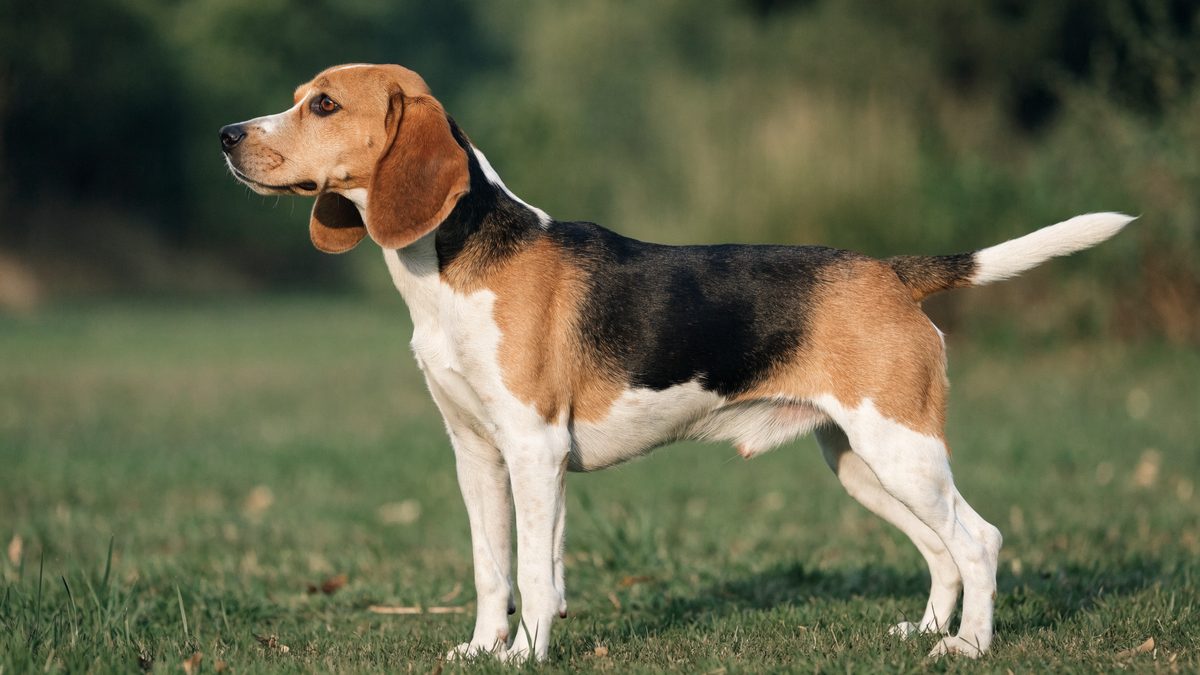
What a Beagle is
The Beagle is the smallest of the British pack hounds, bred to hunt small game and be followed on foot, and that one line explains the price, the training difficulty and the vet bill. A scent hound built for stamina and a musical voice is a wonderful family dog and a genuinely difficult apartment dog, and both facts come from the same breeding history.
The breed was established in England by the 15th century and has long been valued for its stamina, musical voice and exceptional scenting ability. The American Kennel Club recognised it in 1885, the National Beagle Club was formed in 1888 and held the first field trial, and the Beagle now sits at 7 of 210 in AKC breed popularity. It is one of the very few imported breeds whose original job still shapes daily life in an Indian flat.
The AKC standard, approved 10 May 2024 and effective 30 July 2024, describes the ideal dog in a single memorable sentence. It calls for a miniature Foxhound, solid and big for his inches, with the wear-and-tear look of the hound that can last in the chase and follow his quarry to the death. Read that as a working specification rather than poetry, because every part of it has a consequence you will live with.
| Attribute | Standard requirement | What it means for you |
|---|---|---|
| Varieties | Thirteen Inch, not exceeding 13 in. Fifteen Inch, over 13 but not exceeding 15 in | A small dog. Any hound over 15 in is disqualified |
| Ears | Set on moderately low, long, reaching nearly to the end of the nose, almost entire absence of erectile power | The ear seals the canal. This is the ear-infection risk in one line |
| Eyes | Large, set well apart, soft and houndlike, brown or hazel | The pleading expression that sells the breed |
| Coat | A close, hard, hound coat of medium length | Low grooming load, no clipping, moderate shedding |
| Colour | Any allowed hound colour | No colour carries a health premium |
| Disqualifications | Over 15 inches; merle and brindle colour patterns | A merle Beagle is not a rare variant. It is outside the standard |
Two breed standards, two different dogs
The FCI, which is the standards body the Kennel Club of India aligns with, publishes a different specification from the AKC, and the difference is not cosmetic. FCI Standard No. 161 classifies the Beagle in Group 6, scent hounds and related breeds, Section 1.3 small-sized hounds, with working trial, and sets size as a desirable minimum height at the withers of 33 cm and a desirable maximum of 40 cm. Forty centimetres is about 15.75 inches. Under the AKC standard, any hound measuring more than 15 inches is disqualified. A Beagle that is perfectly correct under FCI can be disqualified under AKC.
The colour rules diverge too. The AKC allows any hound colour and disqualifies only merle and brindle. FCI publishes a closed list, naming tricolour, blue white and tan, badger pied, hare pied, lemon pied, lemon and white, red and white, tan and white, black and white and all white, all of which except all white may be mottle, and then states that no other colours are permissible. If an Indian seller tells you a colour is rare and priced accordingly, the correct question is which standard they are quoting, because one of the two probably does not recognise it at all.
FCI describes the breed as a sturdy, compactly-built hound, conveying the impression of quality without coarseness, and its temperament clause is worth memorising before you buy: a merry hound whose essential function is to hunt, primarily hare, by following a scent. Bold, with great activity, stamina and determination. Alert, intelligent and of even temperament. Amiable and alert, showing no aggression or timidity. The coat is specified as short, dense and weatherproof, which is the single most useful line in either standard for an Indian buyer.
Size, weight and a number that should worry you
The AKC gives weight as under 20 pounds for the 13-inch variety and 20 to 30 pounds for the 13 to 15-inch variety, roughly 9 to 13.6 kg at the top end, with a life expectancy of 10 to 15 years. Now compare that with reality. The largest study ever conducted on companion Beagles, covering 19,906 Beagles drawn from 2,250,417 dogs under UK primary veterinary care, recorded a median adult bodyweight of 18.19 kg, with males at 19.70 kg and females at 16.59 kg.
A median adult Beagle in that dataset weighs about 4.5 kg more than the top of the AKC weight range for the larger variety. That is a UK pet population rather than an Indian one, and a median includes dogs that are simply large as well as dogs that are fat, so it is not a direct obesity measurement. It is still the clearest single number on this page, because the same study recorded obesity in 24.27 percent of those Beagles. The typical pet Beagle is heavier than the breed was designed to be.
Indian pages routinely publish a lighter figure. One puts the adult Beagle at 10 to 13 kg and treats that as the size advantage over a Labrador. That number matches the breed standard, not the median dog. If you feed to a 12 kg target and your Beagle is built like the median dog in the study, you will underfeed. If you feed to appetite, you will do the opposite, and appetite is the problem this breed is famous for.
Colour, and the premium that is not one
The AKC standard allows any hound colour and disqualifies only merle and brindle patterns. The UK Kennel Club lists 19 breed-standard colours including tricolour, lemon and white, badger pied, hare pied, blue white and tan, and their mottle variants. No registry ranks one above another. Any Indian seller quoting a colour premium is pricing a photograph.
One more fact belongs in the overview because no Indian buying guide mentions it. Following marketing in the 1950s as being genetically healthy, cheap to breed and highly tractable to handle, the Beagle became and still is the dominant dog breed used as a laboratory organism specifically in the area of toxicological research. In India that is not a footnote. It is a second, entirely separate supply of Beagles, governed by its own law, and it is covered properly in the adoption section of this page.
Beagle price in India
A Beagle puppy costs Rs 25,000 to Rs 1,20,000 in India in 2026. The useful fact is not the range. It is that the four Indian pages ranking for this query publish four different ranges, disagreeing by Rs 10,000 at the floor and Rs 60,000 at the ceiling, and none of them shows its working.
Some market context first, because it explains why these numbers keep moving. The number of pets in Indian households grew from 26 million in 2019 to 32 million in 2024, and Indian spending on pet products and services rose from 1.6 billion dollars in 2019 to 3.6 billion dollars in 2024, on a Redseer report cited by the BBC that projects the market could cross 7 billion dollars by 2028. That is the demand curve every band below is riding, and it is why any pre-2024 Indian price figure is now useless to you.
A trade outlet reporting Euromonitor International figures puts India's total pet population rising from 26 million in 2019 to 42 million in 2024, with dogs alone surpassing 36.8 million in 2024 and projected to exceed 51 million by 2028. Those numbers cannot be reconciled with the Redseer figure of 32 million total pets for the same year from the same 2019 starting point, because 36.8 million dogs will not fit inside 32 million pets. Bonbeno prints both and flags the contradiction rather than picking one. If two research firms disagree by 10 million animals on how many pets India has, treat every downstream Indian pet statistic, including every price band on this page, as an estimate.
Bonbeno read the price bands published by the Indian pages currently ranking for this query and set them side by side. Read them together and the disagreement is impossible to miss.
| Source | Headline range | Pet or basic quality | KCI registered | Show or champion line |
|---|---|---|---|---|
| Supertails | Rs 35,000 to Rs 1,20,000+ | Rs 35,000 to Rs 50,000 | Rs 50,000 to Rs 75,000 | Rs 75,000 to Rs 1,20,000+ |
| Mr n Mrs Pet | Rs 35,000 to Rs 90,000 | Rs 35,000 to Rs 50,000 | Rs 50,000 to Rs 75,000 | Rs 75,000 to Rs 90,000+ |
| PawSpace | Rs 25,000 to Rs 90,000+ | Rs 25,000 to Rs 40,000 | Rs 40,000 to Rs 70,000 | Rs 70,000 to Rs 90,000+ |
| Wrapinfur | Rs 25,000 to Rs 60,000 | Rs 25,000 to Rs 60,000 | Rs 50,000 to Rs 75,000 | Rs 75,000 to Rs 90,000+ |
Three things fall out of that table. The pet-quality floor differs by Rs 10,000, from Rs 25,000 to Rs 35,000. The KCI floor differs by Rs 10,000, from Rs 40,000 to Rs 50,000. The ceiling differs by Rs 60,000, because one source stops at Rs 60,000 while another runs past Rs 1,20,000 Supertails, How Much Does A Beagle Puppy…. Bonbeno prints all four rather than averaging them, because an average of four unsourced estimates is a fifth unsourced estimate.
Wrapinfur states a headline Beagle range of Rs 25,000 to Rs 60,000, then lists Mumbai at Rs 40,000 to Rs 90,000 and Delhi NCR at Rs 35,000 to Rs 70,000 in its own city table. Two of its city ceilings sit above its own headline ceiling. That is not a rounding difference, and it is a reasonable reason to weight that page lower when you are budgeting.
City-wise price, and how far the sources drift apart
Three of the four publish a city breakdown. They are not measuring the same thing, so the table below states each source's tier basis rather than pretending the columns are equivalent.
| City | Supertails, pet quality | PawSpace, all tiers | Wrapinfur, general |
|---|---|---|---|
| Delhi NCR | Rs 40,000 to Rs 55,000 | Rs 30,000 to Rs 80,000 | Rs 35,000 to Rs 70,000 |
| Mumbai | Rs 38,000 to Rs 52,000 | Rs 35,000 to Rs 85,000 | Rs 40,000 to Rs 90,000 |
| Bangalore | Rs 35,000 to Rs 48,000 | Rs 30,000 to Rs 80,000 | Rs 30,000 to Rs 55,000 |
| Hyderabad | Rs 33,000 to Rs 45,000 | Rs 30,000 to Rs 75,000 | Rs 27,000 to Rs 50,000 |
| Chennai | Rs 32,000 to Rs 42,000 | Rs 30,000 to Rs 75,000 | Rs 28,000 to Rs 50,000 |
| Pune | Rs 36,000 to Rs 48,000 | Rs 30,000 to Rs 75,000 | Rs 26,000 to Rs 48,000 |
| Kolkata | Not published | Rs 25,000 to Rs 65,000 | Rs 25,000 to Rs 45,000 |
| Kerala | Not published | Not published | Rs 25,000 to Rs 45,000 |
| Ahmedabad | Not published | Rs 25,000 to Rs 65,000 | Not published |
The three sources agree on direction and disagree on magnitude. All three make Delhi and Mumbai the dearest markets and Kolkata the cheapest, which is what you would expect from demand. Beyond that they part company: Pune runs Rs 26,000 to Rs 48,000 on one page and Rs 30,000 to Rs 75,000 on another PawSpace, Beagle Price in India. None of the three states a sample size, a collection date or a method. Treat every cell above as one publisher's estimate.
What the price is actually tracking
- KCI registration. One source puts the registration premium at Rs 10,000 to Rs 25,000 on the purchase price, made up of litter registration at Rs 500 to Rs 1,500 and individual puppy registration at Rs 1,000 to Rs 2,500 after eight weeks. Note that the stated fees add up to well under the stated premium. Registration from the Kennel Club of India documents pedigree. It is not a health certificate, and a competing page says so directly, warning that KCI registration alone does not guarantee good health.
- Breeder density. The same source counts 15 to 20 active registered breeders in Delhi NCR against 5 to 8 in Hyderabad and Pune as of March 2026. Thin supply lifts price more reliably than pedigree does.
- Health screening included. Optional hip and elbow scoring is quoted at Rs 8,000 to Rs 12,000. A puppy priced with screening built in is not more expensive, it is differently specified.
- Who is publishing. Two of the four detailed sources also broker puppy sales or sell pet services, and a third sells dog clothing and accessories alongside the article Wrapinfur, Beagle Dog Price in India. That is a commercial interest in the number, disclosed here because none of those pages discloses it itself.
- Colour and sex. Neither appears in any of the four price tables, and the breed standard gives no preference among allowed hound colours. If a seller quotes you a lemon or tricolour premium, no published Indian source supports it.
One ranking page treats Beagle prices below Rs 32,000 as a signal of undocumented health screening, questionable vaccination records or puppy mill operations. There is a harder floor than that. Under the Prevention of Cruelty to Animals (Dog Breeding and Marketing) Rules, 2017, every breeder must ensure that pups less than eight weeks in age are not sold, that only dogs in good health that have been provided the medical inoculations are sold, and that each pup sold is micro-chipped with a complete record of treatment and vaccination maintained. A registered breeder's establishment must be inspected at least once each year. Ask to see the certificate of registration from the State Animal Welfare Board before you ask about the price.
One framing point before you use these numbers. A Beagle is an affordable imported breed by Indian standards, cheaper than a Golden Retriever or a Labrador at the same tier, and one ranking page prices it 20 to 30 percent below comparable breeds. That affordable purchase price is exactly why buyers underestimate the operating cost, which the next section takes apart.
Bonbeno does not broker puppy sales and does not publish breeder listings. Every figure above is reported from a third party so you can see the spread yourself and price the uncertainty into your own decision rather than trusting a single headline number.
Monthly cost of owning a Beagle in India
Published Indian monthly cost estimates for a Beagle run from Rs 4,000 to more than Rs 15,000, a spread of nearly four times for the same dog. The gap is not inflation or city. It is that the four sources count different things, and only one of them counts the line item that actually defines this breed, which is ear care.
Four Indian sources publish a monthly cost structure for the Beagle. Set the line items beside each other and you can see exactly where the disagreement comes from.
| Line item | Supertails, comfortable tier | Mr n Mrs Pet | PawSpace | Wrapinfur |
|---|---|---|---|---|
| Food | Rs 1,800 to Rs 2,600 | Rs 2,000 to Rs 4,000 | Rs 3,000 to Rs 7,000 | Rs 3,000 to Rs 5,000 |
| Grooming and ear care | Rs 1,200 to Rs 1,800 | Rs 500 to Rs 1,000 | Rs 1,000 to Rs 3,000 | Rs 500 to Rs 1,000 |
| Veterinary and preventives | Rs 1,000 to Rs 1,500 | Rs 1,000 to Rs 2,000 | Rs 500 to Rs 2,000 | Rs 1,000 to Rs 2,500 |
| Training | Counted in supplies | Not counted | Rs 2,000 to Rs 8,000 | Rs 500 to Rs 1,500 |
| Tick and flea prevention | Counted in veterinary | Not counted | Rs 500 to Rs 1,500 | Not counted |
| Insurance | Rs 300 to Rs 500 | Not counted | Not counted | Not counted |
| Toys, treats, supplies | Rs 400 to Rs 800 | Rs 500 to Rs 1,500 | Rs 1,000 to Rs 3,500 | Not itemised |
| Stated monthly total | Rs 4,700 to Rs 7,200 | Rs 4,000 to Rs 8,500 | Rs 6,000 to Rs 15,000+ | No total published |
The Rs 4,000 floor and the Rs 15,000 ceiling describe the same breed. The difference is training, which one source prices at Rs 2,000 to Rs 8,000 a month and two others leave out entirely Wrapinfur, Beagle Dog Price in India. For a scent hound in a first-time Indian home, training is not an optional extra, so the lower totals are structurally optimistic.
The line item that is specific to this breed
Only one Indian source separates ear care from grooming, and it is the most useful number on any of these pages. It puts veterinary ear cleaning at Rs 800 to Rs 1,200 a month, treats it as critical rather than optional, and puts home ear-cleaning supplies at Rs 200 to Rs 400 a month on top. The same page quotes treatment of an established ear infection at Rs 8,000 to Rs 15,000 per episode and a separate figure of Rs 2,500 to Rs 8,000 for otitis in its health cost table.
Prevention at Rs 1,000 to Rs 1,600 a month costs Rs 12,000 to Rs 19,200 a year. One treated ear infection episode is quoted at Rs 8,000 to Rs 15,000. Against a breed that carries 2.54 times the odds of otitis externa compared with crossbred dogs, that is not a close call. This is the rare case where the preventive spend and the treatment spend are the same order of magnitude, which is exactly why owners skip it and then pay anyway.
First-year cost, where two sources publish a total
| Item | Supertails | PawSpace |
|---|---|---|
| Puppy purchase | Rs 35,000 to Rs 75,000 | Rs 25,000 to Rs 90,000+ |
| Vaccination course | Rs 2,000 to Rs 3,500 | Rs 3,000 to Rs 8,000 |
| Deworming and vet visits | Rs 800 to Rs 1,500 | Rs 2,000 to Rs 6,000 |
| Microchipping and ID registration | Rs 500 to Rs 1,200 | Not itemised |
| Food, first 12 months | Rs 14,400 to Rs 31,200 | Rs 36,000 to Rs 84,000 |
| Grooming, first 12 months | Rs 7,200 to Rs 21,600 | Rs 12,000 to Rs 30,000 |
| Ear cleaning supplies and care | Rs 1,500 to Rs 3,000 | Not itemised |
| Tick and flea prevention | Rs 3,000 to Rs 6,000 | Rs 6,000 to Rs 15,000 |
| Training classes | Rs 5,000 to Rs 15,000 | Rs 8,000 to Rs 30,000 |
| Bed, crate, bowls, collar, leash, harness | Rs 3,000 to Rs 8,000 | Rs 3,000 to Rs 10,000 |
| Toys and chews | Counted above | Rs 5,000 to Rs 15,000 |
| Emergency veterinary buffer | Rs 5,000 to Rs 20,000 | Not itemised |
| Stated first-year total | Rs 78,400 to Rs 1,85,100 | Rs 1,00,000 to Rs 2,50,000+ |
The two totals differ by roughly Rs 65,000 at the top, and almost all of it is food and training. Neither source states a sample size or a collection method, so neither total is a survey result. Bonbeno is running a verified owner cost survey across eight metros and will publish the sample size, the cities covered and the collection date when it is complete. Until then the honest position is that no reliable India-wide monthly figure exists for this breed, and the tables above compare estimates rather than settle the question.
Neither published first-year table lists neutering, and neither lists dental care. Both matter here. Under the 2017 rules, dogs over six months in age are not sold without first being sterilised unless they go to another licensed breeder, so an older puppy should already be done. Dental disease is the second most common disorder in the breed at 21.48 percent of Beagles in a single year, and no Indian Beagle cost page budgets a rupee for it.
One structural point is worth stating plainly. The purchase price sits between Rs 25,000 and Rs 1,20,000 and you pay it once. The operating cost sits between Rs 4,000 and Rs 15,000 a month and you pay it for twelve to fifteen years. Even at the cheapest published monthly total, a Beagle costs more to keep for one year than the median published puppy costs to buy.
Climate suitability: heat, humidity and the ear problem
Bonbeno rates the Beagle 3 of 5 for heat tolerance. A short, close coat is a real advantage over any double-coated import, and a Beagle handles an Indian summer better than a Husky or a Golden Retriever does. The two things that pull the rating down are not the coat. They are the waistline and the ears, and the monsoon makes both worse.
Start with what helps. The standard calls for a close, hard, hound coat of medium length, smooth-lying, and the UK Kennel Club records the coat as short with once-a-week grooming. Purina India's list of dogs at particular heat-stroke risk names short-faced breeds such as Boxers, Bulldogs, Pugs and Pekingese, and heavy-coated dogs such as Huskies and Newfoundlands. The Beagle is in neither category. That is a genuine advantage and Indian pages are right to say so.
The two risk factors that do apply
Purina India lists obesity directly among the factors that increase heat-stroke risk in dogs, alongside lack of water, enclosed space, excessive humidity, intense exercise and old age. Indian veterinary guidance puts a number on it: adipose tissue insulates and reduces heat dissipation efficiency, and obese pets overheat two to three times faster than lean pets. Cornell's canine health centre lists overweight dogs alongside short-muzzle and older dogs as being at higher risk of heat stroke.
Now put that next to the breed data. The Beagle carries 2.67 times the odds of overweight status compared with crossbred dogs, the second highest of any breed measured, behind only the Pug at 3.12. In a single study year, 24.27 percent of Beagles had obesity recorded, against 7.1 percent of dogs overall Pegram C, Raffan E, White E, Ashworth AH. So the coat is fine and the dog inside it very often is not.
A lean Beagle in an Indian summer is a low-risk dog. An overweight Beagle in an Indian summer is not, because obesity is an independent heat-stroke risk factor and overweight dogs overheat two to three times faster. This is the only breed on Bonbeno where the heat rating is genuinely under the owner's control. Feed it lean and the climate problem mostly goes away.
The temperature bands that matter in India
| Ambient temperature | Risk level | What it means in practice |
|---|---|---|
| Below 28 C | Low | Normal activity with shade and water |
| 28 to 35 C | Moderate | Shorten the walk to 15 to 20 minutes, early morning and late evening only |
| 35 to 42 C | High | Outdoor activity contraindicated. Asphalt reaches 60 C and above |
| Above 42 C | Extreme | Heat stroke possible within 10 to 15 minutes outdoors |
Humidity changes the arithmetic completely, and for a Beagle it changes it twice. A 35 C day at 90 percent humidity is more dangerous than a 42 C day at 20 percent humidity, because panting works by evaporation and humid air blocks it. That is the first effect, and it applies to every breed. The second effect is specific to this one.
Why the Indian monsoon is a Beagle problem
The standard requires ears set on moderately low, long, reaching when drawn out nearly, if not quite, to the end of the nose, with almost entire absence of erectile power, setting close to the head. In plain terms, pendulous ears lie flat over the canal and seal it. The largest study of canine ear disease found that breeds with pendulous ear carriage had 1.76 times the odds of otitis externa compared with breeds with erect ears, and breeds with V-shaped drop ears had 1.84 times the odds. The Beagle itself carried 2.54 times the odds and a one-year prevalence of 14.72 percent against 7.30 percent in dogs overall.
That study was run on UK dogs in a temperate climate. A sealed ear canal in Mumbai, Chennai, Kolkata or coastal Kerala during the monsoon is a warmer, wetter version of the same anatomy. Coastal cities during monsoon are described as particularly deadly for heat even at moderate temperatures, and the same trapped humidity is what an ear canal does not need.
One ranking page states that veterinary dermatologists report one in three Beagles in humid Indian regions experience at least one significant ear infection annually if ear cleaning is neglected. That figure carries no named study, no sample size and no citation on the source page, so Bonbeno will not repeat it as a fact. No Indian breed-level prevalence figure for canine ear disease exists. What does exist is an Indian caseload study, and it settles the seasonal question completely.
The Indian evidence, which no competing page cites
Researchers at the Dr. G.C. Negi College of Veterinary and Animal Sciences in Palampur, Himachal Pradesh, screened 2,476 dogs between June 2022 and July 2023 and diagnosed otitis externa in 81 of them, a hospital prevalence of 3.27 percent. The seasonal breakdown is the number every Indian Beagle owner should know.
| Season | Cases | Share of all cases |
|---|---|---|
| Rainy, July to August | 48 | 59.25 percent |
| Summer, April to June | 15 | 18.51 percent |
| Winter, December to March | 10 | 12.34 percent |
| Autumn, September to November | 8 | 9.87 percent |
Nearly six in ten Indian canine ear cases occurred in the two months of the rains. The authors attribute it directly to increased humidity favouring microbial growth. The same study found that 69.13 percent of cases occurred in breeds with pendulous ears against 30.86 percent in erect-eared breeds, and identified excessive moisture as a predisposing factor in 20.98 percent of cases with water entry implicated in a further overlapping share.
A second Indian study reaches a very different headline number, and the difference is definitional rather than contradictory. Researchers at Anand Agricultural University in Gujarat reported that of 116 dogs presented with ear conditions, 67 or 57.76 percent had symptoms of otitis. That is 57.76 percent of dogs already brought in for an ear problem, against Palampur's 3.27 percent of all dogs attending for any reason. Both are correct and they answer different questions. Neither is a breed-level prevalence figure for the Beagle in India, and no such figure exists. The Palampur study reports a breed-wise share of its 81 cases, in which the Beagle accounted for 5 cases, or 6.17 percent, behind the Labrador Retriever at 23.45 percent and the German Shepherd at 14.81 percent. That is a share of caseload, not a measure of breed risk. It mostly reflects how many of each breed attend that hospital, and Labradors are far more numerous in India than Beagles. For breed risk you need the UK figures, where the Beagle carries 2.54 times the crossbred odds. Combine the two honestly and the picture is clear: the Beagle is a high-risk ear breed, and India supplies a two-month window each year in which nearly six in ten of all ear cases occur.
The city-by-city read
- Bengaluru and Pune. The easiest Indian cities for this breed. Moderate summers, and the ear load is manageable outside the monsoon weeks.
- Delhi NCR. A genuinely cold winter and a brutal April to June. Heat is the constraint, humidity is not, so the ears get an easier ride than on the coast.
- Mumbai, Chennai, Kolkata and coastal Kerala. Humidity is the year-round constraint. Panting is less effective and the ear canal never fully dries. Budget for the higher end of the ear-care figures here.
- Rajasthan and western Gujarat. One ranking page classes these as a challenging fit for the breed without premium air conditioning. Dry heat is easier on ears and harder on everything else.
- Any city, any month. Walk before 7 am or after 8 pm from April to September, keep the walk to 15 to 20 minutes, and do the seven-second pavement test with the back of your hand before you step out.
Heat stroke results when a dog cannot regulate its body temperature and it rises to 40.5 C or above, and prolonged elevation damages every organ in the body. Move the dog into shade or air conditioning, wet the body with cool but not cold water making sure it reaches the skin, wet the belly and inside the legs, and use a fan. Do not plunge the dog into cold water or an ice bath, because that prevents the core temperature coming down, and never place ice directly on the skin, which causes vasoconstriction and traps core heat. Start cooling on the way to the clinic rather than instead of going. Dogs that survive one episode are at greater risk of another.
Temperament and household fit
The Beagle suits a household with company at home for most of the day, tolerance for a loud voice, and the discipline to keep food off the floor. It suits an empty flat very badly. Nothing about the breed is difficult in the way a guarding or a working breed is difficult; the problems are sociability, appetite and volume, and all three trace to pack hunting.
The breed description is unusually consistent across registries. The UK Kennel Club calls the Beagle sociable and generally good-tempered, thriving on companionship, active and inquisitive, and notes that its keen sense of smell may lead it to follow an interesting scent. The AKC calls the breed merry, happy-go-lucky and companionable, bred to hunt in packs so they enjoy company and are generally easygoing, and describes curious, clever and energetic hounds who require plenty of playtime. Indian sources add that Beagles are cheerful, friendly and curious and get along well with children and other pets.
Three temperament facts that decide Indian rehoming
- It is vocal. The breed was valued historically for its musical voice, which is a polite way of saying it bays. One Indian page lists barking or howling among common Beagle behaviour traits without qualification. In a shared Indian building that is a neighbour conversation within weeks, not months.
- It cannot be left alone. A Beagle who is left alone inside or outside for long periods of time will tend to become destructive, and the AKC's stated fix is company, whether human or canine. Indian sources list separation anxiety directly among the breed's difficulties. The veterinary data agrees: anxious or distressed was recorded in 4.91 percent of Beagles in a single year against 0.58 percent of dogs overall in the wider UK population.
- It is governed by its nose and its stomach. Indian pages describe Beagles as food obsessed, easily distracted by smells and prone to begging, and one states plainly that they are notorious overeaters who will consume beyond satiation if given unlimited access. This is not a training failure. It is a documented breed predisposition, quantified at 2.67 times the odds of overweight status against crossbred dogs.
Apartment reality
The UK Kennel Club lists the ideal home for a Beagle as a small house with a small or medium garden, town or country, with exercise up to one hour per day. That is a far softer specification than most working breeds get, and it is why the Beagle genuinely does work in an Indian flat where a Husky does not. An Indian source puts it directly, noting that a compact small to medium size makes Beagles suitable for both apartments and houses. Compact is the honest word for this breed in an Indian flat, and it is the single biggest reason Beagles outsell every other hound here.
The constraint is not floor area. It is hours alone and decibels. A flat in which somebody is home most of the day, with a secure door discipline and neighbours who can live with baying, is a good Beagle home. A flat empty for ten hours is the setup that produces the destructive, anxious, complained-about dog that ends up being rehomed.
- Good fit. Families with children, households with someone home much of the day, homes with a second dog, first-time owners who will actually train and socialise the puppy.
- Poor fit. Single working professionals out ten hours a day, buildings with strict noise rules, anyone who wants a guard dog, households that will not manage food access.
- Watch item. The AKC calls Beagles escape artists and specifies an exercise area with a fence at least five feet tall extending underground to prevent tunnelling. Most Indian flats cannot supply that, which is why lead discipline replaces fencing here.
Beagles became the dominant laboratory dog partly because they were marketed as cheap to breed and highly tractable to handle. An Indian rehabilitation trust puts it more bluntly, describing them as purpose-bred animals bred for traits like docility and submissiveness, and adding a second reason that is purely practical, that they are small and easy to stack, where a 45 kg Labrador is not. PETA India makes the same point, that experimenters use beagles because of their friendly and docile nature. That docility is exactly what makes the breed safe with children. It is the same trait, read two ways.
One temperament myth deserves correcting. Beagles are not aggressive by nature, and Indian sources say so. In the UK study, aggression was recorded in 1.85 percent of Beagles, well down the disorder list and below anxiety, conjunctivitis and dental disease. If you want a dog that deters anybody, this is the wrong breed and no training route changes that.
Training a Beagle
Train a Beagle with food, patience and permanent lead management, because the breed learns quickly, is powerfully food-driven, and was selected for centuries to keep following a scent trail after the human said stop. The training problem here is not intelligence and it is not defiance. It is that a nose engineered to work independently of a handler outranks your voice.
The AKC's training guidance for the breed is short and correct. Early socialisation and puppy training classes are a must, treats are a huge aid in training, and Beagles do not respond well to harsh techniques, but patience, positive reinforcement and even a little creativity will win out in the end. Indian sources agree, describing Beagles as smart but stubborn, responding well to positive reinforcement, treats and consistent routines.
The food motivation cuts both ways. It makes a Beagle one of the easiest breeds to teach a new behaviour to and one of the hardest to keep lean, because every training session is calories. Adjust the daily ration down on heavy training days rather than treating rewards as free.
The one thing that does not train out
Off-lead recall is the exception and it is a safety matter rather than a training milestone. The AKC states it without hedging: walks must always be taken on a leash, because as a scenthound with a very strong hunting instinct, a Beagle will not be able to resist the urge to run off in pursuit of a compelling scent. The UK Kennel Club makes the same point more gently, noting the breed benefits from secure surroundings as its keen sense of smell may lead it to follow an interesting scent. Indian pages list trying to escape open gates among standard Beagle behaviour.
A Beagle on a scent in an Indian city has traffic, street dog territories and 40 C asphalt between it and home. A frightened dog running in 40 C heat can develop heat stroke in minutes, and asphalt reaching 60 C causes third-degree paw burns within about 30 seconds. Microchipping is quoted at Rs 500 to Rs 1,200 and is required for every pup sold under the 2017 rules Prevention of Cruelty to Animals. Treat the microchip as the backstop and the closed door as the plan.
Realistic timelines
| Skill | Start | Realistic outcome |
|---|---|---|
| Name response | Week 1 home | Reliable indoors in 2 to 3 weeks with food rewards |
| Sit, down, settle | Week 1 home | 3 to 6 weeks. Food motivation makes this fast |
| Toilet training | Week 1 home | 4 to 6 months |
| Ear handling without protest | Week 1 home | 2 to 4 weeks, and worth more than any trick |
| Loose-lead walking | Month 2 | 6 to 12 months, with ongoing maintenance |
| Settling alone for short periods | Week 2 home | Months of gradual work. Never assume it is finished |
| Quiet on cue | Month 3 | Partial. Baying is breed-typical |
| Reliable recall off-lead | Month 2 | Never treat as reliable |
Indian training costs are published at Rs 8,000 to Rs 30,000 or more for a programme, with one source recommending an eight to twelve session plan rather than a very short programme for this breed specifically. Another puts first-year professional training at Rs 5,000 to Rs 15,000. The gap is large and neither is a survey. What both agree on is that a Beagle in a first-time home usually needs paid help.
Socialise early, and socialise for the flat
Socialise the puppy before the window closes, and design the exposure around Indian apartment life rather than around a park. That means lifts, stairwells, security guards, delivery riders, honking traffic, other dogs on a shared landing, groomers, and being handled around the ears and mouth by a stranger. Ear handling is the one people skip and the one that pays for itself every single month.
Scent work is the highest-value training you can do with this breed and it runs indoors in an air-conditioned room during a heatwave. Hide food, let the dog find it, build up to searching a whole room. Twenty minutes of nose work tires a scent hound more than twenty minutes of walking, and it uses the exact instinct that otherwise gets you dragged down the road. Indian sources list sniffing games and puzzle toys among the recommended mental stimulation for the breed PawSpace, Beagle Price in India.
How much exercise a Beagle actually needs
A Beagle needs about an hour of exercise a day, and unusually for an imported breed, the Indian and international sources broadly agree on that number. The UK Kennel Club puts it at up to one hour per day, and the AKC says at least an hour every day. The disagreement is at the bottom of the range, where two Indian pages publish 30 minutes.
This is the one section where the sources are close enough that you can plan against them. Set them side by side anyway, because the floor matters.
| Source | Stated daily requirement |
|---|---|
| UK Kennel Club | Up to 1 hour per day |
| American Kennel Club | At least 1 hour every day |
| Supertails, India | 60 minutes minimum, split into two sessions; 75 to 90 minutes for high-energy individuals |
| PawSpace, India | 2 walks per day, 30 to 60 minutes total activity |
| Mr n Mrs Pet, India | 30 to 60 minutes daily, walks plus playtime |
| Wrapinfur, India | 30 to 60 minutes daily, walks plus playtime |
Two Indian sources publish 30 minutes as an acceptable floor Wrapinfur, Beagle Dog Price in India. Both national kennel clubs publish an hour American Kennel Club. Bonbeno treats one hour as the requirement and 30 minutes as the figure that produces the destructive, vocal, overweight dog that Indian owners then describe as badly behaved.
Why an hour is not optional for this breed specifically
The AKC states that a Beagle left alone inside or outside for long periods will tend to become destructive. Indian sources say a bored Beagle can become noisy, destructive or stubborn. Layer on the obesity data and the exercise requirement stops being about behaviour. In one UK owner survey referenced by the breed's own health study, 80 percent of owners stated that they gave their Beagle more than one hour of exercise daily, and the breed still recorded 24.27 percent obesity. Exercise alone does not fix the waistline in this breed. Portion control does. Exercise fixes the behaviour.
Fitting an hour into the Indian day
- Walk twice, before 7 am and after 8 pm, from April to September, and keep each session to 15 to 20 minutes in the hottest months rather than one long outing.
- Walk on grass or dirt where you can. Grass runs 10 to 15 C cooler than asphalt in the same sun.
- Weigh the reward food into the daily ration before the walk, not after, because training treats are the single easiest way to undo the exercise.
- Replace distance with nose work indoors during heatwaves and the monsoon. Scent searching delivers the mental load a walk was providing.
- Exercise the dog on a lead or inside a secure boundary only, because the breed will follow a scent and cannot be recalled off one.
- Split the hour across two people if the household has two. The failure mode is not unwillingness, it is one person carrying two outings a day for fourteen years.
One Indian source recommends shorter but more frequent sessions for Beagle puppies until twelve months, roughly 15 minutes across four sessions, to avoid joint stress. That is sound and it also suits Indian summers, because four short outings fit into the cool windows more easily than one long one does.
A Beagle that gets its hour is a calm, easy flatmate. A Beagle that gets twenty minutes redirects the energy into the house, and the Indian failure pattern is predictable: chewed furniture, sustained baying, counter-surfing for food, and a dog that gains weight because the household compensates with treats. None of that is a behavioural disorder. It is a working scent hound with nothing to do.
Grooming a Beagle in Indian humidity
Groom a Beagle once a week for the coat and check the ears far more often than that, because the coat is genuinely easy and the ears are genuinely not. The UK Kennel Club sets grooming at once a week for a short coat. No published schedule for the ears exists in India, which is why this section gives you one built from the veterinary evidence.
The coat first, because it takes two minutes to explain. The AKC describes a smooth, dense double coat that gets heavier in the winter, so spring is shedding season, with moderate year-round shedding, and recommends weekly brushing with a medium-bristle brush, a rubber grooming mitt or a hound glove. Beagles do not need frequent bathing unless they get into something messy, and nails should be trimmed regularly because overly long nails cause pain and problems walking. The UK Kennel Club records grooming at once a week and confirms the breed sheds.
The veterinary data adds a detail that no grooming guide mentions. Overgrown nails were the third most common disorder recorded in Beagles, affecting 11.61 percent in a single year. Claw and nail disorders as a group hit 13.14 percent. That is a grooming failure showing up in clinical records, and it is entirely preventable at home.
The ears, which are the actual job
The ear conformation is written into the standard. Ears are set on moderately low, long, reaching when drawn out nearly, if not quite, to the end of the nose, fine in texture, fairly broad, with almost entire absence of erectile power, setting close to the head, with the forward edge slightly inturning to the cheek. That flap covers the canal and holds warm, moist air against it.
| Breed or ear type | One-year prevalence | Odds versus crossbred or erect-eared dogs |
|---|---|---|
| All dogs | 7.30 percent (95 percent CI 6.97 to 7.65) | Reference |
| Basset Hound | 28.81 percent | 5.87 times |
| Chinese Shar Pei | 17.76 percent | 3.44 times |
| Labradoodle | 17.71 percent | 2.95 times |
| Beagle | 14.72 percent | 2.54 times (95 percent CI 1.67 to 3.86) |
| Golden Retriever | 14.11 percent | 2.23 times |
| Chihuahua | 1.26 percent | 0.20 times |
| Pendulous ear carriage | Not stated separately | 1.76 times vs erect ears |
| V-shaped drop ear carriage | Not stated separately | 1.84 times vs erect ears |
For scale, an animal-health industry summary puts it at up to 1 in 7 dogs seen in veterinary practice getting otitis externa at some point in their lives, across all breeds. A Beagle sits well above that baseline. The same summary makes the practical point that after bathing or summertime swimming it is important to thoroughly dry the ears to prevent moisture buildup, and that proper grooming practices matter especially for dogs with long or floppy ears.
The Gujarat study identified the single commonest precipitating event in its 67 otitis cases, and it is entirely under your control. Most cases had a history of bathing seven to twelve days earlier, and the authors' stated conclusion is that the most common cause of otitis was bathing without ear plugging. Bilateral infection was the norm at 52.23 percent of cases. For a Beagle in India, that turns bath day into the highest-risk day of the month. Plug the ears before the bath, dry them thoroughly afterwards, and check them again a week later, which is exactly when the Gujarat cases were presenting.
The study authors name the mechanism directly, writing that Beagles and Golden Retrievers have dropped (pendulous or V-shaped) pinnae which may increase the risk of these breeds for otitis externa. They also recommend that owners and veterinarians should be especially vigilant about ear examination and care in such predisposed breeds.
The dedicated otitis externa study put Beagle prevalence at 14.72 percent using 2016 data. The dedicated Beagle health study put otitis externa at 11.18 percent (95 percent CI 10.17 to 12.19) using 2019 data, with ear disorders as a group at 13.62 percent. Bonbeno prints both rather than picking one. Different study years, different samples, same conclusion: roughly one in eight to one in seven Beagles gets diagnosed with an ear problem in any given year, in a temperate country.
The researchers' own owner guidance is more careful than most Indian advice. They recommend gentle ear cleaning with a dry paper cloth, careful use of ear cleaners with antimicrobial properties, and avoidance of overzealous ear-cleaning or ear-plucking. Scrubbing a Beagle's canal daily is its own injury. The same release adds two facts that place this breed precisely: smaller breeds weighing under 10 kg had a lower risk of ear infection than larger breeds, and dogs aged over one year are at higher risk than those under one. A Beagle at a median adult 18.19 kg sits above that protective weight threshold, so it gets the drop-ear penalty without the small-dog discount. Lead author Dan O'Neill frames the wider point bluntly, saying the study explores the health issues associated with floppy ears in dogs that many people find so appealing, and that the results may prompt us all to question whether we have gone too far in our quest for variety in how our dogs look.
The Indian humidity schedule
- Check the ears every time you brush, weekly at minimum. Lift the flap, look, smell. A yeasty smell precedes a visible problem.
- Clean weekly at home with a veterinary ear cleaner and cotton pads, taking about five to ten minutes, which is the cadence one Indian source publishes.
- Dry the ears completely after every bath and every swim. A damp sealed canal in humid weather is the whole problem in one sentence.
- Increase to twice weekly through the monsoon, June to September, in Mumbai, Chennai, Kolkata and coastal Kerala, where humidity stays high even at moderate temperatures.
- Book a veterinary ear inspection monthly until you are confident, which is what the one Indian source that separates ear care recommends, at Rs 800 to Rs 1,200 per visit.
- Stop and see a veterinarian at the first head shake or scratch. Treatment is quoted at Rs 2,500 to Rs 8,000 for otitis and Rs 8,000 to Rs 15,000 per episode elsewhere on the same page.
The AKC notes that Beagles do not drool or have a doggy odour, and describes shedding as minimal in its breed facts even while the grooming section calls it moderate. That internal inconsistency is worth flagging, but the practical point stands. Through an Indian monsoon, a short-coated dog with no body odour is a far easier housemate than a double-coated one, and there is no coat blow to survive.
Indian grooming costs are published at Rs 1,000 to Rs 3,000 per session depending on city and provider, with monthly professional grooming quoted at Rs 1,000 to Rs 1,500 and home-managed grooming at Rs 500 to Rs 1,500 a month. For a Beagle, home grooming is realistic for the coat. The ears are where paying somebody who knows what a healthy canal looks like is money well spent for the first year.
Health risks, screening and lifespan
The Beagle is a genuinely healthy breed with no extreme conformation, and it also had a disorder recorded in 82.38 percent of dogs in a single study year. Both statements come from the same paper. This section is built on the largest study ever published on companion Beagles, which no page currently ranking for this query cites.
In January 2025, researchers at the Royal Veterinary College published a VetCompass study of Beagles kept as companion animals in the UK. It drew 19,906 Beagles from a population of 2,250,417 dogs under primary veterinary care, manually reviewed a random sample of 3,729 Beagles, and reported demography, disorders and mortality. It is the definitive dataset on this breed and it did not exist when most Indian Beagle pages were written.
What Beagles are actually diagnosed with
| Disorder | Prevalence (95 percent CI) | Median age of affected dogs |
|---|---|---|
| Obesity | 24.27 percent (22.89 to 25.65) | 5.44 years |
| Periodontal disease | 17.78 percent (16.55 to 19.01) | 7.53 years |
| Overgrown nails | 11.61 percent (10.58 to 12.64) | 5.08 years |
| Otitis externa | 11.18 percent (10.17 to 12.19) | 5.67 years |
| Anal sac impaction | 10.59 percent (9.60 to 11.58) | 6.01 years |
| Lipoma | 5.50 percent (4.77 to 6.23) | 9.53 years |
| Anxious or distressed | 4.91 percent (4.21 to 5.60) | 5.29 years |
| Conjunctivitis | 4.00 percent (3.37 to 4.62) | 4.46 years |
| Heart murmur | 3.27 percent (2.70 to 3.84) | 9.40 years |
| Seizure disorder | 2.04 percent (1.58 to 2.49) | 7.45 years |
That table is the answer to the question Indian buyers actually type, which is what health issues a Beagle has. Note what is on it and what is not.
Four of those numbers are dramatically higher than the figure for dogs overall, and the authors say so themselves. Obesity at 24.27 percent compares with a 7.1 percent annual prevalence across all UK dogs. Periodontal disease at 17.78 percent compares with 12.52 percent in dogs overall. Lipoma at 5.50 percent is almost four times the 1.44 percent in dogs overall, giving Beagles 2.03 times the odds against crossbreds. Anxious or distressed at 4.91 percent compares with 0.58 percent in the wider dog population.
Indian Beagle guides list hip dysplasia, cherry eye and hypothyroidism as headline breed risks Supertails, How Much Does A Beagle Puppy…. None of the three appears anywhere in the twenty most common specific disorders in 3,729 Beagles, and hypothyroidism does not appear in the paper at all. The four conditions that actually dominate this breed's clinical record are obesity, dental disease, nail overgrowth and ear disease. Three of those four are managed at home for the price of a brush, a nail clipper and an ear cleaner.
The teeth, which every Indian Beagle guide ignores
Dental disease is the second most common thing a Beagle is diagnosed with, at 21.48 percent as a group and 17.78 percent for periodontal disease specifically, against 12.52 percent in dogs overall. Not one published Indian Beagle cost guide budgets a rupee for it. The background rate makes the case on its own: studies show 80 to 90 percent of dogs over the age of 3 have some component of periodontal disease, it is worse in smaller breeds, and the incidence increases with age.
The mechanism is worth understanding because it changes what you buy. Plaque, an invisible bacterial biofilm laid down above and below the gum line, is the culprit rather than the visible golden-brown tartar, and early diagnosis is difficult because there are often no outward signs. By the time you notice pawing at the mouth, drooling, decreased appetite, taking longer to finish meals, mouth odour or reluctance to chew a favourite toy, the disease is already advanced.
Successful prevention requires daily brushing at home with a veterinary paste plus regular professional cleanings under general anaesthesia. Never use human toothpaste, which contains detergents and fluoride that a dog swallows. Prefer products carrying the Veterinary Oral Health Council seal. The training method is where the Beagle is easy: start with a cue phrase, run a finger along the outside of the lips and reward, then along the gums and reward, then add paste, then add the brush. A food-driven scent hound learns this faster than almost any other breed, so the one disorder that most Indian owners never address is also the one this breed is most cooperative about preventing. Weigh the reward treats into the daily ration, given the obesity predisposition.
Lifespan, where the sources disagree
| Source | Figure | What it is measuring |
|---|---|---|
| VetCompass UK primary-care data | 11.28 years median age at death (IQR 9.32 to 13.08) | Actual recorded deaths in 322 Beagles |
| VetCompass, females only | 11.70 years | Recorded deaths, significantly longer than males |
| VetCompass, males only | 10.75 years | Recorded deaths |
| UK breed club questionnaire, via VetCompass | 12.67 years | Owner-reported, Kennel Club registered dogs only |
| Laboratory Beagles, via VetCompass | 12.5 years | Reported age at death, likely selection-biased |
| UK life table, 30,563 recorded deaths | 9.85 years life expectancy at age 0 | Recorded deaths, 171 Beagles, small-sample caution stated |
| Japanese data, quoted in the same paper | 14.8 years | Same breed, different country |
| American Kennel Club | 10 to 15 years | Breed expectation |
| UK Kennel Club | Over 12 years | Breed expectation |
| Wrapinfur, India | 12 to 15 years | Unsourced editorial estimate |
Two of those rows come from UK primary-care data and they measure different things, so read them together rather than picking one. A median age at death of 11.28 years describes the dogs that actually died. A life expectancy at age 0 of 9.85 years describes a newborn puppy's expectation across a full life table, against 11.23 years (95 percent CI 11.19 to 11.27) for UK dogs overall. Both are real. The life-table authors caution that the Beagle sample was relatively small at 171 dogs, giving that figure reserved confidence.
The same life-table paper puts the Beagle at 9.85 years in the UK against 14.8 years in Japan. That is a five-year gap in one breed across two countries, and it is wider than the gap between the Beagle and the Labrador Retriever inside the UK, where the Labrador reaches 11.77 years. The genetics did not change between London and Tokyo. The management did. Nobody has measured Indian Beagle longevity at all, so the honest position is that this breed's lifespan is unusually sensitive to how it is kept, and the levers are the ones this page keeps returning to: weight, teeth and ears.
Female Beagles outlived males by 0.95 years in that dataset, a statistically significant difference. The authors are careful about what this means, writing that Beagles fare well in terms of age at death compared to many other pure breeds but do not live as long as many other types of dog in the wider population that are not pure breed. Every Indian page quoting 12 to 15 years is quoting an expectation, not a measurement.
What Beagles die of
Of 322 recorded deaths, 92.65 percent were euthanised and 7.35 percent died unassisted. The leading recorded causes were neoplasia at 19.26 percent, mass at 13.18 percent, poor quality of life at 12.84 percent, and brain disorder and kidney disorder at 6.76 percent each. Set against other pedigree dogs, cancer accounted for 32.8 percent of Beagle deaths against 27.0 percent across pedigree dogs overall. The authors put it plainly, that neoplasia is linked with the mortality of around a quarter of Beagle dogs and owners should be adequately prepared for this potential eventuality.
Inherited disease and what to screen for
The UK Kennel Club splits Beagle screening into two tiers. Its Good Practice tier, for conditions where evidence indicates a significant concern in the breed, requires a DNA test for Lafora's disease and a DNA test for neonatal cerebellar cortical degeneration (NCCD). Its Best Practice tier adds DNA tests for Factor VII deficiency (FVIID), Imerslund-Grasbeck syndrome (IGS-2) and Musladin-Lueke syndrome (MLS). The AKC's national breed club separately recommends a hip evaluation, a cardiac exam, an ophthalmologist evaluation, a thyroid evaluation and the MLS DNA test.
The Orthopedic Foundation for Animals publishes the most usable version of that list, because it states exactly what has to be filed and where. To earn a CHIC number, a Beagle needs a hip evaluation by OFA radiograph or PennHIP, an ACVO eye examination, an MLS DNA test from an approved laboratory, a cardiac evaluation, and an autoimmune thyroiditis evaluation with a minimum age of 24 months, with every result registered with OFA. Optional additions are an advanced cardiac exam, a patellar luxation evaluation from one year, and DNA tests for Lafora epilepsy, Factor VII deficiency and neonatal cerebellar cortical degeneration. One requirement applies across every participating breed and is worth knowing before you buy: the dog must be permanently identified via microchip or tattoo in order to qualify for a CHIC number.
OFA states plainly that for CHIC certification, all results do not need to be normal, but they must all be in the public domain. A CHIC number therefore proves that a breeder tested and published, not that every result was clear. That is still far more than a KCI registration certificate tells you, and it is the specific thing to ask an Indian breeder for by name. Note also that the two DNA tests the UK Kennel Club places in its Good Practice tier, Lafora's and NCCD, sit in OFA's optional list Orthopedic Foundation for Animals. Two respected bodies rank the same two tests differently, so ask for both regardless of which scheme your breeder follows.
The Kennel Club approved an official DNA testing scheme for Lafora's disease in Beagles in 2018. It is an autosomal recessive condition, so a dog must inherit two copies of the abnormal gene before its health is affected, and a single-copy carrier shows no signs but passes the gene on. Affected dogs usually begin to show signs at around five to seven years of age, starting with shuddering or jerking triggered by loud noises, flickering lights or sudden movements, and progressing to loss of control of movement, blindness and dementia. A 2024 study of 166 Beagles found that where three signs occur together in a Beagle aged six or over, namely jerking of the head, photosensitivity and forgetting things the dog used to be able to do, 98.2 percent of those dogs are correctly assigned to the affected genotype. With one or two of the three signs, that drops to 92.1 percent and 13.2 percent. Only genetic testing gives confirmation.
The clinical picture is documented in the veterinary literature in named Beagles. A case report describes two affected dogs, an 8-year-old male and a 7.5-year-old female, both homozygous for the NHLRC1 expansion confirmed by Southern blotting. In the female, the startles were first noticed at 6.5 years of age, became progressively worse, and were triggered by visual stimuli or changes in light such as the dog moving into or through sunlight or shadows, by waving a hand in front of her face, or by loud noises. Gentle and slow petting would not elicit signs. In affected dogs the dodecamer repeat expanded to between 19 and 26 copies against two or three copies in the normal canine sequence.
Lafora disease occurs around seven years of age, often after dogs have been bred. That single clause is the whole argument for DNA testing rather than waiting to see. A carrier or affected Beagle can produce several litters before any sign appears, which is how the mutation persists in a popular breed. The DNA test for Lafora epilepsy became available for Beagles in 2017. A dog diagnosed with Lafora epilepsy may still live to 10 to 14 years of age despite having the disease, so this is a quality-of-life and breeding-ethics question rather than an immediate death sentence.
The breed club's position is worth knowing precisely, because it differs from the Kennel Club's. The National Beagle Club joined the OFA's Canine Health Information Center programme in 2004, and CHIC now lists ten health tests for the breed, four of which are DNA tests. Of those four, only the Musladin-Lueke syndrome test is required to earn CHIC certification; Lafora epilepsy, Factor VII deficiency and NCCD are optional but recommended. Ask for all four anyway. On Factor VII, the club's health and genetics chair notes that reports of Beagles with FVII having bleeding issues are infrequent and that many affected Beagles undergo surgery, dental cleanings and even caesarean sections without abnormal bleeding, while still advising owners to know their dog's status and tell their veterinarian.
Lafora's disease is not a Beagle-only problem, and the genetics explain why testing matters. The same NHLRC1 dodecamer repeat expansion has been identified as causative in the Basset Hound, the Beagle and the Miniature Wirehaired Dachshund, and the researchers describe it as a species-wide problem that will likely appear spontaneously in many breeds. No Beagle-specific carrier frequency has been published; the breed appears in that literature through case reports rather than through a population survey. Bonbeno states that gap rather than borrowing another breed's number.
The clearest evidence that asking for these tests changes outcomes comes from a different breed. A nationwide programme tested 733 Miniature Wirehaired Dachshunds for the same Lafora mutation. Over six years the proportion of dogs homozygous for the mutation, meaning at risk of the disease, fell from 10.4 percent to 2.7 percent, carrier frequency fell from 41.5 percent to 25.7 percent, and the proportion of dogs free of the mutation rose from 48.1 percent to 71.6 percent. Those are Dachshund figures, not Beagle figures, and this page will not pretend otherwise. What they demonstrate is that a breed community that tests and publishes can retire an inherited disease within a decade, which is exactly what an Indian buyer asking for parental DNA results is contributing to.
That matters in India for a specific reason. Seizure disorder was recorded in 2.04 percent of Beagles overall, and in 2.84 percent of males against 1.09 percent of females, a significant difference. Brain disorders as a group hit 3.75 percent and were also higher in males. A five to seven-year-old Beagle that starts jerking at flashing lights is not developing a behavioural quirk. It is a veterinary appointment.
The study's own conclusion reads: their disorder profile suggests the Beagle breed should not be considered to have an extreme conformation, and the five most common disorders in Beagles are exactly the same as the top five previously reported in dogs overall, albeit with the order jumbled and with the Beagle showing generally higher prevalence. The authors call the breed a very good example of the so-called Goldilocks dog that is just right from a conformational perspective. The UK Kennel Club places the Beagle in Breed Watch Category 1, meaning no points of concern specific to the breed have been identified for judges. This is a well-built dog. It is not a low-maintenance one.
Feeding a Beagle in India
Feed a Beagle by weighed portion and never by appetite, because this breed carries the second highest documented obesity predisposition of any dog breed and will eat past satiation if allowed. Portion control is not a nutrition preference for a Beagle. It is the single highest-impact health decision an Indian owner makes.
The evidence is unusually clear. In UK primary-care data, eight breeds showed increased odds of overweight status compared with crossbred dogs, and the Beagle was second on the list.
| Breed | Odds versus crossbred dogs |
|---|---|
| Pug | 3.12 times |
| Beagle | 2.67 times |
| Golden Retriever | 2.58 times |
| English Springer Spaniel | 1.98 times |
| Border Terrier | 1.72 times |
| Labrador Retriever | 1.70 times |
| Cavalier King Charles Spaniel | 1.50 times |
| Cocker Spaniel | 1.32 times |
| German Shepherd Dog | 0.55 times |
| Shih Tzu | 0.53 times |
The study behind that table covered 22,333 dogs and recorded 1,580 as overweight, a one-year prevalence of 7.1 percent (95 percent CI 6.7 to 7.4). Its authors concluded that targeted overweight prevention strategies should be prioritised for predisposed breeds, such as Pugs and Beagles. A co-author put the genetic point directly, saying that where breed increases risk of a problem it means genes are likely to be at least in part to blame, and that previous work suggests genetics drives a high appetite in some breeds.
The Beagle health study calls it directly, stating that the twin factors of a strong breed predisposition as well as high prevalence suggest that obesity should be considered as a major breed welfare issue for the Beagle. It ranks obesity as having the third highest overall welfare impact on dogs, behind only dental disease and osteoarthritis. Obese dogs have shortened life spans, reduced quality of life and higher frequencies of arthritis, breathing problems, heart disease, diabetes and certain cancers.
The three risk multipliers you control
- Neutering. Neutered males carried 1.90 times the risk of overweight status compared with entire females, and the mechanism is thought to be increased appetite and decreased physical activity following the change in sex hormones. In the Beagle study, 66.42 percent of Beagles were neutered against 43.74 percent of dogs overall. Cut the ration at neutering, and discuss the adjustment with your veterinarian at the time rather than six months later.
- Middle age. Dogs aged six to under nine years carried 2.99 times the risk compared with dogs under three. The median age of Beagles with obesity recorded was 5.44 years. The weight arrives quietly in the middle years, not in puppyhood.
- Free feeding. One Indian source describes Beagles as notorious overeaters that will consume beyond satiation if given unlimited access, and states that free-feeding causes rapid obesity. Every Indian source on this breed says measure the portions PawSpace, Beagle Price in India Wrapinfur, Beagle Dog Price in India.
What to feed, and how much
The AKC recommends a high-quality dog food appropriate to the dog's age, whether commercially manufactured or home-prepared with veterinary supervision, notes that some dogs are prone to getting overweight, and warns specifically that treats can be an important training aid but that giving too many can cause obesity. Published Indian portion guidance sits at 1 to 1.5 cups daily split into two meals for an adult, with a monthly consumption of roughly 2.5 to 3 kg of food.
| Source | Monthly food cost |
|---|---|
| Supertails, budget tier | Rs 1,200 to Rs 1,800 |
| Supertails, premium mid-range | Rs 1,800 to Rs 2,600 |
| Mr n Mrs Pet | Rs 2,000 to Rs 4,000 |
| Wrapinfur | Rs 3,000 to Rs 5,000 |
| PawSpace | Rs 3,000 to Rs 7,000 |
Those four sources disagree by roughly six times at the extremes, from Rs 1,200 to Rs 7,000 a month for the same breed. Brand tier explains most of it. What none of them says is the thing that matters more than brand, which is that a correctly portioned bag of mid-range food beats a generously portioned bag of premium food for this particular dog.
Score the body, not the bag
Stop guessing and use the standard the profession uses. The WSAVA body condition score runs on a 9-point scale, grouped as under ideal, ideal and over ideal, with scores 4 and 5 sitting in the ideal column. Learn the two ideal descriptors by heart, because they are what you check by hand every week.
| Score | Band | Description |
|---|---|---|
| 4 | Ideal | Ribs easily palpable, with minimal fat covering. Waist easily noted, viewed from above. Abdominal tuck evident |
| 5 | Ideal | Ribs palpable without excess fat covering. Waist observed behind ribs when viewed from above. Abdomen tucked up when viewed from side |
| 6 | Over ideal | Ribs palpable with slight excess fat covering. Waist is discernible viewed from above but is not prominent. Abdominal tuck apparent |
| 7 | Over ideal | Ribs palpable with difficulty; heavy fat cover. Noticeable fat deposits over lumbar area and base of tail. Waist absent or barely visible |
| 8 | Over ideal | Ribs not palpable under very heavy fat cover, or palpable only with significant pressure. Waist absent. No abdominal tuck |
The WSAVA chart places both 4 and 5 in the ideal column and never names a single ideal score, and it does not use the words overweight or obese anywhere; its only label for high scores is over ideal. Bonbeno reports that as published rather than tidying it into a cleaner rule. The practical test is unchanged and is in the descriptors themselves: ribs by feel, waist from above, tuck from the side. If you are pressing hard to find ribs on a Beagle, you are at 7 or above.
- Feel the ribs weekly. They should be easy to find under light pressure, with a visible waist from above and a tuck from the side. Feed to that, not to a number printed on a bag.
- Weigh the food. Cups vary by kibble density. A kitchen scale removes the argument.
- Subtract training treats from the daily ration rather than adding them to it. A food-driven breed trains beautifully and gains weight while doing it.
- Keep the bin, the counter and the dining table closed off. Indian sources list begging and counter-driven food seeking as standard Beagle behaviour.
- Keep multiple water stations refreshed two to three times a day, because water heats fast in an Indian flat and dehydration dramatically increases heat-stroke risk.
- Weigh the dog monthly and write it down. A Beagle gains 1 kg without looking any different, and 1 kg on an 18 kg dog is a real percentage.
Feeding quantities depend on the individual dog's age, weight, body condition and activity level. Set them with a registered veterinarian who has examined your dog, and review them at neutering and again at around five years old, which is when the obesity data says the weight actually arrives Royal Veterinary College, VetCompass.
Bonbeno reviews Indian pet food brands separately and tests products first-hand before publishing a verdict. See our testing method for what a Bonbeno food review does and does not claim.
Beagle puppy: the first year, month by month
A Beagle puppy's first year in India is organised around four deadlines, which are the vaccination course, the socialisation window, the first monsoon and the first summer. Two of those four are ear deadlines, which is the part every other Indian puppy guide leaves out.
Aim for October or November if you have any choice. That gives the puppy the cool, dry months for house training, socialisation and early lead work, and it means the first monsoon arrives when the dog is eight to ten months old and already comfortable having its ears handled. Bringing a Beagle puppy home in June means teaching ear handling and house training during the wettest weeks of the year, which is the hardest possible start.
- 8 to 12 weeks. Home, name, toilet routine, crate, and daily ear handling from day one. Puppies under eight weeks must not have been sold to you at all under the 2017 rules, and every pup sold must be micro-chipped with a full treatment and vaccination record. The vaccination course is published at Rs 2,000 to Rs 3,500 for the three-series plus rabies, completed by sixteen weeks. Start managed socialisation now.
- 3 to 4 months. Teething, so chewing peaks and a food-driven puppy will test every surface. Begin loose-lead work and start weighing the food rather than scooping it. Deworming across four rounds is published at Rs 800 to Rs 1,500. Keep exercise short and frequent, roughly 15 minutes across four sessions.
- 4 to 6 months. Vaccination course completes. Establish the weekly ear-clean routine as a habit before you need it. Book a veterinary ear check so somebody experienced confirms what a healthy canal looks like on your dog. Puppy training classes are published at Rs 5,000 to Rs 15,000 for six to eight weeks.
- 6 to 9 months. Adolescence, and the nose gets serious. This is when escape attempts start and when off-lead recall quietly stops working. Do not relax the rule that walks are always on a lead. Under the 2017 rules a dog over six months is not sold without first being sterilised, so if you bought younger, this is the neutering conversation.
- 9 to 12 months. Cut the daily ration after neutering, because neutered males carry 1.90 times the overweight risk. Build exercise toward the adult hour a day American Kennel Club. Start monthly weigh-ins and write the number down.
- 12 months onward. Move to adult food, keep the weekly ear check and the weekly rib check, and trim nails on a schedule, because overgrown nails affect 11.61 percent of this breed. Ask your veterinarian about a dental baseline now rather than at seven, which is the median age at which periodontal disease shows up.
The first monsoon
Set the ear routine before the rain rather than during it. Through June to September in coastal cities, move to twice-weekly cleaning, dry the ears completely after every wet walk, and treat a single head shake as a reason to look rather than a reason to wait. Tick and flea prevention is published at Rs 3,000 to Rs 6,000 for the first twelve months and is described as essential in monsoon. PawSpace lists tick and flea checks among basic Beagle grooming needs alongside ear cleaning.
The first summer
A puppy under six months has immature thermoregulation and sits in an elevated heat-risk category on its own. Shift walks to before 7 am and after 8 pm, do the seven-second pavement test before every walk because asphalt reaches 60 C and burns paw pads within about 30 seconds, and keep water stations refreshed two to three times a day. A Beagle handles this far better than a double-coated breed does, but a puppy is a puppy.
When the outside temperature is 26 C, the inside of a car reaches 32 C in five minutes and 43 C in 25 minutes. Indian veterinary guidance is blunter, putting a 35 C day at 55 C inside the car within ten minutes. Cornell lists being left alone in a car among the top heat-stroke risks for dogs. There are no exceptions and no safe duration.
Beagle vs the breeds Indian buyers cross-shop
Choose a Beagle over a Pug or a Labrador if you want a small, sociable family dog and you will actually manage the ears and the food bowl. Choose an Indian Pariah Dog instead if climate fit, cost and long-run health are your deciding factors. The comparison below uses the same veterinary datasets for every breed so the columns are genuinely comparable.
Most Indian comparison tables set breeds against each other on price and size. That tells you almost nothing about what the next twelve years cost. This table uses two UK primary-care studies that measured every breed the same way.
| Factor | Beagle | Pug | Labrador Retriever | Golden Retriever |
|---|---|---|---|---|
| Odds of overweight status vs crossbreds | 2.67 times | 3.12 times | 1.70 times | 2.58 times |
| Odds of otitis externa vs crossbreds | 2.54 times | Raised, not among top five | Not among the highest-odds breeds | 2.23 times |
| Ear carriage | Pendulous, long, low-set | Small drop ear | Drop ear | Drop ear |
| Coat | Close, hard, short | Short | Short double | Long double |
| Heat tolerance, Bonbeno rating | 3 of 5 | 1 of 5, brachycephalic and named at extreme risk | 3 of 5 | 2 of 5, named as heavy-coated risk |
| Published Indian puppy price, KCI tier | Rs 50,000 to Rs 75,000 | Rs 35,000 to Rs 50,000 | Not published on the same page | Not published on the same page |
| Published Indian monthly cost | Rs 4,700 to Rs 7,200 | Rs 4,000 to Rs 6,800 | Not published on the same page | Not published on the same page |
| Daily exercise | Up to 1 hour | Low, heat-limited | 1 hour or more | 1 hour or more |
Read that table and the Beagle's position is specific rather than vague. It is not the fattest breed, it is second. It is not the worst ears, it is fourth. It is not the worst in heat, it is mid-table. What makes it distinctive is that it carries a top-five risk on two independent axes at once, and the two compound: an overweight Beagle handles Indian heat worse, and a Beagle that cannot be exercised in the heat gains more weight.
Indian buyers who like the hound look often cross-shop the Beagle against the Basset Hound. On ears that is not a close call: the Basset carries 5.87 times the crossbred odds against the Beagle's 2.54. If you want hound temperament with the smallest ear problem in the group, the Beagle is the answer.
Beagle vs Indian Pariah Dog
| Factor | Beagle | Indian Pariah Dog |
|---|---|---|
| Origin | England, established by the 15th century | Indian subcontinent, native landrace |
| Ear carriage | Long pendulous, seals the canal | Erect, open canal |
| Heat tolerance, Bonbeno rating | 3 of 5 | 5 of 5 |
| Ear-care load in monsoon | Weekly to twice weekly, Rs 1,000 to Rs 1,600 a month | Minimal |
| Documented obesity predisposition | 2.67 times crossbred odds | None measured |
| Purchase cost | Rs 25,000 to Rs 1,20,000 Supertails, How Much Does A Beagle Puppy… | Usually free to adopt |
| Published first-year cost | Rs 78,400 to Rs 2,50,000+ PawSpace, Beagle Price in India | Substantially lower |
| Median recorded age at death | 11.28 years | 12 to 16 years, observational |
| Suitable for first-time owners | Yes, with training | Yes |
The Indian Pariah Dog is a landrace, not a registered breed with a kennel-club standard, and there is no breed-level epidemiology for it in the way there now is for the Beagle. Its figures here are observational and drawn from Bonbeno's own breed profile rather than from a registry or a primary-care dataset. Bonbeno flags that asymmetry rather than presenting both columns as equally evidenced. Full profile at Indian Pariah Dog.
The genuine case for a Beagle over a native dog is temperament and size in a specific package: a small, merry, sociable pack animal that is excellent with children and asks for an hour a day. That is a real thing and no indie dog is a substitute for someone who wants exactly it. The genuine case against is that you are signing up for a documented obesity predisposition and a documented ear predisposition in a climate that makes both worse, and you will be managing those every week for over a decade.
Mistakes Indian Beagle owners actually make
The failure modes for this breed in India are narrow, documented and mostly cheap to avoid. These are ranked by how much damage they do rather than by how often they get discussed on Indian pet blogs.
- Free feeding, or feeding to appetite. The Beagle carries 2.67 times the odds of overweight status against crossbred dogs, the second highest of any breed measured, and 24.27 percent of Beagles had obesity recorded in a single year against 7.1 percent of dogs overall Pegram C, Raffan E, White E, Ashworth AH. Obesity ranks third for overall welfare impact on dogs and is an independent heat-stroke risk factor in Indian conditions. Weigh the food.
- Treating the ears as grooming rather than as healthcare. A pendulous ear carries 1.76 times the odds of otitis externa and the Beagle specifically carries 2.54 times. In an Indian monsoon the canal never dries. A weekly clean costs Rs 200 to Rs 400 a month in supplies; an infection episode is quoted at Rs 8,000 to Rs 15,000.
- Ignoring the teeth entirely. Periodontal disease affects 17.78 percent of Beagles against 12.52 percent of dogs overall, and dental disorders as a group reach 21.48 percent. A study of research Beagles found 84 percent of dogs over three years affected. No published Indian Beagle cost guide budgets anything for dental care.
- Letting the dog off-lead because it seems obedient. A Beagle will not be able to resist the urge to run off in pursuit of a compelling scent, and walks must always be taken on a leash. A Beagle on a scent in 40 C Indian heat is a heat emergency as well as a traffic one.
- Leaving the dog alone all day in a flat. Anxious or distressed was recorded in 4.91 percent of Beagles against 0.58 percent of dogs overall, and the AKC says a Beagle left alone for long periods will tend to become destructive. This is the mistake that produces the rehoming.
- Skipping nail trims. Overgrown nails were the third most common disorder in the breed at 11.61 percent, and long nails cause pain as well as problems walking and running.
- Buying a merle Beagle as a rare colour. Merle and brindle colour patterns are disqualifications under the breed standard. A premium for either is a premium for something the registry rejects.
- Treating KCI papers as a health guarantee. Registration documents pedigree. One Indian source states plainly that KCI registration alone does not guarantee good health and that you should still check vaccination records, deworming records, parent health and breeder ethics. The screening that matters is the Kennel Club's Lafora's and NCCD DNA tests plus hip, cardiac, eye and thyroid evaluations American Kennel Club.
- Buying from an unregistered breeder. Under the 2017 rules a breeder needs a certificate of registration from the State Animal Welfare Board, the establishment must be inspected at least once each year, and every pup sold must be micro-chipped and at least eight weeks old. Most Indian buyers never ask to see any of it.
- Assuming the price is the cost. The cheapest published Indian monthly total for a Beagle is Rs 4,000 and the highest is over Rs 15,000. Even at the floor, one year of keeping costs more than the median published puppy costs to buy.
Two of the ten above are the ones that show up in mortality and morbidity data rather than in inconvenience. Obesity is linked to shortened lifespan, arthritis, breathing problems, heart disease, diabetes and certain cancers, and cancer accounts for 32.8 percent of Beagle deaths against 27.0 percent across pedigree dogs overall. A lean Beagle with clean ears is a substantially different animal from a fat one with chronic otitis, and the difference costs a kitchen scale and ten minutes a week.
Adoption, and the Indian route no price page mentions
India has a Beagle adoption route that exists in no other country in the same form, and not one page ranking for this query mentions it. Indian law requires laboratories to rehabilitate the dogs they use, and organised trusts have rehomed hundreds of released Beagles into Indian homes. If you want this breed, this is the first door to knock on.
Why India has laboratory Beagles at all
The Beagle is the dominant dog breed used as a laboratory organism specifically in the area of toxicological research, a position it reached after being marketed in the 1950s as genetically healthy, cheap to breed and highly tractable to handle. An Indian rehabilitation trust describes the selection reasoning without softening it, explaining that these are purpose-bred animals bred for traits like docility and submissiveness, and that Beagles are used because they are amiable but also because they are small and easy to stack, where a 45 kg Labrador is not. PETA India states the same thing, that experimenters use beagles because of their friendly and docile nature.
In India, testing cosmetics on animals is banned but pharmaceutical and some agro-product testing is not. The dogs used are typically separated from their mothers at around four to six months and housed in solitary cages, and many had their vocal cords removed.
The law that changed the outcome
The Committee for the Purpose of Control and Supervision of Experimentation on Animals, a statutory body of the Government of India, publishes binding guidelines on the reuse and rehabilitation of dogs. The key provisions are specific and worth quoting closely.
- A hard three-year limit. Any reuse of a dog after the completion of an approved experimental protocol must be authorised by CPCSEA for each individual animal, limiting their reuse or stay in laboratory housing to a maximum period of three years.
- Mandatory rehabilitation. Dogs that have completed the three-year experimental term, or that are not permitted for reuse within that period, should be promptly rehabilitated by the institute with information to the CPCSEA.
- Adoption is the preferred route. The guidelines state that in the case of dogs there is immense possibility to be adopted by families, that this may be encouraged after the animals have been spayed or castrated by the institute, and that adoptions are facilitated through trustworthy Animal Welfare Organisations after due approval of CPCSEA.
- Breeding dogs are covered too. Dogs used in breeding may be limited to five whelping cycles and must be rehabilitated on completion, and dogs used in toxicity studies must not be used for breeding.
- Every dog is individually identified. Each animal must be assigned a unique number by way of a microchip so that humane limits on reuse can be enforced.
- If nobody adopts, the institute pays. Otherwise institutes should bear the costs of rehabilitation in their own facilities, until the natural death of the animal.
The rationale published alongside those rules is unusually candid for a regulatory document. It states that animals in laboratories undergo psychological, physiological and physical trauma, not just from the interventions made on them, but also from solitary confinement, lack of natural conditions, caging, handling and absence of appropriate social interaction, and it records that rehabilitation has been recognised in India as the fourth R and became official CPCSEA policy in 2004.
A change in Indian law mandated the release of laboratory animals after one cycle of testing, and India is the first country with such a law. That is a genuinely notable fact about Indian animal welfare policy, and it is the single reason a Beagle adoption route exists here that does not exist in most markets.
What actually happened, in numbers
The record is documented across national reporting rather than being anecdotal. In December 2012, 70 Beagles imported from China by a pharmaceutical laboratory in Bangalore were released to People For Animals and Blue Cross Chennai after PETA India notified CPCSEA that quarantine paperwork had falsely described the dogs as pets rather than as animals for experiments. In early 2016, a Bengaluru laboratory shut and roughly 250 Beagles were suddenly free, which is what led two volunteers to found Freagles of India.
| Date | Event | Number of Beagles |
|---|---|---|
| December 2012 | Released from a Bangalore pharmaceutical laboratory to People For Animals and Blue Cross Chennai | 70 |
| 2016 | Received by Freagles of India in several batches in its founding year | 242 |
| By end 2017 | Total rehabilitated by Freagles of India | 350 |
| 2018 | Released from a Gujarat laboratory and a Hyderabad laboratory | 20 and 13 |
| By August 2019 | Total rehomed by Freagles of India | 465 |
The trust registered formally in April 2017 and has since extended to Pune, Hyderabad, Ahmedabad and Vadodara The Better India, Once Caged. No national register of laboratory Beagle releases is published, so the totals above are what reporting has documented rather than a complete count. Bonbeno states that limit rather than extrapolating a national figure.
What adopting a released Beagle is actually like
This is not a discount puppy and nobody involved pretends it is. A canine behaviourist working with the released dogs describes the reality directly, noting that dogs do not usually cope well with changed routines after they are two years old and the released dogs are older, at least five, and that many develop aberrant behaviours such as constant pacing and eating their own excreta. She describes the release as a big jolt to their physiology as well as their mindset, and says the dogs do not know what soil or grass or stones or leaves or sunlight are, what a bowl or a collar is, or how to not eat anything that is not kibble.
The rehabilitation method is deliberate. The dogs are never touched or played with unless they approach humans first, volunteers wait for a curious dog to come and sniff, and the first contact is a chin scratch so the hand stays within the dog's vision and does not feel like an attack. Older rehabilitated dogs are introduced to new arrivals, on the reasoning that nobody teaches a dog to be a dog better than another dog.
The Beagle health study speculates that a high contribution of rehomed laboratory Beagles to the overall Beagle population could partially explain the breed's apparently high risk for anxious behaviours, given previous exposure to decreased human interaction, confined living areas and stereotypies in laboratory settings. It also reports an observational study of 74 laboratory Beagles at six weeks post-adoption in Germany in which most re-homed dogs showed friendly behaviour towards both humans and dogs, and a survey of owners of 16 rehomed laboratory Beagles that found they had generally adjusted well. The evidence supports optimism and patience in the same breath.
If you adopt, expect this process
- Screening of you, not just of the dog. Every prospective adopter is screened on housing, expectations and willingness to be completely patient, and the process only completes when volunteers are sure the home fits the individual dog.
- Training before the dog arrives. Adopters undergo thorough training so the organisation knows they are ready.
- A return clause. If an adopter can no longer care for the dog or has to move, the Beagle returns to the facility, and passing the animal to relatives or friends is not permitted under any circumstances.
- Months, not days. Some dogs start playing with humans within days and others take months, and the trusts give them as long as they need.
- A dog that may not bark. Devocalisation was common in Indian laboratory Beagles. For a breed whose voice is its most complained-about trait, that is a strange and sad advantage.
If you buy instead, verify these five things
- Ask to see the certificate of registration from the State Animal Welfare Board, which every breeder needs under the 2017 rules, and remember the establishment is required to be inspected at least once each year.
- Confirm the puppy is at least eight weeks old, is micro-chipped, and comes with a complete record of treatment and vaccination, all of which are mandatory conditions of sale.
- Ask for the parents' Lafora's disease and NCCD DNA results, which the Kennel Club places in its Good Practice tier for this breed.
- Ask for hip, cardiac, eye and thyroid evaluations on the parents, which is what the national breed club recommends.
- Ask a veterinarian to examine the puppy's ears before you commit, because that is the system you will be managing for the next twelve years.
A Beagle is a good first dog for an Indian family that will be home, will train, and will weigh the food. It is a poor choice for an empty flat. And before you pay Rs 25,000 to Rs 1,20,000 for a puppy, understand that Indian law has already created a supply of adult Beagles who must be rehomed by the institutions that used them, that trusts have placed hundreds of them successfully, and that not one page currently ranking for this query will tell you so.
Bonbeno does not sell animals and does not broker puppy sales. If you want a dog that suits Indian conditions by default, with erect ears that never seal, the Indian Pariah Dog is free to adopt and better adapted to the heat.
Beagle questions Indians actually search
How much does a beagle cost in India?
Published Indian sources put a Beagle puppy between Rs 25,000 and Rs 1,20,000 in 2026, and they disagree with each other by Rs 10,000 at the floor and Rs 60,000 at the ceiling. Pet quality runs Rs 25,000 to Rs 50,000, KCI registered runs Rs 40,000 to Rs 75,000, and show lines run above that. No source publishes a sample size or a method.
How much does a champion Beagle cost in India?
Show or champion bloodline Beagles are published at Rs 70,000 to Rs 1,20,000 and above, with one source stopping at Rs 90,000 and another running past Rs 1,20,000. A champion line buys pedigree and show eligibility. It buys no measurable health advantage on its own, because the health screening is a separate set of tests you have to ask for by name.
Why are Beagles so popular in India?
Size and temperament. A Beagle stands at or under 15 inches, fits an Indian flat, has a short coat that copes with heat far better than a double-coated import, and was bred to work in packs so it is sociable and good with children. The UK Kennel Club lists the ideal home as a small house with a small or medium garden, which describes a large share of Indian urban housing.
Are Beagles good family dogs in India?
Yes, with two conditions. They are merry, sociable and good with children by breed description, and small enough not to knock a child over. The conditions are that somebody is home most of the day, because Beagles left alone for long periods become destructive, and that the household controls food access, because the breed carries the second highest obesity predisposition of any breed measured.
Will a Beagle survive India's hot summers without air conditioning?
Usually yes, if the dog is lean. A Beagle has a close short coat and is not on Purina India's list of heat-stroke-prone breeds, which names short-faced dogs and heavy-coated dogs. The risk multiplier is weight, because obese dogs overheat two to three times faster than lean dogs. Walk before 7 am and after 8 pm from April to September and keep indoor temperature below 32 C.
How often should I clean my Beagle's ears?
Weekly at minimum, and twice weekly through the monsoon in Mumbai, Chennai, Kolkata and coastal Kerala. Beagles carry 2.54 times the odds of otitis externa compared with crossbred dogs because the long pendulous ear seals the canal. Dry the ears completely after every bath and every wet walk, and see a veterinarian at the first head shake rather than waiting.
What is the monthly cost of owning a Beagle in India?
Published Indian estimates run from Rs 4,000 to over Rs 15,000 a month, a spread of nearly four times. The gap is mostly training, which one source prices at Rs 2,000 to Rs 8,000 monthly and two others omit. Budget separately for ear care at Rs 1,000 to Rs 1,600 a month, which is the one line item specific to this breed and the one most guides fold into grooming.
How long do Beagles live?
The largest study of the breed recorded a median age at death of 11.28 years across 322 deaths, with females at 11.70 years and males at 10.75 years. That is lower than the 12 to 15 years Indian pages publish, because those are breed expectations rather than recorded deaths. Cancer accounted for 32.8 percent of Beagle deaths against 27.0 percent across pedigree dogs overall.
What health problems do Beagles have?
Fewer inherited problems and more manageable ones than Indian pages claim. In a single study year, obesity affected 24.27 percent of Beagles, periodontal disease 17.78 percent, overgrown nails 11.61 percent and otitis externa 11.18 percent. Hip dysplasia, cherry eye and hypothyroidism, which Indian guides list as headline risks, do not appear in the twenty most common disorders at all.
Are Beagles good for first-time dog owners?
Yes, more so than most imported breeds, provided you train early and manage food. Indian sources say Beagles suit first-time pet parents if the family is ready for training, exercise and consistent routines. The two traits that catch beginners out are that off-lead recall never becomes reliable in a scent hound, and that this breed will eat past satiation if given free access.
Are Beagles suitable for apartments in India?
Yes on size, conditionally on noise and hours alone. The UK Kennel Club lists a small house as the ideal home and exercise at up to one hour a day, which an Indian flat can supply. The two constraints are the breed's musical voice, which carries in shared buildings, and separation anxiety, recorded as anxious or distressed in 4.91 percent of Beagles against 0.58 percent of dogs overall.
How much exercise does a Beagle need?
About one hour a day. The UK Kennel Club says up to one hour per day and the AKC says at least an hour every day, while two Indian pages publish 30 minutes as acceptable. Split the hour into two sessions timed for the cool windows. Exercise fixes the behaviour but not the waistline, because 80 percent of owners in one survey exceeded an hour and the breed still recorded 24.27 percent obesity.
Can you adopt a Beagle in India instead of buying one?
Yes, and India has a route that exists almost nowhere else. CPCSEA guidelines limit a laboratory dog's stay to a maximum of three years and require prompt rehabilitation afterwards, with adoption through approved animal welfare organisations encouraged after sterilisation. One Bengaluru trust had rehomed 465 released Beagles by 2019. Expect months of patient rehabilitation rather than a ready-made pet.
Do Beagles bark a lot?
Yes, and they bay rather than bark. The breed was valued historically for its musical voice, which is a hunting trait rather than a fault, and Indian sources list barking or howling among standard Beagle behaviour. Quiet on cue trains partially at best. In a shared Indian building this becomes a neighbour conversation within weeks, so manage it from week one rather than month six.
Compare with similar breeds
Beagle sits in 1 Bonbeno group. Each one compares it directly against the breeds it is genuinely an alternative to, on the same figures.