
Dog breed profile
Basset Fauve de Bretagne in India: Price, Coat and Reality
Why no rupee price for this breed exists, how FCI-Standard N° 36 separates it from the other three bassets clause by clause, and what a harsh fawn coat and a hound's ears actually cost an owner in Indian humidity.
Quick answer
There is no verified Basset Fauve de Bretagne price in india, because no Indian market for the breed exists. Every ranking page publishes a US dollar figure instead, and the six that publish one disagree by a factor of seven. Indian import law permits this dog in as a returning family's pet and rejects commercial and breeding applications outright.
This guide is general information for Indian pet owners and is not a diagnosis. Always consult a registered veterinarian near you before acting on anything you read here, and treat ear pain, repeated vomiting, collapse in heat or any sudden change in your dog's condition as urgent.
Basset Fauve de Bretagne at a glance
What a Basset Fauve de Bretagne actually is, and which basset it is not
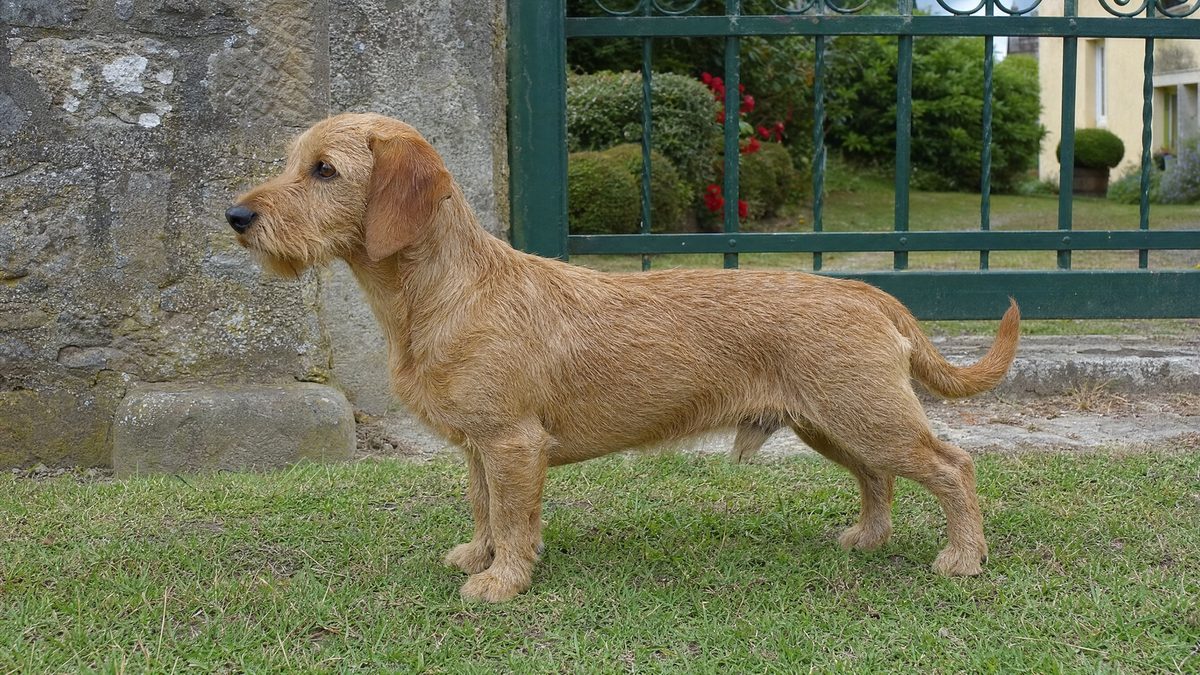
A Basset Fauve de Bretagne is a small, stocky, harsh-coated French scent hound standing 32 to 38 cm at the withers, in one solid fawn colour ranging from golden wheaten to red brick. It is the shortest-standing member of the Fauve de Bretagne family, it is not a Basset Hound, and the single sentence that separates it from every other basset is its coat clause: very rough, harsh, rather short, never woolly or curly.
The Fédération Cynologique Internationale recognised the breed on a definitive basis on 30 October 1963 and files it as FCI-Standard N° 36, Group 6 Scent hounds and related breeds, Section 1.3 Small-sized hounds, with working trial. Its country of origin is France, the official authentic language of the standard is French, and the current valid text was published on 25 March 2003 and translated into English by John Miller and Raymond Triquet. The American Kennel Club gave the breed full recognition in the Hound Group on 1 January 2026, after recording it in the Foundation Stock Service since February 2015 and moving it into the Miscellaneous Class in 2023. The United Kingdom is where the breed has the longest English-speaking record: the first dog was imported into Britain in 1982 and the Kennel Club formally recognised the breed in 1991.
FCI-Standard N° 36, read rather than summarised
The standard is short and unusually blunt, which makes it easy to check a seller's claims against it. The general appearance clause reads in full that this is a small, stocky hound, lively, rapid for its size, that benefits from enormous energy coupled with excellent hardiness. The utilisation clause names the quarry: rabbit, hare, fox, roe deer and wild boar. The behaviour clause calls the breed impassioned hunters that are also excellent companions of man, sociable, affectionate and equable, and says they adapt themselves easily to all terrains, even the most difficult.
| Point | What the standard says |
|---|---|
| Standard number | FCI-Standard N° 36, English text dated 05.05.2003 |
| Valid official standard published | 25 March 2003 |
| Definitive FCI recognition | 30 October 1963 |
| Group and section | Group 6, Section 1.3 Small-sized hounds, with working trial |
| Height at the withers | Males and females alike, 32 cm minimum to 38 cm maximum, with a tolerance of 2 cm for exceptional specimens |
| Weight | Not given. The standard sets no weight at all |
| Coat | Very rough, harsh, rather short, never woolly or curly. The face shouldn't be too bushy |
| Colour | Fawn, from golden wheaten to red brick. A few black hairs on back and ears tolerated, a small white star on the chest not sought after |
| Ears | Finely attached, in line with the eye, just reaching the end of the nose when drawn forward, ending in a point, turned inwards |
| Skin | Rather thick, supple. Absence of dewlap |
| Back | Short for a basset and broad. Never swaybacked |
| Forearm | Vertical or curving slightly in, which is not to be sought after |
| Dewclaws | Presence of dewclaws is a disqualifying fault. This breed is always free from dewclaws |
Read the weight row twice, because it settles an argument that runs through every page ranking for this breed. FCI-Standard N° 36 contains no weight figure of any kind. Every kilogram number published about this dog came from somewhere other than the breed standard, and the published numbers do not agree. Purina India tells Indian readers the adult weighs about 16 to 18 kg. Wikipedia gives 36 to 40 lbs, which is 16.3 to 18.1 kg and agrees with Purina almost exactly. The top-ranking Indian puppy seller publishes 9 to 14 kg, which is roughly half. For scale, the Basset Artésien Normand standard does carry a weight, 15 to 20 kg for a dog of 30 to 36 cm, so a 16 to 18 kg figure for a slightly taller basset is the plausible one and the 9 to 14 kg claim is not.
The same Indian seller page publishes a height of 11 to 15 inches. Eleven inches is 27.9 cm, which sits below the FCI floor of 32 cm even after the 2 cm tolerance is applied, so a dog at the bottom of that published range could not be shown anywhere in the world. Ask any seller to give the height in centimetres and check it against 32 to 38.
The Fauve de Bretagne family, and why the two standards are almost the same document
The Basset Fauve de Bretagne is the short-legged version of the Griffon Fauve de Bretagne, and the FCI says so in the breed's own history clause: this little basset has the same qualities as the breed from which it is derived, the griffon fauve de Bretagne. That relationship is not a footnote. Set FCI-Standard N° 36 beside FCI-Standard N° 66 and the coat, colour, ear, skin, neck, chest, tail and dewclaw clauses are word for word identical, down to the phrase about a small white star on the chest. Only nine things differ, and seven of them follow from leg length.
| Clause | Basset Fauve de Bretagne, N° 36 | Griffon Fauve de Bretagne, N° 66 |
|---|---|---|
| Section | Section 1.3, Small-sized hounds | Section 1.2, Medium-sized hounds |
| Height | 32 to 38 cm | 48 to 56 cm |
| Quarry | Rabbit, hare, fox, roe deer and wild boar | Hare, fox, roe deer and wild boar. No rabbit |
| Stop | A little more marked than with the griffon fauve de Bretagne | Only slightly marked |
| Back | Short for a basset and broad | Short and broad |
| Forearm | Vertical or curving slightly in, which is not to be sought after | Vertical |
| Front pastern seen from the front | In the axis of the body or slanting slightly out, which is not to be sought after | In line with the body |
| Gait | Lively | Supple and even, never bouncy |
| Disqualifying faults | Includes excessive crook in the forequarters | Carries no crook disqualification at all |
Those last four rows are the whole argument of this page in miniature. The Griffon's standard demands a vertical forearm and a pastern in line with the body, full stop. The Basset's standard permits a forearm that curves slightly in and a pastern that slants slightly out, adds that neither is to be sought after, and then disqualifies excessive crook Fédération Cynologique Internationale. That is a breed standard writing short-leggedness into a dog while trying to cap how far it goes, and it is the visible edge of a genetic question the next section takes apart.
Where the two English-language registries disagree
The AKC standard for this breed was approved on 26 July 2021 and became effective on 28 June 2023, and it is not a translation of the FCI text. Three of its clauses contradict FCI-Standard N° 36 outright, and one of them matters in India specifically.
| Clause | FCI N° 36 | AKC, effective 28 June 2023 |
|---|---|---|
| Dewclaws | Presence of dewclaws is a disqualifying fault. This breed is always free from dewclaws | Front dewclaws are present but may be removed. Rear dewclaws are a fault |
| Smooth coat | Sparse, smooth, fine or soft is a severe fault | A smooth, harsh coat is tolerated |
| Height limits | 32 to 38 cm, plus a 2 cm tolerance | Disqualified under 12 inches or over 16 inches, which is 30.5 to 40.6 cm |
| Excessive crook | A disqualifying fault | A fault, not a disqualification |
| Bite | Overshot or undershot disqualifies | Overshot or undershot disqualifies. A level bite is tolerated |
| Presentation | Not addressed | Shown in natural coat, not overly groomed. Sculpted furnishings should be penalized |
| Origin date | XIX century popularity in Brittany, national reputation in the last 30 years of the XX century | Developed in the 17th Century |
The dewclaw row is the one to remember. Two national registries describe the same breed and one says it never has dewclaws while the other says the front ones are present. An Indian buyer needs the FCI position, because the Kennel Club of India is FCI-affiliated, and needs to know that the AKC's permission to remove them does not travel. That is covered in full in the [health](#health) and [common mistakes](#common-mistakes) sections.
Four published origin stories, and what the primary sources actually support
The breed's history is told four different ways across the sources that rank for it, and the disagreement is worth showing rather than smoothing over. The FCI names the Griffon Fauve de Bretagne as the parent breed. Purina says the breed was achieved by crossing the larger Griffon Fauve de Bretagne with Brittany Bassets. Wikipedia says it was developed from the larger Grand Fauve de Bretagne, a breed that is now extinct, and separately records a rumour that the breed was recreated after the Second World War using wirehaired Dachshunds, which the French club denies. The AKC dates the development to the 17th century. Only the first of those four is a primary source, so this page treats the Griffon Fauve de Bretagne as the documented parent and reports the rest as claims.
The wirehaired Dachshund rumour is not idle gossip, incidentally, because the Dachshund is one of the small number of breeds in which both FGF4 retrogenes are fixed Brown EA, Dickinson PJ, Mansour T. If that cross had happened, it would have consequences a buyer can measure. Nobody has ever tested for it, which is the next section's subject.
Is the FGF4 retrogene fixed, segregating or untested in this breed
Untested. No published study has ever genotyped a Basset Fauve de Bretagne for either FGF4 retrogene, so nobody can honestly tell you whether the breed is fixed for one, carries one that segregates, or carries neither NCBI PubMed E-utilities esearch. Every page that tells an Indian buyer this dog has the same back risk as a Dachshund is importing a finding from another breed.
The question matters because the three possible answers have three different consequences for someone buying a puppy, and blurring them into a vague line about short legs is the single most common failure on this breed's search results.
| Status | What it would mean | What a buyer would do about it |
|---|---|---|
| Fixed for the CFA18 retrogene | Every dog in the breed carries two copies. Short legs are locked in and there is nothing to select against | Nothing. Testing individual dogs would return the same result every time |
| Segregating for the CFA18 retrogene | Both alleles are still present. Some litters throw long-legged pups and one copy alone still shortens the leg | Ask the breeder for the sire and dam genotypes if leg length matters to the buyer |
| Carrying the CFA12 retrogene | Short legs plus premature intervertebral disc degeneration, and greatly raised odds of type I disc disease | Refuse to buy from two carrier parents. This is a welfare decision, not a cosmetic one |
| Untested, which is where this breed actually sits | Nothing is known either way | Treat any claim about this breed's disc risk as unsourced, and read the insurance data below instead |
The two retrogenes, and why they are not interchangeable
There are two separate FGF4 retrogene insertions in the domestic dog and they do different things. The first sits on chromosome 18 and was identified by Parker and colleagues in 2009 as the cause of the short-legged phenotype that defines a group of breeds. The second sits on chromosome 12 and was identified by Brown and colleagues in 2017; it also shortens limbs, but it additionally causes premature degeneration and calcification of the intervertebral discs, and the paper reports an odds ratio of 51.23 for intervertebral disc disease, with a 95 percent confidence interval of 46.69 to 56.20, from an association analysis across 26 dog breeds.
The Online Mendelian Inheritance in Animals record for FGF4 retrogene CFA18-related chondrodysplasia names fifteen breeds: Basset Hound, Cairn Terrier, Cardigan Welsh Corgi, Dachshund, Dandie Dinmont Terrier, Lancashire Heeler, Norwich Terrier, Pekingese, Pembroke Welsh Corgi, Petit Basset Griffon Vendéen, Shih Tzu, Skye Terrier, Swedish Vallhund, Tibetan Spaniel and West Highland White Terrier. The Basset Fauve de Bretagne is not on that list, and neither is any other French basset except the Petit Basset Griffon Vendéen. The Brown paper's own text names the Basset Hound, Pembroke Welsh Corgi, Dachshund, American Cocker Spaniel, Beagle, Coton de Tulear, Cairn Terrier and West Highland White Terrier, and never mentions the Fauve at all.
A claim that a breed is absent from the literature has to be tested, because a broken search returns the same empty page as a genuine gap. Searching PubMed for the exact phrase Basset Fauve de Bretagne returns zero records, and PubMed reports its own translation as basset in All Fields AND fauve in All Fields AND de bretagne in the Author field, which means the phrase search silently became a partial author search. Loosening it to basset AND fauve returns three records, and opening all three shows they are the ADAMTS17 glaucoma paper, its 2016 correction, and a French pedigree-genetics paper. None concerns limb length. The control query Basset Hound, run in the same session through the same interface, returns 101 records and is translated cleanly as a phrase, so the tool was working. The absence is real.
The 2025 study that shows why assuming is unsafe
In September 2025 a University of Missouri group published the first FGF4 genotyping of a French basset, and the result argues directly against assuming anything about this breed. Of 47 Grand Basset Griffon Vendéens evaluated, not one carried the chromosome 12 insertion. Forty-one had leg lengths within the breed standard and six were significantly taller. The short-legged dogs were either homozygous or heterozygous for the chromosome 18 insertion, and all six long-legged dogs were homozygous for the non-insertion allele.
Two conclusions follow, and both apply to the Fauve by analogy rather than by evidence. First, a breed that everyone assumed was fixed turned out to be segregating, which is why decades of selecting on appearance alone had not eliminated the tall pups. Second, one copy of the insertion is enough to produce a short leg, which is why heterozygous dogs look correct and keep the non-insertion allele in circulation invisibly.
Now set that beside a line in the Basset Fauve de Bretagne's own literature. Wikipedia records that because of the historically controversial practice of registering mixed litters of Griffon and Basset Fauves, sometimes a litter of bassets will produce dogs with long legs. That is the identical phenotypic signature the Missouri group explained genetically in a sister breed. It is a strong hint that the Fauve is segregating rather than fixed. It is not evidence, because nobody has run the test, and this page will not pretend otherwise.
The one piece of population evidence that does exist
There is a real dataset that bears on the disc question without touching a genome, and no page ranking for this breed uses it. Swedish Agria insurance morbidity data for Basset Fauve de Bretagnes over 2011 to 2016, covering between 2,500 and 5,000 dog-years-at-risk, were analysed in the Kennel Club's Breed Health and Conservation Plan. The plan reports that unspecified, spinal and knee or patella locomotor problems were less frequent in the breed than in all breeds in Sweden, and that the relative risk for locomotor problems was significantly lower than the all-breed baseline.
A breed carrying the chromosome 12 retrogene at high frequency would not look like that. Chondrodystrophy on that locus produces early disc calcification and a large excess of spinal claims, which is exactly what the odds ratio of 51.23 describes. A several-thousand dog-year insurance population showing below-average spinal morbidity is the opposite pattern. It is indirect, it comes from a temperate country, and it cannot substitute for a genotype. It is still the most relevant evidence a buyer currently has, and it points away from the Dachshund comparison that Indian pages reach for.
Nobody can quote you a disc-disease risk for this breed, because nobody has measured one. What can be said is that the breed's own standard caps forequarter crook rather than encouraging it, that its back is described as short for a basset, and that the only insurance dataset available shows fewer spinal problems than average, not more.
How the standard itself handles the short leg
The FCI standard treats leg shortening as something to be limited, which is unusual and worth knowing. The forearm clause permits a forearm that is vertical or curving slightly in, then adds the parenthesis which is not to be sought after, and the same hedge is attached to a front pastern slanting slightly out. The disqualifying-fault list then names excessive crook in the forequarters, and that disqualification does not appear in the parent Griffon's standard at all because the Griffon's forearm is simply required to be vertical Fédération Cynologique Internationale. The AKC went further in the same direction, requiring outright that the forearm is to be vertical and demoting excessive crook to an ordinary fault.
Compare that with the Basset Hound, where the FCI standard describes a much more extreme construction and the AKC disqualifies knuckled-over front legs, and the difference in intent is obvious American Kennel Club. This breed's standards are trying to hold the short-legged phenotype at the mild end. Whether the genome cooperates is a question three decades of molecular work have answered for fifteen other breeds and not for this one.
Basset Fauve de Bretagne price in India, and why no rupee figure exists
There is no verified Basset Fauve de Bretagne price in India, because there is no Indian market for the breed. Bonbeno pulled the India-region result page for this exact query on 20 August 2026, opened every ranking page, and found that not one of them publishes a rupee price for this dog. Four of them publish a US dollar price, those four disagree with each other by a factor of seven, and none names an Indian source.
That is the answer, and it is worth more to a buyer than a made-up number. The rest of this section shows the working, because a reader who came here for a figure deserves to see exactly what the internet is offering instead.
What the top result for this query actually sells
The number one India-region result is a Delhi NCR puppy seller whose page is titled Basset Fauve de Bretagne Price, Certified Puppies with Delivery in India and whose H1 reads Basset Fauve De Bretagne Puppies For Sale. Scroll down to the block headed Available Basset Fauve De Bretagne Puppies For Sale and it contains eight puppies. Here is what they are.
| Name shown | Breed actually listed | Age | Price shown |
|---|---|---|---|
| Fizey | Maltipoo | 8 weeks | Rs 98,999 |
| Kuzo | Poodle | 8 weeks | Rs 92,599 |
| Dugu | Poodle | 8 weeks | Rs 92,599 |
| Kazuka | Cane Corso | 8 weeks | Rs 94,999 |
| Doir | Goldendoodle | 8 weeks | Rs 120,000 |
| Samy | Maltipoo | 8 weeks | Rs 98,999 |
| Tugi | Rottweiler | 8 weeks | Rs 76,499 |
| Yoki | Doxiepoo | 8 weeks | Rs 98,999 |
None of the eight is a Basset Fauve de Bretagne. The page carries no price for the breed it is named after, and its own site footer lists the breeds it actually stocks, Labrador Retriever, Golden Retriever, German Shepherd Dog, Poodle, Shih Tzu, Siberian Husky, Maltipoo, Maltese, Goldendoodle, Pug, Pomeranian, Chihuahua and Beagle, with no Fauve among them. What a reader searching this term is being offered is a lead form attached to a different dog. The eight rupee figures are real Indian prices for popular imported and designer breeds in Delhi NCR, and they are useful for exactly that and nothing else.
Every published price, converted so you can see the problem
The four content pages that do publish a puppy price all publish it in dollars. Converting at 84.38 rupees to the dollar produces the following spread, and the spread is the finding.
| Source | Published figure | At 84.38 rupees to the dollar | What it is |
|---|---|---|---|
| AnimalsAdda | USD 500 to 800 | Rs 42,190 to Rs 67,504 | An India-facing page whose sidebar is filled with Portuguese and German consumer-credit articles |
| Petlur | USD 600 to 800 | Rs 50,628 to Rs 67,504 | A breed database that also assigns the breed a popularity rank of 324 |
| DogMatchUp | USD 840 to 1,560, average 1,200 | Rs 70,879 to Rs 131,633, average Rs 101,256 | An auto-generated template whose copy still reads food appropriate for a undefined-sized dog |
| AnimalJankari | USD 1,300 to 1,500 | Rs 109,694 to Rs 126,570 | The page whose H1 is literally Basset Fauve de Bretagne price in india, with no rupee figure on it |
| AllDogsThings | USD 1,500 to 2,500 pet, 2,500 to 3,500 plus show | Rs 126,570 to Rs 210,950, and Rs 210,950 to Rs 295,330 | Written in the first person as a breeder adviser, with no named breeder |
| Puppiezo | No figure for this breed | Not applicable | The top result, selling eight puppies of other breeds under this breed's name |
Run the arithmetic on the extremes. The cheapest published figure is USD 500 and the dearest is USD 3,500, a seven-fold spread for the same breed, which is not a market signal, it is an absence of one. Two of the sources land at USD 600 to 800, which is the kind of round pair that turns up when a number has been copied rather than observed. And the page that ranks specifically for the phrase price in India prints only dollars.
Bonbeno has caught the same trick three times on other breeds: an Indian page publishes a confident rupee band that turns out to be a US dollar figure run through a single exchange rate. This breed's pages have not even done the conversion. If you are quoted a rupee price for a Basset Fauve de Bretagne anywhere, divide it by 84.38 before you do anything else. If the result is a round dollar amount such as 800, 1,200 or 1,500, you are looking at an American blog post wearing a rupee sign.
Why no lawful Indian supply chain can form
The reason the market is empty is not fashion, it is law plus arithmetic. India classifies live dogs under ITC(HS) 01061900, Mammals: Other, and the import policy for that line is Restricted. DGFT Trade Notice 22/2022-23, issued on 19 December 2022, sets out Policy Condition (7), which permits import of dogs for only three purposes: a pet dog with a valid pet book and relevant records in the name of the importer, dogs imported by R&D organisations with the recommendation of CPCSEA, and dogs for internal security by the Defence and Police Force.
Policy Condition (8) then states that import of commercial dogs for breeding or any other commercial activities other than the purposes mentioned above is not permitted, and paragraph 6 of the same notice states that any applications for trading or breeding purposes, or applications made on behalf of some another person or entity, shall be duly rejected. Import is confined to the airports and seaports of Delhi, Mumbai, Chennai, Hyderabad, Bengaluru and Kolkata and, since October 2024, Kochi airport, an import authorisation must be applied for through DGFT at least two months before travel, and an advance No Objection Certificate must be obtained from the quarantine officer seven days before the date of travel, relaxable to three Department of Animal Husbandry…. The full route is set out in how to import a dog to India.
Read together, those clauses mean a single thing: a Basset Fauve de Bretagne can lawfully enter India in the arms of a returning resident, and cannot lawfully enter it to be sold or bred. Nobody can build an Indian breeding population out of a pet-relocation channel that permits at most two animals per family and rejects applications made on behalf of another person. That is why no verified Indian price exists, and why one is unlikely to appear.
How rare the breed is even where it lives
Global numbers explain why India was never going to get any. In the United Kingdom, Kennel Club registrations have stayed below 140 dogs per year across the whole period from 1980 to 2019, on a trend of 3.16 additional registrations per year with a 95 percent confidence interval of 2.58 to 3.75. The litter figures are smaller still: between 2009 and 2019 the number of UK litters registered per year ranged from 12 to 20. That is the entire annual output of the breed in one of its strongest markets outside France.
The United States only completed full recognition on 1 January 2026, bringing the AKC roster to 205 breeds, after the Fauve spent eleven years in the Foundation Stock Service from February 2015 and roughly three in the Miscellaneous Class from 2023. The American breed club's own 2024 health survey, fielded in 2023, collected data on 219 Fauves worldwide and listed their countries of origin as the United States, New Zealand, Ireland, France, Australia, Germany, Canada, Finland, Denmark, Russia, Sweden, the Netherlands, Poland and the United Kingdom. India does not appear on that list.
Ask three questions in this order. Which of the three DGFT purposes covers this dog's entry into India, and can you see the import authorisation. What is its FCI or Kennel Club of India registration number. And what is the dog's height in centimetres, checked against 32 to 38. A seller who cannot answer the first question is not offering a lawfully imported dog, whatever the puppy price says.
What a Basset Fauve de Bretagne costs to keep in India each month
Bonbeno publishes no single monthly cost figure for this breed in India, because none has ever been measured on an Indian Basset Fauve de Bretagne. What can be published is the cost structure, one category with verified Indian rupee prices, and the two lines in the budget that this breed moves and other small dogs do not: coat maintenance and ear care.
Start with what Indian sources say about dogs in general, then work out which lines this particular hound changes. India's largest pet-commerce publisher puts the average monthly maintenance cost of a dog in India between Rs 3,000 and Rs 11,000, and separately says urban households now spend Rs 5,000 or more a month. Its own summary box gives a wider band of Rs 3,000 to Rs 18,000, so the two figures on the same page do not agree, which is a fair warning about how soft all such numbers are.
That Supertails article covers 40 breeds by name, from the Labrador Retriever down to the Mudhol Hound and the adopted Indie. The word basset does not appear on it once, in any form. Neither does Fauve, Bretagne or Griffon. India's most-read dog cost guide has no line for this dog because there is no Indian population to price.
The one line with real Indian prices attached
Grooming is the only budget line where Bonbeno can quote a verified Indian rupee figure, because the Indian at-home grooming platforms publish their menus. Sploot, which serves several Indian cities, sells a Bath and Clean package at Rs 1,399, a Bath and Haircut package at Rs 1,999, and a Full Grooming and Spa package at Rs 2,499, and organises its whole service list under the categories Packages, Trim, Clean and Spa.
Read those four category names again, because they describe a clipper-and-scissor business. No Indian grooming platform Bonbeno could find sells hand stripping at all, which is the technique this breed's harsh coat is actually maintained with. That has a direct cost consequence covered in the [grooming](#grooming) section: the affordable Rs 1,399 to Rs 2,499 package on offer is not the service this coat needs, and the service it needs is not on sale.
The cost lines this breed moves
| Cost line | Direction | Why, with the evidence |
|---|---|---|
| Ear care | Higher | Otitis externa was the single most frequently reported condition in the 2004 Kennel Club survey of the breed, and the American breed club's 2024 survey states plainly that those hound ears contributed to otitis and yeast infections |
| Coat maintenance | Higher, and hard to buy | A harsh coat is maintained by stripping, which the Indian grooming trade does not sell. The alternative is learning to do it yourself, which costs a stripping knife and time rather than money |
| Skin | Higher | Skin and digestive conditions are two of the four priorities the Kennel Club and the breed club jointly agreed for this breed, and dermatological conditions affected 8 of the 37 affected dogs in the 2020 UK breed survey |
| Food | Lower | A 16 to 18 kg dog eats far less than the Labrador, Golden Retriever and German Shepherd that dominate the Indian market |
| Orthopaedic and spinal | No evidence of higher | Swedish insurance data over 2011 to 2016 show locomotor and spinal problems less frequent than the all-breed baseline, not more |
| Eye screening | Higher if you breed | The Royal Kennel Club lists the POAG-4 DNA test under Best Practice for this breed, and the UK breed club records that results have been Kennel Club recorded since October 2023 |
| Import and quarantine | Once, and large | If the dog is being brought in with a returning family, add DGFT import authorisation, quarantine at one of seven ports, and a two-month lead time |
The overseas cost estimates are worth converting only so a reader can see how little they help. DogMatchUp puts monthly care at USD 135 and yearly at USD 1,620, which is Rs 11,391 a month and Rs 136,696 a year at 84.38. AllDogsThings puts the first year at USD 1,650 to 3,100 and later years at USD 1,000 to 1,500, which is Rs 139,227 to Rs 261,578, then Rs 84,380 to Rs 126,570. Both are American budgets containing American pet-insurance premiums and American grooming rates. Neither becomes an Indian number by being multiplied.
Take the Rs 3,000 to Rs 11,000 Indian range for a dog of this size as the base. Add a realistic ear budget, because a long-eared hound in a humid Indian city will need cleaning solution continuously and a vet visit for otitis more than once. Add nothing for a groomer, because the service this coat needs is not sold locally, and add the one-off cost of a stripping knife instead. Then add a genuine emergency reserve, because there is no Indian vet with a caseload of this breed to fall back on.
One further structural point about the Indian purchase market, which the [price](#price) section covers in full. The Indian price tiers a buyer will be quoted are pet quality, KCI registered and show quality, and the difference between them is a Kennel Club of India certificate verifying lineage. For this breed that tier system cannot operate, because a lawfully imported pet dog arrives as one family's animal under DGFT Policy Condition (7) and not as breeding stock.
Can a Basset Fauve de Bretagne handle the Indian climate
A Basset Fauve de Bretagne survives Indian heat better than most imported hounds and copes with Indian humidity worse than almost any of them. The coat is short and has no undercoat described in the standard, which helps. The exercise requirement of more than two hours a day and a pair of long, inward-turned, hair-covered ear leathers do not, and it is the second pair of facts that decides whether this dog is comfortable in Chennai in August Fédération Cynologique Internationale.
Bonbeno rates this breed 3 out of 5 for heat tolerance. That is a middling score arrived at by adding one genuine structural advantage to two genuine structural problems, and it is worth seeing the components separately rather than as an average.
The advantage: a short coat and a normal muzzle
The FCI describes the coat as very rough, harsh, rather short, and describes no undercoat, no feathering and no furnishings beyond a moustache the standard says should be only slightly furnished. There is no dewlap, and the skin is described as rather thick and supple. The muzzle is slightly tapering and the nostrils are well open, so this is a mesocephalic dog with an ordinary airway. That matters more than any other single conformational point in a hot country: in the largest study of canine heat-related illness ever run, brachycephalic dogs had greater odds of all three types of heat-related illness compared with mesocephalic dogs. A Fauve starts from the right side of that divide.
The first problem: this is an exertional risk, not a sunbathing risk
The popular Indian picture of heatstroke is a dog left in a parked car. The evidence says something else. Using records from 905,543 UK dogs, Hall and colleagues identified 1,259 heat-related illness events and found that exertional heat-related illness was the predominant trigger at 74.2 percent of the 879 events where a cause was recorded, followed by environmental at 12.9 percent and vehicular confinement at 5.2 percent. The companion paper put the 2016 incidence at 0.04 percent with a 95 percent confidence interval of 0.04 to 0.05 percent, and the event fatality rate at 14.18 percent, 95 percent confidence interval 11.08 to 17.96.
Roughly one heat-related illness event in seven killed the dog, in the United Kingdom, and three quarters of those events happened because the dog was exercising. Now put that beside what this breed's own registry says it needs. The Royal Kennel Club rates the Basset Fauve de Bretagne at more than two hours per day of exercise and specifies a large garden. Purina, writing for Indian readers, says the same thing, about two hours a day or more. The FCI calls the breed lively and rapid for its size with enormous energy.
Two hours of exercise is not negotiable for this breed, and in most Indian cities between March and June there are only about four hours in the day when a scent hound can safely do it. That is the real constraint. It is not that the dog cannot tolerate heat; it is that the dog needs two hours of work in a climate that only permits it before roughly 7 am and after roughly 7 pm for four months of the year.
The risk-factor list makes this sharper. Hall and colleagues found that higher bodyweight relative to the breed and sex mean and being over two years of age were both significant risk factors for heat-related illness, and that young male dogs had greater odds of the exertional form specifically. A stocky basset carrying a couple of extra kilograms, taken out at 3 pm in Nagpur, is the profile those two papers describe.
The second problem: humidity, and where India is going
The India Meteorological Department's statement on the climate of India during 2025 records an all-India annual mean land surface air temperature 0.28 degrees Celsius above the 1991 to 2020 average, making 2025 the eighth warmest year since records began in 1901, with 2024 still the warmest at 0.65 degrees above average. The seasonal breakdown matters more than the annual figure for a long-eared dog. Winter, January to February, ran 1.17 degrees above the long-term average, and the pre-monsoon season, March to May, ran 0.29 degrees above.
Rainfall went the same way. The 2025 all-India annual rainfall was 1,274 mm, 110 percent of the 1971 to 2020 long period average, and the pre-monsoon season alone delivered 142 percent of its long period average, while winter rainfall fell to 52 percent. Warmer winters and a wetter pre-monsoon together stretch the humid window at both ends, and the humid window is when this breed's ears get into trouble. That mechanism is set out with its evidence in the [health](#health) section.
City by city, because India is not one climate
| City type | Examples | The main problem | Practical verdict |
|---|---|---|---|
| Humid coastal | Chennai, Mumbai, Kochi, Kolkata, Visakhapatnam | Continuous high humidity plus a warm ear canal under a hair-covered inward-turned leather | Hardest. Ear checks become a daily habit, not a weekly one |
| Hot dry inland | Delhi, Jaipur, Ahmedabad, Nagpur | Extreme dry heat for four months, with the exercise window collapsing to dawn and after dark | Manageable for the coat, brutal for the exercise requirement |
| Temperate plateau | Bengaluru, Pune, Hyderabad | A long monsoon rather than extreme heat | The best mainland fit in India, and still not an easy one |
| Hill and high altitude | Shimla, Dehradun, Ooty, Gangtok, Darjeeling | Cold and wet rather than hot | Closest to the breed's native Brittany, and the only Indian climate the standard's own description fits |
| Northeast | Guwahati, Shillong, Imphal | Very high rainfall over a long season | Coat and ear management is a year-round job |
Apartment living, honestly assessed
This breed is a poor fit for Indian apartment living, and the reasons are not the ones people expect. Size is not the problem: a 32 to 38 cm dog of 16 to 18 kg fits a flat physically Purina India, Basset Fauve De Bretagne…. Two things do not fit. The first is the exercise requirement, which a large garden is specified to help meet and a 900 square foot flat cannot. The second is the voice. This is a pack scent hound with a hound's bark, described by Purina as a chatty and vocal dog that will announce strangers at the door, and Indian flats have shared walls. Purina also records that Fauves are unhappy if kept confined for too long.
Never shave a harsh coat to cool the dog. Clipping softens the coat over time, which the American Kennel Club warns poses the risk of skin conditions and negatively affects temperature regulation, so the shaved dog ends up worse off in the next hot season than it started. Cool the dog with water on the paws, belly and groin, with shade and air movement, and by moving the walk rather than the coat.
One more thing an Indian owner should know before believing an overseas care sheet. The care advice published for this breed was written for Brittany, Yorkshire and Wisconsin, where a wet dog dries in cool air and an ear canal dries with it. That assumption does not survive an Indian monsoon, and the specific evidence for that is in the [health](#health) section, where the Indian otitis series live. Where an overseas club or registry says something climate-dependent, this page checks it against Indian data rather than repeating it.
Temperament, and the household this breed actually suits
The Basset Fauve de Bretagne is a sociable, affectionate, equable family hound that is also an impassioned hunter, and both halves of that sentence are in its breed standard. The temperament is rarely the reason a Fauve placement fails. Confinement, an unmet exercise requirement and an unreliable recall are.
The FCI behaviour clause is unusually warm for a working standard. It says the bassets fauves de Bretagne are impassioned hunters but are also excellent companions of man, sociable, affectionate and equable, that they adapt themselves easily to all terrains and to all quarry, and that when hunting they reveal themselves to be courageous, wily, and obstinate. The AKC standard adds a line the FCI does not: the Fauve temperament is mild, never sharp or timid, and it lists timid behaviour as a fault. The FCI goes further still and makes aggressive or overly shy behaviour a disqualifying fault.
What owners actually report
Two national surveys give a picture no breed page usually publishes. In the American breed club's 2024 health survey, covering 219 Fauves, the behavioural issues owners named were fearfulness, territorialism, separation anxiety and shyness. In the UK breed club's 2020 survey of 80 dogs, one dog of the 37 with any reported condition was described as nervous or highly strung, which is 2.7 percent of the affected group.
The uncomfortable finding is on the mortality side, and it appears twice. In the 2014 Kennel Club survey only four deaths were reported for the breed, and one of them was recorded under aggression. In the 2020 breed survey, 19 deaths were reported and again one was recorded under aggression, at 5.22 percent of deaths. Both denominators are tiny and neither supports a claim that this breed is aggressive, which its standard disqualifies. What they do support is a plainer statement: euthanasia for behaviour has happened in this breed, twice in two small UK datasets, and no page ranking for the breed mentions it.
| Household | Verdict | Why |
|---|---|---|
| A family with a fenced garden in Pune or Bengaluru, home most of the day | Good fit | Two hours of exercise is achievable, the climate is the mildest on the mainland, and the breed is genuinely good with children |
| A first-time owner in a Mumbai flat working full time | Poor fit | Purina rates the breed as suitable for owners with some experience and records that Fauves are unhappy if kept confined for too long |
| A household with cats, rabbits or a rooftop with monkeys | Needs care | The standard lists rabbit, hare, fox, roe deer and wild boar as quarry. Purina notes the breed may require training to live with other pets |
| Someone wanting a guard dog | Wrong breed | Purina states plainly that these are not guard dogs, though they will announce strangers at the door |
| An older owner wanting a low-demand companion | Wrong breed | The FCI describes enormous energy and the Royal Kennel Club rates exercise at more than two hours a day |
| A hill-station household in Dehradun or Ooty with land | Best available Indian fit | The climate matches the breed's origin and the exercise requirement is easy to meet |
The children question has a clear answer. Purina states that the breed gets along well with children and other household pets, and describes cheerful little dogs that are intelligent, friendly, brave and very active and that love to be involved with all family matters. Nothing in either standard or either survey contradicts that. Bonbeno rates the breed 4 out of 5 with children rather than 5 only because a 16 to 18 kg hound moving at speed indoors is a genuine hazard to a toddler, not because of anything in the temperament.
Training a Basset Fauve de Bretagne, and the one thing it will resist
Train the recall from the day the puppy arrives, because it is the only part of this breed's training that has a deadline. The Fauve is intelligent and biddable indoors and is described by its own registry as requiring extra training, and Purina's warning is specific: they must be trained to recall as puppies or they will turn a deaf ear on you and come back when it suits them.
Everything else about this dog is trainable in the ordinary way. The AKC calls the breed smart, courageous and determined, an excellent companion dog, cheerful, intelligent and eager to please. The FCI's own behaviour clause names the obstacle in one word: obstinate. That obstinacy is not defiance, it is what a hound is bred to do when the scent goes one way and the handler goes the other.
Why the recall is the whole problem
The utilisation clause names five quarry species: rabbit, hare, fox, roe deer and wild boar. An Indian street offers a Fauve cats, monkeys, poultry, free-roaming dogs and a great deal of interesting rubbish, and the nose was selected over three centuries to prioritise all of it over you. This is not a theoretical risk, and there is insurance evidence for it. In Swedish Agria data covering 2011 to 2016 and between 2,500 and 5,000 dog-years-at-risk, the single highest relative risk of a veterinary care episode for this breed, against the all-breed baseline, was being hit by a car, train or vehicle.
Of every category of veterinary claim, in a country with less traffic and more fenced land than any Indian city, the thing this breed does more than other breeds is get hit by a vehicle. Snake and insect bite and foreign body ingestion were also in its top five by relative risk. That is a portrait of a dog that follows its nose into things. In Indian traffic, an off-lead Fauve without a rehearsed recall is a short story.
A realistic first-year training order
- Build name response and a food-loaded recall indoors from week nine, before any distraction exists.
- Socialise deliberately across the eight-to-sixteen-week window, to traffic, lifts, tiled floors, autorickshaws and unfamiliar people, because Indian urban stimuli are unlike anything in this breed's history.
- Introduce the long line at four months and keep the dog on it in any unfenced space, indefinitely.
- Teach ear handling as a trained behaviour, not a wrestle, because you will be checking those ears for the next twelve years.
- Teach a settle on a mat, because a hound that cannot switch off in a flat becomes a vocal one.
- Delay off-lead work in open ground until the recall works against a live distraction, and accept that for some individuals that day never arrives.
Two Indian legal points belong in a training section and almost never appear in one. De-barking is prohibited in India, along with tail docking, ear cropping, de-clawing, branding and dyeing, under the Second Schedule Part II paragraph 6(8) of the Prevention of Cruelty to Animals (Dog Breeding and Marketing) Rules, 2017. A vocal hound in a flat is therefore a training problem and a management problem, and never a surgical one. And the same Rules require that every dog be kept in a clean, healthy and safe environment and be provided with all socialisation opportunities, which makes socialisation a legal expectation of breeders rather than an optional extra.
Bonbeno rates the breed 3 out of 5 for trainability. It learns quickly, it wants to please, and one specific behaviour, the recall in open country, resists training in a way the other five do not.
Daily exercise requirement, and what the ranking pages get wrong about it
This breed needs more than two hours of exercise a day, and the top-ranking Indian page for it says 30 to 45 minutes. The Royal Kennel Club rates the Basset Fauve de Bretagne at more than two hours per day and specifies a large garden. Purina India independently says about two hours a day or more. The Delhi NCR seller ranking first for the price query publishes an exercise routine of 30 to 45 minutes per day.
That is a four-fold understatement on the page an Indian buyer is most likely to read first, and it is the single most consequential error in the whole result set. A buyer who plans for 45 minutes and gets a dog that needs 120 has bought a behaviour problem.
| Source | What it says | Type of source |
|---|---|---|
| The Royal Kennel Club | More than 2 hours per day, and a large garden | The breed's UK registry |
| Purina India | Enjoys walking one to two hours a day, and about two hours a day or more | A manufacturer's India-facing breed library |
| FCI-Standard N° 36 | No minutes given. Describes enormous energy coupled with excellent hardiness | The breed standard |
| AKC breed standard | No minutes given. Requires the appearance of an active hound capable of a full day's hunting | The breed's US registry |
| Puppiezo | 30 to 45 minutes per day | The top India-region result for the price query |
What the two hours have to contain
Distance alone will not do it. This is a scent hound whose standard says it adapts easily to all terrains, even the most difficult, and whose gait clause in the AKC standard requires the appearance of an active hound capable of a full day's hunting American Kennel Club. A Fauve that walks four kilometres on a pavement in a straight line has moved its legs and not its nose. Scent work is the cheapest substitute available in an Indian flat: scattered food in a room, a tracking line in a park at dawn, a snuffle mat, a hidden toy. Twenty minutes of nose work tires this dog more than an hour of lead walking.
In Chennai, Delhi or Ahmedabad between March and June, split the requirement into a long dawn session before 7 am, indoor scent work through the afternoon with the fan on, and a second outdoor session after dark. Test the pavement with the back of your hand before you step onto it. Exertional heat-related illness was 74.2 percent of recorded triggers in the largest study of the condition, so the mid-afternoon walk is the one to cancel, not the dawn one.
What happens without it
The failure mode is documented rather than guessed. Purina records that Fauves are unhappy if kept confined for too long and love to have busy, full lives. The behavioural conditions owners reported to the American breed club were fearfulness, territorialism, separation anxiety and shyness. An under-exercised, under-stimulated pack hound in a flat with shared walls produces exactly that list, plus the barking that Purina's own characteristic sheet flags when it calls the breed a chatty and vocal dog.
There is a weight consequence too, and it loops back to the heat. Higher bodyweight relative to the breed and sex mean was a significant risk factor for heat-related illness in a study of 905,543 dogs. A hardy, food-motivated hound that is being walked for 45 minutes instead of 120 gains weight, and the weight raises the heat risk in the season when the walks are already hardest to fit in. Bonbeno rates exercise needs 4 out of 5, high but not extreme, because the requirement is long rather than intense.
The harsh coat, hand stripping, and what it costs an owner in India
The Basset Fauve de Bretagne's coat is maintained by stripping, not by clipping, and no Indian grooming platform Bonbeno could find sells stripping. The breed's own illustrated standard says a correctly presented Fauve is stripped in a way that mimics natural stripping during hunting in heavy brush and brambles. India's at-home grooming market sells Trim, Clean and Spa. That mismatch is the real coat care problem here, and it is not mentioned on a single page ranking for this breed in India.
What the standard actually requires
FCI-Standard N° 36 describes the coat in fourteen words: very rough, harsh, rather short, never woolly or curly. The face shouldn't be too bushy. It then lists sparse, smooth, fine, soft among the severe faults, and makes a long, woolly coat, or any coat other than that defined by the standard, a disqualifying fault. The AKC text is longer and adds the presentation rule: a wiry, rough, harsh, rather short coat is preferred but a smooth, harsh coat is tolerated, eyebrows should be short enough to see the eyes, moustache and beard should be moderate in length, and the dog is to be shown in natural coat, not overly groomed, with sculpted furnishings penalised.
Two things follow from those clauses that a buyer should hold on to. First, the coat is a working cover, not a decoration: harshness is the whole point of it, which is why softness is a fault in both standards. Second, the ears are deliberately different from the body, described by the FCI as covered by finer and shorter hair than on the rest of the body. That single clause is the reason this breed's ear leathers behave differently from a Basset Hound's, and it is picked up again in the [health](#health) section.
Is stripping expected, or optional
It is expected, and only one source says so plainly. The Basset Fauve de Bretagne Club of America's illustrated standard, dated 21 November 2025, sets out three photographs and labels them.
| Figure | The club's own words | What it means for an owner |
|---|---|---|
| A, correct | Rustic without being unkempt, stripped in a way that mimics natural stripping during hunting in heavy brush and brambles | The target. Stripping is doing by hand what brambles used to do |
| B, over-groomed | Excessively sculpted, with tight groomer-defined patterning all over, a rigid line of the skirt and an over-defined beard | What a salon produces when it treats a harsh coat like a Schnauzer's. Penalised in the ring |
| C, neglected | A blown coat from lack of maintenance. In the field, this coat would pick up too many briars and burrs, hindering the dog from easily hunting in rough terrain | What happens with no stripping at all. The dead outer hair stays in place instead of shedding out |
Wikipedia agrees, with the standard hedge: they have coarse, dense fur which may require stripping, and although the coat repels dirt and does not mat easily, they still require weekly combing and brushing. Neither registry mentions stripping at all. The Royal Kennel Club's breed record rates grooming at once a week and coat length as medium, and records that the breed sheds. Purina India says the same thing, requires grooming once a week.
Weekly brushing is correct and it is not stripping. Brushing removes surface dirt and loose hair. Stripping pulls the dead outer hairs out at the root so the follicle grows a new harsh one. A Fauve brushed weekly for two years and never stripped arrives at exactly the state the American club labels Figure C, a blown coat. Both registries' one-line grooming ratings leave that out.
Why clipping is the wrong answer, especially in India
The obvious Indian solution to a rough coat in 38 degree heat is to clip it short. That solution damages the dog. The American Kennel Club's own guidance on hand stripping states that clipping will eventually soften the dog's coat, posing the risk of skin conditions and negatively affecting temperature regulation, and that clippers or scissors may disrupt the hairs' natural growth cycle, which can damage the coat and affect regrowth.
Read those two consequences against this breed specifically. A softened coat is a fault under both standards, sparse, smooth, fine or soft. And impaired temperature regulation is the exact problem an Indian owner was trying to solve by clipping in the first place. The clipped Fauve is warmer in its second summer than it was in its first, and it has skin that is more, not less, exposed. Skin problems are already one of the two health priorities the Kennel Club and the breed club jointly agreed for this breed.
Whether the Indian grooming trade can do it
Bonbeno ran an India-region search for hand stripping as a grooming service and then ran a control query in the same session with the same tool. The hand stripping query returned ten results and not one of them was a hand stripping service page; every result was a generic Indian at-home grooming platform or a directory listing. The control query, dog grooming service india price, returned the same platforms plus Indian cost articles, which proves the engine indexes Indian grooming pages and was working normally.
Then look at what those platforms actually sell. Sploot organises its entire dog grooming offer under four headings, Packages, Trim, Clean and Spa, and prices its packages at Rs 1,399 for Bath and Clean, Rs 1,999 for Bath and Haircut, and Rs 2,499 for Full Grooming and Spa. Haircut, trim, spa. Every one of those is a clipper-and-scissor product, and every one of them is the wrong tool for this coat.
Learn to strip the dog yourself. It is the only realistic option in most Indian cities and it is genuinely learnable: a stripping knife, a finger-and-thumb technique, and a rolling programme where you work a section at a time every few weeks rather than stripping the whole dog at once. Stripping is a premium service internationally and should cost more than a traditional groom, so even where an Indian groomer will attempt it, you are paying for a skill that is not in routine local practice.
The rest of the grooming routine, adapted for Indian conditions
- Comb through weekly with a slicker and a metal comb, working against the lie of the coat to lift out dead hair.
- Roll the coat by stripping a section every two to four weeks rather than stripping the whole dog in one session.
- Check both ears every time you groom, and daily in the monsoon, because the ear leather turns inwards and sits against a warm canal.
- Bathe only when genuinely dirty, and never leave the dog to air dry in humid weather, because a wet coat over thick skin in 85 percent humidity does not dry, it ferments.
- Plug the ears before any bath, and dry the ear canal opening afterwards.
- Trim nails monthly, and leave any dewclaws alone, for the legal reason set out in the health section.
- Skip the clippers entirely, including in summer.
One overseas instruction deserves explicit correction for Indian readers. Care sheets written in Britain and the United States routinely tell owners to towel a rough-coated dog and let it air dry, because in a temperate climate it will. In an Indian monsoon it will not, and the Indian veterinary literature is specific that increased humidity from poor ventilation is one of the microclimate changes inside the ear canal that predisposes a dog to otitis externa. Dry this breed actively, every time. Bonbeno rates grooming needs 4 out of 5, and the score is high because of the skill required rather than the hours.
Health risks, the one DNA test that matters, and the screening vacuum
The Basset Fauve de Bretagne has one validated inherited condition, primary open angle glaucoma, and almost no screening data of any kind. The UK breed club's health page states that records indicate the breed does not suffer from any known prevalent hereditary conditions, and the Kennel Club's 2019 Breed Health Co-ordinator report says there continues to be no known breed specific health or welfare concern The Kennel Club, Breed Health…. That is a genuinely good position. It is also thinly evidenced, and this section shows how thinly.
Four surveys have ever been run on this breed and together they cover fewer than 500 dogs. Set them side by side and the useful finding is not any single percentage, it is that no condition recurs across all four.
| Survey | Dogs | Share affected | Top reported conditions |
|---|---|---|---|
| Kennel Club 2004 morbidity | 84 live | 26 of 84, 31 percent | Otitis externa and ear infections (4 of 38 conditions), itchy skin (3), idiopathic epilepsy (3), pyometra (3) |
| Kennel Club 2014 morbidity | 49 live | 22 of 49, 45 percent | Lipoma (7 dogs, 14.29 percent), cutaneous cyst (4, 8.16 percent), foreign body ingestion (3, 6.12 percent), otitis media (3, 6.12 percent) |
| UK breed club 2020 | 80 dogs, 61 live | 37 of 61, 60.6 percent | Gastrointestinal (10 dogs), dermatological (8), heart murmur (5), immune mediated (3), neurological (3) |
| US breed club 2024 | 219 dogs | 76 percent reported no health condition | Otitis and yeast infection, allergies, POAG, benign tumours, cardiac, digestive, orthopaedic, urinary |
Read the affected share down that column and it climbs from 31 percent to 60.6 percent, while the American survey reports the opposite, 76 percent of 219 dogs with nothing wrong Basset Fauve de Bretagne Club of America…. Those numbers do not describe a breed getting sicker. They describe four different questionnaires, three of them answered by a few dozen self-selecting owners. Treat any confident prevalence claim about this breed as an artefact of a sample under 100.
Primary open angle glaucoma, and the arithmetic behind it
POAG is the breed's one confirmed inherited disease, and the paper that established it is worth reading rather than citing. Oliver and colleagues examined 226 Basset Hounds and 27 Basset Fauve de Bretagnes, diagnosed POAG in 3 of each, and found every affected Fauve homozygous for a missense mutation in exon 11 of ADAMTS17 causing a glycine to serine substitution, G519S. Among the 24 clinically unaffected Fauves, 5 were heterozygous carriers and 19 were homozygous wild type.
Divide that out, because nobody else does. Those 27 dogs carry 54 copies of the gene. Three affected dogs contribute 6 mutant copies and five carriers contribute 5, so 11 of 54 copies, 20.4 percent, were the POAG allele in the only population ever tested. The condition is autosomal recessive and the mutation is currently thought to be unique to this breed, which is why the club recommends every breeding Fauve is DNA tested and the Royal Kennel Club lists the POAG-4 test under Best Practice rather than merely Good Practice The Royal Kennel Club, Breeds A to Z.
The American club's 2024 survey shows what testing actually turns up. Of the Fauves reported as tested, 32 were clear, 5 were carriers and 2 were affected, which is 39 dogs and a carrier rate near one in eight. Set that beside the UK club's description of POAG as thankfully a rare condition and the honest reading is that the disease is rare and the allele is not. A recessive allele at that frequency stays invisible until two carriers meet.
Under the BVA and Kennel Club schemes, exactly one Basset Fauve de Bretagne has ever been hip scored, at 13, and exactly one has ever been elbow graded, at 0. Three dogs have been eye examined since 2012. Bonbeno tried the Orthopedic Foundation for Animals twice on 20 August 2026, at its disease-statistics page and at its advanced-search page, and neither rendered any breed table, so no OFA figure is published here and none should be quoted from this page. OFA needs 100 hip evaluations before a breed appears in its statistics at all.
The conditions worth asking a breeder about
Three things recur often enough across the small datasets to be worth a question. Seizures and idiopathic epilepsy appear in the 2004 morbidity list, in the 2020 mortality list where neurological causes led at 6 of 19 deaths, and in the American club's 2024 survey, which records one dog whose seizures began at 11 months Basset Fauve de Bretagne Club of America…. Skin and digestive conditions are the two clinical priorities the Kennel Club and the breed club formally agreed for the breed in 2020, with genetic diversity and eye conditions including POAG placed at watch. And a heart murmur was reported in 5 of the 37 affected dogs in the 2020 survey.
One structural risk sits behind all of it. The Kennel Club's 2015 population analysis estimated an effective population size of 101.1 for the breed, with a current annual breed average inbreeding coefficient of 3.4 percent, and noted that popular sires appear prominent, which will consequentially lead to a rapid decrease in genetic diversity. An effective population near 100 is a small gene pool, and it is the reason the breed's health picture could change faster than its survey record suggests.
Life expectancy, and the genetic tests Indian law makes you run
No study has ever measured the life expectancy of a Basset Fauve de Bretagne, so this page publishes a range and its sample sizes instead of a number. The Royal Kennel Club states over 12 years and gives no source and no sample. Everything else known about how long this breed lives comes from four small Kennel Club and breed club surveys, and the honest total is fewer than 40 recorded deaths worldwide.
| Source | Deaths recorded | What it reports |
|---|---|---|
| Kennel Club survey, 2004 | 15 | Median age at death 10 years 5 months, range 11 months to 13 years 11 months |
| Kennel Club survey, 2014 | 4 | Range 2 years to 15 years. Causes: aggression, bone tumour, diabetes, stroke, one each |
| UK breed club survey, 2020 | 19 | Range 10 months to 16 years 11 months. Neurological 6, cardiac 4, old age 2 |
| Royal Kennel Club breed record | Not stated | Over 12 years, with no sample size or source given |
The 2004 median of 10 years 5 months is the only median anyone has ever calculated for this breed, and it rests on 15 dogs. It is not a lifespan. Three of those 15 deaths were road traffic accidents, so the figure is dragged down by a cause of death that is a management question rather than a biological one. The 2020 survey, sixteen years later, recorded a dog living to 16 years 11 months.
For context rather than substitution, the largest UK canine longevity study to date analysed 584,734 dogs including 284,734 deceased and put median survival at 12.5 years overall. Broken down by size, small breeds ran 12.7 years with a confidence interval of 12.7 to 12.8 across 223,222 dogs, medium breeds 12.5 years and large breeds 11.9 years, while purebreds ran 12.7 years against 12.0 for crossbreds. That study reports no figure for the Fauve alone, and the reason is a merge rather than an absence. Its Supplementary Table S5 records the analysed row labelled Petite Basset Griffon Vendeen as covering three registry breeds at once, the Basset Fauve de Bretagne, the Grand Basset Griffon Vendeen and the Petit Basset Griffon Vendeen. That merged row runs to a median of 13.7 years on 148 recorded deaths, and it is not this breed's number, because two other breeds are inside it. So the Fauve's dogs are in the dataset and no Fauve-specific median can be read out of it. What that supports is a plain statement: nothing in the breed's own mortality record contradicts an ordinary small-breed expectation of roughly 12 to 13 years.
Two causes of death you can do something about
Road traffic accidents were the single largest recorded cause of death in the 2004 survey, at 3 of 15. Independently, in Swedish insurance data covering 2011 to 2016 and between 2,500 and 5,000 dog-years-at-risk, being hit by a car, train or vehicle was the single highest relative risk of any veterinary care episode for this breed against the all-breed baseline. Two datasets, two countries, the same answer. A rehearsed recall and a long line are worth more to this dog's life expectancy than any supplement, and that matters more in Indian traffic than in Swedish traffic.
Heat is the second. In the largest study of canine heat-related illness, the event fatality rate was 14.18 percent, with a 95 percent confidence interval of 11.08 to 17.96, and exertional triggers accounted for 74.2 percent of events Hall EJ, Carter AJ. Roughly one heat-related illness event in seven killed the dog, in a temperate country. A breed that needs more than two hours of exercise a day, in an Indian pre-monsoon, meets that risk far more often than a British one does.
The genetic tests Indian law requires, and the one it leaves out
An Indian owner's legal position differs from a British one, and no page ranking for this breed mentions it. The Prevention of Cruelty to Animals (Dog Breeding and Marketing) Rules, 2017 require at Second Schedule Part III paragraph 8(10) that breeding dogs have been tested for genetic defects, including hip dysplasia, progressive retinal atrophy, night blindness, hypothyroidism, entropion, ectropion, overshot, undershot jaw and cryptorchidism.
Now compare that list against this breed's actual record. Hip dysplasia has one scored dog in the world, at a score of 13. Progressive retinal atrophy has never been reported in the breed. Glaucoma, the one condition with a validated breed-specific DNA test, does not appear in the Indian list at all Oliver JAC, Forman OP, Pettitt L. Indian law would make a breeder screen for conditions this breed has no record of, and would not make them run the single test that matters. Anyone bringing a Fauve into India should verify a POAG-4 result on both parents regardless of what the Rules enumerate.
Why this basset carries the lightest ear in Group 6
The Basset Fauve de Bretagne carries the lightest ear of any basset in FCI Group 6, and in a humid country that is worth knowing. Its standard sets the leathers in line with the eye, not below it, has them just reaching the end of the nose rather than beyond it, and specifies that they are covered by finer and shorter hair than on the rest of the body. Every other basset fails at least one of those three clauses, and each clause is a humidity variable.
Ear carriage is not cosmetic in a hot wet country. It changes the microclimate inside the canal, and the Indian veterinary literature says so directly: the predisposing factors for otitis externa are the things that directly change the micro climate in the ear canal, and the changes named are increased temperature from inflammation, increased humidity from poor ventilation and stenosis, and altered cerumen composition.
The ear clause, read across six basset standards
| Breed and standard | Ear set | Ear length | Hair on the leather |
|---|---|---|---|
| Basset Fauve de Bretagne, N° 36 | In line with the eye | Just reaching the end of the nose | Finer and shorter than the rest of the body |
| Basset Artesien Normand, N° 34 | As low as possible, never above the line of the eye | At least the length of the muzzle | Not specified. Leather supple and fine |
| Basset Bleu de Gascogne, N° 35 | Well below the eyeline | At least beyond the extremity of the nose | Not specified. Leather fine |
| Basset Hound, N° 163 | Set-on low, just below line of eye | Only slightly beyond end of muzzle | Very supple, fine and velvety |
| Petit Basset Griffon Vendeen, N° 67 | Well set below the level of the eye | Not quite reaching the end of the muzzle | Covered with long hair |
| Grand Basset Griffon Vendeen, N° 33 | Low set, below the eye | Must reach beyond the end of the nose | Covered with long hair |
Read the first column down. The Fauve is the only one of the six whose ears are set at eye level rather than below it Fédération Cynologique Internationale Fédération Cynologique Internationale Fédération Cynologique Internationale Fédération Cynologique Internationale Fédération Cynologique Internationale. Read the third column and it is the only one whose standard explicitly calls for shorter, finer hair on the leather than on the body, while both Vendeen bassets require long hair on theirs Fédération Cynologique Internationale Fédération Cynologique Internationale. A higher-set, shorter, less hairy leather is a canal that ventilates better. That is a real, sourced advantage in Chennai, and no page selling this breed in India mentions it.
This is a comparative advantage and not an exemption. The Fauve's ears still turn inwards and still lie against the canal, otitis externa was the most frequently reported specific condition in the 2004 Kennel Club survey of the breed, and otitis media appeared in the 2014 one. The American breed club's 2024 survey puts it plainly: those hound ears contributed to otitis and yeast infections.
How much a drop ear raises the risk, measured
One large UK primary-care study quantifies this, and it gives the most useful number an Indian owner of any drop-eared dog can hold. Across a random sample of 22,333 dogs drawn from 905,554, the one-year period prevalence of otitis externa was 7.30 percent, with a 95 percent confidence interval of 6.97 to 7.65. Compared with breeds carrying erect ears, breeds with pendulous ear carriage had 1.76 times the odds of otitis externa, confidence interval 1.48 to 2.10, and breeds with V-shaped drop ears had 1.84 times the odds, confidence interval 1.53 to 2.21.
The breed at the top of that study's list is the one Indian buyers confuse this dog with. The Basset Hound carried the highest odds of any breed at 5.87, ahead of the Chinese Shar Pei at 3.44, the Labradoodle at 2.95, the Beagle at 2.54 and the Golden Retriever at 2.23. That 5.87 belongs to the Basset Hound and not to this breed, and importing it across would be exactly the error this page exists to stop. The separation between the two dogs is set out clause by clause in the [comparison](#comparison) section.
When Indian ear disease actually peaks, and what the three published series disagree about
Check this dog's ears daily from March through October and weekly the rest of the year, because three published Indian series all place the peak of canine otitis externa somewhere in that window and none of them place it in winter Kumar S, Hussain K, Sharma R, Chhibber S. Where they disagree is whether the peak is dry summer heat or monsoon humidity, and this page prints the disagreement rather than the convenient half of it.
| Series | Sample | Prevalence | Seasonal peak reported |
|---|---|---|---|
| Durg, Chhattisgarh, 2018 | 281 dogs screened, 51 positive | 18.14 percent | Summer, 21 of 51 cases (41.18 percent), ahead of the rainy season at 17 cases (33.33 percent) and winter at 13 (25.49 percent) |
| Jabalpur, Madhya Pradesh, 2024 | 651 dogs screened, 92 positive | 14.13 percent | Monsoon, with the highest number of cases recorded in July and August |
| Jammu, 2014 | 273 canine skin cases, 60 with otitis | 21.97 percent of skin cases | August at 28.33 percent, then October at 26.66 percent, lowest in December at 10.00 percent |
Two of the three peak in humid months and one peaks in dry summer heat, so the question is not settled Singh S, Tiwari A, Das G, Gupta DK Kumar S, Hussain K, Sharma R, Chhibber S. The Durg authors name the mechanism their own data support, citing earlier work that prevalence is observed more in late summer where high humidity results in the development of an ideal environment for the growth of bacteria and yeast. The Jammu series makes the same shape visible month by month, with August and October the two worst months and December the best.
Age matters more than either season. In Durg, dogs aged five and above accounted for 23 of the 51 cases, against 3 cases in dogs under a year. In Jammu, dogs aged three and over accounted for 55 percent of cases, against 20 percent in dogs under one year. The Jabalpur series puts its peak at 3 to 6 years. An owner who relaxes ear checks once the puppy stage passes has it exactly backwards.
The Durg tables label a column Prevalence, but the figures are shares of the 51 positive cases rather than prevalence within each group. The 45.10 percent quoted against dogs aged five and above is 23 of 51 cases, not 45 percent of older dogs. Bonbeno divided every row out before quoting it, and each breed and season column sums to exactly 51. Not one of those 51 Indian cases was a basset of any kind.
What no Indian series contains
Look at which breeds actually turn up in Indian ear clinics. Durg reported German Shepherd first at 16 of 51 cases, then Labrador Retriever at 10, Spitz at 9, Rottweiler at 6, Pug at 3, Saint Bernard at 2, and Doberman, Dalmatian and Cocker Spaniel at 1 each. Jabalpur reported Labrador Retrievers highest, Jammu reported German Shepherds followed by Labradors and Cocker Spaniels Kumar S, Hussain K, Sharma R, Chhibber S. No basset of any kind appears in any of the three. That is not evidence the breed is resistant. It is evidence there are no bassets in India to present, which is the same conclusion the [price](#price) section reaches from import law.
The Indian ear routine for a Fauve
- Lift and look inside both leathers every day between March and October, and weekly from November to February.
- Smell the canal, because a yeasty odour precedes visible inflammation by days.
- Plug both ears before every bath, and dry the canal opening afterwards rather than leaving it.
- Dry the dog actively after rain, since a towel and air drying works in Brittany and does not work in a Mumbai July.
- Treat head shaking, ear scratching and pain on palpation as a vet visit, not a wait-and-see, because those are the clinical signs the Indian series name.
- Budget for repeat episodes rather than one, as otitis externa is a perpetuating disease once the canal stenoses.
One overseas instruction needs correcting for Indian readers, and it is the reason this section exists. Care sheets written in Britain and the United States tell owners to towel a rough-coated dog and let it air dry, and in a temperate climate that is sound advice. In an Indian monsoon the coat does not dry and neither does the canal underneath a leather that turns inwards. Dry this breed actively, every time, and treat the daily ear check as the single non-negotiable piece of care this dog needs in India.
Feeding a Basset Fauve de Bretagne, and the gut this breed actually has
Feed this breed to a body shape rather than to a weight, because FCI-Standard N° 36 publishes no weight at all and the digestive tract is the part of this dog most likely to give trouble. Gastrointestinal conditions were the largest single category in the 2020 UK breed survey, affecting 10 of the 37 dogs with any reported condition, and skin and digestive conditions are the two clinical priorities the Kennel Club and the breed club formally agreed for the breed.
That agreed priority is the most useful feeding fact published about this breed anywhere, and no page ranking for it in India mentions it. The conditions grouped under it in the 2020 survey were IBS, pancreatitis, colitis, lymphangiectasia and food sensitivities. Independently, Swedish insurance data for the breed across 2011 to 2016 put vomiting, diarrhoea and gastroenteritis as the single most common specific cause of a veterinary care episode, ahead of skin trauma, skin tumour, otitis and locomotor pain. Two unrelated datasets, both putting the gut first.
The other gut finding, and it is about what this dog eats off the floor
Foreign body ingestion is a recurring theme rather than an accident. It appeared in the 2014 Kennel Club survey at 3 of 49 dogs, 6.12 percent, and foreign body ingestion was also among the top five specific causes of veterinary care episodes by relative risk in the Swedish insurance data, alongside snake and insect bite. This is a nose-led hound whose standard names five quarry species and describes it as adapting easily to all terrains, even the most difficult.
In an Indian context that risk multiplies rather than transfers. A Fauve walked past roadside food waste, festival decorations and construction debris will investigate all of it, and it does not need to be off lead to succeed. Feed on a schedule, keep the dog occupied with scent work rather than scavenging, and treat repeated vomiting in this breed as a foreign body until a vet rules it out.
How much, when the standard gives you no weight
The height range is 32 to 38 cm with a 2 cm tolerance and no weight appears anywhere in the standard. The published weights disagree by roughly a factor of two: Purina India says about 16 to 18 kg, Wikipedia's 36 to 40 lbs converts to 16.3 to 18.1 kg and agrees, while the top-ranking Indian seller page publishes 9 to 14 kg Wikipedia, Basset Fauve de Bretagne Puppiezo, Basset Fauve de Bretagne Price. Feeding to a number taken off a seller's page could therefore mean underfeeding by a third.
Score the dog instead. Ribs should be easy to feel under a thin fat cover and not visible, there should be a waist behind the ribs seen from above, and the belly should tuck up when seen from the side. On this breed the harsh coat hides outline, so assess by hand every fortnight rather than by eye, which is the one grooming-adjacent habit that also protects the feeding plan.
Higher bodyweight relative to the breed and sex mean was a significant risk factor for heat-related illness in a study of over 900,000 dogs, and being over two years of age was another. A breed that needs more than two hours of exercise a day, in a climate that permits it for only about four hours a day between March and June, gains weight easily. That weight then raises heat risk in exactly the season when the exercise is hardest to fit in.
Life stage, and the two Indian constraints
| Stage | What changes | The breed-specific reason |
|---|---|---|
| 8 weeks to 4 months | Four meals a day, puppy formulation, no supplementation of a complete diet | Indian law expects vaccination from seven to eight weeks and completion by eighteen weeks, so the gut is handling vaccines and diet change at once |
| 4 to 12 months | Three meals, then two. Growth is modest for a 32 to 38 cm dog | Short-legged growth needs no rapid-growth formula. There is no evidence base for large-breed feeding protocols in this breed |
| 1 to 7 years | Two meals, measured, adjusted every fortnight by body condition | Lipoma was the top reported condition in the 2014 survey at 7 of 49 dogs, and weight discipline is the only lever an owner has |
| 7 years and over | Two meals, reduced calories, watch for weight loss as well as gain | The 2004 survey median age at death was 10 years 5 months on 15 dogs, so the senior window is long and poorly documented |
| Any age, if the gut flares | Single-protein elimination diet, run past a vet, not self-diagnosed | Food sensitivities sit inside the breed's formally agreed digestive priority, and colitis and pancreatitis were both reported |
Two Indian constraints shape all of it. The first is availability: the Indian market is built around the Labrador Retriever, Golden Retriever, German Shepherd and Pug, so life-stage diets and single-protein options exist but breed-specific formulations for a 16 to 18 kg French basset do not, and none is needed. The second is heat, which suppresses appetite in the pre-monsoon months. Move the main meal to the cool end of the day rather than reducing the ration, and never withhold food to control weight in a season when the dog is already exercising less.
One thing worth stating plainly for a breed sold on hardiness. FCI-Standard N° 36 does describe excellent hardiness, and hardiness is a hunting trait about terrain and stamina, not a digestive one. The evidence says this dog's gut is its most-treated system. Feed it accordingly.
The first year, month by month, under Indian rules
A Basset Fauve de Bretagne puppy may not lawfully be sold in India before eight weeks of age, and its vaccination course should start at seven to eight weeks and finish by eighteen. Both figures come from the same Indian statute rather than from an overseas care sheet: Rule 8(1)(a) of the Prevention of Cruelty to Animals (Dog Breeding and Marketing) Rules, 2017 requires that pups less than eight weeks in age are not sold, and Second Schedule Part III paragraph 8(9) states that all pups shall be vaccinated which can start at the age of seven-eight weeks, and are usually completed at the age of eighteen weeks.
Those two clauses anchor the whole first year, and the overlap between them is the point. A puppy leaving its litter at the legal minimum arrives in a new home in the same fortnight its vaccination course begins and its socialisation window opens. For a scent hound whose recall has a deadline, that fortnight decides a great deal.
| Age | What is happening | What the owner does |
|---|---|---|
| Under 8 weeks | Sale is prohibited under Rule 8(1)(a). The pup is with its litter | Refuse any puppy offered below eight weeks, whatever the price or the story |
| 8 to 10 weeks | Vaccination course begins. Home, name and food-loaded recall start indoors | Build recall before any distraction exists. Handle both ears daily as a trained behaviour |
| 10 to 16 weeks | The socialisation window. Indian law requires breeders provide all socialisation opportunities | Traffic, lifts, tiled floors, autorickshaws, unfamiliar people. Short sessions, no flooding |
| 16 to 18 weeks | Vaccination course usually completes at eighteen weeks | Only now widen outdoor exposure. Keep the recall rehearsed daily |
| 4 to 6 months | Leg length becomes readable. Adult coat texture starts coming through | Introduce the long line and keep it on in any unfenced space. Begin light coat work with fingers |
| 6 to 9 months | Sale of an unsterilised dog over six months is restricted under Rule 8(1)(b) | Start rolling the coat, stripping a section every few weeks. Do not clip |
| 9 to 12 months | Exercise builds toward the adult requirement of more than two hours a day | Split the requirement around the heat. Reassess body condition fortnightly |
| 12 months and on | Adult height should sit inside 32 to 38 cm | Measure at the withers in centimetres and check it against the standard |
The leg-length surprise nobody warns Indian buyers about
A Fauve litter can throw a long-legged puppy, and the breed's own literature records it: because of the historically controversial practice of registering mixed litters of Griffon and Basset Fauves, sometimes a litter of bassets will produce dogs with long legs. In a sister breed that exact phenotype was explained genetically in 2025, when a Missouri group found the Grand Basset Griffon Vendeen was segregating rather than fixed, with all six long-legged dogs of 47 homozygous for the non-insertion allele.
Nobody has run that test on this breed, so a buyer cannot be told the odds Brown EA, Dickinson PJ, Mansour T. What a buyer can be told is that a taller-than-expected Fauve is a known outcome rather than a mis-sold dog, that it is not a health problem in itself, and that the honest question to ask a breeder is whether the litter's parents have any recorded long-legged siblings. The full evidence sits in the [chondrodysplasia](#chondrodysplasia) section.
Two procedures a breeder must not have performed
Second Schedule Part II paragraph 6(8) of the 2017 Rules states that there shall be no tail docking, ear cropping, de-barking, de-clawing, branding, dyeing or any other kind of mutilation of any body part of the pup, and that any change of appearance by artificial means is strictly forbidden. That matters unusually much for this breed because of a conflict between two registries. FCI-Standard N° 36 makes presence of dewclaws a disqualifying fault and states the breed is always free from them, while the AKC standard says front dewclaws are present but may be removed American Kennel Club.
Read those three texts together and the Indian position is clear. An Indian breeder cannot lawfully remove a dewclaw to make a puppy conform to the FCI standard, because that is a change of appearance by artificial means. A Fauve puppy in India that has dewclaws keeps them, and a seller who removed them has broken the Rules rather than improved the dog. Ask, and do not accept the AKC clause as cover.
Two more first-year facts worth having
Litters are small in number and rare in occurrence. Between 2009 and 2019 the entire United Kingdom registered 12 to 20 litters per year, and the caesarean rate across those years swung from 0 percent to 31.25 percent in 2018, when 5 of 16 litters were delivered by section. On such small denominators a single year tells you nothing, which the Kennel Club's own commentary acknowledges, but the ten-year picture does not suggest a breed that whelps easily every time.
And the breed club's own Code of Ethics states that bitches under two years are not to produce a litter, which is stricter than anything Indian law requires and is the standard a buyer should hold an importer to.
Basset Fauve de Bretagne against the three bassets buyers confuse it with
Four clauses separate the Basset Fauve de Bretagne from every other basset, and each one is checkable in a photograph: the coat is very rough and harsh, the colour is fawn only, the ears are set in line with the eye, and the skin carries no dewlap. Run those four against the Basset Artesien Normand, the Basset Bleu de Gascogne and the Basset Hound and no two of the four dogs share more than two of them.
Bonbeno read all four FCI standards as published documents rather than through a summary. The table below quotes the clause each standard actually carries.
| Clause | Fauve de Bretagne, N° 36 | Artesien Normand, N° 34 | Bleu de Gascogne, N° 35 | Basset Hound, N° 163 |
|---|---|---|---|---|
| Origin | France | France | France | Great Britain |
| Height at withers | 32 to 38 cm, tolerance 2 cm | 30 to 36 cm, tolerance 1 cm | 34 to 38 cm, no tolerance clause | 33 to 38 cm |
| Weight in the standard | None given | 15 to 20 kg | None given | None given |
| Coat | Very rough, harsh, rather short, never woolly or curly | Close, short and smooth without being too fine | Short, semi-thick, dense | Smooth, short and close without being too fine |
| Colour | Fawn only, golden wheaten to red brick | Tricolour or fawn and white | Mottled black and white giving a slate blue effect | Any recognised hound colour |
| Ear set | In line with the eye | Never above the line of the eye | Well below the eyeline | Just below line of eye |
| Dewlap | Absence of dewlap | Some dewlap without exaggeration | Dewlaps developed without excess | Pronounced but not exaggerated dewlap |
| Neck | Rather short and well muscled | Rather long | Quite long, a little arched | Muscular, well arched and fairly long |
| Forequarters | Vertical or curving slightly in, not to be sought after | Half-crooked or a little less than half-crooked | Slight torsion tolerated up to semi-torsion | Upper forearm inclined slightly inwards |
| The crook disqualification | Excessive crook disqualifies | Forelegs completely straight disqualifies | Frontlegs with more than semi-torsion disqualify | No conformational disqualification at all |
| Dewclaws | Presence of dewclaws disqualifies | Not addressed | Not addressed | Not addressed |
The row that decides everything, read twice
Look at the crook disqualification line. Three standards disqualify a different thing about the same joint, and they point in opposite directions. FCI-Standard N° 36 disqualifies a Fauve for excessive crook. FCI-Standard N° 34 disqualifies a Basset Artesien Normand for forelegs completely straight. One breed is being held back from short-leggedness and the other is being pushed into it. FCI-Standard N° 35 sits between them, tolerating torsion up to semi-torsion and disqualifying anything beyond.
Then read the Basset Hound row. Its disqualifying-fault list contains only aggressive or overly shy behaviour and any dog clearly showing physical or behavioural abnormalities, with no conformational disqualification of any kind. The breed with the most extreme construction of the four is the one whose standard caps nothing, and the breed with the mildest is the one whose standard disqualifies excessive crook. That inversion is the single most useful thing to know before cross-shopping these dogs, and it appears on no page currently ranking for any of them.
What each difference costs an Indian owner
| Difference | Why it matters in India |
|---|---|
| Ear set and length | The Fauve's leather sits at eye level and just reaches the nose. The other three sit below the eye and two reach past it. Pendulous ears carried 1.76 times the odds of otitis externa against erect ears, and the Basset Hound carried the highest odds of any breed at 5.87 |
| Dewlap | The Fauve's standard requires absence of dewlap. The other three all specify one. Loose neck skin in 85 percent humidity is a skinfold to manage, not a decoration |
| Coat | A harsh coat is stripped, which the Indian grooming trade does not sell. The other three carry smooth or short coats that any Indian salon can bathe and brush without damaging |
| Colour | Fawn only makes a Fauve trivially easy to verify against its standard. A tricolour or blue-mottled puppy sold as a Fauve is not one |
The grooming row cuts against this breed and the ear row cuts for it, which is the honest summary of the whole comparison. A buyer who wants a small French basset and cannot strip a coat should look at the Basset Artesien Normand, whose standard calls for close, short and smooth hair. A buyer who wants the lightest ear load available in a basset should stay with the Fauve O'Neill DG, Volk AV, Soares T, Church DB.
Feel the coat and look at the colour. A Basset Fauve de Bretagne is harsh to the hand and one solid fawn shade between golden wheaten and red brick, with at most a few black hairs on back and ears and possibly a small white star on the chest. Soft is a severe fault in the standard, and any coat other than the one defined is a disqualifying fault. Smooth plus tricolour is an Artesien Normand. Smooth plus slate blue mottling is a Bleu de Gascogne. Smooth plus a heavy dewlap and a much heavier frame is a Basset Hound.
Nine mistakes Indian buyers make with this breed, in the order they cost money
The most expensive mistake with this breed in India is paying a deposit for a dog nobody can lawfully supply, and it is the first one on this list because it happens before any of the others become possible. The rest follow the shape of the page: verify the dog, then the coat, then the ears, then the exercise, then the paperwork.
1. Paying for a puppy that no lawful supply chain can deliver
DGFT Trade Notice 22/2022-23 permits dogs into India for three purposes only, and states that applications for trading or breeding purposes shall be duly rejected. The top India-region result for this breed's price query sells eight puppies under the breed's name and not one of them is a Basset Fauve de Bretagne. Ask which of the three DGFT purposes covers the dog and ask to see the import authorisation, before any money moves.
2. Treating a rupee price as Indian market data
Every published price for this breed is a US dollar figure, and the six sources disagree by a factor of seven from USD 500 to USD 3,500 AllDogsThings, Basset Fauve de Bretagne. Divide any rupee quote by 84.38. If the result is a round dollar number like 800, 1,200 or 1,500, the price is an American blog post wearing a rupee sign, not a market rate.
3. Buying the Basset Hound's health record by mistake
The two breeds share a word and almost nothing else. The Basset Hound carried the highest odds of otitis externa of any breed in a 22,333-dog UK study, at 5.87, and its FCI standard contains no conformational disqualification at all, while the Fauve's disqualifies excessive crook and dewclaws Fédération Cynologique Internationale. Importing one dog's risk profile onto the other is the commonest error on this breed's search results, and it runs in both directions.
4. Assuming the short legs mean a Dachshund's back
Nobody has genotyped this breed for either FGF4 retrogene, so no disc-disease risk can be quoted for it Brown EA, Dickinson PJ, Mansour T. The only population evidence available runs the other way: Swedish insurance data across 2,500 to 5,000 dog-years-at-risk showed spinal and locomotor problems less frequent than the all-breed baseline. Treat any Indian page claiming a Dachshund-like back risk for this dog as unsourced.
5. Clipping the coat to cool the dog down
This is the mistake with the longest tail. The AKC's own guidance states that clipping will eventually soften the dog's coat, posing the risk of skin conditions and negatively affecting temperature regulation. A softened coat is a severe fault under FCI-Standard N° 36 and the dog is warmer the following summer than it was before. The correct answer is to strip, and to cool the dog with water, shade and a changed walk time rather than with clippers.
6. Booking a grooming package that damages the coat
Indian at-home grooming platforms organise their menus around Packages, Trim, Clean and Spa, at Rs 1,399 to Rs 2,499. Every one of those is a clipper-and-scissor product. Nothing on an Indian grooming menu is hand stripping, and a groomer who does not know the difference will treat a harsh coat like a Schnauzer's, which the breed's own illustrated standard labels over-groomed and penalises.
7. Checking the ears weekly instead of daily
Both registries rate grooming for this breed at once a week, and that rating was written for a temperate climate Purina India, Basset Fauve De Bretagne…. Three Indian series place the otitis peak between March and October, and all three find older dogs worst affected, with dogs aged five and above accounting for 23 of Durg's 51 cases Kumar S, Hussain K, Sharma R, Chhibber S Singh S, Tiwari A, Das G, Gupta DK. Daily checks through the hot and wet months, weekly through winter.
8. Planning for 45 minutes of exercise
The top-ranking Indian seller page publishes 30 to 45 minutes a day. The breed's own registry publishes more than two hours The Royal Kennel Club, Breeds A to Z. That is a four-fold understatement on the page an Indian buyer reads first, and the consequences are documented: Purina records that Fauves are unhappy if kept confined for too long, and the American club's owners reported fearfulness, territorialism, separation anxiety and shyness Basset Fauve de Bretagne Club of America….
9. Trusting Indian law to have made the breeder test the right thing
The 2017 Rules mandate testing for hip dysplasia, progressive retinal atrophy, night blindness, hypothyroidism, entropion and ectropion among others, and name no eye condition matching this breed's one validated DNA test. POAG-4 is thought to be unique to the Basset Fauve de Bretagne, the club recommends every breeding dog is tested, and the Royal Kennel Club lists it under Best Practice The Royal Kennel Club, Breeds A to Z. Ask for both parents' POAG-4 results in writing. Statutory compliance is not the same as a screened litter.
FCI-Standard N° 36 disqualifies a dog for the presence of dewclaws and states the breed is always free from them. That creates a temptation to remove them, and Indian law forecloses it. Second Schedule Part II paragraph 6(8) of the 2017 Rules forbids de-clawing and any other kind of mutilation of any body part of the pup, along with any change of appearance by artificial means. A dewclawed Fauve puppy in India keeps its dewclaws. A seller who removed them broke the Rules rather than improved the dog.
Adoption, responsible sourcing, and what to do instead
There is no Basset Fauve de Bretagne rescue in India, because there is no Indian population of the breed to rescue from. That follows from import law rather than from a search result: DGFT Trade Notice 22/2022-23 permits dogs into India only as a returning owner's pet, for R&D with CPCSEA recommendation, or for Defence and Police use, and states that applications for trading or breeding purposes shall be duly rejected. A breed that cannot be imported commercially cannot accumulate the surrendered population a rescue is built on.
Two independent records confirm the absence without needing a search engine. The American breed club's 2024 health survey collected 219 Fauves and listed their countries of origin as the United States, New Zealand, Ireland, France, Australia, Germany, Canada, Finland, Denmark, Russia, Sweden, the Netherlands, Poland and the United Kingdom. India does not appear. And in the breed's strongest English-speaking market, the United Kingdom registered only 12 to 20 litters per year between 2009 and 2019.
Bonbeno tried to re-run an India-region search for Basset Fauve de Bretagne adoption on 20 August 2026 and the engine served a CAPTCHA challenge instead of results. The control query, dog adoption india shelter, returned the identical CAPTCHA in the same session, which means the tool was broken rather than the results empty. No conclusion is drawn from that search, in either direction. The absence stated above rests on import law and the breed club's own country list, both of which were read directly.
If a Fauve does need rehoming in India
The realistic scenario is narrow and worth naming. A family relocating to India under DGFT Policy Condition (7) brings a pet Fauve with a valid pet book in the importer's name, and later cannot keep it. That dog will not reach a breed rescue, because none exists here. It reaches a general Indian shelter or a private rehoming network, and it arrives with paperwork most shelters have never processed.
- Ask for the import authorisation and the pet book, because they establish the dog entered India lawfully.
- Ask for the FCI or Kennel Club of India registration and check the microchip number against it.
- Measure the height at the withers in centimetres and check it against 32 to 38 with a 2 cm tolerance.
- Feel the coat, because harsh and one solid fawn shade is the breed and soft or multi-coloured is not.
- Look inside both ear leathers before agreeing anything, since otitis is this breed's most-reported condition.
- Request the POAG-4 DNA result if one exists, and assume nothing if it does not.
Verifying a breeder, if a dog is being imported to order
Nobody should be buying this breed in India from a domestic seller, so the only defensible route is an overseas breeder supplying a dog that travels with its owner. Hold that breeder to the standards the breed's own clubs publish rather than to Indian law, which is weaker here. The UK breed club's Code of Ethics states that bitches under two years are not to produce a litter. The club recommends all breeding Fauves are DNA tested for POAG. Ask to see both.
Ask about genetic diversity too, because it is a formal watch item for this breed. The Kennel Club's 2015 population analysis put the effective population size at 101.1 with an annual breed average inbreeding coefficient of 3.4 percent, and recorded that popular sires appear prominent in the breed. A breeder who cannot discuss the sire's progeny count is not managing that.
Second Schedule Part II paragraph 6(3) of the Prevention of Cruelty to Animals (Dog Breeding and Marketing) Rules, 2017 prohibits matings between first-grade relatives, that is parents to children and brother to sister, and prohibits in-breeding between second to fourth grade relatives within the first four generations, naming uncle to niece, nephew to aunt and cousin to cousin. In a breed with an effective population near 100 an overseas breeder may treat close line breeding as ordinary practice. In India it is not, and a buyer should not commission a litter that would breach it.
The option most Indian readers should actually take
Adopt an Indian dog. A reader who reached this page wanting a small, hardy, affectionate, sociable scent-driven companion has described the Indian pariah dog as accurately as the Fauve, and one of the two is available, free, heat-adapted and already here. The Fauve's appeal is a harsh fawn coat and a hunting nose, and those are the two things an Indian owner will find hardest to service, since no Indian groomer sells stripping and no Indian city offers safe off-lead scenting ground.
That is not a consolation prize and it is not a disclaimer. It is the conclusion the evidence on this page points at. The breed is genuinely good with children, genuinely sociable and genuinely hardy in terrain, and it is also a dog with more than two hours of daily exercise, a coat maintained by a technique unavailable in India, ears that need daily attention for eight months of the year, and no lawful route into the country except in the arms of a returning family The Royal Kennel Club, Breeds A to Z Directorate General of Foreign Trade. If that family is you, this page is the preparation. If it is not, the honest answer is a different dog.
Basset Fauve de Bretagne questions people actually search
What is the Basset Fauve de Bretagne price in india?
No verified Basset Fauve de Bretagne price in india exists, because no Indian market for the breed exists. Not one page ranking for this query publishes a rupee figure. The six that publish a dollar price disagree by a factor of seven, from USD 500 to USD 3,500.
Why are Basset Fauve de Bretagne puppies so expensive?
Scarcity, not quality. The United Kingdom registered only 12 to 20 litters a year between 2009 and 2019, and the breed reached full American Kennel Club recognition only on 1 January 2026. Any Indian rupee quote is a dollar figure converted, not a market rate.
Is the Basset Fauve de Bretagne Like a Basset Hound?
No. They share a word and little else. The Fauve is French, fawn only, harsh coated, has no dewlap and disqualifies excessive crook. The Basset Hound is British, smooth coated, heavily dewlapped, and its standard carries no conformational disqualification at all.
How big does a Basset Fauve de Bretagne get?
FCI-Standard N° 36 sets height at 32 to 38 cm at the withers for both sexes, with a 2 cm tolerance for exceptional specimens. The standard gives no weight at all. The most-cited published weight is 16 to 18 kg, though sellers publish figures half that.
How big do Basset Fauve de Bretagne puppies get?
Adult height should sit inside 32 to 38 cm by twelve months. A litter can occasionally throw a long-legged pup, which the breed's own literature records and attributes to historical registration of mixed Griffon and Basset litters. That is a known outcome, not a mis-sold dog.
Does a Basset Fauve de Bretagne shed much?
Yes. The Royal Kennel Club records that the breed sheds and rates grooming at once a week. The harsh coat is maintained by stripping rather than clipping, which pulls dead outer hair out at the root so the follicle grows a new harsh one.
Is the Basset Fauve de Bretagne easy to train?
Mostly yes, with one exception that matters. The breed is intelligent and eager to please indoors, but its own standard calls it obstinate and Purina warns that Fauves must be trained to recall as puppies or they will come back when it suits them.
Can Basset Fauve de Bretagne live in apartments?
Poorly. A 32 to 38 cm dog fits a flat physically, but its registry specifies more than two hours of exercise a day plus a large garden, and this is a vocal pack hound. Purina records that Fauves are unhappy if kept confined for too long.
Is the Basset Fauve de Bretagne good with families?
Yes. The FCI standard calls the breed sociable, affectionate and equable, and disqualifies aggressive or overly shy dogs. Purina records that it gets along well with children and other household pets. Bonbeno rates it 4 out of 5 with children.
Do Basset Fauve de Bretagne have any size-related health problems?
Nobody knows, because the breed has never been genotyped for either FGF4 retrogene. The only relevant population data, Swedish insurance records over 2011 to 2016, show spinal and locomotor problems less frequent than the all-breed baseline rather than more.
How much should I feed a Basset Fauve de Bretagne?
Feed to body condition rather than to a weight, because the breed standard publishes no weight and the seller figures disagree by half. Assess ribs, waist and abdominal tuck by hand every fortnight, since the harsh coat hides the dog's outline from the eye.
Are Basset Fauve de Bretagne expensive to maintain?
In India the cost structure matters more than the total. Grooming and ear care both run higher than for a comparable small dog, while food runs lower. Indian grooming packages cost Rs 1,399 to Rs 2,499 and none of them is the stripping this coat needs.
Can I import a Basset Fauve de Bretagne into India?
Only as your own pet. DGFT Trade Notice 22/2022-23 permits dogs for a returning owner with a valid pet book, for research with CPCSEA recommendation, or for Defence and Police use. Applications for trading or breeding purposes shall be duly rejected.
What health tests should a Basset Fauve de Bretagne breeder have done?
POAG-4, the DNA test for primary open angle glaucoma, on both parents. The UK breed club recommends all breeding Fauves are tested and the Royal Kennel Club lists it under Best Practice. Indian law mandates six other tests and does not name this one.
Where can I find Basset Fauve de Bretagne breeders in the US?
Through the Basset Fauve de Bretagne Club of America, which now supports a fully American Kennel Club recognised breed as of 1 January 2026. Bonbeno does not recommend breeders or link puppy listings, and an American purchase does not create a lawful Indian import route.
Is Basset Fauve de Bretagne rare?
Yes, even where it lives. Kennel Club registrations in the United Kingdom stayed below 140 dogs a year across the whole period from 1980 to 2019, with only 12 to 20 litters registered a year between 2009 and 2019. The American Kennel Club completed full recognition only on 1 January 2026, and the American club's 2024 health survey of 219 Fauves worldwide lists 14 countries of origin with India absent from the list.
How much does a Basset Fauve de Bretagne cost?
No verified figure exists, and the published ones disagree seven-fold. The four content pages ranking in India all quote dollars, from USD 500 to 800 at the low end to USD 1,500 to 2,500 for a pet and USD 2,500 to 3,500 or more for a show prospect, which at 84.38 rupees to the dollar runs from about Rs 42,190 to Rs 2,95,330. Not one page publishes a rupee price, and the top-ranking Indian seller page lists eight puppies of other breeds under this breed's name.
Compare with similar breeds
Basset Fauve de Bretagne sits in 1 Bonbeno group. Each one compares it directly against the breeds it is genuinely an alternative to, on the same figures.