
Dog breed profile
Basset Hound in India: Price, Ears, Spine and Full Breed Guide
What a Basset Hound costs in India, why its ears are the most expensive part of the dog, what the two kennel clubs now disagree about, and what the veterinary evidence says about its hips, eyes and spine.
Quick answer
The basset hound price in India runs Rs 20,000 to Rs 2,50,000 in 2026, and the published sources do not overlap, with the top result's floor sitting above every other source's ceiling. Bonbeno rates the Basset Hound 3 of 5 for heat tolerance. Its real Indian problem is the ears. This breed carries the highest recorded otitis externa prevalence of any dog, at 28.81 percent in one year.
This guide is general information for Indian pet owners and is not a diagnosis. Always consult a registered veterinarian near you before acting on anything you read here, and treat any sudden change in your dog's condition as urgent.
Basset Hound at a glance
What a Basset Hound actually is
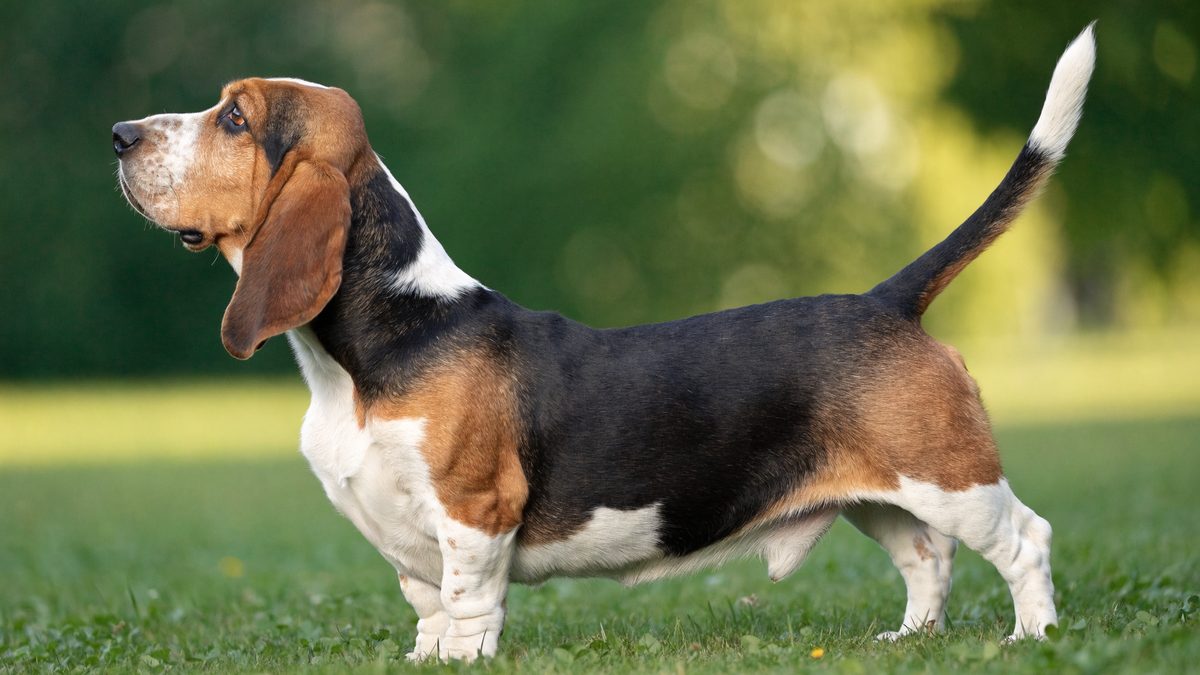
The Basset Hound is a short-legged, long-bodied French scent hound that carries heavier bone for its size than any other breed of dog. It stands 33 to 38 cm at the withers and weighs 20 to 29 kg, which means a dog the height of a footstool with the mass of a Labrador. In India it is genuinely rare, and almost everything written about it locally is written by someone selling one.
Two kennel clubs publish a breed standard for this dog, and the numbers they give are close enough to be useful. The size figures below are the ones to plan around, because a Basset Hound is far heavier than its height suggests and every practical decision you make, from where it sleeps to how you lift it into a car, follows from that.
| Source | Height | Weight | Lifespan |
|---|---|---|---|
| AKC breed standard, approved 1964 | Should not exceed 14 in. Over 15 in is a disqualification | Not specified in the standard | Not specified in the standard |
| AKC breed page | Up to 15 in | 40 to 65 lb, roughly 18 to 29 kg | 12 to 13 years |
| Royal Kennel Club standard, updated 2025 | 33 to 38 cm, 13 to 15 in | Not specified in the standard | Over 10 years |
| Mr n Mrs Pet, India | 11 to 15 in | 20 to 27 kg | 10 to 12 years |
| Asia Pets, India | 28 to 38 cm | 20 to 29 kg | 12 to 13 years |
| Dogs India | About 14 in | 20 to 25 kg | Not stated |
The sources agree on size and disagree on how long the dog lives. Indian pages publish 10 to 12 years, the AKC publishes 12 to 13, and the Royal Kennel Club will only say over 10 American Kennel Club The Royal Kennel Club, Breeds A to Z. None of those figures comes from a survival study. The largest UK longevity analysis, covering 584,734 dogs of which 284,734 had died, puts median survival across all dogs at 12.5 years and across purebreds at 12.7 years, and it does not report a Basset Hound figure at all. Treat every Basset Hound lifespan number you read, including the registries', as an estimate rather than a measurement.
The two standards now disagree about the two features you buy the dog for
The AKC and the Royal Kennel Club describe the ears and eyes of this breed in opposite terms, and the gap is 61 years wide. The AKC standard was approved on 14 January 1964 and has not been revised since. The Royal Kennel Club standard was last updated on 1 August 2025. Read them together and you are looking at a breed being pulled in two directions.
| Feature | AKC, 1964 | Royal Kennel Club, 2025 |
|---|---|---|
| Ears | Extremely long, low set, and when drawn forward, fold well over the end of the nose. A high set or flat ear is a serious fault | Long, reaching only slightly beyond end of muzzle of correct length, but not excessively so. Narrow throughout their length |
| Eyes | Soft, sad, and slightly sunken, showing a prominent haw. Very light or protruding eyes are faults | Lozenge-shaped eyes, neither prominent nor deep set. Expression calm and serious |
| Head skin | Loose over the whole of the head, falling in distinct wrinkles over the brow. A dry head and tight skin are faults | There may be a small amount of wrinkle at brow and beside eyes |
| Body skin | The skin is loose and elastic | Skin is supple and elastic without any exaggeration |
| Ground clearance | Not to be more than one-third the total height at the withers | Adequate clearance between the lowest part of the chest and the ground to allow the hound to move freely over all types of terrain |
| Height limit | Over 15 in at the highest point of the shoulder blade is a disqualification | 33 to 38 cm, 13 to 15 in, at withers |
A third registry breaks the tie, and it does not break it in the AKC's favour. FCI-Standard No. 163, whose official valid version is dated 13 October 2010, uses the Royal Kennel Club's wording almost verbatim: ears reaching only slightly beyond the end of the muzzle but not excessively so, eyes lozenge-shaped and neither prominent nor deep-set, skin supple and elastic without any exaggeration, and adequate clearance between the lowest part of the chest and the ground. Two of the three world registries now ask for moderation in exactly the features the third one asks you to exaggerate. The FCI also lists the breed's origin as Great Britain rather than France, with the French monastic history recorded as a historical summary and the modern breed developed to perfection in Britain, which is a small correction to every Indian page that files the Basset Hound simply as French Premium Pet House.
One physical detail is worth knowing because the standards write it in as correct. The chromosome 18 retrogene that shortens the legs also produces carpal valgus, the slightly turned-out front feet: Basset Hounds and Dachshunds carrying it typically show it, while Beagles and American Cocker Spaniels that carry only the chromosome 12 retrogene typically do not. Both the AKC and FCI standards ask for forefeet that may point straight ahead or turn slightly outward Federation Cynologique Internationale. The standard is describing a genetic effect rather than an aesthetic preference.
The Royal Kennel Club has gone further than its standard. The Basset Hound sits in Breed Watch Category 3, the tier reserved for breeds with visible points of concern, and the list judges are told to watch for reads like a description of the postcard version of this dog.
- Eyelids not in normal contact with the eyeball, turned inwards or outwards.
- Ears that extend more than slightly beyond end of muzzle.
- Signs of dermatitis irritation in skin folds, or hair loss or scarring from previous dermatitis.
- Inadequate ground clearance, meaning an overly deep body or the presence of excessive skin.
- Excessive skin on the head, body or legs.
- Too fat, listed as a point of concern for special attention by judges in the show ring.
A national kennel club telling its own judges to penalise droopy eyelids, over-long ears, fold dermatitis, low ground clearance and excess weight is the single most useful buying checklist published for this breed. Bonbeno's position is simple. Buy the dog that clears the Breed Watch list, not the dog that looks most like the cartoon. The exaggerated version is the version that costs you money at the vet.
Where the shape came from
The Basset Hound is French in origin and English in development. French hounds from Artois and Normandy were imported into England by the 1860s, and in the 1870s Everett Millais played a key role in the development of the modern breed, with his imported hound Model forming an important foundation for the distinctive English type, refined further with Beagle and Bloodhound lines. The Basset Hound Club was founded in 1884, and Queen Alexandra kept Basset Hounds at Sandringham.
Every feature was functional. The breed was bred for hunting small game on foot, low to the ground with an excellent nose, its long ears helping to retain scent and its loose, elastic skin offering protection when working through dense undergrowth. The Royal Kennel Club adds the sentence that matters most for anyone buying today. These functional characteristics should always remain moderate, with the breed retaining the athleticism, soundness and ground clearance necessary for its original purpose.
How rare is it in India
Very rare, and the ranking pages themselves prove it. The puppy marketplace holding position one for this query listed 9 Basset Hound results at the time of this SERP pull, against 650 Shih Tzu, 549 Siberian Husky, 487 Golden Retriever, 454 Labrador Retriever, 412 German Shepherd and 274 Beagle on the same site. India's longest-running breeder directory lists a small handful of Basset kennels, one of them breeding since 2001.
Rarity has three practical consequences. Price discovery is poor, which is why published Indian bands disagree so violently. Veterinary familiarity is low, so a Bengaluru or Delhi vet may see one Basset Hound a year and will not have a pattern for its ear anatomy. And the second-hand market barely exists, so an adult Basset needing rehoming in India usually goes through a general rescue rather than a breed rescue. The Indian otitis externa study from Palampur that screened 2,476 dogs recorded 81 ear cases across eleven breeds, and the Basset Hound is not among them. That is not evidence the breed is safe. It is evidence there are almost none of them in that catchment.
The temperament both standards describe is consistent and worth stating plainly, because it is the honest reason to want one. The AKC calls it mild, never sharp or timid, and extreme in its devotion. The Royal Kennel Club calls it placid, never aggressive or timid, affectionate, and describes a tenacious hound of ancient lineage which hunts by scent, possessing a pack instinct and a deep melodious voice. Read that last phrase as a warning about noise in a flat, which is exactly what it is.
Basset Hound price in India
A Basset Hound puppy is quoted anywhere between Rs 20,000 and Rs 2,50,000 in India in 2026, and the four published sources do not overlap. The cheapest source's ceiling is Rs 60,000. The most expensive source's floor is Rs 75,000. That is not a wide range, it is two different markets described by four pages that all rank for the same query.
Bonbeno read every Indian page ranking for this query and put their price bands next to each other. Do that and the disagreement stops being a range and starts being a warning.
| Source | Headline range | Lowest figure quoted | Highest figure quoted | Also sells puppies |
|---|---|---|---|---|
| Mr n Mrs Pet | Rs 75,000 to Rs 2,50,000+ | Rs 75,000 | Rs 2,50,000+ | Yes |
| Premium Pet House | Rs 25,000 to Rs 60,000 | Rs 20,000, Delhi, Chennai and Hyderabad | Rs 60,000 | Yes |
| Asia Pets | Rs 30,000 to Rs 60,000 | Rs 30,000 | Rs 60,000 | Yes |
| Wrapinfur | Rs 30,000 to Rs 70,000 | Rs 30,000 | Rs 70,000 | No, editorial price list |
The gap between the top result and the second result is a factor of more than twelve at the bottom end. Premium Pet House quotes Rs 20,000 for a Basset Hound puppy in Delhi, Chennai or Hyderabad. Mr n Mrs Pet will not quote below Rs 75,000 anywhere in the country. Three of the four sources sell puppies. None of them discloses that commercial interest on the page where the price appears. Bonbeno discloses it here because nobody else does.
What the tiers actually mean
Only one Indian source breaks the price into tiers, and the tiers describe paperwork and pedigree rather than health.
| Tier | Published range | What it certifies |
|---|---|---|
| Basic or pet quality | Rs 75,000 to Rs 1,00,000 | Nothing beyond the seller's word and a vaccination record |
| KCI registered | Rs 1,00,000 to Rs 1,50,000 | Kennel Club of India certification and recorded lineage |
| Champion bloodline | Rs 1,50,000 to Rs 2,50,000 | Imported or award-winning parents |
A Kennel Club of India registration documents ancestry. It is not a health certificate. Look at what the KCI itself publishes and the point makes itself. Its downloadable forms cover litter registration, single dog registration, transfer of ownership, prefix and affix registration, show applications, judge contracts and a tariff sheet. There is no breed health screening scheme and no health test requirement among them. Nothing in a KCI paper tells you whether the sire and dam were screened for the conditions that actually cost Basset Hound owners money, and the price ladder above does not change with screening status at any tier.
City-wise prices, and why they are worth very little
Two sources publish city tables and neither reads like a market survey.
| City | Premium Pet House | Mr n Mrs Pet |
|---|---|---|
| Delhi | Rs 20,000 to Rs 60,000 | Rs 75,000 to Rs 2,50,000 |
| Mumbai | Rs 25,000 to Rs 60,000 | Rs 75,000 to Rs 2,50,000 |
| Bengaluru | Rs 25,000 to Rs 60,000 | Rs 75,000 to Rs 2,50,000 |
| Chennai | Rs 20,000 to Rs 60,000 | Rs 75,000 to Rs 2,50,000 |
| Hyderabad | Rs 20,000 to Rs 60,000 | Rs 75,000 to Rs 2,50,000 |
| Pune | Rs 25,000 to Rs 60,000 | Rs 75,000 to Rs 2,50,000 |
| Jaipur | Not listed | Rs 75,000 to Rs 2,50,000 |
| Lucknow | Not listed | Rs 75,000 to Rs 2,50,000 |
One publisher gives the identical range for all eight cities it covers, which means the table carries no city information at all. The other varies its floor by Rs 5,000 between metros and holds its ceiling flat. Bonbeno prints both because seeing them side by side is the fastest way to understand that no reliable city-level price data exists for this breed in India, and any page presenting one as fact is guessing.
What genuinely moves the price
- Registration status. A KCI-registered puppy is quoted at Rs 1,00,000 to Rs 1,50,000 against Rs 75,000 to Rs 1,00,000 unregistered by the same seller.
- Import lineage. The champion-bloodline tier is defined by imported or award-winning parents, and Indian breeder listings for this breed name Italian and other imports in their pedigrees.
- Colour. Sellers list tricolour, black and white, and lemon and white. Both breed standards accept any recognised hound colour and the AKC states that the distribution of colour and markings is of no importance, so any colour premium is demand, not quality The Royal Kennel Club, Breed Standard.
- Scarcity. With single-digit listings nationally on the largest marketplace, one litter changes the visible price for months.
What the price does not buy, in any tier
The Basset Hound Club of America requires that the genetic status of both sire and dam be known before any breeding, for four conditions with proven DNA tests: thrombopathia, primary open angle glaucoma, mucopolysaccharidosis type I and Lafora disease. Not one of the four Indian pages ranking for this query mentions any of those four tests. Not at the Rs 20,000 tier and not at the Rs 2,50,000 tier Premium Pet House Asia Pets, Basset hound, Breed Information Wrapinfur, Dog Price List in India 2026. You can pay a quarter of a lakh more for a champion pedigree and still receive a puppy from two untested parents.
Write to the breeder and ask for the sire's and dam's results for thrombopathia, POAG, MPS1 and Lafora disease, and ask which laboratory issued them. A breeder who has them will send them. A breeder who has never heard of them has told you something important. Separately, breeding without a certificate of registration from the State Board is an offence under the Prevention of Cruelty to Animals (Dog Breeding and Marketing) Rules, 2017, and those rules require that pups less than eight weeks in age are not sold. Verify both before money moves.
Bonbeno does not broker puppy sales and publishes no breeder listings. Every figure above is reported from a third party so you can see the disagreement yourself and price it into your own decision.
Monthly cost of keeping a Basset Hound in India
Published Indian estimates put the monthly cost of a Basset Hound at Rs 4,000 to Rs 10,000, and every one of those estimates leaves out the two line items this breed is most likely to generate. Budget the published number for food and routine care, then budget separately for ears and for a mid-life spinal event, because those are what make this dog expensive.
Three Indian sources publish running costs. They agree on the order of magnitude and disagree on the parts that matter.
| Item | Mr n Mrs Pet | Wrapinfur | Premium Pet House |
|---|---|---|---|
| All-in monthly | Rs 5,000 to Rs 10,000 | Rs 4,000 to Rs 7,000 | Not given as a single figure |
| Food, monthly | Included above | Included above | Rs 1,000 to Rs 3,000 |
| Professional training, monthly | Not itemised | Not itemised | Around Rs 5,000 |
| Grooming, per session | Claims trimming every 4 to 6 weeks | Not itemised | Rs 2,000 to Rs 3,000, or a home kit at Rs 1,500 to Rs 2,500 |
| Vet, first two years | Not itemised | Not itemised | Rs 5,000 to Rs 10,000 set aside |
Two of those entries are wrong on their face. A food budget of Rs 1,000 to Rs 3,000 a month is a small-dog budget, published on a page that lists the same dog at 18 to 29 kg. And the claim that Basset Hounds have dense, curly coats needing trimming every 4 to 6 weeks contradicts both breed standards, which describe a coat that is hard, smooth and short, with a distinctly long coat listed as an outright disqualification The Royal Kennel Club, Breed Standard. That sentence is template text from another breed. Treat the rest of the same page's costings with the caution that deserves.
The line item nobody budgets: ears
This is the cost that separates a Basset Hound from a similarly sized dog. In the largest primary-care study of canine otitis externa, covering a random sample of 22,333 dogs drawn from 905,554 under veterinary care, the Basset Hound had the highest one-year prevalence of any breed at 28.81 percent and the highest odds of any breed at 5.87 times crossbred dogs. Roughly three in ten Basset Hounds were diagnosed with an ear infection in a single year, in a temperate country.
India adds a season. An Indian veterinary college study that screened 2,476 dogs at Palampur between June 2022 and July 2023 found that 59.25 percent of all canine ear cases fell in the two monsoon months of July and August, against 18.51 percent in summer and 12.34 percent in winter, and that 69.13 percent of cases occurred in breeds with pendulous ears. Bonbeno's Beagle page covers that dataset in full and it applies here with more force, because the Beagle carries 2.54 times crossbred odds of otitis and the Basset Hound carries 5.87. See the Beagle guide for the seasonal breakdown.
Plan on routine ear cleaning several times a week, a veterinary ear consult with cytology whenever there is odour, head shaking or discharge, and a realistic expectation of at least one treated episode in most years. Indian rupee costs for a consult plus cytology plus medicated drops vary too widely between a municipal clinic and a metro referral hospital for Bonbeno to publish a single figure, and no Indian source publishes an audited one. What is not in doubt is the frequency, and the frequency is what makes it a budget line.
The second line item: eyes
The Royal Kennel Club sets eye testing, including gonioscopy for pectinate ligament abnormality, as the minimum Good Practice screening for this breed, meaning the evidence indicates it is a significant concern. The AKC's national breed club list opens with an ophthalmologist evaluation. Neither of those is a one-off. Pectinate ligament dysplasia progresses with age, so a clear gonioscopy at two years does not stay clear. If you are buying this breed, price in a periodic examination by a veterinary ophthalmologist, and accept that in most Indian cities that means travelling to one of a small number of referral centres.
The tail risk: the spine
In the largest genotyped study of surgically treated intervertebral disc disease, 5 of the 36 Basset Hounds in the DNA repository had undergone disc surgery, a 13.89 percent surgical prevalence, with a median age at surgery of 5.5 years. Those are small numbers and Bonbeno prints them as such. What they establish is that a Basset Hound disc event is a mid-life possibility, not an old-age one, and advanced imaging plus referral neurosurgery is not a Rs 5,000 event in any Indian metro.
There is one cost lever you fully control. In a Dog Aging Project analysis of 43,517 dogs, overweight dogs had 1.67 times the odds of owner-reported IVDD (95 percent CI 1.38 to 2.01), and higher daily active time was associated with reduced odds. A kitchen scale and a measuring cup are the cheapest veterinary intervention available for this breed.
One-off setup worth paying for
- A ramp for the car and the sofa. A 25 kg dog on 33 cm legs cannot be lifted casually, and repeatedly hauling one by the chest is worse for your back than the dog's.
- Non-slip runners on tiled or granite floors, which is most Indian homes. Traction matters more for a heavy-boned, short-legged dog than for a tall one.
- A wide, well-fitted harness rather than a narrow collar, for a dog that pulls into a scent with real force.
- A raised, washable bed that keeps the ear leathers off a damp floor during the monsoon.
Add it up honestly. The published monthly figures of Rs 4,000 to Rs 10,000 are reasonable for food, preventives and routine vet care. The Basset-specific costs sit on top of that, and they are ear care every month of the year, eye examinations every year or two, and a spinal contingency you should be saving toward rather than discovering.
Basset Hound heat tolerance and the Indian monsoon
Bonbeno rates the Basset Hound 3 of 5 for heat tolerance, which is average rather than good. The dry summer is survivable with sensible timing. The season that actually damages this breed in India is the monsoon, because humidity, a closed pendulous ear and a skin fold are a worse combination than 43 degrees of dry Delhi air.
Start by discarding the claim the ranking pages make. One states plainly that a Basset Hound is ideal for the typical Indian climate because short, thick coats help them survive when temperatures are hot and humid. Another says the breed adapts well to the weather. Neither cites anything. Bonbeno could find no study of heat tolerance in Basset Hounds specifically, and says so rather than inventing one.
Here is what is verifiable. The coat is hard, smooth, and short, with sufficient density to be of use in all weather, and a distinctly long coat is a disqualification. The Royal Kennel Club describes it as smooth, short and close without being too fine. So this is a single-layer working coat, not an Arctic double coat, and the Basset Hound does not carry the insulation burden that makes a Siberian Husky a poor fit for an Indian plain. That is the honest case for the breed in Indian heat, and it is a real one.
Where the real heat risk sits
Purina India lists the factors that raise heat stroke risk in any dog: lack of water, an enclosed space, excessive humidity, obesity, intense exercise, old age, cardiovascular or respiratory disease, and lack of acclimatisation. It names short-faced breeds such as Boxers, Bulldogs, Pugs and Pekingese, and heavy-coated breeds such as Huskies and Newfoundlands, as being at particular risk. The Basset Hound is not on that list.
But obesity is on the list, and obesity is the point of concern the Royal Kennel Club instructs its own judges to watch for in this breed, in the plainest possible words: too fat. That is the connection Indian pages miss. A Basset Hound at a correct body condition handles an Indian summer roughly as well as any other short-coated medium dog. An overweight one does not, and this is a breed that gets overweight easily.
| City type | Examples | Dominant risk | What to change |
|---|---|---|---|
| Humid coastal | Mumbai, Chennai, Kochi, Kolkata | Ear and skin-fold disease across a long wet season | Daily ear checks, dry the leathers after every walk and bath, keep folds dry |
| Dry extreme heat | Delhi NCR, Jaipur, Ahmedabad, Nagpur | Exertional heat stress on afternoon walks | Walk before 7 am and after 8 pm, carry water, never leave the dog in a parked car |
| Temperate plateau | Bengaluru, Pune, Hyderabad | The mildest fit in India, with a sharp monsoon ear spike | Normal routine, monsoon ear discipline from June to September |
| High humidity plus long rains | Guwahati, Goa, coastal Kerala | The highest ear-disease pressure of any Indian setting O'Neill DG, Volk AV, Soares T, Church DB | Treat ear care as a daily habit, not a weekly one |
| Cool hill stations | Shimla, Ooty, Shillong, Dehradun | Least heat risk, damp still drives ear cases | Watch the ears through the rains, otherwise the easiest posting |
The monsoon is the season that matters
The Palampur study is the single most useful Indian dataset for a pendulous-eared breed. Of 81 canine ear cases, 48, or 59.25 percent, occurred in the rainy months of July and August, and the authors attribute it directly to increased humidity favouring microbial growth. Within those cases, moisture accumulation in the ear canal was noted in 33.33 percent, excessive moisture was recorded as a predisposing factor in 20.98 percent, and 69.13 percent of all cases occurred in pendulous or drop-eared breeds against 30.86 percent in erect-eared breeds.
Now put the breed on top of that. The Basset Hound's ears are, by the AKC standard, extremely long and low set, and when drawn forward fold well over the end of the nose. Researchers examining primary-care records note that the long and deep ear canal in Basset Hounds may delay resolution of infections once started and lead to a higher probability of otic chronicity, and that Basset Hounds are reported to harbour more Malassezia yeasts on their skin, including within the ear canal, than toy breeds. A closed ear canal, a humid month and a yeast-friendly skin surface is the Indian Basset Hound problem in one sentence.
The heat numbers to keep in your head
- 40.5 degrees C or above is the raised temperature Purina India lists among heat stroke signs, alongside severe panting, difficulty breathing, severe salivating, vomiting, diarrhoea and ultimately collapse.
- 30 minutes of vigorous exercise in hot weather is enough for a dog to develop heat stroke.
- 26 degrees C outside becomes 32 degrees C inside a car in five minutes and 43 degrees C in 25 minutes. Never leave the dog in the car, including for a short errand.
- Stop cooling at 39.4 degrees C to avoid tipping the dog into hypothermia, wet the skin rather than the coat surface, use a fan, and never plunge a dog into an ice bath, which prevents core temperature from falling.
- 105 degrees F, about 40.6 degrees C, is where Cornell's Riney Canine Health Center sets heatstroke, against a normal canine body temperature of 100.5 to 102.5 degrees F, and it names older and overweight dogs alongside short-muzzle breeds as being at higher risk.
- Start cooling on the way, not on arrival. Cornell's instruction is to wet the dog with cool water and place it directly in front of the car's air conditioning while driving to the veterinary hospital.
The AKC standard caps the distance from the deepest point of the chest to the ground at one-third of the dog's total height at the withers. On a 36 cm dog that is roughly 12 cm of ground clearance, so the chest and belly of a Basset Hound travel close to the walking surface. Bonbeno found no study measuring surface-heat exposure in short-legged breeds, so this is judgement rather than evidence: test Indian tarmac and paving with the back of your hand before an afternoon walk, and if you cannot hold it there for five seconds, do not walk the dog on it.
One more piece of Indian context. The Royal Kennel Club records the Basset Hound as needing a large house with a small to medium garden, while the top-ranking Indian marketplace markets it as great for apartment living. Both can be true. A Basset Hound will lie quietly in a two-bedroom flat, and it is short enough to be indoors comfortably. What a flat cannot give it is the daily hour outdoors that keeps it lean, and in an Indian summer that hour has to happen at dawn and after dark.
Basset Hound temperament and who should not buy one
The Basset Hound is one of the most reliably good-natured breeds in the registry, described by both kennel clubs as mild or placid, never sharp, never aggressive and never timid The Royal Kennel Club, Breed Standard. It is also a working scent hound with a pack instinct, a deep melodious voice and a nose that overrides you, and those three things are what people actually struggle with.
Take the good part at face value, because it is the honest reason this breed has survived as a companion. Indian breed listings rate it 5 of 5 with family and 5 of 5 with children, and 4 of 5 with other pets and with strangers. Both breed standards back that up in the language of the ring rather than the marketing brochure. A Basset Hound that is sharp or timid is a Basset Hound outside its standard The Royal Kennel Club, Breed Standard.
The four traits that surprise Indian owners
- It is loud, and it is loud in a low register. The Royal Kennel Club standard describes the breed as possessing a deep melodious voice. Indian sellers translate that as loud and incessant barking that carries. In a Mumbai or Bengaluru apartment with shared walls, a hound bay is not the same problem as a terrier yap. It travels.
- It is not a guard dog and will not become one. The temperament required by both standards is affectionate and non-suspicious, and Indian sellers concede that a Basset Hound may befriend a trespasser rather than turn one away. If you want a deterrent, this is the wrong breed and no amount of training changes it.
- It drools, because the standard requires the anatomy that produces drool. The AKC standard calls for lips that are pendulous, falling squarely in front and hanging in loose flews toward the back, with a very pronounced dewlap. Drool is not a training failure. It is the breed standard doing what it says.
- It was bred to work in a pack and takes being alone badly. Indian pages describing separation anxiety in this breed are not exaggerating, and the Royal Kennel Club's own description of a hound possessing a pack instinct is the reason. A Basset Hound alone in a flat from 9 to 7 is a poor plan.
The placid cartoon versus the working hound
The image sells the dog as a couch ornament. The Royal Kennel Club describes the same animal as a working hound that must be fit for purpose, strong, active and capable of great endurance in the field, and sets its exercise requirement at up to an hour a day. The AKC standard opens by calling it capable of great endurance in the field. Indian sellers describe it as low-energy, relaxed and low-maintenance.
Both descriptions are true at different times of day, and that is exactly the trap. A Basset Hound will happily sleep for eighteen hours if you let it, and letting it is how the breed ends up on the Royal Kennel Club's too-fat list. The dog will not ask you for exercise the way a Border Collie does. You have to impose it.
The nose, and what it does to recall
The Basset Hound is second only to the Bloodhound in scenting ability, and the ears themselves help sweep scent toward the nose. In practice that means a Basset Hound that picks up a trail stops processing your voice. Every Indian source that ranks for this query says the same thing in different words, describing the breed as stubborn, especially about following a scent, and warning against off-lead walking.
Bonbeno's position is that this is not stubbornness in the disobedience sense. It is a breed doing the job it was selected for over 150 years of English breeding. Treat off-lead reliability in open Indian streets as something this breed does not have, plan around it, and you will not be disappointed by it.
Who should buy a Basset Hound in India
- A household with someone home most of the day, because of the pack instinct and the separation problem.
- Owners who can commit to a full hour outdoors daily, split into two walks at dawn and after dark for most of the Indian year.
- Families with children, where the placid temperament genuinely earns its reputation.
- People who will actually weigh the food, because appetite control is the single highest-value habit for this breed.
Who should not
- Anyone who wants a guard dog. The standard rules it out.
- Anyone in a building with a noise-sensitive neighbour or a strict society committee, given the voice.
- Anyone who wants a running or trekking partner. Short, heavy-boned legs and a deep body are not built for distance on hot Indian ground.
- Anyone unwilling to handle ears several times a week for the dog's whole life. At 28.81 percent one-year otitis prevalence, this is the defining daily chore of the breed.
- First-time owners who travel constantly, because a dog with this appetite and this ear anatomy needs a consistent handler, not a rotating one.
A well-kept Basset Hound is calm indoors, tolerant of noise and handling, safe around children and other pets, and completely without the guarding edge that makes many Indian apartment dogs stressful The Royal Kennel Club, Breed Standard. If your requirement is a large-hearted, low-drama family dog and you can carry the ear and weight discipline, this breed delivers on it.
How to train a Basset Hound
To train a Basset Hound, pay for every behaviour with food taken out of the measured daily ration, keep sessions to three or four minutes, and treat recall as a management problem rather than a training goal. The breed learns perfectly well. It simply requires a reason, and the reason is almost always edible.
Every source that ranks for this query agrees on the method and none of them costs it correctly. Positive reinforcement with the dog's favourite treat works, and the same page that recommends it immediately warns you not to let the dog overeat those treats. Resolve that contradiction by taking the training food out of the daily ration rather than adding it on top. Weigh the day's kibble in the morning, put a third of it in a pouch, and spend it on training through the day. This is the highest-value habit in the whole guide, because overweight dogs carry 1.67 times the odds of owner-reported intervertebral disc disease and the Royal Kennel Club already lists too fat as a point of concern in this breed's show ring.
Realistic timelines
| Skill | Realistic timeline | Notes |
|---|---|---|
| Name response indoors | 1 to 2 weeks | Easy. Pay every single time in the first fortnight |
| Toilet training | 8 to 16 weeks of consistent work | Slower than a retriever. Short legs and a monsoon balcony do not help |
| Sit, down, settle on a mat | 2 to 4 weeks | The settle is the most useful command you will teach this breed |
| Accepting ear handling calmly | Start day one, aim for 4 to 6 weeks | The single most important training task for an Indian Basset Hound |
| Loose-lead walking | 3 to 6 months, with maintenance forever | A hound on a scent pulls with real weight behind it |
| Reliable off-lead recall in open ground | Do not plan for it | Manage with a long line instead |
Ear handling is a training skill, not a grooming task
No competing page teaches this and it is the difference between a manageable Basset Hound and an expensive one. A breed with 28.81 percent one-year prevalence of otitis externa will need its ears examined, cleaned and medicated repeatedly for its whole life, and a dog that fights ear handling turns every one of those events into a struggle and a delayed treatment. Delay matters here, because researchers note the long and deep ear canal in this breed may prolong infections once they start.
- Week one. Lift one ear leather, feed a piece of kibble, release. Ten repetitions, twice a day. Nothing else.
- Week two. Lift the leather and hold it up for three seconds while feeding, then release. Add the other ear.
- Week three. Touch the inside of the ear with a dry cotton pad while feeding. Stop before the puppy pulls away, not after.
- Week four. Introduce the cleaner bottle without using it. Let the puppy sniff it, pay, put it away. Repeat until the bottle is boring.
- Week five onward. Full cleaning routine, still paid, still short. Keep paying for the rest of the dog's life, because you will keep doing this for the rest of the dog's life.
Socialisation, on a short window
Socialise the puppy deliberately across the first four months, because the temperament both standards require, affectionate and never timid, is easier to keep than to recover American Kennel Club. In Indian conditions that means planned, calm exposure to lift doors, two-wheeler horns, watchmen, house help, children, other dogs on the society lawn and the vet's examination table. Keep every exposure short and paid. A Basset Hound puppy that finds the world boring and safe becomes the adult the breed is famous for.
Two problems Indian owners write in about
Digging and escaping. The breed was bred to hunt small game on foot and Indian sellers warn that Bassets may dig their way out of a compound and follow a scent away from home. Secure the boundary at ground level, not just at height. A Basset Hound does not climb a wall. It goes under it.
Selective deafness on a trail. Manage this rather than train it. Use a 10 metre long line in any unfenced space, and reserve genuine off-lead time for enclosed grounds only. A hound with a nose second only to the Bloodhound's is not going to choose your voice over a trail.
Both breed standards specify a hound that is never timid The Royal Kennel Club, Breed Standard. Harsh handling produces exactly the temperament the standard forbids, and in a heavy, low-slung dog it also risks the neck and back you are trying to protect. If you hire a trainer in India, ask what they do when the dog gets it wrong before you ask what they charge. Published Indian rates for professional training sit around Rs 5,000 a month, and a trainer who answers that question badly is not worth Rs 500.
Basset Hound exercise needs in India
A Basset Hound needs up to one hour of exercise a day, which is the Royal Kennel Club's published figure for the breed. Split it into two on-lead walks, put them before 7 am and after 8 pm for most of the Indian year, and treat that hour as non-negotiable, because this is the breed where under-exercising translates directly into spinal risk.
The ranking pages under-state this badly. Indian listings advertise low exercise needs and a low-energy, relaxed companion Mr n Mrs Pet, Basset Hound Puppies For Sale…, and one tells couch potatoes the breed suits them while conceding thirty to sixty minutes a day. The registries describe something else. The Royal Kennel Club standard opens by insisting this is a working hound that must be fit for purpose, strong, active and capable of great endurance in the field, and the AKC standard uses the same phrase about endurance. The AKC adds the operational reason: exercise keeps the Basset healthy and prevents it from becoming overweight.
What the evidence says about protecting a short-legged spine
This is where Bonbeno departs from the usual advice given to short-legged breeds in India. The instinct is to restrict movement to protect the back. The largest dataset available says the opposite.
| Factor | Direction of association with IVDD |
|---|---|
| Higher daily active time | Reduced odds |
| Regular use of a staircase | Reduced odds |
| Being on a commercial diet | Reduced odds |
| Overweight body condition | Increased odds, OR 1.67 (95% CI 1.38 to 2.01) |
| Purebred status | Increased odds, OR 1.66 (95% CI 1.37 to 2.01) |
| Toy and small size | Increased odds, OR 1.85 (95% CI 1.51 to 2.27) |
Higher daily active time and regular staircase use were both associated with reduced odds of intervertebral disc disease, while being overweight increased them. Bonbeno's Dachshund guide and Pembroke Welsh Corgi guide set out this evidence in full, including the reverse-causality caveats the study authors themselves raise, and the correction that these are short-legged breeds rather than long-backed ones. The Basset Hound shares the genetics and the same reading applies.
Two Basset-specific qualifications matter, and neither is in that dataset. The Basset Hound is not separately reported in it, and at 20 to 29 kg it is not a small dog, so the small-size finding does not transfer Asia Pets, Basset hound, Breed Information. Bonbeno's practical instruction is therefore narrower than the headline. Build muscle with daily walking and do not restrict normal movement, but remove the high-impact landings a 25 kg body makes on 12 cm legs, which means a ramp into the car and off the sofa rather than a ban on stairs.
An hour a day, in Indian conditions
- Two walks of 25 to 30 minutes, at a steady pace, on lead. Morning before 7 am and evening after 8 pm from March to October Purina India, Heat Stroke in Dogs.
- Never a vigorous session in the afternoon. Purina India puts heat stroke within reach in as little as thirty minutes of vigorous exercise in hot weather.
- Company on the outing. The breed was developed to work in a pack, enjoys canine company on its walks and can be quite playful. A society dog-walking group suits this dog better than a solitary route.
- Water carried, always. Lack of water is the first heat stroke risk factor Purina India lists.
Scent work is the cheapest enrichment you will ever buy
A Basset Hound is second only to the Bloodhound in scenting ability and its ears help sweep scent particles toward the nose. That is an enormous amount of processing power sitting idle in an Indian flat. Scatter the measured evening ration across a room, hide it under upturned cups, or drag a scent trail down a corridor with a treat and let the dog work it out. Fifteen minutes of nose work tires this breed more than fifteen minutes of walking, costs nothing, needs no floor space and happens indoors at 3 pm in May when a walk is out of the question.
Water entry into the ear canal was implicated in 20.98 percent of canine otitis externa cases in the Indian dataset, and excessive moisture was recorded as a predisposing factor in the same share. For a dog whose ears fold well over the end of its nose, a swim is a direct route to the exact condition it is already 5.87 times more likely than a crossbred to get. If your Basset Hound swims, dry both ear canals thoroughly afterwards, every time.
What happens without the hour
The dog gets fat, and fat is not cosmetic in this breed. It raises IVDD odds by two-thirds, it is a named heat stroke risk factor, it loads hips that are already the fourteenth worst set in the Orthopedic Foundation for Animals database, and it is serious enough that the Royal Kennel Club instructs judges to mark it in the show ring. An hour a day is cheap insurance against all four.
Grooming a Basset Hound in Indian humidity
To groom a Basset Hound, brush the coat once a week and work the ears, skin folds and eye rims several times a week. The Royal Kennel Club rates coat grooming at once a week for this breed. The coat is genuinely easy. Everything folded, hanging or drooping on this dog is not.
First, correct the record. The top-ranking Indian marketplace states that Basset Hounds have dense, curly coats needing trimming every 4 to 6 weeks. Both breed standards say the opposite. The AKC calls the coat hard, smooth and short, with a distinctly long coat listed as a disqualification. The Royal Kennel Club calls it smooth, short and close without being too fine, and describes long hair, soft coat or feathering as highly undesirable. There is no trimming schedule for this breed. Anyone quoting you one for a Basset Hound is quoting from another dog's page.
What the coat does do is shed. The AKC notes that the Basset's short hair can shed profusely, and recommends going over the dog at least once a week with a soft brush or shedding tool, which also benefits the skin. In an Indian flat with fans running, a weekly ten-minute session with a rubber curry brush is the whole coat routine.
Ears: the routine that defines this breed
The AKC's own instruction is to check the ears frequently because they are long and droopy and poor air circulation leads to infection, and to treat head shaking or scratching at the ears as a reason for a vet visit. Given a 28.81 percent one-year prevalence of otitis externa, the highest of any breed measured, Bonbeno treats ear care as a daily habit in the monsoon and a several-times-weekly habit the rest of the year.
- Lift and look, both ears, every day from June to September and at least three times a week otherwise.
- Smell. A yeasty or sour odour is the earliest reliable sign, and it precedes visible discharge.
- Dry after every bath, swim or wet walk. Water entry was implicated in 20.98 percent of Indian ear cases and excessive moisture in the same share.
- Clean with a veterinary ear cleaner, not with water, cotton buds pushed into the canal, or household oils. Ask your vet which product and how often for your dog.
- Go to the vet on odour, head shaking, pawing, redness or discharge. In the Indian series, 88.8 percent of otoscopic examinations showed erythematous canals, 16.8 percent showed ulceration and 12.34 percent showed canal stenosis. Stenosis is a narrowed canal, and it is what repeated untreated inflammation eventually builds.
There is one Indian finding that should change how you run bath day. A study at the Veterinary Clinical Complex of Anand Agricultural University in Gujarat examined 116 dogs presented with ear conditions, of which 67, or 57.76 percent, had otitis, and concluded that the most common cause of otitis was bathing without ear plugging, with most cases carrying a history of a bath seven to twelve days earlier. Staphylococcus species dominated, at 56.57 percent of 251 bacterial isolates, and 52.23 percent of cases were bilateral. For a Basset Hound in an Indian bathroom, plug or protect the ears before the water starts and dry them thoroughly afterwards.
On technique, the Royal Veterinary College team behind the largest otitis study is specific about what helps and what does not. Their advice is gentle ear cleaning with a dry paper cloth, careful use of ear cleaners with antimicrobial properties, and avoidance of overzealous ear-cleaning or ear-plucking. More cleaning is not better cleaning. Frequent inspection plus restrained cleaning is the routine that works.
In the Indian dataset the leading primary cause of otitis externa was hypersensitivity, at 45.67 percent of cases, with parasitism at 6.17 percent, immune-mediated disease at 4.93 percent and hypothyroidism and viral disease at 2.46 percent each. Every one of the 81 cases had secondary bacterial or fungal overgrowth. If your Basset Hound's ears keep coming back, ask your vet about the underlying allergy rather than accepting a fourth round of drops. Treatment error was itself recorded as a predisposing factor in 11.11 percent of cases.
Skin folds, in a country with a monsoon
The Royal Kennel Club tells its judges to look for signs of dermatitis irritation in skin folds, and for hair loss or scarring from previous dermatitis, in this breed. The folds are not incidental. The AKC standard requires skin over the whole head that falls in distinct wrinkles over the brow, a very pronounced dewlap, and wrinkled skin on the forelegs. The Royal Kennel Club allows some wrinkles on the lower legs and a slight pouch of skin at the rear of the hock, while stating that on no account should any of these be excessive.
In Indian humidity, wipe the facial folds, the dewlap and any leg wrinkles with a clean dry cloth several times a week, and dry them properly after a bath. A fold that stays damp becomes a fold that smells, then a fold that is inflamed. The more exaggerated your dog's skin, the more often this has to happen, which is one more reason to choose the moderate puppy over the wrinkliest one in the litter.
Eyes and the haw
The AKC standard asks for eyes that are soft, sad and slightly sunken, showing a prominent haw, and eyelid conformation shows up clearly in the screening data. Of 467 Basset Hounds examined and recorded in the Orthopedic Foundation for Animals eye tables, 9.0 percent had ectropion and 3.2 percent had entropion, with distichiasis in 1.7 percent, eversion of the nictitans cartilage in 1.7 percent and prolapse of the nictitans gland, commonly called cherry eye, in 1.3 percent. The Royal Kennel Club lists eyelids not in normal contact with the eyeball as a Breed Watch point of concern.
Practically, that means a daily wipe of the lower lid pocket with damp cotton wool, and a same-week vet appointment for any redness, discharge, squinting or rubbing. Do not normalise a weeping eye in this breed because the postcard version has one.
The rest of the routine
| Task | Frequency | Why |
|---|---|---|
| Ear check and dry | Daily in the monsoon, 3 times a week otherwise | Highest otitis prevalence of any breed |
| Skin fold and dewlap wipe | 3 to 4 times a week | Fold dermatitis is a Breed Watch concern |
| Eye rim wipe | Daily | Ectropion in 9.0 percent of examined dogs |
| Brush | Once a week | Royal Kennel Club grooming frequency, sheds profusely American Kennel Club |
| Nails and teeth | Nails as needed, teeth several times a week | Standard AKC care advice for the breed |
| Bath | Every 4 to 6 weeks, or when dirty | Dry the ears and every fold completely afterwards |
Budget for it honestly. Indian grooming salons quote around Rs 2,000 to Rs 3,000 a session for this breed, and a home kit at Rs 1,500 to Rs 2,500. For a smooth-coated hound, the home kit is the better buy, and the money you save belongs in the ear-care budget instead.
Basset Hound health, screening and inherited risk
Basset Hound health risk concentrates in four places: the ears, the eyes, the hips and the spine, plus four recessive diseases with proven DNA tests. The registries and the breed club disagree about which of those you should screen for before breeding, and that disagreement is the most useful thing on this page for anyone choosing a puppy.
Start with what the two authorities actually ask breeders to do.
| Test | AKC national breed club | Royal Kennel Club |
|---|---|---|
| Ophthalmologist evaluation | Recommended | Good Practice, the minimum tier |
| Gonioscopy for pectinate ligament abnormality | Not listed separately | Good Practice, the minimum tier |
| Primary open angle glaucoma DNA test | Recommended | Best Practice |
| Lafora disease DNA test | Recommended | Best Practice |
| Mucopolysaccharidosis I DNA test | Recommended | Not listed |
| Thrombopathia DNA test | Recommended | Not listed |
| Elbow dysplasia screening | Not listed | Best Practice |
| Hip dysplasia screening | Not listed | Not listed |
Neither authority asks for hip screening as standard, and the breed's own club treats it as conditional. The Basset Hound Club of America lists hip or elbow dysplasia and ununited anconeal process among additional conditions that breeders may want to evaluate, and only where there is a history in the bloodlines. Set that next to what the Orthopedic Foundation for Animals has actually recorded.
Hips: 14th worst of 221 breeds, and not one Excellent grade
| Breed | Rank | Evaluations | Normal % | Excellent % | Dysplastic % |
|---|---|---|---|---|---|
| Olde English Bulldogge | 1 | 318 | 24.2 | 1.3 | 73.3 |
| Pug | 2 | 1,281 | 25.7 | 0.2 | 72.7 |
| Bulldog | 3 | 1,655 | 27.0 | 0.4 | 70.8 |
| St. Bernard | 8 | 2,965 | 47.9 | 4.2 | 49.9 |
| Otterhound | 11 | 644 | 50.2 | 2.0 | 46.9 |
| Basset Hound | 14 | 286 | 57.7 | 0.0 | 39.5 |
| Clumber Spaniel | 16 | 1,525 | 60.3 | 4.7 | 39.0 |
Of 286 Basset Hounds evaluated by the OFA, 39.5 percent were graded dysplastic, made up of 31.5 percent mild, 6.3 percent moderate and 1.7 percent severe, and the breed sits 14th worst of the 221 breeds in that table. The number that stands out is not the dysplasia rate. It is the column beside it. Zero of 286 evaluated Basset Hounds received an Excellent grade, which is not true of any other breed in the surrounding ranks.
Two caveats belong with that, and Bonbeno prints them rather than burying them. OFA data is voluntarily submitted, so it over-represents dogs whose owners were screening for a reason and is not a random sample of the breed. And a hip graded on a breed built low and heavy by design is being read against a scale drawn from dogs of ordinary proportions. Neither caveat makes 0.0 percent Excellent comfortable reading.
Elbows are a blank. The Basset Hound does not appear anywhere in OFA's published elbow dysplasia table, which lists 167 breeds. So no OFA elbow rate exists for this breed to quote, while the Royal Kennel Club nonetheless lists elbow screening as Best Practice for it. Read that as too few submissions rather than as reassurance.
Eyes: the second-highest glaucoma prevalence of any breed
This is the best-documented risk in the breed. In a retrospective study of North American veterinary teaching hospital records spanning 1964 to 2002, the Basset Hound recorded a 5.44 percent prevalence of primary glaucoma in the 1994 to 2002 window, second only to the American Cocker Spaniel at 5.52 percent and ahead of the Chow Chow at 4.70 percent. Across all four observation periods from 1964 onward, the Basset Hound was one of only four breeds that consistently featured in the highest ten, and it showed a predominance of affected females. For scale, primary glaucoma prevalence across all breeds in that dataset rose from 0.29 percent to 0.89 percent over the same 38 years.
The mechanism has a name and a screening test. The European College of Veterinary Ophthalmologists lists primary closed angle glaucoma, associated with irido-corneal angle anomaly and pectinate ligament anomaly, as a known or presumed inherited condition in this breed, increasing in extent with age, with a predominance in females and an initial presentation at 6.33 years plus or minus 1.3. A UK study that performed gonioscopy on both eyes of 198 Basset Hounds found 76 of them, or 38.4 percent, moderately or severely affected by pectinate ligament dysplasia, significantly higher than the Flatcoated Retriever at 21.2 percent and the Dandie Dinmont Terrier at 22.1 percent, and confirmed that the condition progresses with age.
Because pectinate ligament dysplasia progresses over time, a single eye certificate from a young dog does not settle the question. The Basset Hound Club of America is explicit that no determinative genetic test exists for the more prevalent closed-angle form, and recommends consultation with a board-certified veterinary ophthalmologist, with gonioscopy and high frequency ultrasound useful in dogs over one year of age for assessing an individual dog's risk. Sudden eye pain, a red eye, a cloudy cornea or a dilated pupil in a middle-aged Basset Hound is a same-day emergency.
The rarer open-angle form does have a test. Primary open angle glaucoma in the Basset Hound is autosomal recessive and associated with ADAMTS17. The breed club reports that in the United Kingdom approximately 15 percent of Basset Hounds carry the mutation, with 6 in 1000 of their offspring expected to develop the disease, while in the United States 4 percent of 514 dogs tested by June 2022 were carriers and one was affected. OFA's own POAG table records 82 Basset Hound evaluations, all normal.
Those breed-club figures are independently corroborated by the primary paper. Researchers at the Animal Health Trust found that every POAG-affected Basset Hound they sequenced was homozygous for a 19 base-pair deletion in exon 2 of ADAMTS17, and genotyping of 223 Basset Hounds recruited for a separate study put the mutation frequency at 0.081, predicting the frequency of affected dogs in the population at 0.007. A mutation frequency of 0.081 implies a carrier rate close to 15 percent, and 0.007 is seven affected dogs per thousand, which is what the breed club publishes as 6 in 1000. Two independent sources agreeing to within one dog in a thousand is rare in dog health data and worth trusting.
Across the wider eye picture, 470 Basset Hounds in OFA's eye examination table returned 91.3 percent normal and 8.7 percent abnormal, ranking the breed 31st. In the detailed diagnosis tables covering 467 examined dogs, the most common findings were ectropion at 9.0 percent, cataract of unknown significance at 4.5 percent, entropion at 3.2 percent, persistent pupillary membranes iris to iris at 2.6 percent, distichiasis at 1.7 percent and prolapse of the nictitans gland at 1.3 percent.
The spine: two FGF4 retrogenes, and an early median age at surgery
The Basset Hound's legs are short because of a retrogene, not because of ordinary size variation. The chondrodysplasia variant CDPA, an FGF4 retrogene on chromosome 18, produces the short-legged phenotype in Basset Hounds, Pembroke Welsh Corgis, Dachshunds, West Highland White Terriers and Scottish Terriers. A second retrogene on chromosome 12, chondrodystrophy or CDDY, adds premature degeneration of the intervertebral discs and susceptibility to Hansen type I disc herniation, and one copy is enough because it acts dominantly for disc disease Batcher K, Dickinson P, Giuffrida M. The most severe form of disproportionate dwarfism is seen in breeds that carry both, such as Dachshunds, Basset Hounds and Corgis.
| Breed | Surgical prevalence in repository | 12-FGF4RG frequency (CDDY) | 18-FGF4RG frequency (CDPA) | Median age at surgery |
|---|---|---|---|---|
| Dachshund | 38.91 percent | 0.99 | 0.99 | 6.5 years |
| French Bulldog | 24.69 percent | 0.94 | 0.01 | 3.7 years |
| Basset Hound | 13.89 percent | 0.83 | 1.00 | 5.5 years |
| Beagle | 13.85 percent | 1.00 | 0.00 | 7.9 years |
| Pembroke Welsh Corgi | 11.11 percent | 0.92 | 1.00 | 7.0 years |
Two things in that table deserve attention. The Basset Hound's median age at disc surgery was 5.5 years, a full year earlier than the Dachshund and 1.5 years earlier than the Pembroke Welsh Corgi in the same dataset. And the CDPA retrogene is fixed in the breed at a frequency of 1.00, while CDDY is still segregating at 0.83, which means a CDDY DNA test is informative in Basset Hounds in a way it is not in a breed where the variant is fixed. The sample is small, five surgical cases out of 36 repository dogs, and Bonbeno reports it as such.
The scale of the CDDY effect is large. In mixed-breed cases and controls, one or two copies of the chromosome 12 retrogene carried an odds ratio of 18.42 for disc herniation (95 percent CI 7.44 to 50.26), and relative risk within segregating breeds ranged from 5.5 to 15.1. Bonbeno's Dachshund guide and Pembroke Welsh Corgi guide carry the full genetics and the lifestyle evidence, including the finding that these are short-legged breeds rather than long-backed ones. The Basset-specific addition is the early surgery age and the fact that CDDY is still testable in this breed.
Four recessive diseases with DNA tests
The Basset Hound Club of America requires that the genetic status of both parents be known before any mating, for four conditions, and states plainly that no affected dog should be bred.
- Thrombopathia, an inherited bleeding disorder specific to the breed, caused by a platelet function defect. As of June 2022, 4 percent of 545 US dogs tested were carriers and none was affected, and results are held in the Auburn University Basset Hound Thrombopathia Testing database. The test itself is run by the Hemostasis Laboratory in the Department of Pathobiology at Auburn University's College of Veterinary Medicine, which publishes a dedicated Basset Hound Thrombopathia blood-sample submission form. OFA's own table records 92 evaluations at 96.7 percent normal and 3.3 percent carrier.
- Primary open angle glaucoma, autosomal recessive, ADAMTS17.
- Mucopolysaccharidosis I, a lysosomal storage disease that usually manifests at 6 to 8 weeks of age, from which most affected puppies do not survive, and which was clinically and genetically confirmed in Basset Hounds only in 2019 Orthopedic Foundation for Animals.
- Lafora disease, a late-onset neurological disorder appearing at 5 to 7 years, with head jerking, jaw smacking, panic attacks, impaired vision, loss of balance and progression to seizures, and it is ultimately fatal.
Thrombopathia is worth one concrete illustration, because it travels. A published case report describes a young female Basset Hound crossed with a Shar Pei that presented with oral bleeding from a cracked molar and a chronic aural haematoma, and was hospitalised for more than 24 hours before the bleeding was controlled, with the diagnosis confirmed by the Basset Hound thrombopathia DNA test. A platelet-function bleeding disorder does not stay inside the pedigree, and in India, where crossbred pedigree dogs are common, that matters.
MPS I is worth a table on its own, because three sources report three different pictures and the gap between them is instructive.
| Source | Population | Clear | Carrier | Affected |
|---|---|---|---|---|
| BHCA, as of June 2022 | 532 US dogs tested | 483, or 90.8 percent | 37, or 7.0 percent | 12, or 2.3 percent |
| OFA disease statistics | 625 evaluations | 87.8 percent | 11.4 percent | 0.8 percent |
| OFA breed note on a 2019 survey | Cross-section of the breed | Mutation described as rare | Allele frequency of 1 percent, carriers identified | Not stated |
Those figures do not reconcile and Bonbeno does not average them. The most likely explanation is selection: dogs submitted for testing are disproportionately from lines where the disease has been seen, so tested populations show far higher carrier rates than a random cross-section of the breed. Read the 1 percent allele frequency as the breed-wide estimate and the 7 to 11 percent carrier rates as what shows up when worried breeders test.
Known problems with no test
The breed club names four important conditions for which no genetic test has been identified: lymphoma, hemangiosarcoma, gastric dilatation-volvulus and intervertebral disc disease, and asks breeders to discuss their prevalence in their own bloodlines with puppy buyers. Bonbeno could find no breed-level incidence figure for gastric dilatation-volvulus in Basset Hounds, so no number appears here.
One correction on the Indian pages. A ranking Indian page lists von Willebrand's disease as a major Basset Hound health problem. The inherited bleeding disorder that the breed club and the AKC actually name for this breed, and the one with a breed-specific DNA test, is thrombopathia American Kennel Club. They are different defects, and asking a breeder for the wrong test gets you nothing.
Patellar luxation is real but modest. OFA records 59 Basset Hound patella evaluations at 94.9 percent normal and 5.1 percent abnormal, of which 3.4 percent were grade 1 and 1.7 percent grade 2.
What a serious breed health scheme looks like
The United Kingdom has the model worth pointing an Indian buyer at. All eight UK Basset Hound breed clubs jointly run the Basset Hound Health Group, whose Health Certificate Scheme is tiered. Bronze is a visual health assessment available from six months of age, whose stated aim is to assess dogs for visual conditions that may cause pain or discomfort due to exaggerated conformation. Silver requires a Kennel Club and BVA gonioscopy and pectinate ligament assessment graded 0 to 3, irrespective of the result. Gold adds a POAG DNA test, and Diamond adds a Lafora disease DNA test on top of that.
The gonioscopy grade behind those tiers is a real, published scale. Under the British Veterinary Association's Canine Health Schemes Eye Scheme, Grade 1 means 25 percent or less of the drainage area is abnormal, Grade 2 means 26 to 75 percent and moderate involvement, and Grade 3 means more than 75 percent, a dog considered severely affected and at risk of developing glaucoma. That scheme runs a panel of 42 veterinary ophthalmologists across the United Kingdom, is open to crossbreeds and unregistered dogs as well as pedigrees, and prices a routine eye examination from 72 pounds including VAT.
No equivalent scheme exists in India, and no Indian page ranking for this query mentions one. That is precisely why the verification has to be done by the buyer here, one question at a time, rather than read off a certificate.
Ask for the sire's and dam's results for thrombopathia, POAG, MPS1 and Lafora disease, and for a CDDY genotype if available, since CDDY is still segregating in this breed Batcher K, Dickinson P, Giuffrida M. Ask for a gonioscopy report from a veterinary ophthalmologist on both parents, dated after their first birthday. Ask whether the hips were radiographed and graded by any registry, and treat honest ignorance better than a confident no. Then ask to see both parents in person, and look at their ears, eyelids, skin folds and ground clearance against the Breed Watch list.
Finally, on lifespan. Indian pages publish 10 to 12 years, the AKC 12 to 13, and the Royal Kennel Club over 10 American Kennel Club The Royal Kennel Club, Breeds A to Z. Bonbeno could not find a Basset Hound figure in the largest UK longevity study, which reports median survival of 12.5 years across 584,734 dogs and 12.7 years across purebreds, and does not list this breed. No verified breed-specific life expectancy for the Basset Hound exists in the published literature Bonbeno could reach, and any page that gives you one to the decimal place is guessing.
Feeding a Basset Hound in India
Feed a Basset Hound by weighed portion rather than by bowl, twice a day after twelve months, and keep it visibly lean for its whole life. In a chondrodystrophic breed, body condition is not a cosmetic decision. Overweight dogs carried 1.67 times the odds of owner-reported intervertebral disc disease across 43,517 dogs, and the Royal Kennel Club already flags too fat as a point of concern in this breed's show ring.
Everyone who has kept this breed says the same thing about appetite, and the Indian pages put it bluntly: Basset Hounds are among the biggest foodies in the canine world and will not refuse anything you offer. The AKC's guidance is the standard one, that any diet should be appropriate to the dog's age, that some dogs are prone to getting overweight so calorie consumption and weight level need watching, that too many training treats cause obesity, and that clean fresh water should be available at all times. On a Basset Hound, follow that guidance literally.
Meal frequency by age
| Age | Meals per day | Bonbeno note |
|---|---|---|
| Under 2 months | Free feeding is described as acceptable | Most puppies leave the breeder at 8 weeks under Indian rules, so this stage is usually the breeder's |
| 2 to 6 months | 4 | Weigh the daily total and divide it. Do not top up |
| 6 to 12 months | 3 | This is where Indian Basset Hounds usually start gaining |
| Over 12 months | 2 | Two measured meals, with training food taken from the same total |
That schedule is published by a breeder's sales page rather than a study, and Bonbeno reports it as such. It is nonetheless consistent with ordinary veterinary practice, and the meal count matters far less than the total. Weigh the day's food on a kitchen scale. A measuring cup on a breed with this appetite is how a 24 kg dog becomes a 30 kg dog over eighteen months without anyone noticing.
One honest caveat before the practical advice. The same VetCompass programme that hands the Basset Hound the worst ear-disease odds ever recorded does not list it among the breeds predisposed to being overweight. In a UK study of dogs under primary veterinary care, the one-year period prevalence of recorded overweight status was 7.1 percent, and the highest breed odds went to the Pug at 3.12, the Beagle at 2.67, the Golden Retriever at 2.58 and the English Springer Spaniel at 1.98, with no Basset Hound figure reported. So the widely repeated claim that this breed is prone to obesity rests on breed-club observation and clinical judgement rather than a measured breed effect Premium Pet House. Bonbeno prints that distinction and still tells you to weigh the food, because the consequences of being wrong are lopsided. If the breed effect is real you have protected a chondrodystrophic spine, and if it is not you have lost nothing.
Judging body condition on a dog shaped like this
Standard body condition scoring asks you to see a waist from above and a tuck from the side. On a Basset Hound, the standard itself gets in the way. The AKC calls for a chest that is deep and full with a prominent sternum, a rib structure that is long and extends well back, and hindquarters that are very full and well rounded. The Royal Kennel Club adds that the body is long and deep throughout its length and that loose skin is normal on this breed. A Basset Hound can look chunky and be lean, or look normal and be overweight.
- Use your hands, not your eyes. Run flat palms along the ribcage. You should feel each rib with light pressure, through skin, without pressing in.
- Weigh the dog monthly on the same scale and write it down. Trend beats snapshot on a breed this hard to eyeball.
- Watch the dewlap and the shoulder. Fat deposits show at the base of the neck and over the shoulder blades before they show anywhere the standard describes.
- Take the vet's number seriously. If your vet says the dog is a body condition score of 6 or 7 out of 9, act on it the same month rather than at the next annual visit.
What is actually available in India
No manufacturer sells a Basset Hound breed-specific formula in India. The Indian pet retailer that ranks for this query recommends Royal Canin breed formulas for the Beagle, Boxer and Cocker Spaniel alongside a generic junior food on its own Basset Hound page, because no Basset line exists to recommend. That is not a problem. A good medium-to-large breed adult food with a clear protein source, fed to the dog's actual energy needs, does the job.
One data point supports commercial food specifically. In the Dog Aging Project analysis, being on a commercial diet was among the lifestyle factors associated with reduced odds of owner-reported intervertebral disc disease. That is an association rather than proof of cause, and the likeliest explanation is portion consistency rather than any magic in the kibble. Either way, if you home-cook for an Indian Basset Hound, do it with a veterinary nutritionist and weigh every portion.
Water, heat and the monsoon bowl
Lack of water is the first heat stroke risk factor Purina India lists, and excessive humidity and obesity are on the same list. Keep fresh water available at all times and carry it on every summer walk. There is a small Indian detail worth naming: a dog with ears this long trails them into a deep water bowl. A shallow, wide bowl keeps the ear leathers out of the water, which matters when water entry is implicated in roughly a fifth of Indian canine ear cases.
The Basset Hound Club of America names gastric dilatation-volvulus among the important health issues known to affect the breed for which no test exists. Indian sources describe the mechanism, a distended stomach that twists, and link it to an abnormally large meal, rapid eating, or a large volume of water immediately after eating. Bonbeno found no published incidence figure for this breed and so publishes none. Split the daily ration into two or more meals, slow a fast eater with a puzzle bowl, and avoid hard exercise in the hour around a meal. A distended, hard abdomen with unproductive retching is an emergency, at any hour.
Two more feeding rules that are specific to this breed rather than general. Treats come out of the ration, not on top of it, because training a food-driven hound and controlling its weight are the same problem. And do not use food to compensate for a missed walk in an Indian summer. The walk moves to 6 am. The ration does not move at all.
Basset Hound puppy timeline, month by month
A Basset Hound puppy should not leave its litter before eight weeks, which is the legal floor in India, and the first year has four jobs: settle the temperament, build the ear-handling habit, get the eyes and joints on record, and finish the year lean. Everything expensive about this breed later is easier if those four are done on time.
Before month one, one thing matters more than any of it. The Prevention of Cruelty to Animals (Dog Breeding and Marketing) Rules, 2017 require that pups less than eight weeks in age are not sold, and that no breeder may carry on breeding without a certificate of registration from the State Board. A seller offering a six-week-old Basset Hound is breaking the rules and telling you what kind of operation it is.
| Age | What is happening | What you do |
|---|---|---|
| 6 to 8 weeks | Mucopolysaccharidosis I usually manifests at this age in affected puppies, and most do not survive | Ask for both parents' MPS1 DNA results before you commit |
| 8 to 10 weeks | Legal minimum age to leave the litter. Home, vaccinations, first vet visit | Start ear handling on day one. Four small meals of a weighed daily ration |
| 10 to 16 weeks | Socialisation window. The temperament both standards require is set here | Socialise deliberately: lifts, horns, watchmen, children, calm dogs. Keep every exposure short and paid |
| 4 to 6 months | Rapid growth on heavy bone. Adult teeth. Lead manners start to matter | Two or three walks totalling 30 to 45 minutes. Add a ramp for car and sofa |
| 6 to 9 months | Drop to three meals, then plan for two. Appetite becomes a management problem | Weigh the dog monthly. Book a gonioscopy discussion with your vet for after the first birthday |
| 9 to 12 months | Approaching adult weight of 20 to 29 kg on 33 to 38 cm legs The Royal Kennel Club, Breed Standard | Two meals a day. Build to the full hour of daily exercise |
| 12 months and after | Gonioscopy and high frequency ultrasound become useful for assessing glaucoma risk | Book the ophthalmologist. Keep the dog lean. Keep cleaning ears |
The first monsoon is the real milestone
Whenever your Basset Hound puppy arrives, its first July and August are the test. Nearly six in ten Indian canine ear cases fall in those two months, and this is the breed with the highest ear-disease odds recorded anywhere. A puppy that has already learned to enjoy having its ears lifted, held and wiped will get through that season with a wipe and a check. A puppy that has not will get through it with a muzzle, a struggle and a delayed diagnosis.
Work backwards from that. If your puppy comes home in January, you have five months to build the habit. If it comes home in June, start on the first evening and do not skip a day.
What to get on record in year one
- Both parents' DNA results, for thrombopathia, POAG, MPS1 and Lafora disease, collected before purchase and kept with the papers.
- A baseline weight chart, monthly from month two. This is the record that catches the slow gain nobody sees.
- A first ophthalmologist appointment after the first birthday, with gonioscopy discussed, because pectinate ligament dysplasia progresses with age and a single early clear result settles nothing.
- A note of every ear episode, with the month it happened. Two episodes in one monsoon is a pattern worth investigating for underlying hypersensitivity, which was the leading primary cause in the Indian series at 45.67 percent.
Two things not to do in the first year
Do not restrict normal movement in the name of protecting the back. The largest available dataset found higher daily active time and regular staircase use associated with reduced odds of intervertebral disc disease across 43,517 dogs, and Bonbeno's Dachshund guide sets out that evidence and its caveats in full. Build muscle. Remove the high landings, which on a 25 kg dog means a ramp into the car boot and off a high sofa, not a ban on ordinary stairs.
Do not let a fat puppy become a fat adult on the grounds that it is still growing. Weight is the single lever you fully control on a breed carrying both FGF4 retrogenes.
Bonbeno found no Basset Hound specific evidence on the effect of neutering age on disc disease, joint development or weight. Indian sellers and clinics often default to six months. Discuss the timing with your own vet against your dog's growth and your household circumstances rather than booking it by calendar, and ask specifically how the timing interacts with body weight management in a chondrodystrophic breed.
One last note about the year ahead. Lafora disease is late-onset, appearing at five to seven years, which means a healthy first year tells you nothing about it and only the parents' DNA test does. The same is true of glaucoma, whose initial presentation in this breed averages 6.33 years, and of disc disease, whose median age at surgery in the genotyped dataset was 5.5 years. A Basset Hound's first year is easy. Its sixth is the one to prepare for.
Basset Hound compared with the breeds Indian buyers cross-shop
Indian buyers who look at a Basset Hound usually also look at a Beagle, a Dachshund or a Cocker Spaniel, and the comparison that decides it is not price. It is ears and spine. On ear disease the Basset Hound is the worst-placed breed ever measured, and on the spine it goes to surgery earlier than the Dachshund.
Take the ears first, because this is where the Basset Hound is genuinely an outlier rather than merely predisposed.
| Breed | One-year prevalence | Odds ratio vs crossbred |
|---|---|---|
| Basset Hound | 28.81 percent | 5.87 |
| Chinese Shar Pei | 17.76 percent | 3.44 |
| Labradoodle | 17.71 percent | 2.95 |
| Beagle | 14.72 percent | 2.54 |
| Golden Retriever | 14.11 percent | 2.23 |
| Cockapoo | 12.97 percent | Not among the highest odds listed |
| All dogs in the study | 7.30 percent | Reference |
| Jack Russell Terrier | 3.53 percent | 0.52 |
| Yorkshire Terrier | 3.27 percent | 0.49 |
| Chihuahua | Not listed | 0.20 |
The Basset Hound's ear-disease odds are more than double the Beagle's and nearly 30 times the Chihuahua's. Dogs with pendulous ear carriage carried 1.76 times the risk of dogs with erect ears in the same study, V-shaped drop ears carried 1.84 times, male dogs carried 1.21 times the risk of females, and dogs over one year old were at higher risk than puppies. So this is not only about ear shape. The Basset Hound's own breed effect sits on top of the ear-carriage effect. If ear care is the part of dog ownership you know you will not keep up, this comparison should end the conversation.
For scale outside any single study, veterinary industry sources put it at up to one dog in seven seen in practice developing otitis externa at some point in life, and the Royal Veterinary College summarises its own data as one dog in every 14 in the UK affected every year. Against both of those baselines, a breed running at 28.81 percent in a single year is in a category of its own.
Spine: the four short-legged breeds side by side
| Breed | CDDY, chr 12 | CDPA, chr 18 | Surgical IVDD in repository | Median age at surgery |
|---|---|---|---|---|
| Dachshund | 0.99 | 0.99 | 38.91 percent | 6.5 years |
| Basset Hound | 0.83 | 1.00 | 13.89 percent | 5.5 years |
| Beagle | 1.00 | 0.00 | 13.85 percent | 7.9 years |
| Pembroke Welsh Corgi | 0.92 | 1.00 | 11.11 percent | 7.0 years |
| American Cocker Spaniel | 1.00 | 0.00 | 4.92 percent | 7.0 years |
The Dachshund has by far the highest surgical prevalence, which is why it dominates the literature. But the Basset Hound had the youngest median age at disc surgery of the four, at 5.5 years, and it carries both retrogenes, which is the combination that produces the most severe disproportionate dwarfism. Bonbeno's Dachshund guide and Pembroke Welsh Corgi guide go through the genetics and the lifestyle evidence in detail, and the reading there applies here.
One practical difference nobody prints. CDDY is still segregating in the Basset Hound at a frequency of 0.83, so a DNA test on the parents tells you something. In the Beagle and the American Cocker Spaniel the variant is effectively fixed, and the UC Davis laboratory states that where the allele frequency is 1.0, testing is unnecessary because all dogs of the breed can be assumed homozygous. A Basset Hound buyer has a lever a Beagle buyer does not.
The practical India comparison
| Basset Hound | Beagle | Dachshund | |
|---|---|---|---|
| Published Indian puppy price | Rs 30,000 to Rs 70,000 on this list, Rs 20,000 to Rs 2,50,000 across all sources Mr n Mrs Pet, Basset Hound Puppies For Sale… | Rs 15,000 to Rs 40,000 | Not on this comparison list |
| Published Indian monthly cost | Rs 4,000 to Rs 7,000 | Rs 3,500 to Rs 7,000 | Not on this comparison list |
| Published Indian lifespan | 10 to 12 years | 12 to 15 years | Not on this comparison list |
| Adult weight | 20 to 29 kg | Considerably lighter | Considerably lighter |
| Ear disease odds | 5.87, the highest recorded | 2.54 | Not among the 16 predisposed breeds |
| Glaucoma prevalence | 5.44 percent, second highest of all breeds | Not in the highest ten | Not in the highest ten |
| Exercise requirement | Up to 1 hour a day | Higher and more sustained | Moderate |
| Recall off lead | Unreliable by breeding | Unreliable by breeding | Variable |
Read that table honestly and the Beagle wins on price, weight, longevity as published, and ear odds, while the Basset Hound wins on calm. The Basset Hound is the quieter, slower, more placid dog of the two and the more expensive one to keep well. Bonbeno's Beagle guide covers the Indian ear data in full, including the monsoon breakdown that applies to both breeds.
Where the Basset Hound sits against the Cocker Spaniels
The comparison people miss is the eye one. The American Cocker Spaniel and the Basset Hound are the top two breeds for primary glaucoma prevalence in the North American record, at 5.52 percent and 5.44 percent respectively, and both showed a predominance of affected females. If you are choosing between a Basset Hound and a Cocker Spaniel, you are choosing between two of the highest-glaucoma-risk breeds in the world, and the correct response is to buy from parents with a recent ophthalmologist report either way. Bonbeno's American Cocker Spaniel guide and English Cocker Spaniel guide carry those breeds' own ear and eye numbers.
Choose a Basset Hound over a Beagle if you want a calmer, quieter house and you are prepared to do ears every day and eyes every year. Choose a Beagle over a Basset Hound if you want a cheaper, lighter, longer-lived dog and you can absorb more energy. Choose neither if nobody is home during the day, because both are pack breeds that cope badly alone.
Eleven mistakes Indian Basset Hound owners make
The mistakes that cost Indian Basset Hound owners money are not exotic. They are believing the marketing copy about climate and maintenance, choosing the most exaggerated puppy in the litter, and treating ear disease as an occasional event rather than a permanent routine.
- Believing the breed is ideal for the Indian climate and skipping the ear routine. One ranking page states exactly that, with no source. The measured reality is a breed with the highest one-year otitis externa prevalence of any breed, 28.81 percent, in a temperate country, in a country where 59.25 percent of canine ear cases fall in two monsoon months. The coat is fine in Indian heat. The ears are not.
- Choosing the most exaggerated puppy in the litter. The longest ears, the droopiest eyes and the most wrinkles are the features the Royal Kennel Club instructs judges to mark down: ears extending more than slightly beyond the muzzle, eyelids not in normal contact with the eyeball, dermatitis in skin folds, inadequate ground clearance and excessive skin. The cutest puppy in the photograph is usually the most expensive dog to keep.
- Restricting movement to protect the back while letting the dog get fat. Across 43,517 dogs, higher daily active time and regular staircase use were associated with reduced odds of intervertebral disc disease, while overweight status raised the odds by 1.67 times. Doing the opposite of both, a sedentary dog on unmeasured food, is the worst available combination for a breed carrying two FGF4 retrogenes.
- Paying the champion-bloodline premium and never asking for the DNA tests. The tier costs up to Rs 2,50,000 and certifies pedigree, not health. The Basset Hound Club of America requires that both parents' status be known for thrombopathia, POAG, MPS1 and Lafora disease before any mating, and not one Indian page ranking for this query mentions those tests.
- Treating repeated ear infections with repeat drops. In the Indian series, hypersensitivity was the leading primary cause at 45.67 percent, and treatment error was itself a predisposing factor in 11.11 percent of cases. If the ears keep returning, the question to ask your vet is what is driving the inflammation, not which drop to try next.
- Pushing cotton buds or water into the canal. Water entry was implicated in 20.98 percent of Indian ear cases, and the deep canal of this breed is thought to delay resolution once an infection starts. Clean with a veterinary product and a soft wipe on the outer ear and leather, and let your vet handle anything deeper.
- Reading a weeping or turned-out eyelid as breed character. Ectropion was recorded in 9.0 percent of 467 examined Basset Hounds and entropion in 3.2 percent, and the Royal Kennel Club lists eyelids not in normal contact with the eyeball as a point of concern. A discharging eye in this breed is a veterinary matter, not a look.
- Missing the glaucoma window. Primary closed angle glaucoma in the Basset Hound presents on average at 6.33 years, pectinate ligament dysplasia was moderate or severe in 38.4 percent of 198 examined UK Basset Hounds, and it worsens with age. Sudden eye pain, redness, cloudiness or a fixed dilated pupil in a middle-aged dog is an emergency, and a single clear eye test at two years does not cover you.
- Walking off lead on an Indian street. This is a breed second only to the Bloodhound in scenting ability whose ears actively sweep scent toward its nose. Use a long line in unfenced space and save free running for enclosed grounds.
- Trusting the maintenance copy. One ranking page claims the coat is dense and curly and needs trimming every 4 to 6 weeks, when both standards describe a short, smooth, close coat and the AKC lists a distinctly long coat as a disqualification The Royal Kennel Club, Breed Standard. Another publishes a Rs 1,000 to Rs 3,000 monthly food budget for a dog it lists at up to 29 kg. Both errors point the same way, at content written for a smaller, different dog.
- Free-feeding an adult, or feeding by eye. This breed will eat anything offered, its body shape hides weight gain from a casual look, and being overweight is simultaneously a disc-disease risk factor, a heat stroke risk factor and a show-ring fault. Weigh the food.
The mistake behind most of the others
The epidemiologist who led the largest ear-infection study put the wider point more bluntly than any breed page will. Writing about the floppy ears that so many people find appealing, he said the results may prompt us all to question whether we have gone too far in our quest for variety in how our dogs look, and that avoiding breeds with extreme body shape is a conversation everyone should now have before deciding which breed to purchase. Bonbeno's position is narrower and more practical. The Basset Hound is worth keeping. The exaggerated Basset Hound is not worth buying, and the two are easy to tell apart if you use the Breed Watch list and the moderation written into the FCI and Royal Kennel Club standards The Royal Kennel Club, Breed Standard.
Almost every item above traces back to the same source problem. In India, the pages that rank for this breed are written by people selling it. Three of the four price sources Bonbeno compared sell puppies, none of them discloses that on the page, and their factual errors all run in the direction that makes the dog sound easier: low maintenance, low exercise, ideal for the climate, apartment friendly, curly coat needing a groomer Asia Pets, Basset hound, Breed Information. The registries and the breed club describe a working hound with a Category 3 Breed Watch entry, the highest ear-disease odds ever recorded and the second-highest glaucoma prevalence of any breed O'Neill DG, Volk AV, Soares T, Church DB Gelatt KN, MacKay EO. Prevalence….
Check and dry both ears daily in the monsoon and three times a week otherwise. Weigh the food and weigh the dog monthly. Walk a full hour a day, split around the heat Purina India, Heat Stroke in Dogs. Book a veterinary ophthalmologist after the first birthday and repeat it. Choose the moderate puppy over the exaggerated one. Five habits, and they cover the four conditions that make this breed expensive.
Adoption, rehoming and how to source a Basset Hound responsibly
Adopt a Basset Hound in India through general rescue and rehoming networks rather than a breed rescue, because the breed is too rare here to support one. Adoption is also the single best way to buy down this breed's risk, since an adult Basset Hound that reaches seven years with clean ear canals and healthy eyes has already passed through the windows in which glaucoma, disc disease and Lafora disease usually appear.
Start with how few of these dogs exist in India. The country's largest puppy marketplace listed 9 Basset Hound results against 650 Shih Tzu and 274 Beagle on the same day, and India's oldest breeder directory carries a short handful of Basset kennels. There is no national Basset Hound rescue in India, no breed club rehoming list, and no reliable count of how many are in the country. Bonbeno says that plainly rather than inventing an adoption pathway that does not exist.
Where an Indian Basset Hound actually becomes available
- General city shelters and animal welfare NGOs, which take in surrendered pedigree dogs alongside indies. A 25 kg dog with a chronic ear problem is exactly the profile that gets surrendered.
- Veterinary clinic noticeboards and vet networks, which in Indian metros are how most pedigree rehoming actually happens.
- Breed and pet-parent groups on social platforms, where owners post rehoming requests directly. Verify the person, not just the dog.
- Owner-to-owner rehoming through the seller networks themselves. Even the top-ranking marketplace concedes on its own page that adoption is a noble choice, especially for buyers who are open about breed and happy with indies.
Why an adult Basset Hound is a genuinely good bet
This argument is specific to this breed and no competing page makes it. Three of the four things that make a Basset Hound expensive are mid-life events, not puppy events.
| Condition | Typical age at onset or presentation | Source |
|---|---|---|
| Mucopolysaccharidosis I | 6 to 8 weeks, usually fatal in affected puppies | Breed club |
| Intervertebral disc disease requiring surgery | Median 5.5 years | Genotyped surgical dataset |
| Lafora disease | 5 to 7 years | Breed club |
| Primary closed angle glaucoma | 6.33 years, plus or minus 1.3 | ECVO breed manual |
| Otitis externa | Any age, recurring lifelong | UK primary care data |
A healthy six or seven-year-old Basset Hound has effectively been screened by time. It has passed the MPS I window entirely, it is at or past the median age for disc surgery, it is inside or through the Lafora onset range, and it is at the average age for glaucoma presentation, which means a current clean ophthalmology report on that dog is worth far more than a DNA certificate on a puppy's parents European College of Veterinary…. You lose the puppy years. You gain a dog whose health is a fact rather than a probability.
What to check on any adult Basset Hound before you take it
- Ear canals. Ask a vet to otoscope both. In the Indian series, 88.8 percent of examined otitis cases showed erythematous canals, 16.8 percent showed ulceration and 12.34 percent showed canal stenosis. A stenosed canal is a lifetime management problem and you should know before, not after.
- Eyes. Get an intraocular pressure reading and, if possible, gonioscopy from an ophthalmologist.
- Weight and gait. Watch the dog walk on a non-slip floor. Ask about any history of back problems, sudden yelping, reluctance to jump or a dragging hind leg.
- Skin folds. Check the facial folds, dewlap and leg wrinkles for the dermatitis and scarring the Royal Kennel Club flags in this breed.
- Temperament with your household. Both standards require a hound that is never sharp and never timid. Meet the dog twice before deciding.
If you buy instead
Bonbeno does not recommend breeders, publish breeder listings or broker sales. What it will do is set out the verification anyone in India can perform.
- Ask for the State Board registration certificate. No breeder may carry on breeding or house dogs for breeding without a certificate of registration from the State Board under the Prevention of Cruelty to Animals (Dog Breeding and Marketing) Rules, 2017.
- Refuse any puppy under eight weeks. Those rules require that pups less than eight weeks in age are not sold.
- Ask which tests the breeder runs. A breeder who does not screen the parents for thrombopathia, POAG, MPS1 and Lafora disease is outside the breed club's own minimum standard.
- Visit in person and see the dam. Look at her ears, her eyelids, her skin and her ground clearance against the Breed Watch list.
- Walk away from delivery-only sellers. A seller who will ship a puppy across India but will not show you the mother is not a breeder you can verify.
The pendulous ears, the drooling, the sad eyes and the low, long-bodied frame are the features people fall in love with, and they are also the features that generate the veterinary bills American Kennel Club. If what you want is a calm, affectionate, child-safe family dog for an Indian home, an adult indie or a shelter crossbreed delivers that at a fraction of the running cost, and crossbred dogs sat at 7.30 percent otitis prevalence against this breed's 28.81 percent. Bonbeno's Indian Pariah Dog guide covers that option properly. If you want the Basset Hound specifically, go in with the ear routine, the weight discipline and the eye appointments already budgeted.
Whichever route you take, register the dog with your municipal authority where required, keep the vaccination record current, and keep a written log of ear episodes and monthly weights. For a breed whose main risks are recurrent and mid-life, that log is the most useful medical record you will ever hand a vet.
Basset Hound questions Indian buyers ask
Is Basset Hound expensive?
Published Indian sources quote Rs 20,000 to Rs 2,50,000 and they do not overlap. The top-ranking marketplace will not quote below Rs 75,000 anywhere in India, while a breeder page quotes Rs 20,000 in Delhi, Chennai and Hyderabad and caps at Rs 60,000. Three of the four sources sell puppies and none discloses it.
What is the monthly cost of a Basset Hound in India?
Published Indian estimates run Rs 4,000 to Rs 10,000 a month for food, preventives and routine vet care. Budget separately on top of that for ear care every month of the year, an eye examination every year or two, and a spinal contingency, because those three are what actually make this breed expensive.
Can a Basset Hound survive in Indian heat?
Yes, with sensible timing. The coat is short, smooth and single, so this breed does not carry the insulation burden of a double-coated dog. Bonbeno rates heat tolerance 3 of 5. The bigger risk is obesity, which Purina India lists as a heat stroke risk factor and which this breed acquires easily.
Do Basset Hounds get ear infections?
More than any other breed measured. In a UK primary-care study of 22,333 dogs, the Basset Hound had a one-year otitis externa prevalence of 28.81 percent and 5.87 times the odds of crossbred dogs, the highest figures in the study. Roughly three in ten were diagnosed within a single year.
Why do Basset Hounds have long ears?
The Royal Kennel Club states that the breed's long ears help to retain scent, and that its loose, elastic skin offered protection when working through dense undergrowth. It adds that these functional characteristics should always remain moderate, with the hound keeping the athleticism, soundness and ground clearance its original work needed.
Are Basset Hounds lazy?
No. They are low-energy indoors and were bred as working hounds capable of great endurance in the field. The Royal Kennel Club sets their exercise requirement at up to one hour a day. The dog will not ask you for that hour, which is exactly why owners skip it and the dog gains weight.
Are Basset Hounds good for apartments in India?
Partly. They are quiet indoors, short enough for a flat and safe with children and other pets. The Royal Kennel Club nonetheless records the breed as needing a large house, and the standard describes a deep melodious voice that carries through shared walls in Indian buildings.
Do Basset Hounds have back problems?
The breed carries both FGF4 retrogenes, the chromosome 18 variant that shortens the legs and the chromosome 12 variant that causes premature disc degeneration. In a genotyped surgical dataset, 13.89 percent of Basset Hounds in the repository had undergone disc surgery, at a median age of 5.5 years.
Should I stop my Basset Hound using stairs?
Not on the current evidence. Across 43,517 dogs, regular staircase use and higher daily active time were both associated with reduced odds of intervertebral disc disease, while being overweight raised the odds 1.67 times. Remove high landings with a ramp for the car and sofa, and build muscle instead.
Do Basset Hounds go blind?
Glaucoma is the serious eye risk. The Basset Hound recorded a 5.44 percent primary glaucoma prevalence in North American records for 1994 to 2002, second only to the American Cocker Spaniel, with a predominance of affected females and initial presentation averaging 6.33 years of age.
Do Basset Hounds drool a lot?
Yes, and it is required by the standard rather than a fault in your dog. The AKC standard calls for pendulous lips falling squarely in front and hanging in loose flews toward the back, with a very pronounced dewlap. Drooling is that anatomy working as written.
What health tests should a Basset Hound breeder do?
The breed club requires that both parents' status be known for four DNA-tested conditions before any mating: thrombopathia, primary open angle glaucoma, mucopolysaccharidosis I and Lafora disease. It also recommends an ophthalmologist consultation, with gonioscopy useful in dogs over one year of age.
How long do Basset Hounds live?
Indian pages publish 10 to 12 years, the AKC publishes 12 to 13 and the Royal Kennel Club will say only over 10. None of those comes from a survival study, and Bonbeno could not find a Basset Hound figure in the largest UK longevity analysis of 584,734 dogs. Treat every published lifespan as an estimate.
Is a Basset Hound a good first dog?
Only for a first-time owner who is home most of the day and will commit to daily ear care, weighed food and an hour of walking. The temperament is forgiving and the health management is not. If nobody is home from 9 to 7, this pack breed is the wrong choice.
Is Basset Hound a good family dog?
Yes, and that is the honest reason the breed has survived as a companion. Indian breed listings rate it 5 of 5 with family and with children and 4 of 5 with other pets and strangers, and both breed standards require a hound that is never sharp and never timid. A well-kept Basset Hound is calm indoors, tolerant of noise and handling, safe around children and other pets, and without the guarding edge that makes many Indian apartment dogs stressful. The condition is that the family carries the ear care, weighed food and hour of daily walking the breed needs.
Do Basset Hounds bark a lot?
They are loud, and loud in a low register. The Royal Kennel Club standard describes the breed as possessing a deep melodious voice, and Indian sellers translate that as loud and incessant barking that carries. In a Mumbai or Bengaluru apartment with shared walls, a hound bay is not the same problem as a terrier yap, because it travels. The breed is otherwise quiet indoors, but the Royal Kennel Club still records it as needing a large house, and a pack hound left alone from 9 to 7 will use its voice.
Is a Basset Hound high maintenance?
The coat is not and the ears are. The short, smooth coat needs a ten-minute weekly brush, and the ranking page that claims a dense curly coat needing trimming every 4 to 6 weeks is describing a different dog. The real job is the ears, skin folds and eye rims: with a 28.81 percent one-year prevalence of otitis externa, the highest of any breed measured, Bonbeno treats ear care as a daily habit in the monsoon and several times a week the rest of the year, on top of weighed food, an hour of walking, an eye examination every year or two and a spinal contingency fund.
Compare with similar breeds
Basset Hound sits in 2 Bonbeno groups. Each one compares it directly against the breeds it is genuinely an alternative to, on the same figures.