
Dog breed profile
American Cocker Spaniel in India: Price, Ears and Full Breed Guide
What a Cocker Spaniel actually costs in India, how to tell the American Cocker Spaniel from the English one before you pay, why the ears are the whole job, and what the screening data says that no Indian buying guide reports.
Quick answer
The Cocker Spaniel price in India runs Rs 15,000 to Rs 1,80,000 in 2026, and Indian sources disagree by more than three times on the floor. Most of them do not say whether they mean the American Cocker Spaniel or the English Cocker Spaniel, which are separate breeds. Bonbeno rates the American Cocker Spaniel 3 of 5 for heat tolerance and 5 of 5 for grooming needs, and the real cost of the breed is professional grooming every four to six weeks plus lifelong ear care.
This guide is general information for Indian pet owners and is not a diagnosis. Always consult a registered veterinarian near you before acting on anything you read here, and treat any sudden change in your dog's condition as urgent.
American Cocker Spaniel at a glance
What an American Cocker Spaniel is, and how it differs from the English
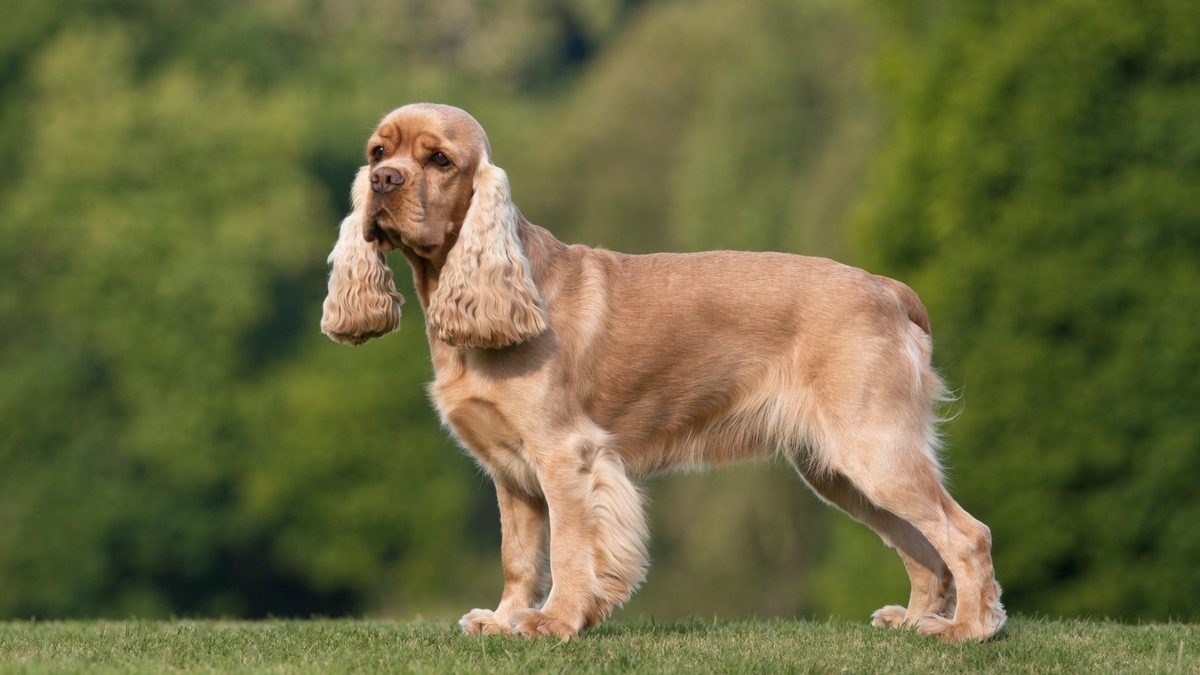
The American Cocker Spaniel is the smallest member of the Sporting Group, a flushing dog and companion developed in the United States, standing an ideal 15 inches at the withers for dogs and 14 inches for bitches. It is a separate breed from the English Cocker Spaniel, which is taller, leaner and British. Indian sellers almost never say which one they are selling, so the first job on this page is to tell them apart.
Two breeds share the word Cocker, and they are not interchangeable. The FCI holds a separate standard for each. FCI-Standard No. 167 covers the American Cocker Spaniel, origin U.S.A., and describes a sturdy, compact dog with a cleanly chiselled and refined head that must above all be free and merry. FCI-Standard No. 5 covers the English Cocker Spaniel, origin Great Britain, a merry, sturdy, sporting dog recognised as a breed separate from the Field and Springer Spaniels soon after the Kennel Club was formed in 1873, and named for flushing woodcock.
The numbers are the fastest way to separate them. Under FCI-167 the ideal height for an adult American dog is 15 inches, roughly 38 cm, and for a bitch 14 inches, with half an inch of tolerance either way. A dog over 15.5 inches or a bitch over 14.5 inches is disqualified. Under FCI-5 the English male stands 39 to 41 cm and the female 38 to 39 cm, weighing approximately 13 to 14.5 kg. So the English is the taller dog and the American is the shorter, rounder one, which is the opposite of what several Indian pages imply when they call the American 'smaller and stockier' without giving a figure.
| Attribute | American Cocker Spaniel | English Cocker Spaniel |
|---|---|---|
| Standard | FCI No. 167, published 27 July 2021 | FCI No. 5, published 8 October 2012 |
| Origin | U.S.A. | Great Britain |
| Ideal height, males | 15 in (about 38 cm), disqualified over 15.5 in | 39 to 41 cm |
| Ideal height, females | 14 in (about 35.5 cm), disqualified over 14.5 in | 38 to 39 cm |
| Weight | Not stated in the standard | Approximately 13 to 14.5 kg |
| Skull | Rounded but not exaggerated, pronounced stop | Well developed, cleanly chiselled, distinct stop |
| Muzzle | Broad and deep, half the distance from stop to skull base | Square |
| Ears | Lobular, long, fine leather, well feathered, set no higher than the lower part of the eye | Lobular, set low level with the eyes, leathers extending to the nose tip |
| Coat | Medium length on body with undercoating, silky, flat or slightly wavy, heavy feathering | Flat, silky, never wiry or wavy, not too profuse, never curly |
| Eye colour disqualification | Blue, blue marbled or blue flecked eyes disqualify | No colour disqualification stated |
A third registry states the relationship between the two breeds more plainly than either FCI document. The United Kennel Club writes that the Cocker Spaniel in the United States is a different dog than the Cocker in England, and was developed from the early U.S. importations of the English Cocker Spaniels, and that to avoid confusion it is often referred to as the American Cocker Spaniel. The UKC recognised it as a breed separate from the English Cocker Spaniel in 1947. It also notes that the breed today enjoys the position of being the world's most popular spaniel, which is exactly why the name gets used loosely in Indian classifieds.
The coat is the real difference, and the real cost
Coat is where the two breeds diverge most and where your money goes. The American standard asks for hair that is short and fine on the head and medium length on the body with enough undercoating to give protection, with the ears, chest, abdomen and legs well feathered. Texture is called most important: the coat should be silky, flat or slightly wavy, and excessive coat or a curly or cottony texture is to be severely penalised. The Royal Kennel Club version of the same standard uses almost identical wording and adds that excessive, curly, woolly or cotton texture is undesirable.
The English standard asks for a flat, silky coat that is explicitly not too profuse and never curly. Read the two together and the practical conclusion is simple. An American Cocker in correct coat carries far more furnishing on the ears, chest, belly and legs than an English Cocker does, and that furnishing is what mats, traps humidity and needs a groomer every four to six weeks for the dog's whole life.
Of the ten results ranking for 'cocker spaniel price in india' on 15 August 2026, only one separates the two breeds by price, one directory lists the origin as 'United States/England' as though it were a single breed, and one lists both types under a single heading with no distinguishing measurements. Assume nothing from the advert. Ask the seller for the parent dogs' registration papers and read the breed name printed on them. If the papers say Cocker Spaniel and the litter was bred in India, that is usually the American type under Kennel Club of India nomenclature, but it can equally be an unregistered dog of mixed spaniel type. The height and the eye colour settle it faster than any conversation.
Size, weight and lifespan you can plan around
The AKC publishes working figures for the breed it simply calls the Cocker Spaniel, which is the American Cocker Spaniel. Males stand 14.5 to 15.5 inches and weigh 25 to 30 pounds, females stand 13.5 to 14.5 inches and weigh 20 to 25 pounds, and life expectancy is 10 to 14 years. Indian directories quote 11 to 15 kg and 36 to 41 cm with a 10 to 14 year lifespan, which is broadly consistent once you convert the units. In metric terms you are buying a dog of roughly 11 to 14 kg that will live into its low teens.
The registries do not agree perfectly on colour, and an Indian buyer should know which rulebook a seller is quoting. The UKC recognises four varieties, Black, ASCOB, Parti-Color and Sable, and disqualifies merle colour and albinism outright. The FCI recognises three and does not list Sable as a variety. If a seller offers you a 'rare sable' at a premium, that is a registry difference rather than a rarity.
Colour is defined by three varieties rather than a free list. The Black variety covers solid jet black including black with tan points. ASCOB, meaning Any Solid Colour Other Than Black, runs from the lightest cream to the darkest red and includes brown. Parti-Colour requires two or more well broken colours, one of which must be white, and includes roans, with a primary colour of ninety percent or more disqualifying. Tan markings are capped at ten percent of the dog. Blue, blue marbled and blue flecked eyes are a disqualification, which matters in India because blue-eyed puppies are marketed at a premium in other breeds.
On temperament the standard is one line and it is unambiguous. The American Cocker Spaniel is equable in temperament with no suggestion of timidity, and aggressive or overly shy dogs are disqualified. The AKC describes the breed as smart, happy and gentle, developed as a hunting dog but popularised as an all-round companion. A nervous, snappy or cowering puppy is not shy for its age. It is off standard.
Cocker Spaniel price in India, and why the sources disagree
A Cocker Spaniel puppy costs Rs 15,000 to Rs 1,80,000 in India in 2026, depending entirely on which published source you read. For the American Cocker Spaniel specifically, two Indian sources give ranges that do not overlap at any point: one says Rs 15,000 to Rs 40,000 and another says Rs 50,000 to Rs 90,000 or more. Both describe themselves as guides. Nobody audits either.
Compare at least three published sources before you accept any single number. Bonbeno pulled every Indian page ranking for this query and put the published bands side by side. The spread is not a rounding difference. It is a factor of nearly three on the floor and a factor of four and a half on the ceiling.
| Source | Headline range | Pet or basic quality | KCI registered | Show or champion line |
|---|---|---|---|---|
| Supertails | Rs 18,000 to Rs 1,00,000 | Rs 18,000 to Rs 35,000 | Rs 35,000 to Rs 65,000 | Rs 65,000 to Rs 1,00,000, imported Rs 1,00,000 to Rs 1,80,000+ |
| Mr n Mrs Pet | Rs 40,000 to Rs 1,20,000+ | Rs 40,000 to Rs 60,000 | Rs 60,000 to Rs 1,00,000 | Rs 1,00,000 to Rs 1,20,000 |
| Cudlycomfy | Rs 25,000 to Rs 80,000 | Not tiered | Not tiered | Not tiered |
| Wrapinfur | Rs 25,000 to Rs 60,000 | Rs 25,000 to Rs 40,000 | Rs 40,000 to Rs 65,000 | Rs 45,000 to Rs 70,000+ |
| Premium Pet Palace | Rs 22,554 to Rs 57,799 | Not tiered | Not tiered | Not tiered |
| Asia Pets | Rs 20,000 to Rs 50,000 | Not tiered | Not tiered | Not tiered |
| Happy Pet, American type only | Rs 15,000 to Rs 40,000 | Not tiered | Not tiered | Not tiered |
Three things fall out of that table. First, the lowest published floor is Rs 15,000 and the highest published floor is Rs 40,000, so one source's cheapest puppy is another source's mid-tier dog. Second, the two pages that publish the most detailed tier tables are both attached to businesses that sell puppies. Third, only one page in the ranking set separates the American from the English at all.
American Cocker Spaniel price in India against the English
Where the two breeds are priced separately, the sources contradict each other on direction as well as amount. Read them together rather than picking one.
| Source | American Cocker Spaniel | English Cocker Spaniel | Stated reason for the gap |
|---|---|---|---|
| Supertails | Rs 25,000 to Rs 1,00,000 | Rs 20,000 to Rs 80,000 | American is rarer in India and the coat needs more intensive grooming |
| Cudlycomfy | Rs 50,000 to Rs 90,000 or more | Rs 30,000 to Rs 70,000 | American is less common and has a longer, more luxurious coat |
| Happy Pet | Rs 15,000 to Rs 40,000 | Not published on the same page | No reason given |
Two of the three agree that the American type costs more in India and give the same reason, that it is scarcer here and carries a heavier coat Cudlycomfy, Cocker Spaniel Dog Price…. The third publishes a band for the American that sits entirely below the other two. Bonbeno does not average these. A range of Rs 15,000 to Rs 40,000 and a range of Rs 50,000 to Rs 90,000 cannot both describe the same animal in the same year, and the honest reading is that at least one of them is not describing a well-bred, health-screened American Cocker Spaniel at all.
City-wise price, and how much of it to believe
| City | Supertails, pet quality | Supertails, KCI registered | Premium Pet Palace, all quality |
|---|---|---|---|
| Delhi NCR | Rs 25,000 to Rs 45,000 | Rs 45,000 to Rs 80,000 | Not listed |
| Mumbai | Rs 25,000 to Rs 48,000 | Rs 48,000 to Rs 85,000 | Rs 28,000 to Rs 45,000 |
| Bangalore | Rs 22,000 to Rs 42,000 | Rs 42,000 to Rs 78,000 | Rs 27,000 to Rs 40,000 |
| Chennai | Rs 20,000 to Rs 38,000 | Rs 38,000 to Rs 70,000 | Rs 32,000 to Rs 43,000 |
| Kolkata | Rs 18,000 to Rs 35,000 | Rs 35,000 to Rs 65,000 | Rs 26,000 to Rs 40,000 |
| Pune | Rs 20,000 to Rs 40,000 | Rs 40,000 to Rs 75,000 | Rs 29,000 to Rs 41,000 |
| Hyderabad | Rs 20,000 to Rs 38,000 | Rs 38,000 to Rs 70,000 | Rs 30,000 to Rs 47,000 |
| Guwahati | Rs 18,000 to Rs 32,000 | Rs 32,000 to Rs 60,000 | Not listed |
The two city tables disagree in both directions. Chennai is the cheapest pet-quality city on one table and among the dearest on the other Premium Pet Palace. A third source puts Mumbai at Rs 40,000 to Rs 70,000 and Chennai at Rs 28,000 to Rs 55,000. City-wise tables are estimates written by marketers, not transaction records. Use them to sanity-check a quote, never to argue a seller down to a number printed on a blog.
One source does publish something closer to real data. Premium Pet Palace lists six live Cocker Spaniel listings with individual asking prices of Rs 33,000, Rs 35,000, Rs 35,000, Rs 36,000, Rs 37,000 and Rs 38,000 across Mumbai, Surat, Delhi, Kolkata, Udaipur and Varanasi. Six advertisements are not a market, but they are actual asks rather than a range invented for an article, and they cluster tightly in the mid-thirties.
Solid black sometimes commands a 10 to 15 percent premium over golden or buff in India, and parti-colour and roan litters can fetch more because they are less predictable to produce. Under the standard, black, ASCOB and parti-colour are three equally correct varieties, and coat colour carries no health meaning whatsoever. You are paying for scarcity of appearance. Pay it if you want to, but do not let it substitute for screening papers on the parents.
What actually justifies a higher price
- Hip evaluation on both parents, which is one of the two screening tests the breed's own parent club and the OFA require for a CHIC number.
- An ophthalmologist eye examination on both parents, registered with the OFA, minimum age 24 months as of 1 July 2024.
- A PRA-prcd DNA result on both parents, which costs about USD 58 per dog and tells you definitively whether a mating can produce a blind dog. Breeders who screen their breeding stock for eyes and hips are the only ones whose price premium means anything.
- KCI registration, meaning Kennel Club of India papers naming the breed, which is the only document that tells you which Cocker you are buying.
- Completed first vaccinations, deworming and a veterinary health certificate handed over at collection.
A puppy sold at the top of any of these bands without those five things is not a premium dog. It is the same dog with a better photograph. One ranking page states plainly that a price under roughly Rs 12,000 to Rs 15,000 signals unregulated backyard breeding with no health screening involved, and on the evidence in the health section below, screening is exactly what this breed cannot afford to skip.
Monthly cost of an American Cocker Spaniel in India
Budget Rs 4,650 to Rs 13,300 a month for an American Cocker Spaniel in India, and expect the two biggest lines to be food and grooming. The published Indian estimates disagree by nearly three times, and the reason is that the cheap estimates quietly assume you groom the dog yourself. For a full-coated American Cocker in Indian humidity, that assumption fails within a year.
Five Indian sources publish a monthly figure. Here they are, unaveraged.
| Source | Monthly total | What it includes |
|---|---|---|
| Supertails | Rs 6,450 to Rs 13,300 | Food, vet, amortised vaccinations, grooming, first-year training, accessories |
| Wrapinfur | Rs 6,000 to Rs 10,000 | Food, vet, grooming, training, toys and accessories |
| Happy Pet, American type | Rs 4,650 to Rs 6,600 | Basic to premium lifestyle, food plus health plus grooming |
| Mr n Mrs Pet | Rs 3,000 to Rs 7,000 | Food, grooming, vet visits, routine care |
| Cudlycomfy | Rs 3,000 to Rs 8,000 | Food, grooming, vet checkups, basic care, up to Rs 40,000 a year |
The most detailed breakdown comes from the highest estimate, and it is worth reading line by line because it is the only one that itemises ear care separately.
| Line | Monthly range | Note |
|---|---|---|
| Food, premium dry kibble | Rs 2,000 to Rs 4,000 | Medium-sized, moderately active, gains weight easily if overfed |
| Veterinary check-ups, amortised | Rs 600 to Rs 1,500 | Includes routine ear checks given the breed's susceptibility |
| Vaccinations, year one, amortised | Rs 350 to Rs 600 | Core vaccines cost Rs 4,000 to Rs 7,000 in year one |
| Grooming | Rs 1,500 to Rs 3,000 | Described as the single biggest cost difference against other breeds |
| Training, first year | Rs 1,500 to Rs 3,000 | Recommended early given intelligence and separation anxiety risk |
| Accessories including ear-cleaning supplies | Rs 500 to Rs 1,200 | Ear-cleaning solution called near-essential for this breed |
| Total | Rs 6,450 to Rs 13,300 | Upper end reflects year one with training and grooming setup |
The grooming line is the one Indian pages get wrong
Professional grooming for this breed is not optional and it is not annual. Two Indian sellers independently put the clipping interval at every four to six weeks Premium Pet Palace, and one adds that the coat needs brushing several times a week between visits, calling it the single biggest hidden cost of the breed. The AKC's own care guidance is blunter still: sessions missed are not easily made up and may result in tangles or matted coat, a metal professional-quality comb is a necessity, and it is key either to learn the grooming procedures yourself or to engage a groomer experienced with the breed.
At a four to six week interval, professional grooming is between eight and thirteen salon visits a year for the life of the dog. Indian published grooming lines run Rs 1,200 to Rs 1,800 a month at the low end and Rs 1,500 to Rs 3,000 at the high end. Over a twelve-year life that alone is between Rs 1,73,000 and Rs 4,32,000, which is more than the purchase price of almost every puppy in the price table above.
Take the published monthly range of Rs 4,650 to Rs 13,300 Supertails, Cocker Spaniel Price in India and hold it flat, ignoring inflation. That is Rs 55,800 to Rs 1,59,600 a year, and across the AKC's stated 10 to 14 year life expectancy it is roughly Rs 5.6 lakh to Rs 22.3 lakh over the dog's lifetime. The purchase price, at Rs 15,000 to Rs 1,20,000 across every source in the price table, is between two and eleven percent of what you will actually spend. Arguing over Rs 10,000 on the puppy while skipping screened parents is the worst trade available in this breed.
The lines the Indian budgets leave out
- Treated ear infection episodes. No Indian budget carries a line for this. Ear disease is the single most likely reason this breed sees a vet, and it recurs. Price a two-week course of topical treatment plus cytology into your annual buffer, not your monthly one.
- Eye examinations. The parent club requires an ophthalmologist evaluation for a CHIC number, and a breed with a 5.52 percent glaucoma prevalence justifies a specialist eye check on your own dog, not only on its parents.
- Tick prevention, year-round. Nearly nine in ten dogs presented at Andhra Pradesh veterinary clinics carried ticks, and 83.48 percent of those owners were already using acaricides. Budget for the good product, monthly, without a break.
- Cooling. Indian veterinary guidance calls indoor temperature above 32 C dangerous for a dog at rest and says cooling should run continuously above that threshold. In a heavy-coated breed that is a real electricity line from March to October.
- Emergency reserve. Immune-mediated haemolytic anaemia treatment is described by the American Spaniel Club Foundation's grants chair as very expensive with no guarantee of success. This breed needs a genuine emergency fund more than most.
None of that makes the American Cocker Spaniel an unaffordable dog. It makes it a dog whose true cost is dominated by two recurring services, grooming and ear care, that the purchase price gives you no information about.
Heat tolerance, humidity and the Indian monsoon
Bonbeno rates the American Cocker Spaniel 3 of 5 for heat tolerance, a middling score for a middling risk. This is not an Arctic breed and it does not carry a northern double coat, so dry heat is manageable with sensible scheduling. Humidity is the real problem, because the same weather that a small silky-coated dog copes with easily is the weather that turns its sealed ear canals into an infection.
Start with what the breed actually wears. The standard asks for hair that is short and fine on the head and of medium length on the body, with enough undercoating to give protection, and heavy feathering on the ears, chest, abdomen and legs. Excessive coat and cottony texture are severely penalised. That is a furnished coat, not a plush northern one, and it behaves differently in Indian heat from a Husky's or a Golden Retriever's.
Indian veterinary guidance names the breeds at particular heat stroke risk and the Cocker Spaniel is not among them. Purina India lists short-faced breeds such as Boxers, Bulldogs, Pugs and Pekingese, and heavy-coated dogs such as Huskies and Newfoundlands. No published Indian source names the American Cocker Spaniel as a high heat stroke risk breed, and Bonbeno will not invent one. What the same guidance does say is that all types of dog can suffer heat exhaustion given the right conditions, that a dog can develop heat stroke in as little as 30 minutes of vigorous exercise in hot weather, and that a rectal temperature of 40.5 C or above is a warning sign.
| Ambient temperature | Risk level | What to do with an American Cocker Spaniel |
|---|---|---|
| Below 28 C | Low | Normal walks and play. Provide shade and water |
| 28 to 35 C | Moderate | Shorten walks to 15 to 20 minutes, early morning or late evening only |
| 35 to 42 C | High | No outdoor exercise. Continuous indoor cooling. Asphalt reaches 60 C and burns paws in seconds |
| Above 42 C | Extreme | Heat stroke possible within 10 to 15 minutes outdoors. Indoor temperature without cooling can itself be fatal |
The single most useful threshold for an Indian flat is the indoor one. Indian veterinary guidance states that indoor temperature above 32 C is dangerous for a dog at rest and that air conditioning, fans or coolers should run continuously above that point. It also gives the pavement rule that costs nothing to apply: place the back of your hand on the pavement for seven seconds, and if you cannot hold it there comfortably, it is too hot for paws.
Humidity is the actual enemy, not temperature
Humidity amplifies heat risk because panting depends on evaporation, and in coastal Indian cities humidity approaches 90 percent, which means a 35 C day in monsoon Mumbai is more dangerous to a dog than a 42 C day in dry Delhi. For an American Cocker there is a second, breed-specific consequence. A humid climate keeps the sealed ear canal permanently damp, and Indian veterinary data shows exactly what that produces.
Researchers at the Dr. G.C. Negi College of Veterinary and Animal Sciences in Palampur, Himachal Pradesh screened 2,476 dogs between June 2022 and July 2023 and diagnosed otitis externa in 81 of them. 59.25 percent of all cases fell in the two rainy-season months of July and August, against 18.51 percent in summer, 12.34 percent in winter and 9.87 percent in autumn, and the authors attribute it directly to increased humidity favouring microbial growth. Bonbeno first published that dataset on the Beagle page, and it applies with more force here, because 69.13 percent of the cases in the same study occurred in breeds with pendulous ears.
Indian owners tend to relax about their dog in the rains because the temperature drops. For a long-eared breed that is exactly backwards. Nearly six in ten canine ear cases in the Palam valley study fell in July and August alone. Put the extra ear checks in your calendar for the monsoon months, not the summer ones, and treat every wet walk as requiring a full dry of both ear flaps afterwards.
City by city, where this breed is easy and where it is work
| Zone | Main pressure | Practical implication |
|---|---|---|
| Mumbai, Chennai, Kolkata, coastal Kerala, Goa | Humidity near 90 percent for months | Hardest zone for this breed. Twice-weekly ear checks year-round, and every second day through the monsoon |
| Delhi NCR, Jaipur, Ahmedabad, Lucknow | Dry extreme heat, 42 C and above | Easier on ears, harder on scheduling. Walks before 7 am and after 8 pm from April to September |
| Bengaluru, Pune, Hyderabad | Moderate heat with a wet monsoon | The most comfortable large-city zone. Monsoon ear discipline still applies |
| Shimla, Dehradun, Gangtok, Ooty | Cool, but heavy seasonal rain | Climate is a non-issue. Rain and matted feathering are the whole job |
Wherever you are, the walking rule from Indian veterinary guidance is the same. Walk only before 7 am or after 8 pm from April to September, keep walks to 15 to 20 minutes even in the cool hours, and use grass or dirt rather than asphalt, which runs 10 to 15 C hotter than grass in direct sun.
Can you clip the coat for summer?
Yes, and this is one of the few breeds where the answer is genuinely yes. The blanket Indian advice to never shave a dog applies to true double-coated northern breeds such as Huskies, Golden Retrievers and German Shepherds, whose undercoat insulates against heat as well as cold. The same guidance recommends trimming long-haired breeds to a 2 to 3 cm length to reduce heat retention while keeping UV protection, naming Shih Tzus and Lhasa Apsos. An American Cocker's heavy feathering sits in that second category, which is why Indian groomers offer a short 'puppy cut' alongside the long 'show cut';.
Two caveats. Clip the furnishings shorter, do not strip the dog to skin, because sunburn and follicle damage are real. And understand that a show-standard American Cocker cannot be clipped on the back coat without penalty in the ring, so if you intend to show the dog, the summer trim is a decision with a cost. For a pet in Chennai, a shorter coat and clean ears beat a beautiful coat and a chronic infection every time.
Temperament, and who should not buy this breed
The American Cocker Spaniel is an equable, people-oriented companion that suits families with someone at home, and it is a poor fit for a household that is empty for eight hours a day. The breed standard requires an equable temperament with no suggestion of timidity and disqualifies both aggressive and overly shy dogs. The most common behavioural problem Indian owners report is not aggression. It is being left alone.
The standard sets the baseline in a single line. Equable in temperament with no suggestion of timidity, with aggressive or overly shy dogs listed among the disqualifying faults. The Royal Kennel Club version says the same and adds the breed characteristics as merry, free, sound and keen to work. The AKC's summary is smart, happy and gentle, describing eager playmates for children that are big enough to be sporty and compact enough to be portable.
On training temperament the AKC is unusually specific and it matters for Indian households where shouting at a dog is still common. The Cocker Spaniel is a people-pleasing breed that wants to be good in order to please its people, and is generally sensitive and responsive to correction and a disapproving tone. Harsh means of correction are not usually warranted, nor are they productive in the Cocker. This is a biddable dog you talk to, not a dog you dominate.
Separation anxiety is the breed's real behavioural risk
Every Indian source that discusses behaviour arrives at the same place. One describes a well-documented tendency toward separation anxiety producing excessive barking or whining, destructive chewing, house-soiling in an otherwise house-trained dog, and pacing or excessive licking, and states plainly that going in without a plan for the dog's social needs is one of the most common reasons this breed ends up in rescue. Another advises keeping alone time under four hours. A third says families frequently away from home find the breed challenging because it does not like being left alone for long periods. A fourth lists separation anxiety among the breed's headline considerations.
Four independent Indian sources naming the same problem is as close to consensus as this topic gets. If your household is out from 9 to 7 with nobody home, this is the wrong breed unless you are genuinely prepared to build in a midday break.
- Start alone-time conditioning in week one, in seconds and minutes, long before you need the dog to cope with a full day.
- Book a walker or a midday check-in if the house is empty for more than four hours.
- Leave a food-dispensing puzzle rather than a silent empty room, so the absence predicts something good.
- Consider a second animal only if your absences are structurally long, not as a substitute for training.
- Treat house-soiling in a trained adult as a distress signal, not disobedience, and speak to a veterinarian before punishing it.
The noise question, which Indian flats make urgent
This is a vocal breed. One Indian seller describes Cocker Spaniels as chatty dogs that tend to bark a lot when excited or seeking attention, while being clear that the barking is not aggression. In a Mumbai or Bengaluru apartment with shared walls, a barky, under-exercised, anxious Cocker becomes a neighbour problem within a month. The fix is exercise and company, not a bark collar.
Two Indian pages raise the phrase. One calls it a documented though uncommon behavioural pattern linked to genetics and early experience rather than inherent aggression, and says early socialisation reduces the risk. Another dismisses it as the breed's spicy side rather than danger. Neither cites a study, a sample size or a prevalence figure. Bonbeno searched for a published prevalence figure specific to the American Cocker Spaniel and did not find one, so we will not print a number. What we can say from the standard is that aggression is a disqualifying fault in this breed, which means a genuinely aggressive American Cocker is a breeding failure, not a breed feature. Meet both parents before you buy.
With children, other dogs and strangers
Indian directory ratings put this breed at the top for family and children and slightly lower with other pets and strangers. The practical caution is physical rather than behavioural. The long ear leathers and full, forward-looking eyes are delicate, and rough handling by very young children risks accidental injury to exactly those structures, so supervise rather than assume. That caution has anatomical backing: the standard describes eyeballs that are round and full and look directly forward, and full forward-set eyes are more exposed than deep-set ones.
| Household | Verdict | Why |
|---|---|---|
| Family with someone home most of the day | Strong fit | Affectionate, gentle with children, adapts to apartments with daily walks |
| Working couple, empty flat 9 to 7 | Poor fit without a plan | Separation anxiety is the breed's most reported behavioural problem in India |
| First-time dog owner willing to groom | Workable | Biddable and food-motivated, responds to reward-based training |
| Owner who wants a guard dog | Wrong breed | Standard requires an equable, non-timid companion, not a protective one |
| Owner unwilling to pay a groomer every 4 to 6 weeks | Wrong breed | Missed grooming sessions are not easily made up and produce mats |
| Coastal household in Kerala, Goa or Mumbai | Fit with discipline | Ears need a genuine monsoon routine, not good intentions |
Training an American Cocker Spaniel, what works and what backfires
To train an American Cocker Spaniel, use food, play and praise, keep your voice level, and start socialisation and handling in the first weeks. This is a people-pleasing breed that is easily motivated by food rewards and is sensitive to a disapproving tone, which means the single most common Indian training mistake, shouting at the dog, actively slows progress in this breed.
The AKC's training guidance for the breed reads almost like a warning against traditional Indian methods. The Cocker Spaniel wants to be good in order to please its people, is generally sensitive and responsive to correction and a disapproving tone, and harsh means of correction are not usually warranted, nor are they productive. Cockers are rather easily motivated with food rewards and with play and praise, early socialisation and puppy training classes are recommended, and the breed enjoys the challenge of performance activities. Indian sources agree, describing the breed as intelligent and eager to please, responding exceptionally well to positive reinforcement.
Three breed-specific complications
- Socialise early and deliberately. Indian guidance for this breed puts early socialisation first, ahead of obedience, because reactive behaviour in poorly socialised individuals is the main behavioural concern practitioners report.
- Expect a real scent drive on the lead. The breed's hunting-dog origins mean it will follow an interesting smell with surprising determination, so lead training is a genuine skill to teach rather than an afterthought. The standard describes a flushing dog with a keen inclination to work and a neck long enough to let the nose reach the ground easily.
- Build crate and alone-time tolerance from week one, because crate training is the practical lever against separation anxiety in this breed.
Handling training is the training nobody schedules
For an American Cocker Spaniel, handling tolerance is not a nicety. This is a dog whose ears will be lifted, wiped and inspected weekly for twelve years, whose feet will be combed out, and who will sit on a grooming table eight to thirteen times a year. A dog that fights ear handling gets checked less often, and a dog that gets checked less often gets diagnosed later.
The AKC's grooming guidance flags one specific handling risk. The skin at the edges of the ears is thin and can be pierced by too-vigorous combing. That is an argument for teaching a puppy to lie still for ear work while the ears are still short and the stakes are low, not after the first infection.
| Age | Priority | What good looks like |
|---|---|---|
| 8 to 12 weeks | Socialisation, handling, house training | Accepts ear lifting and paw handling for a treat. Meets new people and surfaces daily |
| 3 to 4 months | Name, recall game, crate love, lead introduction | Comes to name indoors. Settles in the crate with the door open |
| 4 to 6 months | Alone-time conditioning, loose-lead walking, first groomer visit | Tolerates 60 to 90 minutes alone calmly. Stands on a grooming table without panic |
| 6 to 9 months | Recall outdoors, impulse control around food and scent | Recall works at distance in a quiet park. Leaves a discarded food item on cue |
| 9 to 12 months | Generalising to Indian street conditions | Walks past street dogs, horns and crowds without panic or lunging |
| 12 months onward | Maintenance plus a job | Scent games, retrieve work or a performance sport, which the breed enjoys |
Indian sources put first-year training at Rs 1,000 to Rs 3,000 a month Wrapinfur, Cocker Spaniel Dog Price…. That is between Rs 12,000 and Rs 36,000 for the year, against a purchase price that runs Rs 15,000 to Rs 1,20,000 and a lifetime running cost in the lakhs. Given that the breed's most-reported behavioural failure in India is separation anxiety, and that anxiety-driven destruction and rehoming are the outcomes, first-year training is the highest-return line in the whole budget.
One thing not to do. Do not use a shouty, correction-heavy trainer because a neighbour recommended one for a German Shepherd. The published guidance for this specific breed says explicitly that harsh correction is unproductive here, and a sensitive dog that shuts down under pressure will look obedient and be learning nothing.
Daily exercise, and what happens without it
An American Cocker Spaniel needs 45 to 60 minutes of daily activity split across two sessions, which is the highest of the three Indian figures published and the one that matches a sporting breed. This is not a high-drive dog that has to be run to exhaustion. It is a dog that gets fat, bored and vocal without a routine, and obesity is the most preventable health problem Indian vets report in it.
The Indian sources disagree by a factor of three, so start there.
| Source | Daily requirement | Framing |
|---|---|---|
| Happy Pet, American type | 45 to 60 minutes | Daily walk, playtime and mental stimulation. Energy level rated medium |
| Premium Pet Palace | 30 to 60 minutes | Physical or mental exercise, plus consistent training sessions |
| Cudlycomfy | 20 to 30 minutes plus playtime | Enough to prevent boredom and destructive behaviour |
Bonbeno takes the 45 to 60 minute figure, and the reason is the breed's own kennel club. The AKC describes the Cocker Spaniel as a sporting breed that should maintain good muscle tone while noting it is not a breed that needs a lot of exercise for the purpose of discharging an abundance of energy. Read that carefully. It says the dog does not need to be exhausted. It does not say the dog needs twenty minutes. Muscle tone in a sporting dog is a daily requirement, not a weekend one.
How to fit it into an Indian day
The exercise window and the heat window collide for six months of the year. Indian guidance restricts walks to before 7 am and after 8 pm from April to September, caps them at 15 to 20 minutes even in those cool hours, and warns that a 7 am walk can become dangerous by 7.30 am as the temperature climbs. Purina India adds that heat stroke can develop in as little as 30 minutes of vigorous exercise in warm weather.
- Exercise the dog twice, 20 minutes each, before 7 am and after 8 pm, from April to September.
- Add 15 to 20 minutes of indoor work in the air-conditioned part of the day. The AKC notes Cockers often take their exercise by retrieving a ball or toy indoors.
- Use scent games, which suit a flushing breed bred to work with its nose to the ground and cost nothing but a handful of kibble hidden around a room.
- Let a compatible canine housemate do some of the work. The AKC observes that a Cocker with a canine companion will play to exercise itself.
- Check the pavement with the seven-second hand test before every walk from March onward.
What under-exercising actually produces
Two outcomes, both documented. The first is weight. Indian directory data describes the American Cocker Spaniel as a breed that loves food and is prone to obesity, requiring calorie discipline. A veterinarian quoted on the highest-ranking Indian page puts it more sharply, calling obesity one of the most preventable health issues seen in Cocker Spaniels and saying it is almost always linked to overfeeding treats rather than the main meal. The UK VetCompass study of the closely related English Cocker Spaniel recorded obesity in 9.88 percent of dogs in a single study year, the third most common disorder in the breed.
The second outcome is behaviour. Indian sources link inadequate activity directly to boredom, restlessness and destructive behaviour in this breed, and the same energy that has nowhere to go feeds the barking that makes a Cocker a problem in a shared building.
Obesity and ear disease are usually discussed separately. In this breed they compound. An overweight dog overheats two to three times faster than a lean one, overheating means more panting and more moisture, and moisture is the precondition for otitis externa in a sealed ear canal. Indian ear-disease data found excessive moisture recorded as a predisposing factor in 20.98 percent of canine otitis cases. Keeping this dog lean is ear care as much as it is joint care.
Grooming an American Cocker Spaniel in Indian humidity
Groom an American Cocker Spaniel with a metal comb three to four times a week and book a professional clip every four to six weeks, and treat the ears as a separate medical routine rather than part of the coat job. Indian sources publish grooming intervals ranging from four to eight weeks. The breed's own kennel club is clear that missed sessions cannot be made up.
The AKC's grooming guidance for this breed is more specific than anything published in India, and the tool it names matters. A metal, professional-quality dog comb with fine and medium spacing for the teeth is a necessity. You can follow combing with a gentle slicker brush, but the comb is key, and loose hair should be removed with the comb until you can see through to the skin everywhere. Snarls are picked apart starting at the tips of the coat and then combed through, never pulled through.
The frequency figures published in India disagree, so here they are side by side.
| Source | Home brushing | Professional grooming interval |
|---|---|---|
| Supertails | Several times a week | Roughly every 4 to 6 weeks |
| Mr n Mrs Pet | Regular | Trimming every 4 to 6 weeks to prevent matting |
| Premium Pet Palace | Daily | Grooming at 4 to 6 weeks with frequent brushing in between |
| Asia Pets | 3 to 4 times a week | Every 6 to 8 weeks, ears need special attention |
| Happy Pet | Not stated as a frequency | Rs 1,200 to Rs 1,800 a month, moderate shedding |
Take the shorter interval. The AKC's warning is that sessions missed are not easily made up and may result in tangles or mats, and a matted American Cocker in a Chennai August is not a cosmetic problem. The AKC's own health guidance states that thorough grooming of the coat aids in preventing mats, which can precipitate skin problems underneath. One Indian seller makes the same point in local terms, saying regular grooming keeps the dog cooler in Indian weather and reduces skin infections.
Bathing, which is the highest-risk day of the month
This is the finding that no Indian breed page carries, and it comes from an Indian veterinary college. Researchers at Anand Agricultural University in Gujarat examined 116 dogs presented with ear conditions, of whom 67 (57.76 percent) had otitis. Most of the cases had a history of bathing seven to twelve days earlier, and the authors' stated conclusion is that the most common cause of otitis was bathing without ear plugging. Their advice to owners was routine ear cleaning plus plugging the ears during baths to prevent moisture retention. Bilateral infection was the norm, at 52.23 percent of cases, and Staphylococcus was the dominant isolate at 56.57 percent of 251 bacterial isolates recovered.
For scale, an animal-health industry summary puts it at up to 1 in 7 dogs seen in veterinary practice getting otitis externa at some point in their lives, across all breeds. The same summary makes two points that land directly on this breed. After bathing or summertime swimming it is important to thoroughly dry the ears to prevent moisture buildup, and proper grooming practices matter especially for dogs with long or floppy ears, because they help prevent matting and moisture retention. It also notes that when otitis is treated, the fur around and inside the ear canal is clipped off first to improve cleaning and the effectiveness of topical therapy, which is worth knowing before a groomer's careful ear feathering comes off at the vet.
The AKC's bathing instructions dovetail with that exactly. Bathe thoroughly with a quality dog shampoo, rinse and re-rinse because soap residue causes skin irritation, dry carefully with a blow-dryer on a not-too-hot setting, check the skin for inflamed spots while the coat is wet, and learn the procedure for cleaning and drying the ear canals. Elsewhere the AKC tells owners to learn from a veterinarian how to clean the ear canals regularly, especially following a bath, in order to avoid infections.
The Gujarat cases were presenting seven to twelve days after a bath. That is your inspection window. Plug both ears before the bath, dry both ear flaps and canals thoroughly afterwards, and then lift and check both ears again one week later. If there is a yeasty smell, a head shake or a scratch at that seven-day mark, see a veterinarian rather than reaching for a leftover ear drop. Treatment error was recorded as a predisposing factor in 11.11 percent of Indian otitis cases, which means self-medication is itself a documented cause of the problem.
The weekly and monthly routine, written for an Indian year
| Task | Dry months, October to May | Monsoon, June to September |
|---|---|---|
| Comb through with a metal comb to the skin | 3 to 4 times a week | Daily, because damp feathering mats faster |
| Lift, look at and smell both ears | Twice a week | Every second day, given 59.25 percent of Indian ear cases fall in the rains |
| Clean the ear canal with a veterinary ear cleaner | Weekly | Weekly, plus after every wet walk |
| Bathe, with ears plugged and dried afterwards | Every 3 to 4 weeks | Same interval, never skip the drying step |
| Professional clip | Every 4 to 6 weeks | Every 4 weeks, consider a shorter pet trim |
| Nails, teeth and eye wipe | Weekly check | Weekly check |
Three grooming errors that cost money in this breed
- Combing the ear leathers hard. The skin at the ear edges is thin and can be pierced by too-vigorous combing. Work the feathering, not the leather.
- Over-cleaning the canal. Royal Veterinary College researchers studying ear disease specifically recommend avoiding overzealous ear-cleaning and ear-plucking. Weekly with a proper cleaner beats daily with cotton buds.
- Leaving soap in the coat. Thorough rinsing and re-rinsing are called crucial, because residue causes skin irritation, and irritated skin under a wet coat in an Indian August is how a skin problem starts.
Two instructions to keep taped inside the grooming cupboard. Brush and comb the feathering on the ears, chest, belly and legs before it tangles, because that furnishing is where every mat starts. And dry both ear flaps and the visible canal completely after every bath and every wet walk, which is the single intervention the Gujarat researchers put ahead of everything else in preventing recurrent ear infections.
One consolation. This is not a heavy-shedding breed. Indian directory data rates shedding as moderate, and one seller notes that Cockers do not shed much but do need the trims. You are trading vacuuming for salon appointments, which for most Indian flats is the better trade.
Health problems, screening and what the data actually shows
The American Cocker Spaniel's four documented health priorities are eye disease, ear disease, joints and immune-mediated haemolytic anaemia. Its parent club requires only two screening tests for a health certificate, hips and eyes. On the eye side the numbers are the worst of any breed measured in North America, and on the immune side the Indian tick environment adds a risk that no Indian page mentions.
Before any figure, one nomenclature note. The Orthopedic Foundation for Animals lists Cocker Spaniel and English Cocker Spaniel as two separate breeds in its register. In American registry usage, plain Cocker Spaniel means the American Cocker Spaniel. Every OFA figure below is therefore this breed, not the English one, and Bonbeno confirmed the breed name printed on the returned page before taking a single number off it.
What the parent club actually requires
For a CHIC health number, the breed's parent club and the OFA require exactly two screenings. An ACVO eye examination by a veterinary ophthalmologist with results registered with the OFA, minimum age 24 months as of 1 July 2024, and a hip dysplasia evaluation by either OFA radiograph or PennHIP. The AKC lists the same two, hip evaluation and ophthalmologist evaluation. Two tests is a short list. Ask any Indian breeder for both, by name, in writing.
| Screening | Dogs tested | Normal | Abnormal or affected |
|---|---|---|---|
| Hips | 17,401 | 92.2 percent | 6.9 percent dysplastic |
| Eyes | 16,927 | 90.5 percent | 9.5 percent abnormal |
| Patella | 2,822 | 94.0 percent | 6.0 percent abnormal |
| Legg-Calve-Perthes | 2,213 | 100.0 percent | 1 dog |
| Elbow | 1,192 | 98.3 percent | 1.3 percent dysplastic |
| Congenital cardiac | 692 | 99.6 percent | None recorded abnormal |
| Thyroid | 464 | 82.8 percent | 7.3 percent abnormal, 9.9 percent equivocal |
| PRA DNA test | 220 | 94.5 percent clear | 5.0 percent carriers, 0.5 percent affected |
Hips: the number that is going the wrong way
Hip dysplasia affects 6.9 percent of OFA-evaluated American Cocker Spaniels, made up of 4.8 percent mild, 1.9 percent moderate and 0.2 percent severe, and the breed ranks 160th for hip dysplasia among all breeds in the register. That is a low headline number for a sporting breed, and most Indian pages that list hip dysplasia as a Cocker risk are technically right but proportionally wrong.
The trend is the interesting part, and it is the single fact no competing page carries. Broken down by the year the dog was born, the dysplastic rate ran 5.1 percent for dogs born 1996 to 2000, 6.8 percent for 2001 to 2005, 6.3 percent for 2006 to 2010, 7.0 percent for 2011 to 2015 and 8.6 percent for dogs born 2016 to 2020. Twenty years of screening has not improved hips in this breed. It has gone the other way.
Patellar luxation is the joint problem that gets less attention and deserves more. It affects 6.0 percent of evaluated dogs, and the breed ranks 25th among all breeds. Rank 25 out of hundreds is a genuine breed predisposition, unlike rank 160 for hips. Here the trend is encouraging: the normal rate rose from 66.7 percent for dogs born before 1990 to 97.8 percent for dogs born 2021 onward.
Eyes: the worst glaucoma numbers of any breed measured
This is the headline finding on the breed and Indian pages do not carry it. A retrospective study of veterinary teaching hospital records across North America from 1964 to 2002 found the American Cocker Spaniel had the highest breed prevalence of primary glaucoma of any breed, at 5.52 percent, ahead of the Basset Hound at 5.44 percent, the Chow Chow at 4.70 percent and the Shar-Pei at 4.40 percent. Across all breeds the prevalence of primary glaucoma rose from 0.29 percent in 1964 to 1973 to 0.89 percent in 1994 to 2002, and the American Cocker Spaniel featured among the highest ten breeds in every one of the four periods measured. Females predominated among affected American Cocker Spaniels, and in most breeds glaucoma was first diagnosed between four and ten years of age.
The AKC Canine Health Foundation funded a genome-wide association study at the University of California, Davis to find the genetic cause. It identified a region on chromosome 10 associated with primary angle closure glaucoma in the breed, though the difference did not reach statistical significance, and the investigators reported something more immediately useful to a buyer: detailed eye examinations showed that all American Cocker Spaniels studied had physical eyeball characteristics that may increase their risk of developing angle closure glaucoma. There is no genetic test for glaucoma in this breed yet.
Primary angle closure glaucoma blocks the drain between the iris and cornea, fluid builds up inside the eyeball, and intraocular pressure rises rapidly. It is painful and it requires immediate medical care before the optic nerve is damaged, because the resulting vision loss is irreversible. A sudden cloudy, red or visibly enlarged eye in an American Cocker Spaniel over the age of four is a same-day veterinary visit, not a wait-and-see. Bonbeno rates this the most under-communicated risk in the breed in Indian buying guides.
Cataract is the second eye problem. The same North American dataset put cataract prevalence in the American Cocker Spaniel at 8.77 percent, against a baseline of 1.61 percent in mixed-breed dogs, and listed the breed among the five with the largest number of cataractous dogs across four decades. Across the whole dog population, cataract prevalence rose roughly 255 percent between 1964 and 2003.
The third is inherited retinal degeneration, and here a cheap DNA test exists. Progressive rod-cone degeneration is an autosomal recessive form of progressive retinal atrophy caused by a single nucleotide change at position 5 in the PRCD gene, and the American Cocker Spaniel is among the breeds for which testing is appropriate. Rod cells fail first, producing night blindness, then cones fail, and most affected dogs have noticeable visual impairment by four years of age, typically progressing to complete blindness. Two carriers bred together produce 25 percent affected puppies.
A PRA-prcd DNA test costs USD 58 as a single test at the UC Davis Veterinary Genetics Laboratory, or USD 27 as an add-on to another health test on the same animal, from a cheek swab. Only 220 American Cocker Spaniels appear in the OFA's PRA register, of which 5.0 percent were carriers and 0.5 percent affected. That is a tiny tested population for a popular breed. If an Indian breeder cannot produce a prcd result for both parents, you cannot rule out buying a dog that will be blind by four. A normal prcd result does not exclude other forms of PRA, but it removes the commonest one.
Ears: the defining welfare and cost issue
Ear disease is what this breed is for, structurally speaking. The standard requires ears that are lobular, long, of fine leather, well feathered, and placed no higher than a line to the lower part of the eye, with the leather extending to the nostrils. A flap that long, that low-set and that heavily feathered lies flat over the canal and seals it.
UK primary-care data quantifies what that does. In a random sample of 22,333 dogs from a population of 905,554 under veterinary care, the one-year prevalence of otitis externa was 7.30 percent, and dogs with pendulous ear carriage had 1.76 times the odds of otitis externa compared with erect-eared breeds, while V-shaped drop ears carried 1.84 times the odds. Spaniel types as a group had 1.24 times the odds of non-spaniel types. Most tellingly, the Cocker Spaniel was the second most common breed among all otitis externa cases, accounting for 81 of 1,630 cases or 4.97 percent, behind only the Labrador Retriever.
The most precise ear data available for any cocker comes from a dedicated VetCompass study of the English Cocker Spaniel, and Bonbeno flags the breed difference rather than borrowing the number silently. Comparing 2,510 English Cocker Spaniels against 7,813 other dogs, the breed had 14.66 times the odds of aural discharge (95 percent CI 7.73 to 30.90), 3.59 times the odds of a recorded ear disorder and 1.40 times the odds of otitis externa. The Royal Veterinary College summarised it as the breed being almost fifteen times more likely to have ear discharge, and linked it to the pendulous ear flaps typical of the breed.
| Disorder | One-year prevalence |
|---|---|
| Periodontal disease | 20.97 percent |
| Otitis externa | 10.09 percent |
| Obesity | 9.88 percent |
| Anal sac impaction | 8.07 percent |
| Diarrhoea | 4.87 percent |
One line in that table deserves more attention than it gets in India. Periodontal disease was the single most common disorder at 20.97 percent, ahead of ear disease, and it is the one nobody budgets for. Cornell's canine health centre reports that studies show 80 to 90 percent of dogs over the age of 3 have some component of periodontal disease, that it is worse in smaller breeds, and that plaque rather than visible tartar is the culprit. The mainstay of prevention is daily brushing with a veterinary paste, ideally started once all the adult teeth have emerged, alongside professional cleanings. In a food-motivated breed you are already handing over treats daily, so add the toothbrush to the same routine.
That study also found the English Cocker Spaniel protected from allergy and atopic dermatitis, both at 0.14 times the odds of other dogs, which the authors take as evidence that allergic skin disease is not the main driver of ear disease in the breed. In India the driver is more likely to be mechanical and environmental: moisture, humidity and bath water. No equivalent dataset exists for the American Cocker Spaniel anywhere, which is worth stating plainly rather than papering over.
The Indian picture is documented but thin. In the Palam valley study of 2,476 dogs, 81 were diagnosed with otitis externa, a hospital prevalence of 3.27 percent, with 69.13 percent of cases in pendulous-eared breeds and 59.25 percent falling in the two rainy months. Notably, not a single Cocker Spaniel appears in that study's breed table, which lists Labrador Retriever, German Shepherd, Pomeranian, mongrel, Pug, Beagle, Gaddi, crossbreed, Golden Retriever, Rottweiler and Husky. That reflects how uncommon the breed is in Himachal Pradesh, not any protection. The Gujarat study did record one Cocker Spaniel among its 67 otitis cases.
Immune-mediated haemolytic anaemia, and why India makes it worse
Immune-mediated haemolytic anaemia is a disease in which the dog's own immune system destroys its red blood cells, and it is one of the most common immune-mediated diseases in dogs. In a study of 72 IMHA cases spanning 28 breeds, Cocker Spaniels were the most over-represented breed, ahead of English Springer Spaniels, Collies, Irish Setters and Poodles. A breeder-veterinarian quoted in the same report calls Cocker Spaniels the poster children for IMHA.
Three facts make it urgent rather than academic. Primary IMHA, the type affecting Cocker Spaniels, accounts for about three-quarters of North American cases and is idiopathic and polygenic. In necropsy studies, 90 percent of dogs that died with IMHA had blood clots in various organs. About 15 percent of dogs that survive the first 60 days relapse. The grants chair of the American Spaniel Club Foundation states that treatment can be very expensive with no guarantee it will succeed.
Secondary IMHA is triggered by another illness, and many tick-borne organisms can induce it. India is a heavy tick-borne disease environment. In a study of 442 dogs presented to veterinary hospitals in Andhra Pradesh, 397 dogs, or 89.81 percent, were carrying ticks, all of them the brown dog tick Rhipicephalus sanguineus, with single tick-borne infections in 30.77 percent and co-infections in 12.67 percent, rising to a reported 19.50 to 39.00 percent in other parts of India. Notably 83.48 percent of those owners said they were already using an acaricide. Taking a breed already over-represented for IMHA and keeping it in that environment is the single strongest argument on this page for year-round, veterinarian-chosen tick prevention. Learn the signs: sudden extreme lethargy, pale or yellow gums, jaundiced eyes, dark orange or brown urine, rapid breathing and collapse.
Lifespan
The AKC gives 10 to 14 years for the American Cocker Spaniel, and Indian directories give 10 to 14 years too. A UK study of 584,734 dogs including 284,734 deaths found a median life expectancy of 12.5 years for all dogs, 12.7 years for purebreds and 12.0 years for crossbreds, with Cocker Spaniels at 13.3 years, above the all-dog median. That UK figure describes English Cocker Spaniels, since that is what a UK dataset means by Cocker Spaniel. No Indian lifespan data exists for either breed, and Bonbeno will not extrapolate one.
Feeding an American Cocker Spaniel in India
Feed an American Cocker Spaniel twice a day on a measured portion of a complete medium-breed food, and control treats harder than you control meals. Indian directory data puts the daily requirement at about 800 kcal for an adult and 1,000 kcal for a puppy, with 22 to 28 percent protein. This breed loves food and gains weight easily, and obesity is the most preventable problem Indian veterinarians report in it.
Start with the numbers, because almost no Indian page publishes any. One Indian directory gives 800 kcal a day for an adult American Cocker Spaniel and 1,000 kcal a day for a puppy, with a diet built on lean proteins such as chicken, turkey, fish and beef and a protein content of 22 to 28 percent as recommended by AAFCO. The same source puts monthly food spend at Rs 2,250 to Rs 3,000, against Rs 2,000 to Rs 4,000 from two other Indian sources.
Those are starting points, not prescriptions. The AKC's advice is to pay attention to food labels for quality ingredients and to seek veterinary advice about individual sensitivities. Feed to body condition rather than to a printed gram figure. On the WSAVA nine-point body condition scale, the ideal score of 5 is defined as ribs palpable without excess fat covering, a waist observed behind the ribs when viewed from above, and an abdomen tucked up when viewed from the side. A dog scoring 7, where ribs are palpable only with difficulty under heavy fat cover and the waist is absent or barely visible, is already carrying a joint, heat and ear problem.
| Stage | Meals a day | Priority |
|---|---|---|
| 8 to 16 weeks | 4, then 3 | Complete puppy food for medium breeds. Keep the food the breeder used for the first fortnight, then transition gradually |
| 4 to 8 months | 3 | Steady growth on roughly 1,000 kcal a day. Do not free-feed |
| 8 to 14 months | 2 | Transition to adult food. Recheck portion after neutering, when weight gain accelerates |
| Adult, 1 to 8 years | 2 | About 800 kcal a day, adjusted to body condition and activity |
| Senior, 8 years and older | 2 | Older American Cockers are more prone to weight gain, joint stiffness and metabolic issues, so adjust diet and routine |
Treats are the problem, not dinner
A veterinarian quoted on the highest-ranking Indian page for this query says it directly: obesity is one of the most preventable health issues seen in Cocker Spaniels, and it is almost always linked to overfeeding treats rather than the main meal, so portion control matters more for this breed than most. Indian directory data agrees, noting that American Cocker Spaniels love food, are prone to obesity, and will eat whatever comes within range.
That collides with the training advice on this page. Cockers are easily motivated with food rewards, so you will be handing over food all day in the first year. The fix is arithmetic, not willpower. Take the training treats out of the daily ration, weigh what is left, and feed that.
- Weigh the daily ration once and use the same measuring cup every day.
- Cap treats at ten percent of daily calories and subtract them from meals.
- Use the kibble itself as training currency during the first year rather than buying extra treats.
- Weigh the dog monthly at the clinic through the first two years, then quarterly.
- Recheck the portion after neutering or spaying, which is when Indian sources flag accelerated weight gain.
Coat, skin and the omega question
One Indian source recommends omega-3 supplementation on the grounds that it supports both coat health and skin condition, both described as areas of known sensitivity in Cocker Spaniels. Treat that as a reasonable suggestion rather than an evidence-based dose, because no Indian source publishes a quantity and the UK data on the closely related English Cocker Spaniel actually shows the breed protected from atopic dermatitis and allergy, at 0.14 times the odds of other dogs. Talk to your veterinarian before adding a supplement. A dog with dull coat and flaky skin in an Indian August is far more likely to have a moisture and grooming problem than a fatty acid deficiency.
Indian directory guidance for this breed names alcohol, avocado, cherries, coffee and tea, dairy, fruit seeds, grapes and onions as foods to keep away, on the basis that the breed will eat anything within reach and has no understanding of what is toxic. A second Indian source adds spicy and oily human food to the list, on obesity and digestive grounds rather than toxicity. In an Indian kitchen, onions and dairy are the two that end up on the floor most often.
Fresh water matters more in this breed than in most, and for a reason specific to its anatomy. One Indian source notes that fresh water should be available at all times, especially given that the floppy ears trap heat and moisture. Indian heatstroke guidance recommends multiple water stations refreshed two to three times a day in summer, because water temperature rises fast and dehydration sharply increases heat risk.
The first year, month by month
The first year of an American Cocker Spaniel sets three things that are hard to fix later: tolerance of ear handling, tolerance of being alone, and a healthy weight. Take the puppy home no earlier than eight weeks, complete the core vaccination course by four months, and have the dog standing calmly on a grooming table before the adult coat arrives.
A responsible breeder does not sell a puppy before eight weeks of age. Anyone offering you a six-week-old American Cocker Spaniel has told you everything you need to know about the rest of their practice.
| Age | Health and admin | The thing that matters most |
|---|---|---|
| 6 to 8 weeks, still with breeder | First DHPP given, covering distemper, hepatitis, parvovirus and parainfluenza | You should be viewing the parents, their registration papers and their hip and eye screening results |
| 8 to 9 weeks, homecoming | Veterinary check within 48 hours. Deworming record handed over | Keep the breeder's food for a fortnight. Start touching ears and paws daily for a treat |
| 10 to 12 weeks | DHPP booster | Socialisation window. New people, surfaces, sounds and vehicles, daily and calmly |
| 12 to 16 weeks | Rabies vaccination. Core vaccines cost Rs 4,000 to Rs 7,000 across year one | Puppy class. The breed responds to food, play and praise, not correction |
| 14 to 16 weeks | Final DHPP booster | Begin alone-time conditioning in minutes, before separation anxiety has anything to attach to |
| 4 months | Start monthly tick prevention and keep it year-round | First groomer visit for a bath, blow-dry and light tidy, so the table is boring before it is necessary |
| 5 to 6 months | Weigh monthly. Discuss neutering timing with your veterinarian | Adult coat and feathering start to come in. Move to combing three to four times a week |
| 6 to 8 months | First full professional clip at the 4 to 6 week cadence you will keep for life | Ear routine locks in. Weekly clean, plus a check one week after every bath |
| 8 to 10 months | Recheck portion size after neutering, when weight gain accelerates | Exercise settles at 45 to 60 minutes daily, split across cool hours |
| 10 to 12 months | Annual DHPP and rabies boosters due | Transition to adult food and roughly 800 kcal a day |
| 12 months onward | Adult size reached, 14.5 to 15.5 inches and 25 to 30 pounds for a male | Baseline veterinary eye check. The formal ACVO examination for breeding stock is only valid from 24 months |
The schedule above is the one published by an Indian pet directory for this breed, and that source states explicitly that the list is for reference only and that a qualified veterinarian should guide the actual protocol for your dog. Local disease pressure, the dam's antibody status and the puppy's health all change the timing. Take the schedule to your vet as a starting point, not as an instruction.
The four habits to build before the first birthday
- Ear tolerance. Lift both ears, look inside and wipe the visible part every day from week one. By six months the dog should sleep through it. This single habit determines whether you catch ear disease early for the next twelve years.
- Table tolerance. Have the puppy stand still on a raised surface for two minutes at a time. A dog that panics on a grooming table gets rushed jobs and more mats.
- Alone tolerance. Build from thirty seconds to ninety minutes across the first six months, because separation anxiety is the breed's most reported behavioural failure in India.
- Weight discipline. A puppy that is chubby at six months is an adult that is obese at three, and obesity affected 9.88 percent of closely related English Cocker Spaniels in a single UK study year.
Heat rules for a puppy's first Indian summer
A puppy under six months has immature thermoregulation and is listed among the elevated-risk groups in Indian heatstroke guidance. For a puppy arriving in March or April, that means walks only before 7 am and after 8 pm, sessions capped at 15 to 20 minutes, grass rather than asphalt, and continuous indoor cooling whenever the indoor temperature passes 32 C. Purina India warns that a dog can develop heat stroke in as little as 30 minutes of vigorous exercise in hot weather, and an excited four-month-old will not self-regulate. You have to.
American Cocker Spaniel against the breeds Indians cross-shop
The first comparison to make is not against another breed. It is against the English Cocker Spaniel, because that is the dog you may actually be buying. After that, the breeds Indian buyers weigh against a Cocker are the Beagle, the Golden Retriever, the Shih Tzu and the Lhasa Apso, and the axis that separates them is ear risk and coat work rather than temperament.
How to tell an American Cocker from an English Cocker in the room
You can do this in under a minute with a measuring tape and a look at the head. The two standards give you four separators.
- Measure the withers. An adult American male is ideally 15 inches, about 38 cm, and is disqualified over 15.5 inches. An English male stands 39 to 41 cm. If the dog measures 40 cm, it is not a correct American Cocker.
- Look at the skull. The American has a rounded skull with a pronounced stop and a broad, deep muzzle exactly half the length of the stop-to-occiput measurement. The English has a cleanly chiselled skull with a distinct stop set midway between nose tip and occiput, and a square muzzle.
- Look at the coat quantity. The American carries heavy feathering on the ears, chest, abdomen and legs. The English coat is explicitly not too profuse.
- Check the eyes. Blue, blue marbled or blue flecked eyes disqualify an American Cocker Spaniel. The English standard states no colour disqualification.
A fifth check is documentary. The two breeds hold separate FCI standards, separate Royal Kennel Club breed standards and separate entries in the OFA register The Royal Kennel Club Orthopedic Foundation for Animals. If a seller cannot produce papers naming one or the other, treat the dog as unregistered rather than as either breed.
Cocker Spaniels were recognised as a breed separate from the Field and Springer Spaniels soon after the Kennel Club was formed in 1873, and the Cocker took its name from flushing woodcock. The English Springer Spaniel is a third, larger breed, and in India long-eared spaniel-type puppies are sometimes advertised interchangeably. The Springer carries its own health profile: it appears alongside the Cocker Spaniel among the breeds at higher risk of immune-mediated haemolytic anaemia. Verify the breed on paper, not from the advert photograph.
The ear risk league table, which is how to compare long-eared breeds
If you are choosing between long-eared, drop-eared breeds, this is the comparison that predicts your vet bills. All figures come from the same UK primary-care study of 22,333 dogs, so they are directly comparable to each other.
| Breed or ear type | One-year prevalence | Odds versus crossbred or erect-eared dogs |
|---|---|---|
| All dogs | 7.30 percent (95 percent CI 6.97 to 7.65) | Reference |
| Basset Hound | 28.81 percent | 5.87 times |
| Chinese Shar Pei | 17.76 percent | 3.44 times |
| Labradoodle | 17.71 percent | 2.95 times |
| Beagle | 14.72 percent | 2.54 times |
| Golden Retriever | 14.11 percent | 2.23 times |
| Spaniel types as a group | Not stated separately | 1.24 times vs non-spaniel types |
| Chihuahua | 1.26 percent | 0.20 times |
| Pendulous ear carriage | Not stated separately | 1.76 times vs erect ears |
| V-shaped drop ear carriage | Not stated separately | 1.84 times vs erect ears |
Two honest observations about that table. The Cocker Spaniel does not appear among the sixteen breeds with statistically increased odds, yet it was the second most common breed in the entire otitis caseload, at 81 of the cases or 4.97 percent. Popularity plus pendulous ears produces a large absolute caseload even at moderate relative odds. And the dedicated study of the English Cocker Spaniel, using a design built to detect breed effects, found 14.66 times the odds of aural discharge and 3.59 times the odds of a recorded ear disorder. Do not read the absence of a Cocker line in the league table as reassurance.
What you trade when you cross-shop
| Breed | What you gain against an American Cocker | What you give up |
|---|---|---|
| English Cocker Spaniel | A taller, leaner, less heavily coated dog with a lighter grooming load | The best-documented ear risk of any spaniel, with 14.66 times the odds of aural discharge |
| Beagle | A short, wash-and-go coat with no salon bill | Higher measured ear odds at 2.54 times crossbreds, plus a scent hound's recall problem |
| Golden Retriever | A larger, more biddable family dog with a well-known temperament | 2.23 times the ear odds, a much bigger dog in a flat, and a true double coat in Indian heat |
| Shih Tzu | A smaller dog that can be trimmed to 2 to 3 cm for the Indian summer | A brachycephalic airway, which Indian guidance places in the extreme heat-risk category |
| Lhasa Apso | A long-coated companion of similar grooming discipline in a smaller package | Less exercise capacity for a family that wants a walking dog |
| Indian Pariah Dog | Erect ears, a short coat, heat adaptation and a free adoption | The specific look and the merry spaniel temperament you came here for |
| Labrador Retriever | India's most familiar breed, easiest to find a vet and trainer experienced with | Size, and the highest absolute otitis caseload of any breed in the UK data |
The pattern is consistent. Every drop-eared, long-coated breed in this comparison trades a coat bill and an ear risk for a look. If neither the coat bill nor the ear discipline is acceptable, the honest recommendation is an erect-eared, short-coated dog, and in India the Indian Pariah Dog is both of those and free to adopt.
Ten mistakes Indian owners make with this breed
Indian owners lose money and welfare on this breed in ten predictable ways, and eight of them concern the ears and the coat. Each one below is anchored to a published figure rather than an opinion, and each is fixable on the day you read it.
- Buying 'a Cocker Spaniel' without establishing which breed it is. The American and the English are separate breeds with separate FCI standards, a difference of several centimetres at the withers and a different eye-colour disqualification. Only one of the ten pages ranking for this query prices them separately. Measure the parents and read the papers.
- Stretching the grooming interval to save money. Indian sellers put the clip at four to six weeks, and the AKC warns that missed sessions are not easily made up and that mats can precipitate skin problems underneath. A shaved-down mat repair costs more than three routine grooms.
- Bathing without plugging the ears. An Indian veterinary study of 67 otitis cases concluded that the most common cause of otitis was bathing without ear plugging, with most cases presenting seven to twelve days after a bath. Plug, dry, and re-check at day seven.
- Reusing an old ear medication. Treatment error was recorded as a predisposing factor in 11.11 percent of Indian canine otitis cases. In the Gujarat series, Staphylococcus was the dominant isolate across 251 bacterial isolates with variable antibiotic sensitivity, which is precisely why the right drug is a laboratory question and not a memory question.
- Cleaning the ear canal too aggressively. Royal Veterinary College researchers recommend avoiding overzealous ear-cleaning and ear-plucking, and the AKC warns the thin skin at the ear edges can be pierced by too-vigorous combing. Weekly and gentle beats daily and rough.
- Relaxing during the monsoon. 59.25 percent of canine otitis externa cases in the Palam valley study fell in the two rainy months of July and August, against 18.51 percent in summer. The cool season is the high-risk season for this breed's ears.
- Ignoring a red or cloudy eye. The American Cocker Spaniel carries the highest recorded breed prevalence of primary glaucoma in North America at 5.52 percent, and angle closure glaucoma causes rapid, painful pressure rises requiring immediate care before irreversible optic nerve damage. Same day, not next week.
- Not asking for a PRA-prcd result on both parents. Most prcd-affected dogs have noticeable visual impairment by four years of age and typically progress to complete blindness. Only 220 dogs of this breed appear in the OFA's PRA register, so almost nobody is testing. Ask anyway.
- Feeding treats on top of meals. An Indian veterinarian describes obesity as one of the most preventable problems in Cocker Spaniels and almost always linked to overfeeding treats rather than the main meal, and obesity affected 9.88 percent of English Cocker Spaniels in a single UK study year.
- Leaving the dog alone all day without conditioning. Four independent Indian sources name separation anxiety as this breed's headline behavioural risk Wrapinfur, Cocker Spaniel Dog Price… Asia Pets, Cocker spaniel breed…, and one states it is among the most common reasons the breed ends up in rescue.
Skipping tick prevention because the dog lives indoors. 89.81 percent of dogs presented at Andhra Pradesh veterinary hospitals were carrying ticks, and 83.48 percent of those owners were already using an acaricide. In a breed over-represented for immune-mediated haemolytic anaemia, where tick-borne organisms can induce the secondary form, indoor living is not protection. And shouting at a sensitive breed. The AKC states plainly that harsh means of correction are not usually warranted, nor are they productive, in the Cocker. A dog that has shut down is not a dog that has learned.
The mistake that costs the most
Optimising the purchase price. Across every published Indian source, a Cocker Spaniel puppy costs Rs 15,000 to Rs 1,20,000 Mr n Mrs Pet, Cocker Spaniel Puppies…, while the running cost is Rs 4,650 to Rs 13,300 a month Supertails, Cocker Spaniel Price in India over a 10 to 14 year life. Saving Rs 20,000 by skipping hip and eye screening buys you a dog with the same coat bill, the same ear risk and an unknown genetic eye status. It is the worst-value decision available in this breed, and it is the one Indian buyers make most often.
Adoption, and how to verify a breeder if you buy
Adopt an adult American Cocker Spaniel if one is available to you, because the breed's commonest surrender reason is behavioural and fixable, and an adult tells you its ear and eye status on day one. If you buy instead, verify five documents before any money moves, and do not accept photographs of the parents in place of the parents.
Bonbeno does not broker sales, recommend breeders or link puppy listings. What follows is a verification method and an adoption case, in that order.
The five documents to see before you pay
- Kennel Club of India registration for both parent dogs, with the documentation available on request rather than promised later. Read the breed name printed on it.
- A hip evaluation on both parents, by OFA radiograph or PennHIP, which is one of the two screenings the breed's parent club requires for a CHIC number.
- An ACVO ophthalmologist examination on both parents, registered with the OFA, valid from 24 months of age as of 1 July 2024.
- A PRA-prcd DNA result on both parents, which is a cheek-swab test that can be run from three weeks of age and costs about USD 58 as a single test.
- Vaccination and deworming records handed over at collection, plus a veterinary health certificate.
Two behavioural checks matter as much as the paperwork. Insist on seeing the parent dogs in person or on a live video call rather than in photographs, and refuse any puppy offered before eight weeks of age. While you are there, lift the ears of both parents and look. You are inspecting the system you will be managing for the next twelve years.
Most Indian buyers assume health screening databases are closed to them. They are not. The OFA states that for dogs residing outside the US or Canada, owners may submit their country's equivalent health screening results for listing on the OFA website, reviewed case by case with fees applying, and that CHIC numbers can then be requested once all requirements are met. A separate CHIC requirement across all breeds is that the dog must be permanently identified by microchip or tattoo. So the honest question to an Indian breeder is not whether screening is possible here. It is whether they have done it. A serious breeder with a microchipped, hip-scored, eye-examined bitch can be looked up. Ask for the registered name.
Why adopting an adult works well in this breed
An adult American Cocker Spaniel removes the two largest unknowns in the breed. Ear conformation and any existing ear disease are visible on the day you meet the dog, and eye status can be established with a single ophthalmology appointment rather than being inferred from a pedigree. Glaucoma in most predisposed breeds presents between four and ten years of age and prcd-affected dogs show noticeable visual impairment by four, so an adopted six-year-old with clear eyes has already passed the two windows a puppy has not entered.
The commonest reason this breed is surrendered is also the one you can assess in advance. One Indian source states that going into ownership without a plan for the breed's social needs is among the most common reasons Cocker Spaniels end up in rescue. That is a management failure rather than a temperament fault, and it is the kind of history a rescue can describe to you honestly.
- Ask what the surrender reason was, and whether it was noise, destruction or house-soiling when left alone.
- Ask for the ear history, specifically how many treated episodes and when the last one was.
- Book an ophthalmology check within the first month, given the breed's 5.52 percent glaucoma prevalence and 8.77 percent cataract prevalence.
- Book a groomer in the first fortnight, because a surrendered long-coated dog is frequently matted.
- Start tick prevention on day one and keep it year-round.
What India does not publish
There is no national Indian registry of breed-wise shelter intake, no published Indian rehoming rate for Cocker Spaniels, and no Indian breed rescue with published figures that Bonbeno could verify. Anyone quoting an Indian abandonment number for this breed is guessing. What exists in the United States, by contrast, is a named parent club, the American Spaniel Club, and a national rescue network of more than 450 groups. India has neither for this breed yet, so the realistic adoption route here is a general municipal shelter, a city rescue group, or a private rehoming through a veterinary clinic or a breed owners' group.
If no American Cocker Spaniel is available to adopt near you, the choice is between waiting, buying from a verified breeder, or choosing a different dog. The Indian Pariah Dog is free to adopt, heat-adapted, erect-eared and short-coated, which removes the two costs that dominate this page. That is not a consolation prize. On ear risk alone, erect-eared breeds sit at the bottom of the otitis table while pendulous-eared breeds carry 1.76 times the odds. If what you want is a merry, affectionate, biddable family dog rather than the specific American Cocker look, an indie dog delivers the temperament without the coat bill.
Cocker Spaniel questions Indians actually search
Which dog is under RS 5000?
Indian native and indie dogs are the only honest answer under Rs 5,000, and most of them are free to adopt from a municipal shelter or a city rescue group. No Cocker Spaniel of either type falls in that band. The lowest published Indian price for an American Cocker Spaniel is Rs 15,000, and the lowest for any Cocker Spaniel is Rs 18,000.
Which dog is under 4000?
No purebred Cocker Spaniel in India sells under Rs 4,000, and any advertisement in that range is a warning rather than a bargain. The realistic options at that price are adoption of an Indian Pariah Dog or an indie, which usually costs nothing beyond vaccination. One ranking Indian source states that a price under roughly Rs 12,000 to Rs 15,000 signals unregulated backyard breeding with no health screening involved.
Is a Cocker Spaniel a good pet?
Yes, for a household with someone at home and a grooming budget. The breed standard calls for an equable temperament with no suggestion of timidity, and every Indian source rates it highly with children. The two honest caveats are that it needs professional grooming every four to six weeks for life and that separation anxiety is its most reported behavioural problem in India.
Which dog's price is 1 crore?
No Cocker Spaniel of either type sells anywhere near Rs 1 crore in India. The highest published Indian band for the breed is Rs 1,00,000 to Rs 1,80,000 and above, and that tier describes imported puppies with FCI documentation on the parents. Crore-level figures reported in Indian media concern rare imported mastiff-type dogs bought as status purchases and are individual transactions, not a market rate for any breed.
What is the difference between an American Cocker Spaniel and an English Cocker Spaniel?
They are separate breeds with separate FCI standards. The American ideal height is 15 inches for dogs, about 38 cm, with a rounded skull, a pronounced stop, a broad deep muzzle and heavy feathering, and blue eyes are a disqualification. The English male stands 39 to 41 cm with a square muzzle, a coat that is explicitly not too profuse, and no colour disqualification.
What is the American Cocker Spaniel price in India?
Indian sources disagree completely. One publishes Rs 15,000 to Rs 40,000 for the American type, another Rs 25,000 to Rs 1,00,000, and a third Rs 50,000 to Rs 90,000 or more. Two of the three say the American costs more than the English in India because it is scarcer here and its coat needs more intensive grooming. Bonbeno prints all three rather than averaging them.
How much does it cost to maintain a Cocker Spaniel in India monthly?
Published Indian estimates run from Rs 3,000 to Rs 13,300 a month, and the gap is mostly the grooming line. The most detailed breakdown gives food at Rs 2,000 to Rs 4,000, grooming at Rs 1,500 to Rs 3,000, vet care at Rs 600 to Rs 1,500, first-year training at Rs 1,500 to Rs 3,000 and accessories including ear-cleaning solution at Rs 500 to Rs 1,200.
Do Cocker Spaniels get ear infections in India?
Yes, and the monsoon is the peak season. An Indian study of 2,476 dogs found 59.25 percent of all canine otitis externa cases fell in the two rainy months of July and August, and 69.13 percent of cases occurred in breeds with pendulous ears. The long, low-set, heavily feathered ear of an American Cocker Spaniel seals the canal and holds moisture against it.
How often should I groom my Cocker Spaniel?
Comb through to the skin three to four times a week and book a professional clip every four to six weeks, which is what three separate Indian sources recommend. The AKC warns that missed grooming sessions are not easily made up and may result in tangles or mats, and that mats can precipitate skin problems underneath. A metal professional-quality comb is the essential tool, not a brush.
Can Cocker Spaniels be left alone for 8 hours?
Not comfortably, and not without preparation. Four independent Indian sources name separation anxiety as this breed's headline behavioural risk, one advises keeping alone time under four hours, and one states that going in without a plan for the dog's social needs is among the most common reasons the breed ends up in rescue. Build alone-time tolerance from the first week and arrange a midday break.
What health problems do American Cocker Spaniels have?
Eyes first. The breed carries the highest recorded prevalence of primary glaucoma of any breed in North America at 5.52 percent, and a cataract prevalence of 8.77 percent against a 1.61 percent mixed-breed baseline. Ears, joints and immune-mediated haemolytic anaemia follow. OFA screening shows 6.9 percent hip dysplasia and 6.0 percent patellar luxation, with the breed ranked 25th of all breeds for patellas.
Is progressive retinal atrophy testable in Cocker Spaniels?
Yes, for the commonest form. The PRA-prcd DNA test detects an autosomal recessive variant in the PRCD gene and is validated for the American Cocker Spaniel, costing about USD 58 as a single test from a cheek swab. Most affected dogs show noticeable visual impairment by four years of age and typically progress to complete blindness, so both parents should be tested before any mating.
Are Cocker Spaniels good for apartments in India?
Yes, with two conditions. Indian sources agree the breed adapts well to apartment living given daily walks and attention, and it is a compact dog of roughly 11 to 15 kg. The conditions are that someone is home for most of the day and that you accept the noise, because this is a chatty breed that barks when excited or seeking attention.
What is the average lifespan of a Cocker Spaniel dog in India?
No Indian lifespan data exists for this breed. The AKC gives 10 to 14 years for the American Cocker Spaniel and Indian directories quote the same range. A UK study of 584,734 dogs found a median life expectancy of 12.5 years for all dogs and 13.3 years for Cocker Spaniels, though a UK dataset means English Cocker Spaniels when it says Cocker Spaniel.
Does an American Cocker Spaniel need air conditioning in India?
Not as a rule, but cooling is needed above a threshold. Indian veterinary guidance states that indoor temperature above 32 C is dangerous for a dog at rest and that air conditioning, fans or coolers should run continuously above that point. This breed is not on any published Indian list of high heat stroke risk breeds, which is a genuine difference from Huskies and flat-faced dogs.
Compare with similar breeds
American Cocker Spaniel sits in 2 Bonbeno groups. Each one compares it directly against the breeds it is genuinely an alternative to, on the same figures.