
Dog breed profile
Lhasa Apso in India: Price, Grooming and Full Breed Guide
What a Lhasa Apso costs in India, what KCI registration actually costs the breeder, why almost every Indian Lhasa Apso lives in a puppy clip, and what the veterinary evidence says about its kidneys, eyes and knees.
Quick answer
The Lhasa Apso price in India runs Rs 10,000 to Rs 1,20,000 in 2026, and published Indian sources disagree by more than Rs 1,10,000 for the same breed. KCI registration is the biggest price lever, yet the registry itself charges only Rs 1,250 to register and transfer a puppy. Grooming, not the purchase price, decides what this breed actually costs an Indian household, at Rs 9,600 to Rs 24,000 a year.
This guide is general information for Indian pet owners and is not a diagnosis. Always consult a registered veterinarian near you before acting on anything you read here, and treat any sudden change in your dog's condition as urgent.
Lhasa Apso at a glance
What a Lhasa Apso is
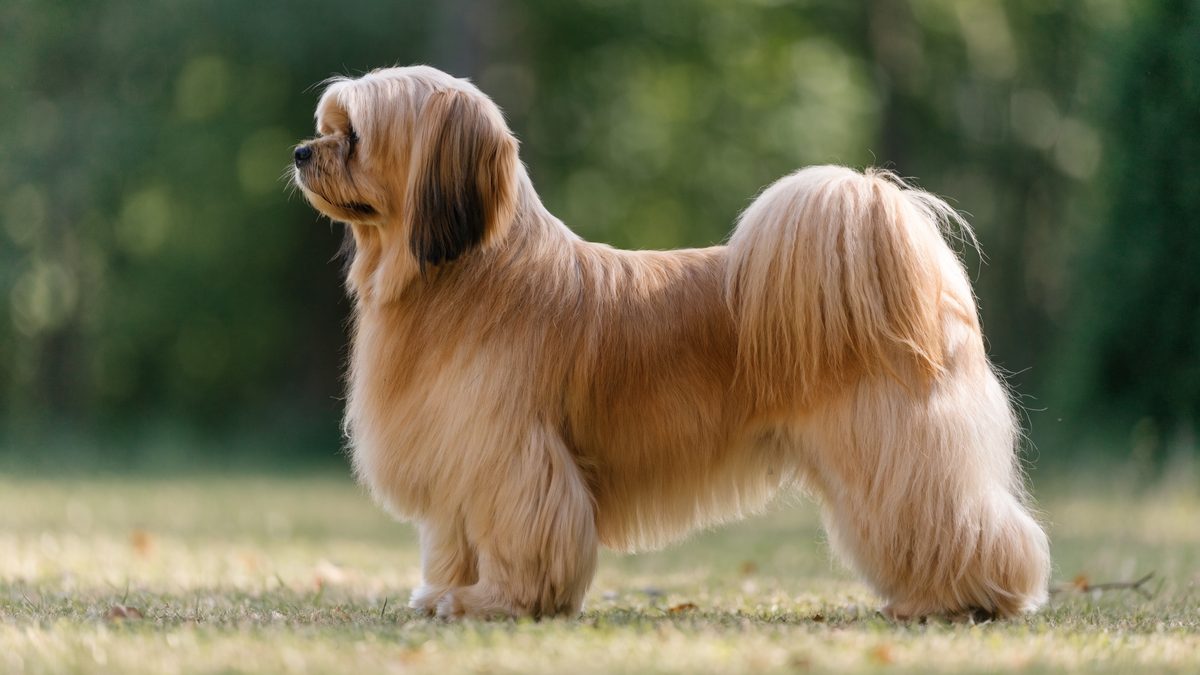
The Lhasa Apso is a small, sturdy, rectangular Tibetan dog bred as an indoor sentinel on the Tibetan plateau, and its defining feature is a heavy, dense double coat parted down the middle from head to tail. Every practical question about keeping one in India runs back to that coat. It was built to hold body heat at 3,600 metres, and you are asking it to work in Chennai.
Under the American Kennel Club standard approved on 13 August 2019, the Lhasa Apso stands ideally 10 to 11 inches at the shoulder, with bitches slightly smaller. The standard calls for a dog of moderation with a level topline and a tail carried well over the back, and it warns against any hint of massive bone or body. The AKC breed page puts mature weight at 12 to 18 pounds and life expectancy at 12 to 15 years.
The Royal Kennel Club in Britain and the Federation Cynologique Internationale both set the ideal height lower, at 25 cm (10 inches) for dogs, with bitches slightly smaller. Encyclopaedia Britannica gives the same band in both units, 10 to 11 inches (25 to 28 cm) and 12 to 18 pounds (5 to 8 kg). A Lhasa Apso that stands 14 inches and weighs 12 kg is not a large example of the breed. It is either overweight or not purebred, and in India it is frequently both.
The three breed standards, side by side
Four registries describe this breed, and they do not agree on everything. The disagreements are small but they matter, because Indian sellers quote whichever standard flatters the puppy in front of them. The United Kennel Club, which recognised the breed in 1975 and places it in its Companion Dog Group, sets the desired height at about ten inches for males and specifies a foreface about one and a half inches long, with a level or slightly undershot bite and oval eyes showing no white.
Two of those rows answer questions Indian buyers actually type. On the reverse scissor bite, the British and FCI standards require the upper incisors to close just inside the lower ones, while the AKC prefers a level or slightly undershot mouth. Neither is a fault in India, because India follows no single standard consistently. On group placement, the answer to whether this is a toy breed depends entirely on which registry you ask. The FCI classes it as a companion and toy dog, the Royal Kennel Club puts it in Utility, and the AKC puts it in Non-Sporting The Royal Kennel Club Coile C. Lhasa Apso.
The Royal Kennel Club names merle as the one unacceptable colour in this breed. The AKC and FCI standards list no merle among the accepted colours Federation Cynologique Internationale. A seller advertising a rare merle Lhasa Apso at a premium is advertising a dog that no standard recognises, which usually means another breed is somewhere in the pedigree.
Where the breed came from
The Lhasa Apso originated in Tibet, where it is called abso seng kye, translated as bark lion sentinel dog or bearded lion dog. Tibetan monks bred it for centuries as a guard dog in palaces and monasteries, and its heavy coat provided warmth and protection in high-altitude terrain. Tibetan folklore treats the dog as the living incarnation of the Snow Lion, the mythical protector of Tibet, and the breed was considered sacred because it was believed to shelter the souls of deceased lamas awaiting reincarnation.
The sources that date the breed disagree by 1,600 years. Britannica puts the area of origin at Tibet around 800 CE, while the United Kennel Club states that documentation on the breed exists from as far back as 800 BC and the Canadian Kennel Club says the breed was bred in Tibetan monasteries for over 2,000 years and is said to have existed since 800 BC Canadian Kennel Club. Bonbeno prints all three rather than averaging them. What they agree on is that the dog is ancient and that it was a monastery and palace companion long before it was a pet.
The commercial history matters more than the folklore for an Indian buyer. Lhasa Apsos were Tibetan national treasures that could be given as gifts to people deemed worthy but were never sold, and the UKC records the same practice, that the dogs were kept as good luck talismans and given away as gifts to those the lamas held in high esteem. The first Apsos reached Britain in the early 1920s, where they were lumped in with other shaggy Oriental dogs and all labelled Lhasa Terriers until a distinction was drawn between the Apso and the Tibetan Terrier. A British breed club followed in 1933. Some of the first Lhasas in the West in the 1930s were gifts of the 13th Dalai Lama, and the AKC moved the breed out of its terrier group and into the non-sporting group in 1959. The American Lhasa Apso Club, the AKC parent club, was established the same year American Lhasa Apso Club.
So the Lhasa Apso is not a terrier and never was one. It was misfiled as a terrier for three decades because of its size and its coat, which is exactly the kind of surface-level classification that still causes it to be confused with the Shih Tzu in Indian listings today.
What the standard says about temperament
The AKC standard describes the Lhasa Apso as gay and assertive, alert and sensitive to its surroundings, and states plainly that Lhasas may be chary or aloof with strangers. It calls the breed extremely intelligent, charming and loyal, and notes that its regal attitude gives it an air of seriousness. The Royal Kennel Club and FCI use almost identical wording, alert and steady but somewhat aloof with strangers Federation Cynologique Internationale.
Read that carefully before you buy. Three separate registries independently describe an aloof dog that keeps its distance from strangers. Nobody is describing a small, cuddly, universally friendly lap dog, and the Shih Tzu standard, which requires a temperament that is outgoing, happy, affectionate, friendly and trusting towards all, describes a completely different animal. If your household wants a dog that greets every guest, you want the other breed.
India publishes no breed-wise registration series, so nobody knows how many Lhasa Apsos live here. The Kennel Club of India registers individual dogs and litters and publishes a tariff for doing so, but it does not publish annual breed counts. Any Indian page quoting a national Lhasa Apso population figure has invented it.
Lhasa Apso price in India
The Lhasa Apso price in India runs from Rs 10,000 to Rs 1,20,000 across the sources publishing figures in 2026, a spread of more than Rs 1,10,000 for the same breed. That spread is the most useful fact on this page, because it tells you that no Indian publisher is measuring anything. They are reporting what sellers told them, and the sellers disagree.
Bonbeno pulled every Indian page publishing a Lhasa Apso price band and put them in one table. Read them side by side and the market becomes legible for the first time.
| Source | Pet quality | KCI registered | Show or champion line | Headline range |
|---|---|---|---|---|
| Mr n Mrs Pet | Rs 35,000 to Rs 65,000 | Rs 65,000 to Rs 1,00,000 | Rs 1,00,000 to Rs 1,20,000 | Rs 35,000 to Rs 1,20,000+ |
| Wrapinfur | Rs 15,000 to Rs 25,000 | Rs 45,000 to Rs 80,000 | Same as KCI band | Rs 15,000 to Rs 80,000 |
| ZoodleApp | Rs 15,000 to Rs 25,000 | Rs 45,000 to Rs 80,000+ | Same as KCI band | Rs 15,000 to Rs 80,000+ |
| Supertails | Rs 15,000 to Rs 30,000 | Up to Rs 60,000 | Rs 35,000 to Rs 60,000 | Rs 15,000 to Rs 50,000 |
| WhatsTheCost | Rs 10,000 to Rs 25,000 | Rs 20,000 to Rs 37,500 | Rs 30,000 to Rs 60,000 | Rs 10,000 to Rs 25,000 |
| VetScan | Not stated separately | Not stated separately | Not stated separately | Rs 20,000 to Rs 45,000+ from a reputable breeder |
The floor for a pet-quality puppy is quoted at Rs 10,000 by one source and Rs 35,000 by another, a 3.5x difference for the same tier of the same breed Mr n Mrs Pet, Lhasa Apso Puppies For Sale…. The ceiling is quoted at Rs 60,000 by one source and Rs 1,20,000 by another Mr n Mrs Pet, Lhasa Apso Puppies For Sale…. Neither figure is audited. Neither publisher explains its method.
Two sources contradict themselves inside one page
Before you trust any of these bands, notice that two of them fail an internal consistency check. Supertails publishes four different headline ranges on the same page. One paragraph says show-quality dogs with documented ancestry typically cost Rs 25,000 to Rs 80,000 and pet-quality puppies Rs 15,000 to Rs 35,000. Its own comparison table then puts show quality at Rs 35,000 to Rs 60,000 and pet quality at Rs 15,000 to Rs 30,000. Its conclusion says Rs 15,000 to Rs 50,000. Its FAQ says Rs 15,000 to Rs 25,000.
WhatsTheCost is worse in a smaller way. Its page title says Rs 10,000 to Rs 25,000 while the meta description on the same page says Rs 2,500 to Rs 1,20,000. Both were retrieved from that URL on the same day. A page that cannot agree with its own title tag is not a market survey.
The KCI premium, priced against the actual paperwork
Here is the number no ranking page publishes. KCI registration is the single biggest price lever in this market, and it costs the breeder Rs 1,250.
The Kennel Club of India publishes its fee schedule. Under the revised tariff effective 1 April 2024, litter registration is Rs 750 per puppy if filed within 60 days of whelping, rising to Rs 1,200 between 61 and 120 days and Rs 2,000 between 121 and 180 days. Transferring ownership of a registered dog to you costs Rs 500 within twelve months of the puppy's date of birth and Rs 1,000 after that. A certified four-generation pedigree costs Rs 1,000. All figures are inclusive of GST.
| Line | Amount |
|---|---|
| Litter registration, per puppy, filed within 60 days | Rs 750 |
| Transfer of ownership to the buyer, within 12 months | Rs 500 |
| Total registry cost per registered puppy | Rs 1,250 |
| Optional certified pedigree, four generations | Rs 1,000 |
| Seller premium for KCI over pet quality, Wrapinfur bands | Rs 30,000 to Rs 55,000 |
| Seller premium for KCI over basic, Mr n Mrs Pet bands | Rs 30,000 to Rs 35,000 |
| Seller premium for KCI over pet quality, WhatsTheCost bands | Rs 10,000 to Rs 12,500 |
Set the two halves of that table against each other. A breeder spends Rs 1,250 to put a puppy on the KCI register, and the published Indian price bands charge you between Rs 10,000 and Rs 55,000 for the fact that they did Mr n Mrs Pet, Lhasa Apso Puppies For Sale… WhatsTheCost.in, Lhasa Apso Price in India…. Some of that gap is legitimate. Registered breeders generally invest more in the litter, and a documented pedigree has real value if you intend to show or breed. But the premium is not a health premium, and nobody is telling Indian buyers what the paperwork actually costs.
A KCI certificate documents parentage. It does not certify that either parent was screened for anything, because the AKC parent breed club for this breed publishes no recommended health tests at all. Pay the registration premium if you want documented ancestry. Do not pay it believing you have bought a health guarantee.
City price tables that flatly contradict each other
Three Indian pages publish city-wise Lhasa Apso price tables. For the same city in the same year they differ by up to Rs 74,000.
| City | Wrapinfur | ZoodleApp | WhatsTheCost |
|---|---|---|---|
| Delhi NCR | Rs 25,000 to Rs 35,000 | Rs 25,000 to Rs 40,000 | Rs 11,000 to Rs 28,000 |
| Mumbai | Rs 25,000 to Rs 80,000 | Rs 25,000 to Rs 75,000 | Rs 12,000 to Rs 30,000 |
| Bengaluru | Rs 28,000 to Rs 1,00,000 | Not listed | Rs 11,000 to Rs 27,000 |
| Pune | Rs 25,000 to Rs 82,000 | Rs 25,000 to Rs 60,000 | Rs 10,000 to Rs 26,000 |
| Kolkata | Rs 26,000 to Rs 95,000 | Rs 25,000 to Rs 70,000 | Rs 8,000 to Rs 21,000 |
| Chennai | Rs 30,000 to Rs 96,000 | Not listed | Rs 10,000 to Rs 25,000 |
| Hyderabad | Rs 30,000 to Rs 90,000 | Not listed | Rs 9,000 to Rs 22,000 |
| Kerala | Not listed | Rs 20,000 to Rs 55,000 | Not listed |
Kolkata is quoted at a top of Rs 95,000 by one publisher and a top of Rs 21,000 by another WhatsTheCost.in, Lhasa Apso Price in India…. Both pages carry a 2026 date. Supertails does not publish a city table at all and instead states that Mumbai, Delhi and Bangalore run 30 to 40 percent above tier-2 cities, which is a defensible generalisation and more honest than a fabricated grid.
Treat every city table on the internet as one publisher's guess. The only city-level number worth acting on is the one a local breeder quotes you in person after you have seen the mother.
What the price is actually tracking
- Registration status. The largest single lever, and the one with the smallest real cost behind it.
- Who is publishing. Four of the six sources in the price table are pet marketplaces, pet-services apps or e-commerce blogs with a commercial interest in the number. None of them discloses that. Bonbeno discloses it here because they do not.
- Age of the puppy. Both sources that address age price younger puppies higher, one of them specifying the 8 to 12 week band Wrapinfur, Lhasa Apso Price in India 2026. That creates a commercial incentive to move puppies early, and selling one under eight weeks is illegal in India. The rule is covered in the adoption section below.
- Vaccination and deworming records. One source puts fully vaccinated and dewormed puppies from a reputable seller at Rs 30,000 to Rs 70,000, and Supertails says complete vaccination records add 20 to 30 percent.
- Coat colour. Quoted as a price factor by several sources, though all three breed standards treat every permitted colour as equally acceptable Federation Cynologique Internationale. A colour premium in this breed is aesthetic demand, not quality.
The cheapest listing is almost never the affordable one. A Rs 10,000 puppy that arrives with a hereditary kidney problem, an untreated eye, or no vaccination record costs more within eighteen months than a Rs 40,000 puppy from a breeder who let you meet both parents. Price your decision over twelve to fifteen years, which is the documented lifespan of this breed, not over the day you hand over cash.
Monthly cost of a Lhasa Apso in India
Published Indian estimates put the monthly cost of a Lhasa Apso between Rs 2,500 and Rs 10,000, and the honest planning number for most Indian metro households is Rs 4,000 to Rs 7,000 once grooming is priced properly. Grooming, not food, is the line that separates this breed from every other small dog in India.
Five Indian sources publish a monthly figure. They disagree by a factor of four.
| Source | Monthly total | What it includes |
|---|---|---|
| WhatsTheCost | Rs 2,500 to Rs 6,000 | Food, grooming, vet, treats, accessories |
| Wrapinfur | Rs 3,000 to Rs 8,000 | Food, grooming, vet and medicines, accessories |
| ZoodleApp | Rs 3,000 to Rs 8,000 | Food, grooming, vet visits, accessories |
| Supertails | Rs 3,000 to Rs 5,000 | Stated in its conclusion, not itemised to match |
| Mr n Mrs Pet | Rs 8,000 to Rs 10,000 | Food, grooming, vet visits, routine care |
One of those numbers does not survive its own page. Supertails itemises food at Rs 2,500 to Rs 4,500 a month, which is Rs 30,000 to Rs 54,000 a year on food alone, and then states annual maintenance of Rs 12,000 to Rs 18,000. Those two figures cannot both be true. Bonbeno reports the contradiction rather than picking the convenient half.
The recurring line that actually defines this breed
Grooming is the cost that makes a Lhasa Apso different, and every Indian estimate under-weights it. Britannica records that many pet owners have the coat professionally clipped short every six weeks. WhatsTheCost prices professional grooming at Rs 1,000 to Rs 3,000 per session every four to six weeks, which its own annual calculator turns into Rs 9,600 to Rs 24,000 a year. Supertails puts a professional session at Rs 1,500 to Rs 3,000 every six to eight weeks.
Run that against food. WhatsTheCost prices a small-breed diet at Rs 1,000 to Rs 2,500 a month, or Rs 12,000 to Rs 30,000 a year. In other words, in an Indian metro a Lhasa Apso's grooming bill sits in the same range as its food bill, and for owners who use a premium salon it exceeds it. No other popular small breed in India works that way.
| Line | Per month | Basis |
|---|---|---|
| Food, small-breed dry or home-cooked mix | Rs 1,000 to Rs 2,500 | WhatsTheCost.in, Lhasa Apso Price in India… |
| Professional grooming, amortised from a 4 to 6 week cycle | Rs 800 to Rs 2,000 | WhatsTheCost.in, Lhasa Apso Price in India… Wrapinfur, Lhasa Apso Price in India 2026 |
| Routine veterinary care, deworming, monthly checks | Rs 500 to Rs 1,500 | ZoodleApp, Lhasa Apso Dog Price in India WhatsTheCost.in, Lhasa Apso Price in India… |
| Tick and flea prevention, year round | Rs 200 to Rs 500 | WhatsTheCost.in, Lhasa Apso Price in India… |
| Treats, dental chews, supplements | Rs 300 to Rs 800 | WhatsTheCost.in, Lhasa Apso Price in India… |
| Accessories, toys, replacements | Rs 200 to Rs 1,000 | WhatsTheCost.in, Lhasa Apso Price in India… Wrapinfur, Lhasa Apso Price in India 2026 |
| Realistic monthly total | Rs 3,000 to Rs 8,300 | Sum of the rows above |
Year-round tick and flea prevention is not optional in India and it is not a luxury line. A PCR survey of 525 dogs across India found 49.7 percent infected with at least one tick-borne pathogen. At Rs 200 to Rs 500 a month this is the cheapest insurance on the list.
The one-time and first-year costs
| Item | Published range | Source |
|---|---|---|
| Initial setup, bed, bowls, leash, collar, crate, toys | Rs 2,000 to Rs 15,000 | Wrapinfur, Lhasa Apso Price in India 2026 Supertails, Lhasa Apso Price in India |
| First-year vaccination course | Rs 2,000 to Rs 8,000 | Wrapinfur, Lhasa Apso Price in India 2026 WhatsTheCost.in, Lhasa Apso Price in India… |
| Neutering or spaying | Rs 5,000 to Rs 15,000 | WhatsTheCost.in, Lhasa Apso Price in India… |
| Basic obedience, group course | Rs 3,000 to Rs 10,000 | Wrapinfur, Lhasa Apso Price in India 2026 Supertails, Lhasa Apso Price in India |
| Private trainer, per session | Rs 500 to Rs 3,000 | WhatsTheCost.in, Lhasa Apso Price in India… Supertails, Lhasa Apso Price in India |
| Total first year excluding purchase price | Rs 12,000 to Rs 40,000 | Sum of the rows above |
| Total first year including purchase, one publisher's calculator | Rs 22,000 to Rs 65,000 | WhatsTheCost.in, Lhasa Apso Price in India… |
The costs nobody budgets for
Two veterinary lines are close to predictable in this breed and both are missing from most Indian budgets.
- Dental work. Lhasa Apsos carry 2.24 times the adjusted odds of a periodontal disease diagnosis compared with crossbred dogs in UK primary-care data, one of eighteen breeds with raised odds. Indian pricing for a scale or an extraction runs Rs 3,000 to Rs 15,000. Budget for at least one procedure in the dog's lifetime.
- Eye treatment. Dry eye alone affects 1.86 percent of Lhasa Apsos in UK primary-care records, and the breed carries 21.58 times the adjusted odds of the condition compared with crossbred dogs. Indian eye treatment is quoted at Rs 5,000 to Rs 15,000 per episode, and dry eye is a lifelong management problem, not a single episode.
Supertails recommends keeping an emergency fund of Rs 30,000 to Rs 50,000 for this breed. That is the one number on its page Bonbeno would repeat without correction. No credible Indian pet-insurance premium data for this breed exists in any source we could open, so this page does not quote one.
Lhasa Apso in the Indian climate
Bonbeno rates the Lhasa Apso 2 of 5 for heat tolerance, and the reason is more interesting than the rating. The largest study of heat-related illness ever run on dogs puts this breed among the lowest-risk breeds it examined, because it weighs under 10 kg. The real Indian problem with a Lhasa Apso is not heatstroke. It is what humidity does to a dense double coat that reaches the floor.
Start with the evidence, because almost every Indian page on this breed asserts heat risk without one. A VetCompass study of 905,543 UK dogs under veterinary care in 2016 identified 395 confirmed heat-related illness events, an incidence of 0.04 percent and an event fatality rate of 14.18 percent. The study's discussion is explicit about this breed. Of the breeds analysed, the Lhasa Apso, Shih Tzu and Chihuahua had the lowest odds of heat-related illness, and the authors attribute that directly to body size, because all three typically weigh under 10 kg.
Small dogs shed heat faster. They carry a high radiative surface area relative to heat storage, which lets them work for longer before core temperature climbs. A 6 kg Lhasa Apso is physically better placed in an Indian summer than a 30 kg retriever, and pages that lump this breed in with Arctic sled dogs are wrong.
The same paper reports a model R-squared of 0.045, which the authors call very low, and states that key factors are missing from the model, specifically ambient temperature and the dog's acclimatisation to heat. The data come from the UK, where sustained high ambient temperature is rare. Coat type could not be retrieved from the clinical records at all. A UK finding about a temperate climate does not transfer to a Chennai May, and Bonbeno will not pretend it does.
What Indian veterinary guidance says
Purina India names dogs with heavy coats among the breeds at particular risk of heat stroke, alongside short-faced breeds, and lists excessive humidity and lack of acclimatisation as independent risk factors. It warns that a dog can develop heat stroke in as little as 30 minutes of vigorous exercise in hot weather, and gives 40.5 degrees C or above as a raised body temperature.
The car warning is worth memorising. At an outside temperature of 26 degrees C, the inside of a car reaches 32 degrees C in five minutes and 43 degrees C in 25 minutes. Indian outside temperatures in April and May sit far above 26 degrees C in most of the country, so the interval is shorter still.
The real Indian problem is humidity, not temperature
A heavy, dense double coat that is parted from head to tail and reaches the ground was built to trap a layer of still air on the Tibetan plateau. In Mumbai in July that same coat traps warm moisture against the skin. The consequences are ordinary and expensive rather than dramatic.
- Matting. The AKC warns that damp hair, even when clean, will mat, and that a freshly bathed coat must be thoroughly dried and brushed. In monsoon humidity a coat rarely dries fully on its own.
- Skin infection. Indian cost guides list skin allergies and infections at Rs 500 to Rs 5,000 per episode and describe them as common in the Indian climate. A matted coat over damp skin is the mechanism.
- Ticks you cannot see. Nearly half of Indian dogs surveyed by PCR carried at least one tick-borne pathogen, 49.7 percent of 525 dogs, with Hepatozoon canis at 30 percent and Ehrlichia canis at 20.6 percent. A floor-length coat is the hardest coat in India to tick-check.
- Eye trouble under a wet fall. The breed carries hair falling over the eyes by standard, and it already carries 21.58 times the crossbred odds of dry eye. Damp, dirty facial hair sitting on the cornea is an avoidable irritation.
City by city, where this breed is easy and where it is not
| Zone | Cities | Main problem | What changes |
|---|---|---|---|
| Humid coastal | Mumbai, Chennai, Kochi, Kolkata, Visakhapatnam | Coat stays damp, matting and skin infection | Puppy clip year round, full dry after every bath, daily line brushing |
| Hot and dry | Delhi NCR, Jaipur, Ahmedabad, Nagpur, Hyderabad | Peak-summer surface heat and dehydration | Walks before 7 am and after 8 pm, paw checks on hot pavement, constant water |
| Moderate plateau | Bengaluru, Pune | The easiest Indian keeping conditions for this breed | Longer coat is workable if you commit to daily brushing |
| Monsoon-heavy east and north-east | Guwahati, Shillong, Bhubaneswar | Constant damp, ticks, foot and belly skin | Short belly and foot trim, dry the underside after every walk |
| Himalayan and hill | Shimla, Dehradun, Darjeeling, Gangtok, Ooty | None that the breed was not designed for | A full show coat is genuinely appropriate here and nowhere else in India |
That last row is the honest one. The Lhasa Apso came from a plateau where the climate can be severe, and its long hard coat with a dense undercoat acts as insulation during winter. In Darjeeling or Gangtok you can keep the coat the standard describes. In Chennai you cannot, and pretending otherwise is how Indian owners end up with a matted, itching dog and a Rs 4,000 dematting bill.
The Indian summer protocol
- Walk on the shoulders of the day. Before 7 am and after 8 pm from March to October in most of India, because the surface, not the air, is what burns a small dog's feet.
- Clip, do not shave. A puppy clip that leaves length is correct for this breed. Shaving to the skin is not, and the reasons are covered in the grooming section.
- Dry the dog completely. Towel, then blow dry on cool, then brush. Damp coat mats, and matted coat holds heat and moisture against skin.
- Keep the indoor space ventilated. A fan and shade meet most of the requirement for a 6 kg dog. Air conditioning is a comfort measure for this breed rather than the survival requirement it is for a Siberian Husky.
- Run tick prevention twelve months a year, not seasonally, given a national tick-borne pathogen rate near 50 percent.
- Learn the emergency steps. Move the dog to shade or cooling, wet the skin rather than the coat surface, use a fan, never plunge into ice water, and stop cooling at 39.4 degrees C.
One correction to a claim you will find on a ranking page. One Indian cost guide calls Chennai a good climate for this breed. Chennai is one of the more difficult Indian cities for a heavy double-coated Tibetan dog, because it combines sustained heat with sustained humidity. The dog can live there perfectly well in a puppy clip with disciplined grooming. It is not a good climate for the coat.
Lhasa Apso temperament and household fit
The Lhasa Apso is an alert, assertive, self-possessed sentinel that is devoted to its own family and aloof with everybody else. It is not a soft lap dog, it is not a guard dog, and it is not a beginner's obedience prospect. Buy one because you want a small dog with opinions, and skip it if you want a dog that loves everyone at the door.
The three breed standards say the same thing in nearly the same words. The AKC calls the breed gay and assertive, alert and sensitive to its surroundings, and states that Lhasas may be chary or aloof with strangers, with a regal attitude that gives them an air of seriousness. The Royal Kennel Club and the FCI both record temperament as alert, steady but somewhat aloof with strangers Federation Cynologique Internationale. Britannica adds that the breed is fairly friendly to other dogs and pets, but aloof around strangers, and average in playfulness and affection.
The AKC's own description of living with one is the most useful sentence written about this breed anywhere. Lhasa Apsos will please you if it pleases them to please you. The AKC compares them to a wilful toddler, notes that they do not appreciate repetitive drill, and says they can become uncommonly stubborn if bullied or badgered.
Barking is the job, not a behaviour problem
The Tibetan name for the breed is abso seng kye, translated as bark lion sentinel dog or bearded lion dog, and Tibetan monks kept it for centuries as an indoor alarm in monasteries and palaces. The AKC standard opens by describing the dog as an indoor sentinel. A Lhasa Apso that announces the lift, the delivery, and the neighbour's door is doing the thing it was selected to do for a thousand years.
The American Lhasa Apso Club, the AKC parent club, publishes its own trait bars and rates the breed 100 out of 100 for protective nature and 70 out of 100 for barking, against 25 out of 100 for shedding. That is the breed club, not a critic. If you live in a shared Indian building with thin walls and a suspicious neighbour, plan for the noise from week one rather than trying to train it out at month eight.
A 6 kg dog is an alarm, not a deterrent, and the division of labour is documented. The Canadian Kennel Club records that in Tibetan homes and monasteries the giant Tibetan Mastiff was regarded as the outdoor guardian while the Lhasa guarded the indoors. Anyone selling you a Lhasa Apso as household security is selling a doorbell and charging for a lock.
Who this breed suits
| Household | Fit | Why |
|---|---|---|
| Apartment couple or single adult, works from home or nearby | Very good | Self-exercising indoors, small, adaptable, and content with modest walks Coile C. Lhasa Apso |
| Family with children over eight | Good | The parent club rates good with children 70 of 100, below its 100 for affection with family |
| Family with toddlers | Poor | A small, self-possessed dog with an aloof streak plus an unpredictable toddler is a bite risk in both directions |
| First-time owner who wants easy obedience | Poor | The AKC calls the breed uncommonly stubborn under pressure and Britannica says most are not easily trained Coile C. Lhasa Apso |
| Household away ten hours a day | Poor | Every ranking page fields the question can a Lhasa Apso be left alone, and the honest answer is not for a full Indian workday without a walker |
| Buyer who wants a silent dog | Wrong breed | The breed name translates as bark lion sentinel dog |
| Buyer who wants a guard dog | Wrong breed | The standard describes an indoor sentinel of 10 to 11 inches |
Aloof is not aggressive, until you skip socialisation
No standard describes this breed as aggressive. The FCI lists aggressive or overly shy as a disqualifying fault, which means a Lhasa Apso that lunges at visitors is a badly bred or badly raised one, not a typical one. The AKC is blunter about where the problem comes from. Most cases of unacceptable Lhasa behaviour involve inconsistent, improper, or nonexistent human leadership.
That matters more in India than in the countries where these standards were written. An Indian metro apartment produces a constant stream of strangers at the door, the lift, and the corridor. An aloof breed that meets forty strangers in its first twelve weeks learns that strangers are background noise. An aloof breed that meets four learns that strangers are events. Socialise the puppy deliberately, and read the puppy timeline section for the schedule.
One more temperament note Indian buyers should hear. Ranking pages describe this breed as cat-like, and the description is fair. A Lhasa Apso will often choose a vantage point over a lap, watch the room, and come to you on its own schedule. Owners who wanted a Labrador in a small body report this as coldness. Owners who wanted a self-contained companion report it as the best thing about the breed. Decide which one you are before you buy, not after.
How to train a Lhasa Apso
To train a Lhasa Apso, make every session short, rewarding and worth the dog's while, because this breed cooperates when cooperation pays and shuts down when it is drilled. The AKC puts it exactly right. Lhasa Apsos will please you if it pleases them to please you, and they can learn almost anything a trainer makes interesting enough to master, on their own terms.
The breed's own registry does not sell you an easy dog. The AKC calls Lhasa Apsos highly intelligent and compares them to a wilful toddler, warns that they do not appreciate repetitive drill, and states that they can become uncommonly stubborn if bullied or badgered. Britannica records that the breed is independent and can be stubborn, and that most Lhasas are not easily trained. The American Lhasa Apso Club rates trainability 70 out of 100 on its own scale, against 100 for adaptability.
One Indian ranking page describes the breed as moderately easy to train. That is the opposite of what the AKC and Britannica say, and a first-time owner who believes it will conclude within a month that something is wrong with their dog. Nothing is wrong with the dog. You bought a Tibetan sentinel.
What works with this breed
- Pay well and pay immediately. Reward-based training is the only approach the sources support, and the AKC explicitly warns against pressure.
- Keep sessions to three to five minutes. Repetitive drill is named as the failure mode, so end while the dog still wants another round.
- Change the game often. The AKC notes Lhasas excel at agility, can do scent work, and have been known to retrieve and herd. Novelty holds this breed where repetition loses it.
- Be consistent across the household. Most unacceptable Lhasa behaviour traces to inconsistent, improper or nonexistent leadership, not to the breed.
- Train mental work, not just obedience. The AKC states that mental stimulation is as important as physical exercise for this breed.
The socialisation window, and how to use it in India
The American Veterinary Society of Animal Behavior states that the first three months is the most important socialisation period in a puppy's life, and that it should be the standard of care for puppies to receive socialisation before they are fully vaccinated, because behaviour problems are a greater threat to the bond than infectious disease is. AVSAB recommends enrolling in puppy classes prior to three months of age, with every puppy up to date on vaccinations and free of disease and parasites, on surfaces that can be cleaned and disinfected.
That advice needs an Indian translation. AVSAB also says to avoid dog parks and other areas that are not sanitised or are highly trafficked by dogs of unknown vaccination or disease status. In most Indian cities that rules out the street, the park and the building compound for an incompletely vaccinated puppy. It does not rule out socialisation.
| Do this | Not this | Why |
|---|---|---|
| Carry the puppy through the lift, lobby and market | Walk it on the pavement | Exposure without ground contact where unvaccinated dogs toilet |
| Invite ten different people into the home each week | Wait for the dog to meet people outside | An aloof breed needs volume of strangers early |
| Use a clean private terrace or a friend's vaccinated dog | Use a public dog park | AVSAB names unsanitised high-traffic areas as the risk |
| Play recordings of horns, doorbells, pressure cookers and firecrackers at low volume | Hope the dog habituates on its own | Indian sound environments are unusually loud and a sentinel breed reacts to sound |
| Schedule daily alone time with a stuffed food toy | Keep the puppy in company every waking hour | AVSAB specifically recommends this to prevent over-attachment |
The training nobody sells you, and the one that matters most
For this breed, handling training is worth more than sit and stay. A Lhasa Apso will spend its life being brushed, having its face washed, having its coat clipped every four to six weeks, and having its eyes and ears checked. A dog that fights all of that is a dog that gets sedated at the salon, skips grooming sessions, and arrives at the vet with a matted coat.
- Week 9 to 12. Brush for ten seconds, treat, stop. Repeat three times a day. Touch feet, ears, muzzle and tail with the same pattern.
- Week 12 to 16. Introduce the comb, the slicker and the sound of clippers running near the dog without touching it. Bathe once with a full towel-and-dry routine so the dog learns the whole sequence, not just the water.
- Month 4 to 6. First salon visit for a bath, dry and tidy only, deliberately short, so the first professional experience is easy. Ask the groomer to keep it under thirty minutes.
- Month 6 onward. Full grooming cycle every four to six weeks. Keep rewarding on the table for the dog's whole life, not just the first year.
House training is ordinary in this breed and the usual small-dog rules apply. Take the puppy out or to the pad after every meal, every nap and every play session, reward outside, and never punish an accident indoors. Indian monsoon complicates this, because a puppy that refuses rain will hold and then go inside. Set up a covered toilet area before June rather than during it.
Recall deserves realism. A Lhasa Apso can be taught a reliable indoor recall and a decent recall on a long line. Off-lead recall on an Indian street, with street dogs, traffic and a breed the standard describes as independent, is not a target Bonbeno would set. Use a harness and a lead.
How much exercise a Lhasa Apso needs
A Lhasa Apso needs about 30 to 45 minutes of deliberate exercise a day, split into two walks, plus mental work. That is a genuinely low physical requirement, and it is the strongest practical argument for this breed in an Indian apartment. The requirement it does not lower is the mental one.
The AKC is careful with the wording. The Lhasa is generally not a couch potato and is adept at self-exercise. It will race around an apartment to run off energy, entertain itself in a fenced yard, or take its owner on a brisk walk. The same passage states that mental stimulation is as important as physical exercise, and notes that Lhasas excel at agility, can do scent work, and have been known to retrieve and herd.
Britannica agrees on the physical side. The breed enjoys activities and will often self-exercise by racing around the house, and its exercise needs can be met in a small yard or with simple walks around the block. An Indian cost guide puts the daily requirement at 30 to 45 minutes, low to moderate.
The sources do not fully agree here, and the disagreement is worth publishing rather than averaging. The PDSA, a UK veterinary charity, sets a minimum of one hour a day for this breed and notes it as a minimum, not a target. Bonbeno's reading is that 30 to 45 minutes of lead walking plus indoor self-exercise and mental work lands close to the PDSA figure once you count everything, and that an hour is the safer number to plan around for a young adult dog.
| Source | Stated requirement |
|---|---|
| PDSA | Around 1 hour per day, listed as a minimum |
| WhatsTheCost | 30 to 45 minutes, low to moderate |
| Britannica | Met in a small yard or with simple walks around the block |
| AKC | No duration given; adept at self-exercise, mental stimulation as important as physical |
Set any of those against a Siberian Husky at more than two hours a day and the appeal in an Indian metro is obvious. A Lhasa Apso can be properly exercised inside the two windows an Indian summer leaves you.
A workable Indian week
| Slot | Duration | What it is |
|---|---|---|
| Before 7 am | 20 to 25 minutes | Lead walk at the dog's pace, sniffing allowed and encouraged |
| Mid-morning | 10 minutes | Indoor mental work, scatter feed, snuffle mat or a find-it game |
| Afternoon | 0 minutes | Rest indoors. This is the hottest window in most of India from March to October |
| After 8 pm | 15 to 20 minutes | Second lead walk, plus five minutes of trick or handling practice |
| Weekly | One longer outing | A quiet park at dawn, a beach in winter, or a hill drive if you are near one |
What happens without it
An under-exercised Lhasa Apso does not become destructive in the way a bored working breed does. It becomes noisier and heavier. Barking is already rated 70 out of 100 by the breed club, and an under-stimulated sentinel escalates it. Weight is the more expensive problem, and the veterinary evidence on bodyweight in this breed is unusually specific.
| Condition | Bodyweight finding | Source |
|---|---|---|
| Patellar luxation | Dogs below their breed and sex mean had 1.4 times the odds of diagnosis (95% CI 1.2 to 1.6) | O'Neill DG, Meeson RL, Sheridan |
| Keratoconjunctivitis sicca, dry eye | Dogs at or above their breed and sex mean had 1.25 times the odds (95% CI 1.12 to 1.39) | O'Neill DG, Brodbelt DC, Keddy |
| Heat-related illness | Dogs at or above the mean adult bodyweight for breed and sex showed increased risk | Hall EJ, Carter AJ |
Read those three rows together and the target becomes clear. Aim for the middle of the breed weight band, 12 to 18 pounds or roughly 5.5 to 8 kg Coile C. Lhasa Apso, and hold it there. Underweight is associated with higher patellar luxation odds, and overweight is associated with higher dry eye and heat-related illness odds. This is one of the few breeds where both directions carry a documented cost.
Mental work that fits an Indian flat
- Scatter feeding. Throw the morning meal across a rug and let the dog work for it. Twenty minutes of nose work tires this breed more than twenty minutes of walking.
- Find-it games. Hide a treat under one of three cups, or in a room, and build up. The AKC notes Lhasas can do scent work.
- Food-dispensing toys during alone time. AVSAB specifically recommends scheduling solo play with stuffed food toys to prevent over-attachment.
- Low indoor agility. Weaving through chair legs and walking over a plank at floor height. Keep jumps out of it, because this breed carries a 3.8 percent patellar luxation prevalence.
- Trick training in short bursts. Three minutes, high value reward, stop while the dog wants more.
Stop letting the dog leap off beds and sofas. Repeated impact on a small stifle is the everyday mechanism behind a breed that already runs 3.8 percent patellar luxation prevalence against 1.2 percent in crossbreds. Put steps or a ramp at the sofa. Second, stop taking this dog jogging in Indian heat. Purina India warns that heat stroke can develop in as little as 30 minutes of vigorous exercise in hot weather.
One upside worth knowing. The AKC records Lhasa Apsos certified as therapy dogs working in hospitals, nursing homes, colleges and prisons. A well-socialised individual of this breed is small, portable, calm indoors and easy to keep clean, which is a genuinely good therapy-dog profile if that interests you.
Grooming a Lhasa Apso in Indian humidity
Almost every Lhasa Apso in India lives in a puppy clip, and that is the right decision rather than a compromise. The AKC says so itself. Long hair or puppy cut is a choice for the owner to make, and both require regular maintenance. What follows is written for the clipped dog most Indian owners actually have, not for the show coat most pages describe.
Here is the AKC's own grooming guidance for this breed, in full, because it is the least discussed passage on the internet. Long hair or puppy cut? Both require regular maintenance, and this is a choice for the owner to make. Lhasas in a puppy cut or other clip still should be brushed regularly and bathed between visits to the groomer. Long hair requires regular brushing with the right tools and techniques. Expect to bathe a long coat at least every two weeks and brush at least once between baths. Thorough rinsing is essential, because shampoo residue irritates the skin. Freshly bathed long or clipped hair should be thoroughly dried and brushed, because damp hair, even when clean, will mat.
Britannica records the same reality from the owner's side. Regular brushing, sometimes daily. Bathing every two weeks. The long hair around the mouth may need daily washing to remove food debris. Hair clipping to keep it out of the eyes. And the line that describes most Indian households, many pet owners elect to have their dog's coat professionally clipped short every six weeks.
Three coat options, honestly priced
| Option | Daily work | Salon cycle | Suits |
|---|---|---|---|
| Full show coat, floor length, parted head to tail | 20 to 30 minutes of line brushing, every day, no exceptions | Bath every 2 weeks minimum | Hill stations and show homes. Realistically nobody else in India |
| Puppy clip, roughly 1 to 2 inches all over | 5 to 10 minutes of brushing | Every 4 to 6 weeks at Rs 1,000 to Rs 3,000 | The default for Indian metro households |
| Short clip, under 1 inch, face and feet tidied | 3 to 5 minutes | Every 4 to 5 weeks | Humid coastal cities and owners who travel |
| Shaved to the skin | Nil | Not applicable | Nobody. See the warning below |
Dr Jerry Klein, Chief Veterinary Officer of the AKC, states that a double coat is an insulator and that shaving it eliminates that insulating layer, makes the dog more susceptible to heatstroke, and risks follicle damage. Shaving a double coat down to the skin lets the undercoat grow back faster and crowd out the slower-growing guard hairs, which permanently changes coat texture. Shaving also removes protection against sunburn and insect bites, and it does little for cooling, because dogs regulate temperature mainly by panting and vasodilation. AKC guidance is to leave at least one inch of hair. A puppy clip that leaves an inch or two is fine. A summer shave-down is not.
The monsoon and humidity routine
Indian humidity attacks a Lhasa Apso coat in one specific way. Moisture sits in the undercoat, the guard hairs tangle over it, and within a week you have a felted mat that traps heat and skin bacteria against the body. Every rule below exists to prevent that.
- Line brush, do not surface brush. Part the coat down to the skin in horizontal sections and brush each section outward from the roots. Brushing across the top of the coat leaves the mats where they form, at the skin.
- Dry the dog completely, every time. Towel, then a dryer on cool, then brush while drying. Damp hair mats even when clean.
- Rinse twice. Shampoo residue irritates the skin and the AKC calls thorough rinsing essential. In hard-water Indian cities this matters more, not less.
- Dry the underside after every monsoon walk. Belly, chest, inner thighs and between the toes. That is where mats and hot spots start.
- Trim the belly and feet short in the rains, even if you keep the back longer. Groomers call it a sanitary and feet trim, and it costs almost nothing.
- Tick-check while you brush. Nearly half of Indian dogs surveyed carried a tick-borne pathogen, and a coated dog is the hardest one to check. Make the brush session the check.
The face, and why it is a health job
The standard requires good fall over the eyes, good whiskers and a beard. That hair sits directly against the cornea in a breed with 21.58 times the crossbred odds of dry eye. Wash the face daily to remove food debris, and either tie the fall up in a topknot or keep it trimmed clear of the eyes. If the fall is dirty, damp, or gummed with discharge, it is not a cosmetic issue, it is a corneal one.
Ears are pendant and heavily feathered by standard Federation Cynologique Internationale, which sounds like an ear-infection risk. The data are more forgiving than expected. In UK primary-care records, breeds with pendulous ear carriage carried 1.76 times the odds of otitis externa compared with erect-eared breeds, but the Lhasa Apso itself showed no statistically significant increase, at 1.23 adjusted odds versus crossbreds with a confidence interval crossing 1. Clean the ears weekly and dry them after baths, but do not let anyone sell you a monthly ear treatment on breed grounds alone.
Shedding, and the hypoallergenic question
Shedding in this breed is genuinely low. The American Lhasa Apso Club rates it 25 out of 100 on its own scale, and Britannica records shedding as minimal. Low shedding is a real advantage in an Indian flat, where hair on tiles and fans is a daily annoyance.
Low shedding is not the same as hypoallergenic, and Google autocomplete shows Indians asking this constantly. The American Academy of Allergy, Asthma and Immunology states plainly that no dog is truly allergen-free, that all dogs produce allergenic proteins, and that research comparing homes with so-called hypoallergenic dogs to homes with other dogs found no significant difference in airborne or surface allergen levels. A study measuring Can f 1 in hair, coat and homes across six breed groups concluded there is no evidence for the classification of certain dog breeds as being hypoallergenic.
Two facts from that literature are actually useful to an allergic Indian household. Bathing does reduce allergen levels, but Can f 1 returns to baseline within two to three days, so it has to be at least twice weekly to matter. And roughly 20 to 30 percent of dog-allergic people are sensitive to Can f 5, a male-specific allergen from the prostate that is largely reduced in neutered males, so some allergic people tolerate a female or a neutered male. Get tested by an allergist before you buy any dog, not after.
Tools and teeth
- A pin brush and a steel greyhound comb. The comb is the test. If it does not pass to the skin, the section is not brushed.
- A slicker, used lightly. Overuse on a clipped coat scratches skin.
- A dryer. In Indian humidity a stand or hand dryer is not a luxury for this coat.
- Nail clippers or a grinder. Feet are round and cat-like with hair between the pads that can be trimmed for neatness.
- A toothbrush. Lhasa Apsos carry 2.24 times the crossbred odds of periodontal disease, and brushing two to three times a week is the cheapest intervention available.
Budget the grooming honestly before you buy. A Lhasa Apso kept in a puppy clip in an Indian metro costs Rs 9,600 to Rs 24,000 a year at the salon, which is in the same range as its food. If that number is uncomfortable, this is not your breed, and no amount of learning to clip at home makes it disappear entirely.
Lhasa Apso health issues and screening
The Lhasa Apso is a generally robust dog with four documented problems worth planning around, and the AKC names the most serious one directly. Hereditary kidney dysfunction is the breed's headline risk, it ranges from mild to severe, and there is no reliable test to detect carriers. The other three are dry eye, patellar luxation and dental disease, and all three carry real numbers from large primary-care datasets.
Start with what the AKC actually publishes, because it is franker than any Indian page. The Lhasa Apso is generally a robust, healthy dog. The most serious health problem in the breed is hereditary kidney dysfunction, which can be present in mild to severe form. There is no reliable test to detect carriers. Prospective owners should seek out experienced, conscientious breeders who are aware of the condition and remove affected individuals from their breeding programmes. Other conditions to ask about are dry eye, progressive retinal atrophy, slipping stifles, hip dysplasia and cherry eye.
Then read the next line on the same page. Under Recommended Health Tests From the National Breed Club, the entry is no recommended health tests. That is not an oversight. It is the honest position of a breed whose main inherited problem has no validated genetic test, and it is the single most important thing an Indian buyer should know before paying a premium for health-tested parents.
The PDSA, a UK veterinary charity, publishes a longer breed-related list than the AKC does. It names luxating patellas, progressive retinal atrophy, cataracts, glaucoma, atopy, keratoconjunctivitis sicca, intervertebral disc disease, cherry eye and hydrocephalus as conditions this breed is prone to, and advises discussing the medical history of a puppy's parents and grandparents before committing. Six of those nine are eye or spine conditions, which tells you where to concentrate your attention.
| Condition | Measured figure | Population | Source |
|---|---|---|---|
| Keratoconjunctivitis sicca, dry eye | 1.86% breed prevalence, 21.58 times crossbred odds | 363,898 UK dogs | O'Neill DG, Brodbelt DC, Keddy |
| Patellar luxation | 3.8% breed prevalence against 1.2% in crossbreds | 210,824 UK dogs | O'Neill DG, Meeson RL, Sheridan |
| Periodontal disease | 2.24 times crossbred adjusted odds | UK primary-care records, 12.52% overall prevalence | O'Neill DG, Mitchell CE, Humphrey J |
| Otitis externa, ear infection | 1.23 adjusted odds, not statistically significant | UK primary-care records | O'Neill DG, Volk AV, Soares T, Church DB |
| Heat-related illness | Among the lowest odds of the breeds analysed | 905,543 UK dogs | Hall EJ, Carter AJ |
| Renal dysplasia | No validated prevalence figure exists for the breed | See the section below | Online Mendelian Inheritance in Animals |
| Life expectancy | 12 to 15 years | Breed expectation, not an Indian measurement | American Kennel Club Coile C. Lhasa Apso |
Renal dysplasia, the breed's real problem
Renal dysplasia is the disorganised development of kidney tissue caused by abnormal differentiation, and it is also called progressive juvenile nephropathy, juvenile renal disease or familial renal disease. The Merck Veterinary Manual lists Lhasa Apsos first among the breeds in which it has been diagnosed, alongside Shih Tzus, Soft Coated Wheaten Terriers, Standard Poodles and others.
The clinical picture is worth memorising because early signs look like nothing. Affected dogs first show polyuria and polydipsia, drinking and urinating more than normal, and progress to the signs of uraemia, meaning loss of appetite, vomiting, weight loss, lethargy and bad breath. Uraemia is usually identified between six months and two years of age, and definitive diagnosis requires a renal biopsy.
Specialist guidance from Angell Animal Medical Center adds the details that matter for breeding. Renal dysplasia is hereditary, but in most cases the exact mode of inheritance or genetic mutation is unknown. Diagnosis requires a wedge biopsy, because a minimum of 100 glomeruli must be assessed. Immature or fetal glomeruli persist in the kidney past six months of age, and the higher the percentage of fetal glomeruli, the more severe the changes elsewhere in the kidney. The condition has been best characterised in the Shih Tzu and Lhasa Apsos.
The renal dysplasia DNA test, and why Bonbeno does not recommend it
A commercial DNA test for renal dysplasia has been sold to breeders of this breed for over a decade. It rests on a single 2011 paper reporting that three variant alleles in the promoter of the canine COX-2 gene were associated with the disease. That paper reported the mutant allele frequency in 82 Lhasa Apsos tested at 84 percent, second only to the Miniature Schnauzer at 90 percent and well above the Shih Tzu at 59 percent, and claimed 100 percent correlation with clinical cases across 19 breeds.
Three later publications undercut it.
- PLOS ONE issued an Expression of Concern in November 2012. The editors found that a failure in the peer review process meant several aspects of the research were not adequately evaluated before publication, and listed four concerns: the description of the alleles is inadequate, the study design for an association analysis was inappropriate, the validity of the control population is compromised because it involved a different breed, and the evidence from other breeds suggests this may be a neutral DNA variant.
- A 2015 study sequenced the same region in 152 dogs free of renal disease and in gray wolves. It found 19 different haplotypes including 11 genetic variants in unaffected dogs, and the wolves predominantly carried the second most common variant found in dogs. The authors concluded that these regional variants are a common finding in dogs and do not present a genetic risk for renal dysplasia.
- OMIA, the curated Online Mendelian Inheritance in Animals database at the University of Sydney, records the key variant for canine renal dysplasia as not published. Its curators state that the 2011 results do not appear to justify the conclusions drawn, and note that homozygosity for a mutant allele does not necessarily indicate that a dog is affected.
There is no validated carrier test for renal dysplasia in the Lhasa Apso, which is exactly what the AKC says Online Mendelian Inheritance in Animals. Ask the breeder three questions instead. Has any dog in this line died of kidney failure before five years of age? Are the parents on record with normal blood urea, creatinine and urine specific gravity? Will you take the puppy back if a kidney problem appears in the first two years? Then run a basic renal panel and a urine specific gravity on your own puppy at six to eight months, because that is the window in which uraemia typically first appears.
Eyes, and the DNA test that also does not apply
Dry eye is the best-measured problem in this breed. In a VetCompass study of 363,898 UK dogs, keratoconjunctivitis sicca had an overall prevalence of 0.40 percent. The Lhasa Apso recorded a breed prevalence of 1.86 percent (95% CI 1.52 to 2.20), the fourth highest of any breed, and adjusted odds of 21.58 (95% CI 16.29 to 28.57) against crossbred dogs, also the fourth highest. Lhasa Apsos made up 7.76 percent of all dry eye cases while representing 1.65 percent of the study population.
The paper's clinical recommendation is specific and cheap to follow. Quantitative tear tests are recommended within yearly health examinations for breeds with evidence of predisposition. Cornell's Riney Canine Health Center describes the test itself, a Schirmer tear test that measures aqueous tear production over one minute, often paired with a fluorescein stain to check for corneal damage. Ask for it at the annual vaccination visit from age two onward.
The RVC's own summary of that study puts the numbers in plainer terms. About 1 in 250 dogs had dry eye, 22 breeds were predisposed, and the average age at first diagnosis was 7.5 years. Its conclusion is that veterinarians should test for the adequacy of tear production as part of the annual physical examination of all dogs, with predisposed breeds monitored very carefully as they approach their later years.
Cornell also sets the expectations. The most common cause is immune-mediated inflammation of the tear-producing glands, it is most common in middle-aged dogs, and most dogs respond well to treatment with cyclosporine or tacrolimus drops plus artificial tears. KCS usually requires lifelong management. Left untreated it progresses to corneal scarring, blood vessel formation and secondary infection, potentially causing permanent vision loss, and dogs with very low or absent tear production at diagnosis respond less well. That is the argument for the annual test in a breed with 21.58 times the crossbred odds. You are buying early detection, not a cure.
Progressive retinal atrophy is listed by the AKC among conditions to ask about, and Indian sellers sometimes offer a PRA DNA panel as proof of quality. Check which mutation the panel tests. The peer-reviewed study that identified the PRA3 mutation in FAM161A screened 23 Lhasa Apsos including nine dogs affected with PRA, and every one of the 23 was homozygous for the wild-type allele. The authors concluded that PRA3 is absent from that Lhasa Apso cohort, while noting the sample was small enough that a rare form cannot be excluded. A PRA3 result on a Lhasa Apso is close to uninformative on current evidence. An annual ophthalmic examination by a vet is worth more.
Patellar luxation, the orthopaedic risk
Patellar luxation is a slipping kneecap, and the Lhasa Apso is genuinely predisposed. In a VetCompass study of 210,824 dogs in England, the overall prevalence of diagnosed patellar luxation was 1.30 percent. Breed prevalence in 1,686 Lhasa Apsos was 3.8 percent (95% CI 2.2 to 5.4), against 1.2 percent in crossbreds, and the breed carried adjusted odds of 3.1 (95% CI 1.9 to 5.1). Only the Pomeranian, Yorkshire Terrier, Chihuahua and French Bulldog ranked higher in that table.
The Orthopedic Foundation for Animals grades patellar luxation from 1 to 4, where Grade 1 means the patella luxates on manipulation but returns on release, and Grade 4 means the patella is permanently luxated with the limb carried or the dog moving in a crouch. Grade 1 and 2 dogs often need nothing more than weight control and reduced jumping. Grade 3 and 4 usually need surgery.
Two practical points follow. Median age at diagnosis across all breeds in that study was 4.0 years, so this is a middle-aged problem, not a puppy problem. And dogs below their breed and sex mean bodyweight carried 1.4 times the odds of diagnosis, so keeping a Lhasa Apso underfed is not protective.
Teeth, ears and the Indian additions
Periodontal disease had a one-year period prevalence of 12.52 percent across UK primary-care dogs, and the Lhasa Apso is one of eighteen breeds with raised odds, at 2.24 times crossbred adjusted odds (95% CI 1.63 to 3.06). Ear infection is the pleasant surprise. Despite pendant, heavily feathered ears, the breed showed no statistically significant increase in otitis externa odds in the same programme's data.
Two India-specific risks do not appear in any UK dataset. Tick-borne disease is the larger one, with 49.7 percent of 525 Indian dogs surveyed by PCR carrying at least one tick-borne pathogen, led by Hepatozoon canis at 30 percent and Ehrlichia canis at 20.6 percent. Skin infection under a damp coat is the second, priced by Indian guides at Rs 500 to Rs 5,000 an episode and described as common in the Indian climate.
The screening schedule Bonbeno recommends
| Age | Check | Why |
|---|---|---|
| Before purchase | See both parents; ask about kidney failure in the line | No validated carrier test exists for renal dysplasia Online Mendelian Inheritance in Animals |
| 8 to 16 weeks | Full vaccination course, deworming, first patella palpation | Baseline before the socialisation window closes |
| 6 to 8 months | Blood urea, creatinine, urine specific gravity | Uraemia from renal dysplasia typically appears from six months |
| Annually from year 1 | Schirmer tear test | Directly recommended for predisposed breeds |
| Annually from year 1 | Patella palpation, both stifles, graded 1 to 4 | Median diagnosis age is 4 years Orthopedic Foundation for Animals |
| Annually from year 2 | Dental examination and scale if indicated | 2.24 times crossbred odds of periodontal disease |
| Every month, year round | Tick and flea prevention | 49.7 percent national tick-borne pathogen rate |
One last point about screening schemes, because Indian buyers are told to ask for health-tested parents without being told what exists. The BVA and Royal Kennel Club Canine Health Schemes run four programmes, for hips, elbows, eyes and Chiari malformation with syringomyelia, and more than 14,000 dogs had eye examinations under the scheme in 2025. Of those four, only the Eye Scheme is directly relevant to a Lhasa Apso. There is no scheme for renal dysplasia and no scheme for patellar luxation, which is the structural reason this breed's parent club recommends no tests. An eye certificate on the parents is a real thing to ask for. A kidney certificate is not.
On lifespan, both the AKC and Britannica give 12 to 15 years as the breed expectation. No Indian lifespan study for this breed exists, and no Indian page quoting an India-specific average has a source behind it. Bonbeno reports the breed expectation and says plainly that the Indian number is unknown.
Feeding a Lhasa Apso in India
Feed a Lhasa Apso a high-quality small-breed diet with good protein and a fat level above 14 percent, in measured meals twice a day, and weigh the dog monthly. The AKC gives one warning about this breed that no Indian page repeats. Most Lhasas utilise their food very well, and even slight overfeeding leads to unpleasant digestive outcomes.
The AKC's nutrition guidance is breed-specific and unusually concrete. Lhasa Apsos thrive on high-quality food. Because they usually have thick skin to support their heavy hair coat, they need a diet with good protein and fat levels, and breeders recommend a food with a fat level above 14 percent. The protein source, whether meat, fish or game, depends on the individual dog's tolerance and taste. Food can be fed dry, or slightly moistened with a little cooked meat for flavour.
The portion warning matters more in India than almost anywhere. A household that adds a roti at lunch, a biscuit with tea and a piece of paneer at dinner is adding a meaningful percentage of a 6 kg dog's daily intake. An Indian care guide puts the requirement at roughly 200 to 400 calories a day, fed as a small-breed formula twice daily, with puppies on three to four small meals.
Life stage feeding
| Stage | Meals per day | Focus |
|---|---|---|
| 8 to 16 weeks | 4 | Puppy small-breed formula, the same food the breeder used for at least the first fortnight |
| 4 to 6 months | 3 | Transition foods slowly over a week, never overnight |
| 6 to 12 months | 2 to 3 | Move to adult formula toward the end of the first year, watch growth against the breed weight band |
| 1 to 8 years | 2 | Adult small-breed maintenance, fat above 14 percent, measured portions |
| 8 years and older | 2 | Senior formula, annual bloodwork including renal values, dental review |
What Indian food actually costs for this breed
| Tier | Monthly cost | Source |
|---|---|---|
| Budget dry food | Rs 1,000 to Rs 1,300 | WhatsTheCost.in, Lhasa Apso Price in India… |
| Home-cooked and dry food mix | Rs 1,200 to Rs 2,000 | WhatsTheCost.in, Lhasa Apso Price in India… |
| Premium small-breed dry food | Rs 1,750 to Rs 2,500 | WhatsTheCost.in, Lhasa Apso Price in India… |
| Super premium | Rs 2,500 to Rs 3,750 | WhatsTheCost.in, Lhasa Apso Price in India… |
| General range quoted by other Indian publishers | Rs 1,500 to Rs 3,000 | Wrapinfur, Lhasa Apso Price in India 2026 ZoodleApp, Lhasa Apso Dog Price in India |
Home cooking is popular in India and is workable for this breed provided the diet is balanced by a vet rather than assembled from leftovers. The pitfall is not the ingredients. It is that a home-cooked bowl is almost never measured, and this is a breed the AKC warns about on precisely that point.
Body condition, and why the target is the middle
Track body condition monthly, not annually. Weigh the dog on the same kitchen or clinic scale, and run your hands over the ribs. You should feel ribs easily under a thin layer of cover, and see a waist from above.
Hold the dog inside its breed band of 12 to 18 pounds, roughly 5.5 to 8 kg Coile C. Lhasa Apso. Both directions off that band carry a documented cost in this breed. Dogs below their breed and sex mean bodyweight had 1.4 times the odds of a patellar luxation diagnosis, while dogs at or above the mean had 1.25 times the odds of dry eye and increased risk of heat-related illness. Aim for the middle and hold it.
The beard problem, and other Indian details
- Wash the face after wet meals. The long hair around the mouth may need daily washing to remove food debris. Gravy-based Indian home food makes this a daily job rather than a weekly one.
- Use a shallow, wide bowl. A deep bowl soaks the beard on every mouthful. A flat plate or a shallow ceramic dish keeps most of the coat out of the food.
- Keep fresh water available all day. Change it twice daily in summer, because a small dog in a hot Indian flat drinks more than owners expect.
- Never feed chocolate, onions, grapes or chicken bones. Onion is the one Indian households get wrong most often, because it hides in every gravy.
- Do not free-feed. Leaving a bowl down all day removes the only reliable early signal you have. A Lhasa Apso that suddenly drinks more and eats less is the first sign of the kidney problem described in the health section.
Google autocomplete in India shows people asking whether a Lhasa Apso can drink milk and whether it can eat watermelon, mango, banana, cabbage, strawberries or beans. There is no breed-specific evidence on any of these, because none exists. The answers are general-dog answers, not Lhasa Apso answers, and Bonbeno will not invent breed specificity where there is none. The only breed-specific point is the portion warning from the AKC, that even slight overfeeding produces digestive upset in this breed. Ask your own vet before adding any human food, and keep every treat small.
One more feeding note that saves money later. Dental disease is 2.24 times more likely in this breed than in crossbreds, and dental chews plus brushing two to three times a week are priced at Rs 300 to Rs 800 a month in India. That is a fraction of the Rs 3,000 to Rs 15,000 an eventual scale or extraction costs.
Lhasa Apso puppy timeline, month by month
The first year of a Lhasa Apso decides three things that are hard to fix later. Whether the dog tolerates being groomed, whether it treats strangers as background noise, and whether its kidneys are normal. Build the year around those three, and the ordinary puppy tasks fit around them.
Two hard dates frame the whole schedule. Indian law prohibits the sale of a puppy less than eight weeks in age. The American Veterinary Society of Animal Behavior states that the first three months is the most important socialisation period in a puppy's life. You therefore have roughly four weeks between the earliest legal collection date and the close of the window that matters most. Plan them before the puppy arrives.
| Age | Health and legal | Behaviour and grooming |
|---|---|---|
| 6 to 8 weeks, still with the breeder | First DHPPi and corona vaccination, Rs 500 to Rs 1,000. Microchip and vaccination record are required by law | Puppy stays with the litter. Do not accept a puppy under eight weeks |
| 8 to 10 weeks, collection | Verify microchip number against the paperwork. Keep the breeder's food for two weeks | Ten-second brushing sessions three times a day. Handle feet, ears, muzzle, tail |
| 10 to 12 weeks | Second DHPPi booster, Rs 500 to Rs 1,000 | Carry the puppy through lift, lobby and market. Invite ten different people home each week |
| 12 to 16 weeks | Third DHPPi booster and anti-rabies at 16 weeks, Rs 300 to Rs 800 | Introduce comb, slicker and running clipper sound. First full bathe and complete dry routine |
| 16 to 20 weeks | Kennel cough vaccine if your vet advises it, Rs 500 to Rs 1,000. Start monthly tick and flea prevention | Street walking begins once fully vaccinated. Continue daily alone time with a food toy |
| 4 to 6 months | Deworming every three months, Rs 100 to Rs 300 a dose. First patella palpation | First salon visit, bath and tidy only, under thirty minutes. Adult coat starts replacing puppy coat |
| 6 to 8 months | Blood urea, creatinine and urine specific gravity. Uraemia from renal dysplasia is usually identified from six months | Matting risk peaks. Move to the four to six week clip cycle now, not later |
| 6 to 12 months | Neutering or spaying discussion, Rs 5,000 to Rs 15,000. Indian rules require sterilisation before resale of any dog over six months | Adolescent testing of boundaries. Keep sessions short and rewarding |
| 12 months | Annual boosters, first Schirmer tear test, first full dental check O'Neill DG, Mitchell CE, Humphrey J | Adult coat established. Settle on full coat, puppy clip or short clip and commit to it |
Months 2 and 3, the window that closes
The socialisation window is the only item on this list that cannot be redone later. AVSAB states that socialisation should be the standard of care for puppies before they are fully vaccinated, and recommends puppy classes prior to three months of age on surfaces that can be cleaned and disinfected. It equally warns against dog parks and other unsanitised, high-traffic areas.
For an aloof Tibetan sentinel in an Indian city, aim for volume of people rather than volume of dogs. Forty different humans in four weeks, all of them ignoring the puppy at first and then feeding it a treat, buys you a dog that treats the delivery rider as furniture. Four humans buys you a dog that barks at the door for fourteen years.
Months 4 to 8, the coat change nobody warns you about
Somewhere in the middle of the first year the soft puppy coat is replaced by the adult coat the standards describe, which is long, heavy, straight and hard, over a moderate undercoat Federation Cynologique Internationale. No published study times that transition in this breed, and Bonbeno will not invent a week number. What is documented is the consequence. Two coat types growing through each other tangle far more easily than either alone, and damp hair mats even when it is clean.
Owners who let grooming slip in month five are the ones who arrive at a salon in month seven with a felted dog and get told the only option is a very short clip. Increase brushing frequency during this period rather than reducing it, and start the four to six week professional cycle before the coat forces it.
Book a renal panel at six to eight months. Blood urea, creatinine and urine specific gravity cost very little at an Indian clinic and they test the one condition the AKC calls the most serious health problem in this breed. Uraemia from renal dysplasia is usually first identified between six months and two years of age, so a normal result at eight months plus a normal result at two years is genuinely reassuring, and an abnormal result at eight months changes everything you do next.
Months 8 to 12, adolescence
An adolescent Lhasa Apso tests boundaries in the way its standard predicts. It becomes more assertive, more selectively deaf, and more inclined to guard a spot on the sofa. The AKC's guidance holds here more than anywhere. Do not drill, do not badger, and keep leadership consistent across everyone in the household, because inconsistent human leadership is where most unacceptable Lhasa behaviour originates.
Track weight monthly through this period against the adult band of 12 to 18 pounds. Indian puppies fed on family food often cross the top of the band before their first birthday, and the evidence in the health section shows that both overweight and underweight carry documented costs in this breed O'Neill DG, Meeson RL, Sheridan.
Lhasa Apso vs Shih Tzu, and the other cross-shop
Tell a Lhasa Apso from a Shih Tzu by the muzzle and the eyes. A Lhasa Apso has a straight foreface roughly one third of its head length with a moderate stop and dark almond-shaped eyes. A Shih Tzu has a square muzzle no longer than one inch with a definite stop, a domed skull and large round eyes set well apart. Everything else about the two breeds is a detail.
This is the most searched comparison in the breed. Google autocomplete in India returns lhasa apso vs shih tzu, is lhasa apso a shih tzu, is lhasa apso and shih tzu same and lhasa apso shih tzu mix among the top suggestions for the breed name. The Supertails page ranking for the price query opens its FAQ with the same question, Which is better, Lhasa or Shih Tzu. Indian listings routinely advertise the two breeds in the same post, which tells you how often the two are sold interchangeably.
They are not the same breed and they are not from the same place. The Lhasa Apso is Tibetan, bred by monks as an indoor sentinel around 800 CE. The AKC standard for the Shih Tzu opens by describing a toy dog befitting his noble Chinese ancestry as a highly valued, prized companion and palace pet. Different country, different job, different head.
The two standards, point by point
| Point | Lhasa Apso | Shih Tzu |
|---|---|---|
| Skull | Narrow, falling away behind the eyes, not domed or apple-shaped | Round, broad, wide between the eyes, domed |
| Stop | Moderate | There is a definite stop |
| Muzzle | Straight foreface of fair length, roughly one third of total head length, square muzzle objectionable | Square, short, ideally no longer than 1 inch from nose tip to stop, front of muzzle flat |
| Eyes | Dark brown, almond shaped, round full eyes undesirable | Large, round, not prominent, placed well apart, looking straight ahead, very dark |
| Ears | Pendant, set slightly above eye level, carried close to the cheeks | Large, set slightly below the crown of the skull, heavily coated |
| Bite | Level or slightly undershot preferred; the RKC and FCI require a reverse scissor bite | Undershot, jaw broad and wide |
| Ideal height | 10 to 11 inches at the shoulder | 9 to 10.5 inches at withers, never under 8 nor over 11 |
| Ideal weight | 12 to 18 pounds | 9 to 16 pounds for mature dogs |
| Body | Rectangular in profile, longer than tall, level topline | Short-coupled and sturdy, no waist or tuck-up, slightly longer than tall |
| Temperament | Gay and assertive, may be chary or aloof with strangers | Outgoing, happy, affectionate, friendly and trusting towards all |
| AKC group | Non-Sporting | Toy |
The temperament row is the one that should decide most Indian purchases. One standard asks for a dog that is aloof with strangers. The other asks for a dog that is friendly and trusting towards all American Kennel Club. If you are buying a first family dog for a busy household with visitors, those are opposite specifications.
The comparison nobody publishes, on measured outcomes
Looks are where every other page stops. Bonbeno compares the two breeds on what large veterinary datasets actually recorded.
| Outcome | Lhasa Apso | Shih Tzu | Source |
|---|---|---|---|
| Dry eye, adjusted odds vs crossbreds | 21.58 (95% CI 16.29 to 28.57) | 13.46 (95% CI 10.2 to 17.75) | O'Neill DG, Brodbelt DC, Keddy |
| Dry eye, share of all cases | 7.76% of 1,456 cases | 8.10% of 1,456 cases | O'Neill DG, Brodbelt DC, Keddy |
| Patellar luxation, breed prevalence | 3.8% (95% CI 2.2 to 5.4) | 1.4% (95% CI 0.8 to 2.0) | O'Neill DG, Meeson RL, Sheridan |
| Patellar luxation, odds vs crossbreds | 3.3, significant at P below 0.001 | 1.2, not significant at P equals 0.501 | O'Neill DG, Meeson RL, Sheridan |
| Heat-related illness | Among the lowest odds of breeds analysed | Among the lowest odds of breeds analysed | Hall EJ, Carter AJ |
| Renal dysplasia | Best characterised in this breed and the Shih Tzu | Best characterised in this breed and the Lhasa Apso | Kearns S, DVM DACVIM. Familial… |
Two findings there are worth stating plainly. Patellar luxation separates the two breeds cleanly. The Lhasa Apso runs 3.8 percent breed prevalence against the Shih Tzu's 1.4 percent, and the Lhasa Apso's odds against crossbreds are statistically significant while the Shih Tzu's are not. If knee surgery is the outcome you most want to avoid, that is a real difference between two dogs that look alike.
Dry eye is worse in the Lhasa Apso too, at 21.58 adjusted odds against 13.46. Both breeds need an annual tear test. The Lhasa Apso needs it more.
On kidneys the two breeds share the problem rather than differing on it. Renal dysplasia has been best characterised in the Shih Tzu and the Lhasa Apso, and a segregation analysis concluded that inheritance in the Shih Tzu is autosomal dominant with incomplete penetrance, with penetrance estimated between 5 and 10 percent Whiteley MH, Bell JS. Neither breed has a validated DNA test.
Look at the photograph, not the caption. Find the nose and the stop. If the muzzle is visibly long enough to see a straight bridge and the eyes read as oval rather than round, it is a Lhasa Apso. If the face is flat, the eyes are large and round and set wide, it is a Shih Tzu. If it is somewhere in between, it is very likely the cross that Indian sellers advertise under whichever name is priced higher that week. Full price and care detail for the other breed is on the Bonbeno Shih Tzu price in India page.
The other breeds Indian buyers cross-shop
| Breed | Why buyers consider it | The trade-off |
|---|---|---|
| Shih Tzu | Looks similar, friendlier by standard | Flatter face; lower patellar luxation risk but similar eye and kidney profile Kearns S, DVM DACVIM. Familial… |
| Indian Spitz | One Indian guide lists the lesser Indian Spitz at Rs 3,000 to Rs 6,000 | Heat-adapted and far cheaper, but a different temperament and a louder alarm |
| Pomeranian | Similar size and coat impact | Highest patellar luxation prevalence of any breed in the VetCompass table at 6.5 percent |
| Pug | Small, popular, low grooming | 22.09 adjusted odds of dry eye and a brachycephalic airway the Lhasa Apso does not have |
| Indian Pariah Dog | Free or nominal adoption fee, fully heat-adapted | No breed predictability on size or coat, and no show or pedigree route |
The honest summary for an Indian buyer choosing between the two Tibetan-looking small dogs. Choose the Lhasa Apso if you want a self-possessed watchdog that is content alone for part of the day and you can commit to the four to six week clip cycle. Choose the Shih Tzu if you want a dog that greets everyone and you accept a flatter face. Choose neither if nobody in the household is going to brush a coat every day for the next fourteen years.
What Indian Lhasa Apso owners get wrong
Ten mistakes account for almost every avoidable problem in this breed in India, and eight of them are made before the dog is a year old. Each one below is paired with what the evidence actually says.
- Applying show-coat advice in a Mumbai flat. Most Indian pages describe a floor-length coat parted head to tail, because that is what the breed standards describe. Almost every Indian household actually keeps the dog in a puppy clip, and the AKC itself says the choice between long hair and a puppy cut belongs to the owner. Pick the clip, then follow clip advice rather than show advice.
- Shaving the dog in April. Shaving a double coat to the skin eliminates the insulating layer, makes the dog more susceptible to heatstroke, risks follicle damage, and lets the undercoat crowd out the guard hairs so the texture never returns. AKC guidance is to leave at least one inch of hair. A clip is fine. A shave is not.
- Paying a Rs 30,000 premium for Rs 1,250 of paperwork and calling it health. KCI litter registration is Rs 750 per puppy within 60 days and transfer of ownership is Rs 500 within the first year, while published Indian price bands charge Rs 10,000 to Rs 55,000 for KCI registration over pet quality. Registration documents parentage. The AKC parent club for this breed recommends no health tests at all, because none is validated.
- Buying DNA panels that the literature does not support. The renal dysplasia test sold for this breed rests on a paper carrying a PLOS ONE Expression of Concern, contradicted by a later study finding the same variants in healthy dogs and gray wolves, and OMIA records the key variant as unpublished. The PRA3 panel is equally unhelpful here, because the study that found the mutation screened 23 Lhasa Apsos including nine PRA cases and found none carrying it.
- Accepting a puppy under eight weeks. Indian law is unambiguous. Every breeder must ensure that pups less than eight weeks in age are not sold. Indian listings for this breed routinely advertise puppies at forty days. Forty days is fifty-seven percent of the legal minimum.
- Expecting a Shih Tzu personality. The Lhasa Apso standard asks for a dog that may be chary or aloof with strangers. The Shih Tzu standard asks for one that is friendly and trusting towards all. Owners who wanted the second and bought the first spend a year believing their dog is broken.
- Trying to train the barking out at month eight. The breed's Tibetan name translates as bark lion sentinel dog, and the parent club rates barking 70 out of 100 American Lhasa Apso Club. Manage it from week nine with door desensitisation and a settle cue, or accept it. You will not remove it.
- Free-feeding and topping up with family food. The AKC states that most Lhasas utilise their food very well and that even slight overfeeding leads to unpleasant digestive outcomes. Measure every meal, and remember that dogs at or above their breed mean weight carry higher odds of dry eye and heat-related illness Hall EJ, Carter AJ.
- Letting the dog jump off the bed and the sofa. The Lhasa Apso runs 3.8 percent patellar luxation prevalence against 1.2 percent in crossbreds, and the median diagnosis age is four years, so the damage accumulates quietly. Steps or a ramp cost less than one surgery.
- Running tick prevention only in the monsoon. A national PCR survey found 49.7 percent of Indian dogs carrying at least one tick-borne pathogen. A coated dog is the hardest one to check by eye. Prevention runs twelve months a year.
Three more that cost real money
- Skipping the annual tear test. Quantitative tear testing within yearly health examinations is directly recommended for breeds predisposed to dry eye, and this breed carries 21.58 times the crossbred odds. A Schirmer strip is a one-minute test.
- Reading increased drinking as a hot-weather thing. Polyuria and polydipsia are the first signs of renal dysplasia, and uraemia is usually identified between six months and two years of age. In an Indian summer that signal is easy to dismiss. Do not dismiss it in a dog under two.
- Buying the breed as a hypoallergenic dog. Shedding is genuinely low, rated 25 out of 100 by the parent club, and that is a real benefit. It is not the same thing. No dog is allergen-free, homes with so-called hypoallergenic dogs show no significant difference in allergen levels, and there is no evidence supporting the classification of any breed as hypoallergenic Vredegoor DW, Willemse T, Chapman MD.
Several pages ranking for this query tell Indian buyers to demand health-tested parents without ever saying what test to ask for. There is no validated screening test for this breed's headline condition, and the breed's own parent club recommends none Online Mendelian Inheritance in Animals. A breeder who waves a renal dysplasia DNA certificate at you is either misinformed or counting on you being misinformed. Ask for line history and a renal panel instead.
One mistake belongs to Indian publishers rather than owners. Four of the six pages currently publishing a Lhasa Apso price band are marketplaces, pet-services apps or e-commerce blogs, and none of them discloses that commercial interest. One page carries four different headline price ranges. Another disagrees with its own title tag. Read every Indian price page as a sales aid until it shows you a method.
Buying and adopting a Lhasa Apso in India
Buy a Lhasa Apso only from a breeder registered with the State Animal Welfare Board, and check the four things Indian law already requires them to have. Registration, a microchip, a vaccination record and a puppy that is at least eight weeks old. Adopting an adult is the better option more often than Indian buyers realise, and this section covers both routes.
India regulates dog breeding, and almost nobody selling Lhasa Apsos online mentions it. The Prevention of Cruelty to Animals (Dog Breeding and Marketing) Rules, 2017, notified on 23 May 2017, sets the framework.
What the law requires of an Indian breeder
| Provision | What it means for you |
|---|---|
| Registration with the State Animal Welfare Board, application fee Rs 5,000 | Ask for the registration certificate and the State Board it was issued by |
| Certificate valid for two years, renewable on a further Rs 5,000 fee | Check the expiry date, not just the existence of a certificate |
| Establishments inspected at least once each year by a State Board team | Ask when the last inspection was |
| Pups less than eight weeks in age must not be sold | Walk away from any listing advertising forty-day-old puppies |
| Dogs over six months must be sterilised before sale, unless sold to another licensed breeder | Applies if you are buying an older dog rather than a puppy |
| Dogs must be micro-chipped with a complete record of treatment and vaccination | Scan the chip in front of the seller and match the number to the paperwork |
| The micro-chip number must accompany each dog sold or moved out of the establishment | No chip number on the receipt means no traceable dog |
| Registration refused if the breeder submitted falsified records or has a prior conviction | The register itself is a filter, which is why unregistered sellers avoid it |
Read that table next to the search results for this breed. In Bonbeno's own SERP pull for this query, eight of the top ten results were video, social or marketplace listings, including a buy-and-sell Facebook group and a B2B trade portal. That is the market an Indian Lhasa Apso buyer is actually shopping in, and the eight-week rule and the microchip rule are the two cheapest tests you can apply to it.
The verification checklist
- Verify the mother in person, in the place the puppies live. If the seller offers to meet you at a mall, a metro station or a courier office, the litter does not exist where they say it does.
- Verify the microchip yourself. Ask the seller to scan it and match the number against the vaccination card and the sale record, because a verified chip number is the only traceable link between the dog in front of you and the litter it came from.
- Verify the age against the vaccination dates. The first DHPPi dose is given at six to eight weeks. A card showing one dose given three days ago on a puppy sold as twelve weeks old does not add up.
- Verify the State Board registration certificate and its expiry.
- Ask directly about kidney failure in the line. Has any dog from these parents or grandparents died of renal failure under five years of age? There is no test that replaces this question.
- Ask what the breeder will do if a problem appears. A written return-and-support clause is worth more than any certificate on offer.
- Screen your own puppy. Patella palpation at the first vet visit, a renal panel at six to eight months, and a Schirmer tear test from year one O'Neill DG, Brodbelt DC, Keddy.
This page reports published price ranges as editorial content. It does not link puppy listings, does not recommend breeders, and does not quote a live price as an offer. If a page ranking for this query sends you straight to a checkout, that page is a shop, not a guide.
The adoption route
Adopting an adult Lhasa Apso is a better fit for this breed than for most, and the reason is specific. Everything that is uncertain in a puppy is already visible in an adult. You can see how the dog handles being brushed. You can see whether it settles alone. You can run a renal panel, a tear test and a patella palpation before you commit, rather than hoping O'Neill DG, Meeson RL, Sheridan. For a breed whose main risk typically declares itself between six months and two years of age, an adult of four with normal kidney values is a materially safer proposition than an eight-week-old puppy with a certificate.
One Indian guide puts an adoption fee at Rs 0 to Rs 5,000, generally covering vaccination and neutering. Against a purchase price of Rs 10,000 to Rs 1,20,000, that is the largest single saving available in this market.
Bonbeno will not tell you how many Lhasa Apsos are in Indian shelters, because no national breed-wise relinquishment or shelter dataset exists in India. Any page quoting a number is guessing. What is true is that small long-coated dogs are surrendered in Indian cities, often when the grooming commitment turns out to be real, and that city rescue groups and municipal shelters are the places to ask.
- Ask city rescue networks directly rather than waiting for a listing. Most Indian rescues place breed dogs through word of mouth before they ever post.
- Ask your own vet. Small-animal clinics in Indian metros are usually the first to know about a surrendered breed dog.
- Consider an Indian Pariah Dog. Fully heat-adapted, free or nominal to adopt, and without the four to six week clip cycle this breed requires.
- If you want pedigree documentation, the Kennel Club of India registers dogs and litters and publishes its fee schedule, and the American Lhasa Apso Club maintains a breeder list and published health information for the breed.
Whichever route you take, the commitment is the same. Twelve to fifteen years, a salon visit every four to six weeks, an annual tear test, and a household that accepts a dog which barks at the door because that is the job it was bred to do Coile C. Lhasa Apso O'Neill DG, Brodbelt DC, Keddy.
Lhasa Apso questions Indians actually search
What is the price of a Lhasa dog?
Published Indian bands for 2026 run from Rs 10,000 to Rs 1,20,000 and above, and the sources disagree with each other by more than Rs 1,10,000. Pet-quality puppies are quoted anywhere from Rs 10,000 to Rs 65,000 depending on which publisher you read, so treat every online figure as one seller's estimate rather than a market rate.
Do KCI-registered Lhasa Apso puppies cost more?
Yes, and the premium is far larger than the paperwork. Indian price bands charge Rs 10,000 to Rs 55,000 extra for KCI registration, while the Kennel Club of India's own tariff effective 1 April 2024 charges Rs 750 to register a puppy in a litter within 60 days and Rs 500 to transfer ownership within the first year.
What is the monthly cost of owning a Lhasa Apso in India?
Published Indian estimates range from Rs 2,500 to Rs 10,000 a month, and Rs 3,000 to Rs 8,300 is the realistic planning band once grooming is priced properly. Grooming is the line that separates this breed, at Rs 800 to Rs 2,000 a month amortised from a four to six week salon cycle.
Which is better, Shih Tzu or Lhasa Apso?
Neither is better, they are different specifications. The Lhasa Apso standard asks for a dog that is chary or aloof with strangers, while the Shih Tzu standard asks for one that is friendly and trusting towards all. On measured outcomes the Lhasa Apso carries higher patellar luxation prevalence, 3.8 percent against 1.4 percent, and higher dry eye odds.
Is Lhasa Apso and Shih Tzu same?
No. The Lhasa Apso is Tibetan and the Shih Tzu has Chinese palace ancestry. Tell them apart by the head. A Lhasa Apso has a narrow skull, a moderate stop, a straight muzzle roughly one third of head length, and dark almond eyes. A Shih Tzu has a domed broad skull, a definite stop, a square muzzle under one inch, and large round eyes set well apart.
Can I shave my Lhasa Apso completely in summer?
No. Shaving a double coat to the skin removes the insulating layer, makes the dog more susceptible to heatstroke, risks follicle damage, and lets the undercoat crowd out the guard hairs so the texture never returns. AKC guidance is to leave at least one inch of hair. A puppy clip is correct, a shave-down is not.
Can Lhasa Apso survive in India?
Yes, and better than most double-coated breeds. The largest heat-related illness study in dogs, covering 905,543 UK dogs, found the Lhasa Apso among the lowest-odds breeds it analysed, because dogs under 10 kg shed heat efficiently. The Indian challenge is humidity in the coat, which means a puppy clip and daily brushing rather than air conditioning.
Is Lhasa Apso suitable for Indian climate?
It is workable everywhere in India in a puppy clip, and genuinely comfortable only in the hill belt. The coat was built as winter insulation on the Tibetan plateau, so in Mumbai or Chennai it traps moisture against the skin and causes matting and skin infection rather than heatstroke.
Is Lhasa Apso hypoallergenic?
No dog is. Shedding in this breed is genuinely low, rated 25 out of 100 by the breed club, but the American Academy of Allergy, Asthma and Immunology states that all dogs produce allergenic proteins and that homes with so-called hypoallergenic dogs show no significant difference in allergen levels. Get allergy tested before you buy.
Are Lhasa Apso noisy?
Yes, by design. The Tibetan name for the breed translates as bark lion sentinel dog, and it was kept for centuries as an indoor alarm in monasteries and palaces. The American Lhasa Apso Club rates barking 70 out of 100 on its own scale. Manage it from week nine rather than trying to remove it later.
Are Lhasa Apso easy to train?
No. The AKC compares the breed to a wilful toddler, says it does not appreciate repetitive drill, and warns it becomes uncommonly stubborn if bullied or badgered. Britannica records that most Lhasas are not easily trained. Short, rewarding, varied sessions work. Drilling does not.
Does Lhasa Apso shed a lot?
No. The American Lhasa Apso Club rates shedding 25 out of 100, and Britannica records shedding as minimal. Low shedding is a real advantage in an Indian flat, but it comes with the trade-off that the coat grows continuously and needs clipping every four to six weeks instead.
Can Lhasa Apso be left alone?
For part of a day, not for a full Indian workday without a walker. The breed is adept at self-exercise and adaptable, but AVSAB specifically recommends scheduling daily solo time with a stuffed food toy from puppyhood to prevent over-attachment, which is what makes later alone time possible.
What is the lifespan of a Lhasa Apso dog?
Twelve to fifteen years, according to both the AKC and Britannica. No Indian lifespan study exists for this breed, so any page quoting an India-specific average has invented it. Bonbeno reports the breed expectation and states plainly that the Indian figure is unknown.
What are the disadvantages of a Lhasa Apso?
Four disadvantages are documented rather than anecdotal. Hereditary kidney dysfunction with no reliable carrier test, dry eye at 21.58 times crossbred odds, patellar luxation at 3.8 percent breed prevalence, and a coat that costs Rs 9,600 to Rs 24,000 a year to maintain in an Indian salon.
What should I look for in a Lhasa Apso puppy?
Check the four things Indian law already requires. A puppy at least eight weeks old, a microchip you scan yourself, a complete vaccination and treatment record, and a breeder registered with the State Animal Welfare Board. Then ask directly whether any dog in the line died of kidney failure before five years of age.
Is a Lhasa Apso a good family dog?
Good for a family with children over eight, poor for one with toddlers. The American Lhasa Apso Club, the AKC parent club, rates the breed 100 out of 100 for affection with family and 70 out of 100 for being good with children, and the standards describe an alert, self-possessed indoor sentinel that is aloof with strangers rather than a soft lap dog. A small dog with that aloof streak beside an unpredictable toddler is a bite risk in both directions, and a household away ten hours a day needs a walker.
Compare with similar breeds
Lhasa Apso sits in 4 Bonbeno groups. Each one compares it directly against the breeds it is genuinely an alternative to, on the same figures.