
Dog breed profile
Afghan Hound in India: Price, Heat Tolerance and Full Breed Guide
What an Afghan Hound actually costs in India, why every registry forbids clipping the coat that Indian summers punish, what the OFA's 7,957 hip screenings and 1,386 thyroid tests really show, and why the two sales pages ranking for this query publish no rupee figure at all.
Quick answer
The Afghan Hound price in India is published at Rs 60,000 to Rs 5,00,000 across the sources Bonbeno could verify in 2026, and the two sales pages ranking highest for the query print no rupee figure at all. Bonbeno rates the Afghan Hound 2 of 5 for heat tolerance. Every registry forbids clipping its coat, which is the single hardest fact about keeping this breed in India.
This guide is general information for Indian pet owners and is not a diagnosis. Always consult your nearby vet, a registered veterinarian, before acting on anything you read here, and treat any sudden collapse, laboured breathing or heat episode as an emergency.
Afghan Hound trait ratings for Indian homes
What the Afghan Hound is, and what the ranking pages get wrong about it
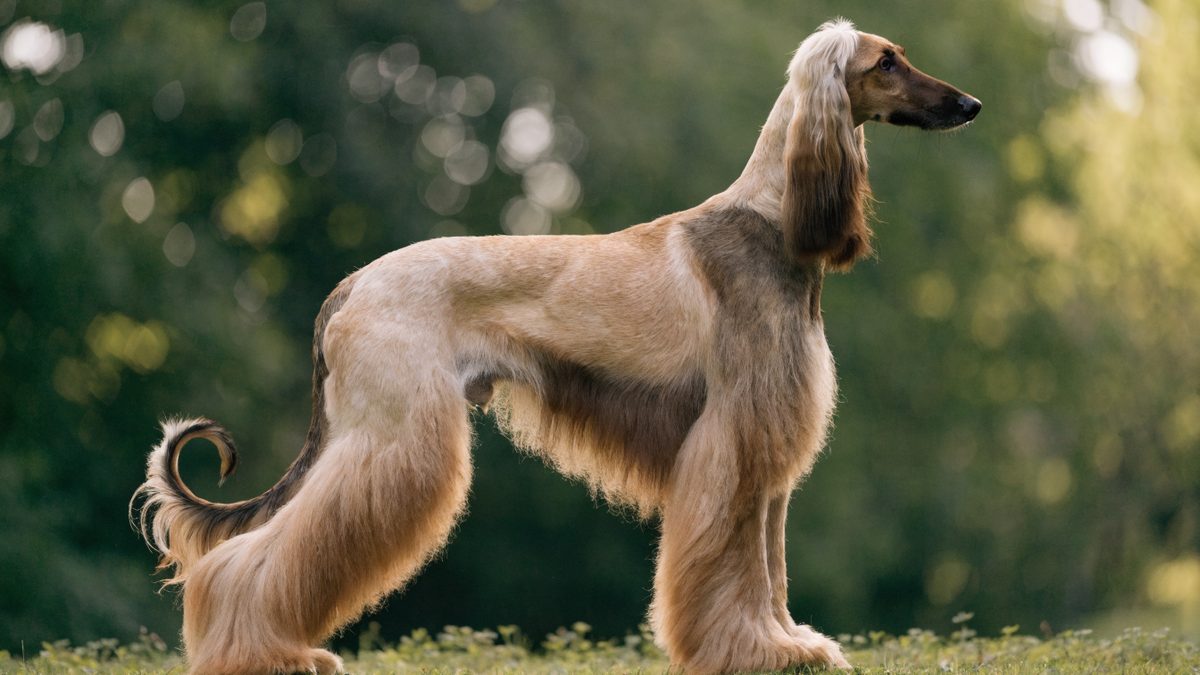
The Afghan Hound is a large long-coated sighthound from the mountains of Afghanistan, standing 68 to 74 cm at the withers in dogs and 63 to 69 cm in bitches, and weighing 20 to 27 kg Afghan Hound, Wikipedia. Its local name is Sag-e Tazi. It was bred to course game by sight across rock and scree, and the coat that now defines it in the show ring began as insulation against an Afghan winter.
Three registries recognise the breed and their numbers agree closely. The Federation Cynologique Internationale lists it as Standard 228, Group 10 Sighthounds, Section 1 long-haired or fringed sighthounds, with the current text valid from 27 July 2021. The Kennel Club in Britain gives the same ideal heights of 68 to 74 cm for dogs and 63 to 69 cm for bitches. The American Kennel Club, working in inches, asks for 27 inches plus or minus one for dogs and 25 inches plus or minus one for bitches, with weights of about 60 pounds and 50 pounds, in a standard approved on 14 September 1948 and unchanged since.
The parts of the dog that surprise people
Four features of the breed standard explain most of what a first-time owner finds strange. Read them before you read a price.
- Very prominent hipbones. The AKC standard names them as a striking characteristic of the breed and asks for hipbones that are pronounced. They are correct anatomy, not thinness, and an Indian owner who feeds a dog until they disappear has made it fat.
- Large feet with long thick hair. The pads are unusually large and well down on the ground, which acted as shock absorbers on Afghan rock. On hot Indian pavement they are a liability rather than an asset.
- A short saddle in a long coat. In mature dogs the hair is short and close from in front of the shoulders and backwards along the saddle, forming a smooth back. A uniformly shaggy adult is not showing correct coat.
- A silky topknot and a ring tail. The head is surmounted by a topknot of long silky hair, and the tail is set low with a ring or curve at the end and is never carried over the back.
The Dav Pet Lovers listing sitting at position 8 on this query publishes a specification panel recording the Afghan Hound's coat type as Smooth and its coat length as Short. Every breed standard in existence says the opposite The Kennel Club (UK) Federation Cynologique Internationale. The same page's structured price field reads 0.00 INR. Treat specification panels on sales pages as decoration until you can match them against a registry document.
The Indian thread in the breed's history
India sits in this breed's founding story twice, which almost no Indian page mentions. The dog that shaped the modern breed, Zardin, was brought to Britain in 1907 from India by Captain John Barff, won in spectacular style at the Crystal Palace show that year, and became the written basis of the first breed standard in 1912 Federation Cynologique Internationale. Thirteen years later a second founding strain, the Khalag Tazi type, was brought back from Afghanistan by an Indian Army officer, Major G Bell-Murray, and shipped to Scotland from Balochistan in 1920.
The third strain matters most for anyone reading this in Chennai. Mrs Mary Amps shipped a group of dogs from a Kabul kennel to England in 1925, and one of that Ghazni line, Sirdar, won Best in Show at Crufts in 1928 and again in 1930. The Bell-Murray and Ghazni lines carry a lighter, more patterned coat with a deeper saddle and much shorter hair on the face and neck, and that pattern is believed to come from the hotter parts of Afghanistan. Two coat weights therefore exist inside one breed, and the lighter one is the one an Indian buyer should be asking about by name.
How rare this breed actually is
The Afghan Hound is not a popular dog anywhere, and the trend is downward. In the American Kennel Club's 2025 registration ranking it placed 117th out of 202 recognised breeds, down from 110th out of 201 the year before. In India the picture is starker. Dogs India, the country's oldest breed directory, carries exactly one Afghan Hound breeder listing, from Thrissur in Kerala, and it is marked renewable on 20 March 2016. There is no Afghan Hound breed club in India, no published Kennel Club of India registration count for the breed, and no Indian breed survey. Anyone who tells you how many Afghan Hounds are in India is guessing.
One last piece of trivia that is actually verifiable, because a great deal of Afghan Hound trivia is not. Pablo Picasso said that his 1967 Chicago statue represents the head of an Afghan Hound, and he owned one himself. Claims that the breed sailed on Noah's Ark or arrived with Alexander's army, which the Indian sales pages repeat, have no source behind them and Bonbeno will not repeat them as fact.
Afghan Hound price in India, and why the top two sellers publish no number at all
The Afghan Hound price in India runs from Rs 60,000 to Rs 5,00,000 across the published sources Bonbeno could verify in 2026, a spread of Rs 4,40,000 for the same breed Premium Pet House. More usefully, the two Indian sales pages that rank highest for this exact query publish no Afghan Hound price whatsoever, which tells you more about the Indian market for this breed than any table does.
Here is every published Indian figure Bonbeno could verify, printed as found. No averaging, because averaging a Rs 60,000 floor against a Rs 5,00,000 ceiling produces a number that describes no real dog.
| Source | Published price | What is being priced |
|---|---|---|
| Pets Army, pet quality | Rs 60,000 to Rs 80,000 | Described as basic pet-quality, no papers specified |
| Pets Army, KCI registered | Rs 80,000 to Rs 1,20,000 | Kennel Club of India registration |
| Pets Army, show quality | Rs 1,20,000 to Rs 1,80,000 | Show-standard conformation |
| Pets Army, premium breeders | Rs 2,50,000 to Rs 5,00,000 | Quoted in the same article, contradicting the three tiers above it |
| Premium Pet House, headline band | Rs 2,50,000 to Rs 5,00,000 | One band for the whole country |
| Puppiezo, position 2 on this query | No price published | Specification panel only. The rupee figures on the page belong to other breeds |
| Dav Pet Lovers, position 8 | 0.00 INR in the structured price field | KCI-registered puppies advertised for Delhi NCR with no number |
| Tegha Kennel, position 5 | No price published | One cream puppy, listed since 8 April 2015, stated to come without registration papers |
| Dogs India breeder listing | No price published | Show-potential litter from Indian and Australian champion lines, listing expired March 2016 |
What actually drives the spread
Three separate things explain almost all of it, and only one is about the dog.
- Internal contradiction inside one article. The Pets Army page carries a three-tier ladder running from Rs 60,000 to Rs 1,80,000 and, four paragraphs later, a premium-breeder band of Rs 2,50,000 to Rs 5,00,000, with no explanation of how the two relate. That is not a market spread. That is two sources pasted into one page.
- City tables that are not city data. Premium Pet House publishes Mumbai at Rs 2,50,000 to Rs 5,00,000, Delhi at Rs 2,60,000 to Rs 5,00,000, and Chennai, Hyderabad and Bangalore each at Rs 2,55,000 to Rs 5,00,000. Five cities separated by Rs 10,000 on a Rs 2,50,000 base is a template, not a survey.
- Genuine scarcity. India has no meaningful domestic Afghan Hound breeding population. There is no Indian breed club, the one directory listing expired in 2016, and the only living sales pages will not print a number. A price you cannot get quoted in writing is not a market price.
Google's own related searches for this query include Black afghan hound price in india and White afghan hound price in india, so Indian buyers are clearly being sold colour as a price tier. The AKC standard states that all colours are permissible and that white markings, especially on the head, are undesirable. The Kennel Club permits all colours except merle and calls white markings on head or collar highly undesirable. The FCI text is the same. No colour is rare, a white-marked head is a fault rather than a premium, and any uplift charged for coat colour is invented.
What KCI registration is and is not
Kennel Club of India registration is a paperwork process with a published fee, not a health guarantee. The KCI publishes its own forms for single dog registration, litter registration, transfer of ownership and prefix or affix registration, along with a revised tariff sheet effective 1 April 2024. The gap between a pet-quality and a KCI-registered Afghan Hound quoted by one Indian seller is Rs 20,000 to Rs 40,000, which is far larger than any registration tariff. Most of that gap is priced lineage, not priced paperwork.
Registration also says nothing about screening. The three health tests the Orthopedic Foundation for Animals and the breed's parent club actually require for a CHIC number are a hip evaluation at 24 months or older, an ACVO eye examination from 12 months, and an autoimmune thyroiditis evaluation from an approved laboratory. No Indian seller page on this SERP mentions any of the three. Ask for the results, not the pedigree.
We report published price ranges as editorial content. We do not broker sales, we do not recommend breeders, and none of the figures above is an offer. If you cannot get a written quotation, a named breeder, sight of the mother, and hip, eye and thyroid results before money changes hands, the correct answer to an Afghan Hound advertisement in India is no. The honest alternative is the Indian Pariah Dog, which costs nothing and is built for the climate.
Monthly cost of keeping an Afghan Hound in India, honestly bounded
The monthly cost of keeping an Afghan Hound in India lands between Rs 3,130 and Rs 10,050 once grooming is counted properly, and grooming is the line item that separates this breed from every other large dog in the country. Indian sources publish Rs 1,000 to Rs 3,000 a month for food and Rs 1,000 to Rs 5,000 for a single professional grooming session. One session a month is the floor, not the plan.
Bonbeno builds the table below from published Indian figures only. Where a figure does not exist, the row says so rather than inventing one.
| Line item | Published range per month | Source and caveat |
|---|---|---|
| Food | Rs 1,000 to Rs 3,000 | Both Indian breed pages agree on this band for the breed Pets Army, Afghan Hound Price in India |
| Professional grooming | Rs 1,000 to Rs 5,000 | Quoted per session, with monthly visits described as the minimum |
| Routine veterinary care | Rs 830 to Rs 1,250 | Derived from the published Rs 10,000 to Rs 15,000 annual healthcare figure |
| Tick and flea prevention, deworming | Rs 300 to Rs 800 | General Indian 2026 estimate, not breed-specific |
| Grooming consumables at home | No published Indian figure | Pin brush, metal comb, conditioner and detangler are named as essentials but no Indian price is published |
| Training | Rs 5,000 to Rs 8,000 one-off | Quoted as a course fee rather than a monthly cost |
| Air conditioning through summer | No published figure | Nobody publishes this, and for this breed in this country it is a real line item |
The arithmetic one ranking page gets wrong
The Pets Army article closes by telling Indian readers to budget Rs 15,000 to Rs 25,000 annually for food, grooming and healthcare. The same article, higher up, quotes food at Rs 1,000 to Rs 3,000 a month, grooming at Rs 1,000 to Rs 5,000 a session with monthly sessions, and healthcare at Rs 10,000 to Rs 15,000 a year. Add the low end of its own numbers and you get Rs 12,000 of food plus Rs 12,000 of grooming plus Rs 10,000 of healthcare, which is Rs 34,000 before anything goes wrong. The published annual budget is impossible against the page's own monthly figures, and it is the number a casual reader will remember.
Bonbeno's read of the same published inputs gives a realistic Indian annual figure of Rs 37,560 at the bottom and Rs 1,20,600 at the top, which is the monthly table above multiplied by twelve, excluding air conditioning, illness and the purchase price. For comparison, a general Indian guide puts ongoing monthly costs for an indie dog at Rs 2,000 to Rs 6,000 and explicitly notes that large or high-maintenance breeds cost more. The Afghan Hound is the definition of high-maintenance in that sentence.
First-year setup, before the dog earns its keep
Setup costs in India are better documented than breed costs, because they are the same for every dog. Core vaccinations covering DHPPi and anti-rabies run Rs 500 to Rs 1,500, deworming with tick or flea treatment Rs 300 to Rs 800, spaying or neutering Rs 1,500 to Rs 5,000 privately, and bed, bowls, collar, leash and an ID tag Rs 1,500 to Rs 3,000. To that an Afghan Hound owner adds a grooming table, a standing dryer, a large oval pin brush, a slicker and a metal comb, because the parent club treats all five as basic equipment rather than optional.
Friendicoes, the Delhi shelter, states plainly that most of the abandoned pets it takes in are pure bred or pedigreed and were given up because they became too big, too energetic, or too expensive to maintain. An Afghan Hound is all three at once. The shelter takes in about eight animals a day and rehomes roughly 150 a year, which is the arithmetic of what happens when the grooming stops being fun in month seven.
Heat tolerance in India, and the rule that every registry writes and every Indian summer breaks
Bonbeno rates the Afghan Hound 2 of 5 for heat tolerance in Indian conditions. The reason is not the dog's origin, which is genuinely mountainous and cold, but a conflict between two documents: the breed standard, which forbids clipping the coat, and the Indian weather record, where 2024 was the warmest year since nationwide records began in 1901 American Kennel Club.
Start with the rule, because it is unambiguous in all three registries. The AKC states that the Afghan Hound should be shown in its natural state and that the coat is not clipped or trimmed. The Kennel Club writes that the coat must develop naturally and that any evidence of clipping or scissoring is undesirable. The FCI goes further and says clipping or scissoring should be penalised. Three independent bodies, one instruction.
What an Indian year actually does to a dog under that coat
The India Meteorological Department recorded the 2024 annual mean land surface air temperature at 0.65 C above the 1991 to 2020 average, the warmest year since 1901, beating 2016's 0.54 C. The pre-monsoon season from March to May ran 0.56 C above normal, and heatwave conditions were observed over most of the east coast in April, most of northwest India in May, and most of northern and central India in June. By May most of the Indian interior sits above a mean of 32 C with maxima frequently over 40 C, and in the arid northwest daily maxima occasionally top 50 C.
Set that against canine physiology. A dog's healthy body temperature sits around 37 to 39 C, and going above 41 C triggers heat-related illness, a progressive disorder that is fatal if severe or untreated. In the largest study of the subject, covering 905,543 UK dogs under primary veterinary care in a single year, 74.2 percent of heat-related illness events were triggered by exercise rather than by hot cars, and exertional cases carried a 7.6 percent fatality rate. Exercise, not confinement, is what kills dogs in the heat.
| Period | Condition | What changes for this breed |
|---|---|---|
| November to February | Cool and dry across most of India | The breed's best months. Full coat is comfortable, daytime walks are safe, grooming is easiest on a dry coat |
| March to May | Pre-monsoon, warmest season, heatwaves on the east coast in April and the northwest in May | Walks move to before 7 am and after 8 pm. Galloping is restricted to the coolest hour of the day |
| June to September | Monsoon, high humidity across the country | Matting and skin problems peak. A coat that stays damp under a saddle is where fungal and bacterial trouble starts |
| October | Post-monsoon, still warm and humid in the south | The catch-up month for de-matting after the rains, before the show season |
No study names this breed, and that matters
The UK VetCompass heat-illness work identified nine breeds at excess risk against the Labrador Retriever: the Chow Chow at 17 times the risk, the Bulldog at 14, the French Bulldog at 6, the Dogue de Bordeaux at 5, the Greyhound at 4, and the Cavalier King Charles Spaniel, Pug, English Springer Spaniel and Golden Retriever at 3 each. The Afghan Hound appears in none of those lists, because there were too few of them in the population to model separately. So no breed-specific heat-risk multiplier exists for the Afghan Hound anywhere in the literature, and Bonbeno will not invent one. What the same study does establish is that the highest-risk breed on the list, the Chow Chow, is a heavy-coated dog rather than a flat-faced one.
The clipping rule exists for the show ring. If your Afghan Hound will never be shown, a shorter pet clip is a decision between you and your vet, not a rule you are breaking. What Bonbeno will not tell you is that a clipped Afghan Hound is a heat-adapted dog, because clipping removes insulation in both directions and exposes pale skin to Indian sun. Discuss it with your nearby vet, keep the dog out of direct sun either way, and understand that the trade-off is real rather than free.
City by city, where this breed is workable
- Shimla, Srinagar, Dehradun, Gangtok, Manali. The only Indian locations where this dog is climatically at home. Cold tolerance is 5 of 5, and a full natural coat is an asset rather than a burden.
- Bengaluru and Pune. Workable with air conditioning and disciplined timing. Milder summers than the plains, but the monsoon humidity still drives matting and skin trouble.
- Delhi and Lucknow. Hard. Northwest India carried heatwave conditions through most of May in 2024, and the coat has to survive both a 45 C summer and a damp monsoon.
- Chennai, Mumbai, Kolkata, Ahmedabad. Hardest. Sustained heat plus sustained humidity is the combination this coat handles worst, and it is the combination that dominates the Indian coastal calendar.
- Anywhere without reliable power. Not viable. If the air conditioning depends on a supply that fails in May, the cooling plan is not a plan.
Even an Indian seller acknowledges the limit. The Tegha Kennel listing describes its Afghan Hound puppy as an excellent jogging companion, and then adds the qualifier, as long as it is not too hot. Premium Pet House answers its own FAQ by saying the breed can survive in India provided you keep it in a cool and comfortable location. Survive is the word they chose. Bonbeno's position is that survival is a low bar for a dog costing Rs 60,000 and up.
Move the dog into shade, stop all activity, and cool it with water. Tap water is fine, used as a cool bath or sprayed on. Do not cover the dog in wet towels, because a wet towel acts as an insulator and air movement is what actually removes heat. If the dog has lost consciousness or is gasping, keep water out of its mouth to protect the airway, and get to a veterinarian immediately.
Temperament and household fit: the dog that looks at and through you
The Afghan Hound is aloof and dignified by written breed standard, affectionate with its own people, and reserved with everyone else. The FCI text captures it in one line: the Afghan looks at and through one. The AKC standard puts it as aloof and dignified, yet gay, and names sharpness or shyness as faults. This is not a dog that wants to greet your guests.
The Kennel Club adds a phrase the sales pages leave out. Its temperament clause reads dignified and aloof, with a certain keen fierceness. That fierceness is directed at prey rather than people, but it explains why a dog that looks like a shampoo advertisement behaves like a cat with a job.
What owners actually report
The Orthopedic Foundation for Animals hosts a breed health survey filled in by Afghan Hound owners, and it includes a temperament question. Respondents described their dogs as confident in 68 percent of cases, curious in 38 percent, reserved in 24 percent, protective in 18 percent, timid in 7 percent and very shy in 3 percent. That is a confident breed with a meaningful reserved minority and a small shy tail, which matches the standards better than the clownish caricature the Indian pages sell.
The OFA states plainly that respondents to this survey are self-selected, that there is no verification of the responses, and that duplicates are not checked. Bonbeno reports the figures because they are the only owner-reported dataset of this size for the breed, and reports the caveat because an unweighted survey of enthusiasts is not a population study. Two thirds of the respondents were not breed club members and 61 percent of the dogs were born in the USA.
Who this breed suits in India
- Experienced owners who like cats. The independence, the selective affection and the refusal to perform on demand read as feline to most people who live with the breed.
- Households in hill stations or air-conditioned homes. Climate is the first filter, ahead of temperament.
- Owners with several hours a week for coat work. Not the wish to have those hours. The hours themselves, every week, for twelve years or more.
- Families with children over eight. Gentle rather than rough-and-tumble, and a long coat that hurts when a toddler pulls it.
- Homes with securely fenced ground. Prey drive and a jumping ability that clears high obstacles make this a fencing decision before it is a training decision.
Who should not buy one
- First-time dog owners. Even the Indian sales pages agree, and they have every commercial reason not to.
- Anyone wanting a guard dog. The breed rarely barks and does not alert. Impressive size is not the same as protection.
- Anyone wanting obedience. Sensitive to harsh correction, which often produces a flat refusal to obey.
- Households with rabbits, birds or free-roaming cats. A sighthound with an intact chase instinct is a poor housemate for small animals.
- Anyone buying on looks. The breed is 117th of 202 by AKC registration for a reason, and the reason is the maintenance rather than the temperament.
One further point matters in India specifically, where second-hand and rehomed adult dogs change hands informally. Afghan Hounds bond so deeply with their people that an adult can find a new home genuinely difficult to adjust to. If you are being offered a two-year-old Afghan Hound cheap, the difficulty is not hypothetical. Ask why the dog is moving, and expect a slow settling period rather than a quick one.
Training an Afghan Hound, and the one command that never becomes reliable
To train an Afghan Hound, keep sessions short, reward generously, correct never, and accept that off-lead recall in open ground will not become dependable in this breed's lifetime. The AKC's own breed guidance says it directly: no amount of training will overcome the breed's hunting instinct to break off on a high-speed chase.
The difficulty is not stupidity. It is two traits pulling in opposite directions. The breed is independent, having been bred to make its own decisions on rough ground out of earshot of a handler, and it is simultaneously sensitive, so harsh correction produces a flat refusal to obey rather than compliance. Punish an Afghan Hound and it does not become obedient. It becomes unavailable.
What works, in order
- Start at eight weeks, not eight months. Indian sellers are right on this one point: training this breed gets harder the longer you delay, and socialisation is the part that cannot be recovered later.
- Keep sessions under ten minutes. Boredom looks identical to defiance in this breed, and repetition drills that suit a Labrador produce shutdown here.
- Reward with movement, not only food. Many Afghan Hounds are indifferent to both food and praise, so a chance to chase a lure or run is often the only currency that buys attention.
- Housetrain early and expect it to go well. The breed's deep attachment to its own people makes house training comparatively easy, which surprises people who have read that it is untrainable.
- Set the bar at come, sit and stay. Unless you are aiming at obedience or agility competition, those three plus a solid lead walk is a complete training goal for a pet Afghan Hound.
The untrainable label is wrong, and owner data shows it
In the OFA breed health survey, respondents named their activities with their Afghan Hounds. Seventy percent kept the dog as a pet or companion, 67 percent showed in conformation, 22 percent did lure coursing, 17 percent did agility trials, 14 percent obedience trials, 13 percent therapy, assistance or service work, 11 percent rally obedience and 3 percent tracking. A breed where roughly one owner in eight has trained a dog to therapy, assistance or service standard is not untrainable. It is unmotivated by conventional rewards, which is a different problem with a different solution.
Walking an Afghan Hound off lead outside a fenced area is not advisable at any level of training. A sighthound in pursuit is not disobeying; it has switched into a behaviour that does not process recall. In Indian conditions this compounds, because most open ground near a city sits beside traffic and most compounds are shared. Treat a high fence as equipment you buy, not a skill you teach.
Socialisation in an Indian setting
Socialise deliberately between eight and sixteen weeks, and socialise for calm rather than for enthusiasm. The realistic target is a dog that ignores a delivery rider, walks past a street dog without reacting, and tolerates a groomer handling its feet and ears. Indian sellers warn that an under-socialised Afghan Hound grows up shy and suspicious, and the owner survey found 7 percent of dogs described as timid and 3 percent as very shy. Those are the dogs whose owners skipped this window.
Grooming tolerance is a training subject in its own right for this breed and almost nobody treats it as one. An Afghan Hound puppy has a short fuzzy coat that needs very little maintenance, which is exactly why the brushing habit should be built during those weeks, before the adult coat arrives and the sessions get long. Teach the dog to lie on a grooming table at twelve weeks and the next twelve years are a different experience.
How much exercise an Afghan Hound actually needs, and when in India it can happen
An adult Afghan Hound needs two walks a day plus a genuine chance to gallop in a securely fenced space several times a week. Published Indian guidance disagrees on the total, with one page saying one hour daily and another saying about two hours Pets Army, Afghan Hound Price in India. The AKC's guidance settles the argument in a different way: short walks do not provide enough exercise for this athletic breed.
The distinction that matters is not duration but type. This is a coursing sighthound, and the exercise it is built for is a short burst at speed, not a long plod. The AKC guidance describes the ideal as running full out several times a week in a large enclosed area, with the option of long lead runs once the dog is mature. An Afghan Hound that gets ninety minutes of lead walking and no sprint is under-exercised in the way that matters.
| Source | Stated requirement | Bonbeno's note |
|---|---|---|
| Puppiezo, position 2 | 1 hour daily, energy level Moderate | The lowest published figure, and it sits on a page that also gives no price |
| Pets Army | About 2 hours of activity daily | Doubles the Puppiezo figure with no method given |
| Tegha Kennel | Exercise requirements 90 percent | A percentage with no scale, no unit and no source |
| AKC breed guidance | Short walks insufficient; full-out running several times a week in a large enclosed area | The only source that describes the kind of exercise rather than the clock time |
Prey drive is the reason the fence has to be high
The prey drive is intact and it is the defining safety consideration for this breed. Afghan Hounds are tall, lean and strong, which makes them excellent jumpers, so any exercise area must have a high, secure fence. One Indian page puts the standing jump at six feet, a figure Bonbeno reports as a claim rather than a measurement, because no study supports it. What is not in dispute is that a boundary wall that contains a Labrador will not contain this dog, and that a shared Indian apartment compound with a gate that opens is not a fenced area.
Premium Pet House states that the Afghan Hound runs at over 64 kilometres per hour and has 270 degrees of field vision. Bonbeno could not trace either figure to a study, a registry or a measured trial, and neither appears in any breed standard The Kennel Club (UK) Federation Cynologique Internationale. We do not repeat unsourced performance numbers, and neither should a buyer use them to justify a purchase.
The Indian timing problem
From March to September, exercise timing stops being a preference and becomes the whole plan. Exertional heat-related illness accounted for 74.2 percent of heat-illness events in the largest study of the subject and carried a 7.6 percent fatality rate, and it occurred year-round rather than only in high summer. In a country where heatwave conditions covered most of northwest India through May 2024 and most of northern and central India through June, the practical rule is simple.
- Walk before 7 am and after 8 pm from March to September. Ambient temperature is only half the reason. Pavement that has absorbed sun all day burns pads, and this breed has unusually large pads in constant contact with the ground.
- Test the pavement with the back of your hand. Five seconds of discomfort for you is a burn for the dog.
- Never exercise a dehydrated or unwell dog in heat. Dehydrated dogs cool less effectively through panting, so cut walks short when the dog has had vomiting or diarrhoea.
- Build fitness gradually after the monsoon. Unfit dogs cool less effectively than fit ones, and a dog that has spent three months indoors is unfit.
Lure coursing is the outlet this breed was designed for, and 22 percent of Afghan Hound owners in the OFA survey said they do it. India has no organised lure coursing circuit, so the Indian substitute is a long line in a large fenced field at first light, or a flirt pole for a few minutes at a time. Neither replaces a full gallop, and an owner who cannot provide one several times a week should choose a different breed.
Grooming and coat care in Indian humidity, with the parent club's actual rules
Grooming an Afghan Hound takes several hours a week for life, and the rules that govern it come from the breed's parent club rather than from a pet shop. The Afghan Hound Club of America's first golden rule is that maintenance grooming is the key to a beautiful coat, and its second is that show coats are bathed and groomed twice a week. Every hour you skip is repaid with interest in mats.
The silky coat is the breed's defining feature and its defining cost. The coat is long and very fine in texture on the ribs, forequarters, hindquarters and flanks, short and close along the saddle in mature dogs, long from the forehead backwards into a distinct topknot, and short on the foreface Federation Cynologique Internationale. Ears and legs are well coated and pasterns can be bare.
The four rules that prevent most coat damage
- Never brush a dry or dirty coat. The parent club states flatly that this damages the hair. Moisten with a grooming spray or bathe first, always.
- Bathe before you groom, never after. The Afghan Hound should always be bathed prior to grooming, and if the dog is matted, work on the mats only after bathing and heavy conditioning.
- Brush from the skin outwards, in sections. Use a dryer to part the hair and work outward, rather than skimming the top layer, which leaves a mat forming underneath.
- Find mats with your fingers, not your eyes. Armpits and behind the ears are where matting starts and where a brush passes over the top of it.
Shampoo should be worked through the coat with the growth of the hair and never rubbed or scrubbed in, rinsed until the water runs clean, and followed with a cream rinse. Drying is not optional and not quick. The usual method is to let the dog drip on towels for about an hour before blowing it out with a dryer, and towelling should be a press rather than a rub.
Why Indian humidity changes the maths
Complete drying matters more in India than anywhere the parent club was writing for. A coat that stays damp against skin in monsoon humidity is where fungal and bacterial trouble begins, and the saddle area under a long side coat is the slowest part to dry. In the OFA owner survey, 8 percent of Afghan Hounds had been diagnosed with a skin disorder, most commonly food or medicine allergies at 27 percent of those cases, seasonal allergies at 23 percent, atopic dermatitis at 23 percent and demodectic mange at 13 percent. India's monsoon does not create those conditions, but it is an excellent amplifier of all four.
Ears are the second humidity problem. Eight percent of surveyed Afghan Hounds had an ear disorder, and 80 percent of those cases were chronic ear infection. The breed's ears are set low and well back and carried close to the head, covered in long silky hair, which is a design that traps warmth and moisture. Lift and check ears at every grooming session, and dry inside the ear fold after every bath.
A snood is a tube-shaped head covering that keeps the long ear fringe out of the dog's mouth and out of its food. In an Indian kitchen and an Indian monsoon, it also keeps ear hair out of standing water and off wet floors, which is half the ear-infection battle. It costs less than a single grooming session.
Equipment, and the two things Indian owners usually skip
The parent club's equipment list for bathing and grooming an Afghan Hound is a good shampoo, a good cream rinse, a place to bathe the dog, a standing hair dryer, a grooming table, a large oval pin brush, and a slicker for bad mats and for fluffing puppies. The standing dryer and the table are the two Indian owners usually skip, and skipping them is why the sessions become miserable. A standing dryer frees both hands for brushing, which is the only way to work from the skin out.
Nails and dewclaws round it out. Trim monthly, watch the quick, and remember the dewclaws, which are the ones most often forgotten. If a rotary grinder catches the long leg hair, an old sock with a hole cut in it, pulled up the leg, lets you expose one nail at a time.
Clipping and scissoring are penalised by the FCI and called undesirable by the Kennel Club The Kennel Club (UK). Beyond the show rule, a shaved coat exposes pale skin to Indian sun and removes insulation that works in both directions. If your vet advises a pet clip for a specific welfare reason, that is a clinical decision made with your nearby vet. It is not a heat strategy, and it is not reversible on demand, because coat regrowth in this breed is slow and often changes texture.
Health risks, screening and lifespan, using the numbers the ranking pages ignore
The Afghan Hound's real health issues are unusually well documented and almost entirely absent from the pages ranking for this query. The Orthopedic Foundation for Animals holds 7,957 hip evaluations, 1,386 thyroid tests, 1,157 eye examinations and 486 elbow evaluations for the breed, all free to read. Hip dysplasia is low at 5.8 percent. Thyroid disease is the health problem nobody mentions, and Indian breed pages list health issues without attaching a single prevalence figure to any of them Premium Pet House.
| Screening | Dogs evaluated | Normal | Abnormal | Breed rank |
|---|---|---|---|---|
| Hips | 7,957 | 93.8 percent | 5.8 percent dysplastic | 176 |
| Thyroid | 1,386 | 74.1 percent | 8.3 percent abnormal, 17.6 percent equivocal | 18 |
| Eyes (ACVO) | 1,157 | 97.1 percent | 2.9 percent | 176 |
| Elbows | 486 | 90.9 percent | 9.1 percent dysplastic | 54 |
| Dentition | 73 | 78.1 percent | 21.9 percent | 7 |
| Congenital cardiac | 95 | 100 percent | 0 percent | 83 |
| Advanced cardiac | 66 | 93.9 percent | 6.1 percent | 34 |
Two things in that table deserve a second look. The thyroid rank of 18 means only seventeen breeds in the OFA database screen worse, and just 74.1 percent of tested Afghan Hounds came back clear, with a further 17.6 percent equivocal. The dentition rank of 7 means missing or abnormal teeth are unusually common, at 21.9 percent of a small sample. Neither appears on any page ranking for this query.
Autoimmune thyroiditis is the screening that matters most
Of 1,386 Afghan Hounds tested, 0.4 percent showed autoimmune thyroiditis, 7.1 percent were compatible with autoimmune thyroiditis and 0.9 percent had idiopathic hypothyroidism. In the owner survey, of the dogs whose thyroid had actually been tested, 74 percent were normal, 16 percent hypothyroid and 9 percent equivocal. Hypothyroidism in this breed presents as coat loss, weight gain, low energy and recurring skin and ear infections, and in an Indian summer an owner will blame the heat for all four. A thyroid panel is cheap, and an autoimmune thyroiditis evaluation from an approved laboratory is one of the three tests the OFA and the parent club require for a CHIC number.
Chylothorax, the disease the breed's own club is funding research into
Chylothorax is chyle, the fatty lymphatic fluid from the gut, leaking into the chest cavity so the lungs cannot inflate. The Afghan Hound Club of America states that the Afghan Hound is today one of the most affected breeds, and has partnered with Dr Gary Johnson at the University of Missouri, the AKC Canine Health Foundation and the OFA to run a research study, with the first five affected-dog blood samples already submitted. The breed's deep barrel chest means the condition commonly progresses to lung-lobe torsion requiring emergency surgery, and untreated it can cause fibrosing pleuritis and is often fatal. It has been recognised in the veterinary literature since at least 1986.
The early signs are non-specific and easy to dismiss. Laboured or rapid breathing, reluctance to lie flat, a soft cough, exercise intolerance, and simply not being themselves. One owner account published by the parent club describes a dog admitted with no cough and no loss of appetite whose chest had to have 800 millilitres of fluid drained. Any breathing change in an Afghan Hound is an emergency, not a wait-and-see. Consult your nearby vet the same day and ask specifically for chest imaging.
Afghan Hound myelopathy, the inherited condition unique to the breed
Hereditary myelopathy of Afghan Hounds is a myelinolytic disease of the spinal cord, first characterised in four Afghan Hounds by Cummings and de Lahunta in 1978, which showed sieve-like degeneration of spinal white matter and spongiform degeneration progressing to micro-cavitation and macro-cavitation. It typically appears between three and twelve months of age, causes progressive hindlimb ataxia and paralysis, and has no treatment Afghan Hound, Wikipedia. It is rare, but it is the one condition on this page that is specific to the breed, and a puppy that goes wobbly behind before its first birthday should be seen by a neurologist rather than treated for a sprain.
Anaesthesia: the sighthound rule, and where it has been overstated
Sighthounds have a low body fat to muscle ratio and lower serum albumin concentrations, which increases the effect of highly protein-bound anaesthetic drugs, and thiobarbiturates in particular remain in the bloodstream and cause lengthy, prolonged recovery. The Afghan Hound shares that body composition, and the AKC's own breed guidance recommends seeking out a sighthound-savvy veterinarian for surgery Afghan Hound, Wikipedia. Sixty-seven percent of the dogs in the owner survey had been anaesthetised or sedated at some point, so this is not a theoretical concern.
Bonbeno adds a correction the Indian pages do not carry. The genetic half of the sighthound anaesthesia story is narrower than the folklore. The CYP2B11-H3 haplotype associated with slow propofol and thiobarbiturate metabolism was found in 10 of 19 sighthound breeds sampled and 10 of 45 non-sighthound breeds, with an average frequency of 9 percent in sighthounds against 1.7 percent in others, and it was concentrated in one genetic grouping of sighthounds while only one of the seven breeds in the second grouping carried it at all. In plain terms, the Greyhound's specific pharmacogenetic problem does not automatically transfer to every long-legged hound. The low-body-fat mechanism still applies. Tell your vet the dog is a sighthound, ask for a lean-body-mass dosing plan, and do not assume a Greyhound protocol without discussion.
Eyes, bloat and the rest of the list
On 1,156 Afghan Hound eye examinations in the OFA database, epithelial or stromal corneal dystrophy was recorded in 11.8 percent, cataract of unknown significance in 7.4 percent, persistent pupillary membranes running iris to iris in 4.8 percent and a punctate posterior-suture cataract in 3.9 percent. Beyond the eye, the published breed-predisposition literature lists laryngeal paralysis, dilated cardiomyopathy at roughly twice the rate in males as females, testosterone-responsive dermatosis, nasal depigmentation, skin tumours, central diabetes insipidus and medial canthal pocket syndrome. Gastric dilatation-volvulus, or bloat, is the emergency this deep-chested shape shares with every other deep-chested breed.
Tick-borne disease is the Indian risk nobody writes about
A coat this long is an excellent place for a tick to hide, and India's tick pressure is among the highest documented anywhere. In a survey of 525 dogs across Delhi, Mumbai, Sikkim and Ladakh, 49.7 percent were infected with at least one tick-borne pathogen, with Hepatozoon canis at 30 percent, Ehrlichia canis at 20.6 percent, Mycoplasma haemocanis at 12.2 percent, Anaplasma platys at 6.5 percent and Babesia vogeli at 5.5 percent. The city split is dramatic: Ehrlichia canis reached 39.5 percent of dogs in Delhi and 27.2 percent in Mumbai, and 0 percent in both Sikkim and Ladakh.
A separate Tamil Nadu study screened 230 dogs and found 99.6 percent of them infested with ticks at a mean intensity of 5.6, with 67.8 percent positive for at least one pathogen. Read those two studies together and the practical instruction for an Afghan Hound owner in a plains city is unambiguous. Run a tick check with your fingers at every grooming session, concentrating on the ear folds, armpits, groin and between the toes, and keep the dog on a year-round preventative agreed with your vet. Forty-five percent of Afghan Hound owners in the OFA survey were not using any flea or tick preventative at all, which is a defensible choice in Norway and an indefensible one in Chennai.
Lifespan, where the published sources disagree by six years
| Source | Published lifespan | Basis |
|---|---|---|
| American Kennel Club | 12 to 18 years | Breed page. No dataset cited |
| Puppiezo, India | 12 to 14 years | Specification panel. No source |
| Premium Pet House, India | 12 to 14 years | Breed table. No source |
| Dav Pet Lovers, India | 12 to 18 years, both sexes | Copies the AKC figure |
| UK study of 584,734 dogs | 11.1 years for the breed, against 12.7 for purebreds and 12.0 for crossbreds | Breed figure sits in the study's supplementary table, reported here as Wikipedia reads it |
| Afghan Hound owner survey | 44 percent died at 11 to 13 years, 21 percent over 14, 19 percent at 8 to 10 | Self-selected and unverified, roughly 349 reported deaths |
The spread between 11.1 and 18 years is not a small disagreement, and the honest reading is that the AKC's upper bound describes exceptional individuals rather than an expectation. The UK study that produced the 11.1-year figure covered 584,734 dogs including 284,734 deceased, and found median survival of 12.7 years for purebreds, 12.0 for crossbreds and 11.9 years for large breeds as a group. An Afghan Hound is a large breed. Plan for eleven to thirteen years, treat anything beyond fourteen as a gift, and budget accordingly.
Cancer is the other number worth carrying. Twenty-one percent of the dogs in the owner survey had been diagnosed with cancer or a tumour, with mammary cancer accounting for 23 percent of those cases, lymphoma 14 percent, haemangiosarcoma 12 percent, and mast cell tumour and osteosarcoma 6 percent each. Mammary cancer at that share in a population where 66 percent of the dogs were left entire is an argument for discussing spaying timing with your vet rather than a reason to panic.
Three documents, and no negotiation on any of them. A hip evaluation on a parent aged 24 months or older, an ACVO eye examination from 12 months or older, and an autoimmune thyroiditis evaluation from an approved laboratory. Those are exactly the three screenings the OFA and the breed's parent club require for a CHIC number, plus permanent identification by microchip or tattoo. No Indian page ranking for this query mentions any of them. If a seller cannot produce them, you are buying an unscreened dog at a screened dog's price. This guide is general information and not a diagnosis; consult your nearby vet before acting on any of it.
Feeding an Afghan Hound in India, and why the hipbones are supposed to show
Feed an Afghan Hound a complete, life-stage-appropriate diet and judge the amount by body condition rather than by the bowl, because this breed is supposed to look lean. Its protruding hipbones are a breed characteristic written into the standard, not a sign of underfeeding American Kennel Club. Indian sources put the monthly food cost at Rs 1,000 to Rs 3,000.
The single most common feeding mistake with this breed in India is correcting an appearance that is not a problem. The AKC standard asks for hipbones that are very pronounced and lists lack of prominence of hipbones as a fault. The Kennel Club and FCI both describe hipbones as rather prominent and wide apart Federation Cynologique Internationale. A relative who tells you the dog looks starved is describing correct conformation.
Life-stage feeding, month by month
| Age | Meals per day | What changes |
|---|---|---|
| Under 2 months | Free feeding or four small meals | Weaning. Weight gain is building bone, so restriction is not the goal |
| 2 to 6 months | 3 to 4 meals | Structure begins. Transition from softened to solid food on your vet's schedule |
| 6 to 12 months | 3 meals | Growth slows. The coat change starts and protein quality matters more than quantity |
| Over 12 months | 2 meals | Adult maintenance. Monitor weight monthly; males keep filling out until about two and a half years |
Two meals a day rather than one matters more in this breed than in most, because a deep barrel chest is the classic bloat shape and a single large meal followed by exercise is the classic bloat trigger. Split the ration, and leave at least an hour between a meal and any gallop.
How to judge body condition without a scale
- Ribs. Easily felt under a light covering, not visible from across a room in a correctly coated dog.
- Hipbones. Prominent and visible. Correct, and required by the standard.
- Waist. A clear tuck-up in the flank viewed from the side, which the standard asks for directly.
- Spine. Palpable but not sharp. If the vertebrae are ridged and the ribs are individually visible, the dog is underweight rather than correctly lean.
- Energy. A lean, correctly fed Afghan Hound gallops. A thin one does not.
One Indian source suggests consulting a vet if an Afghan Hound gains weight after 36 months, which is sensible framing. Weight gain in a mature dog of this breed is not usually a diet story; it is one of the classic presentations of hypothyroidism, and 74.1 percent clear on 1,386 OFA thyroid tests means one dog in four screens abnormal or equivocal. Discuss a thyroid panel with your nearby vet before you cut the food.
What is actually available in India
Large-breed complete diets from the international brands are widely available across Indian metros, alongside a growing Indian fresh-food segment. Bonbeno does not publish brand recommendations, because no independent Indian feeding trial exists to base one on. What we will say is that a diet should be appropriate to the dog's age, whether commercially manufactured or home-prepared under veterinary supervision, and that clean fresh water should be available at all times. In an Indian summer that water bowl needs refilling and rinsing more than once a day, because a bowl in 40 C air grows a biofilm fast.
Feed with a snood on, or feed from a narrow deep bowl. The parent club's snood exists precisely to keep the long ear fringe out of the dog's mouth while it eats. Food dried into ear feathering is one of the most common causes of mats behind the ears, and mats behind the ears are the ones you cannot brush out.
Afghan Hound puppy timeline: month by month through the first year
An Afghan Hound puppy reaches most of its adult height by twelve months and keeps filling out until about two and a half years in males. The coat is the timeline that catches people out. Puppies carry a short fuzzy coat that needs almost no maintenance, and it does not stay that way.
| Age | Typical weight | What to do this month |
|---|---|---|
| 8 to 12 weeks | Below 8 kg | Minimum rehoming age is eight weeks. Start the core vaccine course and the grooming-table habit while the coat is still short |
| 3 months | Males 7.7 to 10.9 kg, females 7.3 to 10 kg | Socialisation window. Vet visits every three to four weeks through the first year |
| 4 to 6 months | Rising to 15 to 18 kg in males | The adult coat begins arriving. Brushing time rises from minutes to a real session. Watch for hindlimb wobbliness |
| 6 months | Males 15 to 18.1 kg, females 13.6 to 16.8 kg | Drop to three meals. Sterilisation timing discussion with your vet, not a default decision |
| 9 to 12 months | Approaching adult height | Peak coat-change months. Daily brushing prevents the mats that otherwise define this year |
| 12 months | Males 22.7 to 27.2 kg, females 20.4 to 25 kg | Eligible for the ACVO eye examination, which the OFA accepts from 12 months. Move to two meals |
| 24 months | Males 22.7 to 31.8 kg, females 22.7 to 27.2 kg | Eligible for OFA hip evaluation, minimum age 24 months. Males still filling out |
The coat change is the whole first year
Afghan puppies have short fuzzy coats, including facial hair the breed calls monkey whiskers, and that coat requires little maintenance. As the adolescent coat comes through, several hours of brushing a week become necessary to keep the hair free of tangles, mats and debris. Most Indian owners who give up on this breed give up during that transition, because the workload triples over about eight weeks and nobody warned them.
The practical response is to build the habit before it is needed. Use a slicker to fluff a puppy coat, which is what the parent club recommends it for, and get the dog used to lying on a grooming table with a dryer running long before the coat justifies either. A twelve-week-old that finds the table boring becomes a two-year-old that sleeps through a two-hour session.
The two health windows that only exist in the first year
- Three to twelve months, hereditary myelopathy. The breed's own inherited spinal cord disease presents in this window with progressive hindlimb ataxia, and there is no treatment. Any loss of coordination behind, at any age under one year, is a same-week neurology referral.
- Five to eighteen months, panosteitis. A painful inflammatory bone condition that causes sudden shifting lameness in growing large-breed dogs and usually resolves with pain management. It is the far more likely explanation for a limp, but it is a diagnosis of exclusion, not an assumption.
The Indian first-year checklist
Core vaccination against parvovirus, distemper, canine hepatitis and rabies is the non-negotiable base, at a published Indian cost of Rs 500 to Rs 1,500 for the DHPPi and anti-rabies course. Add deworming and a tick or flea programme at Rs 300 to Rs 800, and start the tick programme immediately rather than after the first infestation, because half the dogs in a multi-city Indian survey carried a tick-borne pathogen.
A puppy arriving in March enters its highest-growth, highest-exercise months during the pre-monsoon heat, which in 2024 ran 0.56 C above the long-term average with heatwaves across the east coast in April and northwest India in May. A puppy arriving in October gets its first six months in the cool season and hits the following summer with an adult coat and a settled routine. If you have any choice about timing, take the autumn litter.
Afghan Hound compared: against the coated imports and against India's own sighthounds
Indian buyers cross-shop the Afghan Hound in two directions, and both comparisons go against it. Against other coated imports it is rarer and higher-maintenance. Against India's native sighthounds it costs between ten and fifty times more and is far less suited to the climate. Bonbeno publishes both tables rather than the flattering one.
Against the coated imports Indian buyers also consider
| Breed | AKC 2025 popularity rank | UK heat-illness odds against the Labrador | Coat | Bonbeno heat rating |
|---|---|---|---|---|
| Afghan Hound | 117 of 202 | Not modelled; too few dogs in the study population | Long, fine, silky, with a short saddle | 2 of 5 |
| Chow Chow | 94 of 202 | 17 times | Dense double coat | Rated on its own Bonbeno page |
| Lhasa Apso | 83 of 202 | Reduced odds against crossbred dogs | Long and heavy, on a small frame | Rated on its own Bonbeno page |
| Greyhound | Not in the published top band | 4 times | Short and single | 3 of 5 |
Read that table carefully, because the obvious conclusion is the wrong one. The Afghan Hound's absence from the heat-risk list is not evidence of safety. The study modelled 905,543 dogs and grouped rare breeds into an other purebred category precisely because there were too few of them to analyse. What the table does show is that the single highest-risk breed in that dataset, at 17 times the Labrador's odds, is a heavily coated dog rather than a flat-faced one. Coat is a heat risk factor in its own right, and the Afghan Hound has more of it than almost anything.
Against India's own sighthounds
| Breed | Coat | Built for | Grooming burden | Availability in India |
|---|---|---|---|---|
| Afghan Hound | Long and silky, clipping forbidden by all three registries The Kennel Club (UK) Federation Cynologique Internationale | Afghan mountains and cold | Several hours a week, plus professional sessions at Rs 1,000 to Rs 5,000 | One directory breeder listing, expired 2016 |
| Rampur Greyhound | Short and single | The north Indian plains | Minutes a week | Native, regionally available |
| Mudhol Hound | Short and single | The Deccan plateau | Minutes a week | Native, with a state-supported breeding programme |
| Chippiparai | Short and single | Tamil Nadu heat | Minutes a week | Native, regionally available |
The verdict is uncomfortable and Bonbeno will state it plainly. If what you want is a tall, fast, elegant, aloof sighthound that turns heads on an Indian street, three native breeds do that job at a fraction of the price with a coat the climate does not fight. The Afghan Hound offers exactly one thing the native sighthounds do not, which is that coat, and in India that coat is a liability you pay for twice, once at purchase and again every week for twelve years.
Three cases. You live in a hill station, where cold tolerance of 5 of 5 becomes an asset rather than a curiosity. You show dogs seriously and want a coated hound, in which case the grooming hours are the hobby rather than the cost. Or you have kept a long-coated breed before, know exactly what a two-hour session feels like in month nine, and want to do it again. Outside those three, an Indian Pariah Dog or a native sighthound is the better dog for the same household.
Mistakes Indian Afghan Hound owners actually make
Eight mistakes account for most Afghan Hound problems in India, and six of them are about the coat or the climate. Every one below traces to a specific source on this page rather than to general advice.
- Trusting the seller's specification panel. A page ranking eighth on this query records the Afghan Hound's coat type as Smooth and its coat length as Short, and lists two contradictory sets of national breed club health tests on the same page. Check every specification against a registry standard before you believe it.
- Brushing a dry or dirty coat. The parent club's rule is absolute and the reason is mechanical: it damages the hair. Moisten with grooming spray or bathe first. A brush dragged through a dry coat also drags mats tighter.
- Shaving the dog for the summer. Clipping is penalised by the FCI, called undesirable by the Kennel Club, and forbidden by the AKC standard American Kennel Club. It also removes insulation in both directions and exposes pale skin to Indian sun. Discuss any pet clip with your nearby vet as a clinical decision, not a seasonal habit.
- Feeding until the hipbones disappear. Prominent hipbones are required by the standard and their absence is listed as a fault. Judge by body condition, and if a mature dog gains weight, screen the thyroid before you cut the food.
- Believing recall will come with training. It will not. The AKC's own guidance states that no amount of training overcomes the instinct to break off into a high-speed chase. Buy secure fencing.
- Skipping tick prevention because the dog lives indoors. Forty-five percent of Afghan Hound owners in the OFA survey used no flea or tick preventative. In Delhi, 39.5 percent of surveyed dogs carried Ehrlichia canis, and in Tamil Nadu 99.6 percent of surveyed dogs carried ticks. A long coat hides them.
- Walking at 5 pm in May. Exertional heat illness caused 74.2 percent of heat-illness events in the largest study of the subject, with a 7.6 percent fatality rate, and it far outweighed hot cars. In India that is a scheduling decision, taken before 7 am and after 8 pm from March to September.
- Budgeting from the annual figure on a sales page. One ranking page tells Indian readers to budget Rs 15,000 to Rs 25,000 a year for food, grooming and healthcare while quoting monthly figures on the same page that add to more than Rs 34,000. Build your own arithmetic from the monthly table above.
Assuming a Greyhound anaesthesia protocol transfers unchanged. The low body fat and lower serum albumin that make sighthounds sensitive to protein-bound and lipophilic anaesthetics apply here. The specific CYP2B11-H3 genetic variant behind slow propofol clearance does not, at least not automatically: it was found in 10 of 19 sighthound breeds sampled and clustered in one genetic grouping, with only one of seven breeds in the other grouping carrying it. Tell your vet the dog is a sighthound, ask for lean-body-mass dosing and a longer recovery watch, and let the vet decide the agent.
One more that costs money rather than health. Do not pay a premium for coat colour. All colours are permissible under all three standards, white markings on the head are undesirable rather than valuable, and the Kennel Club excludes merle outright The Kennel Club (UK) Federation Cynologique Internationale. Google's related searches for this query include separate black and white Afghan Hound price queries, which means Indian buyers are being sold a tier that no registry recognises.
Adoption, sourcing and verification: the route Bonbeno actually recommends
Adoption is the honest first answer for almost every Indian household reading this page. Adoption fees in India are usually nothing or a nominal Rs 500 to Rs 2,000 that covers the first vaccination and sterilisation, against Rs 15,000 to Rs 50,000 for a pet-shop purchase and Rs 60,000 upwards for an Afghan Hound.
The uncomfortable truth about this specific breed is that an Afghan Hound rescue network does not exist in India. There is no breed club, no breed-specific rescue, and the single directory breeder listing expired in 2016. What does exist is a general shelter system that receives exactly the kind of dog an over-ambitious Afghan Hound purchase produces.
What Indian shelters actually see
Friendicoes in Delhi states that most of the abandoned pets at its shelter are pure bred or pedigreed, given up because they became too big, too energetic or too expensive to maintain. The shelter takes in around eight animals a day and rehomes about 150 a year, and its own page describes adoption rates from the shelter as saddeningly low. Sterilisation of adopted pets is mandatory and Friendicoes provides it free.
That intake profile is the Afghan Hound risk written down in advance. A 68 to 74 cm hound that needs several hours of coat work a week, a securely fenced run and air conditioning through an Indian summer is the exact dog that becomes too big, too energetic and too expensive to maintain in month nine.
Three routes worth taking before you buy
- A city shelter. Blue Cross, CUPA in Bengaluru, Friendicoes in Delhi and Welfare of Stray Dogs in Mumbai all rehome dogs, and CUPA also runs a sponsorship route for dogs that stay in its care. Expect an identity and address check and a home visit, which is a sign of a serious shelter rather than an obstacle.
- Retired service dogs. The CRPF Dog Breeding and Training School runs a public portal listing retired working dogs for adoption across India with no adoption fee. These are trained adult dogs, which suits a household that wants a large dog without a puppy year.
- An Indian Pariah Dog. Free to adopt, heat-adapted, and the single most sensible large-dog answer for an Indian flat. Shelters describe indies as more adept at handling extreme Indian weather and rarely falling sick. Read the Indian Pariah Dog profile before you spend Rs 2,50,000 on a coat.
If you buy anyway, verify these seven things
- See the mother, on the premises, with the litter. Not a photograph and not a video call.
- Hip evaluation on a parent aged 24 months or older, which is the OFA and parent club minimum.
- ACVO eye examination from 12 months, registered with the OFA or its Indian equivalent.
- Autoimmune thyroiditis evaluation from an approved laboratory, the third CHIC requirement and the one this breed most needs.
- Permanent identification. A microchip or tattoo is a CHIC requirement across all participating breeds.
- Kennel Club of India paperwork checked against the KCI's own forms and tariff sheet, not against a seller's word.
- A written price, in rupees, before you travel. Two of the three sales pages ranking for this query publish no price at all, and one publishes 0.00 INR in its structured data Dav Pet Lovers, Afghan Hound Puppies….
We do not recommend breeders, link puppy listings, or treat a published price as an offer. We report what Indian sources publish, we say when they contradict each other, and we say when a figure does not exist. On this breed, in this country, the most useful sentence we can write is that the Afghan Hound is a genuinely beautiful dog built for a climate India mostly does not have, and that a native sighthound or an adopted indie will give the same household a better twelve years.
Afghan Hound in India: the questions Indian buyers actually ask
How much do Afghan Hounds cost?
Published Indian prices for an Afghan Hound run from Rs 60,000 for a pet-quality puppy to Rs 5,00,000 from a premium breeder, with Kennel Club of India registered puppies quoted at Rs 80,000 to Rs 1,20,000 and show quality at Rs 1,20,000 to Rs 1,80,000. Those tiers come from one source that also quotes Rs 2,50,000 to Rs 5,00,000 on the same page, so treat the whole band as unsettled. The two Indian sales pages ranking highest for this query publish no rupee figure at all.
Which dog costs 50 crore?
No dog anywhere has a verified sale price of Rs 50 crore, and Bonbeno will not repeat a figure it cannot check. Numbers of that scale circulate from press coverage of reported offers rather than completed transactions. For scale on this page, the highest published Indian price for an Afghan Hound is Rs 5,00,000, which is roughly one thousandth of Rs 50 crore.
Which dog's price is 20 crore?
There is no verified Rs 20 crore dog sale in India, only reported offers for privately owned dogs that were never completed as transactions. Bonbeno reports published prices and says so when a figure cannot be traced. The verifiable Indian ceiling for an Afghan Hound is Rs 5,00,000 from a premium breeder, and even that band comes from a page that contradicts itself.
Which dog is RS 5000?
No Afghan Hound is available in India for Rs 5,000. Dogs in that range in India are almost always Indian Pariah Dogs or indie crosses, and most shelters give those away for nothing or for a nominal Rs 500 to Rs 2,000 that covers the first vaccination and sterilisation. If someone offers you an Afghan Hound for Rs 5,000, you are being offered a different dog.
Can an Afghan Hound survive in India?
An Afghan Hound can live in India with air conditioning, disciplined exercise timing and several hours of coat work a week, and Bonbeno rates it 2 of 5 for heat tolerance. It is genuinely comfortable only in the hill stations. India recorded its warmest year since 1901 in 2024, at 0.65 degrees Celsius above the long-term average, with heatwaves across the east coast in April and northwest India in May.
Can I shave my Afghan Hound in summer?
All three recognising registries say no. The American Kennel Club standard states the coat is not clipped or trimmed, the Kennel Club calls any evidence of clipping or scissoring undesirable, and the FCI says it should be penalised. Beyond the show ring, shaving removes insulation in both directions and exposes pale skin to Indian sun. If a pet clip is genuinely needed, make it a clinical decision with your nearby vet.
How long do Afghan Hounds live?
Published figures disagree by roughly six years. The American Kennel Club states 12 to 18 years, Indian breed pages say 12 to 14, and a UK study of 584,734 dogs puts the breed at 11.1 years against 12.7 for purebreds overall and 11.9 for large breeds as a group. An owner survey found 44 percent of reported deaths fell between 11 and 13 years. Plan for eleven to thirteen.
What health tests should an Afghan Hound breeder show me?
Three, and they are specified by the Orthopedic Foundation for Animals with the breed's parent club. A hip evaluation on a dog aged 24 months or older, an ACVO eye examination from 12 months, and an autoimmune thyroiditis evaluation from an approved laboratory. Permanent identification by microchip or tattoo is also required. No Indian page ranking for this query mentions any of the three.
Do Afghan Hounds have hip dysplasia?
Less than most large breeds. Across 7,957 Afghan Hound hip evaluations in the Orthopedic Foundation for Animals database, 93.8 percent were normal and 5.8 percent were dysplastic, of which only 0.1 percent were severe. The breed ranks 176th on hips, which is a good position. Its worse number is thyroid, where only 74.1 percent of 1,386 tests came back clear.
Are Afghan Hounds good apartment dogs in India?
Rarely. They are quiet and clean indoors, which helps, but this is a 68 to 74 centimetre hound that needs a securely fenced space to gallop in several times a week and a genuinely cool place to lie. Bonbeno rates apartment suitability 2 of 5. An Indian flat without air conditioning and without safe off-lead ground is the wrong home for this breed.
How much grooming does an Afghan Hound really need?
Several hours a week for life, plus a professional session at Rs 1,000 to Rs 5,000 if you outsource it. The breed's parent club tells show owners to bathe and groom twice a week and states two hard rules: never brush a dry or dirty coat, and always bathe before grooming rather than after. Grooming is the single biggest ongoing cost of this breed in India.
Why do Afghan Hounds look so thin?
They are supposed to. The American Kennel Club standard names very prominent hipbones as a striking characteristic of the breed and lists lack of prominence of hipbones as a fault. A correctly conditioned Afghan Hound shows its hipbones and has a clear tuck-up at the flank. Feeding a dog until those disappear makes it overweight, not healthy.
Is the Afghan Hound sensitive to anaesthesia?
Partly, and the reason matters. Sighthounds carry very low body fat and lower serum albumin, which intensifies the effect of lipophilic and protein-bound anaesthetic agents and prolongs recovery from thiobarbiturates. The specific genetic variant behind slow propofol clearance in Greyhounds was found in only 10 of 19 sighthound breeds sampled, so a Greyhound protocol should not be assumed. Tell your vet the dog is a sighthound and ask for lean-body-mass dosing.
What is chylothorax and why does it matter for this breed?
Chylothorax is fatty lymphatic fluid leaking into the chest so the lungs cannot inflate, and the Afghan Hound Club of America says the Afghan Hound is today one of the most affected breeds. The club is funding research with the University of Missouri, the AKC Canine Health Foundation and the OFA. The breed's deep barrel chest means it commonly progresses to lung-lobe torsion, and it is often fatal. Any breathing change is a same-day veterinary emergency.
Where can I adopt an Afghan Hound in India?
There is no Afghan Hound rescue in India, no breed club and no adoption pipeline for the breed. General shelters do receive abandoned pedigree dogs; Friendicoes in Delhi states that most of the abandoned pets it takes in are pure bred and were given up for being too big, too energetic or too expensive to maintain. Register interest with city shelters, and read the Indian Pariah Dog profile before you spend Rs 2,50,000.
Compare with similar breeds
Afghan Hound sits in 1 Bonbeno group. Each one compares it directly against the breeds it is genuinely an alternative to, on the same figures.