
Dog breed profile
Siberian Husky in India: Price, Heat Tolerance and Full Breed Guide
What a Siberian Husky costs in India, why the breed is rated 1 of 5 for heat tolerance, what the veterinary evidence actually says, and what the Hyderabad abandonment case showed about the market.
Quick answer
The husky price in India runs Rs 20,000 to Rs 1,50,000 in 2026, with published sources disagreeing by more than Rs 1,00,000 for the same dog. Bonbeno rates the Siberian Husky 1 of 5 for heat tolerance, the lowest rating on this site. It is an Arctic sled breed with a dense double coat, more than two hours of daily exercise needed, and a purchase price that is a small fraction of the true cost of keeping one cool in an Indian summer.
This guide is general information for Indian pet owners and is not a diagnosis. Always consult a registered veterinarian near you before acting on anything you read here, and treat any sudden change in your dog's condition as urgent.
Siberian Husky at a glance
What a Siberian Husky is
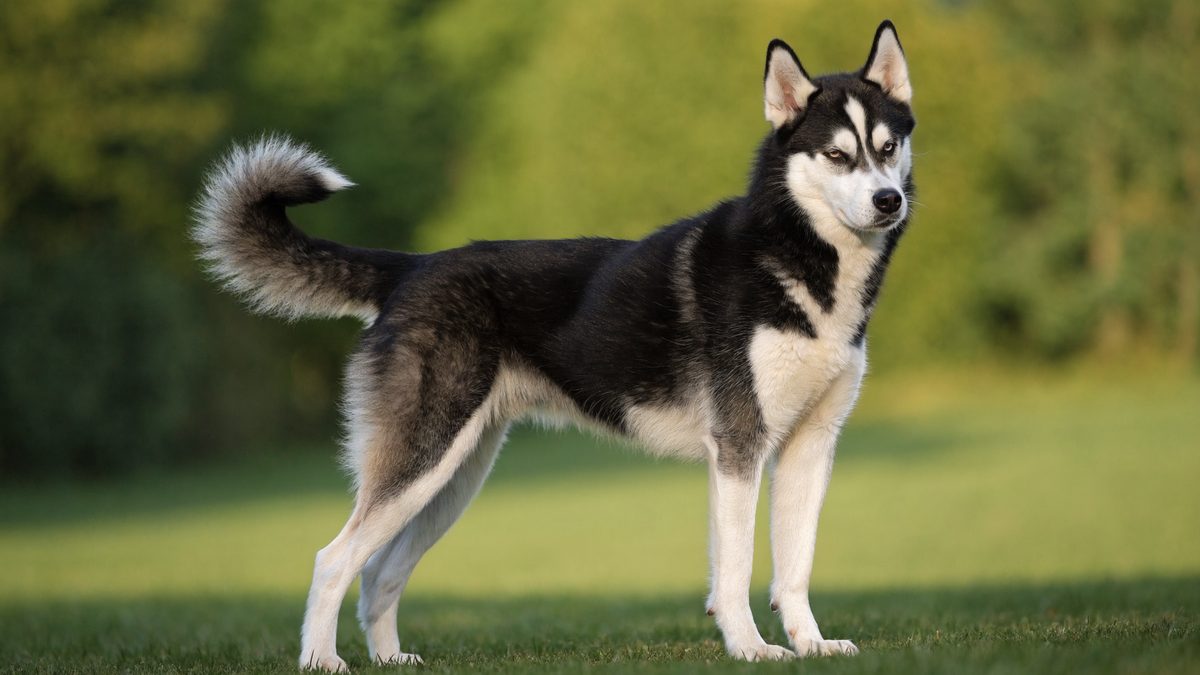
The Siberian Husky is a medium-sized Arctic working dog bred to pull a light load at moderate speed over great distances, and that single sentence from the breed standard explains almost everything about the animal. The sled work produced endurance, a dense insulating double coat, an independent working mind and almost no guarding instinct. Three of those four traits are why the breed is difficult in India.
Under the American Kennel Club standard approved in February 2021, males stand 21 to 23.5 inches at the withers and weigh 45 to 60 pounds. Bitches stand 20 to 22 inches and weigh 35 to 50 pounds. Dogs over 23.5 inches and bitches over 22 inches are disqualified, and any appearance of excessive bone or weight is penalised, because the breed was never meant to be a freighting animal.
The coat is the defining feature and the reason this page exists. The standard calls for a coat that is double and medium in length, with a soft, dense undercoat of sufficient length to support the outer coat, and straight, smooth-lying guard hairs. Long, rough or shaggy coats are faults, and trimming the coat anywhere other than the whiskers and the fur between the toes is to be severely penalised.
| Attribute | Dogs | Bitches |
|---|---|---|
| Height at withers | 21 to 23.5 in | 20 to 22 in |
| Weight | 45 to 60 lb | 35 to 50 lb |
| Coat | Double, medium length | Double, medium length |
| Allowed colours | Black, gray, agouti, sable, red, white | Black, gray, agouti, sable, red, white |
| Eyes | Brown or blue, one of each or parti-colored | Brown or blue, one of each or parti-colored |
| Disqualifications | Over 23.5 in, merle or brindle | Over 22 in, merle or brindle |
Where the breed came from
The Siberian Husky's ancestors were bred in north-eastern Asia by the Chukchi people, and the AKC recognised the breed in 1930. In 2021 it was the 19th most popular purebred dog in the United States, while UK Kennel Club registrations fell from 1,940 in 2011 to 480 in 2021. India publishes no comparable registration series, so nobody knows how many huskies are in the country. Any Indian page quoting a national husky population figure is guessing.
Blue eyes, one blue and one brown, and parti-coloured eyes are all equally correct under the standard, and none of them carries a price justification on health grounds. Indian sellers quote a premium of Rs 10,000 to Rs 20,000 for blue or bi-coloured eyes. You are paying for a photograph, not for a better dog.
The temperament section of the standard is unusually direct. The Siberian Husky is described as friendly and gentle, alert and outgoing, without the possessive qualities of the guard dog and neither overly suspicious of strangers nor aggressive with other dogs. People who buy this breed for security have misread it completely.
Husky price in India
A Siberian Husky puppy costs Rs 20,000 to Rs 1,50,000 in India in 2026. The most useful fact about that range is that the published sources disagree with each other by more than Rs 1,00,000, and the lowest and highest figures come from pages that both describe themselves as authoritative.
Bonbeno compared the price bands published by the Indian pages currently ranking for this query. Read them side by side and the disagreement is obvious.
| Source | Headline range | Unregistered / pet quality | KCI registered | Show or champion line |
|---|---|---|---|---|
| Supertails | Rs 40,000 to Rs 1,50,000 | Rs 20,000 to Rs 40,000 | Rs 50,000 to Rs 95,000 | Rs 80,000 to Rs 1,50,000+ |
| Mr n Mrs Pet | Rs 45,000 to Rs 1,50,000 | Rs 45,000 to Rs 75,000 | Rs 75,000 to Rs 95,000 | Rs 95,000 to Rs 1,50,000+ |
| Deccan Herald | Upwards of Rs 25,000 | Not stated | Not stated | Not stated |
The two specialist pages disagree by Rs 25,000 on the bottom of the unregistered band and Rs 25,000 on the bottom of the KCI band. One of them calls a Rs 20,000 to Rs 40,000 puppy a false economy; the other does not list that tier at all. A national newspaper reporting on an actual abandonment case described huskies as typically priced upwards of Rs 25,000. Nobody is auditing any of these figures.
City-wise price, and what it is worth
| City | Published range |
|---|---|
| Delhi NCR | Rs 45,000 to Rs 69,000 |
| Mumbai | Rs 50,000 to Rs 95,000 |
| Bengaluru | Rs 50,000 to Rs 97,000 |
| Pune | Rs 45,000 to Rs 90,000 |
| Hyderabad | Rs 40,000 to Rs 89,000 |
| Chennai | Rs 45,000 to Rs 91,000 |
| Kolkata | Rs 40,000 to Rs 92,000 |
| Kerala | Rs 38,000 to Rs 75,000 |
Only one published source gives a city-level breakdown, so this table cannot be cross-checked against a second set of figures the way the headline bands can. Treat it as one publisher's estimate rather than a market survey. Bonbeno states that plainly rather than presenting a single-source table as settled fact.
What the price is actually tracking
- Registration status. A Kennel Club of India registered puppy is quoted at Rs 75,000 to Rs 95,000 against Rs 45,000 to Rs 75,000 unregistered. Registration documents pedigree. It is not a health certificate and it does not mean the parents were screened.
- Coat and eye colour. Pure white is quoted at Rs 70,000 to Rs 1,30,000 and agouti at Rs 65,000 to Rs 1,10,000 against Rs 50,000 to Rs 90,000 for black and white. The breed standard gives no preference to any allowable colour or pattern, so this premium is purely aesthetic demand.
- Sex. The published gap between male and female puppies is small, roughly Rs 3,000 to Rs 8,000.
- Who is publishing. Both specialist pages that give detailed bands also sell or broker puppies. That is a commercial interest in the number, disclosed here because neither page discloses it itself.
Anything below Rs 30,000 for a claimed purebred husky is described as a serious red flag by the same source that publishes the Rs 20,000 floor. In India, breeding without a certificate of registration from the State Board is an offence under the Prevention of Cruelty to Animals (Dog Breeding and Marketing) Rules, 2017, and puppies under eight weeks of age must not be sold. A price far below market usually means neither rule was followed.
Bonbeno does not broker puppy sales and does not publish breeder listings. Every figure above is reported from a third party so you can see the disagreement for yourself and price it into your own decision.
Monthly cost of owning a Siberian Husky in India
The purchase price is the smallest number in husky ownership in India, and the largest recurring line item is one that no overseas breed guide contains, which is electricity. Published Indian monthly cost estimates for this breed sit between Rs 7,500 and Rs 17,500, and the gap between the two published totals is almost entirely the cooling bill.
Two Indian sources publish a monthly cost structure for this breed, and they disagree by roughly Rs 5,000 a month at the top end because only one of them counts air conditioning as a pet expense.
| Line item | Supertails | Mr n Mrs Pet |
|---|---|---|
| Food | Rs 3,000 to Rs 6,000 | Rs 3,000 to Rs 6,000 |
| Grooming | Rs 1,500 to Rs 3,500 | Rs 1,000 to Rs 2,500 |
| Veterinary care, averaged | Rs 1,000 to Rs 3,000 | Rs 1,500 to Rs 2,500 |
| Air conditioning, March to October | Rs 3,000 to Rs 8,000 | Rs 1,000 to Rs 2,000 |
| Toys and enrichment | Rs 500 to Rs 1,500 | Rs 1,000 to Rs 2,000 |
| Stated monthly total | Rs 9,000 to Rs 17,500 | Rs 7,500 to Rs 14,000 |
Neither source states a sample size or a collection method, so neither total is a survey result. Bonbeno is running a verified owner cost survey across eight metros and will publish the sample size, the cities covered and the collection date when it is complete. Until then the honest position is that no reliable India-wide monthly figure exists for this breed, and the table above is a comparison of two estimates rather than an answer.
The first-year numbers most guides leave out
- Air conditioning installation, Rs 30,000 to Rs 80,000 if you do not already have it, plus a stated annual running cost of Rs 50,000 to Rs 1,50,000 depending on city and unit efficiency.
- Full puppy vaccination course, Rs 4,000 to Rs 9,000, run across the first sixteen weeks.
- Microchipping, Rs 800 to Rs 2,000. For a breed this prone to bolting, permanent identification is not optional.
- Neutering, Rs 6,000 to Rs 18,000 depending on sex and city.
- Professional obedience training, Rs 5,000 to Rs 20,000 in the first year. An independent working breed in a first-time home usually needs it.
When we publish cost figures we state the sample size, the cities covered and the collection date. Where two published sources disagree, as they do here, we print both rather than averaging them into a number neither source supports.
The realistic first-year total including purchase price is published as Rs 1,50,000 to Rs 4,00,000 or more, depending on city, breeder tier and whether cooling infrastructure was already in place. That is one publisher's estimate. What is not in dispute is the shape of it, because the cooling cost is structural and recurs every summer for the dog's whole life.
Climate suitability: why heat tolerance is rated 1 of 5
Bonbeno rates the Siberian Husky 1 of 5 for heat tolerance, the lowest rating on this site, and the reasoning is mechanical rather than moral. This is an Arctic breed whose entire body was selected to conserve heat, kept in a country where ambient temperatures routinely exceed 45 C in the north and coastal humidity approaches 90 percent. Nothing about that combination is neutral.
Start with what the breed is. The Siberian Husky's ancestors lived in the extremely cold and harsh environment of the Siberian Arctic, and the dense double coat is the adaptation that made that possible. Purina India names huskies directly, listing dogs with heavy coats alongside short-faced breeds as being at particular risk of heat stroke. An Indian veterinary guide makes the same point in more detail, grouping huskies with golden retrievers and german shepherds as double-coated breeds that retain heat, and adding that dark or thick coats absorb more solar radiation.
What the veterinary literature actually says, and what it does not
Here is where Bonbeno differs from every page ranking for this query. No published epidemiological study identifies the Siberian Husky as a statistically significant heat-risk breed. The largest primary-care study available, covering 905,543 UK dogs, named nine breeds with significantly higher odds of heat-related illness than the Labrador Retriever, and the Siberian Husky was not among them. A companion paper on 1,259 heat-related illness events from the same dataset does not mention the breed either.
That absence is not reassurance, and the authors say so themselves. The breed with the highest incidence of heat-related illness in that study was the Chow Chow at 0.50 percent (95 percent CI 0.21 to 1.16 percent), and the authors attribute it to the coat, writing that the Chow Chow is "another breed with a very thick coat" and that it carried the greatest risk of all the study breeds. Their conclusion on coat is the sentence that matters for huskies. "Other double coated breeds may also have increased risk, however the current study was under-powered to fully explore these pre-dispositions due to low numbers of these breeds";.
The Siberian Husky is missing from the UK risk tables because there were not enough of them in the UK population to measure, not because they were measured and found safe. The mechanism the study identified, a very thick coat impeding heat dissipation, is the defining feature of this breed. Absence of evidence in a study that says it was under-powered is not evidence of absence.
The stakes are set by the same dataset. Across UK dogs under primary veterinary care, heat-related illness carried a case fatality of 14.18 percent (95 percent CI 11.08 to 17.96 percent). That is a UK figure in a temperate climate. India offers no equivalent national veterinary dataset, which is itself worth stating plainly rather than filling with an invented number.
The temperature thresholds that matter in India
| Ambient temperature | Risk level | What it means in practice |
|---|---|---|
| Below 28 C | Low | Normal activity with shade and water |
| 28 to 35 C | Moderate | Shorten walks to 15 to 20 minutes, early morning and late evening only |
| 35 to 42 C | High | Outdoor activity contraindicated. Asphalt reaches 60 C and above |
| Above 42 C | Extreme | Heat stroke possible within 10 to 15 minutes outdoors. Indoor temperatures without cooling can be fatal |
Humidity changes the arithmetic completely. A 35 C day at 90 percent humidity is more dangerous than a 42 C day at 20 percent humidity, because panting works by evaporation and humid air blocks it. A husky in Chennai, Kolkata or coastal Kerala is under more thermal load than the thermometer suggests, and the monsoon months do not provide the relief owners expect.
What actually reduces the risk
- Walk only before 7 am or after 8 pm from April to September, and keep the walk to 15 to 20 minutes even in those windows.
- Run air conditioning or fans continuously above 32 C indoors. Indoor temperature above 32 C is dangerous for a dog at rest.
- Use a cooling mat, an elevated bed or a ceramic tile floor. Many dogs seek out cool surfaces instinctively.
- Do the 7-second pavement test. Place the back of your hand on the pavement for seven seconds. If you cannot hold it there, it will burn paw pads within about 30 seconds.
- Never confine the dog to a balcony above 30 C. Concrete balconies are heat traps with no airflow and no shade.
- Plan for power cuts. Load shedding peaks exactly when cooling demand peaks, so keep a battery fan, frozen packs and a fallback location.
Heatstroke occurs when a dog cannot regulate its temperature and it rises to 40.5 C or above, and prolonged elevation damages every organ in the body. Cool the dog immediately with cool but not cold water, get air moving across the wet coat, and drive to a clinic while cooling continues. Do not use ice water or ice packs, which constrict skin blood vessels and trap heat in the core. Dogs that survive one episode are at greater risk of another.
Bengaluru is the one Indian metro where the climate suitability argument softens, because it rarely rises above 35 C. Delhi gives a genuinely cold January and a brutal April to June. Chennai, Kolkata and Kerala offer no meaningful winter at all, and there the cooling infrastructure has to be in place before the dog arrives rather than after.
Temperament and household fit
The Siberian Husky suits an experienced owner with space, time and a secure boundary, and it suits almost nobody else. The breed standard describes a friendly, gentle, alert and outgoing dog with no guarding instinct. What you actually live with is an energetic, sociable and stubbornly independent working animal, and every difficulty this breed presents in an Indian home comes from what it was bred to do rather than from any flaw in character.
Three temperament facts drive most Indian rehoming decisions, and none of them is about aggression.
- It is vocal. Huskies howl rather than bark, and the talking dogs on social media are very often huskies or husky mixes. In a dense Indian apartment block that is a neighbour problem within weeks.
- It is independent. The breed is very independent and therefore more challenging to train. This is a working dog bred to make decisions on a trail, not a dog bred to check in with a handler.
- It is not a guard dog. The standard states it does not display the possessive qualities of the guard dog and is not overly suspicious of strangers. Buyers who want protection have bought the wrong animal.
Apartment reality
The UK Kennel Club lists the ideal home for a Siberian Husky as a large house, and states plainly that the breed is not suitable for first-time owners. That is the national kennel club of the country whose breed standard the FCI recognises, not an opinion column. Bonbeno rates apartment suitability 1 of 5 for this breed for that reason, and because the vocalisation and the cooling requirement compound each other in a flat.
None of that means a husky in an Indian apartment is impossible. It means the household has to supply, every single day, what the flat does not. That is two structured outings in the safe temperature windows, real mental work indoors, continuous cooling, and a tolerance for howling that most shared buildings do not have.
- Good fit. Experienced owners in a house with a secure fenced boundary, in Bengaluru or a hill station, with someone home much of the day.
- Poor fit. First-time owners, apartments with shared walls, households empty ten hours a day, homes without reliable backup cooling.
- Watch item. Huskies are friendly with children but strong and boisterous, and should not be left unsupervised with small kids purely because of their strength.
The breed was developed to work in packs, which is why huskies are generally not aggressive towards other dogs and enjoy company. The flip side is that they tolerate isolation badly. A husky left alone all day in a hot flat is the exact animal that ends up on a rescue list.
Training a Siberian Husky
Train a Siberian Husky with reward-based methods and low expectations of off-lead reliability, because this breed is intelligent and tractable but was selected for independent decision-making rather than handler focus. The training problem here is not stubbornness; it is that you are negotiating with a dog bred to keep running when the human says stop.
The AKC standard credits the breed with intelligence, tractability and an eager disposition. The International Partnership for Dogs breed health report is blunter, noting that because the dogs are very independent they are also more challenging to train. Both are true at once. A husky learns quickly and complies selectively.
The one thing that does not train out
Recall off-lead is the exception, and it is a genuine safety matter rather than a training milestone. The AKC states it directly: Siberians were bred to run and will do so at every opportunity, so it is vital to keep the dog on a leash, in harness, or in a fenced yard at all times. Read that as a permanent management instruction, not a stage you graduate from. Every Indian husky owner who has lost a dog at a park gate learned this the same way.
A bolting husky in an Indian summer is a heat emergency within minutes, because a frightened dog running in 40 C heat can develop heat stroke very quickly. The microchip is the backstop, not the plan. The plan is a secure boundary, a harness that cannot be backed out of, and a household rule that the front door never opens with the dog loose behind it.
Realistic timelines
| Skill | Start | Realistic outcome |
|---|---|---|
| Name response | Week 1 home | Reliable indoors in 3 to 4 weeks |
| Sit, down, settle | Week 1 home | 4 to 8 weeks |
| Toilet training | Week 1 home | 4 to 6 months |
| Loose-lead walking | Month 2 | 6 to 12 months, with ongoing maintenance |
| Harness acceptance | Month 2 | Fast. The breed was built for it |
| Reliable recall off-lead | Month 2 | Never treat as reliable |
| Quiet on cue | Month 3 | Partial. Howling is breed-typical |
Socialise the puppy early and widely, because a strong dog whose physical and mental needs are not addressed makes for management challenges. In practice that means controlled exposure to lifts, traffic, other dogs, groomers and handling before the socialisation window closes, and it means booking that exposure into the cool hours the same way you book walks.
The French national breeding scheme includes a natural aptitude test that requires the dog to accept a harness, accept pulling a light cart, and complete a short course alone or in a pack. That is a useful mental model for Indian owners even without a cart. Give this breed a job with a beginning and an end, and the training relationship improves. Ask it to do nothing all day and it will invent work you do not want.
How much exercise a Siberian Husky actually needs
The UK Kennel Club puts the Siberian Husky's requirement at more than two hours of daily exercise, and lists grooming at more than once a week and the ideal home as a large house. That figure is higher than the one to two hours quoted by most Indian pages, and the gap matters because Indian owners have to fit the whole requirement into two narrow windows either side of the heat.
Indian sources consistently publish a lower number. Two of the pages ranking for this query put it at one to two hours daily Heads Up For Tails. Bonbeno treats the UK Kennel Club figure as the standard and the Indian figure as the floor, and prints the disagreement rather than picking the convenient one.
| Source | Stated daily requirement |
|---|---|
| UK Kennel Club | More than 2 hours |
| Supertails, India | 1 to 2 hours, non-negotiable |
| Mr n Mrs Pet, India | Minimum 1 to 2 hours |
| Heads Up For Tails, India | 1 to 2 hours of outdoor activity |
What the breed was actually built to do
Context for the number helps. Endurance-trained sled dogs are trained to run distances ranging from 150 to 1,000 miles over a length of days, a figure drawn from a study of 4,804 dogs in the Iditarod Trail Sled Dog Race pre-race examination programme. Those are Alaskan sled dogs rather than show-line Siberian Huskies, and Bonbeno flags that distinction because it is the kind of detail competing pages blur. The point is not that your pet husky needs to run 150 miles. The point is that the selection pressure that shaped this breed had no ceiling on distance, and a 45-minute walk does not touch it.
Two constraints shape how that load gets delivered in India. The first is the heat window. The second is prey drive, which in this breed is high enough that free running in an unfenced space is never an option, so the whole requirement has to be met on a lead, on a long line, in harness or inside a secure boundary. Indian owners who solve the first constraint and ignore the second lose the dog to a gate rather than to a heatwave.
Two hours of daily exercise has to fit before 7 am and after 8 pm for roughly six months of the year in most of India. That is the single hardest structural fact about keeping this breed here, and it is the one that quietly breaks households. It is not about willingness. It is about whether two people can reliably deliver two outings a day, every day, for twelve to fourteen years.
What counts when the outdoors is closed
- Scent work and puzzle feeding indoors. Twenty minutes of nose work tires this breed more than twenty minutes of walking, and it runs in an air-conditioned room during a heatwave.
- Harness and drag work in the cool season. A breed built to pull enjoys pulling. Canicross-style work in December and January is genuine enrichment, not a gimmick.
- Swimming where clean, safe water exists. It delivers load without heat and without joint impact.
- Obedience and trick sessions in short blocks. Mental work substitutes for distance better in this breed than in most, because the frustration is cognitive as well as physical.
- Exercise the dog only inside the safe temperature windows and skip the midday walk entirely from March to October. Two cool sessions beat three that include one dangerous one.
A husky that does not get its outlet redirects the energy into the house. The Indian failure pattern is predictable, which is destroyed furniture, dug-up floors, escape attempts and sustained howling. None of that is a behavioural disorder. It is an unemployed working dog doing the only job available.
Grooming a double coat in Indian humidity
Groom a Siberian Husky by raking dead undercoat out of the coat, never by cutting the coat off, and increase the frequency in Indian humidity rather than reducing it. The UK Kennel Club sets the baseline at more than once a week, and Indian conditions push that higher during the twice-yearly shed.
The AKC calls the Siberian Husky a natural breed, remarkably self-cleaning and often needing only a few baths a year. Weekly brushings keep the coat and skin in good condition, and the undercoat is shed twice a year, which is when it becomes important to continually rake out the old coat using a pin brush and metal comb. Indian owners call that period the coat blow, and during it daily brushing is the realistic schedule.
The shaving question, answered properly
Do not shave a Siberian Husky. This is the most damaging common mistake Indian husky owners make, and the reasoning is specific rather than sentimental. Double-coated dogs have a soft inner coat close to the skin that works as an insulating layer, keeping them warm in cold weather and cool in hot weather. As they shed the undercoat in warm weather, the outer coat remains to protect against sunburn and insect bites.
Shaving that coat to reduce shedding or supposedly to keep the dog cool eliminates the insulating layer, makes the dog susceptible to heat stroke, and can cause improper hair growth and follicle damage. The coat also protects against sunburn and decreases the risk of skin cancer. There is long-term damage as well. Shaved to the skin, the undercoat regrows faster and can crowd out the slower-growing guard hairs, so the coat never comes back the same.
An Indian veterinary heatstroke guide states it without hedging. Never shave double-coated breeds, because the undercoat provides insulation that protects from both cold and heat, shaving exposes skin to sunburn, and the coat may grow back patchy or incorrectly. Light trimming of a heavily matted dog is acceptable only after veterinary consultation. Regular brushing to remove dead undercoat and improve air circulation to the skin is the correct summer intervention.
The Indian humidity adjustments
- Brush to the skin, not across the surface. Surface brushing leaves the dead undercoat that mats and traps heat against the skin.
- Dry the coat completely after every bath. A damp dense undercoat in humid weather is the main driver of hot spots. Bathing every four to six weeks with a gentle dog shampoo is the published Indian schedule.
- Use a de-shedding tool through the coat blow and accept that the volume of hair is enormous.
- Keep the resting area ventilated and clean. Good airflow stops shed hair piling up and helps the dog cool.
- Trim only whiskers and the fur between the toes. Any other trimming is severely penalised under the standard, which is a useful proxy for what the coat is meant to do.
One genuine upside in the Indian context is that this breed is fastidiously clean and free from body odour. Owners who dread the smell of a wet double-coated dog through the monsoon get an easier ride here than golden retriever owners do.
Health risks, screening and lifespan
The Siberian Husky is a genuinely healthy breed by pedigree-dog standards, and that is the most surprising finding on this page. Swedish insurance data puts the breed's morbidity below the all-breed average, hip dysplasia rates are low, and the real threats in India are environmental rather than inherited.
Lifespan, where the sources disagree sharply
Published lifespan figures for this breed differ by more than four years, and the difference is methodological rather than trivial.
| Source | Figure | What it is measuring |
|---|---|---|
| Finnish Kennel Club mortality data 2012-2021, via IPFD | 9 years 9 months average | Actual recorded deaths, including accidents |
| American Kennel Club | 12 to 14 years | Breed-club expectation |
| UK Kennel Club | Over 10 years | Breed-club expectation |
| Supertails, India | 12 to 15 years | Unsourced editorial estimate |
The Finnish figure is the only one derived from recorded deaths, and it is dragged down by accidents rather than disease. Dogs in that dataset that die of old age usually reach 13 years, while the accident deaths cluster at an average age of just 4 years 11 months. That is a striking finding for Indian owners, because the accident category is exactly what a bolting, traffic-naive, recall-unreliable breed produces on Indian roads. The single largest thing you can do for a husky's lifespan is not a supplement. It is a gate that stays shut.
Inherited disease, honestly rated
The Siberian Husky Club of America reports that 2.2 percent of OFA-evaluated Siberian Huskies have been dysplastic, while 30.5 percent received excellent hip ratings. Finnish screening data shows 85 to 95 percent of tested dogs with normal or borderline hip joints, elbow dysplasia at about 1 percent, and spondylosis at 4 percent of screened dogs. Swedish data shows no evidence of elbow dysplasia in the national population at all.
Several Indian husky pages list hip dysplasia as a headline breed risk. The screening data does not support treating it as one. Canine hip dysplasia is an inheritable polygenic disease that environmental factors can worsen, and it exists in the breed, but at 2.2 percent dysplastic in OFA evaluations it is not a defining husky problem the way it is in several large breeds. Bonbeno prints the number rather than repeating the claim.
The conditions the breed's own health bodies actually prioritise are different, and they are mostly ocular and neurological.
- Hereditary cataracts. The most common finding in Nordic eye examinations, alongside glaucoma and pectinate ligament abnormality.
- Progressive retinal atrophy, X-linked type 1. A late-onset form with signs appearing around 3 to 5 years, inherited differently in males and females.
- Epilepsy. The Finnish breed club holds data on 88 affected dogs, 59 of them born between 2005 and 2020, and affected dogs are usually related to each other.
- Eosinophilic bronchopneumopathy. An autoimmune airway disease in which Siberian Huskies appear to be over-represented, and which is frequently overlooked as a cause of cough and dyspnoea.
- Zinc-responsive dermatosis. Flagged in the Norwegian breed strategy alongside epilepsy and allergies, and described by Indian sources as producing crusty skin and hair loss around the face, elbows and paws.
What to ask a breeder to screen for
Screen the parents, not the puppy. The Siberian Husky Club of America's health statement, approved in September 2024, requires four things of any dog used for breeding under its ethical breeding guidelines.
- A yearly eye examination by a board-certified ACVO ophthalmologist from a minimum age of 12 months, registered with SHOR or with OFA's CAER.
- A hip dysplasia evaluation by OFA, OVC, PennHIP or an equivalent recognised registry. OFA issues a registry number from 24 months of age.
- A genetic test for Siberian Husky Shaking Puppy Syndrome Type 1, with results registered with OFA.
- A genetic test for Siberian Husky Polyneuropathy Type 1, likewise registered.
The club's guidance on carriers is worth repeating because it is unusually sensible. Eliminating carrier dogs from breeding programmes is explicitly not recommended, because it would damage the breed's long-term genetic diversity. Carriers can be bred to clear dogs; carriers must not be bred to carriers. Genetic diversity is a live issue here, with an average coefficient of inbreeding reported at 0.206 in one arctic sled dog study and 16 percent in a commercial genetic database.
Swedish insurance data covering close to 40 percent of the national dog population puts the Siberian Husky's relative risk of a veterinary care event at 0.87 against all breeds, meaning lower than average, with injury the leading reason for veterinary care and everything else below the all-breed rate. This is a robust breed. In India the risk profile shifts, because heat stroke, dehydration and road accidents replace inherited disease as the things most likely to kill it.
Feeding a Siberian Husky in India
Feed a Siberian Husky less than its size suggests, and keep it visibly lean. The AKC notes that the breed maintains a healthy weight on less food than other breeds of the same size, and that a dog kept at optimum weight lives a healthier, longer life. In India that is a heat intervention as much as a nutrition one.
This is the feeding fact that separates the husky from every other large working breed in the Indian market. It is an efficient metaboliser by selection, so the standard large-breed feeding chart overfeeds it. The AKC recommends a high-quality protein-based food for an active breed and explicitly ties optimum weight to longevity. The breed standard reinforces it, stating that in proper condition the Siberian Husky does not carry excess weight and that any appearance of excessive bone or weight should be penalised.
Published Indian portion guidance sits at roughly 200 to 350 grams of quality kibble daily for a 20 to 27 kg adult, split across two meals, at a food cost of Rs 3,000 to Rs 6,000 a month. Treat that as a starting point to be adjusted against the dog in front of you rather than a prescription.
Body condition beats the chart
- Score body condition weekly by hand. Ribs should be easy to feel under light pressure with a visible waist from above. Feed to that, not to a number on a bag.
- Carrying extra weight is a heat risk, not just a joint risk. Adipose tissue insulates and reduces heat dissipation, and overweight dogs overheat two to three times faster than lean dogs. In an Indian summer this is the most consequential feeding decision you make.
- Split the daily ration across two meals rather than one, and time them away from the hottest part of the day.
- Expect appetite to drop in peak summer. A mild seasonal dip is normal. Persistent inappetence is a veterinary matter, not a feeding preference.
- Keep multiple water stations, refreshed two to three times a day. Water heats up fast in an Indian flat, and dehydration dramatically increases heat stroke risk.
Zinc, and why it comes up for this breed specifically
Zinc-responsive dermatosis appears in the Norwegian breed health strategy for the Siberian Husky, and Indian sources describe it as a difficulty absorbing zinc from food that produces crusty skin and hair loss around the face, elbows and paws. Do not self-diagnose it and do not start supplementing zinc on the basis of a web page. Crusting around the muzzle and eyes in a husky is a reason to see a veterinarian who can distinguish it from the several Indian skin conditions that look similar, including the tick-borne and fungal problems that peak after the monsoon.
Feeding quantities depend on the individual dog's age, weight, body condition and activity level. Set them with a registered veterinarian who has examined your dog, and review them at the start of each summer when activity drops and requirements change.
Bonbeno reviews Indian pet food brands separately and tests products first-hand before publishing a verdict. See our testing method for what a Bonbeno food review does and does not claim.
Siberian Husky puppy: the first year, month by month
A Siberian Husky puppy's first year in India is organised around three deadlines, which are the vaccination course, the socialisation window and the first summer. Get the third one wrong and the other two stop mattering, so plan the arrival date around the calendar rather than around the litter.
Bring a husky puppy home in October or November if you have any choice in the matter. That gives the dog the cool months for the socialisation window, house training and early lead work, and it means the first Indian summer arrives when the puppy is six to eight months old and already settled indoors rather than at eight weeks old and learning everything at once.
- 8 to 12 weeks. Home, name, toilet routine, handling, crate. The full puppy vaccination course runs across the first sixteen weeks at a published cost of Rs 4,000 to Rs 9,000. Puppies under eight weeks must not have been sold to you in the first place. Start managed socialisation now, not after the last vaccine.
- 3 to 4 months. Teething, so mouthing peaks. Introduce the harness early, because this breed accepts one readily. Begin the routine of walking only in the cool windows so it is normal by the time it is compulsory.
- 4 to 6 months. Vaccination course completes. Loose-lead work in earnest. Microchip the dog if it was not done at sale. Book the first eye examination timing with your vet, since the club standard is a yearly ACVO examination from twelve months.
- 6 to 9 months. Adolescence begins and the independent streak sharpens. This is when escape attempts start in earnest and when fence height gets tested. Do not relax the rule that the dog is never off-lead in an unfenced space.
- 9 to 12 months. First full coat blow may occur. Daily brushing through it. Build exercise volume toward the adult requirement of more than two hours a day, spread across the cool windows.
- 12 months onward. First eye examination registered with SHOR or OFA CAER. Hip evaluation is a later step, since OFA issues a registry number from 24 months.
The first summer
Set the cooling plan up before the puppy's first April rather than during it. That means the air conditioning working, a cooling mat in place, curtains blocking direct sun during peak hours, water stations refreshed two to three times a day, and a written fallback for power cuts. A puppy under six months has immature thermoregulation and is in an elevated risk category on its own, before the coat is counted.
Place the back of your hand on the pavement for seven seconds before every summer walk. Asphalt reaches 60 C and above in direct sun and causes third-degree paw burns within about 30 seconds. Grass runs 10 to 15 C cooler than asphalt in the same sun, so route the walk accordingly.
Siberian Husky vs Indian Pariah Dog
Choose an Indian Pariah Dog over a Siberian Husky if climate fit, cost or health robustness is your deciding factor, and choose the husky only if you specifically want the Arctic breed and can fund the environment it needs. This is the honest comparison, and it is not close on any of the three axes the question is usually asked on.
The Indian Pariah Dog is the indigenous landrace of the subcontinent, shaped by natural selection rather than selective breeding, with a short smooth coat and a very low inherited disease burden. Bonbeno's full profile is at Indian Pariah Dog. Set side by side with the husky, the contrast is structural rather than a matter of taste.
| Factor | Siberian Husky | Indian Pariah Dog |
|---|---|---|
| Origin | Siberian Arctic, bred by the Chukchi | Indian subcontinent, native landrace |
| Coat | Dense double, medium length | Short, smooth, single |
| Heat tolerance, Bonbeno rating | 1 of 5 | 5 of 5 |
| Air conditioning | Effectively required March to October | Not required |
| Daily exercise | More than 2 hours | Moderate, roughly an hour |
| Grooming load | More than weekly, daily in coat blow | Minimal |
| Purchase cost | Rs 20,000 to Rs 1,50,000 | Usually free to adopt |
| Published monthly cost | Rs 7,500 to Rs 17,500 Supertails, Husky Dog Price in India | Substantially lower, no cooling line |
| Typical lifespan | 9 years 9 months average in Finnish data | 12 to 16 years |
| Ideal home | Large house | Apartment or house |
| Suitable for first-time owners | No The Kennel Club, Siberian Husky | Yes |
The Indian Pariah Dog is a landrace, not a registered breed with a kennel-club standard, and there is no breed-level epidemiology for it in the way there is for the Siberian Husky. Its figures here are observational and drawn from Bonbeno's own breed profile rather than from a registry or an insurance dataset. Bonbeno flags that asymmetry rather than presenting both columns as equally evidenced, because pretending otherwise would be exactly the sourcing failure this site exists to correct.
Where the husky genuinely wins
Two things are true in the husky's favour and should not be lost in the climate argument. The breed is remarkably clean and free from body odour, and its documented inherited disease burden is low, with Swedish insurance morbidity below the all-breed average. If you are already committed, those are real advantages and they are why well-kept Indian huskies do fine.
The comparison is not husky versus indie in the abstract. It is whether your specific household can supply air conditioning for eight months a year, two hours of daily exercise inside two narrow windows, a secure boundary and twelve to fourteen years of consistency. If the answer is yes, the husky is a workable choice. If the answer is uncertain, the native breed gives you the same companionship at a fraction of the operating cost and with a longer expected life.
Mistakes Indian Siberian Husky owners actually make
The failure modes for this breed in India are predictable, documented and mostly avoidable. These are ranked by how much damage they do rather than by how often they are discussed.
- Shaving the coat for summer. It removes the insulating layer, makes the dog susceptible to heat stroke, exposes skin to sunburn, and can permanently damage follicles so the coat regrows wrong. Indian veterinary guidance says the same. This is the single most common and most damaging husky mistake made in this country.
- Buying without a cooling plan already in place. The air conditioning, the cooling mat, the sun-blocking curtains and the power-cut fallback have to exist before the dog arrives, not after the first heat scare.
- Treating recall as trainable. Siberians were bred to run and will do so at every opportunity, so leash, harness or fenced yard is a permanent rule. Accidents are the category that pulls this breed's average life expectancy down to 9 years 9 months in Finnish data, at an average age of 4 years 11 months.
- Underestimating the exercise requirement. The UK Kennel Club says more than two hours daily. Indian pages routinely publish one to two. The difference is a bored, destructive dog.
- Buying it as a guard dog. The standard states the breed does not display the possessive qualities of the guard dog and is not overly suspicious of strangers. There is no training route to a protective husky.
- Overfeeding to a large-breed chart. The breed maintains healthy weight on less food than others of the same size, and overweight dogs overheat two to three times faster than lean ones.
- Confining the dog to a balcony. Concrete balconies are heat traps with no shade and no airflow, and are dangerous above 30 C.
- Treating KCI papers as a health guarantee. Registration documents pedigree. The screening the breed's own club requires is a yearly ACVO eye examination, a hip evaluation and two named genetic tests, and none of that is implied by a registration certificate.
- Buying from an unregistered breeder. Breeding without a certificate of registration from the State Board is an offence under the 2017 rules, which also require record keeping on breeding, health and sale. Most Indian buyers never ask to see the registration.
- Ignoring howling until the neighbours complain. Huskies howl rather than bark. In a shared building that needs managing from week one, not month six.
The mistake with the highest cost is buying on the purchase price and discovering the operating cost later. A dog bought for Rs 45,000 that needs Rs 9,000 to Rs 17,500 a month and two hours of daily exercise for twelve years is a very different commitment from the one most Indian buyers think they are making. That mismatch, not cruelty, is what fills the rescue lists.
Abandonment, adoption and buying responsibly
Siberian Huskies are abandoned in India, and the evidence for it is a documented case rather than an anecdote. In April 2026, more than 30 huskies were found abandoned on the outskirts of Hyderabad in peak summer conditions, severely dehydrated, with one dog found dead. Anyone weighing this breed should know that story before they weigh the price.
What actually happened at Nandigaon
On 29 April 2026, The Hindu reported that over 30 Siberian Huskies aged between two and three years had been left in open areas far from habitation, with no access to shade or water during peak summer conditions. The Times of India reported five dogs rescued near Nandigaon village along the Shankarpally to Patancheru road and one found dead with heatstroke suspected as the cause, in what officials described as a case of abandonment by a breeder. Rescuers found the dogs exhausted, dehydrated and visibly traumatised after prolonged exposure to harsh weather.
The Federal reported that by the time the rescue operation was launched, many of the huskies had been taken away by passers-by while others had fled into nearby forested areas seeking relief from the heat, and that six dogs were initially rescued and sent to an NGO facility for treatment. The alert came from a local pet owner who owned a golden retriever.
One documented mass abandonment is not a national abandonment rate. India publishes no shelter intake statistics by breed, no rehoming figures for imported breeds, and no registry of husky ownership, so nobody can honestly tell you what proportion of Indian huskies are rehomed or abandoned. The Federal reports that rescue shelters across Indian cities describe a steep rise in foreign breeds being dumped, which is a qualitative observation from the shelters rather than a measured figure. Bonbeno states that limit rather than inventing a percentage, and will publish real numbers if and when a shelter network releases them.
What the reporting does establish is the mechanism, and it is consistent across outlets. The Federal describes owners unprepared for exercise demands, grooming costs and behavioural needs, buying exotic breeds as status symbols under celebrity and social media influence, from breeders operating in a market where ethical breeding remains unregulated. That is the same failure chain the cost and exercise sections of this page describe, ending in a field outside Hyderabad.
Adopting a Siberian Husky in India
Adopt rather than buy if the breed is what you want and you can meet its requirements. Adult huskies do appear in Indian shelters and breed-specific rescues, usually surrendered when first-time owners underestimated the commitment, and adoption is published at Rs 10,000 to Rs 25,000 against Rs 60,000 to Rs 1,00,000 or more for a puppy. Adopting an adult also removes the two largest unknowns in a puppy purchase, which are adult temperament and early health history.
- Ask what the dog's heat history is. A husky that has already lived through Indian summers in a managed home is a known quantity in a way an imported-line puppy is not.
- Ask why it was surrendered. Exercise, howling and cost are the usual three. Each tells you something specific about whether your household is different.
- Get a veterinary examination before you commit, with particular attention to eyes and skin given the breed's documented ocular and dermatological issues.
- Budget the same operating cost as for a puppy. Adoption reduces the purchase price. It does not reduce the electricity bill.
If you buy, verify these five things
- Verify the breeder's registration. Breeding or housing dogs for sale without a certificate of registration from the State Board is an offence under the Prevention of Cruelty to Animals (Dog Breeding and Marketing) Rules, 2017. Ask to see it.
- Ask for the parents' eye examination results, done by a board-certified ophthalmologist from twelve months of age and registered with SHOR or OFA CAER.
- Ask for the parents' hip evaluation from OFA, OVC, PennHIP or an equivalent registry.
- Ask for the SPS1 and SHPN1 genetic test results and understand that a carrier bred to a clear dog is acceptable practice, while carrier to carrier is not.
- Ask for a veterinary health certificate separate from any registration paperwork, and confirm the puppy is at least eight weeks old.
If you are choosing a first dog in an Indian metro, the Siberian Husky is not the right choice, and the UK Kennel Club says so in as many words. If you already own one, none of this page is an argument for giving the dog up. It is a specification for keeping it well, and the four things that matter most are continuous cooling, a secure boundary, two hours of exercise in the cool windows, and never shaving the coat.
Bonbeno does not sell animals and does not broker puppy sales. If you want a dog that suits Indian conditions by default, the Indian Pariah Dog is free to adopt, better adapted to the heat, and lives longer.
Siberian Husky questions Indians actually search
Does a Husky need AC?
In most of India, yes, for roughly eight months of the year. Indian veterinary guidance states that indoor temperature above 32 C is dangerous for a dog at rest and that cooling should run continuously above that threshold. Published Indian cost estimates put husky air conditioning at Rs 3,000 to Rs 8,000 a month from March to October, which is the largest India-specific line in the budget.
Which dog is under 10,000 rupees?
The Indian Pariah Dog and other indie dogs are the realistic options under Rs 10,000, and adoption from most Indian shelters is free or a nominal fee. No responsibly bred Siberian Husky falls in this band. Published husky prices start at Rs 20,000 for unregistered puppies, and the same source that publishes that floor calls anything under Rs 30,000 a serious red flag.
Which dog breeds are available in India under 10k?
Indian native breeds and indie dogs are the honest answer under Rs 10,000, mostly through adoption rather than purchase. Municipal shelters and rescue groups across Indian metros rehome healthy dogs for a nominal fee, often including initial vaccination and sterilisation. Any imported breed advertised in this band should be treated as a warning sign about how the litter was bred and raised.
Which dog's price is 1 crore?
No Siberian Husky sells anywhere near Rs 1 crore in India. Published husky prices top out at Rs 1,50,000 and above for show or champion bloodlines. Crore-level figures reported in Indian media generally concern rare imported mastiff-type dogs bought as status purchases, and they are individual transactions rather than a market rate for any breed.
Can a Siberian Husky survive in Indian heat?
Yes, with continuous cooling and disciplined scheduling, but Bonbeno rates the breed 1 of 5 for heat tolerance, the lowest rating on this site. Purina India names heavy-coated dogs including huskies as being at particular risk of heat stroke. The requirements are air conditioning above 32 C indoors, walks only before 7 am and after 8 pm, constant fresh water, and never shaving the coat.
Should I shave my Husky in summer?
No. Shaving a double-coated dog eliminates the insulating layer that keeps it cool as well as warm, makes it susceptible to heat stroke, exposes skin to sunburn, and can cause follicle damage and improper regrowth. The correct summer intervention is raking dead undercoat out so air can circulate to the skin, which is the opposite of clipping the coat off.
How much exercise does a Siberian Husky need daily?
The UK Kennel Club puts it at more than two hours a day, higher than the one to two hours most Indian pages publish. In India that has to fit before 7 am and after 8 pm for much of the year. The breed descends from sled dogs trained to run distances of 150 to 1,000 miles over days, so a short walk does not meet the requirement.
How long do Huskies live in India?
No Indian lifespan data exists for this breed. Finnish Kennel Club mortality data for 2012 to 2021 gives an average life expectancy of 9 years 9 months, pulled down by accidents at an average age of 4 years 11 months, while dogs dying of old age usually reach 13 years. The AKC quotes 12 to 14 years as a breed expectation.
Are Huskies good for apartments in India?
Rarely. The UK Kennel Club lists the ideal home as a large house and states the breed is not suitable for first-time owners. Huskies howl rather than bark, which is a genuine problem in shared buildings, and the cooling requirement is harder to meet in a flat. Bonbeno rates apartment suitability 1 of 5 for this breed.
What health problems do Siberian Huskies have?
Fewer than most Indian pages claim. The breed's own club reports 2.2 percent of OFA-evaluated huskies as dysplastic, and Swedish insurance data puts breed morbidity below the all-breed average. The conditions the health bodies actually prioritise are hereditary cataracts, X-linked progressive retinal atrophy, epilepsy, eosinophilic bronchopneumopathy and zinc-responsive dermatosis.
Do Huskies get abandoned in India?
Yes, and there is a documented case. In April 2026 more than 30 Siberian Huskies were found abandoned on the outskirts of Hyderabad in peak summer, severely dehydrated, with one dog found dead and heatstroke suspected. No national statistics on breed-wise abandonment exist in India, so the scale beyond individual reported cases is genuinely unknown.
Is a Husky good for first-time dog owners in India?
No. The UK Kennel Club answers this directly and says the breed is not suitable for first-time owners. It is independent and challenging to train, needs more than two hours of daily exercise, cannot be trusted off-lead, howls, and requires continuous cooling in Indian summers. A first-time owner in an Indian metro is signing up for four hard problems at once.
Compare with similar breeds
Siberian Husky sits in 2 Bonbeno groups. Each one compares it directly against the breeds it is genuinely an alternative to, on the same figures.