
Dog breed profile
Great Dane in India: Price, Bloat Risk and Full Breed Guide
What a Great Dane costs to buy in India, what it actually costs to feed, why published prices disagree by 70 times, and what the veterinary evidence says about bloat, the heart and a six-year median lifespan.
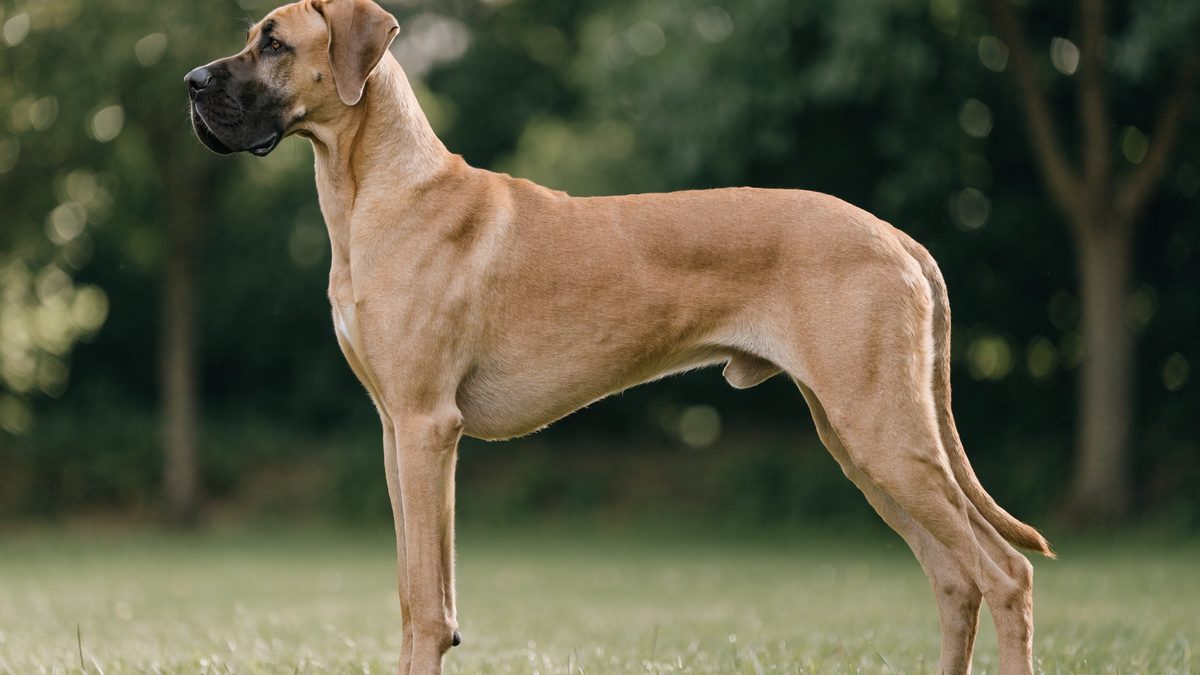
Quick answer
The Great Dane price in India runs Rs 5,000 to Rs 3,50,000 across published sources in 2026, a spread of 70 times for the same breed. Two ranking pages contradict themselves. The bigger number is the cost of keeping one, because feeding a 65 kg Dane costs about Rs 12,750 a month. This breed carries a 36.7 percent lifetime risk of bloat and recorded a median lifespan of 6.0 years.
This guide is general information for Indian pet owners and is not a diagnosis. Always consult a registered veterinarian near you before acting on anything you read here, and treat any sudden change in your dog's condition as urgent.
Great Dane at a glance
What a Great Dane actually is
A Great Dane is a giant German working breed standing at least 80 cm at the withers under the standard of its country of origin, built as a companion, watch and guard dog, and carrying a very short single coat that must never be a double coat. Almost every difficulty of keeping one in India follows from two numbers in that sentence, the height and the bodyweight it implies.
The breed is German, not Danish. The Federation Cynologique Internationale registers it as the Deutsche Dogge and places it in Group 2, Section 2.1, molossoid breeds of mastiff type. A committee of seven breeders and judges met in Berlin in 1878 under Dr Bodinus and decided to classify the various regional types as Deutsche Doggen, and the first breed standard was laid down at a Berlin show in 1880. The American Kennel Club recognised the breed in 1877. The AKC standard calls it the Apollo of dogs and requires a temperament that is spirited, courageous, always friendly, dependable and never timid or aggressive.
One ranking Indian page states that the breed appeared as large boarhounds from the 13th to 14th centuries BC and that the modern breed originated in Denmark in Germany. Both statements are wrong, and they matter only as a signal of how carefully the pages selling you this dog have checked anything else on the page.
Size, according to the three standards that count
The three recognising bodies do not set the same minimum, so a dog can be correct in one country and disqualified in another. The FCI, whose standard governs the breed in its country of origin and to which the Kennel Club of India is affiliated, sets the highest bar The Kennel Club of India vs The Union….
| Source | Male minimum height | Male weight | Coat described as |
|---|---|---|---|
| FCI Standard No. 235, 2024 | 80 cm, not to exceed 90 cm | Not specified | Very short, dense, smooth, close lying, glossy. Must never be a double coat |
| Royal Kennel Club, UK | 76 cm (30 in) | Minimum 54 kg (120 lb) over eighteen months | Short, dense and sleek-looking, never inclined to roughness |
| AKC standard, effective 2019 | 30 in, preferably 32 in or more | 140 to 175 lb per the AKC breed page | Short, thick and clean with a smooth glossy appearance |
| DogsIndia breed page | About 70 to 75 cm | 45 to 55 kg | Not described |
| Mr n Mrs Pet | 30 to 34 in (76 to 86 cm) | 54 to 90 kg | Dense, curly coats needing trimming every 4 to 6 weeks |
| Petsworld | 76 to 86 cm | 54 to 90 kg | Double coated, soft and thick |
Two things fall out of that table. India's oldest dog directory publishes a height of 70 to 75 cm, which is below the FCI minimum of 80 cm and below the Royal Kennel Club minimum of 76 cm, so the dog it describes would be disqualified under the standard of the breed's country of origin. And two ranking pages describe the coat wrongly in a way that changes the care advice a buyer acts on.
The FCI standard is explicit that the hair is very short, dense, smooth and close lying, and must never be coarse, dull or a double coat. The Royal Kennel Club calls it short, dense and sleek-looking and the AKC calls it short, thick and clean with a smooth glossy appearance. A page ranking sixth for this query tells Indian buyers that Great Danes have dense, curly coats that need trimming every 4 to 6 weeks to prevent matting, and the second-ranking page lists the coat as double coated, soft and thick. Both are wrong against all three standards. The same page that describes curly coats also refers to its own verified and responsible Corgi breeders in the middle of Great Dane copy, which is what boilerplate looks like when nobody reads it back.
Ears, and why the picture in the advertisement matters
Great Dane ears are naturally pendant, set on high, medium sized, with the front edges lying close to the cheeks. The Royal Kennel Club describes them as triangular, medium size, set high on the skull and folded forward, and does not mention cropping at all. Only the AKC standard permits an alternative, noting that if cropped, the ear length is in proportion to the size of the head and the ears are carried uniformly erect. That single clause is the reason most photographs of Great Danes circulating in India show erect, pointed ears that the dog was not born with. Bonbeno covers what that involves, and its legal status in India, in the [ear cropping](#common-mistakes) material further down this page.
Coat colour and the colours that are actually disqualified
The AKC recognises exactly seven colours, brindle, fawn, blue, black, harlequin, mantle and merle, and disqualifies any colour outside those seven along with the merlequin pattern, a white dog with only merle patches. The FCI groups the breed into three colour varieties, fawn and brindle, then harlequin with merle and black, then blue. Indian sellers price coat colour as a premium, quoting Rs 50,000 to Rs 1,00,000 for a blue Great Dane, but no standard prefers one allowable colour over another, so that premium buys a photograph rather than a better dog.
The FCI list of disqualifying faults includes one line that no Indian sales page quotes. Blind or deaf Danes are disqualified. That clause exists because of what merle-to-merle breeding does, and it is the single strongest argument against buying a rare-colour puppy from a seller who cannot tell you the colour of both parents.
Great Dane price in india, compared across every published source
The Great Dane price in India runs from Rs 5,000 to Rs 3,50,000 and above across the four pages currently ranking for this query. That is a spread of 70 times for the same breed in the same country in the same year, and two of those pages disagree with themselves inside their own copy.
Bonbeno read every ranking page and put the numbers side by side rather than averaging them into a single comfortable figure. Read them together and the point is obvious.
| Source | Headline range | Lowest tier | KCI registered | Champion bloodline or show quality |
|---|---|---|---|---|
| Petsworld | Rs 5,000 to Rs 12,000 | Not stated | Not stated | Not stated |
| Supertails, body copy | Rs 25,000 to Rs 75,000 | Rs 25,000 to Rs 50,000 pet quality | Not stated | Rs 50,000 to Rs 1,00,000 or more for show quality |
| Supertails, its own FAQ | Rs 35,000 to Rs 90,000 | Not stated | Not stated | Not stated |
| Shubh Kennel, body copy | Rs 30,000 to Rs 80,000 | Not stated | Not stated | Beyond the range for championship bloodlines |
| Shubh Kennel, its own city table | Rs 75,000 to Rs 1,80,000 | Not stated | Not stated | Not stated |
| Mr n Mrs Pet | Rs 75,000 to Rs 3,50,000 or more | Rs 75,000 to Rs 1,50,000 basic | Rs 1,50,000 to Rs 2,50,000 | Rs 2,50,000 to Rs 3,50,000 |
The bottom of one published range and the top of another differ by Rs 3,45,000. The two specialist pages barely overlap at all. Supertails tops out at Rs 90,000 on its own FAQ; Mr n Mrs Pet begins at Rs 75,000 and calls that its basic tier. Nobody audits any of these figures, and the four sources that publish them all sell dogs, broker dogs or sell products to dog owners.
Supertails states in its body copy that Great Dane prices in India typically range between Rs 25,000 and Rs 75,000, then answers its own FAQ question by saying the price usually falls between Rs 35,000 and Rs 90,000. Shubh Kennel writes that the average Great Dane price in India ranges from Rs 30,000 to Rs 80,000, directly beneath a city-wise table on the same page whose lowest entry is Rs 75,000 and whose highest is Rs 1,80,000. Neither page flags the contradiction. If a page cannot keep its own headline number consistent between two paragraphs, treat every other number on it as an estimate rather than a quote.
City-wise price, and what happens when you check it
Three ranking pages publish a city-wise price table and no two of them agree on any city. Put the same city in one row and the disagreement stops being a rounding difference.
| City | Supertails | Shubh Kennel | Mr n Mrs Pet |
|---|---|---|---|
| Bengaluru | Rs 35,000 to Rs 75,000 | Rs 80,000 to Rs 1,50,000 | Rs 75,000 to Rs 3,50,000 |
| Chennai | Rs 30,000 to Rs 65,000 | Rs 78,000 to Rs 1,40,000 | Rs 75,000 to Rs 3,50,000 |
| Hyderabad | Rs 35,000 to Rs 75,000 | Rs 80,000 to Rs 1,50,000 | Rs 75,000 to Rs 3,50,000 |
| Pune | Rs 30,000 to Rs 70,000 | Rs 85,000 to Rs 1,60,000 | Rs 75,000 to Rs 3,50,000 |
| Kolkata | Rs 28,000 to Rs 60,000 | Rs 75,000 to Rs 1,30,000 | Not listed |
| Mumbai | Not listed | Rs 85,000 to Rs 1,60,000 | Rs 75,000 to Rs 3,50,000 |
| Delhi | Not listed | Not listed | Rs 75,000 to Rs 3,50,000 |
| Jaipur | Not listed | Rs 80,000 to Rs 1,70,000 | Rs 75,000 to Rs 3,50,000 |
| Kerala | Rs 25,000 to Rs 50,000 | Not listed | Not listed |
For Bengaluru the three published ranges are Rs 35,000 to Rs 75,000, Rs 80,000 to Rs 1,50,000, and Rs 75,000 to Rs 3,50,000 Shubh Kennel, Great Dane Dog Price In India Mr n Mrs Pet, Great Dane Puppies For Sale…. There is no overlap between the first and the third. Note also the third column. Mr n Mrs Pet publishes the identical figure, Rs 75,000 to Rs 3,50,000, for all eight cities it lists, which means its city-wise price table contains no city-wise information at all. A table that returns the same answer for every input is a search-engine artefact, not market data.
What the price is actually tracking
- Registration status. Mr n Mrs Pet prices a KCI registered puppy at Rs 1,50,000 to Rs 2,50,000 against Rs 75,000 to Rs 1,50,000 for its basic tier, a premium of roughly Rs 75,000 to Rs 1,00,000. Kennel Club of India registration documents pedigree. It is not a health certificate, it records no screening result, and it does not oblige the breeder to screen anything.
- Bloodline. The champion bloodline tier is quoted at Rs 2,50,000 to Rs 3,50,000 and is described as descending from imported or award-winning parents. Show placings measure conformation against a written standard. They do not measure hips, heart, thyroid or eyes, which are screened separately and recorded separately.
- Coat colour. A blue Great Dane is quoted at Rs 50,000 to Rs 1,00,000 against Rs 25,000 to Rs 50,000 for a pet-quality dog, and rare colours or unique markings are said to increase the price significantly. Every allowable colour is equally correct under the standard, so this premium is demand, not quality.
- Breeder quality. Supertails states plainly that reputable breeders charge more because they focus on health and temperament and that backyard breeders or puppy mills might offer cheaper dogs at the expense of the dog's health. That is true and it is the one factor on the list worth paying for, but no ranking page tells you how to verify it. The verification checklist is in the [adoption](#adoption) section of this page.
- Sex and age. Supertails says puppies cost more than adult dogs and that males might be slightly pricier due to demand, without publishing a figure for the gap.
Who is publishing these numbers
All four price sources have a commercial interest in the number they publish, and none of them discloses it. Mr n Mrs Pet is a puppy brokerage, listing 67 Great Danes for sale on the page that also sets the highest published price band, taking payment on a 20-30-50 schedule and delivering pan-India by air, road or rail. Shubh Kennel is a breeder. Supertails and Petsworld are retailers. DogsIndia, ranking tenth, carries roughly three dozen Great Dane breeder classifieds, heavily concentrated in Tamil Nadu around Chennai, Coimbatore and Madurai.
Bonbeno sells no dogs, brokers no litters and takes no commission on any puppy sale. The ranges above are reported as published editorial content and are not offers.
The real monthly cost of a Great Dane in India
Feeding one 65 kg Great Dane a giant-breed food at the manufacturer's own medium-activity ration costs about Rs 12,750 a month in India, which is more than the total monthly maintenance figure quoted by any page ranking for this query Mr n Mrs Pet, Great Dane Puppies For Sale…. Food is not one line in the monthly cost of a giant dog. Food is the monthly cost.
Every ranking page publishes a monthly expenses figure and none of them shows its working. Bonbeno built the food line from two numbers you can check yourself in about two minutes, the manufacturer's published daily ration and the current Indian shelf price of the same product.
Royal Canin India publishes a daily feeding table for its Giant Adult food, formulated for adult giant breed dogs over 45 kg. The same product is listed in India at Rs 10,592 for a 15 kg bag, which the retailer states as Rs 70 per 100 g. That works out at roughly Rs 706 per kilogram. Multiply the ration by 30 days and you get the monthly bill.
| Adult bodyweight | Daily ration, medium activity | Food per 30 days | Monthly cost at Rs 706 per kg |
|---|---|---|---|
| 45 kg | 457 g | 13.7 kg | About Rs 9,700 |
| 55 kg | 531 g | 15.9 kg | About Rs 11,250 |
| 65 kg | 602 g | 18.1 kg | About Rs 12,750 |
| 75 kg | 670 g | 20.1 kg | About Rs 14,200 |
The ration figures are Royal Canin's own, for medium activity. The unit price is the listed Indian retail price on 14 August 2026. The multiplication is Bonbeno's. A high-activity dog of the same weight eats 684 g a day at 65 kg, which pushes the monthly food bill past Rs 14,400.
What the ranking pages say the monthly expenses are
| Source | Food | Veterinary care | Grooming | Stated total |
|---|---|---|---|---|
| Supertails | Rs 5,000 to Rs 10,000 per month | Rs 2,000 to Rs 4,000 per month | Rs 500 to Rs 2,000 per month | Not totalled. Toys and training add Rs 1,000 to Rs 3,000 |
| Shubh Kennel | Rs 2,000 to Rs 7,000 per month | Rs 3,000 to Rs 8,000 per YEAR | Minimal, brushing and occasional bathing | Not totalled. Training quoted at Rs 10,000 to Rs 20,000 |
| Mr n Mrs Pet | Not itemised | Not itemised | Claims trimming every 4 to 6 weeks | Rs 8,000 to Rs 10,000 per month, all in |
| Bonbeno, food line only, 65 kg dog | About Rs 12,750 per month Supertails, Royal Canin Giant Adult Dog Dry… | Not estimated, see below | Nil for coat care, this is a short-coated breed | Food alone exceeds every total above |
Shubh Kennel quotes veterinary care at Rs 3,000 to Rs 8,000 per year while Supertails quotes Rs 2,000 to Rs 4,000 per month, which is Rs 24,000 to Rs 48,000 per year Supertails, Great Dane Dog Price. Those two claims differ by up to sixteen times. Bonbeno does not average them, because averaging two unsourced numbers produces a third unsourced number.
No Indian page costs the two procedures that define this breed's veterinary budget, a prophylactic gastropexy and lifelong cardiac screening. Bonbeno searched for a published Indian price for either and found none that could be verified, so this page does not print one. The only peer-reviewed costing available modelled a US decision in 2003, assuming US$400 for a prophylactic gastropexy against US$1,500 to treat an episode of gastric dilatation-volvulus, and concluded the preventive surgery was cost-effective in any breed whose lifetime risk reached 34 percent. Those are 2003 American figures and they do not convert into a 2026 Indian quote. Ask three clinics in your city before you buy the puppy, not after.
Costs that scale with bodyweight and nobody warns you about
- Every weight-banded product is bought at the top band. The Royal Kennel Club sets a minimum weight of 54 kg for an adult male over eighteen months and the AKC breed page gives 140 to 175 lb, which is 63 to 79 kg. Parasite control, anaesthesia and most medication are dosed and priced by bodyweight, so budget at the largest tier a product offers, every time.
- Cardiac screening is not one-off. The Great Dane Club of America recommends heart and thyroid testing be repeated at least every 2 to 3 years because results from a young adult do not stay valid for life, and recommends echocardiograms for all adult Great Danes used for breeding. The Orthopedic Foundation for Animals requires an advanced cardiac exam by a board-certified veterinary cardiologist, including an echo, for a Great Dane to hold a CHIC number. Board-certified veterinary cardiologists are not evenly distributed across Indian cities.
- Anaesthesia costs more because it should cost more. The GDCA's surgical guidelines ask for a pre-surgical clotting profile in addition to a CBC and serum chemistry, an IV catheter and fluid therapy, pulse oximetry and cardiac monitoring, and active warming, because disseminated intravascular coagulopathy appears in a higher number of giant dogs undergoing surgery than the norm. Each of those line items is billable.
- Boarding, transport and gear price by size. A crate, a chest harness, a car and a boarding kennel all have to fit a dog that stands at least 80 cm at the withers. No Indian page costs this and Bonbeno will not invent a figure for it.
The honest summary is short. The purchase price is the small number. A buyer looking at a Rs 75,000 puppy should understand that food alone will match that figure inside six months, and that the dog is statistically unlikely to reach its seventh birthday.
Heat tolerance and the Indian climate
Bonbeno rates the Great Dane 2 out of 5 for heat tolerance. The breed is not named on the published list of breeds at elevated risk of heat-related illness, but every correct adult male sits inside the single highest bodyweight risk band that study identified, because dogs over 50 kg carried 3.42 times the odds of heat-related illness compared with dogs under 10 kg The Royal Kennel Club.
The largest primary-care study of heat-related illness in dogs examined UK veterinary records for 2016 and reported an event fatality rate of 14.18 percent, with a 95 percent confidence interval of 11.08 to 17.96 percent. Roughly one dog in seven that develops the condition dies of it. The study's final model named nine breeds at higher odds than the Labrador Retriever, being the Chow Chow, Bulldog, French Bulldog, Dogue de Bordeaux, Greyhound, Cavalier King Charles Spaniel, Pug, English Springer Spaniel and Golden Retriever. The Great Dane is not on that list.
Not appearing on a breed risk list is not the same as being safe. The same study found that dogs weighing over 50 kg in absolute bodyweight had the highest odds of heat-related illness of any weight group, and that every weight group above 10 kg carried significantly higher odds than dogs under 10 kg. The Royal Kennel Club sets a minimum weight of 54 kg for an adult male Great Dane over eighteen months, so a correct male is above the 50 kg threshold by definition. The breed reaches the highest-risk weight band through size rather than through skull shape, and the study measured a UK population in a UK summer, not an Indian one.
What an Indian summer actually is, in numbers
The India Meteorological Department declares a heat wave when the maximum temperature at a station reaches at least 40 degrees Celsius in the plains and at least 30 degrees Celsius in hilly regions. For the April to June 2026 season, the IMD's outlook indicated above-normal heatwave days over parts of east, central and northwest India and the southeast peninsula. Those are the same regions that hold most of the Indian Great Dane market, since the breeder listings on India's oldest dog directory cluster around Chennai, Coimbatore and Madurai.
| Risk factor | Published finding | Where the Great Dane falls |
|---|---|---|
| Absolute bodyweight over 50 kg | 3.42 times the odds of heat-related illness against dogs under 10 kg | Above the threshold by breed standard, minimum 54 kg for an adult male |
| Bodyweight at or above the breed and sex mean | 1.42 times the odds against dogs below the breed and sex mean | Applies to any Dane carrying extra condition, which is controllable |
| Named high-risk breed | Nine breeds identified, Chow Chow and Bulldog highest | Not named. The evidence for this breed is the weight finding, not a breed finding |
| Heavy or double coat | Not the mechanism here | Does not apply. The coat is very short and must never be a double coat |
The coat is worth dwelling on, because it is where the Indian pages go wrong in a way that costs money. This is a short-coated breed with a very short, dense, smooth, close-lying single coat. There is no undercoat to blow, no seasonal clipping decision and no matting to prevent. A page that tells an Indian buyer the coat is curly and needs trimming every 4 to 6 weeks to keep the dog cool in Indian weather is selling a grooming service against a coat that does not exist.
City by city, where it gets harder
- Hot and dry, Delhi NCR, Jaipur, Ahmedabad and Nagpur. Surface temperature is the problem more than air temperature. A dog carrying 60 kg on four feet cannot be walked on afternoon paving at all in May and June, and the IMD's 40 degree plains threshold is routinely crossed in these cities Press Information Bureau.
- Hot and humid, Chennai, Mumbai, Kochi and Kolkata. Evaporative cooling works less well when the air is already humid, and these are exactly the cities where the breed is most heavily advertised. Plan the day around a pre-dawn walk and a post-sunset walk, and accept that the middle twelve hours are indoor time.
- Temperate, Bengaluru and Pune. The easiest Indian cities for this breed, and unsurprisingly two of the most expensive to buy one in. Even here, an air-conditioned or at least well-ventilated indoor space matters, because the weight risk does not go away.
- Hill stations and the north. The IMD applies a 30 degree threshold in hilly regions, and a giant short-coated dog handles cold better than heat. This is the one Indian setting where the breed's origin climate roughly matches the destination climate.
The AKC advises avoiding rigorous exercise around mealtimes because of the risk of bloat, and separately advises a brisk walk two or three times a day. In an Indian summer the only tolerable walking windows are early morning and late evening, which are also the two windows most Indian households feed in. Move the meals, not the walks. Feed at least an hour clear of any walk, split into more than one meal a day, and never feed immediately after a hot walk while the dog is still panting hard.
Temperament and who should not buy this breed
The Great Dane is required by every governing standard to be friendly and confident, and aggression is a disqualifying fault under the FCI standard. A gentle temperament is not a marketing claim about this breed, it is written into the standard. What the standard cannot fix is a 60 kg dog with no training, and that is the animal Indian buyers most often end up with.
The FCI describes the required temperament as friendly, loving and devoted to his owners, possibly reserved towards strangers, but confident, fearless, easily tractable and docile, with high resistance to provocation and without aggression, and states that socially acceptable behaviour is of the utmost importance. The Royal Kennel Club puts it in six words, kindly without nervousness, friendly and outgoing. The AKC requires spirited, courageous, always friendly, dependable and never timid or aggressive. The FCI disqualifies aggressive or overly shy dogs and fear-biters outright.
What owners actually report, and how it changes at two years
The Orthopedic Foundation for Animals runs an open breed health survey for the Great Dane in which owners describe temperament before and after 24 months of age. The shift between those two columns is the most useful temperament data published anywhere on this breed, and no Indian page cites it.
| Owner description | Before 24 months | After 24 months |
|---|---|---|
| Friendly | 55 percent | 47 percent |
| Confident | 47 percent | 45 percent |
| Very friendly | 40 percent | 42 percent |
| Protective | 20 percent | 31 percent |
| Reserved | 19 percent | 20 percent |
| Dog aggressive or dog reactive | 4 percent | 16 percent |
| High prey drive | 10 percent | 12 percent |
| Timid | 11 percent | 11 percent |
| Has attacked or bitten another dog | 1 percent | 7 percent |
| Has bitten a person | 1 percent | 3 percent |
Dog reactivity quadruples after 24 months, from 4 percent to 16 percent, and reported protectiveness rises from 20 percent to 31 percent. Reported bites toward other dogs rise from 1 percent to 7 percent. The OFA states plainly that survey respondents are self-selected, that there is no verification of responses and no duplicate checking, so treat these as owner-reported directions of travel rather than prevalence rates. The direction of travel is the point. The sweet, floppy puppy your family met is not the finished animal, and the finished animal weighs more than most of the people who will have to hold the lead.
Every increase in that table falls after the second birthday, which is long after the window in which social exposure is cheapest. Socialise the dog deliberately through the first year, while it is small enough for one person to manage, and keep going through adolescence. The AKC states that Great Danes need human contact, affection and socialisation with other people and animals. Doing that at 55 kg is a different job from doing it at 20 kg.
The apartment question, on which the ranking pages flatly disagree
Mr n Mrs Pet tells buyers the breed is surprisingly suited to apartment living due to calm indoor behaviour, and lists it as adaptable indoors. Supertails, ranking five places higher, tells buyers that space is a big factor, that Great Danes thrive in homes with enough room to move around comfortably, and that a small apartment might be challenging. One of those pages sells the puppy.
Bonbeno rates apartment suitability 2 out of 5 for this breed, and the reason is not floor area. A dog standing at least 80 cm at the withers needs traction underfoot, a lift or a ground floor, and a household that can get it outside twice a day in the two narrow cool windows an Indian summer allows. Polished tile and a fourth-floor walk-up are the two things that actually rule out a flat.
Who should not buy a Great Dane
- Anyone buying a guard dog. The FCI lists the utilisation as companion, watch and guard dog, but the same standard requires high resistance to provocation and no aggression, and disqualifies fear-biters. This breed deters by standing up. A buyer who wants a dog that bites has bought the wrong animal and will train it into a liability.
- Households out all day. Supertails notes that these are social dogs that crave companionship and that leaving them alone for long periods can lead to separation anxiety.
- First-time owners with no budget headroom. Food alone runs about Rs 12,750 a month for a 65 kg dog Supertails, Royal Canin Giant Adult Dog Dry…, before a single veterinary decision.
- Anyone who wants a long relationship with one dog. The median longevity recorded for this breed in England's largest primary-care study was 6.0 years against 12.0 years for dogs overall. That is the hardest sentence on this page and it belongs in the temperament section, because it is a question about what you are signing up to feel.
How to train a Great Dane, and what this breed resists
To train a Great Dane successfully in India, finish the lead work before the dog outweighs the person holding the lead, which in practice means before eight months. The AKC describes the breed as sociable, friendly and eager to please, responding well to firm, consistent training methods. Willingness is not the constraint. Timing and physics are.
Nothing about this breed's mind is difficult. It is biddable, it is not an independent working breed, and it wants to be near you. The difficulty is that a Great Dane passes the bodyweight of most adult family members during its first year, so any behaviour you have not fixed by then you will be negotiating with rather than correcting. Train the lead first, the recall second and everything else afterwards.
Use a chest harness from the first week
Ohio State University's veterinary neurology service, which runs one of the largest wobbler syndrome research programmes in the world, states that for dogs with the condition neck leashes should not be used and a chest harness is strongly recommended, because the problem is in the neck. That instruction is written for diagnosed dogs. Bonbeno's position is that you should build the habit before you need it, for two reasons drawn from the same source. A survey of the Veterinary Medical Database found that 4.2 percent of Great Danes have wobblers, and Great Danes typically show signs at a mean age of about 3 years, far younger than Dobermans at a mean of 6 years. A harness costs nothing extra at eight weeks. Retraining a 60 kg dog that pulls into a collar after a diagnosis costs a great deal.
Buy a well-fitted chest harness before the puppy arrives and never attach a lead to a neck collar on this breed. Keep the collar for identification tags and the municipal licence disc. No Indian page selling Great Dane puppies mentions this, and it is the cheapest risk reduction available to a Great Dane owner.
A realistic training timeline
| Age | Priority | Why this window |
|---|---|---|
| 8 to 16 weeks | Name, hand feeding, harness acceptance, car travel, handling of feet and ears | The only period when one person can physically manage the dog without technique |
| 4 to 6 months | Loose-lead walking on a harness, settle on a mat, no jumping up | Bodyweight is climbing fast toward the 45 kg band the giant-breed food is formulated for |
| 6 to 12 months | Recall, calm passing of street dogs, vet-clinic handling and muzzle conditioning | Reported dog reactivity rises sharply after 24 months, so the groundwork has to precede it |
| 12 to 24 months | Maintenance and continued socialisation, no forced exercise | The AKC advises waiting until the dog is 2 years old before jogging or hiking, to avoid damage to growing joints |
| After 24 months | Re-proof recall and dog-dog manners deliberately | Owner-reported protectiveness rises from 20 to 31 percent and dog reactivity from 4 to 16 percent |
What the breed resists
- Off-lead freedom. The AKC states that Danes tend to follow their nose wherever a scent takes them, that they should always be kept on a leash, and that they should only be allowed loose in areas secured by a tall fence. Owners report high prey drive in 10 to 12 percent of dogs. In an Indian city with free-roaming animals, treat off-lead as a fenced-ground activity only.
- Drilling and repetition. This is a companion and watch dog by classification, not a herding breed built for hours of repetition. Short sessions, high value food, finish early.
- Being corrected physically. The standard requires high resistance to provocation and no aggression. Handling that produces defensive behaviour in a dog this size creates a safety problem rather than a training problem.
- Any exercise regime imposed before two years. Forced running damages growing joints, and the same growth period is when hypertrophic osteodystrophy and panosteitis appear in this breed.
What training costs in India
Shubh Kennel quotes professional obedience training at Rs 10,000 to Rs 20,000 depending on the trainer and programme, and notes it might be required particularly for a first-time dog owner. Supertails bundles toys and training together at Rs 1,000 to Rs 3,000 a month. Neither figure is sourced and the two are not measuring the same thing, so budget on quotes you collect yourself rather than on either number. Verify that any trainer you hire has handled giant breeds before, and ask specifically how they intend to manage a dog that will outweigh them.
Daily exercise requirement, and the two-year rule
A brisk walk two or three times a day is enough for an adult Great Dane, according to the AKC. This is not a high-energy breed and it does not need a running partner. It needs an owner who will get it outside twice a day in an Indian summer, which is a different kind of discipline.
The AKC puts it plainly. Great Danes may seem sedate but require daily exercise appropriate to their age, and a brisk walk two or three times a day can be enough. Supertails agrees that they are not overly energetic and are content with moderate exercise. Set against a sled breed like the Siberian Husky, the Great Dane is undemanding on volume and demanding on scheduling.
The two hard rules
- No jogging, running or hiking before two years of age. The AKC states that Great Danes can make good companions on jogs or hikes, but that you must wait until the dog is 2 years old to avoid damage to growing joints. This is the rule Indian owners break most often, usually because a six-month-old Dane already looks like an adult dog.
- No rigorous exercise around mealtimes. The AKC gives the reason directly, the risk of bloat. Gastric dilatation-volvulus is the number one killer of Great Danes and the breed is the single highest-risk breed for it.
In most breeds the walk schedule is about energy. In a Great Dane it is about the stomach. The Great Dane Club of America advises multiple small meals per day and preventing vigorous exercise around mealtimes to help reduce the chances of bloat. Combine that with the Indian summer reality that the only cool walking windows are before sunrise and after sunset, and the practical answer is to feed in the middle of the day, well clear of both walks, in two or three portions.
What a week looks like
| Session | Timing in summer | Content |
|---|---|---|
| Morning walk | Before 6.30 am, on a harness | 20 to 40 minutes at a brisk pace on a surface you have touched with the back of your hand first |
| Midday | Indoors | Rest. Meals sit here, clear of both walks |
| Evening walk | After 8 pm | 20 to 40 minutes, plus five minutes of calm passing practice near other dogs |
| Twice a week | Either window | Sniffing walk at the dog's pace rather than a pace walk. Mental work, no joint load |
| After 2 years only | Cool months | Longer hikes become available. Agility, obedience and tracking are listed by the AKC as suitable outlets |
What happens without it
Under-exercising a Great Dane produces weight gain, and weight gain in this breed compounds two separate risks that this page has already quantified. Dogs at or above the mean bodyweight for their breed and sex carried 1.42 times the odds of heat-related illness in the UK primary-care study, with a 95 percent confidence interval of 1.12 to 1.80. Separately, one ranking Indian page gives sound advice on this point, warning owners not to overfeed because obesity contributes to joint damage and can strain the heart, which matters in a breed where dilated cardiomyopathy was found in 35.6 percent of a screened UK population.
There is also a direct rupee consequence. Royal Canin's own table prices activity level in food. A 65 kg Great Dane at low activity eats 520 g a day, at medium 602 g and at high activity 684 g. Keeping a dog lean and moderately exercised is the cheaper of the two failure modes, because the alternative is an overweight dog that still costs Rs 11,000 a month to feed and carries higher risk on every axis in this page's health section.
Grooming a short-coated giant in Indian humidity
To groom a Great Dane, brush once a week with a medium-bristle brush, a rubber grooming mitt or a hound glove, and bathe only occasionally unless the dog gets into something messy. That is the whole coat routine. There is no clipping, no trimming, no de-matting and no seasonal shave decision, because the coat is a single smooth layer.
The AKC notes that for most of the year the short, smooth coat does not shed much, but that given the size of the dog this can still amount to a fair bit of hair, and that during a shedding season once or twice a year hair loss is more profuse and daily brushing is ideal. Shubh Kennel, to its credit, gets this section right, recommending brushing once a week, a bath only every 4 to 6 weeks with a warning against over-bathing because it leads to dry skin, regular nail trimming and weekly ear checks.
A page ranking sixth for this query tells Indian buyers that Great Danes have dense, curly coats that need trimming every 4 to 6 weeks to prevent matting, and that regular grooming keeps them cool in Indian weather and reduces skin infections. The FCI standard states the hair is very short, dense, smooth, close lying and glossy, and must never be a double coat. There is nothing to trim and nothing to mat. If an Indian groomer quotes you a recurring clipping package for a Great Dane, they are either working from the same copy or they have not seen the breed.
What actually needs doing in an Indian climate
- Skin, weekly. Run both hands over the whole dog once a week and look at what you find. Owners in the OFA breed health survey reported skin disorders in 8 percent of dogs, and within those, demodectic mange accounted for 47 percent of cases, seasonal allergies 40 percent, lick granuloma 27 percent and persistent staph infection 20 percent.
- Demodex in the first six months. Of the Great Danes in that survey diagnosed with demodectic mange, 78 percent were diagnosed between 0 and 6 months of age, and 89 percent responded favourably to treatment. In a hot, humid Indian summer a young Dane with patchy hair loss around the face is a vet visit, not a shampoo problem.
- Ears, weekly. The natural ear folds forward with the front edge lying close to the cheek, which traps warmth and moisture in humid months. Chronic ear infection accounted for 44 percent of reported ear disorders in the OFA survey. Shubh Kennel's advice to check the ears weekly and clean as needed is correct.
- Nails, fortnightly. A dog of at least 54 kg cannot carry overgrown nails without changing how it loads its feet. The standard asks for short, strong, dark nails.
- Pressure points and bedding. A giant dog resting on hard Indian flooring develops calluses at the elbows and hocks. This costs nothing to prevent and is not mentioned by any ranking page.
What grooming should cost
Supertails quotes Rs 500 to Rs 2,000 a month for grooming while correctly describing the coat as low-maintenance. For a short-coated breed that needs a weekly brush, a fortnightly nail trim and a bath every 4 to 6 weeks Shubh Kennel, Great Dane Dog Price In India, most of that spend is optional. Bonbeno rates grooming needs 1 out of 5 for this breed, the lowest rating on the site, and the money it saves you is better spent on the cardiac screening in the [health](#health) section.
One caveat belongs here rather than in health. Bathing a 60 kg dog is a two-person job in most Indian bathrooms, and a wet Dane on wet tile is how both dogs and owners get hurt. Bathe outdoors or on a non-slip mat, dry the ear folds properly, and never bathe a dog that is still panting from a walk.
Health issues, inherited risk and life expectancy
The defining health issue of the Great Dane is gastric dilatation-volvulus, with a published lifetime risk of 36.7 percent, the highest of any breed for which a lifetime figure has been calculated. The breed's own parent club states that bloat is the number one killer of Great Danes and that Great Danes are the number one breed at risk for it. Everything else on this page is secondary to that sentence.
Bloat, in the numbers nobody in India publishes
A peer-reviewed decision analysis published in Preventive Veterinary Medicine estimated the lifetime probability of gastric dilatation-volvulus for five breeds from published breed-specific longevity and incidence data. The Great Dane came out at 36.7 percent, with a 95 percent confidence interval of 25.2 to 44.6 percent, against 3.9 percent for the Rottweiler. Roughly one Great Dane in three will experience the condition.
| Breed | Lifetime GDV risk | Mortality reduction with prophylactic gastropexy |
|---|---|---|
| Great Dane | 36.7 percent (95% CI 25.2 to 44.6) | 29.6-fold |
| Rottweiler | 3.9 percent (95% CI 0 to 11.2) | 2.2-fold |
| Irish Setter, Standard Poodle and Weimaraner | Between the two, figures not separately extracted here | Between 2.2 and 29.6-fold |
One honest qualification belongs beside that figure. A separate UK survey of 15,881 pedigree dog deaths found gastric dilatation-volvulus caused 2.5 percent of all deaths at a median age at death of 7.92 years, with a median age at first diagnosis of five years, and ranked the bloodhound, Grand Bleu de Gascogne, German longhaired pointer and Neapolitan mastiff as the breeds at greatest risk of GDV mortality. The Great Dane was not top of that particular ranking. The two studies measure different things, lifetime probability against survey-reported cause of death, and Bonbeno prints both rather than picking the more dramatic one.
The same analysis found that prophylactic gastropexy was the preferred course of action for all five breeds studied, and that assuming a cost of US$400 the procedure was cost-effective wherever lifetime risk reached 34 percent or more. The estimated breakeven cost was US$435 for the Great Dane against US$20 for the Rottweiler. Those are 2003 American figures and they are not an Indian price quote, but the ratio is the point. The Great Dane is one of a very small number of breeds where the arithmetic supports operating on a healthy dog.
A case-control study of large and giant breed dogs published in JAVMA found that a raised feeding bowl significantly increased the risk of gastric dilatation-volvulus, and calculated that approximately 52 percent of GDV cases among giant breed dogs were attributed to having a raised feed bowl. The equivalent figure in large breeds was about 20 percent. The other significant risk factors were increasing age, having a first-degree relative with a history of GDV, and a faster speed of eating. Cumulative incidence during that study was 6 percent across large and giant breeds combined. Raised bowls are sold in India specifically for giant breeds, on the reasoning that a tall dog should not stoop. The published evidence points the other way, and no page ranking for this query mentions it.
The mechanism is worth understanding because it explains the urgency. In certain deep-chested breeds in particular the stomach distends and then tends to rotate, which cuts off the blood supply and effectively shuts down digestion, and the parent club states plainly that a dog with a bloated, twisted stomach will die in great pain within hours unless surgery intervenes.
Practical prevention, drawn from the parent club and the case-control data, comes down to four things. Feed multiple small meals per day rather than one large one, prevent vigorous exercise around mealtimes, feed at floor level, and slow the dog's eating down. Ask the breeder directly whether any first-degree relative of your puppy has had GDV, because that is a named risk factor and it is a question a breeder either can or cannot answer.
Owners in the OFA breed health survey named bloat or torsion as a top-five health concern more often than anything else, at 94 percent, ahead of osteosarcoma at 68 percent and dilated cardiomyopathy at 63 percent. Among the dogs in that survey reported with gastrointestinal problems, 78 percent were bloat or torsion cases, and of those, 93 percent involved torsion rather than dilatation alone. One quarter of the surveyed dogs had already had a preventive gastropexy.
Dilated cardiomyopathy, where the two best sources disagree
An echocardiographic screening study of 107 client-owned Great Danes in the United Kingdom found a dilated cardiomyopathy prevalence of 35.6 percent based on scoring, rising to 47 percent when the dogs were reclassified using amended breed-specific reference intervals. Ventricular arrhythmias were commonly identified and were most prevalent in affected dogs, at 54 percent, and pedigree analysis suggested an autosomal dominant mode of inheritance.
That 35.6 percent is the top of the published range rather than the whole of it. A 2023 review of Great Danes screened for the condition notes that reported prevalence in prospective screening studies has ranged from 11.8 to 35.6 percent. Take the range, not the headline.
Set that against the Orthopedic Foundation for Animals database, where 4,514 Great Danes have had an advanced cardiac examination and 94.0 percent were recorded normal, 3.1 percent abnormal and 2.9 percent equivocal. Those two figures look irreconcilable and they are not.
The UK study screened a population of Great Danes to find out how many had the disease. The OFA database records results that breeders chose to submit and register publicly. One is a prevalence study, the other is a voluntary registry with obvious selection in favour of dogs that pass. Bonbeno prints both rather than averaging them, and the practical instruction is the same either way. A single normal echo on a young adult does not clear a Great Dane for life. The Great Dane Club of America says exactly that, recommending heart and thyroid testing be repeated at least every 2 to 3 years because results done on young adults do not remain valid for the life of the dog.
Wobbler syndrome, and why it arrives early in this breed
Cervical spondylomyelopathy, known as wobbler syndrome, was found in 4.2 percent of Great Danes in a survey of the Veterinary Medical Database, against 5.5 percent of Dobermans. The prevalence is similar. The age is not. Great Danes typically show signs at a mean age of about 3 years while Dobermans are usually middle-aged to older at a mean of 6 years. An MRI morphometric study of 30 client-owned Great Danes at Ohio State recorded a median age of 4 years and a median weight of 56.8 kg in the affected group, with the main site of spinal cord compression at C6 to C7 in 8 of the 15 affected dogs.
Outcomes are better than most owners fear. Approximately 50 percent of dogs improve with medical management, 30 percent remain stable and 20 percent worsen, while surgical treatment offers a success rate of approximately 80 percent. Mean survival time is approximately 4 years and is the same whether the dog is treated medically or surgically. About 5 percent of dogs with wobblers become acutely paralysed in all four legs. The GDCA notes that the congenital form in Danes is considered a developmental condition thought to result from a combination of nutritional effects and inherited traits, which is why the [feeding](#feeding) section of this page matters more in a Great Dane than in most breeds.
Life expectancy, and the number Indian sellers do not print
Indian selling pages quote 7 to 10 years or 6 to 12 years. The largest primary-care veterinary study of longevity in England reports something harder.
| Source | Great Dane figure | Basis |
|---|---|---|
| O'Neill et al. 2013, VetCompass England | Median 6.0 years (IQR 4.0 to 9.0, range 0.0 to 11.0, n=23) | Primary-care clinical records. Second shortest-lived of all breeds studied |
| Adams et al. 2010, as cited by O'Neill | 6.5 years | UK Kennel Club owner health survey |
| Michell 1999, as cited by O'Neill | 8.4 years | Insured or show-attending dogs |
| American Kennel Club breed page | 7 to 10 years | Breed guidance, basis not stated |
| Mr n Mrs Pet | 7 to 10 years | Basis not stated. This page sells the puppy |
| Petsworld | 6 to 12 years | Basis not stated |
| All dogs, same England study | Median 12.0 years (IQR 8.9 to 14.2) | The comparator that makes the breed figure legible |
In that study the shortest-lived breeds were the Dogue de Bordeaux at 5.5 years and the Great Dane at 6.0 years, with the Mastiff at 7.1 years. The sample for the Great Dane was 23 dogs, which is small, and Bonbeno states that rather than hiding it. But the three independent UK estimates cluster between 6.0 and 8.4 years, all of them at or below the bottom of the range Indian sellers advertise. A 2024 study of 584,734 UK dogs across 155 breeds confirmed the general pattern, finding a very strong phylogenetic signal in median lifespan, with Pagel's Lambda of 0.808, and the longest-lived breeds such as the Lancashire Heeler at 15.4 years sitting more than twice as high as the giant breeds. That study also carries a Great Dane row, built on the largest sample behind any Great Dane lifespan figure on this page: median survival 10.6 years, with a 95 percent confidence interval of 10.4 to 11.0 years, from 864 recorded deaths, and a hazard ratio of 1.20 (1.13 to 1.29) against the crossbred group at p<0.001. Set that against the 23-dog figure of 6.0 years above. Both are real, they differ by more than four years, and the difference is sample size and method rather than disagreement about the breed, so treat the 864-death figure as the central estimate and the small-sample ones as the bottom of the published range.
What to screen, and what the screening data shows
| Screening | Dogs evaluated | Normal | Abnormal or dysplastic |
|---|---|---|---|
| Hips | 19,253 | 86.0 percent | 12.5 percent dysplastic, of which 9.4 mild, 2.9 moderate, 0.2 severe |
| Thyroid, autoimmune thyroiditis | 9,087 | 80.9 percent | 4.9 percent abnormal, 14.3 percent equivocal |
| Eyes, ACVO examination | 7,148 | 94.7 percent | 5.3 percent |
| Elbows | 5,892 | 95.0 percent | 5.0 percent dysplastic |
| Advanced cardiac, echo by a cardiologist | 4,514 | 94.0 percent | 3.1 percent abnormal, 2.9 percent equivocal |
To hold a CHIC number a Great Dane must have a hip evaluation by OFA or PennHIP, an ACVO eye examination, an autoimmune thyroiditis evaluation from an approved laboratory, and an advanced cardiac examination by a board-certified veterinary cardiologist that must include an echo, plus permanent identification by microchip or tattoo. The GDCA sets the minimum baseline at approximately two years of age with normal hip, heart, thyroid and eye results established. Hip dysplasia is real in this breed at 12.5 percent dysplastic, but it is not the headline risk that Indian pages make it. Bloat, heart and neck are.
Cancer, growth disease, deafness and anaesthesia
- Cancer. The GDCA identifies bone cancer, osteosarcoma, and lymphoma as the two forms most commonly seen, and states that along with heart disease and bloat, cancer is a leading cause of death in Great Danes. In the OFA survey, 18 percent of dogs had been diagnosed with cancer or tumours, and osteosarcoma accounted for 34 percent of those cases.
- HOD and panosteitis. Hypertrophic osteodystrophy and panosteitis are painful conditions of the bones that occur during the rapid growth phase of puppyhood, causing lameness and general malaise, and the GDCA states that HOD is by far the more serious of the two and can be deadly. Owners named HOD as a top-five concern at 20 percent.
- Deafness and merle. The FCI disqualifies blind or deaf Danes. In a study of 153 merle dogs of various breeds, single merles were 2.7 percent unilaterally deaf and 0.9 percent bilaterally deaf, while double merles were 10 percent unilaterally deaf and 15 percent bilaterally deaf. That study was not Great Dane specific, and Bonbeno says so plainly, but merle and harlequin are recognised Great Dane colours and merle-to-merle pairings produce double merles. Ask the colour of both parents before you pay a rare-colour premium.
- Anaesthesia. The GDCA publishes surgical guidelines because disseminated intravascular coagulopathy appears in a higher number of giant dogs undergoing surgery than the norm. It asks for a pre-surgical clotting profile alongside a CBC and chemistry panel, an IV catheter with fluid therapy, pulse oximetry and cardiac monitoring, active warming against hypothermia, and notes that propofol and sevoflurane are currently considered the most suitable agents while acepromazine, xylazine and the thiopentals are less appropriate choices for giant breeds. Print that page and take it to your vet before any procedure, including the neuter.
Feeding a Great Dane in India
Feed a Great Dane a complete giant-breed formula, split into more than one meal a day, from a bowl on the floor, timed well clear of exercise. Those four instructions come straight out of the bloat evidence, because a raised feed bowl was linked to approximately 52 percent of gastric dilatation-volvulus cases in giant breed dogs.
Giant-breed diets exist because giant dogs are not just large dogs. Royal Canin's Giant Adult formula in India is specified as a complete feed for adult giant breed dogs over 45 kg, over 18 to 24 months old. Feed the growth formula until that age and switch on the manufacturer's schedule, not on the dog's apparent size, because a Great Dane looks adult long before it is one.
How much to feed, in grams
| Adult bodyweight | Low activity | Medium activity | High activity |
|---|---|---|---|
| 45 kg | 394 g | 457 g | 519 g |
| 55 kg | 459 g | 531 g | 603 g |
| 65 kg | 520 g | 602 g | 684 g |
| 75 kg | 579 g | 670 g | 761 g |
| 85 kg | 636 g | 736 g | 836 g |
Weigh the food rather than scooping it. The difference between the low and high activity columns at 65 kg is 164 g a day, which is 4.9 kg a month, which at the current Indian shelf price of about Rs 706 a kilogram is roughly Rs 3,500 a month of avoidable spend or avoidable weight gain. Feeding by eye in a breed this size is expensive in both directions.
The Great Dane Club of America advises multiple small meals per day and preventing vigorous exercise around mealtimes as the two measures most people agree help reduce the chances of bloat. The JAVMA case-control study adds a faster speed of eating as an independent risk factor and identifies the raised feed bowl as the single largest attributable factor in giant breeds. So the practical rule set is short. Two or three meals a day, floor-level bowl, slow-feeder if the dog bolts, and an hour clear of any walk in either direction.
Feeding a growing Great Dane, where the stakes are highest
Growth is the one period where diet is linked to a structural disease in this breed. The GDCA describes the congenital form of wobblers in Danes as a malformation of the cervical vertebrae thought to result from a combination of nutritional effects and inherited traits, and classes it as a form of developmental osteodystrophy. The same club flags hypertrophic osteodystrophy and panosteitis as painful bone conditions that occur during the rapid growth phase of puppyhood, with HOD by far the more serious and capable of being deadly.
The instruction that follows is not to push growth. Feed a complete food formulated for giant-breed growth, follow the manufacturer's quantity for the puppy's current weight rather than its target weight, and do not add supplements on top of a complete diet without a veterinarian's specific instruction. A Great Dane puppy that grows a little slower and finishes at the same adult height is the outcome you want.
Body condition, and how to check it without a weighing scale
Most Indian households cannot weigh a 60 kg dog at home, so body condition has to be assessed by hand. Run your palms along the ribcage. You should feel the ribs easily under a thin covering, see a waist when you look down from above, and see an abdominal tuck from the side, which the breed standards describe as a belly well tucked up toward the rear. If you have to press to find ribs, the dog is carrying weight it should not.
That matters twice over on this page. Dogs at or above the mean bodyweight for their breed and sex had 1.42 times the odds of heat-related illness in the UK study, with a 95 percent confidence interval of 1.12 to 1.80, and one ranking Indian page correctly warns that obesity contributes to joint damage and can strain the heart. In a breed where dilated cardiomyopathy was found in 35.6 percent of a screened population, keeping the dog lean is not cosmetic.
What Great Dane owners actually feed
In the OFA breed health survey, 88 percent of Great Dane owners reported feeding dry food, 19 percent raw or BARF diets, 14 percent canned food and 11 percent home cooked, with owners able to select more than one. Indian households often want to feed home-cooked food to a large dog for cost reasons, and the arithmetic in the [cost of ownership](#cost-of-ownership) section explains why. Bonbeno's position is that a home-cooked diet for a giant breed in a growth phase linked to developmental bone disease needs a veterinary nutritionist rather than a recipe from a forum, and that this is one of the few places where paying for professional input is cheaper than the alternative.
One last practical note for Indian summers. Water intake rises sharply in heat, and the two published heat findings on this page both point at bodyweight. Keep more than one large water bowl available, refresh it through the day, and do not restrict water around meals unless a veterinarian has told you to for a specific reason.
Great Dane puppy timeline, month by month to two years
A Great Dane puppy reaches the weight of an adult person inside its first year and does not finish growing until roughly two. The gap between those two facts is where most Indian owners go wrong, because the dog looks adult months before its skeleton is. Skeletal growth is not finished when the dog looks finished, so treat every growth plate as unfinished business until the second birthday.
| Stage | Do this | Refuse this |
|---|---|---|
| Before collection, 6 to 8 weeks | Ask for the parents' hip, heart, thyroid and eye results, and whether any first-degree relative has had bloat Glickman LT, Glickman NW, Schellenberg DB | Any puppy whose ears have been cropped, which is forbidden by name in Indian law |
| 8 to 12 weeks | Harness from day one, floor-level bowl, three meals a day Great Dane Club of America | Stairs, slippery tile, and any breeder offer to crop the ears, which is done in exactly this window |
| 3 to 4 months | Socialise deliberately with people, traffic, other dogs and the vet clinic | Long walks. Short, frequent outings only |
| 4 to 6 months | Watch the skin. 78 percent of demodectic mange diagnoses in the OFA survey fell between 0 and 6 months | Ignoring limping. HOD and panosteitis appear in the rapid growth phase and HOD can be deadly |
| 6 to 9 months | Finish loose-lead walking while you can still physically manage the dog | The first Indian summer at midday. The 40 degree plains threshold is a hard stop |
| 9 to 12 months | Maintain two short walks a day in the cool windows | Jogging, cycling alongside, stair work and jumping |
| 12 to 18 months | Continue socialisation into adolescence | Switching to adult food early. The giant adult formula is specified for over 18 to 24 months |
| 18 months | Assess against the standard. The Royal Kennel Club measures minimum height and weight over eighteen months | Assuming growth is over. It is not |
| 24 months | Baseline hip, heart, thyroid and eye screening, the GDCA minimum Orthopedic Foundation for Animals. Decide on gastropexy | Nothing. This is when jogging and hiking finally become available |
The first fortnight
Set the house up before the puppy arrives rather than after. A Great Dane puppy on polished Indian flooring splays its legs, and that is a joint problem in a dog that will finish above 54 kg. Lay runners or mats along every route the dog will use daily. Put the food and water bowls flat on the floor and keep them there for life. Fit the chest harness immediately, because the neck is the part of this breed you are protecting for the next decade.
Ear cropping is performed on puppies aged 6 to 12 weeks, involving incisions from the tops of the ears finishing close to the head with approximately two-thirds of the ears amputated, followed by taping over a frame for as long as 21 days. It is forbidden by name under Indian subordinate legislation, which states there shall be no tail docking, ear cropping, de-barking, de-clawing, branding, dyeing or any other kind of mutilation of any body part of the pup. A breeder offering it is telling you what else they are willing to do. This is covered in full in the [common mistakes](#common-mistakes) section.
Months three to six, the growth window
This is the stretch where the dog gains fastest and where the two growth diseases of the breed appear. Hypertrophic osteodystrophy and panosteitis both cause lameness and general malaise during the rapid growth phase, and the Great Dane Club of America is explicit that HOD is by far the more serious and can be deadly. Owners in the OFA survey named HOD among their top five breed concerns at 20 percent. A limping Great Dane puppy is a same-week veterinary appointment, not a rest-it-and-see.
The same window is when demodectic mange shows up, with 78 percent of the survey's diagnoses falling between 0 and 6 months, and 89 percent of treated dogs responding favourably. In a hot and humid Indian summer, do not treat patchy hair loss around a puppy's face as a shampoo problem.
Months six to twenty-four, the long patience
From six months the dog is large, capable and structurally unfinished, which is the most tempting time to over-exercise it. The AKC's instruction is unambiguous, wait until the dog is 2 years old before jogging or hiking, to avoid damage to growing joints. Two brisk walks a day remain the whole requirement.
Plan the two-year appointment now. The GDCA sets the minimum recommendation at a baseline around two years with normal hip, heart, thyroid and eye results established, and OFA hip evaluation plus an advanced cardiac exam including an echo are the two that need booking ahead in India. If you are neutering, that is also the conversation in which to raise prophylactic gastropexy, because the published analysis supports it in any breed whose lifetime GDV risk reaches 34 percent and the Great Dane sits at 36.7 percent. Wobbler signs, if they come, typically appear at a mean age of about 3 years in this breed, so a clean two-year check is a starting line rather than a finish.
Great Dane against the breeds Indian buyers cross-shop
Against the Rottweiler and the Dobermann, the two breeds Indian buyers most often shortlist alongside a Great Dane, the Dane carries roughly nine times the lifetime risk of bloat and reaches the neurological disease of giant breeds three years earlier Ohio State University College of Veterinary…. Bonbeno compares only on figures that exist. Where a published number for a cross-shopped breed does not exist, this page says so instead of estimating one.
| Dimension | Great Dane | Rottweiler | Dobermann | Reference point |
|---|---|---|---|---|
| Lifetime risk of gastric dilatation-volvulus | 36.7 percent | 3.9 percent | Not published in the same analysis | Cumulative incidence across large and giant breeds was 6 percent |
| Mortality reduction from prophylactic gastropexy | 29.6-fold | 2.2-fold | Not published | Cost-effective at a lifetime risk of 34 percent or more |
| Wobbler syndrome prevalence | 4.2 percent | Listed as an affected breed, no figure given | 5.5 percent | Primarily a disease of large and giant breeds |
| Mean age at wobbler onset | About 3 years | Not stated | About 6 years | Mean survival after diagnosis is about 4 years either way |
| Heat-related illness risk driver | Bodyweight. Over 50 kg carries 3.42 times the odds | Not named in the breed model | Not named in the breed model | Dogs under 10 kg are the reference group |
| Monthly giant-formula food cost in India | About Rs 12,750 at 65 kg Supertails, Royal Canin Giant Adult Dog Dry… | Below the 45 kg floor of the giant formula for most dogs | Below the 45 kg floor of the giant formula for most dogs | The formula is specified for dogs over 45 kg |
Two lines in that table are worth reading twice. A Great Dane is roughly nine times more likely than a Rottweiler to experience bloat in its lifetime, and the same surgery that returns a 2.2-fold mortality benefit in a Rottweiler returns 29.6-fold in a Dane. And while the Dobermann has a slightly higher wobbler prevalence at 5.5 percent against 4.2 percent, the Great Dane meets it at a mean of 3 years rather than 6, which halves the useful adult life before a diagnosis.
Against the other giants, on longevity
The only clean like-for-like longevity comparison available comes from a single English primary-care dataset, which measured every breed the same way in the same population.
| Breed | Median longevity | Position in that study |
|---|---|---|
| Dogue de Bordeaux | 5.5 years | Shortest-lived breed recorded |
| Great Dane | 6.0 years | Second shortest-lived breed recorded |
| Mastiff | 7.1 years | Among the shortest-lived |
| Weimaraner | 12.6 years | A large breed, for contrast |
| All dogs in the study | 12.0 years | The overall median |
| Miniature Poodle | 14.2 years | Longest-lived breed recorded |
A Great Dane and a Weimaraner in the same study differed by 6.6 years of median life. That is the honest comparison, and it is the one no Indian selling page will put in front of a buyer looking at a Rs 2,50,000 champion bloodline puppy.
Against a Labrador or a Golden Retriever, on heat
The UK heat-related illness study used the Labrador Retriever as its reference breed and found nine breeds at higher odds, including the Golden Retriever, Dogue de Bordeaux and Greyhound. The Great Dane was not among them. What the Great Dane does have is the weight, and dogs over 50 kg carried the highest odds of any bodyweight group at 3.42 times those of dogs under 10 kg. So a buyer choosing between a Dane and a Labrador on heat grounds is choosing between a named breed risk and a weight-band risk, not between a risky dog and a safe one.
If what appeals about a Great Dane is calmness, low grooming and a gentle temperament with children, and the obstacles are the Rs 12,750 monthly food bill Supertails, Royal Canin Giant Adult Dog Dry…, the 36.7 percent lifetime bloat risk and a 6.0 year median lifespan, then look at the Indian Pariah Dog before you look at another giant. It is free to adopt, it is native to this climate, and it is the only shortlist entry where the honest answer to every cost question on this page is lower. Bonbeno is not telling you not to buy a Great Dane. It is telling you to know what the 36.7 percent means before you do.
For buyers who have made the decision and want the same size in a different package, the German Shepherd and the Bully Kutta are the two other large breeds most commonly cross-shopped in Indian listings, and each carries its own inherited risk profile documented on its own Bonbeno page.
Mistakes Indian Great Dane owners actually make
The most consequential mistake Indian Great Dane owners make is to crop the puppy's ears, or to buy a puppy that has already been cropped. It is a cosmetic mutilation, it is forbidden by name in Indian subordinate legislation, and Great Danes were named specifically in the regulatory notice that started the fight over it.
1. Cropping the ears, and the Indian legal history nobody publishes
This story is documented in an Indian court record and no page ranking for this query mentions any part of it. On 11 November 2011 the Veterinary Council of India sent a notice to the Kennel Club of India, recording that the Animal Welfare Board of India had told it that pups belonging to certain breeds such as Doberman, Cocker Spaniel, Great Danes and Boxer were being subjected to avoidable and unnecessary cruel cosmetic surgeries, docking the tails and cropping of the ears, by practising veterinary surgeons and some quacks all over the country. The notice stated that the procedures cause mutilation, amount to cruelty under the Prevention of Cruelty to Animals Act, 1960, and are therefore a punishable offence.
The Kennel Club of India, founded in 1896 and running about 120 recognised dog shows a year, filed a writ petition in the Madras High Court to quash that notice. On 8 February 2013 the court allowed the petition and quashed the notice, but read the reasoning carefully before drawing any comfort from it. The judge held that the Animal Welfare Board can only advise the Government under Section 9 of the Act, that only the Central Government can make binding rules under Section 38, and that no such rules relating to ear cropping and tail docking had at that time been framed. The order turned on who had the power, not on whether the practice was acceptable.
The Prevention of Cruelty to Animals (Dog Breeding and Marketing) Rules, 2017, notified on 23 May 2017 under the same Section 38 the 2013 order pointed at, state that there shall be no tail docking, ear cropping, de-barking, de-clawing, branding, dyeing, injecting substances to enhance visual appeal, performing a surgery or procedure to camouflage or hide any defect or infirmity or any other kind of mutilation of any body part of the pup, and any change of appearance by artificial means is strictly forbidden. In July 2019 the Madras High Court disposed of the Animal Welfare Board's appeal after counsel informed the court that, in view of the 2017 Rules and the Pet Shop Rules of 2018, such mutilations are prohibited by law, so the appeal had become infructuous. A challenge to the 2017 Rules before the Rajasthan High Court was dismissed in May 2018, and no interim stay has been granted elsewhere. The gap the 2013 order identified has been closed.
What the procedure involves is worth stating plainly, because the photographs do not show it. Ear cropping is carried out on puppies aged 6 to 12 weeks under sedation, with incisions beginning at the tops of the ears and finishing close to the head, and approximately two-thirds of the ears amputated. The ears are then sutured and an aluminium frame or brace is taped over the pup's head, in some regimes continuously for as long as 21 days, followed by several further weeks of discomfort until the ears set. The American Veterinary Medical Association opposes ear cropping and tail docking of dogs done for cosmetic or non-therapeutic purposes and encourages their elimination from breed standards. In September 2011 the AWBI Chairman's advisory had already directed kennel clubs to stop registration of pups and dogs with docked tails and cropped ears, and to discontinue their participation in dog shows.
Two facts about the Great Dane specifically make this the breed where it matters most. The FCI standard, governing the breed in its country of origin, describes the ears as naturally pendant, set on high and offers no cropped alternative, and the Royal Kennel Club describes only triangular ears folded forward. Only the AKC standard contains the clause permitting a cropped ear. And on DogsIndia, ranking tenth for this query, one Great Dane breeder listing advertises its puppies as ear cropped, de-wormed, KCI registered and vaccinated, in that order, as a feature.
2. Buying a raised feeding bowl because the dog is tall
It is the intuitive thing to do for a dog standing 80 cm at the withers, and the published evidence points the other way. Approximately 52 percent of gastric dilatation-volvulus cases among giant breed dogs were attributed to having a raised feed bowl. Feed at floor level.
3. Treating the purchase price as the cost
A buyer comparing a Rs 35,000 puppy against a Rs 2,50,000 puppy is arguing about a number that food alone will exceed inside two years at Rs 12,750 a month Mr n Mrs Pet, Great Dane Puppies For Sale… Royal Canin India Supertails, Royal Canin Giant Adult Dog Dry…. Set the monthly budget before you shortlist the litter.
4. Exercising the dog like an adult before it is one
The dog looks finished at eight months and is not. Wait until two years before jogging or hiking, to avoid damage to growing joints, and take limping in the growth phase seriously because HOD can be deadly.
5. Assuming one clear heart check settles the question
Dilated cardiomyopathy was found in 35.6 percent of a screened UK Great Dane population, rising to 47 percent on amended reference intervals. The GDCA is explicit that heart and thyroid results done on young adults do not remain valid for the life of the dog and should be repeated at least every 2 to 3 years.
6. Paying a rare-colour premium without asking about both parents
Blue is quoted at Rs 50,000 to Rs 1,00,000 and rare colours are said to increase the price significantly, while the standard gives no preference between allowable colours. Merle and harlequin are recognised Great Dane colours, double merles were 15 percent bilaterally deaf in a multi-breed study, and the FCI disqualifies deaf Danes outright. Ask the colour of the sire and the dam, and be ready to walk.
7. Clipping a coat that has nothing to clip
A weekly brush with a rubber mitt or hound glove is the entire coat routine. The coat must never be a double coat under the standard, whatever a ranking page tells you about trimming every 4 to 6 weeks.
8. Walking a giant breed on a neck collar
Ohio State's neurology service says neck leashes should not be used in dogs with wobblers and strongly recommends a chest harness. In a breed with 4.2 percent prevalence and a mean onset around 3 years, build the harness habit from week one rather than after the diagnosis.
Adoption, responsible sourcing and how to verify a breeder
Adoption is the only genuinely affordable route into this breed, and in India it is also the least organised. Bonbeno searched for a breed-specific Great Dane rescue network operating in India and could not verify one, so this page does not pretend otherwise. What it can give you is the verification checklist that applies whichever route you take.
What Indian law already entitles you to
Most Indian buyers do not know that the Prevention of Cruelty to Animals (Dog Breeding and Marketing) Rules, 2017 give them a documentary right. The Rules provide that litter health records, or a copy, shall accompany all animals upon transfer of ownership. That is not a courtesy a breeder extends. Ask for the health records in writing before you pay a deposit, and treat refusal as the answer to every other question you were going to ask.
The same Rules forbid ear cropping, tail docking, de-barking, de-clawing, branding, dyeing and any other mutilation or change of appearance by artificial means, and maiming a dog also engages Section 429 of the Indian Penal Code. A seller offering a cropped puppy is offering you an animal altered in a way the Rules forbid.
The verification checklist
- Ask for four screening results on both parents. Hips by OFA or PennHIP, an ACVO eye examination, an autoimmune thyroiditis evaluation from an approved laboratory, and an advanced cardiac examination by a board-certified veterinary cardiologist that includes an echo. Those four are the CHIC requirements for this breed, and the parent club sets the baseline at around two years of age.
- Ask whether either parent's results are recorded publicly. The OFA states that for dogs residing outside the US or Canada, owners may submit their country's equivalent health screening results for listing, reviewed case by case. An Indian breeder who wants their screening on the public record can put it there. Very few do.
- Ask whether any first-degree relative has had bloat. Having a first-degree relative with a history of gastric dilatation-volvulus is a named, statistically significant risk factor. A breeder who tracks their lines will answer immediately.
- Ask the colour of the sire and the dam. Merle and harlequin are recognised colours, double merles were 15 percent bilaterally deaf in a multi-breed study, and deaf Danes are disqualified under the FCI standard.
- Check the ears and the tail on every puppy in the litter, not just yours.
- Insist on seeing the dam with the litter, in the place they were raised. No photograph substitutes for this and no courier can deliver it.
- Confirm permanent identification. A microchip or tattoo is a CHIC requirement across all participating breeds and is the only thing that reunites a lost giant dog with you.
- Verify the monthly budget before the deposit, not after. Food alone runs about Rs 12,750 a month for a 65 kg dog Supertails, Royal Canin Giant Adult Dog Dry….
The highest-priced ranking source lists 67 Great Danes for sale, takes payment on a 20-30-50 schedule across booking, quality check and delivery, and delivers pan-India by air, road or rail with a handler accompanying the pet. Every item on the checklist above requires you to be in the room with the puppy and its mother. A giant-breed puppy shipped across the country to a buyer who has seen photographs is a transaction in which none of the verification has happened, however professional the logistics are. The expensive part of that arrangement is not the price.
The adoption route in India
Adult Great Danes do come up for rehoming in India, usually through city rescue volunteers and social media rather than through any breed club, and Bonbeno's honest position is that there is no national listing to point you at. India also publishes no breed-wise shelter or surrender data, so the abandonment rate for this breed is simply unknown, and any page quoting one is guessing.
If you are considering an adult rather than a puppy, the age data is worth knowing. In the OFA breed health survey, of the Great Danes recorded as deceased, 51 percent died between 5 and 10 years of age, 26 percent lived past 10, 14 percent died between 2 and 5 years and 9 percent died between 6 months and 2 years. Roughly a quarter of the dogs in that self-selected survey did not reach their fifth birthday. Taking on a four-year-old Dane is not taking on half a life, it is taking on most of one, and it is the single most useful thing an experienced owner can do for this breed in India.
Questions to ask a rescue or a private rehomer
- Has this dog had a gastropexy? One quarter of dogs in the OFA survey had a preventive gastropexy, and knowing changes your emergency planning entirely.
- Has it ever bloated? Among survey dogs reporting gastrointestinal problems, 78 percent were bloat or torsion, and 93 percent of those involved torsion.
- Any wobbly gait, head held low, or reluctance on slippery floors? Those are the described early signs, and about 50 percent of dogs improve on medical management alone.
- Has it had an echo, and when? Results on young adults do not remain valid for life.
- Does it walk on a harness? If not, that is the first thing to change.
Whichever route you take, the decision this page is built to inform is a single one. A Great Dane is a gentle, biddable, short-coated giant that will cost more per month to feed than most Indian pages say it costs to keep in total Mr n Mrs Pet, Great Dane Puppies For Sale…, carries a 36.7 percent lifetime risk of a condition that kills quickly, and recorded a median longevity of 6.0 years in the largest English primary-care study of its kind. Buyers who know all three things and still want the dog tend to make excellent owners. Buyers who learn them in year three tend to become the reason an adult Dane needs rehoming.
Great Dane price and care questions, answered
How expensive is a Great Dane?
Published Indian prices run from Rs 5,000 to Rs 3,50,000 and above, a spread of 70 times across four sources ranking for this query. No source audits any other, and every one of them sells dogs, brokers dogs or sells products to dog owners.
What is the average price of a Great Dane in India?
There is no reliable average, because the published bands barely overlap. Supertails quotes Rs 25,000 to Rs 75,000 in its body copy and Rs 35,000 to Rs 90,000 in its own FAQ, while Mr n Mrs Pet starts at Rs 75,000. Averaging unsourced numbers produces another unsourced number.
How Much Does A Great Dane Puppy Cost In India?
Shubh Kennel answers Rs 30,000 to Rs 80,000 in its body copy, directly above its own city table whose lowest entry is Rs 75,000 and highest is Rs 1,80,000. Supertails quotes Rs 30,000 to Rs 75,000 for a puppy. Treat all of these as estimates rather than quotes.
How much does it cost to maintain a Great Dane in India monthly?
Feeding one 65 kg Great Dane a giant-breed food at the manufacturer's medium-activity ration of 602 grams a day costs about Rs 12,750 a month at the current Indian shelf price. That single line exceeds the Rs 8,000 to Rs 10,000 total monthly figure quoted by the page selling the puppy.
What is the price of a Blue Great Dane?
Supertails quotes Rs 50,000 to Rs 1,00,000 for a blue Great Dane, against Rs 25,000 to Rs 50,000 for a pet-quality dog. No breed standard prefers one allowable colour over another, so that premium buys a photograph rather than a healthier or better-conformed dog.
Are there black Great Danes?
Yes. Black is one of the seven colours recognised by the AKC standard, alongside brindle, fawn, blue, harlequin, mantle and merle. The standard calls for a glossy black, and white markings on the chest or toes are described as not desirable rather than disqualifying.
What colour Great Dane is the most expensive?
Indian sellers price blue highest among the commonly listed colours, at Rs 50,000 to Rs 1,00,000, and say rare colours or unique markings increase the price significantly. Any colour outside the seven recognised by the AKC is disqualified, so a premium for an unrecognised colour is a premium for a fault.
Is a Great Dane good for home?
Yes for temperament, with reservations for size. Every governing standard requires a friendly, confident, dependable dog and the FCI disqualifies aggression and fear-biting outright. The practical limits in an Indian home are floor grip, stair access and the ability to walk the dog twice daily in the cool hours.
Can a Great Dane live in an Indian apartment?
It can, and the two ranking pages disagree about it. What actually rules a flat out is polished tile with no traction and a walk-up with no lift, not floor area. Bonbeno rates apartment suitability 2 out of 5 for this breed on those grounds.
Do Great Dane require professional grooming?
No. A weekly brush with a medium-bristle brush, rubber mitt or hound glove is the entire coat routine, plus a bath only occasionally. One ranking page claims the breed has dense curly coats needing trimming every four to six weeks, which contradicts all three governing breed standards.
How long do Great Danes live in India?
No Indian longevity data exists for this breed. The largest English primary-care study recorded a median of 6.0 years, the second shortest of any breed in it, against 12.0 years for dogs overall. Two other UK estimates give 6.5 and 8.4 years, all below the 7 to 10 years Indian sellers advertise.
Do Great Danes need a gastropexy?
The published analysis supports it. Lifetime bloat risk in this breed is 36.7 percent, prophylactic gastropexy reduced mortality 29.6-fold, and the procedure was cost-effective in any breed whose lifetime risk reached 34 percent. Discuss timing with your vet, usually alongside neutering at about two years.
Is ear cropping legal in India?
No. The Prevention of Cruelty to Animals (Dog Breeding and Marketing) Rules, 2017 state there shall be no tail docking, ear cropping, de-barking, de-clawing, branding, dyeing or any other mutilation of any body part of the pup, and that any change of appearance by artificial means is strictly forbidden.
Should I buy or adopt a Great Dane?
Adopt if you can, and verify hard if you buy. Indian law entitles you to litter health records with the puppy on transfer of ownership, and the four screening results worth demanding on both parents are hips, eyes, thyroid and an advanced cardiac exam including an echo.
Is a Great Dane a good family dog?
Yes for temperament, with three reservations. Every governing standard requires a friendly, confident, dependable dog, the FCI disqualifies aggression and fear-biting outright, and the Royal Kennel Club puts it in six words: kindly without nervousness, friendly and outgoing. The reservations are size, cost and time. A dog standing at least 80 cm at the withers needs traction underfoot, a lift or a ground floor, and two walks in the cool windows an Indian summer allows; food alone runs about Rs 12,750 a month for a 65 kg dog; and the median longevity recorded in England's largest primary-care study was 6.0 years.
Are Great Danes aggressive or friendly?
Friendly by standard, and the standard is explicit. The FCI describes the required temperament as friendly, loving and devoted, possibly reserved towards strangers but confident, easily tractable and docile, with high resistance to provocation and without aggression, and it disqualifies aggressive or overly shy dogs and fear-biters outright. The caveat comes from the OFA's owner survey, where dog reactivity quadruples after 24 months, from 4 percent to 16 percent, and reported protectiveness rises from 20 percent to 31 percent, so the sweet floppy puppy is not the finished animal and training is what keeps a 60 kg dog on the friendly side of its standard.
Compare with similar breeds
Great Dane sits in 2 Bonbeno groups. Each one compares it directly against the breeds it is genuinely an alternative to, on the same figures.