
Group
Spitz breeds, and telling them apart
The group Indian sellers mix up most, and the measurements that actually tell them apart.
Quick answer
Spitz breeds share erect ears, a curled tail and a dense double coat, and in India the names are used almost interchangeably. A very large share of dogs sold as Pomeranian are Indian Spitz. Height at the withers and muzzle-to-skull ratio separate them reliably, and every page here gives the measurements. Most of this group also rates 1 or 2 out of 5 for heat tolerance.
The breeds
This is the group Indian sellers confuse most often, sometimes carelessly and sometimes not. Height and muzzle proportion settle it.
 AkitaWhat an Akita costs in India, why one Indian platform sells the same dog under three names at three prices, what the...
 Alaskan Klee KaiThe Alaskan Klee Kai is a deliberately created American companion breed from the 1970s, recognised by the United Kennel Club...
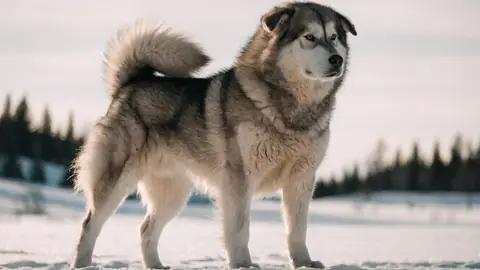 Alaskan MalamuteSix Indian sources, six different prices, and one tape measure that settles which breed you are actually buying.
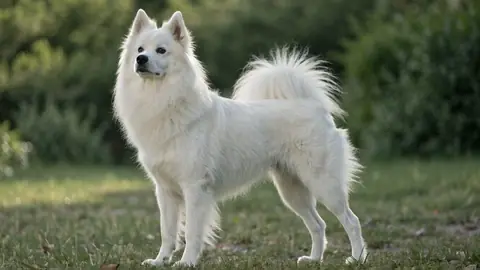 American Eskimo DogThe fourth white spitz in India's white spitz problem. What the American Eskimo Dog actually is, the three registry size bands...
 Chow ChowWhat a Chow Chow costs in India, why Bonbeno rates it 1 of 5 for heat tolerance, and what the largest study of heat-related...
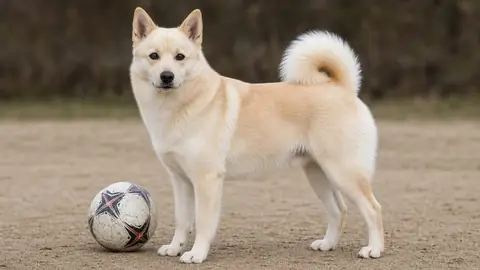 Danish SpitzDenmark's rebuilt farm spitz, recognised at home and by the Nordic Kennel Union but not by the FCI, measured against Indian heat...
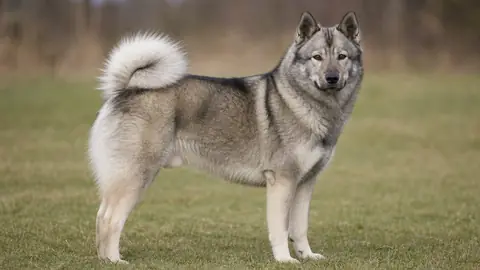 EurasierOne breed, three founder breeds, a dated paper trail, and a clause of Indian law that would have made the whole project illegal...
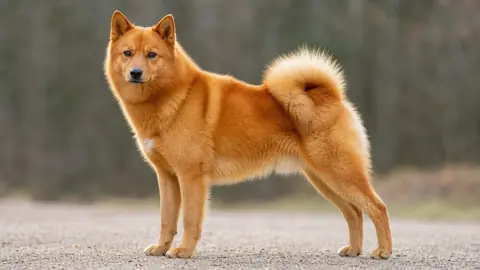 Finnish SpitzFinland's national dog since 1979, bred to find a grouse in a tree and bark at it until the hunter arrives, measured against...
 German SpitzOne dog, three registries, three different size tables. Here is what the FCI, the Kennel Club and the AKC each actually say, and...
 HokkaidoA designated natural monument since 1937, recorded at 24 dogs by the Japan Kennel Club and 11 by NIPPO in 2025, counted properly...
 Indian SpitzThe breed India built for itself. Cheaper than almost anything else, genuinely suited to a hot climate, one of the healthiest...
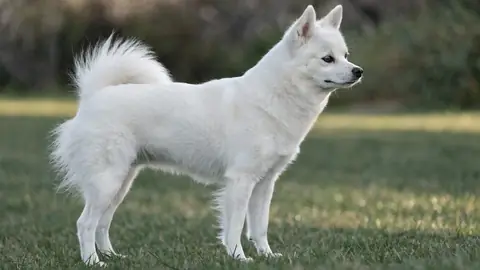 Japanese SpitzWhat a Japanese Spitz actually costs in India, how to tell one from an Indian Spitz, a Pomeranian, a Samoyed and an American...
 JindoSouth Korea's national dog, Natural Monument No. 53 since 1962, and the one breed on this site whose home country makes it a...
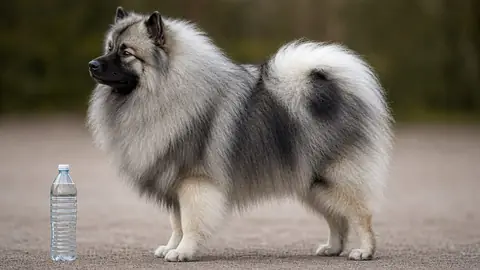 KeeshondSearch the FCI register for Keeshond and you get nothing. The dog is there, filed under a German name inside another breed's...
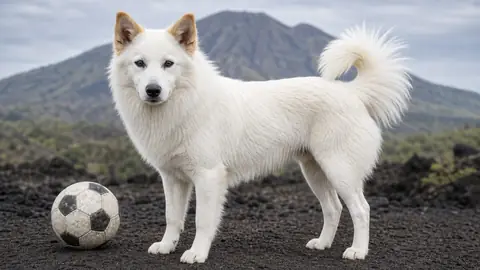 KintamaniBali's village dog, formalised into Indonesia's first internationally recognised breed in 2019, and genetically identical to the...
 KishuJapan's white boar hound from Wakayama, a designated natural monument since May 1934, recorded at 132 registrations in 2025 by...
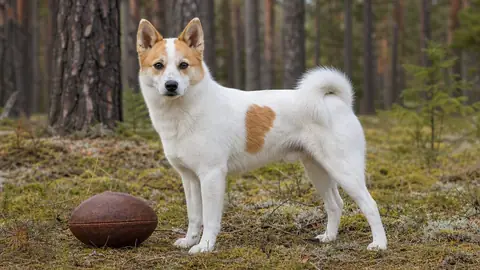 NorrbottenspetsA small Swedish hunting spitz that the Swedish Kennel Club declared extinct in 1948 and re-registered in 1967, now more numerous...
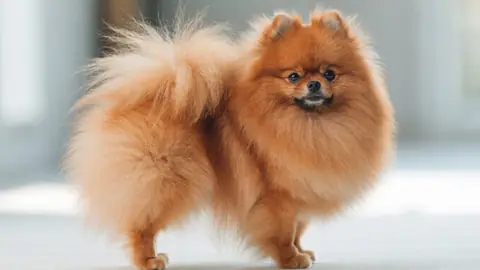 PomeranianWhat a Pomeranian actually costs in India, how to tell a real one from the Indian Spitz that is routinely sold under its name,...
 SamoyedWhat a Samoyed costs in India, why Bonbeno rates heat tolerance 1 of 5, the diabetes and kidney findings no Indian page reports,...
 Shiba InuWhat a Shiba Inu costs in India, why almost every one of them is imported under a two-year residence rule, what the Japanese...
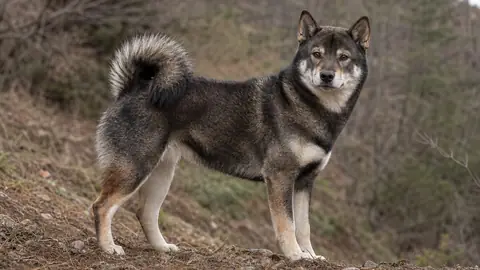 ShikokuA Japanese boar hound that the national register still files under a name the breed dropped in 1939, and that no Indian seller...
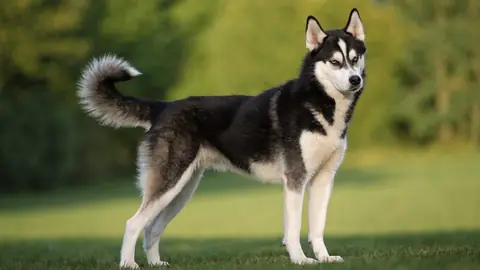 Siberian HuskyWhat a Siberian Husky costs in India, why the breed is rated 1 of 5 for heat tolerance, what the veterinary evidence actually...
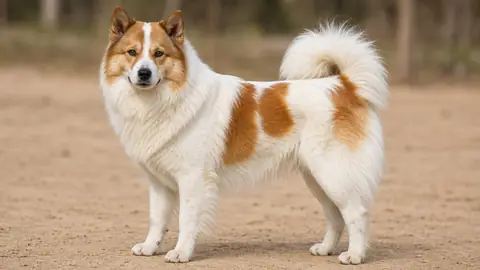 Thai Bangkaew DogA thickly coated white spitz from a Thai province whose April is hotter than a Chennai May, and the only breed in this group...
 Tibetan MastiffWhat a Tibetan Mastiff costs in India, where the 20 crore and 50 crore stories actually came from, what happened to the Chinese...
Compare the breeds side by side
To compare these 24 breeds directly, read across the table rather than down the guides. Heat tolerance is a Bonbeno rating out of 5 for Indian conditions, and the reasoning behind each one sits on the breed's own page.
| Breed | Heat tolerance | Published price, India |
|---|---|---|
| Akita | 1 of 5 | Rs 45,000 to Rs 1,80,000 and above |
| Alaskan Klee Kai | 3 of 5 | Rs 4,50,000 to Rs 8,50,000, unverifiable |
| Alaskan Malamute | 1 of 5 | Rs 35,000 to Rs 4,50,000 |
| American Eskimo Dog | 2 of 5 | Rs 20,000 to Rs 60,000, listing pages only |
| Chow Chow | 1 of 5 | Rs 25,000 to Rs 2,50,000 |
| Danish Spitz | 1 of 5 | See page |
| Eurasier | 1 of 5 | Rs 60,000 to Rs 80,000, one unsourced page |
| Finnish Spitz | 1 of 5 | See page |
| German Spitz | 2 of 5 | Rs 2,999 to Rs 40,000, all on social platforms, none on an indexed retail page |
| Hokkaido | 2 of 5 | None. No Indian breeder, listing or rescue found |
| Indian Spitz | 4 of 5 | Rs 3,000 to Rs 15,000 |
| Japanese Spitz | 2 of 5 | Rs 15,000 to Rs 50,000 |
| Jindo | 3 of 5 | None. No Indian breeder, listing or rescue found, on a controlled search |
| Keeshond | 1 of 5 | See page |
| Kintamani | 3 of 5 | Rp 200,000 to Rp 300,000, converted by the paper to US$14.20 |
| Kishu | 2 of 5 | None. No Indian breeder, listing or rescue found with a working control |
| Norrbottenspets | 1 of 5 | See page |
| Pomeranian | 2 of 5 | Rs 5,000 to Rs 80,000 |
| Samoyed | 1 of 5 | Rs 45,000 |
| Shiba Inu | 2 of 5 | Rs 40,000 to Rs 6,00,000 plus |
| Shikoku | 2 of 5 | None. The one Indian figure is a template row shared with another breed |
| Siberian Husky | 1 of 5 | Rs 20,000 to Rs 1,50,000 |
| Thai Bangkaew Dog | 3 of 5 | None. Even the template farms return a not-found page |
| Tibetan Mastiff | 1 of 5 | Rs 25,000 to Rs 10,00,000+ |
What matters in this group
The points below are what the evidence on these 24 guides actually supports, not what the category is assumed to mean.
- The Pomeranian and Indian Spitz confusion is the costliest. An adult Pomeranian weighs 1.4 to 3.2 kg and stands 18 to 24 cm; a Lesser Indian Spitz stands 22 to 25 cm and a Greater 35 to 45 cm. The FCI muzzle-to-skull ratio rules a Pomeranian in or out at eight weeks, when weight tells you nothing.
- That test has a limit worth stating: it separates a Pomeranian from the rest, but not a Japanese Spitz from an Indian Spitz, since both descend from long-muzzled German Spitz stock. There the height ladder and the pure white coat requirement do the work.
- On climate this group divides sharply. The Indian Spitz rates 4 of 5 for heat tolerance. The Chow Chow carries the highest heat-illness odds of any breed in the largest study available, and the Samoyed and Husky are not far behind on coat alone.
Membership is generated from the breed data itself, not typed by hand, so this list cannot drift from the guides it points at and fills in as more publish. The 24 guides here cite 818 sources between them.
This page is a directory of published Bonbeno guides, generated from their data rather than written as clinical guidance, so no veterinarian reviewed this page itself. Each linked guide carries its own veterinary review and its own health sections. Breed level evidence describes populations, and your animal is an individual, so consult your nearby vet before acting on anything you read here.
Common questions
How does Bonbeno decide which breeds belong on this page?
Membership is generated from each breed's own published data rather than chosen by an editor. The group is defined by a shared trait rather than a rating, so its members are named in the site's own cluster definition and each one is checked against the published guide before it appears. A breed appears here the moment its guide publishes and meets that rule, and never before, which is why no link on this page can point at a guide that does not exist.
What is a Bonbeno heat tolerance rating?
It is a 1 to 5 rating of how well a breed copes with Indian conditions, where 5 is best. Almost no international breed reference publishes one, and in a country where summer temperatures pass 45 C it is the most decision-relevant trait there is. It is Bonbeno's own judgement, built from published heat-illness evidence where that exists and stated as inference where it does not.
Are the prices on this page current?
Each price is read from that breed's own guide, where it is compared across published Indian sources and cited. Published Indian breed prices disagree widely between sellers, sometimes by more than a lakh for the same breed, so treat the figure here as the lowest band Bonbeno found and read the guide for the full range.
Does Bonbeno sell or broker any of these dogs?
No. Bonbeno does not sell pet food, products or animals and does not broker puppy or kitten sales. Nothing on this page is a listing, and no breeder or seller can pay to appear on it.