
Dog breed profile
Alaskan Malamute in India: Price, Heat Tolerance and Full Breed Guide
Six Indian sources, six different prices, and one tape measure that settles which breed you are actually buying.
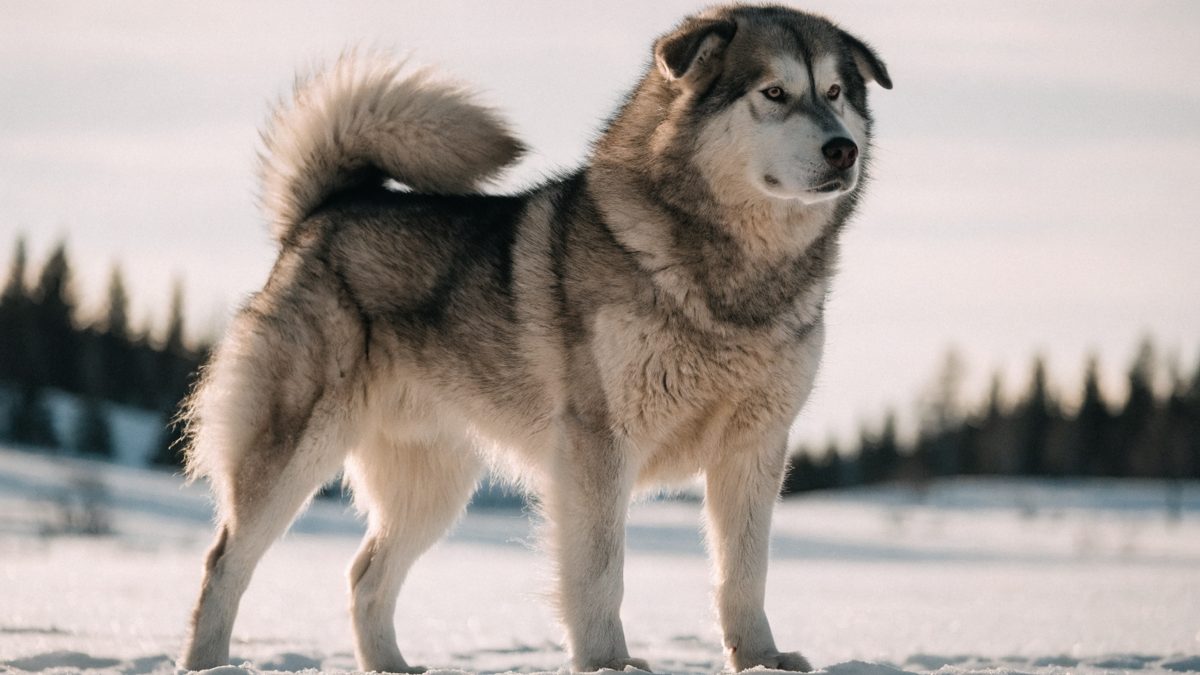
Quick answer
The alaskan malamute price in india runs Rs 35,000 to Rs 4,50,000 in 2026, a thirteen-fold spread across six published sources. Bonbeno rates the breed 1 of 5 for heat tolerance, its lowest rating. A male stands 25 inches and weighs 85 pounds at the desirable freighting size, and that measurement is what separates a Malamute from a Siberian Husky at the kennel gate.
This guide is general information for Indian pet owners and is not a diagnosis. Consult your nearby vet, a registered veterinarian who has examined your dog, before acting on anything you read here, and treat heat collapse, sudden hind-limb weakness or a voice change in a Malamute as urgent.
Alaskan Malamute at a glance
What an Alaskan Malamute is
The Alaskan Malamute is an Arctic freighting dog, bred by the Mahlemut people of Alaska to haul heavy loads over short distances rather than to race. The breed standard states the purpose plainly: the Malamute is structured for strength and endurance, and any characteristic that interferes with heavy freighting in the Arctic is to be treated as the most serious of faults. Every practical fact on this page follows from that one sentence.
Under the AKC standard the desirable freighting sizes are males 25 inches at the shoulders and 85 pounds, females 23 inches and 75 pounds. FCI-Standard No 243, published 10 March 2023, gives the same figures in metric: males 63.5 cm and 38 kg, females 58.5 cm and 34 kg. The AKC breed listing puts life expectancy at 10 to 14 years. The Royal Kennel Club in the UK, which uses bands rather than numbers, lists the breed as large, lifespan over 10 years, and suited to a large house in the country with a large garden.
| Attribute | Male | Female |
|---|---|---|
| Height at withers, desirable freighting size | 25 in / 63.5 cm | 23 in / 58.5 cm |
| Weight, desirable freighting size | 85 lb / 38 kg | 75 lb / 34 kg |
| Undercoat depth | 1 to 2 in, oily and woolly | 1 to 2 in, oily and woolly |
| Eye colour | Brown. Blue eyes disqualify | Brown. Blue eyes disqualify |
| Tail | Waving plume carried over the back | Waving plume carried over the back |
| Life expectancy | 10 to 14 years | 10 to 14 years |
The coat, described exactly
The Malamute carries a thick, coarse guard coat, never long and soft, over an undercoat that is dense, one to two inches deep, oily and woolly. The guard coat is relatively short to medium along the sides and lengthens around the shoulders and neck, down the back, over the rump, and in the breeching and plume. Read that as a specification and it describes an insulating jacket that is thickest exactly where a dog sheds heat least efficiently. The standard adds one line that Indian buyers should read twice: Malamutes usually have a shorter and less dense coat during the summer months. The breed's own answer to warm weather is a seasonal moult, and a moult is triggered by a seasonal swing this dog will not reliably get in Chennai or Mumbai.
Coat colour, and what is not a premium
Recognised coat colour runs from light grey through intermediate shadings to black, sable and shadings of sable to red, and the only solid colour allowed is all white. White is always predominant on the underbody, parts of the legs, the feet and part of the face markings. Broken colours splashing unevenly over the body are undesirable. Indian sellers routinely list six colours including seal, sable and solid white and price them differently by shade. No registry treats a permitted colour as more correct than another permitted colour, so a colour premium is a sales device, not a standard.
Blue eyes are a disqualifying fault in the Alaskan Malamute under both the AKC and the FCI standards Federation Cynologique Internationale, and blue eyes are permitted in the Siberian Husky. A blue-eyed dog offered to you as a purebred Malamute is not one, whatever the paperwork says. This costs nothing to check and it is the single most useful thing on this page.
History, in three facts
The breed takes its name from the Mahlemut people, nomadic Inuit who developed it to pull heavy loads over long distances, and it is the strongest of the sled dogs. The dogs lived with the Mahlemut as part of the family and hunted and carried packs as well as pulling sleds. The breed was nearly lost during the Alaska gold rush, when demand for working dogs led people to cross outside breeds with the native dogs; the Mahlemut lived remotely enough that their lines stayed relatively pure and became the foundation stock. Even the insides of the ears are furred, which is a detail worth holding onto when you reach the climate section.
Alaskan Malamute price in India
The Alaskan Malamute price in india runs from Rs 35,000 to Rs 4,50,000 and above in 2026, depending entirely on which published source you read. That is a spread of roughly thirteen times for the same breed in the same country in the same year, and it is the most important fact on this page.
Bonbeno compared the bands published by six Indian sources that rank on page one for this query, five of them sellers and one an editorial price list. They do not agree with each other, and the disagreement is not a rounding difference.
| Source | Published band | What the source says it covers |
|---|---|---|
| The Barking Babies | Rs 35,000 to Rs 85,000 | Delhi NCR, KCI lineage said to be available depending on litter |
| Asia Pets | Rs 40,000 to Rs 1,00,000 | All India, breed information page |
| Premium Pet House | Rs 45,000 to Rs 1,50,000 | All India average, with a city-by-city table |
| Supertails | Rs 60,000 to Rs 2,00,000 | Editorial list, compiled from breeder networks, KCI data and marketplace surveys in Q1 2026 |
| Puppiezo | Rs 1,40,000 stated, Rs 3,09,999 to Rs 3,19,999 listed | Delhi NCR, live listings for two 8-week puppies |
| Mr n Mrs Pet | Rs 1,50,000 to Rs 4,50,000 and above | All India, split into Basic, KCI Registered and Champion Bloodline |
Set the two ends beside each other and the problem is obvious. The Barking Babies' most expensive Delhi puppy, at Rs 85,000, costs less than half of Mr n Mrs Pet's cheapest Basic-quality puppy, at Rs 1,50,000 Mr n Mrs Pet, Alaskan Malamute Puppies…. Both pages describe an Alaskan Malamute puppy, in India, in 2026, with KCI paperwork mentioned. One of those numbers is describing something other than what it claims to describe, and no ranking page tells you which.
The tiering that drives the top end
Mr n Mrs Pet publishes the only tiered breakdown on the first page, and the tiers are worth reading as a set because they show where Indian pricing logic actually sits.
| Tier | Published band | Stated basis |
|---|---|---|
| Basic | Rs 1,50,000 to Rs 2,50,000 | Family companion, no show or breeding rights |
| KCI Registered | Rs 2,50,000 to Rs 3,50,000 | Kennel Club of India certification, verified lineage, vaccinations, vet health check |
| Champion Bloodline | Rs 3,50,000 to Rs 4,50,000 | From imported or award-winning parents |
The Champion Bloodline tier is the one to interrogate, because it rests on the word imported. Indian import policy classifies dogs under ITC (HS) 01061900 as Restricted, and permits entry only for a pet dog with a valid pet book and records in the importer's own name, for R and D organisations with a CPCSEA recommendation, or for internal security by the Defence and Police Force. The same trade notice states that import of commercial dogs for breeding or any other commercial activity is not permitted, and that applications made for trading or breeding purposes, or on behalf of another person or entity, shall be duly rejected. A lawful route to imported parentage therefore exists, but it is narrow: a person genuinely relocating to India with their own dog. Ask which of the permitted routes the import used, and ask to see the DGFT authorisation. That question costs nothing and a seller who cannot answer it has told you something.
City-by-city, from the only source that publishes one
Premium Pet House is the single ranking page carrying a city table, so Bonbeno reproduces it as that source's claim rather than as a market rate. Supertails, separately, reports that city-wise dog prices in India vary by 15 to 30 percent and that Mumbai and Delhi are the most expensive markets.
| City | Published band |
|---|---|
| Mumbai | Rs 60,000 to Rs 1,70,000 |
| Bangalore | Rs 60,000 to Rs 1,70,000 |
| Delhi | Rs 60,000 to Rs 1,50,000 |
| Pune | Rs 50,000 to Rs 1,50,000 |
| Hyderabad | Rs 45,000 to Rs 1,50,000 |
| Chennai | Rs 45,000 to Rs 1,50,000 |
| Kolkata | Rs 45,000 to Rs 1,50,000 |
| Ahmedabad | Rs 45,000 to Rs 1,45,000 |
Why the bottom of the range should worry you most
The cheapest published Malamute band in India sits inside the published Siberian Husky band. Supertails, in one table compiled on one day by one author, quotes the Siberian Husky at Rs 40,000 to Rs 1,50,000 and the Alaskan Malamute at Rs 60,000 to Rs 2,00,000. The Barking Babies quotes Malamutes in Delhi at Rs 35,000 to Rs 85,000, which is below the Husky floor from the same reference table. A puppy price under Rs 60,000 for a Malamute in an Indian metro is therefore not a bargain on a Malamute. It is the price of a Husky, and the two breeds are sold by the same shops, side by side, on the same pages. Take the measurements in the comparison section to the kennel before you take the money.
Puppiezo's page metadata states an Alaskan Malamute price in india of Rs 1,40,000, while the two live puppies listed on the same page carry prices of Rs 3,19,999 and Rs 3,09,999. That is a gap of more than Rs 1,70,000 between what a page advertises and what it charges, inside one document. Whatever number a listing headlines, ask for the price of the actual puppy in front of you, in writing.
Bonbeno does not broker puppy sales, does not publish breeder listings and does not recommend sellers. The bands above are reported from third-party sources so an Indian buyer can see the disagreement rather than inherit one seller's number.
Monthly cost of owning an Alaskan Malamute in India
The monthly cost of an Alaskan Malamute in India is dominated by two lines a Labrador owner never pays, which are cooling and grooming a double coat in humidity. Purchase price is a single payment. A Malamute at 34 to 38 kg eats, sheds and needs climate control for ten to fourteen years American Kennel Club.
What the Indian sources publish
Only two ranking sources publish running costs at all, and they disagree in the usual direction. Premium Pet House puts feeding at Rs 3,000 to Rs 5,000 a month, professional grooming at Rs 2,000 to Rs 5,000 a visit with a home kit under Rs 2,000, obedience and socialisation training at Rs 5,000 to Rs 10,000 a month, and advises setting aside Rs 5,000 to Rs 15,000 a year for veterinary expenses. Supertails, covering all breeds rather than this one, reports urban Indian households spending Rs 5,000 or more a month and puts monthly upkeep across breeds at Rs 3,000 to Rs 18,000 depending on size and grooming needs.
| Line item | Published figure | Bonbeno note |
|---|---|---|
| Food | Rs 3,000 to Rs 5,000 a month | Quoted for a 34 to 45 kg dog. Verify against the actual bag weight your dog gets through |
| Professional grooming | Rs 2,000 to Rs 5,000 per visit | The UK Kennel Club rates this breed as needing grooming every day, so salon visits sit on top of daily home work |
| Home grooming kit | Under Rs 2,000 | A one-off. A forced-air dryer for a woolly undercoat in a humid city is not included |
| Training | Rs 5,000 to Rs 10,000 a month | The same page calls the breed stubborn and not ideal for first-time owners, which makes this line closer to mandatory than optional |
| Veterinary | Rs 5,000 to Rs 15,000 a year | Routine care only. Carries no provision for hip dysplasia, which affects 11.8 percent of OFA-evaluated Malamutes |
| Cooling | Not published by any ranking source | The largest omission on every Indian Malamute page |
The cost nobody prints
Not one Indian page ranking for this query puts a number on cooling, yet two of them concede it is compulsory. The Barking Babies states that air-conditioned cooling is essential during Delhi summers because of the thick double coat, and lists a hot home without reliable cooling as a reason to reconsider the breed. Asia Pets lists not for hot climates as a con and states that air conditioning and cool environments are essential. Neither converts that into rupees. Bonbeno will not invent the figure either, because it depends on your city, your tariff slab and how many hours a day the room runs. What we will say is the shape of it: this is a fixed, non-negotiable, eight-months-of-the-year electricity line for a dog whose insulating undercoat is one to two inches deep, and any budget that omits it is wrong by more than the food bill.
When Bonbeno publishes a monthly cost figure we state the sample size, the cities covered and the collection date. We have no verified Indian owner-cost survey for the Alaskan Malamute, because the resident population is small. Rather than average two seller estimates into a false average, this section reports each source separately and names the line item nobody has costed.
The one-time costs a first-year budget misses
- Screening you should pay for before purchase. The parents' hip and eye results, plus DNA status for the three Malamute-specific conditions, cost the breeder money and should be reflected in the price rather than skipped.
- Cooling hardware. An air conditioner or a reliable cool room is a purchase, not a running cost, and it comes before the puppy.
- A forced-air dryer. A woolly undercoat that stays damp in a humid city is how hot spots start, and towel-drying a 38 kg double coat does not finish the job.
- Professional training from month two. Budgeted late, this becomes remedial work on a 38 kg powerful dog instead of shaping on a 10 kg puppy.
- Microchipping and paperwork. Indian breeding rules run on micro-chip numbers, and the sale register a registered breeder keeps records the micro-chip number, age, vaccination status and sale amount for every pup sold.
Can an Alaskan Malamute handle the Indian climate
Bonbeno rates the Alaskan Malamute 1 of 5 for heat tolerance, the lowest rating this site gives, level with the Siberian Husky and the Samoyed. The rating is mechanical rather than moral, and it rests on four measurable things: the depth of the undercoat, the mass of the dog, the way the breed is built to work, and one 1981 study of sled dogs that shows what actually drives their body temperature.
One, the coat is a specified insulator
The undercoat is dense, one to two inches deep, oily and woolly, sitting under a coarse guard coat whose stated job is to protect it. Both registries describe the same structure and the FCI repeats it word for word. Even the insides of the ears are furred. A dog loses heat through its skin surface and through evaporation from the respiratory tract, and one to two inches of oily wool is a deliberate barrier across the first of those two routes. Purina India names dogs with heavy coats among the breeds at particular heat stroke risk.
Two, the mass works against it
A Malamute at its desirable freighting size weighs 34 to 38 kg, roughly one and a half times a Siberian Husky, whose standard puts males at 45 to 60 pounds and females at 35 to 50. Heat production scales with body mass while the skin area available to shed it scales more slowly, so the larger Arctic dog is the worse-off one at the same air temperature. The largest primary-care study of canine heat-related illness, covering 905,543 UK dogs, found bodyweight above 50 kg and bodyweight high relative to the breed and sex mean among the significant risk factors. A Malamute is under 50 kg at standard weigh-in, so Bonbeno does not claim that finding covers the breed. What it does establish is direction: within any breed, the heavier individual is at higher risk, and a Malamute allowed to run heavy in an Indian summer is stacking a modifiable risk on an unmodifiable one.
Three, the study that changes how you should schedule the day
Twenty-two adult sled dogs selectively bred for high-speed racing were studied under normal working conditions. Rectal temperature rose significantly during the first 15 to 20 minutes of a run and then usually stabilised or fell slightly. The critical finding is what the rise compared with: the amount of increase in rectal temperature was correlated directly with ambient temperature, but not with speed or distance. Training significantly reduced the rise, and differences between individual dogs were not explained by sex, size, coat colour, weight or genetic history.
If air temperature sets how hot a working northern dog gets, and speed and distance do not, then walking a Malamute slowly at 2 pm is not a safer version of walking it fast at 2 pm. It is the same exposure at a lower reward. The variable you control is the clock, not the pace. Shift the whole session to before 7 am and after 8 pm and you have changed the one input that the evidence says matters.
Four, humidity removes the remaining escape route
A dog that cannot dump heat through insulated skin is left with panting, which is evaporative and therefore works badly in humid air. Purina India lists excessive humidity as a factor that increases heat stroke risk, alongside lack of water, enclosed space, obesity, intense exercise, old age and lack of acclimatisation. Two of those apply to almost every Indian Malamute by definition. The dog is not acclimatised, because no Indian-born Arctic dog gets the seasonal cold that triggers the shorter summer coat the standard describes. And a coastal city like Mumbai or Chennai is the worst case, because the same air temperature is more dangerous when panting is less effective.
| City type | Dominant problem | What has to change |
|---|---|---|
| Coastal and humid (Mumbai, Chennai, Kochi) | Panting works poorly, so the last cooling route is throttled | Air-conditioned rest space is not optional. Exercise only in darkness |
| Hot and dry inland (Delhi, Jaipur, Nagpur) | Peak ambient temperature is the hazard, per the sled-dog finding | Hard clock discipline. Pavement check before every walk |
| Milder plateau (Bengaluru, Pune) | Long warm season rather than extreme peaks | Still a cool room. The problem is duration, not intensity |
| Hill stations and the north (Shimla, Gangtok, Srinagar) | The only Indian settings the coat was built for | Winter is genuinely comfortable. Summer still needs management |
Recognising heat stroke, and the first four minutes
Watch for severe panting, difficulty breathing, severe salivating, vomiting, diarrhoea, a raised temperature of 40.5 C or above, blood in the urine, nose bleeds and ultimately collapse and coma. Vigorous exercise in hot weather can produce heat stroke in as little as 30 minutes. If you suspect it, move the dog into shade or air conditioning, spray or sponge cool but not cold water so it reaches the skin rather than running off the coat, wet the belly and inside the legs thoroughly, use a fan, and do not plunge the dog into an ice bath because that prevents the core temperature falling. Stop cooling at 39.4 C to avoid chilling, dry gently, and get to a vet.
Both are double-coated Arctic dogs, but the Malamute's guard coat lengthens over the shoulders, neck, back, rump, breeching and plume, while the Siberian's coat is described as the same length over the entire body American Kennel Club. Longer coat over the spine and rump is more insulation over the largest flat surface the dog has. That is why Bonbeno does not rate the Malamute above the Husky on heat despite its calmer working style. Consult your nearby vet before any summer plan for a heavy-coated dog, and treat collapse as an emergency rather than a wait-and-see.
Temperament and household fit
The Alaskan Malamute is an affectionate, friendly dog and explicitly not a one-man dog, according to both breed standards, which describe a loyal, devoted companion, playful in invitation but impressive by its dignity after maturity. Read that carefully, because it rules out the single most common reason Indians buy this breed.
The guard-dog claim is wrong, and the standard says so
Premium Pet House tells Indian buyers that, unlike Siberian Huskies, Alaskan Malamutes make great guard dogs and that their size can intimidate intruders. The breed standards say the opposite thing about the underlying temperament: an affectionate, friendly dog, not a one-man dog, whose expression is soft and indicates an affectionate disposition. The AKC's own judges-education source for the breed describes Malamutes as loving all of their people rather than one, and being most motivated when food is involved. A large dog can deter by appearance. That is not the same as a guard dog, and buying 38 kg of Arctic freighting dog for security in a hot country is the wrong purchase for the wrong reason.
The real household constraint is other dogs, not people
The AKC's Malamute judges-education chair advises puppy buyers who already own a dog to choose a Malamute of the opposite sex, because as much as they love people they are not always so good with other dogs of the same sex. Asia Pets, independently, rates the breed 3 of 5 with strangers and only 2 of 5 with other pets, and lists a strong prey drive among its considerations. For an Indian apartment block with a shared lift, a shared lobby and a resident community of dogs, that is the constraint that will actually shape your day.
| Household | Verdict | Why |
|---|---|---|
| Hill-station home with a garden and a cool indoor space | Good fit | The only Indian setting where the coat is an asset rather than a liability |
| Metro flat with reliable air conditioning and an adult at home | Workable, with effort | Needs more than two hours of exercise a day, all of it outside daylight |
| Household that already owns a same-sex dog | Poor fit | Same-sex tolerance is the breed's documented weak point |
| Home with cats, rabbits or free-roaming birds | Poor fit | Strong prey drive is listed as a breed consideration |
| Buyer who wants a security dog | Wrong breed | The standard describes an affectionate, friendly, non-one-man dog |
| First-time owner with no help | Poor fit | Two ranking Indian sources independently say the breed is not ideal for first-time owners The Barking Babies |
Noise, and what Indian neighbours will actually hear
Malamutes are usually quiet and many sing a woo woo sound when it is time to eat, run or play. Premium Pet House says the same thing from the seller side, that they are not incessant barkers but are talkative. In a dense Indian housing society this is a smaller problem than a barker but a larger one than silence, and it peaks at exactly the hours you will be exercising the dog, which are early morning and late night.
The breed also digs. Premium Pet House describes digging as instinctual and states there is no way to prevent it, recommending a sandbox or restricting yard access. In a flat this redirects onto flooring and furniture, which is why the exercise section is not optional reading.
Training an Alaskan Malamute
To train an Alaskan Malamute, start at eight weeks, use food, and accept that you are shaping an independent working dog rather than programming a biddable one. Malamutes are most motivated when food is involved, and every Indian source that sells them warns that they are stubborn and difficult for first-time owners.
What this breed genuinely resists
- Repetition without payoff. A freighting dog selected for tireless work is not selected for enjoying drills. Keep sessions short, pay well, and stop while the dog still wants more.
- Correction-based handling. Premium Pet House frames the training problem as stubbornness that gets worse with age and advises training young. That advice is right, and the reason harsh methods fail here is size: at 38 kg you cannot win a physical argument you started.
- Off-lead reliability near other dogs. Same-sex intolerance is the documented weak point, and a recall that works in an empty park is not a recall that works past a resident street dog.
- Loose-lead walking, if left late. A dog bred to pull heavy loads pulls. This is the one skill where starting in month two rather than month eight changes the outcome entirely.
- Being left alone. Separation problems are reported for the breed by Indian sellers who otherwise talk it up, which makes the warning more credible rather than less.
Realistic timelines for an Indian household
| Skill | Start | Reliable by |
|---|---|---|
| Name response and hand-feeding | Week 1 home | 3 to 4 weeks |
| Sit, down, settle on a mat | Week 1 home | 4 to 8 weeks |
| Toilet routine | Week 1 home | 4 to 6 months |
| Accepting full-body grooming and a dryer | Week 1 home | 3 to 4 months |
| Loose-lead walking | Month 2 | 9 to 14 months |
| Calm passing of another dog on lead | Month 2 | 12 to 18 months |
| Recall off-lead in a fenced space | Month 3 | Treat as never fully reliable |
Two of those rows are unusual and both are Indian-specific. Grooming tolerance is on the list because a Malamute that fights the brush at 10 kg is unmanageable at 38 kg, and the UK Kennel Club rates this breed as needing grooming every day. Passing another dog calmly on lead is on the list because Indian walking routes are shared with free-roaming dogs in a way that UK and US training advice does not account for.
Teach three things in the first six months that are specifically about heat. First, going indoors on cue, so you can end a walk early. Second, standing still to be sponged with water on the belly and inside the legs, which is the correct cool-down technique. Third, drinking on offer. A dog that resists all three is a dog you cannot help quickly on the day it matters.
One genuine advantage over the Siberian Husky is worth recording. The AKC's Malamute source reports being told that if you let both breeds loose in a yard, the Malamutes come back to the door to be with their people while the Siberians are still looking for a way out. Malamutes share the love of running without the same escape risk. That is a real difference in day-to-day management, and it is one of the few places where the Malamute is the easier of the two.
How much exercise an Alaskan Malamute actually needs
An adult Alaskan Malamute needs more than two hours of exercise a day, which is the UK Kennel Club's published rating for the breed. In India that entire requirement has to fit into darkness for roughly eight months of the year, which is the practical reason most Indian Malamutes are under-exercised rather than any failure of intent.
Indian sources put the figure lower and disagree with each other. Premium Pet House says at least a couple of hours of walking every day plus physical activity throughout the day. Puppiezo's breed panel says 1 to 2 hours daily. The Barking Babies asks for 1 to 2 hours of vigorous exercise. Bonbeno takes the UK Kennel Club's more than two hours as the working figure, because it is the only one issued by a registry rather than a seller and because it matches what the breed standard describes the dog as built to do American Kennel Club.
The Indian timetable problem, stated as arithmetic
More than two hours a day, split either side of daylight, means roughly 70 minutes before about 7 am and 70 minutes after about 8 pm, every day, for ten to fourteen years. That is the actual commitment. It is not reduced by living in Bengaluru rather than Delhi, because the evidence says ambient temperature sets the thermal load and a mild city simply has a longer warm season rather than a safer afternoon.
| Stage | Formal exercise | Indian constraint |
|---|---|---|
| 8 to 12 weeks | Very short sessions, several a day | Growth plates open. Garden and indoor play only |
| 3 to 6 months | Build gradually, keep it low impact | Fastest growth phase. No stairs work, no jogging |
| 6 to 12 months | Building toward adult load | Adolescence. Lead work matters more than distance |
| 12 to 18 months | Approaching adult load | Coat is fully developed by now |
| Adult, 18 months plus | More than 2 hours total | All of it before 7 am and after 8 pm for most of the year |
| Senior | Shorter, gentler, more frequent | Old age is itself a heat-stroke risk factor |
What counts when you cannot use the day
- Weight-pull and drag work, done cool. This breed was built to move heavy loads over short distances, and a short, correctly fitted pulling session satisfies more of the dog than twice the walking distance.
- Scent work indoors. Twenty minutes of nose work in an air-conditioned room is the highest-value activity available during an Indian summer afternoon.
- Swimming, where clean water exists. Low impact, and it removes the thermal problem instead of managing it.
- Training sessions as exercise. Food-motivated dogs bank real fatigue from short shaping sessions.
- Pavement check every single time. Hold your palm on the surface for five seconds. If you cannot, neither can paw pads.
Digging is described as instinctual in this breed and impossible to stop, surfacing whenever the dog is bored. A Malamute that is not getting its two hours does not become calm. It becomes a 38 kg dog that excavates your flooring at 3 am, and the honest fix is exercise rather than correction.
Grooming an Alaskan Malamute in Indian humidity
To groom an Alaskan Malamute in India, brush the whole coat down to the skin every day, dry it completely after every wash, and never shave it. The UK Kennel Club publishes the breed's grooming requirement as Every day, its highest band, alongside coat length Medium and Sheds Yes. That daily figure was written for a British climate. In an Indian one the same coat has a second job, which is staying dry.
What you are actually brushing
You are brushing two coats, not one. The guard coat is thick and coarse, never long and soft, and its stated function is to protect the undercoat beneath it; that undercoat is dense, one to two inches deep, oily and woolly. FCI-Standard No 243 describes the identical structure. The guard coat is relatively short to medium along the sides and lengthens around the shoulders and neck, down the back, over the rump, and in the breeching and plume. Read that as a grooming instruction and it tells you where the work is. The places with the most coat are the shoulders, spine, rump and rear trousers, and those are the places a surface brushing never reaches.
Line-brushing is the technique that matches the structure. Part the coat in a horizontal line, work outward from the skin in that line, then move up an inch and repeat. An undercoat rake reaches the woolly layer, a slicker finishes the guard coat, and a pin brush alone does neither. A dog that is brushed only on top looks groomed and carries a solid mat of packed undercoat underneath, which in a humid city is a trapped, warm, damp layer sitting directly on skin.
Coat blow, and why it misfires in an Indian metro
The breed standard records that Malamutes usually have a shorter and less dense coat during the summer months. That seasonal thinning is the breed's own heat strategy, and it is triggered by the seasonal swing an Arctic dog experiences. A dog living in Chennai, Mumbai or Bengaluru does not get that swing. The practical result reported by owners of Arctic breeds in warm climates is that shedding stops being two heavy annual moults and becomes a lower-grade, year-round process instead.
Bonbeno will not put a number on that, because no published Indian study measures coat turnover in this breed. What the mechanism does justify is a scheduling change. Plan for continuous shedding rather than two predictable blow periods, budget a rake session every day rather than a marathon twice a year, and treat any sudden patch of thinning coat as a skin problem to be examined rather than a moult.
The monsoon is the dangerous season, and there is Indian data on it
Indian skin disease in dogs peaks in the monsoon, and a 2026 hospital survey from Tamil Nadu puts figures on it. Researchers at the Veterinary Clinical Complex, Orathanadu, screened 10,841 canine cases presented between January and December 2025 and diagnosed 1,011 with dermatological disorders, an overall prevalence of 9.32 percent. The seasonal split is the part that matters for a double-coated dog.
| Season | Share of dermatology cases | What it means for a Malamute |
|---|---|---|
| Southwest monsoon | 31.26 percent | Highest risk window. A coat that stays damp is the whole problem |
| Summer | 26.51 percent | Heat plus sweat plus friction under a dense undercoat |
| Northeast monsoon | 25.32 percent | Second wet peak, and the reason drying discipline is year-round |
| Winter | 16.91 percent | The lowest-risk season, and the only one this coat was designed for |
The same study ranks what those dogs actually had. Bacterial dermatitis led at 34.32 percent, followed by demodicosis at 13.55 percent, sarcoptic mange at 10.98 percent, flea allergy dermatitis at 8.31 percent and contact dermatitis at 7.91 percent. Bacterial dermatitis at the top of an Indian caseload is exactly the outcome a permanently damp undercoat invites.
Read the breed table rather than the headline and it says something no seller page will. Across 1,011 affected dogs, mongrels were 50.94 percent, Labrador Retrievers 12.07 percent, German Spitz 7.91 percent and German Shepherd Dogs 7.12 percent, and the only northern breed to appear at all was a Siberian Husky Cross at 0.30 percent. Not one Alaskan Malamute is listed in a 10,841-dog south Indian caseload. That is the clearest available signal of how few of these dogs are genuinely resident in the region, and it is also why no Indian dataset can tell you this breed's local disease rates. The authors note the study is hospital-based and not a community prevalence estimate.
Drying is the step Indian owners skip
Wash rarely and dry completely, because a Malamute's undercoat holds water the way a sponge does. Towel-drying a 38 kg double coat moves surface water and leaves the woolly layer wet for hours, and hours of warm damp against skin is how bacterial dermatitis starts. A forced-air dryer, used at a cool setting and worked in the same lines you brush in, is the single piece of equipment that changes outcomes for this breed in India. Budget it before the puppy arrives, because a dog that has never met a dryer at 10 kg will not accept one at 38 kg.
- Brush daily, to the skin, in lines. Rake first for the undercoat, slicker second for the guard coat, and check the armpits, groin, behind the ears and the breeching every time.
- Bathe only when needed. Frequent bathing strips the oil the standard describes and adds drying cycles you do not need.
- Dry to the skin, every time. Finish with a forced-air dryer on cool, then feel the undercoat at the rump and shoulders before you stop.
- Check paws and pads after every walk. Malamute feet are the snowshoe type with a protective growth of hair between the toes, which traps moisture and grit in an Indian monsoon.
- Keep tick and flea control continuous. Flea allergy dermatitis was 8.31 percent of Indian dermatology cases and mange another 10.98 percent, and both are harder to spot early under a dense coat.
Do not shave the coat, and here is the mechanical reason
Shaving removes the guard coat, whose published job is to protect the woolly undercoat. What it leaves is a thinner, patchier insulating layer with no barrier against direct sun, on a dog whose thermal problem is ambient temperature rather than its own effort. The breed standard states that the Malamute is shown naturally and that trimming is not acceptable except to provide a clean cut appearance of feet, and while a pet dog is not a show dog, the reason behind that line is structural rather than cosmetic.
The honest position is that clipping a double coat does not reliably reduce heat load, does remove sun protection, and often grows back with altered texture. The interventions that do work are the boring ones: air-conditioned rest space, exercise moved out of daylight, water offered constantly, and a coat kept open and dry by daily brushing The Royal Kennel Club (UK). If your dog is scratching, chewing at one spot or losing coat in patches, that is a veterinary problem rather than a grooming one, so consult your nearby vet rather than reaching for the clippers. The same coat problem, in a lighter dog with a shorter guard coat, is covered on Bonbeno's Siberian Husky profile.
Alaskan Malamute health, screening and lifespan
The Alaskan Malamute's four documented health risks are hip dysplasia, inherited eye disease, three breed-specific genetic disorders and, in India, heat. Read on 19 August 2026, the OFA database records 16,160 Alaskan Malamute hip evaluations at 11.7 percent dysplastic and 2,910 eye examinations at 8.8 percent abnormal. Two of the three breed-specific diseases have a DNA test. The most famous one still does not.
Every OFA figure below was taken from the row printed ALASKAN MALAMUTE in OFA's own published statistics tables, matched to its own column header, and read on 19 August 2026. Breed codes on that site are short and a wrong code returns a complete, plausible table for a different breed, so Bonbeno reads the breed name off the returned document rather than trusting a code. Each figure is a proportion of dogs whose owners chose to screen them and submit the result, not a random sample of the breed.
What OFA's database records for this breed
| Screen | Evaluations | Normal | Abnormal or affected |
|---|---|---|---|
| Hips | 16,160 | 87.2 percent | 11.7 percent dysplastic |
| Elbows | 2,068 | 95.9 percent | 4.1 percent |
| Eyes (CAER) | 2,910 | 91.1 percent | 8.8 percent |
| Thyroid | 373 | 86.6 percent | 4.6 percent thyroiditis or hypothyroidism |
| Patella | 172 | 98.3 percent | 1.7 percent |
| Congenital cardiac | 364 | 99.2 percent | 0.8 percent |
| Polyneuropathy (DNA) | 489 | 98.4 percent clear | 0 percent affected, 1.6 percent carriers |
| Cone degeneration (DNA) | 157 | 100 percent clear | 0 percent affected, 0 carriers |
| Primary ciliary dyskinesia (DNA) | 202 | 96.5 percent clear | 0 percent affected, 3.5 percent carriers |
| Degenerative myelopathy (DNA) | 158 | 91.8 percent clear | 3.8 percent at risk, 4.4 percent carriers |
Hips, and the number that actually matters
Hip dysplasia is the breed's largest orthopaedic risk and the figure moves depending on which cohort you look at. Across every Malamute OFA has ever evaluated, 11.7 percent were dysplastic, against 14.2 percent for all breeds combined and 2.3 percent for the Siberian Husky across 22,662 evaluations. So the Malamute screens better than the average dog and roughly five times worse than the northern breed it is most often confused with.
The Alaskan Malamute Club of America publishes the same database cut by birth year, and that view is more useful to a buyer. Dysplastic rates by birth cohort ran 13.5 percent for dogs born up to 1990, 9.3 percent for 1996 to 2000, 10.8 percent for 2011 to 2015, and 8.5 percent for dogs born from 2021 onward. A puppy bought in 2026 comes from the last of those cohorts, not from the lifetime average, which means the honest expectation for a screened modern litter sits nearer 8.5 percent than 11.7 percent.
| Screen | AMCA, 4 August 2024 | OFA, 19 August 2026 | Direction |
|---|---|---|---|
| Hips | 15,913 results, 11.8 percent dysplastic | 16,160 results, 11.7 percent dysplastic | 247 more dogs, essentially flat |
| Elbows | 1,887 results, 4.1 percent abnormal | 2,068 results, 4.1 percent abnormal | Unchanged |
| Eyes | 2,627 results, 8.8 percent abnormal | 2,910 results, 8.8 percent abnormal | Unchanged |
| Polyneuropathy DNA | 408 tested, 2.0 percent carriers | 489 tested, 1.6 percent carriers | More dogs tested, carrier share down |
| Cone degeneration DNA | 110 tested, 0 carriers | 157 tested, 0 carriers | Still no carrier detected |
| Primary ciliary dyskinesia DNA | 137 tested, 3.6 percent carriers | 202 tested, 3.5 percent carriers | Stable |
Two years of new submissions moved almost nothing, which is itself the finding. These are stable, well-characterised rates rather than a moving target, and a seller who quotes you a dramatically different number is not reading a database.
Elbows and eyes, where the Malamute is worse than the Husky
Elbow dysplasia affects 4.1 percent of the 2,068 Alaskan Malamutes OFA has evaluated, against 0.2 percent of 1,711 Siberian Huskies and 12.0 percent across all breeds. The AMCA's health committee kept elbow screening in the recommended rather than required category, noting it was suggested by Dr Jerold Bell on the grounds that a freighting working breed should at least be tracking these statistics. For an Indian buyer the practical point is that an elbow radiograph is a cheap add-on when the dog is already sedated for hips.
Eyes run the other way from most of this breed's numbers. At 8.8 percent abnormal across 2,910 examinations the Malamute sits worse than the 6.6 percent all-breed figure and worse than the Siberian Husky's 7.3 percent. Within OFA's own eye-condition breakdown for the breed, the commonest single finding is persistent pupillary membranes running iris to iris, recorded in 220 of 2,907 dogs, followed by cataract of unknown significance in 144. The AMCA requires eye examination annually rather than once, because an eye clear at two years is not evidence about the same eye at six.
The three Malamute-specific inherited diseases
Three inherited disorders are specific to this breed rather than shared across large dogs, and a buyer should be able to name all three. Two of them have a verified DNA test. One does not, and that one is the breed's most famous disorder.
1. Chondrodysplasia, the dwarfism that still has no DNA test
Chondrodysplasia is a simple autosomal recessive skeletal disorder that occurs primarily in the purebred Alaskan Malamute, and its mode of inheritance was established by mating every combination of clear, carrier and affected animals until 114 puppies had been produced. Affected dogs show excessively shortened front limbs with varying degrees of bowing, especially the radius and ulna, and a topline that slopes from the pelvis down to the withers. The AMCA's own shorthand for the gene is dan, a contraction of dwarfism anemia, because affected dogs also carry an inherited haemolytic anaemia characterised by abnormal red cells called stomatocytes, increased red-cell size, reduced mean corpuscular haemoglobin concentration and an eventual excessive accumulation of copper in the liver.
Diagnosis is radiographic and time-limited. Chondrodysplastic puppies are readily identifiable by radiographs of the carpal joint up to twelve weeks of age, with the distal metaphysis of the ulna distinctly flattened and irregular; after twelve weeks the joint begins to change and radiographs should not be assumed as a definitive diagnosis. Test litters are normally radiographed at four to six weeks.
First, the AMCA's own page states that the club is supporting genetic research programs with the intent of finding a DNA marker, and that whenever this test is available there will no longer be a need for test breeding. Second, the most recent research update published on that page is dated 8 July 2012, reporting that Dr Hannes Lohi's group in Helsinki had identified roughly 30 variants of interest, and that the gene Lohi's team found for dwarfism in Norwegian Elkhounds is not the same gene in this breed. Third, OFA's DNA test list carries entries for CHONDRODYSPLASIA (CDPA) and for CHONDRODYSPLASIA (ITGA10, KBD/NE TYPE), and the Alaskan Malamute appears in neither table. A seller offering you a chondrodysplasia DNA certificate for a Malamute is offering you a test for a different disease in a different breed.
What does exist is the AMCA's Chondrodysplasia Certification Registry, and it is important to read what a certificate actually says. The certificate is not proof that a dog is clear of the gene, only that the calculated probability of it being a carrier is below 6.25 percent. That threshold corresponds to one known carrier appearing as a great-great-great-grandparent. At present, test breeding a suspect Malamute to a chondrodysplastic or to a known carrier remains the only means to be reasonably certain the dog is not a carrier.
2. Polyneuropathy (AMPN), which does have a test
Alaskan Malamute polyneuropathy is an inherited autosomal recessive neuromuscular disease causing peripheral nerve damage, with progressive muscle wasting, weakness and exercise intolerance typically starting between 7 and 18 months of age. The signs owners actually notice are a wobbly bunny-hopping gait in the rear legs, a dog that stops jumping up, a dog that lies down to eat, and a change of voice caused by laryngeal involvement. Merete Fredholm's Scandinavian group identified the cause in 2011 as a G to T mutation in the NDRG1 gene producing a glycine-to-valine substitution Bruun CS, Jaderlund KH, Berendt M, and a DNA test followed in 2012.
OFA's polyneuropathy table lists only three rows, and one of them is the all-breeds total. Of 489 Alaskan Malamutes tested, 98.4 percent were clear, 1.6 percent were carriers and none were affected; the Greyhound is the only other breed listed, at 3.3 percent carriers across 92 dogs. The UK Kennel Club places the AMPN DNA test in its Good Practice tier, the higher of its two screening tiers, alongside prioritising genetic diversity. There is no treatment, so the test is the whole of the management strategy.
3. Cone degeneration, or day blindness
Cone degeneration causes day blindness, an incurable autosomal recessive condition caused by a mutation in the CNGB3 gene in which affected dogs are photophobic and functionally blind in bright light while seeing normally at night. Signs appear once retinal development completes at around seven weeks, and affected puppies bump into objects, refuse to leave shadows during the day, and can be fearful in unfamiliar settings. The condition does not worsen with age and night vision stays normal, so it is manageable rather than fatal. A DNA test identifies clear, carrier and affected dogs, and the UK Kennel Club lists it under Best Practice.
The peer-reviewed literature adds a caveat that no ranking page mentions. In American Malamutes the disorder is associated with a genomic deletion removing the entire CNGB3 gene, but when Seddon and colleagues examined a three-generation Australian Malamute pedigree segregating for day blindness, a non-mutated exon 6 was amplified and sequenced in six of the fifteen clinically affected dogs. Their conclusion was that day blindness shows genetic heterogeneity within the Australian Alaskan Malamute population, which they described as somewhat unexpected given the relatively small effective population size of the breed. In plain terms, a clear CNGB3 result is strong evidence but not an absolute guarantee in every population, and an electroretinogram performed by a veterinary ophthalmologist remains the diagnostic test for a dog that is already showing signs.
Carrier rates, stated honestly
- Chondrodysplasia: no carrier frequency is published. There is no DNA test, so there is no screened population to count, and Bonbeno found no peer-reviewed estimate of carrier frequency in the modern breed.
- Polyneuropathy: 1.6 percent carriers among 489 OFA-tested dogs. That is the only population figure Bonbeno could verify, and it describes dogs whose owners chose to test them rather than a random sample.
- Cone degeneration: zero carriers among 157 OFA-tested dogs. Zero detections in a screened sample of that size does not prove the allele is gone, and the AMCA states that cases still appear from time to time, indicating the gene continues in the current population.
- Primary ciliary dyskinesia: 3.5 percent carriers among 202 tested. The Alaskan Malamute is one of only two breeds OFA lists for this test.
- Degenerative myelopathy: 4.4 percent carriers and 3.8 percent at risk among 158 tested. This one is not breed-specific; the all-breed at-risk share is 13.2 percent across 90,379 dogs.
Thyroid, and why the number needs reading twice
OFA's thyroid table records 86.6 percent normal across 373 Alaskan Malamutes, with 0.5 percent autoimmune thyroiditis, 3.8 percent compensative autoimmune thyroiditis, 0.3 percent idiopathic hypothyroidism and 8.8 percent equivocal. The AMCA health committee flags the interpretation problem itself, noting that the total number of dogs tested is low and that the proportion is likely due to owners testing symptomatic dogs rather than reflecting overall breed prevalence. That is a breed club publishing a caveat against its own headline figure, which is exactly the kind of source a buyer should weight heavily.
Lifespan, measured at 11.3 years in McMillan's Table S3
McMillan 2024 gives the Alaskan Malamute a median survival of 11.3 years, 95 percent CI 11.1 to 11.8, from 842 recorded deaths, at a hazard ratio of 1.35 (1.26 to 1.44) against the crossbred group. That sits below the same study's 11.9 years for large purebreds, 12.5 for medium and 12.7 for small, so the breed is measurably shorter-lived than the average dog rather than merely large. The AKC's 10 to 14 years and the UK Kennel Club's over 10 years are registry bands rather than studies, and the measured median falls in the lower half of the AKC band. This page carried no figure until now because the paper's article text never names the breed, and every per-breed row is published only in Supplementary Table S3.
No Indian lifespan data for the Alaskan Malamute exists at all, and Bonbeno will not invent one. The honest planning assumption for an Indian household is the registry band of 10 to 14 years, adjusted downward by whatever heat exposure you fail to control.
The screening to ask for before you pay
Ask for four pieces of paper, and ask for them on the parents rather than the puppy. The UK Kennel Club's published pre-breeding screening for this breed places genetic diversity and the AMPN DNA test in Good Practice, and the cone degeneration DNA test, elbow testing under the BVA/KC Elbow Dysplasia Scheme, eye testing under the BVA/KC/ISDS Eye Scheme and hip testing under the BVA/KC Hip Dysplasia Scheme in Best Practice.
| Ask for | What a genuine answer looks like | What a non-answer looks like |
|---|---|---|
| Both parents' hip score | An OFA number or a BVA/KC hip score with the dog's registered name | "The parents are healthy" |
| Both parents' elbow score | An OFA elbow grade, ideally taken at the same sedation as the hips | "Elbows are not an issue in this breed" |
| A current eye certificate | A CAER or BVA/KC/ISDS eye examination dated within the last year | A certificate from four years ago |
| AMPN DNA status | Clear, carrier or affected, with the testing laboratory named | "DNA tested" with no condition named |
| Cone degeneration DNA status | A CNGB3 result naming the condition | "Eye tested", which is a different thing |
| Chondrodysplasia status | An AMCA certification number, understood as a probability below 6.25 percent rather than proof of clear | A DNA certificate, which cannot exist for this condition |
None of the inherited conditions above is common. Heat is not a probability, it is a daily condition, and vigorous exercise in hot weather can produce heat stroke in as little as 30 minutes. Treat a Malamute that collapses, pants with difficulty, salivates heavily, vomits or reaches 40.5 C as an emergency. Treat sudden hind-limb weakness or a change of voice as a possible polyneuropathy presentation rather than an injury. This page is general information and not a diagnosis, so consult your nearby vet, a registered veterinarian who has examined your dog, before acting on anything here.
Feeding an Alaskan Malamute in India
To feed an Alaskan Malamute in India, feed to body condition rather than to the number printed on the bag, split the daily ration into two meals, and keep a growing puppy visibly lean. A dog with a one to two inch woolly undercoat hides its own waistline, so the check has to be done with hands rather than eyes, every fortnight, for the dog's whole life.
What the Indian sources publish, and what they leave out
Two ranking Indian sources put a number on feeding and neither can be checked. Premium Pet House quotes Rs 3,000 to Rs 5,000 a month for food. Supertails, writing across all breeds rather than this one, puts monthly upkeep at Rs 3,000 to Rs 18,000 depending on size and grooming needs. Neither states a daily calorie figure, a bag weight or the dog's weight the estimate assumes, which means neither can be verified or applied to your dog. Bonbeno reports both as published claims and adds the missing step, which is how to work out your own number.
Feed to body condition, and here is the scale to use
Use the WSAVA nine-point body condition score, which is the scale most veterinarians in India will recognise. Ideal sits at 4 to 5: ribs easily palpable or palpable without excess fat covering, a waist observed behind the ribs when viewed from above, and an abdomen tucked up when viewed from the side. At the top of the scale, a 9 shows massive fat deposits over the thorax, spine and base of the tail, with waist and abdominal tuck absent. If you cannot feel ribs through a Malamute's coat with flat fingers and light pressure, the dog is over-conditioned regardless of what the feeding chart said.
Body condition matters more in India than it does in Alaska, and there is evidence for that claim rather than just intuition. The largest primary-care study of canine heat-related illness, covering 905,543 UK dogs, found bodyweight high relative to the breed and sex mean among the significant risk factors. Weight is the one heat variable an owner fully controls. The coat is fixed, the climate is fixed, the breed is fixed, and the waistline is not.
Forty-eight Labrador Retrievers were paired, and one dog in each pair was fed 25 percent less food than its pair-mate from 8 weeks of age until death. Median life span was significantly longer for the restricted dogs, and the onset of clinical signs of chronic disease was generally delayed. That study is a different breed and Bonbeno does not transfer its numbers to a Malamute. What transfers is the direction, which is that leaner dogs, fed less across a whole life, lived longer and got sick later.
Life-stage feeding, with the Indian constraint on each stage
| Stage | Meals per day | What changes | Indian note |
|---|---|---|---|
| 8 to 16 weeks | 3 to 4 | Small frequent meals, large-breed growth formulation | Feed the largest meal at the coolest hour. A hot puppy eats badly |
| 4 to 6 months | 3 | Fastest growth phase. Keep the puppy lean, not padded | Body condition 4 of 9 during growth, checked by hand under the coat |
| 6 to 12 months | 2 | Growth slows. Ration follows condition, not appetite | Adolescent appetite spikes. Resist it |
| 12 to 18 months | 2 | Transition to adult food as growth completes | Coat is fully developed by this point |
| Adult, 18 months plus | 2 | Steady ration, adjusted by fortnightly condition score | Reduce on hot months when exercise is genuinely shorter |
| Senior | 2, smaller | Lower energy need, watch muscle mass rather than weight alone | Old age is itself a heat-stroke risk factor, so keep seniors lean |
Why a large-breed puppy is fed differently
Feed a Malamute puppy to grow slowly, because the skeleton it is building has to carry 34 to 38 kg for a decade. Growth plates stay open through the first year in a breed this size, and the fastest growth phase is also the phase where a puppy is least able to tell you it is uncomfortable. Hip dysplasia is documented in 11.7 percent of OFA-evaluated Malamutes, and while the inherited component is what breeders screen for, growth rate and body weight are the parts an owner influences after purchase.
The practical rule is simple. A large-breed puppy food, measured by weight rather than by eye, split across three or four meals early on, with the ration adjusted every fortnight against body condition rather than against the dog's enthusiasm. A Malamute is most motivated when food is involved, which makes it a persuasive beggar and a poor judge of its own ration.
What is available in India, and what to read on the label
Large-breed puppy and adult formulations are stocked by pet retailers in every Indian metro, and Bonbeno does not endorse brands or quote prices it has not verified. What is worth checking on any bag is short.
- A life-stage statement. The bag should say whether it is formulated for growth, for adult maintenance, or for all life stages, and whether it covers large-breed growth specifically.
- Energy density in kcal. Without a calories-per-kg figure you cannot convert a feeding chart into a real ration, and you cannot compare two foods at all.
- A feeding chart by bodyweight. Treat it as a starting point to be corrected by body condition within a fortnight.
- Storage suitable for humidity. An open bag of kibble in a coastal Indian summer degrades faster than the same bag in a temperate one. Buy sizes you finish inside a month.
- Constant fresh water. Purina India lists lack of water among the factors that increase heat stroke risk, and a heavily coated dog in a hot flat drinks more than its owner expects.
Feeding around heat, and one caution to raise with your vet
Move the main meal to the cool end of the day, because a dog digesting a full meal generates heat it then has to lose through an insulating coat. Do not feed immediately before or after hard exercise. The breed standard describes the Malamute as a powerful, substantially built dog with a deep chest, and deep-chested large breeds are the group in which owners are usually advised to discuss gastric bloat risk and its warning signs with a veterinarian. Bonbeno publishes no incidence figure for this breed because it could not verify one, and this page is general information rather than a diagnosis, so consult your nearby vet about meal timing, feeding height and what an emergency looks like for your individual dog.
The first year, month by month, in an Indian home
An Alaskan Malamute's first year in India runs on two clocks that pull against each other. The socialisation window closes at about three months of age, and the heat calendar decides when the puppy can be outdoors at all. Every month below is written for the collision of those two, because that is the problem no imported puppy guide solves.
Weeks 0 to 8, before the puppy is yours
Two things happen in this window that you can ask about but not control. The first is chondrodysplasia screening. Chondrodysplastic puppies are readily identifiable by radiographs of the carpal joint up to twelve weeks of age, radiographic evidence is most consistent between five and twelve weeks, and the AMCA's own test litters are normally radiographed at four to six weeks. A breeder who has never heard of that window has not been screening for the breed's signature disorder.
The second is paperwork. Under India's Prevention of Cruelty to Animals (Dog Breeding and Marketing) Rules 2017, a registered breeder's sale register records the micro-chip number, age, vaccination status and sale amount for every pup sold. Ask to see the register entry for your puppy, not a photograph of a certificate.
Weeks 8 to 12, the socialisation window and the Indian complication
Socialise the puppy hard in these four weeks, because they will not come back. The American Veterinary Society of Animal Behavior states that the primary and most important time for puppy socialisation is the first three months of life, and that it should be the standard of care for puppies to receive such socialisation before they are fully vaccinated. Its reasoning is blunt: behavioural issues, not infectious diseases, are the number one cause of death for dogs under three years of age. Puppies can start classes as early as 7 to 8 weeks, with a minimum of one set of vaccines at least 7 days before the first class and a first deworming.
In India that advice needs one adjustment, and the reason is rabies rather than parvovirus. WHO's India office reports 9.1 million animal bites in India each year, over three-quarters of them caused by dogs, and an estimated 5,726 human rabies deaths annually, down from roughly 20,000 two decades ago. AVSAB's own guidance already says to avoid dog parks and areas highly trafficked by dogs of unknown vaccination or disease status. In an Indian city that description covers most public ground, so the plan has to be built from controlled exposures rather than open ones.
- Run an indoor class on a cleanable surface. AVSAB recommends exactly this, and it is the safest way to meet other vaccinated puppies.
- Bring the world home. Visitors of different ages, delivery riders, umbrellas, pressure cookers, the lift, the generator, the doorbell, and floor surfaces from marble to grass.
- Use the car. AVSAB specifically recommends as many car trips as possible, and in India an air-conditioned car is also the coolest classroom you own.
- Skip the street dog introductions for now. Same-sex tolerance is this breed's documented weak point, and an unvaccinated resident dog is a rabies question rather than a training one.
- Teach the heat skills from week one. Standing to be sponged with water on the belly and inside the legs is the correct cool-down technique, and it has to be normal before it is urgent.
Signs of cone degeneration first appear once retinal development is completed, usually around 7 weeks of age. Affected puppies become almost blind in daylight, shy away from brightly lit areas, bump into objects that unaffected puppies avoid, and are reluctant to come out of shadows during the day while seeing normally at night. In a bright Indian summer that is easy to misread as a nervous puppy. If your puppy is clumsy outdoors at noon and confident on the same route after dark, that is a specific pattern, and it needs an ophthalmologist rather than reassurance.
Month by month through the first year
| Age | Priority | Formal exercise | Indian heat rule |
|---|---|---|---|
| 8 to 12 weeks | Socialisation window, handling, grooming tolerance | Very short sessions, several a day | Indoors and garden only. No midday outings at all |
| 3 months | Crate and confinement training, name response, food-based shaping | Short lead walks in darkness | Palm test the pavement before every walk |
| 4 months | Loose-lead work starts. Accepting the dryer and the rake | Build gradually, low impact | Adult supervision on every walk in summer |
| 5 to 6 months | Fastest growth phase. Keep the puppy lean at 4 of 9 | No stairs work, no jogging | Two windows only, before 7 am and after 8 pm |
| 7 to 9 months | Adolescence. Recall and passing other dogs calmly | Longer walks, still no forced running | Water offered on every outing |
| 10 to 12 months | Consolidate lead manners on a dog now near adult weight | Approaching adult load | Reassess the route for shade and traffic |
| 12 to 18 months | Growth completes. Coat is fully developed | More than 2 hours daily | The full adult timetable, split either side of daylight |
Months 3 to 6, the phase Indian owners under-plan
Two skills belong in this phase specifically because of what this dog becomes. Grooming tolerance comes first, because the UK Kennel Club rates the breed's grooming need as Every day and a puppy that fights the brush at 10 kg is unmanageable at 38 kg. Loose-lead walking comes second, because a dog bred for heavy freighting pulls by design, and the difference between starting in month two and month eight is the difference between shaping a habit and undoing one.
Keep the load light while the skeleton is still building. Growth plates stay open through this period in a breed whose desirable adult size is 63.5 cm and 38 kg for males, so distance and impact are the two variables to hold back even when the puppy has energy to spare. Mental work substitutes cleanly, and a food-motivated breed banks real fatigue from short shaping sessions.
Months 6 to 12, adolescence in a hot country
Expect the recall to get worse before it gets better, and expect the dog to test boundaries on lead. This is also the window in which Alaskan Malamute polyneuropathy typically first appears, with onset generally between 7 and 18 months. The presentation to know is a wobbly bunny-hopping gait in the rear legs, exercise intolerance, loss of muscle mass, or a change of voice from laryngeal involvement. In an Indian summer the first instinct is to blame the heat, and the two are genuinely easy to confuse, which is precisely why an adolescent Malamute that suddenly stops jumping up or starts lying down to eat needs examining rather than resting.
Spend the first three months buying behaviour you cannot buy later, spend months three to twelve protecting a skeleton you cannot rebuild, and spend the whole year proving to a heavily coated Arctic dog that mornings before 7 am are when life happens The Royal Kennel Club (UK). If anything in this timeline looks clinical rather than developmental, consult your nearby vet rather than waiting for the next milestone.
Alaskan Malamute vs Siberian Husky, measured
Measure the dog. A male Alaskan Malamute at the desirable freighting size stands 25 inches at the shoulders and weighs 85 pounds, while the Siberian Husky standard disqualifies any male over 23.5 inches. A Rs 200 tape measure therefore settles the question that Rs 2,00,000 is riding on, and no Indian page ranking for this breed gives you that number.
Indian sellers list Malamutes and Huskies side by side on the same pages Supertails, Dog Price List in India, and the two breeds are routinely compared as though the difference were a matter of size alone. It is not. Both registries define them against each other in writing, and the Siberian Husky standard contains the single clearest sentence on the subject: the Siberian Husky never appears so heavy or coarse as to suggest a freighting animal. That freighting animal is the Alaskan Malamute.
The field test, checkable at the kennel gate
| Check | Alaskan Malamute | Siberian Husky | How you check it |
|---|---|---|---|
| Male height at withers | 25 in / 63.5 cm, desirable freighting size | 21 to 23.5 in. Over 23.5 in is a disqualification | Tape measure, floor to top of the shoulder blades |
| Male weight | 85 lb / 38 kg, desirable freighting size | 45 to 60 lb, roughly 20 to 27 kg | Bathroom scale, hold the dog and subtract |
| Female height and weight | 23 in and 75 lb | 20 to 22 in and 35 to 50 lb. Over 22 in is a disqualification | Same two tools |
| Eye colour | Brown, almond, medium size. Blue eyes are a disqualifying fault Federation Cynologique Internationale | Brown or blue, one of each or parti-coloured all acceptable | Look. A blue-eyed Malamute is not a purebred Malamute |
| Tail | Well furred, the appearance of a waving plume, and explicitly not short furred like a fox brush | Fox-brush shape, hair of medium length and about the same length top, sides and bottom, giving the appearance of a round brush. A highly plumed tail is a fault | Look at the tail side-on. Plume or round brush |
| Ears | Medium size but small in proportion to the head, set wide apart on the outside back edges of the skull. High set is a fault | Medium size, thick, close fitting and set high on the head. Too wide set is a fault | Look from the front. Wide and low, or high and close |
| Muzzle | Large and bulky in proportion to the skull, diminishing only slightly from skull to nose | Medium width, tapering gradually to the nose | Look from the side. Bulky block, or a taper |
| Feet | Snowshoe type, tight and deep, large, with protective hair between the toes | Oval but not long, medium in size, compact | Pick up a front foot |
| Coat distribution | Guard coat lengthens around the shoulders and neck, down the back, over the rump, and in the breeching and plume | Double and medium in length, never so long as to obscure the clean-cut outline of the dog | Run a hand along the spine to the rump |
| What the breed is for | Structured for strength and endurance for heavy freighting in the Arctic | Carries a light load at a moderate speed over great distances, and never appears so heavy or coarse as to suggest a freighting animal | Read both sentences to the seller |
Check the eyes and check the height. Blue eyes disqualify in the Alaskan Malamute under both the AKC and the FCI Federation Cynologique Internationale and are fully acceptable in the Siberian Husky, so a blue-eyed puppy sold as a Malamute is mislabelled whatever the paperwork says. And a male dog whose adult height lands under 23.5 inches is inside Husky territory and well below the Malamute's desirable freighting size American Kennel Club. Neither check requires a vet, a lab or a registry.
Health, where the two breeds genuinely part company
Screening data separates these breeds more sharply than appearance does. Read from OFA's own tables on 19 August 2026, the hip dysplasia rate is 11.7 percent across 16,160 Alaskan Malamutes against 2.3 percent across 22,662 Siberian Huskies, with the all-breed figure at 14.2 percent. On elbows the gap is wider still in proportional terms.
| Screen | Alaskan Malamute | Siberian Husky | All breeds |
|---|---|---|---|
| Hips, dysplastic | 11.7 percent of 16,160 | 2.3 percent of 22,662 | 14.2 percent of 1,711,735 |
| Elbows, abnormal | 4.1 percent of 2,068 | 0.2 percent of 1,711 | 12.0 percent of 649,500 |
| Eyes, abnormal | 8.8 percent of 2,910 | 7.3 percent of 15,297 | 6.6 percent of 885,226 |
| Cone degeneration DNA, carriers | 0 of 157 tested | 0 of 81 tested | 1.1 percent of 2,946 |
| Polyneuropathy DNA | 1.6 percent carriers of 489 | Not listed as a tested breed | 2.1 percent of 661 |
| Primary ciliary dyskinesia DNA | 3.5 percent carriers of 202 | Not listed as a tested breed | 4.2 percent of 640 |
Read that table honestly and the Siberian Husky is the structurally sounder of the two, by a factor of five on hips and twenty on elbows. The Malamute's compensating argument is behavioural rather than orthopaedic. The AKC's Malamute source reports that if both breeds are let loose in a yard, the Malamutes come back to the door to be with their people while the Siberians are still looking for a way out, and escape risk is a real, daily management cost in an Indian housing society.
Price, where the two overlap and that is exactly the problem
The bands collide. In one Supertails reference table compiled on one day by one author, the Siberian Husky sits at Rs 40,000 to Rs 1,50,000 and the Alaskan Malamute at Rs 60,000 to Rs 2,00,000. The Barking Babies quotes Malamutes in Delhi at Rs 35,000 to Rs 85,000, which is beneath the Husky floor in that same reference table. A puppy price below Rs 60,000 in an Indian metro is therefore not evidence of a bargain Malamute. It is evidence that the tape measure has work to do.
Heat, where neither of them wins
Bonbeno rates both breeds 1 of 5 for heat tolerance, and the Malamute does not score better despite its calmer working style. The reason is structural. The Malamute's guard coat lengthens over the shoulders, neck, back, rump, breeching and plume, while the Siberian's coat is medium and never long enough to obscure the dog's outline. More coat sits over the largest flat surface the dog has. Add a 34 to 38 kg body against a 20 to 27 kg one American Kennel Club and the larger dog produces more heat through a thicker barrier. Ambient temperature, not effort, sets the thermal load on a working northern dog, so neither breed gets a safer afternoon in Chennai than the other.
The third dog in the same shop
A dog offered as an Alaskan Husky is a different proposition again, because the Alaskan Husky is not a standardised breed at all. Bonbeno's Alaskan Husky profile sets out the registry evidence and what Indian buyers are usually being sold instead. The full Siberian comparison, including its own Indian price spread and health record, sits on the Siberian Husky profile. If climate fit rather than breed loyalty is your deciding factor, the honest alternative is a short-coated native dog, and the Indian Pariah Dog profile makes that case with the numbers.
Which of the two, in one paragraph
- Choose the Malamute if you want the heavier, calmer, more people-anchored dog, you can fund air conditioning and daily grooming, and you will screen the parents for hips, elbows, eyes, AMPN and cone degeneration.
- Choose the Siberian Husky if orthopaedic soundness matters most and you can contain an escape artist, because its hip and elbow record is far better.
- Choose neither if you cannot supply a cool room for eight months of the year, because both breeds rate 1 of 5 for heat tolerance and no training fixes a coat.
- Never choose on price alone, because the published Indian bands for the two breeds overlap by more than Rs 90,000 The Barking Babies.
- Never choose on eye colour, because the blue eyes many Indian buyers pay a premium for are a disqualifying fault in this breed.
Nine mistakes Indian Alaskan Malamute owners actually make
Nine mistakes account for most of what goes wrong with this breed in India, and eight of them are made before the dog arrives. They are buying the wrong breed, paying for the wrong features, budgeting the wrong number, walking at the wrong hour, shaving the coat, buying it for security, skipping the parents' screening, adding a same-sex dog, and under-exercising a powerful working dog in a flat.
1. Buying a Siberian Husky and paying Malamute money
This is the most expensive mistake available, and it is entirely preventable. Indian published bands for the two breeds overlap: Supertails quotes the Siberian Husky at Rs 40,000 to Rs 1,50,000 and the Alaskan Malamute at Rs 60,000 to Rs 2,00,000 in a single reference table, while The Barking Babies quotes Malamutes in Delhi from Rs 35,000. The fix is a tape measure. A male Malamute at the desirable freighting size stands 25 inches at the shoulders, and the Siberian Husky standard disqualifies males over 23.5 inches American Kennel Club.
2. Paying a premium for blue eyes or a rare colour
Blue eyes are a disqualifying fault in the Alaskan Malamute under both the AKC and the FCI standards Federation Cynologique Internationale, so a blue-eyed dog is either a Husky, a cross, or a Malamute that could never be shown. On coat colour, the standard allows light grey through intermediate shadings to black, sable and shadings of sable to red, with all white as the only permitted solid. No registry ranks one permitted colour above another. Indian sellers nonetheless list six colours and price them by shade, which is a pricing decision rather than a breed fact.
3. Budgeting the purchase price and not the electricity bill
Every ranking Indian page prices the puppy and none prices the cooling. The Barking Babies states that air-conditioned cooling is essential during Delhi summers because of the thick double coat, and Asia Pets lists air conditioning and cool environments as essential while filing hot climates under cons. Neither converts that into rupees, and neither does Bonbeno, because the figure depends on your city, your tariff slab and your hours. What is certain is the shape: a fixed, eight-months-a-year electricity line for a dog with a one to two inch woolly undercoat. A budget without it is wrong by more than the food bill.
4. Walking slower instead of walking earlier
Slowing the walk down does not make a hot afternoon safe. In a study of 22 adult sled dogs under working conditions, the amount of increase in rectal temperature was correlated directly with ambient temperature, but not with speed or distance. The variable that matters is the clock. Move the whole session before 7 am and after 8 pm and you have changed the only input the evidence supports changing.
5. Shaving the coat to help with the heat
Shaving removes the coarse guard coat whose published job is to protect the undercoat, which leaves a patchier insulating layer and no barrier against direct sun. The standard also records that Malamutes usually have a shorter and less dense coat during the summer months, meaning the breed already has a seasonal mechanism and clipping is not a substitute for it. Manage the environment instead, and treat persistent scratching or patchy coat loss as a veterinary problem.
6. Buying 38 kg of Arctic freighting dog for security
Premium Pet House tells Indian buyers that, unlike Siberian Huskies, Alaskan Malamutes make great guard dogs and that their size can intimidate intruders. Both breed standards describe an affectionate, friendly dog, explicitly not a one-man dog, with a soft expression indicating an affectionate disposition. The AKC's own breed source describes Malamutes as loving all of their people rather than one. Size deters. Temperament does not, and buying for a job the breed was not selected for produces a disappointed owner and a mismanaged dog.
7. Skipping the parents' screening, or asking for a test that does not exist
Ask for hips, elbows, eyes and two DNA results, on the parents. OFA records 11.7 percent of 16,160 evaluated Alaskan Malamutes as dysplastic on hips and 4.1 percent of 2,068 as abnormal on elbow dysplasia, and the UK Kennel Club lists the AMPN DNA test under Good Practice with the cone degeneration DNA test, elbow, eye and hip schemes under Best Practice. The trap is the third condition. No DNA test exists for chondrodysplasia in this breed, the AMCA's certification only establishes a carrier probability below 6.25 percent, and test breeding remains the only way to be reasonably certain. A seller producing a chondrodysplasia DNA certificate is producing a document for a different disease.
8. Adding a second dog of the same sex
The AKC's Malamute judges-education chair advises puppy buyers who already own a dog to choose a Malamute of the opposite sex, because as much as they love people they are not always so good with other dogs of the same sex. Asia Pets independently rates the breed 2 of 5 with other pets and lists a strong prey drive. In an Indian apartment block with a shared lift and lobby, that is a daily management problem rather than an occasional one.
9. Under-exercising the dog, then correcting the symptoms
An adult Malamute needs more than two hours of exercise a day, which is the UK Kennel Club's published band for the breed. Digging is described as instinctual, impossible to prevent, and surfacing when the dog is bored. A dog that is not getting its hours does not become calm, it becomes destructive, and the honest fix is the two hours rather than the correction.
| Mistake | What it costs | The fix |
|---|---|---|
| Buying a Husky as a Malamute | Up to Rs 1,00,000 of the purchase price | Measure height at the withers before paying |
| Paying for blue eyes | A premium for a disqualifying fault | Walk away from a blue-eyed Malamute |
| Paying for a rare colour | A premium for nothing the standard recognises | Check the permitted colour list |
| No cooling budget | The largest unbudgeted recurring cost | Price eight months of air conditioning before the puppy |
| Daylight walks | Heat stroke risk in as little as 30 minutes | Two windows only, before 7 am and after 8 pm Phillips CJ, Coppinger RP |
| Shaving the coat | Sun exposure and altered regrowth | Brush daily and cool the room instead |
| Buying it as a guard dog | The wrong dog for the household | Read the temperament clause in the standard |
| No parental screening | An 11.7 percent hip risk you did not price | Ask for OFA or BVA numbers on both parents |
| Same-sex second dog | A permanent household management problem | Choose the opposite sex |
Every item above traces back to one thing, which is buying an Arctic freighting dog for how it looks rather than for what it was built to do. The standard states that the Malamute is structured for strength and endurance, and that any characteristic which interferes with heavy freighting in the Arctic is the most serious of faults. India is not the Arctic and no owner can make it one. What an owner can do is control the clock, the coat, the weight and the room temperature, and those four together are the whole of the job.
Adoption, sourcing and what Indian law already requires
Adopt first, and expect the search to be slow, because Alaskan Malamutes are genuinely scarce in Indian shelters rather than abundant in them. The best available evidence for that scarcity is a 2026 Tamil Nadu survey of 10,841 canine cases in which the breed does not appear once. Where a Malamute does surface for rehoming in India, it is usually surrendered by an owner who underestimated the heat or the exercise, which makes it a well-matched dog for someone who has read this page.
Where the adoption routes actually are
Breed-specific Malamute rescue is a real, organised thing in the United States and has no verified equivalent in India. The Alaskan Malamute Assistance League is a 501(c)(3) all-volunteer national rescue network recognised by the Alaskan Malamute Club of America, which co-ordinates local rescues, funds emergency care and acts as a clearing house for adoption inquiries; every dog in its programme is spayed or neutered, examined by a veterinarian, treated where needed and current on vaccinations before placement. Bonbeno could not verify any Indian organisation running an equivalent breed-specific programme, and says so rather than inventing one.
- City shelters and municipal pounds. Rare, but the first place a surrendered large breed lands.
- Owner-to-owner rehoming. The commonest real route in India for this breed, and the one where you can ask about heat management directly from the person who failed at it or managed it.
- Breed and Arctic-dog owner groups. These circulate rehoming requests before dogs reach a shelter.
- General rescue networks in metros. Ask them to flag any double-coated northern dog, not just Malamutes, because misidentification runs both ways.
- Foster first if the shelter allows it. One Indian summer week in your actual flat answers the climate question better than any article can.
A grown Malamute has already declared its adult height, weight, eye colour, coat and temperament, which removes most of the identification risk this page has spent 2,000 words on. It has also passed the age of onset for polyneuropathy, which typically begins between 7 and 18 months, and if it is over twelve weeks old any chondrodysplasia would be visible in the front limbs rather than hidden. You lose the puppy months. You gain a dog whose real requirements you can measure before you commit.
If you buy instead, Indian law already gives you a checklist
The Prevention of Cruelty to Animals (Dog Breeding and Marketing) Rules, 2017 govern dog breeding in India and were notified on 23 May 2017. Read them as a buyer's checklist rather than as regulation, because everything they require of a registered breeder is something you can ask to see.
| What the Rules say | What you ask to see |
|---|---|
| No breeder may carry on breeding without a certificate of registration from the State Animal Welfare Board, and the certificate must be prominently displayed in the establishment | The displayed certificate, photographed with its number |
| Pups less than eight weeks in age are not sold | The date of birth, cross-checked against the litter record |
| Dogs over six months in age are not sold without first being sterilised, unless sold to another licensed breeder | Which of the two applies to the dog in front of you |
| Each pup sold is micro-chipped and a complete record of treatment and vaccination is maintained | The micro-chip number scanned in front of you, not read off a card |
| Pups are not displayed in public places for the purpose of immediate sale | Where the puppies actually live, in person |
| A receipt for sale is provided to the purchaser, with the micro-chip number retained on the breeder's copy | The receipt, with the chip number printed on it |
| The breeder furnishes the purchaser in writing with feeding details, dates of inoculations and de-worming, and the name and address of the attending veterinary practitioner | That written sheet, before money changes hands |
| Every breeder shall screen prospective purchasers to ascertain their potential to take proper care of the breed, especially if it is a large one | Whether the breeder screens you at all. A seller who asks you nothing is not following the Rules |
Form I of the 2017 Rules, the application a breeder files with the State Animal Welfare Board, requires the applicant to state the heating or cooling arrangement and the manner in which comfortable temperature will be maintained for all pet animals. For an Arctic breed in an Indian summer that is not a formality, it is the single most relevant question on the form. Ask the breeder what they wrote in that box. Bonbeno has not seen an Indian seller page mention this clause once.
KCI registration, and what it is not
KCI registration records parentage. It is a pedigree document, not a health result, and it does not carry hip scores, elbow grades, eye certificates or DNA status. The UK Kennel Club keeps those as an entirely separate screening list precisely because registration and screening are different processes, and OFA maintains its own database because a pedigree registry does not hold that data. Indian sellers price a KCI Registered tier at Rs 2,50,000 to Rs 3,50,000 against Rs 1,50,000 to Rs 2,50,000 for Basic, which is a premium of up to Rs 1,00,000 for a document that says nothing about hips. Ask for the screening separately, and treat the two as unrelated purchases.
The Champion Bloodline and imported-parent claim
Interrogate any claim of imported parentage, because Indian import policy is narrow and public. Dogs fall under ITC (HS) 01061900 as Restricted, and entry is permitted only for a pet dog with a valid pet book and records in the importer's own name, for R and D organisations with a CPCSEA recommendation, or for internal security by the Defence and Police Force. The same trade notice states that import of commercial dogs for breeding or any other commercial activity is not permitted, and that applications made for trading or breeding purposes, or on behalf of another person or entity, shall be duly rejected. So a lawfully imported Malamute in India came in with a person relocating, not with a kennel. Asking which permitted route was used, and to see the authorisation, costs nothing.
The six questions that end most conversations
- Show me the parents' hip and elbow results. An OFA number or a BVA/KC score, with the dog's registered name on it.
- Show me the AMPN DNA result. Clear, carrier or affected, with the laboratory named.
- Show me the cone degeneration DNA result. A CNGB3 result naming the condition, which is not the same as an eye examination.
- Tell me the chondrodysplasia position. The honest answer is an AMCA certification probability below 6.25 percent, because no DNA test exists.
- Show me the State Animal Welfare Board registration certificate. It is legally required to be displayed.
- Tell me what you wrote in the cooling box on Form I. If the breeder does not know what you mean, you have your answer.
Bonbeno does not broker puppy sales, does not publish breeder listings, does not link puppy adverts and does not recommend sellers. The figures on this page are reported from third-party sources so an Indian buyer can see where they disagree. If you are weighing this breed against a dog built for the climate you actually live in, read the Indian Pariah Dog profile before you decide, and if you are weighing it against the two northern breeds it is most often confused with, read the Siberian Husky and Samoyed profiles. Whichever way you go, register the dog with a veterinarian in your area in the first week, and consult your nearby vet about a vaccination and parasite schedule built for your city rather than for a temperate one.
Alaskan Malamute in India, questions people actually search
How much does an Alaskan Malamute cost in India?
Published Indian prices run from Rs 35,000 to Rs 4,50,000 and above in 2026, and the six sources ranking for this query do not agree with each other. The Barking Babies quotes Rs 35,000 to Rs 85,000 in Delhi, Supertails quotes Rs 60,000 to Rs 2,00,000, and Mr n Mrs Pet quotes Rs 1,50,000 to Rs 4,50,000 split across Basic, KCI Registered and Champion Bloodline tiers. Treat any single quoted figure as one seller's number rather than a market rate.
Are Alaskan Malamute puppies expensive?
Yes, and the purchase price is the smaller half of the cost. Published bands reach Rs 4,50,000, but the recurring cost of an Arctic dog in India is dominated by two lines no ranking page prices: air conditioning for roughly eight months a year, and daily grooming of a double coat. Premium Pet House publishes food at Rs 3,000 to Rs 5,000 a month, grooming at Rs 2,000 to Rs 5,000 a visit and training at Rs 5,000 to Rs 10,000 a month, and puts no number at all on cooling.
What is the best Malamute breed in India?
The Alaskan Malamute is a single breed rather than a category, so there is no best Malamute breed to choose between. If the question is which northern breed suits India best, none of them suit it well: the Alaskan Malamute, the Siberian Husky and the Samoyed all rate 1 of 5 for heat tolerance on Bonbeno. If the question is which Malamute to buy, the answer is one whose parents have hip, elbow, eye, polyneuropathy and cone degeneration results you can read.
What is an Alaskan Malamute?
The Alaskan Malamute is an Arctic freighting dog developed by the Mahlemut people of Alaska to haul heavy loads over short distances rather than to race. Males stand 25 inches at the shoulders and weigh 85 pounds at the desirable freighting size, with a coarse guard coat over a dense woolly undercoat one to two inches deep, brown eyes, and a tail carried over the back like a waving plume. The breed standard treats anything that interferes with heavy freighting as the most serious of faults.
How do I tell an Alaskan Malamute from a Siberian Husky?
Measure the height and look at the eyes. A male Alaskan Malamute stands 25 inches at the withers at the desirable freighting size, while the Siberian Husky standard disqualifies any male over 23.5 inches. Blue eyes disqualify in the Malamute and are fully acceptable in the Husky. The Malamute tail is a waving plume and is explicitly not short furred like a fox brush, while the Husky tail is a round fox brush and a highly plumed tail is a fault.
Can an Alaskan Malamute survive in India?
Yes, with air conditioning and a hard exercise curfew, and badly without them. The dog carries an undercoat one to two inches deep, oily and woolly, and its seasonal summer moult is triggered by a temperature swing Indian cities do not supply. A study of 22 working sled dogs found the rise in body temperature tracked ambient temperature rather than speed or distance, so the fix is moving exercise into darkness rather than walking more slowly.
Is an Alaskan Malamute a good guard dog?
No. Both the AKC and FCI standards describe an affectionate, friendly dog, explicitly not a one-man dog, with a soft expression indicating an affectionate disposition, and the AKC's own breed source describes Malamutes as loving all of their people rather than one. Some Indian seller pages claim the opposite. Size can deter by appearance, but buying 38 kg of Arctic freighting dog for security in a hot country is the wrong purchase for the wrong reason.
Do Alaskan Malamutes have blue eyes?
No. Blue eyes are a disqualifying fault in the Alaskan Malamute under both the AKC and the FCI standards, which specify brown, almond-shaped eyes of medium size with dark eyes preferred. Blue eyes are permitted in the Siberian Husky, including one of each colour. A blue-eyed puppy sold to you as a purebred Alaskan Malamute is not one, whatever the paperwork says, and this is the cheapest check on the whole page.
How much exercise does an Alaskan Malamute need?
More than two hours a day, which is the UK Kennel Club's published band for the breed and the highest it issues. Indian seller pages quote one to two hours, which is lower and comes from sellers rather than a registry. In India that requirement has to be split either side of daylight, roughly 70 minutes before 7 am and 70 minutes after 8 pm, every day, for ten to fourteen years.
Is there a DNA test for Malamute dwarfism?
No. Chondrodysplasia, the dwarfism and anaemia syndrome specific to this breed, has no DNA test. The Alaskan Malamute Club of America states it is supporting genetic research with the intent of finding a DNA marker, and the most recent research update published on its page is dated 8 July 2012. OFA's DNA test list carries two chondrodysplasia entries and the Alaskan Malamute appears in neither. Certification establishes a carrier probability below 6.25 percent rather than a clear result.
What health problems do Alaskan Malamutes have?
Hip dysplasia leads at 11.7 percent of 16,160 OFA-evaluated dogs, followed by eye disease at 8.8 percent abnormal across 2,910 examinations and elbow dysplasia at 4.1 percent of 2,068. Three inherited disorders are breed-specific: chondrodysplasia, polyneuropathy and cone degeneration, which causes day blindness. Two of those three have a DNA test. This is general information rather than a diagnosis, so consult your nearby vet about screening and any symptom you see.
Do Alaskan Malamutes shed a lot in India?
Yes, and the pattern differs from the one described in imported guides. The breed standard records that Malamutes usually carry a shorter and less dense coat during the summer months, but that seasonal moult is triggered by a temperature swing Indian metros do not provide. Owners in warm climates report shedding becoming continuous rather than two heavy annual blows, which is why the UK Kennel Club's Every day grooming rating is a floor rather than a ceiling here.
Are Alaskan Malamutes good for apartments in India?
Poorly suited, and the constraint is exercise and digging rather than floor area. The UK Kennel Club lists a large house, a large garden and a country rather than town setting for this breed. Digging is described as instinctual with no way to prevent it, so an under-exercised Malamute in a flat redirects onto flooring and furniture. A metro flat can work with reliable air conditioning, an adult at home and two hours of daily exercise in darkness.
What is the lifespan of an Alaskan Malamute?
A median of 11.3 years, with a 95 per cent confidence interval of 11.1 to 11.8, from 842 recorded deaths in McMillan 2024's Supplementary Table S3. That is below the same study's 11.9 years for large purebreds and its 12.0-year crossbred median, at a hazard ratio of 1.35. The American Kennel Club gives 10 to 14 years and the UK Kennel Club over 10 years, neither of which is a study. No Indian lifespan data exists for this breed at all.
Can you legally import an Alaskan Malamute into India?
Only by a narrow route. Dogs fall under ITC (HS) 01061900 as Restricted, and entry is permitted only for a pet dog with a valid pet book and records in the importer's own name, for R and D organisations with a CPCSEA recommendation, or for internal security by the Defence and Police Force. The same trade notice states that applications made for trading or breeding purposes, or on behalf of another person, shall be duly rejected, so a Champion Bloodline claim resting on imported parents deserves a documented answer.
Compare with similar breeds
Alaskan Malamute sits in 2 Bonbeno groups. Each one compares it directly against the breeds it is genuinely an alternative to, on the same figures.