
Breed profile
Hokkaido Dog (Ainu-ken): The India Guide
A designated natural monument since 1937, recorded at 24 dogs by the Japan Kennel Club and 11 by NIPPO in 2025, counted properly by neither, and sold by no Indian seller.
Quick answer
There is no verifiable hokkaido dog price in india, because no Indian breeder, listing site or kennel club register carries the breed. The Japan Kennel Club registered 24 Hokkaido in the whole of 2025 and NIPPO registered 11, and both undercount the breed because its own society, the Hokkaido Ken Hozonkai, runs a separate register and publishes no figure. Indian import law bars bringing one in to breed or sell. Plan around Indian care costs of roughly Rs 6,000 to Rs 10,000 a month instead.
This page summarises published breed-standard text, kennel-club registry statistics, Japanese and Indian government records and peer-reviewed veterinary research for general information. It is not a diagnosis and it is not treatment advice. Consult a registered veterinarian near you about your own dog before acting on anything here. Two things matter the same day rather than at the next check-up. Any Japanese spitz that pants heavily, staggers, vomits or collapses after exercise in Indian heat is a heat-illness emergency: start cooling with cool water at once and go to a veterinarian immediately, because the case fatality rate for heat-related illness in the largest published UK study was 14.18 percent. And because this breed carries a documented eye mutation, have a veterinary ophthalmologist examine any Hokkaido puppy before six months of age even when its sight looks normal.
Hokkaido at a glance
What the Hokkaido is, and what the standard actually says
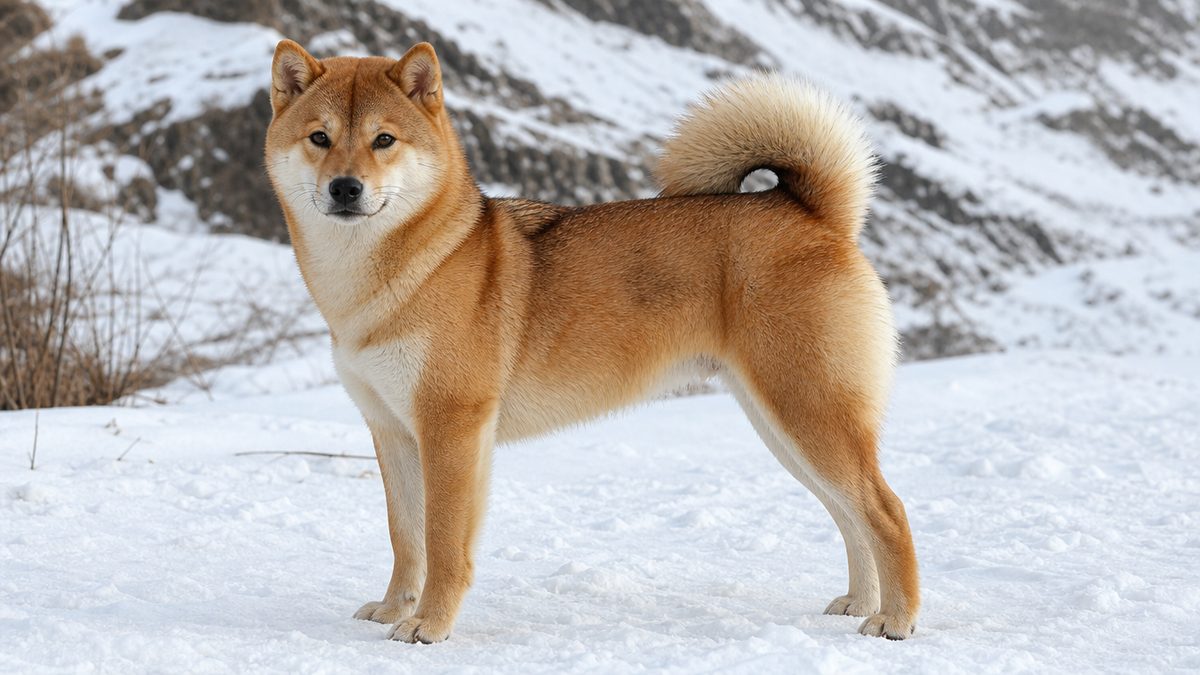
The Hokkaido is a medium Japanese spitz hunting dog, 48.5 to 51.5 cm at the withers in a male, designated a national natural monument by Japan on 21 December 1937, and it is among the rarest of the six native Japanese breeds in the Japan Kennel Club's own register. Corrected twice. An August 2026 revision called it the rarest, and on the JKC series the Kishu is rarer, at 0 registrations against this breed's 24 in 2025. That correction then said NIPPO is the main Japanese register for the native breeds, and on 9 September 2026 Bonbeno read NIPPO's own table and found that wrong for this breed: NIPPO recorded 11 Hokkaido in 2025 against 132 Kishu, so on NIPPO's book the ranking reverses. Neither register is this breed's own. The Hokkaido Ken Hozonkai issues its own pedigrees and publishes no annual count, so both numbers below are floors.
Start with the document, because almost nothing that ranks for this breed does. FCI-Standard No 261 places the Hokkaido in Group 5, Spitz and primitive types, Section 5, Asian Spitz and related breeds, without a working trial, with Japan as the country of origin and English as the official authentic language. The FCI accepted the breed on a definitive basis on 22 April 1964, and the standard in force was published on 30 October 2016 with the English text dated 9 February 2017. Those dates are printed by the FCI as 4/22/1964 and 10/30/2016. The table proves its own format: 30 cannot be a month, so the first field is the month and this is M/D/YYYY throughout.
The standard's numbers, and the three ranking pages that do not match them
The standard gives height at withers as 48.5 to 51.5 cm for males and 45.5 to 48.5 cm for females, and it gives no weight at all. That absence matters, because every popular page prints a weight. The AKC prints 44 to 66 pounds, roughly 20 to 30 kg. Wamiz prints 40 to 51 pounds for a female and 44 to 55 for a male. Dog Breeds List prints 45 to 65 pounds, and a height of 18 to 22 inches, whose upper end of 56 cm sits 4.5 cm above the standard's ceiling for a male.
| Source | Height | Weight | Life expectancy |
|---|---|---|---|
| FCI-Standard 261, the breed standard | 48.5-51.5 cm male, 45.5-48.5 cm female | Not stated | Not stated |
| American Kennel Club | 18-20 in (45.7-50.8 cm), both sexes | 44-66 lb (20-30 kg) | 12-15 years |
| Wamiz | 19-20 in male, 18-19 in female | 44-55 lb male, 40-51 lb female | up to 13 years |
| Dog Breeds List | 18-22 in (46-56 cm) | 45-65 lb (20-30 kg) | 11-13 years |
Three of those four rows carry a life expectancy and none of them cites anything. The breed standard carries none, and Bonbeno found no peer-reviewed lifespan study for the breed at all. A PubMed phrase search for "Hokkaido dog" returns two records in total, and neither is a longevity study. So treat 11 to 13, up to 13, and 12 to 15 as three unsourced guesses rather than as a range.
What the dog is for
The standard lists the Hokkaido's utilisation as hunting dog and companion, and describes a dog of noteworthy endurance, faithful, docile, very alert and bold, showing accurate judgement and great stamina. Its coat is a harsh straight outer coat over a soft dense undercoat, longer and off-standing on the tail, in sesame, brindle, red, black, black and tan, or white. One detail almost no page mentions is that blue-black colour in the tongue is explicitly not a fault. Popular breed databases compress all of this into a line about one of six native Japanese spitz breeds from the north of the country, which is true and is roughly where their accuracy stops. This is a hardy dog in its own climate and a heat-sensitive one in yours, and holding both ideas at once is what the rest of this page is for.
Ears not pricked, a hanging tail, a short tail, and an extremely overshot or undershot mouth are disqualifying faults, and shyness is a fault. If a dog offered to you as a Hokkaido has soft or drop ears, it is not this breed.
Hokkaido, Ainu-ken, Do-ken: which name to use and why it matters
Use Hokkaido, because that is the name the breed was given when Japan designated it, and it is the name on the FCI standard and in the Japanese cultural-property record Agency for Cultural Affairs. The older name Ainu-ken is a name given by outsiders to a dog kept by the Ainu, and the FCI standard says so in its own history paragraph.
The standard's brief historical summary reads, in full on this point, that the breed is said to have originated from medium-sized Japanese dogs that accompanied migrants from Honshu to Hokkaido during the Kamakura era in the 1140s, that when the breed was designated a natural monument in 1937 it took the name of the area, and that it also came to be known as the Ainu-ken, since the Ainu used to breed these dogs for hunting bears and other animals. So the sequence is documented and it runs the other way from what most pages imply: the dog was renamed after the island in 1937, and the Ainu name is the older one.
The Japanese cultural-property record gives the designated name as 北海道犬, read Hokkaido-ken. The AKC lists Ainu Ken, Hokkaido Inu and Hokkaido Ken as alternative names. Dog Breeds List adds Do-ken and Seta. Do-ken is a Japanese contraction, the first character of Hokkaido plus the character for dog.
What Bonbeno could not verify, and will not assert
Bonbeno could not verify the meaning or the Ainu-language status of the name Seta from an Ainu-language authority in this session, so this page does not tell you what it means. A breed page is not the place to guess at another people's language, and a wrong etymology repeated across the pet internet is exactly how a small error becomes permanent. If you want that answer, ask an Ainu-language source rather than a dog site, including this one.
Write that the breed was designated a natural monument in 1937 and took the name of the island then, and that it had earlier been called Ainu-ken because the Ainu bred these dogs for hunting Agency for Cultural Affairs. Both halves are documented. What is not documented, and what this page does not say, is anything about the Ainu themselves that follows from a claim about a dog.
The Ainu are an indigenous people of Japan, and Japanese law says so in the present tense
The Ainu are recognised in Japanese statute as an indigenous people, and any page discussing this breed has to get that right, because the most-cited document on the breed does not.
The Act on Promoting Measures to Achieve a Society in which the Pride of Ainu People is Respected, Act No. 16 of 26 April 2019, describes the Ainu in Article 1 as the "indigenous people of the northern part of the Japanese archipelago, in particular Hokkaido". That is the Japanese government's own English translation of its own statute, it is written in the present tense, and it is seven years old.
The FCI standard, which is the primary source almost every breed page on the internet leans on, describes the Ainu in its history paragraph as "the former inhabitants of Hokkaido";. The standard in force was published in 2016 and its English text is dated 2017, both after the debate that produced the 2019 Act and eight years after Japan's 2008 Diet resolution on the question. "Former inhabitants" is not a neutral historical phrase. Read plainly, it says a people is gone.
Why the wording matters more than usual here
Because the breed carries an exonym, a page about the Ainu-ken is one careless clause away from saying something about the Ainu. The dog was renamed in 1937 and the older name stuck to it. So a writer summarising the standard, in good faith, ends up with a sentence containing both "Ainu" and "former", and the reader takes away the wrong thing. Bonbeno quotes the standard because it is the standard, and states the statute beside it because the statute is current and the standard's phrasing is not.
The American Kennel Club's version of the same history introduces a second problem. Where the FCI says the dogs accompanied "migrants" from Honshu to Hokkaido, the AKC page says they accompanied "the Ainu people from Honshu" to Hokkaido FCI-Standard No 261, HOKKAIDO. That is a substantive change to the source it is summarising, and it puts the Ainu into Hokkaido as arrivals from the main island, which is not what the Japanese statute describing them as indigenous to the northern archipelago says. Bonbeno reports the difference between the two breed documents and does not adjudicate Ainu history, which is not a dog site's job.
Write that the Hokkaido is a rare breed, that it was bred by the Ainu for hunting, and that the Ainu are an indigenous people of northern Japan recognised as such in Act No. 16 of 2019 FCI-Standard No 261, HOKKAIDO. All three are documented. Collapsing them into a past tense is the error, and it currently sits inside the FCI standard itself.
Designated a natural monument on 21 December 1937, by the Japanese authority that made the designation
Japan designated the Hokkaido a national natural monument on 21 December 1937, under criterion (4), domesticated animals peculiar to Japan, with no geographical area attached to the listing.
That is not from a breed blog. It is record 401/3116 of the National Cultural Properties Database maintained by the Agency for Cultural Affairs, the Japanese government body responsible for the designation. The record gives the name as 北海道犬, the category as 天然記念物 (natural monument), the designation date as 1937.12.21, expressed also in the Japanese era calendar as Showa 12.12.21, the designation criterion as (4) domesticated animals peculiar to Japan, and the prefecture field as 地域を定めない, meaning no area is specified.
The FCI standard says only "1937";. NIPPO's own list of the six breeds gives Showa 12, which is also 1937. So for this breed all three sources agree, and the government record simply adds the day and the legal criterion that neither of the others carries.
The same database settles a disagreement on the Shiba that this site had left open
Bonbeno's Shiba Inu guide records a genuine conflict, because the FCI standard dates the Shiba's designation to 1937 while NIPPO dates it to December 1936, and that page reports both rather than choosing. The Agency's database answers it. Record 401/3112 gives the Shiba's designation date as 1936.12.16. Record 401/3105 gives the Akita's as 1931.07.31. Both carry the same criterion (4) and the same "no area specified" field as the Hokkaido. The designating authority's own register says 16 December 1936 for the Shiba, which is NIPPO's date and not the FCI's.
| Breed | Agency database record | Designation date on the record | NIPPO's year | FCI standard's year |
|---|---|---|---|---|
| Hokkaido | 401/3116 | 21 December 1937 | Showa 12, 1937 | 1937 |
| Shiba | 401/3112 | 16 December 1936 | Showa 11, 1936 | 1937 |
| Akita | 401/3105 | 31 July 1931 | Showa 6, 1931 | 1931, nine dogs designated |
Six breeds or seven
NIPPO's front page lists six designated breeds, Shiba, Kishu, Shikoku, Kai, Hokkaido and Akita, and states that the association set the Nihon Ken standard in 1934 and classified the breeds by size into small, medium and large. The Hokkaido's own preservation society lists seven, adding the Koshi no Inu, designated in December 1934 for the Toyama, Niigata and Ishikawa districts, and giving Shikoku under its old designation name of Tosa Nihon-ken. The two lists differ because the Koshi is extinct. Six is the count of surviving designated breeds; seven is the count of designations.
The Hokkaido's own preservation society makes the point sharply. It observes that of the natural monuments in Hokkaido, everything except this dog lives in the wild free of human influence, while the Hokkaido has a very deep relationship with people and can be altered by them at will, which is exactly why preserving its character matters. A monument designation is a heritage listing. It is not a health guarantee, an export ban, or a reason to pay more.
Three Japanese bodies register this dog, and they are not interchangeable
Ask which register a Hokkaido's pedigree comes from, because three Japanese organisations matter here and they hold different dogs. The Japan Kennel Club is the FCI member, NIPPO is the native-breed preservation society, and the Hokkaido Ken Hozonkai is the breed's own society.
- Japan Kennel Club (ジャパンケネルクラブ). Japan's FCI member body, which issues pedigrees against FCI nomenclature and publishes an annual count of new registrations by breed. This is the register whose numbers a foreign buyer can actually check.
- NIPPO, Nihon Ken Hozonkai (日本犬保存会). The Association for the Preservation of the Japanese Dog. It set the Nihon Ken standard in 1934 and classifies the six breeds by size, the Hokkaido sitting in the medium type with the Kishu, Shikoku and Kai. NIPPO states on its own front page that of the six breeds, mainly three, the Shiba, Kishu and Shikoku, are registered with it in numbers. So NIPPO is not this breed's main registry.
- Hokkaido Ken Hozonkai (天然記念物北海道犬保存会). The breed's own preservation society, and the register that matters most for it. It records that enthusiasts founded an Ainu Dog Preservation Society in November 1933 after Honshu dog dealers began removing dogs from the island, and that when the natural-monument designation came in December 1937 the breed was on the verge of extinction. Founded in its present form on 10 February 1951 and incorporated in 1963, it names 血統書の発行, the issuing of pedigrees, as one of its three activities and runs it under a formal registration regulation. It publishes no annual registration count, so no complete figure for this breed exists anywhere. NIPPO accepts its pedigrees at full-registration level, which is NIPPO treating it as a peer studbook rather than a club.
- A second Hokkaido body exists too. NIPPO's transfer list names 天然記念物北海道犬協会, the Hokkaido Dog Association, separately from the Hozonkai and admits its dogs only provisionally. Ask which of the two a pedigree came from, because they are not the same register.
The practical consequence for a buyer is simple. A pedigree is only as good as the register behind it, and "Japanese pedigree" is not a register. Ask which of these three issued the paper, and ask to see it before money moves.
Recognition outside Japan
The American Kennel Club has recorded the Hokkaido in its Foundation Stock Service since January 2016 and has assigned it the Working Group designation for the day it advances. Foundation Stock Service is a record, not full recognition, so the breed does not appear in AKC popularity rankings. That is visible on the ranking pages themselves: Dog Breeds List prints an AKC popularity table for the Hokkaido whose rows for 2015 through 2022 are all blank. Dog Breeds List separately files the breed under the UKC's Northern group.
For India the question resolves through the FCI, because the FCI's members register lists India as a full member represented by the Kennel Club of India in Chennai, so the KCI issues pedigrees against FCI nomenclature. The Hokkaido is recognised by the FCI on a definitive basis as standard 261. That means an Indian pedigree is theoretically possible in a way it is not for an unrecognised breed. It does not mean any Indian dog exists to put on one.
The Kennel Club of India publishes no breed list for any breed, so a query there returns zero for the Hokkaido and zero for every control breed as well. That is a broken instrument, not a finding, and Bonbeno does not report it as evidence that the breed is unrecognised in India.
24 with the JKC and 11 with NIPPO, and neither is this breed's own register
The Japan Kennel Club registered 24 Hokkaido in 2025 and NIPPO registered 11, and both figures understate the breed because the Hokkaido has its own preservation society, the Hokkaido Ken Hozonkai, which issues its own pedigrees and publishes no annual count Hokkaido Ken Hozonkai (一般社団法人天然記念物北海道犬保存会). No page ranking in India carries either number, and no page anywhere carries the caveat.
| Year | Hokkaido registered | Rank among all breeds |
|---|---|---|
| 1999 | 6 | 125 |
| 2005 | 4 | 135 |
| 2010 | 8 | 116 |
| 2015 | 38 | 79 |
| 2019 | 26 | 90 |
| 2020 | 25 | 87 |
| 2021 | 35 | 86 |
| 2022 | 53 | 75 |
| 2023 | 26 | 87 |
| 2024 | 20 | 92 |
| 2025 | 24 | 90 |
Read the shape rather than any single year. The breed sat at four to eight registrations a year through the 2000s, rose to a peak of 53 in 2022, and has settled back into the twenties Japan Kennel Club, Registrations by breed Japan Kennel Club, Registrations by breed. The AKC attributes the breed's gain in popularity to a Japanese telecoms company, SoftBank, casting a white Hokkaido as the father in its television advertising. Bonbeno reports that attribution and does not assert it as the cause, because the registration series and the advertising campaign are not the same evidence.
What the number does and does not mean
The JKC states its own caveat on the same page, and it is worth repeating rather than paraphrasing away. The figure counts dogs newly entered in its pedigree database in one calendar year. It is not the number of dogs alive in Japan, and the JKC suggests that assuming a lifespan of ten to fifteen years and summing the registrations across that period gives a rough idea of the population, excluding dogs that have since died or been exported. Doing that arithmetic on the published years gives an order of magnitude in the low hundreds of JKC-registered Hokkaido alive in Japan, and Bonbeno prints that as an order of magnitude rather than a figure, because the intermediate years are not all reproduced here and deaths are not deducted.
The Hokkaido against its five siblings, in both registers, same year
In 2025 the JKC registered 3,598 Shiba at rank 16, 263 Akita at rank 40, 60 Kai at rank 70, 51 Shikoku at rank 78 and 24 Hokkaido at rank 90. The sixth native breed, the Kishu, does not appear in the 2025 table at all. That is a real absence rather than a truncated list, because the table runs down to rank 131 where breeds on a single registration are still printed. The Kishu had 3 registrations in 2024, 2 in 2023 and 10 in 2010, so 2025 is the year it reached zero at the JKC.
Now run the same year through the other register and the order changes. NIPPO recorded 13,722 Shiba, 252 Shikoku, 132 Kishu, 78 Kai, 11 Hokkaido and 5 Akita in 2025. The breed the JKC scores at zero is the third commonest in NIPPO's book, and the breed the JKC scores at 263 is NIPPO's rarest.
| Breed | NIPPO 2025 | JKC 2025 | The breed's own single-breed society |
|---|---|---|---|
| Shiba | 13,722 | 3,598 | Shiba Inu Hozonkai |
| Shikoku | 252 | 51 | None found |
| Kishu | 132 | none | Kishu Ken Hozonkai |
| Kai | 78 | 60 | Kai Ken Aigokai |
| Hokkaido | 11 | 24 | Hokkaido Ken Hozonkai |
| Akita | 5 | 263 | Akita Inu Hozonkai |
Why neither column ranks these breeds, and how you can tell
A rarity ranking built on one registry measures the registry, not the breed. NIPPO publishes the proof itself. Its transfer-registration page names eight other Japanese bodies whose pedigrees it will accept, among them two separate Hokkaido organisations, the Hokkaido Ken Hozonkai at full-registration level and the Hokkaido Dog Association at provisional level. A dog registered with either is absent from both columns above.
The Akita proves the size of the effect. NIPPO recorded 5 Akita in 2025, which read alone describes a breed about to vanish. The Akita Inu Hozonkai, the breed's own society, recorded 1,587 domestic and 637 overseas litter registrations in 2024 plus 140 single-dog registrations, in its own published business report, against NIPPO's 12 Akita that year. Those are litters rather than puppies, so the real gap is wider still. Nothing happened to the Akita between those two tables. They are different books.
So read this page's own 24 the same way. The Hokkaido Ken Hozonkai has issued pedigrees under a formal registration regulation since 1951 and runs headquarters shows three times a year plus branch shows at more than thirty branches, which is not the footprint of eleven dogs a year. Bonbeno cannot tell you how many Hokkaido are registered annually in total, because the body most likely to hold that number does not publish it, and saying so is more honest than adding two columns that do not add up.
Twenty-four registrations in the breed's home country, in its home register, in a full year, is the reason the Indian price question has no answer. A breed producing that few pedigree puppies annually does not develop an export trade, and it certainly does not develop one into a country that bars importing dogs for breeding or sale.
Hokkaido dog price in India: there is no Indian price, and here is the proof
There is no Hokkaido dog price in India, because Bonbeno found no Indian breeder, listing site, marketplace or rescue offering the breed. Every rupee figure the Indian search results return for this breed belongs to something other than a dog.
Say the negative first, then evidence it. A Firecrawl search restricted to India for "hokkaido dog puppy for sale india price rupees" returned, in order: a Chow Chow puppy page on an Indian listing site, a generic "150+ breeds" landing page, two Indian dog-price blog round-ups that do not name the Hokkaido, a trade directory selling Golden Retrievers and German Shepherds, an Etsy merchandise page, an overseas kennel, a United States breeder quoting 3,500 to 4,000 US dollars, and the AKC's own breed page. Not one Indian Hokkaido listing.
That absence is earned, not assumed. The control query "labrador retriever puppy price in india", run on the same instrument in the same session, returned genuine Indian Labrador listing pages quoting Indian prices city by city. So the search worked, and what it found for the Hokkaido is what is there.
What the ranking pages print instead
| Source | Figure printed | What it actually is |
|---|---|---|
| Dog Breeds List | Average 1,000 to 1,500 US dollars | A US retail estimate, with the page's own note that transport often costs more than the dog |
| Wamiz | No price at all | The page states 'We do not have enough data to set an average price' |
| Good Dog | 3,000 to 3,500 US dollars | A US marketplace's national range |
| A US kennel | 3,500 to 4,000 US dollars for 2025 reservations | One American breeder's own price, including an application fee |
| Etsy India | Rupee figures in the hundreds | Merchandise. Not dogs |
Wamiz is the honest one and deserves credit for it. A commercial breed site with a price field on every page left this one blank and said why. That is the correct answer, and it is the answer this page gives too. The Hokkaido is not expensive in India and it is not cheap in India. It is unavailable in India, which is a different fact and a more useful one.
Do not convert the dollar figure
Converting 1,000 US dollars into rupees produces a number that looks like an Indian price and is not one. Bonbeno has repeatedly caught Indian breed pages doing exactly this, publishing rupee "prices" that divide cleanly by a single exchange rate back into round dollar amounts. A converted figure tells you what an American breeder charges, in rupees. It tells you nothing about a market that does not exist, and quoting it would give an Indian reader a budget for a purchase they cannot lawfully make.
DGFT Trade Notice 22/2022-23 states that import applications for trading or breeding purposes shall be duly rejected, and the Japan Kennel Club registered 24 dogs of the breed in 2025. A supply chain cannot form between those two facts, so the price has no value to converge on.
What a dog this size actually costs to keep in India
Budget Rs 6,000 to Rs 10,000 a month for a medium dog in an Indian city, on the most widely cited Indian cost table, and add a cooling line that table does not have. Those are real Indian numbers even though the purchase price is not.
The purchase price of this breed is unknowable in India. The cost of ownership for a 20 to 30 kg double-coated dog in Chennai or Delhi is not, because it is the same as for any dog of that size and coat, and it is published. Supertails' 2026 Indian dog price list breaks first-year running costs out by breed size, and its medium-breed column gives food at Rs 2,500 to Rs 4,000, routine vet visits at Rs 800 to Rs 1,500, annual vaccinations at Rs 1,500, grooming at Rs 800 to Rs 1,500, six months of training at Rs 2,000 to Rs 5,000, treats and toys at Rs 500 to Rs 1,000, and flea and deworming at Rs 400 to Rs 700, against a stated monthly total of Rs 6,000 to Rs 10,000.
That table does not add up, and you should know why before you use it
Add the medium column's own rows and the printed total does not reproduce. Read every row as a monthly figure and the low end comes to Rs 8,500 and the high end to Rs 15,200, against a printed monthly total of Rs 6,000 to Rs 10,000. Read the annual vaccination row as Rs 125 a month and the six-month training row as Rs 333 a month and the low end comes to about Rs 5,458, which still misses Rs 6,000. Neither reading works, because the column mixes monthly, annual and six-monthly rows under a heading that says MONTHLY TOTAL. Use the individual rows, not the total.
The same page carries a second oddity worth flagging for a double-coated breed. Its grooming line falls as the dog gets bigger, from Rs 1,500 to Rs 3,000 a month for a small breed down to Rs 500 to Rs 1,200 for a large one. For a Hokkaido that is backwards. Coat area, undercoat volume and drying time all rise with size, and an Indian groomer prices a double-coated dog above a smooth one, not below.
| Line | Published Indian figure | Bonbeno's note for this coat |
|---|---|---|
| Food | Rs 2,500-Rs 4,000 | A working spitz at the top of the range, not the bottom |
| Routine veterinary | Rs 800-Rs 1,500 | Add an annual ophthalmology check for this breed |
| Vaccination | Rs 1,500 a year | Roughly Rs 125 a month once the puppy course is done |
| Grooming | Rs 800-Rs 1,500 | Treat this as a floor. A double coat is priced above a smooth one |
| Flea, tick and deworming | Rs 400-Rs 700 | Non-negotiable in an Indian monsoon |
| Cooling | Not a line item on any of these tables | The single largest omission for a northern breed in India |
The line every Indian cost table leaves out
No mainstream Indian dog-cost table budgets for cooling, and for a dog bred for Hokkaido winters that is the line that decides whether the animal is comfortable. Bonbeno does not have a published, sourced Indian figure for running an air conditioner for a dog, so this page does not invent one. What it will say plainly is that if your plan for a northern double-coated dog in Chennai or Delhi does not include air conditioning through the hot months, the plan is not finished.
First-year costs sit above the monthly run rate. The same source puts the whole first year at Rs 80,000 to Rs 2,00,000 including purchase, vaccinations, food, training and supplies, and separately recommends paying Rs 800 to Rs 1,500 for an independent pre-purchase veterinary consultation before completing any payment. That last piece of advice is the best thing on the page, and it applies with double force to a breed nobody in India can actually supply.
The same Supertails page opens by saying Indian dog prices run from Rs 2,000 for an indie to over Rs 1,50,000 for a KCI-registered show dog, and then says a few paragraphs later that the average price varies from Rs 5,000 to Rs 1,00,000 and up. Bonbeno prints both rather than picking the tidier one.
Heat tolerance: the gap between Sapporo and an Indian city, in degrees
The Hokkaido is a cold-climate dog and India is not a cold climate, and the size of the gap is measurable. NASA POWER's cell for Sapporo returns an annual mean air temperature of 6.17 degrees Celsius against 27.95 for Chennai, a difference of 21.78 degrees.
Bonbeno uses NASA POWER queried by explicit latitude and longitude rather than a named-city climate page, because a named-city page has repeatedly served this site a document for the wrong place. Every query below echoed back the coordinates and the grid elevation it served, and both are printed here so you can check them.
| Place | Lat, lon queried | Grid elevation returned | Annual mean air temp | Warmest month mean | Annual mean relative humidity |
|---|---|---|---|---|---|
| Sapporo, Hokkaido | 43.062, 141.355 | 279 m | 6.17 C | 19.95 C (August) | 87.5 % |
| Chennai | 13.083, 80.271 | 49 m | 27.95 C | 31.51 C (May) | 72.4 % |
| Delhi | 28.614, 77.209 | 206 m | 25.60 C | 35.88 C (June) | 45.6 % |
| Mumbai | 19.076, 72.878 | 97 m | 26.77 C | 31.19 C (May) | 67.4 % |
| Bengaluru | 12.972, 77.595 | 842 m | 23.74 C | 28.37 C (April) | 67.9 % |
| Pune | 18.520, 73.857 | 636 m | 23.86 C | 28.93 C (April) | 66.8 % |
Sapporo's coldest month, January, has a mean of minus 6.92 degrees. Delhi's warmest month mean is 35.88, and the Delhi cell's maximum recorded 2-metre temperature is 48.79. A dog whose standard says its physique enables it to withstand severe cold and heavy snowfalls is being asked to do the opposite job.
One caveat on Sapporo itself
The Sapporo cell sits at 279 metres and the city sits nearer 17. At the standard lapse rate of about 6.5 degrees per 1,000 metres, the cell reads roughly 1.7 degrees too cold, so Sapporo's real annual mean is a little above the 6.17 printed here. That correction does not change the argument, because the gap to Chennai is 21.78 degrees. It is printed because a figure whose limits are hidden is a figure a reader cannot check.
What the heat evidence actually supports
Two large UK studies of the same 905,543-dog cohort give the transferable findings, and they are different papers with different case definitions. Hall and colleagues in Scientific Reports found dogs at or above their breed and sex mean bodyweight carried 1.42 times the odds of heat-related illness, dogs over 50 kg carried 3.42 times the odds of dogs under 10 kg, and the case fatality rate for a heat-illness event was 14.18 percent. Hall and colleagues in Animals, analysing exertional illness on the same cohort, reported 1,259 events from 1,222 dogs, of which 380 had no trigger recorded, leaving 879 with a recorded trigger, and of those 879 events, 652, or 74.2 percent, were exertional.
Neither paper modelled the Hokkaido individually. So Bonbeno claims only the transferable finding, which is that a 20 to 30 kg dog exercised in heat is at raised risk, and attaches no breed-specific odds ratio to this dog. The practical instruction that follows is the one the exertional paper points to: in India the danger is not a hot car, it is a walk.
652 of the 879 heat-illness events with a recorded trigger were exertional, and 14.18 percent of heat-illness events were fatal. Those two figures together are the whole case for walking a northern dog before sunrise and after dark in India, and for treating collapse after exercise as an emergency rather than as tiredness.
The Indian hill stations people name as an answer, and why the satellite figures for them are wrong
Do not plan a cold-climate dog around a hill-station figure you have not checked, because NASA POWER returns a grid cell rather than a point, and in Indian mountains the cell misses the town by up to 1,935 metres. Bonbeno found this on every hill station it queried and publishes the divergence rather than the cell.
This matters here more than on most pages. Gangtok, Shimla, Manali, Darjeeling, Srinagar, Ooty and Munnar are exactly the places an Indian reader names when asked where a Nordic or Japanese cold-climate breed could live. Query them by coordinates and the service answers for a half-degree cell whose mean elevation can sit a kilometre and a half away from the town underneath it. Temperature falls with height at roughly 6.5 degrees per 1,000 metres, so the error is large and it runs in both directions.
| Place | Grid elevation returned | Town's real elevation | Divergence | Cell's annual mean | Direction of the error |
|---|---|---|---|---|---|
| Manali | 3,985 m | about 2,050 m | 1,935 m too high | -0.56 C | Far too cold |
| Gangtok | 3,240 m | about 1,650 m | 1,590 m too high | 7.45 C | Too cold |
| Srinagar | 2,631 m | about 1,585 m | 1,046 m too high | 9.13 C | Too cold |
| Leh | 4,533 m | about 3,500 m | 1,033 m too high | -2.75 C | Too cold |
| Ooty | 785 m | about 2,240 m | 1,455 m too low | 23.50 C | Far too warm |
| Shimla | 898 m | about 2,200 m | 1,302 m too low | 21.15 C | Too warm |
| Munnar | 711 m | about 1,600 m | 889 m too low | 22.91 C | Too warm |
| Darjeeling | 1,314 m | about 2,045 m | 731 m too low | 18.42 C | Too warm |
Look at Shimla. Its cell reports an annual mean of 21.15 degrees and an annual maximum 2-metre temperature of 43.87 degrees. Nobody who has been to Shimla in June believes 43.9 degrees. The cell is averaging a hill station at 2,200 metres with the Sutlej valley floor below it, and the valley wins. Ooty is the same failure: a cell at 785 metres reporting 23.50 degrees for a town at 2,240 metres.
The correction, and why it is an estimate rather than a measurement
Apply the lapse rate to each divergence and the corrected figures land close to what these towns are actually like. Shimla's cell at 21.15 degrees, corrected upward in altitude by 1,302 metres, gives about 12.7. Manali's cell at minus 0.56, corrected downward by 1,935 metres, gives about 12.0. Gangtok's 7.45 becomes about 17.8, Ooty's 23.50 becomes about 14.0, and Leh's minus 2.75 becomes about 3.9. Every one of those is within a couple of degrees of the town's published climate, which is the check that says the diagnosis is right rather than convenient.
Bonbeno prints the correction as an estimate and never as a measurement, and would not publish a heat rating for a breed off a corrected number alone. The plains rows need no such treatment: Delhi's cell is 10 metres below the city, Chennai's is 43 metres above, Bengaluru's is 78 metres below, Mumbai's 83 above and Pune's 76 above. NASA POWER tracks the Indian plains well and fails only in the mountains.
A corrected Shimla at about 12.7 degrees annual mean is genuinely cooler than Sapporo's corrected figure of roughly 7.9. It is not Sapporo. And it does not help most readers, because the Indian buyers searching for this breed live in Delhi, Mumbai, Bengaluru, Chennai and Pune, whose annual means run 23.7 to 27.9 degrees. Do not let a hill-station number that is wrong by 1,300 metres talk you into a dog for a city you do not live in.
Indian import law: what actually blocks a Hokkaido, and what does not
Indian import law, not Japanese heritage law, is what stops a Hokkaido reaching India. Dogs are a Restricted import, and applications for trading or breeding purposes are rejected by rule.
DGFT Trade Notice No. 22/2022-23 dated 19 December 2022, headed Guidelines for import of Pet Animals, sets out the position. It records ITC (HS) 01061900, Mammals: Other, with an Import Policy of Restricted, subject to Policy Condition 6 of the Chapter. Policy Condition (6) as printed in the notice concerns the Wild Life (Protection) Act 1972 and CITES, which does not touch a domestic dog. The operative restrictions for a pet dog are in the notice's own guidance.
- No import for trade or breeding. The notice states that no applications for trading or breeding purposes, or applications made on behalf of another person or entity, shall be duly rejected. The drafting is clumsy and the intent is not: those applications get refused.
- Seven entry points only. Import of pet animals is allowed only through the airports and seaports of Delhi, Mumbai, Chennai, Hyderabad, Bengaluru and Kolkata and, since October 2024, Kochi airport Department of Animal Husbandry….
- Advance NOC required. A quarantine-clearance applicant must obtain an Advance No Objection Certificate from the Regional Officer or Quarantine Officer of the Animal Quarantine and Certification Station at the port, submitting the DGFT import licence and health paperwork.
- Apply early. The notice tells applicants to begin the authorisation process at least two months before travel.
The consequence, spelled out
Put the trade bar beside the population figure and the Indian market question closes. An Indian breeder cannot lawfully import breeding stock, and there are 24 new JKC-registered dogs a year in the entire home country to import from DGFT Trade Notice No. 22/2022-23 dated 19…. No lawful supply chain can form on those inputs. That is why this page has no price rather than a wide one.
One caution about a headline you may have seen. A separate instrument, S.O. 4396(E) of 10 October 2024, permits pet dogs and cats through Cochin International Airport under the Livestock Importation Act 1898, with jurisdiction to the Animal Quarantine and Certification Station at Chennai. That governs the personal pet route under a different Act. Bonbeno has not checked it against the DGFT notice's own port list and does not claim it amends that list. Read whichever instrument governs your route.
The natural-monument designation is a cultural-property listing filed with no area restriction and no export clause visible in the record. Nothing Bonbeno found suggests the designation itself bars taking a Hokkaido out of Japan. Do not let a seller use the word monument to justify a premium or to explain a delay.
What the 2017 Rules require of anyone breeding or selling this dog in India
The Prevention of Cruelty to Animals (Dog Breeding and Marketing) Rules 2017 govern any Indian sale, and three of their provisions bite specifically on a rare imported spitz with a documented eye mutation.
Cite these correctly or a reader who checks will land somewhere else. The Rules themselves run from Rule 1 to Rule 13, and everything numbered above 13 is a paragraph of the Second Schedule rather than a Rule. The Second Schedule is made binding by Rule 6, which is titled Requirements to be met by breeders and establishments, and that is exactly why writing "Rule 6(3)" or "Rule 8(10)" sends a reader to the wrong provision.
- Rule 8(1)(a), a genuine Rule in the main body, requires every breeder to ensure that pups less than eight weeks in age are not sold.
- Second Schedule Part III paragraph 8(10) requires that dogs shall have been tested for genetic defects, and its list opens with the word including, so it is illustrative rather than closed. It names hip dysplasia, progressive retinal atrophy, night blindness, hypothyroidism, entropion, ectropion, overshot and undershot jaw, wry mouth, two or more missing teeth, and cryptorchidism.
- Second Schedule Part II paragraph 6(3) prohibits in-breeding, defined as breeding between relatives of the second to fourth grade in straight or side line within the first four generations, and incest breeding between parents and children or brother and sister.
- Second Schedule Part IV paragraph 21(1), Outdoor housing facilities, bars keeping in outdoor facilities, without the attending veterinary practitioner's written approval, dogs not accustomed to local temperatures and breeds that cannot tolerate them, giving long-haired breeds in high-temperature locations as its own example.
Where these collide with this breed
Paragraph 8(10) is the interesting one. Collie eye anomaly is not on its list, but the clause says including, so a breeder cannot argue that an unlisted defect falls outside it. Given that a published survey of 17 Hokkaido found 12 carriers and five affected dogs, any Indian breeding of this breed would run straight into that clause.
Paragraph 6(3) is the second collision, and it is structural rather than hypothetical. A breed producing 24 registered puppies a year in its home country has a small gene pool, and a hypothetical Indian line founded on a handful of imports would be inbred within two generations. Indian law does not permit that, which is another reason no Indian line exists.
Paragraph 21(1) applies directly. A Hokkaido is a double-coated northern breed, and India is a high-temperature location, so keeping one in an outdoor facility without written veterinary approval is exactly what that paragraph prohibits. Note the citation form: it is a Second Schedule paragraph, not "Rule 21", and the string "Rule 21" does not exist in this instrument.
Across the whole gazette the words BAER and deaf do not appear, and there is no patellar or dental testing requirement. So do not let a seller tell you that Indian law mandates a patella grade or a hearing test. It does not.
Temperament: what the standard promises and who should not buy one
The Hokkaido is described in its own standard as faithful, docile, very alert and bold, with noteworthy endurance, accurate judgement and great stamina. Read every one of those words as a working hunting dog's temperament rather than as a family-pet brochure.
The standard's phrasing is unusually specific and worth taking literally. "Accurate judgement" in a bear-hunting spitz means the dog decides things for itself, which is charming in a documentary and inconvenient in a Mumbai apartment block. "Bold" means it will not defer. "Very alert" means it tells you about the lift, the delivery, the neighbour's cat and the pigeon, at whatever hour those occur.
Who this dog suits
- Owners who want an independent dog and are not hurt by one. This is not a breed that checks in every ninety seconds.
- Households with space and a securable boundary, because a hunting spitz with a nose and a plan is a flight risk on an open gate.
- People who enjoy training a dog that negotiates, rather than one that complies.
Who should not buy one
- First-time owners. Wamiz says plainly that the Hokkaido is not ideal for first-time ownership, and Bonbeno agrees for a different reason: a first dog should be one you can get advice about locally, and no Indian vet or trainer has seen this breed.
- Anyone who wants a quiet dog. Alertness in a spitz is expressed vocally.
- Anyone buying on looks. If the sesame coat and the curled tail are what drew you, an Indian Pariah Dog gives you the same outline, adapted to the climate, free.
One temperament point matters legally in India. Shyness is listed as a fault in the standard, and aggression or excessive shyness is a disqualifying fault. Any seller presenting a fearful, cowering puppy as "reserved, it is the breed" is describing a fault, not a characteristic.
The standard requires strongly marked sexual dimorphism and lists lack of it as a fault. A male and a female of this breed should not look alike. It is a useful identification check on a photograph.
Training a dog bred to make its own decisions
Train the Hokkaido on the assumption that it will evaluate your instruction rather than execute it. The standard's own words are docile and bold with accurate judgement, and those three pull in different directions in a training session.
The workable approach with any primitive-group spitz is to make the behaviour you want the most rewarding available option rather than the only permitted one. Compulsion produces a dog that complies while watched. Short sessions, high-value food, and a recall built over months rather than weeks are the realistic plan.
A realistic Indian timeline
- Weeks 8 to 16, socialise hard and early. This is the window, and in an Indian city it means traffic, autos, temple bells, construction noise, cattle, other dogs and strangers of every kind, in short and positive doses.
- Months 4 to 8, build the recall you will actually need. A hunting spitz off lead in an Indian park with monkeys and street dogs is a scenario you want rehearsed, not discovered.
- Months 8 to 18, expect the negotiation. Adolescence in an independent breed looks like regression and is not. Keep the sessions short and keep paying.
- Throughout, train in the cool hours. A training session is exercise, and the Animals paper found 652 of 879 heat-illness events with a recorded trigger were exertional.
One Indian practicality that no overseas guide mentions. A professional group training programme in India runs about Rs 2,000 to Rs 5,000 for a six-month course on the widely cited Indian cost table. That is cheap relative to the West, and for an independent breed it is the single highest-return line in the budget. Spend it.
In India the recall you socialise and train in April at 2 pm is the recall that puts a northern dog into a heat-illness event. Move the whole training schedule to before sunrise and after dark from March to October, and treat that as a rule rather than a preference.
Exercise: a stamina breed in a country that cannot give it the hours
Plan on 60 to 90 minutes of real work a day, taken entirely in the cool hours, and accept that in most of India that means two walks split around the middle of the day rather than one long one.
The standard describes a dog of noteworthy endurance with great stamina, whose gait is active, quick, light and resilient. That is a hunting dog's specification, and the honest Indian consequence is that the hours in which this dog can safely be worked are the hours most owners are asleep or at work.
The daily plan, month by month of the Indian year
- November to February, the workable months. Delhi's January mean is 13.61 degrees and Pune's is 19.85. Full exercise, daylight acceptable in the north.
- March to June, the dangerous months. Delhi's May mean is 35.05 degrees with a cell maximum of 48.79. Pre-dawn and post-sunset only, and shorten as the temperature rises.
- July to September, the humid months. Mumbai and Chennai combine high heat with humidity that stops evaporative cooling working. Chennai's annual mean relative humidity is 72.4 percent. Reduce duration, not just timing.
- All year, replace distance with problem-solving indoors. Scentwork, food puzzles and short shaping sessions tire a hunting spitz's head, and none of them raise core temperature.
Under-exercised, this breed does what every under-worked primitive spitz does: it vocalises, it patrols, it chews, and it becomes reactive to whatever passes the gate. That is a management failure and not a temperament flaw, and it is the predictable outcome of buying a stamina breed for a city where you can only walk it in the dark.
In the Animals paper, of the 879 heat-illness events with a recorded trigger, 652 were exertional, 113 environmental and 46 from vehicular confinement. Exercise is the trigger, not the parked car. That is the single most useful thing UK data has to say to an Indian owner.
Grooming a double coat in Indian humidity
Brush the Hokkaido's double coat weekly through most of the year and daily through the two annual undercoat sheds, and never shave it. In India the hard part is not the brushing, it is getting the undercoat dry after a bath in the monsoon.
The standard describes a harsh straight outer coat over a soft dense undercoat, with the hair on the tail fairly long and off-standing. Wamiz rates the breed's shedding as Heavy and notes that it sheds its undercoat twice a year. Those two facts define the whole grooming job.
Why shaving a double coat is the wrong answer in a hot country
The Indian instinct with a heavy northern coat is to clip it off in April. Do not. The outer coat is a physical barrier against solar radiation and the undercoat is an insulating layer that works in both directions. Clipping removes the barrier, exposes skin that has never seen the sun, and does not stop the dog overheating, because a dog sheds heat by panting rather than through its skin. Manage heat with shade, water, air movement and timing instead.
The Indian monsoon problem overseas guides do not have
Overseas breed-club grooming advice is written for a climate where a dog can be towelled off and left to air dry. In an Indian monsoon that instruction is actively wrong. Ambient humidity above 80 percent means a dense undercoat stays damp for hours, and a warm damp undercoat against skin is where hot spots and yeast start. Dry a Hokkaido to the skin with a forced-air dryer every time it is bathed or soaked, and plug the ears before bathing.
- Weekly, an undercoat rake and a slicker. Line-brush to the skin rather than skimming the top coat.
- Daily during the coat blow. Twice a year, for two to three weeks each time.
- Never a clipper. Deshedding, not shaving.
- Ears before every bath. Plug them, and dry the canal afterwards.
- Tick and flea cover, all year. Rs 400 to Rs 700 a month on the published Indian figures.
The most cited Indian cost table prices grooming lower for large dogs than for small ones, which is backwards for a double coat. Treat its Rs 800 to Rs 1,500 medium-breed figure as a floor and expect a de-shedding session during the coat blow to cost more than a routine groom.
Health: what is documented, and how little of it there is
The documented health literature on the Hokkaido is two papers, and only one of them is about a disease. That is the honest state of the evidence, and it is established by a search whose controls passed in the same session.
A PubMed phrase search for "Hokkaido dog" returns two records in total: the 2012 Collie eye anomaly case study and a 1984 biochemistry paper on red cell glycolipids across dog breeds that used Japanese breeds to reason about their origin Hashimoto Y, Yamakawa T. A title search for Hokkaido and dog returns three, of which two are about dogs living on the island of Hokkaido rather than about the breed, one an Echinococcus multilocularis case report and one a survey of owners' understanding of echinococcosis.
That absence is earned rather than assumed. Two control searches run on the same instrument in the same session returned 126 records for Labrador Retriever and hip dysplasia and 74 for Shiba Inu and dog. The instrument works. Note also that a loose search for "Hokkaido dog breed" returns 69 records, and that number is worthless, because PubMed's own query translation shows it searching Hokkaido as a place, which is a Japanese prefecture with a large university attached.
No lifespan figure, and three unsourced ones in circulation
The breed standard prints no life expectancy. Bonbeno found no VetCompass, Dogs Trust or insurance-cohort study that models the breed. Meanwhile the AKC prints 12 to 15 years, Dog Breeds List prints 11 to 13, and Wamiz prints up to 13. Three sources, three answers, no citations. This page carries no lifespan figure for that reason.
What to screen anyway
- Eyes, before six months and annually thereafter. See the next section, which is the one real finding on this breed. It no longer rests on one study: OFA's published eye registry ranks the Hokkaido 3rd of all breeds for eye abnormality, 41.5 percent abnormal on 53 evaluations, behind only the Collie and the Bengal Cat.
- Hips. No OFA hip statistics row exists for this breed. OFA requires 100 hip evaluations before publishing a breed in that table and the Hokkaido has 53 evaluations on record, so the hip absence is a threshold effect rather than a health claim. Note that this is specific to hips: OFA does publish eye rows for the breed. Screen the parents anyway; Indian law names hip dysplasia first in its genetic-defect clause.
- Thyroid. Named in the same Indian clause.
- Heat. Not a hereditary condition, and in India the most likely thing to kill this dog. The case fatality rate for a heat-illness event in the largest UK study was 14.18 percent.
Microcytosis, a lower than usual red-cell volume, occurs in health in several Japanese breeds including the Shiba, Akita and Hokkaido. An Indian vet who has never seen the breed may read a normal Hokkaido blood panel as anaemic. Mention it before the panel is run, not after.
Collie eye anomaly: the one real health finding on this breed, and it is a big one
The Hokkaido carries the Collie eye anomaly mutation at a high frequency. In the only published genotyping survey, 17 Hokkaido from three kennels produced 12 heterozygous carriers and five affected dogs, and not one clear dog.
The study is Mizukami and colleagues, Veterinary Ophthalmology 2012, volume 15, issue 2, pages 128 to 132. It describes a nine-month-old intact female Hokkaido with no obvious visual disturbance, diagnosed ophthalmoscopically with Collie eye anomaly. Severe choroidal hypoplasia was present in the temporal area of both eyes, adjacent to the optic nerve head, appearing as whitish areas. The dog was confirmed to carry the associated intronic 7.8-kilobase deletion in the canine NHEJ1 gene, by real-time PCR with melting-curve analysis, conventional PCR and direct DNA sequencing.
The survey numbers, and the arithmetic that follows from them
The authors then genotyped 17 Hokkaido from three kennels and analysed their pedigrees. Twelve were heterozygous carriers and five were affected. Twelve plus five is 17, so no dog in the sample was clear of the mutation. Bonbeno's own arithmetic on those counts gives a carrier rate of 12 of 17, or 70.6 percent, an affected rate of 5 of 17, or 29.4 percent, and a mutant allele frequency of 22 of 34 chromosomes, which is 64.7 percent. The authors conclude that the allelic frequency is very high in Hokkaido dogs and that the breed is highly susceptible to Collie eye anomaly, much like the Collie-related breeds.
| Measure | Value | Where it comes from |
|---|---|---|
| Dogs genotyped | 17 | The paper, from three kennels |
| Heterozygous carriers | 12 | The paper |
| Affected | 5 | The paper |
| Clear | 0 | Bonbeno's arithmetic: 12 + 5 = 17 |
| Carrier rate | 70.6 % | Bonbeno's arithmetic: 12/17 |
| Affected rate | 29.4 % | Bonbeno's arithmetic: 5/17 |
| Mutant allele frequency | 64.7 % | Bonbeno's arithmetic: (12 + 10)/34 |
How much weight this carries, stated honestly
This is a case study with a preliminary genotyping survey attached, and the authors describe it as preliminary themselves. Seventeen dogs from three kennels is not a prevalence estimate for a breed, and a sample drawn from kennels connected by pedigree will overstate the frequency. So do not read 70.6 percent as the breed's carrier rate. Read it as strong evidence that the mutation is present and common enough that no responsible breeding of this breed can ignore it, which is what the authors say.
Ask for the NHEJ1 genotype of both parents, in writing, and a veterinary ophthalmologist's examination of the puppy before six months of age. The dog in the case study looked visually normal and had severe bilateral choroidal hypoplasia. Indian law's genetic-defect clause is illustrative rather than closed, so an unlisted eye defect does not fall outside it.
Feeding a medium working spitz in India
Feed to body condition rather than to a chart, split into two meals, and budget Rs 2,500 to Rs 4,000 a month for a medium dog on the published Indian figures.
The FCI standard gives no weight for this breed, so a feeding chart keyed to weight has nothing authoritative to key to. The AKC's 44 to 66 pounds and Wamiz's 40 to 55 pounds bracket roughly 18 to 30 kg between them Wamiz, Hokkaido dog breed page. That is a wide band, which is another reason to feed the dog in front of you rather than a number.
Body condition, in three checks you can do at the gate
- Ribs. You should feel them easily under a thin fat cover, without pressing.
- Waist. Seen from above, there should be a visible tuck behind the ribs.
- Abdomen. Seen from the side, the underline rises. The standard specifies a slightly tucked-up belly.
Life stages
- 8 weeks to 4 months. Four meals a day on a large-breed-appropriate puppy food, because a 20 to 30 kg adult grows fast enough for joint development to matter.
- 4 to 8 months. Three meals. This is when Indian owners most often overfeed, mistaking a growing spitz's coat for condition.
- 8 months to adult. Two meals, and reduce as growth stops rather than after weight appears.
- Adult in Indian heat. Feed the larger meal in the cool of the evening, and never within an hour either side of exercise.
Water is a bigger deal than food for this coat in India. A dense undercoat and a hot climate mean intake rises sharply from March, and a bowl that was enough in December is not enough in May. Multiple bowls, refilled, in shaded places the dog actually uses.
There is no published Indian feeding guidance specific to this breed, because there are no Hokkaido in India. Everything in this section is general guidance for a medium double-coated working dog, and it is labelled that way rather than dressed up as breed-specific advice.
The first year, month by month
Plan the first year around three things: the socialisation window closing at about 16 weeks, the eye examination before six months, and the fact that every month from March to October is a heat-management month in India.
- Month 2. Eight weeks is the earliest lawful sale age in India under Rule 8(1)(a). Begin the vaccination course, and begin socialisation on the same day rather than after it finishes.
- Month 3. The window is open and short. Traffic, lifts, tiled floors, strangers, calm adult dogs, in short positive exposures. Four meals a day.
- Month 4. Vaccination course completing. Start recall in an enclosed space. Move all outdoor work to the cool hours if the month falls between March and October.
- Month 5. Three meals. Begin lead manners properly. Start weekly line-brushing now so the coat blow at a year is not a fight.
- Month 6. Veterinary ophthalmologist examination, and the parents' NHEJ1 results in writing if you did not get them earlier. Discuss neutering timing with your vet rather than defaulting to six months.
- Months 7 to 9. Adolescence. Expect the recall to fall apart and rebuild it. Two meals. Keep sessions short.
- Months 10 to 12. Adult exercise load, still in the cool hours. First full undercoat shed likely. Annual booster, and set the annual eye check as a recurring appointment.
The Indian calendar matters more than the puppy's age
A puppy that turns four months old in December gets a very different first year from one that turns four months old in May. In Delhi the January mean is 13.61 degrees and the May mean is 35.05. If your puppy's socialisation window falls in the hot months, the exposures have to happen at dawn and after dark, and they still have to happen. Skipping socialisation because it is hot produces an adult that is both heat-intolerant and unsocialised.
Book the six-month ophthalmology examination when you get the puppy, not at five months. Indian veterinary ophthalmologists are concentrated in a handful of cities and the wait is real.
Hokkaido against the breeds Indian buyers actually cross-shop
Cross-shop the Hokkaido against the Shiba Inu, the Akita, the Japanese Spitz and the Indian Pariah Dog, because those are the four dogs an Indian buyer reaches this page from. On the only axis that decides the question, availability in India, the Hokkaido loses to all four.
| Breed | Japan Kennel Club 2025 registrations | Height, from its own standard | Available in India | Heat tolerance, Bonbeno rating |
|---|---|---|---|---|
| Hokkaido | 24, rank 90 of 141 | 48.5-51.5 cm male, 45.5-48.5 cm female | No verified listing found | 2 of 5 |
| Shiba Inu | 3,598, rank 16 | Small type on the NIPPO classification | Yes, widely, at published Indian prices | 2 of 5 |
| Akita | 263, rank 40 | Large type on the NIPPO classification | Yes, at published Indian prices | 1 of 5 |
| Japanese Spitz | 1,467, rank 28 | A separate FCI standard, smaller | Yes, common in Indian cities | 2 of 5 |
| Indian Pariah Dog | Not a JKC breed | No FCI standard | Free to adopt in every metro | 5 of 5 |
Read the first column before anything else. The Japan Kennel Club registered 3,598 Shiba and 24 Hokkaido in the same year, from the same six-breed group, in the same country. That is a ratio of 150 to 1 at the source. Every step further from Japan multiplies it, which is why a Shiba is orderable in Pune and a Hokkaido is not orderable anywhere in India.
Hokkaido against the Shiba Inu
The Shiba is the only one of these dogs an Indian buyer can realistically get, and it is a different animal. NIPPO classifies the Shiba as the small type and the Hokkaido as a medium type alongside the Kishu, Shikoku and Kai. The FCI standard for the Hokkaido asks for a hunting dog of noteworthy endurance, bold, with accurate judgement and great stamina, and it is explicit that sexual dimorphism is strongly marked, listing lack of it as a fault. An Indian buyer who wants a Japanese spitz and can only get one should read the Shiba page, not keep hunting for this one.
Hokkaido against the Akita
Choose the Akita only if you have understood that it is a large dog in a hot country. It is the one native Japanese breed with real Indian supply, and Bonbeno's Akita guide sets out the two-breed problem, because the FCI publishes separate standards for the Akita and the American Akita. On heat the Akita is the worse choice of the two: Hall and colleagues found that dogs at or above their breed and sex mean bodyweight carried 1.42 times the odds of heat-related illness, and dogs over 50 kg carried 3.42 times the odds of dogs under 10 kg.
The honest recommendation
Adopt an Indian Pariah Dog if what you liked about the Hokkaido was the upright ears, the curled tail, the independence and the working intelligence. It has the same spitz outline, it is free, it is available in every Indian city today, and it is the only dog on this table that evolved in the climate you are going to keep it in. Bonbeno rates it 5 of 5 for heat tolerance where the Hokkaido rates 2.
Hokkaido against Iceland's national breed
One comparison outside Japan is worth making, because it is the closest parallel this site has. Iceland's parliament resolved in 1994 that the Icelandic Sheepdog is part of the country's cultural heritage and should be protected as a national breed, and the Royal Kennel Club registered five of them in the whole of 2025. Two governments, two national dogs, two very different instruments: Japan used a cultural-property designation in 1937 and Iceland used a parliamentary resolution 57 years later. Neither is an export ban, and neither is a reason to pay more.
The registration column compares Japanese pedigree registrations only. NIPPO states that of the six breeds, mainly three, the Shiba, Kishu and Shikoku, are registered with it in numbers, so a JKC-only comparison understates the Kishu badly and understates the Shikoku somewhat. It understates the Hokkaido too, because the Hokkaido Ken Hozonkai keeps a separate register and publishes no count. An earlier revision of this note said the JKC does not understate the Hokkaido much, on the reasoning that most Japanese pet buyers land at the JKC. Bonbeno withdrew that on 9 September 2026 because it had no source, and because the Akita shows the opposite: its own society recorded 2,224 litter registrations in 2024 against NIPPO's 12 dogs and the JKC's 263.
Six mistakes Indian buyers make with this breed
The commonest Hokkaido mistake in India is paying a deposit for a dog nobody has. Five more follow from the same root, which is treating a rare Japanese monument breed as an orderable product.
- Paying a deposit against a photograph. No Indian listing site carries this breed. Searches for a Hokkaido puppy for sale in India return a Chow Chow price page, a generic 150-breed shell page, merchandise on Etsy, and then overseas kennels. Any Indian seller quoting you a Hokkaido price is quoting a dog they do not have.
- Treating a dollar figure as an Indian price. Dog Breeds List prints an average of 1,000 to 1,500 US dollars and adds that transportation costs will often exceed the cost of the dog. That is a US retail figure. Converting it into rupees does not produce an Indian price, it produces a number nobody in India has ever charged.
- Trusting a size figure that is not the standard's. The FCI standard gives 48.5 to 51.5 cm for males and 45.5 to 48.5 cm for females, and no weight at all. Dog Breeds List prints 18 to 22 inches, which tops out 4.5 cm above the standard's ceiling. The AKC prints 44 to 66 pounds. Wamiz prints 40 to 55 pounds. Only one of these documents is the breed standard.
- Assuming a natural monument cannot be exported. It can. The designation is a Japanese cultural-property listing under criterion (4), domesticated animals peculiar to Japan, filed with no area restriction. What actually blocks an Indian purchase is Indian import law, not Japanese heritage law.
- Skipping the eye examination because the puppy sees fine. The Hokkaido in the published case study was nine months old and had no obvious visual disturbance, and was diagnosed on ophthalmoscopy with severe bilateral choroidal hypoplasia. Normal-looking sight is not a screen.
- Planning for a cold-climate dog in a hot-climate city. Sapporo's NASA POWER cell returns an annual mean of 6.17 degrees Celsius against Chennai's 27.95. That gap is the whole argument, and no amount of grooming closes it.
If an Indian listing quotes you Rs 98,999 for a Hokkaido, close the tab. Bonbeno has now recorded that exact figure on ten separate pages of one Indian listing site, attached to whichever puppy is in stock, including breeds the site does not stock at all. It is a house price point, not a breed price.
Adoption, and what to do instead of waiting for a Hokkaido
Adopt rather than wait, because the wait has no end date. There is no Indian Hokkaido rescue, no Indian breed club and no Indian waiting list, and the honest alternative is sitting in a shelter in your own city today.
Start with the fact that decides it. Bonbeno could not find a single verified Hokkaido in India, from a breeder, a listing site, a rescue or a show record. That is not a gap in this page, it is the answer to the question the page is about, and it does not change with patience.
If you want this specific dog, the only lawful route is a personal import, and it is narrow
Import a Hokkaido only as your own pet, and only if you are moving to India yourself. DGFT Trade Notice 22/2022-23 lists dogs under ITC (HS) 01061900 as a Restricted import and states plainly that applications for trading or breeding purposes, or applications made on behalf of another person or entity, shall be duly rejected. Entry is allowed only through the airports and seaports of Delhi, Mumbai, Chennai, Hyderabad, Bengaluru and Kolkata and, since October 2024, Kochi airport Department of Animal Husbandry…. So there is no legal path by which an Indian breeder imports breeding stock and starts a line, which is the structural reason the price question has no answer. The full route is set out in how to import a dog to India.
What to adopt instead, and why it is not a consolation prize
- Adopt an Indian Pariah Dog if you wanted the pricked ears, curled tail and independent working temperament. It is the same silhouette, it is free, and it is adapted to the climate.
- Adopt an Indian Spitz if you wanted a smaller double-coated spitz that is already everywhere in Indian cities.
- Foster first if you are unsure. Every Indian metro has a foster network, and a month of fostering tells you more about whether you want an independent, alert, bold dog than any breed page can.
- Verify any dog you are offered by asking for the dam on site, the pedigree document in the seller's own name, and a veterinary health check by a vet you chose rather than one the seller recommended.
If you are offered a Hokkaido anyway, three checks before money moves
- Ask which register. A genuine Japanese-bred Hokkaido carries a pedigree from the Japan Kennel Club or from the Hokkaido Ken Hozonkai. Ask which, and ask to see the paper.
- Check the ears and the tail. Ears not pricked, and a hanging or short tail, are disqualifying faults in the FCI standard. A dog failing either is not this breed, whatever the paperwork says.
- Ask for the eye result. Ask for a veterinary ophthalmologist's report and, if the seller offers DNA testing, for the NHEJ1 genotype.
We do not broker sales, recommend breeders or link puppy listings. Where a breed has no Indian market we say so, and we do not manufacture a price to fill the space. The most useful thing this page can do for an Indian reader is close the question rather than keep it open.
Hokkaido dog questions Indian buyers actually ask
What is the Hokkaido dog price in India?
There is no verifiable Hokkaido dog price in India. Bonbeno found no Indian breeder, listing site, marketplace or rescue offering the breed, on a search whose control query for a Labrador returned genuine Indian listings in the same session. Every rupee figure the Indian results surface for this breed belongs to merchandise rather than to a dog.
How much does a Hokkaido dog cost?
Overseas figures range from about 1,000 US dollars on one breed database to 3,500 to 4,000 dollars from an American kennel for 2025 reservations. One major breed site, Wamiz, prints no price at all and states that it does not have enough data to set an average. None of these is an Indian price and converting any of them into rupees does not create one.
Are Hokkaido dogs rare?
Rare, and no register can tell you exactly how rare. The Japan Kennel Club registered 24 Hokkaido in 2025, ranking the breed 90th of 141, and the preservation society NIPPO registered 11 in the same year. Both undercount it, because the breed's own society, the Hokkaido Ken Hozonkai, issues its own pedigrees and publishes no annual figure. Treat 35 a year as a floor rather than a total.
Is the Hokkaido dog a natural monument?
Yes. Japan designated the Hokkaido a national natural monument on 21 December 1937, under criterion (4), domesticated animals peculiar to Japan, with no geographical area attached. That date and criterion come from the Agency for Cultural Affairs' own National Cultural Properties Database, record 401/3116, rather than from a breed site.
Why is the Hokkaido called the Ainu-ken?
The FCI standard records that the breed took the name of the island when it was designated a natural monument in 1937, and that it had earlier come to be known as the Ainu-ken because the Ainu bred these dogs for hunting bears and other animals. The Ainu name is therefore the older one, and it is a name given to a dog rather than by it.
Can a Hokkaido survive the Indian climate?
Only with serious heat management, and not comfortably in the plains. Sapporo's NASA POWER cell returns an annual mean of 6.17 degrees Celsius against 27.95 for Chennai and 25.60 for Delhi, a gap of more than 20 degrees. Exercise must move to before sunrise and after dark from March to October, and air conditioning through the hot months is part of the plan rather than a luxury.
What health problems does the Hokkaido have?
The one documented finding is Collie eye anomaly. A 2012 Japanese study genotyped 17 Hokkaido from three kennels and found 12 heterozygous carriers and five affected dogs, leaving none clear, and concluded that the breed is highly susceptible to the condition much like the Collie-related breeds. The authors describe the survey as preliminary, so treat it as evidence of a real problem rather than as a breed prevalence rate.
How big does a Hokkaido dog get?
The FCI breed standard gives 48.5 to 51.5 cm at the withers for males and 45.5 to 48.5 cm for females, and states no weight at all. Popular pages print weights of 40 to 66 pounds and heights up to 22 inches, which is 4.5 cm above the standard's ceiling. Where a page and the standard disagree, the standard is the document.
Can I import a Hokkaido dog to India?
Only as your own pet, and only through seven entry points. DGFT Trade Notice 22/2022-23 lists dogs as a Restricted import under ITC (HS) 01061900 and states that applications for trading or breeding purposes, or applications made on behalf of another person, shall be duly rejected. Entry is allowed only through Delhi, Mumbai, Chennai, Hyderabad, Bengaluru, Kolkata and, since October 2024, Kochi.
How long do Hokkaido dogs live?
Nobody has published a study, and this page therefore carries no lifespan figure. The breed standard prints none. The American Kennel Club prints 12 to 15 years, Dog Breeds List prints 11 to 13, and Wamiz prints up to 13, and not one of the three cites a source. Three unsourced answers are not a range.
Which is better in India, a Hokkaido or a Shiba Inu?
The Shiba, on availability alone. The Japan Kennel Club registered 3,598 Shiba and 24 Hokkaido in the same year from the same six-breed group, a ratio of 150 to 1 at the source, and the Shiba is sold in India at published Indian prices while the Hokkaido is not sold in India at all. On heat tolerance the two are similar, and both need the cool hours.
Is the Hokkaido recognised by the AKC?
Not fully. The American Kennel Club has recorded the Hokkaido in its Foundation Stock Service since January 2016 and has assigned it the Working Group designation for the day it advances. Foundation Stock Service is a record rather than full recognition, which is why the breed has no AKC popularity ranking and why breed databases print blank popularity rows for it.
What are the differences between a Hokkaido dog and a Shiba Inu?
Size class, job and numbers. NIPPO classifies the Shiba as the small type and the Hokkaido as a medium type alongside the Kishu, Shikoku and Kai, and the FCI standard puts Hokkaido males at 48.5 to 51.5 cm at the withers. The Hokkaido standard asks for a hunting dog of noteworthy endurance, bold, with accurate judgement and great stamina, and states that sexual dimorphism is strongly marked. On numbers the Japan Kennel Club registered 3,598 Shiba and 24 Hokkaido in the same year, a ratio of 150 to 1 at the source, which is why a Shiba is orderable in India at published prices and a Hokkaido is not sold here at all.
Are Hokkaido dogs friendly?
The breed's own standard describes it as faithful, docile, very alert and bold, with noteworthy endurance, accurate judgement and great stamina, and every one of those words should be read as a working hunting dog's temperament rather than a family-pet brochure. Shyness is listed as a fault and aggression or excessive shyness is a disqualifying fault, so a fearful, cowering puppy sold as reserved is a fault and not a characteristic. Under-exercised, it vocalises, patrols, chews and becomes reactive to whatever passes the gate, which is a management failure rather than a temperament flaw.
Compare with similar breeds
Hokkaido sits in 2 Bonbeno groups. Each one compares it directly against the breeds it is genuinely an alternative to, on the same figures.