
Dog breed profile
Akita in India: Price, Two Breeds, and Full Breed Guide
What an Akita costs in India, why one Indian platform sells the same dog under three names at three prices, what the immune-mediated disease evidence actually says, and why a healthy Akita's blood test reads as abnormal.
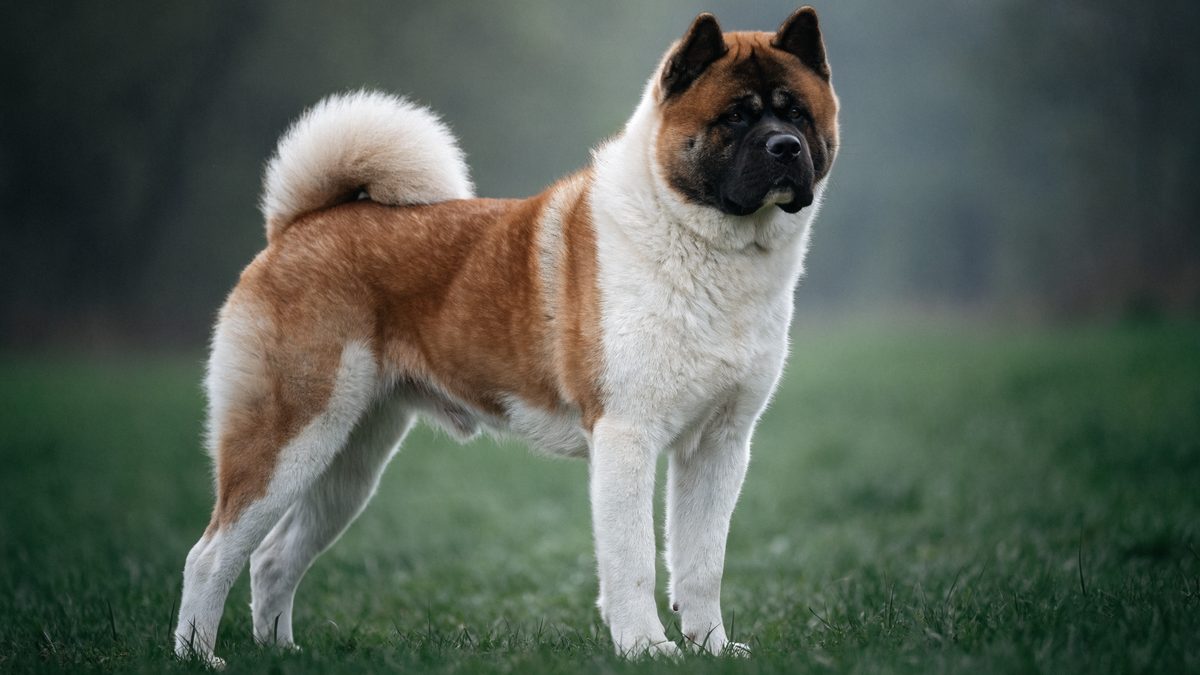
Quick answer
The Akita price in India runs Rs 30,000 to Rs 7,50,000 in 2026, because Indian sellers list at most two breeds under three names. One platform quotes Rs 75,000 for an Akita, Rs 90,000 for an American Akita and Rs 2,50,000 for a Japanese Akita. Bonbeno rates heat tolerance 1 of 5 for a 45 to 59 kg double-coated dog in an Indian summer.
This guide is general information for Indian pet owners and is not a diagnosis. Always consult a registered veterinarian near you before acting on anything you read here, and treat any sudden change in your dog's condition as urgent.
Akita at a glance
What an Akita is, and why it is two breeds
The Akita is a large Japanese spitz-type dog, and in most of the world it is not one breed but two. The Federation Cynologique Internationale publishes separate standards for the Akita and the American Akita, and The Kennel Club in Britain separated the Akita and the Akita Inu in 2006 Federation Cynologique Internationale The Kennel Club, Japanese Akita Inu. The American Kennel Club recognises a single breed called the Akita. Indian sellers use all three names interchangeably and price them as though they were one dog, and that single fact explains most of the price confusion on this page.
Start with the registries, because everything downstream depends on them. Three of the four bodies an Indian buyer is likely to encounter split the breed, and one does not.
| Registry | Position | What it publishes |
|---|---|---|
| Federation Cynologique Internationale | Two breeds | FCI-Standard No. 255 Akita, origin Japan, valid from 13 March 2001, and FCI-Standard No. 344 American Akita, origin Japan with development in the USA, valid from 11 February 2026 Federation Cynologique Internationale |
| The Kennel Club, United Kingdom | Two breeds | Separate Breeds A to Z entries for the Akita and the Japanese Akita Inu, both in the Utility group. The club states plainly that the Akita and Akita Inu were separated by The Kennel Club in 2006 The Kennel Club, Japanese Akita Inu |
| American Kennel Club | One breed | A single Official Standard of the Akita, approved 10 May 2022 and effective 8 August 2022, describing a heavy-boned dog of 26 to 28 inches in males and permitting any colour including pinto and black masks |
| Kennel Club of India | Not verified | Indian sales pages quote KCI registration for Akitas, American Akitas and Japanese Akitas alike Mr n Mrs Pet, American Akita Puppies… Mr n Mrs Pet, Japanese Akita Puppies…. Bonbeno could not verify from KCI's own published material which position it takes, and says so rather than guessing |
The AKC standard is worth reading carefully, because it is the one most Indian breeders quote. It describes a dog that is large, powerful and alert with much substance and heavy bone, with a broad head forming a blunt triangle, small deep-set triangular eyes and small strongly erect ears carried forward in line with the back of the neck. Males stand 26 to 28 inches at the withers and bitches 24 to 26 inches, with dogs under 25 inches and bitches under 23 inches disqualified. On the AKC's own breed page males weigh 100 to 130 pounds and females 70 to 100 pounds. That is the American Akita in everything but name.
How to tell the two apart in a photograph
Two clauses in the two standards settle most identification arguments before they start, and neither is subtle. Under FCI-Standard No. 255 the Akita's permitted colours are red fawn, sesame, brindle and white, and every colour except white must carry urajiro, the whitish coat on the sides of the muzzle, cheeks, underside of the jaw, neck, chest, body and tail and the inside of the legs. A black mask is a disqualifying fault in that breed, as are markings on a white ground. Under FCI-Standard No. 344 the American Akita may be any colour, including pinto and brindle, with or without a mask or blaze, and a pinto is defined as a white ground with large evenly placed patches covering the head and more than one third of the body.
A black mask or a pinto pattern means the dog is an American Akita, because both are correct in that breed and the mask is a disqualification in the Japanese one Federation Cynologique Internationale. A plain red dog with cream urajiro on the muzzle, cheeks, chest and legs and no mask is the Japanese Akita. If a seller shows you a masked or pinto dog and calls it a Japanese Akita at a Japanese Akita price, the paperwork and the animal disagree.
Size separates them less than most Indian pages suggest. The Japanese Akita standard gives a height at withers of 67 cm in dogs and 61 cm in bitches with a tolerance of 3 cm either way, so 64 to 70 cm for a male. The American Akita standard gives 66 to 71 cm for males and 61 to 66 cm for females, and disqualifies males under 63.5 cm and females under 58.5 cm. The real difference is substance rather than stature. The American standard calls for much substance and heavy bone, lists light bone and light substance as serious faults, and describes a massive head. The Japanese standard asks instead for a well-balanced dog with high nobility and dignity in modesty, and a tail carried vigorously curled over the back.
| Attribute | Akita, FCI 255 | American Akita, FCI 344 |
|---|---|---|
| Male height at withers | 67 cm, tolerance 3 cm | 66 to 71 cm |
| Female height at withers | 61 cm, tolerance 3 cm | 61 to 66 cm |
| Bone and substance | Sturdily built, much substance, high nobility | Much substance and heavy bone. Light bone is a serious fault |
| Permitted colours | Red fawn, sesame, brindle, white only | Any colour, plus pinto and brindle |
| Urajiro markings | Required on all colours except white | Not required |
| Black mask | Disqualifying fault | Permitted |
| Eyes | Relatively small, almost triangular, dark brown | Dark brown, relatively small, almost triangular |
| Coat | Harsh straight outer coat, soft dense undercoat | Double coat, outer coat standing somewhat off body, about 5 cm at withers |
| Temperament clause | Composed, faithful, docile and receptive | Alert and responsive, dignified and courageous. May be intolerant of other dogs, particularly of the same sex |
Where the split came from
Both standards tell the same history, and it is unusually well documented. From 1603 in the Akita region, Akita Matagis, medium-sized bear-hunting dogs, were used as fighting dogs, and from 1868 they were crossbred with Tosas and Mastiffs, which increased their size and cost them their spitz characteristics. Dog fighting was prohibited in Japan in 1908, and in 1931 nine superior examples of the breed were designated Natural Monuments. During the Second World War dogs were used as a source of fur for military garments and the police ordered the capture of all dogs other than German Shepherds, so some owners crossed their dogs with German Shepherds to save them. By 1945 the breed survived as three distinct types, Matagi Akitas, fighting Akitas and Shepherd Akitas.
The two breeds diverge from that point. In Japan, breeders crossed back to Matagi Akitas to strip out the foreign influence and restore the original type. In the United States, servicemen brought home dogs of the Dewa line, which carried the Mastiff and German Shepherd influence, the Akita Club of America was founded in 1956, and the AKC accepted the breed in October 1972. Because the AKC and the Japan Kennel Club had no reciprocal pedigree agreement at the time, no new Japanese bloodlines could enter, and the American dogs developed as a type unique to the United States with characteristics unchanged since 1955. Two populations, one name, seventy years apart.
The fighting period is history, not heritage, and it is not a selling point. Organising, keeping, using or managing any place for animal fighting or for baiting any animal is an offence under section 11(1)(n) of the Prevention of Cruelty to Animals Act, 1960, as is offering a place to be so used or taking money for admission to one. Bonbeno publishes the breed's origin because the standards do, and publishes nothing that would help anyone stage a fight. If a seller markets an Akita on its fighting ancestry, that tells you what kind of seller it is.
The breed's cultural weight in Japan is real and worth knowing before you spend a lakh on one. The most famous Akita was Hachiko, who waited at a Japanese railway station for nine years for an owner who had died. Helen Keller was given an Akita in 1937, though the first registered in the United States was a male called Taro brought in by a military officer, who lived with a family in Montana and never produced a litter. When a child is born in Japan the family often receives a small Akita statue signifying health, happiness and a long life. None of that makes the dog easier to keep in Chennai.
Akita price in India
An Akita puppy costs Rs 30,000 to Rs 7,50,000 in India in 2026, and that is not a typographical error. The published Indian sources disagree by more than Rs 7,00,000 for an animal they all call an Akita, and the largest single driver of the disagreement is not quality or lineage. It is which of the breed's three trade names the seller has decided to use.
Bonbeno compared every Indian page that publishes an actual figure for this query. Read them side by side and the market stops looking like a market.
| Source | Name used | Headline range | What the page is |
|---|---|---|---|
| Happy Pet | Akita | Rs 30,000 to Rs 1,50,000 | Breed guide, origin listed as Japan, no split |
| Boggos | Akita | Rs 50,000 to Rs 1,00,000, Delhi | Pet food brand blog, one height and weight given |
| Supertails guide | Akita | Rs 45,000 to Rs 1,80,000 and above | Long buyer guide, three quality tiers, city table |
| Supertails price list | Akita (Japanese / American) | Rs 80,000 to Rs 3,00,000 | One row in a 40-breed table, both breeds merged |
| Mr n Mrs Pet | Akita | Rs 75,000 to Rs 1,80,000 and above | Sales listing with three quality tiers |
| Mr n Mrs Pet | American Akita | Rs 90,000 to Rs 5,50,000 and above | Separate sales listing, same platform |
| Mr n Mrs Pet | Japanese Akita | Rs 2,50,000 to Rs 7,50,000 and above | Third sales listing, same platform |
One seller, one country, three prices
The finding that matters most on this page sits in the last three rows. A single Indian sales platform runs three simultaneous Akita listings at three different prices. Its Akita page quotes Rs 75,000 to Rs 1,80,000 and above. Its American Akita page quotes Rs 90,000 to Rs 5,50,000 and above. Its Japanese Akita page quotes Rs 2,50,000 to Rs 7,50,000 and above. The floor price therefore differs by Rs 1,75,000 depending only on which of the platform's own three pages a buyer lands on, for a set of names that describes at most two breeds.
The specification tables make it worse rather than better. The Akita listing gives a height of 24 to 28 inches and a weight of 32 to 59 kg with no sex split at all, and lists the colours as red, brindle and white. The American Akita listing gives males 26 to 28 inches at 45 to 59 kg and females 24 to 26 inches at 32 to 45 kg. The Japanese Akita listing gives the identical height figures to the American one, males 26 to 28 inches and females 24 to 26 inches, at 34 to 50 kg and 30 to 45 kg. Against FCI-Standard No. 255 a male Akita stands 64 to 70 cm, which is 25.2 to 27.6 inches, so the top of that quoted Japanese range sits outside the breed standard's own tolerance. The colour list on that page, white, brindle, sesame, red and fawn, is the only part of it that matches the Japanese standard Federation Cynologique Internationale.
Bonbeno makes no allegation about any individual sale. What the published pages show is that the highest-priced listing carries a specification table copied from the lower-priced one, which means the price step is being justified by a name rather than by a documented difference in the animal. Before paying a Japanese Akita price, ask which registry the parents are registered with, ask to see the certificates, and check the dog against the colour and mask clauses of FCI-Standard No. 255.
The premium nobody agrees on
Two Indian sources price the Japanese line against the American line and they are nowhere near each other. Supertails states that AKIHO-registered Japanese lines carry a premium of Rs 20,000 to Rs 40,000 and that the two types have a similar base price. Mr n Mrs Pet's own listings put the gap at Rs 1,60,000 at the floor and Rs 2,00,000 at the ceiling between its Japanese Akita and its American Akita. Those two claims cannot both describe the same market. Bonbeno prints both rather than averaging them, because an average of Rs 20,000 and Rs 1,60,000 is a number no source supports and no buyer will ever be quoted.
Price by registration tier
| Tier | Supertails | Mr n Mrs Pet, Akita listing |
|---|---|---|
| Basic, not registered | Rs 45,000 to Rs 70,000 | Rs 75,000 to Rs 1,00,000 |
| KCI registered, pet quality | Rs 70,000 to Rs 1,20,000 | Rs 1,00,000 to Rs 1,50,000 |
| Show or champion bloodline | Rs 1,20,000 to Rs 1,80,000 and above | Rs 1,50,000 to Rs 1,80,000 |
The two tier tables differ by Rs 30,000 on the unregistered floor and Rs 30,000 on the KCI registered floor for the same described product. Both publishers are commercial. One sells pet products and the other brokers puppy sales, and neither discloses that interest next to the number. Bonbeno discloses it here because nobody else does.
City-wise price, and how to read it
| City | Published range | Publisher's note |
|---|---|---|
| Delhi NCR | Rs 75,000 to Rs 1,50,000 | Highest demand, most registered breeders, import agents active |
| Mumbai | Rs 70,000 to Rs 1,40,000 | Strong demand, climate challenge significant |
| Bengaluru | Rs 65,000 to Rs 1,30,000 | Relatively cooler climate helps, fewer breeders |
| Hyderabad | Rs 60,000 to Rs 1,20,000 | Moderate availability, heat management essential |
| Chennai | Rs 60,000 to Rs 1,15,000 | Lower availability, extreme heat makes ownership demanding |
| Pune | Rs 60,000 to Rs 1,20,000 | Relatively cooler, smaller breeder community |
| Kolkata | Rs 55,000 to Rs 1,10,000 | Humidity is a major grooming challenge, limited breeders |
| Tier-2 cities | Rs 50,000 to Rs 85,000 | Lower prices, harder to find health-tested breeders |
Only one publisher gives a genuine city breakdown, so this table cannot be cross-checked against a second dataset the way the headline bands can. Treat it as one publisher's estimate. The other platform that publishes a city table gives the identical range for all eight cities it lists, Rs 75,000 to Rs 1,80,000 in Hyderabad, Bengaluru, Delhi, Chennai, Lucknow, Mumbai, Jaipur and Pune alike, which is a template rather than a survey.
What the price is really tracking
- Which name the listing uses. The largest published price step in the Indian Akita market is the word Japanese, worth Rs 1,75,000 at the floor on one platform Mr n Mrs Pet, Akita Puppies For Sale….
- Registration status. A KCI registered puppy is quoted Rs 25,000 to Rs 50,000 above an unregistered one. Registration documents pedigree. It is not a health certificate, and it does not mean the parents were screened for hips, thyroid or eyes.
- Claimed imported parentage. Champion bloodline tiers are defined by imported or award-winning parents. Every such claim rests on a founding dog that entered India under one specific rule, which the adoption section takes apart.
- Rarity, real and manufactured. Supertails describes Japanese Akita Inu availability in India as very rare and mostly imported. Rarity is a legitimate price driver. Rarity asserted by a seller who also controls the label is not.
- Colour. Supertails states there is no significant price difference by colour alone. Under the breed standards colour is a correctness question rather than a value question, and a white Akita, a brindle and a red fawn with urajiro are all equally correct in the Japanese breed.
For a KCI registered pet-quality Akita of the American type, which is what most Indian buyers are actually being sold, the two most detailed Indian sources bracket the realistic band at Rs 70,000 to Rs 1,50,000 Mr n Mrs Pet, Akita Puppies For Sale…. Anything quoted above Rs 2,50,000 is being sold to you as a Japanese Akita, and the burden of proof for that claim sits with the seller. Bonbeno does not broker puppy sales and does not publish breeder listings. Every figure above is reported from a third party so you can see the disagreement and price it into your own decision.
Monthly cost of owning an Akita in India
Published Indian monthly cost estimates for an Akita run from Rs 3,000 to Rs 25,500, a spread of more than eight times, and the gap is almost entirely about whether the publisher counts air conditioning and professional grooming as pet expenses. The purchase price is a one-off. The monthly cost is the number that decides whether the dog stays.
Four Indian sources publish a running cost for this breed. Set them side by side and the disagreement is structural rather than random.
| Source | Stated monthly total | What it counts |
|---|---|---|
| Mr n Mrs Pet | Rs 3,000 to Rs 7,000 | Food, grooming, vet visits, routine care. No cooling line |
| Happy Pet | Rs 5,700 basic, Rs 8,550 premium | Food Rs 3,000 to Rs 4,500, vet Rs 1,500 to Rs 2,250, grooming Rs 1,200 to Rs 1,800. No cooling line |
| Supertails price list, large breed band | Rs 8,000 to Rs 14,000 | Generic large-breed figure, not Akita-specific |
| Supertails Akita guide | Rs 11,000 to Rs 25,500 | Includes electricity for air conditioning and professional grooming every 4 to 6 weeks |
The two totals that matter are the lowest and the highest, and the difference between them is not padding. It is two line items. The Supertails breakdown puts electricity for air conditioning at Rs 3,000 to Rs 8,000 a month during March to June in Indian metros and year-round in Chennai and Mumbai, and professional grooming at Rs 2,500 to Rs 6,000 every four to six weeks. Neither of the two cheaper estimates carries a cooling line at all Happy Pet, Akita: Breed Guide. On a double-coated northern breed in India, leaving cooling out of the budget is not a rounding error.
| Line item | Monthly estimate 2026 |
|---|---|
| Premium large-breed food | Rs 3,500 to Rs 6,500 |
| Electricity for air conditioning | Rs 3,000 to Rs 8,000 |
| Professional grooming | Rs 2,500 to Rs 6,000 |
| Flea and tick prevention | Rs 600 to Rs 1,200 |
| Joint and omega-3 supplements | Rs 500 to Rs 1,500 |
| Routine veterinary care, averaged | Rs 600 to Rs 1,500 |
| Toys and enrichment | Rs 300 to Rs 800 |
| Stated monthly total | Rs 11,000 to Rs 25,500 |
None of these four sources states a sample size, a city list or a collection date, so none of them is a survey result. Bonbeno is running a verified owner cost survey across eight metros and will publish the sample size, the cities covered and the collection date when it is complete. Until then the honest position is that no reliable India-wide monthly figure exists for this breed, and the table above compares four estimates rather than answering the question.
First-year set-up, the numbers most guides skip
| Item | Estimated cost 2026 |
|---|---|
| Full puppy vaccination course plus rabies | Rs 3,000 to Rs 6,000 |
| Deworming, every 3 months in year one | Rs 600 to Rs 1,200 |
| Spay or neuter surgery | Rs 5,000 to Rs 12,000 |
| Large sturdy crate | Rs 4,000 to Rs 8,000 |
| Orthopaedic bed | Rs 3,000 to Rs 7,000 |
| Heavy-duty leash and harness | Rs 1,500 to Rs 3,500 |
| Initial professional training | Rs 15,000 to Rs 35,000 |
| Grooming kit | Rs 2,000 to Rs 4,500 |
| First-year total, excluding purchase | Rs 34,100 to Rs 77,200 |
Add the purchase price to that and a realistic first year for a KCI registered pet-quality Akita lands between roughly Rs 1,04,000 and Rs 2,27,000, before a single unplanned veterinary bill. Bonbeno derives that range by adding the published first-year set-up band to the published KCI registered price band, and states the arithmetic openly rather than presenting it as a survey.
The three Indian line items that surprise people
- Air conditioning is a structural cost, not a luxury. Indian veterinary guidance is that indoor temperature above 32 C is dangerous for a dog at rest and that cooling should run continuously above that threshold. On a dog carrying a soft dense undercoat under a harsh outer coat, that is eight months of the year in most of the country.
- Professional grooming is twice-yearly surgery on the budget. A professional deep de-shed during the coat blow is published at Rs 5,000 to Rs 10,000 a session, twice a year, on top of routine full grooms at Rs 3,500 to Rs 7,000 every four to six weeks.
- Training is not optional pricing. A ten-session package runs Rs 18,000 to Rs 45,000 and residential board-and-train runs Rs 40,000 to Rs 1,00,000. For a 45 to 59 kg dog with documented same-sex aggression in the breed standard, this is a safety expense rather than a lifestyle one.
One claim on a ranking sales page deserves correcting on cost grounds. Mr n Mrs Pet lists Low Grooming Needs as a reason to buy an Akita, and elsewhere on the same page states that Akitas have dense curly coats needing trimming every four to six weeks to prevent matting. Neither half is right. The Akita coat is a straight harsh outer coat over a soft dense undercoat, not a curly one, and no breed standard for either Akita describes a curly coat Federation Cynologique Internationale American Kennel Club. The AKC puts the requirement at brushing at least once a week with far more during the twice-yearly coat blow, and the Kennel Club lists grooming as once a week for the Akita and more than once a week for the Japanese Akita Inu The Kennel Club, Japanese Akita Inu. Budget for a shedding machine, not for a low-maintenance dog.
Climate and heat: why Bonbeno rates heat tolerance 1 of 5
Bonbeno rates the Akita 1 of 5 for heat tolerance, the same rating this site gives the Siberian Husky and the Chow Chow, and here the reasoning rests on two things at once. The breed carries a thick soft dense undercoat under a harsh outer coat that stands off the body, and it is a 45 to 59 kg dog in a country where ambient temperatures routinely exceed 45 C and coastal humidity approaches 90 percent American Kennel Club.
The most damning number for this breed's Indian climate fit comes from a page that sells Akitas rather than from anyone criticising them. Happy Pet publishes the Akita's ideal weather as 10 C to 25 C. Delhi, Mumbai, Chennai, Hyderabad and Kolkata spend most of the year above the top of that band. Supertails, the most detailed Indian guide, rates the breed's heat tolerance as Poor and calls India's climate one of the most significant challenges of Akita ownership. Neither page then adjusts its buying advice to match its own number.
One Indian sales listing gives Great for Cold Climates as a reason to buy an American Akita, on a page selling that dog into Hyderabad, Chennai, Mumbai and Jaipur. The claim is accurate about the breed and wrong about the country. A dog whose stated advantage is cold tolerance is not thereby suited to a place with no cold season.
What the veterinary literature actually says, and what it does not
Here is where Bonbeno differs from every page ranking for this query. No published epidemiological study assigns the Akita an odds ratio for heat-related illness, and this page will not invent one. The largest primary-care study available searched the clinical records of 905,543 UK dogs during 2016 and named nine breeds with significantly higher odds of heat-related illness than the Labrador Retriever, which were the Chow Chow, Bulldog, French Bulldog, Dogue de Bordeaux, Greyhound, Cavalier King Charles Spaniel, Pug, English Springer Spaniel and Golden Retriever. The Akita is not among them.
That absence is not reassurance, and the authors say so themselves. They attribute the Golden Retriever's elevated odds to its thicker coat compared with the similarly sized Labrador, name the Chow Chow as the thick-coated extreme with the greatest risk of all the study breeds, and then write the sentence that generalises the finding. "Other double coated breeds may also have increased risk, however the current study was under-powered to fully explore these pre-dispositions due to low numbers of these breeds";. Bonbeno's Siberian Husky page quotes that same limitation for the same reason, and the Chow Chow page quotes it from the opposite end of the table.
The finding that does apply to an Akita, and that nobody has printed
Read past the breed table and the same study contains a result that fits this breed exactly. Dogs weighing over 50 kg in absolute bodyweight had the highest odds of heat-related illness of any weight group, and every weight group above 10 kg had significantly higher odds than dogs under 10 kg. The authors explain the mechanism plainly, that smaller dogs have a high heat storage to radiative surface area ratio which results in more rapid heat loss, so they can exercise for longer before overheating. A male Akita weighs 100 to 130 pounds, which is 45 to 59 kg. A large one sits in the single highest-risk weight band in the largest study ever run on the subject, before its coat is counted at all.
Two further results from the same model stack on top of that. Dogs at or above the mean adult bodyweight for their own breed and sex showed increased risk compared with dogs below it, and dogs aged 12 years and over had the greatest age-related odds. Purebred dogs showed increased risk compared with crossbred dogs, which the authors attribute to exaggerated features including thick coats and extreme body size. An overweight, ageing, purebred, double-coated 55 kg dog in an Indian May is stacking four risk factors that the study measured separately.
The Akita does not appear in the published heat-risk table, so nobody can honestly tell you it carries sixteen times a Labrador's odds the way they can for the Chow Chow. What the same study does establish, and what applies directly here, is that bodyweight above 50 kg carried the highest odds of any weight band and that the authors expect other double coated breeds to carry increased risk but could not measure them. Absence of evidence in a study that describes itself as under-powered is not evidence of absence.
The stakes come from the same dataset. Across UK dogs under primary veterinary care the annual incidence of heat-related illness was 0.04 percent and the event fatality rate was 14.18 percent. That is a temperate-country figure, and the authors note that studies from hotter climates have reported case fatality rates of 36 to 50 percent and that the comparison should serve as a warning. India publishes no equivalent national veterinary dataset, which is worth stating plainly rather than filling with an invented number.
The temperature bands that matter in India
| Ambient temperature | Risk level | What it means in practice |
|---|---|---|
| Below 28 C | Low | Normal activity with shade and water |
| 28 to 35 C | Moderate | Shorten walks to 15 to 20 minutes, early morning and late evening only |
| 35 to 42 C | High | Outdoor activity contraindicated. Asphalt reaches 60 C and above |
| Above 42 C | Extreme | Heat stroke possible within 10 to 15 minutes outdoors. Indoor temperatures without cooling can be fatal |
Humidity changes the arithmetic completely. A 35 C day at 90 percent humidity is more dangerous than a 42 C day at 20 percent humidity, because panting works by evaporation and humid air blocks it. An Akita in Chennai, Kolkata or coastal Kerala is under more thermal load than the thermometer suggests, and the monsoon months do not deliver the relief owners expect.
What actually reduces the risk
- Walk only before 7 am or after 8 pm from April to September, and keep the walk to 15 to 20 minutes even inside those windows.
- Run air conditioning or fans continuously above 32 C indoors, because indoor temperature above that threshold is dangerous for a dog at rest.
- Cool the dog on a cooling mat, an elevated bed or ceramic tile. Many dogs seek out cool surfaces instinctively.
- Do the 7-second pavement test. Place the back of your hand on the pavement for seven seconds. If you cannot hold it there, asphalt at 60 C burns paw pads within about 30 seconds, and grass runs 10 to 15 C cooler in the same sun.
- Never confine the dog to a balcony above 30 C. Concrete balconies are heat traps with no airflow and no shade.
- Plan for power cuts, because load shedding peaks exactly when cooling demand peaks. Keep a battery fan, frozen packs and a fallback location.
- Keep the dog lean, because adipose tissue insulates and overweight pets overheat two to three times faster than lean ones.
Heatstroke is a core body temperature above 40 C caused by environmental heat exposure, and above 41 C multi-organ failure begins within minutes. Wet the whole body with room-temperature water at 20 to 25 C, focus on the groin, armpits, abdomen, neck and paw pads, get moving air across the wet coat, and drive to a clinic while cooling continues. Do not use ice water or ice packs, which make skin blood vessels constrict and trap heat in the core. On a coat this dense the water has to be worked down to the skin, or it sits on the guard hairs and does nothing. Cornell's Riney Canine Health Center puts the threshold at 105 degrees Fahrenheit, names older and overweight dogs as higher risk, and notes that patients which survive are at greater risk of heatstroke again in future.
Bengaluru and Pune are the two Indian metros where the climate argument softens, and the Indian sources say so themselves, describing Bengaluru as relatively cooler and noting that it helps. Hill stations are better again. Chennai, Kolkata, coastal Kerala and the Gujarat and Rajasthan plains are the hardest places in the country to keep this breed well, and there the cooling has to be working before the dog arrives rather than after the first bad week in April.
Temperament and household fit
An Akita suits an experienced owner with space, a secure boundary and no other same-sex dog, and it suits very few other households. Both breed standards describe an alert, dignified and courageous animal, and the American standard adds a clause most Indian sellers leave out: Akitas may be intolerant of other dogs, particularly of the same sex Federation Cynologique Internationale.
The temperament clauses in the two standards are not the same, and the difference is worth knowing before you choose which breed you are buying. The Japanese Akita's standard describes a temperament that is composed, faithful, docile and receptive, and lists shyness as a fault. The American Akita's standard describes a dog that is alert and responsive, dignified and courageous, and adds the same-sex intolerance sentence. Both standards disqualify aggressive or overly shy dogs outright Federation Cynologique Internationale.
Dog-directed aggression, handled the way responsible sources handle it
The AKC states it three separate ways on the same page. The breed can be aggressive with other dogs and is especially prone to same-sex aggression. Akitas tend to be aggressive toward other dogs, particularly of the same sex, and extreme caution should be used in canine interactions. The naturally protective Akita has a propensity to become aggressive if allowed, or if it is not raised properly. Supertails reaches the same conclusion for the Indian market, describing dog aggression as a documented breed trait and advising against multi-dog homes and especially same-sex pairs.
Bonbeno reports dog-directed aggression as a management problem to be prevented, and publishes nothing that would help anyone produce or use it. Inciting an animal to fight, and organising, keeping, using or managing any place for animal fighting or for baiting any animal, are offences under section 11 of the Prevention of Cruelty to Animals Act, 1960. The Akita's fighting-dog period ended when Japan prohibited dog fighting in 1908. Anyone marketing the breed on that history in India today is describing a criminal activity, not a pedigree.
One handling detail from the AKC is unusually specific and belongs in every Indian Akita household. Prolonged eye contact is considered a challenge by the Akita, and it may respond accordingly. In a country where visitors, delivery staff, building security and curious children routinely stare at an unusual-looking large dog, that single sentence explains a category of incident that gets written off as unprovoked.
Household fit, honestly rated
- Good fit. An experienced large-dog owner in a house with a secure fenced boundary in Bengaluru, Pune or a hill station, with no other same-sex dog and someone home much of the day.
- Poor fit. A first-time owner. The Kennel Club lists the ideal home for both the Akita and the Japanese Akita Inu as a large house with a large garden The Kennel Club, Japanese Akita Inu, and Supertails calls the breed not recommended for first-time dog owners.
- Poor fit. A household with toddlers. Supertails advises against the breed with toddlers or very young children on grounds of size and independence, while noting Akitas are often good with children they are raised alongside.
- Poor fit. A multi-dog or cat household, because same-sex dog aggression is written into the breed standard and prey drive puts cats and small animals at risk.
- Watch item. A household that travels often or works long hours. Akitas form intense bonds and do badly with extended isolation or disrupted routine.
Food guarding deserves its own line because it is specific and preventable. The AKC notes that some Akitas can be food-possessive and should be given their bowl or treats well away from other animals or children. In an Indian joint-family flat, where the kitchen is busy and children move through it constantly, that is a household rule rather than a training project.
The quiet upside
Two things genuinely count in the Akita's favour in an Indian apartment block. Supertails describes the breed's barking level as low, noting that Akitas are notably quiet for a large breed and alert bark meaningfully rather than constantly, and one Indian sales listing describes them as quiet and composed. Compared with a Siberian Husky, which howls, this is a real advantage in a shared building. The AKC also notes the breed is clean and has little doggy odour, which matters through a Mumbai monsoon.
None of that changes the core judgement. An Akita is an aloof, independent, reserved, powerful and dignified dog that was never bred to please a handler, and the failure mode in India is not a noisy dog. It is a large strong dog with an unmanaged reaction to another dog at a lift door.
Training an Akita, and what the breed resists
Train an Akita consistently from puppyhood with reward-based methods, and socialise it early and widely, because this is an intelligent dog that was not bred to please a handler. The AKC puts it directly: Akitas are very intelligent and loyal but also have an independent, headstrong nature, and as large and very powerful dogs it is vital that they are trained consistently, beginning in puppyhood.
Three training facts drive almost every Indian Akita problem, and none of them is about intelligence.
- It is an instinctive guardian. The AKC states that because Akitas are instinctive guardians it is especially important that they have early and extensive socialisation when young, and that they must learn to accept a wide variety of strangers and not perceive them as a threat.
- It is not eager to please. Supertails describes the breed as intelligent but strong-willed, not eager to please, and requiring an experienced handler. Compliance in this breed is negotiated rather than assumed.
- It cannot be trusted off lead. Because of their independence and strong prey drive, Akitas should never be off lead in an unsecured area. Read that as a permanent management instruction, not a stage you graduate from.
The socialisation window is the whole ball game
Socialise the puppy deliberately and on a schedule, because an unsocialised guardian breed at 45 kg is a different animal from an unsocialised retriever at 30 kg. In an Indian city that means controlled, calm exposure to lifts, stairwells, building security staff, delivery riders, autorickshaws, temple bells and construction noise before the window closes, and it means booking that exposure into the cool hours the same way you book walks. The AKC's requirement is a wide variety of strangers, not a wide variety of places.
Street dogs complicate this in India in a way no overseas guide addresses. On a breed with documented same-sex aggression, an uncontrolled street-dog encounter is not socialisation, it is a rehearsal of the exact behaviour you are trying to prevent. Keep the dog on a short lead, choose routes deliberately, and build calm neutrality at distance rather than forced greetings. Supertails reaches the same practical conclusion, recommending careful management rather than exposure for its own sake.
Teach the household not to hold prolonged eye contact with the dog and to tell visitors the same, because the Akita reads a sustained stare as a challenge. Second, feed the dog away from other animals and from children, because food possessiveness is documented in the breed. Both rules cost nothing and both prevent the incident that ends with a dog being rehomed.
Realistic timelines
| Skill | Start | Realistic outcome |
|---|---|---|
| Name response | Week 1 home | Reliable indoors in 3 to 4 weeks |
| Sit, down, settle | Week 1 home | 4 to 8 weeks, with maintenance |
| Toilet training | Week 1 home | 3 to 5 months |
| Calm acceptance of strangers | Week 1 home | Ongoing for life. Never assume it transfers to a new context |
| Loose-lead walking on a harness | Month 2 | 6 to 12 months. A 50 kg dog that pulls is a safety problem, not a nuisance |
| Handling for grooming and nail trims | Week 1 home | Start before the first coat blow, not during it |
| Neutral passing of other dogs | Month 2 | Manageable at distance. Do not aim for off-lead dog play |
| Reliable recall off lead | Month 2 | Never treat as reliable in an unsecured area |
Professional help is priced into this breed in India rather than optional. Published Indian rates put an initial consultation at Rs 3,000 to Rs 6,000, individual sessions at Rs 2,000 to Rs 5,000, a ten-session package at Rs 18,000 to Rs 45,000, and residential board-and-train at Rs 40,000 to Rs 1,00,000. Choose a trainer who works with reward-based methods and who will show you the protocol rather than take the dog away and return it changed. On a guardian breed, a trainer who relies on confrontation is buying you a bigger problem in eighteen months.
One last point that Indian owners consistently get backwards. An Akita that ignores a cue is usually not defying you, it is deciding. The breed was selected to hunt bear, deer and wild boar in northern Japan, work that rewards independent judgement rather than handler focus. Build the relationship around clear, consistent, short sessions with something in it for the dog, and expect a partner rather than a subordinate.
Exercise: how much an Akita actually needs
The Kennel Club puts the Akita's requirement at more than two hours of daily exercise, and gives the identical figure for the Japanese Akita Inu. The American Kennel Club says a jog or brisk walk around the block at least once a day meets the needs of most individuals. Those two positions are not compatible, and Indian buyers deserve to see both rather than whichever one the seller prefers.
This is the widest source disagreement on the page after price, and it is not a rounding difference.
| Source | Stated requirement | What the source is |
|---|---|---|
| The Kennel Club, Akita | More than 2 hours per day | National kennel club breed data |
| The Kennel Club, Japanese Akita Inu | More than 2 hours per day | Same field, separate breed entry |
| American Kennel Club | A jog or brisk walk around the block at least once a day | Breed page, describes the Akita as generally not a highly active breed |
| Happy Pet, India | 60 to 120 minutes, energy level High | Indian breed guide, also states at least two hours of physical activity a day |
| Boggos, India | Energy level 9 out of 10 | Indian blog, gives no duration at all |
| Supertails, India | Moderate, structured, not exhausting | Indian buyer guide, gives no duration |
Note the internal contradiction inside one Indian source. Happy Pet publishes an exercise routine of 60 to 120 minutes in its data panel and then states in its own FAQ that Akitas require at least two hours of physical activity a day. Bonbeno treats the Kennel Club's more than two hours as the standard and the Indian 60 minutes as the floor, and prints the disagreement rather than picking the convenient one.
Whatever number you accept, in India it has to fit before 7 am and after 8 pm for roughly six months of the year, in 15 to 20 minute blocks once the temperature is between 28 C and 35 C. Two hours delivered in short cool-hour sessions is a genuinely demanding household commitment for twelve to fourteen years. It is not about willingness. It is about whether two adults can reliably deliver it every single day.
Why under-exercising this breed costs more than a bored dog
Weight is the mechanism, and it is measurable. Dogs at or above the mean adult bodyweight for their breed and sex carried increased odds of heat-related illness in the 905,543-dog UK study, and dogs above 50 kg carried the highest odds of any weight band. An under-exercised male Akita drifts upward through exactly those thresholds. Indian veterinary guidance adds the second half of the loop, that overweight pets overheat two to three times faster than lean ones. A heavy Akita overheats sooner, so it walks less, so it gets heavier.
The AKC also notes that Akitas are prone to getting overweight and that owners should watch calorie consumption and weight level, and recommends a lighter, less calorie-dense diet from seven years of age as a defence against possible kidney disease. Joint load matters too, on a heavy-boned breed where hip and elbow dysplasia are both named concerns by the parent club Akita Club of America, Hip Dysplasia.
What counts when the outdoors is closed
- Scent work and puzzle feeding indoors. Twenty minutes of nose work in an air-conditioned room tires an independent thinking breed more than twenty minutes of walking.
- Structured obedience in short blocks. Supertails frames the breed's exercise need as structured rather than exhausting, which fits a dog that was bred for deliberate work rather than endurance running.
- Swimming where clean, safe water exists. It delivers load without heat and without joint impact, and it is one of the few Indian summer options for a 50 kg dog.
- Two cool sessions rather than three. Skip the midday walk entirely from March to October. Two safe outings beat three that include one dangerous one.
- Exercise on grass, not asphalt. Grass runs 10 to 15 C cooler than asphalt in the same sun.
One myth worth killing. The AKC notes that with sufficient daily exercise Akitas can do well in a relatively small home, and that although bred to withstand harsh outdoor conditions in northern Japan they were bred as housedogs and guardians as well as hunters and adapt very well to life in the home. That is true in a temperate country. In India the binding constraint on a small home is not floor area, it is whether that space can be held below 32 C for eight months of the year.
Grooming a double coat in Indian humidity
Groom an Akita by raking dead undercoat out of the coat, never by cutting the coat off, and increase the frequency in Indian humidity rather than reducing it. The AKC sets the baseline at brushing at least once a week, with far more during the twice-yearly coat blow when the dense undercoat sheds so profusely it comes out in clumps. The Kennel Club lists grooming as once a week for the Akita and more than once a week for the Japanese Akita Inu The Kennel Club, Japanese Akita Inu.
Understand the coat before you touch it. Both standards describe the same two-layer structure. The undercoat is thick, soft and dense and shorter than the outer coat, while the outer coat is straight and harsh and stands somewhat off the body, running about 5 cm at the withers and croup, slightly longer than on the rest of the body except the tail. The Japanese standard describes the same harsh straight outer coat over a soft dense undercoat, with slightly longer hair over the withers and rump. That air gap between the two layers is the insulation, and it works in both directions.
The shaving question, answered properly
Do not shave an Akita. This is the most damaging common mistake made with double-coated breeds in India, and the reasoning is mechanical rather than sentimental. Dr Jerry Klein, the AKC's Chief Veterinary Officer, states it directly: a dog's coat acts as an insulator, and shaving that coat to reduce shedding or supposedly to keep the dog cool eliminates the insulating layer, makes the dog susceptible to heat stroke, and can result in improper hair growth and follicle damage. The coat also protects against sunburn and decreases the risk of skin cancer.
There is long-term damage as well. Shaved to the skin, the undercoat grows back faster and can crowd out the slower-growing guard hairs, which changes the texture and colour of the coat and leaves it patchy. Indian veterinary guidance says the same thing without hedging: never shave double-coated breeds, because the undercoat provides insulation that protects from both cold and heat, shaving exposes the skin to sunburn, and the coat may grow back patchy or incorrectly. Light trimming of a heavily matted dog is acceptable only after veterinary consultation.
A sales listing that ranks for this query tells Indian buyers that Akitas have dense, curly coats that need trimming every 4 to 6 weeks to prevent matting and that regular grooming keeps them cool in Indian weather. The coat is not curly in any of the three breed standards Federation Cynologique Internationale American Kennel Club, and a four-to-six-week trimming cycle on a double coat is the routine that produces the follicle damage the AKC warns about. The half of that sentence which is correct is that regular grooming helps with heat, because brushing removes dead undercoat and improves air circulation to the skin. Brushing is not trimming.
The coat blow, and what it costs in India
Expect the dense undercoat to blow twice a year and to shed so profusely that it comes out in clumps all over the house, and brush far more frequently through it to clear the dead coat. Indian sources put the shedding level at high and recommend brushing two to three times a week year-round, moving to daily through the shedding seasons. Published Indian costs for the professional version are a deep de-shed at Rs 5,000 to Rs 10,000 a session twice a year, on top of routine full grooms at Rs 3,500 to Rs 7,000 every four to six weeks and a home kit at Rs 3,000 to Rs 6,000.
The Indian humidity adjustments
- Brush to the skin, not across the surface. Surface brushing leaves dead undercoat in place, and matted fur traps heat against the skin.
- Dry the coat completely after every bath. A damp dense undercoat in coastal humidity approaching 90 percent is the main driver of hot spots and skin infection.
- Use a cool-air dryer rather than a hot one. Adding heat load to a double-coated dog in an Indian summer defeats the purpose.
- Trim nails regularly, because overly long nails cause pain and problems for the dog, and brush the teeth often.
- Time the big de-shed before summer, not during it. The undercoat you clear in February is the undercoat that will not be trapping heat in May.
Excessive dandruff or scaling, hair loss, lesions and a musty odour in an Akita are not a grooming failure by default. They are the visible signs of sebaceous adenitis, a hereditary skin disease seen primarily in Standard Poodles, Akitas and Samoyeds. If a groomer tells you the coat is dry and sells you a conditioning package, get a veterinary opinion first. One practical detail matters if a biopsy is on the table: do not shampoo the dog for two weeks before sampling, because shampoo and topical flea products can cause inflammation and equivocal results.
One genuine upside for Indian households. Akitas tend to be clean and to have little doggy odour, and Indian sources describe them as self-grooming in a cat-like way Happy Pet, Akita: Breed Guide. Owners who dread the smell of a wet dog through the monsoon get an easier ride with this breed than with most large double-coated imports. The hair volume, however, is not negotiable, and no amount of brushing makes an Akita a low-shedding dog.
Health risks, screening and lifespan
The Akita's defining health problem is not orthopaedic, it is immunological. The breed is affected by an unusual cluster of immune-mediated diseases including thyroiditis, sebaceous adenitis, pemphigus foliaceus, uveitis, polyarthritis, myasthenia gravis and uveodermatologic syndrome, and the parent club states that the breed's rather unique autoimmune problems make it an excellent model for human autoimmune disease. Hip dysplasia matters too. It is simply not the most Akita-specific thing about an Akita.
The Akita Club of America groups the breed's problems into two published lists, and the grouping itself is informative.
| Primary concerns | Less common concerns |
|---|---|
| Hip dysplasia | Elbow dysplasia |
| Hypothyroidism | Patellar luxation |
| Ocular diseases, including microphthalmia | Amelogenesis imperfecta, familial enamel hypoplasia |
| Sebaceous adenitis | Cardiac disease |
| Uveodermatologic syndrome, VKH-like | Exocrine pancreatic insufficiency |
| Gastric dilatation volvulus, bloat | Normal haematologic variations, which are not diseases at all |
| Tarsal hyperextension, luxating hocks | Reviewed by the club's Health, Genetics and Geriatrics Committee |
Uveodermatologic syndrome, the disease this breed owns
Uveodermatologic syndrome is an immune-mediated disease of anterior uveitis, chorioretinitis, skin depigmentation and hair depigmentation, and the Akita is the breed it is seen in most commonly, alongside the Samoyed and the Siberian Husky. It closely resembles the human Vogt-Koyanagi-Harada syndrome, an autoimmune disease directed against melanocytes, and secondary glaucoma or retinal detachment are frequent complications.
The parent club's description is the more clinically useful one. In dogs the condition consists of a uveitis that will eventually lead to blindness, usually bilateral and usually very painful, with squinting, decreased vision and frequent tearing as the first thing owners notice. Loss of pigment on the skin and nose and a whitening of the coat follow, though not necessarily in every area in every dog. Most dogs show signs between one and two years of age, Akitas are the most affected of all breeds, and male dogs are more affected than females. Deafness and meningitis, which occur in the human syndrome, are not seen in dogs.
The genetics are published and specific. A study of DLA class II diversity in the American Akita found that **DLA-DQA1*00201 carried a relative risk of 15.3 and an odds ratio of 15.99 for uveodermatologic syndrome** compared with other DLA class II alleles. The same study documented how narrow the breed's immune gene pool is. American Akitas possessed six of the sixteen reported DQA1 alleles, eight of sixty-one reported DRB1 alleles and nine of forty-seven reported DQB1 alleles, and almost half the dogs were homozygous for a single allele at DQA1. The parent club attributes that narrowness to the genetic bottleneck the breed passed through in the Second World War, which is the same wartime collapse the breed standards describe.
Treat squinting, redness, tearing or light sensitivity in both eyes of an Akita aged one to three as an ophthalmology referral the same week rather than a wait-and-see. Treatment controls inflammation, usually starting with prednisolone and often moving to cyclosporine or azathioprine for long-term management, and in many cases enucleation is the kindest option because the eyes are so painful. There is no genetic marker, so pedigree knowledge is currently the only prevention available to breeders. The practical Indian risk is that a painful bilateral uveitis gets treated as conjunctivitis for six weeks while the retina detaches.
Sebaceous adenitis, and why Indian humidity hides it
Sebaceous adenitis is a hereditary skin disease in which the sebaceous glands become inflamed, often leading to progressive loss of hair, and it is seen primarily in Standard Poodles, Akitas and Samoyeds. Onset has been documented as early as one year and as late as twelve, males and females appear to be affected equally, and the exact mode of inheritance is unknown. Visible signs are excessive dandruff or scaling, hair loss, lesions, a musty odour and secondary skin infections, and affected dogs can also be subclinical and show nothing at all.
Every one of those visible signs is also what a neglected double coat looks like in an Indian monsoon, which is exactly why the diagnosis gets missed here. There is no DNA test. Diagnosis rests on a minimum of two 6 mm punch biopsies taken from the skin of the neck between the top of the head and the withers, results are reported as Normal, Affected, Subclinically Affected or Equivocal, and the current screening method can produce false negatives, so retesting every one to two years is recommended for breeding dogs. Treatment does not cure it. It is a topical regimen of frequent bathing and oiling to loosen and remove scaling and dead hair, once any secondary skin infection has been cleared.
The breed's own club has put money behind this. In 2001 the Akita Club of America sponsored its first major joint research project with the Canine Health Foundation, on sebaceous adenitis, contributing over 17,000 dollars and more than 100 samples. A club funds that kind of study when a disease is common enough to matter.
Hypothyroidism, and the sign Indian owners will misread
This is the second most useful paragraph on the page for an Indian household. Hypothyroidism is common to some extent in the Akita and sits on the parent club's primary list, and its usual signs are weight gain despite calorie control, lethargy, skin problems such as hot spots and a poor coat. In this breed, however, the club records something different. Often the first clinical change in an Akita is aggression in a dog with no history of it, sometimes directed at family members, most frequently before the dog is two to three years of age.
Read that against what happens in India when a young Akita snaps at someone. The household concludes the dog has turned, a dominance-based trainer gets called, or the dog gets rehomed. A thyroid panel is cheaper than all three and may be the actual answer. The club recommends annual thyroid testing of breeding stock until at least six years of age, and specifies that OFA certification testing must include fT4, TSH and TgAA at an OFA-approved laboratory. The condition is treated with twice-daily thyroxine and should be considered genetic until proven otherwise. The club's minimum recommended panel for breeders is an OFA hip or PennHIP evaluation, an OFA Companion Animal Eye Registry examination and a thyroid panel with TgAA, with elbows, patellae and the amelogenesis imperfecta test listed as optional extras.
The bloodwork trap, and the section to show your vet
This is the most useful part of the page for an Indian veterinarian who has never worked on the breed. A healthy Akita's routine blood results can read as abnormal on standard canine reference ranges, in three separate ways at once. The Akita Club of America lists thrombocytopenia, pseudohyperkalaemia and microcytosis together under the heading Normal Hematologic Variations, filed away from its disease pages.
| Finding | What the evidence says | What it gets mistaken for |
|---|---|---|
| Microcytosis with raised RDW | Microcytosis and increased red blood cell distribution width occur in health in certain breeds such as the Japanese Shiba, Akita and Hokkaido | Iron deficiency, portosystemic shunt, chronic blood loss |
| High-potassium red cells | The high-potassium phenotype is autosomal recessive and occurred in 26 to 38 percent of dogs in the Akita and two Shiba populations surveyed, with HK gene frequencies of 0.513 to 0.612 | Hyperkalaemia, renal failure, hypoadrenocorticism, sample haemolysis |
| Large platelets with a low count | A congenital macrothrombocytopenia with a distinctive elongated platelet morphology has been described in three unrelated Akitas with no clinical bleeding | Immune-mediated thrombocytopenia, tick-borne disease |
The third row is not hypothetical, and the published case report says so plainly. In that series one Akita had been treated with corticosteroids for presumed immune-mediated platelet destruction and another had been treated with doxycycline for a month for presumed infection by a tick-borne agent, and in both dogs the platelet count stayed low, because it was congenital rather than acquired. India carries heavy tick-borne disease pressure, so the doxycycline branch of that story is the likely default here. Ask for a blood smear and platelet morphology before starting immunosuppression in an otherwise well Akita that has never bled.
Akitas can be microcytic with a raised RDW in health, can carry high-potassium erythrocytes that produce pseudohyperkalaemia if a sample sits or haemolyses, and can carry a congenital macrothrombocytopenia with large platelets and no bleeding tendency Fujise H, Higa K, Nakayama T, Wada K Hayakawa S, Spangler EA, Christopherson PW Akita Club of America. None of those three is a disease. All three have been treated as one.
Orthopaedic risk, and what to screen for
Hip dysplasia is a primary concern in most large breeds including the Akita, and it is a laxity in the hip joint or a malformation of the acetabulum that leads over time to degenerative joint disease. Most affected dogs show hind-limb lameness before two years of age, though a very fit, well-muscled dog can mask it until arthritis develops. Radiographs go to the Orthopedic Foundation for Animals or to PennHIP, and OFA issues an official evaluation only from 24 months of age, with passing grades of Excellent, Good and Fair.
The two Akita breeds carry different recommended screening panels, which is another practical consequence of the registry split. For the Akita, The Kennel Club recommends prioritising genetic diversity as good practice, then eye testing under the BVA, KC and ISDS eye scheme and hip testing under the BVA and KC hip dysplasia scheme as best practice. For the Japanese Akita Inu it recommends genetic diversity as good practice, then a DNA test for amelogenesis imperfecta and familial enamel hypoplasia, elbow testing and hip testing as best practice. The AKC's national breed club panel is a hip evaluation, an ophthalmologist evaluation and a thyroid evaluation. Buying the Japanese breed and screening to the American panel leaves out the elbow and the enamel test.
- Screen the parents' hips through OFA or PennHIP, and remember the official OFA number only exists from 24 months, so a certificate on a young parent is a preliminary rather than an official evaluation. OFA grades fall into seven categories, and only Excellent, Good and Fair sit within normal limits and receive OFA numbers.
- Ask for an ophthalmologist evaluation on both parents, one of the three tests the national breed club recommends and the one that matters most in a breed whose signature disease is ocular.
- Ask for a thyroid evaluation, because autoimmune thyroiditis sits on the parent club's primary list and inside the published immune-mediated cluster.
- Ask about sebaceous adenitis in the line, and understand that a single normal biopsy is not a clearance, because false negatives occur and retesting every one to two years is recommended.
- Verify any imported grading against the OFA international ratings matrix, which the parent club flags specifically for buyers considering a puppy from outside the United States.
Bloat, the emergency to rehearse before it happens
Gastric dilatation volvulus is a medical and surgical emergency, and even the mildest case kills without treatment. As the stomach fills with air, pressure stops blood returning from the hind legs and abdomen to the heart and the dog goes into shock, and as the stomach flips it drags the spleen and pancreas with it and cuts off their blood supply. The oxygen-starved pancreas releases hormones that can stop the heart, which is why a dog can appear to come through treatment and then arrest suddenly. The signs are an enlarging abdomen, retching, salivation, restlessness and pain when you press the belly. Without treatment the dog will likely be in shock within an hour or two.
The Indian action item is to find out today which clinic near you can perform abdominal surgery at 2 am, and to raise a prophylactic gastropexy with your surgeon at the time of spay or neuter. Indian guidance for this breed recommends exactly that conversation at the six-month surgery.
Lifespan, where the sources disagree
| Source | Figure | Which breed it names |
|---|---|---|
| American Kennel Club | 10 to 14 years | Akita, treated as one breed |
| The Kennel Club The Kennel Club, Japanese Akita Inu | Over 10 years | Same figure published for both breeds |
| Happy Pet, India | 10 to 12 years | Akita, no split |
| Boggos, India | 10 to 14 years | Akita, no split |
| Supertails, India | 10 to 13 American, 10 to 12 Japanese | Splits the two breeds |
| Mr n Mrs Pet, India Mr n Mrs Pet, American Akita Puppies… Mr n Mrs Pet, Japanese Akita Puppies… | 10 to 14, 10 to 13 and 10 to 15 across three listings | Three different figures on one platform |
Every one of those is a breed-club or editorial expectation rather than a mortality dataset. No published life table gives an Akita life expectancy from recorded deaths in India, and none of the Indian sources cites one. Treat roughly ten to thirteen years as the reasonable planning assumption, and treat any more precise Indian claim as an estimate rather than a measurement.
Supertails lists sensitivity to anaesthesia and certain medications as an Akita health issue. Bonbeno found no primary veterinary source establishing a breed-wide anaesthetic sensitivity in the Akita, and will not repeat it as fact. Raise it with your veterinary surgeon before an elective procedure and let them judge the individual dog. What is documented, and belongs in the same conversation, is the haematology above Hayakawa S, Spangler EA, Christopherson PW.
Feeding an Akita in India
Feed an Akita a complete diet appropriate to its life stage, split across two meals, and keep it visibly lean, because weight is the single feeding decision with a measured link to heat risk in this size of dog. The AKC notes that some Akitas are prone to getting overweight and that owners should watch calorie consumption and weight level, and adds that some breed experts recommend a light, less calorie-dense diet from seven years of age as a defence against possible onset of kidney disease.
Published Indian feeding costs sit between Rs 3,000 and Rs 6,500 a month for this breed, and the spread tracks food quality rather than portion size. Happy Pet puts monthly food at Rs 3,000 to Rs 4,500, Supertails puts premium large-breed food at Rs 3,500 to Rs 6,500 and calls quality non-negotiable for the breed, and Mr n Mrs Pet folds food into an all-in monthly figure of Rs 3,000 to Rs 7,000.
Portions, and why the published number is a starting point
One Indian source publishes a calorie figure, at 2,000 kcal a day for puppies and 1,800 kcal a day for adults, with a macronutrient split of roughly 50 percent carbohydrate, 25 percent protein, 15 percent fat and 5 percent each of vitamins and fibre. Bonbeno prints that because it is the only Indian figure available for the breed, and flags immediately that it is a single unsourced estimate covering a breed whose adult males range from 45 to 59 kg and whose females range from 32 to 45 kg. A 32 kg bitch and a 59 kg dog do not eat the same amount. Feed to the dog in front of you, not to a national average.
- Score body condition weekly by hand against the WSAVA nine-point chart, where an ideal dog has ribs palpable without excess fat covering, a waist visible behind the ribs from above and an abdominal tuck seen from the side. That measurement beats any feeding chart.
- Treat leanness as a heat intervention. Dogs at or above the mean adult bodyweight for their breed and sex carried increased odds of heat-related illness in the 905,543-dog UK study, and dogs over 50 kg carried the highest odds of any weight band. Indian guidance adds that overweight pets overheat two to three times faster than lean ones.
- Split the daily ration across two meals rather than one, and keep meals away from the two usable walking windows.
- Do not exercise the dog straight after a full meal. On a deep-chested breed where the parent club treats gastric dilatation volvulus as a primary concern, there is no reason to stack a full stomach on top of exertion.
- Keep clean fresh water available at all times, refreshed two to three times a day in summer, because water heats fast in an Indian flat and dehydration sharply raises heat stroke risk.
The AKC states that some Akitas can be food-possessive and should be given their food bowl or treats well away from other animals or children. In an Indian household where the kitchen is busy and children move through it constantly, that is a fixed rule rather than a training goal. Feed the dog in a separate room or a crate, and do not let anyone approach the bowl while it is eating.
Life stages, and the seventh birthday
Any diet should be appropriate to the dog's age, whether it is commercially manufactured or home-prepared under veterinary supervision and approval. The specific age marker for this breed is seven. Some breed experts recommend that Akitas aged seven years and older be fed a light or less calorie-dense diet as a defence against possible onset of kidney disease. Put a reminder in your calendar for the dog's seventh birthday and have that conversation with your veterinarian rather than waiting for a blood result to force it.
Two other life-stage points matter in India. A puppy under six months has immature thermoregulation and sits in an elevated heat-risk category on its own, so a growing Akita's summer feeding and exercise plan has to be built around cool hours from day one. At the other end, dogs aged twelve and over had the greatest age-related odds of heat-related illness in the UK study, and a heavy senior Akita is the exact animal that struggles most in an Indian May.
Indian availability and what to avoid
Good commercial large-breed dry food is widely stocked in Indian metros and online, and nothing in the breed's requirements demands an imported specialist diet for a healthy dog. Indian sources list the standard toxic exclusions for the breed, which are chocolate, grapes and raisins, onions and garlic, alcohol, avocado, cherries, fruit seeds, caffeine, excess salt and sugar. One breed-flavoured note is worth carrying: the same source suggests high soy and wheat content may not suit some Akitas, which is plausible in a breed with a documented immune-mediated skin disease but is not a proven food allergy claim, and Bonbeno labels it as the observation it is.
Feeding quantities depend on the individual dog's age, weight, body condition and activity level. Set them with a registered veterinarian who has examined your dog, and review them at the start of every summer, when activity drops and requirements change. Bonbeno reviews Indian pet food brands separately and tests products first-hand before publishing a verdict. See our testing method for what a Bonbeno food review does and does not claim.
Akita puppy: the first year, month by month
An Akita puppy's first year in India runs on four deadlines, which are the puppy vaccination course, the socialisation window, the first summer and the first eye examination. Plan the arrival date around the calendar rather than around the litter, because the third deadline is the one that cannot be rescheduled.
Bring an Akita puppy home in October or November if you have any say in it. That gives the dog the cool months for the socialisation window, house training and early lead work, and it means the first Indian summer arrives when the puppy is six to eight months old and already settled indoors rather than at eight weeks old and learning everything at once.
The vaccination schedule, where two Indian sources disagree
| Age | Supertails | Happy Pet |
|---|---|---|
| 6 to 8 weeks | First DHPP, given by the breeder before the puppy leaves. Ask for the certificate | DHLPP, distemper, hepatitis, leptospirosis, parvo, parainfluenza |
| 10 to 14 weeks | DHPP booster plus leptospirosis at 10 to 12 weeks, at the first vet appointment after adoption | Rabies at 12 to 14 weeks |
| 14 to 18 weeks | DHPP booster plus rabies at 14 to 16 weeks | DHLPP at 16 to 18 weeks |
| 20 to 22 weeks | Not listed | Bordetella |
| 12 months | Annual DHPP and rabies booster plus a full health panel, including a thyroid test from the first annual onwards | Rabies |
| Deworming | Every 3 months in the first year, twice a year after | Not scheduled |
The two schedules differ on when rabies is given and on whether Bordetella is included at all Happy Pet, Akita: Breed Guide. Bonbeno prints both rather than merging them, because a vaccination schedule is a clinical decision that belongs to the veterinarian who has examined your puppy and knows your city's disease pressure. What both agree on is that the course runs across roughly the first four to five months and that annual boosters follow.
Month by month
- 8 to 12 weeks. Home, name, toilet routine, crate, and handling practice for grooming and nail trims before the dog is strong enough to refuse. Start managed socialisation immediately rather than after the last vaccine, because the AKC calls early and extensive socialisation especially important in an instinctive guardian breed. Set the household rule about prolonged eye contact now.
- 3 to 4 months. Teething, so mouthing peaks in a dog that will weigh 45 kg or more. Introduce a heavy-duty harness, budgeted at Rs 1,500 to Rs 3,500. Begin walking only in the cool windows so the habit is normal by the time it is compulsory.
- 4 to 6 months. The vaccination course completes. Loose-lead work in earnest, because a puppy that pulls becomes an adult that cannot be safely walked past another dog. Book professional training now rather than after the first incident, at a published Rs 15,000 to Rs 35,000 for the first year.
- 6 months. Spay or neuter is commonly done here, at a published Rs 5,000 to Rs 12,000, and this is the appointment at which to raise a prophylactic gastropexy given the breed's bloat risk.
- 6 to 9 months. Adolescence, and the independent streak sharpens. Same-sex reactivity often surfaces in this window, so keep encounters at distance and do not relax the rule that the dog is never off lead in an unsecured area American Kennel Club.
- 9 to 12 months. The first full coat blow may occur, so brush daily through it and budget Rs 5,000 to Rs 10,000 if you use a professional deep de-shed. Build exercise volume toward the adult requirement.
- 12 months. Annual boosters plus a full health panel including a thyroid test. Book the first ophthalmologist evaluation, because uveodermatologic syndrome most often appears between one and two years of age and the parent club names it a primary concern Akita Club of America.
- 24 months. The earliest an official OFA hip evaluation can be issued, which matters if the dog will ever be bred or if you want a documented baseline.
The first summer
Set the cooling plan up before the puppy's first April rather than during it. That means the air conditioning working, a cooling mat or ceramic tile area in place, curtains blocking direct sun through the hottest hours, water stations refreshed two to three times a day, and a written fallback for power cuts. A puppy under six months has immature thermoregulation and is in an elevated risk category before the double coat is counted at all.
Place the back of your hand on the pavement for seven seconds before every summer walk. Asphalt reaches 60 C and above in direct sun and causes third-degree paw burns within about 30 seconds, while grass runs 10 to 15 C cooler in the same sun. Route the walk accordingly, and carry the puppy across unavoidable asphalt while it is still small enough to lift.
One growth note specific to heavy-boned breeds. The parent club records a view that improper footing, and too much exercise, play or stair climbing in a young growing puppy, may contribute to hip problems, while stating openly that there is no research proving it. Bonbeno passes on the caveat with the advice. Give the puppy good traction on Indian tile and stone floors, do not let it run up and down stairs, and keep play from getting too rough while the joints are still developing.
Akita vs American Akita, Siberian Husky and the Indian pariah dog
The comparison most Indian Akita buyers need is not against another breed, it is against the other Akita, because the choice is being made for them by whichever listing they land on. After that, the two dogs this breed actually gets cross-shopped against in India are the Siberian Husky, the other big double-coated import, and the Indian pariah dog, which is the honest baseline on cost and climate.
Akita against American Akita, the choice you are already making
| Factor | Akita, the Japanese breed | American Akita |
|---|---|---|
| Standard | FCI 255, origin Japan, valid from 2001 | FCI 344, origin Japan with development in the USA, valid from 2026 |
| Recognised separately by | FCI and The Kennel Club, which split the two in 2006 | The AKC recognises this type as simply the Akita |
| Male height | 67 cm, tolerance 3 cm | 66 to 71 cm |
| Substance | Sturdy and well balanced, nobility and dignity in modesty | Much substance and heavy-boned, with light bone a serious fault |
| Colours | Red fawn, sesame, brindle, white, all with urajiro except white | Any colour, plus pinto and brindle, with or without a mask |
| Black mask | Disqualifying fault | Permitted |
| Kennel Club grooming guidance | More than once a week | Once a week |
| Kennel Club best-practice screening | Elbow, hip and a DNA test for amelogenesis imperfecta | Eye and hip |
| Indian price, one platform | Rs 2,50,000 to Rs 7,50,000 | Rs 90,000 to Rs 5,50,000 |
| Indian availability | Very rare, mostly imported | More commonly bred in India |
| Bonbeno heat tolerance rating | 1 of 5 | 1 of 5 |
Two things follow from that table. First, the dog most Indian buyers are actually being sold is the American Akita, whether the listing calls it that or not, because it is the type that is bred here and the type the AKC standard describes. Second, the price gap between the two names on a single Indian platform is far larger than any documented difference in the animals, and the screening panels the two breeds need are not even the same The Kennel Club, Akita, Breeds A to Z The Kennel Club, Japanese Akita Inu.
Indian listings blur the Japanese native breeds constantly. The Shiba Inu is the small type in Japan's native-breed classification and the Akita is the large type, and the size difference is not marginal. A male Akita weighs 45 to 59 kg against a Shiba's single-digit-to-low-teens kilograms. See the Shiba Inu profile for that breed on its own terms. If the adult dog in the photograph is a compact fox-type dog rather than a large bear-type one, it is not an Akita at any price.
Akita against the Siberian Husky and the Indian pariah dog
| Factor | Akita | Siberian Husky | Indian pariah dog |
|---|---|---|---|
| Origin | Northern Japan, bred to hunt bear, deer and wild boar | Siberian Arctic sled dog | Indian subcontinent, native landrace |
| Coat | Harsh outer coat over thick soft dense undercoat | Dense double coat, medium length | Short, smooth, single |
| Adult male weight | 45 to 59 kg | 20 to 27 kg | Roughly 15 to 25 kg |
| Position in the UK heat-risk table | Not among the nine breeds with significantly higher odds, and not separately measured | Also absent from the risk table | Not studied at all |
| Bodyweight risk band | A large male sits above 50 kg, the highest-odds weight band in that study | Sits in a lower weight band | Sits in a lower weight band |
| Heat tolerance, Bonbeno rating | 1 of 5 | 1 of 5 | 5 of 5 |
| Daily exercise | More than 2 hours per the Kennel Club, a walk round the block per the AKC | More than 2 hours | Moderate, roughly an hour |
| Noise in a shared building | Low, notably quiet for a large breed | High, howls rather than barks | Variable, generally moderate |
| Dog-directed aggression | Documented, especially same-sex | Low, bred to work in packs | Variable by individual |
| Purchase cost in India | Rs 30,000 to Rs 7,50,000 across published sources Mr n Mrs Pet, Japanese Akita Puppies… | Rs 20,000 to Rs 1,50,000 | Rs 0 to Rs 3,000 to adopt |
| Published monthly cost | Rs 3,000 to Rs 25,500 Supertails, Akita Dog Price in India 2026 | Rs 7,500 to Rs 17,500 | Substantially lower, no cooling line |
| Suitable for first-time owners | No Supertails, Akita Dog Price in India 2026 | No | Yes |
The Indian pariah dog is a landrace, not a registered breed with a kennel-club standard, and there is no breed-level epidemiology for it in the way there is for the Akita. Its figures here are observational and drawn from Bonbeno's own profile rather than from a registry or an insurance dataset. Bonbeno flags that asymmetry rather than presenting the columns as equally evidenced. The Husky column likewise draws on Bonbeno's Siberian Husky profile.
One comparison Indian buyers make on the wrong evidence is the Akita against the Chow Chow. Both are thick-coated northern breeds sold into the same cities at similar prices, and both feel intuitively like the same climate bet. They are not. The Chow Chow was measured in the 905,543-dog UK study and had the greatest risk of heat-related illness of all the study breeds, while the Akita was not among the nine breeds with significantly higher odds than the Labrador Retriever. On the published evidence the Chow Chow is the worse thermal bet of the two, and Bonbeno says so on both pages rather than describing every double-coated dog as equally risky.
The honest summary is that the Akita's advantages over the Husky are real and Indian-relevant. It is quieter in a shared building, it does not howl, it is clean with little doggy odour, and its exercise requirement, on the AKC's reading at least, is lower. Its disadvantages are also real. It is roughly twice the Husky's bodyweight, which puts it in the highest-risk weight band for heat-related illness American Kennel Club, it carries documented dog-directed aggression that the Husky does not, and it costs more to buy in every published Indian source. Against the Indian Pariah Dog neither import wins on climate, cost or evidence, and that comparison is not close.
Mistakes Indian Akita owners actually make
The failure modes for this breed in India are predictable, documented and mostly avoidable. They are ranked here by how much damage they do rather than by how often they get discussed, and the first one costs more money than every other item on the list combined.
- Paying a Japanese Akita price for an American Akita. One Indian platform lists the same animal type under three names at Rs 75,000, Rs 90,000 and Rs 2,50,000 floors, and the highest-priced listing carries a specification table copied from the cheaper one Mr n Mrs Pet, Japanese Akita Puppies…. Check the dog against FCI-Standard No. 255 before you pay. A black mask or a pinto pattern rules the Japanese breed out Federation Cynologique Internationale.
- Shaving the coat for summer. It removes the insulating layer, makes the dog susceptible to heat stroke, exposes skin to sunburn and can cause follicle damage and improper regrowth. Indian veterinary guidance says the same, and adds that the correct summer intervention is brushing out dead undercoat to improve air circulation to the skin. One ranking Indian sales page recommends trimming this coat every four to six weeks. Do not follow it.
- Buying before the cooling plan exists. The air conditioning, the cooling mat, the sun-blocking curtains and the power-cut fallback have to be working before the dog arrives, not after the first bad week in April. The Indian source that publishes the fullest cost breakdown puts electricity at Rs 3,000 to Rs 8,000 a month for this breed, and two cheaper Indian estimates leave the line out entirely Mr n Mrs Pet, Akita Puppies For Sale….
- Adding a second dog of the same sex. Same-sex aggression is written into the breed standard itself, not inferred from anecdote, and the AKC advises extreme caution in canine interactions. This is the mistake that turns into an injury, a legal problem with a neighbour, and a rehoming.
- Letting visitors hold eye contact. Prolonged eye contact is considered a challenge by the Akita and it may respond accordingly. Tell every guest, every delivery rider and every child in the building. It costs one sentence and prevents a category of incident that later gets described as unprovoked.
- Treating KCI papers as a health guarantee. Registration documents pedigree. The national breed club's recommended panel is a hip evaluation, an ophthalmologist evaluation and a thyroid evaluation, and none of that is implied by a registration certificate.
- Screening the wrong panel for the breed you bought. The Kennel Club's best-practice tests differ between the two Akitas. The Akita gets eye and hip testing, while the Japanese Akita Inu gets a DNA test for amelogenesis imperfecta plus elbow and hip testing. Buying the Japanese breed and screening to the American list leaves out two of the three tests.
- Letting normal Akita haematology be treated as an inherited disease. Microcytosis with a raised RDW occurs in health in this breed, 26 to 38 percent of Akitas surveyed carried the autosomal recessive high-potassium red cell phenotype, and a congenital macrothrombocytopenia has already led to Akitas being given corticosteroids for presumed immune thrombocytopenia and a month of doxycycline for presumed tick-borne infection. The parent club files all three under normal variations rather than health issues.
- Treating bilateral eye pain as conjunctivitis. Uveodermatologic syndrome usually shows first as squinting, decreased vision and frequent tearing in both eyes, most often between one and two years of age, and Akitas are the most affected of all breeds. Secondary glaucoma and retinal detachment are frequent complications. Six weeks of eye drops is six weeks lost.
- Mistaking sebaceous adenitis for a monsoon skin problem. Scaling, hair loss, a musty odour and secondary infection in an Akita are the published signs of a hereditary disease seen primarily in Standard Poodles, Akitas and Samoyeds, and there is no DNA test for it. Buying a conditioning package from a groomer delays the biopsy that would answer the question.
- Letting the dog get heavy. Dogs at or above the mean adult bodyweight for their breed and sex carried increased odds of heat-related illness in the 905,543-dog UK study, and dogs over 50 kg carried the highest odds of any weight band. Overweight pets also overheat two to three times faster than lean ones. On a 45 to 59 kg breed in India, every extra kilogram is a thermal liability before it is a joint one.
- Planning exercise from the lowest published figure. The AKC describes a jog or brisk walk round the block once a day as enough for most individuals, while the Kennel Club publishes more than two hours a day for both Akitas The Kennel Club, Japanese Akita Inu. Budget for the higher figure and be pleased if your dog needs less. The gap between the two is a bored, destructive, 50 kg dog.
- Accepting nationwide puppy delivery in the hot season. Indian platforms advertise travel planning and delivery across the country as part of the purchase. Moving a double-coated puppy across India by road or air between March and June exposes it to precisely the conditions this page spends its climate section warning about. Collect the puppy yourself, or do not buy it.
- Believing the low-maintenance pitch. One sales listing gives Low Grooming Needs as a reason to buy while Indian sources put shedding at high and professional coat-blow de-shedding at Rs 5,000 to Rs 10,000 a session twice a year Supertails, Akita Dog Price in India 2026. Nothing about this coat is low maintenance in a humid country.
- Buying the breed for its fighting history. Dog fighting was prohibited in Japan in 1908 and the modern breed was rebuilt away from it. In India, organising, keeping, using or managing any place for animal fighting or for baiting any animal is an offence under section 11 of the Prevention of Cruelty to Animals Act, 1960. A seller who markets on that history is telling you something about the seller.
The costliest mistake is buying on the purchase price and discovering the operating cost afterwards. A dog bought for Rs 90,000 that needs Rs 11,000 to Rs 25,500 a month, professional training in the first year, continuous cooling for eight months of the year and a household rule set that everyone has to follow for twelve years is a very different commitment from the one most Indian buyers think they are making. That mismatch, rather than cruelty, is what fills rescue lists.
Import reality, adoption and buying responsibly
Almost every Akita in India is either an imported dog or descends from one, and Indian law lets a pet dog enter the country by exactly three routes, none of which is a commercial import for breeding. Understanding those three routes is the fastest way to judge whether a champion imported bloodline claim at Rs 5,50,000 is plausible.
How a dog legally enters India
Pet dogs and cats enter India through the Animal Quarantine and Certification Service of the Department of Animal Husbandry and Dairying, which sets out three categories. Bonbeno's Shiba Inu page establishes these rules in full for the Japanese breeds and this page follows them rather than re-deriving them.
| Route | Who it is for | Core requirement |
|---|---|---|
| A. Baggage rule, Customs Circular No. 15/2013 | An owner transferring residence to India | Proof of two years of stay abroad and proof of transferring residence, for up to two pet dogs or cats per passenger |
| B. DGFT licence | Short visits, research and development, defence, police and anything outside the baggage rule | A licence from the Directorate General of Foreign Trade, with all pre-import health conditions met under official certification |
| C. Re-import, Customs Circular No. 25/2013 | An animal previously taken out of India | Proof of past certification from a government authority, preferably AQCS, plus a fresh official health certificate |
Under the baggage rule you need an official health certificate from the country of origin certifying the dog is free from clinical signs and symptoms of all infectious and contagious diseases including rabies, canine distemper, parvovirus infection and leptospirosis. A dog three months of age or older must be vaccinated against rabies more than one month but within 12 months prior to actual embarkation. The owner's name on the health certificate must match the name on the owner's ticket, and the owner's address in both countries must appear on the certificate. An advance no-objection certificate can be issued within seven days before arrival on self-certified copies, with the original health certificate retained by AQCS at examination and final clearance issued after 30 days.
Among the documents the Animal Quarantine and Certification Service requires under the baggage rule is the declaration from the owner that the dog is a bonafide pet with no commercial interest, gift and breeding purpose. Under the DGFT route the service states it in capitals: IMPORT OF COMMERCIAL DOGS FOR BREEDING OR ANY OTHER COMMERCIAL ACTIVITIES IS NOT PERMITTED. Every Akita that legally entered India as a pet arrived with a signed declaration that it was not being brought in to breed. That is the legal starting point of the Indian Akita bloodlines being sold at a premium, and not one competing page mentions it.
One honest limit belongs here. India publishes no breed-wise import statistics, so the number of Akitas lawfully imported into the country is not a figure anyone can quote, and Bonbeno will not estimate it. Any page giving you a count of Akitas in India is making it up. Note also the service's own standing caveat, that all notifications, rules, orders and procedures are subject to change at any time, so check the current position before planning a route.
Adopting an Akita in India
Adopt rather than buy if this breed is what you want and you can meet its requirements. Bonbeno could find no published Indian data on Akita rescue intake, rehoming numbers or shelter availability, which is itself the answer to how established Akita rescue is in this country. India publishes no shelter intake statistics by breed and no rehoming figures for imported breeds, so nobody can honestly tell you how many Akitas are surrendered here each year. What is published is the cost of the alternative. Adopting an Indian street dog is listed at Rs 0 to Rs 3,000.
- Ask why the dog was surrendered. Same-sex aggression, cost and unmet exercise needs are the three most likely reasons in this breed. Each tells you something specific about whether your household is different.
- Ask what the dog's heat history is. An Akita that has already lived through Indian summers in a managed home is a known quantity in a way an imported-line puppy is not.
- Ask whether it has lived with other dogs, and get that answer before, not after, you introduce it to yours.
- Get a veterinary examination before you commit, with particular attention to the eyes, the skin and a baseline blood panel, and tell the vet in advance about the breed's normal haematologic variations Akita Club of America.
- Budget the same operating cost as for a puppy. Adoption reduces the purchase price. It does not reduce the electricity bill.
If you buy, verify these six things
- Verify which breed you are buying. Ask the seller in writing whether the dog is registered as an Akita or an American Akita, and check the animal against the colour, urajiro and mask clauses of the two standards.
- Ask which dog was imported, and by whom. A champion bloodline claim rests on an imported parent or grandparent, and that dog entered under one of the three named routes.
- Ask for the parents' hip evaluation from OFA or PennHIP, and remember an official OFA number only exists from 24 months of age.
- Ask for the parents' ophthalmologist evaluation and thyroid evaluation, which with hips make up the three tests the national breed club recommends.
- Ask what the line's history is with uveodermatologic syndrome and sebaceous adenitis. Neither has a genetic test, so pedigree knowledge is the only screening tool that exists.
- Treat a claim of a fresh commercial import as a red flag, because import of dogs for breeding or other commercial activity is not permitted.
If this is your first dog, or your first large dog, the Akita is the wrong choice, and the Indian source that most wants to sell you one says so in as many words. If you already own one, nothing on this page is an argument for giving the dog up. It is a specification for keeping it well, and the five things that matter most are continuous cooling above 32 C, never shaving the coat, a lean body condition, an ophthalmology appointment at the first sign of bilateral eye pain, and a household that never lets this dog meet a strange same-sex dog off lead American Kennel Club Hall EJ, Carter AJ Akita Club of America, VKH American Kennel Club.
Bonbeno does not sell animals and does not broker puppy sales. If you want a dog that suits Indian conditions by default, the Indian Pariah Dog is free to adopt, better adapted to the heat and cheaper to run. If you want this breed specifically, buy the right one, screen the right panel, and budget for the summer rather than the sticker price.
Akita questions Indians actually search
How much does an Akita dog cost?
Published Indian prices run from Rs 30,000 to Rs 7,50,000, because sellers use three different names for at most two breeds. For a KCI registered pet-quality Akita of the American type, which is what most Indian buyers get, the two most detailed sources bracket the realistic band at Rs 70,000 to Rs 1,50,000.
How much does a KCI registered Japanese Akita cost in India?
One Indian platform quotes Japanese Akita puppies at Rs 2,50,000 to Rs 7,50,000 and above, against Rs 1,00,000 to Rs 1,50,000 for its KCI registered Akita tier. Another Indian guide says the Japanese line carries only a Rs 20,000 to Rs 40,000 premium. Those claims cannot both be right, so demand registration certificates before paying the higher figure.
Why are Akitas so expensive in India?
Three reasons, and only two of them are legitimate. Genuine scarcity, since the breed is rare here and mostly traces to imported dogs, and high running costs. The third is naming, because the same platform charges a Rs 1,75,000 higher floor price for a Japanese Akita listing whose specification table is copied from its cheaper Akita listing.
How long do Akita dogs live?
Published expectations run from over 10 years to 10 to 15 years depending on the source, and one Indian platform gives three different figures across its three Akita listings. Every one of those is a breed-club or editorial estimate rather than a mortality dataset. Treat roughly 10 to 13 years as the planning assumption.
What is the difference between a Japanese Akita and an American Akita?
The FCI publishes separate standards and the UK Kennel Club separated them in 2006, while the AKC recognises one breed. The Japanese Akita allows only red fawn, sesame, brindle and white, requires urajiro markings and disqualifies a black mask. The American Akita allows any colour, permits pinto and masks, and is heavier boned.
Can an Akita survive Indian heat?
Yes, with continuous cooling and disciplined scheduling, but Bonbeno rates the breed 1 of 5 for heat tolerance. One Indian breed guide publishes the Akita's ideal weather as 10 C to 25 C. Requirements are air conditioning above 32 C indoors, walks only before 7 am and after 8 pm, constant fresh water, and never shaving the coat.
Should I shave my Akita in summer?
No. Shaving a double coat eliminates the insulating layer, makes the dog susceptible to heat stroke, exposes skin to sunburn and can cause follicle damage and patchy regrowth. One Indian sales page recommends trimming this coat every four to six weeks. Ignore it. Rake the dead undercoat out instead so air reaches the skin.
Are Akitas good for apartments in India?
Rarely. The Kennel Club lists the ideal home for both Akitas as a large house with a large garden. The breed is quiet for its size, which helps in a shared building, but a 45 to 59 kg dog with documented same-sex aggression in a lift lobby is the real apartment problem, followed by the cooling bill.
Are Akitas aggressive or dangerous?
Akitas may be intolerant of other dogs, particularly of the same sex, and that clause sits in the breed standard itself. The AKC adds that a naturally protective Akita can become aggressive if allowed or if not raised properly, and that prolonged eye contact is read as a challenge. Early, extensive socialisation is not optional.
What health problems do Akitas have?
The parent club's primary list is hip dysplasia, hypothyroidism, ocular disease, sebaceous adenitis, uveodermatologic syndrome, bloat and tarsal hyperextension. The most breed-specific of those is uveodermatologic syndrome, a VKH-like immune-mediated disease in which the Akita is the most affected breed of all, usually appearing between one and two years of age.
Why does my healthy Akita's blood test look abnormal?
Because three normal Akita findings mimic disease. Microcytosis with a raised RDW occurs in health in this breed, 26 to 38 percent of Akitas surveyed carried high-potassium red cells that cause pseudohyperkalaemia, and a congenital macrothrombocytopenia produces large platelets and low counts without bleeding. The parent club files all three as normal variations.
My young Akita has suddenly become aggressive. What should I check?
Ask your vet for a thyroid panel before you call a trainer. The Akita Club of America records that in this breed the first clinical sign of hypothyroidism is often aggression in a dog with no history of it, sometimes toward family members, most frequently before two to three years of age. It is treatable.
Is an Akita good for first-time dog owners in India?
No, and the Indian source most keen to sell you one says so directly. It is a powerful, independent guardian breed that is not eager to please, cannot be trusted off lead, needs professional training in year one, carries documented dog aggression, and requires continuous cooling for eight months of an Indian year.
Is the Akita a good family dog?
For very few families. An Akita suits an experienced large-dog owner in a house with a secure fenced boundary, no other same-sex dog and someone home much of the day. Both breed standards describe an alert, dignified and courageous animal, and the American standard adds that Akitas may be intolerant of other dogs, particularly of the same sex. It is often good with children it is raised alongside, but Indian guidance advises against it with toddlers on grounds of size and independence, it is not recommended for first-time owners, and the AKC notes it may treat prolonged eye contact as a challenge.
Are Akita dogs high maintenance?
Yes, in India especially, and the low-maintenance pitch on one sales listing is wrong. The dense undercoat blows twice a year and sheds in clumps, Indian sources put shedding at high, and the AKC sets brushing at once a week minimum with far more through the coat blow. Published Indian costs are a professional deep de-shed at Rs 5,000 to Rs 10,000 a session twice a year plus full grooms at Rs 3,500 to Rs 7,000 every four to six weeks, and the fullest monthly estimate reaches Rs 25,500 once air conditioning is counted. The one easy part is that Akitas are clean, with little doggy odour.
Compare with similar breeds
Akita sits in 4 Bonbeno groups. Each one compares it directly against the breeds it is genuinely an alternative to, on the same figures.