
Dog breed profile
Shiba Inu in India: Price, Import Reality and Full Breed Guide
What a Shiba Inu costs in India, why almost every one of them is imported under a two-year residence rule, what the Japanese veterinary evidence says about its eyes and its skin, and why its recall never becomes reliable.
Quick answer
The Shiba Inu price in India runs Rs 40,000 to more than Rs 6,00,000 in 2026, a spread of Rs 5,60,000 across published sources. Almost every Indian Shiba descends from a dog imported under a personal baggage rule requiring two years of residence abroad, because commercial import of dogs for breeding is not permitted. Bonbeno rates the breed 2 of 5 for heat tolerance, and its recall is never reliable off lead.
This guide is general information for Indian pet owners and is not a diagnosis. Always consult a registered veterinarian near you before acting on anything you read here, and treat any sudden change in your dog's condition as urgent.
Shiba Inu at a glance
What a Shiba Inu is
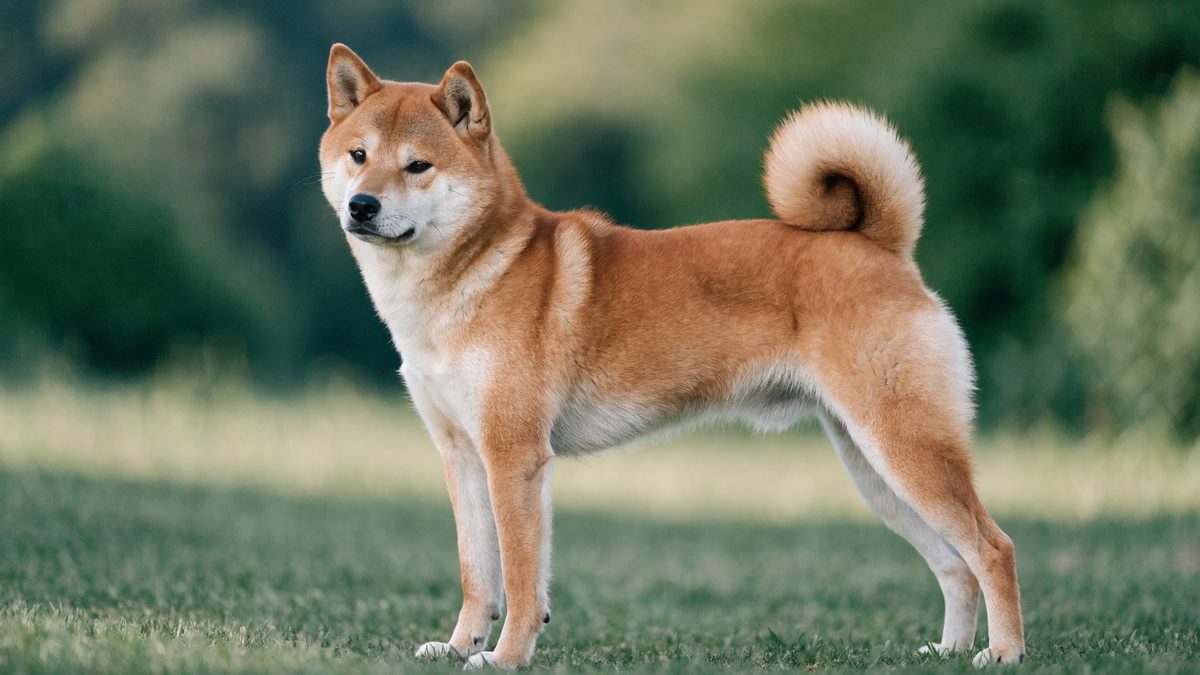
The Shiba Inu is the smallest of Japan's six native dog breeds, a compact double-coated hunting spitz standing 34 to 42 cm at the withers and weighing roughly 8 to 10 kg. It was developed to hunt birds and small game by sight and scent in dense mountain undergrowth, and almost every Shiba Inu in India today traces back to an imported dog.
Start with the standard, because it settles most of the arguments. The American Kennel Club describes the Shiba as the smallest of the Japanese native breeds of dog, originally developed for hunting by sight and scent in the dense undergrowth of Japan's mountainous areas, with a frame that is compact and well muscled. The Federation Cynologique Internationale places it in Group 5, Spitz and primitive type, Section 5, Asian Spitz and related breeds, and lists its utilisation as a hunting dog for birds and small animals and a companion dog.
That word primitive is not decoration. It is a formal FCI classification, and it predicts almost everything an Indian owner will find surprising about this dog later on the page.
Size and weight, and where the standards disagree
The three recognising registries agree on the shape and disagree on the arithmetic. The AKC gives males 14.5 to 16.5 inches at the withers and females 13.5 to 15.5 inches, with average weight at the preferred size of approximately 23 pounds for males and 17 pounds for females. The FCI gives a single target height, 39.5 cm for males and 36.5 cm for females, with a tolerance of 1.5 cm either way. The Kennel Club in Britain uses the same two target heights but allows 2 cm either way.
| Registry | Male height | Female height | Weight given | Size penalty |
|---|---|---|---|---|
| American Kennel Club | 14.5 to 16.5 in (36.8 to 41.9 cm) | 13.5 to 15.5 in (34.3 to 39.4 cm) | About 23 lb male, 17 lb female | Outside the range is a disqualification |
| FCI (Standard 257) | 39.5 cm, tolerance 1.5 cm | 36.5 cm, tolerance 1.5 cm | Not specified | Treated as a fault in proportion to degree |
| The Kennel Club (UK) | 39.5 cm, allowance 2 cm | 36.5 cm, allowance 2 cm | Not specified | Treated as a fault in proportion to degree |
The AKC is the strict one here. It makes males over 16.5 inches or under 14.5 inches, and females over 15.5 inches or under 13.5 inches, an outright disqualification, alongside an overshot or undershot bite. The FCI and the Kennel Club treat size deviation as a fault graded by degree rather than an automatic exclusion The Kennel Club, Japanese Shiba Inu breed…. If an Indian seller offers you a verified show-quality dog, that is the difference to ask about.
The coat, and why it matters more here than anywhere else
The Shiba Inu carries a true double coat. The AKC standard specifies an outer coat that is stiff and straight over an undercoat that is soft and thick, with guard hairs standing off the body about 1.5 to 2 inches in length at the withers. The FCI wording is the same in substance, an outer coat harsh and straight with a soft and dense undercoat. A long or woolly coat is a serious fault under the AKC standard, and trimming the coat must be severely penalised.
Hold on to that undercoat. It is the reason the heat tolerance section of this page exists, and the reason the grooming section tells you never to shave the dog.
Colour, and the one place Indian sellers are selling a fault
Colour is where the standards diverge sharply, and where the Indian market is quietly selling something the breed's own registry penalises. The AKC allows exactly three colours, given equal consideration: red, black with tan points, and sesame, all of them carrying urajiro, the cream to white ventral marking required on the sides of the muzzle, cheeks, inside the ears, underjaw, upper throat, inside of legs, abdomen and the underside of the tail. The FCI lists five, adding black sesame and red sesame as named subtypes of the sesame pattern, and also requires urajiro on all of them.
The AKC then says this plainly. Cream, white, pinto, or any other colour or marking not specified is a very serious fault and must be penalised. The FCI lists pinto colour among its faults.
The page ranking first for the disambiguated dog query lists Cream Shiba Inu puppies among the varieties it offers, describing them as gentle, soft-looking and less common, and prices them inside the same Rs 3,00,000 to Rs 6,00,000 band as the standard colours. Under the AKC breed standard cream is a very serious fault that must be penalised, and it is not among the colours the FCI lists at all. Rarity is being priced as a premium when the recognising registry treats it as a defect. The Kennel Club is the outlier and does permit a white coat with red or grey tinges, so a cream or white Shiba is not a mongrel and is not unhealthy for being cream. It is simply not what a champion-bloodline price is supposed to buy.
History, and why the breed nearly disappeared
The Shiba has been native to Japan since primitive times, and the word Shiba originally referred to something small. Its habitat was the mountainous area facing the Sea of Japan, and it was used to hunt small animals and birds, with slight differences between the dogs of different areas.
Then it was nearly bred out of existence. When English Setters and English Pointers were imported to Japan between 1868 and 1912, hunting became a sport, crossbreeding with those English dogs became prevalent, and by 1912 to 1926 pure Shibas had become exceedingly scarce. Concerned hunters and educated people began serious preservation work from around 1928, the breed standard was unified in 1934, and in 1937, by the FCI standard's account, the Shiba was designated a natural monument, after which it was bred and improved into the dog recognised today. That year is wrong, and the designating authority's own record is given below.
A breed that came through a genetic bottleneck that narrow carries the consequences in its gene pool. That is context for the health section, not a reason to avoid the breed.
Temperament, as the standard itself describes it
The AKC standard describes the ideal Shiba temperament as a spirited boldness, a good nature, and an unaffected forthrightness, which together yield dignity and natural beauty, and adds that the Shiba has an independent nature and can be reserved toward strangers but is loyal and affectionate to those who earn his respect. It also states that the breed is at times aggressive toward other dogs. The FCI puts it more briefly, faithful, with keenness in sense and high alertness.
Read the phrase those who earn his respect carefully. It is doing real work. This is not a breed that arrives pre-attached to whoever paid for it.
What Japan's own preservation society says, and where it disagrees with the FCI
The Nihon Ken Hozonkai, the Japanese association that preserves and registers the six native breeds, is the primary authority on this dog and almost no page outside Japan quotes it. It describes the Shiba Inu as the only small type breed of Nihon Ken, and states that the breed currently accounts for about 80 percent of the Nihon Ken born in Japan.
It also supplies the weight figures the FCI and Kennel Club standards leave out. The NIPPO standard gives males a height of 39.5 cm with 38 cm to 41 cm allowed and a weight of 9 to 11 kg, and females 36.5 cm with 35 cm to 38 cm allowed and a weight of around 7 to 9 kg. The height standard was set in September 1934.
The FCI standard states that in 1937 the Shiba was designated as a natural monument. NIPPO, the Japanese society that campaigned for the designation, states that the breed was designated a national natural monument in December of 1936. Bonbeno settled this on 31 August 2026 from the body that makes the designation. Japan's Agency for Cultural Affairs publishes a national cultural-properties database, and its record for the Shiba Inu gives the date of designation as 1936.12.16, under criterion (4), domesticated animals peculiar to Japan, with no area defined. NIPPO is right and the FCI standard is wrong. A breed standard is not a source for the acts of a government agency when that agency publishes its own register.
Six native breeds in three sizes, and the Shiba is the small one
The Japanese preservation framework splits the native dogs into three size categories, and knowing them settles most Indian identification arguments before they start. NIPPO records that in the early Showa era a nationwide survey of native dogs led to the decision to preserve the Nihon Ken in three categories: small type (Shiba), medium type (Kishu, Shikoku, Kai, Hokkaido), and large type (Akita). The American parent club describes the same split, listing large size as the Akita, medium size as the Kishu, Hokkaido, Shikoku and Kai, and small size as the Shiba.
So a Shiba and an Akita are not variants of one another. They sit at opposite ends of a deliberate three-tier classification.
Miniature Shibas are marketed internationally under the names Mame-Shiba, Ko-Shiba and Mini Shiba, and NIPPO's position is unambiguous. It states that it does not issue pedigrees that list these as breeds, that the parties promoting them violate the Nihon Ken Standard and registration regulations established by NIPPO, and also muddle the lineage of the Nihon Ken, and that because these dogs are outside the standard and lack height they will not be officially recognized by the society. NIPPO adds that it has received both inquiries and complaints about them, and that a dog's physique can be artificially altered relatively easily. If an Indian seller offers you a Mame Shiba at a rarity premium, you are being sold an undersized dog, not a rare breed.
A narrow gene pool, quantified
One NIPPO fact explains more about the health section than anything else on this page. The society records that Naka-go is regarded as the founder of the post-war revitalisation of the Shiba Inu, that Ishi-go was Naka-go's great-grandsire, and that the paternal lineage of the 30,000 Shiba Inu currently registered each year can be traced back to Ishi-go.
That 30,000 needs a date on it, because NIPPO's own registration table no longer supports it. The society publishes an annual studbook count at 年間犬籍登録数, and its Shiba column reads 13,722 in 2025, down from 31,689 in 1998 and a peak of 36,117 in 2004. The last year the column reached 30,000 was 2017, at 30,001. So the breed-page sentence describes NIPPO's register as it was roughly a decade ago, and the founder-effect point it carries is unaffected, because a narrower annual intake makes a single founding sire's dominance more pronounced rather than less.
Bonbeno publishes both NIPPO figures rather than picking one, and does not treat the table as refuting the 80 percent claim above, because the two count different things. The 80 percent describes Nihon Ken born in Japan, across every register. The table counts dogs registered with NIPPO. Inside NIPPO's own book the Shiba is a larger share still, at 13,722 of the 14,200 dogs across all six columns in 2025, or 96.6 percent.
The register question matters for a buyer too, and it is not settled by NIPPO alone. NIPPO's transfer-registration page names a separate 天然記念物柴犬保存会, a Shiba Inu preservation society, whose dogs NIPPO admits only on its provisional tier. Each of Japan's six native breeds has a society of this kind, which is why a registration figure from any single body is a floor rather than a headcount. Ask which register a pedigree came from and expect a name.
Thirty thousand dogs a year descending in the male line from a single post-war sire is a very narrow founding base. The American club's history describes the same bottleneck from the other side, recording that most Shibas that did not perish in wartime bombing raids succumbed to distemper in the post-war years, that the Mino and Sanin varieties became practically extinct while more of the Shinshu survived, and that the remnants of the various bloodlines were then combined to produce the breed as it is known today. That is the reason a recessive such as GM1 gangliosidosis travels through close blood relationships in this breed, and the reason screening matters more here than the breed's general hardiness suggests.
NIPPO's own history page settles the designation date from the Japanese side. It records that the Japanese Dog Preservation Society was established in 1928, that detailed pedigree work began in October 1932, and that in 1936 the Shiba Inu was designated as a national natural monument. It also dates the founding sire precisely: the Sekishu Ken Ishi Go, from Masuda City in Shimane Prefecture, was discovered in 1936 and his pedigree registered, and the society writes that it is not an exaggeration to say that the development of today's Shiba Inu owes everything to the existence of Ishi Go. The society also names the three historical regional lines, the San'in, Shinshu and Mino Shiba, and considers the Shiba the oldest of the six current types of Nihon Ken.
Shiba Inu price in india
The Shiba Inu price in india runs from Rs 40,000 to more than Rs 6,00,000 in 2026, a spread of Rs 5,60,000 for the same breed. That is not a range. That is four published sources describing four different markets, and the two that quote the highest and the lowest figures are both selling puppies.
Here is every published Indian figure Bonbeno could retrieve, side by side, with who published it and what they are selling. Nothing here is averaged, because averaging a Rs 5,60,000 disagreement produces a number that describes nobody's actual purchase.
| Source | Quoted price | What the source is | Date on the page |
|---|---|---|---|
| Mr n Mrs Pet | Rs 3,00,000 to Rs 6,00,000 plus | Puppy seller with pan-India delivery | 2026 |
| Zoodle (search snippet only) | Rs 80,000 to Rs 2,50,000 | Pet services app blog. Page served no content on retrieval, so this figure is not cited on this page | 2026 |
| Happy Pet | Rs 40,000 to Rs 1,00,000 | Informational breed page with an app funnel | Updated May 2025 |
| Premium Pet House | Rs 50,000 to Rs 1,00,000 | Breeder selling the breed | Page metadata dates it August 2024 |
| Supertails, all-breed context | Rs 2,000 for an indie to over Rs 1,50,000 for a KCI-registered show dog | Retailer's 40-breed India price list | 2026 |
The top of that table is fifteen times the bottom. Read it as market segmentation rather than as one honest number and a set of wrong ones Happy Pet, Shiba Inu Dog, Description Premium Pet House.
What each band is actually describing
The Rs 40,000 to Rs 1,00,000 band describes a domestically bred Shiba with no verified paperwork. Happy Pet gives Rs 40,000 to Rs 1,00,000 as the cost of buying. Premium Pet House gives Rs 50,000 to Rs 1,00,000 and adds a city breakdown in which Chennai starts lowest at Rs 40,000 and Kolkata and Hyderabad top out at Rs 75,000. At this level you are buying a dog whose parents were almost certainly bred in India from earlier imports, usually without a documented health certificate or screening record.
| City | Quoted band |
|---|---|
| Mumbai | Rs 50,000 to Rs 1,00,000 |
| Delhi | Rs 50,000 to Rs 1,00,000 |
| Chennai | Rs 40,000 to Rs 1,00,000 |
| Kolkata | Rs 50,000 to Rs 75,000 |
| Hyderabad | Rs 50,000 to Rs 75,000 |
| Ahmedabad | Rs 50,000 to Rs 1,00,000 |
| Pune | Rs 50,000 to Rs 1,00,000 |
The Rs 3,00,000 to Rs 6,00,000 band describes an import, or a dog being sold as one. Mr n Mrs Pet tiers it explicitly. Basic quality runs Rs 3,00,000 to Rs 4,00,000, KCI registered runs Rs 4,00,000 to Rs 5,00,000, and champion bloodline, which it defines as dogs from imported or award-winning parents, runs Rs 5,00,000 to Rs 6,00,000. Six times the low band buys you paperwork and provenance, and the honest question is whether the paperwork is real.
The Rs 6,00,000 ceiling and the Rs 40,000 to Rs 50,000 floor both come from businesses whose page exists to sell you a dog. That does not make either figure false. It does mean neither is a market survey. Bonbeno does not broker puppy sales, does not recommend breeders and does not quote live prices as offers. Treat this table as reported editorial data and get a written quote in your own city before budgeting.
Why the Shiba costs what a Labrador does not
Set the Shiba against the Indian baseline. Supertails puts 2026 dog prices in India from Rs 2,000 for an indie or native breed to over Rs 1,50,000 for a KCI-registered show-quality dog, and lists an adopted indie at Rs 0 to Rs 3,000. The Shiba's mid band sits at the top of that national range and its high band sits four times above it.
Three things drive that. First, supply. Almost every Shiba in India descends from a dog that was flown in, and the import section below explains why that pipeline is narrow by law rather than by market forces. Second, breed rarity domestically, which means few litters and long waits. Third, internet culture, which is the part nobody prices honestly.
The meme premium is real, and it has a documented precedent
The Shiba Inu is the dog in the Doge meme and the mascot of two cryptocurrencies, and the same query that should return this page returns ten token-price pages instead. That is not a curiosity. It is demand pressure, and the United States has already run the experiment.
Fortune reported in June 2021 that the rise of Dogecoin and Shiba Inu coin had made Shiba Inu dogs a hot commodity, and quantified the fallout. NYC Shiba Rescue saw a 30 percent rise in adoption applications. Colorado Shiba Inu Rescue had 300 people on a waitlist, and a volunteer who helps run it said 90 percent of those people had no business getting a Shiba and that all they knew was that it was the cryptocurrency dog. A typical Shiba in that market cost up to 3,000 dollars, which breeders described as almost double what the dogs had cost several years earlier.
Fortune reported that puppy mills started churning out the dogs to meet rising demand, leading to overbreeding that translated into health complications and deformities, and that first-time owners unaware of the breed's sometimes difficult temperament were dumping Shibas and leaving shelters and rescue organisations overwhelmed. A breeder who shows the breed said the trend had spurred many people to avoid reputable breeders in order to get their dogs faster. India is four years behind that curve on a much thinner supply base. Price is the least interesting thing that happens when a breed becomes a meme.
What a fair price buys, and what it does not
A price is only meaningful next to what comes with it. The Prevention of Cruelty to Animals (Dog Breeding and Marketing) Rules, 2017 set out what a registered Indian breeder must hand you, and none of it is optional or negotiable.
- Registration certificate, displayed prominently in the establishment, because no breeder may carry on breeding or house dogs for breeding and sale without a certificate of registration from the State Board.
- Minimum age of eight weeks, since the rules state that pups less than eight weeks in age are not sold.
- Receipt with the microchip number, retained by the breeder along with the purchaser's name, address and phone number.
- Written feeding, inoculation and de-worming details, plus the name and address of the attending veterinary practitioner.
- Ongoing follow-up, because the breeder must keep track of all pups produced and sold and obtain information on their progress and health at least once each year.
A seller quoting Rs 5,00,000 for a champion bloodline should be able to produce every item on that list without hesitation. If the paperwork arrives slower than the payment link, the price is not buying what it claims to buy.
Where Indian Shiba Inus actually come from, and why that sets the price
Almost every Shiba Inu in India is either an imported dog or descends from one, and Indian law lets a pet dog enter the country by exactly three routes, none of which is a commercial import for breeding. Understanding those three routes is the fastest way to judge whether a Rs 5,00,000 champion bloodline claim is plausible.
This section exists because no ranking page covers it. The pages that sell this breed advertise verified breeders and pan-India doorstep delivery without ever describing the legal pipeline the founding stock has to pass through.
Import of dogs into India runs on the Live-stock Importation Act, 1898
Pet dogs and cats enter India under the Live-stock Importation Act, 1898, administered by the Department of Animal Husbandry and Dairying through its Animal Quarantine and Certification Service, with customs clearance governed by the Central Board of Indirect Taxes and Customs. The Animal Quarantine and Certification Service sets out three categories, and every legally imported Shiba in India came through one of them.
| Route | Who it is for | Key condition |
|---|---|---|
| A. Baggage rule, Customs Circular 15/2013 | An owner transferring residence to India | Proof of two years of continuous stay abroad plus proof of transferring residence. Maximum two dogs or cats |
| B. DGFT licence | Short visits, research and development, defence, police and cases outside the baggage rule | Import of commercial dogs for breeding or any other commercial activity is not permitted |
| C. Re-import | A dog previously taken out of India | Proof of the earlier movement and past certification, preferably from AQCS |
The baggage rule is stricter than most buyers realise
Mumbai Customs states the rule in one sentence. Import of pets, dogs or cats, up to two numbers per passenger is allowed as baggage only to persons transferring their residence to India after two years of continuous stay abroad, subject to health certificates from the country of origin and examination by the animal quarantine officer, without an import licence from the Directorate General of Foreign Trade.
The Animal Quarantine and Certification Service adds the documentary detail. You need proof of two years of stay abroad and proof of transferring residence, an official health certificate from the country of origin certifying the dog is free from clinical signs of infectious and contagious disease including rabies, canine distemper, parvovirus infection and leptospirosis, and rabies vaccination for any dog three months of age or older given more than one month but within 12 months prior to embarkation. The owner's name on the health certificate must match the name on the owner's ticket.
Among the documents the Animal Quarantine and Certification Service requires under the baggage rule is "The declaration from the owner that the dog/cat is bonafide pet with no commercial interest, gift and breeding purpose";. Under the DGFT licence route the service states it in capitals: IMPORT OF COMMERCIAL DOGS FOR BREEDING OR ANY OTHER COMMERCIAL ACTIVITIES IS NOT PERMITTED. Every Shiba that legally entered India as a pet came with a signed declaration that it was not being brought in to breed. That is the legal starting point of every Indian Shiba litter, and not one competing page mentions it.
Only seven ports, and the list changed in 2025
Entry is not permitted everywhere, and the two government sources disagree because one is newer. Mumbai Customs lists six airports with animal quarantine facilities: Delhi, Mumbai, Kolkata, Chennai, Bangalore and Hyderabad. The CBIC circular of 5 March 2025 gives a longer and more precise list, notified by the Department of Animal Husbandry and Dairying: airports at Delhi, Bengaluru, Hyderabad and Kochi, and seaports or airports at Mumbai, Chennai and Kolkata.
Bonbeno reports both rather than reconciling them. The 2025 circular is the later instrument and adds Kochi, and it also cites the four underlying DAHD notifications, the most recent dated 10 October 2024. Check the current position before you plan a route, because the note on the quarantine service's own page says all notifications, rules, orders and procedures are subject to change at any time.
What changed for owners in 2025
The one genuinely good piece of news for importers is recent. Following a Department of Animal Husbandry and Dairying office memorandum dated 20 February 2025, the final No Objection Certificate is now issued to an imported pet dog or cat round the clock at the port of entry itself, in the interest of the welfare of the animal and as a facilitation to owners, provided the owner has obtained the advance NOC after submitting the required documents and giving prior email intimation of the date and time of arrival.
Before that change, an animal could sit at the airport waiting on office hours. The advance NOC can be issued within 7 days before arrival on self-certified advance copies, with provisional clearance after arrival and final clearance after 30 days.
What this means when you are looking at a listing
- Ask which dog was imported, and by whom. A champion bloodline claim rests on an imported parent or grandparent, and that dog entered under one of three named routes.
- Ask to see the AQCS paperwork for that founding dog, since the quarantine service retains the original health certificate at examination and issues clearance documents.
- Verify the Kennel Club of India registration separately from the import story. KCI papers record pedigree, not lawful entry, and a seller quoting a KCI-registered tier should produce the certificate itself rather than a description of it.
- Treat a claim of a fresh commercial import as a red flag, because import of dogs for breeding or other commercial activity is not permitted.
- Expect the Indian gene pool to be narrow. A supply chain built on two-dogs-per-returning-resident produces a small founding population, which raises the value of the screening described in the health section below.
India publishes no breed-wise import statistics, so the number of Shiba Inus lawfully imported into the country is not a figure anyone can quote, and Bonbeno will not estimate it. The Animal Quarantine and Certification Service publishes an import and export annual report but not a breed breakdown. Any page giving you a count of Shibas in India is making it up.
What the same dog costs in its main export market
One number puts the Indian spread in perspective. In the United States, the average cost of an AKC-registered Shiba Inu puppy from a reputable breeder runs 500 to 3,500 US dollars, and adoption fees through rescue organisations typically start around 450 dollars. The Shiba Inu Rescue Association, serving the American midwest, charges 550 dollars for puppies up to a year old, with adult fees starting at 450 dollars and decreasing with age.
Bonbeno does not convert those figures, because the exchange rate moves and a converted number would read as more precise than it is. Compare them yourself against the Indian bands in the table above, and then ask any seller quoting the top of the Indian range to justify the difference in terms of the actual dog rather than its scarcity.
Monthly cost of owning a Shiba Inu in India
Budget Rs 6,000 to Rs 12,000 a month for a healthy Shiba Inu in an Indian metro, and understand that the published Indian monthly cost figures for this breed contradict each other badly enough that no single number is trustworthy. The purchase price is the small part. Two chronic conditions this breed is genuinely predisposed to can each cost more per year than a mid-band puppy.
The published figures disagree, so here they are as published rather than blended.
| Item | Happy Pet | Premium Pet House | Supertails, all-breed by size |
|---|---|---|---|
| Food | Rs 1,200 to Rs 1,800 a month | Rs 3,000 to Rs 6,000, age dependent | Included in size band below |
| Grooming | Rs 700 to Rs 1,200 a month | Rs 3,000 to Rs 5,000 per professional session | Included in size band below |
| Veterinary | Rs 300 to Rs 750 a month | Rs 5,000 to Rs 10,000 set aside before arrival | Included in size band below |
| Training | Not costed | Rs 5,000 to Rs 10,000 for a professional trainer | Not costed |
| Monthly total | Rs 2,200 basic, Rs 3,750 premium | Not totalled | Rs 4,000 to Rs 8,000 small, Rs 6,000 to Rs 10,000 medium |
Two of those columns cannot both be right. Happy Pet puts the entire premium monthly budget at Rs 3,750, while Premium Pet House puts a single professional grooming session at Rs 3,000 to Rs 5,000. One grooming appointment would consume the whole month. Supertails, working across 40 breeds, gives Rs 3,000 to Rs 18,000 a month depending on breed size and grooming needs, and Rs 4,000 to Rs 8,000 for the smallest size band.
A Shiba weighing 8 to 10 kg sits between the small and medium brackets in the only all-breed Indian dataset available, which puts it at Rs 4,000 to Rs 10,000 a month before anything goes wrong. The Rs 2,200 figure is achievable only with home-cooked food, no professional grooming and no chronic condition. Bonbeno publishes both numbers and their sources rather than picking the comfortable one.
The four costs this breed adds that a Labrador does not
Skin management is the big one. The Shiba Inu is the breed the atopic dermatitis literature uses as its predisposed model, and a comprehensive Japanese and German study of gut and skin microbiota selected it specifically as one specific cAD-predisposed breed because the breed is highly susceptible to canine atopic dermatitis in Japan. Canine atopic dermatitis is a chronic relapsing condition, and most affected dogs require lifelong treatment to maintain an acceptable quality of life. That study used the Janus kinase inhibitor oclacitinib as its commonly used medical management, and a daily JAK inhibitor is a recurring monthly line item, not a one-off. In Indian humidity, with year-round flea pressure, expect this cost to be larger than in Japan rather than smaller.
Eye care is the second. Glaucoma is the condition this breed is most associated with in its country of origin, and it is not a cheap disease. Treatment failure in dogs with primary angle-closure glaucoma has a median time of 2.15 years, and within five years 70.9 percent of dogs with disease in one eye developed glaucoma in the other eye. Budget for lifelong medication, specialist review and the real possibility of surgery in both eyes.
Cooling is the third. A double-coated dog in an Indian summer needs the room it lives in to stay cool, and Indian veterinary guidance treats an indoor temperature above the danger threshold as an active risk rather than discomfort. Whether that is a fan, an air cooler or air conditioning, it is an electricity bill that runs from March to October in most of the country and does not appear in any competitor's monthly table.
Grooming during the coat blow is the fourth. The AKC notes that Shibas shed a lot, and that while it has been said they shed twice a year, some owners quip that it lasts for six months at a time. You will either buy the tools and do it yourself or pay for sessions, and in a humid Indian monsoon you cannot skip it.
A realistic first-year budget
The first year is always the expensive one, because it stacks the purchase price, the setup and the vaccination course on top of the running cost.
| Line | Lower case | Higher case | Source basis |
|---|---|---|---|
| Puppy | Rs 40,000 | Rs 6,00,000 | Published Indian bands, Happy Pet to Mr n Mrs Pet |
| Initial veterinary setup | Rs 5,000 | Rs 10,000 | Premium Pet House, set aside before arrival |
| Professional training | Rs 5,000 | Rs 10,000 | Premium Pet House |
| Grooming tools if self-grooming | Rs 1,500 | Rs 3,000 | Premium Pet House |
| Running cost, 12 months | Rs 48,000 | Rs 1,20,000 | Supertails small to medium band |
| First-year total | Rs 99,500 | Rs 7,43,000 | Sum of the above, excluding chronic disease |
That table excludes atopic dermatitis and glaucoma entirely, and both are meaningfully likely in this breed. It also excludes the cooling electricity, which no Indian source prices for any breed Premium Pet House Supertails, Dog Price List in India 2026.
An adopted Indian street dog costs Rs 0 to Rs 3,000 to bring home, is adapted to the subcontinent's climate, and carries none of this breed's inherited eye or skin risk. If the budget is the binding constraint, that is the better dog, and Bonbeno says so on every imported-breed page. If you want a Shiba specifically, plan for the running cost rather than the sticker price.
What the two chronic conditions actually cost to treat
The insurance data puts numbers on the risks the earlier sections describe. A US pet insurer's breed library rates patellar luxation as a high risk in the Shiba Inu with a cost to diagnose and treat of 1,500 to 3,000 dollars, and hip dysplasia as a medium risk at 1,500 to 6,000 dollars. It describes the breed as at high risk of patellar luxation, a problem more typically found in much smaller dogs, and calls allergies including flea allergy dermatitis, food allergies and atopy a severe problem in the breed.
Indian veterinary pricing is lower than American pricing, so treat those as order-of-magnitude figures rather than a rupee budget. The point they make is structural. A single orthopaedic correction in this breed is a four-figure dollar event in the country where the breed is common, and in India it is the kind of bill that arrives without warning on a dog bought for its face.
Climate suitability: why heat tolerance is rated 2 of 5
Bonbeno rates the Shiba Inu 2 of 5 for heat tolerance, one point above the Siberian Husky and the Chow Chow. The reasoning is that this is a genuinely double-coated northern breed, which is the mechanism that drives heat risk, but it is a small dog with a medium-length coat and a normal muzzle rather than a heavy-coated Arctic worker, and the Indian source that costs the breed puts its ideal weather at 15 to 25 C.
Take the evidence in the order it actually exists, because the honest answer here is more specific than either extreme the ranking pages offer.
What the published heat-risk data says, and what it does not
The Shiba Inu does not appear in the published heat-related illness risk tables. The largest primary-care study available reviewed the clinical records of 905,543 UK dogs and identified 395 confirmed heat-related illness events. In its final model, nine breeds had higher odds of heat-related illness than the Labrador Retriever: the Chow Chow, Bulldog, French Bulldog, Dogue de Bordeaux, Greyhound, Cavalier King Charles Spaniel, Pug, English Springer Spaniel and Golden Retriever. The Shiba Inu is not on that list. Neither is the Siberian Husky.
That absence is not a clean bill of health, and the authors say why in their own discussion. Writing about the Chow Chow, they note it is another breed with a very thick coat and had the greatest risk of heat-related illness of all the study breeds, then generalise the mechanism: "Other double coated breeds may also have increased risk, however the current study was under-powered to fully explore these pre-dispositions due to low numbers of these breeds";.
The Shiba Inu is missing from the UK risk tables because there were not enough of them in the UK population to measure, not because they were measured and found safe. The coat mechanism the study identified applies to this breed. Absence of evidence in a study that describes itself as under-powered is not evidence of absence. Bonbeno's Chow Chow page quotes the same limitation from the other direction, because the Chow was measured and topped the table.
The stakes are set by the same dataset. Across UK dogs under primary veterinary care, heat-related illness carried an event fatality rate of 14.18 percent (95 percent CI 11.08 to 17.96 percent). That is a temperate-climate figure. India publishes no equivalent national veterinary dataset, which is worth stating plainly rather than filling with an invented number.
Where the Shiba sits against the other double-coated imports
Purina India names the categories at particular risk of heat stroke as short-faced breeds and dogs with heavy coats, and gives Boxers, Bulldogs, Pugs and Pekingese as its short-faced examples and Huskies and Newfoundlands as its heavy-coated ones. It does not name the Shiba Inu. The Shiba is double-coated but not heavy-coated in that sense: the AKC standard sets its guard hairs at 1.5 to 2 inches at the withers and marks a long or woolly coat as a serious fault. It is also a normal-muzzled breed with a bite and muzzle proportion the standard specifies at 40 percent of total head length, so it carries none of the brachycephalic airway penalty that drove much of the UK risk.
The Shiba is therefore a real heat-risk breed on coat, and a considerably smaller problem than a Husky or a Chow Chow. Two of five, not one.
The one Indian number anybody publishes for this breed
The most useful India-specific figure comes from an unexpected place. Happy Pet, which costs the breed for Indian buyers, lists the Shiba Inu's ideal weather as 15 to 25 C. Hold that against the Indian calendar. Bengaluru sits inside or near that band for much of the year. Delhi is inside it for a few winter weeks and far outside it from April to June. Chennai, Mumbai, Kolkata and coastal Kerala are above the top of that band for essentially the whole year.
The temperature bands that matter in India
| Ambient temperature | Risk level | What it means in practice |
|---|---|---|
| Below 28 C | Low | Normal activity with shade and water |
| 28 to 35 C | Moderate | Reduce activity. High-risk dogs stay indoors with air conditioning or fans |
| 35 to 42 C | High | Outdoor activity contraindicated. Typical North India April to June temperatures |
| Above 42 C | Extreme | No outdoor exercise for any dog or cat. Indoor temperatures without cooling can be fatal |
Humidity rewrites that table, and India is where that matters most. A 35 C day at 90 percent humidity is more dangerous than a 42 C day at 20 percent humidity, because panting cools by evaporation and humid air blocks evaporation. A Shiba in Chennai or Kolkata carries more thermal load than the thermometer shows.
The clinical progression is worth knowing before you need it. Between 40 and 41 C the gastrointestinal mucosa begins breaking down and bacterial translocation initiates a systemic inflammatory response, with vomiting, diarrhoea and mental dullness. Between 41 and 42 C there is direct thermal injury to cells, disseminated intravascular coagulation, acute kidney injury and cerebral oedema. Above 42 C the picture is multi-organ failure. Cornell defines heatstroke as the point where the dog cannot regulate its body temperature and it rises to 105 degrees Fahrenheit, which is 40.5 C, and adds that prolonged elevation damages every organ in the body.
The morning walk is the real risk, not the parked car
Indian heat advice concentrates on parked cars, and the largest dataset says that is the wrong emphasis. A companion paper on the same 905,543 UK dogs examined 1,259 heat-related illness events from 1,222 dogs and classified their triggers. Exertional heat-related illness was the predominant trigger at 74.2 percent of the 879 events where a cause was recorded, followed by environmental heat at 12.9 percent and vehicular confinement at just 5.2 percent. The paper's title is the conclusion: dogs do not die just in hot cars.
Roughly three in four heat-related illness events in that dataset were triggered by the dog moving, not by the dog being confined. The decision that matters is whether you walk this dog at 8 am in May because the pavement felt bearable to you. Set a temperature rule rather than a time rule, and keep it when the dog looks keen. A Shiba will look keen. Purina India also gives the parked-car numbers worth knowing: at an outside temperature of 26 C a car interior reaches 32 C in five minutes and 43 C in 25 minutes.
What actually reduces the risk
- Walk before 7 am or after 8 pm from April to September, and keep the walk short even in those windows, because 35 to 42 C makes outdoor activity contraindicated.
- Run fans or air conditioning through the hot months, since indoor heat at rest is an active risk rather than mere discomfort for a double-coated dog.
- Give the dog a cool surface, a ceramic tile floor, a cooling mat or an elevated bed, because dogs seek cool surfaces instinctively.
- Test the pavement with the back of your hand before you set off, since asphalt in the danger band burns paw pads.
- Keep the dog lean, because body weight above the breed and sex mean raised the odds of heat-related illness in the UK data.
- Plan for power cuts, since load shedding peaks exactly when cooling demand peaks.
Heat stroke is diagnosed at a raised temperature of 40.5 C or above Cornell University College of Veterinary…. Move the dog into shade or air conditioning, spray or sponge the body with cool but not cold water so it reaches the skin rather than running off the coat, wet the belly and inside the legs thoroughly, and use a fan. Do not plunge the dog into cold water or an ice bath, because that prevents the core temperature coming down. Stop cooling once the temperature returns to 39.4 C so the dog does not become hypothermic. Cool while someone else drives to the clinic. Dogs that survive one episode are at greater risk of another.
| Breed | Bonbeno heat tolerance | Named in the UK risk table | Reason for the rating |
|---|---|---|---|
| Chow Chow | 1 of 5 | Yes, highest odds of all study breeds | Very thick coat, measured and confirmed in the data |
| Siberian Husky | 1 of 5 | No, breed absent from the table | Arctic sled breed, dense double coat, more than two hours of daily exercise |
| Shiba Inu | 2 of 5 | No, breed absent from the table | Double coat with medium-length guard hair, small body, normal muzzle, up to one hour of exercise |
The Shiba's rating rests on the breed standard's own coat description and on the exercise requirement the Kennel Club publishes for it, which is up to one hour a day rather than the Husky's much larger figure The Kennel Club, Japanese Shiba Inu. None of the three breeds is heat-adapted. The Shiba is simply the least difficult of them to keep cool in an Indian flat.
What India's own heat-wave definition means for this dog
India defines heat waves formally, and the thresholds land below where a double-coated northern breed is comfortable. A heat wave is considered when the maximum temperature of a station reaches at least 40 C for the plains and at least 30 C for hilly regions. On departure from normal, a heat wave is a departure of 4.5 C to 6.4 C and a severe heat wave is a departure greater than 6.4 C.
The calendar matters as much as the threshold. In India heat waves typically occur from March to June, in rare cases extending into July, and the peak month over India is May. That is four to five months in which a Shiba's outdoor life has to be planned around the thermometer rather than your schedule.
The health framing is worth carrying too. Rapid heat gain from exposure to hotter than average conditions compromises the body's ability to regulate temperature and can result in a cascade of illnesses including heat cramps, heat exhaustion, heatstroke and hyperthermia, and even small differences from seasonal average temperatures are associated with increased illness and death. The negative health impacts of heat are described as predictable and largely preventable. Preventable is the operative word for an owner with a fan, a water bowl and a clock.
Temperament and household fit
The Shiba Inu is an aloof, independent, high-prey-drive primitive breed that bonds hard with its own people and stays reserved with everyone else. It is affectionate on its own terms, it is loud when it objects, and it is a poor match for a first dog. Almost nothing about the memeable image survives contact with the standard.
Begin with the temperament clause of the standard, because that is the only description of this breed written by people with no puppy to sell. The AKC defines the ideal Shiba temperament as a spirited boldness, a good nature, and an unaffected forthrightness, which together yield dignity and natural beauty, and states that the Shiba has an independent nature and can be reserved toward strangers but is loyal and affectionate to those who earn his respect. It also records that the breed is at times aggressive toward other dogs, and that any aggression toward the handler or judge, or any overt shyness, must be severely penalised.
The FCI is terser and says the temperament is faithful, with keenness in sense and high alertness, and makes an aggressive or overly shy dog a disqualifying fault.
Two things follow. Temperament in this breed is written into the standard, which means it is selected for and therefore heritable, so the parents matter. And aloof is the correct word, not unfriendly. A Shiba is not a Labrador with a fox face.
Prey drive, and what it means on an Indian street
This is a hunting breed by definition. The FCI lists its utilisation as a hunting dog for birds and small animals, and the AKC standard describes a dog developed for hunting by sight and scent in dense undergrowth. The prey drive is not a quirk that training removes. It is the job description.
The Indian pages that sell the breed do at least say so. Happy Pet answers the question directly, stating that Shiba Inus have a strong prey drive, may chase small animals such as squirrels or rabbits, and must be kept on a leash or in a secure area outdoors to prevent them chasing or getting into dangerous situations. Premium Pet House lists risk of running away as a consideration before purchase and advises buying a strong leash.
In an Indian city the small animals are cats, chickens, squirrels and, more often than any of those, other dogs. The chase ends at a road.
Where the Indian sources contradict each other on separation anxiety
Premium Pet House tells Indian buyers that a Shiba Inu is not likely to develop separation anxiety because it is independent and free-spirited, and offers this as a benefit for people who cannot give the dog all their time. The American Kennel Club says the opposite, that in general Shibas are not massively destructive if left alone once they reach maturity, but that some can suffer separation anxiety and should be able to spend periods of time crated even when the owners are home and at night. Bonbeno reports the conflict rather than resolving it and follows the AKC, because the sentence that comes with a crate-training instruction is the one written by people who have handled the failure mode. Plan for a dog that may need crate conditioning, and treat independence as a tendency rather than a guarantee.
The noise, which is the complaint Indian owners raise first
Shibas are vocal, and not in the ordinary barking sense. Premium Pet House describes them as dogs that convey their needs by barking, screaming or growling, and says it is common for owners to see their pets barking incessantly without knowing what they want. The same page describes tantrum behaviour when a Shiba's wishes are not met.
In a standalone house with a garden that is a nuisance. In a shared-wall Indian flat with a housing society committee it is a different category of problem, and it is worth being honest with yourself about the building you live in before you buy.
Other pets, and the cat question
The standard already tells you the Shiba is at times aggressive toward other dogs. Premium Pet House goes further for the Indian market, warning that if you have other pets at home, especially cats, you should think twice, because these dogs do not like their territory intruded on and are known to be violent against other pets.
Treat that as a design constraint rather than a training project. A high-prey-drive primitive breed introduced to a resident cat is a management problem for the life of both animals.
Who this breed suits
- Experienced owners who have raised a dog before and are not expecting constant affection as the return on the money.
- Households with secure boundaries, a gate that latches and a door discipline everybody in the family keeps.
- Adults or families with older children who understand a dog that dislikes rough handling.
- People in cooler or milder Indian cities, or in homes where fans or air conditioning run through the hot months.
- Owners who want a clean, compact, quiet-indoors dog and can live with a loud, opinionated one outdoors.
Who this breed does not suit
- First-time dog owners. Premium Pet House, which sells the breed, says plainly that the Shiba Inu is not the best option for a first-time pet parent because it is stubborn and difficult to train.
- Buyers who want the meme. The American precedent is documented: first-time owners unaware of the breed's sometimes difficult temperament led to Shibas being dumped and shelters being overwhelmed.
- Homes with resident cats or small pets, given the breed's territorial reaction and hunting origin.
- Anyone wanting a guard dog. A dog that is at times aggressive toward other dogs but merely reserved with strangers is an alert dog, not a protection dog.
- Anyone who cannot keep the home cool from March to October, for the reasons set out in the climate section.
One more honest note. A Shiba that has decided you are its person is a genuinely rewarding dog, clean in the house, undemanding of attention and quietly attached. You just have to earn it, and the standard says so in as many words.
Training a Shiba Inu
To train a Shiba Inu, start early with positive reinforcement, accept that recall will never be reliable off lead, and build management rather than obedience around the escape risk. The American Kennel Club states the position more bluntly than any breeder page in India will, and every Indian owner should read its sentence before buying.
Here is the sentence. Bonbeno quotes it in full because paraphrasing softens it.
"The one thing every Shiba owner must know is that a Shiba can never, ever be considered reliable off lead unless in a confined area. No amount of obedience training will ever change that. Letting a Shiba off lead, or any dog, for that matter, is playing Russian roulette with its life. An open door, an unlocked gate, a moment of inattentiveness, and the Shiba may be gone forever";.
That is written for American suburbs with fenced yards and leash laws. Transpose it to an Indian arterial road at 8 pm, with no pavement, mixed traffic and a street-dog population the Shiba will want to engage, and the risk is not comparable. It is worse.
Why recall fails in this breed specifically
Recall failure here is genetic rather than a training deficit. The breed was selected to work independently at distance in dense undergrowth, tracking small game by sight and scent, and to make its own decisions while doing it Federation Cynologique Internationale. A dog bred to keep going when the handler is out of sight is a dog whose default answer to a recall cue, mid-chase, is no.
So do not treat a failed recall as a failure of your training. Treat it as the breed working correctly, and design around it.
What to build instead of off-lead recall
- Manage the doors. Every adult in the household uses an airlock habit at the main door and the gate, since an open door and a moment of inattentiveness is the documented failure mode.
- Use a long line, not a retractable lead. A five to ten metre biothane line gives sniffing freedom while keeping the dog connected, which is the only safe version of off-lead work outside a confined area.
- Fit a flat collar with an ID tag plus a harness, and clip the lead to the harness, so a dog that backs out of a collar is still attached.
- Microchip the dog and register the number. The breeding rules already require a microchip number on the sale receipt, so ask for it and record it yourself.
- Crate train from the first week, because the AKC recommends a Shiba be able to spend periods of time crated even when the owners are home and at night, and says crating guarantees a home will remain intact.
What does train well
The picture is not all resistance. Housebreaking is the easy win. Premium Pet House reports it is relatively easy to housebreak a Shiba using positive reinforcement, and recommends doing it while the dog is still a puppy. That fits the breed's reputation for cleanliness and its cat-like habits.
Method matters more than volume. Both Indian sources agree the training must be positive reinforcement, with Premium Pet House explicitly warning that punishment may backfire quickly on a breed that is already stubborn. A Shiba that decides a session is adversarial will simply stop participating.
Cost is knowable. A professional trainer in India runs Rs 5,000 to Rs 10,000 for the breed on published figures, and Premium Pet House advises hiring one rather than going it alone.
The socialisation window, and how to use it in India
Start early and go wide. You need to socialise the puppy to people, surfaces, traffic noise, lifts, autorickshaws, other dogs and household staff before the reserve toward strangers that the standard describes hardens into avoidance. A Shiba that has met fifty calm strangers by four months is a manageable adult. A Shiba that has met five is a dog that objects loudly at the door for the next twelve years.
Keep the sessions short, keep them under threshold, and stop while the puppy is still enjoying it. In an Indian summer, run every one of them before 7 am or after 8 pm for the reasons in the climate section.
A realistic timeline
| Age | Realistic goal | What will not be true yet |
|---|---|---|
| 8 to 12 weeks | Name response indoors, crate as a safe place, housebreaking begun, socialisation started | No reliable outdoor attention, no recall |
| 3 to 6 months | Housebreaking largely done, loose-lead walking begun, sit and settle on cue at home | Recall around distraction, calm around other dogs |
| 6 to 12 months | Long-line work, handling tolerance for grooming and nail trims, stranger-neutral behaviour | Off-lead reliability, which never arrives |
| 12 to 24 months | Adult manners, settled crate habit, consistent lead behaviour past street dogs | Any assumption that the door can be left open |
Note the last cell in the third row. It is not pessimism, it is the AKC's own position, and building your routine around it is what keeps the dog alive.
How much exercise a Shiba Inu actually needs
A Shiba Inu needs up to one hour of exercise a day, which the Kennel Club publishes as its figure for the breed, and in most of India that hour has to fit before 7 am and after 8 pm for six months of the year. This is the one area where the Shiba is genuinely easier than the double-coated imports it gets compared with.
The published figures agree closely for once, which is unusual on this page.
| Source | Daily requirement | Note |
|---|---|---|
| The Kennel Club | Up to 1 hour per day | Breed listed as Small-Medium, suited to a small house with a small or medium garden |
| Happy Pet | 30 to 60 minutes | Energy level recorded as High |
| Premium Pet House | 30 minutes to 1 hour of walking | Frames it as limited exercise needs |
| American Kennel Club | No figure given | Says most Shibas are fairly energetic and love to go for walks |
The Kennel Club puts the Shiba at up to one hour a day and lists it as a Small-Medium breed suited to a small house with a small or medium garden. Happy Pet gives 30 to 60 minutes and records the breed's energy level as high. Premium Pet House gives 30 minutes to one hour.
That is a fraction of what an Arctic sled breed needs, and it is the honest reason this breed can work in an Indian apartment where a Husky cannot.
The AKC's more careful framing
The American Kennel Club adds a qualification the Indian pages drop. It says most Shibas are fairly energetic and love to go for walks, that they are not so hyper that they will climb the walls if they do not get daily exercise, but that a Shiba owner should be dedicated to exercising the dog, especially if the dog does not have an adequate yard in which to exercise himself.
Read the second half. Most Indian flats have no yard at all, which moves the entire requirement onto you and the lead. The dog will not self-exercise on a balcony.
How the hour fits an Indian day
The constraint is heat, not stamina. Indian veterinary guidance treats 35 to 42 C as a band in which outdoor activity is contraindicated, and describes that as typical North India April to June weather. The largest available dataset found that exertional heat-related illness was the predominant trigger of heat-related illness at 74.2 percent of events, well ahead of environmental heat at 12.9 percent and vehicular confinement at 5.2 percent. The walk is the risk.
- Split the hour, roughly 30 minutes before 7 am and 30 minutes after 8 pm from April to September.
- Drop the total on the worst days rather than shifting it later, because outdoor activity above 35 C is contraindicated regardless of the clock.
- Replace distance with sniffing. A 20-minute decompression walk on a long line at walking pace tires a primitive breed more than a brisk 40-minute march.
- Move the effort indoors in peak summer, using food puzzles, scent games and short training sets, which cost nothing thermally.
- Skip the midday outing entirely, since asphalt in the danger band burns paw pads and the pavement test is the check to run first.
What happens without it
Weight is the first consequence and it compounds. Happy Pet notes that as an active breed, Shibas can become overweight without regular exercise, leading to weight-related problems including joint problems and diabetes. That matters more here than it would for another breed, because weight is also a heat risk factor: dogs above the mean bodyweight for their breed and sex had higher odds of heat-related illness in the UK data, and this breed already carries a patellar luxation burden that extra load will not help.
The second consequence is behavioural. An under-exercised Shiba is a louder Shiba, and the vocal complaints described in the temperament section get worse rather than better.
One hour a day is achievable in an Indian city in a way that a two-hour-plus Arctic requirement is not. If you have compared the Shiba against a Siberian Husky on effort, the Shiba wins clearly, and the Kennel Club's own home-size guidance backs it: small house, small or medium garden. The trade is that you must never let go of the lead.
Grooming a double coat in Indian humidity
To groom a Shiba Inu in India, brush through the undercoat at least weekly and daily during the twice-yearly coat blow, bathe about monthly, and treat flea control as a year-round medical task rather than a seasonal one. The coat itself is low maintenance. The skin underneath it is not, and that is the part Indian conditions change.
The coat is simpler than its reputation. The AKC standard describes a double coat with a stiff, straight outer coat over a soft, thick undercoat, guard hairs standing off the body about 1.5 to 2 inches at the withers, and states that it is preferred the Shiba be presented in a natural state, with trimming of the coat severely penalised. Nothing about that coat requires scissors.
How often to brush, and why the sources disagree
| Source | Recommended frequency | Shedding described as |
|---|---|---|
| The Kennel Club | Once a week | Sheds, yes |
| Happy Pet | Three to four times a week, daily during heavy shedding | Moderate shedding |
| Premium Pet House | Ten minutes every night | Sheds a lot, storms of fur twice a year |
| American Kennel Club | Infrequent brushing does not hurt the dog, but brush during heavy shedding | Sheds a lot, and it can last six months at a time |
The Kennel Club puts grooming at once a week. Happy Pet says brushing at least three to four times a week helps remove loose fur and prevent matting, with daily brushing best during heavy shedding. Premium Pet House recommends ten minutes every night.
The AKC explains why the spread exists. It notes that unless a Shiba is a long coat, the coat does not mat, so infrequent brushing does not hurt the dog, but that brushing or combing during periods of heavy shedding will reduce the amount of hair around the house. In other words the low figure is about the dog's welfare and the high figure is about your floor. Both are honest.
The American Kennel Club recommends blowing the dog with a strong blow-dryer or a shop vacuum in reverse as a good way to remove loose hair, dirt and dandruff and to check for fleas, and notes that most dogs learn to like the blower because it feels good and does not scrape the skin or pull the coat. For an Indian owner this is a genuinely useful method: it does the coat blow outdoors in minutes, it doubles as a flea inspection, and it avoids the skin irritation a slicker brush can cause on an already itchy dog.
The coat blow, and what it looks like in an Indian flat
Twice a year the undercoat comes out in sheets. The AKC's line is the honest one: it has been said Shibas shed twice a year, but some owners quip that it lasts for six months at a time. Premium Pet House prepares Indian buyers for storms of fur in the house at least twice a year and adds that the dogs shed frequently in between.
Plan for it. Do the heavy work on a balcony or terrace rather than indoors, and expect the season to be less clearly defined than in Japan, because a dog living in an air-conditioned room in a country with no real winter does not get the clean photoperiod and temperature cues that trigger a tidy seasonal moult.
Do not shave the coat
The breed standard makes trimming a severe penalty in the ring, and outside the ring the reason is thermal rather than cosmetic. The double coat is the layer that sits between the dog and solar radiation, and Indian veterinary guidance on heatstroke prevention is built around shade, airflow and cool surfaces rather than coat removal. Shaving also exposes skin that is already the breed's weak point, on a dog predisposed to atopic dermatitis.
If your groomer offers a summer shave for a Shiba, decline it and ask for a thorough de-shed instead.
Bathing, ears, nails and teeth
- Bathe about once a month with a gentle dog shampoo, since over-bathing dries the skin.
- Dry the dog completely, coat and undercoat, because a damp double coat in Indian humidity is where skin trouble starts.
- Clean the ears regularly and check for redness or bad odour, which are the early signs of the infections that ride along with allergic skin disease.
- Trim nails every few weeks, and expect resistance, because the AKC records that Shibas often object to nail trimming.
- Brush the teeth with a vet-approved paste, since the breed club records dental problems including missing teeth and premature tooth loss in the breed.
The part Indian humidity actually changes: fleas
The National Shiba Club of America writes that probably the most common health problem of the Shiba is not as dramatic as hip dysplasia or patellar luxation, but it frustrates many owners: allergies such as flea allergy dermatitis. It then describes the setting precisely: "In the warm, moist areas of the country, where fleas can only be controlled but never eradicated, dogs suffering from FAD are scratching and chewing their way through life";. Affected dogs react to a single flea bite, with intense itching at the base of the tail, on the stomach and between the hind legs, and the irritation sets up a cycle of licking and chewing until the skin discolours and hair is lost. Warm and moist with year-round fleas is not a description of a corner of America. It is a description of most of India.
So flea control on an Indian Shiba is not a monsoon chore. It is a continuous, veterinary-directed programme, and it is the single highest-return grooming decision you will make for this breed. The club also notes food and inhalant allergies causing runny eyes, hair loss on the face and intense itching around the muzzle, ears and between the toes, which on casual observation can be mistaken for demodectic mange. Pollen-driven cases show a seasonal pattern.
Why shaving makes it worse, in the American Kennel Club's own words
The reasoning is not aesthetic and it is worth reading in full, because the summer shave is offered by groomers in every Indian metro. The AKC states that shaving can actually have the opposite effect of what you intend and make your dog even hotter.
The mechanism is the two-layer coat. Double-coated dogs have a soft inner coat close to the skin that serves as an insulating layer, helping keep them warm in cold weather and cool in hot weather, and in summer, although a dog sheds a good deal of that under-layer, what remains helps capture air between the two coat layers, allowing the dog to keep the heat at bay and regulate body temperature. As dogs shed their undercoats in warm weather, the outer coat remains to protect them from sunburn and insect bites.
"Shaving that coat to reduce shedding or supposedly to keep the dog cool also eliminates that insulating layer of fur, makes the dog susceptible to heat stroke, and can result in improper hair growth and the possibility of follicle damage. A dog's fur coat protects him from sunburn and decreases his risk of developing skin cancer";. The AKC adds that when a coat is shaved to the skin the undercoat grows back faster and can crowd out the slower-growing guard hairs, changing the texture and colour of the coat and leaving it patchy. On a breed whose skin is already its weakest point, that is three separate harms for no thermal benefit.
Health risks, screening and lifespan
The Shiba Inu is a long-lived breed with three specific inherited problems worth screening for: patellar luxation, primary glaucoma and atopic dermatitis. In the largest Japanese lifespan study, of 12,039 dogs, the Shiba had the longest life expectancy of any major breed at 15.5 years. That combination, long-lived but with expensive chronic conditions, is the honest summary.
Every figure below comes from a named dataset, and where two datasets disagree both appear.
Lifespan: the number every Indian page gets wrong
Indian pages repeat 12 to 15 years, copied from general US sources. The AKC gives 13 to 16 years. The best evidence is Japanese and it is better than both.
Researchers at the University of Tokyo evaluated life expectancy in 12,039 dogs buried or cremated at eight animal cemeteries between January 2012 and March 2015. Overall life expectancy at age zero was 13.7 years (95 percent CI 13.7 to 13.8), and crossbreeds at 15.1 years (95 percent CI 14.9 to 15.3) significantly outlived purebreds at 13.6 years (95 percent CI 13.5 to 13.7).
Among major breeds the Shiba had the highest median age of death, 15.7 years, and the highest life expectancy, 15.5 years (95 percent CI 15.3 to 15.8), from 614 dogs, while the French Bulldog had the lowest on both measures at 10.2 years. The Shiba's life expectancy was higher even than the crossbreed figure of 15.1 years, which is unusual for any purebred. If you are comparing this breed against another imported breed on longevity, the Shiba wins on the best data available.
| Breed or group | Dogs | Life expectancy at age 0 | 95 percent CI |
|---|---|---|---|
| Shiba | 614 | 15.5 years | 15.3 to 15.8 |
| Crossbreed, all | not stated separately | 15.1 years | 14.9 to 15.3 |
| Beagle | 205 | 14.8 years | 14.4 to 15.1 |
| Shetland Sheepdog | 239 | 14.3 years | 13.9 to 14.6 |
| All breeds combined | 12,039 | 13.7 years | 13.7 to 13.8 |
| Purebred, all | not stated separately | 13.6 years | 13.5 to 13.7 |
| Pug | 193 | 12.8 years | 12.1 to 13.4 |
| French Bulldog | 151 | 10.2 years | 9.7 to 10.7 |
One caveat, stated plainly. A pet cemetery population is not a random sample of all dogs, since owners who pay for burial or cremation may differ from those who do not. The study is still the largest breed-resolved Japanese lifespan dataset available and it is far stronger than the unsourced ranges the selling pages carry.
What the parent club and the OFA require to be screened
The Orthopedic Foundation for Animals, working with the breed's parent club, sets three basic health screenings for Shiba Inu breeding stock. A dog needs all three registered to receive a Canine Health Information Center number.
| Screening | Testing options |
|---|---|
| Hip dysplasia | OFA radiographic hip evaluation, or PennHIP evaluation with results registered with OFA |
| ACVO eye examination | ACVO eye examination, results registered with OFA |
| Patellar luxation | Veterinary evaluation of patellar luxation, results registered with OFA |
OFA's breed statistics are served from a short breed code, and a guessed code returns a complete, plausible table for a different breed. The code SI returns the SPINONE ITALIANO, SB returns ST. BERNARD and SH returns SIBERIAN HUSKY. The correct Shiba Inu code is SHU, read out of the option list in OFA's own page markup and confirmed against the breed name printed on the returned page before any number below was used.
The OFA numbers for this breed
| Test or registry | Total tested | Normal or clear | Abnormal or dysplastic |
|---|---|---|---|
| Hips, all grades | About 5,350 evaluations | 20.0 percent excellent, 62.9 percent good, 9.7 percent fair | 363 dogs, 6.7 percent dysplastic |
| Hips, severity split | Same population | Not applicable | Mild 245 (4.5 percent), moderate 102 (1.9 percent), severe 16 (0.3 percent) |
| Patella | 4,471 | 4,253 (95.1 percent) | 218 (4.9 percent) |
| Eyes | 3,216 | 3,129 (97.3 percent) | 84 (2.6 percent) |
| Elbow | 919 | 831 (90.4 percent) | 83 (9.0 percent) |
| Dentition | 364 | 337 (92.6 percent) | 27 (7.4 percent) |
| GM1 gangliosidosis DNA test | 192 | 191 (99.5 percent) | 1 (0.5 percent) |
| Legg-Calve-Perthes | 183 | 183 (100 percent) | None |
| Degenerative myelopathy DNA test | 132 | 132 (100 percent) | None |
| Thyroid | 87 | 83 (95.4 percent) | 1 (1.1 percent) |
| Congenital cardiac | 805 | 805 (100 percent) | None |
Two observations. Hip dysplasia is not the small problem the breed's size suggests. At 6.7 percent dysplastic across roughly 5,350 OFA hip evaluations, the Shiba runs at three times the rate Bonbeno records for the Siberian Husky, and the breed club noticed this decades ago, writing that hip dysplasia occurs with surprising frequency in the Shiba, considering the small size of the dog.
The picture has barely moved in thirty years. The club published OFA figures through 31 December 1997 covering 889 Shibas: 15.0 percent excellent, 63.8 percent good, 13.2 percent fair, 3.5 percent mildly dysplastic, 3.5 percent moderately dysplastic and 0.6 percent severely dysplastic, which totals 7.6 percent dysplastic. The current OFA figure across six times as many dogs is 6.7 percent. The club also warned that studies suggest there are possibly 8 to 15 percent more dysplastic dogs than OFA statistics indicate, because many radiographs of dysplastic dogs are never submitted.
Patellar luxation, the breed club's number one concern
The National Shiba Club of America is unambiguous. Of the serious conditions common to the breed, patellar luxation is the most prevalent and potentially devastating. The condition is graded one to four, from a kneecap that can be displaced manually but returns to position when released, up to a patella that is luxated all the time with lameness and bowed legs. Most affected Shibas are grade one, where clinical signs may not be obvious. At the other end, the club records Shibas with luxation severe enough to need surgery at five weeks of age so the puppy could walk.
The club states that because patellar luxation has many causes ranging from skeletal abnormalities to soft tissue changes, diagnosis cannot be made by radiograph alone, and that palpation by an experienced veterinarian is mandatory. It adds that too vigorous manipulation of a young puppy's kneecap can actually do damage, that the amount of looseness tolerated varies between veterinarians, and that a second opinion may be warranted when in doubt. If an Indian seller offers X-rays as proof of clear patellas, that is not what the test is. Ask for a hands-on orthopaedic examination by a vet you chose.
In the OFA data, 218 of 4,471 evaluated Shibas were abnormal, which is 4.9 percent. That is the screened breeding population, so read it as a floor rather than a population prevalence.
Primary glaucoma, the condition this breed owns in Japan
This is the finding no Indian page carries, and it is the most important one on the page.
A Japanese retrospective study examined 1,244 dogs of 29 breeds with tonometry and gonioscopy, photographing the iridocorneal angle and pectinate ligament in each. Glaucoma was diagnosed in 127 dogs across 162 eyes, of which 129 eyes had primary glaucoma and 33 had secondary glaucoma. Shiba Inu dogs accounted for 42 of those 127 glaucoma cases, or 33 percent, the highest of any breed, followed by the Shih Tzu at 21 dogs, or 16.5 percent.
The 33 percent figure is the Shiba Inu's share of the glaucoma cases in that referral series, not the proportion of Shiba Inus that develop glaucoma. It means one in three dogs diagnosed with glaucoma in a 1,244-dog Japanese gonioscopy series was a Shiba. It does not mean a third of all Shibas go blind. Bonbeno flags this because the figure is repeated elsewhere as an incidence rate, which it is not.
The mechanism is the alarming part. All of the glaucomatous Shiba Inu dogs had primary glaucoma with abnormal iridocorneal angle grades and dysplastic pectinate ligaments. Not one case was secondary to injury or another disease. That is a structural, inherited, breed-specific finding.
Twenty years later nothing has changed. A 2026 survey of 105 veterinarians practising ophthalmology in Japan found Shiba Inus were the second most frequently encountered breed after Toy Poodles, at 67 mentions, and reported that for Shiba Inus, glaucoma was by far the most frequently reported condition, followed by cataracts and spontaneous chronic corneal epithelial defects. The authors note that gonioscopy confirmed all glaucomatous Shiba Inu cases in the earlier work had primary glaucoma, that a high rate of goniodysgenesis supported a genetic basis, and that in their own survey, conducted nearly 20 years later, glaucoma continues to be a frequent finding in Shiba Inus in Japan, a persistence they attribute to the breed's sustained popularity and the lack of selective pressure exerted.
The same survey found the Shiba Inu was the only breed for which corneal endotheliitis was repeatedly reported as a distinct, breed-specific disease.
What that means for prognosis is set by a separate 2026 study of 117 dogs with primary angle-closure glaucoma. Mean age at first diagnosis was 8.3 years, 69.2 percent of affected dogs were female, and within five years 70.9 percent of dogs with glaucoma in one eye developed it in the other, with a median time to treatment failure of 2.15 years. That study's most common purebreds were the Cocker Spaniel, Basset Hound and Shih Tzu rather than the Shiba, so read it as the general behaviour of the disease rather than a Shiba-specific figure.
- Ask for gonioscopy on both parents, not just an eye examination, because the abnormality in this breed is in the drainage angle and the pectinate ligament.
- Get a baseline eye examination for your own dog and repeat it annually, since the CHIC requirement for this breed is an ACVO eye examination registered with OFA.
- Treat sudden eye pain, cloudiness or a red eye as an emergency, because glaucoma onset is typically middle-aged and vision loss is fast.
- Assume the second eye is at risk once the first is affected, and budget for it.
Eyes more broadly, from the breed club's CERF data
The parent club's older eye data is worth reading alongside the OFA figures because it breaks the problem down. Between January 1991 and December 1997, 553 Shibas were examined and reported to the Canine Eye Registry Foundation. Of those, 454 dogs, or 82.10 percent, were normal, while 99 dogs, or 17.90 percent, had one or more problems. Affected rates were 14.52 percent in males and 20.51 percent in females.
Cataracts dominated, with 23 males and 42 females affected, followed by persistent pupillary membranes at 8 males and 12 females, distichiasis at 18 females, corneal dystrophy at 6 dogs, entropion at 3 females and generalised progressive retinal atrophy in 4 dogs. The club notes that cataracts in this breed most commonly appear around two years of age, that the word juvenile was dropped from the terminology because owners were checking at one year and assuming the dog was clear, and that no dog with cataracts should be used for breeding.
Set that 17.90 percent affected rate against the current OFA eye figure of 2.6 percent abnormal in 3,216 dogs. The gap is real and Bonbeno does not resolve it: the CERF figure is a 1990s referral-weighted population and the OFA figure is a modern screened breeding population. Both are reported here rather than averaged.
Atopic dermatitis, the chronic condition you will actually live with
The Shiba Inu is the breed the canine atopic dermatitis literature reaches for when it needs a predisposed model. A 2023 study in Microbiome analysed gut and skin microbiota in one specific cAD-predisposed breed, Shiba Inu, and states that this dog breed is highly susceptible to cAD in Japan, as shown by a high number of cases in published studies of cAD in this region. The study recruited 40 dogs, 20 of them healthy controls.
Two practical points come out of it. First, the disease is for life: canine atopic dermatitis is a chronic relapsing condition and most affected dogs require lifelong treatment to maintain an acceptable quality of life. Second, Staphylococcus was the most predominant bacterial genus observed on the skin of affected dogs, which is why secondary bacterial infection, not the itch itself, is usually what takes you to the clinic.
The study also found that treatment with the Janus kinase inhibitor oclacitinib shifted the microbiota of affected dogs back towards that of healthy dogs, particularly in the gut. That is a real treatment signal and also a real recurring cost, as set out in the cost of ownership section.
GM1 gangliosidosis, a fatal disease with a cheap DNA test
Canine GM1 gangliosidosis is a fatal inherited disease in the Shiba Inu breed. Affected dogs show neurological signs of progressive motor dysfunction from 5 to 6 months of age and die at 12 to 18 months after a clearly defined clinical course. A nationwide Japanese genotyping survey of 590 clinically unaffected Shiba Inus found a carrier frequency of 1.02 percent (6 of 590), rising to 2.27 percent (3 of 132) in the Kinki district. A retrospective survey over the 16 years to June 2013 identified 23 affected dogs, of which 19, or 82.6 percent, were born within the last seven years of that window, and pedigree analysis showed all affected dogs and carriers with pedigree information were closely related. A DNA test exists and is registered with OFA, yet only 192 Shiba Inus have ever had that result recorded there. In a country like India whose founding population came in two dogs at a time, a recessive that travels in close blood relationships is exactly the risk worth testing for.
Everything else the breed club records
The club lists conditions reported in the breed but not on a widespread basis: heart murmurs, kidney failure, liver disease, double-jointed or popping hocks, Legg-Perthes disease, thyroid disease and other autoimmune disorders. The OFA data is reassuring on several of these, with 183 Shibas tested for Legg-Calve-Perthes and none affected, 132 tested for degenerative myelopathy and all clear, and 805 congenital cardiac examinations all normal.
Dentition is a genuine breed issue rather than a cosmetic one. The AKC standard makes five or more missing teeth a very serious fault, the club reports as many as 11 missing teeth as well as premature tooth loss, and 7.4 percent of 364 OFA dentition evaluations were abnormal.
The club's own conclusion is the fair one: as a breed, Shibas can rightfully be described as sturdy, healthy little dogs, easy keepers requiring no special diet, with catlike agility and resilience that give good resistance to injury, and a natural size and symmetrical proportion that lessen susceptibility to structural problems. Set that against a 15.5 year life expectancy in the best Japanese data. This is a healthy breed with three expensive, specific, screenable weaknesses. Screen for them and you are buying a dog that will very likely be with you into its mid-teens.
A second national dataset agrees on longevity, from a completely different population
The Japanese cemetery finding is not a local artefact, because a UK study of a different population reached the same conclusion. Researchers analysed 584,734 individual dogs in the United Kingdom, including 284,734 deceased, drawn from 18 sources and covering 155 breeds. Median survival across all dogs was 12.5 years, with purebreds at 12.7 years and crossbreds at 12.0 years.
The paper lists the breeds least at risk from early death as the Lancashire Heeler at a median of 15.4 years, the Tibetan Spaniel at 15.2 years, and the Shiba Inu at 14.6 years with a hazard ratio of 0.5 (95 percent CI 0.4 to 0.6), followed by the Papillon at 14.5 years. A hazard ratio of 0.5 means roughly half the risk of early death of the reference population. Two independent national datasets, Japanese and British, now place this breed near the top of the longevity table McMillan KM, Bielby J, Williams CL. That is a genuinely strong result and it is the best news on this page.
The breed club is more cautious than either study, and its caution is worth recording. Writing about published lifespan claims, it asks what the basis for those claims is and answers that it is probably anyone's best guess, which is why the club began compiling actual ages at death from registered dogs, while noting that the way ages were gathered and the small sample size may have biased its own early results to the high side. Bonbeno quotes the two large datasets rather than the club's compilation for that reason, and reports the club's methodological warning alongside them.
How patellar luxation is actually graded
The parent club tells you the condition matters. The OFA tells you what the grades mean, and the difference between grade 1 and grade 3 is the difference between a dog that is fine and a dog that is lame.
| Grade | What it means |
|---|---|
| Grade 1 | The patella luxates easily at full extension of the stifle but returns to the trochlea when released. No crepitation. Minimal deviation of the tibial crest and very slight rotation of the tibia |
| Grade 2 | Frequent luxation, in some cases becoming more or less permanent. The limb is sometimes carried. Up to 30 degrees of medial tibial torsion. Many dogs live with it reasonably well for years, but constant luxation erodes the articulating surface and crepitation develops |
| Grade 3 | The patella is permanently luxated, with tibial torsion and tibial crest deviation of 30 to 50 degrees. Many animals still use the limb, held semi-flexed. The trochlea is very shallow or flattened |
| Grade 4 | The tibia is medially twisted with the crest 50 to 90 degrees out of plane. The patella is permanently luxated and the trochlea is absent or convex. The limb is carried, or the animal moves in a crouch |
Three points from that page change what you ask a seller. The OFA states that patellar luxation should be considered an inherited disease. It records that animals can be affected by the time they are eight weeks of age, which is the earliest a puppy may lawfully be sold in India. And it issues a number only to dogs found normal at 12 months of age or older, so a clear result on an eight-week-old puppy is not a clearance at all.
Recognising glaucoma before the eye is lost
Glaucoma occurs when fluid cannot drain properly from the eye, causing increased intraocular pressure, and prolonged high pressure can damage the optic nerve and result in blindness. Whether vision can be saved depends heavily on how quickly the disease is caught and what the cause turns out to be. Eye pressures above 40 to 50 mm require emergency treatment.
- Squinting, which is the sign owners most often dismiss.
- A white haze on the cornea, which is corneal oedema.
- Tearing, redness and a bright red or bulging eye, called buphthalmos.
- A dilated or slow-moving pupil, and loss of sight.
- Pain, lethargy and lack of appetite, which owners often attribute to something else entirely.
Cornell also explains why the primary versus secondary distinction that the Japanese gonioscopy study turned on actually matters to you. Determining which one a dog has is done during the ophthalmic evaluation, and knowing it helps provide a more accurate prognosis and helps determine whether treating the unaffected eye would be beneficial. In a breed where every glaucomatous dog in a 1,244-dog series had primary glaucoma, that second eye is the one to protect.
The Japanese lifespan data runs systematically high across every breed, not just this one, and the UK life-table authors say so directly. Comparing their results against the same Japanese dataset used above, they note that even within the same breeds, the life expectancy of dogs in Japan was considerably higher than those in the UK, giving the Labrador Retriever at 11.77 years in the UK against 14.1 in Japan, the Shih Tzu at 11.05 against 15.0, the Beagle at 9.85 against 14.8, the Pug at 7.65 against 12.8, and the French Bulldog at 4.53 against 10.2.
So read the Shiba's 15.5 years in Japan as a figure from a high-reading population, and the 14.6 year UK median as the more conservative estimate McMillan KM, Bielby J, Williams CL. Both still place the breed near the top of their own tables, which is the point that survives the adjustment.
Two further notes from the same UK work are worth an Indian owner's attention. That study drew on 30,563 dogs that died between 1 January 2016 and 31 July 2020 and put overall UK life expectancy at age 0 at 11.23 years (95 percent CI 11.19 to 11.27). And remaining life expectancy does not follow a linear decline with age, which is why life tables give more accurate estimates than subtracting a dog's age from an average lifespan. A healthy nine-year-old Shiba is not six years from the end.
Feeding a Shiba Inu in India
Feed a Shiba Inu roughly 1,000 kcal a day as a growing puppy and 700 kcal a day as an adult, split across four meals falling to two by the first birthday, and check the ribs monthly rather than trusting the scale. Keeping this breed lean matters more in India than elsewhere, because weight is both a joint risk and a heat risk.
The calorie figures come from the one Indian source that publishes them for this breed. Happy Pet gives 1,000 kcal per day for puppies and 700 kcal per day for adults, and costs the food at Rs 1,200 to Rs 1,800 a month. Premium Pet House costs feeding higher, at Rs 3,000 to Rs 6,000 depending on the dog's age. Both figures are published for India and they disagree by roughly threefold, which is the same pattern as everything else on this page.
Meal frequency through the first year
| Age | Meals per day | Notes |
|---|---|---|
| Under 2 months | Free feeding acceptable | No structured diet required at this stage |
| 2 to 6 months | No more than four | Structured plan begins. Treats between meals are fine |
| 6 to 12 months | Three | Start checking for signs of obesity by feeling the ribs |
| Over 12 months | Two | Track daily intake. If you cannot feel the ribs easily, reduce the food |
Note that a puppy should not be with you before eight weeks in any case, because the breeding rules prohibit the sale of pups less than eight weeks in age. If a seller offers a six-week-old Shiba because it will free-feed anyway, that is a legal problem, not a convenience.
What to feed
The breed club's position is the least fussy one on record. It describes Shibas as easy keepers requiring no special diet other than good commercial dog food. Treat that as the baseline and build from it.
Happy Pet publishes a macronutrient split for the breed of 30 percent protein, 15 percent fats, 40 percent carbohydrates and 5 percent each of fibre, minerals and vitamins, and recommends meat-based protein such as chicken, turkey, fish and lean beef, a high-quality dry food, boiled vegetables including carrots, sweet potatoes and green beans, fibre for digestion, fruits such as apples, blueberries and bananas, and omega-3 and omega-6 fatty acids to support coat and skin.
Those omega fatty acids are not a garnish for this breed. On a dog predisposed to atopic dermatitis, skin barrier support is part of the management plan rather than a nice extra.
What to avoid
- Never feed chocolate, grapes, raisins, garlic or onions, which can cause poisoning or kidney failure even in small amounts.
- Be careful with dairy, since many Shiba Inus are lactose intolerant and milk, cheese or ice cream can cause bloating, diarrhoea or stomach pain.
- Skip fried and oily food, which is hard to digest and drives weight gain.
- Check labels for artificial flavours, colours and preservatives, which the same source links to itching and allergic reactions.
- Cook meat, fish and eggs properly, because improperly handled raw food can carry bacteria such as salmonella.
Add one India-specific rule. Household food here is salted, spiced and often onion-based, so the single most common accidental poisoning route in an Indian home is a well-meant plate of leftovers.
Food allergy, and how to tell it from atopy
The breed club records that food and inhalant allergies occur in Shibas, causing runny eyes, loss of hair on the face and intense itching around the muzzle, ears and between the toes, and that on casual observation this can be mistaken for demodectic mange, with the reaction stopping when the allergen is removed. Pollen-driven cases show a seasonal pattern and dust-mite cases improve in an outdoor environment.
The club is honest about how hard this is: discovering the cause of food and inhalant allergies is often a random process and frequently needs a specialist. Do not diagnose a food allergy by swapping brands at home. In a breed with a documented atopic dermatitis predisposition, the diet trial belongs with your vet.
Body condition, and why lean matters more here
Use the rib check rather than the number on the scale. Feel along the chest, and if you cannot sense the ribs easily under a thin layer of covering, the dog is carrying too much. Happy Pet notes that as an active breed, Shibas can become overweight without regular exercise, with weight-related consequences including joint problems and diabetes.
Extra weight loads a stifle in a breed whose parent club calls patellar luxation its most prevalent serious condition. It is also an independent heat risk: in the 905,543-dog UK dataset, dogs above the mean bodyweight for their breed and sex had higher odds of heat-related illness. A lean Shiba in Chennai in May is measurably safer than a heavy one. Treat every extra kilogram as a thermal liability rather than a cosmetic one.
Practical Indian note on availability. Good commercial dry food is widely stocked in metros and online, and the club's guidance means you do not need an imported specialist diet for a healthy Shiba. What you may need, and should budget for, is a veterinary therapeutic diet if the dog turns out to be one of the atopic ones.
Score the body, do not guess it
Replace the rib check with a scored system and the judgement stops drifting. The WSAVA body condition score runs from 1 to 9, with 4 and 5 the ideal band. A dog at score 5 has ribs palpable without excess fat covering, a waist observed behind the ribs when viewed from above, and an abdomen tucked up when viewed from the side, while at score 4 the ribs are easily palpable.
The failure modes sit on either side. At score 6 the ribs are palpable with slight excess fat covering and the waist is discernible from above but not prominent. At the bottom of the scale, score 1 means ribs, lumbar vertebrae, pelvic bones and all bony prominences are evident from a distance with no discernible body fat and obvious loss of muscle mass. At the top, score 9 means massive fat deposits over the thorax, spine and base of the tail, with waist and abdominal tuck absent.
Score your Shiba once a month, write the number down, and act on a 6 before it becomes a 7. On a breed carrying both a stifle risk and a heat risk, that single habit is worth more than any change of food brand.
Shiba Inu puppy: the first year, month by month
A Shiba Inu puppy's first year runs on four clocks at once: a socialisation window that closes early, a vaccination course that finishes around five months, a growth curve that finishes around a year, and an Indian summer that will arrive whether or not you are ready. Plan the year against all four.
The dates below anchor to published requirements wherever one exists, and say so where none does.
Before the puppy arrives
- Confirm the breeder's registration certificate, which must be displayed prominently at the establishment.
- Book the patellar palpation and the eye examination with a vet you chose, not one the seller recommends.
- Set up the crate before day one, since the AKC advises a Shiba be able to spend periods crated even when you are home.
- Fix the door and gate discipline with everyone in the household, because an open door is the documented way this breed is lost.
- Sort the cooling, whichever months you are collecting in, because indoor heat is a live risk for a double-coated dog.
Months 2 to 3, the arrival window
Eight weeks is the legal floor, not a target: the rules state that pups less than eight weeks in age are not sold. On collection you are entitled in writing to feeding details, dates of inoculations and de-worming, and the name and address of the attending veterinary practitioner, plus a receipt carrying the microchip number.
Feeding at this stage is unstructured. Under two months free feeding is acceptable, and from two to six months move to no more than four meals a day. Begin housebreaking immediately with positive reinforcement, which is the part of Shiba training that goes well.
The vaccination course starts here. The published Indian schedule gives distemper at 6 to 8 weeks, parvovirus at 10 to 12 weeks, hepatitis at 14 to 16 weeks and parainfluenza at 18 to 20 weeks, with annual boosters after, and the source attaches the correct caveat that this is reference only and a qualified veterinarian should set the actual schedule.
Months 3 to 4, the socialisation sprint
This is the highest-value month of the entire year. Every calm stranger, lift, autorickshaw, staircase, street noise and well-behaved adult dog the puppy meets now is a deposit against the reserve toward strangers the standard describes in the adult.
Keep sessions short and positive. From April to September run every one of them before 7 am or after 8 pm, because a puppy has less thermal reserve than an adult and the temperature bands do not make exceptions.
Start handling work now too. Touch the feet daily, because the AKC records that Shibas often object to nail trimming and a dog that learns this at four months objects far less at four years.
Months 5 to 6, the health checkpoints
Dogs affected by GM1 gangliosidosis manifest neurological signs of progressive motor dysfunction from 5 to 6 months of age and die at 12 to 18 months. If a Shiba puppy in this window develops a wobbling gait, loss of coordination or a clear decline in motor control, that is an urgent veterinary presentation and worth naming the disease to your vet, because it is breed-specific and a DNA test exists Orthopedic Foundation for Animals. This is not common. It is simply the one thing on this page that is fatal and time-boxed, so it belongs in the timeline rather than a footnote.
Move feeding to three meals a day from six months and begin the monthly rib check. Book the first formal patellar palpation, since diagnosis in this breed requires hands-on examination by an experienced veterinarian and cannot be made on a radiograph alone.
Months 6 to 9, the difficult stretch
Adolescence in a primitive breed looks like regression, and it is not. Recall gets worse, not better, and this is the age at which owners who have been told the dog will grow out of it start letting it off lead. Do not. The AKC's position is that no amount of obedience training will ever make a Shiba reliable off lead outside a confined area.
Switch to long-line work here, and build the routine you will keep for life. Expect the first real coat blow around now, and use it to establish the de-shedding habit, including the blow-dryer method the AKC recommends.
Months 9 to 12, settling
Move to two meals a day after twelve months and track intake, reducing if the ribs are hard to find. Confirm the exercise pattern at up to one hour a day, split around the heat AlcoVet Healthcare.
Book the first annual eye examination, since the CHIC requirement for this breed is an ACVO eye examination and a baseline gives every later check something to compare against.
Year two and beyond, the dates that still matter
| Age | What to check | Why |
|---|---|---|
| Around 2 years | Eye examination for cataracts | The breed club records cataracts most commonly appearing around two years of age, which is why the word juvenile was dropped from the terminology |
| Annually from year 1 | ACVO eye examination | The CHIC requirement for this breed, and the way primary glaucoma is caught early |
| Middle age, from around 8 years | Watch for glaucoma | Mean age at first diagnosis of primary angle-closure glaucoma was 8.3 years in a 117-dog study |
| After a first glaucoma diagnosis | Monitor the other eye closely | Within five years 70.9 percent of affected dogs developed glaucoma in the contralateral eye |
| Every summer | Body condition and cooling plan | Weight above the breed and sex mean raised heat-related illness odds in the UK data |
The sources behind that table are the breed club on cataract onset, OFA on the CHIC eye requirement, the primary angle-closure glaucoma study on age and second-eye risk, and the UK heat dataset on weight.
Shiba Inu vs the breeds Indian buyers cross-shop
Indian buyers compare the Shiba Inu against three very different things: the Indian Spitz that looks superficially similar and costs a fraction as much, the Siberian Husky it gets grouped with as a cold-climate import, and the Akita and Japanese Spitz it gets mistaken for outright. The comparison that matters most is the first one.
Start with the table, then the two comparisons that decide most purchases.
| Shiba Inu | Indian Spitz | Siberian Husky | Indian Pariah Dog | |
|---|---|---|---|---|
| Origin | Japan, native breed, natural monument since 1936 | India | North-eastern Asia, Arctic sled breed | Indian subcontinent, landrace |
| Height | 34 to 42 cm across the three standards | Small, no international standard applies | Larger working build | Medium |
| Published Indian price | Rs 40,000 to Rs 6,00,000 plus | Low, within the general Indian pet range | Mid to high import band | Rs 0 to Rs 3,000 to adopt |
| Daily exercise | Up to 1 hour | Moderate | More than 2 hours | Moderate, self-regulating |
| Bonbeno heat tolerance | 2 of 5 | Better suited, India-adapted | 1 of 5 | Highest, fully India-adapted |
| Off-lead recall | Never reliable outside a confined area | Variable | Unreliable by breeding | Variable |
| Key inherited risks | Patellar luxation, primary glaucoma, atopic dermatitis | Fewer, as a less inbred population | Different profile | Very few |
| Best evidence on lifespan | 15.5 years, Japanese study of 12,039 dogs | Not published to the same standard | Shorter | Not published to the same standard |
The sourced figures in that table are the Shiba's height from the three standards Federation Cynologique Internationale The Kennel Club, Japanese Shiba Inu breed…, its exercise requirement from the Kennel Club, its published Indian price band Mr n Mrs Pet, Shiba Inu Puppies For Sale…, the adopted indie cost, the off-lead position from the AKC, the inherited risks from the parent club and the Japanese literature Kato K, Sasaki N, Matsunaga S, Nishimura R Thomsen M, Kunstner A, Wohlers I, and the life expectancy from the Japanese cemetery study. Where a cell says not published, that is because no comparable dataset exists and Bonbeno will not invent one.
Shiba Inu vs Indian Spitz, the comparison that saves the most money
This is the substitution Indian buyers make most often, and the Indian pet market itself recognises it: Happy Pet's own compare widget on its Shiba Inu page offers the Indian Spitz as one of four similar breeds, alongside the French Bulldog, Shih Tzu and Pug.
The two are not related. The Indian Spitz is a small white native dog long established in Indian households and long adapted to Indian heat. The Shiba is a Japanese hunting spitz whose gene pool passed through a near-extinction bottleneck in the early twentieth century, and which carries the specific glaucoma, patella and skin risks documented on this page National Shiba Club of America Thomsen M, Kunstner A, Wohlers I.
If what you want is a small, alert, fox-faced, prick-eared, curled-tail dog that suits an Indian flat, the Indian Spitz delivers that at a fraction of Rs 40,000 to Rs 6,00,000 and without the import question, the glaucoma predisposition or the heat constraint. If what you want is specifically a Shiba Inu, with its particular temperament, its breed standard and its Japanese lineage, then buy a Shiba Inu with your eyes open. What does not work is paying the Shiba price for a look you could have had cheaply and locally.
Shiba Inu vs Siberian Husky, the import comparison
These two get grouped as cold-climate imports and the grouping is fair on coat and unfair on effort. Both are double-coated northern breeds and neither is heat-adapted. But the Kennel Club puts the Shiba at up to one hour of exercise a day in a small house with a small or medium garden, while an Arctic sled breed needs multiples of that and the space to match.
On heat, neither breed appears in the published UK risk tables, and for both the reason is the same: the study was under-powered for double-coated breeds rather than finding them safe. On coat mass the Shiba is the lighter animal, with guard hairs specified at 1.5 to 2 inches and a long or woolly coat marked a serious fault.
If you are choosing between the two for an Indian metro flat, the Shiba is the more realistic dog. It is still not an easy one.
How to tell a Shiba Inu from an Akita or a Japanese Spitz
Misidentification is a real risk in a market where supply is thin and buyers are paying six figures. Two breeds get confused with the Shiba, and one of the mix-ups is expensive.
- The Akita is much larger. The AKC standard opens by defining the Shiba as the smallest of the Japanese native breeds of dog, and the Akita is another of those native breeds. If the adult dog in the photograph looks like a big powerful bear-type dog rather than a compact fox-type one, it is not a Shiba.
- Check the size against the standard. A male Shiba stands 14.5 to 16.5 inches and weighs around 23 pounds, a female 13.5 to 15.5 inches and around 17 pounds. Any adult substantially outside that is either not a Shiba or is a disqualified one.
- The Japanese Spitz is white and profusely coated. A pure white dog with a long stand-off coat is not showing the three AKC-recognised Shiba colours, red, black and tan, and sesame, all of which require urajiro markings.
- Look for urajiro. The cream to white ventral markings on the muzzle sides, cheeks, inside the ears, underjaw, throat, inside the legs, abdomen and underside of the tail are required on every recognised Shiba colour. A red dog with no urajiro is a red flag.
- Check the ears and tail. The FCI makes ears that are not pricked, and a hanging or short tail, disqualifying faults. The tail should reach nearly to the hock when let down and be carried curled or as a sickle.
Ask for photographs of both parents as adults, in natural light, standing. A puppy photograph settles nothing about breed at six weeks.
The Japanese framework settles the Akita question
If you want one sentence to end a disagreement with a seller, use this one. The Japanese preservation society divides the six native breeds into small type (Shiba), medium type (Kishu, Shikoku, Kai, Hokkaido) and large type (Akita), and the American parent club describes the identical three-tier split. A Shiba is the small one. An Akita is the large one. They are separate registered breeds within the same national framework, not sizes of the same dog.
The same logic disposes of the miniature claim in the other direction. NIPPO does not recognise Mame-Shiba, Ko-Shiba or Mini Shiba as breeds and will not issue pedigrees listing them, because such dogs are outside the standard and lack height. A dog marketed in India as a miniature Shiba is either an undersized Shiba, which the AKC standard would disqualify on height, or it is not a Shiba.
Mistakes Indian Shiba Inu owners actually make
The nine mistakes below are each traceable to a specific claim on a page that currently ranks for this breed in India, or to a documented failure in the American market that ran four years ahead of ours. None of them is about the dog being difficult. All of them are about the buyer being told something convenient.
1. Letting the dog off lead because the training is going well
This is the mistake that kills Shibas. The American Kennel Club states that a Shiba can never, ever be considered reliable off lead unless in a confined area, that no amount of obedience training will ever change that, and that an open door, an unlocked gate or a moment of inattentiveness may mean the Shiba is gone forever. The ranking Indian page files this under a subheading called risk of running away and moves on. On an Indian road with no pavement it is the single highest-consequence decision you make.
2. Shaving the coat for summer
The impulse is understandable and the coat is the wrong target. The AKC standard requires the Shiba be presented in a natural state and severely penalises trimming of the coat, and Indian heatstroke prevention guidance is built on shade, airflow, cool surfaces and timing rather than coat removal. On a breed already predisposed to atopic dermatitis, exposing the skin is the opposite of help. De-shed the undercoat instead, using the blow-dryer method the AKC recommends.
3. Buying the meme
The United States has already run this experiment and published the result. Fortune reported a 30 percent rise in adoption applications at NYC Shiba Rescue and a 300-person waitlist at Colorado Shiba Inu Rescue, whose volunteer said 90 percent of those people had no business getting a Shiba and that all they knew was that it was the cryptocurrency dog. The consequences were puppy mills churning out dogs, overbreeding producing health complications and deformities, and first-time owners dumping Shibas until shelters were overwhelmed.
4. Paying a premium for a cream or white coat
Rarity is being sold as quality. The top-ranking Indian seller offers cream Shiba Inu puppies as a variety inside the same Rs 3,00,000 to Rs 6,00,000 band as the standard colours, while the AKC standard says cream, white, pinto or any other colour not specified is a very serious fault that must be penalised. If you like the look, buy it knowingly at a normal price. Do not pay a champion-bloodline premium for a disqualifying colour.
5. Accepting X-rays as proof the knees are clear
Patellar luxation is the parent club's most prevalent serious concern in this breed, and it explicitly states that diagnosis cannot be made by radiograph alone and that palpation by an experienced veterinarian is mandatory. A seller who produces hip films and calls the patellas clear has not tested the patellas. Book a hands-on orthopaedic examination with a vet you chose, and get a second opinion if the finding is borderline, which the club also recommends.
6. Treating fleas as a seasonal problem
The breed club calls allergies including flea allergy dermatitis probably the most common health problem of the Shiba, and describes warm, moist regions where fleas can only be controlled but never eradicated as the setting where affected dogs scratch and chew their way through life. A single flea bite is enough to trigger it. That is a description of most of India for most of the year, so flea control here is a continuous veterinary programme rather than a monsoon chore.
7. Walking at 8 am in May because the pavement felt fine
Exertional heat-related illness was the predominant trigger in the largest available dataset, at 74.2 percent of the 879 events with a recorded trigger, against 5.2 percent for vehicular confinement. Indian guidance treats 35 to 42 C as a band in which outdoor activity is contraindicated and identifies that as typical North India April to June weather. Set a temperature rule rather than a time rule, and hold it when the dog looks keen. This breed always looks keen.
8. Expecting a cuddly dog, or making it a first dog
The standard describes an independent dog that can be reserved toward strangers and is loyal and affectionate to those who earn his respect. Even the page selling the breed in India warns that the Shiba may seem unaffectionate, that it is strong-willed and difficult to train, that it is not quiet, that it throws tantrums, and that it is not the best option for a first-time pet parent. Buying this breed for the face and expecting the temperament of a Labrador is the commonest cause of an unhappy household.
9. Assuming the dog will be fine alone all day
Indian buyers are being told a Shiba is not likely to develop separation anxiety because it is independent and free-spirited. The AKC, which recommends crate conditioning for exactly this reason, says some Shibas can suffer separation anxiety. Plan for the harder case. Crate train from week one, build alone-time gradually, and do not design your working day around a claim made by someone selling you the puppy.
Eight of these nine mistakes trace back to a page written by somebody with a puppy to sell. That is not an accusation of dishonesty, it is a description of incentive. The counterweight is to insist on evidence from parties with nothing to sell you: the breed standard, the parent club, the peer-reviewed literature and the government notification. Every claim on this page cites one of those or names the seller it came from.
Adoption, responsible sourcing and how to verify a seller
To adopt or buy a Shiba Inu in India responsibly, start with the honest position that no breed-specific Shiba rescue network exists here and no breed-wise shelter data is published, then verify any seller against the Prevention of Cruelty to Animals (Dog Breeding and Marketing) Rules, 2017 and the import paperwork the founding dog must have carried.
What Bonbeno cannot tell you about Shiba adoption in India
India publishes no breed-wise shelter or surrender statistics, and there is no national Shiba Inu rescue organisation of the kind that exists in the United States. That means nobody, including Bonbeno, can tell you how many Shibas are surrendered in India each year, how many sit in Indian shelters, or what the breed's abandonment rate is here. Any page that gives you those numbers has invented them.
What can be said is what happened elsewhere when the same demand curve ran. In the United States, NYC Shiba Rescue reported a 30 percent rise in adoption applications during the crypto surge and Colorado Shiba Inu Rescue held a 300-person waitlist, while the same period saw Shibas being dumped as first-time owners met the breed's actual temperament.
Adopt an Indian dog first, and mean it
Bonbeno says this on every imported-breed page because the arithmetic does not change. An adopted indie or street dog costs Rs 0 to Rs 3,000 to bring home against Rs 40,000 to Rs 6,00,000 for a Shiba Happy Pet, Shiba Inu Dog, Description Mr n Mrs Pet, Shiba Inu Puppies For Sale…. Native Indian breeds are adapted to the subcontinent's climate, generally have fewer health issues than highly inbred foreign breeds, and cost significantly less.
If you have read the climate, health and training sections and still want this specific breed, that is a legitimate choice and the rest of this section is for you. If you wanted a small alert fox-faced dog and the Shiba was simply the version you had seen online, adopt locally instead and put the difference into fifteen years of veterinary care.
Verify the breeder against the 2017 Rules, item by item
The Prevention of Cruelty to Animals (Dog Breeding and Marketing) Rules, 2017 are the legal floor for anyone breeding and selling dogs in India. Use them as a checklist rather than a formality.
| Requirement | What it means in practice |
|---|---|
| Certificate of registration from the State Board | No breeder may carry on breeding or house dogs for breeding and sale without one, and it must be displayed prominently in the establishment |
| Minimum sale age of eight weeks | Pups less than eight weeks in age are not sold. No exceptions offered for convenience |
| Sale receipt with microchip number | The breeder retains a copy with the microchip number and the purchaser's name, address and phone number |
| Written care record | Feeding details, dates of inoculations and de-worming, and the name and address of the attending veterinary practitioner |
| Records at the establishment | Records of all animals housed, kept at the establishment for inspection |
| Annual follow-up | The breeder must keep track of all pups produced and sold and obtain health information at least once a year |
| No sale to unlicensed pet shops | A breeder may not sell a dog to a pet shop operating without a licence |
The registration itself is not onerous, which removes the usual excuse. An application is made to the State Board in Form I with a non-refundable fee of five thousand rupees. A breeder quoting lakhs per puppy who has not paid Rs 5,000 to register has made a choice.
Verify the health screening, not just the pedigree
A Kennel Club of India certificate records lineage. It does not record whether the parents' knees, eyes or hips were ever examined. Those are separate documents and this breed needs all three.
- Ask for a patellar luxation evaluation on both parents, done by palpation by an experienced veterinarian rather than by radiograph.
- Ask for an ACVO-style eye examination on both parents, with gonioscopy, because the Shiba's glaucoma is primary and sits in the drainage angle and pectinate ligament.
- Ask for hip evaluation, since 6.7 percent of OFA-evaluated Shibas were dysplastic and the breed club calls the frequency surprising for a dog this size National Shiba Club of America.
- Ask whether either parent has been DNA tested for GM1 gangliosidosis, a fatal breed-specific disease with a simple test that only 192 Shibas worldwide have on record with OFA Orthopedic Foundation for Animals.
- Ask about skin history in the line, given the breed's documented atopic dermatitis predisposition and the lifelong cost that follows a positive.
If a seller cannot answer those five questions, the price is not buying screened stock, whatever tier it is labelled. Screen the parents or accept that you are buying blind.
Verify the import story
Any claim of imported or champion bloodline parentage rests on a dog that entered India legally. There are three routes and they are narrow, as the price section sets out: the baggage rule requiring two years of continuous residence abroad and a declaration of no breeding or commercial interest, a DGFT licence under which commercial import for breeding is not permitted, or re-import of a dog previously taken out of India. Entry is only through the notified ports.
So ask which specific dog was imported, when, through which port, and by whom, and ask to see the quarantine paperwork. A seller who cannot name the imported ancestor is quoting a story rather than a pedigree.
Red flags
- Pressure tactics. Indian pet-market guidance names the exact script: this is the last puppy, pay a deposit now or lose it.
- A puppy offered under eight weeks, which the rules prohibit outright.
- A refusal to let you meet the mother, or photographs of the parents that never show them as adults standing in natural light.
- A cream or white puppy sold at a rarity premium, when the AKC standard treats that colour as a very serious fault.
- Doorstep delivery across the country with no site visit. You cannot inspect an establishment or its displayed registration certificate through a courier.
- Claims of a fresh commercial import for breeding, which is not permitted.
- No written care record on handover, which the rules require the breeder to furnish.
Shibas do come up for rehoming in India, usually through city pet groups and independent rescues rather than a breed club. An adult Shiba from a household that could not manage the noise or the escape risk is often an excellent dog for an experienced owner, and it arrives with its temperament already visible instead of guessed. Ask the surrendering household the direct questions: has the dog ever escaped, how does it behave at the door, how does it handle strangers and other dogs, and has it ever had eye or skin treatment. Then get your own veterinary examination, including the eyes, before you commit National Shiba Club of America.
One closing note on Bonbeno's position. This page reports published price ranges as editorial content and does not broker sales, does not recommend any breeder and does not treat any figure here as an offer. If you buy, buy from someone who can produce the paperwork, and verify every document yourself.
What a breed club actually requires of its own breeders
The National Shiba Club of America publishes a Code of Ethics that all members must follow, and it is the cleanest available checklist of what a serious Shiba breeder does. Use it to benchmark an Indian seller even though the club has no jurisdiction here.
- Furnish a signed registration application and a three generation pedigree with each puppy or adult sold.
- Furnish a certificate stating the dog is in good health.
- Provide complete health records, care, feeding and grooming instructions with each puppy sold, with puppies immunised and checked for parasites.
- Refuse to knowingly sell to wholesalers, retailers, puppy mills, dog fighters or anyone where there is reason to suspect the dog will not receive proper care.
- Keep alert for and work to control or eradicate inherited problems particular to the breed.
- Encourage spaying or neutering of animals not desirable for breeding.
- Refrain from deceptive or erroneous advertising and never falsify records, pedigrees or registrations.
The club's own guidance on what pre-screening looks like is equally direct. Good breeders health pre-screen all their breeding stock with OFA certifications for hips and CERF clearances for possible eye defects, and many also have the patellas checked in all breeding stock for soundness. It also tells buyers to slow down, because you are making a 14 to 16 year or more commitment, and to be prepared to put a deposit on a future puppy rather than take whichever one is available now.
The club states that pet shops do not obtain Shiba puppies from any reputable breeder or member, because all its members are required to subscribe to a code of ethics prohibiting any sale of pups through brokers or pet shops National Shiba Club of America. It describes commercial mass-production facilities housing dozens to hundreds of breeding animals in cramped hutch-style cages with wire floors, poorly ventilated buildings with ammonia vapours, and puppies harvested at eight weeks and cleaned up for transport to a broker. Its conclusion is that each puppy purchased from a pet store serves an industry with no conscience and little enforcement. India's own rules point the same way, prohibiting a breeder from selling a dog to a pet shop operating without a licence.
The rescue gap, stated as a number
Here is the clearest measure of how far behind India's infrastructure sits. The National Shiba Club of America's rescue directory, last reviewed July 2026, lists 16 Shiba rescue organisations serving the United States and Canada, most of them registered 501(c)(3) corporations with defined service areas covering individual states and regions. India has no equivalent breed rescue network and publishes no breed-wise shelter data at all.
That asymmetry is the practical argument for buying carefully here. In the United States a Shiba that does not work out has sixteen organisations that will take it. In India it has you, your city's general rescues, and whatever network you can find on your own. Decide before the puppy arrives, not after.
One practical note on Kennel Club of India paperwork, since every price tier on this page leans on it. The KCI publishes its forms openly, including litter registration, single dog registration, transfer of ownership and a revised tariff sheet effective 1 April 2024. A seller charging a KCI-registered premium is therefore charging for a document that has a published form and a published fee. Ask to see the registration certificate itself and the transfer of ownership form, not a photograph of a pedigree chart.
Shiba Inu questions Indians actually search
Why does searching shiba inu price in india show cryptocurrency pages?
Because the SHIB token shares the breed's name. All ten page-one organic results for that exact query on an India-localised search were cryptocurrency price pages, none about the dog. Add the word dog to your search to reach breed content.
How much does a Shiba Inu cost in India?
Published Indian sources give anything from Rs 40,000 to more than Rs 6,00,000, a spread of Rs 5,60,000. The low band describes a domestically bred dog with no verified paperwork, while the Rs 3,00,000 to Rs 6,00,000 band describes imported or import-descended stock with claimed registration.
Can the Shiba Inu dogs survive in India?
Yes, with cooling and disciplined timing. It is a double-coated northern breed, so it is not heat-adapted, but it is smaller and lighter-coated than a Husky or Chow Chow. Bonbeno rates it 2 of 5 for heat tolerance and one Indian source puts its ideal weather at 15 to 25 C.
Is the Shiba Inu a good apartment dog?
Reasonably, yes. The Kennel Club lists the breed as suited to a small house with a small or medium garden, and it needs up to one hour of exercise a day. The real apartment problem is noise, since the breed barks, screams and growls to make its point.
Do the Shiba Inu dogs require a lot of exercise?
No, up to one hour a day is the Kennel Club figure and Indian sources give 30 to 60 minutes. The constraint in India is heat rather than volume, so split the hour before 7 am and after 8 pm from April to September.
Do Shiba Inus have a strong prey drive?
Yes. The FCI lists the breed's utilisation as a hunting dog for birds and small animals, and Indian sources warn it may chase squirrels or rabbits and must stay on a leash or in a secure area outdoors. In Indian traffic that chase ends at a road.
Is Shiba Inu a difficult dog?
No, and even the Indian pages selling the breed say so. It is described as stubborn and difficult to train, aloof enough to seem unaffectionate, and vocal enough to throw audible tantrums. The American precedent shows first-time owners surrendering Shibas once they meet the real temperament.
Are the Shiba Inu dogs hypoallergic?
No. The breed carries a thick double coat that sheds heavily year-round with two major coat blows, and the American Kennel Club notes owners joke the shedding lasts six months at a time. Anyone in the household with a fur allergy should not choose this breed.
Can I bring my Shiba Inu home to other pets?
Cautiously, and think hard if you have cats. The AKC breed standard records the Shiba as at times aggressive toward other dogs, and an Indian seller page warns the breed is territorial and can be violent toward other pets, especially cats.
Are Shiba Inus good with children?
They can be, with early socialisation and supervision. Indian sources note the breed has a strong personality and may not tolerate rough handling or overly energetic behaviour from young children, so it suits households with older children better than toddlers.
How long do Shiba Inus live?
Longer than most pages claim. In a Japanese study of 12,039 dogs, the Shiba had the highest life expectancy of any major breed at 15.5 years and the highest median age at death at 15.7 years, ahead even of crossbreeds at 15.1 years.
What health problems do Shiba Inus commonly face?
Three matter most: patellar luxation, which the parent club calls the breed's most prevalent serious condition, primary glaucoma with goniodysgenesis, and atopic dermatitis. Across OFA-evaluated dogs, 4.9 percent had abnormal patellas and 6.7 percent were hip dysplastic.
Can a Shiba Inu be let off the leash?
No. The American Kennel Club states a Shiba can never, ever be considered reliable off lead unless in a confined area, that no amount of obedience training will change it, and that an open door or unlocked gate may mean the dog is gone forever.
What influences the Shiba Inu dog price in India?
Import provenance above everything, since commercial import of dogs for breeding is not permitted and pets enter only two per passenger under a two-year residence rule. Claimed KCI registration, colour, and champion bloodline labelling account for the rest of the spread.
Is a Shiba Inu a good family dog?
For experienced adults or a family with older children who understand a dog that dislikes rough handling, yes. For a first dog, a home with toddlers, or a home with a resident cat, no. The AKC standard describes a spirited boldness, a good nature and an independent temperament that is reserved toward strangers but loyal and affectionate to those who earn its respect, and records that the breed is at times aggressive toward other dogs. It is a hunting breed with a strong prey drive, loud when it objects, never reliable off lead, and rated 2 of 5 for heat tolerance, so plan for a cool home and a gate that latches.
Are Shiba Inu expensive?
Yes, at the top of the Indian market. Published Indian figures run from Rs 40,000 for a domestically bred dog with no verified paperwork to more than Rs 6,00,000 for a champion bloodline from imported parents, against a national range of Rs 2,000 for an indie to over Rs 1,50,000 for a KCI-registered show dog. Three things drive it: supply, because almost every Indian Shiba descends from a dog brought in under a two-dogs-per-returning-resident baggage rule and commercial import for breeding is not permitted; domestic rarity; and the meme premium, which in the United States pushed a typical Shiba to 3,000 dollars.
Compare with similar breeds
Shiba Inu sits in 3 Bonbeno groups. Each one compares it directly against the breeds it is genuinely an alternative to, on the same figures.