
Breed profile
French Bulldog Price in India, and What You Are Actually Buying
The most-quoted Indian price bands disagree by Rs 1,75,000. The published veterinary evidence does not disagree at all.
Quick answer
The French Bulldog price in India runs Rs 25,000 to Rs 2,00,000 in 2026, and published Indian sources disagree by Rs 1,75,000 on the same breed. The purchase price is the smaller decision. UK veterinary records give the French Bulldog 42.14 times the odds of narrowed nostrils, 30.89 times the odds of brachycephalic obstructive airway syndrome, and 6.49 times a Labrador Retriever's odds of heat-related illness.
This guide is general information for Indian pet owners and is not a diagnosis. Always consult a registered veterinarian near you before acting on anything you read here, and treat any sudden change in your dog's condition as urgent.
French Bulldog at a glance
What a French Bulldog actually is
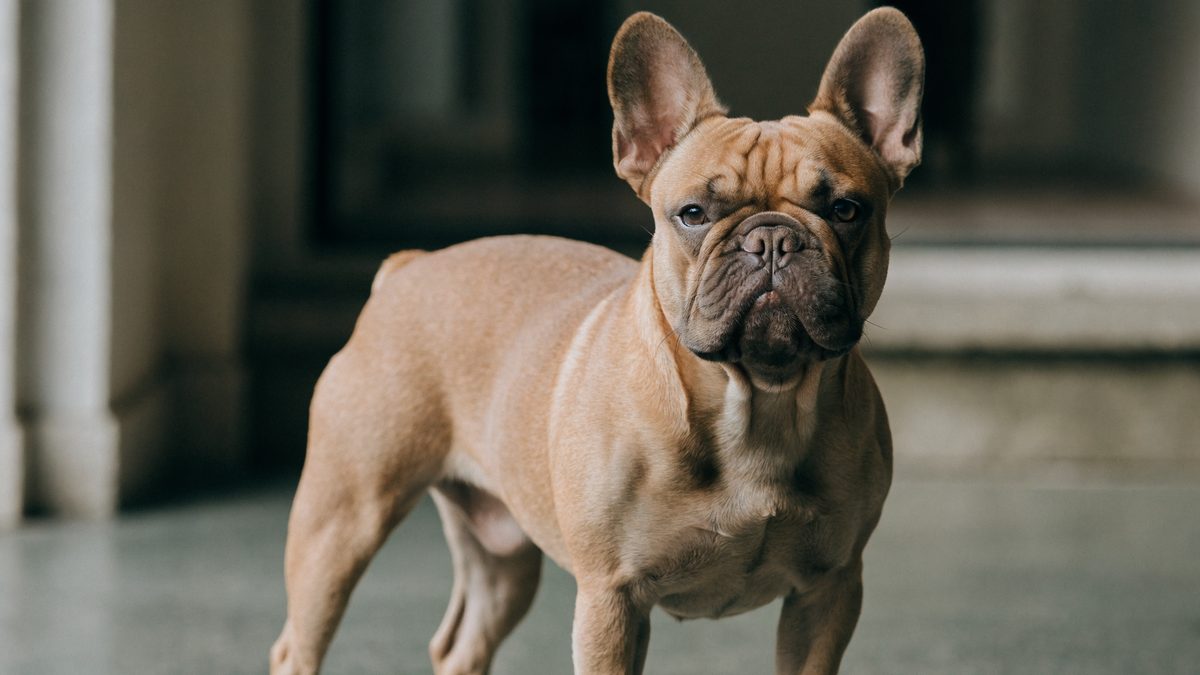
A French Bulldog is a small, compact, heavily boned companion dog whose own breed standard caps weight at 28 pounds, roughly 12.7 kg, and whose defining features are a square head, erect bat ears and a roach back. It is a purebred toy-group molossian, not a miniature Bulldog, and the American Kennel Club has ranked it the single most registered breed in the United States for four years running.
The breed was assembled in Paris in the 1880s from small English Bulldogs brought over by lace workers, and it was adopted first by market porters, butchers and coachmen before high society took it up. The first breed club was founded in Paris in 1880, the first registration dates from 1885, and the first standard was written in 1898. The Kennel Club in Britain recognised it in 1906. So the French Bulldog is a genuinely old companion breed with a documented purpose, which is worth knowing because almost every Indian listing describes it purely as an apartment accessory.
Two registries publish the numbers you should measure a puppy against. They agree on shape and disagree on how they express size, so both are given here rather than one.
| Point | AKC standard, approved 10 April 2018 | FCI standard No 101, valid 10 August 2023 |
|---|---|---|
| Weight | Not to exceed 28 pounds, about 12.7 kg. Over 28 pounds is a disqualification | Not stated as a figure, but size and weight outside standard limits is a disqualifying fault |
| Height at withers | Not specified | Males 27 to 35 cm, females 24 to 32 cm, with 1 cm tolerance either way |
| Ears | Bat ear, broad at base, elongated, round top, carried erect. Other than bat ears is a disqualification | Medium size, wide at base, rounded at top, carried erect, open to the front |
| Nostrils | Nostrils broad with a well-defined line between them | Symmetrical and well opened, and must allow normal nasal breathing. Completely closed nostrils is a disqualifying fault |
| Coat | Brilliant, short and smooth. Coats other than short and smooth are a disqualification | Smooth, close, glossy and soft, without undercoat |
| Acceptable colour | White, cream, fawn, or combinations, with brindle, piebald, black mask, black shading and white markings | Fawn, brindled or not, with or without white spotting |
| Disqualifying colour | Solid black, black and tan, black and white, blue, blue fawn, liver and merle | Black, black and tan, and all dilutions of black, with or without white spotting |
| Tail | Straight or screwed, not curly, short, hung low | Naturally short, set low, rather straight, carried low |
Read the two colour rows again, because they decide what a large part of the Indian premium market is actually selling. Blue is a disqualification under the AKC standard and falls inside the FCI's ban on all dilutions of black. Merle is named as a disqualification by the AKC and is in no version of the standard Federation Cynologique Internationale. Those are the two colours that Indian sellers advertise hardest.
The shape is the breed, and the shape is the problem
Every distinctive feature of a French Bulldog is a deliberate exaggeration, and the veterinary literature is unusually blunt about the consequence. A VetCompass study of 2,781 French Bulldogs against 21,850 other dogs under UK primary veterinary care concluded that many of the breed's predispositions are closely associated with the conformational extremes that define it, and proposed shifting the population towards a more moderate phenotype. The FCI standard now says the same thing in its own language, requiring that the upturned nose still allow normal nasal breathing, and listing respiratory distress and deafness among the disqualifying faults.
That is not an argument against owning one. It is an argument for buying a moderate one, and the sections below give you the specific measurements to ask for.
How the breed got to India
Popularity arrived by import and by imitation. In the UK the proportion of French Bulldog puppies in the annual birth cohort at participating practices rose from 0.02 percent in 2003 to 1.46 percent in 2013, a seventy-fold shift in ten years. In the United States the breed climbed from fourteenth in 2012 to first in 2022, ending the Labrador Retriever's thirty-one-year run. India followed the same curve later and smaller, driven by the same thing that made the Pug a household name here, which is advertising and social media rather than any assessment of climate fit.
The most common colours in the UK working population, incidentally, are the ordinary ones. Brindle accounted for 32.36 percent of French Bulldogs and fawn for 29.9 percent. Those are also the two colours the standard actually asks for.
The Marshalls Petzone listing that ranks on page one for this query gives the French Bulldog a weight of 54 to 65 kg and a height of 23 to 30 inches, and calls the breed group Working. The AKC standard caps the breed at 28 pounds, about 12.7 kg, and disqualifies anything heavier. The listing is describing a dog roughly five times the correct weight. Bonbeno flags it because a buyer using that page to sanity-check a seller's claims would be calibrated on a completely different animal.
One practical consequence of the real size. An adult French Bulldog is a compact, muscular dog you can lift with one arm, which genuinely does suit an Indian apartment on space grounds. Space is the only thing about Indian flats that suits this breed, and the climate section below explains why. If you are cross-shopping the other flat-faced breeds Indian buyers consider, Bonbeno also publishes full profiles for the Pug and the Bulldog.
French Bulldog price in India
The French Bulldog price in India runs Rs 25,000 to Rs 2,00,000 in 2026. The useful fact about that range is not its width but its shape. Five published Indian sources disagree by Rs 1,75,000 on the same breed, the two that give the most detailed tiers both broker puppy sales, and the cheapest quoted band comes from the page that also publishes the lowest monthly cost.
Bonbeno read the Indian pages currently ranking for this query and put their published French Bulldog puppy price figures side by side. Nobody is auditing any of them, so read them as five separate opinions rather than one market.
| Source | Headline range | Pet or basic quality | KCI registered | Champion or show line |
|---|---|---|---|---|
| Mr n Mrs Pet | Rs 50,000 to Rs 2,00,000+ | Rs 50,000 to Rs 1,00,000 | Rs 1,00,000 to Rs 1,50,000 | Rs 1,50,000 to Rs 2,00,000 |
| Supertails | Rs 50,000 to Rs 2,00,000 | Lower 30 percent of the band | Mid-range of the band | Top 20 percent, often 2 to 3 times KCI |
| Happy Pet | Rs 25,000 to Rs 1,00,000 | Not stated | Not stated | Not stated |
| Marshalls Petzone | Rs 73,000 to Rs 75,000 | Not stated | Not stated | Not stated |
| Puppiezo, blue-coloured listings | Rs 57,999 to Rs 81,499 | Not stated | Claimed KCI registered | Gold and Platinum tiers |
The gap that matters is at the bottom. Happy Pet's floor of Rs 25,000 is exactly half Mr n Mrs Pet's floor of Rs 50,000, and a quarter of the Rs 1,00,000 that the same page calls the entry point for a KCI registered dog Mr n Mrs Pet, French Bulldog Puppies…. A Rs 25,000 French Bulldog and a Rs 1,00,000 French Bulldog are not the same product with a different margin. In a breed where caesarean section is the normal delivery route and the litter is small, the arithmetic of producing a puppy at the bottom of that range is worth thinking about before you treat it as a bargain.
City-wise price, and how far you can trust it
Two sources publish city numbers and they behave completely differently. Mr n Mrs Pet quotes the identical Rs 50,000 to Rs 2,00,000 band for Hyderabad, Bangalore, Delhi, Chennai, Lucknow, Mumbai, Jaipur and Pune, which is a national band pasted into eight rows rather than city data. Supertails is the only source that actually varies by city.
| City | Published range |
|---|---|
| Mumbai | Rs 70,000 to Rs 1,80,000 |
| Delhi NCR | Rs 60,000 to Rs 1,50,000 |
| Bangalore | Rs 55,000 to Rs 1,40,000 |
| Pune | Rs 55,000 to Rs 1,40,000 |
| Hyderabad | Rs 52,000 to Rs 1,30,000 |
| Chennai | Rs 50,000 to Rs 1,20,000 |
Supertails attributes the metro premium to breeder operating costs, import logistics and demand concentration, and puts it at 20 to 35 percent over tier-2 cities. That table cannot be cross-checked against a second set of city figures, because the only other city table is the pasted one. Treat it as one publisher's estimate and say so, rather than repeating it as settled market data.
What the price is actually tracking
- Registration status. A Kennel Club of India registered puppy is quoted at Rs 1,00,000 to Rs 1,50,000 against Rs 50,000 to Rs 1,00,000 for basic quality. Registration documents parentage. It is not a health certificate, it says nothing about the parents' breathing, and Supertails says so on its own page when it notes that KCI registration does not guarantee freedom from genetic disease.
- Colour. This is where the Indian premium sits, and it is the part worth arguing with. Covered in full below.
- Claimed bloodline. Champion bloodline is quoted at Rs 1,50,000 to Rs 2,00,000, described as imported or award-winning parents. A show title is awarded on conformation. It is not awarded on a respiratory function grade, so it does not tell you the dog breathes well.
- Who is publishing the number. The two sources with the most detailed tiers both sell puppies. That is a commercial interest in the number, disclosed here because neither page discloses it itself.
The blue and merle premium, and why it is a warning
One of the ten results for this query runs an entire separate product page for blue French Bulldogs, markets the colour as rare, lists individual blue puppies from Rs 57,999 to Rs 81,499, and describes them as KCI registered. The same seller's standard-colour page publishes no prices at all.
Set that against the registries. Blue is a named disqualification in the AKC standard, alongside blue fawn, liver, solid black, black and tan, and merle. The FCI disqualifies colour that is not in the standard, naming black, black and tan, and all dilutions of black with or without white spotting, which is what blue and lilac are. So a dog sold to you at a premium for its colour is a dog that could not be shown under either standard, and a KCI registration certificate does not change that, because registration records parentage rather than conformity.
Merle deserves a separate line because it carries a measured health cost rather than only a paperwork one. In a study of 153 merle dogs assessed by brainstem auditory-evoked response, 4.6 percent were unilaterally deaf and 4.6 percent bilaterally deaf overall. Split by genotype, single merles ran 2.7 percent unilateral and 0.9 percent bilateral, while double merles ran 10 percent unilaterally deaf and 15 percent bilaterally deaf, a quarter of the dogs affected. Double merles are what you get when two merle parents are bred together, which is exactly what happens when a colour commands a premium and breeders chase it. The FCI, separately, lists deafness itself as a disqualifying fault in this breed.
In India, a dog breeder must hold a certificate of registration from the State Animal Welfare Board, establishments must be inspected at least once a year, pups less than eight weeks in age must not be sold, and only dogs in good health that have been given their medical inoculations may be sold. A price far below the published market usually means at least one of those was skipped. Ask to see the breeder's State Board registration, and treat a refusal as an answer.
Bonbeno does not broker puppy sales and does not publish breeder listings. Every figure above is reported from a third party so you can see the disagreement yourself and price it into your own decision.
Monthly cost of a French Bulldog in India
Budget Rs 4,000 to Rs 10,000 a month for a French Bulldog in India, and then budget separately for the two things no published Indian source includes. The three sources that give a monthly cost disagree by a factor of roughly four and a half at the bottom of the range, and all three of them cost the dog as though it were an ordinary small breed.
Here is what the ranking pages actually publish, laid out so the disagreement is visible.
| Source | Monthly total | Food | Vet | Grooming |
|---|---|---|---|---|
| Happy Pet | Rs 2,200 to Rs 3,750 | Rs 1,200 to Rs 1,800 | Rs 300 to Rs 750 | Rs 700 to Rs 1,200 |
| Supertails, small breed | Rs 4,000 to Rs 8,000 | Rs 1,500 to Rs 2,500 | Rs 500 to Rs 1,000 routine | Rs 1,500 to Rs 3,000 |
| Mr n Mrs Pet | Rs 8,000 to Rs 10,000 | Included, not itemised | Included, not itemised | Included, not itemised |
Supertails adds annual vaccinations at Rs 1,200 for a small breed, six months of training at Rs 0 to Rs 3,000, treats and toys at Rs 300 to Rs 800 a month and miscellaneous flea and deworming at Rs 300 to Rs 600 a month. Those are the line items you can actually plan against, which is why the middle row is the most useful of the three even though it is not French Bulldog specific.
The two costs nobody publishes
Conformation surgery is a base-rate cost, not a freak event. In a survey of 2,168 owners of Pugs, French Bulldogs and Bulldogs, 19.9 percent reported that their dog had undergone at least one conformation-related surgery. That is one dog in five, and the median age of the French Bulldogs in that sample was only 2.0 years, so the lifetime figure will be higher. Surgery in this breed usually means widening the nostrils, shortening the soft palate, or both. No Indian page in the ranking set puts a rupee figure on it, and Bonbeno will not invent one, because Indian specialist surgical pricing is not published in any source we could verify. Get a written quote from a referral surgery in your own city before you buy, not after.
Cooling is a running cost in India and nobody prices it. The care advice on the seller pages is explicit that these dogs need to be kept indoors in cool, well-ventilated spaces and that air conditioning or coolers help prevent heat stress. That advice is correct. It is also a monthly electricity bill that appears in none of the three cost tables above. Bonbeno could find no published Indian figure for the cost of running a room air conditioner for a dog, so price it yourself against your own tariff and your own summer, and add it to whichever row you believe.
What a realistic Indian budget looks like
- Food. Rs 1,200 to Rs 2,500 a month for a dog the standard caps at 12.7 kg Supertails, Dog Price List in India 2026. Keeping this breed lean is a clinical intervention rather than a cosmetic one, so do not over-feed to a bigger-looking dog.
- Routine vet. Rs 500 to Rs 1,000 a month, plus Rs 1,200 a year for core vaccinations. Budget more, because skin and ear work in this breed is recurring rather than occasional.
- Skin and ear care. Aural discharge carries 14.40 times the odds in French Bulldogs and skin fold dermatitis 11.18 times, both compared with other dogs under UK primary veterinary care. In Indian humidity these are the line items most likely to run hot.
- Grooming. Rs 700 to Rs 3,000 a month depending on whose table you believe. The coat itself is trivial. The face folds are the work.
- Cooling. Not published. Estimate it yourself from your tariff.
- Surgery reserve. One dog in five in the largest owner survey has had at least one conformation-related operation. Hold a reserve or hold insurance.
The lowest monthly figure in the table, Rs 2,200 to Rs 3,750, comes from the same page that publishes the lowest purchase price of Rs 25,000. Both numbers may be right for a dog with no problems. Neither number describes what happens the first time a flat-faced dog needs airway surgery or a summer emergency. A budget that only works if nothing goes wrong is not a budget for this breed.
The honest summary is that the purchase price is the smallest number in this section. Over a life the Bulldog and the Pug present the same structure, which is a modest recurring cost sitting under a large and genuinely probable one-off.
Heat tolerance and the Indian climate
Bonbeno rates the French Bulldog 1 of 5 for heat tolerance. In the largest study of heat-related illness in dogs under UK primary veterinary care, the French Bulldog carried 6.49 times a Labrador Retriever's odds of heat-related illness, with a 95 percent confidence interval of 3.62 to 11.63. That is the most decision-relevant number on this page, and no Indian page ranking for this query publishes it.
The study screened the clinical records of 905,543 dogs under veterinary care in 2016 and identified 395 confirmed heat-related illness events. Nine breeds carried significantly higher odds than the Labrador Retriever. The French Bulldog was third.
| Breed | Odds ratio | 95 percent confidence interval |
|---|---|---|
| Chow Chow | 16.61 | 6.21 to 44.44 |
| Bulldog | 13.95 | 8.01 to 24.29 |
| French Bulldog | 6.49 | 3.62 to 11.63 |
| Dogue de Bordeaux | 5.31 | 1.99 to 14.21 |
| Greyhound | 4.26 | 1.88 to 9.70 |
| Cavalier King Charles Spaniel | 3.45 | 1.86 to 6.42 |
| Pug | 3.24 | 1.67 to 6.29 |
| English Springer Spaniel | 2.74 | 1.25 to 6.01 |
| Golden Retriever | 2.65 | 1.40 to 5.01 |
| Labrador Retriever | Base | Reference breed |
Read that table honestly and it says three things at once. The French Bulldog is not the worst breed on the list. It is roughly twice as exposed as the Pug and roughly half as exposed as the Bulldog. And it is more than six times a Labrador, which is the breed most Indian families have actually kept.
What the number does and does not mean for India
Two limits matter, and stating them is the difference between evidence and scaremongering. First, these are odds ratios from a British summer, not incidence rates for an Indian one. The measured French Bulldog incidence in that UK population was 0.18 percent in a year, with a confidence interval of 0.12 to 0.25 percent. India publishes no equivalent breed-level figure, so nobody knows the Indian incidence, including Bonbeno. What transfers is the ranking and the mechanism, not the percentage. Second, the study measured dogs, not weather. Its authors say plainly that a predictive model would also need ambient temperature, humidity, activity, fitness and hydration. Every one of those variables runs against you in India.
The mechanism is simple enough to act on. Dogs have sweat glands only on their paws and must rely on panting to cool down, and a normal canine body temperature of 100.5 to 102.5 degrees Fahrenheit becomes heatstroke once it reaches 105. Purina India lists excessive humidity, enclosed space, obesity, intense exercise and lack of acclimatisation among the factors that raise heat stroke risk, alongside short-faced breed type itself. A brachycephalic dog starts that process with a restricted airway. A German owner survey of 574 French Bulldogs found that a shorter nose was significantly associated with heat intolerance, along with snoring, persistent respiratory noise and episodes of dyspnoea. Muzzle length is therefore not a cosmetic choice in this breed. It is the cooling system.
City by city, and why the nights stopped helping
In May 2026 the India Meteorological Department recorded heatwave to severe heatwave conditions across large parts of the country. Delhi ran 42 to 44 degrees, Ahmedabad and Nagpur 41 to 43, Jaipur and Lucknow 40 to 41, and Banda in Uttar Pradesh crossed 47.6 degrees for a second straight day. Hyderabad and Chennai peaked in the mid to high thirties, Mumbai stayed in the high thirties but humid, and Kolkata reported high thirties.
| City type | Reported May 2026 conditions | What it changes for a French Bulldog |
|---|---|---|
| Delhi NCR, Jaipur, Lucknow | 40 to 44 degrees daytime, minimums about 5 degrees above normal | Dry heat with no night recovery. The early-morning window shrinks to before sunrise |
| Ahmedabad, Nagpur | 41 to 43 degrees | Longest confinement period of any Indian city type. Plan indoor enrichment for two months |
| Mumbai, coastal Kerala, coastal Tamil Nadu | High thirties but humid | Lower peak temperature, worse cooling. Humidity is listed as a risk factor in its own right |
| Hyderabad, Chennai, Kolkata | Mid to high thirties with humid nights | Hot days plus uncomfortable nights. Both walk windows are compromised |
| Bengaluru, Pune, hill towns | Milder than the plains | The best Indian fit for this breed, and still not a cool climate |
The night-time detail is the one people miss. Minimum temperatures in Delhi and several other places ran about five degrees above normal, and the urban heat island effect can leave a city up to ten degrees hotter than the countryside around it because vegetation has been replaced by concrete, steel and glass that hold heat. The standard Indian advice to walk a flat-faced dog early in the morning or late in the evening is correct, but in a heatwave the late-evening half of it stops working, because the pavement and the air are still holding the afternoon.
The Indian heat protocol for this breed
- Walk before sunrise from March to June. Put the back of your hand on the pavement for five seconds. If you cannot hold it there, neither can the dog's feet, and the air above it is not much better.
- Cool the room, not the dog. Air conditioning or a cooler is the intervention that seller pages themselves recommend for flat-faced breeds in India. Treat it as equipment for the dog rather than a luxury.
- Use a harness, never a collar. A collar loads the trachea of a dog that already has a compromised airway.
- Keep the dog lean. Obesity is a listed heat stroke risk factor, and higher body condition score raised BOAS risk in the Cambridge conformational study.
- Never leave the dog in a car, even briefly. At 26 degrees outside, a car interior reaches 32 degrees in five minutes and 43 degrees in 25 minutes. Indian ambient temperatures start far above 26.
- Skip exercise entirely on heatwave days. Vigorous exercise in hot weather can produce heat stroke in as little as 30 minutes.
Signs of heat stroke include severe panting, difficulty breathing, heavy salivating, vomiting, diarrhoea, a temperature of 40.5 degrees or above, and eventually collapse. Move the dog into shade or air conditioning. Spray or sponge cool, not cold, water onto the skin, wetting the belly and the inside of the legs. Use a fan. Do NOT plunge the dog into cold water or an ice bath, because that prevents the core temperature falling. Stop cooling at 39.4 degrees so you do not overshoot into hypothermia. Then go straight to the nearest vet, because heat stroke can be fatal. Across all breeds in the UK study, 14.18 percent of heat-related illness events ended in death. One point almost nobody tells Indian owners: a dog that survives one heatstroke episode is at greater risk of another in future, so a first episode should permanently change how you manage the summer rather than becoming a story you tell.
None of this makes India impossible for a French Bulldog. It makes India a place where the owner, not the dog, has to do the thermoregulating, every single day from March to June, for the animal's whole life.
Temperament and who this breed suits
A French Bulldog is an affectionate, people-oriented companion bred for nothing except company, and the temperament is the strongest part of the breed. The AKC standard asks for a well behaved, adaptable, comfortable companion with an even disposition, active, alert and playful but not unduly boisterous. The FCI asks for sociable, lively, playful, possessive and keen. Both descriptions hold up in practice.
There is unusually good evidence for this, and it runs the opposite way to everything else on this page. Among 43 common disorders compared across 2,781 French Bulldogs and 21,850 other dogs under UK primary veterinary care, French Bulldogs had significantly reduced odds of 11 of them, and undesirable behaviour was the single most protected of all, at an adjusted odds ratio of 0.09 with a 95 percent confidence interval of 0.03 to 0.24. Aggression also appears on the protected list. In plain terms, French Bulldogs are taken to the vet for behaviour problems roughly a tenth as often as other dogs.
That is the honest case for the breed, and it deserves to be stated as clearly as the health case against it.
What the temperament looks like day to day
- Quiet. Indian seller pages consistently describe minimal barking, and that matches the low behaviour-consultation rate. For a shared-wall flat this genuinely matters.
- Needy. Happy Pet rates the breed near the top of its need-for-attention scale. A French Bulldog left alone for a ten-hour workday is a badly served dog.
- Playful in short bursts. Energy level is rated low with an exercise routine of short walks and play, which is a polite way of saying the dog runs out of breath rather than out of enthusiasm.
- Sociable with people and dogs. Both Indian profiles rate friendliness and dog compatibility high.
- Stubborn. One seller lists stubborn among the breed's top five traits, and it is the one negative trait the sales pages are honest about.
Who should buy one
A French Bulldog fits a household that is home most of the day, lives somewhere with reliable cooling, has the budget for a surgical reserve, and wants a small dog that will sit on the sofa rather than pull on a lead. Bengaluru, Pune and hill-town households have the easiest version of this. A ground-floor or lift-served flat helps, because this is not a dog that should be carried up six flights in June.
Who should not
- Anyone buying a first dog on looks alone. RVC research found that appearance is the number one reason owners buy flat-faced breeds. That is a bad reason in any breed and a costly one in this one.
- Anyone who wants a running or trekking companion. The exercise ceiling is real and is set by the airway, not by fitness.
- Anyone without cooling. In a Delhi, Ahmedabad or Nagpur summer, a home with no air conditioner or cooler is not a home for this breed.
- Anyone who cannot absorb an unplanned surgical bill. One dog in five in the largest owner survey had already had at least one conformation-related operation by a median age of two years.
- Anyone hoping to breed. Covered in the health and adoption sections, and the short version is that this breed does not reproduce without veterinary surgery.
The owner bond, and the blind spot inside it
The same survey that measured the surgery rate also measured the relationship, and found dog-owner bonds that were extremely strong across all three flat-faced breeds. That is a real good. It also produces a documented blind spot. Despite 36.5 percent of owners reporting a heat-regulation problem and 17.9 percent reporting breathing problems, 70.9 percent rated their dog as in very good health or the best health possible, and only 6.8 percent thought their own dog was less healthy than average for its breed.
If most owners believe their own dog is healthier than the breed average, most owners are wrong about at least one dog. The consequence is not embarrassment, it is delay. Snoring, noisy breathing and a dog that needs to stop halfway through a walk are not personality quirks in this breed, they are the presenting signs of the syndrome that carries 30.89 times the odds here. Treat them as findings to take to a vet, not as charm.
The fair summary is that the temperament is close to what the sales pages promise. It is the only part of the breed where that is true, which is exactly why the rest of this page spends its time elsewhere.
How to train a French Bulldog in India
To train a French Bulldog, keep sessions short, reward-based and indoors for most of the Indian year, and plan around the airway rather than around the attention span. This is a biddable breed with a low behaviour-problem rate, so the limiting factor is almost never willingness. Undesirable behaviour carried an adjusted odds ratio of 0.09 in French Bulldogs against other dogs under UK primary veterinary care, the strongest protection of any of the 43 disorders compared.
That number is worth translating. It does not mean French Bulldogs are easy to train. It means they are markedly less likely than other dogs to develop the kind of behaviour problem that ends in a veterinary consultation. What owners actually report is a stubborn streak, which one Indian seller lists among the breed's top five traits. Stubborn in this breed usually means a dog that has worked out that sitting still is an option.
The Indian constraint nobody writes about
Most training advice assumes you can take a puppy outside whenever you want. From March to June in most of India you cannot. Heatwave conditions across Delhi, Ahmedabad, Nagpur, Jaipur and Lucknow ran 40 to 44 degrees in May 2026, and night-time minimums sat about five degrees above normal. That leaves roughly two usable outdoor windows a day, both narrow, and vigorous activity in hot weather can trigger heat stroke in as little as 30 minutes.
So the realistic Indian plan is to move most training indoors and treat outdoor time as a socialisation and toileting budget rather than a training budget.
- Keep sessions to three to five minutes, several times a day. Short sessions suit a dog that overheats and a dog that bores, and they fit around an Indian working day.
- Train on a harness from day one. A collar loads the trachea of a dog whose airway is already compromised, and Indian care guidance for brachycephalic breeds is explicit that a harness should always be used instead.
- Reward with food you have already counted. Keeping this breed lean lowers BOAS risk, because higher body condition score was associated with greater BOAS risk in the Cambridge study. Subtract training treats from the day's meal rather than adding them.
- Stop on the first change in breathing. Noisy breathing in a session is a stop signal, not a milestone. It is the presenting sign of the syndrome that carries 30.89 times the odds in this breed.
- Socialise deliberately and early. Expose the puppy to a variety of people, dogs and situations from a young age, using structured puppy sessions and supervised playdates. In India this usually means indoors, in the early morning, or in a friend's flat.
- Do not skip lead manners because the walks are short. A dog that pulls on a hot pavement for three minutes is worse off than a dog that walks calmly for fifteen.
Realistic timeline
| Stage | What is realistic | The India-specific note |
|---|---|---|
| 8 to 12 weeks | Name, hand-feeding, crate as a cool resting place, first handling of face folds and ears | Under the Dog Breeding and Marketing Rules the puppy cannot legally have been sold to you before eight weeks |
| 3 to 5 months | Sit, down, recall indoors, lead and harness introduction, handling for grooming | House-training slows in monsoon. Expect setbacks, not failure |
| 5 to 8 months | Reliable indoor recall, calm greeting, settling on a mat, short outdoor walks in the cool windows | Growth plus heat means the dog will look lazier than it is. That is the airway, not the attitude |
| 8 to 12 months | Consolidation. Nothing new is needed | From 12 months the dog is eligible for a Respiratory Function Grading Scheme assessment, which is the check that should shape its adult exercise plan |
What this breed resists
Two things, and neither is a discipline problem. The first is any method built on physical correction or lead pressure, which is unsafe on this neck. The second is duration. A French Bulldog will give you attention, effort and enthusiasm, and then stop, and the stopping point is set by breathing rather than by boredom. Owners who read that as defiance escalate, and escalation with a flat-faced dog in an Indian summer is how a training session becomes a veterinary emergency.
This breed genuinely wants to be with you. The largest survey of flat-faced dog owners found extremely strong dog-owner bonds across Pugs, French Bulldogs and Bulldogs. Attention from you is a working reward, which means you can train a French Bulldog effectively in a small Indian flat with almost no equipment.
Daily exercise, and the ceiling you must not cross
A French Bulldog needs 20 to 40 minutes of low-intensity activity a day, split across two sessions in the coolest parts of the Indian day. The number is small and the reason is not laziness. In UK veterinary records, exercise was the trigger for 74.2 percent of the heat-related illness events with a recorded cause in dogs, against 12.9 percent for environmental exposure and 5.2 percent for confinement in a vehicle.
That finding reframes the whole subject. The public message about dogs and heat is about hot cars. The data says the far commoner and equally lethal route is a walk. Among 1,259 heat-related illness events identified from 905,543 dogs, exertional cases were the majority, and the odds of death after an exercise-triggered event were similar to the odds after a hot-car event. Brachycephalic dogs had greater odds of all three types than mesocephalic dogs.
For an Indian owner that means the most dangerous thing you will do with this dog is the most ordinary thing: take it out.
What the published Indian figures say
| Source | Energy level | Stated requirement |
|---|---|---|
| Happy Pet | Medium | 20 to 40 minutes |
| Puppiezo | Low | Short walks and play |
| Mr n Mrs Pet | Not rated | Minimal space and exercise, walks brief and in cooler parts of the day |
Bonbeno rates exercise needs 2 of 5 and treats the 20 to 40 minute figure as a ceiling rather than a target. Two sessions of ten to fifteen minutes, before sunrise and after full dark, is the shape that works in an Indian summer.
The second ceiling, which is the spine
There is a structural reason to cap impact as well as duration. Hemivertebrae, a congenital malformation of the vertebral bodies, were found in 93.5 percent of neurologically normal French bulldogs in a CT and MRI study of screw-tailed brachycephalic dogs, significantly more often than in Pugs or English bulldogs. An Australian referral series put the prevalence of one or more abnormal thoracic vertebrae at 96.82 percent in French Bulldogs, against 90.47 percent in British Bulldogs and 76.74 percent in Pugs.
Read that carefully, because the honest interpretation is not the alarming one. Both studies deliberately looked at neurologically normal dogs, which is to say dogs with no clinical signs at all. Hemivertebrae in French Bulldogs are usually incidental findings, and the Ryan study concluded that they appear to be of greater clinical importance in Pugs than in the other screw-tailed breeds, with 4.7 percent of the Pugs carrying clinically relevant malformations. So the correct statement is that almost every French Bulldog has an abnormal spine on imaging and most of them will never know it.
Where it does bite is at the disc. French Bulldogs carried three times the adjusted odds of spinal cord disorder against other dogs under UK primary veterinary care, at an adjusted odds ratio of 3.00 with a 95 percent confidence interval of 1.94 to 4.64, and 18 percent of the German owner survey reported intervertebral disc herniation. That is a real elevation on a base that is not tiny.
- Prefer a straight tail when you are choosing a puppy. Both imaging studies describe these as screw-tailed brachycephalic breeds, tail malformations were reported in 98 percent of dogs in the German owner survey, and the Royal Kennel Club standard asks for a tail that is preferably straight and long enough to cover the anus Hinze MAG, Meyer KOH, Heilmann RM The Royal Kennel Club. No study has proved that an individual straight tail predicts a sound spine, so this is a preference rather than a test.
- Block the jump down. Furniture ramps or a step at the sofa and the bed remove the highest-impact movement in a small Indian flat.
- Skip stairs where you can. Carry the dog down rather than up if you have to choose, because descending loads the spine harder.
- Keep the dog lean. Body condition is the one spinal and respiratory risk factor entirely under your control.
- Do not use a collar for lead work. Use a harness, on the airway argument rather than the spinal one.
- Watch for a reluctance to move or a hunched back. Take either to a vet the same day.
Swimming, and a warning that is specific to this breed
Swimming is often recommended as low-impact exercise for heavy-boned dogs. It is not a default for a French Bulldog. This is a dense, short-legged, heavily built dog with a short muzzle, so its natural swimming attitude puts its nostrils close to the waterline. Bonbeno could find no published study quantifying drowning risk in this breed, so no figure is given here. Treat unsupervised access to a pool or a tank as a hazard, use a canine flotation jacket if the dog swims at all, and never leave it near open water alone.
Turn around and go home on any of these: breathing that gets louder as the walk goes on, a dog that plants and refuses to move, heavy salivating, or a change in the colour of the tongue or gums. Severe panting, difficulty breathing, heavy salivating, vomiting and collapse are listed signs of heat stroke, and a dog with a compromised airway reaches them faster. Forty percent of the UK study's heat-related illness cases fell in a single hot month. India has four of those months.
Grooming a French Bulldog in Indian humidity
To groom a French Bulldog, ignore the coat and work the folds. The coat is short, smooth and has no undercoat at all, so it takes about five minutes a week. The face folds, the ears and the tail pocket take five minutes a day, and they are where this breed's most common problems begin.
The evidence for that priority is unambiguous. Among 43 common disorders compared under UK primary veterinary care, aural discharge carried an adjusted odds ratio of 14.40 in French Bulldogs, with a 95 percent confidence interval of 9.08 to 22.86, and skin fold dermatitis carried 11.18, with an interval of 7.19 to 17.40. In the earlier VetCompass demography of 2,228 French Bulldogs, otitis externa was the single most prevalent recorded disorder at 14.0 percent in one year, and cutaneous disorders were the largest disorder group at 17.9 percent.
The German owner survey of 574 French Bulldogs puts the same picture in owner-reported terms, with hypersensitivities or allergies at 52 percent, otitis externa or media at 36 percent, conjunctivitis at 22 percent and skin fold dermatitis at 20 percent.
| Area | Frequency | Why | Evidence |
|---|---|---|---|
| Nose rope and face folds | Daily wipe, dry thoroughly | Warm, closed, moist skin folds are where dermatitis starts | Skin fold dermatitis at 11.18 times the odds |
| Ears | Check daily, clean as your vet directs | Ear disease is the most prevalent single disorder in the breed | Otitis externa 14.0 percent in one year |
| Eyes | Daily check | Prominent, wide-set eyes on a flat face are exposed | Conjunctivitis 3.2 percent in UK records, 22 percent owner-reported |
| Tail pocket | Check daily on screw-tailed dogs | The screw tail creates a second closed fold that owners forget | Tail malformations reported in 98 percent of surveyed dogs |
| Coat | Weekly brush | Short, smooth, no undercoat | Coat described as smooth and without undercoat |
| Nails | Every 3 to 4 weeks | Short stubby nails still overgrow | Nails overlong recorded in 3.1 percent |
What Indian humidity changes
Everything in the fold column gets harder in a humid Indian summer and a monsoon. A fold that is merely damp in a dry climate stays wet in coastal Mumbai, Chennai or Kerala, and wet skin under pressure is the substrate for dermatitis. Three practical adjustments follow.
- Dry, do not just clean. Wipe the fold, then dry it with a separate dry cloth or a cotton pad. Moisture left behind is the problem you were trying to remove.
- Dry the dog completely after every bath and every rain walk. Pay attention to the fold behind the nose, the ear canals, the armpits and the tail pocket.
- Do not bathe on a schedule. Bathe when the dog is dirty. Over-bathing strips skin that is already prone to allergic disease in more than half of surveyed dogs.
Happy Pet budgets Rs 700 to Rs 1,200 a month for grooming and rates the breed a moderate shedder. Supertails budgets Rs 1,500 to Rs 3,000 a month for a small breed. For a French Bulldog the lower figure is closer to reality if you do the daily fold work yourself, and the higher figure is what you pay a salon to do work you could have done at home in five minutes.
The Mr n Mrs Pet FAQ for this breed states that French Bulldogs have dense, curly coats that need trimming every 4 to 6 weeks to prevent matting. The AKC standard requires a coat that is brilliant, short and smooth, and makes coats other than short and smooth a disqualification. The FCI describes a smooth, close, glossy coat without undercoat. A French Bulldog cannot mat, has nothing to trim, and should never be clipped. Bonbeno flags this because that page ranks first in India for this query, and a buyer following its advice would be paying a salon every six weeks for a service the dog does not need.
The one thing you must not do
Do not shave a French Bulldog to keep it cool. The coat is already single and short, there is no undercoat to remove, and stripping the hair exposes bare skin to sun without changing the actual problem, which is that the dog cannot move enough air through its nose. Cooling in this breed is a matter of ambient temperature, hydration and airflow, not haircuts.
Finally, use grooming as a health check. Five minutes a day with your hands on the folds, the ears and the tail pocket is also five minutes a day noticing heat in an ear, a smell that was not there yesterday, or a fold that has gone red. In a breed where the two commonest problems are both skin problems, that habit is worth more than any product.
French Bulldog health risks and life expectancy
The French Bulldog carries the highest published odds ratio Bonbeno has recorded for any single disorder in any breed. Stenotic nares, meaning narrowed nostrils, carried an adjusted odds ratio of 42.14 against other dogs under UK primary veterinary care, and brachycephalic obstructive airway syndrome carried 30.89. Both are consequences of the head shape that defines the breed, and both are partly avoidable by which individual you buy.
The study behind those numbers is the most useful thing published about this breed's health issues. Researchers took random samples of 2,781 French Bulldogs and 21,850 non-French Bulldogs from 905,544 dogs under primary veterinary care in the UK during 2016, then compared the 43 most common disorders using multivariable models that adjusted for age, sex and neuter status, bodyweight, insurance status and veterinary group. Adjusting for age matters, because the UK French Bulldog population had a median age of 1.51 years against 4.48 years for other dogs, and an unadjusted comparison would have flattered the breed badly.
What the odds actually say, including the part that favours the breed
French Bulldogs had significantly increased adjusted odds for 20 of 43 disorders, significantly reduced odds for 11 of 43, and differed from other dogs on 31 of 43 in total, which is 72.1 percent. The conclusion the authors drew was that the health of French Bulldogs has diverged substantially from the wider dog population, and the Royal Veterinary College summarised it publicly as the breed no longer being a typical dog in health terms.
Here is the part that almost every article about this breed leaves out, and it should be stated plainly. On the crude question of whether a dog was diagnosed with at least one disorder in the year, French Bulldogs did slightly better than other dogs, at 63.4 percent against 66.1 percent, with an adjusted odds ratio of 0.89 and a 95 percent confidence interval of 0.82 to 0.97. That does not cancel the specific risks below. It tells you the shape of the problem: this is not a breed that is sick all the time, it is a breed that is concentrated into a small set of severe, conformation-linked conditions while being protected against a long tail of ordinary ones.
| Disorder | Adjusted odds ratio | 95 percent CI | Direction |
|---|---|---|---|
| Stenotic nares, narrowed nostrils | 42.14 | 18.50 to 95.99 | Higher risk |
| Brachycephalic obstructive airway syndrome | 30.89 | 20.91 to 45.64 | Higher risk |
| Aural discharge | 14.40 | 9.08 to 22.86 | Higher risk |
| Skin fold dermatitis | 11.18 | 7.19 to 17.40 | Higher risk |
| Dystocia, difficulty giving birth | 9.13 | 5.17 to 16.13 | Higher risk |
| Upper respiratory tract disorder, grouped | 3.80 | 3.25 to 4.45 | Higher risk |
| Spinal cord disorder, grouped | 3.00 | 1.94 to 4.64 | Higher risk |
| Lower respiratory tract disorder, grouped | 2.99 | 1.85 to 4.83 | Higher risk |
| Congenital disorder, grouped | 2.73 | 1.78 to 4.18 | Higher risk |
| Undesirable behaviour | 0.09 | 0.03 to 0.24 | Lower risk |
| Post-operative wound complication | 0.11 | 0.04 to 0.30 | Lower risk |
| Retained deciduous tooth | 0.16 | 0.08 to 0.31 | Lower risk |
| Lameness | 0.26 | 0.15 to 0.42 | Lower risk |
| Obesity | 0.30 | 0.21 to 0.42 | Lower risk |
| Dental disorder, grouped | 0.30 | 0.23 to 0.38 | Lower risk |
BOAS, and the test you can run yourself before you pay
Brachycephalic obstructive airway syndrome is soft tissue in the nose and throat that is too bulky for the airway it sits in, which partially obstructs breathing and progressively impairs a dog's ability to exercise, play, eat and sleep. Objective testing using whole-body barometric plethysmography found that roughly 50 percent of study dogs across Pugs, French Bulldogs and Bulldogs were BOAS-affected, and the same paper notes that an estimated 60 percent of owners do not recognise the clinical signs.
In the Cambridge conformational study, stenotic nostrils were associated with BOAS in all three breeds. For French Bulldogs specifically, neck girth ratio and neck length ratio were the standardised measurements that showed significant associations, and higher body condition score raised risk in Pugs and Bulldogs. The single most useful output of that work, and the thing no Indian page publishes, is the four-point nostril grading scale, reproduced here in the study's own terms.
| Grade | What you are looking at | Verdict |
|---|---|---|
| Open | Nostrils are wide open | Acceptable. This is what you want |
| Mildly stenotic | Slightly narrowed. The lateral nostril wall does not touch the medial wall. After exercise the nostril wings move outward and open on inspiration | Acceptable for these breeds |
| Moderately stenotic | The lateral wall touches the medial wall at the top of the nostril and the nostril is open only at the bottom. After exercise the wings cannot move outward, and there may be nasal flaring | Counted as stenotic nostrils. Walk away |
| Severely stenotic | Nostrils almost closed. The dog switches from nasal to oral breathing with stress or very gentle exercise such as playing | Counted as stenotic nostrils. Walk away |
The study defined moderate or severe stenosis as stenotic nostrils, and treated open or mild as acceptable. Take a photograph of the puppy's nose from the front in good light and grade it against that table before any money changes hands. The FCI standard supports you here, requiring symmetrical and well opened nostrils that allow normal nasal breathing, and making completely closed nostrils a disqualifying fault.
The screening the parents should already have
The Royal Kennel Club and University of Cambridge run a Respiratory Function Grading Scheme, and the French Bulldog is one of the eligible breeds. A trained vet listens to the dog with a stethoscope at rest, exercises it briskly for three minutes, listens again, and assigns a grade. Grade 0 means clinically unaffected and free of respiratory signs. Grade 1 means clinically unaffected with some respiratory noise that does not affect exercise. Grade 2 means clinically affected with moderate signs. Grade 3 means clinically affected with severe signs, and the scheme advises against breeding from that dog. Dogs can be assessed from 12 months and should be reassessed every two years, and the scheme states directly that a buyer should ensure both parents have been tested.
That is the single highest-value question you can ask an Indian breeder, and Bonbeno expects most will not have an answer. Ask anyway, because the answer tells you what kind of breeder you are dealing with.
A third registry makes the point even more bluntly than the other two. The Royal Kennel Club breed standard for the French Bulldog, last updated on 1 August 2025, opens its general appearance section by stating that dogs showing respiratory distress or making excessive respiratory noise are unacceptable, requires a nose with visibly open nostrils, asks that the opening to the ear canal be wide and open, and says absolute soundness is essential. A noisy French Bulldog is not a typical French Bulldog. It is a French Bulldog that all three registries would mark down.
For scale on how common the underlying problem is, an earlier VetCompass study sampled 200 dogs from each of six breed types across 170,812 dogs at 96 English practices. Twenty percent of the French Bulldogs had at least one upper respiratory tract disorder recorded, against 26.5 percent of Pugs, 19.5 percent of Bulldogs, 13.0 percent of Yorkshire Terriers, 9.0 percent of Border Terriers and 7.0 percent of West Highland White Terriers. Pooled, the extreme brachycephalic breeds carried 3.5 times the odds of at least one upper respiratory tract disorder, with a 95 percent confidence interval of 2.4 to 5.0. In the same study, 16.7 percent of deaths in the extreme brachycephalic group were associated with upper respiratory tract disorders, against 0.0 percent in the comparison group.
Life expectancy, where the published figures disagree by five years
There is no settled life expectancy for this breed and any page that gives you a single confident number is not reading its sources. Three peer-reviewed or published datasets give three very different answers, and Bonbeno prints all three rather than averaging them.
| Source | Figure | What it measured | Sample |
|---|---|---|---|
| UK life tables | 4.53 years at age 0, 95 percent CI 4.14 to 5.01 | Life expectancy at birth from VetCompass deaths 2016 to 2020. The shortest of 18 breeds studied | 229 French Bulldogs among 30,563 deaths |
| German owner survey | 8.3 years | Average age at death among deceased dogs in an owner questionnaire | 75 deceased dogs of 574 surveyed |
| Extreme brachycephalic group | 8.6 years median, IQR 2.4 to 10.8 | Median age at death for Bulldogs, French Bulldogs and Pugs pooled, against 12.7 years for moderate and non-brachycephalic breeds | 83 deaths among 1,200 dogs across six breed types |
| UK longevity study | 9.8 years median, hazard ratio 2.2, 2.1 to 2.3 | Median longevity from breed and owner records | French Bulldogs were 2.44 percent of the purebred dataset |
| UK life tables, Japan comparison | 10.2 years in Japan | Same breed, Japanese pet cemetery data, cited by the UK authors themselves | Smaller sample, noted as a limitation |
The gap between 4.53 and 9.8 years is not a rounding error and it has an explanation worth understanding. The UK life table figure is depressed by the extraordinary youth of the UK French Bulldog population and by a very high modelled probability of death in the first two years, at 0.131 in year 0 to 1 and 0.136 in year 1 to 2 against 0.017 and 0.016 for dogs overall. The life table for French Bulldogs also ran out at age 11, against 19 for the Jack Russell Terrier. The McMillan figure of 9.8 years comes from a much larger record set and carries a hazard ratio of 2.2, which places the French Bulldog alongside the Bulldog at 9.8 years and well below the Labrador at 13.1 and crossbred dogs at 12.0.
The defensible summary is this. Every published figure puts the French Bulldog below the crossbred average, the disagreement is about how far below, and the honest range is roughly 4.5 to 10 years. Every Indian ranking page prints 10 to 12 years with no source at all Happy Pet, French Bulldog Breed… Puppiezo, Blue French Bulldog Puppies….
Reproduction, which is where the breed stops being self-sustaining
The French Bulldog does not reliably reproduce without surgery. In a survey of 22,005 litters from 13,141 bitches across 151 breeds, the Boston terrier, bulldog and French bulldog had caesarean rates above 80 percent, the three highest of any breed. Separately, among almost 20,000 bitches attending 50 emergency veterinary clinics, French Bulldogs were 15.9 times more likely than crossbred bitches to have difficulty giving birth, ahead of the Boston Terrier at 12.9, the Pug at 11.3 and the Chihuahua at 10.4. The VetCompass primary-care data puts dystocia at 9.13 times the odds of other dogs, and 30 percent of the German owner survey reported it.
Every French Bulldog litter in India is, in probability terms, a planned surgery on the mother. That cost is inside the price you are quoted, which is part of why the floor sits where it does. It also means a seller offering a puppy far below the published band is either absorbing a loss, which is unlikely, or the mother did not get the surgery. Ask when and where the litter was delivered. Bonbeno does not recommend breeding this breed, and the FCI's own standard says only functionally and clinically healthy dogs with breed typical conformation should be used for breeding.
The rest of the list, briefly
- Skin and ears. The two most common problems in the breed. Covered in the grooming section, with allergies reported by 52 percent and otitis by 36 percent of surveyed owners.
- Spine. Hemivertebrae in 93.5 percent of neurologically normal French bulldogs, usually incidental, with spinal cord disorders at 3.00 times the odds and disc herniation reported by 18 percent of owners O'Neill DG, Packer RMA, Francis P Hinze MAG, Meyer KOH, Heilmann RM.
- Eyes. Conjunctivitis at 3.2 percent in UK primary-care records and 22 percent owner-reported Hinze MAG, Meyer KOH, Heilmann RM. Prominent eyes on a flat face take more trauma.
- Cancer. Among the deceased dogs in the German survey, cancer was the leading cause of death at 47 percent. That is a reminder that a French Bulldog that survives its conformation still ages like a dog.
- Deafness. This is the one clearly inherited, colour-linked risk on the list rather than a conformational one. The FCI lists deafness as a disqualifying fault, and notes that all-white dogs are admitted but not bred for because of deafness risk. Double merle dogs ran 15 percent bilaterally deaf in brainstem testing.
The screening checklist to take to a breeder
- Respiratory Function Grading Scheme grade for both parents. Grade 0 or 1 only.
- Front-on nostril photograph of the puppy in good light. Grade it Open or Mild, or walk away.
- How the litter was delivered, and where. Expect a caesarean and expect it to have been veterinary.
- The mother's history. How many litters, how many caesareans.
- Written veterinary health certificate and vaccination record. The Dog Breeding and Marketing Rules require that only dogs in good health that have been given medical inoculations are sold.
- Colour. Anything blue, lilac, chocolate, tan-point or merle is outside both standards and, for merle, carries measured deafness risk Strain GM, Clark LA, Wahl JM, Turner AE.
Feeding a French Bulldog in India
Feed a French Bulldog to a lean body condition, in two or three small meals, and treat weight control as a respiratory intervention rather than a cosmetic one. The published Indian guidance is about 1,000 kcal a day for a puppy and about 600 kcal a day for an adult, at a food cost of Rs 1,200 to Rs 1,800 a month.
Start with the target weight, because it is the number owners most often get wrong. The AKC standard caps this breed at 28 pounds, roughly 12.7 kg, and makes anything over that a disqualification. The median bodyweight of French Bulldogs under UK primary veterinary care was 12.45 kg, with an interquartile range of 11.00 to 14.03 kg. Read that interquartile range again. It means roughly a quarter of French Bulldogs in UK veterinary practice weigh more than 14 kg, which is above the weight at which their own breed standard would disqualify them.
That drift matters here more than it would in another breed, because higher body condition score was associated with greater BOAS risk in the Cambridge conformational study, and obesity is a listed risk factor for heat stroke. A heavy French Bulldog in a Chennai May is carrying two handicaps at once.
There is a genuine oddity in the data worth flagging. Obesity was one of the 11 disorders French Bulldogs were protected against, at an adjusted odds ratio of 0.30. That is a record of what vets diagnosed, not a measure of body fat, and it sits alongside a median weight that is already at the top of the standard. Bonbeno reads it as a diagnosis effect rather than a fitness one, and would not use it to relax about weight.
Life-stage feeding
| Stage | Meals per day | Approximate energy | What to watch |
|---|---|---|---|
| 8 weeks to 4 months | 4 | About 1,000 kcal a day at the puppy stage | Loose stools. Diarrhoea is the second most prevalent recorded disorder in this breed |
| 4 to 9 months | 3 | Taper towards adult | Introduce any new food slowly, because sensitive stomachs are common |
| 9 to 12 months | 2 to 3 | Approaching about 600 kcal a day | Weigh monthly. Do not let the dog cross 12.7 kg by growth you chose to feed |
| Adult | 2 to 3 | About 600 kcal a day, adjusted to the individual | Rib check weekly. You should feel ribs easily under a thin fat cover |
| Senior, from about 7 years | 2 to 3 | Reduce as activity falls | Cancer was the leading cause of death at 47 percent among deceased surveyed dogs, so investigate lumps and weight loss early |
Allergy and gut, which is where most Indian owners end up
This is not a breed with a delicate reputation and a normal gut. It is a breed with an evidenced one. Enteropathy was the second largest disorder group in UK primary-care records at 16.7 percent, and diarrhoea the second most prevalent single disorder at 7.5 percent. In the German owner survey, 52 percent of dogs had diagnosed or presumed hypersensitivities or allergies, and Giardia was detected in faecal samples from 20 percent. Food hypersensitivity and allergic skin disorder both appear on the breed's predisposition list.
- Change food slowly. Indian guidance for the breed is to introduce new foods gradually and watch for reactions, because of sensitive stomachs.
- Prefer a meat-first food with a short ingredient list. Published Indian advice for the breed suggests avoiding wheat, corn and soy given the allergy tendency.
- Include omega-3 and omega-6 for skin and coat, from fish oil or flaxseed. In a breed where skin fold dermatitis runs at 11.18 times the odds, skin support is not optional.
- Deworm on your vet's schedule and take faecal samples seriously. A fifth of surveyed dogs had Giardia detected.
- Do not treat food as affection. A quarter of the breed in UK practice is already over its own standard weight.
The Indian timing rule
Feed after the cool-window walk, not before. Vigorous activity in hot weather can produce heat stroke in as little as 30 minutes, and a full stomach in a dog already working hard to move air is a bad combination. In practice this means a pre-sunrise walk, then breakfast, then rest through the heat of the day, then an evening meal after the second walk. Keep fresh water available at all times, because lack of water is the first listed risk factor for heat stroke.
Published Indian guidance for this breed lists alcohol, almonds, avocados, cherries, cinnamon, coffee and tea, dairy, garlic, grapes, onions, mushrooms, salt and sugar among things to avoid. Garlic and onion are the practical ones in an Indian household, because they are in almost every dish that gets shared off a plate. A French Bulldog begging at an Indian dinner table is asking for the two ingredients most likely to be in the food.
French Bulldog puppy timeline, month by month
Plan a French Bulldog puppy's first year around three fixed points: the eight-week legal floor on sale, the vaccination course that runs to about 16 weeks, and the 12-month mark when the dog becomes eligible for a respiratory function grade. Everything else in India is scheduled around the weather.
Two rules bound the start. Under the Prevention of Cruelty to Animals (Dog Breeding and Marketing) Rules, 2017, a breeder must ensure that pups less than eight weeks in age are not sold, and that only dogs in good health that have been provided the medical inoculations are sold. A seller offering you a six-week-old puppy is telling you something about every other rule they follow.
| Age | What happens | What you do |
|---|---|---|
| 6 to 8 weeks, before you collect | First DHPPI vaccination is due at 6 to 8 weeks | Grade the puppy's nostrils front-on against the Open, Mild, Moderate, Severe scale. Ask for both parents' Respiratory Function Grading Scheme results |
| 8 weeks, collection | Legal earliest sale | Collect in the cool part of the day. Take water. Do not transport in a hot car, where 26 degrees outside becomes 43 degrees inside in 25 minutes |
| 8 to 12 weeks | DHPPI booster at 10 to 12 weeks | Four meals a day. Start daily fold, ear and tail-pocket handling now so it is normal later |
| 12 to 16 weeks | Final DHPPI booster at 14 to 16 weeks | Socialise deliberately with people, dogs and situations. Indoors and in cool windows in an Indian summer |
| 4 to 6 months | Fastest growth. Teething | Harness training. Three meals. Weigh monthly against the 12.7 kg adult ceiling |
| 6 months | Under Indian rules a dog over six months cannot be sold on without first being sterilised, unless to another licensed breeder | Discuss neutering timing with your vet. Discuss anaesthetic risk in a brachycephalic dog specifically |
| 6 to 9 months | Adolescence. The stubborn phase owners report | Hold the training line. Keep sessions short. Do not escalate corrections on this neck |
| 9 to 12 months | Approaching adult weight and adult airway | Two to three meals. Rib check weekly. Note any change in breathing noise |
| 12 months | Eligible for a Respiratory Function Grading Scheme assessment | Get the grade if an assessor is reachable. Otherwise ask your own vet to record breathing at rest and after three minutes of brisk exercise, and repeat it every two years |
The first two years carry the risk
The UK life tables model a probability of death of 0.131 in year 0 to 1 and 0.136 in year 1 to 2 for French Bulldogs, against 0.017 and 0.016 for dogs overall. Those are modelled life-table values from a population with an unusually young age profile, and they should be read with that caveat, but the direction is not in doubt and it is the reason this section exists. The first two years are not a gentle run-in for this breed. They are the period the evidence says needs the most care.
Buy in the right season
This is India-specific advice you will not find on a global breed page. A French Bulldog puppy collected in April in Delhi spends its entire socialisation period confined indoors, because daytime temperatures ran 42 to 44 degrees in May 2026 and night-time minimums sat about five degrees above normal. A puppy collected in October gets a full cool season of outdoor exposure before its first Indian summer, by which time it is old enough to handle confinement without losing its social education.
- Best window in the plains. Collect between October and January.
- Worst window in the plains. Collect between March and June.
- Bengaluru, Pune and hill towns. Wider window, but still avoid the hottest six weeks.
- Coastal cities. Avoid the peak monsoon weeks too, because a puppy that cannot be dried properly develops fold problems fast.
Habits to build in the first year
- Daily fold and ear check, from week one, so an eight-month-old does not fight you over the thing that prevents the breed's most common disorder.
- Harness only, from the first lead.
- Ramps at the sofa and bed, before the first jump becomes a habit.
- A cool resting place the puppy chooses for itself, so heat avoidance is a learned behaviour rather than a rescue.
- A monthly weight log, which is the cheapest health intervention available in this breed.
French Bulldogs had the lowest odds of any of the 43 disorders studied for undesirable behaviour, at an adjusted odds ratio of 0.09. Whatever else the first year holds, you are unlikely to be dealing with a behaviour crisis. Put the effort into the airway, the skin and the weight, because that is where this breed's first year actually goes wrong.
French Bulldog against the breeds Indian buyers cross-shop
Compared with the breeds Indian buyers actually consider alongside it, the French Bulldog is the most expensive, sits in the middle of the flat-faced heat risk range, and has the widest disagreement between published life expectancy figures. Against a Labrador Retriever it costs roughly six times as much and carries 6.49 times the odds of heat-related illness Hall EJ, Carter AJ.
Bonbeno already publishes full profiles for the Pug and the Bulldog, so this section compares rather than repeats. Every figure below comes from a source that measured all the breeds in its row on the same basis, which is why some cells say the data does not exist rather than guessing.
| Breed | India price band | Heat-related illness odds vs Labrador | Life expectancy at age 0, UK life tables | Median longevity |
|---|---|---|---|---|
| French Bulldog | Rs 50,000 to Rs 2,00,000 | 6.49 | 4.53 years | 9.8 years, hazard ratio 2.2 |
| Bulldog | Not in the captured list | 13.95 | 7.39 years | 9.8 years, hazard ratio 1.8 |
| Pug | Rs 8,000 to Rs 30,000 | 3.24 | 7.65 years | 11.6 years |
| Shih Tzu | Rs 20,000 to Rs 80,000 | Not among the nine breeds with significantly higher odds | 11.05 years | Not reported in the figures read |
| Beagle | Rs 15,000 to Rs 60,000 | Not among the nine breeds with significantly higher odds | 9.85 years | Not reported in the figures read |
| Labrador Retriever | Rs 8,000 to Rs 80,000 | Base, the reference breed | 11.77 years | 13.1 years |
| Indian Pariah Dog, adopted | Rs 0 to Rs 2,000 | No published breed-level figure exists | No published figure | Crossbred group 12.0 years |
Two rows do most of the work. The Pug is between three and four times cheaper and carries roughly half the heat risk Hall EJ, Carter AJ. The adopted Indian dog costs effectively nothing and the crossbred group in the largest longevity study lived a median 12.0 years, more than two years longer than the French Bulldog McMillan KM, Bielby J, Williams CL.
French Bulldog against the Pug
These are the two flat-faced breeds Indian buyers most often weigh against each other, and the differences are more specific than most pages admit. On heat the Pug is better placed, at 3.24 against 6.49. On birth the French Bulldog is worse, at 15.9 times crossbred odds of dystocia against 11.3 for the Pug. On the spine the picture inverts in a way that surprises people: hemivertebrae were found in 93.5 percent of neurologically normal French bulldogs against 17.6 percent of Pugs, but clinically relevant thoracic malformations were significantly more common in Pugs, at 4.7 percent. On longevity the Pug leads on both published measures, 7.65 against 4.53 in the life tables and 11.6 against 9.8 in the longevity study McMillan KM, Bielby J, Williams CL.
Neither is a comfortable choice for an Indian summer. If the decision is purely between these two, the Pug is the lower-risk one on the numbers, and the Pug profile sets out its own case against itself.
French Bulldog against the Bulldog
The Bulldog is worse on almost every measure that has been counted. It carries 13.95 times a Labrador's odds of heat-related illness against the French Bulldog's 6.49, and in the Australian imaging series 90.47 percent of British Bulldogs had one or more abnormal thoracic vertebrae against 96.82 percent of French Bulldogs, which is one of the few rows where the French Bulldog is higher. Both breeds sit in the group with caesarean rates above 80 percent, and both land on 9.8 years median longevity, though the French Bulldog carries the higher hazard ratio at 2.2 against 1.8. The Bulldog profile carries the full detail.
French Bulldog against a Labrador or a Shih Tzu
If what you want is a small apartment dog rather than a flat-faced one, the Shih Tzu costs less, lived 11.05 years against 4.53 in the same life tables, and is not among the nine breeds with significantly raised heat-related illness odds Hall EJ, Carter AJ. If what you want is a family dog and space is not the constraint, the Labrador Retriever is the reference breed in the heat study, lived 11.77 years in the life tables and 13.1 in the longevity study, and starts at Rs 8,000 Teng KT, Brodbelt DC, Pegram C, Church DB McMillan KM, Bielby J, Williams CL Supertails, Dog Price List in India 2026. The Beagle is a middle option on price and longevity and is likewise not on the raised-heat-risk list.
Supertails' own city tables put an adopted Indian dog at Rs 0 to Rs 2,000 in every city, against Rs 50,000 to Rs 2,00,000 for a French Bulldog. The crossbred group in the largest UK longevity study had a median of 12.0 years, ahead of every purebred flat-faced breed measured. Bonbeno is not telling you not to buy a French Bulldog. It is pointing out that the Indian Pariah Dog is the only option on this page that is both free and heat-adapted, and that no page selling puppies will make that comparison for you.
Mistakes Indian French Bulldog owners actually make
The most expensive mistake with a French Bulldog in India is hearing the breathing and calling it personality. An estimated 60 percent of owners do not recognise the clinical signs of brachycephalic obstructive airway syndrome, and in the largest survey of flat-faced dog owners 70.9 percent rated their own dog as in very good health or the best health possible while 36.5 percent were simultaneously reporting a heat-regulation problem.
That gap between what owners observe and what owners conclude is the root of most of the errors below. Nine mistakes, in the order they cost you.
1. Treating snoring and snorting as charm
Snoring, persistent respiratory noise and exercise intolerance are the presenting signs of the syndrome that carries 30.89 times the odds in this breed, and BOAS is described by the Royal Kennel Club as a progressive disorder that impairs a dog's ability to exercise, play, eat and sleep. A German owner survey found that a shorter nose was significantly associated with snoring, persistent respiratory noises, heat intolerance and episodes of dyspnoea. If your dog is loud at rest, that is a veterinary finding, not a party trick.
2. Moving the walk to the evening in a heatwave
This is the specifically Indian error. The standard advice to walk flat-faced dogs early or late is sound, but in May 2026 minimum temperatures in Delhi and several other places ran about five degrees above normal, and the urban heat island effect can leave a city up to ten degrees hotter than the countryside around it. On heatwave days the evening window closes. Exertional events were 74.2 percent of the heat-related illness with a recorded trigger in UK veterinary records, and they killed at a similar rate to hot-car cases.
3. Walking on a collar
A collar loads the trachea of a dog whose airway is already the breed's defining weakness. Indian guidance for brachycephalic breeds says to always use a harness instead. This is a Rs 400 fix for the highest-odds problem on the page.
4. Paying more for a colour that both standards disqualify
Blue, blue fawn, liver, solid black, black and tan and merle are all named disqualifications in the AKC standard, and the FCI disqualifies all dilutions of black Federation Cynologique Internationale. Indian sellers run dedicated premium pages for blue dogs and describe the colour as rare. Rare in this context means outside the standard. For merle specifically the cost is measurable, with 15 percent of double merle dogs bilaterally deaf on brainstem testing.
5. Believing the coat needs a salon
The number one ranking Indian page tells buyers that French Bulldogs have dense, curly coats needing trimming every 4 to 6 weeks. The AKC standard requires a brilliant, short, smooth coat and disqualifies anything else, and the FCI describes a smooth coat without undercoat Federation Cynologique Internationale. You are being sold a service for a coat this dog does not have. Spend the five minutes on the folds instead, where skin fold dermatitis runs at 11.18 times the odds.
6. Using a sales page to check the dog you are buying
One page-one Indian result publishes a French Bulldog weight of 54 to 65 kg and a height of 23 to 30 inches against a standard that caps the breed at 28 pounds, about 12.7 kg. Another prints a coat description belonging to a different breed. Verify every specification against a registry document rather than a listing, because the listings in this market are not reliably about this breed. A verified figure comes from the AKC, FCI or Royal Kennel Club standard, not from the page trying to sell you the dog.
7. Letting the dog get heavy because it looks better
The median French Bulldog in UK veterinary practice already weighs 12.45 kg, with an upper quartile of 14.03 kg, which is above the standard's disqualification threshold. Higher body condition score raised BOAS risk in the Cambridge study, and obesity is a listed heat stroke risk factor. A heavier French Bulldog is a hotter, noisier French Bulldog.
8. Buying without seeing the parents
RVC research found that owners of flat-faced dogs were more likely to use puppy selling websites, less likely to see either parent of their puppy, and less likely to ask to see any health records. That is a description of most French Bulldog purchases in India. Seeing the mother tells you her condition after what was probably a caesarean, and seeing both parents lets you grade their nostrils yourself.
9. Reading a KCI certificate as a health certificate
Registration records parentage. Supertails says so on its own page, noting that KCI registration does not guarantee freedom from genetic disease, and the Indian rules separately require that only dogs in good health that have been given medical inoculations are sold, which is a different document. A pedigree is not a lung function test.
Only 6.8 percent of flat-faced dog owners thought their own dog was less healthy than average for its breed, despite 19.9 percent of them already having paid for at least one conformation-related surgery. The bond is real and it is one of the best things about this breed. It also makes owners late. If you find yourself explaining away a symptom because your dog is otherwise happy, that is the moment to book the appointment.
Adoption and responsible sourcing in India
Adopt first, and if you buy, verify the breeder against Indian law rather than against their own website. The Prevention of Cruelty to Animals (Dog Breeding and Marketing) Rules, 2017 require that a breeder holds a certificate of registration, that establishments are inspected at least once each year, that pups less than eight weeks in age are not sold, and that only dogs in good health that have been provided the medical inoculations are sold.
That last clause is the one to hold a seller to. It makes a health certificate a legal expectation rather than a favour, and a breeder who cannot produce one is telling you they are operating outside the rules.
Can you adopt a French Bulldog in India?
Sometimes, and Bonbeno will not pretend to know how often. India publishes no breed-wise shelter, surrender or rehoming data, so the rate at which French Bulldogs enter Indian rescue is unknown, to us and to everyone else. What can be said is that the breed does appear in Indian rehoming networks, usually as an adult and often from breeding stock, and that a rehomed adult is the only way to see a French Bulldog's grown airway before you commit to it. If you want this breed and can be patient, ask city rescues to keep your number.
The alternative worth naming is the one no page selling puppies will name. Supertails' own city tables price an adopted Indian dog at Rs 0 to Rs 2,000, and the crossbred group in the largest UK longevity study had a median of 12.0 years against 9.8 for the French Bulldog. If what you want is a small, affectionate, apartment-suited dog and the flat face is negotiable, the Indian Pariah Dog is heat-adapted, free and already here.
If you are buying, the verification sequence
- Ask for the breeder's State Animal Welfare Board certificate of registration. It is a legal requirement and establishments must be inspected at least once each year. Treat a refusal as the answer.
- Ask for both parents' Respiratory Function Grading Scheme grades. Grade 0 or 1 only. The scheme itself says buyers should ensure both parents are tested. Most Indian breeders will not have this. The ones who do are the ones to talk to.
- See both parents in person. Flat-faced dog buyers are documented as less likely to see either parent and less likely to ask for health records. Do not be that buyer.
- Grade the puppy's nostrils yourself, front-on, in daylight. Open or mildly stenotic is acceptable. Moderately or severely stenotic means walk away.
- Watch the puppy after two minutes of play. If it switches from nasal to oral breathing after gentle play, that is the severe end of the nostril scale.
- Confirm the puppy is at least eight weeks old and ask to see the litter's date of birth in writing.
- Get the vaccination record and the written health certificate before payment, not after.
- Ask how the litter was delivered. Expect a caesarean, because that is the normal route in a breed with a rate above 80 percent, and expect it to have been performed by a vet.
- Reject any dog described as blue, lilac, chocolate, tan-point or merle, whatever the certificate says. Both standards disqualify those colours.
- Ask what happens if you cannot keep the dog. A breeder who will take the dog back is a breeder who is still there in three years.
What responsible breeding of this breed would actually require
The FCI standard states that only functionally and clinically healthy dogs with breed typical conformation should be used for breeding, and it lists respiratory distress, deafness and completely closed nostrils among the disqualifying faults. The VetCompass authors went further and proposed shifting the typical conformation of the French Bulldog population towards a more moderate phenotype as the logical way to reduce the breed's endemic health problems. The Royal Veterinary College's own summary asked the public to stop and think before buying a flat-faced dog.
Read together, those are not anti-breed positions. They are a description of what a buyer should reward: longer muzzles, open nostrils, moderate build, graded parents. Every rupee spent on a moderate dog is a vote for the version of this breed that can breathe.
Rehoming an adult, and why it can be the best option here
- You can hear the airway before you commit. In a puppy you are guessing. In a four-year-old you are listening.
- The riskiest years are behind the dog. The UK life tables model the highest probability of death in the first two years for this breed.
- Behaviour is rarely the problem. French Bulldogs had an adjusted odds ratio of 0.09 for undesirable behaviour, the strongest protection of any disorder measured.
- You are not funding another caesarean. In a breed where more than 80 percent of litters are surgical, demand has a direct cost to the mothers.
The RVC's recommendations from its purchasing research were to identify and promote breeds with fewer health conditions that fit the same lifestyle niches, to moderate the use of flat-faced dogs in the media, to educate the public about the consequences of breeding animals on looks rather than health, and to promote responsible puppy-buying practices for all breeds. Bonbeno's version is shorter. If you are set on this breed, buy the most moderate individual you can find, from a breeder who can produce paperwork, and keep it lean, cool and indoors through the Indian summer.
Bonbeno does not sell dogs, does not broker puppy sales and does not publish breeder listings. Everything above is reported so you can run the checks yourself.
French Bulldog questions Indian buyers actually ask
Is a French Bulldog expensive?
There is no reliable average, because published Indian sources disagree by Rs 1,75,000. Happy Pet quotes Rs 25,000 to Rs 1,00,000, Mr n Mrs Pet and Supertails both quote Rs 50,000 to Rs 2,00,000, and Marshalls Petzone quotes a flat Rs 73,000 to Rs 75,000. Read the spread rather than an average.
How much does it cost to maintain a French Bulldog in India monthly?
Between Rs 2,200 and Rs 10,000 a month depending on which source you believe, and none of them include two real costs. Neither air conditioning nor conformation surgery appears in any published Indian table, and one dog in five in the largest owner survey has already had at least one such operation.
Do French Bulldogs have any health problems as a result of their flat faces?
Yes, and they are measurable. Against other dogs under UK primary veterinary care, French Bulldogs carried 42.14 times the odds of narrowed nostrils and 30.89 times the odds of brachycephalic obstructive airway syndrome. Roughly half of dogs across the three extreme flat-faced breeds were BOAS-affected on objective testing.
Can a French Bulldog survive an Indian summer?
It can live in India with active management, and the risk is quantified. The breed carries 6.49 times a Labrador Retriever's odds of heat-related illness, sitting between the Bulldog at 13.95 and the Pug at 3.24. Cooling, pre-sunrise walks and a lean bodyweight are the whole answer.
How long do French Bulldogs live?
Published figures disagree by more than five years. UK life tables give 4.53 years at age 0, an extreme brachycephalic group study gives 8.6 years, a German owner survey gives 8.3 years average age at death, and the largest UK longevity study gives 9.8 years median. Every figure sits below the crossbred average.
Why are blue French Bulldogs more expensive in India?
Because sellers market the colour as rare, not because it is better. Blue is a named disqualification in the AKC standard and falls inside the FCI ban on all dilutions of black, and the Royal Kennel Club allows only brindle, fawn and pied. You are paying a premium for a fault.
Do French Bulldog require professional grooming?
No. The coat is short, smooth and has no undercoat, so it cannot mat and should never be clipped. The daily work is the face folds, ears and tail pocket, where skin fold dermatitis runs at 11.18 times the odds and ear disease is the breed's most prevalent recorded disorder.
What should I check before buying a French Bulldog puppy in India?
Check five things. The breeder's State Animal Welfare Board registration, both parents' Respiratory Function Grading Scheme grades, the puppy's nostrils graded front-on as open or mildly stenotic, a written health certificate and vaccination record, and that the puppy is at least eight weeks old as Indian rules require.
Should I buy or adopt a French Bulldog?
Adopt if you can, and prefer a rehomed adult if you want this breed specifically, because you can hear a grown dog's airway before committing and the highest modelled probability of death falls in the first two years. India publishes no breed-wise shelter data, so availability is unpredictable.
Which dogs are best for apartments in India?
Space is not the binding constraint in India, heat is. A French Bulldog fits a flat on size and is quiet enough for shared walls, but it needs cooling from March to June. An adopted Indian dog fits the same flat, costs Rs 0 to Rs 2,000 and is heat-adapted.
What is the most effective method for socializing a French Bulldog puppy?
Expose the puppy to a variety of people, dogs and situations from a young age using structured puppy sessions and supervised playdates. In India, run most of it indoors or before sunrise, and collect the puppy between October and January so socialisation does not fall inside a heatwave.
What are some of the most prevalent symptoms of allergies in French Bulldogs, and how may they be treated?
Itching, skin irritation and ear infections are the usual signs, and a vet should test and manage them rather than an owner guessing. Allergies or hypersensitivities were reported in 52 percent of dogs in a German owner survey of 574 French Bulldogs, so this is common rather than unusual.
Do French Bulldogs need a caesarean?
Usually. In a survey of 22,005 litters across 151 breeds, the Boston terrier, bulldog and French bulldog all had caesarean rates above 80 percent, the three highest recorded. French Bulldogs are also 15.9 times more likely than crossbred bitches to have difficulty giving birth.
Where can I find a healthy French Bulldog puppy in India?
Bonbeno does not recommend breeders or list puppies. What we can tell you is what healthy looks like on paper: parents graded 0 or 1 under the Respiratory Function Grading Scheme, a puppy with open or mildly stenotic nostrils, and a breeder registered with the State Animal Welfare Board.
Is a French Bulldog a good first dog?
Behaviourally yes, medically no. The breed had the lowest odds of undesirable behaviour of any of 43 disorders studied, at 0.09 against other dogs. But a first-time owner in India also has to manage an airway, a heat ceiling and a realistic chance of surgery.
Is a French Bulldog a good pet?
Behaviourally, one of the best; medically, one of the hardest. The temperament is the strongest part of the breed: the AKC standard asks for a well behaved, adaptable companion, and among 43 disorders compared across 2,781 French Bulldogs under UK primary veterinary care, undesirable behaviour was the most protected of all at an adjusted odds ratio of 0.09. Against that sit 42.14 times the odds of narrowed nostrils, 6.49 times a Labrador's odds of heat-related illness, a caesarean rate above 80 percent and a UK life-table figure of 4.53 years. It fits a household that is home most of the day, has reliable cooling and holds a surgical reserve.
Is a French Bulldog a type of pitbull?
No. The French Bulldog is a purebred toy-group molossian companion breed with its own AKC and FCI standards, whose standard caps weight at 28 pounds, roughly 12.7 kg, and whose defining features are a square head, erect bat ears and a roach back. It is not a miniature Bulldog either. It was bred for nothing except company, aggression appears on the list of disorders the breed is protected against in UK primary-care data, and the AKC has ranked it the single most registered breed in the United States for four years running.
Is a Frenchie a smart dog?
Biddable rather than brainy, on this page's evidence. The breed is food-motivated and easy to work with, and undesirable behaviour carried an adjusted odds ratio of 0.09 against other dogs under UK primary veterinary care, the strongest protection of any of the 43 disorders compared. Owners report a stubborn streak. The limiting factor in training is almost never willingness or attention; it is the airway, so sessions are kept short, reward-based and indoors for most of the Indian year and planned around breathing rather than around attention span.
Compare with similar breeds
French Bulldog sits in 3 Bonbeno groups. Each one compares it directly against the breeds it is genuinely an alternative to, on the same figures.