
Dog breed profile
Bulldog in India: Price, Heat Risk and Full English Bulldog Guide
What an English Bulldog costs in India across seven disagreeing sources, why Bonbeno rates it 1 of 5 for heat tolerance, what the VetCompass and OFA data actually say about its airway, hips, eyes and skin, and how to tell it apart from the French Bulldog and the American Bully.
Quick answer
The bulldog price in India runs Rs 10,000 to Rs 3,00,000 in 2026, because published Indian sources disagree by more than Rs 2,90,000 for the same breed. Bonbeno rates the Bulldog 1 of 5 for heat tolerance. It carries 13.95 times a Labrador's odds of heat-related illness, 70.8 percent dysplastic hips on the OFA register, and a UK life expectancy of 7.39 years.
This guide is general information for Indian pet owners and is not a diagnosis. Always consult a registered veterinarian near you before acting on anything you read here, and treat any sudden change in your dog's condition as urgent.
Bulldog at a glance
What a Bulldog is, and what it is not
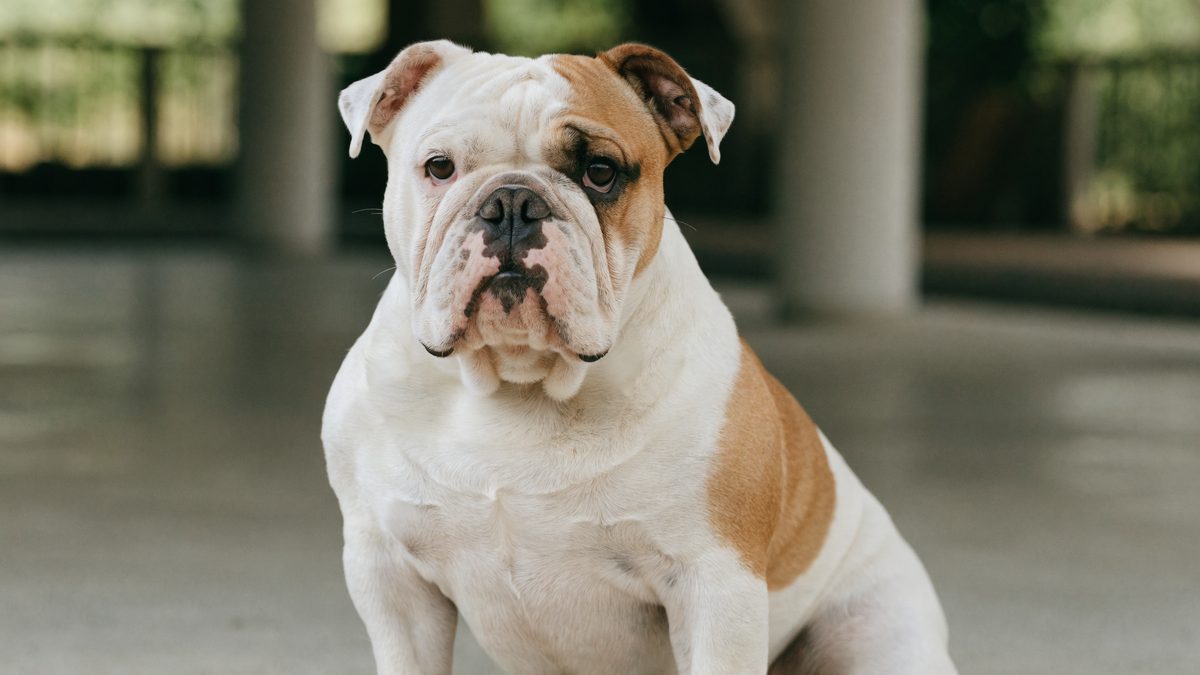
The Bulldog is a medium-sized British companion breed with a shortened muzzle, a heavy low-slung body and a famously affectionate temperament. In India people search for it as both "bulldog" and "english bulldog", and the two words describe the same dog. The registries call it simply the Bulldog. Everyone else calls it the English Bulldog to separate it from the French Bulldog and the American Bully, which are different breeds with different prices and different problems.
Three kennel clubs publish a standard for this breed and all three describe roughly the same animal. Under the American Kennel Club standard approved on 12 July 2016, a mature dog weighs about 50 pounds and a mature bitch about 40 pounds, and the circumference of the skull in front of the ears should measure at least the height of the dog at the shoulders. The Royal Kennel Club puts dogs at 25 kg and bitches at 23 kg. FCI Standard 149 gives the same weights and classifies the breed in Group 2, Section 2.1, Molossoid breeds of Mastiff type, with the stated utilization "Dissuasion and Companion Dog". The AKC breed page lists height at 14 to 15 inches and life expectancy at 8 to 10 years.
| Attribute | AKC (2016) | Royal Kennel Club (2025) | FCI Standard 149 (2010) |
|---|---|---|---|
| Weight, males | About 50 lb | 25 kg, 55 lb | 25 kg |
| Weight, females | About 40 lb | 23 kg, 50 lb | 23 kg |
| Coat | Straight, short, flat, close, fine texture, no curl | Fine texture, short, close and smooth | Fine texture, short, close and smooth |
| Wrinkle | Head and face covered with heavy wrinkles | Finely wrinkled without excess. Heavy over nose roll unacceptable | Finely wrinkled without excess. Heavy over nose wrinkle heavily penalised |
| Nostrils | Nostrils wide, large and black | Large, wide and open. Pinched nostrils unacceptable | Large, wide and open. Pinched nostrils unacceptable |
| Breathing | Not addressed | Respiratory distress or excessive respiratory noise unacceptable | Dogs showing respiratory distress highly undesirable |
| Condition | Excess weight penalised through the scale of points | Limbs well-muscled and in hard condition with no tendency towards obesity | No tendency towards obesity |
Read that table carefully, because it contains the single most useful correction on this page. The two European standards actively campaign against the exaggerated Bulldog that Indian sellers photograph. The Royal Kennel Club calls pinched nostrils and a heavy over-nose roll unacceptable, and says respiratory distress or excessive respiratory noise is unacceptable in the ring. FCI Standard 149 says pinched nostrils and heavy over-nose wrinkle should be heavily penalised, and closes with the instruction that only functionally and clinically healthy dogs should be used for breeding. A puppy advertised on its wrinkles and its squashed face is not being sold to you as a better example of the breed. It is being sold to you as a worse one.
Where the breed came from
FCI Standard 149 dates the first classification of the Bulldog as such to the 1630s, records its original use in bullbaiting, and notes that after 1835 it began to evolve into the shorter-faced, squatter version now familiar, entering the show ring in 1860. The AKC recognised the breed in 1886. That 1835 date matters. The flat face was not an accident of nature and it is not ancient. It was produced by about 190 years of show breeding after the job the dog was built for became illegal.
Modern veterinary opinion is blunt about the result. The 2022 VetCompass study of English Bulldogs concluded that the health of the breed is substantially lower than that of dogs which are not English Bulldogs, that many of the predispositions are driven by the extreme conformation, and that immediate redefinition of the breed towards a moderate conformation is strongly advocated. Whether you agree with that framing or not, it is the position of the researchers holding the largest primary-care dataset on the breed, and an Indian buyer deserves to see it before paying rather than after.
Temperament, in the standards' own words
The AKC standard describes the disposition as equable and kind, resolute and courageous, and specifies not vicious or aggressive, with a demeanour that should be pacific and dignified. The Royal Kennel Club adds that the breed is fierce in appearance but possessed of an affectionate nature. That distinction between appearance and nature is the whole breed. One Indian page currently ranking for this query tells readers that if they are looking for a guard dog, Bulldogs are the choice for them. Every published standard says the opposite. Buy this dog for protection and you have misread it completely.
The English Bulldog, the French Bulldog and the American Bully are separate breeds. Google's own results page for "bulldog price in india" mixes them, returning a French Bulldog price article at position three and a Rs 625 grooming product at position eight. The French Bulldog is smaller, is priced at Rs 50,000 to Rs 2,00,000 in the same Indian price list that puts the English Bulldog at Rs 50,000 to Rs 1,50,000, and carries the shortest recorded life expectancy of any UK breed at 4.53 years against the English Bulldog's 7.39. The comparison section below sets all three side by side.
Bulldog price in India
A Bulldog puppy costs between Rs 10,000 and Rs 3,00,000 in India in 2026, and that is not a typo. The published Indian sources disagree with each other by more than Rs 2,90,000 for the same breed. Two of them contradict themselves inside a single page. Nobody audits any of it, so the honest answer to "what is the bulldog price in india" is a spread, not a number.
Bonbeno read the price bands published by the Indian pages that currently rank for this query and put them in one table. Read side by side, the disagreement is the story.
| Source | Headline range | Lowest tier quoted | Highest tier quoted | Internal contradiction |
|---|---|---|---|---|
| Petsworld | Rs 10,000 to Rs 60,000 | Rs 10,000 | Rs 60,000 | Yes. The same page gives an average of Rs 1,07,000 |
| PatMyPets | Rs 25,000 to Rs 45,000 | Rs 21,000 (Pune) | Rs 26,500 (Delhi, Mumbai) | Yes. The city table never reaches the headline maximum |
| BARF India | Rs 25,000 to Rs 80,000 | Rs 25,000 | Rs 80,000 | No |
| Supertails | Rs 50,000 to Rs 1,50,000 | Rs 50,000 | Rs 1,50,000 | No |
| Saee Kennel | Rs 60,000 to Rs 1,00,000 | Rs 60,000 | Rs 1,00,000 | No |
| Premium Doggies | Rs 83,000 to Rs 3,51,000 | Rs 70,000 (its own listing) | Rs 91,000 (its own listing) | Yes. No listing on the page comes close to Rs 3,51,000 |
| Mr n Mrs Pet | Rs 1,20,000 to Rs 3,00,000 | Rs 1,20,000 (basic quality) | Rs 3,00,000 (champion bloodline) | No, but its floor is above four other sources' ceilings |
The numbers that matter are the gaps. The cheapest published floor is Rs 10,000 and the highest published ceiling is Rs 3,00,000, a spread of Rs 2,90,000 for one breed. Mr n Mrs Pet's cheapest tier, at Rs 1,20,000, sits above the most expensive dog Petsworld, PatMyPets, BARF India and Saee Kennel will admit exists Saee Kennel, English Bulldog Price…. Premium Doggies advertises a range topping out at Rs 3,51,000 while every actual listing on its own page sits between Rs 70,000 and Rs 91,000. Four of the seven sources also sell puppies, so their published ranges are marketing copy that happens to look like market data.
What the KCI tier actually buys
A KCI-registered Bulldog is quoted at Rs 2,00,000 to Rs 2,50,000 by the highest-priced Indian source. Understand what that premium covers before you pay it. The Kennel Club of India runs litter registration, single dog registration, prefix and affix registration, transfer of ownership, dog show sanctioning and judge contracting, under a tariff last revised on 1 April 2024. Registration documents parentage. It does not test lungs, hips or eyes. No Indian registry requires a Respiratory Function Grading result, an OFA hip film or an eye examination before a litter is registered. A KCI certificate and a health certificate are different pieces of paper and a seller who blurs the two is either careless or counting on you being.
City by city, and why the numbers stopped meaning anything
| City | PatMyPets | Saee Kennel | Gap |
|---|---|---|---|
| Delhi | Around Rs 26,500 | Rs 60,000 to Rs 1,00,000 | Up to 3.8x |
| Mumbai | Around Rs 26,500 | Rs 60,000 to Rs 1,00,000 | Up to 3.8x |
| Bangalore | Around Rs 26,000 | Rs 60,000 to Rs 1,00,000 | Up to 3.8x |
| Hyderabad | Around Rs 25,500 | Rs 60,000 to Rs 90,000 | Up to 3.5x |
| Kolkata | Around Rs 25,000 | Rs 60,000 to Rs 95,000 | Up to 3.8x |
| Chennai | Around Rs 25,000 | Rs 60,000 to Rs 95,000 | Up to 3.8x |
| Pune | Around Rs 21,000 | Rs 60,000 to Rs 1,00,000 | Up to 4.8x |
| Ahmedabad | Around Rs 23,500 | Rs 60,000 to Rs 1,00,000 | Up to 4.3x |
One caveat is doing a lot of work in that table. The PatMyPets city figures were published in December 2021 and the page has not been updated since. It still ranks on page one for this query in August 2026, which tells you something about how thin the competition is rather than anything about Bulldog prices. Saee Kennel's table is dated 22 January 2026 and is the more current of the two. Bonbeno prints both rather than averaging them, because averaging a 2021 retailer estimate with a 2026 kennel's asking price produces a number that describes nothing.
Google's own related searches for this query include blue bulldog price in india, black bulldog price in india and white bulldog price in india, so the colour premium is clearly being sold. Check it against the standards. The AKC permits red, white, fawn, fallow and combinations of these, with brindle, piebald, ticking, black masks and black tipping as patterns, and disqualifies any other colour or marking outright, including merle. The Royal Kennel Club lists red, fawn and white as the whole colours, plus brindle and pied, and states that any other colour or combination is unacceptable. A blue or solid black Bulldog is outside both standards. You are paying a premium for a disqualification.
The price is the smallest number on this page
Whatever you pay to buy the dog is a minority of what you will spend on it. The next section builds the recurring cost, but hold one figure in mind while you read the price table above. Only 9.7 percent of English Bulldogs in the 2016 VetCompass sample were older than eight years, against 25.4 percent of dogs that were not English Bulldogs. You are not buying twelve years of dog. On the UK evidence you are buying roughly seven, and paying for the veterinary care that shortens it.
The real monthly cost of a Bulldog in India
Budget Rs 8,000 to Rs 14,000 a month for a Bulldog in an Indian metro, plus a contingency for surgery that no competing page asks you to hold. The recurring monthly cost is broadly what any medium dog costs. What makes this breed expensive is the veterinary tail, and every published Indian budget for the Bulldog leaves that tail out.
Start with what the Indian sources actually publish. Supertails classes the Bulldog as a medium breed and puts a medium dog at Rs 6,000 to Rs 10,000 a month, rising to Rs 8,000 to Rs 14,000 for a large dog. Mr n Mrs Pet puts English Bulldog upkeep at Rs 8,000 to Rs 10,000 a month covering food, grooming, vet visits and routine care. Saee Kennel breaks it down differently, at Rs 2,000 to Rs 5,000 a month for feeding, Rs 500 to Rs 2,000 per routine check-up, Rs 5,000 to Rs 8,000 a year for vaccination in the first two years, Rs 1,000 to Rs 2,000 per deworming and tick session, and Rs 2,000 to Rs 5,000 a month for training.
| Line item | Published medium-dog figure | What changes for a Bulldog |
|---|---|---|
| Food | Rs 2,500 to Rs 4,000 | Unchanged if you weigh the food. Higher if you free-feed, and overweight or obesity already runs at 8.7 percent in the breed |
| Routine vet visits | Rs 800 to Rs 1,500 | Higher. English Bulldogs carry 2.04 times the odds of at least one recorded disorder in a year |
| Vaccination | Rs 1,500 a year | Unchanged |
| Grooming | Rs 800 to Rs 1,500 | Lower at a salon, higher in your own time. The folds need cleaning daily and the coat needs almost nothing |
| Training | Rs 2,000 to Rs 5,000 for six months | Unchanged. Sessions must be short and cool, not fewer |
| Cooling and electricity | Not costed by any Indian source | The gap in every competing budget. Air conditioning through an Indian summer is a running cost for this breed, not a comfort |
| Surgical contingency | Not costed by any Indian source | BOAS airway surgery, cherry eye repair, entropion correction and caesarean section are all common enough in this breed to plan for |
Two of those seven lines are missing from every Indian page that ranks for this query. No competing source costs cooling, and no competing source costs surgery. A budget that omits both is not a budget for a Bulldog, it is a budget for a generic medium dog with a Bulldog's photograph on it.
Why the surgical contingency is not pessimism
Four procedures show up often enough in this breed that a prospective owner should assume at least one. Cherry eye, which veterinarians call prolapsed nictitating membrane gland, was recorded in 6.8 percent of Bulldogs in a single year of UK primary-care data, and the median age at first diagnosis across all breeds is 0.63 years O'Neill DG, Yin Y, Tetas Pont R. That means the most likely time for your Bulldog's first eye surgery is inside the first year you own it. Brachycephalic obstructive airway syndrome runs at 19.20 times the odds of other dogs. Skin fold dermatitis, at 38.12 times the odds, is usually managed rather than operated on, but managing it is a lifelong cost. And if you breed your bitch, the caesarean section is close to a certainty rather than a risk, which the health section covers properly.
Bonbeno does not publish an invented rupee figure for these procedures, because no Indian source we could verify publishes one and inventing a number would be worse than admitting the gap. What we can say is the shape of the commitment. Ask two vets in your own city for their current quote on airway surgery and cherry eye repair before you buy, write both numbers down, and treat the higher one as your reserve. If that reserve is more than you can hold, this is the point to choose a different breed rather than the point to hope.
Insurance and the honest caveat
Pet insurance is strongly recommended for Bulldogs by at least one Indian breed guide, on the grounds that unexpected veterinary costs in this breed are real. That advice is sound in principle. Read the exclusions before you act on it, because policies commonly exclude pre-existing and breed-related conditions, and for this breed almost everything is breed-related. There is one useful signal in the research. UK insured dogs had 1.89 times the odds of a recorded cherry eye diagnosis compared with uninsured dogs. That does not mean insurance causes cherry eye. It means insured owners take the dog in, and uninsured owners sometimes do not. Decide which owner you intend to be before the dog is in the house.
Keep the dog lean. Body condition score is an independent, measured risk factor for BOAS in Bulldogs, alongside stenotic nostrils and neck girth ratio. In the Packer modelling, a neutered Pug at its breed-average craniofacial ratio and neck girth carried a predicted BOAS risk of 0.93, and one extra point of body condition score on that same dog raised the prediction to 0.98. Dogs at or above their breed and sex mean bodyweight also carried 1.42 times the odds of heat-related illness. Weighing the food costs nothing and is the highest-return thing an Indian Bulldog owner does.
Heat tolerance, and why this is the decision
The Bulldog carries 13.95 times the odds of heat-related illness compared with a Labrador Retriever, the second-highest figure of any breed in the largest study ever run on the question. That single number should drive your decision more than the price, the temperament or the photographs. Bonbeno rates this breed 1 of 5 for heat tolerance, the lowest rating on this site.
The evidence here is unusually strong, which is worth saying because on most breed pages it is not. Hall, Carter and O'Neill examined the clinical records of 905,543 UK dogs under veterinary care in 2016 and identified 395 confirmed heat-related illness events. The event fatality rate was 14.18 percent, meaning roughly one in seven dogs that developed heat-related illness died of it.
| Breed | Odds ratio | 95% confidence interval | Incidence in 2016 |
|---|---|---|---|
| Chow Chow | 16.61 | 6.21 to 44.44 | 0.50% |
| Bulldog | 13.95 | 8.01 to 24.29 | 0.42% |
| French Bulldog | 6.49 | 3.62 to 11.63 | 0.18% |
| Dogue de Bordeaux | 5.31 | 1.99 to 14.21 | 0.17% |
| Greyhound | 4.26 | 1.88 to 9.70 | 0.15% |
| Pug | 3.24 | 1.67 to 6.29 | Not separately reported |
| Golden Retriever | 2.65 | 1.40 to 5.01 | Not separately reported |
| Siberian Husky | 1.18 | 0.28 to 5.06 | Not separately reported |
| Labrador Retriever | Baseline | Reference group | Reference group |
Read the Husky line, because it is the most instructive row in the table. The Arctic sled breed that everyone assumes cannot take heat came out at 1.18 times the Labrador's odds, and the confidence interval crosses 1, so the result is not statistically significant. The Bulldog's 13.95 is significant, is nearly twelve times the Husky's point estimate, and is the highest figure of any recognised pet breed except the Chow Chow. The problem is not fur. The problem is the airway.
Why a flat face fails in Indian heat
A dog sheds heat by panting, which is evaporative cooling across the surfaces of the nose and throat. Shortening the muzzle removes surface area and packs the same soft tissue into a smaller space. In the same study, brachycephalic dogs carried 2.10 times the odds of heat-related illness compared with mesocephalic dogs, and dogs at or above their breed and sex mean bodyweight carried 1.42 times the odds. So the Bulldog is exposed twice, once for its skull shape and again for the body condition that this breed drifts into.
Now put that in an Indian May. The India Meteorological Department declares a heatwave when maximum temperatures run 4.5 to 6.4 degrees above the seasonal normal and pass 40 C in the plains. In May 2026, Delhi's Safdarjung station recorded 43.6 C, parts of the capital came close to 45 C, and the highest reading anywhere in the country on 21 May was 47.6 C at Banda in Uttar Pradesh, with maxima of 40 to 47 C across northwest, west, central and north peninsular India. Heatwave to severe heatwave conditions were recorded across Vidarbha, east and west Uttar Pradesh, east Madhya Pradesh, the Haryana-Chandigarh-Delhi belt, Punjab, Uttarakhand, Chhattisgarh and parts of Odisha. Delhi also logged its warmest night in fourteen years, which matters because a hot night removes the recovery window a labouring airway needs.
City by city, honestly
| Region | The specific problem | What it actually requires |
|---|---|---|
| Delhi, Chandigarh, Punjab, Haryana | Peak dry heat above 43 C and warm nights | Air conditioning through the day and the night, March to October |
| Mumbai, Chennai, Kolkata, Kochi | Humid heat. Evaporative cooling works worst when the air is already wet | Air conditioning plus dehumidification, and daily fold cleaning through the monsoon |
| Bangalore, Pune, Hyderabad plateau | Milder maxima, still above 35 C in April and May | The most workable Indian cities for this breed, and still not casual |
| Banda, Vidarbha, interior UP and MP | 47.6 C recorded on 21 May 2026 | Bonbeno does not consider these locations reasonable for a Bulldog |
Humid coastal heat deserves its own line because Indian owners consistently underestimate it. A dog cools itself by evaporating water into the air it breathes out. When the air is already near saturation, as it is in a Chennai or Kolkata August, that mechanism loses efficiency exactly when it is needed most. A 33 C humid day in Mumbai can be harder on a flat-faced dog than a 40 C dry day in Jaipur, and the thermometer will not tell you that.
Escalating, frantic panting, thick ropey drool, a dark red or bluish tongue and gums, wobbling, vomiting or collapse are all signs to treat as an emergency. Move the dog into shade or air conditioning immediately, wet it with cool tap water rather than ice, get air moving over it with a fan, and go to a veterinarian now rather than after it looks better. One in seven heat-related illness events in the UK study ended in the dog's death, and a Bulldog that appears to recover can still deteriorate hours later. This paragraph is general information and not a diagnosis.
There is one more thing worth stating plainly, because being honest is not the same as being discouraging. A Bulldog can live well in India. It requires an air-conditioned home you are willing to run for eight months of the year, walks that happen before 7 am and after 8 pm, a vet who knows brachycephalic emergencies, and an owner who accepts that a power cut in May is a veterinary problem, not an inconvenience. If all four of those are true for you, read on. If any one of them is not, the adoption section at the end of this page has better options.
Temperament, and who should not buy one
The Bulldog is an affectionate, low-drive, people-obsessed companion dog with an equable and kind disposition, and the published standards say so in those words. It is also stubborn, extremely attached, physically fragile in heat, and almost useless as a guard. Deciding whether it suits your household is mostly a question of what you want the dog for.
Take the standards first, because they are the only description of this breed that nobody is paid to write. The AKC calls the disposition equable and kind, resolute and courageous, explicitly not vicious or aggressive, with a pacific and dignified demeanour. The Royal Kennel Club describes the breed as alert, bold, loyal, dependable, courageous, fierce in appearance, but possessed of an affectionate nature. FCI Standard 149 uses the same wording and lists aggression or excessive shyness as a disqualifying fault.
What that translates to in a flat in Pune
- Expect a shadow. The breed is described by Indian owners' guides as a velcro dog that follows you room to room and copes badly with long absences, with four to six hours alone the practical ceiling for most adults.
- Expect noise without barking. Snoring, snorting, grunting and reverse sneezing are constant. Barking is rare, which genuinely does suit apartment living.
- Expect stubbornness, not stupidity. The dog understands the request and reserves the right to decline it. Harsh correction makes a Bulldog more resistant, not less.
- Expect patience with children. The low, sturdy build and the standard's equable temperament make this an unusually tolerant family dog.
- Expect a slow settle. Bulldogs typically grow into their famous calm somewhere between two and four years of age.
One correction is needed here, because it is being published on a page currently ranking for this query. PatMyPets tells Indian readers that if they are looking for a guard dog, Bulldogs are the choice for them, and that the intimidating appearance makes them a good pick for safety. Every published breed standard describes a pacific, dignified, non-aggressive companion The Royal Kennel Club Federation Cynologique Internationale. FCI Standard 149 even records the breed's utilization as dissuasion and companionship, which means the dog's job is to look like a deterrent, not to be one. Buying this breed for security in an Indian city is a category error that will cost you Rs 1,00,000 or more.
Who should buy a Bulldog
This breed suits a household that is home most of the day, lives in a climate-controlled flat or house, wants a companion rather than a working or guarding dog, has the money for veterinary care that arrives without warning, and finds snoring and flatulence funny rather than intolerable. It suits families with young children particularly well. It suits people who want a dog that will happily do nothing for eleven hours.
Who should not
- Anyone out of the house eight or more hours a day, because separation distress in this breed is common.
- Anyone without reliable cooling, given an odds ratio of 13.95 for heat-related illness.
- Anyone wanting a running, trekking or sporting companion, because the airway will not support it.
- Anyone wanting a guard dog, because the standards describe the opposite animal.
- Anyone whose budget ends at the purchase price, because the veterinary tail on this breed is long.
- Anyone who wants twelve or thirteen years, because UK life expectancy at birth for this breed is 7.39 years.
Socialise the puppy early and widely, because the AKC is unambiguous that early socialisation is vital for every breed and this one has a narrow physical window in which to do it. In an Indian summer that window is the cool part of the morning and the cool part of the night, which means you have to plan socialisation deliberately rather than letting it happen on afternoon walks the way you might with a Pariah or an Indian Spitz.
Owners of this breed are famously devoted, and the reason is real. It is one of the most patient, most companionable and least aggressive dogs available to an Indian family. Bonbeno is not arguing that the temperament is overrated. We are arguing that the temperament is the easy part, and that people buy the breed on temperament and then meet the conformation.
Training a Bulldog in India
To train a Bulldog, keep every session under five minutes, run it in the coolest hour of the day, pay in food rather than praise, and accept that repetition beats insistence. The breed learns slowly and then keeps what it learned. Force produces a dog that shuts down, and in this breed a stressed dog is also a dog that cannot breathe well.
Positive reinforcement is the only method that consistently works with this breed, and harsh or punishment-based training makes Bulldogs more resistant, more anxious and less responsive. That is standard advice for most dogs. For a Bulldog there is a second, physical reason to follow it. Stress raises respiratory effort, and this is a breed with 19.20 times the odds of brachycephalic obstructive airway syndrome. A training session that frustrates the dog into heavy panting is not just ineffective, it is a heat and airway risk.
A realistic first-year training timetable
| Age | Priority | The Indian-specific note |
|---|---|---|
| 8 to 12 weeks | Name, crate, toilet routine, handling of face and feet | Handling comes first here. You will clean folds and eyes daily for a decade, so teach the dog to accept it now |
| 3 to 5 months | Socialisation with people, surfaces, traffic noise, other dogs | Do it at 6 am and after 8 pm from March to October. Afternoon socialisation is not available to you |
| 4 to 6 months | Loose lead walking on a harness, never a neck collar | A collar loads the trachea, and the Bulldog is the worst breed on the OFA tracheal hypoplasia register at 6.0 percent abnormal |
| 6 to 9 months | Recall, settle on a mat, tolerance of the vet table | Rehearse the vet visit before you need it. This breed will have more of them than most |
| 9 to 12 months | Impulse control around food, calm greetings | Food obsession drives the obesity that drives the BOAS risk |
| 12 months | First Respiratory Function Grading assessment if available | The scheme assesses from 12 months and repeats every two years |
The harness point is not a preference. Bulldogs sit at the top of the OFA tracheal hypoplasia register, with 2,340 dogs evaluated and 6.0 percent recorded abnormal against 3.3 percent across all breeds, plus a further 7.1 percent equivocal. A narrow trachea and a dog that pulls into a neck collar are a bad combination. Fit a wide, well-padded harness from the first walk and the dog will never learn to pull against its own throat.
What this breed will not do
Do not plan on off-lead recall in an open Indian park in summer, agility, protection work, or long-distance obedience heeling in the heat. Those are not stubbornness problems. They are airway problems. A Bulldog that refuses to move halfway through a walk is frequently telling you it has run out of breathing capacity, and the right response is to stop, offer water, and go home rather than to insist.
House training is usually straightforward because the breed is clean by nature and food-motivated to a fault. Crate training works well and Indian guides recommend it, provided the crate sits in the coolest room in the house rather than a store room or a balcony. Two short sessions a day beat one long one, and a dog that finishes a session wanting more will start the next one faster.
The single highest-value thing you can teach a Bulldog puppy is to lie still while you clean its face. Skin fold dermatitis runs at 38.12 times the odds of other dogs in this breed, and it was already recorded in 7.8 percent of UK Bulldogs in a single year. An adult that fights the cloth turns a thirty-second daily job into a fight you will start skipping. Pair the cloth with a high-value treat from week nine and you have solved it for life.
Exercise, and the two windows you actually have
Walk an adult Bulldog twice a day for 20 to 30 minutes at an easy pace, once before 7 am and once after 8 pm from March to October. That is the whole prescription. The breed needs enough movement to stay lean and almost nothing beyond that, and in India the constraint is not the dog's stamina but the thermometer.
Indian sources put the requirement at around an hour of mild physical activity a day and warn against strenuous exercise, extreme temperatures and long-distance running. Split that hour into two cool sessions and you have a workable routine. The mistake Indian owners make is not under-exercising a Bulldog. It is exercising the right amount at the wrong hour.
| Season | Morning window | Evening window | Notes |
|---|---|---|---|
| March to June, north and central India | 5:30 am to 6:45 am | After 8:30 pm | Maxima ran 40 to 47 C in May 2026 across this belt. Skip the walk entirely on heatwave days and use indoor enrichment |
| June to September, monsoon | 6 am to 7:30 am | After 8 pm | Humidity, not temperature, is the limiting factor. Dry the folds thoroughly after every wet walk |
| October to February | Anytime before 10 am | Anytime after 5 pm | The only months in which a midday walk is reasonable in most Indian cities |
| Year round, Bangalore and Pune | Before 9 am | After 6 pm | Milder maxima make these among the more workable Indian cities for the breed |
Why exercise is a weight-control tool, not a fitness programme
The purpose of walking a Bulldog is not cardiovascular fitness. It is keeping the dog lean, and the evidence for why that matters is unusually specific. Body condition score is an independent risk factor for brachycephalic obstructive airway syndrome in Bulldogs, confirmed in a study of 604 pugs, French bulldogs and bulldogs. Neck girth ratio is the other, and in male Bulldogs a neck girth ratio above 0.71 predicted BOAS at roughly 70 percent sensitivity and specificity. Fat is deposited in the neck. A heavier Bulldog is a Bulldog with a thicker neck and a more obstructed airway, and that loop tightens on itself.
The heat data closes the argument. Dogs at or above their breed and sex mean bodyweight carried 1.42 times the odds of heat-related illness. Overweight or obesity was already the third most common diagnosis in UK Bulldogs at 8.7 percent in a single year. So the twenty-minute walk is not about stamina. It is about not being the dog in the heavier half of that distribution when May arrives.
Indoor enrichment for heatwave days
- Scatter feed the measured daily ration across a snuffle mat or a towel rather than putting it in a bowl.
- Use slow feeders and lick mats, which tire a food-driven dog without raising its respiratory rate.
- Run short shaping sessions of two or three minutes indoors under the fan or air conditioner.
- Rotate three or four toys weekly rather than leaving all of them out, which keeps novelty cheap.
- Practise the grooming routine as a game, which converts a chore into enrichment.
Swimming deserves a specific warning. Bulldogs are poor swimmers because of their heavy build and short muzzle, and Indian guides warn owners to supervise them near water. A Bulldog in a pool is a drowning risk, not a cooling strategy. If you want water cooling, use a shallow paddling tray the dog can stand in with its head clear, and stay with it.
Press the back of your hand flat on the pavement for seven seconds before you walk. If you cannot hold it there, it is too hot for the dog, and a Bulldog is closer to that pavement than most breeds because it stands 14 to 15 inches at the shoulder. A low dog on radiating tarmac is breathing air several degrees hotter than the air at your head height.
Grooming a wrinkled dog in Indian humidity
To groom a Bulldog, clean and dry every skin fold daily, brush the coat twice a week, and forget the rest. The coat is almost no work. The folds are the entire job, and in Indian humidity they are the difference between a comfortable dog and one carrying a chronic infection.
Start by correcting something a top-ranking Indian seller page publishes about this breed. Mr n Mrs Pet's English Bulldog page states that English Bulldogs have dense, curly coats that need trimming every 4 to 6 weeks to prevent matting. That is wrong, and the same page contradicts it two sections earlier by describing the dog's short coat and simple care routine. All three published standards describe a coat that is fine in texture, short, close and smooth, with the AKC adding "no fringe, feather or curl"; The Royal Kennel Club Federation Cynologique Internationale. A Bulldog never needs clipping. If a groomer quotes you a trim cycle for this breed, they have not read a standard.
The fold routine, step by step
- Lift each facial fold, including the nose rope, and check for redness, damp or smell.
- Wipe the inside of the fold with a plain damp cotton pad or a vet-approved wipe.
- Dry the fold completely with a dry pad. Moisture left behind is the actual problem.
- Check the tail pocket and the vulval fold in bitches, which owners forget and which infect just as readily.
- Clean the eye corners with a separate damp pad, working away from the eye.
- Inspect between the toes for interdigital swelling, which runs at 12.96 times the odds in this breed.
That routine takes under two minutes once the dog accepts it, and it targets the single largest risk on this page. Skin fold dermatitis in English Bulldogs runs at 38.12 times the odds of dogs that are not English Bulldogs, the highest odds ratio recorded for any disorder in the breed. It was already present in 7.8 percent of UK Bulldogs in a single year of records. Cutaneous disorders as a group affected 28.6 percent of Bulldogs in that year, more than any other disorder group.
| Disorder | Dogs affected | One-year prevalence |
|---|---|---|
| Cutaneous disorders, all | 463 | 28.6% |
| Otitis externa (ear infection) | 206 | 12.7% |
| Pyoderma | 142 | 8.8% |
| Skin fold dermatitis | 126 | 7.8% |
| Overlong nails | 119 | 7.3% |
What the Indian monsoon changes
Everything above gets harder from June to September. A fold that stays damp for hours is a yeast and bacterial culture, and in coastal humidity it never fully dries on its own. Three practical adjustments work. Move fold cleaning to twice daily through the monsoon rather than once. Towel the dog dry within minutes of any wet walk rather than letting it air dry. And stop using powder-based drying products in humid weather, because damp powder cakes inside the fold and makes the problem worse rather than better.
Ears are the second monsoon problem. Otitis externa was the single most common diagnosis in UK Bulldogs at 12.7 percent, and the rose ear specified in every standard folds inward and back, which traps moisture. Check ears weekly, dry them after baths and swims, and take a head shake plus an odour seriously rather than waiting a week.
Bathing, nails and teeth
Bathe every four to six weeks or when the dog is genuinely dirty, with a dog shampoo, and dry every crease afterwards. Trim nails every three to four weeks, because overlong nails showed up in 7.3 percent of Bulldogs and change how a heavy, low dog loads its already compromised joints. Teeth are the pleasant surprise in this breed. English Bulldogs carry reduced odds of periodontal disease at 0.23, and reduced odds of dental disorders as a group at 0.25. Brush anyway, but this is one bill you are less likely to face.
Published Indian grooming budgets for a medium dog run Rs 800 to Rs 1,500 a month. For a Bulldog you can spend less than that at a salon and more than that in your own time. The salon cannot do the job that matters, because the fold routine is daily and has to happen at home. Budget for cotton pads and a vet-recommended cleanser, not for a monthly appointment.
Health, lifespan and what the evidence actually says
English Bulldogs carry 2.04 times the odds of being diagnosed with at least one disorder in a year compared with dogs that are not English Bulldogs, and show increased odds for 24 of 43 common disorders. UK life expectancy at birth for the breed is 7.39 years against 11.23 for all dogs. This section is long because the evidence is strong and because no page ranking in India publishes any of it.
The largest study of this breed analysed anonymised clinical records from a UK population of 905,544 dogs under veterinary care during 2016, comparing a random sample of 2,662 English Bulldogs with 22,039 dogs that were not English Bulldogs. The English Bulldogs in that sample averaged 2.65 years old against 4.42 for other dogs, and weighed 25.55 kg against 13.54 kg. Both differences matter when reading the results below, and the Royal Veterinary College's own summary of the work confirms that the statistical analysis accounted for differing age, sex-neuter status, bodyweight and insurance status between the two groups.
The disorders this breed is predisposed to
| Disorder | Odds ratio | 95% confidence interval |
|---|---|---|
| Skin fold dermatitis | 38.12 | 26.86 to 54.10 |
| Prolapsed nictitating membrane gland (cherry eye) | 26.79 | 18.61 to 38.58 |
| Mandibular prognathism (protruding lower jaw) | 24.32 | 13.59 to 43.53 |
| Brachycephalic obstructive airway syndrome | 19.20 | 13.31 to 27.69 |
| Interdigital cyst | 12.96 | 8.95 to 18.76 |
| Congenital disorder (grouped) | 7.55 | 5.29 to 10.76 |
| Tail disorder (grouped) | 6.01 | 3.91 to 9.24 |
| Lower respiratory tract disorder (grouped) | 5.50 | 4.11 to 7.35 |
The breed also carries genuine protections, and a fair page prints them. English Bulldogs had significantly reduced odds of 6 of 43 disorders, including retained deciduous tooth at 0.02, lipoma at 0.06, periodontal disease at 0.23, itchy skin at 0.25 and flea infestation at 0.40. At the grouped level they had reduced odds of dental disorder at 0.25, spinal cord disorder at 0.31 and appetite disorder at 0.43. In the OFA advanced cardiac register the Bulldog also sits well down the list, with 290 dogs evaluated and 3.4 percent abnormal against 5.4 percent across all breeds. This is not a breed with a bad heart. It is a breed with a bad airway, bad skin, bad eyes and bad hips.
Lifespan, and why the numbers differ
| Source | Figure | What it measures |
|---|---|---|
| Teng et al, Scientific Reports | 7.39 years (95% CI 7.08 to 7.69) | Life expectancy at age 0 from UK life tables built on 30,563 deaths |
| O'Neill et al, PLOS ONE | 7.2 years (IQR 4.9 to 9.3) | Median longevity of Bulldogs that died in UK primary care |
| McMillan et al, Scientific Reports | 9.8 years (hazard ratio 1.8) | Median survival from 584,734 UK dogs including 284,734 deceased |
| American Kennel Club | 8 to 10 years | Published breed guidance, no stated dataset |
| Indian breed guides BARF India, English Bulldog | 8 to 10 years | Repeating the AKC figure |
The peer-reviewed figures disagree with each other by 2.4 years, and Bonbeno prints that rather than hiding it in an average. They are not measuring the same thing. Teng and colleagues built life tables giving life expectancy at age 0, which weights early deaths heavily and produces 7.39 years. McMillan and colleagues reported median survival across a 584,734-dog dataset and produced 9.8 years with a hazard ratio of 1.8, placing the Bulldog among the ten breeds most at risk of early death alongside the French Bulldog, also at 9.8 years. Median survival for pure breeds overall in that study was 12.7 years. So the honest range is 7.2 to 9.8 years, against 11.23 to 12.7 for dogs generally, and every method agrees the breed dies early. Dogs Trust, which co-authored the larger dataset, summarises the pattern plainly. Companion dogs live 12.5 years on average, small breeds 12.7 and large breeds 11.9, while flat-faced brachycephalic dogs carry a 40 percent increased risk of a shortened life compared with dogs with typically shaped faces, quoting the French Bulldog at 9.8 years against the Border Collie at 13.1 and the Golden Retriever at 13.2. Sex matters too. Median longevity was 6.7 years for males and 7.9 years for females, a statistically significant difference. Among UK Bulldogs that died with a recorded cause, the commonest were heart disease at 11.8 percent, neoplasia at 10.9 percent and brain disorder at 9.1 percent.
Hips and elbows, where the OFA register is worst
Hip dysplasia in this breed is not a risk, it is close to the norm. On the Orthopedic Foundation for Animals register, 1,655 Bulldogs have been evaluated and 70.8 percent were graded dysplastic, against 14.2 percent across 1,711,498 dogs of all breeds. Only 27.0 percent of Bulldogs were graded normal, and just 0.4 percent excellent. Broken down, 34.1 percent were mild, 24.7 percent moderate and 12.1 percent severe. That places the Bulldog third worst of every breed on the register, behind the Olde English Bulldogge at 73.3 percent and the Pug at 72.7 percent. Elbows are barely better. Bulldogs rank second worst at 40.2 percent abnormal from 1,054 evaluations, against 12.0 percent across all breeds.
OFA figures come from dogs whose owners chose to screen them and pay for the film, which usually skews a register towards better results, not worse. A 70.8 percent dysplastic rate in a voluntarily screened population is therefore a floor rather than a ceiling. Bonbeno also notes the reverse caution. Some breeders submit only films they expect to fail, and no register is a random sample. What is not in dispute is the ratio. This breed is about five times the all-breed dysplastic rate.
Breathing, and the two things you can actually measure
Brachycephalic obstructive airway syndrome is the condition that shapes this breed's life. In a Cambridge study of 604 pugs, French bulldogs and bulldogs, 51.2 percent of the Bulldogs were graded BOAS positive, and 44.2 percent had moderately to severely stenotic nostrils. Two measurements predicted it well enough to be useful to a buyer. Stenotic nostrils were associated with BOAS in all three breeds, and in male Bulldogs a neck girth ratio above 0.71 predicted BOAS at roughly 70 percent sensitivity and specificity.
The Packer work adds the measurement that explains why. Across 700 dogs of diverse conformations plus 154 brachycephalic dogs, BOAS occurred only in dogs whose muzzles were less than half their cranial lengths, and risk rose steeply as the craniofacial ratio fell. Below a craniofacial ratio of 0.2 more than half the dogs were affected, and below 0.1 more than 80 percent were. Neck girth and body condition were independent additional risks. In plain terms, a longer nose and a leaner neck are the two things that improve a Bulldog's breathing, and one of them is chosen at purchase.
The Kennel Club and University of Cambridge Respiratory Function Grading Scheme turns that into something you can ask a breeder for. The scheme covers the Bulldog, the French Bulldog and the Pug among others, assesses dogs from 12 months, and repeats every two years. Grade 0 means clinically unaffected, Grade 1 unaffected with some respiratory noise that does not affect exercise, Grade 2 clinically affected with moderate signs, and Grade 3 severely affected, with the explicit instruction not to breed from a Grade 3 dog. The scheme advises buyers to ensure both parents have been tested. No Indian registry requires it, so if you want a verified grade you have to ask for it yourself.
Cherry eye, and why it hits so early
Cherry eye is a prolapse of the gland of the third eyelid, and it presents as a red swollen mass in the lower inner corner of the eye. Across 905,543 UK dogs the annual prevalence was 0.20 percent, and the median age at first diagnosis was 0.63 years. Dogs under one year old carried 10.82 times the odds of dogs aged two to four. The English Bulldog was second worst of all breeds at an odds ratio of 24.08 against crossbred dogs, behind only the Neapolitan Mastiff at 34.26, and brachycephalic breeds as a group ran at 6.71 times mesocephalic breeds. In the Bulldog-specific data it appeared in 6.8 percent of dogs in a single year. Plan for it in the first year, not the fifth.
Caesarean section, stated plainly
A Bulldog litter is very largely a surgical event. In a UK survey covering 22,005 litters from 13,141 bitches across 151 breeds, the Boston terrier, the bulldog and the French bulldog all had caesarean section rates above 80 percent, the three highest of any breed studied. The mechanism is the same conformation the buyer is paying for. A puppy with a very large head and a bitch with a narrow pelvis is a delivery that frequently cannot happen unassisted. If you are buying a bitch and imagining a litter later, price the caesarean, price the emergency version of it, and understand that a general anaesthetic in a brachycephalic dog is not a routine procedure.
Two problems almost nobody covers
Cystinuria is a hereditary urinary stone disorder, and the Bulldog is the worst breed on the OFA cystinuria register, with 621 dogs tested, 55.1 percent normal, 38.6 percent carriers and 6.3 percent affected. The French Bulldog is far cleaner at 74.8 percent normal and 1.6 percent affected. Tracheal hypoplasia, an abnormally narrow windpipe, is the second. The Bulldog again ranks worst, with 2,340 dogs evaluated, 6.0 percent abnormal and a further 7.1 percent equivocal, against 3.3 percent abnormal across all breeds. Neither condition appears on any Indian page ranking for this query, and both are genuinely screenable inherited problems you can ask about.
The regulatory picture, corrected
You will read online that Norway banned English Bulldog breeding. That is not what happened. On 10 October 2023 the Supreme Court of Norway held in case HR-2023-1901-A that breeding the Cavalier King Charles Spaniel violates the Animal Welfare Act, while breeding the English Bulldog under a specific breeding programme does not. The distinction is the point. A court examined the breed and found that structured, health-screened breeding towards a moderate conformation was defensible and unstructured breeding was not. The 2022 VetCompass authors argued in the same direction, calling for immediate redefinition of the breed towards a moderate conformation to avoid the UK joining the list of countries where breeding is banned. India has no equivalent rule, which places the entire burden of screening on the buyer.
What the breed's own parent club asks for
The Bulldog Club of America, the AKC parent club for the breed, works with the Orthopedic Foundation for Animals on health screening and lists three required OFA tests a breeder must complete to receive a CHIC number, namely cardiac, patella and trachea, plus an additional recommended list of optional tests. Note what is required and what is not. The trachea test is required, which matches the Bulldog's position as the worst breed on the OFA tracheal hypoplasia register. Hip screening is not on the required list, in a breed where 70.8 percent of evaluated dogs are dysplastic. An Indian buyer asking a breeder "what have you screened" should therefore ask about hips explicitly rather than assuming a CHIC number covers them.
The club's Ambassador for Health programme adds six optional tests to those three and awards five levels of recognition, from bronze for four tests to diamond for every eligible test. It launched in 2007 with cardiac, patella, thyroid, elbows and hips, and has since added tracheal hypoplasia, hyperuricosuria and cystinuria. The participation numbers are the sobering part. Of nearly 115,000 dogs of all breeds that have been issued CHIC numbers, 965 are Bulldogs, and of more than 23,000 samples in the CHIC DNA repository, 93 are Bulldogs. In a breed the AKC ranks 10th of 210 for popularity, fewer than a thousand dogs worldwide have completed the parent club's own testing programme. Screened Bulldogs exist. They are rare, and in India they are rarer still.
The lead author of the 2022 VetCompass study put the underlying problem in one sentence, saying that what is most concerning is that so many of the health conditions English Bulldogs suffer from, such as skin fold dermatitis and breathing problems, are directly linked to the extreme structure of their bodies that has been selectively bred for. That is the argument in full. These are not random inherited diseases that better luck avoids. They are consequences of a shape, and the shape is chosen at purchase.
Feeding a Bulldog in India
Feed a Bulldog two measured meals a day, weigh the food rather than eyeballing it, and count treats inside the daily allowance rather than on top of it. This breed will eat anything you offer and keeps looking hungry, and portion discipline is the one daily decision that measurably changes its breathing, its joints and its heat risk.
The published Indian budget for feeding a medium dog runs Rs 2,500 to Rs 4,000 a month on dry or wet food, and one Indian kennel puts English Bulldog feeding at Rs 2,000 to Rs 5,000 a month. Either figure is workable. The number that should worry you is a different one. Overweight or obesity was the third most common diagnosis in UK Bulldogs, recorded in 8.7 percent of the breed in a single year.
Why body condition is a breathing issue in this breed
Three separate studies point at the same conclusion. Body condition score was independently associated with BOAS in Bulldogs in the Cambridge conformational study. In the Packer modelling, adding a single point of body condition score to a neutered Pug at the breed-average craniofacial ratio of 0.11 and neck girth of 32 cm raised that dog's predicted BOAS risk from 0.93 to 0.98. That is a Pug-specific model output rather than a Bulldog one, and the same authors note that the predicted effects of neck girth and body condition were relatively subtle compared with craniofacial ratio, which is the part of the risk nobody can change after the puppy is born. And dogs at or above their breed and sex mean bodyweight carried 1.42 times the odds of heat-related illness. A fat Bulldog in Chennai in May is carrying three separate multipliers at once.
| Stage | Meals per day | The priority |
|---|---|---|
| 8 weeks to 3 months | Three to four | Steady growth, not fast growth. Rapid gain loads dysplastic joints |
| 3 to 6 months | Three | Establish that food comes from a bowl on a schedule, never from the table |
| 6 to 12 months | Two | Weigh monthly. This is where Indian Bulldogs typically start gaining |
| 1 to 7 years | Two measured meals | Hold a lean body condition. Ribs should be easy to feel under light pressure |
| 7 years and over | Two, reduced calories | Joint support and weight control matter more than protein arguments |
What to feed, and what the evidence does and does not support
Any complete diet appropriate to the dog's life stage works, and the AKC's guidance is simply to match the diet to age and watch calorie consumption and weight, checking with your vet if you have concerns. Indian raw and fresh-food brands make stronger claims. One argues that fresh or raw feeding improves digestion, firms stools, reduces gas, brightens the coat and keeps folds cleaner in Bulldogs, and that these benefits are commonly reported by owners within weeks. Note that this claim comes from a company selling raw dog food, and that owner-reported improvement is not the same as controlled evidence. Bonbeno has not found a peer-reviewed study demonstrating that a raw diet reduces skin fold dermatitis in Bulldogs, and we will not report one that does not exist.
What is not in dispute is the toxin list. Chocolate, onion, garlic, grapes, raisins and xylitol must never be fed, and Indian guides repeat this correctly BARF India, English Bulldog. Indian households add a specific risk here, because a dog that begs at the table gets fed masala food, and onion and garlic are in almost everything cooked in an Indian kitchen. Decide the no-table-food rule on day one and enforce it with the whole household, including visiting relatives.
Feeding mechanics for a flat-faced dog
- Use a shallow, wide bowl so a short muzzle can reach food without pushing its face into a deep dish.
- Raise the bowl slightly if the dog gulps and gags, which reduces air swallowing.
- Slow the eating with a slow feeder, because brachycephalic dogs swallow more air and this breed is prone to flatulence for that reason.
- Feed the evening meal after the walk, not before, so exercise never happens on a full stomach in heat.
- Provide cool water constantly, and check the bowl twice a day in summer rather than once.
One more Indian detail. Food-motivated dogs get fed by everybody, and in a joint family or a household with domestic help, three people quietly feeding the same dog is how a Bulldog gains four kilograms in a year. Write the daily ration on a card, stick it above the food container, and make it one person's responsibility.
Run your hands along the dog's ribs weekly. You should feel each rib clearly under a thin layer, with an obvious waist behind the ribs when viewed from above. If you have to press to find ribs, cut the daily ration by ten percent and check again in three weeks. This costs nothing, needs no equipment, and directly reduces the BOAS and heat risks documented above Hall EJ, Carter AJ.
The first year, month by month
A Bulldog puppy's first year in India has three jobs. Build the daily fold and handling routine, socialise inside the two cool windows the climate allows, and keep growth steady rather than fast. The timeline below sets out what to expect and what to watch for in each month, with the breed-specific risks marked.
| Month | What is happening | What you do | What to watch for |
|---|---|---|---|
| Month 1 to 2 (with breeder) | Litter almost certainly delivered by caesarean section | Visit. See the dam, and watch her breathe at rest | A dam who snores heavily standing still is telling you about the litter |
| Month 2 to 3 (homecoming) | Settling, first vaccinations, deworming | Start daily fold cleaning and paw handling from day one | Loose stools, first eye discharge, refusal to let you touch the face |
| Month 3 | Peak socialisation window opens | Socialise at 6 am and after 8 pm. Introduce surfaces, sounds, strangers | Any noisy breathing at rest, which is not normal in a puppy |
| Month 4 | Teething. Chewing everything | Rotate chew toys. Fit a wide harness, never a neck collar | Cherry eye can appear from now. Median first diagnosis across breeds is 0.63 years |
| Month 5 | Fast growth. Joints loading | Weigh monthly. Keep growth steady, avoid stair sprints and jumping down from furniture | Limping, bunny-hopping gait, reluctance on stairs |
| Month 6 | Adolescence begins. Stubbornness peaks | Shorten training sessions, raise treat value, stay consistent | Interdigital swelling between the toes, at 12.96 times the odds in this breed |
| Month 7 | First full Indian summer for many puppies | Air conditioning becomes non-negotiable. Cut walk length | Any panting that does not settle within ten minutes indoors |
| Month 8 | Neuter decision window opens for many owners | Discuss timing with your vet, and ask specifically about brachycephalic anaesthetic protocol | This breed is not a routine anaesthetic candidate. Ask before you book |
| Month 9 | Adult coat and adult skin. Fold depth increases | Recheck fold routine. Deeper folds need more drying, not more product | Redness, smell or damp in the nose rope or tail pocket |
| Month 10 | Weight gain risk rises as growth slows | Reduce the ration as growth stops. Do the two-finger rib check weekly | A thickening neck, which predicts BOAS in male Bulldogs above a neck girth ratio of 0.71 |
| Month 11 | Behaviour settling begins, slowly | Hold the routine. Full calm typically arrives at two to four years | Separation distress if your schedule has changed |
| Month 12 | Adult. Screening becomes possible | Book a Respiratory Function Grading assessment if one is available to you | Establish the adult baseline now so you can tell later what has changed |
The three things to get right before month four
First, handling. A puppy that lies still for face cleaning at ten weeks is an adult that lies still at four years, and the fold routine is the highest-value habit on this page. Second, the harness. Fit it before the dog is strong enough to pull, because the Bulldog tops the OFA tracheal hypoplasia register and a neck collar is the wrong tool for a narrow windpipe. Third, the cool-hours habit. If your puppy learns that walks happen at 6 am and 8:30 pm, you will not spend the next decade fighting a dog that expects a midday outing in May.
Growth and joints
Keep growth steady rather than pushing it. With 70.8 percent of OFA-evaluated Bulldogs graded dysplastic on hips and 40.2 percent abnormal on elbows, you are raising a puppy whose joints are statistically likely to be imperfect. Nothing in feeding prevents inherited dysplasia. What you control is the load on those joints during growth, which means a lean puppy, no forced running, no repeated jumping down from beds and sofas, and a non-slip surface where the dog turns and plays.
Owners of flat-faced breeds routinely learn to treat snorting, snoring and noisy breathing as charming breed traits rather than clinical signs. The Royal Kennel Club standard is explicit that excessive respiratory noise is unacceptable in the breed, and FCI Standard 149 calls respiratory distress highly undesirable. If your puppy makes noise at rest in an air-conditioned room, that is worth a veterinary conversation, not a video.
English Bulldog vs French Bulldog vs American Bully
The English Bulldog, the French Bulldog and the American Bully are three separate breeds that Indian buyers routinely confuse, partly because Google's own results page for "bulldog price in india" mixes them. The English Bulldog is the heavy, low, rose-eared British dog. The French Bulldog is smaller with erect bat ears and the shortest recorded life expectancy of any UK breed. The American Bully is a heavier, more muscular bull-type dog with a longer muzzle.
Set the verifiable numbers side by side and the differences stop being cosmetic.
| Measure | English Bulldog | French Bulldog | American Bully |
|---|---|---|---|
| Indian price band published by Supertails | Rs 50,000 to Rs 1,50,000 | Rs 50,000 to Rs 2,00,000 | Not listed by that source |
| UK life expectancy at age 0 | 7.39 years | 4.53 years, the shortest of any breed studied | Not reported by that study |
| OFA hips, percent dysplastic | 70.8% of 1,655 | 33.1% of 5,145 | 43.9% of 912 |
| OFA elbows, percent abnormal | 40.2% of 1,054 | 7.5% of 2,120 | 38.6% of 849 |
| OFA tracheal hypoplasia, percent abnormal | 6.0% of 2,340, worst breed | 1.0% of 2,476 | 0.0% of 78 |
| OFA cystinuria, percent affected | 6.3% of 621, worst breed | 1.6% of 675 | Not on the register |
| Heat-related illness odds vs Labrador | 13.95 | 6.49 | Not separately reported |
| Graded BOAS positive in Cambridge study | 51.2% | 58.9% | Not studied |
| Moderately to severely stenotic nostrils | 44.2% | 75.4% | Not studied |
Two conclusions come out of that table and neither is the one Indian marketing pages push. The French Bulldog is not the safer, smaller version of the English Bulldog. It has better hips, far better elbows and a cleaner windpipe, but a worse nose, a higher BOAS rate and a life expectancy 2.86 years shorter Liu NC, Troconis EL, Kalmar L, Price DJ Orthopedic Foundation for Animals. The 2022 VetCompass paper made the same point from a different angle, recording ultra-predispositions with odds above four times other dogs in 9 of 43 disorders for English Bulldogs and 11 of 43 for French Bulldogs. Neither breed is the moderate option.
The second conclusion is about the American Bully. On the two orthopaedic registers where it appears in numbers, it sits between the other two, with 43.9 percent dysplastic hips and 38.6 percent abnormal elbows. Its airway data is thinner, with only 78 dogs on the tracheal hypoplasia register and none recorded abnormal, so Bonbeno will not draw a strong conclusion from it. What we will say plainly is that we found no verified Indian price band for the American Bully in the sources we opened, so any figure you see quoted for it in India is currently unaudited.
How to tell them apart in a photograph
- Ears. The English Bulldog has small, thin rose ears that fold inward and back, and prick or cropped ears are wrong under the standard. The French Bulldog has upright bat ears.
- Size. The English Bulldog is 14 to 15 inches and about 50 pounds for a male. The French Bulldog is noticeably smaller.
- Muzzle. The American Bully carries a visibly longer muzzle than either flat-faced breed, which is why its airway data looks different.
- Tail. The English Bulldog's tail is set low and carried down, straight or screwed but never curled over the back.
- Colour. A merle English Bulldog is a disqualification under the AKC standard, and any colour outside red, fawn, white, brindle and pied is unacceptable to the Royal Kennel Club.
If you want the temperament without the conformation
Buyers drawn to the Bulldog usually want a calm, affectionate, low-exercise, child-tolerant dog that will live in a flat. That description also fits several breeds with an ordinary muzzle and an ordinary heat tolerance. Bonbeno's honest advice is to write down which of the Bulldog's qualities you actually want, then check whether a moderate-headed breed delivers them. If the answer is the face specifically, be clear with yourself that the face is the part carrying the 19.20 odds ratio for airway disease and the 13.95 odds ratio for heat-related illness.
On the Google India results page for this query captured on 15 August 2026, position three was a French Bulldog price article and position eight was a Rs 625 consumer product named Bulldog. Two of the ten page-one results for a query about buying an English Bulldog in India are not about English Bulldogs at all. If the search engine cannot keep these breeds separate, a first-time buyer scrolling a marketplace has no chance, which is precisely why this section exists.
Nine mistakes Indian Bulldog owners actually make
Nine mistakes account for most of the avoidable suffering Bonbeno sees discussed around this breed in India. Each one below is followed by what the evidence says and what to do instead. None of them requires money you do not already have.
1. Treating noisy breathing as a breed charm
Snoring, snorting and reverse sneezing get filmed and shared rather than examined. Both European standards disagree. The Royal Kennel Club calls dogs showing respiratory distress or making excessive respiratory noise unacceptable, and FCI Standard 149 calls respiratory distress highly undesirable. Do this instead. Record a fifteen-second video of your dog breathing at rest in an air-conditioned room and show it to your vet at the next visit. That is a baseline you can compare against in two years.
2. Walking at the wrong hour
The evening walk at 6 pm in May feels reasonable to a person and is not reasonable for a dog carrying 13.95 times the odds of heat-related illness. Do this instead. Move both walks outside the 8 am to 8 pm band from March to October, and use the seven-second pavement test before you leave.
3. Free-feeding a food-obsessed dog
Overweight or obesity already runs at 8.7 percent in this breed, and body condition independently raises BOAS risk and heat risk. Do this instead. Weigh the ration, split it into two meals, count treats inside it, and put one person in charge of the food.
4. Skipping fold cleaning on busy days
Skin fold dermatitis carries the highest odds ratio of any disorder in this breed at 38.12 and was recorded in 7.8 percent of UK Bulldogs in a single year. It is entirely a management condition. Do this instead. Attach the fold routine to something you already do daily, such as the evening meal, so it never depends on remembering.
5. Using a neck collar
The Bulldog is the worst breed on the OFA tracheal hypoplasia register, at 6.0 percent abnormal against 3.3 percent across all breeds. Do this instead. Fit a wide padded harness from the first walk and keep the collar for the ID tag only.
6. Paying a premium for a more extreme face
Indian listings sell wrinkle depth and a flatter face as quality. The research runs the other way. BOAS occurred only in dogs whose muzzles were under half their cranial length, and below a craniofacial ratio of 0.1 more than 80 percent of dogs were affected. Both European standards penalise pinched nostrils and heavy over-nose roll Federation Cynologique Internationale. Do this instead. Choose the puppy in the litter with the most open nostrils and the longest muzzle, not the flattest face.
7. Confusing a KCI paper with a health certificate
The Kennel Club of India registers litters, single dogs, prefixes, ownership transfers and shows. It documents parentage. Do this instead. Ask separately for a written veterinary health certificate, and ask whether either parent has a Respiratory Function Grading result, which is the one screening scheme that covers this breed's defining problem.
8. Buying a bitch without pricing the caesarean
Bulldog caesarean rates exceeded 80 percent in the largest UK survey of purebred litters. Owners who plan a litter as a way to recover the purchase price are budgeting for the wrong event. Do this instead. If you have no intention of breeding, discuss neutering timing and brachycephalic anaesthetic protocol with your vet. If you do intend to breed, price an emergency caesarean before you buy the bitch.
9. Believing the internet on regulation
"Norway banned English Bulldogs" is repeated constantly and is not what the court decided. On 10 October 2023 the Supreme Court of Norway ruled that breeding the Cavalier King Charles Spaniel violates the Animal Welfare Act while breeding the English Bulldog under a specific breeding programme does not. Do this instead. Take the actual ruling as your model. Structured, screened breeding towards a moderate conformation was found defensible. Unstructured breeding was not, and India regulates none of it.
Buying a Bulldog is not on the list. Bonbeno's position is that this breed can be kept well in India by an owner who runs air conditioning, walks in the cool hours, keeps the dog lean, cleans the folds daily and holds a surgical reserve. What we will not do is publish a price range and a temperament paragraph without the airway, hip, eye and heat data attached, which is what every page currently ranking for this query does.
Adoption, sourcing and how to verify a seller
Adopt an adult Bulldog if you can find one, because the breed lands in rescue more often than people expect and an adult arrives with its airway, hips and skin already visible rather than hidden. If you buy instead, verify the breeder against the checklist below before you pay anything, and treat a refusal to answer as an answer.
Bonbeno does not broker sales, recommend breeders or link puppy listings. What follows is a checklist you can use on any seller in any Indian city, built from the screening schemes and standards cited throughout this page.
The adoption route first
Bulldog rescue exists because the breed is bought on appearance and rehomed on cost. Adult Bulldogs end up in rescue more often than buyers assume, and they make good adoptions. India publishes no breed-wise shelter data, so nobody can tell you how many Bulldogs are in Indian rescue at any moment, and any page that quotes such a number is guessing. What Bonbeno can say is that an adult dog lets you assess the two things a puppy hides. You can watch it breathe at rest, and you can watch it move.
- Contact breed-specific rescue through Indian pet communities and veterinary clinics in your city, which is how most Indian rehoming actually happens.
- Ask the current keeper for the dog's veterinary history, including any airway, eye or skin treatment.
- Watch the dog breathe for a full minute at rest in a cool room before you commit.
- Walk the dog yourself for ten minutes and watch how quickly it recovers.
- Budget the same reserve you would for a purchased dog, because an adopted Bulldog has the same conformation.
If you buy, verify these eleven things
- See the dam in person in the place the puppies were raised, not at a meeting point or a car park.
- Watch the dam breathe at rest for one full minute in a cool room. Noise at rest in a parent predicts noise in the puppy.
- Ask for a Respiratory Function Grading result for both parents, and accept that in India you will usually be told there is none.
- Ask for hip and elbow screening results, given 70.8 percent dysplastic hips and 40.2 percent abnormal elbows on the OFA register for this breed.
- Ask whether either parent has been tested for cystinuria, where the Bulldog is the worst breed on the register at 6.3 percent affected.
- Ask for a written veterinary health certificate dated within the last two weeks, naming the clinic and the veterinarian.
- Check the nostrils of every puppy in the litter and prefer the most open ones, because stenotic nostrils predict BOAS in this breed.
- Check the muzzle length against the skull. A muzzle under half the cranial length is the threshold above which BOAS did not occur in the Packer data.
- Ask how the litter was delivered, and expect the answer to be caesarean section, since rates exceed 80 percent in this breed.
- Ask what the breeder screens for, and listen for whether the answer is health or appearance.
- Ask what happens if you cannot keep the dog. A breeder who will take the dog back is a breeder with a reputation to protect.
Red flags that should end the conversation
| What you hear | What it means |
|---|---|
| "KCI registered, so fully healthy" | Registration documents parentage and tests nothing |
| "The snoring is just the breed" | Both European standards call excessive respiratory noise unacceptable Federation Cynologique Internationale |
| "Extra wrinkles, show quality" | Heavy over-nose roll is heavily penalised under FCI Standard 149 |
| "Rare blue or merle bloodline" | Merle is an outright AKC disqualification, and any colour outside the standard is unacceptable The Royal Kennel Club |
| "Home delivery across India" | Nobody has seen where the dog was raised, including you |
| "The mother is at another location" | The commonest way a buyer is kept away from the breeding conditions |
| "Needs professional trimming every month" | The seller has not read a breed standard. The coat is short, close and smooth |
That last row is not hypothetical. A page currently ranking in India for English Bulldog sales tells buyers the breed has dense curly coats needing trimming every four to six weeks, which contradicts all three published standards The Royal Kennel Club Federation Cynologique Internationale and its own grooming section on the same page. If a seller gets the coat wrong, assume they will get the airway wrong too.
One last honest paragraph
Bonbeno is not telling you not to get a Bulldog. We are telling you what the veterinary literature says, what the breed standards say, and how far apart the Indian price pages are from each other and sometimes from themselves. The breed's own registries are asking for a more moderate dog, and the buyer is the person with the most power to make that happen, because a breeder sells what people pay for. Choose the puppy with the open nostrils and the visible muzzle, keep it lean, keep it cool, clean the folds, and you will have done more for this breed than any of the pages that rank above us.
If your reason for wanting a Bulldog is a calm, affectionate, child-tolerant companion, spend an hour looking at breeds with an ordinary muzzle before you commit. The Indian Pariah Dog is free to adopt, native to this climate and not represented on any of the risk registers cited on this page. It will not look like a Bulldog. It will also not need air conditioning to survive a Delhi May.
Bulldog questions Indians actually search
Which dog is under RS 5000?
No purebred puppy in any Indian price source Bonbeno opened for this page is quoted under Rs 5,000, and the lowest published figure for a Bulldog anywhere was Rs 10,000. Adoption from a shelter or a rescue is the only realistic route below Rs 5,000 in India, and an adopted Indian Pariah Dog is usually free.
Is a Bulldog legal in India?
Yes. The Bulldog is legal to own in India and is registrable with the Kennel Club of India, which runs litter registration, single dog registration and ownership transfer under a tariff last revised on 1 April 2024. No source Bonbeno opened records any Indian restriction on the breed.
Which dog is 20 crore price in India?
Bonbeno found no verified record of any dog sold for 20 crore rupees in India, and we will not repeat a figure we cannot source. The highest verified published Indian price band for an English Bulldog is Rs 2,50,000 to Rs 3,00,000 for a champion bloodline puppy. Crore-rupee dog prices circulate online without documentation.
Which dog costs 50 crore?
No dog with a verified 50 crore rupee price appears in any source Bonbeno opened. Figures of this kind spread through social media and video titles rather than through auditable records. For context, the entire published Indian price range for an English Bulldog spans Rs 10,000 to Rs 3,00,000 across seven sources.
What is the English Bulldog price in India in 2026?
Published Indian sources put it anywhere between Rs 10,000 and Rs 3,00,000, and they disagree with each other by more than Rs 2,90,000. The most widely cited band is Rs 50,000 to Rs 1,50,000. Two sources contradict themselves inside a single page, and four of the seven also sell puppies.
Can an English Bulldog survive an Indian summer?
Yes, in an air-conditioned home with walks confined to before 7 am and after 8 pm. The breed carries 13.95 times the odds of heat-related illness compared with a Labrador Retriever, the second-highest figure of any breed studied, and the case fatality rate for heat-related illness was 14.18 percent.
How long do Bulldogs live?
UK life tables built on 30,563 dog deaths put English Bulldog life expectancy at age 0 at 7.39 years, against 11.23 years for all dogs. A separate primary-care study found median longevity of 7.2 years, lower in males at 6.7 years than females at 7.9 years. Breed guides quoting 8 to 10 years cite no dataset.
Do Bulldogs need a caesarean section?
Usually. In the largest UK survey of purebred litters, covering 22,005 litters from 13,141 bitches across 151 breeds, the bulldog was one of only three breeds with a caesarean section rate above 80 percent, alongside the Boston terrier and the French bulldog. Plan for surgery, not for a natural whelping.
What is the monthly cost of a Bulldog in India?
Budget Rs 6,000 to Rs 10,000 a month on published Indian figures for a medium dog, or Rs 8,000 to Rs 10,000 on the figure one Indian seller quotes specifically for this breed. Add air conditioning through the summer and a surgical reserve, because no Indian source costs either.
Do English Bulldogs have hip problems?
Severely. On the Orthopedic Foundation for Animals register, 70.8 percent of 1,655 evaluated Bulldogs were graded dysplastic on hips, against 14.2 percent across 1,711,498 dogs of all breeds. Elbows are close behind at 40.2 percent abnormal against an all-breed figure of 12.0 percent.
What is cherry eye in a Bulldog and when does it appear?
Cherry eye is a prolapse of the gland of the third eyelid, appearing as a red swollen mass in the lower inner corner. English Bulldogs carry 24.08 times the odds of crossbred dogs, second only to the Neapolitan Mastiff, and the median age at first diagnosis across all breeds is 0.63 years. Expect it in the first year.
Did Norway ban English Bulldog breeding?
No. On 10 October 2023 the Supreme Court of Norway ruled in case HR-2023-1901-A that breeding the Cavalier King Charles Spaniel violates the Animal Welfare Act, while breeding the English Bulldog under a specific breeding programme does not. Structured, screened breeding was permitted. Unstructured breeding was not.
Is an English Bulldog the same as a French Bulldog?
No. They are separate breeds. The French Bulldog is smaller with erect bat ears, has better hips and elbows on the OFA register, but a worse airway and the shortest life expectancy of any UK breed at 4.53 years against the English Bulldog's 7.39 years. The American Bully is a third, longer-muzzled breed again.
Do Bulldogs need professional grooming every month?
No, and an Indian seller page claiming they have dense curly coats needing trimming every four to six weeks is simply wrong. All three published breed standards describe a coat that is short, close, smooth and fine in texture, with no curl. A Bulldog never needs clipping. The daily job is cleaning the skin folds.
Compare with similar breeds
Bulldog sits in 4 Bonbeno groups. Each one compares it directly against the breeds it is genuinely an alternative to, on the same figures.