
Breed profile
Continental Bulldog: The Complete India Guide
A 40 to 50 cm Swiss bulldog built as a deliberate health project, with a minimum muzzle length written into its standard as a disqualifying fault, and almost no published evidence that the project worked.
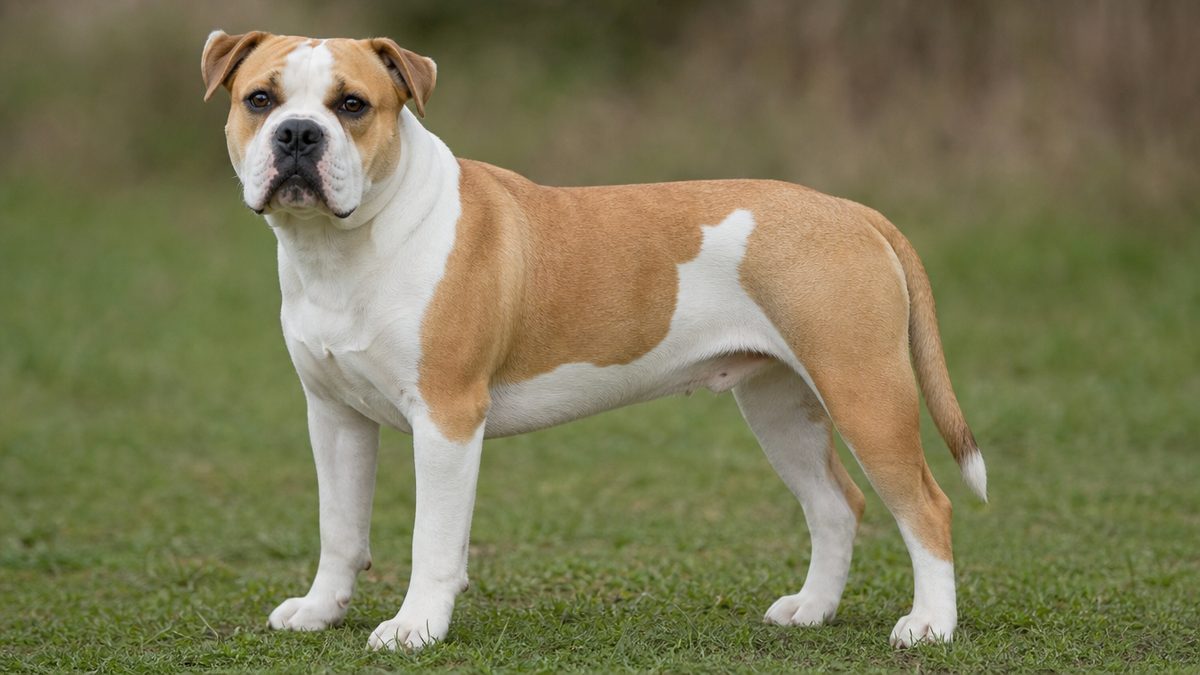
Quick answer
The Continental Bulldog is a Swiss bulldog created to give the bull-type dog a working airway, and the FCI recognises it on a provisional basis only, as standard 369 since 30 March 2022. Its standard sets a minimum muzzle length and disqualifies any dog that makes breathing noise. Almost no published veterinary evidence tests whether that worked, and India has no supply route.
This page is editorial reference, not veterinary advice. The Continental Bulldog has almost no breed-specific published health data, so nothing here can substitute for a veterinarian examining an individual dog. Consult a registered veterinarian before acting on any health, feeding, breeding or exercise decision, and seek emergency veterinary care immediately if a dog shows laboured or noisy breathing, collapse, blue gums or a rectal temperature above 40 degrees Celsius.
Continental Bulldog at a glance
What the Continental Bulldog is, and what it was built to fix
The Continental Bulldog is a medium-sized Swiss bull-type dog of athletic build, 42 to 50 cm at the withers in males and 40 to 48 cm in females, created by crossing English Bulldogs with Old English Bulldogs to produce a bulldog that could breathe under exertion. Its FCI standard is number 369 and its recognition is still provisional.
Almost every breed page begins with what a dog looks like. This one has to begin with why it exists, because the appearance is downstream of the argument. The founding document says so in its first paragraph: the European Convention for the Protection of Pet Animals and the Swiss Animal Welfare Act, Article 10, were what prompted the breeding trial, and the stated aim was a medium-sized bulldog meeting every animal-welfare requirement for a healthy dog while keeping the temperament of the English Bulldog.
The current FCI standard keeps the same story in shorter form. The goal was to create a medium sized molossoid type dog, and the cross-breeds with English Bulldogs and Old English Bulldogs showed very soon that the program eventually led to the creation of a new breed, one that comes fairly close to the original Bulldog type. The name Continental Bulldog was chosen in order to clearly distinguish the new breed from the English Bulldog.
Size and weight, with the standard's own inconsistency shown
The standard gives two different weight statements and does not reconcile them. Its general appearance paragraph says his weight, depending on his height is between 20 and 30 kg, while the size and weight section prints males 30 kg and females 25 kg. Read together the sensible reading is a range of 20 to 30 kg with 30 and 25 as the typical adult figures for the two sexes, which is how the Danish Kennel Club reproduces it. We publish both rather than picking one.
| Measure | Males | Females |
|---|---|---|
| Height at withers | 42 to 50 cm | 40 to 48 cm |
| Weight, size and weight section | 30 kg | 25 kg |
| Weight, general appearance paragraph | 20 to 30 kg by height | 20 to 30 kg by height |
| Height to depth of chest | 2:1 | 2:1 |
| Height to length of body | 1:1.2 | 1:1.2 |
| Head circumference against height at withers | Not more than 10 percent greater | Not more than 10 percent greater |
| Nose ridge to head length | 1:3 ideal, 1:4 tolerated | 1:3 ideal, 1:4 tolerated |
Appearance, in the terms that separate it from an English Bulldog
Two features tell the breeds apart in a photograph, and both are health clauses rather than cosmetic ones. The first is the muzzle, which must be broad and almost square from the front with a straight nose ridge measuring a third of total head length. The second is the tail, which should be thick at the root, tapering, and ideally reaching down to the hocks, straight or slightly curved, carried down at rest. An English Bulldog's tail is moderate and rather short than long, and its standard treats an inverted or extremely tight tail as merely undesirable.
The rest reads as a bulldog with the exaggerations trimmed. It is a compact, muscular dog: the standard asks for broad, slanting, well muscled shoulders, strong-boned and well muscled hindquarters, and regular, fluid movement with good reach in front. The coat is short, close, flat and glossy over a fine short undercoat, and an absent undercoat is permissible. The skin must be elastic without wrinkles on body or legs, ears are rose or folding with standing ears a severe fault, the belly is moderately tucked up, and the permitted colours are fawn in all shades from sand to red, brindle and black, with or without white markings or a dark mask, plus white with markings in those colours.
Very few brachycephalic breed standards anywhere set a numeric minimum muzzle length. This one does, and it does it as a disqualifying fault: ratio length of the nose ridge to head length less than one quarter. Compare the English Bulldog standard, whose only proportional muzzle rule is that the distance from the inner eye corner to the nose tip should not be less than the distance from the nose to the underlip, a rule that says nothing about the muzzle relative to the skull.
Temperament is described in five words: attentive, self-confident, friendly, neither aggressive nor shy. Utilisation is companion dog and family dog, and the breed carries no working trial.
Breed recognition status, and why provisional is not the same as recognised
The FCI recognises the Continental Bulldog on a provisional basis only, as standard 369, accepted on 30 March 2022. Provisional status runs for ten years, so the earliest the Swiss Kennel Club can apply for definitive recognition is 2032, and the FCI can withdraw the process if its conditions are not met.
Read the FCI's own nomenclature entry rather than a summary of it. The page for CONTINENTAL BULLDOG (369) gives Group 2, Pinscher and Schnauzer, Molossoid and Swiss Mountain and Cattledogs; Section Molossian type, subsection Mastiff type; country of origin Switzerland; official authentic language German; date of acceptance on a provisional basis 30 March 2022; official valid standard published 11 February 2026; and breed status Recognized on a provisional basis.
What provisional status costs, and what it requires
- No CACIB. Provisionally recognised breeds are not eligible for the CACIB until definitive recognition, though they can be shown at FCI international shows and can win a CAC.
- FCI titles remain open, including Winner of the World Dog Show and the Section Show winners, and pedigrees must carry the FCI logo.
- Ten years minimum. The club's published account of the FCI letter states that provisional status lasts ten years, during which measures must be taken to preserve genetic variability, and that the applicant country may then apply for definitive recognition if the data is judged adequate.
- Review every three years, covering registrations, muzzle-to-skull statistics combined with BOAS grading to the Cambridge protocol, hip and elbow follow-up on at least 60 to 100 dogs with radiographs, average lifespan and causes of death, and statistics on natural matings, births and caesareans.
- It can be lost. The club's own summary states that these recommendations must be strictly observed, or the FCI may in future withhold definitive international recognition.
Provisional is also not a short queue. Twenty breeds sit on the register, and the Australian Stumpy Tail Cattle Dog has been there since 6 July 2005.
The registration numbers, which are the surprise
Germany's VDH publishes puppy registrations by breed and year, and the Continental Bulldog's trajectory inside that system is remarkable. It records zero puppies through 2015, then 103 in 2016, 211 in 2017, 263, 279, 327, 373, 374, 424, 286 and 471 in 2025.
| Breed | 2025 | 2021 | 2016 | 2011 |
|---|---|---|---|---|
| Continental Bulldog | 471 | 373 | 103 | 0 |
| Bulldog, the English Bulldog | 10 | 9 | 16 | 46 |
| Franzoesische Bulldogge | 43 | 209 | 210 | 301 |
| Mops, the Pug | 133 | 296 | 395 | 693 |
| Boxer | 1050 | 1675 | 1600 | 1579 |
| All VDH breeds | 55053 | 85595 | 77533 | 80719 |
Inside the German pedigree system the Continental Bulldog now out-registers the English Bulldog by roughly 47 to 1 and the French Bulldog by 11 to 1. Read that carefully, because it is easy to overclaim: the VDH covers pedigree registrations within its member clubs, and most German French Bulldogs and English Bulldogs are bred outside it. What the table shows is that in the sector that keeps studbooks and enforces breeding rules, the health-project bulldog has substantially displaced the breeds it was designed to replace.
Three ranking pages state the status wrongly, all in the same direction
Every error we found overstates it. Wikipedia says the breed is officially recognized by the FCI since 2022, which reads as full recognition. The Danish Kennel Club says racen blev anerkendt af FCI i 2022 without the qualifier. The French national kennel club runs the opposite error and is simply out of date, saying the breed is not yet recognised by the FCI. One German breeder's page gets it right, calling the breed provisionally recognized internationally.
The running header on pages 2 to 7 of the current standard PDF prints FCI-St. N 269 rather than 369, in both the English and German versions, while page 1 correctly reads FCI-Standard N 369 CONTINENTAL BULLDOG. And the Kennel Club of India, though an FCI member, publishes registration forms and a tariff sheet and no breed list for any breed, so it cannot be used to confirm or deny that this or any breed is registrable in India. We would rather state that limit than guess past it.
Origin: a Swiss breeding trial that began because the show ring punished a healthier dog
The Continental Bulldog began in Switzerland as a breeding trial started by Imelda Angehrn, under the patronage of the Schweizerische Kynologische Gesellschaft, after she concluded that selection within the English Bulldog alone could not restore breathing, endurance and natural whelping. The Swiss Kennel Club board approved the new breed on 15 September 2004.
The founding document names its legal motivation in its opening line, which is unusual for a breed standard. The European Convention for the Protection of Pet Animals and the Swiss Animal Welfare Act, Article 10, were decisive in starting a breeding trial, and the aim was a medium-sized bulldog fulfilling every requirement animal welfare demands of a healthy dog while retaining the much-valued temperament of the English Bulldog.
The founder's own account explains why crossing rather than selecting. Angehrn writes that through selection alone she would never be able to obtain a considerable improvement, because of the loss of important genes responsible for health and fitness, and that even where she achieved her goal she remained unsatisfied with resilience, breathing and natural whelping. That is a claim about a closed gene pool, and it is the same argument the VetCompass authors reached from the other end eighteen years later when they advocated immediate redefinition of the English Bulldog towards a moderate conformation.
The detail that explains the whole project
One sentence in a German breeder's published history does more work than any other piece of origin material. Describing Angehrn's earlier attempts to breed a lighter English Bulldog, it records that the lighter, free-breathing male dog was disqualified because he did not run in typical breed style. A show system that penalises the dog that breathes is a system a health-minded breeder cannot work inside, and that is the practical reason a separate breed was created rather than a lighter line within an existing one.
Timeline of the breed's formation
| Date | Event | Source |
|---|---|---|
| 15 September 2004 | Swiss Kennel Club board approves creation of a new breed under the name Continental Bulldog | Club history |
| 5 December 2004 | Continental Bulldog Club Schweiz founded; minutes published 15 December 2004 | Club minutes |
| 5 December 2014 | Swiss national breed standard issued in German by the Continental Bulldog Club Schweiz | CBCS standard |
| 2015 | Breed recognised nationally in Germany by the VDH | German breeder history |
| 30 March 2022 | FCI accepts the breed on a provisional basis as standard 369 | FCI nomenclature |
| 11 February 2026 | New FCI official valid standard published | FCI nomenclature |
| 20 March 2026 | English translation of the standard published | FCI standard PDF |
The founding cross is stated plainly in both the Swiss and the FCI texts. Crossings between the English Bulldog and the Old English Bulldog, under the patronage of the Schweizerische Kynologische Gesellschaft, showed early that the undertaking amounted to the creation of a new breed. The Swiss text adds a detail the FCI version drops: the decisions and measures for forming the new breed were taken in consultation with the FCI, specifically representatives of its Standards and Scientific Commissions. The club's own foundation is documented in its abridged minutes of the founding meeting of 5 December 2004, published ten days later.
The stated aims, in the club's own words
The Hungarian club reproduces the Swiss account, and its wording is the clearest statement of what success would look like. The aim of this experiment was to achieve increased natural whelping, noiseless breathing, improved agility and resilience of the dogs. Four measurable outcomes, named by the people who set the project up. The rest of this page asks, for each of the four, whether anybody has measured it.
Second Schedule Part II para 6(9) of the Prevention of Cruelty to Animals (Dog Breeding and Marketing) Rules 2017 reads: breeding to create new breeds of dogs or unusual looks shall be strictly prohibited. The Continental Bulldog is, by its own standard's account, a new breed created by a deliberate crossbreeding programme. Whatever one thinks of that clause, an Indian breeder who set out to repeat the Swiss project here would be doing something the Rules forbid in terms, and the point is worth stating on a page that otherwise praises the project's intent.
Auditing the standard against the English Bulldog's measured problems
Six of the six headline disorders the VetCompass English Bulldog study identified have a matching clause in the Continental Bulldog standard, and four of those clauses are disqualifying faults. That is an unusual result for a breed standard, and it is still not proof that any dog is healthier, because a clause governs what a judge must penalise.
The comparison is possible because the English Bulldog is one of the most thoroughly measured breeds in the world. Analysing a random sample of 2,662 English Bulldogs against 22,039 other dogs from 905,544 under UK veterinary care in 2016, O'Neill and colleagues found English Bulldogs had 2.04 times the odds of being diagnosed with at least one disorder, 95 percent confidence interval 1.85 to 2.25, with increased odds for 24 of 43 specific disorders.
| English Bulldog predisposition | Odds ratio | Continental Bulldog standard clause | Weight of clause |
|---|---|---|---|
| Skin fold dermatitis | 38.12 | Skin elastic without wrinkles; folds overlapping the line of layback; nose roll too big | Requirement plus two severe faults |
| Prolapsed nictitating membrane gland | 26.79 | Eyelids tightly fitting; no white sclera visible; entropion and ectropion | Requirement plus disqualifying fault |
| Mandibular prognathism | 24.32 | Lower jaw projection 1 to 5 mm ideal, to 10 mm tolerated, 11 to 15 mm a fault, over 15 mm | Graded, ending in a disqualifying fault |
| Congenital disorder, grouped | 7.55 | Any dog clearly showing physical or behavioural abnormalities | Disqualifying fault |
| Tail disorder, grouped | 6.01 | Tail ideally reaching the hocks; strongly deformed tail; no tail | Requirement plus two disqualifying faults |
| Lower respiratory tract disorder, grouped | 5.50 | Noiseless at a fast trot or gallop; breathing noises in action or when standing still | Requirement plus disqualifying fault |
The English Bulldog's own standard answers none of those six. FCI-Standard 149 lists exactly two disqualifying faults, aggressive or overly shy dogs and any dog clearly showing physical or behavioural abnormalities, and it positively requires some loose, thick and wrinkled skin about throat, forming slight dewlap on each side.
What the standard does not address at all
- Hip and elbow dysplasia. No clause. Denmark refuses to register offspring unless both parents hold hip status A or B and elbow status 0 or 1, while France's national club acknowledges that grades C and D are still accepted for breeding. Two member countries, two answers.
- Urate stones and hyperuricosuria. No clause, despite the only peer-reviewed paper naming this breed finding significantly increased urate stone risk.
- Caesarean rate. No clause and no published figure, despite increased natural whelping being a founding aim.
- Neck girth. No measurement, in a breed whose measured median is 44 cm Packer RMA, Hendricks A, Tivers MS.
- Nostril stenosis. Weakly addressed. Nostrils must be big and wide open, and the FCI education document illustrates nostrils rather narrow and clearly too narrow as faults rather than disqualifications.
Dating the changes to the documents that made them
Three tightenings can now be dated precisely, because all three versions of the standard are retrievable. The 2011 Swiss national text, still in force in 2014, capped head circumference at 15 percent above the height at withers and disqualified only Atemgeraeusche beim ruhigen Stehen, breathing noises when standing at rest. The first FCI standard, dated 04.04.2022, tightened the head cap to 10 percent and broadened the breathing disqualification to in action or when standing still, and it did not contain the minimum-muzzle disqualification at all. The 11.02.2026 standard added that disqualification, printing it in bold under the line the latest amendments are in bold characters.
The club publishes the FCI's own letter confirming provisional recognition on 30 March 2022. The Scientific Commission called on breeders, breeding associations and judges to take immediate action, because the tendency towards the brachycephalic hypertype would be likely to increase health problems typically seen in brachycephalic breeds, such as BOAS and complications at birth, and noted that this tendency is already observed in Dr Ladlow's BOAS report. It said the standard should mention the skull-to-muzzle ratio under IMPORTANT PROPORTIONS, and that DISQUALIFYING FAULTS should include too short a skull-to-muzzle ratio. The disqualification arrived on 11 February 2026, three years and ten months later. The other half of the request was never implemented: IMPORTANT PROPORTIONS in the current standard still lists only the three original ratios.
The muzzle rule, converted into the number the research actually uses
Convert the standard's muzzle rule into the craniofacial ratio used in the BOAS literature and the Continental Bulldog's ideal lands near 0.5 and its disqualifying floor near 0.33. Both sit above the English Bulldog's measured medians of 0.22 and 0.25, and the floor sits above the 0.3 threshold the Netherlands has legislated.
The two measurements are not the same, so the conversion has to be shown rather than asserted. Packer defines the craniofacial ratio as muzzle length divided by cranial length, where muzzle length runs from the tip of the nasal planum to the stop and cranial length from the stop to the occipital protuberance, following the curve of the cranial surface. The FCI standard instead gives the ratio of the nose ridge to the overall length of the head, which is 1:3 with a tolerance of 1:4.
Treat head length as muzzle plus cranium along the same axis, which is the only reading that makes the standard's fraction coherent, and the arithmetic is one line each.
- The ideal. Nose ridge is one third of head length, so the cranium is the other two thirds, and the craniofacial ratio is one third divided by two thirds, which is 0.5.
- The tolerance. Nose ridge is one quarter of head length, so the cranium is three quarters, and the craniofacial ratio is one quarter divided by three quarters, which is 0.33.
- The disqualification. Anything below a nose ridge of one quarter of head length is a disqualifying fault, so 0.33 is the floor the standard permits.
- The caveat. Packer measures cranial length along the curve of the skull and the FCI does not say how head length is to be measured, so these are approximations of a rulebook, not measurements of dogs.
| Reference point | Craniofacial ratio | Basis |
|---|---|---|
| Continental Bulldog standard, ideal | about 0.5 | Our conversion of the 1:3 rule |
| Continental Bulldog standard, floor | about 0.33 | Our conversion of the 1:4 disqualification |
| Netherlands legislative requirement | 0.3 | Reported in the Finnish BOAS study |
| Threshold below which BOAS occurred at all | 0.5 | Packer, both populations |
| English Bulldog, measured median | 0.22 and 0.25 | Packer, studies 1 and 2 |
| French Bulldog, measured median | 0.19 and 0.18 | Packer, studies 1 and 2 |
| Pug, measured median | 0.08 and 0.12 | Packer, studies 1 and 2 |
| More than half of dogs affected below | 0.20 | Packer, both populations |
The single most important line in Packer's paper for this breed is that BOAS only occurred in dogs whose muzzles comprised less than half their cranial lengths. A Continental Bulldog built to the ideal sits exactly on that boundary. A Continental Bulldog built to the worst the standard permits sits inside the risk zone but well above the English Bulldog's measured median, and above the 0.3 craniofacial ratio requirement that, according to the Finnish study, has practically ended brachycephalic dog breeding in the Netherlands.
The risk factor the standard does not control
Packer's models retained two significant morphometric factors and only two: a shorter craniofacial ratio and a greater absolute neck girth, with thicker neck girth increasing BOAS risk in both populations and obesity increasing it further. Neck girth is where the Continental Bulldog standard is quiet. It asks for a neck quite short and strong, well arched, with slight skin folds in the area of the throat permissible, and makes too short a neck a fault, but it sets no measurement. The English Bulldog's measured median neck girth in Packer's first study was 42.2 cm, against 32.2 cm for a Pug.
For an owner rather than a breeder, this is the useful half, because bodyweight is controllable and skull shape is not. Dogs whose adult bodyweight was at or above the mean for their breed and sex carried 1.42 times the odds of heat-related illness, with a 95 percent confidence interval of 1.12 to 1.80, in a population of 905,543 UK dogs. That is not obesity as a category. It is simply being on the heavy side of your own breed, and in a 25 to 30 kg dog it is the cheapest intervention available.
Ask for the two measurements rather than the ratio. Nose tip to stop, and stop to the back of the skull, both in millimetres with a soft tape, plus neck girth. Divide the first by the second yourself. Any breeder running a genuine health programme in a breed founded on airway function will have those numbers or will take them while you watch, and a breeder who will not measure is telling you something.
Brachycephalic airway syndrome, and why Indian heat is part of the mechanism
Brachycephalic obstructive airway syndrome is a lifelong obstructive airway disease caused by a shortened facial skeleton, and recent Swiss work argues that heat is not merely an aggravator of it but a driver of the cycle that produces it. That reframing matters more in Chennai than in Zurich.
An Indian veterinary college has published on the condition directly, which is worth knowing because most of the literature is European. Researchers at the College of Veterinary and Animal Sciences, MAFSU, Parbhani, describe BOAS as a chronic, lifelong, crippling, predominantly obstructive airway condition, and list the common clinical signs as stertor, stridor, gagging, cyanosis, inspiratory dyspnoea, increased respiratory effort, exercise intolerance, vomiting or regurgitation, salivation and hyperthermia.
The Swiss experiment that puts heat inside the mechanism
Koch, Piroth and Michel recorded rectal temperature in 21 brachycephalic and 15 normocephalic dogs through a standardised ten-minute treadmill run and a ten-minute recovery. Basal body temperature did not differ between the groups. The temperature rise did, significantly, at every measured point.
| Time point | Brachycephalic dogs, n=21 | Normocephalic dogs, n=15 |
|---|---|---|
| 5 minutes | 0.39 plus or minus 0.17 | 0.21 plus or minus 0.12 |
| 10 minutes | 0.59 plus or minus 0.20 | 0.25 plus or minus 0.13 |
| 15 minutes | 0.52 plus or minus 0.20 | 0.21 plus or minus 0.14 |
| 20 minutes | 0.44 plus or minus 0.24 | 0.15 plus or minus 0.15 |
At the ten-minute mark the brachycephalic dogs gained 0.59 degrees against 0.25, which is 2.36 times as much heat by our own division of their figures. Both groups then cooled at the same rate during recovery, so the deficit is in shedding heat during work rather than afterwards. The rise correlated with both the phenotypic head shape and radiologically measured skull indices, which is what makes it a conformation finding rather than a fitness one.
The chain, and where an Indian climate enters it
The authors propose a causal order that runs the opposite way to the usual account. Shortening of the nasal skull reduces the thermoregulatory surface of the nasal conchae. Physical exertion and high environmental temperatures then produce a sharp rise in body temperature, which the dog compensates for with increased breathing and panting. That increased effort raises negative pressure in the upper airways, which sucks the soft tissues, the nasal entrance cartilage, the soft palate and the laryngeal pockets, into the airway, and that triggers the typical BOAS signs.
Read that chain with Indian ambient temperatures substituted and the consequence is direct. High environmental temperature is an input at step two, alongside exercise. A dog that is subclinical through a Swiss year can be symptomatic through an Indian one without anything about the dog having changed, because the environment supplies the thermal load that the exercise supplied in the treadmill study.
What the screening schemes have learned, which applies here
- Grade after exercise, not before. In 28 young adult English Bulldogs, those with more severe BOAS walked a shorter distance more slowly and took longer to recover, and their temperature rise during exercise was significantly higher than controls of other breeds.
- An exercise test alone misses affected dogs. In Finland 11 percent of English Bulldogs failed the exercise component while 28 percent showed moderate to severe BOAS signs on veterinary grading, so the test under-detected.
- Combine three measures. The Finnish authors conclude that exercise tolerance, the severity of upper respiratory signs and nostril stenosis should all be assessed together, and note that thermoregulation problems during exercise occurred even in dogs graded with no or mild BOAS signs.
- Selection can work. Heritability estimates for BOAS grade in that dataset ranged from 0.39 to 0.58, which is moderate to high and means the trait responds to selection.
That last point is the strongest available argument that a project like the Continental Bulldog is capable of working. A trait with a heritability near 0.5 moves when you select on it. Whether this particular breed has moved it is a separate question, and the honest answer is that nobody has published the measurement.
The one BOAS dataset that exists for this breed, and what it shows
Fifty-five Continental Bulldogs were graded for brachycephalic obstructive airway syndrome by Dr Jane Ladlow of the University of Cambridge on 14 and 15 January 2022, and 67 percent came back Grade 0, meaning free of respiratory signs. That is the best evidence the breed has, and it comes with three caveats that matter.
This dataset was not easy to find, and none of the ten pages currently ranking for the breed mentions it. It is published by the Continental Bulldog Club Schweiz as an eight-page report, compiled by the club president Thomas Tschanz, on data collected by Ladlow, who co-authored the Cambridge respiratory function grading scheme that the rest of this page's comparator figures come from.
| Measure | Result |
|---|---|
| Grade 0, no signs of airway disease | 67 percent |
| Grade I, mild signs, no effect on exercise tolerance | 20 percent |
| Grade II, moderate signs, clinically relevant, needs treatment | 13 percent |
| Grade III, severe respiratory signs | 0 percent |
| Clinically unaffected, grades 0 and I combined | 87 percent |
| Nostrils open | 76 percent |
| Nostril stenosis, severe | 0 percent |
| Stertor not audible | 69 percent |
| Stridor not audible | 94 percent |
| Inspiratory effort not present | 84 percent |
| Dyspnoea, cyanosis or syncope reported | 0 percent |
| Breathing pattern normal | 98 percent |
Set that against the peer-reviewed figures for the breeds this one was created to improve on, graded by the same scheme. Only 10.9 percent of Bulldogs, 10 percent of French Bulldogs and 7 percent of Pugs were Grade 0. On its face, 67 percent against 10.9 percent is the largest single piece of evidence that the Swiss project achieved what it set out to achieve.
The three caveats, stated plainly
- It is not peer-reviewed. The examination was done by a Cambridge researcher, but the analysis and publication are the breed club's own, by an office-holder with an interest in the answer.
- n is 55, and the sample is self-selected. The report calls the dogs randomly chosen, but they were dogs whose owners brought them to a club screening event. Owners of visibly struggling dogs are less likely to attend, and the Finnish authors observed exactly that effect, noting that more severely affected dogs seldom participate in breeding tests.
- It is a single snapshot from January 2022. No follow-up has been published, and the FCI's own condition of provisional recognition requires exactly this data to be resubmitted every three years.
The number inside the report that nobody has flagged
The same report publishes neck girth for all 55 dogs, and neck girth is one of only two morphometric factors that stayed significant in Packer's BOAS models. The distribution runs from 35 cm to 50 cm, with 41 cm the single commonest value at 16 percent, and the percentages sum to exactly 100, so the table is complete. Reading the cumulative distribution, the median falls at 44 cm.
Now compare. The English Bulldog's median neck girth in Packer's two studies was 42.2 cm and 43.8 cm. The Continental Bulldog's median in this sample is 44 cm, which is not smaller. Different teams, different populations and different decades, so this is a rough comparison rather than a controlled one. But it points at something the breed's own literature never says: the project moved the muzzle and did not move the neck.
The nose-length chart prints 3.5 cm as 50 percent in one rendering, which would make the six categories sum to 145 percent. Read as 5 percent, the six values, 5, 35, 11, 38, 7 and 4, sum to exactly 100, so 5 percent is the correct reading and 50 is a transcription error. Body condition scores tell a second story worth noting: 44 percent of the dogs scored 6 or above on the nine-point scale, and the report's own chart states that scores of 7, 8 and 9 carry increased risk of breathing difficulties.
What has been measured about this breed, and what has not
Exactly one peer-reviewed paper names the Continental Bulldog, and it is about bladder stones rather than breathing. The breed's airway evidence exists but sits outside the literature, in a club-published screening report, and that distinction governs how much weight any claim about this breed can carry.
We searched PubMed and ran controls in the same session, because an absence is only evidence when the search proves itself. Searching the exact phrase returned a warning that the phrase was not found in PubMed's index at all, so the search fell back to the broader combination of continental with bulldog, and that broader search returned exactly one record. Controls run in the same session returned 13 records for Bergamasco dog, 126 for Labrador Retriever with hip dysplasia, 101 for brachycephalic obstructive airway syndrome with bulldog, and 67 for French Bulldog with brachycephalic. The tool worked. The literature does not exist.
That single record is a Swiss urolith survey of 490 stones analysed between 2003 and 2009, which found that compared to other dogs, Dalmatians and Continental Bulldogs had a significantly increased risk of urate stones, and English Bulldogs of cystine stones.
An arithmetic check on that paper, which anyone can repeat
The published abstract prints the stone composition as 44 percent calcium oxalate, 330 percent struvite, 80 percent silica, 7 percent urate, 3 percent cystine, 3 percent mixed and 1 percent each calcium phosphate and xanthine. Two of those are impossible as printed. Read struvite as 33.0 and silica as 8.0, which is what a German decimal comma becomes when punctuation is lost in transcription, and the eight values sum to exactly 100. We publish the corrected reading with the working shown rather than quoting a 330 percent share.
Where the breed sits in the wider literature
| Study or dataset | Scope | Continental Bulldogs included |
|---|---|---|
| Packer 2015, craniofacial ratio and BOAS | 700 then 154 dogs, twelve affected breeds | None |
| Tomlinson 2026, BOAS across fourteen breeds | 898 UK dogs recruited 2021 to 2024 | None. The fourteen are named and it is not one |
| Turkcu 2023, treadmill fitness test | 79 dogs, six brachycephalic breeds | None |
| McMillan 2024, longevity of 155 purebreds | UK, Dogs Trust | None |
| Hall 2020, heat-related illness | 905,543 UK dogs | Not identified as a breed |
| Lilja-Maula 2024, Finnish kennel-club BOAS test | 957 tested dogs, 2017 to 2022 | Club has mandatory testing; four registrations in 2022, no separate results |
| Brandenberger 2015, Swiss uroliths | 490 stones, Switzerland | Yes. Significantly increased urate stone risk |
| CBCS BOAS screening, January 2022 | 55 dogs, graded by Dr Jane Ladlow | Yes. The only airway dataset that exists |
The Finnish row is the most telling of the eight. At the time of that study the English Bulldog, French Bulldog, Pug and Continental Bulldog breed clubs in Finland all required BOAS screening of one or both parents before breeding. Finland registered four Continental Bulldogs in the whole of 2022, against 1,037 brachycephalic dogs of all breeds and 48,627 registrations across all Finnish Kennel Club breeds. A population that size cannot generate a VetCompass-style sample, so part of the silence is rarity rather than neglect.
Ask which of the four founding aims the claim addresses, and then ask who measured it. The aims were increased natural whelping, noiseless breathing, improved agility and improved resilience. As of August 2026 exactly one of the four, breathing, has been measured at all, once, in 55 dogs, by a credible external assessor, and published by the club rather than in a journal. The other three have never been measured in this breed by anybody.
Did the health project work? Aim by aim, on the evidence
The Continental Bulldog project has one aim partly demonstrated, three aims never measured, and one uncomfortable finding its own literature never mentions. Judged against the four goals its founders set, the airway result is real and encouraging, and everything else remains an assertion twenty-two years after the breed was authorised.
Take the aims as the founders stated them. The purpose was to achieve increased natural whelping, noiseless breathing, improved agility and improved resilience. Score them one at a time.
| Founding aim | Status | What exists |
|---|---|---|
| Noiseless breathing | Partly demonstrated | 67 percent BOAS Grade 0 in 55 dogs graded by Dr Jane Ladlow, January 2022, club-published |
| Improved agility | Never measured | No walk test, treadmill test or distance measure has been published for this breed |
| Improved resilience | Never measured | No longevity study, no VetCompass equivalent, no cause-of-death data |
| Increased natural whelping | Never measured | No caesarean rate has ever been published, despite the FCI requesting one |
| Joint health, added later | Asserted, not published | The FCI wrote that joint health is good and referred to the few dogs with hip grade D; no statistics are published |
The airway result, and how much weight it carries
This is the strongest thing the breed has, and it is genuinely strong. Sixty-seven percent of 55 Continental Bulldogs graded Grade 0, free of respiratory signs, with none at Grade III and none reporting dyspnoea, cyanosis or syncope. Under the same grading scheme, only 10.9 percent of Bulldogs, 10 percent of French Bulldogs and 7 percent of Pugs are Grade 0. The assessor, Jane Ladlow, is a co-author of the Cambridge work those comparators come from, so this is not two incompatible methods being forced together.
What it is not is a population study. Fifty-five self-selected dogs at a club event, analysed and published by the club president, once, in January 2022, with no follow-up published since, in a breed whose FCI recognition explicitly requires this data to be resubmitted every three years Continental Bulldog Club Schweiz. Treat it as strong preliminary evidence that the conformation change did what it was meant to do, and as nothing like proof.
The finding the breed's own literature never mentions
The same screening report publishes neck girth for all 55 dogs, and the median falls at 44 cm. Packer's models retained exactly two significant morphometric risk factors for BOAS, a shorter craniofacial ratio and a greater absolute neck girth, and the English Bulldog's measured medians in those two populations were 42.2 cm and 43.8 cm. On that comparison the Continental Bulldog's neck is not narrower. Different teams, different decades and different populations, so it is a rough comparison rather than a controlled one, but it is the arithmetic the club's own data supports, and it says the project moved the muzzle and left the neck where it was.
The verdict Switzerland's own government has reached
The Swiss Federal Food Safety and Veterinary Office publishes guidance on dog shows which bans exhibiting dogs with breeding traits that cause strain. Its list, in the official English version of July 2025, reads: brachycephalic dogs with clear signs of respiratory problems, laboured breathing, especially mouth breathing, snoring, increased respiratory frequency and or swollen or discoloured tongue. It then names the breeds affected: Pugs, English and French Bulldogs, Continental Bulldog, Dogue de Bordeaux and Pekingese.
So the Swiss federal government lists the breed Switzerland created to solve brachycephaly on its brachycephalic restriction list, next to the breed it was created to replace. Do not overread it. The document bolds the word Individuals, and the restriction bites on a dog showing clinical signs, not on breed membership, so a Continental Bulldog that breathes normally is not barred from anything.
And read what the same list does not say. Its second entry covers dogs with excessive skin folds on the face, body or tail with signs of chronic skin inflammation, and names Shar Pei, Pekingese, Shih Tzu, Pug, Boston Terrier, English Bulldog, German Boxer and other mainly brachycephalic breeds. The Continental Bulldog is not on that one. Swiss federal guidance, in other words, treats the skin half of the project as settled and the airway half as still live, which is exactly what the evidence on this page supports.
The Continental Bulldog is the most serious attempt anyone has made to fix a brachycephalic breed from the outside, and the one dataset that exists suggests it substantially worked on the airway. It is also a breed whose own standard was still being tightened in 2026 on the FCI's insistence, whose neck girth has not improved, and whose founders' other three goals have never been measured by anyone in twenty-two years. Both halves of that are true, and any page that gives you only the first half is selling you something.
Health risks, screening and life expectancy
The Continental Bulldog has no breed-specific lifespan study, no BOAS prevalence figure and no hip dysplasia statistic, so its health section has to be built from three things: the one paper that names it, the requirements national kennel clubs impose on it, and the brachycephalic population data it sits inside.
The one breed-specific finding: urate stones
Urate urolithiasis is the single documented health risk carried by this breed's own name in the peer-reviewed literature. The Swiss survey of 490 uroliths found Continental Bulldogs, alongside Dalmatians, at significantly increased risk of urate stones. Urate stones form when uric acid is excreted in the urine instead of being converted to allantoin, and the canine form is associated with hyperuricosuria.
Two independent lines point the same way, which is what makes this finding solid rather than incidental. From 16 October 2024 the Danish Kennel Club requires, for its upgraded Basis+ pedigree, that at least one parent be registered genetically free of HHU, hyperuricosuria, before mating, and separately that at least one parent be registered genetically free of cystinuria type 3. A kennel club does not add a genetic test to a small breed's requirements without a reason.
What the national clubs actually require, and where they disagree
| Requirement | Denmark | France |
|---|---|---|
| Hip dysplasia | Both parents status A or B; grade C only against a grade A partner | Grades C and D still accepted for breeding |
| Elbow dysplasia | Both parents status 0 or 1 | Not stated on the club page |
| Hyperuricosuria | One parent genetically free, for Basis+ pedigree, from 16.10.2024 | Not stated |
| Cystinuria type 3 | One parent genetically free, for Basis+ pedigree, from 16.10.2024 | Not stated |
| Testicles | Documented normal in the sire | Not stated |
| Show grading | Both parents at least Very Good, for Basis+ pedigree | Endurance test with respiratory assessment |
| Airway or BOAS test | None required | Endurance test; dogs showing visible excessive fatigue or breathing difficulties are eliminated or deferred |
The bottom row is the surprising one. Denmark, which imposes the strictest orthopaedic and genetic requirements of the two, requires no airway test at all for a breed whose entire premise is the airway. France, which is looser on hips, runs an endurance test in which the dog must quickly return to normal breathing without rasping, and eliminates or defers dogs showing visible signs of excessive fatigue or breathing difficulties. Neither country publishes results. In Finland the breed club requires BOAS screening before breeding.
Life expectancy, and the disagreement nobody sources
No lifespan figure for this breed traces to any study. The commercial guides print 10 to 12 years and up to 12 years, another says 10 to 12, and a third says 12 to 14, and not one of them cites a source Animalia, Continental Bulldog breed…. English Wikipedia, notably, prints no lifespan at all. We publish the disagreement rather than choosing a number, because choosing would mean inventing a provenance none of them has.
What can be cited is the population the breed sits inside. In 137,469 dogs that died in Switzerland between 2016 and 2020, the mean age at death was 11.8 years overall, 12.4 for mixed breeds and 11.5 for purebreds, and brachycephalic dogs reached a mean of 9.8 years, which is 2.1 years less than mesocephalic and 1.7 years less than dolichocephalic dogs. Separately, in a UK study of 155 purebreds, the English Bulldog's median lifespan was 9.8 years with a hazard ratio of 1.8.
The Swiss figure is a mean age at death for a skull-shape category across a national database. The UK figure is a median survival estimate for one breed from Kaplan-Meier curves. They are different quantities computed by different methods in different countries, and the fact that both round to 9.8 is a coincidence, not corroboration. Neither is a Continental Bulldog figure. We give both so a reader can see the neighbourhood the breed lives in, not so anyone can average them.
One more inherited condition deserves a line because the standard names it. Entropion and ectropion are disqualifying faults in the Continental Bulldog, and they are also two of the defects Indian law names in Second Schedule Part III para 8(10) of the 2017 Rules, which is covered in its own section below. On this one point the breed standard and Indian breeding law agree exactly, which is rare enough to be worth noticing.
What breeding a Continental Bulldog actually requires, country by country
Switzerland requires a BOAS screening by Dr Jane Ladlow's method for every Continental Bulldog used for breeding, and it has done since 1 July 2024. That is the strictest airway requirement applied to this breed anywhere, and it puts the Conti in the same regulatory bracket as the Pug and the English Bulldog.
The Swiss rule is national rather than club-level. Under the SKG's breeding regulations, all brachycephalic breeds must complete BOAS screening by Dr Jane Ladlow's method with a licensed veterinarian in order to gain breeding approval, and at the time of mating both partners must present a valid screening no more than two years old. The list of affected breeds is set by the SKG central board together with the Kennel Club, the University of Cambridge and Vetsuisse, and it names four: Continental Bulldog, French Bulldog, English Bulldog and Pug. The same 2024 rules require a DNA profile for every dog used for breeding.
| Requirement | Switzerland | Denmark | France | Finland |
|---|---|---|---|---|
| BOAS or airway test | Mandatory, Ladlow method, both partners, max 2 years old | None required | Endurance test with respiratory assessment | Mandatory before breeding |
| Hip dysplasia | FCI advice: no grade D matings, grade C only to A or B | Both parents A or B; C only against A | Grades C and D still accepted | Not established here |
| Elbow dysplasia | Not established here | Both parents status 0 or 1 | Not stated on the club page | Not established here |
| Hyperuricosuria | Not established here | One parent genetically free, for Basis+, from 16.10.2024 | Not stated | Not established here |
| Cystinuria type 3 | Not established here | One parent genetically free, for Basis+, from 16.10.2024 | Not stated | Not established here |
| DVL2 screw-tail variant | FCI strongly recommends testing; two carriers not to be mated | Not stated | Not stated | Not established here |
| DNA profile | Mandatory from 1 July 2024 | Not stated | Not stated | Not established here |
Two cells in that table need saying out loud. Denmark, which imposes the strictest orthopaedic and genetic requirements of the four, requires no airway test at all for a breed whose entire premise is the airway. And France, which runs an endurance test in which the dog must quickly return to normal breathing without rasping, is the country that still admits hip grades C and D to breeding. Nobody has assembled a consistent programme across all of it.
DVL2, the gene that connects the tail clause to the airway
The FCI strongly recommended that this breed be tested genetically for the DVL2 mutation and that two carriers not be mated. That recommendation ties two apparently unrelated parts of the standard together. The DVL2 variant is fixed in the English Bulldog, French Bulldog and Boston Terrier, is associated with the broad head and short muzzle, and produces malformed, fused or missing tail vertebrae, which is what a corkscrew tail is; it also correlates with thoracic vertebral malformation, and whether it is additionally linked to BOAS is still under research.
Now look at the founding cross. The Continental Bulldog was made from the English Bulldog, in which DVL2 is fixed, and the Olde English Bulldogge, which also carries it Federation Cynologique Internationale. So the breed inherited the variant from both sides, and its standard's insistence on a full tail reaching to the hocks, with no tail and a strongly deformed tail both disqualifying, is the phenotypic half of the same problem the DVL2 test addresses genetically.
Ask for the BOAS screening certificate and check its date, because a Swiss-bred dog whose parents were mated after 1 July 2024 must have one and it must have been under two years old at mating. Ask for the DVL2 result on both parents. Ask for hip and elbow grades and note which country's threshold they were assessed against, because A or B in Denmark and C or D in France are not the same dog Societe Centrale Canine.
Whelping and caesareans: the founding aim nobody has measured
Natural whelping was one of the four aims the Swiss project set itself, and it is the aim with the least evidence behind it. No caesarean section rate has ever been published for the Continental Bulldog, and Indian law does not mention caesareans at all.
The aim is on the record in the founders' own words. The stated purpose of the breeding experiment was to achieve increased natural whelping, noiseless breathing, improved agility and resilience of the dogs. Angehrn's own account describes being unsatisfied with resilience, breathing and natural whelping in the dogs she could produce by selection within the English Bulldog alone. Wikipedia's summary of her motivation adds the mechanical problem: whelping such big-headed, broad-shouldered puppies through narrow female hips.
What the comparator figure actually is
The reference point is a UK cross-sectional survey of breed club members reporting on litters born over ten years, covering 13,141 bitches and 22,005 litters across 151 breeds. The ten breeds with the highest caesarean rates were the Boston Terrier, Bulldog, French Bulldog, Mastiff, Scottish Terrier, Miniature Bull Terrier, German Wirehaired Pointer, Clumber Spaniel, Pekingese and Dandie Dinmont Terrier, and in the Boston Terrier, Bulldog and French Bulldog the rate was over 80 percent. We quote over 80 percent because that is the figure the published abstract states; more precise per-breed values sit in the paper's tables.
There is no equivalent number for the Continental Bulldog. Not a lower one, not a higher one. None has been published, and no national club in the three we examined reports one Societe Centrale Canine Continental Bulldog Hungary.
Does the standard help? Partly, and indirectly
- Head size is capped. The circumference measured in front of the ears shall not surpass the height at withers by more than 10 percent, with 10 to 20 percent a fault and more than 20 percent a severe fault. That cap tightened from 15 percent in the 2014 Swiss text.
- Body proportion is specified. Height at withers to length of body is 1:1.2, and the loins viewed from above are only slightly narrower than the chest.
- Nothing addresses pelvic dimensions directly. The standard says nothing about hip width relative to head circumference, which is the ratio that actually governs whether a puppy passes.
- Nothing requires a breeder to record or report caesarean rates. No national club we checked publishes them for this breed.
So the rulebook constrains one side of the equation and is silent on the other, and nobody has measured the outcome. A head cap is a reasonable proxy and it moved in the right direction between 2014 and 2026, but a proxy is what it is.
What Indian law does and does not regulate here
The Prevention of Cruelty to Animals (Dog Breeding and Marketing) Rules 2017 contain no caesarean provision at all. Searching the full gazette text returned zero occurrences of caesarean, cesarean, c-section and dystocia, against 33 occurrences of veterinar and 12 of litter in the same file in the same session, so the absence is a real feature of the document rather than a failed search.
What the Rules do regulate is frequency, in Second Schedule Part II para 5. A bitch must have reached her eighteenth month and be certified healthy by a veterinary practitioner at least ten days before breeding; she may not produce litters in two consecutive breeding seasons; twelve months must pass between litters; only one litter may be produced in one year; artificial insemination and rape stands are prohibited; and no female dog may be made to give birth to more than five litters in her lifespan. Para 6(4) prohibits mating a female dog after the age of eight years.
A breed group in which over 80 percent of litters are delivered surgically is regulated in India by rules that cap litter frequency and say nothing about surgical delivery. A buyer cannot lean on the Rules here. The only protection available is asking the breeder directly what proportion of their litters were born by caesarean, and treating an unwillingness to answer as the answer.
What Indian breeding law says about a dog like this
Indian law bears on this breed in four separate places, and one of them prohibits the very thing that created it. The Prevention of Cruelty to Animals (Dog Breeding and Marketing) Rules 2017 regulate breeding, sale age, mutilation and mandatory defect testing, and a bulldog-type dog engages all four.
Cite these correctly, because the document numbers its clauses twice and the error is common. There is a Rule 8, headed Conditions for sale, and a separate Second Schedule paragraph 8, headed Veterinary care. The provisions below are from the Second Schedule and are cited as Second Schedule Part II or Part III paragraph N, never as Rule 6(N), which would send a reader to a different provision entirely.
Second Schedule Part II para 6(9): creating a new breed
The clause reads, in full: Breeding to create new breeds of dogs or unusual looks shall be strictly prohibited. The Continental Bulldog is by its own standard's account a new breed produced by a deliberate crossbreeding programme, described as such in the standard's historical summary. So the Swiss project, whatever its welfare motive, is the kind of project this clause forbids. That is a genuine collision and it is the most interesting legal fact on this page.
Second Schedule Part III para 8(10): mandatory defect testing
The clause reads: The dogs shall have been tested for genetic defects, including hip dysplasia, progressive retinal atrophy, night blindness, hypothyroidism, entropion, ectropion, overshot, undershot jaw (when incisors do not touch or mesh), wry mouth, two or more missing teeth, unilateral cryptorchid or full cryptorchid males. Three items in that list land squarely on this breed.
- Entropion and ectropion. Both are named in the clause and both are disqualifying faults in the breed standard, so Indian law and the Swiss rulebook agree exactly.
- Hip dysplasia. Named in the clause, absent from the standard, and handled by national clubs at wildly different thresholds, A or B in Denmark against C and D still accepted in France.
- Undershot jaw when incisors do not touch or mesh. The standard requires a lower jaw projection of 1 to 5 mm and tolerates 10 mm, so a correct Continental Bulldog is undershot by design, though its standard also requires that upper and lower teeth be in a straight line and parallel.
- The list is illustrative, not closed. The clause says including, so a defect is not outside it merely because it is unlisted.
Note the exact wording, because it is often paraphrased wrongly. The clause says the dogs shall have been tested, which is a precondition on the animals used for breeding, rather than a duty worded as an instruction to the breeder.
Second Schedule Part II para 6(8) and Rule 8(1)(a)
Para 6(8) provides that there shall be no tail docking, ear cropping de-barking, de-clawing, branding, dyeing, injecting substances to enhance visual appeal, performing a surgery or procedure to camouflage or hide any defect or infirmity or any other kind of mutilation of any body part of the pup, and that any change of appearance by artificial means is strictly forbidden. The missing comma after ear cropping is in the gazette text and we have not corrected it. Rule 8(1)(a), from the Conditions for sale rule rather than the Schedule, provides that every breeder shall ensure that pups less than eight weeks in age are not sold.
What the Rules do not say, which matters for a bulldog
The word caesarean does not appear in the Rules at all. We searched the full 52,168-character gazette extraction for caesarean, cesarean, c-section and dystocia and found zero occurrences of each, while a control search for veterinar in the same file, in the same session, returned 33 hits and litter returned 12. The absence is real. For a breed group in which over 80 percent of English Bulldog, French Bulldog and Boston Terrier litters in a survey of 22,005 litters were delivered by caesarean, that silence is the most consequential thing the Rules do not do.
What the Rules do regulate about breeding frequency sits in Second Schedule Part II para 5. Only normal, healthy, mature female dogs that have reached their eighteenth month shall be bred, certified healthy by a veterinary practitioner at least ten days beforehand; no female dog shall be exploited to produce litters in two consecutive breeding seasons; twelve months must pass between litters; only one litter shall be produced in one year, and artificial insemination and rape stands shall not be used; and no female dog shall be exploited to give birth to more than five litters in her lifespan. Para 6(4) adds that female dogs shall not be mated after the age of eight years.
Price in India: there is no Indian price for this breed
No Indian page quotes a price for the Continental Bulldog. Five separate India-restricted searches returned zero rupee figures for the breed, while a control search for labrador retriever price in india returned fifteen densely Indian results full of rupee figures, so the zero is a real market absence rather than a failed search.
Say the finding plainly before anything else, because it is the answer to the query. If you are in India and searching for what a Continental Bulldog costs, the honest answer in August 2026 is that nobody here is selling one, and the number you eventually find will belong to a different dog.
How we established that, and how you can repeat it
- Five searches, zero rupee figures. Queries combining the breed name with price in India, puppy, rupees, breeder, and the four metro names returned no Indian page quoting a price. The nearest results were European classifieds and, repeatedly, French Bulldog pages.
- A control that passed. The same tool, in the same session, returned fifteen Indian results for labrador retriever price in india, thick with rupee bands. A search that returns nothing because it was blocked is not evidence, so the control is what makes this zero usable.
- Two clean 404s. Direct probes at the obvious breed-plus-price URL patterns on two Indian pet-sale sites returned 404, while the equivalent French Bulldog URL on the same site returned a full page. The pattern works; the breed does not exist on it.
- Not even the template farm has it. India's largest breed-by-city listing template carries eight bulldog variants across 71 mapped URLs, the Bulldog, English Bulldog, British Bulldog, French Bulldog, American Bulldog, Victorian Bulldog, Valley Bulldog and Alapaha Blue Blood Bulldog, and the Continental Bulldog is not one of them.
What the ranking pages do quote, and in which currency
Two European figures exist and both are in euros. A commercial breed guide states that the purchase price is about 2,000 euros for a young Continental Bulldog from reputable breeders, and warns readers away from apparent bargains far below that point. A European classified listing carried an asking price of 1,520 euros. Wikipedia, the Danish Kennel Club, the French national kennel club and the Indian retailer page in the ranking ten quote no price at all Dansk Kennel Klub Societe Centrale Canine GoofyTails, Continental Bulldog breed page.
Converting a European figure into rupees and printing it as an India price is the exact error this site catches Indian breed pages making, repeatedly and at identifiable exchange rates. A euro asking price in a country with a functioning breeder network, a kennel club register and no import restriction tells you almost nothing about what the same dog would cost a buyer in Pune, where the supply chain does not legally exist. So the euro figures stay in euros.
The bulldog prices that do exist in India, and how far they disagree
| Breed | Supertails, March 2026 | Mr n Mrs Pet, 2026 |
|---|---|---|
| Bulldog, all types | Not given as one band | Rs 60,000 to Rs 3,00,000 and above |
| English Bulldog | Rs 50,000 to Rs 1,50,000 | Rs 1,20,000 to Rs 3,00,000 |
| French Bulldog | Rs 50,000 to Rs 2,00,000 | Rs 60,000 to Rs 2,20,000 |
| American Bulldog | Not listed | Rs 90,000 to Rs 3,20,000 |
| Pug | Rs 8,000 to Rs 30,000 | Not listed on this page |
| Boxer | Rs 15,000 to Rs 50,000 | Not listed on this page |
| Indie, adoption | Rs 0 to Rs 2,000 | Not listed |
| Continental Bulldog | Not listed | Not listed |
The English Bulldog row shows a gap of Rs 1,50,000 between the two sources' bottom ends, which is the spread an Indian buyer is actually navigating Mr n Mrs Pet, Bulldog puppies for sale…. We publish both rather than averaging them, because the average would be a number neither source printed.
The currency-conversion test, run and reported honestly
Indian breed pages routinely publish a US dollar figure run through one exchange rate and present it as a local price, so every rupee band on this page was tested. None of the six bands above divides to a round dollar figure at 84.38: Rs 60,000 gives 711.07, Rs 1,20,000 gives 1,422.14 and Rs 3,00,000 gives 3,555.34. None divides cleanly at 74 either. All of them divide cleanly at 80, and that means nothing, because every one of them ends in at least three zeros and 1,000 divided by 80 is 12.5, so a clean quotient at 80 is arithmetic rather than evidence. The conclusion is that these are rupee-native round numbers, which is the least interesting and most likely explanation.
One internal inconsistency is worth flagging in the source we leaned on. The Supertails article's summary box gives monthly upkeep as Rs 3,000 to Rs 18,000, while its body text gives the average monthly maintenance cost as Rs 3,000 to Rs 11,000. Both figures are on the same page. We use the range rather than either endpoint.
Cost of ownership in India, bounded honestly
Budget the Indian monthly cost of ownership for a 25 to 30 kg brachycephalic dog at the upper half of the published national range, roughly Rs 8,000 to Rs 18,000, and treat cooling as a fixed cost rather than a seasonal one. No breed-specific Indian cost figure exists, so every number below is a national figure applied with its reasoning shown.
The national baselines come from one Indian retailer's 2026 survey, and it disagrees with itself, which is useful to see. Its summary gives monthly upkeep of Rs 3,000 to Rs 18,000 depending on breed size and grooming needs; its body text gives an average monthly maintenance cost of Rs 3,000 to Rs 11,000; and its opening paragraph says urban Indian households now spend Rs 5,000 or more a month. It also suggests budgeting at least Rs 80,000 to Rs 2,00,000 for a first year including purchase, vaccinations, food, training and supplies, and notes that city-wise prices vary by 15 to 30 percent, with Mumbai and Delhi the most expensive markets.
| Cost line | National published range | Where this breed sits, and why |
|---|---|---|
| Monthly total | Rs 3,000 to Rs 18,000 | Upper half. Large-dog food volume plus year-round cooling |
| First-year total | Rs 80,000 to Rs 2,00,000 | Upper half, before any airway assessment |
| Food | Scales with bodyweight | A 25 to 30 kg dog eats like a Boxer, not like a Pug |
| Grooming | Low for short coats | Low. Short flat coat, no clipping, no stripping |
| Cooling | Not itemised in any Indian source we found | The largest breed-specific line, and unquantified |
| Airway assessment | No published Indian figure | Budget for it anyway, before symptoms |
| Purchase | Rs 2,000 for an indie to over Rs 1,50,000 for a KCI-registered dog | Not applicable. No Indian market exists |
The cost line nobody publishes
We could not find a single credible Indian figure for the electricity cost of keeping a heat-sensitive dog cooled through an Indian summer, and we are not going to estimate one. What can be said is why it is the dominant line. Brachycephalic dogs carried 2.10 times the odds of heat-related illness in a UK population of 905,543 dogs, with a 95 percent confidence interval of 1.68 to 2.64. The Swiss treadmill work shows the deficit is in shedding heat during exertion rather than recovering from it. In a city where the annual mean temperature is 27.95 degrees Celsius rather than 9.07, cooling stops being a summer expense and becomes a standing one.
Costs that are lower than a buyer expects
- Grooming is genuinely cheap. The coat is short, close, flat and glossy with a fine short undercoat that may be absent altogether, and the Danish Kennel Club rates coat care as low.
- Skin-fold cleaning is lighter than in an English Bulldog, because the standard requires skin elastic without wrinkles on body or legs and treats folds overlapping the line of layback as a severe fault. It is not zero: the Danish Kennel Club still tells owners to watch skin folds and eye rims and to keep any folds dry.
- No ear cropping or tail docking cost arises, because both are prohibited in India and neither is permitted by the standard.
Adopting an Indian pariah dog costs Rs 0 to Rs 2,000 and puts you at the bottom of every recurring cost line rather than the top, with a mesocephalic skull that needs none of the cooling infrastructure above. If cost is a real constraint rather than a rounding error, that comparison should be made before the breed is chosen, not after.
Living conditions and heat tolerance in Indian cities
The Continental Bulldog was designed for a country whose annual mean temperature is 9.07 degrees Celsius, and the Indian city it is least suited to averages 27.95. That gap of 18.88 degrees, not humidity, is the thing an Indian owner is managing, and the reason is that panting is the only cooling system this dog has.
Climate figures on this page come from NASA POWER, queried by explicit latitude and longitude so that no place-name lookup could return the wrong city, with the returned coordinates checked against the requested ones for every location. The monthly maxima below are the highest 2-metre air temperature NASA POWER records for that month across 2001 to 2020, not an average daily high, and we use them as ceilings rather than as typical days.
| Place | Annual mean temp, C | Annual mean RH, percent | Hottest month and its maximum | Worst hot and humid month |
|---|---|---|---|---|
| Zurich, origin | 9.07 | 82.63 | August, 33.52 | August, 33.52 C at 79.0 percent |
| Bern, origin | 8.56 | 80.20 | August, 34.07 | August, 34.07 C at 75.4 percent |
| Bengaluru | 23.74 | 67.94 | April, 40.38 | May, 39.88 C at 63.8 percent |
| Pune | 23.86 | 66.80 | April, 43.20 | June, 40.76 C at 80.3 percent |
| Delhi | 25.60 | 45.56 | June, 48.79 | July, 46.83 C at 62.7 percent |
| Kolkata | 25.81 | 73.93 | May, 46.81 | May, 46.81 C at 67.5 percent |
| Hyderabad | 26.10 | 60.30 | May, 45.00 | June, 44.46 C at 62.5 percent |
| Mumbai | 26.77 | 67.39 | April, 44.91 | May, 44.85 C at 60.2 percent |
| Ahmedabad | 27.57 | 48.32 | May, 48.58 | July, 42.10 C at 74.3 percent |
| Chennai | 27.95 | 72.39 | May, 42.70 | May, 42.70 C at 64.5 percent |
The humidity assumption is wrong, and it matters
Almost every Indian breed page explains a European dog's heat problems by reaching for humidity. Check it against the data and it collapses. Zurich's annual mean relative humidity is 82.63 percent, which is higher than all eight Indian cities in the table, including Kolkata at 73.93 and Chennai at 72.39. A dog bred in Switzerland is not naive about damp air. What it has never met is 27 degrees as an annual average with 46 degree ceilings.
Humidity still matters, but only in combination. Panting cools by evaporating water from the airway surfaces, so high humidity reduces the yield of each pant. The dangerous cell is therefore not the hottest month or the wettest month but the overlap, and on this data the worst single city-month in India for a brachycephalic dog is Kolkata in May, at 46.81 degrees with 67.5 percent relative humidity. Pune in June is the other pattern to watch, at a milder 40.76 degrees but 80.3 percent humidity.
City-by-city verdict
- Bengaluru and Pune, workable with discipline. Annual means of 23.74 and 23.86 degrees and ceilings around 40 to 43. A dawn and dusk routine, cooled indoor space through April to June, and no midday walking at all.
- Hyderabad and Delhi, restricted. Delhi's June ceiling of 48.79 degrees is the highest in the set, and its July combination of 46.83 degrees at 62.7 percent humidity is the monsoon trap that catches owners who assume rain means relief.
- Mumbai, indoors for half the year. April and May ceilings near 45 degrees, then August humidity at 90.36 percent, so the dog is either hot or unable to cool efficiently for most of the year.
- Chennai, Kolkata and Ahmedabad, not recommended. Chennai's annual mean of 27.95 degrees is 18.88 above the origin climate. Kolkata pairs a 46.81 degree ceiling with 67.5 percent humidity in the same month. Ahmedabad reaches 48.58 degrees in May.
- Hill stations and high-altitude towns, genuinely suitable. The Swiss lifespan study specifically analysed altitude of residence at death against skull shape to demonstrate heat intolerance in brachycephalic breeds, which is an argument that transfers directly to Indian hill towns.
Brachycephalic dogs carried 2.10 times the odds of heat-related illness compared with mesocephalic dogs, 95 percent confidence interval 1.68 to 2.64, in 905,543 UK dogs under primary veterinary care. Dogs in the 20 to under 30 kg bodyweight band, which is exactly this breed, carried 2.13 times the odds of dogs under 10 kg, 95 percent confidence interval 1.51 to 3.02. Those two odds ratios come from separate models in the same table and must not be multiplied together. The event fatality rate for heat-related illness across all dogs in that study was 14.18 percent.
A heat protocol for this dog in an Indian summer
Manage this dog's heat by controlling the three inputs the evidence identifies: exertion, ambient temperature and bodyweight. Two of those cost nothing, and the third is the difference between a dog that copes in Pune and one that does not.
The protocol follows from the Swiss mechanism rather than from general advice. If exertion and high ambient temperature together drive the temperature rise, which drives harder panting, which pulls soft tissue into the airway, then removing thermal load at any point in the chain breaks it. That reframes cooling from comfort to prevention.
The daily routine, April to July
- Walk before sunrise and after full dark, and treat the interval between as indoor time regardless of how willing the dog seems.
- Measure the pavement, not the air. Press the back of your hand to the surface for five seconds. If you cannot hold it, the dog cannot walk on it, and radiant heat from paving adds load the weather report does not show.
- Cool the dog, not the room, when it matters. A wet towel under the belly and inside the thighs, plus a fan, moves heat faster than air conditioning alone because it restores the evaporative route the short muzzle has degraded.
- Weigh monthly and hold the dog under its breed mean. Dogs at or above the mean adult bodyweight for their breed and sex carried 1.42 times the odds of heat-related illness, 95 percent confidence interval 1.12 to 1.80.
- Screen the airway before you need to. Ask a veterinarian to grade the dog's breathing before and after three minutes of trotting, in warm weather, and record it, so a change is visible later.
- Carry water and stop on the first sign. Excessive panting, drooling, restlessness, unusually rapid breathing, bright red gums, weakness and disorientation are the early signs an Indian veterinarian names.
What to do if the dog overheats, and what not to do
Do not use ice-cold water or an ice bath. An Indian veterinarian names that specifically as a major mistake, because it constricts blood vessels and can worsen internal overheating, and names delaying veterinary attention after a temporary improvement as the other serious error, since internal organ damage may continue after the visible signs reduce. Cool water, moving air, and a veterinarian immediately. Hyperthermia is one of the clinical signs Indian veterinary authors list for brachycephalic obstructive airway syndrome, so in this breed group a heat event and an airway event are frequently the same event.
The travel problem, which has no workaround
Air India permits all breeds of dogs and cats in the cabin, but states that some breeds, such as brachycephalic snub-nosed or flat-faced dogs and cats, may be at risk of flying in the cargo compartment and are not allowed to be carried in the cargo compartment of Air India flights, adding that owners choosing to take at-risk breeds in the cabin should seek the advice of their veterinarian and that the airline shall not be liable. The same page sets the combined weight of pet and carrier for cabin travel at not more than 10 kg.
Put those two rules together for a 25 to 30 kg Continental Bulldog and the arithmetic closes both doors. The cabin is shut by weight, at roughly three times the limit, and the hold is shut by skull shape. On that carrier's published policy this dog cannot fly, which means relocation, emergency travel and holidays all become road journeys, and a road journey in an Indian summer is its own heat problem.
Unlike an English Bulldog, this dog is built to move. Its standard requires regular and fluid movement with good reach in front and strong thrust behind, and it disqualifies breathing noise in action rather than merely discouraging respiratory distress Federation Cynologique Internationale. A dog that genuinely meets that clause has more thermal headroom than a dog that does not, which is precisely why the clause is worth testing before you buy rather than assuming.
Temperament and household fit
The Continental Bulldog is a companion and family dog whose standard describes it in five words: attentive, self-confident, friendly, neither aggressive nor shy. Every national source that describes its behaviour independently adds the same qualifier, which is that it is a real bulldog about stubbornness.
Start with the standard, because behaviour is one of the few places where it is prescriptive rather than descriptive. Utilisation is companion dog and family dog, behaviour and temperament are attentive, self-confident, friendly, neither aggressive nor shy, and aggressive or overly shy dogs are a disqualifying fault FCI breeds nomenclature entry. That last clause is not unusual, since almost every FCI standard carries it, but in a bull-type breed it is worth reading twice.
How the national clubs describe it in practice
The Danish Kennel Club calls it a relatively sporty, smaller molosser-type dog with a charming bulldog character, calm indoors if its needs are met and happy to go out for several daily walks, friendly by default including towards strangers but capable of being a little reserved. It rates the temperament moderate and the activity level medium, not low. It adds that the dogs are individualists with large variation within the breed, which is an honest thing for a kennel club to print about a young breed with a small gene pool.
The Hungarian club's description is franker still, and it is the most useful behavioural sentence written about the breed anywhere. The Continental Bulldog is witty and teachable, but its stubbornness makes it a real bulldog, and it will insist on things that are important to it and refuse things that are useless, boring or uninteresting to it. That is a description of a dog that negotiates, and it sets the training approach.
Who this dog suits in an Indian household
- Families with children and a settled routine. Companion and family use is what the standard specifies, and the temperament clause is written for a dog that lives inside with people.
- Households in Bengaluru, Pune or a hill town with reliably cooled indoor space and adults who will walk the dog before sunrise. Living conditions do more to determine the outcome here than temperament does.
- Owners who want a medium dog, not a large one. At 40 to 50 cm and 25 to 30 kg this is a genuinely medium dog that fits an Indian flat, provided the flat can be kept cool.
- Owners who will train through reward rather than pressure, because a stubborn bull-type dog that decides a task is boring simply stops.
Who should not buy one
- Anyone in Chennai, Kolkata, Ahmedabad or coastal Tamil Nadu without permanently cooled housing. The climate section gives the numbers and they are not close.
- Anyone who wants a running, trekking or agility partner. One ranking guide is right to head a section No High-Performance Athlete. It is a bulldog that can trot, not a working dog.
- Anyone buying on the promise that this bulldog has no health problems. That claim is unmeasured, and the evidence-gap section explains exactly how unmeasured.
- Anyone who needs to fly the dog domestically, for the reasons set out under heat management.
- Anyone who cannot wait. There is no lawful Indian supply route, and impatience here is how a buyer ends up with a mislabelled English Bulldog cross.
One of the top-ranking pages carries a heading asking whether Continental Bulldogs are aggressive. The standard's answer is that aggression is a disqualifying fault, and no breed-specific behavioural study exists to say more than that. Indian law contains no breed-specific ban on bulldog types, and the practical constraint an Indian owner is likelier to meet is a housing society rule rather than a statute.
Training a dog that negotiates
Train this breed with short, reward-based sessions that give the dog a reason to comply, because a bull-type dog refuses tasks it finds pointless rather than failing them. The Danish Kennel Club's own guidance is reward-based learning to shape the bulldog's sometimes rather stubborn nature.
The training problem here is motivational, not cognitive. The Hungarian club describes a dog that is witty and teachable, that requires communication from its environment, and that insists on what matters to it while refusing what is useless, boring or uninteresting. The Danish Kennel Club says the most important thing for the dog is contact, its relationship with its family and being included in daily life, and that it is happy to use its head and solve tasks. Put together, that is a dog which works for access and inclusion more reliably than it works for correction.
What works
- Keep sessions to five minutes, three or four times a day, indoors and cool. A brachycephalic dog working hard in an Indian afternoon is accumulating heat, not learning.
- Pay well and pay immediately. Food beats praise for a breed described as insisting on what matters to it.
- Socialise early and widely, because a friendly-by-default dog that is also a little reserved with strangers benefits most from exposure in the first sixteen weeks.
- Train the veterinary handling first. Teach the dog to accept muzzle handling, ear checks, eye checks and being weighed, because this is a breed you will be measuring and screening for its whole life.
- Use scent work and puzzles as the summer substitute for distance, since the club rates mental work as something the breed genuinely enjoys.
What this breed resists
Repetition without purpose is the reliable failure. So is anything that raises the dog's temperature, because a dog that is overheating stops processing and starts panting, and the handler reads it as disobedience. A useful discipline is to treat audible breathing during a training session as a hard stop rather than a signal to push through, since noise in action is the exact thing the breed standard disqualifies.
The timeline a first-time owner should expect
| Age | Focus | Realistic outcome |
|---|---|---|
| 8 to 16 weeks | Socialisation, name, handling, crate, toilet routine | Reliable indoors, comfortable being examined |
| 4 to 6 months | Loose-lead walking in cool hours, recall on long line | Walks without pulling on a familiar route |
| 6 to 12 months | Impulse control, settle on a mat, veterinary handling | Settles in company, tolerates a full physical exam |
| 12 to 18 months | Proofing recall and settle around distraction | Dependable at home and on known routes |
| Lifelong | Weight management and airway monitoring | A recorded baseline that makes change visible |
Teach the dog to trot beside you for three minutes on cue, on a flat surface, and record it on video with sound once a quarter. That single habit turns the breed standard's own test into a home monitoring tool, gives your veterinarian a comparable baseline, and would show a slow deterioration long before an owner would notice it in daily life.
Daily exercise, and the three-minute test that tells you the truth
Give a Continental Bulldog two moderate walks a day totalling around 45 to 60 minutes in cool hours, and judge its capacity by the standard's own test rather than by its willingness. The dog is built to trot without noise, so noise under a trot is the signal, and willingness is not.
The standard sets the bar itself and it is unusually specific for a bulldog. Despite his compact body, the Continental Bulldog is active and powerful, and even at a fast trot or gallop he should breathe noiselessly, with breathing noises in action or when standing still a disqualifying fault. Compare the English Bulldog standard, which asks only that the dog appear to walk with short, quick steps on tips of toes and treats respiratory distress as highly undesirable.
How the screening schemes actually test it
- The French national club's endurance test requires that the dog quickly return to normal breathing without rasping, and eliminates or defers dogs showing visible signs of excessive fatigue or breathing difficulties.
- The Finnish kennel club test combines an exercise component with a recovery assessment, veterinary grading of upper respiratory signs before and after exercise, and a nostril stenosis assessment.
- The Hannover treadmill protocol runs dogs for 15 minutes at an individual comfort speed of 3 to 7 km per hour and passes them only if they show a BOAS grade of 0 or 1 and their vital parameters recover to baseline within 15 minutes; 49 of the 72 dogs that completed the test, 68 percent, passed, after 7 of the 79 recruited across six brachycephalic breeds could not be familiarised with the treadmill.
- The walk tests used in English Bulldogs are the 6-minute walk test, measuring distance, and the 1000 metre walk test, measuring duration.
The Hannover study did not include Continental Bulldogs, so its 68 percent pass rate is not this breed's number. What transfers is its method finding: breathing noises partially worsened over time, and some dogs showed clinical signs only as the test duration progressed. A dog assessed at rest, or after one minute, can look fine and fail at ten.
What a realistic Indian week looks like
| Season | Morning | Evening | Hard limit |
|---|---|---|---|
| November to February | 30 to 40 minutes, brisk walk | 25 to 30 minutes, walk plus play | Stop on any audible breathing |
| March and October | 25 to 30 minutes, before sunrise | 20 to 25 minutes, after dark | No midday outing at all |
| April to June | 15 to 20 minutes, before sunrise | 15 to 20 minutes, after dark | Indoor enrichment replaces distance |
| Monsoon | 20 minutes, watching humidity not temperature | 20 minutes | Dry the dog fully, including any folds |
Indoor enrichment is not a consolation prize for this breed. The Danish Kennel Club describes it as a dog that enjoys using its head and solving tasks, and rates its activity level medium rather than low. Scent games, food puzzles and short training sessions carry the mental load in the months when distance is unsafe, and they cost nothing in body heat.
In 28 young adult English Bulldogs, those with more severe BOAS walked a shorter distance more slowly and took longer to recover, and their body temperature rose significantly more during exercise than control dogs of other breeds. A bull-type dog will keep going past the point where it should stop, so the handler has to be the brake. Time the recovery, not the walk: a dog still breathing hard fifteen minutes after stopping has told you what its exercise tolerance actually is.
Coat care, skin folds and ears in Indian humidity
Grooming a Continental Bulldog is genuinely low-effort, because the standard requires a short flat coat and skin elastic without wrinkles on body or legs. The Indian work is not brushing. It is keeping whatever folds the individual dog has dry, and keeping the ears dry through the monsoon.
The coat itself asks for almost nothing. Top hair short, close, flat and glossy, not wiry, over a short close undercoat of fine texture whose absence is permissible. The Danish Kennel Club rates coat care as low and says the short coat is easily kept free of loose hair by brushing. A rubber curry brush twice a week is the whole coat routine, and in an Indian summer that is a benefit, because there is no clipping, no stripping and no dense undercoat trapping heat.
The folds this breed is supposed not to have, and often does
The standard is emphatic. Skin elastic without wrinkles on body or legs; skin folds overlapping the line of layback is a severe fault; a nose roll that is too big is a severe fault; and skin folds on both sides of the ridge of the muzzle should not be too thick. Compare the English Bulldog standard, which positively requires skin slightly loose and finely wrinkled and a slight dewlap on each side of the throat. That difference is the reason skin fold dermatitis, which carries an odds ratio of 38.12 in English Bulldogs against other dogs, is the single disorder this breed's rulebook targets hardest.
It does not eliminate the job. The Danish Kennel Club, describing this breed specifically, still tells owners to keep an eye on any skin folds and eye rims, and that any skin folds must be kept dry. The standard also permits slight skin folds in the area of the throat. So an individual dog may well have folds, and in Mumbai in August, at 90.36 percent relative humidity, a damp fold does not air-dry.
The monsoon routine that actually matters
- Dry the dog completely after any wetting, working a towel into the throat folds, the muzzle folds and behind the elbows. Air-drying is advice written for a European climate and it does not transfer to an Indian monsoon.
- Check the ears weekly, and daily in the monsoon. Rose and folding ears both lie close to the head at rest, which is functionally a covered canal.
- Plug the ears before a bath, because water left in a covered canal is the avoidable half of the problem.
- Check the eye rims at the same time as the folds, since the standard makes entropion and ectropion disqualifying faults and the Danish club specifically names eye rims.
- Do not shave the coat. A short flat coat is a heat shield as well as insulation, and clipping it removes protection from sun on skin that has never had to cope with it.
Why ear type and weather both matter, with the numbers
Two studies make the point precisely. In 8,975 dogs seen at 15 North American university veterinary teaching hospitals between 1975 and 1978, dogs with pendulous ears and heavy ear canal hair had significantly more otitis externa than other ear types, at P less than 0.01, and the authors reported direct evidence that monthly variations in ambient temperature, rainfall and relative humidity explain, to a large extent, the monthly variations in hospital prevalence of the disease across geographic regions. In a separate investigation of 1,370 dogs, 85 of 672 dogs with pendulous ears had otitis externa, 12.6 percent, against 35 of 698 with erect ears, 5.0 percent, a significant difference at P less than 0.05.
Check that arithmetic yourself, because it is the kind of figure that gets garbled in retelling. 85 divided by 672 is 12.65 percent and 35 divided by 698 is 5.01 percent, and the two case counts sum to the 120 cases the paper reports. Neither study is Indian, and neither included this breed, so what transfers is the mechanism rather than the rate: a covered canal plus warm wet air is the combination, and the Indian monsoon supplies the second half of it for three months a year.
Brush, then run a dry cotton pad through every fold you can find, then lift each ear and smell it. A yeasty smell is the earliest sign you will get, and it arrives before any head-shaking. Doing this on the same day each week is what turns it from a chore into a baseline, and a baseline is what lets you notice a change.
Feeding and nutrition, including the one diet question specific to this breed
Feed a Continental Bulldog to hold it just below the mean adult bodyweight for its sex, and raise the purine question with your veterinarian, because urate stones are the only health risk this breed carries under its own name in the peer-reviewed literature.
Bodyweight is the intervention with the best evidence behind it and the lowest cost. Dogs whose adult bodyweight was at or above the mean for their breed and sex carried 1.42 times the odds of heat-related illness, with a 95 percent confidence interval of 1.12 to 1.80, in 905,543 UK dogs under primary veterinary care. That is not obesity as a diagnosis. It is simply sitting on the heavy side of your own breed, and for a dog whose standard puts males at 30 kg and females at 25 kg, a kilogram either way is a decision you make at every meal.
Obesity compounds it further up the chain. Packer found that obesity increased BOAS risk on top of the conformational factors, in a model where the only two significant morphometric predictors were a shorter craniofacial ratio and a greater absolute neck girth. Fat deposited around the neck and thorax is therefore not cosmetic in a brachycephalic dog; it acts on the same variable the breed was created to protect.
The purine question, and why it is on this page and not on other bulldog pages
The Swiss urolith survey found Dalmatians and Continental Bulldogs at significantly increased risk of urate stones, in a series of 490 analysed stones. Urate stones are the form associated with hyperuricosuria, and the Danish Kennel Club now requires, for its upgraded Basis+ pedigree, that at least one parent be registered genetically free of hyperuricosuria before mating, a requirement introduced on 16 October 2024. Two independent sources, one a peer-reviewed survey and one a kennel club's breeding rules, pointing at the same metabolic pathway.
What follows practically is a conversation rather than a prescription, and it belongs with a veterinarian rather than on a web page. Ask whether the individual dog has been genotyped for hyperuricosuria, whether its water intake is adequate for an Indian summer, and whether a purine-considered diet is appropriate for its genotype. Do not put a dog on a restricted diet on the strength of a breed-level association.
Life-stage feeding in Indian conditions
| Stage | Meals per day | Priority |
|---|---|---|
| 8 weeks to 4 months | 4 | Steady growth, never rapid. Fast growth stresses developing joints in a heavy-boned breed |
| 4 to 8 months | 3 | Hold body condition score at ideal while the frame fills out |
| 8 to 14 months | 2 | Transition to adult food; weigh monthly and record |
| Adult | 2 | Keep just below the breed and sex mean; measure portions rather than eyeballing |
| Senior | 2 | Protect muscle mass, since a weak dog overheats faster on the same walk |
Feeding around the heat, which is an Indian-specific adjustment
- Feed after the evening walk, not before, because digestion generates heat and a full stomach in a brachycephalic dog on a warm evening is avoidable load.
- Split the daily ration unevenly in summer, with the larger meal at night when the flat is coolest.
- Keep water in more than one place and refresh it through the day; a dog that pants more loses more water, and panting is this breed's only cooling route.
- Weigh the food. Portion drift is how a 25 kg dog becomes a 28 kg dog over a year without anybody noticing.
- Do not free-feed. A breed described as insisting on what matters to it will eat what is available.
There is no published Indian feeding study for this breed, no Indian body condition survey, and no Indian food brand formulating for it. Everything above is a general large-medium-breed protocol adjusted for a brachycephalic dog in a hot climate, plus one genuinely breed-specific caution about purines. We would rather say that than dress a general plan up as breed science.
Month by month through the first year
Plan a Continental Bulldog puppy's first year around three fixed points: the eight-week minimum sale age Indian law sets, the socialisation window that closes around sixteen weeks, and the first Indian summer, which will arrive before the dog is fully grown.
The legal floor is Rule 8(1)(a) of the 2017 Rules, from the Conditions for sale rule rather than the Second Schedule, which provides that every breeder shall ensure that pups less than eight weeks in age are not sold. A seller offering a six-week-old puppy is breaking that rule, and it is the cheapest single test of whether you are dealing with a breeder or a shop.
| Age | What is happening | What you do |
|---|---|---|
| 8 to 10 weeks | Earliest lawful sale age. Immune protection from the dam is fading | Settle indoors, start vaccination course, begin handling for ear, eye and muzzle checks |
| 10 to 16 weeks | Socialisation window is open and closing | Controlled exposure to people, surfaces, sounds and other dogs, all in cool hours |
| 4 to 6 months | Rapid growth, teething, first heat exposure | Short lead walks only, no stairs drills, no forced exercise on a growing frame |
| 6 to 9 months | Frame lengthens, adolescent testing begins | Record a three-minute trotting video with sound as a baseline |
| 9 to 12 months | Approaching adult weight and height | Transition to adult food, weigh monthly, book the first airway grading |
| 12 to 18 months | Adult size reached; joints mature | Discuss hip and elbow imaging with your veterinarian if breeding is contemplated |
The summer that catches first-time owners
A puppy bought in November meets its first Indian summer at roughly six to eight months old, which is the worst possible timing. It is physically bigger, more confident and more demanding of exercise than it was in winter, and it has never experienced the heat. Plan for that in advance: the walk that was comfortable in January is not the same walk in May, and the dog will not tell you until it is in trouble.
Screening milestones to diarise
- Airway baseline at around 12 months, graded before and after three minutes of trotting, in warm weather, and recorded.
- Eye examination, because entropion and ectropion are disqualifying faults in the standard and are named in Indian breeding law's defect list.
- Hip and elbow status if breeding is ever contemplated, at the grades the relevant national scheme requires. Denmark will not register offspring unless both parents hold hip status A or B and elbow status 0 or 1.
- Hyperuricosuria genotype, given the urate stone association in the only paper naming the breed.
- Monthly weight from six months onward, recorded, so the adult mean is something you know rather than something you estimate.
Weigh the puppy, photograph it standing square in profile, and film thirty seconds of it moving with the sound on. Repeat monthly on the same day. Twelve data points across the first year cost nothing and give a veterinarian something no verbal history can: a record of how this individual dog's breathing and body condition actually changed while it grew.
Continental Bulldog against the bulldogs Indian buyers actually see
The Continental Bulldog beats the English Bulldog on every clause of its standard and on the one airway dataset that exists for it, and it has no measured lifespan, no caesarean rate and no hip statistic at all. Two tables below separate the rulebook from the evidence, which is the distinction every other page on this breed collapses.
Table one: what the breed standards actually say
Every cell here was read from the FCI standard named in its column heading.
| Clause | Continental Bulldog, FCI 369, valid 11.02.2026 | Bulldog, FCI 149, valid 13.10.2010 | Pug, FCI 253, valid 10.08.2023 |
|---|---|---|---|
| Recognition | Provisional only, since 30 March 2022 | Full | Full |
| Height at withers | Males 42 to 50 cm, females 40 to 48 cm | No height given | No height given |
| Weight | Males 30 kg, females 25 kg; 20 to 30 kg in general appearance | Males 25 kg, females 23 kg | No weight given |
| Minimum muzzle length | Nose ridge to head length ideally 1:3, tolerance 1:4, and below 1:4 disqualifies | Eye corner to nose must not be less than nose to underlip; no ratio against the skull | None. Muzzle relatively short, blunt, square |
| Breathing | Should breathe noiselessly even at a fast trot or gallop; noise in action or standing still disqualifies | Dogs showing respiratory distress highly undesirable | No respiratory clause |
| Eyes | Entropion and ectropion disqualify; no white sclera visible | Free from obvious eye problems | Free from obvious eye problems |
| Tail | Ideally reaching the hocks; strongly deformed tail and no tail both disqualify | Lack of tail, inverted or extremely tight tails are undesirable | High-set, tightly curled over hip, double curl highly desirable |
| Skin | Elastic without wrinkles on body or legs; folds overlapping the line of layback a severe fault | Skin slightly loose and finely wrinkled; slight dewlap each side of throat | Wrinkles on forehead clearly defined without exaggeration |
| Disqualifying faults listed | Eleven in the English text, twelve in the German | Two | Two |
The bottom row carries the argument. The Continental Bulldog's English standard lists eleven disqualifying faults, of which breathing noise, entropion, ectropion, an absent tail, a strongly deformed tail and a muzzle under a quarter of head length are six health clauses. The English Bulldog standard lists two, neither of them a health clause, and handles respiratory distress and screw tails with the words highly undesirable and undesirable. The Pug standard lists two, has no respiratory clause at all, and positively requires the tightly curled double-curl tail.
The German original, which is the authentic text, lists a twelfth disqualifying fault, Groesse ausserhalb der Toleranz, size outside the tolerance. The English translation drops it. If you are quoting the disqualification list for any serious purpose, quote the German.
Table two: what has actually been measured
| Measured outcome | Continental Bulldog | English Bulldog | French Bulldog | Pug |
|---|---|---|---|---|
| Share graded BOAS Grade 0 | 67 percent of 55 dogs, club-published | 10.9 percent | 10 percent | 7 percent |
| Share with severe respiratory signs | 0 percent of 55 dogs | Not established here | Not stated | Not stated |
| Median craniofacial ratio | Never measured | 0.22 and 0.25 | 0.19 and 0.18 | 0.08 and 0.12 |
| Median neck girth | 44 cm, from the club screening | 42.2 and 43.8 cm | 33.0 and 35.3 cm | 32.2 and 31.8 cm |
| Failed the Finnish exercise test | Not reported separately | 11 percent | 4 percent | 3 percent |
| Moderate to severe nostril stenosis | 4 percent, club-published | 40 percent | 55 percent | 71 percent |
| Median lifespan, UK, 155 breeds | Not in the study | 9.8 years | 9.8 years | 11.6 years |
| Litters by caesarean, UK survey | Never measured | Over 80 percent | Over 80 percent | Not in the top ten |
| German VDH puppy registrations, 2025 | 471 | 10 | 43 | 133 |
| Indian price listings found | None at all | Widely listed | Widely listed | Widely listed |
Three rows need reading carefully. The 67 percent Grade 0 figure comes from 55 dogs graded by Dr Jane Ladlow in January 2022 and published by the breed club, not by a journal, while the 10.9, 10 and 7 percent comparators are peer-reviewed. The neck girth row is the uncomfortable one: at a median of 44 cm this breed is not narrower in the neck than the English Bulldog, and neck girth was one of only two morphometric factors that stayed significant in Packer's BOAS models Continental Bulldog Club Schweiz. The VDH row is a straight count from the German kennel club's own table.
The dogs a heat-stressed Indian buyer should compare instead
- Skip the flat-faced shortlist entirely if the household is in Chennai, Kolkata, Delhi or Ahmedabad. Brachycephalic dogs carried 2.10 times the odds of heat-related illness in 905,543 UK dogs, and UK summers are mild by Indian standards.
- Compare the Indian Pariah Dog honestly before any bulldog. It is mesocephalic, locally adapted, free to adopt and needs none of the cooling infrastructure this page spends three sections describing.
- Read the English Bulldog page if a bulldog is non-negotiable, because it is the breed you can actually buy in India and the one whose risks are measured rather than inferred.
- Look at the Boxer for the bull-type temperament with a longer muzzle and an established Indian presence, accepting its own separate cancer and cardiac risks.
- Rule out the Pug and the French Bulldog on the airway numbers above before you rule anything in.
One comparison inside the family is worth naming. The Campeiro Bulldog is the other bulldog the FCI has recently recognised provisionally, and its standard puts the muzzle at roughly a quarter of the skull while disqualifying only respiratory distress. The Continental Bulldog disqualifies the noise itself, and it is the only bulldog standard on this site that sets a numeric minimum muzzle length.
What Indian buyers get wrong about this breed
The commonest mistake is believing the sentence every ranking page prints, that this bulldog's respiration even at full speed is noiseless. That sentence is a mistranslation of a breeding rule, and treating it as a measured fact is how a buyer talks themselves into a brachycephalic dog in a tropical city.
Mistake 1: reading a breeding target as a health outcome
The German original of the breed standard reads auch bei raschem Trab oder Galopp soll er geraeuschlos atmen, and soll is shall or should, the grammar of a requirement. The FCI's own English translation keeps the modal, rendering it as even at a fast trot or galop he should breathe noiselessly. The commercial guides drop it. One writes that the dog is mobile and of staying power, his respiration even at full speed is noiseless, and from there it is a short step to the claim that this is the healthy bulldog without breeding-related health issues. The same standard lists breathing noises in action or when standing still as a disqualifying fault, which is only a meaningful rule if such dogs exist.
Mistake 2: assuming somebody has measured it
PubMed holds exactly one record that names the Continental Bulldog, and it is not about breathing. It is a Swiss urolith survey that found Dalmatians and Continental Bulldogs at significantly increased risk of urate stones, and English Bulldogs at increased risk of cystine stones. Search controls run in the same session returned 13 records for Bergamasco dog, 126 for Labrador Retriever with hip dysplasia and 101 for brachycephalic obstructive airway syndrome with bulldog, so the tool was working and the near-total absence is real.
Mistake 3: believing an Indian listing that offers one
No Indian page quotes a price for this breed, so any Indian listing claiming to sell one deserves the same scepticism you would give a listing for a Norwegian Lundehund. Five separate India-restricted searches returned zero rupee figures for the Continental Bulldog, while a control search for labrador retriever price in india returned fifteen densely Indian results full of rupee figures. The largest Indian breed-by-city template we checked carries eight bulldog variants, the Bulldog, English Bulldog, British Bulldog, French Bulldog, American Bulldog, Victorian Bulldog, Valley Bulldog and Alapaha Blue Blood Bulldog, and the Continental Bulldog is not one of them.
Mistake 4: cropping the ears, which is both wrong and illegal
One page in the ranking ten tells readers the breed has small bent ears which are often cropped. That is wrong twice over. The standard allows only rose or folding ears and makes standing ears a severe fault, so a cropped dog is unshowable. And in India, Second Schedule Part II para 6(8) of the Prevention of Cruelty to Animals (Dog Breeding and Marketing) Rules 2017 provides that there shall be no tail docking, ear cropping de-barking, de-clawing, branding, dyeing, injecting substances to enhance visual appeal, or any other kind of mutilation, and that any change of appearance by artificial means is strictly forbidden.
Do not assume you can fly an adult of this breed inside India. Air India permits all breeds of dogs in the cabin but bars brachycephalic, snub-nosed and flat-faced breeds from the cargo compartment, and the combined weight of pet and carrier in the cabin must not exceed 10 kg. A 25 to 30 kg Continental Bulldog is far over the cabin limit and barred from the hold, so on that carrier's published policy it has no compliant route at all.
Mistake 5: cooling a collapsed dog with ice
Ice water is the wrong first response to canine heatstroke. An Indian veterinarian interviewed on this specifically names using ice-cold water or ice baths as a major mistake, because it constricts blood vessels and can worsen internal overheating, and names delaying veterinary attention after a temporary improvement as the other serious error, since organ damage continues after the visible signs subside. The early signs he lists are excessive panting, drooling, restlessness, unusually rapid breathing, bright red gums, weakness and disorientation.
Adoption, responsible sourcing and the questions that actually screen a seller
Adopt a bull-type dog in India rather than importing one, because the lawful import route for a Continental Bulldog does not exist for a buyer and the shelters already hold the dogs this breed was meant to replace. Indian rescues regularly carry English Bulldogs, bulldog crosses and Indian pariah dogs surrendered by owners who underestimated the heat.
Start from the legal position, because it settles the question before preference does. Live dogs sit under HS code 01061900 as a Restricted import, and the Directorate General of Foreign Trade permits entry only for a pet dog with a valid pet book and relevant records in the name of the importer, for research organisations with a CPCSEA recommendation, or for internal security by the Defence and Police Force. Import of commercial dogs for breeding or any other commercial activities other than those purposes is not permitted, and the notice adds that any applications for trading or breeding purposes, or applications made on behalf of some another person or entity, shall be duly rejected. Entry is confined to the airports and seaports of seven cities, Delhi, Mumbai, Chennai, Hyderabad, Bengaluru, Kolkata and, since October 2024, Kochi Department of Animal Husbandry…. The full route is set out in how to import a dog to India.
So there is one lawful way a Continental Bulldog reaches India, and it is a person relocating with a dog already registered in their own name. There is no lawful way for a breeder or a shop to bring one in to sell you.
The adoption routes that actually work in India
- Ask the metro breed-rescue networks in Mumbai, Delhi, Bengaluru, Pune, Chennai and Hyderabad, which regularly rehome surrendered bull-type dogs and can flag a bulldog-cross intake before it is listed publicly.
- Foster before you adopt a brachycephalic dog in a hot city, because two summer months will tell you more about the dog's heat tolerance and your own routine than any breed page can.
- Budget the airway assessment first, not the adoption fee. A functional grading before you commit costs less than one BOAS surgery and changes the decision.
- Consider the Indian Pariah Dog seriously if what you want is a medium, short-coated, sturdy family dog. It is the same size bracket without the airway question.
If you are buying abroad, these seven questions separate a real programme from a badge
- Ask for the pedigree and check that it carries the FCI logo, which provisional-status breeds are required to show.
- Ask for both parents' hip grades, and know the standard you are asking against. The Danish Kennel Club will not register offspring unless both parents hold hip status A or B, allowing grade C only when the partner is grade A.
- Ask for elbow grades too, which Denmark requires at status 0 or 1 for both parents.
- Ask whether either parent is tested genetically free of hyperuricosuria, the condition behind urate stones, which Denmark requires of at least one parent for its upgraded pedigree from 16 October 2024.
- Ask for a three-minute trotting video with sound, taken in warm weather, and judge it against the standard's own bar rather than the seller's. Breathing noises in action or when standing still are a disqualifying fault.
- Ask what the litter's caesarean history was. No published figure exists for this breed, but over 80 percent of English Bulldog, French Bulldog and Boston Terrier litters in a survey of 22,005 litters were delivered by caesarean, and a breeder who has not tracked it is not running a health programme.
- Ask to see the dog's tail. The standard requires a tail reaching to the hocks, and makes a strongly deformed tail or no tail a disqualifying fault, so a screw tail on a dog sold as this breed means it is not this breed.
Bonbeno does not recommend breeders, link puppy listings or quote a live price as an offer. Prices on this page are published figures reported as editorial content. If a page promises you a Continental Bulldog in an Indian city at a specific rupee price, treat that as a claim to verify rather than a market rate, because no such market has been found to exist.
One last honesty note on availability. The Danish Kennel Club's own breed page showed zero puppies for sale at the time of checking, in a country that formally lists the breed and publishes its breeding requirements. This is a genuinely small population, and small populations are where waiting lists, tourism-priced puppies and mislabelled crosses appear. Patience is cheaper than either.
Continental Bulldog questions, answered from the sources
Is the Continental Bulldog a healthy bulldog?
Partly, on one measure, and unmeasured on the rest. In the only airway screening that exists, 67 percent of 55 dogs graded free of BOAS signs against 10.9 percent of English Bulldogs, but that study is club-published rather than peer-reviewed, and the breed has no published lifespan, caesarean rate or hip statistic at all.
Is the Continental Bulldog recognised by the FCI?
Provisionally, not fully. The FCI accepted the breed on a provisional basis on 30 March 2022 as standard 369, and its register still reads Recognized on a provisional basis. Provisional breeds cannot compete for the CACIB, and the earliest application for definitive recognition is ten years after acceptance.
Does the Continental Bulldog breathe better than an English Bulldog?
The one dataset that exists says yes, substantially. Sixty-seven percent of 55 dogs graded Grade 0 and none reached Grade III, against 10.9 percent Grade 0 for English Bulldogs under the same grading scheme. The sample was 55 self-selected dogs at a club event, examined once in January 2022.
How big do Continental Bulldogs get?
Males stand 42 to 50 cm at the withers and females 40 to 48 cm, with the standard giving 30 kg for males and 25 kg for females. Its general appearance paragraph separately gives a range of 20 to 30 kg depending on height, and the standard does not reconcile the two.
What does a Continental Bulldog cost?
About 2,000 euros from a reputable European breeder, according to the most-read commercial guide, with one European classified listing asking 1,520 euros. No Indian price exists for this breed, so any rupee figure you find has been attached to a different dog.
Can you buy a Continental Bulldog in India?
No Indian listing for this breed was found in five separate searches, while a control search for labrador retriever price in india returned fifteen results full of rupee figures. India's largest breed-by-city listing template carries eight bulldog variants and the Continental Bulldog is not one of them.
Can a Continental Bulldog live in India?
In Bengaluru, Pune or a hill town, with cooled indoor space and a dawn and dusk walking routine, yes. In Chennai, Kolkata or Ahmedabad it is not recommended: the origin climate averages 9.07 degrees Celsius against 27.95 in Chennai, and brachycephalic dogs carry 2.10 times the odds of heat-related illness.
Are Continental Bulldogs aggressive?
The standard describes the breed as attentive, self-confident, friendly, neither aggressive nor shy, and makes aggressive or overly shy dogs a disqualifying fault. No breed-specific behavioural study exists, so nothing more can honestly be said than what the standard requires of a correct dog.
Do Continental Bulldogs need caesareans?
Nobody has published a figure. Natural whelping was one of the four founding aims of the breeding project, and the FCI asked for caesarean statistics to be collected in countries registering 100 or more a year, but no rate has ever been published. Over 80 percent of English Bulldog litters are delivered by caesarean.
How prone is the Continental Bulldog to health issues?
The single peer-reviewed finding is that the breed carries a significantly increased risk of urate stones, alongside Dalmatians, in a Swiss survey of 490 uroliths. The Danish Kennel Club now requires hyperuricosuria and cystinuria type 3 testing for its upgraded pedigree, which points the same way.
Where does the Continental Bulldog come from?
Switzerland. Imelda Angehrn began crossing English Bulldogs with Olde English Bulldogges after concluding that selection inside the English Bulldog alone could not restore breathing, endurance and natural whelping. The Swiss Kennel Club authorised the new breed on 15 September 2004.
What does a Continental Bulldog eat?
A standard large-medium breed diet, portioned to hold the dog just below the mean adult weight for its sex, since dogs at or above their breed and sex mean carry 1.42 times the odds of heat-related illness. Raise the purine question with a veterinarian, given the breed's documented urate stone risk.
Can a Continental Bulldog fly within India?
Not on Air India's published policy. The airline bars brachycephalic, snub-nosed and flat-faced breeds from the cargo compartment, and caps cabin travel at 10 kg for pet and carrier combined. A 25 to 30 kg adult is roughly three times over the cabin limit and barred from the hold.
Is it legal to breed Continental Bulldogs in India?
Creating the breed would not have been. Second Schedule Part II para 6(9) of the Prevention of Cruelty to Animals (Dog Breeding and Marketing) Rules 2017 provides that breeding to create new breeds of dogs or unusual looks shall be strictly prohibited, and this breed is by its own standard's account a deliberately created new breed.
What is a Continental Bulldog?
A medium-sized Swiss bull-type dog of athletic build, 42 to 50 cm at the withers in males and 40 to 48 cm in females, created by crossing English Bulldogs with Old English Bulldogs to produce a bulldog that can breathe under exertion. Its FCI standard is number 369, accepted on a provisional basis on 30 March 2022, and the standard disqualifies any dog that makes breathing noise.
Is the Bulldog a good family dog?
The Continental Bulldog is written to be one. Its standard lists utilisation as companion dog and family dog, describes the temperament as attentive, self-confident, friendly, neither aggressive nor shy, and makes aggressive or overly shy dogs a disqualifying fault. Every national source adds the same qualifier, that it is a real bulldog about stubbornness, so it suits families with children and a settled routine.
What is the rarest Bulldog breed?
This page does not rank bulldog breeds by rarity. What it can show is that the Continental Bulldog is a genuinely small population with no supply route into India and zero puppies for sale on the Danish Kennel Club's page when checked, yet inside Germany's VDH studbook it recorded 471 puppies in 2025 and out-registers the English Bulldog by roughly 47 to 1 and the French Bulldog by 11 to 1.
What is the strongest type of Bulldog?
This page does not rank bulldogs by strength and no source it cites measures it. What the Continental Bulldog's standard says is that it is a compact, muscular dog with strong-boned, well muscled hindquarters, active and powerful despite its compact body, and required to breathe noiselessly even at a fast trot or gallop, a clause the English Bulldog standard does not contain.
Compare with similar breeds
Continental Bulldog sits in 1 Bonbeno group. Each one compares it directly against the breeds it is genuinely an alternative to, on the same figures.