
Dog breed profile
Pug Price in India, Heat Risk and Full Breed Guide
What a Pug actually costs in India, why published prices disagree by more than Rs 70,000, and what the veterinary evidence says about keeping a flat-faced dog in a country that crosses 45 C.
Quick answer
The Pug price in India runs Rs 8,000 to Rs 80,000 in 2026, and published sources disagree so widely that one publisher quotes two different bands on its own pages. The purchase price is the least important number. UK veterinary records show Pugs carry 1.86 times the odds of at least one disorder in a year, and 53.9 times the odds of brachycephalic obstructive airway syndrome.
This guide is general information for Indian pet owners and is not a diagnosis. Always consult a registered veterinarian near you before acting on anything you read here, and treat any sudden change in your dog's condition as urgent.
Pug at a glance
What a Pug is
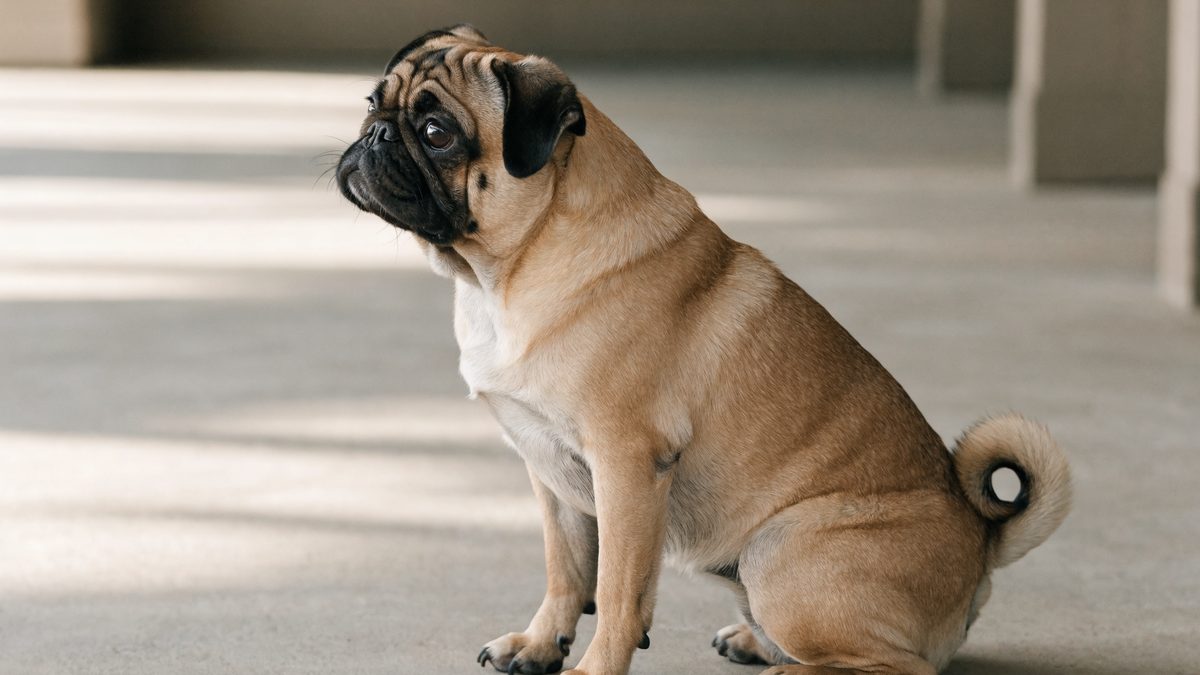
The Pug is a small, square, cobby toy companion dog weighing 6.3 to 8.1 kg under the Royal Kennel Club standard, with a flat face, a short blunt muzzle, a deeply wrinkled forehead and a tail curled tightly over the hip. Every one of those features is the result of deliberate selection for a shortened skull, and that single anatomical fact explains most of what follows on this page.
The breed standard describes the Pug as "decidedly square and cobby", summed up in the Latin tag multum in parvo, a lot in a little, and gives its characteristics as "great charm, dignity and intelligence";. Its history is genuinely old and genuinely royal. The Pug was the companion of Chinese emperors and later the mascot of Holland's royal House of Orange.
| Attribute | Standard |
|---|---|
| Group | Toy |
| Weight | 6.3 to 8.1 kg (14 to 18 lb) |
| General appearance | Decidedly square and cobby, hardness of muscle |
| Head | Relatively large, round, not apple-headed |
| Eyes | Dark, relatively large, round, very lustrous |
| Muzzle | Relatively short, blunt, square, not upfaced |
| Nose | Black, fairly large, with well-open nostrils |
| Wrinkles | Clearly defined without exaggeration |
| Tail | High set, tightly curled over hip, double curl desirable |
The standard already bans the features buyers ask for
Read the wrinkle and nose clauses carefully, because they are the most useful two sentences in the whole document for an Indian buyer. The standard requires that "Eyes or nose never adversely affected or obscured by over nose wrinkle" and states plainly that "Pinched nostrils and heavy over nose wrinkle is unacceptable";. It also instructs breeders and judges to avoid "exaggerations which would be detrimental in any way to the health, welfare or soundness of this breed";.
That matters because the exaggerated look many Indian sellers advertise as premium is a fault under the very standard they invoke when they charge a premium. A Pug with tiny slit nostrils and a nose buried under a fold of skin is not a better Pug. It is a dog that will struggle to breathe, and the breed standard says so.
The real Pug weighs more than the standard allows
Here is a figure no competing page publishes. When the Royal Veterinary College examined the clinical records of 4,308 Pugs against 21,835 other dogs from a study population of 905,544 dogs under UK veterinary care, the median bodyweight of Pugs was 8.95 kg, with an interquartile range of 7.80 to 10.17 kg and a full range of 5.00 to 13.60 kg. The breed standard's ceiling is 8.1 kg. The median real-world Pug is therefore already above the maximum weight its own standard permits, before anyone starts talking about obesity as a separate problem.
What brachycephaly means in practice
Brachycephalic means short-headed. In a dog with a normal muzzle, air passes through a long nasal chamber that both filters air and dumps heat through evaporation. Compress that chamber into a face the length of a Pug's and the same volume of soft tissue has to fit a much smaller space, which produces narrowed nostrils, an elongated soft palate and, in severe cases, a collapsing larynx. The combined condition is called brachycephalic obstructive airway syndrome, or BOAS.
The median age of Pugs in the UK study was 2.36 years against 4.44 years for other dogs. Because most common disorders become more likely with age, a young population understates a breed's true lifetime disorder burden. The Pug figures on this page are therefore conservative, not alarmist.
Pug price in India
A Pug puppy costs Rs 8,000 to Rs 80,000 in India in 2026 depending on which published source you read. The most useful thing to know about that range is that the sources contradict each other by more than Rs 70,000, and one publisher quotes two different bands on two of its own pages.
Bonbeno compared the price bands published by the Indian pages currently visible for this query. They do not agree, and we are publishing the disagreement rather than averaging it into a false single number.
| Source | Pet quality | KCI registered | Show or champion line |
|---|---|---|---|
| Supertails, Pug price guide | Rs 15,000 to Rs 40,000 | Rs 25,000 to Rs 30,000 | Rs 40,000 to Rs 70,000 plus |
| Supertails, 40-breed price list | Rs 8,000 to Rs 30,000 | Up to Rs 50,000 | Not stated |
| Mr n Mrs Pet | Rs 25,000 to Rs 35,000 | Rs 35,000 to Rs 65,000 | Rs 65,000 to Rs 80,000 plus |
| Pets Lifestyle, tier 1 cities | Rs 20,000 to Rs 40,000 | Not stated | Not stated |
| Pets Lifestyle, tier 3 and rural | Rs 10,000 to Rs 20,000 | Not stated | Not stated |
Supertails' dedicated Pug price page puts pet-quality puppies at Rs 15,000 to Rs 40,000. Supertails' own 40-breed price list puts the Pug at Rs 8,000 to Rs 30,000. Both were published by the same site. Neither states a method or a sample. This is the clearest available demonstration that Indian breed prices online are editorial estimates rather than measured market data, and you should treat every figure on this page, including ours, accordingly.
City differences, as published
| City | Published band |
|---|---|
| Bangalore | Rs 25,000 to Rs 60,000 |
| Hyderabad | Rs 22,000 to Rs 55,000 |
| Chennai | Rs 20,000 to Rs 50,000 |
| Pune | Rs 20,000 to Rs 50,000 |
| Kolkata | Rs 18,000 to Rs 40,000 |
| Kerala | Rs 15,000 to Rs 35,000 |
Pets Lifestyle organises the same idea by city tier instead, quoting Rs 20,000 to Rs 40,000 in Mumbai, Delhi and Bangalore, Rs 15,000 to Rs 30,000 in Pune, Hyderabad and Kolkata, and Rs 10,000 to Rs 20,000 in tier 3 cities and rural areas. The two schemes disagree on Chennai and Kolkata by roughly Rs 10,000 at the top of the band.
What the advertising boom did to this price
Pug pricing in India has a specific history, and it is not a market history. After the Hutch mobile-network campaign featuring a Pug called Cheeka, the price of Pug puppies shot up and the sale of Pugs doubled around the country, with a puppy costing between Rs 10,000 and Rs 60,000. Over 50,000 Pugs were imported into India on the back of that demand, many of them illegally. Twenty years later the published bands still sit in roughly that same Rs 10,000 to Rs 60,000 corridor, which tells you the price was set by a television advertisement rather than by supply, welfare cost or health screening.
In most breeds a low purchase price signals missing paperwork. In the Pug it signals something more concrete. About 40 percent of Pugs carry the haplotype associated with necrotising meningoencephalitis, and 11 percent carry two copies. A seller who cannot show you the parents' genetic test and cannot let you watch both parents breathe at rest has not saved you money. They have transferred a risk you cannot see at eight weeks old.
Bonbeno does not broker puppy sales and does not publish breeder listings. The figures above are reported from third-party sources so buyers can see the disagreement for themselves.
Monthly cost of owning a Pug in India
Published Indian estimates put the monthly cost of a Pug between Rs 3,000 and Rs 7,500, and those figures leave out the line item that actually decides what this breed costs you. Two sources give a total, and neither states a sample size or a collection method.
| Line item | Supertails | Mr n Mrs Pet |
|---|---|---|
| Food | Rs 2,000 to Rs 4,000 | Rs 1,200 to Rs 2,500 |
| Veterinary care and vaccination | Rs 1,000 to Rs 2,500 | Rs 3,000 to Rs 5,000 |
| Grooming and supplies | Rs 500 to Rs 1,500 | Rs 500 to Rs 1,000 |
| Toys, training, accessories | Rs 1,000 to Rs 2,000 | Rs 1,000 to Rs 2,000 |
| Miscellaneous | Not stated | Rs 500 to Rs 1,500 |
| Stated monthly total | Not stated | Rs 4,000 to Rs 7,500 |
Supertails separately puts monthly upkeep across all breeds at Rs 3,000 to Rs 18,000 depending on size and grooming load. A Pug sits at the small end of that on food volume and at the high end on veterinary contact, which is why a single monthly average is a poor guide for this breed specifically.
One-time costs at the start
- Primary vaccination course, quoted at Rs 2,000 to Rs 5,000.
- Microchipping, quoted at Rs 1,500 to Rs 3,000.
- Spaying or neutering, quoted at Rs 8,000 to Rs 15,000.
- Genetic testing for necrotising meningoencephalitis, offered by the UC Davis Veterinary Genetics Laboratory at 58 US dollars for a single test. Ask whether the breeder has already done it on both parents, because that is where it does the most good.
The cost line nobody publishes
No Indian page quotes the cost of the conditions this breed is actually predisposed to, so the published monthly totals are structurally optimistic. The Pug is not an expensive dog to feed, because it is small. It is an expensive dog to keep well, because it needs the veterinary contact of a much larger and much sicker animal. A Pug is 53.9 times more likely than other dogs to be diagnosed with brachycephalic obstructive airway syndrome, 13.0 times more likely to have corneal ulceration and 11.0 times more likely to have skin fold dermatitis. Corneal ulceration alone affected 6.8 percent of Pugs in a single year against 0.7 percent of other dogs. Those are recurring veterinary events, not rare catastrophes.
- Airway surgery. Widening of the nostrils and shortening of the soft palate is the standard surgical response to severe BOAS. Price it with your surgeon before you buy, not after.
- Eye emergencies. A corneal ulcer in a flat-faced dog is an urgent, repeat-visit condition, not a one-appointment fix.
- Skin and ear management. Aural discharge odds are 9.6 times those of other dogs and demodectic mange odds 5.6 times. Both are managed rather than cured.
- Caesarean section. If you ever breed a Pug bitch, budget for surgical delivery as the expected outcome rather than the exception.
When we publish cost figures we state the sample size, the cities covered and the collection date. Our verified owner cost survey across eight metros is in progress. Until it is complete, the honest position is that no reliable India-wide monthly figure exists for this breed, so this section publishes the structure and the sources rather than a number nobody can check.
Heat tolerance and the Indian climate
A Pug has the worst heat tolerance of any breed on this site, and the evidence is specific rather than impressionistic. Pugs have 3.24 times the odds of heat-related illness compared with Labrador Retrievers, and the case fatality rate for heat-related illness across all dogs is 14.18 percent.
The mechanism is simple. A dog cannot sweat meaningfully, so it sheds heat by moving air across the wet surfaces of its nose, mouth and throat. A flat face shortens that surface and narrows the airway that carries air to it. The same panting effort therefore moves less air and dumps less heat, while the effort itself generates more heat. That is why brachycephalic dogs carry 2.10 times the odds of heat-related illness compared with normal-muzzled dogs.
The Royal Veterinary College summarised the same dataset as a breed ranking against the Labrador Retriever, and the Pug sits in the high-risk group alongside the Bulldog, the French Bulldog and the Chow Chow. Being above average weight and being over two years old were also significant predictors, and dogs that were big for their breed carried almost one and a half times the risk of those smaller than the breed average. That last finding is why the feeding section on this page is a heat-safety section as much as a nutrition one.
| Breed | Odds vs Labrador Retriever |
|---|---|
| Chow Chow | 17 times |
| Bulldog | 14 times |
| French Bulldog | 6 times |
| Dogue de Bordeaux | 5 times |
| Greyhound | 4 times |
| Cavalier King Charles Spaniel | 3 times |
| Pug | 3 times |
| Golden Retriever | 3 times |
Every figure above comes from UK veterinary records, in a country whose summer rarely passes 30 C. Peak summer temperatures cross 45 C in several parts of India. Bonbeno has found no published Indian study of heat-stroke incidence in Pugs, so we cannot tell you how much higher the Indian risk is. We can tell you that no plausible reading of these studies makes it lower. Where no reliable Indian figure exists we say so rather than inventing one.
Hot cars are not the main danger
The single most useful correction in the heat literature is about what actually triggers heat-related illness. Across the 879 heat-related illness events with a recorded trigger, drawn from 905,543 UK dogs, exertion was the trigger in 74.2 percent of cases, environmental heat in 12.9 percent and confinement in a vehicle in only 5.2 percent. The public campaign message about hot cars is aimed at the smallest category. For a Pug in India, the dangerous act is a walk taken at the wrong hour, not a parked car.
Older dogs and dogs with existing respiratory compromise carried the greatest odds of environmental heat-related illness, and brachycephalic dogs had 2.36 times the odds of environmental heat-related illness compared with normal-muzzled dogs. A Pug with untreated BOAS is therefore in the highest-risk group twice over.
What to actually do, by hour
- Walk before sunrise and after dark. Indian veterinary advice is to avoid taking animals outdoors between 11 am and 4 pm, and to walk dogs between 5 am and 8 am and again between 7 pm and 9 pm.
- Check the pavement with your palm. If you cannot hold it there for five seconds the surface will burn paw pads, and radiant heat from that surface reaches a 25 cm tall dog far faster than it reaches you.
- Keep fresh clean water available all day and feed fresh light meals through summer.
- Manage humidity separately from temperature. Panting is evaporative cooling, and evaporation slows in humid air. Mumbai, Chennai and Kolkata at 33 C are harder on a Pug than Pune at 38 C.
- Use air conditioning as equipment, not luxury. For this breed in a metro summer, a cool room is the primary safety measure and everything else is secondary.
Recognising heat stroke
Watch for severe panting, difficulty breathing, heavy salivating, vomiting, diarrhoea, a temperature of 40.5 C or above, blood in the urine, nose bleeds and ultimately collapse. Move the dog into shade or air conditioning, spray or sponge the body with cool but not cold water, and use a fan. Do not plunge the dog into cold water or an ice bath, stop active cooling at 39.4 C to avoid overshooting into hypothermia, and seek veterinary attention as fast as possible because heat stroke can be fatal. Purina India names Pugs specifically among the short-faced breeds at particular risk.
Indian commentators raised this concern at the very start of the Pug boom. R. Padmachandran, director of Dogsindia.com, warned about the survival of these dogs in tropical heat because of their short muzzles. PETA India makes the same point, noting that Pugs are especially susceptible to heatstroke and suffer greatly in India's humid climate.
Temperament and household fit
The Pug's temperament is the best thing about the breed and it is not in dispute. UK clinical records show Pugs have 0.31 times the odds of aggression and 0.53 times the odds of wounds compared with other dogs, which is one of the lowest aggression signals recorded for any breed.
That is a genuine, measured advantage and it deserves to be stated as plainly as the health problems. The Royal Veterinary College itself notes that Pugs are often considered to have a very gentle temperament and that the study supports this, showing very low levels of aggression in the breed. An affectionate, unaggressive small dog in a household with children and visitors is not a small thing.
Indian owners describe Pugs as shadows because they follow their people from room to room, and Indian breed pages consistently describe them as gentle, affectionate and highly loyal, happiest snuggling on the sofa or playing with the family.
Who this breed suits
- Good fit. Air-conditioned apartments, families with young children, first-time owners who want a small quiet dog, households with someone home during the day, older owners who cannot manage a strong dog on a lead.
- Poor fit. Homes without reliable cooling in a peak-summer city, owners who want a walking or running companion, buyers who cannot commit to daily wrinkle and eye care, anyone whose budget cannot absorb repeat veterinary visits.
- Watch item. Snoring, snorting and noisy breathing at rest are so common in this breed that owners are trained by other owners to treat them as normal. They are signs of airway obstruction, not personality.
The RVC put the tension precisely. Very low aggression may make the Pug a good family pet from a human perspective, but owners also need to consider the quality of life that the dog endures. Both halves of that sentence are true at once. If you already own a Pug, the useful response is not guilt, it is better management, which is what the rest of this page is for.
Compare this against the alert, barking temperament of the Indian Spitz, or the size and adolescence of the Golden Retriever. On temperament alone the Pug is easier than either. On everything physical it is harder than both.
Training a Pug
Train a Pug with short, food-motivated, reward-based sessions held indoors in a cool room, because the limiting factor in this breed is breathing and body temperature rather than attention or intelligence. A Pug that stops working mid-session is usually overheating, not sulking.
Two rules apply to this breed that do not apply to most others, and both are physical.
- Use a harness, never a neck collar, for lead work. A collar concentrates pressure on the throat of a dog whose airway is already narrowed. This is the single easiest thing an Indian owner can change on day one and it costs a few hundred rupees.
- Keep sessions under five minutes in warm weather and stop at the first change in breathing. Exertion is the trigger in 74.2 percent of canine heat-related illness events, and a training session in a warm room counts as exertion.
The curriculum this breed actually needs
Most training guides for small companion dogs default to sit, stay and recall. For a Pug the highest-value curriculum is cooperative care, meaning teaching the dog to accept the handling it will need for the rest of its life. Start these in week one.
- Face handling. Teach the dog to hold still while you lift and wipe each facial fold. You will do this daily for a decade.
- Eye drops. A breed with 13.0 times the odds of corneal ulceration will need eye medication at some point. A dog that fights drops turns a two-minute task into a fight twice a day.
- Ear handling. Aural discharge odds are 9.6 times those of other dogs.
- Muzzle and mouth handling. Retained baby teeth odds are 4.3 times those of other dogs, so dental checks start early.
- Crate or mat settle in a cool room. This is the behaviour that keeps a Pug out of a hot afternoon.
Realistic timelines
| Skill | Start | Reliable by |
|---|---|---|
| Name response | Week 1 home | 2 to 4 weeks |
| Accepts wrinkle cleaning calmly | Week 1 home | 3 to 6 weeks |
| Sit, down, settle on a mat | Week 1 home | 4 to 6 weeks |
| Toilet training | Week 1 home | 4 to 6 months |
| Accepts eye drops without restraint | Month 1 | 2 to 4 months |
| Loose-lead walking on a harness | Month 2 | 4 to 8 months |
| Recall in a small enclosed space | Month 2 | 6 to 12 months |
The socialisation window in dogs runs from roughly 3 weeks to 14 weeks and is largely closed by 16 weeks, which overlaps the core vaccination course almost exactly. For a Pug there is a second constraint on top of that, because much of that window may fall in an Indian summer when outdoor exposure is unsafe. Plan indoor socialisation instead: visitors at home, car trips in a cooled car, other vaccinated dogs in air-conditioned spaces. Set the schedule with your veterinarian rather than defaulting to either extreme.
How much exercise a Pug actually needs
An adult Pug needs 20 to 30 minutes of light play or short walks daily, taken in two or three separate pieces and never in the heat. This is the only breed on this site where the exercise section is mainly about restraint rather than effort.
The reason is arithmetic rather than opinion. Exertion is the trigger in 74.2 percent of canine heat-related illness events, ahead of environmental heat at 12.9 percent and hot vehicles at 5.2 percent. Exertional heat-related illness affects more dogs and kills more dogs in the UK than confinement in a hot vehicle does. Applied to a flat-faced dog in an Indian April, the practical instruction is that the walk itself is the hazard.
| Stage or season | What to do |
|---|---|
| Puppy under 6 months | Several very short indoor play sessions. No forced walking. |
| Adult, cool months | 20 to 30 minutes total, split into two or three short walks |
| Adult, March to June | Move everything to before 8 am and after 7 pm |
| Adult, heatwave or high humidity | Indoor enrichment only. Skip the walk rather than shorten it. |
| Senior or any dog with noisy breathing | Indoor only in warm weather, and a veterinary airway assessment |
Sustained exercise is precisely the exposure the heat-related illness data warns about, and a Pug cannot tell you it is in trouble until it is already in trouble. Older dogs and dogs with respiratory compromise carry the highest odds of environmental heat-related illness. If you want a dog to run with, this is the wrong breed and no amount of conditioning changes that.
What replaces distance
- Scent games indoors. Ten minutes of finding treats in a cool room tires a Pug more than a lap of the block and carries no heat load.
- Food puzzles at mealtimes. These also slow eating, which matters in a breed that gulps air.
- Short training sets. Three sessions of two minutes beat one of six.
- Gentle indoor fetch on a non-slip surface. Stop at the first change in breathing noise, not at the end of the game.
The tension to hold in your head is this. Pugs have 3.4 times the odds of obesity compared with other dogs, so they need activity. They also have the worst heat tolerance of any breed here, so activity is dangerous for much of the Indian year. The resolution is not more walking. It is controlling calories, which is the feeding section below.
Grooming a Pug in Indian humidity
Groom a Pug daily rather than weekly, because the facial folds are the highest-risk part of the dog and Indian humidity is the condition they fail in. Pugs have 11.0 times the odds of skin fold dermatitis compared with other dogs.
The coat itself is easy. Brush the short coat two to three times a week and expect steady shedding. The work that actually matters happens on the face, in the ears and around the tail.
The daily fold routine
- Lift each fold and wipe it clean with a damp cloth or a veterinary-approved wipe, every single day.
- Dry each fold completely afterwards. A damp fold in humid weather is the exact environment skin fold dermatitis needs. Drying is more important than cleaning.
- Check the fold above the nose separately, since it sits closest to the eyes and is where discharge collects.
- Inspect the tail pocket, the fold of skin under the curled tail, which is routinely missed and routinely infected.
- Look at the eyes while you are there. Any cloudiness, squinting, redness or pawing at the face is a same-day veterinary matter in this breed.
In one year, 6.8 percent of Pugs were affected by corneal ulceration against 0.7 percent of other dogs, and an earlier primary-care study found the Pug had the highest corneal ulceration prevalence of any breed at 5.4 percent. Large prominent eyes in a shallow socket sit closer to dust, hair and household objects than a normal dog's do. PETA India describes Pug eyes as prone to injury, chronic irritation and pain. Treat any eye change as urgent rather than watching it for a day.
Ears, skin and the monsoon
Pugs carry 9.6 times the odds of aural discharge, 5.9 times the odds of allergic skin disorder and 5.6 times the odds of demodectic mange compared with other dogs. All three worsen in warm humid weather, which means the monsoon is the season this breed's skin is tested. Check ears weekly, dry the dog thoroughly after any bath or rain, and take a new smell, head shake or scratch to a veterinarian rather than to a pet shop shampoo.
- Bathe only as needed and dry completely, folds first.
- Keep nails short, because an overgrown nail changes gait in a short-legged dog.
- Brush teeth regularly. Retained baby teeth odds are 4.3 times those of other dogs, and crowded jaws trap food.
- Never shave for cooling. A Pug's coat is short already and shaving exposes skin to direct sun without improving airflow through the airway, which is where the heat problem actually is.
Health risks and lifespan
The Pug has the most heavily documented disorder burden of any breed on this site. Across a UK study of 4,308 Pugs and 21,835 other dogs, Pugs had 1.86 times the adjusted odds of being diagnosed with one or more disorders in a single year, higher risk of 23 of the 40 most common canine disorders and lower risk of only 7.
The researchers' conclusion was blunt. The Royal Veterinary College stated that the health of Pugs in the UK is now substantially different and largely worse than non-Pugs, and that the Pug can no longer be considered a typical dog from a health perspective. Bonbeno reports that finding because it is the strongest evidence available, not to shame anyone who already owns one.
The predispositions, with numbers
| Condition | Odds vs other dogs |
|---|---|
| Brachycephalic obstructive airway syndrome | 53.92 times |
| Stenotic nares (narrowed nostrils) | 51.25 times |
| Corneal ulceration | 13.01 times |
| Skin fold dermatitis | 10.98 times |
| Aural discharge | 9.61 times |
| Lower respiratory tract disorder | 7.50 times |
| Allergic skin disorder | 5.9 times |
| Demodectic mange | 5.6 times |
| Retained baby teeth | 4.3 times |
| Brain disorder | 3.95 times |
| Obesity | 3.4 times |
Seven of the eight strongest predispositions in Pugs are shared with the French Bulldog, which is the other breed selected hardest for extreme brachycephaly. That overlap is the argument that these are conformation problems rather than bad luck in one breed's gene pool.
The protections, which are real
Pugs had significantly reduced odds of 7 of the 40 common disorders, including heart murmur at 0.23 times, lipoma at 0.24 times, aggression at 0.31 times and wounds at 0.53 times the odds of other dogs. A page that omits this is not being accurate, it is campaigning. The Pug is a genuinely gentle, low-aggression dog with a low recorded rate of fatty lumps and heart murmurs.
Lifespan, and what the sources actually support
| Figure | What it measures | Source |
|---|---|---|
| Median age at death 10 years | 691 Pugs that died, from 7,909 under primary veterinary care in Australia | Veterinary Sciences 2025 |
| 11 years median longevity | An earlier owner survey, cited within the same paper | Veterinary Sciences 2025 |
| 11 to 12 years for dogs overall | Reference figure for all dogs, for comparison | Veterinary Sciences 2025 |
Read that table as a range rather than a number. The primary-care Australian cohort gives a median age at death of 10 years for both sexes, against a reference of 11 to 12 years reported for dogs overall. Bonbeno could not open the full text of the UK life-table study that is widely quoted for a much lower Pug figure, so we are not repeating that number here. Where we cannot verify a figure ourselves we leave it out.
In the Australian cohort of 691 Pug deaths, brachycephalic obstructive airway syndrome was the single most common cause at 8.2 percent, followed by seizure disorder at 6.7 percent, degenerative spinal cord disorder at 4.7 percent and unspecified neurological disorder at 4.5 percent. BOAS was the leading cause of death for both euthanasia and unexpected death, and the authors note that death from respiratory complications is a risk for Pugs across all life stages. The breathing problem is not a nuisance that gets worse in old age. It is the thing that kills them, at any age.
Pug dog encephalitis
Approximately 1.2 percent of Pugs die of necrotising meningoencephalitis, also called Pug dog encephalitis, an inflammatory disease of the central nervous system that is usually progressive and fatal. Symptoms include seizures, depression, ataxia, abnormal gait and blindness, and female fawn-coloured Pugs under 7 years old are more likely to develop it.
The genetics are well characterised and testable. Susceptibility is associated with the dog leukocyte antigen region of chromosome 12. Around 40 percent of Pugs carry the risk haplotype, 29 percent as heterozygotes and 11 percent as homozygotes, and homozygous dogs are 12.75 times more likely to develop the disease in their lifetime, though only about one in eight of that group actually will. A European study of 5,974 genetic tests across 28 countries found the risk allele frequency at 25.7 percent, with a median age at onset of neurological signs of 1 year and a historical median of 18 months.
The UC Davis laboratory advises against breeding the S haplotype out entirely, because 40 percent of Pugs carry it and removing it would cost the breed considerable genetic diversity. The correct approach is selecting matings that do not produce homozygous puppies. Ask a breeder whether both parents were tested and what the pairing produces, rather than demanding a clear result on both.
Birth, and why it matters even if you never breed
Among almost 20,000 bitches attending 50 UK emergency practices, 3.7 percent were treated for difficulty giving birth, and Pugs were 11.3 times more likely than crossbred bitches to be affected. Maneka Gandhi raised exactly this point during the Indian Pug boom, warning that Pugs cannot give birth naturally and need a caesarean. This matters to ordinary buyers because it explains the supply chain. A breed that routinely needs surgical delivery cannot be produced cheaply and humanely at volume, so a very cheap Pug puppy is telling you something about how its mother was treated.
Feeding a Pug in India
Feed a Pug measured meals to a target body condition rather than to a chart, because Pugs have 3.4 times the odds of obesity compared with other dogs and obesity has been reported as the most common disorder of the breed O'Neill DG, Sahota J, Brodbelt DC. In this breed weight control is a breathing intervention, not a cosmetic one.
The link is direct. Fat deposits around the neck and chest narrow an airway that is already narrow, and a heavier dog generates more heat doing the same work. An obese Pug therefore has worse BOAS and worse heat tolerance than a lean one of the same breeding. Keeping the dog lean is the single highest-value thing an Indian Pug owner controls, and it is free.
- Measure every meal with a cup or scale. Free-feeding a breed with the highest obesity predisposition in the UK is a decision, not a default.
- Split the daily ration across two meals and count treats inside the total rather than on top of it.
- Weigh the dog monthly and record it. A Pug gains a kilogram invisibly under a short coat.
- Feed to body condition. You should feel ribs easily under a thin fat cover and see a waist from above. Ask your vet to score the dog at every visit.
- Use a slow-feed bowl or a puzzle feeder. A flat-faced dog gulps air with food, and slowing intake reduces both bloating and the post-meal breathing struggle.
- Cut table scraps entirely. Indian household feeding habits are the largest single contributor to weight gain, and the Pug's begging is unusually effective.
Appetite commonly drops in peak summer across all breeds, and Indian veterinary advice is to feed fresh light meals with fresh clean water available throughout the day. Persistent inappetence in a Pug is a veterinary matter rather than a preference, because it can also signal an airway or neurological problem.
Feeding quantities depend on the individual dog's age, weight, body condition and activity, and a Pug's activity is capped by climate for much of the Indian year. Set the ration with a registered veterinarian who has examined and weighed your dog, and revise it every season rather than once.
Bonbeno reviews Indian pet food brands separately and tests products first-hand before publishing a verdict. See our testing method for what a Bonbeno food review does and does not claim.
Pug puppy: month by month through the first year
A Pug puppy's first year has three decisive checkpoints, and none of them is size. They are the socialisation window, the first Indian summer, and the airway assessment that most owners never book. The risk window also extends past the first birthday, because the median age at onset of Pug dog encephalitis is around 18 months.
- 8 to 12 weeks. Settle in, name, toilet routine. The core vaccination course begins. Start daily fold cleaning and face handling now while the puppy is easy to hold. Begin indoor socialisation with visitors, household noise and vaccinated adult dogs.
- 12 to 16 weeks. The socialisation window closes around 16 weeks, so this is the last useful stretch. Add car trips in a cooled car, different floor surfaces and gentle handling by strangers. Book the first weight record.
- 4 to 6 months. Vaccination course completes. Loose-lead work on a harness begins. Ask your veterinarian for a first airway assessment at rest and after light exercise, and get it written down as a baseline.
- 6 to 9 months. Growth slows and the ribcage fills out. This is when overfeeding starts to show. Weigh monthly. If this stretch falls in March to June, treat heat management as the main project of the season.
- 9 to 12 months. Approaching adult weight. Compare the dog against the 6.3 to 8.1 kg standard band and against the 8.95 kg median seen in practice, and discuss the target with your vet rather than guessing.
- 12 to 24 months. The neurological risk window. Median onset of necrotising meningoencephalitis signs falls at 1 year in one European cohort, with a historical median of 18 months. Seizures, disorientation, an abnormal gait or sudden blindness at this age are urgent.
Work out which months of the puppy's first year fall in your city's hot season and plan around them before you bring the dog home. A puppy that arrives in October gets seven cool months to build routines. A puppy that arrives in March has its socialisation window inside a season when outdoor exposure is unsafe. That single scheduling decision changes the first year more than anything else you will choose.
What to have booked before month twelve
- A recorded baseline of breathing at rest and after light exercise, so a future change is measurable rather than remembered.
- A body condition score at every visit, written in the record.
- A dental check, given the 4.3 times odds of retained baby teeth.
- A conversation about airway surgery, including what your vet's threshold for recommending it would be. Having that conversation early is far better than having it during a heat emergency.
Pug vs Indian Spitz
Choose an Indian Spitz over a Pug if you want a small, affectionate, apartment-friendly companion that can breathe in an Indian summer. This is the honest cross-shop for an Indian buyer, and it is not close on the two factors that matter most here, which are climate and cost.
The two breeds sit in the same slot in a household. Both are small enough for a flat, both are family dogs, both are widely available in Indian cities. They differ on the one axis this country tests hardest.
| Factor | Pug | Indian Spitz |
|---|---|---|
| Muzzle | Brachycephalic, short and blunt | Normal length, unobstructed |
| Heat tolerance | Lowest rating on this site. 3.24 times heat-stroke odds vs a Labrador | Well adapted to local weather |
| Published price band | Rs 8,000 to Rs 80,000 plus Mr n Mrs Pet, How Much Does a Pug Puppy… | Rs 4,000 to Rs 10,000 |
| Odds of one or more disorders a year | 1.86 times other dogs | No comparable cohort study exists |
| Daily grooming | Facial folds cleaned and dried every day | Brushing, no folds to manage |
| Exercise | 20 to 30 minutes, heat permitting | Longer walks, tolerates them |
| Noise level | Quiet, snores heavily | Alert barker |
| Aggression risk | Very low, 0.31 times other dogs | Low, alerts rather than confronts |
| Birth | 11.3 times the odds of dystocia | No documented predisposition |
The Indian Spitz costs roughly a fifth of a mid-band Pug and is described in Indian price guides as very budget-friendly and well adapted to our local weather with minimal grooming maintenance. Bonbeno's own Indian Spitz guide rates it 4 out of 5 for heat tolerance against the Pug's 1.
Two things, and they are real. The Pug is quieter, since the Indian Spitz is an alert barker that announces the lift, the courier and the neighbour. And the Pug's low-aggression profile is measured in clinical records rather than asserted. If your building has strict noise rules and small children, that combination is genuinely attractive. It is just not worth an airway.
If neither appeals, the Indian Pariah Dog is free to adopt, better adapted to the climate than either, and carries none of the conformational disease burden documented above.
Mistakes Indian Pug owners actually make
The failure modes for this breed in India are predictable and mostly correctable. They are ranked here by how much damage they do to the dog.
- Treating snoring and snorting as personality. Noisy breathing at rest is airway obstruction. Owners are taught by other owners that a Pug that struggles to breathe is being a Pug. It is the leading cause of death in the breed and it is partly treatable, so it deserves a veterinary opinion rather than a nickname.
- Walking at the wrong hour. Exertion triggers 74.2 percent of canine heat-related illness events. Indian advice is to keep dogs indoors between 11 am and 4 pm and walk at 5 to 8 am or 7 to 9 pm. Most Indian Pug owners still walk at 9 am.
- Letting the dog get fat. Pugs carry 3.4 times the obesity odds of other dogs, and fat around the neck makes an already narrow airway worse. This is the mistake with the best return on correction.
- Using a neck collar for lead walking. Pressure on the throat of a dog with 51.25 times the odds of narrowed nostrils is an avoidable insult. Switch to a harness.
- Skipping the daily fold clean. Skin fold dermatitis odds are 11.0 times those of other dogs, and Indian humidity is the condition it needs. Cleaning without drying is the same as not cleaning.
- Waiting overnight on an eye problem. Corneal ulceration affected 6.8 percent of Pugs in a single year. Squinting, cloudiness or pawing at the face is a same-day visit.
- Buying on price alone. A cheap Pug in a breed that needs caesarean delivery and carries a 40 percent risk-haplotype rate is not a bargain, it is an unpriced risk.
- Believing an exaggerated face is premium. The breed standard itself calls pinched nostrils and a heavy over-nose wrinkle unacceptable. Pay for open nostrils, not for a flatter face.
- Breeding the family pet. Pugs are 11.3 times more likely than crossbred bitches to have difficulty giving birth. This is major surgery on your own dog to produce puppies that inherit the same risks.
- Assuming a quiet dog is a comfortable dog. A Pug that lies still through a hot afternoon may be conserving effort rather than resting.
If you change one thing after reading this page, book an airway assessment and get the dog's breathing at rest and after light exercise written into the clinical record. It costs a consultation, it takes minutes, and it converts the vague worry most Pug owners carry into a documented baseline that a veterinarian can act on later.
Buying responsibly, and the adoption route
Verify the parents before you pay, and check rescue first, because India has an unusually large supply of Pugs needing homes and an unusually well-documented reason for it. The Hutch advertising boom put tens of thousands of these dogs into households that were not told what the breed needs.
The scale is on record. After the campaign, the sale of Pugs doubled around the country and over 50,000 Pugs were imported into India, many illegally, then sold to buyers who were unaware of the breed's special needs. PETA India reported that puppies were sold to buyers often unprepared to deal with the breed's physical ailments, that many ended up dumped on the streets or on animal-protection groups' doorsteps, and that one Delhi group found four abandoned Pugs in a span of just 10 days.
Because it is the reason the Indian Pug market looks the way it does. The demand was created by a television campaign rather than by owners choosing a breed for their conditions, and Maneka Gandhi objected at the time that the surge was for a dog that was not native to India and whose climate did not suit them. Understanding that is what stops the same thing happening with the next advertised breed.
The 60-second breathing check no seller will offer you
Do this before money changes hands, on both parents and on the puppy. It is the single most useful thing a Pug buyer can do and no Indian page currently publishes it.
- Watch the dog at rest in a cool room for one full minute. Note any snoring, snorting, rasping or open-mouth breathing while the dog is doing nothing. A resting dog should be quiet.
- Look straight at the nostrils. They should be open slits you can see into. Pinched nostrils are explicitly unacceptable under the breed standard and correspond to the 51.25 times stenotic nares odds in the clinical data.
- Check that the nose wrinkle does not touch or cover the nose or eyes, which the standard also prohibits.
- Ask for three minutes of gentle walking, then listen again. Breathing noise that appears only after light activity is the pattern that matters, and it is the one a short kennel visit hides.
- Ask to see the dam. Note whether she is breathing hard while simply standing.
- Decline politely if the seller refuses any of the above. A breeder confident in their dogs will let you watch them breathe.
Paperwork, and what it does not cover
Kennel Club of India registration documents a dog's pedigree across at least three generations in the Indian Stud Book and confirms that both parents are registered purebreds of the same breed. It does not certify health, temperament or freedom from genetic disease, so you need a separate veterinary health certificate as well. Verify any registration by asking for the certificate with its unique number and contacting the Kennel Club of India directly rather than trusting a photocopy.
- Ask for the parents' Pug dog encephalitis genetic test results and what the pairing produces.
- Ask for a written veterinary health certificate dated close to handover, separate from the registration papers.
- See the dam with the litter in the place the puppies were raised.
- Ask directly whether the litter was delivered by caesarean, and how many the dam has had. This is the question that separates a breeder from a producer.
- Decline any seller who meets you in a car park or has several breeds available on demand.
Adopting an adult Pug
Adopting an adult Pug is the strongest argument on this page. Everything this breed's buyers cannot assess in an eight-week-old puppy, meaning breathing quality, eye history, skin history and temperament, is already visible in an adult. Rescue and breed-specific groups across Indian metros rehome Pugs regularly, often surrendered by households that underestimated the veterinary load or could not manage the heat. You take on a known dog rather than an unknown one, and you remove a dog from the surplus the advertising boom created instead of adding to it.
If you have not yet committed to the breed, look at the Indian Spitz and the Indian Pariah Dog first. Both are cheaper, both breathe normally, and both were shaped by the climate you actually live in.
Pug questions Indians actually search
What is the cost of a Pug puppy in India?
Published bands run from Rs 8,000 to Rs 80,000 and the sources disagree sharply. Pet-quality puppies are commonly quoted at Rs 15,000 to Rs 40,000, KCI-registered puppies at Rs 25,000 to Rs 65,000 and show-line puppies above Rs 65,000. No published Indian figure states a sample size or a collection method, so treat every number as an estimate.
What is the cheapest Pug price?
The lowest published Indian band is Rs 8,000, quoted in a 40-breed price list, while the same publisher's dedicated Pug page starts at Rs 15,000. A price near the bottom of that range usually means no registration papers, no health certificate and no genetic testing of the parents, which in this breed is a real risk rather than a paperwork gap.
Are Pugs good for first-time dog owners?
On temperament, yes. Pugs have 0.31 times the odds of aggression compared with other dogs and are small, quiet and affectionate. On care, no. A first-time owner is signing up for daily facial fold cleaning, strict weight control, urgent eye monitoring and year-round heat management in an Indian climate.
Do Pugs require a lot of grooming?
The coat is easy and the face is not. Brush the short coat two to three times a week, but clean and thoroughly dry every facial fold daily. Pugs carry 11 times the odds of skin fold dermatitis compared with other dogs, and Indian humidity is exactly the condition that drives it.
Can a Pug survive in Indian heat?
Only with active management, and this is the breed where that sentence is doing the most work. Pugs carry 3.24 times the heat-stroke odds of a Labrador Retriever in UK conditions, and Indian summers cross 45 C. Keep the dog indoors between 11 am and 4 pm, walk only at dawn and after dark, and treat air conditioning as safety equipment.
How long do Pugs live?
The median age at death was 10 years among 691 Pugs that died from a population of 7,909 under primary veterinary care in Australia, against a reference of 11 to 12 years reported for dogs overall. Brachycephalic obstructive airway syndrome was the leading single cause of death at 8.2 percent.
Why do Pugs snore so much?
Because their airway is obstructed, not because it is a breed quirk. Pugs carry 53.9 times the odds of brachycephalic obstructive airway syndrome and 51.3 times the odds of narrowed nostrils compared with other dogs. Snoring, snorting and noisy breathing at rest are signs worth a veterinary airway assessment.
Are Pugs unhealthy dogs?
The evidence says yes, and it is unusually clear. Pugs had 1.86 times the odds of one or more disorders in a single year across 4,308 Pugs and 21,835 other dogs, with higher risk of 23 of the 40 most common canine disorders. The Royal Veterinary College concluded the Pug can no longer be considered a typical dog from a health perspective.
Why did Pugs become so popular in India?
A mobile-network advertising campaign. Hutch ran a campaign in the early 2000s featuring a Pug called Cheeka, after which the sale of Pugs doubled around the country and over 50,000 Pugs were imported into India, many of them illegally. Prices at the time ran Rs 10,000 to Rs 60,000.
Do Pugs need a caesarean to give birth?
Very often. Among almost 20,000 bitches at 50 UK emergency practices, Pugs were 11.3 times more likely than crossbred bitches to have difficulty giving birth. Maneka Gandhi raised this during the Indian Pug boom, warning that Pugs cannot give birth naturally and need a caesarean.
What is Pug dog encephalitis and can it be tested for?
It is necrotising meningoencephalitis, an inflammatory brain disease that is usually progressive and fatal, and roughly 1.2 percent of Pugs die of it. A genetic test exists. About 40 percent of Pugs carry the risk haplotype and homozygous dogs are 12.75 times more likely to develop it, so ask whether both parents were tested.
Is a Pug or an Indian Spitz better for an Indian apartment?
The Indian Spitz, on climate and cost. It is published at Rs 4,000 to Rs 10,000, described as well adapted to local weather, and has a normal muzzle. The Pug is quieter and the Indian Spitz barks at everything, so the Pug wins on noise in a strict building and loses on almost everything physical.
How much does a Pug cost per month in India?
Published Indian estimates put it at Rs 4,000 to Rs 7,500 a month, covering food, veterinary care, grooming and accessories. Those totals exclude the conditions this breed is predisposed to, including airway surgery, repeat corneal ulcer treatment and ongoing skin and ear management, so treat them as a floor rather than a budget.
Is Pug good for home?
Yes, for an air-conditioned home with someone in during the day. The temperament is the best thing about the breed: UK clinical records show Pugs have 0.31 times the odds of aggression compared with other dogs, and Indian owners describe them as gentle, affectionate shadows that follow their people from room to room. Good fits are air-conditioned apartments, families with young children and older owners who cannot manage a strong dog on a lead. Poor fits are homes without reliable cooling in a peak-summer city, owners wanting a running companion, and anyone who cannot commit to daily wrinkle and eye care.
Are Pugs a good dog?
On temperament, one of the best: UK clinical records show Pugs have 0.31 times the odds of aggression and 0.53 times the odds of wounds compared with other dogs, and Indian owners describe gentle, affectionate shadows that follow their people from room to room. On health, the same records show 1.86 times the odds of at least one disorder in a year and 53.9 times the odds of brachycephalic obstructive airway syndrome. The Royal Veterinary College put the tension precisely: very low aggression may make the Pug a good family pet from a human perspective, but owners also need to consider the quality of life the dog endures.
What is Pug weakness?
The airway, and everything downstream of the flat face. Against other dogs, Pugs carry 53.92 times the odds of brachycephalic obstructive airway syndrome, 51.25 times the odds of narrowed nostrils, 13.01 times the odds of corneal ulceration, 10.98 times the odds of skin fold dermatitis and 3.4 times the odds of obesity, and 3.24 times a Labrador's odds of heat stroke. In an Australian cohort of 691 Pug deaths, BOAS was the single most common cause at 8.2 percent and the median age at death was 10 years. The breathing problem is not a nuisance of old age; it is the thing that kills them at any age.
Is a Pug a bulldog?
No. The Pug is a toy companion breed, decidedly square and cobby at 6.3 to 8.1 kg under the Royal Kennel Club standard, bred to be the companion of Chinese emperors and later the mascot of Holland's House of Orange. The confusion comes from the face: seven of the eight strongest disease predispositions in Pugs are shared with the French Bulldog, the other breed selected hardest for extreme brachycephaly, which is why the two sit together in every study of flat-faced dogs. That overlap is the argument that these are conformation problems rather than bad luck in one breed's gene pool.
Compare with similar breeds
Pug sits in 3 Bonbeno groups. Each one compares it directly against the breeds it is genuinely an alternative to, on the same figures.