
Dog breed profile
Golden Retriever Price in India, Care and Full Breed Guide
What a Golden Retriever actually costs in India, why published prices disagree by more than Rs 90,000, and what the breed needs to stay healthy in Indian heat.
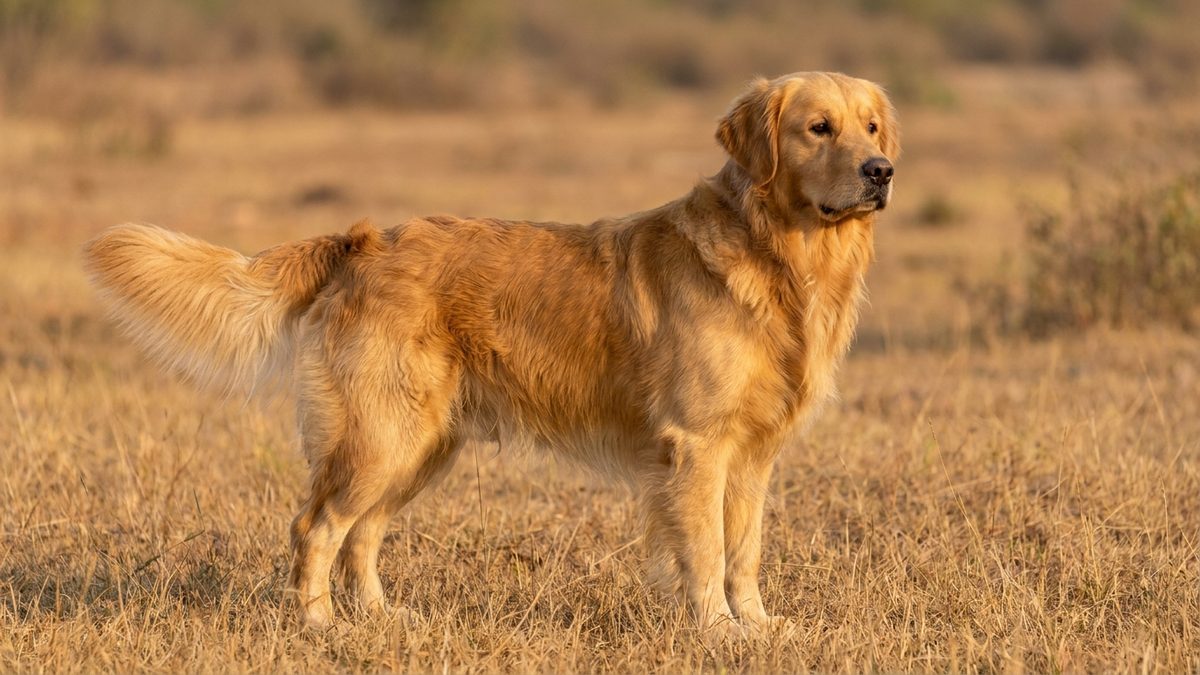
Quick answer
The Golden Retriever price in India runs Rs 25,000 to Rs 1,20,000 in 2026. KCI-registered puppies with documented pedigree sit at Rs 60,000 to Rs 1,20,000, while unregistered pet-quality puppies sell for Rs 25,000 to Rs 60,000. Metro prices in Mumbai, Delhi and Bangalore run highest. Published estimates disagree widely, so treat any single figure with caution.
This guide is general information for Indian pet owners and is not a diagnosis. Always consult a registered veterinarian near you before acting on anything you read here, and treat any sudden change in your dog's condition as urgent.
Golden Retriever at a glance
What a Golden Retriever is
The Golden Retriever is a medium to large gundog bred to retrieve waterfowl, which explains almost everything about how it looks and behaves. The working history produced a soft mouth, a strong drive to carry things, high sociability and a dense water-repellent coat. Those first three traits are why the breed suits families. The fourth is why it struggles in Indian summers.
Under the American Kennel Club standard, males stand 23 to 24 inches at the withers and weigh 65 to 75 pounds. Females stand 21.5 to 22.5 inches and weigh 55 to 65 pounds. A deviation of more than one inch from the standard height is a disqualification in the show ring.
The coat is the defining feature. The standard calls for a dense, water-repellent outer coat, wavy or straight, over a thick undercoat. Coat on the head, paws and front of the legs is short and even, and open or limp soft coats are undesirable. The AKC recognises three shades, which are light golden, golden and dark golden. Extremely pale or extremely dark body colour is undesirable.
| Attribute | Male | Female |
|---|---|---|
| Height at withers | 23 to 24 in | 21.5 to 22.5 in |
| Weight | 65 to 75 lb | 55 to 65 lb |
| Coat | Dense double, water-repellent | Dense double, water-repellent |
| Recognised colours | Light golden, golden, dark golden | Light golden, golden, dark golden |
Two coat types circulate in India under the same breed name. English or show-line Goldens tend to be blockier with paler, heavier coats. American lines tend to be leaner with more feathering. Neither is a separate breed, and neither commands a legitimate price premium on type alone, though sellers frequently claim otherwise.
Golden Retriever price in India
A Golden Retriever puppy costs Rs 25,000 to Rs 1,20,000 in India in 2026. The single most useful thing to understand about that figure is that published sources disagree with each other by more than Rs 90,000 for the same city, so no one number is trustworthy on its own.
Bonbeno compared the price bands published by the four sources currently ranking on the first page of Google for this query. They do not agree.
| Source | General range | Mumbai | Delhi | Bangalore |
|---|---|---|---|---|
| Supertails | Rs 25,000 to Rs 80,000 | Rs 35,000 to Rs 95,000 | Rs 25,000 to Rs 92,000 | Rs 30,000 to Rs 91,000 |
| PawSpace | Not stated | Rs 50,000 to Rs 1,20,000 | Rs 50,000 to Rs 1,20,000 | Rs 45,000 to Rs 1,00,000 |
| Fluffyn | KCI Rs 60,000 to Rs 1,20,000 | Not stated | Not stated | Not stated |
| whatsthecost.in | Rs 15,000 to Rs 40,000 | Not stated | Not stated | Not stated |
The spread is not random. Three things drive it.
- Registration status. KCI-registered puppies with verified pedigree documentation are quoted at Rs 60,000 to Rs 1,20,000. Unregistered pet-quality puppies are quoted at Rs 30,000 to Rs 60,000.
- Who is publishing. Sites that also broker or advertise puppy sales have a commercial reason to quote a wide band with a low entry point. Sites quoting Rs 15,000 are almost certainly describing unregistered, undocumented litters.
- City cost base. Mumbai sits at the top of most published ranges because kennel running costs, space and rent are higher there.
A price below Rs 25,000 for a Golden Retriever puppy in a metro is a warning sign rather than a bargain. It usually indicates no KCI papers, no health screening of the parents and no verifiable pedigree. The saving disappears the first time a hip or elbow problem needs veterinary management.
Bonbeno does not broker puppy sales and does not publish breeder listings. The figures above are reported from third-party sources so buyers can see the disagreement for themselves.
Monthly cost of owning a Golden Retriever in India
The purchase price is the smallest number in Golden Retriever ownership. A Golden lives 10 to 12 years on average, so recurring costs dominate the lifetime total by a wide margin.
Published Indian monthly-cost estimates vary as much as the purchase prices do, and none of the ranking sources explains its method. Bonbeno is running a verified owner cost survey across eight metros and will publish the results with the sample size and collection method stated. Until that survey is complete, the honest position is that no reliable India-wide monthly figure exists, so this section sets out the cost structure rather than a fabricated total.
What you actually pay for
- Food. A 30 kg adult Golden is a large-breed eater. Food is the single largest recurring line item for most owners.
- Preventive veterinary care. Core vaccination, annual boosters, deworming and tick and flea control. Tick-borne disease pressure is high across most Indian metros.
- Grooming. A double coat in a humid climate needs frequent professional attention, which is a real monthly cost rather than an occasional one.
- Orthopaedic and cancer risk provisioning. This breed carries meaningful inherited-disease risk, covered below. Budgeting for it is not pessimism, it is arithmetic.
- Boarding and daycare. Relevant for working households, and priced highest in Bangalore and Mumbai.
When we publish cost figures we state the sample size, the cities covered and the collection date. Where we cannot verify a number we say so rather than repeating an unsourced estimate from another site.
Can a Golden Retriever handle the Indian climate
A Golden Retriever can live comfortably in most of India, but only with active heat management. The breed's dense double coat was built to insulate against cold water, and that same coat traps heat in Indian summers.
Golden Retrievers are named among the double-coated breeds at elevated heat-stroke risk in India, alongside German Shepherds, Labrador Retrievers, Huskies and Collies. Peak summer temperatures cross 45 C in several parts of the country.
Reported clinical load is significant. Indian veterinary emergency rooms are described as seeing 30 to 40 heat-stroke cases a week during peak summer months, with 18 to 22 percent of those cases proving fatal. Bonbeno notes that this figure is reported in the general press rather than in a peer-reviewed veterinary study, so it should be read as an indication of scale rather than a precise national statistic.
What actually reduces the risk
- Shift exercise to early morning and late evening. Restricting activity to the cooler ends of the day is the standard veterinary recommendation.
- Keep constant access to fresh water. Hydration and monitoring are the most effective preventive measures available to owners.
- Keep the dog indoors during extreme heat. Peak-hour outdoor exposure is the main avoidable risk factor.
- Do not shave the coat. Shaving a double-coated breed removes natural insulation and exposes skin to direct heat and sunburn.
Heat stroke is a veterinary emergency. Purina India sets out the signs to watch for and the immediate steps to take before reaching a clinic. Do not wait to see whether the dog settles on its own.
Coastal humidity in Mumbai and Chennai compounds the problem, because evaporative cooling through panting works less well in humid air. A Golden in Mumbai needs more aggressive heat management than a Golden in Pune at the same air temperature.
Temperament and household fit
The Golden Retriever suits families with time, space and tolerance for shedding. It is a sociable, biddable, people-oriented breed, and those traits are consistent enough that the breed is a mainstay of assistance and therapy work worldwide.
The retrieving background produces a dog that wants a job and wants company. Left alone for long stretches with nothing to do, Goldens develop the usual boredom behaviours, which are chewing, digging and nuisance barking. This is the single most common mismatch in Indian metro households, where both adults often work full days outside the home.
Apartment reality
A Golden Retriever can live in an Indian apartment, and many do. Floor area matters less than daily outlet. What the breed needs is two structured walks, mental work such as scent games or training sessions, and a cool place to rest. What it does not tolerate well is confinement without stimulation.
- Good fit. Families at home for part of the day, households with a garden or reliable walking routine, first-time owners who will invest in training.
- Poor fit. Households empty 10 hours a day, owners who cannot commit to grooming, homes without climate control in peak-summer cities.
- Watch item. Goldens are large and enthusiastic through adolescence. Households with very young children need to manage the size difference during the first 18 months.
Training a Golden Retriever
Train a Golden Retriever with reward-based methods from the first week home, because this is one of the most biddable breeds in existence and the training problem is almost never the dog. It is a mainstay of assistance and therapy work worldwide, which tells you the ceiling is very high.
The breed's retrieving history produced a dog that wants to work with a person rather than independently. That is the opposite of the Indian sighthounds such as the Rajapalayam and the Mudhol Hound, where recall is unreliable by design. A Golden will usually choose you over the distraction if you have built the relationship.
What this breed resists
Three things reliably go wrong, and none of them are about intelligence.
- Mouthing and carrying. A retriever bred to hold birds gently will pick up everything. Punishing it fights the breed. Redirect onto a permitted item instead, because the behaviour is not going away.
- Jumping up in greeting. Sociability plus size equals a 30 kg dog greeting a guest at chest height. This is the single most common complaint from Indian owners in apartments and it is entirely preventable before 6 months.
- Pulling on lead. Goldens pull because they want to get to the interesting thing faster, not to dominate anything. Loose-lead work is a first-month job, not a second-year one.
Realistic timelines
| Skill | Start | Reliable by |
|---|---|---|
| Name response | Week 1 home | 3 to 4 weeks |
| Sit, down, settle | Week 1 home | 4 to 6 weeks |
| Toilet training | Week 1 home | 4 to 6 months |
| Loose-lead walking | Month 2 | 6 to 9 months |
| Reliable recall off-lead | Month 2 | 12 to 18 months |
| Calm greeting of visitors | Month 2 | 8 to 14 months |
Golden Retrievers go through a genuine adolescent regression between roughly 7 and 14 months, where trained behaviours appear to vanish. This is normal, it is temperament rather than defiance, and owners who switch to harsher methods at this point do lasting damage. Hold the line on reward-based training and it passes.
How much exercise a Golden Retriever actually needs
An adult Golden Retriever needs 60 to 90 minutes of exercise a day, ideally split into a morning and an evening session. In India that split is not optional, because the middle of the day is unusable for much of the year.
Some sources put the figure at one to two hours daily broken into several shorter sessions PetMade, How Much Exercise Does a Golden…. Treat 60 minutes as the floor for a healthy adult and 90 as the realistic target. A Golden that does not get it becomes the chewing, digging, barking dog described in the temperament section.
Puppies need less, not more
This is where Indian owners most often cause permanent harm with good intentions. Follow the five-minute-per-month rule from 8 weeks to 12 months, so a three-month-old puppy gets about 15 minutes of formal exercise per session, at a maximum of two to three sessions a day.
A puppy's growth plates sit at the ends of the long bones and do not fully close until somewhere between 14 and 18 months. Over-exercising before then can damage them and cause lifelong orthopaedic problems. In a breed already carrying roughly a 10 percent elbow dysplasia rate, that is a risk stacked on a risk. No stairs marathons, no jogging alongside a bicycle, no long forced walks before the first birthday.
| Stage | Formal exercise | Sessions per day |
|---|---|---|
| 3 months | About 15 minutes per session | 2 to 3 |
| 6 months | About 30 minutes per session | 2 |
| 12 months | Building toward adult load | 2 |
| Adult, 18 months plus | 60 to 90 minutes total | 2 |
| Senior | 30 to 60 minutes gentle | 2 to 3 shorter |
What counts in Indian conditions
- Swimming is the best option available. A water-retrieving breed in a hot country. Where a safe pool or clean water body exists, it delivers the load without the heat or the joint impact.
- Scent work substitutes for distance. Twenty minutes of nose work tires a Golden more than twenty minutes of walking, and it can be done indoors during a heatwave.
- Skip the midday walk entirely from March to June in most of India. Two cooler sessions beat three that include one dangerous one.
- Check the pavement with your hand. If you cannot hold your palm on it for five seconds, it will burn paw pads.
Grooming a double coat in Indian humidity
Grooming a Golden Retriever in India means managing a dense double coat in heat and humidity, which is harder than managing the same coat in a temperate climate. Regular brushing is the core requirement, and the AKC publishes a breed-specific grooming routine.
American-line coats in particular need regular brushing to manage feathering and seasonal shedding. In Indian conditions the practical schedule is more frequent than most owners expect, because humid weather encourages matting close to the skin where air does not circulate.
The shaving question
Do not shave a Golden Retriever to keep it cool. Veterinary advice in India is explicit that shaving double-coated breeds removes the insulation that protects the skin from direct heat and sunburn. The coat is part of the dog's thermal management, not an obstacle to it. Correct grooming means removing dead undercoat so air can circulate, not removing the coat.
- Brush to the skin, not just the surface. Surface brushing leaves the dead undercoat that causes matting.
- Dry thoroughly after every bath. Damp undercoat in humid weather is the main driver of hot spots.
- Check ears routinely. Drop-eared retrievers in humid climates are prone to ear infections.
- Trim feet and neaten stray hairs only. The breed standard permits tidying but not altering the coat outline by cutting or clipping.
Health risks and lifespan
The Golden Retriever carries a well-documented inherited-disease burden, and cancer dominates it. Any buyer comparing this breed against alternatives should read this section before comparing prices.
Lifespan
Reported median age at death varies substantially by setting. Across 927 Golden Retriever deaths recorded in primary care practices outside North America, median age at death was 11.0 to 12.5 years. In a veterinary academic centre population of 652 dogs, median age at death was 9.15 years, which is lower because referral centres see sicker animals.
Cancer
Cancer is the defining health issue in this breed. In the 652-dog academic centre study, 65 percent of dogs died of cancer. The Golden Retriever Lifetime Study, the largest prospective longitudinal study in United States veterinary medicine, follows more than 3,000 purebred Goldens across their lives specifically to identify risk factors. That study tracks four major cancers, which are hemangiosarcoma, lymphoma, high-grade mast cell tumour and osteosarcoma, and has recorded more than 500 cumulative diagnoses across those four.
Hip and elbow dysplasia
Elbow dysplasia is estimated to affect about 10 percent of Golden Retrievers. Many affected dogs show no symptoms yet can pass more serious disease to their offspring, which is why screening breeding stock matters more than observing the individual dog.
Hip dysplasia prevalence responds to screening. A Swiss study of five common large breeds found prevalence in Golden Retrievers fell from 25 percent in 1995 to 1999 down to 9 percent in 2010 to 2016, a change attributable to systematic screening and selective breeding. That is the strongest argument available for buying from a breeder who screens.
The Golden Retriever Club of America publishes the specific health screenings that should be completed on both parents of a litter. Ask to see them. A breeder who cannot produce screening results for the sire and dam is not a breeder you should buy from, whatever the price.
Feeding a Golden Retriever in India
Feed a Golden Retriever as a large-breed dog, with controlled growth through puppyhood and joint-conscious body condition through adulthood. Growth rate matters more than total food volume, because rapid growth is an established aggravating factor in developmental orthopaedic disease.
Elbow dysplasia development is believed to be influenced by multiple genes, and the condition is primarily inherited. Diet does not cause it, but keeping a growing large-breed puppy lean is standard veterinary practice for reducing load on developing joints.
- Use a large-breed puppy formulation through the growth period rather than an all-life-stages food.
- Keep the dog lean. Excess weight on a breed with a 10 percent elbow dysplasia rate is a compounding risk.
- Split daily intake across two meals rather than one large meal, which is standard practice for deep-chested breeds.
- Adjust for heat. Appetite commonly drops in peak summer. Persistent inappetence is a veterinary matter, not a feeding preference.
Bonbeno reviews Indian pet food brands separately and tests products first-hand before publishing a verdict. We do not rank a food because a brand pays us. See our testing method for what a Bonbeno food review does and does not claim.
Feeding quantities depend on the individual dog's age, weight, body condition and activity. Set them with a registered veterinarian who has examined your dog.
Golden Retriever puppy: month by month through the first year
A Golden Retriever puppy reaches roughly half its adult height by 4 to 5 months and most of its adult weight by 12 months, with the fastest growth between 3 and 5 months. Knowing the curve matters, because the two biggest first-year mistakes are over-exercising and overfeeding a dog that is growing fast anyway.
| Age | Male | Female |
|---|---|---|
| 8 weeks | 4 to 7 kg | 4 to 6 kg |
| 3 months | 9.1 to 12.7 kg | 8.2 to 11.3 kg |
| 4 months | 12.7 to 17.2 kg | 10.9 to 15.4 kg |
| 6 months | 19.1 to 24.9 kg | 16.3 to 21.8 kg |
| 12 months | 29 to 34 kg | 25 to 29 kg |
Growth is fastest between 3 and 5 months, then slows from 6 months onward. From birth to 8 weeks the weight climbs from roughly 0.5 kg to 4 to 7 kg, and a Golden puts on about 1 to 2 lb a week in the first two months, rising to 2 to 3 lb a week through the 3 to 5 month spurt Snowy Pines, Golden Retriever Puppy Growth…. Around 4 to 5 months the tail and legs look far too long and the nose and ears grow out ahead of the rest. That awkward stage is normal and the body catches up.
The socialisation window closes early
The socialisation period runs from about 3 weeks to 14 weeks, and after roughly 16 weeks it is largely closed Rover, The Puppy Socialization Period. That window overlaps almost exactly with the vaccination course, which creates the single most consequential decision of the first year.
The American Veterinary Society of Animal Behavior has stated that the risks of inadequate socialisation, meaning fearfulness, aggression and eventual relinquishment, far outweigh the small infection risk of controlled early exposure before vaccination is complete. A well-run puppy class between 8 and 16 weeks is the single most effective intervention available. Talk to your veterinarian about managed low-risk exposure rather than isolating the puppy until 16 weeks.
Month by month
- 8 to 12 weeks. Home, name, toilet routine, handling. Vaccination course begins, typically at 6 to 8 weeks with boosters every 3 to 4 weeks. Managed socialisation starts now, not later.
- 3 to 4 months. Fastest growth. Teething begins, so mouthing peaks. Five-minute-per-month exercise rule applies strictly. Puppy class if one is available locally.
- 4 to 6 months. Half adult height. Vaccination course completes. Loose-lead work in earnest. Heat management becomes real if this falls in an Indian summer.
- 6 to 9 months. Growth slows. Adolescence begins and trained behaviours wobble. Sterilisation timing is a conversation to have with your vet, since in large breeds it interacts with growth-plate closure.
- 9 to 14 months. Peak adolescence. Hold the training line. Growth plates still open, so still no jogging or repetitive impact work.
- 14 to 18 months. Growth plates close. Adult exercise load can be built up gradually from here.
Golden Retriever vs Labrador Retriever
Choose a Labrador over a Golden Retriever if you cannot commit to brushing three to four times a week, and choose a Golden if you want the gentler, more attentive of the two. These are the two breeds Indian buyers cross-shop most often, and the honest difference is smaller than most comparison pages pretend.
Both were bred as retrieving dogs, both are similar in size, and both share trainability and a sociable temperament with people of every age. The differences that actually affect an Indian household are coat maintenance and energy style.
| Factor | Golden Retriever | Labrador Retriever |
|---|---|---|
| Coat | Long, feathered, dense double | Short, dense double |
| Shedding volume | Similar to Labrador | Similar to Golden |
| Day-to-day grooming | Higher. Brush 3 to 4 times a week | Lower. No feathering to trim |
| Trimming needed | Ears, feet, neck, tail | Essentially none |
| Energy style | Thoughtful, considers a situation | Higher physical drive, all-in |
| Attachment | Clingier, more attentive to its person | More independent |
| Heat tolerance in India | Poor. Double coat traps heat | Poor. Same problem |
| Price in India | Rs 25,000 to Rs 1,20,000 | Rs 2,200 term volume, generally lower |
Both shed all year and profusely in spring, when the Golden's undercoat thickens and moults, a process owners call blowing the coat. The volume is comparable. What differs is the daily work, because the Golden's feathering mats and the Labrador's short coat does not.
Indian buyers frequently ask which of the two handles Indian summers better. Neither does. Both are double-coated imports on the same veterinary heat-stroke risk list. If heat tolerance is the deciding factor, the honest answer is a native breed such as the Indian Pariah Dog or the Rajapalayam, not a choice between these two.
There is no better breed of the two in the abstract Chewy, Labrador Retriever vs Golden…. Pick the Labrador if grooming time is the constraint and you want a more independent dog. Pick the Golden if you want the more affectionate and attentive one and will do the coat work.
Mistakes Indian Golden Retriever owners actually make
The failure modes for this breed in India are predictable and mostly avoidable. These are the ones that show up repeatedly, ranked by how much damage they do.
- Shaving the coat for summer. It removes the insulation that protects skin from direct heat and sunburn, and Indian veterinary advice is explicit against it. It also does not grow back the same in many dogs.
- Over-exercising the puppy. Growth plates stay open until 14 to 18 months and damage from early over-exercise is permanent. Stairs, jogging and long forced walks before the first birthday are the usual culprits.
- Buying on price without screening. A cheaper puppy from unscreened parents is not a saving in a breed with a documented cancer burden and roughly 10 percent elbow dysplasia rate. Ask for the parents' screening results.
- Treating KCI papers as a health guarantee. KCI certifies pedigree, not health. A separate veterinary health certificate is a distinct document and you need both.
- Isolating the puppy until vaccinations finish. The socialisation window closes around 16 weeks and waiting costs more than controlled early exposure risks.
- Under-grooming through the monsoon. Damp undercoat in humid weather is the main driver of hot spots, and a Golden's feathering holds moisture close to the skin.
- Feeding to a chart instead of body condition. Excess weight on a breed with this elbow dysplasia rate compounds a risk that is already there.
- Assuming a friendly breed needs no training. Sociability is not obedience. A 30 kg dog that greets guests at chest height is a problem regardless of how kind it is.
Skipping parental health screening to save on purchase price is the mistake with the largest financial and emotional cost, because it lands years later as orthopaedic or oncological treatment. The Golden Retriever Club of America publishes exactly which screenings should be done on both parents of a litter. That page is free, and asking for the results costs nothing.
Buying responsibly, and the adoption alternative
Verify the breeder before you transfer money, and consider adoption before you buy at all. India's breeding trade is largely unregulated, and price alone tells you nothing about how a litter was raised.
What KCI registration does and does not prove
The Kennel Club of India is India's national purebred registry. It was established in 1967 and is affiliated with the Fédération Cynologique Internationale. KCI registration means a dog's pedigree has been documented for at least three generations in the Indian Stud Book. Registration certificates carry the pedigree of the puppy's parents and grandparents.
KCI certifies pedigree, not health. Always request a separate veterinary health certificate in addition to registration papers. A buyer who treats KCI papers as a health guarantee has misunderstood what they bought.
Breeder checklist
- Verify the registration directly. KCI registration can be confirmed by contacting the Kennel Club of India rather than trusting a photocopy.
- Ask for both parents' health screening results, specifically the screenings the GRCA lists for a litter's parents.
- See the dam with the litter in the place the puppies were raised.
- Decline any seller who will not let you visit, who meets in car parks, or who has multiple breeds available on demand.
- Get a written health guarantee and a veterinary certificate dated close to handover.
Consider adoption first
Golden Retrievers and Golden crosses turn up in Indian shelters and in breed-specific rescue regularly, often surrendered when families underestimate the grooming load or the heat management. Adopting an adult also removes the two largest unknowns in a puppy purchase, which are temperament and early health history. Bonbeno covers Indian breeds and indie dogs separately, and the Indian Pariah Dog in particular is far better adapted to the Indian climate than any imported double-coated breed.
Golden Retriever questions Indians actually search
Is 3,000 a lot for a Golden Retriever?
No, Rs 3,000 is far below any legitimate Golden Retriever price in India. Published 2026 ranges start at roughly Rs 25,000 for an unregistered pet-quality puppy and reach Rs 1,20,000 for a KCI-registered puppy with documented pedigree. A Rs 3,000 quote indicates either a scam or a puppy from an undocumented, unscreened litter.
Which dog is under 10,000 rupees?
Indian breeds and indie dogs are the realistic options under Rs 10,000, and adoption is usually free or a nominal fee. The Indian Pariah Dog costs nothing to adopt from most shelters and is better adapted to Indian heat than any imported double-coated breed. No responsibly bred Golden Retriever falls in this price band.
Which dog is under 5000?
Under Rs 5,000 the honest answer is adoption rather than purchase. Municipal shelters and rescue groups across Indian metros rehome healthy dogs for a nominal fee or free, usually including initial vaccination and sterilisation. Any purebred puppy advertised under Rs 5,000 should be treated as a warning sign rather than an opportunity.
Do Golden Retrievers survive in Indian heat?
Yes, with active heat management. Golden Retrievers are among the double-coated breeds at elevated heat-stroke risk in India, where peak summer temperatures cross 45 C. Owners must shift exercise to early morning and late evening, maintain constant access to water, keep the dog indoors during peak heat, and never shave the coat.
How long do Golden Retrievers live?
Median age at death is 11.0 to 12.5 years across 927 deaths recorded in primary care practices outside North America. A veterinary academic centre population of 652 dogs showed a lower median of 9.15 years, which reflects that referral centres see sicker animals rather than a different true lifespan.
What is the biggest health risk in Golden Retrievers?
Cancer. In a study of 652 Golden Retrievers at a veterinary academic centre, 65 percent of the dogs died of cancer. The Golden Retriever Lifetime Study follows more than 3,000 dogs specifically to identify risk factors, tracking hemangiosarcoma, lymphoma, high-grade mast cell tumour and osteosarcoma.
Is KCI registration worth paying extra for?
KCI registration documents pedigree across at least three generations in the Indian Stud Book, and KCI-registered puppies are quoted at Rs 60,000 to Rs 1,20,000 against Rs 30,000 to Rs 60,000 unregistered. It proves lineage, not health. Pay for the screening results on both parents rather than for the paperwork alone.
Should I shave my Golden Retriever in summer?
No. Shaving a double-coated breed removes the natural insulation that protects skin from direct heat and sunburn, and veterinary advice in India is explicit against it. Correct summer grooming removes dead undercoat so air can circulate through the coat, which is the opposite of clipping the coat off.
How much exercise does a Golden Retriever need daily?
An adult Golden Retriever needs 60 to 90 minutes a day, split into a morning and an evening session. Puppies need far less, following the five-minute-per-month rule, so a three-month-old gets about 15 minutes per session. Growth plates do not close until 14 to 18 months, and over-exercising before then causes permanent orthopaedic damage.
Golden Retriever or Labrador, which is better for India?
Neither handles Indian heat well, since both are double-coated breeds on the same veterinary heat-stroke risk list. Between the two, choose a Labrador if grooming time is your constraint, because Goldens need brushing three to four times a week plus trimming around ears, feet, neck and tail. Choose a Golden if you want the more attentive dog.
Compare with similar breeds
Golden Retriever sits in 2 Bonbeno groups. Each one compares it directly against the breeds it is genuinely an alternative to, on the same figures.