
Dog breed profile
Appenzeller Sennenhund: The Swiss Cattle Dog India Cannot Buy
The third-largest of the four Swiss Sennenhund breeds, why India has no market for it, and why its exercise requirement rather than its size is the reason.
Quick answer
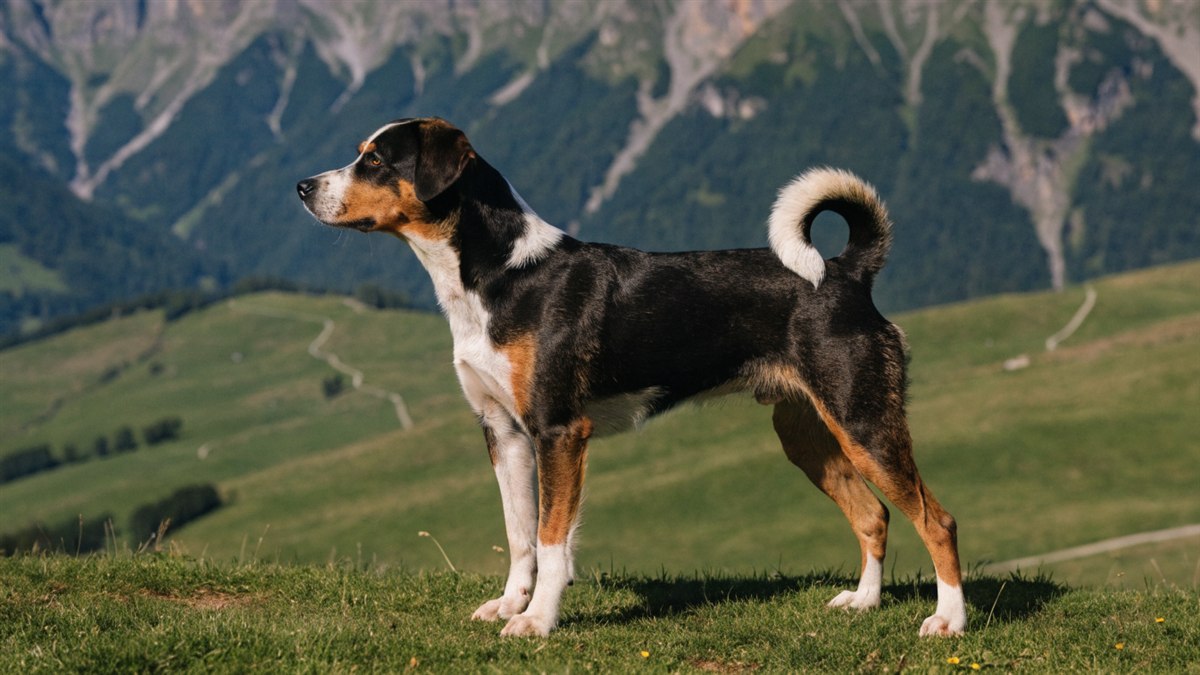
The Appenzeller Sennenhund is a medium-sized Swiss cattle-driving dog under FCI Standard 46, standing 52 to 56 cm at the withers with a mandatory short double coat. No Indian market exists. Dogs are a Restricted import in India and applications for breeding or trading are duly rejected. Bonbeno rates heat tolerance 2 of 5, because the 90-minute daily working requirement, not the size, is what rules the breed out here.
This guide is general information for Indian pet owners and is not a diagnosis. Consult your nearby vet, a registered veterinarian, before acting on anything you read here, and treat any sudden change in your dog's condition as urgent.
Appenzeller Sennenhund at a glance
What the Appenzeller Sennenhund actually is
The Appenzeller Sennenhund is a medium-sized Swiss cattle-driving dog held under FCI Standard 46, Group 2, Section 3, Swiss Mountain and Cattle Dogs, in a standard published on 25 March 2003 Federation Cynologique Internationale. Males stand 52 to 56 cm at the withers and females 50 to 54 cm, with a tolerance of plus or minus 2 cm. It is one of four Sennenhund breeds, and it is not the Bernese.
The FCI describes the breed in one line as a "Tricolour, medium-sized, almost squarely built dog, balanced in all parts. Muscular, very agile and deft, with a cheeky expression";. The listed utilisation is blunt about the job: "Driving-, watch-, guard-, house- and farm dog. Today also a versatile working and family dog";. A driving dog moves cattle by pressing them from behind, and the Swiss breed club still puts it in five words on its own working page, "Kühe treiben", driving cows, which it calls what the Appenzeller is made for.
The word Sennenhund carries the point. It means dogs of the Senn, the Alpine herdsmen and dairymen, and it does not translate as mountain or as cattle. Four regional breeds share the name and the tricolour coat, and Swiss geologist Albert Heim and the Schweizerische Kynologische Gesellschaft sorted and named them after an international dog show in 1908 Wikipedia, Appenzeller Sennenhund.
The four Swiss Sennenhund breeds, separated by their own standards
The FCI's own Section 3 listing holds exactly four breeds and nothing else, the Appenzell Cattle Dog at 46, the Bernese Mountain Dog at 45, the Entlebuch Cattle Dog at 47 and the Great Swiss Mountain Dog at 58. Secondary sources collapse those four into one paragraph constantly, and even the guides that do separate them, such as the Pets4Homes introduction to the four Sennenhund breeds, work from prose summaries rather than from the standards. Here they are side by side, each figure taken from the breed's own FCI standard.
| Breed | FCI standard | Male height | Coat per the standard | Original job per the standard |
|---|---|---|---|---|
| Grosser Schweizer Sennenhund (Great Swiss Mountain Dog) | 58 | 65 to 72 cm | Double coat, thick outer coat of medium length, dense undercoat | Watch and draught dog |
| Berner Sennenhund (Bernese Mountain Dog) | 45 | 64 to 70 cm, ideal 66 to 68 | Long, shining, straight or slightly wavy | Guard, draught and cattle dog |
| Appenzeller Sennenhund | 46 | 52 to 56 cm | Double coat (Stockhaar), topcoat thick and shiny, undercoat thick | Driving, watch, guard, house and farm dog |
| Entlebucher Sennenhund (Entlebuch Cattle Dog) | 47 | 44 to 50 cm, tolerance to 52 | Double coat (Stockhaar), topcoat short and close fitting | Driving, watch, guard and farm dog |
Read down that table and the differences are structural, not cosmetic. The Bernese is the only one of the four whose standard calls the coat long, and it stands a full 12 cm taller than the Appenzeller at the top of the male range Federation Cynologique Internationale. The Great Swiss is taller still and was a draught dog rather than a driving dog. The Entlebucher is the smallest, built on an 8:10 height-to-length ratio that makes it visibly longer than tall, and it carries a congenital bobtail as an accepted alternative to a natural long tail. The Appenzeller sits between them at a 9:10 ratio, nearly square, and the breed club's own description is that the two larger breeds share a heavy build and a calm temperament while the two smaller ones are more agile.
The tail is the fastest way to tell an Appenzeller from the other three
One feature separates the Appenzeller from every other Sennenhund at a glance. The standard requires a high-set tail carried tightly curled over the croup in movement, and a sickle tail, a definitely pendent tail or a kink tail is a disqualifying fault. The UKC states the same rule from the other direction, disqualifying "A tail that does not curl tightly when the dog is in motion";. Swiss owners call that curled tail the Posthörnchen, the little post horn. The Bernese tail hangs straight down at rest and is carried level with the back when moving, which is the opposite picture.
The second distinguishing mark is colour. The Appenzeller is the only Sennenhund whose standard allows a havana-brown base colour as an alternative to black, each with reddish-brown and white markings, and any other main colour is a disqualifying fault United Kennel Club. The white blaze running from the skull over the bridge of the nose is why Switzerland nicknames the breed Bläss, and the Appenzell region calls it Tryberli American Kennel Club.
A short history that explains the temperament
The breed's recorded history starts in 1853, when Friedrich von Tschudi described in Das Thierleben der Alpenwelt a "high-pitch barking, short-haired, medium size, multicolour cattle dog of a quite even Spitz type" used partly to guard the homestead and partly to herd cattle Wikipedia, Appenzeller Sennenhund. In 1895 the forester Max Siber asked the Swiss Cynological Society to act for the breed, and in 1898 the canton of St Gallen put SFr 400 behind it. The Appenzeller Sennenhund Club followed in 1906 at Albert Heim's instigation, Heim wrote the first valid breed standard in 1914, and the FCI accepted the breed definitively in 1954 Wikipedia, Appenzeller Sennenhund.
That 1853 description is worth holding on to, because the two things it names, the high-pitched bark and the cattle-driving instinct, are the two things that make the breed hard to keep in an Indian flat. The FCI still describes the temperament as "Lively, high-spirited, self-assured, reliable and fearless", slightly suspicious of strangers, and "A watchdog which cannot be bribed";. None of that has been bred out.
FCI Standard 46 specifies height and says nothing at all about weight. ProSpecieRara puts the breed at 22 to 28 kg, the AKC at 48 to 70 pounds, which is about 21.8 to 31.8 kg, and Bruce Fogle's Dog Encyclopedia at 22 to 32 kg with males near 28 kg. Bonbeno reports all three rather than averaging them, because the spread at the top end is 4 kg and nothing authoritative resolves it.
Appenzeller Sennenhund price in India, and why there is not one
No Appenzeller Sennenhund price in india exists, because there is no lawful Indian supply of the breed and no evidence of an Indian population. Indian import law makes dogs a Restricted item and rejects breeding and trading applications outright. Bonbeno found no Indian breeder, no Indian registry entry and no verifiable Indian litter of this breed.
Start with the law, because it settles the question before any listing does. Under the Directorate General of Foreign Trade's Trade Notice No. 22/2022-23 of 19 December 2022, live mammals under ITC(HS) 01061900 are Restricted. Policy Condition 7 permits the import of dogs for exactly three purposes, a pet dog with a valid pet book and records in the importer's own name, dogs imported by R&D organisations with a CPCSEA recommendation, and dogs for internal security by the Defence and Police Force. Policy Condition 8 then states that import of commercial dogs for breeding or any other commercial activities other than those purposes is not permitted, and paragraph 6 of the notice states that "any applications for trading/breeding purposes, or applications made on behalf of some another person/ entity shall be duly rejected";.
India's Animal Quarantine and Certification Service says the same thing in capital letters on its own import page, "IMPORT OF COMMERCIAL DOGS FOR BREEDING OR ANY OTHER COMMERCIAL ACTIVITIES IS NOT PERMITTED", and requires the owner to sign a declaration that the animal is a bonafide pet with no commercial interest, gift or breeding purpose. Put those two together and no founding stock can lawfully enter India to start a breeding population. That is why the price question has no answer here, and it is a legal fact rather than an absence of research.
What the Indian search results are actually selling you
Search the breed with a price intent from India and the results substitute a different dog. On 19 August 2026 the top ten organic results for "appenzeller sennenhund price in india" contained three Bernese Mountain Dog pages, a training book listed on both Amazon and Flipkart, an Etsy merchandise category, a global breed profile quoting a US dollar price, and a general Indian dog price list Dogbreedslist.info, Appenzeller Sennenhund. Position four was a Justdial page headed "Popular Pet Shops For Appenzeller Sennenhund Dog in Dadri" whose seven listed shops are in Delhi, Agra, Dehradun, Jhansi, Vijayapura, Kolar and Surat, none of them in Dadri, and whose own page description offers pet shops for Labrador and German Shepherd dogs instead.
That Justdial page is an auto-generated category shell. The same template exists for every breed name in every Indian town, and it is populated from a generic pet-shop directory, not from anyone who has ever handled this breed. An Indian pet retailer, GoofyTails, goes one step further and publishes an Appenzeller Mountain Dog breed page whose product grid returns "No Results found" and then offers its bestsellers instead.
A seller advertising an Appenzeller Sennenhund puppy price in an Indian city is offering one of three things. It is a Bernese Mountain Dog or a Bernese cross, which is what the Indian SERP itself substitutes. It is a tricolour mixed-breed pup sold under an unfamiliar name. Or it is a directory shell with no dog behind it at all. Ask for the export pedigree, the DGFT licence and the AQCS clearance for the imported parent before any money moves.
The registry route is also closed
The Kennel Club of India is affiliated to the FCI, so an FCI-recognised breed is registrable in principle. In practice the only route in is an individually imported dog. The KCI's own checklist for registering a dog as an import demands the export pedigree in original, the airway bill, the owner's air ticket, the boarding pass, the DGFT licence, customs clearance, quarantine clearance, a pet passport and a notarised affidavit. Every one of those documents belongs to a relocating owner bringing a personal pet, which is exactly the channel DGFT permits and exactly the channel that cannot supply a breeding programme.
Nor is the breed common anywhere else. The Royal Kennel Club publishes breed standards for the Bernese Mountain Dog, the Great Swiss Mountain Dog and the Entlebucher Mountain Dog (Imp), and none for the Appenzell Cattle Dog. Its quarterly Working-group registration table records 615 Bernese, 14 Great Swiss and 6 Entlebucher registrations for 2025, with no Appenzeller line at all. In the United States the breed sits in the AKC's Foundation Stock Service rather than the main register, and the Appenzell Mountain Dog Club of America describes a population so small that finding unrelated mates is difficult.
| Breed | Royal Kennel Club standard | UK registrations, 2025 | AKC status |
|---|---|---|---|
| Bernese Mountain Dog | Yes, Working group | 615 | Fully recognised |
| Great Swiss Mountain Dog | Yes, Working group | 14 | Fully recognised |
| Entlebucher Mountain Dog (Imp) | Yes, Working group | 6 | Fully recognised |
| Appenzeller Sennenhund | No standard published | Not listed | Foundation Stock Service |
The one published purchase figure Bonbeno located anywhere is a global breed profile quoting USD 1,800 to USD 2,200 from a legitimate breeder, which is a North American number and is not transferable to an Indian buyer because the transaction it describes cannot legally take place here. By contrast, the Bernese Mountain Dog that Indian search results keep substituting has a real Indian puppy price, published at Rs 30,000 to Rs 70,000 for pet quality and Rs 80,000 to Rs 2,00,000 for show quality. The gap between an active market and an absent one could hardly be clearer.
If a Swiss-type working dog is what appeals, the honest Indian alternatives are already on this site. Read the Indian Pariah Dog page for a heat-adapted, freely available alternative, and the Himalayan Sheepdog page for a native thick-coated mountain breed kept at altitude.
Monthly cost of ownership, if one ever reached India
An Appenzeller Sennenhund would cost roughly Rs 12,000 to Rs 22,000 a month to keep in an Indian metro, and food is the smallest surprise in that number. The controlling costs are cooling and daily exercise provision, both of which scale with the breed's working energy rather than with its size.
Take food first, because it is the one line that can be priced from published tables. Royal Canin India's Maxi Adult diet is formulated for adult dogs of 26 to 44 kg, which covers the upper half of the Appenzeller's published weight range, and its daily feeding recommendation for a 28 kg dog is 291 g at low activity, 337 g at medium activity and 383 g at high activity. A dog bred to drive cattle and kept properly exercised sits at the high end of that table, not the low end.
On Supertails on 19 August 2026, the 20 kg pack of Royal Canin Maxi Adult sold at Rs 13,816 against an MRP of Rs 15,700, the 10 kg pack at Rs 6,903 and a 1 kg pack at Rs 966. The 20 kg pack works out to about Rs 691 per kilogram, so 383 g a day is roughly Rs 265 a day, or about Rs 7,900 a month for a single working-fit adult on that diet alone.
| Line item | Low | High | Basis |
|---|---|---|---|
| Dry food, premium large-breed | Rs 6,000 | Rs 7,900 | Royal Canin Maxi Adult at 291 g to 383 g a day, priced from the 20 kg pack |
| Cooling and electricity load | Rs 1,500 | Rs 5,000 | Fan or air-conditioning through an Indian summer, which is a requirement rather than a comfort for a double coat |
| Preventive veterinary care | Rs 800 | Rs 2,000 | Vaccination boosters, deworming, tick and flea control spread monthly |
| Grooming and coat care | Rs 500 | Rs 2,000 | Undercoat raking through two shedding periods, professional help optional |
| Training and daily exercise provision | Rs 2,000 | Rs 5,000 | A working breed that cannot be exercised outdoors at midday needs paid help or a dog sport |
| Total | Rs 10,800 | Rs 21,900 | Before any one-off veterinary event |
Two of those lines deserve more attention than the food. The first is cooling. An Indian household keeping a dense double coat through April, May and June is running a fan or an air conditioner for the dog, not only for itself, and the season now regularly touches 47 C in the plains. The second is exercise provision. In most Indian metros the only safe walking windows for a breed like this fall before roughly 7 am and after roughly 8 pm, which is precisely when working owners are least available, so the cost lands as a paid walker, a boarding day or a dog-sport membership.
The costs that are not on the monthly bill
A first-year budget also has to carry the one-off items. A puppy needs its vaccination course, which Indian breeding rules describe as starting at seven to eight weeks and usually completing at eighteen weeks. Neutering, a crate, a well-fitted harness for a dog that pulls into a drive, and a long line for recall training all land in the first six months.
There is also a cost nobody quotes: the cost of being wrong. A working driving dog that does not get its outlet does not sulk quietly. ProSpecieRara records that the breed's reputation among hikers and farm visitors as a sharp barker and a heel-nipper comes from under-occupation and poor socialisation rather than from the breed itself. In an Indian apartment building, that shows up as neighbour complaints, and Indian rules give you no shortcut out of it, because the Prevention of Cruelty to Animals (Dog Breeding and Marketing) Rules, 2017 forbid de-barking outright.
These are Bonbeno's build-up from published Indian prices for a 26 to 28 kg active dog, not observed spending on an Appenzeller in India, because no Indian population exists to observe. Treat the table as the cost of the breed's requirements rather than as a market rate, and consult your nearby vet for a feeding and preventive-care plan for your city.
Heat tolerance in India, rated 2 of 5
Bonbeno rates the Appenzeller Sennenhund 2 of 5 for heat tolerance in Indian conditions. The rating is not driven by size, because at 22 to 32 kg this is a medium dog. It is driven by a mandatory double coat combined with a working requirement for sustained daily exertion, which is the exact combination that produces heat-related illness.
Three inputs set the number, and each of them is checkable.
- The coat cannot be selected away. FCI Standard 46 requires a double coat, a Stockhaar with a thick, shiny topcoat over a thick undercoat, and it makes "Other than double coat (Stockhaar)" a disqualifying fault. There is no correct thin-coated Appenzeller. What softens the picture slightly is that the topcoat is short and close fitting rather than long, unlike the Bernese, whose standard calls the coat "Long, shining, straight or slightly wavy";.
- The size band carries measurable risk, but not the worst of it. In the VetCompass study of 905,543 UK dogs, every adult bodyweight band above 10 kg carried significantly higher odds of exertional heat-related illness than dogs under 10 kg, with the 20 to under 30 kg band at 2.27 times the odds and the 30 to under 40 kg band at 2.30. The Appenzeller straddles those two bands. It does not reach the over-50 kg band that drives Bonbeno's 1 of 5 rating for the St Bernard Hall EJ, Carter AJ.
- The working purpose is the multiplier. The breed exists to drive cattle at altitude, and its FCI utilisation is driving, watching, guarding and farm work. Exertion is the requirement, not an optional extra.
That third point is the one Indian buyers miss, and the evidence behind it is unambiguous. Across the 879 heat-related illness events with a recorded trigger in UK primary care, exertion was the trigger in 74.2 percent, environmental heat in 12.9 percent and confinement in a vehicle in only 5.2 percent, and the authors reported that heatstroke caused by exercise was just as likely to kill as heatstroke from a hot car. India's public messaging is almost entirely about hot cars. The actual risk to a working breed here is a Sunday morning walk that runs half an hour too long.
Why 2 and not 1
Bonbeno reserves 1 of 5 for breeds where the coat, the bodyweight and the country's temperature record combine with nothing to offset them. The St Bernard and the Caucasian Shepherd Dog both sit there, because both are heavy-coated dogs whose standards put males at or above the 50 kg threshold at which the odds of heat-related illness peak. The Appenzeller has three things in its favour by comparison. Its topcoat is short. Its adult weight is roughly half a St Bernard's. And it is mesocephalic, so it carries none of the 2.10 times odds that the same study measured for brachycephalic skull shapes.
Bonbeno does not rate it 3, either. The study's authors were explicit that coat type is potentially an important risk factor and that "Other double coated breeds may also have increased risk", noting the Chow Chow's 16.17 odds ratio and the Golden Retriever's 2.67 against the Labrador, where the thicker coat "may be the tipping factor" between two otherwise similar dogs. A breed that must be worked hard, in a mandatory double coat, in a country that recorded 47.6 C at Banda in Uttar Pradesh in the 2026 season, about 8 C above the climatological norm, and 46.9 C at Akola in Maharashtra on the same date, does not get a middling score.
City by city, the constraint is the clock rather than the calendar
The Indian Meteorological Department's April to June 2026 outlook expected above-normal heatwave days across coastal Odisha, West Bengal, Tamil Nadu, Puducherry and Andhra Pradesh, and isolated parts of Gujarat, Maharashtra and Karnataka, with night temperatures above normal across most of the country. That last clause matters more than the daytime headline for a dog like this, because the evening walk is the one that has to do the work.
| City | Main constraint | Practical effect on an Appenzeller |
|---|---|---|
| Delhi and the northern plains | Extreme dry-season maxima, with 47.6 C recorded at Banda in the 2026 season | Outdoor work impossible from roughly 9 am to 7 pm for four months of the year |
| Mumbai and coastal Maharashtra | High humidity limits evaporative cooling from panting | A 32 C humid evening is harder work than a 36 C dry one; shorten sessions rather than shifting them |
| Chennai and coastal Tamil Nadu | Long hot season plus above-normal forecast heatwave days | The safe walking window narrows to before sunrise and well after dark |
| Bengaluru | Mildest metro option, still 30 C-plus afternoons | The only Indian metro where a full daily working routine is realistic, and even here not at midday |
| Shimla, Manali and the hill towns | Genuinely suitable summer temperatures | The one Indian setting that resembles the breed's origin, and also the one with no supply and few specialist vets |
Monsoon brings the second-order problem. A dense undercoat that stays damp between the shoulder and the base of the tail is a skin infection waiting to happen in Indian humidity, and overseas breed-club advice to towel a dog and let it air dry was written for Alpine air, not for Mumbai in July. Dry the undercoat down to the skin with a blaster or a fan, and check the ear canals after every wash.
Shaving a Stockhaar removes the insulating layer that also keeps radiant heat out, and it exposes skin to Indian sun. The correct response to heat is to remove dead undercoat by raking, move all work to the cool hours, and provide shade and water. If your dog pants hard, staggers, vomits or collapses after exercise, cool it with room-temperature water and get to your nearby vet immediately, because severe heat-related illness in dogs is a medical emergency.
Temperament and household fit
The Appenzeller Sennenhund is a lively, self-assured, fearless watchdog that is slightly suspicious of strangers and cannot be bribed, which is how FCI Standard 46 puts it in the breed's own words. It suits an active rural or semi-rural household with a job for it. It does not suit a first-time owner in a shared apartment building.
Read the standard's temperament clause carefully and the household fit follows from it. "Lively, high-spirited, self-assured, reliable and fearless. Slightly suspicious of strangers. A watchdog which cannot be bribed, and capable of learning";. Every clause there is a design decision by farmers who needed a dog to move cattle by day and hold the yard at night. Aggression and extreme shyness are both disqualifying faults, so the breed is not meant to be sharp, but it is meant to be watchful.
The Swiss conservation body ProSpecieRara adds the part the kennel clubs leave out. It describes an independent dog that needs consistent handling and is "kein unkritischer Auftragsempfänger", not an uncritical order-taker, that expresses itself with a bright bark, and that has a strong pack drive binding it closely to its people, its house and its yard. Towards strangers it is reserved to mistrustful.
Two traits that collide with Indian apartment life
The first is the bark. The very first published description of the breed in 1853 called it "high-pitch barking";, and Swiss sources still describe a bright, carrying voice used freely. In a Mumbai or Bengaluru tower, an alert dog with a carrying bark and a view of a shared corridor is a standing complaint. Indian law removes the shortcut, because the Prevention of Cruelty to Animals (Dog Breeding and Marketing) Rules, 2017 forbid de-barking along with tail docking, ear cropping and de-clawing.
The second is the heel. A driving dog controls cattle by approaching from behind and nipping, and the AKC states the behaviour plainly, that the Appenzeller "will control a wayward cow by dashing in to nip at its heel";. Redirected onto running children, cyclists and delivery riders in an Indian residential complex, that instinct becomes the reason the dog is rehomed. ProSpecieRara attributes the breed's local reputation as a heel-nipper to under-occupation and poor socialisation rather than to temperament, which is useful because it names the fix rather than the fault.
| Household | Verdict | Why |
|---|---|---|
| Farm or large fenced property with livestock or land work | Good fit | The breed's designed job, and the only setting where its energy is spent rather than managed |
| Experienced dog-sport home with a hill-station or high-altitude base | Good fit | Agility, obedience, treibball and herding trials all suit it, and the climate does not fight the coat |
| Active plains household with a garden and two disciplined outdoor sessions a day | Workable, with effort | Possible before 7 am and after 8 pm for eight months of the year, hard for the other four |
| Metro apartment, working couple, no yard | Poor fit | Barking, heel-nipping and destructive boredom follow within months |
| First-time owner of any kind | Poor fit | An independent, watchful, high-drive breed is a second or third dog, not a first |
| Home with toddlers and constant visitor traffic | Poor fit | Suspicion of strangers plus a heeling instinct is a bad combination at a doorbell |
With other dogs the picture is manageable but not automatic. The breed's pack drive means it bonds hard to its own household group, and early, wide socialisation is what turns watchfulness into discrimination rather than reactivity. Socialise the puppy deliberately before it is four months old, keep socialising it through adolescence, and treat every calm meeting with a stranger as a training repetition rather than an accident.
The Caucasian Shepherd Dog guards by standing still and refusing entry. The Appenzeller works by moving stock, and its watchfulness is a by-product of living on the farm it drove cattle for. That difference shows up in the exercise requirement rather than in the guarding: a livestock guardian conserves energy, and a driving dog spends it.
Training an independent driving dog
To train an Appenzeller Sennenhund, give it a job, keep sessions short and varied, and expect to negotiate rather than command. The FCI calls the breed capable of learning, and the Swiss breed body calls it independent and not an uncritical order-taker. Both are true at once.
Start from what the breed was selected for. A driving dog on an Alpine slope had to make decisions out of sight of the herdsman, so initiative was bred in deliberately. ProSpecieRara records a dog with marked powers of observation and comprehension that adapts fast and learns quickly, and which needs consistent upbringing and leadership. Read that as a dog that will absolutely learn what you teach and will also draw its own conclusions in the gaps.
The five things to train first, in order
- Recall on a long line, before anything else. A dog with a driving instinct that slips a lead near traffic or livestock is a serious problem, and an Indian street is not a Swiss pasture.
- Settle on a mat, for at least twenty minutes. This is the single most useful behaviour for a high-drive dog in a small Indian home, and it is trained separately from exercise, not as a substitute for it.
- Bark control as a cue, not a suppression. Teach a reliable quiet cue and reward the pause. De-barking is illegal in India under the 2017 Rules, and a bark collar on a watchdog breed teaches it to stop warning you rather than to stop reacting.
- Redirected heeling, so the instinct has a target. Herding balls, treibball and tug on a flirt pole give the chase-and-press pattern somewhere legitimate to go. The Swiss club lists treibball, agility, obedience and hoopers among the sports its members compete in.
- Stranger protocol at the door. Rehearse the doorbell a hundred times with a helper and food before the first real delivery rider arrives, because slight suspicion of strangers is in the standard.
What this breed resists
Repetition without purpose is where an Appenzeller checks out. Twenty identical sit repetitions produce a dog that has learned the drill is pointless. Short blocks, changing criteria and a real outcome at the end hold attention far better. Harsh correction is the other failure mode, because a self-assured, fearless dog with a low tolerance for unfairness does not fold under pressure, it argues.
Realistic timelines matter too. Expect basic manners by four months, a reliable settle by six, and a recall you would trust off a long line only after twelve to eighteen months of consistent work. Adolescence between eight and eighteen months is when the guarding and heeling instincts sharpen, and it is also when most rehoming happens.
The Indian scheduling problem is a training problem
You cannot separate training from the climate here. A mentally tired dog is easier to train and much easier to live with, and mental work is the one form of exercise that stays available at 2 pm in May. Scentwork in an air-conditioned room, food puzzles, shaping new behaviours and short obedience blocks all give the brain a workout without adding heat load. Indoor mental work is the correct response to an Indian afternoon, and Indian breeding rules already require breeders to maintain a written exercise plan for dogs over twelve weeks of age, which is a useful standard for owners to borrow.
The breed's own record shows how far the trainability goes. Swiss Appenzellers work as disaster-search, guide and therapy dogs, and the club documents one competing in international FCI sheepdog trials against Border Collies. That is an intelligent, trainable dog. It is not a biddable one in the sense a Golden Retriever is biddable, and the difference is worth understanding before you buy into it.
Daily exercise requirement, and why it rules India out
An adult Appenzeller Sennenhund needs at least 90 minutes of real physical work a day plus separate mental work, and that requirement is the single reason the breed does not fit most Indian households. Size is not the obstacle here. A 25 kg dog fits in a flat. A 25 kg dog that must be worked hard every day, in a country where the safe outdoor window is two hours at each end of the day for a third of the year, does not.
The requirement comes from the job. ProSpecieRara states it directly: because the Appenzeller is a very active dog, it needs a task or appropriate occupation, and it must be worked physically but above all mentally. The Swiss club adds that the breed is now only rarely used to drive and herd cattle, so its energy has to be redirected into dog sport, and lists it as at home in all the usual disciplines. The Appenzell Mountain Dog Club of America describes a high-energy dog that thrives on human interaction and plenty of mental and physical stimulation, and says plainly that it suffers without them.
What 90 minutes has to contain
- Sustained movement, 45 to 60 minutes of brisk walking, trotting alongside a bicycle or hill work, split across two sessions.
- Directed work, 20 to 30 minutes of something with a goal, such as treibball, retrieve patterns, agility or scent searches.
- Free problem-solving, 15 minutes of puzzle feeders, shaping or a sniffing walk on a long line, which tires a working brain faster than distance does.
- Recovery, a trained settle afterwards, because a dog that never learns to switch off simply becomes fitter and harder to satisfy.
Now put that against the Indian clock. On a plains summer day the surface temperature of asphalt and the ambient load make sustained exertion unsafe from mid-morning to well after sunset, and the 2026 season recorded 47.6 C at Banda. That leaves roughly 5 am to 7 am and 8 pm to 10 pm. Two hours of genuine work has to fit inside four hours of availability, every day, for months, and it has to be done by a household that also has jobs and school runs.
An owner who falls behind on exercise tends to compensate at the weekend with one long session. That is the most dangerous thing you can do with this breed in India. Exertion was the trigger in 74.2 percent of heat-related illness events in a study of 905,543 dogs, and exercise-triggered heatstroke was as likely to be fatal as heatstroke from a hot car. Consistency at cool hours beats catching up in the heat, always.
What happens without it
An under-exercised Appenzeller does not become a couch dog. ProSpecieRara connects the breed's reputation as a sharp barker and heel-nipper directly to under-occupation and poor socialisation, and the AMDCA notes that the ideal home has a large yard or property and an owner who understands the demands of a working breed. In an Indian flat the shortfall shows up as barking at every lift ping, chewing, digging at floor edges, and pressure on the smallest moving person in the household.
Compare that with the other Swiss breeds and the point sharpens. The larger two, the Bernese and the Great Swiss, were draught dogs with what their own breed body calls a calm temperament, and they are much easier to satisfy on a shorter routine Federation Cynologique Internationale. The Appenzeller and the Entlebucher are the agile pair. If an Indian buyer is drawn to the tricolour Swiss look but lives in a flat, the Bernese is the one that will cope better, and the Bernese is also the one Indian sellers are actually offering.
Two Indian breeds meet a similar energy need without the coat penalty. The Rajapalayam is a short-coated native sighthound bred for hard work in Tamil Nadu heat, and the Indian Pariah Dog is athletic, heat-adapted and free to adopt.
Grooming and coat care in Indian humidity
To groom an Appenzeller Sennenhund in India, brush the topcoat weekly, rake the undercoat out whenever it loosens, and dry the coat to the skin after every wash and every monsoon soaking. The coat itself is low-maintenance by breed-standard design. Indian humidity is what makes it work.
The standard describes the coat precisely. It is a double coat, a Stockhaar, "Firm and fitting", with a thick and shiny topcoat over a thick undercoat that may be black, brown or grey, and the standard states that "It is undesirable for the undercoat to be visible through the topcoat";. A slightly wavy coat is just tolerated on the withers and back and nowhere else, and any coat other than a double coat disqualifies. The UKC repeats the same description and disqualifies a single coat.
Practically, that means a short, weather-resistant outer layer sitting on a dense inner layer. There is no feathering to mat, no skirt to trim and no need for scissoring. Twenty minutes a week with a slicker and a rubber curry covers the topcoat. The work is all in the undercoat.
The undercoat is the whole job
- Rake, do not clip. An undercoat rake or a coat king pulls dead hair out of the dense layer. Clipping cuts the topcoat and leaves the dead undercoat trapped beneath it.
- Increase frequency as the weather turns. Coat turnover is driven by daylight and temperature, and in Indian plains cities the heaviest loosening tends to arrive with the first hot weeks and again after the monsoon.
- Work the friction points first, behind the ears, under the collar line, in the armpits and along the tail's underside, where the standard notes the hair is slightly longer.
- Dry to the skin, every time. A dense undercoat that stays damp in Mumbai or Kochi humidity is where hot spots and yeast begin.
- Check the ear canals after every wash and every swim, because a damp, warm canal is the commonest preventable ear problem in Indian monsoon months.
Where overseas breed-club advice does not transfer
Care guidance published by Swiss, German and North American breed bodies assumes Alpine or temperate air. Towel a dog off and let it air dry, and in Appenzell the coat is dry in an hour. Do the same in Chennai in August and the undercoat stays wet against the skin for most of a day. The instruction is right for the climate it was written in and wrong here, so replace it with active drying, a high-velocity blaster or a fan on a raised grooming surface, and a hand pushed through to the skin to confirm the base is dry before you stop.
The Stockhaar insulates in both directions. Removing it exposes skin that has never seen direct sun to Indian ultraviolet, and it removes the air layer that slows radiant heat gain. It also grows back unevenly. Rake the dead undercoat out instead, and cool the dog with shade, airflow and water rather than with clippers. If the skin looks red, greasy or smells yeasty, consult your nearby vet rather than treating it with a shampoo bought on a shop's recommendation.
Two Indian additions belong in the routine and are not in any Swiss guide. First, tick checks after every outdoor session, worked through the dense undercoat with fingers rather than eyes, because a tick sits at the skin under a coat like this and never shows on the surface. Second, nail management, since a dog whose outdoor time is compressed into cool hours on soft ground wears its nails far less than one working stony Alpine pasture, and long nails change the way a compact, nearly square dog loads its front.
Health risks, screening and lifespan, with the gaps stated
No breed-specific disease prevalence study of the Appenzeller Sennenhund exists in the sources Bonbeno could open, and no peer-reviewed lifespan study reports the breed. What does exist is one OFA table built on 50 dogs, a breed club whose entire published health page is a single document, and three published lifespan estimates that disagree. This section prints all of that rather than borrowing a related breed's numbers.
Begin with the one hard dataset. The Orthopedic Foundation for Animals holds an Appenzeller Sennenhunde entry under registry code AMD, read from OFA's own search markup rather than guessed. On 19 August 2026 the breed appeared in exactly one of OFA's statistics tables. That table is patella, the register that grades patellar luxation, where APPENZELLER SENNENHUNDE ranks 52nd on 50 evaluations, with 96.0 percent normal and 4.0 percent abnormal, all of it Grade 1.
| Breed | Hips | Elbows | Patella | Eyes |
|---|---|---|---|---|
| Appenzeller Sennenhund | Not listed | Not listed | 50 evaluations | Not listed |
| Entlebucher Mountain Dog | 570 evaluations | 205 evaluations | 194 evaluations | 782 evaluations |
| Bernese Mountain Dog | 31,534 evaluations | 25,941 evaluations | 1,799 evaluations | 9,375 evaluations |
Read that table as a statement about evidence, not about health. The Appenzeller's absence from the hip and elbow registers does not mean the breed has good hips and elbows. It means too few Appenzellers have ever been screened for OFA to publish a figure. OFA's own wording on databases where no breed clears the bar is "No individual breeds have had 50 or more individuals tested";, and the single Appenzeller table sits at exactly 50, the minimum. The Entlebucher and Bernese figures are printed here only to show the scale of the gap, and none of them should be read across to this breed.
That 4.0 percent patella figure also comes with two warnings. It rests on 50 dogs, so its confidence interval is very wide, and OFA registers move as evaluations are submitted, so the number will drift. Always quote the sample size beside the percentage.
The breed club's health page is one document long
The Appenzell Mountain Dog Club of America maintains the North American studbook and publishes a page headed "Health, Appenzeller and Swiss breed related health issues". On 19 August 2026 that page carried a single downloadable file, on ectopic ureters in dogs, and nothing else. Bonbeno reports that as the finding it is. A national club with one health document is not evidence of a healthy breed and it is not evidence of a sick one. It is evidence that the population is too small to have generated a health survey.
The Swiss conservation body ProSpecieRara does make a positive claim, that hard mountain conditions produced dogs that are very robust, uncomplicated to feed and little prone to illness. That is a breed-conservation organisation's characterisation, not a study, and Bonbeno treats it as such.
The documented risk is the gene pool, not a named disease
What the sources do agree on is narrowness. ProSpecieRara lists the population as stable on a narrow breeding base and gives the club's own breeding goal as conserving under-represented lines and widening the genetic base. The AMDCA describes a North American population, with a studbook established in 1990, in which finding unrelated mates is difficult and breeders must be prepared to forgo breeding a dog that would not meet European guidelines. Swiss registration data shows the direction of travel: in the veterinary dataset of Horisberger and colleagues the Appenzeller's share of purebred dogs fell significantly while the Bernese Mountain Dog's rose, both at p below 0.01.
The practical consequence for a buyer is simple. In a small closed population, whatever recessive conditions exist concentrate, and the protection is pedigree depth and screening rather than a named test list.
What to screen, and why the FCI faults are a clue
FCI Standard 46 disqualifies entropion, ectropion and wall eye, and it disqualifies overshot and undershot mouths. A disqualifying fault is not a prevalence figure, but a standard names the things judges kept having to exclude, so eyelid conformation is worth an eye examination in this breed rather than an assumption. Indian breeding rules point the same way from the legal side: the Prevention of Cruelty to Animals (Dog Breeding and Marketing) Rules, 2017 require that dogs used for breeding have been tested for genetic defects including hip dysplasia, progressive retinal atrophy, night blindness, hypothyroidism, entropion and ectropion.
- Hips and elbows, screened at two years or older through OFA or a national equivalent, precisely because no breed-level figure exists to reassure you.
- Patellae, the one register where the breed does appear, so a result is comparable.
- Eyes, with attention to eyelid conformation given the standard's disqualifications.
- A pedigree you can read, with the coefficient of inbreeding visible, because the narrow base is the documented risk.
Lifespan, where three sources disagree and none is a study
| Source | Figure | What it is |
|---|---|---|
| American Kennel Club breed page | 13 to 15 years | A breed-profile estimate, no study cited |
| Bruce Fogle, The Dog Encyclopedia, and Tamsin Pickeral, Dogs Unleashed | 12 to 14 years | Reference-book figures cited by Wikipedia |
| Dogbreedslist.info breed profile | 12 to 15 years | A directory estimate |
Those three estimates overlap but do not agree, and Bonbeno could locate no peer-reviewed longevity study that reports this breed Wikipedia, Appenzeller Sennenhund Dogbreedslist.info, Appenzeller Sennenhund. Anyone quoting a precise Appenzeller lifespan is quoting a breed profile, not data. For context on what a real dataset looks like, the Swiss demographic study estimated average life expectancy across all dogs in Switzerland at 10.5 to 11 years, which is a whole-population figure and says nothing about this breed.
The Bernese Mountain Dog is by far the best-known Sennenhund and it has a well-documented short lifespan and a heavy cancer burden. Those numbers belong to the Bernese. They are a different breed with a different standard, a different coat, a different size and a separate stud book Federation Cynologique Internationale. Bonbeno has deliberately published none of them here, and you should distrust any Appenzeller page that does.
Nothing in this section is a diagnosis or a substitute for examination. Screening choices, vaccination timing and any decision about breeding should be made with a registered veterinarian who has examined your dog. Consult your nearby vet before acting on anything here.
Feeding an active medium-sized working dog in India
Feed an adult Appenzeller Sennenhund to its activity level and to a body condition score, not to a bag chart, because its published weight range of 22 to 32 kg straddles two commercial size bands. A working-fit 28 kg adult needs about 383 g a day of a premium large-breed dry food on the manufacturer's high-activity column.
The size-band problem is real and it trips owners up. Royal Canin India's Medium range covers dogs from 11 to 25 kg and its Maxi range covers 26 to 44 kg. A 22 kg Appenzeller bitch and a 32 kg dog therefore sit in different product lines, and the Maxi table does not even start until 26 kg. Pick the range your individual dog's adult weight falls in rather than the range the breed name suggests.
| Adult weight | Low activity | Medium activity | High activity |
|---|---|---|---|
| 26 kg | 276 g | 319 g | 363 g |
| 28 kg | 291 g | 337 g | 383 g |
| 30 kg | 307 g | 355 g | 404 g |
| 32 kg | 322 g | 373 g | 424 g |
Note how wide the activity columns are. Between low and high activity at 28 kg the difference is 92 g a day, which is roughly a third of the ration. An Appenzeller kept at Indian summer exercise levels through May and worked properly again in December is genuinely a different dog in feeding terms across the year, and its ration should move with the season rather than staying fixed.
Body condition beats the bag
Score the dog every fortnight rather than weighing it every month. You should feel the ribs easily under a thin fat cover, see a waist from above and a tuck from the side. In a nearly square, muscular breed built on a 9:10 height-to-length ratio, the waist is the honest indicator, because the outline hides weight gain well.
Keeping the dog lean matters more here than in Switzerland for a specific, measured reason. Dogs at or above the mean adult bodyweight for their breed and sex had 1.42 times the odds of heat-related illness compared with dogs below it, in the VetCompass study of 905,543 dogs. Weight control is heat management in India, not vanity.
Practical Indian feeding rules
- Split into two meals and keep both outside the hottest hours, because digestion adds heat load.
- Never feed within an hour either side of hard exercise. A deep-chested working dog on a full stomach is the classic setup for gastric problems, and the standard describes a broad, deep chest reaching to the elbows.
- Keep water available and shaded all day, and refresh it twice in summer rather than topping it up.
- Feed the season. Drop toward the medium-activity column in peak summer when work is curtailed, and move back up when the cool months restore the routine.
- Buy the pack size you will use in six weeks. The 20 kg Royal Canin Maxi Adult pack is the cheapest per kilogram at about Rs 691, but kibble left open in Indian humidity goes stale and can grow mould.
On what to feed, ProSpecieRara's observation that the breed is uncomplicated in its nutrition is consistent with a farm dog's history and is a fair starting expectation. That is not a licence for scraps. A dog doing 90 minutes of directed work a day needs a complete diet with a protein level that supports it, and a home-cooked ration for a working dog should be formulated with a veterinary nutritionist rather than assembled from a blog. Consult your nearby vet before switching diets, and change food over seven to ten days rather than overnight.
The first year, month by month
An Appenzeller Sennenhund puppy's first year splits into three jobs, socialisation before four months, impulse control from four to eight months, and instinct management from eight to twelve. Indian owners have to fit all three around a heat calendar that removes the middle of the day for a third of the year.
Nothing in this timeline assumes an Indian-bred puppy, because none exists. It is written for the only Indian scenario that is lawful, a returning resident who imported an adult or a puppy as a personal pet under the baggage rule or a DGFT licence Animal Quarantine and Certification….
| Age | Priority | Indian-specific note |
|---|---|---|
| 8 to 10 weeks | Home settling, crate, name, toilet routine. Indian rules bar the sale of pups under eight weeks, so a younger pup is a red flag anywhere in the world | Set the air-conditioned room up as the default resting place from day one, not as a summer concession |
| 10 to 14 weeks | Vaccination course, which Indian rules describe as starting at seven to eight weeks and usually completing at eighteen weeks. Socialisation to surfaces, sounds, vehicles and calm strangers | Carry the pup through crowded areas before the course completes rather than skipping exposure altogether |
| 3 to 4 months | Bite inhibition, handling tolerance for coat and ear checks, first long-line recall games | Begin tick checks as a daily habit now, while the pup enjoys being handled |
| 4 to 6 months | Settle on a mat, doorbell protocol, loose-lead walking. Short sessions only, no forced distance running | Move all outdoor training to before 7 am and after 8 pm from March onward |
| 6 to 8 months | Neuter decision with your vet. Indian rules require dogs over six months to be sterilised before sale, which is a useful marker of the age at which the question arises | Heat acclimatisation is gradual and never complete for a double coat; do not test it |
| 8 to 12 months | Guarding and heeling instincts sharpen. Redirect into treibball, agility or scent work. Adolescent recall regression is normal | This is the window in which most working-breed rehoming happens in Indian cities |
| 12 to 18 months | Adult exercise load phased in, joints screened from two years | Full 90-minute working routine only once the cool season allows it |
Three of those rows lean on Indian law rather than on breed advice, and that is deliberate. The Prevention of Cruelty to Animals (Dog Breeding and Marketing) Rules, 2017 state that pups less than eight weeks in age are not sold, that dogs over six months are not sold without first being sterilised unless they go to another licensed breeder, and that all pups shall be vaccinated starting at seven to eight weeks and usually completing at eighteen weeks. Those are the clearest published Indian markers for a puppy's first-year milestones, whatever the breed.
The socialisation window is the one you cannot redo
A breed whose standard says slightly suspicious of strangers, and whose club describes it as reserved to mistrustful with strangers, needs its socialisation front-loaded ProSpecieRara, Appenzeller Sennenhund…. In an Indian city that means deliberate, calm exposure to the doorbell, the delivery rider, the lift, the security guard, the sweeper, street dogs behind a barrier, autorickshaws and firecrackers. Do it in short, positive doses before four months, because after that you are managing rather than shaping.
A high-drive puppy will run until it drops, which is not the same as being ready for it. Keep structured exercise short and varied through the first year, avoid repetitive road running and jumping until growth plates close, and let mental work carry the load on hot days. Ask your nearby vet when your individual dog is skeletally ready for its adult routine.
One legal detail belongs here too. FCI Standard 46 says dewclaws must be removed except in countries where their removal is prohibited by law. India's 2017 Rules forbid tail docking, ear cropping, de-barking, de-clawing and any other mutilation of a pup, so an Indian-kept Appenzeller keeps whatever nature gave it. That is the correct outcome and it should be visible in any photograph presented as this breed in India.
Head to head against the breeds Indian buyers actually see
Indian buyers do not cross-shop the Appenzeller Sennenhund against other Swiss breeds, because they never reach a page that separates them. They cross-shop it against whatever the search results substitute, which on the India SERP is the Bernese Mountain Dog. This table puts the real comparators side by side on figures taken from each breed's own standard and register.
| Breed | Male height | Coat | Daily exercise character | Bonbeno heat tolerance | Available in India |
|---|---|---|---|---|---|
| Appenzeller Sennenhund | 52 to 56 cm | Short double coat (Stockhaar), mandatory | High, needs directed work as well as distance | 2 of 5 | No lawful supply, no evidence of a population |
| Bernese Mountain Dog | 64 to 70 cm | Long, shining, straight or slightly wavy | Moderate, a draught breed with a calm temperament | Not rated on Bonbeno yet | Yes, published Indian prices of Rs 30,000 to Rs 2,00,000 |
| Great Swiss Mountain Dog | 65 to 72 cm | Double coat, outer coat of medium length | Moderate, originally a watch and draught dog | Not rated on Bonbeno yet | No Indian market found |
| Entlebucher Mountain Dog | 44 to 50 cm | Short double coat (Stockhaar) | High, the other agile Sennenhund | Not rated on Bonbeno yet | No Indian market found |
| St Bernard | 70 cm and above | Dense double coat on a giant frame | Low to moderate | 1 of 5 | Yes, and heavily oversold here |
| Indian Pariah Dog | Roughly 51 to 64 cm | Short single coat | High, but heat-adapted | 5 of 5 | Yes, free through adoption in every metro |
Each height figure in that table comes from the breed's own FCI standard, not from a summary Federation Cynologique Internationale Federation Cynologique Internationale Federation Cynologique Internationale. The Bernese Indian price band is the published Indian retail range, and the heat ratings for the St Bernard and the Indian Pariah Dog come from Bonbeno's own breed pages.
Appenzeller against Bernese, the comparison the SERP forces
If the Indian SERP is going to substitute one breed for the other, the substitution deserves an honest answer. The Bernese is roughly 12 cm taller at the top of the male range and its standard describes a long coat rather than a short double coat. Its original job was guard, draught and cattle work, and its breed body groups it with the Great Swiss as the heavy-built, calm-tempered pair, against the agile Appenzeller and Entlebucher Appenzell Mountain Dog Club of America. For an Indian flat, the calmer, lower-drive breed is the more forgiving one, which is an uncomfortable conclusion for an Appenzeller page to reach and is nonetheless the truthful one.
It is also the available one. The Royal Kennel Club recorded 615 Bernese registrations in 2025 against 14 Great Swiss, 6 Entlebucher and no Appenzeller line at all, and the AKC recognises the Bernese fully while the Appenzeller sits in the Foundation Stock Service. A breed you cannot buy is not a choice, however much you like the tail.
Appenzeller against the herding breeds an Indian buyer can actually get
The closer functional match for someone drawn to a driving dog's energy is a herding breed already established here. The Border Collie and the Australian Shepherd both offer the same appetite for directed work, both are obtainable in India, and both come with the same warning about under-occupation. The trade is real, though: both carry their own coat and heat considerations, and neither is a guarding breed in the way an Appenzeller is.
For a buyer who wants the watchfulness without the coat penalty, the native options are stronger than any import. The Rajapalayam and the Kombai are short-coated Indian guarding breeds bred in the heat they have to work in, and both are obtainable through routes that do not require a DGFT licence.
Mistakes Indian buyers make with this breed
The commonest Indian mistake with the Appenzeller Sennenhund is buying a different dog under its name, and the second is assuming a medium-sized dog is an apartment dog. Both are avoidable with one question each, and both are made easier to avoid by knowing what the ranking pages get wrong.
- Paying an Appenzeller price for a Bernese or a Bernese cross. The India SERP itself substitutes Bernese pages for this query, and the two breeds share only a tricolour coat pattern. Check the height, the coat length and the tail: an adult Appenzeller male is 52 to 56 cm with a short coat and a tail carried tightly curled over the croup in movement, while a Bernese male is 64 to 70 cm with a long coat and a tail carried level with the back Federation Cynologique Internationale.
- Treating a directory listing as evidence of supply. A Justdial category page headed "Pet Shops For Appenzeller Sennenhund Dog in Dadri" returns seven shops in seven other cities and offers Labrador and German Shepherd pet shops in its own description. An Indian retailer's Appenzeller Mountain Dog page returns "No Results found" for products. Neither is a market. Both are templates.
- Reading medium size as apartment suitability. At 22 to 32 kg this dog fits physically in an Indian flat. Its 90-minute working requirement, its carrying bark and its heeling instinct do not American Kennel Club. Size is the wrong variable.
- Compensating for missed weekdays with a long weekend run. Exertion triggered 74.2 percent of heat-related illness events in a study of 905,543 dogs, and exercise-triggered heatstroke killed as often as hot-car heatstroke. In Indian summer this is the single most dangerous habit an owner of this breed could form.
- Shaving the double coat in April. The Stockhaar is a disqualifying feature to remove in every sense, and clipping it strips both insulation and sun protection. Rake the undercoat instead.
- Reaching for a bark collar or asking a vet to de-bark. De-barking is expressly forbidden by the Prevention of Cruelty to Animals (Dog Breeding and Marketing) Rules, 2017, and suppressing the warning bark of a watchdog breed removes information rather than the underlying arousal.
- Importing Bernese health statistics onto this breed. They are separate breeds with separate stud books and separate standards. The Appenzeller appears in exactly one OFA table, on patellae, on 50 dogs. Anything more specific than that, on any website, is borrowed.
- Assuming an FCI-recognised breed can be brought in commercially. Dogs are a Restricted import in India, and applications for trading or breeding purposes shall be duly rejected. The Animal Quarantine and Certification Service states the same in capitals.
One mistake the ranking pages encourage
Several global breed profiles describe the Appenzeller as a livestock guardian, and Wikipedia files it in a livestock guardian dog category. Its own FCI standard lists it as a driving, watch, guard, house and farm dog, and its Swiss club's working page is built around driving cows and herding trials Schweizerischer Club fuer Appenzeller…. The distinction is not academic for an Indian buyer. A guardian conserves energy and holds a position. A driving dog spends energy and moves stock. Buy this breed expecting a calm gate dog and the exercise requirement will surprise you within a fortnight.
Ask the seller for the imported parent's export pedigree, the DGFT import licence and the AQCS quarantine clearance, all in the names on the dog's paperwork. There is no other lawful route into India for founding stock, so a seller who cannot produce those documents does not have this breed.
Adoption and responsible sourcing
You cannot adopt an Appenzeller Sennenhund in India, because no Indian population exists to surrender one. The honest adoption routes are two, a breed rescue abroad if you already live there, and an Indian shelter dog with the traits you actually wanted if you live here.
Take the overseas route first, because it is real. The Appenzell Mountain Dog Club of America runs a Rescue and Rehome programme with both an adoption questionnaire and a surrender questionnaire. It is a small club maintaining a small studbook established in 1990, so placements are infrequent and are made within North America. That route is available to someone already resident there, and to no one else.
For someone in India, the arithmetic is simple. There is no Indian breed club, no Indian rescue, no KCI-published Appenzeller population, and no lawful commercial import channel The Kennel Club of India. A dog of this breed reaches India only as a relocating owner's personal pet, and that owner is not surrendering it to a shelter on arrival.
What to adopt instead, matched to the trait you wanted
| What attracted you | Adoptable Indian match | Why it works here |
|---|---|---|
| The tricolour Swiss look | A tricolour Indian shelter dog or a Bernese cross in metro rescue | The colour pattern is common in mixed-breed populations, and rescue intake in Indian metros includes surrendered imported crosses |
| High energy and a love of directed work | An indie or an indie-cross from a shelter that assesses temperament | The same appetite for work, in a coat and a body built for Indian heat |
| A watchdog that cannot be bribed | A native guarding breed such as the Rajapalayam or Kombai, or an alert indie | Alertness without a double coat, and no import paperwork |
| A dog for a hill station or a farm | A Himalayan Sheepdog or an indie from a hill-town shelter | Genuinely adapted to altitude and to local disease pressure |
Bonbeno covers each of those routes in full on the Indian Pariah Dog, Rajapalayam, Kombai and Himalayan Sheepdog pages. Adoption in India costs nothing beyond the vaccination and sterilisation the shelter has usually already done, which removes the entire purchase line from the budget in the cost section above.
If you are buying rather than adopting, anywhere in the world
- Verify the pedigree with the registry, not with the breeder. For a Swiss-bred dog that means the Schweizerische Kynologische Gesellschaft stud book, and for a North American dog the AMDCA studbook.
- Ask for the coefficient of inbreeding, because the documented risk in this breed is a narrow base rather than a named disease.
- Ask for hip, elbow, patella and eye results on both parents, and expect the breeder to be able to explain why no breed-level benchmark exists.
- Expect to be assessed in return. AMDCA breeders are described as prepared to forgo breeding a dog that would not meet European guidelines, which is the behaviour of a club protecting a small population.
- Walk away from any seller quoting an Indian delivery. The import channel that would make that possible does not exist.
Bonbeno does not broker dogs, does not recommend breeders and does not link puppy listings. The rare-breed conclusion on this page is not a criticism of the Appenzeller Sennenhund, which is a functional, well-documented Swiss working breed with a live conservation programme behind it. It is a statement about India, where the breed has no lawful supply, no measurable population and a climate that fights its single defining requirement.
Appenzeller Sennenhund questions Indian readers ask
What is an Appenzeller Sennenhund?
The Appenzeller Sennenhund is a medium-sized Swiss working dog held under FCI Standard 46, bred in the Appenzell region to drive cattle, watch the yard and work the farm. Males stand 52 to 56 cm and the tricolour double coat comes on a black or havana-brown base.
What is a Sennenhund dog?
Sennenhund means dogs of the Senn, the Alpine herdsmen and dairymen of Switzerland, and the word does not translate as mountain or as cattle. Four Swiss breeds carry the name, the Great Swiss, the Bernese, the Appenzeller and the Entlebucher, and all four share a tricolour coat.
Who invented the Appenzeller Sennenhund?
Nobody invented it. Appenzell farmers bred it as a working farm dog long before it was described in print in 1853. The Swiss cynologist Albert Heim founded the breed club in 1906 and wrote the first valid breed standard in 1914, which is the closest the breed has to a single author.
Are Appenzeller Sennenhunds hypoallergenic?
No. FCI Standard 46 requires a double coat with a thick undercoat and disqualifies any coat that is not a double coat, so this is a shedding breed by definition. No dog breed is genuinely hypoallergenic, and a dense undercoat makes this one a poor choice for an allergic household.
What is the Appenzeller Sennenhund price in India?
There is no Appenzeller Sennenhund price in India, because there is no lawful supply. Dogs are a Restricted import under DGFT Trade Notice 22/2022-23, which says applications for trading or breeding purposes shall be duly rejected. Any Indian listing quoting a price is selling a different dog.
Can I buy an Appenzeller Sennenhund in India?
No. India permits dog imports only for a relocating owner's own pet, for R&D with a CPCSEA recommendation, or for Defence and Police use, and the Animal Quarantine and Certification Service states that import of commercial dogs for breeding or any other commercial activity is not permitted.
Is the Appenzeller Sennenhund good for Indian apartments?
No. The physical size fits, at 22 to 32 kg, but the daily requirement does not. This is a driving breed that needs about ninety minutes of directed work a day, barks with a high-pitched carrying voice, and redirects its heeling instinct onto whatever moves fastest in a shared corridor.
How much exercise does an Appenzeller Sennenhund need?
Plan on ninety minutes of real physical work daily, split into two sessions, plus fifteen to thirty minutes of separate mental work. The Swiss conservation body states the breed needs a task and must be worked physically but above all mentally, and the American club says it suffers without both.
What is the difference between an Appenzeller Sennenhund and a Bernese Mountain Dog?
Height, coat and tail separate them. An Appenzeller male stands 52 to 56 cm with a short double coat and a tail carried tightly curled over the croup, while a Bernese male stands 64 to 70 cm with a long coat and a tail carried level with the back.
What is the Appenzeller Sennenhund lifespan?
No peer-reviewed longevity study reports this breed. The American Kennel Club publishes 13 to 15 years, reference books cited by Wikipedia give 12 to 14 years, and one directory profile gives 12 to 15 years. Treat all three as estimates rather than as data.
Does the Appenzeller Sennenhund shed a lot?
Yes. The standard requires a thick undercoat under a thick topcoat, and dense undercoats shed heavily when they turn over. The grooming workload is low in skill but real in frequency, and it means raking the dead undercoat out rather than clipping the coat down.
Is the Appenzeller Sennenhund a healthy breed?
Nobody can answer that with data. The breed appears in exactly one OFA statistics table, on patellae, built on 50 dogs, and its North American club health page carries a single document. The documented concern is a narrow gene pool rather than a named disease. Consult your nearby vet.
Compare with similar breeds
Appenzeller Sennenhund sits in 1 Bonbeno group. Each one compares it directly against the breeds it is genuinely an alternative to, on the same figures.