
Dog breed profile
Border Collie in India: Price, Heat Tolerance and Full Breed Guide
What a Border Collie really costs in India, why published prices differ by 58 times, what the MDR1 and collie eye anomaly DNA tests mean for an Indian owner, and how a working sheepdog fares in a 45 C afternoon.
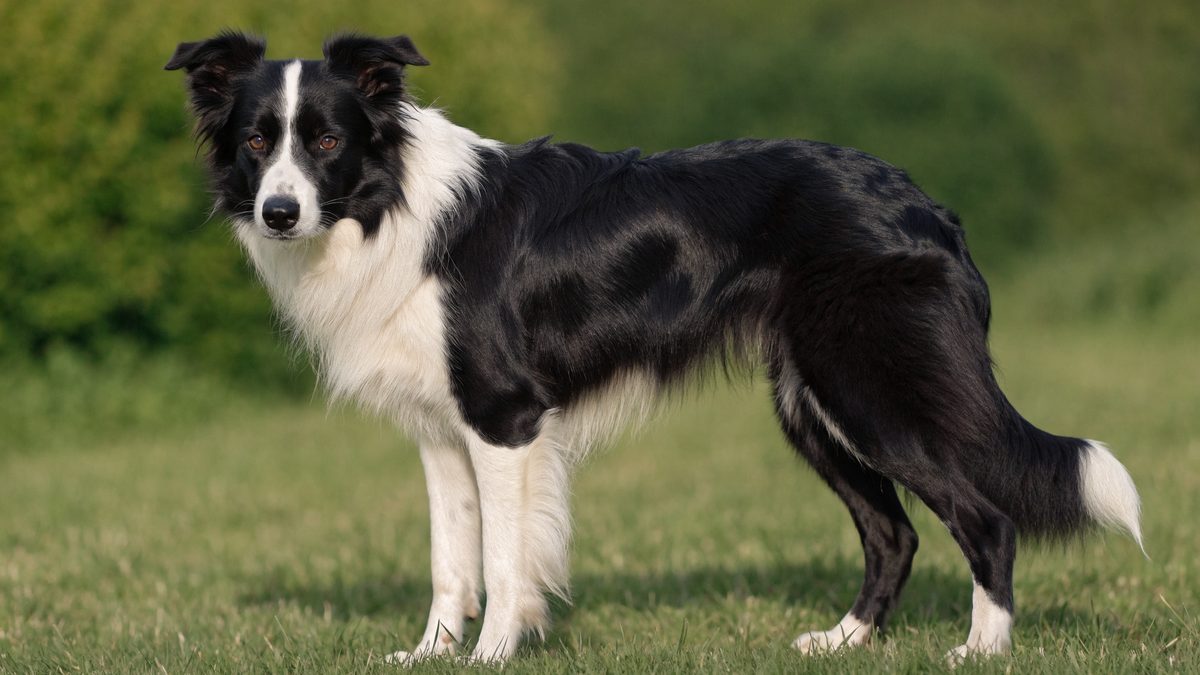
Quick answer
The Border Collie price in India runs Rs 20,000 to Rs 60,000 on editorial sources and Rs 3,50,000 to Rs 7,00,000 on seller pages, a 58-fold spread that says more about the seller than the dog. Bonbeno rates the breed 2 of 5 for heat tolerance. It is a working sheepdog needing more than two hours of daily exercise, real mental stimulation, and an MDR1 DNA test before any mange treatment.
This guide is general information for Indian pet owners and is not a diagnosis. Always consult a registered veterinarian near you before acting on anything you read here, and treat any sudden change in your dog's condition as urgent.
Border Collie at a glance
What the Border Collie actually is
The Border Collie is a working sheepdog from the border country of England, Scotland and Wales, bred for stamina, problem-solving and an instinct to control livestock by sight. Everything an Indian buyer finds difficult about the breed follows from that one sentence. It is not a companion breed that happens to be energetic. It is a job-doing animal whose job does not exist in a Bengaluru flat.
The FCI classifies the Border Collie in Group 1, Sheepdogs and Cattle Dogs, Section 1, with a working trial attached to the standard. The Royal Kennel Club places it in the Pastoral Group and describes it in three words that matter more than any marketing copy, tenacious, hard-working and of great tractability. Tractability means it takes direction. It does not mean it is easy.
Size, coat and colour, from the standards themselves
The two governing standards give one height and no weight at all. The FCI and the Royal Kennel Club both put the ideal height at withers at 53 cm, or 21 inches, for dogs, with bitches slightly less. The Royal Kennel Club adds a caution most Indian sellers omit, that the standard is a description of the ideal and a real dog may be larger or smaller than the figure printed. The American Kennel Club, which recognised the breed only in 1995 as its 139th, publishes a range instead, 19 to 22 inches for males and 18 to 21 for females, at 30 to 55 pounds.
| Source | Male height | Weight | Lifespan | Daily exercise |
|---|---|---|---|---|
| FCI Standard No. 297 | 53 cm (21 in) ideal | Not stated | Not stated | Not stated |
| Royal Kennel Club The Royal Kennel Club (UK), Border Collie | 53 cm (21 in) ideal | Not stated | Over 12 years | More than 2 hours per day |
| American Kennel Club | 19 to 22 in | 30 to 55 lb | 12 to 15 years | Not quantified |
| Hill's Pet Nutrition | 22 in | 30 to 45 lb | 10 to 14 years on its spec card, 12 to 15 in its body text | More than 40 minutes per day |
| VetCompass UK life tables | Not applicable | Not applicable | 12.10 years (95% CI 11.85 to 12.33) | Not applicable |
| Mr n Mrs Pet, India | 48 to 56 cm | 14 to 22 kg | 12 to 15 years | Not stated |
Read that exercise column again. One authority says more than two hours a day and another says more than forty minutes Hill's Pet Nutrition. That is a threefold disagreement on the single number an Indian buyer most needs, and neither page explains itself. Bonbeno sides with the Royal Kennel Club, and the exercise section below sets out why the evidence supports the larger figure.
The coat comes in two varieties, moderately long and smooth. Both are double-coated, with a dense medium-textured topcoat over a soft dense undercoat that the standard describes as giving good weather resistance. Weather resistance was written for Northumbrian hill fog, not for a Chennai May. Colour is wide open, with the single rule that white should never predominate. The Royal Kennel Club lists roughly fifty accepted colours, including black and white, blue merle, red merle, sable, lilac and seal.
The Royal Kennel Club has refused to register puppies from a merle to merle mating since 1 January 2013, because of the impaired vision and hearing associated with two copies of the merle gene. Blue merle and red merle command a premium in the Indian market. If a seller is offering merle puppies, ask what colour both parents are and walk away if the answer is merle and merle.
The intelligence claim, and the part nobody quotes
The Border Collie's reputation for intelligence rests on real published evidence, not on breed-club folklore. In four experiments reported in Behavioural Processes, a Border Collie named Chaser learned and retained the proper-noun names of 1,022 objects over three years of training, learned three common nouns representing categories, and inferred the name of a novel object by exclusion. That is a documented vocabulary larger than any other animal has demonstrated.
The part the Indian sales pages leave out is the input cost. Chaser's vocabulary took three years of daily, structured, one-to-one work by a retired psychology professor. A dog with that capacity and nothing to apply it to does not become a calm dog. It becomes an inventive one. The American Kennel Club puts it without softening, calling the breed a remarkably bright workaholic and adding that it is maybe a bit too amazing for owners without the time, energy or means to keep it occupied.
How common is the breed in India
No Indian body publishes a registration count for the Border Collie, so its popularity here cannot be measured. The Kennel Club of India does not publish breed-wise registration statistics in a public dataset, and Bonbeno found no Indian source that does. The nearest usable signal is commercial. Supertails, the largest Indian informational page that ranks for this query, gives the Border Collie two stars out of five for popularity inside a 40-breed price list and does not write a section on it. For contrast, the American Kennel Club ranked the breed 26th of 210 in the United States.
That gap matters practically. A breed that is uncommon in India means fewer breeders, fewer vets who have seen its specific problems, almost no rescue infrastructure, and a market where a seller can name any price because no buyer has a reference point. The price section below shows exactly how far that has gone.
Border Collie price in India
The published Border Collie price in India runs from Rs 12,000 to more than Rs 7,00,000, a spread of roughly 58 times for the same breed. That is not a market range. It is a sign that nobody is checking, and the single most useful thing Bonbeno can tell you about the price in india is which sources are reporting and which are selling.
Bonbeno pulled every rupee figure published by the pages that currently rank for this query and put them side by side. Read the table before you read anyone's headline number.
| Source | Quoted price | What the source is | Sells puppies? |
|---|---|---|---|
| Quora top answer | Rs 12,000 to Rs 18,000 | One user answer, roughly eight years old | No |
| Supertails | Rs 20,000 to Rs 60,000 | Editorial price table, 40 breeds, Q1 2026 survey | No |
| Pet India Online | Rs 40,000 to Rs 1,00,000+ | Editorial article, April 2026 | No |
| Premium Pet House | Rs 2,40,000 to Rs 4,50,000 | Seller page. Its own spec table says Rs 2,40,000 to Rs 2,50,000 | Yes |
| Mr n Mrs Pet | Rs 3,50,000 to Rs 7,00,000+ | Seller page with a phone number | Yes |
| Puppiezo | No price published | Seller page ranking for a price query | Yes |
The pattern is clean once you sort by who profits. The three sources that do not sell puppies cluster between Rs 12,000 and Rs 1,00,000. The two that do sell puppies quote between Rs 2,40,000 and Rs 7,00,000, which is ten to thirty-five times the editorial floor. Neither seller page discloses that it is a seller in the price section, and neither shows any working.
Why the seller figures do not survive inspection
- The city tables are copied, not surveyed. Mr n Mrs Pet publishes a Border Collie price for eight Indian cities and gives the identical upper bound, Rs 7,00,000, to all eight. A real market survey does not produce the same ceiling in Jaipur and Mumbai.
- One page contradicts itself. Premium Pet House prints Rs 2,40,000 to Rs 2,50,000 in its specification table and Rs 2,40,000 to Rs 4,50,000 in the paragraph immediately below it. The same page carries the label Apartment Friendly, Highly, and a section headed Not The Best Apartment Dogs.
- The highest-authority page has no depth here. Supertails ranks fourth on this query with a single table row for the Border Collie inside a list of forty breeds, no city breakdown and no monthly cost for the breed. Its stated method is a compilation from breeder networks, Kennel Club of India registration data and marketplace surveys conducted in Q1 2026.
- The cheapest figure is stale. The Quora answer quoting Rs 12,000 to Rs 18,000 is roughly eight years old and offers no source. Treat it as a historical marker, not a 2026 price.
What the price tiers are actually tracking
Indian sellers price the Border Collie in three tiers, and the tier names describe paperwork rather than health. Mr n Mrs Pet quotes basic quality at Rs 3,50,000 to Rs 4,50,000, KCI registered at Rs 4,50,000 to Rs 6,00,000, and champion bloodline at Rs 6,00,000 to Rs 7,00,000 and above. Supertails uses the same three-tier structure across all breeds, pet quality, KCI registered and show quality or import bloodline.
Understand what a Kennel Club of India registration certificate is before you pay a premium for it. The Kennel Club of India states its own scope on its registration form, saying that the organisation does not bear any responsibility for an imported dog except for certifying the identity, breed, sex, pedigree, origin and owner of the dog. Read that list again. It contains nothing about health, nothing about temperament and nothing about breeding suitability. The same form sets a fee of Rs 1,000 to register a dog bred in India with unknown parentage, which tells you how much pedigree verification the certificate can really carry.
The Border Collie is a recognised breed internationally. The FCI accepted it on a definitive basis on 27 September 1977 and lists it as breed number 297 in Group 1, Sheepdogs and Cattledogs, subject to a working trial. The Kennel Club of India is the FCI's member body for India, and the FCI's own statistics page for it records 32,219 puppies registered in 2025 across all breeds. Bonbeno could not verify from the Kennel Club of India itself whether the Border Collie appears on its own breed list, because the KCI website is currently a placeholder carrying downloadable forms and no breed list at all. That is stated here rather than glossed over.
Registration therefore records parentage. It is not a health certificate, it does not mean either parent was screened for hip dysplasia, and it does not mean either parent was DNA tested for collie eye anomaly or for the MDR1 drug-sensitivity allele. The health section below lists the DNA tests and physical screens the breed's own parent clubs recommend The Royal Kennel Club (UK), Border Collie. Ask for those results by name. A KCI registered puppy from untested parents is a documented dog, not a screened one.
What Indian law already requires of the seller
Two provisions of the Prevention of Cruelty to Animals (Dog Breeding and Marketing) Rules, 2017 give you leverage in any negotiation, and almost no Indian buyer uses them. Rule 3(1) states that no breeder shall carry on or continue any breeding activity, or own or house dogs for breeding and sale, unless the breeder has obtained a certificate of registration from the State Animal Welfare Board. Rule 3(2) requires that certificate to be prominently displayed in the establishment. Rule 8(1)(a) states plainly that pups less than eight weeks in age are not sold.
The same rules require each pup sold to be micro-chipped, bar the display of pups in public places for immediate sale, and bar the sale of dogs over six months of age without prior sterilisation unless the buyer is another licensed breeder. Ask to see the State Board certificate. A seller quoting Rs 7,00,000 who cannot produce a Rs 5,000 registration is telling you something.
Bonbeno does not sell dogs, does not broker puppy sales and does not publish breeder listings. Every price above is quoted from a third party so that you can see the disagreement yourself and price it into your own decision. If a figure here differs from a live quote you have been given, the difference is information about the seller.
A sensible way to read the range
Treat any quote under Rs 25,000 and any quote over Rs 2,50,000 as questions rather than prices. A very low quote in India usually means an unregistered backyard litter, a puppy separated from its mother too early, or a crossbreed sold as purebred. A very high quote usually means an importer's markup on a breed with no domestic price benchmark. In both cases the money you should be asking about is not the purchase price at all. It is the running cost, the health testing you should be verifying, and the two hours a day for the next twelve years, and the next section prices those honestly.
The monthly cost of keeping a Border Collie in India
Indian sources put the monthly cost of a Border Collie between Rs 6,000 and Rs 15,000, and every one of them leaves out the three line items that actually decide whether this breed works in your home. Budget for food, grooming and routine veterinary care by all means. Then budget separately for cooling, for enrichment, and for the professional help you will need if the dog starts unravelling.
| Line item | Pet India Online | Premium Pet House | Mr n Mrs Pet |
|---|---|---|---|
| Food | Rs 3,000 to Rs 6,000 | Rs 1,500 to Rs 3,000 | Included in total |
| Grooming | Rs 1,000 to Rs 3,000 | Rs 1,000 to Rs 3,500 per session | Included in total |
| Veterinary care | Rs 1,000 to Rs 3,000 | Rs 5,000 to Rs 10,000 per year | Included in total |
| Training | Not costed | Rs 5,000 to Rs 8,000 | Not costed |
| Stated monthly total | Rs 6,000 to Rs 12,000+ | Not totalled | Rs 8,000 to Rs 15,000 |
The two totals are roughly consistent, which is worth saying because almost nothing else about these sources is Mr n Mrs Pet, Border Collie Puppies…. Note that only one of the three prices training, and it prices it at Rs 5,000 to Rs 8,000 a month, which would nearly double the other two totals. For a breed whose parent club calls mental work a requirement rather than an extra, training is not an optional line.
Three costs no Indian page includes
- Cooling. A double-coated working breed in a city that touches 40 C in May needs a room it can retreat to. If that means running an air conditioner or at least a cooler through the afternoon for six months of the year, that is a real electricity bill and it belongs in the plan. No Indian Border Collie page prices it.
- DNA screening you should verify before you buy. The Royal Kennel Club sells a Border Collie breed-specific package covering nine tests, valued at GBP 555 and offered at GBP 150. Individual American laboratory prices published by the breed's health foundation ran from USD 45 to USD 180 per test in July 2016, which is the most recent per-test figure Bonbeno could verify and should be read as dated. You are not paying this yourself. You are checking that the breeder did, which costs nothing.
- Behavioural help. In a Danish shelter dataset covering 3,204 dog relinquishments over 21 years, behavioural problems were the stated reason 23 percent of the time, second only to owner health at 29 percent. A high-drive herding dog in a small flat is precisely the profile that generates those problems. Budget for a qualified trainer from month three, not from the day the sofa is destroyed.
What Indian veterinary care and food actually cost
Routine veterinary work in India is cheap by the standards of any of the sources above, and food is not. At the ICAR-Indian Veterinary Research Institute's referral polyclinic, published charges are Rs 300 for a castration, Rs 400 for an ovariohysterectomy, Rs 250 for a complete blood count, Rs 50 for a faecal examination, Rs 100 for a skin scraping and Rs 100 for a haemoprotozoa test. Chandigarh's government veterinary institutions charge Rs 30 for an anti-rabies vaccination and Rs 30 for a pet out-patient ticket. Private urban clinics charge multiples of these, but the public figures establish the floor.
Food is where a 20 kg working dog gets expensive. A live Indian listing prices Pedigree Adult at Rs 1,790 for 10 kg, or Rs 179 per kg, and Royal Canin Medium Puppy at Rs 7,163 for 10 kg, or roughly Rs 716 per kg. The gap between those two lines, applied across a decade, dwarfs every surgery on the IVRI list Pet India Online, dog food product listing. Decide your feeding tier deliberately, because that single choice moves the monthly cost more than anything else you control.
A realistic Indian monthly budget
Working from the published Indian figures and adding the omitted lines, a fair monthly range for an adult Border Collie in a metro is Rs 9,000 to Rs 18,000, with food at Rs 3,000 to Rs 6,000, grooming at Rs 1,000 to Rs 3,000, veterinary care averaged at Rs 1,000 to Rs 3,000, training or enrichment at Rs 3,000 to Rs 5,000, and cooling and consumables making up the rest. Bonbeno labels this an estimate built from cited components rather than a survey, because no Indian survey of Border Collie ownership costs exists to cite.
The Royal Kennel Club puts this breed's requirement at more than two hours of exercise per day and recommends a large garden. In an Indian metro, where the usable outdoor window in summer is before 7 am and after 8 pm, that is roughly 730 hours a year of your time, scheduled around the heat. Price that honestly against your own week before you price the puppy.
One more figure belongs here. Across 18 breeds in a UK study of 30,563 dogs that died between 2016 and 2020, the Border Collie's life expectancy at birth was 12.10 years, third longest in the set. At the midpoint of the range above, that is roughly Rs 19 lakh over a lifetime before you count the purchase price. The breed is not expensive to feed. It is expensive to keep properly.
Heat tolerance and climate suitability in India
Bonbeno rates the Border Collie 2 of 5 for heat tolerance, and the reason is more specific than a thick coat. The breed's problem in India is not that it overheats more easily than other dogs. It is that the way it exercises, hard, fixated and unwilling to stop, is exactly the pattern that produces exertional heat injury, and the published evidence on climate suitability says so.
Start with what the standards say the coat is for. Both governing standards describe a double coat, a dense medium-textured topcoat over a soft dense undercoat, and both credit it with good weather resistance The Kennel Club (UK). Weather resistance in a Northumbrian sheepdog means rain and wind at 5 C. It is insulation, and insulation works in both directions only up to a point. Once air temperature approaches body temperature, a dense undercoat stops helping and starts trapping.
What the veterinary evidence actually shows
Three UK studies have measured heat-related illness in dogs by breed, and their Border Collie findings are more interesting than either side of the Indian argument admits. In a VetCompass study of 905,543 dogs under primary veterinary care in 2016, 395 confirmed heat-related illness events were identified, giving an incidence of 0.04 percent and an event fatality rate of 14.18 percent, with a 95 percent confidence interval of 11.08 to 17.96 percent. The Border Collie's odds of heat-related illness in that model were 1.08, with a confidence interval of 0.47 to 2.44 and a p value of 0.862. Statistically, that is no different from the comparison breed.
The companion study, which looked specifically at exertional heat-related illness, tells the other half of the story. There the Border Collie sits at an odds ratio of 1.15, again not significantly different from the Labrador Retriever, but it is one of the breeds flagged as having significantly greater odds of exertional heat-related illness than non-designer crossbred dogs. The authors name it directly alongside the Boxer and the Golden Retriever as a large active breed carrying that raised risk. In the same dataset, exertion was the trigger in 70.9 percent of heat-related illness events with a recorded cause.
The Border Collie is not a heat-fragile breed in the way a Bulldog is. Its documented risk is behavioural and situational. It will keep working, keep chasing and keep herding past the point where a less driven dog lies down, and the resulting core temperature is what does the damage. In India, that means the danger is not the dog sitting on your balcony at 2 pm. It is the dog fetching a ball at 5 pm because it will not stop asking.
Border collie collapse, and why Indian heat makes it worse
There is a disorder named after this breed, and no Indian page mentions it. Border collie collapse is an episodic nervous system disorder triggered by strenuous exercise, recognised across North America, Europe and Australia, and previously called exercise induced hyperthermia and the wobbles. Episodes typically begin 5 to 15 minutes after exercise starts and produce disorientation, loss of focus, a choppy gait, scuffed feet and crossing of the legs on turns, lasting 5 to 30 minutes before complete recovery.
The University of Saskatchewan team that ran the exercise studies is explicit that environmental temperature, intensity of exercise and excitement all appear to matter. Their measurements are the striking part. Both affected and unaffected Border Collies reached body temperatures often above 41.7 C, or 107 F, after ten minutes of strenuous exercise. That is the baseline for a healthy dog of this breed working hard in a temperate country. Add a Nagpur afternoon and there is no thermal margin left.
There is still no genetic test for border collie collapse, and no specific treatment. Heritability work at the University of Minnesota indicates it is a moderately to highly heritable complex polygenetic disease. Affected dogs are often unable to exercise and must be retired from competition and work. Management is limitation, especially in warm weather, plus cooling vests, ice chips and stopping at the first sign of wobbliness.
Telling collapse apart from heat stroke
The two look similar and are treated differently, so learn the distinction now rather than in an emergency. More than 80 percent of dogs that collapse from heat stroke show mentation changes that are severe, progressive and persistent for hours to days, with a dramatic rise in the muscle enzyme CK, frequent acute kidney failure, and widespread clotting and bleeding. A dog in a border collie collapse episode has no laboratory abnormalities and is back to normal within 5 to 30 minutes. Collapse can also happen on a cool day, which heat stroke does not.
Keep the airway clear so the dog can hyperventilate and shed heat, offer water and ice by mouth, cool it by immersion in cool water or by wetting it down, and enforce rest until it has fully recovered. Then call your vet, because a dog that has not recovered inside 30 minutes is not having a collapse episode, it is having heat stroke, and heat stroke severe enough to cause collapse is life-threatening and often fatal.
City by city, and the monsoon
Put a number on the Indian summer first. The India Meteorological Department declares a heat wave when a plains station reaches at least 40 C, and grades it severe when the actual maximum reaches 47 C or when the departure from normal exceeds 6.4 C. On the coast the threshold drops to 37 C with a departure of 4.5 C or more, because humidity does the rest. Those are not rare readings. On 29 May 2024 the maximum temperature across Delhi NCR ran from 45.2 C to 49.1 C at different stations in a single afternoon, with departmental observatories at Safdarjung and Palam recording 46.8 C and 47.0 C.
The widely-quoted 52.9 C reading from Mungeshpur on 29 May 2024 is not a valid record and should not be used. IMD flagged it in the same press release as an outlier compared with other stations, attributed it to a possible sensor error or local factor, and said the data and sensors were being examined. The defensible figure for that day is 45.2 C to 49.1 C across Delhi NCR.
Climate suitability for this breed varies more across India than any Indian page acknowledges. In Bengaluru, Pune and the Nilgiris, a Border Collie can be exercised outdoors for most of the year with an afternoon pause. In Delhi, Ahmedabad, Nagpur and Hyderabad, the summer removes roughly eight usable daylight hours a day for three to four months. In Chennai, Mumbai and Kolkata the limiting factor is humidity rather than air temperature, because evaporative cooling from panting fails first when the air is already saturated.
The monsoon brings a second and quieter problem. A dense undercoat that stays damp in humid weather is a substrate for hot spots and secondary bacterial skin infection, and a working coat that never fully dries between walks will mat at the ruff and behind the ears. The grooming section below sets out the drying routine that prevents this. Do not solve it by shaving. Removing the topcoat removes the dog's only protection from direct sun without removing the insulating undercoat, and the coat frequently grows back with a different texture.
Two Indian pages give directly opposite answers to the climate question. Premium Pet House states that a Border Collie can survive in the Indian climate. Pet India Online states that Border Collies are more compatible with moderate climates. Neither cites anything. The honest answer sits between them and depends on what you are willing to change about your own day. This breed can live in India. It cannot live in India on an Indian summer schedule that suits you.
Temperament and who should not buy one
The Border Collie's temperament is keen, alert, responsive and intelligent, neither nervous nor aggressive, which is the breed standard's own wording and is accurate. What the standard cannot tell you is that every one of those qualities becomes a problem when the dog has nothing to point them at, and in most Indian homes it will not.
The Royal Kennel Club says the quiet part plainly. The natural activity and intelligence of the Border Collie means that he needs to be engaged to lead a fulfilled life. The American Kennel Club is blunter still, calling it a remarkably bright workaholic and adding that having a job to perform, such as agility, herding or obedience work, is key to Border happiness. Note that neither authority describes a companion dog. They describe an employee.
The herding instinct in a household
The herding instinct does not switch off indoors and it does not distinguish between sheep and family. The American Kennel Club states that because of their tendency to herd animals and people, Border Collies do best with older, well-behaved children. In practice that shows up as circling, staring, nipping at heels and blocking, particularly aimed at whoever moves fastest and least predictably, which in an Indian joint family is usually a small child or an elderly parent with a walking stick.
The related trait is prey drive, and a Border Collie's is expressed through the eye rather than the mouth. The breed works by stalking and controlling with its gaze, and the FCI standard describes the movement as free, smooth and tireless with minimum lift of feet, conveying an impression of ability to move with great stealth and speed. On an Indian street that same package points at scooters, cyclists, autos and cats. This is a breed that must be walked on a secure harness in traffic, every time.
Vocal, sensitive, and prone to separation anxiety
Border Collies are vocal, and the barking has a cause rather than a temperament flaw behind it. A dog bred to control movement barks at movement it cannot control. In a flat with a shared corridor, a lift and a watchman's whistle, that is a continuous supply of triggers. One Indian seller page carries a whole section headed They Are Barkers and another headed Know About Separation Anxiety, which is a rare moment of honesty on a sales page.
The breed is also genuinely sensitive to household tension, raised voices and inconsistent handling. That sensitivity is why harsh correction backfires so badly, a point the training section develops. It is also why separation anxiety is common. A dog that has been given no independent way to occupy itself, and whose entire day is organised around one person, does not cope when that person leaves.
Who should buy a Border Collie in India
- Households with two or more usable outdoor hours a day, split across a cool morning and a cool evening, every day, for the next twelve years.
- Owners who want to train something, whether that is competitive obedience, scent work, agility, canine freestyle or trick training, and who will keep at it after the novelty wears off.
- People with ground-floor or independent-house access, ideally with a securable outdoor space, because the Royal Kennel Club's own guidance pairs a small house with a large garden.
- Homes with older children or none, given the documented herding tendency toward moving people.
- Buyers willing to verify health testing on both parents by name, because in an unregulated market that verification is the only quality control that exists.
Who should not
- First-time dog owners. The margin for error is small and the failure mode is a behaviourally damaged dog, not a badly-behaved one.
- Anyone buying primarily on looks. The merle coat and the pale eyes sell this breed in India. Neither has any bearing on whether you can live with it.
- Households out of the flat from 9 to 8. A Border Collie alone for eleven hours is the textbook setup for separation anxiety and destructive behaviour.
- Anyone wanting a guard dog. The standard specifies neither nervous nor aggressive, and the breed's job is to move stock, not to confront strangers. It will bark. It will not guard.
- Buyers in cities where the outdoor window closes for four months. If your realistic summer plan is two short pavement walks, choose a different breed. The comparison section suggests specific alternatives.
In a 21-year Danish shelter dataset covering 3,204 dog relinquishments, behavioural problems were the recorded reason 23 percent of the time. India publishes no comparable breed-wise shelter statistics at all, so the equivalent Indian figure is unknown and Bonbeno will not estimate one. What is known is that the behaviours that fill that 23 percent, destructiveness, escaping, hyperactivity and noise, are precisely the ones an under-worked Border Collie produces.
One correction to a claim that circulates widely in Indian listings. The Border Collie is not aggressive by nature and it is not a dangerous breed. Both governing standards disqualify aggressive or overly shy temperament. A Border Collie that bites has almost always been pushed there by frustration, pain, fear or a total absence of outlet, and the fix is management and work, not a muzzle.
Training a Border Collie, and what it resists
To train a Border Collie well, give it a job with rules and finish every session before it wants to stop. This is the most trainable common breed on the planet and that is the difficulty, not the advantage. It learns what you are teaching and it also learns what you are accidentally teaching, at the same speed, and it never forgets either.
The published ceiling on this breed's learning is extraordinary. Over three years of structured daily work, a Border Collie named Chaser learned and retained the proper-noun names of 1,022 objects, then learned three common nouns representing categories, then correctly inferred the name of a novel object purely by exclusion from familiar named objects. The study concluded that she had acquired referential understanding of nouns, an ability normally attributed to children. Read the input as carefully as the output. Three years. Daily. One to one.
The socialisation window closes at about seven months
The American Kennel Club is unusually specific about timing for this breed, calling early socialisation especially vital and defining it as positive exposure to a wide variety of people and situations from early puppyhood through about seven months. That window matters more in India than in the country the advice was written for. An Indian puppy has to be neutral about horns, firecrackers, construction noise, cattle, free-ranging dogs, lift doors, drummers at a wedding procession and a watchman's whistle. Socialise deliberately against all of it, in short calm sessions, before month seven.
What works
- Reward-based marker training, because the breed standard's own word for the temperament is responsive and the breed reads handler emotion accurately.
- Short sessions, five to ten minutes, two or three times a day. A Border Collie will keep working past the point of usefulness, and stopping while it still wants more is how you keep it keen.
- Teaching an off switch first. Train settle on a mat before you train anything impressive. A dog that cannot stop is unmanageable in a flat regardless of how many tricks it knows.
- Naming things. The Chaser work shows the breed can hold a very large receptive vocabulary. Naming toys, rooms and objects is free mental stimulation that costs you nothing and tires the dog genuinely.
- Giving the herding instinct a legal target. Treibball, flirt-pole work under rules, and formal recall-to-heel games redirect the instinct instead of suppressing it. The American Kennel Club names herding, obedience and agility as the activities this breed excels at.
What this breed resists
- Harsh correction. Aversive handling produces shutdown or avoidance in a sensitive working dog, and once a Border Collie associates a cue with a correction it will avoid the cue rather than the mistake.
- Repetition without purpose. Twenty recalls in a row teaches this breed that recall is boring. Vary the context and pay unpredictably.
- Inconsistency between family members. In a household where one person allows counter-surfing and another punishes it, this dog does not become confused. It learns whose presence predicts which rule, which is worse.
- Being left to invent its own job. An unemployed Border Collie will select a job from what is available, and the shortlist is usually chasing vehicles, herding children, barking at the corridor or dismantling furniture.
- Shortcut solutions to barking. Suppressing the noise without removing the trigger and the frustration behind it moves the behaviour rather than resolving it.
Realistic timelines
| Age | Reasonable expectation |
|---|---|
| 8 to 16 weeks | Name response, sit, hand target, crate settled, house-trained in daylight hours, calm about at least 40 novel sights and sounds |
| 4 to 7 months | Reliable recall in a fenced space, loose-lead walking on a quiet street, settle on a mat for 20 minutes, socialisation window closed on a good note |
| 7 to 12 months | Recall holding against moderate distraction, an off switch that works indoors while the family moves around, first structured sport or scent work |
| 12 to 24 months | Adolescent regression handled without escalation, recall rebuilt, impulse control around cyclists and street dogs, genuine two-way working relationship |
Border Collies are predisposed to idiopathic epilepsy, and in a study of 49 affected dogs the clinical course was classified as moderate in 33 percent and severe in 49 percent, with a high prevalence of cluster seizures and status epilepticus. Not every seizure looks like a convulsion. Staring episodes, unexplained aggression, sudden fear or a dog that disconnects mid-task deserves a veterinary examination before a trainer's. The health section covers this properly.
One last point that Indian owners hear too late. Training this breed is not a phase that ends. The American Kennel Club recommends obedience training that starts early and continues throughout the dog's life, explicitly to provide needed mental stimulation. Plan on some form of structured work every week for twelve years, because that is the actual commitment you are buying.
How much daily exercise a Border Collie actually needs
A Border Collie needs more than two hours of exercise per day, which is the Royal Kennel Club's published figure and the highest band that body uses. Other sources quote less and they are wrong for this breed in this climate, so start from the two-hour number and work out how you will fit it into an Indian day before you buy the dog.
The sources genuinely disagree, so see the disagreement rather than take one number on trust.
| Source | Stated daily requirement |
|---|---|
| Royal Kennel Club | More than 2 hours per day, plus a large garden |
| Pet India Online | 1.5 to 2+ hours of high intensity effort |
| Hill's Pet Nutrition | More than 40 minutes per day |
| American Kennel Club | Not quantified. Daily exercise beyond a walk around the block or a quick romp in the yard |
Two of the four give a number and they differ by a factor of three Hill's Pet Nutrition. Bonbeno takes the Royal Kennel Club figure because it is the only one published by a body that also assigns the breed to a large garden and describes it as needing to be engaged to lead a fulfilled life. The American Kennel Club does not give minutes but rules out the obvious substitute, saying a Border Collie who does not work must be provided with vigorous exercise every day and that this is not a breed for someone who prefers to stay indoors or travels away from home frequently.
Fitting two hours into an Indian day
In a plains city between March and June the usable outdoor window is narrow. The India Meteorological Department declares a heat wave once a plains station reaches 40 C, and a Delhi afternoon in late May has run from 45.2 C to 49.1 C across the city India Meteorological Department. Pavement at those air temperatures is not walkable. In practice that leaves roughly 5.30 am to 7.30 am and 8 pm to 10 pm, which is enough for two hours only if you use both.
- Morning, 45 to 60 minutes. A brisk walk plus off-lead running in a secured space, before the pavement heats.
- Midday, 20 to 30 minutes indoors. Scent games, food puzzles, name-the-toy work and short trick sessions. This block is mental, not physical, and it is not optional.
- Evening, 45 to 60 minutes. The second walk plus structured work, after the ground has cooled enough to hold your palm on it for five seconds.
- Weekly, one longer outing. A hike, a beach in the cool hours, a hired ground for recall and sport work. This is what keeps a working dog mentally level through the week.
Exertion was the trigger in 70.9 percent of UK heat-related illness events with a recorded cause, and the Border Collie is among the breeds with significantly greater odds of exertional heat-related illness than crossbred dogs. Across a study of 905,543 dogs, the event fatality rate for heat-related illness was 14.18 percent. A missed morning walk is a lost hour. A compensating afternoon session in a Nagpur May can be fatal.
Mental stimulation is not a substitute, and it is not optional either
The Royal Kennel Club and the American Kennel Club both frame the requirement as engagement rather than distance covered American Kennel Club. A Border Collie that has run five kilometres and solved nothing is a fit dog with an unmet need. Twenty minutes of scent work genuinely tires this breed in a way an extra kilometre does not, which is useful precisely on the days the weather removes your outdoor time.
Useful indoor work includes hiding food across three rooms and sending the dog to find it, teaching the names of five toys and asking for them by name, shaping a new behaviour in small steps, feeding the entire daily ration through puzzles rather than a bowl, and teaching tidy-up as a real chore. None of it needs equipment and all of it can happen at 2 pm in a closed room with the fan on.
What happens without it
An under-exercised Border Collie does not simply become restless. It develops a repertoire, and the repertoire is predictable. Expect pacing and circling, shadow and light chasing, compulsive tail or flank fixation, barking at every corridor sound, chewing skirting and wiring, escaping through any opened door, and herding of children and elderly family members. In an interview study across 12 US animal shelters, behaviour problems were reported for 26 percent of the dogs being surrendered, and hyperactivity was reported at some level for 53 percent of relinquished dogs. Those are the behaviours an unemployed working dog manufactures.
The exercise ceiling nobody mentions
There is also an upper limit specific to this breed, and it is medical. Border collie collapse is triggered by strenuous exercise, most often in dogs used for working stock, in agility or flyball training, or in dogs repetitively retrieving a ball or frisbee. Episodes begin 5 to 15 minutes after exercise starts and heat, intensity and excitement all appear to be contributing factors. Repetitive ball throwing until the dog drops is the single most common way Indian owners try to satisfy this breed quickly, and it is the exact protocol that provokes episodes. Vary the work. Stop the dog before it stops itself.
Grooming a double coat in Indian humidity
Brush a Border Collie with a pin brush once or twice a week, and daily through the shedding season, which is the American Kennel Club's guidance and applies equally to both coat varieties. In India two extra jobs sit on top of that, drying the double coat properly after every wash or wet walk, and running a tick check every single day.
The breed comes in two coat varieties and they are groomed identically. The rough coat is medium-length and feathered, the smooth coat is shorter and coarser, and both are dense weather-resistant double coats. The standards describe the structure precisely, a dense medium-textured topcoat over a soft dense undercoat, with the moderately long variety carrying a mane, breeching and brush. The Royal Kennel Club summarises the requirement as grooming more than once a week and confirms the breed sheds.
One Indian seller page claims the coats are low-maintenance. They are not high-maintenance either, but a double-coated dog in a humid Indian city needs more attention than a weekly brush, and the reason is skin rather than appearance.
The Indian grooming routine
- Brush twice a week minimum with a pin brush, working right down to the skin at the ruff, behind the ears, in the armpits and along the breeching. These four places mat first and are the four places most owners skip.
- Brush daily during the coat blow, which the American Kennel Club states outright is required in shedding season. In much of India there is no clean twice-yearly cycle and the dog sheds moderately all year, so treat any week with heavy loss as a daily-brushing week.
- Bathe only when needed, then dry to the skin. A damp undercoat in Chennai or Kolkata humidity is where hot spots start. Towel first, then a cool blow-dry against the lie of the coat until the base feels dry, not just the surface.
- Check ears every week for smell, discharge or head-shaking. The American Kennel Club flags regular ear checks for signs of infection as part of routine care for this breed.
- Trim nails regularly and brush the teeth, both named in the same guidance.
- Never shave the coat. Shaving removes the topcoat that blocks direct sun while leaving the insulating undercoat in place, which makes the dog hotter, not cooler, and the regrown coat is often a different texture.
Ticks, and why grooming time is medical time
Tick pressure in India is the reason a daily hands-on check matters more here than anywhere the breed's grooming advice was written. In a survey of 525 dogs across Delhi, Mumbai, Sikkim and Ladakh, 261 dogs, or 49.7 percent, were PCR positive for at least one tick-borne pathogen. Hepatozoon canis was found in 30 percent, Ehrlichia canis in 20.6 percent, Mycoplasma haemocanis in 12.2 percent, Anaplasma platys in 6.5 percent and Babesia vogeli in 5.5 percent. Concurrent infection with more than one pathogen occurred in 39 percent of cases.
| Pathogen | Delhi (n=162) | Mumbai (n=162) | Sikkim (n=101) | Ladakh (n=100) |
|---|---|---|---|---|
| Ehrlichia canis | 39.5% | 27.2% | 0% | 0% |
| Hepatozoon canis | 38.3% | 43.8% | 0% | 24% |
| Babesia vogeli | 8.6% | 7.4% | 2% | 0% |
Ticks were found on 278 of the dogs examined, or 53 percent, and dogs carrying ticks were 3.3 times more likely to be PCR positive for a pathogen than dogs without. Infected dogs also ran a lower packed cell volume, averaging 29.7 percent against 35.8 percent in uninfected dogs. A dense double coat hides ticks well, particularly in the ruff and the ear margins, which is exactly why the daily check belongs in the grooming routine rather than in a separate mental category.
The drugs most commonly used in India against mange and heavy ectoparasite burdens are the same drug class that a Border Collie carrying the MDR1 allele cannot clear from its brain. Published Indian veterinary protocols use injectable ivermectin at 0.2 mg per kg and, in one 2025 case report, 0.3 mg per kg subcutaneously once weekly for three weeks. Neither Indian source mentions MDR1 screening. The health section explains what to do about that, and it is the single most important thing on this page.
Shedding management, finally, is mostly about where the hair goes. A Border Collie in an Indian flat with ceiling fans running eight months of the year will distribute coat everywhere. Brush outdoors or on a balcony, run a slicker over furniture weekly, and accept that this is a shedding breed. The Royal Kennel Club answers the question with one word, yes.
Health, inherited risk and the tests to demand
The Border Collie is a hardy breed with a long life expectancy and a small number of specific, testable inherited problems. UK veterinary records put its life expectancy at birth at 12.10 years, third longest of 18 breeds studied. The risk in India is not that the breed is fragile. It is that the four things worth knowing about it are the four things no Indian page mentions.
| Source | Stated lifespan | Basis |
|---|---|---|
| VetCompass UK life tables | 12.10 years (95% CI 11.85 to 12.33) | 942 Border Collies within 30,563 dogs that died 2016 to 2020 |
| American Kennel Club | 12 to 15 years | Breed page, basis not stated |
| Royal Kennel Club | Over 12 years | Breed characteristics band |
| Hill's Pet Nutrition | 10 to 14 years on the spec card, 12 to 15 in the body text | Contradicts itself on the same page |
For context, the same UK dataset put life expectancy at birth across all dogs at 11.23 years. The Border Collie beats the average by roughly eleven months and is outlived only by the Jack Russell Terrier at 12.72 years and the Yorkshire Terrier at 12.54. Genetically the breed is in reasonable shape too. A study of 255 genotyped Border Collies against a pedigree database of 83,996 dogs found an effective population size of 84.7 and mean inbreeding of 0.052, and concluded that Border Collies have a high level of genetic diversity compared to other breeds.
MDR1, the one that can kill your dog at an Indian vet clinic
The MDR1 gene, also called ABCB1, encodes P-glycoprotein, a transporter at the blood-brain barrier that keeps certain drugs out of the nervous system. A four-base-pair deletion knocks it out. Dogs carrying two copies react to a defined list of common drugs with signs ranging from weakness, ataxia and tremors to seizures, blindness and death.
Here is the honest part that the internet gets wrong in both directions. The Border Collie is not a high-frequency MDR1 breed. Washington State University's own breed table puts it under 5 percent, against 70 percent for the Collie and 50 percent for the Australian Shepherd. A worldwide comparative study found Border Collie allele frequencies below 1 percent in most countries, 2.3 percent in the United Kingdom and 4.8 percent in Israel, where 269 Border Collies were tested and 2.3 percent were homozygous. The breed's own health foundation estimates about 1 percent of Border Collies carry one or two copies.
| Breed | Reported frequency | Source |
|---|---|---|
| Collie | 70 percent | Washington State University |
| Australian Shepherd | 50 percent | Washington State University |
| Shetland Sheepdog | 15 percent | Washington State University |
| German Shepherd | 10 percent | Washington State University |
| Mixed breed | 5 percent | Washington State University |
| Border Collie | Under 5 percent | Washington State University |
| Border Collie, worldwide | Below 1 percent in most countries, 2.3 percent in the UK, 4.8 percent in Israel | Dekel et al. |
| Border Collie, breed foundation estimate | About 1 percent carry one or two copies | Border Collie Health and Education Foundation |
So why does it matter here more than in Britain. Because of what the drug is used for in India. Ivermectin and related drugs are safe at the doses used for heartworm prevention but can become toxic at the doses used to treat mange. Washington State University confirms that ivermectin in a Heartgard formulation is safe at label doses for MDR1 dogs, and that other formulations of ivermectin require case-by-case dosing advice. The breed foundation adds the specific danger, that adverse reactions occur at higher doses often administered from formulations intended for large animals.
Now read the published Indian protocols. A trial at CCS Haryana Agricultural University treated sarcoptic mange in 24 dogs with ivermectin at 200 micrograms per kg subcutaneously on days 0 and 14, and concluded that the subcutaneous route was more effective than oral. A 2025 Indian case report from Tamil Nadu used ivermectin at 0.3 mg per kg subcutaneously once weekly for three weeks, noting that ivermectin remains widely used in resource-limited settings due to its cost-effectiveness. Neither paper mentions MDR1 screening. That is not a criticism of the authors. It is the reason this paragraph exists.
Test for MDR1 and carry the result. A genetic test is available through Washington State University's Program for Individualized Medicine and the sample is a cheek swab or a blood draw. The Royal Kennel Club includes MDR1 in its Border Collie breed-specific DNA package. Under 5 percent is a low probability, not a zero one, and the cost of being wrong is a dog that seizes after a routine mange injection. Also note loperamide, sold over the counter in Indian pharmacies as Imodium. Washington State University states that at doses used to treat diarrhoea it will cause neurological toxicity in dogs with the MDR1 mutation and should be avoided in all of them. Never give it to a dog of this breed on your own initiative.
The wider drug list is worth knowing because it reaches beyond parasites. Acepromazine, butorphanol, apomorphine, cyclosporine, grapiprant, maropitant, ondansetron and several chemotherapy agents all require adjusted dosing in MDR1 dogs Boatright K. White feet don't treat. Afoxolaner, fluralaner, lotilaner, sarolaner, selamectin, milbemycin and moxidectin have been tested by their manufacturers and are considered safe at label doses. There is one further consequence people miss, that the mutation is associated with a blunted HPA axis, leaving affected dogs prone to relative adrenal insufficiency when seriously ill.
Collie eye anomaly, which has a DNA test and a moving target
Collie eye anomaly is a congenital, autosomal recessive developmental defect of the back of the eye, ranging from no detectable vision deficit to complete blindness through retinal detachment. The associated variant is a 7.8 kilobase deletion in the NHEJ1 gene, identified in 2007 across four breeds, the Collie, Border Collie, Australian Shepherd and Shetland Sheepdog. Colobomas, the more serious lesion, occur only in dogs homozygous for that variant.
The reported frequency in Border Collies varies enormously by country, and Bonbeno prints the spread rather than averaging it.
| Population | Reported figure | Measure |
|---|---|---|
| USA and Great Britain | 2 to 3 percent | Estimated clinical prevalence |
| Norway | 6.3 percent | Deletion variant frequency |
| Japan, 500 Border Collies | 14.3 percent | NHEJ1 deletion allele frequency |
| Italy, 99 of 334 Border Collies within 496 dogs of five breeds | 29.6 percent | Healthy carriers (heterozygotes) |
| North America, breed foundation estimate | Under 2.5 percent | Estimated incidence of affected dogs |
| India | No published figure exists | Bonbeno found no Indian dataset |
Two practical rules follow. First, a puppy should be examined by a veterinary ophthalmologist before nine weeks of age, because some affected dogs go normal as they mature, with healthy tissue growing over the diseased area so that an adult eye examination can no longer detect them, even though they still pass the gene on. Second, use the DNA test rather than relying on the exam, which is why the Royal Kennel Club lists a CEA and choroidal hypoplasia DNA test in its Border Collie package.
Bonbeno adds a caveat the sales pages never do. The causality of the NHEJ1 deletion has been questioned. Work in Danish Rough Collies concluded the deletion is not the causative mutation but rather a marker linked to the underlying locus in some populations, and a separate study in Nova Scotia Duck Tolling Retrievers raised similar doubt. A clear DNA result is strong evidence and not a guarantee, and a clear result plus an early ophthalmologist examination is better than either alone.
Hip dysplasia, epilepsy, lymphoma and border collie collapse
- Hip dysplasia is the most prevalent known genetic disease in the breed and it is polygenic, so there is no DNA test for it. Published OFA data give a 10.8 percent affected rate for Border Collies evaluated between 1974 and 2015, falling to 8.4 percent for dogs born between 2011 and 2015. The Border Collie Society of America recommends screening at age two or older, on both sire and dam, before any breeding.
- Idiopathic epilepsy is the serious one behaviourally. In 49 affected Border Collies the clinical course was moderate in 33 percent and severe in 49 percent, with a high prevalence of cluster seizures and status epilepticus, drug resistance in 71 percent of the 24 dogs treated with more than two antiepileptic drugs, and a remission rate of only 18 percent. Survival was significantly shorter in dogs whose seizures began before two years of age. There is no genetic test. A 2013 genome-wide study of 103 epileptic and 105 control dogs failed to find any associated chromosomal region, and its investigator concluded that selective breeding is unlikely to reduce the incidence of epilepsy in the breed.
- Lymphoma carries a documented familial pattern in this breed. A survey of Australian Border Collies identified 57 affected dogs among 246 respondents, with a median age at diagnosis of 9.7 years, a range from 2 to 15 years, and odds of being affected twice as high in females as in males. Pedigree analysis found multiple cases clustering within family groups.
- Border collie collapse has no genetic test and no specific treatment, and it is managed by limiting trigger activities, especially in warm weather. The climate section covers it in full because in India it is a climate problem as much as a health one.
The list to hand a breeder, by name
Ask for documented results on both parents. The Border Collie Society of America publishes twelve DNA-testable conditions for the breed, namely collie eye anomaly, trapped neutrophil syndrome, glaucoma and goniodysgenesis, early onset adult deafness, MDR1, primary lens luxation, Imerslund-Grasbeck syndrome, dental hypomineralisation or Raine syndrome, sensory neuropathy, degenerative myelopathy, neuronal ceroid lipofuscinosis and myotonia congenita. It lists seven conditions checked by physical test instead, hip dysplasia, elbow dysplasia, shoulder dysplasia, spinal abnormalities, patellar luxation, BAER hearing and CAER eye examination. Three common conditions have no test at all, epilepsy, lymphoma and border collie collapse.
The Royal Kennel Club's own list is shorter and easier to use as a buying checklist. Its good practice minimum is eye testing with gonioscopy under the BVA, Kennel Club and ISDS Eye Scheme. Its best practice adds DNA tests for collie eye anomaly, ceroid lipofuscinosis, Imerslund-Grasbeck syndrome, MDR1, trapped neutrophil syndrome, sensory neuropathy, severe goniodysgenesis and Raine's syndrome, plus elbow scoring, BAER hearing testing and hip scoring. Its breed-specific package covers nine of these at once.
Show me the sire's and dam's hip scores and their DNA results for CEA, MDR1, TNS, CL and IGS. The Border Collie Society of America's own guidance is that puppy buyers should obtain proof of documentation from breeders of the parents' health testing, and that breeders should ensure buyers fully understand the DNA status of the puppies, sires and dams. If the answer is that the puppy is KCI registered, you have been answered on a different question.
Finally, the gap that should shape how you read all of this. No Indian body publishes breed-wise health data for dogs. There is no Indian hip registry, no Indian equivalent of the OFA database, and no published Indian prevalence figure for any condition on this page. Every percentage above is from the United States, the United Kingdom, Japan, Norway, Italy, Israel or Australia. Bonbeno prints the source country against each figure for exactly that reason, and would rather say plainly that Indian data does not exist than quietly present foreign data as local.
Feeding a Border Collie in India
Feed a Border Collie a complete diet matched to its life stage and keep it visibly lean, because in this breed body condition is a heat-safety measure and not a cosmetic one. The American Kennel Club notes that some Border Collies are prone to getting overweight and advises watching calorie consumption and weight level. In India that advice carries a second, sharper reason.
The reason is in the heat data. In a UK study of exertional heat-related illness, dogs whose bodyweight was equal to or higher than the mean for their breed and sex had 1.30 times the odds of exertional heat-related illness, with a confidence interval of 1.09 to 1.55 and a p value of 0.003. That is one of the few risk factors on the whole list that an owner controls directly. A Border Collie carried two kilograms heavy in Hyderabad is measurably less safe than the same dog carried lean.
How much, by life stage
An adult Border Collie of standard size weighs 30 to 55 pounds, roughly 13.5 to 25 kg. Portion by body condition rather than by a fixed cup measure, because the range of adult weights within the breed is wide and a working-line dog in daily sport eats meaningfully more than a flat-kept dog on two walks.
| Age | Meals per day | What matters most |
|---|---|---|
| 8 to 16 weeks | 4 | Complete puppy food for a medium breed. Do not free-feed. Weigh weekly |
| 4 to 6 months | 3 | Steady growth, not fast growth. Excess calories load developing hips |
| 6 to 12 months | 2 to 3 | Transition toward adult food from about 10 to 12 months. Keep ribs easily felt |
| 1 to 8 years | 2 | Portion to workload. Feed the larger share after the evening walk, not before it |
| 8 years and older | 2 | Lower calories, maintain protein, watch for stiffness and weight creep |
The American Kennel Club's baseline is a high-quality dog food, either commercially manufactured or home-prepared under veterinary supervision and approval, appropriate to the dog's age, with clean fresh water available at all times. It also flags treats specifically, noting that they are an important training aid but that too many cause obesity. For a breed that trains daily, that is a real risk. Take the training treats out of the day's measured ration rather than adding them to it.
What it costs to feed one in India
Indian food prices span a wide band and this is where your monthly cost is really decided. A live Indian listing prices Pedigree Adult at Rs 1,790 for 10 kg, roughly Rs 179 per kg, and Royal Canin Medium Puppy at Rs 7,163 for 10 kg, roughly Rs 716 per kg. Published monthly food estimates for the breed sit at Rs 3,000 to Rs 6,000 on one Indian page and Rs 1,500 to Rs 3,000 on another Premium Pet House. Both are plausible. The first assumes a premium food, the second a mass-market one.
Store dry food in an airtight container away from humidity, because an opened sack in a Mumbai monsoon goes rancid and grows mould faster than most owners expect. Feed the larger meal after the evening walk rather than before it, since a full stomach plus vigorous exercise plus heat is a bad combination in any deep-chested athletic dog. And keep water available all day rather than at fixed times, which the American Kennel Club states explicitly.
The feeding problem that is actually a genetic disease
One inherited condition in this breed presents as a feeding problem and is routinely misdiagnosed as a food intolerance. Imerslund-Grasbeck syndrome, also called cobalamin malabsorption, prevents the intestine absorbing vitamin B12. Signs include lethargy and lack of appetite, but the noticeable ones are persistent diarrhoea and nausea or vomiting, appearing in puppyhood and usually before six months of age. It is autosomal recessive, there is a DNA test, and once correctly diagnosed the signs are relieved by regular subcutaneous cobalamin injections that owners can learn to give at home.
Two studies, one American and one European, found carrier prevalence of 6 percent in the Border Collie populations studied, implying roughly 0.1 percent of Border Collies would be affected. That is rare. It is also cheap to rule out, and it is on both the Border Collie Society of America's DNA-testable list and the Royal Kennel Club's best-practice list The Royal Kennel Club (UK), Border Collie. If a Border Collie puppy in India is losing condition on a good diet with chronic loose stool, ask your vet about cobalamin before you cycle through four more brands of food.
The first year, month by month
The first year of a Border Collie decides most of what the next eleven look like, and three of its milestones are fixed by things outside your control. The legal earliest collection date is eight weeks, the eye examination has to happen before nine weeks, and the socialisation window closes at about seven months Border Collie Health and Education… American Kennel Club.
Before collection
Indian law sets the floor and you should hold the breeder to it. Rule 8(1)(a) of the Prevention of Cruelty to Animals (Dog Breeding and Marketing) Rules, 2017 states that pups less than eight weeks in age are not sold. The same rules require each pup sold to be micro-chipped and bar the display of pups in public places for immediate sale. The Second Schedule notes that vaccination can start at seven to eight weeks of age. Collect the eye examination and the parents' DNA and hip results at the same time you collect the puppy, because after money changes hands your leverage is gone.
| Age | Physical and medical | Behaviour and work |
|---|---|---|
| 8 to 9 weeks | Collection at eight weeks minimum. Ophthalmologist eye examination before nine weeks, because affected dogs can go normal later. First vaccinations under way | Settle, crate and name. Nothing strenuous. Carry the puppy outdoors to see the world before it can walk it |
| 9 to 12 weeks | Vaccination course continues. Faecal examination costs about Rs 50 at a government institute. Start a daily tick check as a habit | Socialisation begins in earnest. Short calm exposures to horns, lifts, cattle, drums, firecracker recordings and street dogs at a distance |
| 3 to 4 months | Anti-rabies vaccination, Rs 30 at a Chandigarh government clinic and modest at most private ones. Teething. Weekly weight check | Loose-lead walking, recall on a long line, settle on a mat. Five to ten minute training sessions, two or three a day |
| 4 to 6 months | Growth is fast. Do not overfeed, because excess calories load developing hips. No forced running, no stairs repetition, no jumping from height | Herding instinct becomes visible as chasing and nipping. Redirect it now. Do not let children run from the puppy |
| 6 to 7 months | Discuss neutering timing with your vet. Government institute charges are Rs 300 for a castration and Rs 400 for a spay | The socialisation window closes at about seven months. Finish it on a good note. Anything still frightening at seven months needs professional help, not time |
| 7 to 9 months | Adult food transition begins. Watch for the first Indian summer if the pup was born in winter | Adolescence starts. Recall degrades. Rebuild it patiently rather than escalating corrections |
| 9 to 12 months | Growth plates closing. Structured sport can start. Note that epilepsy onset before two years carries a worse prognosis, so report any staring or collapse episode | Two hours a day is now the standing requirement. Add a formal sport, scent work or herding-style games |
| 24 months | Hip screening if you intend to breed, which the breed club specifies at age two or older | Adult working relationship established. Keep training weekly for the rest of the dog's life |
The Indian complications nobody warns you about
- A summer-born puppy loses months of socialisation. If the pup arrives in April in Delhi or Nagpur, the outdoor window during its critical period is two hours a day. Plan car trips, terrace sessions and controlled visitor exposure instead of pretending the walks will happen.
- Firecracker season lands inside the fear period for many litters. A sound-sensitive working breed exposed to a full Diwali at four months without preparation can carry noise phobia for life. Start recorded desensitisation at low volume from week nine.
- Ticks arrive before the vaccinations finish. Half of the dogs in a four-city Indian survey were PCR positive for at least one tick-borne pathogen, and dogs carrying ticks were 3.3 times more likely to be infected. Agree a tick-control product with your vet at the first visit and check the label against the MDR1 drug list.
- The adolescent regression is worse in this breed than most. A ten-month-old Border Collie that has been under-worked will select its own job during exactly the months you have least patience. Increase mental stimulation rather than reducing it.
Keep a written log of every new thing the puppy meets, with the date and how it reacted. It takes thirty seconds a day and it turns socialisation from a vague intention into a checklist you can audit at seven months, when the window closes. Owners who do this end up with dogs that are calm about Indian streets. Owners who do not usually discover the gaps at eleven months.
Border Collie against the breeds Indian buyers cross-shop
Indian buyers who consider a Border Collie usually also consider a Labrador Retriever, a German Shepherd, a Siberian Husky or a Beagle, and on the two measures that matter most in India, longevity and heat, the Border Collie wins one of those comparisons comfortably and loses none of them. It fails on a third measure that no breed page tabulates, which is how many hours a day the dog needs from you.
The table below uses only figures Bonbeno verified against the primary studies. Lifespan comes from a single UK dataset so the breeds are directly comparable, and both heat columns come from the same VetCompass programme.
| Breed | Life expectancy at birth | Odds of heat-related illness | Odds of exertional heat-related illness |
|---|---|---|---|
| Border Collie | 12.10 years | 1.08 (0.47 to 2.44) | 1.15 (0.71 to 1.88) |
| Labrador Retriever | 11.77 years | Base breed | Base breed |
| German Shepherd Dog | 10.16 years | 0.92 (0.35 to 2.48) | 0.33 (0.14 to 0.76) |
| Beagle | 9.85 years | 1.15 (0.34 to 3.86) | 0.25 (0.06 to 1.01) |
| Siberian Husky | 9.53 years | 1.18 (0.28 to 5.06) | 0.61 (0.19 to 1.95) |
| Crossbred, non-designer | 11.82 years | 0.82 (0.49 to 1.37) | 0.49 (0.35 to 0.68) |
Three things fall out of that table and none of them appear on an Indian breed page. First, the Border Collie outlives every one of these breeds, by two and a half years against the Siberian Husky. Second, the heat columns do not separate these breeds cleanly, because the confidence intervals overlap. Third, the crossbred row is the one to notice, at 0.49 for exertional heat-related illness, the lowest figure in the set and statistically significant.
What each comparison actually turns on
- Against the Labrador Retriever. The Labrador is easier in every way that matters to a first-time Indian owner and lives nearly as long, at 11.77 years against 12.10. Choose the Border Collie only if you specifically want the training relationship. Choose the Labrador if you want a family dog.
- Against the German Shepherd. The German Shepherd is the guard dog. The Border Collie is not, and its standard says neither nervous nor aggressive. The German Shepherd also had the lowest odds of exertional heat-related illness of the purebreds in the table at 0.33, but it is outlived by the Border Collie by nearly two years.
- Against the Siberian Husky. This is the comparison Indian buyers get most wrong. The Husky is the harder dog for India, with the shortest life expectancy in the table at 9.53 years, and the recent Hyderabad case in which more than a dozen abandoned Siberian Huskies were recovered along a road outside the city is a warning about buying an unsuitable exotic breed on looks. The Border Collie is more trainable and lives longer. It also needs more of your day.
- Against the Beagle. The Beagle is smaller, cheaper to feed and far less demanding of structured work, but it is the shortest-lived purebred in this table at 9.85 years and it is a scent hound with its own recall problems. Neither breed suits a household that is out from 9 to 8.
- Against the Indian Pariah Dog. No UK dataset covers this population, so the crossbred row above is a UK non-designer crossbred and not an Indian pariah, and Bonbeno will not pretend otherwise. What the crossbred row does show is that mixed ancestry was associated with significantly lower odds of exertional heat-related illness than the Labrador base in a large UK dataset. An indigenous dog adapted to Indian conditions is the option every buyer should price honestly before spending Rs 3,50,000 on an imported working breed.
The comparison that actually decides it
| Question | Border Collie |
|---|---|
| Published daily exercise requirement | More than 2 hours per day |
| Recommended home | Small house with a large garden |
| Suitable for a first-time owner | No, on the evidence in the temperament and training sections |
| Guard dog | No. Standard specifies neither nervous nor aggressive |
| Good with young children | Best with older, well-behaved children, because it herds moving people |
| Tolerates being alone all day | No |
| Needs daily mental stimulation as well as exercise | Yes, explicitly American Kennel Club |
Read those seven rows against your own week. If five of them are a problem, no amount of enthusiasm for the breed will fix it, and the honest answer is a different dog. See the Indian Spitz for a smaller, hardier Indian option, or the Rajapalayam if what you actually want is an indigenous sighthound with presence.
Ten mistakes Indian Border Collie owners actually make
The mistakes that damage Border Collies in India are specific and repeatable, and most of them come from applying advice written for a temperate country with a regulated puppy market. Here are the ten Bonbeno sees most often, with the evidence for why each one is wrong.
- Accepting a high-dose ivermectin injection without knowing the dog's MDR1 status. Published Indian mange protocols use ivermectin at 0.2 mg per kg subcutaneously and, in one 2025 case report, 0.3 mg per kg weekly for three weeks. Ivermectin is safe at heartworm-prevention doses but can become toxic at mange doses in a dog carrying the mutation. Test once, carry the result, tell every vet.
- Giving loperamide for a loose stool. Washington State University states that at the doses used to treat diarrhoea, loperamide will cause neurological toxicity in dogs with the MDR1 mutation and should be avoided in all of them. It is an over-the-counter human drug in India and it is in most household medicine boxes.
- Treating KCI registration as a health guarantee. The Kennel Club of India's own form describes its role as certifying identity, breed, sex, pedigree, origin and owner. Nothing on that list is a health test. Ask for the parents' hip scores and DNA results by name instead.
- Throwing a ball until the dog stops. Repetitive retrieving is one of the named triggers for border collie collapse, alongside stock work and flyball, and episodes begin 5 to 15 minutes into exercise with heat and excitement as contributing factors. Vary the work and stop the dog before it stops itself.
- Making up a missed morning walk in the afternoon. Exertion was the trigger in 70.9 percent of UK heat-related illness events with a known cause, and the event fatality rate across 905,543 dogs was 14.18 percent Hall EJ, Carter AJ. A Delhi afternoon in late May has run from 45.2 C to 49.1 C across the city. Skip the session instead.
- Shaving the coat for summer. The double coat is a dense topcoat over a soft dense undercoat. Shaving removes the sun barrier and leaves the insulation, and the regrown coat is frequently a different texture. Brush more instead, twice a week and daily in the coat blow.
- Buying a merle puppy without asking what colour the parents are. The Royal Kennel Club has refused to register puppies from merle to merle matings since 1 January 2013 because of the impaired vision and hearing associated with the gene. Nobody enforces this in India, so you have to ask.
- Collecting the puppy before eight weeks. Rule 8(1)(a) of the 2017 breeding rules states that pups less than eight weeks in age are not sold, and the same rules require micro-chipping and bar public display for immediate sale. A seller willing to break the first rule has probably broken the others.
- Missing the eye examination window. A Border Collie puppy should be examined by a veterinary ophthalmologist before nine weeks of age, because some affected dogs go normal as they mature and can no longer be detected on an adult examination even though they still pass the gene on.
- Waiting for the dog to calm down at two. It does not. The Royal Kennel Club's requirement of more than two hours a day applies for the animal's whole adult life, and the American Kennel Club recommends training that continues throughout it. The dogs that do go quiet at two have usually shut down rather than settled.
Almost every failure on this list comes from buying a working dog for a companion role and then managing the gap by reducing what the dog does. Across 12 US animal shelters, behaviour problems were reported for 26 percent of the dogs being surrendered, with individual reasons including escaping, indoor and outdoor destruction, disobedience and being too active. In a Danish shelter dataset covering 3,204 dog relinquishments over 21 years, animal behavioural problems were the recorded reason 23 percent of the time. Those numbers are what an unmet requirement looks like at the end.
One more that belongs here because it is uniquely Indian. Walking a Border Collie on a flat collar in traffic is a genuine risk with this breed. It is built to fix on movement and to move with great stealth and speed, and Indian streets supply moving targets continuously. Use a well-fitted harness and a fixed-length lead, every walk, from week nine.
Adoption, rescue and how to verify a breeder
Adopting a Border Collie in India is difficult but not impossible, and verifying a breeder is straightforward once you know which three documents to ask for. Both routes are covered here as real options, because the alternative, buying quickly from whoever answers the phone, is how the dogs in the abandonment stories arrived where they did.
Why adoption is hard for this breed in India
Indian animal sheltering is structured around free-ranging dogs rather than owner surrenders. A peer-reviewed study based on interviews with Indian shelter staff found that most of their shelters' work involves the care of free-ranging dogs, through veterinary treatment or sterilisation. The same paper notes that current sheltering literature is largely centred on countries such as the United States and calls for context-specific research on Indian sheltering. It is a qualitative study of ten interviews across three shelters precisely because quantitative Indian intake data does not exist.
Bonbeno checked whether India publishes breed-wise shelter statistics and it does not. The Animal Welfare Board of India's published documents list 27 statutory instruments, including the Animal Birth Control Rules, the Pet Shop Rules and the Dog Breeding and Marketing Rules, and no shelter-statistics publication of any kind. There is no Indian equivalent of a national intake dataset. Any page quoting an Indian abandonment rate for a specific breed has invented it.
What does exist is incident reporting, and it is instructive. In May 2026 rescuers and police near Hyderabad traced twelve abandoned Siberian Huskies along the Shankarpally to Patancheru road, including one that had died, and a case was registered under the Prevention of Cruelty to Animals Act. Between 500 and 600 adoption enquiries followed within days. A rescuer quoted in the same report made the point that applies exactly to the Border Collie, that these are not ordinary pets and they require a certain environment, financial commitment and awareness.
Where to look if you want to adopt
- City shelters and foster networks. Ask to be put on a waiting list for a herding-type dog rather than for the breed by name. Working crossbreeds appear far more often than pedigree Border Collies.
- Breed-specific rescue. The Border Collie Society of America is the breed's AKC parent club and maintains a rescue directory, and the American Kennel Club operates a network of more than 450 rescue groups. Neither operates in India, but both are worth reading to understand what breed rescue asks of an adopter.
- Rehoming from owners who have failed. This is the most realistic Indian route for an adult Border Collie. A dog surrendered at 14 months for destructiveness is usually an under-worked dog rather than a damaged one, and it is the same behaviour class that fills the relinquishment statistics.
- Consider an indigenous dog seriously. The Indian Pariah Dog is adapted to this climate, widely available through every Indian shelter, and costs nothing to acquire.
How to verify a breeder, in three documents
- The State Animal Welfare Board certificate of registration. Rule 3(1) of the 2017 rules states that no breeder shall carry on breeding or house dogs for breeding and sale without a certificate of registration from the State Board, and Rule 3(2) requires it to be prominently displayed in the establishment. The application fee is Rs 5,000, so a seller quoting lakhs has no excuse.
- The parents' health testing results. Hip scores on both sire and dam, taken at age two or older, plus DNA results for collie eye anomaly, MDR1, trapped neutrophil syndrome, ceroid lipofuscinosis and Imerslund-Grasbeck syndrome The Royal Kennel Club (UK), Border Collie. Documents, not verbal assurance. The Border Collie Society of America's own guidance is that buyers should obtain proof of documentation.
- The puppy's own paperwork. Microchip number, vaccination record showing a start at seven to eight weeks, date of birth confirming the pup is at least eight weeks old, and the ophthalmologist's eye examination done before nine weeks.
Walk away if the breeder will not let you see the dam with the litter, if the establishment is not open to inspection as the rules require, if the price is quoted in lakhs with no health documents attached, if merle is being sold as a premium colour with no answer about the parents' colours, or if the answer to every health question is that the puppy is KCI registered. None of these is a judgement call. Each one is a document that does or does not exist.
Bonbeno does not sell dogs, does not broker sales and does not publish breeder listings, so nothing here points you at a seller. What this page can do is make sure that whoever you buy from or adopt from is answering the right questions. If you want to compare against a breed that suits Indian conditions better, start with the Indian Pariah Dog or the Indian Spitz. If you have already decided, take the health list from this page and use it before the money moves.
Border Collie in India, questions buyers actually ask
How expensive is a Border Collie?
There is no single average, because published Indian figures differ by roughly 58 times. Editorial sources put a Border Collie at Rs 20,000 to Rs 1,00,000, while the two seller pages that rank for this query quote Rs 2,40,000 to Rs 7,00,000 and above. Bonbeno reports both and names which sources sell puppies.
Which factors determine the Border Collie price in India?
Registration status, coat colour, claimed bloodline and city set the quoted price in India, and none of them measures health. A Kennel Club of India certificate records identity, breed, sex, pedigree, origin and owner, and nothing about hip scores or DNA results. Ask for the parents' health testing separately, by test name.
Can a Border Collie survive in the Indian climate?
Yes in most Indian cities, if you rebuild your day around it. The breed is not fragile in heat the way a flat-faced breed is, but it is one of the breeds with significantly greater odds of exertional heat-related illness than crossbred dogs, because it will keep working past its own limit. Exercise before 7 am and after 8 pm from March to June.
How much exercise does a Border Collie need?
More than two hours per day, which is the Royal Kennel Club's published figure and its highest band, alongside a recommendation for a large garden. Other sources quote as little as forty minutes. Split the two hours across a cool morning and a cool evening, and add twenty minutes of indoor mental work at midday.
Can I keep a Border Collie in a studio apartment?
Only if two hours of outdoor exercise genuinely happen every day, including through the Indian summer. The Royal Kennel Club pairs this breed with a small house and a large garden. A studio flat is workable for a committed owner with ground access and a schedule, and unworkable for anyone out from nine to eight.
How much does it cost to maintain a Border Collie in India monthly?
Indian sources publish Rs 6,000 to Rs 15,000 a month, covering food, grooming and routine veterinary care. Bonbeno's estimate is Rs 9,000 to Rs 18,000 once you add training or enrichment and summer cooling, which no Indian page prices. Food choice moves this figure more than anything else you control.
Is a Border Collie easy to train?
It is the easiest common breed to teach and the hardest to live with if you stop teaching. One studied Border Collie learned the proper-noun names of 1,022 objects over three years of daily work. The same capacity means it also learns your mistakes at full speed, so consistency across the household matters more than talent.
Do Border Collies develop separation anxiety?
Frequently, when they are left with no independent way to occupy themselves. This is a breed the Royal Kennel Club says needs to be engaged to lead a fulfilled life, and a dog whose entire day is organised around one person copes badly when that person leaves. Build independent settling and food-puzzle habits from week nine.
Do Border Collies make good guard dogs?
No. The breed standard specifies a temperament that is neither nervous nor aggressive, and the dog's job is to move stock rather than confront strangers. A Border Collie will bark at movement and noise, which people mistake for guarding, but it is not a protection breed and should not be bought as one.
Do Border Collies require extensive grooming?
No, but the routine is non-negotiable. Brush with a pin brush once or twice a week and daily during shedding season, in both the rough and smooth coat varieties. In India add two jobs, drying the undercoat to the skin after any wash, and a daily tick check, because half of dogs surveyed across four Indian cities carried a tick-borne pathogen.
Can I get a Border Collie as my first pet?
Bonbeno advises against it. The margin for error is small and the failure mode is a behaviourally damaged dog rather than a badly behaved one. If you are set on a herding breed as a first dog, spend six months in structured training with someone else's Border Collie before you buy your own.
What should I check before buying a Border Collie puppy in India?
Check three documents. The breeder's certificate of registration from the State Animal Welfare Board, which Indian law requires and requires to be displayed. The parents' hip scores plus DNA results for collie eye anomaly, MDR1, trapped neutrophil syndrome, ceroid lipofuscinosis and Imerslund-Grasbeck syndrome. The puppy's microchip, vaccination record and an eye examination done before nine weeks.
Are Border Collies dangerous?
No. Both governing breed standards treat aggressive or overly shy temperament as a disqualifying fault. A Border Collie that bites has almost always been driven there by frustration, pain, fear or a complete absence of outlet, and the remedy is management, exercise and work rather than restraint.
Should I buy or adopt a Border Collie?
Adopt if you can, though pedigree Border Collies rarely reach Indian shelters, whose work is dominated by free-ranging dogs rather than owner surrenders. The realistic Indian adoption route is rehoming an adolescent from an owner who could not meet the exercise requirement, which usually produces an under-worked dog rather than a damaged one.
Is a Border Collie a good family dog?
For a family with older children and a training habit, yes; for a family that wants a companion, the Labrador is the better dog. The breed standard specifies a temperament that is neither nervous nor aggressive, but the herding instinct does not switch off indoors and does not distinguish between sheep and family. The American Kennel Club states that because of their tendency to herd animals and people, Border Collies do best with older, well-behaved children, and in an Indian joint family the circling, staring and heel-nipping is usually aimed at a small child or an elderly parent with a walking stick.
What are the disadvantages of a Border Collie?
Five, on this page's evidence. It needs more than two hours of exercise a day, the Royal Kennel Club's highest band, every day including through an Indian summer. It herds moving people, so it does best with older children. An unemployed Border Collie invents a job, and the repertoire is chasing vehicles, herding children, barking at the corridor and dismantling furniture. It is predisposed to idiopathic epilepsy, with a severe course in 49 percent of 49 affected dogs. And it must be MDR1-tested before any Indian mange protocol, because the ivermectin doses those protocols use can be toxic to a carrier.
Is a Border Collie a healthy dog?
Yes, on the whole. UK veterinary records put its life expectancy at birth at 12.10 years, third longest of 18 breeds studied, and a genotype study found high genetic diversity for a pedigree breed. The inherited risks are few and mostly testable: hip dysplasia at 8.4 percent of OFA-evaluated dogs born 2011 to 2015, collie eye anomaly with a DNA test, an MDR1 allele frequency under 5 percent, a familial pattern of lymphoma, and idiopathic epilepsy, which has no DNA test and ran a severe course in 49 percent of affected dogs. Ask for hip scores and DNA results on both parents.
Compare with similar breeds
Border Collie sits in 2 Bonbeno groups. Each one compares it directly against the breeds it is genuinely an alternative to, on the same figures.