
Breed profile
McNab dog: breed status, price in India and heat
A Californian herding dog with a documented founder, two written standards, two working registries and no kennel club recognition, tested here against Bonbeno's own two-condition rule rather than against anyone's opinion.
Quick answer
No mcnab dog price in india can be quoted, because the breed appears zero times on India's fullest published 40-breed price list and every India-located search for it came back hijacked. On Bonbeno's two-condition test the McNab is a breed: two written standards exist and two organisations register dogs against pedigree and DNA. The registry that wrote the most-cited standard has lost its domain to a casino. Heat tolerance 3 of 5.
This page is general information, not veterinary advice. The MDR1 drug-sensitivity material below matters most: if you have a McNab or a dog that may carry herding-breed ancestry, do not act on any of it without a registered veterinarian. Have the dog genotyped before it is given ivermectin, loperamide, a chemotherapy agent or a sedative, take the result to your vet, and let your vet make the prescribing decision. Any figure on this page describes a population, not your dog.
McNab at a glance
What a McNab is, and the four names it answers to
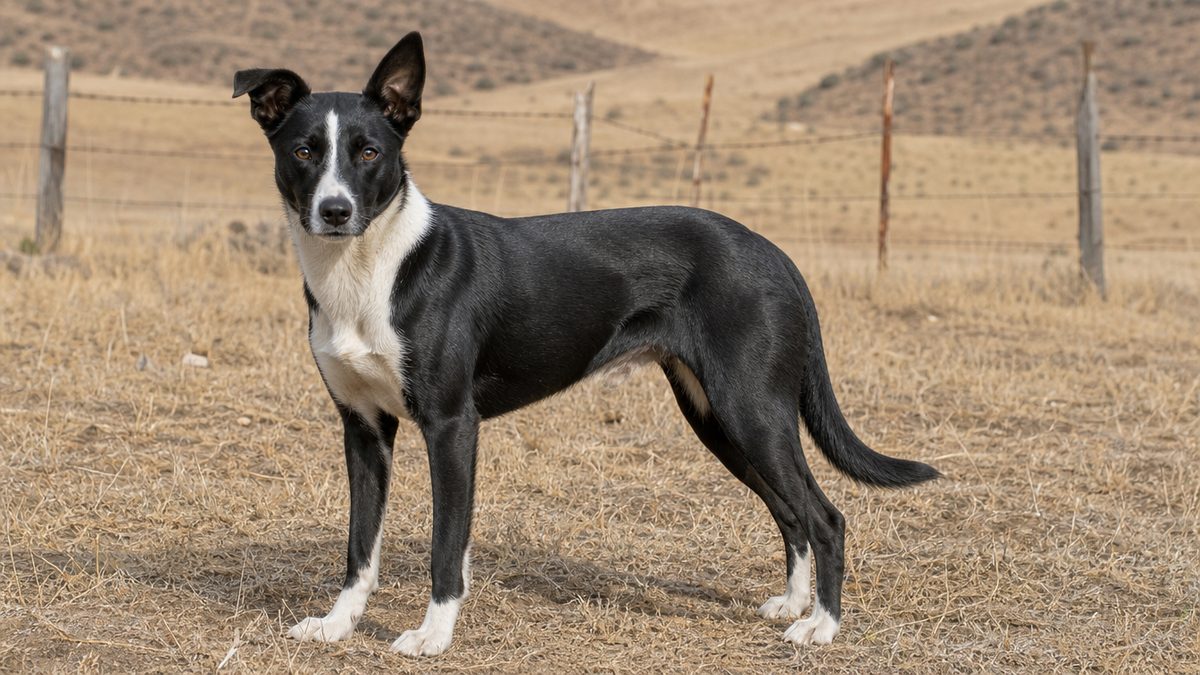
A McNab is a smooth-coated American herding dog developed on one Californian ranch from Scottish collie and Basque herding stock, medium in size, loose-eyed in its working style, and named after the Scotsman who bred it. It answers to McNab, McNab Shepherd, McNab Collie and McNab Stock Dog, and the four names describe one dog rather than four types.
The founder is documented, which is rare for a working landrace and is the first thing that separates this dog from most of the names Bonbeno tests. Alexander McNab left Glasgow, where he had been a pattern cutter and then one of Scotland's early commercial photographers with businesses in Glasgow and Edinburgh, and by the mid-1860s had bought land in Mendocino County, northern California, that eventually totalled about 10,000 acres. He intended to run sheep. His first long-haired sheepdogs did not cope with the climate and the terrain, and an attempt to move 3,000 head of sheep without dogs went badly, so he returned to Scotland to buy the kind of dog he needed.
What he brought back is where the accounts diverge, and the disagreement is worth printing rather than smoothing over. The Dog News profile says he bought from a sheepman named Bruce McInsey in the Grampian Hills, and that the dogs were called Scotch Fox collies. The Continental Kennel Club's history says he moved to Mendocino County in 1866 and returned from Scotland in 1885 with two Scotch Collies, which were then bred to local dogs of Basque Spanish and English origin. One long-established Californian breeder dates the whole thing to 1868 and to a single imported fox shepherd. Wikipedia simply says the late 19th century. Four sources, four framings, one dog. Bonbeno publishes all four rather than picking the tidiest.
The parts everybody agrees on are the useful ones. He preferred the smoother coats for the Californian climate, he kept importing Scottish dogs across decades, and he added the herding dogs the Basque sheepherders around him were using Cooper C. The McNab Shepherd. His son, the attorney John Liddle McNab, consolidated the ranch after Alexander died in 1901 and carried the breeding on. By then the dogs were the default working dog across Mendocino, Napa, Sonoma and Marin counties, to the point where saying collie or shepherd in that region meant a McNab.
What the dog looks like, and why nobody can agree on its size
The McNab is medium, athletic and smooth-coated, and beyond that the published figures disagree by a wide margin. Four documents give four answers, and an Indian buyer looking at a photograph deserves to know that before anyone quotes a number at them.
| Source | Height | Weight |
|---|---|---|
| McNab Shepherd Registry standard | 18 to 25 in, average | 40 to 70 lb (16 to 34 kg), average |
| Continental Kennel Club standard | Males 19 to 25 in, females 18 to 23 in | Males 50 to 70 lb, females 40 to 60 lb |
| The McNab Stockdog Foundation description | 14 to 26 in | 30 to 60 lb |
| Wikipedia infobox | Males 18 to 25 in, females 16 to 21 in | Males 35 to 65 lb, females 30 to 50 lb |
Read the four together and the range runs from a 14-inch, 30-pound dog to a 26-inch, 70-pound one, which is not a breed description so much as a description of most medium dogs Wikipedia, McNab dog. That spread is honest rather than sloppy: this is a working population that was never bred to a bench, and the two organisations closest to it say so in different ways. The Foundation calls the McNab a landrace breed and explains that most standardised breeds carry more physical uniformity than most landraces do. The registry standard opens by conceding that breed standards are not scientific documents and change as the needs of the members who write them change.
The features that do hold across every document are the ones to look for. The coat is moderately short and smooth, straight or slightly wavy, with a fine top coat over a soft short undercoat, weather-resistant and never long Continental Kennel Club. The feet are cat-like feet, oval, deep-padded, with tight well-arched toes, and every source going back to the beginning agrees on that one point. Ears are medium, may sit prick, semi-prick, rose or drop, and are explicitly allowed to be mismatched. Colours are black, red or blonde, usually with white trim, and both standards say no colour or pattern is preferred over another.
Eyes are where the documents contradict each other
Blue eyes get three different answers from three sources on the same breed. The McNab Shepherd Registry standard says blue eyes are rare and are not a colour to be bred for. The Continental Kennel Club standard says blue is undesirable. The Foundation's description says it is not uncommon to see one blue eye, marbling or flecks within an eye. All three are describing the same population, so the honest reading is that blue occurs, that nobody selects for it, and that one organisation is more relaxed about it than the others.
The Foundation's breeders criteria explain why the caution exists, and the explanation is about skin rather than eyes. Breeders are told not to breed for blue eyes caused by a lack of pigment, because that lack shows up as pink skin around the eyes and nose and leads to photosensitivity under sun exposure. In Mendocino County that is a summer problem. In an Indian city at 42 C it is a year-round one, and it is the single strongest argument for choosing a well-pigmented McNab if you ever meet one.
McNab Border Collie is the name that does the damage. It is used by aggregators and by sellers, and it implies a cross that the breed's own organisations do not accept. The McNab is loose-eyed and heads and heels; the Border Collie is defined by its fixed eye. A dog sold in India as a McNab Border Collie is a Border Collie, a crossbreed, or a photograph.
Is the McNab a breed? Tested against Bonbeno's own rule
The McNab is a breed on Bonbeno's two-condition test, and it passes more comfortably than the Koolie did. Bonbeno maintains a page for names that are used like breeds and are not breeds, and the rule that page applies is short: a breed has a written standard and a studbook behind it, so a puppy can be measured against a document. The McNab has two of each, and no national kennel club agrees.
Take the conditions one at a time, because a test that cannot come out either way is not a test. Bonbeno applied the same rule to the Kuchi, a working guardian with neither a standard nor a register anywhere on earth, and concluded that it is a type rather than a breed. The same rule applied to the Koolie produced the opposite verdict on an unofficial club document and three private registers. The McNab sits closer to the Koolie, and slightly ahead of it.
Condition one: is there a written breed standard?
Yes, twice, and one of them is more detailed than most FCI documents. The Continental Kennel Club publishes an official standard for the breed under its Breed Group 10, Pastoral and Stock Dog Breeds, running to sections on Proportions, Head, Body and Tail, Forequarters and Hindquarters, Coat, Movement, Temperament and Faults. It is prescriptive throughout. It fixes an ideal body-length to height ratio between 5:4 and 10:9, an ideal muzzle-to-skull ratio between 4:5 and 1:1, requires 42 teeth, permits a level, scissor or reverse-scissor bite provided the incisors make contact, and disqualifies from the show ring any dog showing signs of breathing or locomotive difficulty.
The second standard is the one every other page links, and it is the one that is gone. The McNab Shepherd Registry, set up in 2014 by breeders and enthusiasts, wrote a full standard covering General Appearance, Characteristics, Head, Muzzle, Teeth, Eyes, Ears, Nose, Neck, Forequarters, Forelegs, Body, Hindquarters, Hind Legs, Feet, Tail, Coat, Colour, Gait, Height and Weight. It is the document Wikipedia cites, the document the breed's Dog News profile links by URL, and the document half the aggregator pages summarise Cooper C. The McNab Shepherd.
Bonbeno fetched mcnabshepherdregistry.com on 2 September 2026. The breed-standard URL that every ranking page links returns HTTP 404. The domain root returns HTTP 200 and serves a Russian-language Mostbet betting and casino page, with og:locale set to ru-RU, a Curacao licence number in a table and a slots leaderboard. The standard itself survives only in an Internet Archive capture taken on 16 August 2025 by Archive Team, a volunteer group whose stated purpose is saving copies of rapidly dying or deleted websites. That capture is the only reason this section can quote the document at all. Bonbeno cites the archive, states its date, and does not pretend the live registry is still there.
A dead domain does not unwrite a standard. The text was published, it was authored by an organisation of the breed's own breeders, and a dated third-party capture proves what it said. But it changes what a buyer can do with it: there is no longer an owner of that document to appeal to, to update it, or to answer a question about it, and every page still linking it is sending readers to a betting site.
Condition two: is there a studbook?
Yes, and this is where the McNab is clearly ahead of the Koolie, because the surviving register is strict rather than nominal. The McNab Stockdog Foundation, founded on 18 May 2020 and run from Steamboat Springs, Colorado, requires four things before it will register a dog: a submitted application, Embark DNA test raw data, a pedigree, and photographs from the front and from both sides. Membership is compulsory, so an unaffiliated owner cannot simply buy a certificate. Fees run to USD 50 for a dog under 12 months, USD 75 at one to two years and USD 100 at three years and over, with litters at USD 25 to 50 plus USD 12.50 per puppy.
The DNA requirement has a stated purpose rather than a marketing one. The Foundation says it requires DNA for parentage verification, for scientific study of genetic integrity in the breed, and to help establish an accurate breed purity test. Applicants are asked to share their Embark profile with the Foundation directly, and the registration declaration transfers rights in the DNA record to the Foundation for future testing and parentage verification. Litter registration requires that one parent hold Permanent Registration Status and the other hold at least a Breeding Stock Certification.
The now-defunct registry ran a comparable system and added one rule Indian readers should notice. To register a dog as a McNab Shepherd it required a Wisdom Panel 4.0 test plus a DNA profile confirming the breed markers, and it refused registration to dogs produced from brother and sister, father and daughter, or mother and son matings. That exclusion sits comfortably inside Indian law rather than against it, which is unusual: Second Schedule Part II paragraph 6(3) of the 2017 rules prohibits incest breeding, defined as mating between parents and children or between brother and sister.
The verdict, and the third organisation that muddies it
The McNab does not belong on Bonbeno's dog types that are not breeds page. That page's own rule states that being a landrace is not what puts a dog there, and names the English Shepherd, a landrace with United Kennel Club registration since 1927, as a dog that stays off it. The McNab is described by its own Foundation as a landrace breed and simultaneously carries two written standards and a DNA-verified register. It is a breed on this site's rule, and the absence of kennel club recognition does not change that.
| Condition | McNab | Koolie | Kuchi |
|---|---|---|---|
| A written standard | Yes, two. A registry standard and a full CKC conformation standard | Yes, one unofficial club document | No. No body exists to publish one |
| A studbook | Yes, two. One DNA-verified and live, one whose domain is gone | Yes, three Australian registers | No. No registry anywhere |
| National kennel club recognition | No | No | No |
| Verdict on Bonbeno's rule | A breed | A breed | A type, not a breed |
Four registries checked one by one, each with a control
Four organisations were checked for the McNab, and the answers differ so much that grouping them under one word would mislead. Two register the breed and two do not, one of the two that do will register a dog on photographs alone, and the largest kennel club in America will let a McNab compete under its own name while refusing it breed status. Each check below was run against a control that returned a result on the same document.
An absence only counts as evidence when the instrument is proved to work in the same session. Every register below was read as a whole list, and every one of them returned breeds Bonbeno knew should be there before any conclusion was drawn about the McNab.
The Federation Cynologique Internationale: absent, and that settles India
The FCI does not hold the McNab, and Bonbeno read the Group 1 nomenclature page rather than assembling a breed URL, because FCI URLs resolve on their trailing number and will serve another breed without erroring. The page's own printed heading reads Group 1, Sheepdogs and Cattledogs (except Swiss Cattledogs). Its Section 1 lists sheepdogs by country of origin, and the United States section contains exactly one breed, the Australian Shepherd, standard 342. The controls were all present on the same page: Border Collie 297, Australian Kelpie 293, German Shepherd Dog 166 and Bearded Collie 271. There is no McNab entry.
That absence answers the Indian question directly rather than by inference. The Kennel Club of India issues pedigrees against FCI nomenclature, so a breed outside that nomenclature has no KCI route at all. No KCI registration for a McNab is possible, and any dog offered in India as a registered McNab is either unregistered or registered as something else.
The United Kennel Club: absent from a 43-breed herding list
The UKC does not recognise the McNab either. Its breed standards index states that the club currently recognises over 300 separate breeds, and its Herding Dog group lists 43 of them. The controls sit in that group: Australian Cattle Dog, Australian Kelpie, Australian Shepherd, Border Collie, English Shepherd, German Shepherd Dog, Louisiana Catahoula Leopard Dog, Stumpy Tail Cattle Dog and White Shepherd. The McNab is not there, and it appears in no other UKC group either.
The English Shepherd's presence on that list is the important detail for anyone tempted to use landrace as a synonym for unregistered. That breed is a landrace too, and the UKC has held it since 1927. Landrace status is a description of how a population was shaped. It says nothing about whether a document exists.
The American Kennel Club: no breed status, and a McNab in its own results
The AKC does not recognise the McNab as a breed, and it will still print the breed's name on a national competition result. Two McNab Shepherds, Josie Jet and Bug, both handled by Amy Heffner, are listed in the AKC's own 2020 Trick Dog National Competition results, each entered as an AKC Canine Partner. AKC Canine Partners is the enrolment programme for mixed-breed dogs and, in the AKC's own words, any dogs without eligibility for full AKC registration; enrolled dogs must be spayed or neutered, and they can compete for titles in Agility, Obedience, Rally, Tracking, Coursing Ability Tests, Fast CAT, Scent Work and Farm Dog Certified.
This is the same structure Bonbeno found on the Koolie, where the Australian National Kennel Council excludes the breed from its Group 5 list and simultaneously lets Koolies compete on a sporting register. Recognition is not binary. Describing the McNab as simply unrecognised loses the half a buyer can actually use, and it is the half nobody writes about.
The Continental Kennel Club: recognised, with a caveat that has to be stated precisely
The Continental Kennel Club does recognise the McNab, publishes a detailed conformation standard for it under Breed Group 10, and runs a puppy marketplace for CKC-registered breeders. That is a real written standard and it is the fullest one currently online for the breed. It is also worth knowing exactly what a CKC registration certifies, because a registry that will register a dog on an owner's word is not the same instrument as a studbook.
The CKC's PAW programme exists for purebred dogs with no documented ancestry. To be eligible a dog must be purebred and of an approved CKC breed, be at least one year old, not be pregnant or nursing, come with a completed application, five photographs, two witness signatures from people familiar with the breed attesting to purebred status, and a non-refundable USD 50 evaluation fee. The CKC states that only breeds on its PAW Eligible Breeds list may apply. Bonbeno could not render that list, which loads letter by letter through JavaScript, so this page does not claim the McNab is on it or off it.
The McNab Stockdog Foundation requires Embark DNA raw data, a pedigree, four photographs and paid membership, and shares the DNA record for parentage verification. The Continental Kennel Club's PAW route requires five photographs, two witness signatures and a fee, with no DNA and no pedigree. Both produce a certificate. Only one of them proves anything about the dog's parents. If someone ever offers you a registered McNab in India, the question to ask is not whether it has papers but which of these two things the papers are.
A fifth organisation is claimed rather than verified. One long-established Californian breeder states that all his breeding dogs are Registered McNabs in The National Stock Dog Registry and DNA tested. Bonbeno did not open the National Stock Dog Registry's own records and makes no claim about what that registration requires. It is recorded here as a breeder's statement, not as a checked register.
| Registry | Holds the McNab? | Control that passed on the same document |
|---|---|---|
| FCI, Group 1 | No. The US section holds only the Australian Shepherd | Border Collie 297, Kelpie 293, GSD 166 |
| United Kennel Club | No, across a 43-breed herding group | Border Collie, English Shepherd, Kelpie |
| American Kennel Club | No breed status. Competes as a Canine Partner | Two McNabs named in the 2020 Trick Dog results |
| Continental Kennel Club | Yes, Breed Group 10, with a full standard | Standard published in full on the breed page |
McNab dog price in India: there is no price, and the search results are not about a dog
No mcnab dog price in india exists to quote, and the evidence for that is composition rather than an empty search box. The breed appears zero times on India's fullest published price list, which runs to more than 40 breeds; every India-located search Bonbeno ran for the term came back substituted; and the only genuine commercial results anywhere are American breeder pages quoting US dollars.
Start with the list that does exist. India's most comprehensive published breed price table for 2026 covers more than 40 breeds, is compiled from breeder networks and marketplace surveys, and quotes the German Shepherd at ₹20,000 to ₹75,000, the Border Collie at ₹20,000 to ₹60,000 and the Labrador at ₹8,000 to ₹80,000. The McNab appears zero times on it. So does the King Shepherd and so does the Shiloh Shepherd. That is not an absence of data; it is an Indian retailer publishing the widest breed list it can assemble and having nothing to say about this dog.
What the Indian result set actually contains
The India-located organic results for this query are worth listing, because the composition tells the story better than any number would. Position one is an American aggregator page whose price field reads Average USD 700 to 1,000. Position two is Etsy's Indian storefront selling McNab dog ornaments. Position three is a Californian breeder's own price page. Position four is a Quora thread about Border Collie puppy prices in India. Position five is another American aggregator quoting an annual insurance figure of USD 750 to 2,000. Position seven is the Indian price list that does not carry the breed. Positions eight, nine and ten are an Instagram reel about a Bengaluru businessman's wolfdog, a YouTube video on affordable dogs, and an American T-shirt shop.
Two merchandise stores, a Quora thread about a different breed, a video and a reel. One Indian commercial page, and it has no McNab row. There is no Indian McNab market to price.
Bonbeno ran four Bing queries from India on 2 September 2026. 'mcnab dog price in india' with cc=IN returned HTTP 200, the correct page title, a printed '29-35 of 10,800 results', and ten organic results about Sullivan Walter, a New Orleans man wrongfully convicted of rape, plus the Supreme Court case Sullivan v. Louisiana. Dropping cc=IN gave 'About 2 results' and two EF News stories about US nuclear sites. 'mcnab shepherd dog breed' with cc=IN gave 'About 59 results' and ten YouTube Help pages in six languages. The control settles it: 'labrador retriever price in india', run in the same session, returned 'About 46,600 results' and ten genuine Indian Labrador pages. The engine works. The McNab query is being answered with somebody else's results, and nothing in those result sets is evidence about anything.
The American prices, and why they are not converted here
Real McNab prices exist in the United States and they are published in dollars. One Californian breeder who has been raising the breed since 1973 and produces 30 to 40 puppies a year lists McNab puppies at USD 1,800 with a USD 500 deposit, trained and experienced cattle dogs from USD 3,000 to USD 7,500, obedience training at USD 1,500 for four weeks and stock dog training at USD 1,500 a month. Two aggregators give lower figures, USD 700 to 1,000 for a puppy and USD 750 to 2,000 a year in running costs Wag!, McNab dog breed facts and information.
Bonbeno publishes no rupee conversion of any of those, and the reason is a rule this site applies everywhere. Indian breed pages routinely take a dollar figure, divide it by one exchange rate, and print the result as an Indian price, and this site has caught that at 84.38, at 74, at 80 and at 66.67 across different breeds. Running USD 1,800 through any of them yields a plausible-looking number between ₹1,20,000 and ₹1,52,000 that no Indian seller has ever quoted, because no Indian seller stocks the dog. A converted price is a fabricated price with arithmetic attached. If you see a rupee figure for a McNab anywhere, divide it by 84.38, by 80 and by 74, and see which one gives you a round dollar amount.
| Item | Published figure | Source type |
|---|---|---|
| McNab puppy, one California breeder | USD 1,800 | Breeder's own page |
| Trained and experienced cattle dog | USD 3,000 to 7,500 | Breeder's own page |
| McNab puppy, aggregator estimate | USD 700 to 1,000 | US breed aggregator |
| Annual cost, aggregator estimate | USD 750 to 2,000 | US breed aggregator |
| McNab, India | No published price. 0 of 40+ breeds | Indian price list |
| German Shepherd, India, for scale | ₹20,000 to ₹75,000 | Indian price list |
One more cost is real and is quotable, because it is what the register itself charges rather than what a dog costs. Registering a McNab with The McNab Stockdog Foundation runs to USD 50 for a dog under 12 months, USD 75 at one to two years and USD 100 at three years and over, plus compulsory membership and the price of an Embark test. That is the only McNab-specific fee anywhere in this section that a buyer could actually be asked to pay, and it buys a pedigree record rather than a dog.
Cost of ownership in India, and the line that money cannot buy
Running a medium working dog in India costs ₹6,000 to ₹10,000 a month on published Indian figures, and a first year lands between ₹80,000 and ₹2,00,000 including purchase, vaccinations, food, training and supplies. Those numbers are real and they apply to a McNab exactly as they apply to any 16 to 34 kg dog living here. The cost that actually decides whether this breed works for you is not on the table at all.
The published Indian cost of ownership for a medium dog breaks down as follows, and it is worth reading the grooming row against this breed specifically. These are Indian retail figures for Indian owners, not converted foreign estimates.
| Cost line | Published medium-breed figure | What changes for a McNab |
|---|---|---|
| Dry and wet food | ₹2,500 to ₹4,000 | Toward the upper end. A working-bred dog at 25 kg burns more than a sedentary one |
| Routine vet visits | ₹800 to ₹1,500 | Unchanged, plus one MDR1 genotype early on |
| Vaccinations | ₹1,500 a year | Unchanged |
| Grooming | ₹800 to ₹1,500 | Overstated. A smooth-coated dog needs a brush and a bath, not a salon |
| Training, first six months | ₹2,000 to ₹5,000 | Understated. This is the one line worth spending more on |
| Treats and toys | ₹500 to ₹1,000 | Toward the upper end. Mental work is not optional here |
| Flea, tick and deworming | ₹400 to ₹700 | Unchanged, and non-negotiable in Indian conditions |
| Monthly total | ₹6,000 to ₹10,000 | Roughly the same total, differently distributed |
Two of those lines move in opposite directions and roughly cancel out. The grooming figure assumes a coat that needs maintenance, and this one does not: moderately short, smooth, close, with a soft short undercoat. An Indian owner will spend a fraction of the published grooming line and should put the difference into training, because a herding dog that is not given work invents it.
The one McNab-specific cost, and it is a test rather than a service
Budget for an MDR1 genotype before your dog is ever prescribed anything. Washington State University's live breed table puts the McNab at about 30 percent frequency for the mutation, against 70 percent in the Collie, 15 percent in the English Shepherd, 10 percent in the German Shepherd and under 5 percent in the Border Collie. That is a one-time cheek swab whose result stays valid for life, and it changes what a vet can safely give the dog. It is the highest-value rupee you will spend on this breed, and almost nobody in India will suggest it, because almost no Indian vet has seen a McNab.
The cost that is not money
The real cost of ownership for this breed is measured in hours. A working McNab covers ground that no Indian city walk approximates, and the breed's own literature records dogs driving stock over a hundred miles in a day. Two hours of genuine physical and mental work a day is the floor, seven days a week, in a climate where two of those hours have to happen before 7 am or after 8 pm for eight months of the year. If you cannot commit that indefinitely, the ₹6,000 a month is irrelevant, because the dog will be miserable and so will you.
Boarding is the hidden line nobody budgets for. A high-drive herding dog that has never been left is a difficult boarder, and Indian boarding facilities are set up for placid family pets. Factor in either a trusted sitter who will actually exercise the dog or a plan that does not involve leaving it, and price that before you commit rather than in the week before a wedding.
An Indian pariah dog of similar size costs the same ₹6,000 to ₹10,000 a month to keep, adopts for nothing, is already adapted to 42 C, and asks for a fraction of the daily work. If the reason you want a McNab is that it is unusual, that is a poor reason and this page is not going to help you rationalise it. If the reason is that you have livestock, land and time, read on.
Heat tolerance: a hot-country dog with the wrong kind of heat behind it
The McNab tolerates Indian heat better than most imported herding breeds and worse than its reputation suggests, and the reason is the shape of its homeland summer rather than the peak temperature. Bonbeno rates heat tolerance 3 of 5. The homeland reaches 41.62 C, almost exactly Chennai's 42.70 C, but it does so at 44 percent humidity with nights falling to 9.39 C.
Every page that mentions this breed says it was bred to withstand California heat, and that is true. Bonbeno went and measured what that heat is. NASA POWER was queried by explicit latitude and longitude for Hopland, Mendocino County, the ranch where the breed was made, and the numbers below are the returned cell's 2001 to 2020 climatology.
| Measure | Hopland cell | Chennai | Delhi |
|---|---|---|---|
| Annual mean temperature | 13.95 C | 27.95 C | 25.60 C |
| Hottest month, mean | 22.64 C (July) | 31.51 C (May) | 35.88 C (June) |
| Highest monthly maximum | 41.62 C (July) | 42.70 C (May) | 48.79 C (June) |
| Minimum in the hottest month | 9.39 C | 24.30 C | 24.00 C |
| Humidity in the hottest month | 44.17 percent | 64.52 percent | 36.42 percent |
| Coolest month, mean | 7.04 C (December) | 24.09 C (January) | 13.61 C (January) |
Read the peaks alone and the McNab looks like a dog built for Chennai. Read the two bolded rows and the picture inverts. A dog cools by panting, and panting works by evaporation, so it loses efficiency as humidity climbs. Hopland's hottest month sits 20 percentage points drier than Chennai's. And a Hopland dog gets a genuine reprieve every night at 9.39 C, where a Chennai dog in May never drops below 24.30 C. The homeland is as hot as India and recovers completely every night. India does not.
Delhi is the interesting middle case. Its May humidity of 23.38 percent is drier than the McNab's own homeland summer, which suits the breed, but its June mean of 35.88 C and highest maximum of 48.79 C are far beyond anything Mendocino County produces. So the honest ranking for this dog in India is dry-heat cities first and coastal humidity last: Pune and Bengaluru easiest, Delhi survivable with strict timing, Chennai and Mumbai hardest.
Bonbeno queried Hopland (38.9738 N, 123.1153 W) and Ukiah (39.1502 N, 123.2078 W) separately. Both returned a cell elevation of 490.1 m and byte-identical monthly series, which means the two towns fall inside one grid cell and this model cannot tell them apart. Wikipedia's infobox gives Hopland's real elevation as 502 ft, or 153 m, so the cell sits about 337 m above the town. At the standard lapse rate of roughly 6.5 C per 1,000 m, the figures above read about 2.2 C colder than the real Hopland, which would put the July mean nearer 24.8 C. Bonbeno publishes the cell's numbers, the divergence and the correction as an estimate rather than quietly publishing the cell. The comparison with India survives the correction, because a 2 C adjustment does not close a 20-point humidity gap.
What the heat evidence actually supports
The largest study of heat-related illness in dogs analysed 905,543 UK dogs under primary veterinary care in 2016 and found 395 confirmed events, with an incidence of 0.04 percent and a case fatality of 14.18 percent. Its companion paper on the same cohort recorded 1,259 heat-related illness events from 1,222 dogs, of which 879 had a recorded trigger, and 652 of those 879, or 74.2 percent, were exertional rather than caused by a hot car or a hot room. Only 46 of 879 involved vehicular confinement.
That 74.2 percent is the number that matters for this breed and not the one Indian pages usually quote. The McNab is not a brachycephalic dog cooking in a parked car. It is a tireless working dog that will chase, herd and run until its handler stops it, and exertional heat illness is exactly the mechanism that kills dogs like it. Neither paper modelled the McNab, which fell far below the inclusion thresholds, so no odds ratio here belongs to this breed. What transfers is the mechanism, and the transferable risk factor is bodyweight at or above the breed and sex mean, which carried an odds ratio of 1.42 with a confidence interval of 1.12 to 1.80 in the Scientific Reports paper.
The practical rules follow from that directly. Work the dog before sunrise and after dark and never at midday. Never let an Indian family throw a ball for a McNab at 3 pm because the dog looks willing; it will always look willing, and that is the failure mode. Watch for the dog that stops responding to its name mid-run, because a herding dog ignoring a recall in heat is a dog in trouble rather than a disobedient one.
Second Schedule Part IV paragraph 21(1) of India's 2017 rules bars keeping certain dogs in outdoor facilities without the attending veterinary practitioner's written approval: dogs not accustomed to the temperatures prevalent in the area, breeds that cannot tolerate them such as long-haired breeds in high temperature locations, and sick, infirm, aged or young animals. A McNab is not a long-haired breed, so the second limb does not catch it. The first limb might, for an imported adult that has never met 42 C, and the clause is worth knowing if anyone ever proposes to keep one in a kennel run in an Indian summer.
Temperament and household fit, from two standards that broadly agree
A McNab is intelligent, assertive, tightly bonded to its own family and reserved with everyone else, and both written standards say so in almost the same words. The Continental Kennel Club standard calls it eager, energetic and exceptionally intelligent, and states plainly that this is not the breed for everyone.
The temperament clause in the Continental Kennel Club standard is unusually blunt for a breed document, and it is the most useful paragraph anyone has written about living with this dog. It says the features that make a fine working dog can also result in behavioural issues if the dog is not allowed to exercise its mind, body, senses and instincts; that it is not recommended for busy homes or families without much time for interaction, socialisation and training; and that it requires lifelong training or a physically demanding and mentally stimulating job to stop it becoming bored, potentially neurotic or destructive.
It is equally blunt about strangers. Mature individuals may be reserved toward or disinterested in strangers, including friendly strangers, and the standard states that this is not incorrect for the breed. What is incorrect is any unprovoked aggressive or fearful behaviour toward people. The registry standard puts the same idea positively: neither nervous nor aggressive, but keen and responsive.
The territorial streak that separates it from a Border Collie
Two independent sources describe the McNab as more territorial than the herding breeds it resembles. Wikipedia notes a keen sense of territory, that McNabs seldom wander from home, and that they are more likely to defend their territory and family than many of the more sensitive herding breeds. The Dog News profile adds that they can be vigilant guard dogs and are more tenacious and territorial than some other herding breeds. For an Indian household with a gate, a watchman, delivery riders and a compound wall, that trait is either the reason you want the dog or the reason you should not have one.
It cuts against the standards' own requirement, and the tension is worth naming rather than resolving. A dog that guards its ground and a dog that must show no unprovoked aggression toward people are describable as the same animal only if it is thoroughly socialised. That is not a temperament you inherit. It is one you build in the first sixteen weeks and maintain for life.
With children, with other dogs, and in an Indian flat
Both breed communities describe McNabs as good with children, and both describe them herding those children. The Dog News profile records the McNab's love for children in the same paragraph as the observation that they will herd them, like some other herding breeds. Herding a child means circling, blocking, and occasionally a nip at the heel, which is a working behaviour rather than aggression and which a five-year-old and their grandmother will not read that way. It is manageable and it has to be managed from the first week.
With other pets the picture is better than most herding breeds. Wikipedia records that McNabs often bond tightly to family members including other household pets. The Continental Kennel Club standard is more measured, noting that not all McNabs are all-round family dogs because many bond with whoever is most interesting and interactive rather than treating everyone equally.
Anyone in an apartment. Anyone who works ten-hour days. Anyone buying a first dog. Anyone who wants a dog that greets guests. Anyone who cannot give two hours a day for the next thirteen years. The Continental Kennel Club's own living-space scale places this breed at farm or ranch, at the opposite end from apartment or condo, and Bonbeno's apartment suitability rating of 1 of 5 is not a stylistic flourish.
Training: the easiest herding dog to teach and the easiest to get wrong
To train a McNab, give it real work early, keep sessions short and consistent, and never try to win an argument by force. The Continental Kennel Club places the breed at the top of its own trainability scale, at training to perform a specific job or skill, and both standards describe an alert, keen and responsive dog McNab Shepherd Registry.
The single most useful sentence written about training this breed is a warning about method. McNabs can be assertive and demanding, so they need an owner who understands positive training methods, and these dogs will push back against someone who tries to bully them. That is a specific, checkable failure mode rather than general advice. A herding dog selected to hold its ground against a cow does not fold when a human raises their voice; it escalates, and then the relationship is the problem rather than the behaviour.
A realistic Indian timeline
- Weeks 8 to 16. Socialise hard and socialise wide. Meet delivery riders, autos, cows, temple bells, firecrackers at a distance, wet floors, lift doors and children. This window closes and it does not reopen, and the territorial streak this breed carries makes it the highest-value fortnight of the dog's life.
- Weeks 10 to 20. Teach a recall that works under arousal, because a loose-eyed dog that has locked onto a moving scooter is beyond a normal recall. Pay for it with food the dog would sell you for, every single time, for a year.
- Months 3 to 6. Build a settle. This breed's problem in an Indian home is not learning things; it is switching off. A mat, a chew and a closed door for two hours a day teaches a skill the dog does not have naturally.
- Months 6 to 12. Introduce a job. Scent work, retrieve games with rules, a treadmill for monsoon weeks, formal obedience, or actual stock if you have it. Bonbeno is not being romantic about this: the standard itself says a job is what stops the dog becoming neurotic or destructive.
- Year 2 onward. Maintain. A trained McNab that stops being worked reverts faster than a Labrador does, and adolescent regression between 8 and 14 months is normal rather than a failure.
Herding instinct is the thing owners in Indian cities underestimate, because it does not look like disobedience. A McNab that circles a jogger, blocks a cyclist or stares at a passing bike is working. It has picked a target that moves and applied the behaviour it was bred for. Punishing that teaches nothing, because the behaviour is self-reinforcing. Redirecting it onto a ball, a flirt pole or a scent game works, and it is the whole of the training plan in a country with no sheep on the balcony.
What this breed resists
Repetition without purpose is the fastest way to lose a McNab's attention. So is a handler who is inconsistent between family members, which in a joint Indian household is the normal condition rather than an edge case. Write the rules down, get everyone to agree them, and enforce them identically. A dog this intelligent will find the one person who lets it on the sofa within a fortnight.
Crate work is the other thing to get right early, and for an Indian reason. Power cuts, monsoon weeks, festival nights and long journeys all require a dog that can be confined without distress, and a working dog that has never been confined does not learn it well at three years old.
Daily exercise: the requirement that decides everything else
A McNab needs about two hours of real physical and mental work every day, and in India that has to happen before sunrise and after dark for most of the year. This is the highest exercise rating Bonbeno gives, and it is the single factor that makes or breaks the breed in an Indian home.
The scale of the requirement is not a matter of opinion. Working McNabs are recorded covering over a hundred miles a day driving herds, and the breed's reputation in search and rescue is that where other dogs have to be pulled off a search because they are tiring, the limit for a McNab is the energy of its handler. That is the animal you are bringing into a 1,200 square foot flat.
What it does not mean is that the dog is frantic. Wikipedia is explicit that, unlike some other herding breeds, McNabs are not hyperactive, and that given plenty of exercise a McNab is content to nap at its owner's side with a watchful eye. That is the deal on offer. Meet the requirement and you get a calm house dog. Miss it and you get a dog that reorganises your household.
An Indian week that actually works
- Morning, 45 to 60 minutes before 7 am. Off-lead running where that is safe, or a long-line and a flirt pole where it is not. This is the session that cannot be skipped.
- Evening, 45 minutes after 8 pm. Structured work rather than a stroll: recalls, directional sends, retrieves with a stop, or a scent search laid in the stairwell.
- Twice a week, 20 minutes. Something new. A different park, a hardware-store car park at night, a friend's terrace. Novelty is exercise for this brain.
- Daily, 15 minutes indoors. Puzzle feeders, a snuffle mat, or a training session on a trick the dog cannot do yet. Fifteen minutes of thinking tires a McNab more than thirty minutes of walking.
- Monsoon weeks. Assume you will lose outdoor time for ten days at a stretch and have an indoor plan before you need it, because a McNab with four days of unspent energy is not a dog you improvise with.
Timing is a safety matter and not a convenience. The largest heat-illness dataset found that exertional cases accounted for 652 of the 879 events with a recorded trigger, 74.2 percent, far outnumbering hot cars and hot rooms combined. A high-drive dog does not self-regulate. It will run at 2 pm in May because you asked it to, and it will keep running past the point where a sensible dog would stop.
A McNab can live in a flat if, and only if, the two hours happen every day without exception, and if somebody is home most of the day. That is a real arrangement and a few people manage it. What does not work is a flat, a full-time office job and a weekend walk. If that is your life, this breed will be unhappy and so will your neighbours.
Grooming and skin care in Indian humidity
Grooming a McNab takes about ten minutes a week, and the real work in India is skin, ears and ticks rather than coat. The coat is moderately short and smooth, straight or slightly wavy, with a fine top coat over a soft short undercoat, weather-resistant and never long.
This is the breed's clearest practical advantage in an Indian household, and it is worth stating plainly against the alternatives. A weekly brush with a rubber curry or a slicker lifts the dead undercoat, a bath every four to six weeks or when the dog is genuinely dirty is enough, and there is no stripping, no clipping and no salon appointment. The Continental Kennel Club describes the coat as weather-resistant, short, smooth and close to the body, coarse in texture, with a shorter protective undercoat and occasional light furnishing on the tail, the back of the hindlimbs and sometimes the ears.
Never clip that coat short for the summer. A close double coat insulates against heat as well as cold, and shaving it removes the guard hairs that keep sun off the skin while doing nothing useful for cooling. This is one of the commonest pieces of bad advice given to Indian owners of any short double-coated dog, and it is worse on a dog with white markings.
Pigment, white markings and Indian sun
White is where this breed's grooming becomes a health question. The Foundation's own breeders criteria warn against breeding for blue eyes caused by a lack of pigment, because that lack produces pink skin around the eyes and nose that leads to photosensitivity under sun exposure, and separately advise breeders not to breed for extreme white around the head or the entire body because of congenital deafness. Most McNabs carry white collars, white socks, a white chest and often a white blaze or half-white face.
For an Indian owner, that translates into two habits. Check pink noses and pink eyelids in April and May for redness and crusting, and take a dog with a pink nose to a vet before it becomes an ulcer rather than after. And if you have a heavily white-headed dog, treat midday sun as off limits entirely rather than as inadvisable.
Ears, ticks and the monsoon
Check ears weekly and dry them after every bath and every swim. Ear carriage in this breed varies from prick to drop and the standards allow mismatched ears, so the risk is per dog rather than per breed: a drop-eared McNab in Mumbai in August is carrying a warm wet pocket that a prick-eared littermate is not. Overseas grooming guidance that says to towel a dog and let it air dry is written for a climate that does not have an Indian monsoon, and it is worth ignoring on this point.
Ticks are the year-round job. A working coat lying close to the body hides them well, and the places to check are the ear margins, between the toes, the armpits and under the collar. Run your hands over the whole dog after every off-lead session in grass, and keep the preventive on schedule rather than starting it when you find one.
- Brush weekly, twice weekly during the two seasonal sheds.
- Bathe every four to six weeks, and dry the ears afterwards.
- Check ears, pink skin and paws once a week, every week.
- Trim nails monthly, because cat-like feet with tight toes hide overgrowth well.
- Never clip the coat short, whatever a groomer tells you in May.
Health issues, screening and life expectancy: one real risk and a lot of silence
The McNab has one well-documented health risk, the MDR1 drug-sensitivity mutation, and almost nothing else that has been measured. Washington State University's own breed table puts the frequency at about 30 percent. Every other claim you will read about this breed's health, including the one that says it has no breed-specific problems, rests on the absence of study rather than the presence of evidence.
Start with what everyone repeats. Wikipedia states that McNabs are hardy dogs with no breed specific health problems and an average life span of 13 to 15 years. The Dog News profile says the same, adding that inbreeding has not been an issue. The Continental Kennel Club gives 12 to 16 years. None of those figures is attached to a study, a survey, a mortality dataset or a denominator. An unstudied population is not a healthy one; it is an unstudied one.
There is no veterinary literature on this breed at all
Bonbeno searched PubMed through NCBI's own interface on 2 September 2026 for four name forms and found nothing about the dog. The results are worth setting out, because the reason for the zero is a trap rather than a finding.
| Query | Records returned | What they actually are |
|---|---|---|
| McNab dog | 2 | A Neotropical xenarthrans dataset and a 1967 Lancet salmonellosis paper |
| McNab Shepherd | 5 | Two NEJM critical-care trials, an X-ray tomography paper, a SARS-CoV-2 assay, an ultrasonics paper |
| McNab Collie | 0 | Nothing |
| McNab Sheepdog | 0 | Nothing |
| Labrador Retriever AND hip dysplasia (control) | 126 | Genuine canine orthopaedic literature |
Every one of the seven hits is a paper by an author surnamed McNab. R. McNab on the xenarthran dataset, McNab DJ on the 1967 Lancet paper, McNab JA on the myelin tomography paper, McNab MLL on the SARS-CoV-2 assay, McNab A on the ultrasonics paper. McNab is a Scottish surname before it is a dog, and PubMed's all-fields translation catches the author field, so a naive reader would report five or seven papers on the breed and be completely wrong. The control returned 126 real records in the same session, so the instrument was working. The honest number is zero, and zero is publishable.
MDR1: the one thing you must test for, and how the evidence caught up
The ABCB1 gene, usually called MDR1, codes for a protein that keeps certain drugs out of the brain and helps the body excrete them. Dogs with the deletion can have severe reactions, including tremors, disorientation, blindness, severe muscle weakness and death, to drugs that are routine in every other dog. The McNab carries it at about 30 percent, and that figure is now confirmed twice from independent sources. It appears in Washington State University's live breed table and again in Table 1 of a 2023 peer-reviewed review of canine and feline P-glycoprotein deficiency.
| Breed | Mealey 2023, Table 1 | WSU live breed table |
|---|---|---|
| McNab | 30 percent | 30 percent |
| Collie | 70 percent | 70 percent |
| Longhaired Whippet | 65 percent | 50 percent |
| Australian Shepherd | 50 percent | 50 percent |
| Silken Windhound | 30 percent | 30 percent |
| English Shepherd | 15 percent | 15 percent |
| Shetland Sheepdog | 15 percent | 15 percent |
| German Shepherd Dog | 10 percent | 10 percent |
| Border Collie | under 5 percent | under 5 percent |
Every row in that table agrees between the two sources except one. The Longhaired Whippet reads 65 percent in the 2023 review and 50 percent on Washington State University's current web table. That disagreement is not about the McNab and Bonbeno does not resolve it; it is recorded here because anyone checking these figures will meet it, and because a source that agrees on eight rows and differs on one is behaving like a live register rather than a fixed table.
The 2008 study genotyped 5,368 dogs between May 2004 and September 2007 and named Collie, Longhaired Whippet, Australian Shepherd standard and miniature, Shetland Sheepdog, Old English Sheepdog, Border Collie, Silken Windhound and German Shepherd Dog. The McNab is absent from that list, and the reason is simply that it had not been tested in numbers by 2007. Fifteen years later the same lead author's review lists McNab at 30 percent, alongside Silken Windhound at 30 percent, English Shepherd and Shetland Sheepdog at 15, German Shepherd Dog and herding breed crosses at 10, and Border Collie under 5. That matches Washington State University's current table exactly. So this is not two sources disagreeing. It is the peer-reviewed literature catching up with a breed nobody had screened, which is what the laboratory's own page predicts when it says the list of affected breeds will likely grow as more dogs are tested.
For an Indian owner the practical consequence is the same whichever figure is right. Test the dog. A single cheek swab settles it for life, and the result changes what a vet can safely prescribe.
Loperamide, sold across India as Imodium and available over the counter, is the clearest danger on Washington State University's problem-medication list: at doses used to treat diarrhoea it causes neurological toxicity in dogs with the MDR1 mutation, and the laboratory says it should be avoided in all dogs with the mutation. Indian households self-medicate dogs with human anti-diarrhoeals routinely. On the same list, ivermectin in Heartgard at label doses, milbemycin in Interceptor, moxidectin, selamectin, fluralaner, afoxolaner, sarolaner and lotilaner have all been tested by their manufacturers and found not to raise risk in affected dogs at label doses; other ivermectin formulations need veterinary dosing advice. That last point matters here, because injectable ivermectin at high dose is used widely in Indian practice for mange.
One further consequence is easy to miss. The MDR1 mutation is associated with a blunted hypothalamic-pituitary-adrenal axis, so affected dogs are especially prone to relative adrenal insufficiency when they are seriously ill and benefit from physiologic doses of corticosteroids. If your dog is ever critically ill in an Indian ICU, its MDR1 status is information the treating vet needs and will not think to ask for.
The natural bobtail lethal, and why you screen for it
Some McNabs are born with a naturally short tail, and breeding two carriers together kills embryos. The Foundation's breeders criteria state that breeding for bobtails can lead to an embryonic lethal mutation located on the T gene, that McNabs can carry it, and that breeding stock should therefore be tested. The paper they cite is real and Bonbeno resolved it: Haworth and colleagues identified the canine homologue of the T-box transcription factor T, in which failure of the protein to bind its DNA target produces the short-tail phenotype. This is not a cosmetic question. It is a screening requirement for anyone breeding the dog anywhere, India included.
White, deafness and pigment
The same document advises breeders not to breed for extreme white around the head or the entire body because of congenital deafness, and not to mate a dog and bitch that both carry more than 50 percent white on the head. That is the standard pigment-and-hearing relationship seen across white-marked herding and cattle breeds, and Bonbeno's Australian Cattle Dog page works through the same mechanism in more depth. If you are ever offered a heavily white-headed McNab puppy, a hearing test before purchase is the reasonable ask.
What Indian law requires that the breed's own documents do not
Second Schedule Part III paragraph 8(10) of India's 2017 rules requires that breeding dogs have been tested for genetic defects, including hip dysplasia, progressive retinal atrophy, night blindness, hypothyroidism, entropion, ectropion, overshot, undershot jaw when incisors do not touch or mesh, wry mouth, two or more missing teeth, and unilateral or full cryptorchid males. The word is including, so the list is illustrative rather than closed. Notice what it does not mention: the gazette never mentions MDR1, and the words BAER and deaf appear zero times in it. India's mandatory list would not catch the one thing this breed genuinely needs testing for, and the breed's own registries would.
The jaw clause does bite here. The Foundation's criteria call any deviation of more than a quarter of an inch in an overbite or underbite a serious fault and instruct breeders not to breed it, which aligns with 8(10) rather than colliding with it. That is a rare case of a foreign breed club and Indian law agreeing, and it is worth saying so on a site that usually reports the opposite.
What the OFA holds, and what a small gene pool means here
The Orthopedic Foundation for Animals carries the breed as an entry and publishes no statistics for it. Bonbeno read OFA's own Browse By Breed list, where the printed label MCNAB appears alongside AUSTRALIAN KOOLIE, GERMAN COOLIE, KING SHEPHERD and SHILOH SHEPHERD. Bonbeno then read OFA's full statistics dump, which runs to 274 distinct breed labels across 11 disease panels, and the McNab has no row in any of them. The controls passed on the same retrieval: the Labrador Retriever returned 109 rows and the German Shepherd Dog 75, each present in all eleven panels, so the absence is real rather than a failed lookup. OFA requires 100 hip evaluations, or 50 for its other databases, before it publishes a breed, and a working population that is rarely screened does not reach that threshold.
OFA does name the breed somewhere else, and the juxtaposition is the finding. Its Collie Eye Anomaly page lists the affected breeds as Australian Cattle Dog, Australian Shepherd, Bearded Collie, Border Collie, Boykin Spaniel, Collie, English Shepherd, Hokkaido, Australian Kelpe, Koolie, Lancashire Heeler, Windsprite, McNab, Nova Scotia Duck Tolling Retriever, Shetland Sheepdog, Silken Windhound and Welsh Sheepdog, seventeen breeds with the McNab thirteenth. The spelling Australian Kelpe is OFA's own. Collie eye anomaly is caused by a recessive deletion in NHEJ1, identified when a 7.8 kb deletion was shown to cosegregate with the condition across multiple breeds, and OFA states it can be diagnosed at six to eight weeks with no treatment available.
So the position is this. OFA lists the McNab as a breed affected by collie eye anomaly and offers a DNA test for it, and publishes not one statistics row for the breed. There is no OFA-derived prevalence figure for the McNab and this page does not invent one. What the reader can act on is the test itself: a CEA genotype and an MDR1 genotype together cover both of the inherited conditions any authority has actually named in this dog.
The gene pool is the argument underneath all of this, and it is the reason the breed's own organisations behave as they do. The McNab Stockdog Foundation explicitly recognises the necessity of outcrossing McNabs to conserve genetic integrity, encourages breeding up toward a higher concentration of McNab, and runs a Breeding Stock Certification for non-McNab working and herding dogs whose qualities complement the breed. It also discourages popular sire syndrome by name, warning that breeding repeatedly back to one dog for a colour or a championship leads to genetic bottlenecking. That is a deliberately open studbook defended on genetic grounds, and it is the same reasoning the Lucas Terrier club gives for staying outside the Kennel Club. A closed register on a small gene pool fixes type and loses diversity, and both of these breeds have chosen diversity.
Life expectancy: the honest answer
No lifespan study covers the McNab. The two largest published canine longevity datasets, Teng and colleagues' United Kingdom life tables from 2022 and McMillan and colleagues' 2024 analysis of breed longevity, are both built on British populations, and the McNab is an American working dog with effectively no British presence McMillan KM, Bielby J, Williams CL. The 13 to 15 years everyone prints comes from breed literature rather than from mortality data, and the Continental Kennel Club's 12 to 16 comes from the same place. Bonbeno publishes the claimed range, names it as a claim, and does not dress it up as a finding.
Feeding a working dog that is probably not working
Feed a McNab to body condition rather than to a chart, and expect an adult of 16 to 34 kg to need roughly 2 to 3 percent of bodyweight a day in food, split into two meals. The gap between what this breed was built to burn and what an Indian city dog actually burns is where most feeding mistakes come from.
Weight is the first decision and the published standards make it awkward, because they disagree. The registry standard gives 40 to 70 lb, or 16 to 34 kg, as an average; the Continental Kennel Club gives 50 to 70 lb for males and 40 to 60 lb for females; and the Foundation's description gives 30 to 60 lb. A dog can be anywhere in that spread and be correct, so ignore the numbers and use your hands: ribs easily felt under a thin cover, a visible waist from above, a clear tuck from the side.
The Continental Kennel Club standard is unusually direct about condition. It requires an underline that is taut and firm, without any indication of sagging or excess weight, and specifies that the weight of males or females is always in proportion to height. In other words the breed has no correct weight, only a correct condition, which is the right way to feed any working dog.
A practical Indian feeding plan
- Puppy, 8 to 16 weeks. Four meals a day of a large-breed puppy food, sized so the puppy stays lean. A fat herding puppy is not a healthy one.
- 16 weeks to 6 months. Three meals. Watch growth rate rather than weight; a puppy that outgrows its joints is a problem you cannot undo.
- 6 to 12 months. Two meals, transitioning to adult food between 10 and 14 months. Cut portions during any period the dog cannot be exercised.
- Adult. Two meals, roughly 2 to 3 percent of bodyweight daily, adjusted every month against body condition rather than against the bag.
- Senior, 8 years on. Same food, less of it, with a joint supplement discussed with your vet rather than bought off a shelf.
Indian availability is not a constraint for this breed. A 16 to 34 kg active dog eats what a Labrador or a German Shepherd eats, and every large-breed formula sold in India covers it. Published Indian food costs for a medium dog run ₹2,500 to ₹4,000 a month, and a genuinely worked McNab will sit at the top of that band or slightly above it.
The three feeding mistakes that matter here
First, feeding a working ration to a non-working dog. Most Indian McNabs, if any exist, will get two hours of exercise rather than a day of stock work, and they need to be fed accordingly. Second, feeding immediately before or after hard exercise in heat, which is a bloat and a heatstroke risk in a deep-chested athletic dog. Leave an hour either side. Third, free-feeding, which removes the single best early-warning sign you have: a working dog that walks away from breakfast is telling you something, and you cannot hear it if the bowl is always full.
In April and May an Indian McNab will drink far more than its winter volume, and the failure mode is a dog that runs hard at 6 am and then has one small bowl for the rest of a 40 C day. Two large bowls, refilled twice, in different rooms. Add a splash of water to dry food in the hot months. None of this is breed-specific advice; it is simply the advice that gets forgotten for dogs whose owners are focused on the coat.
The first year, month by month, if you end up with one
A McNab puppy's first year has three jobs: socialise it before sixteen weeks, protect its joints while it grows, and settle its MDR1 status before it is ever prescribed anything. Everything else is ordinary puppy raising. The timeline below is written for Indian conditions, where the socialisation window and the hot season frequently collide.
Nothing here should be read as an invitation to import a puppy. Indian law prohibits selling a pup under eight weeks of age under Rule 8(1)(a) of the 2017 rules, and this section exists for the reader who has somehow acquired the dog rather than for one shopping.
- Month 2 (8 to 12 weeks). Four meals a day. Vaccination course begins; India's own rules note that puppy vaccination can start at seven to eight weeks and is usually completed by eighteen weeks. Start socialisation the day the dog arrives, indoors and in the arms if the course is incomplete. Order the MDR1 test now.
- Month 3 (12 to 16 weeks). The window that matters most. Meet twenty new people, ten surfaces, autos, two-wheelers, cows, lifts and stairs. A territorial breed socialised badly at this age becomes a reactive adult, and no amount of later training fully undoes it.
- Month 4. Three meals. Recall becomes the daily project. Begin crate and settle work. Adult teeth start arriving; give the dog something legal to chew before it selects something itself.
- Month 5 to 6. Herding instinct begins to show as circling, staring and heel-nipping at moving things. Redirect it onto a flirt pole or a ball on a rope. Do not punish it. Keep exercise to short bursts rather than distance running.
- Month 7 to 9. Adolescence. The recall you built will fall apart and you will need to rebuild it. Two meals a day. Sexual maturity arrives; India's rules bar selling a dog over six months without sterilisation unless the sale is to another licensed breeder.
- Month 10 to 12. Growth plates close. Only now can you start real distance work, and only in the cool hours. Transition to adult food. Introduce a proper job: scent work, formal obedience or stock if you have it.
- Month 13 to 18. The dog fills out and settles. Maintain everything. A McNab that reaches eighteen months well socialised, well exercised and given a job is the dog the standards describe. One that reaches it without those things is the dog the standards warn about.
The Indian-specific complications
Two of them recur. The socialisation window frequently falls in April, May or the monsoon, when it is too hot to be outside at any hour a puppy can be safely walked. Plan for indoor and evening socialisation deliberately rather than losing the window by default. And the heat itself constrains exercise exactly when a growing dog needs the least of it, which is convenient: a puppy under six months should not be doing distance work anyway, so an Indian summer imposes the restriction a good breeder would have recommended.
The McNab Shepherd Registry standard says docking is acceptable and The McNab Stockdog Foundation's breeders criteria advise that hind dewclaws should be removed before five days of age, easiest at birth. Both are ordinary American practice. Both are prohibited in India. Second Schedule Part II paragraph 6(8) reads that there shall be no tail docking, ear cropping, de-barking, de-clawing, branding, dyeing, injecting substances to enhance visual appeal, performing a surgery or procedure to camouflage or hide any defect or infirmity or any other kind of mutilation of any body part of the pup, and that any change of appearance by artificial means is strictly forbidden. An Indian owner following overseas breed-club guidance on either point would be breaking the law.
Head to head against the herding dogs an Indian buyer can actually get
Against the herding breeds available in India, the McNab wins on coat and loses on availability, and there is no scenario in which a buyer here should choose it over a Border Collie or a Kelpie on practical grounds. The table below compares what a buyer can verify rather than what a breed page claims.
Every row below was read off a register, a standard or an Indian price list rather than inferred. Heat ratings are Bonbeno's own, and the reasoning for each sits on that breed's page.
| McNab | Border Collie | Australian Kelpie | German Shepherd | Indian pariah | |
|---|---|---|---|---|---|
| Published Indian price | None. 0 of 40+ breeds | ₹20,000 to ₹60,000 | Not on the list | ₹20,000 to ₹75,000 | ₹0 to ₹2,000, or adoption |
| FCI standard | No | Yes, 297 | Yes, 293 | Yes, 166 | No |
| KCI registration possible | No | Yes | Yes | Yes | No |
| Written breed standard exists | Yes, two | Yes | Yes | Yes | No |
| Coat work in Indian humidity | Lowest of the five | High, feathered | Low | High, heavy shed | Lowest |
| Bonbeno heat tolerance | 3 of 5 | See guide | See guide | See guide | Highest |
| Daily exercise requirement | 2 hours, non-negotiable | 2 hours | 2 hours | 1.5 hours | 1 hour |
| Availability in India | Effectively zero | Available | Rare | Everywhere | Everywhere |
The Border Collie is the comparison that matters most, because it is the breed a McNab is most often sold as. It has an FCI standard, a KCI route, a published Indian price band and an Indian population, and it asks for the same two hours a day. What it costs you in exchange is coat: a feathered double coat in Chennai in August is a different proposition from a smooth close one. If you want the McNab's working brain and can accept the grooming, this is the dog to buy.
The Australian Kelpie is the closer match on coat and on temperament, being another smooth-coated working herder built from collie stock, and it holds FCI standard 293. It is rare in India but not absent, and it is the honest answer for a reader who specifically wants a short-coated working herding dog with paperwork that means something.
The German Shepherd is the herding breed India actually keeps, at ₹20,000 to ₹75,000 on the published list. It is a heavier dog with a much heavier coat and a different job description, but it is available, it can be registered, and Indian vets know it. It also carries the MDR1 mutation at around 10 percent, a third of the McNab's rate, which is worth knowing if drug sensitivity is what drew you here.
The Indian pariah dog is the comparison most buyers will not want and most should take. It is heat-adapted rather than heat-tolerant, it needs an hour a day rather than two, it costs nothing to acquire, and a herding-type indie with drive exists in every Indian city if you ask a rescue for one.
Coat. Of the five dogs above, only the pariah is lower maintenance in Indian humidity, and the McNab's close smooth weather-resistant coat is the best working-herding configuration for Indian sun that any registered herding breed offers. That is a real advantage and it is the reason this page rates heat tolerance 3 rather than 2. It is not, on its own, a reason to import a dog that cannot be registered here.
Nine mistakes Indian readers and Indian writers make about this breed
Most of what circulates about the McNab in India is either a translated American page or a mistake with a citation attached. These are the nine that recur, in the order they will cost you money or the dog's health.
- Buying a McNab Border Collie. The name is used by aggregators and sellers and it describes no recognised animal. If a dog in India is offered under that name it is a Border Collie, a crossbreed or a photograph. The working styles differ: the McNab is loose-eyed and heads and heels, where the Border Collie is defined by its fixed eye.
- Accepting a certificate without asking which registry issued it. Two live routes exist and they are not comparable. The McNab Stockdog Foundation requires Embark DNA raw data, a pedigree, four photographs and paid membership. The Continental Kennel Club's PAW programme registers a papers-free dog on five photographs, two witness signatures and a USD 50 fee. Both produce paper. Only one proves parentage.
- Following the breed's own documents on docking and dewclaws. The registry standard permits docking and the Foundation advises removing hind dewclaws before five days. Second Schedule Part II paragraph 6(8) forbids docking, de-clawing and any change of appearance by artificial means outright. Overseas club guidance is written for another jurisdiction.
- Reading no breed-specific health problems as healthy. Wikipedia and the Dog News profile both say it, and neither is wrong about what has been reported. But there is no health survey, no mortality dataset and no published veterinary literature on this dog at all, so the sentence describes the state of the evidence rather than the state of the breed.
- Quoting the PubMed hit count. Searching McNab Shepherd on PubMed returns five records and every one is a paper by an author surnamed McNab, including two New England Journal of Medicine critical-care trials. Read the titles, not the count. The real figure is zero, against 126 for a Labrador control run in the same session.
- Converting an American price into rupees. USD 1,800 is a real published McNab price in California. Divided by any of the four exchange rates this site has caught in circulation it becomes a plausible-looking Indian figure that no Indian seller has ever quoted, because no Indian seller stocks the dog.
- Clipping the coat for the summer. A close weather-resistant double coat shields skin from sun. Shaving it removes that shield without improving cooling, and on a breed that commonly carries white markings and pink skin it makes photosensitivity worse.
- Treating a printed result count as a market signal. Bonbeno's India-located searches for this breed returned counts of 10,800, 59 and About 2 results, and every single result set was about something else entirely, from a Louisiana criminal case to YouTube's help pages. A count attached to a substituted result set is not evidence of anything, in either direction.
- Reading an AKC title as AKC recognition. Two McNab Shepherds competed in the AKC's 2020 Trick Dog National Competition. They did so as AKC Canine Partners, the programme for dogs without eligibility for full registration. Competing under the AKC's roof is not the same as being an AKC breed, and the distinction matters when somebody quotes it at you as proof.
The mistake this site nearly made too
Bonbeno's first pass at this breed nearly reported that the McNab was absent from Washington State University's MDR1 breed table. A search-result snippet of that table showed eleven rows and the McNab was not among them. Reading the full page showed an eighteen-row table with McNab at 30 percent sitting between Long-haired Whippet and Mixed Breed. The snippet was not wrong; it was simply truncated, and the truncation removed exactly the row that mattered. A snippet is not a source, and this page's central health finding would have been inverted by trusting one.
Adoption, sourcing, and the honest recommendation
There is no McNab to adopt in India, and Bonbeno's recommendation is that you should not try to import one. If you want what this breed offers, a smooth-coated working herding dog with a real brain, three better routes exist here and all three are legal, verifiable and immediate.
Start with what cannot be done. The Kennel Club of India issues pedigrees against FCI nomenclature, and the McNab is absent from FCI Group 1. No KCI registration is possible, so nobody in India can lawfully sell you a registered McNab. The breed appears zero times on the country's fullest published price list, no Indian seller was found, and every India-located search for the term returned somebody else's results. A dog offered to you in India as a McNab is a claim, not a pedigree.
How to verify a dog that is offered to you as one
- Ask which registry. If the answer is The McNab Stockdog Foundation, ask for the registration number and the Embark profile, because that register requires DNA raw data and a pedigree. If the answer is the McNab Shepherd Registry, note that its domain is gone and ask when the certificate was issued.
- Ask for the DNA result itself, not a summary of it. Both live routes accept or require commercial DNA testing, and a breed-composition report is a document you can read.
- Test independently. A commercial breed-composition test bought in India settles the question for a few thousand rupees and is worth more than any certificate.
- Screen for MDR1 before anything else. Whatever the dog turns out to be, if it has herding ancestry it may carry the mutation, and the result changes what a vet can safely prescribe.
- Verify the age. Indian law prohibits the sale of pups under eight weeks under Rule 8(1)(a), and a seller who is vague about age is telling you something.
The three routes Bonbeno actually recommends
Adopt a herding-type indie. Every Indian city rescue has dogs with drive, a smooth coat and a working brain, and they are already adapted to 42 C. Tell a rescue what you want the dog to do rather than what you want it to look like, and let them match you. This is the recommendation, and everything below it is a distant second.
Buy an Australian Kelpie if you specifically need paperwork. It is the closest registered equivalent: smooth-coated, built from collie stock, FCI standard 293, and obtainable in India with a KCI route behind it. It is rare here, which means waiting rather than importing.
Buy a Border Collie if you can accept the coat. Published at ₹20,000 to ₹60,000 on the Indian list, FCI standard 297, and available Federation Cynologique Internationale. It is the same working brain in a heavier coat, and Indian owners keep them successfully.
Nothing on this page is a criticism of the dog. A McNab works, and an unregistered dog is not an inferior one. Do four things: genotype it for MDR1 and put the result on the file at your vet's clinic; do not clip its coat; shift all hard exercise to before 7 am and after 8 pm from March to October; and if it has a pink nose or a white head, keep it out of midday sun entirely. Register it with The McNab Stockdog Foundation if provenance matters to you, understanding that the certificate records a pedigree rather than granting Indian recognition.
One last note on responsible sourcing generally, because it applies whatever breed you end up with. India's 2017 rules require registered breeders to keep litter records, to have a consulting veterinary practitioner attending the establishment, to maintain individual health records for every animal above eight weeks, and to test breeding dogs for a listed set of genetic defects. A breeder who cannot show you those things is not compliant, whatever breed is on the certificate.
Common questions about the McNab dog
Is the McNab a real breed?
Yes, on Bonbeno's two-condition test the McNab is a breed, because both conditions are met. Two written standards exist, one published by the McNab Shepherd Registry and one by the Continental Kennel Club, and two American organisations register dogs against pedigree and DNA. No national kennel club recognises it, which is a different question and a narrower one.
What is the price of a McNab dog in India?
No Indian price exists. The breed appears zero times on India's fullest published price list, which covers more than 40 breeds and does carry the German Shepherd at Rs 20,000 to Rs 75,000, and no verified Indian seller was found. American breeder pages publish USD 1,800 for a puppy, and converting that into rupees would be inventing a price rather than reporting one.
Is a McNab the same as a Border Collie?
No. The two are confused constantly and the McNab is often sold as a McNab Border Collie, but the working styles differ: the McNab is loose-eyed and heads and heels, where the Border Collie is famous for the fixed eye. Coat differs too, since the McNab coat is never long. The 2014 genetic study run for the McNab Shepherd Registry reported a distinct breed signature.
Can a McNab handle Indian heat?
Partly, and the reason is more specific than most pages allow. Its homeland reaches 41.62 C, close to Chennai's 42.70 C, but at 44 percent humidity with July nights at 9.39 C. Indian coastal heat is humid and gives no night recovery, so the dog copes better with Delhi's dry May than with Chennai or Mumbai in August. Bonbeno rates heat tolerance 3 of 5.
Do McNabs have the MDR1 mutation?
Yes, at about 30 percent, and that figure is confirmed twice: Washington State University's live breed table and Table 1 of a 2023 peer-reviewed review both give it. That is higher than the German Shepherd at 10 percent and the Border Collie at under 5. It matters practically because loperamide, sold in India as Imodium, causes neurological toxicity in affected dogs at ordinary anti-diarrhoeal doses.
How long do McNab dogs live?
Nobody knows, and the honest answer is worth more than the usual one. Aggregator pages repeat 13 to 15 years and the Continental Kennel Club says 12 to 16, but no lifespan study covers the breed. The two large published dog-longevity datasets, Teng 2022 and McMillan 2024, are both British and neither carries a McNab row.
Can I register a McNab with the Kennel Club of India?
No. The Kennel Club of India issues pedigrees against FCI nomenclature, and the McNab is absent from FCI Group 1, whose United States section contains exactly one breed, the Australian Shepherd. Any dog offered in India as a registered McNab is therefore either unregistered or registered as something else.
Is a McNab a good apartment dog?
No, and this is the clearest verdict on the page. The Continental Kennel Club's own living-space rating places the breed at farm or ranch, the opposite end of its scale from apartment or condo, and working dogs are recorded covering over a hundred miles in a day. A flat in an Indian metro cannot supply that, and an under-exercised herding dog controls whatever is available.
Why is the McNab not recognised by the AKC?
Because nobody has taken it through the process, not because the AKC has ruled against it. The AKC will nonetheless let a McNab compete: two McNab Shepherds, Josie Jet and Bug, are named in the AKC's own 2020 Trick Dog National Competition results as AKC Canine Partners, the programme for dogs without eligibility for full registration.
Are McNab tails docked?
Sometimes in America, never lawfully in India. The McNab Shepherd Registry standard says docking is acceptable and The McNab Stockdog Foundation notes tails can be long or docked, but Second Schedule Part II paragraph 6(8) of India's 2017 rules states that tail docking, de-clawing and any change of appearance by artificial means is strictly forbidden.
Is the McNab hypoallergenic?
No dog is, and the McNab is not marketed as one, which is a small mercy. Its standards describe a coat with a soft short undercoat that sheds, and no breed has been shown to produce less allergen. Anyone selling an allergy-safe herding dog in India is selling a claim the evidence does not support.
What is a natural bobtail McNab and is breeding for it safe?
A natural bobtail is a short tail present from birth, and breeding two carriers together is genuinely dangerous. The McNab Stockdog Foundation's own breeders criteria warn that breeding for bobtails can produce an embryonic lethal, citing the 2001 paper that identified the canine T-box mutation behind the short-tail phenotype, and recommends that breeding stock be tested.
What breeds make up a McNab dog?
Scottish collie stock crossed with the herding dogs of Basque sheepherders and local dogs, on Alexander McNab's Mendocino County ranch in the late nineteenth century. The Continental Kennel Club's history says he returned from Scotland in 1885 with two Scotch Collies bred to local dogs of Basque Spanish and English origin; the Dog News profile says Scotch Fox collies bought from a Grampian Hills sheepman; one Californian breeder dates it to 1868 and a single fox shepherd. Four sources, four framings, one dog, and McNab preferred the smoother coats for the Californian climate.
Is a McNab a good family dog?
For a ranch family, yes; the Continental Kennel Club standard calls it eager, energetic and exceptionally intelligent and states plainly that this is not the breed for everyone. It is assertive, tightly bonded to its own family and reserved with everyone else, with a territorial streak that separates it from a Border Collie. The club's living-space rating places it at farm or ranch, the opposite end of its scale from apartment or condo, and working dogs are recorded covering over a hundred miles in a day.
How much do McNab dogs cost?
In India, nothing can be quoted: the breed appears zero times on the country's fullest published price list of more than 40 breeds and no verified Indian seller was found. American breeder pages publish about USD 1,800 for a puppy, and converting that into rupees would be inventing a price rather than reporting one. The only McNab-specific fee a buyer could actually be asked to pay is registration with The McNab Stockdog Foundation, USD 50 to 100 depending on age plus membership and an Embark test.
Compare with similar breeds
McNab sits in 1 Bonbeno group. Each one compares it directly against the breeds it is genuinely an alternative to, on the same figures.