
Breed profile
Koolie: breed status, price in India and heat
An Australian working landrace whose breed status is genuinely contested, tested here against Bonbeno's own two-condition rule rather than against anyone's opinion.
Quick answer
No koolie price in india can be quoted, because no Koolie is verifiably sold here and the query itself returns railway porters. On Bonbeno's own two-condition test the Koolie is a breed: three Australian organisations register it and the Koolie Club publishes a written conformation document. The ANKC still excludes it from Group 5. Heat tolerance 3 of 5.
This page reports published veterinary research and registry data for general information. It is not a diagnosis and it is not a treatment plan. Congenital deafness, exertional heat illness and inherited eye defects all need a veterinarian rather than a web page, and a BAER hearing test can only be arranged through a veterinary practice. Consult a qualified veterinarian in your own city before acting on anything here, and treat any collapsed or heat-distressed dog as an immediate veterinary emergency.
Koolie at a glance
What a Koolie is, and what it is called
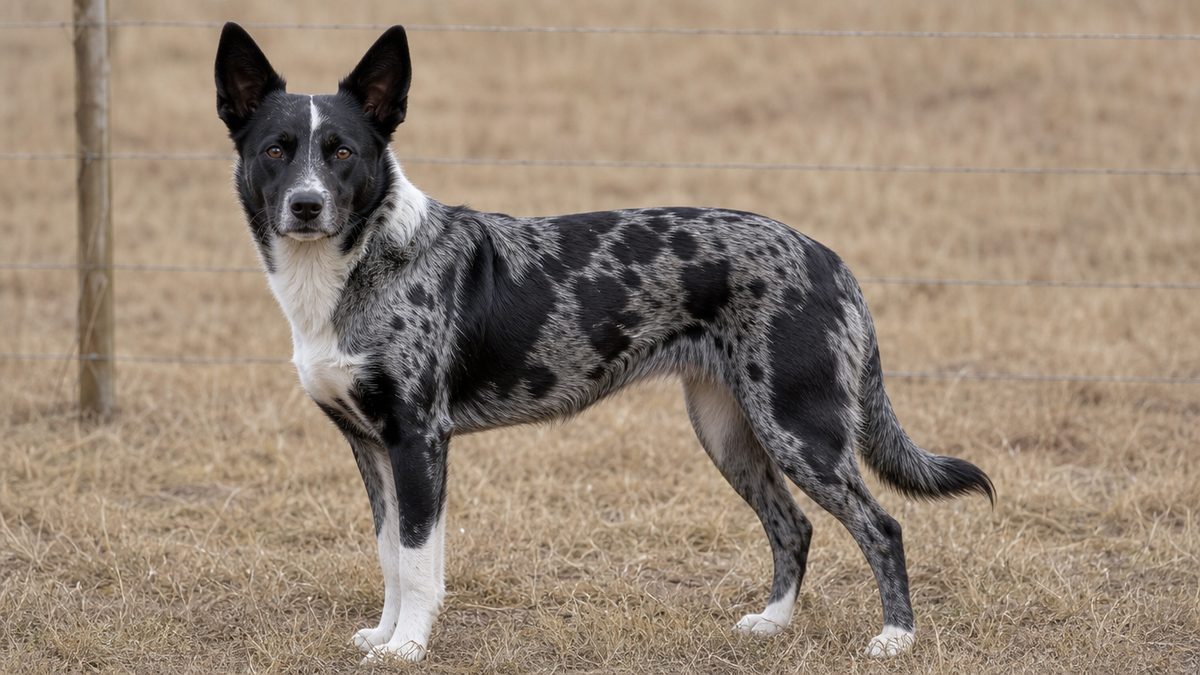
A Koolie is an Australian herding dog of medium size, bred for two centuries on stamina and working ability rather than on appearance, and carrying the merle gene at high frequency. It is the same animal as the Coolie, the German Coolie, the German Koolie and the Australian Koolie, and the variety in its appearance is a feature of how it was made rather than a defect.
Start with the names, because the literature and the listings split across them and a search on one spelling finds a fraction of the material. Australian Koolie Rescue writes the breed as Australian Koolies, also known as Coolies or German Coolies. Wikipedia adds German Koolie, Coulie and German Collie. The Koolie Club's own history page traces the naming to the German settlers' dogs being called the Germans' Coolies, in the sense of hard workers, which became German Coolie and then Koolie. German Coolie is a historic misnomer rather than a claim about German dogs.
A description written for work, not for a ring
The Koolie Club of Australia publishes a document called the Koolie Fundamentals, and it opens by saying the Koolie is first and foremost a functional canine working breed whose ability to perform its purpose depends wholly on a combination of key features. It then names six essential features: a strong herding instinct, sound temperament, speed and agility, stamina, good sensory function covering vision, hearing and scent, and appropriate conformation. Note the order. Conformation comes last, behind hearing.
That document defines stamina as the ability to work hard for long, continuous periods, and states that the Koolie is expected to be able to work under all conditions of weather, terrain and difficulty, without fail. Hold on to that phrase. It is the single most important sentence on this page for an Indian reader, and the climate section returns to it.
Size, and the two figures that do not meet
The Koolie Fundamentals gives desirable height at the wither as 45 to 65 cm for dogs and 43 to 60 cm for bitches, and immediately qualifies it, accepting that some breeders require larger dogs for particular jobs and describing the range as an average expectation rather than a limit. Australian Koolie Rescue describes a medium dog varying from 12 kg to 25 kg fully mature. No source Bonbeno opened publishes both height and weight together, so this page prints both and joins neither.
| Feature | Published description | Source |
|---|---|---|
| Height | Dogs 45 to 65 cm, bitches 43 to 60 cm | Koolie Fundamentals |
| Weight | 12 to 25 kg fully mature | Australian Koolie Rescue |
| Coat | Close flat outer coat, short dense undercoat | Koolie Fundamentals |
| Coat length in practice | Smooth, medium and long all occur | Australian Koolie Rescue |
| Colour | Any colour or combination permissible | Koolie Fundamentals |
| Ears | Pricked or tipped, not dropped | Koolie Fundamentals |
| Ears in practice | Prick, semi-prick or drop; prick commonest | Australian Koolie Rescue |
Those last two rows are worth pausing on, because the club's document and the rescue's description of the living population disagree. The Fundamentals says ears should be pricked or tipped, not dropped. The rescue reports that Koolies can have prick, semi-prick or drop ears. That is the ordinary gap between a written ideal and an open population, and it is exactly the gap the next section is about.
Why two Koolies can look nothing alike
Appearance varies more in this breed than in almost any registered dog, and the reason is structural rather than accidental. Colour alone runs to black, brown, dilute and sable, with tan points, piebald, ticking, Irish trim and merle patterning, alongside a wide range of eye colours. The rescue states plainly that it can often be difficult to distinguish a Koolie on appearance alone. A conformation specialist writing about the breed puts the cause bluntly: without a shared written blueprint, and with outcrossing to Kelpies and Border Collies permitted, a huge variety of types has developed and it is sometimes hard to tell whether a dog is a Koolie at all.
For an Indian reader that has one immediate consequence. You cannot identify a Koolie from a photograph, and neither can a seller. Identity in this breed lives in the paperwork, not in the dog, which is the opposite of what most Indian buyers are trained to expect.
Is the Koolie a breed? Tested against Bonbeno's own rule
The Koolie is a breed on Bonbeno's own two-condition test, and it passes by a narrower margin than any dog this site has assessed. Bonbeno maintains a page for names that are used like breeds and are not breeds, and the rule that page applies is simple: a breed has a written standard and a studbook behind it, so a puppy can be measured against something. The Koolie has both, and no national kennel club agrees.
Take the conditions one at a time, because the interesting part is that they give different answers depending on who you ask.
Condition one: is there a studbook?
Yes, and it is more elaborate than most recognised breeds manage. The Koolie Club of Australia operates a register in four sections. Section B holds foundation Koolies whose parents are not recorded but which are Koolies to the owner's knowledge, exhibiting the traits, temperament and physical resemblance of the commonest types, with a colour photograph submitted for each. Section A holds the offspring of two dogs already in Section B or A. Section C holds known Koolie crosses, whose offspring bred back to a Section A or B dog become eligible for Section B. Section P is a pet section for dogs unsuitable for breeding, from which no offspring will be registered at all.
The machinery around it is real. A Registrar records and verifies entries, and a breeder's later records must reconcile with earlier ones or registration is refused. Kennel prefixes are permanent and cannot be reused. Certificates carry five generations of ancestors and record coat length, percentage of merle pattern, percentage of white and eye colour, which is more genetic detail than most pedigree certificates carry. Registration numbers encode the state of breeding and the section, so a Queensland dog in Section A reads as 000123/4A. Live litter notifications on the club's own site carry exactly that form, including 002868/4A, 003401/4A, 002103/5A and 002158/4C. The club also publishes a Constitution, Rules, a Code of Ethics and a Registration Guide.
Australian Koolie Rescue records three breed organisations inside Australia, the Australian Koolie Association, the Koolie Club of Australia and the Working Koolie Association Australia, and states that all offer registration. That is a genuine complication for the test, because three registers that do not reconcile are not quite the same thing as one studbook. It is also a normal condition for a working landrace and it does not make any of them fake.
Condition two: is there a written standard?
This is the contested one, and the breed's own community disagrees with itself. A conformation specialist writing a long technical assessment of the breed states in her second paragraph that the Koolie in Australia does not have a breed standard. She then writes three thousand words measuring a Koolie against the Koolie Fundamentals, point by point, calling it something else very similar and referring throughout to the breed standard slash fundamentals as one thing.
Read the document itself and the reason for her hesitation is obvious, and so is the reason it does not settle the question against the breed. The Koolie Fundamentals carries sections on General Appearance, Gait and Movement, Body Shape, Forequarters, Hindquarters, Feet, Head and Skull, Eyes, Ears, Neck, Tail, Coat and Desirable Size, and it closes with a breeding note requiring two apparently normal descended testicles, which is the same clause an FCI standard carries. It uses prescriptive language throughout, calling cow hocks, bow hocks, loose shoulders and restricted movement a serious fault and coarseness or weediness undesirable. It was prepared with the assistance of Mr Bob Maver, a past Chairman of the ANKC's Canine Health Committee and a former ANKC judge.
So the document is a written description of the ideal dog, prepared with a former national kennel club judge, against which a puppy can be measured, and against which one has been measured in public. It is not called a standard and no registry owns it. On the test as Bonbeno states it, that satisfies condition two.
The verdict, and why the ANKC does not change it
The Koolie does not belong on Bonbeno's dog types that are not breeds page. That page's own rule says being a landrace is not what puts a dog there, and it names the English Shepherd, a landrace with a United Kennel Club registration since 1927, and the Africanis, a landrace with a published Kennel Union of Southern Africa emerging-breed standard, as dogs that stay off it. The Koolie sits in that company. What puts a dog on that page is a missing standard, and the Koolie's standard is unofficial rather than missing.
The Australian National Kennel Council's position is real and does not decide the question. Its Group 5 working list carries 37 breeds, and Bonbeno read the whole list off the ANKC's own page: it includes the Australian Cattle Dog, Australian Kelpie, Australian Stumpy Tail Cattle Dog, Border Collie and Komondor, and it does not include the Koolie. Three Australian working breeds are present, so that absence is a finding rather than a broken lookup.
| Layer | Status | What it lets you do |
|---|---|---|
| ANKC Group 5 breed list | Absent, against 37 listed breeds | Nothing; no ANKC pedigree, no bench showing |
| ANKC Sporting Register | Koolies are listed | Compete in dog sports and be named as Koolies on awards |
| Breed organisations, three of them | Registered, open studbook | A five-generation certificate and a recorded pedigree |
That middle row is the one nobody writes about, and it is the same pattern this site found in the Nordic Kennel Union layer between a national club and the FCI. The ANKC will not call the Koolie a breed and will put it on a register so it can compete. Koolies registered with the Koolie Club can be entered on state sporting registers and recognised as Koolies on awards, and cannot be bench shown. Recognition is not binary, and describing this dog as simply unrecognised loses the half that a buyer can actually use.
Wikipedia manages to hold both positions in one screen, opening by calling the Koolie an Australian dog breed and printing a status field that reads not recognized as a breed by any major kennel club. Both statements are defensible. Neither is tested. That is the gap this page exists to close.
Koolie price in India: the query returns porters, not dogs
No Koolie price in India exists to report, and the reason is unusually literal: in India the word means something else. The India-restricted result set for this query is not about a dog at all, and behind that homonym there is no Indian Koolie market to price either.
Search the target term with results restricted to India and you get a railway porter booking service describing itself as India's first and fastest growing coolie services, a Reddit thread on exorbitant coolie charges at Delhi stations, a LocalCircles post publishing official railway coolie rates, an Etsy page selling Koolie-dog merchandise, a Flipkart book listing, and the 2025 Indian Tamil-language action film Coolie. The dog appears nowhere in the first ten results.
That is not an instrument failure, and Bonbeno checked. A control search for Labrador puppies for sale in India, run in the same session, returned genuine Indian breeder listings with real prices, including a published band of Rs 8,000 to Rs 70,000. The search worked. The word is simply owned by another meaning in this country, which is worth knowing before you conclude anything from a Koolie search here.
Searching specifically for Koolie puppies for sale in India returns JustDial entries for Kaithu Koolie, a pet shop in Erode, Tamil Nadu, which appears under headings for Rottweiler and Akita shops. The business name contains the word; the shop is not selling Koolies. Treat any Indian result matching this string as a probable homonym until you have read the page.
The one apparent Indian listing, and why no price comes off it
One Indian listing site does carry Koolie pages. Every attempt to open PetzLover's Koolie listings returned HTTP 403 behind a CAPTCHA challenge, including with a stealth proxy. Bonbeno therefore publishes no price from it, and notes that a sibling Bonbeno guide has already recorded the same site printing an identical Rs 2,000 to Rs 45,000 band across its Eurasier, Gaddi Kutta, English Mastiff and Koolie pages, which is the signature of a template rather than of a market.
So the honest position is a narrow one and it is worth stating precisely. Bonbeno has not proved that no Koolie has ever been sold in India. It has established that no Indian breeder or reachable listing for the breed could be found with a working search, and that the one site claiming to list them will not open. Those are different claims and the second is the one this page makes.
Why no Indian market can easily form
Two structural facts sit behind the emptiness. The DGFT's guidelines for importing pet animals set out Policy Condition 7, allowing import of dogs only as a pet with a valid pet book in the importer's name, for research with CPCSEA recommendation, or for Defence and Police internal security, and Policy Condition 8, providing that import of commercial dogs for breeding or any other commercial activity is not permitted. No lawful pipeline therefore exists to import a breeding population. And the Koolie has no FCI standard, so the Kennel Club of India, which issues pedigrees against FCI nomenclature, has nothing to register a Koolie as. A dog whose paperwork exists only in three Australian club registers cannot acquire Indian paperwork, whatever a seller says.
That last point deserves emphasis because it inverts the usual advice. For most breeds this site covers, the guidance is to insist on a KCI pedigree. For the Koolie a KCI pedigree is not merely unlikely, it is not a thing that can exist. Anyone offering you a KCI-registered Koolie is offering you a document for a different dog.
What a Koolie costs where it is actually sold
Bonbeno is not going to convert an Australian price into rupees and print it as an Indian one. That conversion is the exact mechanism this site has documented producing fake Indian price bands across dozens of breeds, and doing it here would manufacture the number the page has just finished showing does not exist. If you are buying in Australia, buy through one of the three registries and ask for the registration certificate, which carries five generations and records the percentage of merle and of white on the dog.
For an Indian reader the useful figure is not the purchase price at all. It is the cost of keeping a high-drive working dog in an Indian city, and the next section gives that.
Cost of ownership in India, and the line that is not money
The cost of ownership for a Koolie in India is ordinary in rupees and extraordinary in hours. This is a medium, short-coated, healthy working dog with no grooming bill and no giant-breed food bill, and the expensive input is the two hours a day of real work it needs, which nothing on a price list can buy for you.
No Indian source publishes a monthly cost for this breed, because the breed has no Indian population to observe. What does exist is real published Indian data on what any dog costs here, and that transfers cleanly to a 12 to 25 kg working dog. An Indian rescue organisation's cost guide puts total monthly ownership at Rs 3,000 to Rs 10,000, annual cost at Rs 25,000 to Rs 80,000, and lifetime cost across ten to fifteen years at roughly Rs 3 lakh to Rs 10 lakh. Those are the numbers to plan against, and the sections below say which lines a Koolie pushes up and which it leaves alone.
The lines that are genuinely low
Grooming costs almost nothing. The Koolie Fundamentals calls for a close, flat outer coat with a short dense undercoat for rain resistance, and states that a coat either too long or too short is undesirable for practicality in a working dog. Weekly brushing covers it, and no Indian salon appointment is required at all, which removes a line that runs Rs 300 to Rs 2,000 per session for coated breeds. Compare that with a corded or heavy double-coated breed, where drying alone can occupy most of a day.
Food is a medium-dog bill, and the Indian figure is published. Quality food for a medium-sized dog runs Rs 1,500 to Rs 4,000 a month in India, against Rs 500 to Rs 1,500 for a small dog and Rs 5,000 or more for a large working breed. At 12 to 25 kg fully mature a Koolie sits in the medium band, with an upward adjustment for genuine work. There is no giant-breed multiplier here.
Routine veterinary care is also unexceptional, with one caveat covered below. Published Indian figures put a standard consultation at a good clinic at Rs 500 to Rs 1,000, annual vaccinations at Rs 1,500 to Rs 3,000, and preventive care done properly at roughly Rs 5,000 to Rs 8,000 a year. The breed carries no documented condition requiring lifelong medication, and its rescue organisation describes it as a relatively healthy breed, attributing that partly to the open studbook and the genetic diversity it preserves.
The lines that are higher than you expect
Screening is the first. Because merle is common in this population, a buyer who intends to breed must genotype before pairing, and a buyer of a heavily white or merle puppy should arrange a BAER hearing test. Neither is a routine Indian veterinary product, and a BAER test in particular is available at relatively few Indian centres, so budget travel as well as fee. This is a real Indian cost with no Indian price list, and Bonbeno reports it as such rather than inventing a number.
Containment is the second and it is usually underestimated. A herding dog with this drive will not stay in an unfenced Indian compound, and it will work whatever moves if given nothing else. Fencing a plot properly is a capital cost that belongs in the purchase decision rather than in year three.
Enrichment is the third, and in India it has a price. The Koolie Fundamentals defines stamina as the ability to work hard for long, continuous periods, and a dog built to that specification and given a balcony will find its own job. Published Indian rates put a basic professional training course at Rs 5,000 to Rs 15,000, a behaviourist assessment and programme at Rs 3,000 to Rs 10,000, and a professional dog walker at Rs 3,000 to Rs 6,000 a month. A working-bred dog in a city household will use at least one of those, and the walker line is the one owners of this breed most often end up paying.
No grooming salon. No giant-breed food bill. No coat drying equipment. No cropped-ear or docked-tail surgery, both of which are prohibited in India anyway. On pure rupees a Koolie is one of the cheaper working dogs to keep. On time it is one of the most expensive dogs on this site.
The cost nobody prices: identity
One further cost is specific to this breed and to this country. Because appearance varies so widely that the rescue organisation says it can be difficult to distinguish a Koolie on appearance alone, and because no Indian registry can issue a Koolie pedigree, an Indian buyer has no cheap way to verify what they have bought. A DNA breed test is the only practical check available, and it is an import cost. Consumer canine DNA services publish Koolie breed profiles and can return a breed-heritage result, which is what a conformation specialist recommends owners use in the absence of a standard. Factor it in before purchase rather than after, because it is the only thing standing between you and a well-marketed crossbred.
Heat tolerance: the rare breed whose homeland is hotter than Chennai
The Koolie earns a heat tolerance of 3 out of 5, the joint highest rating Bonbeno gives a working herding breed, and it earns it on measurement rather than on sympathy. Its homeland records an annual maximum temperature above Chennai's. What holds the rating at 3 is drive, unpigmented skin and a single sentence in the breed's own document.
Bonbeno queried NASA POWER by explicit latitude and longitude for two Australian points associated with the breed and for two Indian cities, and echoes the elevation each grid cell returned so a reader can confirm the model stood in the right place. Adelaide came back at 34.93 S, 138.60 E and 167.35 m; Casterton in western Victoria at 37.58 S, 141.40 E and 119.05 m; Chennai at 48.95 m; Pune at 635.99 m. All four are plains or plateau points where the model is reliable, all four elevations are consistent with the real places, and all four series differ from one another, so no cell was queried twice.
| Place | Cell elevation | Annual mean | Hottest month mean | Annual maximum | Annual humidity |
|---|---|---|---|---|---|
| Adelaide, South Australia | 167.35 m | 15.94 C | 22.55 C (Jan) | 45.15 C | 64.84% |
| Casterton, Victoria | 119.05 m | 14.21 C | 20.57 C (Jan) | 46.58 C | 70.28% |
| Chennai | 48.95 m | 27.95 C | 31.51 C (May) | 42.70 C | 72.39% |
| Pune | 635.99 m | 23.86 C | 28.93 C (April) | 43.20 C | 66.80% |
Read the annual maximum column first, because it is the one that makes this breed different from almost every other imported dog on this site. Adelaide's cell records 45.15 C and Casterton's 46.58 C, against Chennai's 42.70 C and Pune's 43.20 C. The Koolie's homeland is hotter at the top end than the Indian cities an owner would keep it in. A dog selected for two centuries on Australian sheep and cattle stations was selected in an environment that produces extreme heat, and that is a genuine argument in its favour that no European herding breed can make.
Where the argument stops
Three qualifications keep the rating at 3 rather than higher, and all three are measurable. The first is that Australian heat is seasonal while Indian heat is not: Adelaide's annual mean is 15.94 C against Chennai's 27.95 C, a gap of 12.01 C, and Adelaide's hottest month at 22.55 C is cooler than Chennai's coolest month at 24.09 C. The homeland gets brutally hot in bursts and then stops. Chennai does not stop, and a dog adapted to recovery periods does not get them here.
The second is humidity, and here the gap is smaller than usual but runs the wrong way. Casterton sits at 70.28 percent annual humidity against Chennai's 72.39 percent, which is close, but evaporative cooling is what a panting dog depends on and Indian humidity peaks exactly when the monsoon arrives. A dry 45 C and a humid 38 C are not the same challenge.
The third is the breed's own instruction. The Koolie Fundamentals states that the Koolie is expected to be able to work under all conditions of weather, terrain and difficulty, without fail, and describes a dog that should work hard until instructed to stop. That is a written requirement for a dog that will not self-limit, and it collides directly with the heat evidence. In a cohort of 905,543 UK dogs, of the 879 heat-related illness events with a recorded trigger, 652 were exertional, which is 74.2 percent, against 113 environmental and 46 from vehicle confinement. Exertion is how dogs overheat, and this breed's own document tells it not to stop.
The pigment problem, which is specific to this breed
One heat factor here belongs to the Koolie rather than to herding dogs generally, and the club names it itself. The Koolie Fundamentals warns that dogs with no pigment on or in the ears may become deaf, and that those with no pigment on the nose leather are prone to sunburn there and possibly cancer, and it adds that continued merle to merle breeding across generations leads to washed out colouring and large amounts of unpigmented skin, leaving the dog susceptible to sun damage. Indian ultraviolet exposure is higher than southern Australia's for much of the year.
So the heat rating on this page is a rating for a well-pigmented Koolie. A heavily white dog, and a double merle in particular, should be rated lower, and needs shade, timing and in some cases sunscreen on the nose. That is a refinement no ranking page makes and it changes the answer for a specific and identifiable subset of dogs.
What Indian law adds
Indian breeding law addresses the housing question rather than the exercise question. Second Schedule, Part IV, paragraph 21(1) of the Dog Breeding and Marketing Rules 2017 bars keeping in outdoor facilities, without the attending veterinary practitioner's written approval, dogs not accustomed to local temperatures, breeds that cannot tolerate them such as long-haired breeds in high temperature locations, and sick, infirm, aged or young animals. A short-coated Koolie is not the long-haired case that clause names, but a newly imported dog is squarely a dog not accustomed to the temperatures prevalent in the area, and that limb applies for the first Indian summer regardless of coat.
Work this dog hard before sunrise and after dark, and give it nothing to do in the middle of the day. The coat and the homeland are on your side; the temperament is not. A Koolie will keep working past the point where a sensible dog stops, because that is what it was selected to do.
Temperament and household fit
A Koolie suits an active household with land, a job for the dog and previous experience of a herding breed. It is biddable, sensitive and strongly attached to its handler, which makes it easy to live with and easy to ruin, and its herding instinct does not switch off because there is no livestock.
The breed's own document sets the temperament requirement in unusually plain terms. It calls for a balanced temperament, neither nervous nor aggressive, but bold and intelligent in finding, confronting and gaining control of stock, and for a dog that is extremely alert, eager and highly intelligent, of tractable disposition, with marked loyalty and devotion to duty. It closes the section with a sentence that functions as a disqualification: any temperament foreign to a working dog must be regarded as undesirable.
The rescue organisation describes the living population in compatible language, calling Koolies typically biddable, sensitive natured and easy to train dogs who enjoy spending time around their people, while noting that temperaments vary depending on the lines and that it assesses each dog individually rather than by breed generalisation. That caveat matters more in an open population than in a closed one, because the variation is genuinely wider.
Sensitive is the word that decides the household
Sensitive is not a compliment or a warning; it is a handling specification. A sensitive dog reads its handler closely, learns fast, and takes correction hard. In a calm household that produces a dog that seems to anticipate instructions. In a loud or inconsistent one it produces avoidance, and this is the commonest way Indian owners accidentally break a herding breed. Nothing about the training section that follows works if the household shouts.
The herding instinct in a flat
A Koolie in an Indian apartment will herd what is available, and what is available is children, guests, scooters and other dogs. The Koolie Fundamentals describes the instinct as inherited, obvious from an early age, and involving controlling animals by movement, watchful stare and aggression when required. That last clause is worth reading carefully. Controlled aggression toward stock is a working tool, and a dog with no stock and no training applies the tool to whatever is moving.
This is the single strongest reason Bonbeno rates apartment suitability at 1 for this breed. It is not that the flat is too small for the body. It is that a herding dog with nothing to herd is a dog with a job vacancy, and an Indian residential corridor supplies applicants all day.
Strangers, children and other dogs
Koolies are not guarding dogs and generally accept strangers, which the document's requirement for a non-nervous, non-aggressive temperament reflects. That makes them easier company than a livestock guardian in a dense Indian neighbourhood. With children the risk is not aggression but herding: nipping at heels and circling running children is normal herding behaviour misapplied, and it needs interrupting early rather than punishing later.
With other dogs the picture is ordinary for a working breed and depends heavily on how much the puppy met before sixteen weeks. Socialise deliberately and widely, and remember that in India the dogs a puppy will meet for the rest of its life are free-ranging street dogs, so the socialisation has to include them safely rather than avoiding them entirely.
Who should not buy one
Do not buy a Koolie if you want a dog that will settle for two walks a day, if you live in an apartment, if nobody is home for most of the day, if the household is loud or the handling inconsistent, or if you wanted a low-maintenance dog because the coat looked easy. The coat is easy and it is the only easy thing. Buy one if you have space, a genuine activity, prior herding-breed experience and the patience for an intelligent animal that will notice every inconsistency you have.
Training: the easiest herding breed to teach and the easiest to spoil
Train a Koolie with short, varied, reward-based sessions started early, and expect it to learn faster than you can plan lessons. Its own club document requires a readily trainable and responsive dog of tractable disposition, and the practical difficulty is not getting behaviour in, it is keeping the wrong behaviour out.
The Koolie Fundamentals describes the intended dog directly: extremely alert, eager and highly intelligent, of tractable disposition, with marked loyalty and devotion to duty, strongly attached and loyal to its handler, wanting to please, readily trainable and responsive, and able to work as a team with the handler. Australian Koolie Rescue's independent description of the living population agrees, calling them typically biddable, sensitive natured and easy to train. Two separate organisations describing the same trait is stronger evidence than either alone.
So the training problem in this breed is the opposite of a stubborn guardian's. A Koolie learns what you teach and also what you accidentally teach, at the same speed. Chasing the broom is learned in one session. Herding the toddler is learned in one afternoon. If the dog is doing something you dislike, it practised it with you.
Start before sixteen weeks and make it a list
Socialise on a written list rather than by intention. In an Indian household the puppy needs to meet the domestic help, the cook, the driver, the security guard, the delivery riders, the garbage collector and the neighbours' children individually, and it needs to meet free-ranging street dogs under safe conditions because those are the dogs it will encounter for the rest of its life. A herding breed that has not met a category by four months treats that category as stock later.
The three exercises that matter more than sit
Teach a reliable interrupter, a settle, and an off switch, and teach them before anything impressive. The interrupter is a sound that stops a chase mid-stride, and it is the only thing standing between a herding dog and an Indian street. The settle is a mat behaviour that gives the dog somewhere to be when the household is busy. The off switch is the hardest and the most valuable: a dog selected for stamina and told by its own document to work until instructed to stop does not arrive knowing how to be bored.
Formal obedience beyond that is easy and should be treated as a hobby rather than a necessity. The breed does well in dog sports precisely because it learns quickly, and Koolies registered with the Koolie Club can be entered on state sporting registers and named as Koolies on awards.
What not to do
Do not use force, do not repeat a known exercise for the twentieth time, and do not train a herding dog to chase things for entertainment. Sensitivity is the trait the club and the rescue both name, and heavy handling on a sensitive dog produces avoidance rather than compliance. Encouraging chase games in a dog with a strong herding instinct is training the exact behaviour you will later need to stop near traffic.
Because merle carries a deafness risk, some Koolies are unilaterally or bilaterally deaf. A bilaterally deaf dog trains perfectly well on hand signals and vibration cues, and the breed's visual orientation to its handler helps. If you know at eight weeks, you teach hand signals from the start rather than converting later.
Daily exercise: the requirement that decides everything else
A Koolie needs about two hours of real activity a day, and at least part of it has to engage the brain rather than only the legs. This is an athletic working dog whose own document defines its central quality as the ability to work hard for long, continuous periods, and an Indian owner who cannot supply that should choose a different breed.
The requirement comes straight from the breed description rather than from a lifestyle guess. The Koolie Fundamentals names stamina as one of six essential features and defines it as the ability to work hard for long, continuous periods, adding that the Koolie is expected to work under all conditions of weather, terrain and difficulty, without fail. It also names exceptional speed and agility as essential, describing a dog built for an efficient fast gallop as its main gait with the flexibility to turn quickly.
That is a specification for a farm dog, and it does not shrink to fit a flat. The rescue organisation's own framing is that the breed's athletic ability and trainability have moved it into a variety of modern roles, including working stock dogs, recreational sport dogs, detection dogs, therapy dogs and family companions. Every one of those is a job. The versatile Koolie is a dog that will do many things; it is not a dog that will do nothing.
What two hours looks like in an Indian city
Split it and put the physical half in the dark. A workable pattern is 45 minutes of brisk walking or running before sunrise, 30 to 40 minutes of structured work in the middle of the day indoors, and 45 minutes again after dark. The middle block is the one Indian owners skip and the one that actually settles the dog: scentwork in the house, a trick session, a food puzzle, a training game. Mental work tires a herding breed faster than distance does.
| Season | Pre-dawn | Midday | After dark | What to drop |
|---|---|---|---|---|
| Winter, Dec to Feb | 45 to 60 min | Training or free play | 45 to 60 min | Nothing |
| Pre-monsoon, Mar to May | 45 min, before first light | Indoor scentwork only | 45 min, well after sunset | All daylight running |
| Monsoon, Jun to Sep | 40 min on drained ground | Indoor puzzles | 40 min | Long humid evening sessions |
| Post-monsoon, Oct to Nov | 45 min | Training | 45 min | Midday anything |
The heat evidence is why the daylight hours are empty in that table. Exertion accounted for 652 of the 879 heat-related illness events with a recorded trigger in a 905,543-dog cohort, or 74.2 percent, and a separate analysis of the same cohort found dogs at or above their breed and sex mean bodyweight carried 1.42 times the odds of heat-related illness. A Koolie will not tell you it has had enough. Its own document says it should work until instructed to stop, and in an Indian May that instruction has to come from you.
What happens without it
An under-exercised Koolie does not become calm, it becomes inventive. Expect gate patrolling, barking at movement, herding the household, destructive chewing and the fence-running that turns into a neighbourhood complaint. None of that is a temperament fault and all of it resolves the same way. The breed was selected for a job and it will find one.
A dog bred to control livestock by movement and stare, with a fast gallop as its main gait, cannot be trusted loose where scooters, cattle and free-ranging dogs share the road. Use a long line and secure ground. This is not a recall problem you can train your way out of in a year.
Grooming and skin care in Indian humidity
Grooming a Koolie takes about ten minutes a week, which makes it one of the lowest-maintenance coats on this site. The Indian complications are not the coat at all, they are the skin underneath it and the sun above it, and both are worse for pale and heavily white dogs.
The coat specification is short. The Koolie Fundamentals requires a close, flat outer coat and short dense undercoat for rain resistance, and states that a coat either too long or too short is undesirable for protection or practicality in a working dog. Australian Koolie Rescue records that the living population carries smooth, medium and long coats across the gene pool, so a longer-coated Koolie is within normal variation rather than evidence of a cross. Weekly brushing with a rubber curry or slicker handles all three, with more during a seasonal moult.
Bathe rarely. There is no odour problem, no cording, no drying bottleneck and nothing that requires a salon. In an Indian monsoon the useful habit is drying the dog properly after wet walks and checking between the toes, which is a five-minute job on this coat rather than the multi-hour project a heavy-coated breed demands.
Skin, sun and the merle question
The real Indian grooming issue is pigment, and the breed's own document raises it. The Koolie Fundamentals warns that dogs with no pigment on the nose leather are prone to sunburn there and possibly cancer, and that continued merle to merle breeding over generations produces washed out colouring and large amounts of unpigmented skin, leaving the dog susceptible to sun damage. It recommends that breeding dogs exhibit minimal amounts of pink skin around the eyes, nose, ears and lips, and that merle dogs with good depth of colour be preferred for breeding.
Indian ultraviolet exposure is higher than southern Australia's across most of the year, so this warning transfers with more force rather than less. For a pale merle or heavily white Koolie in India, add a dog-safe sunscreen on the nose leather and any pink skin, keep the dog out of direct sun in the middle of the day, and inspect unpigmented areas monthly for crusting or non-healing sores. This is not a cosmetic recommendation.
Ears and the routine Indian checks
Ears are an easier problem here than on most breeds this site covers, because the Fundamentals calls for pricked or tipped ears rather than dropped ones and an erect ear ventilates. Where a particular Koolie has drop ears, which the rescue records as occurring in the population, treat the ears as you would a spaniel's and check weekly through the monsoon.
Ticks are the standing Indian issue for any short-coated dog that works in grass, and a close flat coat makes them easier to find rather than harder. Run a hands-on check after every rural or park outing rather than relying on a monthly product alone.
Look at the skin, not the hair. On a Koolie the coat asks nothing of you and the pigment asks a great deal. A dog with a black nose and dark eye rims needs sun protection no more than any other dog. A washed-out merle with pink skin around the eyes and muzzle needs an Indian-specific plan that no overseas care guide will give you.
Health risks, screening and life expectancy
The Koolie's main heritable health issue is the merle gene and the deafness and eye defects that follow from carrying two copies of it, and almost everything else about the breed's health is undocumented rather than good. There is no OFA row, one peer-reviewed paper naming the breed, and no published life expectancy.
Begin with what is genuinely known, because it is a short list and merle is most of it. Merle is common in this population: black, brown, dilute and sable all occur alongside the recognisable merle pattern, and merle Koolies are a normal rather than an unusual sight. The gene that produces it is a SINE insertion in the SILV locus, and its length varies. Langevin and colleagues genotyped 181 dogs across 14 breeds and described a series of merle alleles from Mc through Mc+, Ma, Ma+, M and Mh, each associated with distinct coat features and a stratified risk of health impairment. That cohort included 23 Australian Koolies, the second largest breed group in the study, so this breed is directly represented in the work rather than assumed into it.
Deafness, with the numbers checked
Deafness risk in merle dogs depends on how many copies the dog carries, and the difference is large. Strain and colleagues tested hearing by brainstem auditory-evoked response in 153 privately owned merle dogs of different breeds and genotyped each as heterozygous or homozygous for the merle allele. Across all merles, 4.6 percent were unilaterally deaf and 4.6 percent bilaterally deaf. Split by genotype, single merles were 2.7 percent unilaterally deaf and 0.9 percent bilaterally deaf, while double merles were 10 percent unilaterally deaf and 15 percent bilaterally deaf. The association between hearing status and genotype was statistically significant; there was no significant association with eye colour or sex.
| Genotype | Unilaterally deaf | Bilaterally deaf | Combined |
|---|---|---|---|
| All merles | 4.6% | 4.6% | 9.2% |
| Single merle (Mm) | 2.7% | 0.9% | 3.6% |
| Double merle (MM) | 10% | 15% | 25% |
A double merle is therefore roughly seven times more likely to be deaf in one or both ears than a single merle, and one in six is deaf in both. That is the entire reason the breed's own document instructs breeders as it does.
The wider context is that pigment genes and deafness travel together across dogs generally, which Strain sets out in a later review of the genetics of deafness in domestic animals. A study of the Border Collie, one of the breeds Koolies are outcrossed to, established that congenital sensorineural deafness in that breed is heritable and genetically correlated with pigmentation phenotypes. So this is a well-mapped risk rather than a rumour, and it is the one thing a Koolie buyer must ask about.
The club's own breeding instruction, which is the good news
The Koolie Fundamentals addresses this directly and correctly. It recommends that merle coloured Koolies be bred with non-merle solid Koolies to protect against puppies suffering blindness and deafness caused by homozygous merle, warns that continued merle to merle breeding across generations leads to washed out colouring, large amounts of unpigmented skin, sun susceptibility and hearing problems, and recommends that merle dogs with good depth of colour be used for breeding. It further advises avoiding dilute colours because of associated alopecia and immune system issues, and recommends that all breeding Koolies be DNA profiled, tested for heritable diseases and registered under the Koolie Pedigree Assurance Program with microchip verification at sample collection.
That is better breeding guidance than several nationally recognised breeds publish, and it is worth saying so on a page that has spent time on what the breed lacks.
What is not documented, stated as absence rather than as health
The Koolie has no row in OFA's published statistics tables. Bonbeno searched a 2.2 million character extract of OFA's disease statistics for both KOOLIE and COOLIE and found zero occurrences of each, while the same extract returned the Australian Kelpie, the Border Collie and the Australian Cattle Dog in quantity. The controls passed, so the absence is real. Note the correct wording: this means no published OFA row, not absence from the database, because OFA requires 100 hip evaluations before publishing a breed at all. For comparison the Australian Kelpie, which does appear, records 196 hip evaluations at 89.3 percent normal and 9.7 percent dysplastic. No equivalent hip dysplasia figure exists for the Koolie.
The peer-reviewed literature is one paper. Searching PubMed returns a single record naming the breed, a 2011 Australian Veterinary Journal report of localised Mycobacterium ulcerans infection in four dogs on the Bellarine Peninsula in Victoria, two Kelpies, a Whippet and a Koolie, diagnosed by real-time PCR and mostly treated successfully. Searches on Coolie, German Coolie and Australian Koolie returned nothing further, while controls for merle and deafness and for Border Collie herding returned normal result sets in the same session. One paper, and it is about a soil-borne mycobacterium in one Australian region, which tells an Indian owner nothing about the breed.
Life expectancy: no figure, and no study to take one from
No peer-reviewed breed-specific life expectancy exists for the Koolie. The two UK life-table studies that publish medians breed by breed are the documents that would carry one, and the Koolie is named nowhere in the main text of either, while the Labrador appears in both as a working control McMillan KM and others. Any lifespan range you find for this breed online is an estimate with nothing behind it, and Bonbeno prints none.
The rescue organisation's framing is the honest one available: Koolies are a relatively healthy breed, attributed partly to the open studbook and the genetic diversity it maintains, and like every breed they have conditions that can affect them and screening procedures that reduce the incidence. That is a reasonable description of a population that has never been systematically surveyed.
What Indian law requires, and the gap that matters here
Indian breeding law requires screening, and it does not require the one test this breed most needs. Second Schedule, Part III, paragraph 8(10) of the Dog Breeding and Marketing Rules 2017 provides that dogs shall have been tested for genetic defects, including hip dysplasia, progressive retinal atrophy, night blindness, hypothyroidism, entropion, ectropion, overshot and undershot jaw, wry mouth, two or more missing teeth and cryptorchidism. Bonbeno searched the whole gazette for deafness and found nothing: the words deaf and BAER appear zero times, and hearing appears once, in the sense of an appeal hearing before the Secretary, Animal Husbandry.
So for a merle breed, Indian law mandates a list of tests that misses the principal heritable risk. The clause opens with including, so the list is illustrative rather than closed and a BAER test is not excluded by it, but nothing obliges an Indian breeder to run one. Treat the hearing test as a buyer's requirement rather than a legal one.
Second Schedule Part II paragraph 6(9) prohibits breeding to create new breeds of dogs or unusual looks. Deliberately pairing two merles to produce heavily marked puppies is breeding for an unusual look, and it produces the double merle genotype that Strain's data associates with 25 percent deafness. Bonbeno has seen no Indian enforcement of 6(9) on this point and states it as a reading of the clause, not as settled law.
Feeding a working dog that is not working
Feed a Koolie to its actual workload rather than to its breed description, and in India that usually means less than the bag suggests. A 12 to 25 kg herding dog doing two hours of exercise a day is a medium dog with a medium appetite, and the commonest error is feeding a farm ration to a suburban animal.
The weight range is the starting point: Australian Koolie Rescue gives 12 kg to 25 kg fully mature, which is a wide band and means the same feeding guide cannot serve both ends. A 13 kg Koolie and a 24 kg Koolie are different animals with nearly double the difference in requirement, so portion by the dog in front of you.
Body condition scoring is easy on this breed and should be done weekly. A close flat coat hides nothing, so unlike the heavy-coated breeds on this site you can see the waist and the tuck-up directly. Ribs should be easily felt under light pressure and not visible at rest. Weigh monthly if you can, because the heat evidence associates being at or above breed and sex mean bodyweight with 1.42 times the odds of heat-related illness, and in an Indian summer that is a live consideration rather than a cosmetic one.
Matching intake to the Indian schedule
The climate section moves this breed's activity into the dark, and food should follow the same clock. Feed the larger meal after the evening session rather than before the morning one, leave at least an hour between a meal and hard exercise in either direction, and do not feed immediately after a hot walk while the dog is still panting hard. This is standard practice for any active dog and it matters more where the ambient temperature is high.
Water placement is the Indian detail worth acting on. A working-bred dog that has chosen a vantage point will not cross a compound to drink, so put water in more than one place and change it twice a day in summer. Chennai's annual mean is 27.95 C and Pune's 23.86 C, and a bowl in the sun is not drinking water by afternoon.
Life stages
Puppies of a medium breed grow fast and finish early, so the growth window is shorter than a giant breed's and the orthopaedic anxiety is lower. Feed a good quality growth or all-life-stages food, split across three meals to about six months and two thereafter, and resist supplementing calcium, which does harm rather than good in a normally fed puppy. Adults settle into two meals. Older Koolies usually stay active late and the risk at that stage is under-feeding a dog that has quietly lost muscle rather than over-feeding one.
There is no breed-specific diet, no documented food intolerance in the breed and no evidence base for a special Koolie ration. Anyone selling you one is selling you a story. What this breed needs from its food is enough of it to support real daily work and not so much that a heat-vulnerable dog carries extra weight through an Indian May.
A dog that works or trains hard in Indian heat loses more to panting than an equivalent dog in Adelaide does. Increase water availability before you increase food, watch for reduced appetite in the hottest months, which is normal, and do not chase a summer appetite dip with richer food. It usually resolves in October.
Month by month through the first year
A Koolie's first year is decided in the first four months, because socialisation and an early hearing check are both time-limited and everything else is recoverable. Plan the year around people, an interrupter cue and a BAER test, not around obedience titles.
Before anything else, note the legal floor. Rule 8(1)(a) of the Dog Breeding and Marketing Rules 2017 provides that pups less than eight weeks in age are not sold. This is a Rule in the main body of the instrument and is distinct from the Second Schedule paragraphs cited elsewhere on this page. Given that no verified Indian Koolie breeder exists, a seller offering one below eight weeks is failing two tests at once.
| Age | What is happening | What you do |
|---|---|---|
| 8 to 12 weeks | Herding instinct already visible; the club document says it should be obvious from an early age | Hearing check if merle or heavily white. Begin the written socialisation list. |
| 3 to 4 months | Fear periods; vaccination course | Meet every regular household visitor individually. Start the interrupter cue. |
| 4 to 6 months | Fast learning, fast habit formation | Puppy class. Teach settle and an off switch before tricks. |
| 6 to 9 months | Adolescence; drive rises sharply | Increase structured work. Expect regression and keep sessions short. |
| 9 to 12 months | Near-adult stamina, immature judgement | Build the two-hour daily pattern in the dark hours. Long line only. |
| 12 to 18 months | Physical maturity; hip radiographs become meaningful | Screen before any breeding decision. Genotype merle if relevant. |
The eight-week hearing question
If the puppy is merle, and especially if it carries substantial white on the head, arrange a hearing assessment early. Double merles carry a 25 percent combined risk of unilateral or bilateral deafness against 3.6 percent for single merles, and a unilaterally deaf dog is easy to miss at home because it compensates well. Knowing at eight weeks changes how you train, where you exercise and whether off-lead work is ever safe. It does not change whether the dog is worth having.
Socialisation is the irreversible part
Everything else on this list can be fixed later at some cost. Socialisation cannot. A herding breed that has not met a category of person or animal by around sixteen weeks tends to treat that category as stock or as a threat afterwards, and in India the categories are specific: household staff, delivery riders, security guards, neighbours' children and free-ranging street dogs. Work the list individually rather than assuming a busy street counts.
What not to teach in year one
Do not teach chase games, do not let the puppy practise herding children, and do not allow fence-running to become a habit, because all three are self-rewarding and all three get harder to interrupt every week. A Koolie puppy that spends three months chasing a bicycle has trained itself in the one behaviour that will most endanger it on an Indian road.
If the puppy came from an Australian breeder, the registration certificate carries five generations and records coat length, percentage of merle pattern, percentage of white and eye colour. Keep it. It is the only document that will ever describe this dog's genetics, because no Indian registry can issue one.
Koolie against the Australian working dogs you can actually get
An Indian buyer attracted to the Koolie almost always wants an Australian working herding dog, and four of those have ANKC standards while the Koolie does not. On temperament and workload they are close enough that availability and paperwork should decide, and in India both point away from the Koolie.
The honest framing is that this is a choice between one dog with three club registers and no national standard, and four dogs with published national standards and, in two cases, a real Indian presence. Read the recognition column first because it is the one that changes what you can verify.
| Breed | In ANKC Group 5? | Bonbeno heat rating | OFA hip data | Findable in India? |
|---|---|---|---|---|
| Koolie | No | 3 of 5 | No published row | No verified listing |
| Australian Kelpie | Yes | 2 of 5 | 196 evaluations, 9.7% dysplastic | No verified listing |
| Australian Cattle Dog | Yes | 3 of 5 | Published | Yes, Rs 25,000 to Rs 75,000 across sources |
| Border Collie | Yes | 2 of 5 | Published | Yes, widely |
| Australian Stumpy Tail Cattle Dog | Yes | Rated on its own page | Published | No verified listing |
Koolie against the Australian Kelpie
The Australian Kelpie is the closest working comparison and the two are routinely crossed, which is part of why Koolie appearance varies so much. The Kelpie has an ANKC breed standard last updated in 1994 and a published OFA hip dataset of 196 evaluations at 9.7 percent dysplastic; the Koolie has neither. Bonbeno rates the Kelpie 2 of 5 for heat against the Koolie's 3, because the Kelpie's working day is longer and its temperament less inclined to stop. Neither is verifiably purchasable in India.
Koolie against the Australian Cattle Dog
The Australian Cattle Dog is the practical answer for most Indian buyers who like this type of dog. It shares the Koolie's heat rating of 3, it has an ANKC standard, it has published OFA data, and unlike the Koolie it is genuinely available here at published prices. It also shares the deafness question, because it carries the piebald pigment pattern rather than merle, which its own Bonbeno guide covers in detail. If you want an Australian working dog in India and you want to be able to verify what you bought, this is the one.
Koolie against the Border Collie
The Border Collie is the other frequent Koolie outcross and the most available of these breeds in India. It carries a published deafness heritability literature of its own, an ANKC standard, and a large Indian market with the price chaos that comes with one. Bonbeno rates it 2 of 5 for heat against the Koolie's 3, largely on coat. A Koolie is arguably the better-adapted dog for Indian conditions of the two; the Border Collie is the one you can actually find and verify.
The comparison that decides it
Set aside temperament for a moment, because these breeds are genuinely similar in what they need. The difference that matters in India is that four of the five can be checked. An Australian Stumpy Tail Cattle Dog or a Kelpie has a published standard you can hold a dog against and a registry that will say what the dog is. A Koolie in India has none of that, because the three Australian registries do not operate here and the Kennel Club of India has no Koolie to register. For a buyer who cannot verify, an unverifiable rare dog is a worse purchase than a common one, whatever its qualities.
Everything above is about verification in India. An Australian buyer can register a Koolie, read its five-generation certificate, see its merle and white percentages recorded and meet its parents. In that market the Koolie's open studbook and genetic diversity are advantages rather than gaps, and the breed's reputation for being biddable and easy to train is a real one.
Mistakes Indian buyers and writers make with this breed
Six mistakes recur around the Koolie, and the first one is made by almost every page that writes about it: asserting the breed's status instead of testing it. The rest are about merle, paperwork and a homonym that quietly poisons every Indian search for this dog.
1. Deciding the breed question by assertion
The commonest error is stating that the Koolie is or is not a breed as though the answer were obvious. Wikipedia does both in one screen, calling it an Australian dog breed and printing a status field reading not recognized as a breed by any major kennel club. A conformation specialist writes that the Koolie does not have a breed standard and then measures a dog against a written Koolie Club document for three thousand words. Neither is dishonest. Both skip the step of naming a test and applying it, which is what the breed status section of this page does.
2. Treating ANKC non-recognition as the whole answer
Absence from the ANKC's Group 5 list is real and Bonbeno verified it against the full 37-breed list with three Australian working breeds present as controls. It is not the whole picture. Koolies appear on the ANKC's Sporting Register, which lets them compete and be named as Koolies on awards while remaining independently governed, and Koolies registered with the Koolie Club can be entered on state sporting registers though they cannot be bench shown. Recognition here has three layers and reporting only the first gets the reader's practical question wrong.
3. Breeding merle to merle, or buying the puppy it produces
This is the mistake with a measurable cost. Double merle dogs showed 10 percent unilateral and 15 percent bilateral deafness against 2.7 and 0.9 percent in single merles, and the breed's own document instructs breeders to pair merle with solid precisely to avoid it. A heavily white, pale-marked Koolie puppy advertised as rare or as a special colour is very often the product of exactly this pairing. Ask for both parents' colour and genotype, and walk away if the answer is that both were merle.
There is an Indian legal reading worth adding. Second Schedule Part II paragraph 6(9) prohibits breeding to create new breeds of dogs or unusual looks, and deliberately pairing two merles for striking markings is breeding for an unusual look. Bonbeno has seen no enforcement of that clause on this point and offers it as a reading rather than as settled law.
4. Expecting a KCI pedigree
For most breeds this site covers, the advice is to insist on Kennel Club of India registration. For the Koolie that advice is actively misleading, because the KCI issues pedigrees against FCI nomenclature and the Koolie has no FCI standard. There is nothing for the KCI to register a Koolie as. A seller offering a KCI-registered Koolie is offering paperwork that describes some other breed, and that is a reason to stop rather than to negotiate.
5. Believing an Indian search result
In India, coolie means a railway porter, and the query space belongs to that meaning. A search restricted to India returns a porter booking service, official railway coolie rates, a Reddit thread on porter charges and the 2025 Tamil-language film Coolie. Even a listing-specific search surfaces a pet shop in Erode whose business name happens to contain the word. Read the page before treating any Indian Koolie result as being about a dog at all.
6. Assuming appearance identifies the dog
A Koolie cannot be identified from a photograph, and the breed's own rescue organisation says so, recording that the varied appearance across the gene pool makes it difficult to distinguish a Koolie on appearance alone. Coat length runs smooth to long, colour runs across black, brown, dilute and sable with merle, piebald, ticking and tan points, and ears may be prick, semi-prick or drop. Any medium black-and-white or merle working dog can be photographed and called a Koolie, and general breed directories describe the Koolie first and foremost as a working breed bred for stamina, endurance and biddability rather than by a fixed look. In India, where no registry can contradict the claim, a DNA breed test is the only check available.
The Koolie is a real breed with real paperwork in Australia and no verifiable identity in India. Those two facts are not in tension, and a buyer who understands both will not be sold a crossbred at a rare-breed price.
Adoption and responsible sourcing
You will not adopt a Koolie in India, because no Indian Koolie population exists to rescue from. That leaves three honest routes, and for most Indian readers the best one is to adopt a dog that is here and needs a home rather than to import a name.
Set out the position plainly first. Bonbeno found no Indian Koolie breeder, no reachable Indian listing, and no Indian rescue holding the breed. The one Indian listing site carrying Koolie pages returned HTTP 403 behind a CAPTCHA on every attempt, so nothing at all is published from it here. A control search for Labrador puppies returned genuine Indian listings in the same session, so the search worked and the emptiness is about this breed.
Route one: adopt an Indian dog that does the same job
The Koolie's appeal is a biddable, athletic, intelligent medium dog that wants work. India is full of them and they are free. An Indian free-ranging dog of the right age and temperament, assessed properly, will do agility, scentwork, canicross and household life as happily as any imported herding breed, and it arrives already adapted to the climate this page has spent a section on. That is not a lesser option offered out of politeness. On heat tolerance alone it beats every breed in the comparison table.
If you specifically want a herding dog with predictable drive, the Australian Cattle Dog and the Border Collie both exist in India in real numbers and both turn up in Indian rescue. Adopting one of those gets you the working temperament, a published breed standard behind it and a dog that is actually here.
Route two: the personal pet import
A person relocating to India can bring their own dog under the personal pet route, which runs on the Livestock Importation Act 1898 and its notifications, with quarantine and certification through the Animal Quarantine and Certification Station. Up to two pets may enter as passenger baggage without a DGFT authorisation, and only for a person transferring residence to India after two years of continuous stay abroad; more than two needs an authorisation. It is not a way to acquire a dog, and it does not create a supply. Policy Condition 8 separately provides that import of commercial dogs for breeding or any other commercial activity is not permitted, which is why no Indian Koolie market has formed and why anyone offering to import a litter for sale is describing something the policy does not permit.
Route three: buying in Australia, and what to verify
If you are buying where the breed actually lives, the verification list is unusually concrete because the registry records unusually much. Ask for the registration certificate and read which section the dog sits in, because Section A means two registered parents, Section B means a foundation dog whose parents are unregistered, and Section C means a known cross. None of those is disqualifying and they mean different things. Read the recorded percentage of merle pattern and percentage of white, which the certificate carries, and check both parents' colours against the club's own instruction to pair merle with solid.
Then ask for three things the certificate does not cover: hip and elbow scores on both parents, a BAER hearing result on any merle or heavily white dog, and DNA profiling under the Koolie Pedigree Assurance Program, which the club recommends and which uses microchip-verified collection. A breeder who has done all three is doing more than Indian law would require of them, since the Indian genetic-defect clause does not mention deafness at all.
Rescue, where it exists
Australian Koolie Rescue is a volunteer-run, breed-specific rescue operating nationwide in Australia, rehoming and educating. It exists because Koolies do end up needing homes, and the reason is the one this page has returned to throughout: a high-drive working dog placed in a household that could not supply the work. That failure mode is more likely in an Indian city, not less.
The Koolie is a genuinely good dog and a genuinely real breed, and it is the wrong purchase for almost every Indian household, for a reason that has nothing to do with its quality. You cannot get one, you cannot verify one, and no Indian document can describe one. If the qualities are what you want, they are available here in dogs you can meet this week.
Bonbeno does not sell dogs, does not broker puppy sales and does not accept payment from breeders. If a page tells you the Koolie price in India, check first whether it is writing about a dog or about a railway porter.
Common questions
What is the Koolie price in India?
No Koolie price in India can be verified, because Bonbeno found no Indian breeder or reachable listing for the breed. The only apparent Indian listing sits on a site that returned HTTP 403 behind a CAPTCHA on every attempt, so no figure is published from it. A control search for Labrador puppies returned real Indian listings in the same session.
Is the Koolie a real breed?
Yes, on Bonbeno's own test, and the answer is closer than it looks. A breed here needs a written standard and a studbook. The Koolie Club of Australia runs a four-section register with a Registrar and five-generation certificates, and publishes a written conformation document. No national kennel club recognises it.
Does the Koolie have a breed standard?
The Koolie has a written conformation document called the Koolie Fundamentals, prepared with a past Chairman of the ANKC's Canine Health Committee, covering general appearance, gait, body shape, limbs, head, ears, coat and desirable size. It is not called a breed standard, and a specialist writing about the breed states plainly that the Koolie has none.
Is the Koolie recognised by the Australian National Kennel Council?
No. The ANKC's Group 5 working list carries 37 breeds, including the Australian Cattle Dog, Australian Kelpie, Australian Stumpy Tail Cattle Dog and Komondor, and the Koolie is not among them. Koolies are listed on the ANKC Sporting Register, which allows competition but is not breed recognition, and they cannot be bench shown.
What is an open studbook and why does the Koolie have one?
An open studbook admits dogs whose parents are not already registered. The Koolie Club's register keeps Section B for foundation dogs with no recorded parents and Section C for known crosses, and states it will not close them for a long time because closing would restrict the gene pool and lead to inbreeding.
Are merle Koolies more likely to be deaf?
Yes, and the risk depends on how many copies of the merle gene the dog carries. Across 153 BAER-tested merle dogs of mixed breeds, single merles were 2.7 percent unilaterally deaf and 0.9 percent bilaterally deaf, while double merles were 10 percent unilaterally deaf and 15 percent bilaterally deaf. The breed's own document warns against merle to merle breeding for this reason.
Can a Koolie handle the Indian climate?
Better than most working breeds on this site, and that is a low bar. The Adelaide cell records an annual maximum of 45.15 C, hotter than Chennai's 42.70 C, so the homeland is genuinely hot. The limit is drive rather than coat, because exertion triggered 74.2 percent of heat-illness events with a recorded trigger.
How long do Koolies live?
No peer-reviewed breed-specific life expectancy exists for the Koolie. Neither of the two UK life-table studies that publish medians by breed names it anywhere in the main text, while both name the Labrador as a working control. Any lifespan figure you find for this breed is an estimate with no study behind it.
Why does searching for a Koolie in India return railway porters?
Because coolie is a homonym in India and the other meaning is far larger. The India-restricted result set returns a porter booking service, official railway coolie rates, a Reddit thread on porter charges and the 2025 Tamil-language film Coolie. The dog has almost no Indian query space at all.
Is the Koolie the same as a German Coolie?
Yes, they are the same dog under different names. Koolie, Coolie, German Coolie, German Koolie and Australian Koolie all refer to one Australian herding population. German Coolie is described by the breed's own literature as a historic misnomer, and the naming is usually traced to German settlers rather than to German dogs.
Does Indian law require a deafness test before breeding?
No. The Dog Breeding and Marketing Rules 2017 require testing for a list of genetic defects including hip dysplasia, progressive retinal atrophy and entropion, but the words deaf, deafness and BAER appear zero times across the whole gazette. For a merle breed that gap matters, so the test is a voluntary one.
How big does a Koolie get?
A Koolie is a medium dog, and the two published figures do not overlap in units. The Koolie Fundamentals gives desirable height as 45 to 65 cm for dogs and 43 to 60 cm for bitches, while Australian Koolie Rescue gives an adult weight range of 12 to 25 kg. No source Bonbeno opened publishes both together.
Do Koolies need a lot of grooming?
No, grooming is one of the few easy things about this breed. The Koolie Fundamentals calls for a close, flat outer coat with a short dense undercoat for rain resistance, and says a coat either too long or too short is undesirable for a working dog. Weekly brushing covers it.
Is a Koolie a good family dog?
Yes for an active family with space and a job for it, and a poor choice for a flat. Koolies are not guarding dogs and generally accept strangers, and the Koolie Fundamentals requires a non-nervous, non-aggressive temperament. With children the risk is not aggression but herding: nipping at heels and circling running children is normal herding behaviour misapplied, and it needs interrupting early. An under-exercised Koolie does not become calm, it becomes inventive.
What is the difference between a Kelpie and a Koolie?
The Australian Kelpie has an ANKC breed standard, last updated in 1994, and a published OFA hip dataset of 196 evaluations at 9.7 percent dysplastic; the Koolie has neither, sits outside the ANKC's 37-breed Group 5 working list, and is registered on an open studbook by its own club. The two are routinely crossed, which is part of why Koolie appearance varies so much. Bonbeno rates the Kelpie 2 of 5 for Indian heat against the Koolie's 3.
What is a Koolie breed of dog?
A Koolie is an Australian herding dog of medium size, 45 to 65 cm for dogs and 12 to 25 kg, bred for two centuries on stamina and working ability rather than appearance and carrying the merle gene at high frequency. It is the same animal as the Coolie, German Coolie, German Koolie and Australian Koolie. The Koolie Club of Australia's Koolie Fundamentals names six essential features, a strong herding instinct, sound temperament, speed and agility, stamina, good sensory function and appropriate conformation, in that order.
Do Koolies bark a lot?
An under-worked one does. Expect gate patrolling, barking at movement, herding the household, destructive chewing and fence-running from a Koolie that has no job, because the breed was selected for work and will find some. The rescue organisation lists working stock dog, sport dog, detection dog, therapy dog and family companion among its modern roles, and every one of those is a job. The barking is not a temperament fault and it resolves with exercise and training rather than punishment.
Compare with similar breeds
Koolie sits in 1 Bonbeno group. Each one compares it directly against the breeds it is genuinely an alternative to, on the same figures.