
American farm dog
English Shepherd: A Breed and a Landrace at Once
It is an American farm dog, not an English one, and its own parent club says in writing that it is both a standardised breed with four registries and a landrace found in geographic pockets across the continent. Here is which bodies actually register it, what the Orthopedic Foundation for Animals holds, and why an Indian listing promising a KCI-registered one cannot be describing this dog.
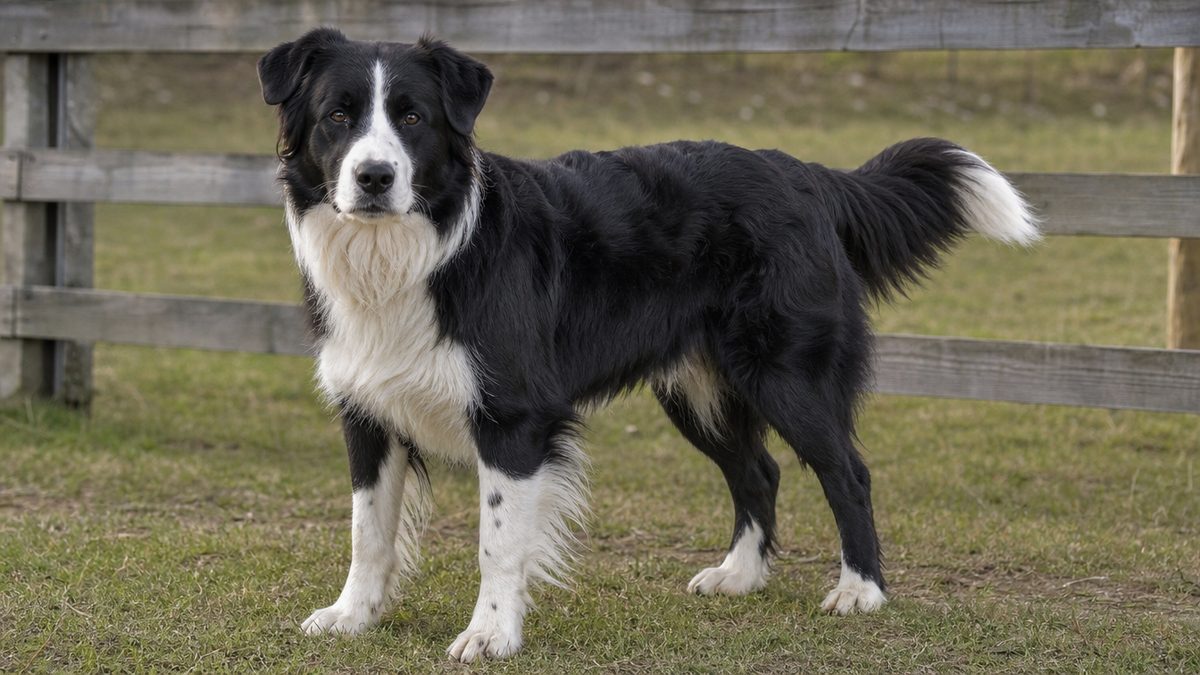
Quick answer
The English Shepherd is an American farm dog, not a British one, and it is not sold in India. The United Kennel Club has registered it since 1927 and calls itself the breed's original registrar; the American Kennel Club and the Federation Cynologique Internationale do not list it at all. Adult dogs stand 18 to 23 inches and weigh 40 to 60 pounds.
This guide summarises breed registry records and standards, orthopaedic registry data, peer-reviewed veterinary genetics, Indian breeding and import law and satellite climate data as general information for Indian pet owners. It is not a diagnosis and it is not treatment advice. Consult a registered veterinarian near you before acting on anything you read here, and treat collapse, laboured panting that does not settle, sudden lameness, or a dog that starts bumping into furniture at dusk as reasons to see a vet without delay.
English Shepherd traits, rated for Indian conditions
What an English Shepherd actually is
An English Shepherd is an American farm dog, not an English one, standing 18 to 23 inches and weighing 40 to 60 pounds, and the United Kennel Club has registered it since 1927.
The name is the first thing to get straight, because it misleads almost every reader who meets it. The breed descends from the shepherd's dogs of the United Kingdom and developed as a landrace breed in America, where it worked as an all-purpose farm dog rather than as a specialist. Its other names say so plainly: Farm Collie, Farm Shepherd, Old Farm Collie, American Farm Shepherd.
The United Kennel Club standard describes the job in one line that most breed pages skip. Being a 'total' breed, English Shepherds should be judged both on their ability to work livestock and their physical and structural appearance. A conformation standard that instructs judges to assess working ability is unusual, and it is the clearest single signal of what this breed is.
| Point | What the standard says |
|---|---|
| Height | Males 19 to 23 inches, 20 to 21 preferred. Females 18 to 22 inches, 19 to 20 preferred. Same height at the shoulders as at the hips |
| Weight | Males 45 to 60 pounds. Females 40 to 50 pounds |
| Proportion | Body length from point of shoulder to point of buttock is about the same as height at the withers, so the outline is square |
| Ears | Wide at the base, folding over approximately three quarters down and laying close to the head |
| Coat | Thick, glossy and soft, straight, wavy or curly, short and smooth on face, skull and front of legs, with a soft fine undercoat |
| Tail | Moderately long, tip of bone reaching the hock, carried slightly higher than the back. Natural bobtails of six to eight inches acceptable |
| Colour | Five predominant patterns: black and white, black and tan, black white and tan, sable and white, tan and white |
The disqualifications matter more than the description
A standard tells you what a breed is by what it refuses. This one disqualifies albinism, excessive white covering more than one third of the dog, solid white coats, whites with black or sable spots, blue merles, solid red or red merle, and solid black coats. It also disqualifies unilateral or bilateral cryptorchidism, and viciousness or extreme shyness.
Two of those are worth an Indian buyer's attention. Blue merle is disqualified, which immediately separates this dog from the Australian Shepherd it is most often confused with in photographs. And solid black is disqualified, so an entirely black farm collie offered under this name does not fit the standard whatever its pedigree says.
Bing India's AI-generated panel for this breed name, captured on 28 August 2026, opens by stating that 'The English Shepherd is a breed of herding dog from the United Kingdom', and then lists American Farm Shepherd among the breed's other names in the same panel. The United Kennel Club says the breed was brought to the American colonies by some of the first settlers and followed the development of the United States from east to west. The breed conservancy says it developed as a landrace in America. The Orthopedic Foundation for Animals files it under one registry group, UKC Herding Dog Group. It is an American breed with a British name, and the same registry-versus-working-population question runs through the American Coonhound group.
Is the English Shepherd a breed or a landrace? Its own club says both
The English Shepherd is both, and that is not a hedge, it is the parent club's own written position: the breed 'is both a standardized breed (with four separate registries) and a landrace breed found in geographic pockets across the continent'.
That sentence resolves an argument the ranking pages are still having, and not one of them quotes it. It appears in the English Shepherd Club's registration guidance, in the passage explaining why the club created a Step In registration route, and it is the most useful single line written about this breed anywhere.
The two halves are both true and they are true about different dogs. There is a registered population with published standards, pedigrees and health results. There is also an unregistered working population on farms, descended from the same stock, that never entered a register because nobody on the farm needed one.
| Standardised | Landrace |
|---|---|
| A written United Kennel Club standard since 1927 with height, weight, colour and disqualifications | The breed has never been shown regularly in the conformation ring |
| Four registries recording pedigree, three of them still operating | Adherence to the physical standard 'has been left to the discretion of individual breeders to a large extent'; |
| An open public database recording OFA, PennHIP and MDR1 results | Historically most farm dogs were never registered at all |
| A formal Step In committee with published criteria | Purebred dogs exist that 'lack, for whatever reason, the documentation required to qualify for full registration'; |
Compare that with how the same question is usually answered elsewhere on this site. A page can conclude that a name is a strain rather than a breed, or that a label covers a group rather than one dog. Neither answer is right here. The English Shepherd has a standard, disqualifications, four registries and a peer-reviewed breed-specific genetic study, so calling it merely a landrace would be wrong. It also has an unregistered working population and no show culture, so calling it a fully standardised show breed would be equally wrong.
The historical description supports both halves. John Holmes, writing in 1960, described this type of dog as loose-eyed rather than as the classic trials collie: easy-going, level-headed dogs, useful but not flashy workers, and for all-round farm work often far more use than the classically bred dog. That is a description of a working type, not of a show variety.
Say that the English Shepherd is a standardised breed with a landrace population still attached to it, and say who says so. That is more accurate than 'recognised breed', which implies a show register it does not really have, and more accurate than 'landrace', which ignores a 1927 standard, four registries and a 2024 genetic study. The distinction is not academic for a buyer: it is exactly why a pedigree from one of these registries tells you less about a dog's appearance, and more about its working ancestry, than a pedigree from a conformation registry would.
The four registries, and which of them still exist
Four registries have recorded English Shepherds and three still operate, because the Animal Research Foundation registry became defunct following the death of Al Walker in December 2016.
The parent club lists them plainly, with a note on what each one is, and that note is more useful to a buyer than any breed description.
| Registry | What it is | Status |
|---|---|---|
| English Shepherd Club Registry (ESCR) | A nonprofit, breed-specific registry with an open and public database, formed by the English Shepherd Club | Operating |
| United Kennel Club (UKC) | A for-profit, multi-breed registry, and the breed's original registrar since 1927 | Operating |
| International English Shepherd Registry (IESR) | Started as a breed-specific registry, now a for-profit, multi-breed, family-owned registry | Operating |
| Animal Research Foundation (ARF) | Started breed-specific, became a for-profit, multi-breed, family-owned registry that also registered livestock | Defunct since December 2016 |
One structural difference between them decides how easy it is to register a puppy. Every registry except the ESCR requires that both parents be registered with that same organisation before a litter can be registered. The ESCR takes the view that parents registered with any one of the English Shepherd registries should be sufficient, provided a copy of the non-ESCR parent's certificate accompanies the application.
That sounds administrative and it is not. A breed with four registries and no reciprocity would fragment its own gene pool along paperwork lines. One registry choosing to accept the others is a genetic diversity decision dressed as a form.
What the ESCR database actually records
The English Shepherd Club Registry is a 501(c)3 charitable non-profit and its database is open: access is free and does not require club membership. It records pedigrees, registration numbers from the other English Shepherd registries, coat colour, date of birth, littermates, progeny, siblings and half siblings, activities such as agility and obedience, intact status, up to ten photographs, what kind of livestock each farm dog works, and health information including OFA, PennHIP and MDR1 results.
A livestock field in a breed registry is not something Bonbeno has found on any conformation register. It exists because for this breed the working record is the point.
The United Kennel Club's Single Registration Requirements page for the English Shepherd asks for a certificate from a UKC-acknowledged registry and then names seven: the American Kennel Club, the Canadian Kennel Club, the Kennel Club of Great Britain, the English Shepherd Club Registry, the Independent Kennel Club, the Continental Kennel Club, and any FCI affiliated registry. Four of those seven do not recognise the English Shepherd at all, so they cannot issue a certificate for one. In practice the list has three usable entries. This is boilerplate applied to a breed it does not fit, and it is worth knowing before an Indian seller waves a registry name at you.
Step In registration, the mechanism nobody else describes
The English Shepherd Club Registry runs a Step In route that registers purebred English Shepherds who lack the documentation for full registration, and it judges them on pedigree, on working character and on physical type.
Section 6 of the registry rules states that 'The Step In process offers a means of recognizing and registering purebred English Shepherds who lack, for whatever reason, the documentation required to qualify for full registration';. The club is explicit about why it exists: the process was created to fit the breed's unique history as both a standardised breed and a landrace, and the founders judged that valuable purebred dogs were likely to be unregistered or incompletely registered.
The club is equally explicit about what Step In is not. The goal is to include only purebred English Shepherds, which the club calls a clear distinction from grading-up programmes that fold cross-bred dogs into a registry, as is done in some livestock breeds.
The three tests, in the club's own order
- Pedigree. Does the dog link up to the historical breed and breeders? The club calls this the most important and most variable element, and accepts bills of sale, letters and other documents alongside a pedigree.
- Working character. A Working Trait Evaluation asks the owner to assess the dog against the breed's historic working traits: herding drive, herding style, power, stock ethic, work ethic, biddability, approach, eye, bark and bite. Video is encouraged. Herding instinct results and other third-party measures count.
- Physical type. The application must show that the dog fits the standard described in the club by-laws, assessed from photographs taken at several angles.
The application also invites the owner to describe the dog's working environment and other traits: territoriality, patrolling, warning, defence of people and property, tracking ability, approach toward predators, pest control, and attitude toward newborn livestock. That list is a job description for an American farm dog and it is the clearest statement of breed purpose in any document Bonbeno read for this page.
The result is graded, not binary
Approved dogs are given one of three levels by the depth of pedigree established: one complete generation is Level 1, two complete generations Level 2, three or more Level 3. The registration number carries the level as a suffix, so ESC-XXX-S3 in the public database means a Step In dog at Level 3 with three complete generations known.
The committee has seven members appointed by the Board, chosen for objectivity and for a spread of experience, with a recommended minimum of five years in the breed and representation from both breeders and working-dog people. The Registrar sits on it as a non-voting member.
A suffix in a registration number is a disclosure. If you are ever shown an English Shepherd pedigree, an S1, S2 or S3 tells you the dog entered through Step In and how much of its ancestry is documented, which a conformation pedigree never tells you. Verify the number rather than the certificate design, and remember that the ESCR database is public and free to search, so a seller who will not give you a registration number is withholding something anyone could otherwise check.
Not AKC, not FCI, and both absences were checked with controls
The English Shepherd appears nowhere in the American Kennel Club's breed listing and nowhere in Federation Cynologique Internationale nomenclature, and each absence was confirmed against a working control rather than reported from a failed search Federation Cynologique Internationale.
Absence is a strong claim, so it has to be earned. Both registers were read in full and both were tested with breeds that should be present.
The American Kennel Club
The AKC's Foundation Stock Service page carries a complete breed selector covering every breed the AKC records in any class, from Affenpinscher to Yorkshire Terrier. The breeds beginning with English are exactly five: English Cocker Spaniel, English Foxhound, English Setter, English Springer Spaniel and English Toy Spaniel. There is no English Shepherd.
The control matters here because a sceptic would say the AKC simply does not record American farm landraces. It does. The same list contains Mountain Cur, Catahoula Leopard Dog, Carolina Dog, Teddy Roosevelt Terrier, Treeing Tennessee Brindle, Rat Terrier, Plott Hound, American Leopard Hound and Working Kelpie. American working and landrace breeds are exactly the kind of dog the Foundation Stock Service exists for, and this one is not in it.
The AKC also states on the same page that FSS breeds are not eligible for AKC registration, so even the breeds that are listed hold a recording status rather than a registration. The English Shepherd does not hold that either.
The Federation Cynologique Internationale
The FCI's nomenclature filtered to the letter E returns sixteen breeds. Six of them begin with English: ENGLISH COCKER SPANIEL (5), ENGLISH FOXHOUND (159), ENGLISH POINTER (1), ENGLISH SETTER (2), ENGLISH SPRINGER SPANIEL (125) and ENGLISH TOY TERRIER (13). Six controls on one page, and no English Shepherd among them.
That absence is the one with direct consequences in India. India is an FCI full member represented by the Kennel Club of India in Anna Nagar, Chennai, and a full member issues pedigrees against FCI nomenclature. With no FCI standard for the English Shepherd, there is no FCI nomenclature entry against which a Kennel Club of India pedigree for one could be issued.
| Body | Status | How it was checked |
|---|---|---|
| United Kennel Club | Recognised, Herding Dog Group, since 1927 | The UKC's own standard names itself the breed's original registrar |
| English Shepherd Club Registry | Registered, breed-specific, open public database | Read the registry's own rules and home page |
| International English Shepherd Registry | Registered, for-profit multi-breed | Named by the parent club |
| American Kennel Club | Absent from every class including Foundation Stock Service | Read the full breed selector; five English breeds present, nine American landrace breeds present |
| Federation Cynologique Internationale | Absent from nomenclature | Read the letter E list; six English breeds present |
| Kennel Club of India | No FCI route exists because there is no FCI standard | FCI members register plus the FCI letter E list |
| Orthopedic Foundation for Animals | Recorded, group field reads UKC Herding Dog Group only | Read from OFA's own breed-selector markup |
The Indian marketplace page that ranks for this breed name advertises 'KCI registered English Shepherd puppies for sale in India' in its own meta description. The Kennel Club of India is an FCI full member and the FCI has no English Shepherd in its nomenclature. Ask any seller making that claim for the registration number and the name of the register it sits in, and check it. The breed is genuinely unrecognised by the FCI, and that is not a small print detail; it is the whole basis of the paperwork being offered.
One method note, because this page rests on two absences. Every absence here was tested against a control on the same instrument in the same session, which is the only way an absence becomes evidence rather than a failed query. The same discipline was applied to the search engine: Bing India returned no People also ask box for this breed name, and the control query 'labrador retriever' on the same endpoint in the same session returned a working People also ask box with four questions, so the missing box is a property of Indian demand for this breed rather than of the tool Bing India results page for 'english….
The history, from a 1937 textbook to a 1954 split
This was once among the most numerous dogs in America, and the clearest evidence is a 1937 breeding textbook that called the Farm Shepherd the most popular breed in the country.
Leon Whitney, in How to Breed Dogs (1937), referred to the Farm Shepherd as the most popular breed in America and wrote that it was 'known variously as the farm shepherd, the barnyard collie, the old fashioned shepherd, the cow dog, the English Shepherd and by other colloquial names', adding 'I doubt there is a more alert, trustworthy, or American dog';.
That list of names is the landrace showing through. A dog with six colloquial names in one paragraph is a type people kept, not a breed people showed.
The United Kennel Club's own history places the arrival earlier: the English Shepherd was brought to the American colonies by some of the first settlers and followed the development of the United States from east to west, prized because it both herded valuable livestock and protected isolated homesteads. The same standard opens with a legend, that the breed combines native British Isles dogs with Roman herding dogs brought during the invasion of 55 BC, and Bonbeno reports that as the standard's own framing rather than as history.
The registry splits
The breed's registry history is a sequence of disagreements, and the parent club records the outcome rather than the argument. The United Kennel Club is the original registrar, recognising the breed since 1927. Three more registries followed, and by the club's own account the community had ARF, IESR and UKC as options until the English Shepherd Club created the ESCR in 2005, making four.
The Animal Research Foundation register then closed. The club records the reason without euphemism: ARF became a for-profit, multi-breed, family-owned registry that also registered livestock, and it is now defunct following the death of Al Walker in December 2016. A privately owned register can simply stop, and that is part of why a non-profit breed-owned registry was created.
What the breed was for, in a 1960 description
John Holmes described this type in The Farmer's Dog in 1960: 'There are several other types of Collie quite distinct from the Border Collie in that they are "loose-eyed" workers... They were easy-going, level-headed dogs, useful but not flashy workers... For all around farm work they were often far more use than the classically bred (trials type) dog';.
Loose-eyed is the technical term and it matters practically, and it is the same distinction that separates the shaggy British droving collies such as the Bearded Collie from the trials-bred specialists. A strong-eyed dog stares stock into moving. A loose-eyed dog uses body, voice and position and works upright. That difference decides whether a dog is pleasant to live with in a household, and it is the honest reason many people who cannot cope with a Border Collie can cope with this breed.
The English Shepherd Club Registry's public database records what livestock each registered dog works, alongside pedigree and health results. That field is the modern continuation of what Whitney and Holmes were describing, and it is the only place Bonbeno found where a breed registry treats the job as data rather than as folklore.
The bottleneck, and why genetic diversity is the health story
By the late 1980s the breed had shrunk to the point that there were no dogs to be found in many parts of the United States, and the effect of that bottleneck on the breed's health is still an open question.
The breed conservancy states the collapse plainly. There were many large breeding operations in the mid-twentieth century, with advertisements in farm publications from breeders claiming satisfied customers numbering in the thousands. Many if not most of those dogs were never registered. As American society and dog breeding changed in the second half of the century, the breed's visibility fell away, and by the late 1980s the number of breeders and the size of kennels had dwindled until whole regions had none.
The conservancy dates the squeeze to the 1970s to 1990s and says the number of dogs appears to have grown over the past ten to fifteen years, while adding that it remains unclear what impact that bottleneck will have on the genetic diversity and health of the breed in future.
What a bottleneck does, in plain terms
A population that passes through a narrow point carries forward only the genes present in the few animals that got through. Rare recessive variants that were harmless at low frequency become common, because everyone alive afterwards descends from the same handful of dogs. That is the mechanism behind most breed-specific inherited disease, and it is why a 2024 study found a progressive retinal atrophy variant segregating in this breed at all.
This is also why the registry design described earlier is a health measure rather than paperwork. The ESCR accepting parents registered with any English Shepherd registry keeps four fragmented gene pools usable as one. The Step In route brings undocumented purebred farm dogs back into the registered population, and the club says so directly: step-in provides an avenue by which these dogs can rejoin the registered population and contribute genetic diversity to the breed.
| Problem | Tool | Where it lives |
|---|---|---|
| Four registries fragmenting one gene pool | ESCR accepts parents registered at any ES registry | ESCR litter registration rules |
| Purebred farm dogs with no papers | Step In registration at levels S1, S2 and S3 | ESCR rules section 6 |
| No way to see who is related to whom | An open public pedigree database, free to access without membership | The online ESC Registry |
| Health results scattered across owners | OFA, PennHIP and MDR1 results recorded per dog in the same database | The online ESC Registry |
| A privately owned register can simply close | A 501(c)3 non-profit registry owned by the breed community | The ESC's stated reason for founding the ESCR |
Bonbeno could not obtain published annual registration totals for any of the three surviving English Shepherd registries, and does not estimate one. What the sources do support is the shape: numerous in 1937, absent from whole regions by the late 1980s, growing again over the last ten to fifteen years, with the genetic consequences unresolved. Anyone quoting a population figure for this breed should be asked which register it came from, because the unregistered farm population is by definition uncounted.
English Shepherd price in India
No English Shepherd is offered for sale in India, and the page that ranks for the phrase says '3 Result Found' above three French Bulldogs.
That is the honest answer and it goes first. A search for the breed name plus price in India returns one Indian marketplace page for the breed, several unrelated shepherd pages from the same site, and a run of American breed encyclopedias. There is no Indian price in india figure for this breed, because there is no Indian market for it.
The listing, audited
The page is titled 'English shepherd Puppies For Sale', its meta description promises 'KCI registered English Shepherd puppies for sale in India', and its result counter reads 3 Result Found. Under a heading reading 'Similar breeds at other locations' it then shows three animals.
| Name | Breed as the page itself labels it | City as listed |
|---|---|---|
| Zorro | French Bulldog | Jammu |
| French Bulldog | French Bulldog | Bhubaneswar |
| Hunter | French Bulldog | Chennai |
Three French Bulldogs. Zero English Shepherds. No price is displayed against any of them; each carries a 'View Price' link that leads to a sign-up page, so the figures are behind a lead-capture wall rather than published.
The control is on the same page
This is not a broken site and the counter is not broken either, which is what makes the finding solid. The same page's own Most Popular Breeds sidebar carries live counts for the breeds it actually stocks: Shih Tzu 650, Siberian Husky 549, Golden Retriever 487, Labrador Retriever 454, German Shepherd 412, Beagle 274, Poodle 263, Rottweiler 162, Pomeranian 136, Cane Corso 134. The mechanism works. It has nothing to show for this breed, so it shows French Bulldogs.
The breed dropdown on the same page is the giveaway for how the English Shepherd page came to exist at all. It lists roughly three hundred entries including Corman Shepherd, American Tundra Shepherd, Golden Shepherd, Culture Pomeranian, Teacup Pomeranian and Toy Pom. That is a generated list, and one page exists per entry whether or not a dog does.
There are only two ways to produce one. Convert an American price, which manufactures a number no Indian seller has quoted. Or repeat a figure attached to a French Bulldog. Both are fabrication with a decimal point in it, and this site has documented Indian dog-price tables built by exactly those two methods. The absence of a price here is the finding, not a gap in the research.
English Shepherd heat tolerance, and a surprising result
Springfield, Missouri reaches a July wet-bulb of 22.15 C, which is higher than Bengaluru's hottest month, so this breed's own farm range already delivers a heat load that beats one large Indian city.
That result was not expected and it is the most useful thing on this page for an Indian reader. Almost every imported breed guide on this site ends with the origin climate being far milder than anywhere in India, and the Field Spaniel page built in the same week is the standard version of that result. This one does not, and the reason is that the English Shepherd is an American landrace rather than a British one.
Because the breed has no single origin town, three representative American farm-country points were queried by explicit latitude and longitude rather than by place name, chosen to span the east-to-west spread the United Kennel Club describes. They are presented as representative of the farm belt the breed worked, not as a birthplace, because a landrace does not have one.
| Place | Annual mean C | Coolest month C | Warmest month C | Annual max C | Peak monthly wet-bulb C |
|---|---|---|---|---|---|
| Columbus, Ohio | 11.01 | -2.62 (Jan) | 23.41 (Jul) | 37.98 | 20.02 (Jul) |
| Springfield, Missouri | 13.47 | 0.02 (Jan) | 26.01 (Jul) | 43.39 | 22.15 (Jul) |
| Knoxville, Tennessee | 14.37 | 2.38 (Jan) | 25.02 (Jul) | 40.56 | 21.32 (Jul) |
| Shillong, Meghalaya | 17.96 | 10.74 (Jan) | 22.38 (Aug) | 29.91 | 21.33 (Jul) |
| Bengaluru | 23.74 | 20.22 (Dec) | 28.37 (Apr) | 40.38 | 21.86 (May) |
| Pune | 23.86 | 19.62 (Dec) | 28.93 (Apr) | 43.20 | 22.97 (Jun) |
| Delhi | 25.60 | 13.61 (Jan) | 35.88 (Jun) | 48.79 | 26.50 (Jul) |
| Kolkata | 25.81 | 17.31 (Jan) | 31.53 (May) | 46.81 | 27.09 (Jun) |
| Mumbai | 26.77 | 23.19 (Jan) | 31.19 (May) | 44.91 | 25.77 (Jun) |
| Chennai | 27.95 | 24.09 (Jan) | 31.51 (May) | 42.70 | 26.11 (May) |
Read the wet-bulb column rather than the temperature columns, because wet bulb temperature is the figure that governs whether a panting dog can shed heat at all. Columbus, Ohio anchors the cool end of the American range at a July peak of 20.02 C. Computed from each point's monthly mean temperature and relative humidity using the Stull formulation, Springfield's July peak of 22.15 C sits above Bengaluru's 21.86 C and above Shillong's 21.33 C, and only 0.82 C below Pune's June peak of 22.97 C NASA POWER 20-year climatology NASA POWER 20-year climatology.
Springfield's annual maximum temperature of 43.39 C also exceeds Pune's 43.20 C and Bengaluru's 40.38 C. An American farm dog from the Ozarks is not a cold-climate animal, and calling this breed heat-tolerant relative to a British gundog is defensible on the numbers rather than on impression.
It does not make India workable. Chennai's May wet-bulb of 26.11 C, Kolkata's June figure of 27.09 C and Delhi's July figure of 26.50 C stand between 3.96 and 4.94 degrees above Springfield's worst month NASA POWER 20-year climatology. And the peak is only half the question. The other half is duration, which the next section measures, and it is where the American comparison collapses.
The real difference is duration, not peak
Springfield spends three months of the year at a mean wet-bulb of 20 C or above. Chennai spends twelve NASA POWER 20-year climatology.
Peak heat is survivable. Sustained heat is what changes a dog's life, because it removes the nights and mornings a working animal uses to recover, and it removes the winter it uses to rebuild condition. Counting months above a threshold is the cheapest way to see it, so the monthly wet-bulb series was computed for all ten points and the months above 20 C and above 22 C were counted.
| Place | Months at 20 C or above | Months at 22 C or above | Coldest month wet-bulb C |
|---|---|---|---|
| Columbus, Ohio | 1 | 0 | -3.8 (Jan) |
| Knoxville, Tennessee | 2 | 0 | 0.8 (Jan) |
| Springfield, Missouri | 3 | 1 | -1.4 (Jan) |
| Shillong | 4 | 0 | 8.1 (Jan) |
| Delhi | 5 | 4 | 7.6 (Jan) |
| Pune | 6 | 5 | 14.1 (Jan) |
| Bengaluru | 7 | 0 | 16.4 (Jan) |
| Kolkata | 8 | 7 | 13.2 (Jan) |
| Mumbai | 9 | 7 | 16.6 (Jan) |
| Chennai | 12 | 9 | 21.0 (Jan) |
The two columns tell different halves of the story and both matter. Bengaluru never reaches a mean wet-bulb of 22 C in any month, so its heat is genuinely mild by Indian standards, and yet it holds 20 C or above for seven months against Springfield's three NASA POWER 20-year climatology. Chennai does not merely peak higher, it never drops below 21.0 C at all, in any month of the year.
So the honest verdict on this breed is a two-part one. A summer afternoon in Missouri is already about as hard as a summer afternoon in Bengaluru, and this dog handles that on its own farm every July. What it has never met is a year without a break. Springfield's January wet-bulb is minus 1.4 C. Chennai's is 21.0 C, which is warmer than Springfield's hottest month bar two NASA POWER 20-year climatology.
The practical ranking for an Indian owner
If somebody in India already owns one of these dogs, the climate table ranks their options honestly. Bengaluru and Shillong are the two workable Indian locations, because neither ever reaches a mean monthly wet-bulb of 22 C, and Shillong's annual mean of 17.96 C is closer to Knoxville's 14.37 C than to anything else in the table. Pune is borderline at five months above 22 C. Chennai, Kolkata and Mumbai are not sensible homes for a thick-coated working dog with a soft dense undercoat.
Plan the working year, not the working day. In Missouri a farm dog gets nine months of the year in which nothing about the weather limits it. In Bengaluru it gets five, in Pune six, in Chennai none. Exercise by wet-bulb, take the working sessions in the two cool months seriously because they are the whole conditioning window, and accept that a herding dog kept in a coastal Indian metro will be an under-worked dog for most of its life.
What actually causes heat illness in dogs, and why it matters for a herding breed
Exercise causes most canine heat-related illness, and two thirds of the exercise cases were ordinary walks rather than hard work.
The largest primary-care study of the question reviewed 905,543 UK dogs under veterinary care at 886 clinics in 2016 and identified 1,259 heat-related illness events from 1,222 dogs. Of those events, 380 had no trigger recorded. Of the remaining 879 events with a recorded trigger, 652 were exertional, which the paper prints as 74.2 percent.
| Trigger | Events | Share of the 879 |
|---|---|---|
| Exertional | 652 | 74.2% |
| Environmental | 113 | 12.9% |
| Vehicular confinement | 46 | 5.2% |
| Under the care of a vet or groomer | 40 | 4.6% |
| Building confinement | 24 | 2.7% |
| Blanket entrapment | 4 | 0.5% |
| Total with a recorded trigger | 879 | 100% |
Those six counts sum to 879 exactly. The denominator is the part most pages get wrong: 74.2 percent is 652 of the 879 events with a recorded trigger, not of the 1,259 total events, and applying it to 1,259 would imply 934 exertional cases rather than 652.
It was mostly a walk
Of the 652 exertional events, the type of exercise was not specified for 101. Of the remaining 551, 372 events, 67.5 percent, happened after walking. High-intensity activity such as running or cycling accounted for 97 events, 17.6 percent; play for 76, 13.8 percent; and formal competition for 6, 1.1 percent. Those four counts sum to 551.
Exertional heat-related illness in that dataset occurred in every month of the year and carried a 7.6 percent overall fatality rate.
The English Shepherd does not appear in that paper's breed analysis, so none of its breed-specific odds ratios may be applied to it, and Bonbeno applies none. Two things transfer because they are not breed-specific. The trigger split, which says exertion dominates and a walk is the commonest exertion. And the arithmetic of this page's own climate table: a dog with a thick coat and a soft dense undercoat, asked to work at a Chennai wet-bulb of 26.11 C, is generating heat faster than evaporation can remove it, and its own farm range never asked that of it NASA POWER 20-year climatology.
Set that beside what the breed is for. The United Kennel Club describes a dog that acts immediately when commanded, adapts at once to working commands around farm stock, works strictly low heeling and is very free with the use of its teeth. That is a dog that will work until you stop it, which is precisely the animal the exertional column of that table is describing.
Temperament, and who should not buy one
The United Kennel Club's temperament clause reads energetic, intelligent, very active, agile, courageous and gritty, and adds that the breed is fearless for its purpose and very watchful as a guard of the home.
Read those words as a warning as much as a recommendation. Gritty and fearless for their purpose describe a dog bred to face livestock and predators, not a dog bred to be decorative. The same clause says the breed is companionable to its master, acts immediately when commanded and is very responsive to the master's voice, which is the biddable half of the picture.
The standard also makes temperament a disqualification: viciousness or extreme shyness removes a dog from consideration. A registry that disqualifies both ends of the nerve spectrum is telling breeders what it does not want.
Loose-eyed, and why that changes household life
This breed is loose-eyed, not strong-eyed. A strong-eyed dog like the trials-bred collie controls stock by staring, holds enormous focus on one object, and brings that intensity indoors. A loose-eyed farm dog uses position, voice and body, and switches off more readily. John Holmes described the type as easy-going and level-headed, useful but not flashy.
In practice that makes this a more liveable house dog than the specialist herding breeds it is compared with, and a more independent one. It will make decisions. The Step In Working Trait Evaluation lists the traits the club expects an owner to recognise, and they include territoriality, patrolling, warning, defence of people and property, approach toward predators, pest control and attitude toward newborn livestock. Those are the same traits that, in a flat, become barking at the lift and following one person from room to room.
Who this breed suits
- Households with space and a job, because this is a working farm dog whose registry assesses it on working ability.
- Owners who want a watchful dog, since the standard itself calls the breed very watchful as a guard of the home.
- People who can absorb an opinionated dog, because loose-eyed independence means initiative rather than obedience by default.
- Families in a cool Indian location, which on this page's own climate table means Bengaluru or Shillong and not a coastal metro.
Who should not
- Anyone in a small Indian flat, because a patrolling, warning, territorial farm dog in a shared corridor is a complaint waiting to happen.
- First-time owners wanting an easy dog, since gritty and free with the use of their teeth around stock is not a beginner brief.
- Households with no time, because an under-worked herding dog invents work.
- Anyone buying on the name, which is the commonest mistake with this breed and has nothing to do with the dog.
This is a sane, versatile, biddable working dog with a guarding streak and real independence, and it is a better temperament fit for Indian conditions than most specialist herding breeds. The obstacles are supply, climate duration and housing, in that order. None of them is about the dog's character.
Training a loose-eyed farm dog
Train an English Shepherd by giving it a job and a rule set rather than by drilling obedience, because the standard describes a dog that adapts itself almost at once to working commands around farm stock.
The standard's own temperament language is the training brief. Acting immediately when commanded, and very responsive to the master's voice is a description of a dog that learns quickly and works close. It is also a description of a dog that will act on its own judgement when no command comes, which is what independence means in practice.
A realistic timeline
| Age | Priority | The Indian catch |
|---|---|---|
| 8 to 16 weeks | Socialise to people, traffic, other dogs and household noise, hard and early | A watchful, territorial breed that is under-socialised becomes a reactive one in an Indian neighbourhood |
| 3 to 6 months | Recall on a long line, name response, a settle command with a real off switch | Sessions have to move to dawn and dusk from March onwards in most of the climate table |
| 6 to 12 months | Impulse control around cyclists, cattle, cats and children, plus a solid leave-it | Free with the use of their teeth around stock is a working trait, not a household one, and needs redirecting early |
| 12 to 24 months | Real problem-solving work: scent games, structured tasks, obedience or agility | Heat limits outdoor sessions, so indoor cognitive work carries the load for months at a time |
| Throughout | Give it a job every single day | An under-employed farm dog patrols, warns and guards the flat instead |
Socialise deliberately around livestock, if livestock exist near you. The Working Trait Evaluation the parent club uses lists herding drive, herding style, power, stock ethic, work ethic, biddability, approach, eye, bark and bite. Those traits express themselves whether or not you supply sheep. If there are no sheep, the drive still turns up, aimed at whatever moves.
The one training problem specific to India
The breed's guarding half is the one that gets Indian owners into trouble. The standard calls the breed very watchful as guards of the home, and the club's own trait list includes territoriality, patrolling, warning and defence of people and property. In an American farmyard those traits are the product. In an Indian apartment block with shared stairs, a delivery rider at the door and neighbours' children on the landing, they are a management problem.
So the training priority order for India is the reverse of the American one. Teach the off switch first, the recall second, and the job third, rather than building drive and then trying to contain it.
Scent work is the highest-value substitute for distance in a hot country. A herding dog asked to find ten hidden articles in a shaded room is doing genuine cognitive work at a fraction of the heat load of a walk, and this is the breed's own currency: the Working Trait Evaluation explicitly asks about tracking ability. It does not replace the exercise requirement. It does replace the part of it that would otherwise happen at a dangerous wet-bulb.
Exercise, and what an under-worked farm dog does instead
An English Shepherd needs daily work rather than a daily walk, because the standard describes an energetic, very active, agile dog built for speed and manoeuvrability.
The United Kennel Club does not publish an hours figure for this breed, and Bonbeno will not invent one. What the standard does publish is a description of function: a dog whose gait must be smooth and without choppiness, indicating the ability to change direction instantaneously, with effortless action and no body roll. That is a specification for an animal that turns and covers ground all day.
What the work has to contain
- Ground covered at a working trot, because the standard's gait clause is written around direction changes rather than around straight-line speed.
- A task with an outcome, since a dog whose registry assesses work ethic and stock ethic is a dog that needs the job to mean something.
- Mental load, which is the only component an Indian summer does not restrict.
- Contact with its people, because the standard calls the breed companionable to its master and the club's trait list is full of guarding behaviours that go wrong in isolation.
- A hard daily off switch, taught rather than hoped for.
The Indian timetable, by wet-bulb
This page's climate table gives the working calendar directly. Bengaluru holds a mean monthly wet-bulb of 20 C or above for seven months and never reaches 22 C, so most of the year is workable at the right hours. Pune sits above 22 C for five months. Chennai never falls below 21.0 C in any month at all.
Exercise at first light and after dark, split the day's work into short sessions rather than one long one, carry water, and stop at the first pant that will not settle. Two thirds of the exertional heat cases in the UK dataset followed an ordinary walk, in a country with no month as warm as an Indian winter.
One more Indian hazard belongs in the exercise plan rather than the health section, because the exercise creates it. A thick-coated dog worked through Indian scrub collects ticks, and tick-borne disease is a live risk rather than a theoretical one: Ehrlichia canis occurrence, risk factors and molecular detection have been surveyed in dogs across South India. Check the ruff, the ear folds, the armpits and between the toes after every session in cover.
Not hyperactivity. In a watchful, territorial, loose-eyed farm dog it looks like a job the dog invents for itself: patrolling the balcony, barking at the corridor, herding children, nipping at heels, and treating every visitor as a boundary decision. The club's own trait list names territoriality, patrolling, warning and defence of people and property as breed characteristics. In a working home those are assets. In an unstimulated urban home they are the complaint that ends the placement.
Grooming a double coat in Indian humidity
Groom an English Shepherd for the undercoat rather than the topcoat, because the standard specifies a soft, fine undercoat under a thick outer coat, and that undercoat is what an Indian summer punishes.
The standard describes the coat precisely: thick, glossy and soft, straight, wavy or curly, short and smooth on the face, skull and front of the legs, covering the body from ears down to feet, with good furnishing under the body and on the upper half of the hind legs, feathering on the backs of the front legs, and a plume-like tail. The undercoat is soft and fine, affording protection from the elements.
Two clauses in that description are unusual and both help an Indian owner. The standard penalises any evidence of excessive grooming, and faults heavy manes and heavy frills on the underside of the neck and chest. This is a thick-coated breed whose own registry does not want more coat than the job needs.
The routine that actually matters here
- Rake the undercoat out, twice a week at minimum, and daily through a coat blow. Dead undercoat trapped against the skin in Indian humidity is the mechanism behind hot spots.
- Do not shave the dog. A double coat regulates in both directions and a shaved undercoat regrows unevenly; the standard's own preference is for a natural coat rather than a groomed one.
- Dry the ruff, the ear folds and the leg feathering completely after every bath and every wet walk.
- Check the skin under the coat weekly, because in a thick coat you will smell a problem before you see one.
- Comb the plume and the trousers, which are where matting starts.
The ears are a modest risk here, not a large one
This breed's ears fold over approximately three quarters down and lie close to the head, which puts it between the erect and pendulous categories rather than at the risky end. That distinction is measurable. In a UK primary-care study of 22,333 dogs, breeds with pendulous ear carriage carried 1.76 times the odds of otitis externa compared with breeds with erect ears, and V-shaped drop ears 1.84 times, while semi-erect carriage came out at 1.03 with a confidence interval of 0.86 to 1.24, which is no measurable difference from erect.
The Indian series points the same way. Of 1,008 otitis externa cases from 76,161 dogs at a Bengaluru hospital, drop-eared dogs were 47.72 percent, prick-eared 28.07 percent and intermediate, that is semi-erect, 24.21 percent, the lowest of the three. Those three counts are 481, 283 and 244 and they sum to 1,008 exactly.
So ear disease is a smaller worry for this breed than for a long-eared spaniel, and the rainy-season pattern still applies: that same series put 41.87 percent of cases in the rainy season against 32.83 percent in winter and 25.30 percent in summer. Dry the ear folds anyway.
This breed sheds and it is not hypoallergenic, because no dog is. A double coat with a soft fine undercoat blows twice a year and drops hair year-round in a warm climate. The evidence on the general claim is settled: measuring the major dog allergen Can f 1 across 196 dogs of so-called hypoallergenic breeds against 160 control dogs found the hypoallergenic group higher on hair and on coat, with no difference in airborne allergen, and the authors concluded there is no evidence for classifying any breed as hypoallergenic.
English Shepherd health, from the orthopaedic registry
Hip dysplasia is the breed's clearest documented problem: 20.6 percent of 963 English Shepherd hips evaluated by the Orthopedic Foundation for Animals were graded dysplastic, against 3.6 percent abnormal elbows of 225.
The breed code was read out of OFA's own markup rather than guessed, because a guessed OFA code returns a complete and plausible table for a different dog. The attribute reads value="ESP" data-name="ENGLISH SHEPHERD" data-groups="UKC Herding Dog Group";. Every figure below was then matched to its own table's printed header rather than to a column position.
| Registry | Evaluations | Normal % | The finding |
|---|---|---|---|
| Hips | 963 | 77.9 | 20.6% dysplastic: 12.5 mild, 7.5 moderate, 0.6 severe. Excellent 11.6, good 55.0, fair 11.2 |
| Elbows | 225 | 96.4 | 3.6% abnormal, all of it Grade 1; Grade 2 and Grade 3 both 0.0 |
| Eyes | 96 | 91.7 | 8.3% abnormal, 0.0% breeder option |
The hip table reconciles against itself, which is worth checking before quoting any registry. The three normal grades sum to 77.8 against a printed 77.9, which is rounding. The three dysplastic grades sum to exactly the printed 20.6. Twenty point six percent of 963 is about 198 dogs graded dysplastic.
What is missing from OFA, and why the absence is real
There is no OFA patella row for this breed, no thyroid row, and no cardiac row of any kind. That is not an oversight. OFA requires a minimum number of evaluations before a breed appears in a statistics table at all, and this breed clears it only for hips, elbows and eyes.
The same is true of the drug-sensitivity test that matters most for herding breeds. OFA publishes a Multiple Drug Resistance (MDR1) table, and it is a working table: it holds 6,085 evaluations across all breeds, ranks the Collie first at 725 evaluations with 37.4 percent abnormal, and lists the Australian Cattle Dog, the Poodle and the Old English Sheepdog among its rows. The English Shepherd is not in it. The table exists, it covers herding breeds, and this breed has too few results recorded to appear.
It does not mean the breed is clear. It means nobody can say either way from OFA's public data, which is a different and more uncomfortable answer. The English Shepherd Club Registry records MDR1 results per dog in its open database, so the information exists at individual level even where the aggregate does not. If you ever own or import one of these dogs, get the MDR1 test done and tell your Indian vet the result before any anaesthetic or antiparasitic is given, because a drug-sensitive herding dog looks entirely normal until the day it does not.
OFA's two eye tables disagree by 25 percentage points
OFA's summary eye registry puts the English Shepherd at 91.7 percent normal across 96 evaluations, while its own per-diagnosis eye rows give 64 normal of 96 examined, which is 66.7 percent.
Both figures came off the same page on the same day and both are printed by OFA. They cannot both be measuring the same thing, so this page prints both and quotes neither as the rate.
| Table | Denominator | Normal | Normal % |
|---|---|---|---|
| Summary eye registry | 96 evaluations | 88 implied | 91.7 |
| Per-diagnosis rows, NORMAL (OTHER .000) | 96 examined | 64 | 66.7 |
Here the two denominators are identical at 96, which removes the usual excuse. The gap is 25.0 percentage points, and it means 32 of 96 dogs, one third, carry at least one recorded eye finding while the certification registry counts eight as abnormal.
The likely explanation is that certification treats many findings as acceptable while the diagnosis rows count every finding, and OFA's summary reports 0.0 percent breeder option for this breed, which is the column that would normally absorb them. Bonbeno cannot resolve it from the published tables and reports the conflict instead. Note that the identical conflict appears on other breeds in the same dataset, so this is a property of how OFA publishes eyes rather than anything specific to this dog.
What the detail rows contain
| Finding | Dogs | % |
|---|---|---|
| Other, suspected as not inherited | 15 | 15.6 |
| Cataract, significance unknown | 6 | 6.3 |
| Persistent pupillary membranes, iris to iris | 5 | 5.2 |
| Distichiasis | 4 | 4.2 |
| Cataract, generalised or complete | 4 | 4.2 |
| Punctate cataract, capsular | 3 | 3.1 |
| Incomplete cataract, posterior cortex | 3 | 3.1 |
| Incomplete cataract, anterior cortex | 2 | 2.1 |
| Iris coloboma | 1 | 1.0 |
| Optic nerve coloboma | 1 | 1.0 |
| Chronic superficial keratitis, that is pannus | 1 | 1.0 |
Two rows deserve a second look rather than a shrug. Cataract, generalised or complete at 4 dogs of 96 is not a trivial finding in a sample this small, and the two coloboma rows are congenital malformations rather than acquired change. The sample is small enough that none of these percentages should be treated as a population rate, and large enough to say that eyes are worth screening in this breed.
Ninety-six eye evaluations is a thin dataset by any standard, so the useful move for a buyer is not to argue about which OFA percentage is right. It is to ask for the individual dog's eye certificate and read the findings line rather than accepting the phrase 'eye tested'. The English Shepherd Club Registry records OFA results per dog in a free public database, so for this breed the certificate is checkable by anyone.
Progressive retinal atrophy, and the 2024 study that found the variant
A 2024 whole-genome study identified the variant causing progressive retinal atrophy in this breed, and a DNA test now exists.
This is the single most useful health finding for the breed and it is recent. Two full-sibling English Shepherds were diagnosed with progressive retinal atrophy at approximately five years old and tested clear of all published PRA genetic variants, meaning the cause was new.
The team sequenced the whole genomes of the two probands and ran homozygosity mapping across four cases and 22 controls. They found a short interspersed nuclear element, a 210 base-pair insertion, sitting inside an alternatively spliced exon of the gene FAM161A on chromosome 10.
| Element | What the paper reports |
|---|---|
| Variant | XP_005626197.1 c.17929_ins210, a 210 bp short interspersed nuclear element in exon 4 of FAM161A |
| Effect | Extends exon 4 by 39 aberrant amino acids followed by an early termination stop codon |
| Segregation | Homozygous in six PRA cases, heterozygous or absent in control dogs |
| Inheritance | Consistent with a recessive mode of inheritance |
| Study design | Whole genome sequencing of two probands plus homozygosity mapping of four cases and 22 controls |
| Age at diagnosis | Approximately five years in the two full-sibling probands |
| Funding | Dogs Trust and the Kennel Club Charitable Trust |
Recessive is the word that matters for a buyer. A carrier dog sees perfectly well and shows nothing. Disease appears only when two carriers are mated and a puppy inherits two copies, which is exactly what a breed that passed through a population bottleneck should expect to see happening.
The clinical course is the ordinary one for PRA: night vision goes first as the rod photoreceptors degenerate, day vision follows as the cones are lost, and the end point is complete blindness. Diagnosis at around five years means an affected dog has usually already been bred from.
Why the test is the point
The authors say so directly: PRA is intractable to treatment, so a genetic screening test based on the associated variant is significant because it gives breeders and owners a way of reducing the frequency of the variant and of avoiding breeding puppies that will go blind. The paper's conflict-of-interest statement notes that one author manages a DNA testing service currently offering a commercial test for this variant, which is disclosed rather than hidden and is worth reading as disclosure.
Ask any breeder for the sire's and dam's FAM161A test results, by name, and not for a general assurance that the line is clear. This is a specific named variant with a specific commercial test, and a screen either happened or it did not. Note too that this variant would not necessarily show up in the OFA eye figures on this page, because a five-year-old dog examined at two is normal on the day. A clear eye certificate at a young age and a clear FAM161A result are two different pieces of information and you want both.
Three papers mention this breed, and only one is about it
PubMed holds three records for the exact phrase 'English Shepherd' and exactly one of them is a study of the breed.
The search was earned rather than assumed. It ran through NCBI's own E-utilities endpoint and the returned query translation reads "English Shepherd"[All Fields], so the phrase was searched as given and not silently broadened into something that would inflate the count. Controls run in the same session on the same endpoint returned sane numbers: 'Border Collie' 277 records, 'Australian Shepherd' 128, 'Cocker Spaniel' 370.
All three records were then opened rather than counted.
| PMID | Year | Journal | What it actually is |
|---|---|---|---|
| 39062732 | 2024 | Genes (Basel) | The FAM161A progressive retinal atrophy study. Genuinely about this breed |
| 9503355 | 1998 | J Vet Intern Med | Renal calculi in dogs and cats, a breed and mineral-type survey covering 1981 to 1993. The breed is one row |
| 7676439 | 1995 | Tierarztl Prax | Urinary incontinence in spayed bitches, pathogenesis, incidence and disposition. In German |
One breed-specific paper, one urolith survey from a period ending in 1993, and one German paper on spay incontinence. That is the entire peer-reviewed literature naming this breed. For comparison the Border Collie returns 277 records and the Australian Shepherd 128, which is the honest measure of how much less is known about this dog than about the herding breeds it is compared with.
Why that shape of evidence is normal here
A breed that has never been shown regularly in conformation, that was absent from whole American regions by the late 1980s, and that is recorded across three surviving registries with no shared national health scheme is not a breed that generates epidemiology English Shepherd Club. Its evidence base is a registry database and one genetics paper, and this page is built on exactly those.
That is also why the 2024 paper matters out of proportion to its size. Four cases and 22 controls is a small study by human standards. For this breed it is the entire literature on inherited disease.
Bonbeno publishes no lifespan figure for the English Shepherd, because it found none in a source it would cite. There is no United Kennel Club life expectancy clause for the breed, no Royal Kennel Club figure since the breed is not recognised there, no American Kennel Club figure since the breed is not listed there, and no cohort study. Figures in the 10 to 14 year range circulate on breed-encyclopedia pages without a source behind them, and repeating one here would be borrowing a number rather than reporting one. A medium-sized working dog of 40 to 60 pounds is in the size band where longer lifespans sit, and that is as far as the evidence goes.
What a dog this size costs to keep in India
Budget for the running costs of a 20 to 27 kg double-coated working dog, because those two facts drive almost the whole monthly cost and neither depends on the breed being available here.
This section gives no rupee total and no purchase price. A tidy Indian cost table for a breed with no Indian population would be exactly the kind of invention this page exists to warn about. What follows is the cost structure: the line items an English Shepherd generates, ranked by how far they differ from a generic medium dog, so a reader can price them against their own city.
- Coat management is the line that separates this breed from a short-coated dog. A soft dense undercoat in Indian humidity needs raking out twice a week and daily through a coat blow, which is either your time or a groomer's fee.
- Food scales with 40 to 60 pounds, which is 18 to 27 kg, the middle of the Indian pet-food market rather than the expensive end.
- Hip screening is a real item for anyone breeding, given 20.6 percent of 963 evaluated hips graded dysplastic.
- Two DNA tests are worth their price at purchase: FAM161A for progressive retinal atrophy and MDR1 for drug sensitivity.
- Tick prevention is a recurring Indian cost for any dog worked in cover, and Ehrlichia canis is documented across South India.
- Ear care is a smaller item than for a drop-eared breed, because semi-erect carriage showed no measurable difference from erect ears in a study of 22,333 dogs.
The cost nobody budgets for
The largest real cost of this breed in India is not veterinary. It is the cost of keeping a working farm dog occupied in a climate that closes the outdoors for months at a time. That shows up as paid dog walkers at unsociable hours, as daycare, as training to fix problems created by boredom, and in the worst case as a rehoming.
Price that honestly before buying rather than after. The climate table on this page says Bengaluru holds a mean wet-bulb of 20 C or above for seven months and Chennai for twelve NASA POWER 20-year climatology. Those are the months in which the exercise has to be bought rather than taken for granted.
Bonbeno has no verified Indian cost data for this breed and refuses to convert an American figure into rupees, because a converted price is a manufactured one. Price the six line items above against quotes from your own vet, your own groomer and your own food brand. Treat any page that hands you a confident monthly rupee figure for a breed with no Indian population as having made it up, and check whether the same site publishes a similar figure for every breed in a three-hundred-entry dropdown.
Feeding a working dog of 18 to 27 kg
Feed an English Shepherd to body condition rather than to a chart, because the standard's weight range of 40 to 60 pounds for males and 40 to 50 for females is wide enough that a number on a bag cannot tell you what your dog needs.
Nothing about this breed's feeding is exotic, which is worth saying plainly because rare-breed pages tend to invent requirements. It is a medium dog in the middle of the Indian pet-food market. Anything formulated for a Labrador is one size up; anything for a Beagle is the right band.
| Stage | What matters | Available in India |
|---|---|---|
| 8 weeks to 4 months | Four meals a day, a medium-breed puppy food, steady rather than fast growth | Yes, every major brand sells a medium-breed puppy line |
| 4 to 12 months | Three meals falling to two; do not over-supplement calcium in a breed where a fifth of evaluated hips are dysplastic | Yes |
| 1 to 7 years | Two meals, adult medium-breed food, portions set by condition and by how much work the season allows | Yes |
| 7 years onwards | Two meals, watch weight as work falls away, joints first | Yes, senior lines are widely stocked |
The two Indian-specific points
First, the working season sets the ration. In Missouri a farm dog burns roughly the same energy for nine months of the year. In Bengaluru the workable months and the shut-in months differ enormously, and a dog fed a constant ration through a Chennai summer gains weight it will carry into the next cool season. Adjust the portion when the exercise changes, not two months later.
Second, weight is the only lever an owner actually controls on hip dysplasia. OFA graded 20.6 percent of 963 evaluated English Shepherd hips as dysplastic. Genetics decide the joint. A dog kept lean carries less load through whatever joint it inherited, for its whole life.
Heat also suppresses appetite, and a deep-chested dog exercised hard should not be fed a full meal immediately before or after. The standard describes a chest extending down approximately to the elbows and wide enough for large lung capacity, which is the conformation that makes meal timing worth thinking about.
You should feel the ribs easily under a thin layer of fat, see a waist from above, and see an upward tuck from the side. On a double-coated dog you have to use your hands, because the coat hides the outline completely and a thick-coated dog can carry five kilograms of surplus without looking fat. That single habit does more for a breed with a 20.6 percent hip dysplasia rate than any joint supplement sold in India.
The first year, month by month
Plan the first year around three things an English Shepherd puppy in India actually needs: heavy early socialisation, joint-sparing growth, and two DNA results from the parents before you ever collect it.
| Age | What to do | The Indian catch |
|---|---|---|
| Before you buy | Get the sire's and dam's FAM161A and MDR1 results in writing, plus hip scores | There is no Indian source for this breed, so these come from an overseas breeder or not at all |
| Under 8 weeks | Nothing. The puppy stays with its dam | Rule 8(1)(a) of the Prevention of Cruelty to Animals (Dog Breeding and Marketing) Rules 2017 says every breeder shall ensure that pups less than eight weeks in age are not sold |
| 8 to 12 weeks | Socialise hard: delivery riders, lifts, traffic, cattle, children, other dogs | A watchful, territorial breed that misses this window becomes a reactive adult in an Indian building |
| 3 to 4 months | Recall on a long line, settle on a mat, handling for grooming and ears | Do not walk at midday from March onwards in any city in the climate table |
| 4 to 6 months | Teething, bite inhibition, impulse control around moving things | Herding drive turns up here and will aim at cyclists and children if nothing else moves |
| 6 to 9 months | Build distance slowly on soft ground, keep jumping low | A growing dog in a breed with a 20.6 percent hip dysplasia rate should not be doing repetitive impact work |
| 9 to 12 months | Scent games, structured tasks, real recall proofing | Indoor cognitive work carries the load through the hot months |
| 12 months onwards | Give the dog a daily job with an outcome | This is the requirement an Indian city makes hardest to meet |
Growth and joints
Keep a growing English Shepherd lean and keep impact low. The OFA evidence for this breed puts 20.6 percent of 963 evaluated hips in the dysplastic grades, made up of 12.5 percent mild, 7.5 percent moderate and 0.6 percent severe. Nothing an owner does creates or cures dysplasia, but a lean puppy on soft ground with no repetitive jumping is the kindest version of whatever joint it inherited.
The socialisation window is the whole game here
For a breed whose own registry lists territoriality, patrolling, warning and defence of people and property as characteristics, the eight-to-sixteen-week window decides whether those traits express as a calm dog that notices things or as a dog that reacts to everything. That is truer in an Indian apartment block, with its constant stream of strangers past the door, than on the American farm the traits were selected on.
The United Kennel Club standard says dewclaws may be removed and accepts natural bobtails. In India the position is settled and it is not a matter of preference. The Second Schedule Part II paragraph 6(8) of the 2017 Rules states that there shall be no tail docking, ear cropping, de-barking, de-clawing, branding, dyeing, injecting substances to enhance visual appeal, performing a surgery or procedure to camouflage or hide any defect or infirmity or any other kind of mutilation of any body part of the pup, and that any change of appearance by artificial means is strictly forbidden. A natural bobtail is a dog born that way and is lawful. A docked one is evidence of an offence.
Indian law, and why no lawful supply chain can form
Indian import law makes a commercial English Shepherd supply chain impossible, and the breed's own standard contains one clause that Indian breeding law forbids Prevention of Cruelty to Animals.
Both documents below were downloaded and extracted for this page rather than summarised from another site, because this site has repeatedly been handed invented rule numbers for the 2017 Rules. The gazette copy runs to 14 pages and yielded 51,953 characters of machine-readable text, so every clause quoted here was read.
Import: the only lawful route is a returning owner
Directorate General of Foreign Trade Trade Notice 22/2022-23 places live dogs at ITC(HS) 01061900 as Restricted. Policy Condition 7 permits import only for a pet dog with a valid pet book in the importer's name, for research organisations with a CPCSEA recommendation, or for internal security by the Defence and Police Force. Policy Condition 8 states that import of commercial dogs for breeding or any other commercial activity outside those purposes is not permitted, and paragraph 6 states that any applications for trading or breeding purposes shall be duly rejected.
Paragraph 7 allows entry only through the airports and seaports of Delhi, Mumbai, Chennai, Hyderabad, Bangalore and Kolkata, with quarantine at the government station of those ports where required, and paragraph 8 requires an advance No Objection Certificate from the Regional or Quarantine Officer. DAHD added a seventh port, Cochin International Airport at Kochi, for pets arriving under the baggage rules in October 2024. The notice's own advice is to begin the import authorisation at least two months before travel. The full route is set out in how to import a dog to India.
Put that beside the recognition finding earlier and the conclusion is structural rather than rhetorical. There is no FCI standard for this breed, so no Kennel Club of India pedigree route exists Federation Cynologique Internationale, and no dog may lawfully be imported for breeding or trade. Between them, those two facts mean an Indian breeding population cannot form legally.
The clause in the standard that Indian law forbids
The United Kennel Club standard says under Feet that dewclaws may be removed. The Second Schedule Part II paragraph 6(8) of the Prevention of Cruelty to Animals (Dog Breeding and Marketing) Rules 2017 reads, verbatim: 'There shall be no tail docking, ear cropping, de-barking, de-clawing, branding, dyeing, injecting substances to enhance visual appeal, performing a surgery or procedure to camouflage or hide any defect or infirmity or any other kind of mutilation of any body part of the pup and any change of appearance by artificial means is strictly forbidden'. Note the citation form: this is a paragraph of the Second Schedule, not a Rule, and calling it a Rule would misdirect anyone who looked it up.
The standard's clause is permissive rather than mandatory, so no conflict arises for an owner who simply leaves the dewclaws alone. It matters because an Indian buyer shown a puppy with dewclaws already removed is being shown the result of a prohibited procedure, whatever the overseas standard permits.
Breeding, if anyone ever breeds one here
Paragraph 6(3) of the same Schedule prohibits two named techniques and defines them. In breeding is breeding between relatives of the 2nd to 4th grade in straight or side line within the first four generations, with uncle to niece, nephew to aunt, cousin to cousin and grandparent to grandchild given as examples. Incest breeding is mating between parents and children or between brother and sister. Only out breeding and line breeding are permitted.
Paragraph 8(10) requires that dogs shall have been tested for genetic defects, including hip dysplasia and progressive retinal atrophy among a longer list. Both of those are live issues in this breed, with 20.6 percent of 963 evaluated hips dysplastic and a named recessive PRA variant published in 2024 Stanbury K, Schofield EC, McLaughlin B. The word is including, so the list is illustrative rather than closed.
Paragraph 8(10) names progressive retinal atrophy explicitly, and this breed acquired a specific, named, testable PRA variant only in 2024. An Indian breeder of this breed, in the hypothetical world where one existed, would be legally required to have tested for a defect that the breed's own registries do not mandate. That is an unusual alignment and it is worth saying, because Indian breeding law is more often behind the international position than ahead of it.
English Shepherd against the breeds it is confused with
Compare the English Shepherd on registry status and colour rules rather than on temperament adjectives, because those are the two places the differences are documented rather than described.
This table deliberately carries no borrowed health or lifespan figures. Importing a Border Collie hip rate or an Australian Shepherd lifespan onto this breed would be fabrication with a citation attached, and it is exactly how the wrong numbers spread. What is compared here is what each registry actually publishes.
| Breed | AKC | FCI | UKC | Merle permitted |
|---|---|---|---|---|
| English Shepherd | Absent from every class including Foundation Stock Service | Absent from nomenclature | Recognised since 1927, Herding Dog Group | No, blue merle and red merle are disqualifications |
| Border Collie | Listed by the AKC | In FCI nomenclature | Recognised | Yes in most registries |
| Australian Shepherd | Listed by the AKC | In FCI nomenclature | Recognised | Yes, merle is a standard colour |
| Collie, rough and smooth | Listed by the AKC | In FCI nomenclature | Recognised | Yes, blue merle is a standard colour |
| German Shepherd Dog | Listed by the AKC | In FCI nomenclature | Recognised | Not applicable |
The colour column is the fastest visual test and it is the one an Indian buyer can apply from a photograph. Blue merle and red merle are outright disqualifications in the English Shepherd standard, along with solid red, solid white and solid black. A merle dog offered as an English Shepherd is either mislabelled or the standard is being ignored, and merle is the single most common marking in the Australian Shepherd photographs the breed gets confused with.
The working difference, in one word
This breed is loose-eyed; the Border Collie is strong-eyed. John Holmes made exactly that distinction in 1960, describing dogs 'quite distinct from the Border Collie in that they are "loose-eyed" workers', easy-going and level-headed, useful but not flashy, and often far more use for all-round farm work than the classically bred trials dog.
For an Indian household that difference is the practical one. A strong-eyed dog brings its intensity indoors and needs a job to switch it off. A loose-eyed farm dog is easier to live with and more likely to make its own decisions, which is a different problem rather than no problem.
And the confusion that actually happens in India
In India this breed is mostly confused with the German Shepherd because of the word shepherd, which is why an Indian marketplace's own breed dropdown puts English Shepherd three entries away from German Shepherd, alongside Golden Shepherd, Corman Shepherd and American Tundra Shepherd. The two dogs share nothing but a syllable: one is a square 18 to 23 inch American farm collie, the other is a German working dog of a different size, outline, coat and origin.
None of the herding breeds above is a sensible choice for a coastal Indian metro, and the English Shepherd is not obtainable here at all. If the appeal is a medium, biddable, watchful, versatile dog that likes a job, that description fits a very large number of Indian shelter dogs, including the Indian pariah dog, which has the enormous advantage of having evolved in the climate you actually live in rather than in a place whose January wet-bulb is below zero.
What Indian buyers get wrong about this breed
Five mistakes, each fixable with one document, and every one of them is being made by a page currently ranking in India for this breed name.
1. Thinking it is an English breed
The name says England and the breed is American. It descends from British Isles shepherd's dogs and developed as a landrace in America, and its other names include American Farm Shepherd. Bing India's AI panel gets this wrong in its opening sentence while listing the American name in the same box.
2. Believing a KCI registration claim
The Indian marketplace page ranking for this breed advertises KCI registered English Shepherd puppies. The Kennel Club of India is an FCI full member and the FCI's nomenclature contains no English Shepherd. Ask for the registration number and the name of the register, and verify it before anything else.
3. Reading a result count as stock
That same page reports '3 Result Found' and then shows three French Bulldogs, while its own sidebar carries real counts for the breeds it does stock: Shih Tzu 650, Siberian Husky 549, Golden Retriever 487. The counter works. It simply has nothing of this breed to count.
4. Mistaking a merle dog for one
Blue merle and red merle are disqualifications in the breed standard, as are solid white, solid red and solid black. Most of the photographs circulating under this breed's name in India show merle herding dogs, which are Australian Shepherds or crosses.
5. Assuming a herding breed cannot take Indian heat
This one runs the other way, and the arithmetic says the assumption is too crude. Springfield, Missouri reaches a July wet-bulb of 22.15 C, above Bengaluru's annual peak of 21.86 C NASA POWER 20-year climatology. The problem in India is not the peak, it is that Chennai never drops below a mean wet-bulb of 21.0 C in any month while Springfield's January sits at minus 1.4 C.
Do not buy a dog abroad intending to breed from it here. Trade Notice 22/2022-23 states that applications for trading or breeding purposes shall be duly rejected, and permits entry only for a pet dog with a valid pet book in the importer's name, through six named ports. DAHD added a seventh port, Cochin International Airport at Kochi, for pets arriving under the baggage rules in October 2024. The lawful route exists only for someone bringing their own dog home. Register the intent honestly on the application, because the alternative is a refused authorisation with the dog already booked.
Reading the standard as a buyer, not as a judge
The United Kennel Club standard is the only complete published description of this breed that an Indian buyer can hold a dog against, and four of its clauses do real work.
1. The dog is square
Body length from the point of the shoulder to the point of the buttock is about the same as the height at the withers, and the standard adds that the height at the shoulders equals the height at the hips. That second clause rules out the sloping topline of a show German Shepherd Dog, which is the outline Indian readers most often picture when they see the word shepherd. A square, level-backed dog is the correct shape.
2. The ears fold, they do not stand
Ears are wide at the base, folding over approximately three quarters down and laying close to the head. Fully erect ears are not this breed. This is also the conformation that keeps its otitis externa risk modest, since semi-erect carriage showed an odds ratio of 1.03 with a confidence interval of 0.86 to 1.24 against erect ears in a study of 22,333 dogs, which is no measurable difference.
3. The colour rules are strict and testable from a photograph
| Permitted | Disqualified |
|---|---|
| Black and white | Albinism |
| Black and tan, with tan 'shepherd spots' over the eyes | Excessive white covering more than one third of the dog |
| Black, tan and white, the tricolour, which must still show tan shepherd spots | Solid white coats |
| Sable and white | Whites with black or sable spots |
| Tan and white, tan ranging from fawn to red | Blue merles |
| White neck ring, white tail tip, white chest, white lower legs, face blaze | Solid red or red merle |
| Tan from light gold to mahogany brown | Solid black coat |
The tricolour rule is the detail that separates a knowledgeable seller from a guessing one: a black and tan dog with any white in the trim areas is not a black and tan, it is a black, tan and white, and a tricolour must still carry tan shepherd spots over the eyes.
4. The tail can be naturally short, and must never be cut
The tail is moderately long with the tip of the bone reaching the hock joint, carried slightly higher than the back with a slight curve, and it is a fault for it to be held straight up or over the back at rest. Natural bobtails are acceptable, at about six to eight inches, carried level with the back line.
That distinction matters in India specifically. A naturally short tail is lawful because it is how the dog was born. A docked one is prohibited: the Second Schedule Part II paragraph 6(8) of the 2017 Rules forbids tail docking outright. If you are ever shown a short-tailed puppy of this breed in India, the question is whether it was born that way, and the litter should tell you.
Most conformation standards describe appearance and leave function to the breeders. This one instructs judges that, being a 'total' breed, English Shepherds should be judged both on their ability to work livestock and their physical and structural appearance, and lists type, balance, soundness, gait and temperament as primary considerations. Read alongside the parent club's Working Trait Evaluation, that is a breed community that has consistently refused to let looks travel alone.
Adoption, and the realistic route to a dog like this in India
Adopt rather than wait for an English Shepherd, because no Indian rescue holds one and the traits an Indian buyer wants from this breed are common in dogs that already need homes.
There is no English Shepherd rescue network in India and no Indian breeding population to produce surrenders. In the United States the breed community runs its own conservation infrastructure, including a free public registry database that anyone may access without membership, and rescue happens through that community rather than through a national kennel club, because no national kennel club recognises the breed.
What the buyer is usually actually after
Strip the name away and the wish list behind an English Shepherd search is a medium, sane, watchful, versatile dog that likes a job, gets on with the family and is not a specialist. That description fits an enormous share of the dogs in Indian shelters.
- Indian pariah dogs are heat-adapted, prick-eared and in the lowest ear-disease band in both the UK and Bengaluru datasets, and a rehomed Border Collie cross is a likelier find here than this breed Chaudhary M and Mirakhur KK. 'Non-descript….
- Adult dogs of any breed let you see the temperament rather than bet on it, which matters most for a breed whose own standard uses the word gritty.
- Indian farm and village dogs already do the job this breed was selected for, on the terrain and in the climate you actually have.
- Working homes in cool Indian locations are the only place any herding import makes sense, and this page's climate table names them: Bengaluru and Shillong.
If you are importing your own dog into India
The lawful route is narrow and it is the only one. Trade Notice 22/2022-23 permits a pet dog with a valid pet book in the importer's name, states that applications for trading or breeding purposes shall be duly rejected, and allows entry only through the airports and seaports of Delhi, Mumbai, Chennai, Hyderabad, Bangalore and Kolkata, with quarantine where required and an advance No Objection Certificate from the Regional or Quarantine Officer. DAHD added a seventh port, Cochin International Airport at Kochi, for pets arriving under the baggage rules in October 2024. Start the authorisation at least two months before travel, which is the notice's own advice.
Bring the paperwork the breed actually needs with you: the FAM161A result, the MDR1 result and the hip score English Shepherd Club Registry Orthopedic Foundation for Animals. No Indian vet will have seen this breed before and none of that information is obtainable here afterwards.
This site does not recommend breeders, does not link puppy listings and does not broker sales. On this breed the recommendation is narrow rather than negative. The English Shepherd is a genuinely good dog and a better climate fit than most imports, and it is still the wrong choice for almost every Indian household, because it cannot be bought here lawfully, because no FCI or KCI pedigree route exists for it, and because a watchful working farm dog in a metro flat is a placement that ends badly. Read this page for what it teaches about how a working breed keeps its own records when no national registry will, and adopt a dog that suits the country you live in.
English Shepherd questions, answered from documents
Is the English Shepherd an English breed?
No. It is an American breed with a British name. It descends from the shepherd's dogs of the United Kingdom and developed as a landrace breed in America, where it worked as an all-purpose farm dog. Its other names include Farm Collie, Farm Shepherd, Old Farm Collie and American Farm Shepherd, and the United Kennel Club places its development in the United States from east to west.
Is the English Shepherd a recognised breed?
Partly. The United Kennel Club has recognised it since 1927 and calls itself the breed's original registrar, and three breed-specific registries record pedigrees. The American Kennel Club does not list it in any class, including Foundation Stock Service, and the Federation Cynologique Internationale does not list it in its nomenclature at all.
Is the English Shepherd a breed or a landrace?
Both, and the parent club says so in writing. Its registration guidance describes the breed as both a standardized breed with four separate registries and a landrace breed found in geographic pockets across the continent. That duality is why the club built a Step In route to register purebred dogs whose paperwork is incomplete.
What is the English Shepherd price in India?
There is no English Shepherd price in India, because none is offered for sale here. The Indian marketplace page that ranks for the phrase reports three results and then shows three French Bulldogs, in Jammu, Bhubaneswar and Chennai, with no prices displayed at all. Its own sidebar carries working counts for the breeds it does stock.
Can you get a KCI registered English Shepherd?
There is no route Bonbeno could verify. The Kennel Club of India is a full member of the Federation Cynologique Internationale, and a full member issues pedigrees against FCI nomenclature. The FCI's nomenclature contains no English Shepherd, so there is no FCI standard against which such a pedigree could be issued. Ask any seller for the number and the register.
How big does an English Shepherd get?
Males stand 19 to 23 inches with 20 to 21 preferred and weigh 45 to 60 pounds. Females stand 18 to 22 inches with 19 to 20 preferred and weigh 40 to 50 pounds. The body is square: length from point of shoulder to point of buttock is about the same as the height at the withers, and the height at the shoulders equals the height at the hips.
Do English Shepherds have health problems?
Hip dysplasia is the documented one. Of 963 English Shepherd hips evaluated by the Orthopedic Foundation for Animals, 20.6 percent were graded dysplastic, made up of 12.5 percent mild, 7.5 percent moderate and 0.6 percent severe. Elbows are far better at 3.6 percent abnormal across 225 evaluations, all of it the mildest grade.
Do English Shepherds go blind?
Some do, from a recessive form of progressive retinal atrophy identified in 2024. A whole-genome study found a 210 base-pair insertion in the FAM161A gene, homozygous in six affected dogs and heterozygous or absent in controls, with the two index dogs diagnosed at about five years old. A DNA test for the variant now exists, so ask breeders for the parents' results.
Can English Shepherds handle heat?
Better than most imported breeds, and the numbers say so. Springfield, Missouri, in the farm belt this landrace worked, reaches a July wet-bulb of 22.15 C, which is above Bengaluru's annual peak of 21.86 C. The Indian problem is duration rather than peak: Springfield holds a mean wet-bulb of 20 C or above for three months a year and Chennai for twelve.
Is an English Shepherd a good family dog?
Yes for temperament and usually no for Indian housing. The standard calls the breed energetic, intelligent, agile, courageous and gritty, companionable to its master and very watchful as a guard of the home, and it disqualifies viciousness or extreme shyness. The watchfulness is the problem in a flat, where patrolling and warning become a neighbour complaint.
What colours can an English Shepherd be?
Five patterns are permitted: black and white, black and tan, black with tan and white, sable and white, and tan and white. Blue merle, red merle, solid red, solid white, solid black, albinism, whites with black or sable spots and excessive white over one third of the dog are all disqualifications. A merle dog offered under this name does not fit the standard.
What is the difference between an English Shepherd and a Border Collie?
Eye, mainly. The English Shepherd is a loose-eyed worker that uses position, voice and body, while the Border Collie is strong-eyed and controls stock by staring. John Holmes described the type in 1960 as quite distinct from the Border Collie, easy-going and level-headed, useful but not flashy, and often far more use for all-round farm work than the trials-bred dog.
How long do English Shepherds live?
Bonbeno publishes no lifespan figure for this breed, because it found none in a source it would cite. There is no United Kennel Club life expectancy clause, no Royal Kennel Club or American Kennel Club figure since neither recognises the breed, and no cohort study. Figures circulating on breed-encyclopedia pages have no source behind them.
What is an English Shepherd dog?
An American all-purpose farm dog with a British name, descended from the shepherd's dogs of the United Kingdom and developed as a landrace in the United States, where its other names are Farm Collie, Farm Shepherd, Old Farm Collie and American Farm Shepherd. The United Kennel Club has registered it since 1927 and its parent club calls it both a standardised breed with four registries and a landrace; the AKC and the FCI do not list it. Adults stand 18 to 23 inches and weigh 40 to 60 pounds, and it is not sold in India.
Is an English Shepherd the same as a border collie?
No. The English Shepherd is a loose-eyed worker that moves stock with position, voice and body and works upright, while the Border Collie is strong-eyed and controls stock by staring. John Holmes described the type in 1960 as quite distinct from the Border Collie, easy-going and level-headed, useful but not flashy, and often far more use for all-round farm work than the trials-bred dog. That difference is the honest reason many people who cannot cope with a Border Collie can cope with this breed.
What's the difference between an English Shepherd and an Australian Shepherd?
Colour is the quickest tell. The English Shepherd standard disqualifies blue merle and red merle, the patterns that make the Australian Shepherd the breed it is most often confused with in photographs, and permits only five patterns: black and white, black and tan, black with tan and white, sable and white, and tan and white. It is a loose-eyed farm landrace with a 1927 UKC standard and no AKC or FCI listing, and the veterinary literature knows it far less, with one breed-specific paper against 128 PubMed records for the Australian Shepherd.
Compare with similar breeds
English Shepherd sits in 1 Bonbeno group. Each one compares it directly against the breeds it is genuinely an alternative to, on the same figures.