
Breed profile
Armant Dog (Egyptian Sheepdog): The Honest India Guide
An Egyptian herding landrace with no FCI recognition, one hard-to-find standard, a famous origin story nobody can evidence, and no Indian market at all.
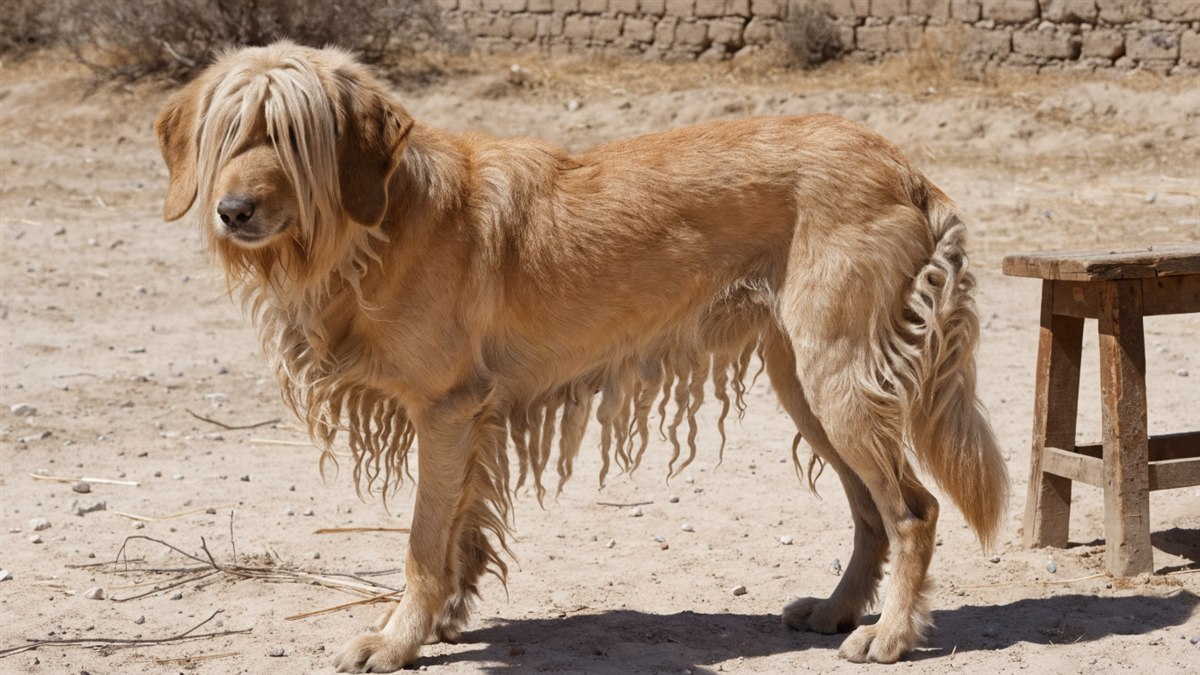
Quick answer
The armant dog, also called the Egyptian Sheepdog or Ermenti, is a medium herding and guarding breed from Upper Egypt standing 50 to 60 cm in males and 45 to 55 cm in females. It is not recognised by the Federation Cynologique Internationale, appears in neither the FCI definitive nor provisional lists, and has no Indian market, no Indian price and no lawful breeding-import route.
This page summarises published veterinary literature, breed-standard documents and Indian climate data for general information. It is not a diagnosis and it is not a treatment plan. No lifespan study, no screening scheme and no health survey exists for the Armant, so nothing here should be read as a prediction about an individual dog. Consult your nearby vet before acting on anything in this section, and take any dog showing signs of heat stress to a veterinary hospital immediately.
Armant at a glance
What an Armant dog actually is, and which registry says so
The Armant is an Egyptian herding dog and farm guard named after the town of Armant in Upper Egypt, standing 50 to 60 cm in males and 45 to 55 cm in females under the only breed standard still retrievable anywhere. It is unrecognised by the Federation Cynologique Internationale, on both the definitive and the provisional list. Its own country's kennel body calls it the national breed of Egypt.
Start with the registries, because on this breed almost everything else is contested and the registry position is checkable in five minutes. The Armant is also called the Egyptian Sheepdog, the Ermenti, the Sabe, the Hawara Dog and the Chien de Berger Egyptien. Sabe means lion in Arabic, a name earned by the breed's ferocity in defence of its flock, and Hawara comes from the Hawwara tribal confederation who used these dogs with their livestock.
The FCI does not recognise the Armant, and that is the finding
Bonbeno checked the FCI's own nomenclature rather than repeating what breed pages say. The FCI page for breeds beginning with A lists 23 breeds, running from the Affenpinscher through the Aidi, the Anjing Kintamani-Bali and the Azawakh, and the Armant is not among them. That page carries provisionally recognised breeds as well as definitively recognised ones, so absence from it is not a technicality about status. The separate provisional list carries 17 breeds, including the Kazakh Tazy, the Macedonian Shepherd Dog Karaman and the Anjing Kintamani-Bali, and the Armant is not on that either. The breed is therefore not awaiting promotion. It has not entered the system.
One structural fact explains a good deal of that, and no ranking page mentions it. Egypt's national canine organisation is an FCI Associate member, not a Full member. The FCI lists the Egyptian Kennel Federation in Cairo under the Associate member category. The Kennel Club of India, by contrast, is a Full member. A national breed reaches the FCI nomenclature through its country's member body, and an Associate member is working from a weaker position than a Full member is.
| Register | Armant listed | What the register does hold |
|---|---|---|
| FCI breeds nomenclature, letter A | No | 23 breeds, definitive and provisional together |
| FCI breeds recognised on a provisional basis | No | 17 breeds, most of them national breeds of Full members |
| Egyptian Kennel Federation | Yes | Declared the national breed of Egypt, with its own national breed club |
| World Dog Federation | Yes | Standard n° 01-1/026, Group A Shepherd |
| American Rare Breed Association, Group One | No | 30 sheep and cattle dog standards, including the Briard |
| Orthopedic Foundation for Animals | No data retrievable | Statistics tables load via JavaScript; no Armant entry was obtainable |
The American Rare Breed Association line is worth pausing on. ARBA exists specifically to serve breeds the American Kennel Club does not register, and its Group One index publishes 30 sheep and cattle dog standards, including the Bergamasco, the Bouvier des Ardennes, the Catalonian Sheepdog, the Portuguese Sheepdog and the Briard. An organisation built for rare herding breeds, which carries a standard for the very French breed the Armant is supposed to descend from, does not carry one for the Armant. National Purebred Dog Day put the same point plainly in 2017, writing that the breed has not been recognised by any major canine organization, though it has been acknowledged by more minor canine organizations.
The one standard you can still read, and what it says
The World Dog Federation standard is the only Armant standard Bonbeno could open, and getting to it took work. Wikipedia's infobox links the Egyptian Kennel Federation's own standard as a PDF on ekf-eg.com. That file returns HTTP 404, the archived snapshot of it captured a parked holding page rather than a document, and the domain today serves a different site altogether, titled Join EKF, International Dog Breeding Federation Guide, whose embedded organisation data names an Ethical Kennel Federation and lists example.com placeholder contact addresses. The Egyptian body's published standard is, for practical purposes, gone from the open web.
What survives is WDF Standard n° 01-1/026, WDF Egyptian Armant Herding Dog, origin Egypt, utility given as herding, guarding and as a companion dog, classified in Group A Shepherd. That document has itself been removed from the live World Dog Federation site, which returns 404 for it, and Bonbeno read it from an archived copy. The World Dog Federation is a separate international body from the FCI, describing itself as the International Federation for the Genetic Protection of Canine Breeds and marking its tenth anniversary in 2027. A WDF standard is a real published standard. It is not FCI recognition and should not be reported as though it were.
| Point | WDF Standard n° 01-1/026 | What the SERP says |
|---|---|---|
| Height at withers | Males 50 to 60 cm, females 45 to 55 cm, tolerance of plus or minus 2 cm | Approx 56 cm in Wikipedia's infobox, 21 to 23 inches at Top Dog Tips Top Dog Tips, Armant Dog Breed Profile |
| Weight | No figure. In accordance with the proportions of the dog, never affecting the movement | 23 to 27 kg on Wikipedia, 50 to 65 lb at Top Dog Tips, 51 to 64 lb at Dog World Top Dog Tips, Armant Dog Breed Profile Dog World, Armant Dog Breed |
| Coat length and texture | Long or semi-long, dense, flat, thicker and woollier on the loins and croup | Long, shaggy and rough on Wikipedia; medium and straight at Petlur; short at Dog World Petlur, Armant Dog Breed Info, Size, Price Dog World, Armant Dog Breed |
| Undercoat | The dogs have no undercoat (single coat) | Not mentioned by any ranking page |
| Cording | Much longer hair on loins, fore and hind legs, making cords; the coat becomes corded by time when dogs become matured | Not mentioned by any ranking page |
| Head furnishings | Hair rich and softer on the head, long, covering the eyes, giving a good protection against sun, sand and dust | Not mentioned by any ranking page |
| Ears | V-shaped, moderate in size, reaching the half of the muzzle, dropped, flat and mobile, slightly erected at the base in attention | Erect ears at Dog World; erect or dropped at National Purebred Dog Day National Purebred Dog Day, Meet the Armant |
| Tail | No tail clause exists in the standard | Always curled at NPDD; short and set downwards at Top Dog Tips; never docked but sometimes a hereditary bobtail on Wikipedia Top Dog Tips, Armant Dog Breed Profile Wikipedia, Armant (dog breed) |
| Colour | White, fawn, black, gray and brown, without spots or particles | Black, black and tan, tri-colour, grey and greyish yellow on Wikipedia |
Read the last row twice, because the two documents cannot both be right. The standard bans spotting outright, and Wikipedia's infobox lists black and tan and tri-colour, which are by definition marked coats Wikipedia, Armant (dog breed). Bonbeno is not going to resolve that by picking one. The honest position is that the breed's colour is unsettled because the population is unsettled, which is exactly what you would expect of a landrace being written up as a breed.
Bonbeno read WDF-Standard n° 01-1/026 in full. Its sections are printed out of order: a block headed HINDQUARTES follows the historical summary before any general appearance clause for the whole dog, and the head, muzzle, lips, jaws, teeth and eyes are printed under the heading SEVERE FAULTS rather than under a head clause, while the neck, body, top line, withers, back, loin, croup, chest and ears appear after the size and weight section. It contains obvious typographic errors, spelling hindquarters as HINDQUARTES, loins as lains, allowed as allawed and departure as depature. None of that makes the coat and size clauses wrong, and Bonbeno quotes them as written. It does mean this is a young document for a young registry, not a mature standard with decades of ring use behind it, and an Indian reader should weight it accordingly.
Where the town is, and why three sources place it in three different governorates
Armant is a town on the west bank of the Nile in Upper Egypt, about 19 km south of Thebes, known in antiquity as Hermonthis, and today it sits in Luxor Governorate. The Egyptian Kennel Federation's own page says the breed was originally located in Upper Egypt, precisely in Armant town, which belongs to Qena governorate. The World Dog Federation standard places the town in the Aswan Governorate. Only one of those can be current, and it is Luxor. Qena was correct historically, since Armant sat in Qena Governorate before Luxor Governorate was carved out. Aswan is simply wrong, and it is wrong inside the document that defines the breed.
That is not pedantry about Egyptian administrative geography. It is the first sign that the paperwork behind this breed is thin, and it sets up the harder question the next section deals with, which is whether the famous story about where these dogs came from survives any contact with evidence.
- Registry status: unrecognised by the FCI on both the definitive and provisional lists; recognised by the Egyptian Kennel Federation and by the World Dog Federation World Dog Federation, Standard n° 01-1/026
- Standard: WDF n° 01-1/026, Group A Shepherd, the only Armant standard Bonbeno could retrieve
- Size: males 50 to 60 cm, females 45 to 55 cm, no weight stated in the standard
- Coat: long or semi-long, single, no undercoat, cording with maturity
- Job: herding, guarding and companion, in a breed the Egyptian body describes as a real family dog and one of the best shepherds in the fields
- Status in India: no registry route, no marketplace listing, no recorded import, no price
Did Napoleon's dogs found the Armant? Tracing the claim to its source
No evidence supports the Napoleon origin story, and the two sources that checked it say so plainly. Desmond Morris, cited through Wikipedia, concludes that the briard and Russian-traveller theories may help explain the thick, shaggy coat but lack supporting evidence. National Purebred Dog Day writes that the breed is thought to have originated from dogs brought to Egypt by Napoleon's troops, then adds in the same sentence that there does not appear to be any records to support this.
This is where a rare breed page earns its place, because checking an origin claim is most of what an Indian reader can actually use. You cannot buy this dog here. You can, however, tell the difference between a documented history and a repeated one, and that skill transfers to every landrace you will ever be offered.
Five competing origin stories, none of them documented
The ranking set does not carry one origin story. It carries five, and most pages present whichever one they chose as settled fact.
| Theory | Where it appears | Evidence offered |
|---|---|---|
| Descended from briards brought by Napoleon's armies, crossed with local dogs | Wikipedia, National Purebred Dog Day, Petlur, Top Dog Tips National Purebred Dog Day Petlur, Armant Dog Breed Info, Size, Price Top Dog Tips, Armant Dog Breed Profile | None. Morris says the theory lacks supporting evidence |
| Arrived with Russian travellers in the 1800s | Wikipedia | None. Grouped by Morris with the briard theory as unsupported |
| Entirely of African origin, related to North African village dogs | The Egyptian Kennel Federation's position, reported via Morris | No breed-level study. The nearest evidence is a village-dog genetic survey, discussed below |
| Descended from Western European herding dogs imported during the British presence in Egypt | National Purebred Dog Day | None stated. NPDD notes only that the British imported many of their herding dogs to Egypt |
| A mix of Bearded Collie and Newfoundland with Egyptian native dogs | Top Dog Tips | None. Introduced as what research indicates, with no research named |
National Purebred Dog Day is the most honest page in the set on this point, and its admission is worth quoting because it applies to every claim in the table. Writing about the breed's origins, it says that in truth we may never know with certainty because almost nothing has been recorded about the breed's origins, not orally, nor with the written word.
The one document that formalises the Napoleon story, and its geography problem
The breed standard itself carries the Napoleon story, which is why it keeps reappearing. WDF Standard n° 01-1/026 opens its historical summary by saying the breed appeared after the liberation of the Arab Republic of Egypt from French colonialism, in southern Egypt, and then relates that the people of the city tell that a fleet of the French army was destroyed and drowned near the city of Armant, that these French guard dogs appeared on the beaches, fled to the mountains and isolated areas, and bred with local mountain dogs.
Read the framing carefully. The standard does not assert the event. It reports what the people of the city tell, which is oral tradition presented as oral tradition. The document then reasons forward from it, noting that French army voyages across the seas were accompanied almost mainly by French guard dogs described as having very thick hair all over the body and face. That is an inference about the coat, not a record of an event, and it is the same inference Morris identified and rejected as unsupported.
Now put the geography beside it. The French fleet destroyed in Egypt during Napoleon's campaign was destroyed at Aboukir Bay, on the Mediterranean coast near Alexandria, between 1 and 3 August 1798, where nine French ships of the line were captured, one destroyed and one scuttled. Armant is not on the Mediterranean. It sits on the west bank of the Nile about 19 km south of Thebes, at the far southern end of the country. A fleet lost at Aboukir Bay put no dogs on any beach near Armant.
Bonbeno is not claiming the story is impossible. French forces did operate up the Nile during the occupation, and a local river incident leaving no record is not disprovable. Bonbeno is claiming three checkable things. First, the story is presented in its own source as what local people say, not as a record. Second, the one documented destruction of a French fleet in Egypt happened roughly the length of the country away from Armant, at Aboukir Bay Wikipedia, Armant, Egypt. Third, the two writers who went looking for supporting records found none National Purebred Dog Day. A story that repeats often is not a story that is documented, and the difference is the whole point of this section.
The morphology test, and why the Briard comparison does not hold up
If the Armant descended in any substantial way from briards, the two should still resemble one another where a founder effect is hardest to erase. They do not, on the two measures the standards actually give. The FCI standard for the Berger de Brie, the Briard, sets males at 62 to 68 cm and females at 56 to 64 cm at the withers, and describes the hair as goat-like in texture, dry, supple, long, with slight undercoat. The Armant standard sets males at 50 to 60 cm and females at 45 to 55 cm, and states flatly that the dogs have no undercoat and are single coated.
So the top of the Armant's range sits 8 cm below the top of the Briard's in males and 9 cm below it in females, and the coat is structurally different. Crossing with smaller local dogs would plausibly reduce height. Losing an undercoat entirely is a different kind of change, and it is the change you would expect from selection under an arid, near-rainless climate rather than from French ancestry. Bonbeno reads that as weak evidence against a Briard founding and strong evidence for local adaptation, and states it as a reading rather than a result, because no genetic study of the Armant exists to settle it.
The nearest real genetic evidence sampled dogs 19 km from Armant town
One published study genotyped village dogs in the Armant region, and no breed page cites it. Boyko and colleagues sampled 318 village dogs from seven regions in Egypt, Uganda and Namibia, measuring mitochondrial D-loop sequence, 300 SNPs and 89 microsatellite markers, and their three Egyptian sampling sites were a Giza animal shelter, a Luxor animal shelter and surrounds, and the desert oasis of Kharga. Luxor is the town Armant sits beside.
The result at that site is striking. Of the genotyped Luxor village dogs, 25 were classed indigenous, 0 uncertain and 0 breed-admixed, against a reference panel of 126 breeds. In the same table, Namibia's central region returned 0 indigenous, 1 uncertain and 24 admixed, so the method plainly detects European breed ancestry where it exists. The study also found similar mitochondrial haplotype diversity in African and East Asian village dogs, and concluded that African village dogs are a mosaic of indigenous dogs descended from early migrants to Africa and non-native, breed-admixed individuals.
Be precise about what that does and does not show. Boyko sampled village dogs, not Armants, and never names the breed. It is not a test of the Armant. It is, however, the only genetic data anyone has from the dog population of the Armant region, and it says that population carried no detectable European breed ancestry in 25 of 25 dogs. If French breed dogs had founded the local dog population around Armant, that is not the result you would expect. The Egyptian Kennel Federation's own position, that the breed is entirely of African origin, is the theory this evidence sits most comfortably with.
For an Indian reader the parallel is immediate and useful. The Indian Pariah Dog carries an identical class of origin myth, and the Africanis page on this site sets out the same argument for southern Africa, where a landrace was long dismissed until genetic work took it seriously. Three continents, three village-dog populations, and the same pattern of a colonial founding story that nobody can evidence.
Armant price in India: there is none, and here is the evidence
No Armant price in India exists, because no lawful route brings the breed here and no Indian seller offers it. Bonbeno ran five checks, and every one of them returns the same answer. That is a finding rather than a gap, and it is the single most useful thing this page can tell an Indian buyer, so it goes first rather than last.
Publishing a rupee figure would be the easy move. Bonbeno will not, because a price in india for a dog nobody sells here is a fabrication dressed as research. Below are the checks, each of which you can repeat.
Check one: there is no registry route into India
The Kennel Club of India is an FCI Full member, and its registrations feed the FCI studbook statistics. The FCI does not recognise the Armant on either its definitive or its provisional list Federation Cynologique Internationale. A dog with no FCI breed number has no slot in the nomenclature the Indian system registers against, which means no export pedigree an Indian buyer could verify and no Indian pedigree at the far end. Whatever an Indian seller offered you, no registry could confirm what it was.
Check two: Indian import policy bars every commercial route
Indian import policy is the hard barrier, and Bonbeno read the notice rather than a summary of it. DGFT Trade Notice No. 22/2022-23, dated 19 December 2022, sets out the position for pet animals under ITC (HS) 01061900, Mammals, Other, where the import policy is Restricted. Policy Condition (7) states that import of dogs is allowed only for three purposes, a pet dog with valid pet book and relevant records in the name of the importer, dogs imported by R&D organisations for conducting research with the recommendation of CPCSEA, and dogs for internal security by the Defence and Police Force. Policy Condition (8) states that import of commercial dogs for breeding or any other commercial activities other than the purposes mentioned above is not permitted.
- Two pets maximum as passenger baggage, allowed without DGFT authorisation only to persons transferring their residence to India after two years of continuous stay abroad, and only cats and dogs can come in under baggage rules
- Import authorisation from DGFT is required if the continuous stay abroad was under two years, if the pet is not travelling as passenger baggage, or if it cannot be imported under the baggage rules
- Applications for trading or breeding purposes shall be duly rejected, and so shall applications made on behalf of some another person or entity
- Seven ports only. Import of pet animals is allowed only through the airports and seaports of Delhi, Mumbai, Chennai, Hyderabad, Bengaluru and Kolkata and, since October 2024, Kochi airport, with quarantine at the government station of those ports where required Department of Animal Husbandry…
- Apply two months ahead, and obtain an Advance No Objection Certificate from the AQCS Regional or Quarantine Officer seven days before travel, relaxable up to three days
Read those together and the position is unambiguous. A returning Indian resident who already owns an Armant in Egypt can bring that specific dog home through one of seven ports. Nobody can lawfully import Armants to breed and sell them in India, and no legal route exists by which an Indian supply could form. Layer that on top of the registry check and the two facts together close the question. There is no lawful supply chain, and there is no paper trail even if one existed. The full route is set out in how to import a dog to India.
The Animal Quarantine and Certification Service sets the veterinary side. Up to two dogs or cats per passenger may come under baggage, an official health certificate from the country of origin must certify the dog is free from clinical signs and symptoms of all infectious and contagious diseases including rabies, canine distemper, parvovirus infection and leptospirosis, and a dog three months of age and older must be vaccinated against rabies more than one month but within 12 months prior to actual embarkation. AQCS also states that all decisions will be taken as per the applicable notifications, rules, orders and procedures at the time of actual filing of application, so confirm the current position with AQCS directly rather than relying on any web summary, this page included.
Check three: Egypt has no exportable surplus, and its own registry went quiet in 2020
Look at the supply side and the market gets smaller still. The FCI's statistics page for the Egyptian Kennel Federation carries figures for 2014 to 2020 and then stops. Every year from 2021 to 2025 is blank. In its last reported year, 2020, Egypt registered 3,642 puppies across all breeds, registered 3,754 pure-bred dogs, and held a cumulative total of 15,130 pure-bred dogs on the studbook since its creation, with 8 member clubs and 3 FCI judges in the entire country.
Set that against India. The Kennel Club of India registered 32,219 puppies in 2025 alone, 33,880 pure-bred dogs that year, and holds 1,425,001 pure-bred dogs on the studbook since inception, with 80 member clubs and 28 FCI judges. Egypt's entire pedigree history across every breed it has ever registered is about one percent of India's, and roughly half of a single Indian year. The Armant is one breed inside that very small total, and Wikipedia describes it as endangered due to crossbreeding with other dog breeds, with the Egyptian Armant Herding Club working to find and preserve purebred examples. There is nothing to export.
Check four: even Egypt's own registry showed no Armant kennels
This is the check that surprised Bonbeno most. The Egyptian Kennel Federation's registered-kennels index, browsed by letter, listed seven breeds beginning with A in January 2018, namely Akita, American Akita, Australian Shepherd, Afghan Hound, Azwakh, Anatolian Shepherd Dog and Alaskan Malamute. Every one of them is an imported breed. The national breed of Egypt was not on its own registry's A list of kennels.
The same pattern shows in the show ring. In 2013 the EKF ran its all-breeds show under the name Armant 2013, across three CAC-EGY shows billed as Armant I, II and III, and published the official results. Across every Best in Show, Best Baby, Best Puppy and Best Junior placing in all three shows, the winners were Cane Corso, Rottweiler, Shih Tzu, Dogo Argentino, Deutscher Boxer, St. Bernardshund, German Shepherd Dog, Dachshund, Siberian Husky and Beagle. Egypt named its national dog show after the Armant and put no Armant on any podium. A breed that cannot fill a class at home cannot supply a foreign market.
Check five: the Indian commercial search result sells crafts, not dogs
Searching the exact commercial phrase from India returns a result set with no Indian seller of the animal in it. Position one is a foreign breed database quoting United States dollars. Position two is an Etsy India market page headed Buy Armant Dog Online In India, which lists craft goods rather than animals. Position three is Monkoodog, the only Indian-hosted page in the set, whose Armant page carries no price at all. A Facebook Marketplace result offering dog houses for sale in Armant refers to the Egyptian town. When the commercial query for a dog surfaces craft listings and kennels in a foreign town, the market does not exist.
| Source | Figure published | Basis given | Does it apply in India |
|---|---|---|---|
| Petlur | USD 1,000 to 1,500 | Described on the page itself as a rough estimate for purchase from a reputable breeder | No. No breeder is named, no country is stated, and no Indian seller exists |
| Dog World | No price published | Page offers an Armants for adoption heading with no listings behind it | No |
| Top Dog Tips | No price published | Full breed profile with no cost section | No |
| Wikipedia | No price published | Encyclopedia entry, no commercial data | No |
| Indian sources | No listing found | No Indian marketplace, breeder or shelter lists the breed | This is the answer for India |
Do not convert that dollar band into rupees and call the result an Indian price. A currency conversion of an unsourced foreign estimate is a currency conversion, not a market. Indian pricing for an imported dog is set by import logistics, breeder scarcity and dealer margin, and the USD 1,000 to 1,500 figure contains none of those, because it is not attached to a transaction anyone can point to.
This is the practical risk that follows from everything above. A rare foreign breed name with no Indian reference population and no FCI number is exactly the label that gets attached to an unrelated litter. Ask for an export pedigree, and note that no FCI-issued one can exist for a breed with no FCI number. Ask for the DGFT import authorisation and the AQCS documentation, and note that any application made for breeding or trading purposes shall be duly rejected. Ask which of the seven permitted ports the dog entered through Department of Animal Husbandry…. If the seller cannot produce all of that, you are not being offered an Armant. Bonbeno does not broker sales and does not recommend breeders.
For most Indian readers who arrived here wanting a shaggy, loyal, weather-hardy working dog, the honest conclusion is that this breed is not obtainable and the search should move to a dog you can meet, inspect and verify in person. The Indian Pariah Dog is free to adopt, genuinely heat-adapted and available in every Indian city. The Himalayan Sheepdog is a real Indian pastoral breed with a domestic population, and the Kombai and Rajapalayam are indigenous working breeds you can see for yourself.
Monthly cost of keeping an Armant in India, bounded honestly
Running an Armant in India would cost roughly Rs 9,700 to Rs 15,900 a month on food, preventives, coat care and routine veterinary attention, on the assumption of a 23 to 29 kg adult in a metro. Bonbeno labels that a modelled range rather than a market figure, because no Indian owner base exists to survey and no cost figure for this breed has ever been published anywhere Bonbeno could open.
Read what follows as arithmetic you can check rather than a survey result. Every input below is either a price you can look up today or a stated assumption, and where a figure is Bonbeno's estimate, it says so.
Food, the largest and most checkable line
The standard gives no weight at all, saying only that weight should be in accordance with the proportions of the dog and never affecting the movement. The secondary figures cluster between 23 and 29 kg, with Wikipedia at 23 to 27 kg, Top Dog Tips at 50 to 65 lb and Dog World at 51 to 64 lb Top Dog Tips, Armant Dog Breed Profile Dog World, Armant Dog Breed. A dog in that band sits at the top of the medium-breed food tier.
On Supertails, Royal Canin Medium Adult Dog Dry Food is listed at Rs 10,293 for the 15 kg pack, Rs 7,634 for 10 kg, Rs 3,279 for 4 kg and Rs 1,025 for 1 kg. The 15 kg pack works out at about Rs 686 per kilogram of food. A working-build dog of 25 kg on a premium dry diet eats in the region of 280 to 330 g a day, which is Bonbeno's estimate rather than a figure from any breed document, and it varies with activity, neutering status and individual metabolism. At that intake the dog eats 8.4 to 9.9 kg a month, or roughly Rs 5,800 to Rs 6,800 a month on food alone. An Indian mid-tier kibble roughly halves that.
The line that is different for this breed
Coat care is where an Armant would cost more than a same-sized smooth-coated dog in India, not less. The standard describes a long or semi-long single coat, harsher on the loins and legs, much longer there and making cords, which becomes corded by time as the dog matures. A coat that cords is a coat that traps moisture, and Indian coastal humidity is the worst possible environment for that, as the grooming and health sections below set out with figures. Budget for frequent professional attention rather than occasional, and budget for it year round rather than seasonally.
| Line item | Monthly range | Basis |
|---|---|---|
| Premium imported dry food, 280 to 330 g a day | Rs 5,800 to Rs 6,800 | Calculated from the Supertails Royal Canin Medium Adult 15 kg price of Rs 10,293 |
| Indian mid-tier dry food alternative | Rs 2,800 to Rs 3,600 | Bonbeno estimate, substitute for the line above |
| Tick and flea preventives, year round | Rs 700 to Rs 1,500 | Bonbeno estimate. Not optional here, given 80 percent tick prevalence in Mumbai dogs |
| Professional grooming for a corded single coat | Rs 1,800 to Rs 4,000 | Bonbeno estimate for one to two sessions on a coat that cords |
| Deworming and routine vaccination, amortised | Rs 400 to Rs 900 | Bonbeno estimate |
| Routine veterinary consultation, amortised | Rs 500 to Rs 1,200 | Bonbeno estimate |
| Skin-condition treatment, amortised across a year | Rs 500 to Rs 1,500 | Bonbeno estimate. Skin disease accounted for 11.04 percent of 11,657 dogs presented at a Nagpur veterinary complex |
| Modelled total | Rs 9,700 to Rs 15,900 | Sum of the ranges above using the premium food line |
The model excludes the acquisition cost, because no lawful acquisition route exists. It excludes import, quarantine and airline costs for the one narrow personal-pet route, because those depend entirely on the origin airport and the airline and Bonbeno has no verified figure for an Egypt to India pet movement. It excludes emergency care, which for a heat-sensitive dog in an Indian summer is the line most likely to blow the budget. And it excludes air conditioning, which for this coat in a coastal Indian city is not a luxury line, as the climate section explains.
Heat tolerance in India: dry heat is not the same as humid heat
The Armant would handle Indian dry heat well and Indian coastal humidity badly, and the reason sits in one sentence of its own breed standard. The dogs have no undercoat and are single coated, and the coat becomes corded by time when dogs become matured. A single coat helps in heat. A corded coat in 86 percent relative humidity does not, and that combination is why this page gives heat tolerance a split rating rather than a flat one.
Every ranking page assumes an Egyptian dog copes with Indian heat because Egypt is hot. That reasoning skips the step that actually matters. Dogs do not lose heat the way people do. Above a certain ambient temperature they lose it almost entirely by evaporation, and evaporation is what humidity switches off.
The published threshold at which a dog's cooling stops working
Bruchim, Horowitz and Aroch set it out precisely in their review of canine heatstroke pathophysiology. As environmental temperature rises toward body temperature, heat loss by convection and radiation through the skin diminishes, and evaporation, primarily through panting, becomes the major heat dissipation mechanism. Then comes the line that governs this whole section. With high environmental temperatures and increased relative humidity above 35 percent, panting becomes progressively less effective for dissipating excessive body heat, and when the relative humidity is above 80 percent, this body cooling mechanism in dogs is negated.
The same review lists the risk factors for canine heatstroke, and an Armant in India would carry several at once. They include hot and especially highly humid environments, excessive physical activity, obesity, large body weight above 15 kg, being of certain breeds, lack of acclimation to heat stress, and lack of fitness. A 23 to 29 kg dog imported from a near-rainless climate into a coastal Indian summer is above the weight threshold and has no acclimation whatever.
What the Armant's home climate actually looks like
Luxor is the nearest World Meteorological Organization station to Armant town, roughly 19 km up the Nile. Its 1981 to 2010 normals give a mean daily maximum of 41.4 degrees Celsius in July, 41.3 in June and 41.0 in August, with a January minimum of 5.9 degrees. That is severe heat by any standard, hotter in the daily maximum than Mumbai ever gets.
Now look at the water. Luxor's normals record 5.2 mm of rainfall across 2.0 rain days in an entire year. Not per month. Per year. Mumbai's WMO normals give 2,431 mm a year, with 819 mm in July alone, and Chennai's give 1,312 mm a year. Mumbai receives roughly 468 times Luxor's annual rainfall. The Armant evolved in a place where a wet coat is a once-a-year event.
| Place and month | Relative humidity | Rainfall | Against the 80 percent threshold |
|---|---|---|---|
| Luxor, Egypt, whole year | Not published in the WMO normals; 5.2 mm of rain over 2.0 rain days a year | 5.2 mm a year | Effectively never wet |
| Mumbai (Santacruz), July | 86 percent at 0830 IST, 81 percent at 1730 IST | 819 mm in July | Above the threshold at both observation hours |
| Mumbai (Santacruz), August | 86 percent at 0830 IST, 80 percent at 1730 IST | 547 mm in August | At or above the threshold at both hours |
| Mumbai (Santacruz), September | 85 percent at 0830 IST, 76 percent at 1730 IST | 325 mm in September | Above the threshold in the morning |
| Chennai (Nungambakkam), November | 84 percent at 0830 IST, 78 percent at 1730 IST | 353 mm in November | Above the threshold in the morning |
| Chennai (Nungambakkam), August | 73 percent at 0830 IST, 66 percent at 1730 IST | 130 mm in August | Below the threshold but far above 35 percent |
| Chennai (Nungambakkam), July | 70 percent at 0830 IST, 64 percent at 1730 IST | 100 mm in July | Below the threshold, panting already impaired |
Mumbai in July and August sits at or above the level at which the published literature says panting stops working, at the 0830 observation, every single year, as a climatological normal rather than an extreme Bruchim Y, Horowitz M. Chennai's peak comes later, in the northeast monsoon, at 84 percent in November. Note also that even Chennai's driest listed monsoon reading, 64 percent, is nearly twice the 35 percent point at which the review says panting begins to lose effectiveness.
So is the Armant heat-tolerant? Yes and no, and the split is the answer
The coat helps in dry heat and hurts in wet heat, and both effects come from the same clause. Take them in order.
- No undercoat is a real advantage. The standard states the dogs have no undercoat and are single coated. Compare the Komondor, whose coat consists of a coarser topcoat and finer undercoat, or the Briard, whose hair is long with slight undercoat Federation Cynologique Internationale. A dense woolly underlayer is the thing that traps warm air against the skin, and the Armant does not have one.
- The head furnishings are a dry-climate adaptation. The standard says hair on the head is long, covering the eyes, giving a good protection against sun, sand and dust. That is written for a dust-laden desert wind, and it transfers directly to Jodhpur or Bikaner. It does nothing for Kochi.
- Cording is the problem. The standard describes harsher hair on the loins and the fore and hind legs, much longer and making cords, and says the coat becomes corded by time when dogs become matured. A cord is a rope of hair. It absorbs water, holds it against the skin, and dries slowly. In a climate whose morning relative humidity normal is 86 percent for two months of the year, a corded coat does not dry between one soaking and the next.
- Length still counts against the dog. Hall, Carter and O'Neill note that purebred dogs are more likely to have an exaggerated conformation such as brachycephaly, thick coat or giant body size, limiting their ability to thermoregulate, and specifically identify the Golden Retriever's thicker coat as a possible tipping factor for heat-related illness against the Labrador. A long single coat is thinner than a long double coat, and it is not the same as a short one.
Heat tolerance for the Armant is roughly 4 out of 5 in dry Indian heat and 2 out of 5 in coastal Indian humidity, and the trait bar on this page shows the average of 3. That is a better dry-heat rating than almost any northern breed on this site and a worse humid-heat rating than the Indian Pariah Dog, which evolved in exactly the humidity the Armant did not. The reasoning is not that Egypt is hot. It is that Luxor gets 5.2 mm of rain a year and Mumbai gets 2,431 mm, and that dogs cool by evaporation.
City by city, if one ever did arrive here
| City or region | Match to the native climate | What to plan for |
|---|---|---|
| Jodhpur, Bikaner, Jaisalmer | Closest available match, hot and arid | Shade, water and a strict no-midday-work rule. The coat is doing the job it was selected for |
| Ahmedabad, Rajkot | Good in the long dry season | Watch the short but real humid spell in July and August |
| Delhi NCR | Split year. Dry and Luxor-like from April to June, then humid | Two different management regimes, and the monsoon one is the hard one |
| Bengaluru, Pune | Mildest overall, moderate temperature and moderate humidity | The easiest Indian posting for this coat, on temperature grounds |
| Mumbai, Kochi, coastal Kerala | Worst match on the humidity data | Morning humidity normals at or above the level at which panting is negated Bruchim Y, Horowitz M |
| Chennai, coastal Andhra | Poor, with the peak arriving in the northeast monsoon | November is the pinch month at 84 percent morning humidity |
| Kolkata, coastal Odisha | Poor. Hot and humid together for months | Skin and ear surveillance through the whole monsoon |
| Shimla, Dehradun, Gangtok | Comfortable on temperature | Rain rather than heat is the coat problem here |
The practical rules follow from the physics rather than from breed lore. Exercise before sunrise and after dark, never between 10 am and 5 pm in summer. Offer water constantly, since evaporative cooling costs the dog water it must replace. Treat any panting that does not settle within a few minutes of rest as an emergency, because the largest hospital-based canine heatstroke study to date reported a case fatality rate of 53 percent among 126 dogs. Take a dog you suspect of heat stress to a veterinary hospital immediately rather than waiting to see whether it improves, and consult your nearby vet about a hot-weather plan before summer rather than during it.
One more point that separates this breed from the northern imports on this site. Because the Armant has no undercoat, the standard advice never to clip a working coat, which exists because clipping a double coat damages the undercoat's regrowth, does not automatically apply here Federation Cynologique Internationale. That does not make clipping obviously right either, since the standard says the coat protects the dog from sun. No study exists on clipping this breed, in India or anywhere. Bonbeno's position is that this is a decision for your vet and a groomer who has seen the individual dog's skin, not a rule to be copied from a foreign breed club.
Temperament and household fit, and who should not want one
The Armant is described consistently as brave, intelligent and loyal to its owners, cautious of strangers, and ferocious in defence of its flock, which is where the name Sabe, meaning lion in Arabic, comes from. The Egyptian Kennel Federation calls it a real family dog and one of the best shepherds in the fields. Every one of those descriptions comes from narrative sources rather than from any behavioural study, and this page says so rather than dressing them up.
Be clear about the evidence class before you weigh any of it. No temperament survey, behavioural study or owner questionnaire has ever been published for this breed. What exists is a breed standard clause, a national kennel body's promotional page, a Wikipedia paragraph sourced to general dog encyclopedias, and a set of blog pages that contradict each other. Bonbeno reports that set and marks the disagreements rather than blending them into a confident personality profile.
What the sources agree on
- Alertness at night. The Egyptian Kennel Federation's own account says the big families of Armant town used these dogs in herding and guarding because of a nature that makes them awake all night and in a state of constant alert, with calmness and lack of barking during the day. That is a specific, unusual and testable claim about the breed's daily rhythm, and it appears on no ranking page
- Protective response to strangers. Wikipedia describes the breed as cautious of strangers and ferocious in defence of the flock. National Purebred Dog Day calls the protective instinct well developed and says it manifests as an early alert system to the arrival of strangers, which it glosses in one word as barking
- Independence in work. National Purebred Dog Day notes that like many old working breeds, the Armant acts on its own to judge what is appropriate for the situation, and that this independence may be a challenge for anyone seeking to obedience train it
- Sensitivity to the household. Top Dog Tips describes the breed as attentive to its family's emotions and needing owners who are firm and can lead well, and warns that Armants are not to be left alone
Where the sources flatly disagree
The stranger question splits the set, and the split matters more than either answer. Wikipedia says cautious of strangers. Top Dog Tips says, surprisingly, that Armant dogs are not very wary of strangers but will react accordingly if they feel threatened. Dog World rates stranger friendliness at 3 out of 5 and calls the breed about average, adding that it can be timid or protective. Those are three different dogs.
Bonbeno's reading is that a livestock-guarding herding landrace from a village context is almost certainly reserved rather than outgoing, and that the pages describing an easy-going family dog are describing what they wish rather than what they observed. That is a reading, and it is labelled as one.
A first-time owner in an Indian apartment should not want this dog. It is a medium-sized working animal bred to stay awake all night on guard duty, with a coat that needs constant attention in Indian humidity, no health data behind it, no registry route into the country, and no lawful commercial import channel. A nocturnal alert-barking guard in a Mumbai high-rise is a neighbour complaint waiting to happen. If what you want is a calm, loyal, heat-adapted medium dog that fits an Indian home, the Indian Pariah Dog is that dog and you can meet one this week.
The household fit that would work, if it existed, is a rural or semi-rural property with land, a job for the dog to do, an owner who has kept an independent working breed before, and a dry climate. That describes a Rajasthan or Gujarat farm rather than a metro flat, and it is the same profile the Aidi page reaches for a different North African working breed.
Training an Armant, and the one thing it is documented to resist
To train an Armant, work with its independence rather than against it, because the only training-specific claim anyone has published about this breed is that its independence may be a challenge for the person seeking to obedience train it. Everything else written about Armant training is generic dog-training advice with the breed name inserted, and this section says so instead of repeating it.
Front-load the honest bit. No training study, no working-trial record and no breed-club training syllabus exists for the Armant. The FCI, which publishes working-trial requirements for herding breeds, does not recognise it at all. The World Dog Federation standard describes utility as herding, guarding and companion but sets no working test. So what follows reasons from the job the breed is documented to do, which is a legitimate method as long as it is labelled.
What the job description implies
The Egyptian Kennel Federation says the big families of Armant town bred and used these dogs in herding and guarding because of a nature that keeps them awake all night in a state of constant alert, calm and quiet during the day. A dog selected to make its own decisions at 2 am, unsupervised, is not a dog selected for instant compliance. National Purebred Dog Day makes the same inference explicit, noting that like many old working breeds the Armant acts on its own to know what is appropriate for the situation.
Three consequences follow, and they are the same three that apply to every independent guarding landrace on this site.
- Expect a delay, not a refusal. An independent working dog often complies after evaluating, which reads as disobedience to an owner used to a Labrador. Give the cue once, wait, and reward the response rather than repeating the cue
- Pay for judgement, not just for obedience. Reward the dog for choosing correctly when unsupervised, because that is the behaviour the breed was actually selected for
- Keep sessions short and interesting. National Purebred Dog Day's own advice is that keeping things interesting to such a dog is a step in the right direction
- Never use heavy correction on a guarding breed. Top Dog Tips advises that negative actions be dealt with calmly and softly, with a firm reminder, and that the breed does well when praised
Early socialisation is the whole game with a guarding landrace
Early socialisation matters more for a reserved guarding breed than for any biddable gundog, and in India it has a specific shape. An Armant puppy would need calm, controlled exposure to apartment corridors, lifts, autorickshaws, motorbike horns, festival crowds and free-ranging street dogs, all of which are ordinary Indian stimuli that no Upper Egyptian farm dog was ever selected to tolerate. Top Dog Tips notes that Armant dogs pick up on social cues quickly if introduced and exposed socially while young, and Dog World rates the breed 3 out of 5 for ease for a first-time owner and 3 out of 5 for stranger friendliness, calling it about average and noting it can be timid or protective.
Socialise in the cool hours. This is where Indian training and Indian climate collide, because the same window that suits a shaggy, heat-sensitive coat is the window when streets are quietest. Plan socialisation outings before 8 am and after 7 pm through summer, and accept that this halves your available exposure time compared with a temperate country.
A realistic first-year timeline, marked as a model
| Period | Focus | What success looks like |
|---|---|---|
| 8 to 16 weeks | Socialisation, handling, coat handling from day one | Puppy tolerates full-body grooming, ear checks and paw handling without struggle |
| 4 to 6 months | Recall, place, settle, and loose-lead walking | Reliable recall in a fenced space, not yet on a street |
| 6 to 9 months | Threshold behaviour at gates and doors, and greeting rules | Dog defers to the handler when a stranger arrives instead of deciding alone |
| 9 to 14 months | Adolescent regression, guarding behaviour emerges | You hold the ground you gained rather than gaining new ground |
| 14 to 24 months | Consolidation, and the night-alert behaviour becomes managed | Barking is a report, not an alarm that runs for an hour |
Guarding behaviour in a landrace typically matures late, and the night-alert trait the Egyptian body describes is not something a 12-week-old puppy shows. Anyone who tells you a guarding breed is finished at eight months is describing a Labrador. Bonbeno publishes this as a model built from the documented job, not as a schedule any breed club has tested, because none exists for the Armant.
How much exercise an Armant needs, and when it can safely get it
Plan on 90 to 120 minutes of daily activity for an adult Armant, split into a long cool-hour session and a shorter one, with mental work on top. That is Bonbeno's model for a medium herding and guarding breed, not a figure published for this dog, because no breed-specific exercise requirement has ever been published anywhere Bonbeno could open.
Set the number against the job rather than against a chart. This is a dog documented as a working shepherd in Egyptian fields and as a guard that stays awake at night, with a gait clause that specifies a free and sustained trot in which the dog covers the ground very well. A dog built and selected to trot all day does not empty out on two twenty-minute walks.
The Indian constraint that changes everything
The window is the binding constraint in India, not the duration. Panting becomes progressively less effective above 35 percent relative humidity and is negated above 80 percent, and Mumbai's July and August morning humidity normals are 86 percent. Add exertion to that and you have the exertional heat-related illness pattern, which the UK primary-care study identified as the dominant presentation, drawn from 395 confirmed events among 905,543 dogs under veterinary care in one year.
- Summer, April to June: one long session before sunrise, one shorter after 8 pm, nothing in between
- Monsoon, July to September on the coast: shorten sessions, prioritise drying the coat afterwards over distance covered, and watch for panting that does not settle
- Winter, November to February: the only season an Indian Armant could work normally through the middle of the day
- Any month, any city: carry water, and stop on the first sign of laboured panting rather than at a planned distance
What happens without enough work
The published warnings here are behavioural rather than clinical. Top Dog Tips reports that the breed thrives on openness, that a wide yard or field suits it, that it is the type to move around a lot and work with anything it can find, and that once left alone it will seek attention and leisure elsewhere. National Purebred Dog Day adds that Armants are family members, and when excluded can become destructive out of stress. Both descriptions point the same way, which is that an under-exercised, under-occupied Armant redirects the working drive onto the household.
Dog World rates the breed 4 out of 5 for playfulness and 4 out of 5 for friendliness with children, and its trait set describes a dog that is almost always ready for play. Treat those ratings as what they are, an auto-generated profile rather than an observation, and note that a herding dog that is always ready to play in a household with small children will also try to herd them. Top Dog Tips says as much, warning that these dogs may herd cars and children if they deem it necessary.
Where physical exercise is limited by heat for four months of the year, scent games, food puzzles, trick chains and short structured training sessions indoors carry the load. Twenty minutes of nose work tires a herding dog more than twenty minutes of walking, and it can be done at 2 pm in June without risking the dog. This is the single most practical adjustment an Indian owner of any working breed makes, and it applies whether the dog is an Armant, a Border Collie or a German Shepherd.
Grooming a corded single coat in Indian humidity
To groom an Armant in India, work on the assumption that the coat will not dry on its own for four months of the year, and plan around drying rather than around brushing. The standard describes a single coat with no undercoat that becomes corded by time when dogs become matured, with much longer cording hair on the loins, fore and hind legs. Cords hold water, and Mumbai's monsoon morning humidity normal is 86 percent.
This is the section where the standard's own wording has to be read against an Indian climate rather than copied from it. The Armant standard says the skin is not too thin and resistant to any weather conditions. That clause was written for a place with 5.2 mm of rain across 2.0 rain days in a year. Read as written, it means resistant to sun, sand, dust and cold desert nights. It is not a claim that has been tested against 819 mm of rain in a single month, which is what Mumbai gets in July. Do not carry the sentence over to India unchanged.
What cording actually does to a coat in a wet climate
A cord is a rope of hair that has felted together. It has far more surface area and far less airflow than the same hair loose, which is why corded breeds are famous for slow drying. The Armant is not a fully corded breed in the Komondor sense, since the Komondor standard describes a coat with both a coarser topcoat and a finer undercoat whose relation determines the characteristic cording, with hair 20 to 27 cm long on the croup and loin. The Armant cords partially, on the loins and legs, and does it with a single coat and no undercoat at all. That is a lighter coat than a Komondor's, which helps, and it still mats and still traps water.
| Breed | Undercoat | Cording | What that means in an Indian monsoon |
|---|---|---|---|
| Armant | None. The dogs have no undercoat (single coat) | Partial, on loins and legs, developing with maturity | Less heat trapping than a double coat, but the cords still hold water |
| Komondor | Present. Coarser topcoat with finer undercoat | Full, with hair 20 to 27 cm on the croup and loin | Far worse. A fully felted coat in coastal India is a management project |
| Briard | Slight undercoat | None. Goat-like texture, dry, supple, long | Long but not corded, so it dries faster than either of the above |
| Indian Pariah Dog | Short, sparse | None | Dries in minutes. This is the local benchmark for a reason |
The Indian routine, built around drying
- Brush the whole coat at least three times a week, and daily through the monsoon, working down to the skin rather than over the top of the coat
- Separate forming cords by hand on the loins and legs before they felt into a solid mass, because once felted the only remedy is scissoring them out
- Dry the dog actively after every soaking, with towels first and then a forced-air dryer or a fan, rather than letting the coat air dry
- Check the skin under the cords weekly, looking for redness, moisture, odour or bald patches, and photograph anything you find so you can show your vet a progression
- Clean and dry the ears after every bath and every rain-soaked walk, since the standard describes ears that are dropped, flat and mobile, which is the shape that holds moisture in the canal
- Screen the coat for ticks daily in tick season, because a corded coat hides them and 80 percent of Mumbai dogs sampled in one survey carried tick infestation
Foreign breed advice for shaggy working coats routinely says to towel the dog and let it air dry. That is correct in a climate where air dries things. In Mumbai in July, with a morning relative humidity normal of 86 percent, the air is close to saturated and a corded coat has nothing to dry into. Warm, wet skin under a felted coat is the environment bacterial skin infection needs. An Indian study at the Nagpur Veterinary College attributed the distribution of pyoderma lesions in part to physical factors, naming humidity and warmth explicitly. Dry the dog actively. Do not wait for the air to do it.
The face furnishings, and a decision your vet should make
The standard specifies that hair on the head is rich and softer, long, covering the eyes, giving a good protection against sun, sand and dust. In Bikaner that clause is doing real work. In coastal Kerala it means a permanently damp curtain of hair over the eyes through the monsoon. Trimming it back protects the eyes from moisture and lets you see the dog's expression, and it also removes the sun and dust shield the standard says the hair provides. No published evidence settles that trade-off for this breed, in India or anywhere. Bonbeno's position is to raise it with your nearby vet and a groomer who has handled corded coats, rather than to follow either a breed standard written in Egypt or a habit copied from a different breed.
Health issues, screening and lifespan: what does not exist, and what does
No lifespan study, no screening scheme and no health survey has ever been published for the Armant. Every health figure you will find for this breed on the open web is unsourced. What does exist is solid Indian data on the conditions that would affect any dog living here, and this section separates the two rather than blending them into a reassuring paragraph.
Say the negative finding plainly, because it is the finding. There is no Armant lifespan study. There is no Armant hip or elbow screening scheme. There is no Armant health survey, breed-club or otherwise. Bonbeno looked for all three and found none, and this page will not substitute another herding breed's numbers to fill the space.
The lifespan claims on the ranking pages have nothing behind them
Petlur publishes a lifespan of 13 to 14 years. Dog World publishes 13 to 15 years. Neither cites anything. Neither states a sample size, a data source, a country or a year. The two figures are close enough to look like corroboration and are almost certainly the same guess propagated twice.
For scale, consider what a real lifespan estimate looks like. McMillan and colleagues merged, cleaned and deduplicated records for 584,734 individual dogs in the United Kingdom, including 284,734 deceased, drawn from 18 sources, and produced longevity estimates for 155 recognised purebreds against a crossbred comparison group. That is the scale at which a defensible breed lifespan figure is produced. The Armant is not one of those 155 breeds, and no equivalent dataset exists for it anywhere.
The health conditions the ranking set names, and where they came from
Top Dog Tips is the only page in the SERP with a health section, and it names three conditions under its own headings, namely Ear Infections, Hip Dysplasia and Osteochondritis Dissecans. No source is given for any of them, no prevalence figure is attached, and no study of this breed is referenced. Bonbeno reports them as claims made about the breed rather than as risks established in it.
Two of the three are at least mechanically plausible from the standard, and Bonbeno will say why without pretending that plausibility is prevalence. Ear infection risk follows from ear shape. The standard describes ears that are moderate in size, dropped, flat and mobile, reaching to the half of the muzzle. A dropped ear over a canal, on a dog with long facial furnishings, in a climate whose morning humidity normal is 86 percent for two months, is the anatomy that holds moisture. Hip dysplasia and osteochondritis dissecans are developmental orthopaedic conditions common across medium and large working breeds, and no Armant screening data exists to say whether this breed carries more or less of either.
| Question | Evidence available | Bonbeno's position |
|---|---|---|
| How long does an Armant live | None. Two unsourced blog figures, 13 to 14 and 13 to 15 years Dog World, Armant Dog Breed | Unknown. No study covers this breed |
| What is the hip dysplasia rate | None. No OFA entry was retrievable and no breed scheme exists | Unknown. Screen any individual dog rather than trusting a breed figure |
| What inherited conditions run in the breed | None. One blog names three conditions without a source | Unknown |
| What is the litter size | None. Top Dog Tips poses the question as a heading and no study answers it | Unknown |
| What is the heatstroke risk in India | Strong. Published thresholds and Indian humidity normals India Meteorological Department | High in coastal India, moderate in dry India |
| What is the tick-borne disease risk in India | Strong. A four-city Indian survey of 525 dogs | High, as it is for every dog kept here |
| What is the skin disease risk in India | Moderate. An Indian veterinary-college incidence study | Elevated by the coat, on mechanism rather than measurement |
The Indian risks that are actually measured
Here the evidence is good, and it applies to any dog you keep in India regardless of breed. Tick-borne disease is the first. Abd Rani and colleagues sampled 525 dogs across four Indian climatic zones and found 278, or 53 percent, infested with ticks on visual inspection, with the highest prevalence in Mumbai at 80 percent of 162 dogs, followed by Delhi at 75.3 percent of 162, Sikkim at 17 percent of 101 and Ladakh at 11 percent of 100.
By PCR, 261 of 525 dogs, or 49.7 percent, were infected with one or more canine tick-borne pathogen. Hepatozoon canis was the most common at 30 percent, followed by Ehrlichia canis at 20.6 percent, Mycoplasma haemocanis at 12.2 percent, Anaplasma platys at 6.5 percent, Babesia vogeli at 5.5 percent and Babesia gibsoni at 0.2 percent, with concurrent infection by more than one pathogen in 39 percent of cases. Rhipicephalus was the most common tick genus found. A corded coat that hides ticks against the skin makes year-round preventives non-negotiable rather than seasonal.
Skin disease is the second. At the Veterinary Clinical Complex of Nagpur Veterinary College, 11,657 dogs were registered between June and December 2023, of which 1,287, or 11.04 percent, were positive for skin diseases, and 223 of those, or 17.32 percent of the skin cases, were affected with pyoderma. The authors attribute the distribution of lesions partly to physical factors, naming humidity and warmth directly. The dorsum was the most affected site at 49.77 percent, followed by the abdomen at 43.49 percent. The dorsum is where an Armant's coat is longest and where the standard says the hair is thickest and woolliest.
Heat-related illness is the third and the most immediately dangerous. The UK primary-care study identified 395 confirmed heat-related illness events from the clinical records of 905,543 dogs under veterinary care in a single year, and noted that the largest heatstroke study in dogs to that date, covering 126 dogs presenting to a hospital in Israel, reported a case fatality rate of 53 percent. That study also observes that purebred dogs are more likely to carry an exaggerated conformation such as a thick coat, limiting the ability to thermoregulate.
There is no Armant lifespan figure. There is no Armant screening scheme. There is no Armant health survey. If a page, a seller or an answer engine gives you a number for any of those, ask which study it came from, and note that the two lifespan figures currently circulating cite nothing at all Dog World, Armant Dog Breed. Health content on this page is general information and not a diagnosis. Consult your nearby vet before acting on any of it, and take a dog showing signs of heat stress to a veterinary hospital immediately rather than treating it at home.
Feeding an Armant in India, by life stage and body condition
Feed an adult Armant as a 23 to 29 kg medium working dog, roughly 280 to 330 g a day of a complete dry diet split across two meals, adjusted by body condition rather than by the number on the bag. No breed-specific feeding guidance exists for the Armant, and the standard deliberately gives no weight, saying only that weight should be in accordance with the proportions of the dog and never affecting the movement.
Start from what the standard refuses to state, because it is unusually honest about it. WDF n° 01-1/026 sets height at 50 to 60 cm for males and 45 to 55 cm for females with a tolerance of plus or minus 2 cm, and then declines to name a weight at all. Every kilogram figure you have read for this breed is therefore somebody's estimate, and the estimates disagree, running from 23 to 27 kg on Wikipedia to 50 to 65 lb at Top Dog Tips and 51 to 64 lb at Dog World Top Dog Tips, Armant Dog Breed Profile Dog World, Armant Dog Breed.
Life stage, as a model rather than a breed schedule
| Life stage | Meals a day | What to watch |
|---|---|---|
| 8 to 16 weeks | Four | Steady growth, not fast growth. Rapid growth is implicated in developmental orthopaedic disease across medium and large breeds |
| 4 to 6 months | Three | Ribs easily felt under a light fat cover, with a visible waist from above |
| 6 to 12 months | Two to three | Coat quality begins to show diet quality as the adult coat comes in |
| 1 to 7 years | Two | Adjust for the Indian season. A dog exercising 90 minutes in winter needs more than the same dog restricted to 40 minutes in June |
| 7 years and over | Two | Weight creep as activity falls, and joint support discussed with your vet |
What it costs to feed here, with the arithmetic shown
Royal Canin Medium Adult Dog Dry Food on Supertails is listed at Rs 10,293 for 15 kg, Rs 7,634 for 10 kg, Rs 3,279 for 4 kg and Rs 1,025 for 1 kg. The 15 kg pack is the cheapest per kilogram at roughly Rs 686. At 280 to 330 g a day the dog eats 8.4 to 9.9 kg a month, which is about Rs 5,800 to Rs 6,800. Indian mid-tier kibble roughly halves the number. A home-cooked diet can cost less again, and it needs veterinary formulation to stay balanced rather than a recipe from a forum.
Body condition matters twice as much in India
Keeping this dog lean is a heat-safety measure, not a vanity one. The canine heatstroke review lists obesity and large body weight above 15 kg among the risk factors for heat-related illness, alongside hot and humid environments, excessive physical activity, lack of acclimation and lack of fitness. An Armant is already over the weight threshold at a correct body condition. Letting it carry an extra three kilograms in a Mumbai June stacks a modifiable risk factor on top of two unmodifiable ones.
- Feed in the cool hours, morning and late evening, and avoid a large meal immediately before or after exercise
- Keep water available constantly, because evaporative cooling by panting spends water the dog has to replace
- Assess by hand, not by eye, since a long shaggy coat hides a rib cage completely and a dog can gain three kilograms invisibly
- Weigh monthly and record it, so a trend is visible before it becomes a problem
- Discuss any diet change with your nearby vet, particularly for a growing puppy of a breed with no published growth data
Some breeds have real, published nutritional peculiarities. This one does not, because nobody has studied it. Anyone publishing an Armant-specific feeding protocol is extrapolating from a generic medium-breed template, exactly as this section does, and the difference is that this section says so.
The first year, month by month, and why the Indian calendar changes it
Plan an Armant puppy's first year around three things at once, namely the socialisation window, the Indian season it falls in, and a coat that has not yet started to cord. The standard states that the coat becomes corded by time when dogs become matured, which means the grooming problem this breed presents is not visible in the puppy you meet.
Mark the evidence class first. No breed-specific development data exists for the Armant, including litter size, which Top Dog Tips poses as a question heading without answering. The timeline below is Bonbeno's model for a medium herding and guarding landrace raised in India, built from the documented job and from Indian climate data, not from any breed club's published schedule.
| Age | Physical and coat | Behaviour and training | Indian specifics |
|---|---|---|---|
| 8 to 10 weeks | Soft puppy coat, no cording, ears not yet in adult carriage | Handling, name, crate, toilet routine | Start daily full-body grooming handling now, before the coat needs it |
| 10 to 16 weeks | Coat lengthens on the loins first | Peak socialisation window. Novelty exposure daily | Do it before 8 am and after 7 pm in summer. Balance exposure against the vaccination schedule with your vet |
| 4 to 5 months | Adult guard hairs appear on the legs | Recall, place, settle. First real independence testing | Tick prevention becomes a daily habit, not a monthly one |
| 5 to 7 months | Teething. Coat thickens on the croup | Threshold manners at gates and lifts | Monsoon coat management starts here on the coast. Learn to dry the dog properly |
| 7 to 9 months | Height near adult range, frame still filling | Guarding instinct begins to surface, adolescent regression | Do not increase exercise duration through the hottest months. Hold it flat |
| 9 to 12 months | First cords may begin forming on loins and legs | Night-alert behaviour appears. Manage it now | Skin checks under the forming cords weekly |
| 12 to 18 months | Coat approaching adult texture, cording developing | Consolidation, not new learning | Grooming cost steps up here. Budget for it before it arrives |
| 18 to 24 months | Mature coat and mature frame | Adult judgement stabilises in a well-raised dog | First full Indian summer as an adult. Watch it closely |
The two months that decide the year
The socialisation window and the monsoon are the two forcing constraints, and the month a puppy arrives determines whether they collide. A puppy that reaches 10 to 16 weeks in July on the Indian west coast is trying to do its most important behavioural work in the month with 86 percent morning humidity and 819 mm of rain World Meteorological Organization. Outings shrink, the coat never dries, and the skin surveillance load starts before the owner has learned the routine. A puppy that hits the same window in December has an easy run.
This is a general Indian point rather than an Armant one, and it is worth stating on any coated breed's page. If you have a choice of timing, aim for the socialisation window to land between October and February in the south and west, and between September and March in the north.
The single highest-value habit for a corded-coat breed is teaching a puppy at eight weeks to lie still for a full-body groom, an ear check and a paw inspection. At eight weeks there is nothing to groom, which is exactly why it works. At fourteen months, when cords are forming on the loins and legs and the dog has decided it dislikes being handled there, the same lesson costs ten times as much.
Armant vs the dogs an Indian reader is actually choosing between
For an Indian buyer, the Armant is not competing with other Egyptian dogs. It is competing with the shaggy imported herding breeds that are available here and with the native landrace that already solves the problem, and on the evidence available the native landrace wins on every criterion an Indian household can verify.
Compare on what can be checked rather than on what is claimed. The four columns below carry a registry position, a coat structure, an evidence base and an Indian availability answer, and those four decide the question.
| Attribute | Armant | Indian Pariah Dog | Aidi | Briard |
|---|---|---|---|---|
| Origin | Armant town, Upper Egypt | Indian subcontinent | Atlas Mountains, Morocco | France |
| FCI recognition | None, on either list Federation Cynologique Internationale | None. It is a landrace, not a pedigree breed | Yes, FCI-Standard No. 247 | Yes, FCI Standard No. 113 |
| Height at withers | Males 50 to 60 cm, females 45 to 55 cm | Not fixed by any standard, and variable as landraces are | 52 to 62 cm | Males 62 to 68 cm, females 56 to 64 cm |
| Coat structure | Long or semi-long, single coat, no undercoat, cords with maturity | Short and close. It dries in minutes | Thick, rather harsh, half-long, about 6 cm | Long, goat-like texture, slight undercoat |
| Published lifespan study | None | None breed-specific, but a large free-ranging population is observable in India | None | Not checked for this page |
| Screening scheme | None retrievable | None. Screen the individual dog | None | Not checked for this page |
| Available in India | No. No registry route and no lawful commercial import | Yes, free, in every Indian city | No | Rare here, and it does at least have an FCI number |
| Suits Indian coastal humidity | Poorly. Corded coat plus 86 percent morning humidity | Yes. It evolved in exactly this climate | Poorly. A thick half-long mountain coat | Poorly. A long coat on a temperate French breed |
The comparison that actually matters, and it is not close
If what attracts you to the Armant is a hardy, intelligent village-bred working dog shaped by its own climate, the Indian Pariah Dog is that dog and it is on your street. The argument is not sentimental. It is the same argument the Africanis page makes for southern Africa, and the genetic evidence points the same way in both places. Boyko and colleagues found that African village dogs are a mosaic of indigenous dogs descended from early migrants to Africa and non-native, breed-admixed individuals, and that mitochondrial haplotype diversity in African village dogs was similar to that in East Asian village dogs. Landrace populations carry diversity that closed pedigree populations do not.
The Armant's own story sits inside that frame. Whether it descends from French guard dogs, Russian travellers' dogs, British herding imports or purely North African village stock, the honest answer is that nobody knows, and the only genetic data from its region says the local village dogs carried no detectable breed admixture in 25 of 25 samples Wikipedia, Armant (dog breed). An Indian reader looking at the Armant is looking at another country's version of the dog India already has.
If you specifically want a shaggy working coat
Three honest options exist, and none of them is the Armant. The Aidi is the other North African working breed on this site, FCI-recognised and equally unavailable in India, and its page reaches the same conclusion this one does. The Himalayan Sheepdog is an Indian pastoral breed with a real domestic population and a coat built for cold rather than for coastal humidity. A rescued long-coated Indian dog of unknown ancestry gives you the look without the import problem, the price problem or the paperwork problem, and you can meet it before you commit.
Mistakes people make about the Armant, and how to avoid each one
The mistakes here are not care mistakes, because India has no Armant owners to make them. They are research mistakes, and every one of them is committed by at least one page currently ranking for this breed. Each is listed with the check that catches it.
Treat this as a method rather than a list about one dog. The same seven errors show up on every rare imported breed page an Indian reader will meet.
1. Reporting the breed as recognised when it is not
Several pages state that the Armant is recognised, and then name the Egyptian Kennel Federation, which is true but incomplete. Recognition by a national body is not recognition by the FCI, and the FCI is the system Indian pedigrees connect to through the Kennel Club of India. The check: open the FCI nomenclature for the breed's first letter and the provisional list, and look for the name yourself. It takes two minutes.
2. Repeating the Napoleon story as history
The briard theory is stated as fact by most of the ranking set, and the two sources that actually examined it both report that no records support it National Purebred Dog Day. The check: ask what the primary record is. If the answer is that the people of the town say so, you have oral tradition, which is worth recording and is not evidence of descent.
3. Assuming a hot-country breed is heat-proof in India
This is the most consequential error on the page and the most common across the site. Luxor records 5.2 mm of rain across 2.0 rain days a year, and Mumbai records 2,431 mm. Dry heat and humid heat are different physiological problems, because panting is negated above 80 percent relative humidity. The check: compare humidity, not just temperature, before you decide a breed is heat-tolerant.
4. Copying foreign coat advice unchanged
Guidance written for a dry climate says to towel a working coat and let it air dry. In a Mumbai monsoon the air is near saturation and a corded coat has nothing to dry into. The standard's own line that the skin is resistant to any weather conditions was written where weather means sun and dust, not 819 mm of rain in July World Meteorological Organization. The check: ask what climate a care instruction assumes before you follow it.
5. Borrowing another breed's health numbers
There is no Armant lifespan study, no screening scheme and no health survey, so any number you see has been imported from a different breed or invented Orthopedic Foundation for Animals. The two lifespan figures currently circulating cite nothing Dog World, Armant Dog Breed. The check: ask for the study, the sample size and the year. A real figure has all three.
6. Believing a coat description that contradicts the standard
Dog World describes the Armant as having a short coat and erect ears. The standard describes a long or semi-long corded single coat and V-shaped dropped ears. Both cannot be right, and the auto-generated page is the one that is wrong. The check: read the standard before you read the blog, and notice when a page's own headings are machine-written questions rather than researched sections.
7. Paying for a dog that cannot be what it is called
No FCI export pedigree can exist for a breed with no FCI number, and any Indian import application made for breeding or trading purposes shall be duly rejected. A seller offering an Armant puppy in India therefore cannot produce the documents that would prove the claim. The check: ask for the DGFT import authorisation, the AQCS documentation and the port of entry, and note that only seven ports are permitted.
Every one of these mistakes comes from treating repetition as evidence. A claim on nine pages is not nine sources when eight of them copied the ninth. On a breed this thinly documented, the number of pages saying something tells you nothing at all about whether it is true, and the only defence is to open the primary document yourself.
Adoption and responsible sourcing, which is the only route that ends well
To get a dog like the Armant in India, adopt rather than import, because no lawful commercial import route exists and no Armant is available for adoption in India either. What is available is a very large population of exactly the kind of dog the Armant is, a village landrace shaped by its own hot climate, and every Indian city has one waiting.
Take the two questions separately. The first is whether an Armant can be sourced here at all. The second is what a responsible sourcing decision looks like once you accept that it cannot.
Can you adopt an Armant in India? No, and here is why
Adoption needs a population to draw from. India has no Armant population, because there is no registry route, no lawful breeding import and no recorded import at all. Egypt itself has a small and shrinking one, with the breed described as endangered due to crossbreeding and Egypt's national registry reporting no FCI statistics after 2020. Dog World runs a heading reading Armants for adoption with nothing behind it, which is what an auto-generated page produces when the underlying data is empty.
If you are ever offered one, the verification checklist
- Ask for the breed's registry number and note that the FCI has none for the Armant on either list
- Ask for the DGFT import authorisation, and remember that applications for trading or breeding purposes shall be duly rejected
- Ask which of the seven permitted ports the dog entered, namely Delhi, Mumbai, Chennai, Hyderabad, Bengaluru, Kolkata or, since October 2024, Kochi Department of Animal Husbandry…
- Ask for the AQCS health certificate and rabies dates, which must show vaccination more than one month but within 12 months before embarkation for a dog three months or older
- Ask for the breeder's certificate of registration, since no breeder in India may carry on breeding or house dogs for breeding and sale without a certificate of registration from the State Board, which must be prominently displayed in the establishment
- Walk away if any one of those is missing. Bonbeno does not broker sales and does not recommend breeders
What Indian law requires of anyone selling you a dog
The Prevention of Cruelty to Animals (Dog Breeding and Marketing) Rules, 2017, notified on 23 May 2017, require that no breeder shall carry on or continue any breeding activity, or own or house dogs for breeding and sale of dogs and pups, unless the breeder has obtained a certificate of registration for the establishment from the State Board, and that every breeder shall prominently display that certificate in the establishment. The same Rules require that outdoor housing shelters provide animals with adequate protection and shelter from heat and cold, and protection from the direct rays of the sun and the direct effect of wind, rain, snow or other precipitation, with separate outside areas of shade large enough to contain all the animals at once.
Those two provisions are the ones to walk a premises with. A seller who cannot show you a displayed State Board certificate is operating outside the Rules, whatever breed they claim to have.
The route that actually works
Adopt an Indian dog. The Indian Pariah Dog is India's own village landrace, free to adopt, available in every city, and adapted by natural selection to the exact heat and humidity that would make an Armant miserable. If you want the working temperament rather than the look, the Kombai and the Rajapalayam are indigenous South Indian working breeds with real populations you can inspect in person. If you want the mountain-guardian build, the Himalayan Sheepdog is Indian and obtainable.
One closing thought that applies beyond this page. Egypt named its national dog show after the Armant in 2013 and then handed every top placing to a Cane Corso, a Rottweiler, a Shih Tzu and a German Shepherd. Its own registry's kennel index for the letter A listed seven imported breeds and not the national one. That is precisely the pattern India knows, where an indigenous dog is overlooked in favour of a foreign name. The useful thing an Indian reader can take from an Egyptian breed page is not a shopping list. It is the recognition of a familiar mistake, and the decision not to repeat it.
Armant dog questions, answered from the primary documents
What is the Armant dog price in India?
No Armant dog price in India exists. No Indian breeder, marketplace or shelter offers the breed, the FCI does not recognise it so no pedigree route exists, and Indian import policy bars commercial import for breeding or trading. Any rupee figure you are quoted is invented.
Is the Armant dog recognised by the FCI?
No. Bonbeno checked the FCI nomenclature for breeds beginning with A, which lists 23 breeds, and the separate provisional list, which carries 17, and the Armant appears on neither. It is recognised by the Egyptian Kennel Federation and by the World Dog Federation instead.
Did Napoleon bring the Armant to Egypt?
No record supports it. Desmond Morris concluded the briard and Russian theories lack supporting evidence, and National Purebred Dog Day notes there do not appear to be any records to support the Napoleon story. The French fleet destroyed in Egypt was lost at Aboukir Bay, hundreds of kilometres from Armant.
Is Armant Dog an ancient breed?
Nobody knows, and the honest answer is that almost nothing has been recorded about the breed's origins, not orally nor in writing. Five competing origin theories exist, dating the breed anywhere from ancient Egypt to the early twentieth century, and none of them carries a primary record.
Are there Armant dogs outside of Egypt?
Very few. The breed is described as not well known outside Egypt and as endangered at home because of crossbreeding. National Purebred Dog Day reported that French and Dutch breeders were keeping pedigrees to work toward a more standardised breed, with no outcome recorded since.
How many litter size does an Armant dog breed have?
No published figure exists. Top Dog Tips poses this exact question as a heading on its own page, and no study, registry or breed club has published litter-size data for the Armant. Bonbeno will not substitute another herding breed's average to fill the gap.
How much does the Armant tolerate hot weather? When is it too hot for a Armant?
It tolerates dry heat well and humid heat poorly. Its home city of Luxor averages 41.4 degrees in July with 5.2 mm of rain a year. In India the limit is humidity rather than temperature, because panting stops working above 80 percent relative humidity.
Does the Armant shed a lot?
The standard states the dogs have no undercoat and are single coated, so seasonal blowing of an undercoat does not happen. The coat instead becomes corded as the dog matures, which means shed hair tends to stay in the coat and mat rather than falling on your floor.
Is the Armant easy to groom?
No, not in India. A long single coat that cords on the loins and legs traps water, and Mumbai's monsoon morning humidity normal is 86 percent, so the coat does not dry on its own. Plan on active drying after every soaking and weekly skin checks under the cords.
Is the Armant a good apartment dog?
No. It is a working farm dog described by Egypt's own kennel body as awake all night in a state of constant alert, and Top Dog Tips reports it is not a fan of apartment homes and thrives on open ground. A nocturnal alert barker in an Indian flat causes problems.
Is the Armant a good guard dog?
By reputation, yes. It is described as brave, cautious of strangers and ferocious in defence of its flock, which earned it the name Sabe, meaning lion in Arabic. No behavioural study has ever tested any of that, so treat it as reported tradition rather than measured temperament.
Is the Armant atheltic?
Yes, on the standard's own description. It specifies a preferred pace of a free and sustained trot in which the dog covers the ground very well, with the head carried a little over the back line, which describes an efficient working trotter rather than a sprinter.
Can I import an Armant to India?
Only as your own pet, and only under narrow conditions. Dogs are a Restricted import, permitted for a pet with a valid pet book in the importer's name, for CPCSEA-recommended research, or for Defence and Police use. Applications for trading or breeding purposes shall be duly rejected.
How long does an Armant live?
Nobody knows. No lifespan study covers this breed. The figures circulating online, 13 to 14 years at Petlur and 13 to 15 at Dog World, cite nothing at all, and the largest companion-dog longevity dataset published covers 155 purebreds and does not include the Armant.
What dog breed is Egyptian?
The Armant, also called the Egyptian Sheepdog, the Ermenti, the Sabe, the Hawara Dog and the Chien de Berger Egyptien, and its own country's kennel body calls it the national breed of Egypt. The Egyptian Kennel Federation places its origin in Armant town in Qena governorate, Upper Egypt, and lists it among its national breeds alongside the Thebes Land Dog, the Baladi. It is recognised by the Egyptian Kennel Federation and the World Dog Federation but appears on neither the FCI's definitive nor provisional list, partly because Egypt's federation is an FCI Associate member rather than a Full member.
Compare with similar breeds
Armant sits in 2 Bonbeno groups. Each one compares it directly against the breeds it is genuinely an alternative to, on the same figures.