
Dog breed profile
Shar Pei in India: Price, Health Risks and Full Breed Guide
What a Chinese Shar-Pei costs in India, why published prices disagree by a factor of 35, and why the wrinkles buyers pay a premium for come from the same mutation that causes the breed's inherited autoinflammatory disease.
Quick answer
The Shar Pei price in India runs Rs 20,000 to more than Rs 7,00,000 in 2026, with published sources disagreeing by a factor of 35. Bonbeno rates the Chinese Shar-Pei 1 of 5 for health robustness. Entropion is diagnosed in 17.88 percent of the breed each year, and the wrinkles buyers pay a premium for come from the same mutation that causes Shar-Pei autoinflammatory disease.
This guide is general information for Indian pet owners and is not a diagnosis. Always consult a registered veterinarian near you before acting on anything you read here, and treat any sudden change in your dog's condition as urgent.
Shar Pei at a glance
What a Shar Pei is
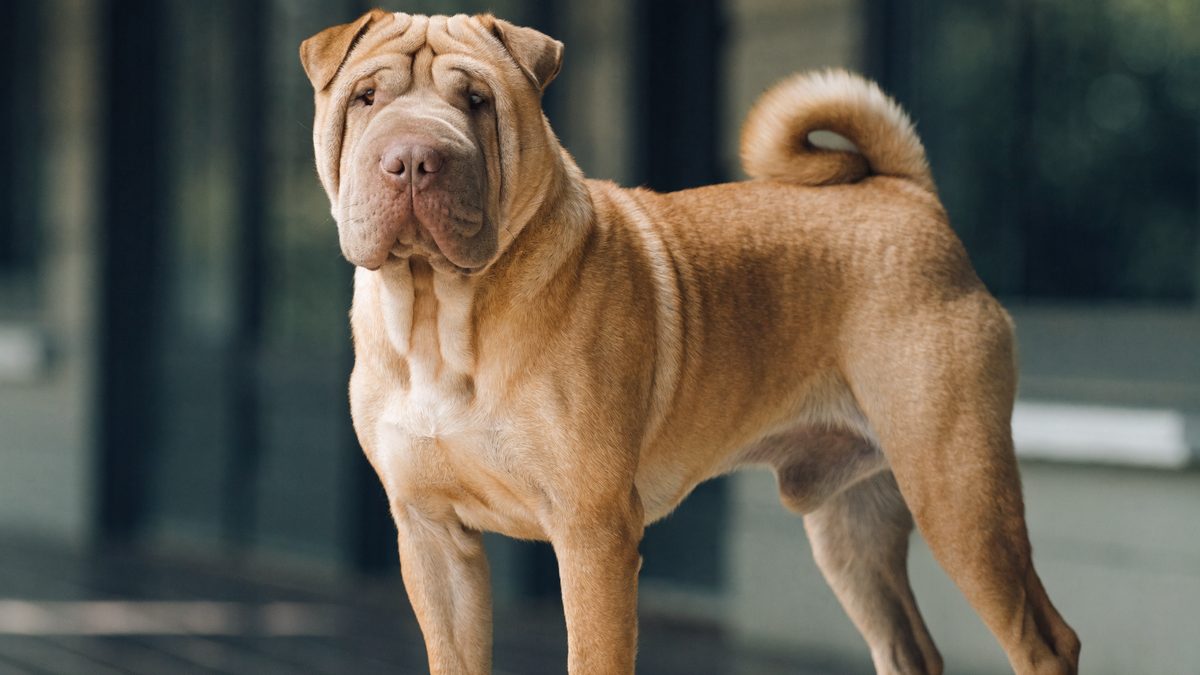
The Shar Pei is a medium-sized Chinese guarding and fighting dog whose loose, thickened, wrinkled skin is not a cosmetic quirk but a genetic condition called hyaluronosis. Every registry that recognises the breed says the same thing in different words, that the wrinkles belong on the puppy and should mostly be gone from the adult body. Almost nothing sold in India as a Chinese Shar-Pei is bred to that instruction.
Under the American Kennel Club standard, a Shar Pei stands 18 to 20 inches at the withers and weighs 45 to 60 pounds, square in profile and close coupled, with a large head, extremely small triangular ears that lie flat against the skull, and a broad, full "hippopotamus"; muzzle with no suggestion of snipiness. The tail sets extremely high and curls over the back, and its absence is a disqualification. UK primary-care records give the real-world figure rather than the ideal, a mean adult bodyweight of 22.26 kg across 1,913 Shar Pei, with males at 23.50 kg and females at 20.76 kg.
The coat is the second defining feature and the source of the name. Shar Pei translates from Chinese as sandpaper skin, and the Royal Kennel Club glosses it as harsh sandy coat. The standard calls for an extremely harsh, straight, off-standing, bristly coat with no undercoat, ranging from the very short horse coat to the brush coat, and never exceeding one inch at the withers. A soft or wavy coat is a major fault, and a trimmed coat is a major fault too, because the breed is shown in its natural state.
| Point | AKC, approved 1998 | FCI Standard No 309, valid 1999 | Royal Kennel Club, updated April 2025 |
|---|---|---|---|
| Height at withers | 18 to 20 in | 44 to 51 cm, 17.5 to 20 in | 46 to 51 cm, 18 to 20 in |
| Weight | 45 to 60 lb | Not specified | Not specified |
| Wrinkle on the adult body | May be limited to head, neck and withers | Highly undesirable except on withers and base of tail | Excessive skin on body when mature highly undesirable |
| Eyes and eyelids | Dark, small, almond-shaped, sunken, scowling | Free from entropion, function not disturbed by folds | Free from entropion, any sign of irritation unacceptable |
| Coat | Extremely harsh, max 1 in at withers | Short, harsh, bristly, no undercoat, 1 to 2.5 cm | Extremely harsh, no undercoat, up to 2.5 cm |
| Colour | Solid colours and sable only | All solid colours except white | All solid colours except white |
| Cosmetic surgery | Not addressed | Any artificial alteration, in particular lips and eyelids, eliminates the dog | Not addressed |
The AKC standard states that the loose skin and wrinkles covering the head, neck and body are superabundant in puppies but these features may be limited to the head, neck and withers in the adult. The FCI goes further and calls folds of skin on the body of a mature dog highly undesirable outside the withers and tail base, and lists heavy body folds as an eliminating fault. The Royal Kennel Club requires forelegs to be completely wrinkle free when mature. An adult Shar Pei covered in folds is not a superior specimen. It is a dog bred away from all three published breed standards.
Where the breed came from, and what happened to it in America
The Shar Pei was invented in China as a fighting, hunting and guarding dog, and the loose skin had a job. A rival could not get a firm grip, and a Shar Pei grabbed in a fight could still turn inside its own hide. The FCI records the origin as the provinces bordering the South China Sea, most probably the town of Dialak in Kwun Tung province, and classifies the breed as a Molossian mastiff type used for hunting and watch work. The Royal Kennel Club places it as a descendant of the ancient Han Dog, a Chinese guard dog of 2,000 years ago, sharing some ancestry with the Chow Chow.
The breed then nearly disappeared. Heavy taxation of dog ownership under the Mao Zedong regime pushed the Shar Pei close to extinction, and it was resurrected as a companion animal after a small population was exported to America in a Save the Shar Pei movement in the late 1970s. The Merck Veterinary Manual notes the consequence in one sentence, that the offspring of those few dogs are highly inbred because they have been heavily selected for a wrinkled skin phenotype.
That American reinvention created the split Indian sellers now price on. Public demand in the new US market ran to a far more extreme phenotype than the dog that existed in China, so the heavier, more heavily folded American meat mouth variety displaced the traditional bone mouth variety, and producers selected specifically for dogs that keep their skin folds into adulthood. Bonbeno covers what that means for price, and for the dog, in the price and health sections below.
The Shar Pei in India has always been rare
India has never had a Shar Pei population of any size. When the Times of India profiled rare imported breeds in Chandigarh in October 2010, it reported that only one Shar Pei turned up to compete at that year's National Dog Championship in Shimla, and that the breed had been introduced to the region by a single Ludhiana kennel. That same article recorded what actually drove Indian interest in the breed, an anti-wrinkle cream advertisement featuring a Shar Pei face. The dog was sold on its wrinkles from the first day it arrived here.
No Indian registry publishes breed-wise registration counts, so nobody can say how many Shar Pei live in India in 2026. For scale, the UK is a country where the breed is genuinely established, and even there it made up 0.42 percent of 455,557 dogs under primary veterinary care, with popularity falling over time as awareness of the health problems grew. Any Indian page quoting a national Shar Pei population figure has made it up.
Shar Pei price in India
The published Shar Pei price in India runs from Rs 20,000 to more than Rs 7,00,000 in 2026, and that is not a range, it is a disagreement. The cheapest and the dearest published figures differ by a factor of 35 for the same breed in the same country in the same year. No page currently ranking for this query mentions that the other pages exist.
Bonbeno pulled every Indian source on page one that publishes an actual number and set them side by side. Read them together and the market has no consensus at all.
| Source | Headline range | Basic or pet quality | KCI registered | Champion bloodline | Does the publisher sell puppies? |
|---|---|---|---|---|---|
| Happy Pet | Rs 20,000 to Rs 60,000 | Not tiered | Not stated | Not stated | No, a pet-care app |
| Puppiezo | Rs 25,000 to Rs 35,000 or more | Not tiered | Not stated | Not stated | Yes |
| Mr n Mrs Pet | Rs 1,80,000 to Rs 7,00,000+ | Rs 1,80,000 to Rs 2,50,000 | Rs 2,50,000 to Rs 5,00,000 | Rs 5,00,000 to Rs 7,00,000 | Yes |
| Times of India, 2010 | Rs 25,000 to Rs 30,000 | Not tiered | Not stated | Not stated | No, a news report |
Three points fall straight out of that table. First, the two Indian sources quoting Rs 25,000 to Rs 35,000 are a puppy seller and a newspaper article published on 31 October 2010, which is sixteen years old and describes a market that barely existed. Second, the only source publishing a tiered structure is also the only source quoting lakh-level figures, and it brokers sales. Third, nobody is auditing any of these numbers, and none of the four sources cites where its figures came from.
Bonbeno reports published price ranges as editorial content. We do not sell dogs, we do not broker puppy sales, we do not recommend breeders and nothing on this page is an offer. A number you read here is a number somebody else published, with the publisher named so you can weigh it yourself.
What the price is actually tracking
- Scarcity, not quality. The Shar Pei has never been common in India. A national championship in 2010 drew a single entry of the breed. Thin supply, an import-heavy pipeline and a face people recognise from advertising is the whole pricing story at the top end.
- Registration paperwork. One seller prices a Kennel Club of India registered puppy at Rs 2,50,000 to Rs 5,00,000 against Rs 1,80,000 to Rs 2,50,000 for basic quality. KCI registration documents ancestry, nothing else, and it is discussed below.
- Wrinkle depth, sold as a tier. The meat mouth and bone mouth labels Indian listings borrow from the American market are treated as a quality ladder, with the wrinklier dog priced higher. No registry recognises them as varieties.
- Who is publishing the number. Two of the four sources quoting a price also sell the puppy. That is a commercial interest in the figure, disclosed here because neither page discloses it itself.
KCI registered means ancestry, not health
A Kennel Club of India certificate records the pedigree of the puppy's parents and grandparents going back five generations, and names champion ancestors where they exist. It is a genealogy document. It certifies no health test, no eye examination and no genetic test result, and it makes no statement at all about entropion, skin or shar pei fever. Litter registration costs the breeder Rs 337 per puppy when filed within 60 days of birth and Rs 562 per puppy in the 61 to 120 day window, after which the litter cannot be registered at all, with a further Rs 100 to transfer ownership into your name.
Set those fees against a Rs 2,50,000 to Rs 5,00,000 asking price for a kci registered puppy and the arithmetic is worth stating plainly. You are paying a very large premium for a document that costs the breeder a few hundred rupees and tells you nothing about whether the dog will need eyelid surgery before its first birthday. The same source also warns that many Indian buyers are never given a genuine KCI certificate at all, so verify the certificate number with the registry before money changes hands rather than after.
Meat mouth and bone mouth, and why the premium is inverted
Meat mouth and bone mouth are real descriptive terms with a real history, and they appear in the peer-reviewed literature. The heavier, more wrinkled American meat mouth type displaced the traditional Chinese bone mouth type after the late-1970s export, because the new US market wanted a more extreme dog. Neither term appears anywhere in the AKC, FCI or Royal Kennel Club breed standard, and none of the three recognises any variety split within the breed The Royal Kennel Club. A seller charging you a premium for a meat mouth dog is charging for a category no registry will certify.
The genetics make the premium worse than meaningless. The breed-defining skin comes from a duplication upstream of the HAS2 gene on chromosome 13, and the meatmouth version of that duplication was the one breeders selected because a higher copy number produced a more exaggerated appearance. The same copy number tracks disease. In the original study, most dogs carrying more than six copies had experienced familial Shar-Pei fever, while most dogs with fewer than four copies had not. Cornell's diagnostic laboratory now grades the commercial test on exactly this axis, with a copy number of 2 read as no expected risk, 6 as four times the risk of a non-carrier, and 10 as eight times the risk and prone to disease in its lifetime.
Read those two findings together. The trait Indian sellers charge the most for, deep loose folds retained into adulthood, is produced by the same duplication whose copy number predicts autoinflammatory disease. Every published breed standard already says the adult should not carry heavy body folds Federation Cynologique Internationale The Royal Kennel Club. Paying extra for a wrinklier adult Shar Pei means paying extra for a dog further from the standard and, on the published evidence, closer to the disease. If you buy this breed at all, the moderate dog is the better dog and it should cost less.
Bonbeno's position on the whole band is simple. No published Indian figure is independently verified, the spread between sources is 35-fold, the only tiered table comes from a seller, and the premium tiers reward the phenotype the veterinary evidence penalises. Treat every number on this page as a claim by its publisher rather than a market rate, and treat purchase price as the smallest number in the decision. The section below explains why.
Monthly cost of a Shar Pei in India, and the line items nobody budgets
The only published Indian monthly cost for a Shar Pei is Rs 3,550 on a basic lifestyle and Rs 5,400 on a premium one, split into roughly Rs 2,250 to Rs 3,000 of food, Rs 600 to Rs 1,200 of veterinary care and Rs 700 to Rs 1,200 of grooming. That budget describes a healthy medium-sized dog. It does not describe this breed.
Start with the published figure, because it is the only Indian one that exists.
| Line item | Basic lifestyle | Premium lifestyle |
|---|---|---|
| Food | Rs 2,250 | Rs 3,000 |
| Veterinary | Rs 600 | Rs 1,200 |
| Grooming | Rs 700 | Rs 1,200 |
| Published monthly total | Rs 3,550 | Rs 5,400 |
Now put the disease frequencies next to it. In UK primary care, 17.88 percent of Shar Pei were formally diagnosed with entropion in a single year, 16.36 percent with otitis externa, 6.69 percent with other ear disorders, 4.29 percent with pyoderma, 4.03 percent with conjunctivitis and 3.03 percent with shar pei fever. Grouped, 22.27 percent of the breed had an ophthalmological diagnosis and 21.01 percent a dermatological one in that year. A Rs 600 monthly veterinary allowance does not survive contact with a breed where roughly one dog in five needs eye care annually.
The costs the Indian budget leaves out
- Eyelid surgery, often twice. Across all breeds, 18.2 percent of dogs with in-turned eyelids were operated on in a single year. Two surgeries are commonly performed rather than one, to avoid over-correcting into an outward-rolling lid, and in Shar Pei puppies specifically a temporary tacking suture is often placed first with definitive surgery later.
- Repeat ear treatment. Otitis externa is the second most common diagnosis in the breed and it recurs, because the underlying cause is the shape of the ear canal rather than an infection you can finish treating.
- A SPAID genetic test. Cornell's Animal Health Diagnostic Center runs the assay for Shar Pei and Shar Pei crosses, and from 1 October it must be ordered through a registered veterinarian rather than submitted by an owner. Budget the vet consultation and international sample shipping alongside the test itself.
- Routine urine monitoring. The breed's own parent club recommends a urinalysis every three months and a blood panel every 6 to 12 months for any dog with fever episodes, specifically to catch failing kidneys before the blood values move. The Merck Veterinary Manual goes further and recommends routine screening for urinary protein loss in all Shar Pei.
- Cooling. Indian veterinary guidance treats an indoor temperature above 32 C as dangerous for a dog at rest and tells owners to run air conditioning or fans continuously above that threshold. In most Indian cities that is a real electricity line from March to October.
- Colchicine, long term. Where familial Shar-Pei fever is diagnosed, colchicine at 0.025 mg/kg orally every 48 hours for a week and then daily long term is the recommended treatment, and it is a lifelong drug rather than a course.
No credible published source gives Indian rupee costs for canine entropion surgery, SPAID genetic testing landed in India, or long-term colchicine. Bonbeno does not invent figures to fill a table. What we can tell you is the frequency, which is what actually drives a budget. Ask your own veterinarian for a written estimate on bilateral entropion correction and on quarterly urinalysis before you commit to this breed, and treat any page that quotes a precise Indian surgery price without a source as guessing.
The one number that reframes the whole budget
Median longevity for Shar Pei that died under UK primary veterinary care was 7.28 years, with an interquartile range of 5.04 to 10.05 years. Median survival across 584,734 UK dogs of all types is 12.5 years, and the same study carries a row for this breed, filed under the name Chinese Shar Pei: median survival 10.6 years, with a 95 percent confidence interval of 10.3 to 10.9 years, from 2,028 recorded deaths, and a hazard ratio of 1.46 (1.39 to 1.52) against the crossbred group at p<0.001. Those two figures come from different methods and different datasets, so they are not a like-for-like subtraction, and Bonbeno prints both rather than averaging them. Even read cautiously, they point the same way. You are budgeting a high-intervention dog over a short life, not a low-maintenance dog over a long one.
There is a second, harder number underneath it. Of 184 Shar Pei deaths with a recorded method, 157, or 85.33 percent, involved euthanasia. Behavioural disorders were the third most common recorded cause of death at 11.03 percent, behind cancer at 15.44 percent and kidney disorders at 13.24 percent. A meaningful share of Shar Pei in a country with good veterinary access are being put to sleep for behaviour, not only for disease. Read the temperament and training sections before you decide that is somebody else's problem.
Heat tolerance and the Indian monsoon problem
Bonbeno rates the Shar Pei 2 of 5 for heat tolerance, and the honest reason for that rating matters more than the number. No published study has ever produced a heat-related-illness odds ratio for this breed. The rating rests on what the breed's skin does in humidity, not on a risk table the Shar Pei appears in, and Bonbeno says so rather than borrowing a figure from a breed that was measured.
The largest study of heat-related illness in dogs searched the VetCompass clinical records of 905,543 UK dogs under primary veterinary care during 2016 and confirmed 395 events. The overall incidence was 0.04 percent (95 percent CI 0.04 to 0.05) and the event fatality rate was 14.18 percent (95 percent CI 11.08 to 17.96), with 56 of the 395 events killing the dog. In the final multivariable model, nine breeds carried significantly higher odds than the Labrador Retriever, and those nine were the Chow Chow, Bulldog, French Bulldog, Dogue de Bordeaux, Greyhound, Cavalier King Charles Spaniel, Pug, English Springer Spaniel and Golden Retriever.
The Shar Pei does not appear among the nine breeds with elevated odds, and it does not appear in the study's breed risk table at all. Bonbeno's Chow Chow page carries a specific odds ratio because the Chow Chow was measured and came top of that table. There is no equivalent Shar Pei number, and inventing one would be exactly the fabrication this site exists to avoid. What follows is reasoning from the breed's anatomy and from risk factors the study did measure, labelled as such.
Two things Indian pages get wrong about this breed and heat
The first is coat. Indian summaries sometimes group the Shar Pei with heavy-coated breeds, and Purina India's heat guidance names heavy-coated dogs such as Huskies and Newfoundlands as at particular risk. The Shar Pei is not one of them. All three breed standards specify a short, harsh, off-standing coat of 1 cm to 2.5 cm with no undercoat at all American Kennel Club. On coat alone this dog carries less thermal load than a Chow Chow, a Golden Retriever or a Siberian Husky.
The second is the flat-face claim. Happy Pet's Indian breed page states that the Shar Pei is a brachycephalic breed with a short muzzle and a resulting heat-regulation problem. The published standards describe something different. All three specify that the length from nose to stop is approximately equal to the length from stop to occiput, and the FCI additionally requires wide opened nostrils Federation Cynologique Internationale The Royal Kennel Club. A muzzle as long as the skull is not the conformation Purina India's short-faced list describes, which names Boxers, Bulldogs, Pugs and Pekingese. Bonbeno prints the disagreement rather than resolving it, and notes that an individual Shar Pei bred with a heavily padded muzzle and folds crowding the nose can breathe far worse than the standard implies.
The real Indian hazard is humidity, not the thermometer
Heat and moisture are separate problems for this breed, and the moisture one is worse. Skin fold dermatitis is an inflammatory process of closely apposing skin surfaces, and the Shar Pei carries a 0.91 percent annual diagnosis rate for it, which is 6.4 times the odds of a crossbred dog. Against a general-population one-year prevalence of just 0.37 percent across 905,553 dogs, that is a genuine breed predisposition, and pain was recorded in nearly one in five affected dogs.
Indian conditions load that risk directly. Coastal humidity approaches 90 percent, and a 35 C day at 90 percent humidity is more dangerous than a 42 C day at 20 percent humidity, because panting cools by evaporation and humid air blocks evaporation. The monsoon then keeps every fold on the dog damp for months. Mumbai, Chennai, Kolkata, coastal Kerala and Goa are the hard postings for a Shar Pei, and they are hard in June and September as much as in May.
| Ambient temperature | Risk level | What it means in practice |
|---|---|---|
| Below 28 C | Low | Normal activity with shade and water |
| 28 to 35 C | Moderate | Shorten walks to 15 to 20 minutes, early morning and late evening only |
| 35 to 42 C | High | Outdoor activity contraindicated. Asphalt reaches 60 C and above |
| Above 42 C | Extreme | Heat stroke possible within 10 to 15 minutes outdoors. Indoor temperature without cooling can be fatal |
- Walk before 7 am or after 8 pm from April to September, and hold the walk to 15 to 20 minutes even then.
- Run fans or air conditioning continuously above 32 C indoors, because indoor temperature above 32 C is dangerous for a dog at rest.
- Do the seven-second pavement test. Hold the back of your hand on the pavement for seven seconds, and if you cannot, asphalt at 60 C burns paw pads within about 30 seconds.
- Dry every fold after rain, bathing or a wet walk. A damp fold in Indian humidity is the mechanism behind the breed's dermatological burden, which reached 21.01 percent of dogs in a single year.
- Never confine the dog to a balcony above 30 C, because concrete balconies are heat traps with no airflow and no shade.
- Never leave the dog in a parked car. At an outside temperature of 26 C a car interior reaches 32 C in five minutes and 43 C in 25 minutes.
Recognising heat stroke, and one detail specific to this breed
Heat stroke is defined at a core body temperature of 40.5 C or above, and vigorous exercise in hot weather can produce it in as little as 30 minutes. Cornell's Riney Canine Health Center sets the same threshold at 105 degrees Fahrenheit and spells out the consequences, that prolonged elevation damages every organ in the body and commonly leads to acute kidney injury, blood clotting problems and shock. Cool the dog with cool but not cold water that reaches the skin rather than running off the coat, move air across the wet dog, and never plunge it into cold water or an ice bath, because that prevents the core temperature coming down AlcoVet Healthcare. Stop active cooling once the temperature reaches 39.4 C so the dog does not overshoot into hypothermia. Cool while somebody else drives, wetting the dog and placing it directly in front of the car's air conditioning on the way to the clinic.
One Cornell warning lands harder in this breed than in most. Dogs that survive one heatstroke episode are at greater risk of another. Acute kidney injury from heatstroke stacks on top of a breed already carrying an inherited risk of renal amyloidosis, in which kidney disorders were the second most common recorded cause of death O'Neill DG, Engdahl K, Leach A, Packer RMA. A Shar Pei has fewer spare kidneys to lose than an average dog does.
The AKC standard requires a solid bluish-black tongue and makes a solid pink tongue a disqualification, then adds a clinical caveat that matters far more in Chennai than in a show ring. Tongue colours may lighten due to heat stress. If your dog's blue-black tongue has gone noticeably paler on a hot day, read it as a heat signal and act on it, not as a pedigree question.
Two measured risk factors from the 905,543-dog study apply to any Indian Shar Pei regardless of the missing breed figure. Dogs at or above the mean bodyweight for their breed and sex carried 1.42 times the odds of heat-related illness (95 percent CI 1.12 to 1.80), and dogs aged 12 years and over carried the highest age-related odds at 1.75 (95 percent CI 1.14 to 2.70). Keeping this dog lean is the single cheapest heat intervention available to you, and it helps the skin folds and the joints at the same time.
Temperament, and the aggression figure nobody quotes
The Shar Pei is a calm, independent, deeply family-bound dog that is reserved to the point of aloof with everyone else. That is the breed standard's own description, and it is also the honest warning. Aggression was formally diagnosed in 5.23 percent of UK Shar Pei in a single year, more than double the 2.2 percent recorded in dogs that are not Shar Pei.
The AKC standard writes the temperament in a single unusually blunt sentence. The Shar Pei is regal, alert, intelligent, dignified, lordly, scowling, sober and snobbish, essentially independent and somewhat standoffish with strangers, but extreme in his devotion to his family. The FCI condenses it to calm, independent, loyal and affectionate to his family, and makes aggressive or overly shy an eliminating fault.
The Royal Kennel Club words it differently, and the difference is worth noticing before you buy. Its standard says the temperament is calm, independent, very affectionate, and devoted to people. The AKC says standoffish with strangers. Bonbeno prints both rather than picking the friendlier one. The gap between them is roughly the gap between the dog people expect and the dog that arrives.
| Finding | Shar Pei | Comparison |
|---|---|---|
| Aggression diagnosed in one year | 5.23 percent (95 percent CI 4.23 to 6.22) | 2.2 percent in non-Shar Pei dogs |
| Behavioural disorders as a group | 7.21 percent (95 percent CI 6.05 to 8.37) | Fifth most common disorder group in the breed |
| Behavioural disorders as a cause of death | 11.03 percent (95 percent CI 5.76 to 16.29) | Third most common recorded cause of death |
| Sex difference | Males higher for aggression | Females higher for entropion and conjunctivitis |
Among Shar Pei deaths with a recorded biomedical cause, behavioural disorders accounted for 11.03 percent, behind only cancer at 15.44 percent and kidney disorders at 13.24 percent. Eighty-five percent of recorded deaths in the breed involved euthanasia. That combination means a real number of these dogs are being put to sleep for how they behave. In India, where dedicated veterinary behaviourists are scarce outside a handful of metros, that outcome is more likely rather than less.
Why the face makes the behaviour harder
The breed standard asks for small, sunken, almond-shaped eyes and a scowling expression, framed by wrinkles running down the side of the face. Dogs communicate with their faces, and a Shar Pei's face is partly switched off. The eyes are recessed and shaded, the ears are extremely small and lie flat against the skull so they carry almost no signal, and heavy facial folds flatten the visible expression The Royal Kennel Club. Other dogs read Shar Pei poorly, and Shar Pei read other dogs poorly through folds that crowd the eye.
Add pain to that. Entropion turns the eyelid inward so the hairs rasp across the cornea every time the dog blinks, and 27 percent of dogs diagnosed with entropion also carried a concurrent corneal ulcer Royal Veterinary College VetCompass. A dog carrying chronic eye pain, with limited peripheral vision because folds sit over the eye, and no expressive ears to warn you, is a dog with a low tolerance for surprises. Treat sudden reactivity in a Shar Pei as a medical question first and a training question second.
Who this breed suits in India, and who it does not
- Suits: an experienced owner in a ground-floor or low-traffic home, with air-conditioning, one primary handler the dog can bond to, and the money and willingness to screen, treat and monitor eyes, ears and kidneys for the dog's whole life.
- Suits: somebody who genuinely wants a quiet, undemanding, house-oriented dog and is not looking for an outgoing one. The breed is calm indoors and needs up to an hour of exercise a day, not more.
- Does not suit: a first dog. Independent temperament, a documented aggression rate above the general population, and a lifelong medical management load are three hard problems at once.
- Does not suit: a busy joint family or a home with constant visitors and small children moving fast. A standoffish dog with restricted vision and a low signalling repertoire is the wrong dog for a crowded doorway.
- Does not suit: a coastal flat with no cooling and heavy monsoon humidity, for the skin reasons set out above.
- Does not suit: anybody buying the face. Every welfare problem in this breed is downstream of the appearance that sells it.
Aggression here is not the breed being wicked. It is a guarding dog with a reserved standard temperament, restricted facial communication, frequent ocular pain and an inherited inflammatory disease that flares unpredictably. Manage those four honestly and most Shar Pei are calm, quiet, dignified housemates. Ignore them and you get a dog nobody can safely handle.
How to train a Shar Pei in an Indian home
To train a Shar Pei, run short, calm, food-rewarded sessions at home with one consistent handler, and put daily face and ear handling at the centre of the curriculum rather than at the edge of it. This breed is independent by written standard, so it does not work for your approval, and there is one training-specific risk in this breed that exists in almost no other.
Familial Shar-Pei fever episodes appear to have triggers, and the breed's own parent club names the major one as stress, listing a dog training class, a dog show, another illness, a bitch in heat and excessive exercise as examples. This is the single most useful training fact about the breed and no page selling Shar Pei puppies in India mentions it. If your dog has ever had an unexplained fever, a high-arousal group obedience class is a medical decision, not just a scheduling one. Train at home in low-arousal sessions and bring the trainer to you.
PetMD's vet-written and vet-reviewed breed page states that Shar-Pei can be fearful around other pets and people and that obedience training classes are important to help puppies learn to be comfortable, calm and well behaved. The Chinese Shar-Pei Club of America names a dog training class as a stress trigger for fever episodes. Bonbeno does not resolve that for you, because both are right about something real. The workable compromise is structured socialisation in small, calm, well-run groups for a puppy with no fever history, and one-to-one work at home for any dog that has had an episode.
Start with handling, because the medicine never stops
A Shar Pei will need its eyes examined, its folds dried, its ears inspected and, statistically often, eye drops administered and a surgical site checked. In UK primary care 17.88 percent of the breed were diagnosed with entropion and 16.36 percent with otitis externa in a single year. A dog that resents having its face touched turns every one of those events into a fight. Condition the handling before you need it.
- Pair touch with food from week eight. Touch one fold, feed, stop. Build to lifting the fold, then to a cotton pad, then to a dry wipe of the crease.
- Add the ear next. Lift the tiny flat ear, feed, release. The ear canal in this breed is narrow, so a vet will need to insert an otoscope into an uncomfortable space more than once.
- Practise a mock eye drop daily. Approach the eye, touch the lid margin gently, feed. Do it before there is an ulcer, not during one.
- Teach a chin rest. A dog that voluntarily parks its chin in your palm can be examined without restraint, which matters in a breed the standard describes as standoffish.
- Muzzle-condition early and positively. Not because the dog is dangerous, but because 5.23 percent of the breed carries a formal aggression diagnosis and a painful eye examination is exactly the trigger situation.
The socialisation window collides with eye surgery
This is the timing problem no Indian page flags. The critical period for socialising a puppy runs through the first few months, and it is also when Shar Pei entropion presents. Entropion is usually diagnosed in puppies under one year of age, temporary tacking sutures are commonly placed in young puppies of this breed specifically, and definitive surgery may follow at four to five months of age or wait until adult size at six to twelve months. A puppy recovering from eyelid surgery, in a cone, with a sore face, in the exact weeks it should be meeting the world, is a real and predictable setback.
Plan around it rather than being surprised by it. Front-load calm, positive exposure in the first weeks home, keep post-surgical socialisation low-arousal and observational, and expect to spend longer than usual rebuilding confidence afterwards. Choosing a moderately wrinkled puppy with visible, open, non-inflamed eyes reduces the chance of the collision happening at all.
What this breed resists, and realistic timelines
| Skill | Realistic timeline | What actually limits it |
|---|---|---|
| House training | 3 to 6 weeks | Clean by nature and generally quick. Indoor confinement during summer heat helps consistency |
| Reliable sit, down, settle | 6 to 10 weeks of short daily sessions | Willing enough, but the standard calls the breed independent, so repetition without payoff stalls fast |
| Voluntary face and ear handling | 3 to 6 months, then maintained for life | Pain history. A dog that has had a corneal ulcer will guard its face |
| Calm greeting of strangers | Ongoing, never finished | Standoffish with strangers is written into the standard, not trained into the dog |
| Off-lead recall in a public Indian park | Do not rely on it | Guarding origin, restricted vision through facial folds and a documented aggression rate above the general dog population |
Harsh handling is the wrong tool here and it is also a medical mistake, because stress is a named fever trigger in this breed. Aversive corrections on an independent guarding dog with a 5.23 percent aggression diagnosis rate raise risk without raising compliance. If you see growling, freezing or snapping, book a veterinary examination of the eyes and ears the same week, then engage a qualified behaviour professional. In this breed, behaviour problems are a symptom until proven otherwise.
How much exercise a Shar Pei needs
A Shar Pei needs up to one hour of exercise a day and no more, which is one of the few points where the sources agree. The Royal Kennel Club puts the requirement at up to an hour daily in a small house with a small or medium garden, and the Indian breed guide puts the routine at 30 to 60 minutes at a medium energy level Happy Pet, Chinese Shar-Pei Breed Guide. This is not a high-drive breed, and in this breed the ceiling matters as much as the floor.
That ceiling is unusual, so it is worth being explicit about it. The parent club lists excessive exercise among the named triggers for a familial Shar-Pei fever episode, alongside stress, illness and dog shows. Most breed pages treat more exercise as automatically better. For a Shar Pei with any fever history, a long hard session is a documented risk rather than a virtue.
Fitting an hour into an Indian day
From April to September that hour has to fit before 7 am and after 8 pm, held to 15 to 20 minute blocks even then, on grass or dirt rather than asphalt. Two short walks plus indoor work is a better structure than one long walk, because it splits the thermal load and it suits a dog that is calm indoors anyway. Between 10 am and 6 pm during an Indian summer, outdoor exercise is contraindicated for any dog, and the seven-second pavement test decides the question faster than the weather app does.
- Scent work indoors. Scatter-feed part of the daily ration or hide it in boxes. Low arousal, low heat, genuinely tiring.
- Short skills sessions. Five minutes of chin rest, handling and settle work three times a day beats a forced march.
- A slow evening sniffing walk. Let the dog choose the pace. Sniffing tires an independent dog more efficiently than distance does.
- Controlled shallow water play where a clean, safe source exists, then dry every fold thoroughly afterwards, because damp folds are the mechanism behind this breed's dermatological load.
- Skip the dog park. A reserved guarding breed with a 5.23 percent aggression diagnosis rate and restricted facial signalling does not benefit from crowded off-lead play.
The classic presentation of familial Shar-Pei fever is a fever of 40 C to 41.7 C lasting 12 to 36 hours together with a hot, painful swelling of the hock, known in the breed as Swollen Hock Syndrome, and affected dogs are reluctant to move with a characteristic walking-on-eggs gait and a roached back. Merck describes the same picture as episodes of high fever lasting 12 to 48 hours with arthritis especially in the tibiotarsal joints. A Shar Pei that is stiff and sore after a walk may be sore from the walk. It may also be having a fever episode. Take the temperature before you assume the first.
Weight, joints and puppies
Keep the dog lean. Dogs at or above the mean bodyweight for their breed and sex carried 1.42 times the odds of heat-related illness in a 905,543-dog study, and extra weight loads joints in a breed that already has fold-bearing hocks. Median adult bodyweight in UK primary care was 22.26 kg, with males at 23.50 kg and females at 20.76 kg, and Shar Pei keep gaining weight until roughly four years of age in males and five in females. A four-year-old that is still getting heavier is not finishing its growth, it is getting fat.
For puppies, keep sessions short and self-directed rather than forced, and skip stairs and repetitive jumping. The Royal Kennel Club lists hip and elbow screening under the BVA schemes as best-practice pre-breeding tests for this breed, which is the registry's own signal that joints are worth taking seriously here.
Grooming a Shar Pei in Indian humidity
To groom a Shar Pei in India, spend two minutes a week on the coat and five minutes a day on the folds, the ears and the eyes. The Royal Kennel Club puts coat care at once a week for a short coat, and that is genuinely all the coat needs. Everything that goes wrong on this dog goes wrong in the places where skin touches skin.
The coat is the easy part
The Shar Pei coat is short, harsh, bristly, straight, off-standing and carries no undercoat at all. There is no seasonal coat blow to manage and no undercoat to rake out, which makes it far less work than a Chow Chow or a Husky. Published Indian guidance rates shedding as moderate and budgets Rs 700 to Rs 1,200 a month for grooming, which for this coat is mostly buying bathing and fold care rather than clipping.
Brush once a week with a rubber curry or a soft bristle brush to lift dead hair, and stop there. Never trim or clip this coat. All three standards say the dog is shown in its natural state, and the AKC makes a trimmed coat a major fault The Royal Kennel Club. Clipping a single-coated dog also removes the only sun barrier it has, which matters on an Indian terrace.
The folds are the actual job
Skin fold dermatitis is diagnosed in 0.91 percent of Shar Pei each year, 6.4 times the odds of a crossbred dog, against a one-year prevalence of 0.37 percent in dogs overall, which is about one dog in 300 O'Neill DG, Rowe D, Brodbelt DC, Pegram C Royal Veterinary College VetCompass. Pain was noted in nearly one in five dogs with recorded clinical signs, so this is a welfare condition rather than a cosmetic one Royal Veterinary College VetCompass.
One fair qualification belongs here, because this page should not overstate. On raw annual diagnosis rate the Shar Pei is not the worst fold breed. The English Bulldog was diagnosed at 6.1 percent a year, the French Bulldog at 2.7 percent and the Pug at 2.1 percent, all above the Shar Pei's 0.91 percent O'Neill DG, Engdahl K, Leach A, Packer RMA. Breeds that typically show pronounced folds on the face or body ran between 11 and 49 times more likely to be affected than crossbred dogs. The Shar Pei sits firmly inside that predisposed group without topping it, and Indian humidity is what pushes its risk beyond what a UK figure captures. The Royal Kennel Club's Breed Watch tells judges to look specifically for signs of dermatitis irritation in skin folds, and hair loss or scarring from previous dermatitis. If a show judge is expected to spot it, an owner should be checking for it weekly.
- Open every fold daily and look at the skin inside it. Face, muzzle, neck, dewlap, hocks. You are looking for redness, moisture, a yeasty smell or hair loss.
- Dry, do not just wipe. Moisture is the mechanism. A damp cotton pad moves dirt, then a dry pad or soft cloth removes the water. In Indian humidity the drying step is the one that matters.
- Dry completely after every bath, swim and monsoon walk. Fold surfaces stay wet for hours in coastal humidity approaching 90 percent.
- Keep the dog lean. Fat deepens folds. A lean Shar Pei has shallower creases that dry faster.
- Escalate early. Topical treatment is the usual first-line approach for skin fold dermatitis, and a fold caught red is far cheaper than a fold caught infected.
Ears, and the mistake most owners make
Otitis externa is the second most common diagnosis in the breed at 16.36 percent a year, and the Shar Pei carries 3.44 times the odds of otitis externa compared with crossbred dogs. The cause is structural. Thickened, folded skin inside the ear canal combines with stenotic and hypoplastic ear canal anatomy, so the canal is narrow, poorly ventilated and slow to dry. Indian humidity then keeps it wet.
The authors of the 22,333-dog otitis study set out their own practical recommendation, and it runs against Indian habit. They advocate cautious, low-harm approaches, specifically ear cleaning with a dry paper cloth, judicious use of ear cleaners with antimicrobial properties, and avoidance of overzealous ear-cleaning. Flooding a narrow, inflamed canal with liquid cleaner every week is not prevention. Wipe what you can reach dry, clean with a medicated product only when your vet advises it, and never push a cotton bud into the canal.
Eyes and lips, checked daily
Look at both eyes every morning in good light. You want the eyelid margin sitting flat against the eye with lashes turned outward, no squinting, no discharge, no held-shut eye, and the eye itself visible rather than buried under fold. The Royal Kennel Club standard is unambiguous that the function of the eyeball or lid must in no way be disturbed by surrounding skin, folds or hair, and that any sign of irritation of eyeball, conjunctiva or eyelids is unacceptable. Squinting in a Shar Pei is an emergency-adjacent sign, because 27 percent of dogs with entropion carry a concurrent corneal ulcer.
Check the lower lip too. Breed Watch lists lower lip folding over lower incisors, known in the breed as tight lip, as a point of concern for judges. It is a Shar Pei-specific conformational problem that interferes with the bite, and the standards separately warn that padding of the lower lip must not be so excessive as to interfere with the bite Federation Cynologique Internationale.
The FCI standard closes with a remark most buyers never read. Any artificial physical alteration to the Shar Pei, in particular lips and eyelids, eliminates the dog from competition. Face-lifts, fold reductions and cosmetic eyelid work performed to make a dog look correct are not care, and the governing standard treats them as disqualifying. Medically necessary entropion surgery on a dog that already exists is an entirely different question and is covered in the health section.
Shar Pei health, and the one thing every buyer should know
The wrinkles and the breed's defining inherited disease are the same mutation. A duplication upstream of the HAS2 gene drives overproduction of hyaluronic acid, that excess hyaluronan produces the thickened folded skin people buy the breed for, and the same excess acts as a danger signal that switches on the innate immune system and causes recurrent sterile fever. Everything else in this section follows from that single sentence.
How one mutation produces both the look and the disease
Researchers comparing 50 Shar Pei against 230 dogs from 24 other breeds found the strongest breed-specific selective sweep in the genome sitting on chromosome 13, in the same region that carried the strongest association with the breed's periodic fever syndrome. Dense resequencing revealed two partially overlapping duplications, 14.3 Kb and 16.1 Kb, unique to the Shar Pei and lying roughly 350 Kb upstream of *HAS2*, the gene encoding the rate-limiting enzyme that synthesises hyaluronan. A high copy number of the 16.1 Kb duplication was associated with increased HAS2 expression and with the fever syndrome at p less than 0.0001.
The Merck Veterinary Manual states the mechanism in plain clinical terms. Overexpression of HAS2 in dermal fibroblasts deposits excess hyaluronic acid in the upper dermis, producing the extensive thick skin folding, and that same hyaluronic acid acts as an alarm that activates the innate immune system, stimulating macrophages to produce IL-1beta and IL-6, which reach the brain and trigger fever. Dogs with the most heavily folded skin are the most susceptible to developing fever syndromes. Cornell describes the same chain, with degraded low-molecular-weight hyaluronan acting as a danger-associated molecular pattern that triggers release of inflammatory interleukins.
There is no version of this breed where you get the wrinkles without the mechanism that causes them. The duplication that makes the skin is the duplication that predisposes to autoinflammatory disease, and its copy number tracks both the depth of the folds and the risk of fever Cornell University College of Veterinary…. That is why every breed standard restricts adult body wrinkle, and why paying more for a wrinklier dog inverts the incentive that would protect it Federation Cynologique Internationale The Royal Kennel Club.
SPAID is the umbrella, and it has five faces
Shar-Pei autoinflammatory disease, or SPAID, is the syndrome name for the whole picture, and Cornell defines it by five signs of inflammation: familial Shar-Pei fever, arthritis, vesicular hyaluronosis, otitis and amyloidosis. Read that list against the UK disorder ranking and the overlap is stark. Otitis externa is the second most common diagnosis in the breed at 16.36 percent a year, and shar pei fever is the ninth at 3.03 percent, with a median age at diagnosis of 4.45 years. The breed's inflammatory conditions are not a rare complication, they are most of its clinical load.
What a fever episode actually looks like
The parent club describes the presentation precisely. Temperature commonly runs 104 to 107 F, which is 40 C to 41.7 C, the episode is generally self-limiting at 12 to 36 hours, and it is usually accompanied by hot, painful swelling of the hock, the tibiotarsal joint, known in the breed as Swollen Hock Syndrome. Affected dogs are reluctant to move, walk with a characteristic walking-on-eggs gait, hold a roached back, are often painful in the abdomen and may vomit or scour. The carpus, lips and muzzle are less commonly involved. Merck gives the duration as 12 to 48 hours and notes episodes may recur as often as every few weeks.
| Source and population | Figure | What the figure actually counts |
|---|---|---|
| UK primary care, 1,913 Shar Pei, 2013 | 3.03 percent (95 percent CI 2.26 to 3.80) | Dogs given a formal Shar Pei fever diagnosis by a vet in one single year |
| UK owner-reported survey, 106 dogs | 49 percent (52 of 106) | Dogs with at least one lifetime fever episode attributed by a vet to SPAID |
| US estimate, 1992 | 23 percent | Estimated percentage of Shar Pei affected by the fever syndrome |
| Chinese Shar-Pei Club of America survey | As many as 23 percent | Shar Pei experiencing fevers of unknown origin |
| Merck Veterinary Manual | Approximately 23 percent in the US | Shar Pei estimated to carry the HAS2 mutation |
Those five rows are not five measurements of one thing, and Bonbeno will not average them into a single headline percentage. Notice in particular that the same 23 percent figure is reported by three different authorities as three different quantities, once as dogs affected, once as dogs with fevers of unknown origin and once as dogs carrying the mutation Vidt J (DVM). Familial Shar-Pei Fever.… Tizard IR (Texas A&M University). The honest reading is that a single-year veterinary diagnosis rate of 3 percent and a lifetime owner-reported rate near 50 percent are compatible, because this is an episodic disease that many owners never take to a clinic.
Amyloidosis is the fatal end point, and it is under-recognised
Serum amyloid A concentrations stay high between fever episodes, so the protein is deposited in tissues as insoluble amyloid, accumulating in the kidneys, liver, spleen, gastrointestinal tract and myocardium, and those deposits cause kidney or liver failure and early death. Renal amyloidosis in Shar Pei is predominantly medullary, and it is reported to occur at a younger age in this breed than in others O'Neill DG, Engdahl K, Leach A, Packer RMA. The parent club puts it at about 5 percent of fever-affected dogs developing renal failure, usually between two and five years of age. In UK primary care, kidney disorders were the second most common recorded cause of death in the breed at 13.24 percent.
First, definitive diagnosis needs amyloid deposits detected on renal biopsy stained with Congo red, so it is rarely confirmed in a living dog in routine practice. Second, and more important for owners, not all Shar Pei with amyloidosis have shown signs of fever, and the absence of amyloid in one biopsy does not mean the dog will not develop it later. A Shar Pei that has never had a fever episode is not a Shar Pei that has been cleared. That is precisely why Merck recommends routine screening for urinary protein loss in all Shar Pei, not only the ones with a fever history.
- Urinalysis every three months on a first-morning sample collected after the water has been taken up overnight, watching urine specific gravity and protein, because loss of concentrating ability shows up before the blood values move.
- A blood panel every 6 to 12 months, and immediately if the urinalysis is abnormal.
- Weigh the dog regularly, since slow weight loss over months is easy to miss and is an early signal.
- Track water intake and appetite, as increased drinking and urination accompany loss of concentrating ability.
- Treat any unexplained fever as significant. Colchicine at 0.025 mg/kg orally every 48 hours for one week then daily long term is the recommended treatment for Shar-Pei fever, with the caution that azole antifungals, macrolides, calcium channel blockers and P-glycoprotein pump inhibitors raise colchicine blood levels and can cause multiorgan failure.
A genetic test exists, and here is exactly what it tells you
Cornell University's Animal Health Diagnostic Center runs a genetic test for SPAID in Shar Pei and Shar Pei crosses that reports copy number and allele state, and grades risk in three bands.
| Group | Result | Interpretation |
|---|---|---|
| Non carrier | CNV = 2, alleles 1 and 1 | No expected risk for SPAID |
| Single carrier | CNV = 6, alleles 1 and 5 | Four times more risk than a non-carrier |
| Double carrier | CNV = 10, alleles 5 and 5 | Eight times more risk, and prone to SPAID in its lifetime |
Those numbers are not arbitrary, and knowing where they come from makes the report readable. Droplet digital PCR applied to 196 dogs across both duplication positions showed that CNV_14.3 exists as alleles of either 1 or 3 copies, and CNV_16.1, the meatmouth duplication, exists as alleles of either 1 or 5 copies, with no alternate combinations seen across the full set of 327 individuals. That is why a result reads as 2, 6 or 10. A dog inherits one allele from each parent, so 1 plus 1 gives 2, 1 plus 5 gives 6 and 5 plus 5 gives 10 Olsson M, Kierczak M, Karlsson. The same work showed both duplications are stably transmitted between generations, which is what makes the assay usable as a breeding tool at all.
A second research line points at a different marker. Whole genome sequencing across 102 SPAID-affected Shar Pei, 62 unaffected Shar Pei and 162 controls from 11 other breeds found the missense variant MTBP:g.19383758G>A highly associated with SPAID, with every dog older than six years carrying the mutant A/A genotype being affected, unaffected dogs carrying wildtype G/G, and heterozygous G/A dogs showing a 2.13-fold higher risk, which suggests incomplete dominant inheritance. Bonbeno reports both the copy-number marker and the MTBP variant rather than presenting one as the settled answer.
Cornell states the limits itself. The clinical disease status of a dog is a product of the genetic marker tested and the effect of the dog's environment, and a result cannot exclude other mutations capable of causing inflammatory disease in Shar Pei. Note also that from 1 October the test must be ordered by a registered veterinarian and can no longer be submitted directly by an owner. One more thing worth knowing if you go looking: the parent club's own familial fever page is dated 2012 and still describes a DNA test as an unmet research goal. It predates the assay. Read it for the clinical picture, not for the testing status.
Entropion: the most common diagnosis in the breed
Entropion was the single most commonly diagnosed disorder in Shar Pei under UK primary veterinary care, at 17.88 percent in one year (95 percent CI 16.16 to 19.59). A later study of 2,250,417 dogs put the breed's annual entropion prevalence at 15.41 percent (95 percent CI 14.00 to 16.91) and its odds ratio at 107.38, the highest of any breed analysed, ahead of the Chow Chow at 60.05. For scale, conformational eyelid disorder overall runs at 0.36 percent in dogs generally, and the Husky, Border Collie, Whippet and Greyhound sit at 0.03 percent or below.
Both figures may still understate the problem. The American College of Veterinary Ophthalmologists Blue Book reported entropion in 50.7 percent of Shar Pei actively assessed between 1991 and 2015, falling to 28.7 percent for 2016 to 2020. The welfare cost is direct. In-turned eyelids drag periorbital hair across the cornea with every blink, 27 percent of entropion cases carried a concurrent corneal ulcer, four in ten had conjunctivitis, and 18.2 percent of affected dogs were operated on in a single year. Treated late, corneal scarring leaves permanent, irreversible visual deficits.
In young puppies of this breed and the Chow Chow specifically, vets often place temporary sutures to roll the eyelids outward, with definitive surgery at four to five months if the tacking does not hold, and two surgeries are frequently needed to avoid over-correcting into ectropion. For an individual suffering puppy that is appropriate care. The researchers who published the breed's health data draw the line clearly, that dog producers, the showing community and buyers must not normalise routine conformation-altering surgeries such as eye tacking of young Shar Pei puppies as an ethically acceptable option that justifies continuing to breed the extreme conformation. Ask a seller whether the litter's parents were tacked. It is a fair question and the answer is informative.
What to screen for, and what the registries actually recommend
- Eye testing under the BVA, Kennel Club and ISDS Eye Scheme. This is the Royal Kennel Club's only Good Practice recommendation for the breed, meaning the evidence marks it as a significant concern.
- DNA test for primary open angle glaucoma and primary lens luxation (POAG/PLL), listed under Best Practice, with the registry publishing a list of tested dogs.
- Hip and elbow scoring under the BVA and Kennel Club schemes, also Best Practice.
- A SPAID result on both parents, which no registry mandates and which Bonbeno regards as the single most informative test available for this breed.
- A frank look at the parents' faces. The Royal Kennel Club's Breed Watch asks judges to flag eyelids not in normal contact with the eyeball and dermatitis or scarring in skin folds. Apply the same two checks yourself.
Life expectancy, and why the sources disagree
| Source | Figure | Basis |
|---|---|---|
| RVC VetCompass, UK primary care | Median 7.28 years, IQR 5.04 to 10.05 | 190 Shar Pei that died during the study period |
| American Kennel Club | 8 to 12 years | Breed expectation, basis not published |
| Happy Pet, India | 8 to 12 years | Breed guide, basis not published |
| Royal Kennel Club | Over 10 years | Breed characteristics summary |
| All UK dogs, for comparison | Median survival 12.5 years | 584,734 dogs including 284,734 deceased |
The gap between a measured median of 7.28 years and a published expectation of over 10 years is the largest single discrepancy on this page, and Bonbeno prints both. They are different quantities measured differently, and the VetCompass figure describes dogs that actually died in one recorded population rather than a breed ideal. Even allowing for that, the life expectancy a buyer should plan around is nearer the measured number than the marketing one.
Feeding a Shar Pei through its life stages
Feed a Shar Pei to a visible waist on a fixed schedule, and treat body condition as a clinical target rather than an aesthetic one. The only published Indian figures put a Shar Pei puppy at 1,000 kcal a day and an adult at 1,500 kcal a day, on a food budget of Rs 2,250 to Rs 3,000 a month. Those come from a single unaudited source, so use them as a starting point and let the ribs decide.
Weight control matters more in this breed than in most, for three separate reasons. Fat deepens skin folds, and deeper folds trap more moisture in Indian humidity, which is the mechanism behind a dermatological diagnosis rate of 21.01 percent a year O'Neill DG, Rowe D, Brodbelt DC, Pegram C. Dogs at or above the mean bodyweight for their breed and sex carry 1.42 times the odds of heat-related illness. And a heavy dog loads joints that this breed already has trouble with, given that the Royal Kennel Club lists hip and elbow screening as best practice.
Use the measured growth pattern to know what normal looks like. Shar Pei grow rapidly through the first year and keep gaining until roughly four years of age in males and five in females, settling at a median adult bodyweight of 22.26 kg, with males at 23.50 kg and females at 20.76 kg. If your two-year-old is already at 27 kg, it is not a big-boned specimen.
| Life stage | Meals per day | What to watch |
|---|---|---|
| 8 to 16 weeks | 4 | Steady growth without rapid gain. Weigh weekly and record it |
| 4 to 6 months | 3 | Entropion surgery window. A puppy in a cone eats badly, so keep meals small and appetising |
| 6 to 12 months | 2 to 3 | Growth slows. Cut portions before the waist disappears |
| 1 to 5 years | 2 | Bodyweight still creeping up naturally to around four or five years |
| 5 years and older | 2 | Weigh monthly. Unexplained weight loss is an early kidney signal in this breed |
Two corrections to what Indian pages say about Shar Pei diet
The breed's own parent club is direct about this. Diet does not appear to be helpful in prevention of familial Shar-Pei fever or kidney disease, though diet clearly has a role in managing kidney disease once clinical signs are apparent. Pre-emptively restricting protein in a growing or healthy adult Shar Pei is not a precaution, it is an unsupervised nutritional intervention. What genuinely catches early kidney disease is the quarterly urinalysis, not the food bowl Tizard IR (Texas A&M University).
The second correction concerns the gut. Indian breed pages describe the Shar Pei as having a sensitive stomach and advise avoiding irritant ingredients. There is a real signal underneath that folk wisdom, because inflammatory chronic enteropathies sit within the SPAID syndrome alongside skin disease, otitis and amyloidosis. So persistent diarrhoea or vomiting in a Shar Pei deserves a proper veterinary workup rather than another food change. Merck notes only that maintaining good general health matters and that vitamin supplementation has been recommended, which is a deliberately modest claim.
Practical rules for an Indian kitchen
- Fix the schedule and measure the portion. A structured, monitored routine is the standard advice for preventing overeating in this breed.
- Keep multiple water stations and change the water two to three times a day in summer, since water heats fast and dehydration raises heat-illness risk sharply.
- Never feed alcohol, avocado, grapes, raisins, onions, cherries, xylitol, coffee or tea, and go easy on salt, sugar and milk products.
- Feed before the walk in summer, not after a hot session, and let the dog cool and settle before a large meal.
- Wipe and dry the muzzle folds after every meal. Food and saliva sitting in a face fold is the same moisture problem as monsoon rain.
One honest gap. Bonbeno found no published, sourced Indian data on Shar Pei-specific nutrient requirements, no Indian feeding trial in the breed, and no Indian veterinary body publishing a breed diet. The macronutrient split circulating on Indian breed pages, roughly 25 percent protein and 15 percent fat, appears without a citation on the one page that publishes it. Take it as an illustration, and set your dog's actual ration with a vet who has weighed the dog.
Shar Pei puppy timeline, month by month through the first year
A Shar Pei puppy arrives at eight weeks at the earliest, is at its wrinkliest on the day you meet it, and should be losing body wrinkle rather than gaining it as it matures. The first year of this breed has two events no other breed page schedules for you, an eye examination window that opens almost immediately and a decision about eyelid surgery that lands in the middle of the socialisation period.
Indian law sets the floor. The Prevention of Cruelty to Animals (Dog Breeding and Marketing) Rules, 2017 require that pups less than eight weeks in age are not sold, that only dogs in good health which have been given their medical inoculations are sold, that each pup sold is micro-chipped with a complete treatment and vaccination record maintained, and that a copy of the health and medical records is provided to the purchaser. A breeder must also be registered with the State Animal Welfare Board, which involves a Rs 5,000 non-refundable application fee, an inspection by a State Board representative together with a veterinary practitioner, and a certificate valid for two years.
| Age | What is happening | What you do |
|---|---|---|
| 8 weeks | Legal minimum age for sale. Wrinkles are superabundant and that is correct at this age American Kennel Club | Collect the microchip number, vaccination record and health record copy. Book a vet examination for week one, eyes included |
| 8 to 12 weeks | Core vaccination continues. Indian reference schedules give distemper and parvovirus at 6 to 8 weeks and DHPP at 10 to 12 weeks | Begin daily fold, ear and eye handling paired with food. Start calm socialisation before any surgery |
| 12 to 16 weeks | Rabies falls in the 12 to 24 week window on the same reference schedule | Watch for squinting, a held-shut eye, tearing or discharge. Entropion is usually diagnosed in puppies under one year |
| 4 to 5 months | If temporary tacking sutures were placed and have not held, this is when definitive entropion surgery may be done | Keep post-surgical socialisation low arousal and observational. Expect a confidence setback and rebuild slowly |
| 6 to 12 months | Adult size is reached. Most dogs do not have definitive eyelid surgery until this point, and two operations are often needed | Book the SPAID genetic test through your veterinarian if it was not done by the breeder |
| Around 12 months | Body wrinkle should now be receding to head, neck and withers | Take a baseline urinalysis on a first-morning sample and set the quarterly rhythm from here |
The Indian source that publishes it says so itself, and recommends consulting a qualified veterinarian for proper guidance on your own dog. Indian disease pressure, local parvovirus and distemper prevalence and your city's rabies policy all move the dates. Bonbeno reproduces the published schedule for orientation only. Your vet sets the actual one.
Wrinkles should be going away, not arriving
This is the single most useful thing to watch across the first year, and almost no Indian buyer is told it. The AKC standard says loose skin and wrinkles are superabundant in puppies but may be limited to the head, neck and withers in the adult. The Royal Kennel Club requires forelegs completely wrinkle free when mature and calls excessive skin on the body of a mature dog highly undesirable. The FCI lists heavy folds on the body and limbs as an eliminating fault.
If your puppy is a year old and still carrying deep folds down its legs and body, it has been bred toward the extreme end of the phenotype rather than toward the standard, and the veterinary evidence says that is the end where the disease risk sits O'Neill DG, Engdahl K, Leach A, Packer RMA. You cannot change that after purchase. You can adjust what you watch for, how early you test, and how carefully you monitor the kidneys.
When the first fever is likely
Fever episodes are typically more frequent during the first years of life. Against that, the median age at which UK vets recorded a formal shar pei fever diagnosis was 4.45 years, which reflects when owners present rather than when episodes begin. Read the two together as a warning to take the first unexplained fever seriously rather than waiting for a pattern. Buy a digital rectal thermometer at the same time as the food bowl, learn the normal range, and log every reading. Umbilical hernia, by comparison, had the youngest median age of any common diagnosis in the breed at 1.02 years, so a small navel swelling in the first year is worth showing your vet but is a far less serious finding.
Shar Pei compared with the breeds Indian buyers cross-shop
Indian buyers looking at a Shar Pei are usually also looking at a Chow Chow, an English Bulldog or a Pug, because all four are bought for a face. On the two conditions this breed is defined by, in-turned eyelids and ear disease, the Shar Pei is worse than every one of them, and on eyelids it is the worst breed ever measured.
| Breed | Annual prevalence | Entropion odds ratio |
|---|---|---|
| Shar-Pei | 15.49 percent (95 percent CI 14.08 to 17.00) | 107.38, the highest measured |
| Chow Chow | 9.55 percent (95 percent CI 7.88 to 11.43) | 60.05 |
| Neapolitan Mastiff | 9.45 percent | Among the highest for entropion |
| Saint Bernard | 6.10 percent | Highest group for ectropion rather than entropion |
| English Bulldog | 4.92 percent | Brachycephalic breeds overall 1.83 |
| All dogs | 0.36 percent | Reference |
| Siberian Husky, Border Collie, Whippet | 0.03 percent, 0.01 percent, 0.02 percent | Among the most protected |
Read the bottom two rows before the top one. A Shar Pei is roughly forty times more likely to be diagnosed with an eyelid disorder in a given year than an average dog, and hundreds of times more likely than a Husky or a Border Collie Royal Veterinary College VetCompass. The researchers explain why in one line, that the breeds most protected are those with mesocephalic skulls, erect or semi-erect ears and no excess skin or folding, the ones that most resemble the ancestral natural canine appearance.
| Measure | Shar Pei | Chow Chow | What it means |
|---|---|---|---|
| Entropion odds ratio | 107.38 | 60.05 | Shar Pei is close to double the Chow Chow, itself an extreme breed |
| Otitis externa odds ratio | 3.44 versus crossbred | Not in the 16 elevated breeds | The narrow, folded ear canal is a Shar Pei problem specifically |
| Heat-related illness | No published odds ratio exists | Topped the risk table of all study breeds | On measured heat risk the Chow Chow is the worse buy, and it is the only one of the two that was measured |
| Coat | Short, harsh, bristly, no undercoat | Very thick coat | Shar Pei carries far less thermal load from coat |
| Skin fold dermatitis | 0.91 percent a year, 6.4 times crossbred odds | Not the defining problem in that breed | Folds plus Indian humidity is the Shar Pei's distinct weakness |
| Median longevity measured | 7.28 years | Not measured in the same study | Against a median of 12.5 years across 584,734 UK dogs |
This page is critical, so the counterweight deserves stating plainly. On coat the Shar Pei is genuinely better suited to India than a Chow Chow, a Samoyed or a Siberian Husky, because it carries a short single coat with no undercoat rather than a dense double coat The Royal Kennel Club. It also needs only up to an hour of exercise a day and is calm indoors, which fits an Indian flat and an Indian summer schedule better than a high-drive breed does. The Shar Pei's problem in India is not that it cooks. It is that its skin folds and ear canals stay wet, and that its eyelids are turned in.
The comparison that matters most is with a dog that has none of these problems
The UK Brachycephalic Working Group publishes a list of fundamental attributes expected of a young adult dog in good innate health, and three of them read like a checklist written about this breed. A healthy dog should blink comfortably and easily with eyelids that can close fully over the complete cornea, should have flat non-folded skin without deep crevices that promote reduced ventilation and build-up of excessive moisture and skin debris, and should have the ability to see clearly without vision impeded by hair or skin folds. The document names skin folds explicitly as an anatomic feature that may preclude full function.
An Indian street-descended dog meets all three of those attributes by default, costs nothing to adopt, and has never been selected for a trait that a veterinary working group lists as precluding normal function. Bonbeno is not going to pretend that is a like-for-like swap, because somebody who wants a Shar Pei wants a Shar Pei. It is the honest baseline against which the Rs 1,80,000 to Rs 7,00,000 asking price should be read.
What Indian Shar Pei owners get wrong
Nine mistakes account for most of the avoidable suffering in this breed in India, and the first one happens before you own the dog. Each is listed with the evidence that contradicts it, so you can check your own habits against something better than opinion.
1. Picking the wrinkliest puppy in the litter
This is the mistake that causes several of the others. Deep adult body wrinkle is a departure from all three breed standards, and the duplication that produces it predicts autoinflammatory disease in proportion to its copy number The Royal Kennel Club Olsson M et al. A Novel Unstable…. Choose the puppy whose eyes you can see, whose forelegs are already smoothing out, and whose nostrils are open.
2. Reading a squint as the breed's scowl
The AKC standard genuinely asks for a scowling expression and small sunken eyes, and that language gives owners permission to ignore a painful eye. The Royal Kennel Club standard removes the ambiguity, stating that any sign of irritation of eyeball, conjunctiva or eyelids is unacceptable and that the function of the eyeball or lid must in no way be disturbed by surrounding skin, folds or hair. A scowl is a facial shape. A squint, a watering eye or a held-shut eye is a symptom, and 27 percent of dogs with entropion carry a corneal ulcer alongside it.
3. Flushing the ears every week
Indian owners with a fold-eared dog tend to over-clean. The authors of the 22,333-dog otitis study recommend the opposite, advocating ear cleaning with a dry paper cloth, judicious use of ear cleaners with antimicrobial properties, and avoidance of overzealous ear-cleaning. In a breed whose canal is narrow and poorly ventilated by conformation, repeated flushing leaves liquid where it cannot dry.
4. Wetting the folds and not drying them
The bath, the monsoon walk and the cooling wipe-down all leave water inside creases. Skin fold dermatitis is 6.4 times more likely in this breed than in a crossbred dog, and coastal Indian humidity approaching 90 percent means those creases stay wet for hours AlcoVet Healthcare. Drying is not the optional last step of grooming. It is the point of it.
5. Treating a fever episode as an infection
A Shar Pei with a sudden 40 C to 41.7 C temperature and a hot swollen hock looks like an infected dog, and the reflex in Indian practice is a broad-spectrum antibiotic. The parent club is explicit that antibiotics are not normally indicated in this condition, and that fever is initially managed with aspirin, with dipyrone reserved for rare cases or extremely high fevers. Merck names colchicine as the treatment of choice, with a specific warning that azole antifungals, macrolides, calcium channel blockers and P-glycoprotein pump inhibitors raise colchicine levels and can cause multiorgan failure. Tell any new vet your dog is a Shar Pei with possible SPAID before they prescribe.
6. Assuming no fever means no amyloidosis
This is the most dangerous assumption on the list. Not all Shar Pei with amyloidosis have shown signs of familial Shar-Pei fever, and a biopsy without amyloid today does not mean the dog will not develop it later. That is exactly why the Merck Veterinary Manual recommends routine screening for urinary protein loss in all Shar Pei rather than only the symptomatic ones. Kidney disorders were the second most common recorded cause of death in the breed.
7. Clipping the coat for summer
All three standards state that the coat is never trimmed and the dog is shown in its natural state, and the AKC makes a trimmed coat a major fault Federation Cynologique Internationale The Royal Kennel Club. On a single-coated dog with no undercoat, clipping removes the only barrier between Indian sun and skin without improving cooling. Manage heat with timing, shade and airflow instead.
8. Taking a fever-history dog to a group class
Stress is a named trigger for fever episodes, and the parent club lists a dog training class and a dog show among its examples alongside excessive exercise and another illness. Socialise the puppy properly, because that is not optional, but do it in calm, short, low-arousal exposures rather than in a noisy hall full of adolescent dogs.
9. Paying lakhs without a single verified document
One Indian seller quotes Rs 2,50,000 to Rs 5,00,000 for a KCI-registered Shar Pei, while KCI litter registration costs the breeder Rs 337 per puppy inside the 60-day window Dog with Blog, Kennel Club of India. The same registry guide warns that many Indian buyers are never given a genuine certificate at all. Separately, Indian law already requires a microchip, a maintained vaccination record and a copy of the health records handed to the purchaser. Ask for a verified certificate number, the microchip number, the parents' eye-scheme results and both parents' SPAID results before you transfer money, not after.
Every problem above traces back to treating the wrinkles as decoration rather than as a disease process with a name. The RVC's own conclusion after studying 1,913 Shar Pei was that these dogs need to be bred with thinner, flatter skin that is no longer loose from their bodies, and that public demand for the extreme look is what sustains the harm. An Indian buyer cannot change breeding policy. An Indian buyer can refuse to pay a premium for the most exaggerated puppy in the litter, which is the only signal the market actually reads.
Adoption, and how to check a seller if you buy anyway
Start the search with adoption rather than ending with it. Indian rescues take in surrendered pedigree dogs, and an adult Shar Pei that is already past the entropion surgery window and already has a known fever history is in some ways a more informed purchase than a puppy whose problems have not surfaced yet.
A large Delhi rescue states its position on the trade in plain language, being firmly against the purchase of pedigree dogs and cats on the grounds that it sustains an unethical, inhumane and illegal breeding industry across the country, and it runs a one-acre adoption farm for rescued dogs. Its process is worth knowing because a good Indian rescue behaves like this. Interested families go through a house check whose purpose is address verification and an interactive session with the whole family to assess readiness, and spaying or neutering of the adopted pet is a mandatory rule, offered at a nominal rate.
Bonbeno found no Shar Pei-specific breed rescue operating in India, and no Indian organisation publishing breed-wise surrender or shelter statistics. That means nobody can tell you how many Shar Pei are in Indian shelters right now, and any page that gives you a number is guessing. What you can do is register your interest with AWBI-registered shelters and general rescues in your city and wait, because breed-specific dogs do come through general intake.
What to check on an adult Shar Pei before you adopt
- Ask for any fever history in writing. A dog with recorded episodes is a dog you can manage. An unknown history is not a clean history, since the median age at formal diagnosis in this breed is 4.45 years.
- Get a urinalysis before you commit, not after. Loss of urine concentrating ability precedes blood changes in developing kidney disease, and it is the cheapest early warning available.
- Look at both eyes in daylight. Previous entropion surgery leaves a scar line on the lid, and two operations are common in this breed.
- Lift every fold and smell the ear. Scarring or hair loss from previous dermatitis is a recognised point of concern that judges are told to look for, and it tells you how the dog was kept.
- Meet the dog twice, calmly, in its own space. Aggression is diagnosed in 5.23 percent of this breed annually and behavioural disorders account for 11.03 percent of recorded deaths, so a rushed handover serves nobody.
- Budget the SPAID test on day one. Knowing whether an adopted dog is a double carrier changes how closely you monitor it for the rest of its life.
If you buy, here is what Indian law already entitles you to
The Prevention of Cruelty to Animals (Dog Breeding and Marketing) Rules, 2017 are not advisory. A breeder must be registered with the State Animal Welfare Board, having applied with a Rs 5,000 non-refundable fee and been inspected by a team comprising a State Board representative and a veterinary practitioner, holding a certificate valid for two years. The rules further require that pups under eight weeks are not sold, that only dogs in good health which have received their inoculations are sold, that each pup sold is micro-chipped, and that the breeder maintains health, medical and vaccination records and gives a copy to the purchaser. Those records must be kept for at least eight years.
| Green flag | Red flag |
|---|---|
| Shows a State Animal Welfare Board registration certificate | Cannot produce one, or says registration is not required |
| Hands over microchip number and full vaccination records | Offers a handwritten card with no microchip number |
| Publishes both parents' SPAID results | Has never heard of SPAID or familial Shar Pei fever |
| Parents eye-tested under the BVA, Kennel Club and ISDS Eye Scheme | Says the parents' eyes are fine because they look fine |
| Lets you meet the mother and see her eyes and folds | Meets you at a car park, a courier hub or a railway station |
| Breeds moderate dogs and says so | Charges a premium for the wrinkliest puppy in the litter |
| Will take the dog back at any point in its life | Offers a replacement guarantee if the puppy dies |
Ask what the copy number result was on the sire and the dam. A seller who understands the question, or who says honestly that they have not tested and explains why, is in a different category from one who tells you the parents are healthy because they have never been ill Vidt J (DVM). Familial Shar-Pei Fever.…. Bonbeno does not recommend breeders, does not link puppy listings and does not broker sales. We are telling you what to ask, not where to go.
The last word belongs to the evidence. Almost one fifth of this breed receives veterinary care every year for in-turned eyelids, a condition linked directly to the thickened folded skin that humans find appealing, and the researchers who measured it concluded that the honest response is to stop treating extreme body shapes as normal or acceptable Royal Veterinary College VetCompass. If you take on a Shar Pei, take on the monitoring that goes with it. If you are choosing between a Shar Pei and a dog that can blink, see and stay dry without help, that is a real choice and it is worth making deliberately.
Shar Pei questions Indian buyers actually ask
How much does a Shar-Pei puppy cost?
Published figures run from Rs 20,000 to more than Rs 7,00,000 in 2026, a 35-fold disagreement between sources. An Indian pet-care guide publishes Rs 20,000 to Rs 60,000, a Delhi seller publishes Rs 25,000 to Rs 35,000, and a national broker publishes Rs 1,80,000 to Rs 7,00,000 in three tiers. No figure is independently audited, and two of the three publishers sell puppies.
Are Shar-Pei prone to overheating?
No published study gives the Shar Pei a heat-related-illness odds ratio, so anyone quoting one has invented it. The largest study, covering 905,543 UK dogs, named nine higher-risk breeds and the Shar Pei was not among them. Its short single coat carries less thermal load than a Chow Chow's. The Indian problem for this breed is humidity trapped in skin folds rather than raw temperature.
What is Familial Shar-Pei Fever?
It is an inherited autoinflammatory syndrome of recurrent fever and joint inflammation, caused by the same HAS2 mutation that produces the breed's wrinkles. Excess hyaluronic acid activates the innate immune system, driving IL-1beta and IL-6 release and triggering fever. Episodes last 12 to 48 hours with arthritis, especially in the hock joints, and repeated episodes can deposit amyloid in the kidneys and liver.
Do Shar-Pei shed a lot?
Less than most people expect. The Royal Kennel Club rates coat care at once a week for a short coat and confirms the breed does shed, while the standards specify no undercoat at all. There is no twice-yearly coat blow to manage. Published Indian guidance calls shedding moderate. The coat is genuinely the easiest part of owning this breed.
How many coat colors do Chinese Shar-Pei have?
The AKC standard accepts only solid colours and sable, judged on an equal basis, and disqualifies albino, brindle, parti-colour, spotted and any patterned combination. The FCI and Royal Kennel Club accept all solid colours except white. An Indian breed page states the AKC recognises 18 acceptable colours, which the published standard does not itself say, so read colour claims against the standard rather than the listing.
How long do Shar Pei live?
Measured median longevity was 7.28 years, with an interquartile range of 5.04 to 10.05 years, among 190 Shar Pei that died under UK primary veterinary care. Registries publish higher expectations, with the AKC quoting 8 to 12 years and the Royal Kennel Club over 10 years. Median survival across 584,734 UK dogs of all types is 12.5 years. Plan around the measured number.
Do Shar Pei need eye surgery?
Many do. Entropion is usually diagnosed in puppies under one year, and in this breed specifically vets often place temporary tacking sutures in young puppies to roll the eyelids outward, with definitive surgery at four to five months if that fails or at six to twelve months once adult size is reached. Two operations are commonly needed to avoid over-correcting into ectropion.
Are Shar-Peis considered aggressive breeds?
Aggression was formally diagnosed in 5.23 percent of Shar Pei under UK primary veterinary care in a single year, more than double the 2.2 percent recorded in dogs that are not Shar Pei, and males were affected more than females. Behavioural disorders accounted for 11.03 percent of recorded deaths in the breed. Treat sudden reactivity as a pain question first, because eye and ear disease are extremely common here.
Is a Shar Pei good for first-time dog owners in India?
No. You would be taking on an independent guarding breed with an aggression diagnosis rate above the general dog population, entropion in roughly one dog in five each year, ear infection in roughly one in six, and an inherited inflammatory disease needing quarterly urine monitoring for life. That is four demanding problems at once, and none of them is optional.
Can a Shar Pei live in an Indian apartment?
Yes, better than most imported breeds. The Royal Kennel Club lists the ideal home as a small house with a small or medium garden and exercise at up to one hour a day, and the breed is calm indoors. The real apartment constraint is humidity rather than space, because damp skin folds and poorly ventilated ear canals drive most of this breed's disease.
What is the difference between meat mouth and bone mouth Shar Pei?
Bone mouth is the traditional, less wrinkled Chinese type. Meat mouth is the heavier, more heavily folded American type that replaced it after the late-1970s export, because the new US market wanted a more extreme dog. No registry recognises them as separate varieties, and neither term appears in the AKC, FCI or Royal Kennel Club standard. Indian sellers use them as a price ladder anyway.
Is there a DNA test for Shar Pei fever?
Yes. Cornell University's Animal Health Diagnostic Center runs a SPAID assay for Shar Pei and Shar Pei crosses that reports copy number, grading a result of 2 as no expected risk, 6 as four times a non-carrier's risk, and 10 as eight times the risk and prone to disease. It must now be ordered through a registered veterinarian rather than submitted by an owner.
Curious how much did you pay for your pei?
This question ranks fifth for the Indian query and the answers in it are American and European, not Indian, so they are not a guide to what you will pay in Delhi or Bengaluru. A vet-reviewed US page puts the price at at least 1,000 dollars. Indian published figures are separate and disagree with each other by a factor of 35.
Which dog is cheaper than a Shar Pei in India?
An adopted dog, and by a very large margin. Indian rescues rehome dogs after a house check and an interactive session with the family, and make spaying or neutering mandatory at a nominal rate. One large Delhi rescue states it is firmly against the purchase of pedigree dogs on the grounds that it sustains an unethical and illegal breeding industry.
Is Shar-Pei a good family dog?
For an experienced owner in a quiet, air-conditioned home with one primary handler, yes. For a busy joint family, a home with constant visitors, or small children moving fast through a crowded doorway, no. The AKC standard describes a dog that is essentially independent and somewhat standoffish with strangers but extreme in its devotion to its family, the FCI makes aggressive or overly shy an eliminating fault, and the breed is calm indoors and needs up to an hour of exercise a day. It is not a first dog: an aggression diagnosis rate of 5.23 percent, a lifelong medical load on eyes, ears and kidneys, and an independent temperament are three hard problems at once.
Compare with similar breeds
Shar Pei sits in 3 Bonbeno groups. Each one compares it directly against the breeds it is genuinely an alternative to, on the same figures.