
Breed profile
Fu Quan Dog: The India Guide
A Chinese breed name that returns nothing in any register we checked, whose worldwide population of fewer than 15 is footnoted to a Chinese government notice about livestock and silkworms, and whose English name is the same phrase antique dealers use for the stone lions outside a temple gate.
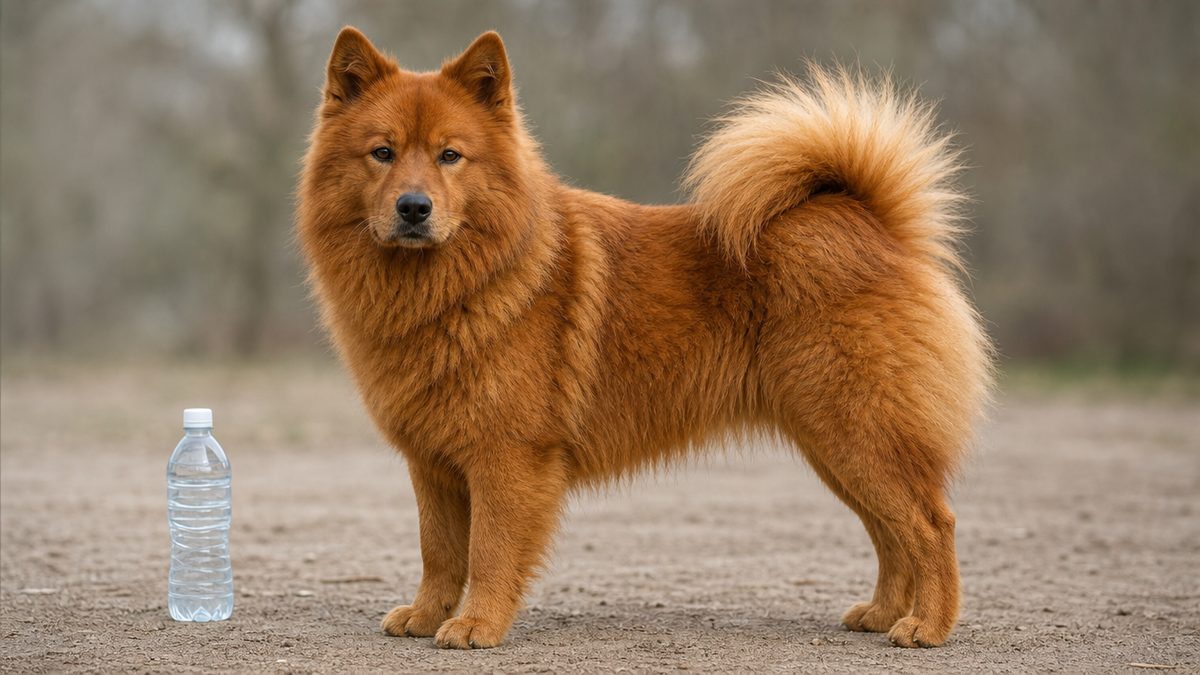
Quick answer
The Fu Quan dog is a Chinese breed name with no register behind it. It is absent from the FCI definitive and provisional nomenclature, from the AKC and UKC breed lists, and from China's own livestock genetic-resources catalogue. No Indian seller lists one, no rupee price exists, and the widely repeated claim that fewer than 15 survive worldwide cites a government notice that does not contain the word dog.
This page summarises registry documents, government notifications and peer-reviewed veterinary research for general information. It is not a diagnosis and it is not treatment advice. Consult a registered veterinarian who has examined your own dog before acting on anything here, and understand that for this breed name there is no screening scheme, no published lifespan and no breed baseline any veterinarian could compare your dog against.
Fu Quan traits, rated for India, and what each rating rests on
What the Fu Quan dog actually is, on the evidence
The Fu Quan is a breed name rather than a documented breed. Written 福犬 and sold in English as the Chinese Foo Dog, it is described everywhere as an ancient, rare, spitz-type working dog from China, and that description traces to a single Wikipedia article resting on three self-published Chinese blog posts and two book citations with no page numbers.
We went looking for the primary documents any breed page should rest on: a breed standard, a register entry, a population count, a study. There are none. The English article gives the breed's alternative names as Xiong Quan, Long Quan, Tian Quan, Chinese Fu Quan, Fu Dog, Chinese Foo Dog, Chinese Temple Forest Dog, Chinese Foo, Chinese Choo Hunting Dog, Chinese Dragon Dog, Chinese Celestial Dog and Sacred Dog of Sinkiang. Twelve names for a dog nobody has counted is itself a signal, and two of those names, Tian Quan and Long Quan, are creatures from Chinese mythology before they are anything else.
The size and weight figures contradict each other on the same page
Wikipedia's own infobox cannot hold one size and weight range across its own fields. The height field reads 33 to 50 cm, and the free text directly beneath it says shoulder height is less than 25 cm for the toy type, 25 to 38 cm for the mini type and greater than 38 cm for the standard type. A toy type under 25 cm cannot sit inside a range whose floor is 33 cm. The weight field reads 19 to 30 kg, and the note beneath it says less than 9 kg for the toy type, 9.5 to 22 kg for the mini and more than 23 kg for the standard. Those two blocks describe different animals.
Animalia.bio, which ranks second in India for this term, resolved the contradiction by quietly widening the ranges to 25 to 50 cm and 9 to 30 kg. That is a tidier set of numbers that appears in no source at all. It is the same failure this site has documented elsewhere, where a secondary page folds a tolerance or a sub-type into a headline range and produces figures nobody published.
| Source | Height | Weight | Problem |
|---|---|---|---|
| Wikipedia infobox field | 33 to 50 cm | 19 to 30 kg | Excludes its own toy and mini types |
| Wikipedia note under the same field | under 25 / 25 to 38 / over 38 cm | under 9 / 9.5 to 22 / over 23 kg | Three types, no source, no standard |
| Animalia.bio | 25 to 50 cm | 9 to 30 kg | A blend that appears in neither block above |
| Any kennel club breed standard | Not published | Not published | No club has written one |
Coat colours: a list, not a standard
The published coat colours run to eleven in the infobox, black, black and tan, blue, fawn, gray, light brown, orange, red, sable, silver and wolf colour, with a second sentence adding cream, golden and dark mahogany. A breed standard narrows colour; a list this wide is what you write when nothing has been narrowed. Creatures.com goes further and prints 54 colours for the same name, including albino, blue merle, harlequin, leucistic and tuxedo, which is plainly that site's entire dog-colour vocabulary applied wholesale.
What English sources do agree on is a body type: compact and square, broad head, prick ears, deep chest, muscular loin, a curled tail carried over the back, and a thick, rough coat. That is a description of a generic Asian spitz-type dog. It fits the Chow Chow, the Eurasier, the Keeshond and half the village dogs of northern China, which is exactly why it cannot identify a breed.
Bonbeno does not state that the Fu Quan is a breed, and does not state that it is a hoax. Both go beyond the evidence. What we can show is what each specific claim rests on, and on this page we show it claim by claim so you can check the footnotes yourself.
Is the Fu Quan dog recognised by any kennel club?
No kennel club recognises the Fu Quan, and we established that from the registers rather than from breed pages. The name is absent from the FCI definitive nomenclature under every letter its aliases start with, absent from the FCI provisional register, absent from the American Kennel Club's breed list including Foundation Stock Service, and absent from the United Kennel Club's breed standards.
Kennel club recognition is the one question about this dog with a checkable answer, so we checked it four ways, each with a control that returned results in the same session.
The FCI definitive register
The FCI nomenclature filtered to the letter F returns eight breeds: Field Spaniel 123, Fila Brasileiro 225, Flat-Coated Retriever 121, Fox Terrier Smooth 12, Fox Terrier Wire 169, French Tricolour Hound 219, French White and Orange Hound 316 and French White and Black Hound 220. There is no Fu Quan. The letter L returns eight and none is a Long Quan. The letter T returns ten, including the Taiwan Dog at 348 and the Thai Bangkaew Dog at 358, and none is a Tian Quan. The letter X returns exactly one breed, the Xoloitzcuintle at 234, and it is not a Xiong Quan.
The letter C is the control that matters most, because every English alias of this dog begins with the word Chinese. It returns 44 breeds. The Chinese Crested Dog is there at 288 and the Chow Chow at 205, so the register is populated and the filter works. There is no Chinese Foo Dog, no Chinese Temple Forest Dog and no Chinese Dragon Dog.
The FCI provisional register
The provisional register carries 20 breeds, read at the real /nomenclature/provisoire.aspx address rather than the decoy path that returns an English Setter page to anyone who guesses the URL. The four newest entries are all dated 11 February 2026: Macedonian Shepherd Dog Karaman at 378, Sabueso Fino Colombiano at 376, Segugio dell'Appennino at 375 and Tatranský Duric at 377. The highest FCI breed number in existence is 378, and no number belongs to this name.
Bonbeno's Chongqing dog page, built 26 August 2026, reports the four newest provisional entries as dated 2 November 2026. That is a date-format misreading. The FCI prints these dates in month/day/year order, and 2/11/2026 is 11 February 2026, which is also the date the Colombian Fino Hound's admission is recorded under elsewhere on this site. We are correcting our own page rather than quietly repeating it.
The AKC and the UKC
The American Kennel Club's Foundation Stock Service page carries a breed selector listing every AKC and FSS breed name. Chinese Crested, Chinese Shar-Pei, Chow Chow, Chinook and Taiwan Dog are all present. Fu Quan is not, and neither is Chinese Foo Dog. A site-restricted search of the United Kennel Club for Foo Dog or Chinese Foo returned nothing, and the same query pattern run against Chow Chow returned the UKC's own Chow Chow standard and its breed-standards index, so the search worked.
Which registries actually will record one
Three commercial or breed-specific bodies will. America's Pet Registry Inc lists the Chinese Foo Dog among the breeds it records. A registry of that kind records what an owner declares. It does not issue a studbook pedigree that a full FCI member kennel club is obliged to accept, and that distinction is the whole practical difference between a certificate and a recognition.
| Register | Result | Control run in the same session |
|---|---|---|
| FCI definitive, letters F, L, T, X | Absent | Letter X returns the Xoloitzcuintle 234 |
| FCI definitive, letter C | Absent | Chow Chow 205 and Chinese Crested 288 present |
| FCI provisional | Absent from all 20 | Four entries dated 11 February 2026 present |
| AKC breeds and Foundation Stock Service | Absent | Chow Chow, Chinese Shar-Pei, Taiwan Dog present |
| UKC breed standards | Absent | Chow Chow standard returned by the same query |
| China Kennel Union native-dog club | Never appraised | Six other Chinese breeds appraised 2016 to 2018 |
| America's Pet Registry Inc | Listed as Chinese Foo Dog | A declaration registry, not a studbook |
What the China Kennel Union actually confers, and what it does not
The China Kennel Union confers a CKU native-dog pedigree, not FCI recognition, and its own club charter says so in plain Chinese. That matters here because the CKU is a full FCI member, which makes anything it issues look like an FCI credential to a buyer who has not read the small print.
The FCI's members register lists China as a full member represented by the China Kennel Union, at 12th Floor, LuoMai Building, 18 Daojiayuan, Chaoyang District, Beijing 100025. Full membership means CKU pedigrees are recognised internationally. It does not mean the CKU can add a breed to the FCI nomenclature, and the CKU has never claimed it can.
The club's own words
The CKU runs a China Native Dog Conservation Club, and its About page states the club's purpose directly. It exists to carry out, for ancient Chinese native breeds not recognised by the FCI, historical research, the drafting of breed standards, the appraisal of individual dogs, systematic breeding registration, the holding of events, and the submission of breeds for recognition, so that in time they reach the standard required for FCI breed certification. Every word of that is an admission that the breeds concerned are outside the FCI, and a statement of intent to change that later.
What a CKU native-dog registration involves
The process is real and it is documented. A dog must be at least nine months old on appraisal day. Appraisal is carried out by an FCI or CKU-appointed judge against the standard the club publishes for that breed. The applicant must be a CKU basic or professional member and the dog's actual owner. For the first three registered generations, a dog must pass a physical appraisal before it can be registered at all. Every registered dog must be microchipped and must have a DNA blood sample taken for parentage verification. Only after all of that does the dog receive a CKU China Native Dog pedigree.
The published fee schedule is equally concrete: appraisal 300 yuan at standard rate or 100 yuan at the native-dog rate, microchip 150 or 80, DNA registration 500 or 350, certificate 100 or 60, with basic membership at 120 yuan and professional membership at 360. This is a working conservation programme with a price list. It is simply not a programme this name has ever entered.
The breeds the club has actually appraised
The club's own news index lists every appraisal event it held. Between 2016 and 2018 it ran events for the Laizhou Hong, the Chongqing dog and Chuandong hound together, the Taicang dog, the Xiasi dog, the Shaanxi Xi hound twice, and the South China Tang dog. Six named Chinese breeds. The Fu Quan is not among them, and no CKU standard for the name exists.
The aspirational FCI line, stated openly for once
Bonbeno's Chongqing dog page established that the CKU's standard for that breed prints an FCI-CLASSIFICATION line for a breed the FCI does not recognise, which reads as recognition to anyone skimming. The CKU's South China Tang Dog standard shows the same mechanism with the honesty left in. It says the standard may broadly refer to FCI Group 5 Section 5, Asian Spitz and related breeds, and that if the opportunity to take part in FCI-format activity arises in future, the breed would be placed in that group and section alongside the Chow Chow. That is a conditional about the future, correctly written. Strip the conditional and you have the line that misleads.
The Tang Dog standard is dated. It was drafted by the Dongguan Pet Industry Association from 2010, revised after four breed shows, and took effect on 1 October 2012. A real standard has an author, a date and a revision history. For the Fu Quan there is no author, no date and no document, which is the whole difference between a breed being early in a process and a breed not being in one.
The fewer-than-15 claim, and the notice it actually cites
The claim that fewer than 15 Fu Quan survive worldwide is unsupported by the source attached to it. Both English and Chinese Wikipedia footnote that sentence to a Chinese government URL, and we opened it: the page announces the 2024 breed lists for livestock, bees and silkworms, and it does not contain the Chinese character for dog.
This is the most-quoted number about the breed and it drives the whole endangered framing, so it deserves the check nobody has given it. The footnote is attributed to an author called Quan Guoxu, dated 10 February 2025, and titled as a report by the National Commission of Animal Genetic Resources on the endangerment of China's native dog breeds. The URL resolves. The page is real.
What is on the page
It is a notice from the National Animal Husbandry Station, headed with the publication of the National Catalogue of Livestock and Poultry Genetic Resources Breed List 2024 edition, the National Bee Genetic Resources Breed List 2024 edition and the National Silkworm Genetic Resources Breed List 2024 edition, announced on 7 February 2025. It records 1,090 livestock and poultry breeds and matched lines, 39 bee breeds and 307 silkworm breeds, and it says the 2021 list is repealed.
Searched character by character, that page contains 犬 (dog) zero times, 狗 (dog) zero times, 福犬 zero times, 濒危 (endangered) zero times, and the digits 15 zero times. The title on the page does not match the title in the footnote. There is no report on native dog breeds at that address. The second footnote on the same sentence, a 2020 item credited to Zhang Min called Conservation Status and Genetic Diversity of Indigenous Dog Breeds in China, has no journal, no DOI and no link.
The second footnote does not resolve either
A Crossref bibliographic search for that exact title returns no matching work; the top hits are unrelated real papers on dog-breed genetic diversity from 2009, 2011, 2018 and 2021. Two controls run in the same session both returned their exact target as the first hit, Yang 2019 in Frontiers in Genetics and Hall 2020 in Animals, so Crossref's title matching was working. A PubMed title search also returned zero, but the PubMed control for that field returned zero as well, so we draw no conclusion from PubMed here and rest the finding on Crossref alone.
Why no Chinese state count exists for any dog breed
China maintains a national catalogue of domestic animal breeds and dogs are outside the current one. That is a change rather than a constant, and it is worth saying so: a Chinese dog breed did once hold a state new-breed certificate in the dog category, which Bonbeno's Kunming dog page sets out with its sources. Dogs were struck out as a species afterwards, so the absence below describes the 2020 instrument rather than a permanent policy. Announcement No. 303 of the Ministry of Agriculture and Rural Affairs, approved by the State Council and dated 27 May 2020, sets out the National Catalogue of Livestock and Poultry Genetic Resources in full. It covers twelve traditional groups, pigs, cattle including zebu, buffalo, yak and gayal, sheep and goats, horses, donkeys, camels, rabbits, chickens, ducks, geese, pigeons and quail, and sixteen special groups including sika and red deer, reindeer, alpaca, turkey, guinea fowl, pheasant, partridge, Muscovy and mallard duck, ostrich, emu, mink, silver fox, Arctic fox and raccoon dog. The characters 犬 and 狗 appear zero times in the whole instrument.
| Claim | Where it appears | What the cited source actually is |
|---|---|---|
| Fewer than 15 individuals worldwide | English and Chinese Wikipedia, Animalia.bio | A 2025 notice on livestock, bee and silkworm breed lists, containing no dog |
| Rarer than the giant panda | Two Sohu posts, one Sina post | Self-published blog opinion, prefaced online as a saying |
| Listed as a state protected animal | English and Chinese Wikipedia | One Sohu post naming no list, no document and no date |
| Any Chinese state count of the breed | Nowhere | Dogs are excluded from the 2020 livestock genetic-resources catalogue |
None. Bonbeno publishes no population figure for the Fu Quan. The honest statement is that no government, registry or study has counted anything under this name, and that the figure in circulation is footnoted to a document about silkworms.
History: where the Fu Quan story comes from, and the lion at the gate
The Fu Quan's published history comes from three Chinese self-media posts, and one of them explains the whole thing by accident. A 2017 Sina article notes that the English for 福犬 is Chinese Foo Dog, that this is also the English name for the Chinese stone lion, and that since the stone lion is likewise seen as a bringer of good fortune, the Fu Quan has become a symbol of China.
Read that sentence again, because it is the mechanism. Guardian lion statues, 石狮子, stand in pairs at temple and palace gates across China and are called foo dogs, fu dogs or lion dogs in the English-language antique and decor trade. They are carved stone. A Facebook auto-answer page ranking tenth for this query states it plainly, that foo dogs, also called fu dogs or lion dogs, are mythical guardian lions. The claim that living Fu Quan are the mascots of Chinese temples is what happens when the object at the gate and the animal in the yard share an English name.
The three Chinese sources, read in full
All three are self-media, which in the Chinese web means user-published content on a platform that disclaims it. Each of the two Sohu posts carries the standard footer stating that the views represent the author alone and that Sohu merely provides an information-storage service. The Sina post carries the equivalent disclaimer. None names a source for any figure.
- The March 2020 Sohu post Wikipedia cites for protected status lists three breeds it says are near extinction, the Chinook, the Chinese Fu Quan and the Thai Ridgeback. It says everyone thought the Fu Quan was extinct, that traces were later found in Xinjiang, and that the state therefore listed it as a protected animal. It names no list, no document and no date, and it attributes the panda comparison to a saying on the internet.
- The March 2020 Sohu post says the Fu Quan looks very similar to the Guangxi hound, that both come in brindle, grey, black, yellow and cream, and that because puppies of the two are hard to tell apart there is still a market selling Guangxi hounds as Chinese Fu Quan.
- The May 2017 Sina post contains the foo-dog-equals-stone-lion sentence, plus the observation that although the dog is called Chinese, it is rarely seen inside China while many people abroad keep it, which the author calls a very strange phenomenon.
Chinese Wikipedia adds nothing independent. Its 福犬 article carries the same five references as the English one, in the same order, including the same government URL and the same sourceless Zhang Min line, so it is a translation rather than a second opinion. It does make one thing clearer than the English version does: where English says the breed is on the list of endangered and protected species of China, the Chinese article links that phrase to the 国家重点保护野生动物名录, the National Key Protected Wild Animals List. That is a list of wild species. A domestic dog breed cannot appear on it, and the unsourced blog post behind the claim never says it does.
The two ancient-text citations do not support a breed
Wikipedia's history section cites the Zhouli and the Liji for the claim that Fu Quan were used in sacrifice and royal hunting. Read what the article itself says those texts contain: that dogs were one of the six domestic animals used in sacrifice, and that officials managed dogs for the royal court. Those are statements about dogs in the Zhou and Han ritual system. Neither text names this breed, because breed names in the modern sense did not exist then. The same is true of the Song dynasty painting cited in the art section, which depicts children playing with a dog.
The top of the Indian result set is one document
Five of the ten organic results in an India-located search reproduce Wikipedia. We machine-checked for verbatim strings rather than judging by eye. The sentence fragment is a rare working dog breed that originated in China appears word for word on ocpets.ae and on dogica.com. So does the phrase list of endangered and protected species of China, and so does spitz tugou with a compact, square-shaped body Dogica.com, Brindle Dog Breeds. Animalia.bio prints its own References block, and it lists exactly one item: the Wikipedia article.
The article offers two, a cross of northern European wolves with Chow Chows, and a cross of Chinese wolves with Chow Chows. The sixth-ranking result, a 2009 blog, names the Lhasa Apso as the Fu Dog ancestor. The Sohu post says the dog looks like a Chow Chow crossed with a wolfdog. A breed with a documented history has one origin account with evidence behind it, not four with none.
Fu Quan price in India: there is none, and here is the proof
No price in india exists for the Fu Quan, because no Indian seller lists one. An India-located search for fu quan dog price in india on 31 August 2026 returned ten results and three of them concerned a dog at all. None was an Indian listing, an Indian price or an Indian breeder.
The zero here is earned rather than assumed, because a search returning nothing is worthless unless you prove the search works. The control query labrador retriever price in india, run in the same tool and the same session, returned five genuine Indian price pages including one with a city-by-city table quoting Rs 30,000 to Rs 1,20,000 across Hyderabad, Bangalore, Delhi, Chennai, Lucknow, Mumbai, Jaipur and Pune. The instrument was working. The absence is real.
| Result | What it is |
|---|---|
| Instagram topic page | Auto-generated, reproducing the Wikipedia opening sentence |
| Dogster breed article | US pet-media page filed under Chinese Foo Dog, no Indian price |
| Dogica brindle-breeds list | Carries the Wikipedia paragraph verbatim, no price |
| Instagram Chinese Mastiff page | Mentions the name in passing among Chinese types |
| WIPO UDRP overview | A domain-name dispute involving the string li-fu-quan |
| A Princeton FTP movie database | A 1981 film titled Fu quan |
| ProQuest, Li Deyu and the Tang Fu | Ninth-century Chinese literature scholarship |
| MDPI Animals contents page | An author named Fu-Quan Yin |
| Lemon8 post from Singapore | A restaurant called Qing Xin Fu Quan |
| Chemical Papers author index | An author named Fu-Quan Bai |
There is no lawful supply chain either
Two facts close the question. First, no FCI number exists for the name, so no Kennel Club of India pedigree can be issued for one, and the KCI's registrations are FCI-shaped: it filed 32,219 puppy registrations, 33,880 pure-bred dog registrations and 7,412 litter registrations for 2025, against an approximate Indian dog population of 17,111,342. Second, an import licence for a dog brought in to breed or sell is not available. DGFT Trade Notice 22/2022-23 places mammals under ITC(HS) 01061900 as Restricted, permits import of dogs only for a pet with a valid pet book in the importer's name, for R and D organisations with CPCSEA recommendation, or for internal security by the Defence and Police forces, and states that any applications for trading or breeding purposes shall be duly rejected.
So a Fu Quan cannot lawfully be imported into India as breeding stock, cannot be registered here, and is not on sale here. If someone offers you one, the question is not what it costs. The question is what animal you are actually being shown.
What you would actually be offered
The Chinese-language sources answer this better than any Indian one. A Chinese post from 2020 states that Guangxi hounds are sold as Chinese Fu Quan because the puppies are hard to tell apart, and gives the distinguishing detail: it says the Guangxi hound's tongue is mostly black while the dog it calls a Fu Quan has a pink or red tongue. We are not endorsing that as a breed test. We report it because it is direct evidence that in China itself the name is used to sell a different dog.
Publishing a rupee price here would require either converting a foreign figure or repeating an Indian one, and no foreign figure and no Indian figure exist. Bonbeno has documented Indian price tables that turned out to be American dollar lists divided by a single exchange rate, and marketplace carousels quoting one house price against whichever puppy is in stock. We will not add to that. No price is the correct answer.
Cost of ownership for the dog you would actually get
Budget for a medium thick-coated dog in an Indian city rather than for a Fu Quan, because the second thing does not exist to budget for. The cost of ownership that matters is the recurring one, and for a 20 to 25 kg double-coated dog in Chennai or Delhi it is dominated by three lines: food, parasite control and the air conditioning you will end up running.
Bonbeno publishes no rupee figures on this page, for the reason set out in the price section, and we are not going to invent a monthly bill for a breed with no market. What we can do is tell you which cost lines a thick-coated northern-type dog moves in India, and which it does not, so you can price it locally against a dog you can actually see.
The three lines a double coat moves
- Grooming. A double coat in a humid Indian city needs regular deshedding and thorough drying rather than a clipper. Budget for a groomer who will blow-dry to the skin, which costs more than a bath, and expect two moults a year to become a near-continuous low-grade shed in a climate with no real winter.
- Parasite control. Year-round tick and flea prevention is not optional here, and a dense undercoat makes ticks harder to find on inspection. A Punjab survey of 719 dogs found Babesia gibsoni in 8.9 percent by multiplex PCR against 5.0 percent by microscopy, Hepatozoon canis in 5.1 percent against 1.0 percent, and Ehrlichia canis in 2.6 percent against 1.4 percent, with breed, sex and location all significantly associated with B. gibsoni infection. Microscopy alone misses most of it.
- Cooling. A thick-coated dog in a Chennai flat is an air-conditioning line item, not a fan line item. That is a real monthly electricity cost and it runs for eight to ten months of the year rather than three.
What no source can tell you
There is no published life expectancy for this name, so there is no way to estimate a lifetime cost. There is no breed-club health scheme, so there is no screening budget to quote. There is no breed rescue, so there is no adoption fee. Any page that prints a monthly figure for a Fu Quan has generated it, and Creatures.com is the instructive example: it publishes a page titled Breed Facts, Prices and Breeders whose marketplace, herdbook, profile and breeder sections all read zero, while offering a Fu Quan gestation calculator and a Fu Quan name generator.
The practical move is to price a Chow Chow, an Indian Spitz or an adopted Indian Pariah Dog with your own local vet and groomer, since those are dogs you can actually see, weigh and quote for. Our Chow Chow and Indian Spitz pages carry the real Indian cost structure for a coated dog here.
Heat and humidity: the Xinjiang claim tested against Indian wet-bulb
The only geography any source attaches to this dog is Xinjiang, and Xinjiang is close to the worst possible preparation for Indian heat. Its problem is not temperature, it is water in the air: Urumqi's hottest month reaches a monthly mean wet-bulb of 17.0C while Kolkata's reaches 27.1C, a gap of 10.1 points that no amount of shade closes.
Heat tolerance is the one question about any imported dog that an Indian buyer must answer before anything else, and it is the one thing this page can compute rather than quote. We queried NASA POWER by explicit latitude and longitude for 2001 to 2020, checked that the coordinates it returned matched those we asked for, and derived wet-bulb temperature from the returned monthly mean air temperature and relative humidity using the Stull formula.
Two of the three Chinese posts behind this breed name say the dog was rediscovered in Xinjiang, and one of the twelve published aliases is Sacred Dog of Sinkiang, Sinkiang being the older romanisation of Xinjiang Wikipedia, Fu Quan. So Xinjiang is the claim, and Xinjiang is what we tested, at Urumqi (43.8256N, 87.6168E) and Kashgar (39.4704N, 75.9898E).
| Place | Peak month | Mean air temp | Mean RH | Mean wet-bulb | Annual wet-bulb |
|---|---|---|---|---|---|
| Urumqi, Xinjiang | July | 26.51C | 36.6% | 17.0C | 5.5C |
| Kashgar, Xinjiang | July | 27.94C | 24.0% | 15.5C | 6.0C |
| Kolkata | June | 29.90C | 80.4% | 27.1C | 22.3C |
| Delhi | July | 32.27C | 62.7% | 26.5C | 17.8C |
| Chennai | May | 31.51C | 64.5% | 26.1C | 24.0C |
| Mumbai | June | 28.66C | 79.5% | 25.8C | 22.2C |
| Pune | June | 25.63C | 80.3% | 23.0C | 19.4C |
| Bengaluru | May | 26.97C | 63.8% | 21.9C | 19.5C |
Read the humidity column, not the temperature column
Urumqi's July is hot. Its monthly mean of 26.51C is warmer than Mumbai's June and its daily maxima are ferocious. What it is not is wet. At 36.6 percent mean relative humidity, a panting dog in Urumqi evaporates water efficiently and cools itself. At Kolkata's 80.4 percent in June or Mumbai's 90.4 percent in August, the same dog moves the same air across the same tongue and sheds far less heat, because evaporation is what panting is for and saturated air will not take the water.
The annual figures make the same point more starkly. Urumqi's annual mean wet-bulb is 5.5C and Kashgar's is 6.0C. Chennai's is 24.0C, Kolkata's 22.3C and Mumbai's 22.2C. A dog whose thermoregulation evolved around a 5.5C annual wet-bulb, with January means of minus 6.71C in Urumqi and minus 5.15C in Kashgar, is not carrying a coat built for a Chennai year in which the coolest month still averages 24.09C.
What the heat-illness literature supports, and what it does not
We are not going to attach an odds ratio to this name, because the studies that produce them never modelled it. The transferable findings are about conformation and bodyweight, not breed. In a cohort of 905,543 UK dogs under primary veterinary care in 2016, 652 of the 879 heat-related illness events with a recorded trigger, 74.2 percent, were exertional rather than environmental. In the same cohort, dogs at or above the mean bodyweight for their breed and sex carried an odds ratio of 1.42 for heat-related illness, and dogs over 50 kg an odds ratio of 3.42. A 2022 UK emergency-care study of 167,751 dogs found an event fatality rate of 26.56 percent.
Exercise a thick-coated dog before sunrise and after dark in any Indian city, and treat the walk itself as the risk rather than the weather. Three quarters of recorded heat-illness events in the UK's largest canine dataset were triggered by exertion, in a country whose summer wet-bulb never approaches Kolkata's June.
Temperament: what is claimed, and who wrote the claim
No temperament description of the Fu Quan rests on anything but blog prose. The published account calls the dog lively, brave, highly alert, strong, bold, energetic and very loyal to its owner, and that account comes from a 2020 Sohu post with no source, no sample and no author credential.
We report it because it is what circulates, and because naming its origin is more useful to you than repeating it as fact. The Sohu post describes a fluffy broad wedge-shaped head, almond eyes, small ears held slightly against the sides of the head with erect ears preferred, a dark blue mouth and a pink or red tongue, a medium muscular neck, and a character it calls lively, brave and highly vigilant, suited to guarding. Animalia.bio reduces the whole of temperament to one field, Activity Level: Active, which it did not get from Wikipedia because Wikipedia has no temperament section.
The working roles claimed, and what they would imply
The article says Chinese owners used the dog as a shepherd dog, a hunting dog, a guard dog and a sled dog, and that it can also be kept as a companion today. Those four roles select for four largely incompatible temperaments. A working dog bred to guard is suspicious of strangers and slow to accept handling; one bred to run in a sled team is gregarious with other dogs and indifferent to property; a herding dog is biddable and sound-sensitive; a hunting dog carries prey drive. No single landrace does all four well, and a source that claims all four is describing a category rather than a population.
How to think about an unverifiable temperament claim
The rule that protects you is simple: a temperament description is only as good as the number of dogs behind it. A national breed club describing 300 dogs it has judged is evidence. A blog describing a dog it has not seen is not. Treat a page that gives you a personality profile for a breed with zero registered individuals as a page that has generated one, and note that Creatures.com, to its credit, says the opposite in its own prose, warning that the name can be confused with Chinese guardian-lion imagery, with lion-dog types such as the Shih Tzu, and with mixed spitz dogs.
The dog in front of you has a temperament regardless of what it is called. Assess that dog: how it greets a stranger at the gate, whether it settles on a mat within ten minutes indoors, how it reacts to a passing scooter, and what it does when a child moves quickly nearby. Those four observations tell you far more than any breed name attached to it.
Training an unregistered spitz-type dog in an Indian household
Train for the type in front of you, not the label. A rough-coated Asian spitz with prick ears and a curled tail is, as a group, independent rather than handler-focused, quick to bark at movement, and easily soured by heavy-handed correction, so the training that works is short, reward-based and started early.
Nothing breed-specific can be said here honestly, because no club has published a temperament standard and no study has measured trainability under this name. What can be said is that the spitz group's shared traits are well described, and that Indian apartment life stresses exactly those traits.
The five things to teach first, in this order
- Settle on a mat. Teach a marked place and a release word before anything else, because a barky watchful dog in a flat with a shared corridor needs somewhere to be that is not the door.
- Recall on a long line. An independent dog that has learned to ignore you off-lead is very hard to retrain, so build recall on a 10 metre line in a quiet space before you ever drop it.
- Handling and restraint. Practise ear, foot and mouth handling daily from the first week, because a thick-coated dog will need tick checks, ear checks and drying for its whole life.
- Quiet on cue. Reward the pause after a bark rather than punishing the bark, and rehearse it against the real triggers, which in an Indian block are the lift, the doorbell and the delivery rider.
- Crate and carrier. A dog that loads calmly is a dog you can get to a vet at 2 am in a city where an emergency clinic may be forty minutes away.
Socialise early, and socialise to India
The window that matters closes early, so socialise the puppy to the specific Indian environment it will live in: two-wheelers, autorickshaws, cows and street dogs at a distance, loud festival nights, lifts, security guards in uniform, and the household staff who will come and go. A guarding-type dog that meets fifty calm strangers before sixteen weeks is a different animal at three years from one that met five.
Do not use aversive tools on a suspicious dog. A prong collar or an e-collar on a dog that is already wary of strangers teaches the dog that strangers predict pain, which is how a watchful dog becomes a biting one. This is not a breed-specific point and it does not need a breed-specific source, but it is the mistake most often made with guarding types in India.
Bonbeno's Chow Chow page covers training an aloof, independent, thick-coated Chinese breed with real sources behind it, and our Indian Spitz page covers the spitz temperament as it actually behaves in Indian flats. Both are better preparation than anything published under this name.
Exercise: the number nobody has measured, and the safe default
No published exercise requirement for the Fu Quan exists, so use the default for a 20 to 25 kg thick-coated dog in a hot country: 45 to 60 minutes a day split across two sessions, both outside the heat of the day, plus scentwork indoors when the weather makes a walk unwise.
We are giving you a default rather than a figure, and the distinction matters. A figure implies somebody measured this dog. Nobody has. What is measurable is when it is safe to exercise a dog in an Indian city, and the wet-bulb table in the climate section above answers that directly.
Timing beats duration in India
In Kolkata in June the monthly mean wet-bulb is 27.1C and in Chennai in May it is 26.1C. Those are means across the whole day and night, so the afternoon figure is worse. Exercise before sunrise and after dark for eight months of the year in coastal cities, and treat 10am to 5pm as unavailable rather than as a compromise. Bengaluru at 21.9C and Pune at 23.0C peak wet-bulb give you a wider window, which is a real reason those two cities suit coated dogs better than Chennai or Kolkata.
The reason to be strict is that exertion, not weather, is what actually puts dogs in the clinic. In the UK's largest canine heat-illness dataset, 652 of 879 events with a recorded trigger were exertional and only 46 involved a vehicle. The popular Indian image of heatstroke is a dog left in a car. The evidence says it is a dog taken for a walk.
What to do on a day you cannot walk
- Scatter the day's kibble across a room and let the dog find it, which tires a spitz-type dog faster than a lead walk.
- Teach a new trick in three five-minute blocks, since novel learning is genuinely fatiguing.
- Freeze a stuffed rubber toy overnight and give it in the afternoon, which occupies and cools at once.
- Run stair recalls in an air-conditioned corridor if your building allows it, keeping sessions under five minutes.
Press the back of your hand to the pavement for five seconds. If you cannot hold it there, the dog cannot stand on it. In a Delhi May, when the mean monthly maximum air temperature is 48.08C, that test fails for most of the daylight hours.
Grooming a double coat in Indian humidity
Groom a thick rough double coat here on a drying schedule rather than a brushing schedule. In a country where the monsoon holds relative humidity above 85 percent for weeks, the coat that keeps a northern dog warm becomes a sheet that holds water against skin, and skin that stays wet is skin that gets infected.
The published description is a thick, rough coat with a stand-off texture, and Animalia.bio classifies it as both thick and rough in its own coat-type fields. That is a working northern coat. It is a genuinely difficult coat in Mumbai, where the August mean relative humidity is 90.4 percent, and in Pune, where it is 90.8 percent.
Never air-dry a double-coated dog in an Indian monsoon
Overseas breed clubs routinely tell owners to towel a dog and let it air dry. That advice is written for a dry-air climate and it does not transfer. In a monsoon month a double coat left to air dry stays damp at the skin for hours, which is the condition hot spots and yeast overgrowth need. Blow the coat dry to the skin with a cool dryer, work the airflow against the lie of the hair, and check the armpits, groin, tail base and behind the ears with your fingers rather than your eyes.
- Deshed weekly with an undercoat rake through the moult, and expect the moult to smear across the year rather than arrive twice, because India gives the coat no cold trigger.
- Dry completely after every bath and after every soaking on a walk, ears included.
- Check for ticks daily by hand along the spine, between the toes and inside the ear leather, since a dense undercoat hides them from sight.
- Never shave a double coat to cool the dog, because the guard hairs that block radiant heat grow back slower than the undercoat and a shaved dog sunburns.
The tick point is the one with numbers behind it
Tick-borne disease is the single strongest argument for taking coat care seriously in India. A Punjab study of 719 dogs found Babesia gibsoni in 8.9 percent of samples by multiplex PCR against 5.0 percent by microscopy, Hepatozoon canis in 5.1 percent against 1.0 percent, Ehrlichia canis in 2.6 percent against 1.4 percent and Babesia vogeli in 1.1 percent against 0.1 percent, and it recorded concurrent infections including B. gibsoni with H. canis in 0.4 percent of dogs. Every one of those PCR figures is higher than the microscopy figure, which means routine slide reading at a clinic under-detects the problem.
Do not let anyone crop the ears or dock the tail of a dog of this type. Second Schedule Part II paragraph 6(8) of the Prevention of Cruelty to Animals (Dog Breeding and Marketing) Rules 2017 reads that there shall be no tail docking, ear cropping, de-barking, de-clawing, branding, dyeing, injecting substances to enhance visual appeal, performing a surgery or procedure to camouflage or hide any defect or infirmity or any other kind of mutilation of any body part of the pup, and any change of appearance by artificial means is strictly forbidden.
Health problems and life expectancy: what does not exist
No life expectancy, no inherited-disease list and no screening scheme exists for the Fu Quan, and the health problems attributed to it on ranking pages are attributed rather than measured. We searched the veterinary literature with three working controls and found zero records under this name or any of its aliases.
This is the section where a breed page normally earns its keep, and on this page the honest content is the absence itself. We ran the searches so you do not have to, and we ran controls so the zeros mean something.
The literature search, with its controls
A PubMed phrase search for Fu Quan in title or abstract, combined with dog, returns zero records, and the query-translation line came back identical to the query submitted, so nothing was silently rewritten. A search for the phrase Chinese Foo in all fields also returns zero, translation unchanged. Three controls run in the same session returned sane, on-topic results: Labrador Retriever with hip dysplasia returned 47, Chinese indigenous dog returned 7 and Chow Chow with dog returned 41.
One query is worth showing because of how PubMed handled it. The plain-language search Fu Quan dog breed was rewritten by PubMed into an author search, looking for Quan, Fu and Fu Quan as an author or investigator name, ANDed with the MeSH term for dogs. It still returned zero. A rewrite that widens a query and still finds nothing is a stronger negative than a narrow phrase that finds nothing, so the absence here is about as well established as an absence can be.
What the Chinese genomic literature does cover
Chinese indigenous dogs are genuinely well studied, which makes the gap conspicuous. Yang and colleagues genotyped 157 unrelated dogs from 15 Chinese indigenous breeds on a 170K SNP array and listed every one with its province and sample size: Chuandong hound from Chongqing, Chinese country dog and Shar Pei from Guangdong, Guangxi hound from Guangxi, Kazakhstan shepherd dog from Xinjiang, Liangshan and Qingchuan hounds from Sichuan, Linzhi dog and Tibetan mastiff from Tibet, Mongolia Xi dog from Inner Mongolia, Pekingese from Beijing, Shandong Xi dog, Shanxi Xi dog, Hequ Tibetan mastiff from Gansu, and Xiasi hound from Guizhou. A 2023 study using the same array on ten representative Chinese breeds states that there are more than 50 ancient indigenous dog breeds in China and names Chuandong hound, Liangshan dog, Xiasi dog, Guangxi Biwei dog, Guangdong Shar Pei, Tibetan Mastiff and Nyingchi dog among its sample.
The single Xinjiang breed in that survey is the Kazakhstan shepherd dog, sampled at n equals 4. If a distinct rare dog population existed in Xinjiang under this name, the survey that went to Xinjiang for samples did not find it.
This page carries no lifespan, no hip or elbow score, no eye-registry percentage and no inherited-condition list for the Fu Quan. Every one of those would have to be borrowed from a related breed and relabelled, which is the single most common way a wrong number enters a breed encyclopedia. If you are shown a health profile for this name, ask which population it was measured in.
Feeding a medium thick-coated dog in India
Feed to body condition rather than to a breed chart, because no breed chart exists for this name and the published weight range spans 9 to 30 kg depending on which line of which source you read. Body condition score is the measurement that works without a breed, and it is the one Indian owners most often get wrong in the generous direction.
The reason to insist on this is not fussiness. In the largest canine heat-illness dataset available, dogs at or above the mean bodyweight for their breed and sex carried an odds ratio of 1.42 for heat-related illness against dogs below it, and dogs over 50 kg carried an odds ratio of 3.42. Bodyweight is one of the few heat-risk factors an owner directly controls, and in a country with Chennai's 24.0C annual wet-bulb it is worth controlling.
How to score condition in ten seconds
- Feel the ribs through light pressure with a flat palm. You should find them easily under a thin layer, with no need to press.
- Look from above for a waist behind the ribcage. A straight-sided outline from shoulder to hip is overweight.
- Look from the side for an abdominal tuck rising from the last rib to the groin.
- Weigh monthly on the same scale and write it down, because a 1 kg drift on a 22 kg dog is invisible by eye and is 4.5 percent of bodyweight.
Practical Indian points
Split the daily ration into two meals and give neither within an hour of exercise. Keep water available in more than one room, and in the hot months add a bowl that is refilled at midday rather than topped up. Watch the treat budget, because Indian households feed a lot of biscuit and roti alongside a measured ration, and that is where the drift comes from.
If you are told this dog needs a special diet because it is ancient or endangered, ask for the source. Animalia.bio's own feeding advice for the name is one generic paragraph telling you to give high-quality food and fresh water, which is what a template writes when it has nothing breed-specific to say. That is the honest state of the evidence and it applies to the whole of this section.
The first year, month by month, and where the paperwork stops
Plan the first year around three fixed points that do not depend on the breed: the socialisation window closing at about 16 weeks, the vaccination course finishing at about 18 weeks, and the legal minimum age of eight weeks before any pup may be sold in India. Everything breed-specific about a Fu Quan puppy is unavailable, because no breeder, no litter and no registration exists.
Two of those points come straight from the Indian gazette, which is worth quoting rather than paraphrasing. Rule 8(1)(a) of the Prevention of Cruelty to Animals (Dog Breeding and Marketing) Rules 2017 requires every breeder to ensure that pups less than eight weeks in age are not sold. Second Schedule Part III paragraph 8(9) of the same instrument states that all pups shall be vaccinated, which can start at the age of seven to eight weeks, and are usually completed at the age of eighteen weeks.
| Age | What matters most | What to have done |
|---|---|---|
| 0 to 8 weeks | With the dam. Lawful sale is not possible before 8 weeks | Nothing. Refuse any pup offered younger |
| 8 to 10 weeks | Home settling, crate, mat, handling | First vaccination started, first vet exam, weight logged |
| 10 to 16 weeks | The socialisation window, which does not reopen | Fifty calm strangers, lifts, traffic, street noise, at a distance |
| 16 to 18 weeks | Vaccination course completed | Full course finished, deworming schedule running |
| 4 to 6 months | Teething, bite inhibition, recall on a long line | Tick prevention year-round, monthly weight log |
| 6 to 9 months | Adolescent testing, barking at corridor traffic | Quiet on cue rehearsed against real triggers |
| 9 to 12 months | Adult coat coming in, first full moult | Blow-drying routine established, groomer identified |
Where the paperwork stops for this name
A puppy sold to you as a Fu Quan cannot come with a Kennel Club of India pedigree, because the KCI issues against FCI nomenclature and no FCI number exists for the name. It cannot come with a CKU native-dog pedigree either, because that requires appraisal by a CKU-appointed judge against a published CKU standard for the breed, plus microchipping and DNA sampling, and the club has never appraised this breed China Kennel Union. What it can come with is a certificate from a commercial registry that records what the owner declared.
Ask for the microchip number and the vaccination record in the seller's own name, and check the chip yourself at a vet before money changes hands. That is worth more than any pedigree certificate you cannot verify against a register you can read.
Indian law, import and what a seller may lawfully do
Indian law closes the Fu Quan question from two directions at once. A dog may not be imported into India for breeding or sale under any circumstances, and the Dog Breeding and Marketing Rules 2017 prohibit breeding to create new breeds or unusual looks, which is what selling a dog under an unregistered name in practice amounts to.
Neither point is a matter of interpretation, so we quote the instruments rather than summarising them.
Import: three permitted purposes, and yours is not one of them
DGFT Trade Notice 22/2022-23 of 19 December 2022 sets the import policy for mammals under ITC(HS) 01061900 as Restricted. Policy Condition 7 permits import of dogs only for a pet dog with a valid pet book and relevant records in the name of the importer, for dogs imported by R and D organisations for research with the recommendation of CPCSEA, or for internal security by the Defence and Police Force. Policy Condition 8 states that import of commercial dogs for breeding or any other commercial activities other than the purposes mentioned above is not permitted. Paragraph 6 adds that any applications for trading or breeding purposes, or applications made on behalf of some another person or entity, shall be duly rejected.
The notice also lists the ports: import of pet animals is allowed only through airports and seaports of Delhi, Mumbai, Chennai, Hyderabad, Bangalore and Kolkata, with quarantine at the government station of those ports where required. DAHD added a seventh port, Cochin International Airport at Kochi, for pets arriving under the baggage rules in October 2024. A personal pet route exists and it is genuinely usable if you are relocating to India with a dog you already own after two years of continuous residence abroad. That route cannot produce a breeding population. The full route is set out in how to import a dog to India.
Breeding: two clauses that bite here
Second Schedule Part II paragraph 6(9) of the Prevention of Cruelty to Animals (Dog Breeding and Marketing) Rules 2017 is a single sentence: breeding to create new breeds of dogs or unusual looks shall be strictly prohibited. A registered Indian breeder cannot lawfully set out to establish a new breed here, which forecloses the obvious route by which an unrecognised name might acquire an Indian population.
Second Schedule Part II paragraph 6(3) prohibits two named mating techniques and defines both. In breeding is defined as mating between dogs that are related, meaning at least one ancestor of either is present on the side of both sire and dam, and as breeding between relatives of the second to fourth grade in straight or side line within the first four generations, for example uncle to niece, nephew to aunt, cousin to cousin and grandparents to grandchildren. Incest breeding is defined as mating between parents and children or between brother and sister, that is first-grade relatives. Any attempt to found a population from a handful of imported dogs would breach that clause within two generations, and this is exactly the trap a breed said to number fewer than 15 would present if the figure were true.
Note the clause form
These are Second Schedule paragraphs, not Rules. Rule 6 of the same instrument exists separately and is headed Requirements to be met by breeders and establishments used for breeding or housing dogs for breeding; what it does is give the Second Schedule its force. Citing paragraph 6(9) as Rule 6(9) sends any reader who looks it up to the wrong provision, and that misciting is common enough on Indian pet sites to be worth flagging.
Second Schedule Part III paragraph 8(10) requires that dogs shall have been tested for genetic defects, including hip dysplasia, progressive retinal atrophy, night blindness, hypothyroidism, entropion, ectropion, overshot, undershot jaw when incisors do not touch or mesh, wry mouth, two or more missing teeth, unilateral cryptorchid or full cryptorchid males. The word is including, so the list is illustrative rather than closed. Note also what the whole instrument does not contain: deafness and BAER testing appear nowhere in it, and neither does patellar luxation.
Fu Quan compared with the dogs you can actually verify
Compare the Fu Quan against Chinese breeds that carry documents, and the gap is the whole story. Four of them hold an FCI number, a genotyped population, a written standard or all three, and this name holds none of the four.
The table below is the fastest way to see what a documented Chinese breed looks like next to an undocumented Chinese breed name. Every cell is checked against the register or paper named in the citations, not against a breed page.
| Breed | FCI number | In a published SNP survey | Written standard | Findable in India |
|---|---|---|---|---|
| Fu Quan | None, under any of its 12 names | No | None published anywhere | No listing, no seller, no price |
| Chow Chow | 205 | Yes, as an East Asian reference breed | FCI standard | Widely sold, and what Google India serves for Chinese breed queries |
| Shar Pei | 309 | Yes, sampled at n equals 21 from Guangdong | FCI standard | Sold in metros |
| Chinese Crested Dog | 288 | Not in this survey | FCI standard | Sold in metros |
| Taiwan Dog | 348 | Not in this survey | FCI standard | Rare |
| Chongqing dog | None | Yes, as Chuandong hound, n equals 12 | China Kennel Union standard | No Indian listing |
| Guangxi hound | None | Yes, n equals 12 from Guangxi | None published | No Indian listing, and the dog sold in China as a Fu Quan |
| Xiasi hound | None | Yes, n equals 12 from Guizhou | CKU appraised 2017 | No Indian listing |
| Indian Spitz | None | No | Kennel Club of India type | Widely available across India |
What the table shows
Absence of an FCI number is not by itself damning. The Chongqing dog, the Guangxi hound and the Xiasi hound have no FCI number either, and all three are real dogs with genotyped populations, provinces of origin and, in two cases, a kennel body that has physically examined and registered individuals China Kennel Union. What separates them from this name is that somebody has held the dogs.
The kennel club recognition column and the SNP column disagree with each other on purpose, and that disagreement is the useful part. A breed can be undocumented by the FCI and thoroughly documented by science, or the reverse. The Fu Quan is the only row that is empty in both.
A rough-coated, prick-eared, curl-tailed spitz with a guarding temperament is available in India today. The Indian Spitz is the obvious one, bred here for generations and genuinely adapted to the climate; the Chow Chow is the heavy-coated Chinese option with a full standard; and the Indian Pariah Dog gives you the alert, independent, heat-adapted temperament for an adoption fee.
Seven mistakes Indian buyers make with the Fu Quan name
The commonest mistake is treating a search result as a source. Every error below has been made publicly and repeatedly by pages currently ranking in India, and each has a check you can run in under a minute.
- Reading the top five results as five sources. They are one. English Wikipedia plus four sites reproducing its sentences, one of which prints Wikipedia as its only reference. Check by pasting a distinctive sentence into a search box and counting exact matches.
- Repeating the fewer-than-15 figure. It is footnoted to a Chinese government page about livestock, bee and silkworm breed lists that contains no dog at all. Check by opening the footnote and searching the page for 犬.
- Treating a commercial registry certificate as recognition. A declaration registry records what an owner writes on a form. A studbook pedigree is issued against a published standard after the dog is examined. Check by asking which standard the dog was judged against and who judged it.
- Assuming the China Kennel Union backs the name because it is an FCI member. The CKU is a full FCI member at a Beijing address, and its native-dog club exists precisely for breeds the FCI does not recognise. Check the club's own event list, which names six Chinese breeds and not this one.
- Buying the temple story. The English name Chinese Foo Dog belongs first to the stone guardian lion at a temple gate, and a Chinese article behind the breed's own mythology says so in as many words before building on the coincidence.
- Paying a premium for rarity that nobody has measured. No census, no registry count and no study exists, so a rarity premium is a premium on an unverified adjective. The endangered framing traces to a blog attributing the panda comparison to a saying on the internet.
- Ignoring the coat because the dog looks handsome in a photograph. A thick double coat in Mumbai's August at 90.4 percent mean relative humidity is a daily management task for the dog's whole life.
The one-minute verification routine
Do these four things before any money moves. Search the FCI nomenclature for the breed name letter by letter and read what the page returns. Search the AKC breed selector for the same name. Open the top-ranking page's footnotes and check that each one is about the animal. Then ask the seller for the microchip number and check it yourself at a clinic. If the first three come back empty, the fourth is the only document that will mean anything.
A page titled with prices and breeders whose price, breeder, herdbook and profile sections are all empty is not a thin page, it is a generated one. Creatures.com's Fu Quan page is a clean example: every structured section reads zero, it offers a Fu Quan gestation calculator, and the three featured listings shown beside it are a dog in Iowa, a bird in Texas and an animal in Tennessee. Its prose is more honest than its title, which is worth noticing too.
Adoption: what to do instead, and how to source responsibly
Adopt the dog rather than the name. If the rough-coated, prick-eared, curl-tailed spitz look is what draws you, Indian shelters and rescues carry dogs of exactly that type every month, and an Indian Pariah Dog gives you the same alert, independent temperament already adapted to the climate this page has been measuring.
There is no Fu Quan rescue, no breed club and no breeder to be responsibly referred to, because there is no registered population anywhere. That is not a gap in this page. It is the finding.
Where to look in India
- Municipal and NGO shelters in your own city, which take in spitz-type crosses regularly and will let you meet the dog several times before you commit.
- Breed-type rescues run informally through city Facebook and WhatsApp groups, which is where surrendered coated dogs most often surface in Indian metros.
- Veterinary clinics, which frequently know of a dog being rehomed by a client and can tell you the animal's actual medical history rather than a stated one.
- Foster-to-adopt arrangements, which matter more than usual for a coated dog in a hot city, because you learn in three weeks whether your flat can actually keep it comfortable.
If you buy rather than adopt, verify five things
Ask to see the dam on the premises with the litter. Ask for the breeder's registration under the Prevention of Cruelty to Animals (Dog Breeding and Marketing) Rules 2017, which requires registration with the State Animal Welfare Board. Ask which register the pedigree is issued by, then verify that register yourself rather than accepting the certificate. Ask for the microchip number and screen it at a clinic. And confirm the pup is at least eight weeks old, since Rule 8(1)(a) requires every breeder to ensure that pups less than eight weeks in age are not sold.
Refuse any dog whose ears have been cropped or tail docked. Both are prohibited in India under Second Schedule Part II paragraph 6(8), and a seller who has done either has told you what else they are willing to do.
We do not recommend breeders, link puppy listings or quote a live price as an offer. We report published figures as editorial content and we say plainly when there are none. For this name there are none, and the useful thing we can give you instead is the checking routine above, which works on the next unfamiliar breed name you meet as well as on this one.
Fu Quan dog: the questions worth asking
Is the Fu Quan a real dog breed?
The Fu Quan is a breed name with no register behind it. It appears in no FCI definitive or provisional list, in no AKC or UKC breed list, in no Chinese state catalogue and in no published breed standard. Rough-coated Asian spitz dogs certainly exist in China. What has never been shown is a distinct, documented population carrying this name.
How many Fu Quan dogs are left in the world?
Nobody knows, and the widely quoted figure of fewer than 15 is not supported by its own source. Both English and Chinese Wikipedia footnote it to a Chinese government page that announces the 2024 breed lists for livestock, bees and silkworms. That page contains the character for dog zero times.
Is the Fu Quan a protected species in China?
No document supports that. The claim rests on one 2020 Sohu self-media post that names no list, no notification and no date, and China's protected-species framework covers wild animals rather than domestic dog breeds. The country's livestock genetic-resources catalogue deliberately excludes dogs altogether.
What is the price of a Fu Quan puppy in India?
There is no price, because there is no Indian market. An India-located search on 31 August 2026 returned no Indian listing, no Indian breeder and no rupee figure, while the control query for Labrador Retriever prices returned five genuine Indian price pages in the same session.
Is the Fu Quan the same as the Chinese Foo Dog?
The two names are used interchangeably in English, and that is part of the problem. Chinese Foo Dog is also the antique and decor trade's name for the carved stone guardian lions at Chinese temple gates, and one of the Chinese articles behind this breed's temple mythology notes the coincidence itself before building on it.
Can I import a Fu Quan into India?
Not to breed or sell one. DGFT Trade Notice 22/2022-23 permits importing dogs only as a pet with a valid pet book in the importer's name, by R and D organisations with CPCSEA recommendation, or for Defence and Police use, and states that applications for trading or breeding purposes shall be duly rejected.
Does the China Kennel Union recognise the Fu Quan?
No. The CKU runs a China Native Dog Conservation Club for Chinese breeds the FCI does not recognise, and its published event history covers six breeds between 2016 and 2018: the Laizhou Hong, the Chongqing dog and Chuandong hound, the Taicang dog, the Xiasi dog, the Shaanxi Xi hound and the South China Tang dog.
How long does a Fu Quan live?
No published life expectancy exists for this name, and this page does not print one. Borrowing a figure from the Chow Chow or another spitz breed would produce a number that reads as measured when nothing has been measured, which is the commonest way a wrong figure enters a breed encyclopedia.
What health problems does the Fu Quan have?
None have been documented, because no population has been examined. A PubMed phrase search returns zero records for the name in title or abstract, with the query translation unchanged, while three controls run in the same session returned 47, 41 and 7 genuine records.
Can a Fu Quan handle the Indian climate?
The evidence points strongly against it. The only geography attached to this name is Xinjiang, whose annual mean wet-bulb temperature is 5.5C at Urumqi against 24.0C at Chennai, and a thick double coat evolved for that gap does not transfer to a coastal Indian summer.
How big is a Fu Quan?
Nobody has established a size. Wikipedia's own infobox gives 33 to 50 cm and 19 to 30 kg in its fields while the note beneath describes a toy type under 25 cm and under 9 kg, which cannot both be true, and Animalia.bio publishes a blended 25 to 50 cm and 9 to 30 kg that appears in neither block.
What dog am I actually being sold as a Fu Quan?
In China itself, often a Guangxi hound. A 2020 Chinese article states plainly that Guangxi hounds are sold under the Chinese Fu Quan name because the puppies are hard to tell apart, and offers tongue colour as the distinguishing feature. In India nobody is selling anything under the name at all.
Is a fu dog Japanese or Chinese?
Chinese, in both senses the name carries. In the English-language antique and decor trade, foo dog, fu dog and lion dog are the names for the carved stone guardian lions, 石狮子, that stand in pairs at temple and palace gates across China. As a living animal, Fu Quan, written 福犬, is a Chinese breed name whose only attached geography is Xinjiang, and it appears in no FCI, AKC, UKC or Chinese state register. The statue and the dog share an English name and nothing else, and one of the three Chinese blog posts behind the breed's story notes the coincidence itself.
Are foo dogs good or bad?
Good, in the tradition the name comes from. The 2017 Sina article behind this breed's story says the Chinese stone lion is seen as a bringer of good fortune, and that because the English name Chinese Foo Dog covers both the statue and the dog, the Fu Quan has become a symbol of China by association. As a purchase, the verdict on this page is different: the breed name appears in no register, the widely quoted population of fewer than 15 is footnoted to a government notice about livestock and silkworms, and there is no Indian market at any price.
Is a foo dog religious?
The statue is; the dog is not documented as anything. Guardian lion statues stand in pairs at temple and palace gates across China and are called foo dogs, fu dogs or lion dogs in the English-language antique trade, and a Facebook auto-answer page ranking for this query states plainly that foo dogs are mythical guardian lions. The claim that living Fu Quan are the mascots of Chinese temples is what happens when the object at the gate and the animal in the yard share an English name; no Chinese state catalogue, register or peer-reviewed study records the dog at all.
Compare with similar breeds
Fu Quan sits in 1 Bonbeno group. Each one compares it directly against the breeds it is genuinely an alternative to, on the same figures.