
Landrace and population profile
Askal: The Filipino Free-Ranging Dog, and What It Actually Is
Askal is a Filipino word, not a breed. It names the free-ranging dogs of the Philippines, a population with no written standard, no registry and no single type. This page establishes what the evidence actually supports, and compares it with the two landraces Bonbeno has already documented.
Quick answer
The askal dog is not a breed. Askal is a Filipino word, short for asong kalye or street dog, describing the diverse free-ranging and mixed-ancestry dogs of the Philippines. No kennel club recognises it, no written standard exists, and the population has no single type. In India it is unobtainable, and the Indian Pariah Dog is the local equivalent worth adopting.
This guide is general information for Indian pet owners and is not a diagnosis. Always consult your nearby vet, a registered veterinarian, before acting on anything you read here, and treat any sudden change in a dog's condition as urgent.
Askal at a glance, rated for Indian conditions
What an askal actually is, breed, landrace or word
The askal is a word. It is a Filipino portmanteau of *asong kalye*, meaning street dog, and it names a diverse population of mongrel free-ranging dogs found in the Philippines rather than a standardised breed. That is the honest answer to the question this page is built on, it is supported by every primary source we could open, and everything else here follows from it.
Three words get used loosely in this subject and the difference between them decides what a page like this can honestly claim. A breed is a population bred to a written standard held by a registry, with a closed studbook. A landrace is an indigenous population shaped mainly by natural selection in one ecological niche, heterogeneous but consistent enough to be recognised as a group. A word is a label people apply to dogs based on how they live or where they came from. The Indian Pariah Dog is a landrace. The Africanis is a landrace with a written preliminary standard. The askal is the third thing.
The evidence that askal is a status, not a type
The clinching definition comes from the organisation that coined the polite alternative. The Philippine Animal Welfare Society put it as follows, that no matter how well cared for a dog is, if he or she is of mixed or unknown breed parentage, the dog is called an askal. Read that sentence carefully. It defines the askal by parentage that cannot be traced, not by height, coat, ear set, head shape or behaviour. A Labrador cross in Quezon City is an askal. A dog of entirely indigenous ancestry in a Palawan village is an askal. Nothing in the definition is about the dog's body.
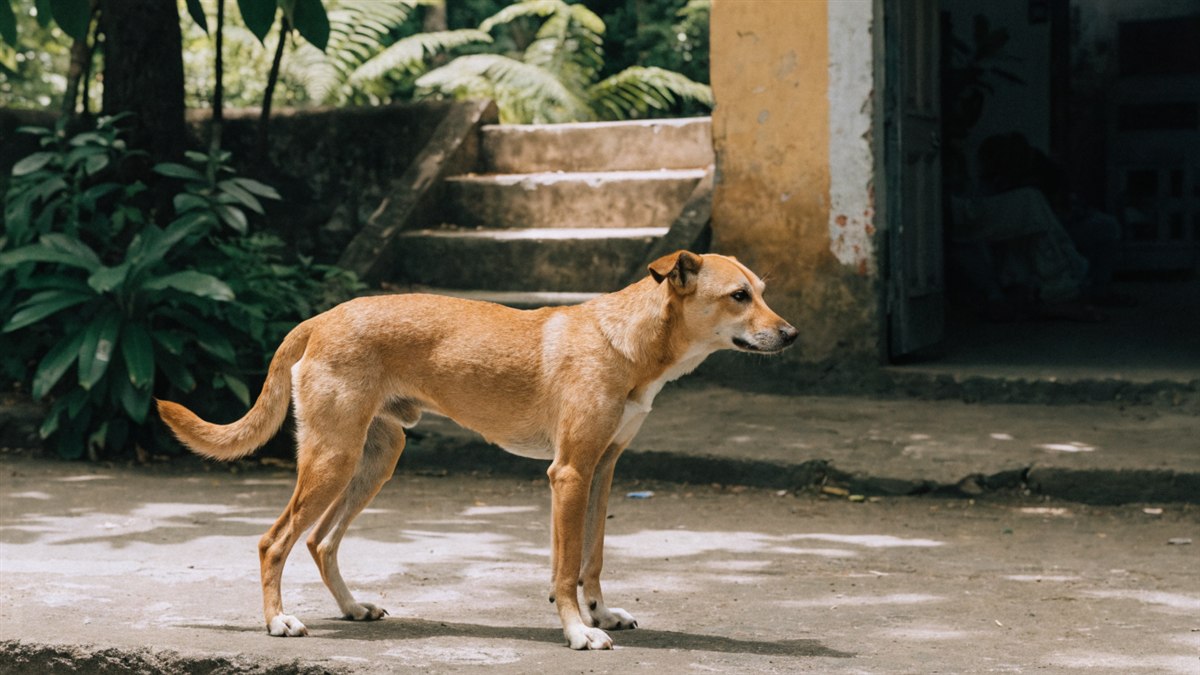
The published descriptions match that definition rather than contradicting it. Askals come in different shapes, sizes and colours, the coat can be short-haired or rough, and coat colours run from black to brown, white, ginger, brindle, gray, cream and red merle, with ears that can be floppy, semi-floppy or fully upright. A Philippine Daily Inquirer feature summarised the same point in five words, that the dogs have all shapes, configurations and sizes. No landrace description reads like that, because a landrace is defined by the traits that recur.
The INDog Project sets out what it looks for before it will call a free-ranging population indigenous, and its first criterion is uniform INDog-type morphology in the entire free-ranging dog population at the site. Apply that test to the askal and it fails by definition, because the published description of the population is that it has no uniform morphology at all. That is not a criticism of the dogs. It is a statement about what the word covers.
Askal, aspin, and why the Philippines changed the word
In 2007 the Philippine Animal Welfare Society launched a campaign to replace askal with aspin, from *asong Pinoy*, meaning Filipino dog. The reason was social rather than zoological. PAWS director Anna Cabrera explained that anything associated with the *kalye*, the street, is derogated in Filipino usage, and that native dogs were being treated as second-class pets in their very own country. The campaign was called See Beauty Beyond Breed, and it ran with the observation that since PAWS opened its rehabilitation centre in 2001, 90 percent of the dogs it had taken in were mixed-breed mutts.
The rebrand worked in the way rebrands do. August 18 is now National Aspin Day, marked by city governments including Quezon City, which describes aspins as dogs genuinely native to the Philippines and deserving of care and respect whether kept as pets or living as part of the community. The Philippines men's national football team is nicknamed the Azkals after the dog. An entire generation now meets the word first as a football team.
None of that changes the underlying category. Aspin is a kinder word for the same thing, and the same thing is a population defined by untraceable parentage.
| Population | Category the evidence supports | What defines membership |
|---|---|---|
| Askal / aspin, Philippines | A word for a diverse free-ranging population | Mixed or unknown parentage |
| Indian Pariah Dog, India | Aboriginal landrace, documented type | Uniform indigenous morphology at the site |
| Africanis, southern Africa | Landrace with a written preliminary standard | Inspection and registration by a conservation society |
Where the dogs came from
The ancestry is genuinely old even though the category is loose. Askals descend partly from indigenous Philippine dogs and partly from dogs introduced from mainland Asia by way of Taiwan, and excavation sites show dogs served both for consumption and for companionship. Tagalog, Kalinga and Bontoc communities kept them as hunting companions, mourned them and buried them, in some cases with the treatment given to human dead. The archaeology is real and citable. An osteological analysis of 12th to 15th century dogs from Santa Ana, Manila, published in the International Journal of Osteoarchaeology, examined that burial record directly.
So the Philippines has had dogs living alongside people for many centuries, which is exactly what you would expect. What it does not have is a documented, named, described indigenous type that the word askal maps onto. Those are two different claims, and most pages about this dog quietly merge them.
A page that could not decide whether the askal was a breed would be a failure. A page that establishes it is a word, shows the primary evidence, and explains why that matters is the most useful thing anyone can publish about it. Bonbeno's Indian Pariah Dog page covers a landrace and is one of the strongest pages on this site. The difference here is a finding, not a shortfall.
The Philippine standardisation attempt, and why it left the askal out
The Philippines has attempted to standardise a native dog, and it deliberately chose a different population. The Philippine Canine Club, Inc. is pursuing international recognition for the Philippine Forest Dog, or *asong gubat*, and its own corporate secretary drew the line explicitly, saying the Asong Gubat is a primitive breed formed through natural selection so it is a purebred as compared to the Aspin or Askal which is a Mongrel.
That quotation is the most important sentence anyone has published about the askal's status, because it comes from the Philippine national kennel body rather than from a foreign breed site. When the country's own registry set out to give the Philippines a recognised native dog, it did not standardise the street population. It went to the forests instead.
What PCCI is actually doing
The Philippine Canine Club, Inc. was organised on 21 March 1963 as a non-stock, non-profit corporation to promote the love of pure-bred dogs, and it is authorised to maintain a registry of pure-bred dogs or stud books and to conduct dog shows. In January 2023 it used the Philippine Circuit show at the Smart Araneta Coliseum to formally introduce the Philippine Forest Dog, which it hoped would be the first dog breed from the Philippines to be recognised by the Fédération Cynologique Internationale. That single phrase, first dog breed from the Philippines, is the country's own kennel club stating that no Philippine breed currently holds FCI recognition.
The programme is a conventional breed-founding exercise, and its details matter for anyone comparing it with the Indian and South African models.
- Purity established by DNA testing. PCCI stated it was establishing the breed's purity through DNA testing so that the founding registrations would be free of any mixture of known breeds from other countries.
- A written standard by one researcher. The standard followed by PCCI was written by Rev. Fr. Dante Daylusan and developed over 30 years of study, based on FCI guidelines.
- Six approved breeders. The Philippine Forest Dog Legacy Club established and recognised six official integrity breeders, and prospective owners are encouraged to acquire dogs only from those endorsed breeders.
- A forest population, not a street one. The Asong Gubat has lived with indigenous Filipinos including the Aeta and Negrito peoples in the country's forests, and is rarely seen in urban environments.
- Introduced as the national breed. It was presented internationally as the first official native dog breed of the Philippines at the Philippine Circuit Show 2023.
Three countries, three answers to the same question
Every country with a large indigenous dog population eventually faces the same choice. India, South Africa and the Philippines answered it three different ways, and the contrast is the most useful thing this page can give an Indian reader.
| Country | The body involved | What it decided to do |
|---|---|---|
| India | The INDog Project | Document the aboriginal type as a landrace, no registry, no studbook |
| South Africa | The AfriCanis Society, founded 1998 | Conserve it as a heterogeneous landrace and refuse to turn it into a pure-bred breed |
| Philippines | Philippine Canine Club, Inc., founded 1963 | Found a new purebred from a separate forest population and seek FCI recognition |
The South African position is worth quoting because it is the exact opposite of the Philippine one. The AfriCanis Society's stated vision is to conserve the AfriCanis as a heterogeneous landrace, on the view that these dogs do not need western-style breed improvements. The INDog Project takes the documentary route as well, publishing criteria for identifying indigenous populations rather than issuing pedigrees. The Philippines went the registry route, and it went there with a population the askal is not part of.
Founding a breed on six approved breeders and a DNA-screened founding group is exactly the structure the veterinary literature warns about. Breed registries are opened briefly during a founding event and then closed, so no individuals may be registered unless descended from the founding stock and no new genetics are brought in. The measured cost is specific. For every 10 percent increase in the coefficient of inbreeding there is a 7 percent decrease in litter size and median lifespan, and any coefficient above 9 percent pushes past the genetic threshold of health. More than 500 genetic defects already exist in today's purebred dogs as a result of that structure. We are not predicting that outcome for the Philippine Forest Dog, and we have no data on its founding population size. We are naming the risk the mechanism creates, because nobody else covering this story has.
What this leaves the askal with
The askal ends up with nothing formal at all, and the list is short enough to print.
- No breed standard, anywhere, in any language.
- No kennel club recognition, which the Wikipedia infobox records as a flat not-recognised status.
- No conservation society of the kind South Africa and India both built.
- No registry entry, since the Philippine registry deals in purebred stud books.
- No FCI route, because the country's own kennel club is still trying to get its first Philippine breed recognised.
What it does have is a national day, a football team named after it, a welfare campaign that changed the language, and roughly half the households in the country keeping one. That is cultural standing without cynological standing, and the two are genuinely different things.
We read PCCI's own site and its recognised-breeds page directly. The site states the club's 1963 founding and its purebred stud book mandate. The recognised-breeds listing itself did not render any breed names in our fetch, so we draw no conclusion from the absence of an askal entry there, and we rest the recognition finding on PCCI's own published statements to CNN Philippines and The Philippine Star instead Kathleen A. Llemit. The FCI's own nomenclature pages loaded navigation only and returned no breed data to us, so we do not claim to have audited the FCI list ourselves. Where a registry could not be read, we say so rather than reporting a silence as a result.
What genetic work exists on Philippine village dogs
No published population-genetics study of Philippine village dogs could be found, and that absence is itself the finding. The flagship global survey of village-dog genetic structure genotyped 549 village dogs from 38 countries on a 185,805-marker array, and the Philippines is not among the populations it reports.
This matters because the equivalent evidence exists for both of the other landraces on this site, and a page that quietly borrowed it would be worthless. Bonbeno does not lend one population's figures to another.
What the Shannon study did measure
The 2015 Proceedings of the National Academy of Sciences study assembled genomic data from 5,392 dogs, including a global set of 549 village dogs, and found strong evidence that dogs were domesticated in Central Asia. Its Island Southeast Asian sampling ran through Borneo and Java rather than the Philippine archipelago, and its Pacific sampling covered Papua New Guinea, the Solomon Islands, Fiji and French Polynesia. The word Philippines does not appear in the paper's text.
The results it did produce are the reason a Philippine sample would have been interesting. Dogs in the Neotropics and South Pacific were found to be almost exclusively descended from European stock even though large dog populations lived in those regions before European contact, whereas Borneo dogs had no detectable European ancestry and were only moderately differentiated from Vietnamese dogs, with an Fst of 0.05. Papua New Guinea and Solomon Island dogs sat in between, retaining 68 to 78 percent and 78 to 86 percent European ancestry respectively. The Philippines, colonised by Spain from the 16th century and by the United States from 1898, sits geographically between the unadmixed Borneo end of that range and the heavily replaced Pacific end. Nobody has measured which end it landed on.
| Population | What the study found |
|---|---|
| Borneo | No detectable European ancestry |
| Papua New Guinea | 68 to 78 percent European ancestry |
| Solomon Islands | 78 to 86 percent European ancestry |
| Fiji and French Polynesia | Little indigenous ancestry retained |
| Philippines | Not sampled, no figure exists |
The contrast with India is the point
India was in that study, and it was in it as a collaborator. The INDog Project states that its conclusions about purely indigenous populations and admixture were confirmed by genetic testing of village and urban Indian dogs between 2009 and 2015 as part of the Shannon and Boyko study. The result was specific and useful, that village dogs in remote rural areas including many villages in Odisha were indigenous, while urban free-ranging dogs from metro cities showed European ancestry components. The paper's own text records the same urban pattern, noting that dogs near Mumbai carry more foreign ancestry than dogs from more remote regions.
So an Indian reader can be told, on evidence, which Indian free-ranging dogs are indigenous and which are admixed. No equivalent statement can be made about a Philippine dog, by us or by anyone.
A claim that no study exists has to be worked for. We ran PubMed directly for village dog, native dog, aspin and askal against the Philippines and got zero results. Broadening to dog plus Philippines plus genetic, genome, mitochondrial or ancestry returned 11 records, and every one of them is about a pathogen rather than the dogs, mostly rabies virus phylogenetics and tick-borne organisms. The Philippine dog literature measures what infects Philippine dogs, not what they descend from. If a study we could not find does exist, we will correct this section rather than defend it.
What the Africanis comparison shows about the gap
Southern Africa shows what the Philippines is missing. Bonbeno's Africanis page reports a microsatellite study that genotyped 76 phenotypically classified Africanis from 10 local populations plus 10 Western-admixed dogs, and used the allelic-richness difference to argue that the sampled populations were relatively pure representatives of the type. That is the shape of evidence needed to move a population from opinion to record, and the Philippines has no equivalent of it.
Two honest consequences follow for this page.
- No heterozygosity, allelic richness or admixture figure can be quoted for the askal, because none has been published.
- No claim of hybrid vigour can be evidenced for this population specifically. The general mechanism is well documented, since closed registries concentrate inherited disease and open ones do not, but a mechanism is not a measurement.
- No genetic argument can be made about how indigenous the population is, which is exactly what the askal debate turns on.
- Any site quoting a genetic statistic for the askal has invented it, and that is a useful thing for a reader to be able to check.
The general principle still holds and is worth stating carefully. A population that has never passed through a closed studbook has never been through the funnel that concentrates inherited disease, and the literature quantifies that funnel at a 7 percent fall in median lifespan for every 10 percent rise in the coefficient of inbreeding. That is a reasonable expectation for any free-breeding dog population, including this one. It is not a measured Philippine result, and this page will not present it as one.
Askal dog price in India, and why every rupee figure you will find is invented
There is no askal dog price in India, because there is no Indian market for this dog. No Indian breeder offers it, the Kennel Club of India does not recognise it, no Indian shelter holds a population of them, and Indian import policy will not licence a dog brought in for breeding. The rupee figures that do circulate come from machine-generated pages, and one of them can be shown to be fabricated in a single sentence.
This section is longer than a price section normally is, because proving that a number is invented takes more words than repeating it. The Tier 3 rule on this site is that an absent market is content rather than a gap, and the useful thing a reader can take away is the ability to spot the fake.
What Indian searches actually return
Search the term with India targeting and you get a specific and repeating pattern. You get the Wikipedia entry, a handful of Philippine outlets, a comparison-table site, and a small group of Indian-facing blog pages carrying a quoted price. There is no listing, no breeder, no shelter and no Indian veterinary or kennel source. That is the same result the Africanis page found for its own breed, and it has the same explanation.
The most prominent of those price pages quotes a band of Rs 13,000 to Rs 30,000 for an askal in India. We opened it and read it properly. What we found disqualifies the number completely.
The same page states, in its own words, that the Askal dog is a breed of dog that is native to the Askal Islands in Japan, and that the breed is relatively rare outside of Japan. There are no Askal Islands. The askal is Filipino, and the page says so three paragraphs earlier. A document that places the dog in Japan and the Philippines simultaneously is template-generated text, not research, and no figure printed beside that sentence can be treated as an observed market price.
Two further tells sit on the same page and are worth naming, because they generalise to every fabricated breed page you will meet.
- A lifespan no dog population reaches. The page gives the askal a life expectancy of 15 to 20 years. Twenty years is at the outer edge of individually documented canine longevity, and no population median approaches it. A figure that implausible in one field discredits the others beside it.
- Three currencies that cannot describe one animal. The same page quotes Rs 13,000 to Rs 30,000 in India, 300 to 1,000 pesos in the Philippines and 15 to 25 US dollars in the USA. Getting from 25 dollars to Rs 13,000 would require an exchange rate above Rs 520 to the dollar. The three bands are not converted from each other and are not sourced to anything.
- Garbled facts inherited from the real record. The page says the dogs serve primarily for coast guarding, which is a mangled version of a genuine fact, that askals have been trained by the Philippine Coast Guard and private security agencies as bomb and drug detection dogs.
What Indian import law actually says
Indian import policy is the hard barrier, and we read the document rather than a summary of it. DGFT Trade Notice No. 22/2022-23, dated 19 December 2022, sets out the guidelines for import of pet animals and is unambiguous.
- Dogs are a Restricted import. ITC (HS) 01061900, mammals other, carries a Restricted import policy subject to Policy Condition 6 of the chapter.
- Only three purposes qualify. Policy Condition 7 allows import of dogs only for a pet dog with a valid pet book and relevant records in the name of the importer, for dogs imported by R&D organisations with CPCSEA recommendation, and for internal security by the Defence and Police Force.
- Commercial import is not permitted. Policy Condition 8 states that import of commercial dogs for breeding or any other commercial activities other than those purposes is not permitted.
- Trading and breeding applications are rejected. Paragraph 6 states that any applications for trading or breeding purposes, or applications made on behalf of another person or entity, shall be duly rejected.
- Two pets maximum as baggage. Import as passenger baggage without DGFT authorisation is allowed only to persons transferring residence to India after two years of continuous stay abroad, and only cats and dogs may come in under the baggage rules.
- Seven ports only. Import of pet animals is allowed only through the airports and seaports of Delhi, Mumbai, Chennai, Hyderabad, Bengaluru and Kolkata and, since October 2024, Kochi airport, with quarantine at the government station where required Department of Animal Husbandry…. The full route is set out in how to import a dog to India.
- Start two months early. The department advises pet owners travelling to India to begin the import authorisation process at least two months before travel.
Read those together and the position is settled. A returning Indian resident who already owns a Philippine dog can bring that specific animal home under the pet rules. Nobody can lawfully import askals to breed or sell them in India, so no supply chain can form, so no genuine Indian price can exist. There is nothing to price.
What the dog costs where it does exist
In the Philippines the askal is not a purchase at all, and the reason is cultural rather than commercial. A household survey of 1,741 households in Quezon City found that 65.9 percent of dogs were acquired as gifts, and that 43.6 percent of dog owners gave newborn puppies away as gifts. That is a gifting economy, not a market. A dog that half the country hands to a neighbour for nothing has no price to import.
| Route | What the evidence shows |
|---|---|
| Bought from an Indian breeder | No verified Indian source exists, and no lawful import route for breeding stock |
| Adopted from an Indian shelter | No Philippine-origin population exists in Indian shelters |
| Given as a gift in the Philippines | 65.9 percent of dogs in one Quezon City survey |
| Adopted from a Philippine shelter | 90 percent of intake at one welfare centre was mixed-breed |
| Quoted rupee price online | Machine-generated, on a page that also places the breed in Japan |
Treat it as a red flag rather than a find. There is no verified Indian source for this population, no registry entry to check paperwork against anywhere in the world, and no legal import channel for breeding stock. The likeliest explanation is an Indian free-ranging puppy relabelled with a foreign name, which is doubly absurd, because the same dog is available free from any Indian shelter as an Indian Pariah Dog. Paying for a foreign word attached to a local dog is the worst possible version of this transaction.
Monthly cost of keeping a dog like this
A short-coated, medium-sized, unpedigreed dog is the cheapest kind of dog to keep anywhere, and the saving is structural rather than marginal. Three of the largest recurring lines for an imported pedigree, professional grooming, climate mitigation and inherited-disease management, barely apply.
No published source states a method behind a monthly askal cost figure, in India or in the Philippines, so Bonbeno does not repeat a total. The one Indian rupee band in circulation sits on a page that also locates the breed in Japan, and we will not launder that into a cost estimate. What is knowable is the structure, and the structure is what decides what a household actually spends across a dog's life.
Where a dog of this type costs less
- Grooming is close to free. A short, smooth coat needs a weekly brush and no professional trimming, ever. No clipping, no stripping, no salon booking.
- No cooling spend. Owners of double-coated imports in Indian metros pay real money for air conditioning and cooling mats. A short-coated tropical dog does not need that budget line.
- Lower inherited-disease burden. Closed registries are what concentrate inherited disease, and a population that never entered one never went through that funnel.
- Food scales with a medium build. The bone structure of a native askal sits in the medium range and is never heavy, so this is not a large-breed feeding bill.
- No purchase price at all. In the Philippines two thirds of dogs arrive as gifts rather than purchases.
Where the money still goes
- Preventive veterinary care. Core vaccination and annual boosters are the most important line here and the one most often skipped. In one Quezon City survey 96.4 percent of households knew about rabies, but only 60 percent knew that annual re-vaccination is necessary.
- Year-round tick and flea control. In Indian conditions this is the largest avoidable veterinary cost, because tick-borne disease pressure is high and completely indifferent to how hardy a dog is.
- Sterilisation. The Philippine surveys found sterilisation rates very low across every location surveyed, and an unsterilised free-breeding dog is how a household cost becomes a neighbourhood one.
- Food. Still the biggest recurring line, as with any medium dog.
- Deworming and a proper veterinary intake exam, especially for any dog that arrives from a free-ranging background.
| Line | Dog of this type | Imported double-coated pedigree |
|---|---|---|
| Purchase price | None | The largest single upfront cost |
| Professional grooming | Effectively nil, short coat | Recurring, heavier in Indian humidity |
| Cooling and climate mitigation | Not required | Real and seasonal in most Indian metros |
| Inherited-disease management | No closed-studbook burden | Breed dependent, can dominate late-life spend |
| Vaccination and boosters | Identical, non-negotiable | Identical, non-negotiable |
| Tick and flea control | Identical, year-round in India | Identical, year-round in India |
This cost structure is real, and for an Indian reader it is also academic, because there is no legal channel to acquire this dog for breeding or sale here. The section earns its place in exactly one way. It describes, line for line, the cost profile of the Indian Pariah Dog, for the same structural reasons, and that dog is free and already in your city.
One further point applies specifically to Indian households considering any free-ranging-origin dog. The cheap part is the dog. The part people underbudget is the first ninety days, which is when the veterinary intake exam, the full vaccination course, deworming, tick treatment and sterilisation all land together. Budget that block properly and the remaining twelve years are genuinely inexpensive. Skip it and the savings evaporate on the first tick-borne infection.
Heat tolerance in Indian conditions, rated 4 out of 5
An askal would handle humid coastal India well and dry-plains India less well, and the reason is that the Philippine climate never asked it to do the second thing. We rate heat tolerance 4 out of 5 rather than 5, on the evidence of what the population actually is, not on the assumption that a tropical dog copes everywhere.
Most pages assign heat tolerance by continent. That is lazy, and on this page it would also be wrong, because the two climates involved are not the same kind of hot.
The climate that actually shaped this population
The Philippine Atmospheric, Geophysical and Astronomical Services Administration describes the climate of the Philippines as tropical and maritime, characterised by relatively high temperature, high humidity and abundant rainfall. The numbers are narrow and they matter. Based on the average of all weather stations excluding Baguio, the mean annual temperature is 26.6 degrees Celsius, the coolest month is January with a mean of 25.5 degrees, and the warmest month is May with a mean of 28.3 degrees. Average monthly relative humidity varies between 71 percent in March and 85 percent in September. There is essentially no difference in mean annual temperature between places in Luzon, Visayas or Mindanao at or near sea level.
So the entire archipelago sits inside a band of roughly three degrees between its coolest and warmest monthly means, at high humidity, all year, everywhere. That is a wet, stable, moderate heat load. It is genuinely demanding in its own way, because high humidity blocks evaporative cooling, and PAGASA notes that the combination of warm temperature with high relative and absolute humidity produces a high sensible temperature throughout the archipelago, especially uncomfortable from March to May.
The climate India actually asks a dog to survive
India asks for something different and harsher at the top end. The National Disaster Management Authority records that a heat wave need not be considered until the maximum temperature of a station reaches at least 40 degrees Celsius for plains and at least 30 degrees for hilly regions, and that when the actual maximum temperature remains 45 degrees or more, irrespective of the normal maximum, a heat wave should be declared. Those are the summers a dog in Nagpur, Jaipur or Vijayawada lives through every year.
| Measure | Philippines | India |
|---|---|---|
| Mean annual temperature | 26.6 C, all stations except Baguio | Not the relevant metric, extremes are |
| Warmest month mean | 28.3 C in May | Well above the heat-wave threshold on the plains |
| Plains heat-wave threshold | Not applicable | 40 C minimum before a heat wave is even considered |
| Automatic heat-wave declaration | Not applicable | 45 C actual maximum, regardless of normal |
| Relative humidity range | 71 percent in March to 85 percent in September | Varies enormously by region and season |
| Regional variation | Essentially none at sea level | Extreme, from Kochi to Jaisalmer |
Why the rating is 4 and not 5
Four things pull the score up and three hold it below the top mark. Both lists are evidenced, and neither is a hedge.
- Up. The coat is short. Askals are described with a short-haired or rough coat rather than a dense double coat, and a short coat is the single most useful thing a dog can have in Indian heat and Indian monsoon alike.
- Up. The build is medium and never heavy. The bone structure of a native askal sits in the medium range, never heavy as in a Rottweiler. High surface area relative to mass helps a dog shed heat.
- Up. Humid heat is what it knows. A dog shaped in 71 to 85 percent relative humidity is well prepared for Chennai, Kochi, Mumbai and Kolkata, where humidity, not the thermometer, is what defeats imported breeds.
- Up. It is not a brachycephalic or heavy-coated dog, and those are precisely the two groups named as being at greater heat-stroke risk.
- Down. Nothing selected it for 45 C. The warmest monthly mean in its home archipelago is 28.3 degrees. Indian plains heat waves start at 40 degrees and are declared outright at 45. No part of this population's history involved that load, so no claim of adaptation to it can be made.
- Down. There is no uniform coat to rely on. The population includes rough coats as well as short ones, and with no breed standard there is no coat clause to appeal to. You cannot rate a coat type across a population that does not have one.
- Down. Lack of acclimatisation is a listed heat-stroke risk factor in its own right, and a dog moved between climates loses conditioning within months.
Set that against the Indian Pariah Dog, which Bonbeno rates 5 out of 5 on heat tolerance because it was shaped entirely by Indian conditions including those plains summers. That is the difference between two tropical landraces, and it is exactly why lending one population's rating to another would be dishonest.
What Indian summer management would look like
| Condition | What to do |
|---|---|
| Plains above 40 C | Walk before sunrise and after dusk only |
| Declared heat wave at 45 C | Skip the walk entirely, use indoor scent work |
| Coastal humidity, Chennai or Kochi | Shorten sessions, since humidity blocks evaporative cooling |
| Any hot day | Constant fresh water and shade, never left in a parked car |
| Suspected heat stroke | Cool water to the skin, never an ice bath, then straight to your nearby vet |
Know the signs before you need them. Heat stroke presents with severe panting, difficulty breathing, vomiting, potential collapse and a raised temperature of 40.5 degrees Celsius or above, and a dog can develop it after as little as 30 minutes of vigorous exercise in hot weather.
A short coat dries fast, which is the underdiscussed half of climate fit in India. The hot spots and fungal skin trouble that plague dense-coated imports through a Mumbai or Kolkata monsoon are far less likely on a short coat. For this dog the monsoon problem is ticks rather than fungus, and tick-borne disease is documented in Philippine and Indian dogs alike Rani PAMA, Irwin PJ, Coleman GT, Gatne M.
Temperament and household fit, and why no breed temperament exists
There is no askal temperament, because temperament is a property of a breeding population and this is not one. What the evidence does support is a description of how Filipino households actually keep these dogs, and that turns out to be more useful to a prospective owner than any personality list.
The temperament paragraphs that circulate about this dog deserve a warning label. Wikipedia's own article describes askals as naturally fearful and suspicious of strangers, independent, protective of family members and good with young children, and every one of those sentences carries an unresolved citation-needed tag. Two of the breed-site sources that article does cite are additionally flagged there as unreliable, on the grounds that the authors are anonymous and nothing indicates accreditation. Bonbeno will not reprint an unsourced personality profile as though it were breed data.
What is actually documented, the keeping pattern
A household survey of 10,664 households across 10 locations in the Philippines, run in 2017 and 2018 by the Bureau of Animal Industry with Humane Society International, gives real numbers about how these dogs live. In Quezon City, owners split almost exactly evenly on why they keep a dog, with 49.1 percent naming pet or companionship and 49.0 percent naming protection of property or crops. That is the single most informative fact available about the human side of this relationship. The dog is a companion and a guard in equal measure, and neither role dominates.
The second documented pattern is roaming, and it is the one that defines the category.
| Settlement type | Owners who allow roaming |
|---|---|
| Urban | 29.3 percent |
| Semi-urban | 54.7 percent |
| Rural | 60 percent |
| Small islands | 84.5 percent |
The researchers draw the conclusion that matters. These free-roaming owned dogs are often mistaken for unowned street dogs during the planning of mass vaccination programmes, and targeted for catching. A dog seen trotting through a Philippine market is, more often than not, somebody's dog on an errand.
Put the two findings together and the category resolves. Askal is defined by untraceable parentage and applied to dogs that roam, and the roaming turns out to be an ownership practice rather than homelessness, running from 29.3 percent of urban owners to 84.5 percent on small islands. That is a management style, not a temperament. The same conflation happens in India, where the INDog Project has to explain that INDog and free-ranging dog overlap without being interchangeable.
What individual askals demonstrably do
Where the population has been tested rather than described, it performs. Askals were allowed to compete in the First Philippine Dog Agility Championships in 2013, and they have been trained by the Philippine Coast Guard and by private security agencies as bomb and drug detection dogs. Detection work is among the most demanding jobs given to any dog, and it selects hard for drive, biddability and nerve. That a supposedly unremarkable street population supplies dogs capable of it is worth more than a page of adjectives.
Who a dog like this suits
- Good fit. A household that wants an alert, undemanding, low-maintenance dog and is willing to judge the individual animal rather than a breed label.
- Good fit. Anyone who values a dog with no manufactured health baggage from a closed studbook.
- Needs work. A dog with any free-ranging history will need a settling period, deliberate socialisation and patient handling around strangers and shared corridors.
- Poor fit. An owner who wants a predictable, standardised temperament. That is exactly what an unstandardised population cannot offer, and wanting it is a legitimate reason to choose a recognised breed instead.
- Watch item. Assess the individual dog in front of you across several meetings, since a population with no type has no average to fall back on.
For an Indian household the practical conclusion is the same one the Indian Pariah Dog page reaches, and for the same reason. An independently raised, naturally selected dog gives you a healthy, alert, undemanding companion with a settling period and a wary streak, and it asks you to earn the relationship rather than buy it. Expect a wary first fortnight and judge the dog at week eight rather than week one.
Training, and what a free-ranging background resists
To train a dog from a free-ranging background, build trust before you ask for obedience, and use reward-based methods throughout. The relevant history is not a breed history. It is that this dog, or its recent ancestors, made its own decisions all day and was rewarded for doing so.
No breed-club training guidance exists for the askal, because no breed club exists. That is a genuine gap and we will not fill it with invented breed traits. What can be said honestly comes from two directions, from what the population has demonstrably been trained to do, and from what a roaming background predicts.
The ceiling is high, and it is documented
Askals have competed in the First Philippine Dog Agility Championships and have been trained by the Philippine Coast Guard and private security agencies as bomb and drug detection dogs. Both facts matter to a prospective owner for the same reason. Agility requires a dog that will work at speed under handler direction, and detection requires sustained focus on a low-reward task. Neither is achievable by a dog that cannot be trained. Whatever else is uncertain about this population, trainability is not the constraint.
What a roaming background actually changes
Three things reliably need work, and all three follow from the keeping pattern rather than from genetics.
- Recall competes with a lifetime of independent movement. In the Philippine survey, 60 percent of rural owners and 84.5 percent of small-island owners let their dogs roam. A dog accustomed to deciding its own route does not hand that decision over in a fortnight. Use a long line and a fenced space rather than betting on recall.
- Lead work has to be taught deliberately. A dog that has never worn a lead is not disobedient when it fights one, it is untrained. Philippine law requires exactly this skill, since the Anti-Rabies Act of 2007 obliges pet owners to maintain control over their dog and not allow it to roam the streets or any public place without a leash.
- Doorstep and boundary behaviour needs handling from week one. Half of Filipino dog owners keep a dog for protection of property, and a guarding role that works on a rural plot becomes a problem in a Pune apartment corridor.
The method that works
- Reward what you want and stop correcting what you do not. Treats, praise and play are the currency for any dog with an independent streak.
- Keep sessions short. Ten minutes twice a day beats one long session, particularly with a puppy.
- Socialise early and hard. The critical window runs roughly 3 to 16 weeks in any dog, and a reserved dog becomes a fearful one if that window is wasted.
- Stay consistent with words and house rules, because an intelligent independent dog exploits inconsistency faster than a biddable one does.
- Never hit or shout. It destroys the trust the whole relationship runs on, and a dog that has survived by reading people will simply stop offering behaviour.
Expect basic house manners inside a fortnight, reliable lead work at two to three months, and settled boundary behaviour somewhere between six months and a year. Expect off-lead recall in an open space with moving animals to remain a work in progress indefinitely, and plan a long line or a fenced garden rather than hoping it resolves. That timeline is a property of adopting an independent dog, not of any breed, and Bonbeno's Indian Pariah Dog page sets out the same curve.
One correction is worth making explicitly, because it costs adopted adults their homes. The assumption that an adult free-ranging dog cannot be trained is wrong. What changes with an adult is the timeline, not the ceiling. Allow several weeks of settling before training properly begins, and judge the dog at week eight rather than week one.
How much daily exercise a dog like this needs
Plan on 45 to 60 minutes a day for an adult of this build, split across walking, play and mental work. That figure comes from what the dog is, a medium-boned, short-coated, unspecialised dog, rather than from a breed standard, because no standard exists to set a requirement.
Being honest about where a number comes from is more useful than quoting one confidently. No published exercise guidance for the askal exists that we could verify, and the one Indian-facing page carrying detailed figures is the same machine-generated document that places the breed in Japan. So this section reasons from build and from the comparable populations Bonbeno has already documented, and it says so.
Why 45 to 60 minutes is the right bracket
Three facts set it. The bone structure is medium and never heavy, which rules out both the toy bracket and the giant-breed bracket. The population was never specialised for a working job, unlike a sighthound or a livestock guardian, so there is no built-in stamina requirement to satisfy. And the dogs are documented as roaming under their own steam for much of the day in rural settings, which means self-directed movement rather than sustained athletic work.
That lands in the same place as Bonbeno's Indian Pariah Dog figure of 45 to 60 minutes, and below the Africanis figure of 60 to 90 minutes, which is set higher because the Africanis has a written standard describing a dog that trots or canters for long periods over rough terrain. Two of those three numbers rest on documents. This one rests on build, and we would rather say so than borrow a figure.
| Stage | Guidance |
|---|---|
| Puppy to 4 months | Short frequent sessions and free play, no forced distance work |
| 4 to 12 months | Build gradually, daily lead work, keep growth-plate load sensible |
| Adult | 45 to 60 minutes across walking, play and scent work |
| Senior | Shorter but still daily, a lean medium build ages well |
| Indian summer | Pre-dawn and post-dusk only above 40 C |
| Declared heat wave | Indoor scent work only at 45 C and above |
- Mental work counts toward the total. Scent games and short training sessions tire an intelligent dog efficiently, and through an Indian May they may be the only safe option.
- Watch the paws on hot surfaces. Street conditioning is not immunity to burns from midday tarmac, and a dog raised on cool tiled floors has soft pads.
- Use a long line rather than optimism. A dog with any roaming history needs a physical safeguard while recall is being built.
- Build a rescue up slowly. A dog that came off poor nutrition is not automatically fit, whatever its lean outline suggests.
- Never exercise vigorously in hot weather, since heat stroke can develop in as little as 30 minutes.
An under-exercised dog of this type does not become destructive in the way an under-exercised working breed does. It becomes reactive at the boundary, because guarding is the job half of Filipino owners keep these dogs for and it is the behaviour that fills the vacuum. In an Indian apartment that shows up as barking at the lift, the delivery rider and the neighbour's door. The fix is the walk, not the correction.
Grooming and coat care in Indian humidity
Grooming a short-coated dog of this type takes minutes a week. Askal coats are described as short-haired or rough, with colours ranging from black to brown, white, ginger, brindle, gray, cream and red merle, and neither coat variant needs professional attention.
One caution belongs at the top of this section rather than buried in it. Because this is an unstandardised population, there is no coat clause anywhere to tell you which coat you are getting. Groom the individual dog in front of you, not the description.
The weekly routine
- Brush weekly with a rubber curry or a hound glove to lift dead hair. A rough coat may want twice weekly.
- Bathe rarely, only when the dog is genuinely dirty. Over-bathing strips protective oils and causes more skin trouble in Indian humidity than it prevents.
- Check for ticks at every brush. On a short coat this is the real maintenance task, not the hair, and it matters more in India than in the Philippines for reasons the health section sets out.
- Never shave the coat. A coat is sun protection as well as insulation, and a shaved tropical dog burns.
- Clip nails and check ears weekly, because these get skipped when the grooming session is this short.
What the coat colours tell you about ancestry
This is where the comparison with India's landrace becomes genuinely informative, and it is a point no page currently ranking makes. The Indian Pariah Dog has a defined colour envelope. Its most commonly observed colours are browns ranging from dark to reddish-brown, with or without white markings, solid blacks are rare, some dogs are pied, and shaded coats, brindles, solid white and dalmatian-type spotting are never seen in pure examples. The askal population is described with brindle, gray, cream and red merle among its normal colours, and with spots commonly found at the base of the tail and on the back.
| Attribute | Askal / aspin | Indian Pariah Dog |
|---|---|---|
| Coat type | Short-haired or rough | Short double coat, coarse upper, soft undercoat |
| Colour range | Black, brown, white, ginger, brindle, gray, cream, red merle | Browns predominant, black rare, some pied |
| Brindle | Listed as a normal colour | Never seen in pure examples |
| Merle | Red merle listed | Not part of the described type |
| Ears | Floppy, semi-floppy or fully upright | Held erect, pointed at the tips, broad-based |
| Tail | Usually held high | Curled and held high when excited |
Merle and brindle are not tropical adaptations. They are colour genetics that enter a free-breeding population from introduced breeds, which is why the Indian landrace's own description excludes them as markers of non-purity while the Philippine population's description includes them as ordinary. One description is drawing a boundary. The other is listing what is present. That is the difference between a landrace and a word, visible in the coat colours, without needing a single genetic test.
For a comparison of grooming burden rather than ancestry, set this against an imported coat in Indian conditions. A Golden Retriever or Siberian Husky in Chennai humidity needs frequent professional attention to prevent matting close to the skin and to manage year-round shedding. A short-coated dog needs none of it, and across a twelve-year life that is a recurring saving rather than a one-off one.
Raise any persistent skin lesion, hair loss patch or ear discharge with your nearby vet rather than treating it at home, because monsoon skin and ear problems in India escalate quickly and a short coat hides nothing that a vet cannot see in a minute.
Health, lifespan and the diseases that actually matter
No lifespan study of Philippine village dogs exists, no screening programme exists, and no breed-club health survey exists, because there is no breed to survey. What does exist is a substantial Philippine literature on rabies and tick-borne disease, and it tells a prospective owner far more than an invented lifespan number would.
Bonbeno says the awkward thing three times rather than borrowing a figure once. There is no published median lifespan for this population. There is no published inherited-disease prevalence for this population. There is no screening scheme, because there is no registry to run one. The single lifespan figure in wide circulation, 15 to 20 years, appears on the same machine-generated page that locates the breed in Japan, and no dog population has a median lifespan of 20 years.
The structural health advantage, stated carefully
The general mechanism is well documented and it does apply here. Breed registries open briefly during a founding event and then close, so no individuals may be registered unless descended from the founding stock, and no new genetics are brought in. The cost is measurable, at a 7 percent decrease in litter size and median lifespan for every 10 percent increase in the coefficient of inbreeding, with any coefficient above 9 percent pushing past the genetic threshold of health. More than 500 genetic defects exist in today's purebred dogs as a consequence.
A population that has never entered that funnel has never concentrated those defects. That is a reasonable expectation for the askal, and it is an expectation rather than a measurement, because nobody has genotyped this population. Bonbeno will not upgrade a mechanism into a statistic.
Tick-borne disease, measured in both countries
Here the evidence is real on both sides, and the comparison is directly useful to an Indian reader. A study of 248 dog blood samples and 157 tick samples from southern Metro Manila and the nearby province of Laguna found *Ehrlichia canis* to be the most common tick-borne pathogen affecting dogs in the Philippines. An Indian survey of 525 dogs across four climatic zones found a heavier burden again.
| Finding | Philippines, 248 dogs | India, 525 dogs |
|---|---|---|
| Positive for one or more pathogen | Not reported on that basis | 261 of 525, 49.7 percent |
| Anaplasma or Ehrlichia positive | 56 of 248, 22.6 percent | Reported by species |
| Ehrlichia canis | 39 of 248, 15.7 percent | 20.6 percent |
| Hepatozoon canis | Grouped with Babesia at 7.6 percent | 30 percent, the most common |
| Babesia vogeli | Grouped with Hepatozoon at 7.6 percent | 5.5 percent |
| Rickettsia | 6 of 248, 2.4 percent, first molecular evidence in the country | Not reported |
| Dogs carrying ticks on inspection | Not reported on that basis | 278 of 525, 53 percent |
Who actually turns up at the vet, an unexpected finding
A Cebu retrospective adds a detail nobody covering this dog has picked up, and it is a caution about clinical data generally. Researchers reviewed 913 cases from seven veterinary establishments between 2003 and 2014 and selected 438 that were serologically positive for *Ehrlichia canis*, then profiled them. Most of those dogs, 60.0 percent, were purebred. In a country whose dog population is overwhelmingly unpedigreed, a clinic sample skewed six to four toward purebreds is not measuring which dogs get sick. It is measuring which dogs get taken to a vet.
That has a direct consequence for anyone reading tick-borne disease statistics from either country. Clinic-derived figures describe owned, insured-by-affection, vet-visiting dogs. Free-ranging dogs are undercounted in them by definition, which is why the community-sampled Indian survey of stray and shelter dogs is the more useful comparator here. The commonest clinical signs in the Cebu series were inappetence at 41.3 percent, lethargy or depression at 35.6 percent, vomiting at 32.4 percent and fever at 18.5 percent, and those are the signs that should send any Indian owner to a vet the same day.
Two conclusions follow, and the second is the one that matters for India. First, co-infection is common in both countries, so testing for a single pathogen is not enough. Second, the Indian tick burden is heavier than the Philippine one on these figures, with nearly half of Indian dogs sampled carrying at least one pathogen and 53 percent visibly infested. Tick infestation in that Indian study reached 80 percent in Mumbai and 75.3 percent in Delhi. Any tropical hardiness a dog brings with it is irrelevant to that. Year-round tick control is not optional in India.
Rabies, the Philippine reality
Rabies is the disease that dominates the Philippine dog literature, and the numbers explain why. Between 200 and 300 rabies deaths have been reported in the Philippines each year since 2007. A ten-year record review at the national infectious disease referral hospital in Manila found 575 patients with a final diagnosis of rabies between 2006 and 2015. Among 437 of those patients with an animal exposure history, dogs were the causative animal in 421 cases, 96.3 percent, and only 42 patients, 9.6 percent, had received even one rabies vaccine.
A three-year prospective study at the same referral centre, running October 2019 to September 2022, adds two findings that change how a reader should think about street dogs generally.
- Most causal animals were owned. 60.2 percent belonged either to the patients' own households or to their neighbours. The danger was not an anonymous stray.
- A majority were puppies. 58.8 percent of the causal animals were puppies, which is the opposite of the mental image most people carry.
- Almost nobody was treated properly. 93.2 percent of exposed patients received no vaccine or immunoglobulin.
- The reasons were beliefs, not access alone. Misconceptions that minor bites do not cause rabies accounted for 51.3 percent, belief in traditional healers 33.9 percent, and economic constraints 22.6 percent.
An independent household survey in Bulacan, Central Luzon, puts numbers on the gap between having a framework and using it. Researchers mapped 9,173 households, randomly selected 727 of them, and identified 878 owned dogs living alongside 3,256 people, a dog-to-human ratio of roughly 1 to 3.7. Of those recorded dogs, 35.9 percent had never been vaccinated and only 3.5 percent were spayed or castrated. Almost a third of dog-owning households, 31 percent, allowed their dogs to roam freely. Those three numbers, taken together, describe how a free-breeding, under-vaccinated dog population sustains itself, and they are the numbers an Indian city should be measuring too.
The Philippines has had a legal framework since 2007. The Anti-Rabies Act of 2007 declares a national programme covering mass vaccination of dogs, a central database of registered and vaccinated dogs, and impounding of unregistered, stray and unvaccinated dogs, and it requires pet owners to maintain control over their dog and not allow it to roam the streets or any public place without a leash. Set that requirement beside the finding that 84.5 percent of small-island owners let their dogs roam and the gap between the statute and the street is plain.
The health advantage of a free-breeding population is bought at a price, and honest writing names it. In a five-year census study across seven locations in West Bengal, only about 19 percent of 364 pups from 95 observed litters survived to reproductive age, and the median survival time was 82 days. Of total mortality, 63 percent was influenced directly or indirectly by humans, through accidents, poisoning, beatings or removal, against 32 percent from natural causes. That is Indian data about Indian dogs, not a Philippine figure, and we are not lending it across. The point it makes is general. Natural selection produces hardy adults by removing most of the litter. The instant one of those puppies becomes a protected pet, that filter stops, and vaccination, deworming and tick control become entirely your job.
What any dog of this background actually needs
- Full core vaccination, then annual boosters. Hardiness protects against inherited disease, not against rabies, parvovirus or distemper. Only 60 percent of surveyed Philippine dog owners knew that annual re-vaccination is necessary.
- Year-round tick and flea control, which is the single highest-value preventive spend in Indian conditions.
- Deworming on schedule, particularly for a dog with a scavenging history.
- Sterilisation, since sterilisation rates were found to be very low across every Philippine location surveyed.
- A veterinary intake exam in week one, which establishes a baseline and catches whatever the shelter missed.
- Immediate wound care and medical advice after any bite, since misconceptions about minor bites were the leading reason Philippine patients did not seek prophylaxis.
Nothing on this page is a diagnosis. If a dog in your care shows any of the heat-stroke signs described above, a persistent skin lesion, a tick burden you cannot clear, or a sudden change in appetite or energy, consult your nearby vet the same day rather than reading further. Treat any bite to a person as a medical emergency and go to a doctor, not to this page.
Feeding a dog from a scavenging background
Feed a dog of this type as a normal medium, moderately active dog on a complete balanced diet matched to age and activity, and feed to body condition rather than to a chart. The one thing that needs handling separately is a scavenging history, which changes behaviour around food rather than nutritional requirement.
Two opposite myths surround free-ranging dogs everywhere, and both cost the dog. The first says a hardy street dog thrives on scraps. It does not. Askals have a documented ability to survive on scraps and leftovers, and surviving a diet is not the same as being nourished by one. What surviving despite a diet looks like at population scale is a median survival time of 82 days and roughly 19 percent of pups reaching reproductive age, which is what a five-year Indian census of free-ranging dogs actually measured. The second myth says a rescued primitive dog needs an expensive corrective diet. It does not need that either, and the claim mostly sells food.
The feeding routine
- Feed a complete balanced diet appropriate to age, size and activity, exactly as you would for any dog.
- Split intake across two meals for an adult, three or four for a young puppy.
- Feed to visible condition rather than to a printed quantity. A medium-boned dog carrying no excess weight is the target.
- Introduce any new food gradually, over a week or more, for a dog whose feeding history was irregular. An abrupt switch after months of scavenging causes digestive upset.
- Match food to workload. A dog doing 45 to 60 minutes of real activity needs more than one doing a token walk, and an Indian May usually cuts the workload sharply.
Food behaviour after a scavenging history
Expect three behaviours in a dog that competed for food, and treat all three as management problems rather than character flaws.
- Bolting. A dog that ate fast to keep its meal will keep eating fast for weeks. A slow-feeder bowl and a quiet spot fix most of it.
- Guarding. Do not stand over the bowl, do not reach into it, and do not let children near it during the settling period. This resolves with routine, not correction.
- Scavenging on walks. A dog that found food on the street will keep checking the street. This is the behaviour most likely to cause a poisoning emergency in an Indian city, and it is managed with a lead and attention rather than with training alone.
Feed at fixed times in a quiet place and expect normal behaviour within a few weeks. Routine does the work here.
Availability in India
Nothing about this dog requires a specialist food. Any complete, balanced, life-stage-appropriate diet available in Indian retail or through your vet is suitable, and no imported or breed-specific formulation is called for. That is worth stating because breed-specific feeding is one of the most successful upsells in the Indian pet market, and it has no basis for an unstandardised medium dog.
Bonbeno reviews Indian pet food brands separately and tests products first-hand before publishing a verdict. See our testing method for what a Bonbeno food review does and does not claim.
In the Philippines 65.9 percent of dogs in one Quezon City survey were acquired as gifts, and community feeding is common in India too. If several people are feeding the same dog, nobody knows what it has eaten, and body condition rather than the bowl becomes your only reliable signal. Weigh the dog monthly, and raise sudden weight loss with your nearby vet rather than simply feeding more.
The first year, month by month
Plan the first year around two fixed deadlines, the socialisation window and the first Indian summer. Everything else can slip by a few weeks without lasting harm. Those two cannot, because one closes permanently at about 16 weeks and the other arrives whether the dog is ready or not.
One finding should shape how any household treats a puppy of unknown background, and it comes from the Philippine rabies literature rather than from a breed guide. In a three-year prospective study, 58.8 percent of the animals that caused human rabies cases were puppies, and 60.2 percent were owned by the patients' own households or their neighbours. A puppy is not a lower-risk animal than an adult. It is the higher-risk one, because people treat it as harmless and skip both its vaccination and their own wound care.
If you bring home a puppy
- Week one, whatever its age. Book a veterinary intake exam regardless of what you were told. Start the core vaccination course on your vet's schedule, and begin tick and flea control immediately.
- 8 to 16 weeks. The socialisation window closes here. Expose the puppy deliberately to people, other dogs, traffic, lifts, delivery riders and household noise, and keep every exposure positive. A reserved dog becomes a fearful adult if this window is wasted.
- 4 to 6 months. House rules consolidate. Lead work becomes daily and non-negotiable, because Philippine law requires control on a leash for exactly this kind of dog and Indian city living requires it in practice.
- 6 to 9 months. Guarding and boundary behaviour surfaces. Half of Filipino owners keep these dogs for protection, so expect the instinct and manage the doorstep now rather than after an incident. Discuss sterilisation timing with your vet.
- 9 to 12 months. Build stamina toward the adult 45 to 60 minutes, pacing distance work against growth. Introduce scent work as the hot-weather substitute for a long walk.
- 12 months onward. Adult routine, annual boosters, and year-round tick control as the standing health task.
The first summer is the real test
A puppy raised in an air-conditioned Indian flat has never acclimatised to anything, and lack of acclimatisation is itself a listed heat-stroke risk factor. Move exercise to pre-dawn and post-dusk once plains temperatures pass 40 degrees Celsius, and drop it entirely on a declared heat-wave day at 45 degrees or above. Tropical ancestry does not substitute for conditioning the individual dog in front of you, and this population's home climate never asked it to handle 45 degrees in the first place.
If you adopt an adult instead
Most dogs of this background come home as adults rather than puppies, and the curve is different but predictable.
- Week 1. Veterinary intake exam regardless of what the shelter says. Quiet space, minimal visitors, no expectations, no training.
- Weeks 2 to 4. Routine establishes. The dog may still be wary. That is normal and it is not rejection.
- Weeks 4 to 8. Trust builds and personality emerges. Training begins properly here rather than on day one.
- Month 3 onward. Most adopted dogs of this type are fully settled. Judge the match now, not in week one.
This curve is identical to the one on Bonbeno's Indian Pariah Dog and Africanis pages, and the repetition is deliberate. It is a property of adopting an independent, free-ranging-origin dog rather than a property of any one population. Owners who judge the dog in week one return it before week eight, which is precisely when it would have settled.
Askal vs Indian Pariah Dog vs Africanis, three populations compared
For an Indian reader the askal has exactly one useful comparison, and it is the Indian Pariah Dog. Adding the Africanis makes the comparison sharper, because the three together show what happens when the same starting material, free-breeding dogs living beside people in a hot country, meets three different institutional responses.
Read the table below as three separate populations with three separate bodies of evidence. Nothing has been carried across from one column to another. They have never been compared in a single study, they were never one gene pool, and the only thing two of them reliably share is a mechanism.
| Factor | Askal, Philippines | Indian Pariah Dog | Africanis, southern Africa |
|---|---|---|---|
| Category | A word for a diverse free-ranging population | Aboriginal landrace with documented type | Landrace with a written preliminary standard |
| Written standard | None, anywhere | None comparable | Yes, a written preliminary description of a landrace |
| Conservation or documentation body | None for the askal itself | The INDog Project | AfriCanis Society, founded 1998 |
| That body's stance | The national kennel club calls it a mongrel | Documents indigenous populations by morphology | Conserves it and refuses to make it a pure breed |
| Population genetics published | None found | Yes, genotyped 2009 to 2015 in a PNAS study | Yes, audited on our Africanis page |
| Defined coat and colour envelope | No, brindle and red merle included | Yes, brindle and merle excluded as impure | Yes, merle is a disqualifying fault |
| Ear carriage | Floppy, semi-floppy or upright | Erect, pointed, broad-based | Set on laterally, medium size, V-shaped |
| Formative climate | 26.6 C annual mean, 71 to 85 percent humidity | Indian plains, heat waves declared at 45 C | Demanding conditions that induced an energy-conserving lifestyle |
| Bonbeno heat rating for India | 4 of 5, humid heat yes, plains extremes untested | 5 of 5, shaped by Indian summers | 5 of 5, rated on its own standard |
| Available in India | No, and no lawful import route | Yes, free, in every city | No Directorate General of Foreign Trade |
Where they genuinely differ
Four differences are real and worth stating rather than smoothing over.
- Coherence as a population. The Indian Pariah Dog and the Africanis are each described by the traits that recur. The askal is described by the traits that vary, which is the difference between a landrace and a category.
- Institutional treatment. The AfriCanis Society states that it is not intent on and does not support any moves towards transforming this aboriginal dog into a pure-bred dog breed, and that it accepts the many physical variations in the AfriCanis. India documented its landrace without a registry. The Philippines founded a new purebred from a different, forest-dwelling population and explicitly excluded the askal from it.
- Evidence base. India's landrace was genotyped as part of a global PNAS study with its own conservation project as a named collaborator. The Philippines was not sampled in that study at all.
- Climate fit for India. The Indian landrace was shaped by the exact summers an Indian dog has to survive. The askal was shaped by a maritime climate whose warmest monthly mean is 28.3 degrees. Both are tropical dogs. Only one of them is an Indian tropical dog.
What they share, which is the interesting part
All three populations carry the same social wound, and each country's own literature says so in its own words. The Philippine version is the most explicit. Askal is described as a neologism commonly used as a derogatory term, considered to reflect class discrimination, particularly towards indigenous elements. PAWS director Anna Cabrera put it plainly, that anything associated with the *kalye* is derogated, and that these are Filipino dogs treated as second-class pets in their very own country. India's equivalent history is documented too, with the Indian pariah dog intentionally downplayed during the British Raj by merchants who wished to sell foreign breeds in the country.
So the pattern repeats across three continents. A local dog is dismissed, an imported dog is sold, and a welfare organisation eventually has to change the language before anyone will look again.
If the askal appeals to you, adopt an Indian Pariah Dog. You would be choosing the better version of the same idea, a heat-adapted dog with an open gene pool, an alert independent temperament and no manufactured inherited disease, in the version that is legal, local, free, documented, genotyped and already waiting in a shelter in your city. We earn nothing from saying so. On the specific question of Indian heat the local dog is not merely more available, it is better adapted, because it was shaped by the summers your dog will actually live through and the askal was not. If you want a formally recognised dog with a written standard, the honest answer is not the askal at all but a Rajapalayam or Mudhol Hound, both Indian, both obtainable, both with recognised type.
Mistakes people make with this dog
Most askal mistakes come from treating a word as though it were a breed, or from treating hardiness as though it were immunity. Both errors are easy to avoid once named, and the list below is ordered by how much each one costs the dog.
- Paying an Indian seller for one. There is no verified Indian source, no registry entry anywhere to check paperwork against, and no lawful import route for breeding stock, since applications for trading or breeding purposes shall be duly rejected. Any Indian askal offer should be treated as unverified by default.
- Trusting an online price. The most prominent rupee figure sits on a page that also states the breed is native to the Askal Islands in Japan. Check the surrounding sentences before you trust any number on a breed page, on this site or any other.
- Assuming a roaming dog is a stray. Between 29.3 percent of urban owners and 84.5 percent of small-island owners in the Philippines let their dogs roam the street, and free-roaming owned dogs are routinely mistaken for unowned ones and targeted for catching. The same error is made about Indian dogs every day.
- Skipping vaccination because the dog is hardy. Genetic robustness offers no protection against rabies. Dogs were the causative animal in 96.3 percent of human rabies cases in a ten-year Manila hospital series, and only 9.6 percent of those patients had received even one rabies vaccine.
- Treating a puppy as the safe option. 58.8 percent of the animals causing human rabies cases in a three-year Philippine study were puppies, and 60.2 percent belonged to the patient's own household or a neighbour.
- Dismissing a minor bite. The leading reason Philippine patients did not seek post-exposure prophylaxis was the misconception that minor bites do not cause rabies, at 51.3 percent. Treat every bite as a medical matter and see a doctor.
- Skipping tick control. Nearly half of 525 Indian dogs sampled carried at least one tick-borne pathogen, and 53 percent were visibly infested. No breed advantage or lack of one covers that.
- Confusing the askal with the Philippine Forest Dog. The Philippine Canine Club's own position is that the Asong Gubat is a purebred formed through natural selection as compared to the Aspin or Askal, which it calls a mongrel. They are different populations and only one of them is being registered.
- Expecting a breed temperament. The temperament descriptions circulating for this dog carry unresolved citation-needed tags on Wikipedia itself. Assess the individual animal across several meetings instead.
- Assuming tropical means heatproof. The warmest monthly mean in the Philippines is 28.3 degrees Celsius, while Indian plains heat waves are declared outright at 45 degrees. Lack of acclimatisation is itself a listed heat-stroke risk factor.
- Feeding scraps because it is a street dog. Askals can survive on scraps and leftovers, and what surviving despite a diet costs at population scale is a median survival time of 82 days.
- Leaving it unsterilised. Sterilisation rates were very low across every Philippine location surveyed, and the gifting of unwanted puppies onward, at 43.6 percent of owners in one city, is what an unsterilised population looks like from the household end.
The biggest error is wanting an askal in India at all. Chasing a foreign street dog, through a channel that does not legally exist, in order to get a healthy naturally-selected companion, while an identical and better-adapted proposition sleeps outside your gate, is an expensive way to arrive nowhere. Worse, because the askal has no registry and no type, nobody could ever confirm you had got one. Read that as a compliment to the dogs and a criticism of the import instinct.
One further mistake belongs to writers rather than owners, and it is the reason this page took the shape it did. Almost every English-language page about the askal quietly promotes it from a word to a breed, gives it a temperament, a lifespan and a price, and never mentions that its own country's kennel club calls it a mongrel. Doing that is easier than the alternative. It is also how a reader ends up paying Rs 30,000 for a dog that does not exist as a purchasable thing.
Adoption, responsible sourcing and what to do instead
Adopt rather than buy, and in India adopt the local landrace rather than chasing this one. There is no askal adoption route in India because there is no askal population in India, and the equivalent dog is free from any shelter in your city.
This section matters more than the rest of the page put together, because it is the only part a reader can act on today.
What an Indian reader should actually do
- Adopt an Indian Pariah Dog from a registered shelter or rescue. Same free-breeding logic, better climate fit for Indian summers, free, and available in every Indian city.
- Ask what has already been done. Vaccination status, sterilisation and deworming vary between shelters, and many municipal and shelter dogs arrive already vaccinated and sterilised.
- Meet the dog more than once. A first meeting shows you a stressed animal rather than its real temperament, and with an unstandardised dog the individual is all you have to go on.
- Book your own veterinary intake exam in week one, whatever the shelter tells you, and start year-round tick control immediately.
- Consider a recognised Indian breed if you want papers, such as the Rajapalayam, Kombai or Mudhol Hound.
- Do not fund an import attempt. Applications made for trading or breeding purposes shall be duly rejected, and import is permitted through seven ports only, for three narrow purposes.
How adoption works where these dogs actually live
In the Philippines the routes are welfare organisations and the informal gifting network, in that order of rigour. The Philippine Animal Welfare Society has run rehabilitation and adoption from its own centre since 2001, and 90 percent of the dogs it took in were mixed-breed. Alongside that sits an enormous informal channel, since 65.9 percent of dogs in one Quezon City survey were acquired as gifts and 43.6 percent of owners passed newborn puppies on the same way.
The scale involved is worth stating because it explains why no export market exists. One peer-reviewed survey estimated a total dog population in the Philippines of 23.29 million, with a 95 percent confidence interval of 22.51 to 24.07 million, based on rates of 256.3 dogs per 1,000 humans in rural areas, 213.8 in semi-rural areas, 208.7 in urban areas and 170.0 on small islands. The Philippine Animal Welfare Society separately put the number of strays at over twelve million as of 2019. Those two figures measure different things, owned dogs and stray dogs, and neither describes a scarcity anyone would import.
| Figure | What it counts | Source |
|---|---|---|
| 23.29 million, CI 22.51 to 24.07 million | Estimated total dog population from household surveys | Bureau of Animal Industry and HSI survey of 10,664 households |
| Over 12 million | Strays, as of 2019 | Philippine Animal Welfare Society |
| 50 percent of households | Own one or more dogs, independent of urbanisation | Same household survey |
| 2.21 rural, 1.73 urban | Dogs per dog-owning household | Same household survey |
One methodological point from that study transfers directly to India. The standard rule of thumb of one dog per ten people undercounts local dog populations by two to threefold, which is why Philippine municipal vaccination programmes never reached the 70 percent coverage needed to interrupt rabies transmission. Correcting the estimate in Quezon City and Cebu City produced a three to fourfold increase in the number of dogs vaccinated. Any Indian city planning an animal birth control or vaccination drive on a rule-of-thumb ratio is likely making the same error.
A second, independent team reached the same conclusion by a different route. The Bulacan household survey found 54.1 percent of households owning dogs and a dog-to-human ratio near 1 to 3.7, and concluded that it had identified a larger dog population in the community than the usual 1 to 10 estimate, so annual vaccine needs in the Philippines must be reassessed. Two separate surveys, in different provinces, using different methods, both finding the standard ratio badly wrong is the kind of replication that should change practice rather than merely be noted.
What responsible sourcing looks like when there is no registry
Where a landrace has a conservation body, that body publishes what responsible sourcing means. The AfriCanis Society does exactly that, holding a code of ethics and guidelines for breeders while stating that it is not intent on and does not support any moves towards transforming this aboriginal dog into a pure-bred dog breed. The INDog Project publishes criteria for recognising indigenous populations. The askal has neither, so the checks fall entirely to the adopter.
- Go through a registered shelter or rescue rather than an online seller or a roadside offer.
- Verify vaccination in writing, including the date of the last dose and when the next is due. Only 60 percent of surveyed Philippine owners knew annual re-vaccination was necessary.
- Insist on sterilisation before or shortly after adoption, and discuss timing with your vet.
- Refuse any paperwork claiming pedigree. No registry anywhere issues papers for this population, so any certificate offered is by definition worthless.
- Prepare for a settling period of several weeks, particularly with an adult.
An encyclopedia that only covers animals with an Indian sales channel is a catalogue, not a reference. The askal earns its page for a different reason from the Africanis. The Africanis proves that India's landrace is not a lesser animal but the same phenomenon on another continent. The askal proves something harder and more useful, that being a beloved national dog with a national day and a football team named after it is not the same as being a breed, and that the honest description of a population is sometimes uncomfortable. Filipinos have done more for their street dogs than most countries manage, and they did it by changing a word rather than by inventing a pedigree. That is a better model for India than any import.
August 18 is National Aspin Day, and the Quezon City government marks it by describing aspins as dogs genuinely native to the Philippines that deserve care and respect whether kept as pets or living as part of the community. India has no equivalent day for its own dogs. That is a gap worth more attention than any question about whether the askal is a breed.
Askal dog questions people actually search
What kind of dog breed is askal?
No. Askal is a Filipino word, short for asong kalye or street dog, naming a diverse population of mongrel free-ranging dogs rather than a standardised breed. No kennel club recognises it, no written standard exists anywhere, and the Philippine Canine Club's own corporate secretary described the askal as a mongrel when distinguishing it from the Philippine Forest Dog.
Why aspin not askal?
They name the same dogs. Askal is the older term, from asong kalye or street dog, and it carries a derogatory edge. In 2007 the Philippine Animal Welfare Society proposed aspin instead, from asong Pinoy or Filipino dog, as part of its See Beauty Beyond Breed campaign to lift the status of native dogs. The category did not change, only the word.
What is the price of an askal dog in India?
There is no askal price in India, because there is no Indian market for this dog. No Indian breeder offers it, no registry anywhere recognises it, and Indian import policy states that applications for trading or breeding purposes shall be duly rejected. The rupee figures online come from a machine-generated page that also claims the breed is native to islands in Japan.
Can I import an askal to India?
Only as your own existing pet, and not to breed or sell. DGFT Trade Notice 22/2022-23 classifies dogs as a Restricted import allowed for three purposes only, a pet dog with a valid pet book in the importer's name, R&D with CPCSEA recommendation, and internal security by the Defence and Police Force. Entry is permitted through seven ports only.
Are askal dogs healthy?
Probably, on mechanism rather than measurement. A population that never passed through a closed studbook never concentrated inherited disease, and closed registries are what produce the more than 500 genetic defects now present in purebred dogs. No lifespan study, screening scheme or prevalence data exists for Philippine village dogs, so no health figure can honestly be quoted for them.
Has anyone studied the genetics of Philippine village dogs?
No published population-genetics study of Philippine village dogs could be found. The flagship global survey genotyped 549 village dogs from 38 countries and did not sample the Philippines, covering Island Southeast Asia through Borneo and Java instead. PubMed returns zero results for village dog, native dog, aspin or askal combined with the Philippines.
Can an askal handle Indian heat?
Humid coastal heat yes, dry plains extremes untested. Bonbeno rates heat tolerance 4 out of 5 rather than 5. The Philippine climate is maritime with a mean annual temperature of 26.6 degrees Celsius and a warmest monthly mean of 28.3 degrees, so nothing in this population's history selected for the 45 degree heat waves that India declares on the plains.
Is the askal the same as the Indian Pariah Dog?
No, and the difference is real rather than semantic. The Indian Pariah Dog is a documented landrace with a defined type, in which brindle, merle and dalmatian-type spotting are never seen in pure examples. The askal population includes brindle, gray, cream and red merle as ordinary colours, and ears that may be floppy, semi-floppy or upright.
Why are askals not recognised by any kennel club?
Because recognition requires a written standard and a traceable studbook, and the askal is defined by untraceable parentage. The Philippine Animal Welfare Society's own definition is that a dog of mixed or unknown breed parentage is called an askal no matter how well cared for it is. That definition cannot produce a registry entry.
What is the Philippine Forest Dog and how is it different?
The Philippine Forest Dog, or asong gubat, is a separate forest-dwelling population that the Philippine Canine Club is documenting for FCI recognition as the country's first native breed. Its standard was written by one researcher over 30 years, and six official integrity breeders were approved to maintain it. The askal was explicitly excluded from that programme.
How many askals are there in the Philippines?
A household survey of 10,664 households across 10 locations estimated a total Philippine dog population of 23.29 million, with a 95 percent confidence interval of 22.51 to 24.07 million. The Philippine Animal Welfare Society separately reported over twelve million strays as of 2019. Those two figures count different things, owned dogs and unowned ones.
Are askals good with children?
Nobody has measured it, and the pages claiming so are unsourced. Wikipedia's own temperament paragraph on this dog, including its statement that askals are good with young children, carries unresolved citation-needed tags. With an unstandardised population there is no breed average, so assess the individual dog across several meetings and supervise any dog around young children.
How long do askal dogs live?
No published lifespan figure exists for this population. The 15 to 20 year figure in circulation appears on a machine-generated page that also states the breed is native to the Askal Islands in Japan, and no dog population has a median lifespan approaching 20 years. Treat any confident lifespan number for this dog as invented.
Should an Indian family adopt an askal or an Indian dog?
Adopt the Indian dog, and not only because the askal is unobtainable here. The Indian Pariah Dog is free, available in every Indian city, documented as a landrace, genotyped in a peer-reviewed study, and shaped by the exact summers your dog will actually live through. On climate fit for India it is the better animal, not merely the closer one.
Are Aspins aggressive?
Nobody can say for the population, because there is no askal temperament: temperament is a property of a breeding population and this is not one. Wikipedia describes askals as naturally fearful and suspicious of strangers, independent, protective of family members and good with young children, and every one of those sentences carries an unresolved citation-needed tag. What is documented is the job: half of Filipino dog owners keep a dog for protection of property, so boundary and doorstep behaviour surfaces and needs handling from week one, while the same dogs have been trained by the Philippine Coast Guard and private security agencies as bomb and drug detection dogs. With an unstandardised dog, the individual in front of you is all you have to go on.
Compare with similar breeds
Askal sits in 2 Bonbeno groups. Each one compares it directly against the breeds it is genuinely an alternative to, on the same figures.