
Group
Bull breeds and the pit bull type
What the law actually says in India, and which of these breeds the joint data really favours.
Quick answer
Pit bull is a type, not a breed, covering the American Pit Bull Terrier, American Staffordshire Terrier and Staffordshire Bull Terrier. India has no nationwide ban: the March 2024 central circular was quashed by the Karnataka High Court and set aside by the Delhi High Court within five weeks, though prohibitions genuinely apply in some municipalities. Every page here reports the record from primary sources.
The breeds
This group attracts more misinformation than any other, legal and medical. Both are worth getting right.
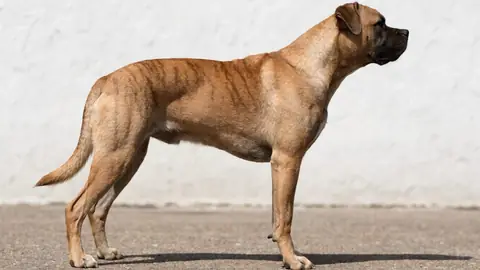 Alano EspañolSpain's bull-type catch dog, recognised at home and absent from the FCI list. What the two conflicting Spanish standards actually...
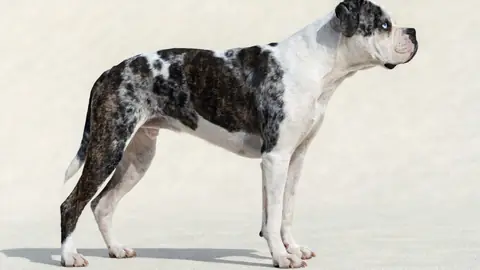 Alapaha Blue Blood BulldogA Georgia farm bulldog with two competing standards, no major kennel club behind it, and no lawful route into India. Here is what...
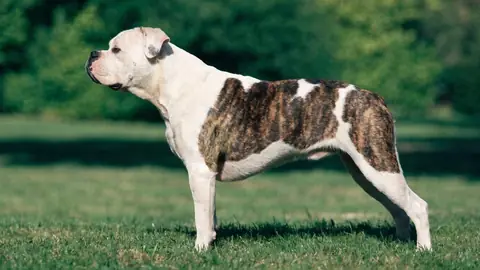 American BulldogWhat an American Bulldog actually costs in India, how the Johnson and Scott types differ on measurements you can check, and why...
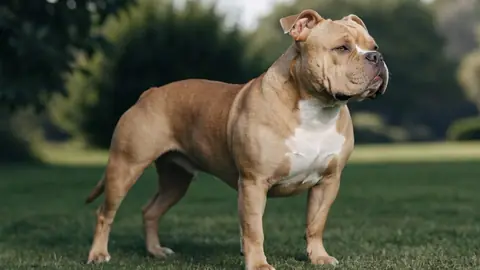 American BullyWhat an American Bully costs in India, what the four size classes actually mean, what the breed's own registries say about...
 American Pit Bull TerrierWhat a pitbull actually costs in India, which of the four breeds you are being sold, what the law says after three High Courts...
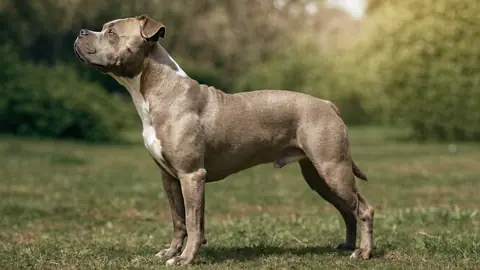 American Staffordshire TerrierWhat an AmStaff costs in India, why the top result for this query prints Staffordshire Bull Terrier figures on an AmStaff page,...
 BoxerWhat a Boxer costs in India, why the published prices disagree by more than Rs 1,90,000, what the veterinary evidence says about...
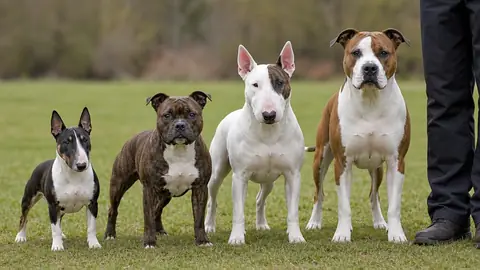 Bull-type terrierThe phrase names a shelf in a registry, not a dog. Four FCI breeds sit on that shelf, their standards contradict each other,...
 BulldogWhat an English Bulldog costs in India across seven disagreeing sources, why Bonbeno rates it 1 of 5 for heat tolerance, what the...
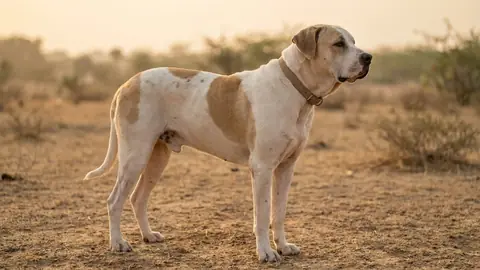 Bully KuttaA giant subcontinental guardian with an ugly modern reputation. Most of what circulates about this breed online is written by or...
 Gull DongA Pakistani bandog created for the fighting pit, sold in India under at least eight different names, and described so...
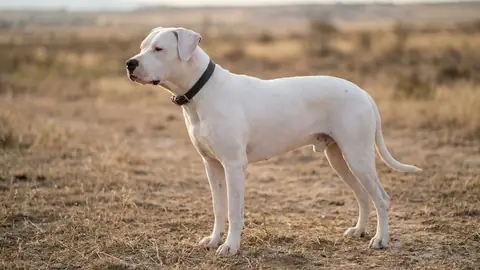 Gull TerrierA white, erect-eared bull terrier type of the Punjab, primarily Pakistani rather than Indian, and used in dog fighting on both...
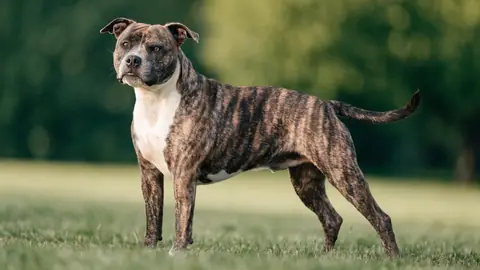 Staffordshire Bull TerrierWhat a Staffordshire Bull Terrier costs in India, why published prices differ by ten times, the two DNA tests a buyer can demand,...
Compare the breeds side by side
To compare these 13 breeds directly, read across the table rather than down the guides. Heat tolerance is a Bonbeno rating out of 5 for Indian conditions, and the reasoning behind each one sits on the breed's own page.
| Breed | Heat tolerance | Published price, India |
|---|---|---|
| Alano Español | 3 of 5 | See page |
| Alapaha Blue Blood Bulldog | 3 of 5 | See page |
| American Bulldog | 3 of 5 | Rs 50,000 to Rs 3,20,000 |
| American Bully | 3 of 5 | Rs 20,000 to Rs 1,00,000 |
| American Pit Bull Terrier | 3 of 5 | Rs 8,000 |
| American Staffordshire Terrier | 3 of 5 | Rs 12,000 to Rs 1,00,000 |
| Boxer | 2 of 5 | Rs 6,000 to Rs 2,00,000 |
| Bull-type terrier | 3 of 5 | Rs 35,000 to 45,000 for a Staffordshire Bull Terrier, Rs 55,000 to 1,50,000 for a Bull Terrier |
| Bulldog | 1 of 5 | Rs 50,000 to Rs 1,50,000 |
| Bully Kutta | 3 of 5 | Rs 15,000 to Rs 2,00,000+ |
| Gull Dong | 3 of 5 | No source publishes a rupee figure |
| Gull Terrier | 3 of 5 | Up to 200,000 PKR |
| Staffordshire Bull Terrier | 3 of 5 | Rs 35,000 to Rs 8,00,000 |
What matters in this group
The points below are what the evidence on these 13 guides actually supports, not what the category is assumed to mean.
- The legal record is not what the ranking pages say. The Veterinary Council notice of 2011 was quashed by the Madras High Court in February 2013 on jurisdiction; the Central Government then made the 2017 Rules; the March 2024 circular listing so-called ferocious breeds was quashed by the Karnataka High Court on 10 April 2024 and set aside by the Delhi High Court on 16 April. Municipal prohibitions do exist in some cities and those are stated per page.
- The joint data separates these breeds sharply, and it runs against the price ladder. On the OFA register the American Bully sits near 44 percent dysplastic hips against roughly 22 for the American Pit Bull Terrier and 16 for the Staffordshire Bull Terrier, while Indian sellers charge the largest premium for the exaggerated type with the worst joints. Those are live registers that move as evaluations are added, so each breed guide carries the exact figure and the sample size behind it.
- There is one paperwork check that turns the whole naming argument into something a buyer can settle at the door. The Kennel Club of India is a full FCI member, and the FCI recognises the American Staffordshire Terrier as standard 286. It does not recognise the American Pit Bull Terrier at all. So a KCI-registered American Staffordshire Terrier is checkable against a numbered standard, while a KCI-registered American Pit Bull Terrier has nothing behind it in the system the KCI belongs to. Ask which registry, and ask for the standard number.
- Animal fighting is a criminal offence under section 11 of the Prevention of Cruelty to Animals Act 1960. Nothing on this site is written to assist it.
Membership is generated from the breed data itself, not typed by hand, so this list cannot drift from the guides it points at and fills in as more publish. The 13 guides here cite 411 sources between them.
This page is a directory of published Bonbeno guides, generated from their data rather than written as clinical guidance, so no veterinarian reviewed this page itself. Each linked guide carries its own veterinary review and its own health sections. Breed level evidence describes populations, and your animal is an individual, so consult your nearby vet before acting on anything you read here.
Common questions
How does Bonbeno decide which breeds belong on this page?
Membership is generated from each breed's own published data rather than chosen by an editor. The group is defined by a shared trait rather than a rating, so its members are named in the site's own cluster definition and each one is checked against the published guide before it appears. A breed appears here the moment its guide publishes and meets that rule, and never before, which is why no link on this page can point at a guide that does not exist.
What is a Bonbeno heat tolerance rating?
It is a 1 to 5 rating of how well a breed copes with Indian conditions, where 5 is best. Almost no international breed reference publishes one, and in a country where summer temperatures pass 45 C it is the most decision-relevant trait there is. It is Bonbeno's own judgement, built from published heat-illness evidence where that exists and stated as inference where it does not.
Are the prices on this page current?
Each price is read from that breed's own guide, where it is compared across published Indian sources and cited. Published Indian breed prices disagree widely between sellers, sometimes by more than a lakh for the same breed, so treat the figure here as the lowest band Bonbeno found and read the guide for the full range.
Does Bonbeno sell or broker any of these dogs?
No. Bonbeno does not sell pet food, products or animals and does not broker puppy or kitten sales. Nothing on this page is a listing, and no breeder or seller can pay to appear on it.