
Subcontinental breed profile
Gull Terrier: Size, Temperament, Health and the Law in India
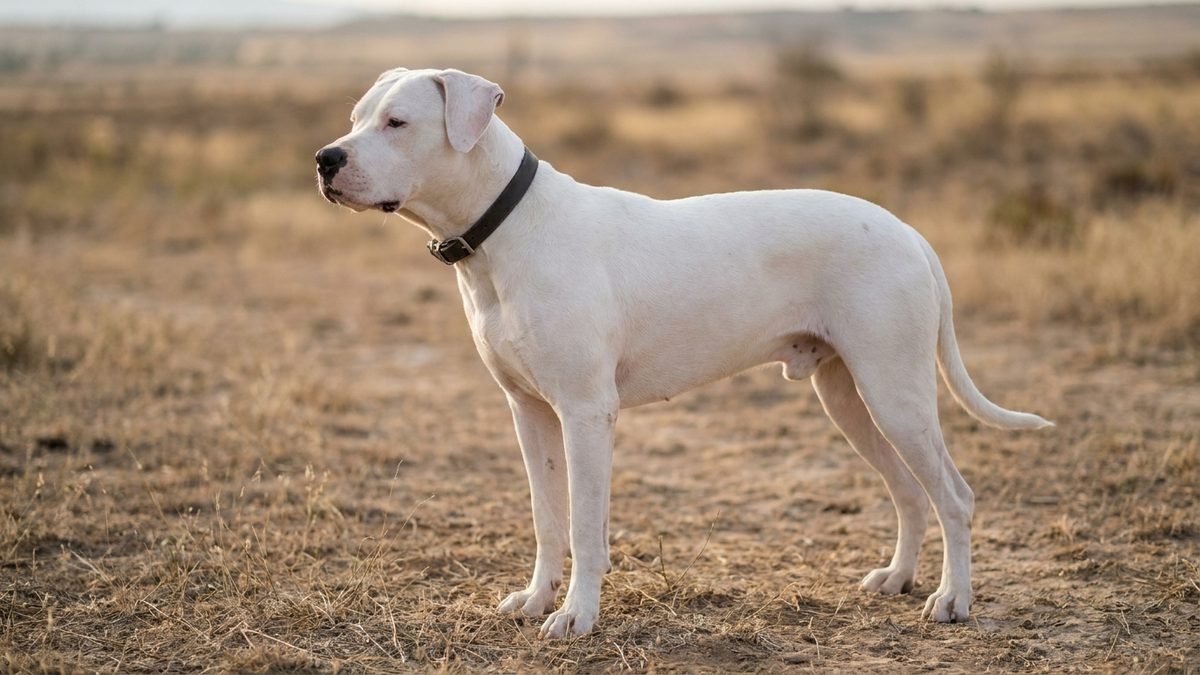
A white, erect-eared bull terrier type of the Punjab, primarily Pakistani rather than Indian, and used in dog fighting on both sides of the border. Fighting dogs is a criminal offence in India. Here is what the sources actually support, including the deafness problem nobody prints.
Quick answer
The Gull Terrier is a rare white bull terrier type of the Punjab region of Pakistan and India, standing 46 to 66 cm depending on which source you read, and is often used in dog fighting, hunting and guarding. It is primarily a Pakistani breed with a presence in north India, not an Indian national breed. Fighting dogs is a criminal offence in India. Its biggest documented health risk is congenital deafness linked to the white coat, and almost no Indian household should own one.
This guide is general information for Indian pet owners and is not a diagnosis. Always consult a registered veterinarian near you before acting on anything you read here, and treat any sudden change in your dog's condition as urgent.
Gull Terrier at a glance
What the Gull Terrier actually is
The Gull Terrier is a rare white bull terrier type of the Punjab region of Pakistan and India, believed to be several hundred years old, and often used in dog fighting, hunting and guarding. It is a direct descendant of the British Bull Terrier crossed with local subcontinental breeds, and it is a type rather than a standardised breed, which is why published figures for it contradict each other so badly.
Start with the country, because most Indian content gets this wrong on purpose. The mainstream record lists the origin as India and Pakistan jointly, but every substantive description places the living population in Pakistan. Dog Breed Info describes these dogs as largely found in Pakistan. The most detailed price and market account describes a Sunday dog market in Kohat, in Khyber Pakhtunkhwa. Molosser Dogs treats the Pakistani Gull Terr and the Indian Bull Terr as related but distinguishable populations. Bonbeno's position is that this is primarily a Pakistani breed with a real presence in north India, particularly the Indian Punjab, and that Indian pages calling it the pride of India are making a claim the sources do not support.
The naming is genuinely confused, and it costs buyers money
Seven English names circulate for this one dog, and no source uses them consistently. The mainstream record lists Indian Bull Terrier, Pakistani Bull Terrier, Gull Terr, South Asian Gull Terrier, South Asian Gull Terr, Indo-Pakistani Bull Terrier and Bull Terr. Dog Breed Info adds Kohati Gultair. A breed-identification database records the further variants Indian Gull Terr and Bull Terr slash Gull Terrier. Indian social accounts use Gultair, Gulterr and Bultair interchangeably. Below is what the sources actually say, set against each other rather than averaged.
| Source | What it calls the dog | What it says the dog is |
|---|---|---|
| Wikipedia | Gull Terrier, Gull Terr, Indian Bull Terrier, Pakistani Bull Terrier | One rare breed of India and Pakistan, descended from the British Bull Terrier |
| Dog Breed Info | Pakistani Bull Terrier, Gull Terrier, Gull Terr, Kohati Gultair | One breed in three types, split by size and use, with erect, semi-erect or dropped ears |
| Molosser Dogs | Gull Terr (Pakistani) as distinct from Indian Bull Terr | Two related populations, the Pakistani one drop-eared and taller, the Indian one erect-eared |
| Folkloristan | Kohati Gull Terrier, Pakistani Bull Terrier | A purebred Pakistani market dog defined by erect ears and a creamy white coat |
| Animalia | Gull Terrier, Indian Bull Terrier, Pakistani Bull Terrier, Gull Terr | One breed with large erect ears, a white coat and a Pakistan plus India origin |
| PetzCare India | The Gull Terrier, labelled an Indian Breed Dog | A Pakistani Bull Terrier rooted in the Punjab of Pakistan and India |
Two disagreements in that table matter to a buyer. Molosser Dogs says the Pakistani Gull Terr has drop ears while the Indian Bull Terrier has erect ears. Dog Breed Info says the opposite, that the purest Pakistani Bull Terriers always have erect ears and that the erect-eared type is the Kohati. Folkloristan agrees with Dog Breed Info, describing the Kohati as distinguished by erect ears. Bonbeno does not pick a winner, because a seller will use whichever version fits the puppy in front of you, and knowing that both versions are in print is the only protection available.
History that is documented
The history here is unusually well attested for a subcontinental breed. During the British Raj, Bull Terriers were introduced to the northwestern Indian subcontinent and the breed soared in popularity, with a Bull Terrier Club of India established in Calcutta. Those imported dogs were crossed with local breeds to produce the Gull Terrier. The resulting dog was used in blood sports including bull baiting and dog fighting, described in the mainstream record as an entertainment the British introduced to the subcontinent, and when blood sport was made illegal across the Empire the Gull Terriers were kept on as guard dogs. The British Indian Prevention of Cruelty to Animals Act of 1890 is the statute that outlawed those activities.
Two crosses came out of that period and they are constantly confused. Breeders in colonial India crossed the Gull Terrier with the Bully Kutta and named the progeny the Gull Dong. The Gull Dong is therefore a Gull Terrier crossed with a Bully Kutta and is a separate breed from both parents. Molosser Dogs states the point flatly, that the Gull Terr should not be confused with the Gull Dong. If a seller uses Gull Terrier, Gull Dong and Bully Kutta as though they were one animal, they are either uninformed or counting on you being so.
Size, where the sources split in half
Published size figures for this breed fall into two non-overlapping camps, and averaging them would produce a number describing no real dog. One camp puts it at a genuinely medium dog. The other puts it a full division heavier.
| Source | Height stated | Weight stated |
|---|---|---|
| Wikipedia | 46 to 56 cm, males and females alike | 25 to 29 kg (males), 20 to 25 kg (females) |
| Animalia | 46 to 56 cm, males and females alike | 25 to 29 kg (males), 20 to 25 kg (females) |
| Dog Breed Info | 50 to 66 cm | 35 to 45 kg |
| Rocadog | 50 to 66 cm | 35 to 45 kg |
| Folkloristan | 50 to 66 cm | 35 to 45 kg |
| Molosser Dogs | 50 to 66 cm, varying by type | No figure stated |
The split is not random. Wikipedia and Animalia give identical figures because Animalia cites Wikipedia as its only reference. Dog Breed Info, Rocadog and Folkloristan give identical figures because they descend from a common description that Dog Breed Info published first, with Rocadog noting explicitly that this makes the Gull Terrier larger and heavier than the original Bull Terrier. So the six sources are really two sources repeated, and the real answer is that nobody has measured a representative sample. Plan for a dog between 46 and 66 cm and between 20 and 45 kg, which is a useless range and is exactly the finding. Do not let a seller quote you a projected adult size as though it were a specification.
Bonbeno publishes no bite-force figure for the Gull Terrier. Gull terrier bite force is a live Google autocomplete query in India, and no measured study of this breed's bite force exists in any source we opened, including the mainstream record. A PSI number with no method behind it is marketing, and for a breed already used in illegal fighting it is marketing that gets dogs killed. Treat any specific figure you are shown as a sales tool.
Registration status and where it is banned
No major kennel club recognises the Gull Terrier. Dog Breed Info records its recognition status as a dash, meaning none, and the mainstream record names no registry at all. That is different from the Bully Kutta, which at least has the Indian National Kennel Club and the Indian Mastiff Registry behind it. Anyone selling you a registered Gull Terrier is selling you a piece of paper with no issuing authority behind it.
Two jurisdictions ban the dog outright. Under the New York City Housing Authority, Gull Terriers and Gull Dongs are banned in homes, and the breed is also banned in the Cayman Islands. Neither ban applies in India and neither is evidence that the dog is inherently dangerous. They are evidence that housing authorities and import lists react to the fighting association, which is a practical problem you inherit along with the dog.
Gull Terrier price in India
No reliable published Gull Terrier price in India exists. That is the honest answer and it is more useful than a number, because the figures circulating online trace back to a single YouTube video rather than to any breed database, sales platform or market survey.
Here is what the Indian price record actually consists of, traced to source. Searching gull terrier price in india on Google India returns an AI Overview stating that a Gull Terrier puppy in India generally costs between Rs 10,000 and Rs 30,000, with availability concentrated in Punjab and Haryana. Follow the citation and it points to a YouTube video from a Hindi dog channel, whose transcript states the same Rs 10,000 to Rs 30,000 range. There is no second source. The remaining page-one results for that query are about the English Bull Terrier, a different and far more expensive breed, or about the Gull Dong.
| Figure | Where it comes from | What it is evidence of |
|---|---|---|
| Rs 10,000 to Rs 30,000 | A Hindi YouTube channel, repeated by Google's AI Overview | One creator's unsourced estimate, now laundered into an authoritative-looking answer |
| Up to 200,000 PKR | Kohat Sunday dog market, Khyber Pakhtunkhwa | A real Pakistani market price, in Pakistani rupees, not Indian |
| Priced per kilogram of body weight | Kohat market practice | A pricing convention with no equivalent in the Indian pet trade |
| Rs 45,000 to Rs 1,50,000 | Indian pages for the English Bull Terrier | A different breed, frequently mis-served against this query |
| Rs 55,000 to Rs 1,50,000 | A national sales platform, English Bull Terrier listing | A different breed again, and the closest thing to a real Indian market signal on the page |
Three things follow from that table and no Indian page states any of them.
- The Indian market for this breed is not a market. Google reported about 150 results for gull terrier price in india and about 119 results for gull terrier on the India SERP. Result-count estimates are unreliable in absolute terms, but at that order of magnitude the signal is real. There is no comparable-sales record here, so there is no price to discover.
- The Kohat figure is a Pakistani price and does not convert into an Indian one. A top price of 200,000 PKR in a weekly market where some dogs are priced by multiplying a per-kilogram rate by body weight tells you about Kohat, not about Ludhiana. Anyone quoting it in rupees to an Indian buyer is quoting the wrong currency and the wrong country.
- Colour-based price queries describe a dog that does not exist. Google India autocomplete offers black gull terrier price in india and blue gull terrier price in india. Every published description of the breed says the coat is white, occasionally with dark markings on the face or body, and Rocadog states plainly that a dog that looks like a Gull Terrier without a white coat is not a pure Gull Terrier. A seller with a black Gull Terrier is selling you something else.
A Rs 10,000 Gull Terrier and a Rs 40,000 Gull Terrier eat the same, need the same fencing, and carry the same legal exposure if either bites someone. What actually varies is whether the puppy can hear, whether its parents were bred for fighting, and whether anyone will take responsibility for it in five years. None of those is priced in.
What a Gull Terrier costs to keep in India
No published Indian cost-of-ownership estimate exists for the Gull Terrier, so Bonbeno publishes the cost structure rather than inventing a monthly figure. The recurring costs for a 25 to 45 kg active working-build dog are predictable even when the price is not.
Read the list below as a budgeting checklist rather than a bill. Where a line carries a real published figure from a comparable context we say so, and where it does not we say that too.
- Food. The largest recurring line for a dog of this build and energy level. Indian pages for comparable medium breeds cite roughly Rs 2,000 to Rs 3,000 a month for standard food and Rs 3,000 to Rs 4,000 for premium. Those are figures for a different breed and should be treated as an order of magnitude, not a quote.
- A BAER hearing test. The single highest-value spend on this breed and the one nobody budgets for. Congenital sensorineural deafness can be diagnosed by brainstem auditory evoked response testing from four to five weeks of age. Test before you commit, not after, and expect to travel to a veterinary college or referral hospital because BAER testing is not routine in Indian general practice.
- Secure containment. Fencing and gating that will hold a fast, agile, protective dog. This is a capital cost and Indian owners of guarding breeds routinely skip it. Budget it before you budget the dog.
- Professional training. Not optional with a breed described as needing very firm training and lots of exercise, and destructive without structure. Treat it as a line item.
- Preventive veterinary care. Routine vaccination costs of roughly Rs 700 to Rs 900 per schedule and deworming around Rs 100 to Rs 200 are the published Indian figures for a comparable breed. Add year-round tick and flea control, which is not optional in India.
- Sun protection. Shade structures, a rescheduled walking routine, and veterinary attention to any persistent skin change on the belly, inner thighs or nose bridge. This is a real cost for a white dog in India and it appears on no other page.
- Grooming. Almost nothing. The short coat needs a comb and a firm bristle brush, and bathing only when necessary. The savings here do not offset anything else.
- An emergency fund. For a dog with no health survey, no screening scheme and no breed club behind it, you are the insurance.
When we publish cost figures we state the sample size, the cities covered and the collection date. Our verified owner cost survey across eight metros is in progress. Until it publishes, we report other people's numbers as other people's numbers, name the breed they actually measured, and refuse to convert a Pakistani market price into an Indian one.
Heat tolerance and the Indian climate
The Gull Terrier handles Indian heat better than most imported breeds and handles Indian sun worse than almost any of them. The short coat and moderate body mass are advantages. The unpigmented white skin under that coat is a documented liability, and this is the section where Bonbeno departs from every ranking page.
Take the easy part first. The breed developed in the Punjab, one of the hottest inhabited regions in South Asia, and carries a short dense coat. One Indian page states that Gull Terriers are well adapted to the Indian climate thanks to their short coats, handle heat well, and still need shade, water and exercise scheduled for the cooler parts of the day. That is broadly right and Bonbeno agrees with it. A medium dog sheds heat more efficiently per kilogram than a giant one, so this breed is a better climate fit than the Bully Kutta.
The white-coat problem nobody prints
Canine solar dermatitis is chronic sunburn of non-pigmented skin, and Bull Terriers are named specifically among the breeds most frequently affected. The lesions appear on the inner legs, the lower abdomen and flank, and the bridge of the nose, starting as redness and scaling and progressing to thickened, wrinkled, hairless skin with comedones and raised nodules. The haircoat and melanin pigmentation are what normally protect against ultraviolet damage, and a white dog with a short coat has neither. Chronic intermittent exposure causes keratinocyte mutagenesis and premalignant actinic keratosis, which can evolve into squamous cell carcinoma, haemangioma and cutaneous haemangiosarcoma. The stated best treatment is to minimise sun exposure.
Now put that finding on an Indian roof terrace. A white short-coated dog lying belly-up on hot concrete at midday, every day, for a decade, in a country with far higher year-round UV load than Kansas, is the exact exposure pattern the literature describes. No Gull Terrier page in India mentions this. It is the single most actionable thing on this page.
What that means city by city
- Punjab, Haryana and Delhi. The breed's Indian heartland and the highest summer UV load. Move both walks to before sunrise and after dark from March through June, and keep the dog off open terraces in daylight.
- Mumbai, Chennai and Kochi. Humidity is the constraint rather than peak temperature, because panting cools poorly in humid air. Tick pressure is also highest here, and dogs in Delhi and Mumbai were more likely to be infected with ticks and tick-borne pathogens than dogs in Ladakh or Sikkim.
- Bengaluru and Pune. The mildest fit in India, and still not a licence to let a white dog sunbathe.
- Ladakh, Himachal and the hills. Cooler, but altitude raises UV intensity rather than lowering it. Shade discipline still applies.
- Any city, any month. Continuous fresh water, real shade rather than a closed room, and a handler who stops the dog before the dog stops itself.
Heatstroke, and the first-aid order that matters
Heatstroke is a life-threatening condition in which body temperature rises beyond the point where the dog can cool itself, and dogs rely on panting because they sweat only from the paws. It does not need extreme weather. Excessive exercise in warm conditions, or a warm humid poorly ventilated space, is enough. Overweight animals, thick-coated dogs, the very old and very young, and animals with existing airway, lung or heart conditions are the identified high-risk groups.
Learn the early signs before you need them. Panting progressing to distressed or noisy breathing, restlessness and pacing, drooling, red gums, an increased heart rate, vomiting or diarrhoea come first, with lethargy, confusion, weakness, collapse and seizures following. Heatstroke commonly leads on to acute kidney injury, blood clotting problems and shock.
The Royal Veterinary College's stated first-aid order for a dog with heatstroke is to cool first and transport second, moving the dog somewhere cool and ventilated, offering small sips of water, and using cold water immersion for young healthy dogs or evaporative cooling with a fan for older dogs, then calling the vet. Do not use ice-cold water, because it reduces skin blood flow and can trigger shivering that generates more heat. Most Indian owners drive first and cool later, which is the wrong way round.
Temperament, and the dog-fighting problem
The Gull Terrier is wary of strangers, protective of its owner and territory, and highly trainable. Any honest account of its temperament has to deal with dog fighting, because that is the use the breed was created for and the use that still shapes its population on both sides of the Punjab border.
The published temperament picture is consistent on the core traits and split on the edges. The mainstream record says wary of strangers, protective of owners and territory, highly trainable. Dog Breed Info adds that they are talented and easily trained, loyal, will bark first to alert, must not be trusted with non-canine pets, need firm consistent leadership, and can become extremely aggressive with other dogs without it. Rocadog calls them protective and trainable, absolutely fearless, and says they need an experienced owner and trainer. Molosser Dogs is the harshest, describing a very aggressive and confrontational breed best suited for experienced owners. Google's own India knowledge panel summarises the temperament in two words, aggressive and trainable.
Two separate drives do the practical damage and owners routinely conflate them. Territoriality is what makes the dog react to a person at the gate. Dog-directed aggression is what makes it react to another dog on the street, and Dog Breed Info identifies that specifically as what emerges when the owner is not consistently in charge. A household can manage one and be undone by the other. Prey drive is a third thing again, and it is why the breed should not be trusted with cats, chickens or small pets.
Dog fighting is a criminal offence in India
Forcing dogs to fight is illegal in India under the Prevention of Cruelty to Animals Act, 1960. Section 11(1)(m)(ii) makes it an offence, solely with a view to providing entertainment, to incite any animal to fight or bait any other animal. Section 11(1)(n) makes it an offence to organise, keep, use or act in the management of any place for animal fighting or for baiting any animal, to permit or offer any place to be so used, or to receive money for the admission of any other person to such a place. This is not a grey area, and it is not a regional custom with legal cover.
The enforcement record is the uncomfortable part and it explains the market. Under section 11 the penalty for a first offence is a fine of not less than ten rupees and not more than fifty rupees, and for a second or subsequent offence within three years, a fine of twenty-five to one hundred rupees or imprisonment up to three months, or both. Those figures have never been revised. A statutory maximum fine of fifty rupees is why a criminal offence has functioned in practice as a cost of doing business, and it is the single most useful legal fact on this page.
Prosecutions are correspondingly rare. Punjab police registered what officials described as a rare and possibly first FIR against dog-fight organisers only in June 2018, after unknown persons put up posters in Nihal Singh Wala town in Moga district inviting entries at Rs 500 per dog with prizes for the winners. A Chandigarh dog trainer quoted in that report said dog fights are very common in rural Punjab, that betting takes place, that breeds including the Pit Bull and the Pakistan Bully are specially reared for it, and that dogs have been killed in fights. A PETA India investigation documented dogs being mangled and killed in secretly organised fights in Haryana, Maharashtra, Punjab, Rajasthan, Uttar Pradesh, Delhi and Jammu, with fights lasting up to two hours, losing dogs killed or used as target practice, and the whole thing driven by gambling.
The same pattern is documented on the Pakistani side, where the Gull Terrier is named directly. Reporting in The Express Tribune lists Gull Terrier and Gull Dong among the breeds most commonly trained and bred to fight in Pakistan, describes millions of rupees at stake, and records that a losing dog whose owner quits the fight may be clubbed, electrocuted, poisoned or drowned. That article also notes that specialised kennels advertise dogs bred only for the purpose of fighting. Under Pakistan's own Prevention of Cruelty to Animals Act dating to 1890, dog fighting is illegal there too, but the report states that funding for animal-rights enforcement has dried up and the law is violated across the country.
Any seller who presents gameness, fighting ability, or a fighting bloodline as a selling point is describing a criminal use of the animal under sections 11(1)(m)(ii) and 11(1)(n) of the PCA Act 1960. Walk away, and consider reporting the listing. A breeder worth buying from talks about hearing test results, temperament stability and placement suitability, and will refuse a sale to the wrong home.
Why this breed is wrong for almost every Indian household
This is not a vague warning, it is three specific and compounding problems. Read them as a filter rather than a caution.
- Containment. You are housing an agile, fast, protective dog that Dog Breed Info rates unsuitable for an apartment unless kept extremely well exercised, and that must not be trusted around other pets. A shared corridor, an unsecured gate or a Mumbai society compound is not secure containment for this animal, and a containment failure converts a private decision into a public incident.
- Socialisation load. The first three months are the most important socialisation period in a puppy's life, and every source on this breed says socialisation must start as early as possible. Then add the possibility that the dog cannot hear you, which roughly one white bull terrier in five in the largest available dataset cannot. That is a workload most households cannot sustain for a year.
- Legal and reputational exposure. You will own a dog whose breed name returns dog-fighting content on the first page of Google, that is banned from public housing in New York City and from import to the Cayman Islands, and that a Chandigarh trainer describes as being reared for fights in the same region you probably live in. If your dog bites someone, none of that context will be on your side.
- Good fit. An experienced handler on independent property with a genuinely secure boundary, no other pets, few visitors, the means to fund a BAER test and professional training, and a decade of patience.
- Poor fit. First-time owners, apartments, households with small children or other pets, anyone who wants a sociable family dog, and anyone drawn to the breed by how tough it looks.
- Non-negotiable. Hearing tested before purchase, structured socialisation from week eight, secure containment, and total honesty with yourself about whether you can manage a fearless dog that has decided something is a threat.
Training a Gull Terrier
Train a Gull Terrier with reward-based methods and firm consistent leadership from the day it arrives, and find out whether it can hear you before you start. The breed is intelligent and highly trainable, which is the one genuinely good news item on this page, but it needs an experienced owner and trainer who can handle a physically and mentally strong dog.
Socialisation is the safety decision
The first three months are the most important socialisation period in a puppy's life, and the American Veterinary Society of Animal Behavior states that it should be the standard of care for puppies to receive socialisation before they are fully vaccinated. In a protective breed that may also be deaf, the socialisation window is the single decision that sets whether the adult dog is discriminating or indiscriminate, and it closes on schedule whether or not you used it. Behavioural problems, not infectious disease, are what break the human-animal bond, and puppy classes before three months of age are described as an excellent means of improving training and socialising puppies in an environment where illness risk is minimised. Hold classes on surfaces that can be cleaned and disinfected, and avoid dog parks and other unsanitised, heavily trafficked areas while vaccination is incomplete. Owners of puppies past that window are strongly encouraged to keep socialising to as many people, pets and locations as is practical.
Rocadog puts the same point in breed terms, that socialisation is a must and should start as soon as possible, that a well-socialised Gull Terrier is workable with older children who know how to behave around dogs, and that it is still not a dog to trust around cats. Dog Breed Info adds that early socialisation is what makes the adult manageable at all.
Training a dog that may not be able to hear you
This is the section that separates a Gull Terrier from every other guarding breed and no ranking page covers it. Deafness in this line is common enough that Molosser Dogs claims most Pakistani Gull Terrs are born deaf, Dog Breed Info lists prone to deafness as the breed's only health note, Rocadog names blindness and deafness, and Folkloristan calls a vulnerability to deafness the breed's only weakness. Test first, then design the training around the result.
- BAER test at five to eight weeks. Congenital sensorineural deafness can be diagnosed by BAER from four to five weeks of age, and it detects unilateral as well as bilateral loss. A unilaterally deaf dog looks completely normal at home and cannot locate sound direction, which matters on a road.
- Build hand signals from day one, whatever the result. A visual cue costs nothing to teach a hearing dog and is the entire command system for a deaf one. Vibrating collars and hand commands are the established tools for communicating with deaf dogs.
- Teach a check-in rather than a recall. A deaf dog cannot be recalled by voice. Reward voluntary eye contact until the dog offers it constantly, because that is what replaces the recall.
- Never work a deaf dog off-lead outside a fenced area. This is not a training failure, it is physics. The dog cannot hear the vehicle, the other dog, or you.
- Wake the dog by touch on the shoulder, consistently and gently. A startled deaf dog snaps, and children in the household need this rule before the dog arrives.
- Tell every visitor, and label the gate. A deaf guarding dog that does not hear someone approach reacts later and harder.
What works with this breed
- Establish calm, consistent leadership. The breed thrives on firm consistent leadership and needs a lot of structure or it becomes destructive.
- Use reward-based methods. Intelligence and trainability are the breed's strongest assets, and force wastes them.
- Prioritise the boring skills. Sit, down, place, a reliable check-in and loose-lead walking matter far more than tricks, because they are what you use at the gate.
- Manage arrivals deliberately. Teach a place command and use it for every visitor, because a protective dog with no instruction defaults to its own judgement.
- Exercise the mind as well as the body. An under-stimulated Gull Terrier becomes bored and potentially destructive.
- Work with a trainer who has handled protective breeds. Not one who has only read about them.
| Skill | Start | Reliable by |
|---|---|---|
| Name or visual attention cue | Week 1 home | 3 to 6 weeks |
| Sit, down, place by hand signal | Week 1 home | 6 to 10 weeks |
| Loose-lead walking at adult weight | Month 2 | 8 to 14 months |
| Voluntary check-in in a quiet place | Month 2 | 4 to 8 months |
| Controlled greeting of visitors | Month 2 | Ongoing management, never finished |
| Reliable around unfamiliar dogs | Month 2 | Ongoing management, never finished |
Two rows say ongoing management rather than a date, and that is deliberate. With a protective breed carrying documented dog-directed aggression, you manage the situation for the life of the dog rather than training the instinct out. Any trainer promising otherwise is selling you something.
How much exercise a Gull Terrier needs
A Gull Terrier needs daily exercise including a long structured walk, and it is described across sources as a very energetic breed that requires it rather than merely enjoys it. Long daily walks are a must and the dog will take almost any activity you offer.
No source publishes a minutes-per-day figure for this breed, so Bonbeno does not invent one. What the sources do say is consistent and usable. The breed is extremely active and energetic and needs daily work to stay in good physical and mental shape. It thrives on physical activity and mental challenges and becomes bored and potentially destructive without them. It must be given a lot of structure or it may become destructive. Plan for two structured sessions a day and adjust to your individual dog.
- A yard helps but does not replace walking. Rocadog notes the breed can live indoors but is much happier with outdoor space to burn energy. A dog left alone in a yard exercises less than a dog walked properly.
- Structured beats aimless. A training game or a scent problem delivers more than a longer wandering walk, and this breed has the intelligence to use it.
- Never exercise off-lead in an unsecured area. A fast, fearless dog with dog-directed aggression cannot be recalled once it has committed, and a deaf one cannot be recalled at all.
- Walk on equipment that will hold. A 35 to 45 kg dog on the heavier published estimate needs a lead and collar rated for it, checked rather than assumed.
- Move both sessions in summer. Vigorous exercise in warm weather is a documented cause of heatstroke, and hot pavement burns paws. If you cannot hold your hand on it, the dog should not walk on it.
- Stop before the dog stops itself. A working-line dog in drive will not self-regulate, and heatstroke does not need extreme weather.
Grooming a Gull Terrier in Indian humidity
Grooming a Gull Terrier takes ten minutes a week. The short smooth coat is easy to groom with a comb and a firm bristle brush, bathing only when necessary, and the breed is an average shedder. The real job is inspecting the skin underneath, not maintaining the coat on top.
Indian buyers are told this breed is low maintenance and stop there. That is half true and the missing half is what causes veterinary bills. A white dog with a short coat in India has no melanin protection and no coat protection against ultraviolet damage, and it lives in a country where ticks are close to universal in some cities. The weekly brush is your inspection window, so use it as one.
- Brush weekly with a firm bristle brush or rubber curry to lift dead hair, and bathe only when genuinely dirty so you do not strip protective oils. Excessive bathing is specifically discouraged for this breed.
- Inspect the sun-exposed skin at every brush. Look at the inner legs, the lower abdomen and flank, and the bridge of the nose, which are the sites where solar dermatitis appears. Persistent redness or scaling that does not respond to routine treatment warrants a veterinary opinion rather than another cream.
- Check for ticks at every brush, particularly around the ears, neck and between the toes, and run tick and flea prevention year-round through the monsoon. Nearly half of dogs in an Indian four-zone survey carried at least one tick-borne pathogen.
- Clean the ears and trim the nails on the same weekly schedule. Routine dental care, nail trimming and ear checks are named as part of basic maintenance for this breed.
- Dry the dog properly after every soaking in the monsoon. A damp, humid coat is where skin infection starts, and a white dog shows the results quickly.
The stated best treatment for canine solar dermatitis is to minimise sun exposure. In practice that means rescheduling walks, keeping the dog off open terraces between mid-morning and late afternoon, and giving it a properly shaded resting place outdoors. Discuss any topical sun protection with your own veterinarian rather than using a human product, because dogs lick what you apply.
Health and lifespan
Congenital deafness is the defining health risk of the Gull Terrier, and it is inseparable from the white coat that defines the breed. No breed-specific health survey, screening scheme or registry health programme exists for the Gull Terrier anywhere, so anyone quoting you a precise prevalence figure for it is extrapolating, including us. Here is what is actually documented and how far it can honestly be carried.
Deafness, and what the numbers really say
Every source on this breed names deafness and none of them measured it. Dog Breed Info lists prone to deafness as the sole health problem. Rocadog names blindness and deafness and says there are no other major health concerns. Folkloristan calls vulnerability to deafness the breed's only weakness. Molosser Dogs goes furthest, stating that most Pakistani Gull Terrs are born deaf and that many have skin allergies. Bonbeno publishes that claim and flags it, because most implies a prevalence above 50 percent and no survey of this breed exists to support it. Treat it as an experienced observer's impression, not data.
What is measured is the ancestor breed, and the figures are sobering enough without exaggeration.
| Finding | Figure | Source |
|---|---|---|
| Deafness in pure white Bull Terriers | 20.4 percent | Mainstream breed record |
| Deafness in coloured Bull Terriers | 1.3 percent | Mainstream breed record |
| Overall prevalence, 1,060 puppies BAER tested | 10.19 percent | Peer-reviewed study |
| Unilaterally deaf | 8.21 percent | Peer-reviewed study |
| Bilaterally deaf | 1.98 percent | Peer-reviewed study |
| Share of deaf puppies that were white | 96.29 percent | Peer-reviewed study |
| Share of white puppies that were deaf | 19.29 percent | Peer-reviewed study |
| Heritability of hearing status | 0.15 to 0.16 | Peer-reviewed study |
| Earliest reliable BAER diagnosis | 4 to 5 weeks of age | Peer-reviewed study |
Read the table carefully, because the two headline numbers are not in conflict. The 10.19 percent figure is the prevalence across all 1,060 puppies including coloured ones, while the 19.29 percent figure is the prevalence within white-coated puppies alone. Unilateral and bilateral deafness in coloured dogs ran 27 and 19 times lower respectively than in white dogs. The Gull Terrier is defined by a white coat, so the white-dog figure is the one that applies, and the honest reading is that roughly one in five may be affected in some degree if the ancestor data carries across.
The mechanism is pigmentation genetics. Congenital deafness in dogs is associated with the pigmentation gene MITF, which underlies white and piebald colouring, and with the SILV gene behind merle patterning, although the published record acknowledges that exactly how pigmentation genes cause deafness is not yet explained. BAER is the diagnostic standard and is what identifies affected animals.
A bilaterally deaf puppy is obvious to any attentive buyer. A unilaterally deaf one is not, and it was four times more common than the bilateral form in the largest study available. That dog responds to your voice, appears completely normal, and cannot tell where a sound came from. On an Indian street, with traffic on both sides, that is a safety problem the owner never knows about. BAER is the only way to find it.
Lifespan, where the sources disagree
Published lifespan claims for the Gull Terrier run from 7 to 12 years, and no source states a basis. Dog Breed Info gives about 7 to 10 years. PetzCare India gives 10 to 12 years. Neither cites data. Set both against the largest longevity dataset available. Across 584,734 dogs from 155 pure breeds in the United Kingdom, median life expectancy was 12.7 years for purebreds and 12.0 years for crossbreeds, with small long-nosed breeds highest at 13.3 years and medium flat-faced breeds lowest at 9.1 years for males. A medium-sized, long-muzzled dog sits in the favourable part of that distribution on structure alone, which makes the 7 to 10 year claim look pessimistic and the 10 to 12 year claim plausible. Bonbeno publishes the disagreement rather than picking one, because there is no Gull Terrier survival data at all.
The conditions that actually appear
- Congenital sensorineural deafness. The dominant risk, tied to the white coat, diagnosable by BAER from four to five weeks. Ask for the test result before money changes hands.
- Solar dermatitis and sun-induced skin tumours. Chronic sunburn of unpigmented skin, with Bull Terriers named among the most frequently affected breeds, progressing in chronic cases to squamous cell carcinoma, haemangioma or cutaneous haemangiosarcoma. Under-recognised in India and entirely preventable by shade discipline.
- Skin allergies. Reported as common in the Pakistani population by an experienced breed observer, though not quantified.
- Tick-borne disease. Nearly half of 525 dogs sampled across four Indian climate zones carried a tick-borne pathogen, with Hepatozoon canis at 30 percent, Ehrlichia canis at 20.6 percent, Anaplasma platys at 6.5 percent and Babesia vogeli at 5.5 percent. This is an Indian environmental risk rather than a breed one, and it is the one most Indian owners underestimate.
- Heatstroke. A life-threatening emergency that commonly leads to acute kidney injury, clotting problems and shock.
- Eye problems. Rocadog names blindness alongside deafness for this breed, with no prevalence figure and no supporting study. Have a veterinarian examine the eyes at the puppy check rather than assuming either way.
There is no Gull Terrier equivalent of a breed health survey, no national breed club publishing screening guidance, and no registry running a hearing scheme. Bonbeno states what is documented for the ancestor breed and for Indian conditions generally, labels every carry-over as a carry-over, and refuses to convert an impression into a percentage. If another page gives you a precise prevalence figure for Gull Terrier deafness, ask which dogs were tested.
Vaccination and preventive care
Follow the standard Indian core vaccination schedule agreed with your own veterinarian, and treat parasite control as a year-round commitment rather than a seasonal one. Published Indian figures for a comparable breed put routine vaccination at roughly Rs 700 to Rs 900 per schedule and deworming at Rs 100 to Rs 200. Add monthly tick and flea prevention, because tick-borne pathogen exposure in Indian dogs is high and highest in Delhi and Mumbai. Socialisation before full vaccination is still the standard of care, on clean controllable surfaces rather than dog parks.
Feeding a Gull Terrier
Feed a Gull Terrier a balanced life-stage diet split across at least two meals a day, and adjust to body condition rather than to a chart. No published intake figure exists for this breed, so anyone giving you an exact kilocalorie number is guessing.
The published guidance is generic and sound. Puppies need high-quality puppy food rich in protein and essential nutrients to support rapid growth, adults need a mix of protein, fats and carbohydrates to maintain energy and muscular build, and seniors need lower calories with more fibre and joint support. Fresh water must be available continuously, which matters more in warm climates and is also a heatstroke-prevention measure.
The feeding regime you should refuse to copy
Search this breed and you will eventually meet the fighting-dog conditioning diet, presented as evidence of serious keeping. Reporting from Pakistan describes the daily regime used on dogs bred to fight there as a kilogram of raw meat, 250 grams of oil mixed with desi butter, ground chicken and almonds, and two litres of milk, alongside a minimum thirty-minute swim in ice-cold water, long-distance running, and ending the day by hunting down a live chicken. That is a conditioning protocol for a criminal use of the animal, not a diet. Two litres of milk daily is a digestive problem in most adult dogs, and the rest of it exists to build a dog for the pit. If a seller or a social account presents that feed sheet as breed knowledge, you have learned what they use their dogs for.
Body condition beats any chart
A Gull Terrier should carry visible muscle with a light covering over the ribs, and you should be able to feel the ribs easily without pressing. Indian owners routinely overfeed protective breeds in the belief that bulk equals capability, and an overweight dog is specifically at higher risk of heatstroke. Weigh the adult monthly and adjust the ration to what you can feel, not to what the bag says.
- Split the daily ration across at least two meals rather than feeding one large one.
- Keep fresh water available continuously, indoors and outdoors.
- Expect appetite to drop in peak summer. Persistent inappetence is a veterinary matter, not a preference.
- Avoid excessive bathing and excessive feeding for the same reason. Both are owners doing more where less is correct.
- Read cost and diet advice against who benefits from it. Bonbeno reviews Indian pet food brands separately and tests products first-hand before publishing a verdict.
Gull Terrier puppy: the first eighteen months
A Gull Terrier puppy needs its hearing tested in the first two months and its socialisation completed in the first four, and those two facts set the order of everything else. Get the sequence wrong and you cannot recover it later.
- 5 to 8 weeks, before you commit. Arrange a BAER hearing test, which can diagnose congenital deafness from four to five weeks of age and detects the unilateral cases you cannot spot by observation. Ask the breeder whether the litter was tested and whether either parent has a deafness history, because hearing status is heritable at 0.15 to 0.16.
- 8 to 12 weeks. Begin the core vaccination course with your own veterinarian. Start structured socialisation immediately rather than waiting for full vaccination, on clean controllable surfaces, because that is the stated standard of care. Begin hand signals from the first week regardless of the hearing result.
- 12 to 16 weeks. Close out the critical socialisation period with as much varied positive exposure as you can manage safely. Enrol in a professional puppy class held indoors on cleanable surfaces. Teach place and a voluntary check-in.
- 4 to 6 months. Loose-lead work becomes urgent, because the dog is approaching the weight at which it can pull you over. Establish the daily walk habit and keep the sessions structured.
- 6 to 12 months. Protective behaviour emerges and most owners misread it as the dog turning aggressive. Continue socialising rather than withdrawing the dog from the world, and keep managing arrivals with a place command.
- 12 to 18 months. Move to the full adult exercise load of two structured sessions daily, with both moved to cooler hours from March to June. Begin monthly weighing and adjust food to body condition.
Most Indian sellers of this breed will tell you a BAER test is unnecessary because the puppy responds to a clap. A puppy with one working ear responds to a clap. Nearly four times as many affected dogs in the largest study were unilaterally rather than bilaterally deaf, which means the clap test misses the majority of cases. If a seller resists the test, that is your answer about the seller.
Gull Terrier vs Bully Kutta
Choose a Gull Terrier over a Bully Kutta if you have already decided on a subcontinental guarding dog and can physically manage it, because it is roughly half the weight, more trainable, and easier to contain. Choose neither if you are a first-time owner. Indian buyers cross-shop these two constantly, partly because their crossbred offspring, the Gull Dong, is marketed as both.
| Factor | Gull Terrier | Bully Kutta |
|---|---|---|
| Type | Medium bull terrier type, guard and hunting dog | Giant mastiff-type guardian and hunting dog |
| Origin | Punjab region of Pakistan and India, from British Bull Terrier crosses | Punjab and Sindh regions of the subcontinent |
| Height, males | 46 to 56 cm, or 50 to 66 cm depending on source Dog Breed Info Center | 76 to 84 cm |
| Weight, males | 25 to 29 kg, or 35 to 45 kg depending on source Dog Breed Info Center | 70 to 90 kg |
| Coat and colour | Short and dense, white with occasional dark markings | Short, in black, red, brindle, white, fawn or harlequin |
| Ears | Large and erect on most accounts, drop-eared on one Molosser Dogs, Gull Terr breed profile | Drop, with heavy folded neck skin |
| Trainability | Highly trainable, the breed's strongest asset | Independent and strong-willed, needs an experienced handler |
| Key health flag | Congenital deafness tied to the white coat, plus solar dermatitis Ganta C and Schneider S | Bloat, hip and elbow dysplasia, skin fold infection |
| Kennel club recognition | None recorded | Indian National Kennel Club and Indian Mastiff Registry |
| Published price, India | No reliable figure, one YouTube-sourced claim of Rs 10,000 to Rs 30,000 | Rs 15,000 to Rs 2,00,000 and above across published sources |
| Fighting association | Documented on both sides of the border, illegal in both Section 11, The Prevention of Cruelty… | Documented, illegal, and shapes the Indian market |
| Containment need | A secure boundary rated for a fast, agile 25 to 45 kg dog | An engineered boundary rated for a 70 kg dog |
The practical difference is what happens when the dog is wrong. A 25 to 45 kg dog making a bad decision about a delivery rider is a serious incident that an adult can physically interrupt. A 70 to 90 kg dog making the same decision is a different category of event, for the person, for the dog and for your legal exposure. Mass converts an error into an injury, and it also decides whether you can pull the dog off. On that axis alone the Gull Terrier is the more manageable animal.
The second difference runs the other way. The Bully Kutta at least has registries, published price bands and a documented Indian breeder base. The Gull Terrier has none of those in India. No registry recognises it, no breed database publishes an Indian price, and the only detailed market account is of a Sunday market in Pakistan. You are buying with less information, not more.
Both are demanding protective breeds for experienced owners with real space. If what you want is a subcontinental dog for a normal Indian household, the Indian Pariah Dog is better tempered for family life, longer-lived, adapted to the climate, and free to adopt. Read the Bully Kutta guide if size is what you are actually after.
Mistakes Indian Gull Terrier owners actually make
These repeat across households and are ranked by how much damage they do.
- Skipping the BAER test because the puppy responds to a clap. Unilateral deafness outnumbered bilateral deafness roughly four to one in the largest study of the ancestor breed, and a one-eared dog passes the clap test.
- Buying from anyone who markets fighting ability or a fighting bloodline. Dog fighting is an offence under sections 11(1)(m)(ii) and 11(1)(n) of the PCA Act 1960, and the trade continues to be documented across Indian states. Money spent there funds it.
- Letting a white dog sunbathe on the terrace. Bull Terriers are named among the breeds most frequently affected by solar dermatitis, which can progress to squamous cell carcinoma. Nothing on any Indian Gull Terrier page warns about this.
- Buying as a first dog. Every source that addresses the question says this breed needs an experienced owner and trainer, and one states plainly that it is not the ideal choice for first-time dog parents.
- Accepting a cropped-ear puppy. Non-therapeutic ear cropping and tail docking are prohibited in India under the Prevention of Cruelty to Animals (Dog Breeding and Marketing) Rules, 2017 and the Pet Shop Rules, 2018, confirmed by the Madras High Court in 2019. In fighting circles ears are cropped so an opponent cannot grab them. A cropped Gull Terrier tells you what the breeder does.
- Housing it in an apartment. Explicitly rated unsuitable for apartment life unless kept extremely well exercised, and worse again if the dog cannot hear people approaching.
- Keeping it with cats or other small pets. The breed should not be trusted with non-canine pets, and no amount of socialisation reliably overrides prey drive.
- Skipping tick prevention outside the monsoon. Nearly half of dogs in an Indian four-zone survey carried a tick-borne pathogen, with Delhi and Mumbai worst affected.
- Believing a price you were told on YouTube. The entire published Indian price record for this breed traces to a single video, now repeated by Google's AI Overview as though it were established.
- Exercising at midday in summer. Vigorous exercise in warm weather is a documented cause of heatstroke, which commonly leads to acute kidney injury and shock.
Sourcing a Gull Terrier, and the adoption route
Adopt rather than buy if you are genuinely equipped for this breed, because an adult's temperament and hearing are already observable and adopting takes a dog out of a supply chain rather than paying into it. If you buy, verify hearing, parentage and premises before money changes hands.
Adoption is realistic, but not straightforward
Gull Terriers reach Indian shelters through the same routes as other protective breeds, namely abandonment, owner surrender and rescue from fighting operations, and Indian animal-welfare bodies have documented dogs recovered from fighting rings across several states. There is no breed-specific rescue network for the Gull Terrier in India, so the practical route is to contact general shelters in Punjab, Haryana and Delhi NCR and ask them to flag a white bull terrier type when one arrives. Expect to wait, and expect a long assessment process, which is appropriate rather than obstructive for a breed like this.
Adopting an adult removes the two largest unknowns in the transaction. Temperament is already formed and observable, and hearing status can be assessed by a veterinarian rather than guessed from a breeder's assurance. You cannot get either of those about an eight-week-old puppy at any price.
If you buy, verify these before money changes hands
- Ask for a BAER result for the puppy and the litter. Congenital deafness is diagnosable from four to five weeks and is heritable. A breeder who has never heard of the test is not managing the breed's main health problem.
- Visit where the puppies were raised and see both parents. Decline any seller who will not allow it. Doorstep-delivery models remove your only chance to see conditions and to observe the parents' temperament.
- Check both parents' ears and skin. Cropped ears on a parent point to the fighting trade and to an illegal mutilation under Indian rules confirmed by the Madras High Court.
- Confirm the seller is registered. Dog breeders in India must register with their state animal welfare board under the Prevention of Cruelty to Animals (Dog Breeding and Marketing) Rules, 2017, and pet shops must register under the Pet Shop Rules, 2018. Most are not, so ask to see the registration.
- Test the seller on temperament honesty. A breeder who tells you a Gull Terrier is good with everyone is inexperienced or selling. So is one who tells you it is a fighting dog.
- Ignore any registration paperwork you are shown. No major kennel club recognises this breed, so a certificate has no issuing authority behind it and should change nothing about what you pay.
- Walk away from a coloured dog sold as a pure Gull Terrier. A dog that looks like the breed but does not have a white coat is not a pure Gull Terrier.
Reporting cruelty
Report suspected dog fighting to the police and to an established animal welfare organisation. The offences are set out in section 11 of the Prevention of Cruelty to Animals Act, 1960 and cover inciting an animal to fight, organising or managing a place for animal fighting, permitting a place to be used for it, and receiving money for admission. The 2018 Punjab FIR was triggered because a local resident saw the organisers' posters and informed a Union minister's office, which alerted the state government. That is the whole mechanism. It works when someone reports it.
If what you want is a native dog rather than this specific one, you have better options and none of them carry this baggage. The Indian Pariah Dog is the healthiest and most climate-adapted dog in the country and is free to adopt. The Rajapalayam is a coursing sighthound with a very different temperament, and the Kombai does the guarding job at a manageable size.
Gull Terrier questions Indians actually search
What is a Gull Terrier?
A Gull Terrier is a rare white bull terrier type from the Punjab region of Pakistan and India, believed to be several hundred years old, and often used in dog fighting, hunting and guarding. It descends from British Bull Terriers crossed with local breeds during the British Raj, and is also called the Gull Terr, Indian Bull Terrier and Pakistani Bull Terrier.
Is Bull Terrier from Pakistan?
No. The Bull Terrier is a British breed. Pakistan has its own descendant of it, the Gull Terrier or Gultair, commonly nicknamed the Pakistani Bull Terrier, which was created when British Bull Terriers brought to the subcontinent during colonial rule were crossed with local breeds. The two are related but are not the same dog.
Is Bull Terrier available in India?
Yes, but the two breeds are priced very differently and are frequently confused. English Bull Terrier puppies are advertised in India at roughly Rs 45,000 to Rs 1,50,000 by commercial platforms. The Gull Terrier has no reliable published Indian price at all, and the only figure in circulation traces to a single YouTube video.
Do gull terriers bark a lot?
No source measures barking frequency in this breed. What is documented is that the Gull Terrier is wary of strangers, protective of its owner and territory, and will bark first to alert the household if it senses something is wrong. Treat alert barking as the designed behaviour rather than a fault, and manage arrivals with a trained place command.
How much does a gull dong dog cost in India?
No reliable published Indian price exists for the Gull Dong either. The Gull Dong is a cross between a Gull Terrier and a Bully Kutta, created in colonial India. Published Bully Kutta prices in India span Rs 15,000 to over Rs 2,00,000, and a crossbred dog inherits that pricing uncertainty rather than resolving it.
What is the bite force of a Gull Terrier?
No measured study of this breed's bite force exists, so Bonbeno publishes no figure. Gull terrier bite force is a real Google autocomplete query in India, which is why unsupported PSI numbers circulate. Treat any specific bite-force figure for a subcontinental breed as marketing rather than data, particularly for a breed associated with illegal fighting.
Are Gull Terriers deaf?
Many are. Every source on the breed names deafness, and one experienced breed observer states that most Pakistani Gull Terrs are born deaf, though no survey supports that figure. In the ancestor breed, 20.4 percent of pure white English Bull Terriers were deaf against 1.3 percent of coloured dogs. Test with BAER from four to five weeks.
Is the Gull Terrier an Indian breed?
Only partly. The mainstream record lists India and Pakistan jointly as the origin, but the living population and every detailed market account are Pakistani. Bonbeno treats it as primarily a Pakistani breed with a real presence in north India, particularly the Indian Punjab. Indian pages calling it a national breed overstate what the sources support.
Is the Gull Terrier banned in India?
No. The Gull Terrier is not banned in India, though it is banned from New York City Housing Authority homes and from import to the Cayman Islands. What is banned in India is dog fighting, an offence under sections 11(1)(m)(ii) and 11(1)(n) of the Prevention of Cruelty to Animals Act, 1960, carrying a first-offence fine of Rs 10 to Rs 50.
How big does a Gull Terrier get?
Sources split into two non-overlapping camps. Wikipedia and Animalia give 46 to 56 cm and 25 to 29 kg for males. Dog Breed Info, Rocadog and Folkloristan give 50 to 66 cm and 35 to 45 kg. Since the six sources reduce to two originals, nobody has measured a representative sample and no seller can honestly project your puppy's adult size.
Is a Gull Terrier good with children and other pets?
Not reliably. One source says good with children in the family but supervise around unfamiliar ones, and another calls the breed aggressive and confrontational. All sources agree it should not be trusted with non-canine pets such as cats. A well-socialised dog with older children who understand dogs is the best realistic case.
Can a Gull Terrier handle Indian heat?
Heat, largely yes. Sun, no. The short coat and medium body mass suit the Punjab climate, and one Indian source calls the breed well adapted to Indian conditions. The problem is the unpigmented white skin, because Bull Terriers are named among the breeds most frequently affected by solar dermatitis, which can progress to skin cancer.
How long do Gull Terriers live?
Published claims run from 7 to 10 years to 10 to 12 years, and neither source states a basis. No Gull Terrier survival data exists. Across 584,734 UK dogs, median life expectancy was 12.7 years for purebreds, with medium long-muzzled dogs in the favourable part of that distribution, which makes the 7 to 10 year claim look pessimistic.
What is the difference between a Gull Terrier and a Gull Dong?
A Gull Dong is a Gull Terrier crossed with a Bully Kutta, first bred in colonial India and celebrated in India and Pakistan for its speed and tenacity. They are separate breeds, and Molosser Dogs states plainly that the two should not be confused. Sellers who use the names interchangeably are either uninformed or counting on you being so.
Where can I buy a Gull Terrier puppy in India?
Bonbeno does not recommend breeders or link puppy listings. If you buy, insist on a BAER hearing result for the puppy and litter, visit where the puppies were raised, see both parents, check that neither has cropped ears, and confirm the seller is registered with the state animal welfare board as the 2017 Rules require.
Compare with similar breeds
Gull Terrier sits in 3 Bonbeno groups. Each one compares it directly against the breeds it is genuinely an alternative to, on the same figures.