
Indian breed profile
Banjara Hound: Price, Care and the Honest Breed Guide for India
The sighthound of the nomadic Banjara of Maharashtra, described in hound literature for a century and recognised by no kennel club anywhere. This page separates the four facts that trace to a published source from the many that do not.
Quick answer
The Banjara Hound is a rare Indian sighthound bred by the nomadic Banjara of Maharashtra, standing around 71 cm and resembling a large Saluki. No kennel club recognises it, no breed standard exists, and there is no reliable published price for one in India. Almost everything sold online as a Banjara Hound is unverifiable, so treat this page as a guide to the breed and a warning about the market around it.
This guide is general information for Indian pet owners and is not a diagnosis. Always consult a registered veterinarian near you before acting on anything you read here, and treat any sudden change in your dog's condition as urgent.
Banjara Hound at a glance
What the Banjara Hound actually is
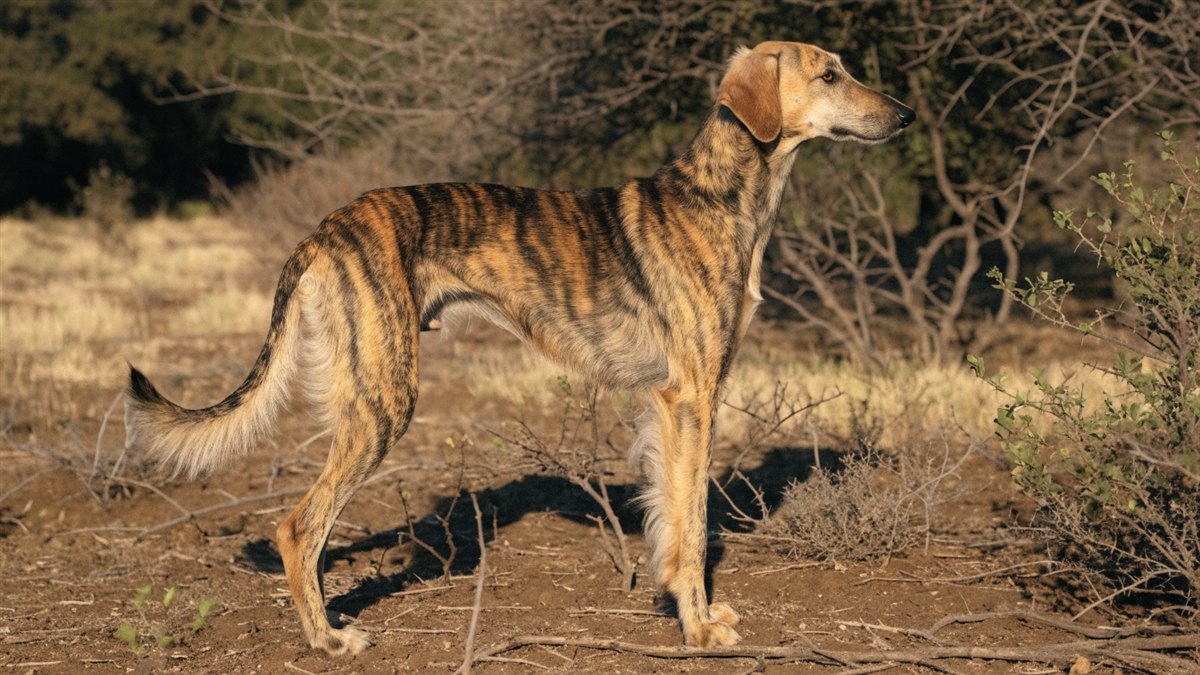
The Banjara Hound is a sighthound bred and used for hunting by the nomadic Banjara of Maharashtra, described in hound literature as rough-coated, usually brindle or solid-coloured, standing around 28 inches (71 cm), resembling a large Saluki, and famed for its stamina and its ability to pull down deer.
That single sentence is the entire verified core of the breed. It traces to David Alderton's *Hounds of the World*, Bruce Fogle's *The Encyclopedia of the Dog*, David Hancock's *Sighthounds* and W. V. Soman's *The Indian Dog*, and everything published online since is either a restatement of it or an extrapolation from other breeds. Bonbeno separates the two on this page rather than blending them, because a reader deciding whether to keep this dog deserves to know which claims stand on a source.
The breed is also recorded as the Banjari Hound, the Vanjari Hound, the Banjari Greyhound, the Vanchari Hound and the Wanjari Hound. A breed-identification database adds Vanjari Hound and a Malayalam rendering to the same list, which tells you the naming is unsettled rather than regional.
Breed recognition is the fact that matters most
No kennel club recognises the Banjara Hound. Wikipedia's list of Indian dog breeds records its recognition status as NONE, in a table where the Chippiparai, Kanni, Kombai, Mudhol Hound, Rajapalayam and Ramanadhapuram Mandai all carry Kennel Club of India recognition. The Kennel Club of India is the country's national purebred registry, founded in 1967 and affiliated to the Federation Cynologique Internationale, and it is the only registry whose pedigree certificate carries official standing in India.
That has one blunt consequence. There is no breed standard for the Banjara Hound, so nobody can tell you that a given dog is or is not one. A rare-breed reference notes only that the Continental Kennel Club, an American registry, has published a breed description, which is not the same as recognition by an Indian or international body.
What the published sources actually say, side by side
Published figures for this breed disagree with each other more than for any other Indian sighthound Bonbeno has profiled. The table below reports them as they stand rather than averaging them into a false consensus.
| Source | Height | Weight | Coat | Lifespan |
|---|---|---|---|---|
| Wikipedia, from Alderton and Hancock | Around 71 cm | M 27-31 kg, F 23-27 kg | Rough, brindle or solid | 12-14 years |
| DogDekho | M 69-74 cm, F 63-69 cm | M 27-31 kg, F 23-27 kg | Fine | 12-14 years |
| Animalia | 71 cm | M 27-31 kg, F 23-27 kg | Fine and rough | 12-14 years |
| Milouchouchou, from a CKC description | 68.5-73.5 cm | 22.5-29.5 kg | Rough but silky, black with blue or grey mottling | 13-14 years |
| Heads Up For Tails | 55-70 cm | Not stated | Short, smooth | 10-14 years |
| Snoutastic | 61-76 cm | 23-32 kg | Short, smooth | 12-15 years |
| The Pet Partner | Not stated | 20-30 kg | Short, dense, smooth | 12-15 years |
| Petzcare India | Not stated | Not stated | Short | 10-12 years |
Read that table once more and notice the coat column. The book-sourced description says rough-coated. Four Indian and international pet sites say short and smooth Snoutastic, Banjara Hound Dog Breed… Petzcare India, The Banjara Hound Basil Pet Care, Elegance and Agility…. A rough coat and a smooth coat are not a matter of interpretation, which means at least one set of these pages is describing a different dog. Bonbeno's reading is that the smooth descriptions have drifted toward the familiar image of an Indian sighthound, because the Mudhol Hound and the Chippiparai are smooth and far better documented.
The article's first paragraph, sourced to hound reference books, calls the breed rough-coated and usually brindle or solid-coloured. Its second paragraph, sourced to two pet-content aggregators, says the breed has a fine coat in colours including merle and cream, and adds a rating for stinkiness. Those two paragraphs describe different animals. Every downstream page Bonbeno read repeats one half or the other without noticing.
Where the breed came from
The Banjara Hound is thought to have arisen from crosses between Salukis and local Indian dogs, an origin attributed to the zoologist Desmond Morris, though the breed never became popular beyond its own community and little research has been done into it. A rare-breed reference repeats the same Saluki-and-local-dog account and adds an appearance description of long slender lines, a long narrow muzzle, almond-shaped dark eyes, flat feathered ears, a deep chest and a well-arched neck.
Its working history is consistent across every source. These dogs travelled with the Banjara as their camps moved, hunting game, guarding camps and helping move stock, and they were valued for a combination described as the speed and agility of a Greyhound with the stamina of a Collie. When hunting, they are reported to give a deep baying voice unlike the vocalisation of other Indian breeds.
The name tangle nobody untangles
Three separate Indian sighthound names overlap in a way that will confuse anyone researching this breed. Wikipedia's Mahratta Hound article states that, like the Banjara Hound, the Mahratta is bred and used for hunting by the nomadic Banjara of Maharashtra, citing Fogle and Hancock, and describes it as blue and tan and standing around 22 inches (56 cm). That is a second, much smaller breed attributed to the same community. Separately, the Mudhol Hound of Karnataka is itself sometimes called the Mahratta Hound. A dog described online as a Banjara, a Vanjari or a Mahratta could reasonably be any of the three, and no registry exists to arbitrate.
One more conflation is worth naming. A video result on page one of this SERP is served with the description "often known as the Indian Greyhound or Mudhol Hound", and that is simply wrong. The Mudhol Hound is a separate Karnataka breed, recognised by the Kennel Club of India, with a state research centre behind it, while the Banjara Hound is recognised by nobody. If you want a documented Indian sighthound, that is the one to read about, and Bonbeno covers it at Mudhol Hound.
Banjara Hound price in India
There is no reliable Banjara Hound price in India, because there is no verifiable market for the breed. Bonbeno searched the Indian pet-price sources that publish bands for every other native sighthound and found none that quotes a figure for this one.
That absence is itself the finding. PawSpace's 2026 India dog price guide covers 40 breeds and lists seven Indian natives with price bands, specifically the Indian Pariah Dog, Indian Spitz, Rajapalayam, Mudhol Hound, Chippiparai, Kombai and Kanni. The Banjara Hound, the Banjara Greyhound and the Vanjari Hound appear nowhere in it. For comparison, the same guide puts the Mudhol Hound at Rs 8,000 to Rs 30,000 and an Indian Pariah Dog at Rs 0 to Rs 5,000.
| Source | Banjara Hound price | What it does publish |
|---|---|---|
| PawSpace, 40-breed India price guide | Not listed | Mudhol Hound Rs 8,000-30,000, Rajapalayam Rs 8,000-30,000, Indian Pariah Rs 0-5,000 |
| The Pet Partner | No purchase price | Monthly cost Rs 9,720-16,200, one-time setup Rs 15,000-30,000 |
| Heads Up For Tails | Not listed | Breed description only, no price |
| Snoutastic | Not listed | Care ratings and conservation status only |
| Wikipedia | Not listed | Measurements and temperament only |
Google autocomplete for this term returns "banjara hound puppy for sale", "banjara hound for sale" and "banjara hound puppy price", so buyers are actively searching. With no Kennel Club of India recognition and no breed standard, there is no document any seller can produce to establish that a puppy is a Banjara Hound Fluffyn, KCI Registration Explained. What you would be paying for is a name, applied to a dog nobody can verify.
Sellers do exploit this. A KCI pedigree certificate documents lineage for at least three generations in the Indian Stud Book, and certificates issued by unrecognised bodies with official-sounding names carry no standing at all. For a breed the KCI does not register, no genuine certificate can exist, so any paperwork offered is by definition one of those worthless documents.
Bonbeno's position is plain. Do not budget for a Banjara Hound purchase, because there is nothing credible to buy. If what attracts you is a lean, heat-tolerant Indian sighthound, the honest options are the Mudhol Hound, the Chippiparai, the Kanni and the Rampur Greyhound, all of which have published bands and, for four of them, a registry.
One caveat on the comparison prices above. Indian breed price bands are published without stated methods, sample sizes or collection dates, so treat every rupee figure on this page as reported editorial content rather than a market rate.
Monthly cost of keeping a Banjara Hound
One published estimate exists for the monthly cost of keeping a Banjara Hound in India, and it is Rs 9,720 to Rs 16,200, with a one-time setup of Rs 15,000 to Rs 30,000 and an annual projection of Rs 1,16,640 to Rs 1,94,400. That figure is published without a stated method, so read it as an order of magnitude for a large Indian sighthound rather than as a survey result.
Bonbeno flags one oddity in it. Rs 9,720 to Rs 16,200 a month is higher than the running costs published for better-documented Indian sighthounds, and nothing about a low-shedding, short-coated, landrace-type dog explains a premium. Budget instead from the line items below, which are the ones that actually move for this type of dog in an Indian home.
Where the money genuinely goes
- Food. A lean 23 to 32 kg sighthound is the largest recurring line, and published guidance is 2 to 3 cups of a protein-rich diet daily split across two meals.
- Tick and flea control, year round. This is the single most underbudgeted line in India. Half of the dogs in a four-city Indian study carried a tick-borne pathogen, and a dog that runs through scrub is exposed harder than a pavement-walked one.
- Core vaccination and preventive veterinary care. Routine check-ups, boosters and deworming, with the vaccination course concentrated in the first months.
- Bedding. Not optional for this build. Hard floors produce pressure calluses and hygromas over bony points, and the correct bed is egg-shell or memory foam.
- Secure fencing or paid access to safe running space. The real cost of a coursing hound in an Indian metro, because a public park is not a place to let a strange sighthound off lead.
- Grooming. Effectively nil. A weekly brush and a nail trim every two to four weeks is the entire routine.
Bonbeno's verified owner cost survey across Indian metros is in progress and will be published with its sample size and collection date. Until then, no page on the internet, this one included, can tell you what a Banjara Hound costs to keep in Pune with a straight face.
Heat tolerance and the Indian climate
The Banjara Hound has excellent heat tolerance, which is the one care claim every source agrees on. It prefers average to warm weather conditions, its short coat allows good air circulation in India's hot climate, and it is described as suited to the intense heat of Chennai and Mumbai and the extremes of Delhi and Jaipur.
The reason is structural. This is a Deccan Plateau dog with no double coat, a lean frame and a large surface area for its mass. Compare that with the double-coated imports that fill Indian veterinary heat-stroke case loads, and the difference is not marketing, it is thermodynamics.
Heat stroke is a clinical emergency at body temperatures above 41 C and can progress to multiple organ dysfunction in any breed, including acclimatised ones. Inadequate acclimatisation and obesity are named predisposing factors, and neither is breed-proof.
The numbers to actually work to
A veterinary literature review on canine heat stroke gives working-dog prevention figures that translate directly to an Indian summer. It recommends a maximum of 15 minutes of work in open air at temperatures above 30 C, rest periods of at least 40 minutes between work cycles, and hydration at 40 to 60 ml per kg per day. For a 28 kg Banjara Hound that is roughly 1.1 to 1.7 litres of water a day, more on a working day.
| Season | What changes | What to do |
|---|---|---|
| March to June, peak heat | Ambient regularly above 30 C for most of the day | Run before sunrise and after dusk. Cap open-air work at 15 minutes above 30 C, with 40-minute rests |
| June to September, monsoon | Humidity blocks evaporative cooling and keeps the coat damp | Shorter sessions, dry the dog after runs, check between toes and behind ears for hot spots and ticks |
| October to February, North India | Delhi, Jaipur and Lucknow nights drop sharply | A coat at night. Minimal body fat and a thin coat cut both ways |
| Year round, coastal metros | Mumbai and Chennai stay humid rather than hot | Treat humidity, not the thermometer, as the limiting factor |
Two Indian-specific points follow from the monsoon row. Tick pressure in India is year-round and heavy, with Rhipicephalus and Haemaphysalis ticks found on 53 percent of dogs examined in a four-city survey, and scrub running is exactly how a sighthound collects them. And a rough-coated dog, if the book descriptions are the accurate ones, holds moisture at the feathering longer than a smooth one, which is where monsoon skin problems start.
The cold intolerance is the part Indian owners forget. This dog has almost no insulating fat, which is precisely why it handles an Indian summer so well, and the same anatomy is why it genuinely needs a coat on a January night in the north. A Labrador does not. A Banjara Hound does.
Temperament and household fit
The Banjara Hound is gentle and intelligent with its own people but independent, territorial and protective of its property, and it is not particularly friendly with strangers, children or other pets, which published sources agree makes it a poor choice for a first dog. It is a guard and a hunter that lives with you, not a family companion that occasionally guards.
That reserve is a working trait, not a fault. These dogs guarded camps as well as hunted, and they are described as keen observers, very territorial and protective about their property. Breed databases rate watchdog ability and territorial behaviour at the top of the scale and stranger-friendliness, child-friendliness and cat-friendliness near the bottom.
Those trait scores come from breed-database aggregation, not from behavioural study of a sampled population. No researcher has temperament-tested a group of Banjara Hounds. Read them as the received description of the type, verify nothing from them, and judge the individual dog in front of you.
Prey drive is the trait that will change your life
Prey drive is rated at the maximum by every source that scores it, alongside a maximum impulse to wander or roam. The breed hunted antelope and hare, and its method was to close on the quarry, reach back and pull the animal down. A dog built and bred to do that does not distinguish between a blackbuck and a neighbour's cat.
The practical consequence is that secure fencing is not a preference, it is the condition of ownership. A sighthound in pursuit crosses roads without registering them, and no amount of training changes what happens in the two seconds after it sees movement. Households with free-roaming cats, rabbits or poultry should not take this dog.
Who this breed suits
- Good fit. Semi-rural or farm properties, owners with genuinely secure land, people who want a watchful outdoor-capable dog and can exercise it hard every day.
- Poor fit. Apartments, first-time owners, homes with small pets, families wanting a demonstrative dog with children, anyone who needs reliable off-lead recall.
- Frequently misjudged. Barking is rated low to average, which reads as an easy dog. A quiet dog with maximum prey drive and maximum roaming impulse is not an easy dog, it is a quiet one.
One trait cuts the other way and deserves credit. The breed tolerates being left alone at the top of the scale, which for a working household is a genuine advantage over the separation-prone companion breeds.
Training a Banjara Hound
Train a Banjara Hound with short, positive, high-value sessions and treat recall as a management problem rather than a training goal. The breed is intelligent but is explicitly described as not easy to train, requiring time and repetition to learn new commands.
Every sighthound rule applies here in its strongest form. Sighthounds see movement at distances their handler cannot, and the instinct to chase overrides commands once it fires. They are also less motivated by food than biddable breeds and are gentle souls that do not respond well to harsh corrections.
Four adjustments that actually work
- Build recall indoors first, then in a garden, then in a gated field, moving far more slowly than you would with a retriever and controlling the environment at every stage.
- Reward with movement, not only food. A small fluffy toy on the move often outperforms treats with a sighthound because it imitates the thrill of hunting.
- Keep a long line on permanently in any area with wildlife or traffic, and consider a muzzle for a dog with an established chase history.
- Swap sit for down or stay if the dog finds sitting uncomfortable, which is common in sighthounds because of their anatomy.
Socialisation is the single highest-return investment
Puppy socialisation matters more in a naturally territorial breed than in a sociable one, and the window is early. The American Veterinary Society of Animal Behavior states that the primary and most important period for puppy socialisation is the first three months of life, that puppies should be exposed to as many animals, stimuli and environments as can be achieved safely without causing fear or withdrawal, and that this should be the standard of care before puppies are fully vaccinated.
AVSAB recommends classes on surfaces that are easily cleaned and disinfected, and advises avoiding dog parks and other highly trafficked areas where vaccination and disease status is unknown. In Indian cities that distinction is not academic, because tick-borne disease pressure is high and co-infection is common.
Set expectations before you start. A Banjara Hound will not drill to a formal obedience standard the way a herding breed does, and pushing it will produce refusal and avoidance rather than compliance. What you can reasonably build in a year is a dog that walks well on a lead, settles indoors, tolerates handling and comes reliably in a fenced space. Off-lead reliability in open country is not a realistic goal, and planning around that fact is what separates owners who enjoy this type of dog from owners who lose one.
How much exercise a Banjara Hound needs
An adult Banjara Hound needs about 90 minutes of exercise a day, and published guidance puts the working range at 60 to 90 minutes of vigorous activity that includes real sprinting rather than walking alone.
Walks do not satisfy a coursing hound. The activities this type is built for are running, fetch, lure coursing, agility work and long walks, and a dog denied the sprinting component develops destructive behaviour, anxiety and weight problems regardless of how many kilometres it covers at heel.
| Stage | Guidance |
|---|---|
| Puppy | Shorter, more frequent sessions to avoid overexertion. No forced running or stairs work |
| Adult | 60 to 90 minutes daily, vigorous, including sprint opportunities |
| Adult, weekly | At least one long free run in a large, genuinely enclosed area |
| Senior | Less intense, still daily. Regular walks and play |
| Peak Indian summer | Pre-dawn and post-dusk only. 15-minute caps above 30 C |
Space is the real constraint in an Indian city
This breed is rated at the bottom of the scale for apartment life and at the top for country living. Breed databases put apartment friendliness and adaptability at 2 out of 5. Heads Up For Tails is blunter, describing it as best suited to rural or semi-rural homes with open space. If you live in a Mumbai or Bengaluru flat and cannot commit to daily access to a secure open area, this is the wrong dog and no amount of enthusiasm fixes that.
Mental work is not optional either. A breed with this work drive needs tasks that engage the hunting instinct, and scent games, puzzle feeders and agility courses do real work in preventing boredom-driven behaviour. Lure coursing is the natural fit where a club exists, which in India is still rare.
At least one ranking page states that Banjara Hounds reach 40 miles per hour. Bonbeno found no measured study of this breed's speed, and no source that repeats the figure names a method. Treat it as folklore. No top-speed claim on this page rests on anything, because nothing has been measured.
Grooming a Banjara Hound in Indian humidity
Grooming a Banjara Hound takes about ten minutes a week whichever coat description is correct. Brush weekly with a hound mitt or firm bristle brush, bathe every few months or when genuinely dirty, and trim nails every two to four weeks Snoutastic, Banjara Hound Dog Breed….
The coat itself is the one physical trait sources cannot agree on. Hound reference literature calls it rough, a rare-breed description calls it rough but silky to the touch, and Indian pet sites call it short and smooth Petzcare India, The Banjara Hound. Shedding is rated low across the board at 2 out of 5 Snoutastic, Banjara Hound Dog Breed…, and grooming is rated easy, so the practical routine is the same either way.
Groom the dog on a day it has already run. A sighthound that has emptied its tank stands still for a brush, a nail trim and an ear check, and one that has not will treat all three as a game. That single sequencing choice does more for grooming compliance in this breed than any tool you can buy.
The India-specific additions
- Run a tick check after every scrub run, not weekly. Ticks were found on 53 percent of dogs in an Indian four-city survey, most commonly Rhipicephalus.
- Dry the dog properly in monsoon. A coat left damp at the ear feathering, armpits and between the toes is where Indian humidity turns into a skin problem.
- Check ears for debris weekly, which published care guidance lists alongside brushing and nails.
- Inspect elbows, hocks and hips every month for thickened skin, which is the earliest sign of the bedding problem below.
- Skip professional grooming entirely. Nothing in this coat needs a salon at any point in the dog's life.
Bedding is a grooming item in a dog this lean
A hygroma is a fluid-filled swelling under the skin over a bony prominence, most often the elbow, caused by the repeated trauma of lying on hard surfaces such as tile, concrete or hardwood. Large-breed dogs of any age are at risk if they rest on hard floors, and untreated hygromas can grow, become infected and require surgery.
In Indian homes with stone or tile floors, this is close to universal in poorly provisioned large sighthounds and close to absent in well provisioned ones. The fix costs less than one vet visit. Provide egg-shell or memory foam bedding, and cover the hard floor in the spots the dog actually chooses, with interlocking foam tiles if a bed will not stay put. Pressure calluses that have already formed usually stabilise once the padding is in place.
Health and lifespan
No breed-level health data exists for the Banjara Hound. There is no prevalence study, no screening scheme, no breed club health survey and no registry stud book, so any page giving you a percentage for this breed is extrapolating from other dogs.
Bonbeno says that plainly because the alternative is worse. At least one ranking page lists hip dysplasia, progressive retinal atrophy and hypothyroidism as the breed's common health issues, complete with recommended screening intervals. Those are the standard conditions applied to large breeds generally. Nothing in the published literature on this breed supports naming them, and Bonbeno will not repeat them as breed facts.
Lifespan, as the sources actually state it
| Source | Stated lifespan |
|---|---|
| Wikipedia, Animalia and DogDekho Animalia, All about Banjara Hound breed DogDekho, Vanjari Hound | 12 to 14 years |
| Milouchouchou | 13 to 14 years |
| Snoutastic and The Pet Partner The Pet Partner, Banjara Hound | 12 to 15 years |
| Heads Up For Tails | 10 to 14 years |
| Petzcare India | 10 to 12 years |
The honest summary is 10 to 15 years across all published claims, with 12 to 14 the most repeated. None of these figures rests on a mortality study.
Sighthound anaesthesia, and the explanation most pages get wrong
Tell any veterinarian your dog is a sighthound before a procedure, and be specific about which drugs concern you. Sighthounds recover slowly from thiobarbiturates such as thiopental and from propofol.
The reason usually given is low body fat, and that explanation is incomplete. Anaesthetic sensitivity was initially thought to be a consequence of the naturally low body fat content of Greyhounds limiting redistribution of lipophilic drugs, but pharmacokinetic work identified poor drug metabolism as a major culprit, specifically reduced expression and activity of the liver enzyme CYP2B11. The CYP2B11-H3 haplotype shows over 70 percent lower gene expression than H1, and it was found in every breed of Sighthound Group 1 tested except the Irish Wolfhound.
In practice both mechanisms stack. With little adipose tissue to buffer a lipophilic drug, the full circulating dose stays in the bloodstream and central nervous system, and the liver then clears it slowly, so a standard dose produces deeper anaesthesia and a longer recovery. Alfaxalone is described as a safer induction agent for sighthounds because it is less dependent on the compromised CYP2B11 pathway and redistributes efficiently despite low body fat.
Say the dog is a sighthound, ask whether the practice uses thiopental or propofol for induction, and ask whether alfaxalone is available. In a country where most general practices see very few sighthounds, that one question is the highest-value thing you can do for this dog's safety.
The risks that are actually evidenced in India
- Tick-borne disease. In 525 dogs across four Indian cities, 49.7 percent carried at least one tick-borne pathogen. Hepatozoon canis was most common at 30 percent, followed by Ehrlichia canis at 20.6 percent, Mycoplasma haemocanis at 12.2 percent, Anaplasma platys at 6.5 percent and Babesia vogeli at 5.5 percent, and 39 percent of infections were concurrent with another pathogen.
- Heat stroke. An emergency above 41 C that can cause central nervous system dysfunction and multiple organ dysfunction syndrome, with obesity and poor acclimatisation as predisposing factors.
- Hygromas and pressure calluses. Predictable, preventable, and driven entirely by hard flooring and excess weight.
- Cold exposure. Minimal insulation makes a North Indian winter night a real risk for a dog kept outdoors.
- Trauma from pursuit. Roads and fences, which in a maximum prey drive breed is the commonest way a young sighthound dies.
One structural point deserves stating. This is a landrace-type dog shaped by function rather than by a show ring, and landrace populations generally carry a lighter inherited-disease burden than closed-registry breeds. Bonbeno rates health robustness at 3 out of 5 rather than 4 anyway, because an undocumented breed is not the same as a healthy one, and an absence of data is not evidence of health.
Feeding a Banjara Hound
Feed a Banjara Hound to a visibly lean sighthound body condition and adjust intake to workload rather than to a bag chart. Published guidance is 2 to 3 cups of a high-quality protein-rich diet daily for an adult, split into two meals, with puppies fed three times a day.
Body condition is the number that matters, not the number on the scale. On the nine-point scale, a dog at 4 or 5 out of 9 has ribs that are easy to palpate without pressure, an obvious waistline viewed from above and a clear abdominal tuck viewed from the side. A useful check is to compare the feel of the ribs to your own knuckles. At ideal weight they feel like the knuckles of a hand resting flat on a table, and if they feel like the palm side, the dog is overweight.
A correctly conditioned Banjara Hound looks underfed to an eye trained on Labradors and Indian street dogs. Owners then feed it up to a shape that looks reassuring and is wrong. A body condition score of 7 out of 9 in a dog corresponds to about 30 percent body fat, and excess weight directly raises the risk of pressure trauma over bony points.
Practical feeding through an Indian year
- Split adult intake across two meals rather than one, which is standard practice for a deep-chested breed.
- Feed puppies three meals a day through the growth phase, then step down.
- Match intake to workload, increasing on days with a long free run and cutting back on rest days.
- Expect appetite to drop in peak summer. Adjust volume rather than forcing food, and treat persistent inappetence as a veterinary matter rather than a preference.
- Watch for ingredient sensitivities when changing food, since reactions to new diets are the commonest reason a lean dog stops holding condition.
On availability, nothing about this breed requires a specialist diet. Any complete large-breed food sold in India meets its needs, and the money is better spent on year-round tick and flea prevention than on premium kibble, given the disease pressure the Indian data shows. Bonbeno tests Indian pet food brands first-hand before publishing a verdict, and our testing method sets out what a Bonbeno food review does and does not claim.
Banjara Hound puppy: the first two years
A Banjara Hound puppy needs three things in its first year, and they are structured socialisation, restrained exercise and soft bedding. Get those right and most of the breed's reported problems never appear.
Before any of it, one warning specific to this breed. You cannot verify that a puppy sold to you as a Banjara Hound is one, because no registry recognises the breed and no breed standard exists to measure it against. Everything below applies to raising a large Indian sighthound, which is what you will actually have.
- 8 to 16 weeks. The primary socialisation window. Expose the puppy to as many people, surfaces, sounds and calm dogs as can be managed safely, on cleanable surfaces rather than in dog parks, and do it before the vaccination course finishes. Three meals a day.
- 4 to 6 months. Lead work, handling and body checks. Keep exercise short and frequent, and avoid forced running and stairs. Put proper bedding down now, because pressure trauma starts early on tile.
- 6 to 12 months. Prey drive becomes obvious and reserve toward strangers starts to show. Keep socialising rather than withdrawing, and move recall training onto a long line permanently.
- 12 to 18 months. Build gradually toward the adult load of 60 to 90 minutes daily. Introduce free running only in genuinely enclosed space.
- 18 to 24 months. Physically mature. Full adult exercise including a long weekly free run, and a settled two-meal feeding pattern.
What to do at the first vet visit
Register the dog as a sighthound in the clinic's records at the first appointment, before any procedure is on the table. Reduced CYP2B11 activity slows clearance of thiopental and propofol across sighthound breeds, and a general practice that sees mostly Labradors and indies will not think to check unless you say it. Start year-round tick and flea prevention at the same visit, given that half the dogs in the Indian survey data carried a tick-borne pathogen.
Published breed data gives a gestation length of 60 to 64 days and a litter size of 4 to 6 puppies, with one litter a year. As with everything else on this breed, that figure is aggregated rather than surveyed, so treat it as indicative.
Banjara Hound vs Mudhol Hound
Choose the Mudhol Hound over the Banjara Hound for almost any Indian household, and the reason is documentation rather than the dog. The Mudhol is a Kennel Club of India recognised breed with a state research centre and a published price band, while the Banjara Hound is recognised by nobody and cannot be verified at purchase PawSpace, Dog Price in India 2026.
Both are lean Indian sighthounds from the Deccan, both are heat-tolerant, both are reserved with strangers and both are hopeless off-lead near wildlife. On temperament and care they are close cousins. On everything a buyer can check, they are not comparable.
| Factor | Banjara Hound | Mudhol Hound |
|---|---|---|
| Kennel club recognition | None | Kennel Club of India |
| Breed standard | None published | Published, and shown at KCI events |
| Origin | Nomadic Banjara of Maharashtra | Bagalkot district, Karnataka |
| Height | Around 71 cm | 61-76 cm, males taller |
| Coat | Rough per books, smooth per pet sites Heads Up For Tails, Dog Breeds in India | Smooth or silky Pashmi, both documented |
| Published price band | None exists | Rs 8,000-30,000 |
| Institutional backing | None | State research centre and Army, IAF and SPG service |
| Availability in India | Very rare, and unverifiable when offered | Concentrated in Karnataka, obtainable |
| Conservation status | Described as endangered and at severe risk from interbreeding National Purebred Dog Day | Actively bred and institutionally supported |
| Shared health flag | Sighthound anaesthesia sensitivity | Sighthound anaesthesia sensitivity |
The honest verdict
If you want the dog, buy the Mudhol. If you want to help the Banjara Hound survive as a population, buying one from an unverifiable seller is the least useful thing you can do, because it creates demand a market cannot honestly supply and rewards whoever labels a crossbred sighthound convincingly. The breed's documented threat is interbreeding with other breeds as Banjara families integrate into settled life and stop maintaining the type Poochpedia, Vanjari Hound. A retail market in unverified puppies accelerates that, it does not reverse it.
For readers cross-shopping more broadly, the Rampur Greyhound is the North Indian equivalent question, and the Indian Pariah Dog is the genuinely adaptable, genuinely available Indian dog for a household that wants a hardy native animal without any of this uncertainty.
Mistakes Indian buyers make with this breed
These repeat consistently and are ranked by consequence.
- Paying a premium for a name nobody can verify. With no Kennel Club of India recognition and no breed standard, no seller can prove a puppy is a Banjara Hound, and certificates from unrecognised bodies carry no standing.
- Treating aggregator health lists as breed facts. Hip dysplasia, progressive retinal atrophy and hypothyroidism are published as this breed's common problems with no breed evidence behind them. Screen the individual dog, not the label.
- Trusting recall. Prey drive and roaming impulse are rated at maximum, and chase overrides commands in every sighthound. Use a long line permanently in open ground.
- Assuming a quiet dog is a low-need dog. Barking is rated low and exercise need is 90 minutes daily. Those facts are unrelated.
- Keeping a lean sighthound on tile. Repeated lying on hard floors produces hygromas over the elbows and other bony points, and it is entirely preventable with foam bedding.
- Not telling the vet it is a sighthound. Reduced CYP2B11 activity slows clearance of thiopental and propofol, and the practice will not know unless you say so.
- Skipping year-round tick control. Half of Indian dogs surveyed carried a tick-borne pathogen, and 39 percent of infections were concurrent with a second one.
- Running a puppy hard. Published guidance is shorter, more frequent sessions through the growth phase to avoid overexertion.
- Leaving a thin-coated dog out on a North Indian winter night. Heat tolerance and cold tolerance are opposite ends of the same anatomy.
- Feeding it up to look healthy. Ribs should be easy to palpate with an obvious waist and tuck, which is a body condition of 4 to 5 out of 9.
One meta-mistake sits above all of these. Reading a single confident page about this breed and treating it as settled fact is how buyers end up disappointed, because the confident pages disagree with each other on height, weight, coat, lifespan and temperament, and none of them says so.
Conservation status, sourcing and adoption
Adopt rather than buy, because the Banjara Hound cannot be sourced honestly in India today. The breed is described as at severe risk from interbreeding with other breeds, with pure hounds in scarce numbers, and one breed database records its conservation status as endangered with low population numbers globally Snoutastic, Banjara Hound Dog Breed….
Why the population is declining
The mechanism is social rather than veterinary. Many Banjara families have left traditional ways and integrated into mainstream society, and maintenance of the breed was left behind with the nomadic life it served. A second reference makes the same point, noting that the relative isolation of the community preserved the type as a pure breed and that continuing integration now puts it at risk of uncontrolled cross-breeding. Breed wikis record the same status of severe risk from interbreeding.
Who the Banjara are, stated accurately
The Banjara, also called Lambadas or Lamanas, are nomadic communities found across India who speak Lambadi, also known as Gor Boli. Historically they were pastoralists, traders, breeders and transporters of goods across inland India, moving cargo by boat, cart, camel, ox, donkey and occasionally horse, and trading cattle across the country's bazaars. The dogs that travelled with them hunted game, guarded camps and helped move stock, and were described as indispensable to the community.
Two facts belong here because they explain the breed's invisibility rather than decorating the page. In the nineteenth century the British colonial authorities brought the community under the Criminal Tribes Act of 1871, and that designation continued until the Act was repealed after independence, when the Banjara were reclassified as a Denotified Tribe. Today the community is listed as a Scheduled Tribe in Andhra Pradesh, Telangana and Odisha, as an Other Backward Class in Chhattisgarh, Gujarat, Haryana, Madhya Pradesh, Maharashtra and Rajasthan, and as a Scheduled Caste in Karnataka, Delhi and Punjab. A dog belonging to a community that was criminalised by statute for eight decades was never going to be entered into a colonial-era stud book, and that is a large part of why the Mudhol Hound has a state research centre and this breed has a stub.
The Banjara Hound is not a mystical relic and the Banjara are not a museum exhibit. This is a working dog kept by working communities whose livelihoods changed, and the breed declined for the ordinary reason that the job it did stopped existing. Bonbeno reports that as social history, not as folklore.
If you still want to source one
- Start in Maharashtra and the Deccan, where every source places the population, and specifically with working households rather than with online listings.
- Ask to see the parents working, because with no breed standard, function is the only evidence of type available to you.
- Refuse any pedigree certificate. No genuine one can exist for a breed the Kennel Club of India does not register, so a certificate is a signal against the seller rather than for them.
- Verify nothing on the strength of a photograph. A breed-identification app lists this breed, but a smooth Indian sighthound photographs identically to several others.
- Expect to fail. Most buyers who go looking will find crossbred sighthounds sold under the name, and walking away is the correct outcome rather than a wasted trip.
The adoption route
Indian sighthounds and sighthound crosses turn up regularly in Maharashtra and Karnataka shelters, usually surrendered when an owner underestimated the exercise requirement. An adult has a known temperament around cats, children and other dogs, which for a maximum prey drive type is the single most useful thing you can know before committing. If what you want is a hardy, heat-tolerant, low-grooming Indian dog and the specific breed name is negotiable, the Indian Pariah Dog is free to adopt, genuinely adaptable and available in every Indian city today.
Bonbeno does not broker sales, does not recommend breeders and does not link puppy listings. What we will say is that a breed with no registry, no standard, no health data and no verifiable market is not a breed a first-time owner should be shopping for, however much the history deserves preserving.
Banjara Hound questions people actually ask
What is a Banjara Hound?
The Banjara Hound is an Indian sighthound bred and used for hunting by the nomadic Banjara of Maharashtra. It is described in hound literature as rough-coated, usually brindle or solid-coloured, standing around 28 inches or 71 cm, resembling a large Saluki, and famed for its stamina and ability to pull down deer. No kennel club recognises it.
What is a Vanjari Hound?
Vanjari Hound is another name for the Banjara Hound, not a separate breed. The same dog is recorded as the Banjari Hound, the Vanjari Hound, the Banjari Greyhound, the Vanchari Hound and the Wanjari Hound. Breed databases list all of these as aliases for one Indian sighthound kept by the nomadic Banjara of Maharashtra.
What does a Banjara Hound look like?
Sources disagree, which is unusual and worth knowing. Hound reference books describe a rough-coated brindle or solid-coloured sighthound of about 71 cm resembling a large Saluki, with a long narrow head, almond eyes, feathered flat ears and a deep chest. Several Indian pet sites instead describe a short smooth coat. There is no breed standard to settle it.
Are Banjara hounds good dogs?
They are good working dogs and difficult pets. Published descriptions call them gentle and intelligent with their own people but territorial, protective, not easy to train, and not particularly friendly with strangers, children or other pets, which makes them unsuitable for first-time owners. Prey drive and roaming impulse are both rated at the maximum.
What is the Banjara Hound puppy price in India?
No credible published price exists. India's major dog price guides list bands for the Mudhol Hound, Rajapalayam, Chippiparai, Kanni, Kombai, Indian Spitz and Indian Pariah Dog, and do not list the Banjara Hound at all. With no Kennel Club of India recognition and no breed standard, nobody can prove that a puppy sold under the name is one.
Is the Banjara Hound good for apartment living?
No. Breed data rates apartment life at 1 out of 5 and country living at 5 out of 5, with adaptability at 2 out of 5. The breed needs about 90 minutes of daily exercise including real running, and Indian breed guides describe it as best suited to rural or semi-rural homes with open space.
How much exercise does a Banjara Hound need?
About 90 minutes a day, with published guidance putting the working range at 60 to 90 minutes of vigorous activity. Walks alone are not enough. The breed needs sprinting opportunities such as free running in a secure area, fetch or lure coursing, and puppies should get shorter, more frequent sessions instead.
How much does a Banjara Hound shed?
Very little. Shedding is rated 2 out of 5 across breed databases and grooming is rated easy. A weekly brush with a hound mitt or firm bristle brush, an occasional bath every few months, and nail trims every two to four weeks is the entire routine, whichever coat description turns out to be correct.
Are Banjara Hounds easy to train?
No. Published descriptions state the breed is not easy to train and needs time and repetition to learn new commands, and trainability is rated 2 out of 5. As a sighthound it is also less food-motivated than biddable breeds, sensitive to harsh correction, and effectively deaf to recall once a chase begins.
How long do Banjara Hounds live?
Published figures range from 10 to 15 years, with 12 to 14 years the most commonly repeated. Wikipedia, Animalia and DogDekho give 12 to 14 years, Snoutastic and The Pet Partner give 12 to 15, Heads Up For Tails gives 10 to 14, and Petzcare India gives 10 to 12. No mortality study exists for the breed.
Is the Banjara Hound good with kids?
Published data says it is reserved with children, rating child friendliness at 2 out of 5 and stating the breed is not particularly friendly with strangers, children or other pets. That rating comes from breed-database aggregation rather than behavioural study, so supervise every interaction regardless and judge the individual dog.
Is the Banjara Hound good with other pets?
Usually not. Cat friendliness and pet friendliness are both rated 1 out of 5, and prey drive is rated at the maximum alongside a maximum impulse to roam. A dog bred to run down antelope and hare does not distinguish between quarry and a household cat, so homes with small pets should choose a different breed.
Is the Banjara Hound the same as the Mudhol Hound?
No. They are separate breeds from different states. The Mudhol Hound is a Karnataka sighthound recognised by the Kennel Club of India, with a state research centre and service records with the Indian Army and Air Force. The Banjara Hound is a Maharashtra breed of the nomadic Banjara with no kennel club recognition anywhere. Some ranking pages conflate them, incorrectly.
Can a Banjara Hound handle Indian heat?
Yes, better than almost any imported breed. It is a Deccan Plateau dog with no double coat, and published sources say it prefers average to warm weather and adapts well to Indian conditions. Adaptation is not immunity, so cap open-air work at 15 minutes above 30 C, allow 40-minute rests, and provide 40 to 60 ml of water per kg per day.
Is Mudhol Hound an Indian breed?
Yes. The Mudhol Hound is a Karnataka sighthound recognised by the Kennel Club of India, with a state research centre behind it and service records with the Indian Army and Air Force. It is sometimes called the Mahratta Hound, and India's 40-breed price guide lists it at Rs 8,000 to Rs 30,000. It is a separate breed from the Banjara Hound of Maharashtra, which no kennel club recognises, although some ranking pages and video results conflate the two.
Is a hound dog a good pet?
For the Banjara Hound, a good working dog and a difficult pet. Published descriptions call it gentle and intelligent with its own people but territorial, reserved with strangers, children and other pets, and not easy to train, with prey drive and roaming impulse rated at the maximum. Every sighthound rule applies in its strongest form: the chase overrides commands once it fires, so secure fencing and a permanent long line are the conditions of ownership. An experienced household with fenced space can keep one well; a first-time owner in a flat cannot.
Compare with similar breeds
Banjara Hound sits in 3 Bonbeno groups. Each one compares it directly against the breeds it is genuinely an alternative to, on the same figures.