
Dog breed profile
American Bully Price in India: The Breed, Its Standard and Its Hips
What an American Bully costs in India, what the four size classes actually mean, what the breed's own registries say about exaggeration, and why 43.9 percent of its OFA-evaluated hips are dysplastic.
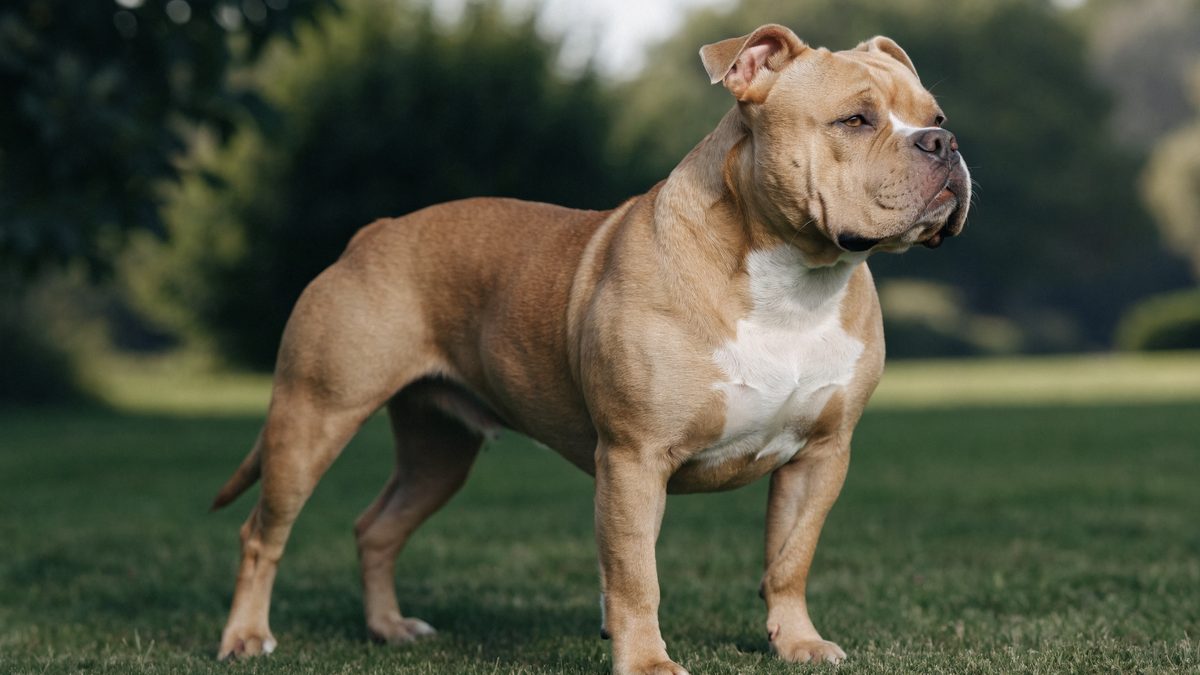
Quick answer
The American Bully price in India runs Rs 20,000 to more than Rs 5,00,000 across published sources in 2026, because the breed comes in four size classes and Indian sellers price the largest highest. The American Bully is a separate breed recognised by the United Kennel Club on 15 July 2013, not a size of pitbull. Its own registry data records 43.9 percent of evaluated hips as dysplastic, roughly double the American Pit Bull Terrier rate.
This guide is general information for Indian pet owners and is not a diagnosis. Always consult a registered veterinarian near you before acting on anything you read here, and treat any sudden change in your dog's condition as urgent.
American Bully at a glance
What an American Bully is, and what the size classes actually mean
The American Bully is a companion breed recognised by the United Kennel Club on 15 July 2013, placed in the Companion Dog Group, and developed as a natural extension of the American Pit Bull Terrier with stock from the American Bulldog, English Bulldog and Olde English Bulldogge blended in. It is a separate breed, not a size variant of the pitbull, and the UKC standard states plainly that although those breeds were used in its creation, the American Bully is a breed of its own and should not specifically resemble any one in particular.
Bonbeno's American Pit Bull Terrier page established the commercial half of this. The dogs Indian sellers advertise as Pitbull XL, XXL or Hulk, priced at Rs 80,000 to Rs 5,00,000 and above, are American Bully rather than American Pit Bull Terrier. This page is about the breed those buyers are actually purchasing, judged against its own two standards rather than somebody else's.
Start with the temperament, because the breed is routinely described in India as a guarding animal and both standards say the opposite. The UKC standard opens by calling the American Bully first and foremost a companion, exhibiting confidence with a zest and exuberance for life, and states that despite its powerful appearance the breed's demeanour is gentle and friendly, making an excellent family dog. Aggressive behaviour towards humans is uncharacteristic of the breed and highly undesirable, and viciousness or extreme shyness is a Disqualification. The ABKC goes further and lists displaying or possessing aggressive behavior towards humans as an outright Disqualifying Fault, describing the breed as great with kids and extremely friendly with strangers, other dogs and other animals.
Two registries, four size classes, and one disagreement worth Rs 3,00,000
Two registries recognise the American Bully, and neither of them is the one most Indian buyers assume. The United Kennel Club recognised the breed on 15 July 2013. The American Bully Kennel Club, founded as the original home of the breed, publishes the standard the show world in the United States actually competes under. The American Kennel Club does not recognise the breed and does not record it even in the Foundation Stock Service, its holding register for purebred breeds not yet eligible for AKC registration. The Federation Cynologique Internationale lists the American Akita, American Cocker Spaniel, American Foxhound, American Staffordshire Terrier and American Water Spaniel in its nomenclature, and no American Bully in either the definitive or the provisional list.
The size classes are where the two recognising registries diverge, and the divergence is the single most useful thing a buyer can hold in their head. UKC recognises three sizes, treating Standard and Classic as one height band. ABKC recognises four varieties, splitting Classic out by build rather than height.
| Class | Male height at withers | Female height at withers | What defines it | Recognised by |
|---|---|---|---|---|
| Under 17 in, and no less than 14 in | Under 16 in, and no less than 13 in | Height only. Same build and body type as the Standard | UKC and ABKC American Bully Kennel Club | |
| Standard | 17 to 20 in | 16 to 19 in | The reference dog. Not to be penalised for a heavily muscled, massive, bulky body type | UKC and ABKC American Bully Kennel Club |
| Classic | 17 to 20 in | 16 to 19 in | Build, not height. Lighter bone and less overall body mass than the Standard, still exhibiting bully traits | ABKC as a separate variety, UKC folds it into Standard United Kennel Club |
| XL | Over 20 in to 23 in | Over 19 in to 22 in | Height only. ABKC says the XL is expected to carry a heavily muscled, massive, bulky body type | UKC and ABKC American Bully Kennel Club |
A Pocket Bully is not a smaller breed and an XL Bully is not a larger one. Both are the same dog measured at the withers, which is why the ABKC describes the Pocket variety as simply shorter than the Standard and the XL variety as simply taller, sharing the same build, body type and breed type in each case.
Read the Classic row twice, because it is the one Indian sellers almost never offer. The Classic is a lighter-framed American Bully with less overall body mass, following the same standard in every other respect. It is the version of this breed with the least orthopaedic loading, and Bonbeno could find no Indian seller listing it. The Indian market offers Pocket, Standard and XL, and prices the two extremes highest ZoodleApp, How to Buy an American Bully….
What the standards say about exaggeration, in their own words
Both standards contain explicit anti-exaggeration language, and the UKC's is the stronger of the two. Its preamble states that quality is never to be sacrificed in favor of size and mass, and that UKC is unwilling to condone the validity of using exaggerated specimens of this breed in a breeding program, cautioning judges about awarding wins to these representatives. Breeders and judges carry a stated responsibility to avoid any conditions or exaggerations that are detrimental to the health, welfare, essence and soundness of the breed.
- Overly massive dogs are a Disqualification under the UKC height and size section, alongside dwarfism and any height so far from what is desired as to compromise health, structure, movement and physical ability.
- Any disproportionate, overdone characteristic that would interfere with physical activity or working ability is an Eliminating Fault.
- A muzzle so short and blunt as to interfere with normal breathing is an Eliminating Fault, and the ABKC uses almost the same words, requiring a muzzle not so short as to interfere with normal breathing.
- A chest so wide as to interfere with normal movement is an Eliminating Fault, and front legs so bowed as to interfere with normal movement is another.
- Splayed or flat feet, long toes and high toe are Eliminating Faults, which matters because those are the first visible consequences of carrying too much mass on short pasterns.
The UKC and the ABKC differ on three points a buyer can check without a tape measure. Merle is a Disqualification under UKC, while the ABKC states that all colours and patterns are permissible and even carves out the merle pattern as an exception in its eye-colour clause. Weight is uncapped under the ABKC, which states there is no particular weight for the breed and asks only that height and weight stay in proportion to the body frame, while the UKC disqualifies overly massive dogs outright. Blue eyes are a UKC Disqualification, either one or both, while the ABKC calls them undesirable rather than disqualifying. If you are paying a premium for a blue-eyed merle XL, you are paying a premium for two traits that would put the dog out of a UKC ring.
Coat, colour and the parts of the standard that price should follow
The coat is short, glossy, close and moderately stiff to the touch, with the ABKC setting a hard ceiling of half an inch in length and both standards treating a long coat as a fault serious enough to bar the dog American Bully Kennel Club. Head shape is the breed's signature and the most tightly written part of both documents. The UKC requires a large, broad head that is never disproportionate to the overall dog, a flat top skull without dome between the ears, and a muzzle from 25 to 35 percent of the overall length of the head. The ABKC puts the same measurement differently, asking that the distance from the tip of the nose to the stop be approximately one-third of the distance from the tip of the nose to the occiput. Hold on to that number. The health section returns to it, because it is the figure that decides whether the published airway research applies to this breed at all.
The tail is the last checkable item. Both standards call for a natural tail carried level with the topline when moving and low when relaxed, extending roughly to the hock, and both disqualify a screw tail, a bobbed tail and a docked tail American Bully Kennel Club. Ears may be natural or cropped without preference in the United States, and UKC states that no dog in any UKC event shall be penalised for a full tail or natural ears. In India the position is different and the common-mistakes section deals with it, because Rule 5(8) of the Prevention of Cruelty to Animals (Dog Breeding and Marketing) Rules, 2017 forbids ear cropping to an Indian breeder outright.
American Bully price in India, and the Rs 4,80,000 spread between published sources
The American Bully price in India runs from Rs 20,000 to more than Rs 5,00,000 across published sources in 2026, and the sources disagree with each other by a factor of more than three on the floor and by Rs 4,00,000 on the ceiling Supertails, Pitbull Dog Price in India…. Bonbeno prints every published band side by side rather than averaging them, because an average of six numbers that describe four different size classes and two different levels of documentation is not a price.
Take the floors first. Happy Pet puts the cost of buying at Rs 20,000 to Rs 1,00,000. Mr n Mrs Pet, which brokers the sales it writes about, starts at Rs 45,000 and runs to Rs 1,00,000 and above. ZoodleApp puts the average at Rs 70,000 to Rs 3,00,000 or more. Supertails, writing about the same dog under the Hulk pitbull label, prices the XL and XXL Bully type at Rs 80,000 to Rs 5,00,000 and above. Four sources, and the cheapest floor is less than a third of the dearest.
| Source | Lowest published price | Highest published price | What the source is |
|---|---|---|---|
| Happy Pet | Rs 20,000 | Rs 1,00,000 | Breed reference site, no puppy sales |
| IndiaMART listing, King Kennel, New Delhi | Rs 28,000 | Rs 28,000 | B2B marketplace listing, single price |
| Mr n Mrs Pet | Rs 45,000 | Rs 1,00,000+ | Brokers the puppy sales it writes about |
| Puppiezo, named XL puppies at 8 weeks | Rs 47,249 | Rs 84,499 | Online pet shop, prices individual puppies |
| ZoodleApp | Rs 70,000 | Rs 3,00,000+ | Pet services platform, no puppy sales |
| Supertails, XL and XXL Bully type | Rs 80,000 | Rs 5,00,000+ | Pet pharmacy and vet clinics, vet-reviewed |
Price by size class, and why the two sellers contradict each other
Only one Indian source prices the size classes separately, and its own numbers do not match the registry standards it is implicitly selling against. Mr n Mrs Pet lists Pocket at Rs 55,000 to Rs 80,000, Standard at Rs 45,000 to Rs 80,000 and XL at Rs 65,000 to Rs 90,000. ZoodleApp states the opposite ranking, answering its own FAQ with the claim that Pocket Bullies are the most expensive, partly because they are the smallest and people tend to think a smaller dog must have better genes than its extra-large littermate.
| Class | Seller's stated height | Seller's stated weight | Registry height | Gap |
|---|---|---|---|---|
| 15 to 17 in | 15 to 25 kg | Under 17 in, no less than 14 in | Height broadly matches. 25 kg on a 17 in frame is a lot of dog | |
| Standard | 17 to 23 in | 20 to 35 kg | 17 to 20 in American Bully Kennel Club | The seller's Standard runs 3 in into XL territory |
| XL | 22 to 24 in | 35 to 55 kg | Over 20 in to 23 in American Bully Kennel Club | 24 in is above the ceiling in both standards |
| XL, second seller | 20 to 23 in | 40 to 60 kg | Over 20 in to 23 in American Bully Kennel Club | Height matches. 60 kg is more than double an APBT male at similar height |
That 60 kg figure is worth pausing on. The American Pit Bull Terrier standard puts the desirable weight for a mature male in good condition at 35 to 60 pounds, about 16 to 27 kg, with a desirable height range of 18 to 21 inches at the withers. An Indian seller advertising a 20 to 23 inch American Bully XL at 40 to 60 kg is describing a dog carrying more than twice the mass on roughly two more inches of leg United Kennel Club. Neither American Bully registry caps weight in kilograms, but the UKC disqualifies overly massive dogs and the health section of this page sets out what the orthopaedic register says about the consequence Orthopedic Foundation for Animals.
The bottom of the market, and why a Rs 30 listing sits at position two
The second organic result on Google India for this exact query on 16 August 2026 is not an article. It is a Tradeindia listing in the Livestock category titled '2 Kg American Bully Black Male 3 Month Puppy Dog', priced at 30.00 INR per Unit, from a Delhi seller with a stated supply ability of 100 per day, a delivery time of one day and packaging details recorded as 'Open Packing';. The specification table lists Commercial Uses: Yes, Stock Quantity 5, and Returnable: No Tradeindia, 2 Kg American Bully Black Male…. The same seller's catalogue also carries a 2 kg Pug puppy, a 5 kg German Shepherd puppy, ladies' long T-shirts, men's shirts and women's pants.
A three-month-old American Bully weighing 2 kg is not a healthy Standard-class puppy, whatever the price says Mr n Mrs Pet, American Bully Puppies…. The listing advertises blue eyes as a feature, and blue eyes, either one or both, are a Disqualification under the UKC standard. And the colour field says Grey in one row and Black in another on the same page. Bonbeno reports this because it describes the market a buyer is entering more honestly than any price table does. A living animal listed per Unit, with a supply ability of 100 per day and open packing, is not a puppy from a breeder. Do not buy a dog this way.
A rung above that sits an IndiaMART listing offering an American Bully at Rs 28,000 per No from King Kennel in New Delhi, described as 'Show qaulity am bully pups for sell', with availability shown as In Stock and the price marked Excluding all taxes. The breed field on that listing contains an eight-digit number rather than a breed name.
Price the legal floor instead of the market floor. The Prevention of Cruelty to Animals (Dog Breeding and Marketing) Rules, 2017 require a registered Indian breeder to hold a certificate of registration from the State Board and display it prominently at the establishment, to breed only females that have reached their eighteenth month and males that have reached their eighteenth month, each certified healthy by a veterinary practitioner at least ten days before mating, to keep individual health records from eight weeks of age, to have a consultant veterinary practitioner examine every dog at the establishment at least once a month, to sell no pup under eight weeks of age, and to micro-chip each pup sold. Every one of those obligations costs money. A puppy priced at Rs 28,000, let alone Rs 30, has not carried them.
Check the registration claim before you pay the registration premium
Sellers advertise KCI-registered American Bully XL puppies and price them accordingly. Before you pay for that line, look at what the register is. The Kennel Club of India is the Federation Cynologique Internationale's Indian member organisation, and the FCI publishes the KCI's studbook returns directly, recording 32,219 puppies registered in 2025, down from a peak of 88,261 in 2021. The FCI nomenclature contains no American Bully in either its definitive or its provisional list. The KCI's own published forms cover litter registration, single dog registration, transfer of ownership and a revised tariff sheet, and the club registers both to the studbook and to an appendix Federation Cynologique Internationale.
- Ask which register the papers are on, the studbook or the appendix, and get the answer in writing before money moves.
- Ask to see the actual certificate for the sire and dam, not a photograph of a logo, and check the registered names against the pedigree.
- Ask for the ABKC or UKC registration number if the seller claims imported bloodline, since those are the two registries that recognise the breed.
- Ask for the microchip number, which the 2017 Rules require the breeder to have implanted before sale.
- Treat papers as identity, not as health. Registration records ancestry. It certifies nothing about hips, elbows or heart, and the health section explains why that distinction costs Indian buyers the most money.
Bonbeno reports these published ranges as editorial content. They are not offers, Bonbeno does not broker puppy sales, and no seller named on this page is endorsed.
What an American Bully costs every month in India
Budget Rs 3,550 to Rs 11,000 a month for an American Bully in India, and understand before you start that every published figure in that range was calculated for a dog smaller than the XL most Indian sellers push. The purchase price is a single payment. The monthly cost runs for ten to fourteen years.
Three published sources break the monthly cost down, and they broadly agree on the shape of it while disagreeing on the total.
| Line item | Happy Pet | Supertails, 30 kg dog |
|---|---|---|
| Food | Rs 2,250 to Rs 3,000 | Rs 3,500 to Rs 6,000 |
| Veterinary | Rs 600 to Rs 1,200 | Rs 500 to Rs 1,500 per routine visit |
| Grooming | Rs 700 to Rs 1,200 | Rs 200 to Rs 500 in supplies |
| Flea and tick prevention | Included in veterinary | Rs 300 to Rs 700 |
| Treats, toys and enrichment | Not itemised | Rs 800 to Rs 2,300 |
| Monthly total | Rs 3,550 to Rs 5,400 | Rs 5,300 to Rs 11,000 |
Mr n Mrs Pet puts the same figure at Rs 3,000 to Rs 7,000 a month, sitting between the two. The gap between Happy Pet's Rs 3,550 floor and Supertails' Rs 11,000 ceiling is mostly food and mostly bodyweight. Supertails costs a 30 kg dog. An XL advertised at 40 to 60 kg eats proportionally more, so treat the top of that range as the starting point rather than the worst case if you buy the largest class.
First-year setup, itemised
The first year carries costs that never repeat. Supertails itemises a first-year setup of roughly Rs 35,000 to Rs 83,000 on top of the purchase price, covering the initial veterinary check and health certificate at Rs 800 to Rs 1,500, the puppy vaccination course at Rs 2,500 to Rs 5,000, deworming across the first three months at Rs 500 to Rs 1,200, microchip registration at Rs 500 to Rs 1,000, a crate, bed and basic accessories at Rs 3,000 to Rs 8,000, collar, leash and harness at Rs 1,000 to Rs 3,000, and bowls, toys and chews at Rs 1,000 to Rs 3,000. Per-shot vaccination costs in India run Rs 800 to Rs 1,500 for DHPPiL and Rs 300 to Rs 600 for rabies, with an annual booster package at Rs 2,000 to Rs 4,000.
The line item every Indian page leaves out
None of the published Indian cost breakdowns budgets for orthopaedic disease, and for this breed that is the omission that matters. Of 912 American Bully hips evaluated by the Orthopedic Foundation for Animals, 43.9 percent are dysplastic, and of 849 elbows, 38.6 percent are dysplastic. Those are the figures for dogs whose owners cared enough to submit radiographs, which is a self-selecting and generally better-bred population than the Indian market average.
Bonbeno could find no reliable published Indian figure for the cost of femoral head ostectomy, total hip replacement or elbow arthroscopy in a private Indian veterinary hospital, and will not invent one. What is publishable is the probability. Nearly half the hips and more than a third of the elbows on the breed's own register are abnormal, and Supertails' clinicians write that extreme size in this type correlates with greater orthopaedic issues, which they see regularly Supertails, Pitbull Dog Price in India…. Ask your own vet for a written estimate for hip and elbow imaging and for surgical management before you buy, and treat that quote as part of the purchase decision rather than a later surprise.
The ten-year number
Supertails puts the lifetime cost of keeping a dog of this type in India at Rs 6 lakh to Rs 12 lakh over ten to twelve years, covering food, veterinary care, grooming and emergencies. Set that against the purchase price. Even at the top of the published range, a Rs 5,00,000 XL is roughly forty percent of what the dog will cost you before it dies. At the bottom, a Rs 45,000 Standard is under eight percent. The purchase price is the smallest decision you will make about this dog, and the one Indian buyers spend the most time on.
- Budget Rs 6,000 to Rs 11,000 a month for a Standard-class adult on quality food with routine veterinary care.
- Add Rs 35,000 to Rs 83,000 for first-year setup on top of the purchase price.
- Hold a contingency for hip and elbow disease, given 43.9 percent and 38.6 percent abnormal on the breed register.
- Add cooling costs if you live in a plains city, because the climate section shows why running a fan is not the same as managing heat for this build.
- Price a Classic or Standard rather than an XL if the budget is tight, because feed cost, joint loading and heat risk all scale with bodyweight.
Heat tolerance in Indian conditions, and what the evidence actually covers
Bonbeno rates the American Bully 3 of 5 for heat tolerance, better than any double-coated import and worse than an Indian native, and the honest reason for that middling score is that the breed sits in a gap in the evidence. The American Bully appears in none of the published breed-level heat-related illness risk tables, because those studies were built on UK primary-care records where the breed is not a recorded category. What does transfer are two of the study's non-breed risk factors, and both of them describe this dog exactly.
The largest study of the subject reviewed the clinical records of 905,543 UK dogs under primary veterinary care in 2016 and identified 395 confirmed heat-related illness events, an incidence of 0.04 percent with an event fatality rate of 14.18 percent. Multivariable analysis found significant risk from breed, from a brachycephalic skull shape, from being over two years of age, and from two weight-related factors: higher bodyweight relative to the breed and sex mean, and weighing over 50 kg.
A dog bred deliberately to be heavier than the mean for its breed and sex is, in the language of that study, carrying an identified risk factor for heat-related illness. Indian sellers advertise the American Bully XL at 40 to 60 kg, which puts the top of that range past the 50 kg threshold the same study flagged independently. The ABKC standard states that the XL variety is expected to carry a heavily muscled, massive, bulky body type and sets no weight ceiling at all. Bonbeno is not claiming a measured odds ratio for this breed, because none has been published. It is pointing out that the buyer choosing the largest class is choosing the one the evidence flags twice.
Exercise is the trigger, not the afternoon
The companion study of the same VetCompass dataset examined 1,259 heat-related illness events from 1,222 dogs and found that exercise was the predominant trigger at 74.2 percent of the 879 events where a cause was recorded, ahead of environmental exposure at 12.9 percent and vehicular confinement at 5.2 percent. The odds of death after exertional heat-related illness were similar to the odds after being shut in a hot car. Young male dogs carried greater odds of the exertional form.
This is the same finding Bonbeno published on the Belgian Shepherd page, and it holds here for the same reason. Drive predicts exertional heat illness better than coat does. A short-coated dog that will keep pulling on a harness in 34 degrees because its owner is still walking is at more risk than a heavy-coated dog that lies down. The American Bully is described by its own standard as active and agile with the athleticism to do well in performance events, and by Indian sellers as a couch potato indoors Puppiezo, American Bully Xl Puppies…. Both descriptions are true, and the dangerous half hour is the one where the dog decides it is not tired.
The airway question, answered honestly
Brachycephalic dogs had greater odds of all three types of heat-related illness in the UK data. Whether that finding reaches the American Bully depends on whether the breed is brachycephalic, and the answer is that nobody has measured it. The health section works through the arithmetic of the standards. What matters for climate planning is the practical version: a dog that snores at rest, snorts on a short walk, or has visibly narrowed nostrils is carrying an airway that will not cool it efficiently, and stenotic nostrils were associated with brachycephalic airway obstruction in all three breeds of a 604-dog study. Bonbeno's Bulldog page carries the airway figures for a breed where the evidence is settled. Do not assume they transfer to this one, and do not assume they do not.
A workable Indian routine
Happy Pet gives the breed's ideal weather band as 15 to 30 degrees Celsius, which is a band Indian plains cities spend a large part of the year above. Plan the day around that rather than around your own convenience.
- Walk before 7 am and after 8 pm from March to October in Delhi, Ahmedabad, Nagpur, Hyderabad and Chennai, and treat midday as indoors-only.
- Test the pavement with the back of your hand for five seconds before every walk, because a short-coated dog with a low-slung chest carries its body close to a hot surface.
- Shorten the walk, not the water. Exertional heat illness is triggered by the exercise, so cut duration and intensity first.
- Watch bodyweight harder than you watch the thermometer, because higher bodyweight relative to the breed mean was an independent risk factor.
- Keep a fan and shade available at all times, and remember that section 11 of the Prevention of Cruelty to Animals Act, 1960 makes failing to provide an animal with sufficient food, drink or shelter an offence.
Coastal humidity is the second problem and it does not show on a thermometer. Panting cools a dog by evaporation, and evaporation slows as humidity rises, so a 32 degree afternoon in Mumbai, Kochi or Kolkata is harder work than a 36 degree afternoon in Jaipur. The monsoon then swaps the heat problem for a skin problem, which the grooming section covers.
A healthy American Bully in an Indian August breathes quietly at rest, recovers to a normal breathing rate within a few minutes of coming indoors, drinks steadily rather than frantically, and lies on a cool floor by choice. Sustained open-mouth breathing at rest, a bright red tongue, unsteadiness, or vomiting after a walk are veterinary emergencies. Move the dog into shade, wet it with cool rather than ice-cold water, and get to a vet. The published event fatality rate of 14.18 percent is why that trip is not optional.
Temperament, household fit, and the word both standards refuse to use
The American Bully is a companion breed by written definition, and both recognising registries say so in the first paragraph of their standards. UKC calls it first and foremost a companion, gentle and friendly despite its powerful appearance, and an excellent family dog. ABKC describes a confident dog with an exuberant willingness to please and bond with its family, great with kids and extremely friendly with strangers, other dogs and other animals. Neither standard uses the word protective.
Three Indian sellers do. Happy Pet lists the top five traits as Intelligent, Loyal, Playful, Athletic and Protective. Puppiezo lists Loyal, Powerful, Protective, Gentle and Confident for the XL. Mr n Mrs Pet is the outlier and the more accurate of the three, headlining Loving and Loyal, Gentle with Kids, Confident but Calm, Low-Maintenance Coat, Adaptable Living and Highly Trainable. A buyer choosing this breed because two of the three biggest listing sites called it protective is choosing on a word that appears in neither standard, sitting next to registry text that makes viciousness a Disqualification American Bully Kennel Club.
The one genuine temperament advantage over the parent breed
This is where the American Bully has a real and checkable edge over the dog it was developed from, and it deserves stating fairly. The American Pit Bull Terrier standard records that although some level of dog aggression is characteristic of this breed, handlers are expected to comply with UKC temperament policy at events, and warns in its characteristics section that because most APBTs exhibit some level of dog aggression, the breed requires an owner who will carefully socialise and obedience train the dog. That is why Bonbeno rates that breed 2 of 5 for compatibility with other dogs on the American Pit Bull Terrier page. The ABKC American Bully standard says the reverse, describing a dog that is extremely friendly with strangers, other dogs and other animals, and calling human or dog aggression very uncharacteristic and highly undesirable. The breed was selected away from that trait deliberately, towards a companion temperament, and buyers who have read scare copy about the parent breed should know that the written standard for this one differs American Bully Kennel Club.
That is a statement about breeding intent, not a guarantee about an individual dog. A puppy from an unregistered Indian litter with no visible parents carries whatever temperament its parents had. The standard describes the target and the market decides how close any given litter lands, which is the whole argument for meeting the mother.
Who this breed suits
- Households wanting a companion, not a deterrent, comfortable with a dog that greets visitors rather than announcing them.
- Owners with a ground-floor home or lift access, because a 30 to 60 kg dog with hip or elbow disease cannot be carried down four flights Puppiezo, American Bully Xl Puppies….
- Families with older children, since both standards describe a dog that is good with kids, and a 35 kg dog still knocks a toddler over without meaning to.
- People able to commit 60 to 90 minutes of daily exercise at the two ends of an Indian day, every day, for a decade.
- Buyers willing to pay for parent health screening rather than for size, colour or an imported-line story.
Who should buy a different breed
- Anyone buying a guard dog. Both standards describe a friendly companion, and the ABKC disqualifies aggressive behaviour towards humans outright.
- Anyone in a society with a breed-restricted list, since several Indian municipal lists name bull-type breeds and the adoption section sets out which.
- Anyone wanting a low-vet-cost dog, given 43.9 percent dysplastic hips and 38.6 percent dysplastic elbows on the breed's own register.
- Anyone drawn to the most exaggerated dog in the litter, because that is the animal both standards penalise and the one that costs the most to keep sound.
- Anyone unable to supervise around small children and other pets, which is true of any 30 kg dog rather than of this breed in particular.
This breed's ancestry runs back through bull-and-terrier crosses whose early history includes baiting and organised fighting, and Bonbeno reports that as history rather than heritage. Under section 11 of the Prevention of Cruelty to Animals Act, 1960, it is an offence, solely with a view to providing entertainment, to incite any animal to fight or bait any other animal, and to organise, keep, use or act in the management of any place for animal fighting, to permit or offer any place to be so used, or to receive money for admission to such a place. Nothing on this page is guidance for fighting, bite work, protection sport or producing aggression in a dog, and nothing here should be read that way. If a seller or trainer offers any of it, the correct response is to walk away and report them.
One further clause of the same section matters before you bring a heavy, strong dog into a small Indian flat. Section 11 makes it an offence to keep any animal chained or tethered for an unreasonable time on an unreasonably short or unreasonably heavy chain, and separately makes it an offence for an owner to neglect to exercise, or cause to be exercised, reasonably any dog habitually chained up or kept in close confinement. A muscular dog on a heavy chain on a balcony is not a management strategy. It is the specific arrangement the statute names.
Training an American Bully, and the timeline that actually holds
To train an American Bully, work the socialisation window hard between 8 and 16 weeks, teach loose-lead walking before the dog outweighs you, and aim the dog's energy at performance rather than at protection. The UKC standard states that the ideal American Bully possesses the athleticism to do well in performance events, and Mr n Mrs Pet lists Highly Trainable among the six reasons it gives Indian buyers for choosing the breed Mr n Mrs Pet, American Bully Puppies…. The failure mode is not stubbornness. It is a strong dog with no job and no manners.
The window that closes
The primary socialisation window runs from 8 to 16 weeks, and what a puppy meets and does not learn to fear in that period shapes its adult personality. Indian law and the ABKC's own code of ethics both put the earliest ethical separation at eight weeks, so a correctly sourced puppy arrives with roughly half the window already gone American Bully Kennel Club, Code of Ethics. Rule 8 of the 2017 Rules is explicit that pups less than eight weeks in age are not sold, and the ABKC code states that no puppy leaves the breeder's premises before eight weeks. That leaves you eight weeks to do the most important work you will ever do with this dog.
Indian cities supply a specific list of things to socialise a puppy to, and Supertails names the ones that matter. Auto-rickshaws, firecrackers around Diwali and dense urban foot traffic are the major stressors, and a 30 kg dog that panics in traffic is a serious management problem rather than a training inconvenience.
- Weeks 8 to 10. Handle feet, ears and mouth daily. Introduce the crate, the harness and the car. Keep outings to arms and laps until the vaccination course allows ground contact.
- Weeks 10 to 12. Add surfaces, including marble, tile, metal grating and wet floor. Add sound, starting with recorded traffic at low volume. Start name recall in a quiet room.
- Weeks 12 to 16. Add people of different ages and dress, calm adult dogs you know are vaccinated, and short trips to the gate at rush hour. Teach the door protocol now, before the dog can push past you.
- Months 4 to 6. Loose-lead walking becomes the priority. A dog that pulls at 15 kg is annoying. The same dog at 35 kg dislocates a shoulder, and the same habit at 60 kg ends walks entirely.
- Months 6 to 12. Impulse control, settle on a mat, polite greetings, and a reliable recall in a fenced space. Add a scent game or a trick routine as the indoor job for monsoon weeks.
Equipment, because this is a strength problem before it is a behaviour problem
Use a well-fitted body harness with a front clip and a fixed-length lead. Do not buy a chain collar, a prong or a slip lead for this breed. Beyond the welfare argument, section 11 of the Prevention of Cruelty to Animals Act, 1960 makes it an offence to keep an animal on an unreasonably heavy chain, and the Indian habit of walking bull-type dogs on chain collars is both a legal exposure and a bad way to teach a dog anything. A dog that has learned to walk on a loose lead does not need hardware to control it.
Indian sellers advertise the largest, heaviest dogs at the highest prices, which creates a market for making a dog look bigger ZoodleApp, How to Buy an American Bully…. Rule 5(8) of the Prevention of Cruelty to Animals (Dog Breeding and Marketing) Rules, 2017 forbids injecting substances to enhance visual appeal outright, alongside dyeing, branding and any change of appearance by artificial means. The UKC standard states that quality is never to be sacrificed in favour of size and mass, and disqualifies overly massive dogs. The ABKC standard says dogs should be healthy and should not reach the point where they are considered obese. If a breeder, gym-style trainer or supplement seller offers a protocol to add bulk, the answer is no. You are being sold the conformation that the health section shows carries a 43.9 percent dysplastic hip rate.
What the law asks of the breeder, and what that tells you
The 2017 Rules put obligations on the breeder that double as a buyer's test. A registered breeder maintains individual health records for every animal above eight weeks of age, has a consultant veterinary practitioner visit periodically with a medical examination of each dog at least once a month, and hands the health records over with the animal on transfer of ownership. A breeder who has done none of that has also, almost certainly, done no early socialisation, and you will be paying for that in training fees within six months.
Realistic timelines, stated plainly. Loose-lead walking takes six to twelve weeks of daily five-minute sessions to become reliable. House-training on a consistent schedule takes four to eight weeks. A recall that holds around another dog takes most of the first year and needs maintaining after that. Anyone selling you a two-week transformation for a bull-type dog is selling you compulsion, and compulsion on a confident, powerful, people-oriented dog is how households and dogs both get hurt.
Exercise: 60 to 90 minutes, and the joints that have to survive it
An adult American Bully needs 60 to 90 minutes of daily activity, a figure three separate Indian sources agree on, and the harder question for this breed is not how much but what kind Supertails, Pitbull Dog Price in India…. With 43.9 percent of the breed's OFA-evaluated hips and 38.6 percent of its elbows recorded as dysplastic, the exercise routine has to load the joints less than it would for a structurally sounder dog of the same energy.
Happy Pet puts the exercise routine at 60 to 90 minutes with a high energy level. Puppiezo gives the same 60 to 90 minutes for the XL, describing it as walks, strength exercises and mental stimulation, while rating the energy level as medium and noting the breed is known to be a couch potato indoors. Supertails puts the minimum for bull-type dogs at 60 to 90 minutes of vigorous physical activity and states plainly that this means real exercise, not a slow neighbourhood stroll.
Split it, do not stack it
Two sessions beat one for this breed in India, for two independent reasons. Exertional heat-related illness was the trigger in 74.2 percent of the events with a recorded trigger, 652 of 879, so a shorter session is a safer session in the heat. And a heavy dog on compromised joints handles two 40-minute walks better than one 80-minute walk, because the last twenty minutes of a long session is where a sore hip becomes a limp.
| Do this | Why | Avoid this | Why |
|---|---|---|---|
| Two brisk walks, 30 to 45 minutes each | Steady low-impact loading, split around the Indian heat window | One long midday walk | Exercise is the dominant trigger of heat-related illness |
| Swimming, where clean water is available | Near-zero joint loading for a breed with 43.9 percent dysplastic hips Supertails, Pitbull Dog Price in India… | Repetitive high jumps and hard-surface fetch turns | Peak forces through hip and elbow joints already at high abnormal rates |
| Scent games, food puzzles and trick training indoors | Mental work tires a confident, biddable dog without heat or joint cost | Weight pull and forced roadwork as a bulking tool | The registries penalise mass, and the 2017 Rules forbid artificial appearance enhancement Prevention of Cruelty to Animals |
| Structured tug with rules, and controlled retrieves | An outlet for drive that ends on your cue | Any bite work or protection sport | Both standards describe a companion, and viciousness is a Disqualification American Bully Kennel Club |
The growing puppy is a separate problem
A large-breed puppy's joints finish forming long after its enthusiasm arrives. Keep formal exercise short and frequent through the first year, skip stairs where you can, avoid repeated jumping off furniture, and let free play on grass do most of the work. Supertails' feeding guidance for muscular bull-type puppies adds the nutritional half of the same point, warning against supplementing calcium because excess calcium in growing large-breed puppies can worsen joint development. A puppy that is walked hard and fed heavy is being set up for the exact orthopaedic outcome the breed register already shows.
Destructive chewing, excessive barking, hyperactivity and anxiety are the documented consequences of under-exercising a bull-type dog, and they get blamed on the breed rather than on the routine. In an Indian apartment during the monsoon or a heat wave, the outdoor session is the one that gets cut, so plan the indoor substitute in advance. Twenty minutes of scent work, a frozen food puzzle and five minutes of trick training buy back most of a missed walk.
Grooming a short-coated dog in Indian humidity
You groom the coat of an American Bully in about ten minutes a week and spend considerably longer on the skin, because the coat is the easy part and the skin is where Indian conditions do their damage. Both standards call for a short, glossy, close coat, with the ABKC setting a ceiling of half an inch in length American Bully Kennel Club. Happy Pet rates shedding as moderate and budgets Rs 700 to Rs 1,200 a month for grooming.
The weekly routine for a short single coat is short and worth doing properly.
- Brush once or twice a week with a rubber curry brush or bristle brush, which lifts dead hair and spreads skin oils.
- Bathe every three to four weeks, or after a muddy outing, using a pH-balanced dog shampoo suited to sensitive skin.
- Clean ears weekly, and more often through the monsoon, which is when moisture and infection arrive together.
- Trim nails every three to four weeks, because overgrown nails cause gait problems in muscular breeds and this one is already carrying joints under load.
- Brush teeth at least three times a week, which matters more here than on most breeds given the dentition figures in the health section.
Check the folds the standard does not ask for
The UKC standard requires cheek muscles that are prominent and free of wrinkles, with flews that are always clean and lips tight. Defra's XL Bully conformation standard, written to describe the dogs enforcement officers actually meet, notes that the type is often having prominent wrinkles on face. Those two sentences describe the same breed, one as it is written and one as it is bred. If your dog has facial folds, clean and dry them the way a Bulldog owner would, because a fold that stays damp in an Indian August becomes a fold dermatitis by September.
Skin is the real grooming job in India
A short single coat gives almost no barrier against environmental allergens, and India's monsoon dramatically worsens fungal and bacterial skin infection. The signs to watch for are constant licking at the paws, redness or rash on the belly and groin, recurring ear infections, and patchy hair loss. Dry the dog thoroughly after any rain exposure and check between the paw pads, which is where Indian owners most often miss the start of a problem.
Demodectic mange is the specific worry. A UK study of primary-care records put the one-year period prevalence of juvenile-onset demodicosis at 0.48 percent in dogs under two years of age, roughly ten times the adult-onset rate, and found seven breeds with increased odds against crossbred dogs: the British bulldog, Staffordshire bull terrier, Chinese shar-pei, dogue de Bordeaux, pug, French bulldog and boxer. The American Bully is not on that list, for the same reason it is absent from the heat tables. It is not a recorded breed category in UK primary-care data. Four of the seven listed breeds are bull types, and two of them sit in this breed's own ancestry, so treat juvenile demodicosis as a plausible risk to watch for rather than as a documented breed predisposition.
A survey of 525 dogs across four Indian cities found that 49.7 percent carried at least one tick-borne pathogen by PCR, with Hepatozoon canis in 30 percent, Ehrlichia canis in 20.6 percent, Mycoplasma haemocanis in 12.2 percent, Anaplasma platys in 6.5 percent and Babesia vogeli in 5.5 percent. Potential tick vectors, most commonly Rhipicephalus, were found on 53 percent of the dogs examined, and 39 percent of infected dogs carried more than one pathogen at once. A short coat makes ticks easier to find, which is the one grooming advantage this breed has. Use that advantage. Run your hands over ears, neck folds, armpits and between the toes after every walk, and keep a year-round preventive on at Rs 300 to Rs 700 a month.
Two things you never do to this coat. Do not shave it, because a half-inch single coat provides sun protection and shaving offers no cooling benefit. And do not use a human shampoo, which strips the skin oils that a short-coated dog in a humid climate depends on.
Health: the orthopaedic numbers no Indian page publishes
The dominant health issue in the American Bully is orthopaedic, and the size of it is measurable. Of 912 American Bully hips evaluated by the Orthopedic Foundation for Animals, 43.9 percent are dysplastic, and of 849 elbows, 38.6 percent are dysplastic, which ranks the breed 4th among every breed OFA tracks for elbow disease. Those are figures for dogs whose owners volunteered radiographs, a self-selecting population that skews towards better breeding than the Indian market average.
OFA's statistics page takes a short breed code, and a guessed code silently returns a complete, plausible table for a different breed. The American Bully code, AB, was read directly out of OFA's own breed-selector markup, where the entry is tagged as a canine breed in the UKC Companion Dog Group, and the returned page was checked against the breed name it printed before any number was taken off it. The American Pit Bull Terrier (PBT) and American Staffordshire Terrier (STA) tables in the comparison below were confirmed the same way.
The comparison that makes the case
Put the American Bully next to the three bull breeds it shares ancestry with, using the same register, the same grading scheme and the same evaluators.
| Measure | American Bully | American Pit Bull Terrier | American Staffordshire Terrier | American Bulldog |
|---|---|---|---|---|
| Hips evaluated | 912 | 1,184 | 4,298 | 2,504 |
| Hips dysplastic | 43.9 percent | 22.2 percent | 25.7 percent | 34.7 percent |
| Hips rated Excellent | 3.9 percent | 9.0 percent | 4.0 percent | 5.3 percent |
| Elbows evaluated | 849 | 582 | 1,609 | 783 |
| Elbows dysplastic | 38.6 percent | 17.2 percent | 18.3 percent | 19.8 percent |
| OFA elbow rank | 4th | 29th | 26th | 22nd |
The American Bully is the worst of the four on both joints. It carries roughly double the hip dysplasia rate and more than double the elbow dysplasia rate of the American Pit Bull Terrier it was developed from, on the same register. It is nine percentage points worse on hips and nearly nineteen worse on elbows than the American Bulldog, the other breed in its founding mix Orthopedic Foundation for Animals. That is the single most useful sentence on this page, and no page ranking for the target query publishes it.
The trend is going the wrong way
OFA also publishes the dysplastic percentage by birth cohort, and the hip figure has worsened across the last three cohorts. Dogs born between 2011 and 2015 were 41.4 percent dysplastic. Dogs born between 2016 and 2020 were 42.7 percent. Dogs born from 2021 onward are 46.1 percent. The elbow figure moved the other way over the same period, from 46.7 percent to 39.1 percent to 36.3 percent, so the picture is not uniformly bleak. It is the hips, and they are getting worse in the cohort now being sold.
Severity matters as much as prevalence. Of the 400 dysplastic hips, 276 are graded mild, 111 moderate and 13 severe, so most affected dogs are at the manageable end. The elbow grades split similarly, with 224 at Grade 1, 90 at Grade 2 and 14 at Grade 3. A mild grade is not a death sentence and many such dogs live comfortably with weight control and sensible exercise. It is still an arthritis diagnosis arriving early in a dog whose owner expected none.
What the breed's own CHIC programme asks for
The American Bully entered the Canine Health Information Center programme on 18 March 2025, which is recent, and OFA lists three required screenings for a CHIC number.
- Hip dysplasia, by OFA radiographic hip evaluation or a PennHIP evaluation registered with OFA.
- Elbow dysplasia, by OFA radiographic elbow evaluation.
- OFA Advanced Cardiac Evaluation, performed by a cardiologist and required to include an echocardiogram.
- Permanent identification by microchip or tattoo, a requirement across all participating breeds.
Cardiac results are worth reading closely, because the basic and advanced exams tell different stories. Basic cardiac screening of 398 dogs returned 97.5 percent normal. The advanced cardiac exam, which includes an echocardiogram, screened 338 dogs and returned only 83.7 percent normal, with 7.7 percent abnormal and 8.3 percent equivocal. A stethoscope misses what an echocardiogram finds, which is exactly why the breed's CHIC requirement specifies the advanced version. If a breeder shows you a cardiac clearance, ask which one it was.
| Screening | Dogs tested | Normal or clear | Abnormal | OFA rank |
|---|---|---|---|---|
| Hips | 912 | 53.1 percent | 43.9 percent dysplastic | 12 |
| Elbows | 849 | 61.2 percent | 38.6 percent dysplastic | 4 |
| Patella | 586 | 98.1 percent | 1.9 percent | 90 |
| Basic cardiac | 398 | 97.5 percent | 1.3 percent | 4 |
| Advanced cardiac | 338 | 83.7 percent | 7.7 percent | 24 |
| Eyes | 301 | 96.0 percent | 4.0 percent | 132 |
| Shoulder | 122 | 100 percent | None recorded | 24 |
| Dentition | 107 | 78.5 percent | 21.5 percent | 8 |
| Congenital cardiac | 97 | 100 percent | None recorded | 86 |
| Thyroid | 88 | 96.6 percent | 1.1 percent | 107 |
| Tracheal hypoplasia | 78 | 98.7 percent | None recorded | 5 |
| Degenerative myelopathy | 56 | 89.3 percent clear | 5.4 percent affected, 5.4 percent carrier | 30 |
Two rows in that table deserve a comment. Dentition returned 21.5 percent abnormal across 107 dogs and ranks the breed 8th, which is what a very short, very broad muzzle does to tooth spacing, and it is why the grooming section asks for teeth brushing three times a week. Tracheal hypoplasia has only 78 dogs on record but ranks the breed 5th by volume tested, which tells you that enough breeders and vets consider a narrowed windpipe a plausible enough concern in this breed to screen for it. The good news in the same table is real: patellas at 98.1 percent normal, shoulders and congenital cardiac at 100 percent normal on the dogs tested, and eyes at 96 percent normal.
Does the brachycephalic evidence apply to this breed?
Nobody has measured it, and the honest answer is that the American Bully sits right on the published threshold. The most recent work extended airway grading beyond the three intensively studied breeds to fourteen further brachycephalic breeds across 898 dogs, including the Boxer, the Dogue de Bordeaux and the Staffordshire Bull Terrier, and found that almost every breed studied showed some detectable breathing abnormality. The American Bully is not among those seventeen breeds either, so seventeen breeds now have graded airway data and this one still has none. That study identified the same three correlates across its whole population, namely higher body condition score, nostril stenosis and a lower craniofacial ratio, and concluded that a breed-specific approach is needed because phenotype varies so much between breeds. Here is the arithmetic for this breed, shown rather than asserted.
The reference study measured facial foreshortening as the craniofacial ratio, the muzzle length divided by the cranial length, across an exploratory population of 700 dogs from 97 breeds and a confirmatory population of 154 brachycephalic dogs. It found that brachycephalic obstructive airway syndrome risk rises sharply and non-linearly as relative muzzle length shortens. Over 80 percent of dogs with a craniofacial ratio below 0.1 were affected. No dog with a ratio of 0.5 or longer was affected, and the affected dog with the longest muzzle in the entire study was a Staffordshire Bull Terrier at 0.49. The authors state that a quantitative limit of no less than 0.5, approximately the ratio of an average Staffordshire Bull Terrier, would eliminate the syndrome from the dog population.
Now apply the two American Bully standards. The UKC requires the muzzle to be 25 to 35 percent of the overall length of the head. Overall head length is muzzle plus skull, so a muzzle at 25 percent of the head gives a craniofacial ratio of about 0.33, and a muzzle at 35 percent gives about 0.54. The ABKC and Defra both put nose-to-stop at approximately one-third of nose-to-occiput, which computes to a ratio of about 0.5 Department for Environment.
A dog built to the written ABKC or Defra head proportion lands at roughly 0.5, the exact value at which the published study found no affected dogs Department for Environment Packer RMA, Hendricks A, Tivers MS. A dog built to the short end of the UKC's permitted range lands at roughly 0.33, inside the band where affected dogs were found Packer RMA, Hendricks A, Tivers MS. This is arithmetic on the standards' own wording, not a measurement of real dogs, and Bonbeno is not publishing it as a prevalence figure. What it establishes is that the American Bully is not a Pug, whose median ratio is 0.08, and is not a Labrador either. It sits on the boundary, which means the individual dog in front of you matters more than the breed label does. Bonbeno's Bulldog, Pug and French Bulldog pages carry the settled airway figures for breeds where the evidence exists. Do not import them here.
Two further findings from the same literature do transfer, because they are about body shape rather than breed name. Increased absolute neck girth independently raised airway obstruction risk in both study populations, and the authors noted that a thick neck is explicitly encouraged in the standards of several high-risk breeds. The ABKC American Bully standard calls for a neck that is heavy and muscular, and Defra's field description of the XL type uses the same two words Department for Environment. The second finding is measurable at home. A 604-dog study of pugs, French bulldogs and bulldogs found that stenotic nostrils were associated with airway obstruction in all three breeds, that higher body condition scores raised the risk, and that a neck girth ratio above 0.71 in male bulldogs predicted the syndrome with roughly 70 percent sensitivity and specificity.
- Look at the nostrils on the puppy and on both parents. Narrow, slit-like nostrils are the single most repeatable warning sign in the literature.
- Listen at rest. A dog that snores, snorts or breathes noisily while lying still is telling you something a pedigree will not.
- Measure the neck, and keep the dog lean, because body condition score was an independent risk factor and it is the one factor you fully control.
- Watch recovery time after five minutes of brisk walking. A dog that takes many minutes to settle its breathing is worth an airway assessment.
Lifespan, and the life table that does not exist
Indian sources give the American Bully a lifespan of 10 to 12 years, with one source stretching to 14 Puppiezo, American Bully Xl Puppies… Mr n Mrs Pet, American Bully Puppies…. No peer-reviewed life table for the breed exists. The largest UK longevity study analysed 584,734 dogs across 155 breeds, partitioning survival by parental lineage, breed, body size, sex and cephalic index, and the American Bully is not among the 155. Bonbeno will not estimate a figure by analogy. The honest statement is that the published Indian range of 10 to 12 years is a seller's figure, not a research finding, and that the breed's own orthopaedic register gives you better information about quality of life than any lifespan number does.
1. OFA or PennHIP hip evaluation numbers for both parents, which you can verify yourself on the OFA database rather than taking on trust. 2. OFA elbow evaluation numbers for both parents, given the 38.6 percent figure and the 4th-place rank. 3. An OFA Advanced Cardiac Evaluation including an echocardiogram, not a basic auscultation, because the two exams disagree by nearly 14 percentage points on this breed. 4. The puppy's microchip number and complete vaccination and treatment record, which the 2017 Rules require the breeder to maintain and hand over on transfer. 5. Sight of the mother with the litter, in the place the puppies were reared. A breeder who cannot supply the first three is not screening. A breeder who refuses the last one is not a breeder.
Feeding: why body condition is medicine for this breed
Feed an American Bully to keep it lean, because leanness is the one intervention that simultaneously reduces joint loading, airway resistance and heat risk in this build. The ABKC standard states outright that dogs should be healthy and should not reach the point where it is considered obese, and asks that height and weight stay in proportion to the body frame. Every other feeding decision on this page is downstream of that sentence.
The published Indian numbers agree on the shape of the diet. Happy Pet gives roughly 1,500 kcal a day for puppies and 2,000 kcal a day for adults, on an AAFCO-approved diet built around high-quality protein, with a macronutrient split of about 30 percent protein, 10 percent fats and 45 percent carbohydrates. Supertails puts puppy food at 28 to 30 percent protein fed as three to four small meals a day, and adult food at 25 to 30 percent protein and 15 to 20 percent fat, at roughly 350 to 450 grams of dry food a day for a 25 to 30 kg active dog, split into two meals. Monthly food spend lands between Rs 2,250 and Rs 6,000 depending on the source and the dog's size.
The calcium warning that matters more here than on most breeds
Do not supplement calcium in a growing American Bully. Supertails states the rule directly for muscular bull-type puppies: excess calcium in growing large-breed puppies can worsen joint development. Set that against the breed's own orthopaedic register, where 43.9 percent of evaluated hips and 38.6 percent of evaluated elbows are dysplastic, and the stakes of getting puppy nutrition wrong become obvious. A complete large-breed puppy food formulated to AAFCO profiles already contains the calcium a growing skeleton needs. Adding more is not insurance, it is an intervention against the joint you are trying to protect Supertails, Pitbull Dog Price in India….
| Stage | Meals per day | What the food should do | The Indian complication |
|---|---|---|---|
| 8 weeks to 6 months | 3 to 4 | Large-breed puppy formula, 28 to 30 percent protein, no calcium supplement | Store dry food sealed and dry through the monsoon, since humidity spoils kibble fast |
| 6 to 12 months | 2 to 3 | Continue puppy or large-breed junior food, transition slowly | Growth spurts collide with the hottest months, so weigh the dog monthly |
| 1 to 7 years | 2 | 25 to 30 percent protein, 15 to 20 percent fat, 350 to 450 g for a 25 to 30 kg dog | Feed smaller, more frequent meals in the April to June heat |
| 7 years and over | 2 | Senior food with joint support, reduced caloric density to prevent obesity | Activity drops before appetite does, so cut portions before the weight arrives |
The three reasons a lean bully is a healthier bully
- Joints. Every kilogram of extra mass loads hips and elbows that already show 43.9 percent and 38.6 percent abnormal rates on the breed register.
- Airway. Higher body condition score was an independent risk factor for airway obstruction in a 604-dog study, and obesity further increased risk in the craniofacial-ratio work Packer RMA, Hendricks A, Tivers MS.
- Heat. Higher bodyweight relative to the breed and sex mean, and weighing over 50 kg, were both independent risk factors for heat-related illness in 905,543 UK dogs.
Indian sellers price the biggest dogs highest, from Rs 65,000 for an XL up to Rs 5,00,000 for the extreme end Supertails, Pitbull Dog Price in India…. That creates constant social pressure to keep an American Bully heavy, and a heavy bully looks like a good bully in a photograph. It is worth being blunt about the trade. The look that raises resale value is the look that loads the joints, narrows the airway and raises heat risk, and the breed's own registry disqualifies overly massive dogs while its other registry asks that the dog never reach the point of obesity American Bully Kennel Club Orthopedic Foundation for Animals. Feed the dog you want at ten years old.
The do-not-feed list is standard and worth having on the fridge. Alcohol, avocados, cherries, cinnamon, dairy, grapes, onions, salt and sugar all appear on Happy Pet's list, and Puppiezo adds almonds and lemon Puppiezo, American Bully Xl Puppies…. Watch for artificial additives, soy, corn and artificial sweeteners in packaged food, which Happy Pet links to obesity and allergy problems. Fresh water must be available at all times, and in Indian summers Supertails recommends constant access to cool water alongside smaller, more frequent meals.
The first year, month by month
An American Bully puppy legally leaves its breeder at eight weeks, arrives micro-chipped with a written health record, and reaches the end of its socialisation window at sixteen weeks. Everything in the first year that you cannot redo later happens in those eight weeks between arrival and week sixteen.
| Age | What happens | What you do |
|---|---|---|
| Week 8 | Earliest legal sale age under the 2017 Rules, and the ABKC's own code of ethics minimum American Bully Kennel Club, Code of Ethics | Collect the microchip number, the vaccination and treatment record and the written pedigree before you leave American Bully Kennel Club, Code of Ethics |
| Weeks 8 to 10 | First-shot cover only. Immunity is incomplete | Handle feet, ears and mouth daily. Crate and harness introduction. Carried outings only |
| Weeks 10 to 12 | DHPPiL booster falls due | Add surfaces and recorded sound. Start name recall indoors |
| Weeks 12 to 16 | Rabies and the final puppy booster fall due, and the socialisation window closes Happy Pet, American Bully | Meet people, calm vaccinated dogs and Indian street noise. Teach the door protocol |
| Months 4 to 6 | Teething, and a fast growth phase | Loose-lead walking becomes the daily job. No calcium supplement, no forced roadwork |
| Month 6 | Under the 2017 Rules, dogs over six months may not be sold without first being sterilised, unless sold to another licensed breeder | Discuss neutering timing with your vet, weighing joint development against convenience |
| Months 6 to 9 | Adolescence. Recall degrades and testing behaviour appears | Hold the training line. Add impulse-control games and a settle-on-mat cue |
| Months 9 to 12 | Adult height is largely reached, adult mass is not | Weigh monthly. Any bunny-hopping gait, reluctance on stairs or sitting to one side gets a vet visit |
| Months 12 to 16 | Annual DHPPiL and rabies booster fall due | Note the screening dates now. OFA sets a minimum age of 24 months for a hip or elbow evaluation, while a PennHIP evaluation can be done from 4 months |
| Month 18 | The 2017 Rules minimum breeding age for both males and females, each requiring a veterinary health certificate at least ten days before mating | If breeding is even a thought, this is the date, and the health section lists what has to be screened first |
Supertails gives DHPPiL at 6 to 8 weeks, a DHPPiL booster at 10 to 12 weeks, a DHPPiL booster plus rabies at 14 to 16 weeks, an annual DHPPiL and rabies booster at 12 to 16 months, and DHPPiL, rabies and kennel cough annually thereafter for socialising dogs. Happy Pet gives distemper, parvovirus, canine hepatitis and parainfluenza at 6 to 8 weeks, DHPP at 10 to 12 weeks, rabies at 12 to 16 weeks, optional leptospirosis at 14 to 16 weeks depending on risk, and annual DHPP and rabies thereafter. Bonbeno prints both rather than averaging them. The rabies timing differs by a fortnight and the leptospirosis component is optional on one schedule and bundled on the other. Your vet decides, based on local disease pressure and what your puppy has already had.
Two things to fix early, because both get harder every month. Lead manners must be solid before the dog passes 20 kg, and this breed reaches that quickly. Handling tolerance for feet, ears and mouth has to be established while the puppy is small enough to hold comfortably, because a 35 kg adult that objects to a nail trim is a two-person job for the rest of its life.
One thing to watch for and not dismiss. Early orthopaedic disease in a heavy young dog looks like laziness. A puppy that sits down halfway through a walk, that struggles on smooth flooring, that sits with one leg out to the side, or that hops with both back legs together is not being stubborn. Take it to a vet, and mention the breed's OFA figures if the vet does not know them.
American Bully compared, first against itself and then against the dogs Indians cross-shop
Compare the four American Bully size classes against each other before you compare the breed with anything else, because most Indian buyers are choosing between them without a document that sets out what they are choosing. The class decides the price, the feed bill, the joint loading and, outside India, the legal status of the dog Department for Environment.
| Class | Published Indian price | What you are buying | The trade-off |
|---|---|---|---|
| Rs 55,000 to Rs 80,000 | The same bulky body type on a frame under 17 in | Sellers advertise 15 to 25 kg on that frame, which is the least leg per kilogram of any class | |
| Standard | Rs 45,000 to Rs 80,000 | The reference dog, 17 to 20 in, not penalised for a heavily muscled build | The cheapest class in the published tables, and the one closest to what both standards describe |
| Classic | No Indian price published | Lighter bone and less overall body mass, same standard otherwise | The lowest-loading version of this breed, and Bonbeno found no Indian seller listing it |
| XL | Rs 65,000 to Rs 90,000, and Rs 80,000 to Rs 5,00,000+ under the Hulk label Supertails, Pitbull Dog Price in India… | Over 20 in to 23 in, expected to carry a heavily muscled, massive, bulky body type | Sellers advertise 40 to 60 kg, past the 50 kg heat-risk threshold, and it is the class England and Wales ban by conformation Department for Environment |
The only government in the world that has written this breed down
England and Wales define the XL Bully by conformation rather than by pedigree, for the purpose of enforcing section 1 of the Dangerous Dogs Act 1991, and the definition is publicly readable. Its height threshold is adult male from 20 inches, 51 cm, at the withers, and adult female from 19 inches, 48 cm. That is the identical threshold both breed registries use to separate XL from Standard American Bully Kennel Club. Defra's head proportion, nose-to-stop equal to around one-third of nose-to-back-of-head, is the ABKC's proportion word for word, and its coat description, glossy, smooth, close, single, is the registries' coat description American Bully Kennel Club.
Under that regime it is a criminal offence in England and Wales to own or possess an XL Bully without a valid Certificate of Exemption, and separately an offence to sell one, to give one away, to abandon one or let it stray, to breed or breed from one, or to have one in public without a lead and muzzle. Exempt dogs must be permanently neutered, kept muzzled and leaded in public, and kept in secure conditions. From 1 November 2026, a further condition applies: an owner must not leave a child under 12 in close contact with an XL Bully in a private place without adult supervision.
None of the above is Indian law and Bonbeno is not importing it. No Indian jurisdiction names the American Bully. The March 2024 central circular listed 24 comma-separated entries, including Pitbull Terrier, American Staffordshire Terrier and American Bulldog, and was quashed by the Karnataka High Court on 10 April 2024 by Justice M. Nagaprasanna, who held that the Central government could not impose a blanket ban by circular absent power under the Prevention of Cruelty to Animals Act, 1960 or the ABC Rules. The American Bully was not on that list, though the list also carries the bare category words Terriers and Mastiffs (boerbulls), which it never defines. The Municipal Corporation of Chandigarh's Pet and Community Dog Bylaws, 2025 prohibit seven breeds, namely American Bulldog, American Pitbull, Pitbull Terrier, Bull Terrier, Cane Corso, Dogo Argentino and Rottweiler, and the American Bully is not among them either. The relevance is different and worth stating plainly. A government that had to write down what this dog looks like described the same animal the registries describe, and then regulated it. That is a data point about the conformation, not about Indian legality.
Against the two breeds it is sold beside
Read that table as a trade rather than as a verdict. The American Bully buys you a written companion temperament, including explicit dog-friendliness that the parent breed's standard does not promise, and a lower legal profile in the Indian municipal lists The Times of India. It costs you roughly double the orthopaedic risk of the same parent breed on the same register Orthopedic Foundation for Animals. Anyone telling you this breed is simply a bigger, calmer pitbull is describing half of that trade.
For the full four-breed picture of what the word pitbull covers in India, and the legal history in detail, read Bonbeno's American Pit Bull Terrier page rather than a second version of it here.
Seven mistakes Indian American Bully buyers make
Indian buyers make seven repeatable mistakes with this breed, and six of them happen before the dog comes home. Each one below is checkable against a document you can read yourself, which is the only kind of advice worth giving about a market where sellers set the terms.
1. Paying the biggest premium for the biggest dog
This is the mistake that produces all the others. Indian sellers price the XL and the extreme end highest, from Rs 65,000 up to Rs 5,00,000 and above Supertails, Pitbull Dog Price in India…. The UKC standard disqualifies overly massive dogs, disqualifies any height so far from what is desired as to compromise health, structure, movement and physical ability, and states that quality is never to be sacrificed in favour of size and mass. The OFA register then prices that preference in joints, at 43.9 percent dysplastic hips and 38.6 percent dysplastic elbows. The Indian price ladder runs in the opposite direction to the breed's own registry and to its own health data.
2. Accepting a cropped puppy
Ear cropping is a cosmetic mutilation and in India it is expressly forbidden to the breeder. Rule 5(8) of the Prevention of Cruelty to Animals (Dog Breeding and Marketing) Rules, 2017 states that there shall be no tail docking, ear cropping, de-barking, de-clawing, branding, dyeing, injecting substances to enhance visual appeal, performing a surgery or procedure to camouflage or hide any defect or infirmity or any other kind of mutilation of any body part of the pup, and that any change of appearance by artificial means is strictly forbidden. The UKC permits cropped ears in its own country without preference and states that no dog in any UKC event shall be penalised for a full tail or natural ears. Even Defra's enforcement guidance, describing XL Bully type dogs in photographs, pauses to note that cropping a dog's ears is an offence under the Animal Welfare Act 2006. A cropped Indian puppy was produced in breach of the rules that govern its breeder. Walk away.
3. Buying without hip and elbow numbers on both parents
The breed entered OFA's CHIC programme on 18 March 2025, and the programme requires hip evaluation, elbow evaluation and an advanced cardiac exam including an echocardiogram. Only 912 hips and 849 elbows have ever been evaluated for the entire breed worldwide, which tells you how few breeders anywhere do this. The ABKC's own code of ethics recommends microchipping, health testing and DNA profiling before breeding rather than requiring it, and states plainly that health testing is not required or mandatory yet. That gap is precisely where an Indian buyer's money should go. Ask for the numbers, and verify them yourself on the OFA database rather than accepting a photograph of a certificate.
4. Buying this breed for protection
Two of the three largest Indian listing sites put Protective in the breed's top five traits. The UKC standard says aggressive behaviour towards humans is uncharacteristic of the breed and highly undesirable, and disqualifies viciousness or extreme shyness. The ABKC standard disqualifies displaying or possessing aggressive behaviour towards humans. A large share of Indian demand for bull-type dogs is protection demand, and it is being answered by a breed whose registries define it as a companion. The attempt to correct that mismatch with harsh training is how households and dogs both get hurt.
5. Paying a colour premium for a disqualification
Colour is where the two standards genuinely disagree, so this one needs care. Merle is a Disqualification under the UKC standard and is permissible under the ABKC standard, which says all colours and patterns are allowed. Blue eyes, either one or both, are a UKC Disqualification and merely undesirable under the ABKC. A Tradeindia listing sitting in Google India's top three for this query advertises blue eyes as a selling feature. If you are paying extra for either trait, know that you are buying a dog that cannot be shown under one of the two registries that recognise its breed, and spend the difference on parent health screening instead.
6. Buying a dog from a livestock marketplace
Two of the top ten organic results for this query on 16 August 2026 are B2B commodity listings. One offers an American Bully puppy at 30.00 INR per Unit in the Livestock category, with supply ability of 100 per day, one-day delivery, Commercial Uses marked Yes and Packaging Details recorded as Open Packing. The other offers an American Bully at Rs 28,000 per No, In Stock, price Excluding all taxes. The ABKC's code of ethics commits its members never to transfer dogs to any pet shop on consignment or outright, nor to any animal wholesaler, auction or raffle. A living animal listed per unit with a daily supply ability is not a puppy from a breeder.
7. Breeding it, without reading India's own rule on the subject
This is the mistake almost nobody in the Indian bully market appears to know about, and it is written in plain language. Rule 5(9) of the Prevention of Cruelty to Animals (Dog Breeding and Marketing) Rules, 2017 states that breeding to create new breeds of dogs or unusual looks shall be strictly prohibited. The same Rules permit only two mating techniques, out breeding and line breeding, and expressly prohibit in breeding and incest breeding, defining in breeding as mating between dogs where at least one ancestor appears on the side of both sire and dam.
Rule 5(9) regulates a breeding activity, not ownership. Owning an American Bully in India is legal, and no Indian jurisdiction names the breed in a restricted list The Times of India. What Rule 5(9) speaks to is the act of breeding for unusual looks, and the American Bully's exaggerated end is, by the description of its own registries, an unusual look. The UKC disqualifies overly massive dogs and states it is unwilling to condone the validity of using exaggerated specimens in a breeding programme. India's Rules go further and prohibit the activity of breeding for unusual looks outright, alongside the tightly line-bred practices that fix a look in a bloodline. Bonbeno is a reference site, not a court. What it can say with confidence is that an Indian breeder selecting hard for size and head mass is operating against both the breed's own registry guidance and Rule 5(9), and any buyer being sold an exaggerated line should ask the breeder to explain how their programme sits with that rule.
One further test the same Rules hand you for free. A registered Indian breeder must hold a certificate of registration from the State Board and display it prominently at the establishment, and must have a consultant veterinary practitioner examine every dog at the establishment at least once a month, with records maintained in writing. Ask to see the certificate on the wall and the monthly veterinary log. A breeder who has neither is not registered, whatever the website says.
Adoption, responsible sourcing, and how to verify a breeder
Adopt an American Bully rather than buy one where you can, and where you cannot, verify the breeder against the six documents India's own rules already require them to hold. Adoption for this breed in India is harder than for most, for a reason worth stating plainly: India publishes no breed-wise shelter data, so nobody, including Bonbeno, knows how many American Bullies are surrendered or abandoned here each year.
Where to look, honestly
Breed-specific rescue for the American Bully barely exists in India, because the breed is recent here and the surrender pathway runs through general municipal and NGO shelters rather than through a breed club. Three routes are worth working in order.
- Municipal and NGO shelters in metro cities, where bull-type dogs surrendered by owners who underestimated the size and cost end up. Ask specifically for bull-type dogs rather than by breed name, since shelter staff rarely label these dogs precisely.
- Owner-surrender networks, which in India run largely through local social media groups. A dog rehomed directly from a household arrives with a known history, which is worth more than a pedigree.
- Rehoming through a breeder, since the ABKC code of ethics commits members to taking their dogs back and states that their dogs should never end up in a shelter, and that if they cannot care for a dog they will do everything in their power to re-home it. A breeder who will not take a dog back is telling you what kind of breeder they are.
Bonbeno could find no published Indian dataset recording shelter intake, surrender or abandonment by dog breed, and will not estimate one. The pattern holds across Indian dog data generally. The Union government's own Lok Sabha reply of 1 April 2025 tabled dog bite cases state by state, recording 37,15,713 cases in 2024 against 30,52,521 in 2023, with 54 human rabies deaths in 2024, all sourced from the IDSP and IHIP portals, and not one line of it is broken down by breed. Anyone quoting you a breed-level Indian statistic about bites, surrenders or abandonment is quoting something the government does not collect. What is documented is the shape of the market that feeds surrenders. Sellers advertise pan-India delivery in one day, replacement guarantees if a puppy dies, and supply abilities of 100 animals per day Tradeindia, 2 Kg American Bully Black Male…. A market that ships eight-week-old puppies across the country to buyers who have never met the mother produces surrenders. Whether it produces more of them for this breed than for others is not a question Indian data can currently answer.
If you buy, this is the verification list
Breeder verification is the whole job, and in India it comes with a shortcut. Every item below is something the 2017 Rules already require an Indian breeder to have, so asking for it is not an imposition. It is a check on whether the breeder is operating legally, and a claim that cannot be verified against a document is not a claim.
- The certificate of registration from the State Board, which every breeder must obtain before carrying on any breeding activity or housing dogs for breeding and sale, and must display prominently at the establishment.
- Proof the puppy is at least eight weeks old, since pups less than eight weeks in age may not be sold.
- The microchip number, because each pup sold must be micro-chipped.
- Individual health records, which must be maintained for all animals above eight weeks of age and must accompany the animal on transfer of ownership.
- The consultant veterinary practitioner's monthly examination records, since each dog at the establishment must be medically examined at least once a month with a record kept.
- Both parents' ages, because only females and males that have reached their eighteenth month may be bred, each certified healthy by a veterinary practitioner at least ten days before mating.
Add the four health documents from the health section on top of those six. OFA or PennHIP hip results, OFA elbow results, an OFA Advanced Cardiac Evaluation including an echocardiogram, and sight of the mother with the litter in the place the puppies were reared. A breeder who supplies all ten is rare anywhere in the world. A breeder who supplies none of them is selling you a Rs 6 lakh to Rs 12 lakh commitment on a photograph.
Check your building and your city before you commit
The Indian legal position on this breed is straightforward and worth restating without exaggeration in either direction. No nationwide ban exists and the American Bully is not named in any Indian restricted list Bonbeno could find. The Central government's March 2024 circular naming 24 entries was quashed by the Karnataka High Court on 10 April 2024, on the ground that a blanket ban could not be imposed by circular in the absence of enabling power, with liberty to the government to amend the rules after hearing stakeholders. The American Bully was not on that list. Chandigarh's Pet and Community Dog Bylaws, 2025 prohibit seven named breeds and the American Bully is not among them, though the bylaws separately make registration compulsory for every pet dog at a fee of Rs 500 with a Rs 50 renewal every five years, and cap the number of dogs per household by property size.
Housing societies are a separate and more immediate problem. A resident welfare association's list of restricted breeds is written by residents, not by a court, and it frequently uses loose words like pitbull or bully that a bull-type dog will be read into regardless of its papers. Get your society's rule in writing before you pay a deposit, not after the dog arrives.
An adult American Bully is the version of this breed with the least uncertainty attached. You can see the finished conformation rather than guessing at it, you can watch the dog move before you commit, you can hear whether it breathes quietly at rest, and a vet can radiograph its hips and elbows before you take it home rather than two years afterwards Liu N-C, Troconis EL, Kalmar L, Price DJ. Given a breed where 43.9 percent of evaluated hips are dysplastic and the airway question is genuinely unsettled, buying certainty instead of a photograph is the better trade. It is also, in India, usually free.
American Bully in India, questions buyers actually ask
How much is American Bully in India?
The American Bully price in India runs from Rs 20,000 to more than Rs 5,00,000 across published sources in 2026. Happy Pet quotes Rs 20,000 to Rs 1,00,000, Mr n Mrs Pet quotes Rs 45,000 to Rs 1,00,000 and above, ZoodleApp quotes Rs 70,000 to Rs 3,00,000, and Supertails prices the XL and XXL Bully type at Rs 80,000 to Rs 5,00,000 and above. Bonbeno prints all four rather than averaging numbers that describe different size classes.
Why is there such a significant difference in the price of American Bully in India?
Four things drive the spread. The size class matters most, because Pocket, Standard, Classic and XL are priced separately. Documentation matters second, because a registered dog costs multiples of an unregistered one. City matters third, with metro prices above Tier 2 prices. And the seller's own business model matters, because sites that broker puppy sales quote higher floors than sites that only publish reference content.
Which is the most expensive American Bully in India?
The two published sources disagree. ZoodleApp answers its own FAQ by saying Pocket Bullies are the most expensive, partly because they are the smallest and buyers assume a smaller dog has better genes. Mr n Mrs Pet's own price table says the opposite, listing the XL highest at Rs 65,000 to Rs 90,000 against Rs 55,000 to Rs 80,000 for the Pocket. Supertails prices the extreme XL and XXL type highest of all, at Rs 80,000 to Rs 5,00,000 and above.
Is the American Bully banned in India?
No. No nationwide ban exists and the American Bully is not named in any Indian restricted list Bonbeno could find. The Central government's March 2024 circular named 24 entries including Pitbull Terrier, American Staffordshire Terrier and American Bulldog, and the Karnataka High Court quashed it on 10 April 2024. The Chandigarh Pet and Community Dog Bylaws, 2025 prohibit seven breeds and the American Bully is not among them. Housing society rules are a separate question and are often written more loosely than the law.
Is American Bully just a pitbull?
They are separate breeds. The United Kennel Club recognised the American Bully on 15 July 2013 as a breed of its own, developed as an extension of the American Pit Bull Terrier with stock from the American Bulldog, English Bulldog and Olde English Bulldogge. The American Bully sits in the UKC Companion Dog Group and comes in Pocket, Standard, Classic and XL size classes. The dogs sold in India as Pitbull XL, XXL or Hulk are American Bully, not American Pit Bull Terrier.
How many types of American Bully are there?
Four, though the two recognising registries count them differently. The ABKC recognises Standard, Pocket, XL and Classic as separate varieties. The UKC recognises three sizes, folding Classic and Standard into one height band. Pocket males stand under 17 inches and no less than 14, Standard and Classic males stand 17 to 20 inches, and XL males stand over 20 inches to 23 inches at the withers.
Do American Bullies have health issues?
Yes, and the orthopaedic ones are measurable. Of 912 American Bully hips evaluated by the Orthopedic Foundation for Animals, 43.9 percent are dysplastic, and of 849 elbows, 38.6 percent are dysplastic, ranking the breed 4th of every breed OFA tracks for elbow disease. Advanced cardiac screening with an echocardiogram returns 83.7 percent normal against 97.5 percent on a basic exam. Patellas, shoulders and eyes screen well.
How much does it cost to keep an American Bully per month in India?
Between Rs 3,550 and Rs 11,000 a month, depending on the source and the dog's size. Happy Pet itemises Rs 3,550 to Rs 5,400 covering food, veterinary care and grooming. Mr n Mrs Pet puts it at Rs 3,000 to Rs 7,000. Supertails costs a 30 kg dog at Rs 5,300 to Rs 11,000 including flea and tick prevention and enrichment. An XL advertised at 40 to 60 kg eats proportionally more, so treat the top of that range as a starting point.
Is the American Bully recognised by the AKC?
No. The American Kennel Club does not recognise the American Bully and does not record it in the Foundation Stock Service, its holding register for purebred breeds not yet eligible for AKC registration. The Federation Cynologique Internationale does not list it in either its definitive or its provisional nomenclature. The two registries that do recognise the breed are the United Kennel Club, since 15 July 2013, and the American Bully Kennel Club.
Can I get a KCI registered American Bully?
Ask exactly what the papers say before you pay for them. The Kennel Club of India is the Federation Cynologique Internationale's Indian member organisation, and the FCI publishes the KCI's studbook returns, recording 32,219 puppies registered in 2025. The American Bully appears in neither the FCI's definitive nor its provisional nomenclature. Ask which register the papers sit on, the studbook or the appendix, ask to see the actual certificates for both parents, and get the answer in writing.
How long do American Bullies live?
Indian sources give 10 to 12 years, with one stretching to 14, and none of those figures comes from research. No peer-reviewed life table exists for the breed. The largest UK longevity study covered 584,734 dogs across 155 breeds and the American Bully is not among them. Treat the published Indian range as a seller's estimate, and use the breed's orthopaedic screening data as the better guide to quality of life.
Are American Bullies good with other dogs?
The standards say yes, and this is the breed's clearest advantage over the dog it came from. The ABKC standard describes the American Bully as great with kids and extremely friendly with strangers, other dogs and other animals, and calls human or dog aggression very uncharacteristic and highly undesirable. The American Pit Bull Terrier standard, by contrast, records that some level of dog aggression is characteristic of that breed. A written standard describes breeding intent rather than guaranteeing an individual dog.
Is an American Bully a good guard dog?
No, and both standards say so. The UKC standard calls the breed first and foremost a companion, describes its demeanour as gentle and friendly, states that aggressive behaviour towards humans is uncharacteristic and highly undesirable, and disqualifies viciousness or extreme shyness. The ABKC disqualifies displaying or possessing aggressive behaviour towards humans outright. Two of the three largest Indian listing sites nevertheless put Protective in the breed's top five traits.
Is the American Bully XL the same dog banned in the UK?
It is the same conformation. England and Wales define the XL Bully by physical type rather than pedigree for enforcement under the Dangerous Dogs Act 1991, with a height threshold of 20 inches at the withers for adult males and 19 inches for adult females, the identical threshold both breed registries use to separate XL from Standard. Owning one there without a Certificate of Exemption is a criminal offence. None of that is Indian law, and India names no such restriction.
Are American Bullys allowed in India?
Yes. No nationwide ban exists and the American Bully is not named in any Indian restricted list Bonbeno could find. The Central government's March 2024 circular named 24 entries including Pitbull Terrier, American Staffordshire Terrier and American Bulldog, and the Karnataka High Court quashed it on 10 April 2024. The Chandigarh Pet and Community Dog Bylaws, 2025 prohibit seven breeds and the American Bully is not among them. Housing society rules are a separate question and are often written more loosely than the law.
Is American Bully a good family dog?
Yes, by written definition. The UKC standard calls the American Bully first and foremost a companion, gentle and friendly despite its powerful appearance, and an excellent family dog, and the ABKC describes a confident dog with an exuberant willingness to please that is great with kids and extremely friendly with strangers, other dogs and other animals. Neither standard uses the word protective, and both disqualify aggression towards humans. The practical caveats are that a 35 kg dog still knocks a toddler over without meaning to, and that the breed suits households wanting a companion rather than a deterrent.
Compare with similar breeds
American Bully sits in 1 Bonbeno group. Each one compares it directly against the breeds it is genuinely an alternative to, on the same figures.