
Dog breed profile
Basenji Dog in India: Heat Tolerance, Fanconi Test and Price
The Basenji is the one imported breed selected under humid heat rather than dry heat, which inverts everything Indian coastal owners are usually told. Here is the mechanical rating, the barkless claim checked against its only source, and why Indian law screens for the wrong disease.
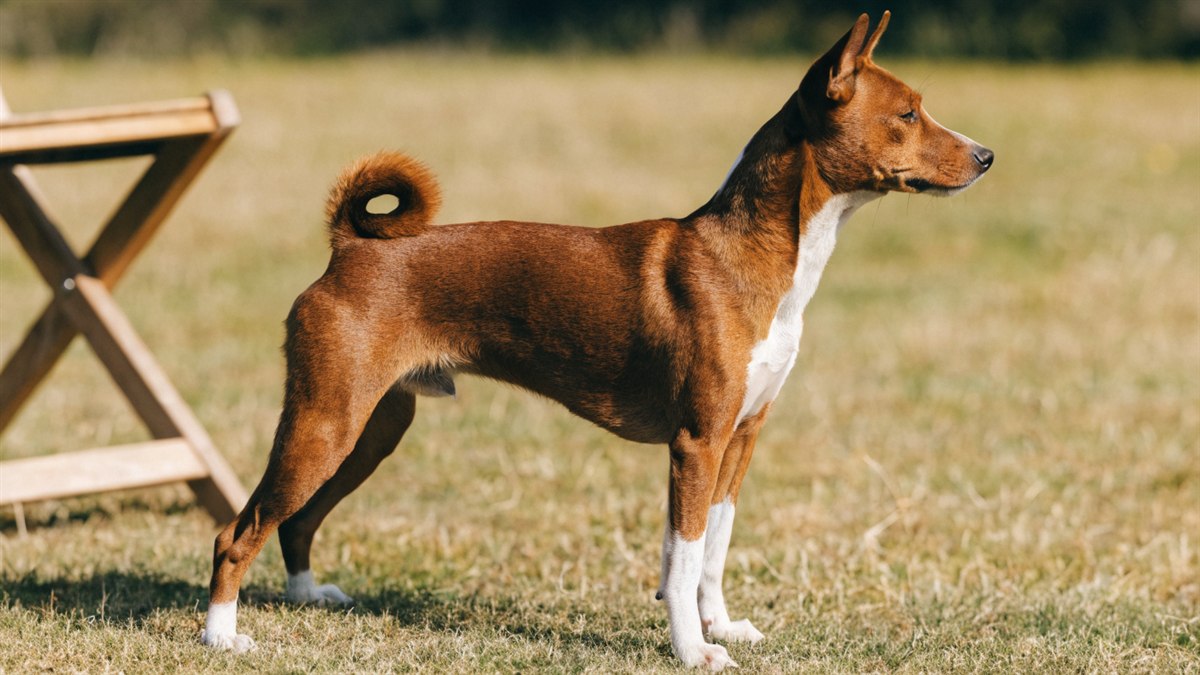
Quick answer
The Basenji dog is a Central African hunting breed that yodels instead of barking. Bonbeno rates it 4 of 5 for Indian heat tolerance, the same score as the Azawakh but for the opposite reason, because the Congo Basin is warm and humid rather than arid. Its defining health risk is Fanconi syndrome, which has a direct DNA test and an Indian legal blind spot.
This guide is general information for Indian pet owners and is not a diagnosis. Consult your nearby vet, a registered veterinarian, before acting on anything you read here, and treat suspected heat stroke or collapse as an emergency. Two points on this page need a veterinarian rather than a website: a Basenji's thyroid result is read against a different reference range from other breeds, and Fanconi syndrome is managed on a supplementation protocol that has to be prescribed and monitored.
Basenji traits rated for India
What the Basenji actually is, according to the registries rather than the nickname
The Basenji is a small Central African hunting dog that hunts by both sight and scent, stands 40 to 43 cm at the withers and weighs 9.5 to 11 kg American Kennel Club. Two registries classify it in flatly different places. The Federation Cynologique Internationale, whose standards bind India through the Kennel Club of India, files it as Standard No 43, Group 5 Spitz and primitive types, Section 6 Primitive type, without working trial. The American Kennel Club puts it in the Hound Group. Neither calls it a sighthound, and the question matters more than it looks.
Is the Basenji a sighthound? Four answers, and they do not agree
The honest answer is that the Basenji is a primitive-type hunting dog with sighthound physiology and a hound-group registration, and no single label covers it. Bonbeno has resolved this question before, on the Azawakh page, by reading the registry rather than the breed name. Doing the same here produces four different verdicts from four documents.
| Source | Classification | What that claim rests on |
|---|---|---|
| FCI Standard No 43 | Group 5 Spitz and primitive types, Section 6 Primitive type | Morphology and history. The FCI has a separate Group 10 for sighthounds and does not put the Basenji in it |
| American Kennel Club | Hound Group | A working-purpose grouping that contains both sighthounds and scenthounds, so the placement settles nothing |
| AKC breed standard | Neither, explicitly. "The Basenji hunts by both sight and scent" | The standard's own General Appearance paragraph, which is the most direct statement any registry makes |
| Seavers et al. 2008, thyroid study of 113 Basenjis | Physiologically sighthound-like | Measured blood chemistry. The breed's TT4 reference range is far lower than most breeds, "resembling the sight hounds in this respect"; |
So the breed does not join Bonbeno's sighthound cluster on classification, because the FCI, which is the registry that matters in India, does not classify it as one. It does join that cluster on one specific clinical point, which is how a laboratory should read its thyroid panel. That distinction is not pedantry. It is the difference between a dog being labelled hypothyroid by a routine Indian blood test and being correctly recorded as normal, and it is worked through in the health section below.
What the breed standard actually specifies
The FCI text is short, and almost every line of it does thermal or practical work for an Indian owner. The standard describes a lightly built, finely boned animal, high on legs compared with its length, with a wrinkled head, pricked ears, a deep brisket that runs up into a definite waist, and a tail curled tightly over the spine.
| Measure | FCI Standard No 43 | AKC standard | Agreement |
|---|---|---|---|
| Ideal height, dogs | 43 cm (17 in) | 17 inches | Identical |
| Ideal height, bitches | 40 cm (16 in) | 16 inches | Identical |
| Ideal weight, dogs | 11 kg (24 lb) | 24 pounds | Identical |
| Ideal weight, bitches | 9.5 kg (21 lb) | 22 pounds | The registries differ by one pound |
| Coat | Short, sleek and close, very fine | Coat short and fine | Identical in substance |
| Skin | Very pliant | Skin very pliant | Identical wording |
Both standards give an ideal height and weight rather than a range, which is unusual and worth knowing before you look at an Indian listing. Any page quoting a Basenji as 15 to 17 inches, or 9 to 12 kg, or 16 to 24 inches, is not quoting a standard. DogTime's ranking page gives the height as 16 to 24 inches, and Tailsbuddy's Indian price page gives 15 to 17 inches and 9 to 12 kg. Neither figure exists in either registry document.
Coat colour, and a colour that does not exist
Four colours are recognised and every one of them carries white. The AKC lists chestnut red, pure black, tricolour (pure black and chestnut red), and brindle (black stripes on a background of chestnut red), all with white feet, chest and tail tip, with white legs, blaze and collar optional, and states that the amount of white should never predominate over the primary colour. The FCI list is written differently but covers the same ground, adding black and tan with melon pips and tan markings on muzzle and cheeks, and asking for brindle stripes to be as clearly defined as possible.
Tailsbuddy's Indian price page lists the breed's common coat colours as Black and White, Black Tan and White, Brindle and White, Red and White, Blue Belton. Blue Belton is an English Setter colour. It appears in neither the FCI nor the AKC Basenji standard American Kennel Club, and a Basenji cannot be belton, because belton describes flecked ticking through a long silky coat. A colour list that includes it was not written from a Basenji standard. The same page carries three untranslated template headings that have nothing to do with dogs at all, including "British military courts aginst protester business cultural protocol", which tells you what kind of document you are reading.
History, and why 1990 is the date that matters
The breed reached the West late and through a very narrow gate. Several attempts to establish it in England failed; in 1923 six Basenjis were taken from Sudan and all six died from distemper shots received in quarantine, and foundation stock was not successfully established in England until the 1930s, then in the United States shortly after. The Basenji Club of America records Mrs Olivia Burn importing the first Basenjis that became actual foundation stock in 1936, and Bakuma, Rougie and Basashi of Blean arriving as the first live Basenjis in the USA in 1937. The AKC accepted the breed in 1943.
That means nearly every Basenji in the Western world descends from a handful of dogs imported in the 1930s. It is the classic founder bottleneck, and it is the direct cause of the health picture in the health section below. The response to it is the single most interesting registry story on this page, and it gets its own treatment further down.
The genome, and what it says about where this dog sits
The Basenji sits at or near the base of the domestic dog family tree, which is why geneticists keep choosing it. Two high-quality de novo Basenji genomes were assembled and published in 2021, a female (CanFam_Bas) and a male (Wags), and the authors state plainly that the basal position of the Basenji makes it suitable for variant analysis for targeted applications of specific dog breeds. The same paper describes Basenjis as an ancient breed of central African origins that still live and hunt with tribesmen in the African Congo, which is the single most important sentence on this page for the climate section.
One genomic detail has a direct Indian consequence and it does not survive being checked. The AMY2B gene produces amylase, the enzyme that digests starch. Wikipedia states that the wolf, the husky and the dingo carry only two copies, and that the genomic study found the Basenji also possesses only two. An Indian household diet is built on rice and wheat, so that claim, if true, would matter here more than anywhere. Bonbeno opened both papers Wikipedia cites for it. Neither says what it is quoted as saying, and the feeding section below shows the working.
Almost everything written about the Basenji is a repeated claim rather than a checked one. This guide takes the five claims that circulate most, the barkless larynx, the once-a-year season, the Fanconi test, the reopened stud book, and African heat tolerance, and goes back to the primary document behind each. Three of the five survive intact. One survives with a much bigger caveat than anyone prints. One turns out never to have been established at all.
Basenji price in India: five published figures, and not one dog behind them
The Basenji price in India is published by at least five Indian sites and none of them shows a Basenji. The bands run from Rs 30,000 to Rs 1,00,000 and beyond, the disagreement between them is real, and the most-visited sale page prices the breed at Rs 999 in its own machine-readable product data. Read the price bands as editorial estimates, because that is what they are, and read the listings as what they demonstrably contain.
What the five Indian sources actually publish
Four Indian editorial pages give a purchase band and one Indian sale page gives a live figure. They were opened individually and the numbers below are taken from the returned page text, not from a search snippet.
| Source | Published figure | What is shown alongside it |
|---|---|---|
| Top Pet Products India | Rs 30,000 to Rs 50,000 | No listing, no breeder, no photograph of an identified dog |
| DogyBreed | Rs 30,000 to Rs 40,000 | States that "Basenji puppies are available all over India" and shows none |
| Tailsbuddy | Rs 30,000 to Rs 40,000 basic, Rs 40,000 to Rs 50,000 KCI registered, Rs 50,000 to Rs 85,000 show quality | A three-tier table plus a breed data box whose coat colour list includes Blue Belton |
| Inside Scroller | Rs 40,000 to Rs 1,00,000 and above | The only itemised import table in the set, and the only page that says the breed is essentially import-only |
| Asia Pets (live listing) | Rs 999 | The figure in the page's own Product structured data, with Vaccinated recorded as No |
The spread between the lowest editorial floor and the highest editorial ceiling is Rs 70,000, which is more than twice the floor itself. On the Golden Retriever, a breed with a real Indian market, that kind of spread reflects genuine variation between city, breeder and pedigree. Here it cannot, because there is no observable transaction anywhere in the set to vary.
The exchange-rate test, and what it rules out
Bonbeno divides every suspicious Indian rupee figure by 84.38, because Indian breed pages routinely republish a United States dollar price run through one exchange rate, and this site has caught that exact artefact three times. Applied here, the test comes back clean, and that is worth publishing as a negative result.
| Rupee figure | Divided by 84.38 | Is it a round dollar amount? |
|---|---|---|
| Rs 30,000 | USD 355.5 | No |
| Rs 40,000 | USD 474.0 | No |
| Rs 50,000 | USD 592.6 | No |
| Rs 85,000 | USD 1,007.3 | Close to 1,000 but not clean |
| Rs 1,00,000 | USD 1,185.1 | No |
None of them resolves. So these are not converted American prices, they are locally invented Indian numbers. That is a slightly different failure and in one way a worse one, because a converted dollar figure at least descends from a real market somewhere. A number that survives the exchange-rate test but has no dog attached to it has no origin at all.
Auditing the one live Indian listing
One page in the ranking set is an actual sale listing rather than an article, and its own structured data is the most informative thing on it. Asia Pets publishes a schema.org Product for "basenji puppy price in india" carrying `priceCurrency: INR`, `price: 999`, `availability: InStock`, and an additionalProperty of `Vaccinated: No`. Three separate things are wrong with that before you reach the price.
- The price is a template default. Rs 999 is not a Basenji price under any reading. It is what a listing shows when nobody has entered a figure, and it is the number Google reads.
- The dog is offered at 50 days. The listing description says "mother father is direct import 50 days puppy";. Fifty days is under eight weeks. Rule 8(1)(a) of the Prevention of Cruelty to Animals (Dog Breeding and Marketing) Rules, 2017 requires every breeder to ensure that "pups less than eight weeks in age are not sold";. Selling at 50 days is not a grey area.
- The related dogs are not Basenjis. The page's own "Other Available Basenji Dog s" strip lists Adorable Labrador Puppy, Beautiful Poodle Female, Playful Labrador Champion Line and Toy Poodle Puppy Delhi. Bonbeno found the same pattern on the Australian Kelpie page, where every card under an Australian Kelpie heading was a different breed. It is the standard shape of an Indian listing for a breed nobody actually has.
Neither national price list carries the breed, and that absence was tested
India's two most-cited national dog price lists do not include the Basenji at all. Bonbeno checked both source documents by string search and, because an absence claim is only as good as the search behind it, ran control terms through the same files in the same session.
| Term searched | Supertails dog price list | WrapInFur dog price list |
|---|---|---|
| Basenji | 0 matches | 0 matches |
| Labrador (control) | 30 matches | 27 matches |
| Beagle (control) | 36 matches | 40 matches |
| Rottweiler (control) | 26 matches | 13 matches |
The controls return dozens of hits in the same documents with the same tool, so the search works and the absence is real. Bonbeno's Azawakh page reported the identical result for that breed, and this is an independent confirmation rather than a borrowed one, run on freshly downloaded copies of both lists on 20 August 2026.
What Indian law does to the supply chain
There is no lawful route to import a Basenji into India for breeding or for sale, and that is the fact that explains the empty listings. DGFT Trade Notice No. 22/2022-23 sets the import policy for mammals including pet dogs as Restricted, and Policy Condition (7) allows import of dogs only for three purposes: a pet dog with valid pet book and relevant records/documents in the name of importer, dogs imported by R&D organisations with CPCSEA recommendation, and dogs for internal security by the Defence and Police Force. Policy Condition (8) states that import of commercial dogs for breeding or any other commercial activities other than the purposes mentioned above is not permitted.
The notice then removes the workaround. Paragraph 6 states that any applications for trading/breeding purposes, or applications made on behalf of some another person or entity shall be duly rejected. Paragraph 7 limits entry to the airports and seaports of Delhi, Mumbai, Chennai, Hyderabad, Bangalore and Kolkata, with quarantine at the government quarantine station of those ports where required. DAHD added a seventh port, Cochin International Airport at Kochi, for pets arriving under the baggage rules in October 2024. The full route is set out in how to import a dog to India.
A Basenji can lawfully reach India in an individual's own name as a pet, with a valid pet book, an import authorisation from DGFT where more than two animals are involved or the owner does not qualify under transfer-of-residence, and an Advance No Objection Certificate from the AQCS Quarantine Officer obtained seven days before travel. Pet owners are advised to start the application at least two months before the travel date. That is a route for somebody moving home with a dog they already own. It is not a channel through which an Indian buyer purchases a puppy, and no Indian page that quotes a Basenji price explains this.
One further clause bites anyone who does bring a Basenji in and then wants to breed from it. Rule 8(1)(b) requires that dogs over six months in age are not sold without first being sterilised, unless they are being sold to another licensed breeder, and Rule 8(1)(e) requires each pup sold to be micro-chipped. An adult Basenji bought privately in India, over six months old and entire, is outside those conditions unless the seller is a registered breeder selling to another registered breeder.
Kennel Club of India registration, and what the price tiers are really selling
Tailsbuddy's middle tier is the only Indian price claim on this page that is checkable in principle. It offers a KCI registered Basenji at Rs 40,000 to Rs 50,000 and a show-quality dog at Rs 50,000 to Rs 85,000, and explains that KCI registration means you can enter Kennel Club of India shows and will receive a KCI registration certificate. That is accurate as a description of what KCI registration is. What it does not establish is that any KCI-registered Basenji exists to be sold, and the page shows none.
If you are offered one, the paperwork question is simple and it is the only one worth asking. A KCI registration for an imported dog has to trace to a foreign registry export pedigree, so ask to see the export pedigree and the DGFT import authorisation in the importer's name, and check that the name on both matches the person selling to you. Bonbeno does not recommend breeders and does not link listings. This is a verification test, not a shopping route.
Five Indian sources publish a price and none of them publishes a dog. The bands are internally inconsistent, they fail no exchange-rate test but rest on no transaction, the breed is absent from both national price lists under a control-tested search, and the import regime forbids the commercial route that would create a market. If somebody quotes you Rs 45,000 for a Basenji puppy in India, the useful response is not to negotiate. It is to ask which of the seven permitted ports the dog entered through, and in whose name.
Monthly cost of keeping a Basenji in India, and the two costs nobody prints
One Indian source publishes a monthly cost for this breed and it estimates Rs 4,000 to Rs 9,000 per month. Bonbeno reports that figure as the single published estimate it is, not as a measured Indian average, because no Indian dataset of Basenji ownership costs exists. What can be reasoned reliably is the shape of the cost, which is unusually favourable in three places and unusually unfavourable in one.
The only published Indian monthly cost breakdown
Inside Scroller's 2026 estimate is itemised, which makes it auditable even though it is not sourced. Its lines are premium small-breed food at Rs 1,500 to Rs 3,500 a month, grooming at Rs 300 to Rs 600 a session with only a monthly bath needed, and veterinary care including Fanconi monitoring from age three at Rs 7,000 to Rs 16,000 annually.
| Cost line | Published or reasoned figure | Basis |
|---|---|---|
| Food | Rs 1,500 to Rs 3,500 per month | The single published Indian estimate. Reasonable in shape, because the standard sets ideal weight at 9.5 to 11 kg, which is a small-breed feeding volume |
| Grooming | Rs 300 to Rs 600 per session, bath only | Both standards describe the coat as short and fine American Kennel Club. There is no clipping, no stripping and no de-matting to pay for |
| Routine veterinary care | Rs 7,000 to Rs 16,000 per year | The single published Indian estimate, which explicitly includes Fanconi monitoring from age three |
| Fanconi urine glucose strips | Not published anywhere in India | The BCOA protocol is fortnightly urine strip testing from age one to two and then for life in an Affected dog. Strips are an over-the-counter pharmacy item in India and the cheapest health line on this page |
| Fanconi and PRA-BJ1 DNA tests | USD 65 for a first Fanconi DNA test, USD 50 for a retest | The BCOA Fanconi FAQ quotes both OFA fees and notes that the Basenji Health Endowment subsidises each retest by USD 15 |
| Import, if the dog is not already in India | Rs 40,000 to Rs 70,000 shipping, Rs 15,000 to Rs 30,000 AQCS permit and health certification | The one Indian source that itemises import, giving a total landed cost of Rs 1,10,000 to Rs 2,00,000 and above |
The three places this breed is genuinely cheap in India
- Grooming is close to zero. A short, sleek, close, very fine coat over very pliant skin needs a rubber mitt and a bath. PetMD notes that Basenjis are fastidious about cleanliness and will often groom themselves like a cat. In a Mumbai or Bengaluru grooming market where a double-coated breed runs a monthly salon bill, this is a real saving.
- Food volume is small. An 11 kg adult eats a fraction of what a 30 kg imported breed eats, and Indian premium dry food is priced by weight. The catch is composition rather than quantity, and it is dealt with under feeding.
- Hip and joint costs are low. The Basenji Club of America reports that of 2,651 hip evaluations performed by OFA between January 1974 and December 2013, 23 percent were rated Excellent and 3.5 percent were rated Dysplastic. Whatever else this breed costs, it is not the orthopaedic bill that dominates large-breed ownership in India.
The one place it is expensive, and it is not the purchase price
The expensive part of a Basenji is the diagnostics, and almost none of it is available in India. The five health tests the AKC parent club recommends are a Hip Evaluation, an Ophthalmologist Evaluation, a Thyroid Evaluation, a Progressive Retinal Atrophy (Basenji) PRA DNA test and a Fanconi's Syndrome DNA test. Two of those five are DNA tests offered only through OFA in the United States Orthopedic Foundation for Animals, one requires a board-certified veterinary ophthalmologist, and one requires a four-analyte thyroid panel read against a breed-specific reference range.
This is the most useful single paragraph on this page for anyone who already owns a Basenji in India. The direct Fanconi DNA test uses a cheek swab spread on an FTA card, and the BCOA states plainly that the swab is safe, non-invasive, can be done at home, and that no veterinary appointment is necessary. It does not need an Indian laboratory, an Indian specialist or an Indian referral. It needs a swab, a card, an international courier and USD 65. The BCOA specifically encourages owners of dogs without direct DNA test results for both parents, such as rescues, to test. If you have a Basenji in India and you do one thing after reading this page, make it this.
Budget the eye examination separately and plan it around travel. The BCOA recommends ACVO examinations at nine weeks, then annually for breeding stock throughout their reproductive lives and every other year thereafter, and states that a Normal result does not guarantee the dog will not later develop a hereditary eye problem. India has veterinary ophthalmologists in the major metros, but ACVO board certification is a United States credential, so an Indian owner is buying an equivalent examination rather than the certificate itself. Say that to your vet when you book, so the record is written the right way.
Rs 4,000 to Rs 9,000 a month is one website's estimate for a breed it does not demonstrate exists in India. Bonbeno prints it because it is the only Indian figure published, and because its internal structure is at least consistent with a 10 kg short-coated dog. Treat it as an order of magnitude. The number that will actually decide your budget is not the monthly cost at all, it is whether the dog is Fanconi Affected, because a dog on lifelong bicarbonate and electrolyte supplementation with regular bloodwork is a different financial animal from one that tests Clear.
Basenji heat tolerance in India: the Congo Basin is humid, not hot
Bonbeno rates Basenji heat tolerance 4 out of 5 for India, and the reason is the reverse of the one every Indian page gives. The breed's home range is not a hot place by Indian standards. NASA's twenty-year climatology puts the annual mean air temperature at Kisangani, in the heart of the Congo Basin, at 25.15 degrees C, and Delhi's at 25.60 degrees C. The two are within half a degree of each other. What separates them is spread and moisture, not heat.
Delhi's monthly mean swings 22.3 degrees C across a year, from 13.6 in January to 35.9 in June. Kisangani's swings 2.1 degrees C, from 24.3 in November to 26.4 in February. The Basenji did not evolve under extreme heat. It evolved inside a narrow, unvarying, permanently wet band of warmth, and nothing in its history has ever asked it to handle a Delhi May or a Nagpur April. Reading "African breed" as "heat-proof" gets the mechanism backwards.
Which Africa the Basenji is actually from
The Congo Basin is rainforest, not desert. The UNEP CMS Secretariat's fact sheet on the region states that the Congo Basin "is naturally warm and humid, and experiences only two seasons: the rainy season from March to November and the dry season from December to February";. The 2021 chromosome-length Basenji genome paper describes the breed as ancient, of central African origin, and still living and hunting with tribesmen in the African Congo. That is the opposite thermal case from the Sahelian Azawakh, which Bonbeno rates on dry heat and which earns the same score by a completely different route.
| Place | Annual mean temp (C) | Warmest month mean (C) | Annual swing (C) | Annual mean humidity (%) |
|---|---|---|---|---|
| Kisangani, DR Congo (home range) | 25.15 | 26.4 (Feb) | 2.1 | 83.2 |
| Mbandaka, DR Congo (home range) | 26.29 | 27.1 (Feb) | 1.4 | 80.0 |
| Chennai | 27.95 | 31.5 (May) | 7.4 | 72.4 |
| Nagpur | 26.91 | 36.7 (May) | 16.8 | 55.8 |
| Mumbai | 26.77 | 31.2 (May) | 8.0 | 67.4 |
| Kolkata | 25.81 | 31.5 (May) | 14.2 | 73.9 |
| Delhi | 25.60 | 35.9 (Jun) | 22.3 | 45.6 |
| Jaipur | 25.58 | 34.6 (Jun) | 20.1 | 40.9 |
| Bengaluru | 23.74 | 28.4 (Apr) | 8.2 | 67.9 |
Read that table down the columns rather than across the rows. On annual mean temperature the home range sits below Chennai, Nagpur and Mumbai and level with Delhi. On annual mean humidity it sits above every Indian city listed, nine points above Kolkata and forty-two above Jaipur. On annual swing nothing in India is within six degrees of it.
The closest Indian match is Mumbai in the monsoon
Mumbai in July averages 26.6 degrees C at 89.6 percent relative humidity, against Kisangani's July of 25.5 degrees C at 78.6 percent. That is the nearest thing India has to the climate this breed was shaped by, and it is the month Indian owners are most often warned about. Delhi in May averages 35.0 degrees C at 23.4 percent, which is 8.6 degrees hotter than anything Kisangani averages in any month and roughly a quarter of the moisture. So a Basenji is better matched to coastal Chennai, Kochi and monsoon Mumbai than to Jaipur, Nagpur or Delhi, which inverts the advice Indian coastal owners usually receive.
Every Indian page in this breed's ranking set argues from African origin straight to heat tolerance, and Inside Scroller's price page makes the step explicitly. The step does not hold, and the humidity figure is why. Relative humidity above 80 percent suppresses evaporation, and evaporation from the tongue and airway is effectively the only cooling a dog has. A rainforest origin is therefore evidence that the breed copes with warmth under poor evaporative conditions. It is evidence of nothing whatsoever about 45 degree dry heat, which its ancestors never met.
The coat, the skull and the weight, and why the rating is 4 rather than 5
Three lines of the breed standard do all the thermal work, and none of them mentions Africa. A Basenji is a 10 kg dog with a single short coat and a real muzzle, and those three facts place it in the low-risk cell of every conformational variable the largest study of canine heat illness ever run was able to measure.
- Coat. Short, sleek, close and very fine hair over very pliant skin, which the AKC standard compresses to "Coat short and fine. Skin very pliant";. Neither registry describes an undercoat anywhere in the document. A single short coat sheds heat by convection well and blocks sun badly, so the Indian answer is shade and timing rather than clipping.
- Skull. The AKC standard specifies a muzzle shorter than the skull with a perceptible stop, and the FCI records the distance from top of head to stop as slightly more than the distance from stop to nose tip. A Basenji is therefore not brachycephalic, and it is equally not a long-muzzled sighthound. It sits mid-range, with a tapering foreface, adequate panting surface and no flat face.
- Weight. Ideal weight is 11 kg for a dog and 9.5 kg for a bitch, with the AKC giving approximate weights of 24 pounds and 22 pounds. Both figures put an adult in the lightest bodyweight band the UK study used.
Where those three facts land in the largest heat-illness study run on dogs
Hall, Carter and O'Neill followed 905,543 UK dogs under primary veterinary care and recorded 395 heat-related illness events in 390 dogs during 2016, an incidence risk of 0.04 percent with an event fatality rate of 14.18 percent. Two conformational findings decide where a Basenji sits.
| Risk variable | Odds ratio reported | Where the Basenji sits |
|---|---|---|
| Brachycephalic against mesocephalic skull | 2.10 (95% CI 1.68 to 2.64) | Mesocephalic. Muzzle shorter than skull but a perceptible stop and a tapering foreface |
| Over 50 kg against under 10 kg bodyweight | 3.42 (95% CI 1.54 to 7.57) | 9.5 to 11 kg, at the boundary of the reference band |
| At or above breed and sex mean weight | 1.42 (95% CI 1.12 to 1.80) | Controllable. This is a body-condition decision, not a breed one |
| Purebred against crossbred | 1.86 (95% CI 1.39 to 2.49) | Purebred, so on the unfavourable side of this one |
| Aged 12 years or over against under 2 | 1.75 (95% CI 1.14 to 2.70) | Applies from roughly year 12 of a 13 to 14 year life |
For scale, the same study put the Chow Chow at 16.61 times the odds of a Labrador Retriever, the Bulldog at 13.95, the French Bulldog at 6.49 and the Greyhound at 4.26. The Greyhound entry is the one worth pausing on, because it shows that a short coat and a lean sighthound build do not by themselves confer heat safety. Bonbeno covers that result properly on the Greyhound page. It is the strongest available warning against reading a Basenji's silhouette as a thermometer.
One point is withheld for two stated reasons. First, no published study measures Basenji thermoregulation. This rating is reasoned from registry conformation and from home-range climate, and Bonbeno says so rather than rounding up to a number it cannot evidence. Second, the breed is purebred, which the UK cohort placed at 1.86 times the odds of crossbreds, and the Indian pariah dog remains the only animal on this site with a genuine Indian heat record behind it. A Basenji handles Indian warmth better than almost any imported breed sold here. It does not handle it better than the dog already sitting outside your gate.
The AKC standard states, under Forequarters, that "Dewclaws are usually removed";. The Prevention of Cruelty to Animals (Dog Breeding and Marketing) Rules, 2017 forbid, in Second Schedule Part II paragraph 6(8), tail docking, ear cropping, de-barking and de-clawing, and paragraph 6(9) extends the prohibition to any other kind of mutilation and any change of appearance by artificial means. An Indian breeder following the American standard on that single line is breaking Indian law. The FCI standard, which is the one that binds through the Kennel Club of India, says nothing about dewclaw removal at all.
Keeping a Basenji cool in India: exercise timing beats every other precaution
To keep a Basenji safe in Indian heat, control when it runs, not how hot the day is. Of 879 UK heat-related illness events with a known trigger, 652, or 74.2 percent, were exertional, against 113 environmental events (12.9 percent) and only 46 caused by vehicular confinement (5.2 percent). The parked-car warning that dominates Indian summer pet coverage addresses the smallest of the three categories.
That distribution matters more for this breed than for most. The FCI describes the Basenji's gait as a "swift, long, tireless, swinging stride";, and the AKC compares its trot to a racehorse going full out. A dog built to keep going is a dog that will not stop when it should, which is the exact mechanism behind an exertional case. Case fatality for exertional events ran at 32 deaths in 420 events, 7.6 percent.
When to walk a Basenji, city by city
Use the humidity column, not the temperature column, when you plan the day. Evaporation from the tongue and airway is effectively the only cooling a dog has, and it slows as the air saturates, so 31 degrees at 90 percent is harder work than 35 degrees at 25 percent. The months below are the ones that need a changed routine rather than a shortened one.
| City | Hardest month and why | Mean temp / mean humidity |
|---|---|---|
| Mumbai | July, saturated air rather than high heat | 26.6 C / 89.6 % |
| Kolkata | May into June, hot and already humid | 31.5 C / 67.5 % |
| Chennai | May, the hottest mean of any city here | 31.5 C / 64.5 % |
| Nagpur | May for dry heat, August for saturation | 36.7 C / 25.2 %, then 26.4 C / 87.3 % |
| Delhi | June, dry extreme heat | 35.9 C / 36.4 % |
| Bengaluru | April, and it is the mildest city on this page | 28.4 C / 48.7 % |
Nagpur is the instructive row. It carries two hard months for opposite reasons, a bone-dry 36.7 degree May at 25.2 percent humidity and a mild 26.4 degree August at 87.3 percent. A Basenji is comfortable in the second and genuinely out of its evolutionary depth in the first. Anyone applying one summer rule across the whole Indian year is managing the wrong month.
Indian consumer advice and the veterinary emergency literature disagree about cooling
This is a live disagreement and Bonbeno publishes it rather than picking a side. Purina India's heat stroke page tells owners to spray or sponge the dog with cool but not cold water, to avoid cold water or ice baths, and to stop cooling once the temperature reaches 39.4 degrees C to prevent overshoot into hypothermia, treating 40.5 degrees C or above as the raised temperature that signals heat stroke.
The 2023 UK cooling-methods study describes a different consensus. Hall and colleagues report that the Vet-COT recommended methods are cold-water immersion or evaporative cooling, and that only 23.97 percent (95% CI 19.24 to 29.44) of UK dogs presented with heat-related illness actually received one. Of 267 dogs whose cooling method was recorded, 137 (51.31 percent) got wet towels, 84 (31.46 percent) air movement alone, 62 (23.22 percent) water spray without air movement, 45 (16.85 percent) cold-water immersion and 20 (7.49 percent) evaporative cooling. The authors are explicit that their study alone cannot rank the methods by effectiveness.
The two sources are not answering the same question. Purina India is writing safe instructions for an owner with no thermometer and no supervision, where over-cooling and delay are the realistic failure modes. The Vet-COT position is a clinical one for a monitored patient. The Indian answer that follows from both is the same. Start cooling immediately with whatever water you have, keep air moving over the wet coat, put the dog in the car and drive to the vet while cooling continues, and do not spend the first ten minutes deciding which method is optimal. Delay is the variable neither source disputes.
Purina India lists severe panting, difficulty breathing, severe salivating, vomiting, diarrhoea, a raised temperature of 40.5 degrees C or above, blood in the urine, nose bleeds and other bleeding problems, and ultimately collapse and coma. On a Basenji, watch the panting specifically. This breed is famously quiet, so an owner used to a barking dog reads a silent, hard-panting Basenji as calm. It is not a calm dog. It is a dog with no other way to tell you.
Is the Basenji really barkless? What the anatomy paper actually says
The Basenji is not barkless, and both registries that define the breed say so in the same breath as the nickname. The FCI standard reads "Barkless but not mute, its own special noise a mixture of a chortle and a yodel". The AKC standard is more careful still: "The Basenji should not bark but is not mute";. Read that AKC wording twice. Should not, not cannot. It is written as a breed requirement, in a document that lists faults, rather than as an anatomical impossibility.
The anatomical evidence is one 1979 paper on two dogs
Every page that explains the barkless larynx traces back to a single source, Ashdown and Lea's "The larynx of the Basenji dog", Journal of Small Animal Practice, November 1979, volume 20, pages 675 to 679. Two facts about that paper matter and neither one is printed anywhere in the ranking set.
- It has no abstract on PubMed. The record carries the title, the journal, the DOI and nothing else. Bonbeno could not open the full text, and says so rather than paraphrasing a paper it has not read.
- It examined two dogs. The 2025 Royal Society Open Science study of laryngeal domestication describes it precisely: "The two females used in that study showed absent/reduced laryngeal saccules and shallow laryngeal recesses, potentially explaining their reduced ability to produce barks";.
- The 2025 authors hedge, and the hedge is the point. They write "potentially explaining" and "reduced ability", not "explaining" and "inability". That is how a 2025 comparative-anatomy team characterises the evidence forty-six years on.
So the honest statement is narrow. Two Basenji bitches examined in 1979 had shallower laryngeal recesses and absent or reduced saccules than the reference anatomy, and a 2025 paper considers that a potential explanation for a reduced ability to bark Ashdown RR, Lea T. The larynx…. That is a long way from the settled mechanism the ranking pages describe. Wikipedia, which holds position one in India for this breed, states the laryngeal cause as fact.
The cleanest single rebuttal to "barkless" is indexed in the medical literature. Psychological Reports published "Behavior modification of excessive noise in a young Basenji" in October 1972. A breed that cannot make noise does not generate a published behaviour-modification case report about making too much of it. Whatever the larynx does, it does not deliver silence.
What sound a Basenji actually makes
The registries name it and the name is not a bark. The FCI calls it "a mixture of a chortle and a yodel";. Owners call it a baroo. It is a rising, falling, open-mouthed vocalisation, and it carries. A Basenji also screams when frightened or frustrated, growls, whines and huffs. What is genuinely absent is the repetitive, machine-gun, single-note territorial bark that Indian apartment complexes generate complaints about.
The Basenji Club of America's own history archive quotes an American newspaper from around 1950 arguing that "basenji dogs never bark and a barkless dog is figured as ideal for the small apartment";. Indian price pages make the same pitch today. It fails for the same reason it failed then. A Basenji is quiet in one narrow register and loud in several others, and the yodel and the scream are both harder to ignore through a shared wall than a bark, because neither one is a sound a neighbour can categorise. If you are buying quiet for a Mumbai or Bengaluru flat, buy on the exercise section of this page, not this one.
Two Indian consequences nobody prints
- You lose the alarm function entirely. Many Indian households keep a dog partly as a doorbell. A Basenji will not do that job, and expecting it to is the commonest reason a first-time Indian owner is disappointed by one.
- Your dog cannot tell you it is in trouble. This matters most in heat. A distressed Basenji goes silent and pants hard, and an owner conditioned by barking dogs reads that as settled. Watch the panting, not the noise, through April, May and June.
- De-barking is illegal here anyway. Second Schedule Part II paragraph 6(8) of the Dog Breeding and Marketing Rules, 2017 forbids de-barking outright, alongside docking and cropping. It is the one surgical shortcut this breed never created demand for.
Basenji temperament: who should buy one in India, and who genuinely should not
Both registries describe the same dog in almost the same words, which is unusual and worth trusting. The AKC and the FCI both give the temperament as "An intelligent, independent, but affectionate and alert breed. Can be aloof with strangers"; Federation Cynologique Internationale. Independent is the load-bearing word in that sentence, and it is the one Indian listings quietly drop.
The FCI adds two more lines that decide household fit. It calls the breed "Remarkable for its cleanliness in every way" and describes the dog as "always poised, alert and intelligent";. PetMD, the only veterinarian-bylined page in the ranking set, records that Basenjis are fastidious about cleanliness and will often groom themselves like a cat. The catlike comparison is not a marketing line, it runs through the whole breed.
The five household facts an Indian buyer needs before anything else
- Aloof is not unfriendly, and it is not trainable away. Both standards write reserve toward strangers into the breed description rather than into the fault list. In an Indian home with daily domestic help, a building watchman, deliveries and extended family arriving unannounced, plan for a dog that withdraws rather than greets.
- Independence means the dog decides. A Basenji that has weighed your recall against a cat on the compound wall will choose the cat. This is a hunting breed that worked ahead of people, not beside them.
- Prey drive is the constraint on Indian city life. India has street cats, free-ranging dogs, monkeys, squirrels and cattle inside ordinary residential areas. A dog built to hunt by sight and scent reads all of that as work.
- Cleanliness is a genuine advantage here. A self-grooming, low-odour dog in a humid Chennai or Kolkata flat is a materially easier animal to live with than a heavy-coated breed.
- Escape ability is high. The breed is athletic, light and clever, and the FCI describes a swift, long, tireless stride. Indian balcony grilles, gate gaps and compound walls are designed against dogs that do not climb.
Who this breed suits in India
| Household | Verdict | Why |
|---|---|---|
| Adult couple or single adult, coastal or southern city, secure flat, willing to walk twice daily | Strong fit | Matches the humidity profile, the low grooming load and the exercise need |
| Family with children over about ten who have been taught to leave a dog alone | Workable | Affectionate and alert, but not a dog that tolerates being handled on demand |
| Family with toddlers, or a joint family with constant visitors | Poor fit | Aloofness with strangers is a breed characteristic, not a training gap |
| First dog, bought for security or as a doorbell | Wrong dog | It does not bark territorially and it is reserved rather than protective |
| Home with resident cats, rabbits or poultry | Wrong dog | The breed hunts by both sight and scent |
| Owner in Delhi, Jaipur or inland Rajasthan wanting an outdoor dog | Wrong climate | See the climate section. Dry extreme heat is the case its ancestry does not cover |
Almost every Indian complaint about this breed reduces to buying it for the nickname. Somebody wants a quiet apartment dog, reads "barkless", and gets an independent, escape-prone, high-prey-drive hunting dog that yodels, screams and does not come when called. Nothing in that list is a defect. Every item is in the FCI and AKC standards American Kennel Club, and every Indian price page that ranks for this breed omits at least three of them.
Bonbeno's honest summary is that the Basenji is a specialist's dog sold to India as a beginner's dog. If you have owned an independent primitive-type breed before, or if you have worked through the recall problem on an Indian pariah dog or a sighthound, you already have the relevant experience. If your reference point is a Labrador or a Golden Retriever, this dog will not behave the way you expect, and the gap shows up in training rather than temperament.
Training a Basenji: what works, what this breed refuses, and realistic Indian timelines
To train a Basenji, pay for behaviour rather than demand it, and build management around the two behaviours you will not extinguish. The peer-reviewed description of this breed group is blunt. Ancient dog breeds are "intelligent, sociable, active, boisterous and need regular outdoor exercise, but are also independent and reluctant to follow commands";. Reluctant to follow commands is a finding, not an insult.
The one peer-reviewed behaviour survey that includes the breed
Wojcik and Powierza surveyed 897 owners across five ancient breeds, including 64 Basenjis, and published rates for each behaviour by breed. It is the only such dataset Bonbeno could find that separates the Basenji from the general "primitive breed" label, and its shape is not what Indian pages predict.
| Behaviour | Basenji rate | Where that sits among the five breeds |
|---|---|---|
| Aggression towards other dogs and animals | 54.69 % (35 of 64) | Second highest, just under the Akita |
| Aggression towards humans | 9.38 % (6 of 64) | Lowest of all five breeds |
| Excessive vocalisation | 23.44 % (15 of 64) | Mid-range. The Samoyed led at 44.04 % |
| Oral and locomotion behaviours | 21.88 % (14 of 64) | Below the Samoyed and the Akita |
| Separation anxiety | 17.19 % (11 of 64) | Mid-range |
| Aggression at mealtime | 15.63 % (10 of 64) | Below the Alaskan Malamute and Siberian Husky |
Two readings follow and both are useful in India. The Basenji had the lowest rate of aggression towards humans of the five breeds, and the study reports that undesirable behaviours overall were most frequently reported in Akitas, Siberian Huskies and Samoyeds rather than in Basenjis. So this is not a dangerous dog. The problem is entirely in the other column: more than half of Basenji owners reported aggression towards other dogs and animals, in a country where the walk itself contains free-ranging dogs, cats and cattle.
The authors singled out one behaviour as characteristic of this breed. Car and bicycle chasing, classed as hunting aggression, accounted for 46.15 percent of all undesirable motor behaviours in Basenjis. Read that against an Indian street. Two-wheelers, cycles, autorickshaws and delivery riders pass within a metre of a walking dog continuously, and a moving wheel is exactly the stimulus that triggers this. A Basenji off-lead beside Indian traffic is not a recall problem. It is a chase reflex meeting the densest two-wheeler traffic on earth, and it is the reason this page will not tell you an Indian Basenji can be walked off-lead.
What actually works
- Pay well and pay immediately. An independent breed works out what a behaviour is worth. Use high-value food, and keep sessions to five minutes rather than twenty.
- Train the recall you will actually use, which is a lead clip. Teach the dog to come back into range and be clipped up, and reinforce it for the dog's whole life. Never test a Basenji recall against live prey.
- Start inhibition early. Age at training was itself the research question when Scott, Shepard and Werboff studied inhibitory training in Basenjis in 1967. Bonbeno could not open that paper and reports only that the breed was chosen for it, not what it found.
- Socialise to animals, not just to people. The survey says human-directed aggression is the least of your problems and animal-directed aggression is the largest. Indian puppy socialisation usually gets this backwards.
- Manage rather than correct the escape drive. Double-clip the collar and harness, check the gate, and treat an open door as a live risk for the dog's entire life.
A realistic Indian timeline
| Period | Realistic goal | What will not be ready |
|---|---|---|
| 8 to 16 weeks | Name response, lead clip, crate, handling for grooming, meeting people | Nothing off-lead. Vaccination schedule still open |
| 4 to 8 months | Loose-lead walking on a quiet street, sit and down, settle on a mat | Passing a street dog calmly. Expect reactivity to appear here |
| 8 to 14 months | Reliable lead-clip recall in an enclosed space, tolerance of traffic at distance | Recall around cats or moving wheels. Do not test it |
| 14 months onward | Consistent walking manners, controlled greetings, calm in the lift and stairwell | Off-lead freedom on an Indian street. Plan for never |
A well-trained Basenji is a dog that walks nicely on a lead, settles indoors, and is never asked to make a decision it will get wrong. Owners who fight the independence lose. Owners who build the environment around it get a clean, quiet, low-maintenance flat dog. That is the trade, and it is a good one if you accept it on day one rather than in month nine.
How much exercise a Basenji needs in India, and what the heat does to the answer
A Basenji needs two walks a day totalling roughly 60 to 90 minutes, plus a genuine run in an enclosed space several times a week. No published study measures the requirement, so Bonbeno reasons it from the registry gait description rather than quoting a number it cannot source. The FCI describes "a swift, long, tireless, swinging stride", and the AKC compares the trot to "a racehorse trotting full out";. Neither registry is describing a dog that is satisfied by a walk to the gate.
The Indian complication is that the hours a working owner is free are exactly the hours the dog cannot work. Delhi in June averages 35.9 degrees C and Nagpur in May averages 36.7 degrees C, and 74.2 percent of heat-related illness events in the UK cohort were exertional. So the exercise plan and the heat plan are the same plan.
What the daily requirement looks like across the Indian year
| Season | Morning | Evening | Substitute indoors |
|---|---|---|---|
| November to February | 40 to 50 min walk, any time before 10 am | 30 to 40 min walk plus a run in an enclosed space | Not needed |
| March to May, inland cities | Before sunrise, 30 min, shaded route | After 8 pm, 30 min on cooled ground | Scentwork, food puzzles, stair recalls |
| June to September, monsoon | 30 to 40 min between showers | 30 min, and check the ground is not steaming | Indoor scentwork. Humidity, not heat, is the limit |
| Coastal cities, year round | Before 7 am | After sunset | Add a fan to any indoor session |
Indian pavement, tar and building forecourt hold heat long after the air temperature drops, and a Basenji has small, narrow, compact feet with deep pads rather than the thick working pads of a street dog. Press the back of your hand to the surface and hold it for seven seconds. If you cannot, the dog should not walk on it. This costs nothing and it is the single check most Indian owners skip in May.
What happens without enough exercise
The failure mode is specific and it is documented. In the 897-owner ancient-breeds survey, 21.88 percent of the 64 Basenjis showed oral and locomotion behaviours, the category that covers chewing, pacing and repetitive motion, and car and bicycle chasing alone accounted for 46.15 percent of the undesirable motor behaviours reported in the breed. An under-exercised Basenji does not get fat and lazy. It gets faster, more destructive and more interested in wheels.
- Chewing and destruction indoors, which the survey groups with pacing under oral and locomotion behaviours.
- Escape attempts, because a light, athletic dog with a long stride treats a balcony grille as a puzzle rather than a wall.
- Increased vocalisation, which on this breed is a yodel and a scream rather than a bark, and carries further through a shared wall.
- Sharper reactivity on the lead, which compounds the 54.69 percent animal-directed aggression rate the survey already reports.
Lure coursing is the sport this breed is actually built for
The Basenji Club of America's own records show Basenjis competing in AKC lure coursing, including an African import, Avongara Naziki, winning an AKC Field Championship in 2014, and a Basenji taking best in field at an AKC National Lure Coursing event. India has no organised lure-coursing circuit, so the practical Indian substitute is a flirt pole in an enclosed terrace or a fenced ground, run in short bursts in cool hours. It satisfies the chase drive in a place where the dog cannot reach a road.
If you cannot commit to two cool-hour walks a day, every day, including through a Chennai May and a Mumbai monsoon, this is the wrong breed. That is a harder commitment in India than the same sentence would be in Britain, because the cool hours are before sunrise and after dark rather than whenever you are free. Decide on that before you decide on anything else on this page.
Grooming a Basenji in Indian humidity: the easiest coat on this site, with two real risks
A Basenji needs a weekly rubber-mitt pass, a nail trim every three weeks and a bath roughly once a month, and nothing else. The coat is the shortest work of any breed Bonbeno has covered. The FCI specifies hair that is "Short, sleek and close, very fine" over skin that is "Very pliant", and the AKC reduces the whole section to "Coat short and fine. Skin very pliant";. Neither standard describes an undercoat, so there is no seasonal blow-out to manage.
The breed also does part of the job itself. PetMD records that Basenjis are fastidious about cleanliness and will often groom themselves like a cat, and the FCI standard calls the breed "Remarkable for its cleanliness in every way";. In practical Indian terms that means low odour between baths, which matters more in a humid Kochi or Kolkata flat than any brushing schedule.
The routine, in full
| Task | Frequency | Note for India |
|---|---|---|
| Rubber curry mitt or hound glove | Once a week, five minutes | Do it outdoors. Short fine hair works into upholstery |
| Bath | About monthly, or after mud | Dry fully. Do not leave a damp dog in a closed humid room |
| Nails | Every 3 weeks | The standard asks for short nails. Indoor Indian flats wear them down slowly |
| Ears | Weekly check | Erect ears drain well, which is a real monsoon advantage |
| Teeth | Several times a week | No breed-specific dental risk is published, so treat it as general care |
| Skin check | Every walk, in tick season | The thin coat makes ticks easy to find. Use that |
Risk one: sun, because there is nothing between the sun and the skin
A single short coat is the reason this breed handles Indian warmth well and also the reason it burns. The standard describes very fine hair over very pliant skin, and on a tricolour or chestnut red dog the belly, groin and inner thighs carry almost no pigment cover. Never clip or shave a Basenji. There is nothing to thin, and removing what little there is takes away the only shading the dog has. Walk in shade, not on open ground, through March to June.
Breed guidance written for temperate climates routinely tells owners to towel a dog off and let it air dry. Bonbeno has flagged that instruction as wrong for India on the American Water Spaniel page, and the reasoning applies here in a milder form. Mumbai in July sits at 89.6 percent mean relative humidity and Kolkata at 87.0 percent. Air that saturated does not dry a dog, and a damp coat against very pliant skin in a closed room is how monsoon skin problems start. Dry a Basenji actively, with a towel and a fan, and check the armpits, groin and between the toes.
Risk two: erect ears are an advantage, and the ear canal still gets wet
The FCI describes ears that are "Small, pointed, erect and slightly hooded" and set well forward on the head. That is genuinely protective. An erect ear ventilates and drains, which is why this breed does not carry the otitis load that drop-eared gundogs do in an Indian monsoon. The remaining risk is bathing, so plug the ears with cotton before a bath and dry the canal opening afterwards. It takes thirty seconds and it removes the one predictable monsoon problem.
Close to nothing. Inside Scroller's Indian estimate puts grooming at Rs 300 to Rs 600 a session with only a monthly bath needed, and a rubber mitt is a one-time purchase under Rs 300. Compare that to a double-coated breed in the same city and the difference across a year is the largest single running-cost advantage this breed has in India. The savings do not extend to health screening, which is covered separately and is where the money actually goes.
Basenji health: Fanconi syndrome is the one that decides everything
The Basenji's defining health risk is Fanconi syndrome, an inherited failure of the kidney's proximal tubules that the Basenji Club of America calls the most common inherited lethal disease in basenjis. Every other condition on this page is secondary to it, because Fanconi is the only one with a cheap direct DNA test, a documented treatment protocol, and a complete absence from Indian law. A Basenji's whole health file reduces to one question, which is whether the dog is Clear, Carrier or Affected.
The mechanism is simple to state. The renal tubules stop reabsorbing water, electrolytes and nutrients and spill them back into the urine, so an untreated dog loses muscle, goes acidotic, drops condition and eventually dies of kidney failure. The three signs an owner sees first are excessive drinking, excessive urination and glucose in the urine. That last one is why the disease is so often missed. Sugar in the urine reads as diabetes, and the combination that actually points at Fanconi is urine glucose alongside normal or low blood glucose.
How common it is, and the one prevalence study that exists
One published survey has ever measured Fanconi prevalence in the breed, and it is thirty-six years old. Noonan and Kay distributed 1,000 questionnaires across the United States and got 624 back, a 62 percent response, and found that 10 percent, 96 of 959 Basenjis in the survey, had Fanconi syndrome. Half the affected dogs, 48 of 96, were between four and eight years old. Bonbeno divided every one of those figures out before printing them and they resolve exactly.
Two caveats belong next to that 10 percent and neither appears on any page ranking for this breed. The survey ran through breed-club channels, so 76 percent, 44 of 58, of the owners of affected dogs were breeding them, which is not a random sample of pet homes. And the authors flag that females outnumbered males three to one only because breeders answered the questionnaire, not because bitches get the disease more often. A Dutch inventory published in 2005 repeated the American 10 percent glycosuria figure, found few Dutch dogs spilling sugar, and could not demonstrate a hereditary background in that population at all.
What the 2024 gene paper settled
The gene is now known and the test is direct rather than linked. Farias and colleagues mapped the disease to chromosome 3, sequenced an affected Basenji, and found a homozygous 317 base-pair deletion in the last exon of FAN1. They then genotyped 78 Basenjis of known clinical status, and the concordance is close to total.
| Clinical status | Del/Del | Del/Wt (carrier) | Wt/Wt | Total |
|---|---|---|---|---|
| Fanconi affected | 32 | 0 | 0 | 32 |
| Fanconi unaffected | 1 | 33 | 12 | 46 |
| Total | 33 | 33 | 12 | 78 |
Read the second row. Not one carrier and not one wild-type dog developed the disease, and only one of the 33 dogs carrying two copies escaped it. The association ran at p equal to 4.219 times ten to the minus 21, and the variant was absent from 120 unaffected dogs across 81 other breeds. The authors' conclusion is the practical one for a buyer. Avoiding breeding dogs that carry the deletion allele should eradicate Fanconi from the breed.
Thirty-three of the 46 unaffected dogs in that study were carriers, which works out at 71.7 percent. Bonbeno is not printing that as a breed carrier rate and neither should anyone else. Those 78 dogs were recruited because their clinical status was already known, which makes them a research cohort assembled around a disease rather than a random sample of the breed. A convenience cohort cannot give you a population frequency. If you see a Basenji carrier percentage quoted anywhere, ask which sample produced it, and expect no answer.
One more distinction matters before you panic at a diagnosis. Fanconi syndrome comes in acquired as well as hereditary forms, and the acquired kind is not a Basenji problem at all. Hooper and Roberts reported four small-breed non-Basenji dogs that developed Fanconi after eating chicken jerky treats daily, three of which resolved completely on supportive care while one progressed to chronic kidney disease. That case series is dealt with properly under feeding, because jerky treats are sold in every Indian pet shop.
Testing for Fanconi from India, and the clause the 2017 Rules left out
To test a Basenji for Fanconi from India, order the direct DNA test yourself and swab the dog at home. The OFA sends a buccal cheek swab kit, the sample is spread on an FTA card, the collection is safe and non-invasive, and no veterinary appointment is necessary Basenji Club of America, Basenji Health. Samples are processed by the Small Animal Molecular Genetics Lab at the University of Missouri College of Veterinary Medicine. Nothing in that chain requires an Indian laboratory, an Indian referral or an Indian specialist.
| Item | Detail | What it means for you |
|---|---|---|
| Fanconi DNA | USD 65, for a dog never previously tested | The one to order for a dog bought or adopted in India |
| Fanconi Retest | USD 50, only for a dog run on the 2007 to August 2011 Linked Marker Test, subsidised USD 15 by the Basenji Health Endowment | Almost never applicable to an Indian dog |
| Normal / Clear | No mutated copy | Cannot get inherited Fanconi and cannot pass it on |
| Carrier | One mutated copy and one normal | Will probably never develop it, but passes it to offspring |
| Affected | Two mutated copies | Not sick today, but at high risk. Strip-test the urine every two weeks |
Do not accept an old test result as current. Results from the Linked Marker Test used between 2007 and August 2011 should not be used for breeding decisions, because that test carries an inherent possibility of misclassification, and every animal bred or intended for breeding should be retested with the direct test. The direct mutation was identified in August 2011 by Dr Gary Johnson and Fabiana Faria at the University of Missouri, which is the date that divides a usable certificate from an obsolete one.
The strip test is the part you actually do every fortnight
Buy urine glucose strips, not the blood strips diabetics use, and keep them in the kitchen. The BCOA protocol is to strip-test any dog of unknown status from as early as age one, and every two weeks for life in a dog that tests Affected. Catch the stream, or use a pie pan, ladle or spoon. A positive strip suggests Fanconi rather than proving it, so follow it with a blood glucose test at your vet, because elevated urine glucose also occurs with diabetes and Fanconi is frequently misdiagnosed as a result. Strips are an over-the-counter pharmacy item across India and cost less than a single bag of premium food.
Indian law names three of this breed's conditions and misses the lethal one
The mandatory genetic-defect list in Indian breeding law does not include Fanconi syndrome. Second Schedule Part III paragraph 8(10) of the Prevention of Cruelty to Animals (Dog Breeding and Marketing) Rules, 2017 requires that breeding dogs shall have been tested for genetic defects, including hip dysplasia, progressive retinal atrophy, night blindness, hypothyroidism, entropion, ectropion, overshot, undershot jaw (when incisors do not touch or mesh), wry mouth, two or more missing teeth, unilateral cryptorchid or full cryptorchid males. Fanconi appears nowhere in the document.
Bonbeno proved that absence rather than asserting it. The gazette copy was downloaded and text-extracted locally with pypdf, giving 52,252 characters over 14 pages, and searched with a whitespace-tolerant pattern so a line-broken word could not hide. Fanconi returns zero matches. So do kidney, renal tubule, glucosuria and glycosuria. In the same file, in the same session, with the same search, the controls hip dysplasia, hypothyroidism, night blindness and cryptorchid all return hits. The search works, so the absence is real.
A breeder in India can comply fully with paragraph 8(10) and tell you truthfully that every mandated genetic test has been done, while the disease most likely to kill your Basenji has never been looked for. Two of the three Basenji-relevant conditions the Rules do name are near-irrelevant in this breed, since only about 3 percent of tested Basenjis are abnormal on hips, and the third, hypothyroidism, is the one where the standard Indian laboratory range gives the wrong answer on this breed for reasons set out in the next section. Compliance and protection are different things here. Ask for the OFA Fanconi certificate by name and by number.
Treatment exists, it is old, and it controls rather than cures
The Gonto Protocol has managed this disease for thirty-six years. Dr Steve Gonto developed it in 1990, updated it in 2003 and 2012, and it works by neutralising acid and replacing lost electrolytes and nutrients through bicarbonate and other supplements at specified doses. It was studied and validated for the veterinary literature by Jennifer Yearley, DVM, and the club states plainly that it controls the disease but does not cure it. Caught early and treated on protocol, an affected Basenji has on average the same lifespan as an unaffected one. That is a healthy outcome bought with lifelong supplementation and regular bloodwork, which your Indian vet prescribes and monitors rather than something you order online.
The thyroid trap: three in four healthy Basenjis read hypothyroid on a standard Indian panel
A Basenji's thyroid result must be read against a Basenji reference range, or your dog will be diagnosed with a disease it does not have. Seavers and colleagues took blood from 113 Basenjis in Australia and found that 85 of them, 75 percent, returned total thyroxine values below the normal laboratory reference range of 17 to 37 nmol/L. These were not sick dogs. This is what the breed's blood looks like.
The study is worth reading in detail because the numbers are unambiguous. The 113 dogs comprised 47 males, 5 castrates, 48 entire bitches and 13 spayed bitches, aged 1 to 14 years and weighing 6.5 to 14.0 kg. TT4 ranged from 2 to 27 nmol/L with a median of 13, against a laboratory range starting at 17. TSH ranged from 0.05 to 5.37 ng/mL with a median of 0.16, which sits inside the normal range for dogs generally.
| Measure | Basenji finding | Standard laboratory reference | Verdict |
|---|---|---|---|
| Total thyroxine (TT4), nmol/L | 2 to 27, median 13, mean 13.0 plus or minus 5.7 | 17 to 37 | Breed range sits far lower |
| Dogs below the standard TT4 range | 85 of 113, 75 percent | Would be flagged abnormal | The normal finding, not a disease |
| Thyroid-stimulating hormone (TSH), ng/mL | 0.05 to 5.37, median 0.16 | Similar to other breeds | No breed adjustment needed |
| Correct breed reference range for TT4 | 2 to 27 nmol/L | Not used by default anywhere | Ask your laboratory to record it |
The authors' conclusion is the sentence to carry into the consulting room. Basenjis have a similar reference range for serum TSH but a considerably lower reference range for TT4 than most breeds and crossbreds, resembling the sight hounds in this respect. Because measuring TT4 accurately at those low concentrations is difficult, concomitant serial TSH determinations are essential to assess thyroid function properly, and a TT4 result taken alone is only useful when it falls inside the reference range, in which case hypothyroidism is likely excluded. An erratum to the paper was published in the same journal in early 2009.
The overview on this page shows four sources putting the Basenji in four different places, and none of them calls it a sighthound. On measured blood chemistry it behaves like one anyway. That is not a filing dispute, it is a clinical instruction. An Indian laboratory running a routine four-analyte panel against a general canine range will return a low TT4 on three Basenjis in four, and a vet who has never seen the breed before will read that as hypothyroidism. The dog then goes onto lifelong thyroid supplementation it does not need. Say the words 'this is a Basenji, please read TT4 against the breed range of 2 to 27 nmol/L and run TSH alongside it' before the sample is drawn, and ask for it to be written on the requisition.
Real hypothyroidism does occur, and it is uncommon
Genuine thyroid disease exists in the breed at a low rate. The Basenji Club of America reports hypothyroidism in 5.38 percent of dogs tested as of December 2016 and notes it can result from autoimmune thyroiditis, for which the OFA maintains an open registry. The club recommends an OFA thyroid panel at 12 months or older, annual testing for the first four years and then every other year, because autoimmune thyroiditis tends to become symptomatic between two and five years and a dog negative at age one can turn positive at six. Affected dogs should not be bred.
For a bitch the timing advice is specific. Run a thyroid wellness test before a heat cycle, since thyroid imbalance often shows up after whelping, and run a puppy's first wellness panel three months after her first season.
Second Schedule Part III paragraph 8(10) of the Dog Breeding and Marketing Rules, 2017 requires breeding dogs to have been tested for hypothyroidism, and names it explicitly in the list of genetic defects. Applied to a Basenji, that mandatory test is the single most misleading number in the file, because the mandated result is measured against a range the breed does not fit. The law is right that the test should be run. It says nothing about how the result should be read, and on this breed that omission is the whole problem. A registered Indian breeder who submits a low TT4 as evidence of a defect, or a vet who treats it as one, is following the letter of a rule written for other dogs.
Eyes, PRA and the screening schedule, including one the club contradicts itself on
Progressive retinal atrophy is the Basenji's second named disease, and the DNA test for it covers only half the problem. The Basenji Club of America states that the form caused by PRA-BJ1 accounts for approximately 50 percent of all PRA disease affecting basenjis. A dog that tests Clear for PRA-BJ1 is therefore clear of one form and unscreened for the rest, which is why the club asks for an annual eye examination on top of the DNA result.
PRA-BJ1 is inherited as a simple autosomal recessive and returns the same three results as the Fanconi test, Normal, Carrier or Affected. Because the disease is late in onset, the DNA test has to be completed before breeding rather than after a diagnosis. The gene test is offered by several laboratories including OFA and OptiGen, and descendants of two DNA-tested clear parents may be declared genetically free of both Fanconi and PRA-BJ1, although the club still recommends first-generation confirmation for breeding stock.
Four eye conditions, only one of which has a DNA test
| Condition | What it is | Screening |
|---|---|---|
| PRA-BJ1 | Progressive vision loss leading to blindness, about half of all PRA in the breed | DNA test, plus annual ACVO exam to catch the non-BJ1 forms |
| Coloboma | Part of the eye fails to develop, typically an optic nerve coloboma that does not progress with age. Mode of inheritance unknown | ACVO exam. Most affected dogs lead a normal life |
| Persistent pupillary membrane | A fetal membrane that does not fully reabsorb after birth. Iris-to-iris strands pass, iris-to-lens and iris-to-cornea do not | ACVO exam at about nine weeks. Most has no effect on the dog's life |
| Corneal dystrophy | Affects the epithelial, stromal or endothelial layer. The endothelial form causes swelling that can progress to painful ulcers | ACVO exam. Not to be bred from where endothelial |
The parent club records that Basenji eyes sometimes have a unique appearance that can produce a false-positive coloboma diagnosis, and recommends a second opinion from an ophthalmologist familiar with the breed before accepting one. In India that is a real problem rather than a theoretical one, because almost no ophthalmologist here will have examined a Basenji before. If your dog is diagnosed with a coloboma at its first examination, get the second opinion before you write the dog off as a breeding prospect or accept a lower price on it.
The club prints two different starting ages, and this page reports both
Bonbeno found an internal disagreement on the parent club's own health page and is publishing it rather than picking the convenient number. The Recommended testing summary and the 2017 BCOA Health Statement both say ACVO examination should begin at seven weeks of age. The Conditions reference lower down the same page says the exams are recommended at nine weeks, then annually for breeding stock throughout their reproductive lives and every other year thereafter, and the persistent pupillary membrane entry separately says assessment at about nine weeks.
The practical resolution is straightforward. Seven weeks is the earliest useful examination and nine weeks is the age the condition-specific guidance assumes, so a litter examined between seven and nine weeks satisfies both readings. What matters more than the fortnight is that the examination happens before the puppy leaves, which in India collides with Rule 8(1)(a) of the 2017 Rules requiring that pups under eight weeks are not sold. A puppy legally sold at eight weeks in India should already carry its first eye examination.
What an Indian owner can actually get
India has veterinary ophthalmologists in the metros and no ACVO diplomates, because ACVO board certification is a United States credential. So the honest position is that you are buying an equivalent examination rather than the certificate, and the record should say so. Tell the ophthalmologist which four conditions you want documented, ask for the findings to be written against each, and keep the report. A Normal result does not guarantee the dog will not later develop a hereditary eye problem, which the club states explicitly, so the annual repeat is the point rather than the first clean sheet.
The OFA Eye Certification Registry examination sits on the CHIC list of health tests for basenjis alongside the Fanconi gene test, and the AKC's own parent-club recommendation names an Ophthalmologist Evaluation among the five tests for the breed. Between them that is the full screening set a seller should be able to produce, and in practice an Indian seller will produce none of it.
Everything else the breed carries, and why the orthopaedic bill stays small
Beyond Fanconi, PRA and the thyroid range, the Basenji carries six conditions worth knowing and hip dysplasia is not really one of them. The Basenji Club of America records hip dysplasia in about 3 percent of tested dogs and places the breed near the bottom of the incidence table. For an Indian buyer used to being warned about hips on every large imported breed, that is the single biggest cost difference this dog offers.
Hips and knees, with two club figures from two different dates
The club publishes two hip figures pulled at different times and Bonbeno prints both rather than averaging them, because a live register moves. As of December 2016, basenjis ranked 159 of 175 of all breeds with more than 100 cases, and only 3.34 percent of basenjis tested were abnormal. Separately the club reports that according to the OFA the basenji ranks 157 of 172 breeds in hip dysplasia incidence, and that of 2,651 hip evaluations performed by OFA between January 1974 and December 2013, 23 percent were rated Excellent and 3.5 percent were rated Dysplastic.
Those are two snapshots of the same register, six years and three breeds apart in the denominator, and they agree on the substance. Roughly one Basenji in thirty comes back abnormal. Bonbeno could not re-verify either figure against OFA directly, because OFA's statistics tables load from a host that refused connections from this environment, so what is published here is what the parent club states and dates itself. Never quote a bare decimal from a live register as if it were fixed, and always carry the sample size next to it.
Kneecaps are rarer still. As of December 2013, 0.9 percent of basenjis evaluated were reported affected by patellar luxation. Hip radiographs read at two years of age are generally considered definitive, with a small chance of a dog becoming dysplastic later, and Good and Excellent are the preferred grades for breeding stock while Fair is borderline rather than dysplastic.
The blood disorder the breed has already beaten
Pyruvate kinase deficiency is the one Basenji disease that is essentially historical. It is a hereditary haemolytic anaemia first characterised in the breed by Searcy, Tasker and Miller in 1971, and a 1975 electron-microscopy study offered the mechanism, finding spherical red cells with uniform surface spicules that explain the shortened erythrocyte life-span reported in these dogs. Affected dogs typically die by age two, with four the outside limit of survival.
It was also the first condition in the breed to get a DNA test, and the club states that the disorder has been virtually eliminated and testing has largely been discontinued. One detail matters for provenance. All recent imports from Africa were DNA tested before inclusion in the AKC stud book, which is a useful thing to know if you are ever offered a dog whose paperwork traces to that route.
The gut, the bladder and the belly button
| Condition | Signs | How it is confirmed |
|---|---|---|
| IPSID, also called Basenji enteropathy or malabsorption | Diarrhoea, vomiting, weight loss, appetite change, gas and depression, cycling through good and bad periods | Intestinal biopsy is the only reliable diagnosis, after other causes are eliminated |
| Exocrine pancreatic insufficiency (EPI) | Weight loss despite a strong appetite, greasy yellow stools, diarrhoea, vomiting, personality changes | A TLI blood test. EPI must be ruled out before IPSID is diagnosed, because the treatments differ completely |
| Cystinuria | Frequent urination, straining, small amounts rather than a stream, visible blood, a weak stream or sudden incontinence, typically from two to seven years of age | Urine testing. A blocked ureter is a veterinary emergency. Mode of inheritance not yet identified in affected basenjis |
IPSID is inherited as a predisposition rather than as a defect, and the club names physical or emotional stress as an aggravating trigger. That is the line worth carrying into an Indian household, where a dog moved between homes, left alone through a long commute, or kept through a noisy festival season is meeting exactly the kind of stress load the club is describing. Traditional treatment uses systemic prednisone and antibiotics and needs a long-term plan from a vet.
Umbilical hernias are very common in basenjis and most are minor, while inguinal hernias are uncommon and can be serious. Both are hereditary. A small closed umbilical hernia generally causes no problem and can be repaired at any time, often during spay or neuter, and a repaired umbilical hernia leaves the dog eligible for AKC conformation while a repaired inguinal one does not. If an Indian seller points at a soft belly-button lump as evidence the puppy is defective and drops the price, they are describing the most ordinary finding in the breed.
Basenji lifespan: 13 to 14 years on the registry, and no study behind it
The American Kennel Club gives the Basenji's life expectancy as 13 to 14 years. That is a registry figure rather than a measured one, and Bonbeno could find no peer-reviewed Basenji lifespan or mortality study at all. The one published paper that reports a Basenji lifespan number studied only dogs that already had Fanconi syndrome, and it came out lower.
| Source | Figure | What it is actually measuring |
|---|---|---|
| American Kennel Club breed record | 13 to 14 years | The registry's own breed data. No sample, no method and no study cited |
| Yearley, Hancock and Mealey 2004 | Median estimated lifespan 11.3 to 12.1 years | 60 dogs with idiopathic Fanconi syndrome, of which 58 were Basenjis. A diseased subset, not the breed |
| DogTime | 12 to 16 years | A template breed page that also gives the height as 16 to 24 inches, which no standard supports |
| Peer-reviewed breed lifespan study | None found | PubMed returns three records for Basenji and longevity terms and not one is a lifespan study |
The absence was tested rather than assumed
Bonbeno searched PubMed through the NCBI E-utilities API for Basenji combined with lifespan, longevity and life expectancy. The query translated cleanly, without the silent rewrite that inflates counts on obscure breed names, and returned exactly three records. All three were opened. One is a review of endocrinologic control of canine ovarian function, one is the Fanconi survival case series, and one is a 1975 study of red-cell surface ultrastructure that uses the phrase life-span about erythrocytes rather than dogs. A control query for labrador retriever hip dysplasia returned 126 records in the same session, so the search was working.
That is a finding worth stating plainly. No study has measured how long Basenjis live. Every lifespan number you will read for this breed, including the AKC's, is an editorial estimate, and the pages that print a tidy range without saying so are guessing with a straight face.
What the Fanconi survival data actually shows, including the bit nobody quotes
The Yearley study is the closest thing to hard mortality data the breed has, and its headline is reassuring. Sixty dogs with idiopathic Fanconi syndrome, 58 of them Basenjis, were followed by owner and veterinarian questionnaire. Median survival after diagnosis was 5.25 years and median estimated lifespan was calculated at between 11.3 and 12.1 years. Fifty-seven of the 60 dogs, 95 percent, were managed on a single therapeutic regimen, and the owners of 28 of the 29 dogs still alive rated their condition good to excellent. The authors conclude that expected lifespan was not substantially reduced against unaffected dogs.
Seizures or other neurologic dysfunction were reported in 11 of the 60 dogs, and the authors call that high percentage a concern. They could not determine whether it was related to Fanconi syndrome or represented a breed-related predisposition to neurologic disease. Twenty-two years later that question is still open, and Bonbeno found nothing resolving it. If you own a Fanconi-affected Basenji in India, that is a symptom to report to your vet immediately rather than to attribute to heat, and it belongs in the dog's file.
So what should an Indian owner actually plan for
Plan for twelve to fourteen years and budget the last three of them. The registry figure and the Fanconi-affected figure bracket that range from either side, and neither rests on a mortality study. Two Indian-specific adjustments belong on top. Dogs aged twelve or over carried 1.75 times the odds of heat-related illness against dogs under two in the UK primary-care cohort, so an old Basenji needs a shorter, earlier, shadier walk than the same dog needed at five. And an ageing dog on the Gonto Protocol needs regular bloodwork rather than annual, which is a recurring cost your vet sets rather than a website.
One thing this section will not do is hand you a single number. A breed with two significant inherited diseases, a treatment protocol that controls rather than cures, and no published mortality data does not have a lifespan you can print in a specification box. It has a range, a set of conditions that decide where in the range a given dog lands, and a screening file that tells you which end you are looking at.
The single annual oestrus, and the 2025 study that qualified it
The Basenji is the one dog breed whose reproductive cycle is set by day length, and it comes into season once a year rather than twice. A 2009 Cornell review of canine ovarian function states the position in a single clause, that the endogenous circannual cycle behind anoestrus length is only photo-entrained in the Basenji breed. A December 2025 pedigree study then showed the rule has exceptions, that the exceptions run in families, and that they are commoner than the breed's reputation suggests.
Gardner and colleagues purchased the Australian registration records and worked through a pedigree of 5,796 Basenjis registered between 1990 and 2024, comprising 830 dams, 630 sires and 4,336 dogs that never bred. It yielded 1,332 Australian-born litters across 224 kennels at an average litter size of 4.05 puppies. Every subtotal adds back to the whole, which Bonbeno checked before using any of them.
How seasonal the breed actually is, in one table
| Category | Litters | Share of 1,332 |
|---|---|---|
| Born inside the May to July breeding season | 1,166 | 87.5 % |
| Born in the transitional windows, 16 to 30 April and 1 to 15 August | 50 | 3.8 % |
| Born fully outside the season | 116 | 8.7 % |
| Born outside May to July, transitional included | 166 | 12.5 % |
The chi-square test on monthly births came out at 4,080.3 on 11 degrees of freedom with p below 0.001, so the seasonality itself is not in doubt. What the paper adds is that 12.5 percent of litters arrive outside the season, and that dams producing them cluster in families. Segregation analysis under a monogenic model suggests non-seasonal breeding could be dominant with incomplete penetrance.
Two numbers keep that in proportion. Of the 720 dogs the study could actually phenotype, only 13.6 percent, 98 of them, were non-seasonal breeders, and 87.6 percent of the whole pedigree had an unknown phenotype because they were sires, non-breeders or imports. So the exception is real, heritable and uncommon. Anyone telling you a Basenji cannot possibly come into season in March is over-reading the rule, and anyone telling you the once-a-year season is a myth is over-reading the exception.
Which months, and why the answer changes with the hemisphere
The season tracks falling day length, so it flips with the hemisphere. In Australia the breeding season ran May to July, starting 131 days after the December summer solstice and peaking around the June winter solstice. Previous northern-hemisphere work found oestrus from late August to November with a peak in September, or 80 to 100 days after the June summer solstice. Gestation is about 63 days. The study coded dams imported from the northern hemisphere as unknown precisely because nobody knows how long a Basenji takes to reset its cycle after crossing hemispheres.
Both datasets come from latitudes with a large annual swing in day length. A cycle entrained by falling day length needs a fall big enough to read, and the size of that annual swing shrinks steadily as you move toward the equator. India sits between roughly 8 and 35 degrees north, well inside the shrinking band, and the breed's own home range in the Congo Basin sits on the equator itself. Bonbeno reasons that rather than citing it, because nobody has measured it in this breed. The 2025 authors name latitude among the factors they could not control for, alongside social factors, nutrition, heat and humidity, and they add that domestic dogs may be less exposed to natural daylength because of artificial light. So the honest Indian answer is that the timing of a Basenji season in Chennai, Mumbai or Delhi is unmeasured. Expect one season a year, record the dates yourself, and do not assume the September window a northern breeder quotes will hold at 13 degrees north.
The Indian dogs that do have data, and the coincidence worth noticing
India has good seasonal reproduction data, just not for this breed. Brill and colleagues analysed Humane Society International sterilisation-clinic records from three Indian cities and found a consistent reproductive seasonality in all three, with peak oestrus and pregnancies in the late or post-monsoon season. In Jamshedpur, from 5,750 bitches, oestrus peaked around August to September. In Dehradun, from 15,565 bitches, there was a single peak oestrus period from September to November. In Vadodara, from 8,860 bitches, pregnancy peaked continuously from September to January.
Set that against the northern-hemisphere Basenji window of late August to November and the two overlap almost exactly. Bonbeno flags that as a coincidence of timing worth noticing rather than as evidence, because the two findings are not the same kind of claim. Brill measured a population-level peak among free-ranging dogs that are not restricted to one cycle a year, while the Basenji finding is about an individual bitch cycling once. Nothing in the Indian street-dog data tells you what a Basenji will do here. It does tell you that a September-to-November reproductive peak is a normal thing for dogs at Indian latitudes, which makes the Basenji look less exotic in this country than it does in Britain.
What one season a year does to Indian breeding law, and nobody has noticed
Indian breeding law binds a Basenji bitch twice as hard as it binds any other breed, because one of its clauses is written in seasons rather than months. Second Schedule Part II paragraph 5(3) of the Prevention of Cruelty to Animals (Dog Breeding and Marketing) Rules, 2017 states that no female dog shall be exploited to produce litters in two consecutive breeding seasons. Applied to a breed with one season a year, that sentence means a two-year interval rather than the one year every other breed faces.
Bonbeno located that clause by string search in a local pypdf extraction of the AWBI gazette copy of G.S.R. 496(E) and is quoting the text it actually read. The document numbers its clauses twice, so the paragraph cited here is the one inside the Second Schedule, Part II, headed General requirements to be adhered to by breeders, and not any similarly numbered rule in the body of the notification.
The four clauses that govern breeding frequency, and which one actually bites
| Clause | What it says | Effect on a Basenji bitch |
|---|---|---|
| 5(2) | Only normal, healthy, mature females that have reached their eighteenth month shall be bred, certified healthy by a veterinary practitioner at least ten days before mating | Her first season at 18 months may already be her second, so the first breedable season is often the one at about two years |
| 5(3) | No female shall be exploited to produce litters in two consecutive breeding seasons | One season a year means one skipped year. A minimum 24-month interval between litters |
| 5(4) | No birth before the end of twelve months beginning on the day she last whelped | Non-binding here. 5(3) already forces double that |
| 5(5) | Only one litter in one year, and no artificial insemination or rape stands | Non-binding here for the same reason |
| 5(6) | No more than five litters in her lifetime | At a 24-month interval from age two, five litters would run to age ten. Effectively unreachable |
Work the arithmetic on an ordinary bitch and the clauses roughly agree. Dogs generally have an obligate anoestrus of three to ten months, so a Labrador Retriever coming into season about every seven months and bred in January must skip the August season under 5(3) and can next be bred the following March, an interval near fourteen months that 5(4) would have allowed anyway. Work it on a Basenji and the clauses diverge sharply. A bitch bred in her one season and skipping the next cannot be bred again for two full years, which is double what 5(4) requires and about seventy percent longer than that fourteen-month gap.
Nobody drafting the 2017 Rules was thinking about the Basenji. The clause is written in seasons because most drafters assume seasons come twice a year, and the once-a-year breed falls through into a stricter regime by accident. The effect happens to be correct. A breed carrying two significant inherited diseases out of a narrow 1930s founder base, with a mandatory genetic-defect list that omits the lethal one, benefits from a two-year gap between litters more than most. Any Indian breeder who reads 5(3) as satisfied by a twelve-month gap has misread the clause, and the clause says seasons.
The inbreeding rule bites this breed too
A founder bottleneck plus a closed stud book creates exactly the pressure Indian law forbids relieving. Rule 6(3) permits only out breeding and line breeding, prohibits in-breeding within four generations, and specifically bars father-to-daughter and half-sibling matings. Bonbeno has flagged that clause before, on the Ariege Pointer page, where the breed's own parent club recommends precisely those matings to manage a population descended from one pair. The Basenji is not in that position, because the American parent club's response to its bottleneck was to reopen the stud book to African stock rather than to tighten the existing gene pool. That story gets its own section next.
Two further clauses apply to any Basenji litter bred in India. Every breeding female must be up to date with vaccination boosters and de-worming before mating, and the breeder must keep a full record of every previous litter. On a breed where the disease that matters is late-onset and recessive, that litter record is the only document connecting a puppy sold today to a sire that spilled sugar four years later.
The African imports, and why 1990 is the wrong date for them
The Basenji is the rare pedigree breed whose registry reopened its stud book to wild-caught native stock, and it has done so twice. The date everyone quotes for the first reopening is 1990, and 1990 is not when the dogs arrived. The Basenji Club of America's own timeline puts the importations in 1987 and 1988, with 1990 as the year those dogs plus one older bitch were registered with the American Kennel Club as Foundation Stock.
That distinction is not pedantry, because it changes what a pedigree date means. A dog described as descending from the 1990 African imports descends from animals caught in the Congo two or three years earlier, and the registration year tells you when the paperwork cleared rather than when the founder entered the gene pool.
| Year imported | Dogs | Count |
|---|---|---|
| 1987 | Avongara Bazingbi, Avongara Gangura, Avongara Goldi, Avongara Zamee | 4 |
| 1988 | Avongara Diagba, Avongara Elly, Avongara K'Posi, Avongara M'Bliki, Avongara Nabodio, Avongara N'Gola, Avongara N'Gondi, Avongara Renzi, Avongara Wele | 9 |
| Born 19 June 1978 in Zaire | Esenjo, registered as Foundation Stock in 1990 | 1 |
The same year carried a second change that Indian sellers still get wrong. A revised AKC Basenji Standard was approved and became effective in 1990, and it was the first time brindle and white was included as a colour. The AKC standard now in force carries the approval date 8 May 1990. So brindle is a recognised Basenji colour and has been for thirty-six years, while Blue Belton, which one Indian price page lists, has never been one Federation Cynologique Internationale.
The 2008 reopening, and the sentence the club president used
The AKC announced the second reopening on 18 August 2008, at the request of the Basenji Club of America, opening the stud book to dogs from countries with no AKC accepted registry. BCOA president Sally Wuornos gave the reason without softening it. "Due to the changing circumstances in the areas where these dogs thrive, this may be the last opportunity to import the breed from its homeland";. She also confirms the 1990 date from the registry side, saying the stud book "has been closed since 1990 when it was briefly opened to imported native stock";.
- Open from 1 January 2009 through 31 December 2013, and closed since.
- Ten-step application process, after which the BCOA Board and then the membership vote on each dog.
- Applicant at least one year old at the time of evaluations.
- Imported after 1990 directly from Africa or in utero from Africa.
- Four regions under consideration, Northern Congo, Southern Benin, Southwestern Cameroon and Central Congo.
Ten African imports were registered in 2009 under that programme, Avongara Angali, Asuma, Bernadette, Kitoko, Luka, Ojo, Rikita, Tambura and Zibili, plus Lukuru Amisi. The health consequence is recorded separately and it matters. All recent imports from Africa were DNA tested before inclusion in the AKC stud book, so this was a controlled widening of the gene pool rather than an open door.
The 2021 male Basenji assembly, Wags, is registered as American Kennel Club Champion Kibushi the Oracle, born 3 December 2008, registration number HP345321/01, and his dam is Avongara Luka, a native female imported from the Haut-Ule district of the DRC Congo at 3 degrees 24 minutes north, 27 degrees 19 minutes east, in 2006. Avongara Luka is one of the ten dogs the BCOA lists as registered in 2009. Two entirely independent documents, a genome paper and a breed-club timeline, name the same bitch. That is what a verifiable provenance chain looks like, and it is the standard against which any Indian claim of a directly imported Basenji should be judged.
What this means when somebody offers you an imported Basenji in India
Ask which registry, and then ask for the export pedigree. A Basenji entering the Kennel Club of India has to trace to a foreign registry's export pedigree, and the two credible chains are an FCI-member registry under Standard No 43 or the AKC. A dog claiming African foundation stock has to trace to one of the two reopening windows, both of which are closed, both of which produced named dogs, and both of which are published. The names are on the parent club's own site, so this is one of the few claims in the Indian dog market that a buyer can verify in ten minutes.
Set that against what the Indian market actually offers. The most-visited Indian sale listing for this breed describes its puppy as "mother father is direct import" and prices it at Rs 999 in its own structured data, while filling its related-dogs strip with Labradors and Poodles. A direct import has a DGFT authorisation in a named importer's name and an entry port. Ask for both.
Feeding a Basenji in India, and the amylase claim that turns out to be a misreading
You can feed a Basenji rice, and the genetics everyone cites to say otherwise do not say it. The claim circulating on this breed is that the Basenji carries only two copies of the amylase gene AMY2B, like a wolf, and therefore cannot handle starch. Bonbeno went to the paper behind that claim. Edwards and colleagues estimated the Basenji's total AMY2B copy number at 5.78, and eleven further Basenjis at between 3.93 and 6.79 with a mean of 5.25. That is not a wolf-like genome. It is roughly what they measured in a German Shepherd.
Following the citation back, one link at a time
Wikipedia holds position one in India for this breed and states that the wolf, the husky and the dingo possess only two copies of AMY2B, and that the genomic study found the Basenji similarly possesses only two. It attributes the first half to Freedman and colleagues in 2014 and the second half to the 2021 Basenji genome. Neither attribution survives contact with the source.
| What is claimed | What the cited paper actually says |
|---|---|
| Wolf, husky and dingo carry only two AMY2B copies | Freedman et al. 2014 report standing variation for amylase copy number in wolves and little or no copy number increase in the Dingo and Husky lineages. The abstract gives no copy count and no Basenji figure at all |
| The Basenji possesses only two copies | Edwards et al. 2021 found two assembled copies in a tandem repeat on chromosome 6, then estimated the actual total at 5.78 N from read depth |
| Therefore the Basenji cannot digest starch | Does not follow. The German Shepherd assembly gave 5.77 copies by the same method in the same paper |
The confusion is easy to see once you read the section. Two copies were assembled, which is a statement about the genome build, and the read-depth calculation on those two copies gave 2.87 N each and a total estimate of 5.78 N. Bonbeno divided out the printed arithmetic. The German Shepherd line, 2 times 98.1 divided by 34, gives 5.77 exactly as published. The Basenji line, 2 times 97.5 divided by 34, gives 5.74 against a published 5.78, so that figure carries a small rounding wobble and the substance is unaffected.
Three independent methods in the same paper agree with each other and disagree with Wikipedia. Restricting to reads of at least 5 kb gave 6.01 copies and at least 10 kb gave 6.18. Droplet digital PCR on the female Basenji gave 4.5 copies per individual chromosome, and short-read analysis of the same dog gave 4.38. Eleven further Basenjis from public sequence data ranged 3.93 to 6.79 with a mean of 5.25. Nothing in that spread looks like two.
An Indian household diet is built on rice, wheat and dal, and Indian dog owners feed from it. Being told that your dog is genetically incapable of digesting starch pushes you toward an expensive imported grain-free food you do not need, or toward feeling guilty about a bowl of rice and curd that is doing no harm. The primary source does not support the claim. It is a misreading of one sentence in a genome assembly paper, repeated until it looked settled. Feed your Basenji on its body condition and its stools, not on a copy-number figure that was never in the paper.
What actually goes in the bowl
Feed by weight, not by breed folklore. An adult Basenji's ideal weight is 11 kg for a dog and 9.5 kg for a bitch, which puts it squarely in small-breed feeding volumes and makes premium food affordable in a way it is not for a 30 kg imported breed. The one Indian published estimate puts food at Rs 1,500 to Rs 3,500 a month, which is consistent in shape with a dog that size.
| Stage | Meals a day | What to watch |
|---|---|---|
| 8 to 16 weeks | 4 | Weight gain and stool consistency. Loose stools that cycle through good and bad periods are the IPSID pattern, not a food fad |
| 4 to 6 months | 3 | Do not free-feed. This breed is clever enough to hold out for something better |
| 6 to 12 months | 2 to 3 | Growth slows well before the recall does. Keep the ribs findable |
| Adult | 2 | Split the ration morning and evening so neither feed sits close to a hot-weather walk |
| From age 3, if status is unknown or Affected | 2 | Add fortnightly urine strip testing, and treat sudden thirst or increased urination as a vet visit |
Body condition is a heat decision here, not a vanity one
Keep a Basenji lean and you remove a measurable risk factor. In the UK primary-care cohort of 905,543 dogs, being at or above the breed and sex mean bodyweight carried 1.42 times the odds of heat-related illness against dogs below it, with a 95 percent confidence interval of 1.12 to 1.80. That is one of the very few heat risk factors an owner controls directly, and on this breed it is easy, because a Basenji's deep brisket running up into a definite waist makes body condition visible from across a room. If the waist is gone, the food is too much.
Treats and water: the jerky problem, and how to get a Basenji to drink in Indian heat
Two feeding decisions carry more risk in India than the main meal does, and both are cheap to get right. Chicken jerky treats have caused acquired Fanconi syndrome in dogs, which on this breed muddies the one diagnosis you most need to be clear about. And a dog working in humid heat drinks more than twice as much when the water is flavoured, which is the single most useful hydration finding for an Indian summer.
Why jerky treats are the wrong treat for this breed specifically
Fanconi syndrome has an acquired form as well as an inherited one, and the acquired form is not a Basenji disease. Hooper and Roberts reported four small-breed non-Basenji dogs diagnosed with acquired Fanconi syndrome after eating chicken jerky treats daily, all presenting with lethargy, vomiting, anorexia, diarrhoea and altered thirst and urination. The diagnosis was confirmed the same way it is in a Basenji, by glucosuria in the face of normal or low blood glucose, plus aminoaciduria and metabolic acidosis. Three dogs resolved completely on supportive care and one remained azotaemic, giving a diagnosis of chronic kidney disease.
Picture the sequence. Your Basenji starts drinking more, urinating more and spilling sugar. You strip-test, get a positive, and now you and your vet have two candidate explanations that produce identical laboratory findings Hooper AN, Roberts BK. Fanconi syndrome…. One is a lifelong inherited disease needing the Gonto Protocol, the other is a treat you can stop buying today. The DNA test separates them in one step, which is another reason to have it on file before you need it. Until you do, the cheapest thing you can do is not feed daily jerky treats to a breed whose signature disease looks exactly like jerky poisoning.
Nothing in that case series says jerky treats are unsafe for every dog, and Bonbeno is not claiming that. It says four dogs that ate them daily developed a syndrome, and that the syndrome is the one this breed already carries. On a Basenji the risk-to-benefit sum is simply worse than on any other dog in an Indian pet shop, and a training treat can just as easily be boiled chicken or paneer.
Getting water into a dog that is working in humid heat
Flavour the water and the dog drinks more than twice as much. Otto and colleagues ran a cross-over trial on seven Border Patrol vehicle-screening dogs across working shifts averaging 5.7 hours, at a median environmental temperature of 29.3 degrees C and a median humidity of 70 percent. Those conditions are an ordinary Mumbai or Chennai afternoon.
| Strategy | Fluid drunk, mL/kg/hour | Result |
|---|---|---|
| Chicken-flavoured oral electrolyte solution | 15.61 plus or minus 4.47 | More than double the plain-water group |
| Free access to plain water | 7.04 plus or minus 3.42 | The baseline |
| Subcutaneous fluids, then controlled access | 5.56 plus or minus 4.40 | Lowest voluntary intake of the three |
The biochemistry followed the intake. Dogs on the electrolyte solution and on subcutaneous fluids ended the day with significantly higher total carbon dioxide and lower packed cell volume and total plasma protein than the plain-water group, and searching performance was independent of the hydration strategy. So the flavoured solution bought hydration without costing work.
Two things follow, and neither needs a specialist product. First, a Basenji that ignores a plain water bowl in the heat is behaving exactly like the dogs in this trial, so treat low intake as normal rather than as a sign the dog is fine. Second, make the water worth drinking. A splash of unsalted chicken or bone broth in the bowl is the same mechanism the trial used. Subcutaneous fluids are a veterinary procedure, not a home remedy, and the trial's own result is that they produced the lowest voluntary drinking of the three strategies. Ask your vet before assuming a drip is the safer option.
One caveat belongs on all of this. Seven working dogs on a Texas border checkpoint are not a pet Basenji in a Bengaluru flat, and Bonbeno is reporting the mechanism rather than transplanting the protocol. What transfers is the direction of the finding, which is that dogs under-drink in humid heat and drink more when the water tastes of something. What does not transfer is the dose.
Basenji puppy timeline: the first two years, with the Indian dates that matter
A Basenji's first year runs on three clocks at once, and Indian owners usually track only the first. There is the vaccination clock, which Indian law addresses directly, the screening clock, which is set by the parent club and runs to age two, and the heat clock, which decides when a puppy can safely be outside at all. The table below runs all three together.
| Age | What should happen | Source or rule |
|---|---|---|
| 7 to 9 weeks, with the breeder | First ophthalmologist examination. Vaccination course starts | The BCOA gives seven weeks in its testing summary and nine weeks in its conditions reference. Indian law states pups can be vaccinated from seven to eight weeks |
| 8 weeks | Earliest lawful sale in India, micro-chipped | Rule 8(1)(a) prohibits selling pups under eight weeks, and Rule 8(1)(e) requires each pup sold to be micro-chipped |
| 8 to 16 weeks | Socialise to animals, traffic and household comings and goings. Crate, lead clip, handling, name response | Animal-directed aggression is this breed's largest reported behaviour problem at 54.69 percent of 64 owners |
| Around 18 weeks | Vaccination course usually complete | Indian law records the course as usually completed at eighteen weeks |
| 4 to 8 months | Loose-lead walking, settle on a mat, first real prey-drive tests. Nothing off-lead | Car and bicycle chasing accounts for 46.15 percent of undesirable motor behaviours in the breed |
| 6 months | A dog sold over six months in India must be sterilised first, unless sold breeder to breeder | Rule 8(1)(b) |
| From 12 months | OFA thyroid panel, read against the breed range. Start urine glucose strip testing if Fanconi status is unknown | The panel is valid from 12 months. Read TT4 against 2 to 27 nmol/L with TSH alongside |
| 12 to 18 months | Adult weight of 9.5 to 11 kg reached. Annual eye examination becomes routine | FCI ideal weights. Annual ACVO or equivalent exam |
| 18 months | Minimum age at which Indian law permits breeding, either sex | Second Schedule Part II 5(2) and 5(7) |
| 2 years | Hip radiographs read as definitive | OFA status at two years is generally considered definitive |
The bitch's first season, and why you should write the date down
A Basenji bitch comes into season once a year, so her first heat may arrive later than an Indian vet expects and then not return for twelve months. Record the date. Nobody has measured what an Indian latitude does to a photo-entrained cycle Gardner C, Bathgate R, Kinghorn B, and your own two or three recorded dates will be better evidence for your dog than anything published. The parent club also asks for a first thyroid wellness panel three months after the first heat, which is a date you can only book if you noted the first one.
A Basenji's northern-hemisphere season runs late August to November, and with roughly 63 days of gestation that puts litters into the late-year window. Read against the Indian calendar, that is convenient. A puppy landing between November and February gets its socialisation window in the months when a Delhi, Jaipur or Nagpur morning is walkable, rather than in a May when the ground is too hot to cross. If you are offered a Basenji puppy in April, the dog is not wrong, but the first three months of your training plan are going to happen indoors.
The three things that go wrong in an Indian first year
- Socialisation aimed at people instead of animals. Indian puppy classes drill greeting visitors. On this breed the survey says human-directed aggression is the lowest of five ancient breeds at 9.38 percent, while animal-directed aggression is the highest but one at 54.69 percent. Spend the window on calm passing of street dogs, cats and cattle.
- Off-lead freedom granted at eight months because the recall looked good. It looked good because nothing interesting was moving. A Basenji recall tested against live prey is not a recall.
- Screening deferred because the dog seems healthy. Fanconi is late in onset and does not become apparent until the dog is old enough to have had offspring, and PRA is late-onset too. A one-year-old Basenji looking well tells you nothing about either.
One more habit is worth starting in month one. Keep a single folder with the import authorisation or KCI papers, the micro-chip number, the vaccination record, every eye report and the Fanconi certificate. On a breed this rare in India, that folder is the only thing that will let a future vet, a rescue, or a buyer know what they are looking at.
Basenji against the four dogs Indian buyers actually compare it with
Indian buyers looking at a Basenji are usually choosing between five dogs, and on the two things that decide an Indian outcome, heat and availability, the Basenji wins one and loses the other badly. It is a small, short-coated, mesocephalic dog that sits in the low-risk cell of the largest heat study ever run, and it is the only one of the five with no observable market in this country.
| Breed | Size | AKC life expectancy | Heat-illness odds vs Labrador, UK cohort | Indian availability |
|---|---|---|---|---|
| Basenji | 40 to 43 cm, 9.5 to 11 kg | 13 to 14 years | Not named in the model. Falls in Other purebred, 1.28 (0.76 to 2.14, not significant) | None observable. Zero matches in both national price lists, control-tested in the price section above |
| Beagle | 13 to 15 inches, 20 to 30 pounds | 10 to 15 years | 1.15 (0.34 to 3.86, not significant) | Everywhere. AKC rank 7 of 210 and dozens of Indian listings |
| Shiba Inu | 14.5 to 16.5 in male, 23 pounds | 13 to 16 years | Not in the model. A thick double coat, unlike the Basenji | Growing Indian market. AKC rank 42 of 210 |
| Whippet | 19 to 22 in male, 25 to 40 pounds | 12 to 15 years | Not in the model. Its close relative the Greyhound came in at 4.26 (1.88 to 9.70) | Thin. AKC rank 50 of 210 |
| Indian pariah dog | Landrace, no closed standard | No registry figure exists | Non-designer crossbred, 0.82 (0.49 to 1.37, not significant) | Free, in every Indian city, today |
Reading that table the way a buyer should
The heat column is the one nobody else publishes and it holds two surprises. First, the Whippet is the risky one here, not the Basenji, because the closest relative in the model, the Greyhound, carried 4.26 times the odds of a Labrador. A lean short-coated silhouette is not a thermometer. Second, no breed in the model had significantly reduced odds against the Labrador Retriever, crossbreds included at 0.82, so the honest statement about the pariah dog is that the UK data cannot separate it rather than that it wins on paper. It wins in India for reasons that cohort never measured.
Bodyweight is where the Basenji quietly does well. The same study grouped dogs by weight against a base of under 10 kg and found 10 to under 20 kg at 1.82 times the odds, 20 to under 30 kg at 2.13, and 50 kg and over at 3.42. A 9.5 kg Basenji bitch sits inside the base band and an 11 kg dog barely leaves it. A Whippet at 25 to 40 pounds and a Beagle at up to 30 pounds both sit in the 10 to 20 kg band above it.
Where the Basenji loses, and it is not close
- Availability. The Beagle returns 36 and 40 matches in India's two most-cited national dog price lists while the Basenji returns zero in both, on the control-tested search set out in the price section. One Indian page still states that Basenji puppies are available all over India and shows none. You can meet a Beagle breeder this week. You cannot meet a Basenji.
- Veterinary familiarity. Any Indian vet has seen a Beagle. Almost none has seen a Basenji, which matters most on the thyroid panel, where the breed's normal reading is three-quarters of the way to a wrong diagnosis.
- Recall around other animals. More than half of Basenji owners in the only peer-reviewed survey covering the breed reported aggression towards other dogs and animals, 35 of 64. On an Indian street that is a daily constraint rather than an occasional one.
- Screening infrastructure. The Beagle's health tests are things an Indian vet does. Two of the Basenji's five are DNA tests posted to Missouri.
Coat, in a humid Indian city. The Shiba Inu carries a thick double coat and the Beagle sheds hard year-round. The Basenji has a short, sleek, close, very fine coat with no undercoat described in either standard, grooms itself like a cat and needs a rubber mitt and a monthly bath. Hips. About 3 percent of tested Basenjis come back abnormal, which is a category most imported breeds cannot match. Noise register. It does not produce the repetitive territorial bark that generates complaints in an Indian apartment block, although what it does produce instead is covered in the voice section and is not quiet.
Bonbeno's summary is that a Basenji is the better dog for a coastal Indian flat and the worse decision for almost every Indian buyer, because the dog you can actually verify, screen and treat beats the dog that suits the climate on paper. If the shortlist is genuinely open, the honest recommendation is a pariah dog for the climate, a Beagle for the availability, and a Basenji only if you can produce an export pedigree and a Fanconi certificate.
Four mistakes that put an Indian Basenji in danger
Every mistake in this section and the next follows from one root error, which is buying the nickname instead of the dog. A barkless dog sounds like an apartment dog, and the animal that arrives is an independent, escape-prone, silent-when-distressed hunting breed. These first four are the ones that hurt the dog rather than merely annoy the owner.
1. Reading a silent, hard-panting dog as a calm one
This is the mistake that kills. Respiratory changes were the commonest clinical sign in UK heat-related illness at 68.73 percent of events, with lethargy second at 47.79 percent. On any barking breed the owner notices the change in noise. On a Basenji there is no bark to stop, so the breathing itself is the only early signal. Watch the panting through March to June and treat a change in it as data.
| Grade | Signs | Case fatality rate |
|---|---|---|
| Mild | Altered respiration, lethargy | 2.21 % |
| Moderate | Gastrointestinal signs, a single seizure, episodic collapse | 5.46 % |
| Severe | Neurological dysfunction, gastrointestinal haemorrhage, bleeding disorders | 56.76 % |
The jump from moderate to severe is where the dog dies, and it is a factor of ten. Neurological dysfunction, gastrointestinal haemorrhage and bleeding disorders carried the highest relative risk of death of any signs recorded. Act at mild.
2. Walking on the pavement because the air has cooled
Indian consumer guidance puts ordinary activity below 28 degrees C and asks for walks shortened to fifteen or twenty minutes in the early morning or late evening between 28 and 35 degrees. Treat those bands as sensible Indian advice rather than as evidence, because no study sits behind them. The two Indian sources also differ on the threshold and Bonbeno prints both rather than splitting them. AlcoVet defines heatstroke as a core body temperature exceeding 40 degrees C, while Purina India treats 40.5 degrees C or above as the raised temperature that signals it. Half a degree changes nothing about what you do, which is to press the back of your hand to the ground for seven seconds before you walk, because tar and forecourt hold heat long after the air has dropped.
3. Forgetting there is nothing between an Indian sun and this dog's skin
A Basenji is precisely the dog Indian veterinary advice warns about. Dogs with short, thin coats, light-coloured or white fur, and areas of exposed or lightly pigmented skin are vulnerable to ultraviolet damage, and the areas most commonly affected are the nose, ear tips, belly and the skin around the eyes. Both Basenji standards require white feet, a white chest and a white tail tip, with a white blaze and collar optional Federation Cynologique Internationale, so the breed is defined by carrying unpigmented skin in exactly those places. Repeated or severe sunburn increases the risk of squamous cell carcinoma in chronically sun-exposed areas, and Indian ultraviolet intensity makes that a live risk rather than a distant one.
4. Trusting a recall near moving wheels
Car and bicycle chasing accounted for 46.15 percent of all undesirable motor behaviours reported in Basenjis, classed by the authors as hunting aggression. India has the densest two-wheeler traffic on earth passing within a metre of a walking dog. This is the one line on this page Bonbeno would ask you to treat as absolute. Do not walk an Indian Basenji off-lead beside traffic, at any age, after any amount of training.
Watch the breathing, not the noise. Walk on the ground temperature, not the air temperature. Keep the white belly out of direct sun between March and June. Never test the recall near wheels.
Four more mistakes that cost money rather than lives
The second group of errors show up in the vet bill, the security deposit and the sale receipt. Each one is fixable for free if you know about it on day one and expensive if you find out in month nine. All four are specific to this breed rather than general puppy advice.
5. Socialising to people and not to animals
Indian puppy work drills greeting visitors, and on this breed that solves the smallest problem. Human-directed aggression was reported by 9.38 percent of 64 Basenji owners, the lowest of the five ancient breeds surveyed, while aggression to other dogs and animals ran at 54.69 percent, the second highest. More than half of the undesirable behaviours reported in Basenjis occurred while the dog was walked on a lead, and the authors record aggression towards visitors as frequent in Basenjis at 36.36 percent. Spend the socialisation window on calm passing of street dogs, cats and cattle.
6. Leaving the dog alone all day in a flat
Separation problems in this breed show up as destruction rather than noise. Separation anxiety was reported in 17.19 percent of the 64 Basenjis, and within that category damaging furniture and other objects ran highest in Basenjis of the five breeds, at the top of a range starting at 11.76 percent in Alaskan Malamutes. The authors also record, in their own words, that in 60 percent of the cases Basenjis vocalised excessively when left at home alone. A yodel through a shared Indian wall is harder to ignore than a bark, because a neighbour cannot categorise it.
One thing follows that is easy to miss. The parent club names physical or emotional stress as an aggravating trigger for IPSID, the breed's inflammatory bowel condition. So a Basenji left alone through a long Indian commute is not only chewing the sofa, it is sitting in the exact stress condition the club warns about for a gut disease that needs an intestinal biopsy to diagnose.
7. Treating a low thyroid result as a diagnosis
Three Basenjis in four return a total thyroxine below the standard laboratory range while being entirely healthy, 85 of 113 in the only study of the question. An Indian dog put on lifelong thyroid supplementation on the strength of one out-of-range TT4 has been mistreated rather than treated. Ask for TSH alongside, ask for the result to be read against the breed range of 2 to 27 nmol/L, and ask for that instruction to be written on the requisition before the sample is drawn.
8. Buying on a price and not on a certificate
The Indian market for this breed prices a dog it cannot show. Five Indian sources publish a purchase band and none publishes a Basenji, while the top sale listing carries Rs 999 in its own structured data with Vaccinated recorded as No, and fills its related-dogs strip with Labradors and Poodles. Indian law hands you the checklist for free.
| Clause | What you are owed |
|---|---|
| Rule 8(1)(a) | No sale of a pup under eight weeks of age |
| Rule 8(1)(d) | Only dogs in good health that have been given the medical inoculations are sold |
| Rule 8(1)(e) | Each pup micro-chipped, with a complete record of treatment and vaccination maintained |
| Rule 8(1)(f) | No display of pups in public places for the purpose of immediate sale |
| Rule 8(1)(g) | A sale receipt carrying the micro-chip number and your name, address and phone number |
| Rule 8(2) | Written details of feeding, dates of inoculation and de-worming, and the name and address of the veterinary practitioner |
Every item in that table is a legal entitlement rather than a favour, and every one of them is checkable before money moves. Add the two documents Indian law does not require and this breed genuinely needs, which are the OFA Fanconi DNA certificate and a dated ophthalmologist report. A seller who can produce the six statutory items plus those two is a different proposition from one quoting Rs 45,000 and a photograph. On present evidence, no Indian seller produces any of the eight.
Adoption and responsible sourcing: how to adopt or verify a Basenji in India
To adopt a Basenji in India, start from the position that there is almost certainly no Basenji to adopt, and decide what you actually want from the dog. This breed is genuinely rare here, with no lawful commercial import route and zero entries in either national price list on a control-tested search. The two honest routes are adopting the dog that suits the climate anyway, or verifying a specific Basenji already in the country.
Route one: adopt the dog India already has
The Indian pariah dog is the only animal on this site with a real Indian heat record behind it, and it is free. In the UK cohort, no breed type had significantly reduced odds of heat illness against the Labrador Retriever, and non-designer crossbreds came in at 0.82 with a confidence interval spanning one, so even the best available data cannot rank a crossbred below a purebred. What that data does say is that purebred dogs carried 1.86 times the odds of crossbreds. Set that beside a lifetime of acclimatisation and free local availability and the Indian pariah dog is the heat-tolerant answer to the question most Basenji buyers are actually asking.
Adopt through a registered shelter or a municipal animal birth control programme and ask what has already been done. Humane Society International's Indian sterilisation clinics operate under national guidelines and re-release free-roaming dogs after surgery, and their records across three cities cover tens of thousands of animals. A dog coming out of that system is usually already sterilised and vaccinated.
Route two: verify a Basenji that is already here
Where a Basenji genuinely exists in India, it arrived in a person's own name as a pet. DGFT Trade Notice No. 22/2022-23 permits import of a pet dog with a valid pet book and relevant records in the name of the importer, and states that applications for trading or breeding purposes shall be duly rejected. Entry is limited to the airports and seaports of Delhi, Mumbai, Chennai, Hyderabad, Bengaluru and Kolkata and, since October 2024, Kochi airport Department of Animal Husbandry…. So a rehomed Basenji has a paper trail, and asking for it is not rude.
- Ask for the export pedigree. A Basenji registered with the Kennel Club of India traces to a foreign registry, and the two credible chains are an FCI-member registry under Standard No 43 or the American Kennel Club.
- Ask for the DGFT import authorisation and check the name on it. It should match the person handing you the dog, or trace to them through a documented rehoming.
- Ask for the micro-chip number and read it. Rule 8(1)(e) requires each pup sold to be micro-chipped with a complete record of treatment and vaccination maintained.
- Ask for the OFA Fanconi certificate on both parents. Failing that, budget USD 65 and swab the dog yourself, which the parent club specifically urges for rescues Orthopedic Foundation for Animals.
- Ask for the eye report. An annual ophthalmologist examination is the only screen for the roughly half of PRA that the PRA-BJ1 DNA test does not cover.
The most-visited Indian sale page for this breed prices the dog at Rs 999 in its own Product structured data, records Vaccinated as No, offers a 50-day puppy against Rule 8(1)(a), and fills its Other Available Basenji Dogs strip with Labradors and Poodles Ministry of Environment. Every one of those is checkable from your phone before you get in a car. Bonbeno does not recommend breeders and does not link listings. This is a verification test, not a shopping route, and a seller who cannot produce the five documents above is not selling you a verified Basenji whatever the price says.
If you are rehoming a Basenji in India
Write down what you know and hand it over. The single most useful thing an Indian Basenji changes hands with is a folder, and the single most useful item in it is a Fanconi result, because the disease is late in onset and does not become apparent until the dog is old enough to have had offspring. Add the recorded dates of any seasons, since nobody has measured what an Indian latitude does to a photo-entrained annual cycle and your dog's own dates are the best record that will ever exist for it.
Tell the new home the two things that get a Basenji killed or returned here. It will not bark to tell you it is in trouble, and it will chase a two-wheeler. Both are in the breed standard and the literature rather than in the dog's history Wojcik A, Powierza K. The Influence…, so neither is a fault you need to apologise for. They are simply the operating instructions.
A Basenji is a well-matched dog for humid coastal India and a poorly-matched purchase for almost every Indian buyer, because you can verify almost nothing about the animal you are offered. If you want a short-coated, low-grooming, clean, heat-tolerant dog that a local vet already understands and that costs nothing to acquire, adopt an Indian pariah dog. If you specifically want a Basenji, wait for one that comes with paperwork, and be prepared for that to mean waiting rather than buying.
Basenji questions Indian buyers actually ask
How much does a Basenji cost?
Published Indian bands run from Rs 30,000 to Rs 1,00,000 and above, and not one of the five Indian sources publishing them shows an actual Basenji. Treat every figure as an editorial estimate rather than a market price, because no observable transaction sits behind any of them.
How much exercise does a Basenji need?
Roughly 60 to 90 minutes across two daily walks, plus a genuine run in an enclosed space several times a week. In India the timing matters more than the total, because 74.2 percent of heat-related illness events with a recorded trigger were exertional rather than environmental.
Do Basenji dogs bark a lot?
No, and the standards say why. The FCI describes the breed as barkless but not mute, with its own special noise, a mixture of a chortle and a yodel. What is missing is the repetitive territorial bark, not the volume.
Is a Basenji a good family dog?
It suits adults and older children rather than toddlers. Both registries describe an intelligent, independent but affectionate and alert breed that can be aloof with strangers, and that reserve is written into the breed description rather than into the fault list.
How Much Should You Feed a Basenji?
Feed a small-breed ration sized to an ideal adult weight of 11 kg for a dog and 9.5 kg for a bitch, split across two meals. Judge the amount on the waist and the ribs, since the standard describes a deep brisket running up into a definite waist.
What is the size of a basenji dog
Ideal height is 43 cm for dogs and 40 cm for bitches, with ideal weights of 11 kg and 9.5 kg. Both registries give an ideal rather than a range, so any Indian page quoting 15 to 17 inches or 16 to 24 inches is not quoting a standard.
How to buy a basenji dog in India
You cannot buy one through a commercial channel, because Indian import policy forbids it. DGFT Trade Notice 22/2022-23 permits a pet dog with a valid pet book in the importer's own name and states that applications for trading or breeding purposes shall be duly rejected.
What is Fanconi syndrome in a Basenji?
It is an inherited failure of the kidney's proximal tubules that the Basenji Club of America calls the most common inherited lethal disease in basenjis. The tubules spill water, electrolytes and nutrients into the urine, causing muscle wasting, acidosis and eventually kidney failure.
Can I get a Basenji DNA tested for Fanconi in India?
Yes, and you do it yourself. The OFA sends a cheek swab kit spread on an FTA card, the collection is safe, non-invasive and can be done at home, and no veterinary appointment is necessary. Samples are processed at the University of Missouri.
Do Basenjis really only come into season once a year?
Usually, but not always, and the exception runs in families. A 2025 pedigree study of 5,796 Australian Basenjis found 87.5 percent of 1,332 litters born inside a May to July season, with 12.5 percent outside it, and modelled non-seasonal breeding as dominant with incomplete penetrance.
How long do Basenjis live?
The American Kennel Club gives 13 to 14 years, and that is a registry figure rather than a measured one. Bonbeno found no peer-reviewed Basenji lifespan study at all, so treat every published range for this breed as an estimate.
Is the Basenji a sighthound?
Not by the registry that matters in India. The FCI files it as Standard No 43 in Group 5, Spitz and primitive types, Section 6 Primitive type, and keeps a separate Group 10 for sighthounds. The AKC places it in the Hound Group instead.
Why did my Basenji's thyroid test come back low?
Because the standard laboratory range does not fit the breed. In a study of 113 Basenjis, 85 of them, 75 percent, returned a total thyroxine below the normal range of 17 to 37 nmol/L. The breed's own range is 2 to 27 nmol/L.
Can a Basenji eat rice?
Yes, and the genetics used to argue otherwise say the opposite. The 2021 Basenji genome paper estimated an AMY2B amylase copy number of 5.78, with eleven further Basenjis ranging 3.93 to 6.79, which is close to what the same method gave for a German Shepherd.
Is a Basenji suitable for Indian heat?
For humid coastal heat, yes. For dry inland extremes, less so. Its home range at Kisangani averages 25.15 degrees C at 83.2 percent humidity across the year with a swing of only 2.1 degrees, which is wetter and far steadier than anywhere in India.
Is it true that Basenji don't bark?
Partly. The FCI standard describes the breed as barkless but not mute, with its own special noise, a mixture of a chortle and a yodel, and a Basenji also screams when frightened or frustrated, growls, whines and huffs. The anatomical evidence rests on one 1979 paper that examined two bitches, which a 2025 laryngeal study calls only a potential explanation for a reduced ability to bark, and a 1972 case report exists on excessive noise in a young Basenji.
What is the downside of Basenji?
Four, and every one is in the registry standards. It is reserved with strangers by breed description, it is independent enough to choose a cat on the wall over your recall, it hunts by sight and scent so street cats, squirrels and two-wheelers read as work, and it is athletic and clever enough to escape ordinary Indian balconies and gates. It also gives you no territorial bark, so it fails as a doorbell, and it goes silent rather than noisy in heat distress.
Compare with similar breeds
Basenji sits in 1 Bonbeno group. Each one compares it directly against the breeds it is genuinely an alternative to, on the same figures.