
Dog breed profile
Argentine Pila in India: Price, Registry Status, Teeth and the Hairless Gene
Why no Argentine Pila price in India exists, why the hairless gene every website names for this breed has never actually been sequenced in it, and what a bare-skinned dog faces in a country reaching 48 C at a UV index of 16.
Quick answer
No Argentine Pila price in India exists in 2026, because no dog of this breed is offered for sale here and no lawful commercial import route exists. Both major Indian puppy marketplaces return 404 for the breed. The FCI does not recognise it, and no published study has ever sequenced its hairlessness gene, so the FOXI3 claim repeated online is inference, not a finding.
This guide is general information for Indian pet owners and is not a diagnosis. Consult your nearby vet, a veterinarian registered under the Indian Veterinary Council Act, before acting on anything you read here, and ask them specifically about sun and skin protection for unpigmented skin before your dog goes outdoors in Indian daylight, and about dental radiographs to establish which permanent teeth are present. Treat any sudden change in your dog's condition as urgent.
Argentine Pila at a glance
What the Argentine Pila actually is
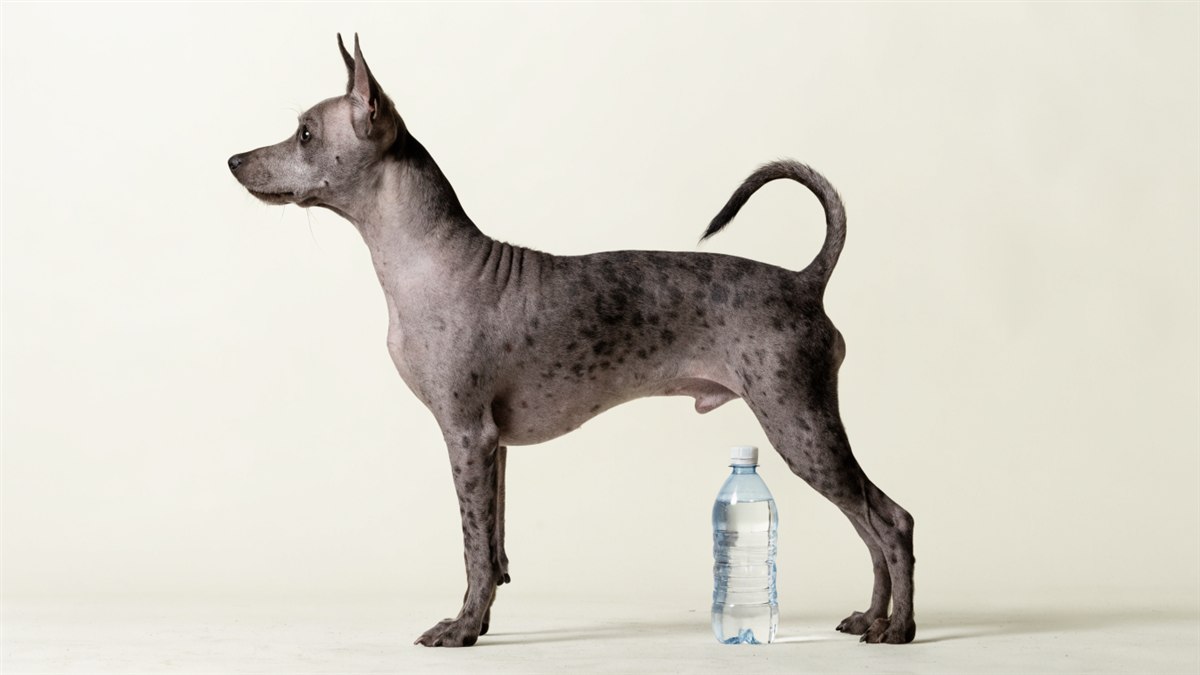
The Argentine Pila is a hairless dog of northwestern Argentina, found mainly in Salta and Jujuy, standing 25 to 45 cm at the withers in the size classes its only written standard sets out, and recognised by exactly one body in the world. That body is the Asociacion Canina Argentina, which published a standard for the breed in October 2007. No international registry recognises it, and no peer-reviewed study has ever sampled it.
Start with the name, because it explains the dog. Pila is Salta and Jujuy dialect for bald or naked, recorded as a regional Americanism in the dictionary of usage for those two provinces. The Quechua word behind the wider group is khala, also meaning naked, and the older Argentine literature uses it interchangeably. So the breed name is not a brand or a kennel-club coinage. It is what farming families in one corner of Argentina called the hairless dog that lived in their houses, and it stuck.
The dog itself belongs to the South American hairless group alongside the Peruvian Hairless Dog and, further north, the Mexican Xoloitzcuintle. The best-evidenced account of how it arrived is trade and tribute rather than independent domestication. There is no record of hairless dogs in what is now Argentina before Inca expansion in the fifteenth century, which reached Ecuador in the north and the western northwest of Argentina in the south, and the Inca sent emissaries with valued gifts to bind distant colonies. The hairless dogs travelled as one of those gifts. After the Spanish conquest, trade between Argentina and Peru ran principally through Salta and Jujuy, but the flow of dogs from the defeated civilisation stopped, because Spain valued these animals only as an occasional curiosity for European courts.
That isolation is the whole story of why the Pila is a distinct population rather than simply a Peruvian dog living further south. Cut off for four centuries in separate valleys, the hairless dogs of Latin America diverged into local varieties, and the Argentine writers who work on the breed are explicit that there are good grounds to call these varieties rather than separate breeds. National Purebred Dog Day, which covers breeds at exactly this stage, puts the open question plainly: is the Pila a different breed from the Peruvian Inca Orchid, or a variety of it that surfaced in a different part of one region? Its answer is that nobody knows.
The standard, and who wrote it
One written standard exists. The Asociacion Canina Argentina published it in October 2007 and the Kennel Club Argentino adopted it in 2008. It divides the Chaqueno variety into three sizes: small at 25 to 35 cm at the withers, medium at 35 to 45 cm, and large above 45 cm. A separate Andean variety exists with shorter legs and a longer body, and the Argentine literature suggests it evolved in high mountain regions, reasoning from a build better suited to cold and thin air. Note the reasoning direction there. The conclusion about altitude is inferred from body shape, not measured, and the page you are reading will keep flagging that distinction because almost every claim about this breed is of the same kind.
In build the Chaqueno Pila resembles a Miniature Pinscher with a shorter back and a higher tail set than the other hairless breeds carry. Bonbeno's Miniature Pinscher page is the closest published comparison an Indian reader can actually look at. The tail is carried in a curve over the back in movement, ideally with the tip barely brushing the loin. The gait is short-stepping, quick and elastic, and the smaller dogs often show a hackney lift that the standard's authors want encouraged as a breed marker. These are agile dogs, fast, and able to climb and jump. One Argentine account describes the taller, sharper guardian type as capable of jumping two metres.
The head is lupoid, of medium length and slightly domed, with skull and muzzle roughly equal. Eyes are medium-large, slightly almond, and range from black to yellow depending on skin colour. Ears are translucent, very mobile, set fairly high, and carried erect when the dog is attentive, with the outer edges parallel. They are notably smaller than the ears of the Peruvian and Mexican relatives. Skin is usually dark, or light with dark spots.
Two types, and what separates the Pila from its show-ring relatives
Cassels' 2023 chapter gives the most careful comparison published anywhere, and it is worth having because it is the only account written by someone who has examined both the Pila and its recognised relatives closely. The population splits into the chaqueno type, long-legged with a short torso, and the andino type, short-legged with a long torso, and she reports that both hold their typology consistently across their whole pre-Columbian range.
Her list of differences from the Xoloitzcuintle and the Peruvian Hairless Dog is specific. The Pila's ears are always erect, sharper, smaller, translucent, very mobile, with the outer edges parallel in the alert position. The eyes are somewhat larger and very expressive. The muzzles are narrower, and the short lips sit tight against the gums so the whole mouth line shows in a slight smile she compares to a dolphin's. Adult Pilas lack wrinkles anywhere on the body except in old age, which is not true of the relatives further north, where wrinkles on the forehead and elsewhere on the head are near-universal. The tail is set slightly higher and is always carried high in movement with the tip almost brushing the loin.
The structural difference she considers most important applies to both recognised breeds: the Pila's markedly straight rear angulation. She points out that a notably straight rear is characteristic of most FCI Spitz and Primitive breeds, that it is described in the Xolo and Peruvian standards, and that it has largely been lost in the recognised hairless dogs themselves. The chaqueno also single-tracks, with the slight lift of the forefeet that reminds her of a hackney gait, and she notes that this movement is now considered incorrect in the show standards, which suggests it was once common in those breeds too.
The andino type reads, in her description, as a chaqueno with shortened limbs, slightly heavier bone throughout and a wider ribcage, moving on two tracks without the front-end lift, with angulation closer to a Pug's but never as extreme as the short-legged European breeds. Dogs of this build are valued on the eastern slope of the Andes and considered incorrect in Mexico and Peru, which is a good illustration of how much of breed identity is a judging decision rather than a biological one.
Hairlessness is a spectrum, not a switch
The degree of alopecia varies dog to dog. Some Pilas carry nothing but whiskers. Others have pronounced tufts on head, tail and feet, though never as profuse as a Chinese Crested's. A few show a barely perceptible down with occasional longer hairs along the back. None of it amounts to a coat: it is always sparse, bristly when short at the extremities and silkier when long. Argentine breed promoters have historically treated hair as a sign of impurity, which is a breeding attitude rather than a genetic fact and is worth knowing before you read any Argentine source on the subject.
The dentition described in the same source is the point most Indian readers will care about, and it is covered in full in the health section below. In short, Pilas generally lack premolars and other teeth. The standard asks that incisors be complete, healthy and close in a scissor bite, and that curved canines ideally be present, while acknowledging that canines are frequently absent or cone-shaped. A breed standard that has to write in an allowance for missing canines is telling you something about the underlying biology.
What the breed was for
Through the colonial period and well into the twentieth century, Pilas were valued by indigenous families, the rural middle class and criollo farmers of northwestern Argentina for their warm skin. They were used to warm beds and as living heating pads, particularly for older people with rheumatism, and in Rio de la Plata cities up to the mid nineteenth century they were called calientapies, foot-warmers, because on cold days they pressed against their seated owners' feet. Folk belief held that the belly skin drew negative energy out of a human body and treated rheumatism, asthma, bronchitis, stomach pain, eye infections and skin wounds. The hot-water bottle displaced the dog in the twentieth century.
They were also kept as watchdogs, because they stay alert to any unusual movement or sound around them National Purebred Dog Day. The Argentine…. Hepper adds a ratter history, which is consistent with the size and the prey drive owners report, though it does not cite a source for it.
What was lost, and when
The collapse has a date and a cause, and both come from Cassels. Until well past the middle of the twentieth century there was hardly a household in northwestern Argentina without a Pila as a prized member, dogs that spent much of the day on the street and returned at dusk to share their family's beds so completely that bitches were allowed to whelp in them. Then television arrived, made the Yorkshire Terrier and the Dobermann into status symbols, and the Pilas that spent their days outside found the door closed against them, because they had become the dogs of Indians and poor criollos. A Pila does not survive long on the street, competing for food with bigger and better-armed dogs and enduring winters that were harsher then.
Two behavioural traits went with the population, and they are the most striking detail in the whole literature. Until the mid-1970s it was universal among Pilas to be effectively barkless, or to have a deep, muffled, hoarse voice, and to shed thick tears in response to strong emotion. Cassels records both as noted by the first Spanish chroniclers in the conquered territories, and as now essentially lost among the chaqueno dogs, with a very few andino dogs still carrying them. She even suggests the voice is the origin of the word ochar, used in the Argentine northwest until recently for a dog's bark.
By the early 2000s almost no pure chaqueno Pilas remained, the survivors having crossed with the imported breeds that replaced them. The Salta Kennel Club had begun taking an interest in rescuing the breed in 1974, and by the start of this century that interest had become a restoration project: selective breeding aimed at returning the breed to its pre-Columbian state, with explicit attention to conserving the Pila's psychological characteristics, which she argues are lost in show dogs through crossbreeding and through a focus on physical structure at the expense of mind.
A hairless dog does not run hotter than a coated one. The FCI standard for the closely related Peruvian Hairless Dog states directly that the internal and external temperature of hairless dogs is exactly the same as other breeds, and that the difference is in how the heat leaves: it radiates straight off bare skin instead of filtering through a coat. That is why the dog feels hot to a human hand. It is a heat-transfer effect, not a fever, and it is the single most useful physical fact on this page for an Indian reader thinking about summer.
Argentine Pila price in India
No Argentine Pila price in India exists, because no Argentine Pila is offered for sale in India. Bonbeno searched the Indian results in August 2026, tested the breed URLs on the two Indian marketplaces that generate a page for almost every breed name in existence, and found hard 404 errors on both. There is no lawful commercial import route either. Anyone quoting you a rupee figure for this breed is quoting a number they made up.
Take the marketplace test first, because it is the cleanest evidence available and it is easy to repeat. Indian puppy sites such as Puppiezo and Mr n Mrs Pet auto-generate a listing page from a breed name, which is why they carry pages for breeds that have never been imported. Bonbeno's American Hairless Terrier page documented exactly that pattern: both sites had a page for that breed, and both filled it with priced puppies of other breeds. For the Argentine Pila the pattern breaks. Following each site's own URL structure returns HTTP 404 Page not found on Puppiezo and a redirect to 404 Page Not Found on Mr n Mrs Pet. The auto-generator's vocabulary does not contain this breed, which is a stronger absence than an empty listing.
Now look at what Google India actually serves for the query. Two of the ten organic results are Dogo Argentino price pages, one quoting Rs 40,000 to Rs 2,00,000, and one is a Quora thread about Dogo Argentino puppy prices. A fourth is a Pug supplier directory in New Delhi. When a commercial query has no matching commercial reality, a search engine substitutes the nearest thing that does, and in this case the nearest thing is a completely different Argentine breed that weighs four times as much. If you searched this term and came away with a rupee range in your head, that is where it came from.
The only price figure that exists anywhere
One published price for an Argentine Pila exists in any language that Bonbeno could find. La Gaceta Salta interviewed the breeder and researcher Monica S. Cassels in March 2017 at her home in Salta province, where she lived with seven Pilas. The article states that there are no breeding kennels in the city, that the breed is very hard to obtain, and that its value is around 2,000 pesos. That is the number. It is nine years old, it is a single reporter's line from a single interview, and it is in Argentine pesos.
Bonbeno does not convert it. Argentina's currency has moved so far since March 2017 that any rupee figure produced from that peso number would be arithmetic dressed as information, and a reader would then quote it back as an Indian price. The honest statement is the one in the previous paragraph: about 2,000 Argentine pesos, in Salta, in March 2017, for a dog that the same article describes as endangered.
| Source | What it offers | Is it this breed | Figure quoted |
|---|---|---|---|
| Puppiezo, Indian marketplace | Nothing. The breed URL returns 404 | No page exists | None |
| Mr n Mrs Pet, Indian broker | Nothing. The breed URL redirects to 404 | No page exists | None |
| Instagram result at position 2 | Dogo Argentino puppies in India | No, a different Argentine breed | Rs 40,000 to Rs 2,00,000 |
| Quora result at position 4 | Dogo Argentino puppy pricing discussion | No, a different Argentine breed | User estimates, unverified |
| TradeIndia result at position 10 | Pug suppliers in New Delhi | No, an entirely unrelated breed | From Rs 15,000 |
| La Gaceta Salta, March 2017 | A journalist's line in an interview with one Argentine breeder | Yes | About 2,000 Argentine pesos, 2017 |
| Hepper, ranking breed page | An explicit refusal to estimate | Yes | None. It says rarity makes the cost impossible to estimate |
Hepper deserves credit here, because it is the only page in the ranking set that declines to invent a number. It states that the breed's rarity makes it hard to estimate the cost of a puppy, that the bulk of any cost would be locating and importing the dog, and that enthusiasts may be reluctant to let the breed leave Argentina at all. That is the correct answer, and it is the one Bonbeno reaches independently.
Why no lawful supply chain can form in India
Two separate locks hold, and either one alone would be enough. The first is import policy. Under ITC (HS) code 01061900 dogs are a Restricted import into India, and Trade Notice 22/2022-23 sets out the only three permitted purposes: a pet dog with a valid pet book and records in the importer's own name, dogs imported by research organisations with a recommendation from CPCSEA, and dogs for internal security by the Defence and Police forces. The notice then states in terms that any applications for trading or breeding purposes, or applications made on behalf of another person or entity, shall be duly rejected. Entry is limited to the airports and seaports of Delhi, Mumbai, Chennai, Hyderabad, Bengaluru and Kolkata and, since October 2024, Kochi airport Department of Animal Husbandry…. A commercial importer cannot lawfully bring in a breeding pair, so an Indian population cannot be founded. The full route is set out in how to import a dog to India.
The second lock is paperwork. The Kennel Club of India's own checklist for registering an imported dog requires the export pedigree in original, alongside the DGFT licence, customs clearance, quarantine clearance, airway bill and pet passport. An export pedigree is issued by a registry whose studbook the receiving club recognises. The Argentine Pila's only recognition comes from the Asociacion Canina Argentina, which is not Argentina's FCI member. Argentina's FCI member is the Federacion Cinologica Argentina, which registered 19,866 puppies in 2025, and the FCI nomenclature contains no Argentine Pila anywhere: Group 5 Section 6, the section that holds every recognised primitive-type hairless breed, lists only the Xoloitzcuintle from Mexico and the Perro Sin Pelo del Peru, and the alphabetical index under P jumps from Perro Dogo Mallorquin to Perro Sin Pelo del Peru with nothing in between.
Put those together and the position is not that the breed is expensive in India. It is that there is no legal path by which a dog of this breed can arrive as merchandise, and no paperwork path by which one that did arrive could be registered here. That is worth more to a reader than any price range, and it is why the price section on this page is mostly about law.
Ask three questions before any money moves. Which registry issued the export pedigree, and is that registry the FCI member for its country. What is the DGFT import authorisation number, and under which of the three permitted purposes was it granted. And can you see the dog's parents, in Argentina, on video. Bonbeno does not broker sales, does not recommend breeders, and reports published prices as editorial content only. A deposit for a rare imported breed you cannot verify is the oldest pet scam in India and this breed is a perfect vehicle for it.
Monthly cost of ownership, and which parts are actually knowable
No honest monthly cost of ownership figure exists for an Argentine Pila in India, because no Indian household keeps one and no survey has ever measured the breed anywhere. What can be stated is the cost structure a hairless dog imposes, which differs from a coated dog of the same weight in four specific places, and the handful of Indian and international figures that are real. Everything below is labelled by whether it is a measured number or a structural argument.
Begin with what a hairless dog removes from the bill, because it is genuinely substantial in India. There is no coat, so there is no clipping, no de-shedding, no de-matting and no monsoon coat-drying. Bonbeno's Shih Tzu page works through what a full-coat grooming schedule costs an Indian owner across a year, and the hairless variety of this breed simply deletes that line. The Argentine literature adds that Pilas carry no fleas or ticks, are clean and odourless, and do not sweat. Treat the flea and tick claim with care. A bare-skinned dog is a poor habitat for fleas and it makes ticks trivially easy to see and remove, which is a real advantage in an Indian city, but it is not immunity, and no Indian owner should read it as a reason to stop tick prevention.
The four lines a hairless dog adds
Sun protection, every single outing. This is not a seasonal purchase in India. Ultraviolet index over the four biggest Indian metros was measured from satellite data as high to extreme in Chennai at 8.1 to 15.33, moderate to extreme in Mumbai and Kolkata at 5 to 16.5, and low to extreme over Delhi at 3 to 15. A dog with no coat anywhere on its body needs either shade timing or physical cover for the whole of that exposure, for its whole life.
Dermatological veterinary care. Chronic sun exposure on unpigmented skin produces canine solar dermatitis, which begins as redness and scaling and progresses to thick, wrinkled skin with comedones and raised nodules, and in chronic severe cases to sun-induced tumours including squamous cell carcinoma, haemangioma and cutaneous haemangiosarcoma. Definitive diagnosis requires histopathology on multiple skin biopsies at different stages. That is a specialist bill, not a routine one, and Indian access to veterinary dermatology and histopathology is concentrated in a handful of cities.
Dental care. The dentition question is the subject of the health section, but its financial edge belongs here. A dog missing premolars and possibly canines needs its remaining teeth to last a lifetime, which means scaling under anaesthesia at intervals a vet sets, plus daily home care. Budget for it as a permanent line, not an occasional one.
Clothing and bedding. A dog with no insulating coat loses heat quickly as well as gaining it quickly. The Argentine sources describe the Pila as sensitive to cold and fond of lying in the sun. In India that translates to two opposite problems in the same flat: sun avoidance outdoors from March to July, and warmth indoors under air conditioning and on north Indian winter nights.
The numbers that are real
| Item | Figure | What it measures | Source |
|---|---|---|---|
| FOXI3 hairlessness DNA test | 56 US dollars per test, excluding VAT, about 12 business days | A commercial laboratory's list price for the dominant hairless test, validated for three breeds that do not include this one | Genomia |
| Indian breeder registration fee | Rs 5,000, non-refundable, certificate valid two years | The statutory application fee to the State Animal Welfare Board under the Dog Breeding and Marketing Rules 2017 | Gazette of India |
| Argentine Pila value, Salta | About 2,000 Argentine pesos | One journalist's line in a March 2017 interview with one breeder | La Gaceta Salta |
| KCI puppies registered, 2025 | 32,219 against about 17.1 million dogs in India | How small India's registered pedigree world is in absolute terms | FCI statistics |
| FCA puppies registered, 2025 | 19,866, down from 67,803 in 2014 | How much Argentina's own pedigree registration has contracted, which matters for any breed hoping for recognition | FCI statistics |
| Indian import ports | Seven: Delhi, Mumbai, Chennai, Hyderabad, Bengaluru, Kolkata and, since October 2024, Kochi | Where a lawfully imported pet may enter, and where quarantine happens | DGFT Trade Notice 22/2022-23 |
Read the Genomia line carefully, because it is doing more work than it looks. The test exists, it is cheap by the standards of an imported dog, and its published breed list contains exactly three entries: Chinese Crested Dog, Peruvian Hairless Dog and Xoloitzcuintle Standard. The Argentine Pila is not on it. A laboratory validates a test against the populations it has samples from, so the absence is a statement about which dogs have been sampled, not about which dogs are hairless.
The Rs 5,000 line matters for a different reason. Under the Dog Breeding and Marketing Rules 2017 no breeder in India may carry on breeding without a certificate of registration from the State Animal Welfare Board, obtained on a Form-I application with that fee, after an inspection by a board representative and a veterinary practitioner, and the certificate must be displayed at the establishment. If a seller offers you a rare imported hairless breed and cannot show you that certificate, the transaction is outside Indian law before you even reach the import question.
For an Indian household that wants a small, short-coated, genuinely low-grooming dog that is available, legal, priced and adapted to the climate, the honest recommendation is the Indian Pariah Dog, free to adopt in every Indian city. It costs nothing to acquire, it has a coat that does the sun protection for you, and there is no import authorisation involved. That is not a consolation prize. It is the answer to the question most people are actually asking when they land on a page like this one.
Suitability for the Indian climate, reasoned in both directions
An Argentine Pila would handle an Indian summer badly outdoors and reasonably well indoors, and the two halves of that sentence come from different physics. Having no coat helps with heat retention and hurts with solar radiation, and in India the second effect dominates for roughly five months of the year. Bonbeno rates heat tolerance 2 out of 5 for this breed, and the reasoning below is why.
The argument for the dog. A coat is insulation, and insulation traps metabolic heat as readily as it blocks incoming heat. The presence or absence of hair and glabrous skin directly shapes whether an animal loses or retains heat under hot and cold conditions, and hairless skin favours loss. The FCI standard for the Peruvian Hairless Dog states this in plain language for the closest relative that has a standard at all: the absence of hair leads to an immediate and direct emanation of heat, different from coated dogs where heat filters through the coat by natural ventilation. A Pila in a shaded, ventilated Indian room is genuinely better placed than a double-coated northern breed. Bonbeno's Siberian Husky page works through the opposite failure mode in detail.
Size helps too. In the largest study of heat-related illness risk factors in dogs, bodyweight was among the identified risk factors alongside age, with brachycephalic breeds carrying significantly higher odds of a fatal outcome. A 25 to 45 cm dog with a normal muzzle sits in a favourable band on both counts.
The argument against the dog, which is stronger in India. A coat also blocks ultraviolet radiation, and this dog has none anywhere. The protective layers against UV damage in a dog are the haircoat, the stratum corneum and melanin pigmentation, and breeds with short coats or light pigmentation are the ones veterinary pathologists see with solar dermatitis. Remove the coat entirely and only two of the three defences remain. Bonbeno's Whippet, Bull Terrier, Beagle, Boxer and Dalmatian pages all sit on that same risk list with a short coat still present. The Pila starts from behind all of them.
The Indian numbers make it concrete. UV index over Chennai was measured at 8.1 to 15.33, over Mumbai and Kolkata at 5 to 16.5, and over Delhi at 3 to 15. Anything above 11 is the extreme band. On the temperature side, Banda in Uttar Pradesh held 47 to 48 C for eight or nine consecutive days in May 2026, with overnight temperatures staying around 30 C, and the local meteorologist's summary was that mornings and nights no longer exist. A dog that must be walked twice a day in that has a very narrow window.
Ultraviolet radiation is already killing this breed in Argentina
This is the finding that settles the question for India, and not one page in the ranking set carries it. In the 2023 academic volume on the dogs of the Americas, the chapter on the Perro Pila is written by Monica S. Cassels, the researcher who has worked on the breed longest. Her account of why the surviving population shrank names climate change and rising ultraviolet radiation as a contributing cause, and states that the spotted and light-coloured hairless dogs were the first to succumb to skin cancer, which today affects even the deeply black ones.
Read that twice. This is not a general warning about hairless dogs written by a magazine. It is the breed's own principal researcher reporting that skin cancer has been thinning the population in northwestern Argentina, and that dark pigment has stopped being sufficient protection. Salta city sits at about 24 degrees south. Chennai sits at about 13 degrees north, Mumbai at about 19, and the measured ultraviolet index over those cities reaches 15.33 and 16.5 respectively. A breed already losing dogs to skin cancer at its home latitude would face a harder ultraviolet environment here, not an easier one.
The older Argentine account points the same way from the behavioural side. It describes the Pila as sensitive to cold, fond of lying in the sun, and tanning in summer at the risk of contracting sunstroke, changing colour and recovering it again in winter. Read that as a warning rather than a charming quirk. The dog seeks sun, its skin visibly responds to sun, and its own literature names both heatstroke and skin cancer as the consequences. In Salta the dog was choosing between a courtyard and shade. In Chennai in May it would be choosing between a balcony at UV index 15 and shade, with the same instinct and much worse odds.
City by city, if one ever arrived here
| Condition | The binding problem | What it forces on the owner |
|---|---|---|
| Delhi and the Indo-Gangetic plain, March to July | Extreme dry heat with night temperatures near 30 C, plus UV to 15 Biswas S, Singh N. Mornings and nights no… | Walks before sunrise and after dusk only. No midday balcony access at all |
| Chennai and coastal Tamil Nadu | The highest sustained UV band of the four metros, 8.1 to 15.33, combined with humidity | Physical cover rather than timing alone, because the low end of the Chennai range is already high |
| Mumbai and Kolkata | UV measured up to 16.5, plus monsoon humidity on bare skin | Sun management in summer and skin-fold and moisture management in the monsoon |
| Bengaluru and Pune | Mild by Indian standards, which is the trap. Moderate temperature does not lower UV at that latitude | The easiest Indian cities for this dog, and still not easy. Shade discipline stays mandatory |
| North Indian winter nights | No insulating coat, and the breed is described as cold-sensitive | Clothing indoors and out, and bedding off cold floors |
| Any air-conditioned flat | An 18 C room is a cold environment for a dog with no coat | A warm bed and a jumper, in May, indoors. This surprises people |
One more point that is easy to get backwards. The Peruvian standard's remark that hairless dogs radiate heat directly is often quoted as though it made these dogs heat-proof. It does not. Radiating heat efficiently helps when the surroundings are cooler than the dog. When ambient air is at 47 C, radiative and convective loss run the wrong way and the dog gains heat from its environment through the same bare skin, with no coat slowing the transfer. The mechanism that helps at 30 C hurts at 47 C, and India supplies both.
Indoors in a shaded, cooled Indian room this dog would rate 4. Outdoors, twice a day, in an Indian summer, it rates 2, and the limiting factor is ultraviolet exposure rather than temperature. The two ratings are not in conflict. They describe the same dog in two environments, and an Indian owner has to supply both.
Temperament and household fit
The Argentine Pila is described consistently across every source as loyal, affectionate with its own household, alert to strangers and a natural watchdog. That description is remarkably stable across an Argentine academic article, an Argentine breed standard summary and the English breed pages, which is unusual enough to be worth trusting more than most claims about this breed. What none of it rests on is a temperament survey, because none has been done.
Take the Argentine sources first, because they describe dogs their authors have actually lived with. The Pila gets on well with other domestic animals, is faithful to its owner and good with children, and is agile with a short quick stride. A distinct guardian type exists within the population: taller, more suspicious, sharper-eared, more aggressive, with excellent hearing, and able to jump up to two metres. The breed-standard description adds that Pilas were prized as watchdogs precisely because they stay alert to any unusual movement or noise in their surroundings National Purebred Dog Day. The Argentine….
The English pages agree and add detail without adding evidence. Hepper describes an intelligent dog that bonds firmly with its family, does not take to strangers, and is not known for behavioural problems, while recommending supervised play with small children and early socialisation before meeting other dogs, because a ratter's prey drive makes cats, ferrets and other small animals a poor match. The roundup pages that carry the breed inside a wider hairless listicle add little beyond that: Country Living gives it one section among six hairless breeds and Dogica lists it among ten, neither adding a temperament source of its own. Animalia's card runs the same four headings that every aggregator runs, Appearance, Origin, Temperament and Keeping conditions, all built from the same short Wikipedia text.
What the warm-body history tells you about the temperament
The most informative temperament evidence is not a personality adjective. It is four centuries of use. This dog was kept inside human beds, pressed against the feet of seated elderly people on cold days, and used as a living heat pad against rheumatism and joint pain Portas C. El perro pelado. A dog that a household puts in a bed with an arthritic grandparent, generation after generation, is a dog selected hard for tolerance of handling, close contact and stillness. That is a stronger signal than any breed-card adjective, and it is the single best reason to expect a genuinely affectionate companion.
It also sets up the honest caution. The same selection pressure produces a dog that wants physical contact and expects it, which means the breed is a poor match for a household that wants an independent animal, and a poor match for anyone who cannot socialise a suspicious watchdog properly around Indian apartment traffic. In a Mumbai or Bengaluru building with a shared lift, delivery riders at the door several times a day and a security guard changing shift, an alert breed with a guarding streak needs deliberate work from week nine, not week thirty.
Who this breed suits, and who it does not
- Suits a household that is home most of the day, because a dog bred for body contact does not do well left alone for a nine-hour Indian office shift.
- Suits an owner who genuinely enjoys a daily skin routine, because the care load is high even though the grooming load is near zero.
- Suits a home with older children who can be taught that this dog has no coat between their fingernails and its skin.
- Does not suit a home with hamsters, rabbits or free-ranging birds, given the reported prey drive.
- Does not suit an owner who wants a dog that lives on a terrace or in a yard, which in India means sun exposure the breed cannot take.
- Does not suit a first-time owner who chose the breed for its looks, which is the commonest way rare hairless breeds end up rehomed.
Every temperament statement on this page describes a small, geographically concentrated population in northwestern Argentina, reported by a handful of enthusiasts. There is no owner survey, no behavioural study and no large sample. Treat it as informed description, not as data, and be more sceptical of any page that presents the same material as though it were measured.
Training approach, and the two lessons no coated breed needs
To train an Argentine Pila, run short reward-based sessions, socialise the watchdog instinct deliberately from puppyhood, and add two lessons that a coated dog never needs: accepting a full-body skin inspection, and accepting clothing or a sunshirt before every outdoor walk. The breed is reported as easy to train and eager to please, sensitive to scolding, and strongly motivated by praise.
The conventional half is quickly stated. Consistency matters more than intensity, treats work as training aids and should be counted into the daily ration, and harsh words backfire on a dog described as sensitive. A dog with a ratter history is prone to digging, so a fenced Indian garden needs its perimeter checked before the dog gets free run of it. Recall is a safety skill rather than a party trick, because an alert dog with prey drive on an Indian street shares that street with cats, monkeys in several cities, and free-ranging dogs.
Lesson one: the skin inspection
Teach a full-body handling routine before the dog needs it. On a hairless dog every early sign of solar damage appears on the surface where you can see it, and the progression is documented: erythema and scaling first, then thickened, firm, wrinkled skin with comedones, then occasional raised red nodules. Catching stage one is an owner's job and it takes a weekly pass over the ventral abdomen, the medial aspect of the legs, the flanks and the bridge of the nose, which are the sites the pathology literature names. A dog that will not lie still on its back for ninety seconds cannot be checked, so this is a training problem before it is a medical one. Start it in week nine with food, not in month nine with a struggle.
Lesson two: wearing something
In India the sunshirt is not optional and the dog has to accept it calmly. Build it the same way you would build a harness: garment on the floor, reward for approach, one second of contact, reward, and so on across a fortnight. The reason to invest here rather than relying on sunscreen is that the ASPCA's poison control guidance is cautious about sunscreen for pets: products marketed for pets are usually not tested by the FDA so their effectiveness is unknown, zinc oxide can cause zinc toxicity with repeated skin exposure, and salicylates can irritate skin, while an animal that eats sunscreen off itself risks vomiting, diarrhoea and, with large amounts, stomach ulceration. Physical cover has none of those failure modes, and a dog that licks its own shoulder cannot lick a shirt off.
Socialisation, on an Indian timetable
The Indian complication is that the safest hours to be outside with this dog are also the darkest and quietest. If you only ever walk before sunrise and after dusk from March to July, the puppy meets an empty street, no traffic, no children and no delivery riders, which is precisely the wrong exposure for a breed with a guarding streak. Solve it deliberately. Use covered markets, indoor parking levels, apartment lobbies, lifts, vet waiting rooms and friends' homes for daytime socialisation, and use the cool hours for physical exercise. Treat the two as separate jobs on the schedule rather than assuming a single walk delivers both.
- Start handling and mouth-opening work in week nine, before any tooth problem exists.
- Introduce the sunshirt over a fortnight of short reward sessions, never by force.
- Socialise indoors during daylight and exercise outdoors in the cool hours, as two separate items.
- Train recall to a whistle, which carries better than a voice on an Indian street.
- Teach a settle on a mat, because a dog bred for body contact needs a legal way to be near you.
Everything in this section is either general canine training practice or a direct consequence of hairlessness. No trainability study, no working title record and no breed club education programme exists for the Argentine Pila. The trainability claims in the ranking pages are single-sentence assertions with no source attached, and Bonbeno has not upgraded them into data.
Daily exercise requirement, and why no published figure exists
No published daily exercise figure exists for the Argentine Pila. Not one of the pages ranking for the breed gives minutes, and Bonbeno will not invent them. What can be reasoned from the breed's own described physiology is a moderate requirement for an agile small-to-medium dog, split across two cool-hour sessions in India, with indoor mental work carrying the load through the hottest months.
The physical description is unusually consistent and it points to an athletic dog rather than a lap dog. Pilas are described as extraordinarily agile, fast runners, and capable of climbing and of large jumps, with a short quick stride of great elasticity. The guardian type is reported as jumping up to two metres. Hepper says the dog needs regular exercise for physical and mental health, that several daily walks can meet both needs, and that a dog park run suits it if it gets on with other dogs. That is guidance, not a measurement, and the difference matters on a page like this.
So here is the honest translation into an Indian schedule. Two sessions a day, in the cool hours, at a total that suits the individual dog's size class, because a 25 cm small Pila and a 45 cm-plus large Pila are not the same animal and the standard treats them as three separate size groups. Watch the dog rather than the clock: a dog that digs, barks or destroys is under-exercised, and a dog that lags on the return leg has had enough.
The Indian window is narrower than the requirement
This is the real constraint and no overseas page addresses it. From March to July, the hours when ultraviolet index sits in the extreme band cover most of the daylight in Chennai, Mumbai, Kolkata and Delhi, and during the May 2026 heat event in Uttar Pradesh even the early morning was already behaving like afternoon, with light at 6.15 am that felt like 8 or 9 am and roads deserted by mid-morning. Overnight temperatures around 30 C mean the evening walk is not the relief it is in Salta either.
Practically, that leaves a pre-dawn window and a post-dusk window, both short, for roughly five months. A dog with real exercise needs and two twenty-minute windows will have unmet needs, and the answer is not to push the dog into daylight. It is to move part of the load indoors.
- Scent work indoors, which tires a dog far faster than walking and needs no sun at all.
- Stair sessions in an apartment building's internal stairwell, which is shaded and cool at 6 am.
- Food puzzles and slow feeders that turn the daily ration into twenty minutes of work.
- Recall and trick training in short bursts, which is mental exercise the breed's reported eagerness suits.
- Covered parking levels and building corridors for controlled trotting when the street is unusable.
One structural point about heat and exertion. The VetCompass work on heat-related illness in dogs found exertion among the triggers and recorded a median wet bulb globe temperature of 16.9 C at the time of heat-related illness events, which is a mild reading by Indian standards and tells you that exertional heat illness does not need extraordinary weather. That study covered UK dogs, so the absolute figure does not transfer to India, but the direction does: exercise is a heat-illness risk factor in its own right, independent of how hot the day looks.
If the Argentine reports of a two-metre vertical jump apply to your dog, standard Indian balcony railings and low compound walls are not containment. Grill the balcony properly before the dog arrives, not after the first escape.
Grooming and skin care in Indian humidity
Grooming an Argentine Pila means skin care, not coat care. There is nothing to brush, clip, de-shed or dry, and the entire routine collapses into three jobs: keep the skin clean without stripping it, protect it from ultraviolet exposure every time the dog goes out, and inspect it weekly for the earliest signs of sun damage. In Indian humidity the first job is harder than owners of coated breeds expect.
The coat position first, because it is not uniform. Some Pilas carry only whiskers, some have tufts on head, tail and feet, and a few show a barely perceptible down with occasional longer hairs along the back. None of it functions as a coat. Litters also contain fully coated puppies, which is a genetic consequence covered in the health section, and a coated Pila needs ordinary short-coat grooming rather than the skin routine described here. Do not apply hairless-dog care to a coated littermate, and do not assume a lightly tufted dog is protected.
Bathing, and the Indian mistake to avoid
Hepper's guidance is an occasional bath, used as the moment to trim nails and check ears. That frequency is written for a temperate climate and it needs an Indian correction in one direction and a caution in the other. Indian heat and dust load the skin faster than a Wisconsin or Yorkshire summer does, so bathing will genuinely be needed more often here. But over-bathing bare skin strips its lipid barrier, and a stripped barrier is exactly what you do not want on an animal whose only remaining defences against ultraviolet damage are the stratum corneum and melanin pigmentation. The resolution is not a fixed schedule. It is a mild, soap-free, veterinary-approved wash used when the dog is actually dirty, followed by full drying, and a moisturiser only if your vet recommends one for that dog.
Dry the dog completely, including under the elbows, between the toes, in the groin and behind the ears. Bonbeno's American Water Spaniel page documents why the overseas advice to towel a dog and let it air dry does not transfer to an Indian monsoon. The same physics applies to bare skin in a 90 percent humidity Mumbai August: warm, damp, occluded folds are where secondary infection starts, and there is no coat here to hold the moisture away from the surface either.
Sun protection is the grooming routine
Every source that discusses hairless dogs converges here. A dog's coat protects its skin from sunburn and this breed is prone to burning because it is hairless, so sunscreen made for pets should be used whenever the dog goes outdoors. Country Living, quoting the canine behaviourist Adem Femi of Rover, adds that hairless dogs need protection from sun, rain and irritants such as perfume on human clothing or stinging plants, that their skin needs regular moisturising, and that both cooling and warming coats may be needed at different times of year.
Bonbeno's position is that in India physical cover should be the primary tool and topical sunscreen the secondary one, and the reason is safety rather than convenience. The ASPCA's Animal Poison Control Center notes that pet-marketed sunscreens are usually not FDA tested so their effectiveness is unknown, that zinc oxide can cause zinc toxicity with repeated skin exposure and damage red blood cells, and that salicylates can produce skin redness and irritation, with ingestion risking vomiting, diarrhoea and in large amounts stomach ulceration or liver damage. Its primary recommendation is limiting time in bright sunshine during peak hours, and speaking to a veterinarian about what products, if any, a particular animal needs. A UPF shirt, shade timing and a vet-cleared product used on the nose and ear tips is a better Indian protocol than lotion over the whole dog.
The weekly skin check, in order
- Look at the bridge of the nose, the ear tips and the eyelid margins, which are the light-skinned sites where damage shows first.
- Turn the dog over and check the ventral abdomen and thorax, the medial aspect of the legs and the lateral flanks, the distribution the pathology literature names for canine solar dermatitis.
- Feel for thickened, firm or wrinkled areas, and for comedones, which are dilated hair follicles that present as blackheads.
- Note any raised red nodule and photograph it with a coin for scale, then show your vet, because nodules in chronically sun-exposed skin are the finding that matters most.
- Check between the toes and in the groin for damp-related irritation, which is the monsoon problem rather than the summer one.
Litters contain coated puppies, and the temptation to clip one down for the fashionable bare look is real. Do not. A short coat is doing UV work that a shaved one is not, and every breed on the veterinary solar-dermatitis risk list gets there through short hair or light pigmentation. Shaving converts a dog with partial protection into a dog with none, in a country with a UV index measured up to 16.5.
Health risks, the hairless gene, and what has never actually been tested
No laboratory has ever sequenced the hairlessness gene of an Argentine Pila. That sentence contradicts the page ranking third in India for this breed, so the rest of this section shows the work. The breed's inheritance pattern and its dentition both match the dominant FOXI3 form of canine ectodermal dysplasia carried by the Xoloitzcuintle, the Peruvian Hairless Dog and the Chinese Crested, and Bonbeno's assessment is that it very probably is that mutation. It has not been demonstrated in this population, and the difference between very probably and demonstrated is the whole of this section.
What the primary papers actually sampled
Two papers are cited across the internet as proof that the Argentine Pila carries FOXI3. Bonbeno opened both.
Drogemuller and colleagues, writing in Science in 2008, opens with the sentence that defines its scope: Mexican and Peruvian hairless dogs and Chinese crested dogs are characterised by missing hair and teeth, a phenotype termed canine ectodermal dysplasia. It reports that the condition is inherited as a monogenic autosomal semidominant trait, maps it by genome-wide association to a 102 kilobase interval on chromosome 17, and identifies a frameshift mutation in the coding sequence of the forkhead box transcription factor FOXI3, a gene specifically expressed in developing hair and teeth. Three breeds. The Argentine Pila is not among them and is not mentioned.
Parker and colleagues, in the Philosophical Transactions of the Royal Society B in 2017, is the standard review of hairlessness across dog breeds. It describes the underlying mutation as a 7 base-pair duplication in exon 1 of FOXI3, producing a frameshift, a premature stop codon and the loss of 95 percent of the normal protein, and states that in addition to the Chinese Crested, the Xolo and the Peruvian Hairless Dog carry the same mutation. Crucially, it reports that a SNP haplotype spanning 102 kb shows the FOXI3 mutation in all three breeds came from the same ancestral source. Three breeds again, not four.
The Argentine Pila appears exactly once in that paper, in a list. The sentence reads that other hairless breeds include the Argentine Pila dog, the Ecuadorian Hairless dog, Abyssinian Sand Terriers, the African hairless and the Hairless Khala also from Argentina, and it adds that many of these breeds are very rare and that the latter are not recognised by any breed registry. That is a naming, not a genotyping. No sample from an Argentine Pila was analysed in either paper.
| Breed | Sampled in Drogemuller 2008 | Covered by the Parker 2017 haplotype | On a commercial FOXI3 test panel |
|---|---|---|---|
| Chinese Crested | Yes | Yes, one of the three | Yes |
| Xoloitzcuintle (Mexican Hairless) | Yes | Yes, one of the three | Yes |
| Peruvian Hairless Dog | Yes | Yes, one of the three | Yes |
| Argentine Pila | No. Not sampled, not mentioned | No. Named once in a list of breeds not analysed | No. The validated breed list holds three entries and this is not one |
| American Hairless Terrier | Not applicable, a different gene | Covered separately. The only hairless breed whose trait is recessive | Tested on a separate recessive SGK3 panel |
The Genomia line in that table is worth dwelling on, because it is the cheapest possible resolution of the whole question. A commercial FOXI3 hairlessness test exists, costs 56 US dollars excluding VAT and takes about 12 business days, and its published breed list contains three entries: Chinese Crested Dog, Peruvian Hairless Dog and Xoloitzcuintle Standard. Somebody in Salta with cheek swabs from a dozen Pilas and about 700 US dollars could settle a question the internet has been asserting for a decade. Until they do, the honest description of the mechanism is inference from phenotype.
What the breed's own researcher says, and why it matters
The strongest non-laboratory evidence is not on any English page. It is in the 2023 academic volume on the canids of the Americas, in the chapter on the Perro Pila written by Monica S. Cassels. Three statements from it carry real weight.
First, on the mechanism. Cassels states directly that the gene producing baldness in these dogs is lethal in homozygotes and incompletely dominant in heterozygotes, and sets out the consequence: statistically one embryo in four, homozygous bald over bald, will die and be reabsorbed by the uterus, or occasionally develop and die within a few hours of birth. Two of four will be heterozygous bald over haired, and one of four homozygous haired with a full coat. That is the semi-dominant lethal pattern of FOXI3, described by the person with the deepest first-hand pedigree knowledge of this population.
Second, and pointedly, she distinguishes the American Hairless Terrier by name, describing it as a recent addition to the hairless world that owes its lack of hair to a genetic mutation different from the one affecting our dogs. The breed's own authority is therefore claiming the dominant mechanism for the Pila and explicitly excluding the recessive one. That is an expert assertion rather than a sequencing result, and Bonbeno reports it as exactly that, but it is a great deal more than a Wikipedia footnote.
Third, she is sceptical of the very genetic work the internet uses to close this question. Commenting on Parker's 2017 analysis of 161 breeds, she notes that the show-line Xoloitzcuintles and Peruvian hairless dogs recognised by the FCI carry considerable German Shepherd input alongside other breeds absorbed since the Spanish conquest, and that those studies did not include the dogs found in interior localities of those countries, nor those on the eastern slope of the Andes. In other words, the sampled populations are the show populations, and the country dogs, which is what a Pila is, were never in the dataset.
Why the inference is still strong
Three further observations point the same way, and an Indian reader deserves to see them rather than being told to take a gene name on trust.
One, the litter arithmetic. The Argentine account of Pila breeding states that not every puppy in a Pila litter is bald, that the genetic factor responsible for hairlessness is incompletely dominant and lethal, and that every living hairless puppy is therefore heterozygous. It sets out the expected outcome of a hairless-to-hairless mating as one homozygous embryo that does not develop and is generally reabsorbed, two heterozygous hairless puppies, and one fully coated puppy, with hairless-to-coated matings splitting fifty-fifty and coated-to-coated never producing a bald puppy. That is precisely the pattern a semi-dominant lethal produces, and it is exactly what the laboratory table for the confirmed FOXI3 breeds predicts: 25 percent homozygous dying before birth, 50 percent hairless, 25 percent powderpuff. Note the weakness honestly. The Argentine source for that arithmetic is a hobbyist reference site, not a study, and it may simply be describing what the confirmed breeds do.
Two, the dentition. Cassels is unambiguous on this point and it is the most specific dental description published for the breed: all hairless Pilas have a deficient adult dentition, with premolars absent or rudimentary, canines deformed or retained in their deciduous form, and incisors that may be delayed in developing until well past a year of age. The last clause is genuinely new information for an owner, because it means a young Pila with gaps in its incisor row at eight months is not necessarily missing those teeth permanently. The breed-standard summary agrees on the substance: Pilas generally lack premolars and other teeth. The standard asks for complete healthy incisors closing in a scissor bite, and says curved canines should ideally be present while acknowledging that they are frequently absent or cone-shaped. Compare that with the two FCI standards for confirmed FOXI3 breeds. The Xoloitzcuintle standard states that the dentition in the hairless variety is nearly always incomplete, associated with the congenital hairless gene, that the absence of a few incisors, canines, molars, pre-molars or rotated teeth should not be penalised, and, in terms, that genetically the absence of hair is closely linked to the absence of teeth. Its coated variety must carry a full 42 teeth. The Peruvian standard says the dentition in the hairless variety is nearly always incomplete associated with the congenital alopecia, accepts the absence of one or more teeth in the hairless variety, and makes more than one missing tooth a disqualifying fault in the coated variety. The Pila's written dentition allowance is the same allowance, made for the same reason.
Three, the fine detail of the dental phenotype. The best characterisation of what FOXI3 does to a dog's mouth comes from a 2017 study that extracted ancient DNA from the bony ear region of a historical museum series of pedigreed hairless dog skulls, successfully genotyping 10 of 14 specimens. In the hairless dogs, both upper and lower jaws showed loss of the permanent canines, premolars and to some extent incisors. The deciduous fourth premolars and the permanent first and second molars consistently lacked their distal and lingual cusps, leaving a single enlarged cusp in the basin-like heel of the tooth. Third molars were missing in three of five adult individuals. If an Argentine Pila is ever radiographed properly, that is the pattern to look for, and it is far more specific than the vague phrase missing teeth.
What this means for a Pila's mouth, in practice
Assume, as the evidence suggests, that a hairless Pila has an incomplete permanent dentition. Three consequences follow for any owner, and all three are actionable.
- Count the teeth at the second vaccination visit and again at seven to eight months, and write the count in the dog's record. You cannot notice a lost tooth later if nobody ever counted them.
- Ask for dental radiographs rather than a visual check, because a tooth that never erupted and a tooth that is impacted under the gum look identical from above and are managed differently.
- Protect the teeth the dog does have. Fewer teeth means each remaining one carries more of the work, and a broken canine in a dog that only has two of them is a much bigger event than in a dog with the full set.
The breeding consequence, which is the part that matters ethically
If the mechanism is the dominant one, then a hairless-to-hairless mating is expected to lose a quarter of its embryos, because the homozygous state is not viable. The laboratory statement is blunt: dogs carrying two copies of the FOXI3 mutation die in the prenatal stage. Parker's paper reaches the same conclusion from the data side, noting that the lack of homozygotes in either breed suggests the mutation is embryonic lethal. The same laboratory adds that neonatal deaths are more common in hairless pups than among their coated littermates.
That is not a curiosity, it is a breeding decision. Mating hairless to coated avoids the lethal combination entirely and still produces roughly half hairless puppies Wikipedia in Spanish, Perro pila argentino. Cassels reports that Argentine breeders have moved in exactly that direction, and gives the reason: periodically bringing a coated dog into the breeding plan improves dentition and genetic diversity, which in turn confers greater disease resistance. She also records what the practice replaced. Until recently, coated puppies, and hairless puppies showing more hair than the fashion allowed, were killed at birth from Mexico to Argentina. An Indian reader considering any hairless breed should know that the humane breeding practice is recent, is not universal, and is still uncommon in Mexico and Peru by the same account.
Yet the FCI standard for the Xoloitzcuintle records that hairless-to-hairless breeding produces the fewest coated dogs and has therefore been preferred, and states that this practice has been proven to maintain and improve the quality of the breed. Bonbeno reports that position without endorsing it. A reader is entitled to know that the mating a breed standard prefers is the one that loses a quarter of the litter before birth.
In India this is not a hypothetical. The Prevention of Cruelty to Animals (Dog Breeding and Marketing) Rules 2017 require every breeder to register with the State Animal Welfare Board, to keep records of the date and place of every mating, the number of pups whelped, and the cause of death of every dog that dies in the establishment as determined by a veterinary doctor, and to keep those records for at least eight years. The rules also cap a female at one litter a year and five litters in a lifetime, and forbid breeding a female before eighteen months. Any Indian programme built on a deliberately lethal genotype would be writing that outcome into a statutory record book, which is worth thinking about before anyone starts one.
The rest of the health picture, and how thin it is
Beyond the gene, there is almost nothing. There is no breed club health survey, no screening scheme, no Orthopedic Foundation for Animals entry, and no published prevalence figure for any condition in this breed. Hepper lists dental issues, eye infections and deafness as minor conditions and luxating patellas and heart disease as serious ones, and attaches no source, sample size or study to any of the five. Bonbeno reproduces that list as a description of what one ranking page asserts, not as prevalence data, and an Indian reader should treat it the same way.
Life expectancy is in the same state. Hepper gives 12 to 15 years, and the roundup pages give slightly different bands, none of them sourced to a mortality study or a registry dataset. No longevity study of the Argentine Pila exists. Bonbeno publishes the claim with its provenance attached and declines to average the variants into a single confident number.
Two risks are real regardless, because they follow from hairlessness rather than from breed data. Canine solar dermatitis is the first, and its full progression from erythema and scaling through thickened wrinkled skin with comedones to sun-induced neoplasms including squamous cell carcinoma, haemangioma and cutaneous haemangiosarcoma is documented. Heat-related illness is the second, with exertion and confinement identified as triggers and bodyweight and age among the risk factors.
This section is general information for Indian pet owners and is not a diagnosis. Consult your nearby vet, a veterinarian registered under the Indian Veterinary Council Act, before acting on anything here. Ask them specifically about two things: sun protection and skin care for unpigmented skin before the dog goes out in Indian daylight, and a dental radiograph to establish which permanent teeth are actually present. Treat any sudden change in your dog's condition as urgent, and treat any new raised nodule on sun-exposed skin as something to show a vet the same week.
Feeding and nutrition, when the dog may not have the teeth for it
To feed an Argentine Pila correctly you have to know two things first: which of the three size classes the dog belongs to, and which permanent teeth it actually has. The first decides the portion and the life-stage formula. The second decides the physical form of the food, and it is the question no general feeding guide for this breed asks.
Start with size, because the breed is not one animal. The standard sets three size classes, small at 25 to 35 cm at the withers, medium at 35 to 45 cm, and large above 45 cm, and the wider Argentine description gives a range of 25 to 55 cm across the population. The English roundups report weights spanning roughly 9 to 55 pounds, which is about 4 to 25 kg. A 4 kg dog and a 25 kg dog do not share a feeding plan, so choose a commercial diet appropriate to the expected adult height and weight rather than to the breed name.
The general schedule is conventional. Feed a puppy three to four small meals a day, keep fresh water available at all times, and move to two meals a day at adulthood. Bonbeno adds one Indian note: in a Delhi or Ahmedabad May, shift both meals toward the cool ends of the day, because a dog that has just eaten and then walks in heat is carrying two thermal loads at once, and exertion is an identified trigger for heat-related illness.
The dentition question changes the food
This is where a hairless breed diverges from every feeding guide written for a coated one. If the hairless phenotype carries the dental consequences described in the health section, the dog is likely to be missing premolars and possibly canines Federation Cynologique Internationale, and the detailed museum work on confirmed FOXI3 dogs found that even the molars that were present consistently lacked their distal and lingual cusps, leaving a single enlarged cusp in the crushing basin of the tooth.
Premolars shear. Molars crush. A dog missing its premolars and carrying simplified molar cusps has lost mechanical capability, not just tooth count, and that has practical consequences at the bowl.
- Match kibble size to the teeth the dog has, not to its bodyweight. A large-breed kibble in a mouth without premolars gets swallowed whole.
- Avoid hard chews, antlers, hooves and bones entirely. A dog with a reduced set cannot afford to fracture one of the teeth it kept.
- Consider softening or part-soaking dry food if your vet agrees, particularly for an older dog, and always with the dental plan rather than instead of it.
- Watch for food dropped from the side of the mouth, chewing on one side only, or reluctance at the bowl, which are the early signs of dental pain in a dog that has fewer teeth to spare.
- Keep the ration measured, because the breed is active and lean and there is no coat to hide weight gain, which in this one respect makes body condition scoring easier than on a fluffy dog.
Indian availability, and what is actually on the shelf
There is no specialist requirement here that Indian retail cannot meet. A small-breed or medium-breed complete food from any of the brands sold widely in Indian metros covers a Pila-sized dog perfectly well, and the size-class question above is answered by the same shelf that answers it for a Chihuahua or a Miniature Pinscher at the small end and a mid-size terrier at the large end. What is not on any Indian shelf is a hairless-specific diet, and nothing in the literature suggests one is needed.
One claim to set aside. Because hairless dogs feel warm to the touch, owners sometimes conclude they burn more energy and need more food. The FCI standard for the Peruvian Hairless Dog contradicts that directly: internal and external temperature in hairless dogs has been verified as exactly the same as in other breeds, and the difference is only in how heat leaves the body. Feed the dog for its size, activity and body condition, not for the sensation of its skin.
Ask your vet to record a dental chart at seven to eight months and repeat it at eighteen months, because incisors in hairless Pilas are reported to be capable of arriving well past a year of age. Keep both copies. Every feeding decision for the next twelve years follows from them, and no other breed page in this ranking set tells an owner to do it.
Month by month through the first year
No breed-specific developmental data exists for the Argentine Pila, so the timeline below is built from two things only: general canine development, and the specific consequences of hairlessness and of the probable dental phenotype. Every entry is either standard practice for any puppy or a direct deduction from a sourced fact on this page, and it is labelled as such rather than dressed up as breed research.
| Age | What is happening | What the owner does | Hairless-specific |
|---|---|---|---|
| Birth to week 3 | Litters contain both hairless and coated puppies, and the split is visible immediately | Nothing but observation. Record which puppies are hairless and which are coated | Yes. Neonatal deaths are reported as more common in hairless pups than coated littermates in the confirmed FOXI3 breeds |
| Weeks 4 to 8 | Deciduous teeth erupt. Weaning begins | Count the deciduous teeth and note anything absent | Yes. Deciduous fourth premolars in confirmed FOXI3 dogs already show the simplified cusp pattern |
| Week 8 | The earliest lawful sale age in India | Under the Dog Breeding and Marketing Rules 2017 no pup under eight weeks may be sold, every pup sold must be micro-chipped, and the breeder must supply feeding details, inoculation and deworming dates and the attending vet's name and address in writing | No, this applies to every breed |
| Weeks 9 to 12 | The core socialisation window | Begin handling, mouth-opening and full-body inspection work with food. Socialise indoors in daylight and outdoors only in cool hours | Yes. The skin inspection habit has to be built now, and the Indian daylight constraint distorts the socialisation schedule |
| Months 3 to 4 | First outdoor walks after the vaccination course | Introduce the sunshirt over a fortnight of short reward sessions before the first daytime outing | Yes. Physical cover is the primary protection because pet sunscreens are largely untested and carry zinc oxide and salicylate risks |
| Months 4 to 6 | Permanent teeth begin replacing deciduous teeth. Growth is fastest | Weekly skin pass over nose bridge, ear tips, ventral abdomen, medial legs and flanks | Yes. Both the skin routine and the tooth watch |
| Months 6 to 7 | Adult dentition is largely in place in a normal dog, but not necessarily in this one | Book dental radiographs, not a visual check. Record which permanent teeth are present, which are impacted and which never formed | Yes, and with a caveat. Cassels reports that in hairless Pilas the incisors may be delayed until well past a year of age, so a gap at seven months is not proof of a missing tooth |
| Months 12 to 18 | Late incisor eruption may still be happening | Repeat the dental check at 18 months and compare it against the seven-month radiograph before concluding anything is permanently absent | Yes. This is the row that only exists because of a single Spanish-language chapter, and no English page carries it |
| Months 7 to 9 | Adolescence. Guarding and prey drive sharpen | Reinforce recall, continue structured socialisation, check balcony and boundary containment | Partly. The two-metre jump reported for the guardian type is a containment issue |
| Months 9 to 12 | Physical maturity in the smaller size classes. Skin colour may shift with sun exposure | Move to two meals a day. Photograph the skin monthly so changes are comparable | Yes. Argentine sources describe the dog tanning in summer and losing the colour again in winter, at the risk of sunstroke |
| Month 12 onward | Adult routine settles | Annual vet review including a dental check, plus the weekly skin inspection for life | Yes. Solar damage is cumulative, so the routine does not relax with age |
Two of those rows deserve expansion. The month six to seven radiograph is the appointment that separates a well-managed hairless dog from a badly managed one, because the difference between a tooth that never formed and a tooth impacted below the gum is invisible from above and is managed completely differently. It costs one visit and it sets the baseline for the dog's dental future. The repeat at eighteen months is what turns it into an answer, because Cassels' observation that incisors in hairless Pilas may take well past a year to come through means a single early radiograph can be read too pessimistically.
The month nine to twelve skin photography is the other. Skin that changes colour seasonally is normal in this breed by its own literature, and skin that thickens, wrinkles or develops comedones is not. Without monthly photographs an owner cannot reliably tell those two apart a year later, and neither can a vet seeing the dog for the first time.
It is not breed research. No growth curve, no developmental study and no puppy survey exists for the Argentine Pila, and any page presenting a month-by-month schedule for this breed as measured data is presenting something that has never been measured. What is defensible is the reasoning: standard canine development, plus the sourced consequences of no coat and an incomplete dentition.
Argentine Pila against the hairless breeds it is confused with
Compare the hairless breeds on four axes and the Argentine Pila's position becomes clear immediately: which gene, how strong the evidence is that it carries that gene, what the dentition consequence is, and whether any registry recognition exists that would let a dog enter India on paper. The Pila loses on the last axis to every breed in the table, and it is the only one whose gene has never been tested.
| Breed | Hairless mechanism | Strength of the genetic evidence | Dentition | Registry route into India |
|---|---|---|---|---|
| Argentine Pila | Presumed dominant FOXI3, inferred from litter pattern and dentition | No molecular evidence at all. Never sampled in Drogemuller 2008, named but not genotyped in Parker 2017, absent from commercial FOXI3 test panels. The strongest evidence is the breed researcher's own statement that the gene is lethal in homozygotes and incompletely dominant Parker HG, Harris A, Dreger DL, Davis BW Genomia genetics laboratory Cassels MS. Perro Pila | Generally lacks premolars and other teeth; canines frequently absent or conical | None. Recognised only by the Asociacion Canina Argentina, which is not the FCI member for Argentina, and absent from the FCI nomenclature Federation Cynologique Internationale |
| Peruvian Hairless Dog | Dominant FOXI3, 7 bp duplication in exon 1 | Direct. Sampled in the original 2008 study and covered by the shared 102 kb haplotype Parker HG, Harris A, Dreger DL, Davis BW | Standard states dentition in the hairless variety is nearly always incomplete; absence of one or more teeth accepted | FCI Standard 310, Group 5 Section 6, so an FCI export pedigree exists |
| Xoloitzcuintle | The same dominant FOXI3 mutation | Direct. Sampled as the Mexican hairless dog in 2008 | Nearly always incomplete; standard says absence of hair is genetically closely linked to absence of teeth | FCI Standard 234 in three sizes, so an FCI export pedigree exists |
| Chinese Crested | The same dominant FOXI3 mutation, from the same ancestral source | Direct. One of the three breeds in the original mapping | Same canine ectodermal dysplasia dental phenotype, plus reported nail and sweat gland defects | FCI recognised and widely bred, the easiest of the hairless breeds to encounter in India |
| American Hairless Terrier | Recessive SGK3, a completely different gene | Direct, and distinct. Parker calls it the only hairless breed in which the trait is recessive, so the homozygous state is not lethal | No ectodermal dysplasia dental phenotype. Normal dentition | None either. Not in the FCI terrier nomenclature. See Bonbeno's American Hairless Terrier page |
Read the first two columns together and the point of this page falls out. Four of the five rows have a gene name backed by a laboratory. One has a gene name backed by a Wikipedia sentence.
Do not blur the American Hairless Terrier into this group
The American Hairless Terrier is the one hairless breed that genuinely differs in kind, and it is the contrast that makes the Pila's position legible. Its hairlessness is recessive, which means the homozygous state is viable rather than lethal, and it carries no ectodermal dysplasia dental phenotype. Two hairless American Hairless Terriers can be mated without expecting embryonic loss, and their puppies are expected to have a full set of teeth. Neither statement is true of the FOXI3 breeds, and neither is likely to be true of the Argentine Pila.
The mirror image matters too. Because the American Hairless Terrier's mechanism is recessive and different, a genetic test built for the dominant FOXI3 variant would not detect it, and a test built for the terrier mutation would not detect FOXI3. If anyone ever does test an Argentine Pila, the panel has to be the FOXI3 one, and a negative result on it would be a genuinely interesting finding rather than a null.
What an Indian buyer would actually be offered instead
In India the practical substitutions are not the other hairless breeds. They are these. Of the hairless group, only the Chinese Crested turns up in Indian broker dropdowns with any regularity. If the appeal is a small, alert, agile companion with a short back and high tail set, the Miniature Pinscher is the breed the Pila's own standard compares itself to and it is available and priced here. If the appeal is a low-grooming dog for Indian conditions, the Indian Pariah Dog beats every breed in the table above on heat adaptation, cost and availability. If the appeal is a rare ancient breed with a genuine indigenous history, India has several of its own, including the Rampur Greyhound and the Chippiparai, both of which you can actually meet.
Mistakes Indian readers make with this breed
Seven mistakes account for almost everything that goes wrong around the Argentine Pila in India, and six of them happen before anyone owns a dog. They range from repeating an unverified gene claim to sending a deposit for an animal that does not exist in this country, and one of them is a genuine Indian animal-welfare problem rather than a buying error.
1. Repeating the FOXI3 claim as settled fact
The single most-copied error about this breed is the flat statement that its hairlessness is caused by a dominant FOXI3 mutation. It appears on the page ranking third in India and it is footnoted to a 2008 Science paper whose own first sentence names three breeds, none of which is this one Drogemuller C, Karlsson EK, Hytonen MK. The probable answer is the same gene, but probable and demonstrated are not interchangeable, and a reference site that blurs them teaches readers to trust citations they have not opened. Anyone writing about this breed should say inferred, not identified, until a genetic test is run on Pila samples.
2. Repeating 1,700 dogs, when the source says 1,700 people
The population figure circulating in English says approximately 1,700 of these dogs exist in Argentina Hepper Pet Resources. Argentine Pila Dog…. Bonbeno opened the Spanish source it traces back to. La Gaceta Salta's March 2017 article states that in Argentina close to 1,700 people keep these animals as pets, and adds that in Salta itself the community is smaller. Those are different quantities, and a person may keep several: the breeder interviewed in the same article lived with seven. It also is not a census. It is one number in one interview with one breeder, and the same article says the breed is endangered and that a purebred example is very hard to find.
3. Assuming no coat means good in Indian heat
This is the reasoning error the climate section exists to correct. A missing coat helps with retained metabolic heat and hurts badly with ultraviolet exposure, and in a country with a measured UV index reaching 15.33 over Chennai and 16.5 over Mumbai and Kolkata the second effect dominates for months at a time. The breed is heat-sensitive in the specific sense that matters here, which is skin damage rather than thermoregulation. Its own Argentine literature describes it tanning in summer at the risk of sunstroke.
4. Believing hairless means hypoallergenic
It does not. Hepper addresses this directly, noting that reactions are caused by dander rather than hair and that a sensitive person may react to a hairless dog exactly as they would to a coated one. The canine behaviourist quoted by Country Living says the same, that people who react to dogs are often reacting to dander or saliva rather than hair, so a hairless breed may still leave them reaching for antihistamines. If allergy is the reason a family in Pune or Kochi is looking at hairless breeds, the answer is an allergist, not a different dog.
5. Mistaking a mange case for a hairless breed
This one is specific to India and it is not a buying mistake, it is a welfare issue. Indian streets carry free-ranging dogs with demodectic and sarcoptic mange, and a badly affected dog can look, to an untrained eye, like a rare hairless breed. Two things follow. Never buy a supposed hairless puppy on the strength of its appearance, because a mange case is a sick animal being sold as a rarity. And if you find a bald street dog, the correct response is a veterinary examination, since mange is diagnosable and treatable, and the differential also includes the sun-damage picture described above. A genuine Pila puppy is born with its hairless phenotype and has littermates with full coats. A mange case is not.
6. Paying a deposit for an unrecognised breed you cannot verify
The Argentine Pila is exactly the shape of animal that scam listings use, because it is genuinely rare, genuinely photogenic, and impossible for a buyer to cross-check. There is no FCI standard to compare a dog against, no Indian listing to price it against Mr n Mrs Pet, Indian puppy broker.…, and no lawful commercial import route to make the story plausible. Ask for the export pedigree and the issuing registry, the DGFT import authorisation number, and the seller's State Animal Welfare Board registration certificate, which every Indian breeder must hold and display The Kennel Club of India. Any one of the three being missing ends the conversation.
7. Treating near-zero grooming as low maintenance
The confusion is understandable and it costs dogs their welfare. This breed removes brushing, clipping, de-shedding and coat drying entirely, and adds a daily sun protocol, a weekly skin inspection, a permanent dental plan and a dermatology relationship. Grooming effort goes to about one out of five. Total care effort goes up, not down. An owner who chose the breed because there is no hair to sweep is the owner most likely to skip the sunshirt on a busy morning in May.
- Verify the gene claim against the paper, not against the page that cites it.
- Read population figures in their original language before repeating them.
- Separate heat tolerance from sun tolerance, because they are different problems.
- Treat hypoallergenic claims for any breed as marketing until an allergist says otherwise.
- Take a bald street dog to a vet rather than to a breed forum.
- Refuse any sale that cannot produce pedigree, import and breeder-registration paperwork.
- Budget care time, not grooming time.
Adoption and responsible sourcing
You cannot adopt an Argentine Pila in India, and Bonbeno has found no evidence that one has ever lived here. The responsible options are therefore three: adopt a dog that is actually available and suited to this climate, support the Argentine rescue and conservation effort that exists for the breed in Salta, or wait for a registry position that may never come. This section covers all three honestly, and it explains how to verify any Indian seller who claims otherwise.
The Argentine position, which is a rescue story rather than a market
In Argentina itself the breed is being conserved rather than traded. The Salta breeder and researcher Monica S. Cassels, author of a bilingual book on 35 years of Pilas, rescued one of her own dogs from the street eight years before the 2017 interview, says there are no breeding kennels in the city, describes the breed as endangered and a purebred example as very hard to find, and offers dogs for adoption while campaigning against the breed's disappearance. The wider Argentine account describes a conservation movement across every American country where the hairless dogs are bred, with programmes for protection, improvement, registration and reproduction, and notes that the Asociacion Canina Argentina recognises the Pila as a native breed and has already applied for international recognition.
The conservation effort is organised rather than informal. Members of the Club del Perro Pila told a Salta radio station in June 2017 that crossbreeding is degenerating the pure breed, that they hold an annual awareness festival, that year scheduled for October, and that they run a Facebook group for enquiries. Their stated objective is to rescue and restore the breed through correct matings in family homes, and they explicitly do not promote breeding kennels, on the grounds that this is a family dog. The first Fiesta Nacional del Perro Pila was held at Coronel Moldes in Salta, and by thirteen years after the project went public Cassels reports a marked improvement in the quality of dogs presented at such events. Further meetings ran in Salta city and in Buenos Aires, the 2015 gathering at Universidad Maimonides bringing together researchers and enthusiasts on this and other native canids.
That is worth pausing on if you arrived here looking to buy. The people who care most about this breed have deliberately built a model with no kennels in it, and their goal is a restored population in Argentine homes rather than a supply for an export market.
The application for international recognition has not succeeded. As of August 2026 the FCI nomenclature contains no Argentine Pila in Group 5 Section 6, the section that holds every recognised primitive-type hairless breed, and the alphabetical index under P runs straight from Perro Dogo Mallorquin to Perro Sin Pelo del Peru. Parker's review states the position from the research side, describing several of the breeds in the Pila's group as very rare and not recognised by any breed registry. Hepper puts it plainly for a general reader: no official registries recognise the Argentine Pila except the Asociacion Canina Argentina, and much of what is known about the breed is anecdotal or oral history.
What an Indian reader can actually adopt
Every Indian city has a shelter with dogs available today, and for the specific qualities that draw people to this breed the substitutions are good ones.
- For heat adaptation and zero cost, the Indian Pariah Dog is the strongest answer on this page. It is native, short-coated, pigmented, available in every city, and free to adopt.
- For a small alert companion with a similar outline, the Miniature Pinscher is the breed the Pila's own standard uses as its comparison.
- For an ancient indigenous breed with real history, the Rampur Greyhound, the Chippiparai and the Mudhol Hound all have Indian breed communities and living populations.
- For a genuinely low-shedding indoor dog, look at the coated small breeds Bonbeno covers rather than at a hairless import, because low shedding and no coat are different problems with different costs.
- For a bald dog you have already met on the street, a veterinary examination first. Mange is common, diagnosable and treatable, and a treated dog often grows its coat back.
Verifying any Indian seller who claims to have one
If someone in India tells you they can supply an Argentine Pila, work through this list before any money moves. It is the same list Bonbeno applies to every rare imported breed, and this one fails at the first item.
- Ask which registry issued the export pedigree, and check whether that registry is the FCI member for its country. Argentina's FCI member is the Federacion Cinologica Argentina, not the Asociacion Canina Argentina.
- Ask for the original export pedigree, which the Kennel Club of India's own import checklist requires alongside the DGFT licence, airway bill, customs clearance, quarantine clearance and pet passport.
- Ask under which of the three permitted DGFT purposes the dog was imported, remembering that applications for trading or breeding purposes are to be duly rejected.
- Ask to see the seller's certificate of registration from the State Animal Welfare Board, which every Indian breeder must obtain and display prominently.
- Ask the puppy's age and refuse anything under eight weeks, and confirm the microchip number and the written record of feeding, inoculation and deworming that the breeder must supply.
- Ask to see the dam and sire on live video in their own housing, and to see the litter's coated puppies, because a genuine hairless litter normally contains both.
Bonbeno does not recommend breeders, does not link puppy listings and does not broker sales. The verification list above exists so a reader can protect themselves, not so they can find a seller.
The most useful thing an outsider can do for the Argentine Pila is not to import one. It is to support the Salta conservation effort where the dogs actually live, and to stop repeating unverified claims about it, because a breed whose entire published description rests on oral history is damaged rather than helped when the internet converts that history into confident false detail.
Argentine Pila questions, answered
What is the price of an Argentine Pila in India?
There is no price, because there is no Argentine Pila for sale in India. Both major Indian puppy marketplaces return a 404 error for the breed name, no lawful commercial import route exists, and the only published price for the breed anywhere is about 2,000 Argentine pesos quoted in a Salta newspaper interview in March 2017.
Is the Argentine Pila recognised by any kennel club?
By one, and only one. The Asociacion Canina Argentina published a standard in October 2007 and the Kennel Club Argentino adopted it in 2008. Neither body is Argentina's FCI member, which is the Federacion Cinologica Argentina, and the FCI nomenclature does not list the breed anywhere, including in the Group 5 Section 6 that holds the Xoloitzcuintle and the Peruvian Hairless Dog.
Does the Argentine Pila carry the FOXI3 mutation?
Probably, but nobody has ever tested it. The 2008 Science paper that identified FOXI3 sampled Mexican hairless, Peruvian hairless and Chinese crested dogs, and the 2017 review's shared haplotype covers those same three breeds. The Argentine Pila is named once in that review, in a list of breeds it did not genotype, and it is absent from every commercial FOXI3 test panel.
Do Argentine Pilas have teeth?
Not a full set, on the available description. Pilas generally lack premolars and other teeth, and while the standard asks for complete incisors in a scissor bite it accepts that curved canines are frequently absent or cone-shaped. That pattern matches the two FCI standards for confirmed FOXI3 breeds, both of which state that hairless dentition is nearly always incomplete.
Can an Argentine Pila survive Indian summer?
Indoors in a shaded, cooled room, yes, and better than a double-coated breed because there is no coat trapping heat against the skin. Outdoors it is the wrong dog for India. Ultraviolet index over Chennai has been measured at up to 15.33 and over Mumbai and Kolkata at up to 16.5, the dog has no natural protection anywhere, and its own Argentine literature describes it risking sunstroke.
How many Argentine Pilas are there?
Nobody has counted. The circulated figure of 1,700 comes from a single 2017 newspaper interview and it refers to about 1,700 people in Argentina keeping these dogs as pets, not to 1,700 dogs. The same article describes the breed as endangered and says a purebred example is very hard to find.
What is the difference between an Argentine Pila and an American Hairless Terrier?
The gene, and everything that follows from it. The American Hairless Terrier is the only hairless breed whose trait is recessive, so its homozygous state is not lethal and it has no ectodermal dysplasia dental phenotype. The Argentine Pila's inheritance pattern and incomplete dentition both point to the dominant FOXI3 form, where two copies are lethal before birth.
Are Argentine Pila dogs hypoallergenic?
No. Allergic reactions to dogs are driven by dander and saliva rather than by hair, so a person who reacts to coated dogs may react to a hairless one exactly as strongly. Both the ranking breed page and a canine behaviourist quoted in the UK press make the same point, and no hairless breed solves an allergy.
How big does an Argentine Pila get?
The only written standard sets three size classes for the Chaqueno variety: small at 25 to 35 cm at the withers, medium at 35 to 45 cm, and large above 45 cm. A separate Andean variety is shorter-legged and longer-bodied. Reported weights across the population span roughly 4 to 25 kg, so the breed name alone does not tell you the size of dog.
Can I import an Argentine Pila into India?
Not as a purchase. Dogs are a Restricted import under ITC (HS) 01061900, and DGFT Trade Notice 22/2022-23 permits entry only for a pet dog with a valid pet book in the importer's own name, for research with a CPCSEA recommendation, or for Defence and Police use, and states that applications for trading or breeding purposes shall be duly rejected. Registration would then require an export pedigree the breed cannot produce.
Where to get an Argentine Pila dog?
In Argentina, through the small conservation and rescue community in Salta rather than through kennels, because the 2017 source states there are no breeding kennels in the city and that the breeder interviewed offers dogs for adoption. Outside Argentina there is effectively no route, and in India there is none at all.
Is the Argentine Pila the same as the Peruvian Inca Orchid?
Nobody knows, and the honest sources say so. The Pila is thought to descend from the Peruvian hairless dogs brought south during Inca expansion, and both breeds come in three sizes and produce coated puppies in hairless litters. Whether it is a separate breed or a regional variety of the same population is an open question that no genetic study has answered.
Do Argentine Pila dogs get skin cancer?
Yes, and it is reported as a cause of the breed's decline rather than as a theoretical risk. The chapter on the breed in a 2023 academic volume on the canids of the Americas states that rising ultraviolet radiation thinned the surviving population, with spotted and light-coloured hairless dogs succumbing to skin cancer first and the deeply black ones now affected too.
Do Argentine Pilas need sunscreen?
They need sun protection, and physical cover is the safer primary tool in India. The ASPCA notes that pet-marketed sunscreens are usually not FDA tested, that zinc oxide can cause zinc toxicity with repeated skin exposure, and that salicylates irritate skin, so its first recommendation is limiting time in bright sun during peak hours and asking a veterinarian what, if anything, a specific animal needs.
Compare with similar breeds
Argentine Pila sits in 3 Bonbeno groups. Each one compares it directly against the breeds it is genuinely an alternative to, on the same figures.