
Conformation
Short-legged (chondrodystrophic) dog breeds
The short legs and the disc disease come from the same gene, and the usual advice about stairs is not what the data says.
Quick answer
The short legs in these breeds come from an FGF4 retrogene, and the same genetics causes intervertebral discs to calcify years earlier than normal. These are short-legged breeds rather than long-backed ones, which changes screening from measuring backs to imaging discs. Published cohort data also contradicts the universal advice to ban stairs and furniture, and every page here reports what was actually measured.
The breeds
The short legs and the disc disease are the same gene. That single fact changes what a buyer should ask for and what an owner should actually do.
 Alpine DachsbrackeThe FCI standard, the FGF4 chondrodystrophy data this breed actually has, and why no Alpine Dachsbracke can lawfully be bred or...
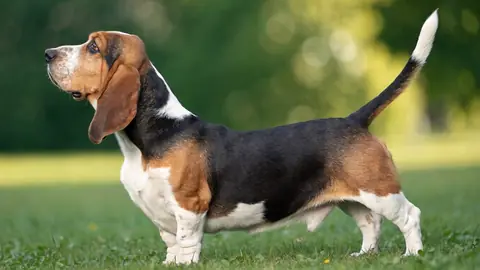 Basset HoundWhat a Basset Hound costs in India, why its ears are the most expensive part of the dog, what the two kennel clubs now disagree...
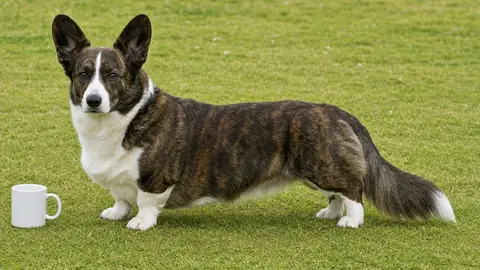 Cardigan Welsh CorgiThe Corgi that was never docked, priced in India at four times its sibling and on the strength of paperwork that costs Rs 750,...
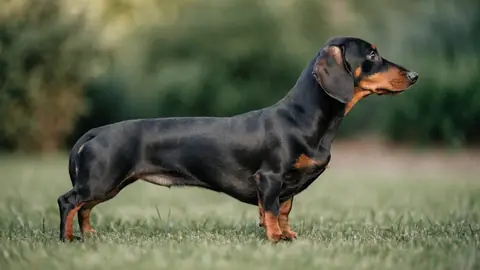 DachshundWhat a Dachshund costs in India across six published sources that disagree by twenty times, what the peer-reviewed evidence...
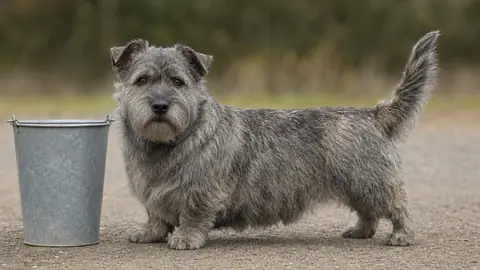 Glen of Imaal TerrierIreland's only short-legged terrier, recognised by its own national kennel club in 1934, down to 61 UK registrations in 2025,...
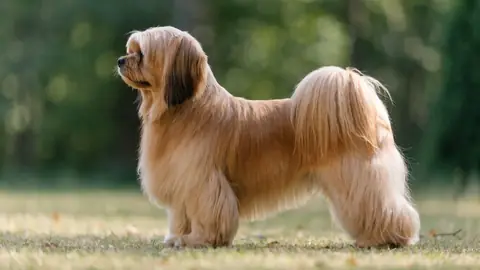 Lhasa ApsoWhat a Lhasa Apso costs in India, what KCI registration actually costs the breeder, why almost every Indian Lhasa Apso lives in a...
 PekingeseWhat a Pekingese costs in India, why Bonbeno rates heat tolerance 1 of 5, and what the February 2026 Cambridge breathing study...
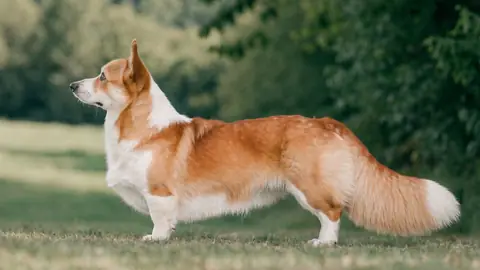 Pembroke Welsh CorgiWhat a Corgi costs in India across six published sources that disagree sevenfold, what the genetics actually say about the short...
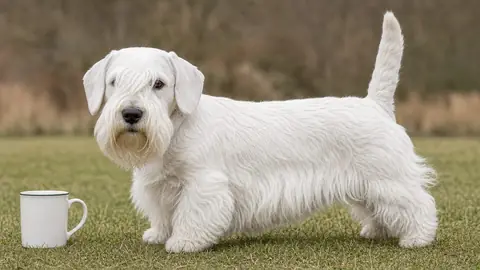 Sealyham TerrierA 9 kg white Pembrokeshire earth terrier on the Royal Kennel Club's vulnerable list at 111 registrations, with 45.6 percent of...
 Shih TzuWhat a Shih Tzu really costs in India, why eight published price guides disagree by more than Rs 1,00,000, and what a one-inch...
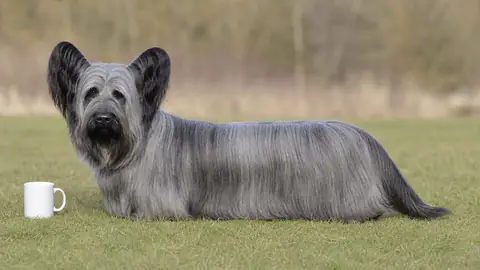 Skye TerrierA 25 cm Hebridean earth terrier that is twice as long as it is high, carries 16 to 20 kg on those short legs, appears exactly...
Compare the breeds side by side
To compare these 11 breeds directly, read across the table rather than down the guides. Heat tolerance is a Bonbeno rating out of 5 for Indian conditions, and the reasoning behind each one sits on the breed's own page.
| Breed | Heat tolerance | Published price, India |
|---|---|---|
| Alpine Dachsbracke | 2 of 5 | None exists |
| Basset Hound | 3 of 5 | Rs 20,000 to Rs 60,000 |
| Cardigan Welsh Corgi | 2 of 5 | Rs 3,50,000 to Rs 8,50,000 |
| Dachshund | 3 of 5 | Rs 5,000 to Rs 20,000 |
| Glen of Imaal Terrier | 2 of 5 | See page |
| Lhasa Apso | 2 of 5 | Rs 10,000 |
| Pekingese | 1 of 5 | Rs 15,000 to Rs 50,000 |
| Pembroke Welsh Corgi | 2 of 5 | Rs 35,000 to Rs 2,50,000 |
| Sealyham Terrier | 2 of 5 | 0 |
| Shih Tzu | 2 of 5 | Rs 15,000 to Rs 90,000+ |
| Skye Terrier | 2 of 5 | 0 |
What matters in this group
The points below are what the evidence on these 11 guides actually supports, not what the category is assumed to mean.
- Every page repeating that a long back causes disc disease has it backwards. The breed's own health charity states plainly that these are short-legged breeds, not long-backed ones, and the FGF4 retrogene that shortens the legs is what makes discs calcify early.
- The stairs-and-furniture advice deserves scrutiny rather than repetition. In one cohort of 2,031 dogs, animals not allowed on furniture carried over three times the odds of disc disease, and a 43,517-dog study associated regular stair use with reduced odds. Reverse causation is a real caveat and the pages state it, but the blanket ban is not supported.
- Body condition is the lever an owner actually controls, and in a chondrodystrophic breed excess weight compounds disc risk directly.
- In some breeds this is not permanent, which is the most hopeful finding in the group and the least reported. Whether the retrogene can be bred out depends entirely on whether it is still segregating. In the Beagle and the Dachshund it is effectively fixed, at allele frequencies of 1.00 and 0.98, so there is nothing left to select against. The Alpine Dachsbracke is one of only two breeds worldwide that still carries variation at both FGF4 sites, because its standard prioritised hunting ability over an exact height, and 12 of 111 dogs genotyped carried no copy at all. In a breed like that a parental DNA test is genuinely informative, and the published estimate is that the disc-disease retrogene could be removed at a cost of roughly 6 percent of shoulder height.
Membership is generated from the breed data itself, not typed by hand, so this list cannot drift from the guides it points at and fills in as more publish. The 11 guides here cite 405 sources between them.
This page is a directory of published Bonbeno guides, generated from their data rather than written as clinical guidance, so no veterinarian reviewed this page itself. Each linked guide carries its own veterinary review and its own health sections. Breed level evidence describes populations, and your animal is an individual, so consult your nearby vet before acting on anything you read here.
Common questions
How does Bonbeno decide which breeds belong on this page?
Membership is generated from each breed's own published data rather than chosen by an editor. The group is defined by a shared trait rather than a rating, so its members are named in the site's own cluster definition and each one is checked against the published guide before it appears. A breed appears here the moment its guide publishes and meets that rule, and never before, which is why no link on this page can point at a guide that does not exist.
What is a Bonbeno heat tolerance rating?
It is a 1 to 5 rating of how well a breed copes with Indian conditions, where 5 is best. Almost no international breed reference publishes one, and in a country where summer temperatures pass 45 C it is the most decision-relevant trait there is. It is Bonbeno's own judgement, built from published heat-illness evidence where that exists and stated as inference where it does not.
Are the prices on this page current?
Each price is read from that breed's own guide, where it is compared across published Indian sources and cited. Published Indian breed prices disagree widely between sellers, sometimes by more than a lakh for the same breed, so treat the figure here as the lowest band Bonbeno found and read the guide for the full range.
Does Bonbeno sell or broker any of these dogs?
No. Bonbeno does not sell pet food, products or animals and does not broker puppy or kitten sales. Nothing on this page is a listing, and no breeder or seller can pay to appear on it.