
Dog breed profile
Australian Terrier Price in India, Standard and Care Guide
There is no verified Australian Terrier price in India, and the measurements and coat facts that separate this breed from the Australian Silky Terrier matter more than any number a listing site prints.
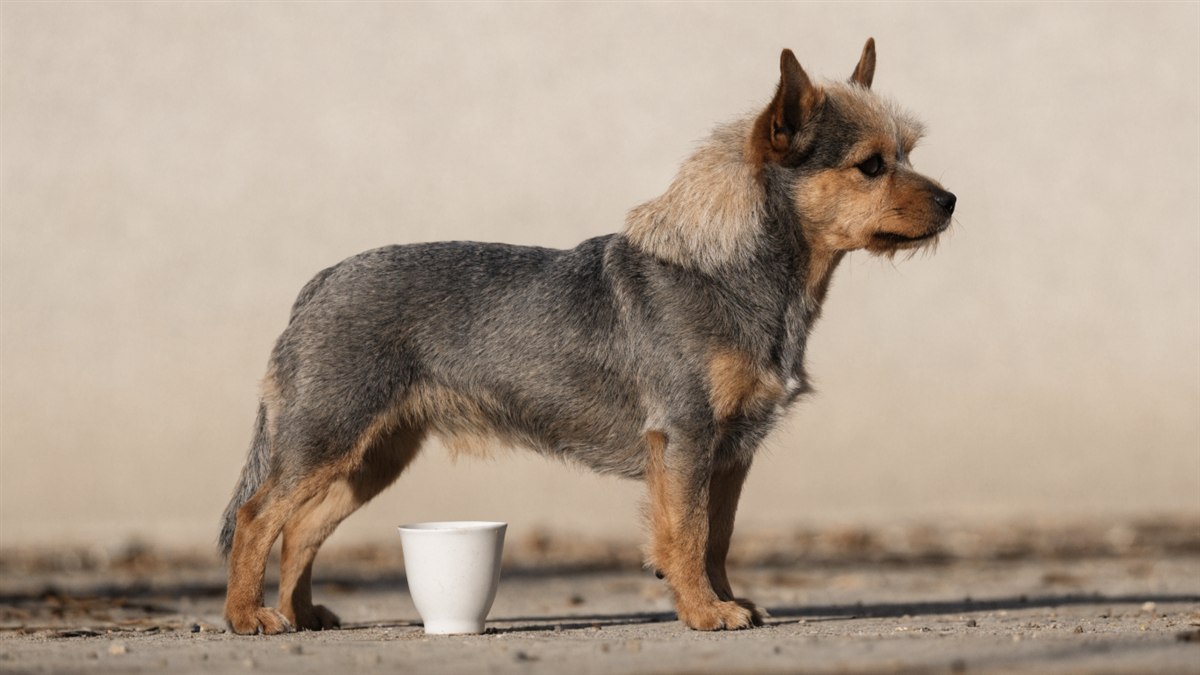
Quick answer
No verified Australian Terrier price in India exists in 2026. Every Indian listing page Bonbeno opened returned zero live puppies, while one site printed Rs 25,000 to Rs 50,000 with nothing behind it. The breed stands 10 to 11 inches with a harsh double coat and a neck ruff, which is what separates it from the single silky-coated Australian Silky Terrier.
This guide is general information for Indian pet owners and is not a diagnosis. Consult your nearby vet, a registered veterinarian who has examined your dog, before acting on anything you read here, and treat any sudden change in your dog's condition as urgent.
Australian Terrier at a glance
What an Australian Terrier is, and how to tell it from a Silky
The Australian Terrier is a small, sturdy, harsh-coated working terrier standing about 25 cm at the withers and weighing about 6.5 kg, and it is a different breed from the Australian Silky Terrier despite sharing ancestry, a country and half a name. It was the first breed developed in Australia, and it is one of the few terriers in the group that was not created in Britain.
Read the two standards side by side and the confusion stops immediately. The Australian Terrier is filed by the FCI in Group 3, Section 2, small-sized terriers, and described as a working dog: "One of the smallest of the working Terriers, was bred to be both a helper and companion in rough times and terrain";. The Australian Silky Terrier is filed in Group 3, Section 4, toy terriers, and its stated utilisation is "Toy Terrier / companion dog". Two dogs, one group, different sections, different jobs.
The measurements that actually separate the two breeds
The AKC standard sets the Australian Terrier at 10 to 11 inches at the withers and the Silky Terrier at a shoulder height of 9 to 10 inches, and both standards say deviation in either direction is discouraged or undesirable. That is a one-inch offset with a one-inch overlap, so height alone will not settle an argument in a courtyard. The FCI figures overlap more, not less: the Australian Terrier's desirable height is approximately 25 cm, while the Silky's is 23 to 26 cm for males Fédération Cynologique Internationale.
Weight separates them better than height does, and only one of the four standards gives a number. The FCI puts the Australian Terrier at approximately 6.5 kg, and the Royal Kennel Club at approximately 6.5 kg or 14 lb The Royal Kennel Club. The FCI Silky standard says only "Weight in proportion to height" and the AKC Silky standard gives no weight at all American Kennel Club. The AKC's Australian Terrier standard also declines to give a weight, saying instead that "Good working condition, medium bone, correct body proportions, symmetry and balance determine proper weight";. Note that the AKC's own breed page nonetheless publishes 15 to 20 pounds, a figure its official standard does not contain.
| Point | Australian Terrier | Australian Silky Terrier |
|---|---|---|
| FCI standard number | No. 8 | No. 236 |
| FCI section | Group 3, Section 2, small-sized terriers | Group 3, Section 4, toy terriers |
| FCI stated purpose | One of the smallest of the working terriers | Toy terrier and companion dog |
| AKC height | 10 to 11 in at withers | 9 to 10 in at shoulder |
| FCI height | Approximately 25 cm | Males 23 to 26 cm |
| Weight in the standard | Approximately 6.5 kg (FCI, KC) | In proportion to height, no figure |
| Coat structure | Harsh straight top coat over a short soft undercoat | Straight, single, glossy, silky in texture |
| Coat length | About 6 cm, 2.5 in, all over the body | Falls below and follows the body outline, not floor length |
| Neck | Protective ruff blending into an apron | No ruff, long silky hair, parted |
| Parting | None | Parted from the stop to the tail |
| Topknot | Covers only the top of the skull, softer than the body coat | Profuse, parted down the middle |
Put your hand on the dog's back. An Australian Terrier's jacket is harsh and straight and about 6 cm long, sitting over a short soft undercoat, and there is a definite ruff around the neck running down to the breastbone American Kennel Club. A Silky's coat is straight, single, glossy and silky in texture, with a parting running from the stop to the tail and no undercoat at all. Texture and the presence of an undercoat decide it in two seconds. Height will not. If you want the Silky's own page, Bonbeno covers the Australian Silky Terrier separately.
Why the two breeds keep getting confused
The confusion is inherited, not careless. The FCI's own historical summary of the Silky says the two breeds "had a common ancestry from stock in Tasmania, New South Wales and Victoria, namely the Broken Coated Terriers", and that Mr Macarthur Little continued his breeding programme in Sydney "using both Australian Terriers and Yorkshire Terriers";. The AKC puts the same story more bluntly: long-coated puppies appeared in Australian Terrier litters, and those were developed into the modern Silky, which makes all three breeds closely related and developed for different purposes. The Yorkshire Terrier sits at the third corner of that triangle, and the FCI's Australian Terrier standard records that "At intervals the Yorkshire Terrier was introduced";.
So all three share blood. They do not share a coat, a size band or a job. The Yorkie is a toy of no more than seven pounds carrying a single long coat that grows continuously; the Silky is a toy terrier with a single silky coat that stops short of the floor; the Australian Terrier is a small working terrier with a harsh double coat that was never meant to be long American Kennel Club American Kennel Club.
What the standard actually describes
The FCI general appearance is worth quoting because it explains the dog's shape in one sentence: "A sturdy low-set dog, rather long in proportion to height with strong Terrier character, alertness, activity and soundness. Its untrimmed, harsh coat with definite ruff around the neck extending to the breastbone and its long strong head assist in developing its hard bitten, rugged appearance";. The ANKC text carried by Dogs Queensland is the same wording, since the ANKC is the country of origin authority and the FCI standard derives from it.
- Coat. A harsh straight dense top coat of approximately 6 cm with a short soft-textured undercoat. The muzzle, lower legs and feet stay free of long hair. The AKC puts the same coat at 2.5 inches all over the body except the tail, pasterns, rear legs from the hocks down, and the feet.
- Ruff and apron. The neck is well furnished with hair "which forms a protective ruff blending into the apron". This is the feature no Silky has and no photograph of a groomed pet dog reliably shows.
- Ears. Small, erect, pointed, well carried, set on moderately wide and free from long hair, with puppies under six months excepted.
- Colours. Blue, steel blue or dark grey blue with rich tan, or clear sandy or red. White markings on chest or feet must be penalised. The AKC recognises blue and tan, solid sandy and solid red.
- Topknot. Soft, finer than the rest of the coat, and covering only the top of the skull. A Silky's topknot is profuse and parted down the middle.
History, in the words of the standard
The FCI records that in the early 1800s free settlers around Campbelltown and Ross in Tasmania were breeding broken coated dogs of a blue sheen body colour with tan markings, that they "were renowned for their prowess as watchdogs" and that they weighed about ten pounds. The type is assumed to have come from a mixture of British breeds, named in the standard as the Skye Terrier, the Scottish Terrier and the Dandie Dinmont Terrier. Wikipedia records the breed as officially recognised in 1850 and renamed the Australian Terrier in 1892, and notes that the ancestral types of all these breeds were kept to eradicate mice and rats.
That watchdog line matters more than it looks. It is the standard itself, not a blog, saying the founding population was valued for alerting. Barking is a working feature in this breed rather than a training failure, which is the same finding the Bonbeno terrier cluster reaches on the Jack Russell Terrier from a different direction.
Australian Terrier price in India, and why no honest number exists
There is no verified Australian Terrier price in India. Bonbeno opened every Indian result that would open for this query and found zero live listings, one price band printed on a page with nothing behind it, and a placeholder with a phone number. We are not publishing a range, because manufacturing one would be the single most damaging thing this page could do.
That is an unusual thing for a breed page to say, so here is exactly what was checked and exactly what came back.
| Source | Price shown | Live listings | What is actually on the page |
|---|---|---|---|
| Asia Pets, listings page | None | Showing 0 results | An empty template. It offers Chihuahua, Yorkshire Terrier and Toy Pom listings instead, all on the same phone number |
| Asia Pets, breed page | Rs 25,000 to Rs 50,000 | None linked | A breed description and a call to browse listings that do not exist on the same site |
| Breed n Breeder | None | Zero | A heading, a loading graphic and a phone number, with a promise that someone will discuss the price by phone |
| Mr n Mrs Pet | Could not be checked | Could not be checked | Returned HTTP 403 to automated retrieval. No figure is taken from it here |
| Spot Pet Insurance | $1,000 to $1,800 | Not applicable | A United States cost article ranking on an Indian query, in dollars |
The contradiction inside one website
Asia Pets publishes a price of Rs 25,000 to Rs 50,000 on its Australian Terrier breed page while its own listings page for the same breed on the same domain returns "Showing 0 results"; Asia Pets, Australian terrier Puppies…. A price band is a report of what puppies changed hands for. A page that quotes one while having sold none is quoting a template, not a market.
The same page gives the breed's height as 23 to 28 cm and its weight as 6 to 7 kg. The weight is close enough to the standard's approximately 6.5 kg to pass, but the 23 cm floor is below every published standard for this breed and is exactly the bottom of the FCI Australian Silky Terrier's male height range. A range that starts at the Silky's minimum and ends above the Australian Terrier's maximum is a range wide enough to sell you either dog.
What the search results themselves tell you
Look at the result set rather than the results. The organic page for this query in India returns seven distinct pages. One of them is a guide to the Australian Shepherd, a completely different breed. One of them sells printed merchandise. Two of them are listing pages with nothing listed. One is an American insurance blog quoting dollars. That shape is what a search engine produces when it is asked about a product that does not exist in the country, and no ranking page mentions it.
If a seller quotes you a live price for an Australian Terrier puppy in an Indian city, the burden of proof sits entirely on them. Ask which registry the parents are registered with, ask for the registration numbers, and ask to see the litter with the dam in the place it was raised. Then put your hand on the puppy's back. A harsh jacket over a short undercoat with a ruff to the breastbone is an Australian Terrier; a soft single silky coat parted down the spine is a Silky or a Yorkshire Terrier cross being sold under a rarer name American Kennel Club.
Why no lawful Indian supply chain has formed
Two documents explain the absence better than any market survey. Dogs are a Restricted import into India under ITC (HS) 01061900, and Policy Condition (7) of the DGFT's Trade Notice 22/2022-23 allows import only for a pet dog with a valid pet book in the importer's name, for R&D organisations with a CPCSEA recommendation, or for internal security by the Defence and Police Force. Policy Condition (8) states that import of commercial dogs for breeding or any other commercial activity is not permitted, and paragraph 6 states that any applications for trading or breeding purposes shall be duly rejected. Import is further limited to the airports and seaports of Delhi, Mumbai, Chennai, Hyderabad, Bengaluru and Kolkata and, since October 2024, Kochi airport Department of Animal Husbandry…. The full route is set out in how to import a dog to India.
So founding stock cannot lawfully be imported to start a breeding programme. Meanwhile the breed is genuinely rare even where it is popular. The American Kennel Club's 2025 registration statistics rank the Australian Terrier 150th of 202 breeds, against the Silky Terrier at 116th and the Yorkshire Terrier at 13th. The AKC's own breed page, read the same day, prints a slightly different figure of 158 of 210, which is a useful reminder that live registry rankings drift and that a bare rank without a date is worth little.
A breed that sits in the bottom quarter of registrations in the country where it is best established, and that cannot lawfully be imported into India for breeding, has no route to an Indian price band. That is the finding. It is more useful than a number.
What Bonbeno will not do
Bonbeno does not broker puppy sales, does not publish breeder listings and does not average conflicting figures into a comfortable middle. Where the sibling Yorkshire Terrier page found published Indian prices disagreeing by a factor of nine, and the Jack Russell Terrier page found a spread of more than Rs 1,00,000, this page found something different and worth saying plainly: nothing to disagree about, because nothing has been sold.
Monthly cost of keeping an Australian Terrier in India
No India-wide monthly cost figure exists for this breed, because no measurable Indian population exists to survey. What can be published honestly is the cost structure, the two line items that behave differently from other small dogs, and the one recurring cost that most owners of harsh-coated terriers do not budget for.
The only monthly costing on the ranking set is American. Spot Pet Insurance puts diet at $20 to $40 a month, grooming at $30 to $150, medical at $20 to $50 and insurance at $30 to $60, with a lifetime total of $20,000 to $35,000. Converting those numbers into rupees would be arithmetic pretending to be research, because Indian food pricing, Indian grooming rates and Indian veterinary fees do not track American ones in any fixed ratio. Bonbeno reports the structure instead.
The five recurring lines
- Food. A 6.5 kg adult is a small eater, and food is not the dominant line item for this breed the way it is for a Labrador. Portion control matters more than brand, for reasons set out in the feeding section.
- Grooming. This is the line that surprises people. A harsh double coat kept correctly needs hand stripping, not clipping, and stripping is skilled hand labour priced by time rather than by dog size.
- Preventive veterinary care. Core vaccination, boosters, deworming, and tick and flea control. Tick pressure is high across Indian metros and a low-slung terrier that pushes through undergrowth collects them.
- Diabetes monitoring provisioning. In a breed carrying the highest measured diabetes risk of any dog, budgeting for glucose curves, insulin and monitoring in later life is arithmetic rather than pessimism.
- Dental care. Small terriers accumulate dental disease, and scaling under anaesthesia is a periodic rather than monthly cost that owners consistently underestimate.
Grooming is the line that behaves differently
Most Indian small-dog budgets assume a clipper. This breed's standard describes an untrimmed, harsh coat, and the entire point of the jacket is its texture. A clipper cuts the hair shaft and leaves the soft undercoat behind, which over a few cycles turns a harsh weatherproof jacket into a soft woolly one that holds moisture against the skin. In an Indian monsoon that is not a cosmetic problem, it is a dermatological one.
Hand stripping removes dead hair at the root instead. It is slower, it is a skill, and in most Indian cities it is hard to buy at all, because the local grooming trade is built around clipping Shih Tzus, Poodles and Lhasa Apsos. An owner of this breed in India should assume they will either learn to strip the coat themselves with a stripping knife, or accept a softened coat and manage the skin consequences deliberately. That is a real, specific, India-only cost finding, and it is the kind of thing an overseas care guide never has to think about.
When Bonbeno publishes a monthly cost figure, it states the sample size, the cities covered and the collection date. For this breed we have none of those, because there is no verified Indian population to sample. Publishing a rupee range anyway would be inventing data, and a fabricated cost figure on a page about a breed nobody in India owns is a fabrication with no natural correction.
One cost that does not apply here is worth naming. Owners of long-coated toys such as the Yorkshire Terrier pay a full-groom fee every four to six weeks for a coat that grows continuously. An Australian Terrier's jacket is a fixed length of about 6 cm and does not grow to the floor, so the frequency is lower even where the skill required is higher American Kennel Club.
Heat tolerance, humidity and the Indian monsoon
An Australian Terrier rates 3 out of 5 for heat tolerance in Indian conditions, and the two halves of that rating pull in opposite directions. Its bodyweight sits in the lowest-risk band in the published heat-illness evidence, and its coat is a genuine double coat. Neither fact cancels the other, so neither gets to set the rating alone.
The size half of the argument
Start with the number that is actually measured. In the largest primary-care study of heat-related illness in dogs, covering 905,543 dogs under veterinary care in the UK in 2016, bodyweight under 10 kg was the baseline category in the multivariable model, and every heavier band carried higher odds. Dogs of 10 to under 20 kg had an odds ratio of 1.82 (95% CI 1.31 to 2.53), 20 to under 30 kg 2.13 (1.51 to 3.02), 30 to under 40 kg 1.74 (1.14 to 2.65), and dogs of 50 kg and over 3.42 (1.54 to 7.57). An Australian Terrier at approximately 6.5 kg sits in the reference band, which is the lowest-risk band in the model Hall, Carter and O'Neill.
For scale, that same study put the 2016 incidence of heat-related illness at 0.04 percent (95% CI 0.04 to 0.05) and the event fatality rate at 14.18 percent (95% CI 11.08 to 17.96). Heat illness is uncommon and frequently lethal when it happens, which is why the mechanism matters more than the headline rate.
The coat half of the argument
Now the other side. This is a harsh double coat, and Purina India names dogs with heavy coats, giving Huskies and Newfoundlands as its examples, as being at particular risk of heat stroke alongside short-faced breeds. So the coat pushes the rating down. It pushes it down less than a Husky's does, and the standards say why: the top coat is a harsh straight jacket of about 6 cm, and the undercoat is specified as short and soft, not dense and deep. A short soft undercoat under a 6 cm harsh jacket is a weatherproofing layer, not the thick insulating mass a spitz carries.
Purina India also lists excessive humidity, obesity, intense exercise and lack of acclimatisation as independent risk factors. Three of those four are the ones that will actually bite an Australian Terrier owner in India, and none of them is about coat length.
What the evidence from the breed's own country says
The most relevant hot-climate dataset comes from Australia. A VetCompass Australia study of heat-related illness in New South Wales between 1997 and 2017 identified 119 cases with a fatality rate of 23 percent, and named the breeds at elevated risk against mixed-breed dogs: Australian Stumpy Tail Cattle Dog, British Bulldog, French Bulldog, Maremma Sheepdog, Italian Greyhound, Chow Chow, Airedale Terrier, Pug, Samoyed, English Springer Spaniel, Labrador Retriever, Golden Retriever, Cavalier King Charles Spaniel, Border Collie and Staffordshire Bull Terrier. The Australian Terrier is not on that list. The harsh-coated Airedale Terrier is.
An absence from a 119-case list is weak evidence, not strong evidence. In a study that small, a breed with few registrations may be missing because there were not enough of them to generate a case rather than because they cope well. Bonbeno reports it as consistent with a moderate rating, not as proof of one. That is the honest weight to give it.
Why the rating lands on 3 and not 4
Two Indian-specific factors keep it off a 4. The first is humidity. Evaporative cooling through panting works less well in humid air, which is why a dog in Mumbai, Chennai or Kolkata needs more careful management than the same dog in Pune at the same air temperature, and why Purina India lists excessive humidity as its own risk factor. The second is exertional risk. This is a working terrier with real prey drive, and a dog that self-selects into a flat-out chase after a squirrel at two in the afternoon has removed its own weight-band advantage. Purina India names intense exercise as a risk factor in its own right.
The third is obesity, and it is the one an owner controls completely. Hall and colleagues found that higher bodyweight relative to the breed and sex mean was an independent risk factor, separately from absolute weight. A 9 kg Australian Terrier is both heavier in absolute terms and heavy for its breed, so it loses the advantage twice.
| Factor | Direction | Evidence |
|---|---|---|
| Bodyweight about 6.5 kg | Raises the rating | Under 10 kg is the lowest-risk reference band; every heavier band carried OR 1.74 to 3.42 |
| Harsh double coat | Lowers the rating | Heavy-coated dogs named at particular risk by Purina India |
| Undercoat is short and soft, not dense | Partly offsets the coat | Specified in both the FCI and AKC standards American Kennel Club |
| Not named in the Australian at-risk breed list | Weakly raises | 119-case NSW study, 1997 to 2017; absence in a small sample is weak evidence |
| Coastal humidity | Lowers the rating | Excessive humidity is an independent risk factor |
| Terrier prey drive and self-selected exertion | Lowers the rating | Intense exercise is an independent risk factor |
| Overweight for the breed | Lowers the rating | Bodyweight above the breed and sex mean was an independent risk factor |
What actually reduces the risk in an Indian summer
- Move both walks to the cool ends of the day and skip the midday one entirely from March to June across most of India.
- Never shave the coat to cool the dog. The jacket is part of the thermal system and the standard describes it as untrimmed. Correct hot-weather grooming removes dead undercoat so air moves through the coat, which is the opposite of clipping it off.
- Cap the chase. A fixed-length lead and a fenced space matter more than the thermometer, because the exertion is what pushes body temperature, not the ambient air alone.
- Keep the dog lean. Weight above the breed mean is an independent risk factor and it is entirely within an owner's control.
- Check the pavement with your palm before a walk. A low-slung dog carries its chest close to hot stone.
- Know the emergency numbers. Purina India puts a raised temperature at 40.5 C or above and advises cooling with sprayed or sponged cool water rather than ice baths, stopping at 39.4 C to avoid overshooting into hypothermia, while getting to a clinic.
Severe panting, difficulty breathing, severe salivating, vomiting, diarrhoea, a temperature of 40.5 C or above, blood in the urine and nosebleeds are the signs Purina India lists, ending in collapse and coma. Begin cooling and consult your nearby vet immediately. Do not wait to see whether the dog settles.
The monsoon is a bigger problem than the summer
For a harsh double coat in India, the wet months do more damage than the hot ones. Indian veterinary work on canine pyoderma is consistent about the season: one Andhra Pradesh series of 137 dogs was collected across July to November specifically because that is when the cases arrive, and found 91.24 percent of 137 isolates were Staphylococcus, the classic pyoderma organism. A double coat that is not dried to the skin after a bath or a wet walk holds moisture exactly where that organism wants it.
So the practical Indian rule for this breed inverts a lot of overseas grooming advice, which cheerfully tells owners of harsh-coated terriers to towel off and let the dog air dry. In Indian monsoon humidity, air drying a double coat means damp undercoat for hours. Dry to the skin, every time.
Temperament, prey drive and who should not buy one
The Australian Terrier is spirited, alert, courageous and self-confident, with what its own AKC standard calls "the natural aggressiveness of a ratter and hedge hunter", and as a companion friendly and affectionate. Read both halves of that sentence, because Indian sellers only ever quote the second one.
The FCI puts it more gently and says the same thing: "Essentially a working terrier, but its loyalty and even disposition make it equally suitable as a companion dog";. Essentially a working terrier is the operative clause. This is not a toy breed that happens to be brave. It is a small working terrier that happens to be good company.
Prey drive is the defining trait, as it is across the group
The Bonbeno terrier cluster's central finding holds here. Prey drive, not size, is what defines a terrier's household fit. DogTime records that the Australian Terrier "has a penchant for chasing cats and small animals, so he isn't best suited to homes with rabbits, mice, or hamsters";, and the breed's founding job was killing rats.
In an Indian city that translates into specific, predictable problems. Society compounds hold cats. Street dogs pass the gate. Squirrels run the compound wall. A 6.5 kg dog that decides to intercept any of those across a road is at risk in a way that has nothing to do with its temperament towards people. Recall training and a fixed-length lead are not refinements for this breed, they are the safety system.
Barking is a feature, not a fault
The FCI standard records that the founding Tasmanian population "were renowned for their prowess as watchdogs";. PetMD puts the modern version plainly: "the Australian Terrier will not hesitate to bark at a stranger or unfamiliar noise", adding that consistent training can reduce it. Reduce, not remove.
This is the second established finding of the Bonbeno terrier cluster and it applies exactly here. Noise was bred in as a working feature. In a detached house with a garden it is an asset. In a shared-wall Indian apartment with neighbours on three sides and a lift lobby ten feet from the front door, it is the single most likely reason the arrangement fails. Buy the dog knowing that, or do not buy it.
Digging is the third working behaviour
An earth terrier digs. DogTime notes the breed will dig up a yard "like a gopher if given the chance";. Indian owners with a small garden, a kitchen patch or potted plants on a terrace should plan for this rather than be surprised by it. A designated digging box filled with sand costs almost nothing and redirects a behaviour that cannot be trained out of a dog whose ancestors were selected for it.
Who this breed genuinely suits
- Good fit. An active household that wants a small dog with the temperament of a large one, that will train daily, and that has either a ground-floor space or tolerant neighbours.
- Good fit. Owners who specifically want an alert dog and consider barking at the gate a service rather than a nuisance.
- Poor fit. Homes with cats, rabbits or other small pets, on the strength of the breed's own documented prey drive.
- Poor fit. Households empty ten hours a day. A working terrier with nothing to do will find work, and the work it finds is digging and barking.
- Poor fit. Anyone buying it as a smaller, cheaper, hardier alternative to a Yorkshire Terrier. The coat is different, the temperament is more forward and the grooming skill required is higher, not lower.
With children
The breed is sturdier than the toys it is confused with. A 6.5 kg working terrier is physically more robust than a 2.5 kg Yorkshire Terrier, so the fragility problem that makes toy breeds a poor match for small children is much reduced. What replaces it is the terrier's low tolerance for being grabbed. The AKC standard faults shyness or aggressiveness toward people, so a well-bred dog should not be reactive, but an independent working terrier still wants its own space. Older children who can be taught to leave a resting dog alone are a better match than toddlers.
Training an Australian Terrier, and what it will refuse
Train an Australian Terrier in short reward-based sessions from the first week home, and treat recall as the single skill worth more than all the others combined. The breed is genuinely intelligent, and PetMD notes that its intelligence makes for a good training pupil "especially if training is presented like a game";.
The training problem with this breed is never capability. It is that a working terrier was selected for making its own decisions underground, out of sight of a handler, and that independence does not switch off because the dog now lives in a flat in Powai. You train a terrier, you do not instruct it. That is the same conclusion the Bonbeno Jack Russell Terrier page reaches, and it is a group trait rather than a breed quirk.
Three things this breed reliably resists
- Recall in the presence of prey. This is the big one. A dog bred to kill rats will discount your voice completely once a chase has started. The fix is to train recall before drive engages, never after, and to accept that off-lead freedom in an unfenced Indian park is a decision with a real failure rate.
- Long repetitive drills. Sessions of five to ten minutes, several times a day, out-perform a single twenty-minute block. A bored terrier stops offering behaviour and starts inventing it.
- Being told rather than paid. Reward-based methods are not a style preference here. Harsh handling of a self-confident working terrier produces a dog that argues, and the AKC standard already faults aggressiveness toward people, so you are working against the breed's intent as well as its welfare.
The Indian-specific training priorities
- Street-dog neutrality. Every Indian walk includes free-ranging dogs. A forward terrier that meets them badly at four months becomes a reactive adult. Socialise deliberately, at distance, with food, before the behaviour sets.
- Doorbell and lift-lobby control. In an apartment the front door is the trigger that will decide whether your neighbours tolerate the dog. Train a mat or crate response to the doorbell from week one.
- Handling for grooming. A dog that must be hand stripped needs to accept a stranger holding a stripping knife against its back for forty minutes. Build that tolerance in puppyhood or pay for it in sedation later.
- Traffic and gate discipline. A small dog that bolts through an open gate after a cat in Indian traffic is the most likely single cause of death in an urban terrier's life, and it is entirely preventable.
Realistic timelines
| Skill | Start | Reliable by |
|---|---|---|
| Name response | Week 1 home | 3 to 4 weeks |
| Sit, down, settle on a mat | Week 1 home | 4 to 8 weeks |
| Toilet training | Week 1 home | 4 to 6 months |
| Standing calmly for grooming | Week 2 home | 4 to 6 months |
| Loose-lead walking | Month 2 | 6 to 10 months |
| Quiet on the doorbell | Month 2 | 8 to 14 months |
| Recall with no distraction | Month 2 | 4 to 6 months |
| Recall with a moving squirrel | Month 4 | Treat as never fully reliable |
A working terrier's recall under live prey drive is the one skill where honest guidance and marketing copy part company. Plenty of Australian Terriers will come back most of the time. Planning your dog's safety around most of the time is how small terriers get hit by cars. Use a long line in open ground and a fixed-length lead near roads, permanently.
How much exercise an Australian Terrier actually needs
An adult Australian Terrier needs consistent daily exercise plus mental work, and the published guidance is qualitative rather than numeric. DogTime describes the requirement as "plenty of exercise, ideally, several brisk walks a day" and notes the breed "remains active well into his golden years";. PetMD frames it as requiring "consistent exercise and mental engagement";.
Bonbeno will not convert those phrases into a spurious minute count, because none of the sources gives one and inventing one would be exactly the fabrication this site exists to avoid. What can be said precisely is the shape of the requirement, which is different from a retriever's and different again from a toy's.
Two brisk walks, plus a job
This is a small dog with a working dog's engine. Distance is not the constraint. Purpose is. Twenty minutes of scent work, a food puzzle or a training session will settle an Australian Terrier more thoroughly than forty minutes of plodding around a colony road on a short lead. That is a useful thing to know in India, where the middle of the day is unusable for months at a time and indoor substitution has to carry real load.
- Two brisk walks a day, at the cool ends of the day for most of the Indian year.
- Scent work indoors substitutes for distance during a heatwave or a downpour. Hide food, let the dog find it, ten minutes at a time.
- Digging box. A sand tray with buried toys satisfies an earth terrier's strongest instinct in a way no walk does.
- Structured play with an off switch. Terriers escalate. Build a clear end to the game so the dog learns to settle rather than staying wound up all evening.
- Fenced running space where it exists. A safely enclosed area is worth more than any amount of lead walking, given the recall limitation set out above.
The Indian apartment question
An Australian Terrier can live in an Indian flat. DogTime rates the breed as adapting well to apartment living, and at 25 cm and 6.5 kg floor area is genuinely not the constraint. The constraints are the two things that have nothing to do with square feet: the noise a bred-to-alert dog makes in a shared-wall building, and the daily outlet you have to leave the building to provide.
That is the third established finding of the Bonbeno terrier cluster, and this breed illustrates it cleanly. Size predicts space needs. It does not predict training load. A 6.5 kg working terrier carries more training load than a 30 kg retriever, because the retriever wants to work with you and the terrier was selected to work without you.
Puppies need less
Growth plates in small breeds close earlier than in large ones, but they still close, and a puppy under a year should not be doing forced distance, stair marathons or repetitive impact work. In a breed already carrying documented patellar luxation and Legg-Calve-Perthes risk, both of which are covered in the health section, early joint loading is a risk stacked on a risk. Short frequent sessions, free play on soft ground, and no jogging alongside a bicycle before the first birthday.
It does not look like a sad dog lying on a sofa. It looks like digging, barking at every sound in the corridor, and rearranging the contents of your flat. Those are the working behaviours coming out sideways, and in an Indian apartment they are the behaviours that end the arrangement.
Grooming a harsh double coat in Indian humidity
Groom an Australian Terrier by brushing the coat through weekly and hand stripping the jacket rather than clipping it, then dry it to the skin after every wetting. The coat is the breed's defining feature and the one thing most Indian grooming salons are not set up to maintain correctly.
Start with what the standard asks for. The FCI describes an untrimmed, harsh coat and specifies a harsh straight dense top coat of approximately 6 cm over a short soft-textured undercoat, with the muzzle, lower legs and feet kept free of long hair. The AKC gives the same jacket as harsh and straight, 2.5 inches all over the body, with the hair on the ears kept very short, a neck ruff blending into an apron, and a topknot of finer and softer texture covering only the top of the skull. The Royal Kennel Club uses 6.35 cm for the same length.
Why clipping is the wrong tool
A clipper cuts each hair partway along its length. It leaves the dead harsh hair rooted and removes the tip that gave the coat its texture, and it leaves the soft undercoat untouched underneath. Repeat that four or five times and the harsh jacket the standard describes is replaced by a soft one, because the only hair growing is the soft kind. Hand stripping instead pulls the dead harsh hair out at the root, which is what triggers the next harsh coat to grow.
In a temperate country a softened coat is a show-ring problem. In India it is a skin problem, and that is the difference this page exists to state. A soft coat holds water against the skin. Indian veterinary work on canine pyoderma reports Staphylococcus in 91.24 percent of 137 bacterial isolates from affected dogs, sampled across the July to November window. A permanently damp undercoat in that season is an invitation.
| Task | Frequency | Note |
|---|---|---|
| Brush the coat through to the skin | Weekly, twice weekly in monsoon | Surface brushing leaves the dead undercoat that mats |
| Hand stripping the jacket | Roughly every 2 to 3 months | Removes dead harsh hair at the root and keeps the texture |
| Bath | Only as needed | Frequent bathing softens a harsh coat |
| Dry to the skin after any wetting | Every time | The single most important Indian-specific step |
| Check and clean the ears | Weekly | Erect ears drain better than drop ears but still collect debris |
| Tick check | After every walk in season | A low-slung dog in undergrowth collects them on the belly and between the toes |
| Nails | Monthly | Strong black or dark toenails per the standard |
Where overseas advice does not transfer
Grooming guides written for Australia, Britain and the United States routinely tell owners of harsh-coated terriers to towel the dog and let it air dry. That is sound advice in Melbourne in April. It is poor advice in Kochi in July, where the ambient humidity means air drying a double coat leaves it damp for hours in exactly the conditions that Indian pyoderma series describe. Dry mechanically, to the skin, along the spine and under the ruff and apron where air does not circulate.
Shaving a double-coated dog to cool it removes the layer that shields the skin from direct sun and disrupts the coat's own airflow. The standard calls for an untrimmed coat and the whole thermal design depends on it. If a groomer in an Indian city suggests a summer shave for this breed, decline. Correct hot-weather grooming means getting the dead undercoat out, not taking the coat off.
Finding someone who can strip a coat in India
This is a genuine practical obstacle and no ranking page mentions it. The Indian pet grooming trade is built around the coats it sees most, which are Shih Tzu, Lhasa Apso, Poodle and Golden Retriever, and the default tool is a clipper. Hand stripping is a distinct skill with a distinct tool, and in most Indian cities you will not find it on a price list. Two realistic options exist: learn it yourself with a stripping knife, which is well within a committed owner's reach, or brief a groomer specifically and accept that you may be teaching them. There is a third option, which is to let the coat soften and manage the skin consequences deliberately, and it is an honest choice as long as it is a choice rather than an accident.
Australian Terrier health issues, screening and life expectancy
The defining health fact about the Australian Terrier is diabetes mellitus, and it is not close. This is the breed at the highest measured risk of diabetes of any dog, reported as 32 times more likely to develop it than mixed breed dogs. Every other condition on this page is secondary to that one. Consult your nearby vet about screening and monitoring for your individual dog.
Diabetes mellitus, the one number that matters
A 2020 PLoS One study by Mui, Famula, Henthorn and Hess set out to establish how diabetes is inherited in this breed, and its framing sentence states that the Australian Terrier is at highest risk for diabetes in Sweden, Australia and the United States, where "it is 32 times more likely to develop diabetes compared to mixed breed dogs";. The analysis covered 483 Australian Terriers, made up of 383 without diabetes, 86 with spontaneous diabetes and 14 of unknown phenotype.
Three findings from that paper change what an owner should actually do.
- Age at diagnosis is late-middle age. Mean age of the 74 diabetic dogs with a recorded diagnosis date was 9.1 years, standard deviation 2.6. That is a specific window to watch, not a vague lifetime worry, and it is roughly the age at which most owners relax about health screening.
- Inheritance is polygenic. The paper concludes that "the mode of diabetes inheritance in Australian Terriers is polygenic, with no evidence for a large effect single gene influencing diabetes". That matters commercially: there is no single DNA test a breeder can wave at you to clear a litter, unlike the Jack Russell Terrier and its primary lens luxation mutation.
- Heritability is modest and imprecisely estimated. Heritability was estimated at 0.18, with a 95 percent confidence interval of 0.0 to 0.67. A confidence interval that includes zero is the authors being honest about how much is still unknown, and any page that quotes 0.18 without the interval is overstating the case.
A second, independent dataset agrees on direction. A 2022 study in Canine Medicine and Genetics examined serum samples from 212,732 canine blood tests submitted in Norway between 2001 and 2018, with the diabetes analysis covering 12,591 unique dogs across 49 breeds. It found 54 Australian Terrier cases and an odds ratio of 11.4, 95 percent CI 8.2 to 15.6, placing the breed among the highest-risk breeds alongside the Swedish Lapphund, Samoyed and Schipperke.
A 32-fold figure and an odds ratio of 11.4 are not in conflict. They come from different countries, different comparator populations and different study designs, and neither is the single true number. What they agree on is the direction and the size of the effect, which is that this breed's diabetes risk is an order of magnitude above baseline Breed distributions for diabetes mellitus…. Bonbeno prints both rather than picking the more dramatic one.
What screening the parent club actually asks for
The AKC's published health testing requirements name the Australian Terrier Club of America as the parent club and list three evaluations for the breed: patella evaluation, ophthalmologist evaluation and thyroid evaluation. Diabetes is not on that list, for the reason the PLoS One paper gives: with polygenic inheritance and no large-effect gene, there is nothing to test for.
The patella evaluation has a rule worth knowing before you ask a breeder for it. OFA's patellar luxation database is for dogs 12 months and over, and examinations on dogs under 12 months are treated as consultations with no OFA number assigned. So a certificate on a six-month-old puppy is not an OFA patella clearance, whatever it is called.
| Condition | What is reported | Evidence strength |
|---|---|---|
| Diabetes mellitus | 32x mixed breeds; OR 11.4 (8.2 to 15.6) in Norway; mean diagnosis 9.1 years Breed distributions for diabetes mellitus… | Strong. Two independent peer-reviewed datasets |
| Patellar luxation | Named as a required screening evaluation by the parent club; described by PetMD as showing as a limp, bowlegged stance or cracking knee | Moderate. No breed-specific prevalence figure could be verified |
| Legg-Calve-Perthes disease | Hip joint disintegrates and inflames, onset usually before 1 year of age | Moderate. Clinically described, no breed prevalence verified |
| Eye disease including cataracts | Ophthalmologist evaluation is a required parent-club screening | Moderate |
| Thyroid disease | Thyroid evaluation is a required parent-club screening | Moderate |
| Skin allergy and flea allergy dermatitis | Reported at 5 percent in the 2002 club survey | Weak. See the caveat below |
The gaps in the evidence, stated plainly
Three things are missing, and no ranking page says so.
- No OFA figures are published here. Bonbeno could not reach an OFA statistics table for this breed. OFA's disease statistics load from a separate host that refused connections from this environment across repeated attempts on 20 August 2026, and no breed registry code for the Australian Terrier could be read out of OFA's own markup. Guessing a code returns a real and completely plausible table for a different breed, so no OFA number appears on this page. Absent is an honest finding. Invented is not.
- The breed does not appear in the largest patellar luxation study. O'Neill and colleagues examined 210,824 dogs at 119 clinics in England and put the overall prevalence of patellar luxation at 1.30 percent (95 percent CI 1.21 to 1.39), with the Pomeranian at OR 6.5, the Chihuahua at 5.9, the Yorkshire Terrier at 5.5 and the French Bulldog at 5.4. The Australian Terrier is not in the breed tables at all, which almost certainly reflects how few of them there are rather than how sound their knees are.
- The only breed-specific health survey is 24 years old and offline. The percentages that circulate for this breed, diabetes mellitus 10 percent, luxating patella 9 percent, ear infections 5 percent, cataracts 5 percent, flea allergy dermatitis 5 percent, ruptured cranial cruciate ligament 4 percent and hypothyroidism 4 percent, all trace to a 2002 Australian Terrier Club of America survey whose original page is no longer live. Bonbeno reproduces them as reported, flags that the primary document could not be opened, and does not treat them as current.
The obvious way to fill these gaps is to borrow. The Yorkshire Terrier has a large modern dataset covering tracheal collapse, portosystemic shunt and patellar luxation, and the Australian Silky Terrier shares ancestry with both. None of those figures are transferable to this breed and none of them appear on this page. A shared ancestor is not a shared prevalence rate.
Life expectancy
Reported figures cluster around 11 to 15 years and the sourcing is thinner than it looks. The AKC breed page gives a life expectancy of 11 to 15 years, and PetMD gives an average lifespan of 11 to 15 years PetMD, Australian Terrier. Wikipedia reports 11 years from the 2002 American club survey, with bitches living roughly a year longer than dogs, and attributes a median of just above 12 years to a UK breed club survey.
That UK figure traces to Adams, Evans, Sampson and Wood, whose 2004 survey of members of the largest breed clubs of 169 UK Kennel Club breeds returned 13,741 questionnaires covering 15,881 deaths, and reported an overall median age at death of 11 years and 3 months. Bonbeno could confirm the study, its scale and its overall median, but could not independently verify the breed-level Australian Terrier figure inside it, so the just-above-12-years number is reported here as attributed rather than as verified.
What an Indian owner should actually do
- Ask for the parents' patella, eye and thyroid results, since those are the three the parent club actually asks for, and check that any patella certificate was issued at 12 months or older.
- Watch the 7 to 11 year window for diabetes. Increased drinking, increased urination, weight loss with a good appetite and cloudy eyes are the signs worth acting on immediately, given a mean diagnosis age of 9.1 years.
- Keep the dog lean lifelong. Obesity is a modifiable diabetes risk factor and an independent heat-illness risk factor.
- Treat any young dog's hindlimb lameness as urgent, because Legg-Calve-Perthes typically presents before the first birthday.
- Consult your nearby vet before acting on anything here. This page reports published research; it does not know your dog.
Feeding an Australian Terrier in India
Feed an Australian Terrier to a lean body condition across its whole life, because in this breed weight control is not a cosmetic matter but the main modifiable lever against the condition that defines it. Obesity is an established risk factor for canine diabetes mellitus, and this is the breed at the highest measured diabetes risk of any dog.
That single fact should reorganise how an owner thinks about food for this breed. A Labrador owner who overfeeds gets a fat Labrador with sore joints. An Australian Terrier owner who overfeeds is nudging a dog that already carries an order-of-magnitude elevated diabetes risk further in that direction Breed distributions for diabetes mellitus…. Portion discipline is the whole game.
Body condition, not the scoop
The AKC standard makes the target explicit without ever mentioning a diet, because it declines to set a weight at all and says instead that "Good working condition, medium bone, correct body proportions, symmetry and balance determine proper weight";. Good working condition is a shape, not a number. You should feel ribs easily under a thin layer of cover, see a waist from above, and see an abdominal tuck from the side. The FCI's approximately 6.5 kg is a guide, not a target to feed toward.
- Weigh the food. A measuring cup on a 6.5 kg dog has an error margin that a Labrador can absorb and a terrier cannot.
- Split the daily ration across two meals rather than free-feeding, which makes portion drift invisible.
- Count treats against the daily total. Training a terrier means a lot of food changing hands, and it has to come out of the ration rather than on top of it.
- Adjust for the season. Appetite commonly drops in peak Indian summer. A short-term dip is normal; persistent inappetence is a veterinary matter.
- Re-assess body condition monthly, by hand rather than by eye, because a harsh double coat hides a widening waistline completely.
This is a specific, practical trap for double-coated breeds and it is why monthly hands-on checks matter. A 6 cm harsh jacket over a short soft undercoat conceals two hundred grams of gain effortlessly. Two hundred grams on a 6.5 kg dog is three percent of bodyweight. Owners of smooth-coated breeds see the problem coming. Owners of this one do not.
What is actually available in India
Small-breed and toy-breed dry formulations are widely stocked in Indian metros, and a small-breed adult food is the sensible default for this dog. Two India-specific points are worth stating. First, storage matters in humid coastal cities, where an opened bag of kibble left in a warm kitchen degrades faster than the same bag in a temperate climate; buy pack sizes you will finish in three to four weeks. Second, this breed's diabetes risk makes any high-carbohydrate treat habit a worse idea than it would be for another dog of the same size.
Bonbeno reviews Indian pet food brands separately and tests products before publishing a verdict. See our testing method for what a Bonbeno food review does and does not claim.
Feeding quantities depend on the individual dog's age, weight, body condition and activity, and in a breed with this diabetes profile the diet of an older dog may need to be set clinically rather than by a chart. Set it with your nearby vet, a registered veterinarian who has examined your dog.
The first year with an Australian Terrier puppy, month by month
The first year with an Australian Terrier is dominated by three jobs, which are socialisation before 16 weeks, grooming tolerance built early, and recall trained before prey drive fully switches on. Everything else in the year is secondary to those three, and all three have deadlines.
One Indian legal fact frames the whole timeline. Under the Prevention of Cruelty to Animals (Dog Breeding and Marketing) Rules 2017, every breeder must ensure that "pups less than eight weeks in age are not sold";. A seller offering a six-week-old puppy is breaking the rules under which they are supposed to be registered, and that is a reason to walk away rather than a detail to negotiate.
The same Rules set out the vaccination expectation: "All pups shall be vaccinated which can start at the age of seven-eight weeks, and are usually completed at the age of eighteen weeks";. That eighteen-week completion date sits after the socialisation window closes, which is the central tension of the first year for every puppy and a sharper one for a forward working terrier.
Month by month
- 8 to 12 weeks. Home at eight weeks at the earliest. Name, toilet routine, crate or mat, and daily handling of feet, ears and back. Vaccination course begins. Start managed socialisation now, at distance, with the vaccination status discussed openly with your vet rather than used as a reason to isolate the puppy.
- 3 months. Ears should be settling toward the erect carriage the standard asks for, though the FCI explicitly excepts puppies under six months from the ear requirement, so a soft ear at this age is not a fault. Introduce the stripping knife as an object that predicts food, long before it is used properly.
- 4 months. Recall training in earnest, in a fenced space, before the chase instinct sharpens. Teething peaks, so mouthing peaks with it. Street-dog neutrality work at distance on every walk.
- 5 to 6 months. Vaccination course complete. Adult jacket starts coming through under the puppy coat. First real hand stripping session, kept short and heavily rewarded. If this falls in an Indian summer, heat management becomes real for the first time.
- 6 to 9 months. Adolescence. Trained behaviours wobble and barking usually increases, which is the working temperament arriving rather than a training failure. Hold the line on reward-based methods. Discuss sterilisation timing with your vet.
- 9 to 12 months. Prey drive is now fully online. Treat off-lead freedom in unfenced ground as a decision with a failure rate. Any hindlimb lameness in this window is urgent, because Legg-Calve-Perthes typically presents before the first birthday.
- 12 months. OFA's patellar luxation database opens at 12 months, so this is the earliest point at which a formal patella evaluation carries an OFA number. Adult exercise load can be built up from here.
The grooming-tolerance deadline nobody mentions
A dog whose coat should be hand stripped has to stand still for someone pulling hair out of its back for a long session, several times a year, for fifteen years. That tolerance is trivially easy to build in a nine-week-old puppy and very difficult to retrofit onto a two-year-old working terrier. Two minutes a day, on a table, with food, from the first week home. Owners who skip this end up sedating the dog for grooming or letting the coat go, and both are avoidable.
Under the Second Schedule, every breeding female must be up to date with vaccination boosters and deworming prior to mating, individual health records must be maintained for all animals above eight weeks of age, and health records or a copy must accompany all animals upon transfer of ownership. A breeder who cannot hand you health records at collection is not meeting the standard the Rules set.
Australian Terrier compared with the breeds it is confused with
Choose an Australian Terrier over an Australian Silky Terrier if you want a small working terrier with a low-maintenance-length harsh coat, and choose the Silky if you want a toy terrier with a long single silky coat and are prepared to maintain it. The two are separated by coat texture and FCI section far more reliably than by height.
The three breeds an Indian buyer will cross-shop against this one are the Australian Silky Terrier, the Yorkshire Terrier and, if size rather than coat is the driver, the Jack Russell Terrier. All the figures below come from the breeds' own standards.
| Factor | Australian Terrier | Australian Silky Terrier | Yorkshire Terrier |
|---|---|---|---|
| FCI group and section | Group 3, Section 2, small-sized terriers | Group 3, Section 4, toy terriers | Group 3, Section 4, toy terriers |
| AKC height | 10 to 11 in | 9 to 10 in | No height set by the standard |
| Weight in the standard | About 6.5 kg (FCI, KC) | In proportion to height, no figure | Must not exceed 7 lb |
| Coat texture | Harsh, straight, dense | Flat, fine, glossy, silky | Fine, silky, long |
| Undercoat | Yes, short and soft | No, single coat | No, single coat |
| Ruff | Yes, to the breastbone | No | No |
| Parting down the spine | No | Yes, stop to tail | Yes |
| Coat length | Fixed, about 6 cm | Below the body outline, not floor length | Trimmed to reach the floor |
| Grooming skill needed | Hand stripping, hard to buy in India | Daily brushing, clipper-friendly | Daily brushing plus regular full grooms |
| AKC 2025 popularity rank | 150 of 202 | 116 of 202 | 13 of 202 |
| Verified Indian price | None exists | See its own page | Published bands disagree by a factor of nine |
The mis-sale this table is designed to stop
These two Australian breeds are the classic substitution pair in this group, and the substitution runs in a predictable direction. The Silky and the Yorkshire Terrier are far more common, far easier to source and far easier for an Indian salon to groom, while the Australian Terrier is the rarer name. A soft-coated blue and tan small terrier sold as an Australian Terrier is a claim to test with your hand, not your eye.
- Feel the jacket. Harsh and springy is an Australian Terrier. Soft and slippery is not.
- Part the coat over the shoulder. A short soft undercoat under the harsh top coat is decisive. A single coat with skin straight underneath is a Silky or a Yorkie type.
- Look at the neck. A definite ruff running down to the breastbone belongs to this breed and to no other in the comparison.
- Look for a parting. A coat parted from the stop to the tail is a Silky trait, not an Australian Terrier trait.
- Check the topknot. Confined to the top of the skull and softer than the body coat in the Australian Terrier; profuse and parted down the middle in the Silky.
This is the point most comparison pages get wrong. The FCI puts the Australian Terrier at approximately 25 cm and the Silky at 23 to 26 cm for males, so the ranges overlap almost completely. The AKC's 10 to 11 inches against 9 to 10 inches leaves a single inch of overlap. A tape measure is a weak instrument here. Your hand is a strong one.
Against the Jack Russell Terrier, if energy is the question
Buyers who are choosing on temperament rather than coat usually end up between this breed and the Jack Russell Terrier. Both are working earth terriers with serious prey drive, and neither is a low-effort flat dog. The Australian Terrier is the smaller and shorter-legged of the two at about 25 cm against the Jack Russell's FCI ideal of 25 to 30 cm, and it carries a double coat where the Jack Russell may be smooth, broken or rough. The honest summary is that the Jack Russell asks for more daily distance and the Australian Terrier asks for more grooming skill, and both ask for the same amount of training.
Nine mistakes Indian buyers and owners make with this breed
The failure modes for the Australian Terrier in India start earlier than for most breeds, because the first mistake happens before the dog is bought. They are listed here in order of how much damage they do.
- Accepting a price quote as evidence of a market. Asia Pets prints Rs 25,000 to Rs 50,000 on its breed page while its own listings page for the same breed returns zero results, and Breed n Breeder's page has no listings behind it at all Breed n Breeder, Australian Terrier Puppies…. A number on a page is not a sale. Treat any quoted band for this breed as unverified until a specific puppy with specific registered parents exists.
- Buying a Silky or a Yorkshire cross under this name. This is the single most likely commercial outcome for an Indian buyer who insists on this breed. The test is texture and undercoat, not height, since the FCI heights overlap almost completely American Kennel Club.
- Clipping the coat. A clipper leaves the dead harsh hair rooted and the soft undercoat intact, and after a few cycles the harsh jacket the standard describes is gone. In Indian humidity a softened coat holds water against the skin, in the same season that Indian pyoderma series are collected.
- Shaving for summer. Removing the coat removes the sun barrier and the airflow layer. The standard calls for an untrimmed coat and the thermal design depends on it.
- Letting the dog air dry in the monsoon. Overseas grooming guides written for temperate climates say towel off and air dry. In Indian monsoon humidity that leaves a double coat damp for hours. Dry to the skin, under the ruff and along the spine.
- Treating a friendly small dog as a low-training dog. The AKC standard describes "the natural aggressiveness of a ratter and hedge hunter" and the founding population was valued as watchdogs. Size predicts space needs. It does not predict training load.
- Trusting recall near prey. A 6.5 kg dog crossing an Indian road after a cat is the most preventable serious risk this breed faces, and DogTime records the breed's documented penchant for chasing cats and small animals.
- Letting the dog get fat. Obesity compounds this breed's diabetes risk and is an independent heat-illness risk factor, and the harsh double coat hides the gain.
- Missing the diabetes window. Mean age at diagnosis in the largest breed-specific study was 9.1 years, which is exactly the age at which owners of an apparently healthy dog stop watching closely.
It is the first one. Paying for a rare breed in a country with no verified population of it means paying a premium for a name, and the dog that arrives is very often a more common breed. Everything else on this list can be corrected. Buying the wrong dog cannot.
One mistake a breeder can make on your behalf
Tail docking is the trap, and it is written into the standards. The FCI standard for this breed says of the tail: "Traditionally docked. Whether docked or natural, the tail should be set on high, and well carried, but not over the back";. The AKC standard describes the tail as "docked leaving slightly less than one half, or undocked from straight to curved forward";. The Royal Kennel Club records it as "Previously customarily docked" and gives separate descriptions for docked and undocked tails.
None of that is permitted in India. Under the Second Schedule, Part II, paragraph 5(8) of the Prevention of Cruelty to Animals (Dog Breeding and Marketing) Rules 2017, "There shall be no tail docking, ear cropping de-barking, de-clawing, branding, dyeing, injecting substances to enhance visual appeal, performing a surgery or procedure to camouflage or hide any defect or infirmity or any other kind of mutilation of any body part of the pup and any change of appearance by artificial means is strictly forbidden";. The next paragraph adds that "Breeding to create new breeds of dogs or unusual looks shall be strictly prohibited";.
The correct appearance of this breed in India is a natural, undocked tail. If a seller offers you a docked puppy, they are showing you evidence that the mutilation prohibition in the 2017 Rules has been broken. That is a reason to report and to walk away, not a mark of a well-bred show dog. Bonbeno states this on every page for a traditionally docked breed.
Adoption, verification and what Indian law requires of a breeder
Adopt rather than import, and verify any Indian seller against the 2017 Rules before money changes hands. For a breed with no verified Indian population, the realistic route to a similar dog is a small terrier or terrier-type from a shelter, and the realistic route to this exact breed is a lawful pet import by someone relocating to India.
What the Kennel Club of India can and cannot tell you
The Kennel Club of India is India's national registry and a full member of the Fédération Cynologique Internationale, listed in the FCI's Asia, Africa and Oceania section. Full membership matters here for a specific reason: it means the breed standard that governs a KCI-registered Australian Terrier is FCI Standard No. 8, the one quoted throughout this page, with its approximately 25 cm height, approximately 6.5 kg weight and harsh double coat with a ruff to the breastbone.
So a KCI certificate for this breed is a claim that can be checked against a specific published document. Ask for the registration number, verify it with the KCI directly rather than accepting a photocopy, and then check the dog in front of you against the standard the paper points to. Registration documents pedigree, not health, and that distinction holds for every breed on this site.
Verifying a breeder against the 2017 Rules
India's breeding trade is regulated on paper by the Prevention of Cruelty to Animals (Dog Breeding and Marketing) Rules 2017, notified as G.S.R. 496(E) on 23 May 2017. The Rules give a buyer a concrete checklist, because they impose specific duties that a legitimate breeder can evidence.
- Ask to see the certificate of registration. Rule 3 requires that no breeder carries on breeding without a certificate of registration from the State Animal Welfare Board, and every breeder "shall prominently display the certificate of registration in the establishment";.
- Ask to visit. Rule 3(3) requires every breeder to keep the establishment open for inspection by a person authorised by the State Board. A seller who will not let a buyer see the premises is unlikely to be meeting that standard.
- Check the puppy's age. Rule 8(1)(a) requires that "pups less than eight weeks in age are not sold";.
- Ask for health records. The Second Schedule requires individual health records for all animals above eight weeks of age, and that health records or a copy accompany all animals upon transfer of ownership.
- Check the tail. A docked tail is evidence that the mutilation prohibition has been broken.
- Ask about genetic testing. The Second Schedule requires that dogs be tested for genetic defects including hip dysplasia, progressive retinal atrophy, night blindness, hypothyroidism, entropion, ectropion and cryptorchidism. For this breed, add the parent club's patella, ophthalmologist and thyroid evaluations to that list.
The lawful import route, and its limits
Dogs are a Restricted import into India. Under DGFT Trade Notice 22/2022-23, import is permitted only for a pet dog with a valid pet book and records in the importer's name, for R&D organisations with a CPCSEA recommendation, or for internal security by the Defence and Police Force. Import of commercial dogs for breeding or any other commercial activity is not permitted, and applications for trading or breeding purposes shall be duly rejected.
For an individual moving to India, the practical shape is this. Import as passenger baggage without a DGFT authorisation is allowed only to persons transferring residence after two years of continuous stay abroad, and only for up to two pets; otherwise a DGFT import authorisation is required, applied for under ANF-2M. Entry is limited to the airports and seaports of Delhi, Mumbai, Chennai, Hyderabad, Bangalore and Kolkata, an advance No Objection Certificate must be obtained from the quarantine officer seven days before travel, and the Trade Notice advises starting the process at least two months before travel. DAHD added a seventh port, Cochin International Airport at Kochi, for pets arriving under the baggage rules in October 2024.
These two documents together explain why the price section could not find a market. Founding stock cannot lawfully be imported for breeding, and a breed ranked 150th of 202 in the country where it is best established has a small global pool to begin with American Kennel Club. No lawful Indian supply chain can form on those inputs, which is why every Indian listing page for this breed is empty.
Adoption is the honest recommendation
If what you want is a small, hardy, alert, high-drive terrier-type dog in India, shelters and rescue groups across Indian metros have them, and they are free or nominally priced. Indian street and shelter populations are full of small terrier-type dogs with exactly the temperament profile described in the temperament section, and they arrive already adapted to Indian heat and Indian pathogen pressure in a way no imported breed is. Bonbeno covers the Indian Pariah Dog separately, and for buyers whose real requirement is a small alert companion rather than this specific breed, it is a better answer than a rare import.
Adopting an adult also removes the two largest unknowns in any puppy purchase, which are temperament and early health history. In a breed whose defining condition presents at a mean of 9.1 years, an adult dog of known age is a more informative starting point than a puppy of unknown parentage.
Bonbeno is an independent pet reference for India. We do not sell pet food, products or animals, we do not broker puppy sales and we do not publish breeder listings. Everything in the price section is reported from published sources so buyers can see for themselves what is and is not there.
Australian Terrier questions Indian buyers actually ask
How much is an Australian Terrier?
No verified Australian Terrier price in India exists. Asia Pets prints a band of Rs 25,000 to Rs 50,000 on its breed page while its own listings page for the same breed returns zero results, and Breed n Breeder shows a placeholder with no listings at all. Treat any quoted figure as unverified until a specific puppy with registered parents exists.
What is the difference between an Australian Terrier and a Silky Terrier?
Coat texture decides it. The Australian Terrier has a harsh straight top coat of about 6 cm over a short soft undercoat, with a definite ruff around the neck running to the breastbone. The Silky Terrier has a straight, single, glossy, silky coat parted from the stop to the tail, with no undercoat and no ruff. Height overlaps and will not settle it.
How big does an Australian Terrier get?
The AKC standard sets height at 10 to 11 inches at the withers and gives no weight, saying good working condition and correct proportions determine proper weight. The FCI and the Royal Kennel Club both give a desirable height of about 25 cm and a desirable weight of about 6.5 kg, with bitches slightly less.
Can an Australian Terrier handle Indian heat?
With management, yes, and it rates 3 out of 5. At about 6.5 kg it sits in the under-10 kg band that was the lowest-risk baseline in the largest UK heat-illness study, but it carries a genuine double coat and Purina India names heavy-coated dogs at particular risk. Humidity, obesity and hard self-directed chasing are what actually cause trouble.
What health problems do Australian Terriers have?
Diabetes mellitus dominates. The breed is reported as 32 times more likely to develop diabetes than mixed breed dogs, with an odds ratio of 11.4 in a Norwegian dataset of 54 cases and a mean diagnosis age of 9.1 years. Patellar luxation, Legg-Calve-Perthes disease, eye disease and thyroid disease are the other reported concerns. Consult your nearby vet about screening.
Is tail docking allowed for an Australian Terrier in India?
No. The FCI standard calls the tail traditionally docked and the AKC standard still describes a docked option, but the Second Schedule of the Prevention of Cruelty to Animals (Dog Breeding and Marketing) Rules 2017 states that tail docking, ear cropping and any other mutilation is strictly forbidden. A docked puppy offered for sale in India is evidence of an offence.
Do Australian Terriers bark a lot?
Yes, and it was bred in deliberately. The FCI standard records the founding Tasmanian population as renowned for their prowess as watchdogs, and PetMD notes the breed will not hesitate to bark at a stranger or unfamiliar noise, adding that consistent training can reduce it. In a shared-wall Indian apartment this is the most likely reason the arrangement fails.
How long do Australian Terrier dogs live?
Published figures cluster at 11 to 15 years. The AKC breed page and PetMD both give 11 to 15 years. A 2002 American club survey reported 11 years, with bitches living roughly a year longer than dogs, and a UK breed club survey is credited with a median just above 12 years, a breed-level figure Bonbeno could not verify inside the original paper.
Can I keep an Australian Terrier in an Indian apartment?
Yes on space, with caveats on noise. At 25 cm and about 6.5 kg the dog fits any flat, and the breed is rated as adapting well to apartment living. The real constraints are barking through shared walls and the fact that a working terrier's daily outlet has to be provided outside the building, whatever the floor area inside it.
Why are there no Australian Terriers for sale in India?
Two documents explain it. Dogs are a Restricted import and the DGFT permits entry only for a pet with a valid pet book, for CPCSEA-recommended research or for Defence and Police use, with applications for trading or breeding duly rejected. The breed also ranks 150th of 202 in AKC registrations, so the global pool is small. Founding stock cannot lawfully arrive, so no supply chain forms.
Should I clip an Australian Terrier's coat?
No. Clipping cuts the hair shaft, leaves the dead harsh hair rooted and leaves the soft undercoat behind, so the harsh jacket the standard describes softens over a few cycles. Hand stripping pulls dead hair out at the root instead. In Indian humidity a softened coat holds water against the skin, which is a dermatological problem rather than a cosmetic one.
Is the Australian Terrier good with children?
Better than the toy breeds it is confused with. At about 6.5 kg it is physically sturdier than a 2.5 kg Yorkshire Terrier, so the fragility risk is much reduced. What replaces it is a working terrier's low tolerance for being grabbed, so older children who can leave a resting dog alone are a better match than toddlers.
Are Australian Terriers good pets?
Good company for a household that accepts a working terrier, and a poor buy for anyone wanting a smaller, cheaper, hardier Yorkshire Terrier. The AKC standard describes a spirited, alert, courageous and self-confident dog with the natural aggressiveness of a ratter and hedge hunter, and as a companion friendly and affectionate, and the FCI standard says its loyalty and even disposition make it equally suitable as a companion dog. Prey drive is the defining trait: DogTime records a penchant for chasing cats and small animals, so a home with rabbits, hamsters or a society cat is the wrong home, and at about 6.5 kg it is sturdier around children than a 2.5 kg toy.
Is an Australian Terrier a Yorkie?
No, though the two are related. The FCI's Australian Terrier standard records that at intervals the Yorkshire Terrier was introduced, and the AKC explains that long-coated puppies appearing in Australian Terrier litters were developed into the Silky, which makes all three breeds closely related and built for different purposes. The Yorkie is a toy of no more than seven pounds carrying a single long coat that grows continuously; the Australian Terrier is a small working terrier of about 6.5 kg with a harsh double coat of about 6 cm that was never meant to be long. In India a soft single coat parted down the spine sold under this name is a Silky or a Yorkshire cross.
Compare with similar breeds
Australian Terrier sits in 1 Bonbeno group. Each one compares it directly against the breeds it is genuinely an alternative to, on the same figures.