
Dog breed profile
Maltese in India: Price, Grooming Reality and Full Breed Guide
What a Maltese costs in India across five published sources that disagree by a factor of six, why four registries cannot agree on how big the dog should be, and why the cheapest blood test in the breed is the one no Indian page tells you to ask for.
Quick answer
The maltese price in India runs Rs 25,000 to Rs 1,60,000 in 2026, a spread of more than six times across five published sources, and one publisher contradicts itself across two of its own pages. Bonbeno rates the Maltese 3 of 5 for heat tolerance, because every registry standard says the coat is single with no undercoat. Budget for grooming and for a bile acid test, not for a teacup.
This guide is general information for Indian pet owners and is not a diagnosis. Always consult a registered veterinarian near you before acting on anything you read here, and treat any sudden change in your dog's condition as urgent.
Maltese at a glance
What a Maltese is
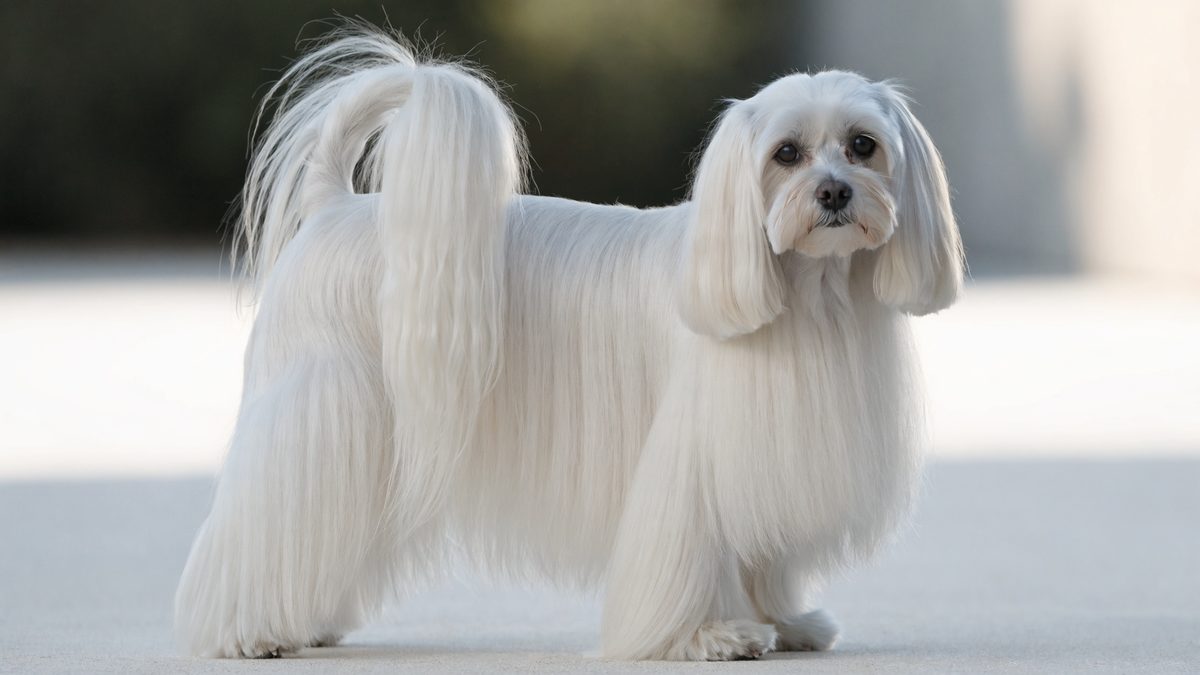
The Maltese is a toy companion dog of the central Mediterranean carrying a single, floor-length, dead-straight white coat with no undercoat at all. That one anatomical fact, stated identically by all three major registries, contradicts most of what Indian buyers are told about this breed, and it decides everything from heat tolerance to the grooming bill.
Start with the coat, because every other claim depends on it. The AKC standard states that the coat is single, that is, without undercoat, hanging long, flat and silky over the sides of the body almost to the ground, and that any suggestion of kinkiness, curliness or woolly texture is objectionable. The FCI standard repeats it in four words, there is no undercoat, and adds that on the trunk the hair should be longer than the height at the withers and fall back to the ground like a cape. The Royal Kennel Club asks for a coat of reasonable length, straight, of silky texture, never woolly, and without woolly undercoat. The United Kennel Club opens its coat clause with the flattest statement of the four: the breed is single coated (having no undercoat). Four registries, one message. A single-coated white dog is a different animal from the double-coated breeds Indian buyers group it with, and almost every practical difference on this page follows from that.
Colour is equally narrow. Pure white is the standard everywhere. The AKC permits light tan or lemon on the ears but calls it not desirable. The FCI permits a pale ivory tinge and tolerates traces of pale orange as an imperfection, and disqualifies any colour other than white and any patch of different colour whatever its extension. The Royal Kennel Club is blunt: any other colour or combination of colours is unacceptable. A cream, apricot or parti-coloured dog advertised as a rare-colour Maltese is either not a Maltese or is disqualified in the ring.
Four registries do not agree on how big a Maltese is
Here is the gap no ranking page mentions. The four standards an Indian buyer can check specify size in four different and partly incompatible ways, and one of them is the standard your KCI paperwork actually rests on.
| Registry | Height | Weight | What is penalised |
|---|---|---|---|
| AKC, standard approved 1964 | Not specified in the standard. Breed page gives 7 to 9 in | Under 7 lb, with 4 to 6 lb preferred | Nothing on size beyond the 7 lb ceiling. Overall quality is to be favored over size |
| FCI, Standard No 65, valid 2015 | Males 21 to 25 cm, females 20 to 23 cm | 3 to 4 kg | Severe fault: males over 26 cm or below 19 cm, females over 25 cm or below 18 cm |
| Royal Kennel Club, updated April 2025 | Not exceeding 25 cm (10 in) | Not specified at all | General fault clause only, proportionate to effect on health and welfare |
| United Kennel Club, revised 2017 | Males 8 to 10 in, females 7 to 9 in | Six to eight pounds | Disqualifications are cryptorchidism, viciousness or extreme shyness, and albinism |
Read the weight rows together. The AKC's preferred weight of 4 to 6 lb converts to roughly 1.8 to 2.7 kg, which sits entirely below the FCI's stated range of 3 to 4 kg Federation Cynologique Internationale. The UKC goes further in the other direction and asks for six to eight pounds, whose bottom end is at the AKC's absolute ceiling and whose top end the AKC would disqualify outright American Kennel Club. A show-winning American Maltese at the ideal weight would be under weight against the standard that the Kennel Club of India inherits, because the KCI is a full member of the FCI and is listed in Chennai on the FCI's own member register. Nobody in the Indian market has told you this, and it matters directly to what you are being sold when a seller says KCI registered.
The confusion shows up in the listings. One directory page currently ranking for this query publishes 1.8 to 3.2 kg alongside 20 to 25 cm. The weight figure is the AKC convention and the height figure is the FCI convention. Those two numbers come from two documents that disagree with each other, printed side by side as if they were one specification.
The FCI states plainly that the name Maltese does not signify that the breed originates from the island of Malta. The adjective comes from the Semitic word malat, meaning refuge or harbour, a root that recurs across Mediterranean place names. The ancestors of the breed lived in the ports and maritime cities of the central Mediterranean, hunting mice and rats in harbour warehouses and ships' holds. A 2,000-year-old lap dog that started as a working ratter is a better story than the one on the listing pages.
Head, expression and structure
The head is of medium length and in proportion to the dog, with a slightly rounded skull and a moderate stop. The drop ears are rather low set and heavily feathered with long hair hanging close to the head. The eyes are very dark and round, their black rims enhancing a gentle yet alert expression, and the nose is black. The muzzle is of medium length, fine and tapered but not snipy, and the teeth meet in an even edge-to-edge or scissors bite. Those points are the ones that separate a Maltese from the three breeds it is most often confused with in Indian listings, which is covered in the comparison section below.
The body is compact, with height from withers to ground equalling the length from withers to the root of the tail. The tail is a long-haired plume carried gracefully over the back with its tip lying to the side. Legs are fine-boned and nicely feathered, feet small and round with black toe pads. The FCI adds a detail no Indian page repeats and that matters in a country with strong sun: the skin should be really tight to all parts of the body, pigmented with dark patches and patches of a reddish wine colour, especially on the back. A correct Maltese is a dark-skinned dog wearing a white coat, not a pink-skinned one.
Temperament in the standard, not in the marketing
The AKC standard describes the breed as gentle-mannered and affectionate, eager and sprightly in action, and, despite his size, possessed of the vigor needed for the satisfactory companion. It then says something unusual for a toy breed: for all his diminutive size, the Maltese seems to be without fear, and it is among the gentlest mannered of all little dogs, yet lively and playful as well as vigorous. The FCI gives four words, lively, affectionate, very calm and very intelligent. The Royal Kennel Club gives three, lively, intelligent, alert, plus sweet-tempered.
Fearlessness in a 3 kg dog is a management problem, not a virtue. A dog that will square up to a Labrador in a Bengaluru park has no physical way of backing that up, which is why the training section below spends more time on recall and on carrying rules than on obedience tricks.
For the record, the Maltese sits in the AKC Toy Group, with a listed height of 7 to 9 inches, weight under 7 pounds and a life expectancy of 12 to 15 years. The American Maltese Association became the official AKC parent club in 1969, and the first Maltese exhibited in the United States was listed as a Maltese Lion Dog at the Westminster Kennel Club's first show in 1877.
Maltese price in India
A Maltese puppy is published in India at anywhere from Rs 25,000 to Rs 1,60,000 in 2026. The most useful fact about that range is not its width. It is that one publisher prints two different bands on two of its own pages, and the two bands barely overlap.
Bonbeno pulled the price figures from every page ranking on the Indian SERP for this query that actually publishes a number, then read them side by side. Nobody who writes about this breed appears to have done that, because the disagreement is immediate and obvious.
| Source | Headline range | Lowest tier | Top tier | Commercial interest |
|---|---|---|---|---|
| Supertails, Maltese price guide | Rs 60,000 to Rs 1,50,000 | Not tiered | Not tiered | Pet retailer |
| Supertails, all-breed price list | Rs 25,000 to Rs 80,000 | Not tiered | Not tiered | Same publisher, different page |
| Mr n Mrs Pet | Rs 70,000 to Rs 1,40,000 | Basic Rs 70,000 to Rs 90,000 | Champion bloodline Rs 1,20,000 to Rs 1,40,000 | Sells puppies |
| Wrap In Fur | Rs 35,000 to Rs 1,20,000 | Pet quality Rs 35,000 to Rs 60,000 | Teacup Rs 80,000 to Rs 1,50,000 and above | Pet e-commerce |
| Asia Pets | Rs 30,000 to Rs 70,000 | Not tiered | Not tiered | Lists puppies for sale |
| Premium Pet Palace, Bangalore only | Rs 52,384 to Rs 61,993 | Not tiered | Not tiered | Sells puppies |
Three things fall out of that table immediately. First, the same publisher disagrees with itself. Supertails puts the Maltese at Rs 60,000 to Rs 1,50,000 on its dedicated price article and at Rs 25,000 to Rs 80,000 on its all-breed price list. The floor differs by a factor of 2.4 and the ceiling by nearly the same. Both pages are live, both rank, and neither links to the other.
Second, one page breaks its own ceiling. The Supertails article headlines Rs 60,000 to Rs 1,50,000 and then publishes a Mumbai band of Rs 80,000 to Rs 1,60,000 in the city table further down. The city figure exceeds the article's own stated maximum by Rs 10,000.
Third, a rupee-exact quote is not a market observation. The Bangalore seller page quotes Rs 52,384 to Rs 61,993. Bonbeno read that page live on 15 August 2026 and got those figures. The Google search snippet for the same URL on the same day carried Rs 47,516 to Rs 62,175. A price that moves by Rs 4,868 on the floor between the search index and the live page, while still being quoted to the rupee, is a generated number wearing the costume of a survey.
City-wise price, and why the two tables do not agree
Two of the ranking pages publish a city breakdown. They cover the same seven cities and they disagree in the same direction in every single one.
| City | Supertails | Wrap In Fur | Gap on the floor |
|---|---|---|---|
| Delhi NCR | Rs 70,000 to Rs 1,50,000 | Rs 45,000 to Rs 1,10,000 | Rs 25,000 |
| Mumbai | Rs 80,000 to Rs 1,60,000 | Rs 50,000 to Rs 1,20,000 | Rs 30,000 |
| Bangalore | Rs 65,000 to Rs 1,40,000 | Rs 45,000 to Rs 1,10,000 | Rs 20,000 |
| Hyderabad | Rs 60,000 to Rs 1,30,000 | Rs 40,000 to Rs 95,000 | Rs 20,000 |
| Chennai | Rs 65,000 to Rs 1,20,000 | Rs 40,000 to Rs 90,000 | Rs 25,000 |
| Kolkata | Rs 60,000 to Rs 1,20,000 | Rs 35,000 to Rs 85,000 | Rs 25,000 |
| Pune | Rs 65,000 to Rs 1,30,000 | Rs 40,000 to Rs 1,00,000 | Rs 20,000 |
The floors differ by Rs 20,000 to Rs 30,000 in every city, and the ceilings by Rs 30,000 to Rs 45,000 Wrap In Fur, Maltese Dog Price in India…. Bonbeno does not average these. Two estimates that disagree by 40 percent are not two measurements of the same thing, and averaging them would manufacture a precision that neither source has earned. Use the overlap, roughly Rs 50,000 to Rs 1,10,000 in a metro, as the band a real quote should sit inside, and treat anything outside it as a question to ask rather than a price to pay.
What the price is actually tracking
- Registration status. Wrap In Fur quotes pet quality at Rs 35,000 to Rs 60,000 and KCI registered at Rs 60,000 to Rs 90,000. Mr n Mrs Pet quotes basic at Rs 70,000 to Rs 90,000 and KCI registered at Rs 90,000 to Rs 1,20,000. Both put the premium for the paperwork at Rs 20,000 to Rs 30,000. The Kennel Club of India's own published tariff charges the breeder Rs 750 to register a puppy from a litter within 60 days, Rs 1,200 between 61 and 120 days and Rs 2,000 between 121 and 180 days. You are paying up to forty times the cost of the document.
- Size below the standard. This is the one factor that should move a price down and is instead moving it up. It gets its own subsection below.
- Coat and appearance. Wrap In Fur lists coat quality and appearance as a price factor, and Mr n Mrs Pet says pure white commands the full price range while white with lemon or tan markings on the ears may be priced slightly lower. That one is defensible, because the standards do treat pure white as correct and lemon on the ears as permissible but not desirable.
- Age of the puppy. Wrap In Fur lists age as a pricing factor. Note what the law says here. Indian breeding rules require that a puppy is not sold before eight weeks, and the KCI's cheapest registration window closes at 60 days Kennel Club of India. A breeder facing a higher registration fee after day 60 has a paperwork incentive that runs close to the legal minimum sale age.
- Who is publishing. Four of the six sources in the table above either sell puppies or sell pet products. None of them discloses that. Bonbeno discloses it for them.
The teacup premium is the clearest overcharge in the Indian Maltese market
One ranking page publishes a Teacup Maltese tier at Rs 80,000 to Rs 1,50,000 and above, which is priced higher than its own show-quality tier of Rs 90,000 to Rs 1,20,000 and above. Read that against what the registries and the law say.
- No registry recognises the category. The Royal Kennel Club does not recognise any teacup breeds and will not record a dog as teacup on its register.
- The FCI standard treats undersize as a severe fault. A male below 19 cm or a female below 18 cm at the withers is a severe fault, and the stated weight range is 3 to 4 kg. An Indian animal-welfare organisation puts teacup dogs at 2 to 5 lb, roughly 0.9 to 2.3 kg, and under 7 inches tall. That is a dog under half the FCI minimum weight.
- Indian law prohibits the practice. The Prevention of Cruelty to Animals (Dog Breeding and Marketing) Rules, 2017 state that breeding to create new breeds of dogs or unusual looks shall be strictly prohibited. Breeding a Maltese below the standard for the sake of extreme smallness is breeding for an unusual look.
- The price guidance from the registry is one sentence. The Royal Kennel Club tells buyers plainly that your puppy shouldn't cost any more than other dogs in the breed.
Bonbeno already covers the welfare arithmetic behind undersized toy dogs in detail on the Chihuahua page, which sets out the hypoglycaemia and fragility evidence, and on the Poodle page, which establishes how the 2017 rules apply to breeding for looks. This page does not repeat that research. It applies it to a breed where the teacup tier is being sold at the top of the price sheet rather than the bottom.
A social post sitting inside the top ten results for this exact query offers a Maltese female puppy in Bangalore at Rs 9,000. Set that against a published floor of Rs 25,000 across every commercial source and against the KCI registration tariff alone. In India, breeding without registration from the State Board is an offence under the 2017 rules, no female dog may be bred in two consecutive breeding seasons, and puppies must not be sold before eight weeks. A price at a third of the market floor usually means none of those were observed.
Bonbeno does not broker puppy sales and publishes no breeder listings. Every figure above is reported from a third party so you can see the disagreement yourself, price it into your own decision, and ask a seller to explain where their number sits in it.
Monthly cost of owning a Maltese in India
Published Indian monthly cost estimates for a Maltese run Rs 5,000 to Rs 15,000, and the single largest line in every one of them is grooming. That is the correct answer for this breed, and it is also the line the published tables get closest to right and still understate, because none of them prices the coat decision that almost every Indian owner eventually makes.
Two Indian sources publish a monthly structure. Read them together and a third problem appears, which is that one of them does not agree with itself.
| Line item | Supertails | Wrap In Fur |
|---|---|---|
| Food and treats | Rs 2,000 to Rs 5,000 | Rs 2,000 to Rs 5,000 |
| Grooming | Rs 1,500 to Rs 2,500 per salon visit | Rs 2,000 to Rs 4,000 per month |
| Veterinary care | Rs 2,000 to Rs 4,000 | Rs 1,000 to Rs 3,000 |
| Toys and accessories | Rs 1,000 to Rs 2,000 | Rs 500 to Rs 2,000 |
| Training and miscellaneous | Not listed | Rs 1,000 to Rs 3,000 |
| Stated monthly total | Not stated | Rs 5,000 to Rs 15,000 |
Wrap In Fur's own line items sum to Rs 6,500 to Rs 17,000, against its stated headline total of Rs 5,000 to Rs 15,000. The published total is below the published parts at both ends. Supertails does not state a total at all, and its four listed items sum to Rs 5,000 to Rs 11,000 a month before grooming. For a sense of scale from a non-commercial source, an Indian rescue organisation running 1,800 dogs states that the average cost of a dog's upkeep is over Rs 5,000 a month at its own operating scale.
Where the published tables are wrong for this breed
Both tables treat the Maltese as a generic small dog with an add-on grooming line. That misreads the animal. Three corrections follow, in order of how much money they move.
- Grooming is not an accessory line, it is the second-largest cost after food and often the largest. The two sources disagree on the per-visit rate, Rs 1,500 to Rs 2,500 against Rs 1,500 to Rs 4,000 Wrap In Fur, Maltese Dog Price in India…. A full-coat Maltese needs professional work every four to six weeks plus daily home combing. At the published Indian rates, that is a standing annual commitment measured in tens of thousands of rupees, and it does not stop for the life of the dog.
- Dentistry is missing from both tables and belongs in the budget from year one. The AKC states that Maltese are prone to dental disease as they get older and that their teeth should be brushed frequently, ideally each time the coat is brushed, with routine cleanings at the vet. Small dogs are more likely to suffer retained deciduous teeth and periodontal disease than larger dogs, and their smaller, more delicate jaws have less bone, making them more susceptible to loose teeth, pathologic bone loss and even mandibular fracture during a dental procedure. Neither Indian cost table names dental care at all.
- A serum bile acid test on the puppy is the cheapest money in the whole budget. It is one of only three health tests the breed's national club recommends, and the health section below explains what it screens for. No published Indian cost table lists it, and Bonbeno found no reliable published Indian price for it, so we are not going to invent one. Ask your own vet for a quote before you commit to a puppy, not after.
Year one costs more than the years after it
The first twelve months carry the puppy vaccination course, deworming, sterilisation, a bile acid test if the breeder has not already done one, the initial kit of crate, harness, bedding, brush, steel comb and nail clippers, and the first few grooming appointments where a young dog is learning to tolerate being handled. Wrap In Fur's own hidden-cost list names frequent grooming, tear stain cleaning, dental care, air conditioning and summer care, and emergency veterinary costs. That list is right, and it appears on the page as a bulleted afterthought with no numbers attached to any of it.
A 3 to 4 kg dog eats very little. The Rs 2,000 to Rs 5,000 monthly food figure both Indian sources publish is a premium small-breed kibble budget for a dog whose daily ration is measured in grams. If you are choosing where to economise across a Maltese budget, food quantity is not where the money is. Grooming, dentistry and a screened puppy are.
The honest bottom line
Plan on the published band of Rs 5,000 to Rs 15,000 a month as the realistic operating range, with the position inside that band set almost entirely by one decision, which is whether you keep the full coat or take the puppy clip. Keep the floor-length coat and you are at the top of the range for the dog's whole life. Take the clip and you drop toward the middle, at the cost of the look you bought the breed for. That single trade-off is what the grooming section below is about, and no ranking page frames it as a financial decision at all.
Maltese in the Indian climate: heat tolerance, humidity and monsoon
Bonbeno rates the Maltese 3 of 5 for heat tolerance, which is a middling score rather than the alarm every Indian page rings. The reasoning is simple and checkable: the coat is single with no undercoat, the skin under it is pigmented dark, and the breed does not appear anywhere in the risk table of the largest published study of heat-related illness in dogs. India's real problem with this breed is humidity on skin, not heat in the core.
Every ranking Indian page asserts that the long coat makes the Maltese heat-sensitive. One states that Maltese dogs are sensitive to extreme heat and humidity because of their small body size and long silky coat. Another lists sensitivity to extreme heat as a headline con. Neither cites anything. The registry standards say the opposite about the mechanism, because heat insulation in dogs comes from a dense undercoat, and this breed does not have one Federation Cynologique Internationale The Royal Kennel Club.
What the heat evidence actually says
The largest published study of heat-related illness in dogs analysed UK primary-care records for 2016 and found an incidence risk of 0.04 percent, with 56 of 395 events ending in the death of the dog. It reported odds ratios for 31 breed categories against the Labrador Retriever as the baseline. The Maltese is not one of them. Bonbeno is stating that plainly rather than borrowing a number from a breed that looks similar.
What the table does contain is a set of useful neighbours. Read them and the picture that emerges is not the one the Indian pages paint.
| Breed | Odds ratio | 95 percent CI | Significant |
|---|---|---|---|
| Chow Chow | 16.61 | 6.21 to 44.44 | Yes |
| Bulldog | 13.95 | 8.01 to 24.29 | Yes |
| Pug | 3.24 | 1.67 to 6.29 | Yes |
| Pomeranian | 2.12 | 0.48 to 9.30 | No |
| Yorkshire Terrier | 1.05 | 0.49 to 2.25 | No |
| Bichon Frise | 0.68 | 0.20 to 2.27 | No |
| Shih Tzu | 0.47 | 0.18 to 1.24 | No |
| Chihuahua | 0.44 | 0.17 to 1.18 | No |
| Lhasa Apso | 0.24 | 0.03 to 1.76 | No |
| Maltese | Not reported | Not reported | Absent from the table |
The breeds that carry real, statistically significant heat risk in that dataset are the flat-faced and the heavily coated. The small, long-coated companion breeds closest to the Maltese all sit at or below the Labrador baseline, and none of them reaches significance. Purina India, writing for an Indian audience, names short-faced breeds such as Boxers, Bulldogs, Pugs and Pekingese, and heavy-coated dogs such as Huskies and Newfoundlands, as being at particular risk of heat stroke. The Maltese is on neither list.
The FCI standard asks for skin that is really tight to all parts of the body, pigmented with dark patches and patches of a reddish wine colour, especially on the back. Owners in India sometimes see those dark patches parting the white hair and worry. Pigment under a white coat is what the standard wants, and pigmented skin is more resistant to sun damage than pink skin. A pink-skinned, pink-nosed white dog is the one with a sun problem.
The Indian problem is humidity, not temperature
A long, dense, silky single coat sitting flat against the skin in Chennai in July does one thing very efficiently, which is trap moisture at skin level. That produces matting, and matting produces hot spots, yeast overgrowth and bacterial skin infection. The Indian coastal cities are the hard ones here, not the hot dry ones. A Maltese in a humid Mumbai monsoon needs more coat management than the same dog in a dry Jaipur summer at a higher air temperature, and no ranking page separates those two cases.
- Dry the dog properly, not partly. A coat that goes back to floor length while still damp at the skin is the single most common cause of a monsoon skin problem in this breed. Blow dry to the skin, in sections, every time.
- Comb before you bathe, never after. Water tightens an existing tangle into a mat that then has to be cut out.
- Watch the feet and the belly in the rains. The FCI describes tufts of hair on the forequarters from elbow to foot and on the hindquarters from stifle to foot. Those are the parts that stay wet on a walk.
- Air conditioning is a comfort item here, not a survival item. That is the opposite of the position Bonbeno takes on Arctic breeds. Wrap In Fur lists air conditioning and summer care among its hidden costs, and for a Maltese it is a reasonable expense rather than a non-negotiable one.
Two heat rules that do apply
First, the airway. Cornell's guidance on tracheal collapse, a condition this breed is over-represented for, states that stress, excitement, physical activity, heat and humidity, inhaled irritants and pressure on the neck can all worsen the cough, and it advises avoiding hot and humid environments. For an older Maltese with a collapsing trachea, an Indian afternoon walk is a genuine risk, and that risk is respiratory rather than thermal.
Second, the general rule holds for every dog regardless of coat. Purina India warns that a dog can develop heat stroke in as little as 30 minutes of vigorous exercise in hot weather, gives 40.5 C or above as a raised temperature, and warns against plunging an overheated dog into cold water or an ice bath because that prevents the core temperature coming down. Walk before 7 am and after 8 pm from March to October, carry water, and take the exercise indoors on the worst days. That is easy with a breed the AKC says needs only occasional exercise.
Bonbeno's summary position is that a Maltese is one of the easier imported breeds to keep cool in an Indian metro and one of the harder ones to keep in good skin. Budget your attention accordingly.
Maltese temperament and who should not buy one
The Maltese is an affectionate, fearless, people-obsessed lap dog that was bred for exactly one job for two thousand years, which is being with a person. That single sentence explains both why it suits an Indian flat better than almost any other imported breed and why it is the wrong dog for a household where everyone leaves at nine and returns at eight.
The registry descriptions are consistent and short. The AKC calls the breed gentle-mannered and affectionate, eager and sprightly in action, and adds that for all his diminutive size, the Maltese seems to be without fear. The FCI gives lively, affectionate, very calm and very intelligent. The Royal Kennel Club gives lively, intelligent, alert and sweet-tempered. The AKC breed page adds that Maltese make alert watchdogs who are fearless in a charming toy-dog way, are game little athletes on the agility course, and are sometimes stubborn and willful but respond well to rewards-based training.
Separation anxiety is the deal-breaker, and every ranking page says so
This is the one thing the Indian pages get right and then bury under a pros-and-cons table. Wrap In Fur lists separation anxiety as a con, states that Maltese do not enjoy being left alone for very long periods, and warns that because they become emotionally attached to their owners they may develop separation anxiety if left alone for long hours regularly. Asia Pets lists separation anxiety among its five considerations. Bonbeno rates tolerance of being left alone 1 of 5 for this breed, the lowest rating in its trait table.
Translate that into an Indian household. If the flat is empty from 9 am to 8 pm on weekdays and nobody is home at lunch, this is not the breed. A Maltese left alone for eleven hours a day will bark, will house-soil, and will show the stress in its skin and its appetite. The honest options are a household with someone working from home, a joint family, a retired parent, a reliable day-boarding arrangement, or a different breed.
Who this breed genuinely suits
- Apartment households. A 3 to 4 kg dog with occasional exercise needs and no yard requirement American Kennel Club. Bonbeno rates apartment suitability 5 of 5, the highest on this site.
- Single adults and couples who are home a lot. The breed bonds hard to one or two people and is content to be near them for most of the day.
- Senior owners. A dog this size can be lifted, carried and managed by someone who could not hold a Labrador on a lead. Asia Pets lists a long lifespan and apartment suitability among its advantages, and the measured median life expectancy of 13.1 years supports the first of those.
- People who want a dog they will actually groom. If the daily twenty minutes with a comb sounds like a pleasure rather than a chore, this breed rewards you. If it sounds like a task, read the grooming section before you buy.
Who should not buy one
- Households with toddlers. The issue is fragility, not temperament. Royal Canin warns that in very small dogs, tiny fragile bones combined with the canine tendency to be underfoot are a recipe for disaster, with fractures occurring after a short fall or jump, from being stepped or sat on, or from rough play. An Indian welfare source advises never allowing children to carry or play with a very small dog unsupervised, and always supporting the dog's full body when lifting. Bonbeno rates good with children 2 of 5 on that basis alone.
- Anyone buying a guard dog. The standards describe an alert dog without fear, which in a 3 kg animal means noise and nothing else.
- Anyone who wants a low-maintenance white dog. Wrap In Fur answers its own FAQ directly, saying yes, Maltese dogs are considered high-maintenance mainly because of their long silky coat, regular grooming needs, tear stain cleaning and dental care requirements.
- Anyone out of the house eleven hours a day. See above. This is not negotiable with this breed.
The first-time owner question
Two ranking pages answer this with an unqualified yes. Wrap In Fur says the Maltese is a great choice for first-time dog owners because of its affectionate personality, small size and apartment-friendly nature. Asia Pets lists it as best for family. Bonbeno's answer is a qualified yes with one condition attached.
The Maltese is genuinely easy on the two things that defeat most first-time owners in India, which are exercise load and physical control. It is genuinely hard on two things they do not anticipate, which are daily coat work and being left alone. First-time owners who have honestly answered the grooming and the alone-time questions before buying will do well with this breed. One who bought it because it is small and looks like a soft toy will be at a groomer within six months asking for the coat to be taken off, which is the outcome the grooming section below is written to prevent.
Wrap In Fur states that Maltese can be moderately vocal and may bark when excited, anxious or noticing strangers, and that early training and socialisation help control excessive barking. In an Indian apartment building with a shared corridor and a doorbell that rings for every delivery, budget real training time for door manners in the first six months. It is far easier to prevent than to fix.
How to train a Maltese, and what it resists
To train a Maltese, work in short reward-based sessions and start with the two things this breed genuinely resists, which are house-training and being handled for grooming. Obedience is the easy part. The AKC calls the breed very intelligent, notes it can be stubborn and determined, and says it responds well to positive training methods and makes a fun competitive companion in obedience or agility.
Set the expectation correctly first. This is not a difficult dog to teach. It is a difficult dog to be consistent with, because it is small enough that owners let things slide. The AKC puts it precisely: in centuries of being companions to humans, Maltese have learned how to get exactly what they want from their people, so it is important to be consistent with their training. Every training failure in this breed traces back to that sentence.
House-training is the hard one in India, and the monsoon is why
A toy dog has a small bladder and a short holding time, and a Maltese that will not step into a wet Mumbai balcony in July is not being defiant. Plan for it.
- Set up an indoor toileting option from week one, not as a fallback in the monsoon but as a trained default. A washable pad or tray in a fixed corner, rewarded every single time, means you are not trying to teach a new behaviour during four weeks of rain.
- Take the puppy out on a clock, not on a signal. Every two hours awake, immediately after waking, after every meal and after every play burst.
- Reward outside, at the spot, within two seconds. Praise delivered indoors afterwards teaches nothing.
- Never punish an accident you did not see happen. In a dog this size the usual result is a dog that hides to toilet, which is much harder to fix.
Train the grooming, or you will pay a groomer to fight your dog
This is the highest-value training work in the breed and no ranking page mentions it. A Maltese will be combed, brushed, bathed, blow-dried, have its nails cut and its ears checked, every week, for fifteen years. A dog that has not been taught to accept that will resist it, and the resistance compounds.
- Handle the puppy daily from day one, feet, ears, mouth, tail, belly, for thirty seconds at a time, paired with food.
- Introduce the comb before the coat needs it. Comb a puppy coat that has no tangles so the tool means food, not pain.
- Do nails weekly, one paw at a time if needed. The AKC notes Maltese have fast-growing nails that should be trimmed regularly.
- Teach a settle on a raised surface. Every grooming session in a salon happens on a table, and a dog that has practised standing calmly on one at home is a different animal in the chair.
Socialise for size, not for aggression
Socialise this puppy deliberately between eight and sixteen weeks, and socialise it to the things a small dog in an Indian city actually meets. Lifts, marble floors, auto-rickshaw horns, doorbells, delivery riders, building watchmen, other people's large dogs on short leads, and children who want to pick it up. An Indian welfare source notes that despite their size, very small dogs can develop anxiety and aggression without proper early socialisation.
The specific failure mode in this breed is not aggression toward people, it is a fearful, snappy dog created by being carried everywhere. A Maltese that is picked up every time it meets another dog learns that other dogs cause it to be grabbed. Put it on the ground on a harness and let it meet the world at its own height, under supervision.
Cornell's tracheal collapse guidance lists pressure on the neck among the things that worsen the cough and names switching from neck collars to harnesses as a standard lifestyle adjustment. Given that the Maltese was the single most common breed in a 110-dog tracheal collapse series, a Y-front harness is not a style preference in this breed. Train lead walking on a harness from the first walk and keep the collar for the ID tag only.
A realistic first-year timeline
Expect reliable name response and a sit within two weeks. Expect house-training to be broadly solid by four to five months, with monsoon regressions. Expect calm grooming acceptance by six months if you started at eight weeks, and a year of remedial work if you did not. Expect door-barking to need active management from four months onward, because that is when the watchdog instinct the AKC describes switches on. Expect recall to be genuinely good, because unlike the independent working breeds this dog does not want to be away from you.
One caution on training methods. A dog this fragile should never be trained with a jerk-and-correct approach on a lead, and should never be lifted by the front legs or scruff. Royal Canin's warning about fractures from short falls, jumps and rough handling applies squarely to the handling that happens during clumsy training.
How much exercise a Maltese actually needs
A Maltese needs two short walks a day plus indoor play, and that is the whole requirement. The AKC states that Maltese are full of energy but require only occasional exercise to keep them healthy and happy, and that daily walks, a fenced yard or even indoor play will usually suffice. This is the lowest exercise demand of any breed Bonbeno covers, and it is the single strongest practical argument for the breed in an Indian metro.
Bonbeno rates exercise needs 2 of 5. In practice that means roughly 20 to 30 minutes of walking split across two outings, plus ten to fifteen minutes of indoor games. An Indian welfare source describing very small companion dogs puts it the same way: they are surprisingly active indoors, short bursts of play satisfy them, and they do not need long walks.
A workable Indian daily pattern
- Before 7 am. A 15-minute walk on a harness, on the shaded side of the road, on a surface that is not already hot to the back of your hand.
- Midday. Nothing outdoors from March to October. Five minutes of indoor fetch down a corridor, or a food-puzzle feed.
- After 8 pm. A second 15-minute walk once the pavement has cooled.
- Monsoon days. Skip the walk entirely and run two indoor sessions. A wet Maltese coat costs you an hour of drying, which is a real reason to stay in.
What happens without it
Under-exercise in this breed does not produce the destructive frustration you get in a working dog. It produces weight, and weight in a toy dog is expensive. The AKC warns that some Maltese are prone to getting overweight and that too many training treats can cause obesity. Cornell lists obesity among the coinciding conditions that contribute to the more severe signs of tracheal collapse, and the VetCompass patellar luxation study found bodyweight to be a real risk factor in both directions, with dogs under 10 kg carrying 2.8 times the odds of dogs weighing 10 to 19.9 kg on univariable analysis.
So the exercise argument for a Maltese is not cardiovascular fitness. It is joint loading, airway comfort and keeping a 3 kg frame at 3 kg. A single extra 300 grams on a Maltese is proportionally the same as roughly 3 kilograms on a Labrador.
Two things not to do
- Do not let the dog jump off furniture. Use ramps or steps to beds and sofas and keep floors non-slip, which is standard advice for very small dogs and directly relevant given that fractures in tiny dogs follow short falls and jumps.
- Do not use a running or cycling routine to burn energy. The AKC's requirement is occasional exercise, and forced distance work on a dog with this airway profile is the wrong trade.
The upside is worth stating plainly, because it is the reason the breed works here. A household that cannot commit to an hour of daily walking, which rules out most working-hours Indian families for a retriever or a shepherd, can meet a Maltese's physical needs completely. What it cannot skip is the twenty minutes with a comb.
Maltese grooming and coat care in Indian humidity
Maltese coat care means daily combing to the skin, a full bath and blow-dry every one to two weeks, and a professional appointment every four to six weeks, for the entire life of the dog. The AKC states it directly: the long white coat requires daily gentle brushing and combing to the skin to prevent mats and tangles, plus regular baths and coat conditioning. Nothing on the Indian SERP prices that honestly, and this is the section that decides whether you should buy this breed.
Understand the scale of the coat first. The FCI standard specifies that on the trunk the hair should be longer than the height at the withers and fall heavily back to the ground like a cape fitting close to the trunk. On a dog standing 21 to 25 cm tall, that means more than 25 cm of hair on each side, hanging free, sweeping the floor of an Indian home. There is no undercoat to hold it in place and nothing to shed it out with, which is why it grows and grows.
The weekly reality, itemised
| Task | Full coat | Puppy clip |
|---|---|---|
| Comb to the skin | Daily, 15 to 25 minutes | Every 2 to 3 days, 5 to 10 minutes |
| Bathe and blow dry | Every 7 to 14 days | Every 14 to 21 days |
| Professional appointment | Every 4 to 6 weeks | Every 6 to 8 weeks |
| Face and eye area cleaning | Daily | Daily |
| Nails, ears, sanitary trim | Weekly check | Weekly check |
| Realistic risk if skipped a week | Mats at the armpits, behind the ears and on the hindquarters | Minor tangles only |
Two Indian sources publish salon rates for this breed and they do not agree. Supertails puts a professional grooming session at Rs 1,500 to Rs 2,500 per visit. Wrap In Fur puts it at Rs 1,500 to Rs 4,000 per visit and Rs 2,000 to Rs 4,000 a month. Bonbeno prints both rather than averaging them. Use the overlap, Rs 1,500 to Rs 2,500, as what a routine appointment should cost in a metro, and expect the top of the range when a coat has been allowed to mat and has to be worked out or shaved.
The puppy clip is not a failure, and almost every Indian Maltese ends up in one
The puppy clip is a short, even trim over the whole body, usually a few centimetres long, leaving the head and ears slightly longer. It is what the vast majority of Indian pet Maltese are kept in, and no ranking page names it, prices it or explains the trade.
Here is the honest arithmetic. A full show coat is the reason people buy this breed and it is a genuine daily commitment that most working households do not sustain past the first monsoon. The clip cuts the daily comb from twenty minutes to five, cuts matting risk to near zero, cuts drying time by more than half, and lowers the skin-infection risk that Indian humidity creates. What it costs you is the look. The AKC standard permits trimming only of scraggly hairs on the feet to give a neater appearance, so a clipped Maltese is not a show dog. If you were never going to show, that is not a loss.
Bonbeno's position on clipping the coat of an Arctic or double-coated breed is a flat no, because removing the undercoat destroys the insulating layer. That argument does not apply here. Every registry standard states that the Maltese coat is single with no undercoat Federation Cynologique Internationale The Royal Kennel Club, so there is no insulating layer to destroy. Do keep enough length to cover pigmented skin from direct sun, and do not take a Maltese down to the skin.
Tear stains: what they are and what actually works
Tear stains are the reddish-brown tracks that run from the inner corner of the eye down the face on a white dog. They are caused by porphyrin, an iron-containing molecule released when the body breaks down red blood cells and excreted in tears. On a white coat the pigment is simply visible where on a dark coat it is not. The same molecule in saliva is why a white dog that licks a leg ends up with a brown patch there.
The management is unglamorous and it is daily.
- Wipe the eye area every single day with plain warm water and a soft cloth, then dry it. Wet fur under the eye is what sets the stain.
- Keep the hair out of the eyes. The AKC notes the long head hair may be tied up in a topknot or left hanging. A topknot or a short face trim reduces the mechanical irritation that increases tearing.
- Treat sudden or one-sided staining as a medical sign, not a cosmetic one. The AKC advises that if the dog has excessive tear-staining around the eyes, a visit to the veterinarian to determine a possible cause is recommended. The OFA eye database records entropion in 1.4 percent and distichiasis in 1.7 percent of 646 evaluated Maltese, and both cause chronic tearing that no wipe will fix.
- Be sceptical of supplements. VCA notes that supplements claiming to reduce staining work by reducing porphyrin in tears, and that this is a colour outcome rather than a health one. Never give a tylosin-containing product without a vet's involvement.
Ears, nails and the humid-India additions
The AKC advises checking ears weekly and removing excess hair or wax and accumulated debris, trimming the fast-growing nails regularly, and brushing the teeth frequently, ideally each time the coat is brushed. To that Bonbeno adds three India-specific items. Dry the coat all the way to the skin after every bath and every wet walk. Check the armpits, groin and behind the ears for damp mats twice a week in the monsoon. And keep the feet trimmed neatly, since the standard already permits tidying scraggly hairs on the feet and wet foot furnishings are where monsoon skin trouble starts.
Low-shedding is true. Hypoallergenic is not established.
The Maltese is genuinely low-shedding. The AKC describes the breed as low-shedding, and a coat with no undercoat has no seasonal blow. That part of the marketing is accurate and it is a real benefit in an Indian flat.
The hypoallergenic claim is a different matter, and four of the pages ranking for this query assert it as settled fact Wrap In Fur, Maltese Dog Price in India… Premium Pet Palace. The published research does not support the category. A study measuring Can f 1, the major dog allergen, in hair, coat samples and homes found significantly higher allergen concentrations in the hair and coat of breeds marketed as hypoallergenic than in control breeds, with no corresponding difference in household exposure, and concluded that there is no evidence for the classification of certain dog breeds as being hypoallergenic. The Maltese was not one of the breeds tested, so there is no Maltese-specific allergen measurement at all. If someone in your household has a dog allergy, spend time with an adult Maltese before you buy one, and do not treat the word on the listing page as a medical clearance.
Maltese health issues, screening and life expectancy
The Maltese is a long-lived breed carrying one serious inherited problem that a cheap blood test can screen for before you buy, and the Indian market does not mention that test anywhere. Median life expectancy is 13.1 years, better than the crossbred group. The condition to ask about is congenital portosystemic shunt, better known as liver shunt, and the test is a serum bile acid.
Start with the good news, because it is real and it is measured. A UK dataset of 584,734 dogs produced a median life expectancy for the Maltese of 13.1 years, with a 95 percent confidence interval of 12.6 to 13.5 years, from 2,021 individuals of which 666 were deceased. That is above the crossbred group at 12.0 years and above the all-purebred median of 12.7 years. The AKC quotes 12 to 15 years as the breed expectation, and the breed's own parent club states that Maltese are considered a relatively healthy breed when purchased from a reputable breeder. This is a genuinely long-lived toy dog.
| Breed | Median life expectancy | 95 percent CI | Dogs in dataset |
|---|---|---|---|
| Havanese | 14.5 years | 14.1 to not available | 381 |
| Lhasa Apso | 14.0 years | 13.9 to 14.2 | 7,216 |
| Maltese | 13.1 years | 12.6 to 13.5 | 2,021 |
| Shih Tzu | 12.8 years | 12.6 to 12.9 | 12,007 |
| Bichon Frise | 12.5 years | 12.3 to 12.7 | 5,902 |
| Crossbred group | 12.0 years | 12.0 to 12.1 | 111,053 |
Liver shunt is the one that matters, and it is screenable
A congenital portosystemic shunt is an abnormal blood vessel that carries blood past the liver instead of through it, so toxins the liver should clear go straight into the circulation. The MSD Veterinary Manual states that extrahepatic shunts are more common in toy breeds, naming Yorkshire Terriers, Cairn Terriers, Havanese, Maltese, Pugs and Miniature Schnauzers, and that clinical signs generally present as neurologic disturbance from hepatic encephalopathy and are usually evident in young animals.
The breed-level numbers are stark. A study of 2,400 dogs diagnosed with congenital portosystemic shunt across US veterinary teaching hospitals over 22.2 years found the condition in 0.18 percent of all dogs and 0.05 percent of mixed-breed dogs. Thirty-three breeds were significantly more likely to carry a diagnosis than mixed breeds, and the greatest proportions were Havanese at 3.2 percent, Yorkshire Terriers at 2.9 percent, Maltese at 1.6 percent, Dandie Dinmont Terriers at 1.6 percent and Pugs at 1.3 percent. The Maltese figure is 32 times the mixed-breed proportion.
A Maltese-specific study went further and established that it is inherited. Working with 135 variably related Maltese, researchers confirmed shunt status in 113 dogs, of which 19 had an extra-hepatic portosystemic shunt, 17 confirmed at surgery and two at necropsy. Heritability of the shunt was calculated at 0.61, and the heritability of elevated post-prandial serum bile acid at 0.81. The best-fitting model was a common, partially penetrant recessive one with an allele frequency of 0.34. Two test matings between affected animals produced shunts in 2 of 8 offspring, and six matings between an affected and an unaffected animal produced shunts in 2 of 22.
The AKC lists exactly three tests recommended by the national breed club for this breed: patella evaluation, cardiac exam and serum bile acids. It states that it is recommended that Maltese puppies be bile-acid tested to rule out congenital liver issues such as liver shunt and microvascular dysplasia. This is a blood test on a puppy. Bonbeno found no Indian page ranking for this query that mentions it in any form, which means Indian buyers are being sold a breed with a documented, heritable, screenable liver condition and are never told the screen exists. Ask for the result. If the seller does not know what you are asking about, that answer is itself information.
Signs to know, because they appear in puppies. Poor growth, a puppy that seems dull or disoriented after meals, circling or head-pressing, drooling, vomiting, excessive drinking and urination, and in some cases urinary stones. The MSD manual notes urate urolithiasis and renomegaly among concurrent findings and microcytosis on bloodwork. Non-surgical management with a protein-restricted diet with or without lactulose is reported to have a median estimated survival of around three years, with owners reporting better quality of life and fewer signs.
The study behind that figure is worth reading closely, because it is the most useful thing an Indian owner can know about this diagnosis. A Utrecht University review of 78 dogs with a single confirmed congenital shunt treated non-surgically between 2003 and 2015 found an overall estimated median survival time of 38.5 months, or 3.2 years, with a 95 percent confidence interval of 24.4 to 52.6 months and individual survival ranging from one day to 91 months. There was no significant difference between extrahepatic and intrahepatic shunts, or between diet alone and diet plus lactulose, and owner-scored quality of life improved significantly during treatment. Four of the 78 dogs were Maltese, three with extrahepatic and one with intrahepatic shunts. Surgical attenuation is a specialist procedure and is not available in every Indian city, so the honest reading for an Indian household is that medical management is a real option with a real median, and that screening beforehand is still far cheaper than either.
Patellar luxation: real, screened for, and smaller than the Indian pages imply
Patellar luxation is the second of the three tests the breed club recommends, so it belongs on the list. It is also considerably less common in the Maltese than in the toy breeds it is usually grouped with.
| Breed | Rank | Evaluations | Normal | Abnormal |
|---|---|---|---|---|
| Pomeranian | 1 | 3,496 | 70.9 percent | 29.1 percent |
| Chihuahua | 22 | 5,484 | 93.6 percent | 6.4 percent |
| Pug | 30 | 2,074 | 94.4 percent | 5.6 percent |
| Maltese | 40 | 1,878 | 95.2 percent | 4.8 percent |
In the OFA patella database the Maltese ranks 40th, with 1,878 evaluations returning 95.2 percent normal and 4.8 percent abnormal, split as 3.2 percent grade 1, 1.2 percent grade 2 and 0.4 percent grade 3. For context, the Pomeranian at rank 1 returns 29.1 percent abnormal from a similar number of submissions. OFA data comes from voluntary owner submissions, so it is not a population prevalence, but the comparison between breeds inside the same database is fair.
The largest primary-care study of patellar luxation, covering 210,824 dogs in England, found an overall prevalence of 1.30 percent and listed the commonly affected breeds as the Pomeranian at 6.5 percent, Yorkshire Terrier at 5.4 percent and Chihuahua at 4.9 percent. The Maltese does not appear in that table at all, and the paper reports no Maltese-specific figure. What that study did find matters more for an Indian buyer than any breed label: dogs weighing below their breed mean bodyweight carried 1.4 times the odds of diagnosis, and dogs under 10 kg carried 2.8 times the odds of dogs weighing 10 to 19.9 kg. The risk factor you can control is not the breed. It is buying an undersized dog.
Tracheal collapse, and why this one is India-relevant
Tracheal collapse is a progressive weakening of the cartilage rings of the windpipe that produces a persistent harsh dry cough, often described as goose-honking, and it is common in toy and small breeds that are middle-aged or older. There is no cure, and management is lifelong. Royal Canin notes it is virtually unheard of in larger dogs and not uncommon in small and toy breeds.
In a retrospective series of 110 small-breed dogs with tracheal collapse referred to a university hospital in the Republic of Korea between January 2022 and January 2024, the Maltese was the single most common breed, at 34 dogs or 30.9 percent, ahead of the Pomeranian at 25 dogs, the Poodle at 17 and the Chihuahua at 8. Bronchial collapse was confirmed in 27 of the 34 Maltese, or 79.4 percent, the highest of any breed in the series. Read that with its limits: it is a referral caseload in a country where the Maltese is one of the most popular pets, so breed popularity inflates the count. It is still the clearest breed signal in the recent literature.
The Indian relevance is direct. Cornell names heat and humidity among the factors that worsen the cough and lists avoiding hot and humid environments alongside switching from collars to harnesses as standard management. An Indian owner of an older Maltese with a chronic cough should be at a vet, on a harness, and off the midday pavement.
Dental disease, eyes and the rest
- Dental disease. Periodontal disease was diagnosed in 12.52 percent of UK dogs in a single year, and the Toy breed group carried 1.89 times the adjusted odds of other groups, with the Toy Poodle at 25.97 percent prevalence and the Yorkshire Terrier at 22.22 percent. The Maltese is not separately listed in that study. The AKC is explicit for this breed: as in all toy breeds, dental maintenance is important, and Maltese should have their teeth brushed daily with a dog toothpaste plus routine cleanings at the vet. In the OFA dentition database the Maltese returns 9.6 percent abnormal, though from only 73 evaluations, which is too small a sample to lean on.
- Eyes. Of 646 Maltese in the OFA eye database, 92.7 percent were normal and 7.3 percent abnormal. The individual findings are small but real: persistent pupillary membranes iris to iris in 2.3 percent, incipient anterior cortex cataract in 2.3 percent, vitreous degeneration in 1.9 percent, distichiasis in 1.7 percent, entropion in 1.4 percent and retinal dysplasia folds in 0.9 percent.
- Heart. A cardiac exam is the third breed-club recommended test, and the AKC names patent ductus arteriosus among the anomalies responsible breeders screen their stock for. Royal Canin notes that myxomatous mitral valve disease, one of the most common causes of canine heart disease, is much more common in small breeds.
- Shaker syndrome. Idiopathic generalized tremor syndrome, historically called little white shaker syndrome, is most common in small-breed white dogs and the Maltese is the first breed named alongside the West Highland White Terrier and the Bichon Frise. It was first described in small dogs under 15 kg with white coats, and the founding clinical paper reported generalized tremors in seven Maltese. Most dogs improve on corticosteroids. Sudden full-body tremors in a young white dog is a same-day veterinary visit, not a wait-and-watch.
- Encephalitis. The AKC reports incidences of Maltese developing encephalitis, also known as GME, states that no screening test is currently available, and says the American Maltese Association is working with researchers toward one. Nobody can screen for it, so nobody should claim to.
- Hips. For completeness, the OFA hip database holds 264 Maltese with 85.2 percent normal and 12.5 percent dysplastic. Hip screening is not a breed-club recommendation for the Maltese and the sample is small, so do not weight it heavily.
What to ask before you buy
- Serum bile acid result for the puppy, or a written commitment that you may have it done before the sale completes.
- Patella evaluation and cardiac exam on both parents, since those are the other two breed-club tests.
- Both parents' weights. The Royal Kennel Club advises that the mother and father should be health screened for the same conditions as any other breeding dog of the same breed, and that their health and temperament should always be more important than their size.
- Whether the breeder is registered with the State Animal Welfare Board, as the 2017 rules require, and whether the dam has been bred in consecutive seasons, which those rules prohibit.
- Age of the puppy at handover. Not below eight weeks.
Feeding a Maltese in India
Feed a Maltese puppy three to four small meals a day and an adult two, on a food formulated for small breeds, and weigh the dog monthly. The whole feeding question for this breed turns on two numbers that have nothing to do with brand: meal frequency in the first six months, and body condition for the remaining fourteen years.
The AKC's guidance is deliberately unfussy. A Maltese should do well on a high-quality dog food, whether commercially manufactured or home-prepared with veterinary supervision, appropriate to the dog's life stage, with clean fresh water available at all times. It adds a specific warning that some dogs are prone to getting overweight, that too many treats can cause obesity, and to check with a vet about weight or diet.
Meal frequency in the first six months is a medical rule
Toy and very small dogs may need to be fed multiple times a day because of their propensity toward hypoglycaemia. An Indian source puts the practical version at three to four small meals a day rather than one or two large ones, using a nutrient-dense food formulated for small breeds, and describes the warning signs as lethargy, trembling, disorientation or seizures, particularly in puppies, treating it as a medical emergency.
For an Indian household that is a scheduling problem, not a food problem. A Maltese puppy that eats at 7 am, 1 pm, 7 pm and before bed needs someone present at midday for the first few months. If that person does not exist in your household, this is another reason the breed may not fit, and it is better to know in week one than in month three.
Body condition beats the number on the bag
Body condition is the metric that matters, because a feeding guide written for a 3 kg to 5 kg weight band cannot tell the difference between a correct 3.2 kg Maltese and an overweight one. Check it by hand every month.
- Ribs. You should feel them easily under a thin layer of covering, without pressing.
- Waist. Looking down from above, there should be a visible tuck behind the ribs. The FCI standard describes loins that are taut and just slightly tucked up underneath.
- Weigh monthly on a kitchen scale. On a 3 kg dog, 300 grams is ten percent of bodyweight and is invisible under a full coat. This is the single reason a floor-length Maltese gets fat without anyone noticing.
- Recheck after every grooming appointment. A clipped dog is where owners first see the shape they have been feeding.
The stakes are joint and airway, not vanity. Cornell lists obesity among the coinciding conditions contributing to more severe tracheal collapse signs, and the VetCompass patellar luxation data shows bodyweight moving the odds in a small dog.
Portions, treats and the Indian budget question
Both Indian cost sources put monthly food at Rs 2,000 to Rs 5,000 Wrap In Fur, Maltese Dog Price in India…, and Supertails names Royal Canin and Hill's Science Diet as the premium options that stretch the budget. For a 3 to 4 kg dog, a premium small-breed kibble is genuinely affordable, because the daily ration is small. This is the one line in the Maltese budget where paying up costs you very little in absolute rupees.
Treats are where the calories hide. The AKC notes treats can be an important training aid but that too many cause obesity. Take the day's training treats out of the day's measured ration rather than adding them on top, and use single kibbles rather than commercial biscuits for repetition work.
Non-surgical management of a single congenital portosystemic shunt involves feeding a protein-restricted diet with or without lactulose, and is reported to have a median estimated survival of around three years. That is a prescription diet managed by a vet, not a home substitution. It is also the reason the health section pushes so hard on the serum bile acid test, because the earlier the diagnosis, the earlier the diet.
Two Indian feeding habits to drop
- Milk and biscuits, chapati and dal as a staple. A 3 kg dog has almost no margin for nutritional error, and a diet built around table food will not meet its requirements. If you want to home-prepare, the AKC's condition applies, which is veterinary supervision and approval.
- Free-feeding a bowl left down all day. It defeats meal-frequency control in a puppy at risk of hypoglycaemia, it removes your only reliable appetite signal, and in Indian humidity it turns wet food sour and attracts ants within hours.
One last practical note. Food texture will not clean this dog's teeth. Dental disease in toy breeds is driven by crowding in a small jaw and the AKC's answer for the Maltese is a toothbrush and vet cleanings, not a dental kibble.
Maltese puppy timeline, month by month
The first year of a Maltese runs on four clocks that do not line up: the legal and developmental clock that sets when the puppy may come home, the socialisation window that closes at sixteen weeks, the teething sequence that decides its dental future, and the coat change at eight to twelve months that decides whether you keep the full coat. Here is what to do in each month and what to check.
| Age | What is happening | What you do |
|---|---|---|
| Before 8 weeks | The puppy is legally not for sale. Indian rules prohibit selling a puppy before eight weeks | Visit, meet the dam, ask for the serum bile acid plan and the parents' patella and cardiac results |
| 8 to 10 weeks | Homecoming. Deep sleep needs, small bladder, hypoglycaemia risk | Four small meals a day. Start daily handling of feet, ears and mouth. Book the first vet visit |
| 8 to 16 weeks | The socialisation window | Socialise to lifts, marble floors, horns, doorbells, delivery riders and calm adult dogs. On the ground, on a harness, never carried through the introduction |
| 10 to 16 weeks | Core vaccination course and deworming | Follow your vet's schedule. Do not walk in dog-dense public areas until the course is complete |
| 3 to 5 months | House-training consolidates. First monsoon regression likely | Indoor toilet option trained as a default, not a fallback. Clock-based outings, not signal-based |
| 4 to 6 months | Teething. Deciduous teeth should fall as adult teeth erupt | Check the mouth weekly for retained baby teeth, which are more likely in small dogs. Start daily toothbrushing now |
| 5 to 7 months | Watchdog barking switches on | Train door manners actively. Reward silence at the doorbell before the barking habit sets |
| 6 to 9 months | First professional grooming appointments | Go early and go often, even when the coat does not need work, so the table becomes routine |
| 8 to 12 months | The puppy coat gives way to the adult coat. Matting risk peaks | Comb to the skin daily without exception. This is the window in which most Indian owners decide on the puppy clip |
| 10 to 12 months | Adult size reached, roughly 3 to 4 kg under the FCI standard | Establish the monthly weigh-in habit. Move to two meals a day |
The bile acid test window
The single most useful thing you can do in the first months is get the serum bile acid test done, because congenital portosystemic shunt signs are usually evident in young animals and the breed club recommends the test on puppies specifically. The best case is a breeder who has already run it and hands you the result. The workable case is you running it at the first vet visit. The worst case is you discovering the problem at eight months when the dog is not growing properly and is disoriented after meals.
Ask for post-prandial bile acids, meaning the sample taken after a meal, since the Maltese heritability study measured elevated post-prandial serum bile acid concentration as its second trait and found a heritability of 0.81 for it. Your vet will know the fasting and feeding protocol.
Teething, and the one check nobody does
Retained deciduous teeth are more likely in small dogs than large ones, plausibly because of small mouths and crowded teeth, and small jaws carry less bone and are more susceptible to loose teeth and pathologic bone loss. Between four and six months, lift the lip weekly and count. If an adult canine is coming through beside a baby canine that has not fallen, that is a conversation with your vet, not something to wait out. A retained tooth traps food and starts the periodontal disease that toy breeds already carry 1.89 times the odds of.
A note on neutering timing
The VetCompass patellar luxation study found that neutered dogs carried 2.4 times the odds of a patellar luxation diagnosis compared with entire animals, and that the effect did not appear to run through bodyweight. That is an association in observational data, not a demonstrated cause, and it is not a reason to skip sterilisation. It is a reason to have a real conversation with your vet about timing for this specific dog rather than defaulting to a date. Bonbeno does not publish a recommended age, because the evidence does not support one.
Between eight and twelve months the soft puppy coat is replaced by the adult coat, and for a few months the two coexist and mat against each other. Almost every Indian owner who abandons the full coat does it here, in the middle of a monsoon, at a groomer, unplanned. Decide before you get there. If you want the full coat, commit to daily combing through this window and it will pass. If you know you will not, take the puppy clip early and calmly rather than as an emergency shave-down after a mat has already caused a skin infection.
Maltese compared with the breeds Indian buyers confuse it with
Indian buyers cross-shop the Maltese against the Shih Tzu, the Bichon Frise, the Lhasa Apso and the Havanese, and sellers are not above passing off a small white Shih Tzu as a Maltese. The breed standards separate them cleanly on three points: undercoat, colour and muzzle. Learn those three and you can tell them apart in a photograph.
One ranking page even poses the question directly in its FAQ, asking whether the Maltese is better than the Shih Tzu, and answers it in three sentences with no figures. Here is the same comparison built from registry standards and published data.
| Breed | Undercoat | Colour permitted | Size in the standard | Median life expectancy |
|---|---|---|---|---|
| Maltese | None. Coat is single Federation Cynologique Internationale | Pure white only, lemon on ears tolerated | 3 to 4 kg, 20 to 25 cm | 13.1 years |
| Shih Tzu | Moderate undercoat, outer coat long and dense | All colours except merle | 4.5 to 8 kg, not over 27 cm | 12.8 years |
| Bichon Frise | Powder-puff coat, curled and scissored to shape | White, with buff, cream or apricot shading permitted | 9.5 to 11.5 inches preferred | 12.5 years |
| Havanese | Soft light undercoat, outer coat long and wavy | All colours and marking patterns of equal merit | Not compared here | 14.5 years |
| Lhasa Apso | Not compared here | Not compared here | Not compared here | 14.0 years |
How to tell a Maltese from a white Shih Tzu in a photograph
This is the substitution that costs Indian buyers real money, because a white Shih Tzu puppy and a Maltese puppy look similar in a phone photo and only one of them commands the Maltese price.
- Muzzle length. The Maltese muzzle is of medium length, fine and tapered but not snipy. The Shih Tzu muzzle is of ample width, square, short, flat and hairy, about one inch from tip to stop. This is the single most reliable difference.
- Head shape and hair direction. The Shih Tzu standard calls for a broad, round head, shock headed with good beard and whiskers, hair growing upwards on the muzzle giving a distinctly chrysanthemum-like effect. Maltese head hair hangs down or is tied in a topknot.
- Eyes. Shih Tzu eyes are large, dark, round and placed well apart. Maltese eyes are very dark and round but set not too far apart, with black rims.
- Coat feel. A Shih Tzu has a moderate undercoat; a Maltese has none. Part the coat with your fingers on the dog's back. Dense fluff at the base means it is not a Maltese.
- Weight at adulthood. 4.5 to 8 kg against 3 to 4 kg Federation Cynologique Internationale. Ask for the parents' weights.
Bichon Frise and Havanese, in one line each
A Bichon Frise is a white powder puff, and the coat is curled and scissored into a rounded outline rather than hanging straight to the ground. If the dog's silhouette is a ball, it is not a Maltese. A Havanese carries a soft undercoat, a long wavy outer coat that stands off the body, and any colour at all, with all markings of equal merit. If there is a patch of colour anywhere on the body, it is not a Maltese, because both the FCI and the Royal Kennel Club treat any colour other than white as disqualifying or unacceptable The Royal Kennel Club.
The health trade, breed by breed
| Signal | Maltese | Best in this group | Worst in this group |
|---|---|---|---|
| Congenital portosystemic shunt, proportion of diagnoses | 1.6 percent | Not among the top five listed | Havanese 3.2 percent, the highest of any breed |
| Patellar luxation, VetCompass England prevalence | Not listed in the study | Shih Tzu 1.4 percent | Bichon 3.8 percent, Lhasa Apso 3.8 percent |
| Heat-related illness odds vs Labrador | Not in the table | Lhasa Apso 0.24 | Bichon Frise 0.68, still below baseline |
| Periodontal disease, adjusted odds | Not listed in the study | Not established for this group | Lhasa Apso 2.24 |
| Tracheal collapse, share of a 110-dog series | 30.9 percent, the largest breed | Shih Tzu 2.7 percent | Maltese |
Read across that table and the picture is honest rather than flattering. The Maltese is the pick on longevity against the Shih Tzu and Bichon Frise, is unusually clean on patellar luxation in the OFA database, and is the worst of the group on tracheal collapse in the one recent series that counted breeds. The Havanese, which Indian buyers rarely see, outlives all of them and carries the highest published congenital shunt proportion of any breed Dogs Trust, Life expectancy for 155 dog….
For price context inside India, one all-breed list puts the Maltese at Rs 25,000 to Rs 80,000 and the Bichon Frise at Rs 30,000 to Rs 80,000, effectively the same band. Bonbeno also publishes full pages on the Shih Tzu, the Lhasa Apso, the Pomeranian and the Chihuahua if you want to run the comparison the other way.
Ten mistakes Indian Maltese owners actually make
The expensive Maltese mistakes in India are made before the dog comes home, at the point of purchase, and they cluster around three things: paying for a size the registries do not recognise, paying for paperwork at forty times its cost, and never asking for the one blood test the breed club recommends. The rest are day-to-day and cheaper to fix.
- Paying a premium for a teacup Maltese. One ranking page prices the teacup tier above its own show-quality tier. The Royal Kennel Club does not recognise the category and will not record it, the FCI treats undersize as a severe fault, and Indian rules prohibit breeding for unusual looks. You are paying more for a documented welfare risk.
- Paying Rs 20,000 to Rs 30,000 extra for the words KCI registered. That is the published premium across two sellers. The Kennel Club of India charges the breeder Rs 750 per puppy for a litter registered within 60 days. Registration documents pedigree. It is not a health certificate, and no registry certifies that a puppy was screened.
- Never asking for a serum bile acid test. The AKC lists it among the three tests the national breed club recommends and says Maltese puppies should be bile-acid tested to rule out liver shunt and microvascular dysplasia. The Maltese is one of the five breeds with the highest published proportion of congenital shunt diagnoses and the condition is heritable at 0.61. Not one Indian page ranking for this query mentions the test.
- Buying the photograph and then clipping the dog within a year. The full coat in the listing photo is a daily commitment for fifteen years. Decide about the puppy clip before you buy, not during the coat change in a monsoon.
- Believing you must never clip a Maltese. The rule against shaving applies to double-coated breeds, where the undercoat is the insulating layer. Every Maltese standard states the coat is single with no undercoat The Royal Kennel Club. Clipping this breed is a legitimate choice. Taking it down to bare skin under Indian sun is not.
- Walking a Maltese on a neck collar. The Maltese was the largest breed group in a 110-dog tracheal collapse series, and Cornell names pressure on the neck among the factors that worsen the cough, with a switch to harnesses as standard management. Use a harness from the first walk.
- Treating tear stains as cosmetic. Porphyrin staining is normal and manageable, but new or one-sided staining can be entropion or distichiasis, both of which the OFA records in this breed, and the AKC advises a veterinary visit for excessive tear-staining. Buying a whitening product is not a diagnosis.
- Skipping the toothbrush. The AKC says Maltese teeth should be brushed daily with a dog toothpaste plus routine vet cleanings. Small jaws crowd teeth and carry less bone, and the Toy group carries 1.89 times the adjusted odds of periodontal disease. Two minutes a day is the cheapest veterinary intervention available to you.
- Letting a 3 kg dog jump off the bed. Fractures in very small dogs follow short falls, jumps, being stepped on or rough play. Use ramps, keep floors non-slip and supervise children around the dog.
- Buying this breed for an empty flat. Every ranking Indian page flags separation anxiety and warns against long hours alone. A dog bred for two thousand years to sit with a person will not become a working-hours pet because you wanted a small one.
Two mistakes made while reading price pages
- Averaging the published bands. Five sources span Rs 25,000 to Rs 1,60,000, one publisher disagrees with itself by a factor of 2.4 across two of its own pages Supertails, Dog Price List in India, and two city tables disagree by Rs 20,000 to Rs 30,000 on every floor Wrap In Fur, Maltese Dog Price in India…. Averaging numbers that disagree this much invents a precision nobody has. Use the overlap band and ask questions outside it.
- Trusting a price quoted to the rupee. A Bangalore listing quoted Rs 52,384 to Rs 61,993 on the live page on 15 August 2026, while the search snippet for the same URL that day carried Rs 47,516 to Rs 62,175. Rupee-level precision on a figure that moves is a design choice, not a measurement.
Buying a puppy under eight weeks old, or from a breeder not registered with the State Animal Welfare Board, puts you on the wrong side of the Prevention of Cruelty to Animals (Dog Breeding and Marketing) Rules, 2017, which also prohibit breeding a female in two consecutive breeding seasons and prohibit breeding for unusual looks. Ask for the registration number. A seller who cannot produce one is telling you what kind of operation you are buying from.
One mistake in the other direction
Indian pages consistently overstate the heat problem in this breed and understate the humidity problem. The Maltese does not appear in the breed risk table of the largest heat-related illness study, is not on Purina India's named risk list, and carries no undercoat to trap heat. Owners who over-index on air conditioning and under-index on drying the coat to the skin after every bath get the trade exactly backwards, and end up at the vet with a skin infection rather than a heat emergency.
Adoption, responsible sourcing and how to verify a seller
To adopt a Maltese in India, work the rehoming channels rather than the shelter intake, because this is a purchased breed and the dogs that need homes are overwhelmingly owner surrenders rather than strays. Adoption is realistic here for a specific reason: the grooming commitment defeats a meaningful share of first-time buyers, and the dog that results is usually an adult, healthy and already house-trained.
Set the context honestly. India has an estimated 62 million stray dogs, and essentially none of them is a Maltese. No Indian body publishes breed-wise shelter intake or abandonment statistics, so nobody, including Bonbeno, can tell you how many Maltese are surrendered in India each year. Any page that quotes such a figure is guessing.
What does exist is a rehoming market. One of the ranking commercial sites carries a dogs-for-adoption category alongside its sales listings, and answers the question should I buy or adopt a Maltese in its own FAQ. Supertails, in its buying tips, includes the line that while rare, adoption can be a wonderful way to find a Maltese. Both concede the point in a sentence and then return to selling.
Where a Maltese actually becomes available in India
- Owner rehoming after the coat-change window. The eight to twelve month mark is when unprepared owners give up. City-level pet groups and building WhatsApp networks carry these far more often than shelters do.
- Relocation surrenders. Families moving abroad or between cities. These dogs usually come with their veterinary records, which is the single most valuable thing about them.
- Veterinary clinic noticeboards. Your local small-animal practice knows which of its clients is rehoming, and it can tell you the dog's actual medical history rather than the story you would get from a stranger.
- Breed-specific rescue. This is well developed abroad, with the AKC listing an American Maltese Rescue alongside the parent club, and thinly developed in India. Ask your city's general rescue groups whether they hold a breed waiting list.
- Municipal and NGO shelters. Worth registering with, but set expectations low for this breed specifically.
You skip the hypoglycaemia-risk feeding schedule, you skip house-training through a monsoon, you skip the coat change, and the dog's adult size, temperament and coat behaviour are all visible rather than promised. If a shunt were going to present, it would usually have done so already, since congenital portosystemic shunt signs are typically evident in young animals. For a first-time owner in an Indian metro, an adult rehomed Maltese is genuinely the lower-risk route.
If you are going to buy, verify these seven things
Bonbeno does not recommend breeders and does not link puppy listings. It does publish the checklist, because a verified answer to each of these is what separates a defensible purchase from an expensive one.
- State Animal Welfare Board registration number for the breeder. Required under the 2017 rules, and the first thing to ask for.
- The puppy's age at handover, in writing. Not below eight weeks.
- Serum bile acid result, or written agreement that you may have it done before payment completes.
- Patella evaluation and cardiac exam on both parents, the other two breed-club recommended tests.
- Both parents' actual weights, against the FCI range of 3 to 4 kg. The Royal Kennel Club's guidance is that parents' health and temperament should always be more important than their size.
- Whether the dam has been bred in consecutive seasons, which the 2017 rules prohibit.
- Sight of the dam with the litter, at the premises. The Royal Kennel Club's standing advice for any puppy is to visit the puppy at home and meet their mum. A seller who will only meet you at a mall car park is telling you the answer to every question above.
Red flags, in order of seriousness
- A teacup label at a premium price. No registry recognises it and Indian rules prohibit breeding for it.
- A price far below the published floor. A social listing inside the top ten results for this query offers a Maltese at Rs 9,000 against a published commercial floor of Rs 25,000.
- No health testing vocabulary at all. A seller who has never heard of a bile acid test is not screening for the breed's defining inherited condition.
- Pressure to pay a deposit before you visit. Wrap In Fur's own page warns that the growing popularity of the breed in India has increased unethical breeders and online puppy scams, and lists unhealthy puppies, fake breed claims and genetic disorders among the consequences.
- A puppy delivered to your door sight-unseen. Several ranking pages advertise doorstep delivery across India. A transaction where you never see the mother is a transaction where nothing above can be verified.
Whichever route you take, the arithmetic that decides whether this works is the same. A Maltese is a fifteen-year commitment to a daily comb, a monthly weigh-in, a toothbrush and a household where somebody is home. Get those four right and you have one of the better small dogs available in India. Get them wrong and you become the reason the next person gets to adopt one.
Maltese questions Indians actually search
What is the price of Maltese in India?
Published Indian sources put a Maltese puppy anywhere from Rs 25,000 to Rs 1,60,000 in 2026, and they disagree sharply. One publisher prints Rs 60,000 to Rs 1,50,000 on its Maltese guide and Rs 25,000 to Rs 80,000 on its own all-breed list. Treat roughly Rs 50,000 to Rs 1,10,000 in a metro as the overlap band that most sources agree on.
Can Maltese Dogs Live in India?
Yes, and more comfortably than most imported breeds. Every registry standard describes a single coat with no undercoat, so the Maltese lacks the insulating layer that drives heat risk, and it does not appear in the breed table of the largest published heat-related illness study. The real Indian challenge is humidity causing matting and skin infection, not heat.
Is Maltese a high-maintenance dog?
Yes, on grooming specifically. The AKC states the long white coat requires daily gentle brushing and combing to the skin to prevent mats, plus regular baths and coat conditioning, weekly ear checks, regular nail trims and frequent toothbrushing. Exercise, by contrast, is described as only occasional, which makes this a high-effort, low-energy dog.
Is Maltese hypoallergenic?
Low-shedding, yes. Hypoallergenic, not established. A study measuring Can f 1, the major dog allergen, found significantly higher allergen levels in the hair and coat of breeds marketed as hypoallergenic than in control breeds, and concluded there is no evidence for classifying any dog breed as hypoallergenic. The Maltese was not among the breeds tested.
What is the lifespan of a Maltese dog?
A UK dataset of 584,734 dogs gives the Maltese a median life expectancy of 13.1 years, with a 95 percent confidence interval of 12.6 to 13.5 years from 2,021 individuals. That is above the crossbred group at 12.0 years and above the Shih Tzu and Bichon Frise. The AKC quotes 12 to 15 years.
Can Maltese stay alone at home?
Not for long working hours. Indian pages ranking for this breed consistently warn that Maltese become emotionally attached to their owners and may develop separation anxiety if left alone regularly for long periods. Bonbeno rates tolerance of being left alone 1 of 5, the lowest rating in this breed's trait table.
How often should a Maltese be groomed?
Comb to the skin daily, bathe and blow dry every one to two weeks, and book a professional appointment every four to six weeks in full coat. Published Indian salon rates disagree, running Rs 1,500 to Rs 2,500 per visit in one source and Rs 1,500 to Rs 4,000 in another.
Is Maltese better than Shih Tzu?
They are different dogs, not better or worse. The Maltese has no undercoat, is white only and weighs 3 to 4 kg with a median lifespan of 13.1 years. The Shih Tzu has a moderate undercoat, allows all colours except merle, weighs 4.5 to 8 kg and has a median lifespan of 12.8 years.
Can Maltese live in apartments?
Yes, and this is the breed's strongest practical argument in India. A 3 to 4 kg dog with only occasional exercise needs and no yard requirement suits an Indian flat better than almost any imported alternative. Bonbeno rates apartment suitability 5 of 5, the highest score on this site.
Is Maltese a Good Family Dog?
For adult households and families with older children, yes. For homes with toddlers, take care. The issue is fragility rather than temperament, since very small dogs fracture bones from short falls, jumps, being stepped on or rough play. Never let a young child carry a Maltese unsupervised.
What is a teacup Maltese and should I pay more for one?
No. No registry recognises a teacup Maltese, the Royal Kennel Club will not record any dog as teacup, the FCI treats undersize as a severe fault against a 3 to 4 kg standard, and Indian breeding rules prohibit breeding for unusual looks. One Indian page prices the teacup tier above its own show-quality tier.
What health tests should a Maltese puppy have?
Three, and the breed's national club names them: patella evaluation, cardiac exam and serum bile acids. The AKC states plainly that Maltese puppies should be bile-acid tested to rule out congenital liver issues such as liver shunt and microvascular dysplasia. Ask any Indian seller for that result before you pay.
Do Maltese get liver shunt?
The Maltese is one of the five breeds with the highest published proportion of congenital portosystemic shunt diagnoses, at 1.6 percent against 0.05 percent in mixed-breed dogs across 2,400 cases. A Maltese-specific study of 135 dogs put the heritability of extra-hepatic shunt at 0.61, so it is inherited and screenable.
Should I buy or adopt a Maltese?
Adopt if you can find one, because an adult rehomed Maltese skips the puppy feeding schedule, the monsoon house-training and the coat change, and its size, temperament and health history are visible rather than promised. India publishes no breed-wise shelter data, so most Maltese become available through owner rehoming rather than shelters.
Does KCI registration make a Maltese healthier?
No. Registration documents pedigree, not health. Indian sellers charge a premium of Rs 20,000 to Rs 30,000 for the words KCI registered, while the Kennel Club of India's own tariff charges the breeder Rs 750 to register a puppy from a litter within 60 days. No registry certifies that a puppy was screened.
Is a Maltese dog a good dog to have?
Yes, for an apartment household where someone is home most of the day, and a poor choice for a flat empty from 9 am to 8 pm. The AKC calls the breed gentle-mannered and affectionate and seemingly without fear for its size, the FCI adds very calm and very intelligent, and a 3 to 4 kg dog with occasional exercise needs is easy on the two things that defeat most first-time owners in India. It is hard on the two they do not anticipate: twenty minutes of daily coat work and a tolerance of being left alone that Bonbeno rates 1 of 5.
Does a Maltese bark a lot?
Moderately, and mostly at the door. Wrap In Fur states that Maltese can be moderately vocal and may bark when excited, anxious or noticing strangers, and that early training and socialisation help control excessive barking. The registry standards describe an alert dog without fear, which in a 3 kg animal means noise and nothing else. In an Indian apartment with a shared corridor and a doorbell that rings for every delivery, budget real training time for door manners in the first six months, and never leave the dog alone eleven hours a day, because a lonely Maltese barks.
Compare with similar breeds
Maltese sits in 2 Bonbeno groups. Each one compares it directly against the breeds it is genuinely an alternative to, on the same figures.