
Breed profile
Kokoni Price in India, Recognition and Heat Facts
The Kennel Club of Greece prints an FCI group for this breed. The FCI's own register has never held it, and Bonbeno checked three ways.
Quick answer
No Kokoni price in India can be sourced, and the breed appears nowhere in India's own dog price lists. The Kokoni is a 24 to 28 cm Greek companion dog of 4 to 8 kg, recognised by the Kennel Club of Greece and absent from every FCI register, so the FCI group its Greek standard prints was never granted. Athens summers, unusually, match Bengaluru's heat almost exactly.
This page reports registry documents, published research and Indian veterinary data for general information. It is not veterinary advice and cannot substitute for examining your own dog. No breed-specific health study of the Kokoni exists, so nothing here should be read as a prediction about an individual animal. Consult a registered veterinary practitioner before acting on anything on this page, and treat suspected heatstroke, collapse or a tick-borne illness as an emergency.
Kokoni at a glance
What the Kokoni is
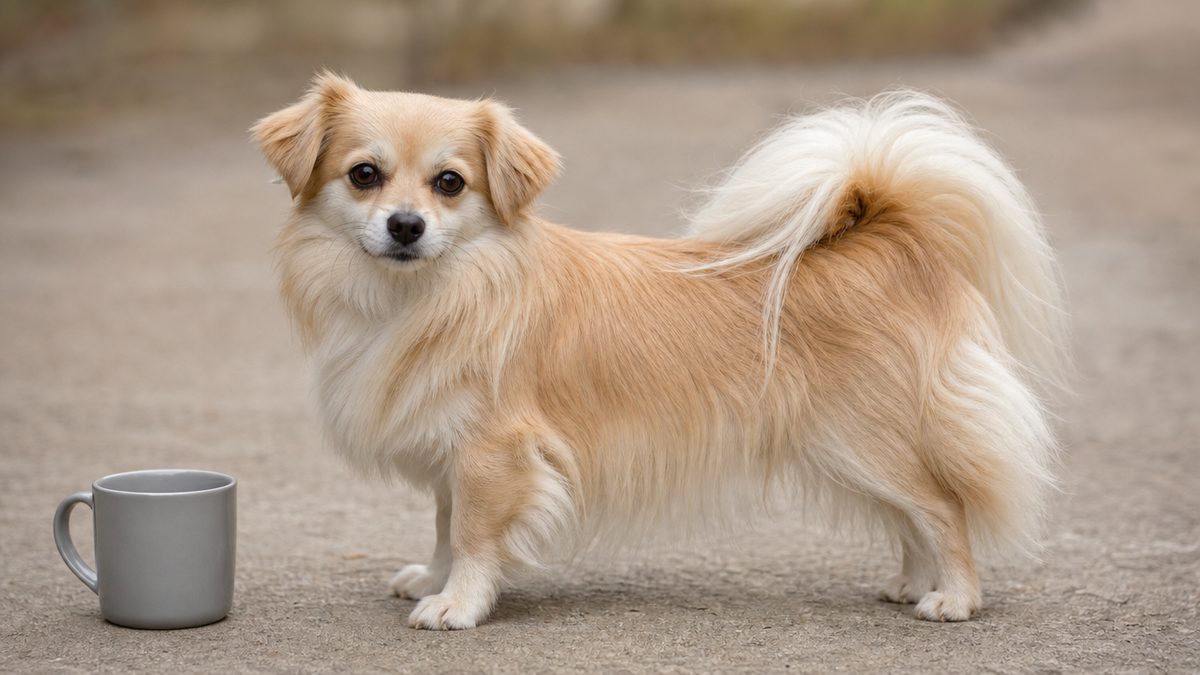
The Kokoni is Greece's small native companion dog, standing 24 to 28 cm at the withers for males and weighing 4 to 8 kg, with dropped triangular ears, a body longer than it is tall, and a plumed tail carried in a semicircle over the back. The Kennel Club of Greece publishes a full standard for it. No international registry recognises it.
Begin with the names, because there are four and they matter for anyone trying to research the breed. The Greek name is Κοκόνι, transliterated Kokoni. The descriptive English name used in most reference works is the Small Greek Domestic Dog. The full Greek descriptive form is Mikro Elliniko Oikosito Kynario, which is why Bonbeno checked the FCI's letter M index as well as its letter K. And several English sources add Meliteo Kinidio, which invites confusion with the Maltese.
The Kennel Club of Greece states the origin in one line, "Greek, found throughout Greece", and gives three uses: companion dog, alert dog, and guardian of small domestic animals. That third use is the one that separates it from a pure lap breed. This is a village dog that lived around households and small livestock, not a dog bred for a drawing room.
What the standard describes
The general appearance paragraph is short and specific. It describes a small dog with a body longer than its height, short coat on the face and the front of the legs, moderately long coat on the body and neck, and longer coat still on the tail and buttocks, with a triangular head, dropped ears, a tail forming a semicircle, and quick lively movement.
Temperament gets four words in the original: lively, cheerful, clever, loyal. That is the whole behavioural description in the document, which is worth knowing before you read a breed page that offers three paragraphs of personality detail sourced from nowhere.
| Attribute | What the standard says |
|---|---|
| Height, males | 24-28 cm, tolerance 1 cm either way |
| Height, females | 23-27 cm, tolerance 1 cm either way |
| Weight | 4-8 kg, both sexes |
| Ears | Triangular, medium, dropped, mobile, set above the eye line |
| Eyes | Medium, almond, dark brown iris |
| Nose | Black, medium, open nostrils |
| Bite | Scissor |
| Tail | Carried high in a semicircle, tip touching the back, richly coated |
| Coat | Double, outer long and straight or slightly wavy, undercoat short and dense |
| Colour | All colours and all colour combinations acceptable |
The colour rule tells you what kind of breed this is
One line in the standard does more work than any other: "all colours and colour combinations are acceptable";. Standards that permit everything are describing a population drawn from a landrace rather than a closed line selected for appearance, and it is the same choice the Kennel Club of Greece made for the Greek Shepherd, whose standard treats every colour as equal genetic wealth.
For a buyer this has a practical consequence. Colour cannot authenticate a Kokoni, and anyone charging a premium for a rare colour in this breed is charging for something the standard explicitly treats as ordinary.
What disqualifies a dog
The standard names seven disqualifying faults, and three of them are the ones you can see across a room: erect ears, an apple-shaped skull, and a curly coat. The others are prognathism, an undershot bite, entropion, ectropion and anury, meaning taillessness. Serious but non-disqualifying faults include a short coat outside the areas the standard allows, harsh coat texture, absence of undercoat, light eyes, a docked tail, and standing 3 cm above the upper height limit.
A great many small Greek village dogs have upright ears, and the Kokoni standard disqualifies them. That single line separates the Kokoni from the Alopekis, the other small Greek landrace, more cleanly than any measurement does, and it is the first thing to check on a dog someone calls a Kokoni.
History and origins: an antiquity claim nobody has tested
The Kokoni's history and origins are asserted rather than demonstrated. The Kennel Club of Greece standard opens its historical summary by calling it "a breed of ancient origin" and points to representations on vases, statues, figurines and coins, while dating its own recognition of the modern breed to 2004 Greek City Times. No genetic study has ever tested the claim.
Read the club's paragraph closely, because its structure is the argument. It says countless representations on vases, statues, figurines and coins reveal the dog's existence and its close relationship with the ancient Greek family, and that from references in texts and engravings the dog appears from antiquity to the present in an unbroken continuity throughout the Greek lands.
Every word of that rests on depictions. Small companion dogs certainly appear on Greek pottery, and nobody disputes that Greek households have kept small affectionate dogs for millennia. What the argument does not establish is continuity of a *breed*, as opposed to continuity of a *type*, and those are different claims.
Even Wikipedia flags the claim as unsourced
The English Wikipedia article carries a History section making the same case, describing small companion dogs on Greek vases from the fifth century BCE and archaeological findings suggesting dogs resembling the Kokoni were common in Greek homes. That paragraph is tagged citation needed on Wikipedia itself. When the most-read page about a breed marks its own history as unsourced, that is worth passing on to a reader rather than quietly repeating.
The same argument, tested on another breed, failed
This exact reasoning has been examined elsewhere and did not survive. FCI Standard 89 for the Ibizan Hound claims the breed's existence is proved at 3400 BC from illustrations in the tombs of the pharaohs. Larson 2012 in the Proceedings of the National Academy of Sciences names that breed among 13 European breeds whose "textual references or depictions superficially suggest temporally deep origins", and finds that only the Finnish Spitz retains a basal genetic signature.
Bonbeno is not transferring that finding to the Kokoni, because Larson's team did not sample this breed and no study has. The point is narrower and more useful: the depiction argument is a known-weak form of evidence that has already been tested and rejected on a neighbouring Mediterranean breed. Treat it with the same caution here, and note that nobody has done the work either way.
What can be said with confidence
- The modern breed is recent as a registered entity, with Kennel Club of Greece recognition dated to 2004 by the press source Wikipedia cites.
- The standard describes a landrace, since it accepts every colour and every colour combination, which is what a population defined by role rather than appearance looks like.
- The type is genuinely widespread in Greece, which the standard states directly as "found throughout Greece".
- The breed remains unrecognised internationally, in both the FCI's definitive and provisional registers.
- No genetic study of the breed exists, and PubMed returns zero records for it against working controls.
Why a landrace origin is a practical advantage
A dog drawn from a large, varied, working village population rather than from a narrow show line usually arrives with a broader gene pool and fewer of the fixed structural exaggerations that closed breeding produces. That tends to make such dogs comparatively hardy, and it is the most defensible positive thing that can be said about the Kokoni's health in the absence of any data at all.
It is an argument from population structure, not a measurement, and this page will not dress it as one. The honest position is that the breed has no health literature and a favourable-looking origin, and those two facts sit side by side.
Small dogs on Greek pottery are real, and so is the Kokoni. What connects them has never been tested. You can enjoy the continuity as a cultural story without treating it as a pedigree, which is roughly how the Kennel Club of Greece's own two-part paragraph reads once you notice it dates the modern breed to 2004 in the same document.
Recognition: the Greek standard prints an FCI group the FCI never granted
The Kokoni is recognised by the Kennel Club of Greece and by no international registry, and its Greek standard nonetheless prints a row headed ΚΑΤΑΤΑΞΗ F. C. I. reading Group 9, Companion Dogs, without working trial. Bonbeno checked the FCI's own registers three ways with a control that passed, and the breed is absent from all of them.
Take the club's document first, because it is the source almost every other page paraphrases without opening. The Kennel Club of Greece publishes a complete Kokoni standard in Greek, running from origin and utilisation through head, body, tail, coat, colour, size and faults. It is a real standard, conventionally ordered, ending with the usual note that males must have two normal testicles. Nothing about it is provisional or informal.
Its third heading reads ΚΑΤΑΤΑΞΗ F. C. I., which is "F.C.I. Classification", and under it the document prints Ομάδα 9 Σκύλοι Συντροφιάς and Χωρίς εξετάσεις εργασίας, meaning Group 9 Companion Dogs, without working trial. Read quickly, that looks exactly like the classification line on a recognised breed's record.
What the FCI's own registers hold
They do not hold this breed. Bonbeno read three FCI documents directly rather than searching for the breed name.
| Register | What it contains | Kokoni present? |
|---|---|---|
| Definitive, letter K | 14 breeds, Kai (317) to Kuvasz (54) | No |
| Definitive, letter M | 11 breeds, Macedonian Shepherd Dog Karaman (378) to Mudi (238) | No |
| Provisional register | 21 breeds, Karaman (378) down to Australian Stumpy Tail Cattle Dog (351) | No |
| Definitive, letter H (control) | 11 breeds, including Hellinikos Ichnilatis (214) | Control passed |
The letter M index was checked deliberately, because the breed's full Greek name transliterates as Mikro Elliniko Oikosito Kynario and the FCI files breeds under their original-language names. Neither spelling appears.
The control matters more than either absence. The FCI's letter H index carries HELLINIKOS ICHNILATIS at number 214, the Greek Harehound. So the register does list Greek breeds, and the method used here reads them. An absence proven against a passing control is evidence; an absence from a search that never worked is not.
The provisional register deserves its own note, because it is where a national breed sits while working toward definitive recognition, and because a first extraction of it failed. A plain fetch returned only 4,308 characters of visible text in which four breeds known to be on that register, the Karaman, the Sabueso Fino Colombiano, the Segugio dell'Appennino and the Australian Stumpy Tail Cattle Dog, all returned zero. That is a broken read, not an absence, and Bonbeno re-fetched with a renderer until all four controls appeared. The fully rendered register holds 21 breeds and no Greek entry of any kind.
What that row actually means
The classification line describes where the Kennel Club of Greece files the Kokoni, using the FCI's group vocabulary, and it is not a claim the FCI has endorsed. Group 9 is where a small companion breed would sit if the FCI listed it, and that is a reasonable way for a national club to organise its own register. It is not recognition, and the difference decides whether a puppy can ever hold an FCI pedigree.
The contrast is visible inside the same club's own website. The Kennel Club of Greece's page for the Greek Harehound prints Standard F.C.I. No 214 in its first line, an actual number issued by the FCI. The Kokoni standard prints a group with no number, because no number exists.
This is the third Greek breed where Bonbeno has found the pattern
The Greek Shepherd page found the same thing first: that club's standard ends with a line placing the breed in mastiff-type Group 2 of the FCI, for a breed absent from every FCI register. The Cretan Hound page found it second. The Kokoni is the third, and the mechanism is identical each time.
So the rule generalises, and it is worth carrying to any national registry anywhere. A national club's "FCI Classification" row is that club's own filing until you have seen the breed in the FCI's register. Reading the row alone gives you the opposite of the truth.
When Greece recognised it
English-language sources date the Kennel Club of Greece's recognition to 2004, and Wikipedia attributes that year to a Greek news feature rather than to the club. The club's own standard carries no date and no standard number, which is consistent with what the sibling Greek pages found across the club's other breed documents. Bonbeno therefore reports 2004 as an attributed date rather than a registry-confirmed one.
India is a full FCI member represented by the Kennel Club of India, which issues pedigrees against FCI nomenclature. Since the Kokoni appears in no FCI register, there is no route to a KCI pedigree for one, and any Indian paperwork offered with a Kokoni puppy cannot correspond to a recognised standard.
Kokoni price in India: the breed is not in the market at all
No Kokoni price in india exists, and the evidence is stronger than a failed search. India's top-ranking dog price page names 40 breeds across 121,090 characters of text and contains the string Kokoni zero times, while Labrador appears 9 times, Beagle 12, Shih Tzu 8 and Indie 10 in the same document. That is an absence measured against controls inside a single source.
Absence claims on this site have to be earned, so start with what the search actually returned. An India-located query for the breed's price term produced a coherent, on-topic result set of ten Indian dog-pricing pages, which tells you the instrument was working. Not one of them was about the Kokoni.
| Position | What the result is |
|---|---|
| 1 | A general 40-breed Indian dog price list |
| 2 | A YouTube video about Kanni prices |
| 3 | The Dogs India portal home page |
| 4 | A Delhi seller's general stock page |
| 5 | A YouTube dog price list in Kannada |
| 6 | An article on Indian breeds and their cost |
| 7 | A general dog-for-sale portal |
| 8 | An Instagram tag page for dog prices in India |
| 9 | A Tamil YouTube video on native breeds |
| 10 | A German Shepherd trade listing |
A search engine that cannot find a page about your subject returns the nearest thing it has, which here is generic Indian dog pricing. The engine is answering "dog price in india" because there is no Kokoni content in India for it to answer with.
The contrast that proves it is the breed and not the market
Run the head term instead of the price term and the picture inverts. A search for the breed itself returns a genuine, well-populated international result set led by Wikipedia, Dog Breed Info Center, zooplus and Pets4Homes, all of them real pages about this specific dog Dog Breed Info Center zooplus Magazine, Kokoni: character, price Pets4Homes, Kokoni Dogs Breed.
So the breed is well documented internationally and absent from India specifically. That is a cleaner finding than either search alone, and it is why this page reports no rupee figure rather than reporting a broken search.
Why no Indian supply chain can form
The legal position closes the question, and the import rules are the half most sellers leave out. DGFT Trade Notice 22/2022-23 places dogs under ITC(HS) 01061900 as Restricted, and its Policy Condition 8 states that "Import of commercial dogs for breeding or any other commercial activities other than the purposes mentioned above is not permitted". Point 6 states that "any applications for trading/breeding purposes, or applications made on behalf of some another person/entity shall be duly rejected";.
Combine that with the registry position and no lawful route exists in either direction. A dog cannot be imported for sale or breeding, and a Kokoni cannot hold a KCI pedigree because it holds no FCI number. Between them those two facts explain the market absence completely, without needing to assume anything about demand.
What a comparable small dog does cost in India
Bonbeno will not convert a European price into rupees, and it will not quote a figure for this breed. What can be quoted honestly is what Indian buyers pay for the small breeds they actually cross-shop, from the same published Indian list that omits the Kokoni.
| Breed | Published Indian range |
|---|---|
| Pomeranian | Rs 8,000 - Rs 80,000 |
| Shih Tzu | Rs 20,000 - Rs 80,000 |
| Labrador Retriever, for scale | Rs 8,000 - Rs 80,000 |
Those figures were checked against the currency-conversion tests this site runs on every Indian price table. They do not resolve to round dollar amounts at 84.38 or at 74, and although several divide neatly at a flat 80, that test is worthless on its own because any figure ending in three zeros passes it by construction. The quotients it produces here, such as 100 dollars for a Labrador puppy, are not prices any seller would print, which is what identifies these as genuine rupee-native Indian figures rather than a converted foreign list.
Ask which registry issued the pedigree. There is no correct answer available: the FCI holds no Kokoni, so the KCI cannot register one, and the Kennel Club of Greece registers dogs in Greece. A seller producing paperwork for an Indian-bred Kokoni is producing a document no registry stands behind.
Monthly cost of ownership in India
Budget Rs 2,000 to Rs 4,500 a year for a routine wellness visit and add a grooming package at Rs 1,000 to Rs 3,000, because a double-coated dog in Indian humidity needs more coat work than its 4 to 8 kg suggests Kynologikos Omilos Ellados. There is no purchase price to report, and the recurring costs are real and published.
Keep the two questions apart. A breed price and a care cost rest on different evidence, and the absence of the first tells you nothing about the second. Bonbeno can quote no Kokoni price. It can quote what Indian clinics and insurers publish for keeping a small dog here.
| Item | Published range |
|---|---|
| Basic consultation | Rs 500 - Rs 1,000 |
| Core vaccinations, rabies and DHPPiL | Rs 1,500 - Rs 3,000 |
| Deworming | Rs 300 - Rs 800 |
| Total annual wellness visit | Rs 2,000 - Rs 4,500 |
| Grooming package | Rs 1,000 - Rs 3,000 |
| Nail trimming | Rs 200 - Rs 500 |
| Ear cleaning | Rs 300 - Rs 700 |
| Complete blood count | Rs 800 - Rs 1,500 |
| Dental cleaning | Rs 3,000 - Rs 8,000 |
| Emergency consultation | Rs 1,000 - Rs 2,500 |
The three rows a Kokoni actually moves
- Grooming becomes routine rather than optional. The standard specifies a double coat of 4 to 8 cm over the body and 8 to 14 cm on the tail and buttocks, over a short dense undercoat, so the Rs 1,000 to Rs 3,000 package is a recurring line in an Indian monsoon rather than an occasional treat.
- Dental costs rise, as they do for every small breed. Toy and small dogs accumulate periodontal disease earlier than large ones, and the published Indian dental cleaning band of Rs 3,000 to Rs 8,000 is the single largest predictable expense on this list.
- Food costs fall sharply. A 4 to 8 kg dog eats a fraction of what a 22 kg one does, which is the main reason total cost of ownership for a small breed sits well below a large one even where the vet bills match.
- Tick prevention stays constant. Body size does not reduce exposure, and 261 of 525 Indian dogs sampled across four locations carried at least one tick-borne pathogen.
A worked annual floor
Adding only published figures gives a defensible minimum. One annual wellness visit at Rs 2,000 to Rs 4,500, four grooming packages at Rs 1,000 to Rs 3,000 each, and twelve nail trims at Rs 200 to Rs 500 comes to roughly Rs 8,400 to Rs 22,500 a year before food, parasite prevention or any illness. That is arithmetic on published ranges rather than a survey, and this page labels it as such.
The grooming assumption is the one worth challenging for your own household. An owner who brushes a double coat properly at home four times a week can drop the professional package to twice a year, which takes roughly Rs 6,000 off the top of that range. An owner who does not will pay for it either in grooming fees or in matted coat and skin problems during the monsoon.
What this page will not estimate
No monthly food figure appears here, because Bonbeno has no verified Indian price series for feeding a 4 to 8 kg dog and will not invent one. No insurance premium appears either. And no breed-specific screening cost appears, because no breed-specific screening exists for the Kokoni: it has no OFA row and no published health study to screen against US National Library of Medicine.
Buy a good undercoat rake and a metal comb once, and learn to use them. For a double-coated breed in an Indian city, twenty minutes of brushing twice a week prevents the matting that turns into a clipped-down dog, a skin infection and a Rs 3,000 salon visit in July.
Heat tolerance in India, and the one city that genuinely matches Athens
The Kokoni's homeland summer sits within about a degree of Bengaluru's on the measure that decides whether a dog can cool itself. Athens peaks at a 20.6 C monthly-mean wet bulb in August and Bengaluru at 21.9 C in May, a gap of 1.2 C Stull R. Wet-Bulb Temperature from Relative…. Delhi, at a 26.5 C July wet bulb, runs 5.9 C beyond anything the breed evolved with.
Bonbeno queried NASA POWER by explicit latitude and longitude and echoed back the grid-cell elevation for every point, because POWER returns a cell rather than a point and a cell in hilly terrain can sit far from the town underneath it. The Athens cell reports 140.03 m, against a city that spans roughly 70 to 150 m, so the cell is the town and the figure stands. The Indian cells checked out the same way, with Delhi at 206 m against roughly 216 m and Bengaluru at 842 m against roughly 920 m. Read the two temperature columns differently. The record-high column is NASA POWER's T2M_MAX, the hottest single reading the 2001 to 2020 climatology holds for that month, so it is an extreme rather than an average afternoon. The wet-bulb column is computed from each month's mean air temperature and mean relative humidity, so it is a monthly mean across day and night, and the two must never be paired with each other.
| Place | Cell elevation | Hottest month | Record high | Peak mean wet bulb |
|---|---|---|---|---|
| Ioannina, Epirus | 445 m | July | 42.6 C | 18.8 C (Aug) |
| Thessaloniki | 233 m | July | 43.2 C | 19.7 C (Aug) |
| Athens, Attica | 140 m | June | 42.6 C | 20.6 C (Aug) |
| Bengaluru | 842 m | April | 40.4 C | 21.9 C (May) |
| Heraklion, Crete | 106 m | June | 34.5 C | 22.0 C (Aug) |
| Pune | 636 m | April | 43.2 C | 23.0 C (Jun) |
| Mumbai | 97 m | April | 44.9 C | 25.8 C (Jun) |
| Chennai | 49 m | May | 42.7 C | 26.1 C (May) |
| Delhi | 206 m | June | 48.8 C | 26.5 C (Jul) |
Reading the Athens and Bengaluru match honestly
The two peaks are within 1.2 C, and that is a real result that needs reading carefully. Athens is drier than it is cool. Its record June high of 42.6 C exceeds Bengaluru's April record of 40.4 C, and its hottest monthly mean, July at 27.5 C, sits just below Bengaluru's April mean of 28.4 C, so the two cities are close on the thermometer. What separates them is humidity: Athens runs near 51 percent in July against Bengaluru's 49 percent in April, and both are dry by Indian standards, which is why the Attic summer is the nearest European analogue to a Bengaluru one rather than to a Chennai one.
Three qualifications keep this from being over-read. Duration differs. Athens has a short, sharp summer, while Bengaluru's warm season runs far longer, so the annual heat load is not the same even where the peak is. The match is with one Indian city. Pune is 2.3 C hotter than Athens on peak wet bulb, Mumbai 5.1 C, Chennai 5.5 C and Delhi 5.9 C. A breed that suits Bengaluru does not automatically suit Delhi. And a dry homeland is not the closest homeland. Athens is dry in summer, so its wet bulb reads low; humid Mediterranean islands such as Ibiza and Mallorca peak at 22.6 C and 22.2 C, above Athens and above Bengaluru, which makes their breeds the better-adapted ones on this measure even though Athens is the hotter place on a thermometer.
The coat is the limiting factor, not the body
A 4 to 8 kg dog sheds heat more easily than a large one, and this dog carries a double coat. The standard specifies a short dense undercoat and lists its absence as a serious fault, with the outer coat running 4 to 8 cm over the body and 8 to 14 cm on the tail and buttocks. That is genuine insulation, and it is what caps the heat rating rather than the animal's size.
Indian law addresses this category by name. Second Schedule Part IV paragraph 21(1) of the 2017 Rules bars keeping in outdoor facilities, without the attending veterinary practitioner's written approval, "(i) dogs that are not accustomed to the temperatures prevalent in the area or region in question; (ii) dog breeds that cannot tolerate the temperatures prevalent in the area or region in question, such as long-haired breeds in high temperature locations; and (iii) sick, infirm, aged or young animals".
Note the citation form. That is a Second Schedule paragraph, not a Rule. The Rules themselves stop at Rule 13, and the string "Rule 21" appears zero times in the gazette, which Bonbeno confirmed by extracting the 14-page document and searching it. A long-coated Kokoni in a Delhi summer falls squarely inside clause (ii), so it is an indoor dog here as a matter of law as well as welfare.
What the heat research supports
Hall 2020 in Scientific Reports found that dogs at or above their breed and sex mean bodyweight carried 1.42 times the odds of heat-related illness, with a confidence interval of 1.12 to 1.80. That transfers to any breed, including this one. The paper's over-50 kg odds ratio does not, and a 4 to 8 kg dog sits nowhere near it.
The companion paper in Animals gives the trigger split, and its denominator is widely misquoted. Of 1,259 heat-related illness events from 1,222 dogs in a cohort of 905,543, 879 had a recorded trigger and 652 of those 879, or 74.2 percent, were exertional. For a small companion breed this is comparatively good news, because a dog with modest exercise needs is less exposed to the dominant trigger than a working hound is.
In Bengaluru, a Kokoni's homeland peak and its Indian peak are the same number, and normal sensible management is enough. In Delhi, Mumbai, Pune or Chennai, the dog lives indoors in the hot months with walks before sunrise and after dark, and the double coat is brushed out rather than shaved. The NDMA notes that a heat wave is declared outright whenever a station's maximum stays at 45 C or above.
Temperament and household fit
Expect a lively, cheerful, clever and loyal small dog that alerts readily, because those are the four words the Kennel Club of Greece standard uses and alerting is one of the three uses it lists. A Kokoni suits an Indian flat well, and the thing to plan for is noise rather than energy.
The standard is unusually sparing about character, and that restraint is useful. Where a breed page offers you paragraphs of personality, the registry offers four adjectives and a job description: companion dog, alert dog, guardian of small domestic animals. Everything reliable that can be said about this breed's temperament comes from those two lines plus the general behaviour of small landrace-derived village dogs.
The alerting trait, in an Indian building
A dog listed as an alert dog will alert. In a Greek village that is useful; in a Mumbai apartment block with a shared lift, a corridor and a doorbell it is the single most likely source of friction with neighbours. This is manageable and it has to be managed deliberately from the first week, by rewarding quiet after one or two barks rather than by punishing the barking itself.
The guardian-of-small-livestock role is worth reading too. It describes a dog that watches and reports rather than one that chases and kills, which is a materially different prey profile from a hound's and part of why the breed adapts to households with other small pets more easily than a sighthound does.
Who this breed suits
- Apartment households, since a 24 to 28 cm dog of 4 to 8 kg needs no garden.
- Families with school-age children who can be taught to handle a small dog gently.
- First-time owners, because a cheerful, people-oriented companion breed is forgiving of ordinary mistakes.
- Owners who are home a good deal, as a companion breed left alone all day will vocalise.
- People willing to brush twice a week, which is the real ongoing commitment.
Who should look elsewhere
- Households wanting a silent dog, since alerting is written into the breed's stated purpose.
- Owners with a toddler and no supervision plan, because a 4 kg dog is easily injured by a child.
- Anyone unwilling to groom a double coat through an Indian monsoon.
- Buyers who need verifiable pedigree paperwork, which no registry can issue for this breed in India.
A caution about temperament claims you will read elsewhere
Several ranking pages describe the Kokoni's character in confident detail, including specific claims about anxiety, trainability and behaviour with strangers. None of that traces to a study, because no peer-reviewed literature on this breed exists at all: PubMed returned zero records across five name forms while controls in the same session returned 1,110 for Labrador Retriever, 8 for Cirneco dell'Etna and 4 for Pharaoh Hound. Treat detailed behavioural claims about the Kokoni as observation rather than evidence, including the ones on this page.
A standard that accepts every colour and was written for a widespread landrace describes a variable population. Reddit threads asking whether a Greek rescue is "actually a Kokoni" are a fair reflection of that reality. If you adopt a small Greek dog, you are getting an individual rather than a predictable type, and meeting the specific animal matters more here than reading the breed description.
Training a Kokoni, and the one thing to start on day one
To train a Kokoni, use short reward-based sessions and start on quiet-after-alerting immediately, because the breed's own standard lists alerting as one of its three purposes. A clever, loyal companion breed of this size is generally trainable, and the barking is the behaviour that decides whether flat living works.
Begin with what the standard supports. It calls the breed clever and loyal, and it describes a dog developed around households rather than for independent work at distance. Both point the same way: this is a dog that wants to be near you and will work for you, which is a far easier training starting point than a primitive hunting breed offers.
Priority one, the alert-and-settle sequence
Teach the dog that alerting is allowed and that stopping is rewarded. The practical version is simple. When the dog barks at the door, acknowledge it, then mark and reward the first moment of quiet, and build the gap. Attempting to suppress alerting altogether fails with a breed selected for it and usually produces a more frantic dog.
Start this in week one, in an Indian apartment, before the habit sets. A dog that has barked unchecked at every lift arrival for six months is a much harder problem than a twelve-week-old puppy learning a settle cue.
Priority two, handling and grooming tolerance
A double-coated dog will be brushed several times a week for its whole life, and a small dog that dislikes being handled turns that into a weekly fight. Condition it deliberately: short sessions, food throughout, brush one area and stop while the dog is still comfortable. The same conditioning covers nail trims, ear checks and the vet table.
Priority three, socialisation inside the vaccination window
The 2017 Rules note that "All pups shall be vaccinated which can start at the age of seven-eight weeks, and are usually completed at the age of eighteen weeks";. That leaves a long gap during which a puppy should not meet unvaccinated dogs but must still meet the world. Carry the puppy, let it watch traffic and autos from a safe distance, and invite known vaccinated dogs to the house.
| Age | Priority | What good looks like |
|---|---|---|
| 8-16 weeks | Socialisation and handling | Accepts brushing and paw handling; calm with household noise |
| 3-5 months | Alert-and-settle | Two barks at the door, then quiet on cue |
| 4-6 months | Toilet routine and crate | Reliable indoors; settles alone for an hour |
| 6-9 months | Lead manners and recall | Loose lead on a city footpath; comes reliably indoors |
| 9-12 months | Vet and grooming conditioning | Tolerates a full groom and a nail trim without restraint |
What not to do
Avoid correction-based methods and avoid carrying the dog away from anything that worries it. Small breeds are routinely picked up instead of being allowed to learn, and that produces the reactive, over-attached small dog that people then describe as a breed trait. On present evidence it is a handling artefact rather than anything the Kokoni standard describes.
The fastest fix for alert barking in an Indian flat is often environmental. Move the dog's resting place away from the front door, mute the doorbell to a softer tone, and block the sightline to the corridor. A dog that cannot see the lift has far less to announce, and the training then has much less work to do.
Daily exercise requirement
A Kokoni needs two short walks a day plus indoor play, which is a modest requirement that fits an Indian summer far better than most imported breeds manage. The standard describes free, quick, smooth movement with strong hind drive, but this is a 4 to 8 kg companion and alert dog rather than a working animal.
Quantify it plainly. Two walks of twenty to thirty minutes, plus ten to fifteen minutes of active indoor play or training, meets an adult Kokoni's needs on most days. That is roughly a third of what the Greek Harehound requires, and it is the single biggest practical advantage this breed has over the other Greek breeds for an Indian household.
Why the modest requirement matters more in India than elsewhere
Because exercise is what puts dogs in the emergency room. Of the 879 heat-related illness events with a recorded trigger in Hall 2020, 652, or 74.2 percent, were exertional rather than caused by a hot car or a hot room. A breed whose daily requirement can be met in an air-conditioned living room during a Delhi May is structurally safer here than one that must run.
That does not remove the scheduling rule; it softens it. Walks still move to before sunrise and after dark from March to October in the plains, where Delhi's monthly mean exceeds 30 C in four months of the year. The difference is that missing a walk on a bad day costs a Kokoni owner very little, where it costs a hound owner a destroyed sofa.
| Slot | Duration | Content |
|---|---|---|
| Early morning, daily | 20-30 min | Lead walk with sniffing time on shaded footpaths |
| Evening after dark, daily | 20-30 min | Lead walk, plus lead manners practice |
| Indoors, daily | 10-15 min | Tug, fetch down a corridor, or a short training session |
| Twice weekly | 10 min | Puzzle feeder or scatter feeding for mental work |
| Peak-heat days | n/a | Skip the morning walk entirely; do indoor work only |
The under-exercised failure mode is noise, not destruction
An under-stimulated Kokoni barks. It is an alert breed with a job description that includes announcing things, so boredom expresses itself vocally long before it expresses itself in chewing. The diagnostic is simple: if the barking has increased, add mental work rather than distance, because a puzzle feeder does more for this breed than an extra kilometre.
Surfaces and the small-dog problem
Watch what the dog is walking on. Indian urban walking happens on concrete and tarmac that hold heat for hours after sunset, and a 24 cm dog's body sits far closer to that surface than a tall dog's does. The seven-second hand test applies with more force to a small breed, not less: if you cannot hold the back of your hand on the pavement for seven seconds, a Kokoni should not be walking on it.
Small companion breeds get carried past everything mildly difficult, and they arrive at adulthood without having learned to cope with any of it. A Kokoni that walks its own route, meets its own dogs and solves its own small problems is a calmer animal at three years old than one that has been transported through its own life.
Grooming a double coat in Indian humidity
Brush a Kokoni twice a week minimum, and never shave it. The Kennel Club of Greece standard specifies a genuine double coat with a short dense undercoat, and it makes absence of that undercoat a serious fault, so the coat is not decoration you can remove for summer.
Get the coat structure clear first, because it drives everything else. The standard specifies an outer coat that is long, fine, straight or slightly wavy, over a short dense undercoat, and it gives the lengths by body region.
| Region | Coat length |
|---|---|
| Head, front of limbs, part or all of the ears | About 1 cm, short and smooth |
| Neck and body | About 4-8 cm, relatively flat |
| Tail and rear of the buttocks | About 8-14 cm, forming a plume |
So the grooming load is concentrated. Two-thirds of the dog is short-coated and needs almost nothing; the trouble is the body coat, the tail plume and the trousers, and those are exactly the areas that mat.
The monsoon problem
Indian humidity turns a double coat from a maintenance item into a health one. Undercoat that stays damp against the skin does not dry in 90 percent humidity, and matted damp undercoat is where hot spots and skin infections start. Overseas grooming guidance frequently tells owners to bath the dog and let it air dry, and that instruction does not transfer to an Indian monsoon. Dry the dog properly, to the skin, every time it gets wet.
- Brush twice weekly minimum, with an undercoat rake first and a metal comb after, working to the skin rather than over the top.
- Comb the tail plume and trousers separately, since 8 to 14 cm of coat over the buttocks is where mats form first.
- Dry to the skin after every bath or soaking, using a towel and a cool dryer rather than leaving the dog to air dry.
- Check the ears weekly, because dropped ears in humid weather retain moisture, and plug them before bathing.
- Bath every four to six weeks with a mild shampoo, more often only if the dog is genuinely dirty.
Why shaving is the wrong answer
The instinct in an Indian summer is to clip the dog down, and it backfires on a double coat. The undercoat provides insulation in both directions and the outer coat provides sun protection, and clipping a double coat often produces uneven regrowth. The standard's own position is instructive: it lists lack of undercoat as a serious fault, meaning the breed is defined partly by carrying one.
Manage heat by removing dead undercoat through brushing rather than by removing live coat with clippers. A well-raked double coat traps far less heat than a neglected one, and it is the neglected coat rather than the coat itself that makes owners reach for the clippers.
Two grooming rules the standard implies
Do not dock the tail, and do not let a groomer trim it into shape. The standard lists a cut tail among its serious faults and anury, taillessness, among its disqualifying faults. Indian law agrees independently: Second Schedule Part II paragraph 6(8) of the 2017 Rules states that "There shall be no tail docking, ear cropping, de-barking, de-clawing, branding, dyeing, injecting substances to enhance visual appeal" and that any change of appearance by artificial means is strictly forbidden.
That is a rare case where a foreign breed standard and Indian law point the same way, and it is worth saying so rather than only reporting the collisions.
Dropped ears plus Indian humidity is the standard recipe for otitis externa, and the published Indian ear-cleaning cost of Rs 300 to Rs 700 is far cheaper than treating an established infection. Look, do not routinely flush: a weekly visual check catches the problem while it is still cheap.
Health risks and lifespan: what genuinely is not known
No breed-specific health data exists for the Kokoni, and this page publishes none. PubMed returned zero records across five name forms while controls in the same session returned 1,110 for Labrador Retriever, 8 for Cirneco dell'Etna and 4 for Pharaoh Hound, and OFA's published statistics carry no Kokoni row. Any percentage you are quoted for this breed is unsourced.
An absence claim has to be earned, so here is exactly what was searched. The phrase "Kokoni" returned 0 records, and PubMed's own query-translation line showed the term passed through unaltered rather than being rewritten into something else. The query kokoni AND dog returned 0. "Melitaean", the ancient name sometimes attached to the breed, returned 0.
Two further searches returned non-zero counts and both dissolve on inspection, which is the check that matters. "Small Greek Domestic Dog" returned 3, but the translation line showed the phrase was not matched and the search had fallen back to small AND Greek AND dog. Reading the three records back, they are a Swiss and American study of a skin disorder in dogs with SUV39H1 variants, a paper on sand flies in the Greek Aegean islands, and a chapter on the history of vitamin deficiency disorders. None concerns the Kokoni. "Greek domestic dog" returned 68 by the same fallback, and its top records are wolf hybridisation in Greece, feline circovirus and pseudorabies in hunting dogs.
So the honest figure is zero genuine records, and it holds against every name the dog has and against three working controls.
The registry data is empty too
Bonbeno could not reach ofa.org directly in this session and read a dated local snapshot of its published statistics tables taken on 31 August 2026. Before drawing anything from it, a control was run: the snapshot contains 109 occurrences of LABRADOR, so a real breed reads correctly. KOKONI appears zero times.
State that precisely. It means the Kokoni has no row in OFA's published statistics tables in that snapshot, which is not the same as being absent from the OFA database. OFA requires 100 hip evaluations, or 50 for its other registries, before a breed is published at all, so a breed with almost no North American population would not appear even if a handful of dogs had been screened.
Lifespan: no figure exists
This page gives no life expectancy for the Kokoni. The Kennel Club of Greece standard states none. The two large UK datasets this site normally uses, Teng 2022's life tables and McMillan 2024's longevity analysis, do not cover the breed.
Several ranking pages nonetheless print a confident range. Borrowing a Maltese's or a Pomeranian's median and presenting it as the Kokoni's would be fabrication with a citation attached, and Bonbeno will not do it. What can be said without inventing anything is that small breeds outlive large ones as a general pattern, which is a statement about size rather than a figure for this dog.
What the standard's fault list does tell you
The standard is not a health document, but its disqualifying faults name two real ocular conditions, entropion and ectropion, in which the eyelid rolls inward or outward. A registry that disqualifies both is a registry whose judges have seen both. That is weak evidence and it is the only breed-linked health signal in any primary document about the Kokoni, so this page reports it as exactly that.
Indian law happens to require testing for both. Second Schedule Part III paragraph 8(10) of the 2017 Rules states that breeding dogs "shall have been tested for genetic defects, including hip dysplasia, progressive retinal atrophy, night blindness, hypothyroidism, entropion, ectropion, overshot, undershot jaw (when incisors do not touch or mesh), wry mouth, two or more missing teeth, unilateral cryptorchid or full cryptorchid males". The word is "including", so that list is illustrative rather than closed.
What the Rules do not require
Two absences are worth knowing because owners of small breeds are often told otherwise. Across the whole gazette, the words patella and luxation appear zero times, so there is no Indian patellar-testing requirement, even though patellar luxation is the condition small breeds are most often screened for elsewhere. The words BAER and deaf also appear zero times, so no hearing test is mandated either.
That is not advice to skip a patella check. It is a correction to the common claim that Indian law mandates one, and it means the decision sits with you and your vet rather than with a rule.
Ask where the number came from. With zero peer-reviewed records, no OFA row and no registry lifespan, there is no dataset any percentage about this breed could honestly rest on. A page that tells you what proportion of Kokonis develop a given condition is telling you something nobody has measured.
The Indian disease picture that actually applies
The real health risks for a Kokoni in India are Indian ones rather than breed ones, and tick-borne disease leads them. A PCR survey of 525 dogs across four Indian locations found 261, or 49.7 percent, infected with at least one tick-borne pathogen, rising to a 39.5 percent Ehrlichia canis rate among Delhi dogs.
Since no breed-specific data exists, the useful health section for this dog is the one about where it lives. These are the conditions an Indian small dog meets, with real Indian numbers attached.
| Pathogen | Delhi (n=162) | Mumbai (n=162) | Sikkim (n=101) | Ladakh (n=100) |
|---|---|---|---|---|
| Ehrlichia canis | 39.5% | 27.2% | 0% | 0% |
| Hepatozoon canis | 38.3% | 43.8% | 0% | 24% |
| Mycoplasma haemocanis | 17.3% | 14.2% | 1% | 12% |
| Anaplasma platys | 13.0% | 8.0% | 0% | 0% |
| Babesia vogeli | 8.6% | 7.4% | 2% | 0% |
Across the whole sample, Hepatozoon canis led at 30.0 percent, followed by Ehrlichia canis at 20.6 percent, Mycoplasma haemocanis at 12.2 percent, Anaplasma platys at 6.5 percent, Babesia vogeli at 5.5 percent and Babesia gibsoni at 0.2 percent, and 39 percent of infected dogs carried more than one pathogen. The arithmetic on the headline figure checks out: 261 divided by 525 is 49.7 percent.
The geography is the actionable part. Delhi and Mumbai dogs were significantly more likely to carry ticks and pathogens than dogs in Sikkim and Ladakh, and Ehrlichia canis was absent from both mountain locations. So this is a plains-and-metro risk, and it overlaps with the cities where an imported companion breed would actually live.
Why a small dog is not a lower-risk dog
Body size does not reduce tick exposure, and a long double coat over the body and buttocks makes ticks harder to find than on a short-coated dog. The weekly brushing this breed needs anyway is therefore also the tick check, and it is the most valuable ten minutes in a Kokoni owner's week. Run the comb to the skin over the neck, behind the dropped ears, in the trousers and under the tail plume.
Heat, in the terms Indian guidance uses
The NDMA reproduces the IMD's criteria: a heat wave is not considered until a station's maximum reaches at least 40 C in the plains or 30 C in hilly regions, and is declared outright whenever the actual maximum stays at 45 C or above. It defines heat stroke as a body temperature of 40 C or more with delirium, seizures or coma, and calls it a potentially fatal condition.
For a double-coated dog those thresholds are the ones to plan around, and Delhi, Jaipur, Mumbai, Pune and Hyderabad all average a monthly maximum above 40 C in their hottest month.
Vaccination and deworming, per the Rules and the price list
The 2017 Rules state that pups shall be vaccinated starting at seven to eight weeks and usually completing at eighteen weeks, and require a health check at least once a month with records maintained. Published Indian costs put core vaccinations at Rs 1,500 to Rs 3,000 a year and deworming at Rs 300 to Rs 800.
With no breed data to screen against, spend on a baseline complete blood count at Rs 800 to Rs 1,500 while the dog is healthy. In a country where half of sampled dogs carry a tick-borne pathogen, having a normal baseline on file is what lets a vet recognise an abnormal result quickly later.
Feeding and nutrition for a 4 to 8 kg dog in India
Feed a Kokoni to body condition rather than to a chart, because the standard's own weight range spans a factor of two, from 4 kg to 8 kg, and both ends are correct. Keeping the dog at or below its breed and sex mean weight is the single dietary step with a measured effect on heat risk, at 1.42 times the odds when exceeded.
That 4 to 8 kg span is the reason a weight target is useless here. A correctly built 24 cm female and a correctly built 28 cm male are both within standard and differ by twice the body mass, so the only workable measure is what you can feel on the individual dog.
Reading body condition on a coated small breed
The double coat hides the outline, which is why owners of long-coated small dogs are so often surprised at the vet. Use your hands rather than your eyes.
- Ribs should be felt with light pressure, like the back of your knuckles, under coat rather than under fat.
- Waist should be present when you run both hands along the flanks, even where the coat conceals it.
- Abdominal tuck should be felt from the side with the coat parted.
- Weigh monthly, since a 400 g gain on a 5 kg dog is 8 percent of its body weight and invisible under 8 cm of coat.
Life-stage feeding
| Stage | Meals per day | Priority |
|---|---|---|
| 8-16 weeks | 4 | Small-breed puppy food; watch for low blood sugar in very small pups |
| 4-8 months | 3 | Steady growth; small breeds finish growing earlier than large ones |
| 8-12 months | 2 | Transition to adult food |
| Adult | 2 | Maintain condition; account for training treats in the daily total |
| Senior, 8 years plus | 2-3 | Smaller meals; watch dental comfort and muscle mass |
The dental angle, which is where small breeds actually suffer
Small dogs carry a full set of teeth in a small jaw and accumulate periodontal disease earlier than large breeds. The Indian cost of that is published and it is the largest predictable veterinary expense for this breed at Rs 3,000 to Rs 8,000 for a dental cleaning. Daily tooth brushing, started in puppyhood alongside coat handling, is the intervention that delays it.
Note what Indian law does and does not say here. The 2017 Rules mention teeth exactly once, inside paragraph 8(10)'s genetic-defect list as "two or more missing teeth", and the words dental and tooth appear nowhere in the gazette. There is no Indian dental requirement, so this is a welfare decision rather than a compliance one.
Water and timing
The Rules require an adequate supply of fresh, clean drinking water in a safe receptacle available at all times. For a small double-coated dog in a Chennai May, where the monthly mean is 31.5 C and the record high is 42.7 C, that means refreshing the bowl through the day rather than filling it once.
What this page does not estimate
No monthly Indian food cost appears here. Bonbeno has no verified Indian price series for feeding a 4 to 8 kg dog and will not invent one, and the general point stands that a small dog's food bill is a fraction of a large dog's. Build your own figure from local prices and the daily quantity your vet recommends for the individual animal.
A companion breed trained with food gets a lot of food. On a 5 kg dog, ten training treats can be a tenth of the day's calories, so subtract them from the meals rather than adding them on top. This is how most small dogs in Indian homes quietly become overweight while their owners insist the portions have not changed.
Month by month through the first year
Plan a Kokoni puppy's first year around three things: socialising inside the vaccination window, establishing coat handling before the coat gets long, and teaching alert-and-settle before barking becomes a habit. Indian law sets the start date, since Rule 8(1)(a) requires that "pups less than eight weeks in age are not sold";.
That is a genuine Rule rather than a Second Schedule paragraph, and it is worth citing precisely because the two numbering systems in the 2017 Rules are so easily confused. A seller offering a six-week-old puppy is breaking it, and that alone is sufficient reason to walk away.
| Age | Coat and body | Behavioural | Veterinary |
|---|---|---|---|
| 8-10 weeks | Daily 2-minute brushing while the coat is short | Carry-and-watch outings; household noise | First vaccinations; deworming |
| 10-16 weeks | Introduce comb and dryer as a game | Socialisation window; alert-and-settle begun | Core course completing near 18 weeks |
| 4-6 months | Coat lengthening; brush twice weekly | Lead manners; toilet routine reliable | First adult-style health check |
| 6-9 months | Adult coat coming through; mats start here | Alone-time training; barking habits set now | Baseline blood count; discuss neutering |
| 9-12 months | Full brushing routine established | Vet and groomer handling conditioned | Dental care routine started |
Why coat handling starts before the coat does
The puppy coat is short and easy, and that is exactly why the training happens then. A twelve-week-old that enjoys being brushed becomes an adult that tolerates 8 to 14 cm of tail plume being combed out. A nine-month-old meeting a comb for the first time, with a matted coat, learns that grooming hurts, and you will fight that lesson for a decade.
The vaccination and socialisation overlap
The Rules state that vaccination can start at seven to eight weeks and usually completes at eighteen weeks. The socialisation window closes inside that period, so an Indian owner has to socialise without exposing the puppy to unvaccinated dogs. Carry the puppy on the street, let it watch autos and traffic from a safe distance, invite known vaccinated dogs to the house, and handle its feet, ears and mouth daily.
Barking habits set earlier than owners expect
By six to nine months an alert breed has decided what is worth announcing. Everything the training section says about rewarding quiet after one or two barks belongs in months three to six, not month twelve. This is the single highest-value behavioural investment for a Kokoni living in an Indian apartment block.
What eight weeks protects
The eight-week minimum is not paperwork. A puppy taken earlier misses the bite inhibition and dog-to-dog signalling it learns from its litter, and on a small breed that gap tends to show up as a dog that is defensive with other dogs because it never learned to read them. Rule 8(1)(a) is the floor, not the target.
For a breed with no verifiable pedigree route in India, seeing the dam and the littermates is the only real assessment you can make. A seller who will not show you the mother with the litter is not offering you information you can check, and with no registry to appeal to afterwards, that visit is your entire due diligence.
Head to head against the breeds Indian buyers actually cross-shop
An Indian buyer choosing a small companion dog will not find a Kokoni, so the useful comparison is against the small breeds that are available here. On registry status, availability and published price, the Indian Spitz, the Pomeranian and the Shih Tzu all beat it on every practical axis except one: a Kokoni's homeland heat genuinely matches Bengaluru's.
| Breed | FCI status | Published Indian price | Coat | Availability in India |
|---|---|---|---|---|
| Kokoni | Not recognised, in any register | None exists | Double, 4-8 cm body | None found |
| Indian Spitz | Not FCI recognised | See our breed page | Double | Widely available |
| Pomeranian | FCI recognised (German Spitz) | Rs 8,000 - Rs 80,000 | Double, profuse | Widely available |
| Shih Tzu | FCI recognised | Rs 20,000 - Rs 80,000 | Long, single-layered | Widely available |
| Maltese | FCI recognised | See our breed page | Long, white, no undercoat | Available |
| Labrador, for scale | FCI recognised | Rs 8,000 - Rs 80,000 | Short double | Very widely available |
The Maltese confusion, which is worth settling
Some English sources give the Kokoni the alternative name Meliteo Kinidio, which invites conflation with the Maltese Pets4Homes, Kokoni Dogs Breed. They are separate breeds and the standard separates them cleanly. The Kokoni accepts all colours and all colour combinations, while the Maltese is white; the Kokoni's standard disqualifies a curly coat; and the Kokoni carries a dense undercoat whose absence is a serious fault, where the Maltese has essentially none.
The registry position separates them further. The Maltese sits in the FCI's own nomenclature; the Kokoni sits in no FCI register at all.
Against the other Greek breeds
Within Greece the Kokoni is the small one and the practical one for a city. The Greek Harehound is a working scent hound with a large exercise requirement and the only Greek breed with a real FCI number, 214. The Greek Shepherd is a 66 cm-plus livestock guardian. The Cretan Hound is a primitive hunting dog. For an Indian apartment, the Kokoni is by a distance the most suitable Greek breed, and it is the one with the least documentation.
All four share the same registry problem to differing degrees, and three of them share the exact same symptom: a Kennel Club of Greece standard printing an FCI classification the FCI never granted Kynologikos Omilos Ellados.
The one axis where the Kokoni wins
Climate match, and it is not a small thing. Athens peaks at a 20.6 C monthly-mean wet bulb and Bengaluru at 21.9 C, so a dog evolved in Attica meets little in a Bengaluru summer that its ancestors had not met. A Pomeranian, by contrast, descends from a northern German spitz population with a far heavier coat and a much cooler homeland, and Indian owners of that breed spend a great deal of the year managing it.
That advantage is real, and it applies to exactly one Indian city on the measurements taken here. It does not survive a move to Delhi, which runs 5.9 C hotter than Athens on peak wet bulb.
What India's own dog genomics work covers
A useful proxy for which breeds are actually present here. A 2026 study genotyped 46 dogs across six breeds owned in India, identifying 75,811 high-quality SNPs and 2,033 tag-SNPs, and the breeds it covered were the indigenous Gaddi and Mudhol Hound plus four foreign breeds kept in India. The Kokoni is not among them, which is consistent with everything else on this page.
A small, cheerful, long-coated, any-colour village dog with dropped ears and a plumed tail is a common shape in Indian shelters, because that is what a lot of small mixed-breed Indian dogs look like. If the Kokoni's appearance is the draw rather than the name, the adoption route gives you the same dog in a heat-adapted, verifiable, lawfully obtainable animal.
Mistakes Indian buyers make with this breed
Five mistakes account for most of the trouble around the Kokoni in India, and the first is reading the Greek standard's FCI row as international recognition. The rest follow from treating a double-coated alert breed as a low-maintenance lap dog.
1. Reading the FCI classification row as recognition
The Kennel Club of Greece standard prints an F.C.I. Classification heading followed by Group 9, Companion Dogs. That is the club's own filing in the FCI's vocabulary, and the FCI has never held this breed in any register Federation Cynologique Internationale. Buyers read the row, assume an international pedigree exists, and then discover no registry will issue one. Check the FCI's own index, not the national club's description of itself.
2. Assuming a small Greek dog is heat-proof
Athens is genuinely hot, and this breed is more heat-tolerant than most European imports. It is not heat-proof. Delhi's July wet bulb of 26.5 C runs 5.9 C above Athens' August peak, and the breed carries a double coat with an undercoat whose absence is a serious fault Kynologikos Omilos Ellados. Indian law puts long-haired breeds in high-temperature locations on the list of dogs that may not be kept outdoors without written veterinary approval.
3. Shaving the coat in summer
The commonest grooming error on any double-coated breed in India. The undercoat insulates in both directions and the outer coat blocks sun, and clipping frequently produces uneven regrowth. The standard treats the undercoat as part of the breed, listing its absence as a serious fault. Rake out the dead undercoat instead.
4. Accepting a health claim that no data supports
Pages about this breed print lifespans, disease rates and temperament statistics. None of it rests on a study, because there is no study: zero peer-reviewed records across five name forms against three working controls, and no row in OFA's published statistics tables Orthopedic Foundation for Animals. An unverified figure repeated confidently is still unverified.
5. Misreading what a small dog needs in an Indian flat
Owners buy a small breed expecting a low-input pet and get an alert, sociable dog that vocalises when bored and mats when unbrushed. The exercise requirement genuinely is modest, at two short walks and some indoor play, but the grooming and the mental work are not optional. The failure mode shows up as barking, and neighbours notice it long before the owner connects it to boredom.
A sixth, for anyone researching online
Do not read a non-zero search count as coverage. Searching "Small Greek Domestic Dog" on PubMed returns 3 records, which looks like something until you read the translation line and see the phrase was never matched, and then read the records: a skin-disorder genetics paper, a study of Aegean sand flies, and a history of vitamin deficiency. A count is not a finding until you have opened what it counted.
The Kokoni is a genuine breed with a real national standard, an unusually good climate match to one Indian city, and essentially no scientific literature, no international recognition and no Indian presence. Every one of those is a fact rather than a criticism, and knowing all five is what lets you decide sensibly.
Adoption and responsible sourcing in India
To adopt a dog like a Kokoni in India, look for a small long-coated Indian mixed-breed in a shelter rather than a registered Kokoni, because the breed has no Indian presence and no lawful commercial import route. The adoption route here is genuinely good, and it produces a better-matched dog than an import would.
Say the honest thing first. Bonbeno found no evidence of a Kokoni population in India: no listing, no price, no mention in the country's top 40-breed price list across 121,090 characters, and no coverage in India's own dog genomics work. There is no quiet Indian supply that nobody has noticed.
Why adoption fits this breed's profile unusually well
The Kokoni is a landrace-derived village dog whose standard accepts every colour and every colour combination. That is a description of a population defined by shape and role rather than by a narrow appearance. Indian shelters are full of small, cheerful, dropped-eared, plumed-tailed village dogs of every colour, which is not a coincidence: similar conditions produce similar dogs.
So a buyer drawn to the Kokoni's look and temperament can meet essentially that animal in an Indian shelter, in a dog already adapted to the local climate and disease pressure, and assess the individual rather than trusting paperwork that no registry stands behind.
- Adopt from a registered shelter or a recognised municipal facility, and ask for the intake record.
- Meet the dog twice, once quietly and once with normal household activity around it.
- Ask how it reacts to the doorbell, since alert barking is the trait that decides apartment life.
- Check the coat to the skin for existing mats and skin problems before committing.
- Have it screened for tick-borne disease, given that 261 of 525 Indian dogs sampled carried at least one pathogen.
- Budget the first wellness visit at the published Rs 2,000 to Rs 4,500.
If you are determined to source the breed itself
One lawful path exists and it is narrow. You may import a dog as your own pet, never for sale or breeding, and only through Delhi, Mumbai, Chennai, Hyderabad, Bangalore or Kolkata under DGFT Trade Notice 22/2022-23. Import as passenger baggage without a DGFT authorisation is available only to people transferring residence to India after two years of continuous stay abroad, and only for up to two pets. A separate 2024 notification adds Cochin International Airport, Kochi, to the pet route under the Livestock Importation Act 1898. The notice advises starting the process at least two months before travel.
So the realistic Kokoni owner in India is someone returning from Greece with the dog they already have. It is not someone buying one here, and any seller offering to arrange an import for a purchase is describing something Policy Condition 8 forbids.
What to verify if you acquire one abroad
- Ask which registry issued the pedigree, and expect the answer to be the Kennel Club of Greece, because no FCI number exists for this breed.
- Do not accept a claimed FCI pedigree, since the FCI holds the breed in neither its definitive nor its provisional register.
- Check the disqualifying faults yourself, particularly erect ears, an apple skull and a curly coat.
- Ask about entropion and ectropion in the line, the two conditions the standard disqualifies.
- Check any breeding plan against Indian law, since Second Schedule Part II paragraph 6(3) prohibits in-breeding within four generations and incest breeding outright.
That last point matters for a numerically small breed. The Rules define in-breeding to include uncle to niece, nephew to aunt, cousin to cousin and grandparent to grandchild matings, and incest breeding as matings between parents and children or between brother and sister. A rare breed's overseas community may treat close breeding as ordinary population management, and doing that in India would be unlawful.
The honest recommendation
If you specifically want a Kokoni and you live in India, you almost certainly cannot get one lawfully unless you are already abroad with the dog. If what you want is a small, cheerful, loyal, long-coated companion that copes with Indian heat, adopt. An Indian shelter dog of that description is heat-adapted, verifiable in person, legal to acquire, and costs nothing to buy against a published Rs 8,000 to Rs 80,000 for the breeds people compare it to.
This page names no breeder, links no listing and quotes no live offer. Where a verifiable Indian price range exists, Bonbeno reports it as editorial content; where none exists, as here, it reports that instead. If a page tells you what a Kokoni costs in India, ask it which registry issued the pedigree.
Kokoni questions buyers actually ask
What is the Kokoni price in India?
No Kokoni price in India can be sourced, because the breed is absent from the Indian market entirely. India's top-ranking dog price list covers 40 breeds across 121,090 characters and contains the word Kokoni zero times, while Labrador appears nine times in the same document. No Indian search result for the price query was about this breed at all.
Is the Kokoni recognised by the FCI?
No. Bonbeno checked three FCI registers with a control that passed. The definitive letter K index holds 14 breeds from Kai to Kuvasz, the letter M index holds 11 from Macedonian Shepherd Dog Karaman to Mudi, and the provisional register holds 21 breeds with no Greek entry. The control is that the letter H index does carry Hellinikos Ichnilatis at 214.
Why does the Greek standard say the Kokoni is FCI Group 9?
Because that row describes where the Kennel Club of Greece files the breed, not a recognition the FCI granted. The club's Kokoni standard prints a heading reading F.C.I. Classification followed by Group 9 Companion Dogs, without working trial. It is the club's own filing expressed in the FCI's vocabulary, and it is routinely misread downstream as international recognition.
How big does a Kokoni get?
The Kennel Club of Greece standard gives 24 to 28 cm at the withers for males and 23 to 27 cm for females, with a tolerance of 1 cm either way, and a weight of 4 to 8 kg for both sexes. Exceeding the upper height limit by 3 cm is listed as a serious fault rather than a disqualification.
Can a Kokoni handle Indian heat?
Better than most European breeds, and it is still not a hot-climate dog. Athens peaks at a 20.6 C monthly-mean wet bulb in August, 1.2 C below Bengaluru's own peak of 21.9 C, so a Bengaluru summer is close to the homeland's on the measure that decides whether panting works. Delhi at 26.5 C and Mumbai at 25.8 C are well beyond anything the breed evolved with.
What health problems does the Kokoni have?
No breed-specific health study of the Kokoni exists, and Bonbeno publishes no disease rates for it. PubMed returned zero records across five name forms while controls returned 1,110 for Labrador Retriever and 8 for Cirneco dell'Etna in the same session, and OFA's published statistics carry no Kokoni row. Any percentage you are quoted for this breed is unsourced.
How long do Kokoni dogs live?
No verified life expectancy figure exists for the Kokoni. The two large UK datasets Bonbeno normally uses, Teng 2022's life tables and McMillan 2024's longevity analysis, do not cover the breed, and the Kennel Club of Greece standard states no lifespan. Small dogs generally outlive large ones, but that is a size observation and not a figure for this breed.
Is the Kokoni an ancient breed?
The Kennel Club of Greece standard says so, citing countless representations on vases, statues, figurines and coins. No genetic study tests the claim, and Wikipedia's own version of that history carries a citation needed flag. Antiquity of a type is not antiquity of a breed, and the club dates its own recognition of the modern Kokoni to 2004.
Can you import a Kokoni to India?
Only as your own pet, never to sell or breed. DGFT Trade Notice 22/2022-23 classifies dogs as Restricted under ITC(HS) 01061900, states that applications for trading or breeding purposes shall be duly rejected, and permits entry through six ports only: Delhi, Mumbai, Chennai, Hyderabad, Bangalore and Kolkata. DAHD added a seventh port, Cochin International Airport at Kochi, for pets arriving under the baggage rules in October 2024. The full route is set out in how to import a dog to India.
How much does it cost to keep a small dog like a Kokoni in India?
The care costs are real even though no purchase price exists. HDFC ERGO's 2025 guide puts a basic consultation at Rs 500 to Rs 1,000, core vaccinations at Rs 1,500 to Rs 3,000 a year, deworming at Rs 300 to Rs 800, a grooming package at Rs 1,000 to Rs 3,000 and a full annual wellness visit at Rs 2,000 to Rs 4,500.
Does the Kokoni shed?
Yes, and more than its size suggests. The standard specifies a genuine double coat with a short dense undercoat, and lists absence of that undercoat as a serious fault. Coat length runs 1 cm on the head and limb fronts, 4 to 8 cm over the neck and body, and 8 to 14 cm on the tail and buttocks, so there is real hair to manage.
What colours do Kokoni dogs come in?
All of them. The Kennel Club of Greece standard states that all colours and all colour combinations are acceptable, which is unusual and reflects the breed's landrace origin. That means colour tells you nothing about whether a dog is a Kokoni, and anyone selling a rare colour at a premium is selling you a fault-free trait.
What is the difference between a Kokoni and a Maltese?
They are different breeds that an alternative name confuses. The Kokoni is sometimes called Meliteo Kinidio, which invites conflation with the Maltese, but the Kokoni accepts every colour while the Maltese is white, and the Kokoni's standard disqualifies a curly coat and erect ears. The Kokoni also has no FCI recognition, while the Maltese does.
Is the Kokoni recognised by the Kennel Club of India?
No. India is a full FCI member represented by the Kennel Club of India, so the KCI issues pedigrees against FCI nomenclature, and the Kokoni is absent from every FCI register. There is therefore no route to a KCI pedigree for this breed, and any Indian paperwork offered for one would not correspond to a recognised standard.
What is the temperament of a Kokoni dog?
Lively, cheerful, clever and loyal, which are the only four words the Kennel Club of Greece standard spends on character. The same document lists three uses, companion dog, alert dog and guardian of small domestic animals, so this is a sociable village dog that watches and reports rather than a silent lap breed. Any longer personality profile you read elsewhere is sourced from nowhere.
Are Kokoni dogs expensive?
There is no Indian price to judge, because the breed is absent from the Indian market entirely. India's top-ranking 40-breed price list contains the word Kokoni zero times, and Bonbeno will not convert a European asking price into rupees. The small breeds an Indian buyer would cross-shop instead are published at Rs 8,000 to Rs 80,000, and the recurring care costs for a 4 to 8 kg dog are real whatever the purchase price.
Are Kokoni dogs rare?
In India, effectively non-existent: Bonbeno found no listing, no price, no mention in the country's top 40-breed price list across 121,090 characters, and no coverage in India's own dog genomics work. Worldwide it is a numerically small Greek breed, recognised by the Kennel Club of Greece only since 2004 and absent from every FCI register, although it is well documented outside India by Wikipedia, Dog Breed Info, zooplus and Pets4Homes.
Do kokonis bark a lot?
Yes, by design. The Kennel Club of Greece standard lists alert dog as one of the breed's three purposes, so a Kokoni announces things, and an under-stimulated one barks more. In an Indian apartment block the noise, not the energy, is what to plan for: reward the first moment of quiet after one or two barks from week one, add mental work rather than distance when barking rises, and move the dog's resting place away from the door.
Compare with similar breeds
Kokoni sits in 1 Bonbeno group. Each one compares it directly against the breeds it is genuinely an alternative to, on the same figures.