
Breed profile
American English Coonhound in India: Bred to Bay
Voice is not a side effect of this breed, it is the job. What the six American coonhound breeds actually are, which registries list this one and which do not, why no lawful Indian supply chain can form, and what a dog bred to sound off for hours means in an apartment block.
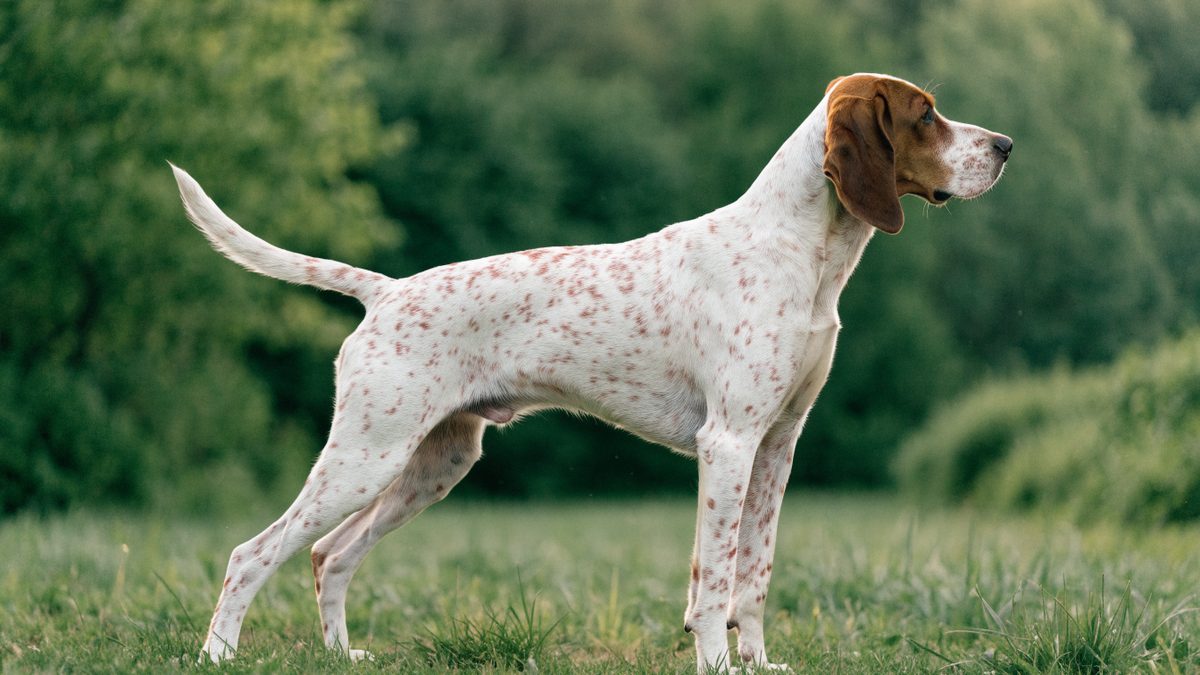
Quick answer
The American English Coonhound is a large American scenthound bred to trail a raccoon at speed and then bay at the tree until the hunter arrives, and that voice is the working purpose rather than a side effect. It is not sold in India, no FCI listing exists, and Bonbeno rates it 2 of 5 for heat tolerance because exertion, not weather, triggers most canine heat illness.
This guide is general information for Indian pet owners and is not a diagnosis. Always consult your nearby registered veterinarian before acting on anything you read here, and treat any sudden change in your dog's condition as urgent.
American English Coonhound at a glance
What the American English Coonhound actually is
The American English Coonhound is a large, racy, short-coated American scenthound built to trail a raccoon at speed through the dark and then bay at the base of the tree until the hunter arrives. It stands 24 to 26 inches at the withers for males and 23 to 25 inches for females, weighs 45 to 65 pounds, and the American Kennel Club gives its life expectancy as 11 to 12 years.
Start with the job, because every other trait on this page follows from it. The AKC describes the breed as working dusk to dawn in pursuit of the raccoon, and the same page warns that its work drive, its energy, the patience needed to train it for anything other than coon hunting, and its loud, ringing bark can make it a bad fit as a house pet for novice owners. That is the registry's own summary, written for an American audience with woods to hunt in. Read it in an Indian apartment block and it reads as a warning.
The AKC breed standard, approved in April 2009 and effective from 1 January 2010, describes a balanced, powerful dog with no exaggerated parts that possesses the grace and attitude of a well-conditioned athlete, with a deep chest carrying plenty of lung room and weight in proportion to height so the dog appears capable of an all night hunt. Coat is hard, protective hair of medium length. Colour is red and white ticked, blue and white ticked, tri-coloured with ticking, red and white, or white and black. Tri-colour with no ticking, any solid colour with less than 10 percent ticking, and any brindle are all disqualifications.
Two registries, two standards, two names
The United Kennel Club registers the same dog as the English Coonhound, and its standard was last revised on 1 January 2016. The two documents do not agree on size. The AKC allows males 24 to 26 inches and females 23 to 25. The UKC allows adult males 22 to 27 inches and females 21 to 25, and treats anything outside those figures as an eliminating fault. A dog that is a correct 22 inch UKC male is two inches under the AKC minimum. That is a five inch spread across one breed depending on which registry you read, and no Indian page mentions it.
| Point | AKC, Official Standard, effective 1 January 2010 | UKC, English Coonhound, revised 1 January 2016 |
|---|---|---|
| Registered name | American English Coonhound | English Coonhound |
| Group | Hound Group | Scenthound Group |
| Height, male | 24 to 26 inches | 22 to 27 inches |
| Height, female | 23 to 25 inches | 21 to 25 inches |
| Weight | In proportion to height, capable of an all night hunt | In proportion to height, no figure given |
| Coat | Hard, protective hair, medium length | Good hard, protective, hound type coat of medium length |
| Voice | Not mentioned anywhere in the standard | Voice is a good hound bawl |
| Temperament | Pleasant, alert, confident and sociable with humans and dogs. An avid hunter | Pleasant and sociable, with strong hunting instincts |
The row that matters is the voice row. The AKC conformation standard, which judges a dog standing still in a ring, never mentions voice at all. The UKC standard, written by the registry that runs the hunts, puts it in the Characteristics clause in seven words: Voice is a good hound bawl. A buyer reading only the show standard would never learn that the breed has a required sound.
Where the breed came from
The UKC first registered these dogs in 1905 under the name English Fox and Coonhound, because at the time they were used far more on fox than they are today, and because the name reflected how similar the breed was to the American Foxhound and the English Foxhound. That single sentence explains most of the confusion this page exists to clear up. The registry itself named the breed after the two foxhounds it resembled.
The line runs back to English imports. Robert Brooke brought a pack of hounds to America in 1650, Thomas Walker of Virginia imported hounds from England in 1742, and in 1770 George Washington had hounds imported from England. Those dogs founded the Virginia Hounds, from which the present day English Coonhound was developed, and American breeders then adapted them to rougher terrain and to American game including raccoon, opossum, cougar and bear. With the single exception of the Plott, every UKC coonhound breed traces to the English Foxhound.
The breed also gave rise to others. Both the Treeing Walker and the Bluetick were originally registered with the UKC as English hounds. The Walker was recognised as a separate breed in 1945 and the Bluetick a year later, and redticked dogs dominate what is left of the English Coonhound today. The AKC recognised the breed in 2011, a century and six years after the UKC first put it on a register.
American, English, Coonhound. Three words, three different claims. American by birth, English by ancestry, and named for the animal it was bred to tree. The AKC states the first two plainly on its own breed page, and the UKC history explains the third United Kennel Club.
For scale, this is a bigger and far more athletic animal than the two scenthounds an Indian buyer will actually have met. Bonbeno's Beagle guide covers a 13 to 15 inch hound and the Basset Hound guide covers a heavy, short-legged one. The American English Coonhound is closer in build to a Greyhound crossed with a working foxhound: long-legged, deep through the chest, and made to keep moving all night.
The voice is the job, not a side effect
Voice is the working purpose of this breed. A coonhound is paid, in the literal scoring sense, for making noise at the right moment, and the AKC's own Coonhound Regulations set out the tariff: 100 points for the dog declared struck first and 125 points for the dog declared treed first. A dog that trails a raccoon perfectly in silence scores nothing at all.
Every ranking page treats barking as a training topic. It is not. It is the specification. Read the AKC Nite Hunt scoring system and the point becomes impossible to miss.
| Call | First dog | Second | Third | Fourth |
|---|---|---|---|---|
| Strike points, awarded when the handler calls the dog struck on a trail | 100 | 75 | 50 | 25 |
| Tree points, awarded when the handler calls the dog treed | 125 | 75 | 50 | 25 |
Two details in that chapter matter more than the numbers. First, the regulations state that fifty strike points will be recorded for dogs barking at the time the one minute rule expires, which means the judge is timing the sound itself. Second, a dog declared treed after five minutes still receives the full 125 tree points, so the sport actively rewards a hound that keeps sounding off at a tree long after the others have finished.
The other coonhound events say the same thing in plainer words. In an AKC field trial, to be a tree winner the dog must show interest in the treed game, bark to the Judges satisfaction and be within the tree circle. In a water race, the first dog into the 25 foot home tree circle barking to the satisfaction of the Tree Judges is declared Tree Winner. Three different competitions, three different formats, one common requirement.
The registries define the whole type by the sound
The UKC does not classify this dog as a hound that happens to bark. It classifies it as a Tree Hound, and defines the type this way: as the Tree Hounds evolved from the earlier Trailing Hound breeds, the dogs developed the ability to drive game up a tree, alert the hunter with a distinctive bark, and hold the game in the tree until the hunter arrived. The same page notes that many Trailing Hounds are famous for the baying sounds they make when hunting. The AKC's coonhound article describes the finished behaviour: trained not to attack, the hounds press their front legs onto the tree trunk and sound out distinctive baying and howling until the hunter arrives.
Read the word *until*. The bay is not a bark at a stimulus. It is a sustained signal held for as long as it takes a human being to walk through woods in the dark and reach the tree. That is minutes, and often many of them. A dog selected for centuries to do that does not have a barking problem. It has a barking specification, and the AKC's breed page rates barking level on a scale that runs from Only To Alert to Very Vocal.
How loud, in numbers
The best measured figures come from kennel acoustics rather than from any breed. Monitoring sound pressure levels over 24 and 48 hour periods across shelters, training establishments and research kennels, researchers found that during the day peak levels regularly exceeded 100 dB and often reached 125 dB, with equivalent continuous levels between 65 and 100 dB, and they attributed the high levels mainly to barking. Those are group figures from kennels, not a single-dog measurement, and Bonbeno will not pretend otherwise. They do establish the order of magnitude a hound's voice occupies.
Set that against the Indian standard. The Schedule to the Noise Pollution (Regulation and Control) Rules, 2000 sets ambient limits of 55 dB(A) Leq by day and 45 dB(A) Leq at night in a residential area, and 50 by day and 40 at night in a silence zone, with night time defined as 10 p.m. to 6 a.m.. A person may complain to the authority if the noise level exceeds the ambient standard by 10 dB(A) or more, and the authority means a District Magistrate, a Police Commissioner, or an officer not below the rank of Deputy Superintendent of Police.
The 2000 Rules are not a dog-barking law and Bonbeno will not present them as one. They regulate loudspeakers, public address systems, horns, sound emitting fire crackers and construction equipment, and they set area standards rather than a limit on any one household source. A barking dog is nowhere named in them. What the Rules do give a neighbour is a documented ambient benchmark, a night-time window, and a named official to complain to, and in a dense Indian society that is usually enough for a complaint to be taken seriously. Treat the numbers as the yardstick your neighbours will reach for, not as a statute about your dog.
What this means for apartment living in India
Apartment living is where this breed's specification collides hardest with Indian housing. Three things stack.
- The dog works at night. The AKC describes the breed as working dusk to dawn. The Indian residential standard is at its strictest, 45 dB(A) Leq, in exactly that window.
- Indian flats share walls, shafts and open balconies. A sound designed to carry across woodland does not stay inside a 2 BHK.
- The trigger set in a city is enormous. Lift doors, delivery riders, watchmen, street dogs, two-wheeler horns and monkeys all sit inside a hound's alert range, and every one of them is a reason to open up.
What you can change is the trigger load and the outlet. What you cannot change is the sound itself. Managing a coonhound in a flat means blackout of visual triggers at the balcony line, a hard rule against leaving the dog alone for long stretches, daily scent work that gives the nose a legitimate job, and an honest conversation with the people on either side of your wall before the puppy arrives rather than after the first complaint. Bonbeno does not recommend debarking surgery or aversive anti-bark collars, and no responsible source treats either as a substitute for meeting the dog's needs.
If the sound is the deal-breaker, the answer is a different breed, and the honest place to look is Bonbeno's Indian Pariah Dog guide or the Beagle guide, which covers a smaller pack hound with a considerably smaller voice and an actual Indian supply of dogs needing homes.
Which registries recognise it, and which do not
Breed recognition for the American English Coonhound is American and only American. The AKC recognises it, the UKC registers it under a different name, and it appears nowhere in the Federation Cynologique Internationale nomenclature or in the Royal Kennel Club's hound list. Because the Kennel Club of India is an FCI member whose registration statistics the FCI publishes, that absence is what closes the KCI route Federation Cynologique Internationale.
Secondary sources conflate the coonhounds constantly, and the reason is that the two American registries that do recognise them disagree about how many there are and what to call them. Start with the count.
There are six AKC coonhound breeds
The AKC Coonhound Regulations settle it in a list. Under Chapter 3, Eligibility of Dogs for Entry, the rulebook states that the AKC recognizes the following breeds as eligible Coonhounds: Black and Tan Coonhound, Bluetick Coonhound, American English Coonhound, Plott, Redbone Coonhound, Treeing Walker Coonhound. Six, named in the registry's own regulations. The AKC's editorial coverage says the same, adds the recognition year for each, and notes that a seventh, the American Leopard Hound, sits in the Foundation Stock Service and does not yet have full recognition.
| Breed | AKC recognition | Note |
|---|---|---|
| Black and Tan Coonhound | 1945 | The first coonhound breed registered by the AKC, and the only coonhound with FCI and Royal Kennel Club recognition |
| Plott Hound | 2006 | The one coonhound whose ancestry does not run back to the English Foxhound |
| Bluetick Coonhound | 2009 | Originally registered by the UKC as an English hound, split off a year after the Treeing Walker |
| Redbone Coonhound | 2009 | Solid mahogany, no ticking |
| American English Coonhound | 2011 | This breed. Registered by the UKC since 1905 as the English Fox and Coonhound |
| Treeing Walker Coonhound | 2012 | Also originally registered by the UKC as an English hound, recognised separately in 1945 |
The UKC says seven in one paragraph and six in the next
This is not a secondary-source error. It is on the United Kennel Club's own Breed Group Designations page. Describing its Group 2 Scenthound, the page says Included in this group are the seven Coonhound breeds and the four Cur breeds, and then two paragraphs later says that as coon hunters became competition hunters, the traits of the six individual Coonhound breeds became more distinct. Seven, then six, on one page, on the registry's site. If a blog cannot keep the coonhounds straight, this is a large part of why.
The UKC also uses a different name. It registers this breed as the English Coonhound, first registered in 1905 as the English Fox and Coonhound. The AKC calls it the American English Coonhound. The OFA, which keeps its own breed table, carries the code AEC for AMERICAN ENGLISH COONHOUND and records only one group affiliation for it, AKC Hound Group, while for the Black and Tan it records both the AKC Hound Group and the UKC Scenthound Group under the name American Black and Tan Coonhound. Three institutions, three slightly different renderings of one dog.
The FCI lists exactly one coonhound, and it is not this one
Bonbeno read the full FCI Group 6 nomenclature, Scent hounds and related breeds, section by section. The only coonhound in it is the Black and Tan Coonhound, FCI number 300, filed under United States of America in the large-sized hounds subsection. Its breed record shows acceptance on a definitive basis on 10 July 1945 and the current standard published on 30 January 1991. There is no American English Coonhound, no Bluetick, no Redbone, no Plott and no Treeing Walker anywhere in the nomenclature.
The FCI does list both foxhounds. The American Foxhound is number 303 and the English Foxhound is number 159, both in the same Group 6. So a reader who assumes that an American scenthound with an English name must have an FCI file is reasoning from the foxhounds, and is wrong for this breed.
The Royal Kennel Club tells the same story from Britain. Its Hound group breed list carries exactly one coonhound, Black & Tan Coonhound (Imp), and its published breed standards index carries the same single entry. The American English Coonhound is not in either.
| Registry | Status | Name used | Group |
|---|---|---|---|
| American Kennel Club | Recognised, 2011 | American English Coonhound | Hound Group |
| United Kennel Club | Registered since 1905 | English Coonhound | Scenthound Group, Tree Hound type |
| Federation Cynologique Internationale | Not listed at all | Not applicable | Not applicable |
| The Royal Kennel Club | Not listed | Not applicable | Not applicable |
| Kennel Club of India | No route, because KCI is an FCI member and the breed is absent from FCI nomenclature | Not applicable | Not applicable |
| Orthopedic Foundation for Animals | Breed code AEC exists, no published ranking-table entry | American English Coonhound | AKC Hound Group |
How rare is it really, in AKC's own numbers
Do not settle for the word rare. The AKC publishes a popularity ranking on every breed page, built from that year's registration statistics, and on 19 August 2026 the American English Coonhound page showed 182 of 210. That is low but it is not vanishing, and it is a real position rather than an adjective.
The sharper number is the AKC's Low Entry Breeds List, the document that governs how conformation judges qualify for additional breeds. The 2026 list, effective 1 March 2026, carries the American English Coonhound, and it also carries the Black and Tan Coonhound, the Bluetick Coonhound, the Plott Hound, the Redbone Coonhound and the Treeing Walker Coonhound, plus the American Foxhound and the English Foxhound. Every single coonhound breed and both foxhounds are low entry. This is not one unlucky breed. The entire American scenthound block draws almost no show entries, which is what you would expect of dogs whose owners compete in the woods at night instead.
How to tell it apart from the two foxhounds
Confusing this breed with the foxhounds is the single most common error in secondary coverage, and the AKC's own breed page commits a version of it. In the Nutrition section of the American English Coonhound page, the text opens The American English Foxhound should do well on a high-quality dog food, a breed name that does not exist. Bonbeno records that because it shows how easily even the registry slips.
| Point | American English Coonhound | American Foxhound | English Foxhound |
|---|---|---|---|
| AKC recognition | 2011 | 1886 | 1909 |
| Height | 24 to 26 in male, 23 to 25 in female | 22 to 25 in male, 21 to 24 in female | 24 inches |
| Weight | 45 to 65 lb | 65 to 70 lb male, 60 to 65 lb female | 60 to 75 lb |
| Life expectancy | 11 to 12 years | 11 to 13 years | 10 to 13 years |
| FCI listing | None | Number 303 | Number 159 |
| Royal Kennel Club | Not listed | Not listed | Listed as Foxhound |
| AKC popularity rank | 182 of 210 | 188 of 210 | 187 of 210 |
| Bred to | Trail and tree raccoon, then bay at the tree | Trail fox in a pack | Trail fox in a large mounted pack |
The functional difference is the tree. A foxhound runs a fox and keeps running. A coonhound runs a raccoon, watches it climb, stops at the trunk and holds it there with its voice until a human arrives American Kennel Club. That final behaviour, the stationary sustained bay, is the one no foxhound was selected for, and it is the one that matters most in an Indian flat.
American English Coonhound price in India
There is no American English Coonhound price in India, because there is no Indian market for the breed and no lawful way for one to form. Indian import policy makes dogs a Restricted item and bars commercial and breeding imports outright, and the breed has no FCI listing, which closes the Kennel Club of India pedigree route as well Federation Cynologique Internationale. Bonbeno found no published Indian price band for this breed from any source, and will not borrow one from a related hound.
Say the honest thing first and then evidence it. Three separate checks all return the same answer.
Check one, the import rules
Directorate General of Foreign Trade Trade Notice No. 22/2022-23, dated 19 December 2022, sets out the import policy for pet animals. Under ITC (HS) 01061900, other mammals, the import policy is Restricted, subject to Policy Condition 6 of the chapter. Policy Condition 7 then limits dog imports to three purposes and no others.
- A pet dog with a valid pet book and relevant records or documents in the name of the importer.
- Dogs imported by R&D organisations for conducting research, with the recommendation of the CPCSEA.
- Dogs for internal security by the Defence and Police Force.
Policy Condition 8 closes the door on the fourth possibility. Import of commercial dogs for breeding or any other commercial activities other than the purposes mentioned above is not permitted. Paragraph 6 of the same notice repeats it as an instruction to officials: any applications for trading or breeding purposes, or applications made on behalf of some other person or entity, shall be duly rejected.
Two more operational limits are worth knowing. Import of pet animals is allowed only through the airports and seaports of Delhi, Mumbai, Chennai, Hyderabad, Bengaluru and Kolkata and, since October 2024, Kochi airport, with quarantine at the government station of those ports where required, and applicants are advised to start the authorisation process at least two months before travel. An advance No Objection Certificate from the Regional or Quarantine Officer of the AQCS must be obtained seven days before the date of travel, relaxable up to three days. The full route is set out in how to import a dog to India.
A returning resident may bring their own coonhound to India on a valid pet book in their own name. Nobody may import one to sell, and nobody may import a pair to breed. Because there is no breeding stock in the country and no lawful way to establish any, no Indian supply chain can form, so no Indian price can exist. Anyone offering to arrange a commercial import is describing something the notice says shall be duly rejected.
Check two, the pedigree route
The Kennel Club of India is a Federation Cynologique Internationale member, and the FCI publishes its annual registration statistics: 32,219 puppies and 33,880 pure-bred dogs registered with the studbook in 2025, down from a peak of 89,571 pure-bred dogs in 2021. Those registrations run on FCI nomenclature, and the American English Coonhound is not in it. The only coonhound the FCI recognises anywhere is the Black and Tan. There is therefore no breed standard for a KCI judge to apply and no studbook column for the breed to sit in.
Check three, what the Indian search results actually contain
Bonbeno opened the page-one results for this query in India on 19 August 2026 and read each one. None of them sells this breed.
| Result | What it claims | What is actually on the page |
|---|---|---|
| Mr n Mrs Pet, Coonhound Puppies For Sale, positions 1 and 10 | KCI registered Coonhound puppies for sale in India at affordable prices | A generic template. The puppy cards rendered on the page on the day of the pull were a French Bulldog, a Bernese Mountain Dog and a second French Bulldog. No coonhound of any breed, and no distinction between the six coonhound breeds |
| Justdial, position 2 | Top Pet Shops For American English Coonhound Dog in Ludhiana | An auto-generated category page, ncatid 12092100, listing ordinary local pet shops and a Heads Up For Tails retail outlet. Its own meta description cross-sells Pet Shops For Labrador Dog |
| Supertails, position 8 | Dog Price List in India: Top 40 Breeds | India's most-cited dog price list. It carries Labrador, German Shepherd, Golden Retriever, Beagle, Pug, Shih Tzu, Rottweiler, Husky, Boxer, Doberman, Great Dane, Dachshund, Indian Spitz, Indian Pariah and Mudhol Hound. It carries no coonhound at all |
| AKC, position 4 | The registry breed page | Real, authoritative, and written for an American buyer. It carries no Indian price and never claims to |
| Etsy, Amazon.in, YouTube, Quora, positions 3, 5, 6, 7 | Assorted | Coonhound artwork, a print-on-demand book, a video, and a Quora thread about the Redbone Coonhound, which is a different breed |
So the answer to what does an American English Coonhound cost in India is not a number and not a range. It is that the top-ranked seller does not have one, the second result is an automated directory page, and the country's most-quoted price list has never heard of the breed.
What Bonbeno will not do
Bonbeno will not publish a plausible-looking figure by scaling the Beagle or Basset Hound bands up for size. Those breeds have real Indian markets, real published bands from multiple sellers, and real disagreement between those sellers, and a page that borrowed their arithmetic would be inventing a market that does not exist. Where a figure does not exist, the useful thing a reference can do is say so and explain why.
Your route is the pet-book route, not a purchase. Start the DGFT import authorisation at least two months before you fly, plan for one of the six ports the DGFT notice names, and arrange the AQCS advance NOC in the seven-day window before travel. A pet arriving under the baggage rules can also land at Kochi since October 2024. That is the only lawful way an American English Coonhound arrives in India, and it is a relocation, not a transaction.
What it costs to keep one in India, if one is here
Keeping a 20 to 29 kg hound in an Indian city costs what any large breed costs, and India's most-cited price guide puts the large-breed monthly total at Rs 8,000 to Rs 14,000 in 2026. This breed then adds three line items that guide does not carry, because they exist only for a dog bred to work independently and to sound off while it does.
No Indian source publishes a cost of ownership for this breed specifically, and none can, because no Indian owner base exists to survey. What follows is the honest construction: the published Indian large-breed structure, plus the additions this particular dog forces.
The published Indian large-breed baseline
Supertails compiles monthly costs by breed size from breeder networks, KCI registration data and online marketplace surveys conducted in the first quarter of 2026, and its large-breed column uses the Labrador, German Shepherd and Golden Retriever as its examples. An American English Coonhound sits in that weight class, so the column applies to feeding and routine care even though the breed itself is absent from the guide's 40-plus breed price table.
| Line item | Published large-breed figure | Does it apply to this breed |
|---|---|---|
| Dry and wet food | Rs 4,000 to Rs 6,000 per month | Yes, and at the upper end for a lean working-line dog that is actually exercised |
| Routine vet visits | Rs 1,000 to Rs 2,000 per month | Yes |
| Vaccinations | Rs 1,800 per year | Yes |
| Grooming | Rs 500 to Rs 1,200 per month | Lower end. A short hard coat needs a rubber mitt, not a salon |
| Training, six months | Rs 3,000 to Rs 8,000 | Upper end at minimum. The AKC says the patience it takes to train them for anything other than coon hunting makes them a breed for experienced owners |
| Treats and toys | Rs 600 to Rs 1,200 per month | Yes, and treats are training currency for a food-motivated hound |
| Flea, tick and deworming | Rs 500 to Rs 800 per month | Yes, and non-negotiable in Indian conditions |
| Published monthly total | Rs 8,000 to Rs 14,000 | This is the floor, not the number |
The three additions nobody costs
Each of these is a direct consequence of the breed's job description rather than a nice-to-have.
- Containment. The AKC states the breed should never be allowed off leash in an uncontrolled situation, because it will not resist the instinct to follow an interesting scent, and that it requires a fenced area where it can run freely. In an Indian city that means a genuinely secure boundary at ground level as well as at height, a long line for every walk, and a harness the dog cannot back out of. Budget it once, properly, rather than after the first escape.
- A real exercise outlet. A dog described by its own registry as an ideal companion for an active runner, biker or hiker, needing a lot of exercise to stay healthy and happy, is not going to be satisfied by two society-compound laps. In an Indian summer that outlet has to be bought in early mornings, late nights, or indoor scent work.
- The neighbour cost. This is the one Indian owners find out about late. A hound doing its job at 11 p.m. in a residential zone is operating against a 45 dB(A) Leq night-time ambient standard and a documented complaint route to a District Magistrate or a Police Commissioner. The cost is not usually a fine. It is mediation, goodwill, and sometimes moving house.
Supertails advises budgeting at least Rs 80,000 to Rs 2,00,000 for a first year in India including purchase, vaccinations, food, training and supplies. For this breed strip the purchase line out entirely, because there is nothing lawful to purchase, and move the money to training and containment instead. That reallocation is the single most useful cost decision on this page.
One structural point on food. This is a lean athlete with a deep chest, and the AKC notes that coonhounds are prone to getting overweight as they age, so calorie discipline matters more than brand choice. Feeding is covered in full further down, including why the bowl height question has a real answer backed by a cohort study.
Heat tolerance in India, rated 2 of 5
Bonbeno rates the American English Coonhound 2 of 5 for heat tolerance in Indian conditions, and the two halves of that score point in opposite directions. The anatomy is genuinely good: a lean, short-coated, deep-chested, normal-muzzled athlete is on the right side of the single biggest measured risk factor for heat-related illness. The behaviour is the problem, because the largest primary-care study of the condition found that exertion, not weather, triggered 74.2 percent of events, and this breed exists to work for hours.
The half that is in the breed's favour
Start with what the evidence actually blames. Reviewing the de-identified records of 905,543 dogs under UK primary veterinary care in 2016, researchers identified 1,259 heat-related illness events in 1,222 dogs, and found that brachycephalic dogs had greater odds of all three types of heat-related illness compared with mesocephalic dogs. The companion incidence paper found the same pattern from the other direction: five of the nine breeds with significantly increased odds were brachycephalic, and a brachycephalic skull shape was a significant risk factor in multivariable analysis.
This breed is the opposite of that. The AKC standard asks for a muzzle that is rather square and well proportioned in width with the skull, a chest that reaches to the elbow and shows considerable depth allowing optimum lung space, and a coat of hard protective hair of medium length. There is no shortened airway, no heavy undercoat and no exaggeration anywhere in the document. On the axis where Bonbeno rates the Pug and the Bulldog at the bottom of the scale, this dog scores well.
There is a second, less obvious advantage. This breed works at night by design, and the AKC describes it as working dusk to dawn. An Indian owner exercising a coonhound at 5 a.m. and 10 p.m. is not fighting the dog's biology, they are using it. Very few imported breeds in Bonbeno's roster get that for free.
The half that pulls the score down
Here is the finding that decides the rating, and no breed page anywhere carries it. In the incidence study's final multivariable model, nine breeds had higher odds of heat-related illness than the Labrador Retriever: Chow Chow, Bulldog, French Bulldog, Dogue de Bordeaux, Greyhound, Cavalier King Charles Spaniel, Pug, English Springer Spaniel and Golden Retriever. Eight of those are the dogs you would predict. The ninth is a lean, short-coated, deep-chested, normal-muzzled running hound, which is to say the closest thing in the list to the breed on this page. Anatomy did not protect the Greyhound. Running did the damage.
Now the dominant risk. In the same VetCompass dataset, exertional heat-related illness was the predominant trigger at 74.2 percent of events, followed by environmental heat at 12.9 percent and vehicular confinement at 5.2 percent. The authors also found the odds of death following exertional heat-related illness were similar to those following the hot-car cases the public actually worries about. Their conclusion is the title of the paper: dogs do not die just in hot cars.
Three further findings stack against this specific animal.
- Young male dogs had greater odds of exertional heat-related illness. A coonhound in work is typically a young dog being asked to run.
- Weight matters, and 10 kg is the threshold. Dogs at or above the mean adult bodyweight for their breed and sex showed increased risk, dogs over 50 kg had the highest odds of all, and every bodyweight group over 10 kg carried significantly higher odds than dogs under 10 kg. The mechanism the authors give is physical: smaller dogs have a higher heat storage to radiative surface area ratio, lose heat faster, and can therefore exercise for longer before overheating. At 45 to 65 pounds, roughly 20 to 29 kg, this breed sits well inside the elevated band.
- The dog will not self-limit. A scenthound on a trail is doing the thing it was bred to keep doing after the handler says stop, which is exactly the behaviour that produces an exertional case. The AKC's own instruction, never off leash in an uncontrolled situation, is a heat-safety instruction as much as a traffic one.
These are UK figures, and the authors say plainly that their model explained very little of the variance, with an R squared of 0.045, suggesting key non-canine factors are missing, notably ambient temperature and the dog's acclimatisation to heat. In other words the UK study cannot be transplanted onto an Indian May. What it does establish, and what transfers, is the ranking of triggers: exertion first, weather second. In India both dials are turned up at once, which is why the score lands at 2 rather than 3.
What an Indian summer actually looks like
Take one ordinary IMD bulletin. On 20 May 2026 the India Meteorological Department reported maximum temperatures in the range of 40 to 47 degrees Celsius over northwest India, west, central and adjoining east and north peninsular India, with the highest maximum of 48.2 degrees Celsius recorded at Banda in Uttar Pradesh the previous day, and warned of heat wave to severe heat wave conditions across Punjab, Haryana, Chandigarh and Delhi, Rajasthan, Madhya Pradesh, both halves of Uttar Pradesh, Vidarbha, Chhattisgarh, Bihar, Odisha, Telangana and coastal Andhra Pradesh.
The same bulletin issued a separate warning class for hot and humid weather conditions over Tamil Nadu, Puducherry and Karaikal, Gangetic West Bengal and Odisha. That distinction is the one Indian owners under-weight. A humid 34 degree day in Chennai is not milder than a dry 42 degree day in Jaipur for a panting dog, because panting is an evaporative system and humidity is what blunts it.
| City band | Summer pattern | Practical verdict for a working hound |
|---|---|---|
| Delhi NCR, Jaipur, Lucknow, Chandigarh, Patna | Heat wave to severe heat wave conditions recurring across the plains, maxima 40 to 47 C | Hardest. From late March to June the dog gets pre-dawn and late-night work only, and nothing that raises core temperature between 9 a.m. and 7 p.m. |
| Chennai, Mumbai, Kolkata, Kochi, Bhubaneswar | Lower peak temperatures, but IMD issues hot and humid warnings as a separate category | Deceptive. Numbers look survivable, evaporative cooling does not work, and the humid window is long rather than seasonal |
| Bengaluru, Pune, Hyderabad plateau | Milder maxima, real diurnal swing | The best mainland fit. Early morning and night work is comfortable for most of the year |
| Shimla, Dehradun, Gangtok, Shillong, Ooty | Cool most of the year | Genuinely suitable on climate alone. Note IMD still recorded heat wave conditions in isolated pockets of Himachal Pradesh, Jammu-Kashmir and Uttarakhand on 20 May 2026 |
The tension no other page names
Here is the awkward part of owning this breed in India, and it follows directly from the two sections above. The only safe hours to exercise a large working hound through an Indian summer are before dawn and after dark. Those are also the hours in which a residential ambient noise standard of 45 dB(A) Leq applies, from 10 p.m. to 6 a.m.. The heat pushes the dog's working day into the night, and the night is when a baying hound is least welcome. Plan for both at once, or the dog gets neither the exercise nor the tolerance it needs.
Practical rules for the hot months are unglamorous and they work. Walk on grass or shaded paving rather than open asphalt, cool the dog with water on the belly and paws rather than ice, carry water on every outing, cut duration before you cut frequency, and treat any dog that stops responding to its name mid-walk as an emergency rather than a training failure. Consult your nearby registered veterinarian before starting any conditioning programme with a dog new to Indian summers.
Temperament and who this breed suits
The American English Coonhound has two settings and both registries describe them. The AKC standard asks for a dog that is pleasant, alert, confident and sociable with humans and dogs, an avid hunter, and lists shyness or timidity as faults. The UKC puts it in six words, pleasant and sociable, with strong hunting instincts, and disqualifies viciousness or extreme shyness.
The AKC's plain-language version is more useful than either standard. Like many hounds, it says, English dogs have a split personality: tenacious, tireless, and stubborn on the trail, but at home these spirited hunters are sweetly amiable companions. Buyers hear the second half and plan for it. The first half is what they actually live with.
It is a pack animal, and that is a logistical fact
The AKC describes an innate desire to be part of a pack, whether human or canine. A dog built to work in a cast of three or four and to live in a kennel run with other hounds does not do well as the only animal in a flat that is empty from nine to seven. In this breed the failure mode of loneliness is not chewing. It is voice, and it carries.
The same trait makes it easy in the places Indian owners often struggle. A dog whose standard demands sociability with other dogs is generally straightforward on a shared society lawn and in a lift, and the standard's fault list works against the fear-based reactivity that produces most apartment incidents United Kennel Club.
The one warning the AKC gives about the puppy
This is specific and no Indian page carries it. The AKC states that following through with proper early socialization is paramount, or your puppy may become possessive over food or toys in your home. Resource guarding is a named, breed-specific risk here, not a generic caution. The remedy is boring and it works: hand-feed part of every meal for the first four months, trade rather than take, and never remove a bowl to prove a point.
Prey drive is the other constant
The AKC calls the prey drive very strong in one place and limitless in another, and says the dog should never be allowed off leash in an uncontrolled situation because it will not be able to resist an interesting scent. In an Indian setting the list of things that trigger it is long: street dogs, community cats, monkeys, squirrels, poultry and goats. A coonhound is not aggressive toward them. It simply commits to the chase and stops hearing you, which is the same problem Bonbeno's Beagle and Basset Hound guides describe, scaled up to a 26 inch dog with real speed.
| Situation | Verdict | Why |
|---|---|---|
| Independent house with a walled ground-level compound | Best available fit in India | The AKC says the breed requires a fenced area where it can run freely |
| High-rise flat, both adults working full time | Not recommended | Pack breed, left alone, with a voice engineered to carry through woodland |
| First dog for a first-time owner | Not recommended | The AKC names the breed as most appropriate for experienced dog owners |
| Home with a runner, cyclist or trekker | Strong fit on exercise | The AKC calls it an ideal candidate as a companion for an active runner, biker or hiker |
| Home with cats, rabbits or poultry | High risk | Limitless prey drive is the registry's own phrase |
| Home with young children | Possible with supervision | The standard demands sociability with humans, and the AKC rates Good With Young Children as a published trait. Size and momentum still argue for supervision American Kennel Club |
This is an affectionate, biddable-at-home, sociable dog that is very easy to like and very hard to place in an Indian metro. The temperament is not the obstacle. The job description is.
How to train an American English Coonhound
To train an American English Coonhound, pay for every behaviour with food, keep sessions short, give the nose a legitimate daily job, and treat off-lead recall as a permanent management problem rather than a training goal. The AKC is blunt about the ceiling: the patience it takes to train them for anything other than coon hunting is one of the three reasons it names the breed as most appropriate for experienced dog owners.
Bonbeno's scenthound guides all reach the same conclusion about recall, and the Beagle and Basset Hound pages set it out: a nose engineered to work a trail independently of a handler outranks a handler's voice. This breed adds a second layer that neither of those has, and it is written into the rulebook of the sport it was made for.
The sport assumes the dog will go out of hearing
Read the AKC Nite Hunt regulations as a description of the working relationship and something clicks. The judge scores the dog by listening to it, not by watching it. The handler does not direct the hound. The handler calls it struck or treed, from sound, and the judge acknowledges the call by repeating the dog's name and the number of points.
Then there are the rules for what happens when the sound stops. Time out may be called when dogs trail out of hearing in different directions and cannot be judged, and when the cast moves out of hearing of a trailing dog the judge goes back to the point the dog was last heard and applies a six minute rule: if the dog is not heard within six minutes, delete strike points and recast dogs. One hour may be used to recover dogs during a time out.
A sport does not write recovery rules unless the dogs routinely leave. This breed was selected, generation after generation, to work far enough away that a human cannot hear it, and to keep working there. That is what an Indian owner is training against, and it is why the answer is a long line rather than a better cue.
The AKC states the breed should never be allowed off leash in an uncontrolled situation, and requires a fenced area for free running. In an Indian city the consequences of ignoring that are traffic, street-dog territory disputes and open asphalt in summer. Use a five to ten metre long line and a harness the dog cannot reverse out of, every single walk, for the dog's whole life. Microchipping is required for every pup sold in India under the 2017 breeding rules and is worth doing regardless.
What actually works
- Pay in food, taken out of the measured daily ration. The breed is food-driven and prone to putting on weight as it ages, so training treats must come out of the bowl rather than on top of it.
- Give the nose a job every day. Scent work is the only activity that satisfies this dog indoors, and it runs in an air-conditioned room during a heatwave. Hide food, then hide a scented article, then build a search pattern.
- Keep sessions to three or four minutes. A hound that has stopped engaging has not been defiant, it has finished.
- Socialise deliberately across the first four months. In India that means lifts, stairwells, watchmen, delivery riders, two-wheeler horns, house help, children, the vet's table and other dogs on a shared landing.
- Train handling before you need it. Ears, feet, mouth and a body-condition check, all paid, all short. It is far cheaper than restraining a 25 kg hound for a tick check later.
What it resists, and what you cannot fix
Repetition-based obedience bores it, harsh handling shuts it down, and no amount of work removes the voice. You can teach an interrupter and reward quiet, you can remove triggers, and you can meet the exercise and scent needs that reduce frustration barking. What you cannot do is train out a bay that a registry lists as a breed characteristic and a rulebook awards 125 points for American Kennel Club. Anyone who tells you otherwise is selling something.
| By when | What is realistic | What is not |
|---|---|---|
| Weeks 8 to 16 | Name response indoors, crate as a rest place, hand-fed meals, tolerating ear and paw handling, first 30 scent games | Reliable recall outdoors. Do not test it |
| Months 4 to 6 | Loose-lead walking on a long line, settle on a mat, a solid trade cue for guarded items | Off-lead anything. The prey drive is arriving, not leaving |
| Months 6 to 12 | Structured nose work, three to four minute obedience sets, calm passage through lifts and stairwells | Silence on demand. Expect the adult voice to appear in this window |
| Year 1 to 2 | Genuine athletic conditioning in cool hours, formal tracking if available, a workable quiet interrupter | A dog you can trust loose in an unfenced Indian park |
| Lifelong | Long line, secure boundary, daily scent job, weight control | Any of the above becoming optional |
Budget for help. The published Indian figure for six months of large-breed training is Rs 3,000 to Rs 8,000, and for this breed that is a floor rather than a plan. Choose a trainer who works with food and management and who can say the word hound without recommending a prong collar.
Daily exercise needs, and what happens without them
The exercise needs of an American English Coonhound are high and no registry publishes a minute figure for the breed. The AKC says it needs a lot of exercise to stay healthy and happy, names the active runner, biker or hiker as its ideal human, and states that it requires a fenced area where it can run freely. Bonbeno will not invent a number that no primary source gives.
What can be anchored is the scale of the original job. The AKC's coonhound event calendar treats a one hour hunt as a distinct short format that has its own spacing rule, which tells you that a standard cast runs considerably longer. The same chapter allows one hour purely to recover dogs during a time out. The dog these rules were written around works most of a night, in cool air, over rough ground.
Nothing in an Indian metro replicates that, and pretending otherwise helps nobody. What works is structure.
A workable Indian week
- Two long outings a day in the cool hours, one before sunrise and one well after dark, on a long line, on grass or shaded paving rather than open asphalt.
- One genuinely hard session a week where the dog runs rather than walks, in a secured space, in winter or in the coolest hours of a hill-station trip. The AKC specifically endorses chasing a ball in a fenced yard as an excellent source of exercise for this breed.
- A scent job every single day, indoors if the weather says so. Twenty minutes of searching tires this dog more than an hour of pavement walking, and it is the only outlet that scales down to a heatwave or a monsoon week.
- A second dog if you can manage it. The AKC describes an innate desire to be part of a pack, whether human or canine, and two hounds exercise each other in ways one cannot.
This is the most common Indian mistake with high-drive imported breeds and it is dangerous here specifically. Exertion triggered 74.2 percent of heat-related illness events in the largest primary-care study of the condition, and young male dogs carried the greatest odds of the exertional form. Adding distance in April to reduce barking is trading a noise problem for a veterinary emergency. Add scent work instead, and consult your nearby registered veterinarian before increasing a young hound's workload in the hot months.
What under-exercise looks like in this breed
It does not look like a bored Labrador. An under-exercised coonhound gets louder, not naughtier, because voice is its default response to arousal. The second symptom is escape. Indian owners of scenthounds consistently report digging out and following a scent away from home, and the AKC's containment instruction exists for exactly that reason. The third is weight, and the AKC notes that coonhounds are prone to getting overweight as they age.
Left long enough, those three compound. A heavy dog is a worse heat risk, because dogs at or above the mean adult bodyweight for their breed and sex carry increased odds of heat-related illness, and a heat-limited dog gets less exercise, and a less-exercised hound is louder. That loop is the real reason this breed fails in Indian flats, and it starts with skipped walks rather than with the dog.
Grooming a short-coated hound in Indian humidity
Grooming this breed is close to the easiest job on this page and the ears are the exception. The AKC's routine is a grooming mitt with rubber nubs or a shedding tool at least weekly, nails trimmed once a month, a bath every four to six weeks, and ears checked weekly and gently cleaned of any excess wax or debris. In a humid Indian city, the ear line of that routine is the one that decides your vet bill.
The coat itself asks for almost nothing. The AKC standard specifies hard, protective hair, medium length, and the UKC calls it a good hard protective hound type coat of the same length. There is no dense insulating undercoat described in either document, which has one important practical consequence: there is nothing to shave. Shaving is not a cooling strategy for this breed because the coat is not what is holding the heat in.
Weekly work with a rubber mitt does two things at once. It lifts the dead hair that would otherwise end up on an Indian sofa, and the AKC notes it distributes skin oils down the hair shaft. Ten minutes a week is genuinely the whole coat job.
The ears are the real task
The AKC standard asks for ears hung rather low, reaching nearly at the end of the nose when drawn out, fine texture, soft to the touch. The UKC standard says the same in different words, set fairly low, fine in texture and soft, fairly long, reaching nearly to the nose when pulled forward. A long, low-set, soft leather lies flat against the canal opening. That is a design choice for scenting, and it is also a design that limits airflow into a warm, moist tube.
No published study reports an ear-disease prevalence for the American English Coonhound. The breed does not appear in the large primary-care datasets that produce those figures, so a percentage for this breed does not exist. What does exist is the anatomy above, the AKC's own instruction to check the ears weekly and to remove excess wax and debris as part of health care rather than grooming, and the fact that Indian monsoon humidity is the aggravating condition every Indian vet already knows. Bonbeno's Basset Hound guide carries the actual prevalence evidence for a pendulous-eared breed, and it is worth reading before you take a long-eared hound into a coastal Indian city. Consult your nearby registered veterinarian at the first sign of head shaking, odour or scratching.
A workable Indian grooming week
| Task | Frequency | Indian note |
|---|---|---|
| Rubber grooming mitt or shedding tool | At least weekly | Do it outdoors or on a balcony. A short hard coat sheds fine, sharp hairs that embed in upholstery |
| Ear check and gentle clean | Weekly | Move to twice weekly through the monsoon and after any swim or heavy rain. Dry the leather and the canal opening, never poke |
| Nail trim | Monthly | A long-lined dog on soft ground wears nails less than a working hound on rock |
| Bath | Every four to six weeks | Dry thoroughly under the ear leathers and in the armpits. A humid flat will not do it for you |
| Tick and flea check | Every walk in season | Published Indian cost for flea and deworming sits at Rs 500 to Rs 800 a month for a large breed |
| Body condition check by hand | Weekly | Ribs easily felt, waist visible from above. The AKC warns coonhounds gain weight with age |
One last point on odour. The AKC notes that regular bathing reduces doggy odour, which is a polite way of saying this is a hound and hounds smell like hounds. In a small, closed, air-conditioned Indian flat that is a real consideration, and it is another argument for the ground-floor house with a compound rather than the eleventh floor.
Health problems, screening and lifespan
Health problems in the American English Coonhound are documented far less than in any breed an Indian buyer has met, and the most useful thing this page can do is say exactly where the data stops. The AKC gives a lifespan of 11 to 12 years and calls the breed generally healthy. Beyond that there is no cohort study, no CHIC panel, no published screening statistics, and no breed-specific prevalence figure for anything.
What the parent breed club recommends: nothing
This is unusual enough to state on its own. Every AKC breed page carries a block headed Recommended Health Tests From the National Breed Club. On the American English Coonhound page, the entire content of that block is No recommended health tests. For comparison, most large AKC breeds list hip evaluation, elbow evaluation, an ophthalmologist examination and a cardiac exam.
The Orthopedic Foundation for Animals agrees by omission. Its CHIC programs browse-by-breed filter lists every breed with a Canine Health Information Center programme, and Bonbeno searched the rendered filter markup on 19 August 2026: it contains Basset Hound, Beagle, Basset Fauve de Bretagne, Petit Basset Griffon Vendeen and Grand Basset Griffon Vendeen, and it contains no coonhound of any kind. Not this breed, not the Black and Tan, not one of the six.
The OFA has a code for the breed and no numbers behind it
Bonbeno read the OFA breed code out of OFA's own search markup rather than guessing it. The code is AEC, recorded against the name AMERICAN ENGLISH COONHOUND and the group AKC Hound Group. Having the correct code, we then searched the fully rendered OFA disease statistics ranking tables for the breed name. The string AMERICAN ENGLISH appears zero times across the hip, elbow, patella, cardiac, eye and thyroid ranking tables, while BLACK AND TAN COONHOUND, BLUETICK COONHOUND and REDBONE COONHOUND all appear repeatedly.
It does not mean the breed has good hips. It means too few American English Coonhounds have ever been submitted for OFA evaluation to reach the threshold at which OFA publishes a breed row. A breed with no screening data is not a healthy breed, it is an unmeasured one, and those are different things. Any page that gives you a hip dysplasia percentage for this breed has taken it from somewhere else.
What responsible breeders screen for anyway
The AKC's health guidance for the breed names four things despite the empty club panel. Responsible breeders screen their stock for health conditions such as hip and elbow dysplasia as well as eye disorders such as progressive retinal atrophy and cataracts, ears should be checked regularly to remove excess wax and debris, and like other large and deep-chested breeds the dog can experience bloat, a sudden life-threatening stomach condition whose signs owners should learn.
Bloat is the one with real numbers, and one of them is actionable
Gastric dilatation-volvulus has been studied properly in large and giant breeds even though not in this one. A five-year prospective cohort of 1,637 dogs aged six months or older found a cumulative incidence of GDV of 6 percent across the study, with risk rising with increasing age, with having a first-degree relative with a history of GDV, with a faster speed of eating, and with having a raised feeding bowl. Approximately 20 percent of GDV cases among the large breeds and 52 percent among the giant breeds were attributed to the raised feed bowl.
The cohort covered Akita, Bloodhound, Collie, Great Dane, Irish Setter, Irish Wolfhound, Newfoundland, Rottweiler, Saint Bernard, Standard Poodle and Weimaraner. No coonhound is in it, so the incidence figure is not this breed's incidence figure. The risk factors, however, are anatomical and behavioural rather than breed-specific, and one of them is a decision you make in a shop. Do not buy a raised bowl for a deep-chested hound. Feed on the floor, slow the eating with a puzzle bowl or a scattered meal, and split the daily ration into two or three feeds.
Coonhound paralysis, and why the Indian picture is different
The breed lent its name to a real neurological disease. Acute idiopathic polyradiculoneuritis causes inflammation of the peripheral nerves, and the Merck Veterinary Manual records that signs often develop 7 to 14 days after a raccoon bite or scratch, leading to the name of Coonhound paralysis. The hind legs become weak and within 24 to 48 hours the signs progress to partial or full paralysis in all legs, muscle wasting is typically severe within two weeks, and there is no effective treatment other than nursing care. Most affected animals begin to improve within three weeks with complete recovery by two to six months, although death can occur from respiratory paralysis, and relapses are seen especially in hunting dogs that frequently encounter raccoons.
Now the Indian part. The IUCN Red List assessment for Procyon lotor, the northern raccoon, lists its native extant range as Belize, Canada, Costa Rica, El Salvador, Guatemala, Honduras, Mexico, Nicaragua, Panama and the United States, and its established introduced range as 23 countries including Germany, Japan, the Russian Federation, Georgia, Azerbaijan and Uzbekistan. India appears in neither list. The eponymous trigger for this disease is therefore not available in India.
The Merck entry is explicit that not all affected animals have been exposed to raccoons, and that a similar syndrome can develop in dogs within one to two weeks of a vaccination. So the honest statement is narrow: an Indian coonhound cannot acquire the raccoon-bite form of the disease, because there is no raccoon population here to bite it. The syndrome itself is not raccoon-exclusive and remains possible. If your dog develops sudden hind-limb weakness that ascends over a day or two, treat it as an emergency and get to your nearby registered veterinarian immediately.
Lifespan, and why there is no better figure
The AKC gives 11 to 12 years. That is a breed-club derived estimate, not a survival analysis, and Bonbeno could find no cohort study reporting age at death for this breed. The reason is structural rather than accidental: American pack and working hounds are largely absent from the big companion-dog datasets. The VetCompass heat studies drew on 905,543 UK dogs under primary veterinary care and reported by breed, and coonhounds do not feature in their breed tables. The GDV cohort named its eleven breeds and none was a coonhound. A breed that lives in rural American kennels and is registered mainly for hunting competition does not show up in urban primary-care records anywhere.
| Question | Best available answer | Evidence status |
|---|---|---|
| Lifespan | 11 to 12 years | AKC breed page figure, not a survival study |
| Parent club health panel | No recommended health tests | Stated on the AKC breed page |
| CHIC programme | None for any coonhound breed | OFA CHIC browse-by-breed filter, checked 19 August 2026 |
| Hip dysplasia rate | Unknown | Breed absent from all OFA published ranking tables despite having breed code AEC Orthopedic Foundation for Animals |
| Elbow, patella, cardiac, eye, thyroid rates | Unknown | Same absence |
| Ear disease prevalence | Unknown | No study reports it for this breed |
| Bloat risk | Elevated by anatomy, no breed figure | AKC warning plus a large-breed cohort that did not include coonhounds Glickman LT, Glickman NW, Schellenberg DB |
| Coonhound paralysis, raccoon-bite form | Not possible in India | No native or established introduced raccoon population in India |
| Heat-related illness risk | Elevated by workload, not by anatomy | Exertion triggered 74.2 percent of events in the largest primary-care study |
Three times, plainly, because it is the most important thing on this page for a buyer: there is no lifespan study for this breed, there is no screening dataset for this breed, and there is no published Indian health data for this breed. Everything above is either the registry's own guidance or evidence from other breeds that applies for anatomical reasons. Treat this section as a checklist to take to your vet, not as a diagnosis, and always consult your nearby registered veterinarian before acting on it.
Feeding an American English Coonhound in India
Feed this breed to a visible waistline, off the floor rather than off a stand, in two or three measured meals a day, with training treats taken out of the daily ration rather than added to it. The AKC's guidance is that any diet should be appropriate to the dog's age, that a working dog requires a very different food than one who lives a more sedentary life, and that coonhounds are prone to getting overweight as they age.
That second sentence is the one Indian owners need. A coonhound in an Indian flat is not a working dog. It is a sedentary dog with a working dog's appetite and a working dog's food motivation, and the ration has to be built for the life it is actually living rather than the life the breed was made for.
Bowl height is a real decision, and the evidence points one way
There is one feeding choice on this page with a cohort study behind it. In a five-year prospective study of 1,637 large and giant breed dogs, having a raised feeding bowl was one of four factors significantly associated with increased risk of gastric dilatation-volvulus, alongside increasing age, a first-degree relative with a history of GDV, and a faster speed of eating. Roughly 20 percent of GDV cases among the large breeds in that study were attributed to the raised bowl.
So: floor-level bowl, slow the eating down deliberately, and split the day's food. A puzzle bowl, a snuffle mat or simply scattering half the ration on a clean floor all achieve the same thing, and the scatter option doubles as the daily scent job this breed needs anyway.
A practical Indian feeding frame
| Stage | Meals per day | Focus |
|---|---|---|
| 8 to 16 weeks | Three to four | Large-breed puppy formulation, weighed rather than scooped. Hand-feed a portion daily to build handling tolerance and head off the resource guarding the AKC warns about |
| 4 to 12 months | Three, dropping to two | Steady growth, not fast growth. Keep ribs easy to feel through the whole growth phase |
| 1 to 7 years | Two or three | Adjust to actual activity. A summer week of short walks is a lower-calorie week |
| 7 years onward | Two or three | Senior formulation, and tighter weight control because this is exactly when the AKC says coonhounds gain |
| Any age, hot months | Unchanged | Clean, fresh water available at all times, in more than one bowl, refreshed rather than topped up |
Published Indian food cost for a large breed sits at Rs 4,000 to Rs 6,000 a month in 2026, and total monthly upkeep at Rs 8,000 to Rs 14,000. A lean, genuinely exercised hound will land at the upper end of the food line and the lower end of the grooming line, which roughly cancels out.
Weigh the day's food in the morning, put a third of it in a training pouch, and spend that third on training, scent games and ear handling through the day. It solves three problems at once: it keeps the calories honest, it gives a food-motivated hound a reason to work with you, and it means the daily scent job costs nothing extra. The AKC notes that treats can be an important aid in training but that too many cause obesity, and this is how you get the first without the second.
On home-prepared food, the AKC's position is that it is acceptable with your veterinarian's supervision and approval. Indian households often feed roti, rice and dal alongside commercial food. That is workable when it is planned and calorie-counted, and it fails when it is leftovers on top of a full bowl. Check with your nearby registered veterinarian if you have any concerns about your dog's weight or diet.
The first year, month by month
Plan the first year of an American English Coonhound around three things that arrive on their own schedule: the socialisation window, the prey drive, and the adult voice. Indian law also sets the starting line, because the Prevention of Cruelty to Animals (Dog Breeding and Marketing) Rules, 2017 require that pups less than eight weeks in age are not sold and that each pup sold is micro-chipped with a complete record of treatment and vaccination maintained.
One caveat first, and it is the same one that runs through this page. There is no lawful Indian source for a coonhound puppy, so this timeline is written for the family that has relocated with a dog, or for the small number of Indian readers researching before an international move. The rules cited below still apply to any puppy that changes hands in India.
| Age | What is happening | What you do |
|---|---|---|
| Before 8 weeks | The pup should still be with its litter. Indian rules prohibit sale under eight weeks, and require the breeder to furnish in writing the feeding details, dates of inoculation and de-worming, and the name and address of the attending veterinary practitioner | Collect that paperwork. Verify the microchip number against the written record before money changes hands |
| 8 to 12 weeks | Fear periods, rapid learning, first vaccinations | Hand-feed part of every meal. Start ear, paw and mouth handling, ten seconds at a time, paid. Introduce the crate as a rest place. Begin the first scent games indoors |
| 3 to 4 months | The socialisation window is closing | Front-load Indian city exposure now: lifts, stairwells, watchmen, delivery riders, house help, two-wheeler horns, the vet's table, children, and other dogs on the society lawn. Short, calm, paid, and stopped before the puppy is overwhelmed |
| 4 to 6 months | Prey drive switches on. Growth is fast | Long line becomes permanent. No off-lead work, then or ever, in unfenced space. Keep exercise varied rather than repetitive, and ask your nearby registered veterinarian about appropriate loading for a large-breed skeleton before you start running with the dog |
| 6 to 9 months | Adolescence. Recall collapses in almost every scenthound here | Stop testing recall and start managing it. Increase scent work, hold training sessions to three or four minutes, and keep paying for behaviours you already own |
| 9 to 12 months | The adult voice arrives. The puppy bark and the adult bay are different instruments | Do the neighbour conversation now if you have not already. Build the quiet interrupter, remove balcony sight-lines, and never leave the dog alone long enough for loneliness to become a habit |
| Across the year | One full Indian summer and one full monsoon | A summer puppy needs its exercise moved to pre-dawn and night from March. A monsoon puppy needs its ears checked twice weekly rather than weekly India Meteorological Department |
Three first-year decisions that are hard to undo
- Never take a bowl or a toy away to prove a point. The AKC names possessiveness over food and toys as the specific risk of skipped socialisation in this breed. Trade, always, from week one.
- Never buy the raised bowl. It is the one feeding decision with a cohort study attached, and the study points the wrong way for a deep-chested dog.
- Never let the first off-lead run happen by accident. The AKC's instruction is that the breed should never be off leash in an uncontrolled situation, and a single successful escape teaches the dog that the trail is available.
At twelve months you will have a sociable, affectionate, food-motivated hound that is a pleasure indoors, that has no reliable recall, and that sounds like a coonhound. Two of those three are permanent. Plan the household around them rather than around a training breakthrough that is not coming.
How it compares to the hounds you can actually get
Cross-shopping this breed in India means comparing an unavailable dog with available ones, so the comparison that matters is not which hound is better but which hound is obtainable, and at what cost in voice, heat and containment. Only one coonhound in the world has a route into an FCI country, and it is not this one.
Six breeds sit in this reader's decision set. Two are scenthounds Indians genuinely buy, two are the foxhounds this breed is constantly confused with, one is the coonhound that does have global recognition, and one is the dog most Indian households should probably take home instead.
| Breed | Available in India | Registry reach | Adult size | Voice | Bonbeno heat rating |
|---|---|---|---|---|---|
| American English Coonhound | No lawful route | AKC and UKC only. No FCI, no Royal Kennel Club The Royal Kennel Club, Breeds A to Z | 24 to 26 in, 45 to 65 lb | Sustained bay, the working purpose of the breed | 2 of 5 |
| Beagle | Yes, widely, published band Rs 15,000 to Rs 60,000 | AKC, UKC, FCI number 161, Royal Kennel Club | 13 to 15 in | Loud for its size, considerably smaller instrument | 3 of 5 |
| Basset Hound | Yes, published Indian bands exist | AKC, UKC, FCI number 163, Royal Kennel Club | Similar body weight, on much shorter legs | Deep, carrying, less sustained | 3 of 5 |
| Black and Tan Coonhound | No Indian market, but a theoretical FCI route exists | AKC 1945, FCI number 300 since 10 July 1945, Royal Kennel Club as an imported breed The Royal Kennel Club, Breeds A to Z | 27 in males, 65 to 110 lb | The same tree-hound bay, in a heavier dog | Not rated by Bonbeno |
| American Foxhound | No Indian market | AKC 1886, FCI number 303 Federation Cynologique Internationale | 22 to 25 in, 65 to 70 lb male | Pack cry on the run, no treeing behaviour | Not rated by Bonbeno |
| English Foxhound | No Indian market | AKC 1909, FCI number 159, Royal Kennel Club as Foxhound The Royal Kennel Club, Breeds A to Z | 24 in, 60 to 75 lb | Pack cry on the run, no treeing behaviour | Not rated by Bonbeno |
| Indian Pariah Dog | Yes, free, in every Indian city | No FCI listing, and none needed | Medium, lean and athletic | Normal alert barking | Rated on its own guide |
Against the Beagle, the honest comparison
A Beagle is the same argument at a third of the scale. Both are independent trailing hounds whose recall is a management problem rather than a training milestone, and Bonbeno's scenthound guides say so consistently. The differences that matter for an Indian flat are size, sound and supply. A Beagle stands 13 to 15 inches, carries a published Indian band of Rs 15,000 to Rs 60,000, and has a real rescue population behind it, including laboratory-release dogs. A 26 inch coonhound is more than twice the animal, with a voice engineered to be heard across woodland, and no lawful Indian source at all.
Against the Basset Hound
A Basset Hound is roughly the same weight and a completely different problem. Its risks are structural, concentrated in the ears, eyes and spine, and Bonbeno's guide carries the actual prevalence evidence. This breed's risks are behavioural and environmental: containment, exertional heat and noise. If you want a heavy scenthound in an Indian city and can accept the vet bill, the Basset is at least purchasable. If you want an athletic one, nothing on this list is available to you.
Against the two foxhounds
Registry-wise the foxhounds are better travelled. Both hold FCI numbers and the English Foxhound is listed by the Royal Kennel Club as simply Foxhound The Royal Kennel Club, Breeds A to Z. Functionally they are the same trailing engine without the final behaviour: a foxhound runs, a coonhound runs and then stops and holds with its voice. In a Delhi apartment, that final behaviour is the difference between a dog that is loud on walks and a dog that is loud at the balcony rail for twenty minutes at 11 p.m.
If the appeal is a lean, athletic, sociable, nose-driven dog that suits an active Indian household, the Indian Pariah Dog delivers most of that, costs nothing, is already acclimatised, and is sitting outside your gate. If the appeal is specifically a purebred scenthound with paperwork, the Beagle is the one with a real Indian supply, a real price band and a real rescue route. The American English Coonhound is a genuinely excellent dog that India has no way to give you.
Mistakes Indian buyers make with this breed
Almost nobody in India owns an American English Coonhound, so the mistakes that matter here happen before ownership, at the search-and-purchase stage, and they are all avoidable. Eight recur, and every one of them is visible in the Indian search results for this breed.
- Believing an Indian listing that says Coonhound. The top-ranked Indian result for this query is a page headed Coonhound Puppies For Sale whose own puppy cards, on the day Bonbeno checked, showed a French Bulldog and a Bernese Mountain Dog. If a seller cannot show you which of the six coonhound breeds a dog is, and the parents, and the paperwork, the dog is not one.
- Treating the six coonhounds as one breed. They are six separate AKC breeds recognised across 67 years, from the Black and Tan in 1945 to the Treeing Walker in 2012. Only the Black and Tan has FCI and Royal Kennel Club recognition The Royal Kennel Club, Breeds A to Z. Buying on the word coonhound alone is buying on a category, not a breed.
- Assuming KCI can register one. The Kennel Club of India runs on FCI nomenclature, and the American English Coonhound is not in it. Any Indian pedigree offered for this breed is worth exactly as much scrutiny as that sentence implies.
- Assuming a short coat means heat-tolerant. The anatomy helps, but exertion triggered 74.2 percent of heat-related illness events in the largest primary-care study of the condition, against 12.9 percent for environmental heat. A short-coated dog that runs for two hours in May is at more risk than a fluffy dog asleep under a fan.
- Shaving the coat to cool the dog. There is nothing to shave. Both standards describe a hard protective coat of medium length with no dense undercoat, so clipping removes the sun barrier and gains no cooling.
- Treating the bay as a behaviour problem. It is a breed characteristic in the UKC standard and it is worth up to 225 points a raccoon in the AKC's own rulebook. Reduce triggers, meet the exercise and scent needs, and accept the sound. Do not buy an anti-bark device and expect a different dog.
- Buying the raised bowl. A raised feeding bowl was one of four factors significantly associated with gastric dilatation-volvulus in a five-year prospective cohort of 1,637 large and giant breed dogs. It is the single cheapest mistake to avoid on this page.
- Reading a Beagle's health numbers as this breed's. The Beagle has a large primary-care evidence base and this breed has none. Borrowing across is how a page ends up publishing a hip dysplasia percentage for a breed that appears in no OFA ranking table at all.
A seller offering to import a puppy for you is describing a transaction the Government of India has already ruled on. DGFT Trade Notice 22/2022-23 states that import of commercial dogs for breeding or any other commercial activity is not permitted, and that applications for trading or breeding purposes shall be duly rejected. Money paid against that promise is money paid against a rejected application.
There is a ninth, quieter mistake, and it is the one that hurts the dog rather than the buyer: taking a coonhound to India on a legitimate relocation and then keeping it in a high-rise flat with two working adults. The breed is not being difficult when that arrangement fails. It is doing the job it was bred for, in the only place it has been given to do it.
Adoption and responsible sourcing
There is no American English Coonhound to adopt in India, and that is a finding rather than a gap. Adoption depends on a population, a population depends on a supply chain, and Indian import policy prevents any commercial or breeding supply chain for this breed from forming in the first place. Nothing enters Indian rescue that never entered India.
Where the breed does have a rescue route
In the United States it has a real one. The AKC points owners to more than 450 AKC Rescue Network groups across the country and links a Coonhound Rescue Network page from the breed's own profile. Petfinder, which ranks on page one for this query even in India, exists to move adoptable dogs and frames the whole breed page around adopting rather than buying. If you are reading this from outside India and want this breed, that is your route and it is a good one.
What an Indian reader should adopt instead
Take the trait you actually wanted and match it to a dog that exists here.
- If you wanted a nose. The Indian Pariah Dog is a scent-driven, weather-adapted, medium-sized dog available free in every Indian city, and it will do nose work all day.
- If you wanted a purebred scenthound with papers. The Beagle has a real Indian market, a real published price band and a real rescue pipeline.
- If you wanted an athletic sighthound-shaped dog for a rural or semi-rural home. Bonbeno's Mudhol Hound and Rampur Greyhound guides cover native breeds built for this climate rather than adapted to it.
- If you wanted the voice. Nothing legal in India will give you a coonhound's bay, and Bonbeno is not going to pretend a substitute exists.
If you are relocating to India with your own coonhound
This is the one lawful route and it is a relocation rather than a purchase. Under DGFT Trade Notice 22/2022-23 a pet dog may be imported on a valid pet book and relevant records in the name of the importer, entry is permitted only through the airports and seaports of Delhi, Mumbai, Chennai, Hyderabad, Bangalore and Kolkata, applicants are advised to begin the authorisation process at least two months before travel, and an advance No Objection Certificate must be obtained from the AQCS Regional or Quarantine Officer seven days before the date of travel. DAHD added a seventh port, Cochin International Airport at Kochi, for pets arriving under the baggage rules in October 2024. Plan the housing before you plan the flight.
How to verify any Indian breeder, of any breed
If you ever buy a dog in India, the Prevention of Cruelty to Animals (Dog Breeding and Marketing) Rules, 2017 give you a checklist with legal force behind it. Use it.
| Requirement | The rule | What to ask for |
|---|---|---|
| Registration | No breeder may carry on breeding without a certificate of registration from the State Animal Welfare Board, and the certificate must be prominently displayed in the establishment | Point at the wall. If it is not on it, leave |
| Validity | A certificate is valid for two years and is non-transferable | Check the date and the name against the person selling to you |
| Inspection | A registered establishment shall be inspected at least once each year, and must be kept open for inspection | Ask when the last State Board inspection was |
| Minimum age | Pups less than eight weeks in age are not sold | Ask for the date of birth in writing, not an estimate |
| Microchip | Each pup sold is micro-chipped and a complete record of treatment and vaccination is maintained | Scan the chip yourself and match it to the record |
| Written handover | The breeder shall furnish the purchaser in writing the feeding details, dates of inoculations and de-worming, and the name and address of the attending veterinary practitioner | Take the paper before you take the puppy |
| No public display | Pups are not displayed in public places for the purpose of immediate sale | A puppy in a glass box at a market is evidence of a breach |
| Buyer screening | Every breeder shall screen prospective purchasers to ascertain their potential to care for the breed, especially a large one | A breeder who does not interview you is not complying |
| Unsold pups | Every breeder shall rehabilitate a pup not sold within six months through an Animal Welfare Organisation | Ask what happens to the ones that do not sell |
| Local licence | No establishment shall be granted a licence by the local authority without State Board registration | Registration first, municipal licence second, never the other way round |
The AKC's own coonhound rulebook describes its events as an opportunity to demonstrate the beauty and natural abilities of purebred Coonhounds. That is a sport with a studbook, a judging structure and a century of records behind it. India has none of that for this breed, and no amount of confident marketing on a listing page changes it. Adopt the dog that is here, and read the registry documents before you believe anyone who tells you otherwise.
American English Coonhound questions, answered
Is the American English Coonhound available in India?
No. Indian import policy classifies dogs as Restricted and permits entry only for a pet dog on a valid pet book in the importer's name, for R and D organisations with CPCSEA recommendation, or for Defence and Police use. Import of commercial dogs for breeding or any other commercial activity is not permitted, and applications for trading or breeding purposes shall be duly rejected.
What is the American English Coonhound price in India?
No price exists, because no market exists. Bonbeno found no published Indian price band for this breed from any source. India's most-cited dog price list covers more than 40 breeds and carries no coonhound at all, and the top-ranked Indian listing for the term showed a French Bulldog and a Bernese Mountain Dog on its own puppy cards.
How many coonhound breeds are there?
Six are recognised by the American Kennel Club, named in its Coonhound Regulations: Black and Tan, Bluetick, American English, Plott, Redbone and Treeing Walker. A seventh, the American Leopard Hound, sits in the Foundation Stock Service without full recognition. The United Kennel Club's own group page says seven in one paragraph and six in the next.
Is the American English Coonhound the same as the American Foxhound?
No, they are separate breeds with separate standards and separate registry histories. The AKC recognised the American Foxhound in 1886 and the American English Coonhound in 2011. The foxhound holds FCI number 303 and this breed holds no FCI listing at all. Functionally, a foxhound runs a fox and a coonhound trees a raccoon and bays at it.
Do American English Coonhounds bark a lot?
Yes, and the barking is the working purpose rather than a flaw. The AKC's Nite Hunt scoring awards 100 points to the first dog declared struck and 125 points to the first dog declared treed, so a hound that trails silently scores nothing. The UKC standard states that voice is a good hound bawl.
Can an American English Coonhound live in an apartment in India?
It is a poor fit and the reason is acoustic rather than spatial. The Indian residential ambient noise standard is 55 dB(A) Leq by day and 45 dB(A) Leq at night, a neighbour may complain to a District Magistrate or Police Commissioner if levels exceed the standard by 10 dB(A), and this breed works dusk to dawn.
Can an American English Coonhound handle Indian heat?
Bonbeno rates it 2 of 5 for heat tolerance. The anatomy helps, because it is lean, short-coated and normal-muzzled rather than brachycephalic, but exertion triggered 74.2 percent of heat-related illness events in the largest primary-care study of the condition, against 12.9 percent for environmental heat, and this is a dog bred to work for hours.
Is the American English Coonhound recognised by the Kennel Club of India?
There is no route. The Kennel Club of India is a Federation Cynologique Internationale member whose registrations run on FCI nomenclature, and the only coonhound anywhere in that nomenclature is the Black and Tan Coonhound, number 300. The American English Coonhound is absent, so no KCI breed standard or studbook column exists for it.
How long do American English Coonhounds live?
The AKC gives 11 to 12 years, and that is a breed-club estimate rather than a survival study. No cohort study reports age at death for this breed, because American pack and working hounds are largely absent from the big primary-care datasets that produce lifespan figures for companion breeds.
Can an American English Coonhound be let off the leash?
No. The AKC states the breed should never be allowed off leash in an uncontrolled situation, because it will not be able to resist the instinct to follow an interesting scent, and that it requires a fenced area for free running. The sport it was bred for even has rules for recovering dogs that go out of hearing.
What is coonhound paralysis and can it happen in India?
It is acute idiopathic polyradiculoneuritis, and signs often develop 7 to 14 days after a raccoon bite or scratch. The raccoon-bite route is unavailable in India, because Procyon lotor has neither a native nor an established introduced population here. The syndrome itself is not raccoon-exclusive, and a similar form can follow vaccination.
Is the American English Coonhound rare?
Use the numbers rather than the word. It sits at 182 of 210 on the AKC's own popularity ranking, and it appears on the AKC 2026 Low Entry Breeds List, effective 1 March 2026. So do all five other coonhounds and both foxhounds, which means the whole American scenthound block draws minimal show entries.
Which dogs are best for apartments in India?
Not this one. For an Indian flat the deciding traits are voice, containment need and heat tolerance, and this breed scores badly on all three. A Beagle, an Indian Pariah Dog or a smaller companion breed is a better structural fit, and each of those has a real Indian supply and a real rescue route.
Should I adopt or shop for a dog in India?
For this breed the question does not arise, because there is nothing lawful to shop for and nothing in Indian rescue to adopt. For any dog in India, adoption is the route Bonbeno recommends, and where you do buy, the 2017 breeding rules give you a legal checklist covering registration, minimum age, microchipping and written handover records.
How much does a dog cost per year in India?
India's most-cited price guide puts monthly upkeep at Rs 3,000 to Rs 18,000 depending on breed size and grooming needs, with a large-breed monthly total of Rs 8,000 to Rs 14,000 in 2026, and advises budgeting at least Rs 80,000 to Rs 2,00,000 for a first year including purchase, vaccinations, food, training and supplies.
Does the American English Coonhound need special grooming in India?
The coat needs a rubber grooming mitt weekly, nails monthly and a bath every four to six weeks. The ears are the real Indian task. They are long, low-set and soft, which limits airflow into the canal, so check them weekly and twice weekly through the monsoon, and see your nearby registered veterinarian at the first sign of head shaking or odour.
Are American English Coonhounds good family dogs?
At home, yes, on the AKC's own account. The breed standard asks for a dog that is pleasant, alert, confident and sociable with humans and dogs, the AKC rates Good With Young Children as a published trait, and its breed page describes a split personality, tenacious and stubborn on the trail but a sweetly amiable companion indoors. The same page names the breed for experienced owners because of its work drive, energy, the patience it takes to train for anything other than coon hunting, and its loud, ringing bark, which is the trait that decides an Indian flat.
Is a coonhound a good pet?
For an experienced, active household with no shared walls, yes; for a novice in an Indian apartment, the AKC's own warning applies. Its breed page says the work drive, the energy, the patience needed to train the dog for anything other than coon hunting, and the loud, ringing bark can make it a bad fit as a house pet for novice owners. Indian residential noise standards drop to 45 dB(A) at night, and the breed was selected to sound off at a tree for hours, so Bonbeno points buyers who want the temperament without the voice to the Beagle or the Indian Pariah Dog.
How expensive is a coonhound?
In India there is no purchase price, because there is no market and no lawful way for one to form, so the only costs Bonbeno can publish are running costs. India's most-cited price guide puts the large-breed monthly total at Rs 8,000 to Rs 14,000 in 2026, with food at Rs 4,000 to Rs 6,000 of that, and advises budgeting at least Rs 80,000 to Rs 2,00,000 for a first year including vaccinations, food, training and supplies. Six months of large-breed training is published at Rs 3,000 to Rs 8,000, which for this breed is a floor rather than a plan.
Is a coonhound a smart dog?
Smart at its own job and hard to redirect from it. The AKC says the patience it takes to train the breed for anything other than coon hunting is one of three reasons it names the dog for experienced owners, and describes it as tenacious, tireless and stubborn on the trail but sweetly amiable at home. The AKC also states the breed should never be allowed off leash in an uncontrolled situation because it cannot resist the instinct to chase, so Bonbeno's training plan assumes a sociable, food-motivated hound that learns readily indoors and never develops a reliable recall.
Compare with similar breeds
American English Coonhound sits in 2 Bonbeno groups. Each one compares it directly against the breeds it is genuinely an alternative to, on the same figures.