
Breed profile
Beagle-Harrier: FCI-290 French Scenthound, Not a Crossbreed
A French pack hound with its own FCI standard, 440 French registrations in 2025, and no lawful route into India.
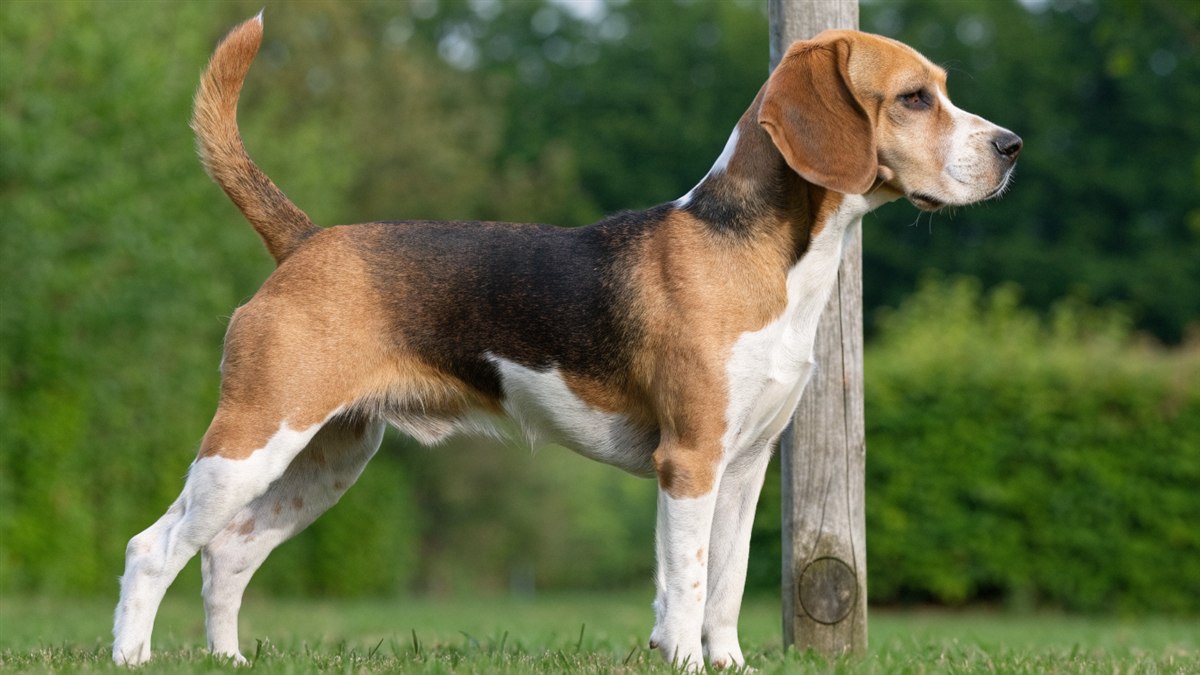
Quick answer
The Beagle-Harrier is a French scenthound recognised by the FCI as breed 290, not a Beagle crossed with a Harrier. France registered 440 in 2025 against 3,089 Beagles, and India has no Kennel Club of India recognition, no verified price and no lawful import route for buying one, because DGFT Trade Notice 22/2022-23 rejects breeding and trading applications outright.
This page summarises published veterinary research and breed-standard documents. It is not a diagnosis and it is not a treatment plan. Consult a registered veterinarian in your city before acting on anything here, especially on ear disease, heat illness and any feeding or vaccination decision for an individual dog.
Beagle-Harrier at a glance
What the Beagle-Harrier actually is
The Beagle-Harrier is a French scent hound with its own breed standard, filed by the Federation Cynologique Internationale as breed number 290 and recognised on a definitive basis on 2 September 1972.
Read that date again, because it settles the question this page exists to answer. The FCI's own register lists the Beagle-Harrier under country of origin FRANCE, breed status Recognized on a definitive basis, official authentic language French, and subject to a working trial. The Harrier, one of the two breeds the name points at, was not recognised on a definitive basis until 27 November 1974. France's Beagle-Harrier has been a definitively recognised FCI breed for two years longer than one of its supposed parents.
The current standard is FCI-Standard N° 290, published 6 October 2023, with the original valid standard dated 1 August 2023. It describes a medium-sized, balanced, distinguished, agile and vigorous dog standing 45 to 50 cm at the withers, with a rather broad skull, a stop that is not pronounced, a muzzle roughly equal in length to the skull, and a coat that is rather thick, not too short but flat.
Where the FCI files it, and why the shelf matters
Group 6 of the FCI nomenclature covers scent hounds, and Section 1 splits into 1.1 Large-sized Hounds, 1.2 Medium-sized Hounds and 1.3 Small-sized Hounds. The Beagle-Harrier sits in 1.2, under France. The Harrier sits in the same 1.2 but under Great Britain. The Beagle sits one shelf down in 1.3 Small-sized Hounds, under Great Britain.
So the registry that defines all three does not treat this dog as a version of either. It files it as a French medium hound alongside the Ariegeois, the Artois Hound, the Porcelaine and the Anglo-Francais de Petite Venerie FCI Breeds Nomenclature.
What it was built to do
Baron Gerard created the breed in the late 19th century to course hare in the Landes de Gascogne, around Saint-Vincent-de-Tyrosse in south-west France. Drainage works and new canals made the country harder to hunt, his Beagles proved too small for it, and he set out to breed a taller, faster, more nimble hound from the stock he already had.
The result works. The Societe de Venerie describes one of the fastest French scent hounds relative to its size, fine of nose, loud in cry, enduring, and used above all in a pack. The Castillon d'Arengosse pack took 80 to 90 hares a year, and more than a thousand Beagle-Harrier puppies were bred at Arengosse between 1905 and 1930. It hunts hare, fox, roe deer and wild boar Societe de Venerie.
Almost everything an Indian search returns for this term is about the Beagle, the Harrier, or a crossbreed a backyard breeder has labelled a Beagle-Harrier. Confirm the FCI number 290 and the country of origin France before you treat any page, listing or pedigree as being about this breed.
One consequence matters for an Indian buyer immediately. A dog is a Beagle-Harrier because a studbook says so, not because it looks like a big Beagle. Any Indian dog offered under this name without an FCI-affiliated pedigree naming breed 290 is, on the evidence available, something else.
Why it is not a Beagle crossed with a Harrier
The Beagle-Harrier is not a Beagle-Harrier cross, because the breed's own country-of-origin kennel club says a third French breed went into it and that the modern dog is neither a big Beagle nor a small Harrier.
The Societe Centrale Canine is the FCI member for France and the authority on a French breed. Its Beagle-Harrier page states that the breed came from crossing the Beagle and the Harrier with a very probable infusion of Briquet du Sud-Ouest, that attempts by breeders to favour Beagle or Harrier blood were harmful, and that the modern breeding policy stabilised a breed which is neither a big Beagle nor a small Harrier.
That last clause is the whole argument in nine words, published by the body that owns the standard.
The ear proves the third breed
The Societe de Venerie makes the genetic point concrete, and it does it through the ear. The French blood infusion explains the half-turned ear the breed has been selected for ever since, because that ear was very difficult to obtain by crossing only the Beagle, whose ear is flat and round, and the Harrier, whose ear is also flat but V-shaped.
Check that against the standards themselves. FCI-290 asks for leathers that are quite short and medium-broad, set at eye level, slightly rounded in their middle, coming down flat against the skull and turning slightly in their lower part in a slight oval. The Beagle standard asks for ears that are long, set on low, and reach nearly to the end of the nose when drawn out. The Harrier standard asks for leathers that are V-shaped, almost flat and set on rather high.
Three different ears. The Beagle-Harrier's is the only one of the three that turns, and the turn came from France.
The standard polices its own French ancestry
FCI-290 lists as a fault curled ears, recalling an infusion of French blood. So the standard wants exactly enough of the French hound to produce the slight oval turn and penalises any more than that. A document written to define a simple two-way English cross would have no reason to carry that clause at all.
Two more things the internet gets wrong
- Baron Gerard was a hare-courser, not a painter. English Wikipedia links the founder's name to Francois Gerard, the neoclassical portrait painter, and zooplus repeats that the breed's father is believed to be "the French painter Baron Gerard";. The Societe de Venerie places the real Baron Gerard hunting hare in the Landes with a named huntsman, Pierre-Raoul Guillot.
- Baron Gerard and Grandin de l'Eprevier were two different men. Several breed directories fuse them into one "Baron Gerard Francois Grandin de l'Eprevier". The Societe de Venerie lists M. Grandin de l'Eprevier as the owner of a separate Landes pack, one of several that formed after Arengosse.
Crossing really did continue, until a date you can check
Bonbeno will not pretend the confusion was invented. Crossings between the Harrier and the Beagle-Harrier persisted until 1 January 1989, and the Societe de Venerie names that as the reason the confusion lasted so long. After the Second World War some breeders wanted to abolish the Beagle-Harrier altogether and create a "petit-Harrier" instead, and a 1950 standard even recommended a preference for Harrier-dominant dogs.
So the honest answer has a date attached. The breed was genuinely unsettled for most of the 20th century and has been closed for more than 35 years. A dog whelped in 2026 is the product of a stabilised, registry-controlled population, not of somebody's cross.
FCI-290 read clause by clause against the Beagle and the Harrier
To tell the three breeds apart, compare the clauses rather than the photographs, because the three standards disagree on height, skull, stop, ear, coat and even on whether the tail is described at all.
Every figure below comes from the three FCI standards themselves, each opened and checked for the breed name printed inside the document.
| Clause | Beagle, FCI-161 | Beagle-Harrier, FCI-290 | Harrier, FCI-295 |
|---|---|---|---|
| Country of origin | Great Britain | France | Great Britain |
| FCI sub-section | 1.3 Small-sized | 1.2 Medium-sized | 1.2 Medium-sized |
| Definitive FCI recognition | not dated on the breed page | 2 September 1972 | 27 November 1974 |
| Height at withers | 33 to 40 cm desirable | 45 to 50 cm | 48 to 55 cm max, 48 to 50 preferred |
| Skull | slightly domed, slight peak | rather broad, quite voluminous | flat, occipital crest slightly marked |
| Stop | well defined | not pronounced | not specified |
| Muzzle | not snipy | roughly equal to skull, never square, tapering | quite long, rather more pointed than square |
| Ears | long, set on low, reach nearly to end of nose | quite short, set at eye level, flat, turning in a slight oval | V-shaped, almost flat, quite short, set on high |
| Coat | short, dense and weatherproof | rather thick, not too short but flat | smooth, flat and not too short |
| Tail | sturdy, moderately long, set on high | no tail clause at all | medium length, coarser offstanding hairs at tip |
| Weight | not specified | not specified | not specified |
| Working trial | yes | yes | yes |
Three clauses do most of the work
- Height separates it from the Beagle absolutely. The Beagle's desirable maximum is 40 cm and the Beagle-Harrier's minimum is 45 cm Federation Cynologique Internationale. The two bands do not touch, and a 5 cm gap sits between them.
- Height does not separate it from the Harrier. The Beagle-Harrier runs 45 to 50 cm and the Harrier's preferred band is 48 to 50 cm Federation Cynologique Internationale. A 49 cm dog is standard for both, so the popular "halfway in size between the two" line is only half true.
- The ear separates it from both. Short and set at eye level, against the Beagle's long low leather and the Harrier's high-set V Federation Cynologique Internationale.
FCI-290 describes no tail, and that is not a transcription slip
The Beagle-Harrier standard runs from head to hindquarters without a tail clause, while both the Beagle and the Harrier standards describe one Federation Cynologique Internationale Federation Cynologique Internationale. The United Kennel Club, which recognised the breed on 1 January 1996, fills the gap with a tail set on high, long enough to reach the hock, and carried gaily in saber fashion. So a judge in the UKC ring assesses something the FCI standard never mentions.
The colour clause cites a Harrier the Harrier standard does not describe
FCI-290 permits grey tri-colours and white-greys, reasoning that grey Harrier exist and that colour alone must not disqualify or penalise. The Harrier's own standard describes white as a base colour with all shades of black to orange, and generally tricolour in France, and names no grey. Bonbeno publishes that mismatch rather than tidying it, because a reader comparing the two documents will find it in about a minute.
The FCI standard specifies no weight, and the Societe Centrale Canine records the breed's weight as NP, not specified Societe Centrale Canine. Every weight figure circulating online is therefore somebody's estimate rather than a standard, which is why they disagree.
How rare it is, in real registration numbers
France registered 440 Beagle-Harriers in its studbook in 2025, against 3,089 Beagles and exactly one Harrier, so the breed is scarce next to the Beagle and abundant next to the Harrier.
The Societe Centrale Canine publishes annual Livre des Origines Francais registrations by breed. The 2025 table is the closest thing to a population census this breed has.
| Breed | LOF 2024 | LOF 2025 | Confirmed 2025 | Change |
|---|---|---|---|---|
| Beagle | 3,514 | 3,089 | 822 | -12 percent |
| Beagle-Harrier | 478 | 440 | 196 | -8 percent |
| Porcelaine | 326 | 384 | 188 | +18 percent |
| Ariegeois | 242 | 227 | 131 | -6 percent |
| Anglo-Francais de Petite Venerie | 125 | 147 | 76 | +18 percent |
| Billy | 1 | 12 | 5 | up from 1 |
| Poitevin | 110 | 1 | 0 | -99 percent |
| Harrier | 0 | 1 | 1 | one dog |
| Group VI total | 12,894 | 11,720 | 3,989 | -9 percent |
What those numbers mean once you divide them out
- The Beagle outnumbers it 7 to 1. 3,089 divided by 440 is 7.02, so for every Beagle-Harrier registered in France in 2025, seven Beagles were.
- It is 3.75 percent of French scent hound registrations. 440 of 11,720 Group VI registrations, which makes it the ninth most registered scent hound in France rather than a curiosity.
- The Harrier is the rare one. France registered a single Harrier in 2025 and none at all in 2024. Bonbeno has published that finding before on the Billy guide, and the 2025 table confirms it unchanged.
- It is falling, but slowly. 478 to 440 is a drop of 38 dogs, or 7.95 percent, against a Group VI fall of 9.1 percent. The breed is shrinking slightly less fast than French scent hounds as a whole.
The confirmation rate says this is still a working breed
French registration has a second stage. A dog is inscribed at birth and then confirmed as an adult by a judge, and the SCC publishes both columns. The Beagle-Harrier confirmed 196 of 440, which divides out to 44.5 percent, printed in the table as 45 percent. The Beagle confirmed 822 of 3,089, or 26.6 percent.
A hound bred for a hunting pack goes to confirmation because the owner needs the paperwork. A puppy sold as a pet often never does. That 44.5 against 26.6 is the clearest single sign that the Beagle-Harrier is still mostly a working dog in France while the Beagle there is mostly a pet.
The Societe Centrale Canine's Beagle-Harrier page states that the French population is increasing. Its own 2025 statistics show registrations falling from 478 to 440. Bonbeno reports both rather than choosing, and treats the numbered table as the stronger evidence.
For an Indian reader the comparison that matters is the other one. The Kennel Club of India registered 33,880 pure-bred dogs across every breed in 2025, down from 89,571 in 2021, a fall of 62.2 percent in four years. India runs a large registry and this breed does not appear to be in it.
Beagle-Harrier price in India, and the one figure that exists
One Indian page quotes a Beagle-Harrier price in India, at Rs 15,000 to Rs 40,000, and that page is machine-generated, contradicts the FCI standard, and prints a neighbouring price band that is a US dollar figure run through an exchange rate.
Bonbeno reports the figure because it exists and a buyer will find it. Bonbeno does not endorse it, and the rest of this section shows the reader exactly how to test it.
What the Indian search returns
Search beagle harrier price in india from India and eight of the ten page-one results are about the Beagle alone, including Supertails on Beagle puppy cost, mrnmrspet on Beagle price, a Reddit thread and a TradeIndia Beagle listing at Rs 14,000. The only Indian-domain page-one result carrying the exact breed name is a Flipkart product called The Beagle Harrier Dog Journal, which is a blank notebook.
Bonbeno ran the control in the same session. labrador retriever puppy price in india returned dense, real Indian pricing immediately, with per-city tables and quality bands. A thin result for the Beagle-Harrier is a fact about the market, not a broken query.
Run the 84.38 test, and watch it fire
Indian pages routinely publish a "price" that is a US dollar figure run through one exchange rate, and dividing by 84.38 exposes it. The Pets Army page prices three breeds. Two bands are round rupee numbers. One is quoted to the rupee, and that is the tell.
| Quoted figure | Divided by 84.38 | Verdict |
|---|---|---|
| Beagle-Harrier, Rs 15,000 | USD 177.77 | round rupee filler |
| Beagle-Harrier, Rs 40,000 | USD 474.05 | round rupee filler |
| Beagle, Rs 25,000 | USD 296.28 | round rupee filler |
| Beagle, Rs 80,000 | USD 948.09 | round rupee filler |
| Harrier, Rs 59,066 | USD 700.00 | exactly 700 dollars |
| Harrier, Rs 101,256 | USD 1,200.00 | exactly 1,200 dollars |
Multiply back and check it yourself. 84.38 times 700 is 59,066, and 84.38 times 1,200 is 101,256, both to the rupee. That band was never an Indian price. It is an American price converted once and pasted in.
This is the fourth time Bonbeno has caught the same rate on the same kind of page. It also dates the page, because the European Central Bank's reference rates for 21 August 2026 imply a US dollar at about INR 95.70, not 84.38. A figure that only resolves at 84.38 was generated at a past moment and never revisited.
The page that carries the price is machine-generated
The Pets Army article publishes unresolved language-model citation tokens in its live body text, including \[-3\], \[link_1\], \[193\], \[172\], \[173\], \[192\], \[203\] and \[204\]. Those are placeholders a generator left behind. No human editor read that page before it published.
The content matches. It calls the Beagle-Harrier "technically a cross-breed", which the FCI register contradicts outright FCI Breeds Nomenclature entry. It describes a "short, dense double coat" with "a soft, dense undercoat beneath a coarser outer layer", where FCI-290 says only rather thick, not too short but flat and describes no undercoat at all. It gives the breed V-shaped ears, which is the Harrier's clause, not this breed's. It states that "60-70% of Beagle Harriers might face at least one health issue" with no source of any kind.
The article's hero image carries the alt text "Alert tricolor Beagle dog standing on grass", and its second image is captioned "Side profile of a Harrier dog", credited to the American Kennel Club. The one Indian page selling you a Beagle-Harrier illustrates it with a Beagle and a Harrier.
The listing sites are shells
PetzLover carries pages titled as Beagle-Harrier listings in West Bengal. Every attempt to open one returned HTTP 403 and a CAPTCHA challenge, so Bonbeno publishes no price from it. What its indexed titles do show is the same breed name and the same band, Rs 2,000 to Rs 45,000, sitting on that site's Eurasier, Gaddi Kutta, English Mastiff and Koolie pages, and two different bands for the same city.
The honest anchor
zooplus, writing for Europe, puts the breed at EUR 1,000 to 2,000, which is Rs 1,11,960 to Rs 2,23,919 at the ECB reference rate for 21 August 2026. That is a European purchase price in the country that has 440 of them, with no shipping, authorisation, quarantine or crate in it.
Set that beside Rs 15,000. A dog costing one seventh of its European price, in a country with no lawful commercial import route, is not this breed.
The lawful route into India, and why it is closed to buyers
India classifies dogs as a Restricted import under ITC(HS) 01061900, and DGFT Trade Notice 22/2022-23 permits only three purposes, none of which is buying a puppy from a foreign breeder.
Read the trade notice itself rather than a summary of it, because this is the clause that decides whether an Indian reader can have this breed at all.
The policy table sets ITC(HS) 01061900, item description "Mammals: Other", import policy Restricted, subject to Policy Condition 6 of the chapter. Policy Condition 7 then permits the import of dogs only for three purposes.
- Pet dog with a valid pet book and relevant records in the name of the importer.
- Dogs imported by R&D organisations for research, with the recommendation of the CPCSEA.
- Internal security use by the Defence and Police Force.
Policy Condition 8 states that import of commercial dogs for breeding or any other commercial activity other than those purposes is not permitted. Paragraph 6 of the notice says applications for trading or breeding purposes, or made on behalf of another person or entity, shall be duly rejected.
The pet-dog route moves a dog that is already yours. It does not let you buy one. Since applications made on behalf of another person are rejected outright, nobody in India can lawfully import Beagle-Harriers and sell them on. No lawful commercial supply chain can form, which is the structural reason there is no Indian price.
The mechanics, if you are relocating with a dog you already own
- Two pets maximum as baggage, and only for a person transferring residence to India after two years of continuous stay abroad. Only cats and dogs qualify under baggage rules.
- DGFT authorisation is required if the stay abroad was under two years, or the pet is not travelling as passenger baggage, or it cannot come under baggage rules, and always for more than two pets.
- Seven ports only. Import of pet animals is allowed only through the airports and seaports of Delhi, Mumbai, Chennai, Hyderabad, Bengaluru and Kolkata and, since October 2024, Kochi airport, with quarantine at the government station where required Department of Animal Husbandry….
- Two months of lead time. DGFT advises starting the authorisation application at least two months before travel.
- Advance NOC seven days out. An Advance No Objection Certificate from the AQCS Regional or Quarantine Officer is needed seven days before travel, relaxable to three, with the import licence and an exporting-country veterinary health certificate attached.
Breeding one here would run into a second law
Suppose two Beagle-Harriers did arrive as relocated pets and somebody decided to breed them. The Prevention of Cruelty to Animals (Dog Breeding and Marketing) Rules 2017, gazette notification G.S.R. 496(E) of 23 May 2017, then applies.
A founding population of two forces exactly what the Rules prohibit. Second Schedule Part II paragraph 6(2) permits only out breeding and line breeding. Paragraph 6(3) prohibits in breeding, defined as mating between relatives of the 2nd to 4th grade within the first four generations, giving uncle to niece, nephew to aunt, cousin to cousin and grandparents to grandchildren as examples, and prohibits incest breeding, defined as mating between parents and children or brother and sister.
Bonbeno pins those numbers because this site has reported them inconsistently before. Our own extraction of the gazette shows Second Schedule Part II containing exactly two paragraphs, 5. Breeding requirements and 6. Common breeding techniques, which places the breeding-technique clauses at 6(2) and 6(3) and the mutilation prohibition at 6(8).
Monthly cost of ownership, honestly bounded
No Indian monthly cost figure for a Beagle-Harrier exists, so bound the cost by what is knowable: a 45 to 50 cm working scent hound, a pendulous ear that drives vet spend, and roughly two hours of daily exercise that costs time rather than money.
Every Indian breed page that publishes a tidy monthly rupee figure for a breed with no Indian population invented it. Bonbeno will not add a fifth.
The three costs that are actually knowable
| Cost line | What the evidence supports | Confidence |
|---|---|---|
| Purchase | Rs 1,11,960 to Rs 2,23,919 in Europe, from EUR 1,000 to 2,000 at the ECB reference rate | sourced, but European |
| Purchase, India | One page claims Rs 15,000 to Rs 40,000; that page is machine-generated | not credible |
| Import | DGFT authorisation, quarantine at one of seven ports, AQCS Advance NOC; the trade notice publishes no fees | route known, cost unpublished |
| Ear disease | 7.30 percent of UK dogs get otitis externa in a year; pendulous ears carry 1.76 times the odds | sourced, not breed-specific |
| Feeding | No breed feeding data; the only published Beagle-Harrier nutrition work is a diet-induced obesity model | sourced, small n |
| Exercise | Roughly two hours daily for a pack hound of this type, mostly a time cost | reasoned from the standard and the working description |
| Insurance | No Indian breed-specific product exists; the French registry partners with a European insurer | not available in India |
Ear care is the recurring cost that this breed genuinely carries
A UK primary-care study of 22,333 dogs found a one-year period prevalence of otitis externa of 7.30 percent, and breeds with pendulous ear carriage carried 1.76 times the odds of erect-eared breeds. The Beagle, the closest cross-shop breed, sits at 14.72 percent prevalence and an odds ratio of 2.54.
The Beagle-Harrier appears nowhere in that dataset, so treat those figures as the neighbourhood rather than the address. What the standard does establish is that this breed's leathers come down flat against the skull, which is the anatomy the study is measuring.
What the import route costs is genuinely unpublished
DGFT Trade Notice 22/2022-23 sets out the process in detail and publishes no fee schedule. It requires a DGFT authorisation application against an Importer Exporter Code, or against the permanent IEC number IIHIE0153E for personal-use importers, started at least two months before travel, plus an Advance NOC from the AQCS Regional or Quarantine Officer seven days before travel.
Quarantine is required at the government station of the port of entry where applicable, and entry is limited to Delhi, Mumbai, Chennai, Hyderabad, Bengaluru, Kolkata and, since October 2024, Kochi Department of Animal Husbandry…. Anyone quoting you a firm all-in import price for this breed is quoting a service, not a published tariff. The full route is set out in how to import a dog to India.
The cost nobody prices, and it is the big one
Two hours a day, every day, for twelve to fifteen years. In an Indian city that means two walks in near-darkness for most of the year, because the middle of the day is unusable for a thick-coated hound from a temperate climate. That is not a rupee figure. It is the constraint that decides whether this breed works for you at all, and it is the reason the Societe Centrale Canine's own note on city living reads simply that the breed needs space and exercise.
Heat tolerance, argued from the coat and the origin climate
The Beagle-Harrier tolerates Indian heat poorly, because FCI-290 specifies the thickest coat of the three related hound standards and the breed was built to work in a region whose warmest month averages 21.45 C.
Every temperature and humidity figure below comes from one source on one methodology, the NASA POWER climatology built from MERRA-2 over January 2001 to December 2020, so the places are directly comparable.
Step one, what the standard says the coat is
FCI-290 specifies hair that is rather thick, not too short but flat. Compare the neighbours. The Beagle's coat is short, dense and weatherproof. The Harrier's is smooth, of English style, flat and not too short. Of the three documents, only the Beagle-Harrier's uses the word thick.
No standard describes an undercoat for this breed, so do not believe any page that gives it a double coat. Correcting that matters, because a single thick flat coat sheds heat differently from a true double coat and is not improved by clipping.
Step two, the climate it was built for
Baron Gerard bred it to course hare in the Landes de Gascogne in south-west France. At that location the annual mean air temperature is 13.83 C, the warmest month averages 21.45 C in August, and mean relative humidity runs 79.19 percent across the year.
The other French place in this breed's story reads the same way. The Arengosse pack took about thirty of its hares each year in Normandy, where the annual mean is 10.80 C, the warmest month averages 17.68 C and mean relative humidity runs 84.16 percent. Both of the countries this hound actually worked in are cooler in high summer than Chennai is in January.
| Place | Annual mean C | Coolest month C | Warmest month C | Annual mean RH percent |
|---|---|---|---|---|
| Landes de Gascogne, origin | 13.83 | 7.09 Jan | 21.45 Aug | 79.19 |
| Bengaluru | 23.74 | 20.22 Dec | 28.37 Apr | 67.94 |
| Delhi | 25.60 | 13.61 Jan | 35.88 Jun | 45.56 |
| Chennai | 27.95 | 24.09 Jan | 31.51 May | 72.39 |
Step three, the comparison that decides it
- Chennai never gets as cool as a Landes August. Chennai's coolest month averages 24.09 C, which is 2.64 C above the warmest month the breed's home region records. There is no month of the year in which a Chennai dog is thermally at home.
- Delhi's summer is off the scale entirely. June averages 35.88 C, 14.43 C above the Landes August.
- Bengaluru is the only near miss. Its coolest month, December at 20.22 C, sits 1.23 C below the Landes August. Bengaluru is the one Indian metro where this breed's thermal experience overlaps its origin at all, and even there the overlap is one month against one month.
France is not cold. The same dataset records a 20-year maximum of 41.65 C at the Landes point, higher than Bengaluru's 40.38 C NASA POWER Climatology API. The difference is not the peak, it is the duration. France reaches 41 C for hours in a heatwave. Chennai holds above 24 C as a monthly mean for twelve months a year.
Step four, the risk is the work, not the weather
A VetCompass study of 905,543 UK dogs identified 1,259 heat-related illness events, and of the 879 with a recorded trigger 74.2 percent were exertional, against 12.9 percent environmental and 5.2 percent from vehicular confinement. The dominant trigger is the dog moving, not the dog sitting.
That points straight at this breed. The Societe de Venerie describes one of the fastest French scent hounds for its size, enduring, keeping a sustained pace and pressing on through the thickest bramble. A hound built to keep going will keep going past the point where an Indian afternoon has stopped being survivable, and it will not tell you.
The India Meteorological Department declares a heat wave when a plains station reaches 40 C or more, typically between March and June, with May the peak month. Assume roughly four months a year in which daytime exercise for this breed is off the table in most of northern India.
Ear risk, and a correction to a figure this site published
The Beagle-Harrier carries a real but overstated ear risk, because FCI-290 specifies a leather that is quite short rather than long, and the most-quoted Indian age figure turns out to be a misreading of the paper's own table.
Start with the correction the standard forces, because it cuts the risk rather than inflating it.
This is a drop-eared hound, not a long-eared one
FCI-290 asks for leathers that are quite short and medium-broad, set at eye level, coming down flat against the skull and turning slightly in a slight oval. The Beagle standard asks for ears that are long, set on low and reaching nearly to the end of the nose. The Basset Hound carries more leather still.
So this breed occludes its canal, which is the thing that matters, but it carries far less over it than the breeds that top the risk tables. Any Indian page calling this dog floppy-eared and reaching for Basset-grade warnings is describing a different ear.
What the ear-carriage evidence actually shows
A UK primary-care study of 22,333 dogs, drawn from 905,554 under veterinary care, found 1,631 otitis externa cases and a one-year period prevalence of 7.30 percent. Ear carriage ranked among the highest risk factors it measured.
| Group | Odds ratio | One-year prevalence |
|---|---|---|
| All dogs, baseline | reference | 7.30 percent |
| Pendulous ear carriage, versus erect | 1.76 | not stated separately |
| V-shaped drop ear carriage, versus erect | 1.84 | not stated separately |
| Beagle, versus crossbred | 2.54 | 14.72 percent |
| Basset Hound, versus crossbred | 5.87 | 28.81 percent |
| Beagle-Harrier | absent from the dataset | absent from the dataset |
The Beagle-Harrier appears nowhere in it. Bonbeno will not borrow the Beagle's 14.72 percent and print it as this breed's figure, because that is a different breed with a materially longer ear. Use it as the neighbourhood, not the address.
The Indian series, and where the received figure went wrong
An Indian series from Durg district in Chhattisgarh screened 281 dogs across a year from July 2016 and found 51 positive, an overall prevalence of 18.14 percent, well above the UK baseline. Its seasonal split of those 51 cases was summer 21, rainy 17 and winter 13, which divides out to 41.18, 33.33 and 25.49 percent.
The season finding is worth pausing on, because it contradicts the received wisdom. The peak fell in summer, March to June, not in the July to October rains. Indian ear advice that treats otitis as a monsoon problem misses the larger share of cases.
Sibling guides on this site report that the Durg series found prevalence rising to 45.10 percent in dogs of five years and above. Dividing the paper's own table out shows that is wrong. The column headed Prevalence is the share of the 51 CASES, not prevalence within the age group. The paper examined 81 dogs aged five and above and found 23 positive, so the true age-specific prevalence is 23 of 81, or 28.40 percent. Every row corrects the same way: 3 of 55 is 5.45 percent, 9 of 70 is 12.86 percent, and 16 of 75 is 21.33 percent.
The trend survives the correction and the direction is unchanged. Risk still roughly quintuples between puppyhood and old age, from 5.45 percent to 28.40 percent. The headline number was 16.7 percentage points too high, and it had travelled because nobody divided it out.
Treat that as a warning about this whole literature rather than about one paper. The same study reports bacterial otitis in "4 out of 50 cases (4%)", where 4 of 50 is 8 percent, and a cytology table whose percentages resolve to a denominator of 21 that the paper never states. Check the arithmetic on any prevalence figure before you act on it.
Why Indian air loads the ear canal, measured rather than asserted
Indian air loads a dog's ear canal because it carries more than twice the water vapour of the breed's home region, and not because its relative humidity is higher, which it mostly is not.
The lazy version of this argument says India is humid and France is dry. That is false, and repeating it makes the advice easy to dismiss.
Mean relative humidity in the Landes de Gascogne, where the breed was created, is 79.19 percent. Chennai's is 72.39 percent and Bengaluru's is 67.94 percent NASA POWER Climatology API. On relative humidity alone, south-west France beats both.
The variable that changes is temperature
Warm air holds far more water at the same relative humidity. Apply the Magnus formula to the published NASA POWER means, using the same 2001 to 2020 climatology for every point, and the actual water-vapour pressure separates cleanly.
| Place and period | Relative humidity percent | Vapour pressure hPa | Versus origin |
|---|---|---|---|
| Landes de Gascogne, annual | 79.19 | 12.51 | 1.00 |
| Delhi, annual | 45.56 | 14.96 | 1.20 |
| Bengaluru, annual | 67.94 | 19.95 | 1.59 |
| Bengaluru, October | 81.01 | 22.13 | 1.77 |
| Chennai, annual | 72.39 | 27.29 | 2.18 |
| Chennai, November | 82.33 | 30.06 | 2.40 |
| Delhi, August | 74.90 | 31.42 | 2.51 |
Chennai air carries 2.18 times the water vapour of the breed's home region on annual means, at a relative humidity nearly seven points lower. Delhi in August reaches 2.51 times. That is the load an occluded canal sits in, and it is why a French routine under-serves an Indian dog.
The weather mechanism is documented rather than assumed. A study of 8,975 dogs across 15 North American veterinary teaching hospitals found that dogs with pendulous ears and heavy ear canal hair had significantly more otitis externa than other ear types at P less than 0.01, and that monthly variation in ambient temperature, rainfall and relative humidity explained much of the monthly variation in hospital prevalence.
The overseas advice, and where it stops transferring
zooplus tells the owner that brushing once a week suffices and treats ear care as routine maintenance. The Pets Army page says to clean ears weekly. Neither is wrong in Europe. Both are written for air carrying half the moisture.
- Check twice a week, every week of the year. The Indian peak fell in summer rather than the monsoon, so a rains-only routine misses the larger share.
- Dry the canal after every swim and every bath. Excess moisture from swimming or bathing is named as a predisposing factor in the Indian series itself.
- Raise the frequency with age. Corrected age-specific prevalence climbs from 5.45 percent under a year to 28.40 percent at five and above.
- Book a veterinarian the same week on head shaking, pawing, odour or discharge. Early otitis externa is cheap, and the same series records stenosis and fibrosis as the step that makes it chronic.
Do not pluck or shave the ear canal as a routine preventive because a foreign forum recommends it. The Durg series names excessive trauma to the ear canal from exuberant cleaning or instruments as a route to bacterial colonisation in its own right. Ask your veterinarian what this individual dog's canal needs.
Temperament and household fit
The Beagle-Harrier suits a household that wants a sociable, biddable pack hound and can absorb a loud, scent-driven dog that must never be off-lead in an unfenced space.
Judge the temperament from the working description rather than from the friendly adjectives every breed page recycles.
The Societe Centrale Canine describes a dog that is resistant, vigorous, fast, nimble, courageous, less powerful than the Harrier, demanding, fine of nose, that works well in a pack and does not fear the thickest brambles, and that its suppleness of character and frankness make an agreeable companion. The Societe de Venerie adds that it is enterprising while staying disciplined, tenacious on the line, and has very good aptitude to rally back to the pack.
Read that as a whole and a shape appears. This is a cooperative dog that wants to work with others and comes back, wrapped around a nose that will take it half a kilometre before it notices.
The voice is a feature of the breed, not a fault
The Societe de Venerie records the breed as very crying, with a beautiful clear and sonorous throat, rather in the high tones. Hunters value that because they track the pack by ear. A neighbour in a Mumbai housing society will not.
No breed page Bonbeno found states this plainly for an Indian buyer. A hound bred to be audible across a Gascon moor is being sold into flats with shared walls.
Who should buy one
- Households with a securely fenced space and two adults willing to split roughly two hours of daily exercise.
- Owners who already live with dogs, because a breed selected for pack work is generally sociable with other dogs.
- People in Bengaluru or a hill station rather than Chennai or Delhi, on the climate evidence.
- Owners who want a scent sport, since mantrailing and nose work use the trait instead of fighting it.
Who should not
- Apartment buyers who work full days away. The Societe Centrale Canine's own city note is that the breed needs space and exercise, and a pack animal left alone all day is a pack animal with nothing to do.
- First-time owners who want an off-lead dog. A hound tenacious on a line does not recall off a live scent.
- Anyone in a society with a noise complaint history, given the breed's cry.
- Buyers who want a small Beagle substitute. This is a 45 to 50 cm working hound, five centimetres taller at minimum than the Beagle is at its desirable maximum Federation Cynologique Internationale.
Several pages describe this breed as unusually comfortable around horses and cats, and as having a specific bond with mounted hunters. No standard, registry or study Bonbeno opened supports any of that, and the page carrying the most detailed version of it is the machine-generated one. Treat this breed's prey drive around cats and small animals as unmeasured.
Training approach, and the one thing this breed resists
Train a Beagle-Harrier by rewarding the recall it was already bred for, and accept that it resists recall off a live scent, which is the single behaviour no amount of work reliably fixes.
No training study of this breed exists, so this section reasons from the working description published by the two French bodies that select it, and says so where it is reasoning rather than reporting.
The breed gives you an asset most scent hounds do not
The Societe de Venerie records that the Beagle-Harrier possesses very good aptitudes to rally, is enterprising while remaining disciplined, and that it retreats well. Rallying means coming back to the pack on the horn, and a hound has been selected for centuries on whether it does.
That is a real advantage over a solitary tracking breed. You are not building recall from nothing. You are attaching your recall cue to a behaviour the breed already performs, which is why recall work should start indoors at eight weeks and be paid every single time for the first year.
Where it stops, and why
The same source calls it tenacious on the line and fine of nose. A hound tenacious on a line is doing its job when it ignores you, and a scent it has committed to outranks a recall cue it has practised. Plan for that with equipment rather than optimism.
- Use a long line of 10 to 15 metres in any unfenced space, for the dog's whole life, not just puppyhood.
- Pay recall from a scent, not just from nothing. Reward the turn away from an interesting smell more highly than a recall from an empty room.
- Give the nose a legal job. Mantrailing and scent work use the trait instead of suppressing it, and zooplus is right that this breed takes to them.
- Train in the cool hours. Two useful training windows a day exist in most Indian cities, and both are dark for months of the year.
The socialisation window has a legal floor in India
Indian law fixes the earliest a puppy can change hands. Rule 8(1)(a) of the Prevention of Cruelty to Animals (Dog Breeding and Marketing) Rules 2017 states that every breeder shall ensure that pups less than eight weeks in age are not sold. Anyone offering you a six-week-old puppy is breaking that rule, whatever breed they claim it is.
The same Rules require that pups be vaccinated starting at seven to eight weeks and usually completed by eighteen weeks. That schedule and the socialisation window overlap almost exactly, which is the practical tension every new owner faces and the reason to socialise on carried outings and controlled visits rather than on public ground.
The breed is recorded as very crying, with a clear and sonorous throat in the high tones, because hunters follow the pack by ear. You can teach a quiet cue and manage triggers. You cannot train a breed out of a trait it was chosen for across a century. Decide about the noise before you buy, not after.
One more honest limit. Bonbeno found no published obedience, temperament-test or working-trial result set for this breed that would let anyone quantify trainability. Every trainability claim circulating online, including the confident ones, is somebody's impression.
Daily exercise requirement, and what happens without it
Give a Beagle-Harrier roughly two hours of daily activity split across the two cool ends of an Indian day, because it was selected to run down hares at a sustained pace over a full season.
Bonbeno reasons the two-hour figure from the work rather than copying it from a ranking page, because the ranking pages copy each other.
What the breed was selected to do
The Societe de Venerie describes a hound that hunts very fast while remaining very applied, one of the fastest French scent hounds relative to its size, enduring, which allows it to hunt for a long time keeping a sustained pace, nimble and vigorous with a supple gallop. It hunts hare, roe deer, fox, wild boar, stag and even chamois, in every type of terrain.
The Castillon d'Arengosse pack took 80 to 90 hares a year. That is the output of a working season, and it is the physiology you are buying.
The Indian schedule, built around the heat rather than around convenience
| City | Hardest months | What the data says | Practical window |
|---|---|---|---|
| Chennai | March to June | Warmest month averages 31.51 C and no month averages below 24.09 C | before sunrise and after 20:00, year round |
| Delhi | April to June | June averages 35.88 C with a 20-year maximum of 48.79 C | before 06:00 and after 21:00 in summer |
| Bengaluru | March to May | April averages 28.37 C, the mildest of the three | early morning and evening, some winter daytime possible |
Those windows come from the NASA POWER monthly means for each city NASA POWER Climatology API NASA POWER Climatology API. Add the India Meteorological Department heat wave criterion, a plains station reaching 40 C or more, typically March to June with May the peak, and roughly four months a year have no usable daytime at all in northern India.
Exertion is the actual danger, and it is measured
A VetCompass study of 905,543 UK dogs found that 74.2 percent of the 879 heat-related illness events with a recorded trigger were exertional, against 12.9 percent environmental and 5.2 percent from vehicular confinement. Most heat casualties happen while the dog is moving, and this breed's defining trait is that it keeps moving.
A hound selected for enduring at a sustained pace has been bred, deliberately, not to quit. In a climate 14 C warmer than the one it was selected in NASA POWER Climatology API, the owner has to be the brake. Set a time limit before you leave the house and keep it whatever the dog is doing.
What happens without it
Under-exercised scent hounds become loud, destructive and hard to live with, which is the mechanism behind most rehoming. There is a second consequence specific to this breed, and it is documented. A French laboratory chose the Beagle-Harrier as its model for diet-induced obesity, and got a 15.4 percent body-weight gain in seven weeks in one study and 20 percent in six weeks in another Verwaerde P et al.. A hound with a working metabolism and a flat's worth of exercise is running that protocol by accident.
Split the two hours. One session before dawn and one after dark works better than a single long outing, because it gives the nose two jobs and it keeps both sessions inside the cool window.
Grooming and coat care in Indian humidity
Brush a Beagle-Harrier once or twice a week with a rubber mitt or bristle brush, bathe it rarely, and never clip or shave the coat, because FCI-290 describes a single flat coat that does not regrow correctly after clipping.
Grooming is the easiest part of owning this breed, and it is also where the most confident misinformation sits.
What the coat actually is
FCI-290 gives the whole coat clause in nine words. Hair: Rather thick, not too short but flat. There is no mention of an undercoat, no mention of a double coat, and no mention of seasonal shedding anywhere in the document.
That matters because the Pets Army page describes a "short, dense double coat" with "a soft, dense undercoat beneath a coarser outer layer" that the dog "blows" in spring and autumn. None of that is in the standard, and the page inventing it is the same one carrying unresolved language-model placeholders in its body text.
Colour, and the clause that surprises people
The standard asks for tri-colour, fawn with a black blanket and white, with tan markings that may be more or less bright, pale, or with black overlay, and instructs that not too much importance be given to the blanket. It then adds that because grey Harrier exist, grey tri-colours and white-greys must not be disqualified or penalised on colour alone.
So a grey-tricolour Beagle-Harrier is standard. Anyone charging a premium for it as a rare colour is charging for a clause the FCI wrote specifically to stop that.
The Indian routine
- Brush once or twice a week with a rubber curry mitt, more in the weeks the dog visibly drops coat.
- Bathe rarely and dry thoroughly. The Indian otitis series names excessive moisture from swimming or bathing as a predisposing factor, so the ears come first every time the dog gets wet.
- Never clip the coat for the heat. A flat single coat is the dog's own shade, and removing it exposes skin to direct sun without improving heat loss. Manage heat by timing walks, not by cutting hair.
- Check the feet weekly. The standard asks for feet that are tight with thick, hard pads, and Indian pavement in summer damages pads that a French field would not.
- Inspect the skin under the elbows and belly while brushing, because the same session that finds ticks finds the early ear signs.
zooplus states that like the Beagle, this breed tends to drool. FCI-290 asks only for lips covering the lower jaw and describes no flews or lip overhang, and the Beagle standard asks for lips "reasonably well flewed";. Bonbeno found no measurement of drooling in this breed and treats the claim as unsupported.
One practical note that no overseas page makes. Grooming a thick-coated dog outdoors in an Indian summer afternoon is a heat exposure in itself. Groom in the same cool windows you walk in.
Health data, and proving the absence rather than asserting it
No breed-specific health data exists for the Beagle-Harrier, and Bonbeno proves that with controls rather than asserting it, because an empty search is not the same thing as an empty literature.
Two databases decide this question. Both were searched with controls in the same session, and both controls passed.
PubMed returns four records, and none of them is a health study
Searching PubMed for the exact phrase "Beagle-Harrier" returns 4 records, with the query translation printed as `"Beagle-Harrier"[All Fields]`, so the database did not silently rewrite the query. The control, "Golden Retriever", returned 938 records in the same session with no rewrite.
Bonbeno opened all four.
| Year | What it is | Beagle-Harriers involved | Breed health data? |
|---|---|---|---|
| 1996 | Experimental hypertension induced by hypercaloric diet, INSERM U317 Toulouse | 4 males, laboratory subjects | no |
| 1997 | Autonomic nervous system in early insulin-resistance syndrome, same laboratory | 10 males, laboratory subjects | no |
| 1999 | Central muscarinic cholinoceptors and the cholinergic pressor response | 12 males, anaesthetised subjects | no |
| 2023 | Posterior capsular opacities during cataract surgery in six dogs | 1 of 6 patients | one clinical case |
Three of the four come from one French laboratory, INSERM U317 in Toulouse, which used the breed as a research colony Pelat M et al., Characterization…. The fourth is a French veterinary surgical case series.
There is no prevalence study, no screening scheme, no mortality dataset and no lifespan study for this breed anywhere in PubMed. That is the finding.
OFA does not list the breed, and the controls prove the check worked
Bonbeno retrieved the full Orthopedic Foundation for Animals statistics set, 2,225,886 characters of inline breed tables, and searched it. BEAGLE-HARRIER returns zero.
The first control run failed on letter case and reported zero for the Beagle too, which is impossible, so it was rerun. Corrected, the same retrieval returns BEAGLE 61, BASSET HOUND 45, LABRADOR RETRIEVER 109, GOLDEN RETRIEVER 101 and HARRIER 14. The retrieval works, and the absence is real.
OFA states its own threshold. A breed is not included in the statistics tables until at least 100 hip evaluations are in the database, or 50 for every other database. Absence therefore means fewer than 100 Beagle-Harrier hips have ever been submitted to OFA, which is what you would expect of a breed with 440 annual registrations concentrated in French hunting packs.
A page that fills this space with borrowed percentages is telling you about other breeds while implying it is telling you about this one. The honest answer is that nobody has measured this breed, and the reason is that 440 dogs a year in working packs never generate a screening dataset.
What can honestly be said about risk, and what cannot
Three risks can be reasoned for this breed from anatomy, climate and workload, and no lifespan figure can be published at all, because every lifespan number in circulation traces back to a dead 2007 page that no longer renders its own text.
Bonbeno publishes reasoning where it has reasoning and silence where it has nothing. Both are labelled.
The hip dysplasia claim refutes itself
English Wikipedia states that the breed "can be prone to Hip dysplasia due to being a long-backed breed of dog". FCI-290 says the opposite in its own body clause. Back: Short, well sustained and muscled.
The stated reason for the claim is contradicted by the standard that defines the breed. That does not prove the breed has good hips. It proves the claim was never checked.
Following the lifespan citation back
Wikipedia sources both the lifespan of "12 to 13 years" and the hip claim to a single reference, a dogbreedsite.net page that Wikipedia itself flags as usurped, reachable only through a 13 January 2007 Internet Archive capture.
Bonbeno opened that capture. It renders the page title and the heading "Beagle Harrier Description" and nothing else. The archived page's own meta description begins "The Beagle Harrier is a French dog breed that is moderate in size. The skull should be...", which reads as a paraphrase of the breed standard rather than a health source. No lifespan figure and no hip dysplasia text is retrievable from the capture that is cited for both.
The rest of the internet inherits the number and disagrees with itself while doing it. zooplus writes "twelve to 13 years" in its body and prints "approx. 12 years" in its own summary table on the same page. Pets Army writes "12 to 15 years" against an unresolved `[link_1]` placeholder, then adds that "some say it's closer to 12-13";.
Bonbeno publishes no life expectancy for the Beagle-Harrier. There is no cohort study, no insurance dataset and no registry mortality table for this breed, and the number everyone repeats resolves to a dead page that cannot be read. A guide that prints a lifespan here is printing the same unverifiable number with more confidence.
The nearest measured relative, labelled as a different breed
The Harrier is a different breed. It has a different country of origin, its own FCI standard, and a studbook that has been separate from the Beagle-Harrier's since crossings stopped on 1 January 1989 Societe de Venerie. With that said plainly, it is the closest breed to this one that anybody has actually measured.
OFA's header-matched hip table gives the Harrier 416 evaluations, 84.4 percent normal (8.2 excellent, 53.6 good, 22.6 fair) and 14.7 percent dysplastic (11.3 mild, 3.1 moderate, 0.2 severe).
Treat that as a rough bound on what a medium Group 6 pack hound looks like, not as this breed's number. It does not transfer cleanly, because the Beagle-Harrier carries a documented infusion of French hound blood that the Harrier does not Societe de Venerie, and because OFA data is voluntarily submitted by owners who chose to test.
The single clinical record that exists
One Beagle-Harrier appears in the veterinary literature as a patient. In a 2023 French case series of six dogs undergoing cataract surgery, case 6 was a six-year-old male Beagle Harrier presented for inherited bilateral cataract, moderate in the right eye and a tiny posterior subcapsular axial opacity in the left, which had been evolving for two months. Electroretinography was normal and ocular ultrasound showed no anatomic abnormality.
That is one dog. It establishes that inherited cataract occurs in the breed and nothing about how often.
Indian law names the tests anyway
Whatever the evidence base, Indian law already specifies screening for any dog bred here. Second Schedule Part III paragraph 8(10) of the 2017 Rules requires that dogs have been tested for genetic defects including hip dysplasia, progressive retinal atrophy, night blindness, hypothyroidism, entropion, ectropion, overshot and undershot jaw, wry mouth, two or more missing teeth and cryptorchidism.
Hip dysplasia is named first in that list. So the one condition the internet asserts for this breed on no evidence is also the one Indian law would require a breeder to test for.
Feeding, and the one thing the literature does establish
Feed a Beagle-Harrier to body condition rather than to a gram figure, because no standard gives the breed a weight and the only substantial nutrition literature on it is a laboratory model in which overfeeding produced obesity and hypertension within seven weeks.
This is the section where the absence of research turns into something genuinely useful, because of what the four PubMed records happen to be.
A French laboratory chose this breed to make dogs fat
INSERM U317 in Toulouse needed a dog model reproducing the human triad of obesity, hypertension and insulin resistance. It used Beagle-Harriers, and it worked quickly Verwaerde P et al..
| Measure | 1996 study, 4 males | 1997 study, 10 males |
|---|---|---|
| Body weight | up 15.4 percent at 7 weeks | up 20 percent over 6 weeks |
| Abdominal circumference | up 14.3 percent at 7 weeks | not reported |
| Thoracic circumference | up 5.9 percent at 7 weeks | not reported |
| Systolic blood pressure | unchanged | up 23 percent |
| Diastolic blood pressure | up 17.9 percent | up 16 percent |
| Heart rate | up, not significant | up 19 percent |
| Plasma insulin | not reported | 14.2 to 25.3 microUI per mL by week 20 |
| Baroreflex efficiency | not reported | 35.5 to 16.7 mmHg per ms by week 20 |
Those dogs were deliberately fed a high-fat, high-calorie diet as an experimental protocol. The studies do not show that the Beagle-Harrier is unusually prone to obesity, and Bonbeno will not claim they do. What they show is that overfeeding this breed produces measurable abdominal obesity and a measurable blood-pressure rise fast enough that a laboratory could build a research programme on it Verwaerde P et al..
Divide the numbers out and the speed is the point. Insulin rose by a factor of 1.78, from 14.2 to 25.3 microUI per mL, and spontaneous baroreflex efficiency fell by 53 percent, from 35.5 to 16.7 mmHg per ms. Body weight climbed 20 percent in six weeks and then plateaued.
An Indian household that keeps a pack hound in a flat, skips the second walk through the hot months and adds roti and leftovers to a full bowl is running a slower version of that protocol without meaning to.
Feed to condition, because no weight standard exists
FCI-290 gives no weight, and the Societe Centrale Canine records the breed's weight as NP, not specified Societe Centrale Canine. The figures in circulation disagree accordingly, at 19 to 21 kg on Wikipedia sourced to an archived 2006 kennel-club advertisement, 20 to 25 kg on zooplus, and 44 to 55 pounds at the National Kennel Club National Kennel Club.
Three sources, three answers, no standard behind any of them. So ignore the target weight and use body condition instead.
- Feel the ribs weekly with flat palms. Ribs easily felt under a thin fat cover is the target for a working hound.
- Look for a waist from above and an abdominal tuck from the side. The 1996 study measured abdominal circumference rising nearly two and a half times faster than thoracic, so the belly is where this breed shows it first.
- Subtract training treats from the daily ration, because scent work is treat-heavy by design.
- Weigh monthly and write it down. A 20 percent gain took six weeks in the laboratory, which is faster than most owners notice by eye.
On availability, buy a standard adult formula for a 20 to 25 kg active mesocephalic dog. No breed-specific food exists for a breed with 440 annual registrations, and any product sold as Beagle-Harrier food in India is a label.
Month by month through the first year
Plan the first year around three fixed dates: the eight-week legal floor on sale, the vaccination course that usually completes by eighteen weeks, and the twenty-four-month mark before hips can be certified.
No breed-specific growth data exists for the Beagle-Harrier, so this timeline is built from Indian law, from the standard, and from the risks this page has already evidenced. Where it is reasoning rather than reporting, it says so.
| Age | What is happening | What you do |
|---|---|---|
| 0 to 8 weeks | With the breeder. Indian law forbids sale below eight weeks | Refuse any puppy offered earlier, whatever the reason given |
| 7 to 8 weeks | Vaccination course starts | Confirm the course has begun and get the written record |
| 8 to 12 weeks | Socialisation window is open, immunity is not yet complete | Carried outings, controlled home visits, handling every day. Start ear handling now |
| 12 to 16 weeks | Recall is cheapest to build here | Pay recall indoors and in a fenced space every single time |
| 18 weeks | Vaccination course usually completes | First unrestricted ground work, in the cool hours only |
| 4 to 6 months | Growth is fastest. Heat load matters most | Short, frequent outings. No forced running. Weigh monthly |
| 6 months | Legal sterilisation threshold for onward sale | Discuss neutering timing with your veterinarian, not with a forum |
| 6 to 9 months | Adolescent recall collapses as the nose matures | Long line becomes permanent equipment, not a phase |
| 9 to 12 months | Adult coat and adult appetite arrive together | Reset the ration to body condition, not to the puppy amount |
| 12 months | Near adult height, 45 to 50 cm | Full two hours of daily exercise, split across the cool windows |
| 24 months | Earliest hip certification age | Certification radiographs if you intend to breed |
The three dates, and where they come from
- Eight weeks. Rule 8(1)(a) of the 2017 Rules states that every breeder shall ensure that pups less than eight weeks in age are not sold.
- Seven to eighteen weeks. Second Schedule Part III paragraph 8(9) states that all pups shall be vaccinated starting at seven to eight weeks, usually completed by eighteen weeks.
- Six months. Rule 8(1)(b) states that dogs over six months are not sold without first being sterilised, unless sold to another licensed breeder.
- Twenty-four months. OFA performs preliminary hip evaluations from four months, but the animal must be at least 24 months old to be eligible for certification.
- Eighteen months. Paragraph 5(2) and 5(7) of the same Schedule bar breeding either sex before the eighteenth month.
A growing dog in Delhi meets a June averaging 35.88 C in its first year, and 74.2 percent of recorded heat-related illness events in dogs are exertional rather than environmental. A puppy that wants to play does not know to stop. Cap outing length by the clock during the hot months and do not let a young hound self-regulate.
Start the ear routine in week eight rather than at the first infection. Handling the leathers daily from the day the puppy arrives is what makes twice-weekly checking possible for the next twelve years, and corrected Indian prevalence rises from 5.45 percent under a year to 28.40 percent at five and above.
Head to head against the Beagle and the Harrier
Choose the Beagle if you want a scent hound in India, because it is the only one of the three that is actually available here, actually measured for health, and actually sized for an Indian flat.
Every cell below comes from a document Bonbeno opened and checked against the breed name printed inside it.
| Beagle | Beagle-Harrier | Harrier | |
|---|---|---|---|
| FCI number | 161 | 290 | 295 |
| Country of origin | Great Britain | France | Great Britain |
| FCI sub-section | 1.3 Small-sized Hounds | 1.2 Medium-sized Hounds | 1.2 Medium-sized Hounds |
| Height at withers | 33 to 40 cm | 45 to 50 cm | 48 to 55 cm, 48 to 50 preferred |
| Ears | long, low-set, reach nearly to the nose | quite short, at eye level, flat, turning | V-shaped, quite short, set on high |
| Coat | short, dense, weatherproof | rather thick, not too short, flat | smooth, flat, not too short |
| French LOF registrations 2025 | 3,089 | 440 | 1 |
| In OFA statistics | yes | no | yes |
| OFA hip evaluations | in the tables | fewer than 100 ever submitted | 416, 14.7 percent dysplastic |
| UK otitis externa odds ratio | 2.54 | not measured | not measured |
| UK otitis externa prevalence | 14.72 percent | not measured | not measured |
| PubMed records naming the breed | extensive | 4, none a health study | present |
| Available in India | yes, openly | no credible evidence | no credible evidence |
Three things that table settles
- Size rules out the Beagle substitution. The Beagle's desirable maximum is 40 cm and this breed's minimum is 45 cm, so they do not overlap at all. Anyone selling you a Beagle-Harrier as a slightly bigger Beagle is describing a 5 cm gap as a nuance.
- Evidence rules out the health comparison. The Beagle carries a real odds ratio of 2.54 and a real prevalence of 14.72 percent for otitis externa from a study of 22,333 dogs. The Beagle-Harrier carries neither, because nobody has measured it NCBI PubMed E-utilities search….
- Availability rules out the choice entirely. France registered 440 Beagle-Harriers and one Harrier in 2025, and India's import route rejects breeding and trading applications outright.
If the pack-hound temperament is what you actually want
The trait people are chasing when they look at this breed is the pack sociability, the nose and the size. Three breeds already in India give parts of that, and all three have real data behind them.
- Beagle for the nose and the pack temperament in a smaller, available, measured package.
- Basset Hound if you want the scent work without the speed, accepting the highest measured otitis odds of any breed at 5.87.
- Indian Pariah Dog if the real requirement is an athletic, heat-adapted dog that is genuinely available and needs no import authorisation.
Bonbeno does not think an Indian buyer should be trying to acquire a Beagle-Harrier. Not because it is a poor dog, which it plainly is not, but because there is no lawful commercial route to one, no Indian registry recognition, no health data, and a heat profile that suits four of India's twelve months. Read this page to identify what you are being sold, not to plan a purchase.
Mistakes Indian buyers actually make with this breed
The commonest Beagle-Harrier mistake in India is buying a dog that is not one, because the name reads as a description and almost every Indian page using it is describing something else.
These are ranked by how often Bonbeno met them while researching this page, not by how serious they are.
1. Treating the name as a description
"Beagle-Harrier" reads like a cross the way "Labradoodle" does, and it is not one. It is FCI breed 290, country of origin France, recognised on a definitive basis on 2 September 1972. The country-of-origin kennel club states outright that the modern dog is neither a big Beagle nor a small Harrier.
The practical consequence is that a seller can put the name on any tall tricolour hound and be believed.
2. Believing a price that fails the calculator
One Indian page prices the breed at Rs 15,000 to Rs 40,000 and, on the same page, prices the Harrier at Rs 59,066 to Rs 101,256. Divide the second pair by 84.38 and they come out at exactly 700 and exactly 1,200 US dollars. Any page mixing converted dollar figures with round rupee filler is guessing at both.
3. Trusting a page that still has its placeholders in
The same article publishes unresolved language-model citation tokens in its live text, including `[-3]`, `[link_1]`, `[193]` and `[172]`. Search any Indian breed page for a bracketed number that goes nowhere before you trust a word of it. It takes ten seconds and it is the single most reliable test available to a buyer.
4. Repeating 1974 as the recognition year
Wikipedia, the UKC, zooplus and Pets Army all say the FCI recognised the breed in 1974 United Kennel Club zooplus Magazine, Beagle Harrier Pets Army (petsarmy.co.in). The FCI's own register says definitive acceptance was 2 September 1972.
Both dates have a real basis. The Societe de Venerie records the FCI officialising the breed standard on 1 January 1974, after 25 years of argument, and the Societe Centrale Canine repeats 1974 for the standard. Recognition and standard officialisation are two acts two years apart, and 1974 also happens to be the year the Harrier was recognised. Say which act you mean.
5. Repeating the painter story
Baron Gerard was a hare-courser who hunted in the Landes de Gascogne around Saint-Vincent-de-Tyrosse. English Wikipedia links the name to Francois Gerard the neoclassical portrait painter, and zooplus and Pets Army both print that the breed's founder was "a French painter"; zooplus Magazine, Beagle Harrier Pets Army (petsarmy.co.in).
6. Clipping the coat for the Indian summer
FCI-290 describes a coat that is rather thick, not too short but flat, with no undercoat mentioned anywhere. Clipping a flat single coat removes the dog's own shade without improving heat loss. Manage heat with the clock instead, since 74.2 percent of recorded canine heat-related illness events are exertional.
7. Copying a European ear routine
zooplus recommends weekly brushing and routine ear care. That advice assumes air carrying half the water vapour. Chennai runs at 2.18 times the origin region's vapour pressure on annual means and Delhi in August at 2.51 times NASA POWER Climatology API NASA POWER Climatology API.
8. Trusting a figure this site itself published
Sibling Bonbeno guides report Indian otitis prevalence reaching 45.10 percent in dogs over five. Dividing the source table out shows the true age-specific figure is 23 of 81, or 28.40 percent. Check the arithmetic on any percentage, including ours.
Adoption and responsible sourcing
Adopt rather than import, because there is no lawful commercial route to a Beagle-Harrier in India and the traits people want from this breed are already available in dogs waiting in Indian shelters.
This section is the practical one, and it starts by stating what the realistic options actually are.
Verify the breed before you discuss anything else
Three checks settle whether a dog offered to you is a Beagle-Harrier, and all three are free.
- Ask for a pedigree naming FCI breed 290. A dog is this breed because a studbook says so. The Societe Centrale Canine maintains the origin registry and the Club Francais du Beagle, Beagle-Harrier, Harrier is the affiliated breed club.
- Measure the dog. The standard is 45 to 50 cm at the withers, and the Beagle's desirable maximum is 40 cm Federation Cynologique Internationale. A 38 cm dog is not this breed whatever the paperwork says.
- Look at the ear. Quite short, set at eye level, lying flat against the skull with a slight turn at the bottom. A long low ear reaching toward the nose is a Beagle's.
What a legal Indian breeder has to satisfy
If somebody claims to breed this dog in India, the 2017 Rules apply to them in full.
- No sale below eight weeks, under Rule 8(1)(a).
- No sale of dogs over six months without sterilisation, unless to another licensed breeder, under Rule 8(1)(b).
- Only out breeding and line breeding permitted, with in breeding and incest breeding prohibited, under Second Schedule Part II paragraph 6(2) and 6(3).
- No tail docking, ear cropping, de-barking or de-clawing, strictly forbidden under paragraph 6(8).
- Genetic testing including hip dysplasia and progressive retinal atrophy, under Second Schedule Part III paragraph 8(10).
- Females bred no earlier than eighteen months, no more than five litters in a lifetime, and not after eight years, under paragraphs 5(2), 5(6) and 6(4).
Even if two Beagle-Harriers reached India as relocated pets, their descendants could not be bred here without hitting the prohibition on in breeding within four generations at paragraph 6(3). There is no lawful path from two imported dogs to an Indian population of this breed.
The adoption route that actually exists
India has no Beagle-Harrier rescue because India has no Beagle-Harriers. What India does have is a large population of dogs that deliver the traits people want from this breed.
- Scent-driven, pack-social, medium size. Beagles turn up in Indian rescue regularly, often surrendered by owners who underestimated the nose and the noise.
- Heat adaptation and athleticism. The Indian Pariah Dog is the only dog on this page evolved for the climate it will live in, and it needs no import authorisation, no quarantine and no pedigree verification.
- Retired laboratory Beagles. Indian rescue organisations rehome them, and they need exactly the patient, quiet, scent-led household this breed's profile describes.
If you are relocating to India with one
That is the one genuine Beagle-Harrier scenario in India, and it is lawful. Start the DGFT import authorisation at least two months before travel, arrive through one of the six ports the DGFT notice names, Delhi, Mumbai, Chennai, Hyderabad, Bangalore or Kolkata, and obtain the Advance NOC from the AQCS officer seven days out.
Then plan for the climate rather than the paperwork. Choose Bengaluru or a hill station over Chennai or Delhi if the posting allows it, on the temperature and vapour evidence above NASA POWER Climatology API, and find a veterinarian who will look at the ears every quarter before anything is wrong.
Beagle-Harrier questions Indian buyers actually ask
Is the Beagle-Harrier a crossbreed?
No. The Beagle-Harrier is FCI breed 290, country of origin France, recognised on a definitive basis on 2 September 1972 and subject to a working trial. The Societe Centrale Canine, which owns the standard, states that the modern dog is neither a big Beagle nor a small Harrier.
Are beagles a good dog breed in India?
Beagles suit India better than the Beagle-Harrier does, because they are widely available, KCI registered, smaller for a flat and actually measured for health. The trade-off is a documented otitis externa prevalence of 14.72 percent and an odds ratio of 2.54, so budget for ear care.
How much does a Tata Harrier cost in 2026?
That question is about a Tata Motors SUV rather than a dog, and it appears here because Bing's People also ask box returns it for the query beagle harrier price in india. Three of the four questions in that box are about the car. This page is about the French scent hound.
What is the Beagle-Harrier price in India?
No credible Indian price exists. One Indian page quotes Rs 15,000 to Rs 40,000, and the same page prices the Harrier at Rs 59,066 to Rs 101,256, which divides by 84.38 to exactly 700 and 1,200 US dollars. In Europe the breed runs about EUR 1,000 to 2,000.
How big does a Beagle-Harrier get?
The breed standard specifies 45 to 50 cm at the withers and gives no weight. That places it entirely above the Beagle, whose desirable maximum is 40 cm, and overlapping the Harrier, whose preferred band is 48 to 50 cm.
Can a Beagle-Harrier handle the Indian heat?
Poorly in most of India. The breed was created in the Landes de Gascogne, where the warmest month averages 21.45 C, while Chennai's coolest month averages 24.09 C and Delhi's June averages 35.88 C. Bengaluru is the least punishing of the three.
How long does a Beagle-Harrier live?
Nobody knows, and this page publishes no figure. The commonly repeated twelve to thirteen years traces to a dead 2007 page that Wikipedia itself flags as usurped, and whose archived capture renders only a heading. No cohort or registry mortality study exists for this breed.
Can I import a Beagle-Harrier into India?
Only as a pet you already own. Dogs are Restricted under ITC(HS) 01061900, and DGFT Trade Notice 22/2022-23 permits import only for a pet dog with a valid pet book in the importer's name, CPCSEA-recommended research, or Defence and Police use. Breeding and trading applications are duly rejected.
Is the Beagle-Harrier recognised by the Kennel Club of India?
Bonbeno found no evidence of Kennel Club of India recognition or registration for this breed. The KCI registered 33,880 pure-bred dogs across all breeds in 2025, down from 89,571 in 2021, and no kennel club recognition record for breed 290 in India surfaced in our research.
Does the Beagle-Harrier get ear infections?
Its ear carriage carries the risk, though less than the internet assumes. The standard specifies quite short leathers set at eye level, not the Beagle's long low ear. Pendulous carriage carries 1.76 times the odds of otitis externa against erect ears in 22,333 UK dogs.
Is the Beagle-Harrier the same as a Harrier?
No. They are separate FCI breeds, 290 and 295, with different countries of origin, France and Great Britain. Deliberate crossing between the two was permitted until 1 January 1989 and stopped then, which is why the confusion persisted for so long.
What health tests does a Beagle-Harrier need in India?
Indian law names them for any dog bred here. Second Schedule Part III paragraph 8(10) of the 2017 Rules requires testing for genetic defects including hip dysplasia, progressive retinal atrophy, night blindness, hypothyroidism, entropion, ectropion, jaw faults, missing teeth and cryptorchidism.
Why does the Beagle-Harrier have a French name for an English cross?
Because it is a French breed. The Societe de Venerie records that the breed's signature half-turned ear came from a French briquet infusion, since crossing only the flat round-eared Beagle with the flat V-eared Harrier could not produce it.
Compare with similar breeds
Beagle-Harrier sits in 1 Bonbeno group. Each one compares it directly against the breeds it is genuinely an alternative to, on the same figures.