
Dog breed profile
Parson Russell Terrier Price in India, and Which Russell You Are Buying
Three registry breeds share the Russell name at three different heights, and India sells all of them under one. Which one you are being quoted for decides everything about the dog you get.
Quick answer
The Parson Russell Terrier price in India cannot be quoted honestly, because Indian sellers list the breed as a Jack Russell Terrier and price all three Russell breeds together at Rs 65,000 to Rs 1,20,000. The Parson is the tall one: 36 cm ideal for dogs under FCI Standard 339, against 25 to 30 cm for the Jack Russell Terrier. Measure the parents.
This guide is general information for Indian pet owners and is not a diagnosis. Always consult a registered veterinarian near you before acting on anything you read here, and treat sudden loss of coordination, a painful cloudy eye or any sign of lens luxation in a Russell-group terrier as an emergency.
Parson Russell Terrier at a glance, for an Indian home
What a Parson Russell Terrier is
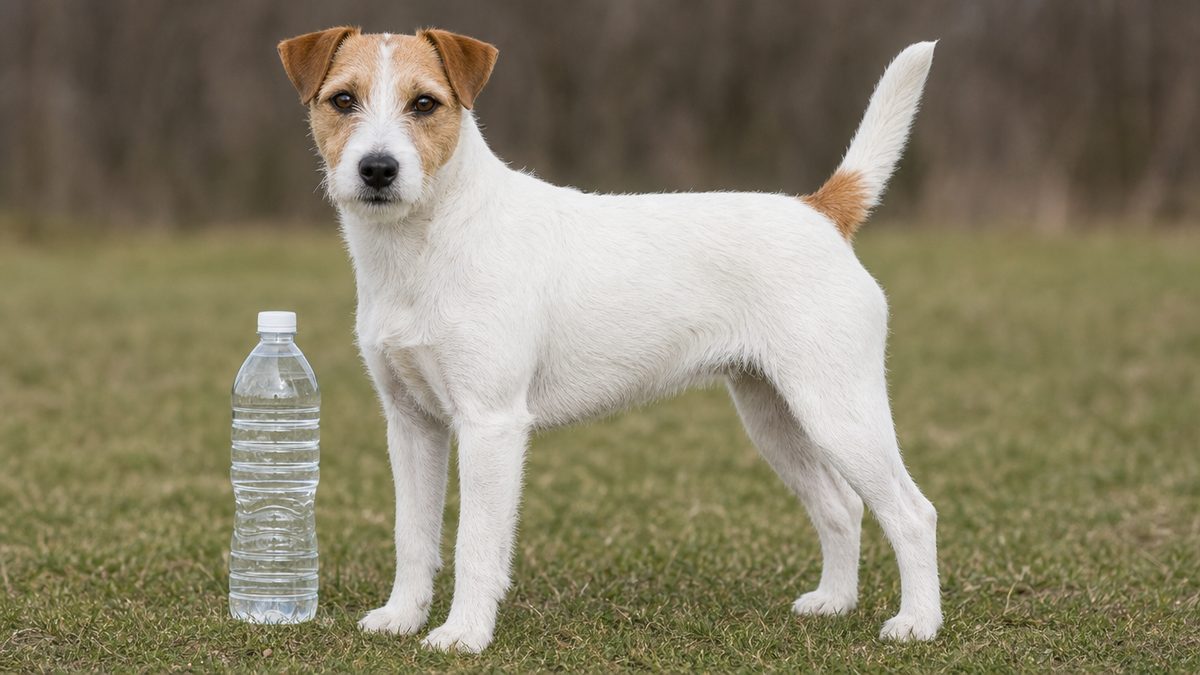
The Parson Russell Terrier is a white-bodied British working terrier bred to go to ground after fox, standing at an ideal 36 cm at the withers for dogs and 33 cm for bitches under both FCI Standard 339 and The Royal Kennel Club's standard. It is the tall, leggy one of the three breeds that share the Russell name, and that height is the whole point of the breed.
The FCI classifies it in Group 3 Terriers, Section 1, Large and medium sized Terriers, with working trial optional, origin Great Britain, and the valid standard dated 22 August 2017. Hold on to that section number, because the Jack Russell Terrier sits in Section 2, Small Terriers, of the same group, and the section is the registry telling you these are different sizes of dog.
The two features that define it, and both are working requirements
First, leg length. The Royal Kennel Club specifies that the length of forelegs should be slightly greater than depth of body. That single line is what gives the Parson its leggy, near-square outline and separates it on sight from the low, rectangular Jack Russell. A parson's terrier had to keep up with a horse and a pack of hounds across country before it ever went underground.
Second, the chest. The standard requires a chest of moderate depth, not extending below the point of the elbow, and capable of being spanned behind the shoulders by average sized hands. The FCI carries the same requirement. The AKC goes further and describes how to do it, telling a judge to span from behind, raising only the front feet from the ground, with hands tightly behind the elbows. A dog that cannot be spanned cannot follow a fox into an earth, which is why a barrel-chested terrier is a failed one whatever else it looks like.
| Attribute | Royal Kennel Club | FCI Standard 339 | American Kennel Club |
|---|---|---|---|
| Ideal height, dogs | 36 cm (14 in) | 36 cm | 14 in |
| Ideal height, bitches | 33 cm (13 in) | 33 cm | 13 in |
| Height limits | None stated; soundness and balance prevail | None stated | Disqualified under 12 in or over 15 in |
| Weight | Not stated | Not stated | Usually 13 to 17 lb in hard working condition |
| Proportion | Length slightly greater than height | Length slightly longer than height | Appears approximately square |
| Chest | Spannable, not below the elbow | Spannable behind the shoulders | Narrow, flexible, compressible, spannable |
| Coat | Rough, broken or smooth; harsh, flat, close, dense, good undercoat | As Royal Kennel Club | Rough, broken or smooth; harsh with undercoat |
| Tail | Docked or undocked, both described | Not reproduced here | Docked so the tip is approximately level to the skull |
Two rows in that table are genuine disagreements rather than wording. The AKC calls the dog approximately square while the British and FCI standards both say the length is slightly greater than the height Federation Cynologique Internationale. And the AKC is again the only one of the three to publish a weight, exactly as it is for every other breed on this site where the British and FCI texts stay silent.
Where the name came from, and why it changed twice
The Royal Kennel Club's own account is the cleanest. In 1819 the Reverend John Russell bought Trump, a white-bodied terrier with head and tail markings, who "produced a legacy of sporting terriers, and is regarded as the founder of the breed". Devotees later kept their own registry with recorded pedigrees and ran shows outside The Kennel Club's jurisdiction. Some split away to join the club, and in 1983 drew up a breed standard based on that of Arthur Heinemann, a disciple of Russell, with the stated aim of promoting the "genuine Jack Russell".
Then the naming. The Kennel Club formally recognised the breed in 1990 as the Parson Jack Russell Terrier, and in 1999 changed the name to Parson Russell Terrier "to differentiate the two breeds". That sentence is the registry stating, in its own words, that the rename existed precisely to stop the confusion this page is about.
The Royal Kennel Club standard opens its tail section with "Previously customarily docked" and then describes docked and undocked tails separately, while the AKC standard describes only a docked tail American Kennel Club. In India both are irrelevant, because docking is prohibited. This is the standard case of a breed standard written for one jurisdiction being read in another, and the legal position is set out in the adoption section below.
Three names, three registry breeds, three heights
Three separate registry breeds share the Russell name, they are held by different bodies under different names, and their height bands do not overlap. Sorting out which is which is the single most useful thing you can do before looking at an Indian price, because Indian listings use all three names for one dog.
Bonbeno built the map below by reading each recognising body's own index and each standard's own front matter, rather than by trusting any secondary summary. Every FCI number was read off the FCI's letter index, because fci.be resolves URLs on the trailing number and discards the breed name, so a guessed number returns a complete and entirely wrong standard.
| Body | Name it uses | Size it specifies | Where it files it |
|---|---|---|---|
| FCI | Parson Russell Terrier, Standard 339 | Ideal 36 cm dogs, 33 cm bitches | Group 3 Terriers, Section 1, Large and medium sized |
| FCI | Jack Russell Terrier, Standard 345 | 25 to 30 cm, about 1 kg per 5 cm of height | Group 3 Terriers, Section 2, Small Terriers |
| FCI | No breed called Russell Terrier | Not applicable | Absent from the R index entirely |
| Royal Kennel Club | Parson Russell Terrier | 36 cm dogs, 33 cm bitches | Terrier group; a vulnerable native breed since the 2025 figures |
| American Kennel Club | Parson Russell Terrier | Ideal 14 in; disqualified under 12 in or over 15 in | Terrier group |
| American Kennel Club | Russell Terrier | 10 to 12 in; disqualified under 10 in or over 12 in | Terrier group, and the same short dog the FCI calls a Jack Russell |
The controls, so the absences mean something
One row above is a negative claim and it needs proving rather than asserting. The FCI's R index returns eleven breeds, four of whose names begin "Russk": Russkaya Psovaya Borzaya 193, Russkiy Tchiorny Terrier 327, Russkiy Toy 352 and Russko-Evropeïskaïa Laïka 304. So the index is populated and working, and the absence of a "Russell Terrier" is a real absence rather than a failed page load.
The right reading of that absence is a naming convention, not a missing dog. The FCI files breeds under their original-language names, so the Parson appears under P and the Jack Russell under J, on indexes that likewise return full lists Federation Cynologique Internationale. The dog the AKC calls a Russell Terrier at 10 to 12 inches is the dog the FCI calls a Jack Russell Terrier at 25 to 30 cm. Two registries, opposite names, one animal.
| Breed and standard | Height band | In centimetres | Shape |
|---|---|---|---|
| Jack Russell Terrier, FCI 345 | 25 to 30 cm | 25.0 to 30.0 | Longer than high, rectangular |
| Russell Terrier, AKC | 10 to 12 in | 25.4 to 30.5 | Rectangular profile |
| Parson Russell Terrier, FCI 339 and RKC | Ideal 33 to 36 cm | 33.0 to 36.0 | Length slightly greater than height |
| Parson Russell Terrier, AKC | Ideal 13 to 14 in, DQ outside 12 to 15 in | 33.0 to 35.6, DQ outside 30.5 to 38.1 | Approximately square |
Read the middle column. The two short breeds occupy 25.0 to 30.5 cm and the Parson's ideal occupies 33.0 to 36.0 cm. There is a clear three-centimetre gap between them, which is why measuring an adult settles the question and why a puppy cannot.
Ask the seller to measure both adult parents at the withers with the dog standing square. Between 25 and 30 cm you are looking at a Jack Russell Terrier as the FCI defines it. At 33 to 36 cm you are looking at a Parson Russell Terrier. Between 30 and 33 cm you have a dog no show registry will place cleanly, which matters not at all for a pet and matters enormously if you have been quoted a champion-bloodline premium for it.
One more source is worth naming, because it is the page an Indian buyer is most likely to meet. Purina India publishes a Parson Russell Terrier entry whose "Also known as" line reads "Parson, Parson Jack Russell Terrier, Jack Russell Terrier";. A global brand's Indian breed library treats the two registry breeds as one name in 2026, twenty-seven years after The Kennel Club renamed the breed specifically to separate them. That is not a criticism of Purina so much as a measure of how deep the confusion runs.
The American Kennel Club's own breed pages make the split visible from the other direction. It publishes the Parson Russell Terrier and the Russell Terrier as two separate breeds with two separate standards and two separate disqualification ranges American Kennel Club, which is the same distinction the FCI draws between Standard 339 and Standard 345 under different names.
The Parson just became a vulnerable native breed, while the Jack Russell hit a decade high
The Parson Russell Terrier registered 292 puppies in the UK in 2025, which is below The Royal Kennel Club's vulnerable threshold of 300 a year, so the breed now sits in the vulnerable native breed list. In the same year the Jack Russell Terrier registered 503, its highest figure of the decade. Two breeds that most people treat as one name are moving in opposite directions.
The club defines the bands in its own words: the vulnerable native list covers "breeds with fewer than 300 registrations a year" and the at-watch list covers "breeds with between 300 and 450 registrations a year". At 292 the Parson has crossed from one into the other, and its breed page now prints "Vulnerable native breed: Yes";.
Bonbeno checked the figure across the three documents the club publishes, because its online table carries documented defects on other breeds. In the copy read on 3 September 2026 the Bullmastiff and Bull Terrier (Miniature) rows are transposed in both 2016 and 2025, and the Manchester Terrier's 2019 cell reads 243 on the web against 133 in both PDFs. For the Parson, all three documents agree exactly.
| Document | 2016 | 2017 | 2018 | 2019 | 2020 | 2021 | 2022 | 2023 | 2024 | 2025 |
|---|---|---|---|---|---|---|---|---|---|---|
| Online vulnerable native breeds table | 377 | 306 | 360 | 311 | 440 | 451 | 367 | 368 | 334 | 292 |
| 10-yearly Terrier group PDF | 377 | 306 | 360 | 311 | 440 | 451 | 367 | 368 | 334 | 292 |
| 10 year Vulnerable Breed Stats PDF | 377 | 306 | 360 | 311 | 440 | 451 | 367 | 368 | 334 | 292 |
The quarterly table then corroborates 2025 from its own arithmetic. It gives the Parson 78, 62, 59 and 93 across the four quarters of 2025 against a printed annual total of 292, and 78 plus 62 plus 59 plus 93 is 292. The same document carries the most current reading available: 80 in the first quarter of 2026 and 66 in the second, so 146 in the first half of 2026, which is close to the 2025 run rate rather than a further collapse.
The divergence, in one table
| Year | Parson Russell Terrier | Jack Russell Terrier |
|---|---|---|
| 2016 | 377 | 150 |
| 2017 | 306 | 136 |
| 2018 | 360 | 205 |
| 2019 | 311 | 266 |
| 2020 | 440 | 391 |
| 2021 | 451 | 355 |
| 2022 | 367 | 403 |
| 2023 | 368 | 458 |
| 2024 | 334 | 318 |
| 2025 | 292 | 503 |
| Decade total | 3,606 | 3,185 |
The crossover happens in 2022 and widens sharply in 2025. Over the decade the Parson is still ahead on total registrations, 3,606 against 3,185, but the direction of travel has reversed completely. The obvious explanation is the popular name: the Jack Russell was only given official Kennel Club recognition in Britain relatively recently, and it carries the name the public already knows.
The Royal Kennel Club's Good Practice health list for the Parson opens with prioritising genetic diversity, before either DNA test. That ordering is the club signalling that the gene pool is the first-order concern for this breed now. Its own guidance puts an effective population size above 100 in the sustainable band, 50 to 100 in the band where diversity is steadily lost, and below 50 at high risk, and the peer-reviewed analysis covering all 215 club breeds is the reference work behind those bands.
All four documents used above come from a single Royal Kennel Club index page, which is worth bookmarking if you want to re-run this check when the 2026 figures land. The quarterly tables update through the year and the ten-yearly tables roll forward each January, so the vulnerable-band question for this breed will be settled again in a few months.
Parson Russell Terrier price in India
No Indian seller advertises a Parson Russell Terrier price under that name, so every figure you will be quoted is a Jack Russell Terrier price covering the whole Russell group. Those run Rs 65,000 to Rs 1,20,000 across three quality tiers, and the tiers are not distinguished by any measurement the seller publishes.
Start with what the Indian first page for this exact term actually contains, read page by page on 3 September 2026. Six of the ten results are about a different breed.
| Position | Domain | Breed it is about | Currency it prices in |
|---|---|---|---|
| 1 | supertails.com | Jack Russell Terrier | Rupees |
| 2 | facebook.com | Jack Russell Terrier | Rupees |
| 3 | mrnmrspet.com | Jack Russell Terrier | Rupees |
| 4 | ragoskennel.in | Jack Russell Terrier | Not stated |
| 5 | dogbreedslist.info | Parson Russell Terrier | US dollars |
| 6 | dogsindia.com | Jack Russell Terrier | Not stated |
| 7 | facebook.com | Parson Russell Terrier | US dollars |
| 8 | puppiezo.com | Jack Russell Terrier | Rupees |
| 9 | petfinder.com | Parson Russell Terrier | None, US adoption page |
| 10 | wamiz.co.uk | Parson Russell Terrier | Pounds sterling |
That is the finding in one table. Every result priced in rupees is about the Jack Russell Terrier, and every result about the Parson is priced in a foreign currency or not priced at all. Nobody is selling this breed in India under its own name, and nobody writing about it in India is quoting an Indian price.
What the rupee prices actually describe
Mr n Mrs Pet publishes the clearest breakdown, and its own numbers give the game away.
| Tier | Price | Stated height | Stated weight |
|---|---|---|---|
| Basic Quality | Rs 65,000 to Rs 80,000 | 23 to 38 cm | 6 to 8 kg |
| KCI Registered | Rs 80,000 to Rs 1,00,000 | 23 to 38 cm | 6 to 8 kg |
| Champion Bloodline | Rs 1,00,000 to Rs 1,20,000 | 23 to 38 cm | 6 to 8 kg |
Two things are wrong with that table and both are checkable against the standards.
- The height range swallows all three breeds. 23 to 38 cm covers the Jack Russell Terrier's 25 to 30 cm, the AKC Russell Terrier's 25.4 to 30.5 cm and the Parson's ideal 33 to 36 cm in one band, and 38 cm sits above the FCI Parson's ideal male height of 36 cm Federation Cynologique Internationale. The seller is describing a category, not a breed.
- The height and weight cannot both be right. A weight of 6 to 8 kg matches the FCI Jack Russell's rule of about 1 kg per 5 cm of height and the AKC Parson's 13 to 17 lb American Kennel Club. A correctly built 38 cm terrier does not weigh 6 kg. The spec card pairs the tallest breed's height ceiling with the smallest breed's weight.
Note also that the height is identical across all three tiers while the price varies by up to Rs 55,000. Whatever the extra money buys, the seller's own published measurements do not describe it. The KCI-registered tier is the honest one of the three, because pedigree paperwork is a real, verifiable thing; "champion bloodline" at a Rs 20,000 premium over it is not defined anywhere on the page.
Before any money moves, ask which of the three breeds the pedigree names, and ask to see it. A KCI pedigree answers to FCI nomenclature, so it will say either Parson Russell Terrier, meaning FCI 339, or Jack Russell Terrier, meaning FCI 345. If the paperwork says Jack Russell and you were promised a Parson, you are not being sold what you asked for, whatever the puppy looks like at eight weeks.
Monthly cost of keeping a Parson Russell Terrier in India
A Parson Russell Terrier is one of the cheaper imported breeds to run in India, because almost every recurring Indian cost is weight-banded and a 6 to 8 kg terrier sits near the bottom of every band. Bonbeno prices this section from named Indian sellers' live pages, read on 3 September 2026.
Parasite control, the largest predictable recurring line
A 6 to 8 kg dog takes the NexGard Spectra 3.5 to 7.5 kg pack, which is Rs 2,756 for three tablets against an MRP of Rs 2,812, so Rs 919 a month. That single product covers ticks, fleas, mites, lice, heartworm and intestinal worms in one monthly chew, which in an Indian tick-pressure environment is the practical reason to use it rather than a spot-on. It requires a prescription.
For scale, the same product for a 30 to 60 kg dog is Rs 3,446 for three, or Rs 1,149 a month. So a seven-fold difference in bodyweight costs about 25 percent more a month in parasite cover, which is worth knowing if you are weighing a terrier against a large breed on running costs. Parasite control is not where size hurts you. Food is.
The product description on the 3.5 to 7.5 kg listing reads "Nexgard Spectra Extra-Small puppy - 2kg to 3.5kg contains in each tab 9.375mg afoxolaner and 1.875mg milbemycin oxime", which is the composition for a different weight band from the one the page is selling. Read the band printed on the carton and weigh your dog. An underdosed afoxolaner tablet is a wasted month of cover, and an overdosed one is a veterinary question.
Vaccination, priced from a real clinic chain
| Item | Price |
|---|---|
| Puppy course, seven visits from day 30 to day 120 | From Rs 6,499 |
| Annual booster course | From Rs 3,199 |
| Anti-rabies, single dose | Rs 699 |
| Puppy DP | Rs 849 |
| 9-in-1 (DHPPiL) | Rs 899 |
| Canine Corona | Rs 899 |
| Kennel Cough | Rs 1,349 |
Those are one chain's promotional floors, not a national average, and Vetic quotes different course prices on different city pages on the same day while holding the per-vaccine prices constant. The per-vaccine column is the durable layer. Always check which city page a figure came from before comparing it with another.
The realistic shape of a monthly bill
- Parasite control, Rs 919 a month, sourced and weight-correct.
- Vaccination, from Rs 6,499 in year one and Rs 3,199 a year thereafter.
- Food, modest for a 6 to 8 kg dog, and the line where a terrier genuinely beats a large breed.
- Grooming, low. The Royal Kennel Club specifies once a week and a short coat, so most owners groom at home.
- Eye and neurological screening for the parents at purchase, which is a one-off cost carried by the breeder and the single most valuable thing you can pay for in this breed.
Bonbeno publishes no all-in monthly cost total. Indian breed sites print running-cost tables as shared template rows repeated across unrelated breeds, and a figure without a named seller and a date is not a figure.
Can a Parson Russell Terrier handle the Indian climate
Yes, in most Indian cities, with cool-hour exercise and constant shade and water. This is one of the better-suited imported breeds for India, and the reason is physical: a 6 to 8 kg dog with a short harsh coat sheds heat far more readily than a heavy double-coated breed of five times the mass.
Bonbeno queried NASA POWER by explicit latitude and longitude for the breed's home ground in Devon and for six Indian cities, echoing the elevation of every grid cell returned, and computed mean daily maxima from the daily series rather than from a period extreme.
| Point | Cell elevation | Annual mean temp | Annual mean RH | Hottest month mean daily max | Peak monthly wet bulb |
|---|---|---|---|---|---|
| Devon (homeland) | 132.91 m | 10.28 C | 88.11% | 19.60 C (Jul) | 14.10 C |
| Bengaluru | 841.72 m | 23.74 C | 67.94% | 36.31 C (Apr) | 21.86 C |
| Pune | 635.99 m | 23.86 C | 66.80% | 38.56 C (Apr) | 22.97 C |
| Chennai | 48.95 m | 27.95 C | 72.39% | 36.60 C (Apr) | 26.11 C |
| Mumbai | 97.15 m | 26.77 C | 67.39% | 39.50 C (Apr) | 25.77 C |
| Kolkata | 7.35 m | 25.81 C | 73.93% | 39.10 C (Apr) | 27.09 C |
| Delhi | 206.37 m | 25.60 C | 45.56% | 41.92 C (May) | 26.50 C |
The gap between Devon's July mean daily maximum of 19.60 C and Delhi's May figure of 41.92 C is 22.32 C, so nobody should pretend this is a native Indian dog. What makes it workable is that the breed brings none of the compounding factors. It is not brachycephalic, it is not heavy, and it does not carry an insulating double coat of the kind that traps heat against the skin.
The humidity worry is misplaced, and the homeland figure shows why
Devon runs 88.11 percent annual relative humidity, higher than every Indian city in the table: Kolkata 73.93, Chennai 72.39, Bengaluru 67.94, Mumbai 67.39, Pune 66.80 and Delhi 45.56. This breed comes from a damp place. Damp air is not the problem; wet bulb load is, and that runs 14.10 C at home against 27.09 C in Kolkata.
Bengaluru and Pune are the mildest of the Indian options here, at peak wet bulbs of 21.86 C and 22.97 C, and a small short-coated terrier manages those comfortably with sensible timing.
What the literature does and does not let us say
The largest UK study of heat-related illness found that dogs at or above their breed and sex mean bodyweight carried raised odds of exertional heat-related illness. That is the transferable factor here, and it argues for keeping a Parson lean rather than for avoiding the breed. What cannot be done is to quote a breed-specific odds ratio, because the Parson is not among the breeds that study modelled, and importing an odds ratio onto a breed the authors did not study would be fabrication with a citation attached.
- Exercise at the cool ends of the day from March to June, and treat the middle of the day as unusable in Delhi, Kolkata and Mumbai.
- Check the pavement with your palm. A dog 36 cm tall walks with its whole body close to a hot surface.
- Keep the dog lean, which is the one heat factor the literature genuinely supports for this breed.
- Watch for exertional heat stress specifically, because a terrier will keep working past the point of sense. The risk here is a dog that will not stop, not a dog that cannot cope.
- Do not clip the coat. The standard says the prepared coat should appear natural and never clipped, and the harsh outer coat plus undercoat is a barrier against sun rather than a blanket.
Three out of five for heat tolerance is a genuinely middling score and it is meant literally. A Parson is far better suited to Chennai than an Otterhound, a Saint Bernard or a Husky, and far worse suited than an Indian Pariah Dog. It is also materially better off than a Pug, which brings a brachycephalic airway to the same climate.
Temperament and household fit
The Parson Russell Terrier is bold and friendly by its own breed standard, and confident, energetic and happy by the Royal Kennel Club's characteristics clause. It is also a working earth dog with a serious prey drive, and the gap between those two descriptions is where most owner disappointment lives.
The standard's own wording is worth quoting because it is unusually plain about the job. The breed is "originally a terrier bred to work fox, a confident, energetic and happy dog that has the ability and conformation to go to ground";. A dog selected to enter an earth alone and face a fox in the dark is not selected for caution.
Purina India's page gives the honest version of the family question: the breed is good with children but "does not tolerate rough handling", and gardeners "will soon discover that digging is one of this dog's favourite pastimes";. Both of those are breed-typical rather than faults.
What the registry says the dog needs
| Characteristic | Royal Kennel Club entry |
|---|---|
| Size | Small |
| Exercise | Up to 1 hour per day |
| Size of home | Small house |
| Size of garden | Small or medium garden |
| Town or country | Either |
| Grooming | Once a week |
| Coat length | Short |
| Sheds | Yes |
| Lifespan | Over 12 years |
| Vulnerable native breed | Yes |
Compare that with the Otterhound's entry on the same site, which specifies a large house, a large garden, country living and more than two hours a day. On paper the Parson is an Indian apartment dog and the Otterhound is not. The qualifier is that the Royal Kennel Club's hour is a physical minimum, and a bored terrier is a destructive one.
Who this breed suits in India
- Good fit. An active household in any Indian city, a family that wants a compact dog with real personality, an owner who enjoys training, and a home with secure boundaries.
- Poor fit. A quiet household, a home with free-roaming rabbits, hamsters or cats, an owner who wants a placid lapdog, and any household that leaves the dog alone all day with nothing to do.
- Watch item. Street dogs. An independent terrier that offers to take on a much larger dog is a genuine safety problem in Indian neighbourhoods, and it is a management job rather than a training one.
This breed was bred to go to ground. Digging is the behaviour it was selected for, and it is far easier to give the dog a permitted place to dig than to extinguish the drive. Owners who treat it as disobedience end up in a fight they cannot win against several centuries of selection.
Training a working terrier
Train a Parson Russell Terrier early, short and often, and build recall before the prey drive switches on at around five to six months. This is a quick, biddable dog that learns fast and then decides for itself whether the lesson applies, which is a different problem from a slow learner.
The breed's own history explains the default. A terrier that went to ground after fox worked out of sight and out of earshot of its handler, making its own decisions underground. That produces a dog with the intelligence to learn anything and the independent streak to weigh whether obeying is worth it.
Four things that reliably go wrong
- Recall around small animals. The chase is self-rewarding and it out-competes food. Build recall in a fenced space first, and treat off-lead freedom near street cats or squirrels as a privilege that has to be re-earned in each new environment.
- Barking. Terriers alert. In a flat, that is a neighbour problem within a week. Manage the triggers rather than correcting the dog, and note that de-barking is illegal in India, covered below.
- Digging. Selected for, not trained in. Give it a sanctioned digging spot.
- Dog-to-dog confidence. A bold 7 kg terrier that offers to take on a 25 kg street dog is in real danger. This is the single most important management issue for the breed in Indian conditions.
| Skill | Start | Realistically reliable by |
|---|---|---|
| Name response indoors | Week 1 home | 2 to 3 weeks |
| Sit, down, settle | Week 1 home | 3 to 5 weeks |
| Toilet training | Week 1 home | 3 to 5 months |
| Loose-lead walking | Month 2 | 5 to 9 months |
| Recall in a fenced area | Month 2 | 6 to 10 months |
| Recall past a cat or squirrel | Month 3 | Manage for life; never fully assume it |
| Settling when the doorbell rings | Month 2 | 8 to 14 months |
The Prevention of Cruelty to Animals (Dog Breeding and Marketing) Rules 2017, Second Schedule Part II paragraph 6(8), states there shall be no tail docking, ear cropping, de-barking, de-clawing, branding, dyeing or any change of appearance by artificial means. Both of the shortcuts an owner might be tempted by for a vocal, traditionally docked terrier are named in the same sentence, and neither is a grey area.
How much exercise a Parson Russell Terrier actually needs
The Royal Kennel Club specifies up to an hour a day for this breed, and that hour is the physical floor rather than the whole requirement. A working terrier that gets its hour and no mental work is still a bored terrier by evening.
Purina's advice for the breed is blunt about the practical consequence: the dog "should have lots of exercise" and likes a long walk where it can get off the lead and pick up a scent, but you should "work hard on a reliable recall before letting him off-lead, as the Parson Russell Terrier is prone to 'selective deafness'". That is a British source describing British fields. In an Indian city the off-lead half of that advice mostly does not transfer, so the mental load has to come from somewhere else.
- Split the hour into two cool-hour sessions from March to June, which suits the dog and suits the climate table above.
- Add scent games and food puzzles. Twenty minutes of nose work tires a terrier more than twenty minutes of pavement walking, and it works indoors during a heatwave.
- Use a long line rather than off-lead in any unfenced Indian space. This is a recall-unreliable breed near prey, by design.
- Terrier sports suit it exceptionally well. Agility and flyball are built for a dog with this speed-to-size ratio, and both are available in the larger Indian metros.
- Do not over-exercise the puppy. Growth plates matter in a small breed too, and the first year is covered below.
What happens without it
The failure mode is specific and predictable. An under-exercised Parson digs, barks, chews and starts to patrol. None of those is a temperament fault and all of them are what the dog does with capacity it was not allowed to spend. The Royal Kennel Club's hour is achievable in any Indian city, which is exactly why this breed is a more realistic Indian choice than most imports on this site.
A Parson had to keep up with horses and a pack of hounds across country, then go to ground. At 36 cm and 6 to 8 kg it carries a working dog's stamina in an apartment-sized body. That combination is the breed's real selling point in India, and it is also the reason an hour of lead walking alone does not satisfy it.
Grooming, and the coat variety nobody explains at the point of sale
Groom a Parson Russell Terrier once a week, which is the Royal Kennel Club's own figure for the breed. The coat comes in three varieties and the standard treats all three as equally correct, so the variety you are offered is a preference rather than a quality grade.
The Royal Kennel Club's coat clause covers all three in one sentence: "Whether rough, broken or smooth naturally harsh, flat, straight, close and dense with good undercoat. Weather resistant. Belly and undersides coated. Skin thick and loose. The prepared coat should appear natural, never clipped".
Two details in that sentence matter for India. Every variety carries an undercoat, including the smooth, so all three shed and none is low-maintenance in the sense buyers usually mean. And the skin is specified as thick and loose, which is a working requirement against bites underground rather than a cosmetic point.
| Variety | What it looks like | Indian grooming implication |
|---|---|---|
| Smooth | Short, close, harsh, with undercoat | Weekly brush; sheds visibly onto furniture |
| Broken | Between smooth and rough, usually with slight facial furnishings | Weekly brush plus occasional hand-tidying |
| Rough | Longer harsh outer coat over undercoat | Weekly brush; hand-strip rather than clip |
What to do, and the one thing not to
- Brush weekly to the skin, not across the surface, so the dead undercoat comes out rather than matting near the skin.
- Hand-strip a rough or broken coat rather than clipping it. The standard says the prepared coat should appear natural and never clipped, and clipping a harsh coat softens the texture permanently.
- Dry thoroughly after any bath, particularly through a humid monsoon, because a damp undercoat close to thick loose skin is where hot spots begin.
- Check the ears weekly. The ears drop forward, so they are less ventilated than a prick ear even though they are small.
- Check the feet and skin after every off-lead session, because a dog that goes into undergrowth collects ticks and grass seeds.
For this breed, the routine check that has the highest payoff is not the coat, it is the eyes. Primary lens luxation presents suddenly and is painful, and it is the condition with the highest carrier rate on the Kennel Club's own register. A cloudy, red or obviously painful eye in a Russell-group terrier is an emergency, not a wait-and-see. The health section below sets out the numbers.
Health, and the three DNA tests that define this breed
The Parson Russell Terrier is a structurally sound small dog with three DNA-testable inherited conditions, and the Kennel Club publishes a per-dog test register for each of them. Bonbeno counted all three: 688 primary lens luxation results, 495 late onset ataxia results and 303 spinocerebellar ataxia results The Royal Kennel Club The Royal Kennel Club.
Those registers are the most useful health data available for this breed anywhere, because they are counts of real tested dogs rather than estimates, and every one of them balances exactly.
| Condition | Dogs on the register | Clear | Carrier | Affected | Carrier rate |
|---|---|---|---|---|---|
| Primary lens luxation (PLL) | 688 | 504 | 181 | 3 | 26.3% |
| Late onset ataxia (LOA, CAPN1) | 495 | 408 | 84 | 3 | 17.0% |
| Spinocerebellar ataxia (SCA, KCNJ10) | 303 | 291 | 12 | 0 | 4.0% |
Every row adds up: 504 plus 181 plus 3 is 688, 408 plus 84 plus 3 is 495, and 291 plus 12 is 303. Read those carrier rates as describing tested breeding stock, which is a self-selected group, not a random sample of the breed.
The primary lens luxation figure is corroborated from the other side of the Atlantic. The Orthopedic Foundation for Animals holds its own Parson PLL row at 24.6 percent carrier across 844 evaluations, with 74.1 percent clear and 1.3 percent affected. Set that beside the Kennel Club's 26.3 percent across 688 dogs and you have two independent registries, two continents and two testing populations landing 1.7 points apart. They do not match exactly, and that is the point. Two sources agreeing to the decimal would be evidence they were copying each other; agreeing at the edges is what genuine corroboration looks like.
Two ataxias, two genes, and two papers that disagree
This is where the breed gets genuinely interesting, and where most breed pages stop at "the breed can have ataxia".
Forman, De Risio and Mellersh identified the cause of spinocerebellar ataxia in the Parson Russell Terrier as a missense mutation in CAPN1, substituting cysteine for tyrosine at residue 115 of the calpain 1 protein, at a residue forming part of the catalytic triad that makes the enzyme work. Clinically, signs usually become notable between 6 and 12 months of age, with symmetric ataxia most evident in the pelvic limbs, progressive truncal ataxia and impaired balance, and at later stages ambulation becomes difficult, with owners often electing to euthanise on welfare grounds.
Then Gast and colleagues ran a genome-wide association study on German Parsons and got a different answer. Their strongest signal sat on chromosome 38 at KCNJ10, not CAPN1. Testing 77 German Parsons plus 9 Jack Russells and 179 controls from 20 breeds, they found 17 of 77 (22.1 percent) homozygous for the mutant KCNJ10 allele and 22 of 77 (28.6 percent) heterozygous, while every case and control they genotyped carried the wild-type CAPN1 allele.
Gast and colleagues found that 16 of 21 ataxia cases co-segregated with the KCNJ10 mutation, and that three cases carried the non-mutant genotype and could not be explained. Their own conclusion is the important one: "Breeders have to be aware that DNA-testing for hereditary ataxia in PRT and JRT does not capture all cases of hereditary ataxia in these dog breeds. At least one further form of hereditary ataxia not yet resolved by a mutation may occur";. A clear DNA result on both parents lowers the risk. It does not remove it.
Bonbeno publishes that disagreement rather than resolving it, because it is not ours to resolve. Two peer-reviewed teams studied two national populations and found two different genes doing the damage. The practical reading is that the British and German Parson populations may carry different variants at different frequencies, which is why the Kennel Club lists the LOA test under Good Practice and the SCA test under Best Practice, and asks for both.
Joints and hearing, from OFA
On the orthopaedic side this is a sound breed, and the numbers say so. In OFA's cumulative tables the Parson runs 7.2 percent hip dysplastic across 139 evaluations and 3.6 percent abnormal on 921 patella evaluations, against a Labrador Retriever control from the same tables at 11.3 percent hip dysplastic and 4.3 percent patella abnormal. On hearing, 1,087 BAER evaluations return 98.4 percent normal and 1.5 percent abnormal, which is a large denominator for a breed this size and a good result.
Note the denominators, though. 139 hip evaluations is a small sample and the figure should move as more accumulate, while 921 patella and 1,087 BAER results are substantial. Publish the sample size beside the percentage, always.
Lifespan
The Royal Kennel Club gives the breed a lifespan of over 12 years, which is long and consistent with small working terriers generally. Bonbeno does not print a life-table median here. The widely-quoted UK life-table figure for Russell terriers belongs to the Jack Russell Terrier, a separate registry breed with its own standard, and attaching it to the Parson would be exactly the conflation this page exists to prevent. Our Jack Russell Terrier page carries that figure where it belongs.
The Dog Breeding and Marketing Rules 2017, Second Schedule Part III paragraph 8(10), requires breeding dogs to have been tested for genetic defects "including hip dysplasia, progressive retinal atrophy, night blindness, hypothyroidism, entropion, ectropion" and several jaw and dentition faults. Primary lens luxation is not named, but the operative word is "including", so the list is illustrative rather than closed. An Indian breeder of this breed who has not screened for PLL and ataxia is not meeting the spirit of the clause, whatever the letter of it says.
Feeding a small working terrier in India
Feed a Parson Russell Terrier as a small, high-energy dog: a small-breed formulation, measured portions, and body condition checked by hand rather than by the scale. The breed's own metabolism is the constraint, not its size.
Purina's guidance for the breed sets out the physiology plainly: small dogs have a fast metabolism and burn energy at a high rate, while small stomachs mean they must eat little and often, so small-breed foods carry appropriate nutrient levels and a smaller kibble size that encourages chewing. For a working terrier at 6 to 8 kg that is the whole brief.
- Use a small-breed formulation with an appropriate kibble size, rather than a general adult food.
- Split the day's ration into two or three meals, which suits a small stomach and a fast metabolism.
- Keep the dog lean. This is the one heat factor the veterinary literature genuinely supports for this breed, since dogs at or above their breed mean bodyweight carried raised odds of exertional heat-related illness.
- Weigh the food. At 7 kg a dog's daily ration is small enough that eyeballing it produces a meaningful error, and terriers gain weight quietly under a harsh coat.
- Use food for training. A healthy working terrier will work all day for kibble, so take the training allowance out of the daily ration rather than adding to it.
On Indian availability the constraint is choice rather than supply. Small-breed formulations are stocked in every Indian metro and online. Bonbeno reviews Indian pet food separately and tests products before publishing a verdict; see our testing method for what a Bonbeno food review does and does not claim.
Feeding amounts depend on the individual dog's age, weight, body condition and activity, and a working terrier's needs swing widely between a busy week and a quiet one. Set them with a registered veterinarian who has examined your dog, and re-check body condition every month rather than every year.
Parson Russell Terrier puppy, month by month through the first year
A Parson Russell Terrier puppy reaches most of its adult height by around eight months and its adult 6 to 8 kg not long after, so the first year is short on growth management and long on behaviour. The two decisions that matter most are made before you buy and before five months.
Bonbeno publishes no month-by-month weight chart for this breed, because no published growth dataset exists for the Parson specifically and every chart circulating online is extrapolated from other small terriers. What follows is the schedule of decisions, which is the part that changes outcomes.
- Before you buy. Get both parents' PLL and ataxia DNA results and confirm them against the Kennel Club's published registers, and measure both parents at the withers so you know which of the three Russell breeds you are buying. These are the two decisions that cannot be made later.
- 8 to 12 weeks. Home, name, house routine, handling. Indian law prohibits the sale of pups under eight weeks under Rule 8(1)(a) of the Dog Breeding and Marketing Rules 2017. Vaccination starts; Vetic's published puppy schedule runs seven visits from day 30 to day 120.
- 3 to 4 months. The socialisation work that decides whether you get a confident terrier or a reactive one. Introduce cats, traffic, lifts, other dogs and Indian street noise now, under control.
- 4 to 6 months. Prey drive switches on. Recall training moves from a game to a priority, and off-lead freedom in unfenced spaces stops. Build the long-line habit before you need it.
- 6 to 9 months. Adolescence. Trained behaviour wobbles and boundary-testing peaks. Digging and barking usually start here if the exercise plan is short.
- 9 to 12 months. Physically adult, mentally not. Hold the training line. Discuss sterilisation timing with your vet.
- From 12 months. Adult load, and the point at which terrier sports become genuinely worthwhile.
Primary lens luxation typically presents in adulthood rather than puppyhood, but every owner of a Russell-group terrier should know the signs from day one: a suddenly cloudy or blue-tinged eye, obvious pain, squinting, redness or a dog rubbing at one eye. It is an emergency and vision outcomes depend on hours, not days. With 26.3 percent of tested Parsons carrying the variant on the Kennel Club's own register, this is the one to have a plan for.
Parson against the two breeds it is confused with, and the ones India cross-shops
The comparison that matters for this breed is not against other terriers, it is against the two dogs that share its name. Get that right and the rest of the decision is straightforward.
| Measure | Parson Russell Terrier | Jack Russell Terrier | Russell Terrier (AKC) |
|---|---|---|---|
| Held by | FCI 339, RKC, AKC | FCI 345, RKC, UKC | AKC only, under this name |
| Ideal height | 36 cm dogs, 33 cm bitches | 25 to 30 cm | 10 to 12 in (25.4 to 30.5 cm) |
| FCI section | Group 3, Section 1, large and medium | Group 3, Section 2, small | Not held under this name |
| Silhouette | Length slightly greater than height | Longer than high, rectangular | Rectangular profile |
| Weight guide | 13 to 17 lb, AKC only | About 1 kg per 5 cm of height | Proportionate to height |
| UK registrations 2025 | 292, now a vulnerable native breed | 503, a decade high | Not registered under this name in the UK |
| What India sells it as | Almost never by this name | This is the name used | Rarely used |
The row that decides a purchase is the last one. In India the market name is Jack Russell Terrier, and it is applied to dogs across the whole height range. If you want the taller, leggier Parson specifically, you have to ask for it by FCI number and measure the parents, because the listing will not tell you.
Against the small breeds Indian buyers actually cross-shop
| Against | What the Parson gives you | What you give up |
|---|---|---|
| Pug | A normal airway, real heat tolerance, athleticism and a lifespan the Royal Kennel Club puts at over 12 years | Placidity. A Pug will not dig your planters or chase a street cat |
| Shih Tzu | Exercise capacity, a weekly brush instead of daily coat work, and a working dog's stamina | Quiet. A Parson alerts, and a flat hears it |
| Indian Spitz | A published breed standard, three DNA tests and an international screening scheme behind the breed | Price, availability and a century of breeding in Indian conditions |
| Jack Russell Terrier | Height and leg length, and a breed whose UK numbers make it a conservation choice | Nothing much. They are close relatives with near-identical standards apart from size |
| Border Terrier | Speed and a squarer, leggier build | A slightly calmer default and a less intense prey drive |
| An adopted Indian street dog | Predictable adult size and coat, and a documented health screening list | Cost, since adoption is free, plus heat adaptation and hybrid vigour |
One honest note on that table. The Parson against the Jack Russell is not a quality comparison and Bonbeno is not recommending one over the other. They are two sizes of the same working type with near-identical standards apart from height and proportion. The only wrong answer is not knowing which one you bought.
There is one genuine argument for choosing the Parson specifically. At 292 UK registrations in 2025 it has crossed into the Royal Kennel Club's vulnerable native breed band, while the Jack Russell Terrier is at a decade high of 503 The Royal Kennel Club. If you are choosing between two very similar dogs and want the choice to count for something, the numbers point one way.
Mistakes Indian buyers make with this breed
Almost every mistake with this breed is made at the point of purchase, and almost all of them come from one root cause: three registry breeds share a name and the Indian market uses the most famous of the three for all of them.
- Buying on the name instead of the pedigree. Six of the ten Indian results for the Parson term are about the Jack Russell Terrier. Ask which breed the pedigree names and verify it, because FCI 339 and FCI 345 are different breeds with different heights.
- Trusting a seller's stated height range. One major Indian seller applies 23 to 38 cm to all three of its quality tiers. That range covers all three Russell breeds at once and tells you nothing about the dog in front of you.
- Paying a champion-bloodline premium for an undefined term. The same seller's tiers run Rs 65,000 to Rs 1,20,000 while publishing identical heights and weights for every tier. The KCI-registered tier at least corresponds to a verifiable document; the tier above it does not.
- Assuming the height and weight on a spec card are consistent. A stated 38 cm ceiling with a 6 to 8 kg weight is not a describable dog, because the weight belongs to the smaller breeds and the height ceiling sits above the Parson's ideal.
- Skipping the DNA tests because the dog looks healthy. Primary lens luxation and both ataxias are late-onset. A healthy-looking eight-week puppy tells you nothing, and 26.3 percent of tested Parsons carry the PLL variant on the Kennel Club's own register.
- Treating a clear DNA result as a guarantee. It is not. The German study found three ataxia cases that carried neither known mutation and concluded that DNA testing does not capture all cases.
- Accepting a docked puppy. Tail docking is prohibited in India, so a docked Parson was either imported or illegally altered.
- Reading a foreign price as an Indian one. The only on-breed prices on the Indian first page are in US dollars and pounds sterling. Converting one yourself manufactures a figure no seller ever quoted.
- Underestimating the prey drive in an Indian neighbourhood. A bold 7 kg terrier that challenges a street dog is the most likely serious injury this breed will face here, and it is a management problem, not a training one.
One: which breed does the pedigree name, and can I see it? Two: what are both parents' PLL, LOA and SCA DNA results, and can I check them against the Kennel Club's published registers? Three: how tall are both parents at the withers, measured with the dog standing square? A seller who answers all three is worth dealing with. A seller who cannot answer the first is not selling what you think.
Sourcing responsibly, the law, and the adoption route
Buy from a breeder who tests, or adopt, and in either case establish which of the three Russell breeds you are getting before money moves. This section sets out what Indian paperwork proves, what Indian law requires, and why adoption is a genuinely strong option for this breed specifically.
What registry recognition and KCI papers actually prove
The Kennel Club of India is India's national purebred registry and India's FCI member body, so an Indian pedigree answers to FCI nomenclature. That is useful here in a way it is not for most breeds, because FCI nomenclature forces the distinction: a pedigree must name either the Parson Russell Terrier, meaning FCI 339, or the Jack Russell Terrier, meaning FCI 345 Federation Cynologique Internationale. Registry recognition is therefore the one document that settles which breed you are buying.
What it does not prove is health. A pedigree certifies lineage, not a single DNA test result. For this breed the health documents are the separate and more important ones.
| Document | What it proves | What it does not prove |
|---|---|---|
| KCI pedigree | Which of the three Russell breeds, and three generations of lineage | Anything at all about health |
| PLL DNA result, both parents | Neither parent will produce an affected pup if at least one is clear | That the pup will never have an eye problem |
| LOA (CAPN1) DNA result, both parents | Neither parent carries the CAPN1 variant | Freedom from all hereditary ataxia |
| SCA (KCNJ10) DNA result, both parents | Neither parent carries the KCNJ10 variant | Freedom from the unresolved third form |
| BVA, KC and ISDS eye test | The parents' eyes were examined by a specialist | A DNA status |
| Veterinary health certificate | The pup was examined near handover | Anything inherited |
What Indian law requires
Three provisions apply directly. Pups under eight weeks may not be sold, under Rule 8(1)(a). Tail docking, ear cropping, de-barking and de-clawing are all prohibited in the same clause, Second Schedule Part II paragraph 6(8), which matters for a breed whose British and American standards still describe a docked tail The Royal Kennel Club American Kennel Club. And breeding dogs must have been tested for genetic defects under Second Schedule Part III paragraph 8(10), a clause whose list is explicitly illustrative rather than closed.
On imports, the position is narrower than most buyers assume. Dogs are a Restricted item under ITC(HS) 01061900, and imports are permitted only for a pet dog with a valid pet book in the importer's own name, for R&D with CPCSEA recommendation, or for Defence and Police use. Commercial import for breeding or trading is not permitted, and "any applications for trading/breeding purposes... shall be duly rejected";. A seller advertising imported Parson stock is therefore describing either a personal pet import made under an import authorisation where the baggage rules did not cover it, or something that did not happen the way it is being described.
The adoption route, which is stronger here than for most imports
Adoption deserves more than a footnote for this breed, for a specific reason. Terriers of the Russell type are surrendered relatively often in Indian metros, usually by owners who bought a compact dog and got a working terrier. An adopted adult removes the two largest unknowns in any Russell purchase at once: you can see the adult height, which settles the breed question outright, and you can see the adult temperament rather than guessing at it.
You will not usually get papers, and for a pet that matters far less than the two things you do get. If you want the breed's specific working qualities and a documented health background, buy from a breeder who tests. If you want a good small dog, the shelters have them, and the Indian Pariah Dog remains the best-adapted option for this climate.
We do not broker puppy sales, publish breeder listings or recommend a seller. Every figure on this page is reported from a recognising registry's own documents, from peer-reviewed literature, from OFA's published tables or from a named Indian seller's live page, each with its URL and the date it was read. Where sources disagree, as the two ataxia papers do, we publish the disagreement rather than picking the more convenient answer.
Parson Russell Terrier questions people actually search
Is a Parson Russell Terrier a good pet?
Yes, for an active household that wants a small dog with a large personality and can manage a working terrier's prey drive. The breed standard calls it bold and friendly, and the Royal Kennel Club files it as suiting a small house and either town or country. It is a poor fit for a quiet home, for a household with free-roaming small pets, or for an owner who wants an hour of exercise to be the whole job.
Is Jack Russell Terrier available in India?
Yes, and that is exactly the problem for anyone searching for a Parson. Indian sellers list Jack Russell Terriers widely, at Rs 65,000 to Rs 1,20,000 across three quality tiers, but one major seller applies a single height range of 23 to 38 cm to every tier. That range covers the Jack Russell Terrier, the Russell Terrier and the Parson Russell Terrier at once, so the name on the listing does not tell you which breed you are buying.
What are the disadvantages of the Parson Russell Terrier?
Four, and none is temperament. It digs and chases, because it was bred to go to ground after fox. It is vocal. It carries three DNA-testable inherited conditions, with 26.3 percent of dogs on the Kennel Club's own register carrying primary lens luxation. And in India you will struggle to buy one under its correct name, because the market sells the whole Russell group as Jack Russells.
What is the difference between Jack Russell and Parson Russell?
Height, chiefly, and they are separate registry breeds rather than types. The Parson Russell Terrier is FCI Standard 339 at an ideal 36 cm for dogs and 33 cm for bitches, in Group 3 Section 1, Large and medium sized Terriers. The Jack Russell Terrier is FCI Standard 345 at 25 to 30 cm, in Section 2, Small Terriers. The Parson is taller, longer in the leg and closer to square; the Jack Russell is shorter and rectangular.
What is the Parson Russell Terrier price in India?
No Indian seller advertises a price under that name, so any figure you are given is a Jack Russell Terrier price. Those run Rs 65,000 to Rs 80,000 for basic quality, Rs 80,000 to Rs 1,00,000 for KCI registered, and Rs 1,00,000 to Rs 1,20,000 for a champion bloodline. The height range is identical across all three tiers, so the extra Rs 55,000 buys paperwork rather than any measurable difference in the dog.
How do I tell a Parson from a Jack Russell before I buy?
Measure both adult parents at the withers, because a puppy cannot be measured for this. Between 25 and 30 cm you have a Jack Russell Terrier as the FCI defines it. At 33 to 36 cm you have a Parson Russell Terrier. Also look at the legs: the Parson's foreleg length should be slightly greater than the depth of its body, which is the proportion that gives the breed its leggy outline.
Is the Parson Russell Terrier a vulnerable native breed?
Yes, as of the 2025 figures. The Royal Kennel Club defines a vulnerable native breed as one with fewer than 300 registrations a year, and the Parson recorded 292 in 2025, down from 334 in 2024 and 451 in 2021. Its own breed page now prints Vulnerable native breed: Yes. Meanwhile the Jack Russell Terrier registered 503 in the same year, its highest of the decade.
Can a Parson Russell Terrier handle Indian heat?
Better than most imported breeds, which is not the same as easily. The homeland baseline in Devon is a July mean daily maximum of 19.60 C against Delhi's 41.92 C in May, so the gap is real, but a 6 to 8 kg dog with a short harsh coat sheds heat far more readily than a heavy double-coated breed. Cool-hour exercise, shade and constant water make it workable in most Indian cities.
What health tests should a Parson Russell Terrier breeder have done?
Four, and the Royal Kennel Club names them. Under Good Practice: prioritising genetic diversity, a DNA test for late onset ataxia and a DNA test for primary lens luxation. Under Best Practice: a DNA test for spinocerebellar ataxia and eye testing under the BVA, Kennel Club and ISDS scheme. Ask for all four on both parents and verify the results against the club's published registers.
How long do Parson Russell Terriers live?
The Royal Kennel Club gives the breed a lifespan of over 12 years, which is long for any dog and normal for a small working terrier. Bonbeno publishes no breed-specific median from the UK life tables here, because the life-table figure widely quoted for Russell terriers belongs to the Jack Russell Terrier, which is a separate registry breed with a different standard.
Is tail docking legal for a Parson Russell Terrier in India?
No. The Royal Kennel Club's breed standard still describes a docked tail alongside an undocked one, and the American standard describes only a docked tail, but Indian law prohibits the procedure outright. The Dog Breeding and Marketing Rules 2017 forbid tail docking, ear cropping, de-barking and de-clawing in the same clause, so a docked Parson in India was either imported or illegally altered.
Why does Purina India call the Parson a Jack Russell Terrier?
Because the names really were the same until recently, and the correction has not reached everyone. The Kennel Club recognised the breed in 1990 as the Parson Jack Russell Terrier and changed the name in 1999 specifically to differentiate the two breeds. Purina India's page still lists Jack Russell Terrier among the breed's aliases, and its own text dates the breed to the 18th century while its summary says the mid-1800s.
Compare with similar breeds
Parson Russell Terrier sits in 1 Bonbeno group. Each one compares it directly against the breeds it is genuinely an alternative to, on the same figures.