
Extinct breed
English White Terrier: The Breed Its Own Standard Killed
Its breed club wrote a standard that disqualified any coloured marking and required cropped ears. Both rules are now understood to be exactly wrong, one for hearing and one for welfare. Here is what the contemporaries recorded, what the modern science measures in its descendants, and the year the breed stopped appearing at shows.
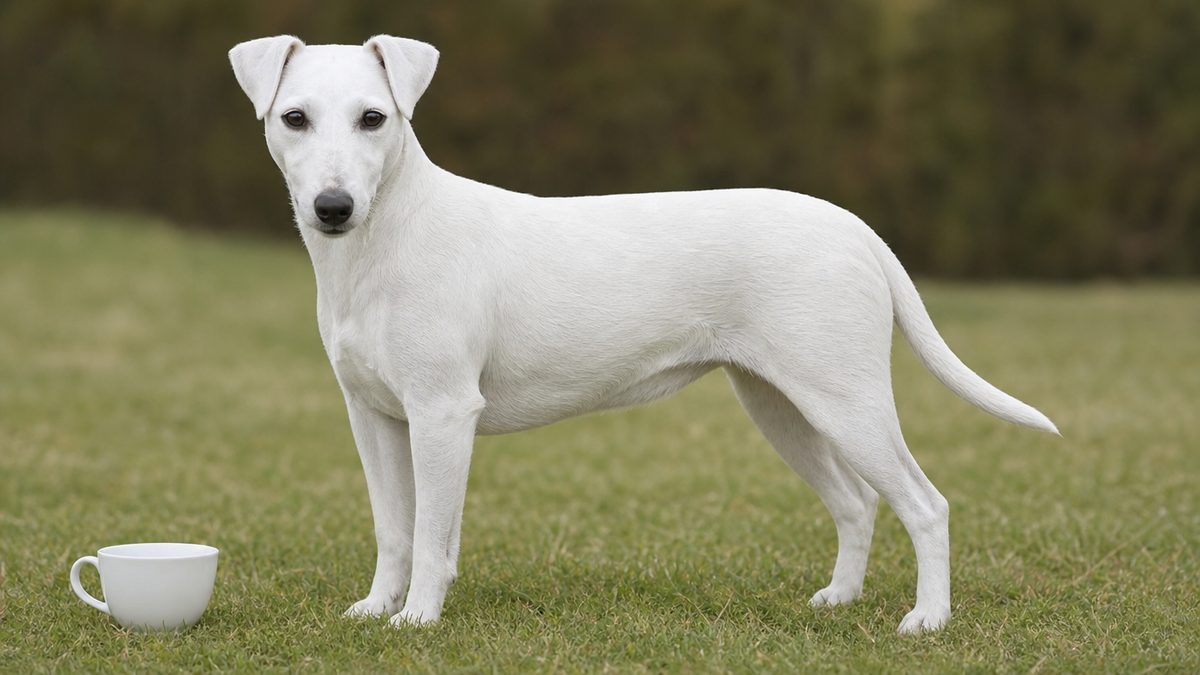
Quick answer
The English White Terrier is extinct and cannot be bought anywhere. It was a small all-white smooth-coated show terrier created in Britain in the 1860s, whose breed club standard disqualified any coloured marking and required cropped ears. Both rules worked against it: pigment protects against congenital deafness, and the Kennel Club banned cropping. No specimen appeared at the 1909 Kennel Club Show.
This guide summarises nineteenth-century breed literature, kennel-club stud books and registers, peer-reviewed veterinary research on congenital deafness, Indian import and breeding law and satellite climate data as general information for Indian pet owners. It is not a diagnosis and it is not treatment advice. Consult a registered veterinarian near you before acting on anything you read here, and treat collapse, laboured panting that does not settle, or a sudden loss of response to sound as reasons to go to a clinic rather than to wait.
English White Terrier traits, rated for Indian conditions
What the English White Terrier was, and why it matters more than most extinct breeds
The English White Terrier was a small all-white smooth-coated show terrier created in Britain in the 1860s, extinct by the early twentieth century, and it is the clearest documented case of a breed destroyed by its own written standard.
Start with the two rules its breed club wrote down, because everything else on this page follows from them. The White English Terrier Club's description specified Colour, pure white; coloured marking to disqualify, and Ears, cropped and standing perfectly erect Robert Leighton, 'Dogs and All About Them'.
Both rules turned out to be exactly wrong. Pigment is protective against congenital sensorineural deafness, so a standard that disqualifies every coloured marking selects against the only visible protection the dog has. And ear cropping was banned by the Kennel Club within a few years, which removed the appearance the standard demanded and, on the contemporary account, removed the breed with it.
What it looked like and what it was for
It was small. The club allowed 12 lb to 20 lb, and Rawdon Lee, Kennel Editor of The Field and a Kennel Club judge, thought a dog of 12 lb to 14 lb better than one of 18 lb, adding that he did not ever remember seeing a really so-called pure English white terrier up to 20 lb, the maximum the club allowed. Lee's own preference was a dog of no more than 14 lb, about 6.4 kg.
It was not a working dog. Lee is blunt: it is not a sportsman's companion, though it makes a nice house dog, and it requires a considerable amount of cuddling and care. Leighton, sixteen years later, adds that the belief still prevailed that he is of delicate constitution and is not gifted with a great amount of intelligence or sagacity.
Why it is still worth reading about
Three living breeds carry its blood, and one of them is among the most popular dogs in the world. The American Kennel Club states plainly that the Boston Terrier is the result of a cross between an English Bulldog and a White English Terrier, later considerably inbred. Lee records that James Hinks began crossing the fighting bull terrier with the English white terrier early in the 1850s to produce the modern Bull Terrier. And the Fox Terrier's origin is routinely traced to it.
Every contemporary British source calls this dog the White English Terrier, in that order. That is how the Kennel Club Stud Book heads its show classes from 1874 onwards, how Leighton titles his 1910 chapter, and how the American Kennel Club still writes it today. Wikipedia's title, English White Terrier, is the inversion, and it is what most modern pages copy. Search both orders or you will miss half the record.
Where it came from, and how much of that account is guesswork
The English White Terrier was assembled in the 1860s from the existing white working terriers of England, and the crosses usually named for it are guesses that its own contemporaries doubted in print.
The honest origin story is short. Small white working terriers had existed in Britain for generations, varying in size, ear carriage and coat, and in the 1860s a group of show enthusiasts took the prick-eared white ones and declared them a breed. Leighton dates its existence as a distinct breed back no longer than forty years from 1910, which is about the accepted age of most named English terriers.
The Italian greyhound cross, and Lee's parenthesis
The most-repeated origin claim is that the breed came from a fox terrier crossed with a white Italian greyhound. Lee reports the surmise and immediately undercuts it with three words in brackets: I never saw one. Modern pages quote the claim and drop the parenthesis.
He does concede a related point about type. At early shows some specimens were shaped more like an Italian greyhound than a terrier, and he thought the long hare-like feet common in the breed showed more than a sign of that cross. So the evidence is a judge's impression of body shape and feet, not a pedigree.
The cross that is documented, and it runs the other way
Lee's own view reverses the usual arrow. He believed the small bull terrier was stopped on its road to popularity by a cross with the white terrier, and that anyone willing to wade through the early pedigrees would find white terrier blood in many of the leading little bull terriers.
He then describes the fraud that made the pedigrees unreliable. An exhibitor who got a lighter-boned, longer-headed puppy out of a bull terrier bitch would enter it as a white English terrier and win with it, while showing a littermate in the small bull terrier class on the same day. Two breeds, one litter, whichever class looked winnable.
The whippet, which nobody disputes
The whippet cross is the one all sides agree on. Lee praises the dog Tim precisely because he did not exhibit in appearance the slightest trace of whippet or snap dog blood, with which no doubt the variety had been considerably crossed. Leighton is blunter: it is apparent that the whippet was largely used as a cross with the English terrier, which may account to a great extent for the decline of terrier character in the breed.
Leighton argues the type is older than the breed, pointing to a 1670 portrait of Mary of Modena by William Wissing in the National Portrait Gallery, which shows a terrier undoubtedly of this type at the Queen's side. He notes in passing that the painted dog has slight brown or brindle markings on the back, as many English White Terriers have. That is an argument for a white terrier type existing in 1670, not for the breed, and the marked dog in the picture would have been disqualified by the club's own standard two centuries later.
What the Kennel Club actually recorded, and the class it never created
The Kennel Club ran a White English Terriers show class from its earliest volumes but never gave the breed a register class of its own, entering its dogs instead under 'English and other Smooth-coated Terriers (except Black and Tan)'.
This is the structural fact nobody prints, and it is checkable in the register itself. Four volumes of the Kennel Club Calendar and Stud Book were read in full for this page.
The show class was real and it was busy
Volume I of 1874 reports White English Terriers classes at meeting after meeting, usually split by weight, and one exhibitor dominates them. Mr F. White of Clapham takes first and second under 6 lb with Jep and Dick at one show; at another he takes the first three places with Fly, Lady and Nettle and the first three again under 7 lb with Blondin, Busy and Jep. Later volumes carry Mr J. Fletcher's Doctor, Mr P. Swindell's Gem, Mr C. W. Brierley's Viper, and a meeting where Viper won and the second and third prizes were withheld.
By 1875 the class had a Champion Class, won by Mr J. Stell's Gem from his own Pink. By 1876 Mr J. Martin was taking first, second and third with Joe, Gem and Pink at one show and Mr J. Boocroft first and second with Sylph and Tim at another. In 1884 the class was still running, won by L. Booth's Hornet, entered as late Viper, from B. Wood's Duchess of Devonshire.
The independent confirmation, which is the useful part
Lee, writing separately in 1894, names the same dogs. He records Mr F. White of Clapham showing a team of Teddy, Laddie, Jep, Fly and Nettle at Islington and Cremorne as far back as 1862 and 1863, and he names Mr J. Martin's Joe, Gem and Pink as the winners of the eighties. Two entirely independent primary records, a register and a judge's memoir, naming the same animals in the same years. That is as solid as an extinct breed's history gets.
But the register class was somebody else's
The pedigree section tells a different story from the show reports. The Stud Book has no White English Terrier class. Its dogs are registered in Class XXXVI, English and other Smooth-coated Terriers (except Black and Tan), which in the 1884 volume holds seven dogs and two bitches in a little over one page.
| Name and number | Owner | Detail |
|---|---|---|
| Hornet (10,929) | Mr L. Booth, Vicar's Cross, Chester | By Mr Tonk's Prince out of Rose. Sheffield 1st, Aston 1st, York equal 2nd, Farnworth 1st |
| Leading Star (14,437) | Mr C. F. Copeman, Knowle, near Birmingham | Born 10 July 1882. Crystal Palace 1st |
| Leger (13,728) | Mr J. Thomas, Bird in Hand, 106 Tib Street, Manchester | Born 14 September 1881, bred by owner |
| Quick (14,440) | Mr A. George, 19 Middle Row, Kensal Town, London | Born about 1880, colour recorded as pure white |
| Sankey (14,439) | Mr L. Kenworthy, Nunnery Lane, York | Bred by Mr W. Johnson. York 3rd |
| Sprite (13,823) | Mr T. Llewellyn, Ruston Street, Birmingham | Born 6 July 1882. Aston Park 3rd |
| Tim II (13,202) | Mr M. George, Foundry Row, Smethwick | By Cupid out of Pink. Aston Park 2nd |
| Duchess of Devonshire (13,729) | Mr B. Wood, Bridge Street, Pendleton, Manchester | Born 25 December 1881. Sheffield 2nd |
| Min (14,438) | Mr Llewellyn, Ruston Street, Birmingham | Born 27 November 1880, bred by Mr C. Chater, by owner's Viper |
Nine animals with numbers, addresses, birth dates and show records, in the year the breed was still winning championships. Anyone writing about this breed can now name them. No page currently does.
The breed standard in full, which no ranking page prints
The White English Terrier Club published a twelve-point description with a hundred-point judging scale and two disqualifications, and reproducing it whole is the fastest way to see what went wrong.
Lee printed the club's description in 1894 and Leighton reprinted it in 1910, and the two versions agree word for word. Wikipedia quotes four of the twelve points. Here are all twelve.
| Point | The club's wording |
|---|---|
| Head | Narrow, long and level, almost flat skull, without cheek muscles, wedge-shaped, well filled up under the eyes, tapering to the nose, and not lippy |
| Eyes | Small and black, set fairly close together, and oblong in shape |
| Nose | Perfectly black |
| Ears | Cropped and standing perfectly erect |
| Neck and shoulders | Neck fairly long and tapering from the shoulders to the head, with sloping shoulders, free from throatiness, slightly arched at the occiput |
| Chest | Narrow and deep |
| Body | Short and curving upwards at the loin, ribs sprung out behind the shoulders, back slightly arched at loin |
| Legs | Perfectly straight and well under the body, moderate in bone, and of proportionate length |
| Feet | Nicely arched, with toes set well together, and more inclined to be round than hare-footed |
| Tail | Moderate length, thick where it joins the body, tapering to a point, and not carried higher than the back |
| Coat | Close, hard, short, and glossy |
| Colour | Pure white; coloured marking to disqualify |
The judging scale, and the number that gives it away
Lee also printed a hundred-point judging scale, noting that the table of points was not issued by the club but that in his opinion the figures indicate the numerical value of each property as nearly as possible. Head, skull, mouth and muzzle carried 20 points. Eyes and expression 15. Neck and shoulders, coat, stern, general symmetry, legs and feet, and size carried 10 each.
Coat carried ten points out of a hundred, and colour carried a disqualification. No amount of excellence anywhere else could rescue a dog with a tan ear. That asymmetry is the whole mechanism.
The two disqualifications, stated plainly
Lee lists them: coloured markings of any kind, and uneven teeth, meaning teeth either undershot or overshot. The second is unremarkable and modern breeders would agree with it. The first is the one that ended the breed.
The ranking article gives a 'Scale For Judging Old English terriers' with seven rows totalling 50: head 10, legs 5, feet 5, body 5, colour 10, general appearance 10, action 5. Lee's table, in the book Wikipedia cites, has different categories and a grand total of 100. Bonbeno cannot tell you which table any judge actually used, and does not pretend to. What is checkable is that the two do not match, and only one of them appears in the source being cited.
The colour rule, and what breeders did with the puppies it excluded
Coloured markings appeared in almost every litter, the standard disqualified every one of them, and Lee records that such puppies were usually destroyed at birth as unfitted for success on the bench.
This is the passage that turns a curiosity into a welfare story, and it is a Kennel Club judge writing in 1894 about the practice he watched.
On the white bull terriers of the same period, Lee writes that cases of a coloured mark on the eye or on the ear crop up in nearly every litter, and adds: usually such dogs were destroyed at their birth, as being unfitted for success on the bench.
On the white terrier itself he records the same genetics from the other side. Until the dogs had been bred for some generations to produce them pure white, there was seldom one born without marks of some kind, and even now dogs with a coloured ear or a patch on some part of the body or face are found in almost every litter. He returns to it as a breeding difficulty: the puppies are as likely to come with patches on them as not.
A breeder saying the same thing, in 1893
Lee quotes a letter from Dr Lees Bell, an owner of specially good specimens, published in the kennel press during 1893: all breeders have experienced the same difficulty of breeding pure white puppies with level heads and fine skulls together with proper English terrier lines of body, because the puppies are either foul-marked, or have domed skulls and whippet bodies, or they have level heads with the thick skull and wide chest and general stoutness of body of the bull terrier.
Read that as a breeder's arithmetic. Every litter split three ways, and only the fraction that was both pure white and correctly built was worth keeping. The rest were foul-marked, which is the period term for having any pigment at all.
Why this is the fatal rule and not merely a strict one
Modern data on the breeds that descend from this one show that pigment is what protects hearing. In 1,060 English Bull Terrier puppies BAER tested as complete litters, 96.29 percent of the deaf puppies had a white coat, and 19.29 percent of the white-coated puppies were deaf. In a US Dogo Argentino population of 811 dogs, animals without a head patch had a significantly higher deafness prevalence than patched dogs. Strain's earlier survey found white Bull Terriers more likely than coloured Bull Terriers to be deaf, and patches negatively associated with deafness in the Dalmatian.
So the club's standard did two things at once. It removed the coloured puppies from the gene pool, and it concentrated the all-white ones. That is the mechanism by which a written rule about appearance becomes a hearing disorder, and it is why this breed's story is worth a page even though nobody can buy one.
The measurements above are of the Bull Terrier and the Dogo Argentino, not of the English White Terrier, which was extinct long before anyone could measure a dog's hearing objectively. Bonbeno is not claiming a prevalence figure for this breed. It is claiming that the mechanism documented in its close relatives, pigment protects, applies to a standard that disqualified pigment, and that its contemporaries described exactly the outcome you would predict.
What is actually documented about deafness in this breed
Four contemporary statements record deafness in the English White Terrier, all of them qualitative, and not one of them carries a count, a sample or a test, because objective hearing testing did not exist until eighty years after the breed did.
Keep this section and the next one apart, because conflating them is how a real welfare story turns into a fabricated statistic. This section is only what people who saw the dogs wrote down.
Lee, 1894, and the sentence nobody quotes in full
The fullest statement is Rawdon Lee's, and modern pages quote its first clause and drop the rest. His words: he is particularly subject to total or partial deafness, which may be hereditary or arise from other causes, such as a delicacy that is supposed to appertain to some totally white animals, especially such as are inbred to a great extent, as is the case here.
Three claims are packed into that sentence and all three are worth separating. Deafness was common, and both total and partial, which is what a modern report would call bilateral and unilateral. It may be hereditary. And it is linked to whiteness and to inbreeding. A Kennel Club judge wrote that in 1894, and it is a recognisable description of pigment-associated congenital sensorineural deafness ninety years before the first BAER study of dogs.
The founder bitch, which is hearsay and is labelled so
Lee adds a story about the breed's foundation stock: I have heard, when living in the north, that at least one of the very best bitches of the early time, and from which many of the best were descended, was stone deaf. He believes it is the dog James Roocroft described in Vero Shaw's Book of the Dog as one of the best he ever saw, and which preceded the favourite Tim.
That is second-hand and Lee says so. Reported at its own evidential weight, it is a rumour about one animal. Reported for what it would mean if true, it is a deaf founder whose descendants were the best dogs in the breed, which is precisely how a recessive trait becomes fixed in a closed population.
Two more statements, and one more implication
Lee returns to it when praising the small size: a perfect specimen of the small size is as pretty and elegant a little creature as anyone need desire to possess, though he may be delicate and perhaps deaf. Leighton in 1910 records that many otherwise good specimens are deaf, a fault which seriously militates against the dog's possibilities as a companion or as a watch. And the account Wikipedia carries is that entirely white dogs had a propensity for deafness and were therefore nearly useless in the field.
There is no prevalence figure for this breed and there cannot be one. Nobody counted, nobody tested, and the brainstem auditory evoked response, the only objective way to detect deafness in one ear, was not applied to dogs until the 1980s. Any page that gives you a percentage of deaf English White Terriers has invented it. The honest statement is that deafness was described as common by two contemporary authorities and was never measured.
What the modern science measures, and in which breeds
Congenital sensorineural deafness has been quantified in three breeds closely related to this one, and every study finds the same thing: the deafness travels with the white coat and pigment is protective.
Everything in this section is a measurement of a living breed. None of it is a figure for the English White Terrier, and none of it is presented as one. It is the mechanism its standard was selecting on, measured properly.
The English Bull Terrier study, which is the closest available
The most directly relevant work tested 1,060 English Bull Terrier puppies in England by brainstem auditory evoked response, at 30 to 78 days of age, mean 43.60 days, as complete litters rather than as volunteers. It was run by the Animal Health Trust with a co-author from The Kennel Club.
| Measure | Result |
|---|---|
| Overall deafness prevalence | 10.19 percent |
| Unilaterally deaf | 8.21 percent |
| Bilaterally deaf | 1.98 percent |
| Puppies predominantly coloured | 49.15 percent |
| Puppies white, with or without a patch | 50.85 percent |
| Deaf puppies that had a white coat | 96.29 percent |
| White-coated puppies that were deaf | 19.29 percent |
| Heritability of hearing status | 0.15 to 0.16, significantly different from zero |
| Heritability within white and white-patched puppies only | 0.25, significantly greater than zero |
Two rows in that table are the argument. Almost every deaf puppy was white, and roughly one white puppy in five was deaf. The authors conclude that congenital sensorineural deafness occurs predominantly in white English Bull Terriers and that there is genetic variation in it beyond that associated with coat colour.
The patch, which is the detail that matters most here
A head patch is a small area of pigment and it is measurably protective. In a US Dogo Argentino population, 811 dogs had both BAER results and phenotype data recorded: 74.23 percent bilaterally hearing, 20.35 percent unilaterally deaf and 5.43 percent bilaterally deaf, an overall prevalence of 25.77 percent, and dogs without a patch had a significantly higher prevalence rate than patched dogs. The arithmetic closes: 165 plus 44 is 209, and 209 of 811 is 25.77 percent.
The same association appears in Strain's earlier eight-breed survey. White Bull Terriers were more likely than coloured Bull Terriers to be deaf, and in the Dalmatian, blue eyes were positively associated and patches were negatively associated with deafness.
Now put that beside the White English Terrier Club's rule. Coloured marking to disqualify. The one visible marker that reduces deafness risk was the one marker that ended a dog's show career.
A Polish series BAER tested 243 dogs across four breeds and reported 17 of 117 Bull Terriers deaf, 14.5 percent, 3 of 62 Australian Cattle Dogs, 4.8 percent, 7 of 32 English Setters, 21.9 percent, and 12 of 32 Dogos Argentinos, 37.5 percent. Every one of those per-breed figures reproduces exactly. The abstract's overall row does not: it states that 156 dogs, 81 percent, had a normal BAER, but 156 of 243 is 64.2 percent, and 156 plus the 27 unilateral and 12 bilateral cases is 195, which is 48 short of 243. The per-breed deaf counts do sum correctly to 39. So the breed rows are usable and the summary row is not, and Bonbeno says so rather than quoting the 81 percent.
The ear rule, the ban that followed it, and a date two sources disagree on
The White English Terrier Club's standard required cropped ears, ear cropping was already prosecutable under British cruelty law by 1894, and the Kennel Club then banned cropped dogs from its shows, which contemporaries named as the decisive blow to this breed.
The standard is unambiguous. Ears, cropped and standing perfectly erect Robert Leighton, 'Dogs and All About Them'. Not permitted, not customary. Required.
Lee explains why. In its natural state the ear may be a button ear dropping down in front like a fox terrier's, or semi-prick, standing erect and dropping over at the tips; some dogs are born with large erect ears which he calls by no means picturesque, hence possibly the reason why the fancier endeavoured to improve upon nature and cut such ears into what he considered an elegant shape.
So the breed's signature erect ear was surgical, not genetic. That is worth stating because the ranking article describes the breed as developed from a prick-eared version of white working terriers, which reads as though the ears grew that way.
It was already illegal when the standard demanded it
Lee, in 1894, writes that it is troublesome and dangerous, to say nothing about being illegal, to have their ears cut or cropped, and that those animals of which their admirers say they are not fit to be kept unless they are shorn of their ears will no doubt be the first to go, especially when such mutilation is illegal and brings its perpetrators within reach of the law against cruelty to animals.
A breed club had therefore written a mandatory requirement that its own leading judge described as a criminal offence.
The two dates, and the disagreement between them
| Source | Date given | Wording |
|---|---|---|
| The Royal Kennel Club's own 1800s timeline | 1895 | The Kennel Club banned cropping outright for all breeds; no dog born after 31st March, and no Irish Terriers born after 31 December 1889, could compete at a Kennel Club run or Kennel Club licenced show |
| Robert Leighton, writing in 1910 | April 1898 | Neither the White Terrier nor the Manchester Terrier has since been anything like so popular as they both were before April, 1898, when the Kennel Club passed the law that dogs' ears must not be cropped |
| Rawdon Lee, writing in 1894 | Already unlawful | Troublesome and dangerous, to say nothing about being illegal, and brings its perpetrators within reach of the law against cruelty to animals |
Bonbeno does not adjudicate between 1895 and 1898. Both come from the Kennel Club's own orbit, one from its modern institutional timeline and one from a writer working four years after the event, and the difference of three years does not change the argument. What both agree on is that a breed whose standard required cropped ears lost the right to show cropped dogs, and that its decline followed.
The Royal Kennel Club's timeline records that in 1881 a sub-committee was appointed to look into faking, meaning altering the appearance of a dog through surgical and non-surgical means, and that in 1883 the rules were extended to cover health-based disqualifications including deafness. So from 1883 the Kennel Club could disqualify a deaf dog from a show, in the same decade in which the breed most prone to deafness was being bred to a standard that removed its protection against it.
When it actually disappeared, and the year that settles it
The English White Terrier stopped appearing at British shows between the cropping ban and 1909, the year Robert Leighton recorded that not a single specimen was on view at the Kennel Club Show or at five other major shows.
The specific evidence exists and it is a single paragraph in a 1910 book. Leighton writes: At the Kennel Club Show of 1909 there was not a single specimen of the breed on view, nor was one to be found at the recent shows at Edinburgh, Birmingham, Manchester, or Islington, nor at the National Terrier Show at Westminster.
Six named shows, including the breed's two historic strongholds and the specialist terrier show, and nothing at any of them. That is not a memoirist's impression. It is an absence checked at six venues by a writer who was still, in the same chapter, treating the breed as living and reproducing its club standard in full.
One thing worth noticing about the way it went. A breed does not usually become rare and then vanish; this one stayed visible in the show catalogues while becoming rare in the ring, which is why the 1909 check matters more than any registration count. Leighton describes it in the same chapter as one of the most neglected and the most seldom seen dogs in the land, while still calling it the only terrier who owns the national name.
| Date | What the record shows | Source |
|---|---|---|
| 1862 to 1864 | First classes at London shows, split by weight; Mr F. White of Clapham shows a team at Islington and Cremorne and has eleven entries in one under-six-pound class | Lee 1894 |
| 1874 | White English Terriers classes running at Birmingham, Crystal Palace, Nottingham and elsewhere, sometimes with prizes withheld | Kennel Club Stud Book Vol I |
| 1875 | A Champion Class exists, won by Mr J. Stell's Gem | Kennel Club Stud Book Vol II |
| 1884 | Class still running; nine animals registered under English and other Smooth-coated Terriers | Kennel Club Stud Book Vol XI |
| 1893 | Decadence and neglect publicly discussed; Lee watches an exhibitor clip a white terrier's ears on the bench at the Kennel Club autumn show | Lee 1894 |
| 1894 | Breed alive and bred, with named kennels in Edinburgh, Liverpool and elsewhere; club standard in force | Lee 1894 |
| 1895 or 1898 | Kennel Club bans cropped dogs from its shows; the two dates disagree | RKC timeline and Leighton |
| 1909 | Not a single specimen at the Kennel Club Show, Edinburgh, Birmingham, Manchester, Islington or the National Terrier Show | Leighton 1910 |
Correcting the date that ranks
The most-copied sentence about this breed says that English White Terriers finally disappeared from the Kennel Club scene in about 1894. Lee's 1894 chapter, which is the source cited for it, names eight living kennels and their dogs: Mr Ballantyne at Edinburgh with Morning Star and Rising Star, Dr Lees Bell's Leeds Elect, Mr C. Randall in Liverpool with Little Beauty and Semolina, Mr J. P. Heap's Eclipse, Mr G. H. Newman's Nobility, Mr J. E. Walsh's Lady of the Lake, Mr J. M. Robbie's Silver Blaze and Mr W. Smith's Duchesse III.
A breed with eight named kennels and a club standard has not disappeared. The defensible sentence is this one: the English White Terrier was still being bred and shown in 1894, was absent from six major British shows by 1909, and did not survive as a breeding population past the early twentieth century.
No breed has a date of death, because registers stop recording a breed long before the last dog dies. What a register can give you is the last year the breed was competitive, the last year it was entered, and the first year nobody showed up. For this breed those are roughly 1884, the mid-1890s and 1909. Anyone who tells you a specific year for the last English White Terrier is telling you a story.
The three breeds it left behind, graded by who makes the claim
The Bull Terrier, the Boston Terrier and the Fox Terrier are all traced to the English White Terrier, and the three claims rest on very different evidence: one on a named breeder, one on a registry's own words, and one on a hedge.
An extinct breed's descendants are where invention creeps in, so each claim here is graded by its source rather than by how flattering it is.
Bull Terrier: named breeder, named decade, contemporary account
The strongest claim is the Bull Terrier's, and Lee tells it first-hand. To the late Mr James Hinks of Birmingham, a noted dog-dealer who died in 1878, we in a great measure owe our present strain of bull terriers, and it was early in the fifties that Hinks began to cross the patched, heavy-headed bull terrier used for fighting with the English white terrier, producing dogs handsome enough to make a name for themselves and able to revolutionise the variety.
Hinks appears on the other side of the ledger too. Lee lists Mr J. Hinks of Birmingham among the men who had very good specimens of the English white terrier itself. The man who used the breed to make the Bull Terrier also kept the breed.
The white Bull Terrier inherited more than the shape. It inherited the deafness, and unlike its ancestor it has been measured: 10.19 percent of 1,060 puppies deaf, 96.29 percent of the deaf ones white, with a Polish series finding 17 of 117 Bull Terriers deaf, 14.5 percent, and a single well-documented Australian case of a white Bull Terrier unilaterally deaf on BAER.
Boston Terrier: a registry says it in its own words
The American Kennel Club states flatly that the Boston Terrier is the result of a cross between an English Bulldog and a White English Terrier, later considerably inbred, and names the original sire and dam as Judge and GYP. It records AKC admission in 1893 and a current popularity rank of 23 of 210.
Two details deserve notice. The AKC uses the British word order, White English Terrier, which is the one the Kennel Club Stud Book used. And the phrase later considerably inbred is the same diagnosis Lee applied to the parent breed in 1894.
The United Kennel Club's Boston Terrier standard does not agree. Its History names the American Pit Bull Terrier, Boxer, English Bull Terrier, French Bulldog and English Bulldog, and does not mention the English White Terrier at all. Two registries, two accounts, and Bonbeno prints both rather than picking the tidier one.
Fox Terrier: an honest hedge, reported as a hedge
Leighton refuses to settle it, and his refusal is the most useful sentence available. It is a matter of very little moment whether the Fox Terrier owes his origin to the white English Terrier or to the Bull-terrier crossed with the Black and Tan, or whether he has a mixture of Beagle blood in his composition. He describes the Fox Terrier as having emerged from the chaos of mongreldom about the middle of the previous century.
The UKC's Boston Terrier standard requires white in three specific places, a white muzzle band, a white blaze between the eyes and a white forechest, penalises a preponderance of white on the head or body, and disqualifies albinism and any trace of blue in eyes. Blue eyes are the other marker associated with deafness in Strain's data. A standard that requires some white, limits excess white and disqualifies the two markers of unpigmentation is doing precisely the opposite of what the White English Terrier Club's rule did.
What it looked like, including the one measured dog
The English White Terrier was a small, narrow-headed, entirely white smooth-coated terrier of 12 lb to 20 lb, and one specimen, Alfred Benjamin's Silvio, was measured point by point in 1877.
The written description is in the standard section above. What is worth adding here is the one dog whose body was actually recorded with a tape.
Silvio, born 1876 and owned by Alfred Benjamin, won at Bath, the Royal Agricultural Hall, Darlington and Alexandra Palace in 1877 and at Wolverhampton in 1878. He weighed nineteen pounds, close to the club's twenty-pound ceiling. Leighton adds that Silvio was bred by James Roocroft of Bolton.
| Measurement | Inches | Approximate cm |
|---|---|---|
| Height at shoulders | 18 | 45.7 |
| Height at loin | 18.5 | 47.0 |
| Length of back | 15 | 38.1 |
| Nose to stop | 3 | 7.6 |
| Stop to occiput | 4.5 | 11.4 |
| Girth of muzzle | 7 | 17.8 |
| Girth of skull | 12 | 30.5 |
| Girth of brisket | 19 | 48.3 |
| Girth round shoulders | 19.5 | 49.5 |
| Girth of loin | 16 | 40.6 |
| Girth of forearm | 3.75 | 9.5 |
| Girth of pastern | 3 | 7.6 |
Read that as a whole and the dog resolves. Eighteen inches at the shoulder and nineteen pounds is a light, leggy animal, not a stocky one; a nineteen-inch brisket girth on an eighteen-inch dog is a narrow chest, exactly as the standard asks. The height at the loin exceeding the height at the shoulder gives the slight rise over the back the standard describes.
The apple head, and what Lee thought caused it
The type drifted, and Lee names the drift and its cause. The most recent London-bred specimens he had seen were comparative toys, under 10 lb in weight, and with that round skull or so-called apple head which so persists in making its appearance in lilliputian specimens of the dog, an effect of inbreeding.
That matters because the standard's first and most heavily weighted point is a narrow, long, level, almost flat skull. A breed drifting towards a domed skull was drifting away from its own head requirement, and Lee attributes the drift to the same inbreeding he blamed for the deafness.
The West Highland White Terrier is white, small and a terrier, and it is the breed every Indian search for this one returns. They are not similar. The Westie has a harsh double coat, a rounded head with a good stop, and small erect natural ears; the English White Terrier had a close, hard, short, glossy single coat, a wedge-shaped almost flat skull, and ears cropped to stand. If the dog in a picture is fluffy, it is not this breed.
Recognition today: none, checked with controls
No kennel club recognises the English White Terrier, and every register below was read as a complete list with a control breed confirmed in the same fetch.
Proving a negative is most of the work on an extinct breed, and it only counts if the instrument is shown to be working.
| Register | English White Terrier | Controls confirmed in the same fetch |
|---|---|---|
| The Royal Kennel Club, Breeds A to Z, 227 breed cards including 33 terriers | Absent under either word order | Bull Terrier, Bull Terrier (Miniature), Boston Terrier, Fox Terrier (Smooth), Fox Terrier (Wire), Manchester Terrier, English Toy Terrier (Black & Tan) and West Highland White Terrier all present |
| American Kennel Club | Absent as a breed; named only inside another breed's history | Boston Terrier present, admitted 1893, ranked 23 of 210 |
| United Kennel Club | Absent, and not named even as an ancestor in the Boston Terrier standard | Boston Terrier standard returned in full, revised 1 January 2020 |
| Peer-reviewed literature | Zero genuine records | Bull Terrier plus deafness returns 5 records, all genuinely about the breed |
The literature check, and the number that looks like a field of research
A PubMed search for the exact phrase English White Terrier returns 345 records, which looks like a substantial literature and is nothing of the kind. The returned query translation shows what happened: the phrase could not be matched, so it was decomposed into english AND (white OR white people OR whites) AND (terrier OR terriers).
Opening the first five records settles it. They are a dietary-responsive eosinophilia case in a border terrier, a questionnaire survey of West Highland white terriers with pulmonary fibrosis, a case report of multiple heroin packages in a dog's stomach, a One Health review of pulmonary hypertension, and a study of canine urothelial DNA mutations and drinking water.
The control run in the same session proves the tool works. Bull Terrier AND deafness returns 5 records with the breed name preserved as a phrase, and every one is genuinely about deafness in that breed, including the 2016 heritability study and a BAER case report. Zero papers about the English White Terrier is the honest answer.
What that means for an Indian reader
India is a full member of the FCI, represented by the Kennel Club of India in Chennai, so the KCI issues pedigrees against FCI nomenclature. A breed with no FCI number has no pedigree route in India, and this breed has none. There is nothing unfair in that. A register records living breeding populations, and there is none to record.
English White Terrier price in India: none exists, and here is the proof
No English White Terrier can be bought in India or anywhere else, and a controlled search shows every Indian result for the query is a different breed, usually the West Highland White Terrier.
Say it first and plainly. There is no price. The breed is extinct, and any figure attached to its name belongs to another animal.
The claim was tested rather than assumed. A search for 'english white terrier price in india puppy for sale' with location set to India, run on 27 August 2026, returned ten results and not one was about this breed.
| Position | What ranked | What it is really about |
|---|---|---|
| 1 | Puppiezo, West Highland White Terrier | A living Scottish breed, quoted at Rs 4,00,000 or more |
| 2 | HappyPet, West Highland White Terrier | The same breed at Rs 40,000 to Rs 80,000, a tenfold disagreement |
| 3 | Mr n Mrs Pet, Bull Terrier | A descendant breed at INR 55,000 to INR 1,50,000 plus |
| 4, 5, 7, 8, 9 | Europuppy, BreednBreeder, Amazon, Puppiezo category, Quora | West Highland White Terrier, some of them not Indian at all |
| 6, 10 | Supertails dog price list | A 40-breed Indian price list that does not include this breed |
The control, run in the same session
An absence is only evidence if the instrument works. The same search endpoint was given 'labrador retriever price in india' in the same session and returned ten Indian pages carrying real rupee figures, including a three-tier structure from INR 30,000 to INR 1,20,000 with a city-by-city table, and separate ranges of Rs 8,000 to Rs 70,000 and Rs 8,000 to Rs 30,000. So the search returns Indian puppy prices when Indian puppy prices exist.
Bonbeno publishes no rupee band for this breed, deliberately
Two figures were available and both were rejected. The Rs 4,00,000 belongs to a West Highland White Terrier and the INR 55,000 to INR 1,50,000 belongs to a Bull Terrier. Printing either under this breed's name would hand an answer engine a price for a dog that has not existed since before the First World War.
Three things would each be enough on their own. There is no living population. There is no FCI number and therefore no Kennel Club of India pedigree route. And DGFT Trade Notice 22/2022-23 states that applications to import a dog for trading or breeding purposes shall be duly rejected. A seller quoting a price for this breed is mislabelling something else.
Auditing the pages that rank, including a colour list printed for two different breeds
The most detailed English White Terrier page on the internet sells a breed it says does not exist, and its colour field can be shown to be a default list because it prints identically on an unrelated extinct breed's page.
Extinct-breed queries are unusually dangerous because nobody competes for them, so one template-generated page can own the result and become the source an answer engine quotes.
The page opens honestly, then contradicts itself
Creatures.com describes the breed accurately: an extinct nineteenth-century British breed, whose story is useful for understanding how fashion, closed breeding, deafness risk and narrow selection can damage a breed, and it warns that claims of pure examples today are almost certainly informal, reconstructed or mistaken.
It then offers, on the same page, an alert for the moment a new English White Terrier listing goes live, an English White Terrier Herdbook, English White Terrier Profiles, an English White Terrier Breeders directory and a Dog Gestation Calculator preset for the breed. All four counters read zero.
The colour list, and the check that proves what it is
The same page prints a Colors field with 55 entries for a breed whose entire definition was that any colour disqualified it. Among them: Black, Black and Tan, Brindle, Reverse Brindle, Blue Merle, Red Merle, Harlequin, Tricolor, Chocolate and Liver. It also lists Gray and Grey as two separate colours, and includes Albino, Leucistic and Melanistic, which are pigmentation states rather than breed colours.
Here is the check nobody has run. The same site's English Water Spaniel page prints a colour list of the same 55 entries in the same order, for a liver and white gundog. Two extinct breeds with nothing in common, one defined by being pure white and one by being liver and white, both given an identical colour vocabulary. The field is a default, not a description.
The control confirms the site can produce real content. Its Labrador Retriever page carries 634 breeders, 10 public profiles and 1 herdbook record, and a colour list of 54 entries that at least includes the Labrador-specific Champagne, Charcoal and Fox Red. So the failure is per-breed on the substance and site-wide on the colour field.
And the search engine, which has to be audited too
The Bing India results page for this breed returned HTTP 200, the correct page title and 'About 555 results', then served ten organic results every one of which was about Gualtallary, a high-altitude wine region in Argentina's Uco Valley. The control query in the same session through the same endpoint returned ten results genuinely about the Labrador Retriever. The result set was substituted, and no conclusion of any kind is drawn from it.
The three Featured Listings on the English White Terrier page are the same three that appear on the English Water Spaniel page and on the Labrador Retriever page: an animal in Earlham Iowa, one in Bugscuffle Tennessee, and one from Ravenna Texas named Blue pullet Creatures.com, Labrador Retriever breed…. A pullet is a young hen. Cite pages like this only as evidence of fabrication, never for a fact.
The Indian price pages that rank, tested figure by figure
The two Indian pages that rank for this query both sell the West Highland White Terrier and disagree with each other by a factor of ten, and the higher of them stocks eight animals of six other breeds.
Neither page is about the English White Terrier, so neither figure is a price for it. They are worth testing anyway, because they are what an Indian buyer searching this term will actually be shown.
| Source | Claim | Divided by 84.38 | Divided by 74 | Divided by 80 |
|---|---|---|---|---|
| Puppiezo | Rs 4,00,000 or more | 4,740.46 | 5,405.41 | 5,000.00 |
| HappyPet | Rs 40,000 to Rs 80,000 | 474.05 to 948.09 | 540.54 to 1,081.08 | 500.00 to 1,000.00 |
Only the 80 column lands on numbers a seller would print, and that proves very little on its own, because any rupee figure ending in three zeros divides cleanly at 80 by construction. Bonbeno reports the arithmetic and draws no conclusion of conversion from it. The stronger 84.38 test fails on every row.
The disagreement is the finding
What is genuinely informative is that two Indian pages give the same living breed a price band that differs tenfold, Rs 4,00,000 against Rs 40,000 to Rs 80,000. Neither cites anything. If the published Indian price for a breed you can actually buy varies by an order of magnitude, no published Indian price for a breed you cannot buy is worth anything at all.
The carousel, and the check that settles it
The higher-priced page carries a stock carousel of eight animals with prices attached. Not one is a West Highland White Terrier.
| Name | Breed | Price |
|---|---|---|
| Fizey | Maltipoo | Rs 98,999 |
| Samy | Maltipoo | Rs 98,999 |
| Yoki | Doxiepoo | Rs 98,999 |
| Kazuka | Cane Corso | Rs 94,999 |
| Kuzo | Poodle | Rs 92,599 |
| Dugu | Poodle | Rs 92,599 |
| Tugi | Rottweiler | Rs 76,499 |
| Doir | Goldendoodle | Rs 1,20,000 |
The confirming check took one more fetch. The same site's Irish Water Spaniel page, retrieved in the same session, carries the identical eight animals at the identical eight prices. The carousel is site furniture. It is not stock for any breed, and Rs 98,999, which appears three times on each page, is a house charm price rather than a breed price. It divides to 1,173.25 dollars at 84.38, so it is not a conversion either.
An answer engine reading those pages sees a breed name in the title, structured review data, and eight rupee figures. It cannot see that the animals are two Maltipoos, two Poodles, a Cane Corso, a Goldendoodle, a Rottweiler and a Doxiepoo. That is the whole mechanism by which a price band for a breed with no Indian market gets manufactured and then quoted back as fact.
Monthly cost of ownership, and the one line a white dog adds in India
No English White Terrier can be kept in India at any monthly cost, but working the numbers for a small white smooth-coated dog is useful, because an unpigmented coat adds a cost line most Indian owners never budget for.
There is no cost of ownership for this breed because there is nothing to own. What follows is the honest substitute: what a 6 to 9 kg white smooth-coated terrier costs to keep properly in an Indian metro, and which of those costs are specific to being white.
Bonbeno publishes no purchase price here, for the reasons in the price section. The only Indian rupee figures available describe a West Highland White Terrier and a Bull Terrier.
The recurring lines that matter
- Food for a 6 to 9 kg dog, the smallest food bill of any dog on this site, since the club's ceiling was 20 lb.
- Sun protection, which is the white-dog line: shade, timing and veterinary review of any persistent skin change, because melanin is the skin's protection against ultraviolet radiation and unpigmented skin does not have it.
- Tick and flea prevention year round, because Ehrlichia canis is endemic in tropical India.
- A hearing check if you ever acquire a mostly white dog of a related breed, because unilateral deafness is invisible without a machine and accounted for 8.21 percent of 1,060 Bull Terrier puppies tested.
- Cooling through the hot months, since a small dog with a thin single coat and pale skin has less thermal margin than owners assume.
The cost the standard used to add, and India would add again
The historical cost line was show preparation, and it was heavy enough that breeders blamed it for the breed's decline. Dr Lees Bell listed it in 1893: the cropping of the ears, the trimming of the tail, shaving the ears, the washing and general anxiety to keep the dog spotless till after the show, all combining to make the hobby too tiresome, and he added that the appearance of red wounds on the white ground is also a great drawback.
In India that last observation transfers directly, though for a different reason. Every scratch, tick bite, hot spot and sunburn shows on a white dog, which is a nuisance for an exhibitor and a genuine advantage for an owner, because it means you see the problem early.
The living breeds that carry this one's blood are all obtainable and all better documented. The Bull Terrier has real BAER data behind it and a Kennel Club-linked heritability study. The Boston Terrier has a standard that manages white rather than demanding it. The Jack Russell Terrier is the working white terrier the show fancy never got hold of.
Could an English White Terrier handle the Indian climate? Start with heat tolerance
Manchester, one of the two cities its own historians name as the breed's stronghold, averages 9.12 C across the year and 15.43 C in July, while Chennai's coolest month averages 24.09 C, which is 8.66 C above the hottest month the breed ever knew.
The heat rating on this page is Bonbeno's own work rather than a borrowed figure, so it was built from satellite climatology queried by explicit latitude and longitude rather than by place name. Two origin points were used because the sources name two strongholds: Lee and Leighton both put the breed's best specimens in Manchester and Birmingham Robert Leighton, 'Dogs and All About Them'. The interface echoed both sets of coordinates back, so no other place can have been served by accident NASA POWER 20-year climatology.
| Place | Annual mean C | Coolest month C | Warmest month C | Annual max C |
|---|---|---|---|---|
| Manchester | 9.12 | 3.62 (Jan) | 15.43 (Jul) | 28.02 |
| Birmingham | 9.56 | 3.62 (Jan) | 16.39 (Jul) | 31.97 |
| Bengaluru | 23.74 | 20.22 (Dec) | 28.37 (Apr) | 40.38 |
| Pune | 23.86 | 19.62 (Dec) | 28.93 (Apr) | 43.20 |
| Delhi | 25.60 | 13.61 (Jan) | 35.88 (Jun) | 48.79 |
| Kolkata | 25.81 | 17.31 (Jan) | 31.53 (May) | 46.81 |
| Mumbai | 26.77 | 23.19 (Jan) | 31.19 (May) | 44.91 |
| Chennai | 27.95 | 24.09 (Jan) | 31.51 (May) | 42.70 |
One comparison carries it. Manchester's warmest month averages 15.43 C. Chennai's coolest month averages 24.09 C. January in Chennai is 8.66 C hotter than July in the city that bred the best of this breed.
Bengaluru, the mildest large Indian city in the set, runs 4.79 C hotter in its coolest month than Manchester does in its warmest. Pune is 4.19 C hotter on the same comparison. There is no Indian city in this table where the breed's home summer would count as a cool month.
Birmingham, and why it changes nothing
Birmingham is marginally warmer than Manchester and reaches a higher extreme, an annual maximum of 31.97 C against 28.02 C. That is a single hot afternoon in a twenty-year record, not a climate. Its annual mean of 9.56 C is 18.39 C below Chennai's.
What the exertion evidence says
The largest primary-care study of heat illness reviewed 905,543 UK dogs under veterinary care in 2016 and identified 1,259 heat-related illness events from 1,222 dogs. Of those, 380 had no trigger recorded. Of the remaining 879 events with a recorded trigger, 652 were exertional, which is 74.2 percent, followed by environmental at 113 events, 12.9 percent, and vehicular confinement at 46 events, 5.2 percent. Exertional cases carried a 7.6 percent fatality rate.
This breed is absent from Hall and colleagues' breed analysis, because it was extinct before the cohort existed, so none of the paper's breed-specific odds ratios may be applied to it and none are used here. What transfers is the trigger split, which is not breed-specific: exercise, not a parked car, is what puts dogs in clinics, and it happens year-round. Borrowing an odds ratio for a breed the authors never studied would be fabrication with a citation attached.
Humidity, wet-bulb, and the ultraviolet problem a white dog has in India
Manchester is more humid than every Indian city in this comparison, which sounds protective until wet-bulb temperature is computed, and a white dog in India carries a second load that has nothing to do with heat at all.
The raw humidity numbers point the wrong way, which is exactly why they are worth printing. Manchester's annual mean relative humidity is 88.56 percent and Birmingham's is 86.74 NASA POWER 20-year climatology. Kolkata's is 73.93, Chennai's 72.39, Bengaluru's 67.94, Mumbai's 67.39, Pune's 66.80 and Delhi's 45.56.
So the shorthand that a British breed will suffer in India because India is humid is wrong here too. Lancashire is a wet maritime climate. Moisture alone was never this dog's problem.
Wet-bulb, which combines heat and moisture
Wet-bulb temperature is the single figure that governs whether a body can shed heat by evaporation, and computing it from each point's monthly means with the Stull formulation reverses the ranking completely.
Mumbai makes the reversal clearest. Its relative humidity of 67.39 percent is twenty-one points below Manchester's, which by the lazy reading should make it the kinder climate, and its June wet-bulb of 25.77 C is 12.22 C above Manchester's hardest month. Far drier air, vastly higher heat load.
| Place | Annual RH % | Annual wet-bulb C | Peak monthly wet-bulb C | Peak month |
|---|---|---|---|---|
| Manchester | 88.56 | 7.91 | 13.55 | July |
| Birmingham | 86.74 | 8.16 | 14.08 | July |
| Pune | 66.80 | 19.43 | 22.97 | June |
| Bengaluru | 67.94 | 19.48 | 21.86 | May |
| Delhi | 45.56 | 17.80 | 26.50 | July |
| Mumbai | 67.39 | 22.20 | 25.77 | June |
| Kolkata | 73.93 | 22.25 | 27.09 | June |
| Chennai | 72.39 | 24.04 | 26.11 | May |
Manchester's hardest month reaches a wet-bulb of 13.55 C. Kolkata's June figure is 27.09 C, which is 13.54 C higher. Chennai's annual mean of 24.04 C is 10.49 C above Manchester's single worst month, so Chennai spends every month past anything the breed's home climate ever produced.
Delhi is the instructive one. Its annual humidity of 45.56 percent is the lowest here by more than twenty points, which makes it look like the dry, tolerable option, and its July wet-bulb of 26.50 C is nonetheless the third highest of the eight. Judge by wet-bulb, not by humidity.
The load that is specific to being white
Heat is only half of it. Ultraviolet radiation is the other half, and it is the half that a pure-white dog cannot avoid. The haircoat, the stratum corneum and melanin pigmentation usually protect against the harmful effects of UV radiation, and breeds with a short coat or light pigmentation, among them Bull Terriers, Dalmatians, Whippets, Boxers, Beagles and pit bulls, are more frequently affected by solar dermatitis.
A dog whose standard demanded a close, hard, short, glossy coat and no pigment at all would have had neither of the two defences. India's ultraviolet load is far above northern England's, and the health section below sets out what chronic exposure does.
Plan a light-skinned dog's day by shade and by wet-bulb, not by temperature. Bengaluru and Pune are the mildest large Indian cities for any dog at annual wet-bulbs of 19.48 and 19.43 C, and they are still eleven degrees above this breed's home ground. Nothing here makes India workable for an English White Terrier. It does make the difference between Indian cities visible for the dog you actually have.
Temperament: an unusually unflattering contemporary record
Both authorities who knew the breed described it as delicate, needy and not notably intelligent, and the second of them tied the dullness to a century of ear cropping rather than to the dog.
Extinct breeds usually get an admiring temperament section written from nothing. This one has two contemporary accounts and neither is admiring, which makes them worth quoting rather than smoothing.
Lee: the English white terrier is in appearance an attractive dog, small in size, cleanly and elegant, but he is not particularly noted for his intelligence, as I am sorry to write is the case with all these smaller smooth coated terriers that for generations have had their ears cut. He calls it by no means a hardy dog and, in the passage most often quoted, not a sportsman's companion, though he makes a nice house dog and requires a considerable amount of cuddling and care.
Leighton, sixteen years later: possibly the reason for the neglect is that the belief still prevails that he is of delicate constitution, and is not gifted with a great amount of intelligence or sagacity.
Lee's causal claim, and what to make of it
Lee does not merely record the dullness; he attributes it. This evil result of cropping is my experience, as it has been of others who have kept this variety, and the black and tan terrier likewise. He is claiming that generations of ear cropping produced a duller dog.
Bonbeno reports that as a nineteenth-century judge's causal hypothesis, not as an established fact, and the reason is worth stating: a dog that cannot hear will look stupid to a handler who does not know it is deaf. Lee himself records that the breed was particularly subject to total or partial deafness, and unilateral deafness in particular is invisible without a machine, accounting for 8.21 percent of 1,060 Bull Terrier puppies in the modern study. The simplest explanation for a reputation for dullness in a partially deaf breed is not the surgery. It is the hearing.
What can honestly be said about household fit
- Companion, not worker. Lee is explicit that it was a house dog and not a sportsman's dog.
- Attention-needing. The cuddling and care line is the closest thing to a temperament rating anyone recorded.
- Not hardy. Both sources say so, and Lee calls it the most difficult of terriers to keep in condition.
- Unknown with children, cats or alone. No source addresses any of it, and this page does not supply an answer.
Aggregator pages rate extinct breeds on friendliness, trainability and good-with-kids because the template has fields for them. Nobody alive has met this dog. The two real statements are that it was delicate and that it was not thought clever, and both were written by men who suspected the breed was going under.
Training, and the one thing that genuinely transfers from this breed's story
To train a dog that may be deaf in one or both ears, teach hand signals from the first week and test the hearing rather than guessing, because a unilaterally deaf dog behaves like a disobedient one.
There is no English White Terrier to train. What its story leaves behind is a practical lesson that applies to every mostly white dog in India, and it is the most useful paragraph on this page for a real owner.
Why a deaf dog looks like a bad dog
Unilateral deafness is the common form and it is invisible. In 1,060 English Bull Terrier puppies, 8.21 percent were deaf in one ear and 1.98 percent in both. In 811 Dogos Argentinos, 20.35 percent were unilaterally deaf against 5.43 percent bilaterally. In both breeds the invisible form is four times commoner than the obvious one.
A dog deaf in one ear hears you but cannot locate you. It looks around, goes the wrong way, and gets called stubborn. Lee's complaint that the breed was not particularly noted for its intelligence is exactly what that produces in a household with no way to test.
What to do about it, in order
- Screen the litter by brainstem auditory evoked response before you choose a puppy, which is how the 1,060-puppy study was done, testing complete litters rather than volunteers.
- Train a hand signal alongside every verbal cue from the first week, so a dog that turns out to be deaf has already learned half the language.
- Teach a vibration or light cue for recall indoors, rather than relying on a raised voice.
- Avoid off-lead work near traffic for any dog whose hearing you have not verified.
- Compare what a breeder tells you against the register; a seller who has not heard of BAER has not tested the litter.
The India-specific addition
Add heat to the training plan. Exertion accounted for 652 of the 879 heat-related illness events with a recorded trigger in the largest UK study, 74.2 percent, and those cases carried a 7.6 percent fatality rate. In an Indian summer that means short sessions in the early morning, and for a white dog it also means shade, because ultraviolet exposure is cumulative and unpigmented skin has no defence.
Lee's observation that the smaller smooth-coated terriers whose ears had been cut for generations seemed duller is wrong as an explanation and right as an observation. Something was making these dogs unresponsive. Modern testing tells us what: in the closest measured relative, roughly one white puppy in five could not hear properly. When a dog seems slow, test before you conclude.
Exercise: a small house dog, in a country that limits when it can go out
The English White Terrier needed the exercise of a small companion terrier rather than a working dog, which is the easiest requirement on this site to meet in India and still runs into the same heat window as every other breed.
The requirement can be read off the description rather than guessed. This was a 12 lb to 20 lb house dog that Lee said was not a sportsman's companion, so nobody was asking it to work a shooting day.
The nearest living comparison gives a number. Puppiezo's own spec card for the West Highland White Terrier, a small white terrier of 6 to 8 kg, lists an exercise routine of 30 minutes daily at a high energy level. That is the right order of magnitude for a dog of this size and type.
Why a small requirement is still hard in India
The constraint is not duration, it is timing, and it is the same for every breed. A small dog has less thermal mass and heats faster, and a white dog additionally cannot spend that half hour in direct sun without accumulating ultraviolet damage.
| City | Annual wet-bulb C | Practical reading |
|---|---|---|
| Manchester | 7.91 | Year round, which is the baseline the breed was built for |
| Birmingham | 8.16 | Year round |
| Pune | 19.43 | Early morning and after dark from March to October |
| Bengaluru | 19.48 | The most workable large Indian city, with an April to May restriction |
| Delhi | 17.80 | Comfortable in winter, unworkable in daylight from April to September |
| Mumbai | 22.20 | Early mornings for most of the year |
| Kolkata | 22.25 | Early mornings, with June and July effectively indoor months |
| Chennai | 24.04 | No month reaches Manchester's hardest month; plan the whole year around dawn |
What under-exercising a terrier produces
A small terrier that is not exercised becomes noisy and destructive, because the digging and chasing drive is not optional equipment. That statement is about living terriers, and Bonbeno labels it as such. There is no behavioural record of an under-exercised English White Terrier, because nobody kept one after 1909.
For any small dog in an Indian summer, scent games and food puzzles indoors substitute for a walk more effectively than owners expect, and they carry no heat or ultraviolet cost. Use them for the four to six months when the wet-bulb table says the pavement is not an option.
Grooming a pure white coat, and the show routine that helped kill the breed
The English White Terrier's coat was close, hard, short and glossy and needed almost nothing, but keeping it show-white involved a routine its own breeders described as too tiresome to sustain.
The coat itself was the easiest part. Close, hard, short and glossy, in the club's four words, is a wash-and-wear jacket. Lee adds that it should be so close that it hides any of the black skin marks that appear on smooth-coated white dogs of all kinds, which is a nice detail: the skin underneath was not necessarily unpigmented, and the coat was expected to conceal what was.
The show routine, in the words of the men doing it
What was not easy was preparation. Lee lists it: for show purposes it is usual to cut off the whiskers, to singe or clip the under part of the tail where it might be clad with coarse hair, and to cut or shave what in the fancy are considered superfluous hairs from the ears.
He then records watching it done in public. At the autumn show of the Kennel Club in 1893 he saw an exhibitor clipping hairs from the ears of a white terrier whilst on its bench, in full view of the company present, and strangely enough this public faking did not appear to attract any attention. The Kennel Club had appointed a sub-committee on faking twelve years earlier, in 1881.
Dr Lees Bell's 1893 letter names the whole burden as the reason the breed could not become popular: the cropping of the ears, the trimming of the tail, shaving the ears, the washing and general anxiety to keep the dog spotless till after the show, all combining to make the hobby too tiresome for anyone with little leisure.
What a white smooth coat needs in India
- Brush weekly with a rubber mitt, which is all a close short coat requires and removes the loose hair a dark sofa will otherwise collect.
- Inspect the skin at every brushing, because on a white dog a tick, a hot spot or an early sun lesion is visible in a way it is not on a dark one.
- Shade rather than sunscreen as the first defence, since the useful protection is not being in the sun at midday.
- Bathe rarely, because frequent washing of a short single coat strips it and the Indian answer to a dirty dog is usually a rinse.
- Refuse any cosmetic procedure a seller suggests, including ear cropping, tail docking and coat whitening, all of which Indian law prohibits.
Second Schedule Part II paragraph 6(8) of the Dog Breeding and Marketing Rules 2017 prohibits dyeing and injecting substances to enhance visual appeal alongside docking and cropping, and states that any change of appearance by artificial means is strictly forbidden. Whitening a white dog for a show ring is squarely inside that sentence.
Health and life expectancy: what is genuinely unknown, said plainly
No lifespan figure, no screening data and no health survey exists for the English White Terrier, and the only health information that survives is qualitative: it was described as delicate, inbred and frequently deaf.
This is where extinct-breed pages fabricate, so it is worth being precise about what is missing and why.
| Data type | Status | Why |
|---|---|---|
| Life expectancy | None | No breed survey was ever run; the breed predates every longevity dataset |
| Deafness prevalence | None | BAER testing did not reach dogs until the 1980s, seventy years too late |
| Peer-reviewed literature | Zero genuine records | A phrase search returns 345 decomposed hits, none about this breed |
| Breed club health survey | None | The White English Terrier Club published a standard, not health data |
| Insurance or primary-care data | None | Absent from every veterinary cohort ever assembled |
| Qualitative health record | Real and consistent | Two contemporary authorities describe delicacy, inbreeding and frequent deafness |
The three things the record does support
Deafness, total or partial, was common. Lee says particularly subject to it, and links it to whiteness and to inbreeding. Leighton says many otherwise good specimens are deaf.
The breed was inbred and knew it. Lee attributes the apple head appearing in small specimens to inbreeding, and the American Kennel Club, describing the Boston Terrier's foundation, uses the phrase later considerably inbred about the same stock.
It was not robust. He is by no means a hardy dog, in Lee's words, and difficult to breed in perfection. Leighton records the belief that he is of delicate constitution.
And the thing the record does not support
No lifespan. Bonbeno publishes none, and any figure you find is either borrowed from a living breed or invented. The temptation on an extinct breed is to reach for the nearest relative's number, and the site's rule is that a page with no lifespan study should say so rather than borrow once.
If you want a number for what breeding an all-white terrier costs in hearing, use the descendant breed's own figure and label it as that: 10.19 percent of 1,060 English Bull Terrier puppies deaf, 96.29 percent of the deaf ones white-coated, 19.29 percent of white-coated puppies deaf. That is a real measurement of a real population, and it is the closest honest proxy that exists.
The two Indian risks a pure-white dog carries that a coloured one does not
An unpigmented dog in India faces chronic solar dermatitis and its downstream tumours, and it faces the same year-round tick-borne disease pressure as every other dog, with the sun risk being the one owners routinely miss.
Nothing here is a claim about the English White Terrier's own health records, which do not exist. It is what the veterinary evidence says about dogs shaped and coloured like it, in Indian conditions.
Solar dermatitis, which is the white-dog disease
Canine solar dermatitis, or chronic sunburn, affects the medial aspect of the legs, the ventrolateral abdomen and thorax, the lateral flank and the bridge of the nose in non-pigmented skin. It begins as redness and scaling and progresses to thick, firm, wrinkled skin with hair loss and comedones, and in chronically exposed severe cases to sun-induced tumours including squamous cell carcinoma, haemangioma and cutaneous haemangiosarcoma.
The protective factor is named explicitly: the haircoat, the stratum corneum and melanin pigmentation usually protect against ultraviolet damage, and it is breeds with a short coat or light pigmentation, among them Bull Terriers, Dalmatians, Whippets, Boxers, Beagles and pit bulls, that are more frequently affected. A published case shows a boxer with black spots and a sharp demarcation between normal pigmented skin and damaged unpigmented skin on the same animal.
So the same pigment that protects hearing also protects skin, and a standard reading coloured marking to disqualify was selecting against both at once. In northern England the skin consequence was mild. In India it would not be.
What that means practically
- Keep a light-skinned dog out of direct sun between roughly ten and four, which is the single most effective measure available.
- Watch the belly, the inner thighs, the flanks and the nose bridge, which is where the lesions start.
- Escalate any persistent red, scaly or thickened patch to a veterinarian rather than treating it as a skin infection, because early solar dermatitis resembles pyoderma and does not respond to standard therapy.
- Excise solitary nodules completely rather than monitoring them, on veterinary advice, since progression to neoplasia is the documented endpoint.
Tick-borne disease, which is universal in India
Ehrlichia canis is endemic across tropical India, and a 2026 study characterised its occurrence, risk factors and molecular strains in clinically suspected dogs from a tropical region of South India. Year-round prevention is not optional for any dog kept here, and it is a cost line a nineteenth-century Manchester owner never had.
Everything shows. A tick, a flea-dirt speck, a scratch, an early lesion, a sunburn, all of them are visible on a white coat at a glance and invisible on a black one. For an Indian owner who checks the dog daily, that is a genuine diagnostic advantage, and it is the only entry in this page's health section that runs in the breed's favour.
Feeding a small terrier in India, and where the breed-specific answer stops
No feeding record exists for the English White Terrier, so this covers what a 6 to 9 kg smooth-coated terrier needs in India and says plainly where the evidence runs out.
There is no breed-specific feeding guidance for this dog and there never will be. What is documented is its weight, and that is enough to be useful without inventing anything.
The White English Terrier Club allowed 12 lb to 20 lb, about 5.4 to 9.1 kg. Lee thought 12 lb to 14 lb better than 18 lb and said he never saw a genuine one reach the 20 lb ceiling. Silvio, the one measured specimen, weighed nineteen pounds at eighteen inches. So the target animal is a small dog, roughly the size of a West Highland White Terrier at 6 to 8 kg.
What to feed a small terrier in an Indian household
- Weigh the ration rather than scooping it, because on a 7 kg dog a generous scoop twice a day is a large percentage error.
- Split the daily amount into two meals, which suits a small stomach better than one.
- Score body condition by hand monthly, since a close short coat shows weight change earlier than a thick one but an owner still stops noticing.
- Separate feeding from exercise by a clear interval in both directions.
- Provide free water at all times, and more of it than a northern owner would expect in an Indian summer.
The heat link, which is the Indian-specific line
A dog exercising in Indian heat loses water through panting faster than owners expect, and exertion was the trigger in 652 of the 879 heat-related illness events with a recorded trigger in the largest study of the question, 74.2 percent, with a 7.6 percent fatality rate in exertional cases. Water, shade and a hard stop when panting does not settle within a few minutes of rest.
Lee describes the breed as difficult to keep in condition for exhibition, which is a statement about show preparation rather than nutrition. There is no record of what these dogs were fed, how much, how often, or what they did or did not tolerate. Any page that tells you an English White Terrier's daily calorie requirement has made it up.
The first year, month by month, for a mostly white puppy in India
No English White Terrier puppies exist, so this timeline is written for the white terrier breeds a reader might actually bring home, and its dates are set by Indian law, Indian climate and one hearing test.
There are no puppies of this breed to raise. What follows is the timeline for a small white terrier in an Indian household, which is one step away from the question most readers of this page are really asking.
| Age | What happens | The Indian specific |
|---|---|---|
| 0 to 8 weeks | With the litter | Rule 8(1)(a) requires that pups less than eight weeks in age are not sold. A breeder offering a six-week puppy is breaking the law |
| 5 to 6 weeks | BAER hearing test where the breed is at risk | The 1,060-puppy Bull Terrier study tested at 30 to 78 days, mean 43.60 days, as complete litters. Ask whether the whole litter was tested or only the puppy you are shown |
| 7 to 8 weeks | Vaccination begins | Second Schedule Part III paragraph 8(9) records that vaccination can start at seven to eight weeks and is usually completed at eighteen weeks |
| 8 to 12 weeks | Home, socialisation window | Run it indoors and at dawn; an Indian afternoon is neither a socialisation environment nor a safe one for pale skin |
| 3 to 4 months | Hand signals alongside every verbal cue | Cheap insurance if the hearing turns out to be imperfect, and useful anyway |
| 4 to 6 months | Recall and impulse control | Build distance control before adolescence arrives |
| 6 months | Sterilisation decision point | Rule 8(1)(b) requires that dogs over six months are not sold without first being sterilised, unless sold to another licensed breeder |
| 6 to 12 months | Skin surveillance becomes routine | Check the belly, inner thighs, flanks and nose bridge monthly for the early signs of solar damage |
What the law requires of whoever sold you the dog
The Rules place obligations on breeders that a buyer can verify. Second Schedule Part III paragraph 8(3) requires individual health records for all animals above the age of eight weeks, or that have been weaned, or that have been treated with a medical procedure, whichever occurs first, and requires that health records or a copy accompany all animals upon transfer of ownership. Ask for them.
Ask whether the litter was BAER tested and ask to see the results for both ears of both parents. In the descendant breed with the best data, 8.21 percent of puppies were deaf in one ear only, which no breeder can detect by clapping. A seller who has never heard of the test has not done it, and on a white terrier that is the single most consequential thing you can find out before you pay.
Indian law: this breed's standard would be illegal here twice over
Two clauses of Indian breeding law land directly on the White English Terrier Club's standard, one prohibiting the cropped ears it required and one prohibiting breeding for unusual looks, and a third names the dental disqualification it shared.
The law is the most immediately useful thing this page offers an Indian reader, because it applies to the living dogs they might buy. It is quoted here from a direct extraction of the gazette text rather than from any summary.
The cropping clause, which the standard mandated
The club's standard says Ears, cropped and standing perfectly erect. Second Schedule Part II paragraph 6(8) of the Prevention of Cruelty to Animals (Dog Breeding and Marketing) Rules 2017 reads, verbatim from the gazette:
"There shall be no tail docking, ear cropping de-barking, de-clawing, branding, dyeing, injecting substances to enhance visual appeal, performing a surgery or procedure to camouflage or hide any defect or infirmity or any other kind of mutilation of any body part of the pup and any change of appearance by artificial means is strictly forbidden.";
Note the citation form. This is Second Schedule Part II paragraph 6(8), not 'Rule 6(8)'. The Rules' own Rule 6 is a different provision headed 'Requirements to be met by breeders and establishments', and it is the hook that gives the Second Schedule force. Citing the paragraph as a Rule sends a reader to the wrong text.
The same clause also catches the show routine Lee described: shaving the ears, dyeing, and any change of appearance by artificial means Prevention of Cruelty to Animals.
The clause this whole page is about
Second Schedule Part II paragraph 6(9) is one sentence: "Breeding to create new breeds of dogs or unusual looks shall be strictly prohibited.";
The English White Terrier was, by its own historians' account, exactly that. A small group of show enthusiasts in the 1860s took the prick-eared white ones out of the existing working terrier population and declared them a breed, then wrote a standard requiring an all-white coat and surgically erect ears. Both halves of paragraph 6(9), a new breed and an unusual look, describe the project precisely. India's answer to it is a prohibition, and this breed is the worked example of why the prohibition exists.
The genetic-defect clause, and the silence inside it
Second Schedule Part III paragraph 8(10) requires that "The dogs shall have been tested for genetic defects, including hip dysplasia, progressive retinal atrophy, night blindness, hypothyroidism, entropion, ectropion, overshot, undershot jaw (when incisors do not touch or mesh), wry mouth, two or more missing teeth, unilateral cryptorchid or full cryptorchid males.";
Two things follow. The clause and the breed's own standard agree on one point, since the club also disqualified uneven teeth, meaning undershot or overshot. And the word including makes the list illustrative rather than closed, so an unlisted defect is not thereby outside the clause.
But the silence is the finding. Across the whole fourteen-page gazette, 'deaf' appears zero times and 'BAER' appears zero times, and 'hearing' appears once, in the context of an appeal hearing before the Secretary, Animal Husbandry. India mandates a hypothyroidism test and names entropion, but has no hearing requirement at all. For a country importing Dalmatians, Bull Terriers and Dogos Argentinos, that is a real gap, and this breed is the historical case for closing it.
Import, which closes the theoretical door
DGFT Trade Notice 22/2022-23 of 19 December 2022 places mammals under ITC(HS) 01061900 as Restricted. Policy Condition 7 permits import of dogs only for a pet dog with a valid pet book in the importer's name, for R and D organisations with a CPCSEA recommendation, or for internal security by the Defence and Police forces; Policy Condition 8 prohibits import of commercial dogs for breeding or other commercial activities; and paragraph 6 states that applications for trading or breeding purposes shall be duly rejected. Paragraph 7 limits entry to the airports and seaports of Delhi, Mumbai, Chennai, Hyderabad, Bangalore and Kolkata. DAHD added a seventh port, Cochin International Airport at Kochi, for pets arriving under the baggage rules in October 2024. An import authorisation from the DGFT is required for anything outside the narrow baggage route. The full route is set out in how to import a dog to India.
How it compares with the breeds people confuse it with
Four living white or partly white breeds absorb almost every search that starts here, and the differences are a coat, a head and a hearing risk.
Use this to work out which dog you are actually reading about, because the ranking results for this query are almost entirely about one of the other four.
| English White Terrier | Bull Terrier | Boston Terrier | West Highland White | Fox Terrier (Smooth) | |
|---|---|---|---|---|---|
| Status | Extinct | Recognised, RKC Terrier group | Recognised, AKC since 1893 | Recognised, RKC Terrier group | Recognised, RKC Terrier group |
| Relationship | The ancestor | Made from it by James Hinks from the early 1850s | Bulldog crossed with it, per the AKC | Unrelated Scottish breed, shares only the words | Origin traced to it or to a bull terrier cross |
| Coat | Close, hard, short, glossy, single | Short and flat | Short, smooth, fine | Harsh double coat | Smooth and dense |
| Colour rule | Pure white; any coloured marking disqualifies | White or coloured both permitted | Brindle, seal or black WITH required white markings | White only | White predominating with markings |
| Ears | Cropped and standing perfectly erect | Natural erect | Natural or cropped, carried erect | Small, natural, erect | Small V-shaped drop |
| Measured deafness | Never measured | 10.19 percent of 1,060 puppies | Not measured in this comparison | Not measured in this comparison | Not measured in this comparison |
| Available in India | No | Yes, INR 55,000 to INR 1,50,000 plus | Yes | Yes, with a tenfold price disagreement between sources | Yes |
The three-step test
- Compare the coat first. A harsh, stand-off double coat is a West Highland White Terrier; the English White Terrier's was close, hard, short and glossy.
- Compare the head second. A downfaced egg-shaped head is a modern Bull Terrier; this breed's was narrow, long, level and almost flat, wedge-shaped and tapering.
- Compare the colour rule third. A standard that requires white markings in named places is a Boston Terrier's; a standard that disqualifies every coloured marking was this breed's.
That test tells you which breed a description belongs to. It cannot tell you which breed a living dog is, because the English White Terrier is extinct and nothing you meet can be one.
Which to choose instead
If the look appeals, the Bull Terrier is the direct descendant and the one with real published hearing data behind it. The Boston Terrier is the other named descendant and its standard actively manages white rather than demanding it. The West Highland White Terrier is what Indian sellers will actually offer you, and it is a genuinely different breed of a different country with a different coat.
The mistakes readers make about this breed, in order of cost
The expensive mistake is paying for one, and the rest come from reading a thinly sourced encyclopedia entry as though it were a record.
- Paying for one. Nothing sold under this name is this breed. The Indian results for the query are West Highland White Terrier and Bull Terrier pages, and the highest-priced of them stocks eight animals of six other breeds.
- Believing it disappeared in 1894. The source cited for that date names eight living kennels and their dogs in that very year. The absence is 1909, at six named shows.
- Quoting a deafness percentage for it. None exists. Objective hearing testing postdates the breed by seventy years; the percentages that exist are for the Bull Terrier and the Dogo Argentino.
- Describing it as prick-eared. The erect ear was surgical. Lee records that in its natural state the ear was button or semi-prick, and that fanciers cut it into what they considered an elegant shape.
- Confusing it with the West Highland White Terrier. Different country, different coat, different head, and very much alive.
The mistake worth more than the others together
The deepest error is treating this as a story about a fragile little dog that faded away. It is a story about a written rule. A breed club decided that any coloured marking disqualified a dog, and pigment is the visible marker of the protection against congenital deafness that the breed most needed. In the closest measured relative, 96.29 percent of deaf puppies are white-coated. The rule and the outcome are connected, and the connection is the reason this page exists.
And one mistake this page could have made
It would have been easy to print a rupee band here. Rs 4,00,000 was available, and so was INR 55,000 to INR 1,50,000 Firecrawl web search. Neither describes this breed. Bonbeno publishes none, which is the correct outcome rather than a gap.
Three questions catch most fabricated extinct-breed pages. Does it print a lifespan or a deafness percentage? Nobody can know either. Does it claim current kennel-club recognition? Check the register's own A to Z, which for the Royal Kennel Club holds 227 breeds. Does it offer a marketplace, herdbook or breeder directory? Look at whether every counter reads zero, as they do on the Creatures.com page for this breed.
Adoption, and what this breed's ending is actually for
No English White Terrier can be adopted, so the useful action is to adopt or to buy a living breed whose standard does not fight its own biology, and the useful lesson is what happens when appearance is written into a rule.
There is nothing to adopt under this name and nothing to rescue. What exists in India is a large population of dogs that would suit most homes better than this one would have, and a smaller population of surrendered terriers and terrier crosses in metro shelters.
What to check if a white dog is what you want
- Screen the hearing before you commit, in both ears, because unilateral deafness is invisible and four times commoner than the bilateral form.
- Inspect the belly and inner thighs for early sun damage on any adult white dog you meet.
- Ask for a full tick and flea history, since Ehrlichia canis exposure is a live question in tropical India.
- Prefer an adult if you want to know what you are getting on noise and drive.
- Refuse any dog offered with cropped ears or a docked tail, and report the seller, because both are prohibited.
Why this page exists
The English White Terrier is the clearest documented case anywhere of a breed destroyed by its own written standard, and both of the fatal rules were about how the dog looked. Coloured marking to disqualify removed the pigment that protects hearing. Ears, cropped and standing perfectly erect required a mutilation that its own leading judge described as a criminal offence in the same book that printed the standard.
When the mutilation was banned, the breed had nothing left. Leighton, writing while the breed was still just about alive, named it plainly: a potent factor in hastening the decline is to be found in the edict against cropping. A breed that cannot survive without surgery was never a breed. It was a look.
The Indian version of the same rule
Second Schedule Part II paragraph 6(9) prohibits breeding to create new breeds of dogs or unusual looks, and paragraph 6(8) prohibits every artificial change of appearance from docking and cropping to dyeing. Those two clauses are, between them, a description of what was done to this breed, written into Indian law more than a century later.
So the practical question to carry away is the one to ask about any breed you are considering in India. What does its standard reward, and can the dog live comfortably with it? A standard that requires a colour, a shape or an ear carriage maintained by a procedure is a standard doing what the White English Terrier Club did. A standard that names health tests and permits a range of colour is doing the opposite.
Three living breeds carry it: the Bull Terrier, the Boston Terrier and the Fox Terrier family of white working terriers. Two of them are named in registry documents Rawdon B. Lee, 'A History and Description…. Adopt where you can, buy from someone who will show you a BAER result and the health records the Rules require, and never pay for a name.
English White Terrier questions people actually ask
Is the English White Terrier extinct?
Yes. The English White Terrier, shown in Britain as the White English Terrier, is extinct and no living population exists. It was created in the 1860s, had a breed club standard requiring a pure white coat and cropped ears, and by the Kennel Club Show of 1909 not a single specimen was on view. No kennel club recognises it today.
When did the English White Terrier become extinct?
It stopped appearing at British shows between the Kennel Club's cropping ban and 1909. Robert Leighton, writing in 1910, recorded that there was not a single specimen at the Kennel Club Show of 1909, nor at Edinburgh, Birmingham, Manchester, Islington or the National Terrier Show at Westminster. Claims that it disappeared in 1894 are contradicted by the very book cited for them.
Was the English White Terrier deaf?
Deafness was described as common by both authorities who knew the breed, but it was never measured. Rawdon Lee wrote in 1894 that the breed is particularly subject to total or partial deafness, which may be hereditary or arise from a delicacy supposed to appertain to totally white animals, especially inbred ones. No prevalence figure exists and any percentage you see was invented.
Why did the English White Terrier go extinct?
Two rules in its own breed standard did most of the work. Colour, pure white, with any coloured marking to disqualify, removed the pigment now known to protect against congenital deafness. Ears, cropped and standing perfectly erect, required a procedure the Kennel Club then banned from its shows, which contemporaries named as the potent factor hastening the decline.
What is the price of an English White Terrier in India?
There is no price, because the breed cannot be bought anywhere. A search for the term with location set to India returns ten results and not one is this breed; they are West Highland White Terrier and Bull Terrier pages. A control search for Labrador Retriever prices returned real Indian rupee figures in the same session, which shows the absence is real.
Is the English White Terrier the same as the Bull Terrier?
No, it is the Bull Terrier's ancestor. Rawdon Lee records that James Hinks of Birmingham began crossing the patched, heavy-headed fighting bull terrier with the English white terrier early in the 1850s, producing dogs handsome enough to revolutionise the variety. The white Bull Terrier inherited the deafness risk along with the colour.
Did the English White Terrier become the Boston Terrier?
It is one of the two named parents. The American Kennel Club states that the Boston Terrier is the result of a cross between an English Bulldog and a White English Terrier, later considerably inbred, and names the original sire and dam as Judge and GYP. The United Kennel Club's Boston Terrier standard does not mention it, so the registries disagree.
What did the English White Terrier look like?
It was a small, entirely white, smooth-coated terrier of 12 lb to 20 lb with a narrow, long, almost flat wedge-shaped skull, small black oblong eyes, a perfectly black nose, a narrow deep chest and a close, hard, short, glossy coat. Its erect ears were cropped rather than natural; the natural ear was button or semi-prick.
How long did English White Terriers live?
Nobody knows, and any lifespan figure you find is borrowed or invented. No breed survey, insurance dataset or veterinary cohort ever included this breed, because it was gone before any of them existed. What contemporaries recorded instead is that it was by no means a hardy dog and was believed to be of delicate constitution.
Is the English White Terrier the same as a West Highland White Terrier?
No. They share only the words white and terrier. The West Highland White Terrier is a living Scottish breed with a harsh double coat, a rounded head and small natural erect ears; the English White Terrier was an English show breed with a close short single coat, an almost flat wedge-shaped skull and surgically cropped ears.
Can I import an English White Terrier into India?
No, on two independent grounds. There is no living dog to import, and DGFT Trade Notice 22/2022-23 places dogs in the Restricted category, permits import only for a pet with a valid pet book in the importer's name, for CPCSEA-recommended research or for Defence and Police use, and states that applications for trading or breeding purposes shall be duly rejected.
Does Indian law require a hearing test for dogs at risk of deafness?
No, and the absence is checkable. Second Schedule Part III paragraph 8(10) of the Dog Breeding and Marketing Rules 2017 lists genetic defects a breeding dog must have been tested for, including hip dysplasia, progressive retinal atrophy and hypothyroidism. Across the whole fourteen-page gazette the words deaf and BAER each appear zero times.
Are white terriers good dogs?
The extinct English White Terrier had an unusually unflattering record from the two authorities who knew it. Rawdon Lee in 1894 called it attractive, small, cleanly and elegant but not particularly noted for its intelligence, by no means a hardy dog and not a sportsman's companion, though a nice house dog that requires a considerable amount of cuddling and care, and he described deafness as common in the breed. Leighton in 1910 repeated the delicate constitution. The living white terrier Indian searches return instead, the West Highland White Terrier, is a different breed entirely.
How much is a white terrier?
There is no English White Terrier price, because the breed has not existed since before the First World War. What Indian searches for it return is the West Highland White Terrier, and the two Indian pages that price that living breed disagree tenfold, Rs 4,00,000 on one against Rs 40,000 to Rs 80,000 on the other, neither citing anything, while the higher-priced page's stock carousel of eight animals contains no Westie at all. A Bull Terrier page in the same results quotes INR 55,000 to INR 1,50,000.
Compare with similar breeds
English White Terrier sits in 2 Bonbeno groups. Each one compares it directly against the breeds it is genuinely an alternative to, on the same figures.